Tag: Trust

  • 🤝 The Loyalty Test: Who Stays When the Storm Comes?

    🤝 The Loyalty Test: Who Stays When the Storm Comes?

    A friend in need is a friend indeed.


    ☀️ The Fair-Weather Friend:

    You win the lottery.

    You throw a huge party. Hundreds of people show up.

    They laugh at your jokes, eat your pizza, and call you “bestie.”

    But the next day, you lose your wallet and need a ride home. Suddenly, their phones are “off.” You are alone.

    🏃💨 ⛈️The True Companion:

    You are sick with the flu.

    You have no money and you look terrible.

    This person doesn’t run away. They bring you soup.

    They sit in the silence with you. They don’t care about your status; they care about you.

    ❤️ 📉 The Reality: Everyone loves a winner. But only real ones love a loser.

    💎 The Secret: Hard times are not a curse; they are a filter to reveal true diamonds.


    In this post, we are decoding the ultimate friendship test. Let’s separate the fakes from the real deals! 🕵️‍♂️

    🧐 The Anatomy of the Proverb


    Let’s break down the rhythm and rhyme of this famous saying.


    📚 Vocabulary Vault


    In Need (Phrase):
    This means being in trouble, facing a difficulty, or requiring help. (e.g., being broke, sad, or in danger). 🆘


    Indeed (Adverb): Truly, undeniably, or “in reality.” It emphasizes that something is 100% true. ✅

    Friend (Noun): Not just someone you know (an acquaintance), but someone you share a bond with.


    🧠 Grammar Focus


    This proverb uses Rhyme to make it sticky!


    Structure: A friend [who is] in need / is a friend indeed.


    The Ellipsis: In English, we often delete words to make sentences faster. The full grammatical sentence would be: “A friend who helps you when you are in need, is a friend indeed.”

    The Double Meaning:
    A friend who helps me when I am in need is a true friend. (Most common meaning).


    A friend who loves me even when they are in need is a true friend.

    📜 History: Pirates & Philosophers


    Did this start in a movie? No, it’s ancient!


    The Origin:
    This concept goes back to 3rd Century BC Greece! The playwright Euripides said something very similar. It appeared in English as early as the year 1450.


    Global Cousins: Every culture knows this truth!


    🇹🇷 Turkish: “Dost kara günde belli olur.” (The friend becomes clear on the black day.) 🌑


    🇯🇵 Japanese: “Masaka no toki no tomo koso shin no tomo.” (A friend in a crisis is a true friend.)


    🇪🇸 Spanish: “En el peligro se conoce al amigo.” (In danger, the friend is known.)


    The Lesson: A shadow stays with you in the sun, but leaves you in the dark. A true friend stays in the dark.

    🎯 Impact on Life: The Pros & Cons


    Should you test your friends?


    ✅ The Pros (The Safety Net)


    Trust:
    You know exactly who has your back.


    Quality over Quantity: It is better to have 2 real friends than 100 fake ones.


    Mental Health: Knowing you are not alone reduces anxiety.


    ❌ The Cons (The User)


    Don’t Be “Needy”:
    Just because they are a true friend doesn’t mean you should complain 24/7.


    Reciprocity: Friendship is a two way street. If you are always the one “in need,” are you being a good friend to them? 🤔

    🎭 Short Story: The Stormy Night


    Let’s check back in with our farm friends!


    🌟 Character Introduction


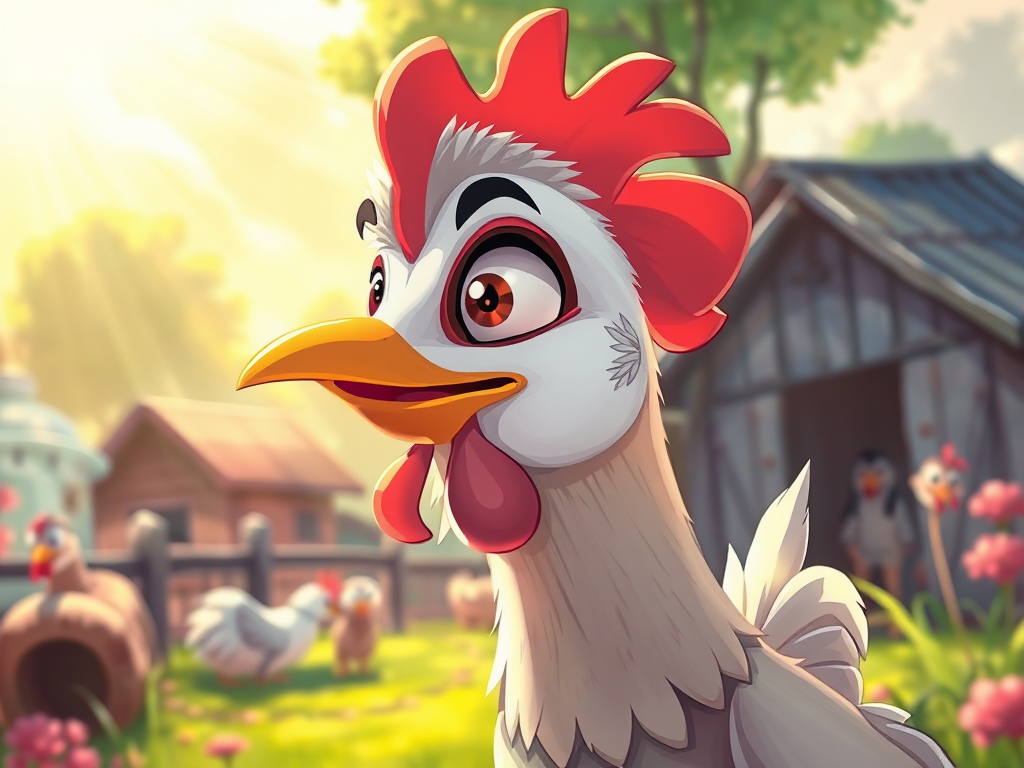
    Percy the Chicken:
    Fun, loud, loves parties. 🐔


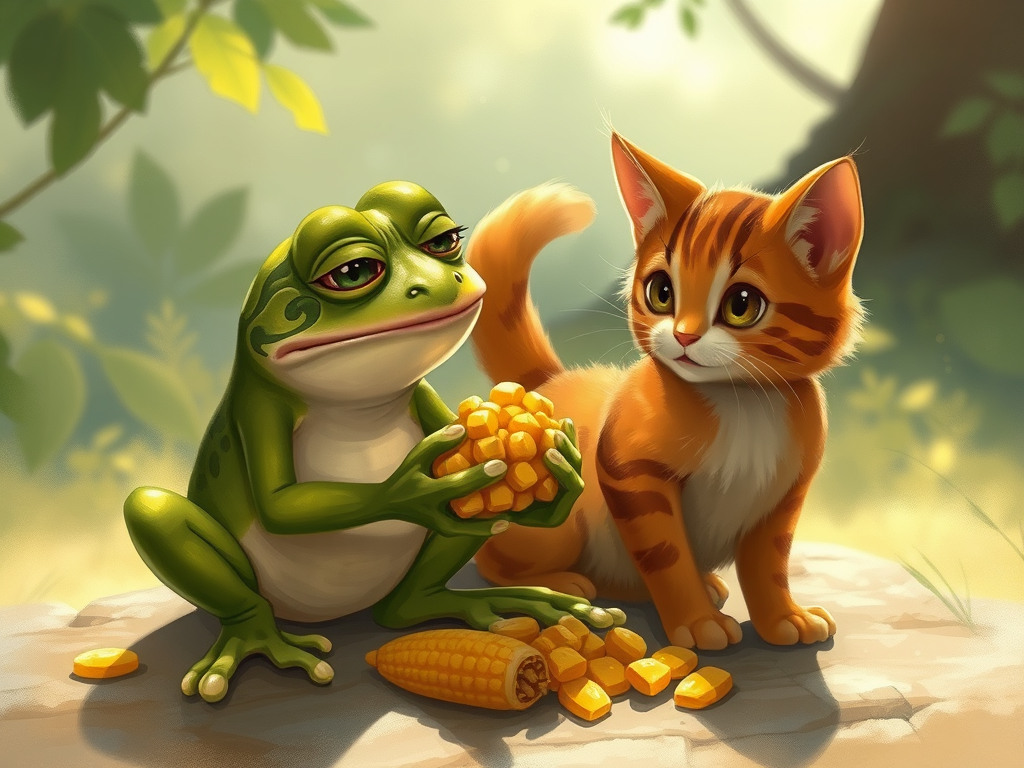
    Fred the Frog: Quiet, loyal, small but brave. 🐸


    Luna the Cat: The wise narrator. 🐱


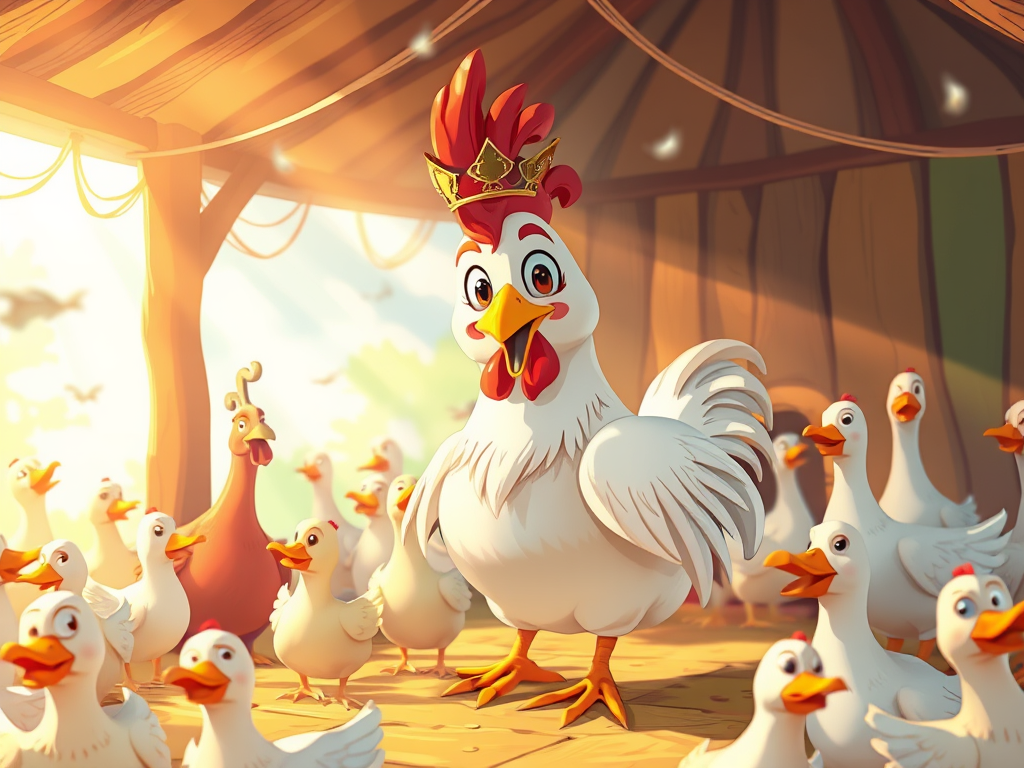
    It was a beautiful, sunny Tuesday. Percy found a huge bag of corn seeds.

    The Good Times: “Party at my place!” clucked Percy.

    The Swans came. The Ducks came. Everyone was eating Percy’s corn.

    “Percy, you are the King of the Coop!” they shouted. Percy felt like a celebrity.
    Fred sat in the corner, smiling but quiet.


    The Bad Times: Suddenly, the sky turned black. Thunder crashed! ⚡

    A fox was spotted near the fence. “Run!” screamed the Swans. They flew away instantly. “Save yourselves!” quacked the Ducks. They vanished into the pond.


    Percy was stuck. His foot was caught in a vine. He was alone. The corn was gone. The “friends” were gone. The fox was coming.

    The Rescue: Suddenly, a small green hand tugged at the vine. It was Fred. Fred wasn’t strong, but he didn’t leave.

    He chewed the vine. He pulled. He croaked loudly to distract the fox. Snap! The vine broke. Percy and Fred hid in the mud until the fox left.


    Luna the Cat watched from the roof: “The Swans loved the corn. Fred loved the Chicken. The Swans were friends in greed. Fred was a friend in need.”

    🎓 Lesson for English Learners


    How does this apply to your language journey?


    The Study Buddy 📖


    Fair-weather:
    A partner who only wants to copy your homework.


    Indeed: A partner who helps you practice speaking even when you are tired, or corrects your mistakes gently.


    Action: Find a partner who pushes you to be better, not just one who makes things easy.


    The Mistake Mindset ❌


    When you make a mistake (you are “in need” of correction), a fake friend laughs at you.


    A real friend laughs with you and helps you fix it.


    Vocabulary Expansion 🗣️


    Don’t just say “Help me.” Use phrases like:


    “I’m in a bit of a jam.” (Slang for trouble).


    “Can you do me a solid?” (Slang for a favor).


    “I’ve got your back.” (I support you).


    💬 Your Turn


    Who is your “Fred”?


    Think about the last time you had a problem (a flat tire, a bad grade, a breakup). Who was the first person you called? 📞


    Tag that person in the comments or send this post to them to say “Thank you.” 👇

    By Zubeyir YURTKURAN

    https://www.facebook.com/BrainBattleground/

    https://www.facebook.com/zubeyr.yurtkuran/

    https://www.instagram.com/zubeyryurtkuran/

  • Honesty Is The Best Policy: How Short-Term Comfort Kills Long-Term Trust

    Honesty Is The Best Policy: How Short-Term Comfort Kills Long-Term Trust

    🧐 When Does the Liar’s Lamp Go Out?


    📝 The Short Cut: Fabricating an excuse to cover up that you haven’t finished a report.

    🔥 The Long-Term Cost: Having to invent three more lies to support the first one; permanently losing your manager’s/friend’s trust.


    💰 The Short Cut: Intentionally concealing a small piece of information in a deal to gain immediate profit.

    📉 The Long-Term Cost: Your reputation spreading, being labeled “untrustworthy” in the industry, and losing all future major deals.


    Life constantly proves a rule well-known to successful people: “Honesty Is The Best Policy.”


    In this post, we examine why a simple ethical rule is the most profitable strategy in life. Take off your masks, take a deep breath, and let’s dive into the value of trust. 💡

    🧐 The Anatomy of the Proverb


    Let’s look at the mechanics of this ethical compass.


    📚 Vocabulary Vault


    Honesty (Noun):
    The quality of being truthful, sincere, and possessing integrity. 🛡️


    Policy (Noun): A course of action or set of principles adopted by an individual or organization to achieve a goal. ⚖️


    Best (Adjective): Most profitable, most advantageous, or most long-lasting.


    🧠 Grammar Focus


    This sentence is a defining statement that establishes honesty as the wisest strategy.


    Formula: Honesty + [is] (Linking Verb) + [the best policy].


    The Meaning: Even if it causes immediate difficulty, honesty is the smartest policy because it secures reputation, trust, and therefore, long-term success.


    📜 History: The Price of Trust


    When did this idea become popular? People have known the societal cost of trust since they started living in groups.


    The Origin:
    The proverb is commonly associated with the American Founding Father, Benjamin Franklin. Franklin believed that honesty would lead to financial success in business. However, the saying itself predates him.


    The Lesson: The price of dishonesty (lost trust) is always higher than the immediate cost of telling the truth (the consequence of confession).

    🎯 Impact on Life: The Pros & Cons


    Is being 100% honest always a viable lifestyle? Let’s weigh the options.


    ✅ The Pros (Why it helps)


    Reputation: It builds and sustains trust, the most valuable asset one can acquire in the marketplace.


    Mental Peace: You don’t have to remember your lies. Your mind is free from the stress of managing a web of deceit. 🧘


    Simplifies Life: Instead of building complex lies, it simplifies your life and allows you to focus.


    ❌ The Cons (Why it can be tricky)


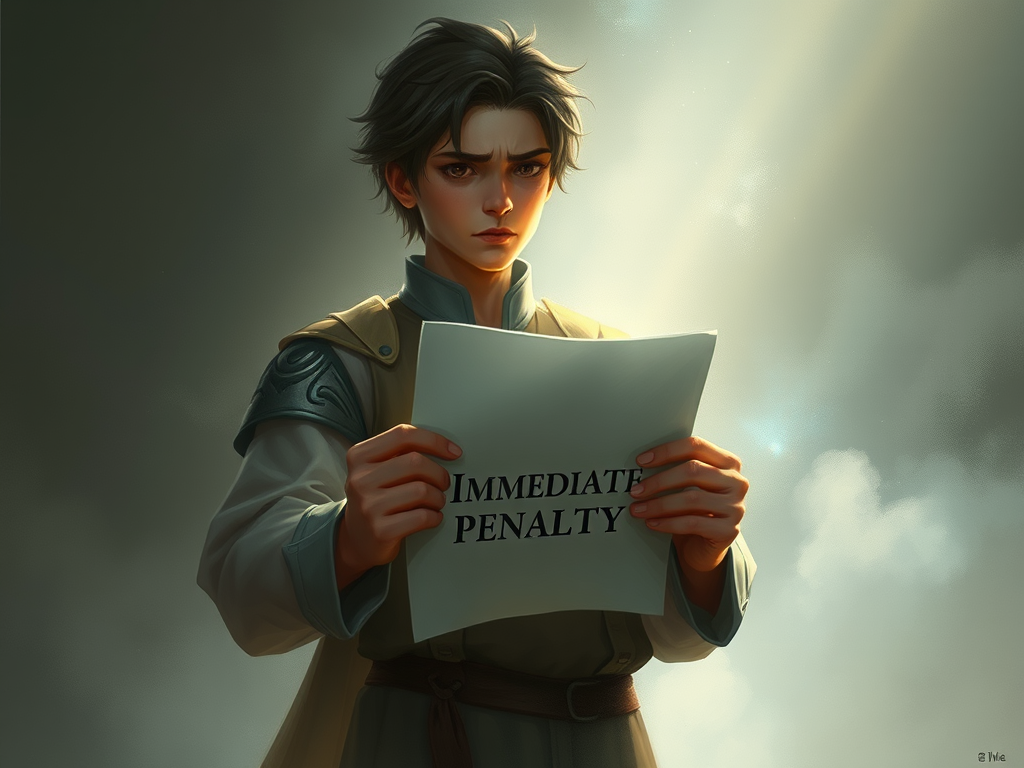
    Immediate Penalty:
    Sometimes, honesty means admitting a mistake or deficiency, which can result in an instant penalty.


    Emotional Harm: In sensitive social situations where white lies are often preferred, excessive blunt honesty can cause emotional damage.

    🎭 Short Story: The Missing Nut Fund


    To understand this proverb better, let’s revisit our friends on the farm. The communal winter provisions fund (nuts and corn) is running low.


    🌟 Character Introduction


    Percy the Chicken (The Short-Cutter): Resorts to big lies for instant relief. He prioritizes short-term gain over long-term reputation. 😵


    Luna the Cat (The Trust Manager): Manages the farm’s funds. She highly values trust, and once broken, it cannot be easily restored. ✨


    Fred the Frog (The Integrity Expert): If he makes a mistake, he confesses immediately and knows that rectifying his error is the most profitable path. 🐸


    Luna noticed a small amount of nuts was missing from the winter provisions fund.


    Percy immediately rushed over. “Ah, Luna! I’m sure that pesky squirrel, Sneaky Tail, came and stole it! I saw him this morning, he’s very crafty!” Percy had actually secretly eaten the nuts but blamed someone else. 🤥


    Meanwhile, Fred approached Luna to confess that he had accidentally knocked over and spilled a tiny portion of corn due to fatigue.


    Percy whispered to him: “Shhh, Fred! No one will notice two kernels of corn. Why put yourself in trouble by confessing?”


    Fred shrugged. He turned to Luna: “Luna, I am very sorry. I spilled two kernels of corn because I was tired. I will immediately replace them. I promise to bring back double tomorrow.” 🐸


    Luna smiled at Fred. “Thank you, Fred. There is no penalty for your honesty. Your integrity is worth far more than two kernels of corn.”


    A week later, inconsistencies in Percy’s story surfaced. Luna realized that the specific type of squirrel he mentioned didn’t even live in that area. Luna approached Percy: “The nuts are gone. But worse, my trust is gone.”


    Percy bowed his head in ashamed regret.


    Fred, that week, not only replaced the corn but also found extra nuts, solidifying his position as Luna’s most trusted partner.


    In this story, the characters represent the cost of integrity:


    Percy’s Lie:
    Short-term comfort (No immediate penalty) 😵


    Fred’s Truth: Immediate cost (Confession and promise to fix) 🤓


    Luna’s Trust: Long-term profit (The most valuable asset in the marketplace) 🛡️

    🎓 Lesson for English Learners:


    You made a mistake in a speaking club and mispronounced a word. You ignored your error out of shame. (Percy’s Method)


    If your teacher asks, “Did I make a mistake?” and you confess and correct it immediately, the moment of shame is fleeting, but the correct learning is guaranteed. (Fred’s Method)


    True learning lies not in concealing errors, but in openly confessing and correcting them.


    💬 Your turn: Was there a time when honesty opened a big door for you, or a lie cost you dearly in life? Share your story in the comments! 👇

    By Zubeyir YURTKURAN

    https://www.facebook.com/BrainBattleground/

    https://www.facebook.com/zubeyr.yurtkuran/

    https://www.instagram.com/zubeyryurtkuran/