Tag: Study Tips

  • 🤝 The Daily Alliance: The Law of SynergyTwo heads are better than one.

    🤝 The Daily Alliance: The Law of SynergyTwo heads are better than one.

    👿 The Villain (The Soloist): You say, “I work better alone.

    ” You say, “Explaining it to others takes too much time.”

    You hide your work because you are afraid someone will steal your credit.

    You think asking for help is a sign of weakness.

    The Result? You get stuck on a simple problem for 5 hours.

    You miss obvious mistakes.

    You burn out carrying the weight of the world on your own shoulders.

    You become the King of a Lonely Island. 🏝️🥀


    😇 The Hero (The Mastermind): You realize that your brain has blind spots.

    You say, “I have an idea, but I need a fresh perspective.”

    You bring your draft to a friend. You brainstorm with a rival. You accept that you don’t know everything.

    The Result? 1 + 1 = 3. You find the solution in 10 minutes.

    You achieve Synergy.

    You don’t just solve the problem; you destroy it. You build an empire because you know how to build a team. 🚀🤝


    ⚖️ The Reality: The smartest person in the room is usually the one who asks the most questions. Nobody wins a war alone.

    💎 The Secret: Collaboration is not about making the work easier; it is about making the result better.

    🧐 The Anatomy of the Proverb

    This is the Golden Rule of Teamwork.

    It implies that two people working together will solve a problem faster and better than one person working alone.


    Heads (Noun): Metaphor for minds, perspectives, or ideas. 🧠


    Better (Adjective): The comparative form of “Good.” Superior. 📈

    One (Noun): A single individual (The lonely path). 👤


    📚 Vocabulary Vault


    Synergy (Noun):
    When the combined effect is greater than the sum of separate effects (1+1=3). ✨


    Perspective (Noun): A particular way of viewing things. (I see a “6”, you see a “9”).


    Collaborate (Verb): To work together on a project.


    Brainstorm (Verb): To discuss ideas freely to solve a problem. 🌪️


    Blind Spot (Noun): An area where you cannot see or understand something (a mistake you miss).


    🧠 Grammar Focus

    Comparative Adjectives (Irregular) This proverb uses the most common irregular comparison in English!


    Positive: Good 👍


    Comparative: Better (NOT “Gooder”) 📈


    Superlative: The Best 🏆


    Structure: [Noun A] + [Verb] + better than + [Noun B].


    Example: “Studying with a partner is better than studying alone.”

    📜 History: Origin and Spread

    This wisdom is universal. Humans survived history because we formed tribes.


    The Origin: First recorded by John Heywood in 1546.

    The Logic: One hunter catches a rabbit. Two hunters catch a Mammoth. 🦣


    Global Cousins:


    🇹🇷 Turkish:
    “Bir elin nesi var, iki elin sesi var.” (What does one hand have? Two hands have a sound.) — Legendary match! 👏


    🇰🇷 Korean: “Even a sheet of paper is lighter when held by two.”


    🌍 African Proverb: “If you want to go fast, go alone. If you want to go far, go together.”

    🎯 Impact on Life: The Pros & Cons

    Is more always better?

    ✅ The Pros (The Multiplier):


    Error Checking:
    Your friend sees the spinach in your teeth before the meeting. You can’t see your own face!


    Creativity: Different backgrounds create new ideas (The “Steve Jobs & Wozniak” effect).


    ❌ The Cons (The Trap):


    Groupthink: Agreeing just to be polite. (Bad!)


    “Too many cooks spoil the broth”: This is the opposite proverb!

    If too many people try to lead, it becomes a disaster. You need two heads, not twenty!

    🎭 Short Story: The River Crossing

    Let’s visit our friends, Penny the Pig and Max the Mouse.


    🌟 The Setup: Penny and Max needed to cross a rushing river to get to a berry bush.
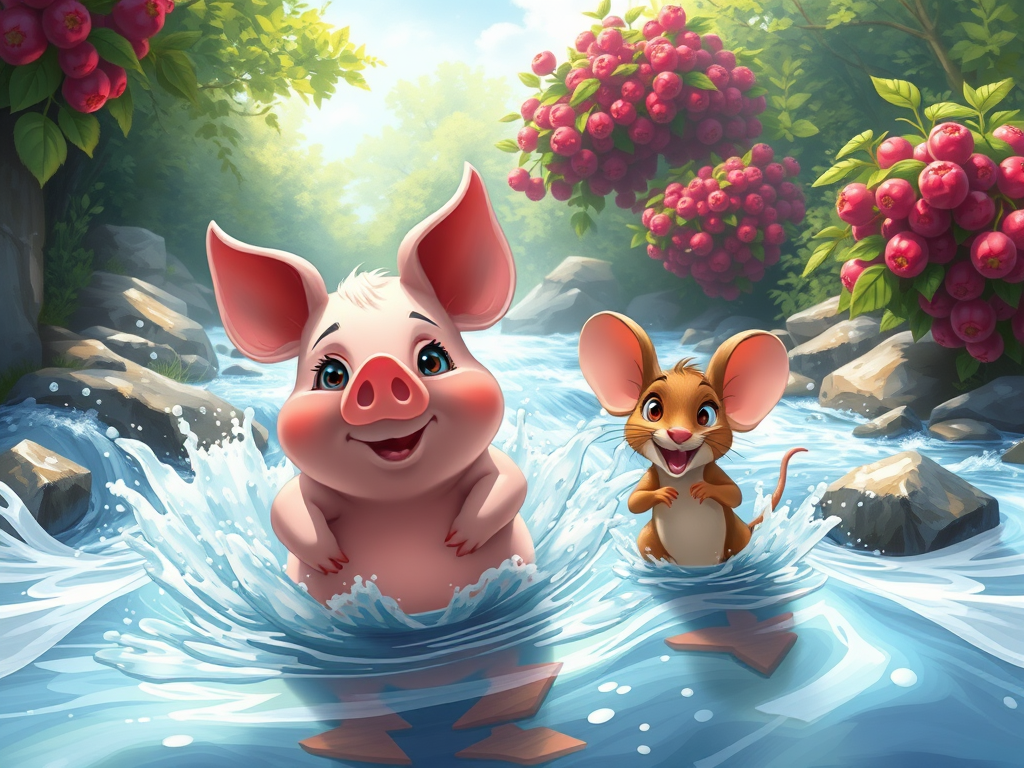
    There was no bridge. Just a long, heavy wooden log on the grass. 🪵

    The Conflict: Penny was strong enough to push the log, but she couldn’t see where the sharp rocks were in the water.

    She tried to push it blindly and almost got stuck.
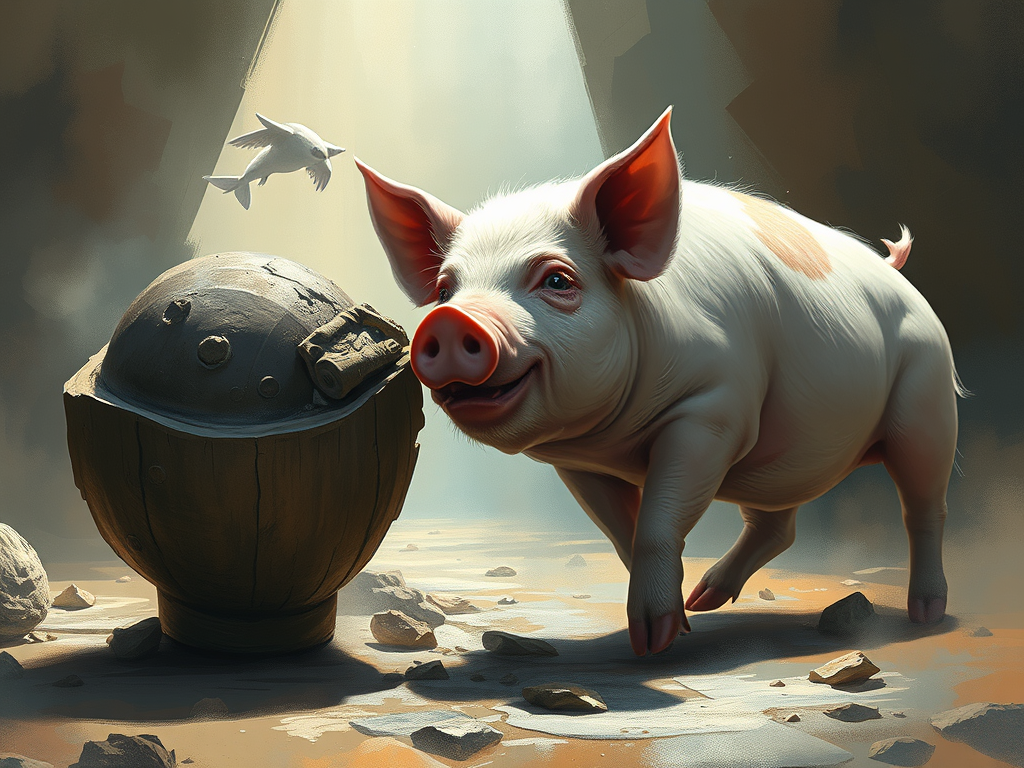

    Max had sharp eyes and saw the safe path, but he was too small to move the log even one inch.

    He sat on the log and squeaked.

    The Action: Did they give up? No. They combined their “Heads” and “Hands.”
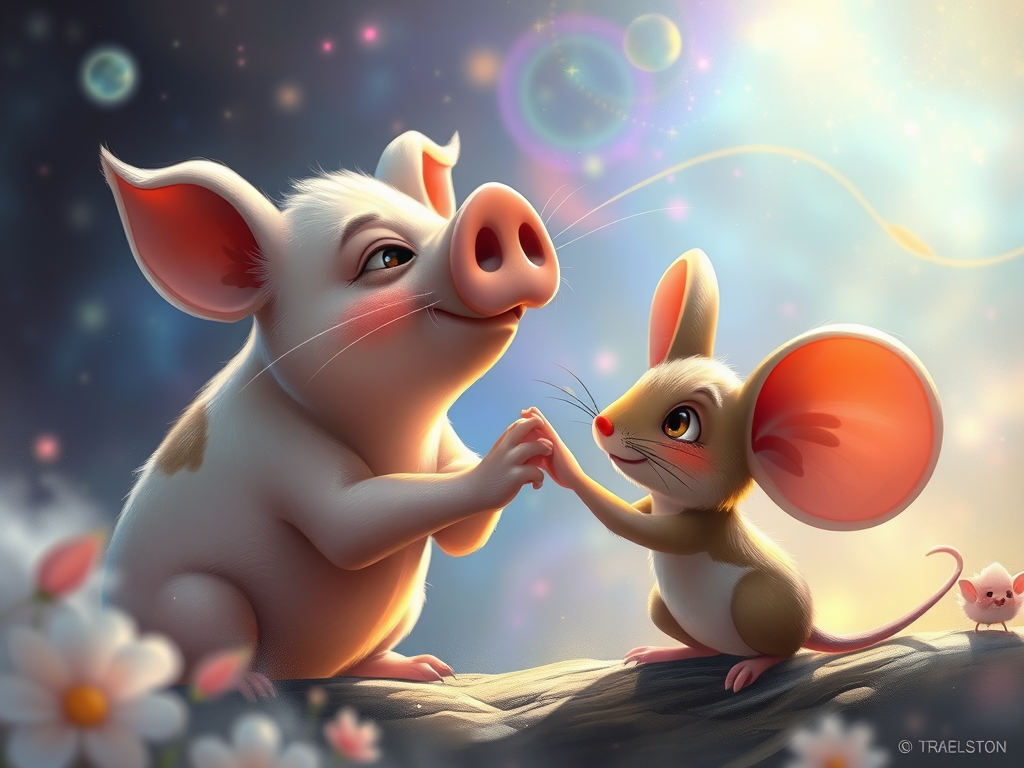

    Penny used her strength to push the log into the water.

    Max sat on Penny’s head and acted as the Captain.
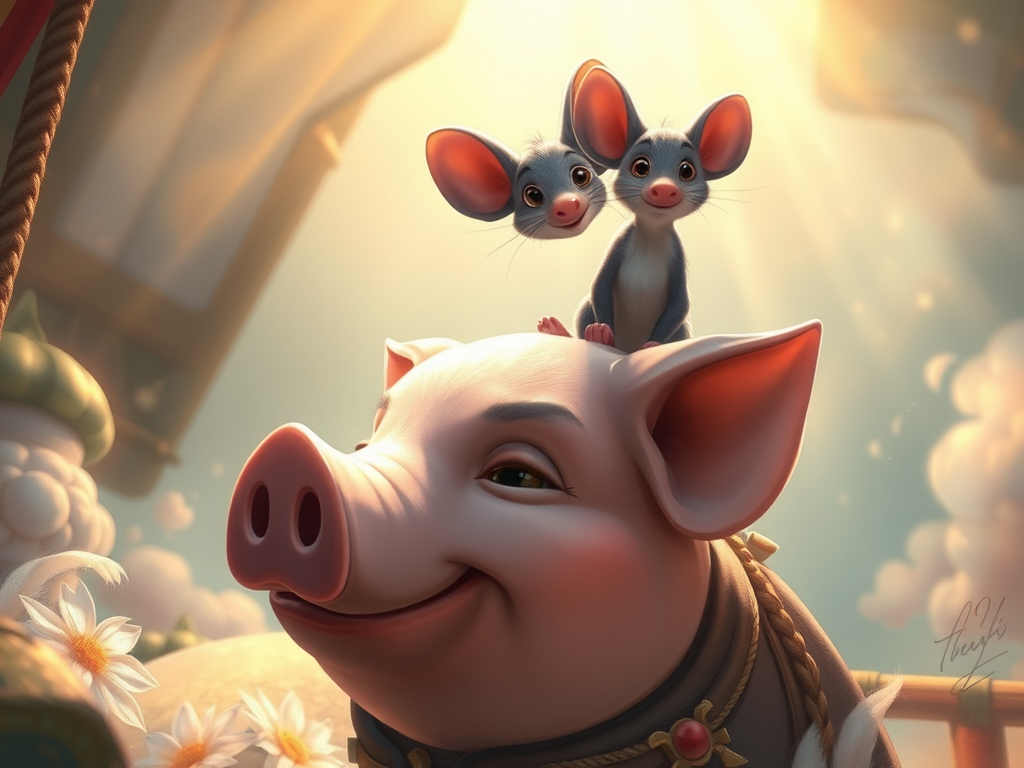

    Max shouted: “Left! Right! Avoid the rock!” Penny powered through.

    The Moral: Penny had the Power.
    Max had the Vision.

    Separately, they starve. Together, they feast on berries. 🍓🐭🐷

    🎓 Lesson for English Learners

    Don’t be a “Lone Wolf” in your language journey!

    Advice on Study 📚

    Situation: You are writing an essay and you think it is perfect.

    You Say: “I need a second pair of eyes. Two heads are better than one.”

    You send it to a friend or ChatGPT for feedback. They find 3 mistakes you missed.

    Advice on Conversation 🗣️

    Situation: You are nervous to speak English.

    You Say: “Let’s practice together. You correct me, and I will correct you.” You create a ‘Language Alliance.’

    💬 Your Turn

    The “Co-Pilot” Challenge ✈️

    The Goal: Stop trying to solve your hardest problem alone.

    The Question: What is ONE project or problem you are stuck on right now?

    Deciding a career path?

    Planning a trip?

    Learning a complex grammar rule?


    The Action: Send a message to one smart friend right now. Say: “I’m stuck on this. Can I get your opinion? Two heads are better than one.”


    👇 Who is the “Max” to your “Penny”? Tag them or write their name below! 👇

    By Zubeyir YURTKURAN

    https://www.facebook.com/BrainBattleground/

    https://www.facebook.com/zubeyr.yurtkuran/

    https://www.instagram.com/zubeyryurtkuran/

    https://www.youtube.com/@BrainBattleground-b3p

  • 💪 No Pain, No Gain: The Comfort Zone is Where Dreams Go to Die

    💪 No Pain, No Gain: The Comfort Zone is Where Dreams Go to Die

    🚫 Can You Win a Gold Medal from Your Couch?


    🛋️ The Short Cut: Drinking “Miracle Slimming Tea” instead of going to the gym.

    📉 The Reality: Your wallet gets lighter, but your belly stays the same. Disappointment is guaranteed.


    📚 The Short Cut: Watching TV shows with subtitles to “get used to the sound” because memorizing vocabulary is too hard.

    📉 The Reality: Years pass, and you are trapped in the “I understand but I can’t speak” trap.


    Life’s most brutal but fair rule is this: No sweat, no victory. In this post, we examine why success requires paying a price. Take off your masks, put on your running shoes; the training starts now! 🏋️‍♂️

    🧐 The Anatomy of the Proverb


    Let’s look at the mechanics of this motivational phrase.


    📚 Vocabulary Vault


    Pain (Noun):
    Physical suffering, effort, trouble, or difficulty. (Here, it means “necessary struggle.”) 😓


    Gain (Noun): Profit, advancement, increase, or achievement. 🏆


    No (Determiner): Indicates absence or lack of something.


    🧠 Grammar Focus


    This structure is the shortest and most powerful form of a “Conditional” sentence in English.


    Formula: No + [Noun 1] + , + No + [Noun 2].


    The Meaning: If the first noun (pain/effort) is absent, the second noun (gain/success) is impossible.


    Example: No risk, no fun.


    📜 History: From Poets to Bodybuilders


    Who made this famous?


    The Origin:
    While roots go back to 17th century poet Robert Herrick, the phrase was popularized in the modern world by 1980s fitness icon Jane Fonda. She used it in her aerobic videos to encourage people to push through “the burn” in their muscles.


    The Lesson: Success is not an accident; it is the receipt for the price you paid in effort.

    🎯 Impact on Life: The Pros & Cons


    Is pushing yourself constantly always good?


    ✅ The Pros (Why it works)


    Resilience: Difficulties forge a character as strong as steel.


    True Skill: What is easily gained is easily lost. Hard-earned skills are permanent.


    Pride: The view is different for the person who climbed the mountain compared to the person who took a helicopter to the peak. 🏔️


    ❌ The Cons (What to watch out for)


    Burnout:
    Chasing “pain” without rest leads to injury or mental exhaustion. You must work hard, but also work smart.

    🎭 Short Story: The Great Farm Marathon


    To understand this proverb, let’s look at our farm friends and the upcoming “Great Summer Race.”


    🌟 Character Introduction


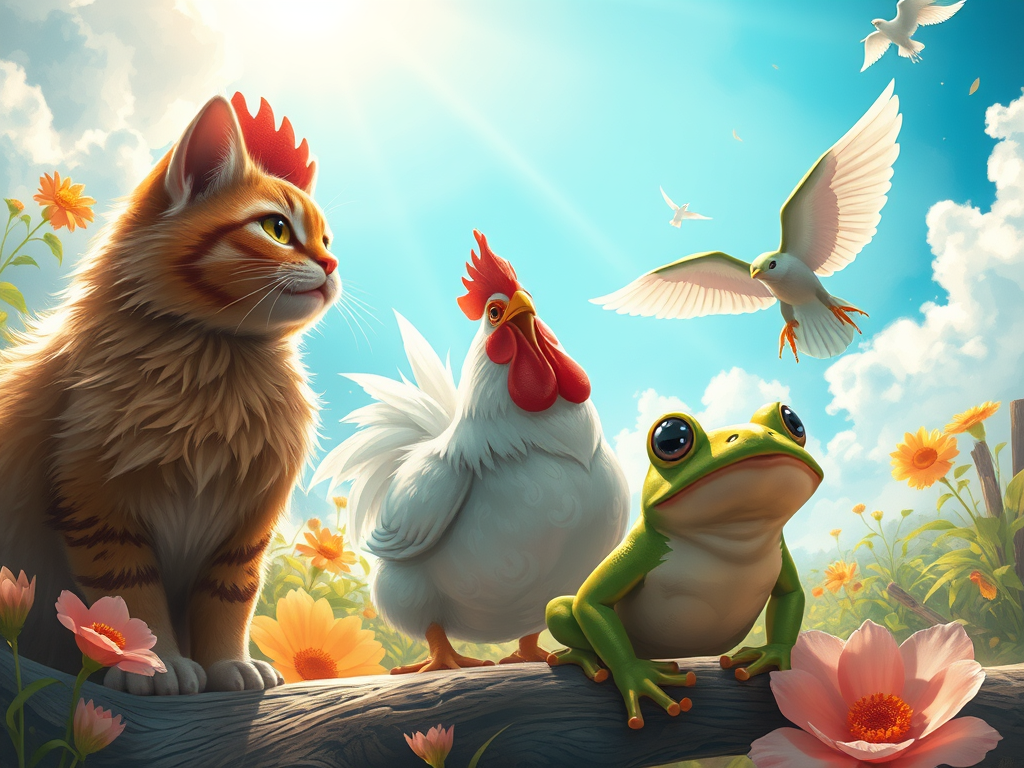
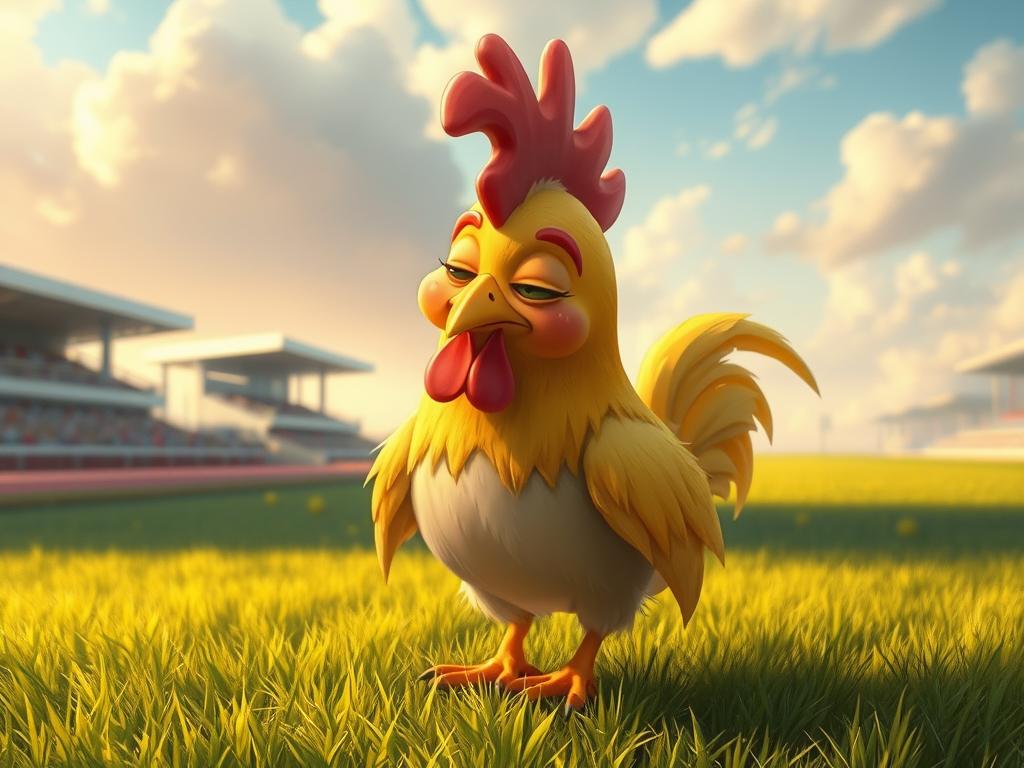
    Percy the Chicken (The Dreamer):
    Wants to win the race but hates waking up early to run. 🐔


    Fred the Frog (The Grinder): Jumps every morning until his legs ache. He knows the process is hard. 🐸


    Luna the Cat (The Coach): The observer and referee. She focuses on results. 😼


    One week before the race, Percy bought himself a pair of expensive, brand new running shoes. “Hey Fred!” shouted Percy, lying in his hammock. “Why do you tire yourself out so much? Look, my shoes are super fast! I’m saving my energy for race day.” 🥤 Fred stopped, panting, and wiped the sweat from his forehead. “My legs are burning, Percy. But every day I get one step faster. I love this pain because it leads me to the goal.”


    Race day arrived. 🏁 With the starting whistle, Percy bolted! He was great for the first 10 meters. But at 50 meters, his lungs started to burn. At 100 meters, his legs shook, and he collapsed. “This is unfair! My shoes were so expensive!” he cried. 😵


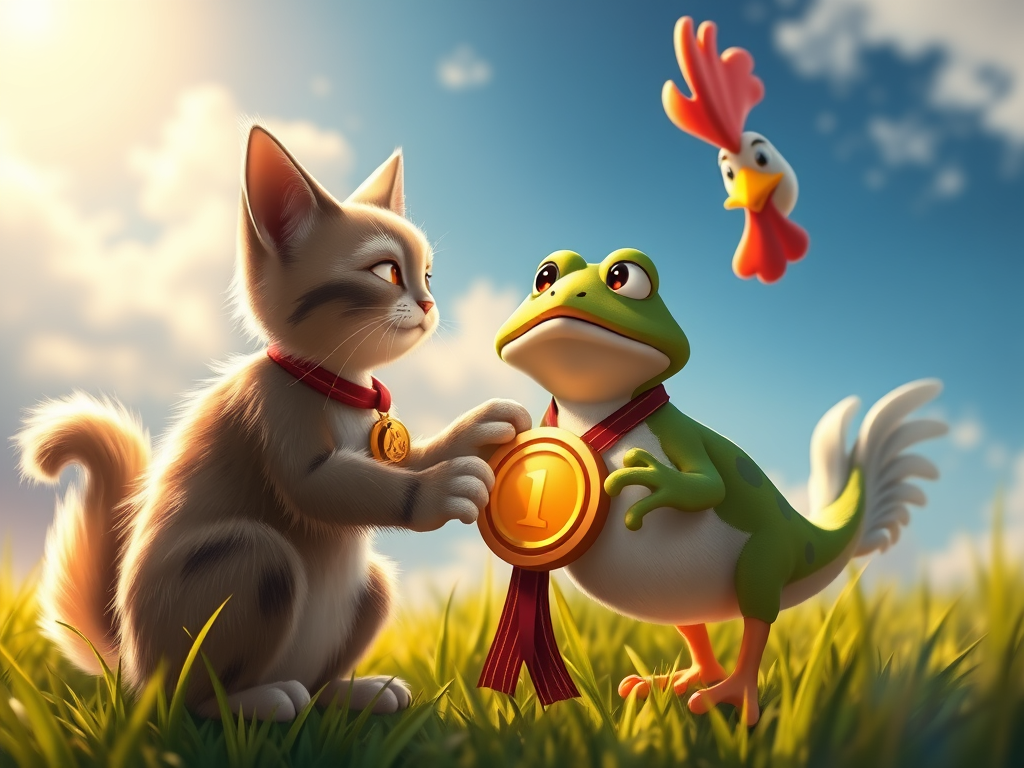
    Fred started slow but steady. As he hopped up the hill, he felt that familiar “burning” sensation in his legs. But thanks to his training, he was used to this pain. It didn’t stop him; it fueled him. He crossed the finish line as the champion. 🏆


    As Luna placed the medal on Fred, she turned to Percy: “Percy, expensive shoes (The Short Cut) don’t make you a champion. The leg pain Fred endured (The Pain) brought him this medal (The Gain).”


    The Moral:


    Percy:
    Comfort Zone = No Trophy.


    Fred: Sweat & Ache = Victory.

    🎓 Lesson for English Learners


    Does your hand hurt while writing new vocabulary words 10 times in a notebook? (Pain) ✍️


    This is a sign that your brain is etching that word into long-term memory. (Gain) 🧠


    Did you make a mistake in a speaking club, turn red, and feel embarrassed? (Pain) 😳


    That emotional memory ensures you will never make that mistake again. (Gain) ✨


    Remember: The feeling of “struggle” when learning a language is not failure; it is the sound of improvement footsteps.


    💬 Your Turn


    Has there been a moment in your life where you said, “I wish I had pushed a little harder”? Or a success you are proud of because you suffered for it? Share your story in the comments! 👇

    By Zubeyir YURTKURAN

    https://www.facebook.com/BrainBattleground/

    https://www.facebook.com/zubeyr.yurtkuran/

    https://www.instagram.com/zubeyryurtkuran/
  • Clocks, Coins, and Lost Opportunities: The Truth About “Time is Money”

    Clocks, Coins, and Lost Opportunities: The Truth About “Time is Money”

    We have all been there.

    🎮 You spend 3 hours playing video games, and suddenly you realize you haven’t studied for the big exam tomorrow.

    📱 You scroll through TikTok “for just 5 minutes,” but look up to see that two hours have vanished.

    🚌 You arrive at the bus stop 1 minute late, and now you have to wait an hour for the next one.


    Life has a strict rule that successful people know well: “Time is money.”
    In this post, we are looking at the most famous proverb about productivity. Put down your phone, focus your mind, and let’s dive in⏱

    The Anatomy of the Proverb


    Let’s look at the mechanics of this famous equation.


    📚 Vocabulary Vault


    Time (Noun):
    The indefinite continued progress of existence (measured in seconds, minutes, hours). 🕰️


    Money (Noun): A current medium of exchange in the form of coins and banknotes. 💵


    🧠 Grammar Focus This sentence is a perfect example of a Metaphor.


    Formula: Time + [is] (Linking Verb) + [money] (Subject Complement).
    The Metaphor: We aren’t saying time looks like a coin. We are saying time functions like money. You can “spend” it, “save” it, “waste” it, or “invest” it. But unlike money, once you spend time, you can never earn it back!

    History: Benjamin Franklin’s Advice


    Who turned this idea into a famous saying? It wasn’t a king or a warrior, but one of the Founding Fathers of the United States.


    The Origin: In 1748, Benjamin Franklin wrote an essay titled “Advice to a Young Tradesman.”


    The Meaning: He wanted to teach young workers that if they take a day off from work to be lazy, they aren’t just “saving energy.” They are actually losing the money they could have earned that day.


    The Lesson: Every second you do nothing is a potential value lost.

    Impact on Life: The Pros & Cons


    Is living by the clock a good way to live? Let’s weigh the options.


    ✅ The Pros (Why it helps)


    Motivation: It stops procrastination. Remembering that your time has value pushes you to work on your goals now instead of “later.”


    Efficiency: It encourages you to find faster, smarter ways to do things so you don’t “waste” your valuable hours. 🚀


    ❌ The Cons (Why it can be tricky)


    Stress: If you think every second must be “profitable,” you might feel guilty for relaxing.


    Burnout: Humans are not machines. Sometimes, “wasting time” with friends or a hobby is actually good for your mental health. 🧘‍♂

    Short Story: The Falling Berries


    To understand this better, let’s visit our friends on the farm again.


    It was a windy autumn afternoon. Percy the Chicken, Luna the Cat, and Fred the Frog were sitting under the Great Mulberry Tree. 🌳


    Suddenly, a strong gust of wind shook the branches. Plop! Plop! Plop! Hundreds of delicious, sweet purple berries fell onto the grass.


    “Wow!” shouted Percy. “A buffet! Look at all this free food!” He picked up one berry, ate it slowly, and then laid down on the soft grass. “I will eat the rest later. Right now, I want to take a nap in the sun.” 😴


    Luna the Cat shook her head. “I don’t eat berries,” she said, “but the farmer pays us in treats if we collect them for him. The wind is blowing harder, Percy.”


    Fred the Frog was already hopping fast, putting berries into a small basket. “Hop to it, Percy! The storm is coming. Time is money!” 🐸


    “Relax, Fred,” clucked Percy, closing his eyes. “The berries aren’t going anywhere. I have plenty of time.”


    Ten minutes passed. Fred worked hard. Percy snored.


    Suddenly, the sky turned dark. WOOSH! A massive storm wind blew across the farm. It was so strong that it blew all the uncollected berries into the muddy river nearby. They were gone instantly. 🌧️


    Percy woke up with a start. “My lunch! My berries!” He ran around, but the grass was empty.


    Fred sat on a dry rock, holding his full basket. “I collected these while you slept,” Fred said. “I used my time to get value. You used your time to nap, and now you have nothing.”


    Percy’s stomach grumbled. He looked at the empty grass and frowned.


    “I see now,” Percy whispered sadly. “I spent my time poorly, and it cost me my lunch. Time really is money.”

    In this story, the characters represent how we manage our time:
    Percy:
    Procrastination (Waiting until it is too late) 😵
    Fred: Productivity (Using the moment wisely) 🤓
    The Wind: Unforeseen Circumstances (Things we can’t control) 🌪️


    Lesson for English Learners:

    Learning English takes time. You cannot buy fluency. If you study for 10 minutes every day (Fred’s method), you are “investing” your time. If you wait until the night before the exam (Percy’s method), you will find that you are “bankrupt.”


    💬 What about you? Do you prefer to “spend” your free time relaxing, or do you like to “invest” it in learning new skills? Tell me in the comments! 👇

    By Zubeyir YURTKURAN