Tag: Productivity Tips

  • 🌳 The Daily Shield: The Law of Unnecessary Meddling”If it ain’t broke, don’t fix it.”

    🌳 The Daily Shield: The Law of Unnecessary Meddling”If it ain’t broke, don’t fix it.”

    😈 The Villain (The Chronic Tinkerer)

    You see a system that works, but it’s not “modern” enough. You constantly tweak your routine, update apps that don’t need updating, or rewrite your coworker’s perfectly good email. 🛠️ “Let’s totally change the filing system today!” You are obsessed with “optimizing” everything.

    The Result? You create problems where none existed. You waste time, exhaust the people around you, and often end up breaking the very thing you were trying to improve. You are trapped in the “Perfectionist’s Trap.” 🕸️


    😇 The Hero (The Master of Efficiency)

    You observe a system. It’s a bit old-fashioned, maybe not the flashiest, but it gets the job done perfectly every time. You pause. 🛑 Instead of touching it, you calculate the “Tinkering Cost.” You think: “Does this actually need my intervention right now?” You direct your valuable energy toward things that are actually broken.

    The Result? You save time. You avoid unnecessary stress. You build a reputation as someone who understands true efficiency and respects the status quo when it works. 🏰


    ⚖️ The Reality Innovation vs. Meddling. We live in an upgrade-obsessed world that tells us newer is always better. But the laws of momentum are real. If you constantly interrupt a smooth-running process just to leave your “mark” on it, you aren’t innovating; you are just interfering. True productivity isn’t about changing everything; it’s about knowing what to leave completely alone.


    💎 The Secret

    You don’t just save time; you preserve peace. Conserve your energy for real problems.

    🧐 The Anatomy of the Proverb


    This is your reality check that sometimes, stepping back and doing absolutely nothing is the smartest move you can make.


    If it ain’t(Colloquial/Slang): Grammatically incorrect slang for “If it is not.”


    Broke(Adjective/Slang): Broken or non-functioning.


    Don’t fix it(Imperative Phrase): A direct command to leave it alone.


    Simpler Version: Leave well enough alone. / Stop messing with things that work.


    📚 Vocabulary Vault


    Tinker (Verb):
    To attempt to repair or improve something in a casual, often clumsy way. 🪛


    Optimize (Verb): To make the best or most effective use of a situation, opportunity, or resource. (Often overused by the Villain!).


    Meddle (Verb): To interfere in or busy oneself uninvited with something that is not one’s concern.


    Status Quo (Noun): The existing state of affairs, particularly regarding social or political issues (or just how things are currently running).


    Counterproductive (Adjective): Having the opposite of the desired effect.


    🧠 Grammar Focus: Idioms as Bossing/Parenting Tools


    We use this idiom to quickly shut down unnecessary changes or overcomplicated ideas.


    Junior Employee: “I spent all weekend completely redesigning our client database! It’s highly complex now!”


    Senior Manager: “Why? The old database was fast, simple, and everyone knew how to use it.”


    Junior Employee: “But this one looks cooler!”


    Senior Manager: “Listen, if it ain’t broke, don’t fix it. Please revert to the original system so the team can actually do their work today.”

    📜 History: Origin and Spread


    Where did this golden rule of engineering and management come from?


    The Origin: The phrase was famously popularized in 1977 by Bert Lance, the Director of the Office of Management and Budget under US President Jimmy Carter. He used it to explain why the government shouldn’t interfere with or over-regulate systems in society that were already functioning well.


    The Logic: It became a foundational rule in engineering and IT. Every time you open up a machine or a code base to “improve” it, you risk introducing brand new errors (bugs).


    Global Cousins


    🇩🇪 German (Tech Slang):“Never change a running system.” (Ironically, Germans use this English phrase as a strict rule in IT!).


    🇷🇺 Russian:“Лучшее — враг хорошего.” (The best is the enemy of the good).


    🇪🇸 Spanish:“Si funciona, no lo toques.” (If it works, don’t touch it).

    🎭 Short Story: The Golden Smoothie Machine 🥤🐱🐔🐸


    Let’s visit the magical forest to see who understands the value of leaving things alone.


    🌟 The Cast


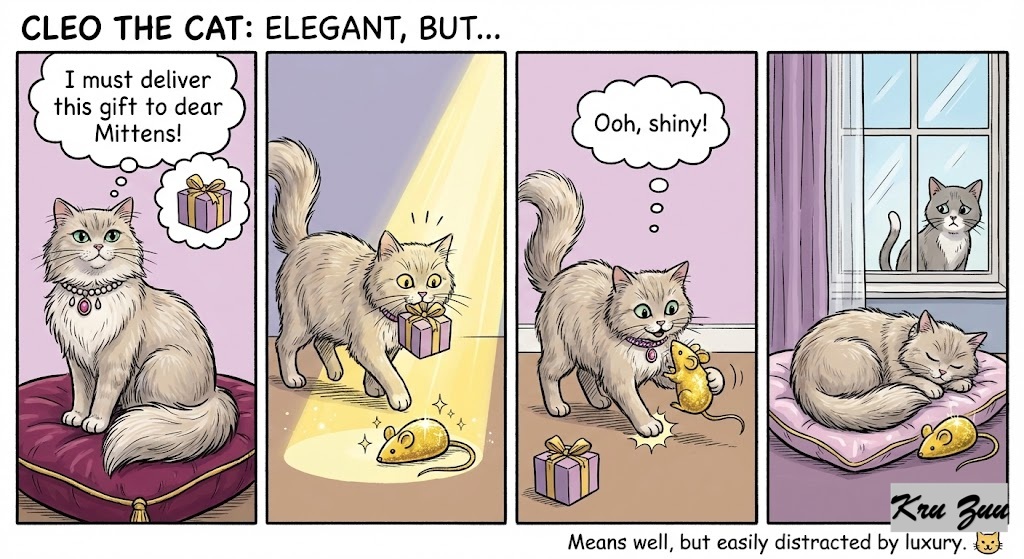
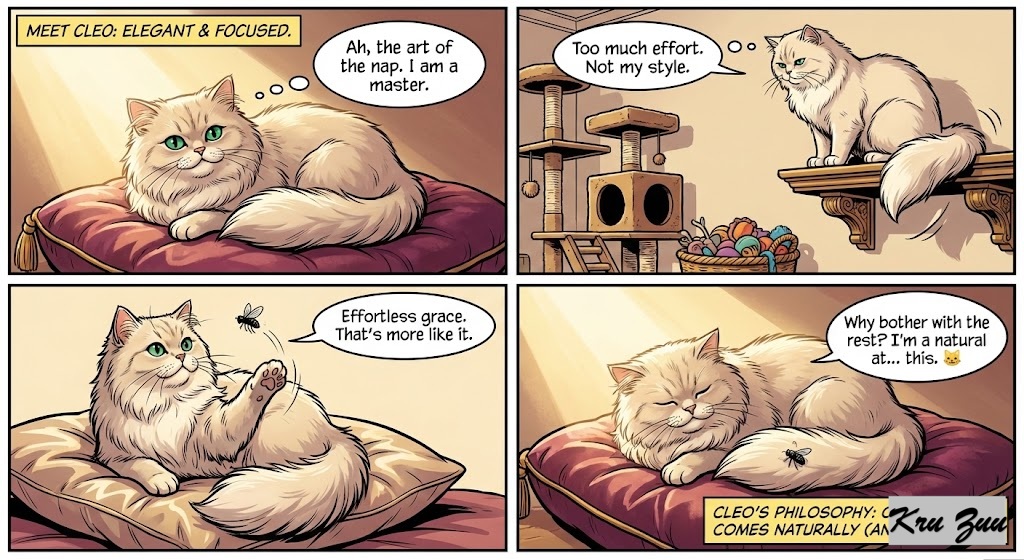
    Cleo the Cat: A chronic tinkerer, always obsessed with the newest tech, gets bored easily. 😼


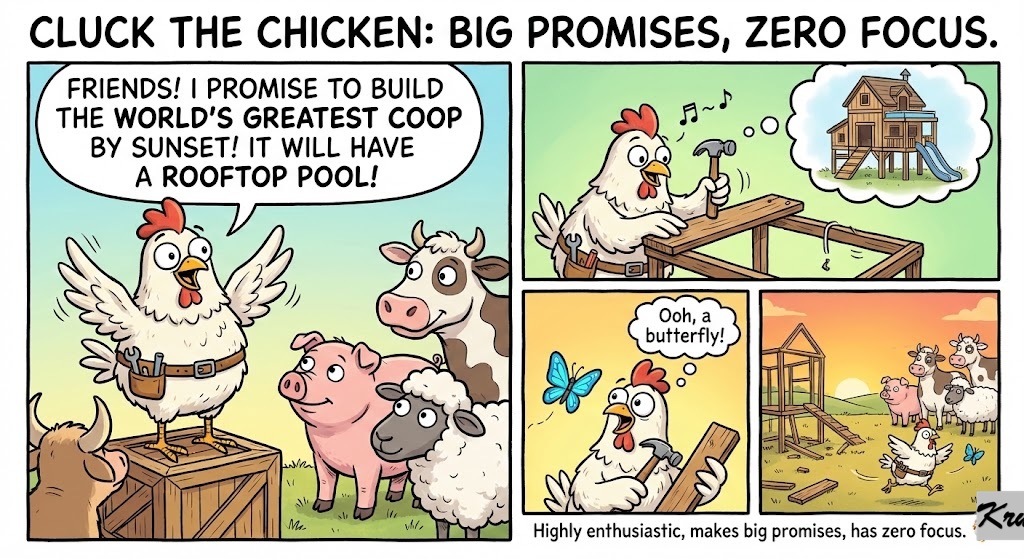
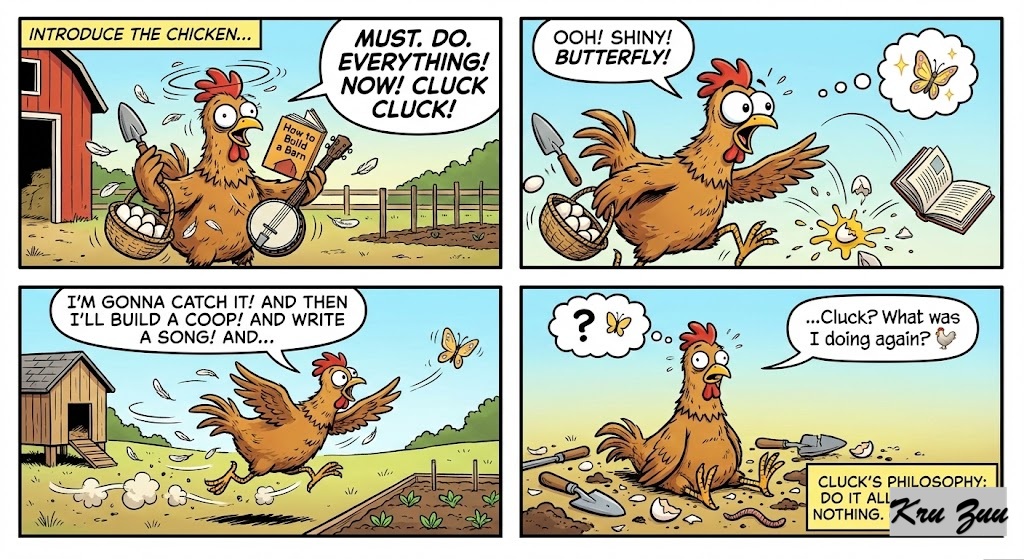
    Cluck the Chicken: The reliable, hard-working café chef who loves routine. 🐔


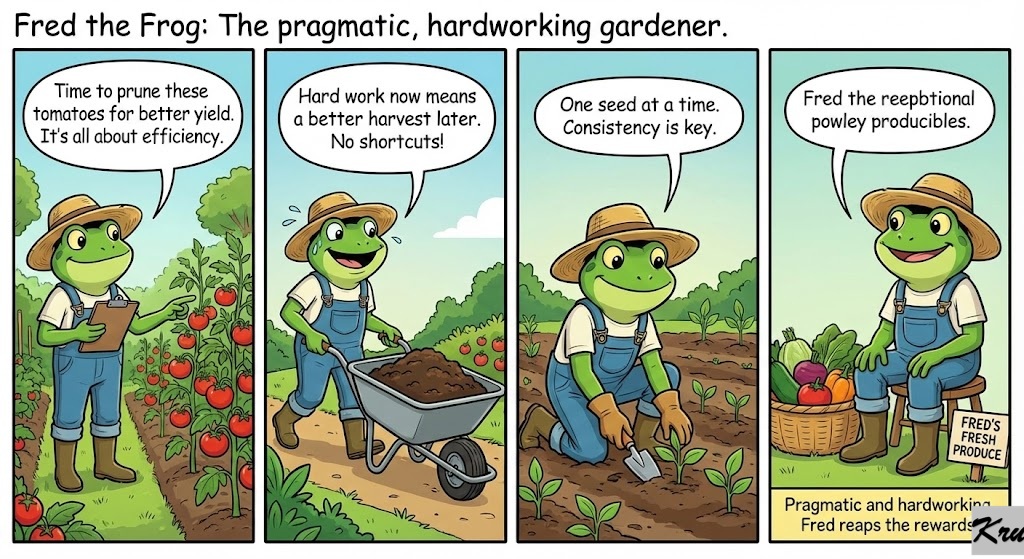
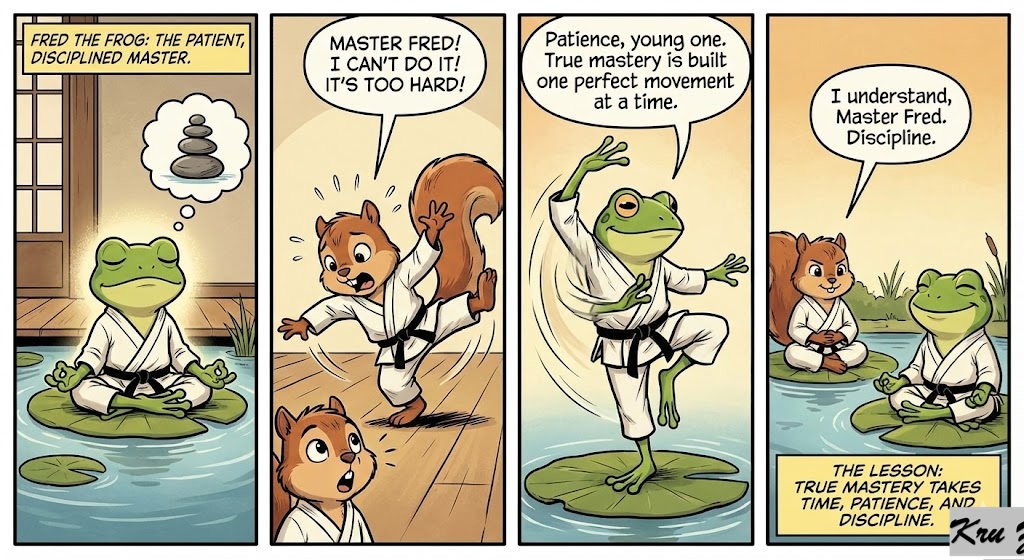
    Fred the Frog: The quiet, observant manager of the Royal Swamp Café. 🐸


    The Situation: It’s a busy Saturday. Cluck the Chicken is happily operating the café’s vintage, crank-operated blender. It’s loud, it’s old, but it perfectly crushes ice and berries to make the café’s famous “Legendary Golden Bug Smoothie.” The line of animals goes out the door, and Cluck is serving them at record speed.


    The Conflict: Cleo the Cat struts behind the counter carrying a box of wires and microchips. “Cluck, step aside!” she meows proudly. “I am upgrading this dinosaur of a blender. I’m going to install a Wi-Fi-enabled smart-motor so we can blend via voice command!” “Cleo, no!” squawks Cluck, flapping his wings. “The morning rush is here! The crank works fine!” But Cleo ignores him. She unplugs the crank, jams the wires into the base, and yells, “Blender, MAX SPEED!” BZZZZT. POP! Black smoke billows out of the machine. The blender shatters, spraying sticky golden smoothie all over Cluck’s feathers and the ceiling. The machine is completely dead. The line of customers groans in disappointment.


    The Reaction: Fred the Frog hops over, adjusting his little bowtie. He looks at the smoking ruins of the blender, the sticky chicken, and a very guilty-looking cat. “Ribbit,” says Fred.


    The Lesson: “I was just trying to optimize it!” Cleo cries, wiping smoothie off her whiskers. Fred sighs and hands her a mop. “Cleo, Cluck was serving five customers a minute. The system was flawless.” Fred points to the angry line of squirrels and badgers. “Innovation is wonderful, but if it ain’t broke, don’t fix it. You didn’t upgrade the café; you shut it down. Now we have no smoothies at all.”


    The Resolution: Cleo had to spend her entire weekend allowance buying a replacement vintage crank-blender. She learned the hard way that just because something can be modernized, doesn’t mean it should be.


    The Moral: True genius is knowing when to step back and let a good thing keep working. 🤫

    🎓 Lesson for English Learners


    Defending Your Work.


    Situation: A coworker or partner is trying to make unnecessary, complicated changes to a project or routine you’ve already perfected.


    The Shift: You need to politely tell them to back off without sounding defensive.


    You Say: “I appreciate the suggestions, but this process is running smoothly right now. Let’s not reinvent the wheel. If it ain’t broke, let’s not fix it.” (Note: Reinvent the wheel is another great idiom meaning to waste time creating something that already exists and works perfectly!).


    💬 Your Turn: The “Hourly” Challenge 🚀


    Do you want to cure your “Villain” meddling habits?


    The Challenge:
    Implement the Hourly “Hands Off” Rule.


    The Action: Today, every single hour, pay attention to the urge to correct someone else’s work, rearrange a room, or tweak an email you already wrote. When you feel that urge, set a timer for exactly one hour.


    Ask yourself: “Is this actually broken, or am I just bored and wanting to control something?” 99% of the time, when the hour is up, you will realize the situation is perfectly fine without your interference.

    By Zubeyir YURTKURAN

    https://www.facebook.com/BrainBattleground/

    https://www.facebook.com/zubeyr.yurtkuran/

    https://www.instagram.com/zubeyryurtkuran/

    https://www.youtube.com/@BrainBattleground-b3p

    https://www.instagram.com/brainbattleground/

  • 🔥 The Daily Shield: The Law of Action vs. Intent

    🔥 The Daily Shield: The Law of Action vs. Intent

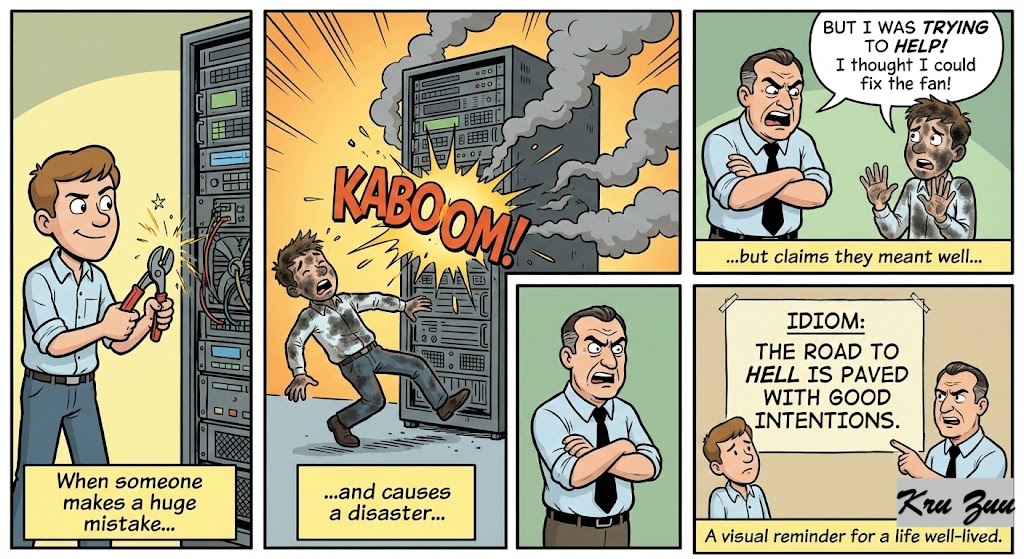
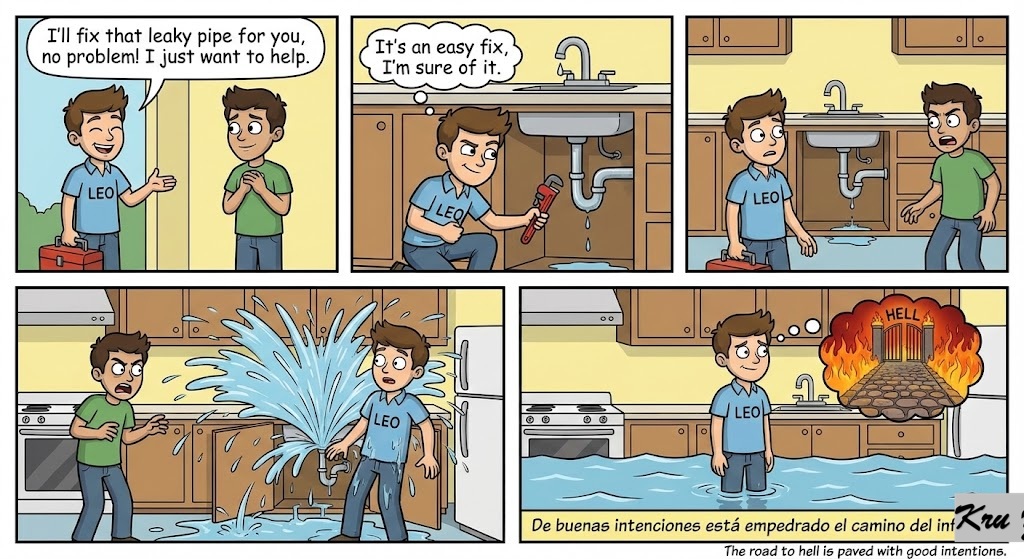
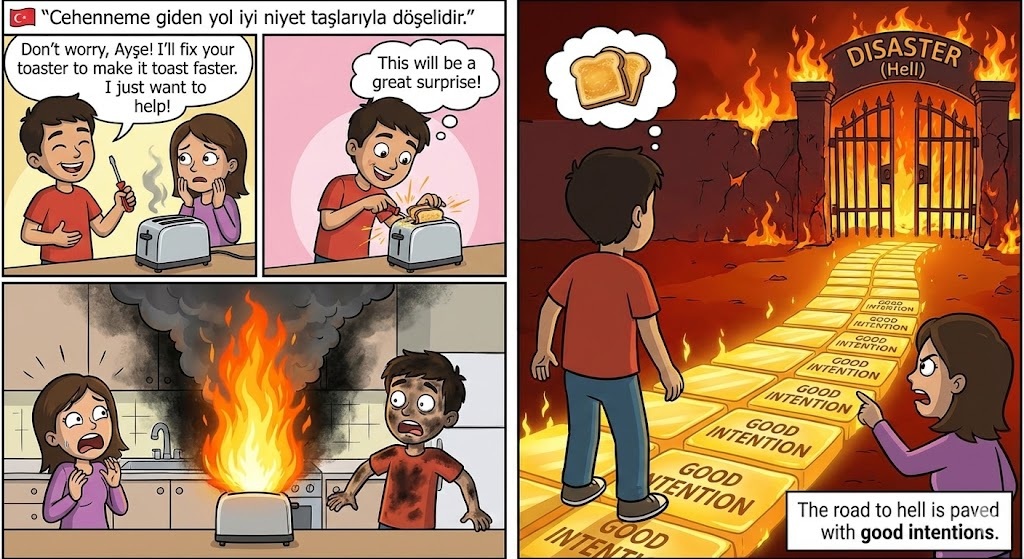
    “The road to hell is paved with good intentions.”


    😈 The Villain (The Empty Promiser)

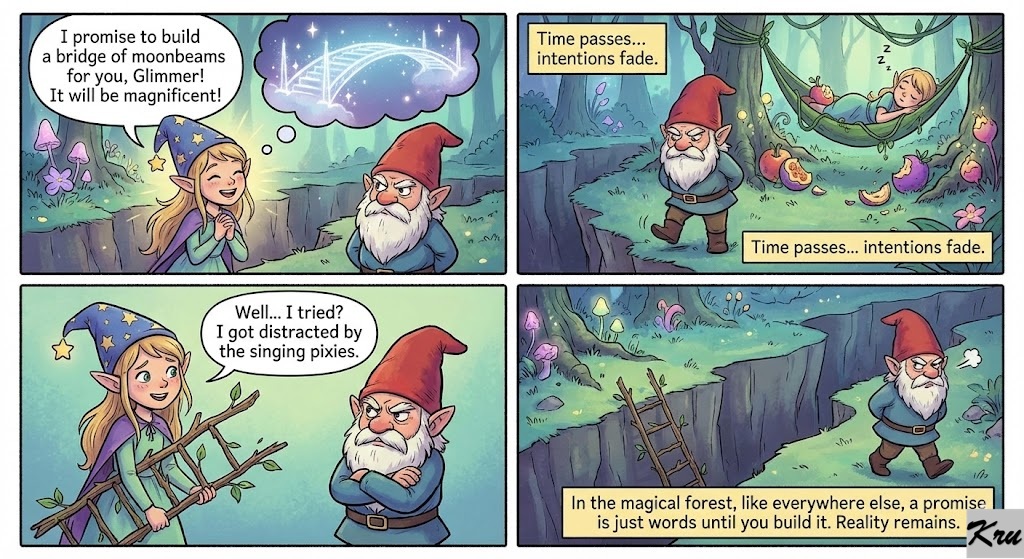
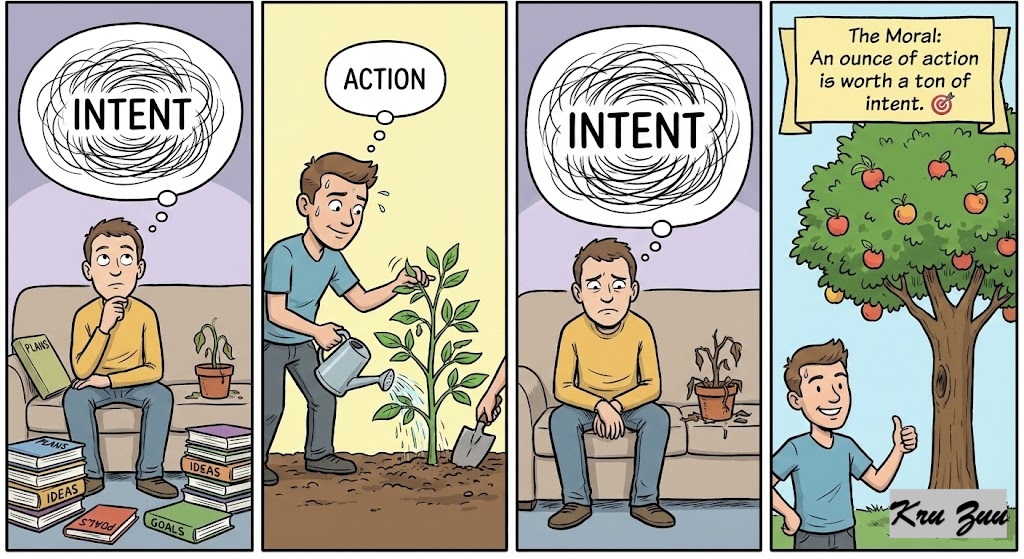
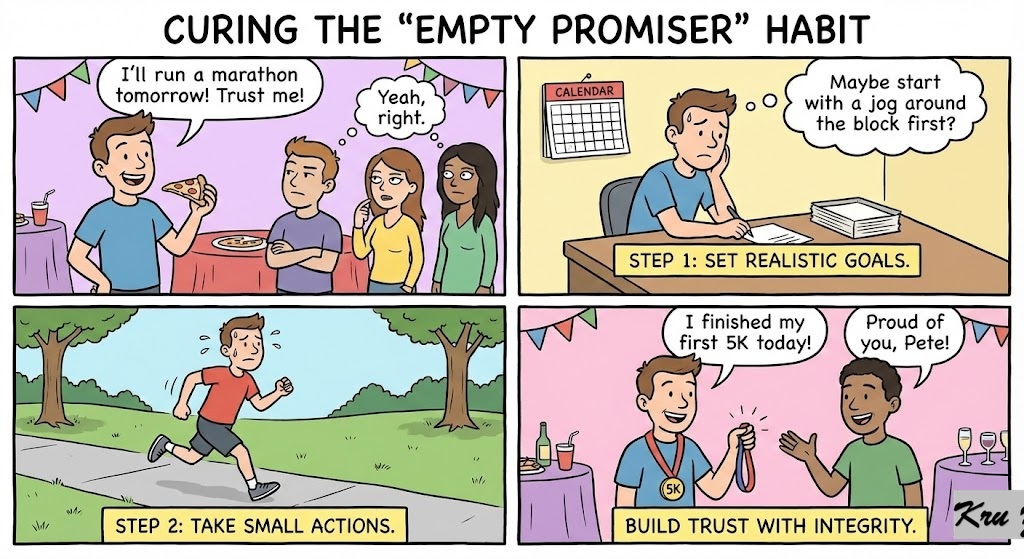
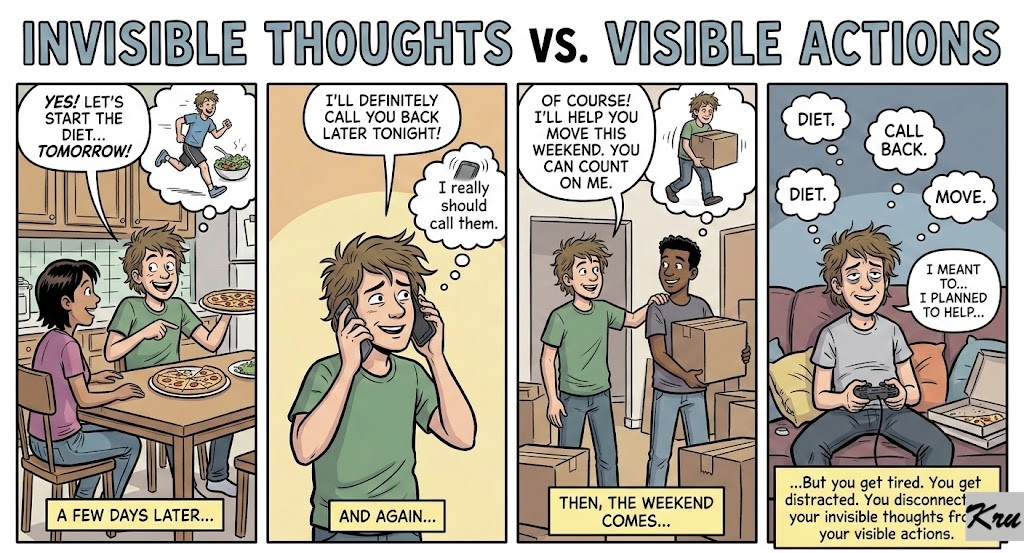
    You mean well. You always plan to help. You say, “I’ll call you back,” “I’ll start the diet tomorrow,” or “I’m definitely going to help you move this weekend.” But then… you don’t. You get tired. You get distracted. You excuse your failure by saying, “Well, I meant to do it!” You disconnect your invisible thoughts from your visible actions.

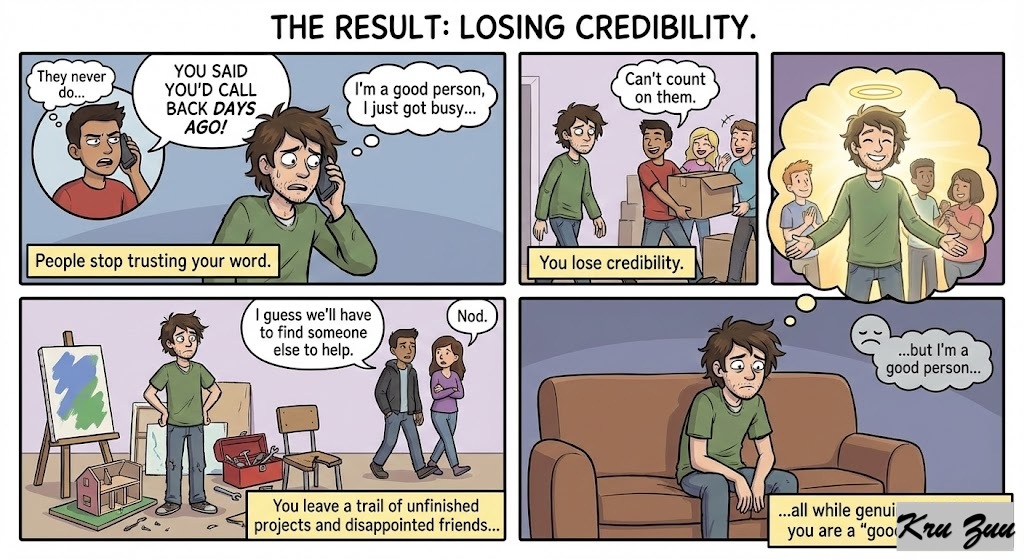
    The Result? You lose credibility. People stop trusting your word. You leave a trail of unfinished projects and disappointed friends, all while genuinely believing you are a “good person.” 🌫️


    😇 The Hero (The Reliable Executor)

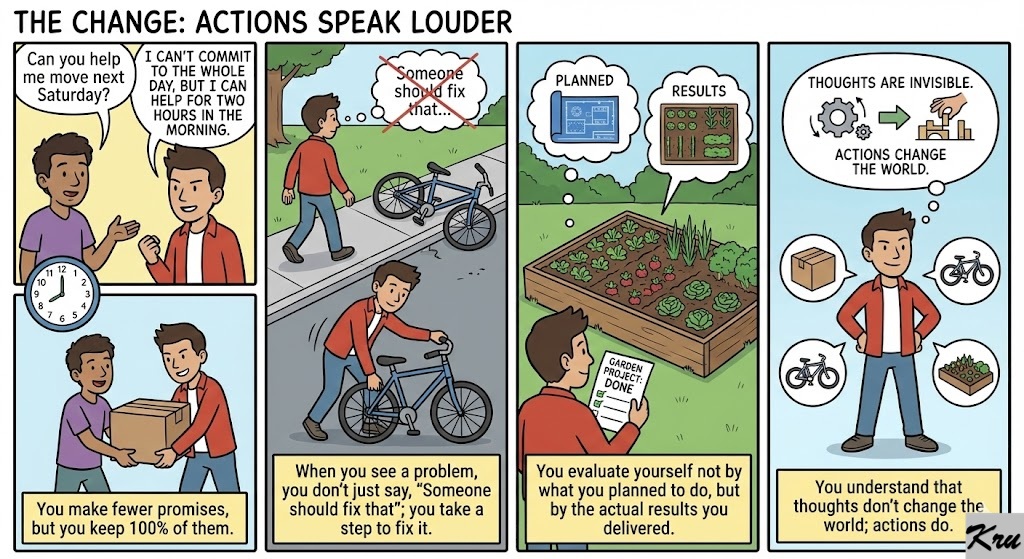
    You understand that thoughts don’t change the world; actions do. You make fewer promises, but you keep 100% of them. When you see a problem, you don’t just say, “Someone should fix that”; you take a step to fix it. You evaluate yourself not by what you planned to do, but by the actual results you delivered.

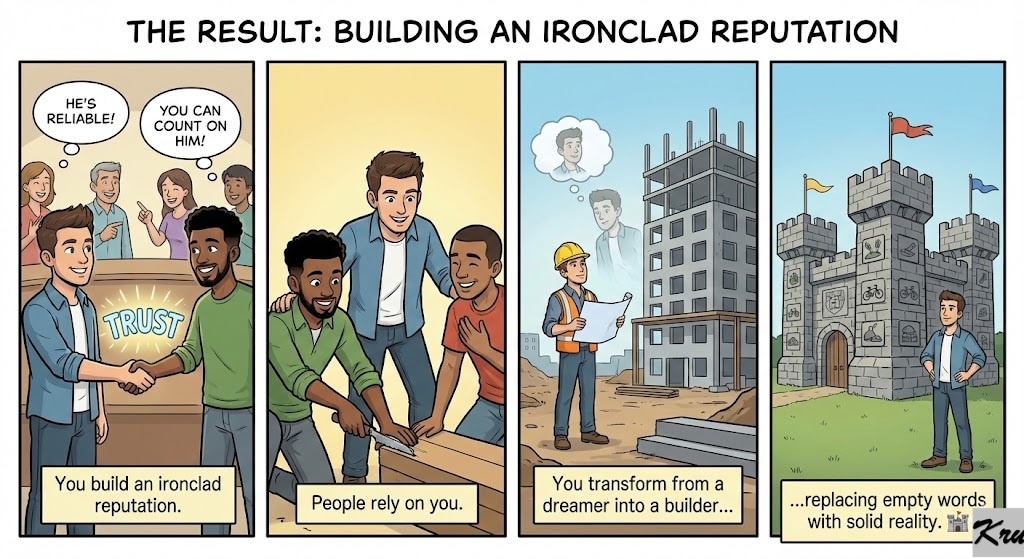
    The Result? You build an ironclad reputation. People rely on you. You transform from a dreamer into a builder, replacing empty words with solid reality. 🏰


    ⚖️ The Reality


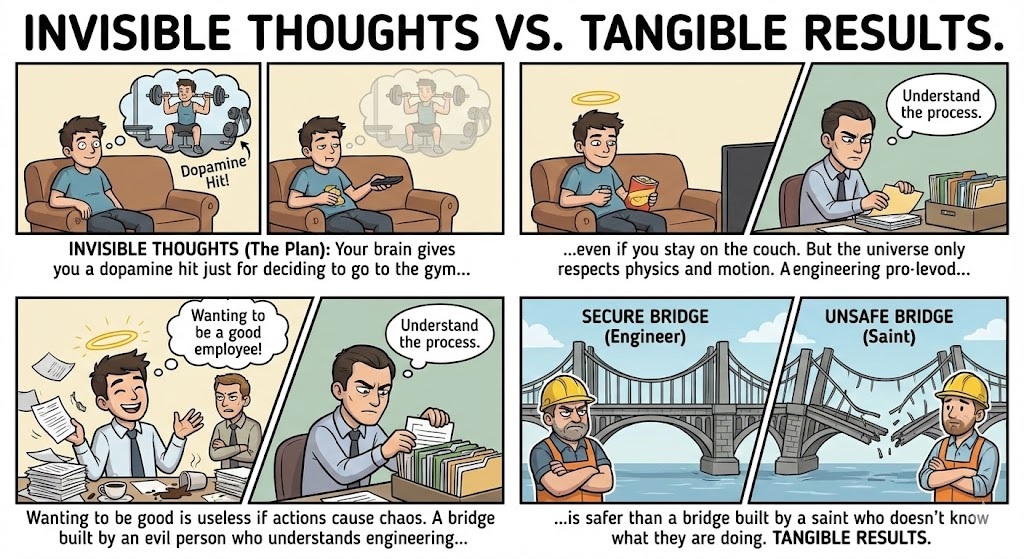
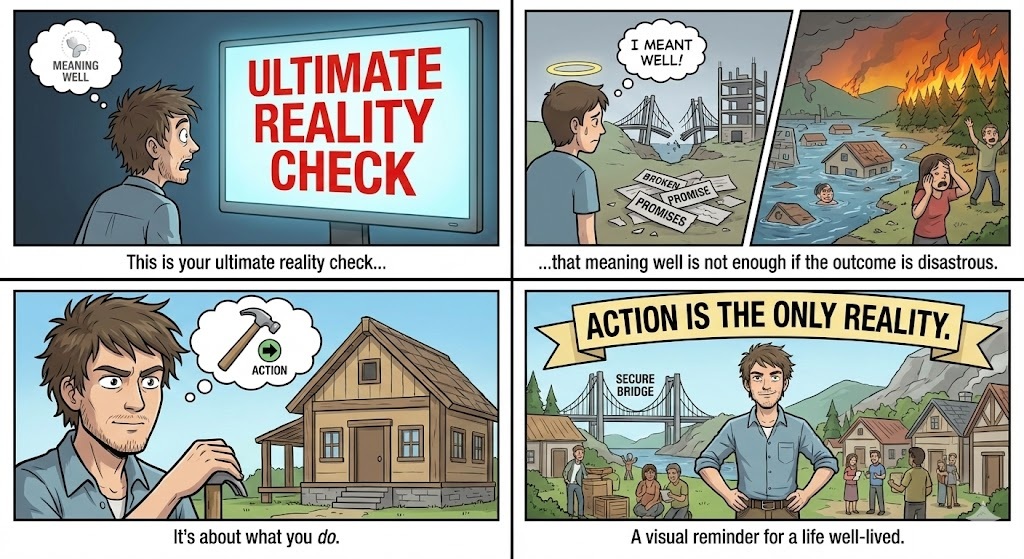
    Invisible thoughts vs. Tangible results. We live in a world where it feels good just to plan something positive. Your brain gives you a dopamine hit just for deciding to go to the gym, even if you stay on the couch. But the universe only respects physics and motion. Wanting to be a good friend, employee, or partner is useless if your actions cause chaos or neglect. A bridge built by an evil person who understands engineering is safer than a bridge built by a saint who doesn’t know what they are doing.


    💎 The Secret

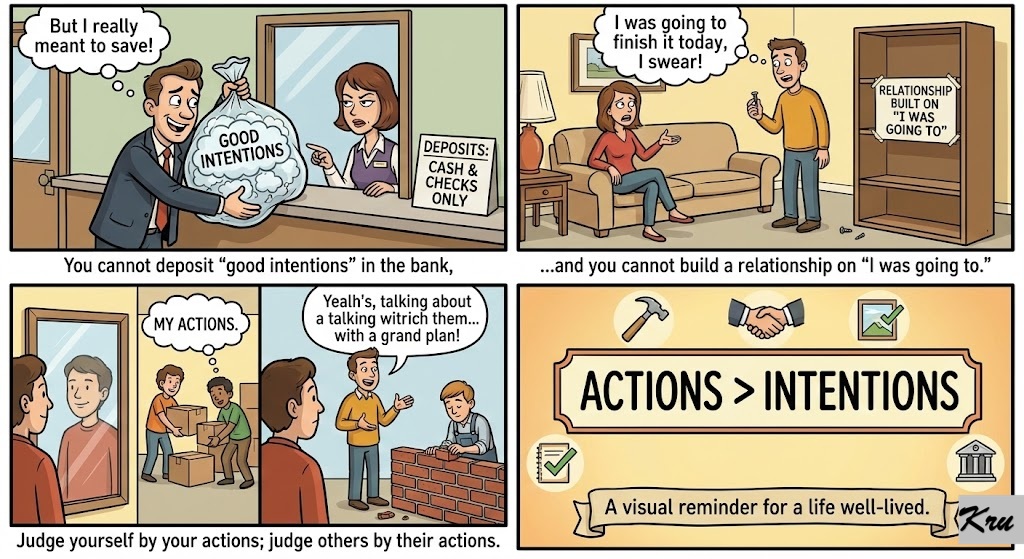
    You cannot deposit “good intentions” in the bank, and you cannot build a relationship on “I was going to.” Judge yourself by your actions; judge others by their actions.

    🧐 The Anatomy of the Proverb


    This is your ultimate reality check that meaning well is not enough if the outcome is disastrous.


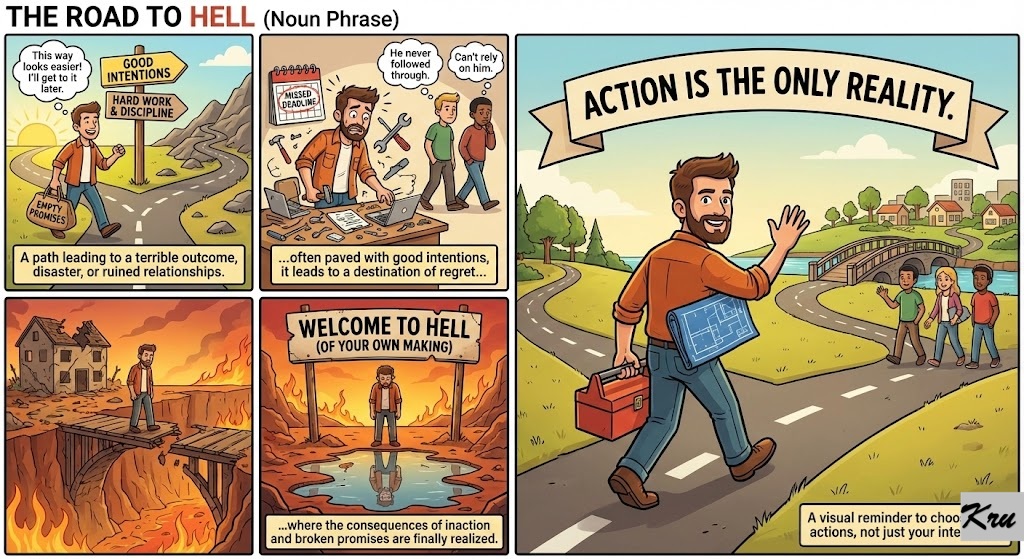
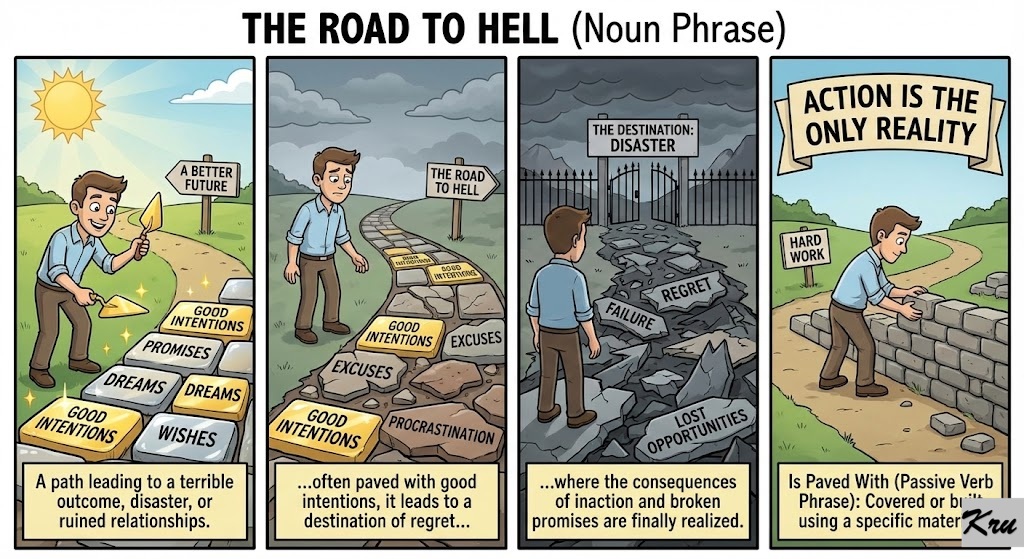
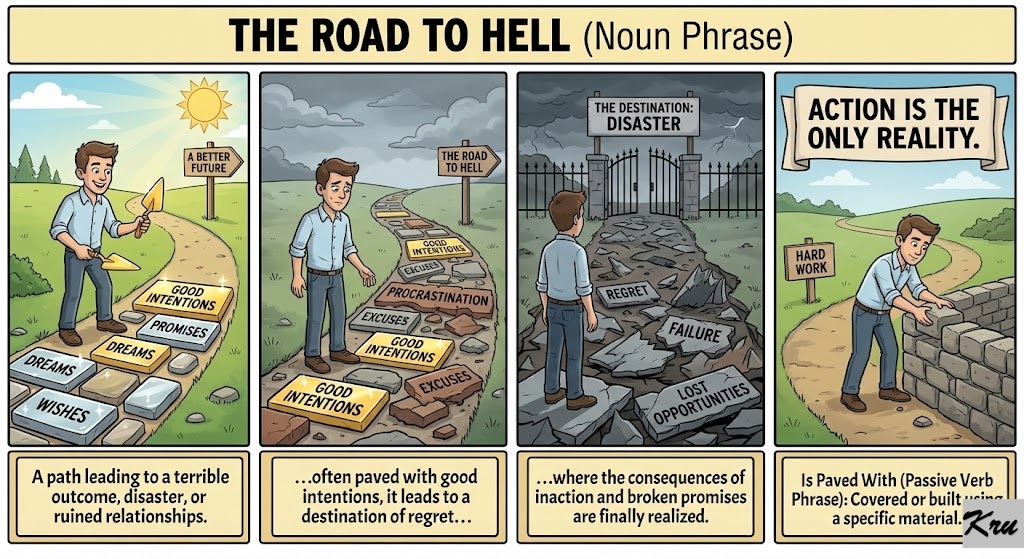
    The Road to Hell (Noun Phrase): A path leading to a terrible outcome, disaster, or ruined relationships.


    Is Paved With (Passive Verb Phrase): Covered or built using a specific material.


    Good Intentions (Noun Phrase): Positive desires, wanting to do the right thing, meaning well.


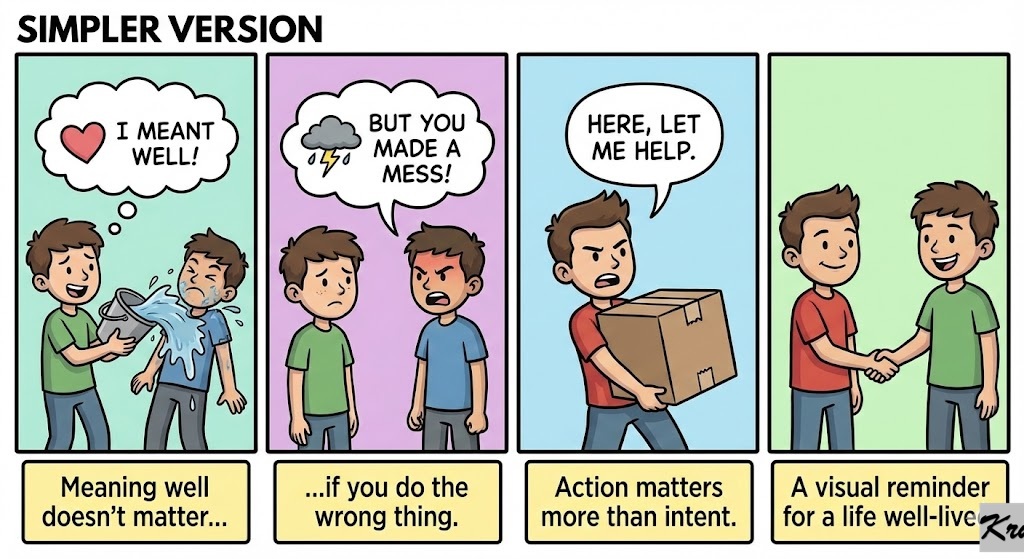
    Simpler Version: Meaning well doesn’t matter if you do the wrong thing. / Action matters more than intent.


    📚 Vocabulary Vault


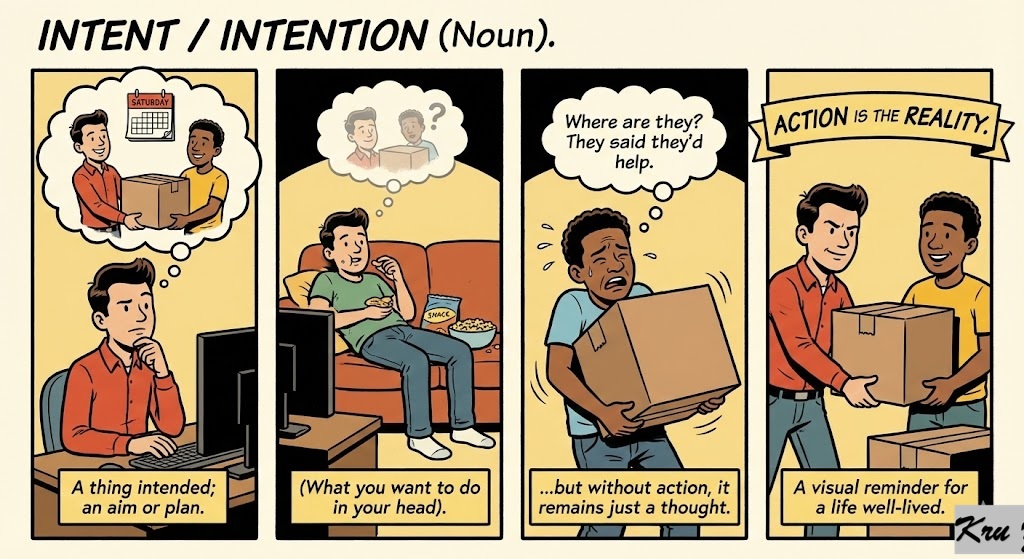
    Intent / Intention (Noun):
    A thing intended; an aim or plan. (What you want to do in your head).


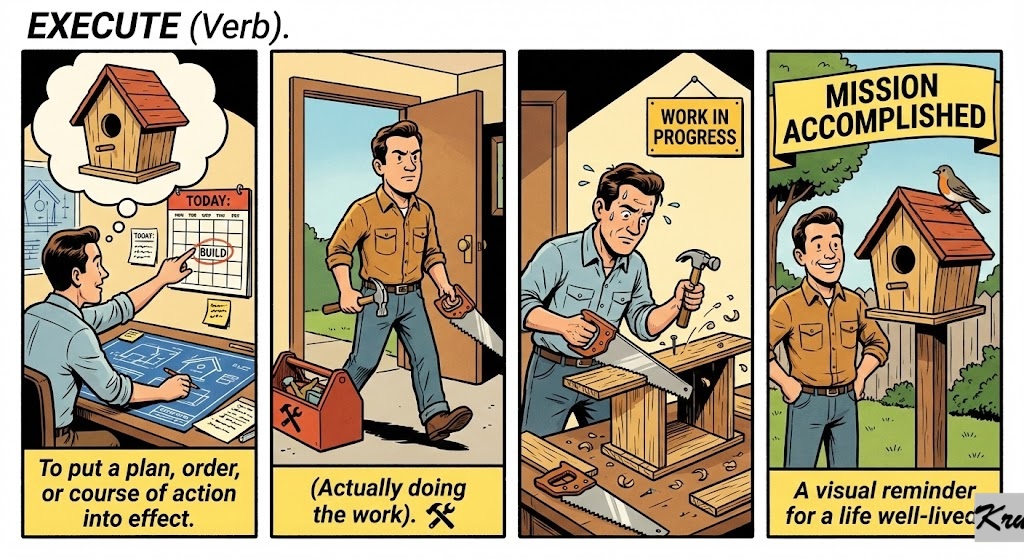
    Execute (Verb): To put a plan, order, or course of action into effect. (Actually doing the work). 🛠️


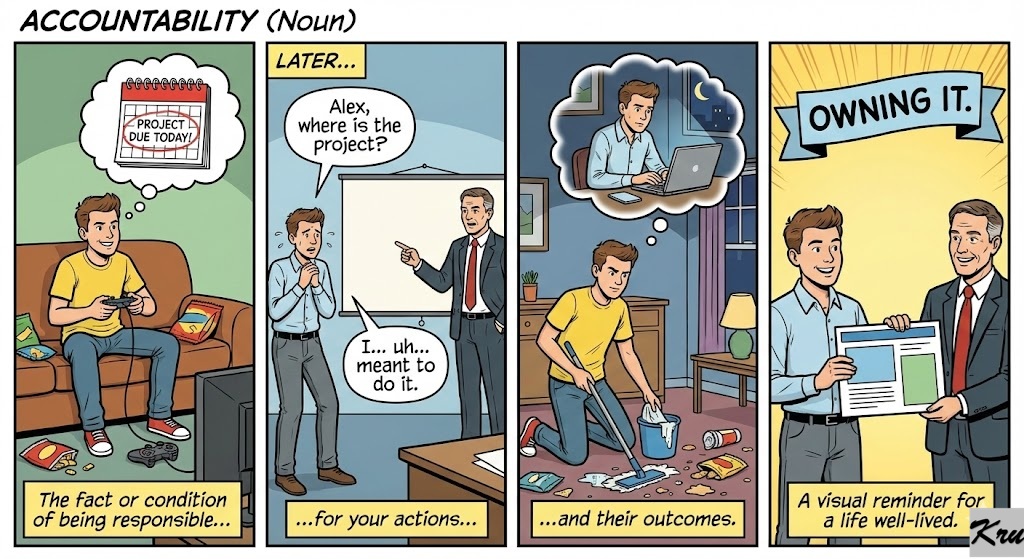
    Accountability (Noun): The fact or condition of being responsible for your actions and their outcomes.


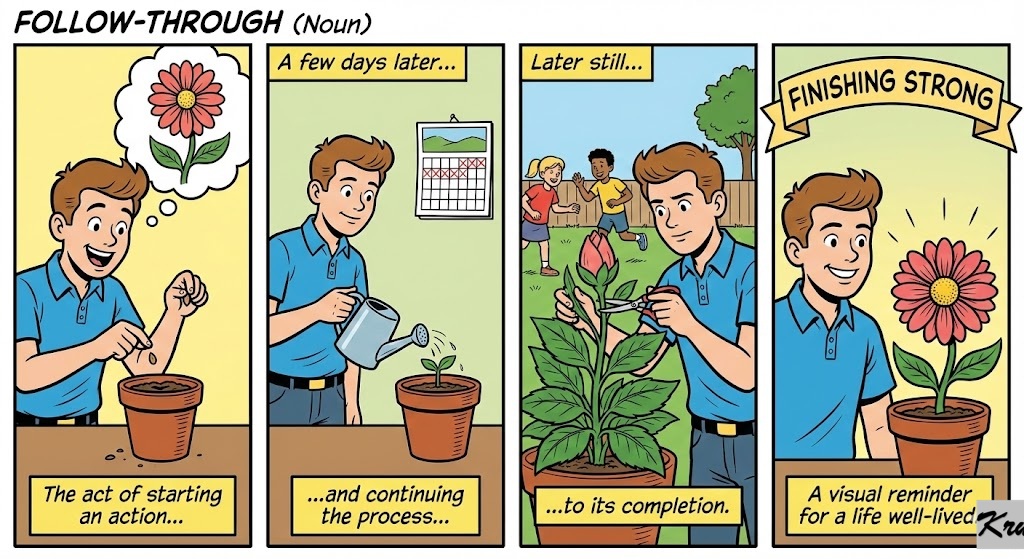
    Follow-through (Noun): The act of completing an action or process that you have started.


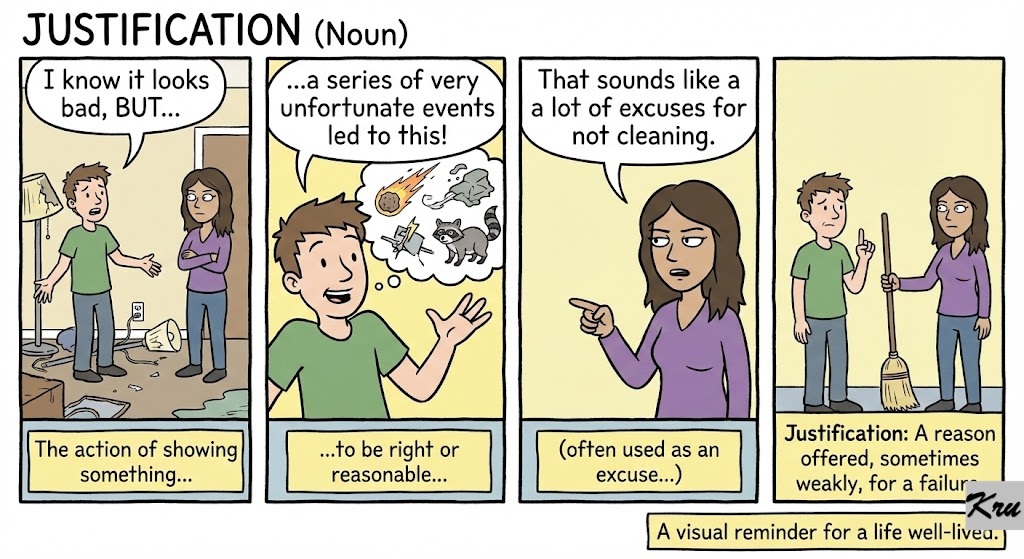
    Justification (Noun): The action of showing something to be right or reasonable (often used as an excuse for failing).


    🧠 Grammar Focus: Idioms as Bossing/Parenting Tools


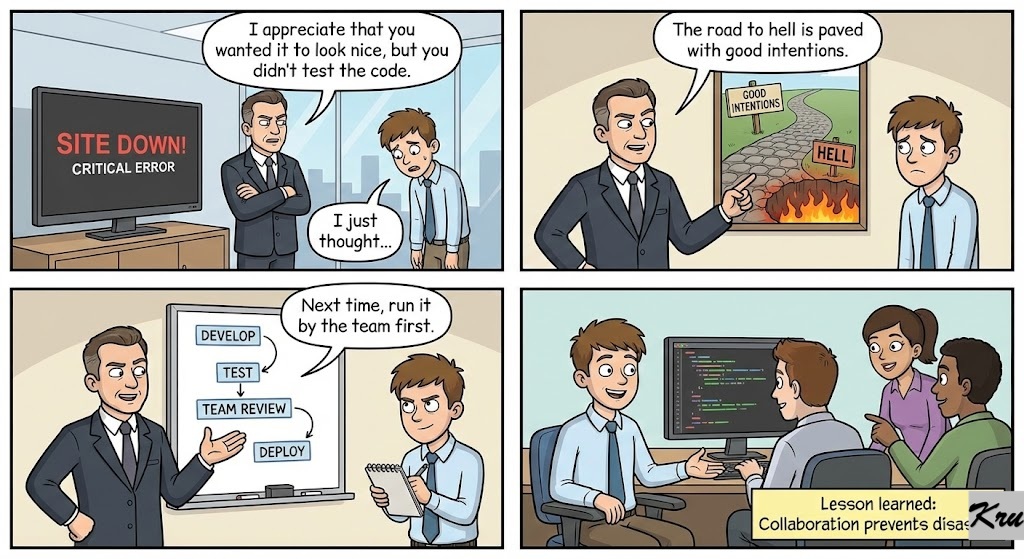
    We often use this idiom when someone makes a huge mistake but tries to avoid punishment by saying, “But I was trying to help!”


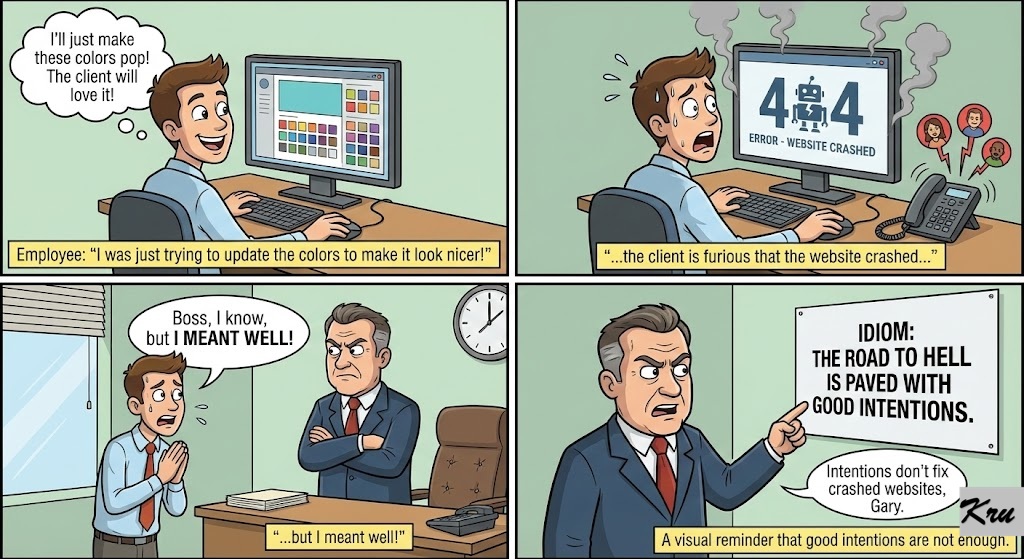
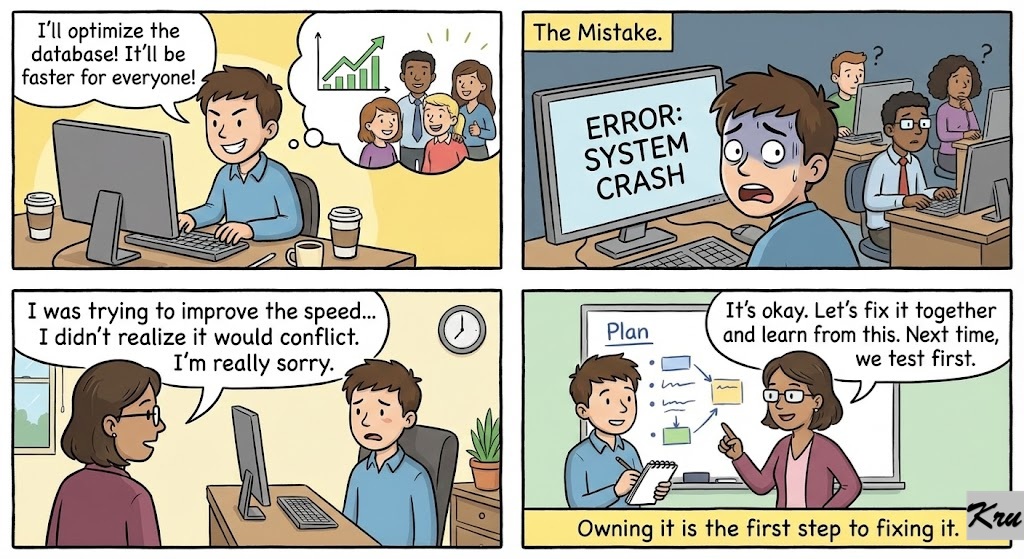
    Employee: “Boss, I know the client is furious that the website crashed, but I was just trying to update the colors to make it look nicer! I meant well!”


    Boss: “I appreciate that you wanted it to look nice, but you didn’t test the code. The road to hell is paved with good intentions. Next time, run it by the team first.”

    📜 History: Origin and Spread


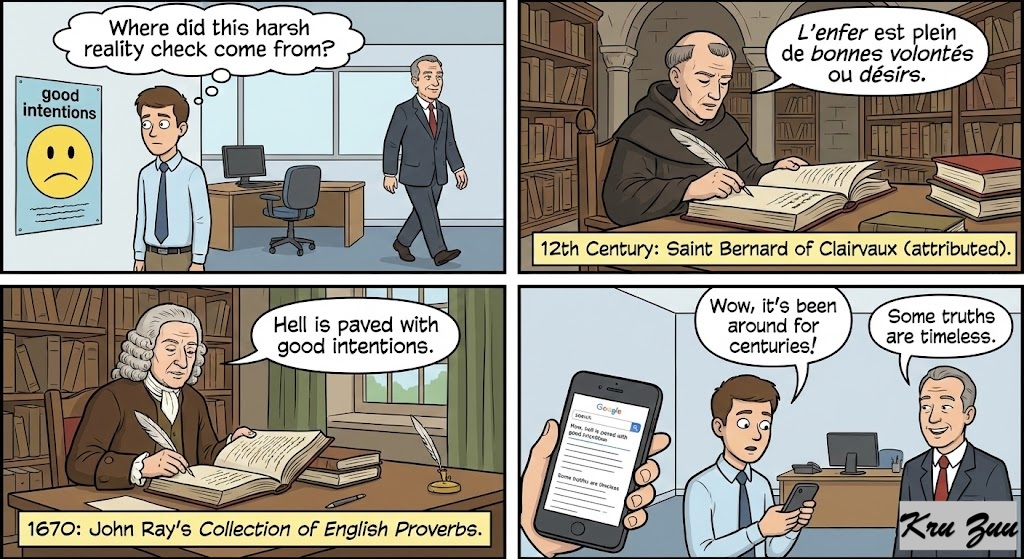
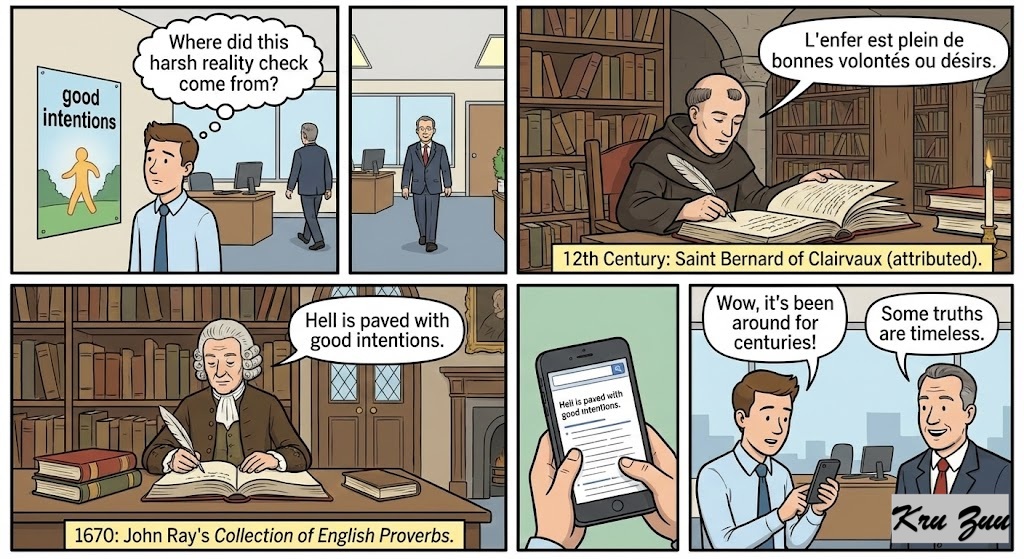
    Where did this harsh reality check come from?


    The Origin: The exact phrasing we use today was popularized in the 19th century, but the concept is ancient. It is often attributed to Saint Bernard of Clairvaux (around 1150 AD), who supposedly wrote, “Hell is full of good wishes or desires.”


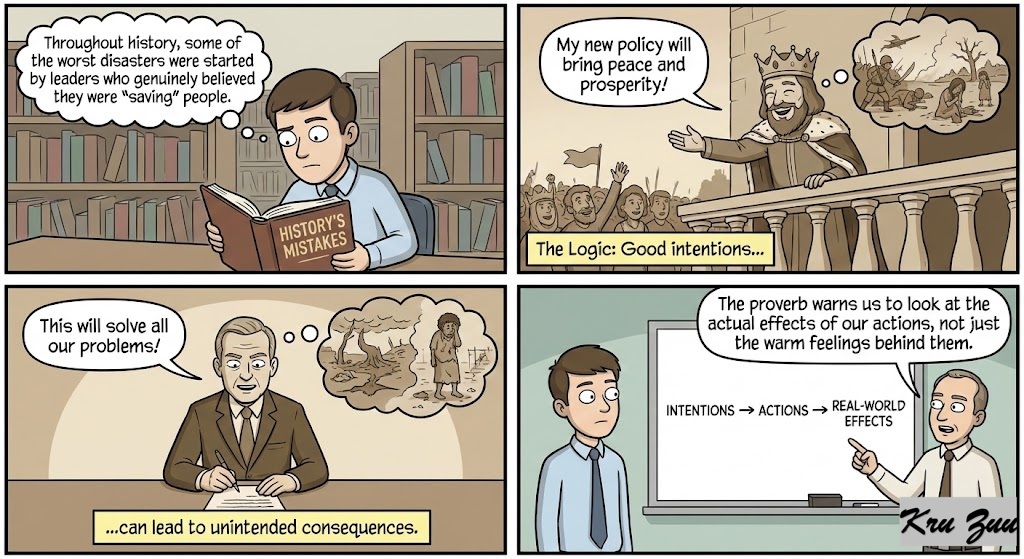
    The Logic: Throughout history, some of the worst disasters, wars, and bad policies were started by leaders who genuinely believed they were “saving” people. The proverb warns us to look at the actual effects of our actions, not just the warm feelings behind them.


    Global Cousins


    🇪🇸 Spanish: “De buenas intenciones está empedrado el camino del infierno.” (Exact same translation).


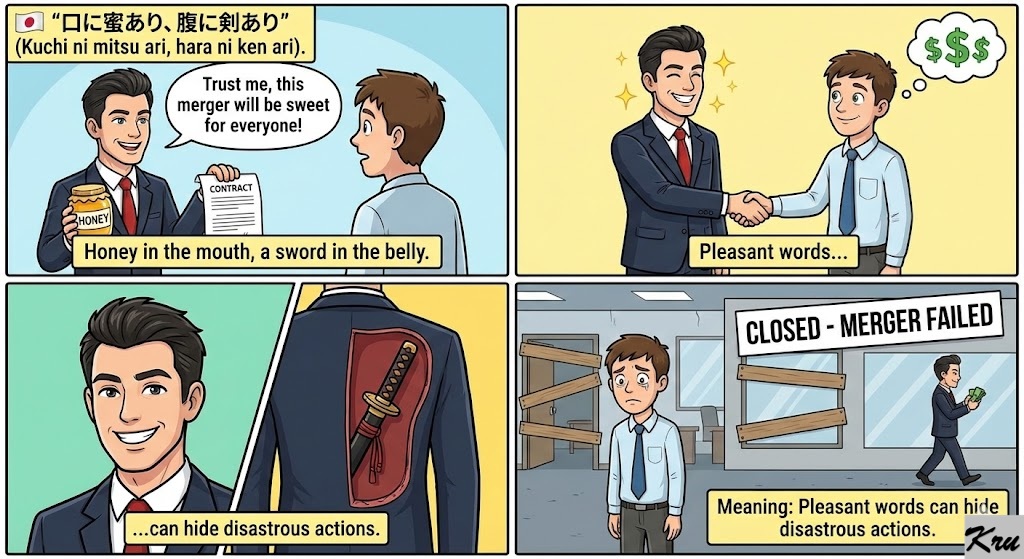
    🇯🇵 Japanese: “口に蜜あり、腹に剣あり” (Kuchi ni mitsu ari, hara ni ken ari — Honey in the mouth, a sword in the belly. Meaning: Pleasant words can hide disastrous actions).


    🇹🇷 Turkish: “Cehenneme giden yol iyi niyet taşlarıyla döşelidir.” (Exact translation).

    🎭 Short Story: The Great Garden Disaster 🌱🐱🐔🐸


    Let’s return to the magical forest to see what happens when promises meet reality.


    🌟 The Cast


    Cleo the Cat: Elegant, means well, but easily distracted by luxury. 😼


    Cluck the Chicken: Highly enthusiastic, makes big promises, has zero focus. 🐔


    Fred the Frog: The pragmatic, hardworking gardener. 🐸


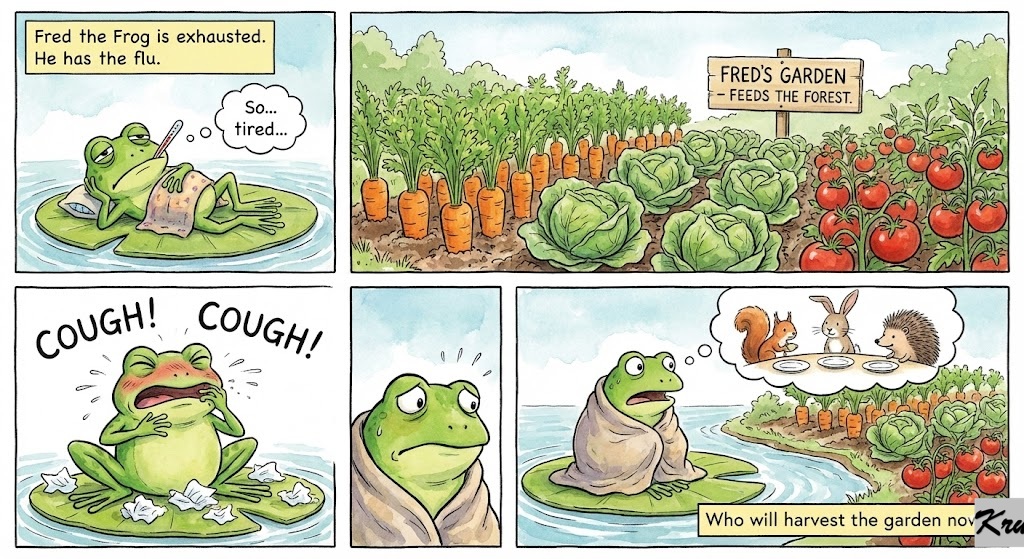
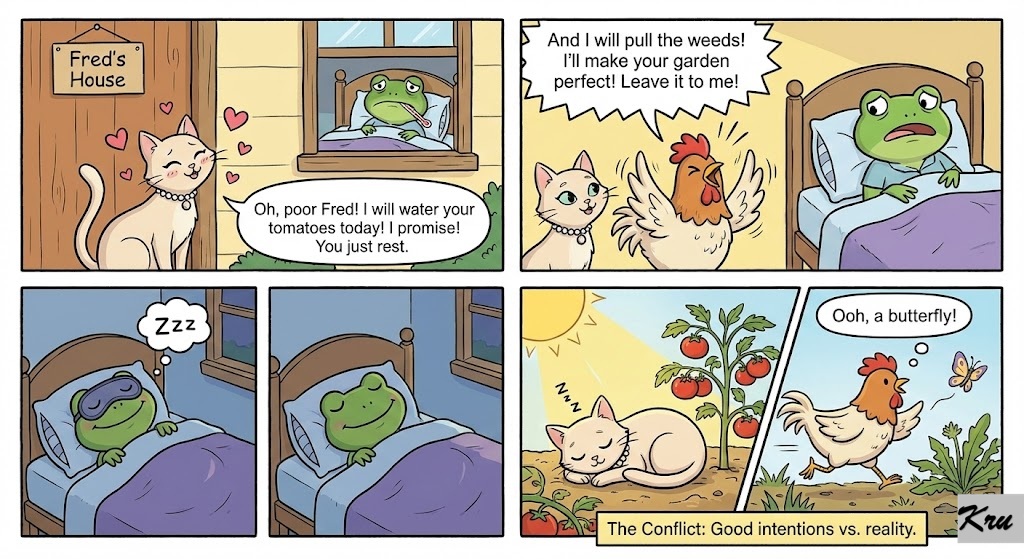
    The Situation: Fred the Frog is exhausted. He has a massive vegetable garden that feeds the whole forest, but he has the flu. He lies on his lily pad, coughing.


    The Conflict: Cleo and Cluck come to visit. “Oh, poor Fred!” Cleo purrs, rubbing her head against his door. “I will water your tomatoes today! I promise! You just rest.” “And I will pull the weeds!” squawks Cluck, flapping his wings. “I’ll make your garden perfect! Leave it to me!” Fred sighs with relief, closes his eyes, and goes to sleep.


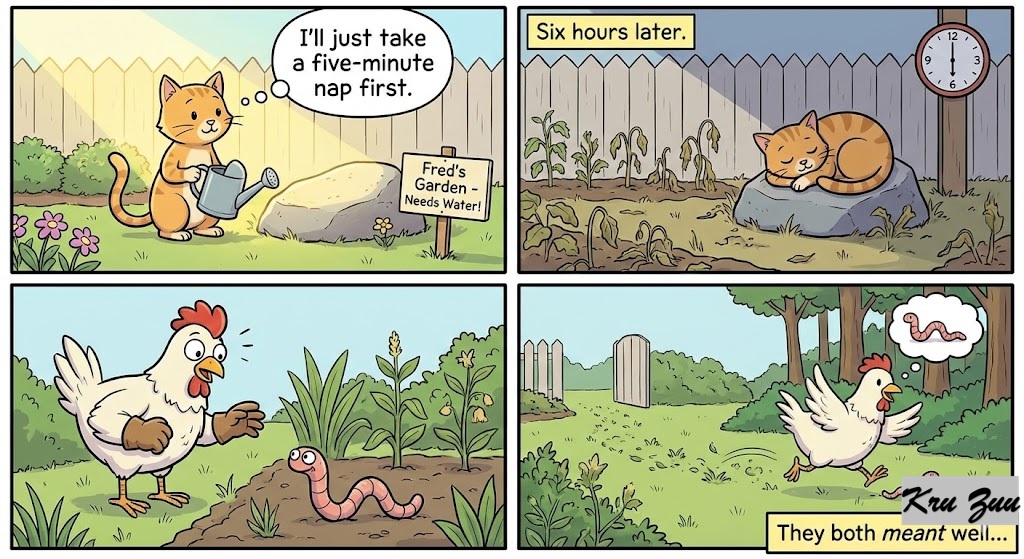
    The Reaction: Cleo walks to the garden, picks up the watering can, but then notices a beautiful, warm sunbeam hitting a rock. “I’ll just take a five-minute nap first,” she thinks. She meant to water the plants. She sleeps for six hours. Meanwhile, Cluck marches into the garden to pull weeds. He sees a juicy worm. He chases the worm out of the garden, into the woods, and completely forgets about the weeds. He meant to clean the garden.


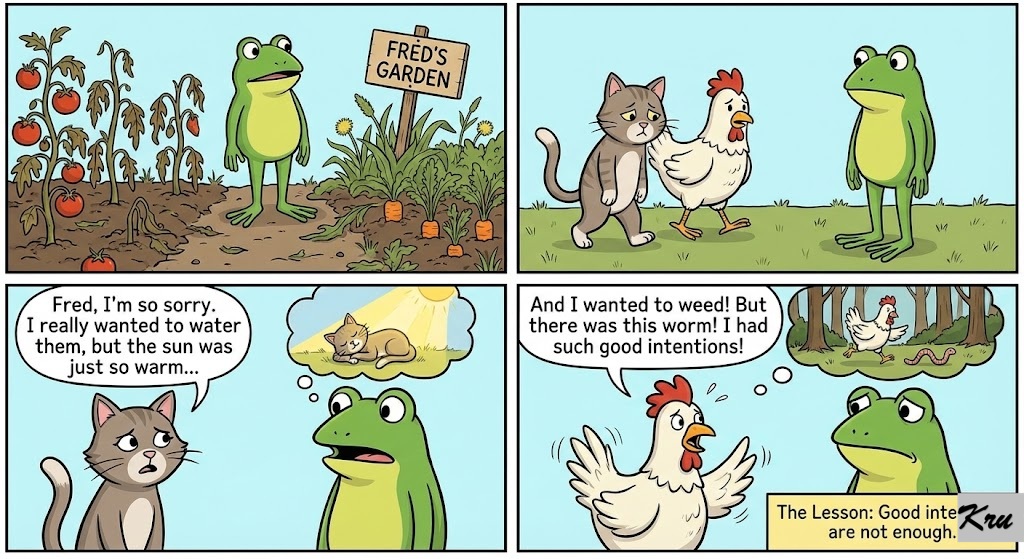
    The Lesson: The next morning, Fred wakes up feeling better. He walks to the garden. The tomatoes are completely dried out and dying from the heat. The weeds have strangled the carrots. Cleo and Cluck walk up, looking guilty. “Fred, I’m so sorry,” Cleo says. “I really wanted to water them, but the sun was just so warm…” “And I wanted to weed!” Cluck cries. “But there was this worm! I had such good intentions!”


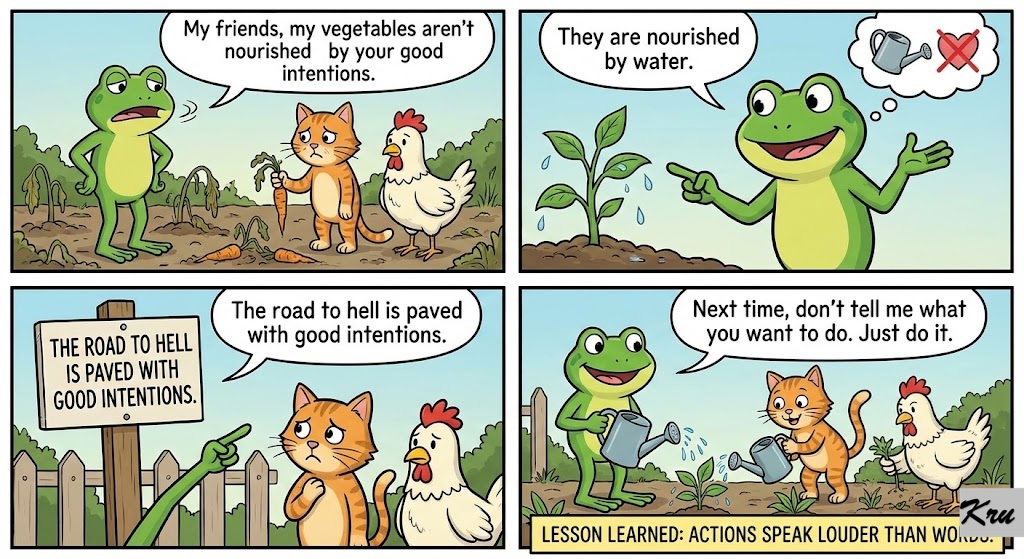
    Fred shakes his green head. “My friends, my vegetables aren’t nourished by your good intentions. They are nourished by water. The road to hell is paved with good intentions. Next time, don’t tell me what you want to do. Just do it.”


    The Moral: An ounce of action is worth a ton of intent. 🎯

    🎓 Lesson for English Learners


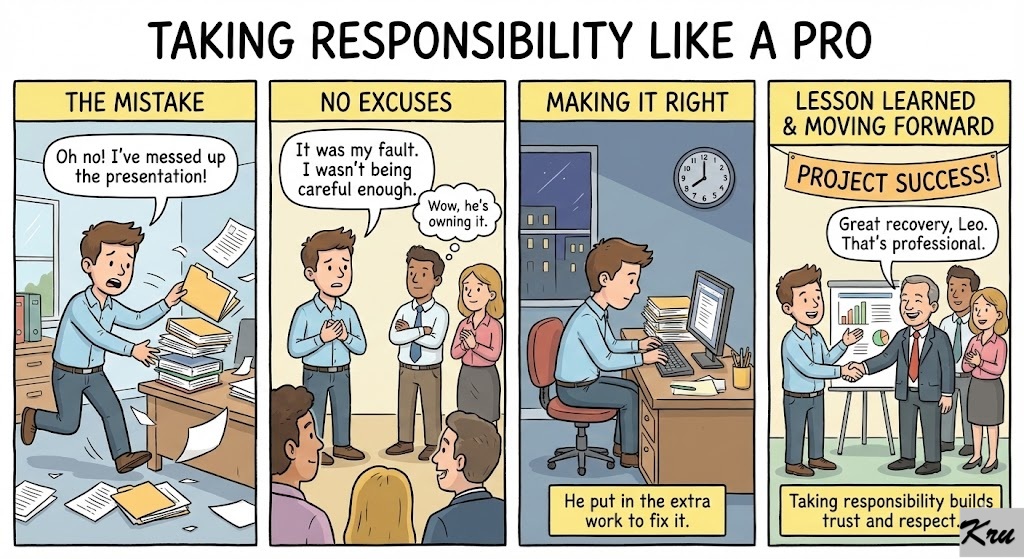
    Taking Responsibility Like a Pro.


    Situation: You made a mistake at work. You were trying to do something good, but it failed.


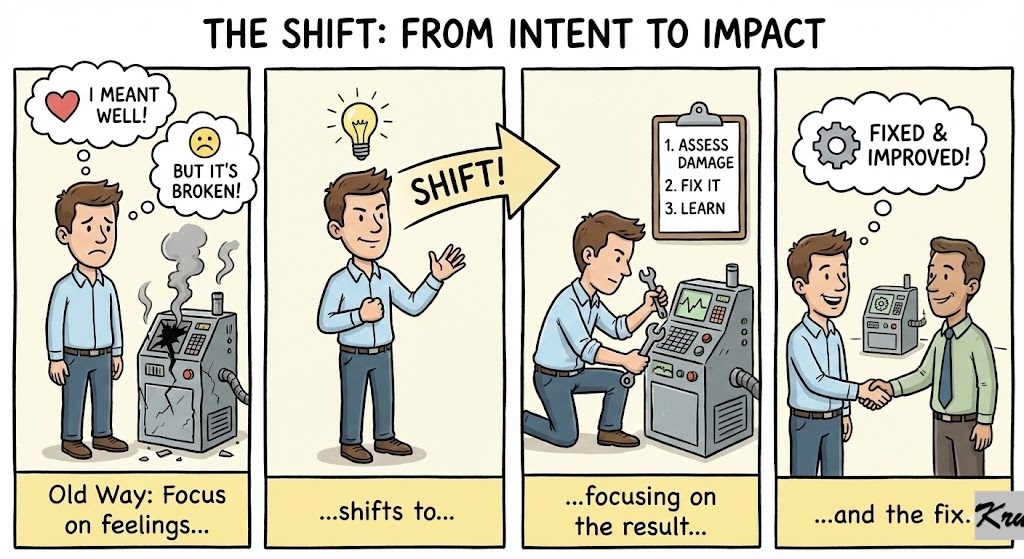
    The Shift: Do NOT focus on your feelings (“I meant well”). Focus on the result and the fix.


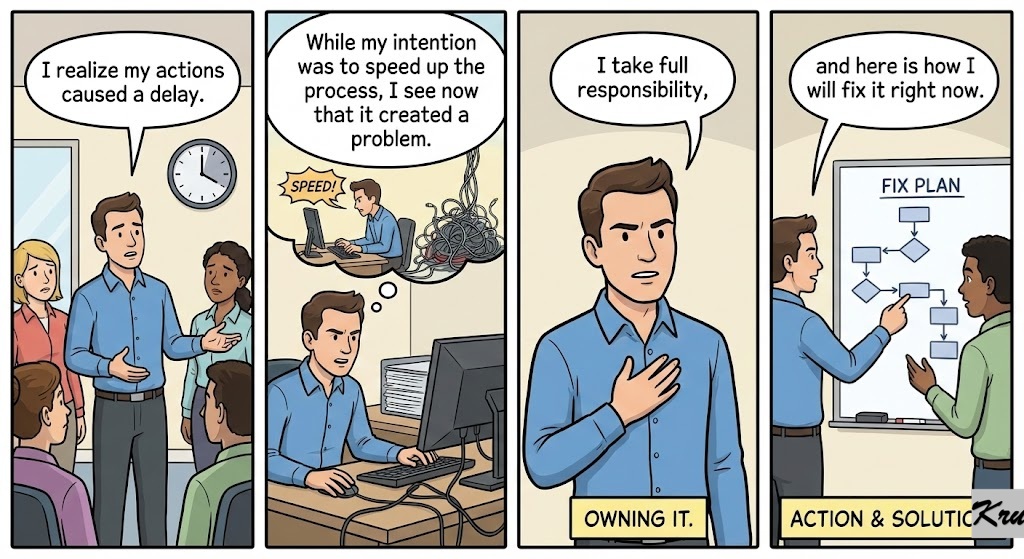
    You Say: “I realize my actions caused a delay. While my intention was to speed up the process, I see now that it created a problem. I take full responsibility, and here is how I will fix it right now.”


    💬 Your Turn: The “Do It Now” Challenge 🚀


    Do you want to cure your “Empty Promiser” habits?


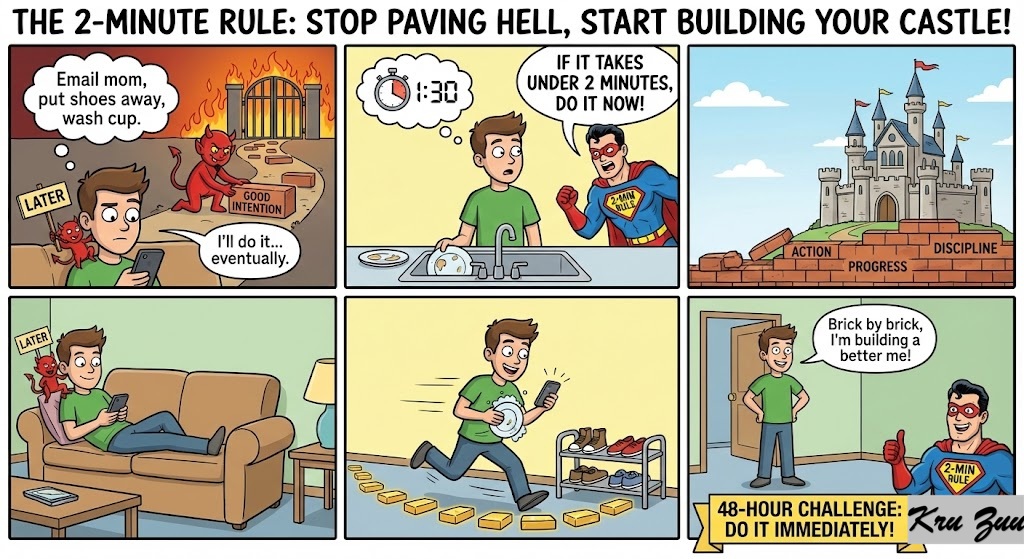
    The Challenge: The 2-Minute Rule. The Action: For the next 48 hours, if you have a “good intention” to do something (text a friend, put your shoes away, send an email, wash a dish) and it takes less than 2 minutes to complete… Do not plan it. Do not promise it. Do it immediately. Stop paving the road to hell, and start laying the bricks for your own castle.


    👇 Question for the comments:
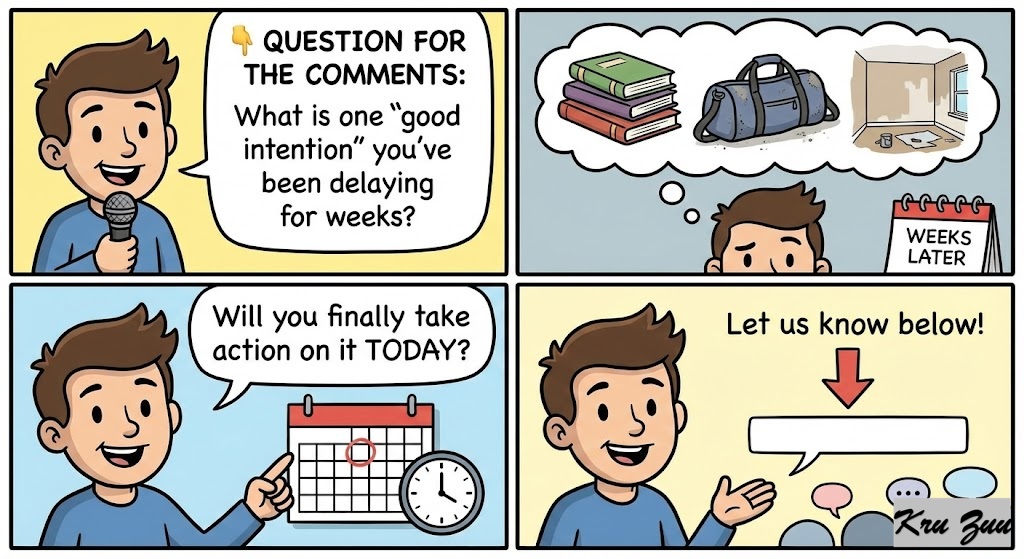
    What is one “good intention” you’ve been delaying for weeks? Will you finally take action on it today? Let us know below!

    By Zubeyir YURTKURAN

    https://www.facebook.com/BrainBattleground/

    https://www.facebook.com/zubeyr.yurtkuran/

    https://www.instagram.com/zubeyryurtkuran/
    https://www.youtube.com/@BrainBattleground-b3p

    https://www.instagram.com/brainbattleground/

  • 🌳 The Daily Shield: The Trap of the Dabbler

    🌳 The Daily Shield: The Trap of the Dabbler

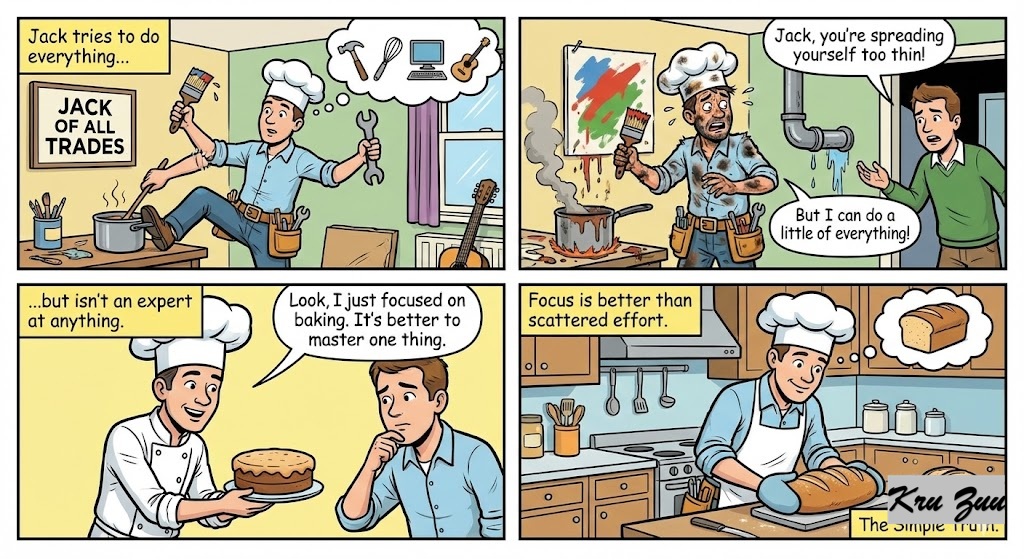
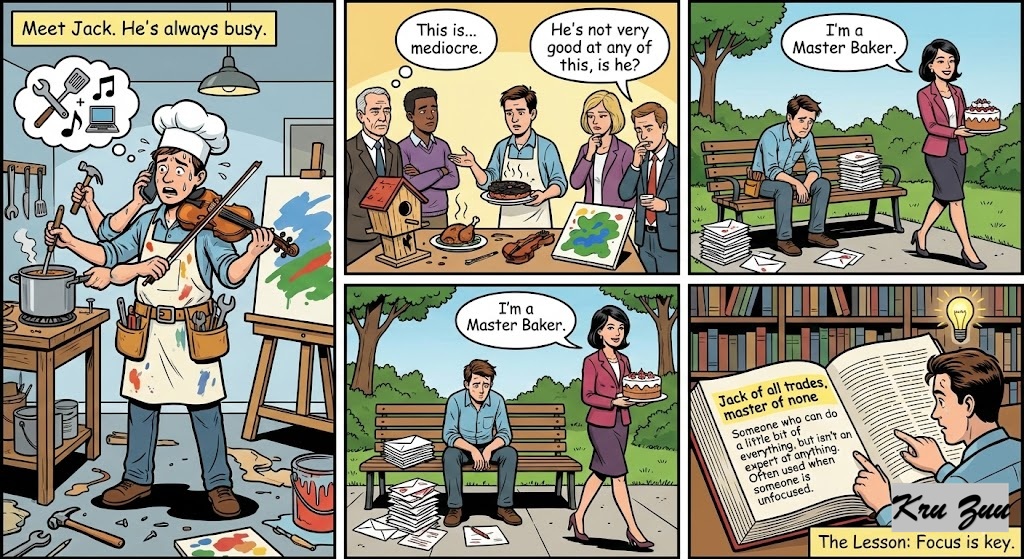
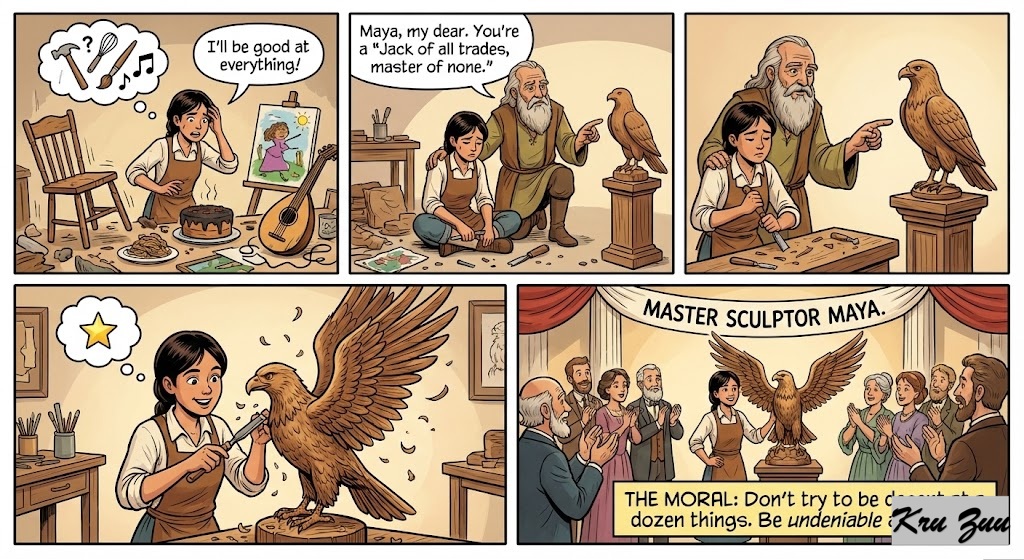
    “Jack of all trades, master of none.”


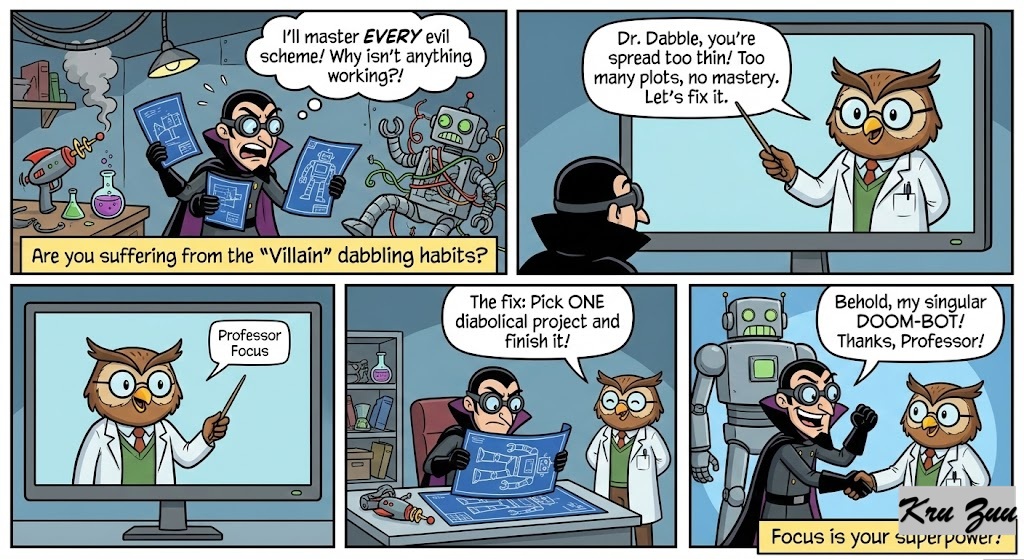
    😈 The Villain (The Scattered Dabbler)

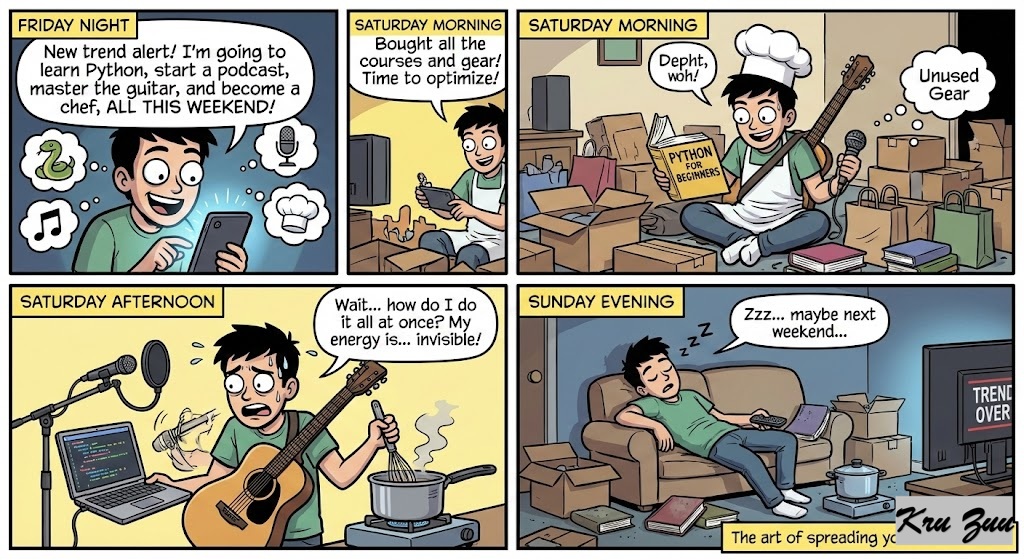
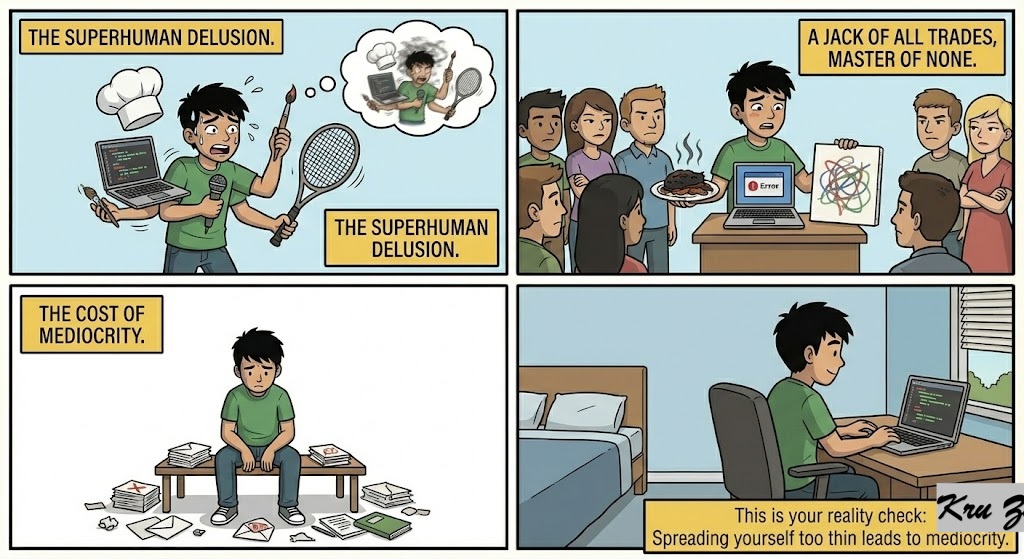
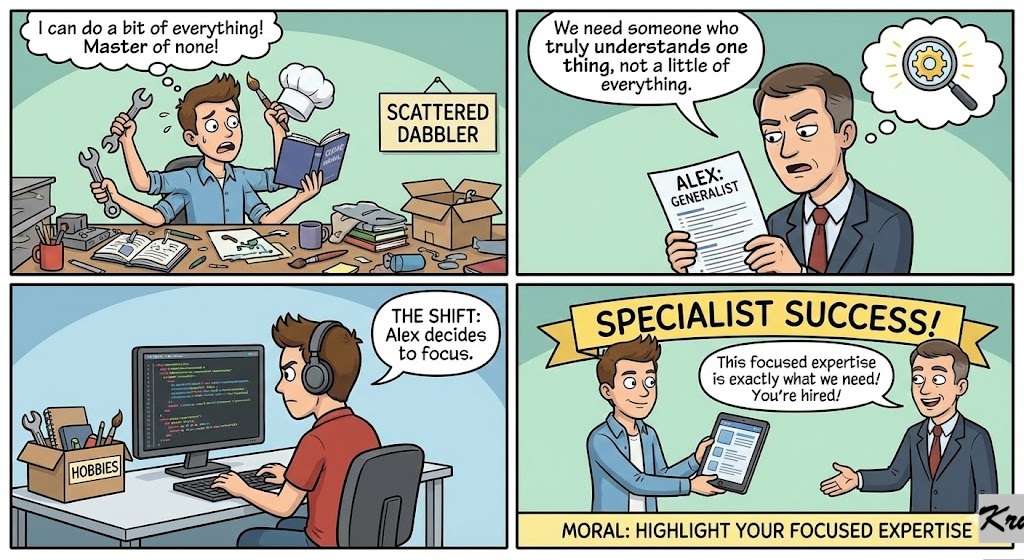
    You see a new trend. You want to learn it. 🤹‍♂️ “I’m going to learn Python, start a podcast, master the guitar, and become a chef, all this weekend!” You spread your energy so thin it becomes invisible. You buy courses you never finish and gear you never use.

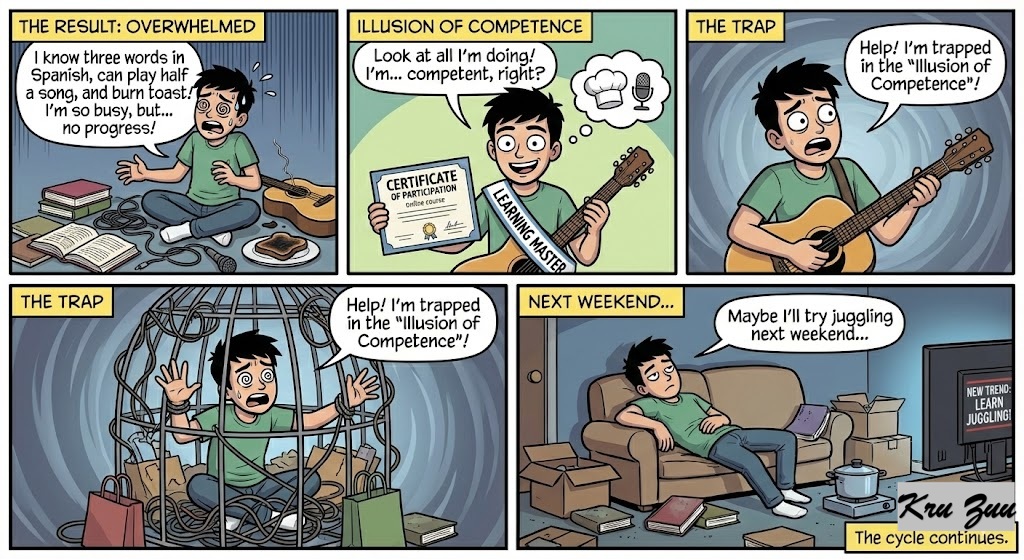
    The Result? You are always overwhelmed. You know three words in Spanish, can play half a song on the guitar, and burn toast. You feel busy, but you never actually make progress. You are trapped in the “Illusion of Competence.” 🌪️


    😇 The Hero (The Focused Master)

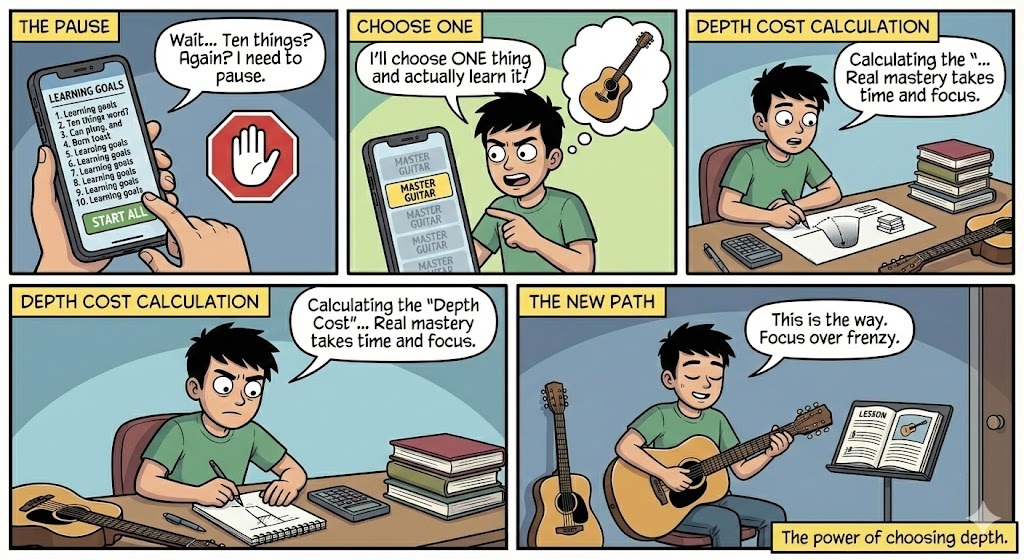
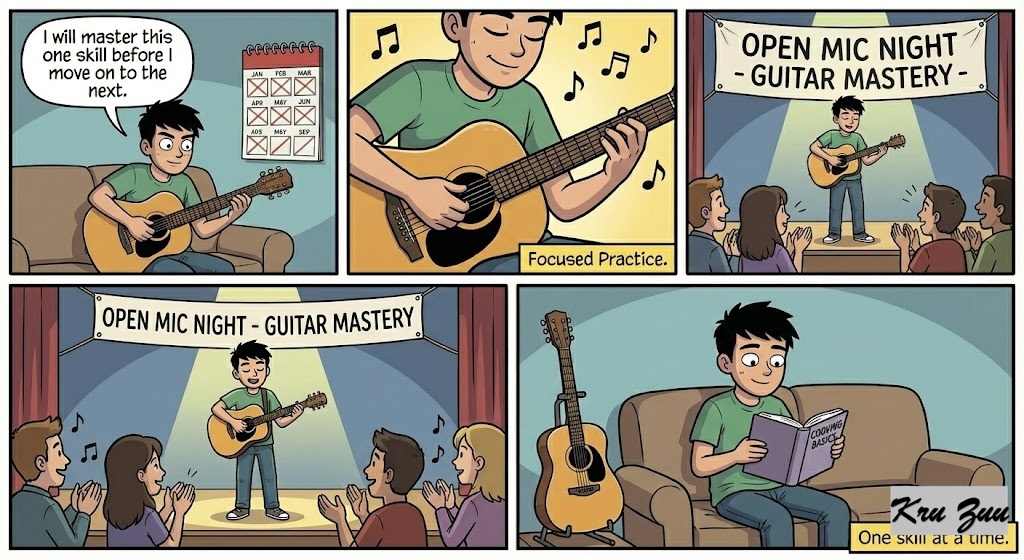
    You see ten things you want to learn. You pause. 🛑 Instead of doing everything poorly, you choose one thing. You calculate the “Depth Cost.”

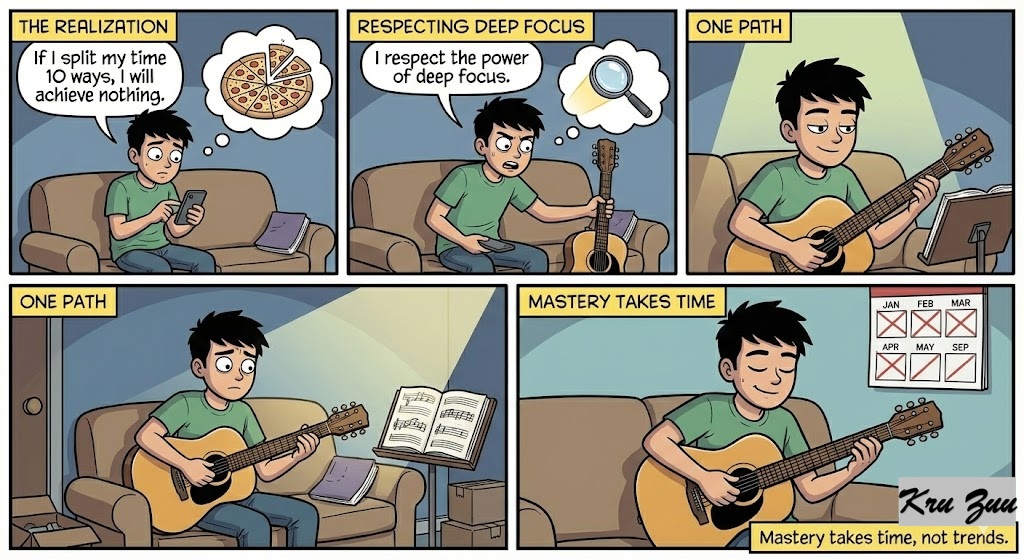
    You think: “If I split my time 10 ways, I will achieve nothing.” You respect the power of deep focus.

    You say: “I will master this one skill before I move on to the next.”

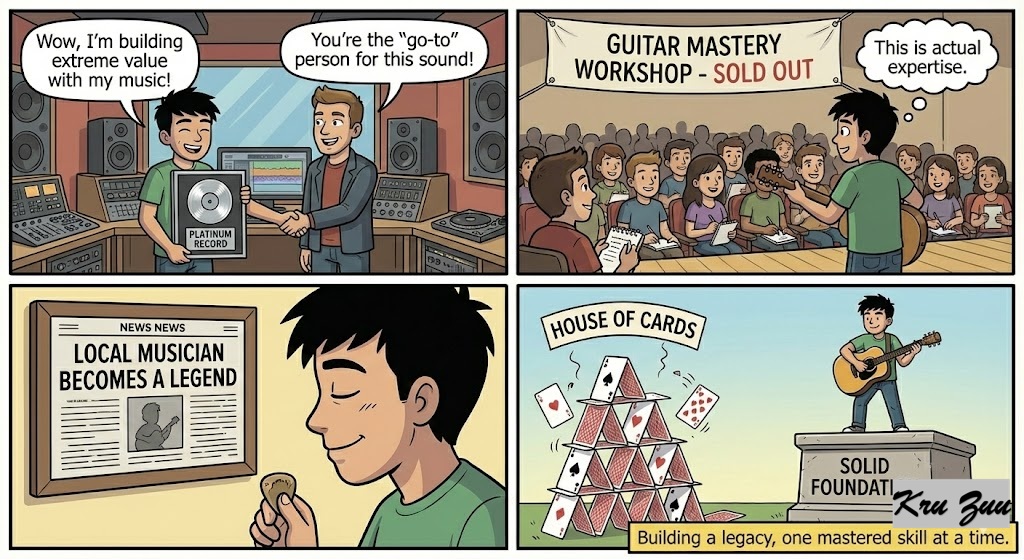
    The Result? You build extreme value. You become the “go-to” person for your skill. You experience the deep satisfaction of actual expertise. You build a solid foundation, not a house of cards. 🏰


    ⚖️ The Reality


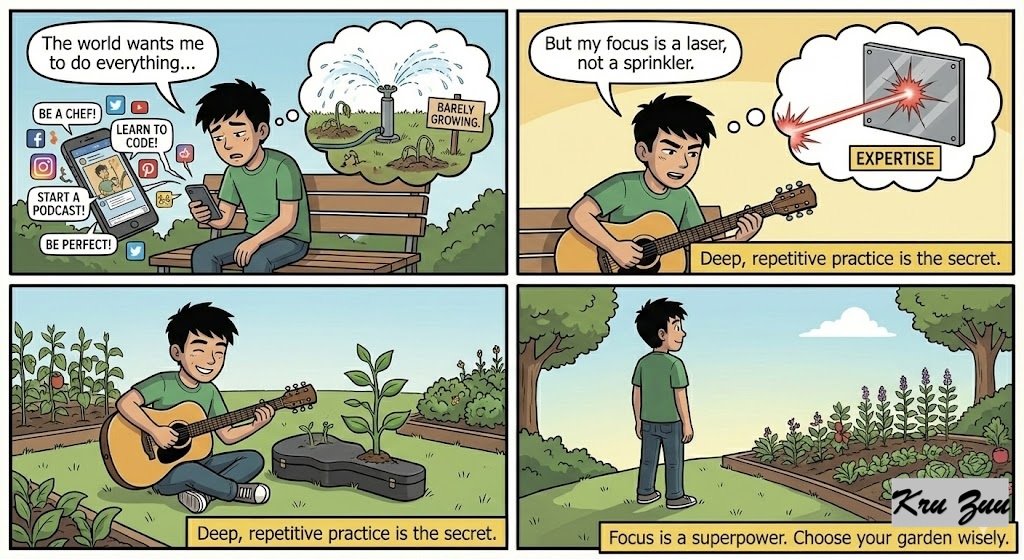
    Distraction vs. Dedication. We live in a world where social media tells us we must be perfectly well-rounded, side-hustling superhumans. But human attention is a finite battery. Expertise requires deep, boring, repetitive practice. If you treat your focus like a sprinkler (spraying a little bit everywhere), your garden will barely grow. If you treat it like a laser, you can cut through steel.


    💎 The Secret

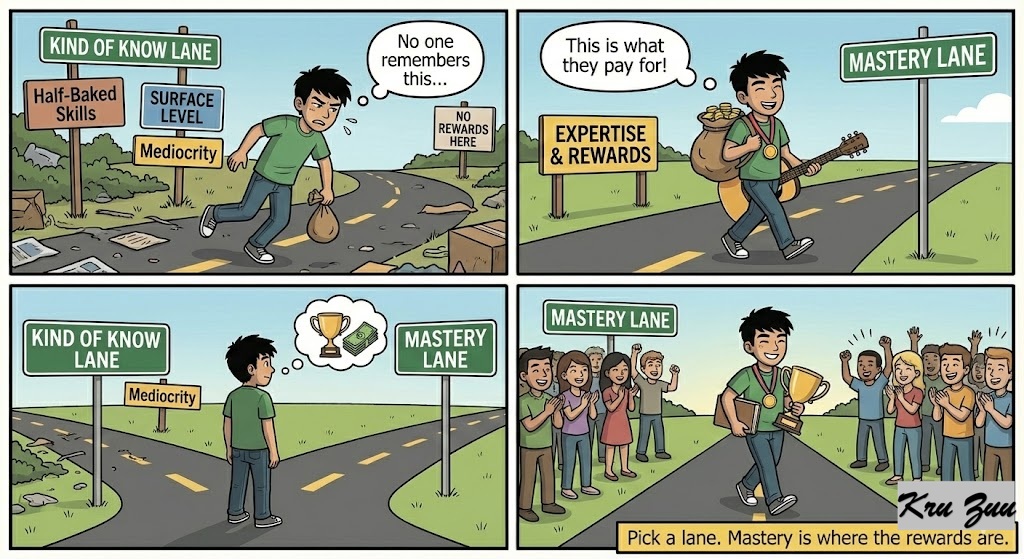
    You don’t get paid or remembered for what you kind of know. You get rewarded for what you have mastered. Pick a lane.

    🧐 The Anatomy of the Proverb


    This is your reality check that spreading yourself too thin leads to mediocrity.


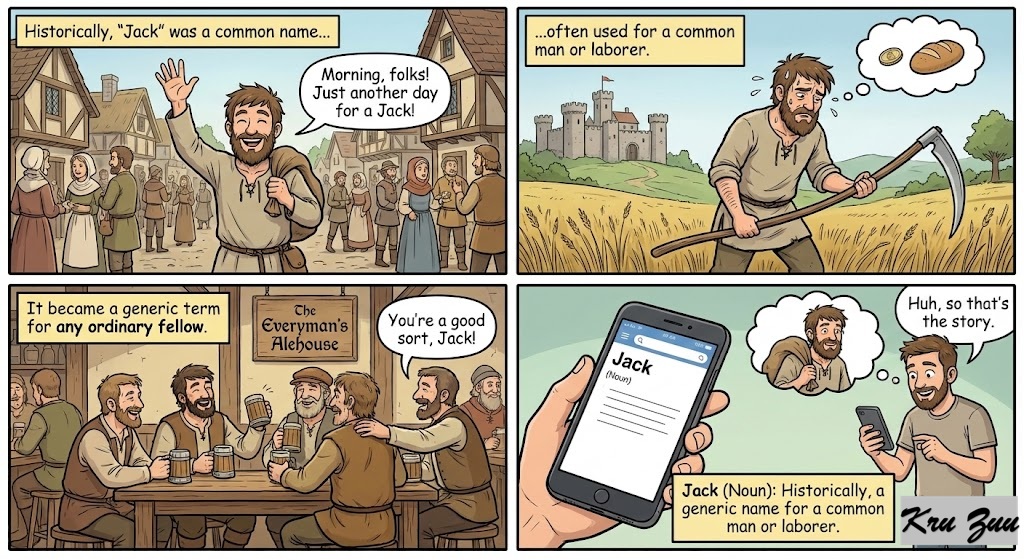
    Jack (Noun): Historically, a generic name for a common man or laborer.

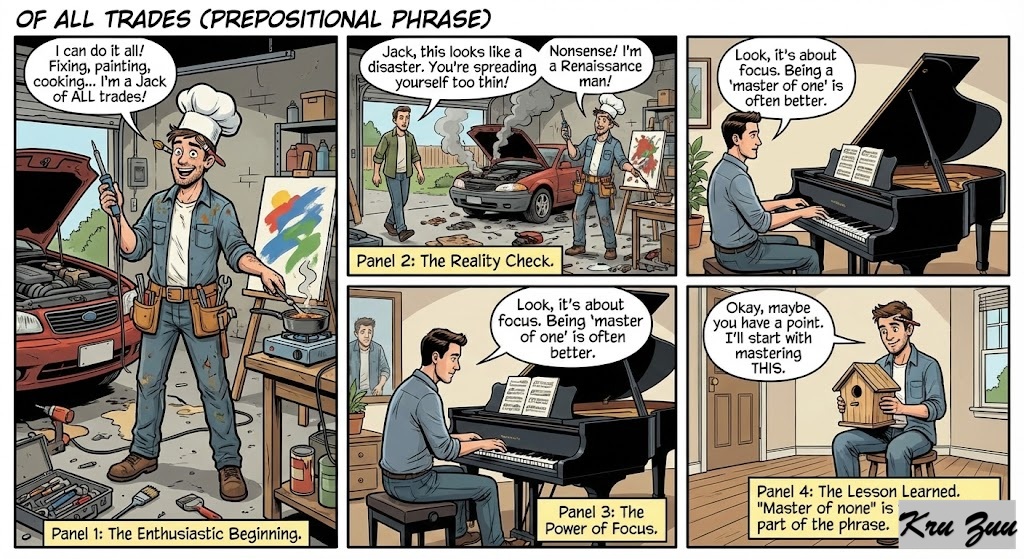
    Of All Trades (Prepositional Phrase): Trying to do every type of job or skill.

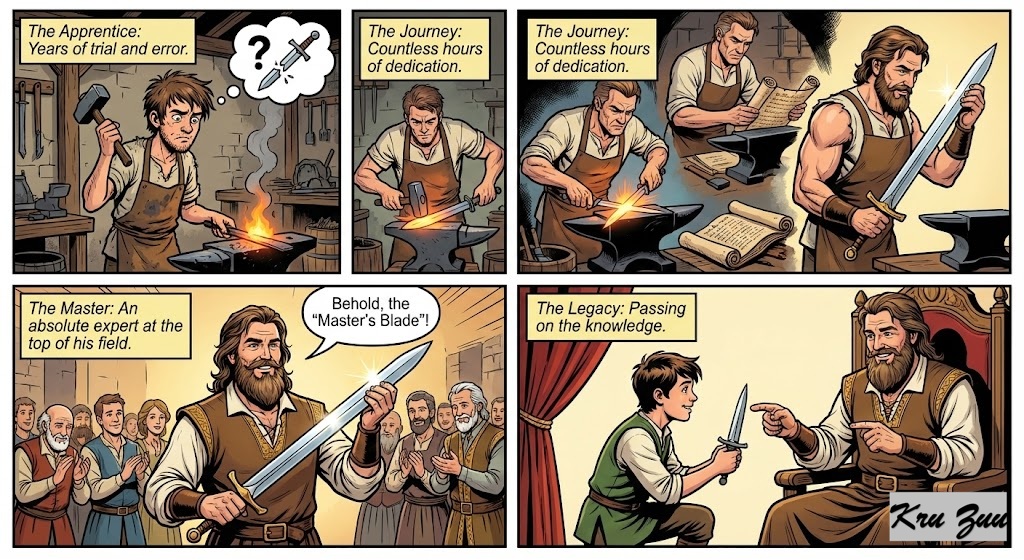
    Master (Noun): An absolute expert; someone at the top of their field.

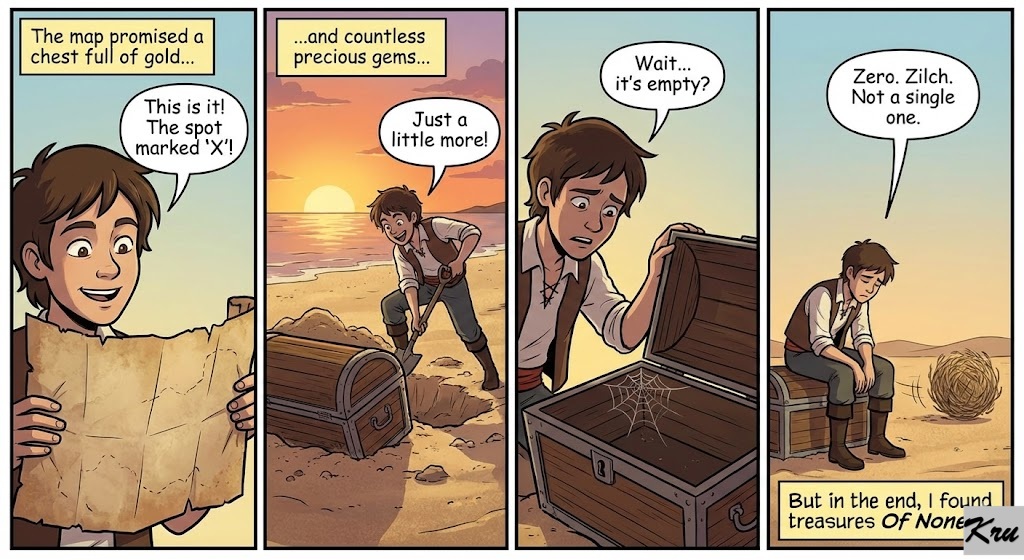
    Of None (Negative Phrase): Zero. Not a single one.


    Simpler Version: Someone who can do a little bit of everything, but isn’t an expert at anything. / Focus is better than scattered effort.


    📚 Vocabulary Vault


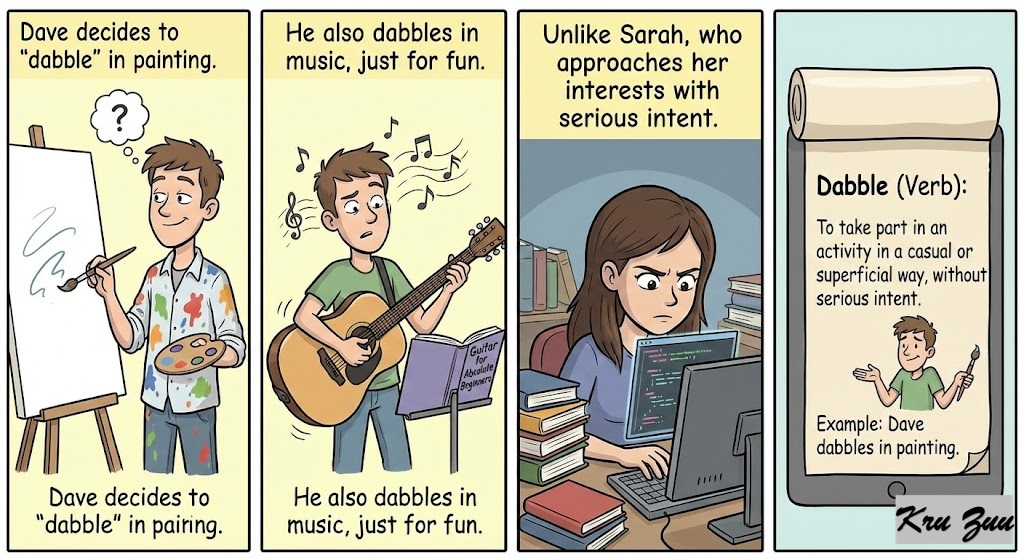
    Dabble (Verb):
    To take part in an activity in a casual or superficial way, without serious intent.


    Mediocre (Adjective): Of only ordinary or moderate quality; not very good. 🤷‍♂️


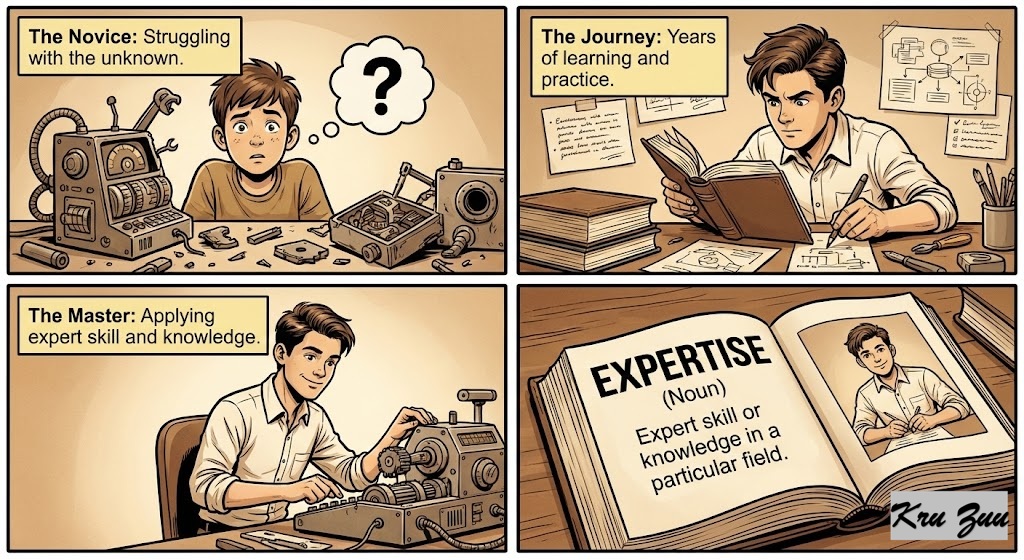
    Expertise (Noun): Expert skill or knowledge in a particular field.


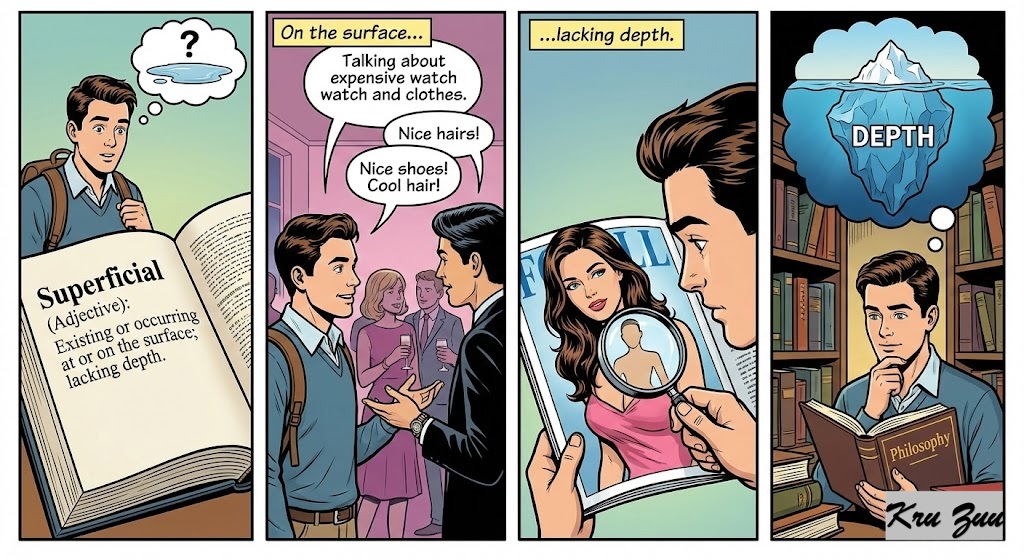
    Superficial (Adjective): Existing or occurring at or on the surface; lacking depth.


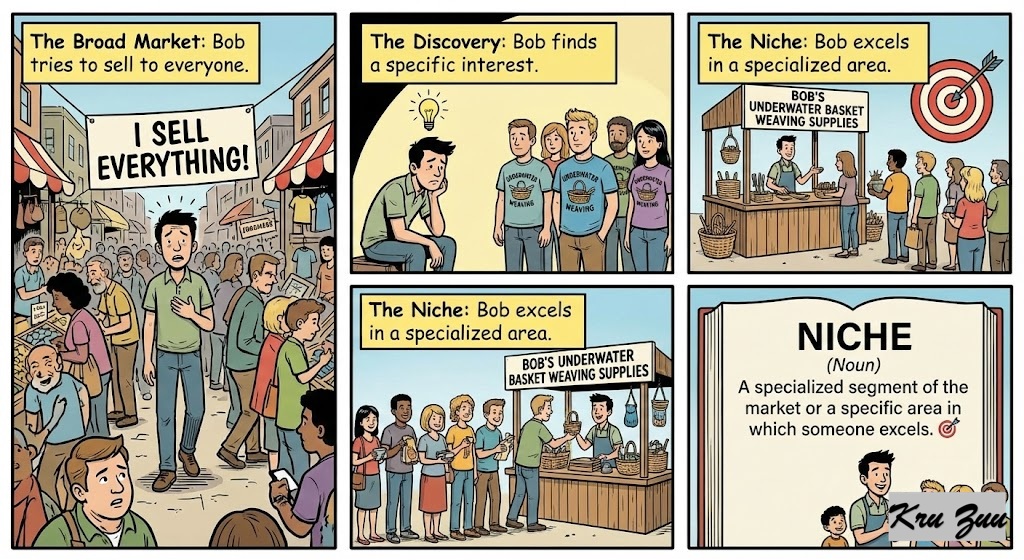
    Niche (Noun): A specialized segment of the market or a specific area in which someone excels. 🎯


    🧠 Grammar Focus: Idioms as Career/Life Advice


    We often use this idiom when someone is unfocused, taking on too many projects, or applying for a job without a clear specialty.


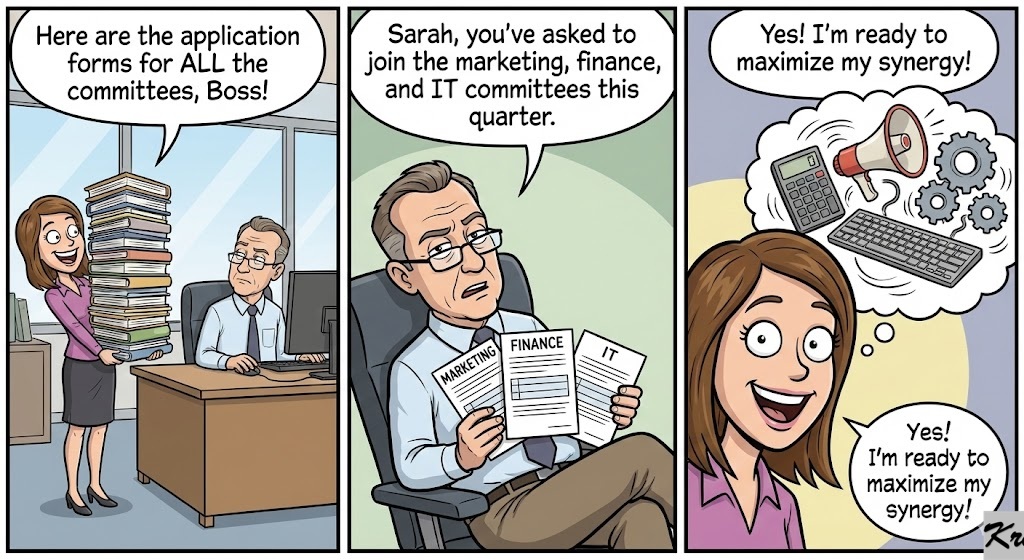
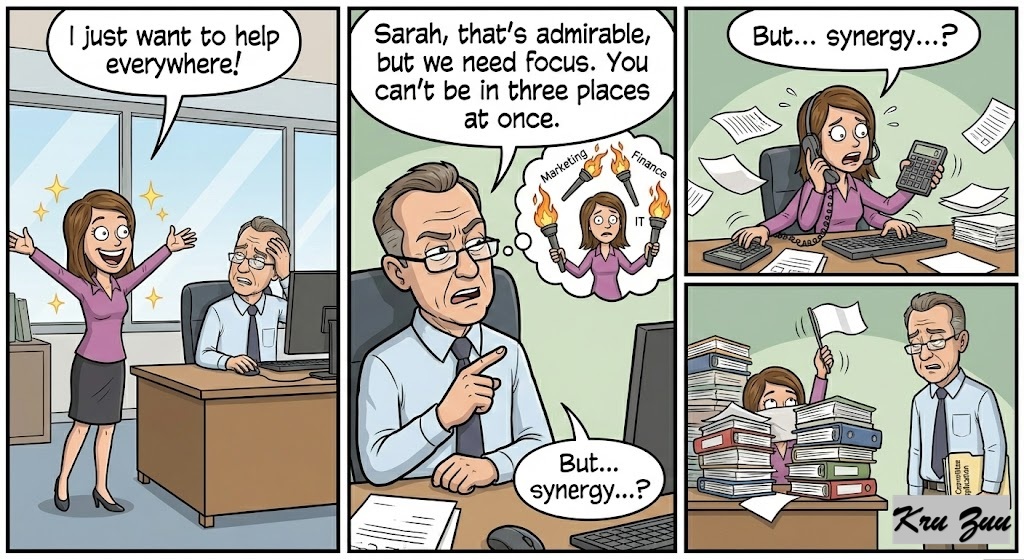
    Boss: “Sarah, you’ve asked to join the marketing, finance, and IT committees this quarter.”

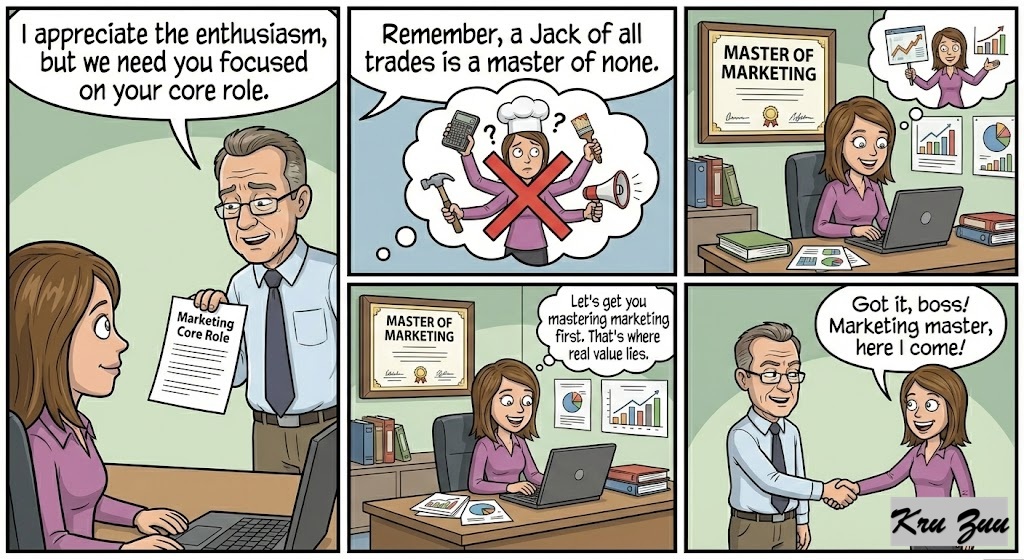
    Employee: “I just want to help everywhere!”

    Boss: “I appreciate the enthusiasm, but we need you focused on your core role. Remember, a Jack of all trades is a master of none. Let’s get you mastering marketing first.”

    📜 History: Origin and Spread


    Where did this resume-ruining phrase come from?


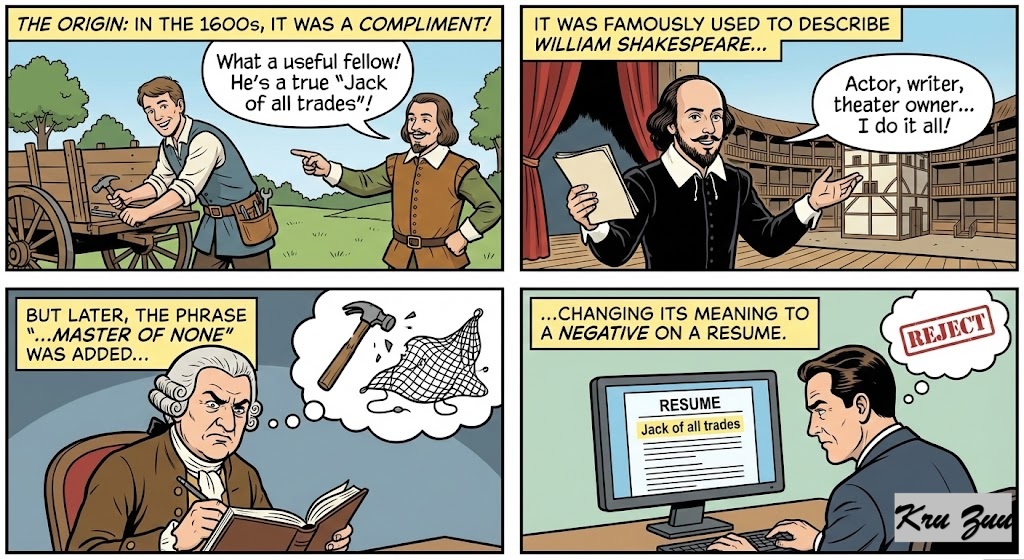
    The Origin: In the 1600s, “Jack of all trades” was actually a compliment! It meant a person was highly useful and adaptable. In fact, it was famously used to describe William Shakespeare, who was an actor, writer, and theater owner.


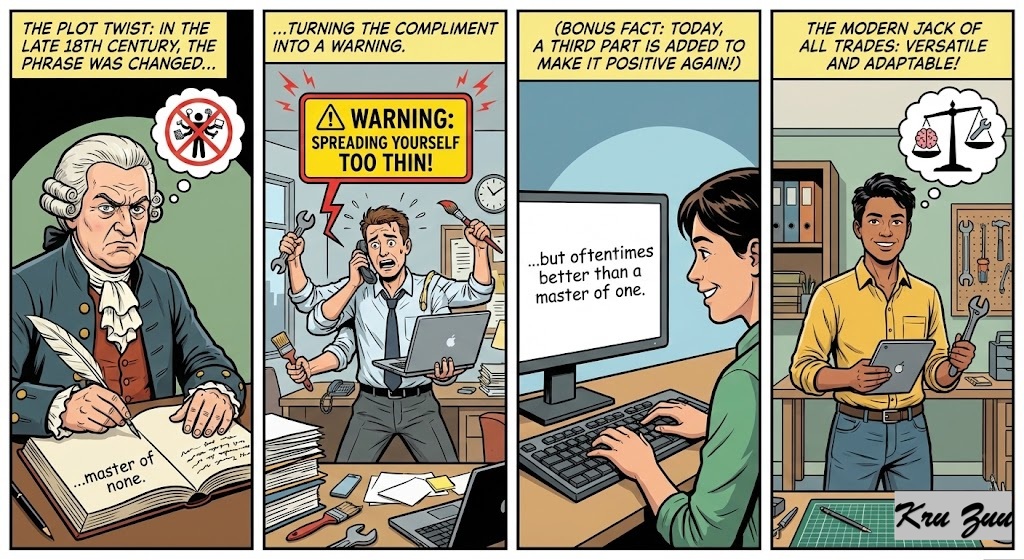
    The Plot Twist: The “master of none” part was added later, around the late 18th century, turning the compliment into a warning against spreading oneself too thin. (Bonus fact: Today, some people add a third part to make it positive again: “…but oftentimes better than a master of one.”)


    Global Cousins


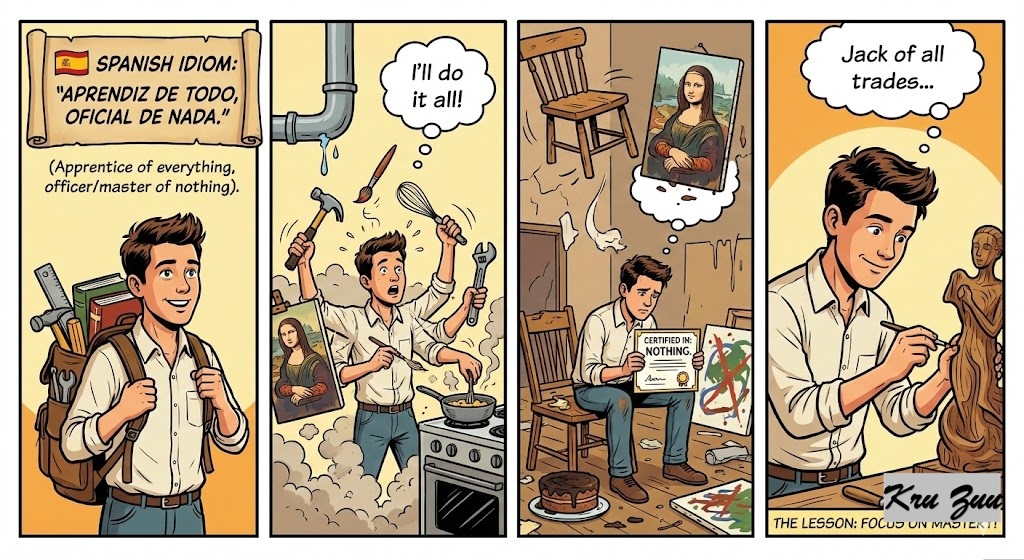
    🇪🇸 Spanish:
    “Aprendiz de todo, oficial de nada.” (Apprentice of everything, officer/master of nothing).


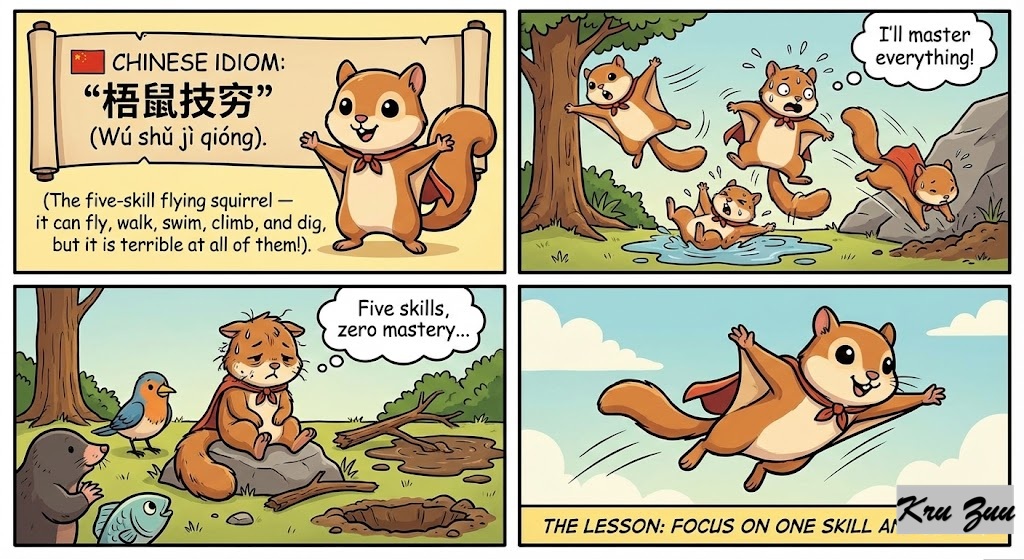
    🇨🇳 Chinese: “梧鼠技穷” (The five-skill flying squirrel — it can fly, walk, swim, climb, and dig, but it is terrible at all of them!). 🐿️


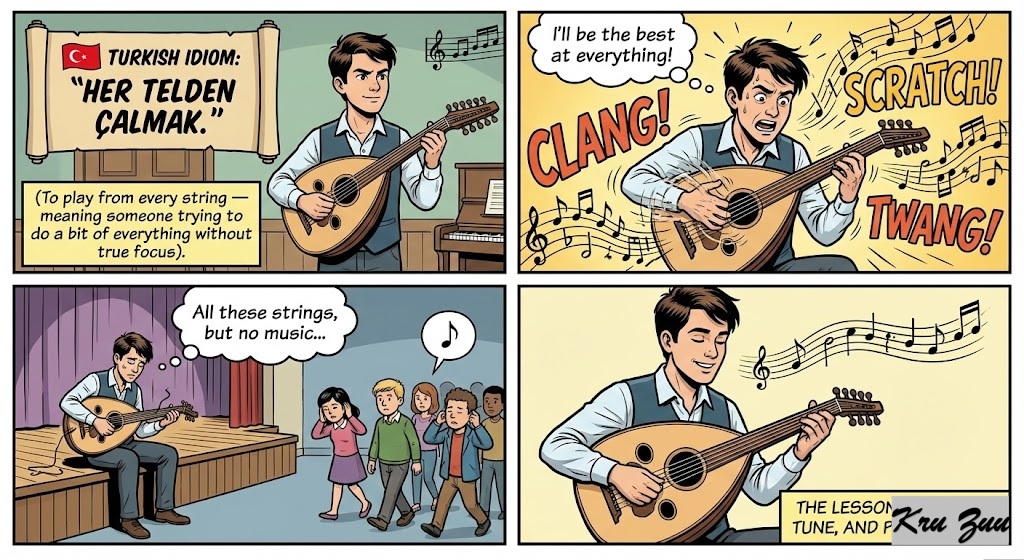
    🇹🇷 Turkish: “Her telden çalmak.” (To play from every string — meaning someone trying to do a bit of everything without true focus).

    🎭 Short Story: The Swamp Talent Show 🎪🐱🐔🐸


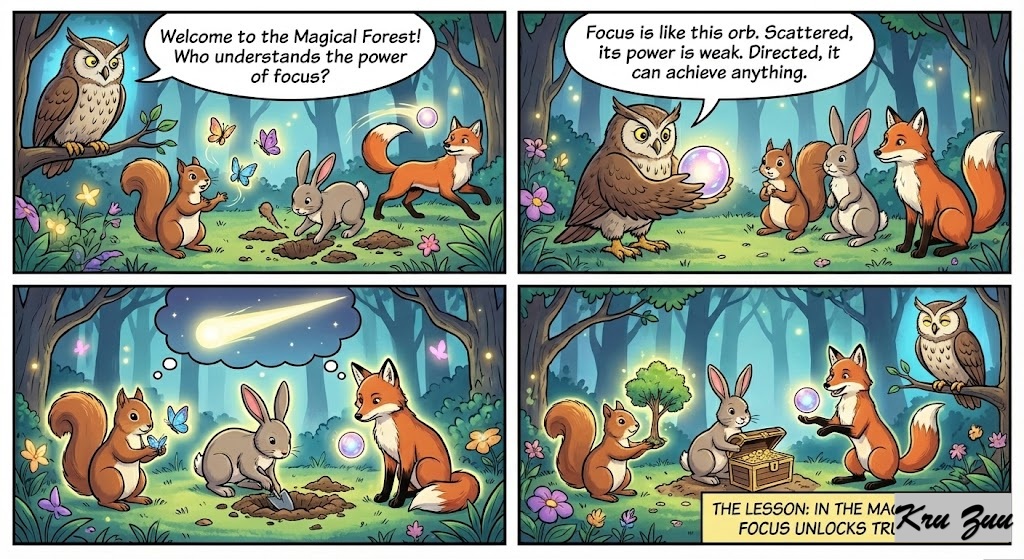
    Let’s visit the magical forest to see who understands the power of focus.


    🌟 The Cast


    Cleo the Cat: Elegant, prefers napping, only does things she’s naturally good at. 😼


    Cluck the Chicken: Frenetic, easily distracted, wants to do everything at once. 🐔


    Fred the Frog: The patient, disciplined master. 🐸


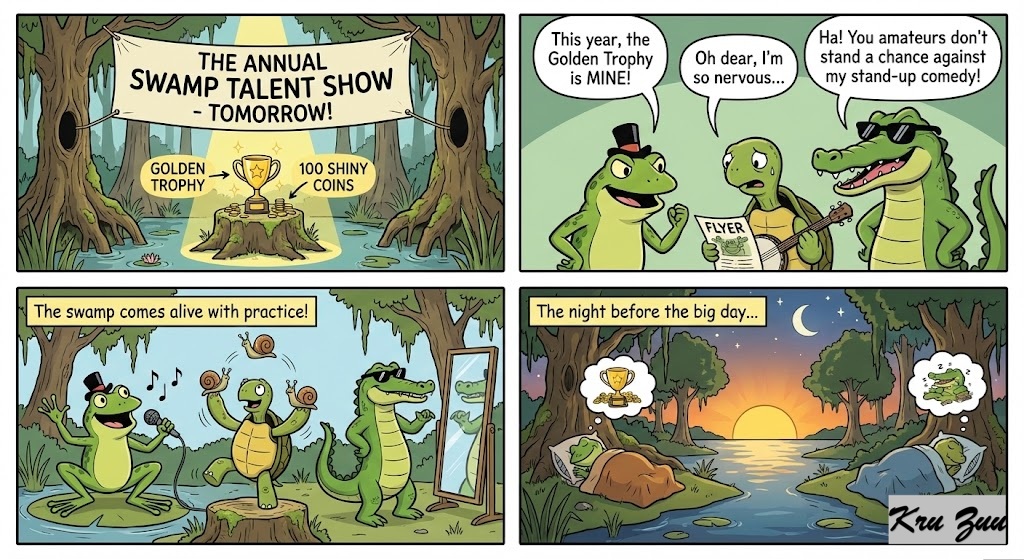
    The Situation: The Annual Swamp Talent Show is tomorrow. The prize? The Golden Trophy and 100 shiny coins.


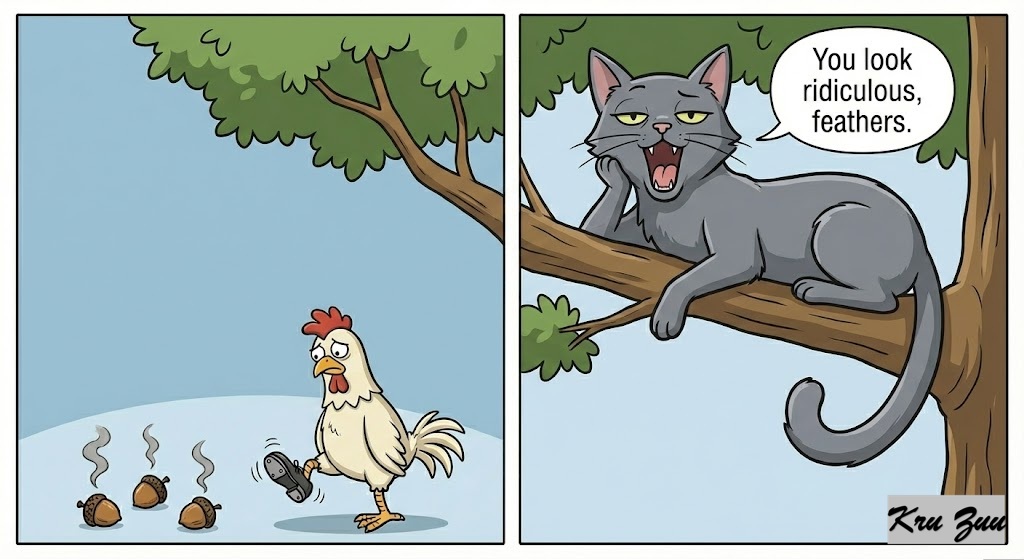
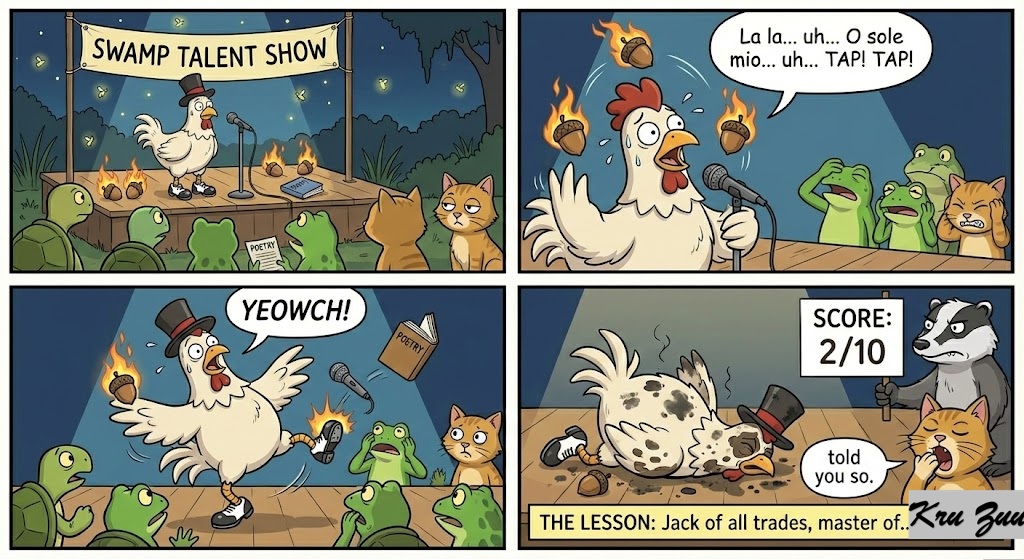
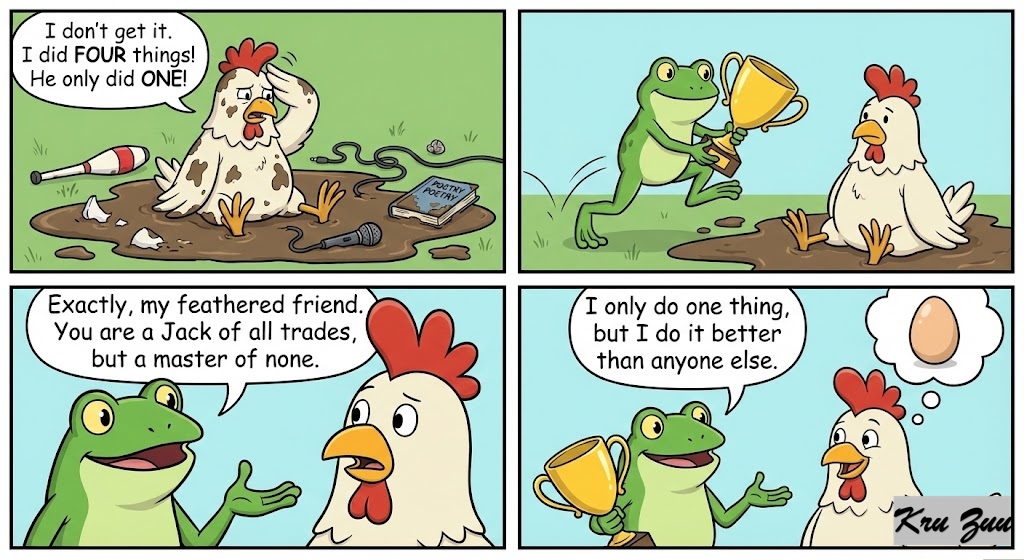
    The Conflict: Cluck wants to win desperately. “I am going to juggle flaming acorns, sing opera, tap dance, and recite poetry… at the same time!” Cluck squawks, running in circles. He practices juggling for two minutes, drops the acorns, and immediately switches to tap dancing.


    Cleo watches from a tree, yawning. “You look ridiculous, feathers.”


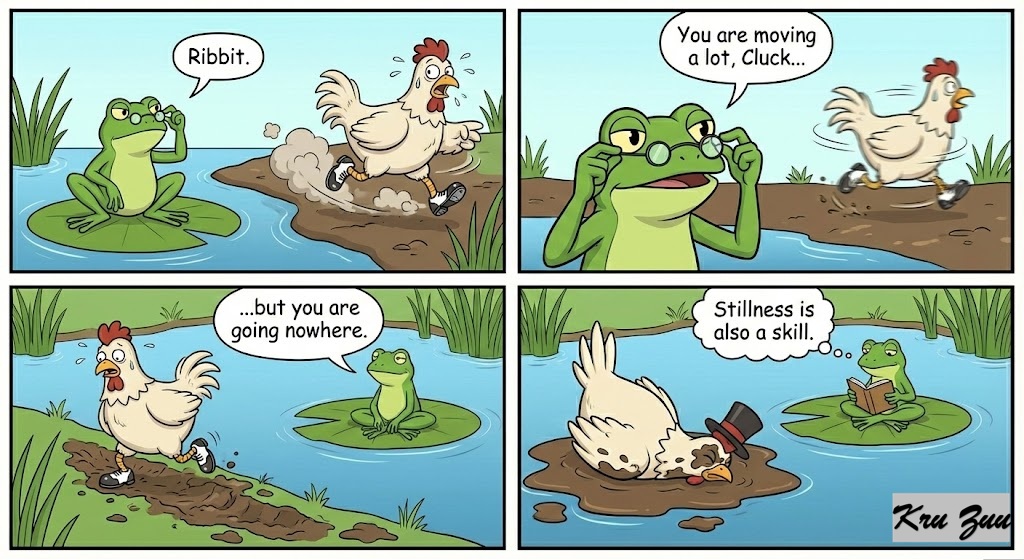
    Fred the Frog is quietly sitting by the pond. He isn’t singing. He isn’t juggling. He is just jumping from one lily pad to another. He does it 100 times. Then 200 times.


    The Reaction: Cluck laughs at Fred. “Is that all you are doing? Just jumping? That’s so boring! You need to be a showman! Look at me!” Cluck tries to sing and tap dance simultaneously, trips over his own feet, and lands beak-first in the mud.


    Fred adjusts his little green glasses. “Ribbit. You are moving a lot, Cluck, but you are going nowhere.”


    The Lesson: The night of the Talent Show arrives. Cluck goes first. He starts his multi-tasking routine. He forgets the lyrics, drops the acorns on his own foot, and the audience cringes. It is a disaster of mediocrity.


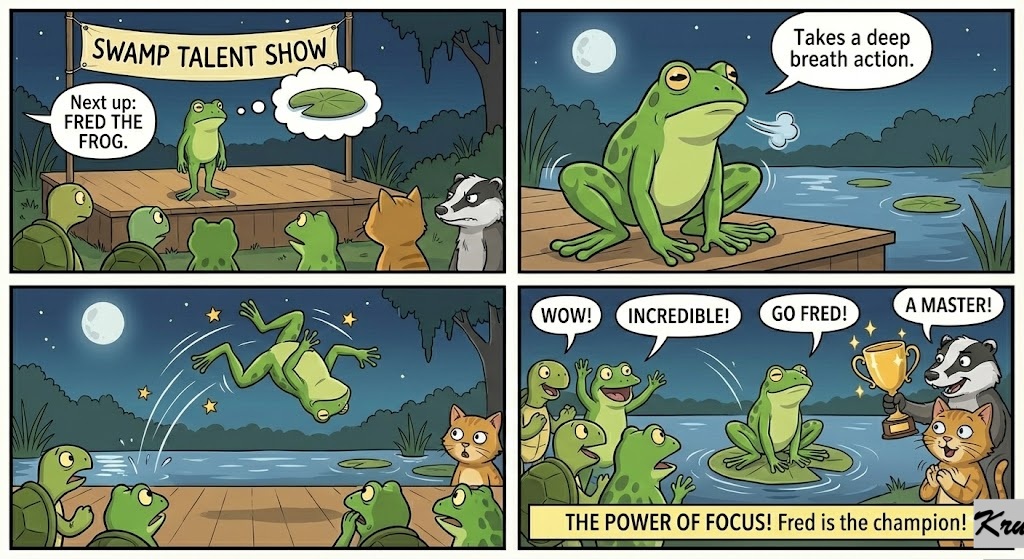
    Then, it is Fred’s turn. The crowd is quiet. Fred takes a deep breath. He bends his legs and executes a flawless, gravity-defying, triple-twisting backflip across the entire pond, landing silently on a single leaf. The crowd goes wild! 🏆


    The Resolution: Cluck sits in the mud, rubbing his head. “I don’t get it. I did four things! He only did one!” Fred hops over with his trophy. “Exactly, my feathered friend. You are a Jack of all trades, but a master of none. I only do one thing, but I do it better than anyone else.”


    The Moral: Don’t try to be decent at a dozen things. Be undeniable at one. 🌟

    🎓 Lesson for English Learners


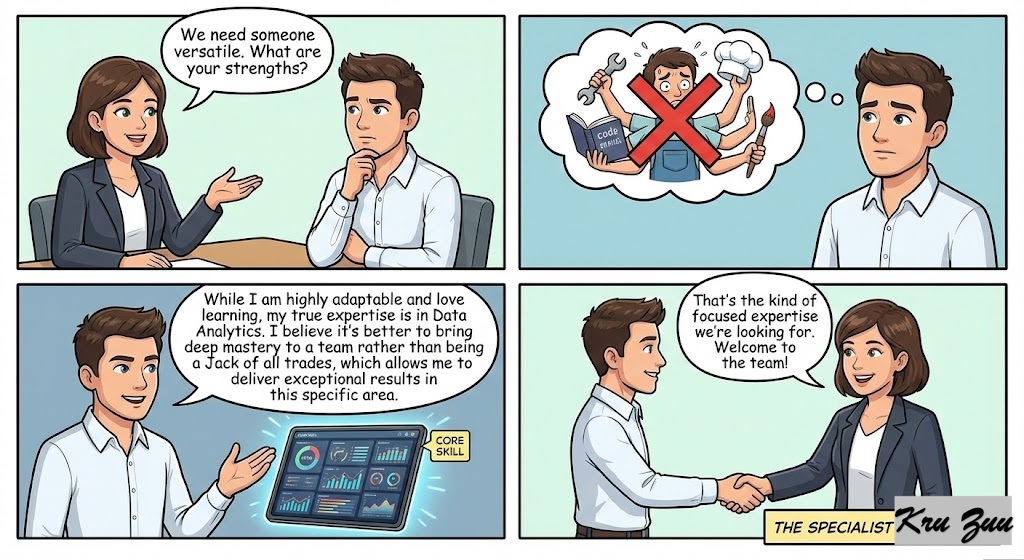
    How to position yourself in a job interview.


    Situation:
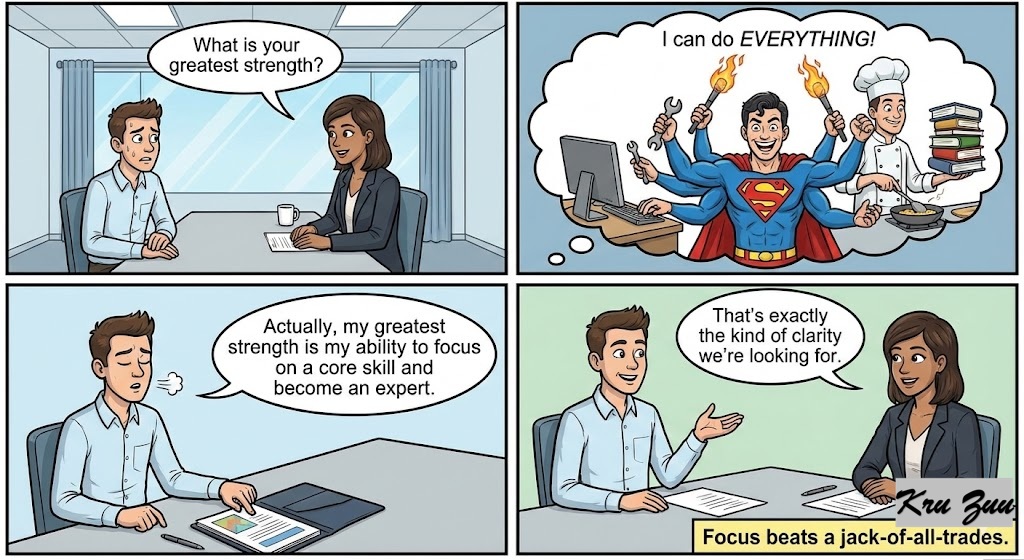
    The interviewer asks, “What is your greatest strength?” You might be tempted to say you can do absolutely everything.

    The Shift: Employers want specialists, not scattered dabblers. You need to highlight your focused expertise.

    You Say: “While I am highly adaptable and love learning, my true expertise is in [Your Core Skill]. I believe it’s better to bring deep mastery to a team rather than being a Jack of all trades, which allows me to deliver exceptional results in this specific area.”


    💬 Your Turn: The “One Thing” Challenge 🚀


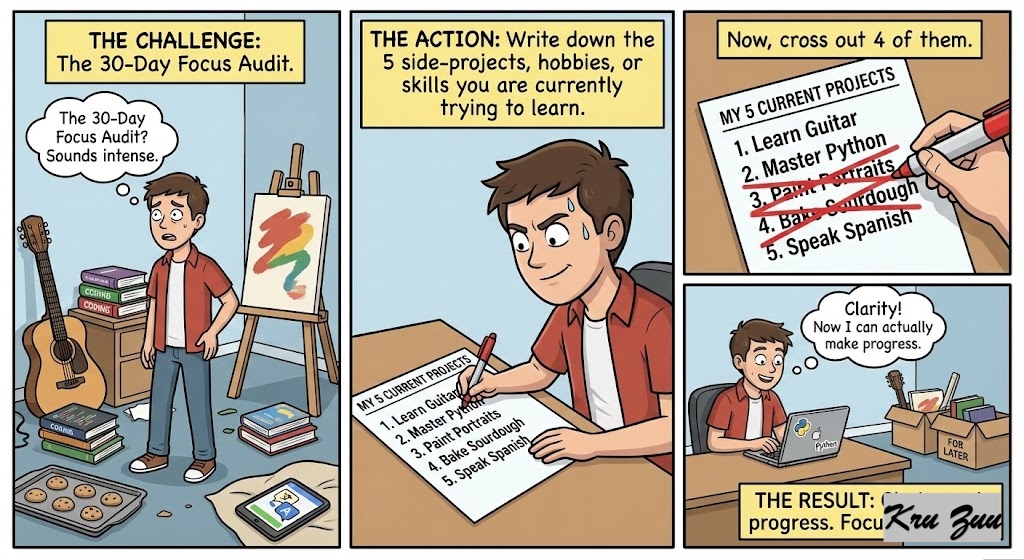
    Are you suffering from the “Villain” dabbling habits? Let’s fix it.


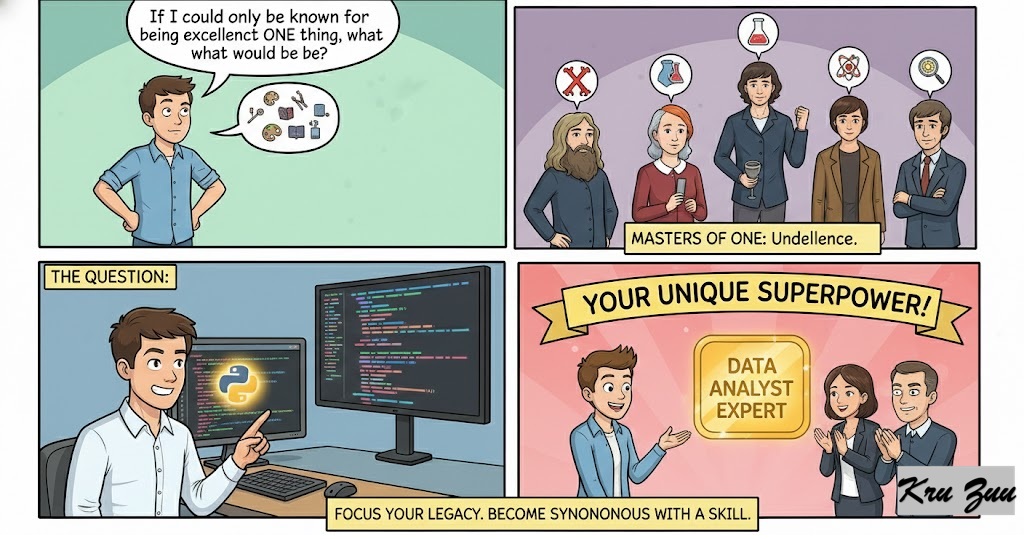
    The Challenge: The 30-Day Focus Audit. The Action: Write down the 5 side projects, hobbies, or skills you are currently trying to learn. Now, cross out 4 of them.

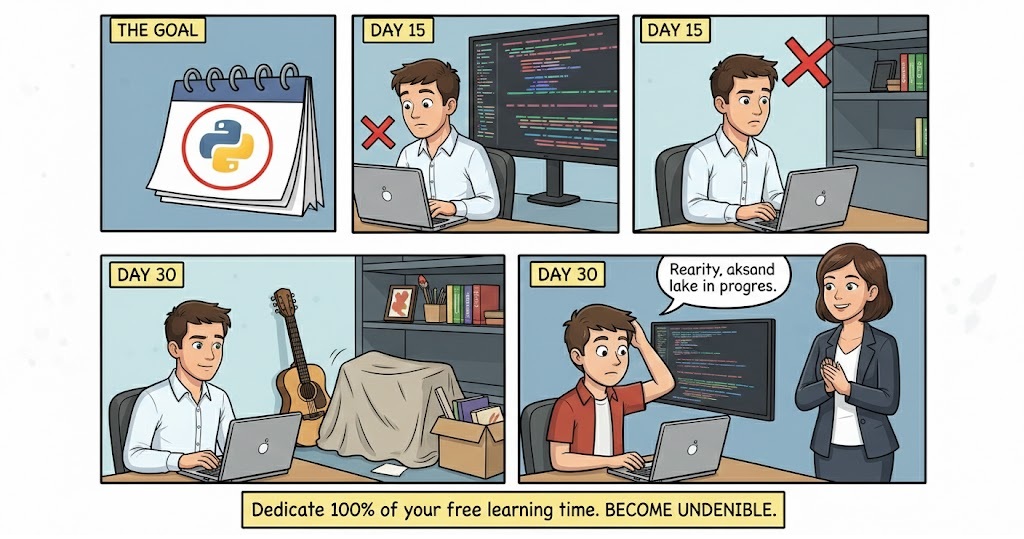
    The Goal: Dedicate 100% of your free learning time to that ONE remaining skill for the next 30 days.


    Ask yourself: “If I could only be known for being excellent at ONE thing, what would it be?”


    👇 Question for the comments: What is a skill or hobby you tried to learn, but quit because you were juggling too many things at once? What is the one thing you want to master right now? Tell us below!

    By Zubeyir YURTKURAN

    https://www.facebook.com/BrainBattleground/

    https://www.facebook.com/zubeyr.yurtkuran/

    https://www.instagram.com/zubeyryurtkuran/
    https://www.youtube.com/@BrainBattleground-b3p

    https://www.instagram.com/brainbattleground/