
🚫 Can You Learn to Swim by Reading a Book?

📖 The Short Cut: You watch 50 YouTube videos about “How to play guitar,” memorize every chord name, but never actually pick up the instrument.

📉 The Reality: The moment you hold the guitar, your fingers don’t work. You have knowledge, but zero skill.

🗣️ The Short Cut: You study English grammar rules for 5 years but you are too afraid to speak because you might make a mistake.

📉 The Reality: You become a “Grammar Professor” who cannot order a coffee. Silence is not fluency.

Life has a strict rule: You cannot think your way to mastery; you must do your way to mastery. In this post, we explore why repetition is the mother of skill. Don’t just read this do it! 👊

🧐 The Anatomy of the Proverb
Let’s break down the mechanics of this golden rule.
📚 Vocabulary Vault
Practice (Noun/Verb): Performing an activity or exercise repeatedly to improve your proficiency. (Doing it again and again). 🔄

Make (Verb): To cause something to become specific. (To result in). 🔨

Perfect (Adjective): Having all the required or desirable elements; free from faults or defects. ✨

🧠 Grammar Focus
This is a concise Subject + Verb + Object sentence in the Present Simple Tense.
Subject: Practice (Uncountable Noun – treated as Singular “It”)
Verb: Makes (Causative verb)
Object: Perfect (Adjective acting as a noun idea, “perfection”)
Formula: [Practice] + [Makes] + [Perfect]. Note: Since “Practice” is a singular concept, we must add -s to the verb (Make -> Makes).
📜 History: From Romans to Bruce Lee
Is this a modern idea?
The Origin: The roots go back to the Latin phrase “Uses promptos facit” (Use makes ready). The modern English version became popular in the 1500s.

The Legend: Martial arts legend Bruce Lee famously said: “I fear not the man who has practiced 10,000 kicks once, but I fear the man who has practiced one kick 10,000 times.”

The Lesson: It is better to do one thing deeply than 100 things shallowly.

🎯 Impact on Life: The Pros & Cons
Is doing the same thing over and over always good?
✅ The Pros (Why it works)
Muscle Memory: Whether it’s your tongue forming the “TH” sound or your fingers playing piano, repetition moves the skill from your brain to your body. You stop thinking and start doing. 🧠➡️💪

Confidence: Familiarity kills fear. The 100th time you give a presentation, you won’t be nervous.

Speed: Amateurs are slow because they are thinking. Professionals are fast because they have practiced.

❌ The Cons (What to watch out for)
Bad Practice: If you practice a mistake repeatedly, you make the mistake “perfect.” (e.g., pronouncing “Three” as “Tree” for 10 years). Correction is necessary.

Boredom: Repetition can be dull. You must find ways to keep it fun (Gamification).

🎭 Short Story: The Juggling Contest
Let’s see how our farm friends handle a new talent show!
🌟 Character Introduction
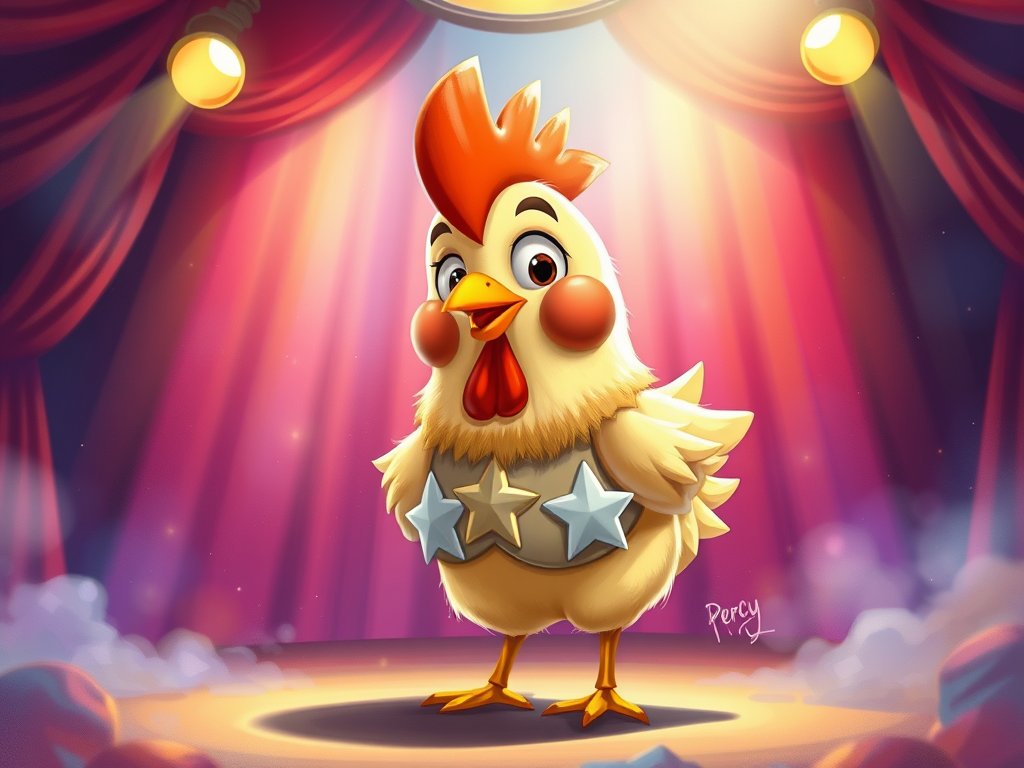
Percy the Chicken (The Impatient Talent): Wants to be a star immediately. 🐔
Fred the Frog (The Consistent Worker): Willing to look silly to get better. 🐸

Luna the Cat (The Critic): Watching from the fence. 😼

The “Farm Talent Show” was one week away. Percy and Fred decided to learn juggling (throwing balls in the air).
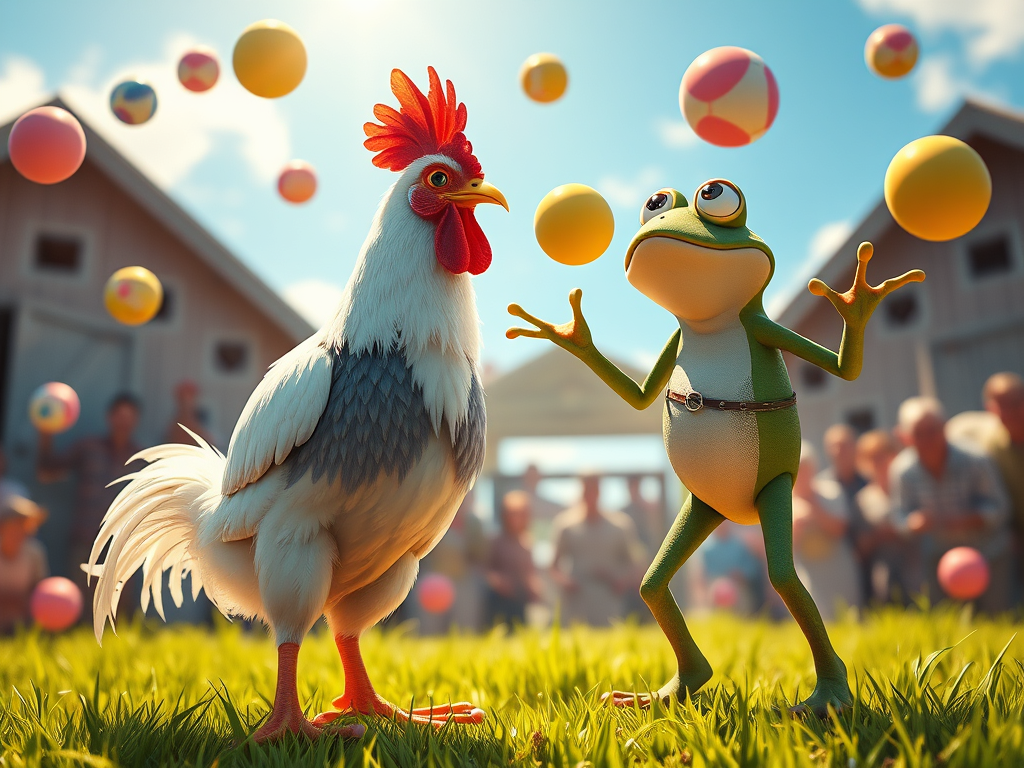
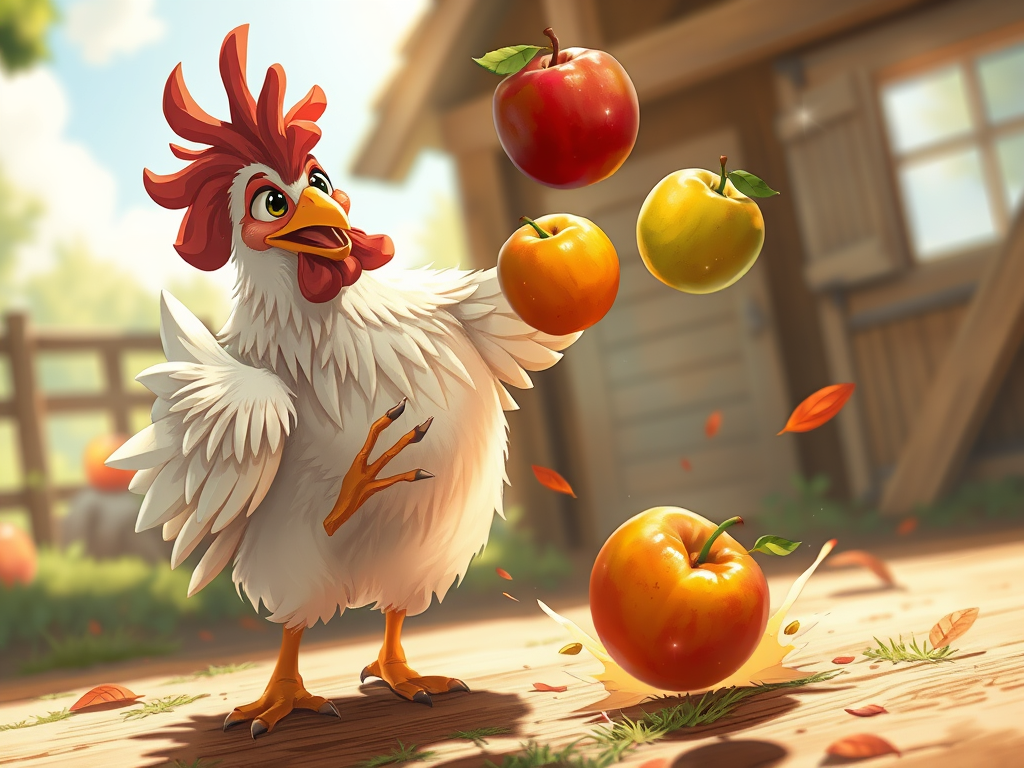
Day 1: Percy picked up three apples. “Watch this!” he shouted. He threw them up… and SPLAT! All three hit the floor. “This is stupid!” Percy yelled. “I don’t have the ‘juggling gene.’ I quit.” He went back to eating corn.
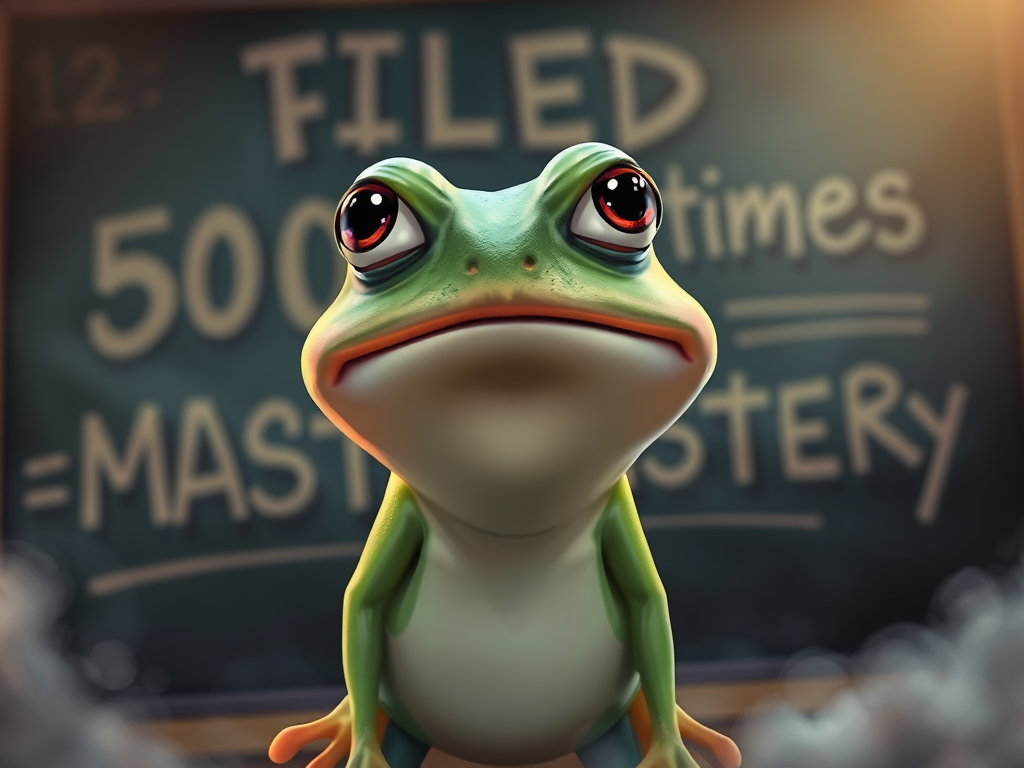
Fred picked up three small berries. He threw one up, dropped it. Threw it up, dropped it. He did this 500 times. He looked clumsy. Luna laughed, “Fred, you look ridiculous.” Fred smiled, “Not yet, Luna. Give me time.”

Day 4: Fred was still dropping berries, but now he could catch two in a row. His hands were starting to move automatically. Percy was sleeping.
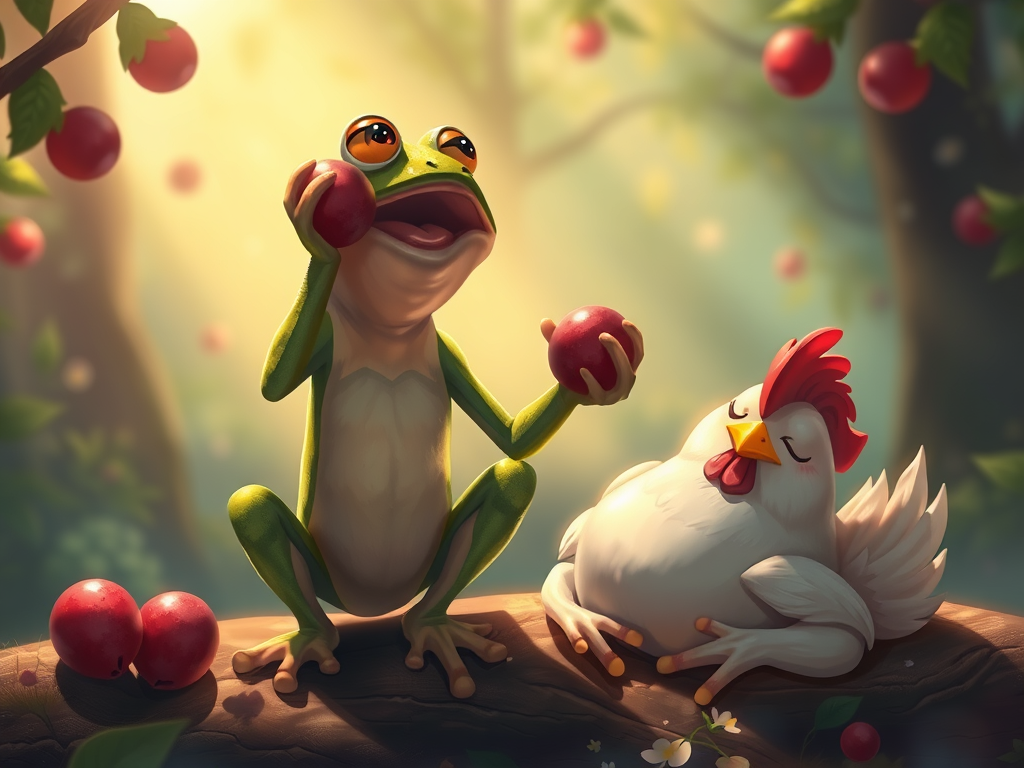
Day 7 (Showtime!): 🎪 Percy went on stage. “I will wing it!” he said. He threw the apples… BONK! One hit him on the head. The audience laughed. Percy was embarrassed. Then, Fred hopped on stage. He picked up three shining red berries. Whoosh, whoosh, whoosh. His hands moved like a blur. He didn’t even look at the berries; he looked at the audience and smiled. It was a flawless performance. 🌟

Luna pinned the blue ribbon on Fred: “Percy, you wanted magic. Fred understood that magic is just practice in disguise.”

The Moral:
Percy: Gave up after 1 fail = No Skill.

Fred: Failed 500 times = Mastery.
🎓 Lesson for English Learners
How do you use this for English?
Don’t Aim for “Perfect” Immediately: A better version of this proverb is “Practice makes Progress.”

The “Shadowing” Technique: Listen to a native speaker sentence. Pause. Repeat it exactly. Do this 20 times.

Time 1: You feel weird.

Time 10: Your tongue feels more comfortable.

Time 20: You sound natural.

Mistakes are Data: Every time you make a grammar mistake, don’t feel bad. That is just one “dropped berry.” Pick it up and try again.

Remember: No one is born speaking a language. Every fluent speaker you see has “practiced” thousands of hours.

💬 Your Turn
Is there a skill (cooking, driving, a video game) that you used to be terrible at, but now you are a master of? 🎮🍳🚗
Tell us your story of “Zero to Hero” in the comments! 👇
https://www.facebook.com/BrainBattleground/
