Tag: photography

  • 🥣 The Daily Shield: The Law of Leadership

    🥣 The Daily Shield: The Law of Leadership

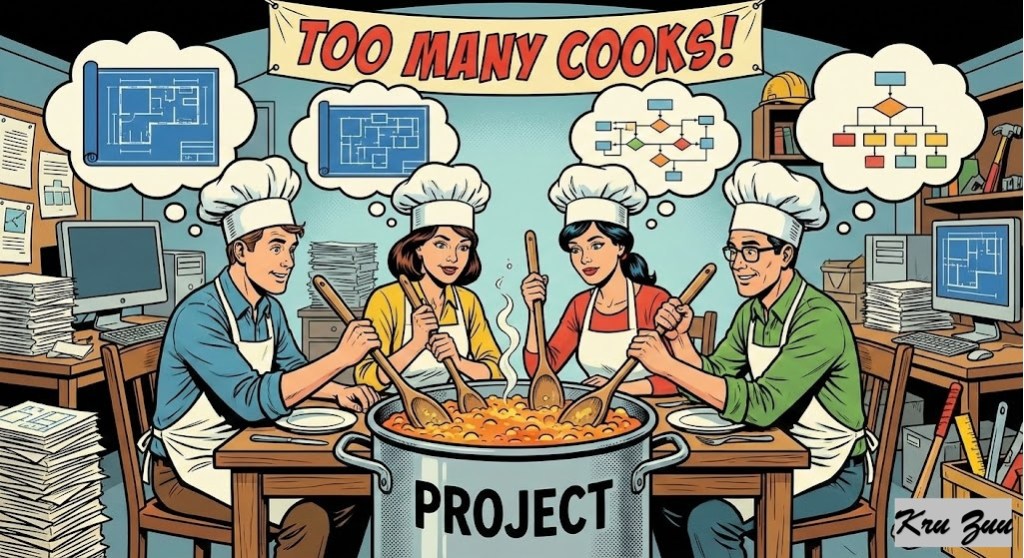
    “Too many cooks spoil the broth.”


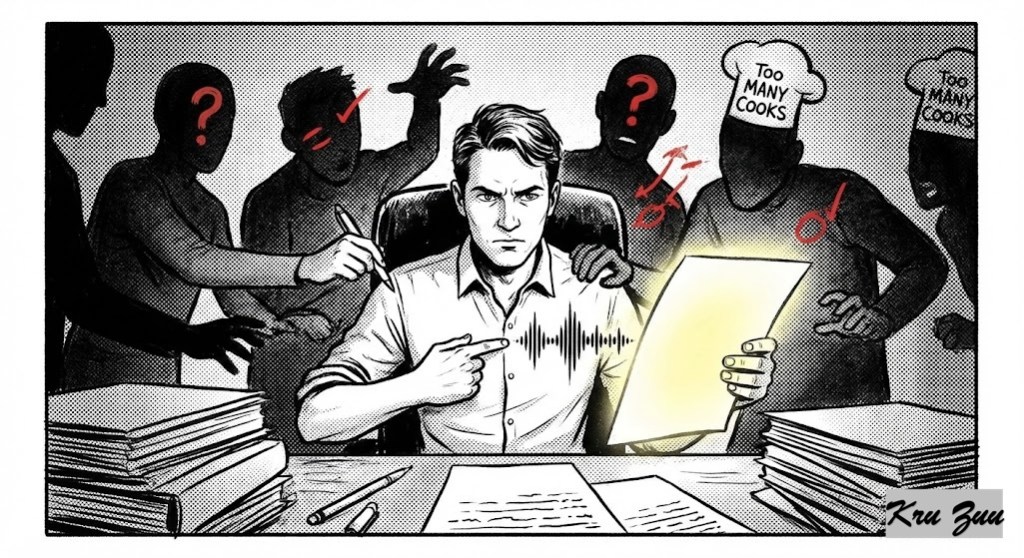
    😈 The Villain (The Committee)


    Imagine you are trying to paint a picture. Someone says, “Use blue!” Another shouts, “No, red is better!” A third person grabs the brush and paints a yellow line. A fourth person erases it. Everyone is shouting. Everyone is touching the canvas.
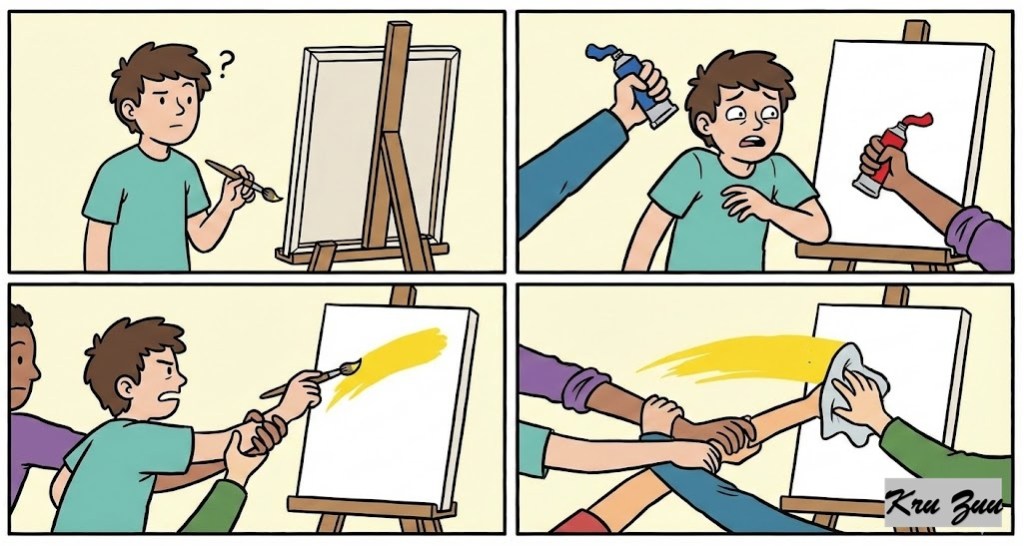
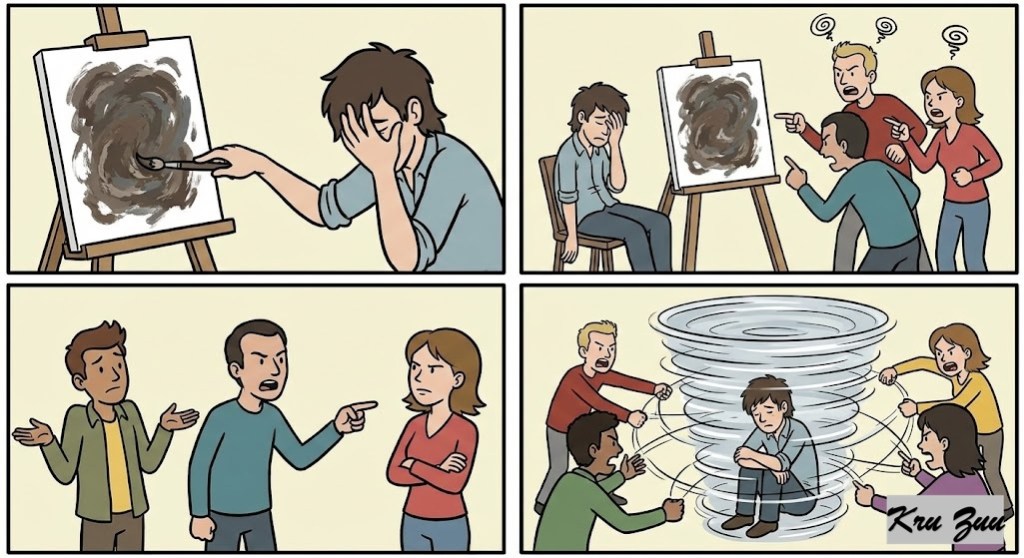
    The Result? You don’t have a masterpiece. You have a brown, muddy mess. Confusion reigns. No one takes responsibility because “everyone” did it. You are trapped in the chaos of Micromanagement. 🌪️

    😇 The Hero (The Captain)


    You have a vision. You listen to advice, but you hold the paintbrush. You assign roles clearly. One person mixes the paint, one person cleans the brushes, but only one person decides where the paint goes.

    The Result? A clear, beautiful image. The work flows smoothly. There is order. There is focus. You understand that a ship with two captains will sink. ⚓


    ⚖️ The Reality
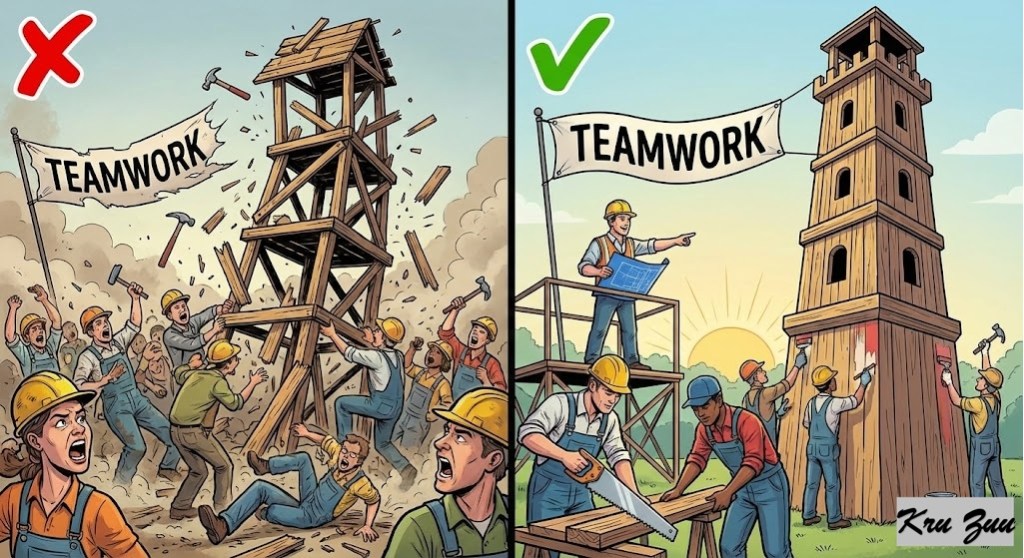
    Collaboration is good. Chaos is bad. We are taught that “teamwork makes the dream work.” This is true. But teamwork without a leader is just a crowd. If everyone is in charge, nobody is in charge.

    💎 The Secret

    Great things are not created by committees. They are created by a focused mind (or a small, focused team) with a single vision.

    🧐 The Anatomy of the Proverb


    This phrase is about the danger of too many opinions.


    Cooks (Noun): People who prepare food (in this context, people trying to control a project). 👨‍🍳


    Spoil (Verb): To ruin; to destroy the value or quality of something. 🤢
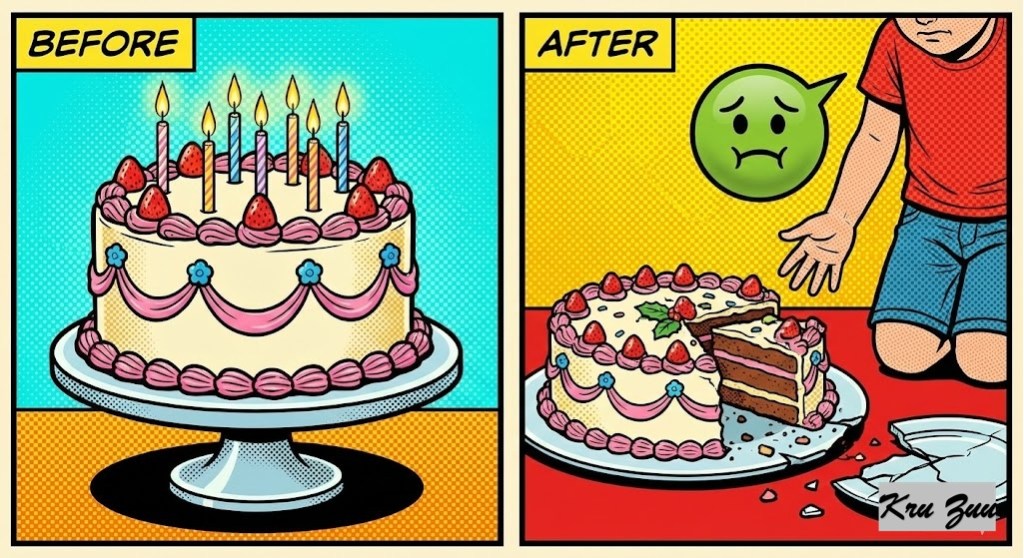

    Broth (Noun): A thin soup made by boiling meat or vegetables. (A metaphor for the “Project”). 🍲
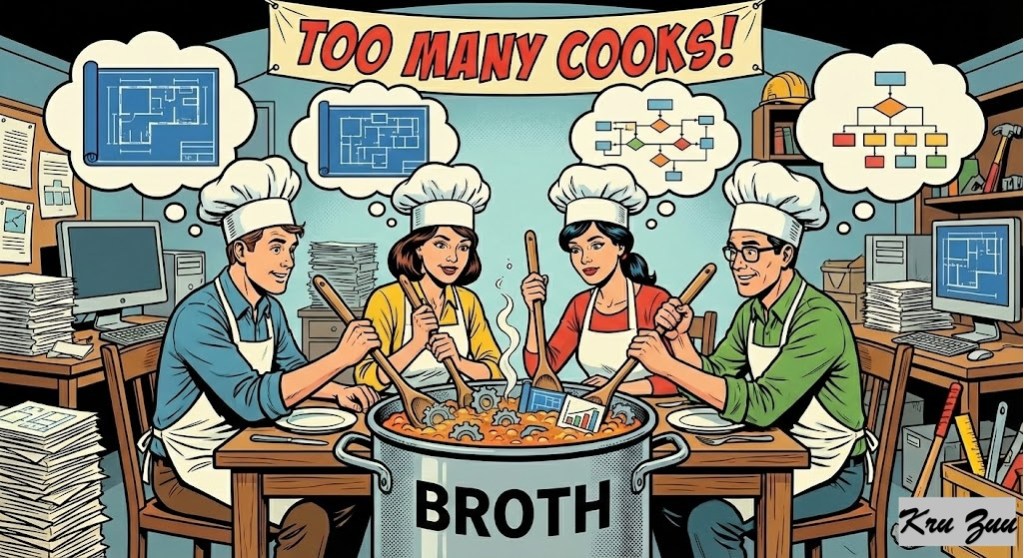

    Simpler Version: Too many leaders ruin the plan.


    📚 Vocabulary Vault


    Chaos (Noun):
    Complete disorder and confusion.
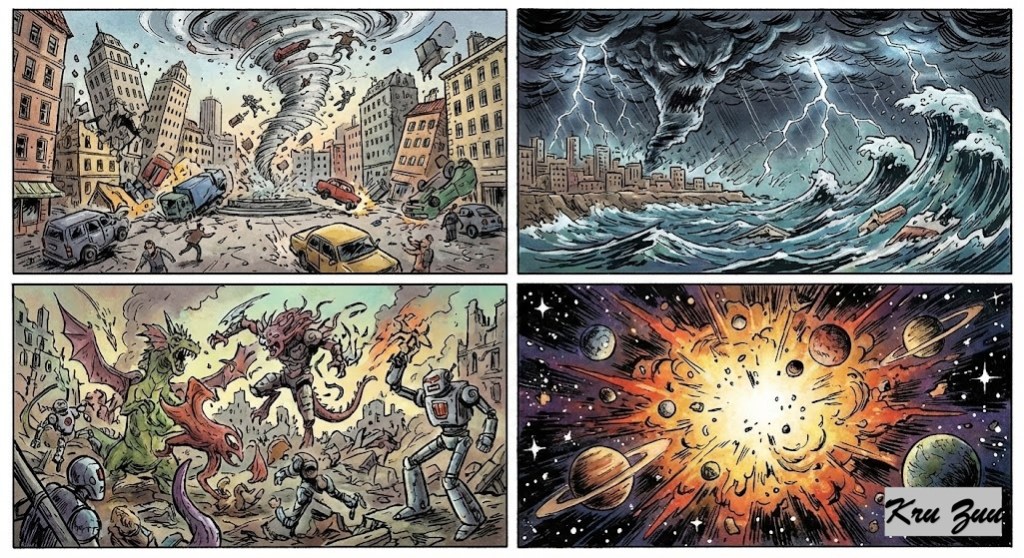

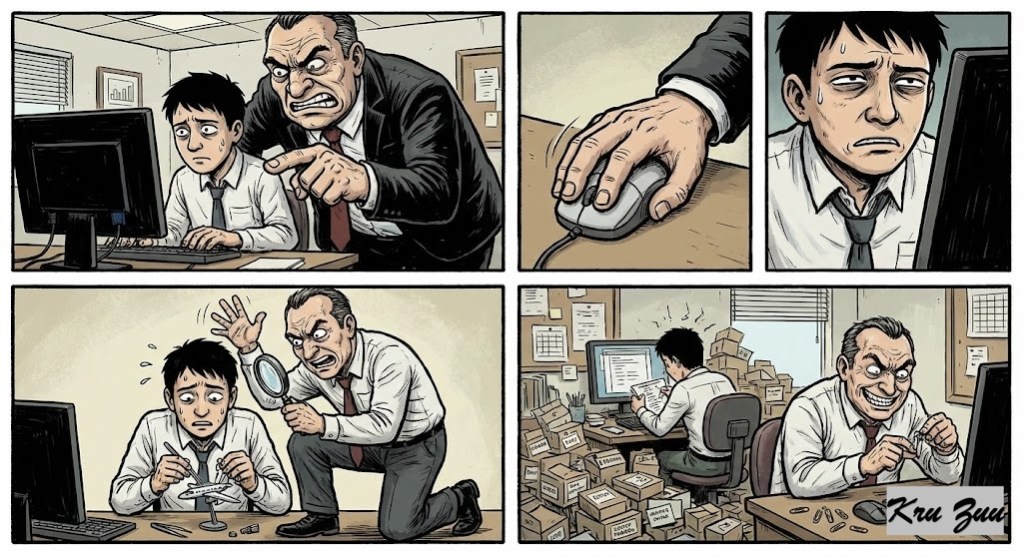
    Micromanage (Verb): To control every small part of a project (very annoying!).

    Consensus (Noun): General agreement. (Sometimes impossible to reach!).


    Autonomy (Noun): The right or condition of self-government; freedom to act.


    Vision (Noun): The ability to think about or plan the future with imagination. 👁️


    🧠 Grammar Focus: Quantifiers (Countable vs. Uncountable)


    This proverb teaches us a very important grammar rule!


    “Too Many” (For Countable Nouns) We use “Many” for things we can count (1, 2, 3…).


    Too many cooks.


    Too many students.


    Too many problems.
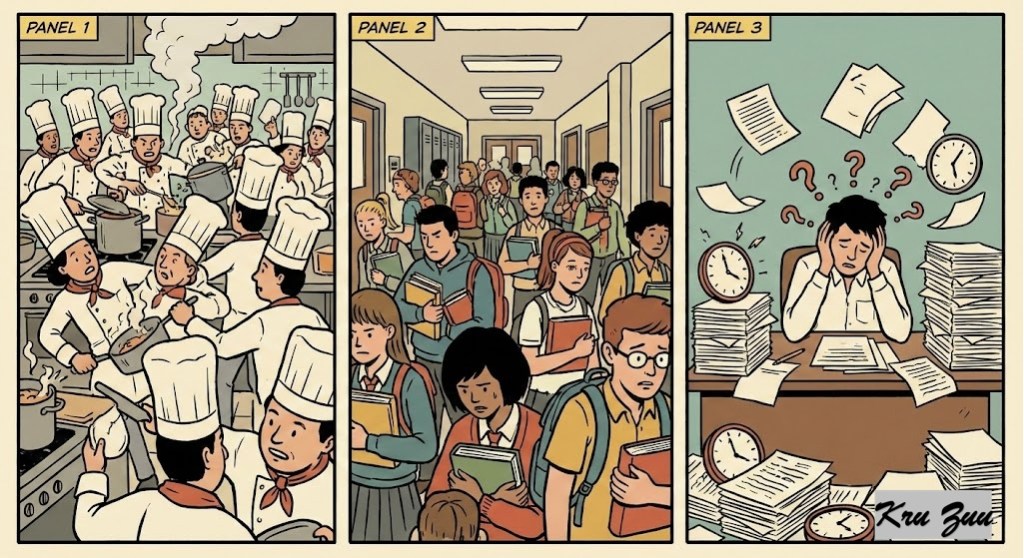

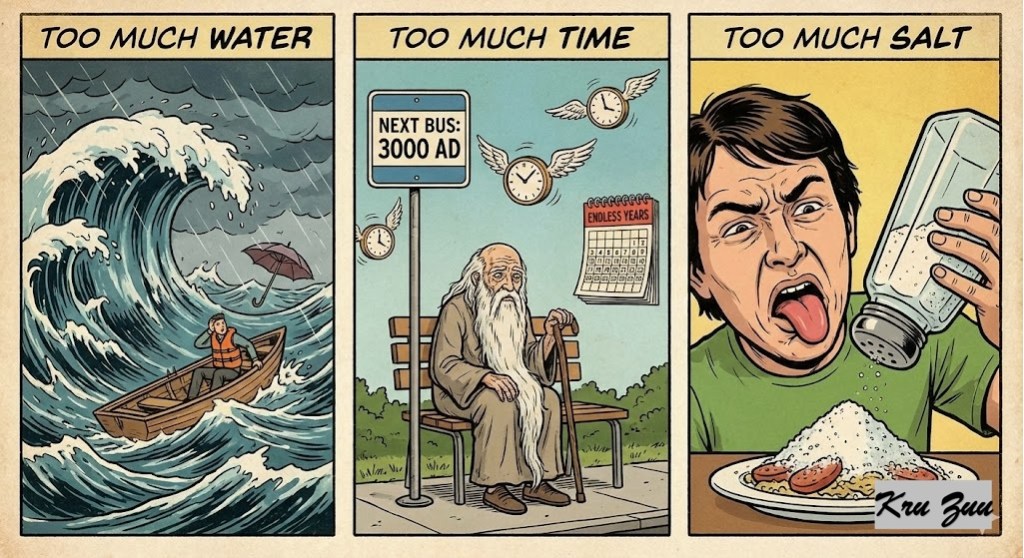
    “Too Much” (For Uncountable Nouns) We use “Much” for things we generally cannot count (liquids, concepts).


    Too much water.


    Too much time.


    Too much salt.

    Quiz: Do we say “Too many homework” or “Too much homework”? (Answer: Too much! Homework is uncountable.)

    📜 History: Origin and Spread


    This is a universal truth found in almost every culture.


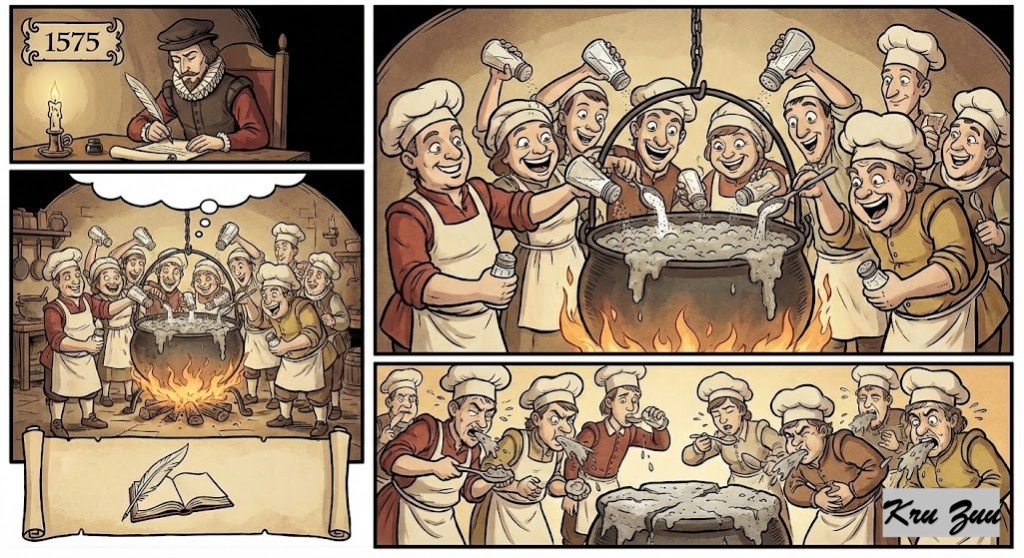
    The Origin

    It first appeared in English writings in 1575 by George Gascoigne. It was originally about actual cooking! If everyone adds salt, the soup becomes inedible.

    Global Cousins
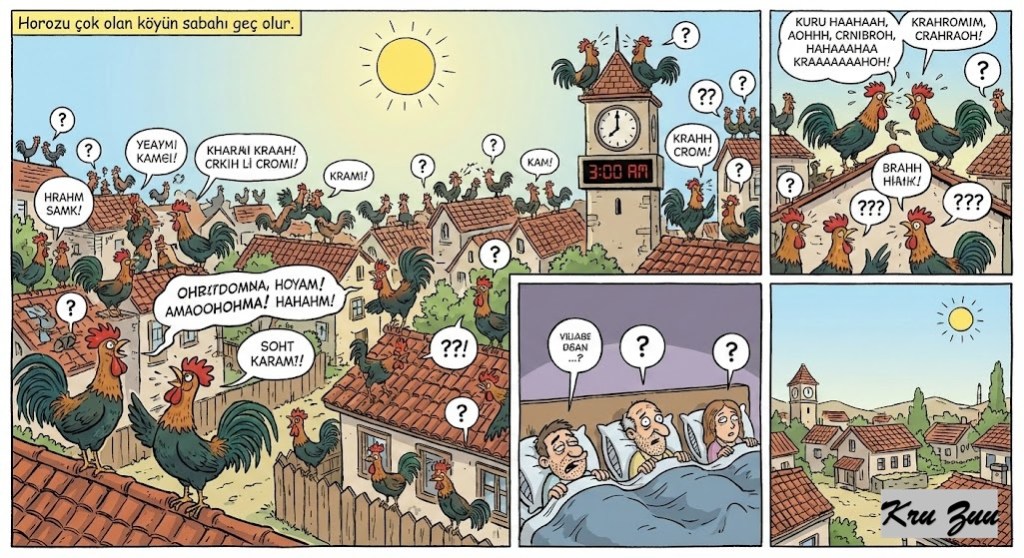
    🇹🇷 Turkish:
    “Horozu çok olan köyün sabahı geç olur.” (The village with too many roosters has a late morning.) — Because they can’t agree on when to crow!

    🇳🇱 Dutch:“Veel varkens maken de spoeling dun.” (Many pigs make the slop thin.)
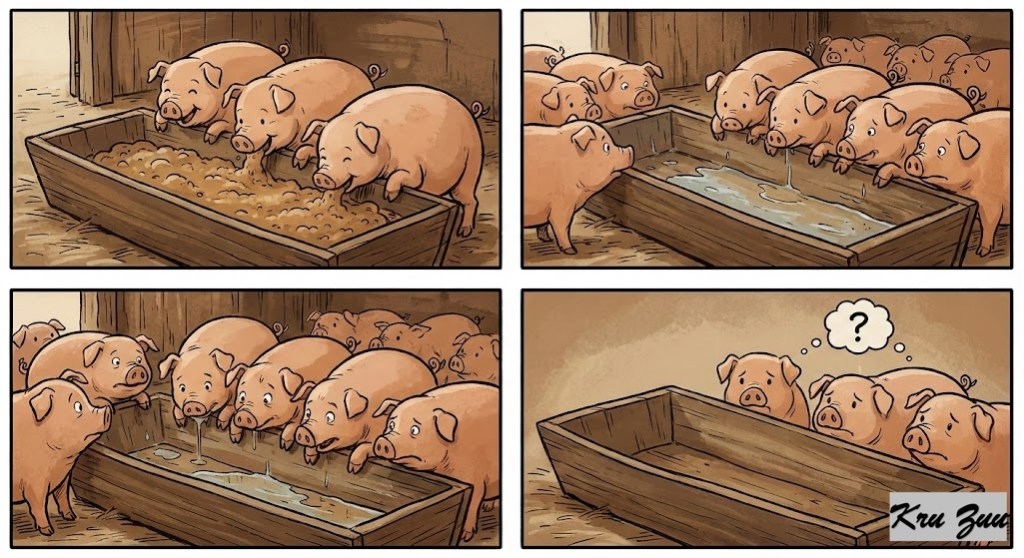

    🇮🇷 Persian: “Two captains sink the ship.”

    🎯 Impact on Life: The Pros & Cons


    ✅ The Pros (Ownership):


    Speed:
    One decision-maker moves faster than a group debating for hours.
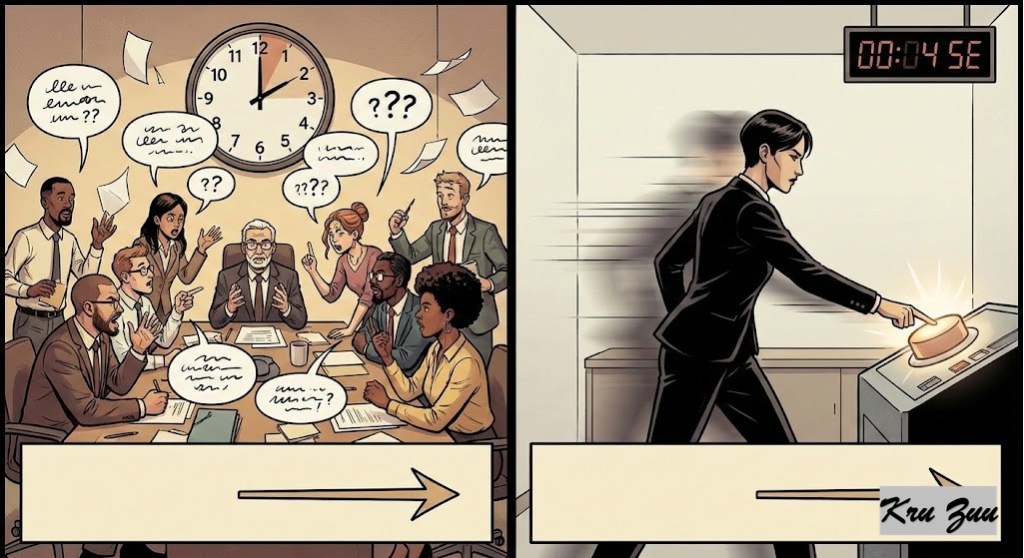

    Clarity: Everyone knows exactly what the goal is.


    ❌ The Cons (The Ego Trap):


    Arrogance:
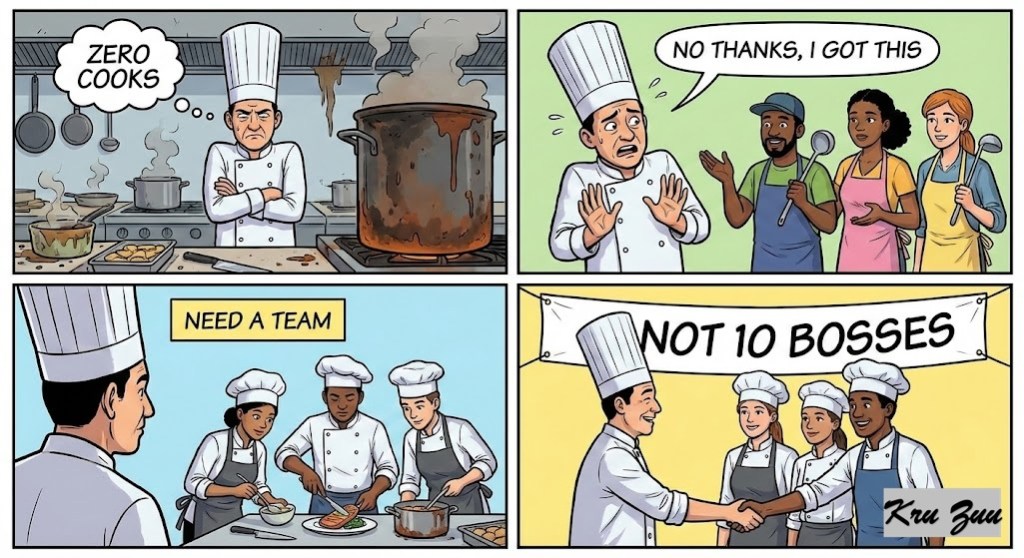
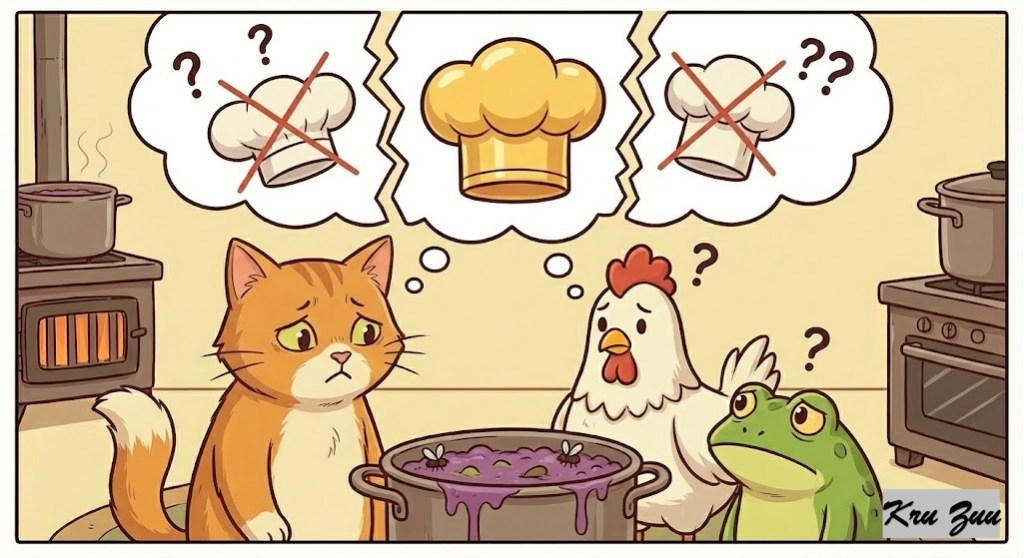
    “Too many cooks” is bad, but “Zero cooks” is also bad. Don’t reject help. You still need a team; you just don’t need 10 bosses.
    🎭 Short Story: The “Perfect” Stew


    Let’s visit the Animal Kingdom Kitchen to see this proverb in action.


    🌟 The Setup

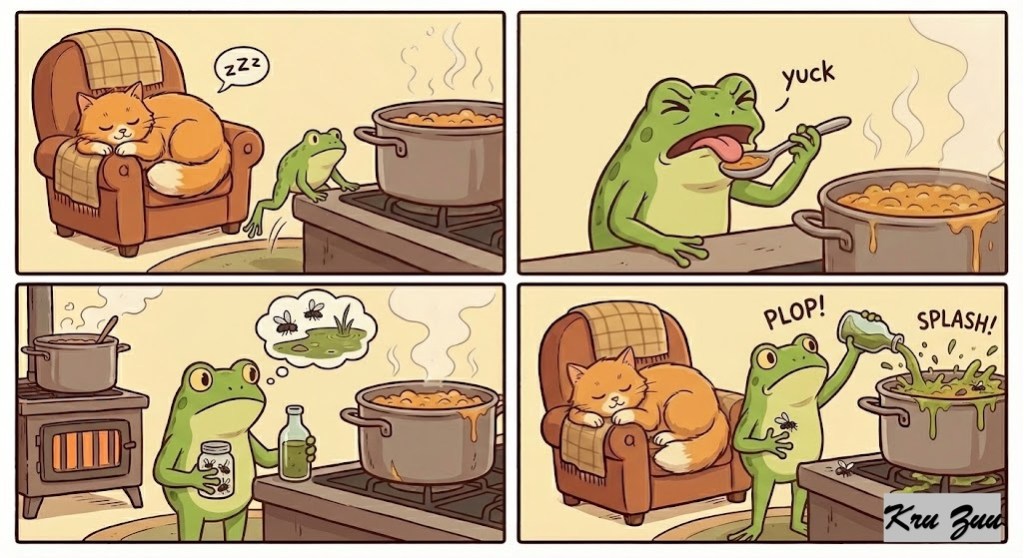
    Chef Whiskers (The Cat) 🐱 is famous for his delicious fish stew. Today is the Grand Feast. He starts the pot with fresh water and perfect fish. It smells amazing. “Perfect,” says Whiskers. “I will go take a nap while it boils.”


    The Conflict: While Whiskers is sleeping, Clucky (The Chicken) 🐔 walks into the kitchen. Clucky sniffs the pot. “Hmm. Too plain. You know what this needs? Corn. Chickens love corn!” Splash! Clucky dumps a bowl of dry corn and seeds into the soup and leaves.
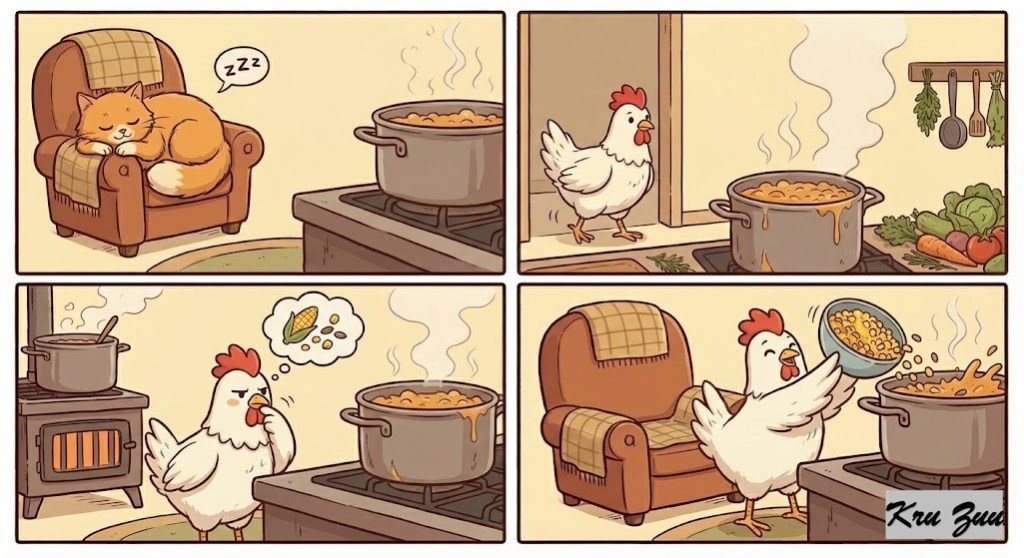

    Five minutes later, Jumper (The Frog) 🐸 hops onto the counter. Jumper tastes the soup. “Yuck! Too crunchy. It needs flavor. It needs… Dead Flies and Swamp Water!” Plop! Splash! Jumper throws in his ‘special ingredients’ and hops away.

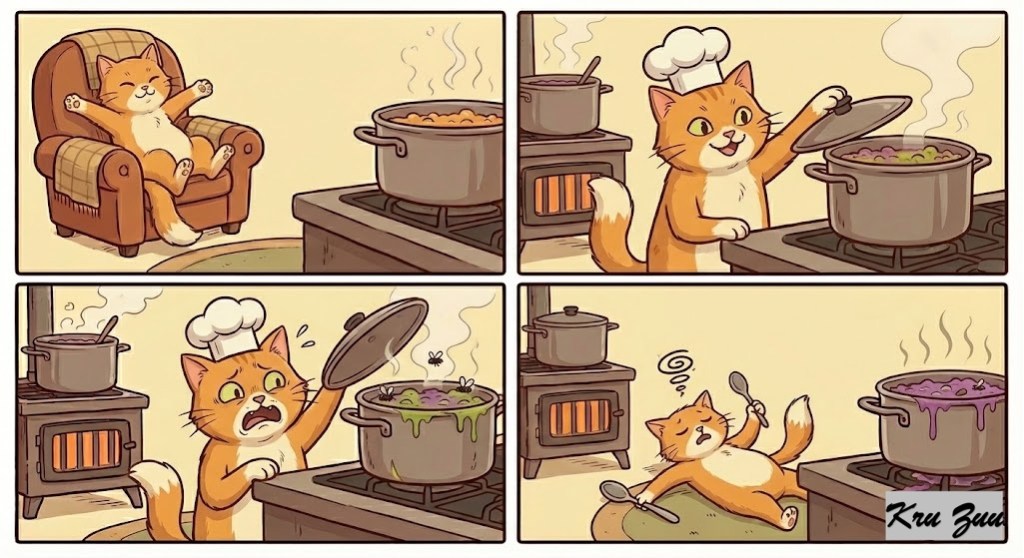
    The Disaster: Chef Whiskers wakes up. He is ready to serve the King. He opens the lid. The soup is purple. It has floating flies. It smells like old socks. He tastes one spoon… and faints. 😵

    The Moral: The Cat, the Chicken, and the Frog were all trying to help. But because they didn’t communicate and all tried to be the “Chef,” they created a monster. One Head Chef is better than three helpful friends.
    🎓 Lesson for English Learners


    Stop asking everyone!


    Situation

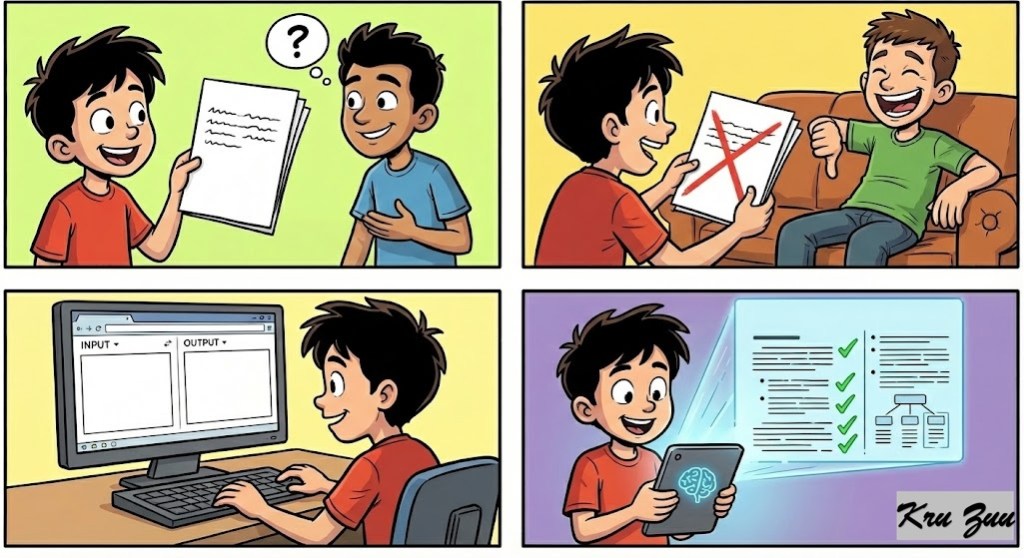
    You write an English essay. You show it to your friend, your brother, Google Translate, and an AI.

    The Problem

    Your friend changes a word. Google changes the grammar. The AI rewrites the tone.


    The Result

    Your essay sounds like a robot fighting a dictionary. It has no “voice.”


    The Solution

    Trust your teacher or trust one reliable source. Don’t let too many “cooks” edit your writing until it loses its meaning. Trust your own voice.

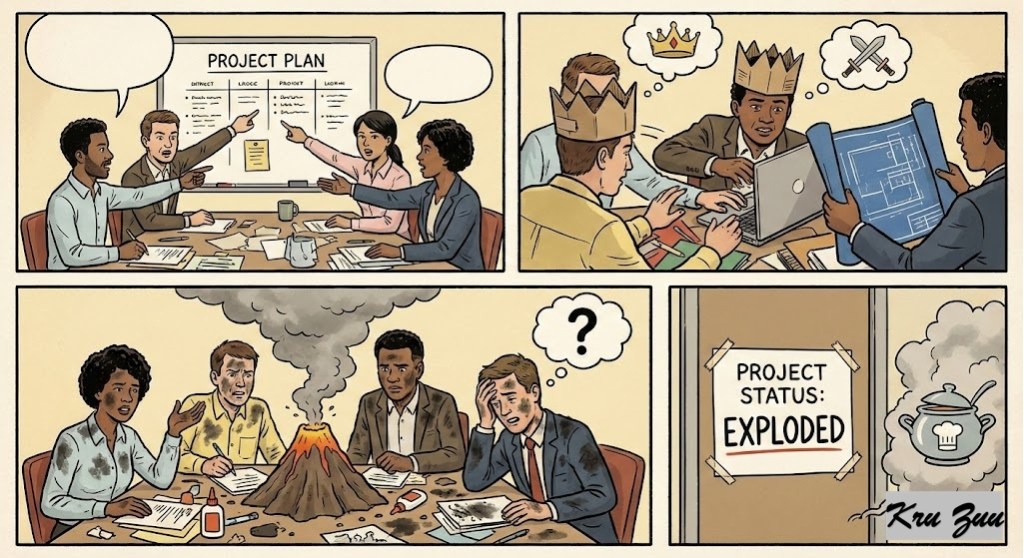
    💬 Your Turn: The Group Project 🚀


    We have all been there. Have you ever been in a “Group Project” at school or work where everyone tried to be the boss? What happened? Did you finish the project, or did it explode like Chef Whiskers’ soup?

    Tell us your story in the comments below! 👇

    By Zubeyir YURTKURAN

    https://www.facebook.com/BrainBattleground/

    https://www.facebook.com/zubeyr.yurtkuran/

    https://www.instagram.com/zubeyryurtkuran/

    https://www.youtube.com/@BrainBattleground-b3p

    https://www.instagram.com/brainbattleground/

  • 🛡️ The Daily Shield: The Law of Association

    🛡️ The Daily Shield: The Law of Association

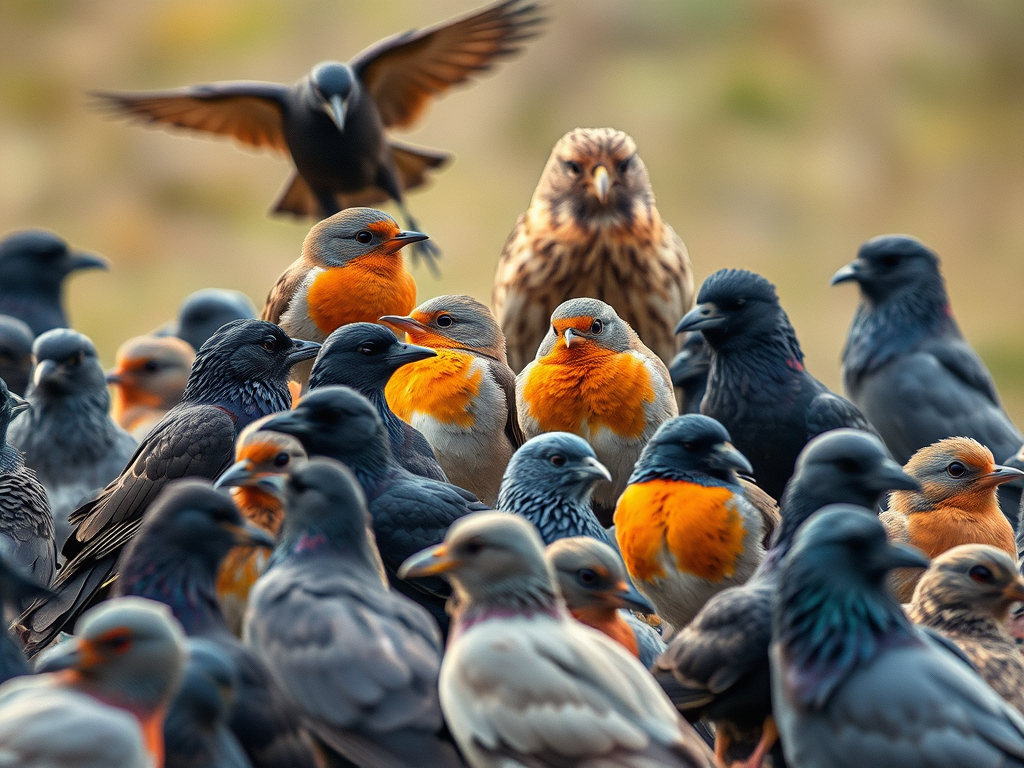
    “Birds of a feather flock together.”


    😈 The Villain (The Energy Vampire):

    You have big dreams. You want to learn English, get fit, or start a business.

    But your “squad” only wants to gossip, complain about the weather, and play video games for 6 hours straight.

    You try to work, but they say, “Come on, relax! You are boring.” You slowly lower your standards to match theirs.

    The Result? You become the average of the people around you.

    You lose your fire.

    You wonder why you are stuck in the same place while others move forward.

    You are trapped in the “Comfort Zone Cage.” 🧟‍♂️


    😇 The Hero (The Tribe Builder):

    You realize that emotions and habits are contagious.

    You look at your circle and ask: “Do these people inspire me or drain me?”

    You bravely distance yourself from toxic negativity. You find a new group, people who are smarter, faster, and kinder than you.

    The Result? Their habits rub off on you. You study because they study. You aim high because they aim high. You don’t just fly; you soar. You understand that your network is your net worth. 🦅

    ⚖️ The Reality


    “Show me your friends, and I will show you your future.” We like to think we are independent thinkers.

    But biology says otherwise. We are social chameleons.

    If your friends eat fast food every day, you will eventually eat a burger.

    If your friends read books, you will eventually pick up a book.

    💎 The Secret: You cannot change the people around you, but you can change the people around you. (Read that again).

    🧐 The Anatomy of the Proverb


    Why birds? Why feathers? Let’s break it down.


    Birds of a feather (Idiom): People who are similar (same character, same interests, same background). Just like a sparrow has different feathers than an eagle.


    Flock (Verb): To gather or travel together in a crowd.


    Together (Adverb): With or near to each other.


    Simpler Version: Similar people hang out with similar people.


    📚 Vocabulary Vault


    Clique (Noun):
    A small group of people, with shared interests or other features in common, who spend time together and do not readily allow others to join them. (Example: “The popular clique in high school.”)


    Peer Pressure (Noun): Influence from members of one’s peer group. 😬


    Entourage (Noun): A group of people attending or surrounding an important person.


    Toxic (Adjective): Very harmful or unpleasant in a pervasive or insidious way.


    Like-minded (Adjective): Having similar tastes or opinions. 🧠


    🧠 Grammar Focus: Collective Nouns


    The word “Flock” is special. It is often used for birds, but English loves “Collective Nouns” (names for groups of animals).


    A flock of birds (or sheep). 🐦


    A pack of wolves. 🐺


    A school of fish. 🐟


    A pride of lions. 🦁


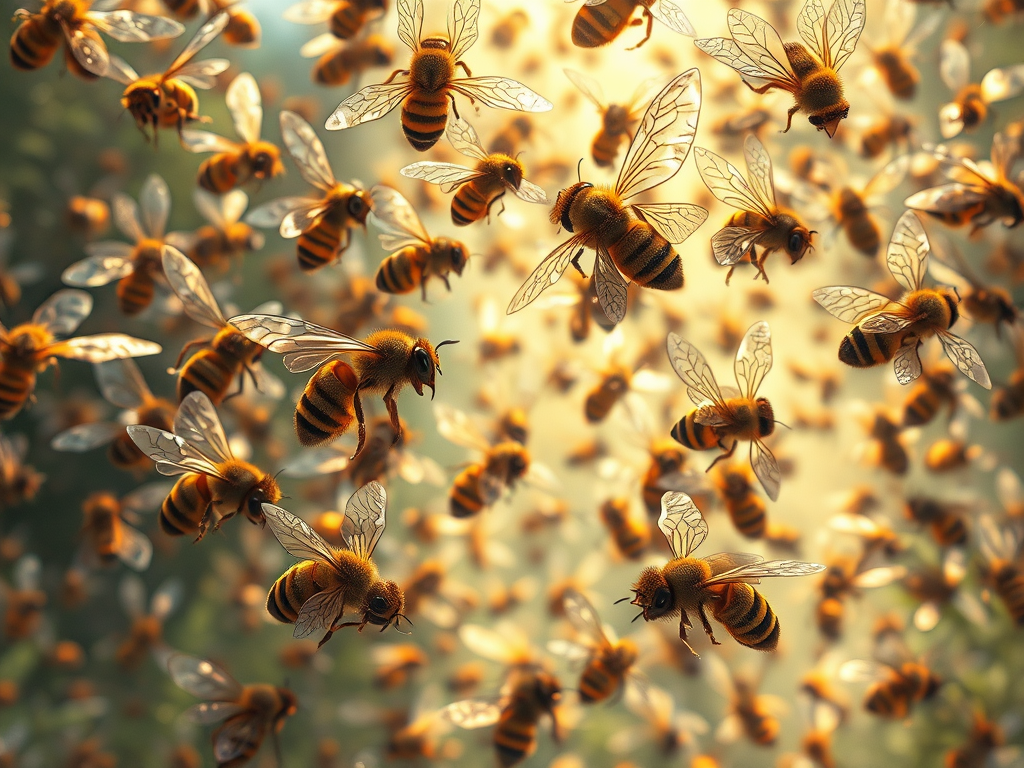
    A swarm of bees. 🐝


    Grammar Trap: When the group acts as one unit, use a singular verb.


    Correct: The flock is flying south. (Not “are”)

    📜 History & Global Wisdom


    This observation is as old as nature itself.


    The Origin

    The phrase has been used since the mid-16th century. William Turner used a version of it in 1545. It comes from the simple observation that robins fly with robins, and crows fly with crows. You never see a pigeon hanging out with a hawk.


    Global Cousins
    🇹🇷 Turkish:
    “Bana arkadaşını söyle, sana kim olduğunu söyleyeyim.” (Tell me your friend, and I will tell you who you are.) — Direct hits on the meaning!


    🇹🇷 Turkish (Alternative): “Körle yatan şaşı kalkar.” (He who sleeps with the blind wakes up cross-eyed.) — Warning about bad influence.


    🇪🇸 Spanish: “Dime con quién andas, y te diré quién eres.”


    🇯🇵 Japanese: “Rui wa tomo wo yobu.” (Similar types call their friends.)

    🎯 Impact on Life: The Audit


    ✅ The Pros (The Mastermind):
    Acceleration:
    Being around experts makes you learn faster by osmosis.


    Support: When you fall, a strong flock catches you.


    ❌ The Cons (The Echo Chamber):
    Blindness:
    If everyone agrees with you, you never grow. Sometimes you need a friend who is different to challenge your ideas.


    Exclusion: Don’t be so close to your flock that you reject everyone else. That is prejudice.

    🎭 Short Story: The Eagle in the Chicken Coop


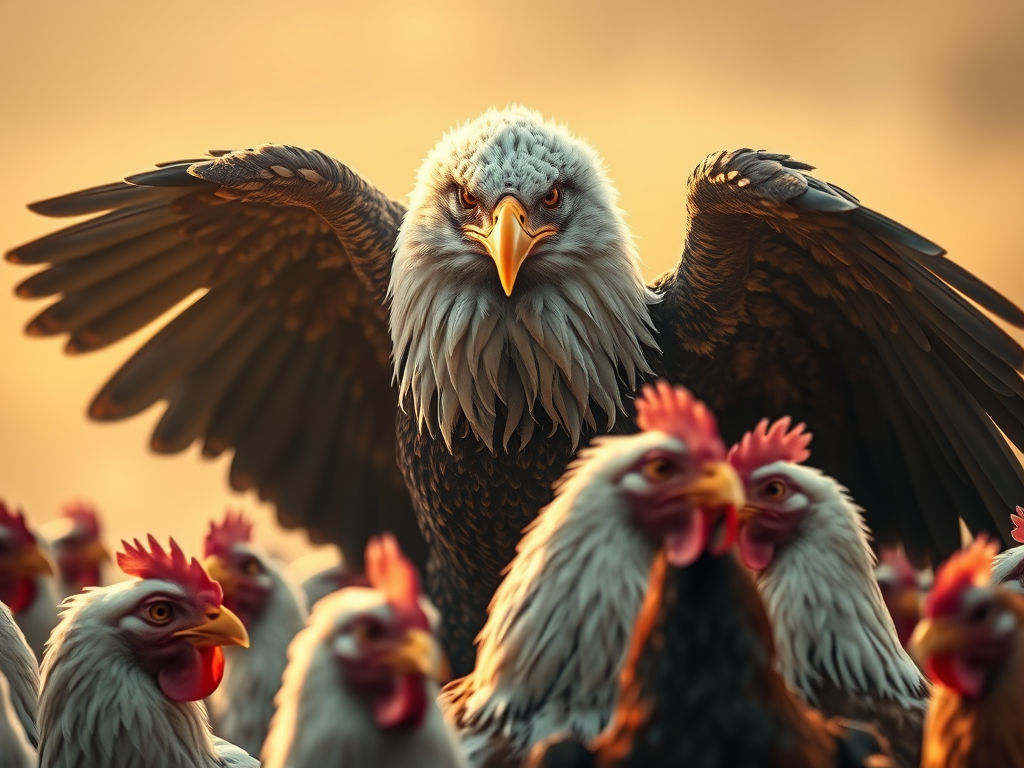
    Once, an eagle egg rolled out of a nest and fell into a farm.

    A chicken sat on it. When the baby eagle hatched, he looked around.

    Everyone was pecking at the ground, eating corn, and clucking.

    The Conditioning: The baby eagle thought, “I guess I am a chicken.”

    He walked on the ground. He never tried to fly high. He spent his days gossiping about the farmer.

    The Awakening: One day, he looked up and saw a majestic bird gliding effortlessly in the clouds.

    “What is that?” asked the eagle. “That’s an eagle, the king of the birds,” said the old chicken. “But don’t worry about him. You and I belong to the ground.”

    The Tragedy: The eagle believed his “flock.” He lived and died a chicken, never knowing he was born to rule the sky.

    The Moral: If you hang out with chickens, you will never fly. Find your eagles. 🦅

    🎓 Lesson for English Learners


    Create Your “English Flock.”


    Situation: You study English alone in your room. When you go out, you only speak your native language.


    The Fix: You cannot learn a language in isolation.


    Join an English speaking club (online or offline).


    Change your digital flock: Follow accounts that only post in English.


    Find a “study buddy” who is more advanced than you. They will pull you up.


    💬 Your Turn: The Friendship Audit 🚀


    Jim Rohn said, “You are the average of the five people you spend the most time with.”


    The Challenge:
    Write down the names of the 3 people you text the most.


    Do they inspire you?


    Do they support your goals?


    Do they make you laugh or stress you out?


    Comment below:
    What kind of “flock” are you looking for this year? (Example: “I am looking for a creative flock!” or “I need a gym flock!”) 👇

  • 👀 Look Before You Leap: The Art of Calculated Action

    👀 Look Before You Leap: The Art of Calculated Action

    Look before you leap.


    🚀 The Leaper (The Impulsive):
    You quit your job because you had one bad day.

    You bought a used car without checking the engine. You sent an angry text message the second you felt annoyed.

    The Result? You are unemployed with bills to pay.

    The car breaks down in a week.

    You lost a friend over a misunderstanding.

    Regret hits you instantly. You are in a hole you dug yourself. 🕳️


    🕵️ The Looker (The Strategist): You updated your resume and saved money before quitting.

    You paid a mechanic to inspect the car first.

    You wrote the angry text but waited 24 hours to send it (and then deleted it).

    The Result? You transitioned smoothly to a better career.

    You bought a reliable vehicle.

    You kept your relationships drama-free.

    You control the situation; the situation does not control you. 🕶️


    📉 The Reality: This isn’t just about jumping over puddles. It’s about Due Diligence.

    In the age of “Instant Everything” (instant messages, instant buys), the ability to pause and think is a superpower. ⏸️


    💎 The Secret: Speed is good, but direction is better. Moving fast in the wrong direction just gets you lost faster.

    🧐 The Anatomy of the Proverb


    This classic phrase is a warning against acting on impulse without considering the consequences.


    📚 Vocabulary Vault


    To Leap (Verb):
    To jump high or a long way. (Here: To take a sudden, significant action.) 🏃‍♂️


    Example: “He leapt over the fence.”


    To Look (Verb): To use your eyes. (Here: To examine, research, or analyze the situation.) 🔍


    Consequences (Bonus Word): The results (usually unpleasant) of an action.


    Impulsive (Bonus Word): Acting without thinking.


    🧠 Grammar Focus


    The Temporal Clause (Time Connectors):
    The sentence uses the conjunction “Before” to connect two actions. It establishes a mandatory order of operations.


    Structure: [Imperative Command] + [Conjunction of Time] + [Secondary Action].


    Incorrect: Leap and then look. ❌


    Correct: Look before you leap. ✅


    Real Life: “Check your wallet before you order the expensive steak.”

    📜 History: Origin and Spread


    The wisdom of this proverb dates back to ancient storytelling.


    The Origin: It is attributed to Aesop’s Fables (The Fox and the Goat).

    A fox falls into a well. A thirsty goat sees him and asks if the water is good.

    The fox says, “It’s amazing! Jump in!” The goat jumps in without thinking.

    The fox climbs on the goat’s horns to escape, leaving the goat stuck.

    The moral? Check the exit before you enter. 🦊


    Global Cousins:


    🇹🇷 Turkish:
    “İki ölç, bir biç.” (Measure twice, cut once. – Focuses on precision.)

    🇹🇷 Turkish: “Dereyi görmeden paçaları sıvama.” (Don’t roll up trousers before seeing the creek.)


    🇪🇸 Spanish: “Antes de que te cases, mira lo que haces.” (Before you get married, look at what you are doing.)


    🇩🇪 German: “Erst wägen, dann wagen.” (First weigh, then dare.)

    🎯 Impact on Life: The Pros & Cons


    Is it always good to wait? Let’s analyze.


    ✅ The Pros (The Shield):


    Risk Reduction:
    You avoid catastrophic failures and financial loss.


    Confidence: When you finally “leap,” you do so with full commitment because you know the facts.


    Reputation: You are seen as wise, reliable, and level-headed.


    ❌ The Cons (The Trap):


    Analysis Paralysis: If you look too long, you might never leap at all. You get stuck in “overthinking” mode. 🗿


    Missed Opportunities: Sometimes, a window of opportunity closes quickly. If you hesitate too long, someone else will take the prize.

    🎭 Short Story: The Forest Shortcut


    Let’s visit our friends Penny, Fiona, and Max again!


    🌟 The Setup: Penny the Pig and Fiona the Fox were late for a birthday party.

    Max the Mouse pointed to a dark, overgrown path. “That’s a shortcut,” Max squeaked. “It saves 20 minutes!”


    The Conflict: Penny, worried about being late, shouted, “Let’s go!” and sprinted into the tall grass immediately.

    Fiona, however, stopped. She picked up a long stick and poked the grass in front of her.


    The Action: Penny was running full speed when, SPLAT!

    She fell straight into a hidden mud pit that looked like solid ground.

    She was stuck up to her neck in sticky mud! 🐷💩


    The Solution: Fiona, having “looked” with her stick, found the solid path around the pit.

    She used the stick to pull Penny out.

    They arrived at the party late, and Penny was covered in mud.


    The Moral: A saved minute is worthless if it costs you an hour of cleaning up a mess. Penny leapt; Fiona looked.

    🎓 Lesson for English Learners


    How to sound smart using this concept in conversation.


    Advice Language 🗣️


    To a friend buying a suspicious crypto-coin:
    “Hey, I know the returns look good, but look before you leap. Have you read the whitepaper?”


    To a colleague quitting in anger: “Don’t just walk out. Look before you leap, do you have another offer signed?”


    Vocabulary Expansion 📚


    Due Diligence (Noun): Reasonable steps taken by a person to satisfy a legal requirement or before buying something. “He did his due diligence before buying the house.”


    Calculated Risk (Noun): A chance taken after careful estimation of the probable outcome. “It wasn’t a gamble; it was a calculated risk.”


    Hasty (Adjective): Done with excessive speed or urgency; hurried. “Don’t make a hasty decision.”


    💬 Your Turn


    The “24-Hour Rule” Challenge 📝


    Think of a decision you are feeling pressured to make right now (buying something expensive, sending a risky text, signing up for a course).


    The Leap: What does your impulse want to do immediately?


    The Look: What specific detail do you need to check first? (e.g., Check bank account, read reviews, ask a mentor).


    Action Step: Commit to waiting 24 hours before making that decision. Use that time to “Look.”


    Question: Have you ever “Leapt” without “Looking” and regretted it? Tell us your story in the comments! 👇

    By Zubeyir YURTKURAN

    https://www.facebook.com/BrainBattleground/

    https://www.facebook.com/zubeyr.yurtkuran/

    https://www.instagram.com/zubeyryurtkuran/

    https://www.youtube.com/@BrainBattleground-b3p