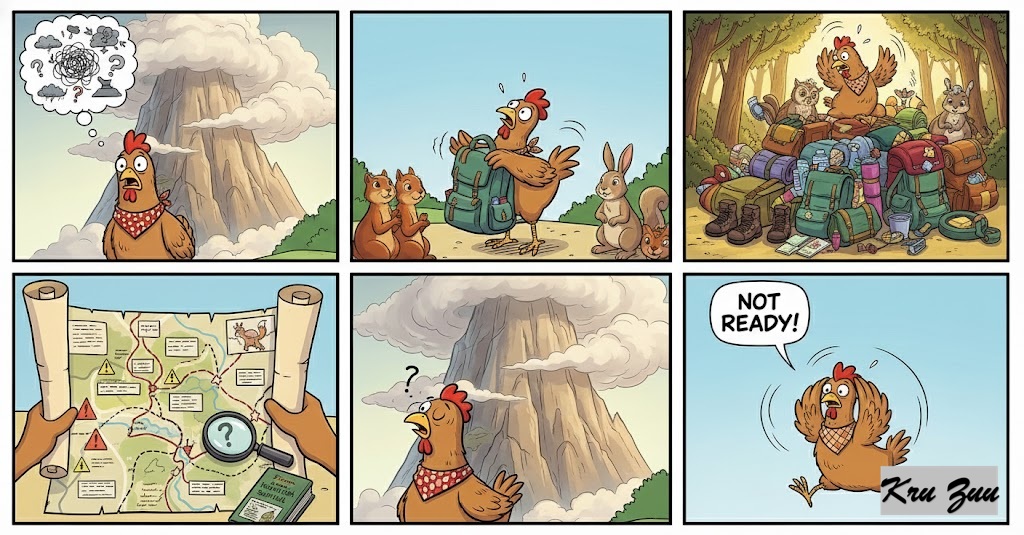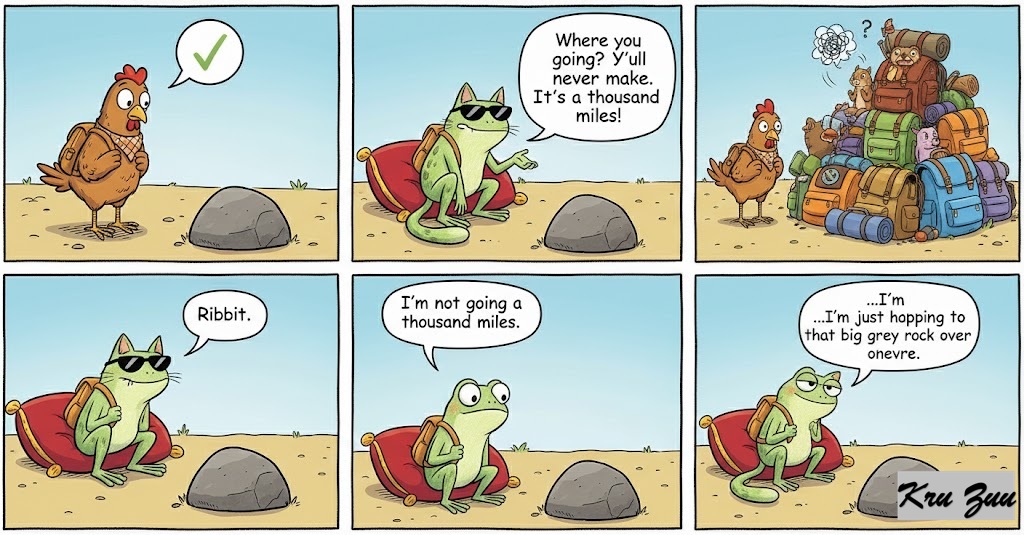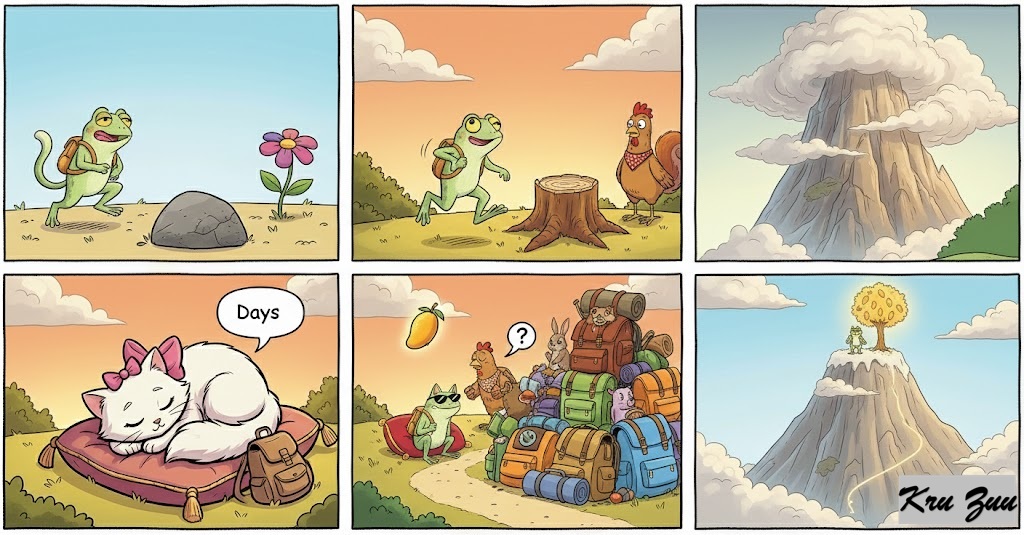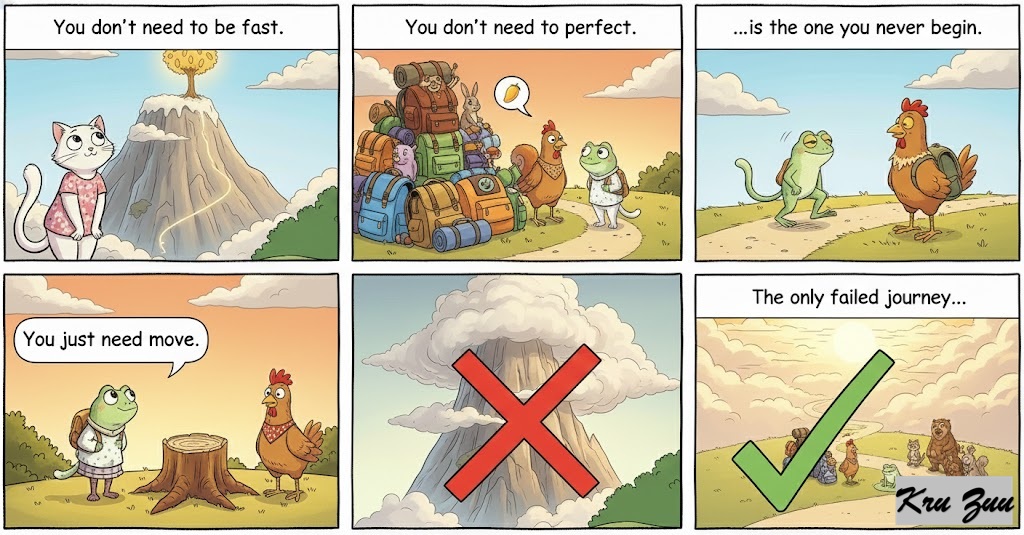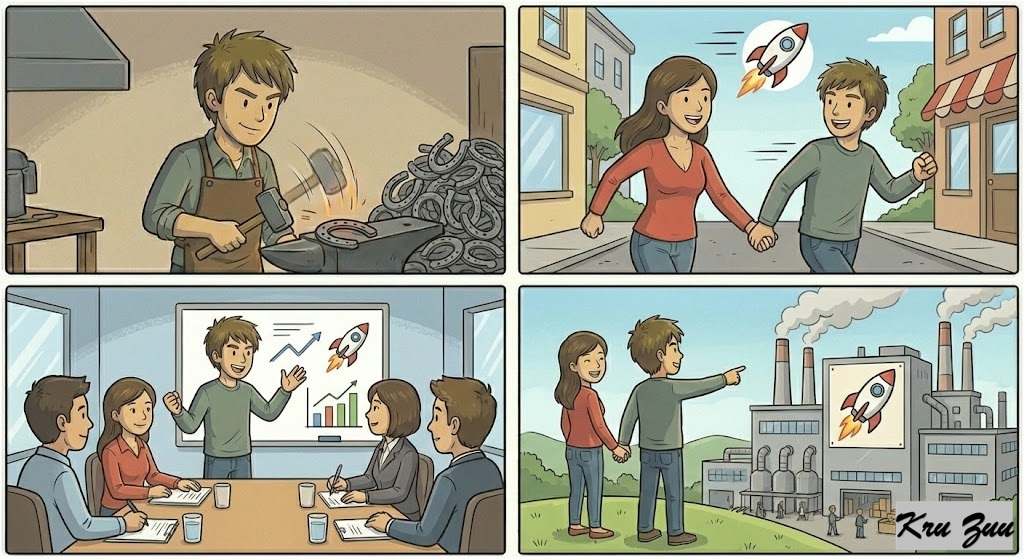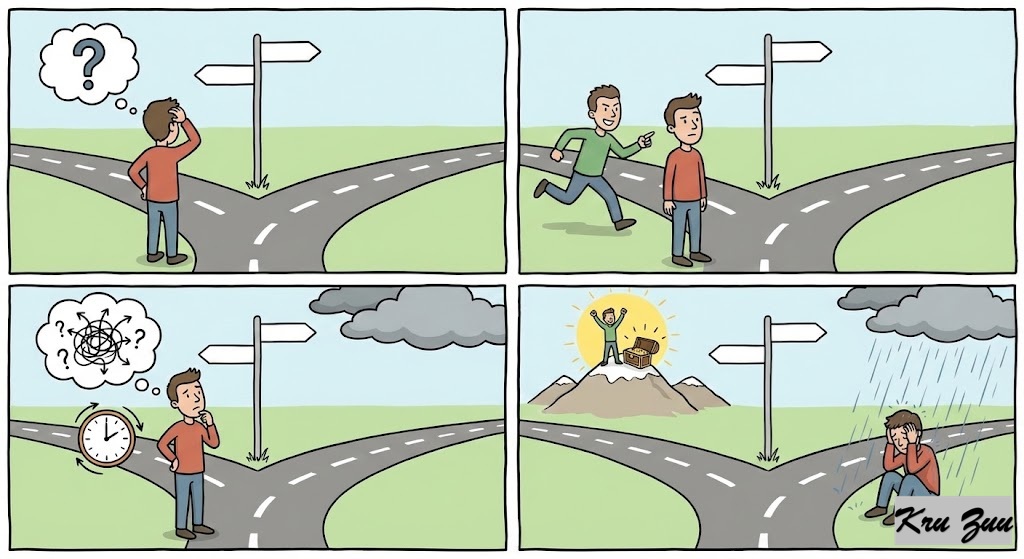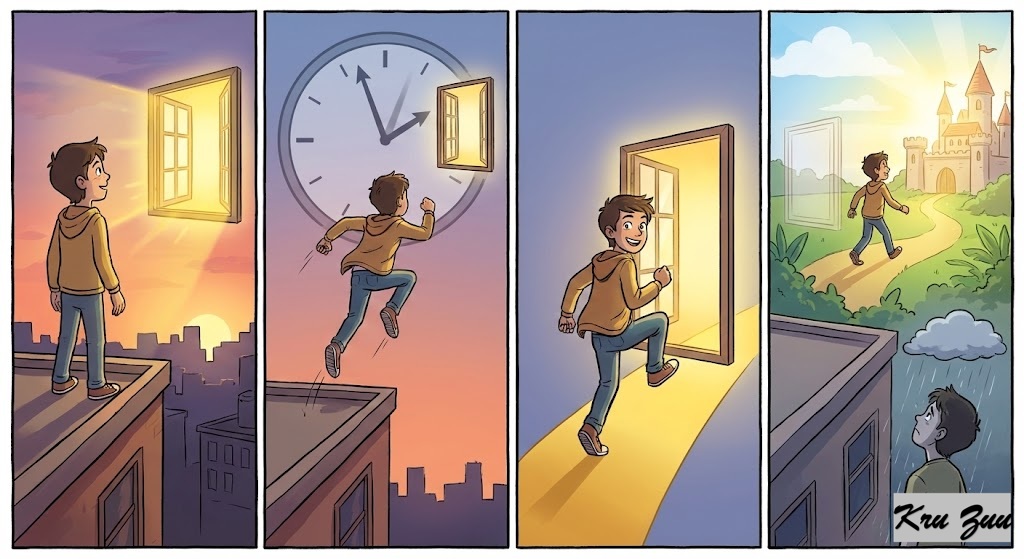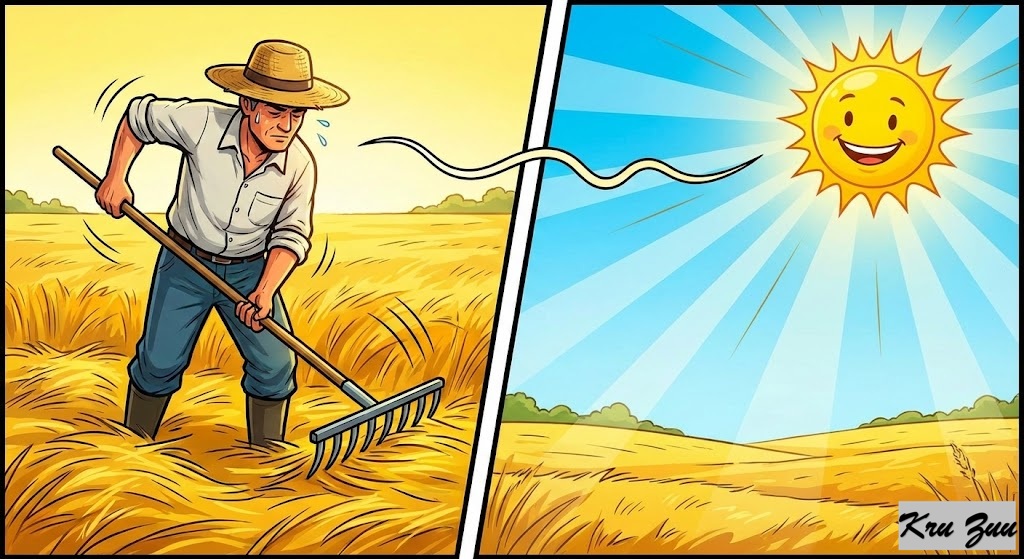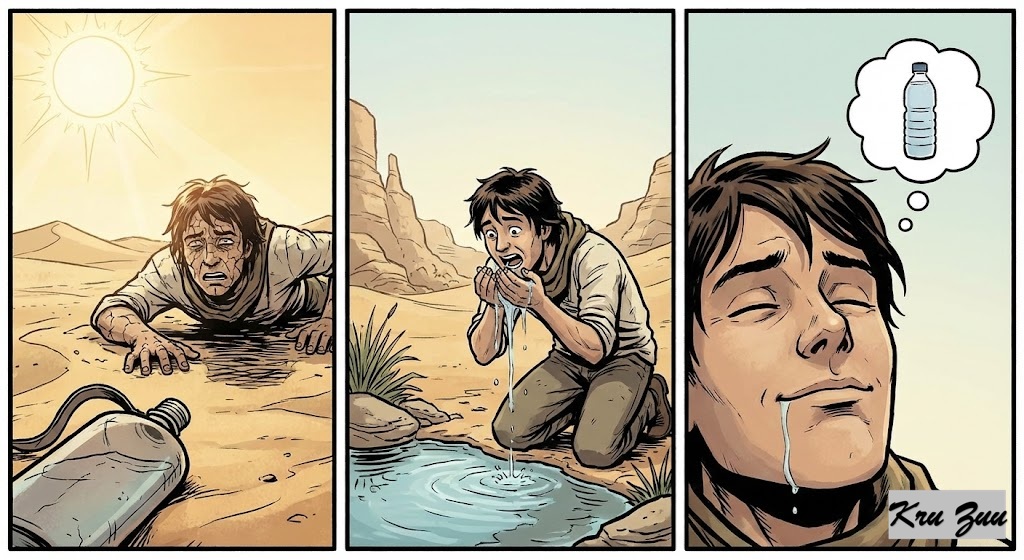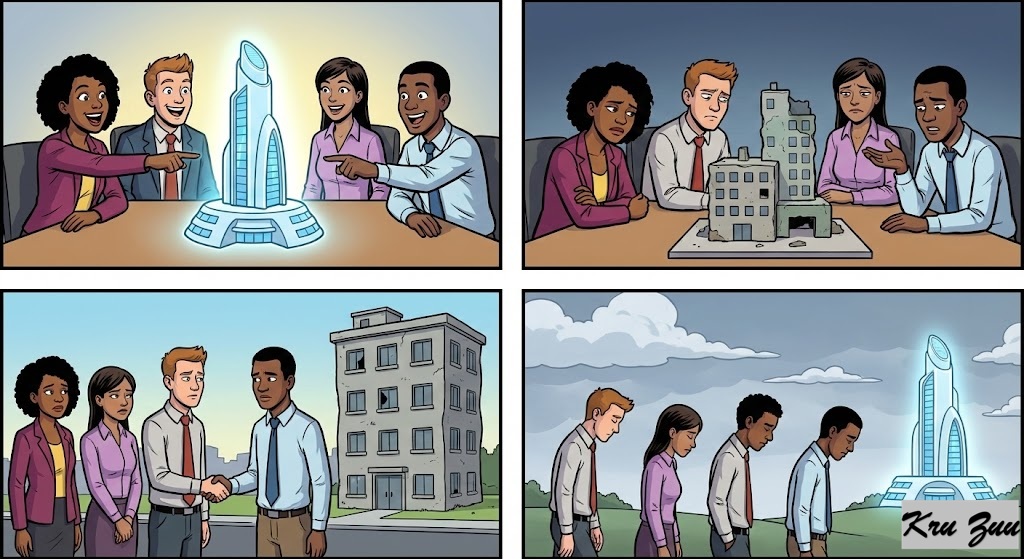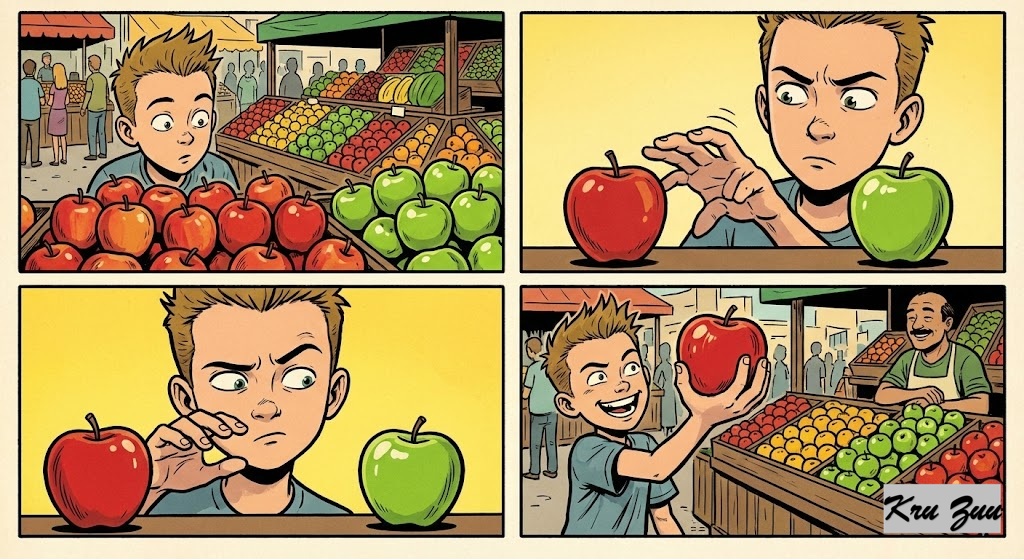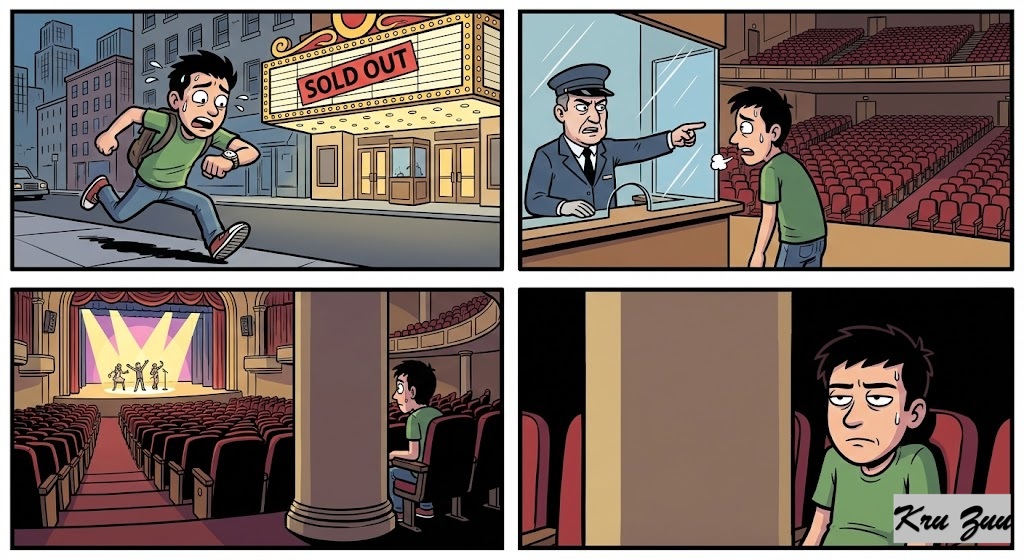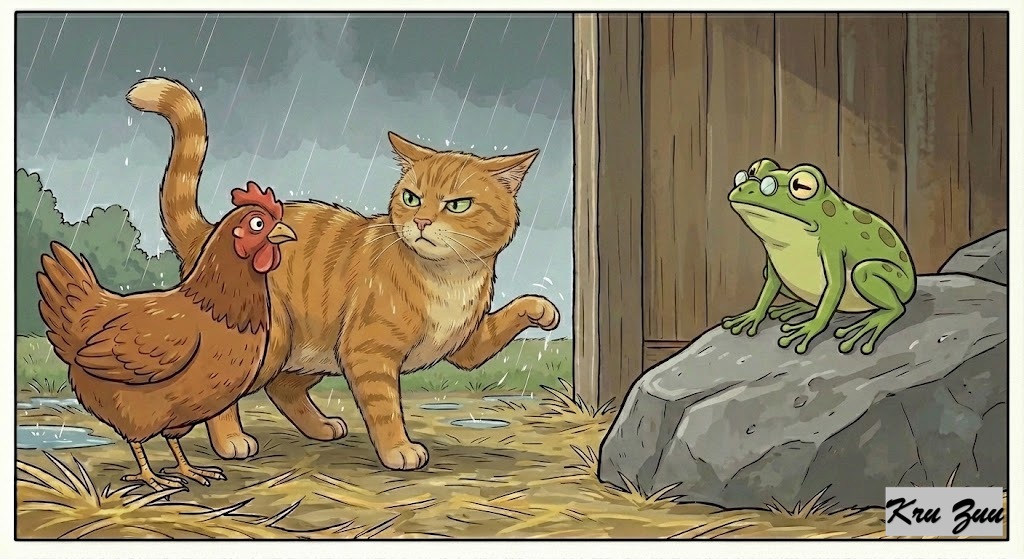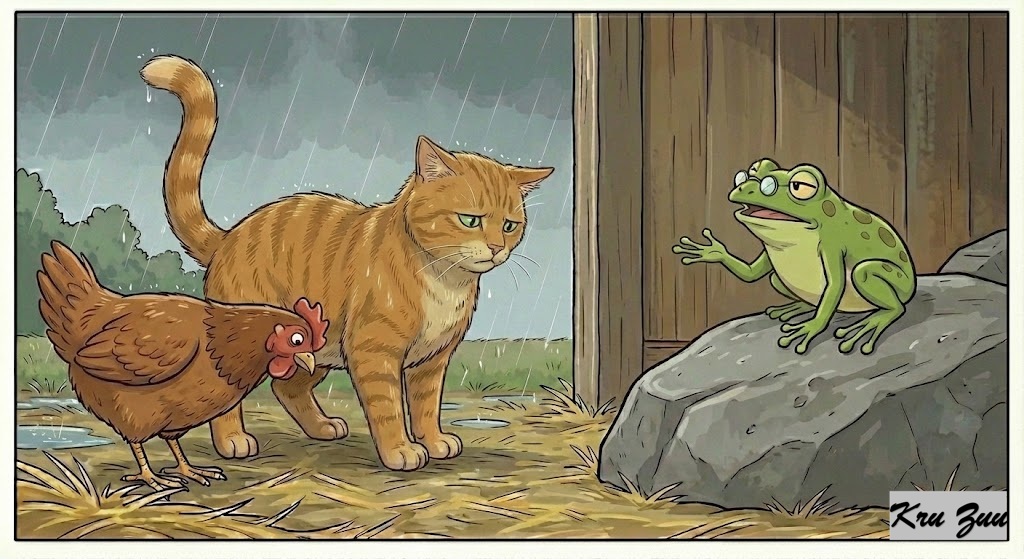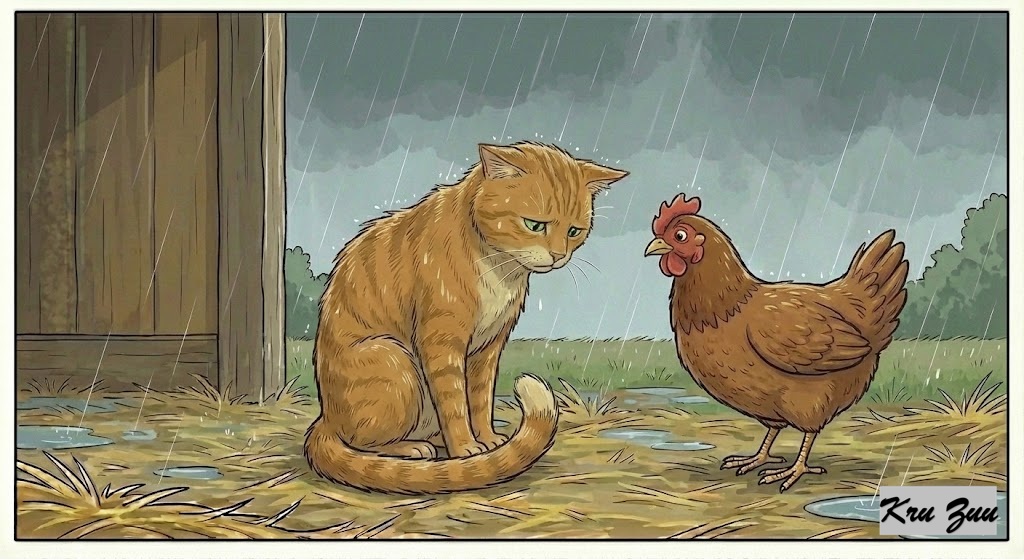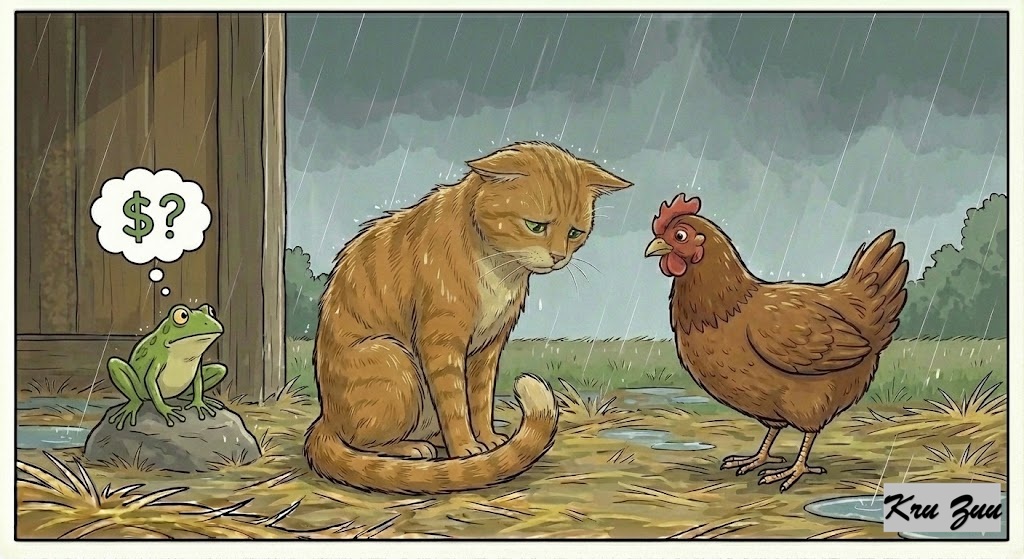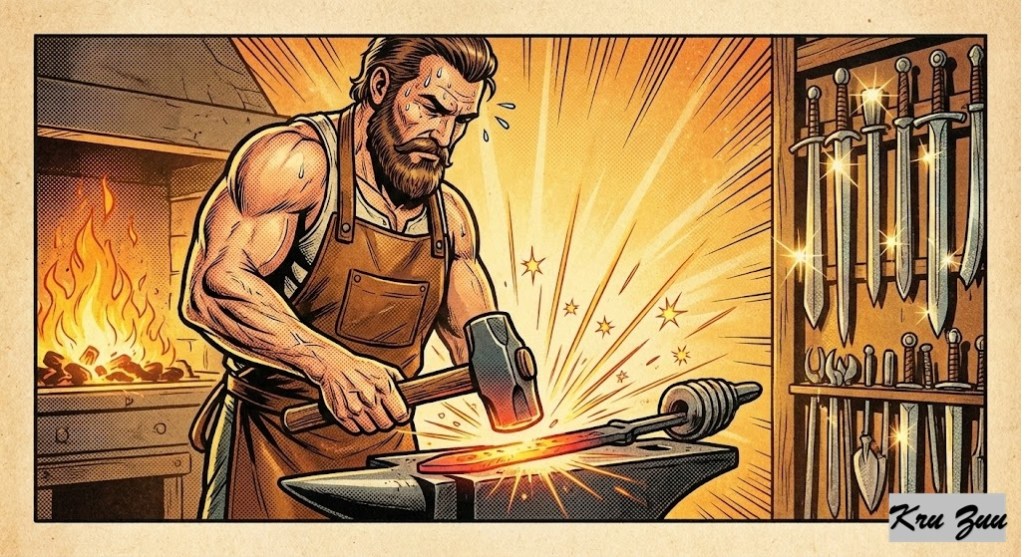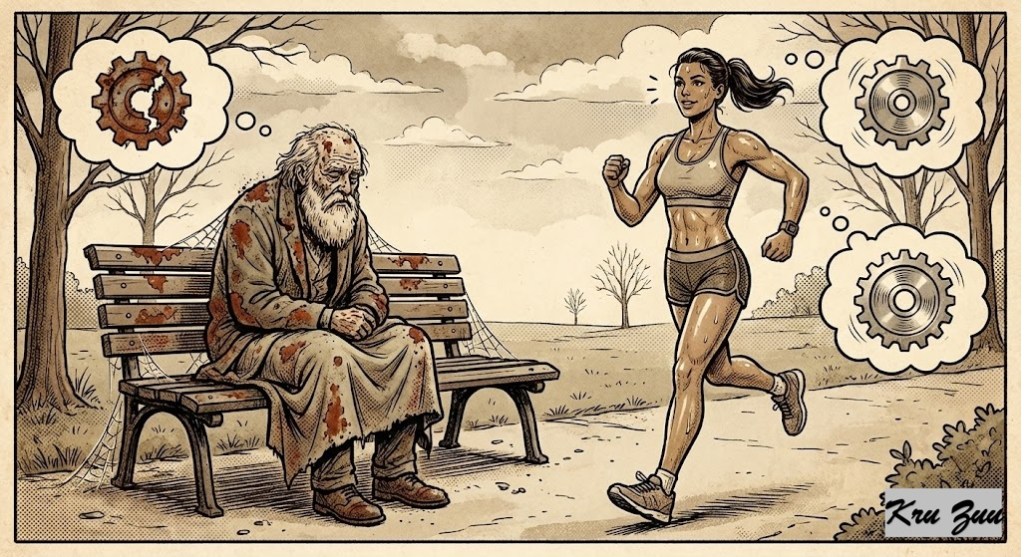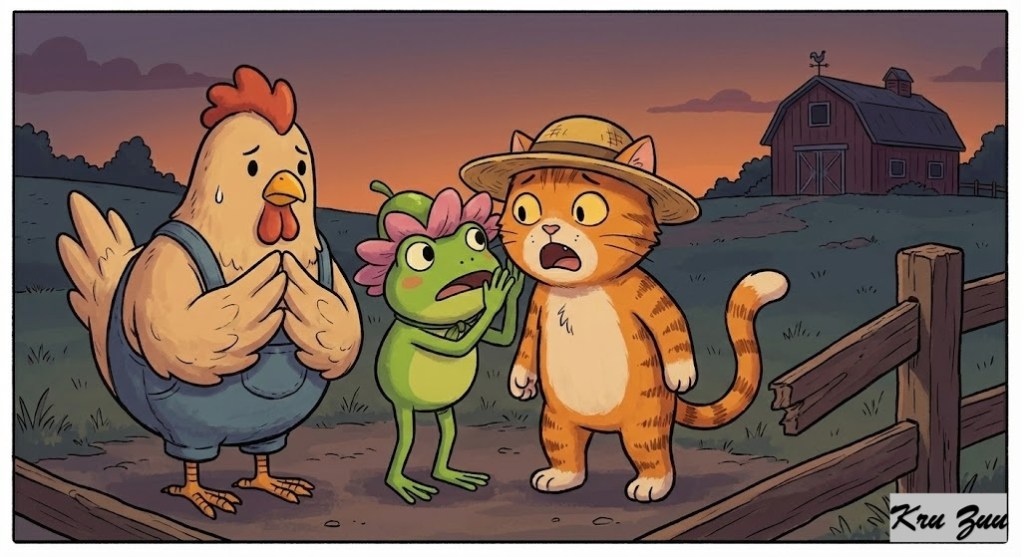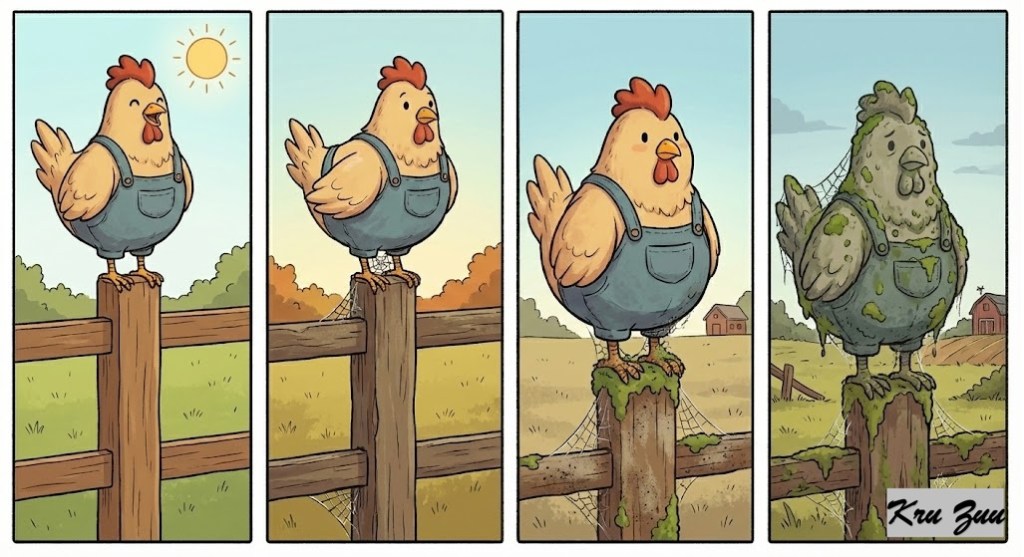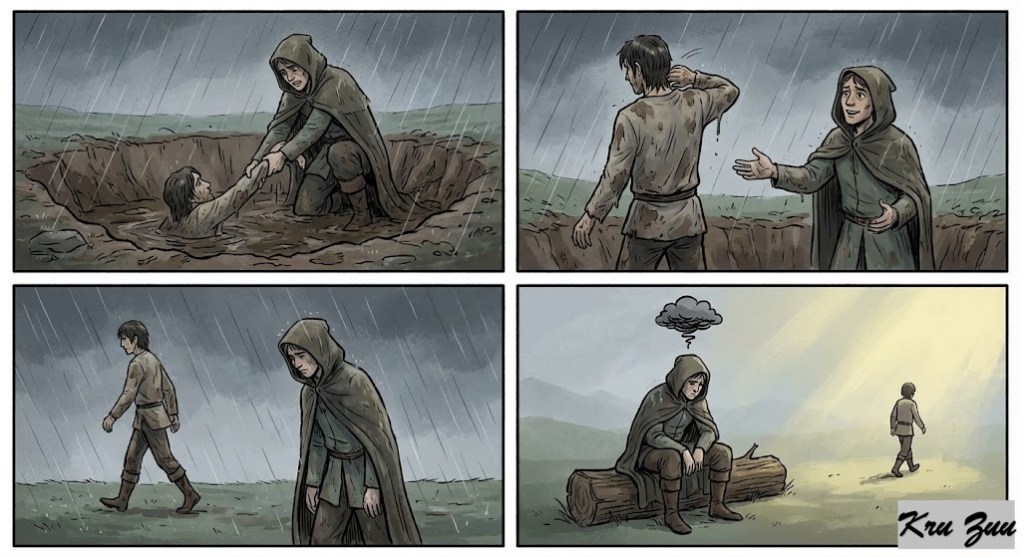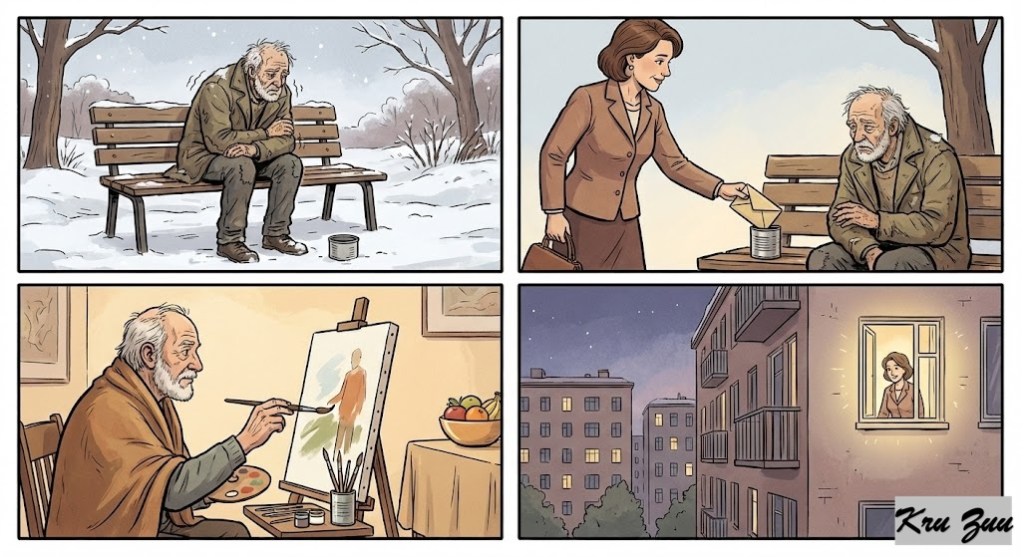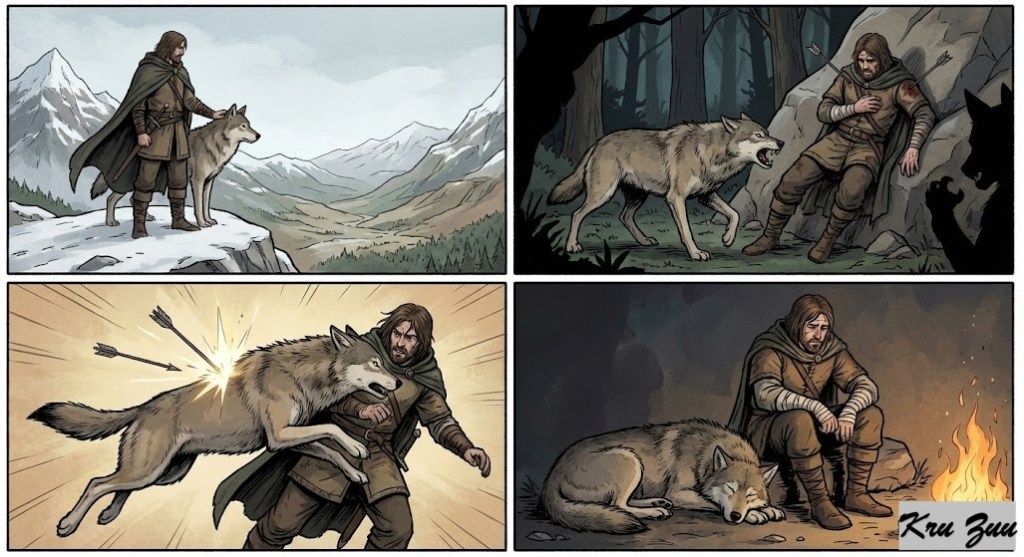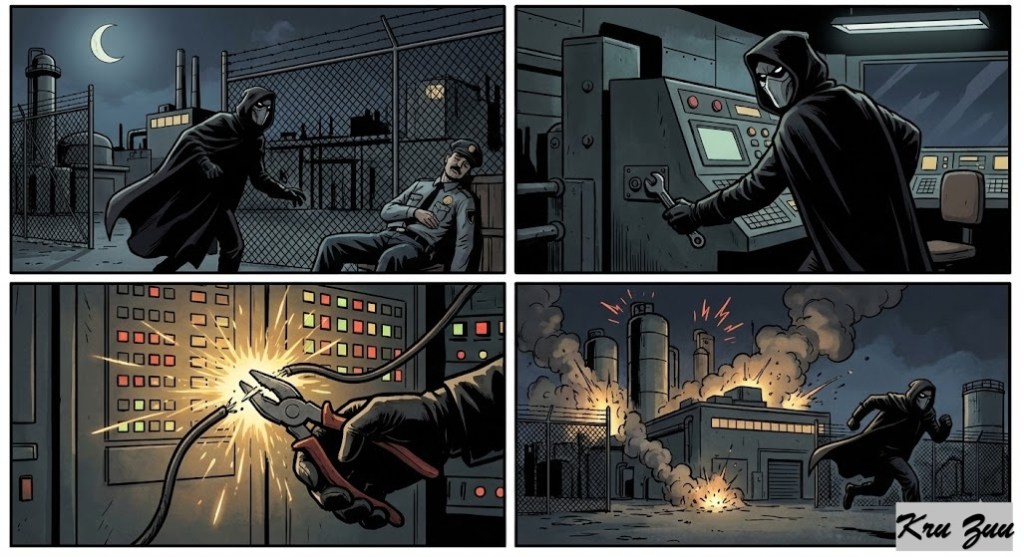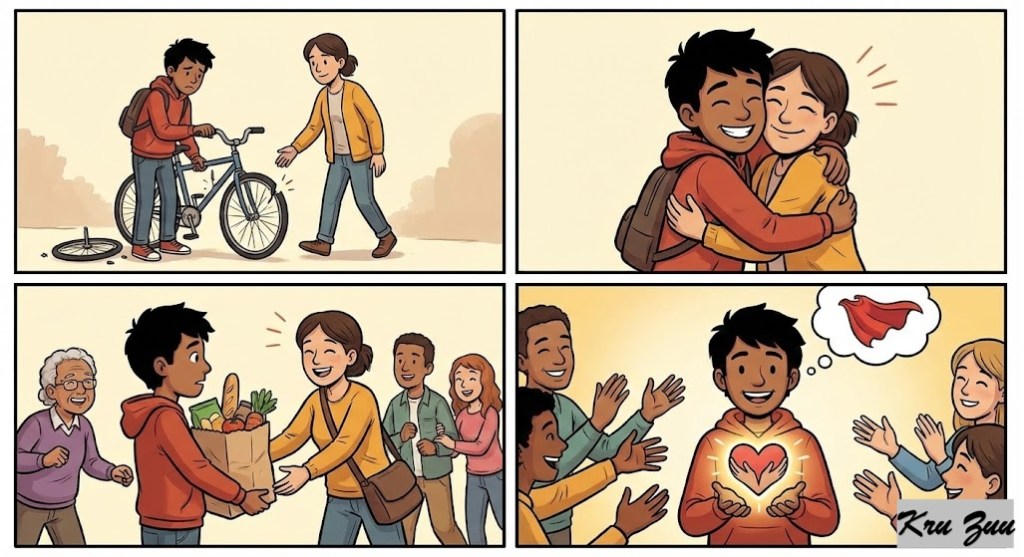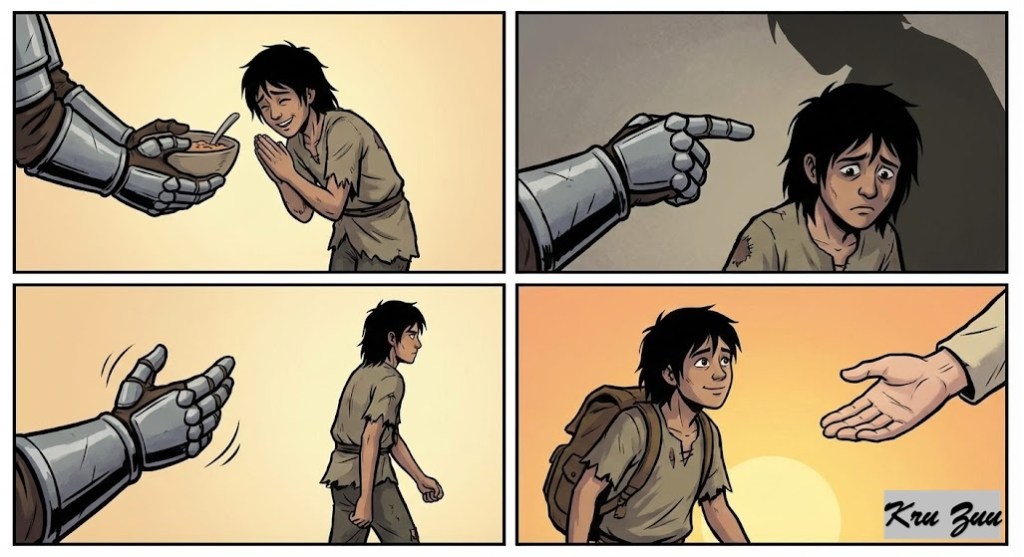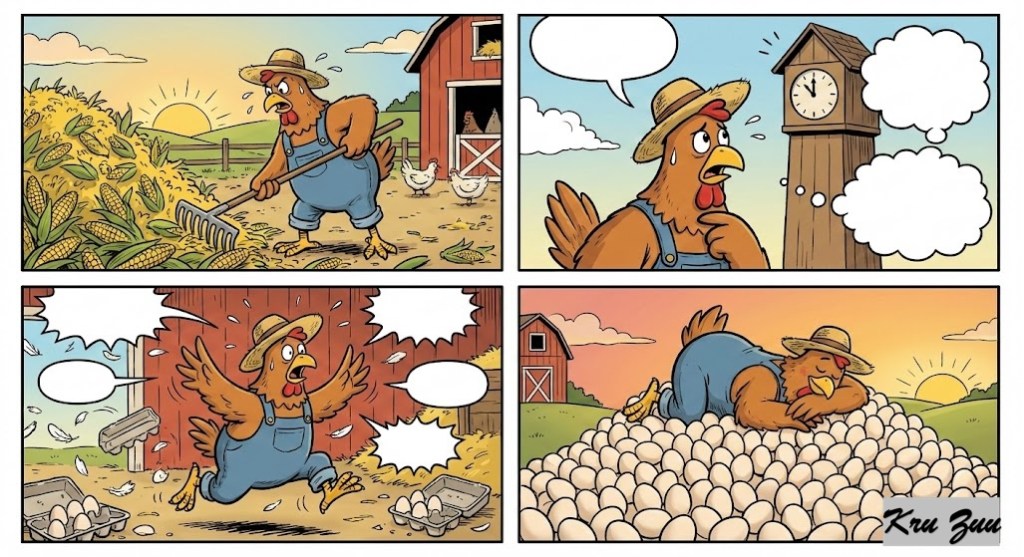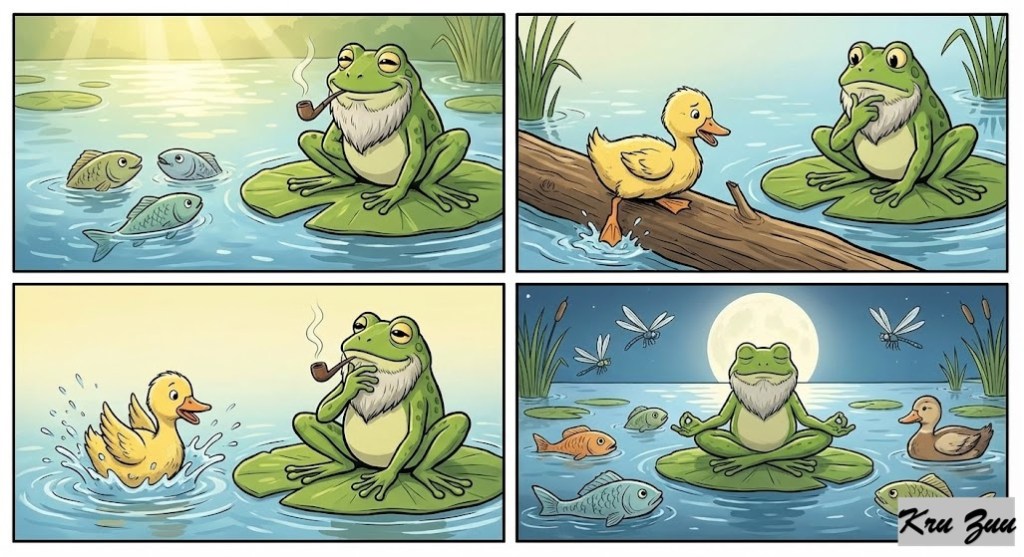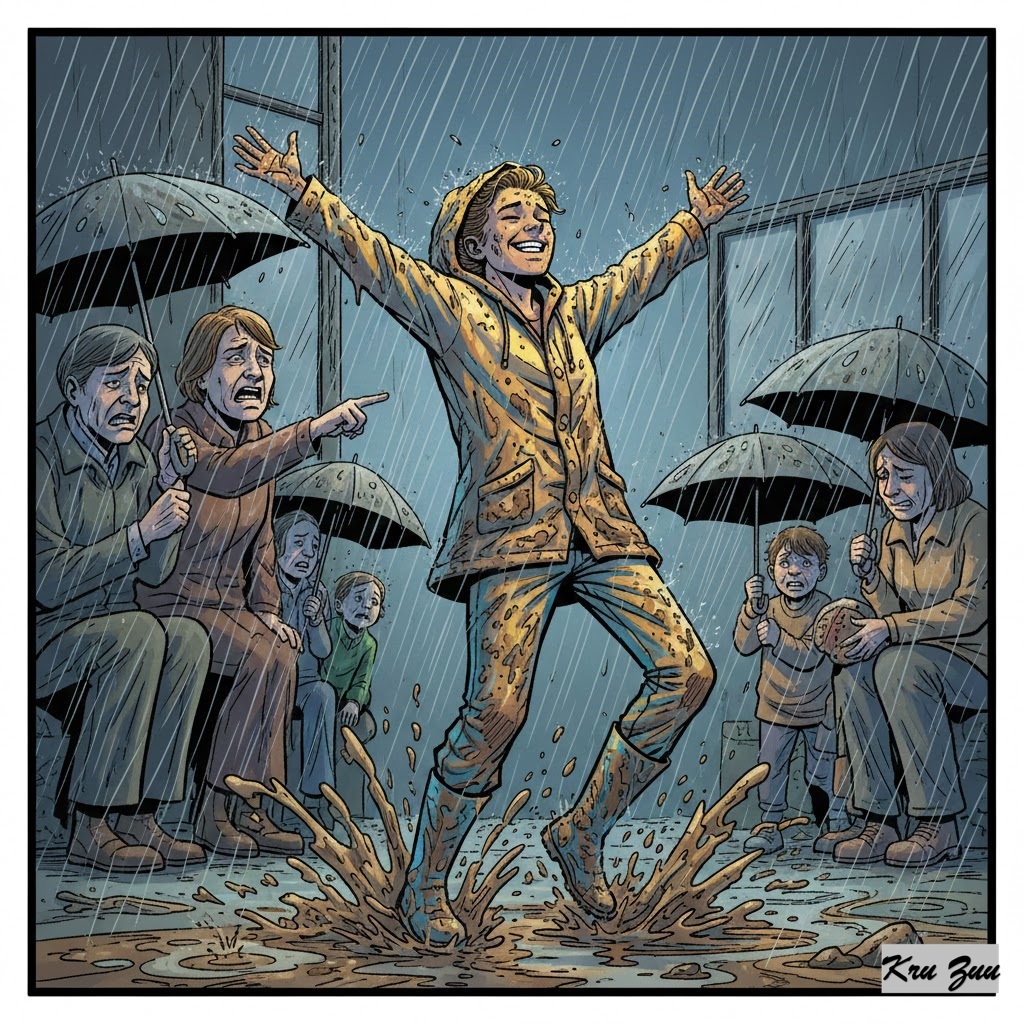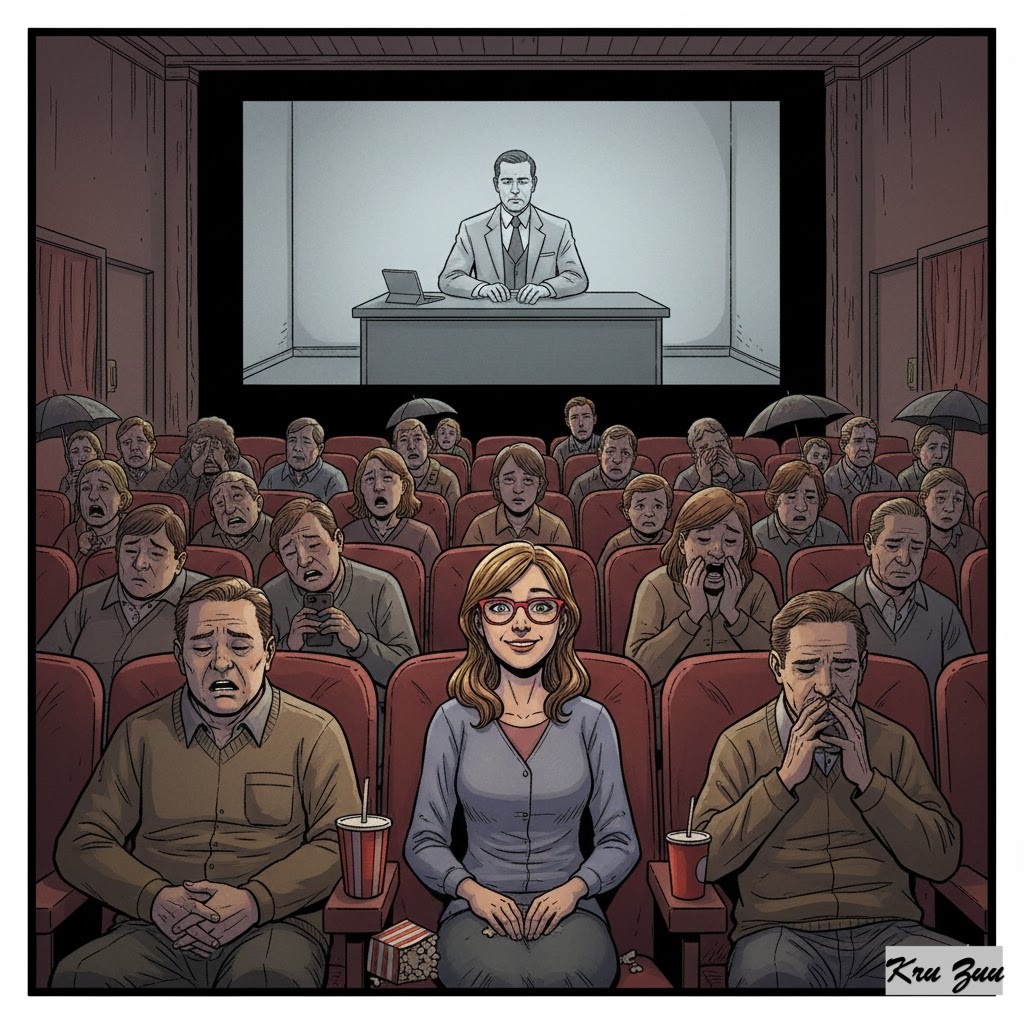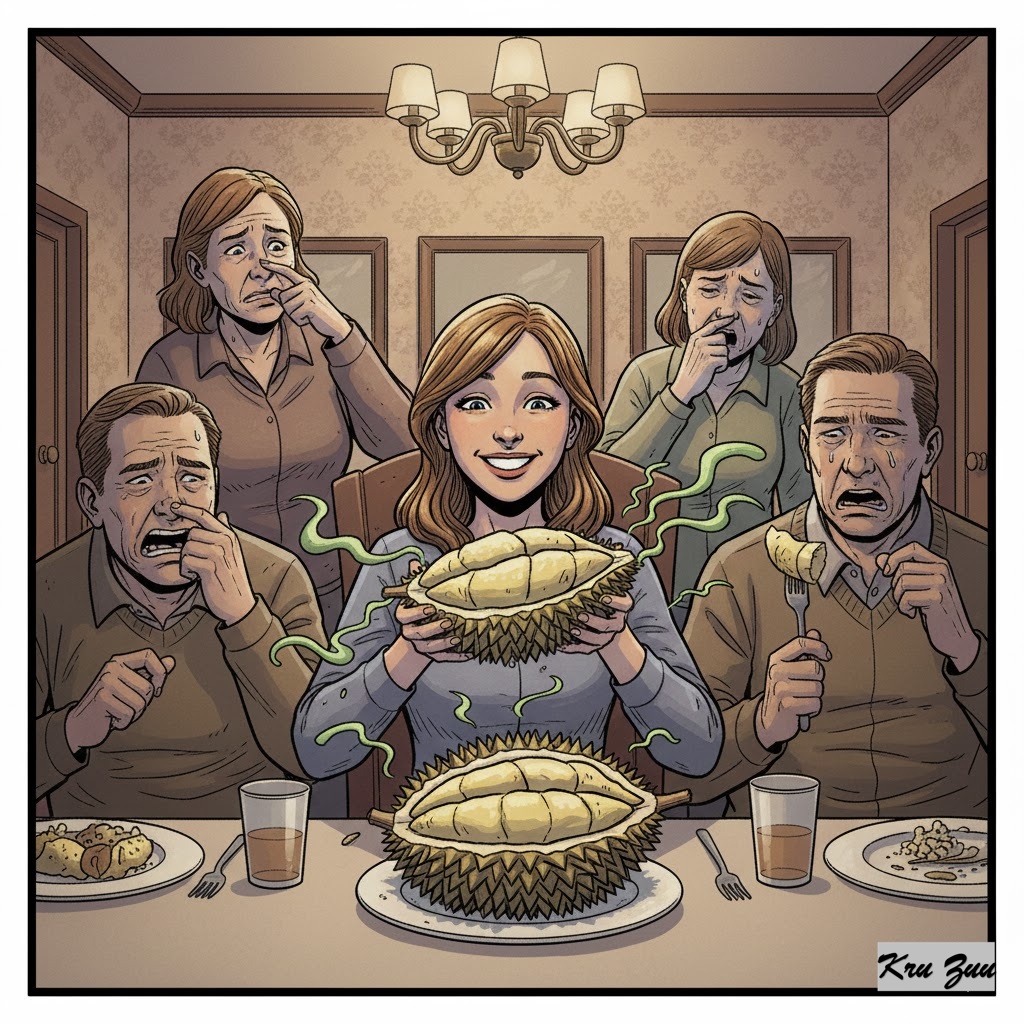
Tag: Motivation

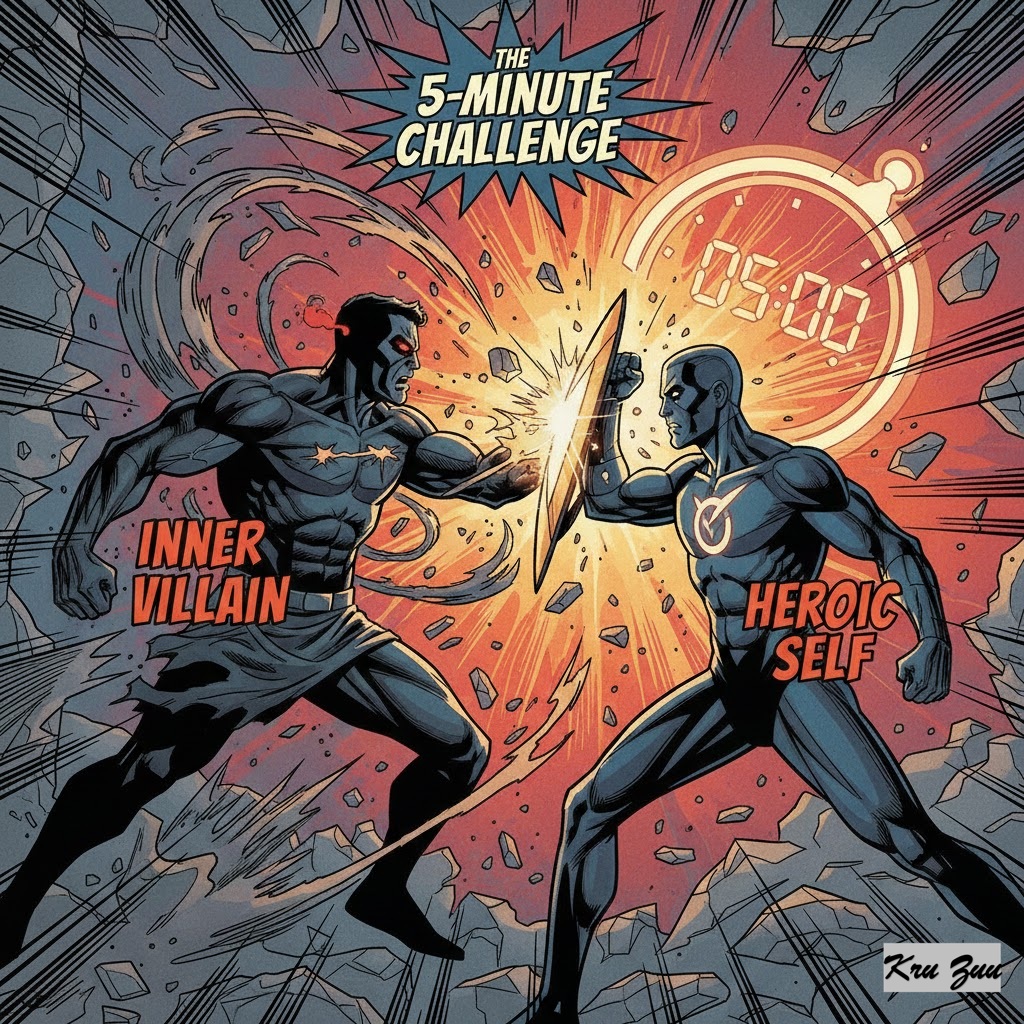
  • ⏳ The Daily Shield: The Law of Immediacy

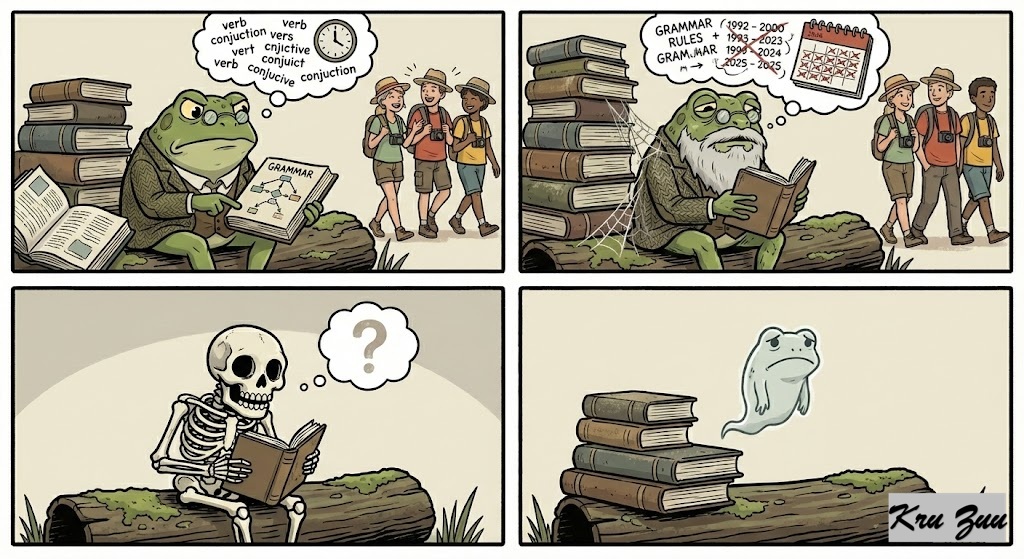
    ⏳ The Daily Shield: The Law of Immediacy

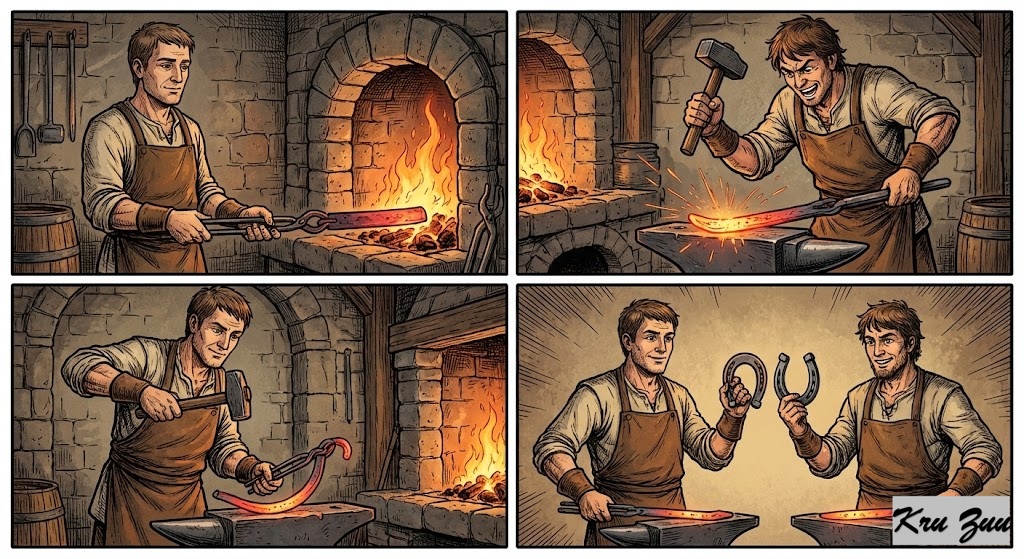
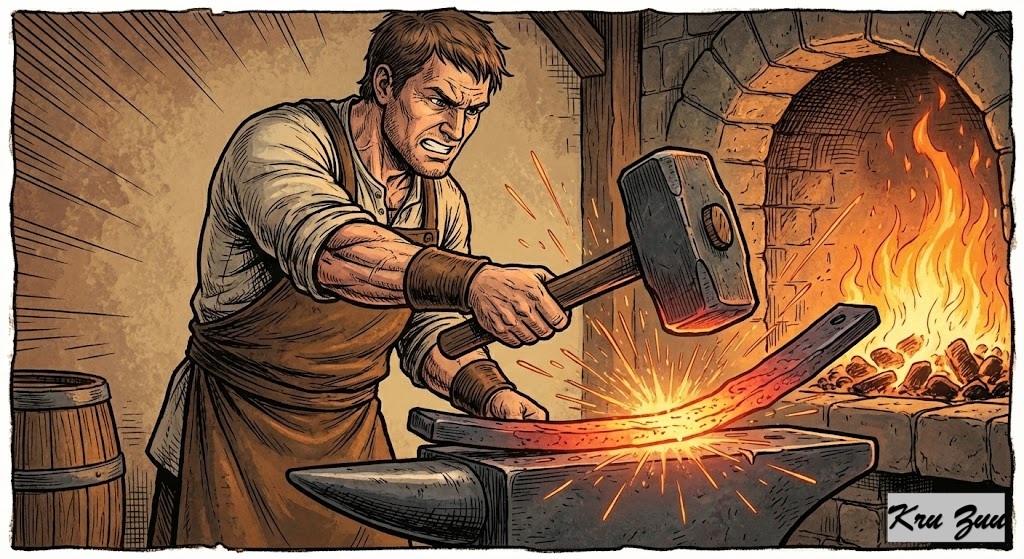
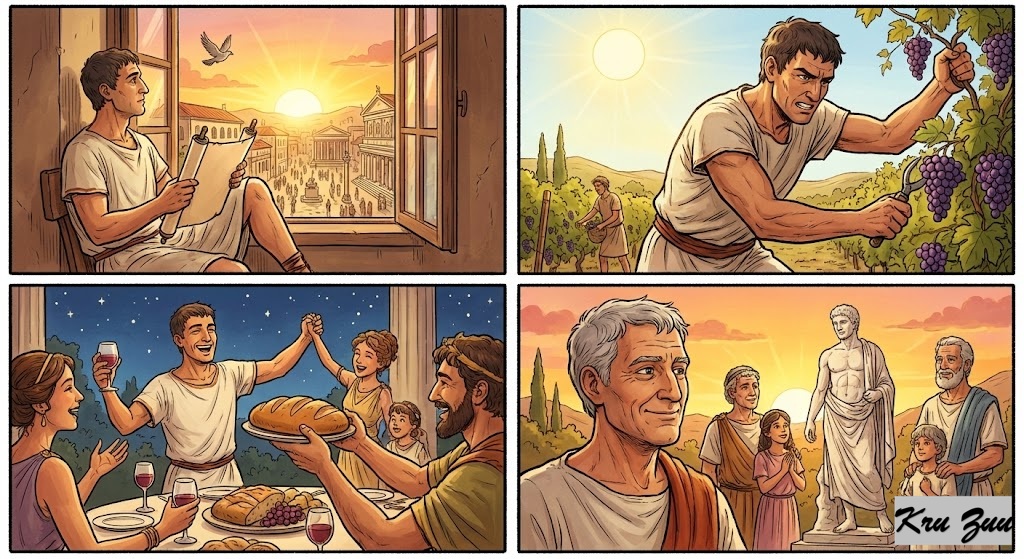
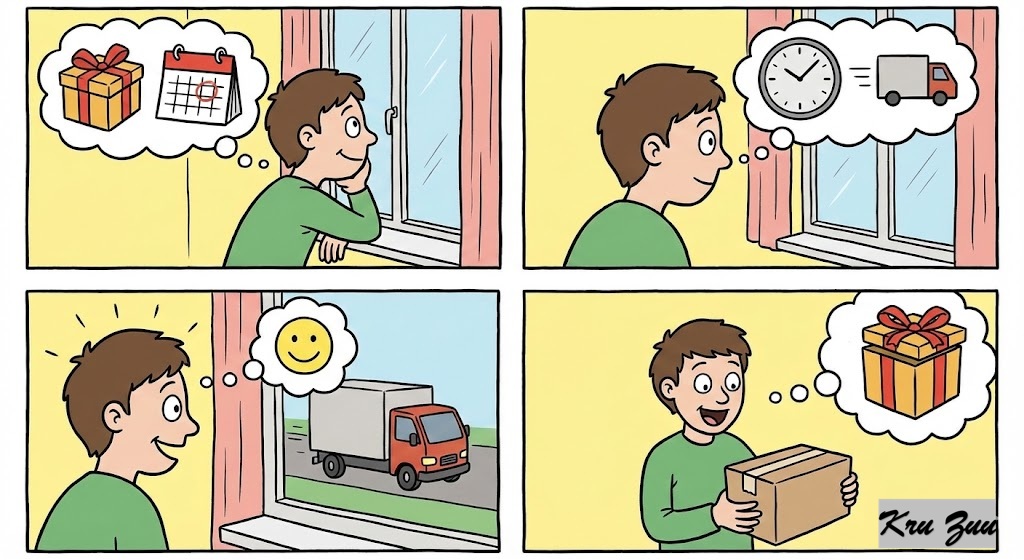
    “Don’t put off until tomorrow what you can do today.”


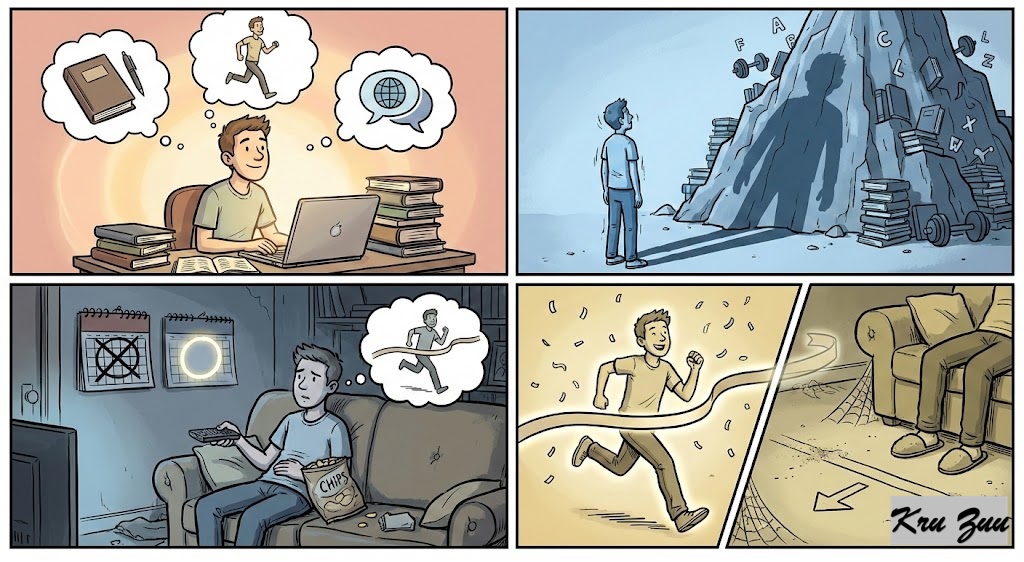
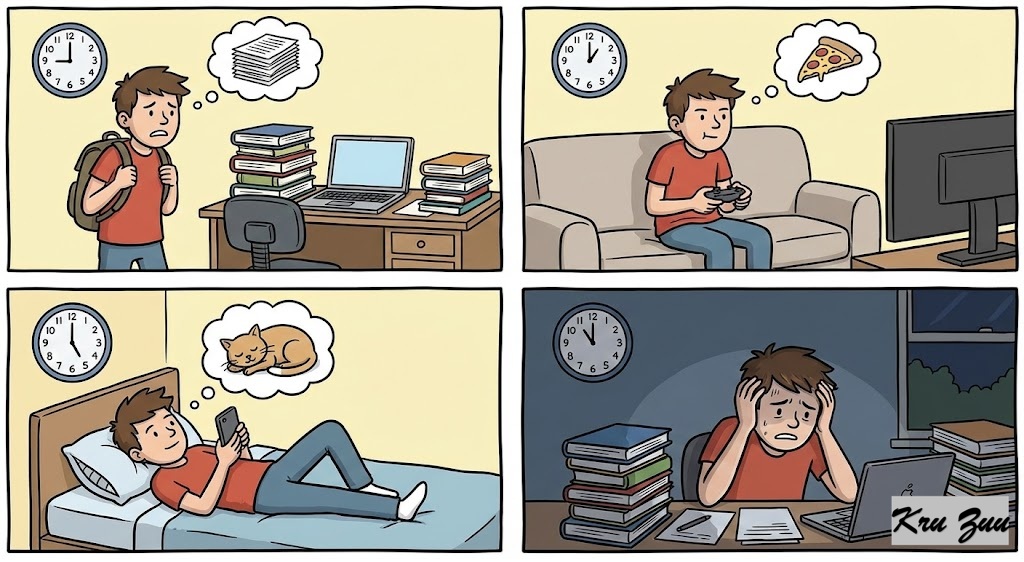
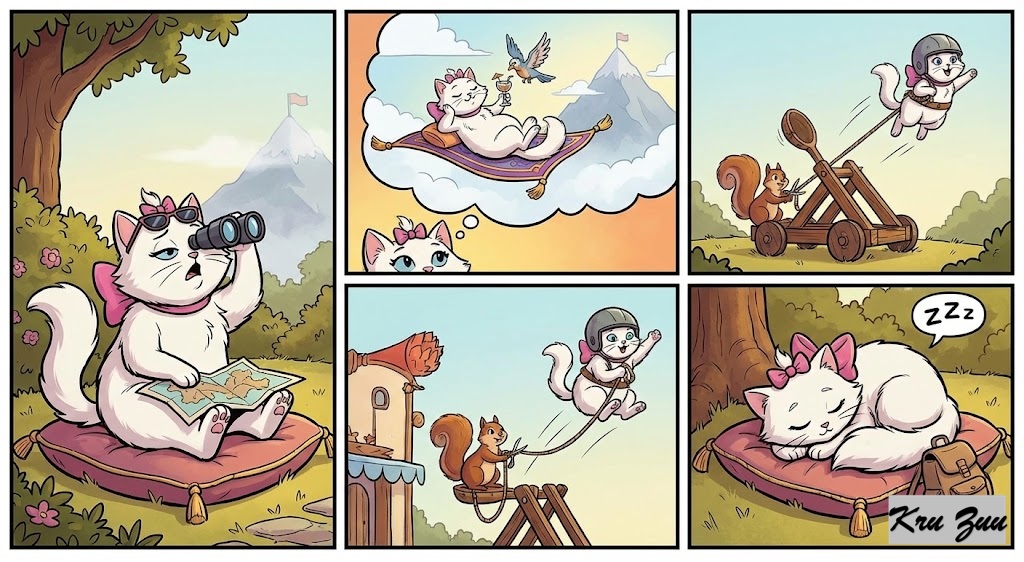
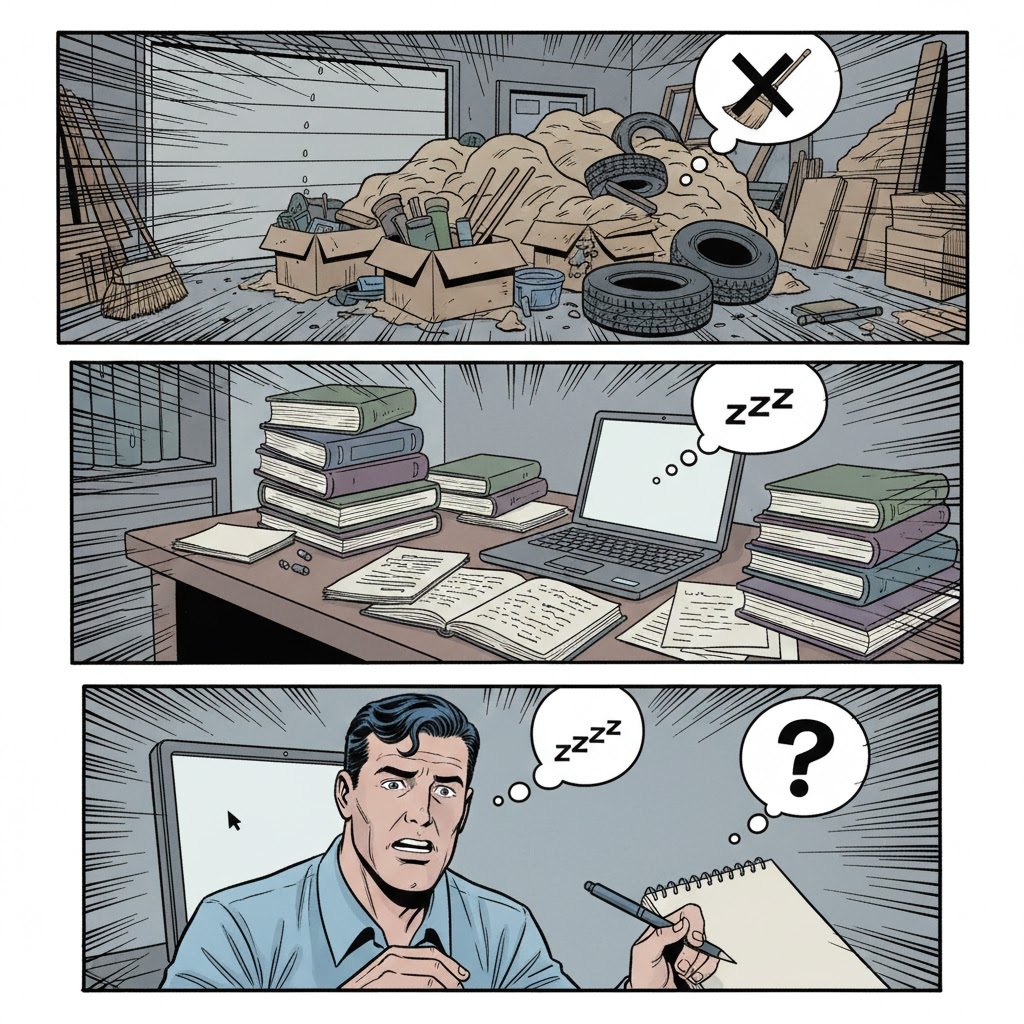
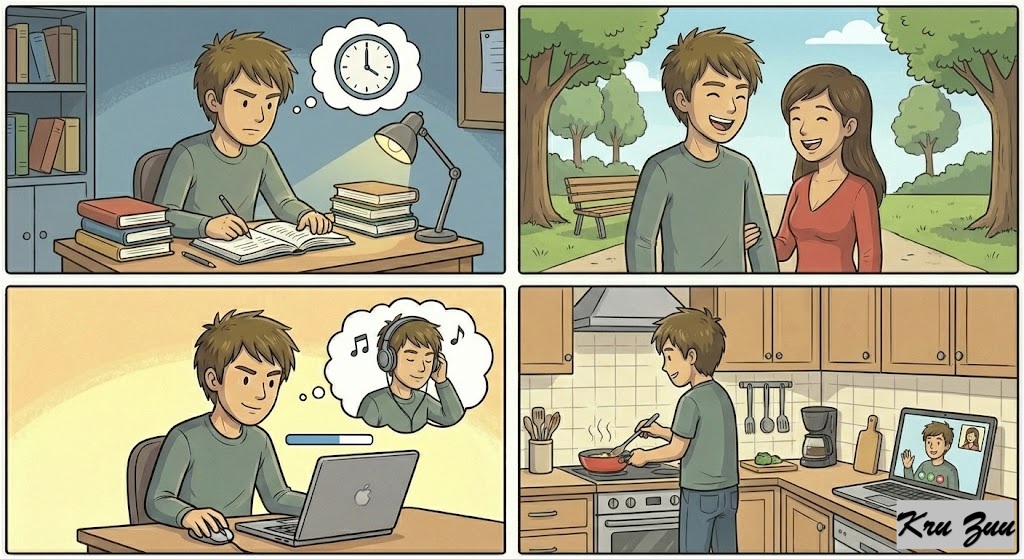
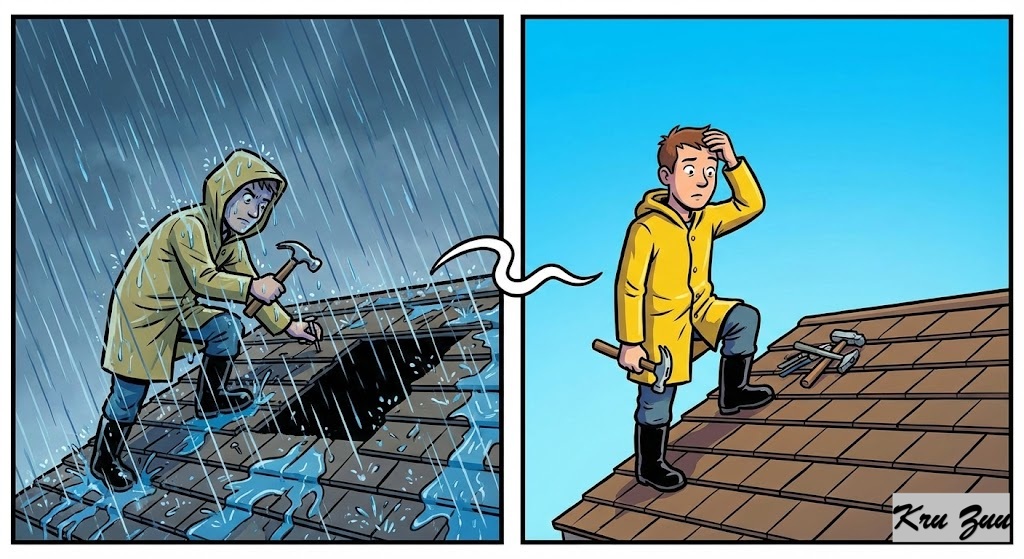
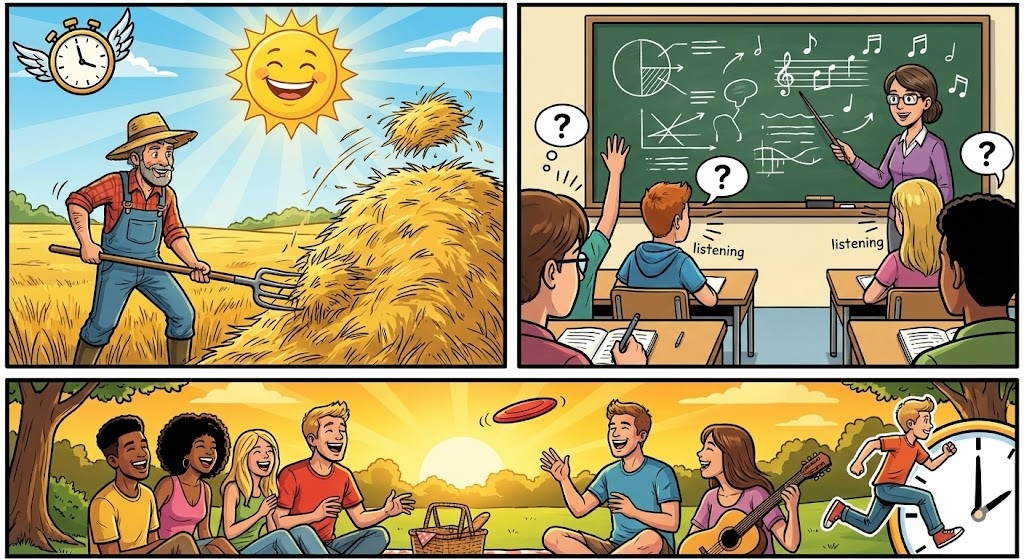
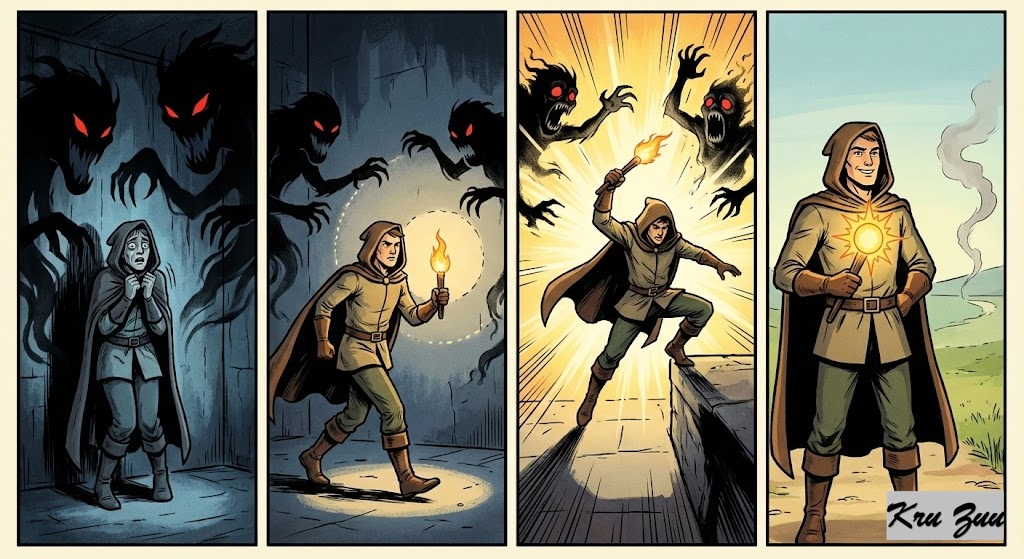
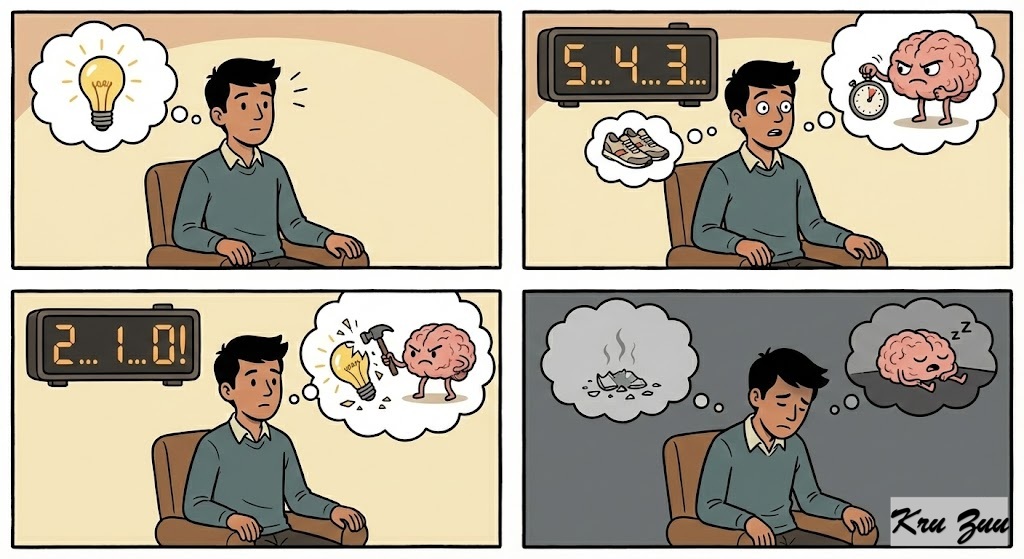
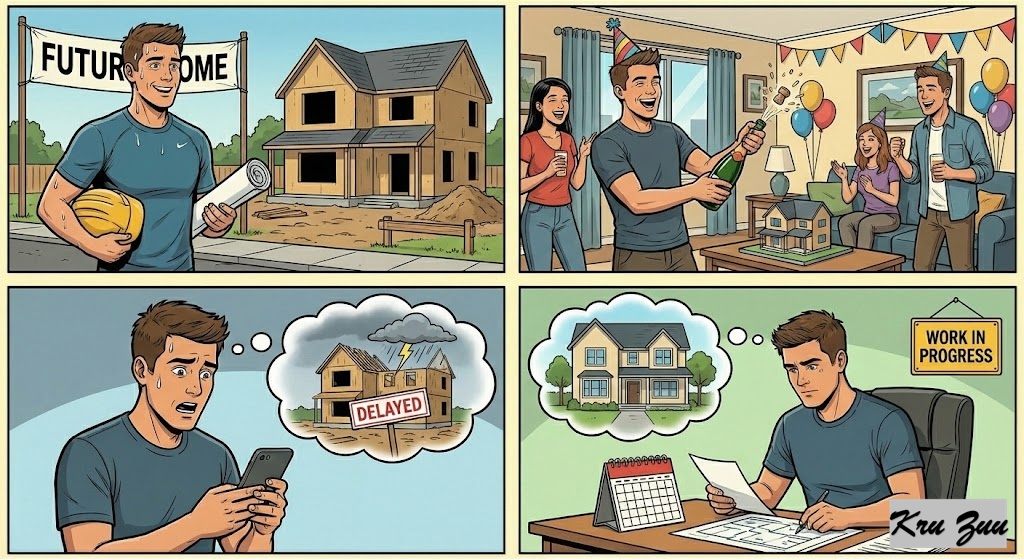
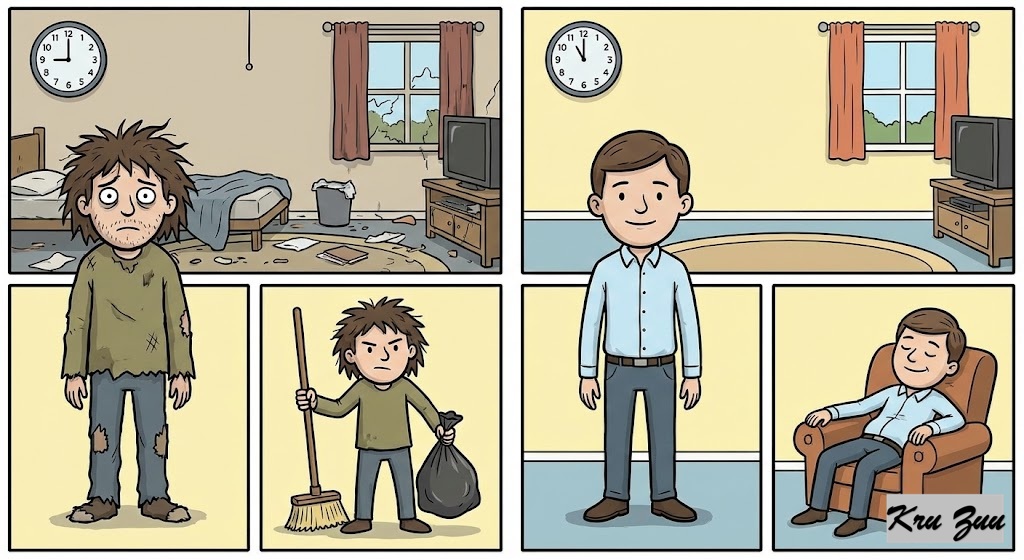
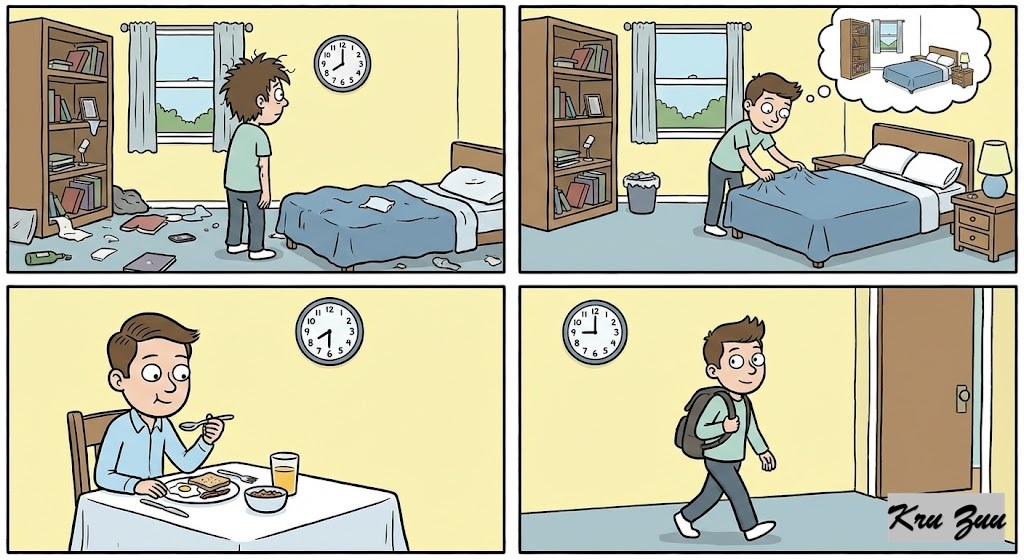
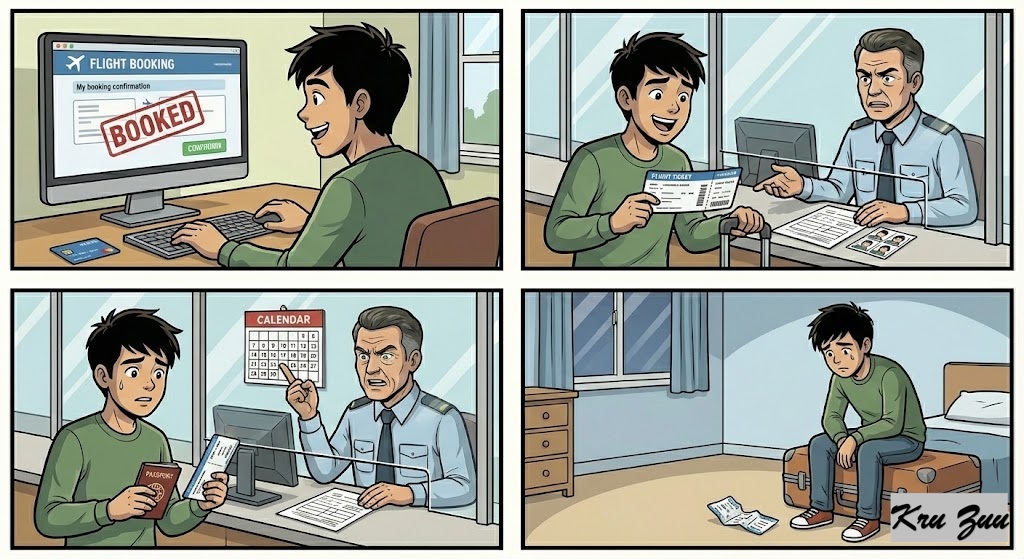
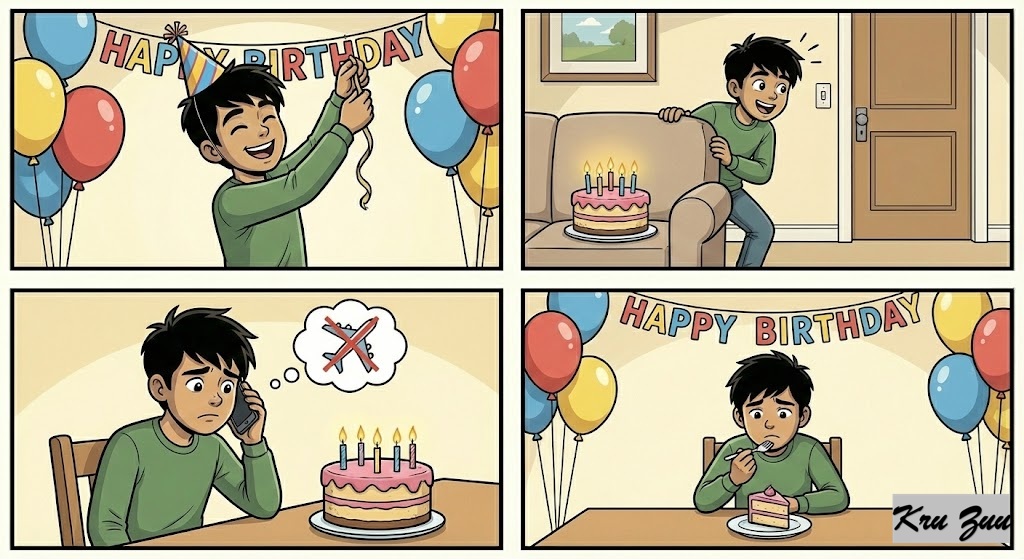
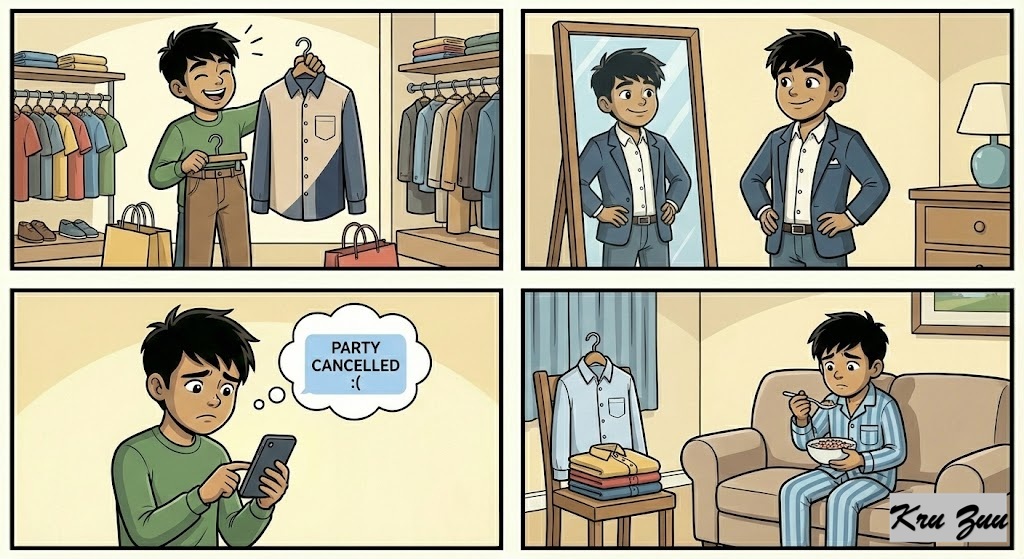
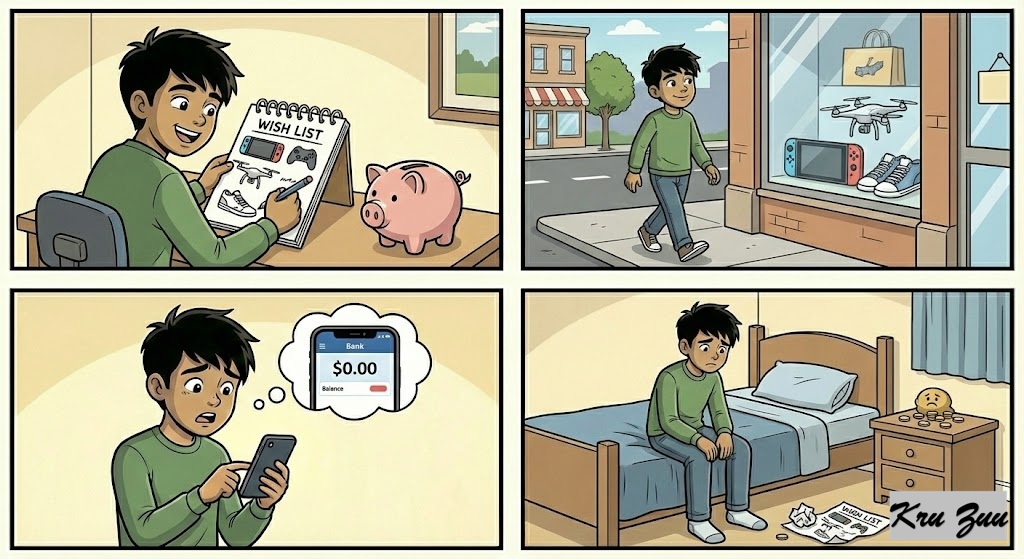
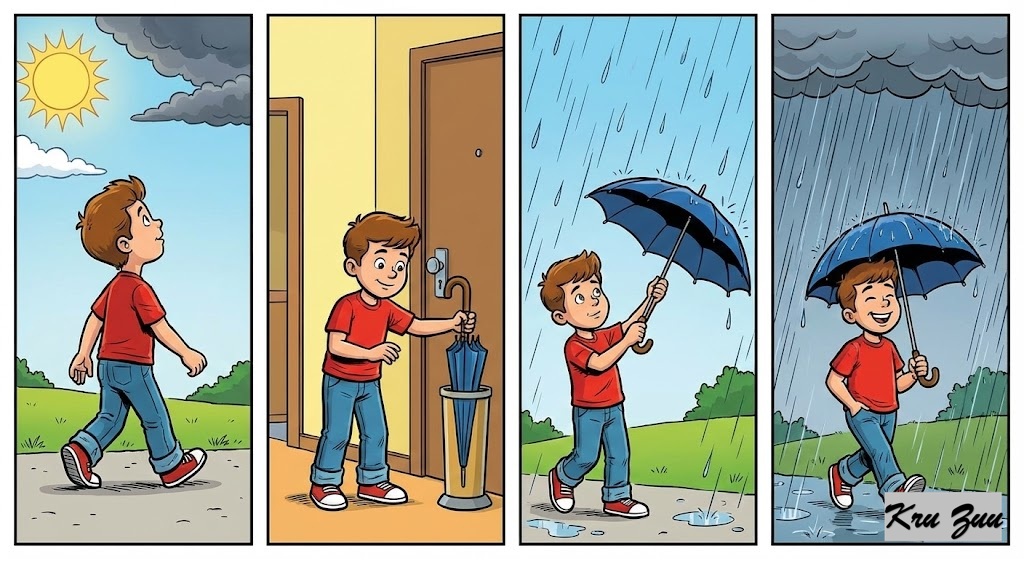
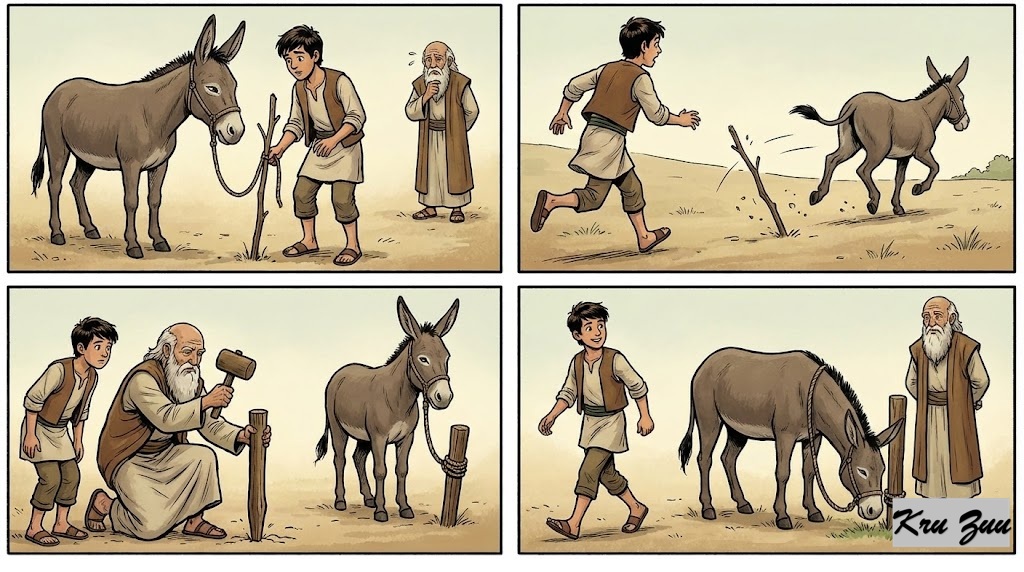
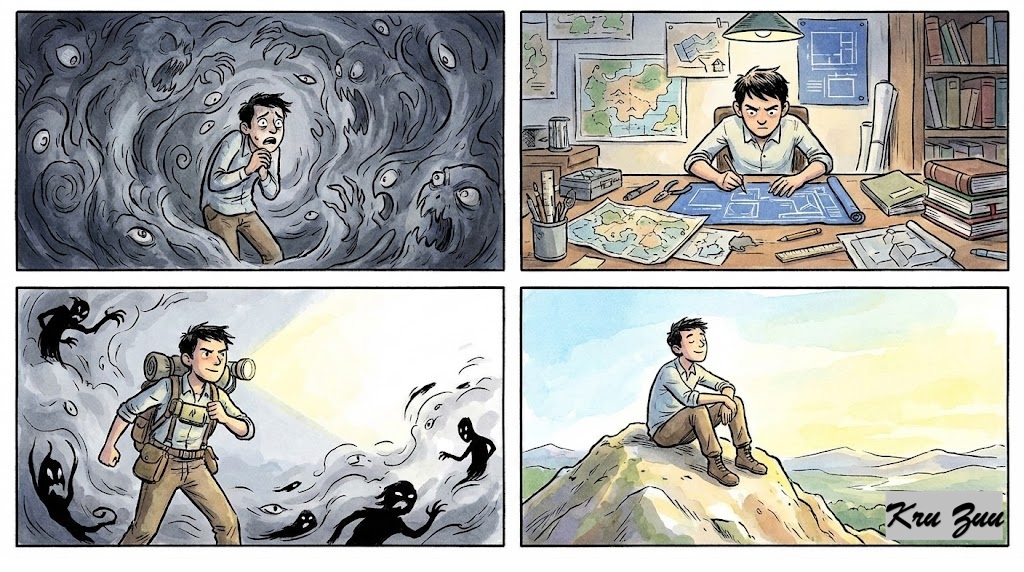
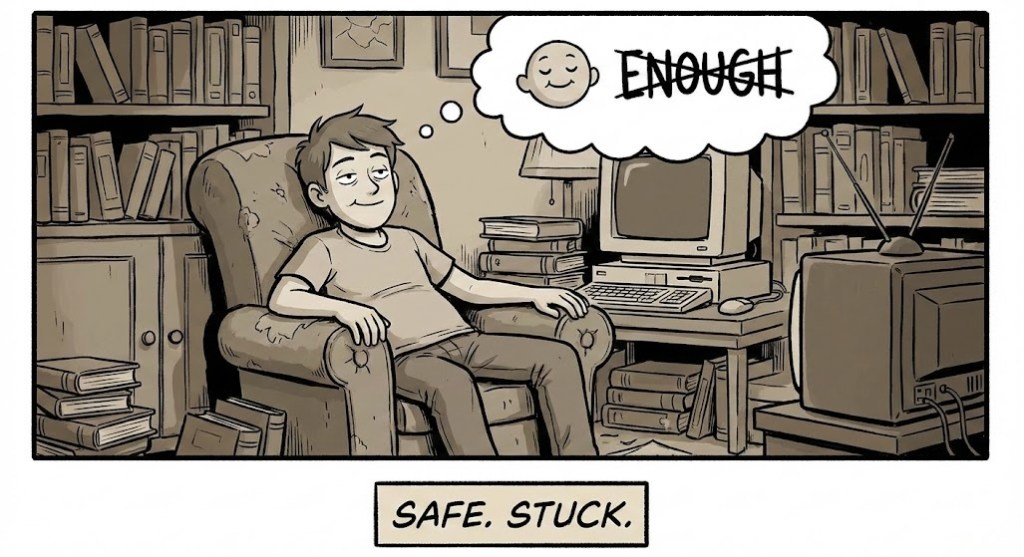
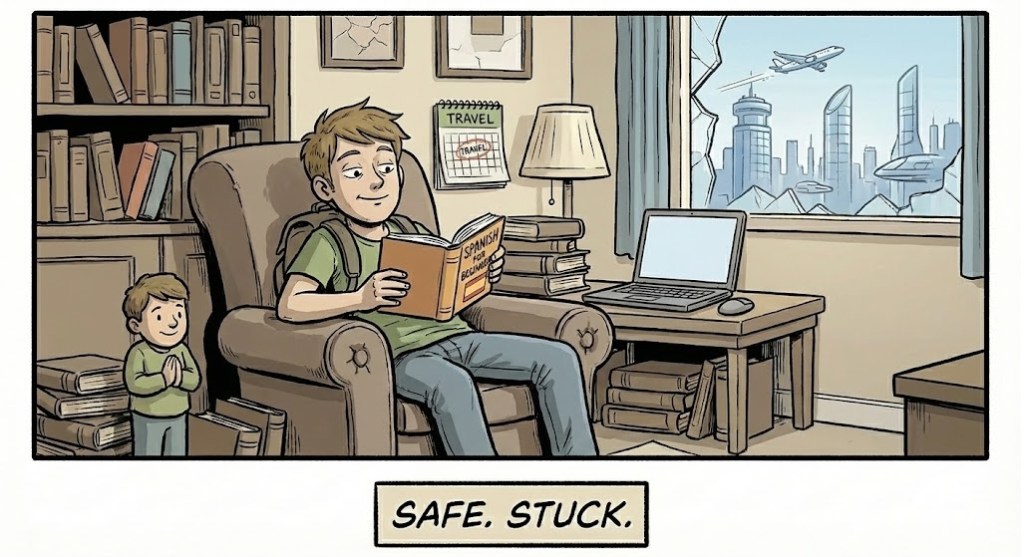
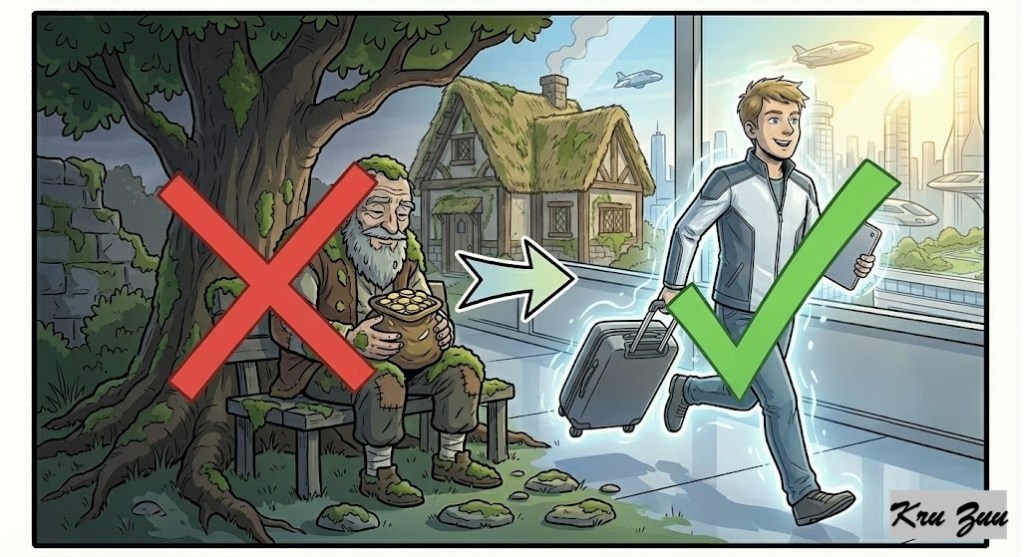
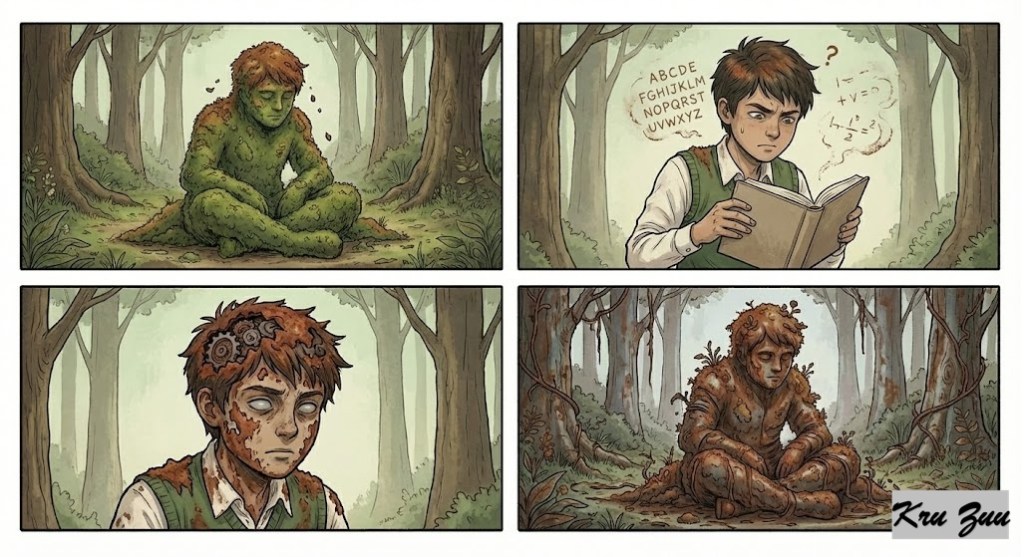
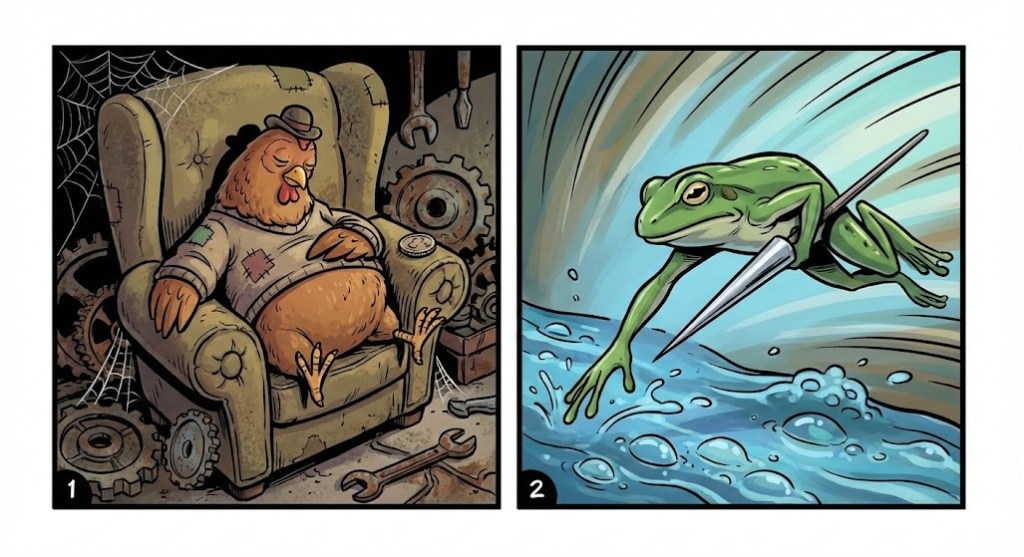
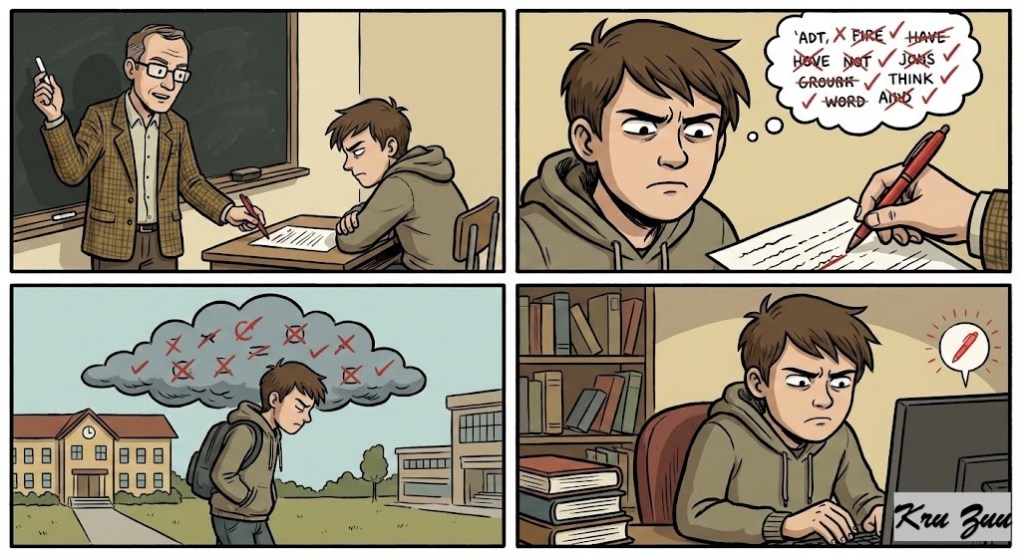
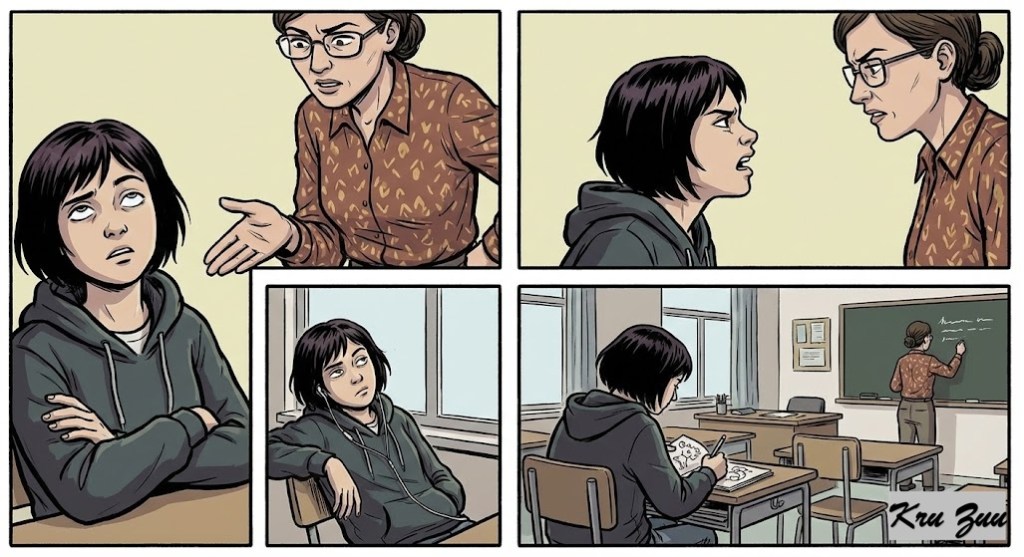
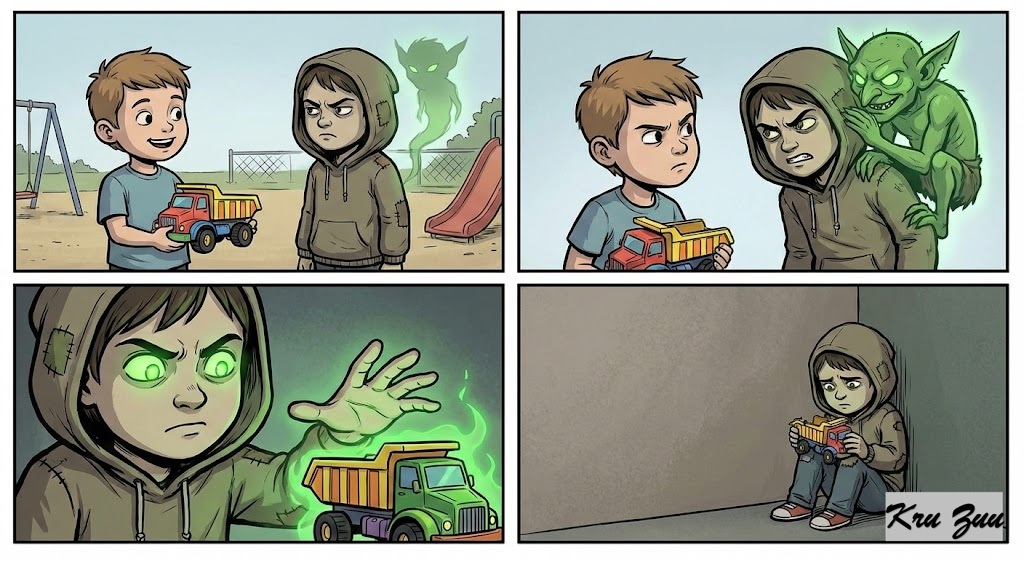
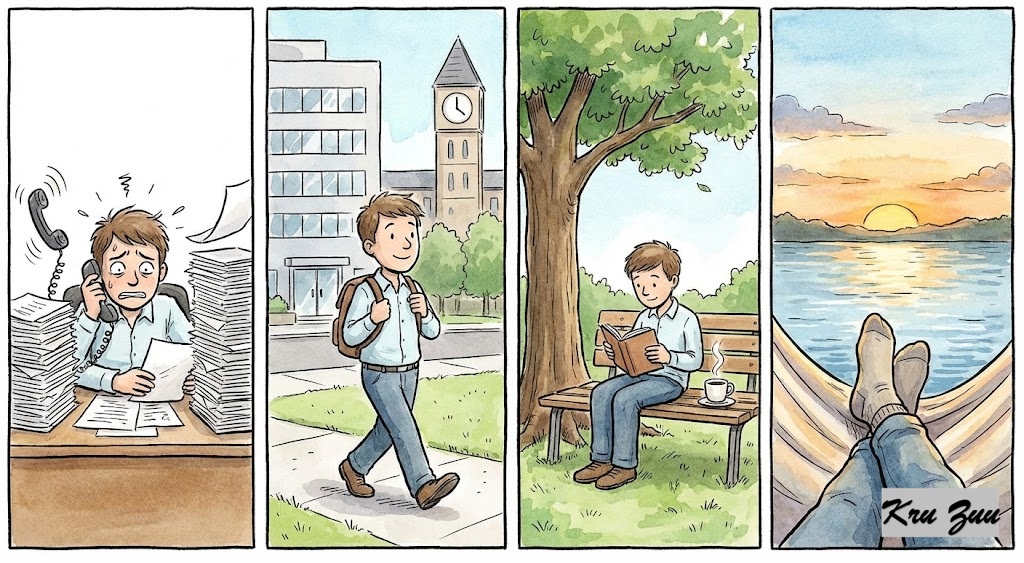
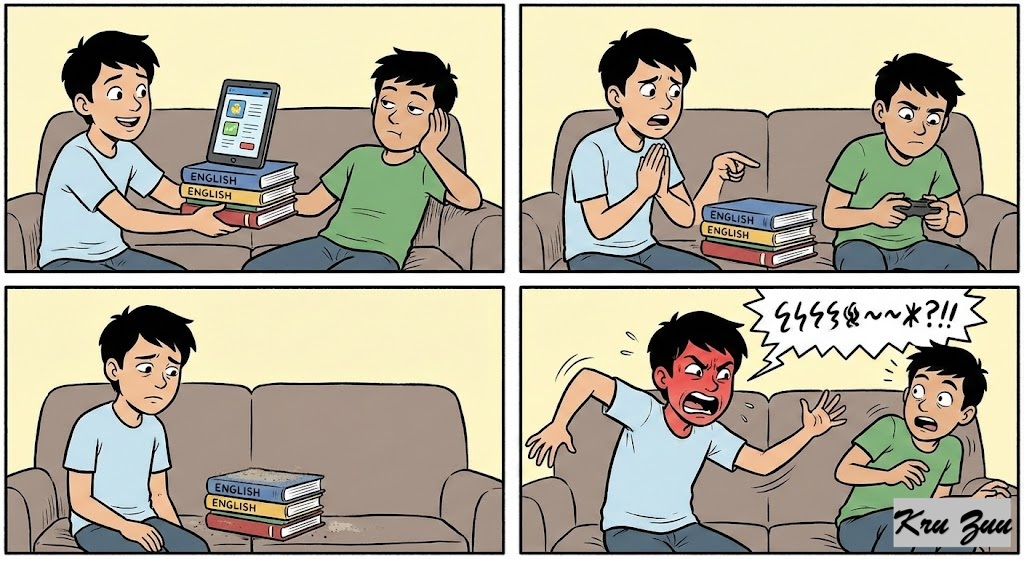
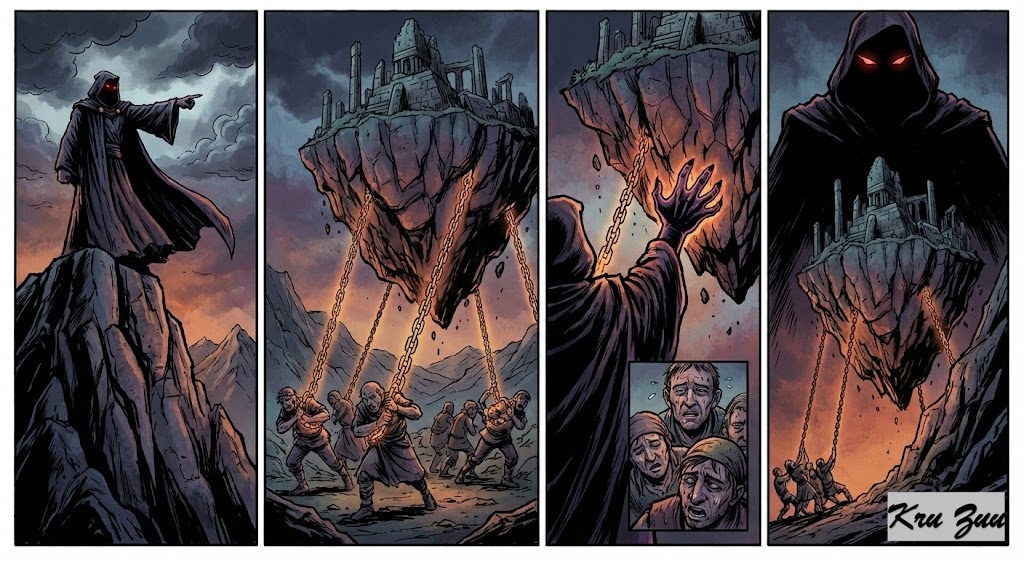
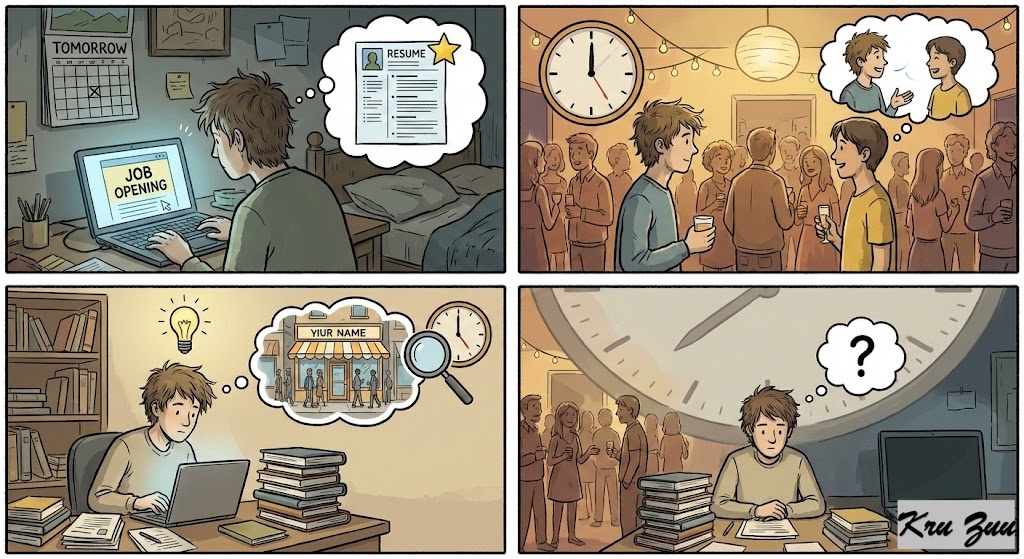
    😈 The Villain (The Procrastinator): You have a project due next week.

    You say, “I have plenty of time.” You open Instagram.

    You watch just one episode on Netflix (which turns into five).

    You clean your room instead of working.

    You convince yourself that you work better under pressure.

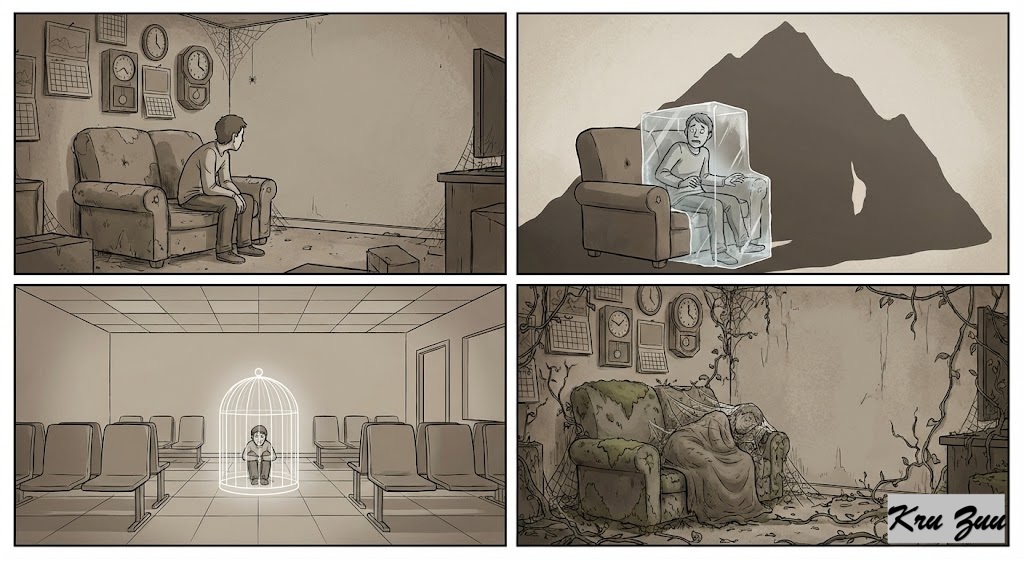
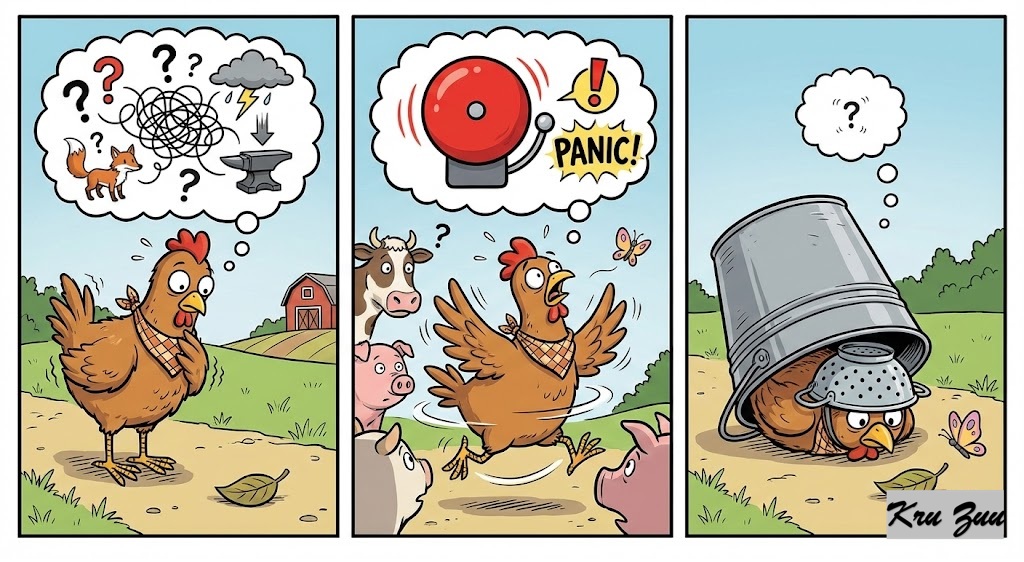
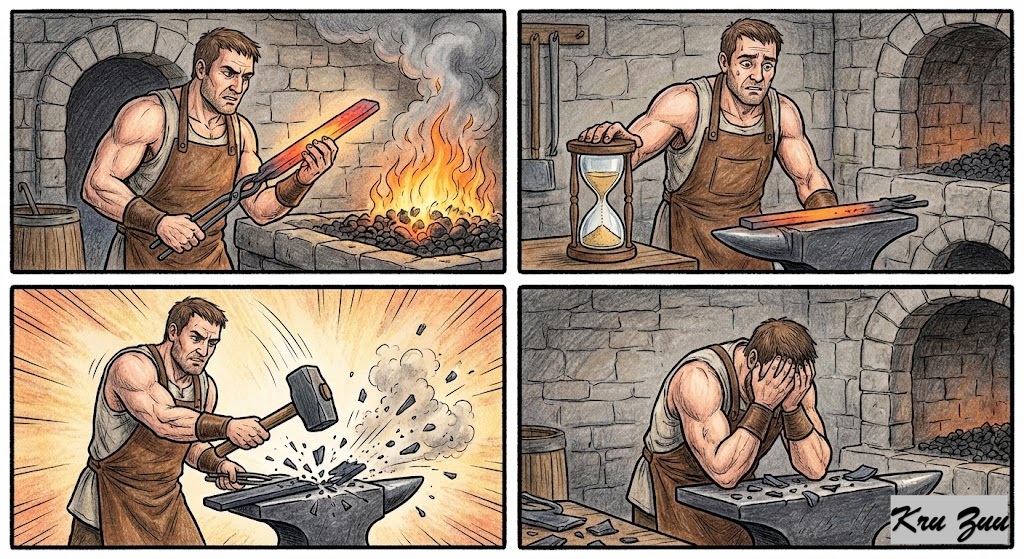
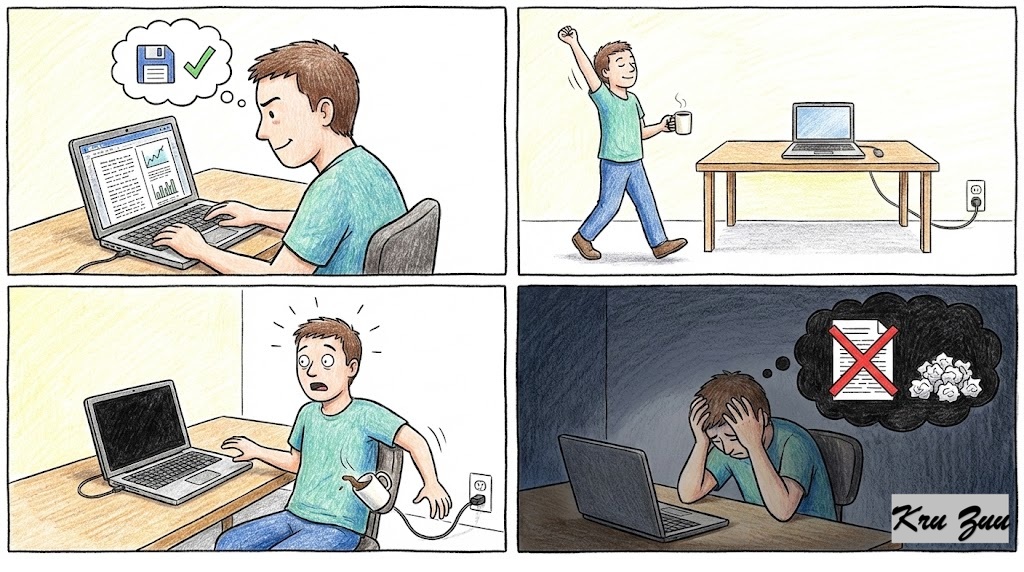
    The Result? Sunday night arrives. Panic sets in.

    You drink 5 coffees, stay up all night, and produce garbage work.

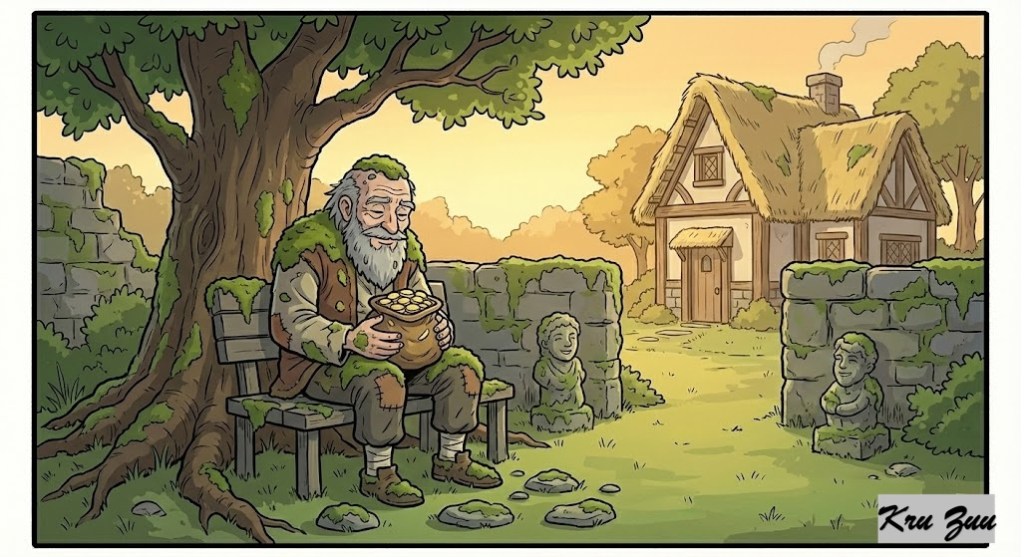
    You live in a cycle of stress and regret. You are a slave to the “Last Minute.” 🧟‍♂️


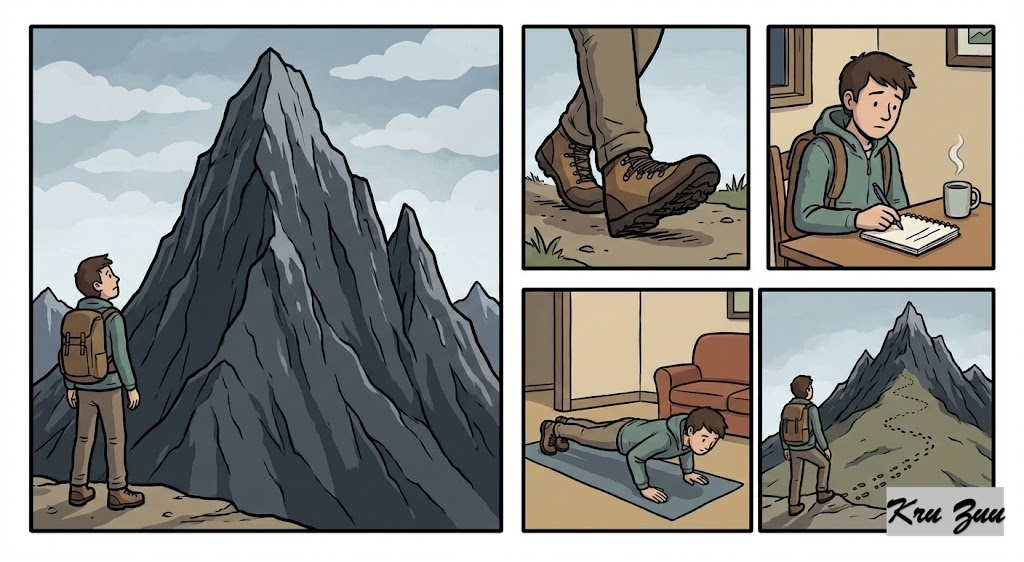
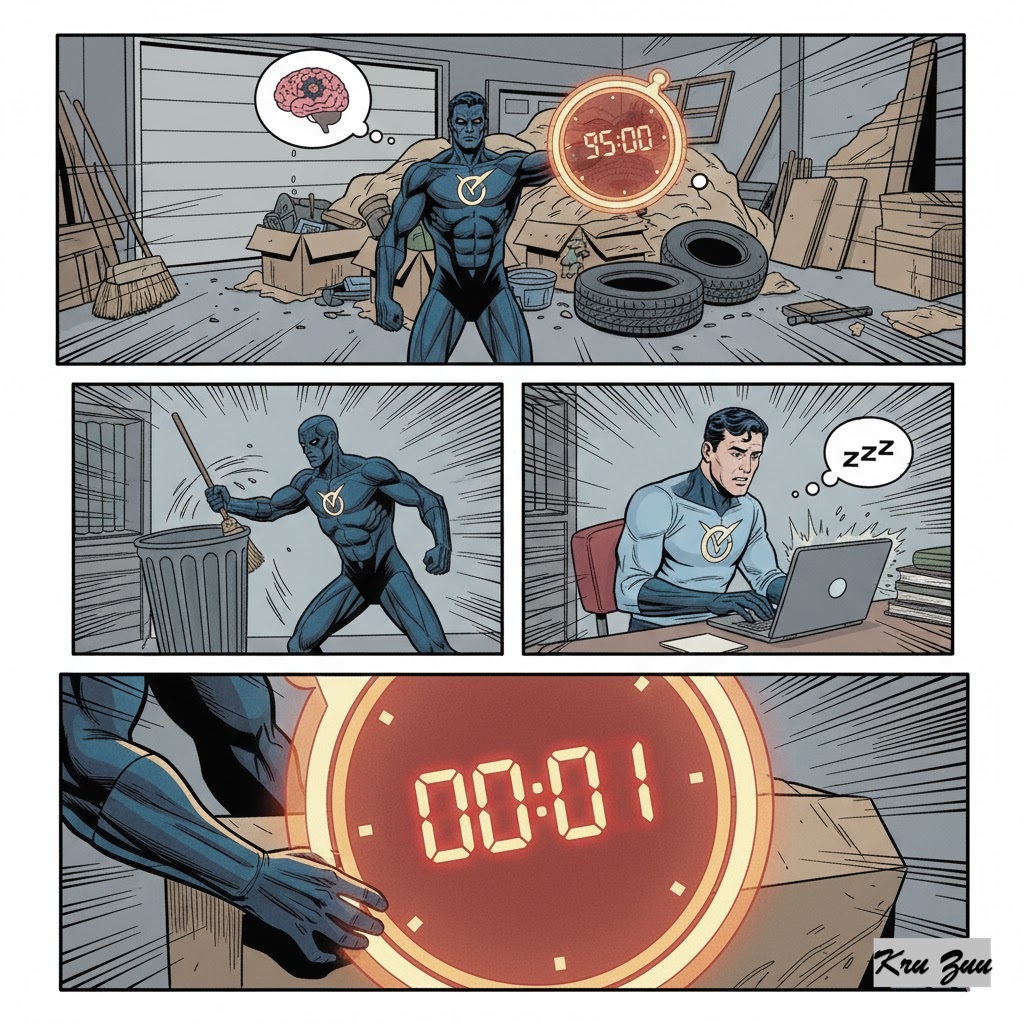
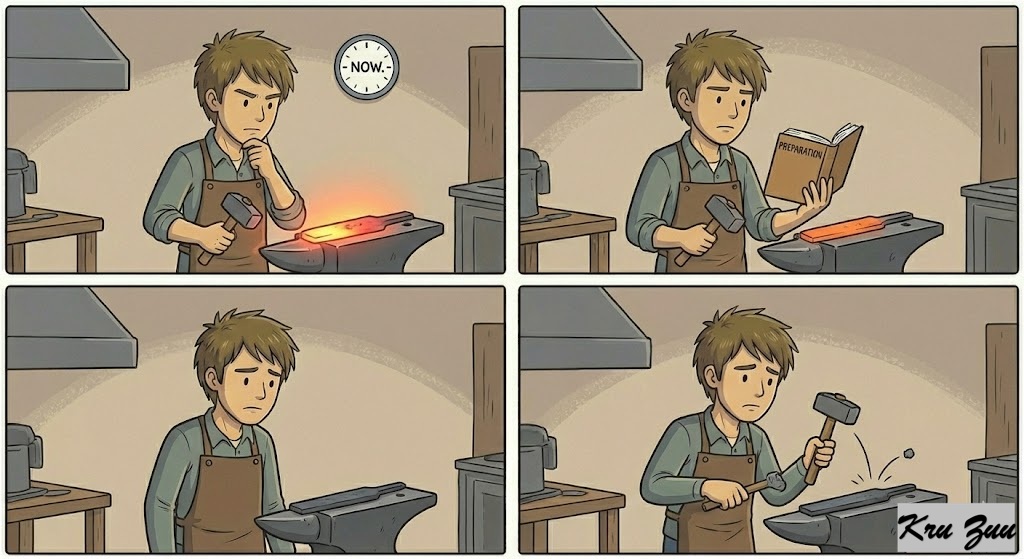
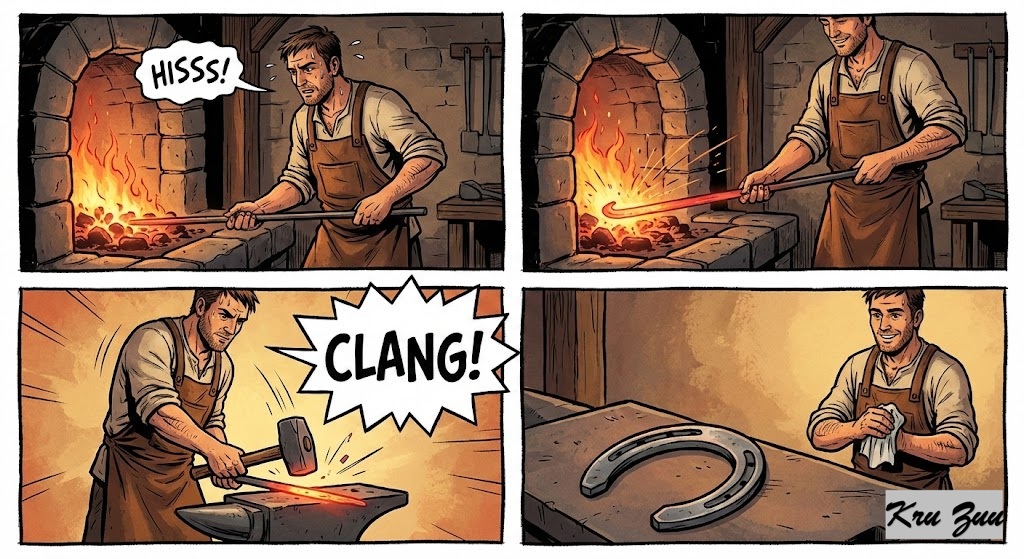
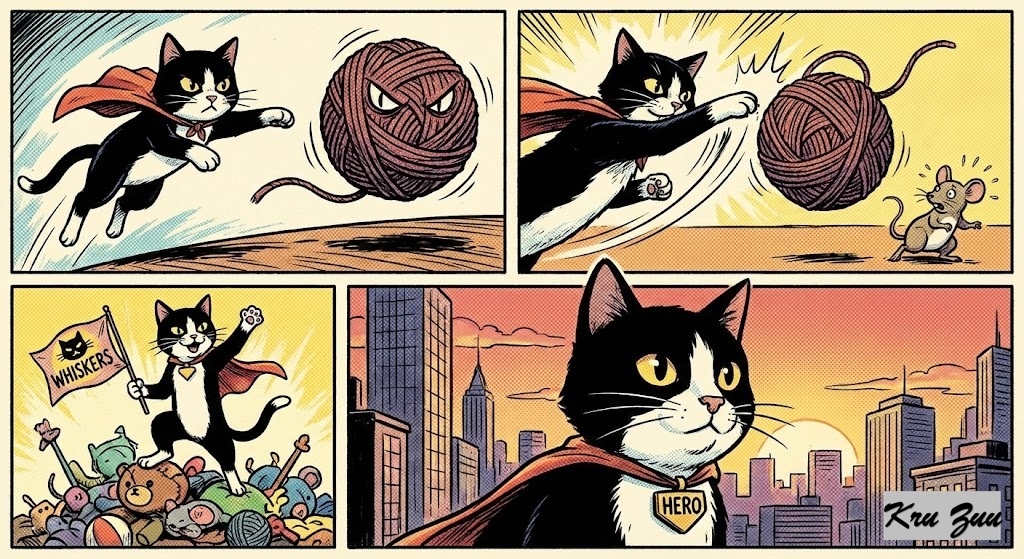
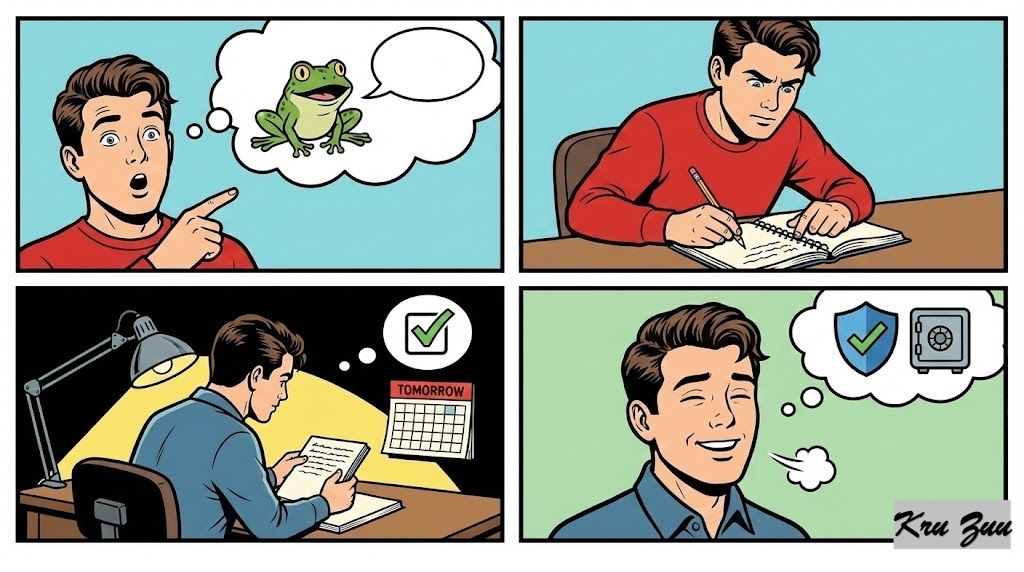
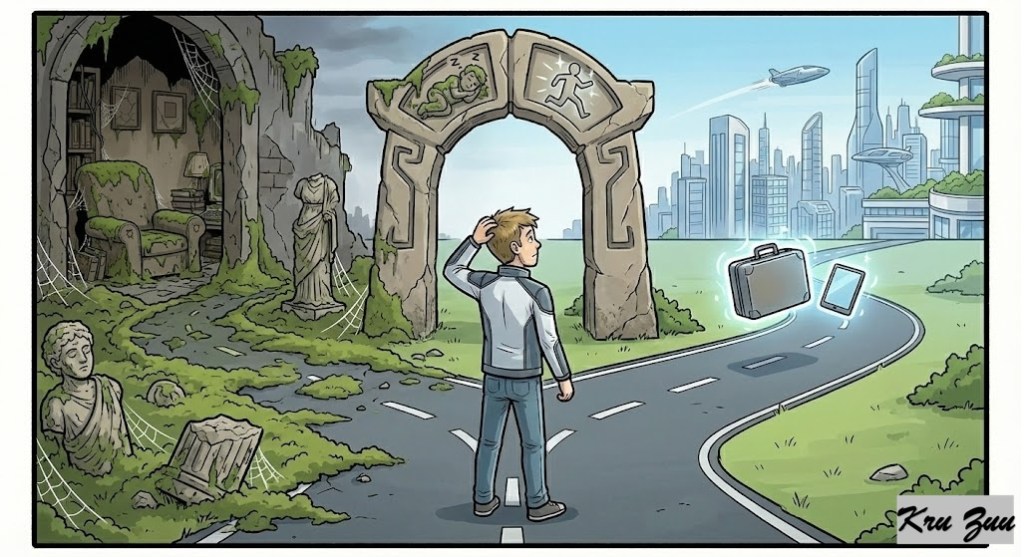
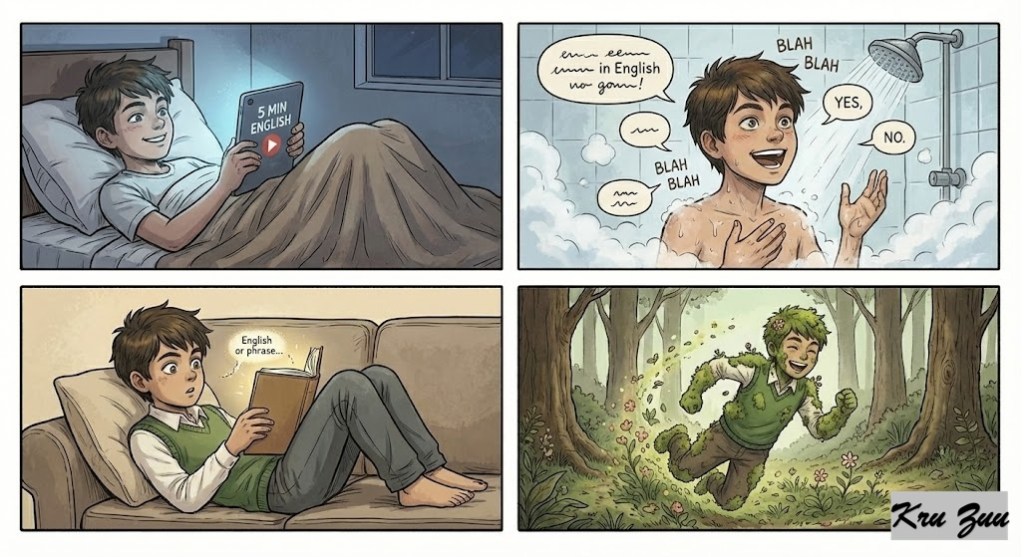
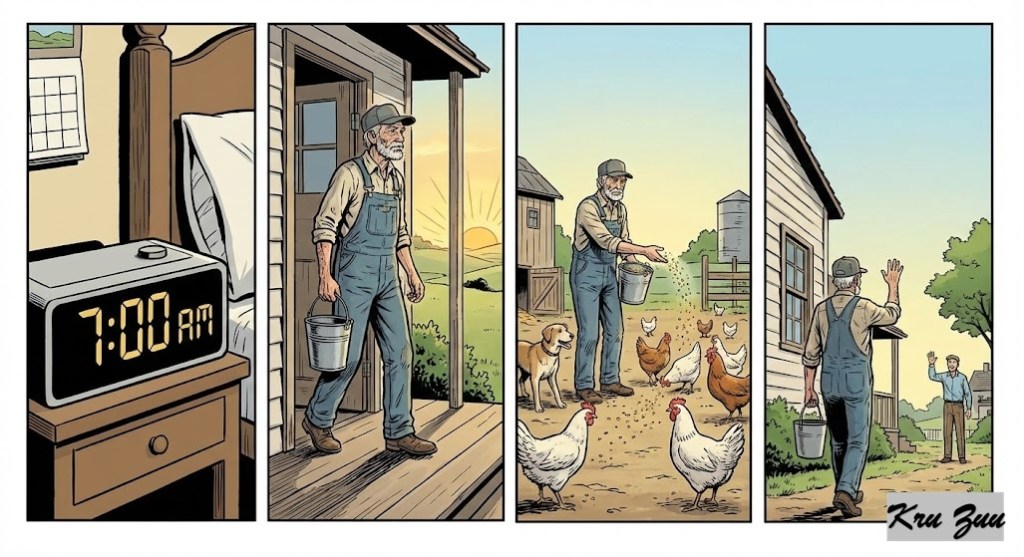
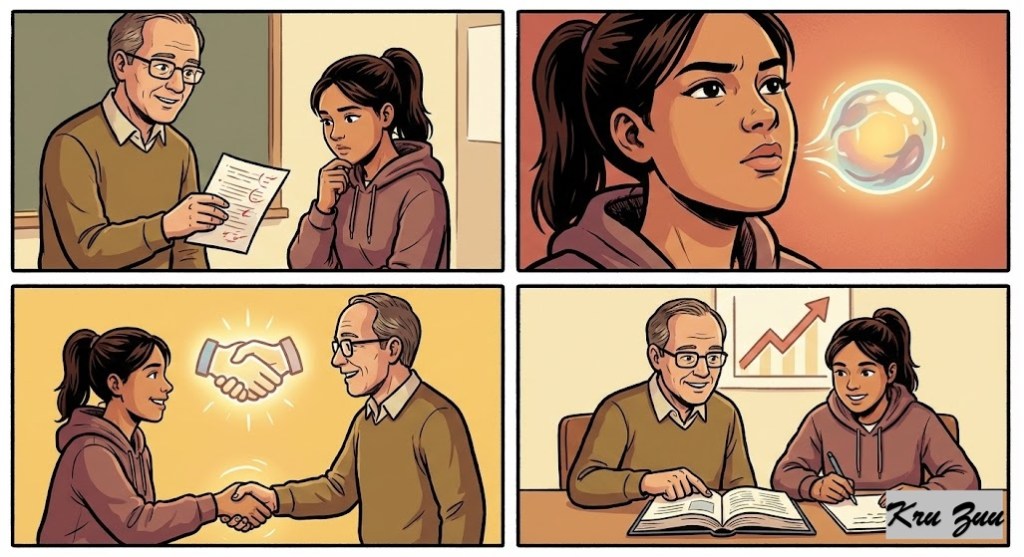
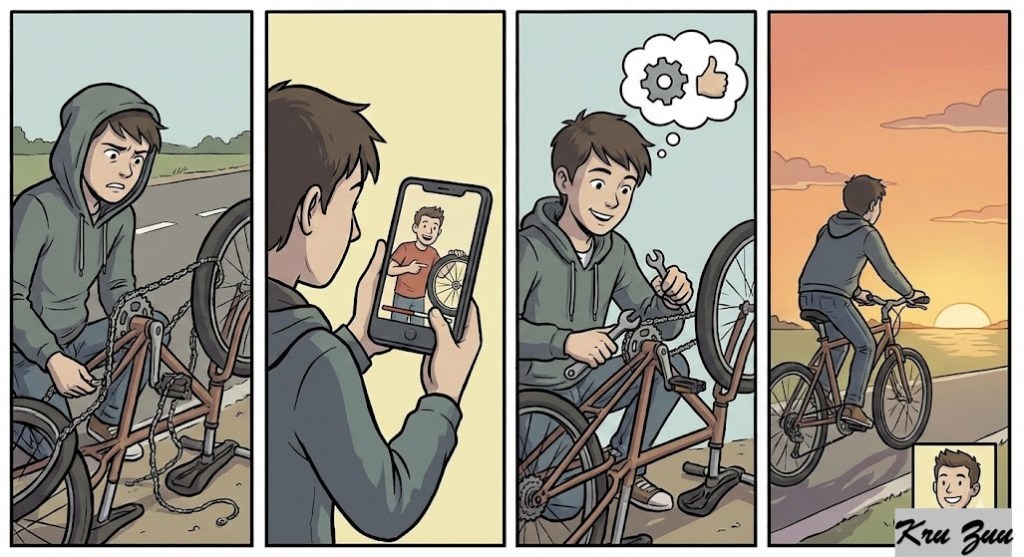
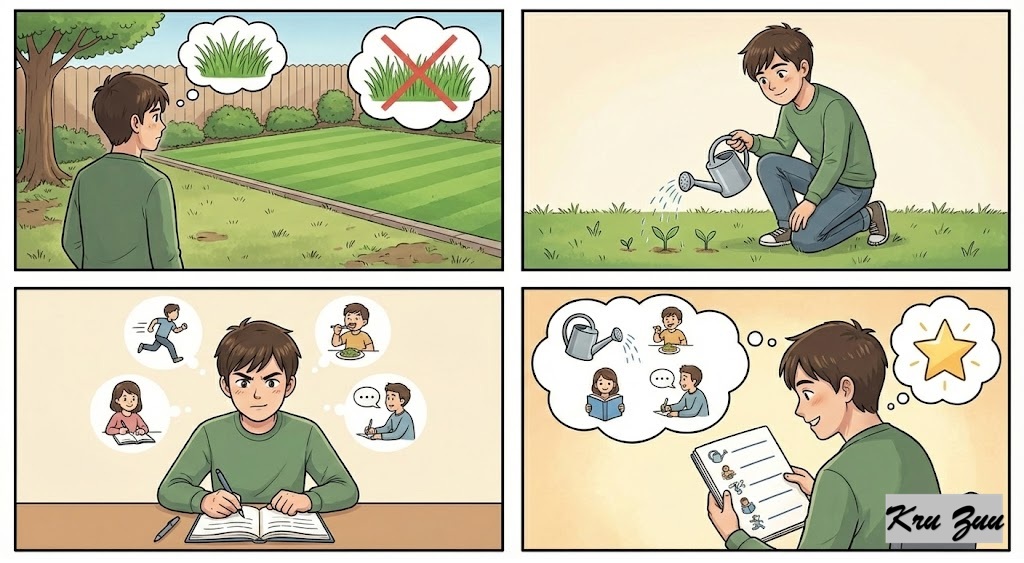
    😇 The Hero (The Executor): You get the assignment.

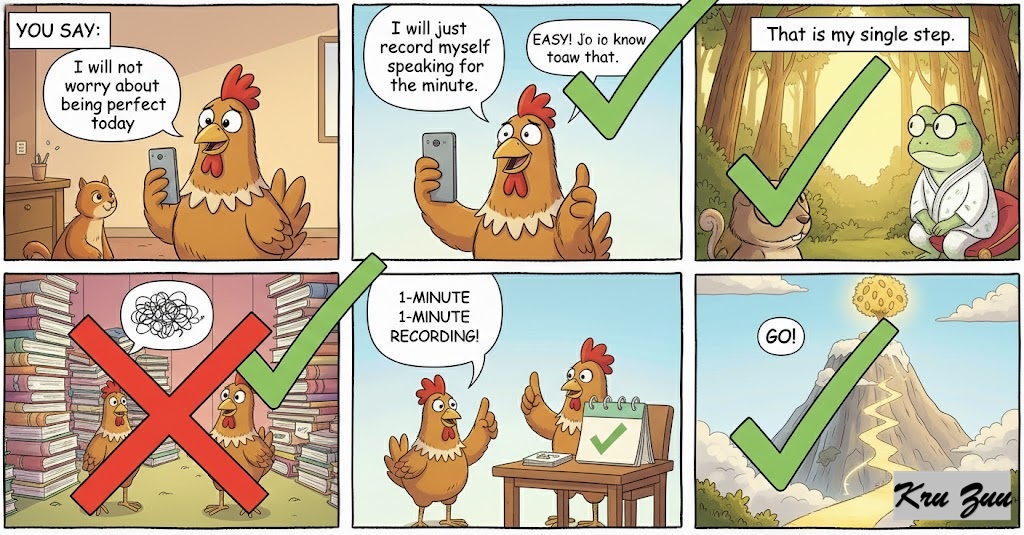
    You don’t want to do it, but you count to three: 1, 2, 3, GO.

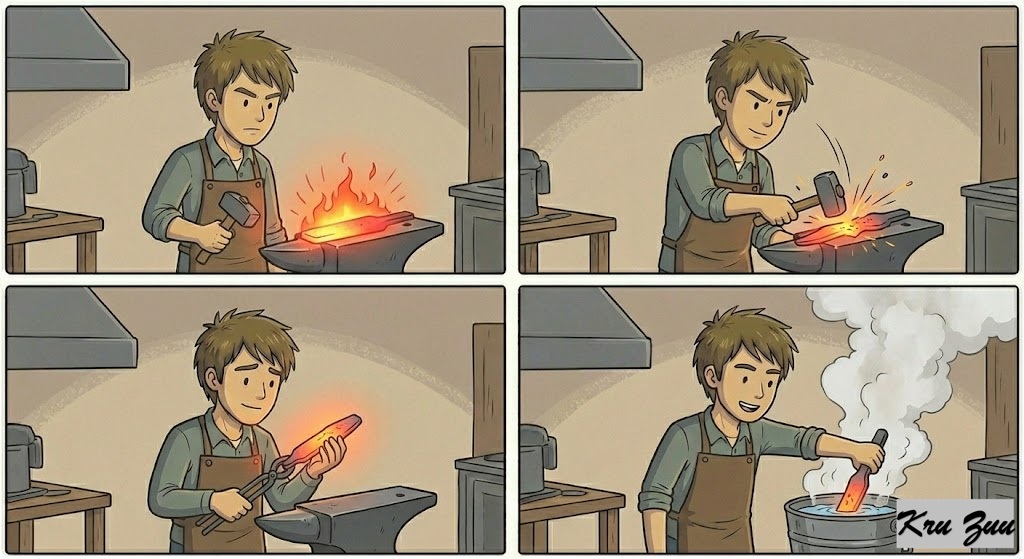
    You open the laptop. You do the hard work first so you can enjoy your guilt-free free time later.

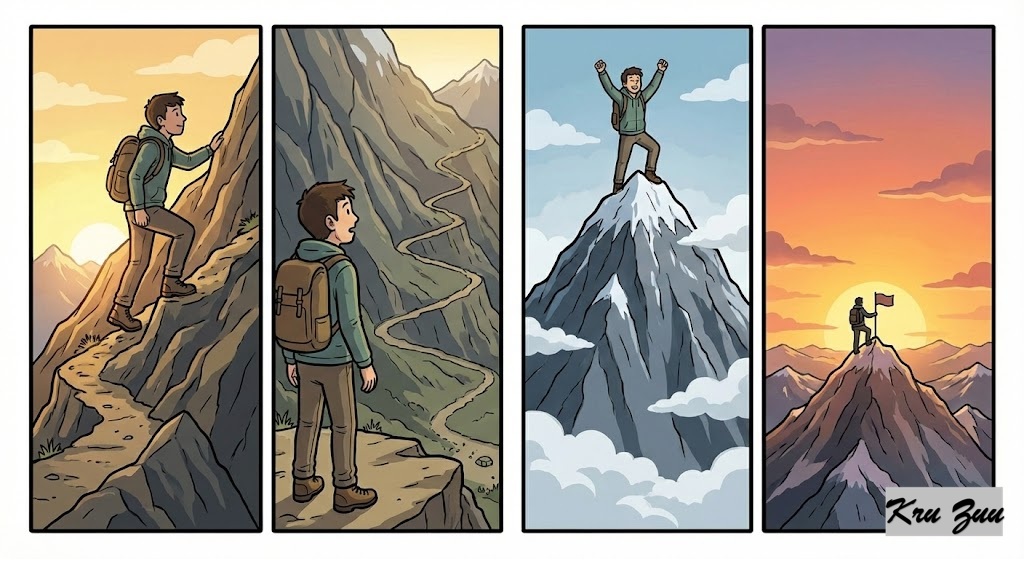
    You treat “Tomorrow” as a bonus, not a trash can for your duties.

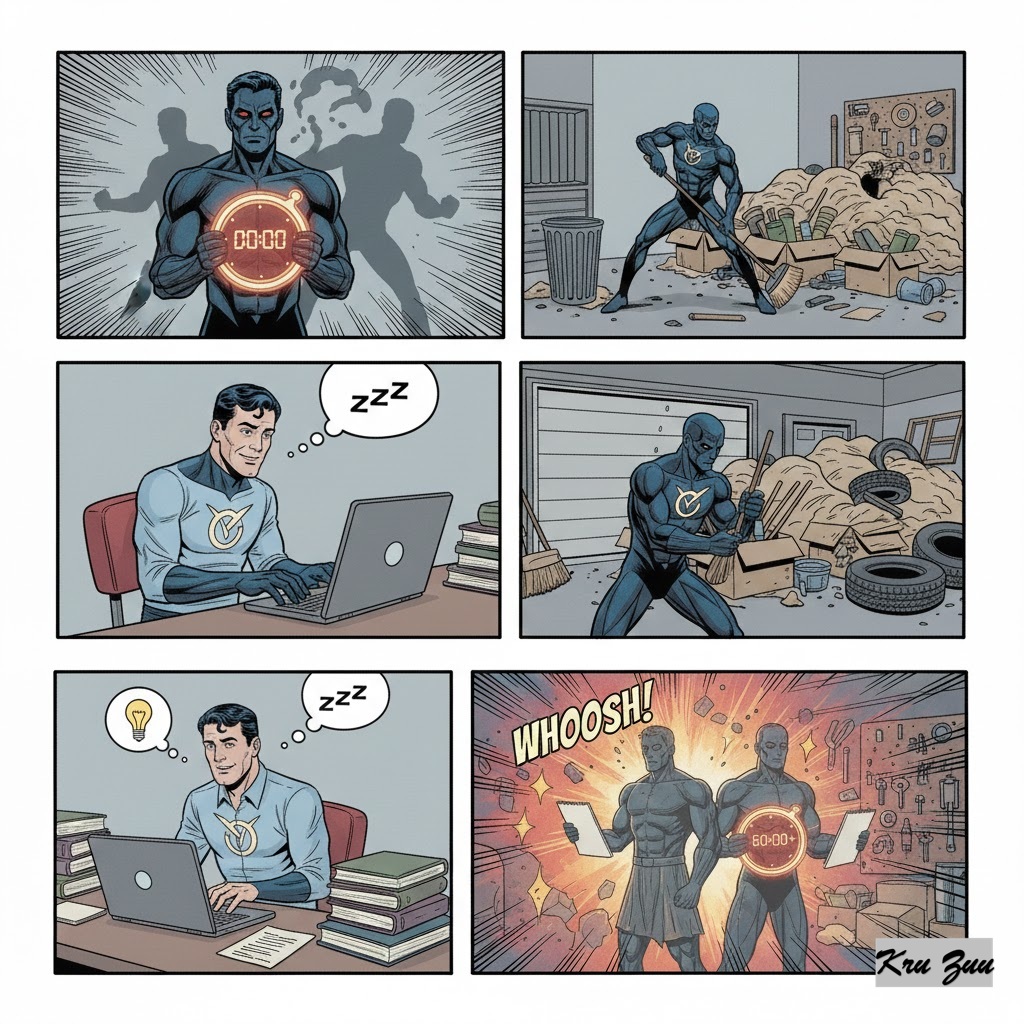
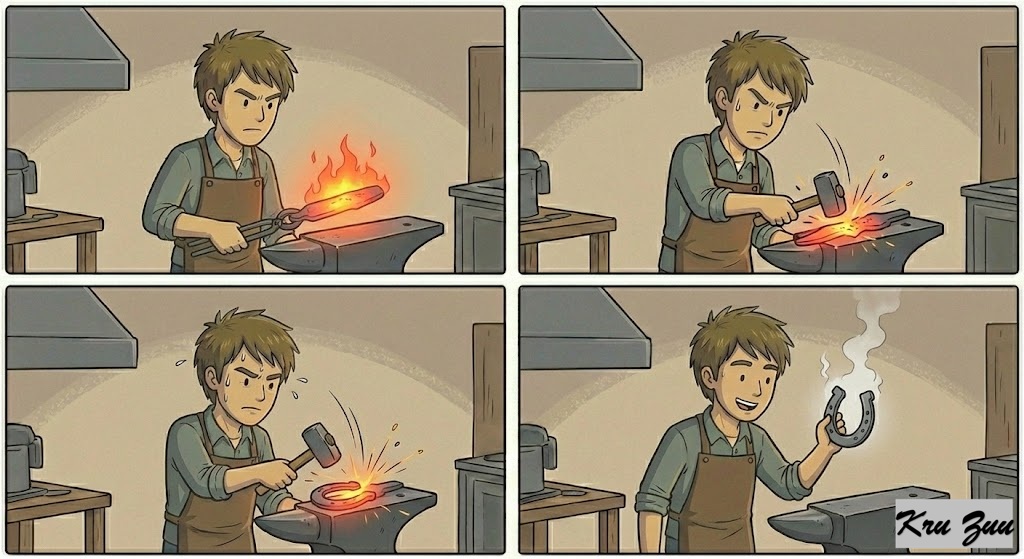
    The Result? You sleep peacefully.

    Your work is high quality because you had time to check it.

    You own your time; time doesn’t own you. 🛡️


    ⚖️ The Reality


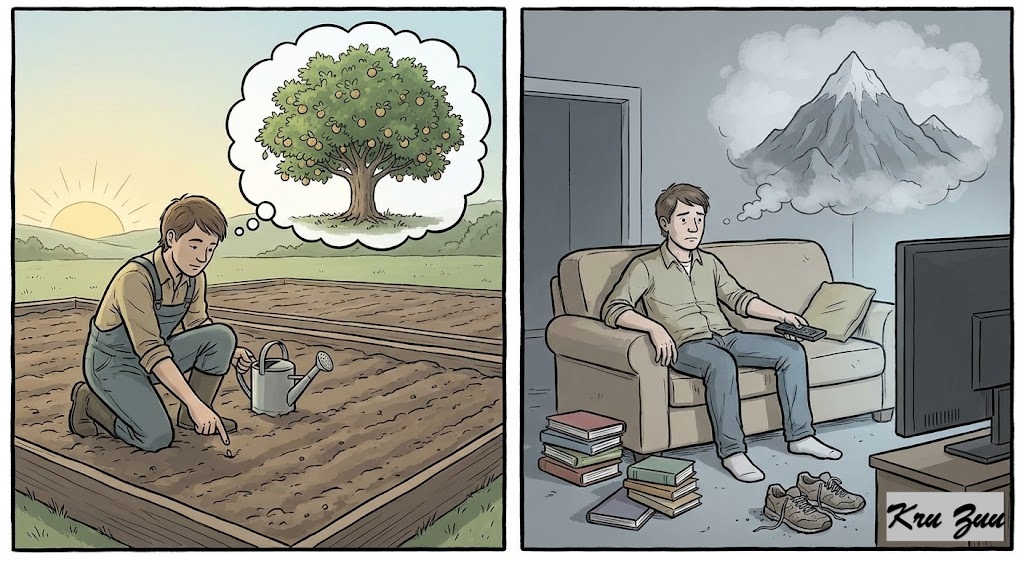
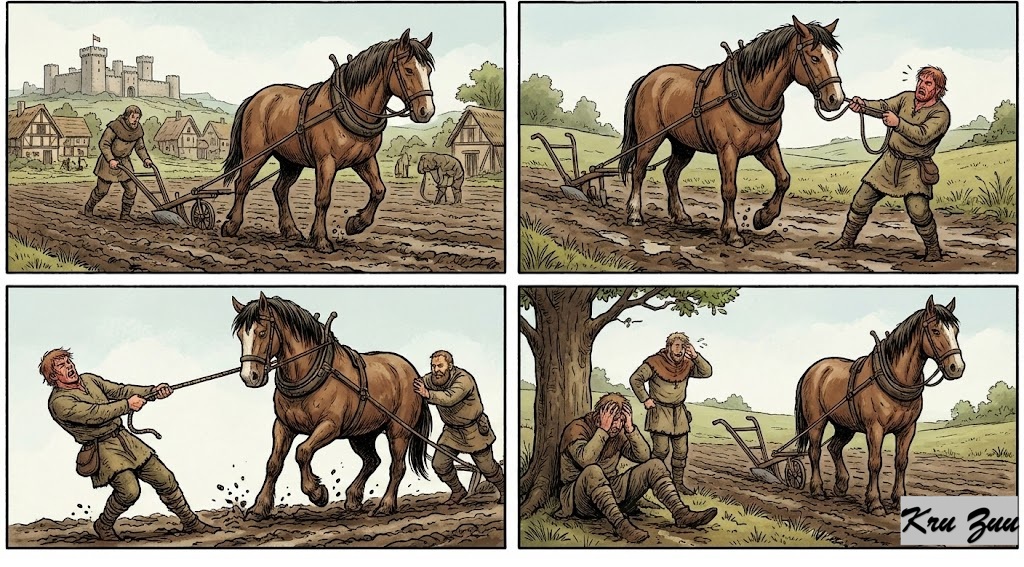
    “Tomorrow” is a liar. Tomorrow is a mystical land where 99% of all human productivity, motivation, and diets are stored. But guess what? When you wake up, it is Today again.


    💎 The Secret: There is no perfect time. The “pain” of doing the work now weighs ounces. The “pain” of regret weighs tons.

    🧐 The Anatomy of the Proverb


    This is the ultimate weapon against laziness.


    Put off (Phrasal Verb): To delay; to move an activity to a later time. (This is the enemy!). 🐢


    Until (Conjunction): Up to the point in time.


    What (Pronoun): The thing that.


    Simpler Version: Do it now.


    📚 Vocabulary Vault


    Procrastination (Noun):
    The action of delaying or postponing something. (The #1 enemy of success).


    Prioritize (Verb): To treat something as more important than other things.


    Deadline (Noun): The latest time or date by which something should be completed. ⏰


    Immediacy (Noun): The quality of bringing one into direct and instant involvement.


    Productive (Adjective): Achieving or producing a significant amount or result. 🚀


    🧠 Grammar Focus: The Imperative & Phrasal Verbs


    The Phrasal Verb:
    “Put Off” English speakers love phrasal verbs.


    Formal: “Please postpone the meeting.”


    Natural: “Can we put off the meeting?”


    Synonym: Delay, defer.


    The Negative Imperative


    Structure:
    Do not (Don’t) + [Verb].


    Examples: Don’t smoke. Don’t go. Don’t put off.

    📜 History: Origin and Spread


    This wisdom has echoed through history.


    The Origin:
    Benjamin Franklin, one of the Founding Fathers of the USA, popularized this specific phrasing in the 1700s. He was obsessed with productivity.


    The Logic: Farming societies couldn’t wait. If you didn’t harvest the wheat today because you were lazy, the rain might destroy it tomorrow. Delay meant death.


    Global Cousins:


    🇹🇷 Turkish:
    “Bugünün işini yarına bırakma.” (Don’t leave today’s work for tomorrow.) — Exactly the same logic!


    🇪🇸 Spanish: “No dejes para mañana lo que puedes hacer hoy.”


    🇩🇪 German: “Was du heute kannst besorgen, das verschiebe nicht auf morgen.” (What you can get done today, do not shift to tomorrow.)

    🎯 Impact on Life: The Pros & Cons


    ✅ The Pros (The Peace):


    Freedom:
    When you finish tasks early, your free time feels actually free. No anxiety in the background.


    Opportunity: If you are ready early, you can say “Yes” to new opportunities that appear suddenly.


    ❌ The Cons (The Burnout Risk):


    Obsession:
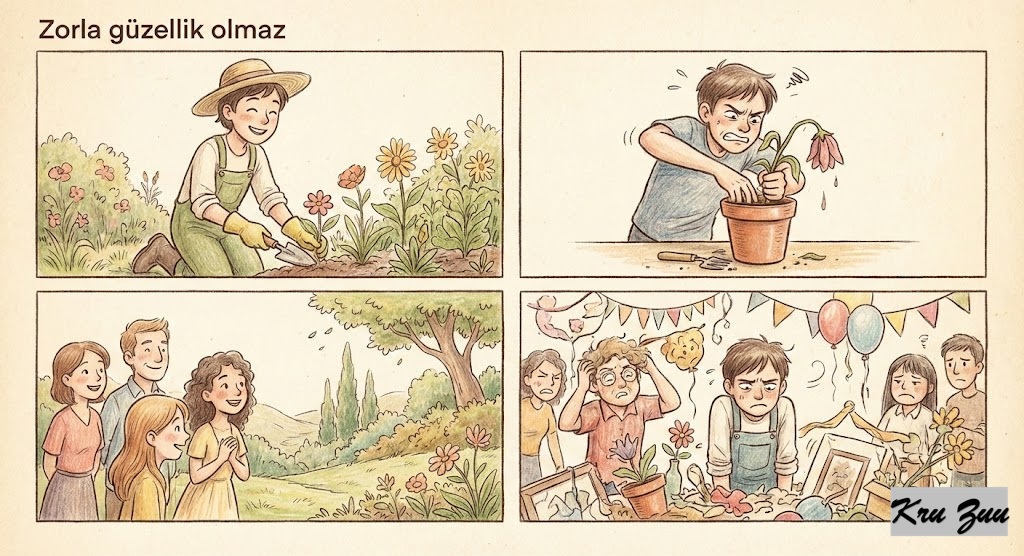
    Don’t become a robot. Sometimes, it is okay to rest if you are sick or exhausted.


    Rushing: Doing it “now” is good, but doing it “too fast and making mistakes” is bad. Balance speed with quality.

    🎭 Short Story: The Heavy Backpack


    Let’s look at our students, Penny and Max again.


    🌟 The Setup:
    The teacher assigns a 10-page essay on Monday. It is due on Friday.


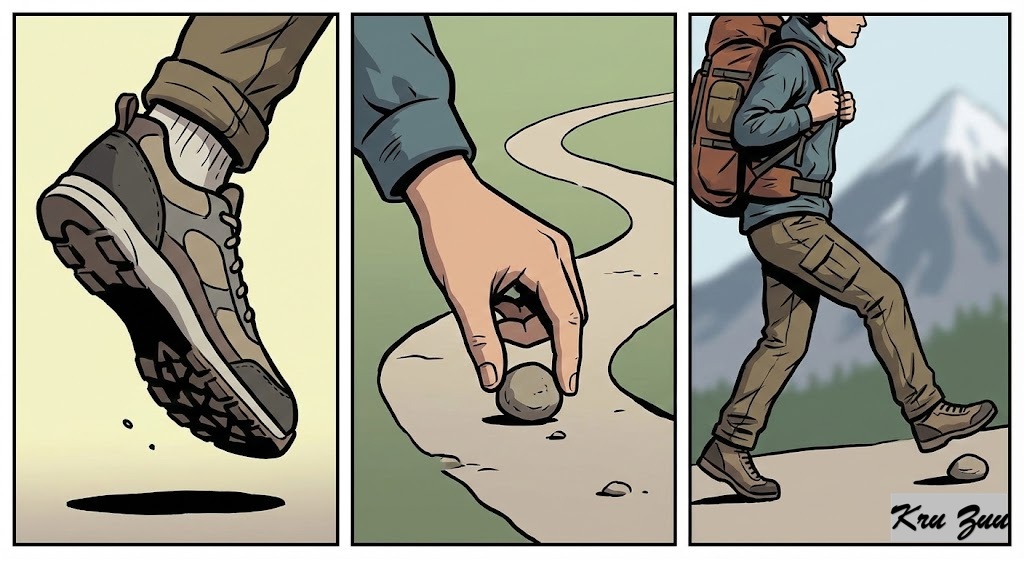
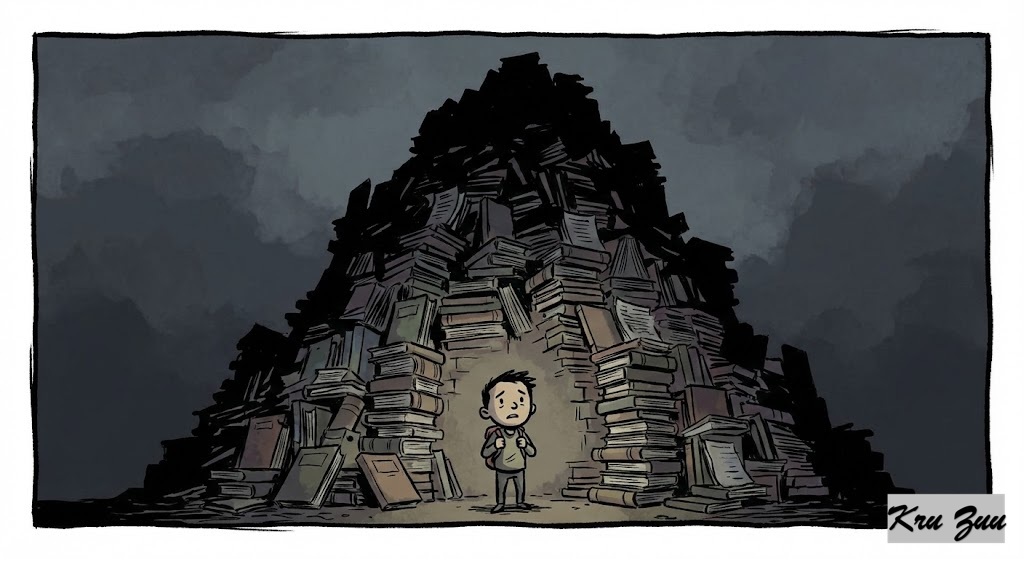
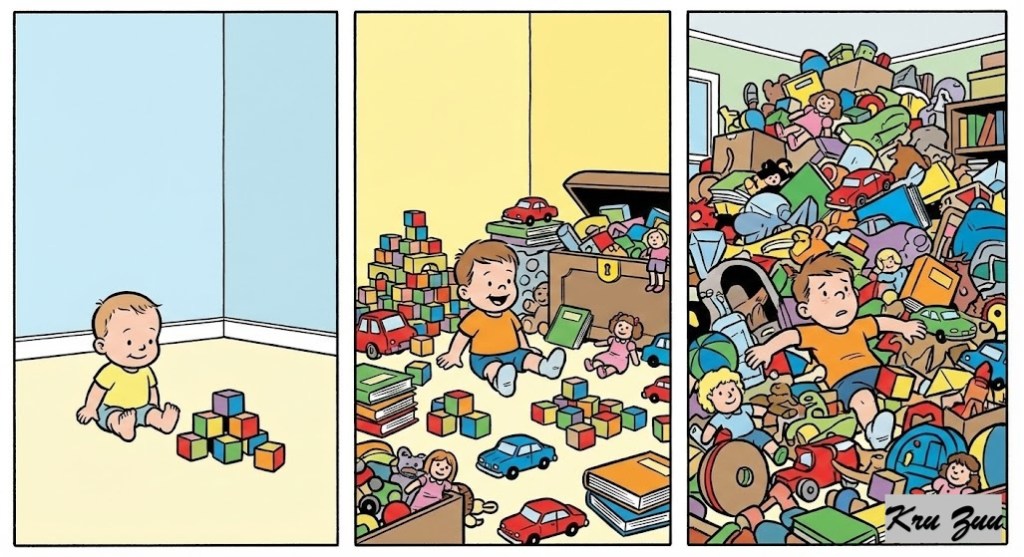
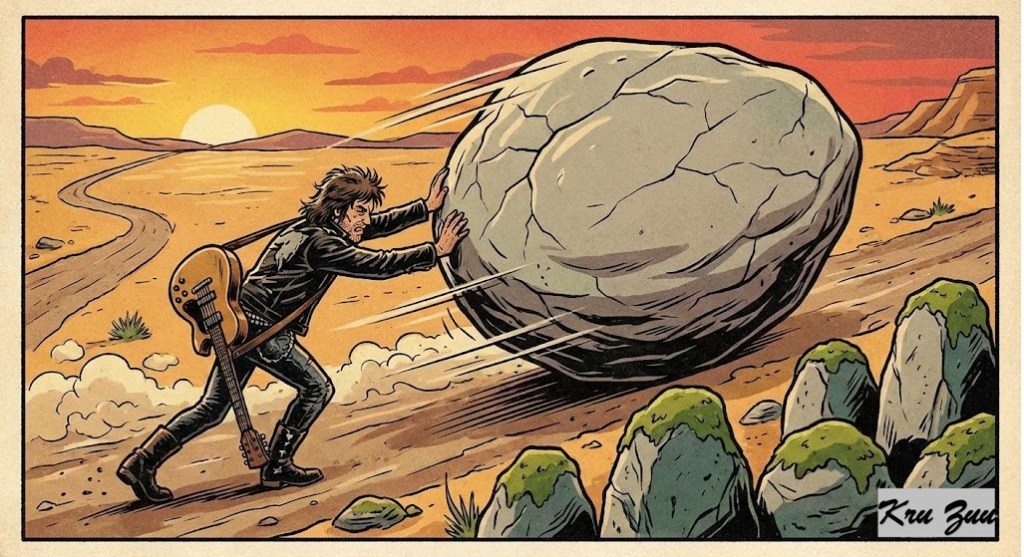
    The Weight: Imagine the essay is a 5kg rock in a backpack.


    The Conflict:Max (The Procrastinator) says, “Friday is far away!” He puts the rock in his backpack. He carries it all week.


    Tuesday: He plays games, but the rock is on his back (worry).


    Wednesday: He goes to a party, but the rock feels heavier.


    Thursday Night:
    The rock is now 50kg. He is sweating. He is stressed. He hates his life.


    Penny (The Doer) says, “I hate carrying rocks.”


    Monday Night: She sits down, writes the essay, and submits it. She takes the rock out of her backpack.


    Tuesday – Friday: Penny walks around light as a feather. She plays games with zero guilt.


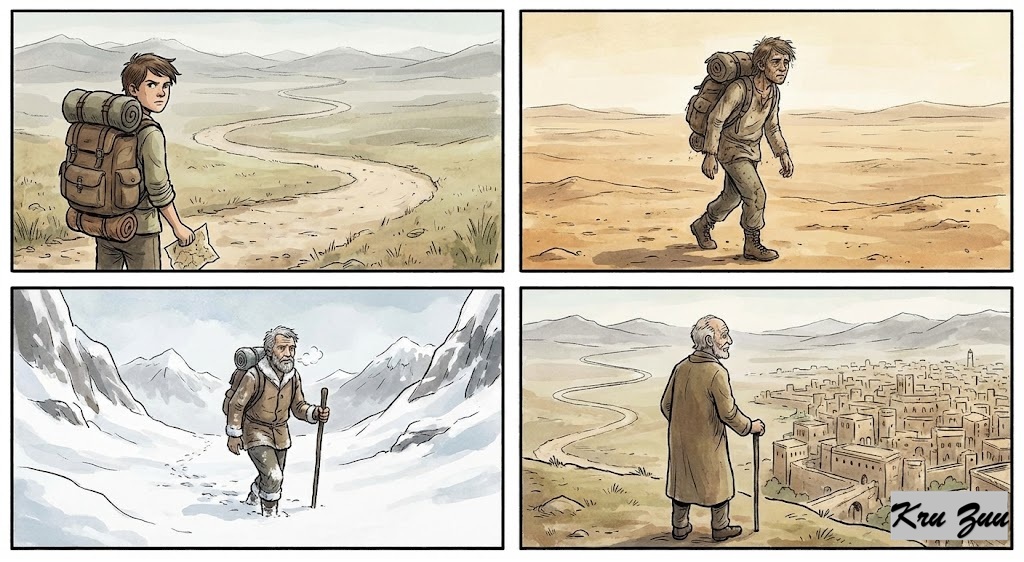
    The Moral: Procrastination doesn’t make the work go away; it just makes the work heavier. Be like Penny. Drop the rock. 🎒

    🎓 Lesson for English Learners


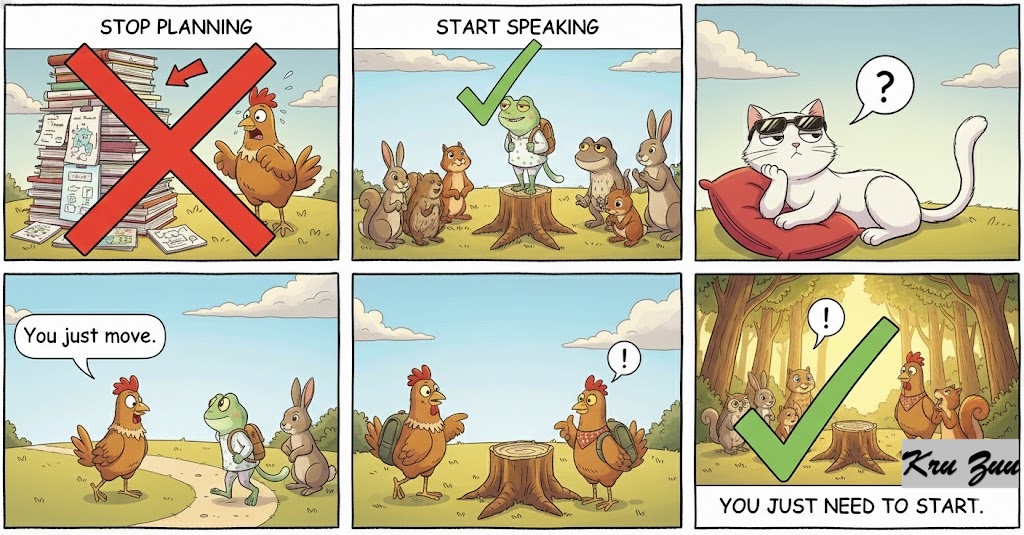
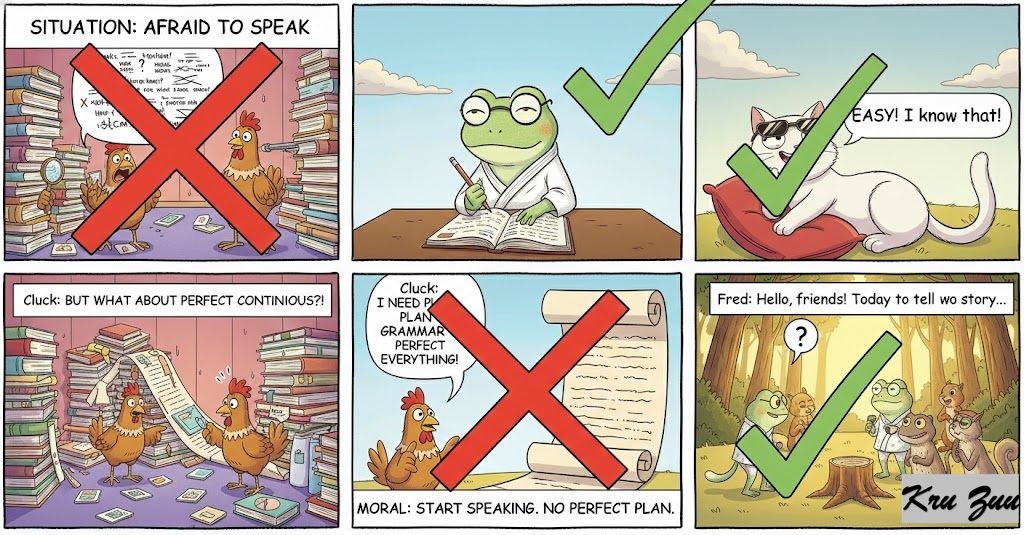
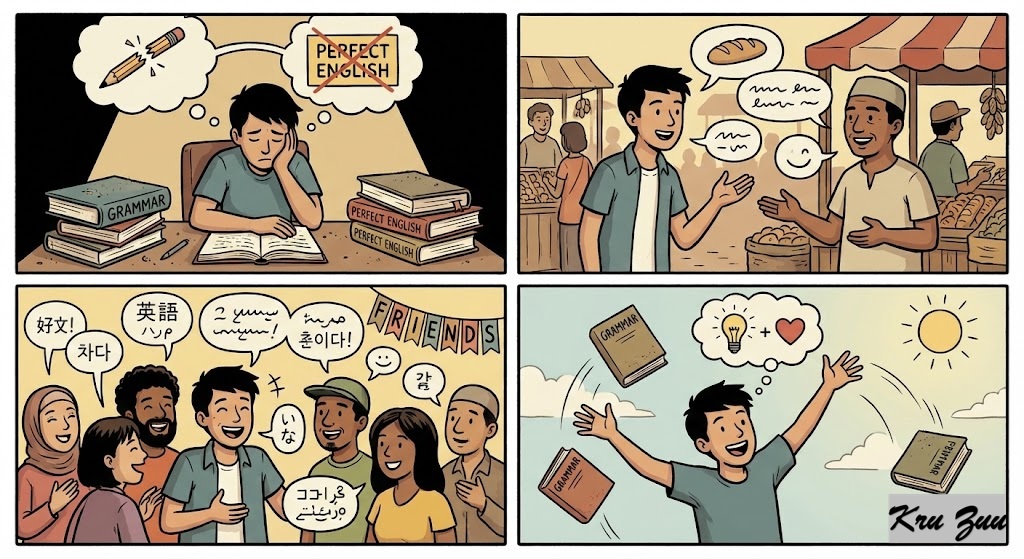
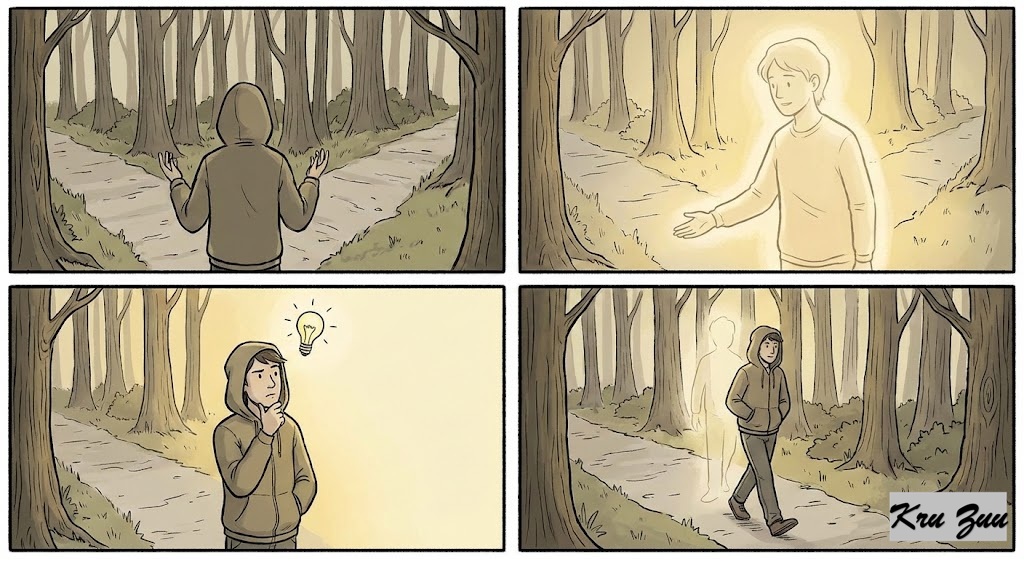
    Don’t wait for “Perfect.”


    Situation:
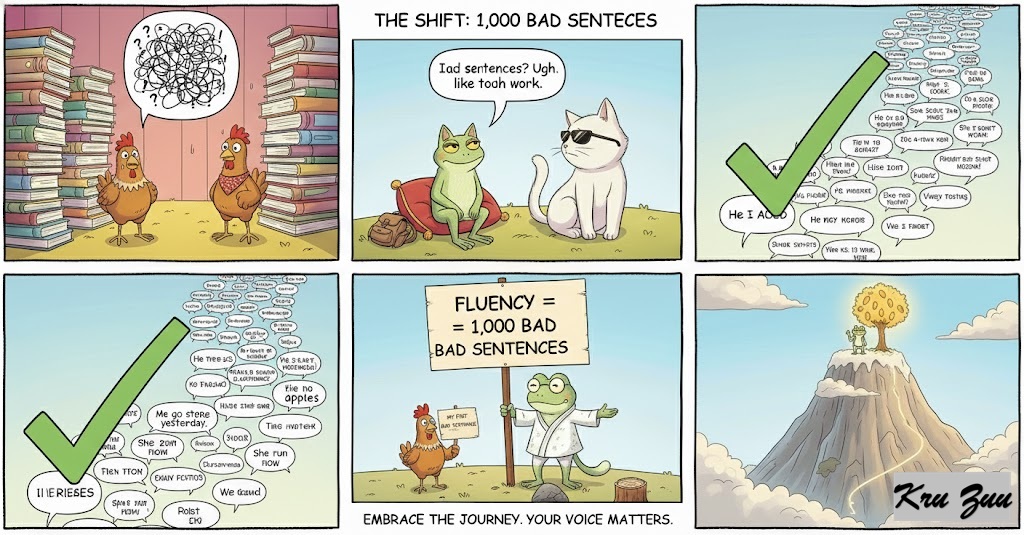
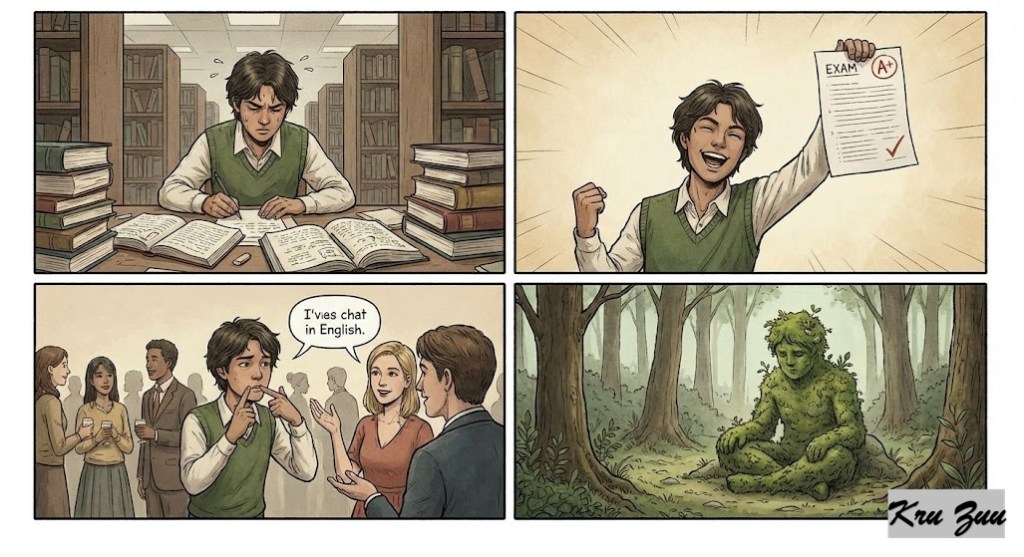
    You want to speak English, but you say, “I will start speaking when my grammar is perfect.” You Say: “That is procrastination disguised as perfectionism. Don’t put off until tomorrow what you can do today. Speak now. Make mistakes now. Learn now.”


    Situation: You have a vocabulary list to memorize. You Say: “If I learn 5 words today, that is 150 words a month. If I wait until I have ‘time’ to learn 50 at once, I will quit. Do it today.”


    💬 Your Turn: The 2-Minute Rule 🚀


    The “Tomorrow” trap is easy to fall into. Here is how to escape.


    The Challenge:
    Look at your To-Do list. Find one task that takes less than 2 minutes to do.


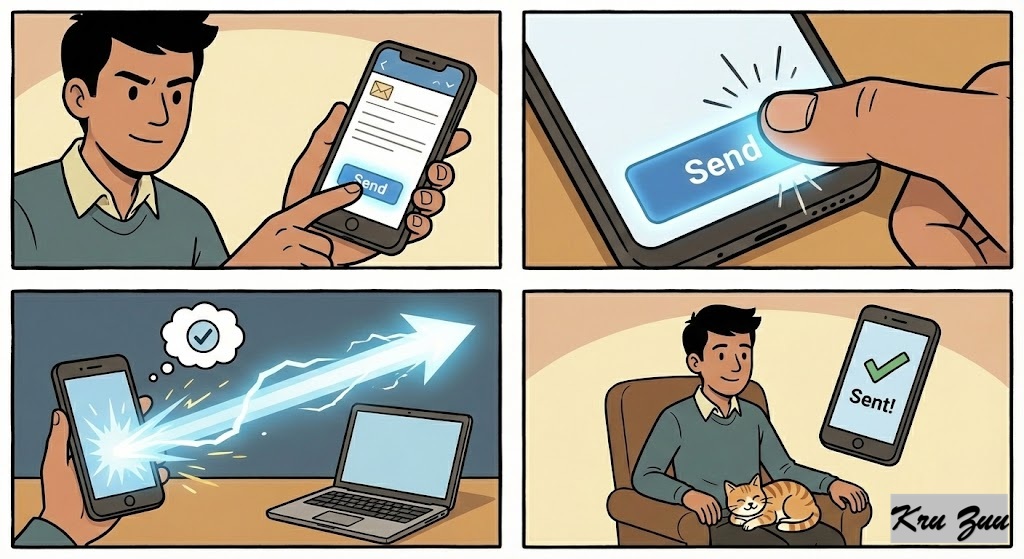
    Sending that email?


    Washing that one dish?


    Booking that appointment?


    The Action:
    DO IT RIGHT NOW. Before you finish reading this sentence. (Did you do it? Good. That is the power of Today.)


    Question: What is the one thing you have been “putting off” for weeks? Tell us in the comments! 👇

    By Zubeyir YURTKURAN

    https://www.facebook.com/BrainBattleground/

    https://www.facebook.com/zubeyr.yurtkuran/

    https://www.instagram.com/zubeyryurtkuran/

    https://www.youtube.com/@BrainBattleground-b3p

  • 🤝 The Daily Alliance: The Law of SynergyTwo heads are better than one.

    🤝 The Daily Alliance: The Law of SynergyTwo heads are better than one.

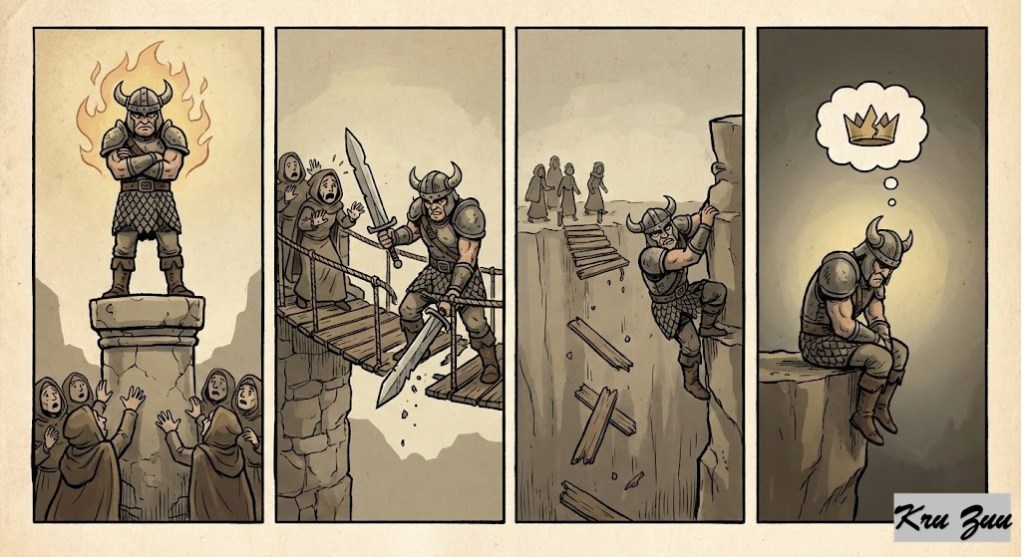
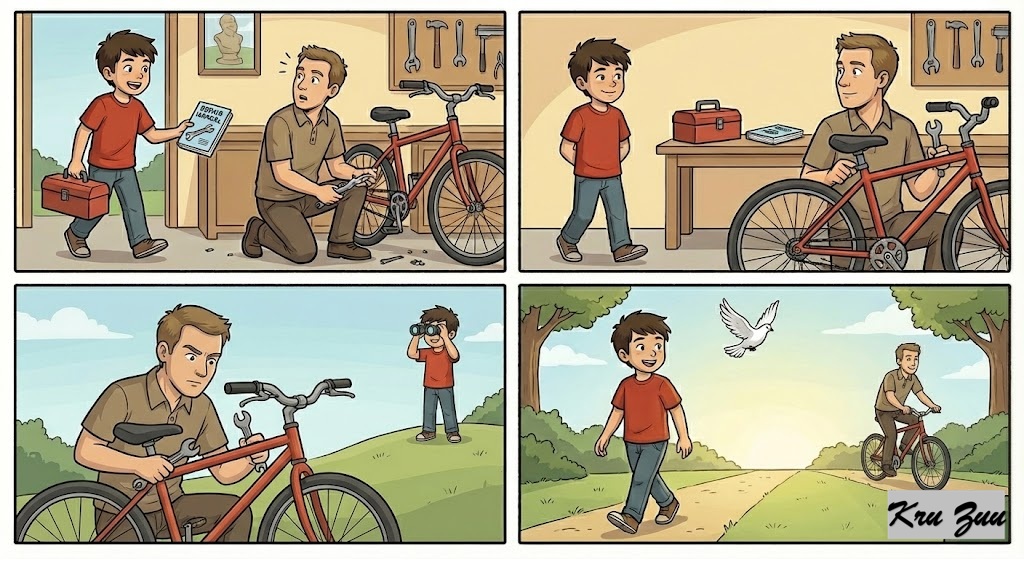
    👿 The Villain (The Soloist): You say, “I work better alone.

    ” You say, “Explaining it to others takes too much time.”

    You hide your work because you are afraid someone will steal your credit.

    You think asking for help is a sign of weakness.

    The Result? You get stuck on a simple problem for 5 hours.

    You miss obvious mistakes.

    You burn out carrying the weight of the world on your own shoulders.

    You become the King of a Lonely Island. 🏝️🥀


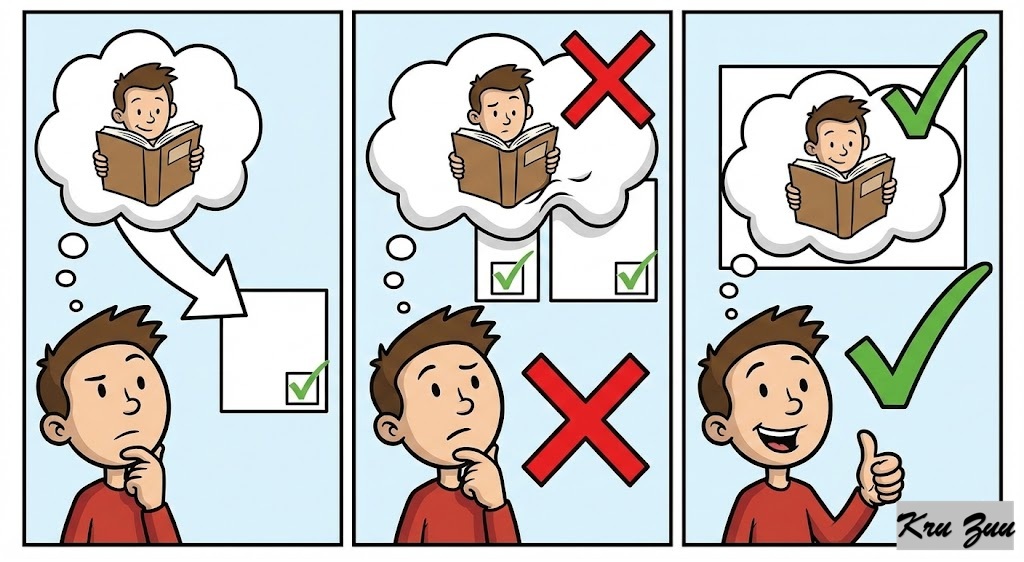
    😇 The Hero (The Mastermind): You realize that your brain has blind spots.

    You say, “I have an idea, but I need a fresh perspective.”

    You bring your draft to a friend. You brainstorm with a rival. You accept that you don’t know everything.

    The Result? 1 + 1 = 3. You find the solution in 10 minutes.

    You achieve Synergy.

    You don’t just solve the problem; you destroy it. You build an empire because you know how to build a team. 🚀🤝


    ⚖️ The Reality: The smartest person in the room is usually the one who asks the most questions. Nobody wins a war alone.

    💎 The Secret: Collaboration is not about making the work easier; it is about making the result better.

    🧐 The Anatomy of the Proverb

    This is the Golden Rule of Teamwork.

    It implies that two people working together will solve a problem faster and better than one person working alone.


    Heads (Noun): Metaphor for minds, perspectives, or ideas. 🧠


    Better (Adjective): The comparative form of “Good.” Superior. 📈


    One (Noun): A single individual (The lonely path). 👤


    📚 Vocabulary Vault


    Synergy (Noun):
    When the combined effect is greater than the sum of separate effects (1+1=3). ✨


    Perspective (Noun): A particular way of viewing things. (I see a “6”, you see a “9”).


    Collaborate (Verb): To work together on a project.


    Brainstorm (Verb): To discuss ideas freely to solve a problem. 🌪️


    Blind Spot (Noun): An area where you cannot see or understand something (a mistake you miss).


    🧠 Grammar Focus

    Comparative Adjectives (Irregular) This proverb uses the most common irregular comparison in English!


    Positive: Good 👍


    Comparative: Better (NOT “Gooder”) 📈


    Superlative: The Best 🏆


    Structure: [Noun A] + [Verb] + better than + [Noun B].


    Example: “Studying with a partner is better than studying alone.”

    📜 History: Origin and Spread

    This wisdom is universal. Humans survived history because we formed tribes.


    The Origin: First recorded by John Heywood in 1546.


    The Logic: One hunter catches a rabbit. Two hunters catch a Mammoth. 🦣


    Global Cousins:


    🇹🇷 Turkish:
    “Bir elin nesi var, iki elin sesi var.” (What does one hand have? Two hands have a sound.) — Legendary match! 👏


    🇰🇷 Korean: “Even a sheet of paper is lighter when held by two.”


    🌍 African Proverb: “If you want to go fast, go alone. If you want to go far, go together.”

    🎯 Impact on Life: The Pros & Cons

    Is more always better?

    ✅ The Pros (The Multiplier):


    Error Checking:
    Your friend sees the spinach in your teeth before the meeting. You can’t see your own face!


    Creativity: Different backgrounds create new ideas (The “Steve Jobs & Wozniak” effect).


    ❌ The Cons (The Trap):


    Groupthink: Agreeing just to be polite. (Bad!)


    “Too many cooks spoil the broth”: This is the opposite proverb!

    If too many people try to lead, it becomes a disaster. You need two heads, not twenty!

    🎭 Short Story: The River Crossing

    Let’s visit our friends, Penny the Pig and Max the Mouse.


    🌟 The Setup: Penny and Max needed to cross a rushing river to get to a berry bush.

    There was no bridge. Just a long, heavy wooden log on the grass. 🪵

    The Conflict: Penny was strong enough to push the log, but she couldn’t see where the sharp rocks were in the water.

    She tried to push it blindly and almost got stuck.


    Max had sharp eyes and saw the safe path, but he was too small to move the log even one inch.

    He sat on the log and squeaked.

    The Action: Did they give up? No. They combined their “Heads” and “Hands.”


    Penny used her strength to push the log into the water.

    Max sat on Penny’s head and acted as the Captain.


    Max shouted: “Left! Right! Avoid the rock!” Penny powered through.

    The Moral: Penny had the Power.

    Max had the Vision.

    Separately, they starve. Together, they feast on berries. 🍓🐭🐷

    🎓 Lesson for English Learners

    Don’t be a “Lone Wolf” in your language journey!

    Advice on Study 📚

    Situation: You are writing an essay and you think it is perfect.

    You Say: “I need a second pair of eyes. Two heads are better than one.”

    You send it to a friend or ChatGPT for feedback. They find 3 mistakes you missed.

    Advice on Conversation 🗣️

    Situation: You are nervous to speak English.

    You Say: “Let’s practice together. You correct me, and I will correct you.” You create a ‘Language Alliance.’

    💬 Your Turn

    The “Co-Pilot” Challenge ✈️

    The Goal: Stop trying to solve your hardest problem alone.

    The Question: What is ONE project or problem you are stuck on right now?

    Deciding a career path?

    Planning a trip?

    Learning a complex grammar rule?


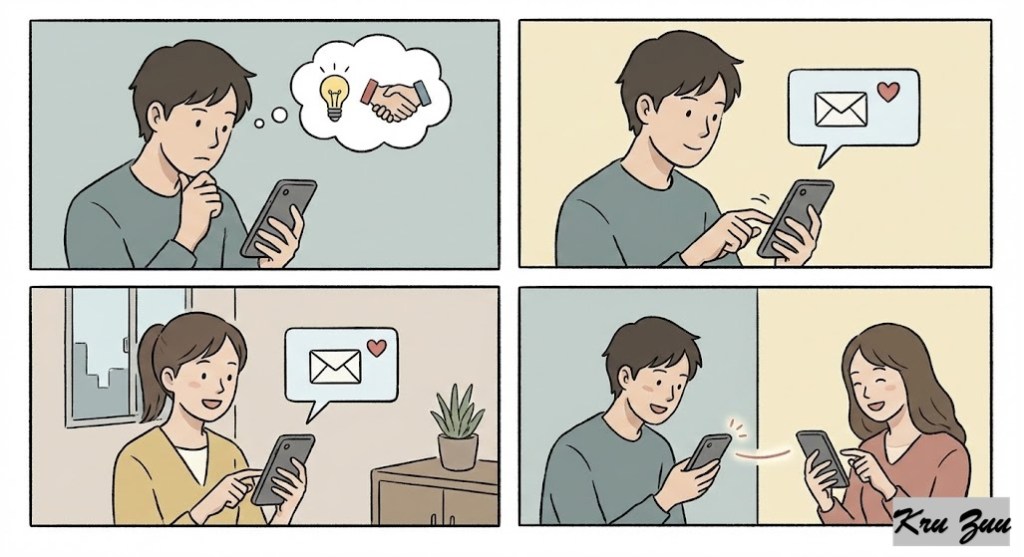
    The Action: Send a message to one smart friend right now. Say: “I’m stuck on this. Can I get your opinion? Two heads are better than one.”


    👇 Who is the “Max” to your “Penny”? Tag them or write their name below! 👇

    By Zubeyir YURTKURAN

    https://www.facebook.com/BrainBattleground/

    https://www.facebook.com/zubeyr.yurtkuran/

    https://www.instagram.com/zubeyryurtkuran/
    https://www.youtube.com/@BrainBattleground-b3p

  • 🏔️ The Daily Shield: The Law of Determination

    🏔️ The Daily Shield: The Law of Determination

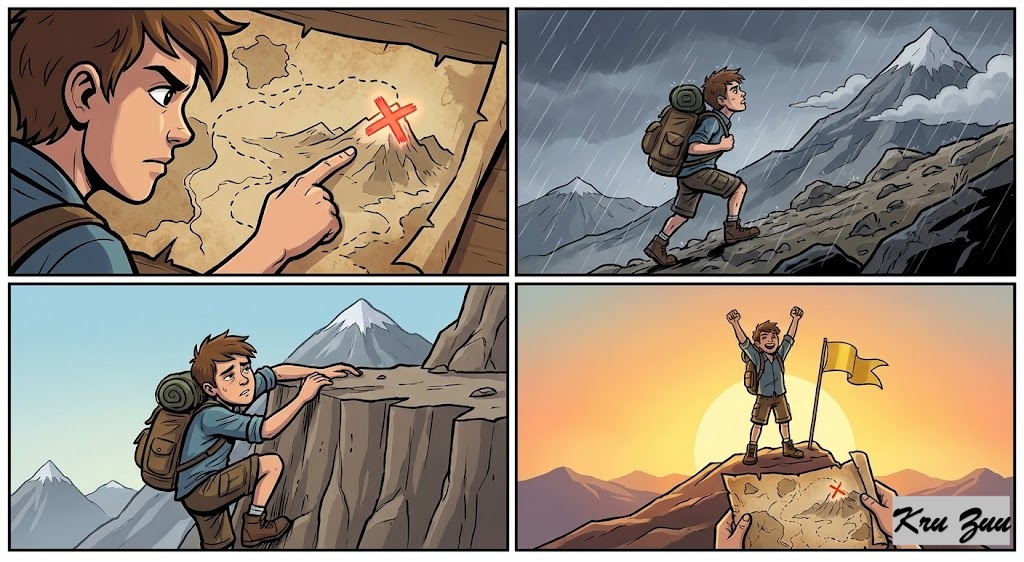
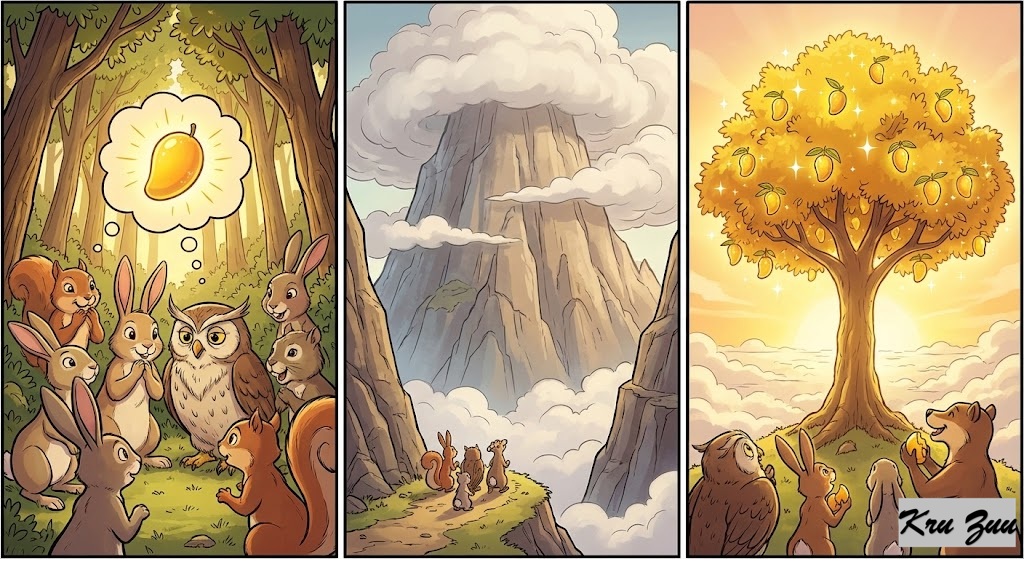
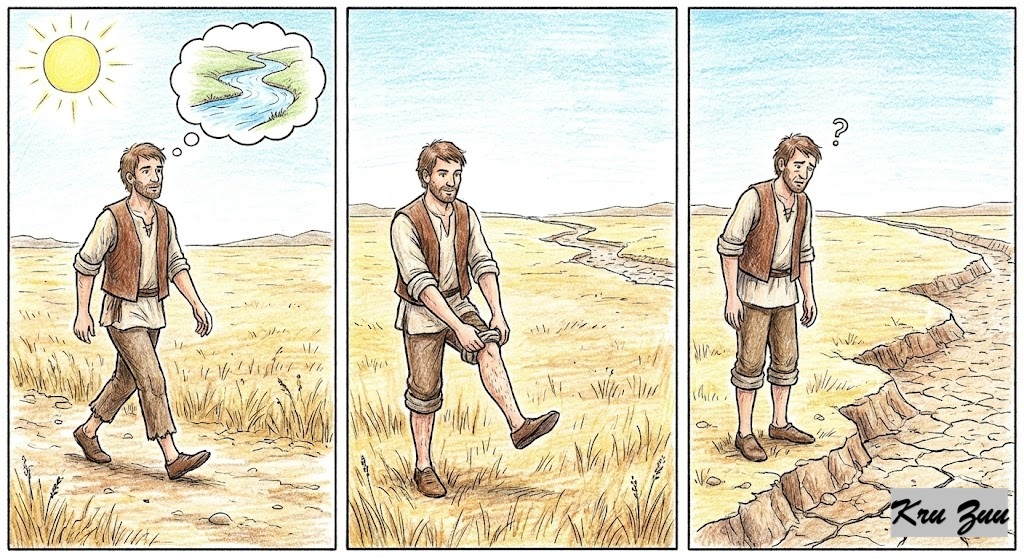
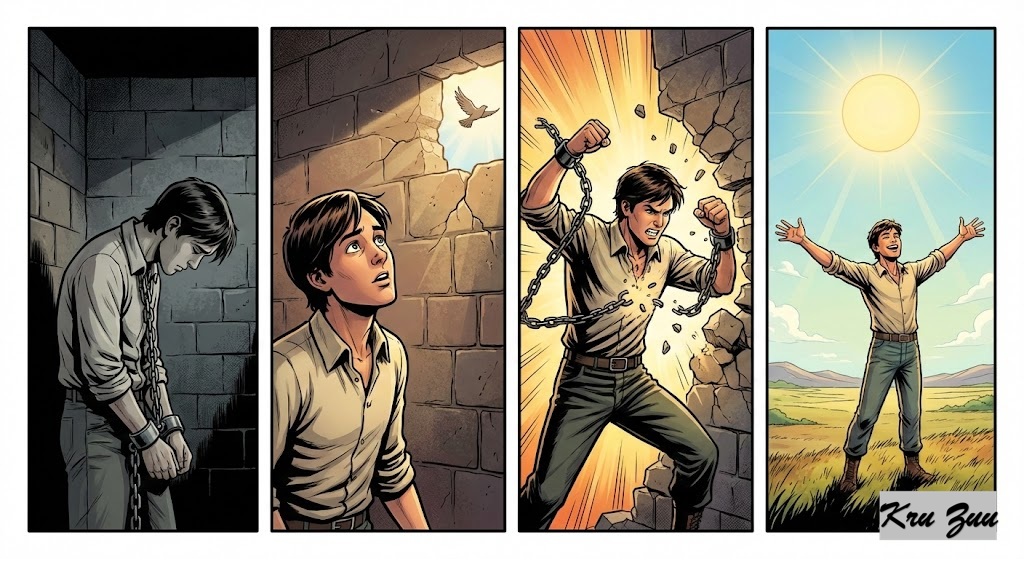
    Where there’s a will, there’s a way.


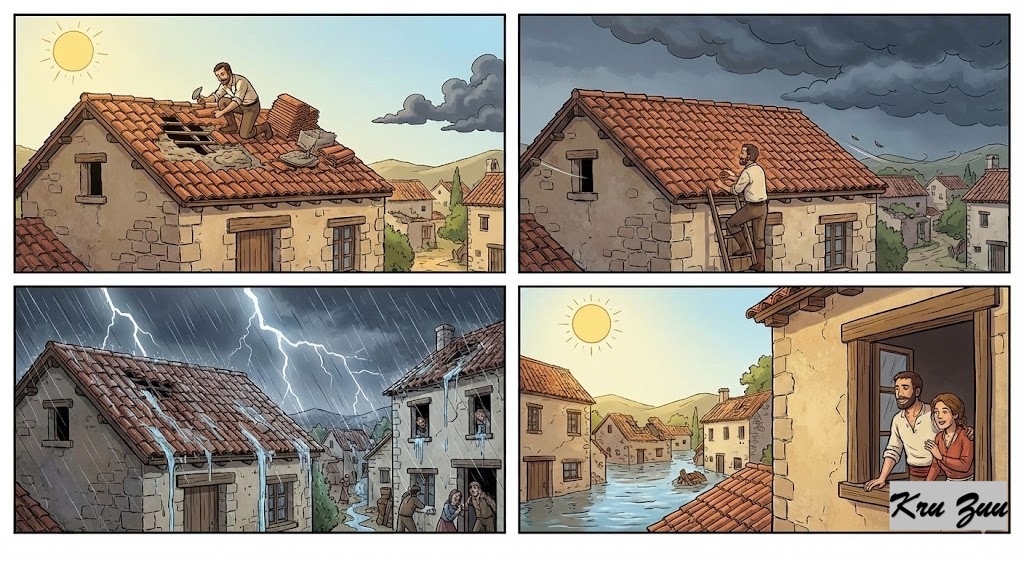
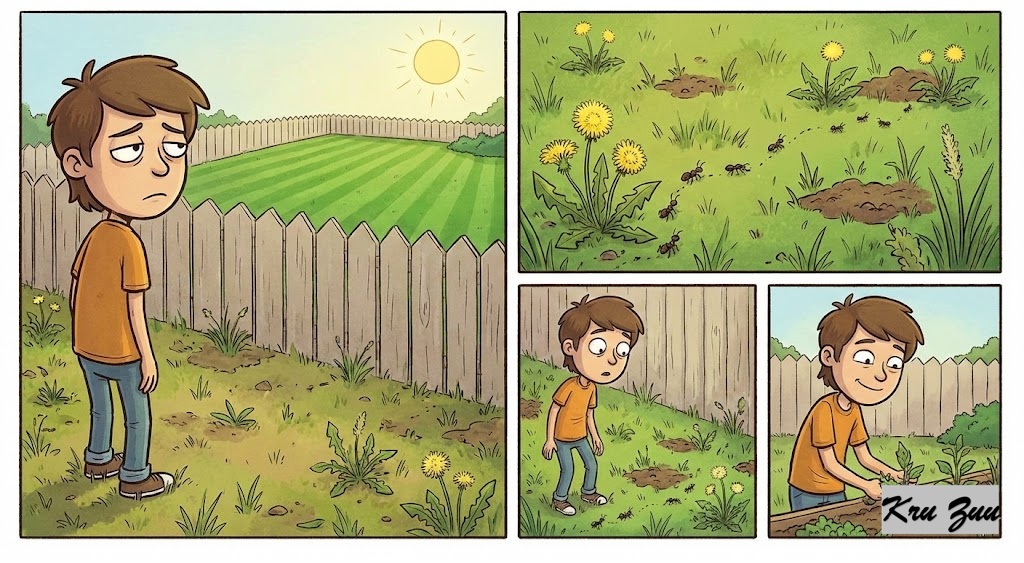
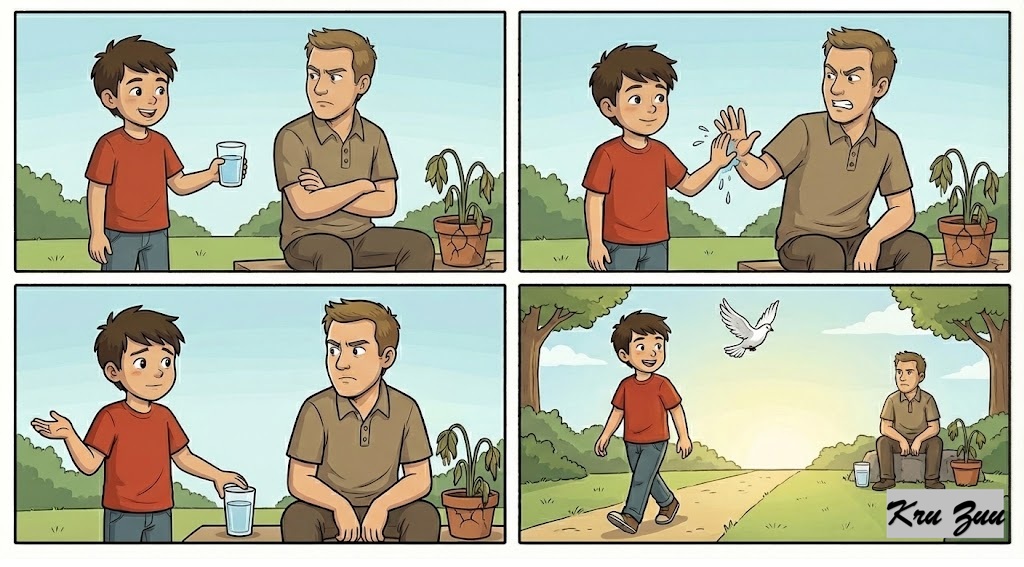
    👿 The Villain (The Victim): You say “I can’t do it because I don’t have money.”

    You say “I’m too old to learn English.”

    You say “I don’t have time.”

    You stare at the closed door and cry.

    You wait for someone else to open it for you.

    The Result? You stay in the same place for 10 years. You become bitter.

    You become the person who says, “I could have been great, but…” 🌧️


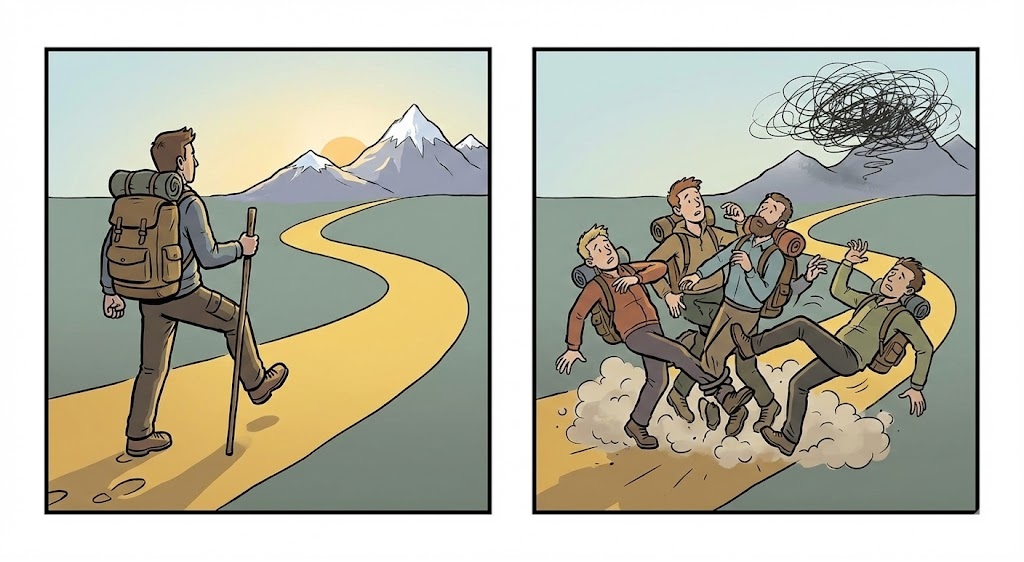
    😇 The Hero (The Pathfinder): You see a closed door, so you look for a window.

    The window is locked? You look for the chimney.

    The chimney is blocked? You grab a hammer and break the wall!

    You don’t have money? You use free libraries.

    You don’t have time? You listen to podcasts while you sleep.

    The Result? You achieve the “impossible.” People call you lucky, but you know the truth: You just refused to take “No” for an answer. 🔨


    ⚖️ The Reality: Talent is overrated. Resources are overrated. Desire is the only thing that matters.

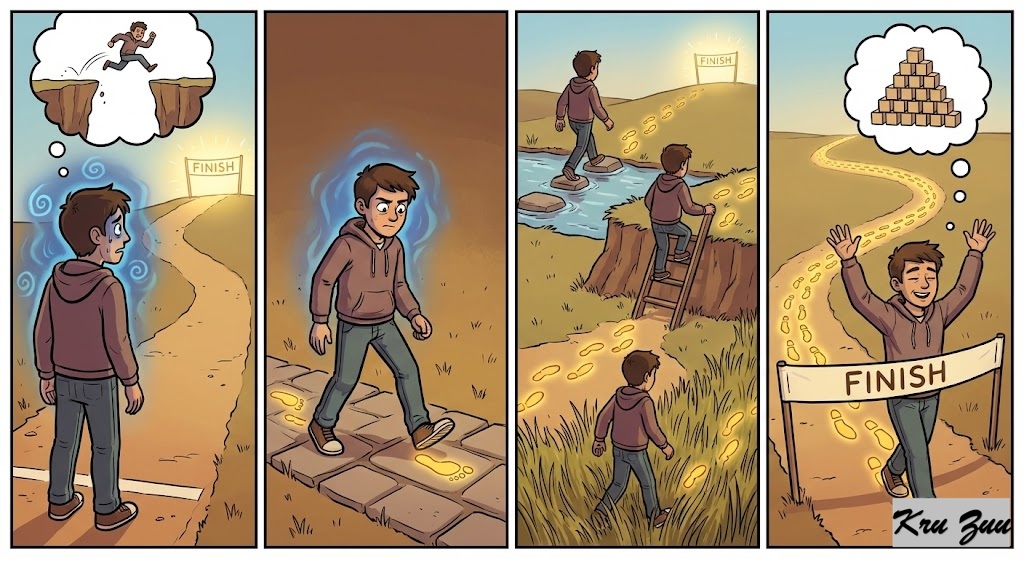
    💎 The Secret: Obstacles are not “Stop” signs; they are tests to see how badly you want it.

    🧐 The Anatomy of the Proverb


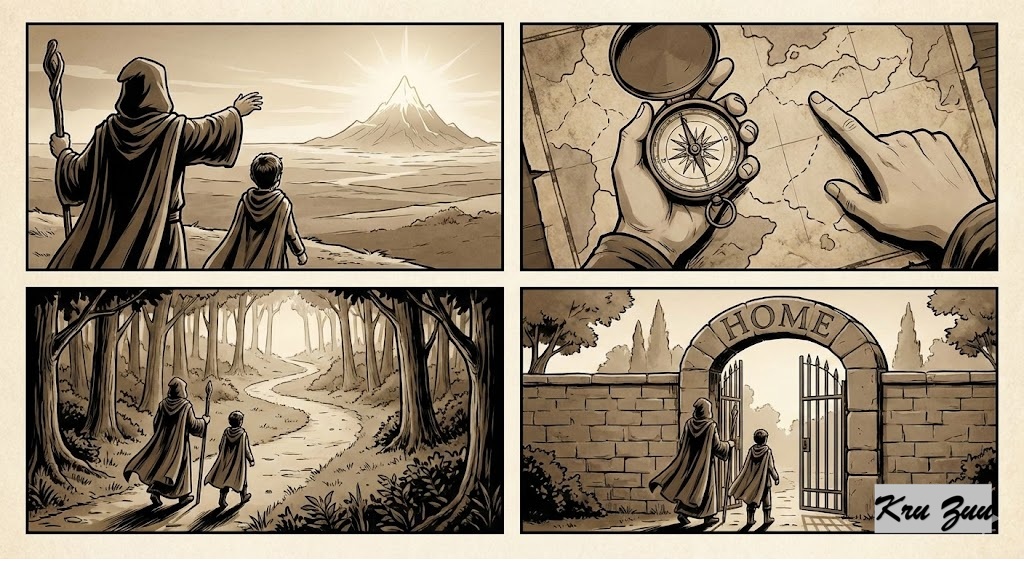
    This is the Golden Rule of Grit. It implies that if your desire (will) is strong enough, you will eventually find a method (way) to succeed, no matter how hard it is.


    Where: In any situation or place.


    Will (Noun): Not the future tense auxiliary verb! Here, it means strong desire, determination, or mental power. 🔥


    Way (Noun): A method, a path, a plan, or a solution. 🗺️


    📚 Vocabulary Vault


    Determination (Noun):
    The quality of not giving up, even when things are difficult.


    Obstacle (Noun): Something that blocks your way (a problem).


    Resourceful (Adjective): Good at finding ways to solve problems. (MacGyver is resourceful!). 🛠️


    Persist (Verb): To continue doing something even though it is difficult.


    Inevitable (Adjective): Certain to happen; unavoidable.


    🧠 Grammar Focus


    Parallel Structure & Existential “There is” This proverb uses a perfect balance. It links a condition to a result using “Where.”


    Structure: Where [Situation], [Result].


    Condition: Where there is a will… (If strong desire exists…)


    Result: …there is a way. (…a solution also exists.)


    Note on “Will”:


    Verb: I will call you. (Future)


    Noun: He has a strong will. (Determination) -> This proverb uses the Noun form!

    📜 History: Origin and Spread


    This isn’t just modern motivation; it’s ancient wisdom.


    The Origin: It was popularized by the English poet George Herbert in 1640.


    The Logic: Historically, people believed the human spirit was stronger than physical reality. If you can imagine it, you can build it.


    Global Cousins:


    🇹🇷 Turkish:
    “İsteyen çaresini, istemeyen bahanesini bulur.” (The one who wants finds a remedy, the one who doesn’t finds an excuse.) — Perfect match!


    🇪🇸 Spanish: “Querer es poder.” (To want is to be able.)


    🇯🇵 Japanese: “Ishi no ue ni mo san nen.” (Sit on a stone for 3 years, and it will become warm.) — Focus on patience/will.

    🎯 Impact on Life: The Pros & Cons


    Is pure willpower enough?


    ✅ The Pros (The Fuel):


    Innovation:
    When you refuse to quit, you invent new solutions (like Elon Musk or Thomas Edison).


    Resilience: Failure doesn’t hurt you; it just teaches you “how NOT to do it.”


    ❌ The Cons (The Burnout):


    Stubbornness:
    Sometimes there isn’t a way (e.g., You can’t flap your arms and fly). Don’t confuse “Will” with “Delusion.”


    Exhaustion: Pushing too hard without rest can break you.

    🎭 Short Story: The High Wall


    Let’s visit our friends again, Penny and Max.


    🌟 The Setup: Penny the Pig and Max the Mouse were hungry.

    They smelled delicious fresh corn inside a garden. But there was a huge, 3-meter stone wall around the garden. 🧱


    The Conflict: Max looked at the wall. “It’s too high,” he sighed.

    “I am just a mouse. It is physically impossible to climb this.” Max sat down and cried. He had no Will.

    Penny looked at the wall. She couldn’t climb either.

    But she wanted that corn. She walked around the wall for 2 hours. Nothing.

    She tried to jump. Failed.


    The Action: Did Penny go home? No.

    She found a small crack in the ground near the wall.

    She started digging. She dug for 4 hours. Her hooves hurt. She was dirty.

    Max laughed, “Give up, Penny!”

    Suddenly… Pop! Penny squeezed under the wall through the hole she dug.


    The Moral: Max focused on the Wall (The Obstacle).

    Penny focused on the Corn (The Goal).

    Max is still hungry.

    Penny is eating lunch.

    🎓 Lesson for English Learners


    Don’t use this just for major life goals; use it for your English journey!


    Advice on Speaking 🗣️


    Situation:
    A student says, “I can’t speak English because I don’t live in America.”


    You Say: “That is an excuse. You have the Internet, YouTube, and AI. Where there’s a will, there’s a way. Find a way!”


    Advice on Career 💼


    Situation:
    Your friend hates their job but says, “I can’t quit, I have bills.”


    You Say: “Start a side hustle. Learn a new skill at night. If you really want freedom, you will find a path. Where there’s a will, there’s a way.”


    💬 Your Turn


    The “Impossible” Challenge 🚀


    The Goal:
    Identify one thing you said you “CAN’T” do.


    “I can’t lose weight.”


    “I can’t wake up early.”


    “I can’t save money.”


    The Action:
    Replace “I can’t” with “How can I?” Write down 3 creative ways to solve that problem right now.


    Question: What is a “Wall” in your life right now?

    Are you going to be Max (sit and cry) or Penny (start digging)? 👇

    By Zubeyir YURTKURAN

    https://www.facebook.com/BrainBattleground/

    https://www.facebook.com/zubeyr.yurtkuran/

    https://www.instagram.com/zubeyryurtkuran/
    https://www.youtube.com/@BrainBattleground-b3p

  • 🍎 The Daily Shield: The Law of Maintenance

    🍎 The Daily Shield: The Law of Maintenance

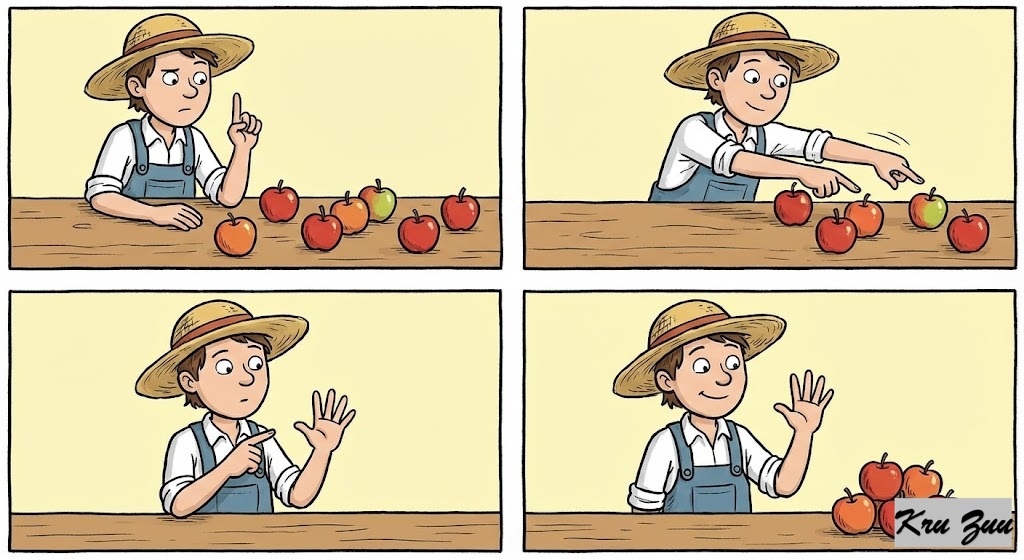
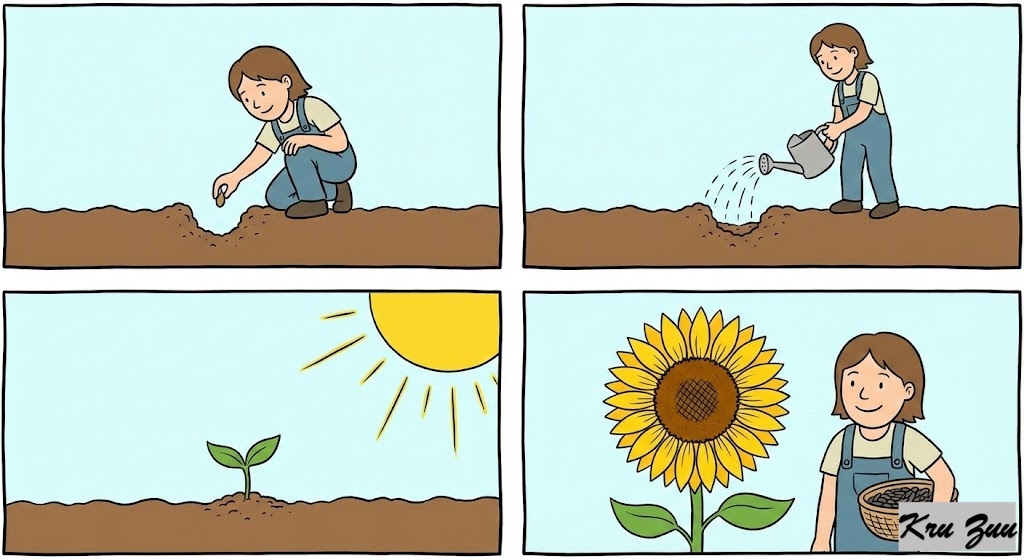
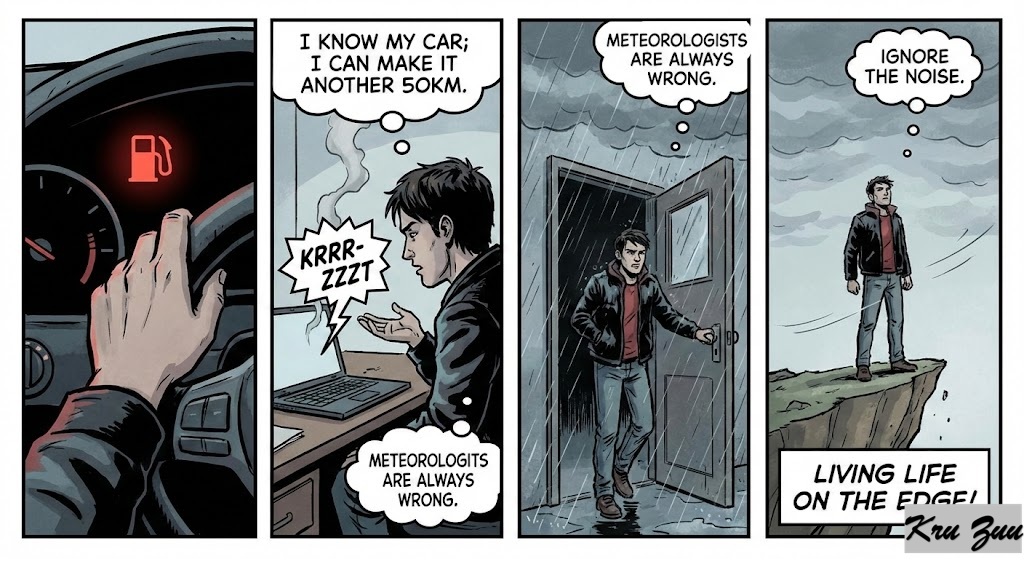
    An apple a day keeps the doctor away.


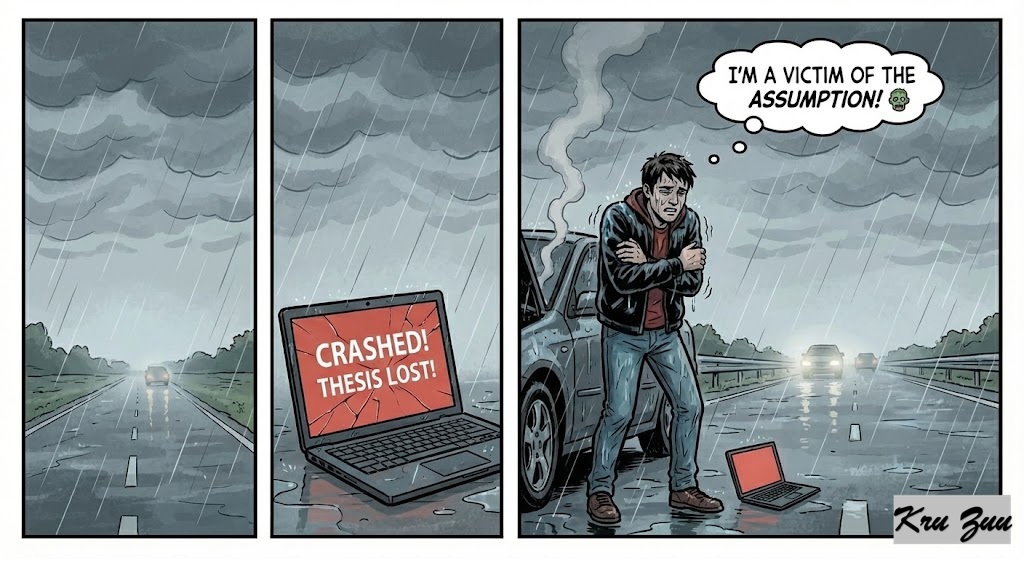
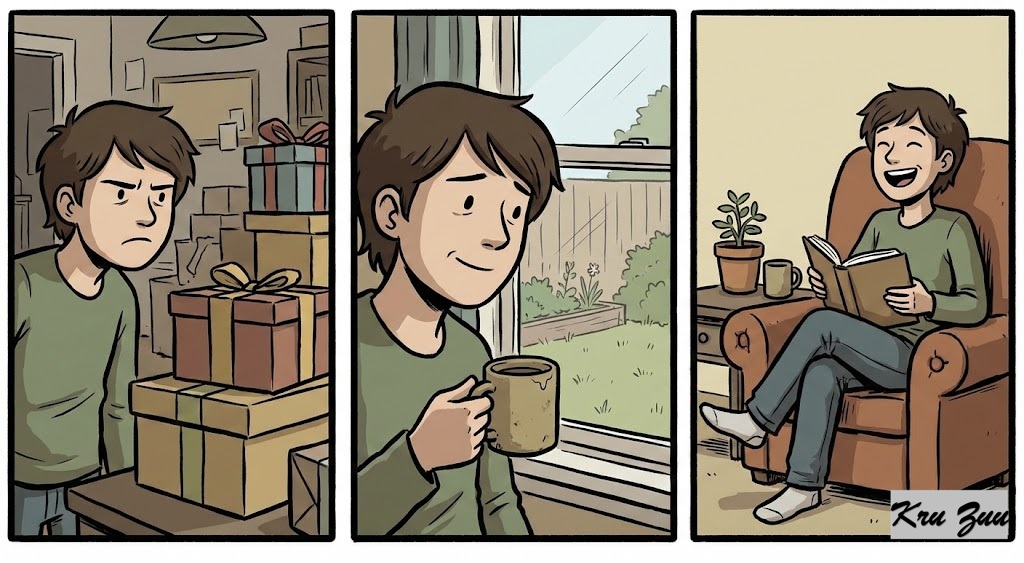
    👿 The Villain (The Gambler): You skip the gym because “one day won’t matter.”

    You ignore the weird noise your car is making.

    You eat fast food for lunch because you are “too busy.”

    You study only the night before the exam.

    The Result? One day, your body collapses.

    Your car breaks down on the highway.

    You fail the exam.

    You treated your life like a sprint, not a marathon.

    You waited for the disaster to happen before you paid attention. 🚑


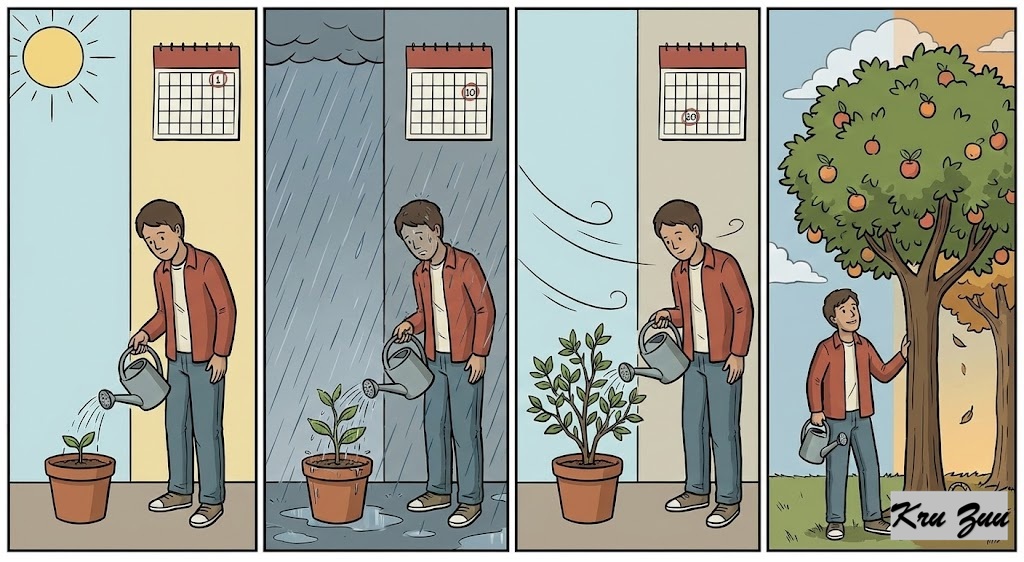
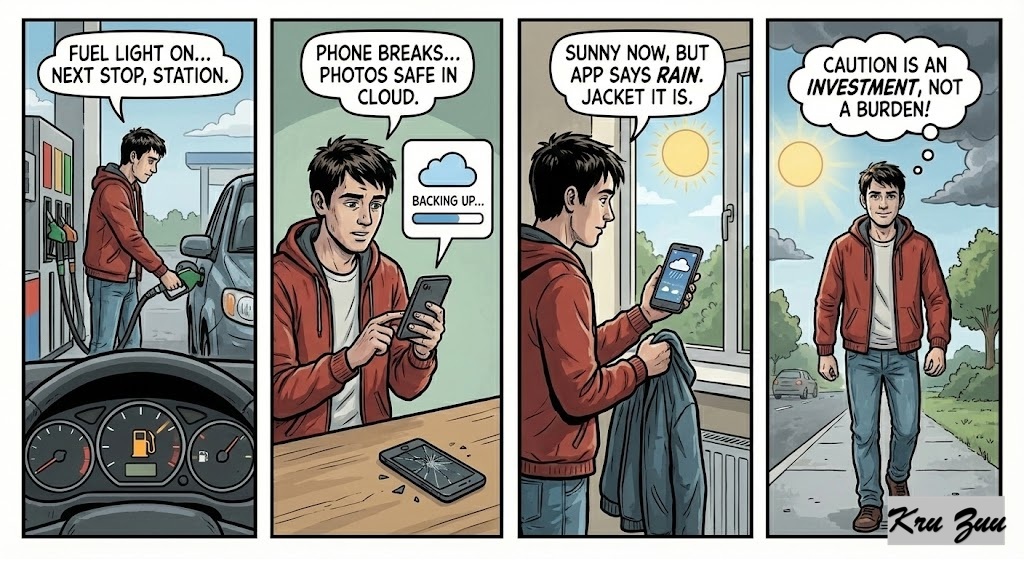
    😇 The Hero (The Architect): You are not a superhero; you are just consistent.

    You walk for 20 minutes every day.

    You drink water.

    You save $5 every morning.

    You read 10 pages of a book before bed.

    The Result? You don’t get sick often.

    Your bank account grows.

    You speak fluent English while others are still struggling.

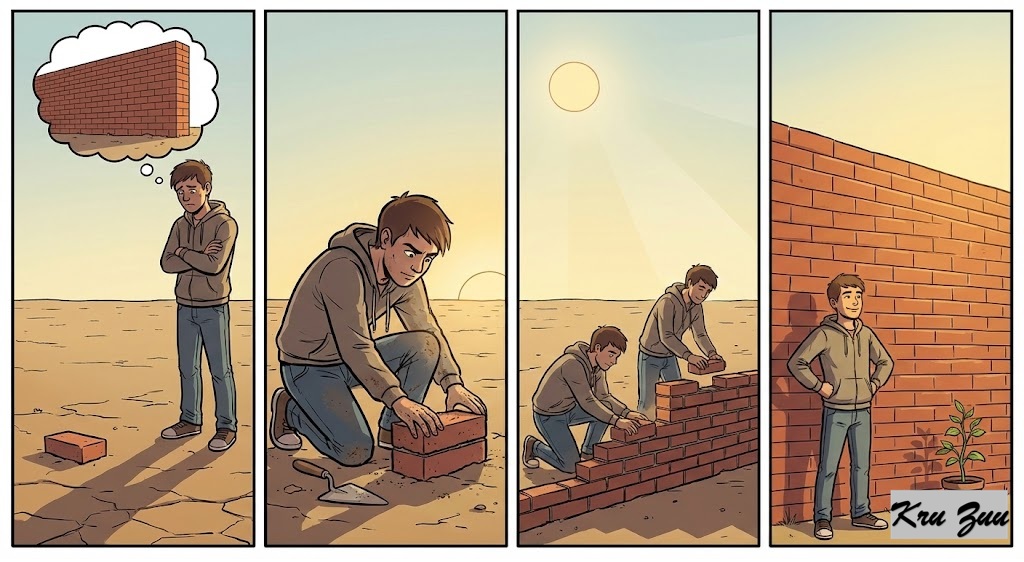
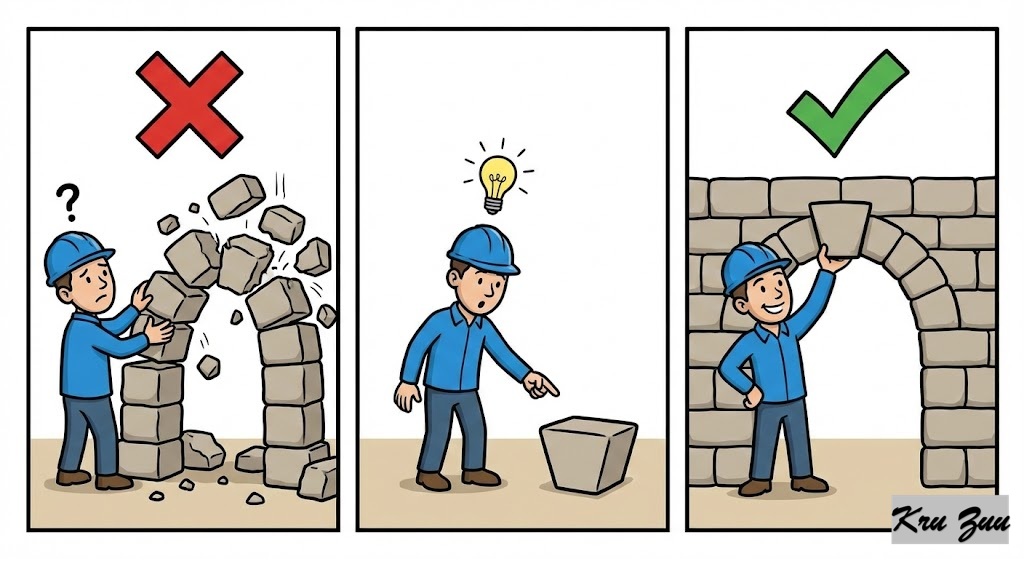
    You didn’t do anything “magic” you just stacked small bricks every day to build a fortress. 🏰


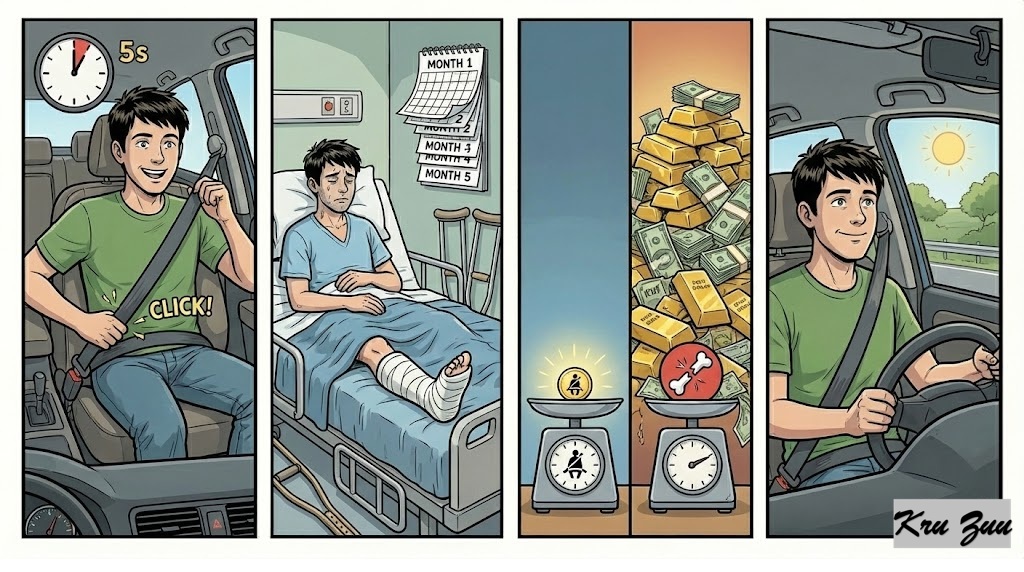
    ⚖️ The Reality: We love “Big Dramatic Changes” (Crash diets, lottery wins). But reality respects “Small Boring Actions.”

    💎 The Secret: Success is not a one-time event; it is a habit. The “Apple” is a metaphor for discipline.

    🧐 The Anatomy of the Proverb


    This is the golden rule of Preventive Care. It suggests that small, healthy habits practiced daily will prevent big problems in the future.


    Apple: Represents any healthy habit (exercise, vitamins, reading, meditation).


    Doctor: Represents the “Crisis” or the “Fixer” (Surgery, debt, failure).


    Keeps Away: To prevent someone/something from coming near. 🛡️


    📚 Vocabulary Vault


    Prevention (Noun):
    The action of stopping something from happening or arising. (Better than cure!)


    Consistency (Noun): Acting in the same way over time. (Doing it every single day). 🔄


    Maintenance (Noun): The process of keeping something in good condition.


    Compound Effect (Concept): Small actions + Time = Huge Results. 📈


    Sedentary (Adjective): Tending to spend much time seated; somewhat inactive. (The enemy of the Apple!)


    🧠 Grammar Focus


    Simple Present Tense for General Truths Proverbs almost always use the Simple Present because they are timeless facts.


    Subject: An apple


    Frequency: [a day] (Adverbial phrase)


    Verb: [keeps] (Third Person Singular – don’t forget the ‘s’!)


    Object: [the doctor]


    Direction: [away]


    Incorrect: An apple a day keep the doctor away. ❌


    Correct: An apple a day keeps the doctor away. ✅

    📜 History: Origin and Spread


    Did you know this phrase started as a rhyme?


    The Origin: It originated in Wales (Pembrokeshire) in the 1860s.

    The original phrasing was: “Eat an apple on going to bed, and you’ll keep the doctor from earning his bread.”


    The Logic: In the 19th century, food hygiene was poor. Apples were clean, full of fiber, and “cleaned” the teeth. It was a cheap way to stay alive!


    Global Cousins:


    🇹🇷 Turkish:
    “Güneş giren eve doktor girmez.” (The doctor does not enter the house where the sun enters.) — Emphasis on environment.


    🇪🇸 Spanish: “Más vale prevenir que curar.” (It is worth more to prevent than to cure.)


    🇮🇹 Italian: “Una mela al giorno toglie il medico di torno.” (An apple a day gets the doctor out of the way.) — Almost identical!

    🎯 Impact on Life: The Pros & Cons


    Is it just about fruit, or a lifestyle?


    ✅ The Pros (The Insurance):


    Control:
    It makes you feel in charge of your health/destiny.


    Efficiency: It is much cheaper to buy apples (prevention) than to pay for surgery (cure).


    Discipline: It builds a mindset that helps you in business and relationships too.


    ❌ The Cons (The Illusion):


    False Security:
    Eating an apple won’t fix a broken leg. Don’t ignore professional help when you really need it.


    Obsession: Don’t stress so much about “perfect health” that you forget to enjoy life.

    🎭 Short Story: The Old Car


    Let’s visit Penny, Fiona, and Max!


    🌟 The Setup: Penny and Max both bought cars on the same day.

    Penny the Pig loved her car.

    Every Sunday morning, she checked the oil, cleaned the tires, and washed the windows. (This was her “Apple”).

    Max the Mouse loved his car too, but he just wanted to drive fast.

    “Maintenance is boring!” he said. “I’ll fix it when it breaks.”


    The Conflict: One year later, they planned a road trip to the beach. 🏖️

    Penny’s car started smoothly: Purr… purr… purr…

    Max’s car made a scary sound: CLUNK! BANG! HISSS! Smoke came out of the engine.


    The Action: Max was stuck on the side of the road.

    “Why me?” he cried. He had to call a tow truck (The Doctor).

    It cost him all his vacation money.

    Penny drove by, waved, and enjoyed the sunset at the beach.


    The Moral: Penny paid a little bit of attention every day.

    Max paid a huge price at the end.

    Penny’s “apple a day” kept the mechanic away.

    🎓 Lesson for English Learners


    This idiom is versatile! Use it for more than just health.


    Advice on Studying 📖


    Situation:
    Your student asks how to learn 1,000 words in one night.


    You say: “You can’t cram everything. Study 5 words every morning.

    An apple a day keeps the doctor away, and daily practice keeps the failure away.”


    Advice on Relationships ❤️


    Situation:
    A friend ignores their partner for weeks, then buys a huge gift to apologize.


    You say: “Don’t just buy gifts when things are bad. Show small love every day. An apple a day keeps the doctor away.”


    💬 Your Turn


    The “Micro-Habit” Challenge 🤏


    Let’s prove the theory.


    The Goal: Choose one tiny positive thing to do every day for the next 7 days.


    Examples: Drink 1 glass of water before coffee

    Do 5 pushups

    Read 1 page

    Save 1 coin.


    The Prediction: How will you feel in a week?


    Action Step: Go eat a piece of fruit right now. Seriously. Go do it. Your body will thank you! 🍏


    Question: What is YOUR “Apple”? What is the one small thing you do every day that keeps your life running smoothly?

    By Zubeyir YURTKURAN

    https://www.facebook.com/BrainBattleground/

    https://www.facebook.com/zubeyr.yurtkuran/

    https://www.instagram.com/zubeyryurtkuran/

    https://www.youtube.com/@BrainBattleground-b3p

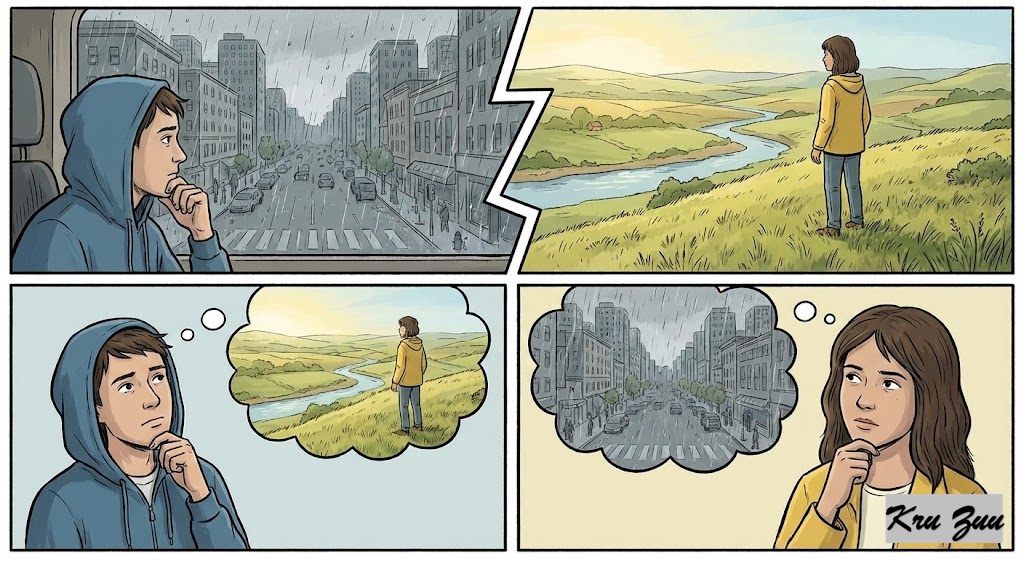
  • 🌤️ The Silver Lining Effect: Finding Light in the Dark

    🌤️ The Silver Lining Effect: Finding Light in the Dark

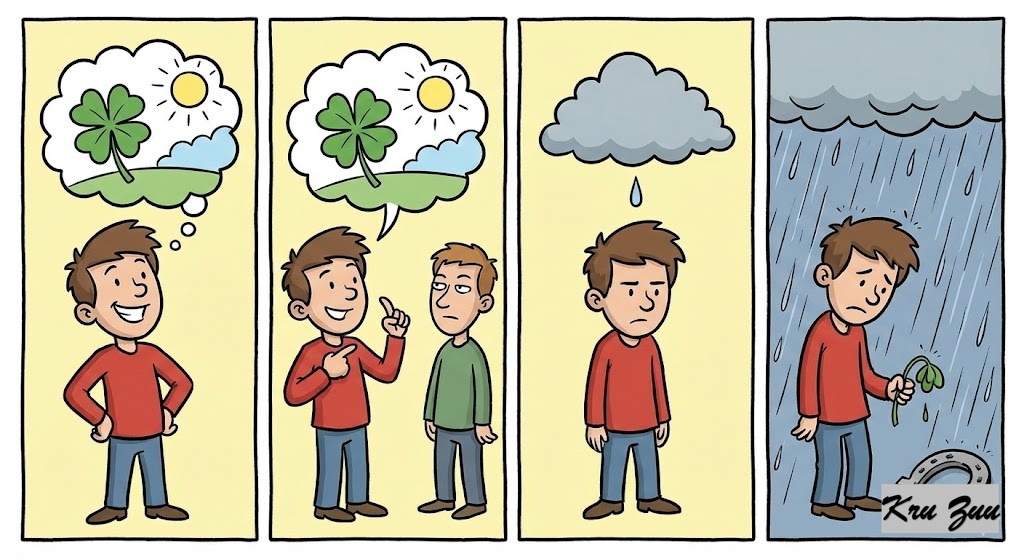
    Every cloud has a silver lining.


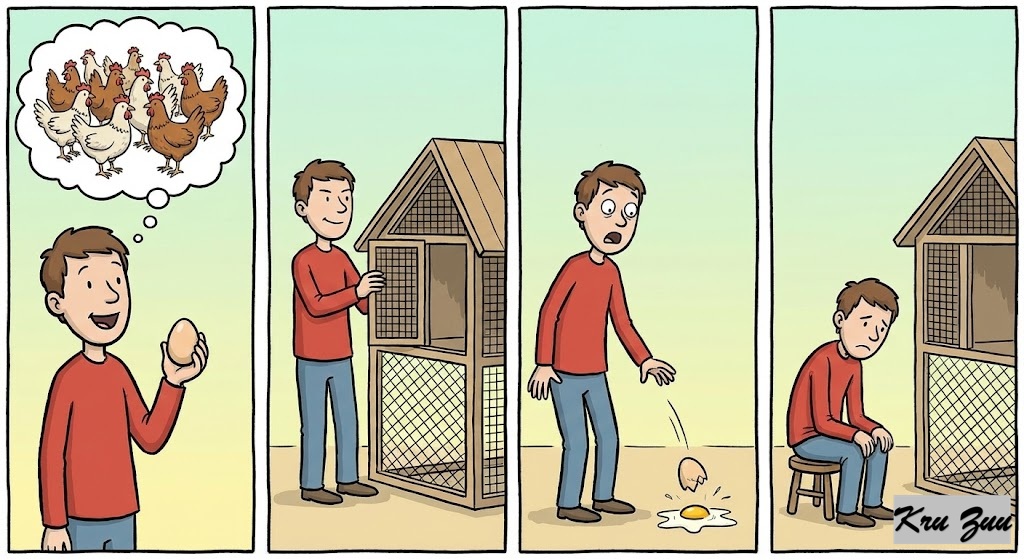
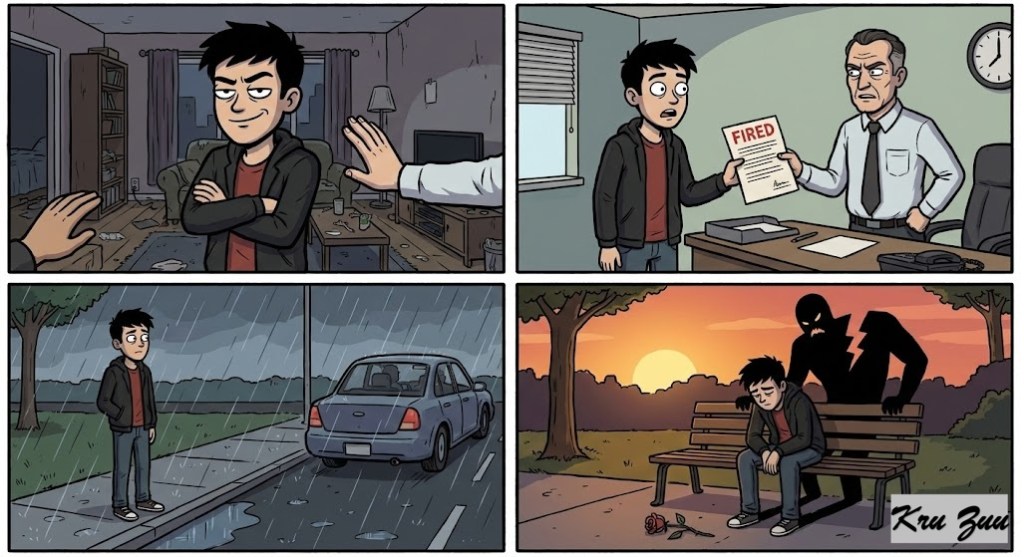
    👿 The Villain (The Pessimist): You lose your job unexpectedly.

    You panic. You spend weeks complaining, blaming your boss, and sleeping until noon.

    You tell everyone, “My life is over.”

    The Result? You miss new job openings because you are too busy being angry.

    Your friends stop calling because your negative energy drains them.

    You stare at the dark cloud so long that you get soaked by the rain. You drown in a puddle of your own making. 🌧️


    😇 The Hero (The Alchemist): You lose your job unexpectedly. It hurts, but you take a deep breath.

    You think, “I hated that commute anyway. Now I have time to take that coding course I always wanted.”

    The Result? Three months later, you launch a freelance business.

    You are making more money and working from home.

    Losing that job wasn’t a tragedy; it was the push you needed to fly.

    You didn’t just survive the storm; you used the water to grow a garden. 🌻


    ⚖️ The Reality:
    Life is not a weather report you can control.

    Storms will happen. But the sun never actually leaves; it is just temporarily hidden.

    💎 The Secret: The “bad thing” is often the transportation system for the “good thing.” Without the dark background, the stars cannot shine.

    🧐 The Anatomy of the Proverb


    This is the ultimate phrase for Optimism. It reminds us that even the worst situations (clouds) have a positive aspect or a hopeful side (the silver lining).


    Cloud: Represents trouble, sadness, or difficulty.


    Silver Lining: Represents the sun shining from behind the cloud, creating a glowing, bright edge. (Hope/Advantage).


    📚 Vocabulary Vault


    Optimist (Noun):
    A person who tends to look on the more favorable side of events. 😃


    Pessimist (Noun): A person who tends to see the worst aspect of things. ☹️


    Resilience (Bonus Word): The capacity to recover quickly from difficulties; toughness.


    Setback (Noun): A reversal or check in progress (a minor problem).


    Blessing in Disguise (Idiom): Something that seems bad at first but results in something good.


    🧠 Grammar Focus


    “Every” + Singular Noun vs. Plural Meaning This is a common trap for students! Even though “Every” talks about all the clouds, we treat it grammatically as a single unit.


    Subject: [Every cloud]


    Verb: [has] (Third Person Singular)


    Object: [a silver lining]


    Incorrect: Every clouds have a silver lining. ❌
    Incorrect: Every cloud have a silver lining. ❌
    Correct: Every cloud has a silver lining. ✅

    📜 History: Origin and Spread


    This poetic phrase wasn’t invented by a philosopher, but by a poet.


    The Origin: It comes from John Milton’s masque “Comus” (1634).

    He wrote: “Was I deceived, or did a sable cloud / Turn forth her silver lining on the night?”


    The Evolution: In the Victorian era, people shortened it to the proverb we use today to cheer each other up during hard times.


    Global Cousins:


    🇹🇷 Turkish:
    “Her şerde bir hayır vardır.” (There is good in every evil/bad thing.)


    🇪🇸 Spanish: “No hay mal que por bien no venga.” (There is no bad from which good does not come.)


    🇩🇪 German: “Auf Regen folgt Sonnenschein.” (After rain follows sunshine.)


    🇯🇵 Japanese: “Saiou ga uma.” (The story of the old man’s horse, bad luck leads to good luck.)

    🎯 Impact on Life: The Pros & Cons


    Is this toxic positivity, or a survival strategy?


    ✅ The Pros (The Shield):


    Mental Health:
    It reduces anxiety. Instead of focusing on “Why me?”, you focus on “What now?”


    Problem Solving: When you look for the silver lining, you stop freezing and start acting.


    Grit: It helps you endure pain because you believe there is a purpose to it.


    ❌ The Cons (The Trap):


    Invalidation:
    Telling someone who just lost a loved one “Every cloud has a silver lining” is rude. Sometimes, people just need to be sad.


    Denial: If you only look at the bright side, you might ignore a serious problem that needs fixing.

    🎭 Short Story: The Ruined Picnic


    Let’s visit our trio: Penny, Fiona, and Max.


    🌟 The Setup: Penny the Pig had organized the “Perfect Picnic.” She had sandwiches, iced tea, and a beautiful blanket.

    Fiona the Fox and Max the Mouse were excited. “It’s going to be a beautiful day!” Penny(PIG) squealed.


    The Conflict: As soon as they sat down… KABOOM! Thunder crashed. The sky turned black, and rain poured down instantly.

    “My sandwiches!” cried Penny. “My fur!” cried Fiona.

    The picnic was ruined. They grabbed the wet food and ran into a nearby dark cave for shelter. ⛈️


    The Action: Penny was crying. “This is a disaster.” But Max, being small and curious, saw something glowing at the back of the cave.

    “Hey guys, look at this!” he squeaked. They walked deeper into the cave.

    The walls were covered in glow-worms that looked like a magical starry night sky. It was breathtakingly beautiful. ✨


    The Climax: They sat on the dry rocks, ate their slightly soggy sandwiches, and watched the magical light show of the glow-worms.

    They told ghost stories and laughed louder than they would have outside.


    The Moral: If it hadn’t rained, they never would have found the magical cave.

    The storm (the cloud) led them to the most beautiful memory of the summer (the silver lining).

    🎓 Lesson for English Learners


    How to use this phrase naturally.


    Consoling a Friend (Professional Failure) 💼


    Situation:
    Your friend didn’t get the promotion they wanted.


    You say: “I know it hurts, but maybe every cloud has a silver lining. This might be the sign you needed to apply for that better company in the city.”


    Reframing a Bad Day 🚌


    Situation:
    You missed your bus and had to walk.


    You say: “Well, I missed the bus, but every cloud has a silver lining; at least I got my 10,000 steps in for the day!”


    Vocabulary Expansion 📚


    To Look on the Bright Side:
    To find the good in a bad situation.


    To Make Lemonade out of Lemons: To turn a difficulty into an opportunity.


    Weather the Storm:
    To endure a difficult situation until it improves.


    💬 Your Turn


    The “Hidden Gem” Challenge 💎


    Let’s practice gratitude.


    The Cloud:
    Think of a time something “bad” happened to you (a breakup, a firing, a missed flight).


    The Silver Lining: What good thing happened because of that bad event? Did you meet someone new? Did you learn a lesson?


    Action Step:
    Next time you complain today (about the traffic, the weather, or work), immediately add “…but the silver lining is…” and finish the sentence.


    Question: What is the biggest “Blessing in Disguise” you have ever experienced? Tell us your story in the comments! 👇

    By Zubeyir YURTKURAN

    https://www.facebook.com/BrainBattleground/

    https://www.facebook.com/zubeyr.yurtkuran/

    https://www.instagram.com/zubeyryurtkuran/
    https://www.youtube.com/@BrainBattleground-b3p

  • 🔄 The Golden Rule: The Boomerang of Life

    🔄 The Golden Rule: The Boomerang of Life

    Treat others how you want to be treated.


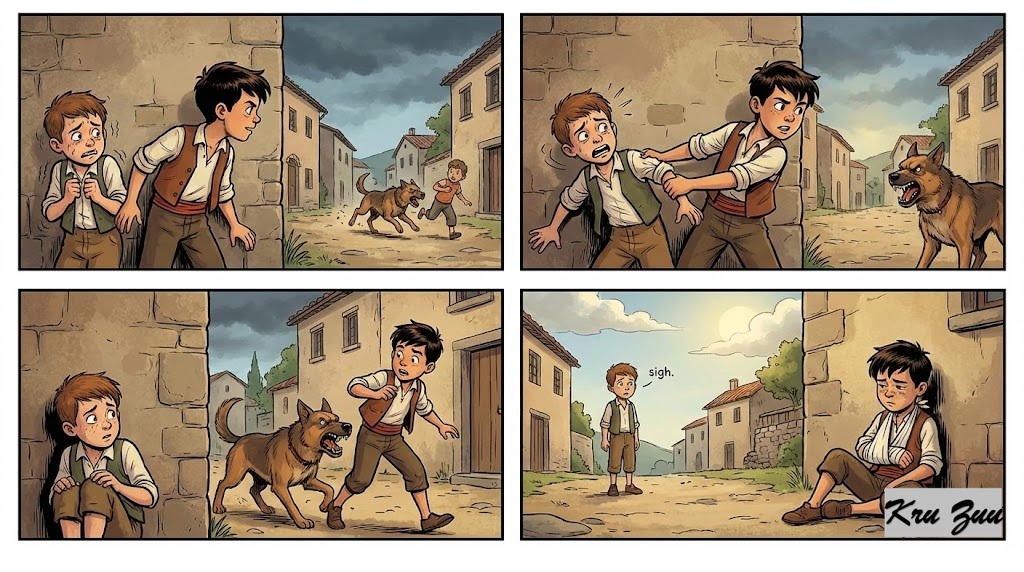
    👿 The Villain:
    You are having a bad day. You yell at the waiter because your coffee is cold.

    You push past people on the bus.

    You ignore your friend’s text.

    Result? The world feels angry. People are rude back to you. You feel like a victim, but actually, you started the fire. 🔥


    😇 The Hero: You smile at the stranger on the street.

    You hold the door open for someone carrying heavy boxes.

    You listen when your friend is sad.

    Result? Suddenly, people smile back. When you drop your books, someone rushes to help you pick them up. The world feels warm. ☀️


    📉 The Reality: Newton’s Third Law of Physics says: “For every action, there is an equal and opposite reaction.” This applies to humans too!

    💎 The Secret: Life is an echo. What you send out, comes back. If you want respect, you must give it first.


    In this post, we are decoding the secret to being popular, respected, and happy. Let’s look at the Boomerang Effect! 🪃

    🧐 The Anatomy of the Proverb


    Let’s break down the grammar to understand the command.


    📚 Vocabulary Vault


    Treat (Verb): To behave towards someone or deal with someone in a certain way.


    Example: “Please treat this glass carefully, it is fragile!” 🍷


    Others (Pronoun): People who are not you. Everyone else. 👥


    The Golden Rule (Idiom): A universal moral principle found in almost every culture.


    🧠 Grammar Focus


    The Imperative Mood (The Bossy Verb):
    This sentence starts with a verb (Treat). There is no “You.”


    Normal: You should treat others…


    Imperative:Treat others… (It is a direct instruction or strong advice).


    The “How” Clause: “How you want to be treated” acts as an adverb describing the verb Treat.


    Do it how? Like you want it done to you.

    📜 History: Ancient Wisdom


    Is this just a modern polite phrase? No! It is thousands of years old.


    The Origin:
    This is arguably the oldest ethical rule in human history. It appears in Ancient Egypt (The Tale of the Eloquent Peasant), in Confucianism, and in the Bible.


    Global Cousins:


    🇹🇷 Turkish: “
    Ne ekersen, onu biçersin.” (You reap what you sow.)

    🇹🇷 Turkish:“İğneyi kendine, çuvaldızı başkasına batır.” (Prick yourself with a needle before you prick others with a packing needle.) 🪡


    🇨🇳 Chinese: “Do not do to others what you do not want done to yourself.” (Confucius).


    🇮🇳 Hindi: “Karma.” (What goes around, comes around).


    The Lesson: You are the architect of your own social life.

    🎯 Impact on Life: The Pros & Cons


    Why should you be nice to mean people?


    ✅ The Pros (The Magnet)


    Likability:
    People naturally gravitate towards kind people.


    Peace: You have less drama and fewer fights in your life.


    Self-Respect: Even if they are rude, you know you kept your dignity.


    ❌ The Cons (The Doormat)


    Expectations:
    Just because you are nice, doesn’t mean everyone will be nice back instantly. Don’t do it for a reward; do it because it’s right.


    Boundaries: Treating people well does not mean letting them use you. You can be kind but still say “No.” 🛑

    🎭 Short Story: The Echo Cave


    Let’s check back in with our farm friends!


    🌟 Character Introduction


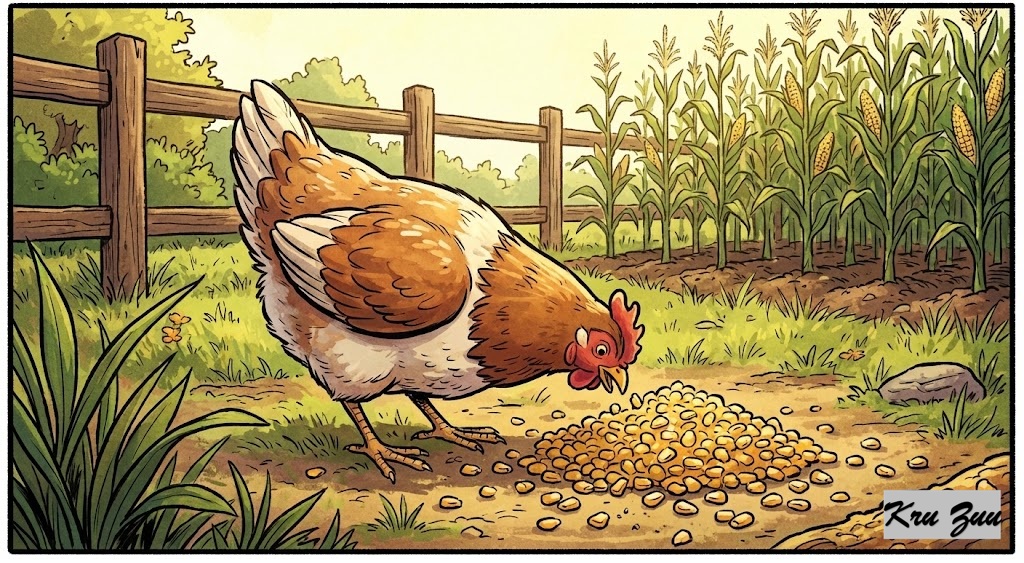
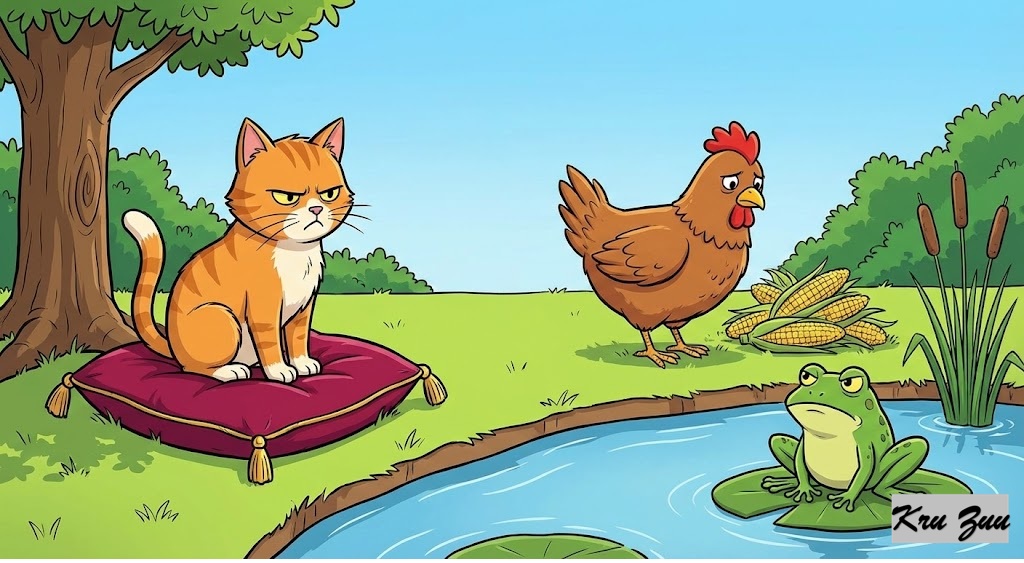
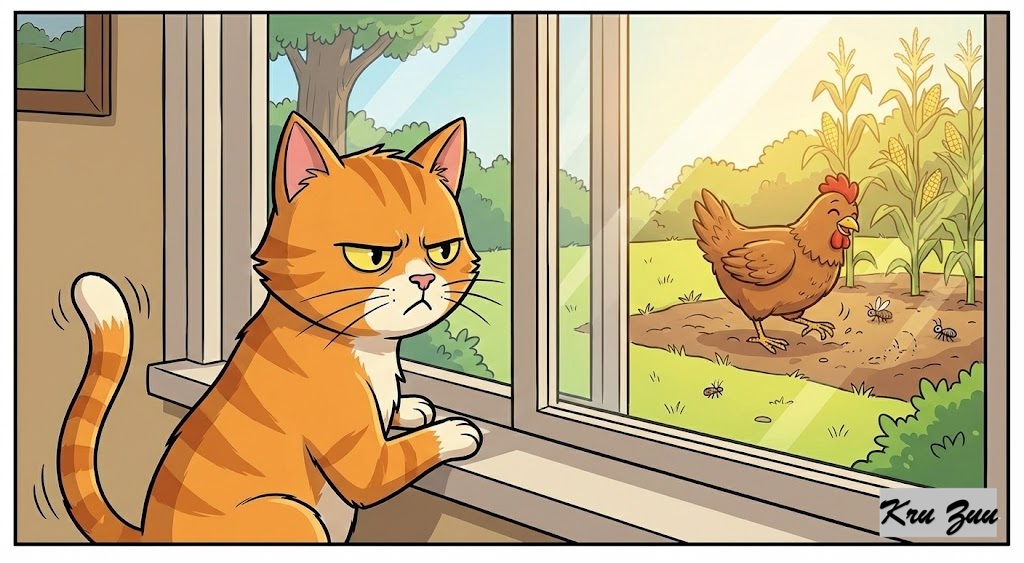
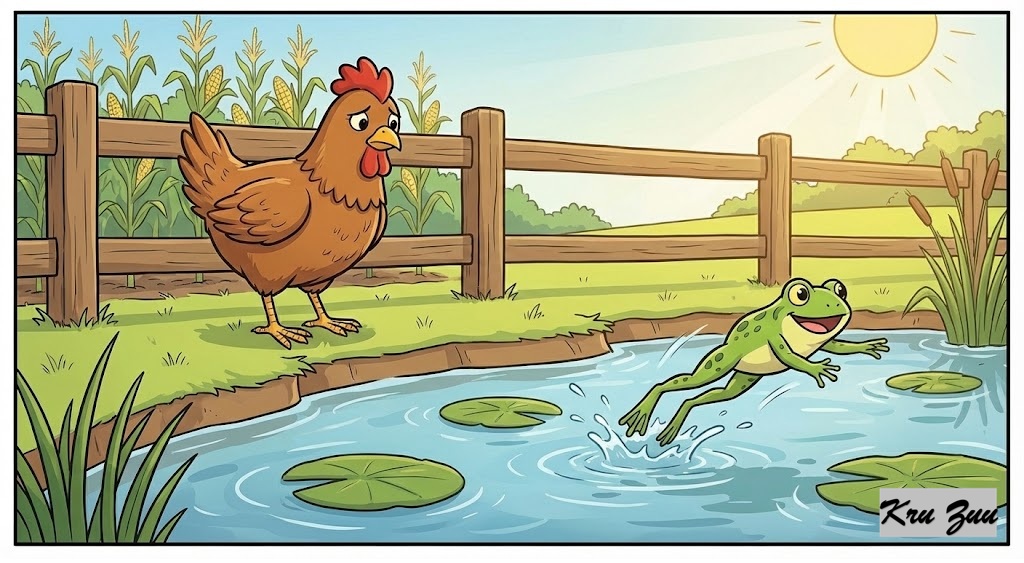
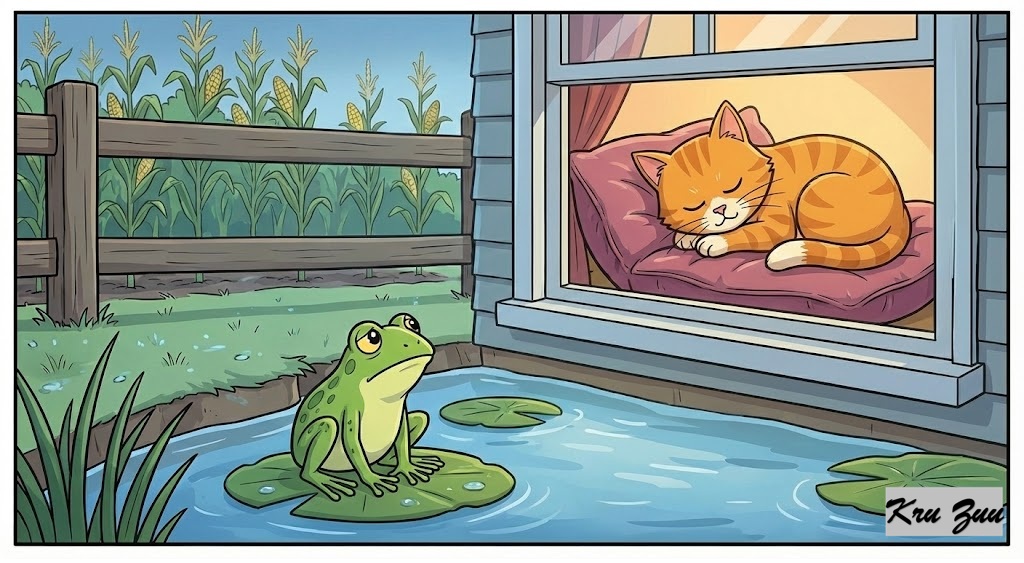
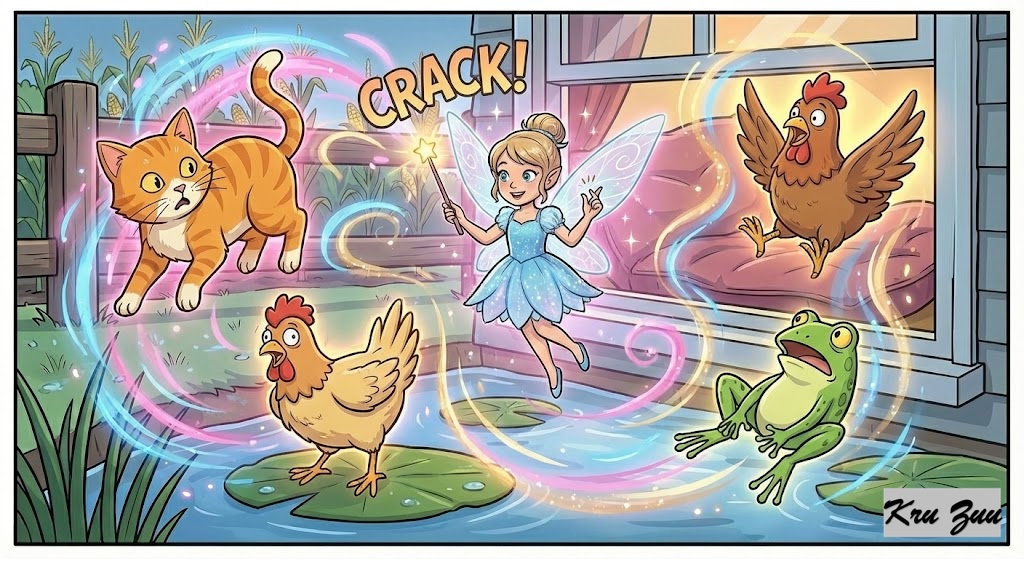
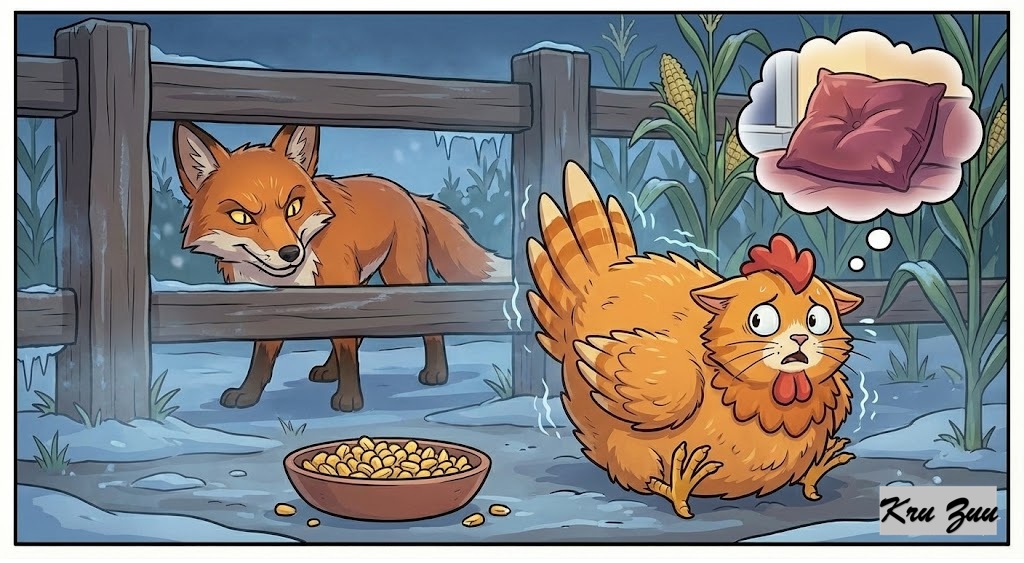
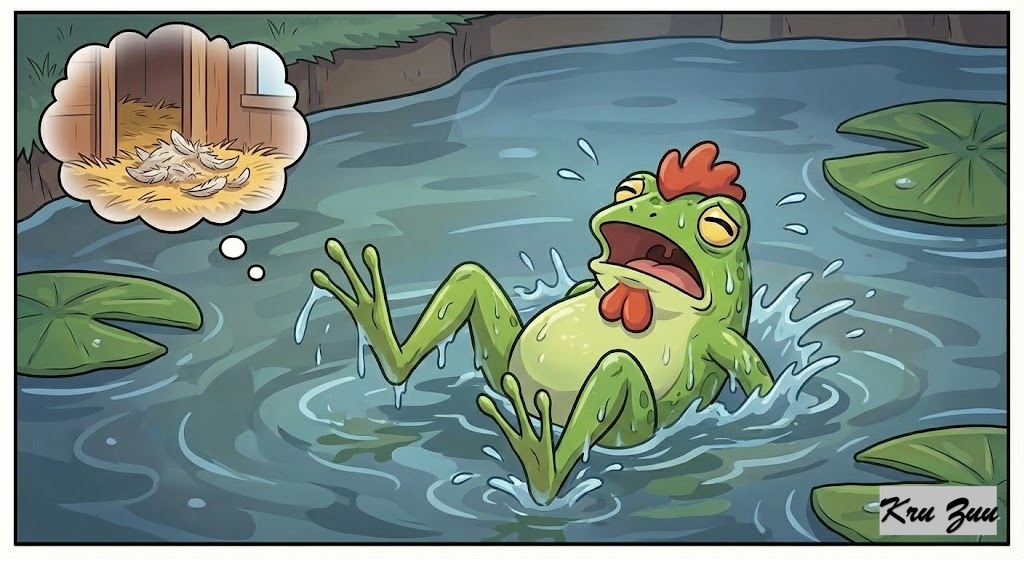
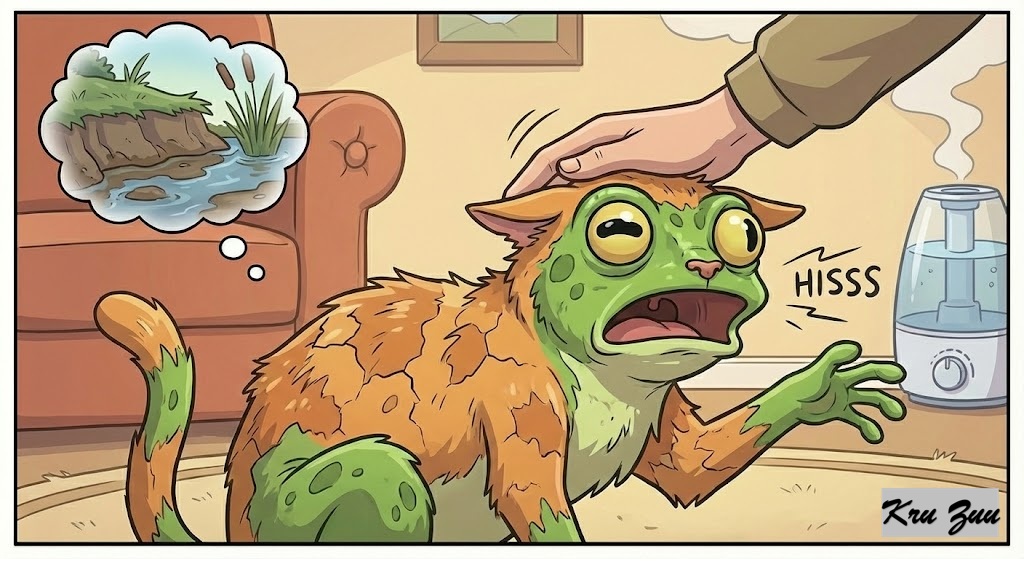
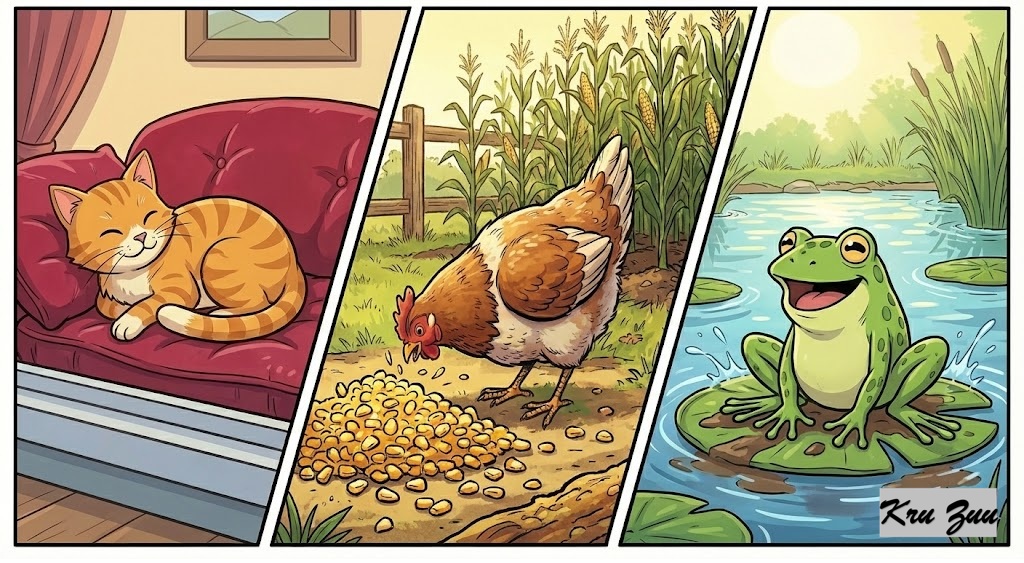
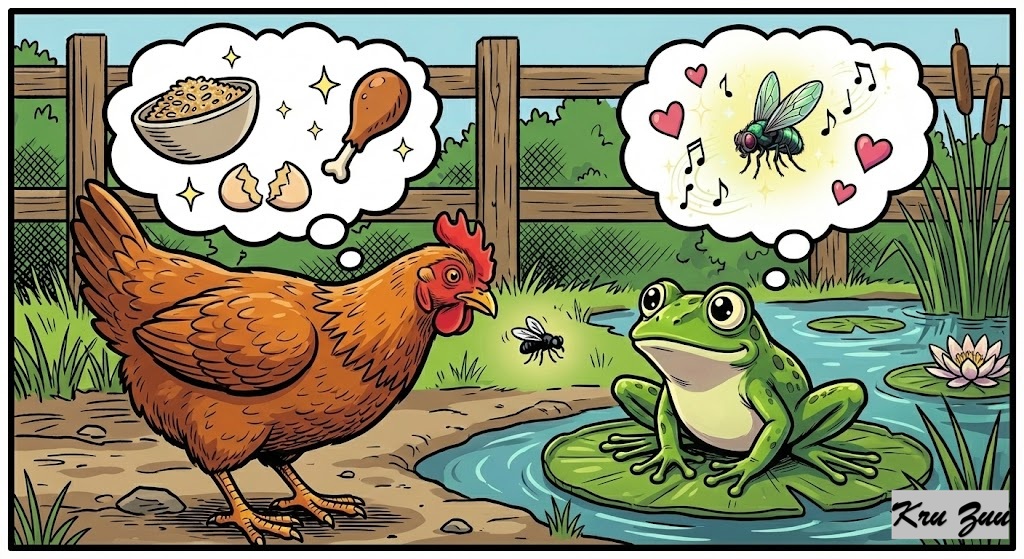
    Percy the Chicken:
    Impatient, loud, thinks he is the boss. 🐔


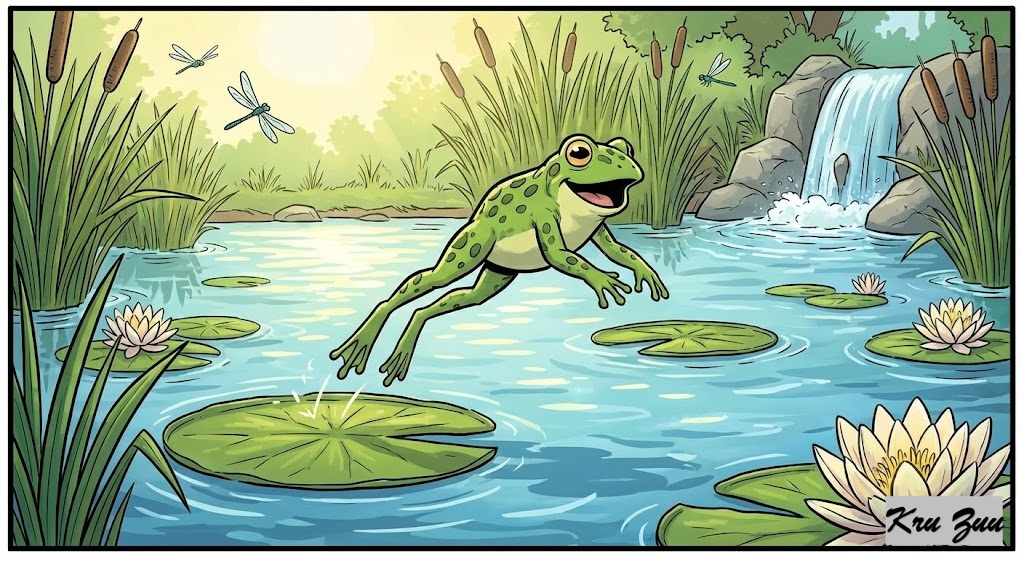
    Fred the Frog: Chill, observant, polite. 🐸


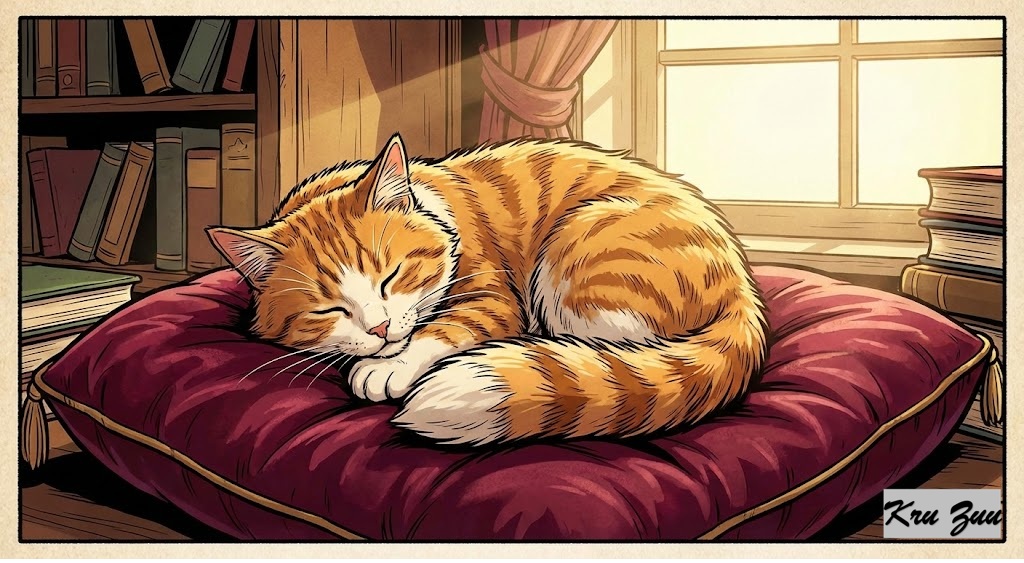
    Luna the Cat: The wise judge. 🐱


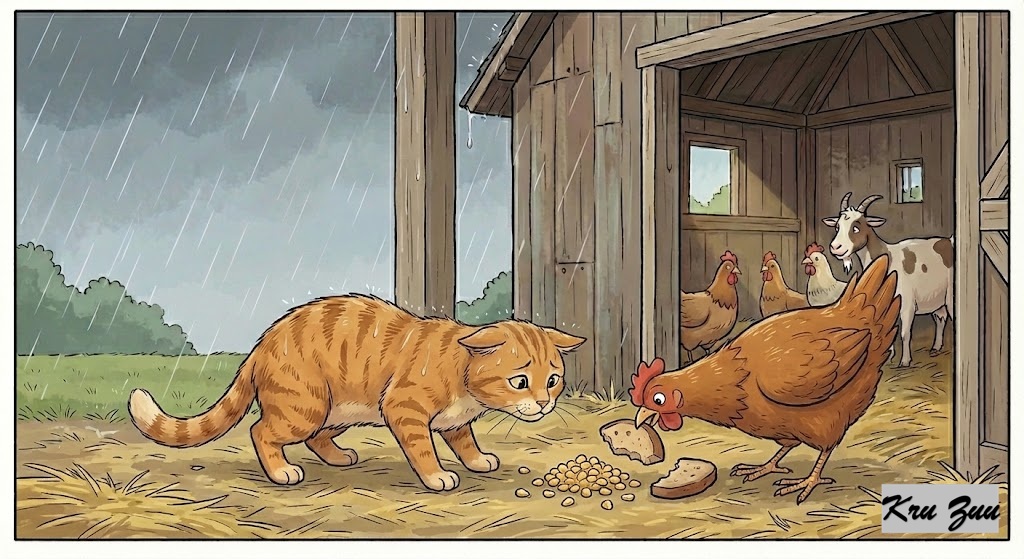
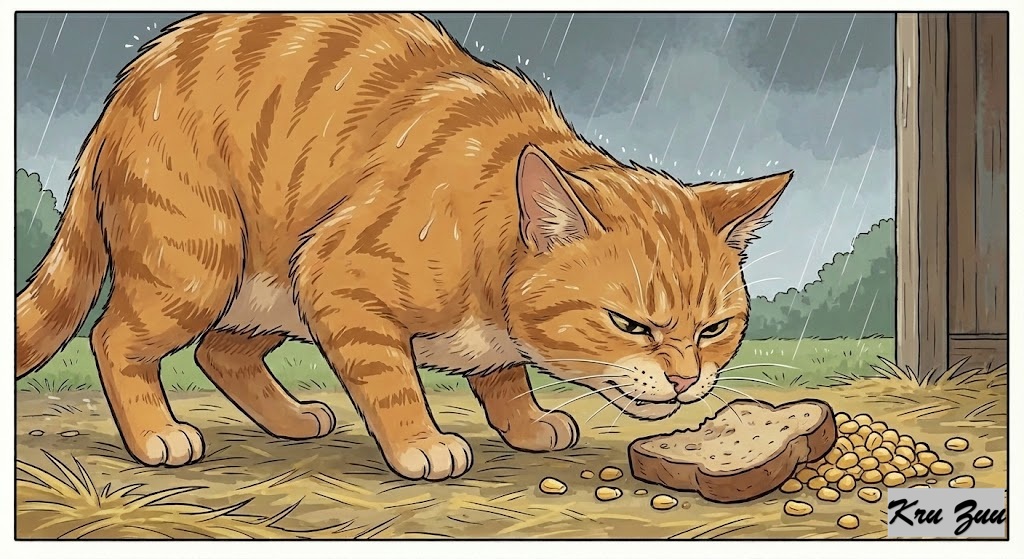
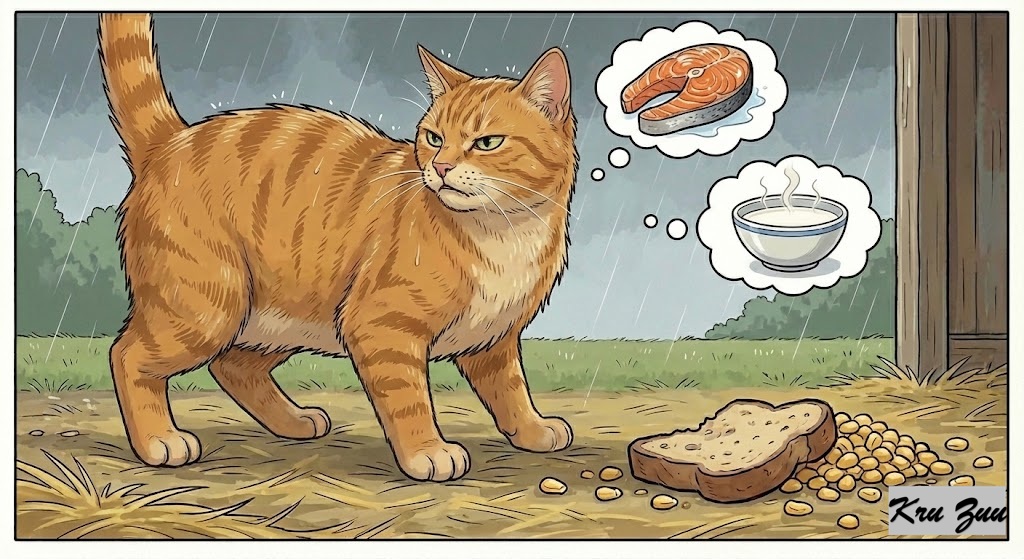
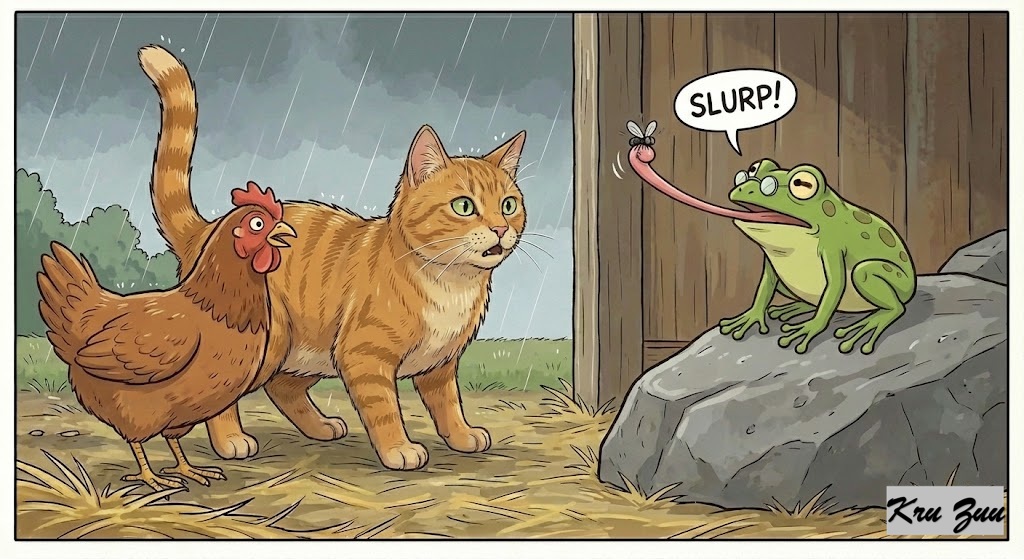
    The Setup: Percy was in a bad mood. He walked to the edge of the farm, near the Big Cave. “HEY! YOU ARE STUPID!” Percy shouted into the cave. The cave shouted back: “YOU ARE STUPID… stupid… stupid…” Percy got angry. “NO, YOU ARE UGLY!” The cave echoed: “YOU ARE UGLY… ugly… ugly…”


    The Conflict: Percy ran to Luna the Cat, feathers puffing up. “Luna! There is a monster in the cave! It called me stupid and ugly! We must attack it!” ⚔️


    The Solution: Luna smiled slowly. “Percy, go back. But this time, say something nice.”

    Percy was confused, but he went back. “HELLO! YOU ARE AWESOME!” Percy shouted. The cave replied: “YOU ARE AWESOME… awesome… awesome…” ✨


    The Moral: Fred hopped by and laughed. “The cave is like people, Percy. If you shout hate, you hear hate. If you shout love, you hear love.”

    🎓 Lesson for English Learners


    How to use “The Golden Rule” in your English class?


    Empathy Language (Walk in their shoes) 👞 Before you judge a classmate, ask yourself:


    “If I made a pronunciation mistake, would I want them to laugh?”


    Answer: No. So, I will not laugh at them.


    Polite Requests vs. Demands 🗣️


    Rude (Don’t treat people like this):
    “Give me a pen.”


    Golden Rule (Do this): “Could I borrow a pen, please?” (Because you like it when people say please to you!)


    Vocabulary Expansion


    Reciprocity:
    (Noun) An exchange for mutual benefit. “Friendship is based on reciprocity.”


    Compassion: (Noun) Sympathy and concern for others.


    Karma: (Noun) Destiny or fate, following as effect from cause.


    💬 Your Turn


    The 24-Hour Challenge ⏳


    For the next 24 hours, I want you to treat everyone like a VIP (Very Important Person).


    Say “Good Morning” to the security guard.


    Smile at the person you don’t talk to often.


    Help someone before they ask.


    Question: How did people react? Did their energy change? Tell me in the comments below! 👇

    By Zubeyir YURTKURAN

    https://www.facebook.com/BrainBattleground/

    https://www.facebook.com/zubeyr.yurtkuran/

    https://www.instagram.com/zubeyryurtkuran/
    https://www.youtube.com/@BrainBattleground-b3p

  • 🤝 The Loyalty Test: Who Stays When the Storm Comes?

    🤝 The Loyalty Test: Who Stays When the Storm Comes?

    A friend in need is a friend indeed.


    ☀️ The Fair-Weather Friend:

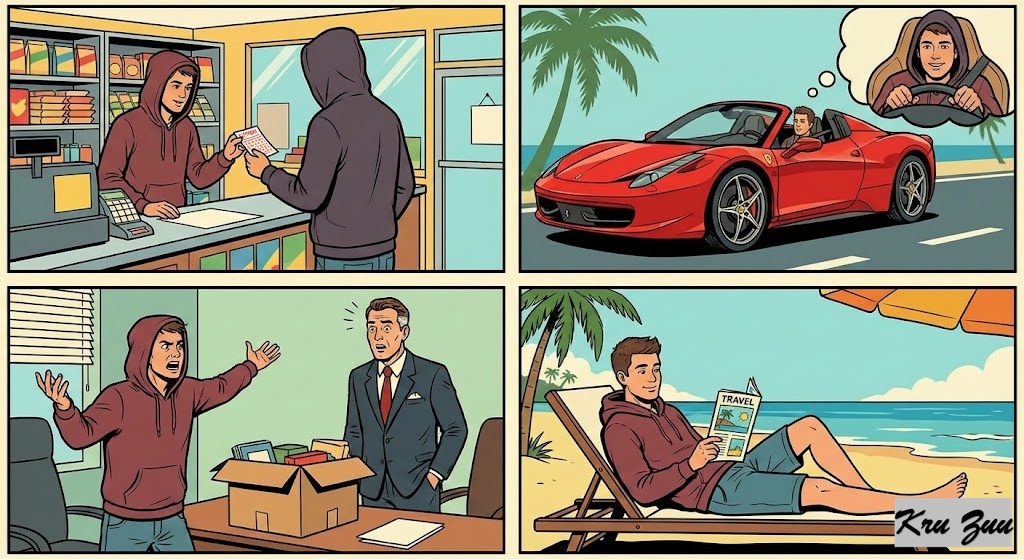
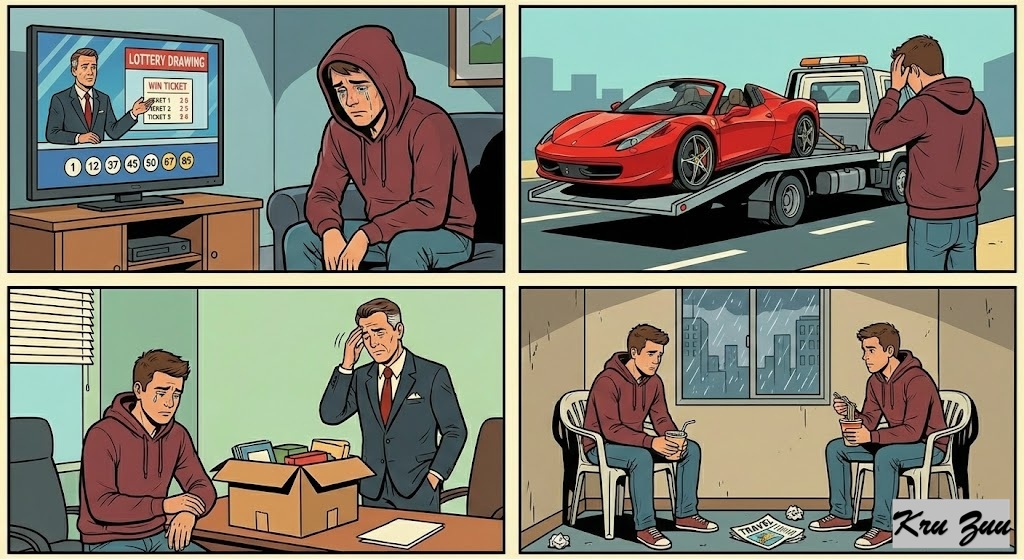
    You win the lottery.

    You throw a huge party. Hundreds of people show up.

    They laugh at your jokes, eat your pizza, and call you “bestie.”

    But the next day, you lose your wallet and need a ride home. Suddenly, their phones are “off.” You are alone.

    🏃💨 ⛈️The True Companion:

    You are sick with the flu.

    You have no money and you look terrible.

    This person doesn’t run away. They bring you soup.

    They sit in the silence with you. They don’t care about your status; they care about you.

    ❤️ 📉 The Reality: Everyone loves a winner. But only real ones love a loser.

    💎 The Secret: Hard times are not a curse; they are a filter to reveal true diamonds.


    In this post, we are decoding the ultimate friendship test. Let’s separate the fakes from the real deals! 🕵️‍♂️

    🧐 The Anatomy of the Proverb


    Let’s break down the rhythm and rhyme of this famous saying.


    📚 Vocabulary Vault


    In Need (Phrase):
    This means being in trouble, facing a difficulty, or requiring help. (e.g., being broke, sad, or in danger). 🆘


    Indeed (Adverb): Truly, undeniably, or “in reality.” It emphasizes that something is 100% true. ✅


    Friend (Noun): Not just someone you know (an acquaintance), but someone you share a bond with.


    🧠 Grammar Focus


    This proverb uses Rhyme to make it sticky!


    Structure: A friend [who is] in need / is a friend indeed.


    The Ellipsis: In English, we often delete words to make sentences faster. The full grammatical sentence would be: “A friend who helps you when you are in need, is a friend indeed.”


    The Double Meaning:
    A friend who helps me when I am in need is a true friend. (Most common meaning).


    A friend who loves me even when they are in need is a true friend.

    📜 History: Pirates & Philosophers


    Did this start in a movie? No, it’s ancient!


    The Origin:
    This concept goes back to 3rd Century BC Greece! The playwright Euripides said something very similar. It appeared in English as early as the year 1450.


    Global Cousins: Every culture knows this truth!


    🇹🇷 Turkish: “Dost kara günde belli olur.” (The friend becomes clear on the black day.) 🌑


    🇯🇵 Japanese: “Masaka no toki no tomo koso shin no tomo.” (A friend in a crisis is a true friend.)


    🇪🇸 Spanish: “En el peligro se conoce al amigo.” (In danger, the friend is known.)


    The Lesson: A shadow stays with you in the sun, but leaves you in the dark. A true friend stays in the dark.

    🎯 Impact on Life: The Pros & Cons


    Should you test your friends?


    ✅ The Pros (The Safety Net)


    Trust:
    You know exactly who has your back.


    Quality over Quantity: It is better to have 2 real friends than 100 fake ones.


    Mental Health: Knowing you are not alone reduces anxiety.


    ❌ The Cons (The User)


    Don’t Be “Needy”:
    Just because they are a true friend doesn’t mean you should complain 24/7.


    Reciprocity: Friendship is a two way street. If you are always the one “in need,” are you being a good friend to them? 🤔

    🎭 Short Story: The Stormy Night


    Let’s check back in with our farm friends!


    🌟 Character Introduction


    Percy the Chicken:
    Fun, loud, loves parties. 🐔


    Fred the Frog: Quiet, loyal, small but brave. 🐸


    Luna the Cat: The wise narrator. 🐱


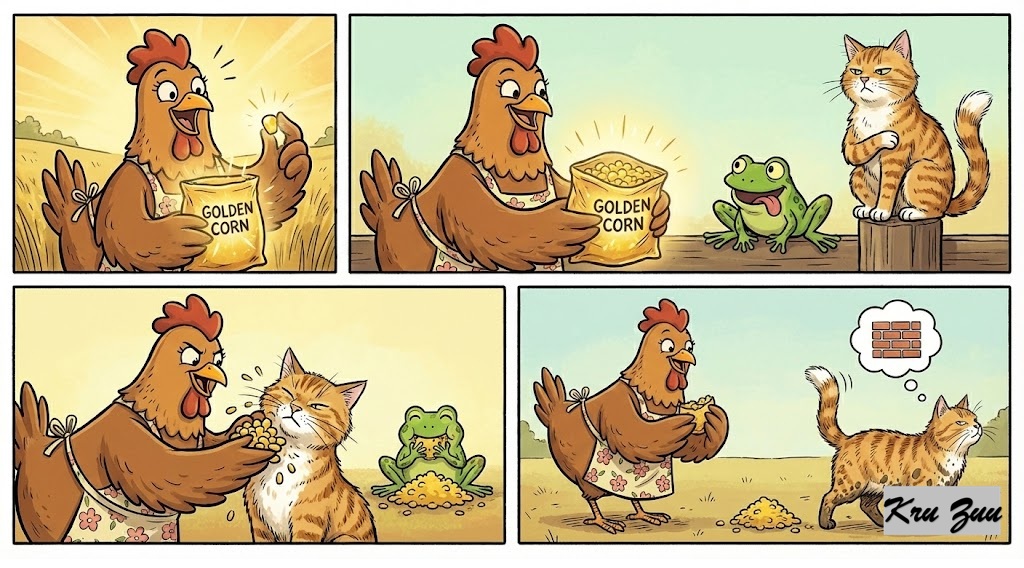
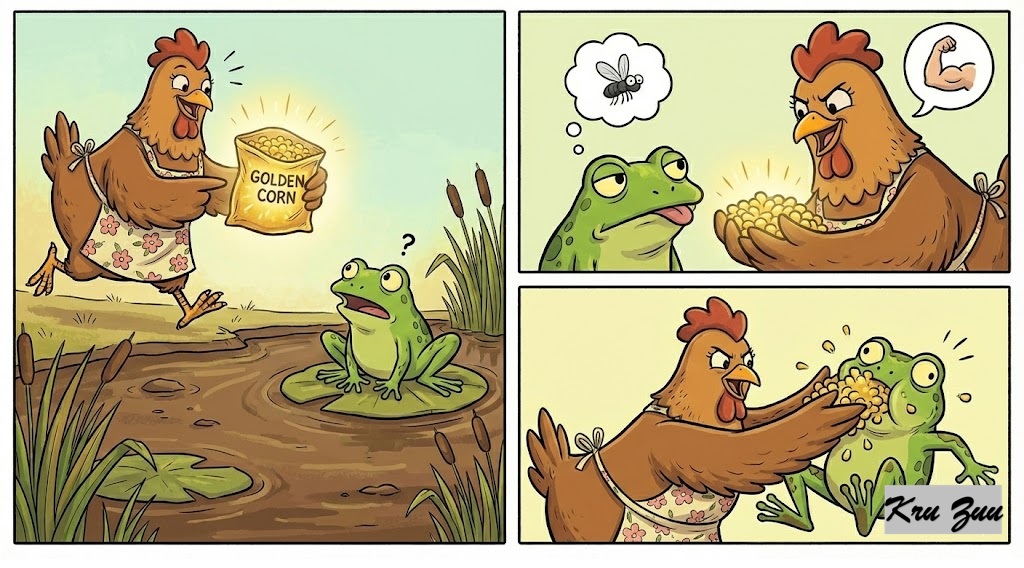
    It was a beautiful, sunny Tuesday. Percy found a huge bag of corn seeds.

    The Good Times: “Party at my place!” clucked Percy.

    The Swans came. The Ducks came. Everyone was eating Percy’s corn.

    “Percy, you are the King of the Coop!” they shouted. Percy felt like a celebrity.

    Fred sat in the corner, smiling but quiet.


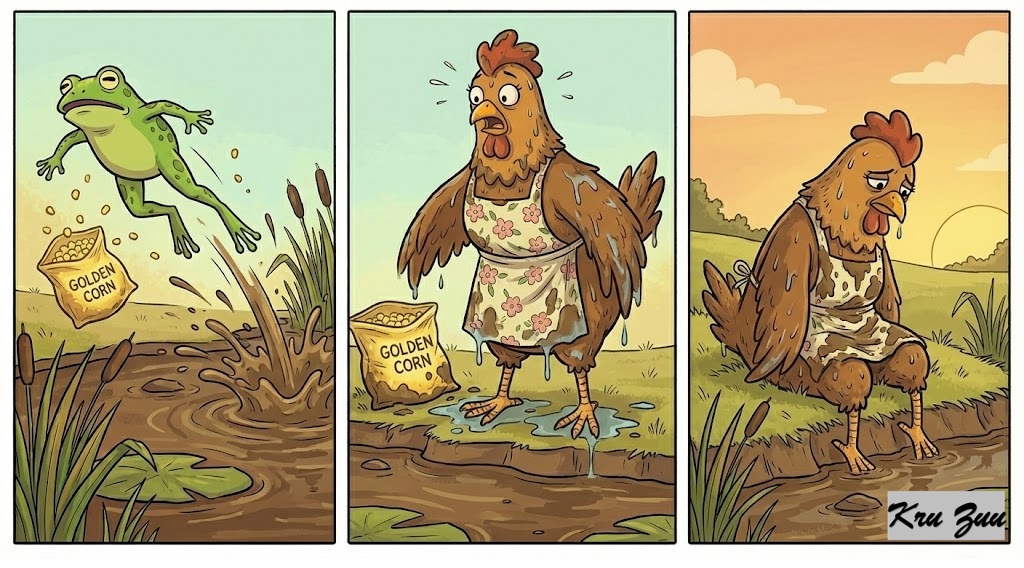
    The Bad Times: Suddenly, the sky turned black. Thunder crashed! ⚡

    A fox was spotted near the fence. “Run!” screamed the Swans. They flew away instantly. “Save yourselves!” quacked the Ducks. They vanished into the pond.


    Percy was stuck. His foot was caught in a vine. He was alone. The corn was gone. The “friends” were gone. The fox was coming.

    The Rescue: Suddenly, a small green hand tugged at the vine. It was Fred. Fred wasn’t strong, but he didn’t leave.

    He chewed the vine. He pulled. He croaked loudly to distract the fox. Snap! The vine broke. Percy and Fred hid in the mud until the fox left.


    Luna the Cat watched from the roof: “The Swans loved the corn. Fred loved the Chicken. The Swans were friends in greed. Fred was a friend in need.”

    🎓 Lesson for English Learners


    How does this apply to your language journey?


    The Study Buddy 📖


    Fair-weather:
    A partner who only wants to copy your homework.


    Indeed: A partner who helps you practice speaking even when you are tired, or corrects your mistakes gently.


    Action: Find a partner who pushes you to be better, not just one who makes things easy.


    The Mistake Mindset ❌


    When you make a mistake (you are “in need” of correction), a fake friend laughs at you.


    A real friend laughs with you and helps you fix it.


    Vocabulary Expansion 🗣️


    Don’t just say “Help me.” Use phrases like:


    “I’m in a bit of a jam.” (Slang for trouble).


    “Can you do me a solid?” (Slang for a favor).


    “I’ve got your back.” (I support you).


    💬 Your Turn


    Who is your “Fred”?


    Think about the last time you had a problem (a flat tire, a bad grade, a breakup). Who was the first person you called? 📞


    Tag that person in the comments or send this post to them to say “Thank you.” 👇

    By Zubeyir YURTKURAN

    https://www.facebook.com/BrainBattleground/

    https://www.facebook.com/zubeyr.yurtkuran/

    https://www.instagram.com/zubeyryurtkuran/
  • 🌍 The Chameleon Code: How to Fit In Anywhere

    🌍 The Chameleon Code: How to Fit In Anywhere

    When in Rome, do as the Romans do.


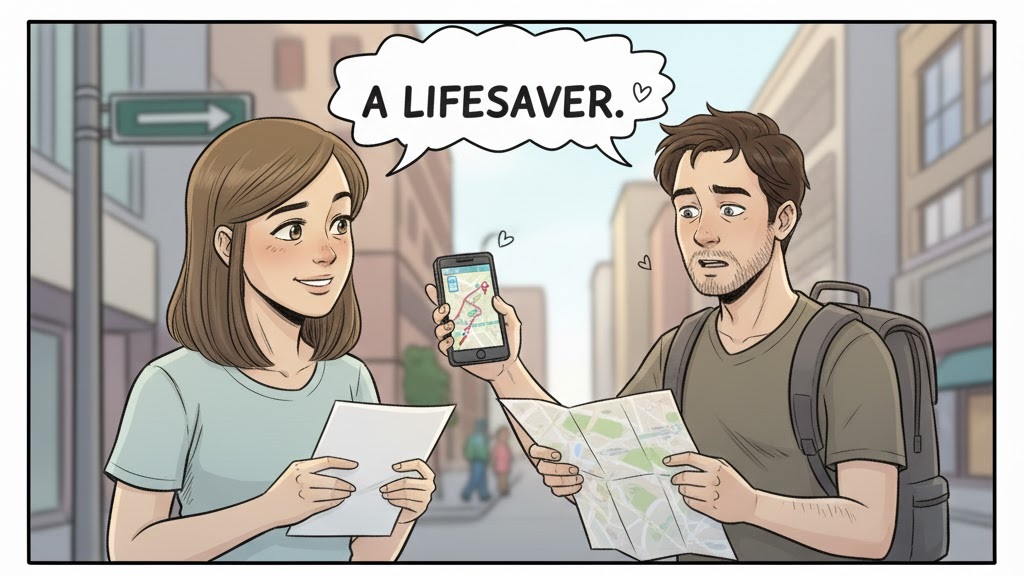
    📸 The Tourist:
    You travel to Japan. You wear your shoes inside the house. You talk loudly on the train. You try to tip the waiter (which is rude there!). Everyone stares at you. You feel awkward.

    😳 ninja The Traveler: You arrive in Japan. You take your shoes off at the door. You whisper on the train. You bow respectfully instead of tipping. You make local friends instantly. You belong. 🍣

    📉 The Reality: Rules change depending on where you are. 🚀

    The Secret: Success isn’t about being right; it’s about being adaptable. In this post, we are mastering the art of “Cultural Intelligence.” Let’s pack our bags! 🧳

    🧐 The Anatomy of the Proverb


    Let’s look under the hood of this famous idiom.


    📚 Vocabulary Vault


    Rome (Proper Noun):
    In this idiom, “Rome” is a metaphor. It represents any new place, situation, or environment you are in. (e.g., A new office, a friend’s house, a different country). 🏛️


    Do (Verb):
    To act, behave, or follow customs. 🎭


    Romans (Plural Noun): These represent the locals or the people who belong to that group. 👥


    🧠 Grammar Focus


    This is an Imperative Sentence (A command or advice).


    Structure: When [Condition/Place], [Command].


    Formula: [When you are in a specific context] + [Copy the behavior of the people there].


    Short Version: Native speakers often just say: “Well, when in Rome…” (and leave the rest silent!).

    📜 History: Saints & Emperors


    Did this actually happen in Rome? Yes!


    The Legend: In the year 387 AD, St. Augustine arrived in Milan. He noticed the church customs there were different from his home in Rome. He asked St. Ambrose what to do.


    The Advice: St. Ambrose famously said: “If you are at Rome, live in the Roman style; if you are elsewhere, live as they live elsewhere.”


    Global Cousins:


    🇹🇷 Turkish:
    “Gittiğin yer kör ise, bir gözünü de sen kapat.” (If the place you go to is blind, close one of your eyes too!) 😉


    🇪🇸 Spanish: “Donde fueres, haz lo que vieres.” (Wherever you go, do what you see.)


    🇯🇵 Japanese: “Go ni itte wa, go ni shitagae.” (Enter the village, obey the village.)


    The Lesson: It is not about losing your identity. It is about showing respect and harmony.

    🎯 Impact on Life: The Pros & Cons


    Should you always copy others?


    ✅ The Pros ( The Diplomat)


    Respect:
    People appreciate when you try to understand their culture.


    Safety: Blending in stops you from looking like a clueless tourist (and a target for pickpockets!).


    Connection: You make friends faster when you break down barriers.


    ❌ The Cons (The Peer Pressure)


    Losing Yourself:
    Don’t do things that violate your core morals just to fit in.


    The “Copycat” Risk: If “the Romans” are jumping off a bridge, you shouldn’t do it! 🚫

    🎭 Short Story: The Dinner Party


    Let’s see how our farm friends handle a fancy dinner!


    🌟 Character Introduction


    Percy the Chicken:
    Stubborn and stuck in his ways. 🐔


    Fred the Frog: Observant and flexible. 🐸


    The Swans: The fancy hosts of the dinner party. 🦢


    The animals were invited to a formal dinner at the Swan Lake.

    The Custom: Swans eat gracefully with their heads high, and they never make loud noises while chewing.


    Percy: Didn’t care. Percy sat at the table. He pecked at the food rapidly peck, peck, peck!

    He scratched the table with his feet (like a chicken does).

    He clucked loudly with his mouth full.

    The Swans looked at him in horror. “How rude,” they whispered. Percy was not invited back. 🚫


    Fred: Watched the Swans. Fred was a frog.

    He usually catches flies with his tongue. But he looked around.

    He saw the Swans eating soup slowly. Fred didn’t use his tongue. He used a spoon.

    He sat up straight. He mimicked their politeness. The Swans smiled. “What a charming gentleman,” they said. Fred was offered dessert. 🍰


    Luna the Cat watched from a tree: “Percy acted like a chicken in a swan’s house. Fred acted like a swan. Fred did as the Romans do.”

    🎓 Lesson for English Learners


    How can you use this strategy to master English?

    Don’t just translate your language into English. Mimic the culture.


    The Greeting Protocol 👋


    Your Home:
    Maybe you kiss on the cheek or bow.


    In Rome (USA/UK): A firm handshake or a simple “Hey.”


    Action: Watch movies. How do friends say hello? Copy that.


    The “Politeness” Filter ☕


    Direct Translation: “Give me coffee.” (Grammatically correct, but rude).


    The Roman Way: “Could I have a coffee, please?”


    Action: Learn the “softener” words (Could, Would, May).


    The Slang Squad 🗣️


    If you are in a business meeting, speak formally.


    If you are gaming on Discord, don’t say “How do you do?” Say “What’s up?”


    Action: Match your vocabulary to your environment.


    💬 Your Turn


    Have you ever experienced Culture Shock? 🤯


    Did you try food that was strange to you? 🦑


    Did you make a mistake in a new country? 🌍


    Do you act differently at school vs. at home with family?


    Tell us your story in the comments! 👇

    By Zubeyir YURTKURAN

    https://www.facebook.com/BrainBattleground/

    https://www.facebook.com/zubeyr.yurtkuran/

    https://www.instagram.com/zubeyryurtkuran/
  • ⚡ The Efficiency Hack: Do Less, Get More

    ⚡ The Efficiency Hack: Do Less, Get More

    Kill two birds with one stone.


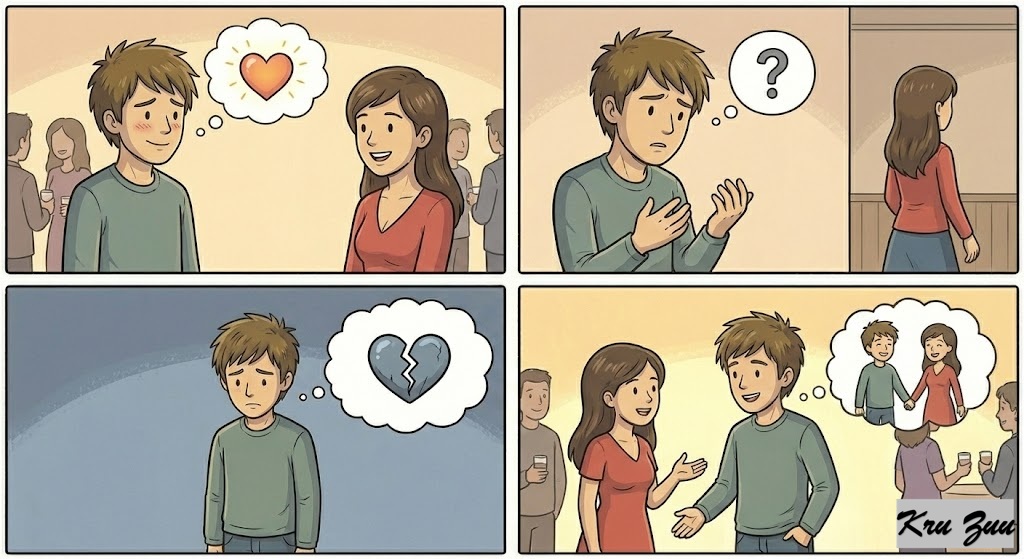
    🏃 The Busy Bee: You have a busy day. You drive to the gym to exercise. You drive home. Then, you realize you need milk. You drive to the supermarket. You drive home. You are exhausted. 🥵

    🧠 The Strategist: You realize the supermarket is next to the gym. You exercise, then you buy milk on your way out. You are home early, relaxing on the sofa.

    📉 The Reality: Hard work is good. Smart work is better.

    🚀 The Secret: Why do two separate tasks when one action can finish both? In this post, we are mastering the art of the “Double Win.” Let’s sharpen your strategy! ⚔️

    🧐 The Anatomy of the Proverb


    Let’s look under the hood of this famous idiom.


    📚 Vocabulary Vault


    Kill (Verb):
    In this context, it doesn’t mean violence. It means to “complete” or “achieve” a task. ✅


    Two Birds (Noun Phrase):
    These represent your Goals or Problems. (e.g., Learning English + Watching a Movie). 🐦🐦


    One Stone (Noun Phrase): This represents a single Action or Effort. 🪨


    🧠 Grammar Focus


    This is an idiom used to describe efficiency.


    Structure: [Verb Phrase] + [Prepositional Phrase]


    Formula: [Solve 2 Problems] + [Using 1 Action]


    Example:“I cycled to work today. I killed two birds with one stone: I saved money on gas, and I got my daily exercise!”

    📜 History: Myths & Archers


    Is this actually about hunting? Originally, yes.


    The Legend: The story goes back to the Greek myth of Daedalus, who was so strong he killed two birds with one stone.


    The Written Record: It appeared in English philosophy in the 1600s (Thomas Hobbes).


    Global Cousins:


    🇨🇳 Chinese:
    “One arrow, two hawks.” (Cooler, right?) 🏹


    🇹🇷 Turkish: “Bir taşla iki kuş vurmak.” (Exactly the same!)


    The Lesson: It is not about cruelty to animals. It is about maximum results with minimum effort.

    🎯 Impact on Life: The Pros & Cons


    Is multitasking always the answer?


    ✅ The Pros (The Superpower)


    Time Management:
    You gain extra free time.


    Energy Saving: You don’t burn out doing unnecessary trips.


    Satisfaction: It feels amazing to be productive.


    ❌ The Cons (The Trap)


    Lower Quality:
    If you try to study, cook, and talk on the phone at the same time, you might burn the food! 🔥


    Distraction: Sometimes, focusing on one bird is better than missing two.

    🎭 Short Story: The Rainy Day Errand


    Let’s see how our farm friends handle a busy day!


    🌟 Character Introduction


    Percy the Chicken (The Busy Body):
    Runs around a lot, but gets little done. 🐔


    Fred the Frog (The Mastermind): Loves efficiency. 🐸


    Luna the Cat (The Boss): Sleeping on the porch. 😼


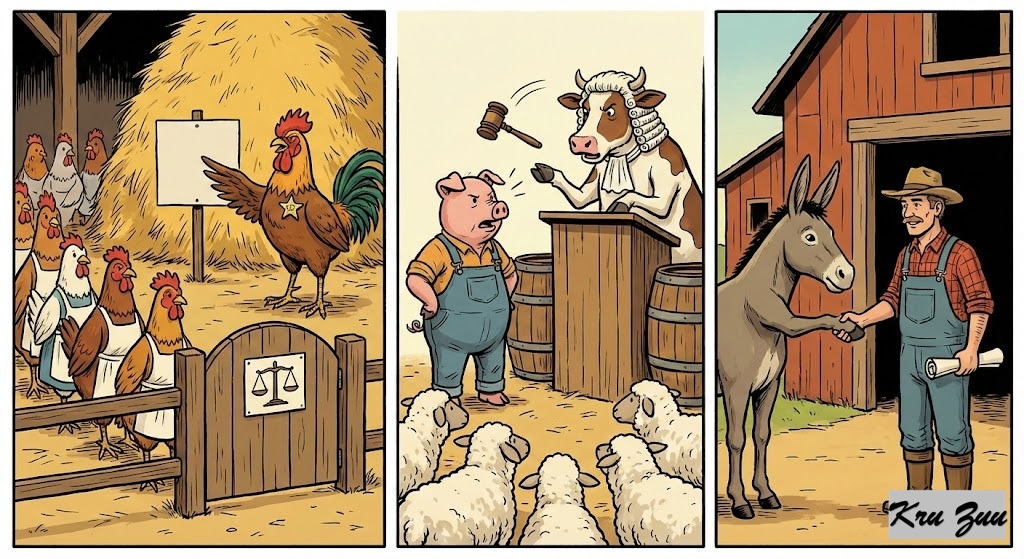
    It was a rainy Tuesday. The animals had chores to do.

    Goal 1: They needed to mail a letter to the neighboring farm. ✉️

    Goal 2: They were out of corn and hungry. 🌽


    Percy: Panicked. “I must go now!” Percy grabbed the letter and ran in the rain to the mailbox.

    He ran back, soaking wet. 🌧️ Then his stomach rumbled. “Oh no! We have no food!”

    Percy ran back out into the rain to the barn to get corn. He came back, shivering and tired.

    Percy walked 2 miles and got wet twice.


    Fred: Looked at the list.

    He sat on a lily pad and thought. “I am hungry, and I need to mail this letter.”

    Fred waited until he was hungry. He put the letter in his pocket.

    He hopped to the mailbox, dropped the letter, and then since the food barn was right next to the mailbox, he grabbed the corn bag. He hopped home.


    The Result:

    Percy was sneezing and exhausted. 🤧

    Fred was dry, eating corn, and reading a book.


    Luna opened one eye: “Percy, you worked hard. Fred, you worked smart. Fred killed two birds with one stone.” (Disclaimer: No actual birds were harmed in this story!) 🚫🐦

    🎓 Lesson for English Learners


    How can you use this strategy to learn English faster?


    Don’t “Make Time” for English. Combine it.


    The Commuter Strategy: 🚌
    Bird 1:
    Going to work/school (Boring travel time).


    Bird 2: Improving listening skills.


    The Stone: Listen to an English Podcast on the bus.


    The Netflix Method: 🍿
    Bird 1:
    Relaxing and having fun.


    Bird 2: Learning slang and vocabulary.


    The Stone: Watch your favorite series with English subtitles.


    The Gamer Hack: 🎮
    Bird 1:
    Playing video games.


    Bird 2: Speaking practice.


    The Stone: Join an international server and chat with teammates in English.


    Remember: You don’t need more time. You just need a better stone.


    💬 Your Turn


    What is your best “efficiency hack”?


    Do you brush your teeth in the shower? 🚿


    Do you listen to audiobooks while cleaning the house? 🧹🎧


    Tell us how YOU kill two birds with one stone in the comments! 👇

    By Zubeyir YURTKURAN

    https://www.facebook.com/BrainBattleground/

    https://www.facebook.com/zubeyr.yurtkuran/

    https://www.instagram.com/zubeyryurtkuran/
  • 💡 The Spark of Genius: Why Problems Are Good for You

    💡 The Spark of Genius: Why Problems Are Good for You

    Necessity is the mother of invention.


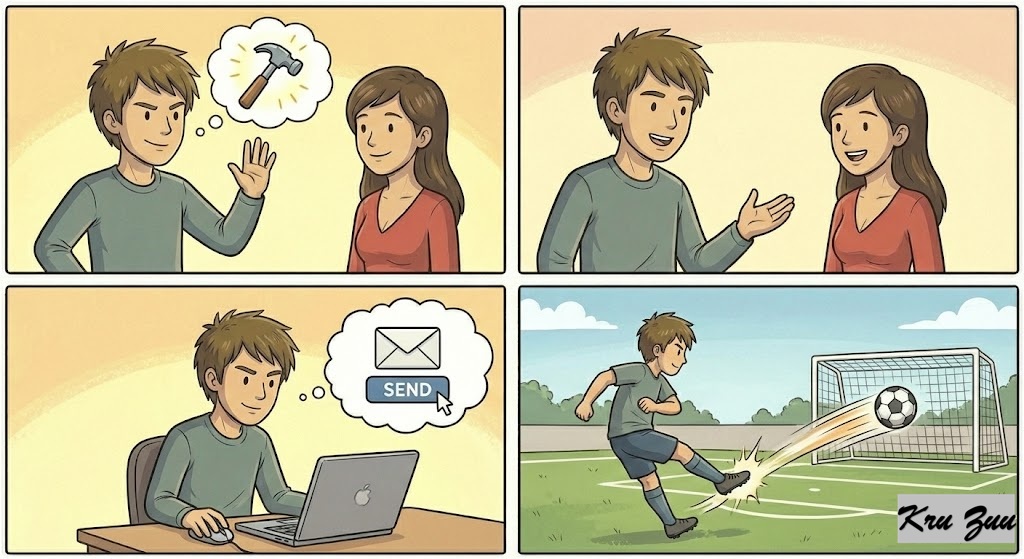
    🏖️ The Comfort Zone: You have a car, a GPS, and a full tank of gas. You don’t need to think about directions. You just drive.

    📉 The Reality: You rely on tools. If the battery dies, you are lost. Comfort kills creativity.


    🔥 The Danger Zone: You are lost in the jungle. Your phone is dead. It is getting dark.

    📈 The Reality: Suddenly, your brain wakes up! You build a shelter, you find north using the sun, you find water. You become a genius because you have no choice.


    Life has a secret rule: We rarely change when we are comfortable. We change when we need to.


    In this post, we explore why “problems” are actually “gifts.” Let’s unlock your inner inventor! 🔓

    🧐 The Anatomy of the Proverb


    Let’s dismantle this mechanical masterpiece.


    📚 Vocabulary Vault


    Necessity (Noun):
    A situation where something is absolutely required or essential. (A “must-have” situation). 🆘


    Mother (Noun – Metaphor): The source, origin, or creator of something. (Not a biological mom, but the “starting point”). 🌱


    Invention (Noun): The action of inventing something typically a process or device. (Creating something new). ⚙️


    🧠 Grammar Focus


    This sentence uses a powerful literary device called a Metaphor.


    Subject: Necessity (Abstract Noun)


    Verb: Is (State of being)


    Object: The mother of invention (Noun Phrase)


    Formula: [Problem] = [Creator of Solution].

    Note: We are comparing “Need” to a “Mother.” Just as a mother gives birth to a child, a “Need” gives birth to a “New Idea.”

    📜 History: From Plato to Smartphones


    Is this just a catchy slogan? No, it is ancient wisdom.


    The Origin: The concept appears in Plato’s Republic (Ancient Greece), where he wrote: “Our need will be the real creator.”


    The Evolution: It entered English in 1519, but the phrasing we use today became famous in the 1700s.


    Real Life Example: Why was the Internet created? Because the military needed a way to communicate if phone lines were destroyed.


    The Lesson: Don’t complain about problems. Problems are the fuel for progress.

    🎯 Impact on Life: The Pros & Cons


    Is being under pressure always good?


    ✅ The Pros (Why it works)


    Focus:
    When you have a deadline in 1 hour, you don’t check Instagram. You focus 100%.


    Innovation: People didn’t invent the umbrella because they liked carrying sticks. They invented it because they hated getting wet! ☔


    Survival: Your brain is lazy. It only works hard when it feels it is necessary.


    ❌ The Cons (What to watch out for)


    Stress:
    Constant necessity (always being in “survival mode”) causes burnout. 😫


    Ugly Solutions: Sometimes, a quick fix is ugly. (Like fixing a broken window with duct tape). It works, but it isn’t “perfect.”

    🎭 Short Story: The Heatwave & The Bucket


    Let’s visit our farm friends to see who survives the summer heat!


    🌟 Character Introduction


    Percy the Chicken (The Complainer):
    Waits for others to solve his problems. 🐔


    Fred the Frog (The Thinker): Uses what he has to get what he needs. 🐸


    Luna the Cat (The Observer): Watching from the shade. 😼


    It was the hottest day of the year. The farmer had left a tall, narrow bucket of cold water in the yard. But the water level was very low right at the bottom.


    The Problem: The animals were thirsty, but their heads couldn’t reach down to the water.


    Percy: Poked his beak into the bucket. Bonk. He couldn’t reach. “This is unfair!” Percy squawked. “The farmer forgot us! I will just sit here and be thirsty until he comes back.” Percy sat in the hot dust, miserable and waiting.


    Fred: Looked at the water. He was drying out. He needed that water to survive. He tried to jump in, but the bucket was too narrow. Luna watched lazily. “Give up, Fred. It’s physics.”


    Fred didn’t give up. He looked around. He saw a pile of small pebbles (stones) near the garden.

    Idea! 💡 Fred picked up a pebble and dropped it into the bucket. Plop. Nothing happened. He dropped another. Plop. He dropped ten. Twenty. Fifty!


    Percy laughed: “Now you are just playing with rocks, you silly frog.”


    The Result: With every stone Fred dropped, the water level rose higher due to displacement. After the 100th stone, the cool water rose to the very top of the bucket.


    Fred took a long, refreshing drink. 🥤 Percy looked shocked.


    Luna smiled: “Percy, you saw a problem. Fred saw a puzzle.”


    The Moral:


    Percy:
    Had a need, but waited for help = Thirsty.


    Fred: Had a need, and created a solution = Satisfied.

    🎓 Lesson for English Learners


    How does this apply to learning a language?


    Don’t wait until you are “Ready.” Wait until you are “Desperate.”


    The “Survival” Method: If you study English in a classroom, you might be lazy. But imagine if you are dropped in the middle of London, hungry, and need to find a bathroom. Necessity will force you to speak. You won’t care about grammar rules; you will care about communication.


    Create Your Own Necessity:


    Don’t just read books.


    Change your phone language to English. (Now you need to understand it to use your phone).


    Promise to teach a friend a topic in English. (Now you need to learn it so you don’t look foolish).


    Remember: We learn fastest when we have no other choice.


    💬 Your Turn


    Have you ever fixed something using a strange object (like opening a box with a key, or fixing glasses with a paperclip) because you didn’t have the right tool? 🛠️🖇️


    Tell us your best “MacGyver Moment” in the comments! 👇

    By Zubeyir YURTKURAN

    https://www.facebook.com/BrainBattleground/

    https://www.facebook.com/zubeyr.yurtkuran/
    https://www.instagram.com/zubeyryurtkuran/