Tag: Idioms

  • 💘 The Daily Shield: The Law of Invisible Red Flags

    💘 The Daily Shield: The Law of Invisible Red Flags

    “Love is blind.”


    😈 The Villain (The Hopeless Romantic)

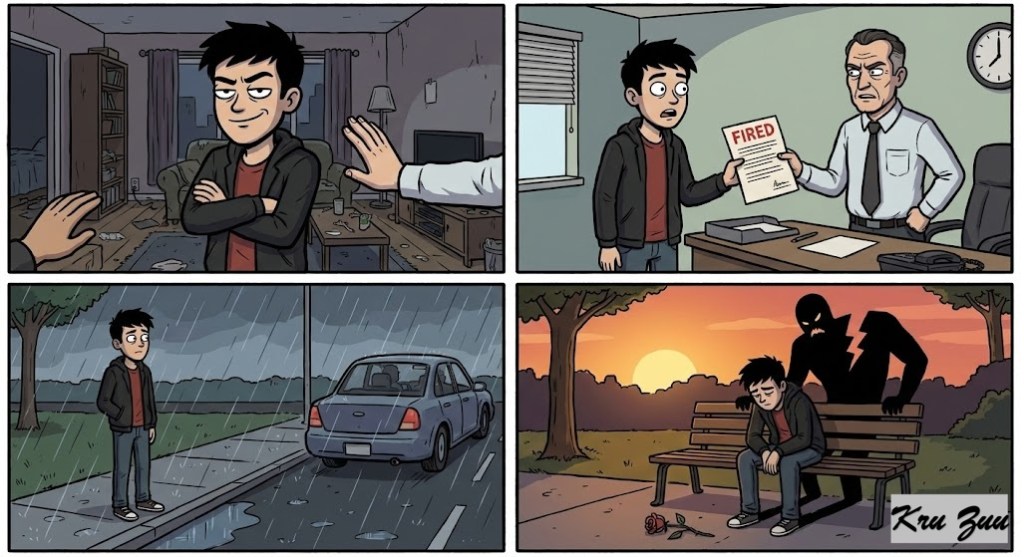
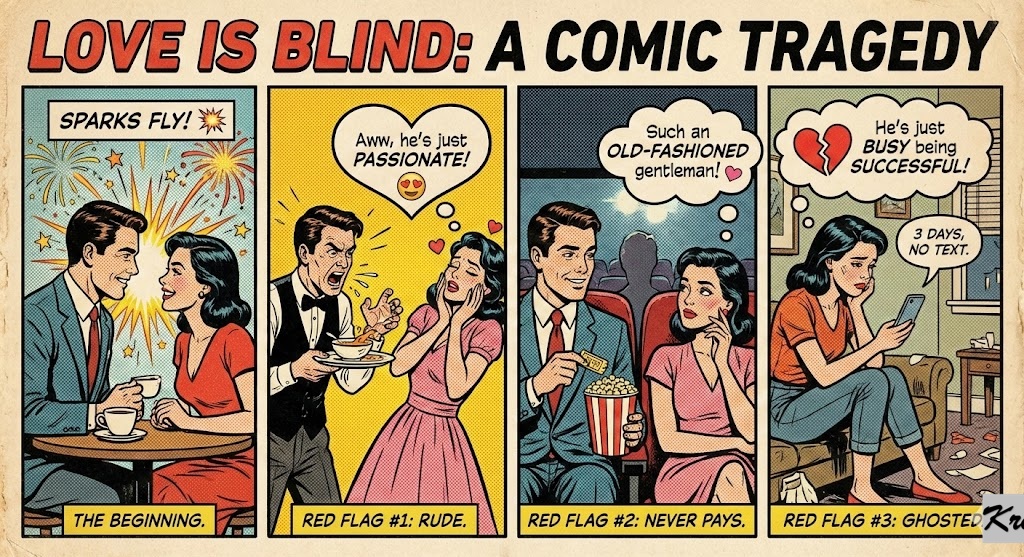
    You meet someone new. Sparks fly. 🎇 Suddenly, logic leaves the building. They are rude to the waiter? “Oh, he’s just passionate.” She never pays for anything? “She’s just old-fashioned.” They ghost you for three days? “They are just so busy being successful!” You ignore the warning signs. You project your fantasy onto a flawed reality.
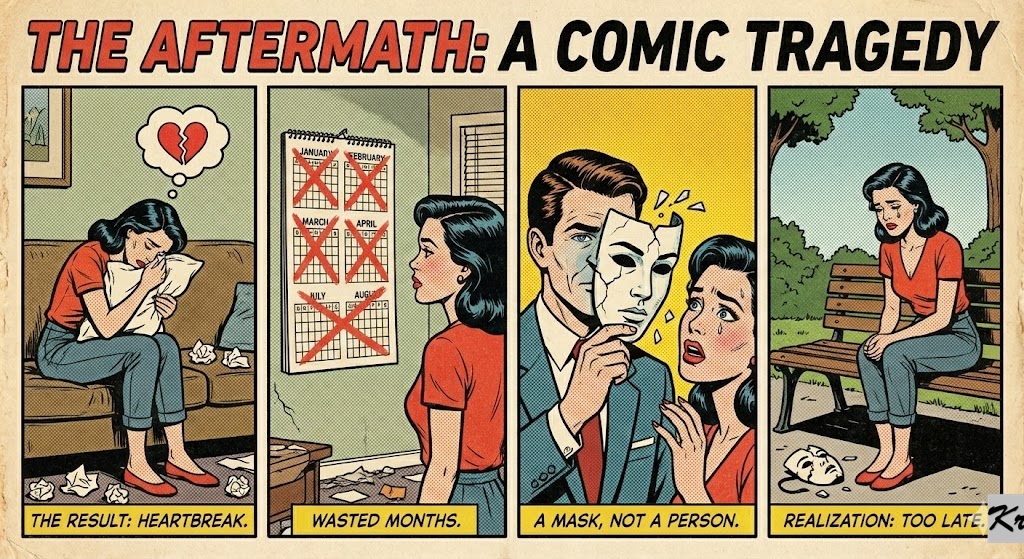
    The Result? You get heartbroken. You waste months on a relationship that was doomed from day one. You realize too late that you fell in love with a mask, not a person. 🎭

    😇 The Hero (The Conscious Partner)

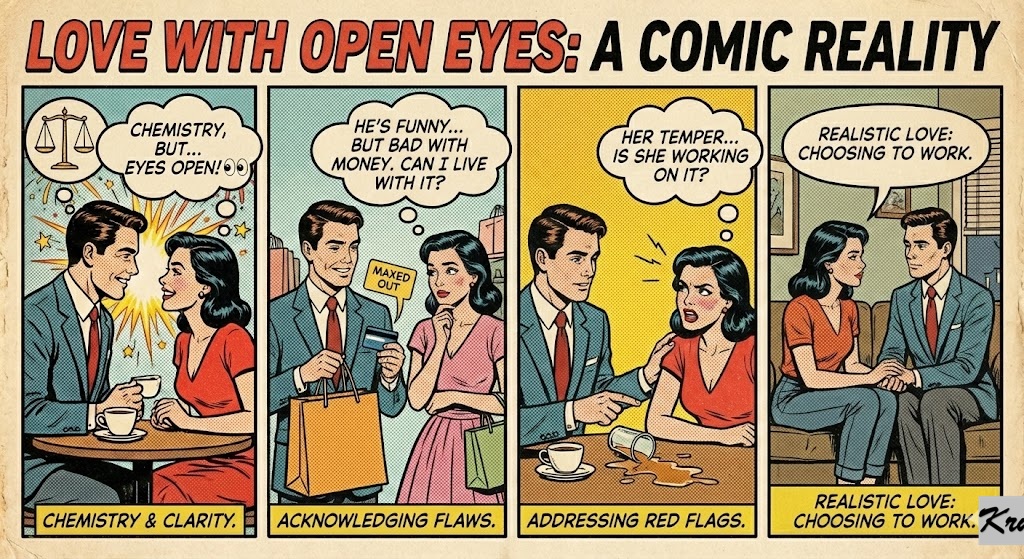
    You feel the chemistry, but you keep your eyes open. 👀 You love them, but you acknowledge their flaws. You think: “He is funny, but he is terrible with money. Can I live with that?” or “She is beautiful, but she has a bad temper. Is she working on it?” You don’t ignore the red flags; you address them.
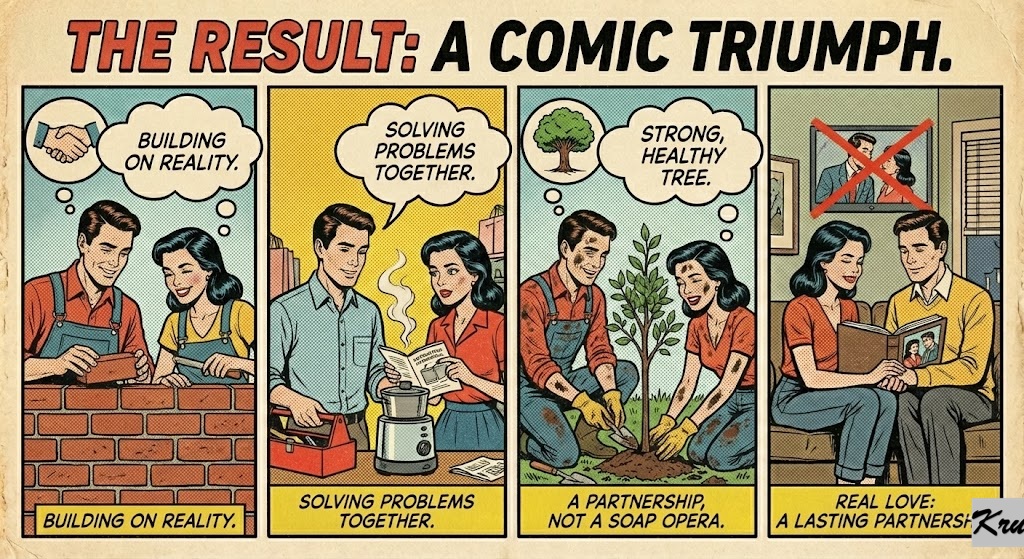
    The Result? You build a relationship based on trust and reality, not fantasy. When problems happen, you solve them because you saw them coming. You build a partnership, not a soap opera. 🤝

    ⚖️ The Reality


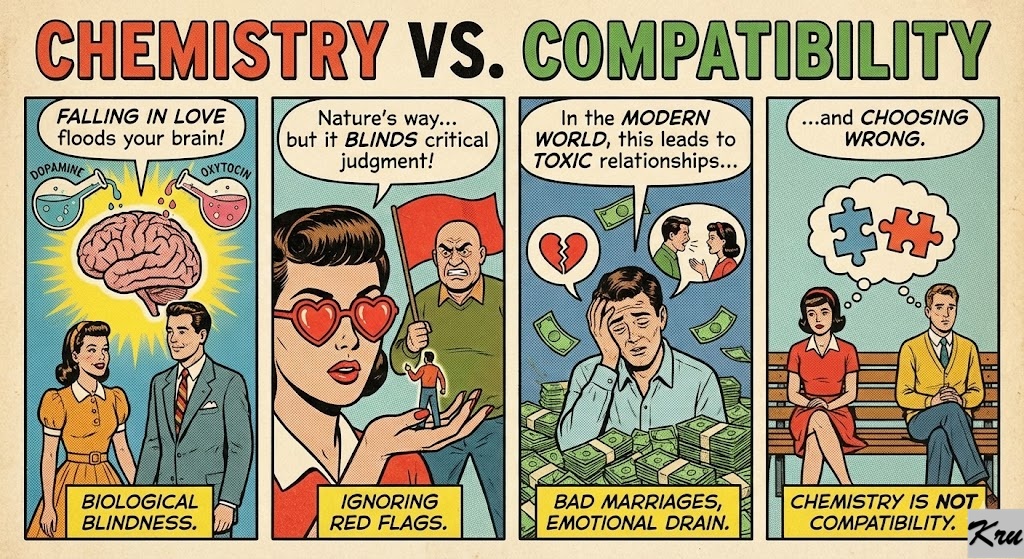
    Chemistry vs. Compatibility. Biologically, falling in love floods your brain with dopamine and oxytocin. These chemicals literally “blind” the critical judgment part of your brain. It is nature’s way of making sure humans pair up. But in the modern world, this biological blindness can lead to toxic relationships, bad marriages, and emotional drain.

    💎 The Secret

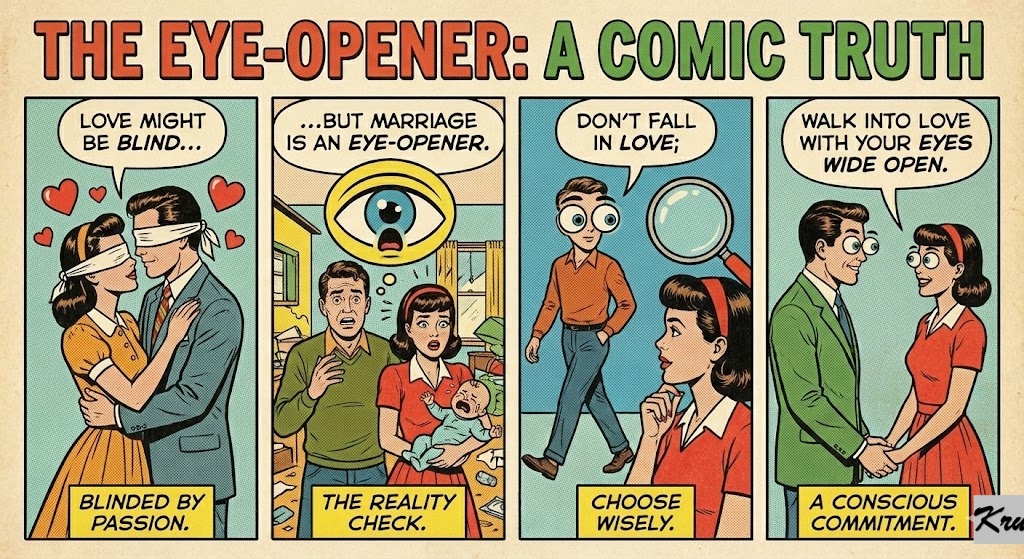
    Love might be blind, but marriage (or long-term commitment) is an eye-opener. Don’t fall in love; walk into love with your eyes wide open.
    🧐 The Anatomy of the Proverb


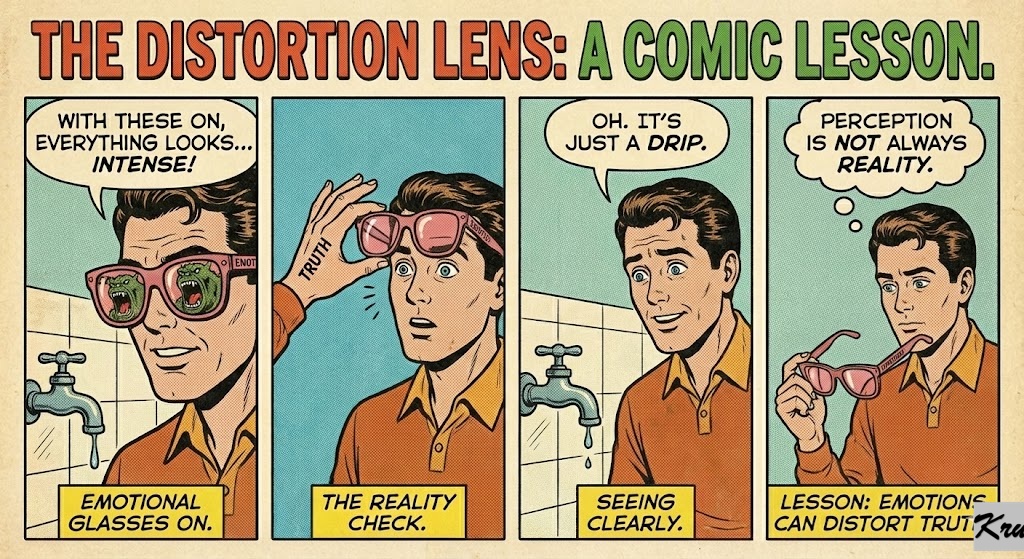
    This is your reality check that emotions can distort your perception of the truth.

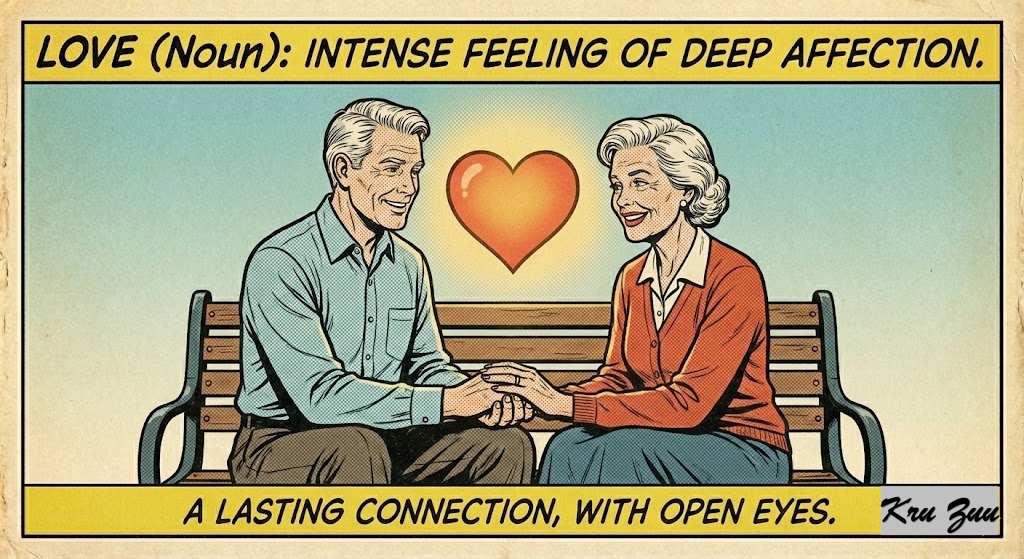
    Love (Noun): Intense feeling of deep affection.

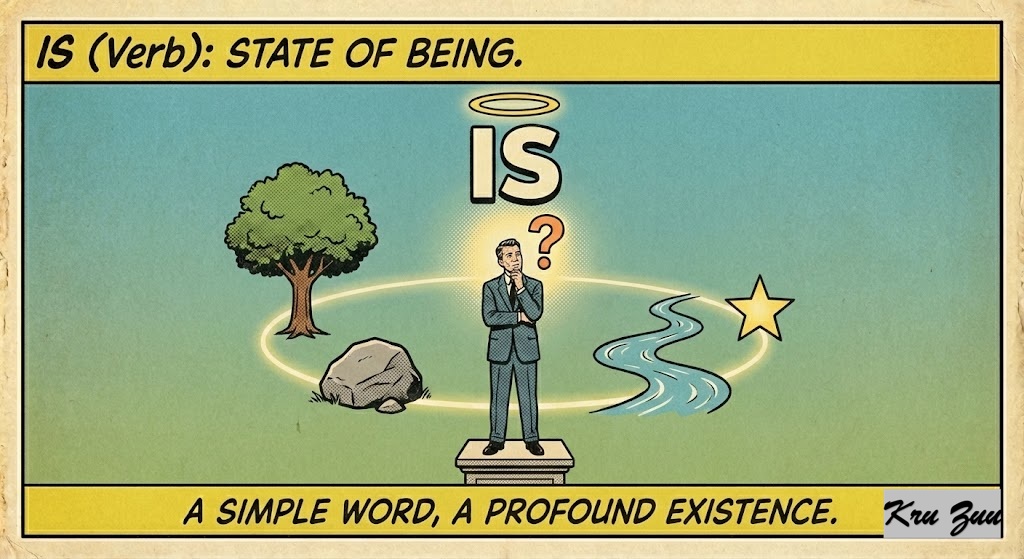
    Is (Verb): State of being.

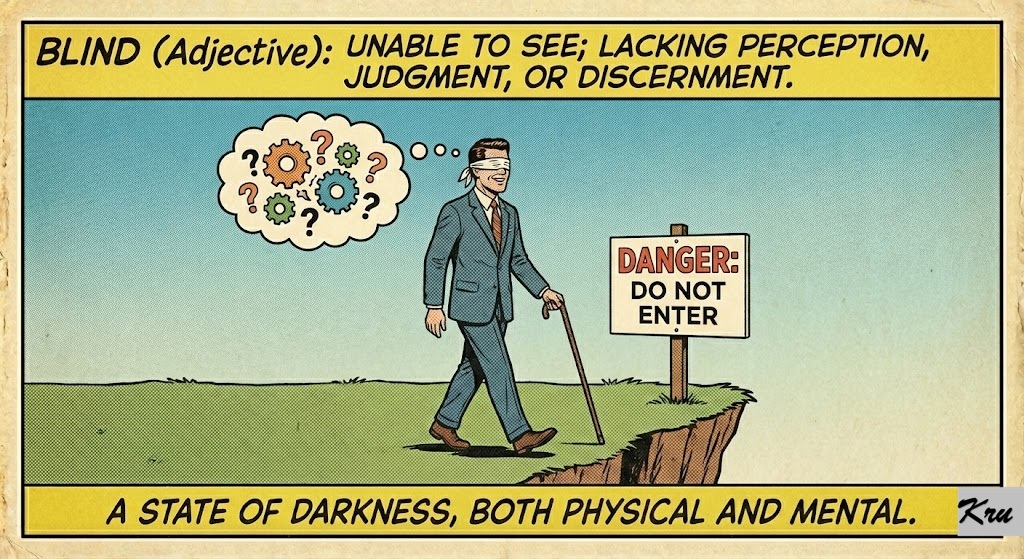
    Blind (Adjective): Unable to see; lacking perception, judgment, or discernment.

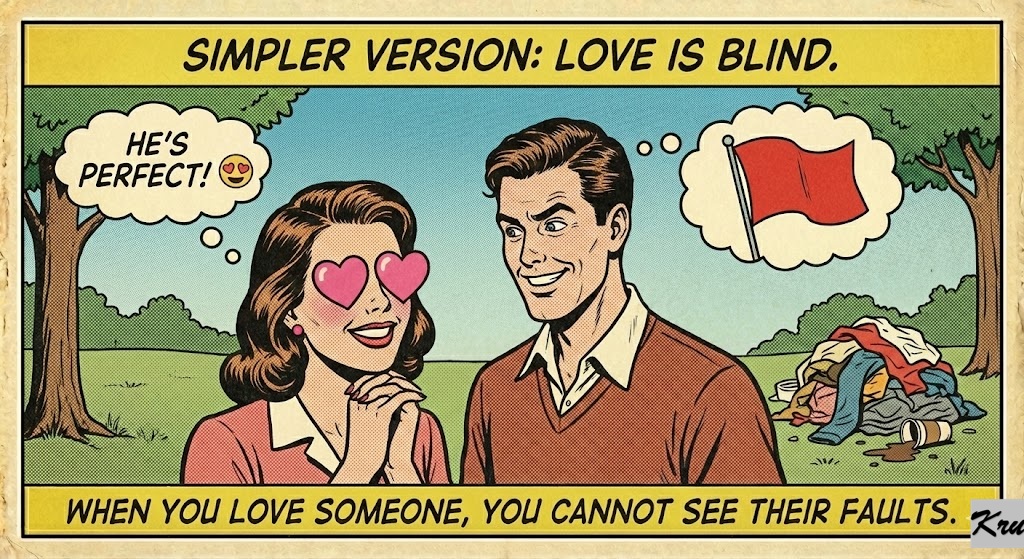
    Simpler Version: When you love someone, you cannot see their faults.

    📚 Vocabulary Vault


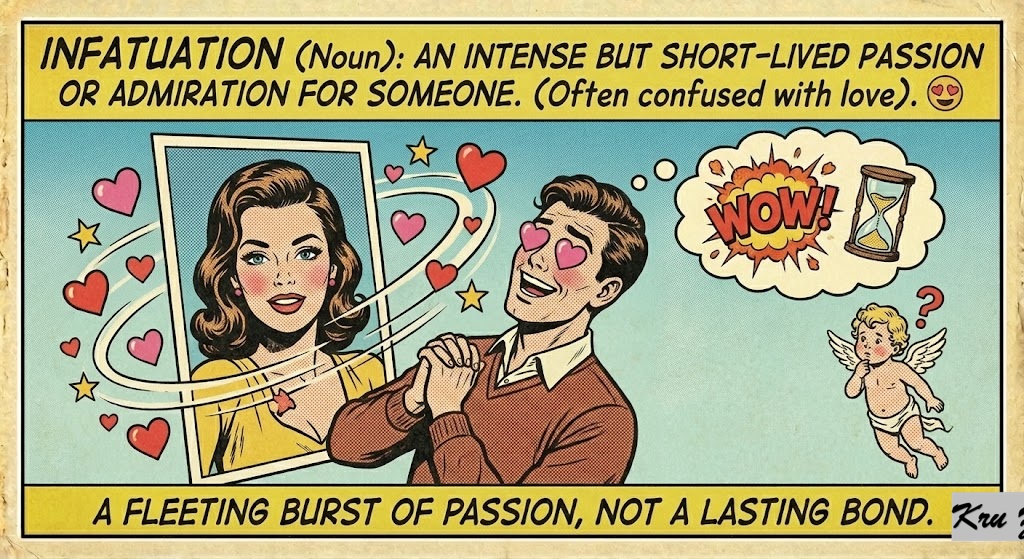
    Infatuation (Noun): An intense but short-lived passion or admiration for someone. (Often confused with love). 😍

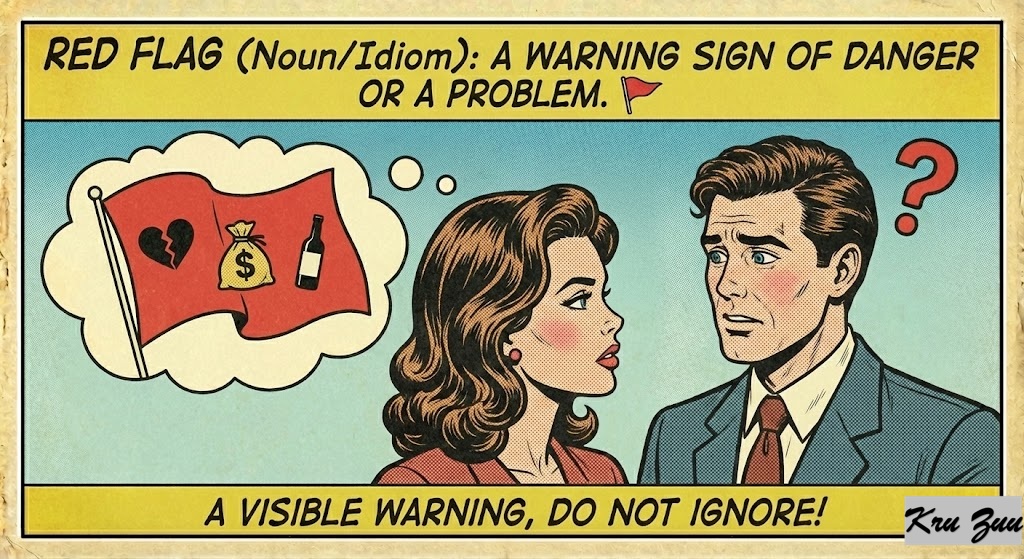
    Red Flag (Noun/Idiom): A warning sign of danger or a problem. 🚩

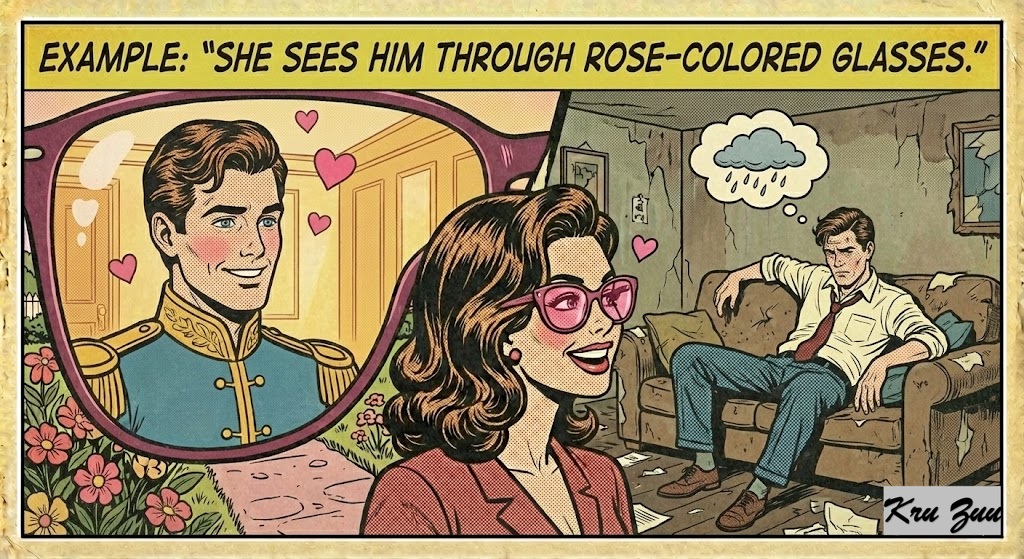
    Rose-colored glasses (Idiom): Looking at a situation in an overly optimistic way, ignoring the negatives.
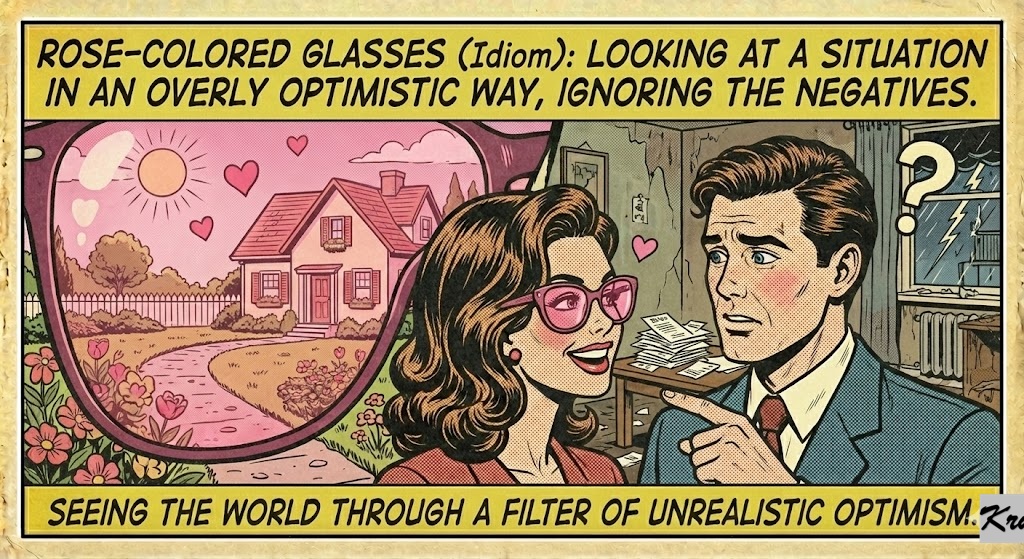
    Example: “She sees him through rose-colored glasses.” 🕶️

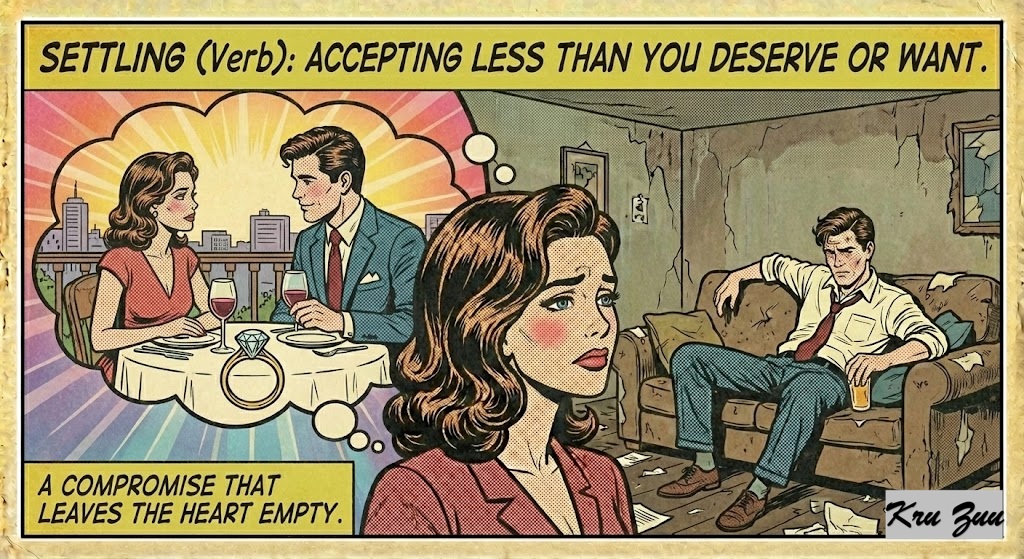
    Settling (Verb): Accepting less than you deserve or want.

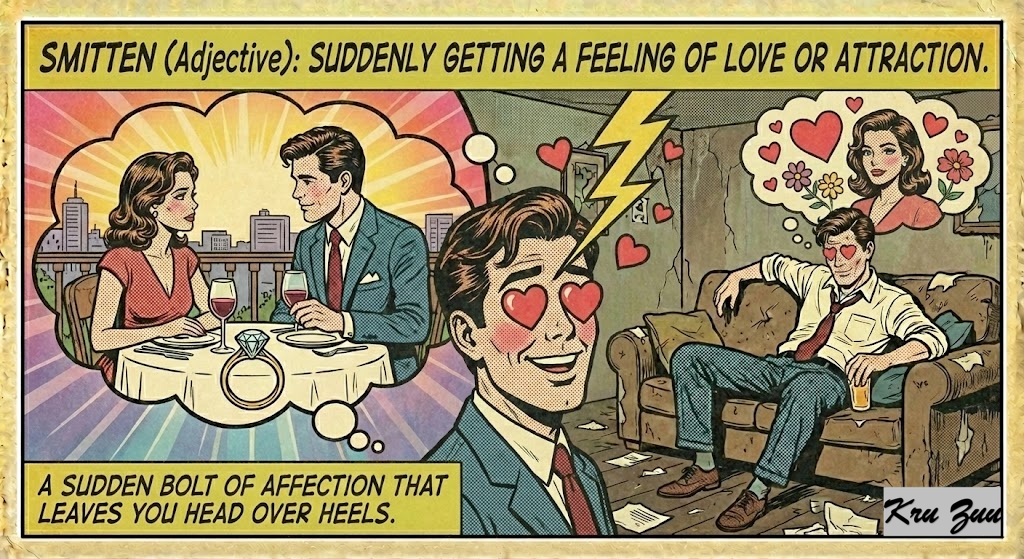
    Smitten (Adjective): Suddenly getting a feeling of love or attraction.

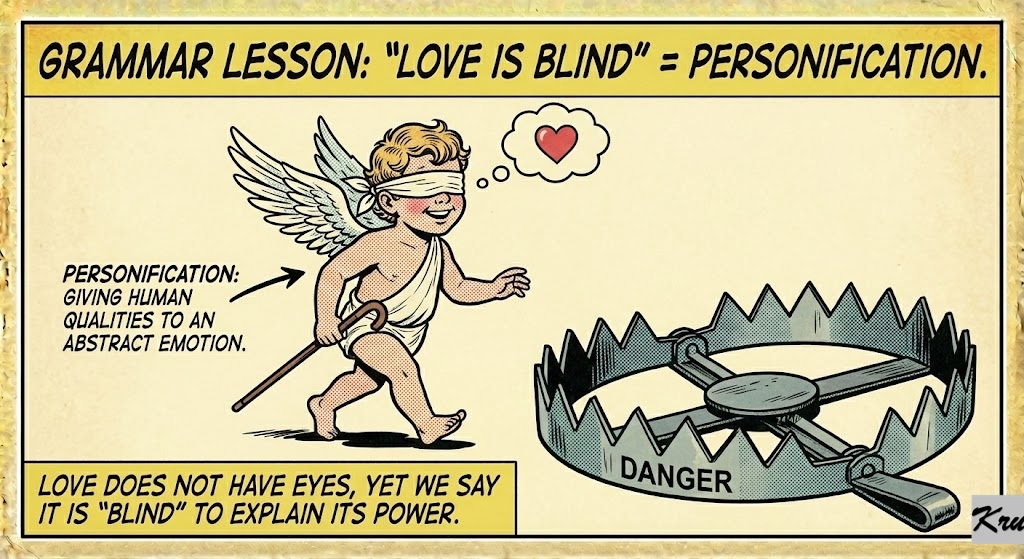
    🧠 Grammar Focus: Personification


    “Love is blind.” Grammatically, this is Personification. Love is an abstract emotion. It does not have eyes. It cannot literally be blind. However, we give it human qualities to explain how powerful it is. It acts like a person who has lost their sight.

    Other examples


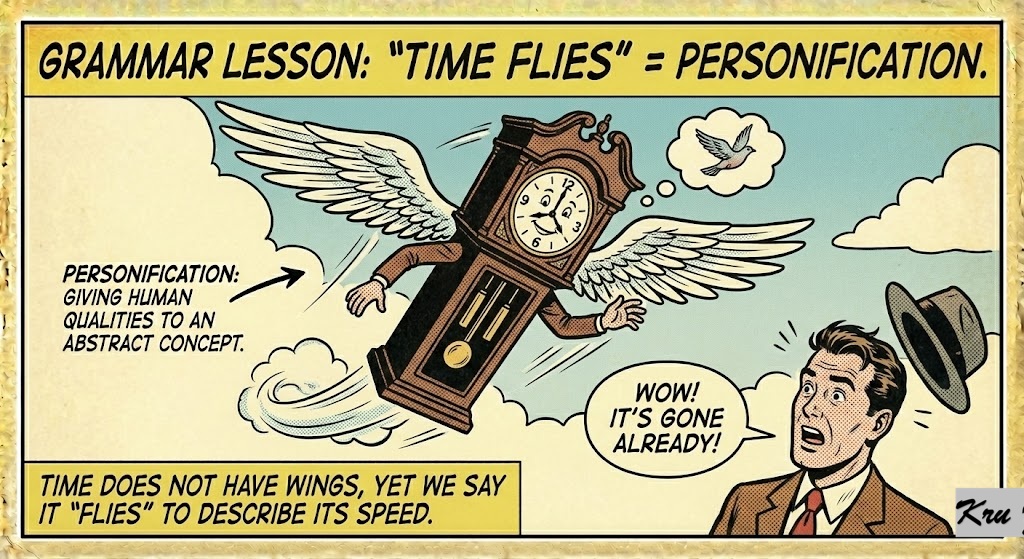
    “Time flies.” (Time doesn’t have wings).

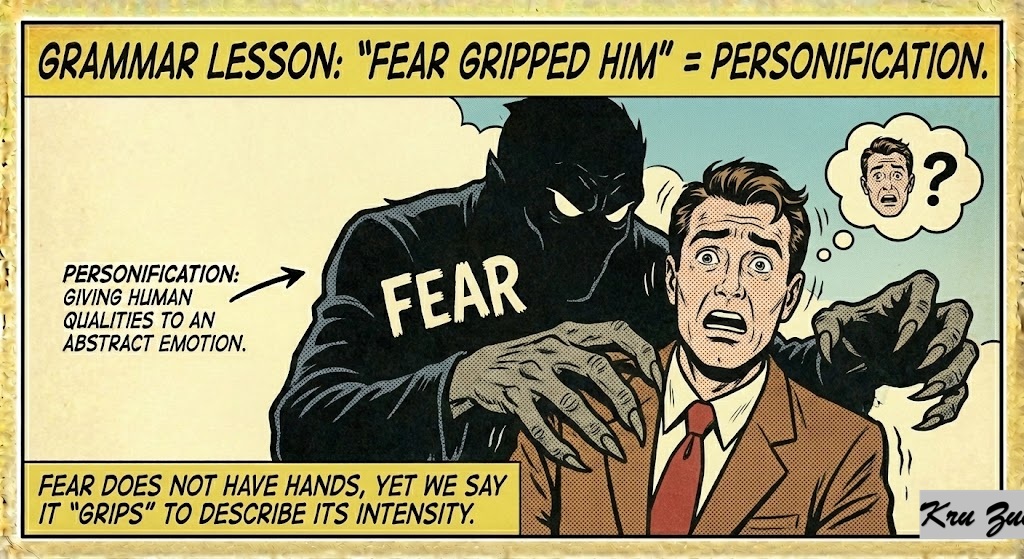
    “Fear gripped him.” (Fear doesn’t have hands).
    📜 History: Origin and Spread


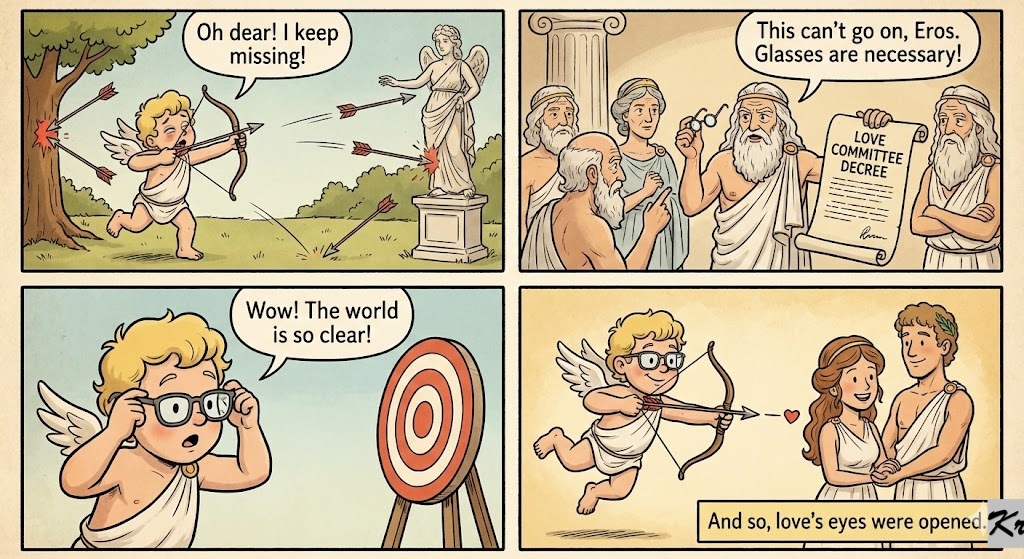
    Who first decided that Cupid needs glasses?

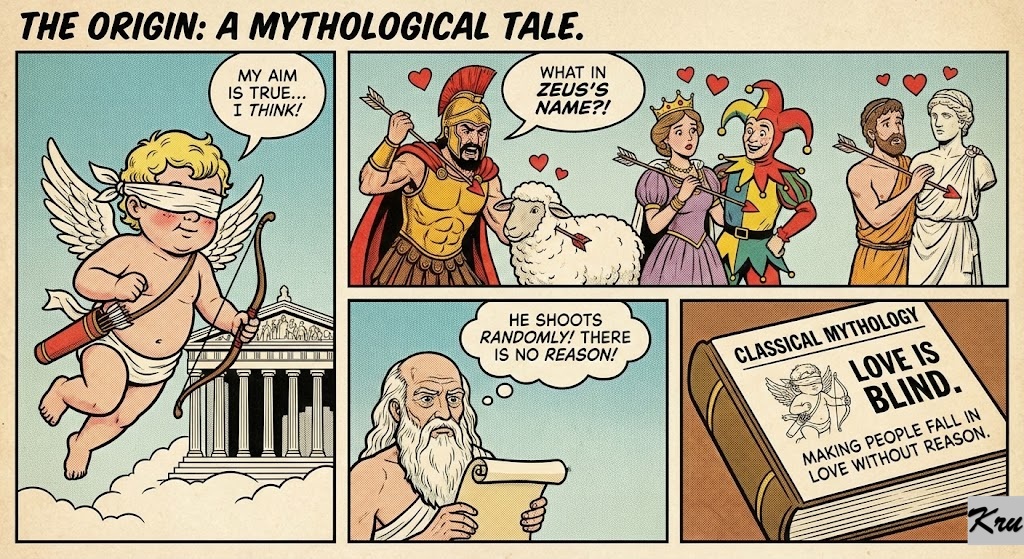
    The Origin: This idea is ancient. In Classical Mythology, Cupid (the god of affection) is often depicted wearing a blindfold. He shoots his arrows randomly, making people fall in love without reason.

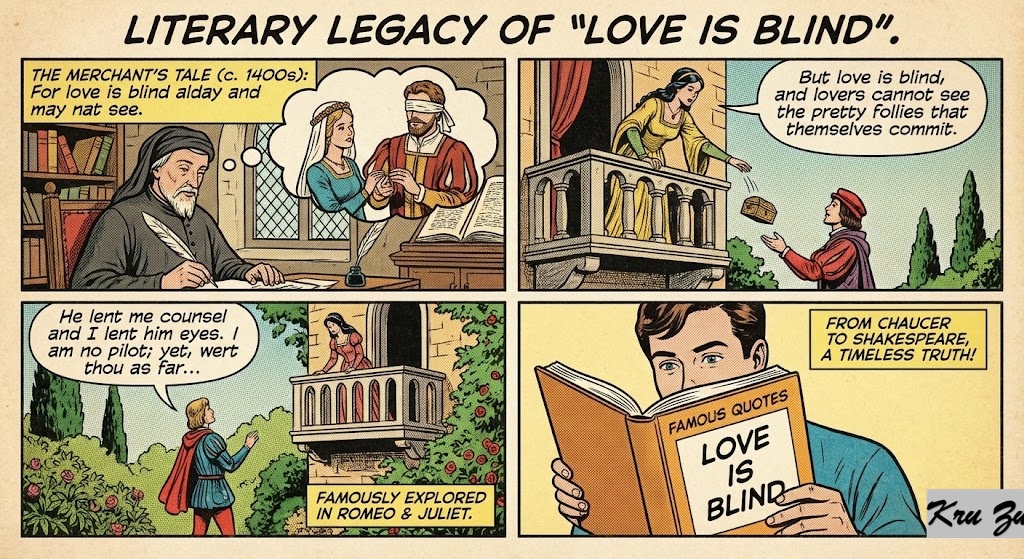
    The Writer: Geoffrey Chaucer used the phrase in the 1400s, but William Shakespeare made it famous in The Merchant of Venice and Romeo and Juliet.

    Global Cousins


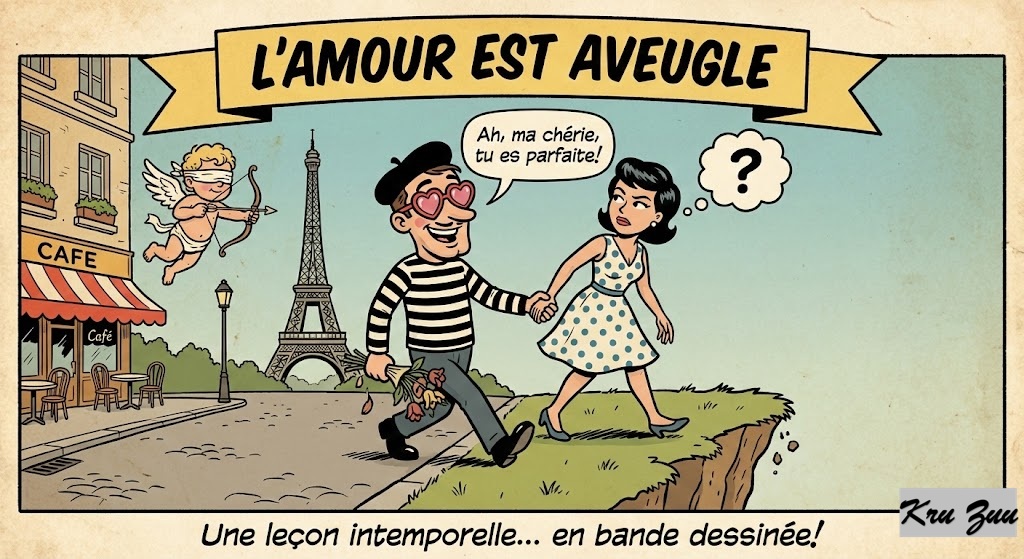
    🇫🇷 French: “L’amour est aveugle.” (Love is blind – direct translation).

    🇹🇷 Turkish: “Aşık alemi kör, dört yanını duvar sanır.” (The lover is blind to the world; he thinks he is surrounded by walls).


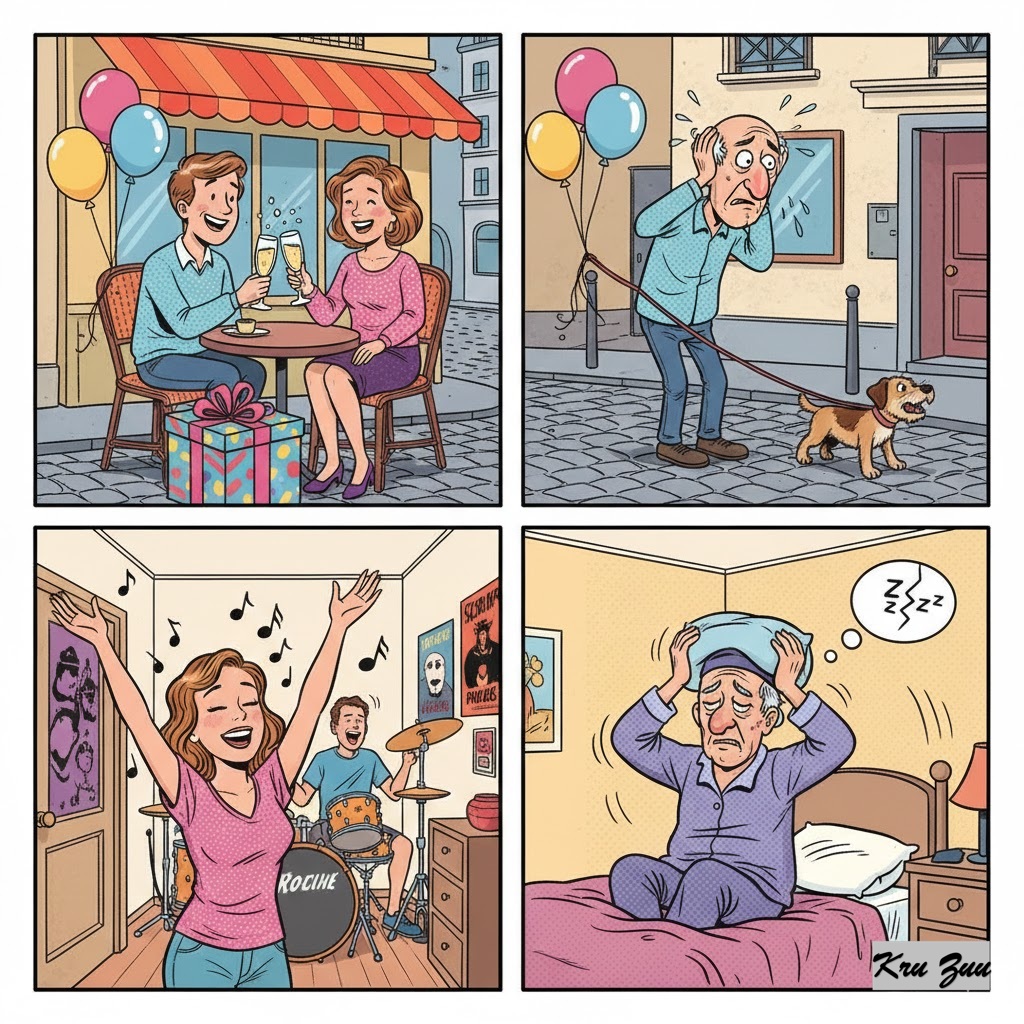
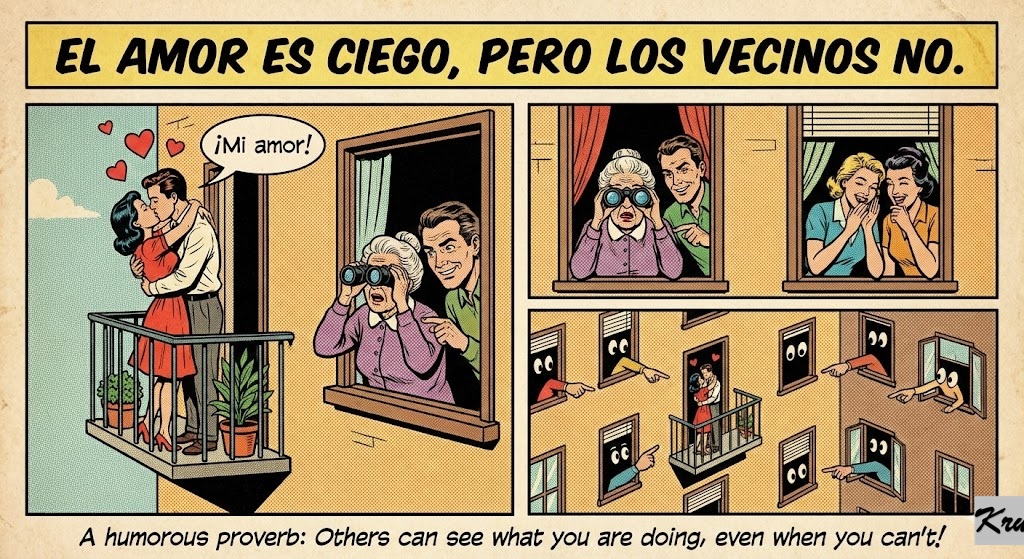
    🇪🇸 Spanish: “El amor es ciego, pero los vecinos no.” (Love is blind, but the neighbors are not! meaning others can see what you are doing).
    🎭 Short Story: The Statue of Perfection 🗿🐱🐔🐸


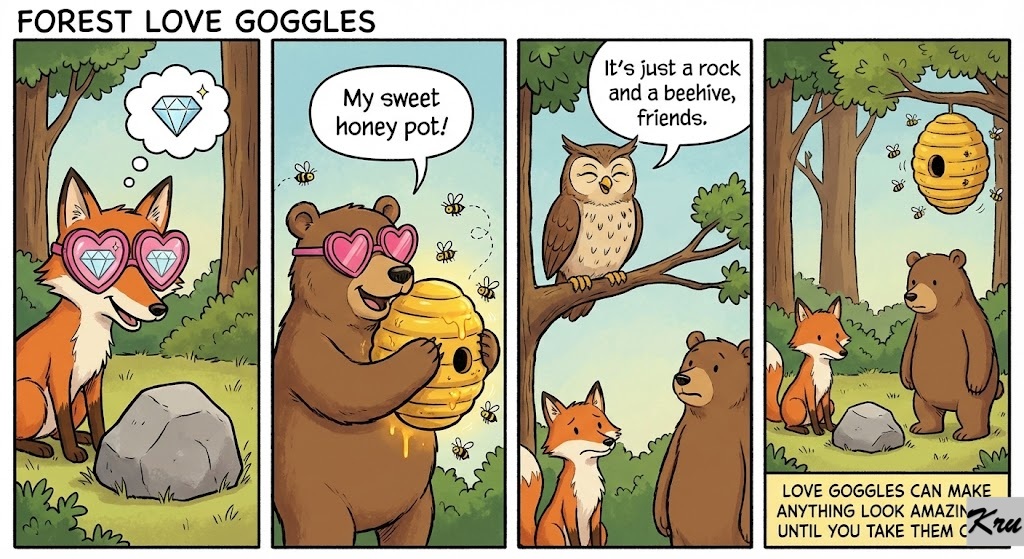
    Let’s visit the forest to see who has their “love goggles” on.

    🌟 The Cast


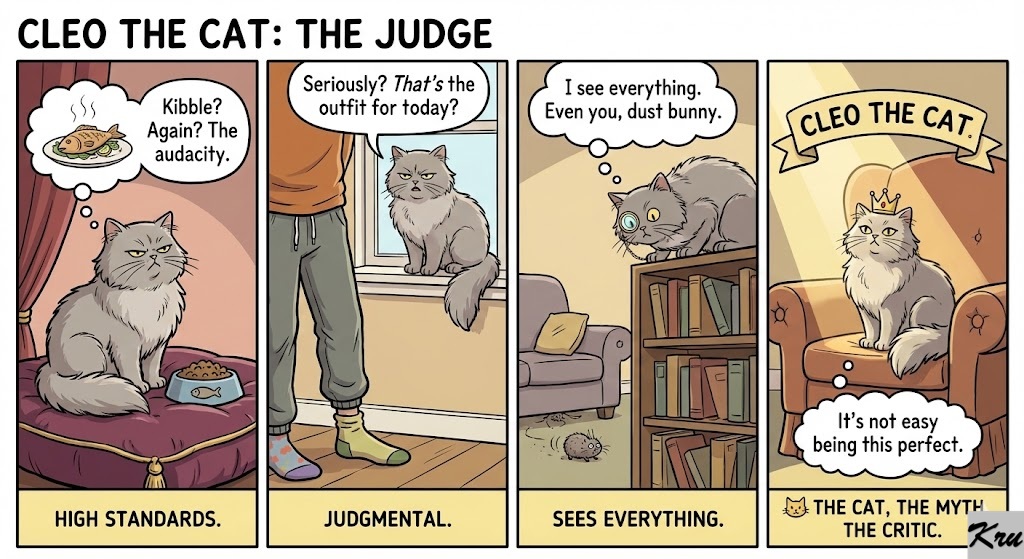
    Cleo the Cat: High standards, judgmental, sees everything. 😼

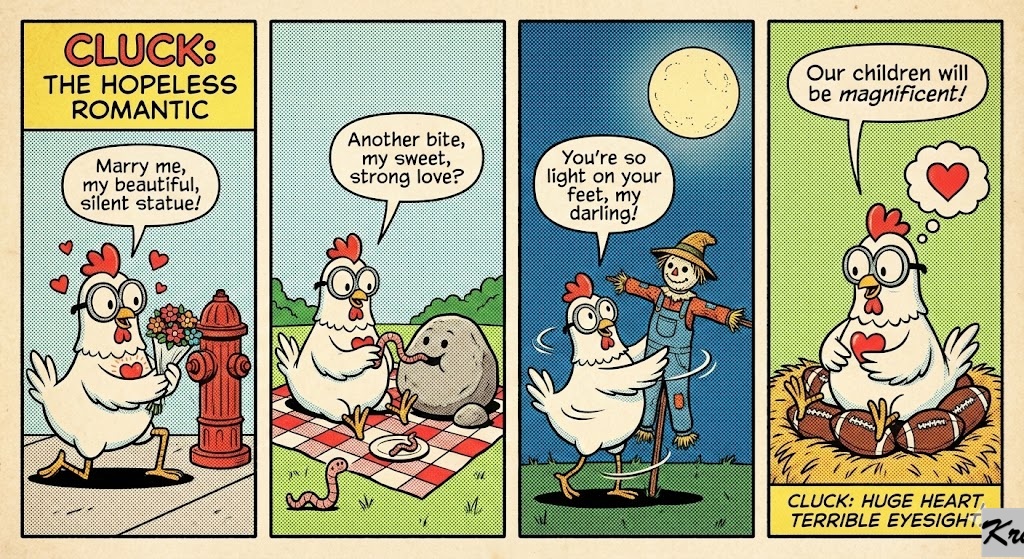
    Cluck the Chicken: Falls in love instantly, huge romantic heart, terrible eyesight. 🐔

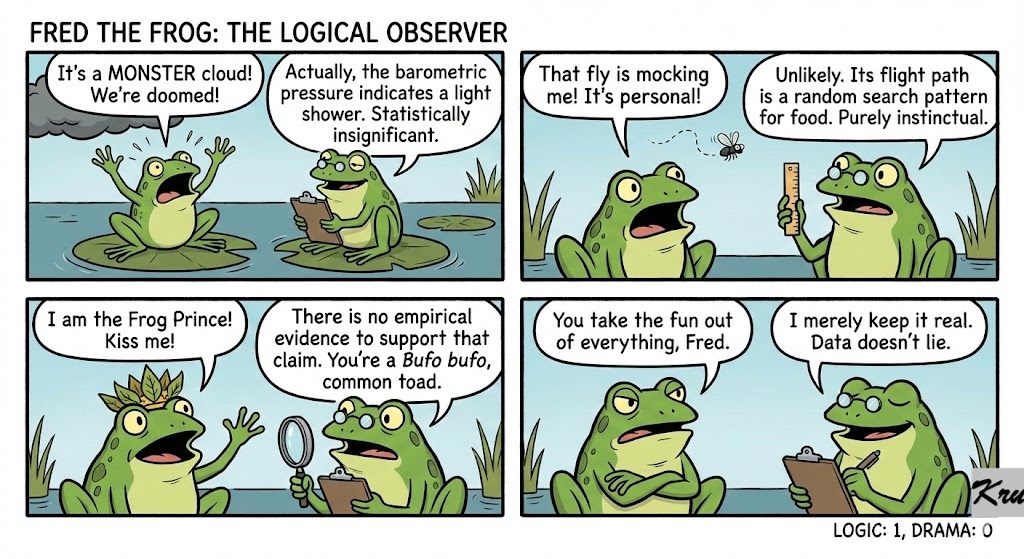
    Fred the Frog: The logical observer, keeps it real. 🐸

    The Situation: Cluck the Chicken comes running into the town square, flapping her wings excitedly. “Guys! Guys! I met Him! I met the perfect guy! He is tall, strong, dark, and mysterious!”
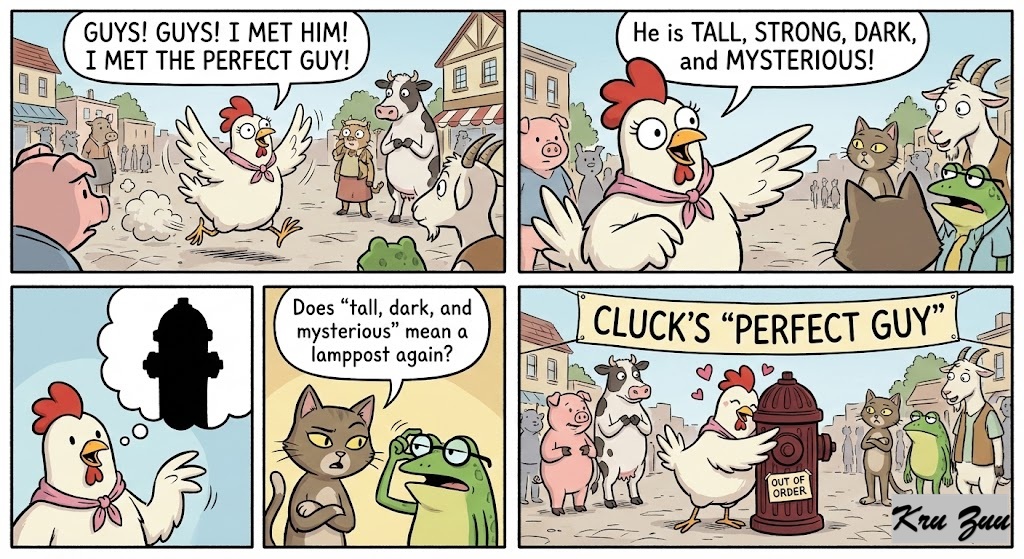

    Cleo looks up from filing her nails. “Oh? Does he have a name? Or just a vibe?”
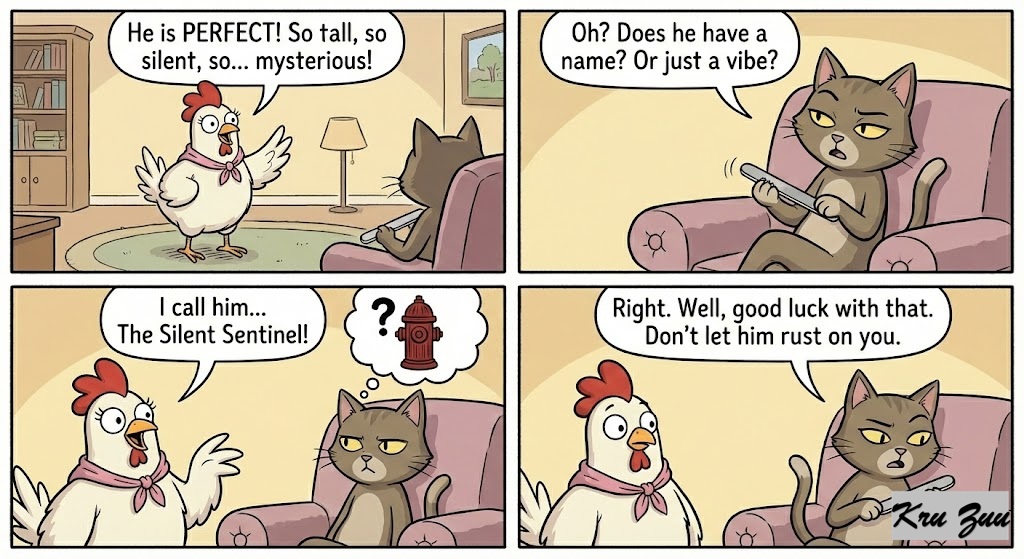

    “His name is Rocky,” Cluck sighs. “He is the strong, silent type. He listens to everything I say. He hasn’t interrupted me once in three hours!”
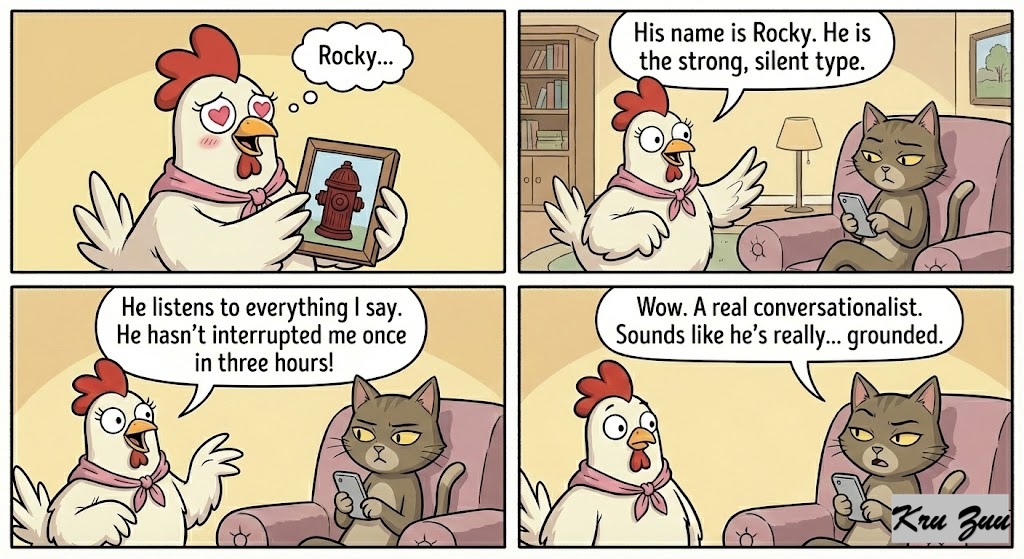

    The Conflict: Fred the Frog frowns. “Rocky? Where is he?” “He’s by the garden,” Cluck says. “Come meet him!”
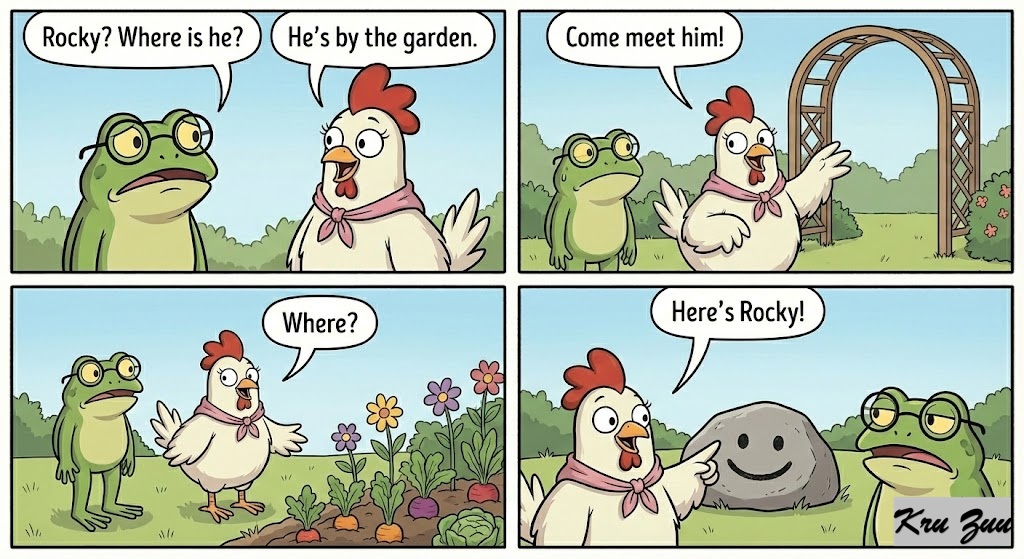

    They walk to the garden. Standing there is not a rooster. It is not a duck. It is a dark, stone garden statue of an Eagle. 🗿
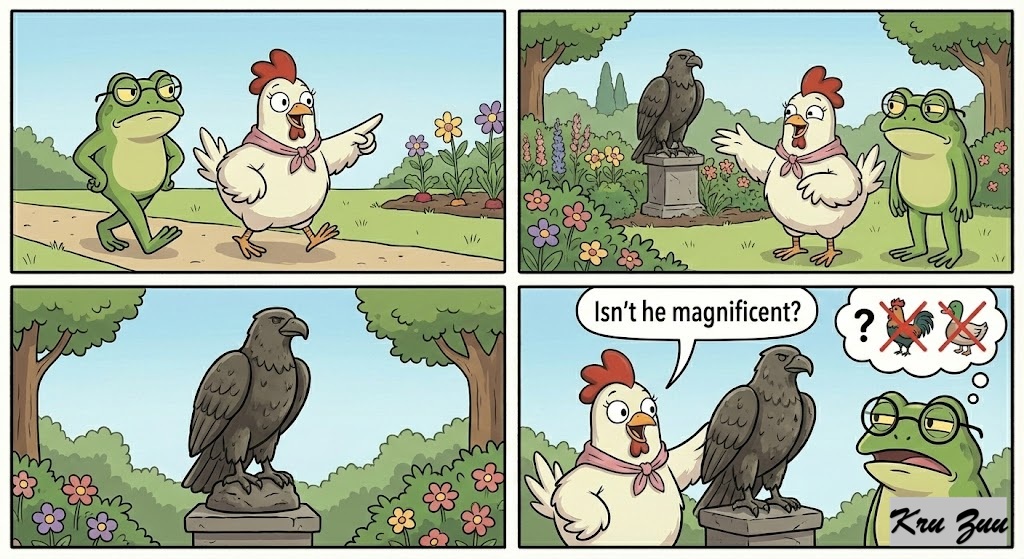

    “Cluck,” Fred says slowly. “That is a rock.”
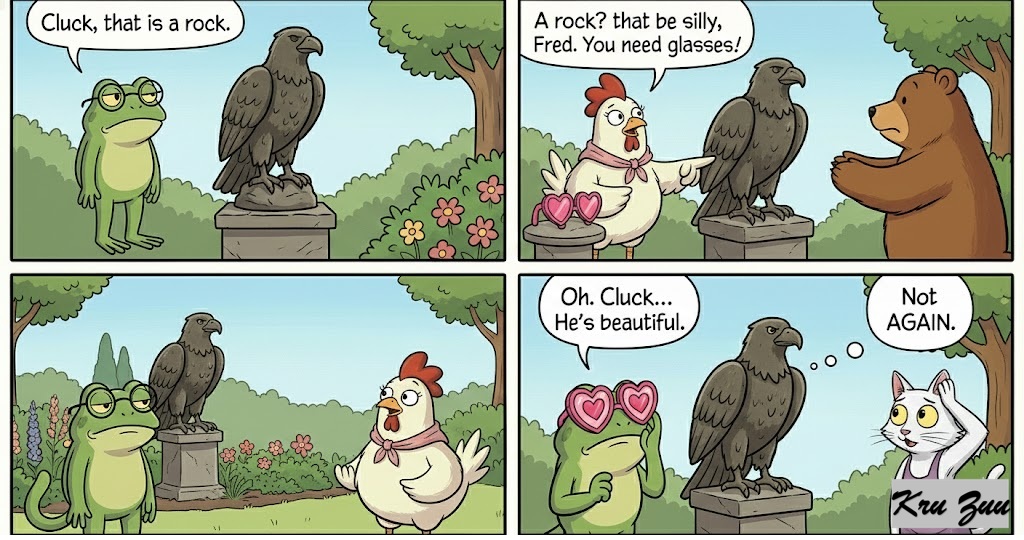

    “He’s a good listener!” Cluck defends him. “Look how stoic he is. He’s so stable. He’s not flighty like other birds.”
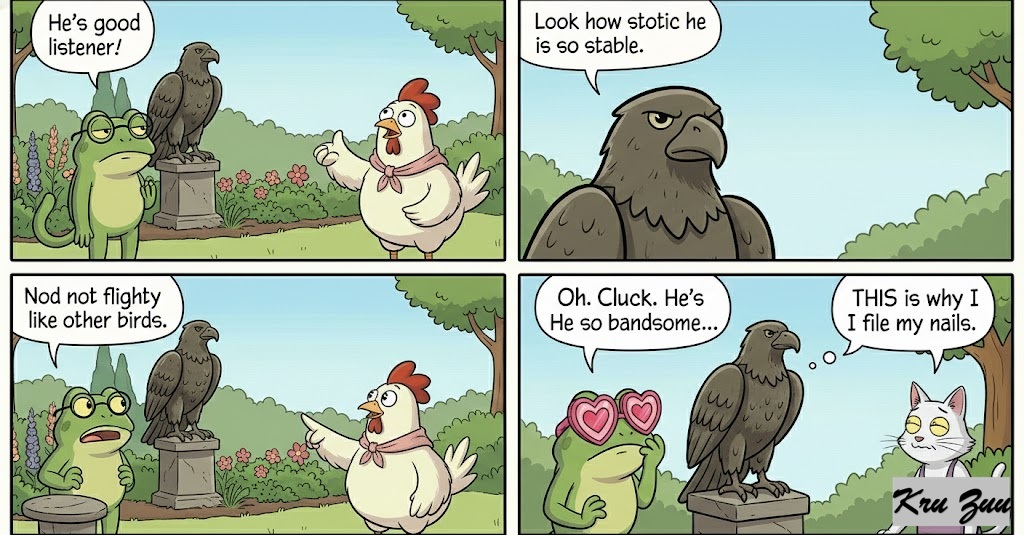

    Cleo laughs. “Darling, he’s literally made of stone. He’s cold. He has no heart. He isn’t stable; he’s stuck in the mud.”
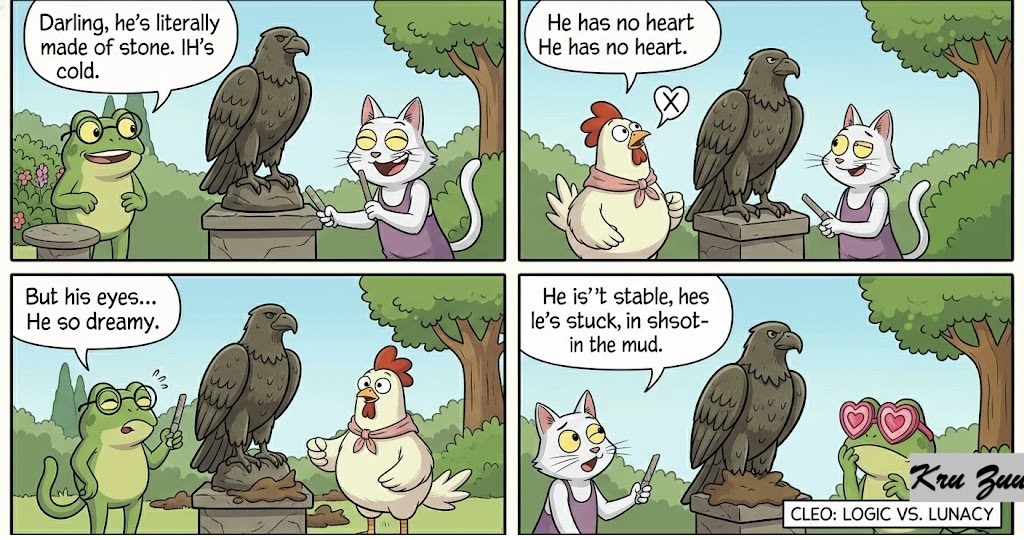

    The Reaction: “You are just jealous of our love!” Cluck yells. “Love is blind, and I see his soul!” She runs over and hugs the cold stone statue. “I’m going to knit him a sweater. He looks chilly.”
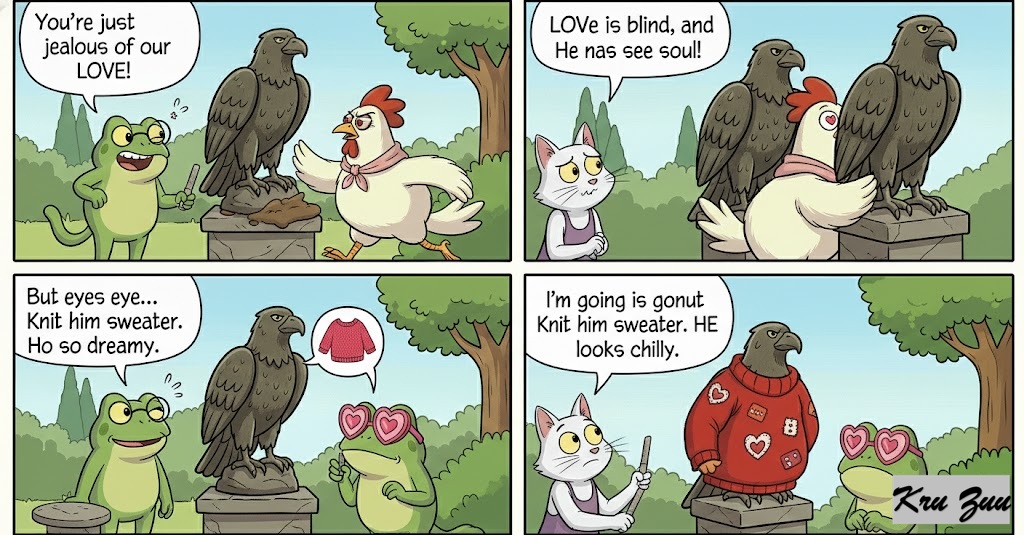

    Fred looks at Cleo. “Should we tell her?” Cleo shakes her head. “No. Wait for the rain.”
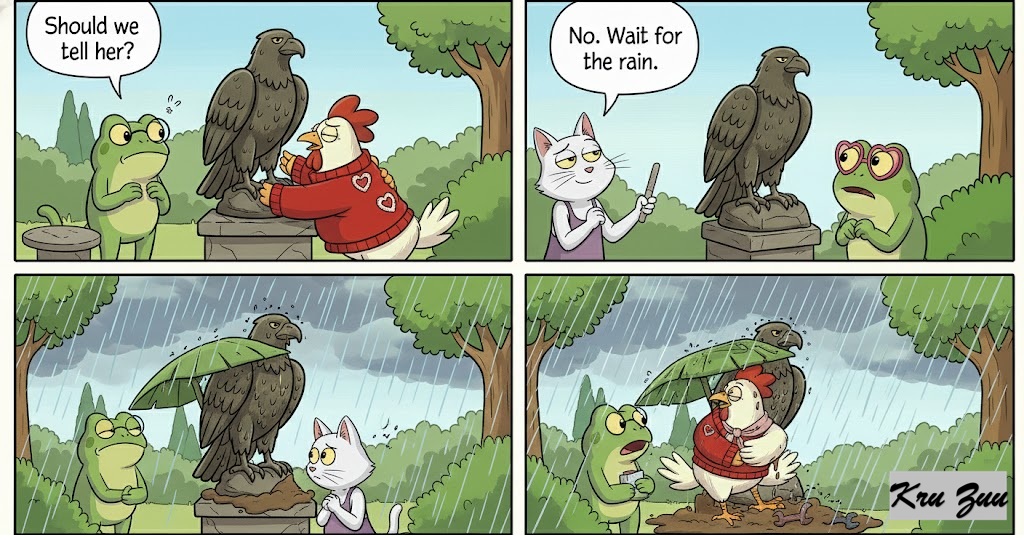

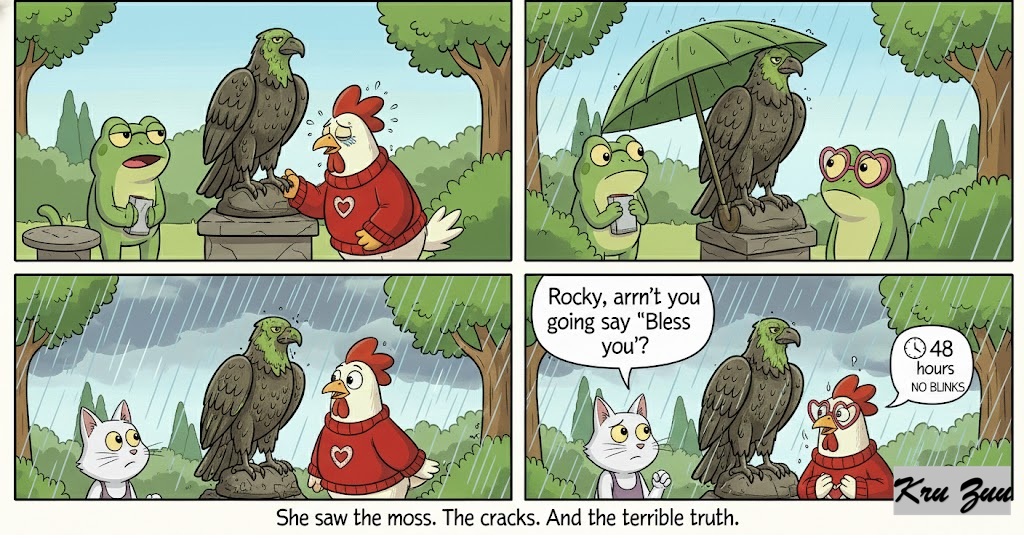
    The Resolution: Two days later, it rained heavily. Cluck stood by “Rocky” with an umbrella, but Rocky didn’t say thank you. He didn’t move. Moss started growing on his beak. Finally, Cluck sneezed. “Rocky, aren’t you going to say ‘Bless you’?” Silence. Cluck finally stepped back. She looked, really looked, and saw the moss. She saw the cracks in the stone. She realized he hadn’t blinked in 48 hours.

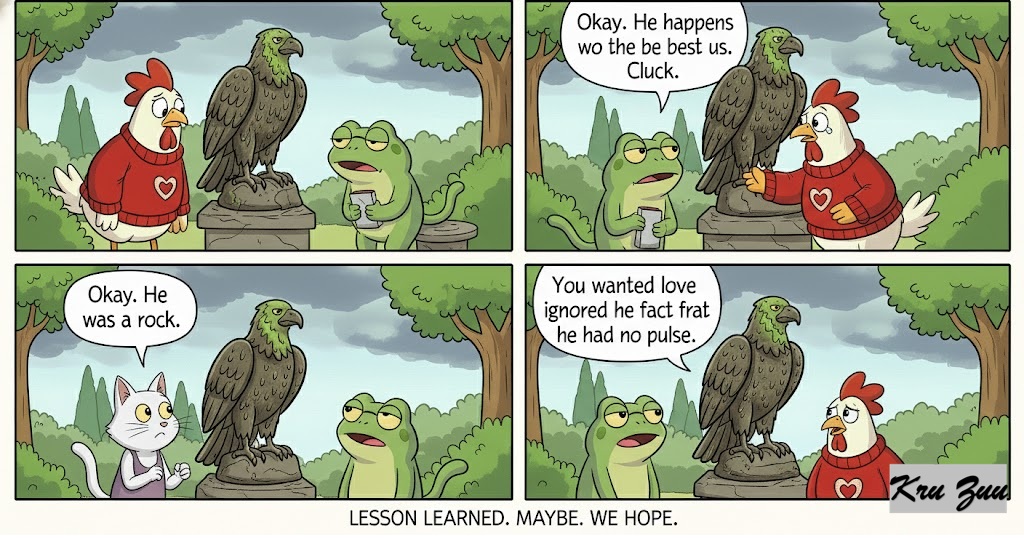
    The Lesson: Cluck walked back to her friends, head down. “Okay. He was a rock.” Fred patted her wing. “It happens to the best of us, Cluck. You wanted love so badly, you ignored the fact that he had no pulse.”

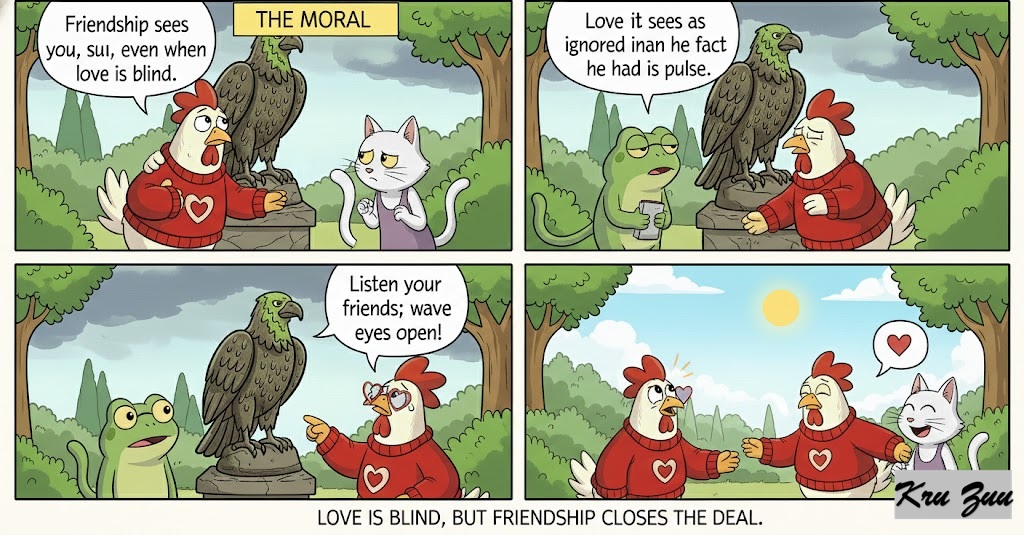
    The Moral: Love is blind, but friendship closes the deal. Listen to your friends; they have their eyes open.
    🎓 Lesson for English Learners


    How to give advice without being mean.
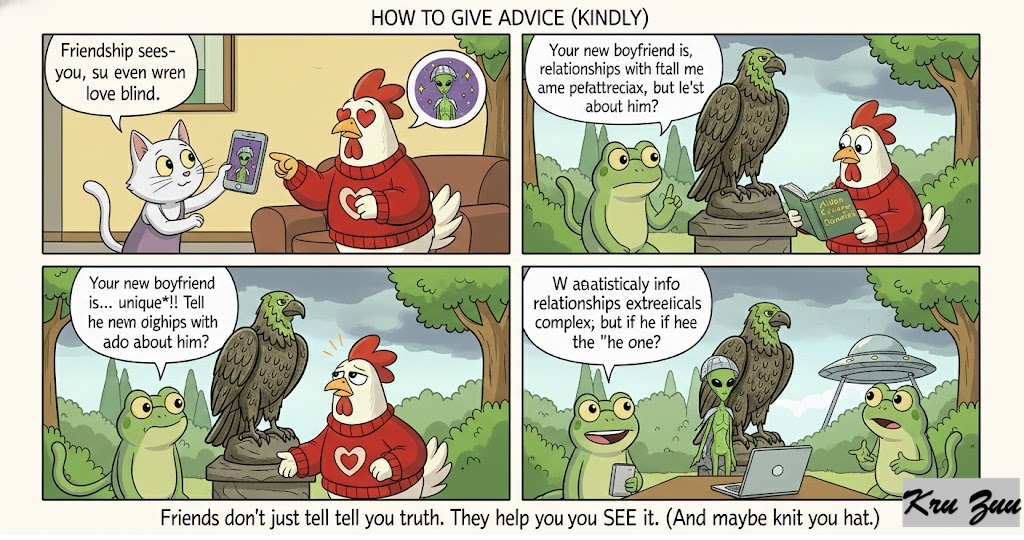

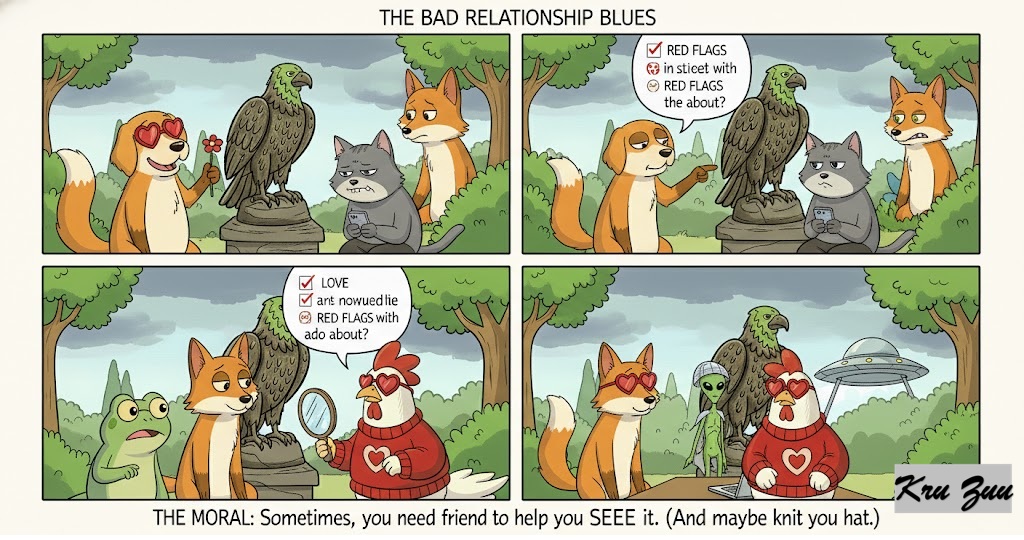
    Situation: Your friend is dating someone who treats them badly. You want to warn them, but you don’t want to fight.
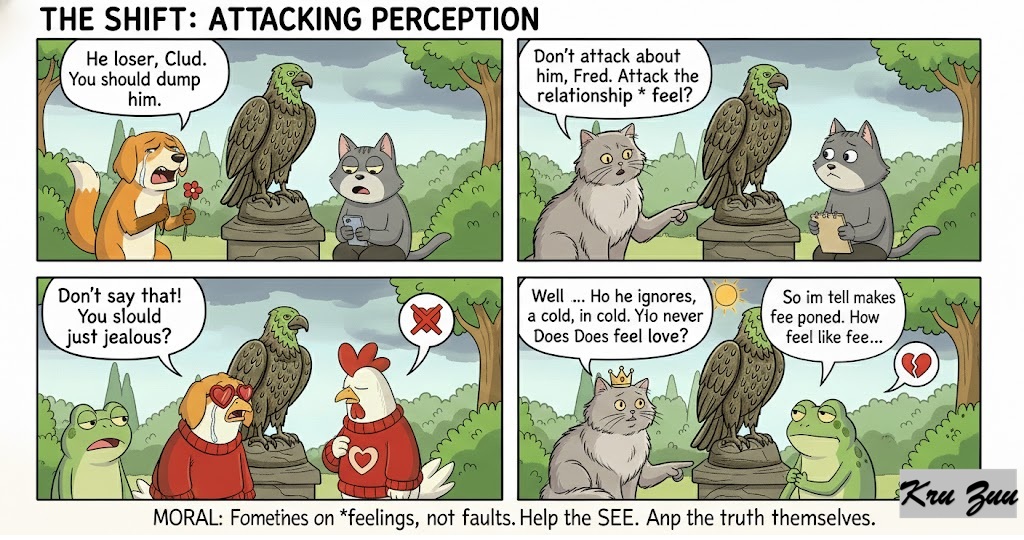
    The Shift: Don’t attack the partner (“He is a loser”). Attack the perception.
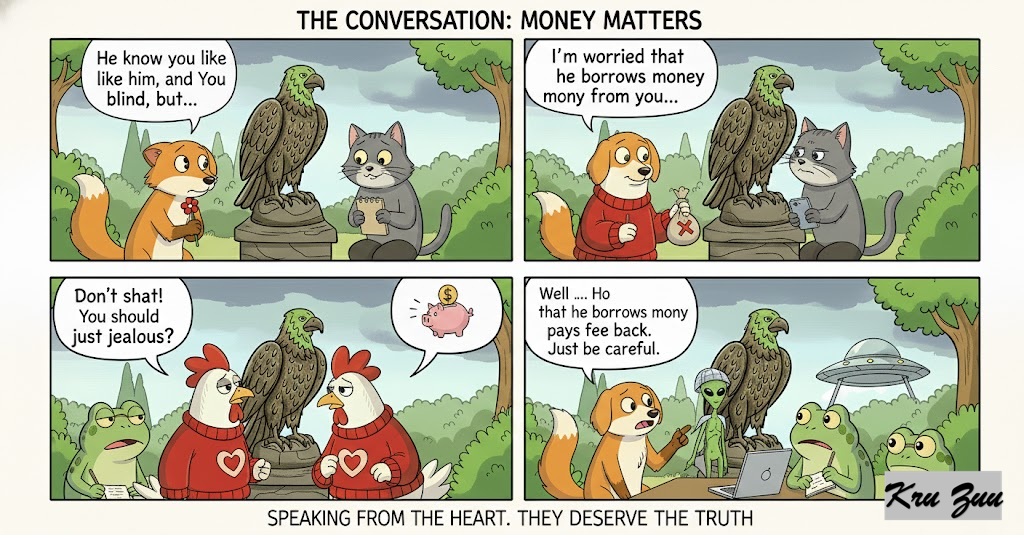
    You Say: “I know you really like him, and love is blind, but I’m worried that he borrows money from you and never pays it back. Just be careful.”

    💬 Your Turn: The “Red Flag” Challenge 🚀


    Do you want to cure your “Villain” romantic habits?
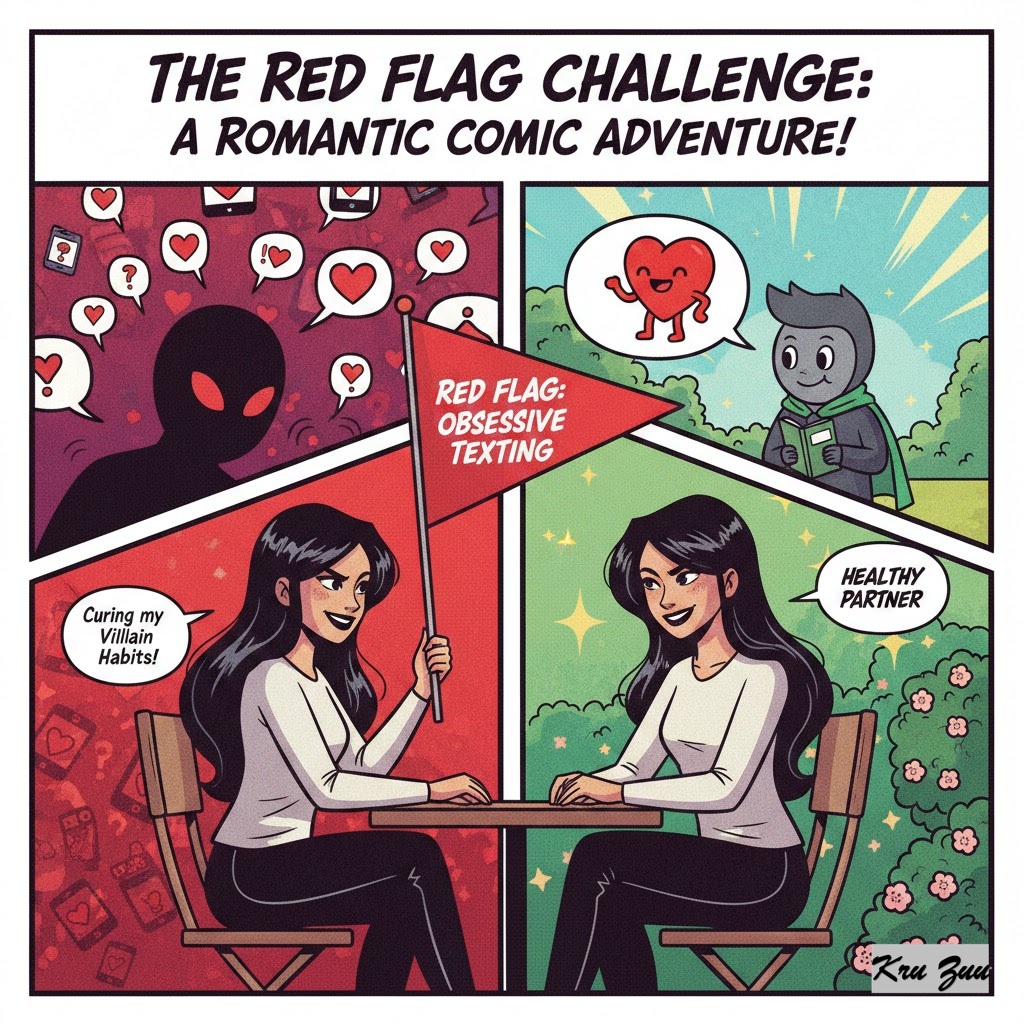

    The Challenge:
    Think of a past relationship or crush that didn’t work out.

    The Action: Write down three “Red Flags” (warning signs) that you ignored at the beginning because you were “blind.”


    Example: I ignored that he was rude to his mother.


    Example: I ignored that she hated all my friends.


    👇 Question for the comments: Have you ever worn “Rose-colored glasses”? What is one funny thing you overlooked in a partner because you were in love? Tell us below!

    By Zubeyir YURTKURAN

    https://www.facebook.com/BrainBattleground/

    https://www.facebook.com/zubeyr.yurtkuran/

    https://www.instagram.com/zubeyryurtkuran/

    https://www.youtube.com/@BrainBattleground-b3p

    https://www.instagram.com/brainbattleground/

  • 💎 The Daily Shield: The Law of Hidden Value

    💎 The Daily Shield: The Law of Hidden Value

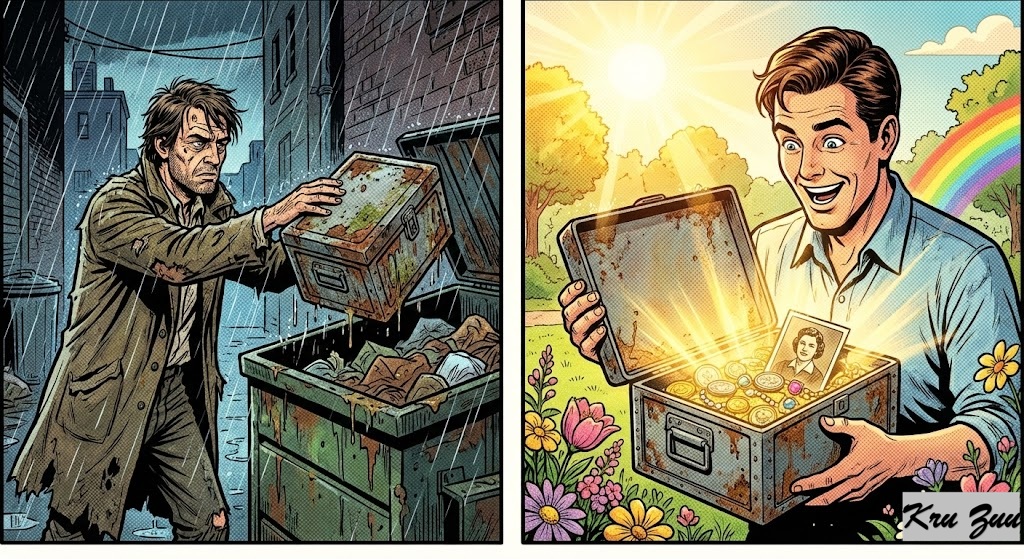
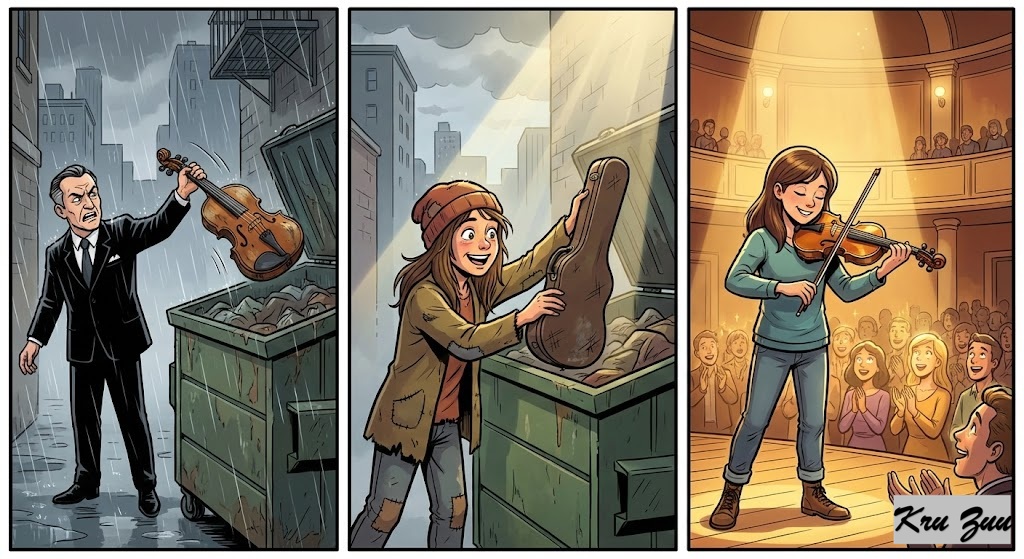
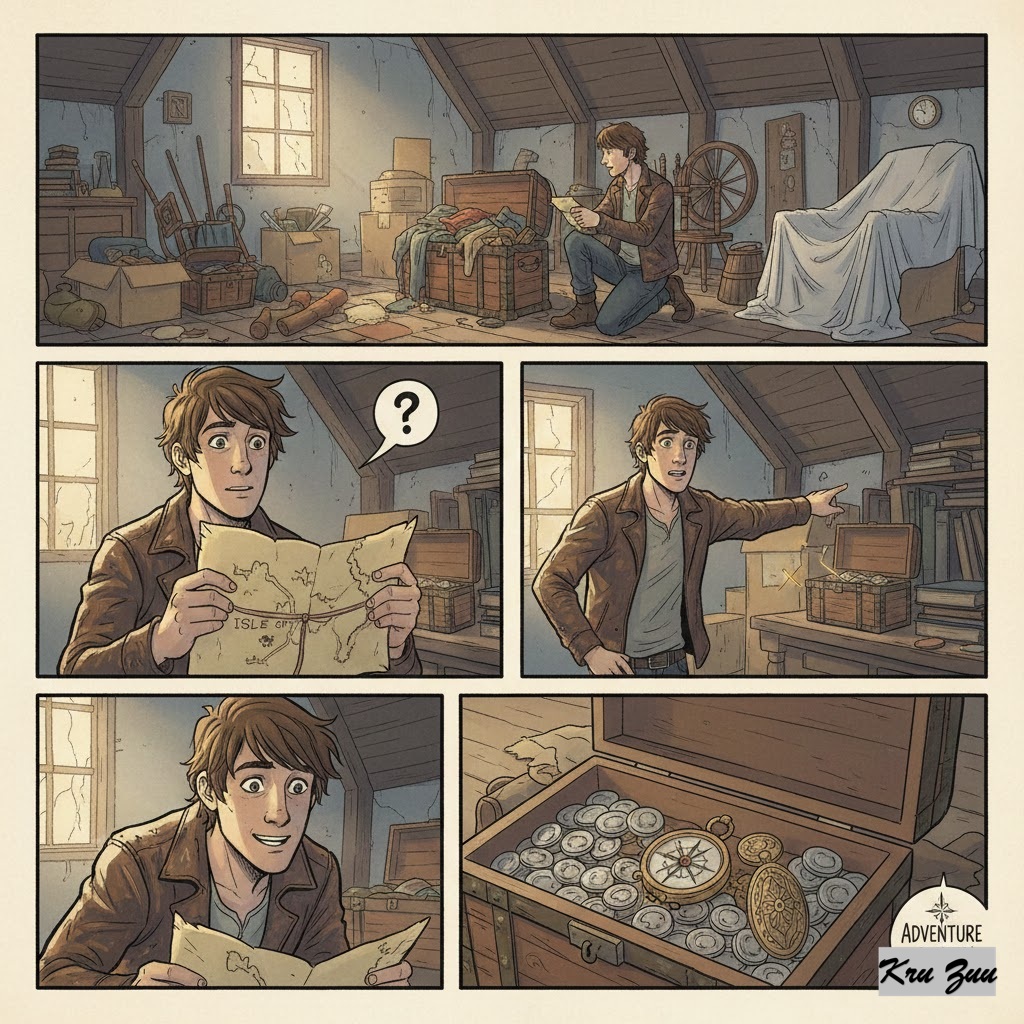
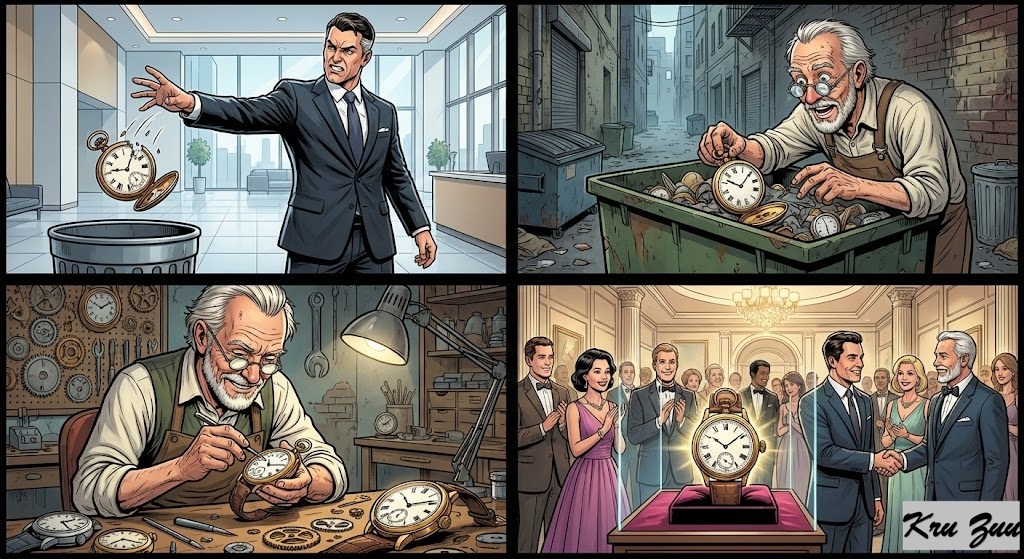
    “One man’s trash is another man’s treasure.”


    😈 The Villain (The Blind Consumer)


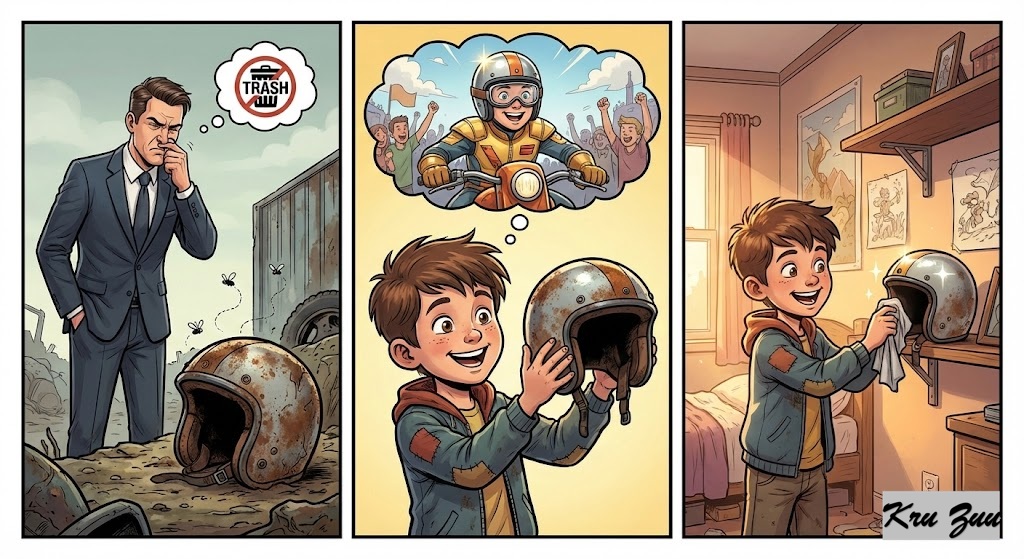
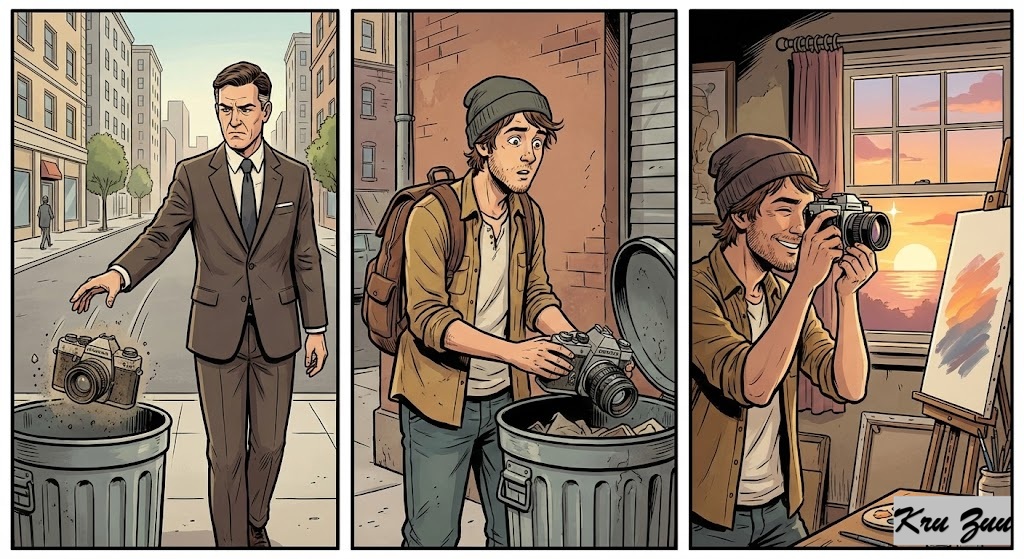
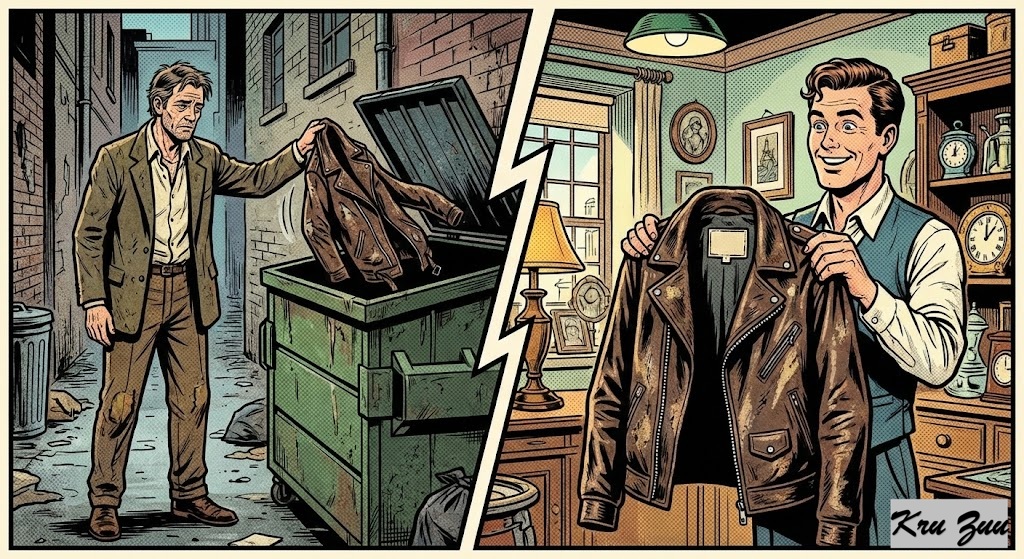
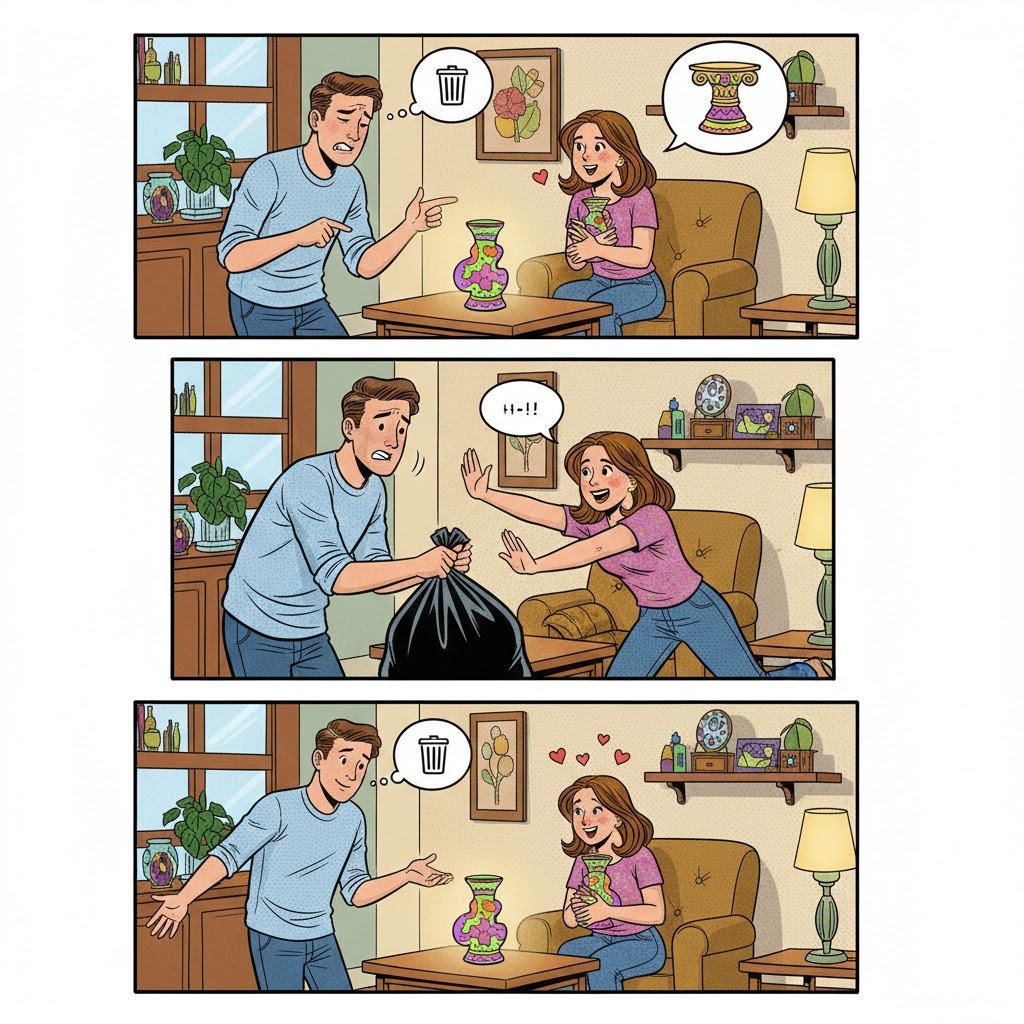
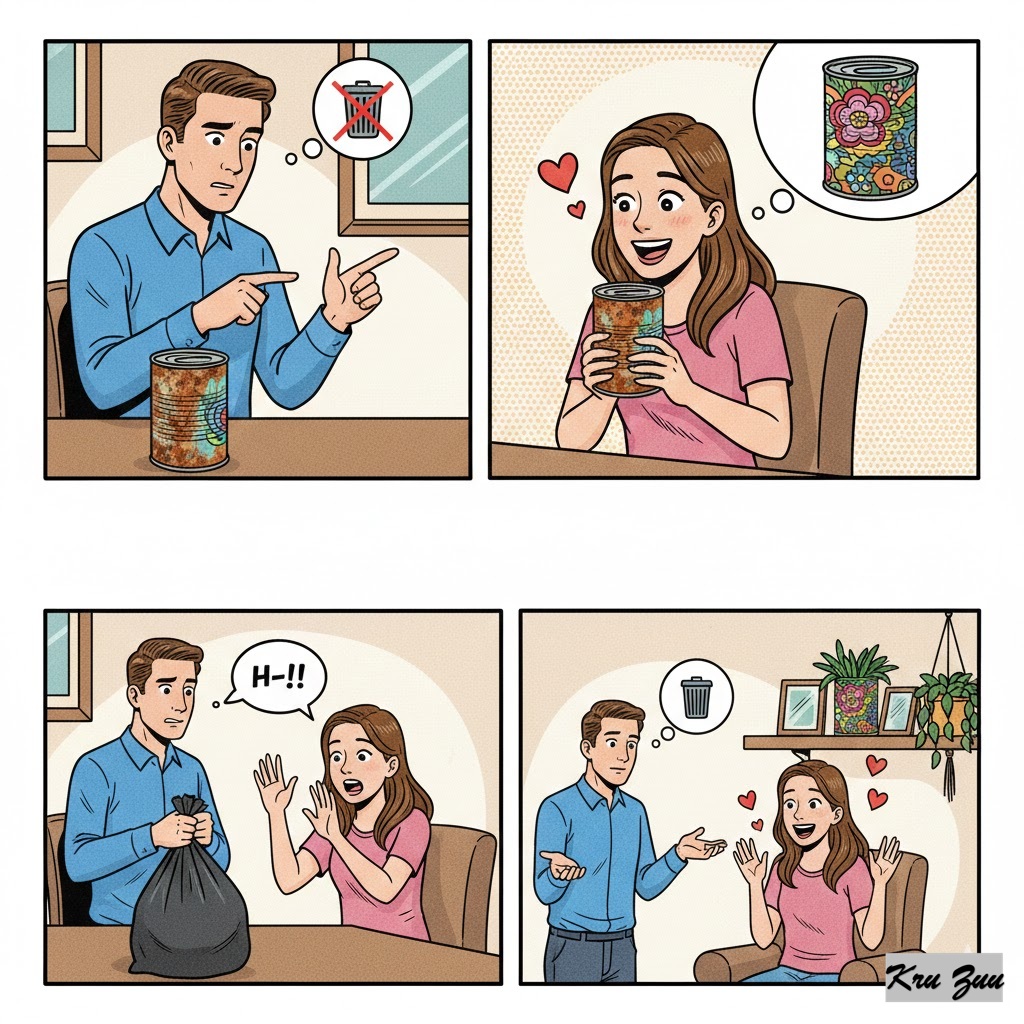
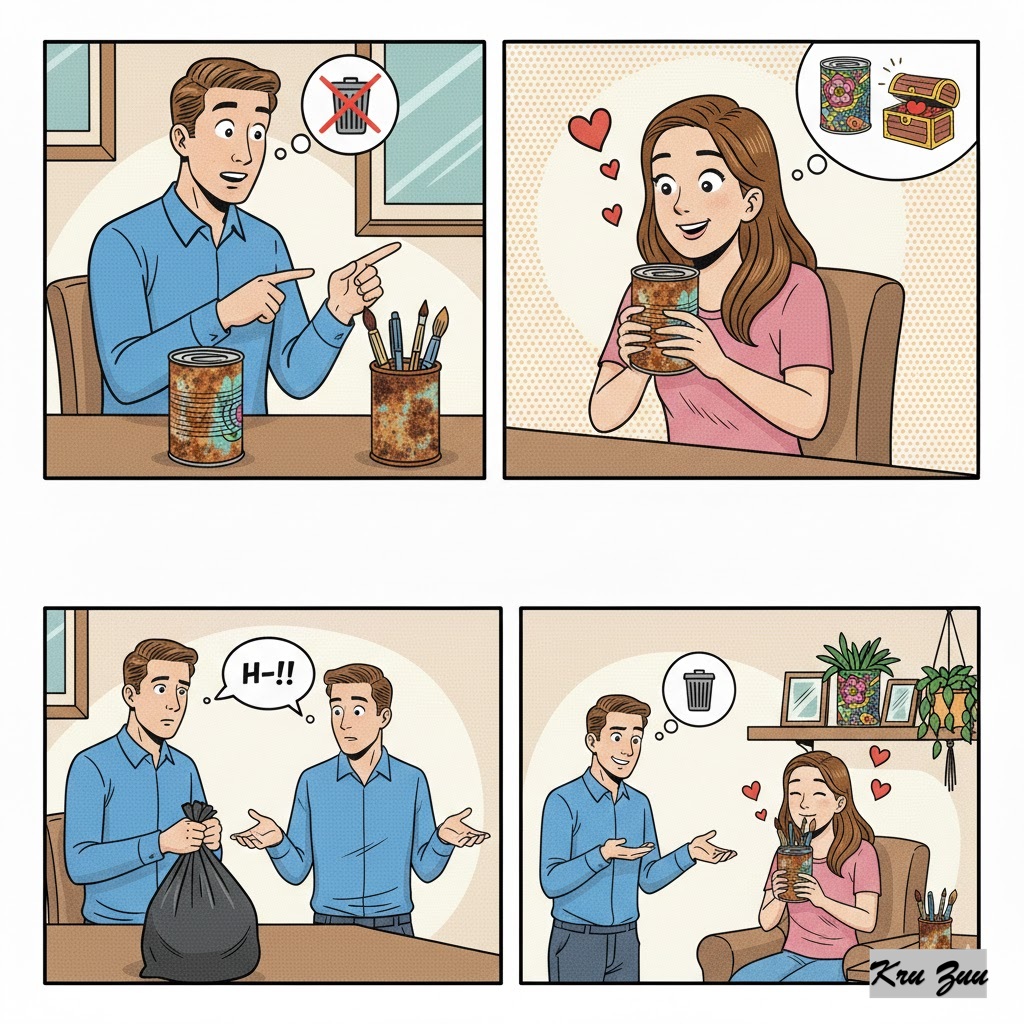
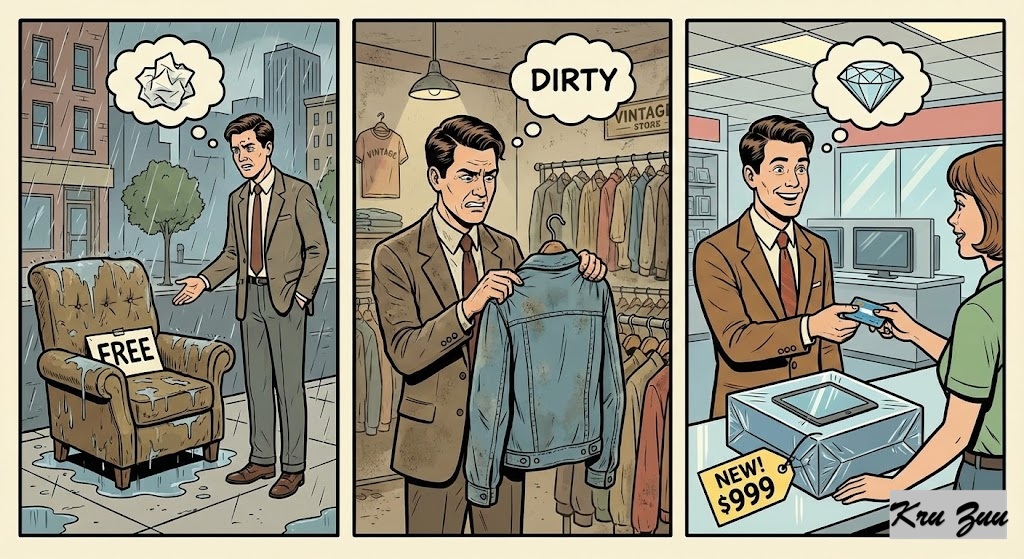
    You see an old chair on the sidewalk or a dusty vintage jacket. You think: “Ew, gross. Why is that junk still there?” 🗑️ You only value things that are shiny, brand-new, and straight off the shelf. You believe that Price = Value. If it’s cheap or used, it’s worthless to you.

    The Result? You spend a fortune chasing trends. Your home is full of generic items everyone else has. You lack the “vision” to see potential, and you’re stuck in a cycle of expensive, disposable consumption.


    😇 The Hero (The Alchemist)


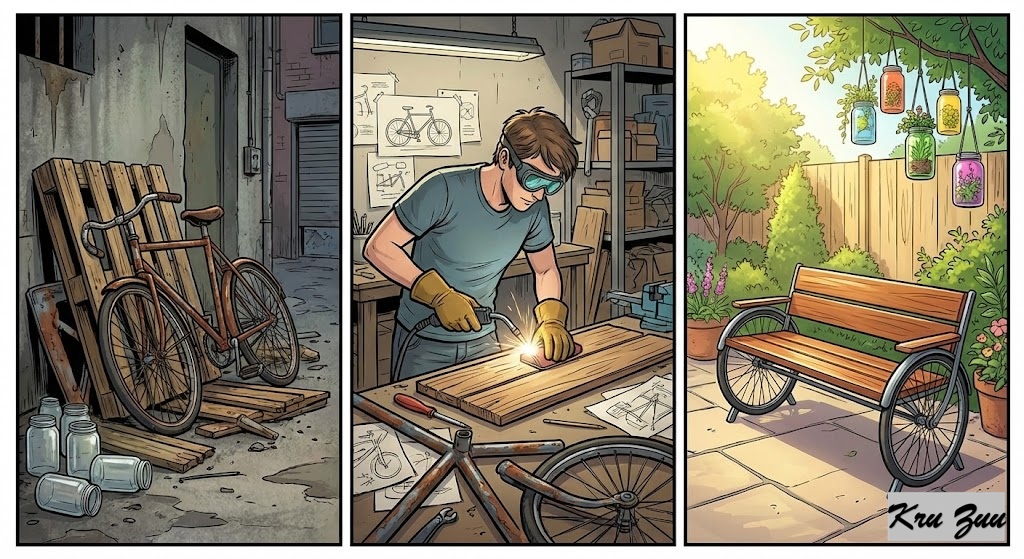
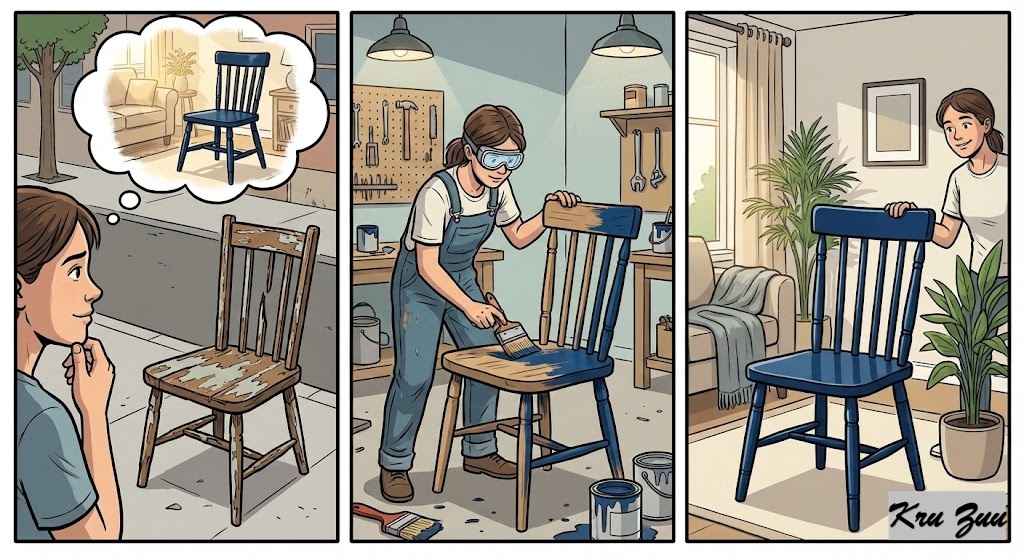
    You see the same old chair and think: “With a bit of sanding and blue paint, this is a masterpiece.” 🎨 You don’t look at what an object is; you look at what it can be. You recognize that value is subjective.

    The Result? You find incredible deals. Your life is filled with unique, soulful items. You save money while building a world of “treasures” that others missed. You understand that perspective is the ultimate wealth-builder. 🏰


    ⚖️ The Reality


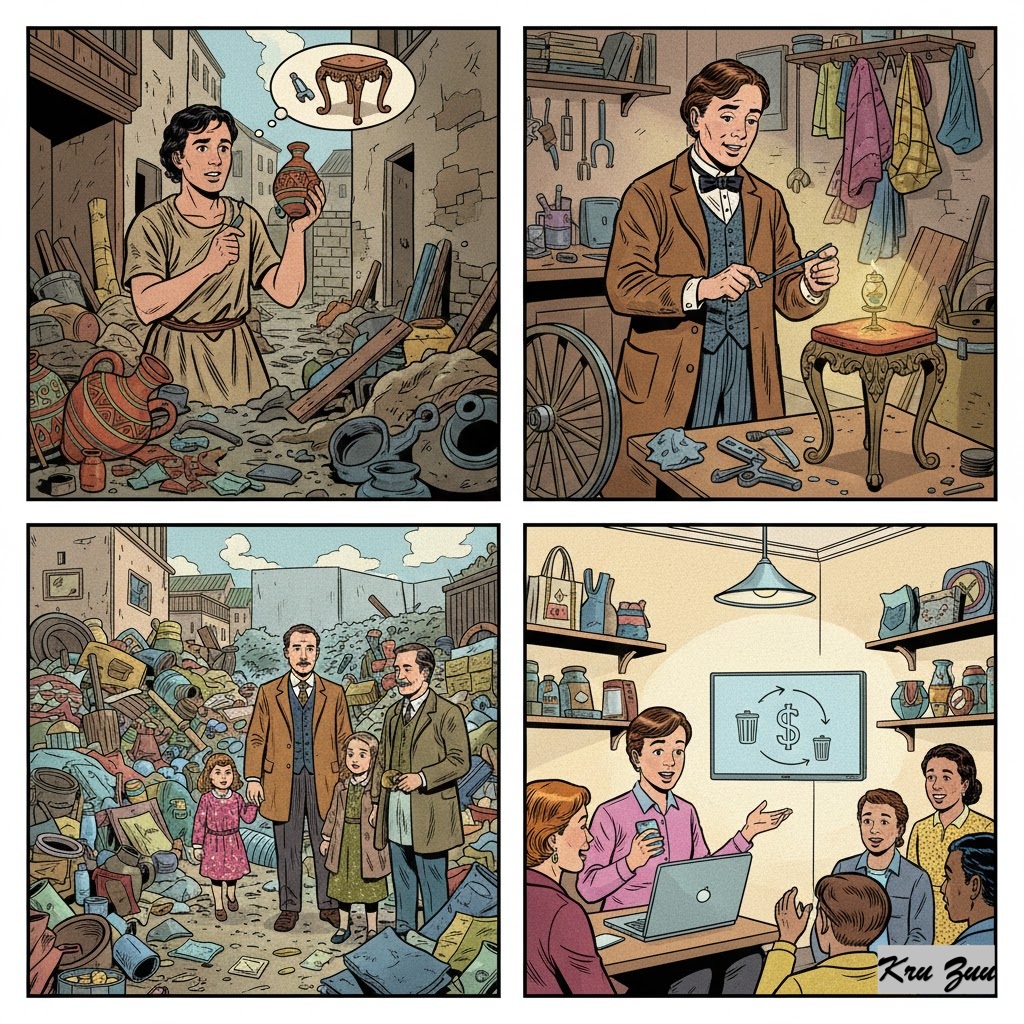
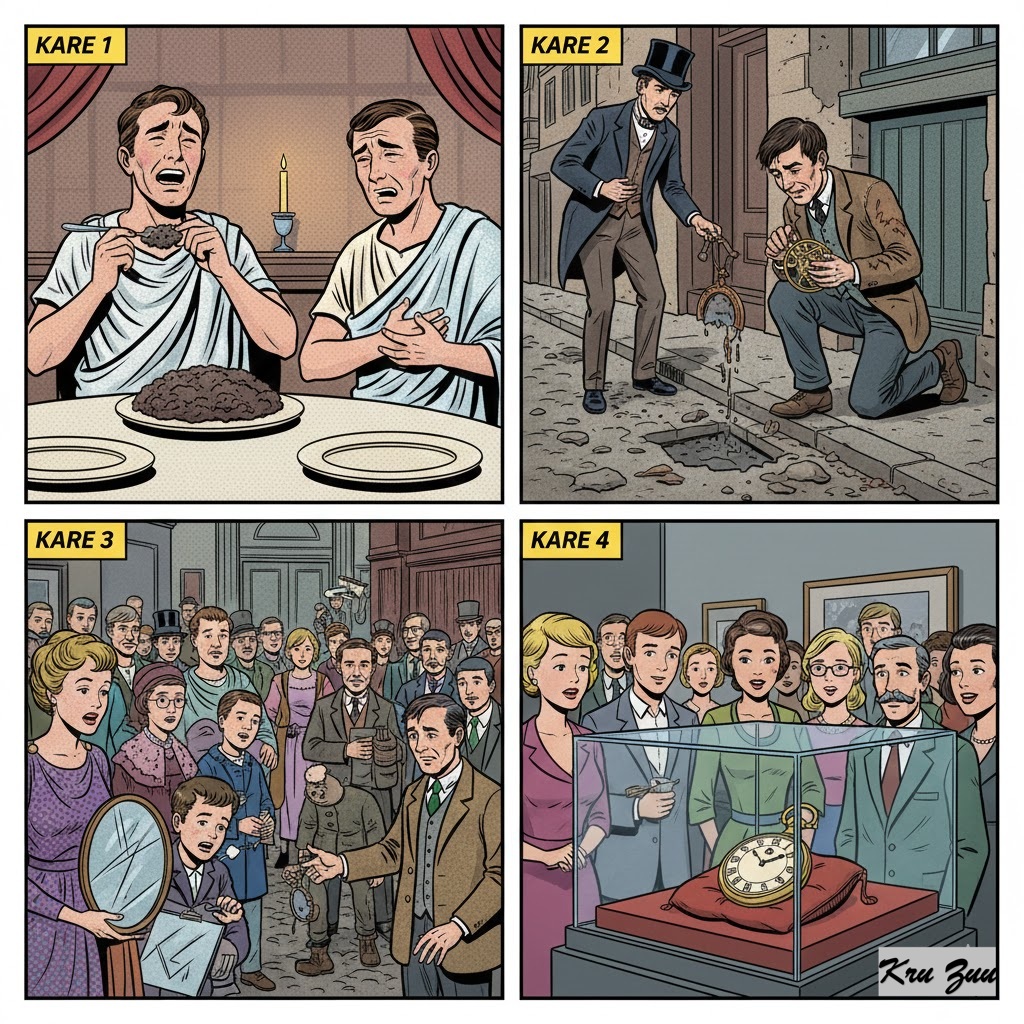
    Value is not a fixed number, it is a matter of perception. A broken watch is “trash” to a businessman, but a “treasure” to a watchmaker who needs parts. We live in a throw-away culture, but the most successful people find opportunities where others see obstacles. Wealth is often hidden in plain sight, disguised as “junk.”

    🧐 The Anatomy of the Proverb


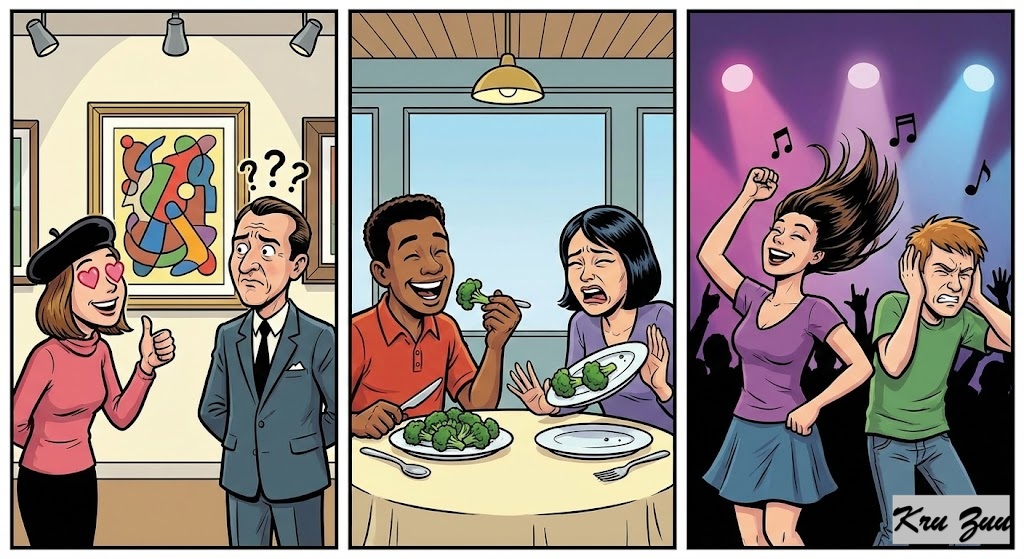
    This is your reminder that worth is in the eye of the beholder.


    One man’s (Noun): A person’s subjective experience.


    Trash (Noun): Something discarded, worthless, or unwanted.


    Is another man’s (Phrase): Simultaneously becomes someone else’s.


    Treasure (Noun): Something of great value, beauty, or importance.


    Simpler Version: People have different ideas about what is valuable. / Don’t judge a book by its cover.


    📚 Vocabulary Vault


    Subjective (Adjective): Based on or influenced by personal feelings or tastes. 🎨


    Obsolete (Adjective): No longer produced or used; out of date.


    Upcycle (Verb): To reuse discarded objects or material in such a way as to create a product of higher quality or value than the original. ♻️


    Beholder (Noun): A person who sees or observes someone or something.


    Perception (Noun): The way in which something is regarded, understood, or interpreted.


    🧠 Grammar Focus: Idioms for Perspective


    We use this idiom to explain different tastes or to justify why we keep something others might find “ugly.”


    Friend: “Why do you keep that rusty old tin can on your desk?”


    You: “Actually, it’s a 1920s limited edition tea box. I’m using it as a pen holder. You know what they say: One man’s trash is another man’s treasure.”

    📜 History: Origin and Spread


    Where did this philosophy of “trash to cash” begin?


    The Origin: While the sentiment is ancient, the specific phrasing became popular in the mid-19th century. It mirrors the Latin proverb “Quod aliis cibus est aliis fuat acre venenum” (What is food to one may be bitter poison to others).


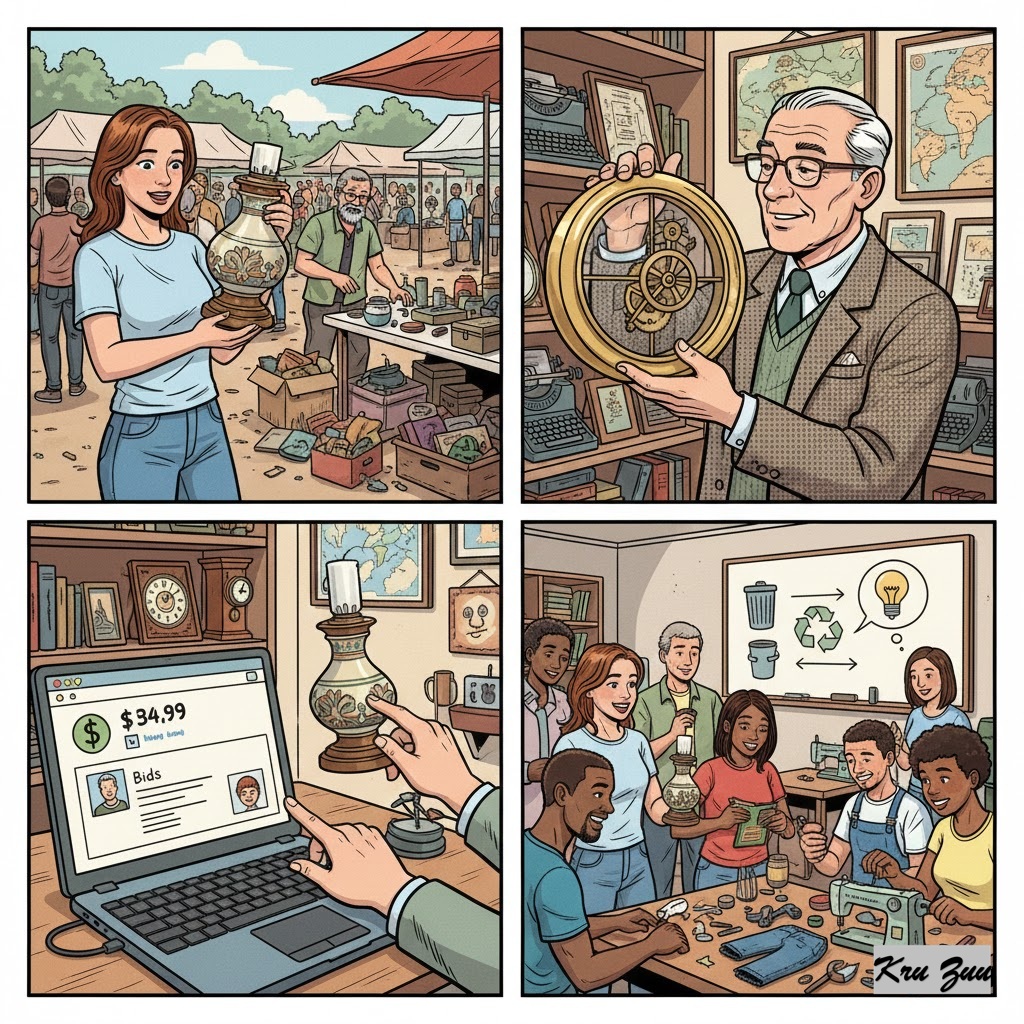
    The Logic: It’s the foundation of the Secondary Market (eBay, flea markets, antique shops). It highlights the human ability to innovate and find use where others find waste.


    Global Cousins


    🇫🇷 French: “Le bonheur des uns fait le malheur des autres.” (The happiness of some makes the unhappiness of others — similar context of differing perspectives).


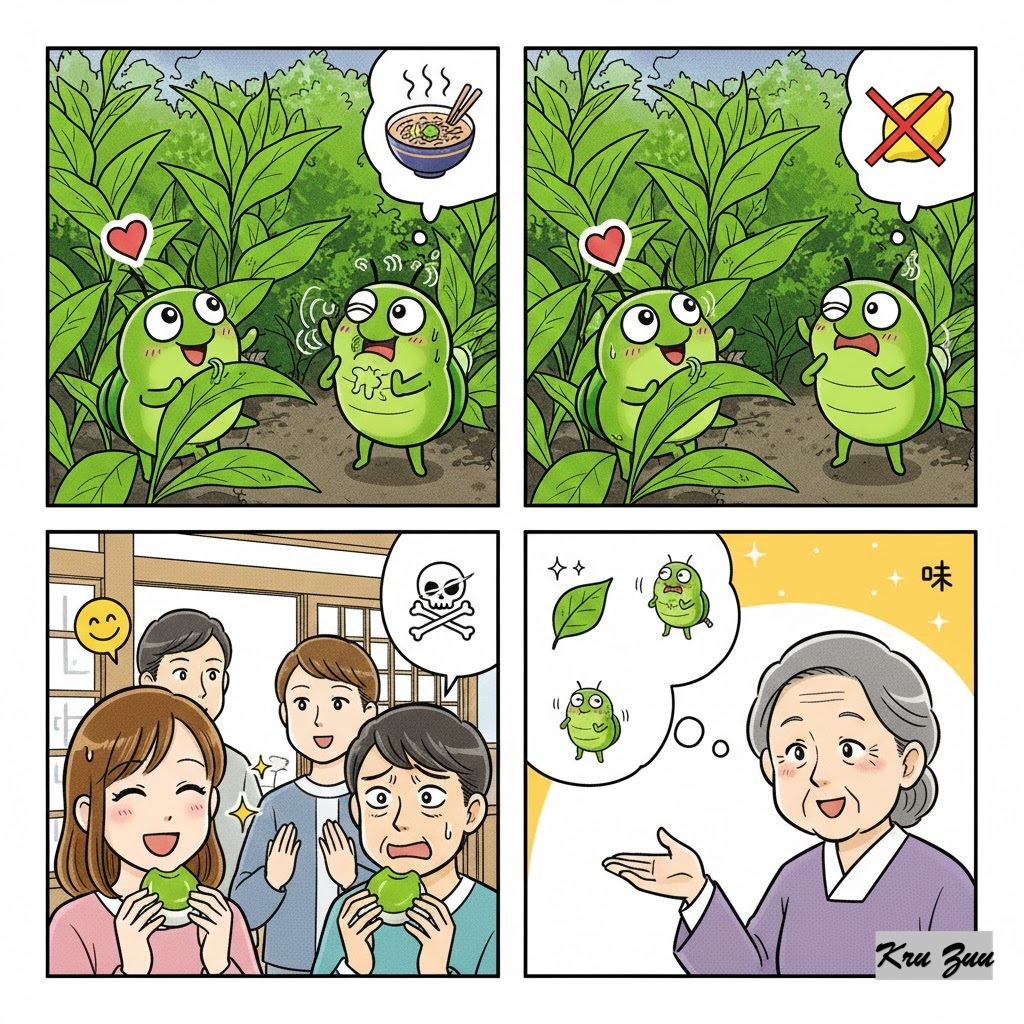
    🇯🇵 Japanese: “Tade kuu mushi mo sukizuki.” (There are even bugs that eat knotweed, meaning tastes vary).

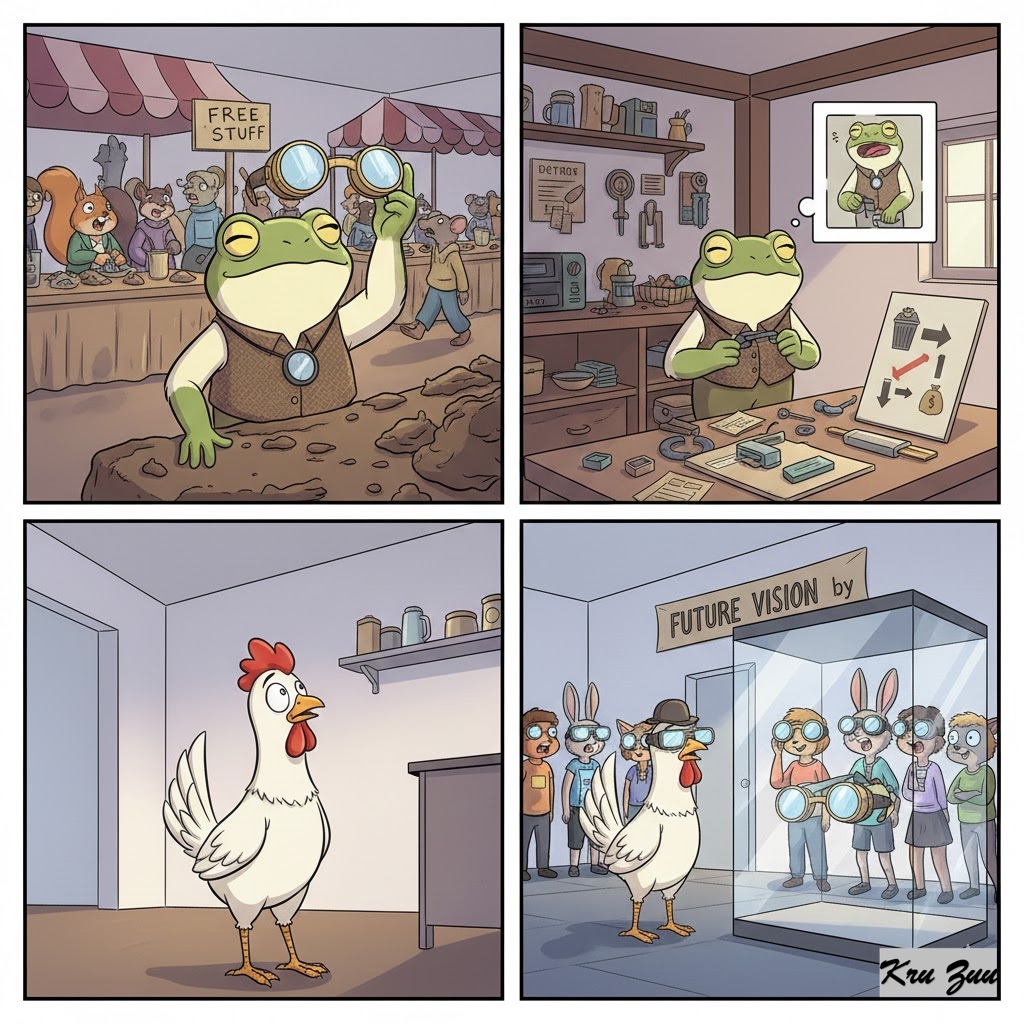
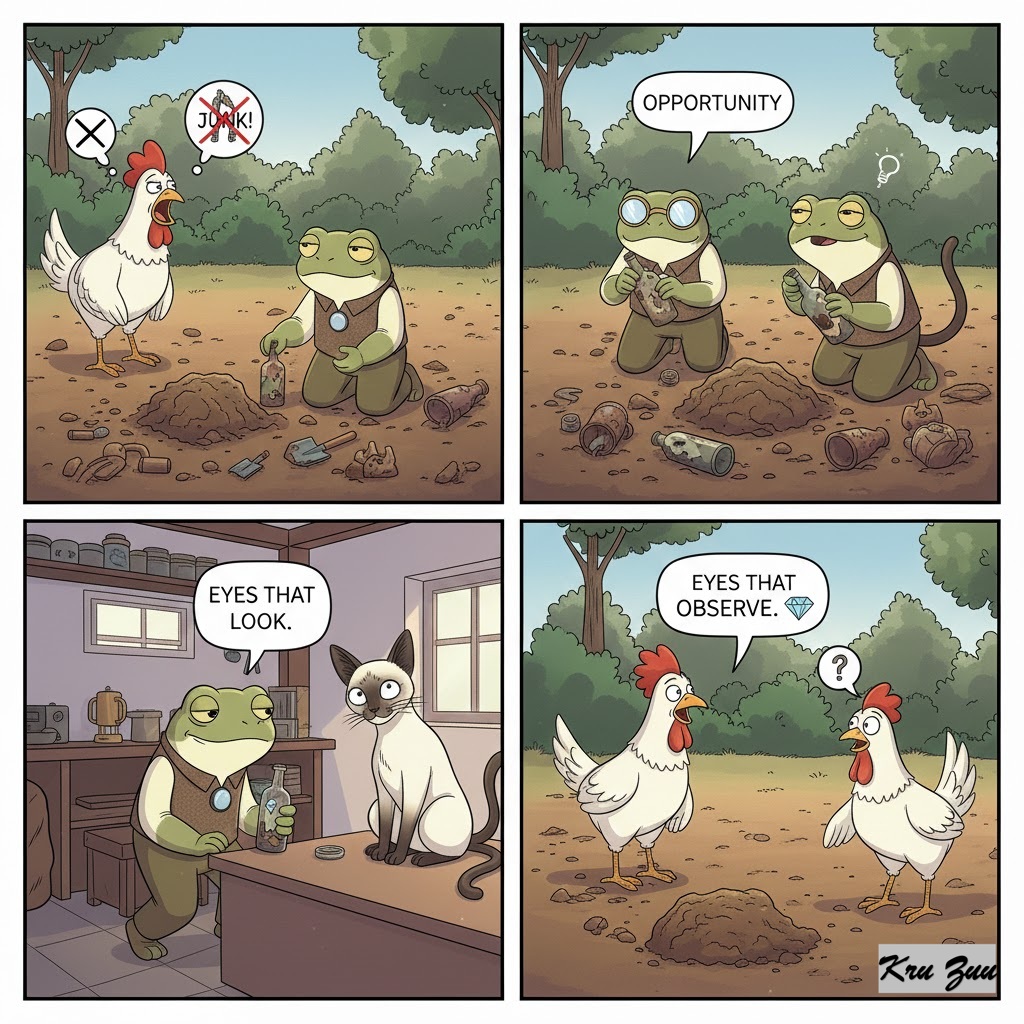
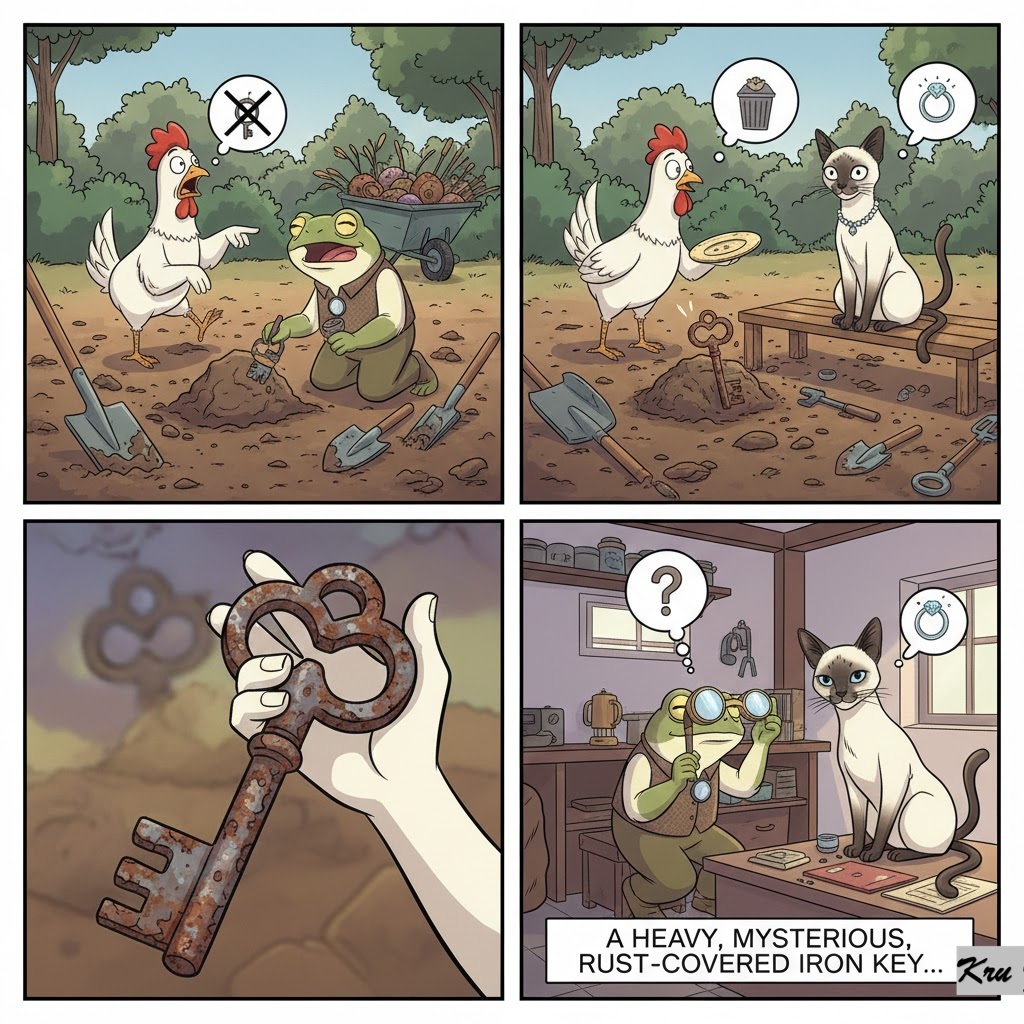
    🎭 Short Story: The Rusty Iron Key 🔑🐱🐔🐸


    🌟 The Cast


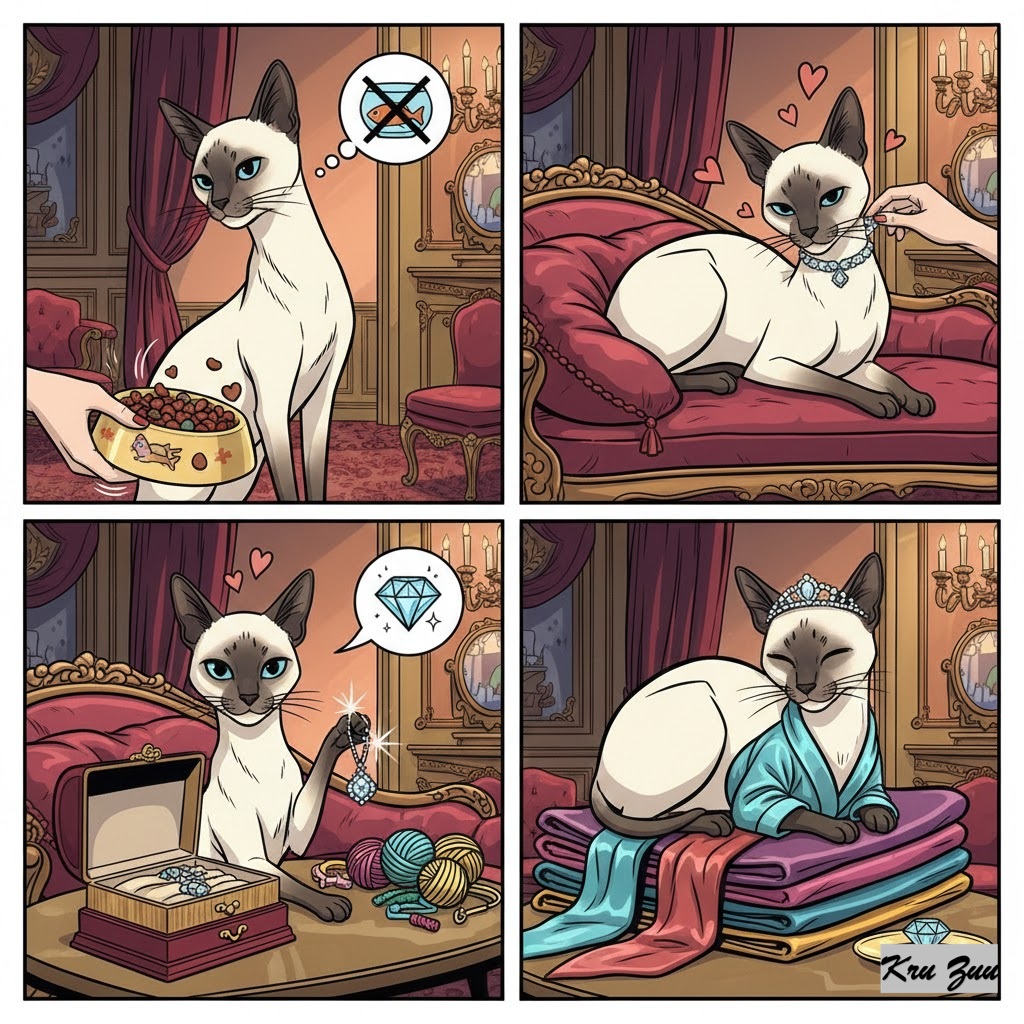
    Cleo the Cat: Elegant, only likes diamonds and silk. 😼


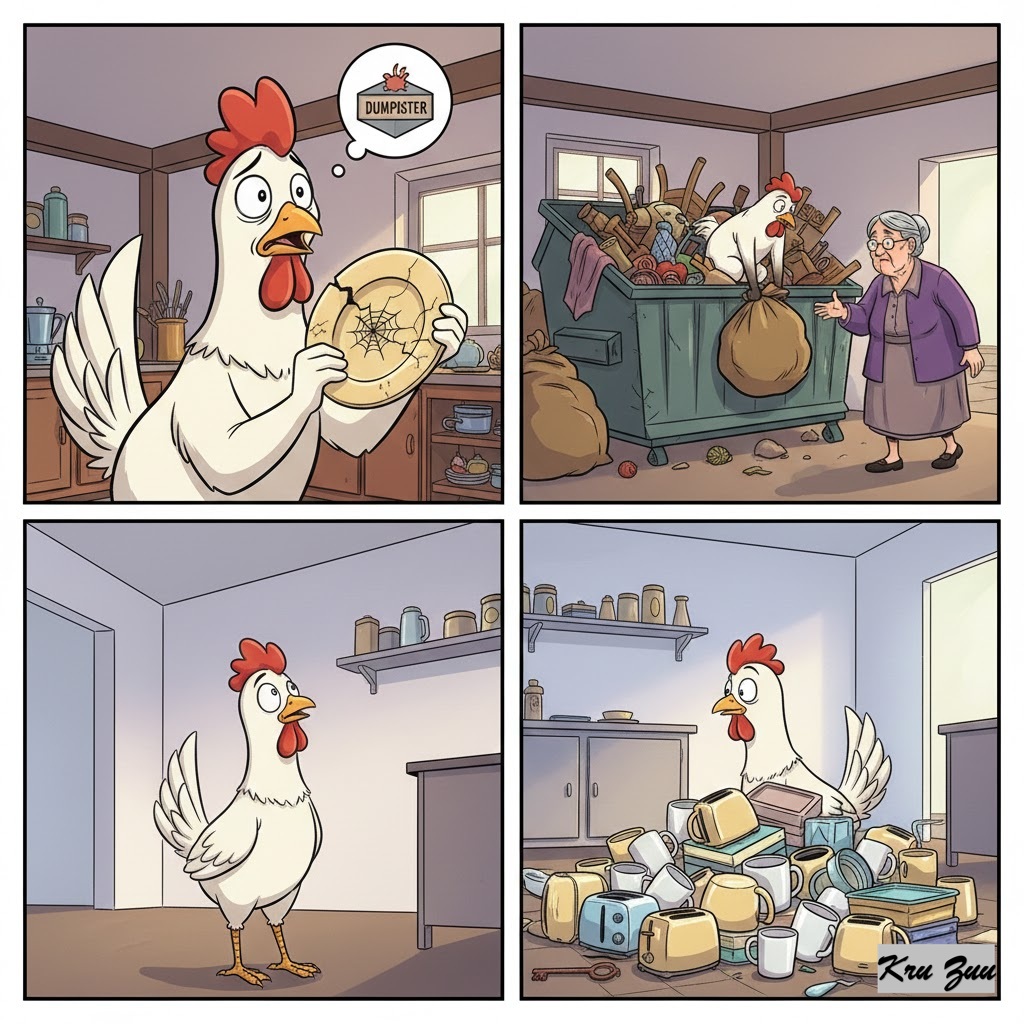
    Cluck the Chicken: Panics easily, throws away everything “old.” 🐔


    Fred the Frog: The calm collector who sees the future. 🐸


    The Situation: While cleaning the community garden, the trio finds a heavy, rusted, dirt-covered iron key.


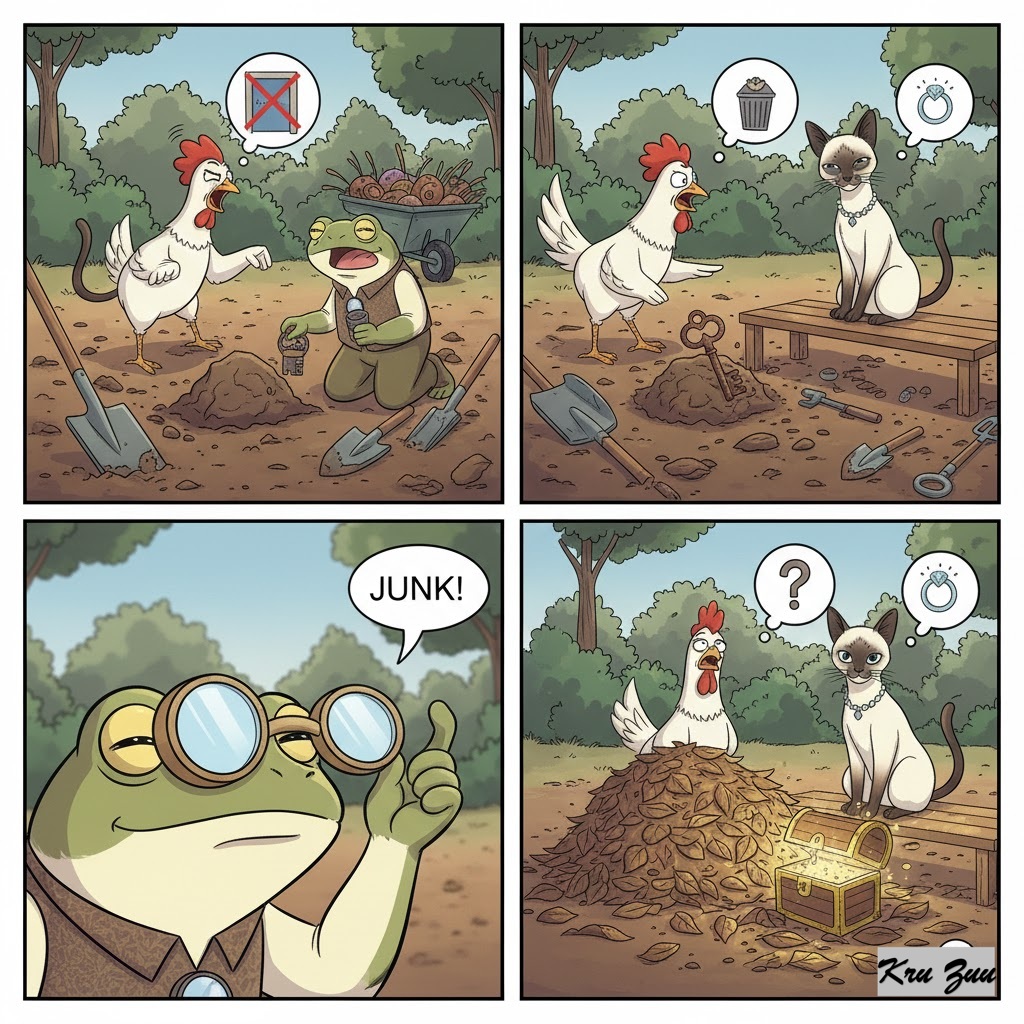
    The Conflict: “Ugh! Get it away from me!” Cleo hissed, flicking her tail. “It’s filthy and probably covered in germs. It belongs in the bin!” Cluck squawked in agreement. “It’s useless! It doesn’t open my modern electronic coop door. It’s just heavy junk!” Cluck kicked the key into a pile of dead leaves.


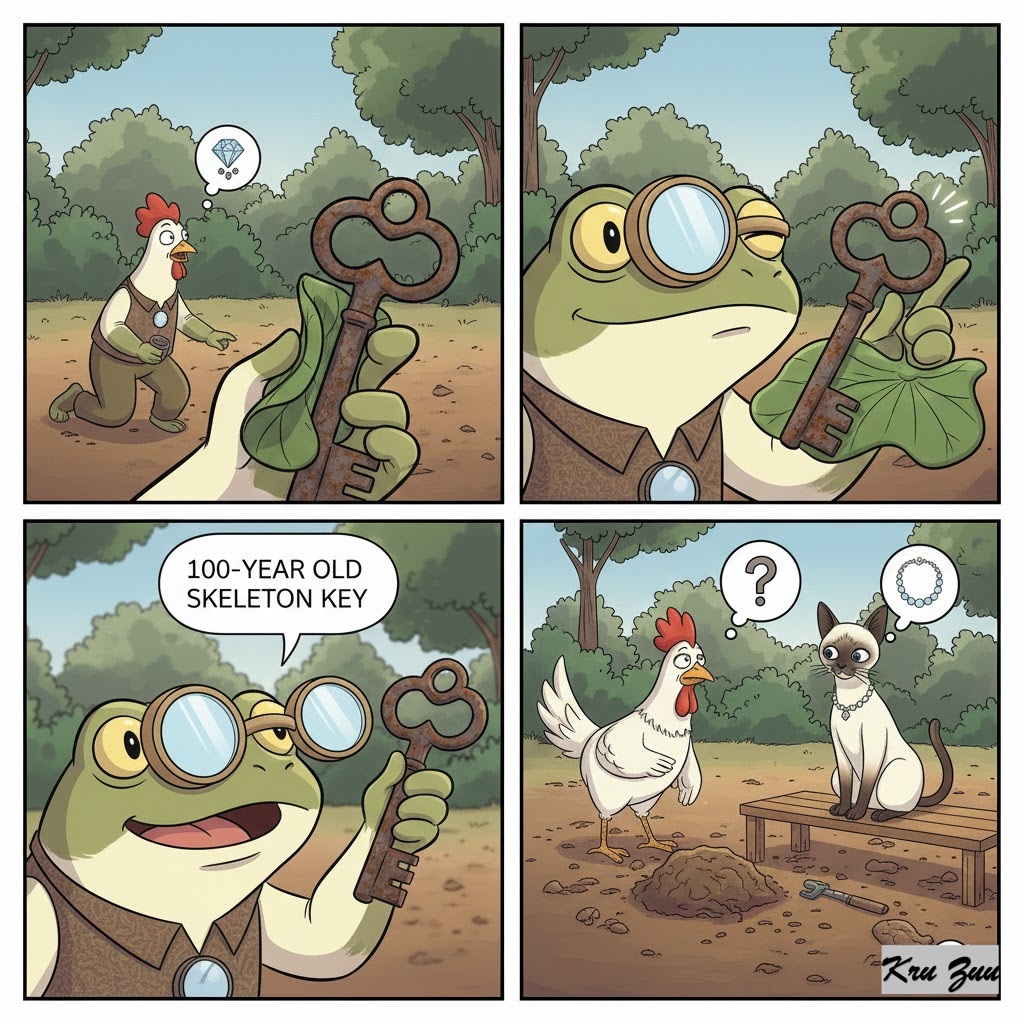
    The Reaction: Fred hopped over and picked up the key. He wiped away the mud with a lily pad. “Ribbit,” Fred whispered. “This isn’t junk. Look at the craftsmanship. This is a 100 year old skeleton key.”


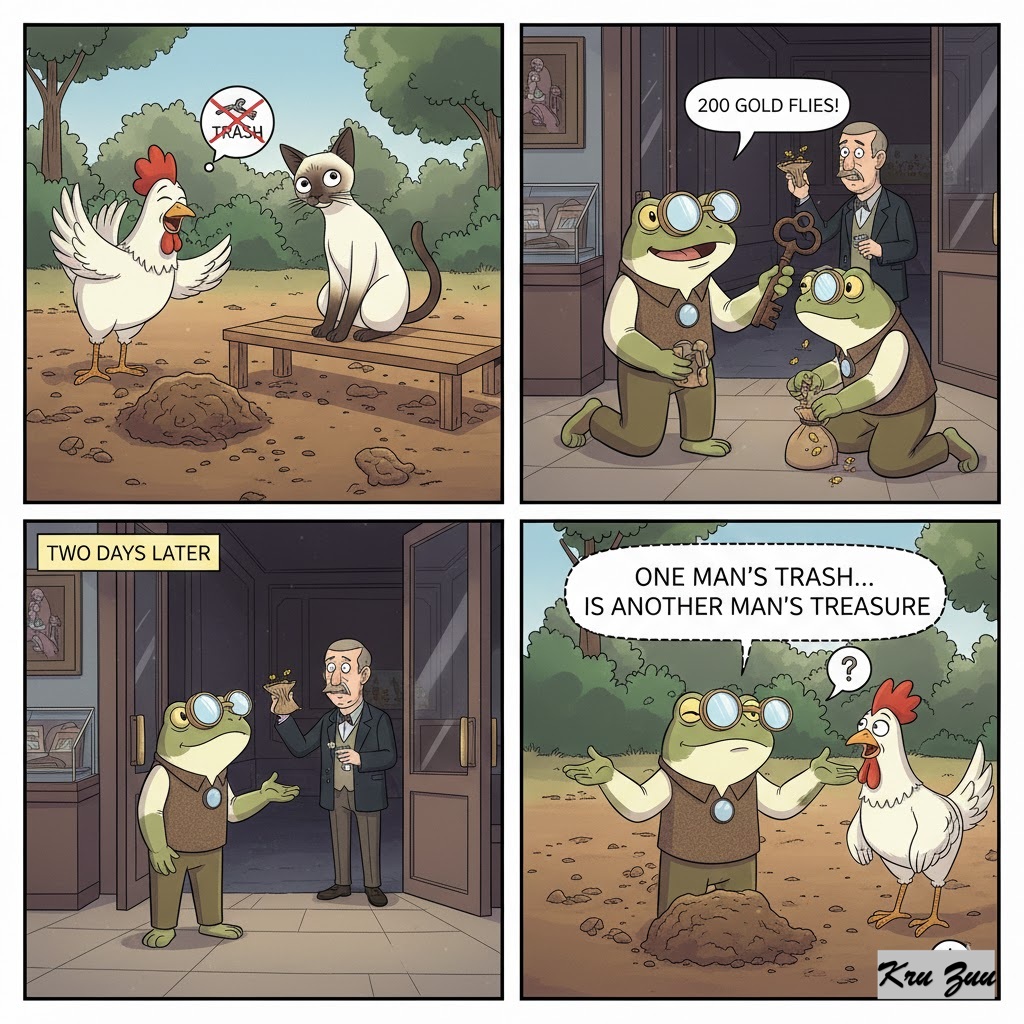
    The Resolution: Cleo laughed. “Have fun with your ‘trash,’ Fred.” Two days later, Fred returned. He had polished the key until it glowed like silver and attached it to a leather cord. He sold it to a local museum collector for 200 Gold Flies. Cleo and Cluck stared, mouths open. “You got all that for that piece of garbage?” Fred adjusted his glasses. “To you, it was a piece of metal. To the collector, it was the missing piece of history. One man’s trash, my friends… is another man’s treasure.”


    The Moral: Eyes that look see “junk.” Eyes that observe see “opportunity.” 💎

    🎓 Lesson for English Learners


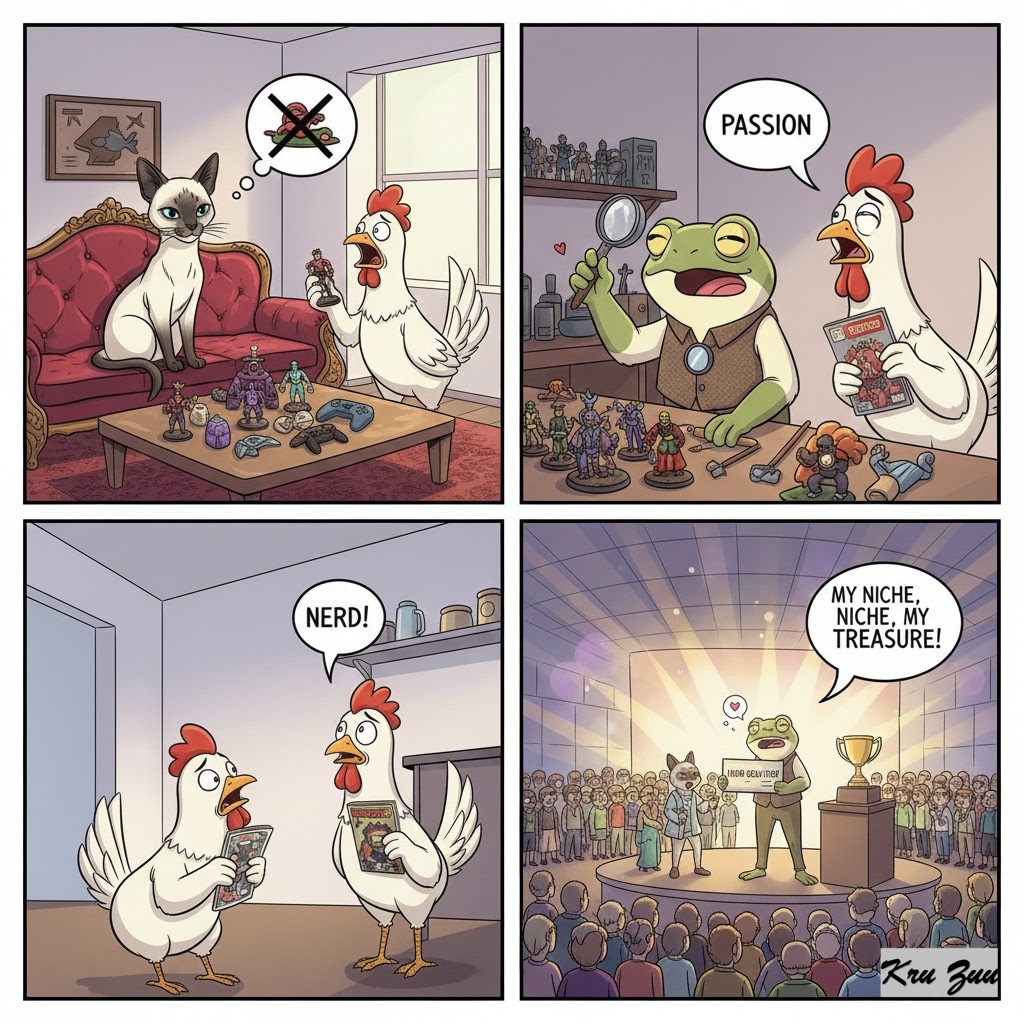
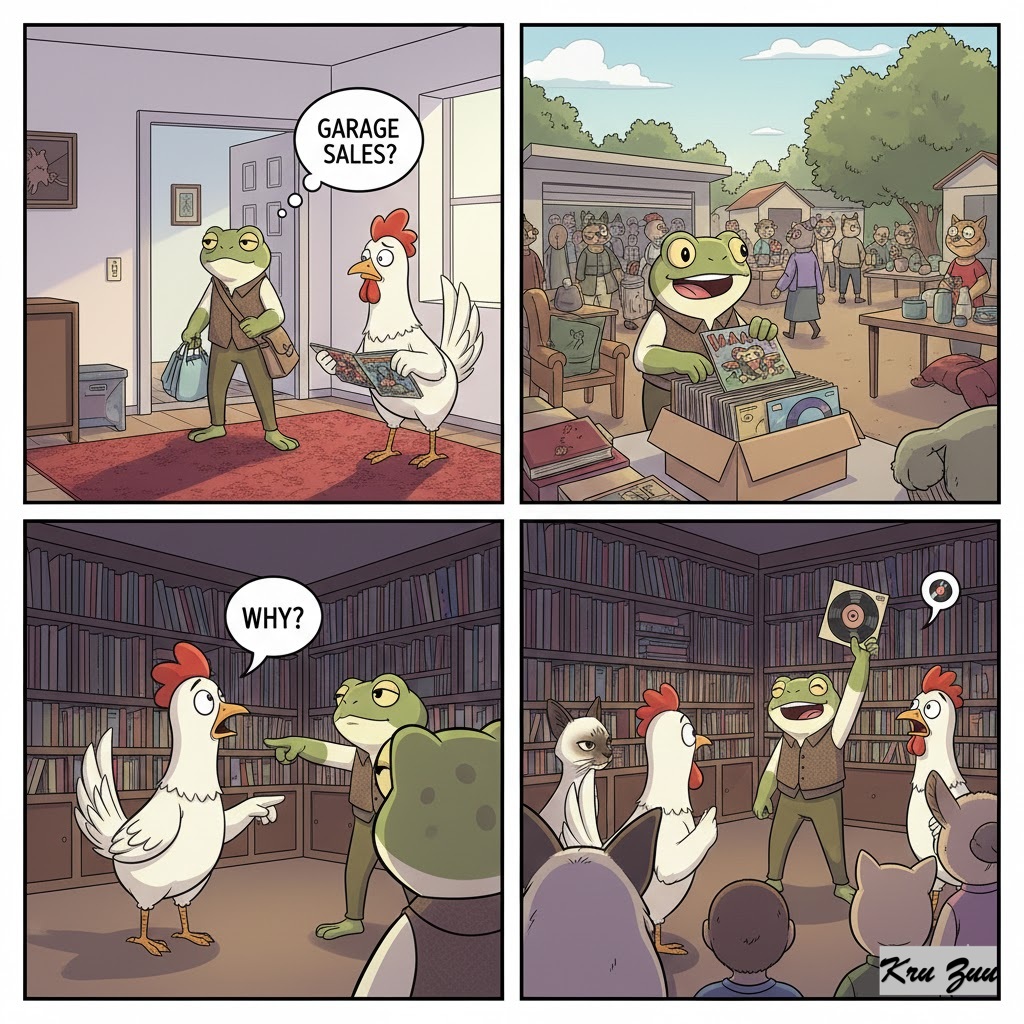
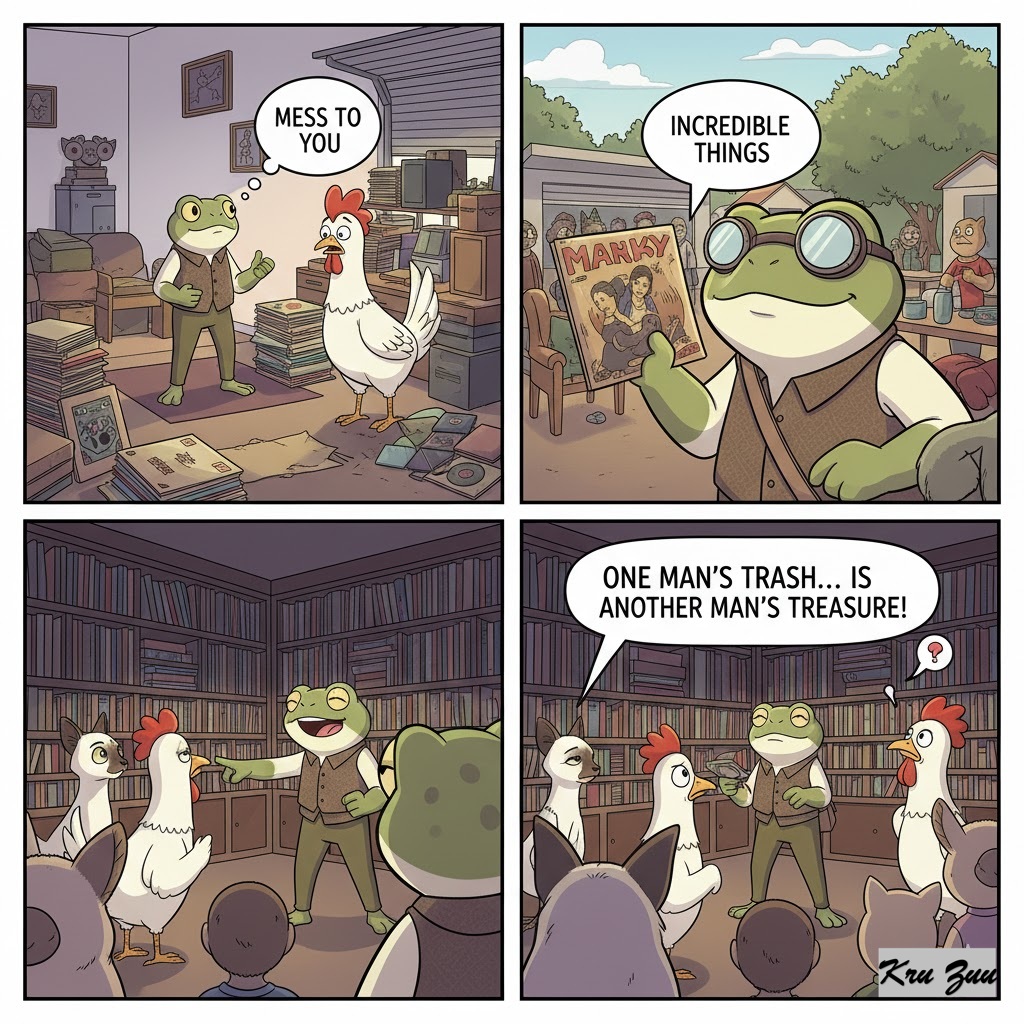
    Use it to defend your niche interests.


    Situation: Someone asks why you spend your weekends at garage sales or buying old vinyl records.


    You Say: “I know it looks like a mess to you, but I find incredible things there. After all, one man’s trash is another man’s treasure!”


    💬 Your Turn: The “Treasure” Challenge 🚀


    The Challenge:
    Look around your room or a local second-hand shop.

    The Action: Find one item that is “obsolete” (like a CD, an old jar, or a worn-out book).

    Ask yourself: “How could this be valuable to someone else? Could it be art? Could it be a tool? Could it be a memory?”


    👇 Question for the comments: What is the “weirdest” thing you own that you refuse to throw away? Why is it a treasure to you? Tell us below!

    By Zubeyir YURTKURAN

    https://www.facebook.com/BrainBattleground/

    https://www.facebook.com/zubeyr.yurtkuran/

    https://www.instagram.com/zubeyryurtkuran/
    https://www.youtube.com/@BrainBattleground-b3p

    https://www.instagram.com/brainbattleground/

  • 🧠 The Daily Shield: The Law of Connection

    🧠 The Daily Shield: The Law of Connection

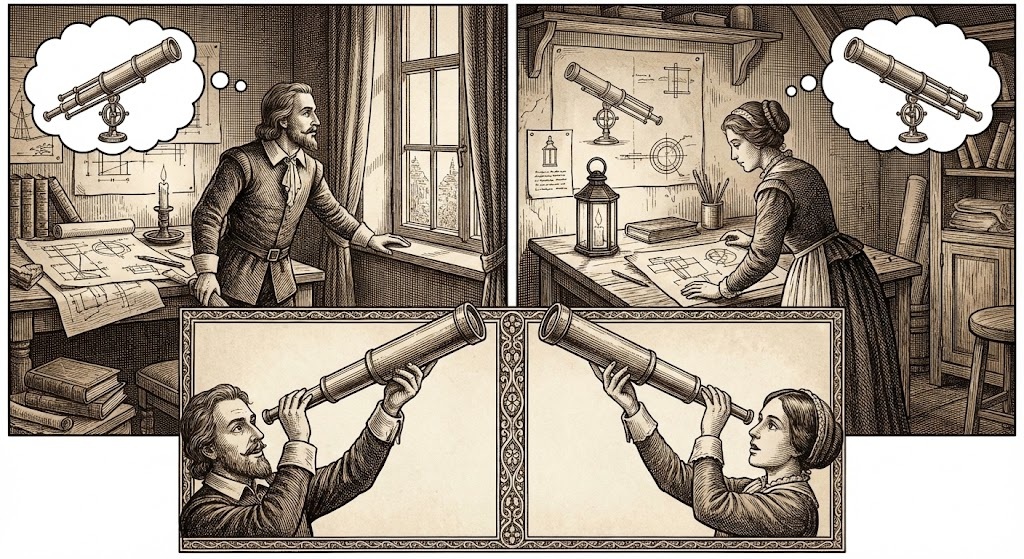
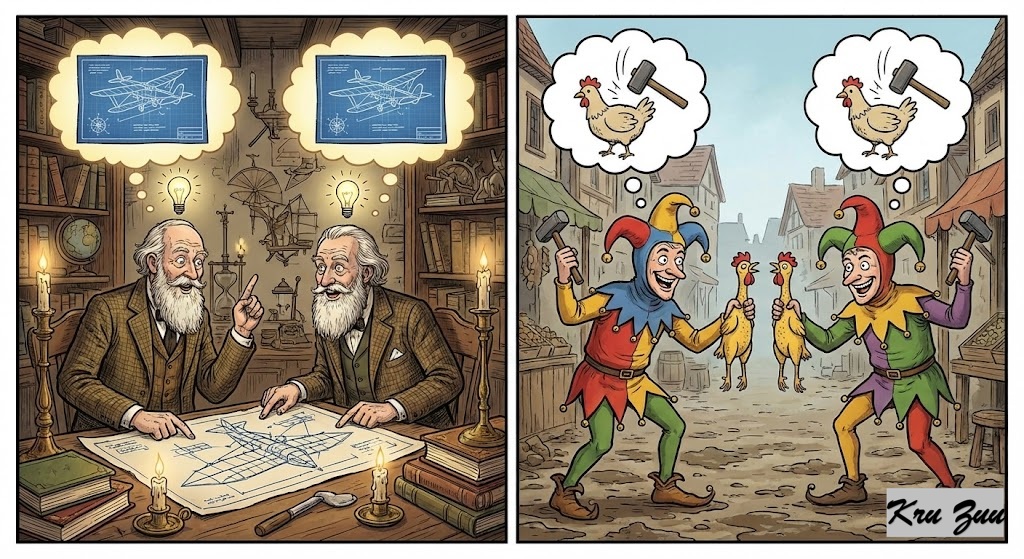
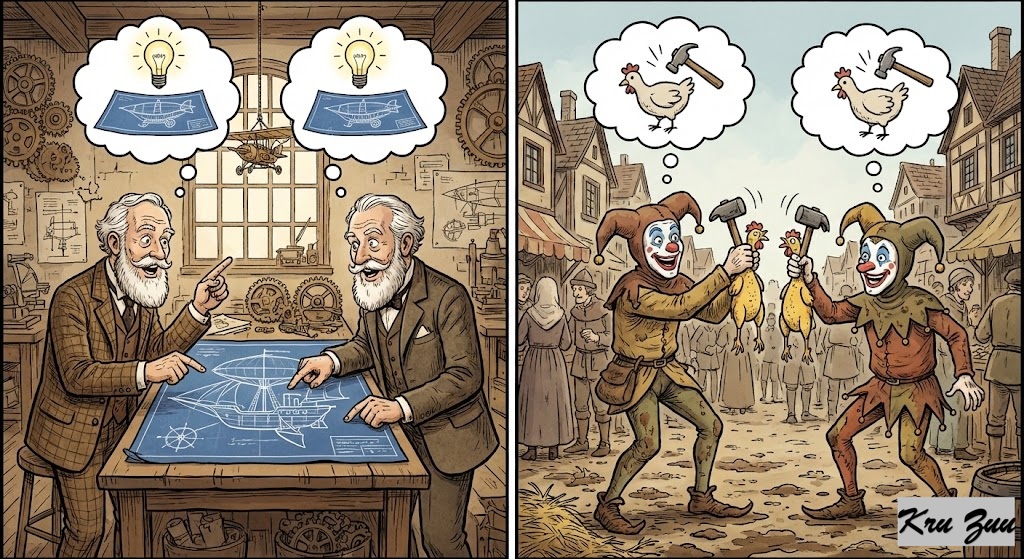
    “Great minds think alike.”


    😈 The Villain (The Intellectual Snob)

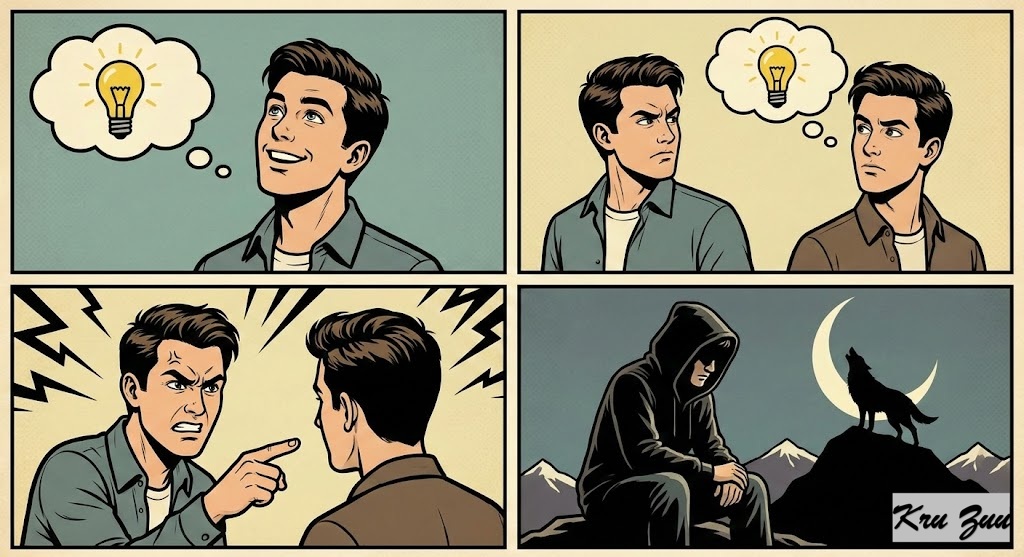
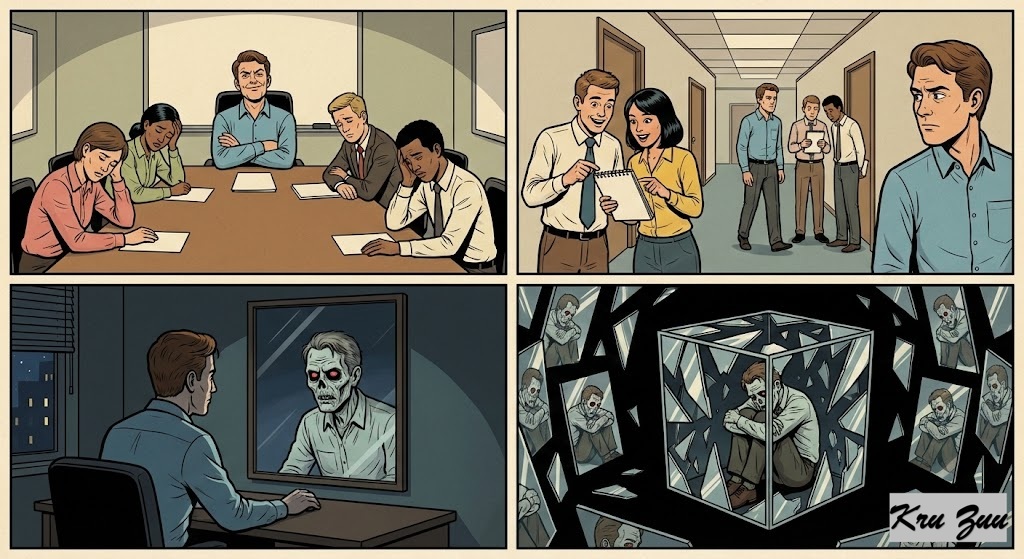
    You have an idea. Someone else suggests the same thing. What do you do? You get annoyed. 😒 “Hey, I thought of that first!””Stop copying me!” You believe your ideas are special property. You see shared thoughts as theft, not connection. You want to be the “Lone Wolf” genius.

    The Result? You isolate yourself. People feel awkward sharing ideas with you. You kill the momentum of the team because you are too busy claiming credit. You are trapped in the “Ego Trap.” 🧟‍♂️


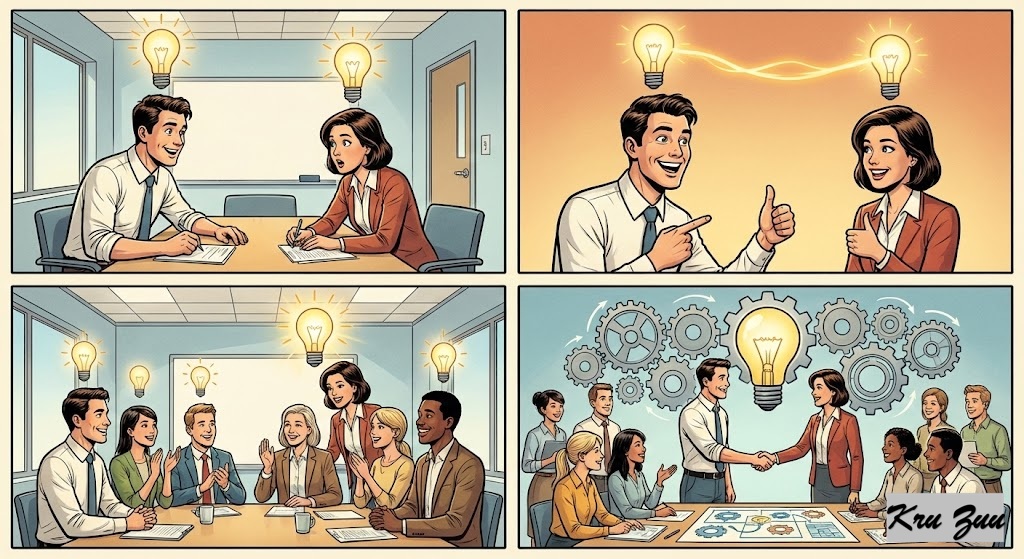
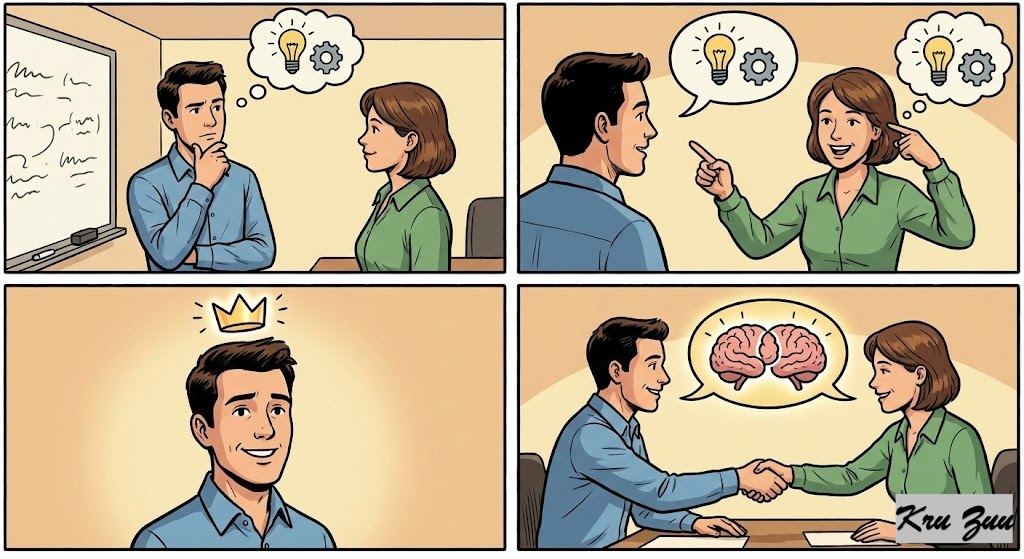
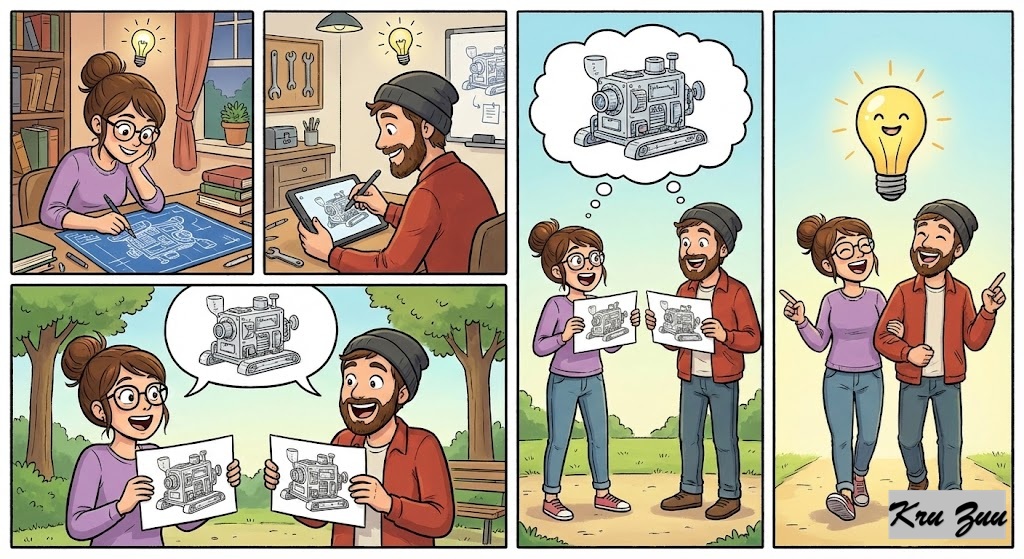
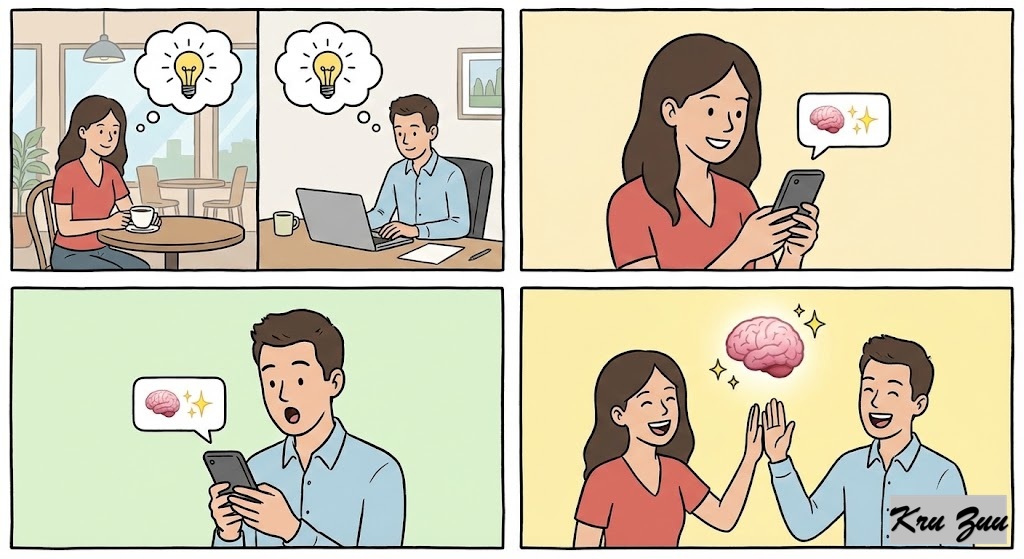
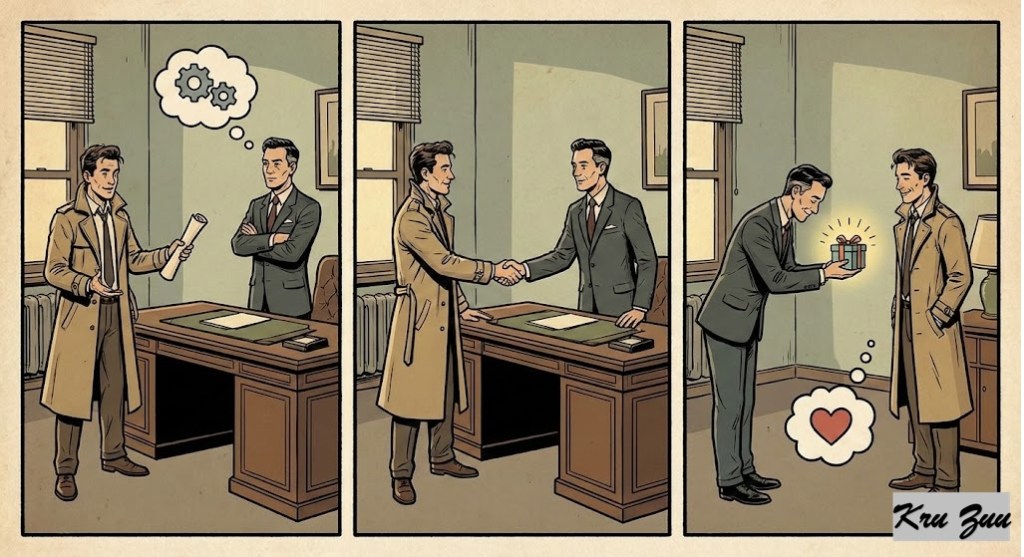
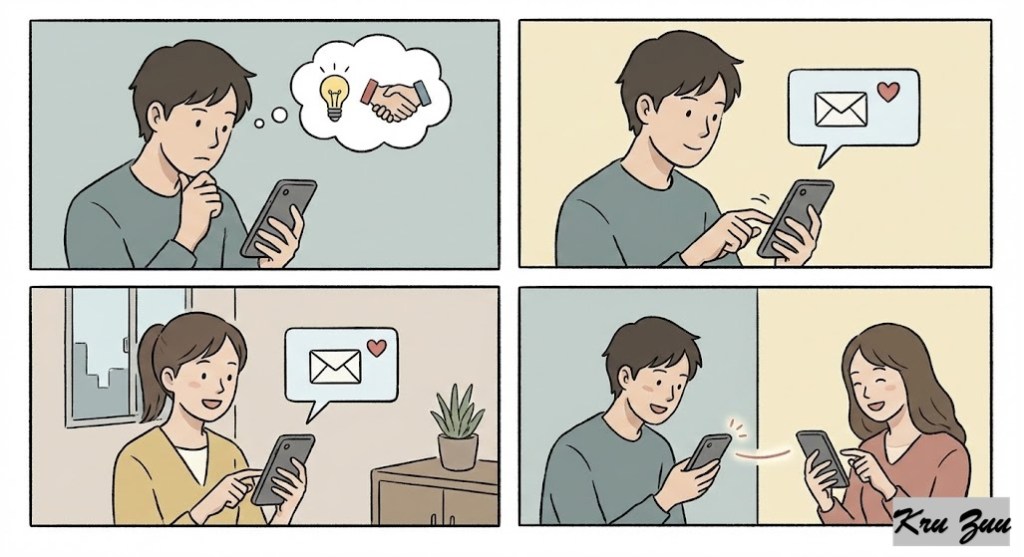
    😇 The Hero (The Synergist): You are brainstorming. A colleague blurts out the exact solution you were just thinking of. Instead of getting jealous, you smile. 😄 You point at them and say: “Great minds think alike!” You validate their intelligence, which validates yours. You realize that shared thinking isn’t copying, it’s alignment.

    The Result? Instant rapport. The other person feels smart and connected to you. You create a bond of trust (“We are on the same wavelength”). You build a tribe, not just a resume. ⚡


    ⚖️ The Reality


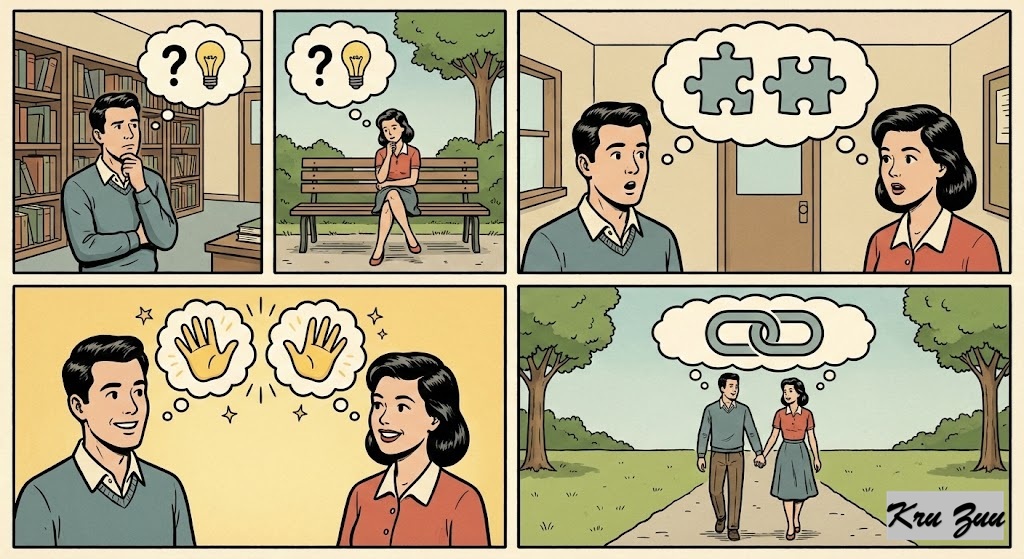
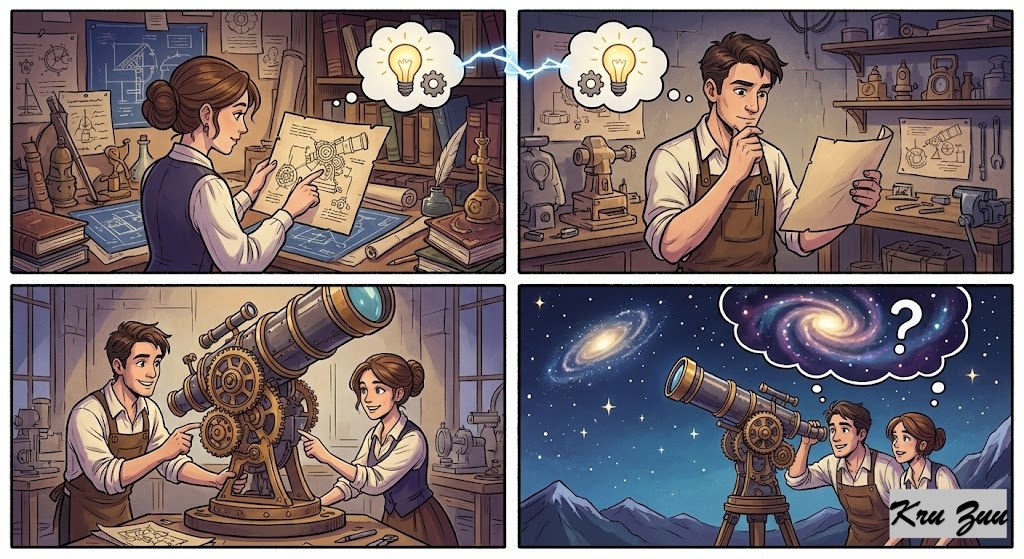
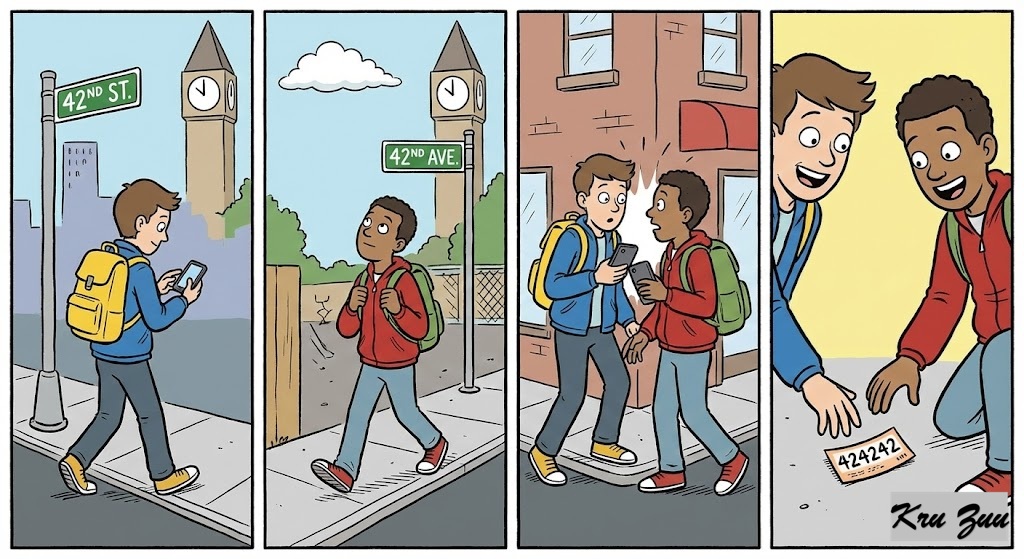
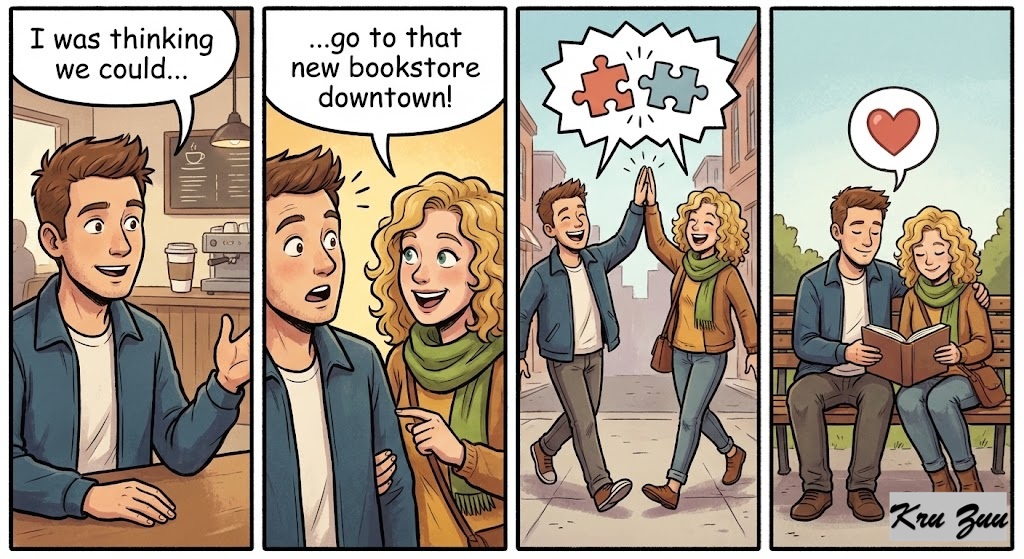
    We are social creatures. When two people arrive at the same conclusion independently, it is a powerful signal of compatibility. It means your values, logic, or instincts are aligned. It is a moment of “mental high-five.” 👋


    💎 The Secret

    Using this phrase isn’t just about being right; it is a tool to make the other person feel good. It says, “You are smart because you think like me.”

    🧐 The Anatomy of the Proverb


    This is your go-to phrase for those “Jinx!” moments.


    Great Minds (Noun Phrase): Intelligent people; thinkers; visionaries.


    Think (Verb): To process thoughts/ideas.


    Alike (Adverb):
    In a similar way; identically.


    Simpler Version: Smart people have the same ideas. / We are on the same page.


    📚 Vocabulary Vault


    Synergy (Noun):
    When the combined effect is greater than the sum of separate effects. (1+1=3). 🚀


    Telepathy (Noun): The supposed communication of thoughts by means other than the known senses. (e.g., “It’s like we have telepathy!”).


    Validation (Noun): Recognition or affirmation that a person’s feelings or opinions are valid or worthwhile.


    Coincidence (Noun): A remarkable concurrence of events or circumstances without apparent causal connection.


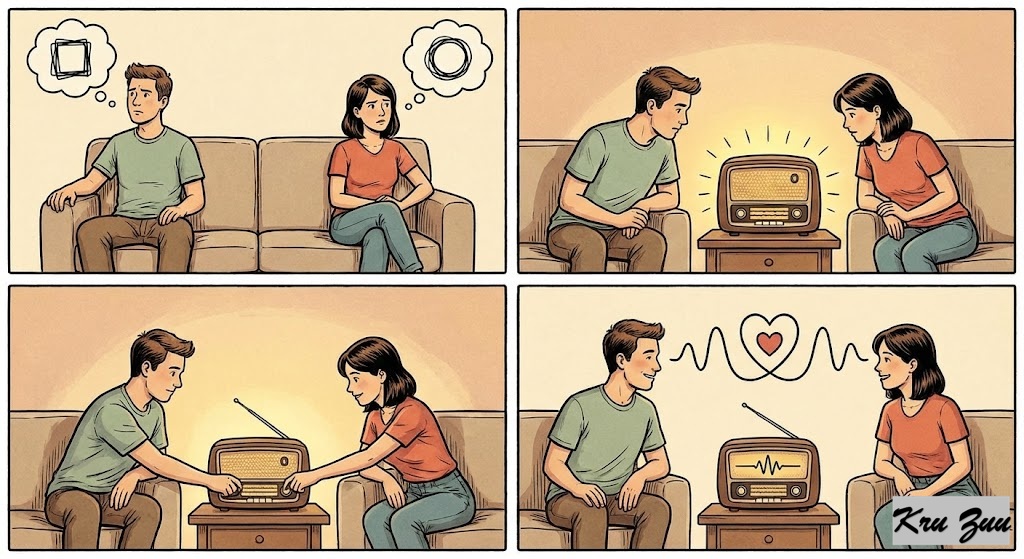
    Wavelength (Noun):Idiom: “To be on the same wavelength” (To think similarly). 📻

    📜 History: Origin and The Twist


    Where did this compliment come from?


    The Origin: The idea has been around since the early 1600s. The original recorded phrase in English was “Great wits jump” (meaning “jump to the same conclusion”). It evolved into “Great minds think alike” over time.


    The Twist (The Humorous Truth): Did you know this idiom has a second half that is often left out? The full phrase is historically known as:”Great minds think alike, though fools seldom differ.”


    Translation: Smart people might have the same idea, but stupid people also follow the crowd! Note: We usually only use the first half (the polite half) in business and friendship! 😉

    🎯 Impact on Life: The Pros & Cons


    ✅ The Pros (The Bond)


    Speed:
    You don’t have to explain yourself. The other person already “gets it.”


    Confidence: Knowing someone supports your idea makes you more likely to succeed.


    ❌ The Cons (The Echo Chamber)


    Groupthink:
    If everyone thinks alike, no one is spotting the mistakes. Sometimes you need a “Great Mind” who thinks differently to challenge you.

    🎭 Short Story: The Mystery of the Locked Box 📦


    Let’s visit the magical forest to see how mental connection works.


    🌟 The Cast


    Cleo the Cat: Elegant, logical, loves puzzles. 😼


    Cluck the Chicken: Impulsive, hungry, relies on gut instinct. 🐔


    Fred the Frog: The wise, green observer. 🐸


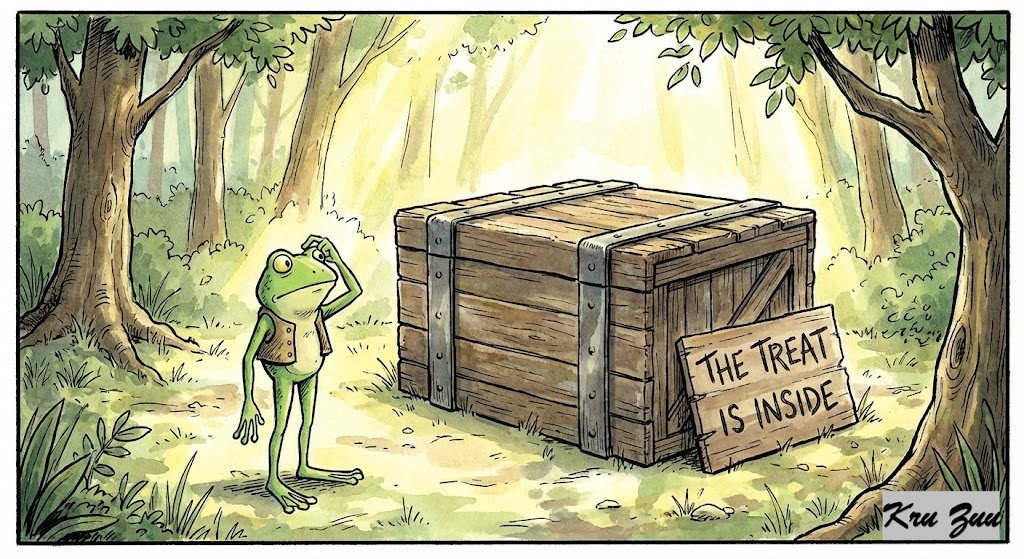
    The Situation: Fred the Frog has placed a mysterious, heavy wooden box in the middle of the clearing. It has no keyhole. It has no handle. Just a sign that says: “The treat is inside.”


    The Conflict:
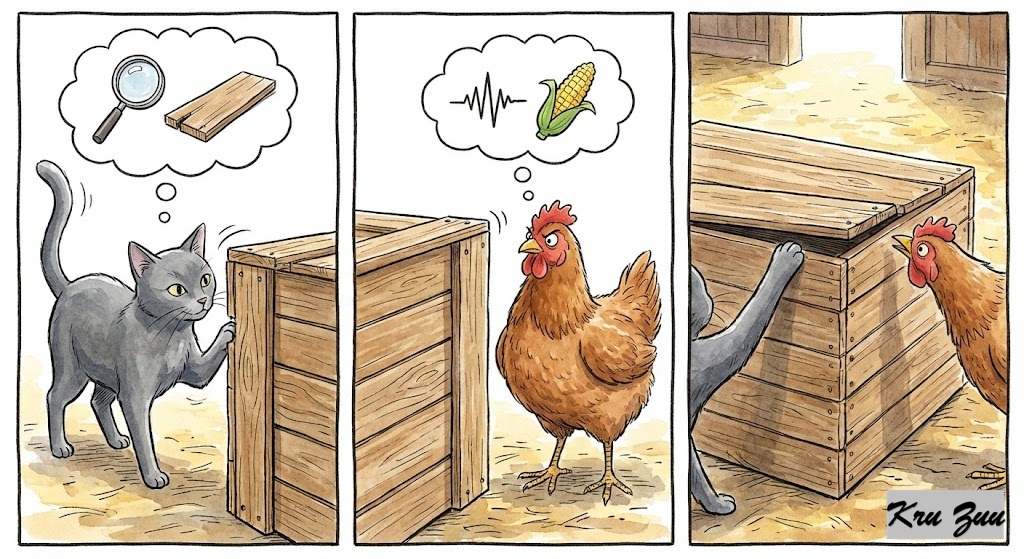
    Cleo circles the box, analyzing the wood grain. She thinks hard. “The wood is loose on the top right corner. I need something thin to pry it open.” Cluck stares at the box, thinking about the corn inside. He feels a vibration. “The top right corner looks weak. I need something flat to poke it.”


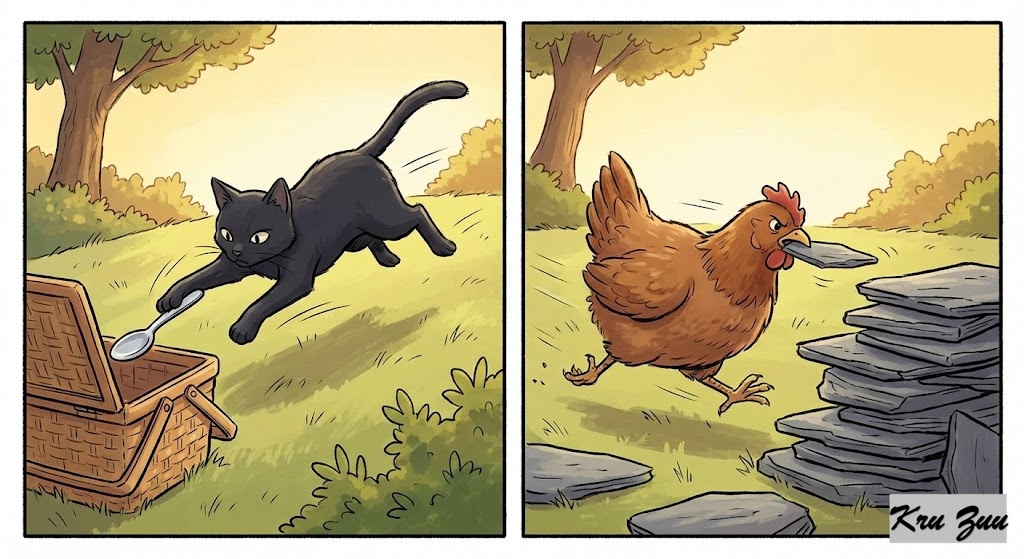
    The Climax: Without saying a word to each other… Cleo runs to the left and grabs a flat, silver spoon from a picnic basket. 🥄 Cluck runs to the right and grabs a flat, loose slate of rock. 🪨


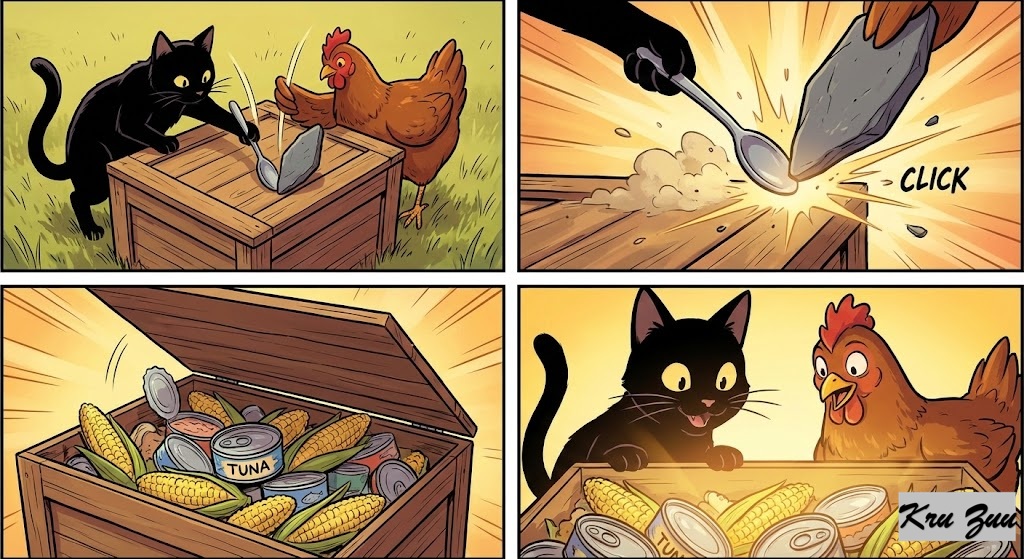
    They both run back to the box and jam their tools into the exact same spot (the top right corner) at the exact same time. Click! The box pops open. It is filled with tuna and corn!


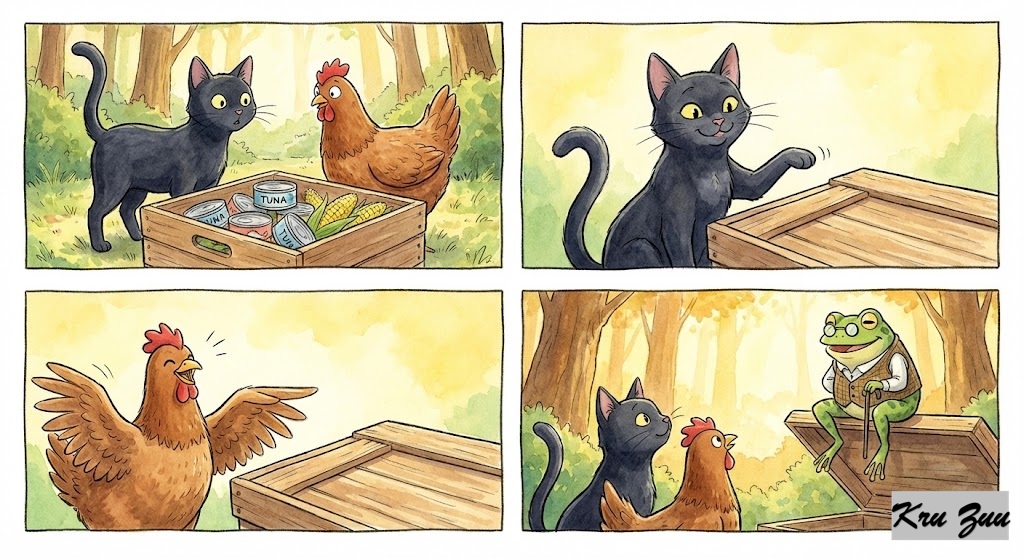
    The Resolution: They look at each other, shocked. Cleo smiles, her tail twitching. “I was going for the leverage point.” Cluck laughs. “I just knew that was the weak spot!” Fred the Frog hops onto the open lid. He adjusts his tiny glasses. “Ribbit,” Fred says. “Different species, different styles, but the same solution. Great minds think alike.”


    The Moral: You don’t have to be identical to be compatible. When you find someone who solves problems the way you do, hold onto them. That is your teammate.

    🎓 Lesson for English Learners


    Context is Key.


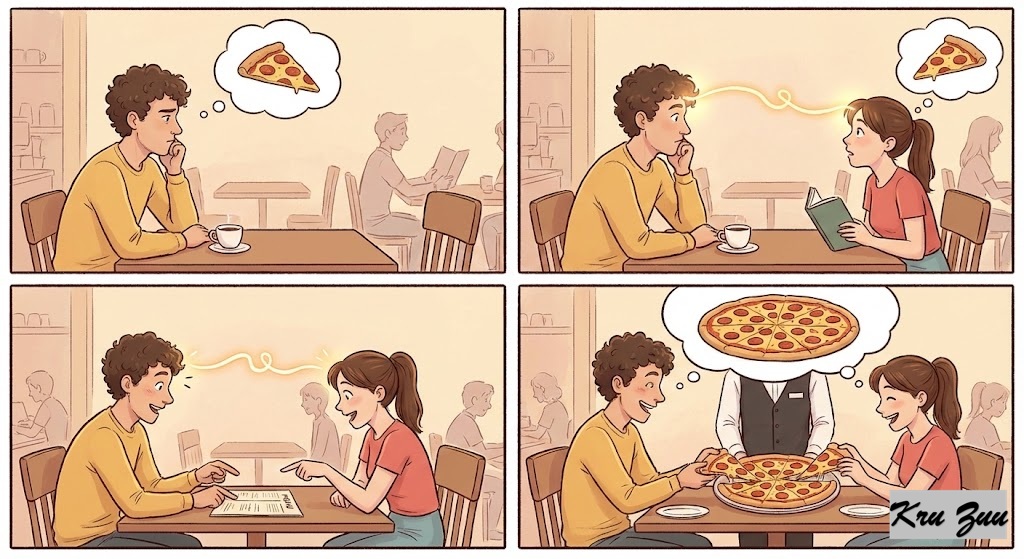
    Situation: You and your friend both reach for the last slice of pizza at the same time.


    You Say: “Great minds think alike!” (This is funny/playful).


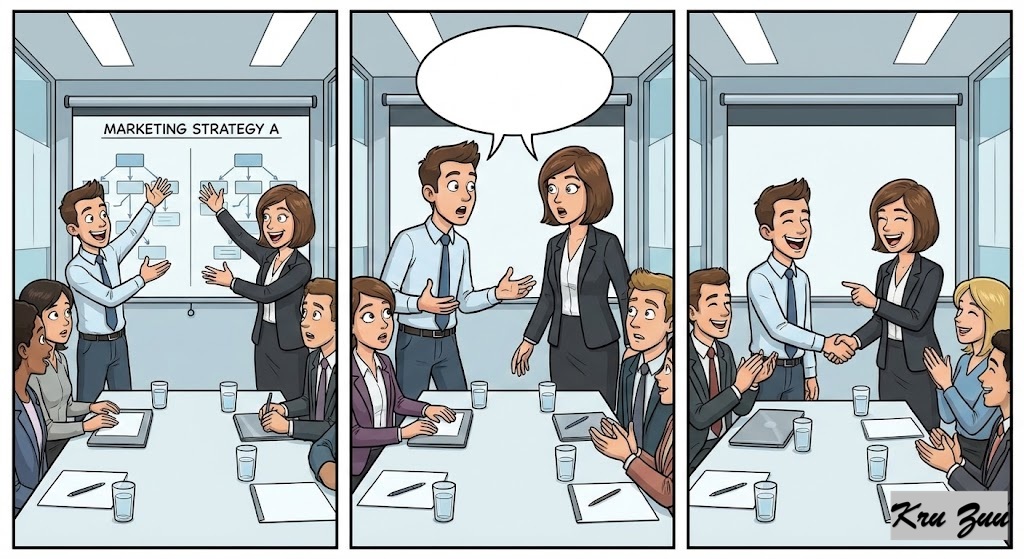
    Situation: You and your boss both suggest the same marketing strategy in a meeting.


    You Say: “Great minds think alike!” (This is complimentary and builds a professional bond).


    💬 Your Turn: The Connection Challenge 🚀


    Is there someone in your life (a partner, a best friend, a coworker) who often finishes your sentences?


    The Challenge:
    The next time this happens, the next time you both say the same thing or text each other at the same moment, do not ignore it.

    The Action: Immediately send them a message or say: “Great minds think alike! 🧠✨”


    Celebrate the connection. It turns a coincidence into a relationship builder.


    👇 Question for the comments: Who is your “Mind Twin”? Tag the person who always seems to know what you are thinking!

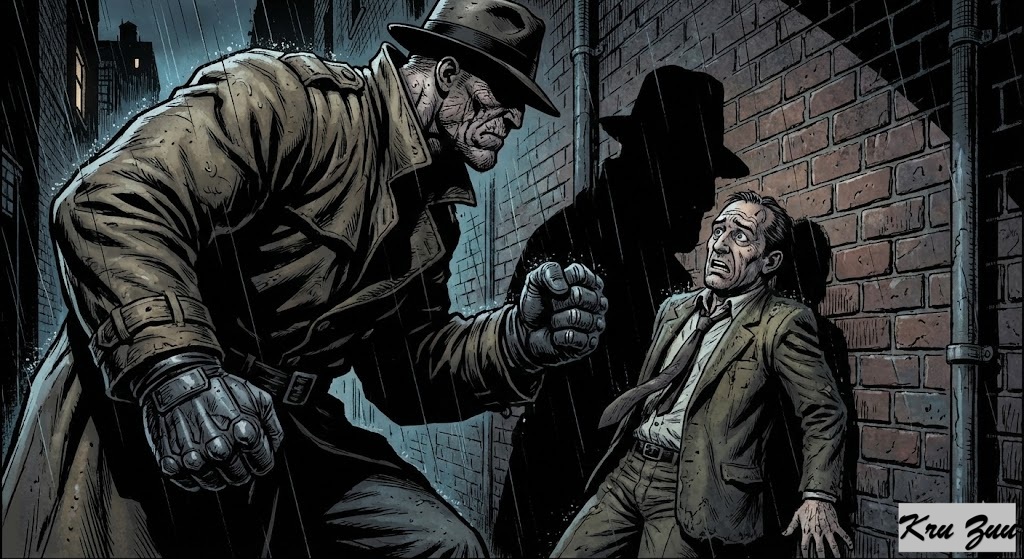
  • 🛡️ The Daily Shield: The Law of False Fear

    🛡️ The Daily Shield: The Law of False Fear

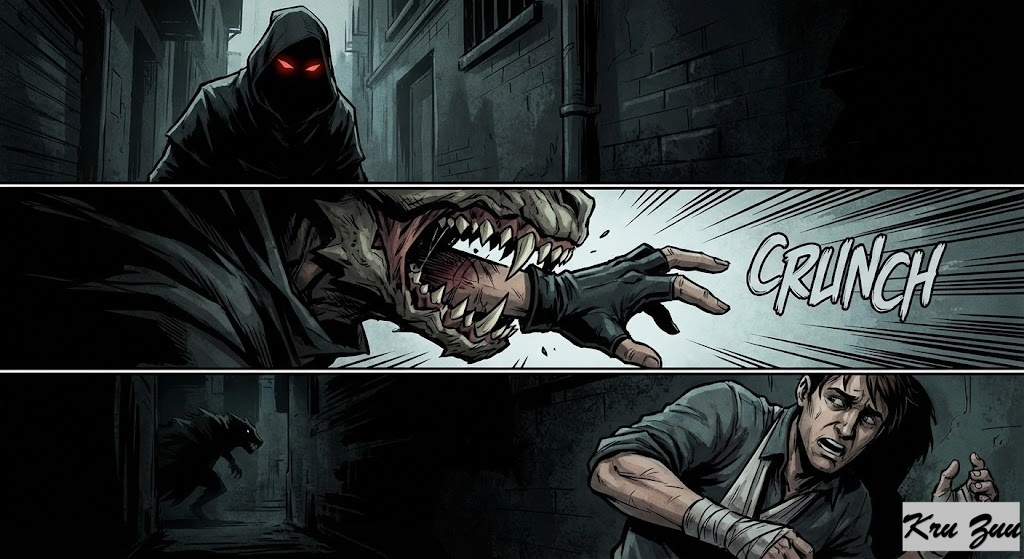
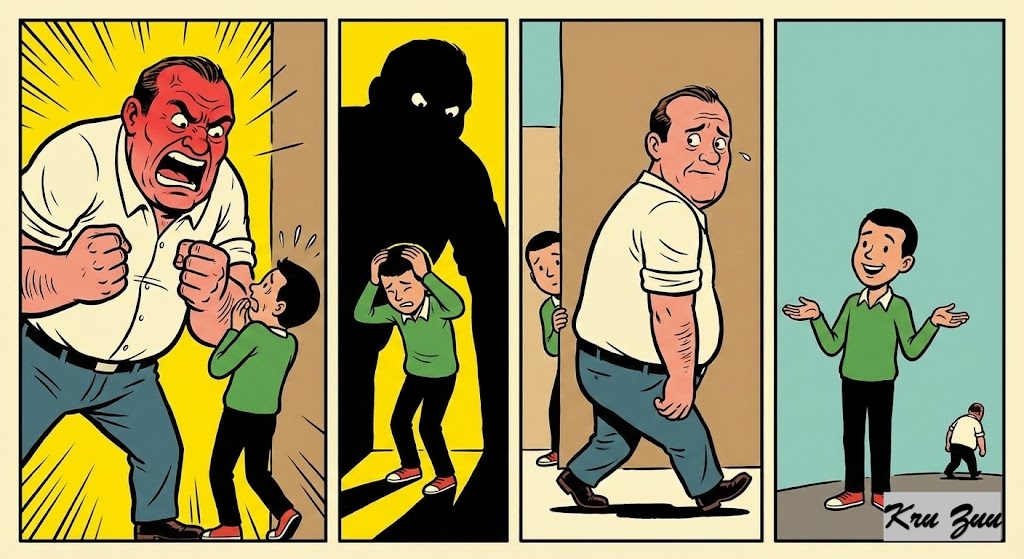
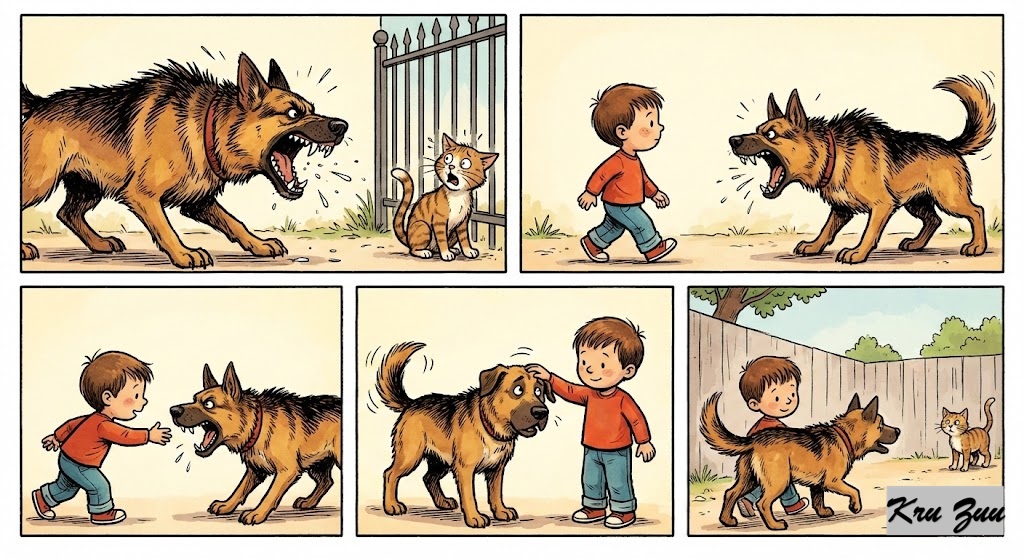
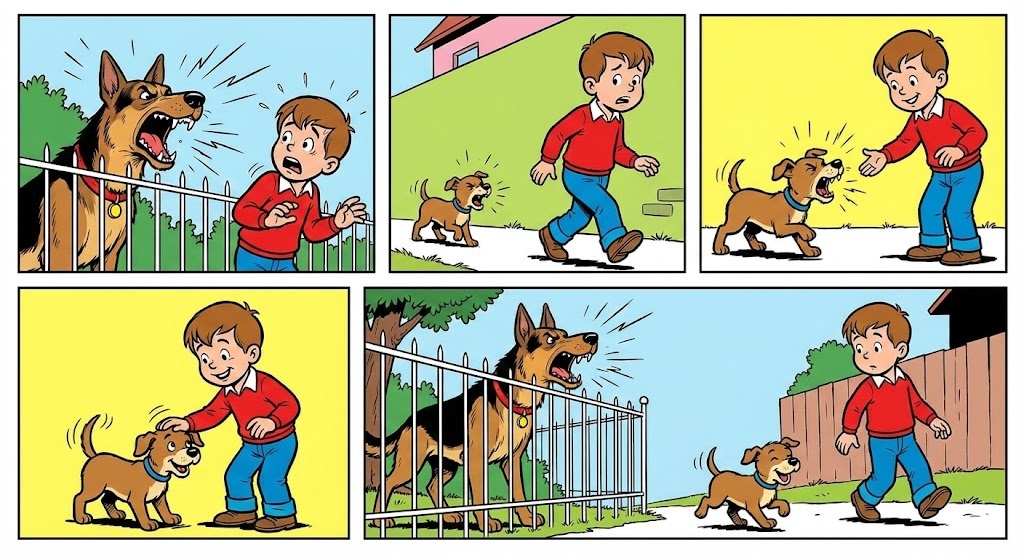
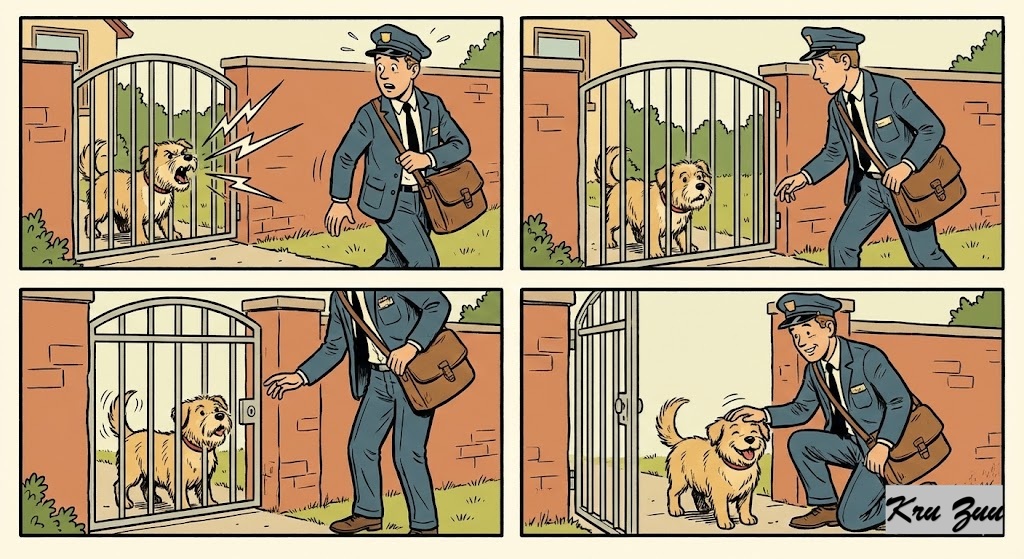
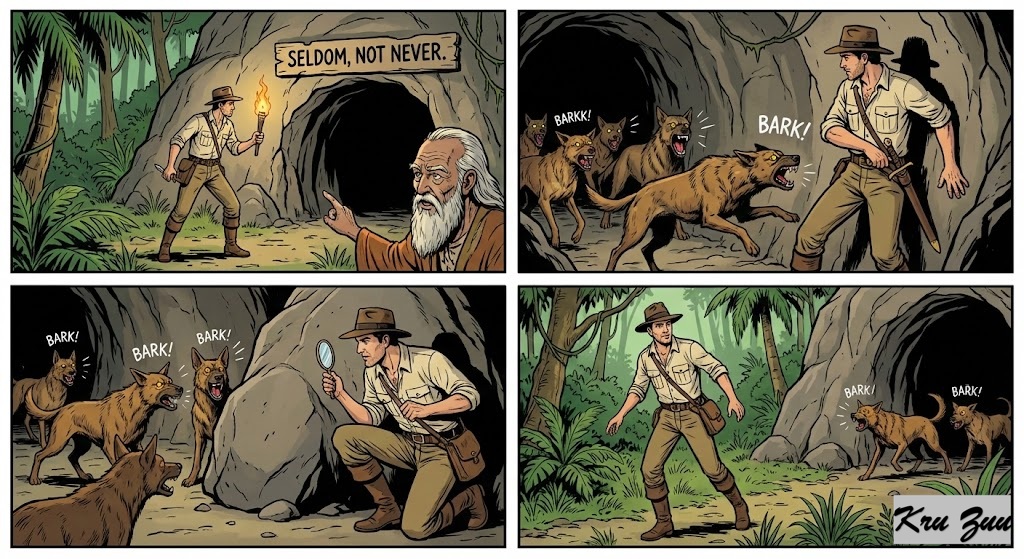
    “Barking dogs seldom bite.”


    😈 The Villain (The Intimidator)

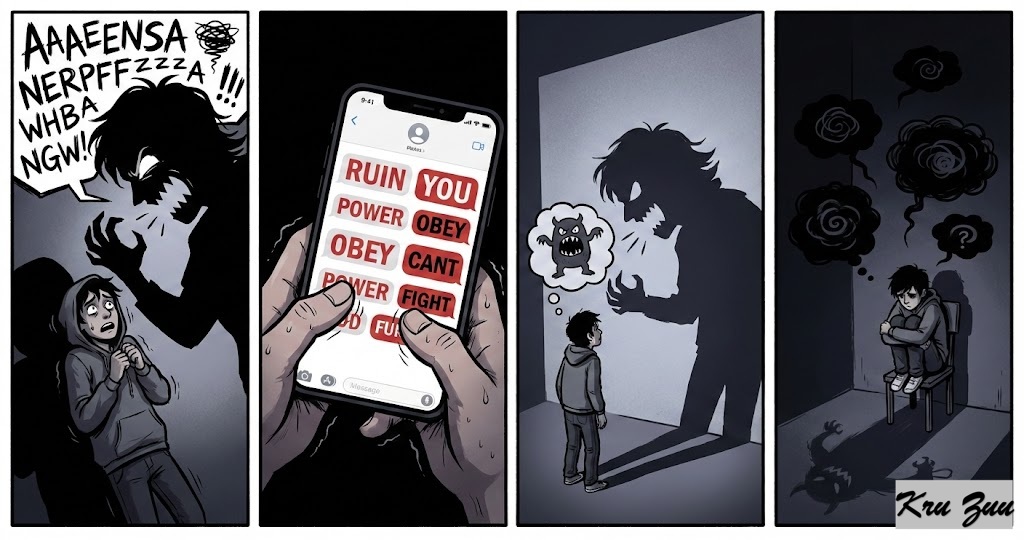
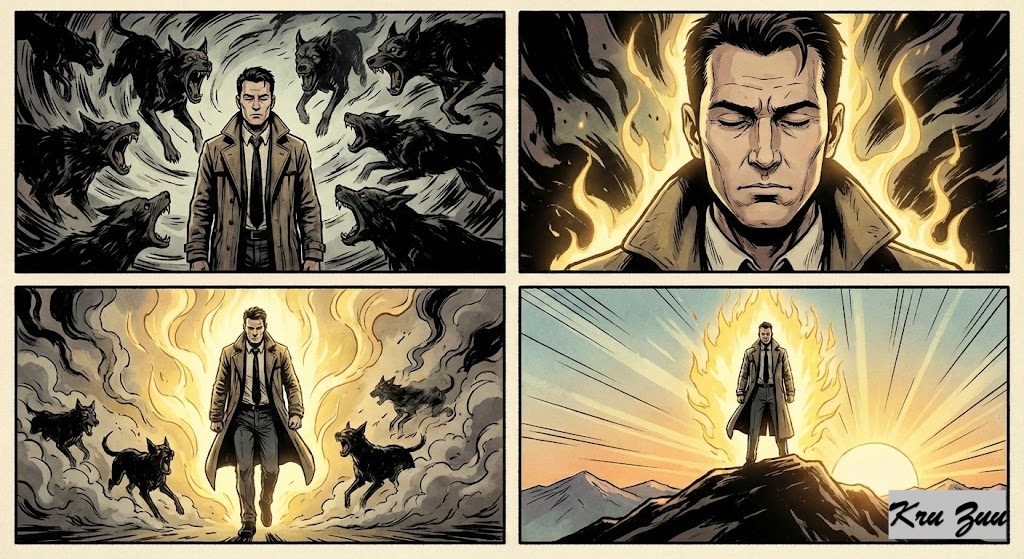
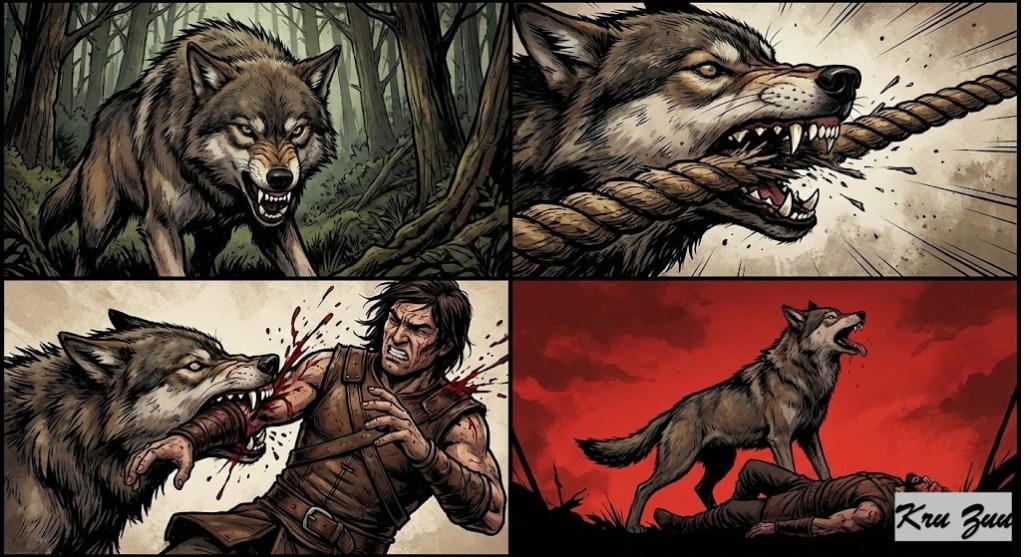
    You meet someone who screams, yells, and threatens. They type in ALL CAPS. They promise to ruin you. They brag about their power. You feel small. You feel scared. You back down because the noise is overwhelming. You let their loud voice control your actions. You live in fear of a monster that might not even exist. 🧟‍♂️


    😇 The Hero (The Stoic)

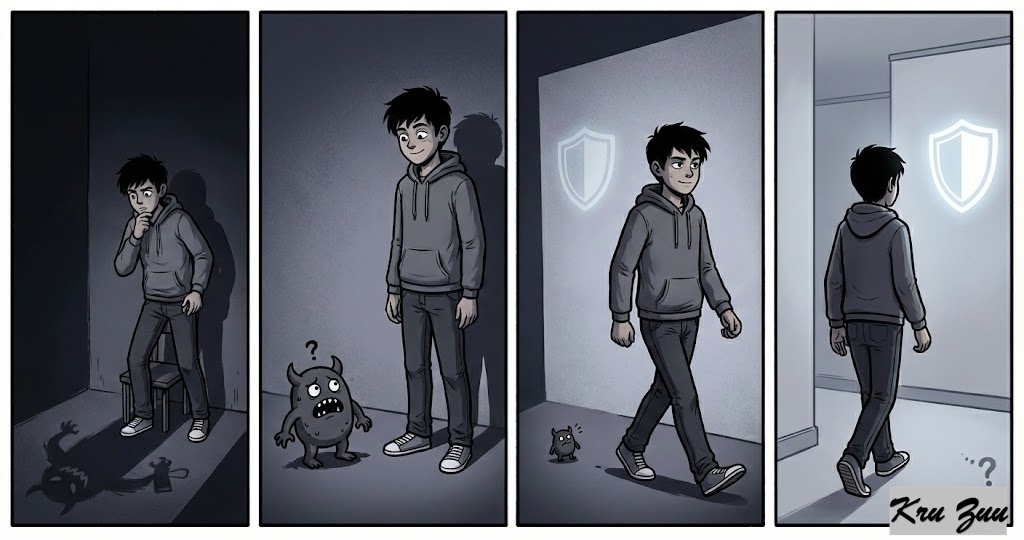
    You hear the noise. You pause. You analyze. You realize that true confidence is silent. A lion doesn’t need to bark before it attacks; it just attacks. You realize that the loudness is a mask for insecurity. You stand your ground. You smile. You walk past the noise untouched. 🛡️


    ⚖️ The Reality


    Noise is not power. Usually, the people (or problems) that make the most noise have the least power. They use volume to hide their weakness. Fear is a shadow, it looks huge on the wall, but the object casting it is tiny.


    💎 The Secret

    Real danger usually comes silently. If something is “barking” at you, it is usually too busy making noise to actually hurt you.

    🧐 The Anatomy of the Proverb


    This is the ultimate weapon against social anxiety and intimidation.


    Barking (Participle/Adjective):
    The sound a dog makes. Here, it represents threats, bragging, or loud complaints. 🐕


    Seldom (Adverb): Rarely; almost never. (This is a fancy word!)


    Bite (Verb): To inflict injury. The actual action/danger.


    Simpler Version: People who threaten you usually don’t take action.


    📚 Vocabulary Vault


    Intimidation (Noun): The act of making someone afraid or timid. 😨


    Bluff (Verb/Noun): To try to deceive someone as to one’s abilities or intentions (Fake power).


    All talk and no action (Idiom): Someone who talks about doing big things but never does them.


    Stoic (Adjective): A person who can endure pain or hardship without showing their feelings or complaining. 🗿


    Seldom (Adverb): Not often; rarely.


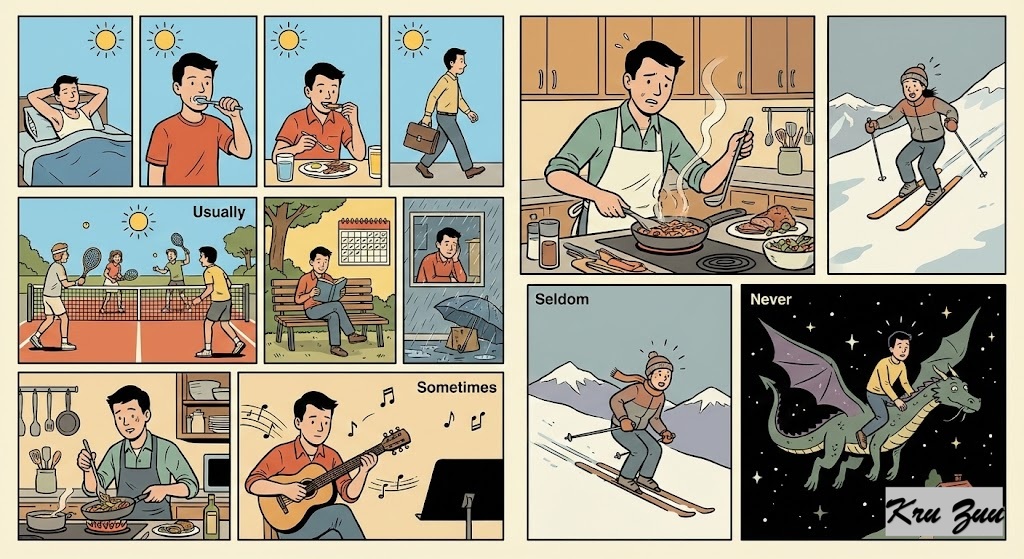
    🧠 Grammar Focus: Adverbs of Frequency


    This proverb uses a “negative” frequency adverb.


    The Scale of Frequency


    100% – Always
    80% – Usually
    50% – Sometimes
    10% – Seldom / Rarely 📉
    0% – Never


    Style Note: “Seldom” vs. “Rarely”


    Rarely: Common in daily speech. “I rarely eat sushi.”


    Seldom: More formal, literary, or poetic. “He seldom speaks of his past.”


    Pro Tip: Use “Seldom” in writing to sound sophisticated. Use “Rarely” in coffee shops.

    📜 History: Origin and Spread


    This wisdom is ancient because loud, scary people have existed forever.


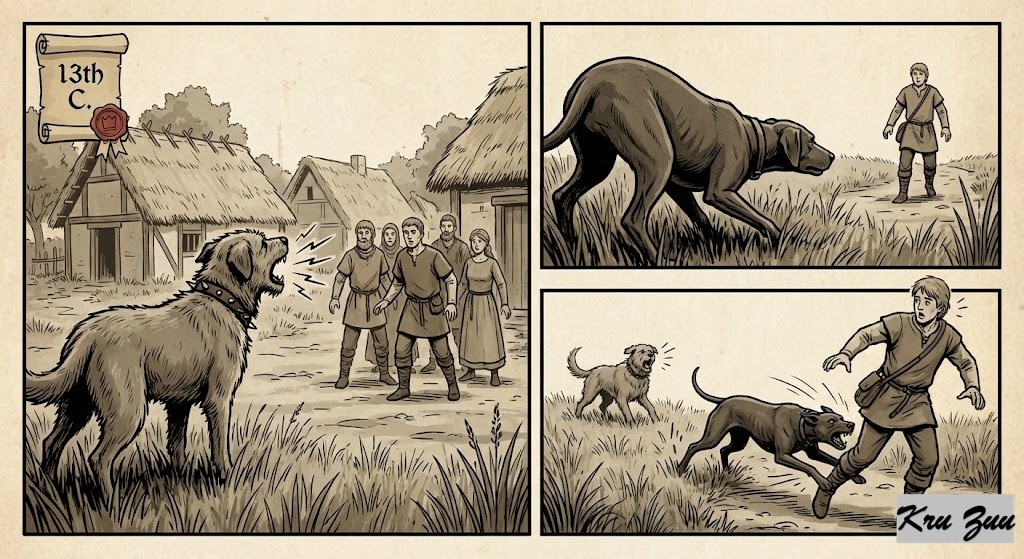
    The Origin: It first appeared in written records in the 13th century! It comes from the observation of village dogs. The dog that stands back and barks is warning you; the dog that wants to kill you runs silently to bite.


    Global Cousins


    🇹🇷 Turkish:
    “Havlayan köpek ısırmaz.” (Exactly the same!)


    🇪🇸 Spanish: “Perro que ladra no muerde.” (The dog that barks doesn’t bite.)


    🇮🇹 Italian: “Can che abbaia non morde.”


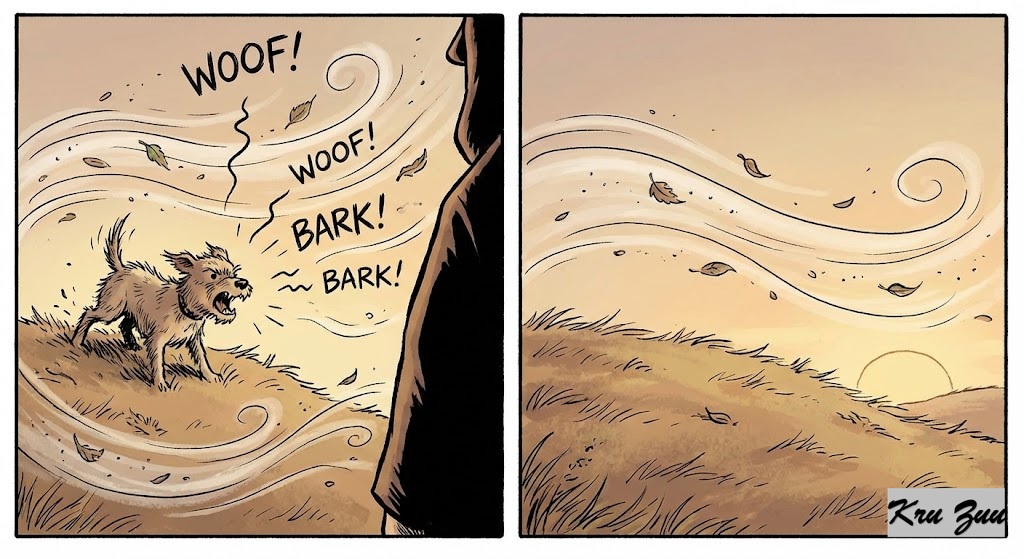
    🇷🇺 Russian: “Sobaka layet, veter nosit.” (The dog barks, but the wind carries it away.)

    🎯 Impact on Life: The Pros & Cons


    ✅ The Pros (Emotional Armor)


    Confidence:
    When you ignore the “barking,” you keep your power.


    Focus: You stop wasting energy worrying about threats that will never happen.


    ❌ The Cons (Don’t be naive)


    Caution:
    The proverb says seldom, not never. Be brave, but don’t be stupid. Some dogs bark and bite. Assess the situation carefully.

    🎭 Short Story: The Monster in the Garden

    Let’s visit a farm with three very different friends.


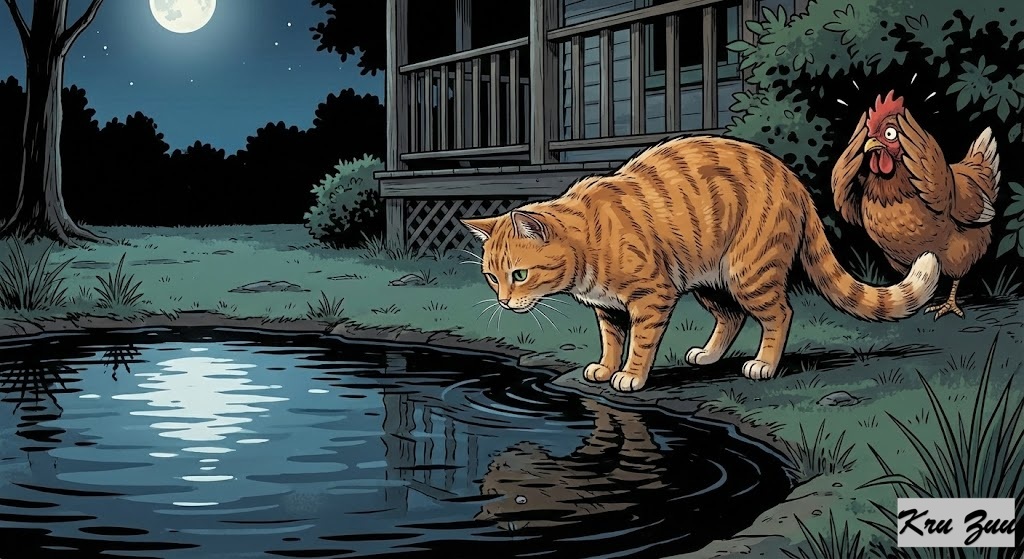
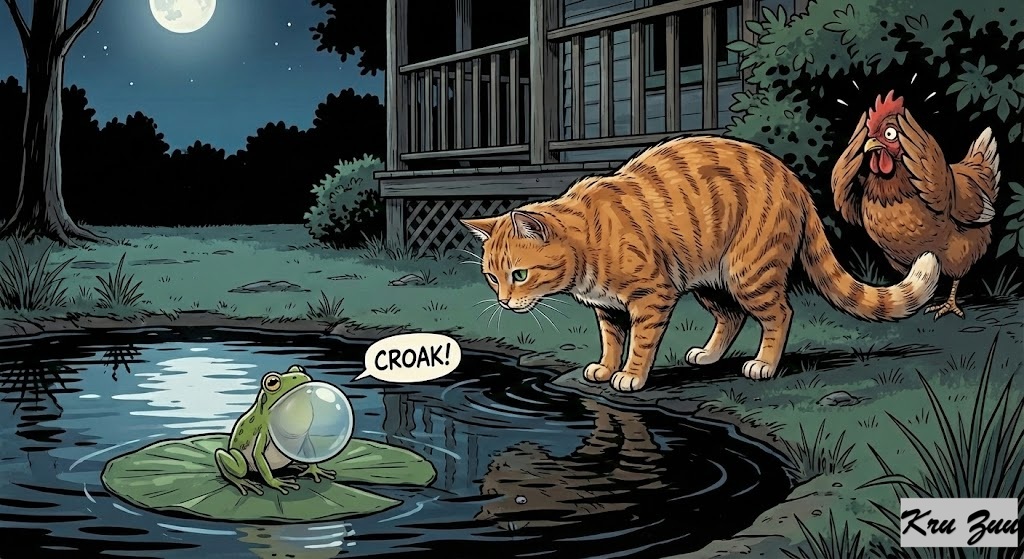
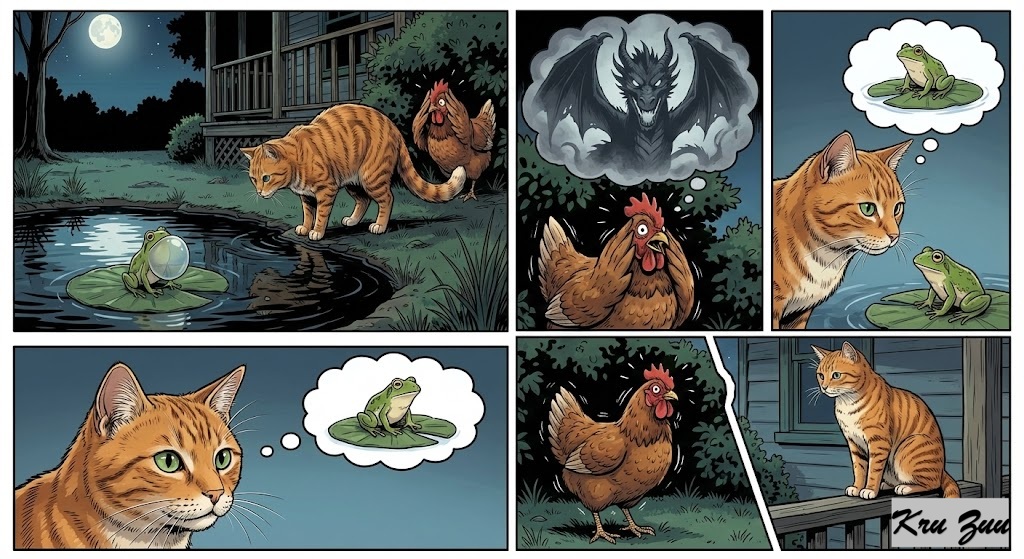
    🌟 The Setup: It is midnight. A terrifying, deep, rhythmic sound comes from the garden pond. CROAK. CROAK. CROAK. It sounds like a dragon.


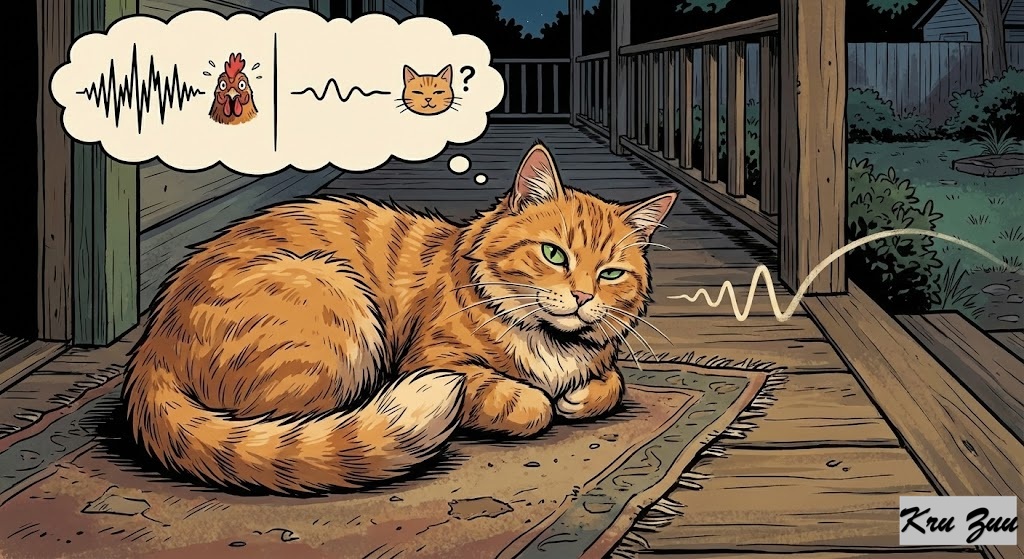
    🐔 The Chicken (The Worrier): The Chicken is shaking. Feathers are flying everywhere. “It’s a monster!” she screams. “It sounds huge! It’s going to eat us all! We need to run to the next village! We are doomed!” The Chicken hides under the porch, trembling. She lets the noise paralyze her.


    🐱 The Cat (The Observer): The Cat opens one eye. She stretches slowly. She listens to the volume, but she also listens to the fear in the sound. “Relax, Chicken,” the Cat purrs. “That is a lot of noise. Dangerous things don’t announce themselves like that.”


    The Climax: The Cat walks coolly to the edge of the pond. The Chicken watches through her wings, terrified. The Cat peers into the darkness.


    There, sitting on a lily pad, is The Frog. 🐸 It is a tiny frog, no bigger than a spoon. It puffs its throat out huge—CROAK!—trying to look scary because it is afraid of the dark.


    The Moral: The Chicken heard a dragon. The Cat saw a scared little frog. The loudest threats often come from the smallest people. Don’t be a Chicken. Be a Cat. 🐈

    🎓 Lesson for English Learners


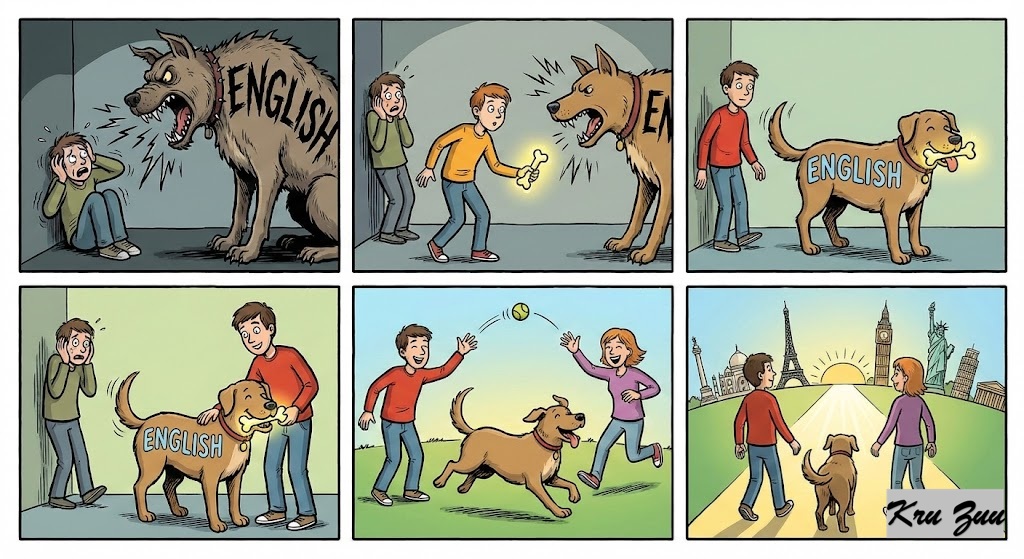
    Don’t Fear the “Barking” of English.


    Situation: You see a long, complex grammar rule (like the Future Perfect Continuous). It looks scary. It looks difficult.


    You Say: “This grammar is just a barking dog. It looks big on the page, but once I analyze it, it can’t hurt me. It’s actually quite simple.”


    Situation: A native speaker talks very fast. You panic.


    You Say: “Their speed is just noise. I will ask them to slow down. I won’t let the speed intimidate me.”


    💬 Your Turn: The Fear Test 🚀


    The Challenge:
    Think of a situation where you were scared of something that turned out to be easy.


    Was it a job interview?


    Was it asking someone on a date?


    Was it speaking English in public?


    Question:
    What is a “Barking Dog” in your life right now? Something that makes a lot of noise but isn’t actually dangerous? Tell us in the comments! 👇

    By Zubeyir YURTKURAN

    https://www.facebook.com/BrainBattleground/

    https://www.facebook.com/zubeyr.yurtkuran/

    https://www.instagram.com/zubeyryurtkuran/
    https://www.youtube.com/@BrainBattleground-b3p

    https://www.instagram.com/brainbattleground/

  • 🛡️ The Daily Shield: The Law of Gratitude

    🛡️ The Daily Shield: The Law of Gratitude

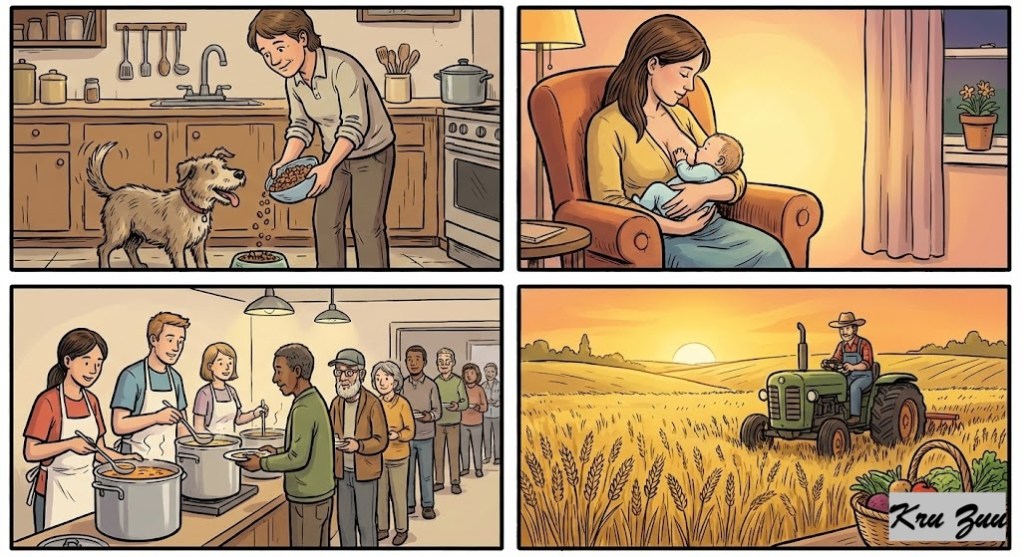
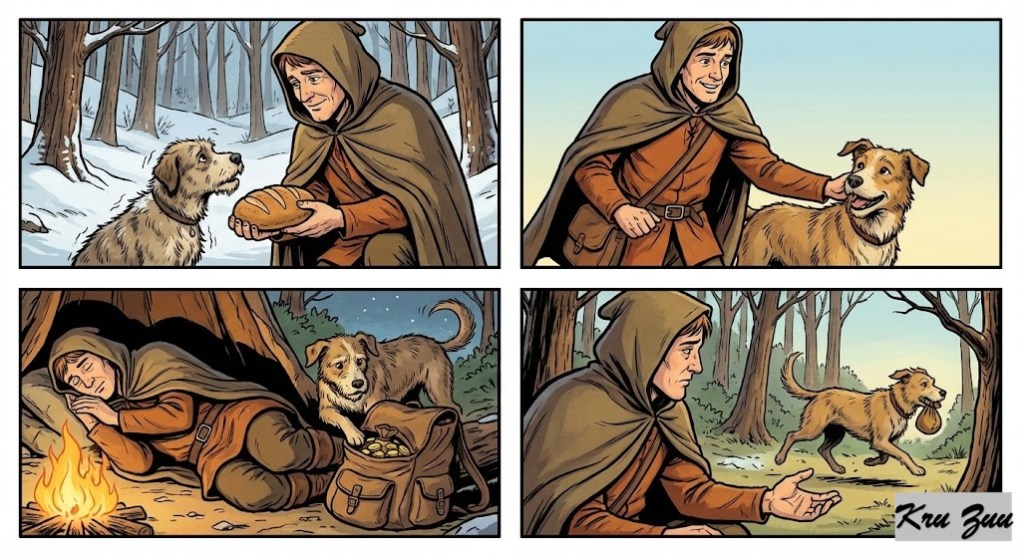
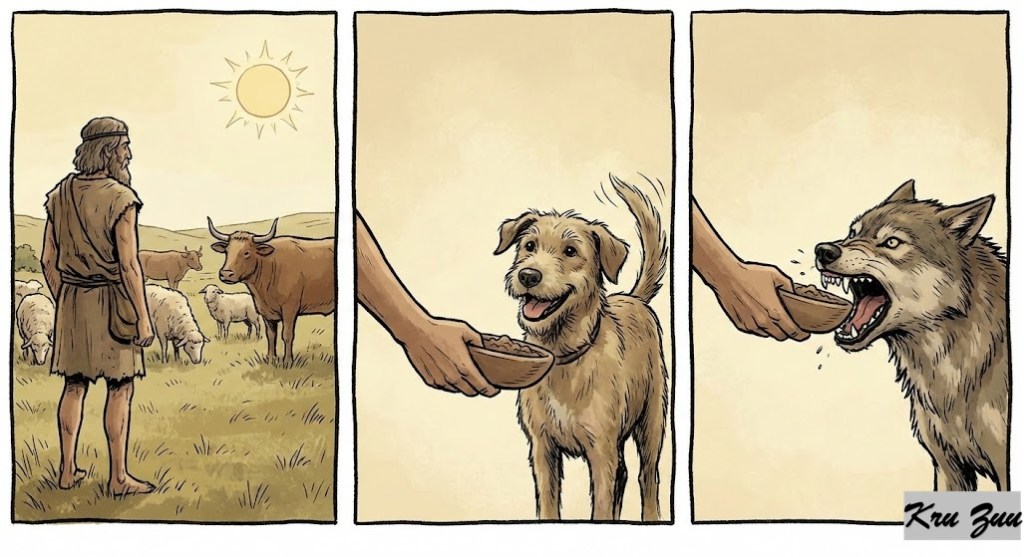
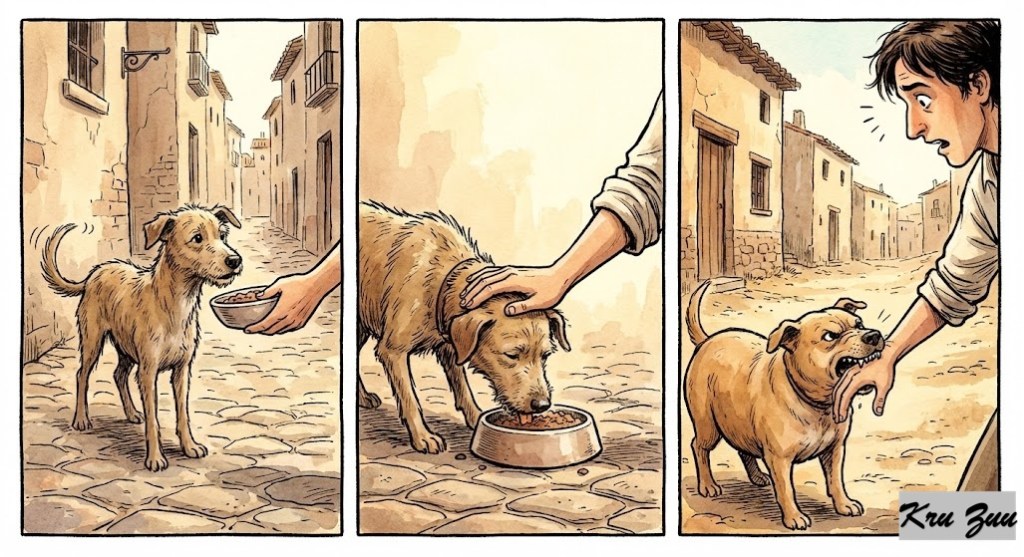
    “Don’t bite the hand that feeds you.”


    😈 The Villain (The Saboteur)

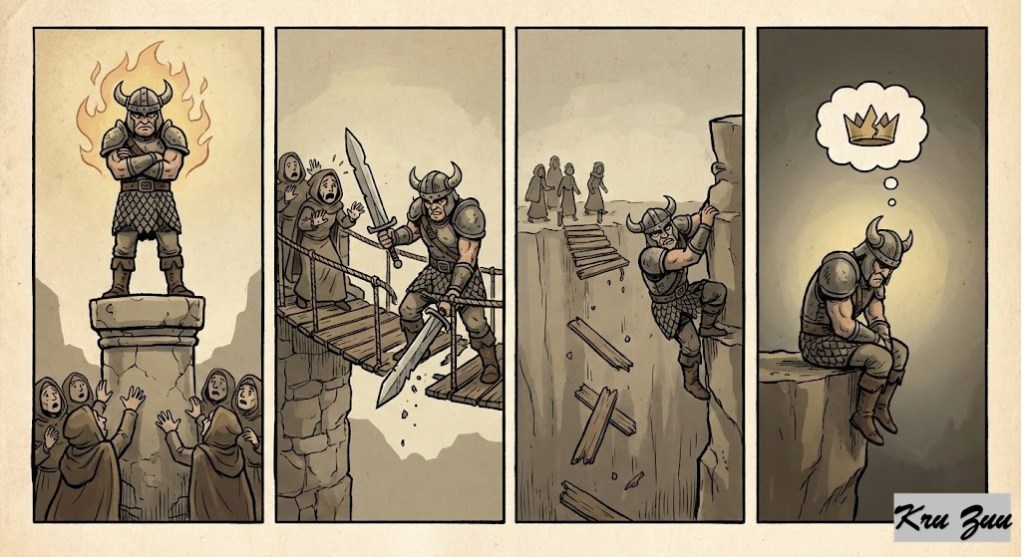
    You have a boss who pays your salary, but you gossip about them constantly. You have a friend who always drives you home, but you complain about their car. You learn English for free on YouTube, but you leave mean comments about the video quality.

    The Result? You act like you are independent, but really, you are just ungrateful. Eventually, the help stops. The boss fires you. The friend drives away. You are left alone with your ego. 🥀


    😇 The Hero (The Strategist)

    You understand where your support comes from. You might not agree with everything your boss or parents say, but you respect the support they give. You treat your benefactors with kindness.

    The Result? Because you show appreciation, people want to help you more. Doors open for you. You build a network of allies, not enemies. 🤝


    ⚖️ The Reality


    Ego is expensive. It feels good to act tough and independent. But if you attack the people who support you, you are burning the bridge while you are standing on it.

    💎 The Secret

    Gratitude isn’t about being weak; it’s about being smart. You can negotiate, you can disagree, but never destroy the relationship that sustains you.

    🧐 The Anatomy of the Proverb


    This idiom creates a violent visual image to make a point about loyalty.


    Bite (Verb):
    To use teeth to cut or attack. (An act of aggression). 🦷


    The Hand (Noun): The source of help, money, or support. 🖐️


    Feeds (Verb): To give food; to sustain life.


    Simpler Version: Do not hurt the person who helps you.


    📚 Vocabulary Vault


    Ingratitude (Noun):
    A lack of appreciation; not saying “thank you.” (The ugly trait).


    Benefactor (Noun): A person who gives money or other help to a person or cause.


    Loyalty (Noun): A strong feeling of support or allegiance.


    Sabotage (Verb): To deliberately destroy, damage, or obstruct something.


    Indispensable (Adjective): Absolutely necessary; you cannot do without it.


    🧠 Grammar Focus: Relative Clauses


    Look at the structure:
    “The hand that feeds you.” This is a Defining Relative Clause. It tells us which hand we are talking about.


    Subject + that + Verb


    Example: I like the teacher that explains clearly.


    Example: Don’t burn the bridge that you need to cross.

    📜 History: Origin and Spread


    This is ancient agricultural wisdom. For thousands of years, humans have watched animals. They noticed that a dog loves the hand that feeds it, but a wild or foolish animal might snap at it.


    Global Cousins
    🇹🇷 Turkish:
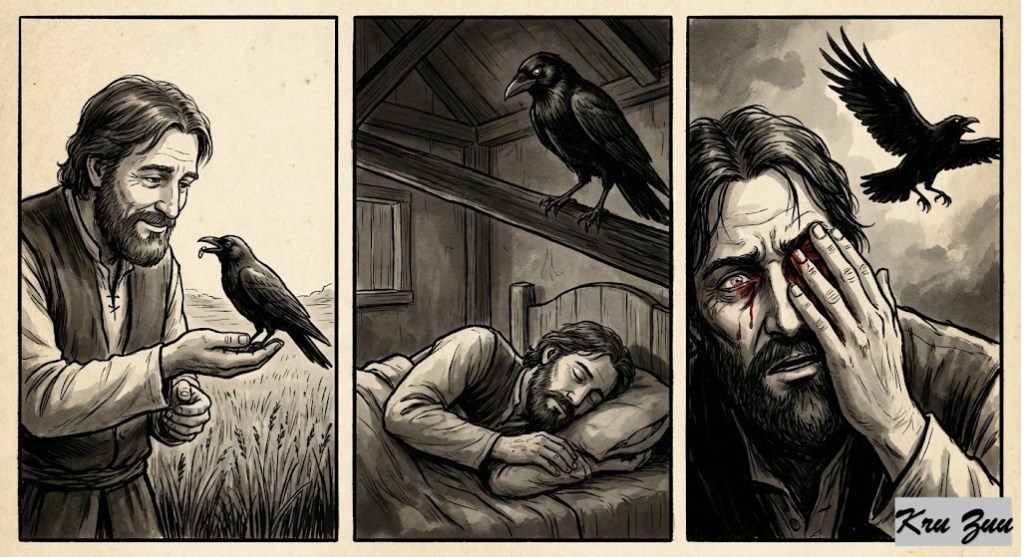
    “Besle kargayı, oysun gözünü.” (Feed the crow, and it will gouge out your eye.) — This is even darker! It implies that some natures cannot be changed.


    🇪🇸 Spanish:“No muerdas la mano que te da de comer.”


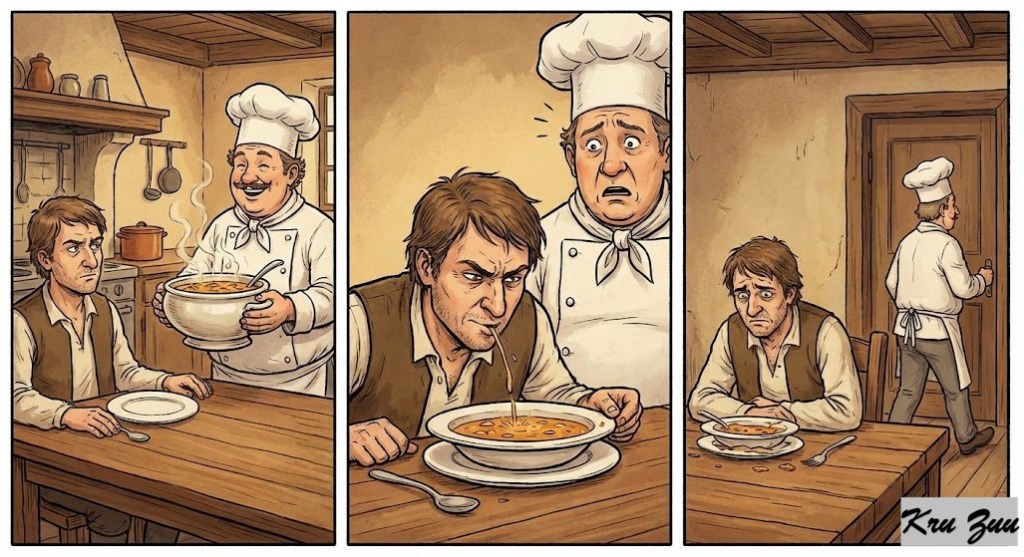
    🇫🇷 French:“Il ne faut pas cracher dans la soupe.” (You shouldn’t spit in the soup).

    🎯 Impact on Life: The Pros & Cons


    ✅ The Pros (Stability)


    Security:
    When you respect your sources of support (job, family, teachers), you create a safety net for yourself.


    Reputation: People love helping grateful people. Being thankful is a superpower.


    ❌ The Cons (The Doormat Risk)


    Blind Loyalty:
    This proverb does not mean you must accept abuse. If the “hand” is abusive, you shouldn’t bite it—you should just walk away and find a new hand!

    🎭 Short Story: The Farmyard Feud


    Let’s go to Old Man Miller’s farm to see this law in action.


    🌟 The Cast


    🐔 Clucky (The Chicken): Hardworking but anxious.


    🐸 Finn (The Frog): The wise observer who lives in the pond.


    🐱 Whiskers (The Cat): Arrogant, spoiled, and thinks he is the King.


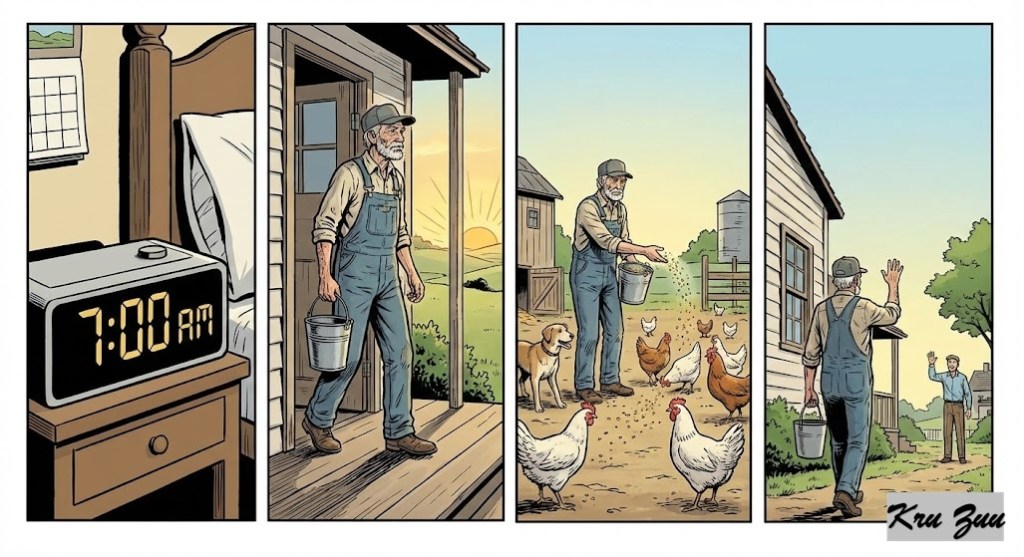
    The Setup: Every morning at 7:00 AM, Old Man Miller comes out with a bucket.

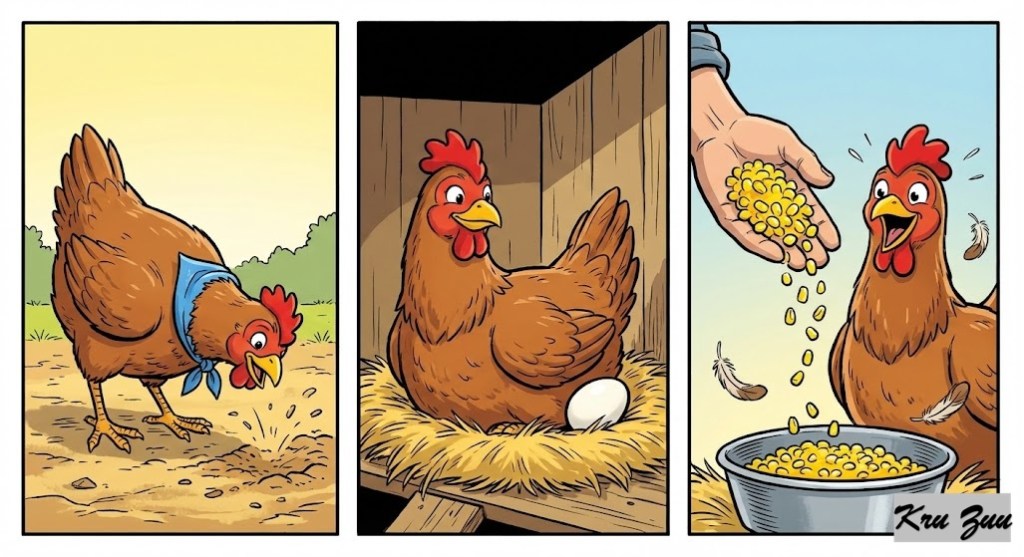
    🐔 Clucky: “Oh joy! Corn is coming! Work hard, lay eggs, get corn!” Clucky pecks happily.

    🐸 Finn: “Ribbit. The ecosystem is providing. I shall catch the flies attracted to the food.”


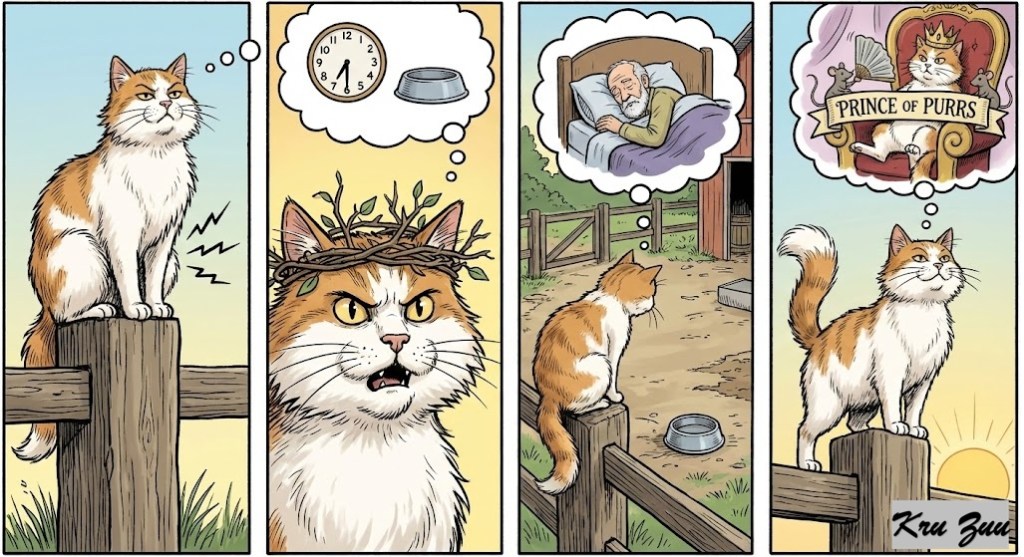
    The Conflict: 🐱 Whiskers sits on the fence. He is hungry, but he is also proud. “Why is Miller late?” Whiskers complains. “It is 7:05! Does he not know who I am? I am the Prince of Purrs!”


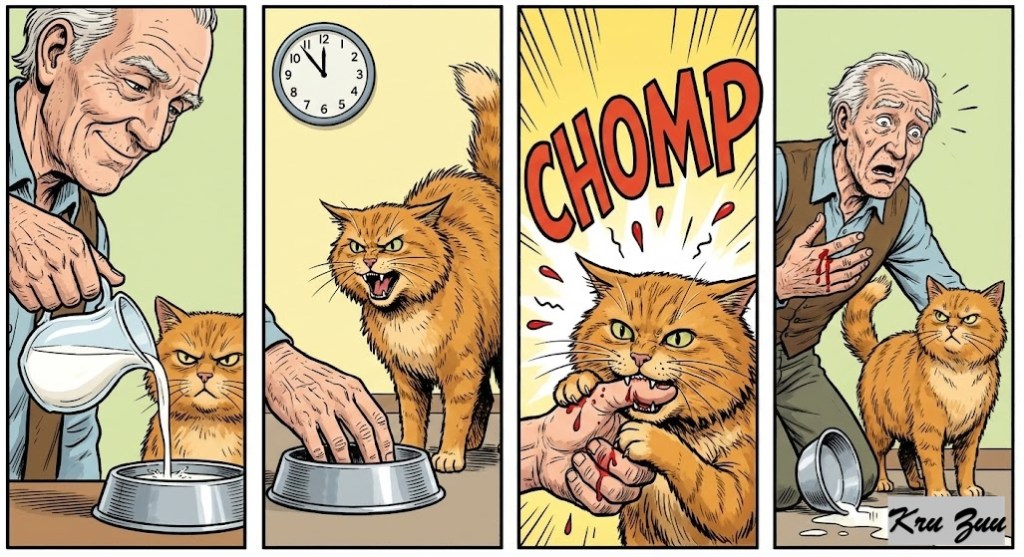
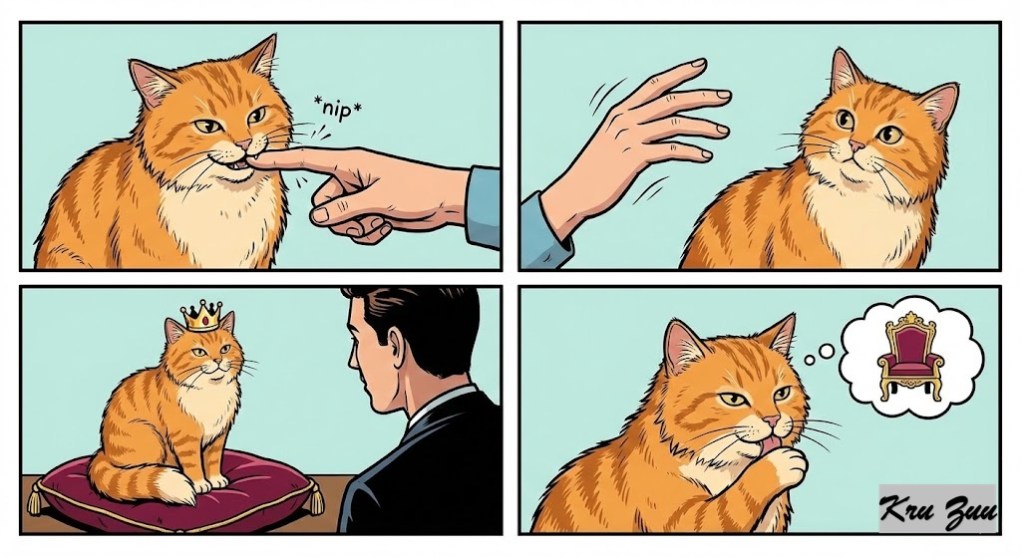
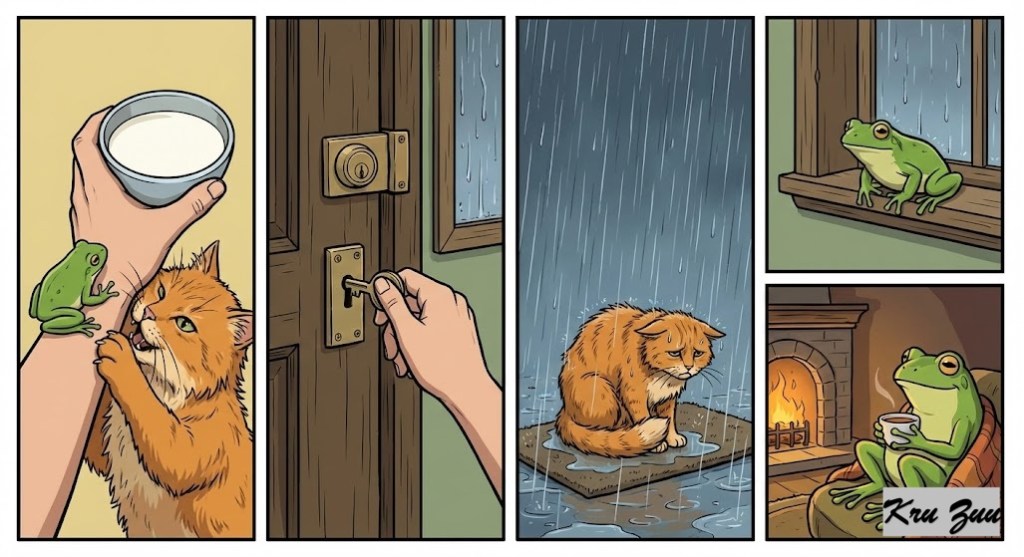
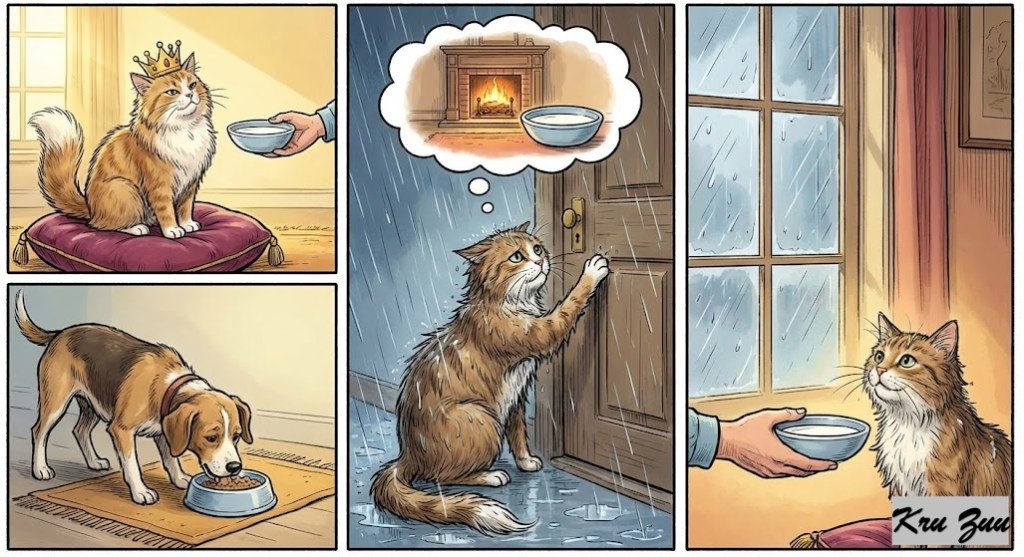
    Old Man Miller finally leans down to pour milk into Whiskers’ bowl. “Here you go, kitty,” Miller says kindly. Whiskers, feeling angry about the 5-minute delay, hisses and bites Miller’s thumb hard. 🩸


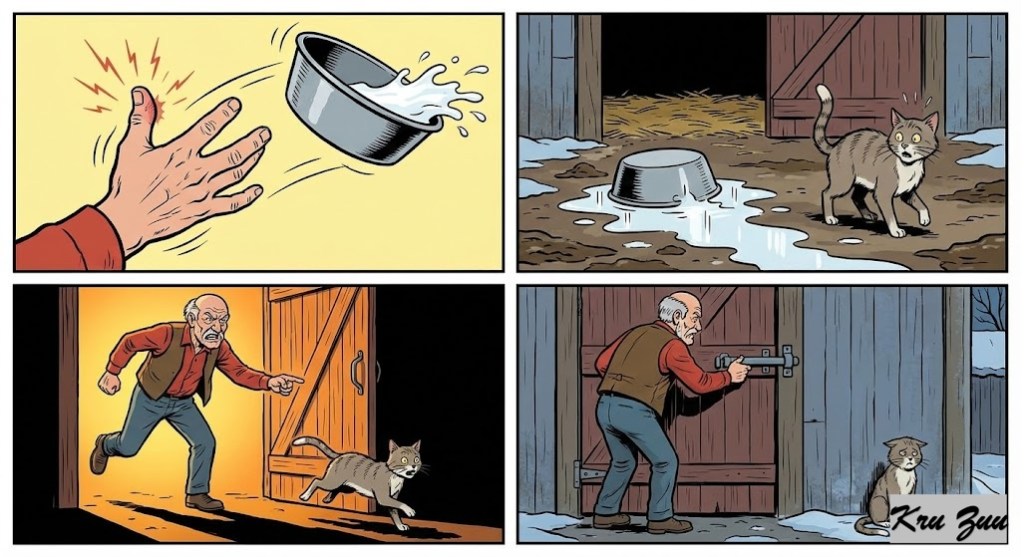
    The Result: “OUCH!” yells Miller. Instinctively, Miller jerks his hand back. The milk bowl flies into the air and crashes upside down in the mud. “Bad cat!” Miller shouts. He chases Whiskers out of the warm barn and locks the door.


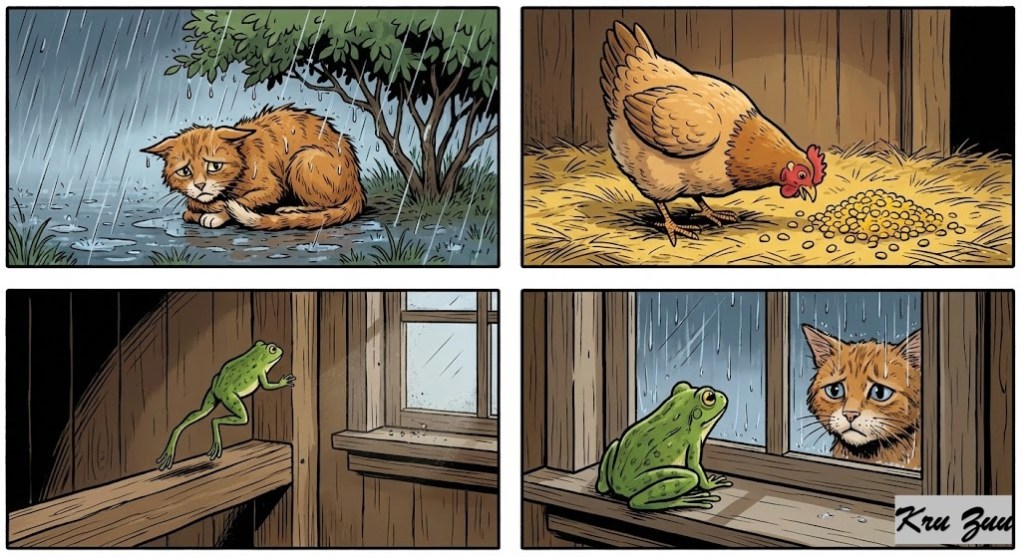
    The Aftermath: It starts to rain. Whiskers is shivering outside, hungry and wet. Inside the dry barn, Clucky is eating corn. Finn the Frog hops over to the window where Whiskers is looking in.


    🐸 Finn: “Ribbit. You confused arrogance with power, my furry friend.”

    🐱 Whiskers: “It was just a little bite! He should respect me!”

    🐸 Finn: “You bit the hand that held the milk. Now the hand is closed, and the door is locked. Enjoy the rain.”


    The Moral: Arrogance blinds you to your dependency. Be humble, or be hungry. 🥛🌧️

    🎓 Lesson for English Learners


    Respect the Process.


    Situation:
    You have a teacher who corrects your grammar constantly. It is annoying.


    The Mistake: You argue with the teacher or roll your eyes. You stop listening.


    The Better Way: Realize that the correction is the “food” for your fluency. Swallow your pride. Say, “Thank you for the feedback.” The teacher will work harder to help you succeed.


    💬 Your Turn: The Gratitude Check 🚀


    Let’s practice the Law of Gratitude right now.


    The Challenge:
    Think of one person who has helped you this week (a parent, a teacher, a friend, or even a YouTube creator).

    The Action: Send them a message right now. “Hey, I just realized I haven’t thanked you for helping me with [X]. I appreciate it.”


    👇 Comment Below: Have you ever seen someone “bite the hand that feeds them” at work or school? What happened? Tell us the gossip!

    By Zubeyir YURTKURAN

    https://www.facebook.com/BrainBattleground/

    https://www.facebook.com/zubeyr.yurtkuran/

    https://www.instagram.com/zubeyryurtkuran/

    https://www.youtube.com/@BrainBattleground-b3p

    https://www.instagram.com/brainbattleground/

  • 🐴 The Daily Shield: The Law of Free Will

    🐴 The Daily Shield: The Law of Free Will

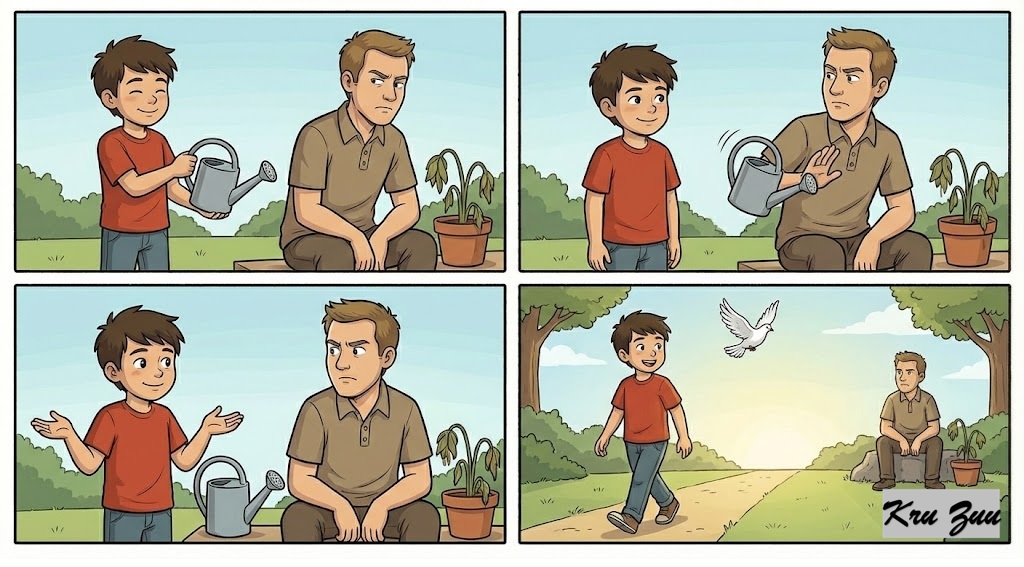
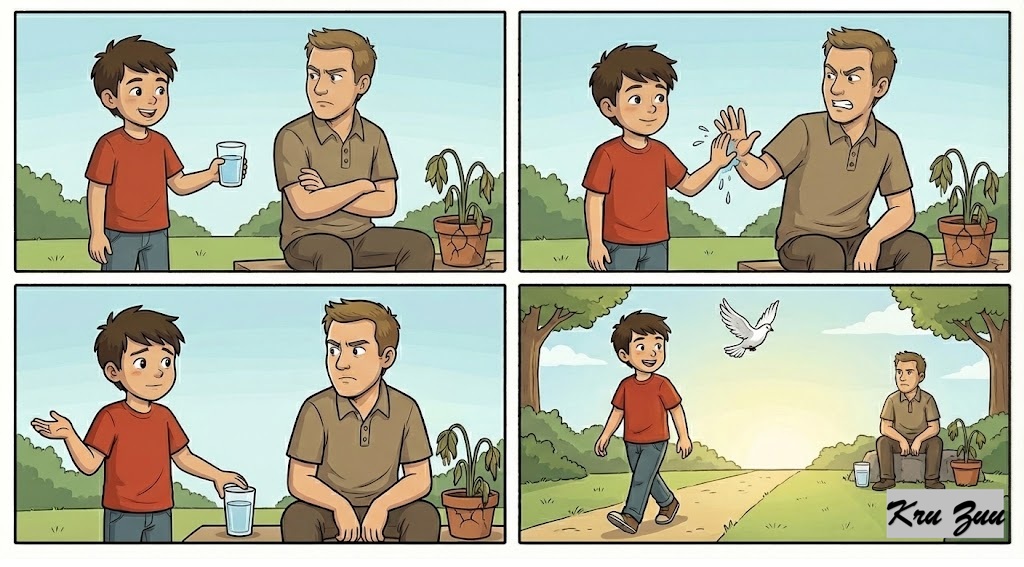
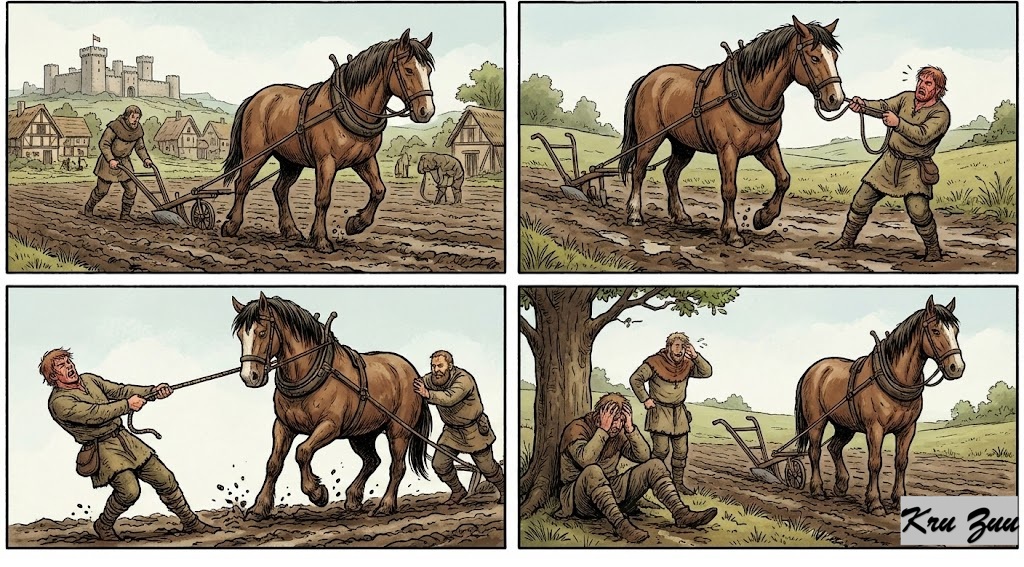
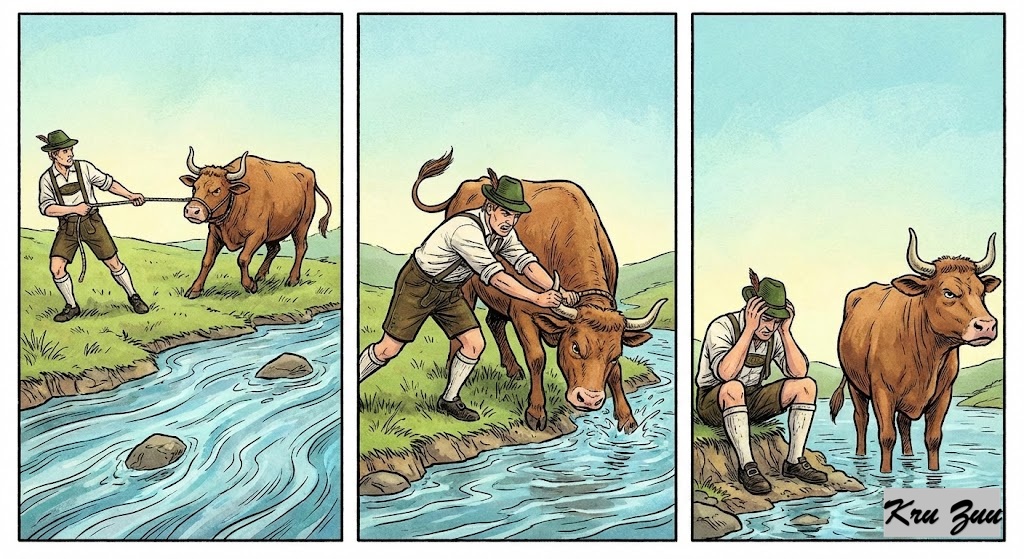
    “You can lead a horse to water, but you can’t make him drink.”


    😈 The Villain (The Control Freak)
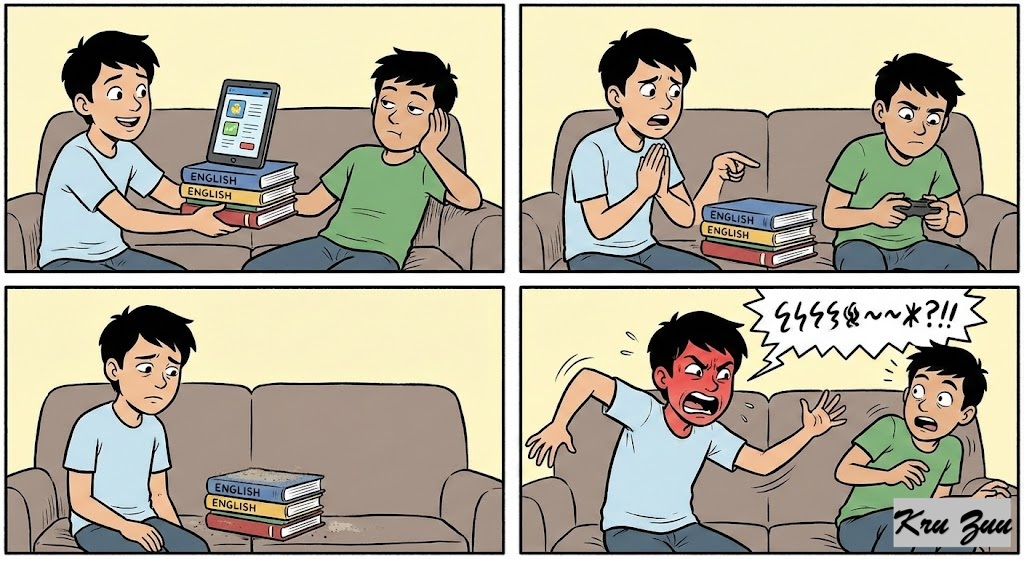
    You want your friend to learn English. You buy them books, you send them links, you beg them to study. They don’t do it. You get angry.

    You want your brother to eat healthy. You cook him broccoli. He orders pizza. You feel frustrated and exhausted.

    You think, “If I try harder, I can change them.” You are fighting a war you cannot win. You are trying to control another person’s mind. 🤯


    😇 The Hero (The Guide)
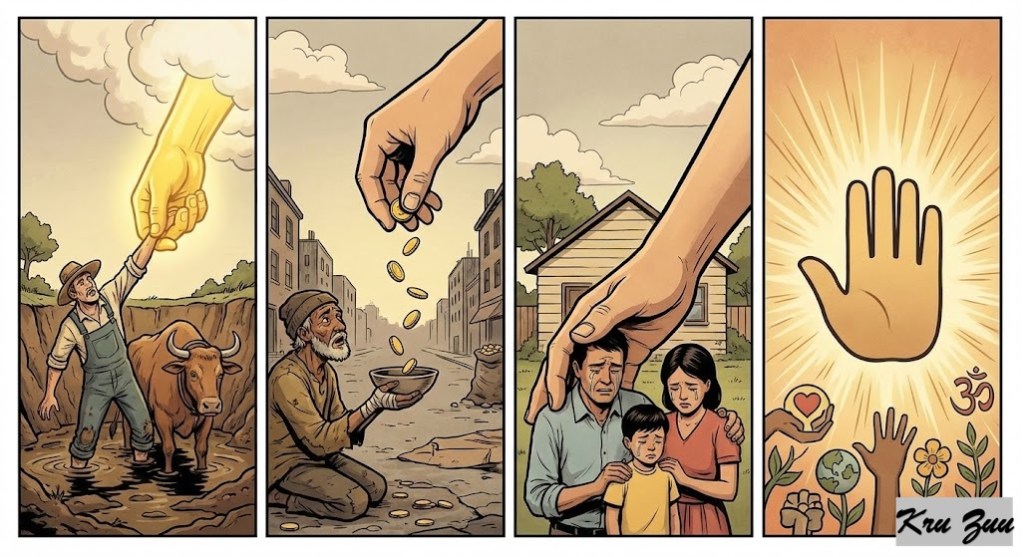
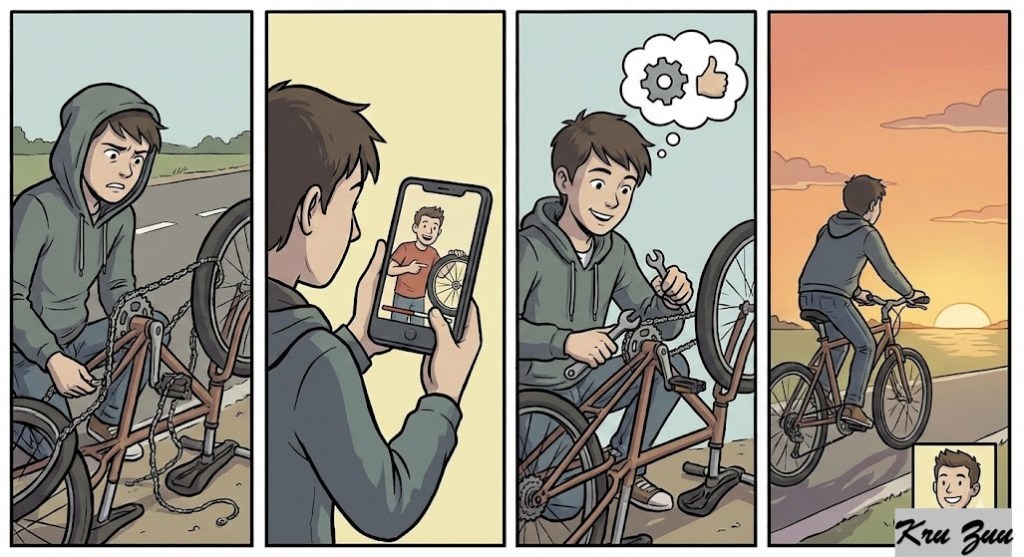
    You offer help. You open the door. You say, “Here are the tools if you need them.” Then, you step back. You understand that you are the guide, not the commander. You focus on your own actions, not their reactions.

    The Result? You protect your energy. You don’t take their refusal personally. You are helpful, but you are also free. 🕊️


    ⚖️ The Reality
    Help is not a forceful injection; it is an offering. You can provide the best opportunity in the world (the water), but the desire to take it (the drinking) must come from inside them. Motivation cannot be donated.


    💎 The Secret: You are responsible to people (to help them), but you are not responsible for people (for their choices).

    🧐 The Anatomy of the Proverb


    This is the ultimate lesson in boundaries.


    Lead (Verb): To show the way; to guide someone to a place. 🗺️


    Make (Causative Verb): To force or compel someone to do something. (This is the impossible part!).


    Simpler Version: You can’t force people to accept your help.


    📚 Vocabulary Vault


    Reluctant (Adjective):
    Unwilling and hesitant to do something.


    Initiative (Noun): The power or opportunity to act or take charge before others do.


    Stubborn (Adjective): Having a determination not to change one’s attitude. 🧱


    Autonomy (Noun): The right or condition of self-government; freedom to choose.


    Influence (Verb/Noun): To have an effect on someone, but not total control.


    🧠 Grammar Focus: Causative Verbs


    This proverb uses a very specific grammar structure called Causative Verbs.


    The Structure: Subject + Make + Person + Verb (Base Form).


    Meaning: To force someone to do something.


    Examples


    ❌ “You can’t make him to drink.” (Incorrect!)


    ✅ “You can’t make him drink.” (Correct)


    “My teacher made me study extra hours.”


    “Sad movies make me cry.”

    📜 History: Origin and Spread


    This is one of the oldest proverbs in the English language!


    The Origin:
    It was first recorded in 1175 in Old English homilies. Horses were essential for survival (transport, farming). Everyone knew that a stubborn horse could not be moved, no matter how strong the farmer was.


    Global Cousins


    🇹🇷 Turkish:
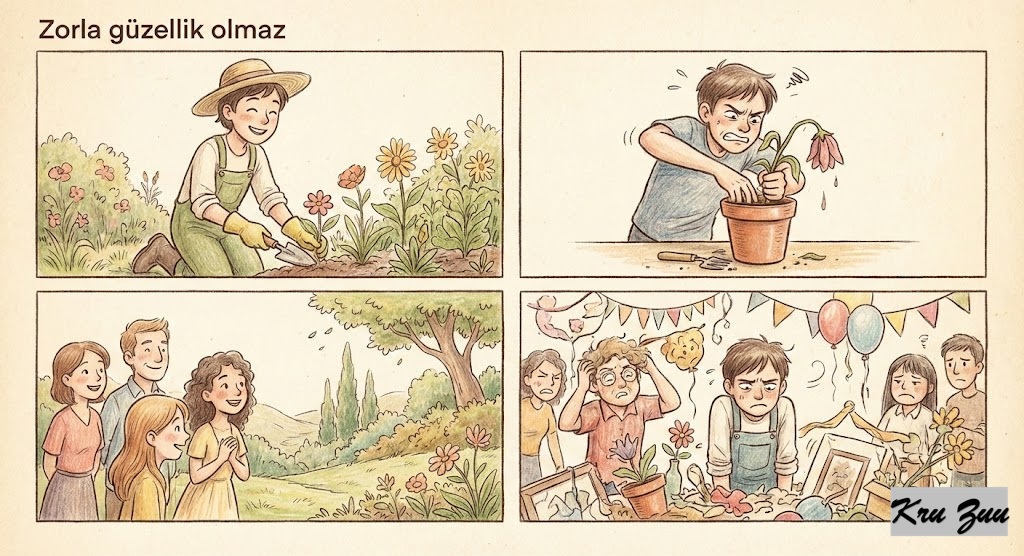
    “Zorla güzellik olmaz.” (Beauty cannot be forced/There is no forced beauty.) OR “Zorla kuyu kazılmaz.”


    🇩🇪 German: “Man kann einen Ochsen zum Wasser führen, aber man kann ihn nicht zwingen, zu saufen.” (You can lead an ox to water, but you can’t force it to booze/drink.)

    🎯 Impact on Life: The Pros & Cons


    ✅ The Pros (Inner Peace)
    Relief:
    When you realize you can’t “fix” everyone, a huge weight lifts off your shoulders.


    Respect: You respect others’ choices, even if they are bad choices.


    ❌ The Cons (The frustration)


    Watching Failure:
    Sometimes, you have to watch people you love fail because they refuse the “water.” That requires emotional strength.

    🎭 Short Story: The Chicken’s Great Feast


    Let’s visit the farm to see this law in action.


    🌟 The Characters


    🐔 Mrs. Hen (The Over-Helper):
    She thinks she knows what is best for everyone.


    🐸 Freddy Frog: He loves flies and mud.


    🐱 Leo the Cat: He is proud, stubborn, and hates being told what to do.


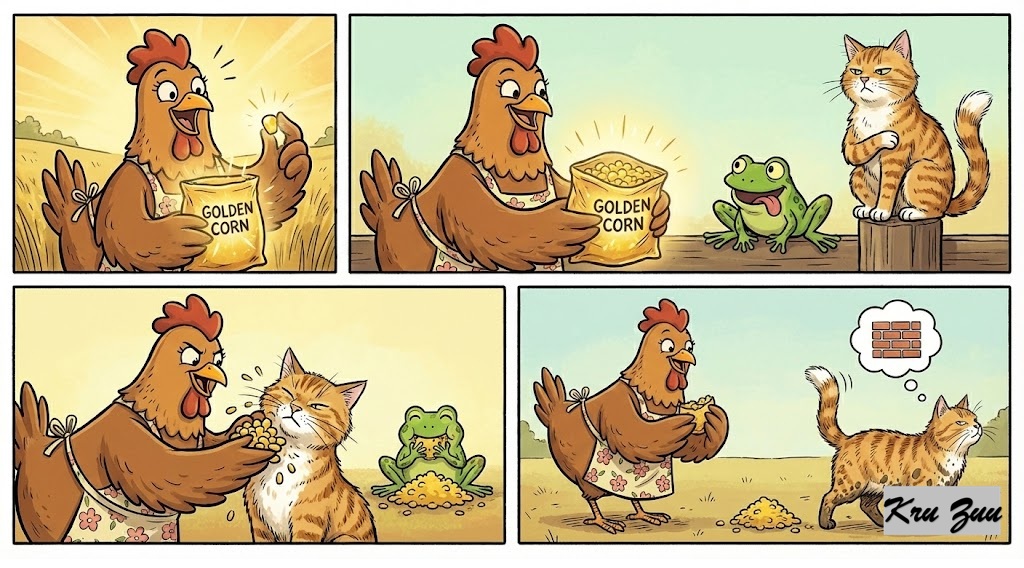
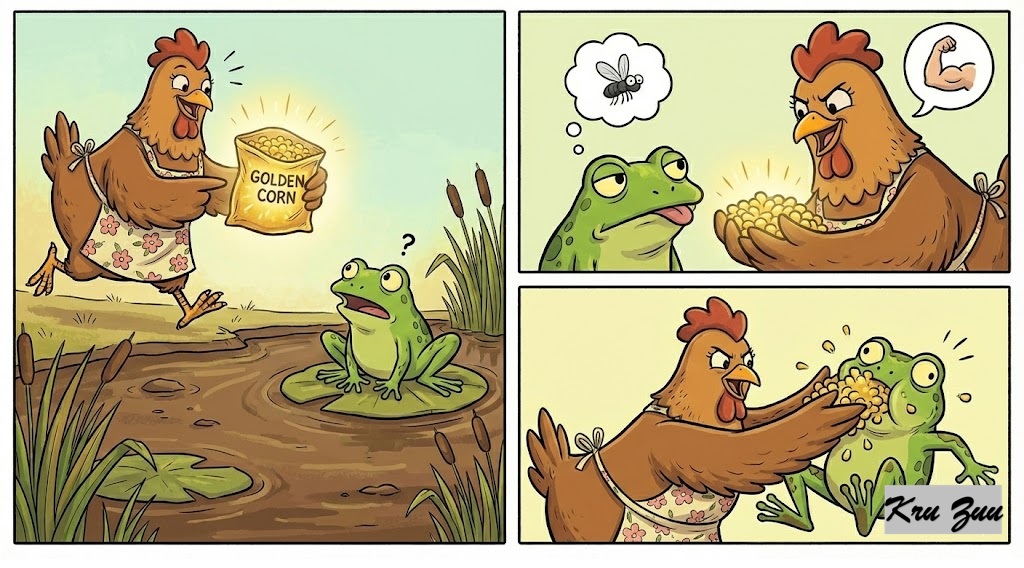
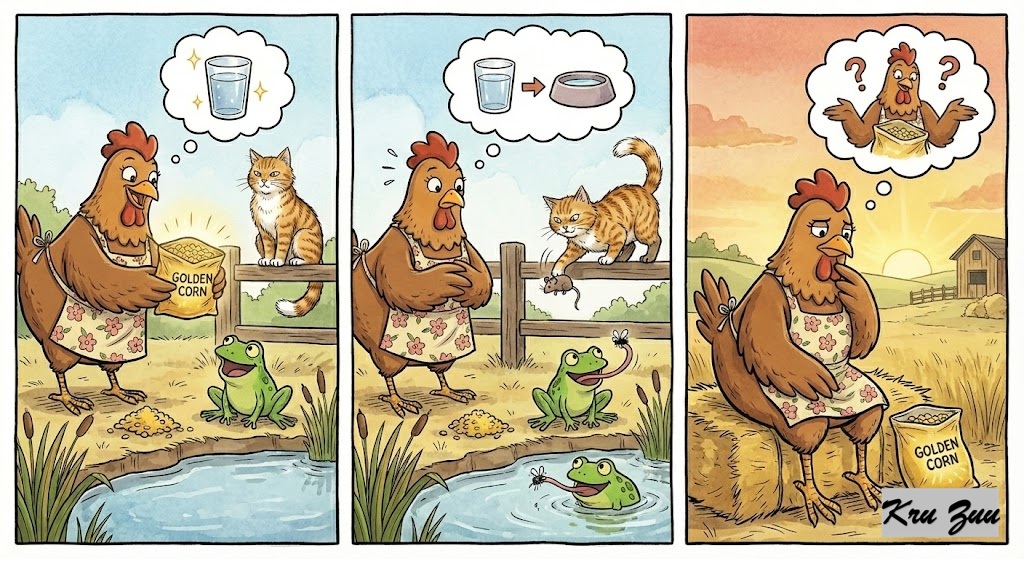
    The Situation: Mrs. Hen found a bag of “Golden Corn.” It was the most delicious, expensive corn in the world. She was so excited! She wanted everyone to be happy and full.


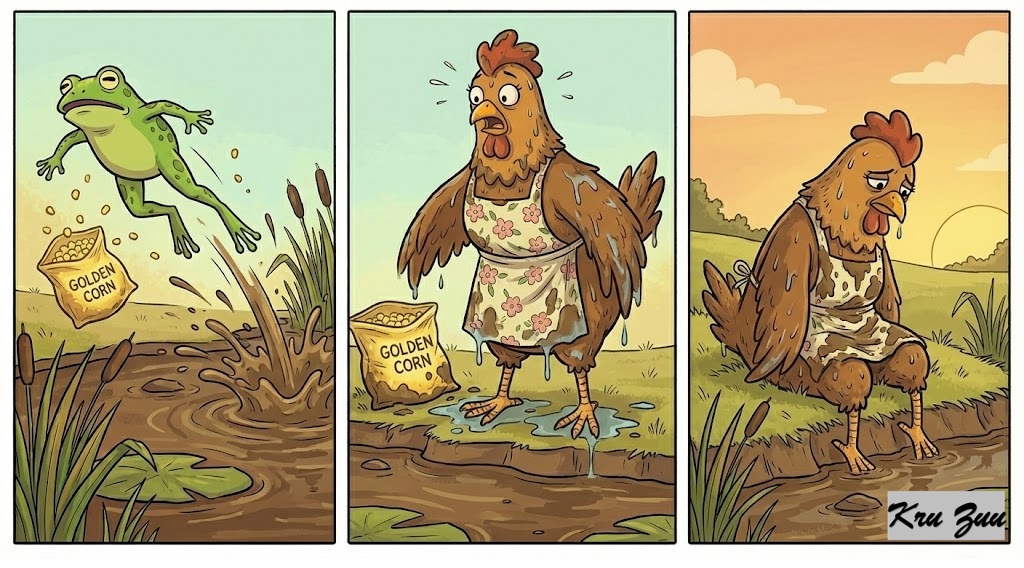
    Scene 1: The Frog Mrs. Hen ran to the pond. “Freddy! Look! Golden Corn! Eat it, it will make you strong!” Freddy Frog looked at the corn. He looked at Mrs. Hen. “But I like flies,” Freddy said. “No, no! This is better than flies,” insisted Mrs. Hen. She pushed the corn into his face.

    The Result: Freddy jumped into the muddy water to escape. Mrs. Hen was wet and sad.


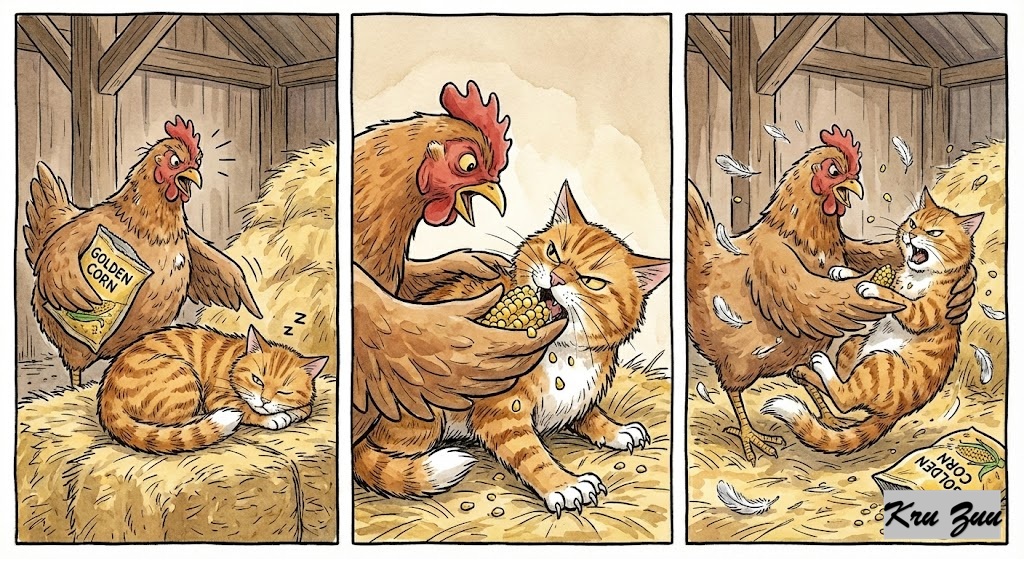
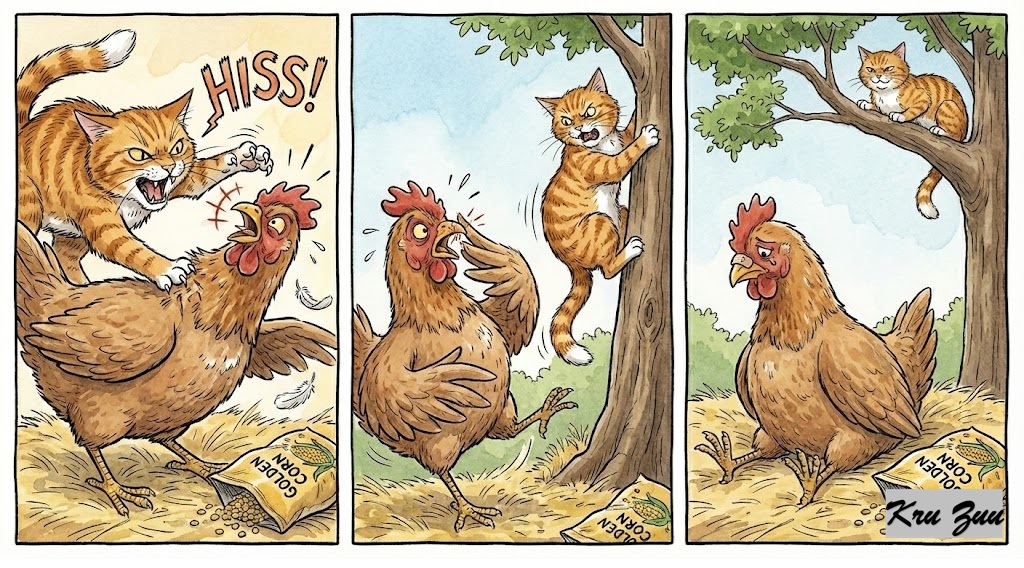
    Scene 2: The Cat Mrs. Hen didn’t give up. She went to the barn. “Leo! You are thin. You need this corn.” Leo the Cat was sleeping. He opened one eye. “I am a carnivore, Mrs. Hen. I eat meat.” “Just try it!” Mrs. Hen shouted. She tried to open Leo’s mouth to put the corn in. “You must eat it!”

    The Result:HISS! Leo scratched Mrs. Hen’s beak and ran up a tree.

    The Moral: Mrs. Hen had good intentions (The Water). But a Frog and a Cat have different needs (The Drinking). Mrs. Hen wasted her day trying to turn a Cat into a Chicken. Don’t be Mrs. Hen. Offer the corn, but don’t force the feast. 🌽

    🎓 Lesson for English Learners


    Stop Buying, Start Doing.


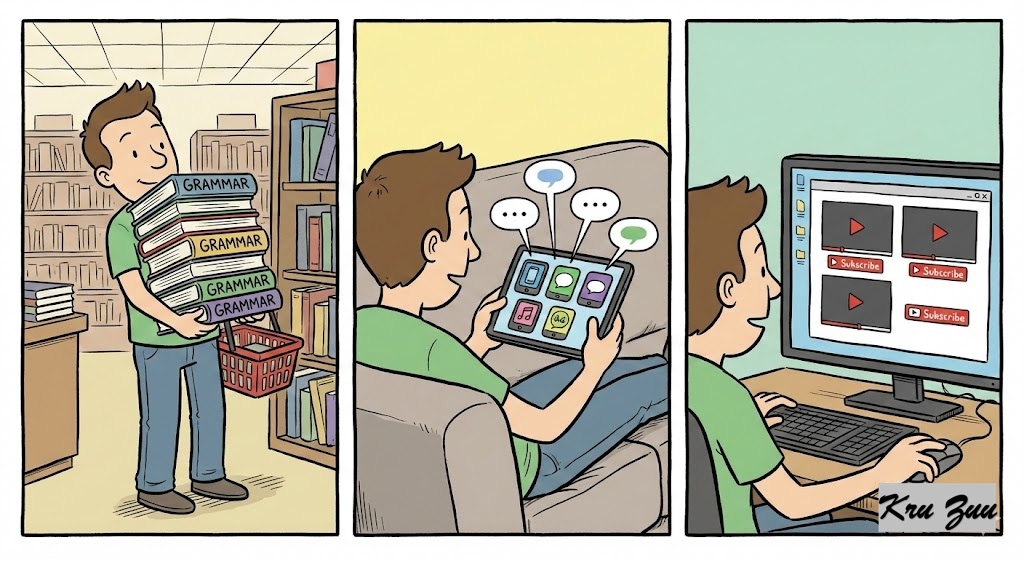
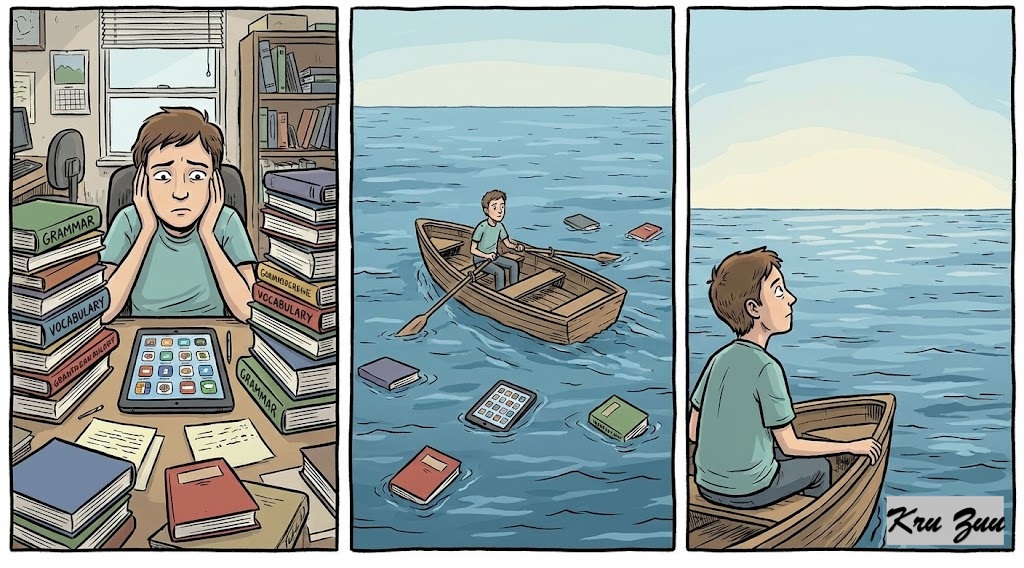
    The Situation: You buy 10 grammar books. You download 5 language apps. You subscribe to 3 YouTube channels.

    The Reality: The books and apps are just “the water.”


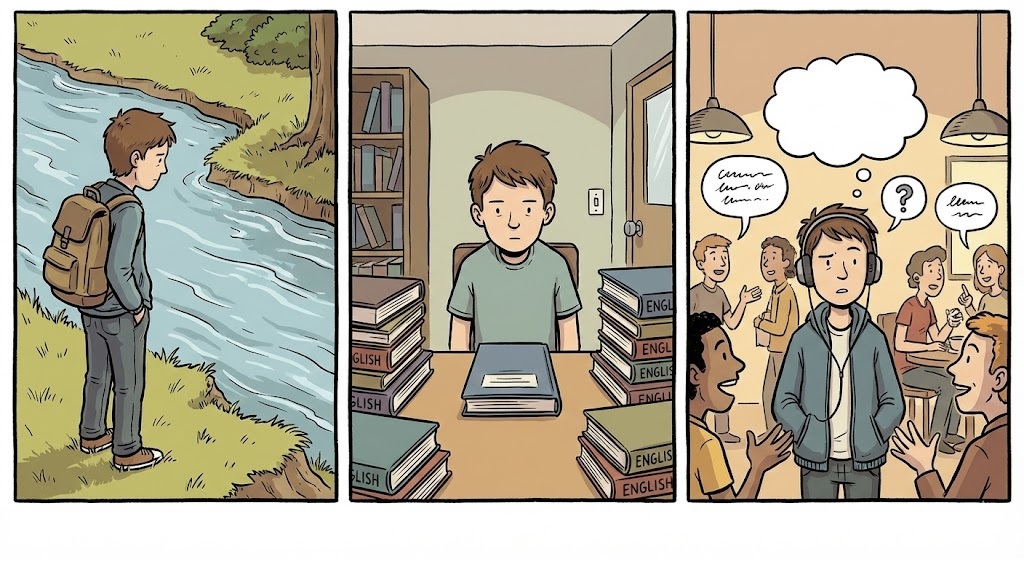
    The Problem: You are standing by the river, but you aren’t drinking. Buying the book doesn’t put the English in your brain.


    The Fix: One page read is better than ten books bought. Drink the water. 💧


    💬 Your Turn: The Reflection 🚀


    Think about your life this week.


    Who are you trying to “force” to drink? (A friend? A student? Yourself?)


    Are you the stubborn horse? Is someone giving you good advice that you are ignoring?


    👇 Tell us in the comments! Have you ever tried to help someone who didn’t want help?

    By Zubeyir YURTKURAN

    https://www.facebook.com/BrainBattleground/

    https://www.facebook.com/zubeyr.yurtkuran/

    https://www.instagram.com/zubeyryurtkuran/
    https://www.youtube.com/@BrainBattleground-b3p

    https://www.instagram.com/brainbattleground/

  • 🛡️ The Daily Shield: The Law of Association

    🛡️ The Daily Shield: The Law of Association

    “Birds of a feather flock together.”


    😈 The Villain (The Energy Vampire):

    You have big dreams. You want to learn English, get fit, or start a business.

    But your “squad” only wants to gossip, complain about the weather, and play video games for 6 hours straight.

    You try to work, but they say, “Come on, relax! You are boring.” You slowly lower your standards to match theirs.

    The Result? You become the average of the people around you.

    You lose your fire.

    You wonder why you are stuck in the same place while others move forward.

    You are trapped in the “Comfort Zone Cage.” 🧟‍♂️


    😇 The Hero (The Tribe Builder):

    You realize that emotions and habits are contagious.

    You look at your circle and ask: “Do these people inspire me or drain me?”

    You bravely distance yourself from toxic negativity. You find a new group, people who are smarter, faster, and kinder than you.

    The Result? Their habits rub off on you. You study because they study. You aim high because they aim high. You don’t just fly; you soar. You understand that your network is your net worth. 🦅

    ⚖️ The Reality


    “Show me your friends, and I will show you your future.” We like to think we are independent thinkers.

    But biology says otherwise. We are social chameleons.

    If your friends eat fast food every day, you will eventually eat a burger.

    If your friends read books, you will eventually pick up a book.

    💎 The Secret: You cannot change the people around you, but you can change the people around you. (Read that again).

    🧐 The Anatomy of the Proverb


    Why birds? Why feathers? Let’s break it down.


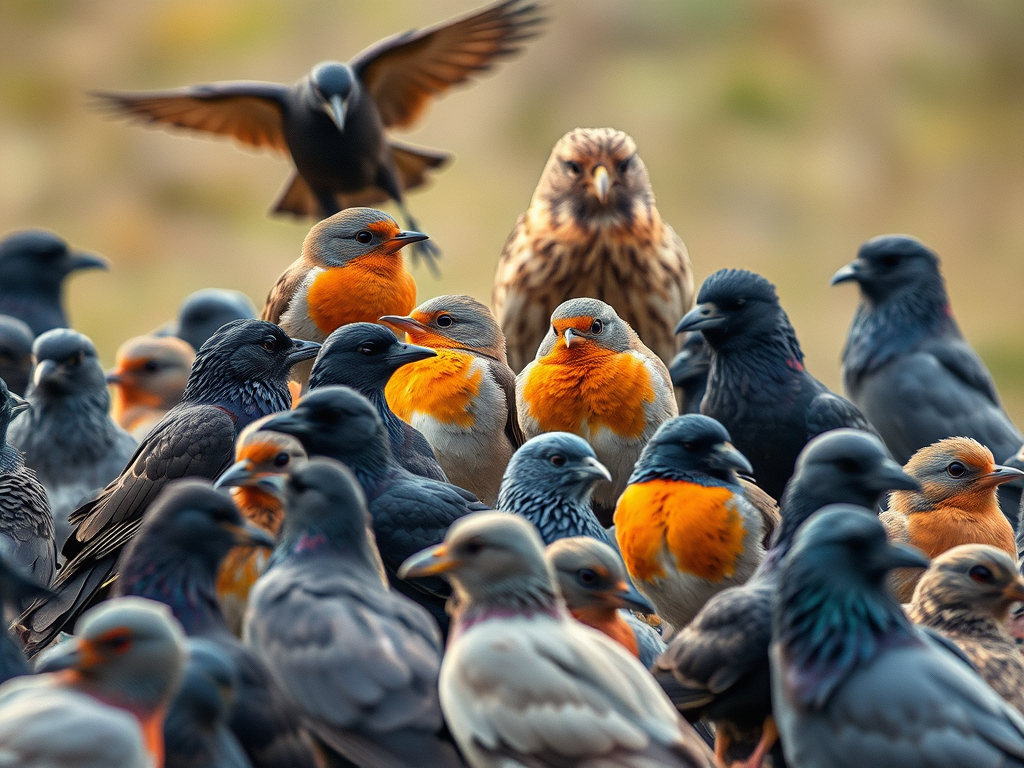
    Birds of a feather (Idiom): People who are similar (same character, same interests, same background). Just like a sparrow has different feathers than an eagle.


    Flock (Verb): To gather or travel together in a crowd.


    Together (Adverb): With or near to each other.


    Simpler Version: Similar people hang out with similar people.


    📚 Vocabulary Vault


    Clique (Noun):
    A small group of people, with shared interests or other features in common, who spend time together and do not readily allow others to join them. (Example: “The popular clique in high school.”)


    Peer Pressure (Noun): Influence from members of one’s peer group. 😬


    Entourage (Noun): A group of people attending or surrounding an important person.


    Toxic (Adjective): Very harmful or unpleasant in a pervasive or insidious way.


    Like-minded (Adjective): Having similar tastes or opinions. 🧠


    🧠 Grammar Focus: Collective Nouns


    The word “Flock” is special. It is often used for birds, but English loves “Collective Nouns” (names for groups of animals).


    A flock of birds (or sheep). 🐦


    A pack of wolves. 🐺


    A school of fish. 🐟


    A pride of lions. 🦁


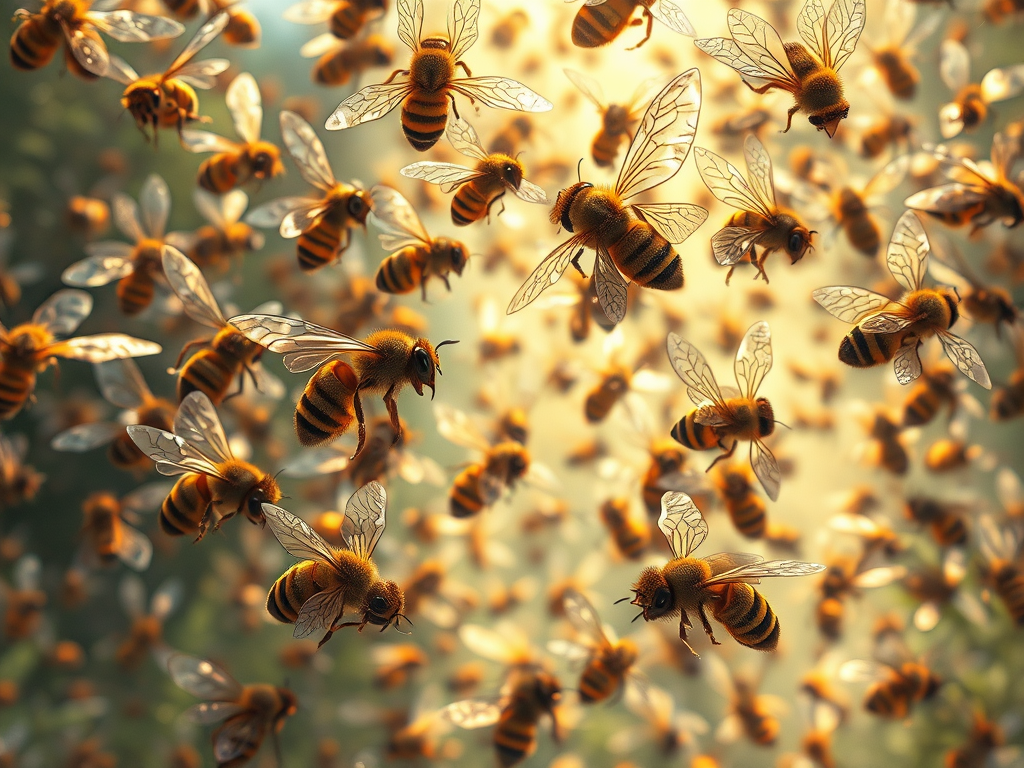
    A swarm of bees. 🐝


    Grammar Trap: When the group acts as one unit, use a singular verb.


    Correct: The flock is flying south. (Not “are”)

    📜 History & Global Wisdom


    This observation is as old as nature itself.


    The Origin

    The phrase has been used since the mid-16th century. William Turner used a version of it in 1545. It comes from the simple observation that robins fly with robins, and crows fly with crows. You never see a pigeon hanging out with a hawk.


    Global Cousins
    🇹🇷 Turkish:
    “Bana arkadaşını söyle, sana kim olduğunu söyleyeyim.” (Tell me your friend, and I will tell you who you are.) — Direct hits on the meaning!


    🇹🇷 Turkish (Alternative): “Körle yatan şaşı kalkar.” (He who sleeps with the blind wakes up cross-eyed.) — Warning about bad influence.


    🇪🇸 Spanish: “Dime con quién andas, y te diré quién eres.”


    🇯🇵 Japanese: “Rui wa tomo wo yobu.” (Similar types call their friends.)

    🎯 Impact on Life: The Audit


    ✅ The Pros (The Mastermind):
    Acceleration:
    Being around experts makes you learn faster by osmosis.


    Support: When you fall, a strong flock catches you.


    ❌ The Cons (The Echo Chamber):
    Blindness:
    If everyone agrees with you, you never grow. Sometimes you need a friend who is different to challenge your ideas.


    Exclusion: Don’t be so close to your flock that you reject everyone else. That is prejudice.

    🎭 Short Story: The Eagle in the Chicken Coop


    Once, an eagle egg rolled out of a nest and fell into a farm.

    A chicken sat on it. When the baby eagle hatched, he looked around.

    Everyone was pecking at the ground, eating corn, and clucking.

    The Conditioning: The baby eagle thought, “I guess I am a chicken.”

    He walked on the ground. He never tried to fly high. He spent his days gossiping about the farmer.

    The Awakening: One day, he looked up and saw a majestic bird gliding effortlessly in the clouds.

    “What is that?” asked the eagle. “That’s an eagle, the king of the birds,” said the old chicken. “But don’t worry about him. You and I belong to the ground.”

    The Tragedy: The eagle believed his “flock.” He lived and died a chicken, never knowing he was born to rule the sky.

    The Moral: If you hang out with chickens, you will never fly. Find your eagles. 🦅

    🎓 Lesson for English Learners


    Create Your “English Flock.”


    Situation: You study English alone in your room. When you go out, you only speak your native language.


    The Fix: You cannot learn a language in isolation.


    Join an English speaking club (online or offline).


    Change your digital flock: Follow accounts that only post in English.


    Find a “study buddy” who is more advanced than you. They will pull you up.


    💬 Your Turn: The Friendship Audit 🚀


    Jim Rohn said, “You are the average of the five people you spend the most time with.”


    The Challenge:
    Write down the names of the 3 people you text the most.


    Do they inspire you?


    Do they support your goals?


    Do they make you laugh or stress you out?


    Comment below:
    What kind of “flock” are you looking for this year? (Example: “I am looking for a creative flock!” or “I need a gym flock!”) 👇

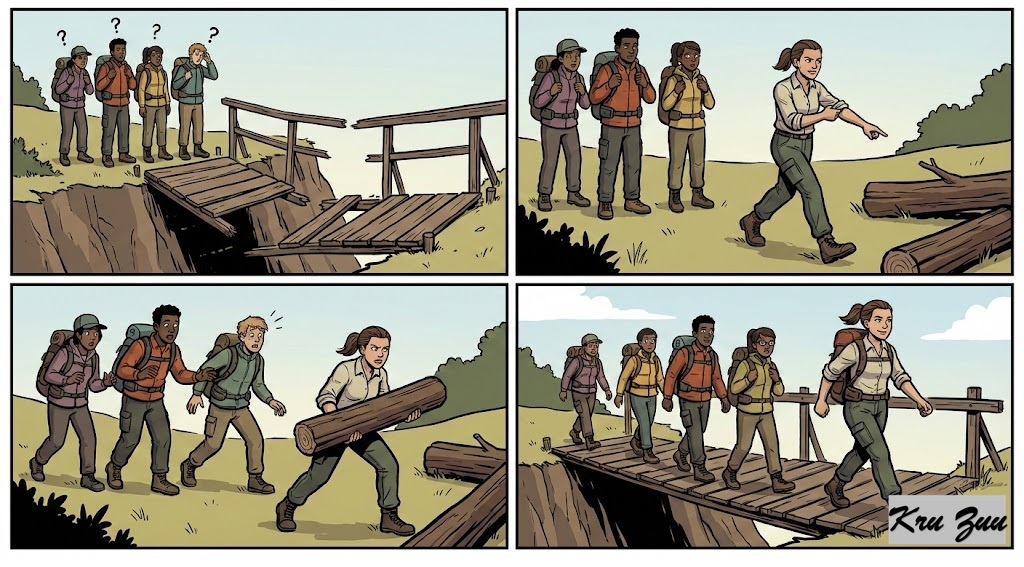
  • 🤝 The Daily Alliance: The Law of SynergyTwo heads are better than one.

    🤝 The Daily Alliance: The Law of SynergyTwo heads are better than one.

    👿 The Villain (The Soloist): You say, “I work better alone.

    ” You say, “Explaining it to others takes too much time.”

    You hide your work because you are afraid someone will steal your credit.

    You think asking for help is a sign of weakness.

    The Result? You get stuck on a simple problem for 5 hours.

    You miss obvious mistakes.

    You burn out carrying the weight of the world on your own shoulders.

    You become the King of a Lonely Island. 🏝️🥀


    😇 The Hero (The Mastermind): You realize that your brain has blind spots.

    You say, “I have an idea, but I need a fresh perspective.”

    You bring your draft to a friend. You brainstorm with a rival. You accept that you don’t know everything.

    The Result? 1 + 1 = 3. You find the solution in 10 minutes.

    You achieve Synergy.

    You don’t just solve the problem; you destroy it. You build an empire because you know how to build a team. 🚀🤝


    ⚖️ The Reality: The smartest person in the room is usually the one who asks the most questions. Nobody wins a war alone.

    💎 The Secret: Collaboration is not about making the work easier; it is about making the result better.

    🧐 The Anatomy of the Proverb

    This is the Golden Rule of Teamwork.

    It implies that two people working together will solve a problem faster and better than one person working alone.


    Heads (Noun): Metaphor for minds, perspectives, or ideas. 🧠


    Better (Adjective): The comparative form of “Good.” Superior. 📈


    One (Noun): A single individual (The lonely path). 👤


    📚 Vocabulary Vault


    Synergy (Noun):
    When the combined effect is greater than the sum of separate effects (1+1=3). ✨


    Perspective (Noun): A particular way of viewing things. (I see a “6”, you see a “9”).


    Collaborate (Verb): To work together on a project.


    Brainstorm (Verb): To discuss ideas freely to solve a problem. 🌪️


    Blind Spot (Noun): An area where you cannot see or understand something (a mistake you miss).


    🧠 Grammar Focus

    Comparative Adjectives (Irregular) This proverb uses the most common irregular comparison in English!


    Positive: Good 👍


    Comparative: Better (NOT “Gooder”) 📈


    Superlative: The Best 🏆


    Structure: [Noun A] + [Verb] + better than + [Noun B].


    Example: “Studying with a partner is better than studying alone.”

    📜 History: Origin and Spread

    This wisdom is universal. Humans survived history because we formed tribes.


    The Origin: First recorded by John Heywood in 1546.


    The Logic: One hunter catches a rabbit. Two hunters catch a Mammoth. 🦣


    Global Cousins:


    🇹🇷 Turkish:
    “Bir elin nesi var, iki elin sesi var.” (What does one hand have? Two hands have a sound.) — Legendary match! 👏


    🇰🇷 Korean: “Even a sheet of paper is lighter when held by two.”


    🌍 African Proverb: “If you want to go fast, go alone. If you want to go far, go together.”

    🎯 Impact on Life: The Pros & Cons

    Is more always better?

    ✅ The Pros (The Multiplier):


    Error Checking:
    Your friend sees the spinach in your teeth before the meeting. You can’t see your own face!


    Creativity: Different backgrounds create new ideas (The “Steve Jobs & Wozniak” effect).


    ❌ The Cons (The Trap):


    Groupthink: Agreeing just to be polite. (Bad!)


    “Too many cooks spoil the broth”: This is the opposite proverb!

    If too many people try to lead, it becomes a disaster. You need two heads, not twenty!

    🎭 Short Story: The River Crossing

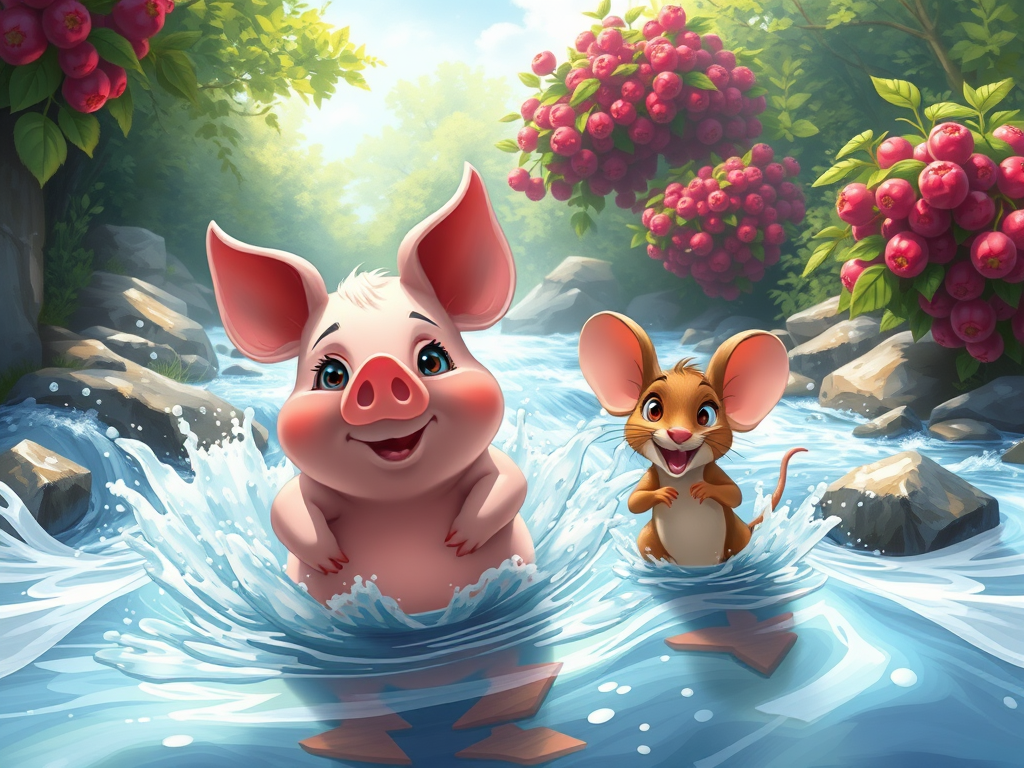
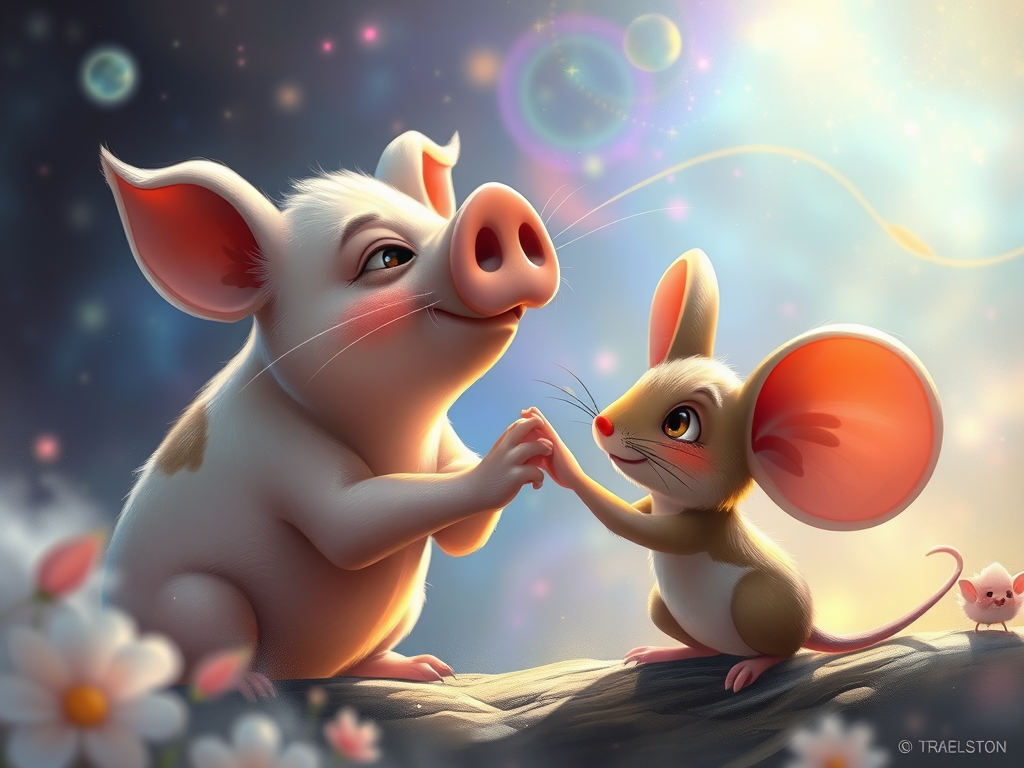
    Let’s visit our friends, Penny the Pig and Max the Mouse.


    🌟 The Setup: Penny and Max needed to cross a rushing river to get to a berry bush.

    There was no bridge. Just a long, heavy wooden log on the grass. 🪵

    The Conflict: Penny was strong enough to push the log, but she couldn’t see where the sharp rocks were in the water.

    She tried to push it blindly and almost got stuck.


    Max had sharp eyes and saw the safe path, but he was too small to move the log even one inch.

    He sat on the log and squeaked.

    The Action: Did they give up? No. They combined their “Heads” and “Hands.”


    Penny used her strength to push the log into the water.

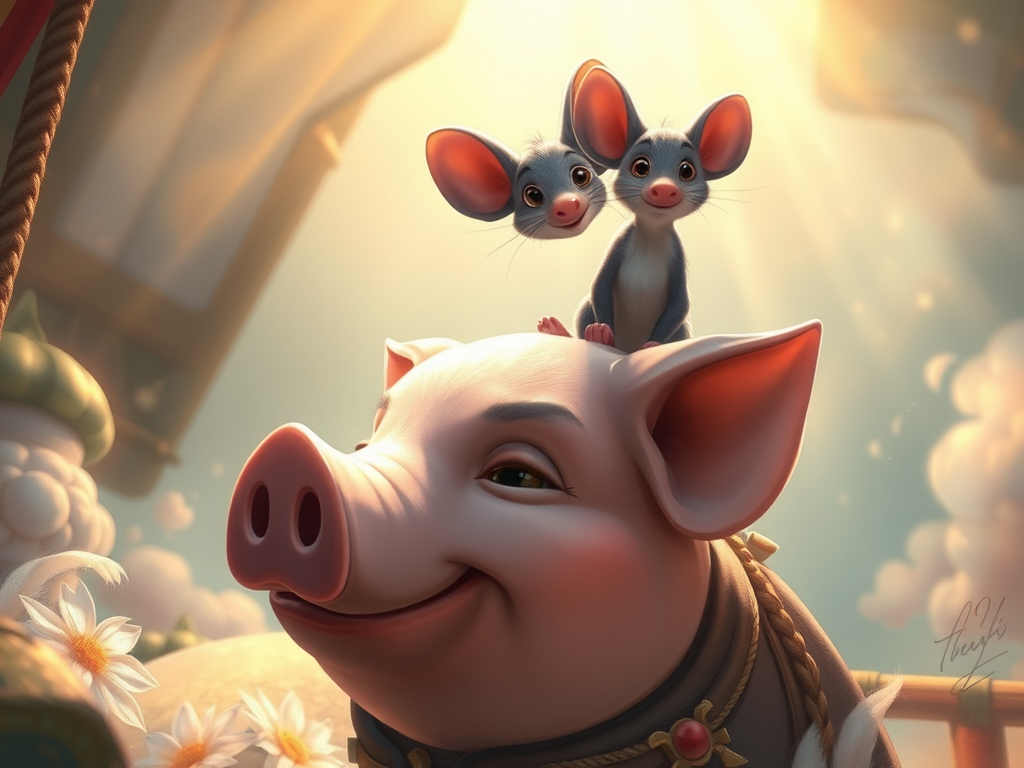
    Max sat on Penny’s head and acted as the Captain.


    Max shouted: “Left! Right! Avoid the rock!” Penny powered through.

    The Moral: Penny had the Power.

    Max had the Vision.

    Separately, they starve. Together, they feast on berries. 🍓🐭🐷

    🎓 Lesson for English Learners

    Don’t be a “Lone Wolf” in your language journey!

    Advice on Study 📚

    Situation: You are writing an essay and you think it is perfect.

    You Say: “I need a second pair of eyes. Two heads are better than one.”

    You send it to a friend or ChatGPT for feedback. They find 3 mistakes you missed.

    Advice on Conversation 🗣️

    Situation: You are nervous to speak English.

    You Say: “Let’s practice together. You correct me, and I will correct you.” You create a ‘Language Alliance.’

    💬 Your Turn

    The “Co-Pilot” Challenge ✈️

    The Goal: Stop trying to solve your hardest problem alone.

    The Question: What is ONE project or problem you are stuck on right now?

    Deciding a career path?

    Planning a trip?

    Learning a complex grammar rule?


    The Action: Send a message to one smart friend right now. Say: “I’m stuck on this. Can I get your opinion? Two heads are better than one.”


    👇 Who is the “Max” to your “Penny”? Tag them or write their name below! 👇

    By Zubeyir YURTKURAN

    https://www.facebook.com/BrainBattleground/

    https://www.facebook.com/zubeyr.yurtkuran/

    https://www.instagram.com/zubeyryurtkuran/

    https://www.youtube.com/@BrainBattleground-b3p

  • 🤝 The Loyalty Test: Who Stays When the Storm Comes?

    🤝 The Loyalty Test: Who Stays When the Storm Comes?

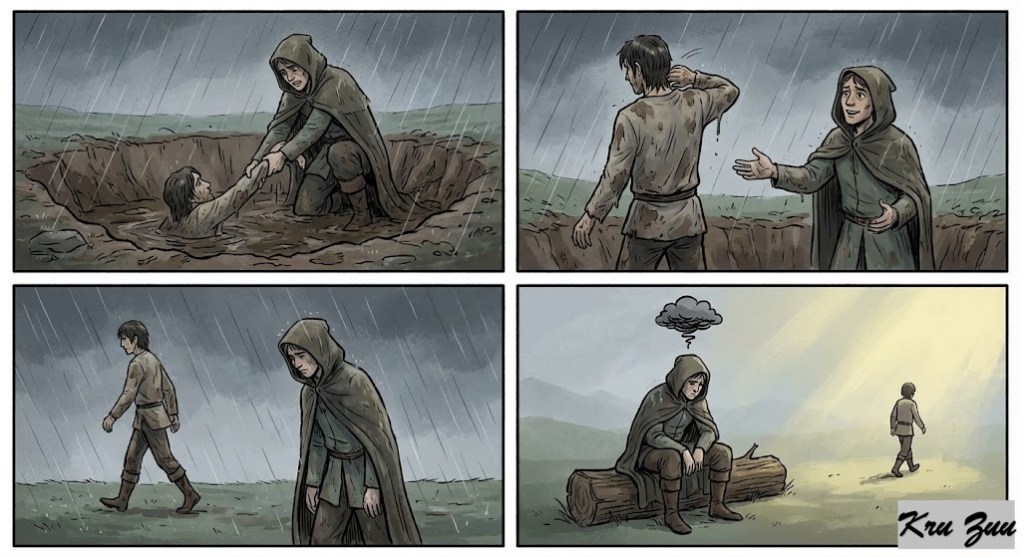
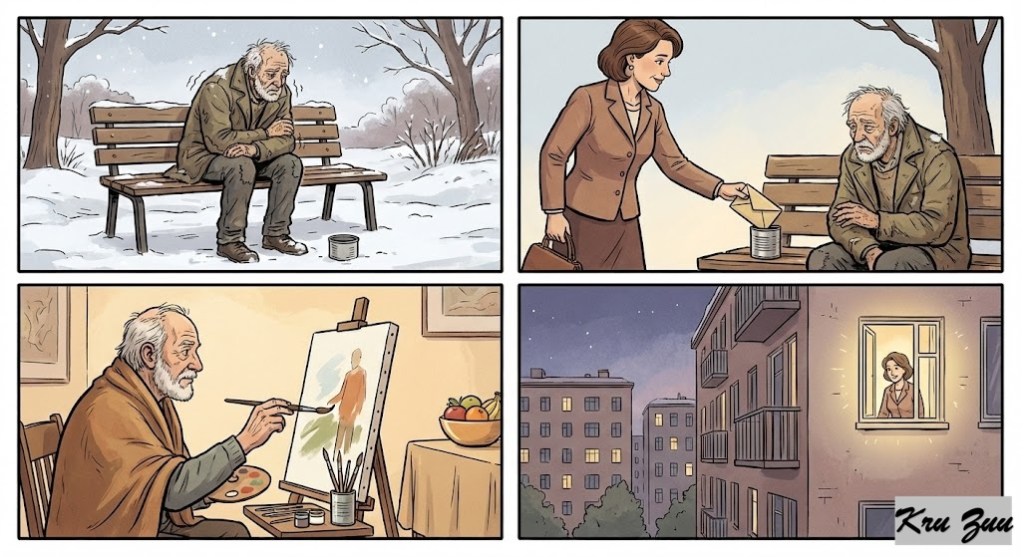
    A friend in need is a friend indeed.


    ☀️ The Fair-Weather Friend:

    You win the lottery.

    You throw a huge party. Hundreds of people show up.

    They laugh at your jokes, eat your pizza, and call you “bestie.”

    But the next day, you lose your wallet and need a ride home. Suddenly, their phones are “off.” You are alone.

    🏃💨 ⛈️The True Companion:

    You are sick with the flu.

    You have no money and you look terrible.

    This person doesn’t run away. They bring you soup.

    They sit in the silence with you. They don’t care about your status; they care about you.

    ❤️ 📉 The Reality: Everyone loves a winner. But only real ones love a loser.

    💎 The Secret: Hard times are not a curse; they are a filter to reveal true diamonds.


    In this post, we are decoding the ultimate friendship test. Let’s separate the fakes from the real deals! 🕵️‍♂️

    🧐 The Anatomy of the Proverb


    Let’s break down the rhythm and rhyme of this famous saying.


    📚 Vocabulary Vault


    In Need (Phrase):
    This means being in trouble, facing a difficulty, or requiring help. (e.g., being broke, sad, or in danger). 🆘


    Indeed (Adverb): Truly, undeniably, or “in reality.” It emphasizes that something is 100% true. ✅


    Friend (Noun): Not just someone you know (an acquaintance), but someone you share a bond with.


    🧠 Grammar Focus


    This proverb uses Rhyme to make it sticky!


    Structure: A friend [who is] in need / is a friend indeed.


    The Ellipsis: In English, we often delete words to make sentences faster. The full grammatical sentence would be: “A friend who helps you when you are in need, is a friend indeed.”


    The Double Meaning:
    A friend who helps me when I am in need is a true friend. (Most common meaning).


    A friend who loves me even when they are in need is a true friend.

    📜 History: Pirates & Philosophers


    Did this start in a movie? No, it’s ancient!


    The Origin:
    This concept goes back to 3rd Century BC Greece! The playwright Euripides said something very similar. It appeared in English as early as the year 1450.


    Global Cousins: Every culture knows this truth!


    🇹🇷 Turkish: “Dost kara günde belli olur.” (The friend becomes clear on the black day.) 🌑


    🇯🇵 Japanese: “Masaka no toki no tomo koso shin no tomo.” (A friend in a crisis is a true friend.)


    🇪🇸 Spanish: “En el peligro se conoce al amigo.” (In danger, the friend is known.)


    The Lesson: A shadow stays with you in the sun, but leaves you in the dark. A true friend stays in the dark.

    🎯 Impact on Life: The Pros & Cons


    Should you test your friends?


    ✅ The Pros (The Safety Net)


    Trust:
    You know exactly who has your back.


    Quality over Quantity: It is better to have 2 real friends than 100 fake ones.


    Mental Health: Knowing you are not alone reduces anxiety.


    ❌ The Cons (The User)


    Don’t Be “Needy”:
    Just because they are a true friend doesn’t mean you should complain 24/7.


    Reciprocity: Friendship is a two way street. If you are always the one “in need,” are you being a good friend to them? 🤔

    🎭 Short Story: The Stormy Night


    Let’s check back in with our farm friends!


    🌟 Character Introduction


    Percy the Chicken:
    Fun, loud, loves parties. 🐔


    Fred the Frog: Quiet, loyal, small but brave. 🐸


    Luna the Cat: The wise narrator. 🐱


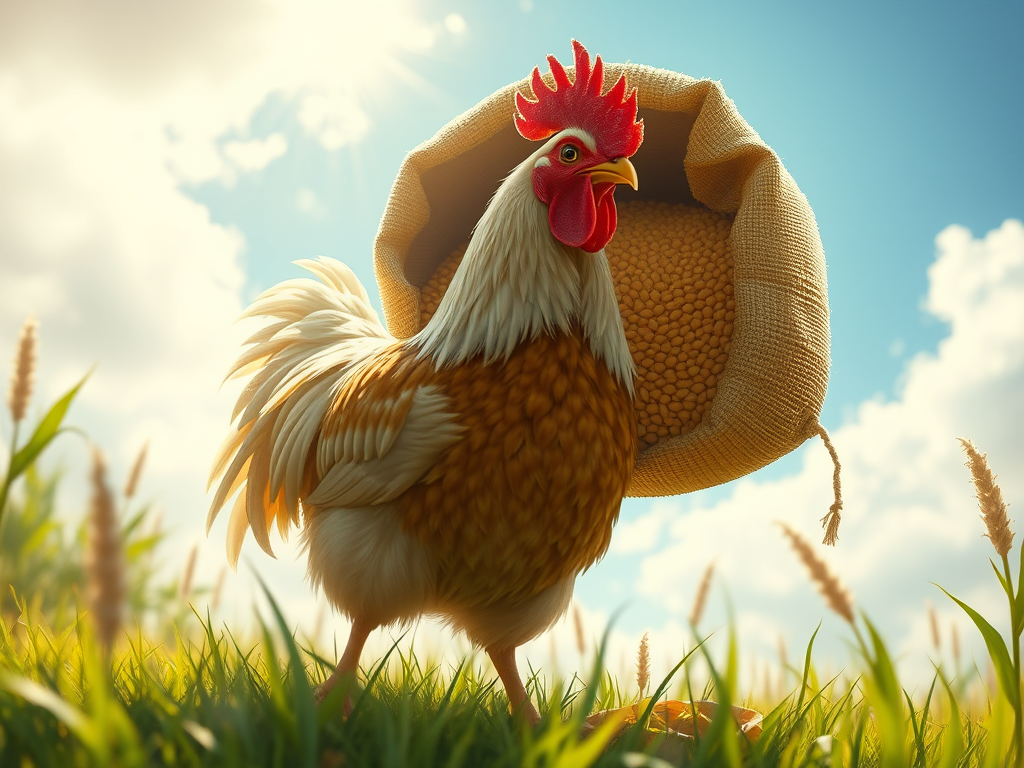
    It was a beautiful, sunny Tuesday. Percy found a huge bag of corn seeds.

    The Good Times: “Party at my place!” clucked Percy.

    The Swans came. The Ducks came. Everyone was eating Percy’s corn.

    “Percy, you are the King of the Coop!” they shouted. Percy felt like a celebrity.

    Fred sat in the corner, smiling but quiet.


    The Bad Times: Suddenly, the sky turned black. Thunder crashed! ⚡

    A fox was spotted near the fence. “Run!” screamed the Swans. They flew away instantly. “Save yourselves!” quacked the Ducks. They vanished into the pond.


    Percy was stuck. His foot was caught in a vine. He was alone. The corn was gone. The “friends” were gone. The fox was coming.

    The Rescue: Suddenly, a small green hand tugged at the vine. It was Fred. Fred wasn’t strong, but he didn’t leave.

    He chewed the vine. He pulled. He croaked loudly to distract the fox. Snap! The vine broke. Percy and Fred hid in the mud until the fox left.


    Luna the Cat watched from the roof: “The Swans loved the corn. Fred loved the Chicken. The Swans were friends in greed. Fred was a friend in need.”

    🎓 Lesson for English Learners


    How does this apply to your language journey?


    The Study Buddy 📖


    Fair-weather:
    A partner who only wants to copy your homework.


    Indeed: A partner who helps you practice speaking even when you are tired, or corrects your mistakes gently.


    Action: Find a partner who pushes you to be better, not just one who makes things easy.


    The Mistake Mindset ❌


    When you make a mistake (you are “in need” of correction), a fake friend laughs at you.


    A real friend laughs with you and helps you fix it.


    Vocabulary Expansion 🗣️


    Don’t just say “Help me.” Use phrases like:


    “I’m in a bit of a jam.” (Slang for trouble).


    “Can you do me a solid?” (Slang for a favor).


    “I’ve got your back.” (I support you).


    💬 Your Turn


    Who is your “Fred”?


    Think about the last time you had a problem (a flat tire, a bad grade, a breakup). Who was the first person you called? 📞


    Tag that person in the comments or send this post to them to say “Thank you.” 👇

    By Zubeyir YURTKURAN

    https://www.facebook.com/BrainBattleground/

    https://www.facebook.com/zubeyr.yurtkuran/

    https://www.instagram.com/zubeyryurtkuran/
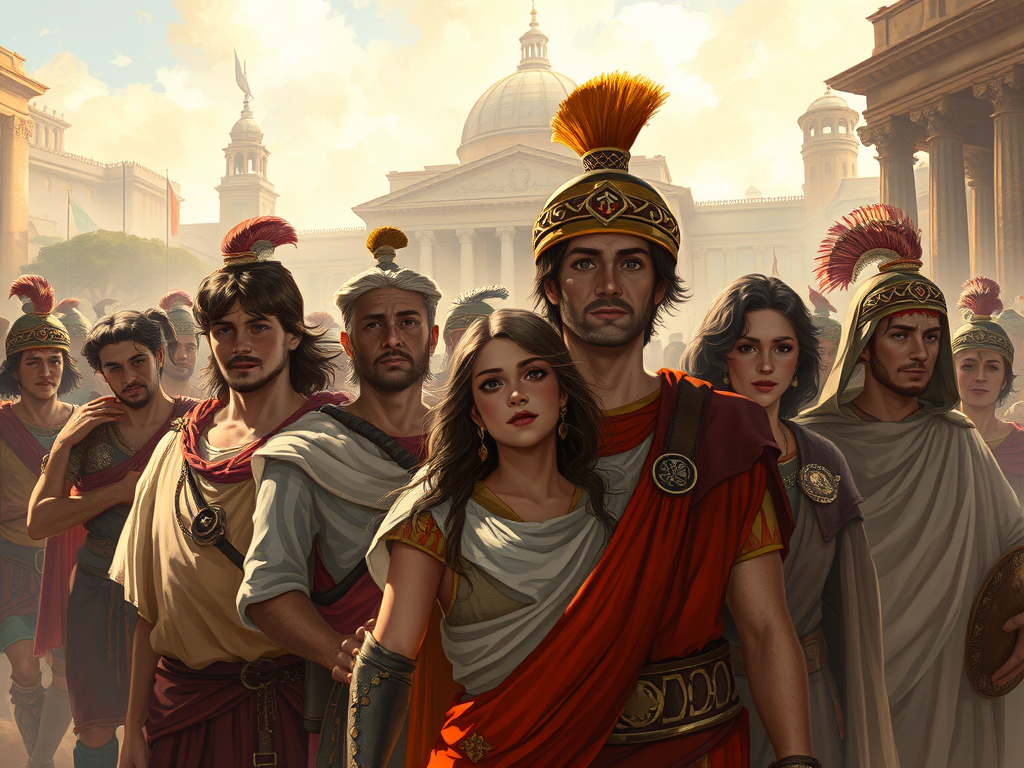
  • 🌍 The Chameleon Code: How to Fit In Anywhere

    🌍 The Chameleon Code: How to Fit In Anywhere

    When in Rome, do as the Romans do.


    📸 The Tourist:
    You travel to Japan. You wear your shoes inside the house. You talk loudly on the train. You try to tip the waiter (which is rude there!). Everyone stares at you. You feel awkward.

    😳 ninja The Traveler: You arrive in Japan. You take your shoes off at the door. You whisper on the train. You bow respectfully instead of tipping. You make local friends instantly. You belong. 🍣

    📉 The Reality: Rules change depending on where you are. 🚀

    The Secret: Success isn’t about being right; it’s about being adaptable. In this post, we are mastering the art of “Cultural Intelligence.” Let’s pack our bags! 🧳

    🧐 The Anatomy of the Proverb


    Let’s look under the hood of this famous idiom.


    📚 Vocabulary Vault


    Rome (Proper Noun):
    In this idiom, “Rome” is a metaphor. It represents any new place, situation, or environment you are in. (e.g., A new office, a friend’s house, a different country). 🏛️


    Do (Verb):
    To act, behave, or follow customs. 🎭


    Romans (Plural Noun): These represent the locals or the people who belong to that group. 👥


    🧠 Grammar Focus


    This is an Imperative Sentence (A command or advice).


    Structure: When [Condition/Place], [Command].


    Formula: [When you are in a specific context] + [Copy the behavior of the people there].


    Short Version: Native speakers often just say: “Well, when in Rome…” (and leave the rest silent!).

    📜 History: Saints & Emperors


    Did this actually happen in Rome? Yes!


    The Legend: In the year 387 AD, St. Augustine arrived in Milan. He noticed the church customs there were different from his home in Rome. He asked St. Ambrose what to do.


    The Advice: St. Ambrose famously said: “If you are at Rome, live in the Roman style; if you are elsewhere, live as they live elsewhere.”


    Global Cousins:


    🇹🇷 Turkish:
    “Gittiğin yer kör ise, bir gözünü de sen kapat.” (If the place you go to is blind, close one of your eyes too!) 😉


    🇪🇸 Spanish: “Donde fueres, haz lo que vieres.” (Wherever you go, do what you see.)


    🇯🇵 Japanese: “Go ni itte wa, go ni shitagae.” (Enter the village, obey the village.)


    The Lesson: It is not about losing your identity. It is about showing respect and harmony.

    🎯 Impact on Life: The Pros & Cons


    Should you always copy others?


    ✅ The Pros ( The Diplomat)


    Respect:
    People appreciate when you try to understand their culture.


    Safety: Blending in stops you from looking like a clueless tourist (and a target for pickpockets!).


    Connection: You make friends faster when you break down barriers.


    ❌ The Cons (The Peer Pressure)


    Losing Yourself:
    Don’t do things that violate your core morals just to fit in.


    The “Copycat” Risk: If “the Romans” are jumping off a bridge, you shouldn’t do it! 🚫

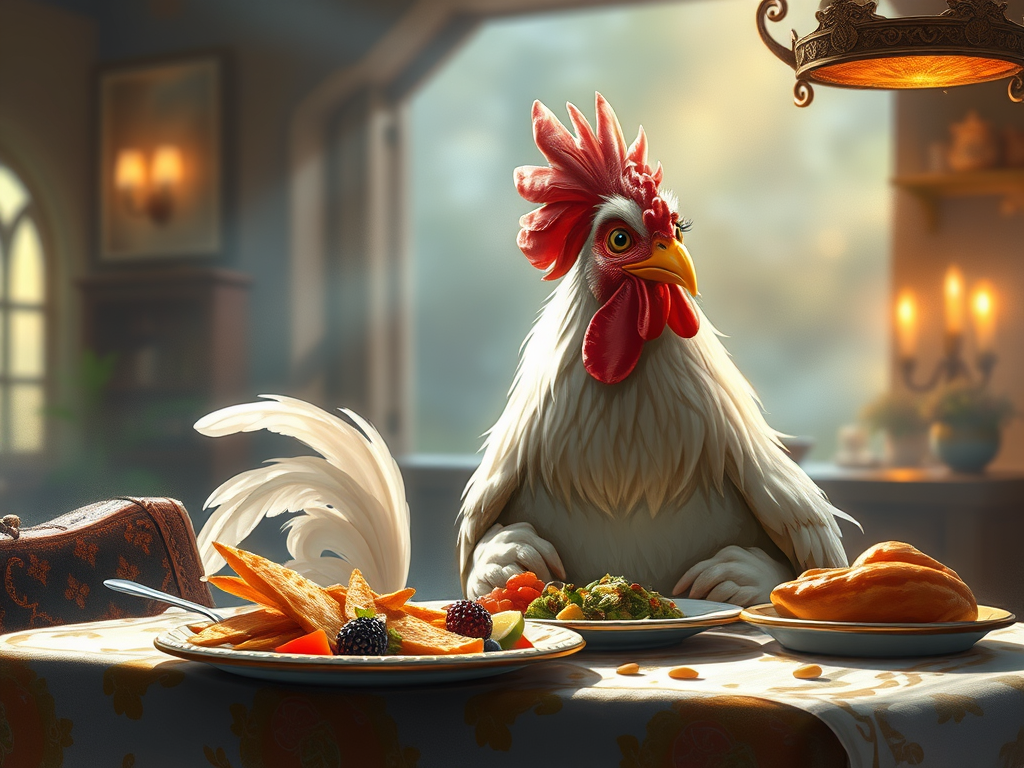
    🎭 Short Story: The Dinner Party


    Let’s see how our farm friends handle a fancy dinner!


    🌟 Character Introduction


    Percy the Chicken:
    Stubborn and stuck in his ways. 🐔


    Fred the Frog: Observant and flexible. 🐸


    The Swans: The fancy hosts of the dinner party. 🦢


    The animals were invited to a formal dinner at the Swan Lake.

    The Custom: Swans eat gracefully with their heads high, and they never make loud noises while chewing.


    Percy: Didn’t care. Percy sat at the table. He pecked at the food rapidly peck, peck, peck!

    He scratched the table with his feet (like a chicken does).

    He clucked loudly with his mouth full.

    The Swans looked at him in horror. “How rude,” they whispered. Percy was not invited back. 🚫


    Fred: Watched the Swans. Fred was a frog.

    He usually catches flies with his tongue. But he looked around.

    He saw the Swans eating soup slowly. Fred didn’t use his tongue. He used a spoon.

    He sat up straight. He mimicked their politeness. The Swans smiled. “What a charming gentleman,” they said. Fred was offered dessert. 🍰


    Luna the Cat watched from a tree: “Percy acted like a chicken in a swan’s house. Fred acted like a swan. Fred did as the Romans do.”

    🎓 Lesson for English Learners


    How can you use this strategy to master English?

    Don’t just translate your language into English. Mimic the culture.


    The Greeting Protocol 👋


    Your Home:
    Maybe you kiss on the cheek or bow.


    In Rome (USA/UK): A firm handshake or a simple “Hey.”


    Action: Watch movies. How do friends say hello? Copy that.


    The “Politeness” Filter ☕


    Direct Translation: “Give me coffee.” (Grammatically correct, but rude).


    The Roman Way: “Could I have a coffee, please?”


    Action: Learn the “softener” words (Could, Would, May).


    The Slang Squad 🗣️


    If you are in a business meeting, speak formally.


    If you are gaming on Discord, don’t say “How do you do?” Say “What’s up?”


    Action: Match your vocabulary to your environment.


    💬 Your Turn


    Have you ever experienced Culture Shock? 🤯


    Did you try food that was strange to you? 🦑


    Did you make a mistake in a new country? 🌍


    Do you act differently at school vs. at home with family?


    Tell us your story in the comments! 👇

    By Zubeyir YURTKURAN

    https://www.facebook.com/BrainBattleground/

    https://www.facebook.com/zubeyr.yurtkuran/
    https://www.instagram.com/zubeyryurtkuran/