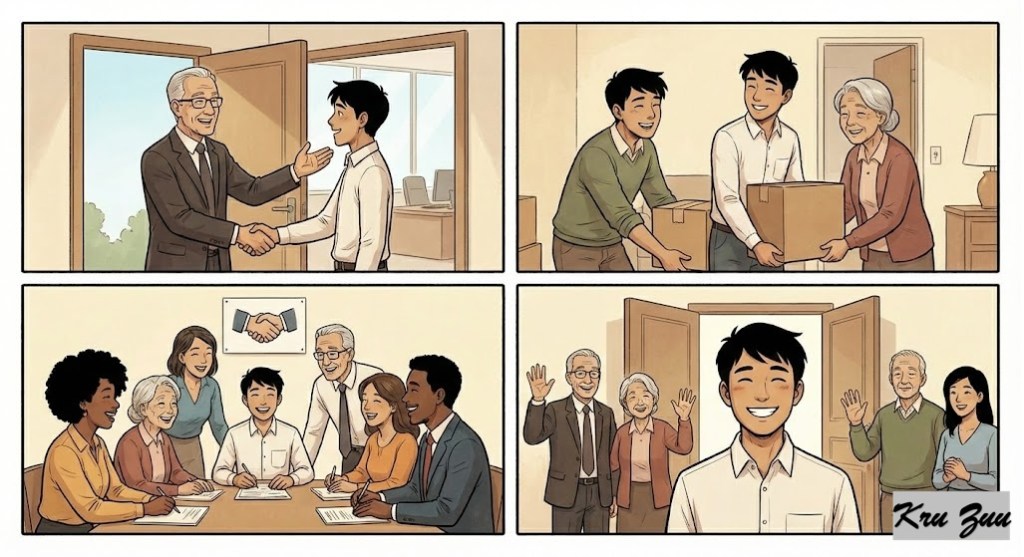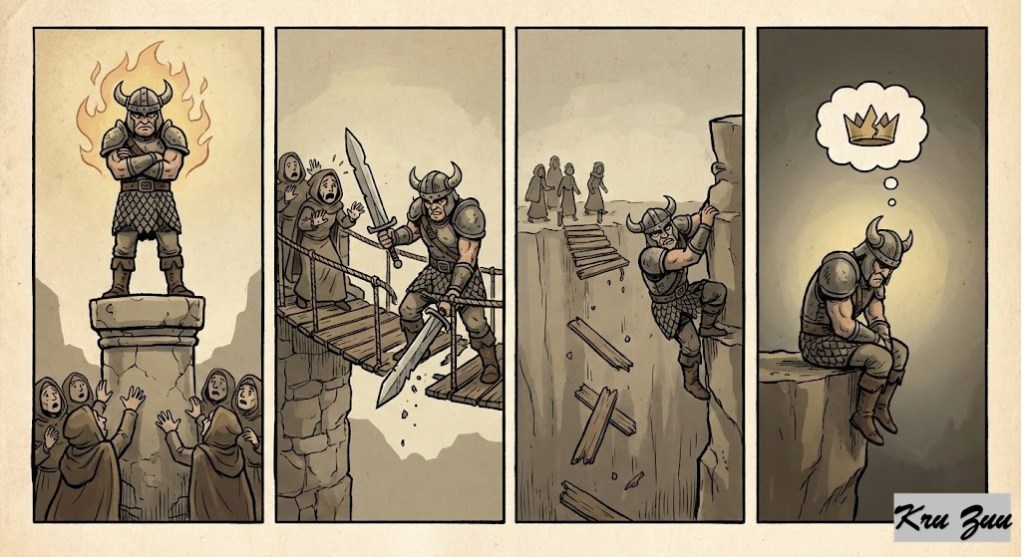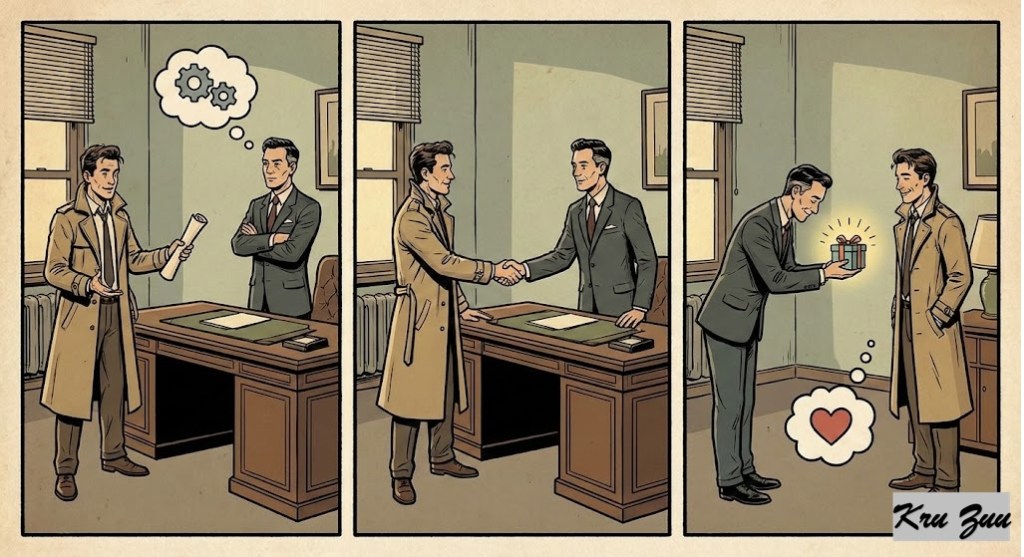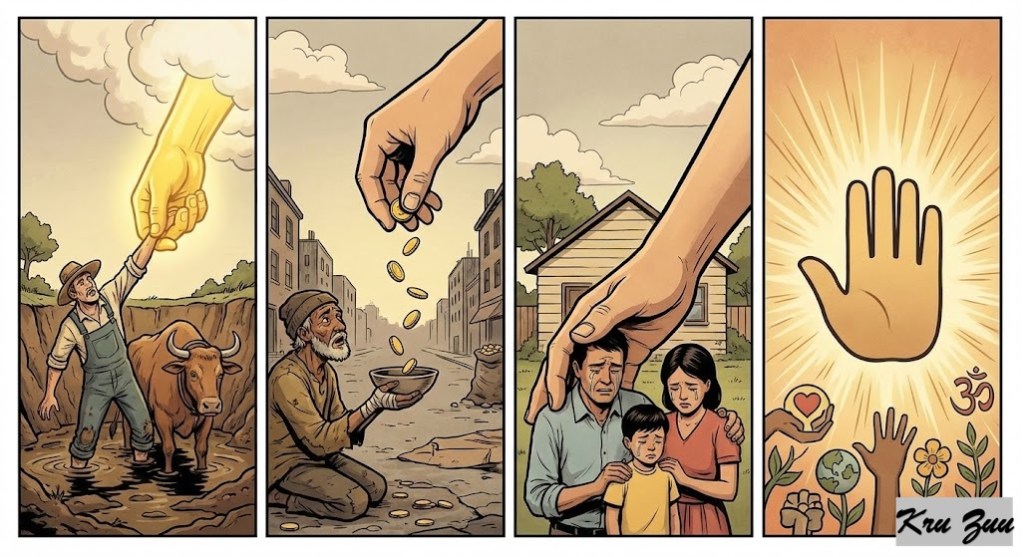
Tag: Gratitude

  • 🎁 The Daily Shield: The Law of Gracious Receiving

    🎁 The Daily Shield: The Law of Gracious Receiving

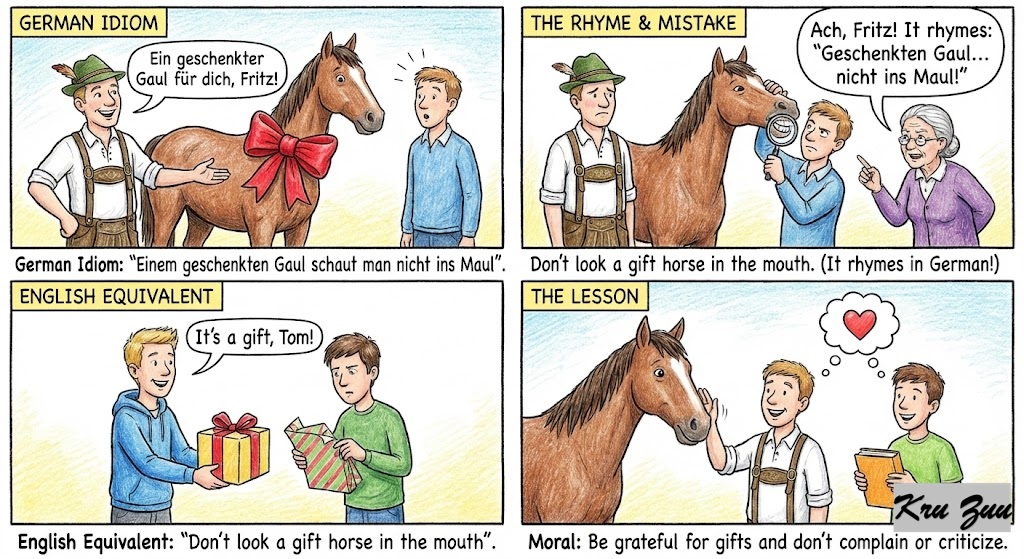
    “Never look a gift horse in the mouth.”


    😈 The Villain (The Ungrateful Critic)

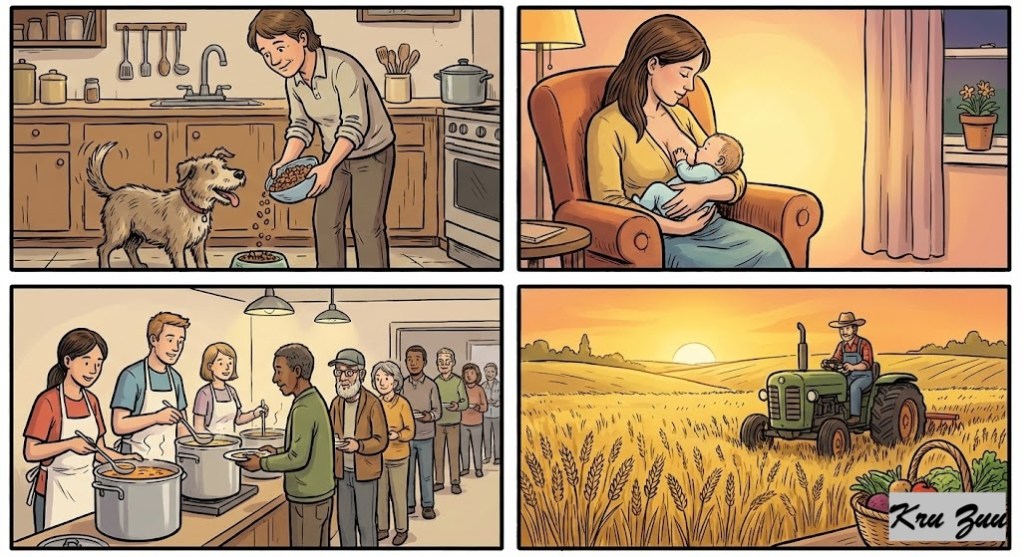
    You receive a gift or a favor. Instead of smiling, your first instinct is to inspect it. 📱 “Oh, you got me the standard version? Not the pro?” “Thanks for the coffee, but I usually drink oat milk, not almond.” You act as an auditor instead of a friend. You disconnect the sentiment of the gift from its material value.
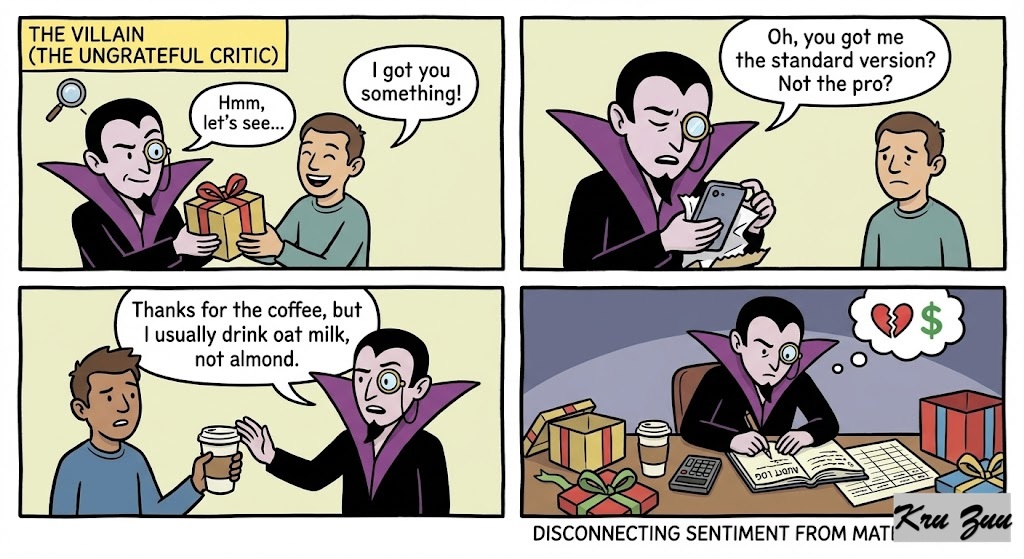
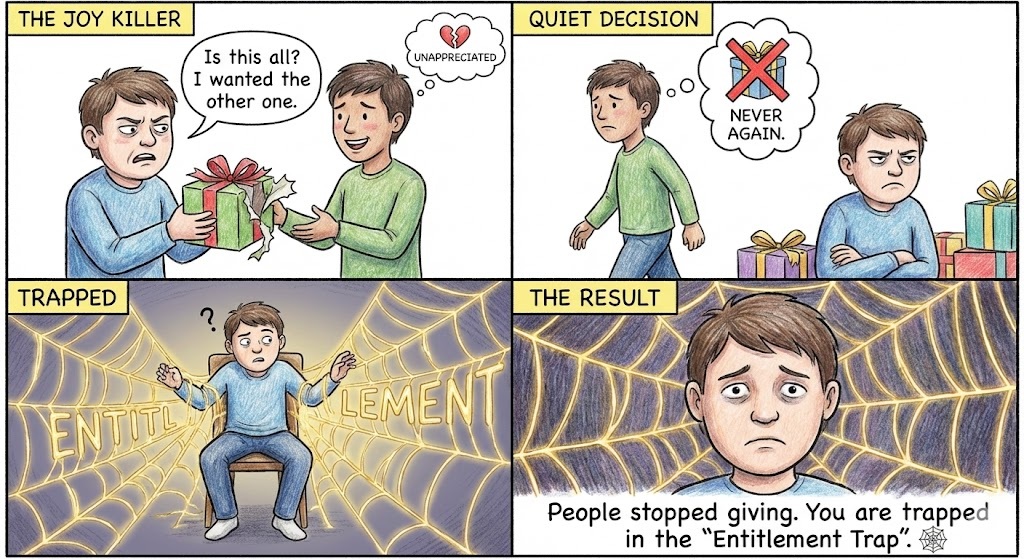
    The Result? You kill the joy of giving. People feel unappreciated and quietly decide never to go out of their way for you again. You are trapped in the “Entitlement Trap.” 🕸️

    😇 The Hero (The Value Appreciator)

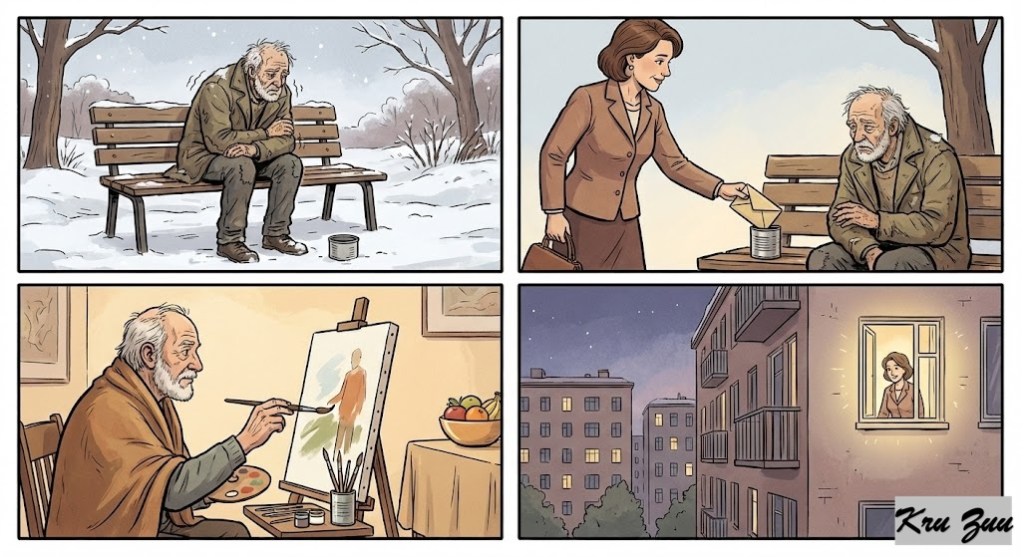
    You receive a gift even one you don’t particularly like. You pause. 🛑 Instead of judging the item, you recognize the “Emotional Cost.”

    You think: “This person spent their time, money, and energy trying to make me smile.” You respect the intention behind the gesture.
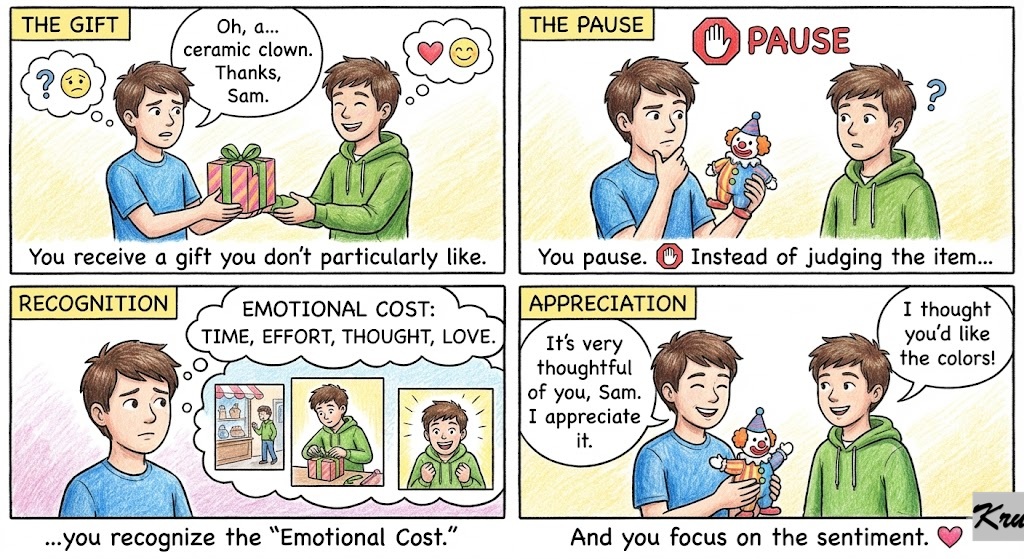
    You say: “Thank you so much for thinking of me, I truly appreciate this.”

    The Result? You build immense warmth. People love doing things for you. You build strong, reciprocal relationships because you validate people’s efforts. 🏰


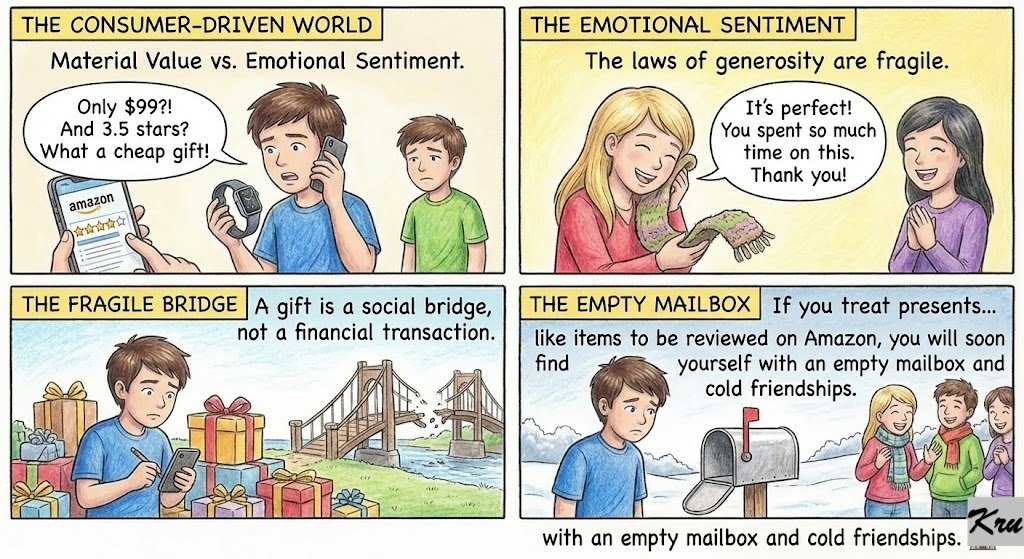
    ⚖️ The Reality Material Value vs. Emotional Sentiment.
    We live in a consumer-driven world where it is easy to instantly search the price or quality of anything we are given. But the laws of generosity are fragile. A gift is a social bridge, not a financial transaction. If you treat presents, favors, or compliments like items to be reviewed on Amazon, you will soon find yourself with an empty mailbox and cold friendships.

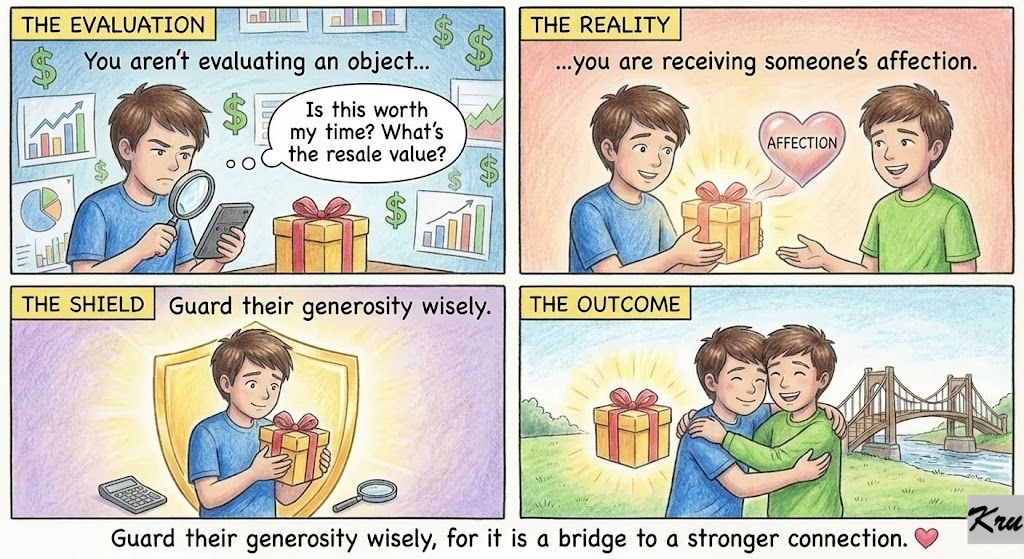
    💎 The Secret

    You aren’t evaluating an object; you are receiving someone’s affection. Guard their generosity wisely.
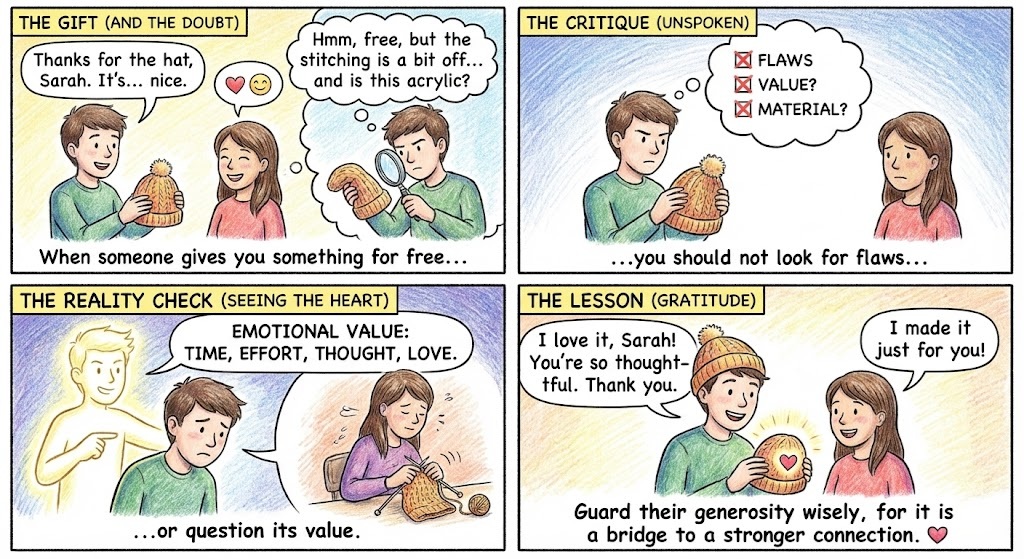
    🧐 The Anatomy of the Proverb


    This is your reality check that when someone gives you something for free, you should not look for flaws or question its value.

    Never look (Negative Verb Phrase): Do not inspect, examine, or critically evaluate.
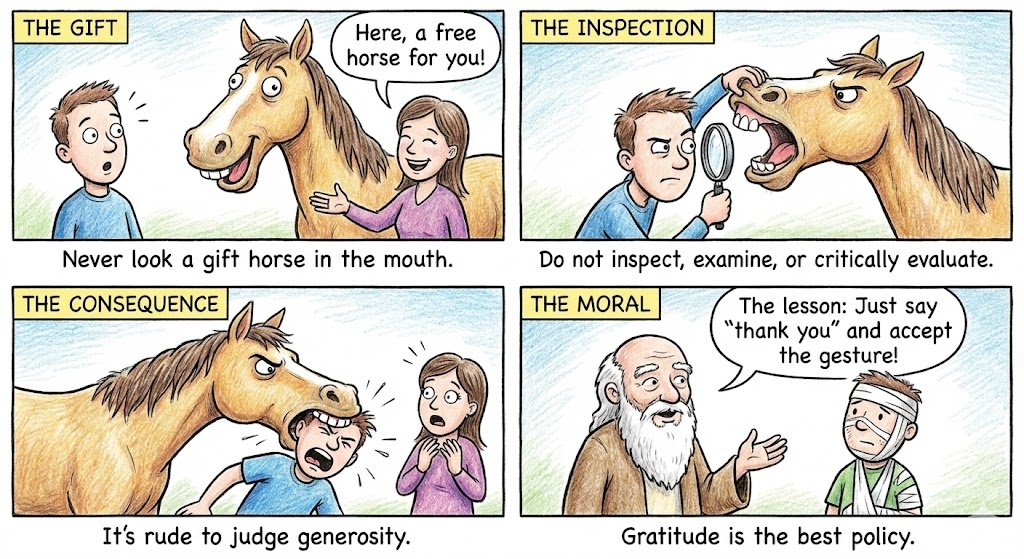

    A gift horse (Noun Phrase): A horse that was given to you for free, as a present.
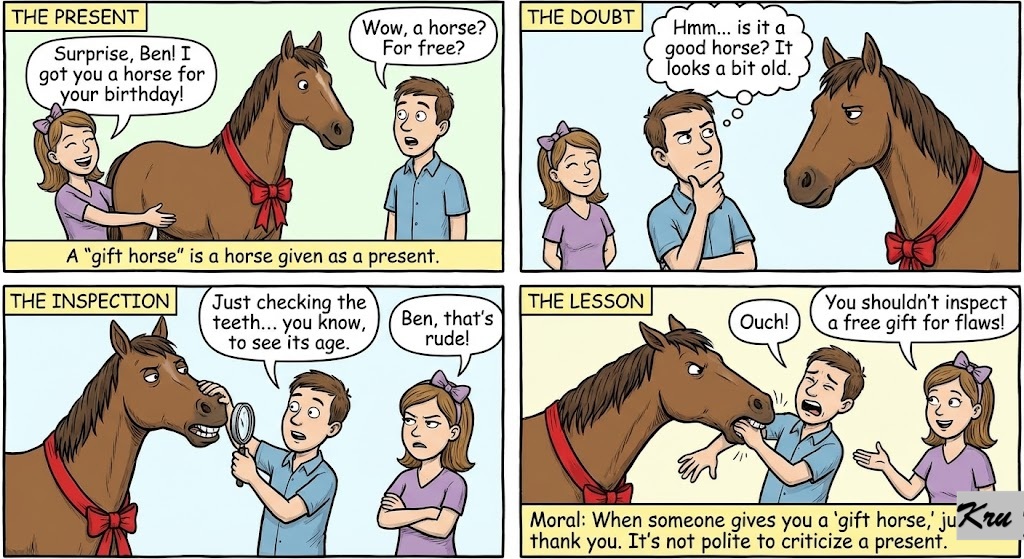

    In the mouth (Prepositional Phrase): Literally opening the horse’s mouth to check its teeth.


    Simpler Version: Be grateful for gifts. / Don’t complain about free things.

    📚 Vocabulary Vault


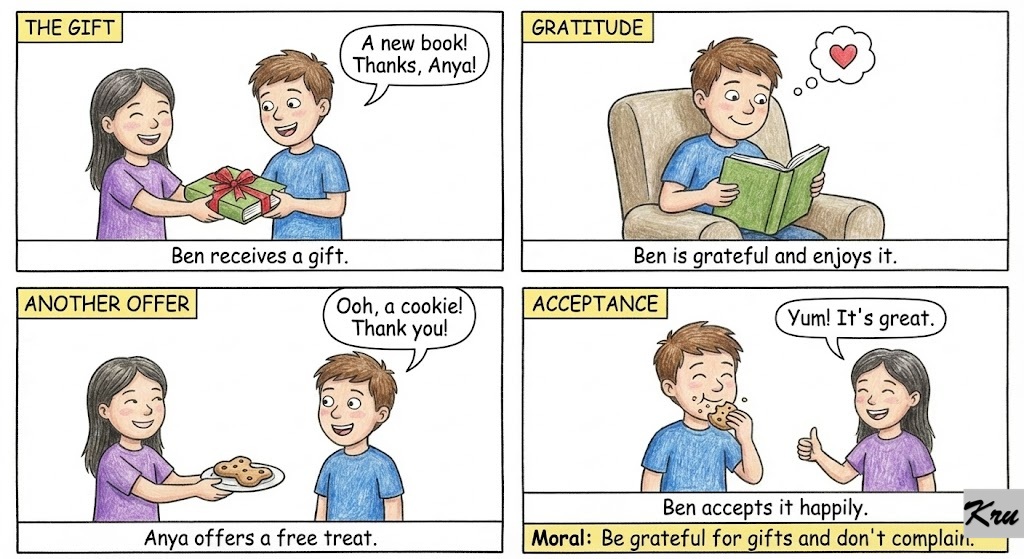
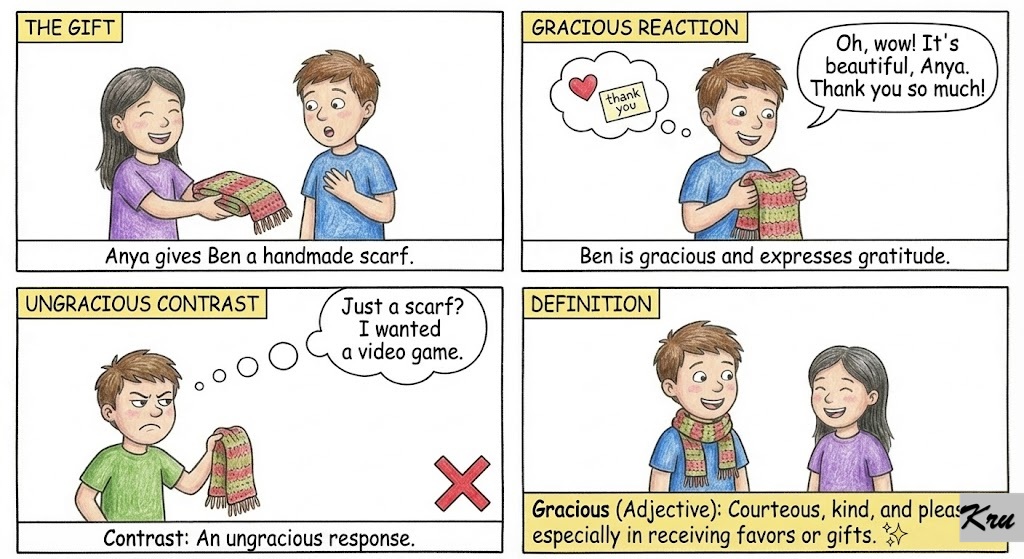
    Gracious (Adjective):
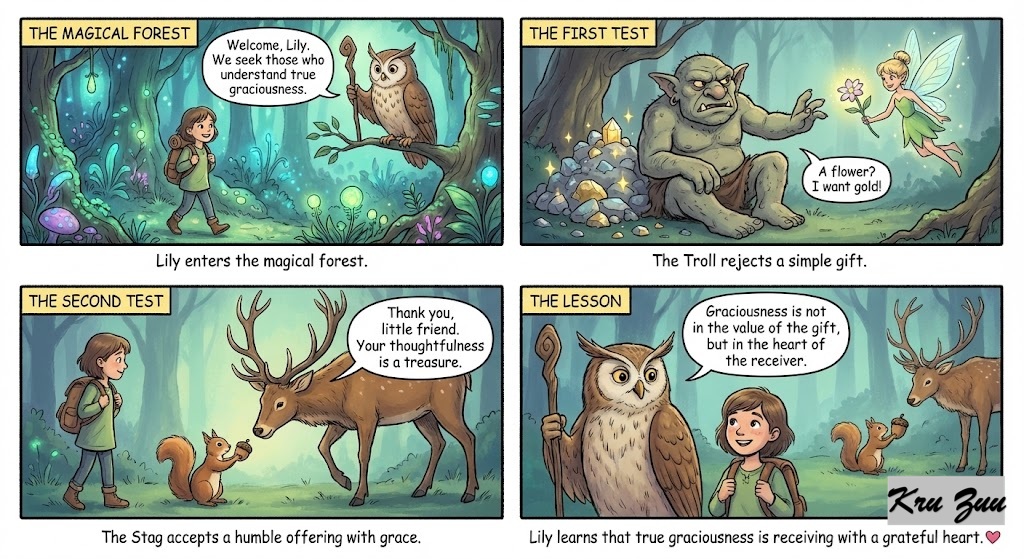
    Courteous, kind, and pleasant, especially in receiving favors or gifts. ✨

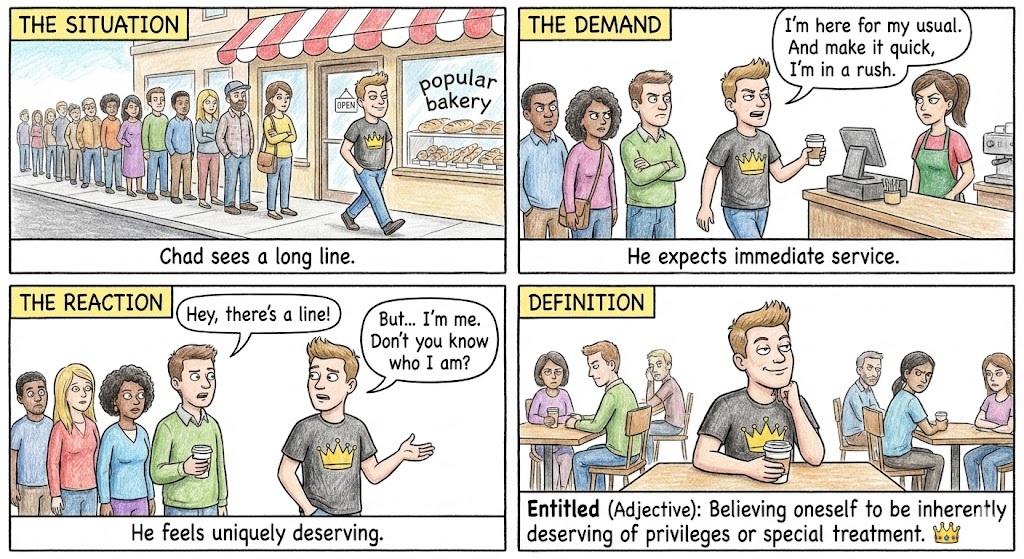
    Entitled (Adjective): Believing oneself to be inherently deserving of privileges or special treatment.

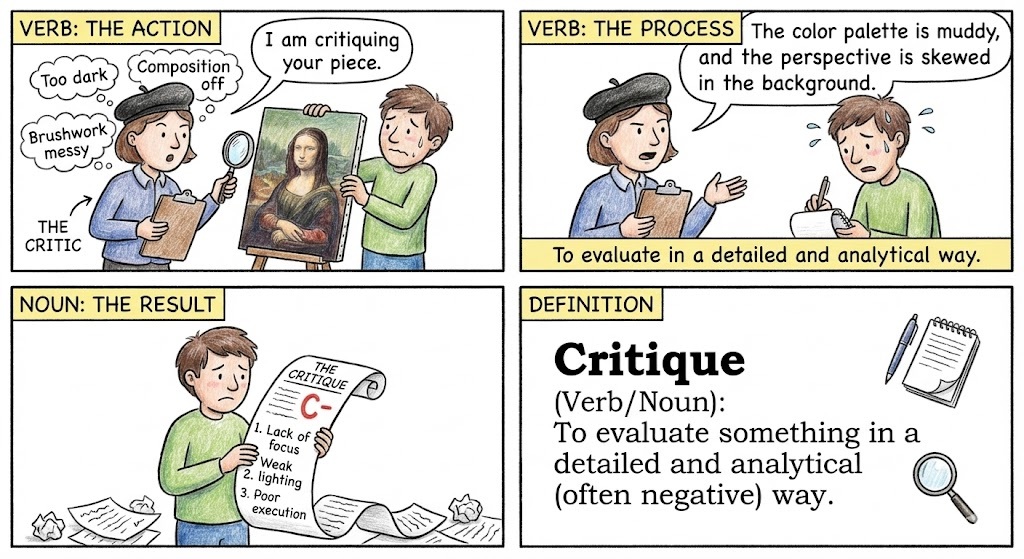
    Critique (Verb/Noun): To evaluate something in a detailed and analytical (often negative) way.

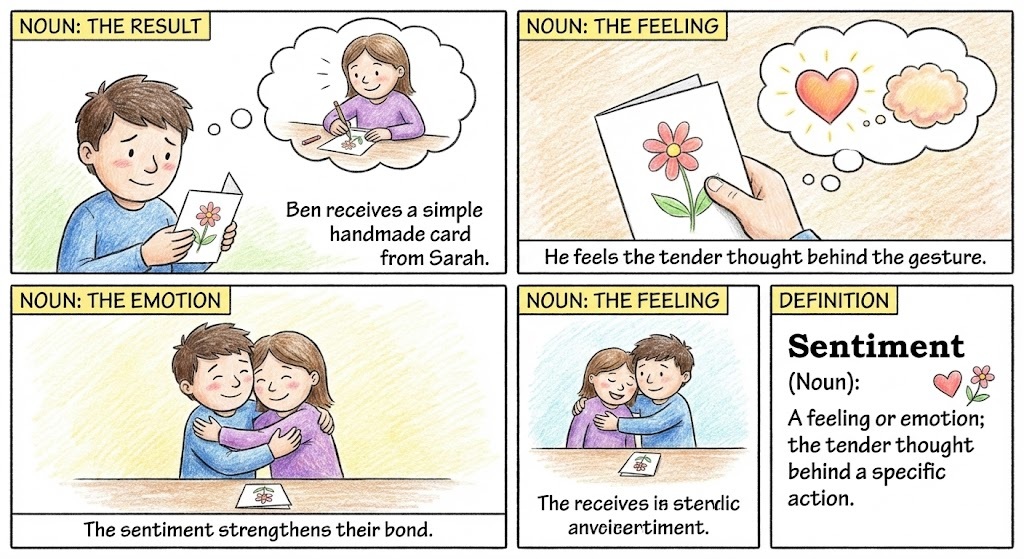
    Sentiment (Noun): A feeling or emotion; the tender thought behind a specific action.

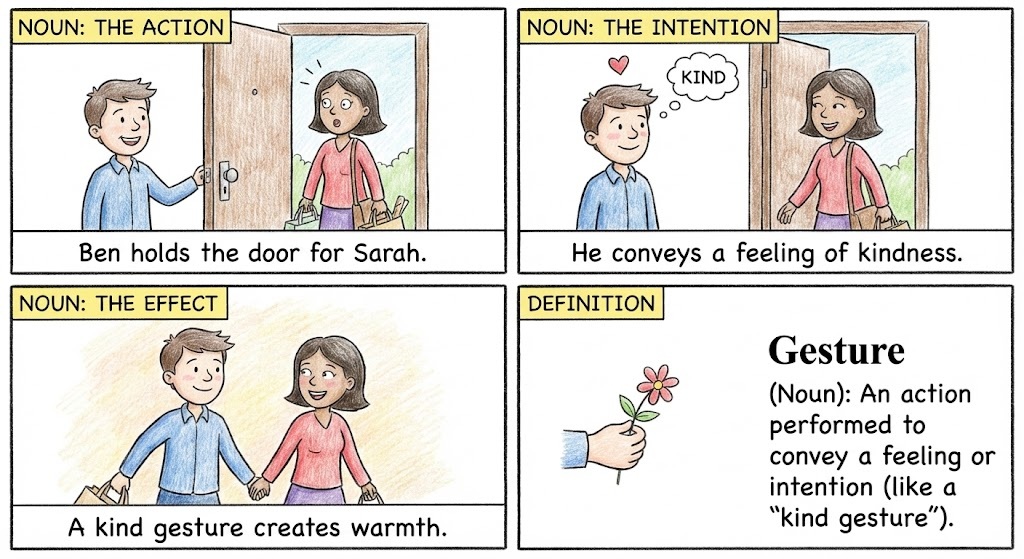
    Gesture (Noun): An action performed to convey a feeling or intention (like a “kind gesture”).

    🧠 Grammar Focus: Idioms as Parenting/Bossing Tools


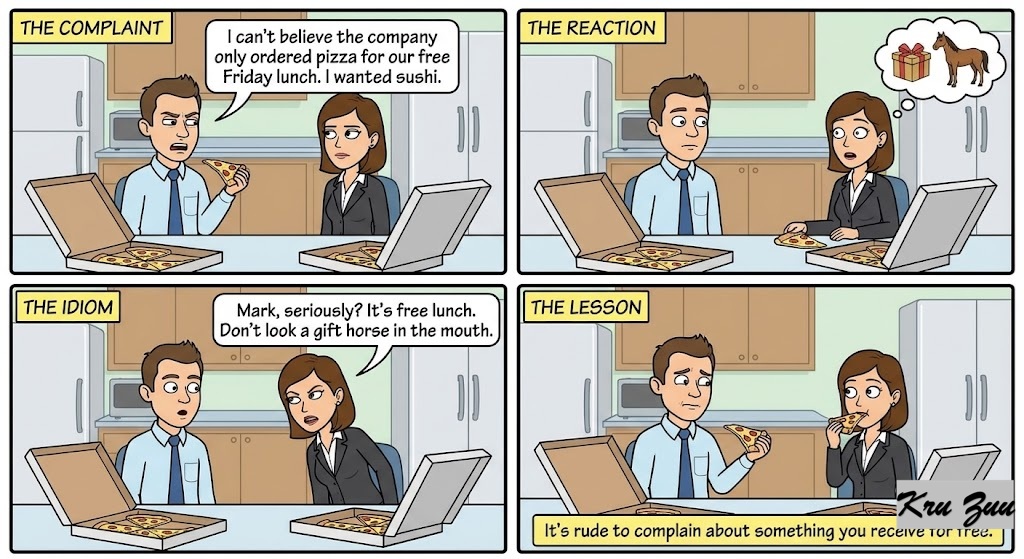
    We often use this idiom to correct someone who is complaining about a free perk, bonus, or favor.
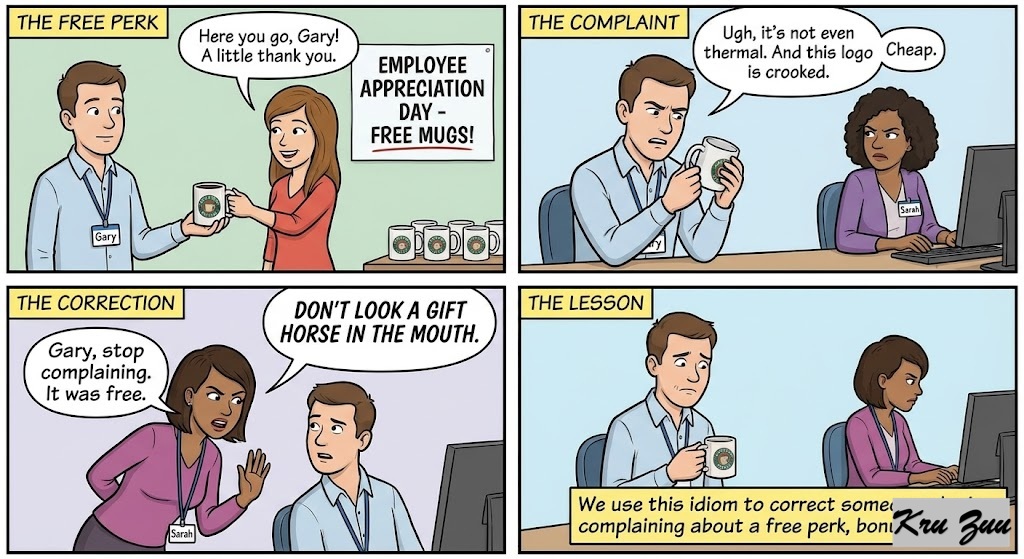

    Employee 1: “I can’t believe the company only ordered pizza for our free Friday lunch. I wanted sushi.”

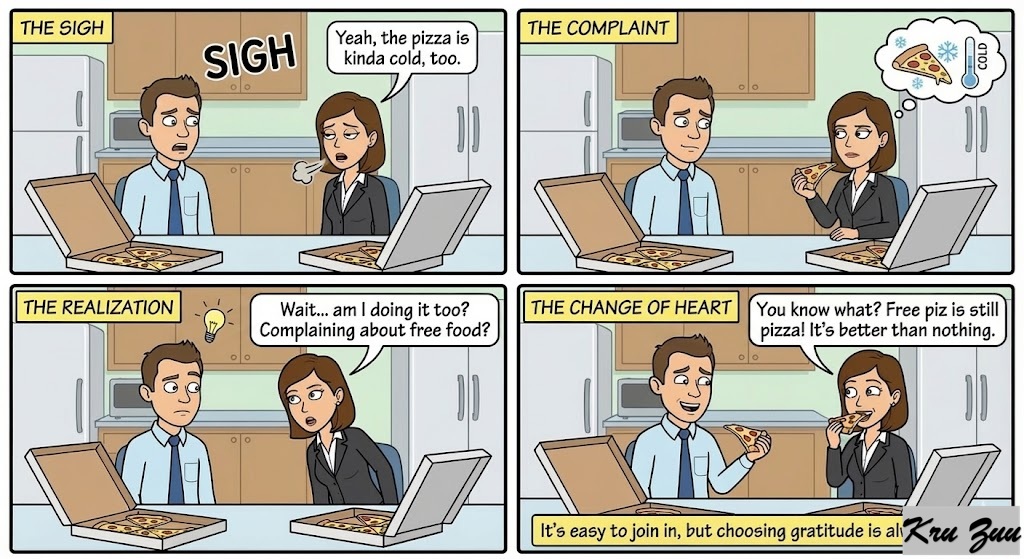
    Employee 2: (Sighing) “Yeah, the pizza is kinda cold, too.”

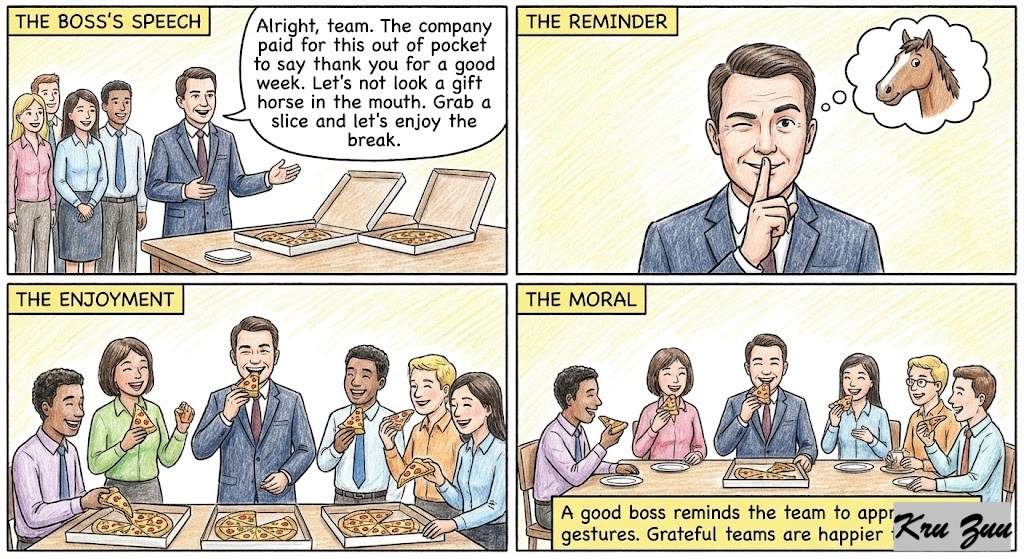
    Boss: “Alright, team. The company paid for this out of pocket to say thank you for a good week. Let’s not look a gift horse in the mouth. Grab a slice and let’s enjoy the break.”
    📜 History: Origin and Spread


    Where did this horse dental advice come from?
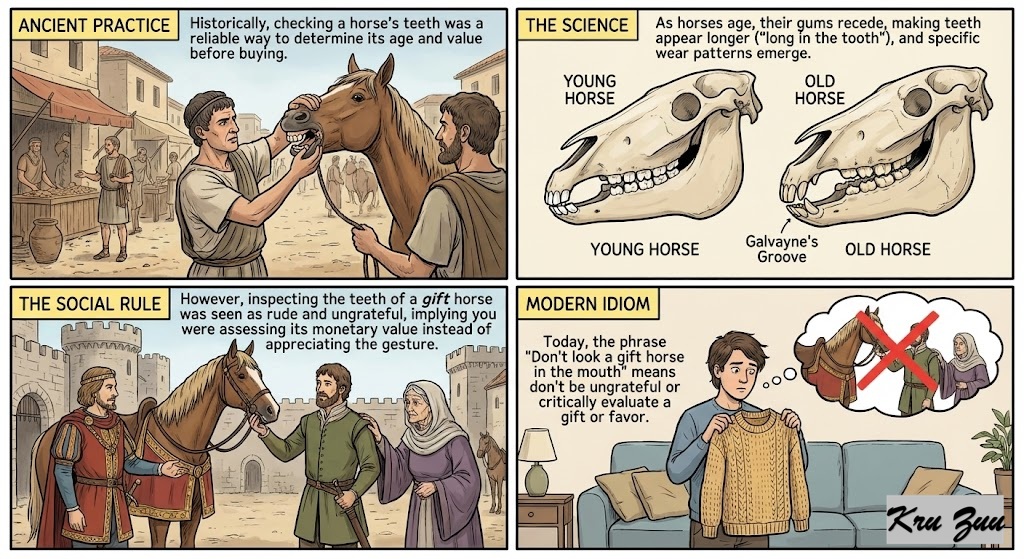

    The Origin:
    This proverb dates back roughly 1,500 years, appearing in a text by St. Jerome in 400 AD. It is one of the oldest and most universally understood idioms in human history.
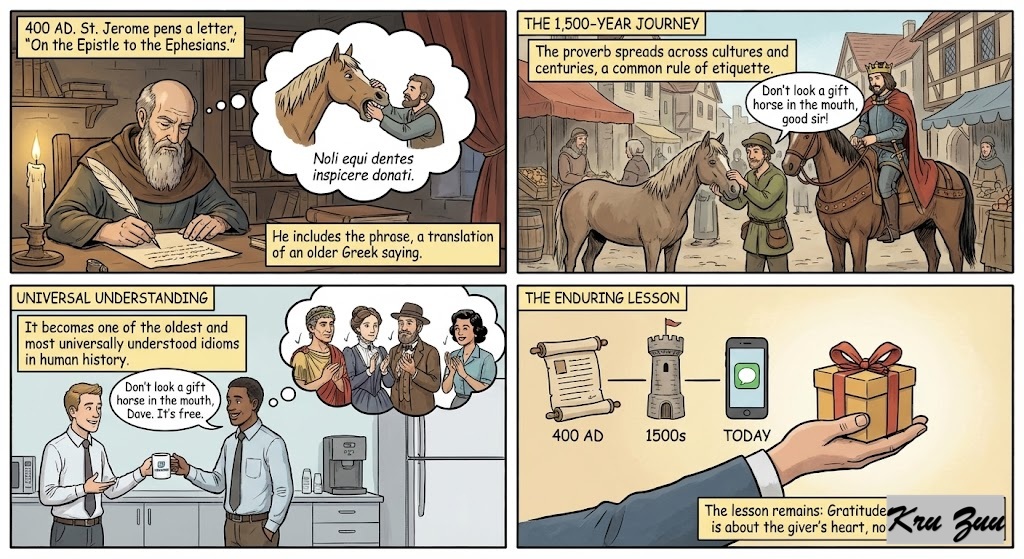

    The Logic: As a horse ages, its teeth grow and change shape. In the past, the only reliable way to check a horse’s age (and therefore its financial value and health) was to pry open its mouth and inspect its teeth. Doing this to a horse you were buying was smart. Doing this to a horse that was given to you as a gift was incredibly rude, it showed you were immediately trying to calculate how much the gift was worth!
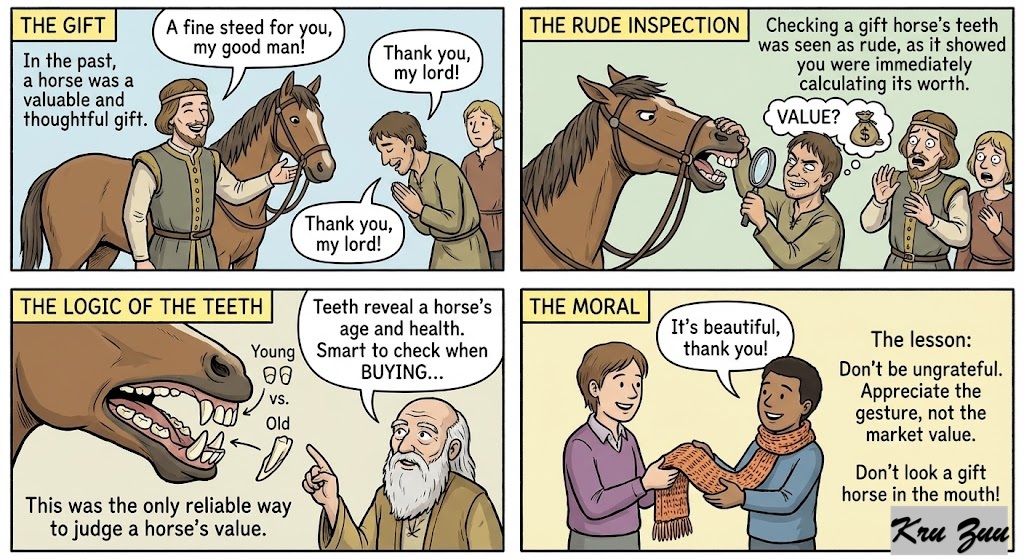

    Global Cousins


    🇹🇷 Turkish: “Beleş atın dişine bakılmaz.” (Don’t look at the teeth of a free horse).
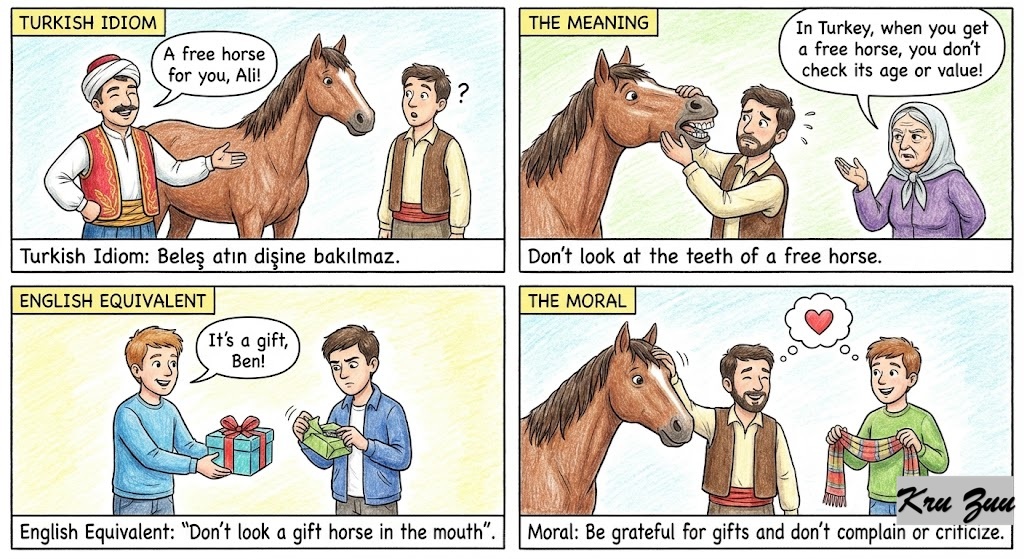

    🇪🇸 Spanish: “A caballo regalado no se le mira el diente.” (Don’t look at the tooth of a gifted horse).
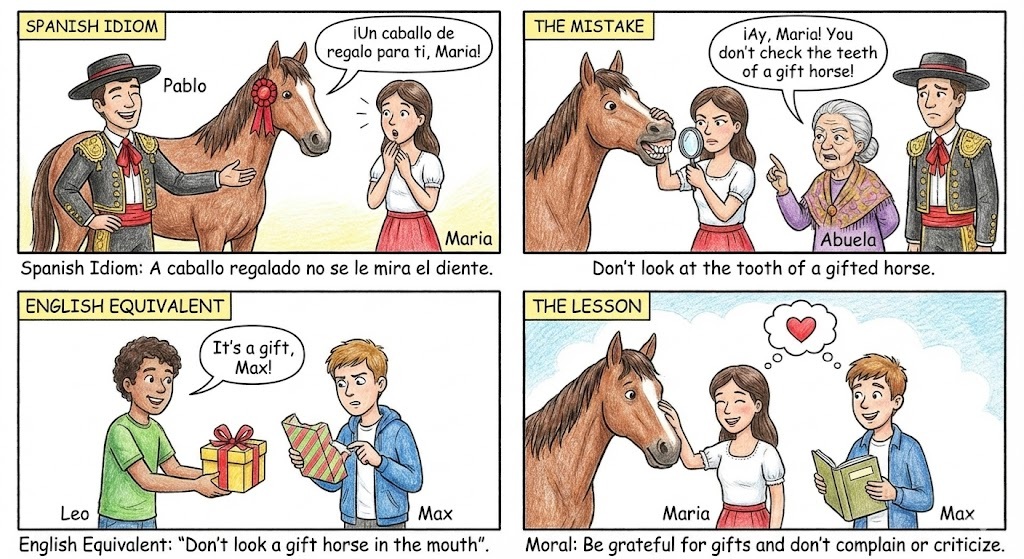

    🇩🇪 German: “Einem geschenkten Gaul schaut man nicht ins Maul.” (Exactly the same meaning, and it rhymes!).
    🎭 Short Story: The Golden Smoothie 🥤🐱🐔🐸


    Let’s visit the magical forest to see who understands the value of graciousness.

    🌟 The Cast


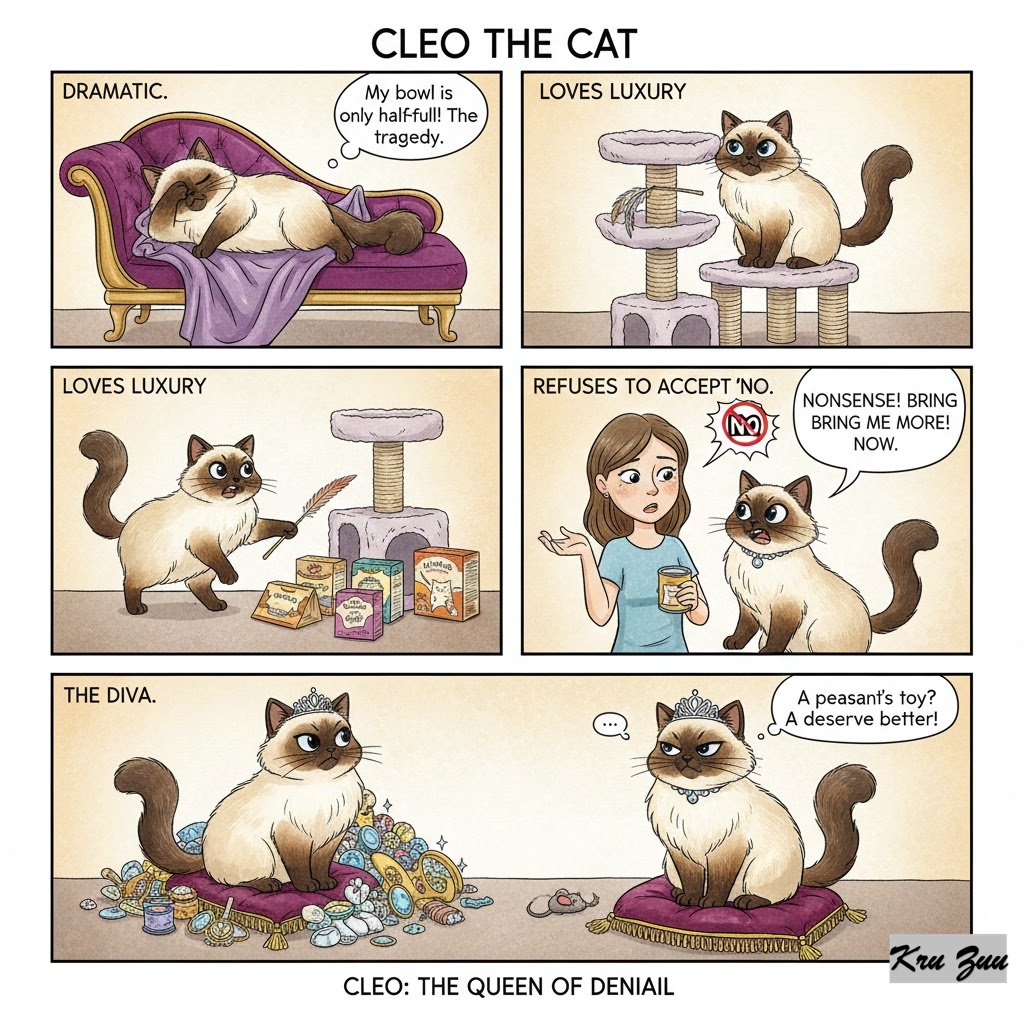
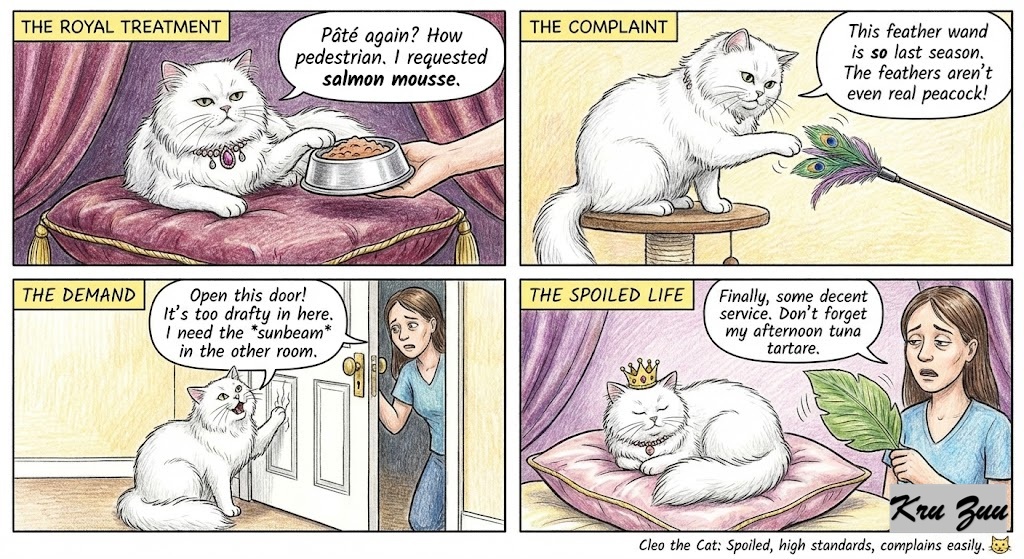
    Cleo the Cat:
    Spoiled, has very high standards, complains easily. 😼

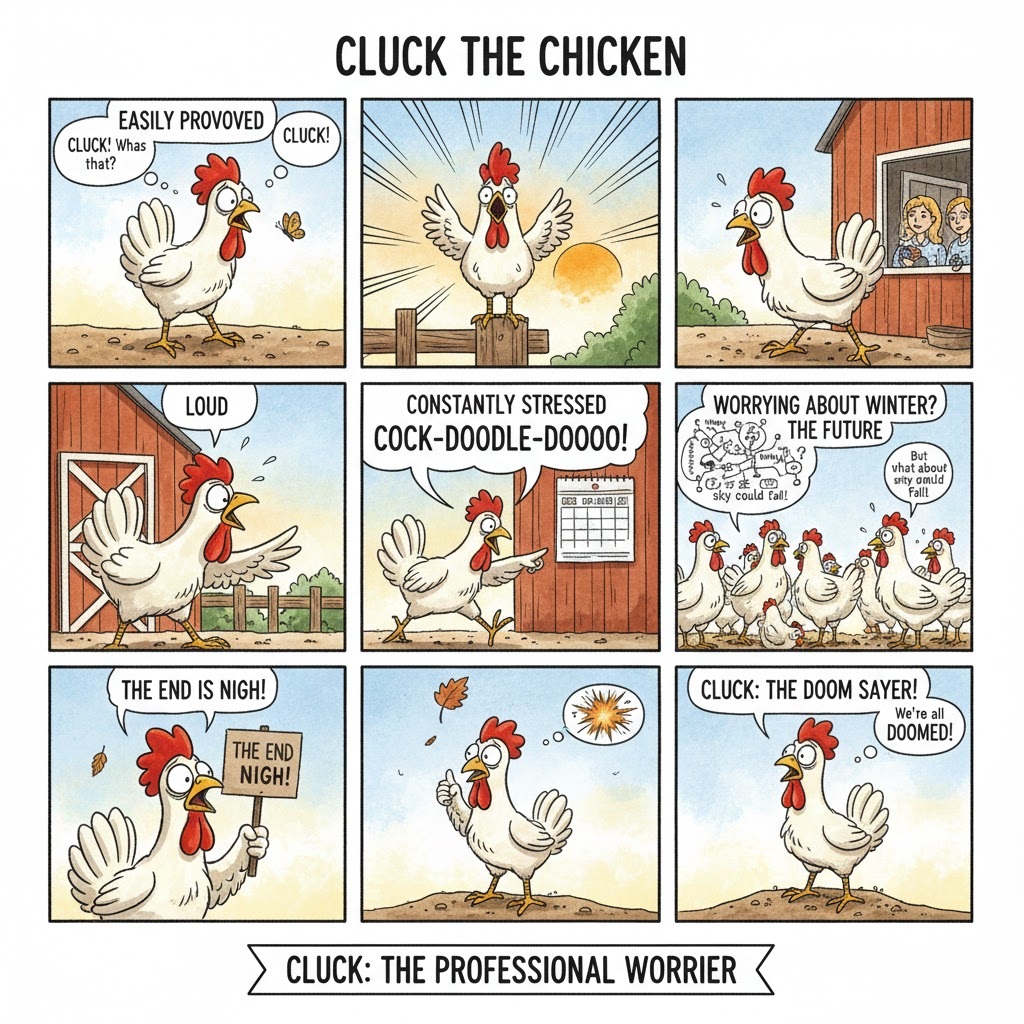
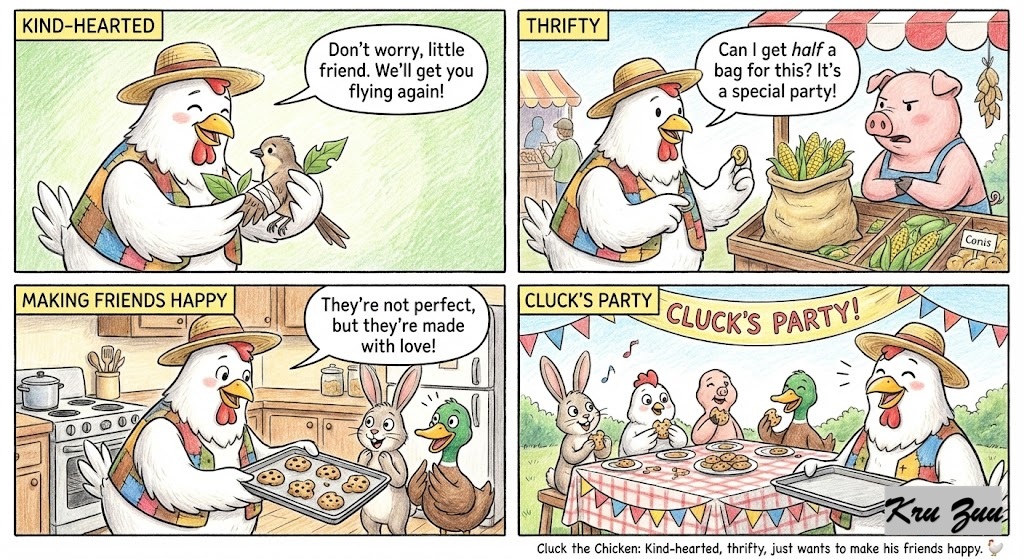
    Cluck the Chicken: Kind-hearted, thrifty, just wants to make his friends happy. 🐔

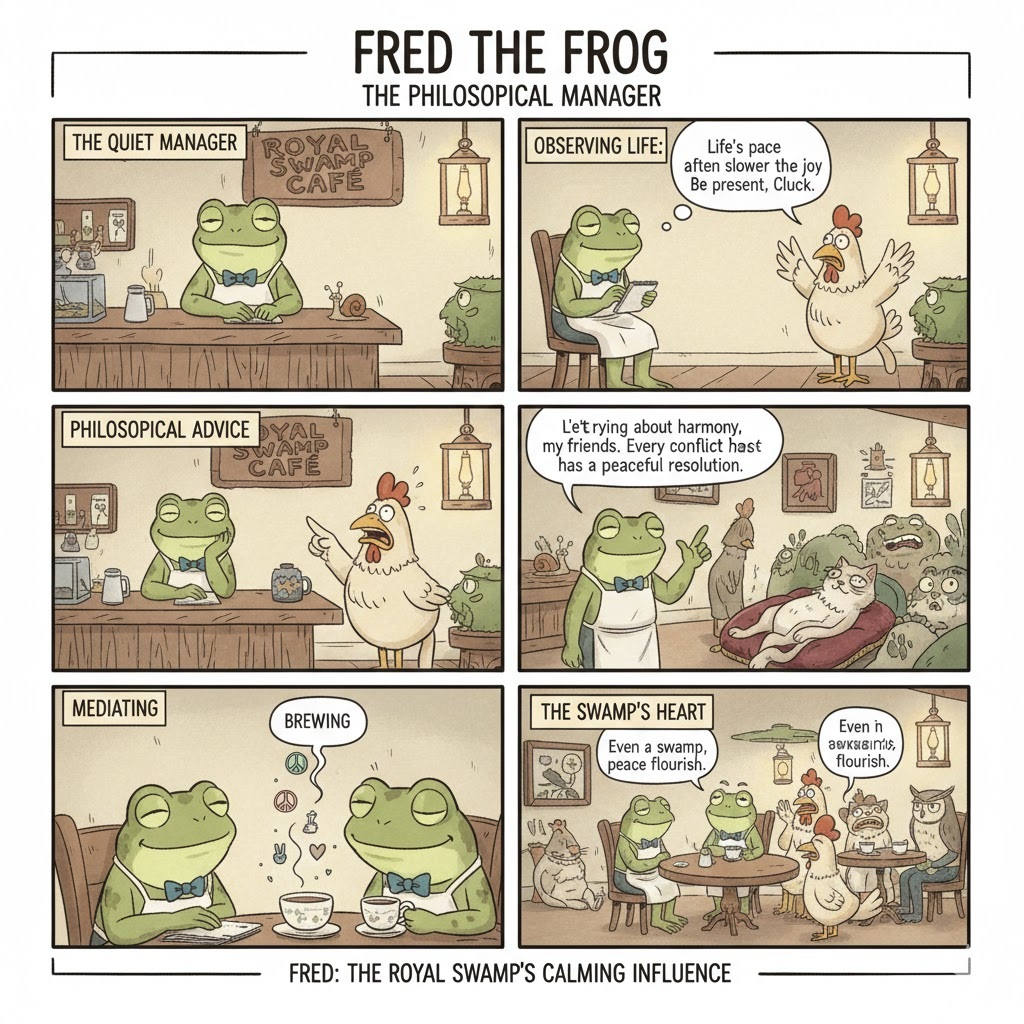
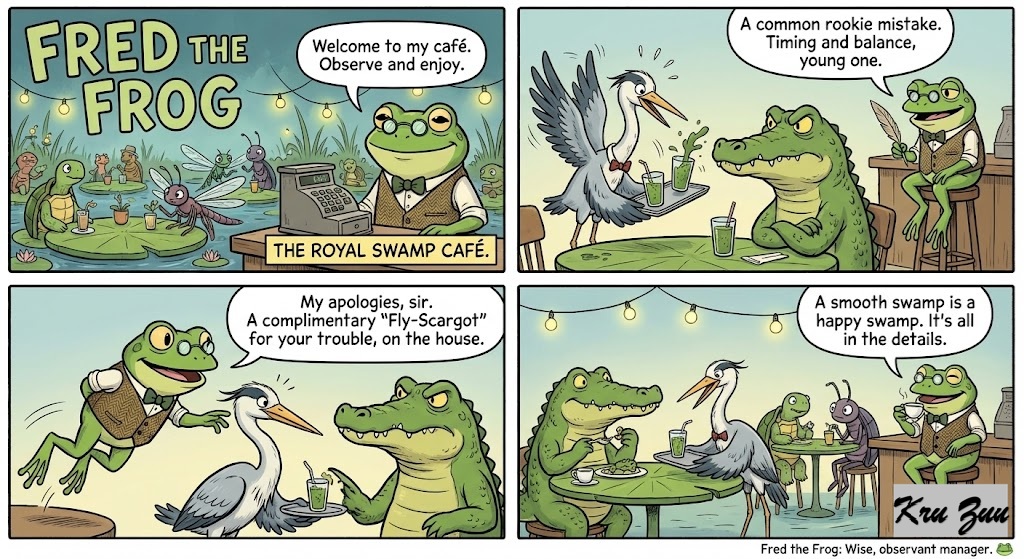
    Fred the Frog: The wise, observant manager of the Royal Swamp Café. 🐸

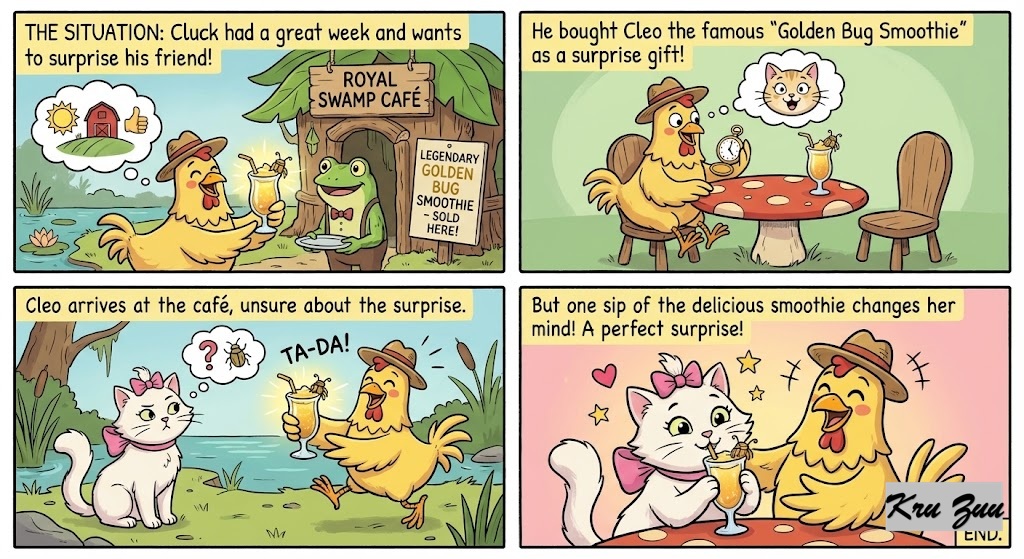
    The Situation: Cluck the Chicken had a great week at the farm and decided to surprise his friend Cleo. He invited her to the Royal Swamp Café. Before she arrived, he bought her the café’s famous “Legendary Golden Bug Smoothie” as a surprise gift.

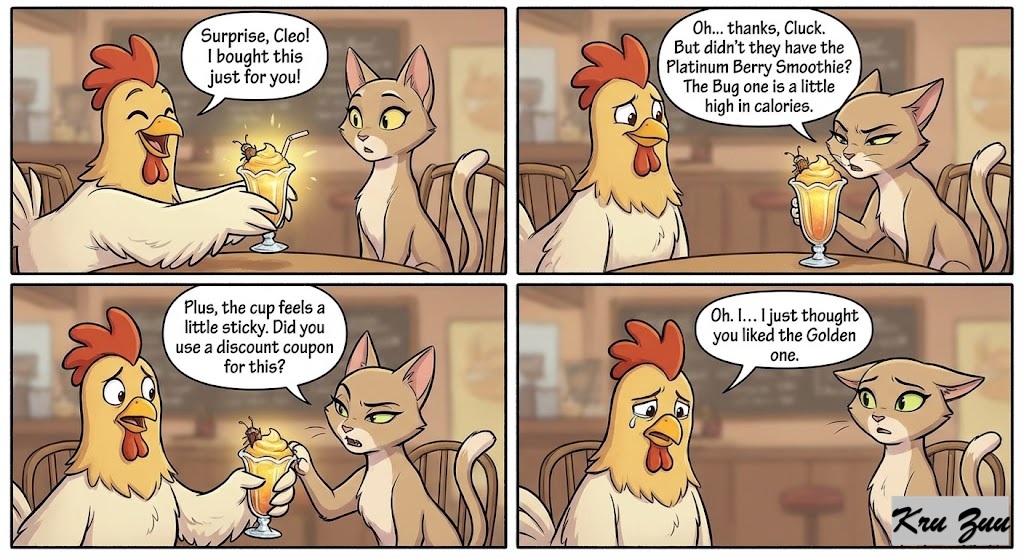
    The Conflict: Cleo arrives, and Cluck slides the glowing drink across the table. “Surprise, Cleo! I bought this just for you!” Cleo squints at the smoothie, leans in, and sniffs it. “Oh… thanks, Cluck. But didn’t they have the Platinum Berry Smoothie? The Bug one is a little high in calories. Plus, the cup feels a little sticky. Did you use a discount coupon for this?” Cluck’s feathers instantly droop. His excited smile fades. “Oh. I… I just thought you liked the Golden one.”

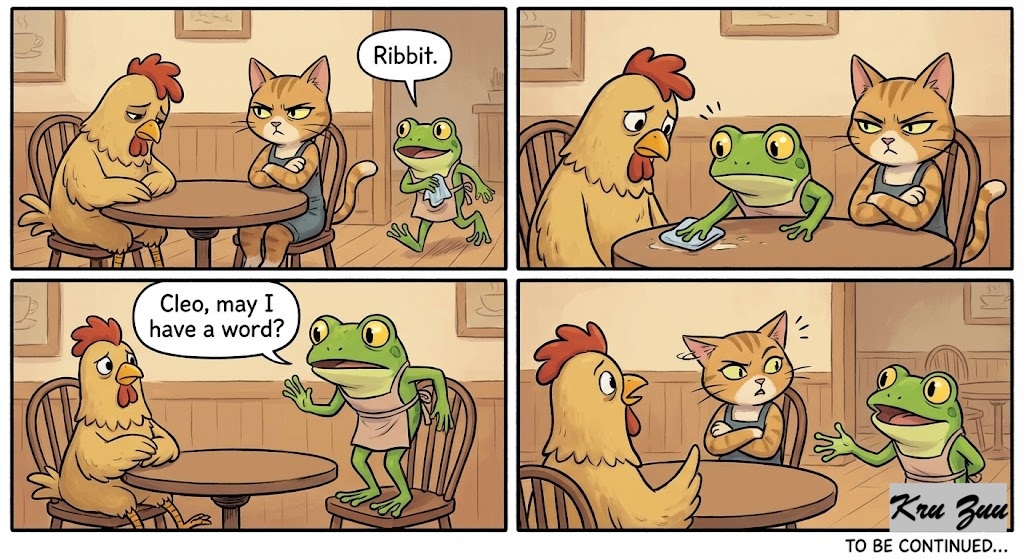
    The Reaction: Fred the Frog hops over, wiping down the adjacent table. He looks at Cluck’s sad face and Cleo’s critical glare. “Ribbit,” says Fred. “Cleo, may I have a word?”

    The Lesson: Fred leans in close. “Cluck spent his last three shiny pebbles to buy that for you because he values your friendship,” Fred whispers firmly. “He didn’t have to get you anything. You never look a gift horse in the mouth. When you critique a gift, you aren’t rejecting the smoothie; you are rejecting his kindness.”


    The Resolution: Cleo’s ears flatten in realization. She sees how sad Cluck looks. She quickly pulls the smoothie close, takes a big sip, and smiles. “Actually, Cluck, this is exactly what I needed today. Thank you so much for the treat.” Cluck beams with pride. Cleo learned that gratitude is much sweeter than perfection.
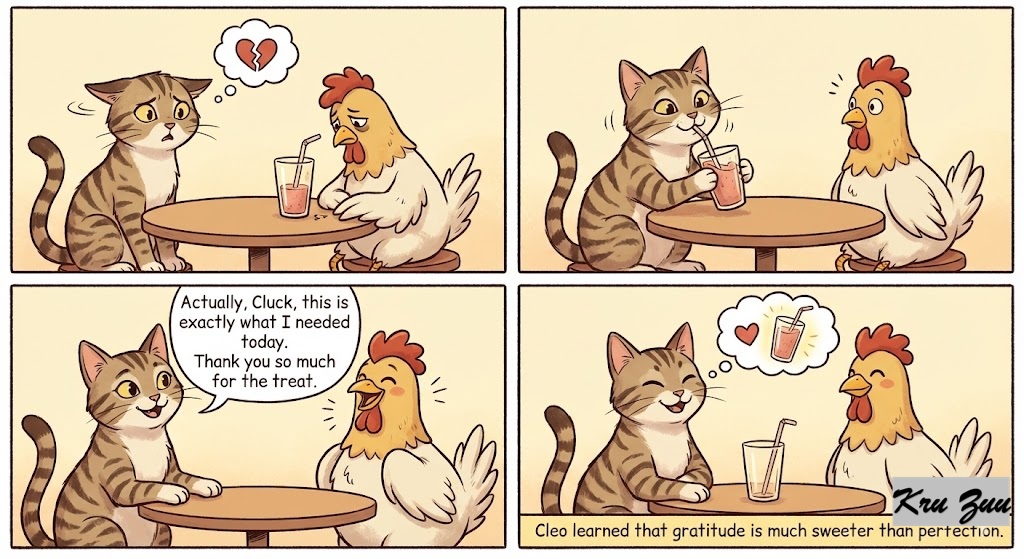
    The Moral: Evaluate the heart of the giver, not the price tag of the gift. 🤫

    🎓 Lesson for English Learners


    Accepting Imperfect Favors gracefully.
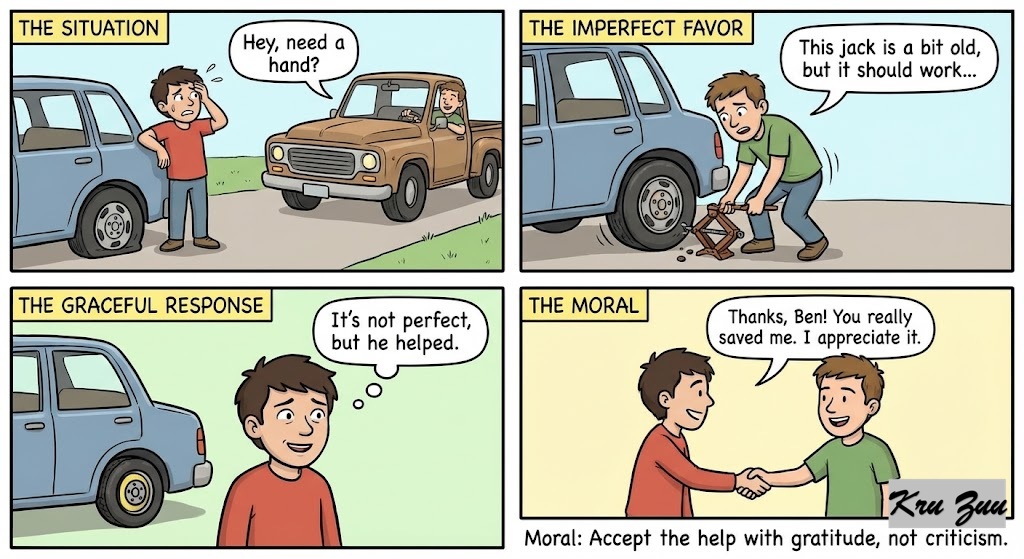

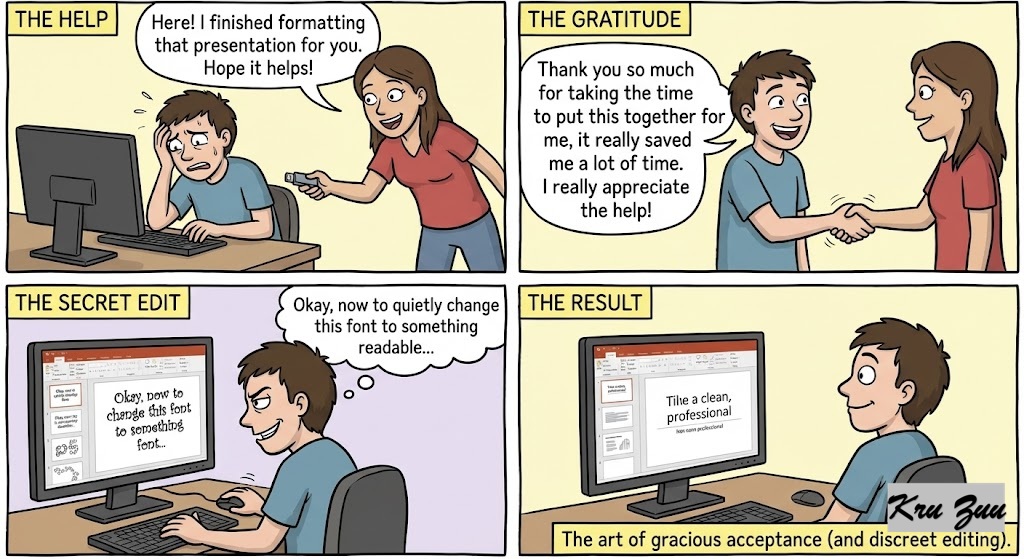
    Situation: A coworker offers to format a presentation for you. They do it for free to help you out, but they use a font you don’t really like.
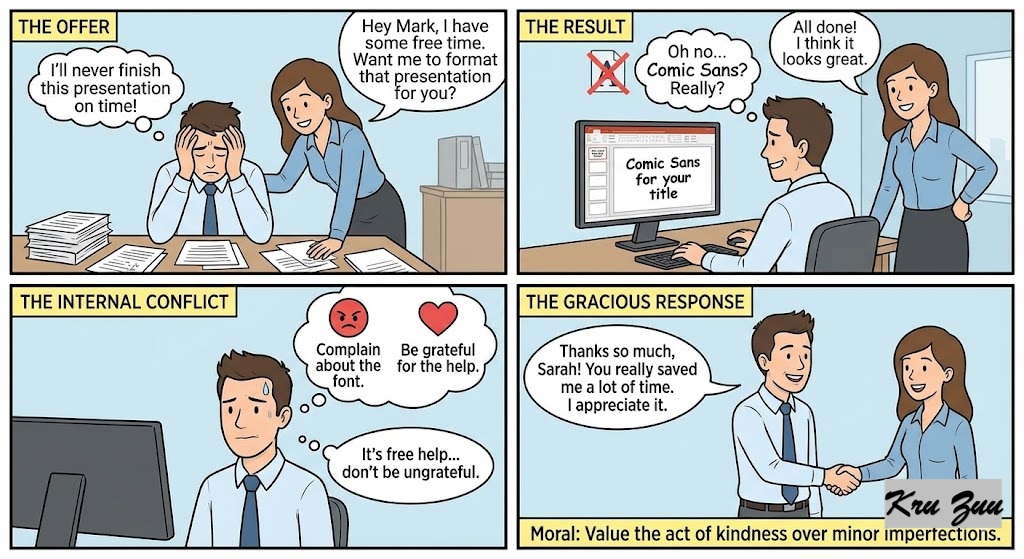

    The Shift: You need to accept the free help without acting like a demanding client.
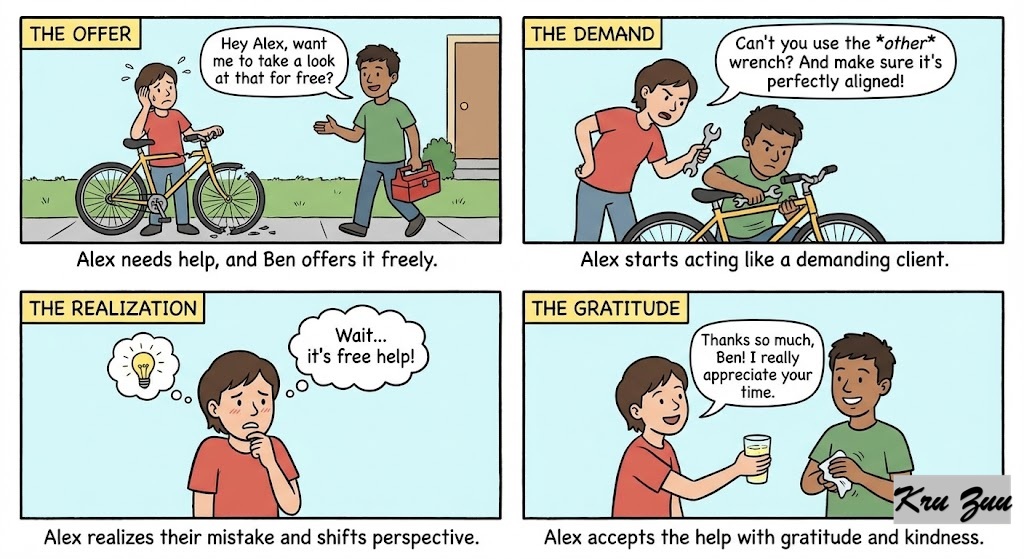

    You Say: “Thank you so much for taking the time to put this together for me, it really saved me a lot of time. I really appreciate the help!” (You can quietly change the font later without telling them!)

    💬 Your Turn: The “Hourly” Challenge 🚀


    Do you want to cure your “Villain” ungrateful habits?
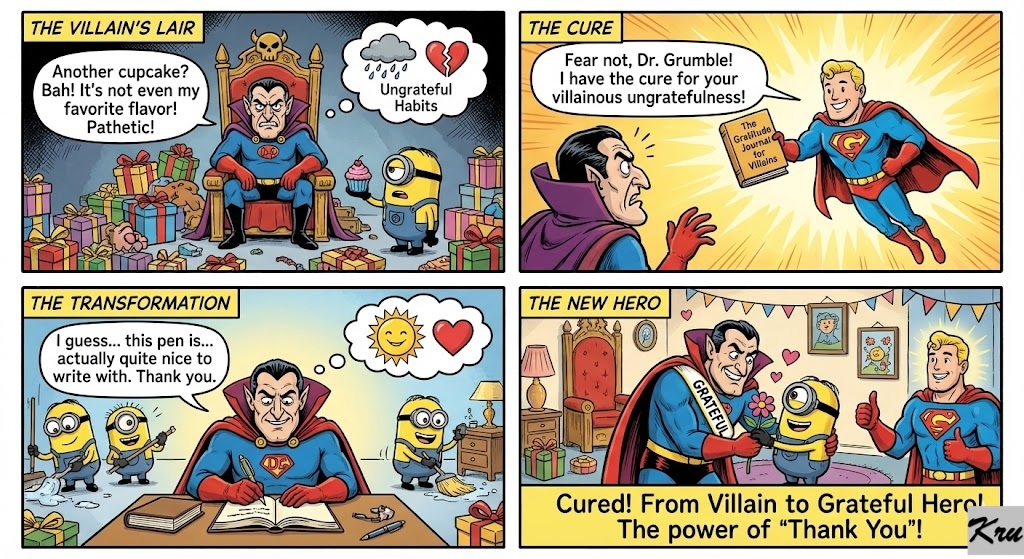

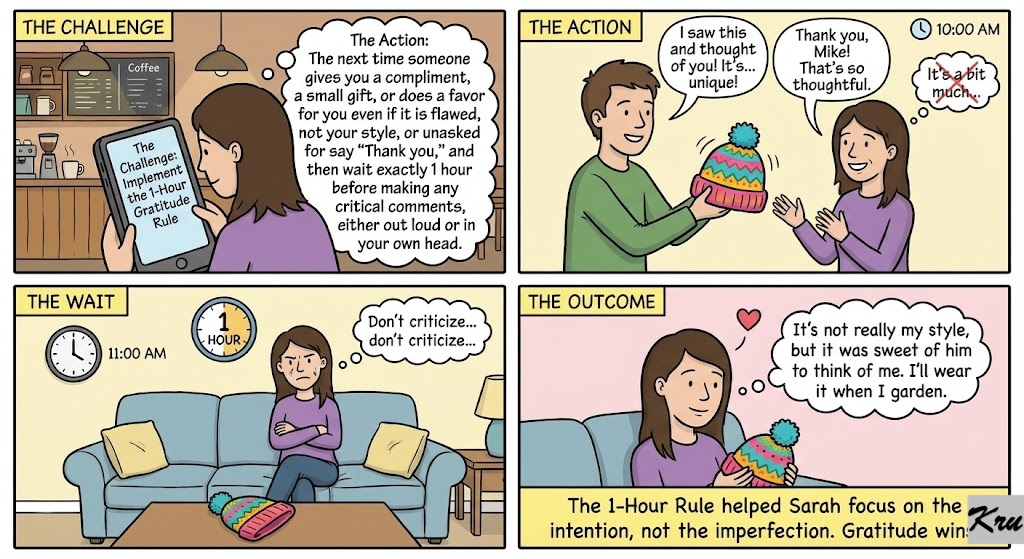
    The Challenge:
    Implement the 1-Hour Gratitude Rule. The Action: The next time someone gives you a compliment, a small gift, or does a favor for you even if it is flawed, not your style, or unasked for say “Thank you,” and then wait exactly 1 hour before making any critical comments, either out loud or in your own head.

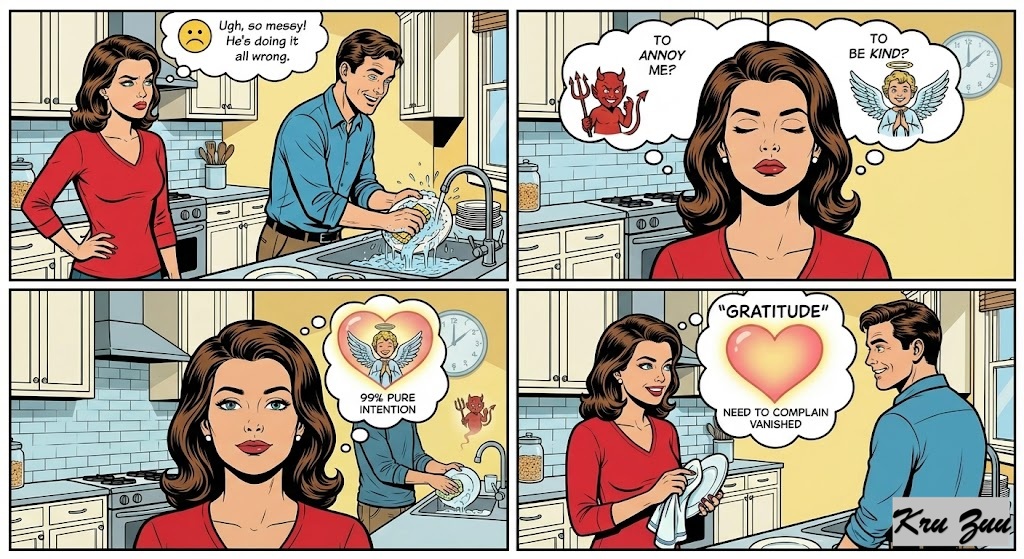
    Ask yourself: “Did they do this to annoy me, or did they do this to be kind?” 99% of the time, within that hour, you will realize the gesture was pure, and your need to complain will vanish.

    👇 Question for the comments: Have you ever received a truly terrible or funny gift but had to pretend to love it? How did you react? Tell us below!

    By Zubeyir YURTKURAN

    https://www.facebook.com/BrainBattleground/

    https://www.facebook.com/zubeyr.yurtkuran/

    https://www.instagram.com/zubeyryurtkuran/

    https://www.youtube.com/@BrainBattleground-b3p

    https://www.instagram.com/brainbattleground/

  • 🌅 The Sunset Rule: The Law of Inevitable Change

    🌅 The Sunset Rule: The Law of Inevitable Change

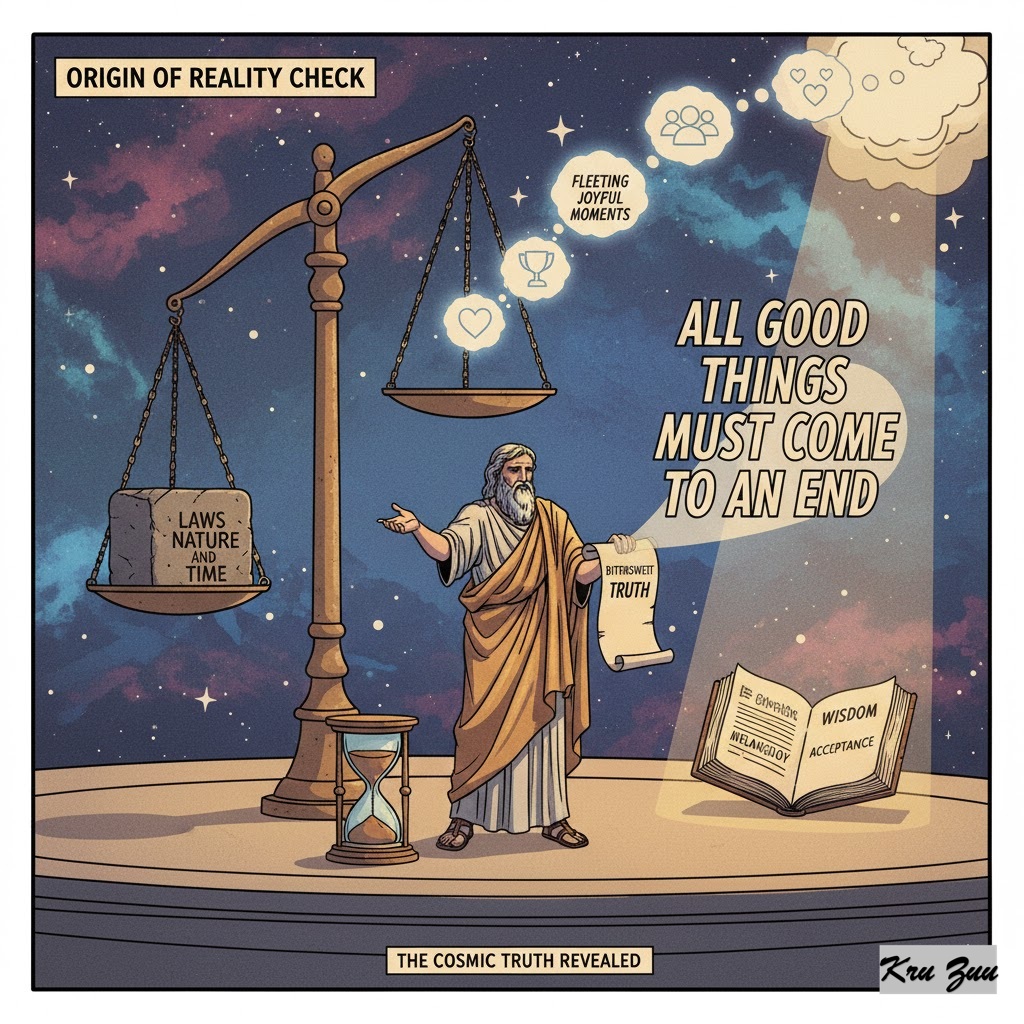
    “All good things must come to an end.”


    😈 The Villain (The Bitter Clinger)

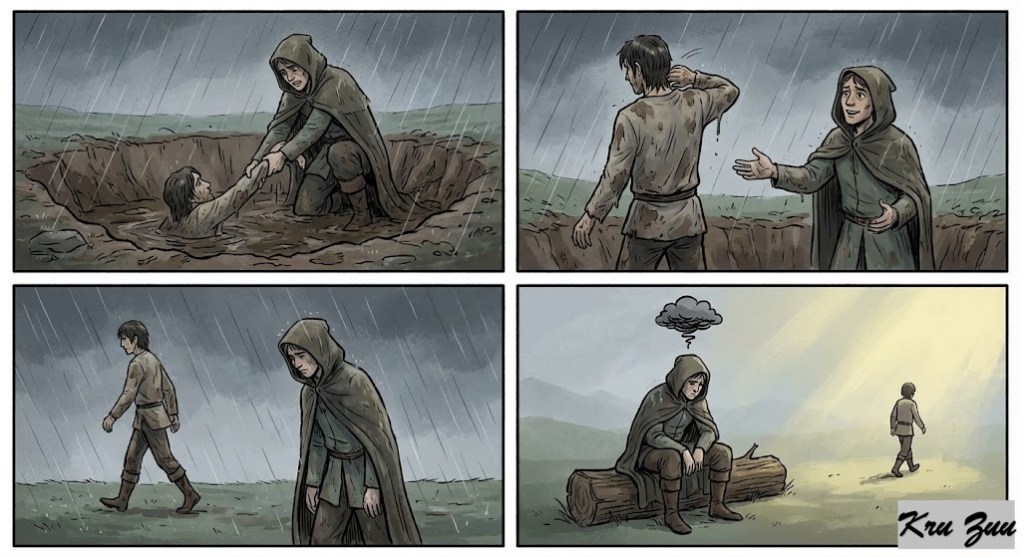
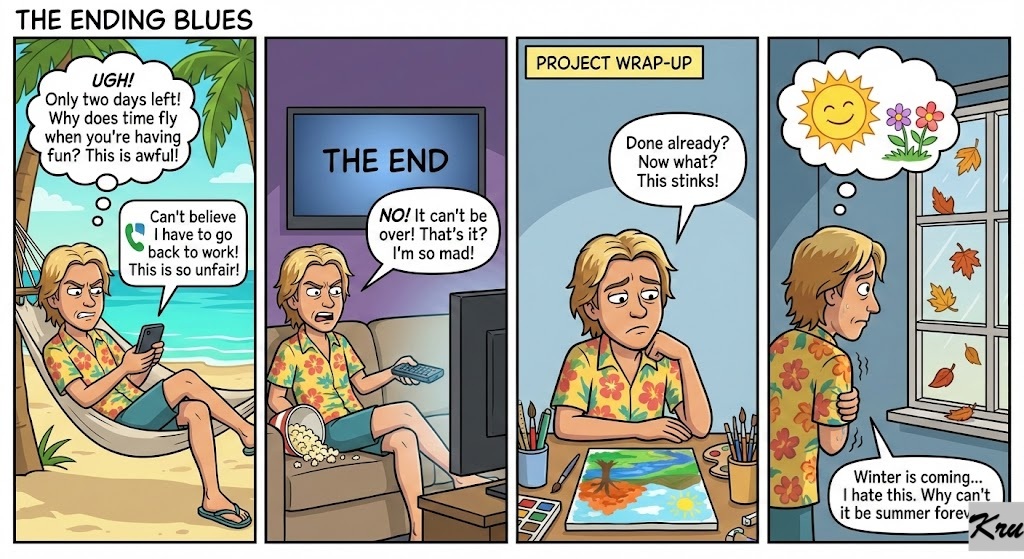
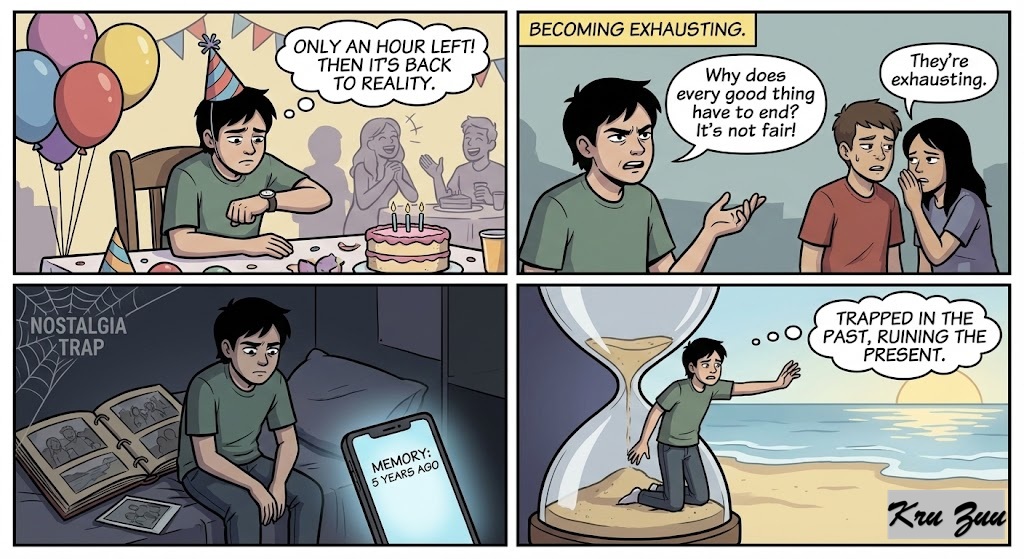
    You go on an incredible two-week vacation. Instead of enjoying the final days, you spend them complaining that it’s almost over. 📱 “I can’t believe I have to go back to work! This is so unfair!” When a great TV show finishes, a fun project wraps up, or a wonderful season fades, you get angry. You disconnect the joy of the experience from the reality of time.

    The Result? You ruin the present moment by dreading the future. You become exhausting to be around because you refuse to let things conclude naturally, trapping yourself in the “Nostalgia Trap.” 🕸️


    😇 The Hero (The Grateful Acceptor)

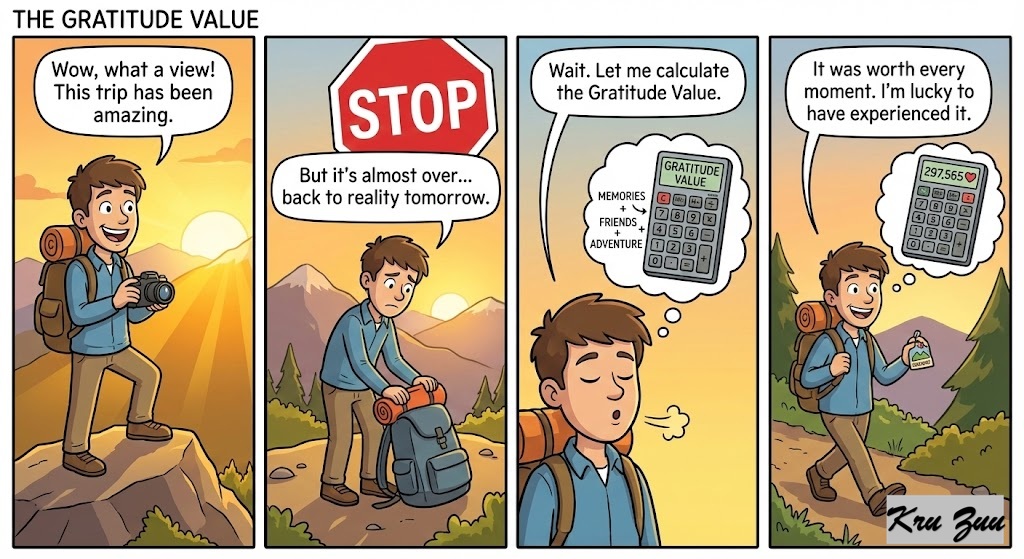
    You experience something wonderful, and you realize it is ending. You pause. 🛑 Instead of throwing a tantrum, you calculate the “Gratitude Value.”

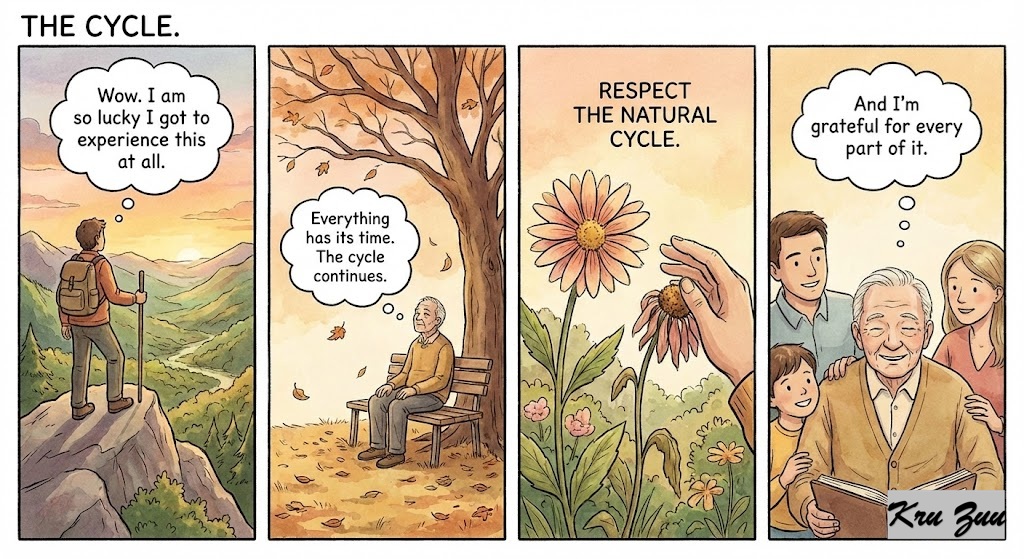
    You think: “I am so lucky I got to experience this at all.” You respect the natural cycle of life.

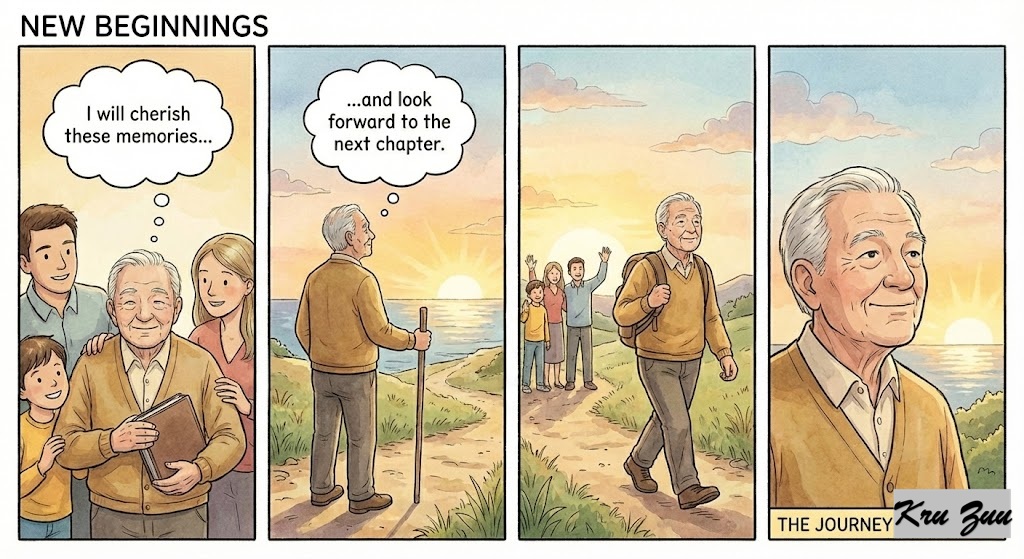
    You say: “I will cherish these memories and look forward to the next chapter.”

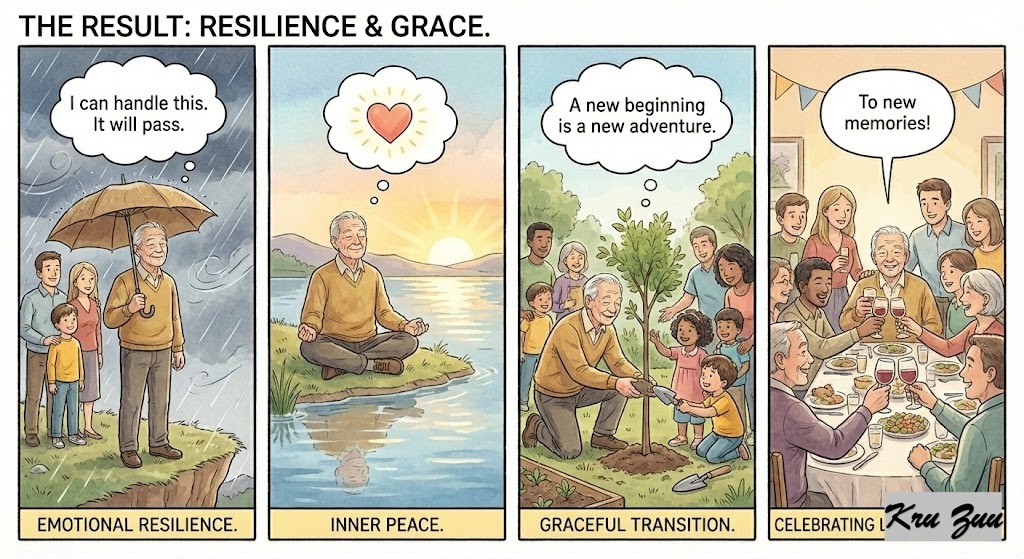
    The Result? You build emotional resilience. You maintain your peace. You transition into new phases of life gracefully, and people love sharing experiences with you because you celebrate them instead of mourning them. 🏰


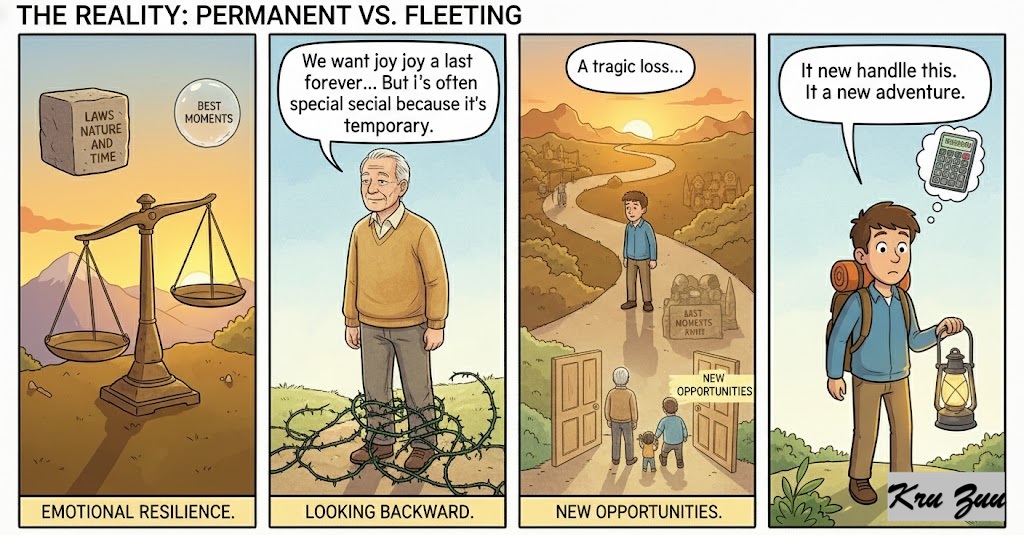
    ⚖️ The Reality Permanent vs. Fleeting. We live in a world where we want the best moments to last forever. But the laws of nature and time are absolute. Joy is often special because it is temporary. If you treat every ending like a tragic loss, you will spend your life looking backward, completely missing the new opportunities right in front of you.


    💎 The Secret

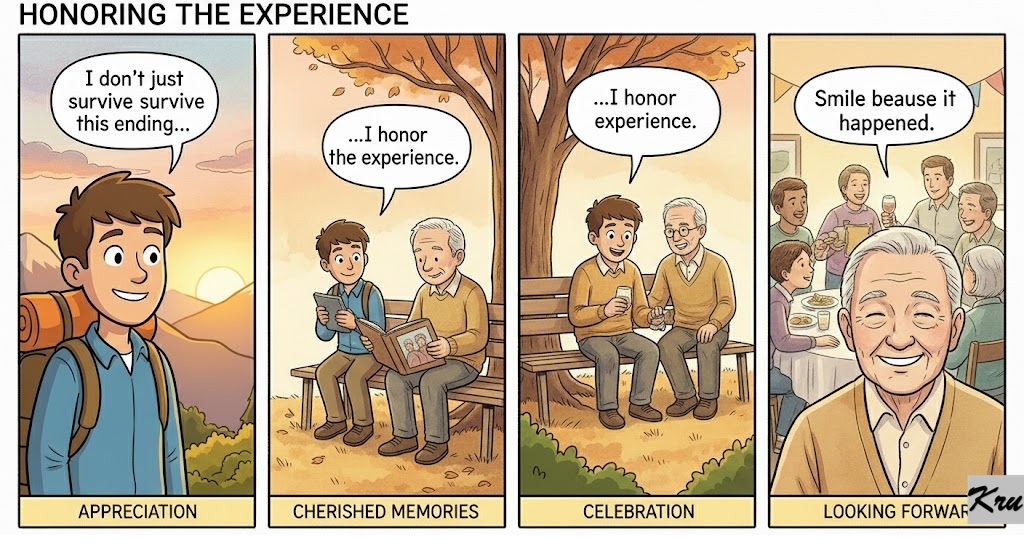
    You don’t just survive an ending; you honor the experience. Smile because it happened.

    🧐 The Anatomy of the Proverb


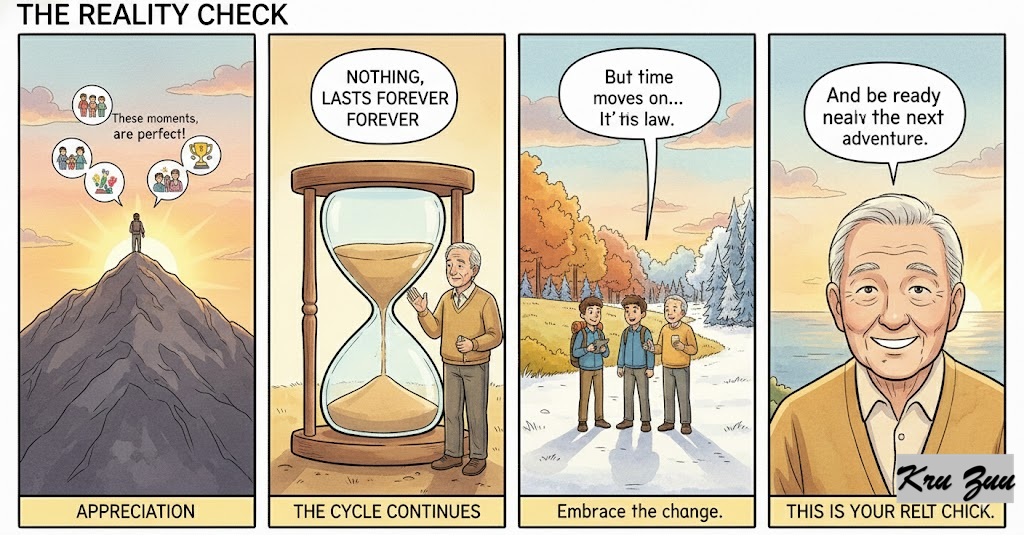
    This is your reality check that nothing in life, no matter how wonderful, joyful, or successful, lasts forever.


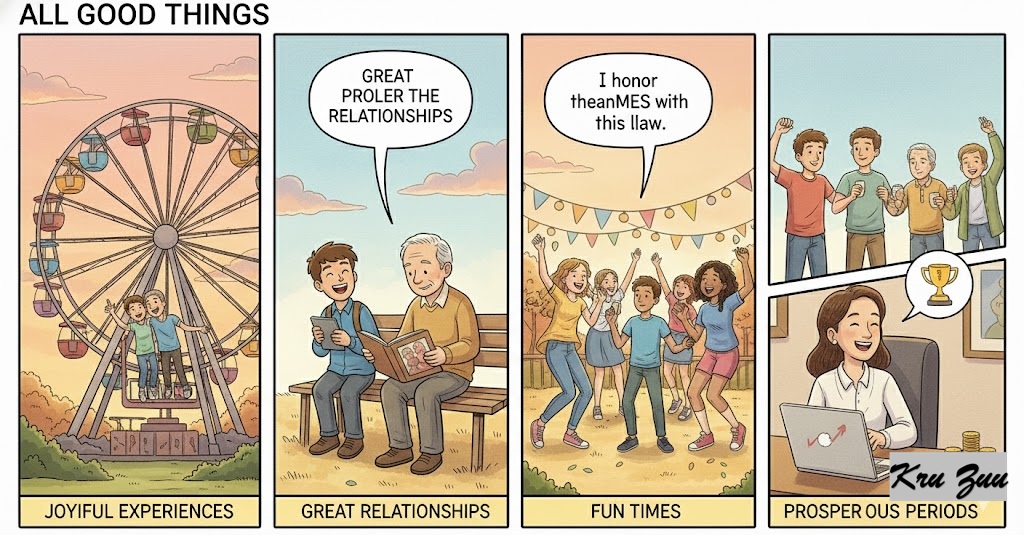
    All good things (Noun Phrase): Joyful experiences, great relationships, fun times, or prosperous periods.


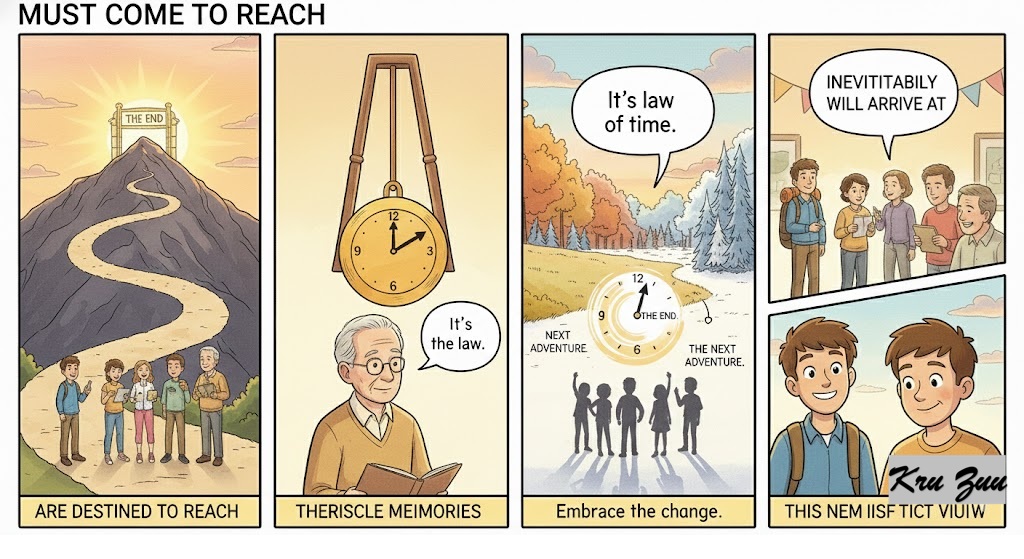
    Must come to (Modal Verb + Verb Phrase): Are destined to reach; inevitably will arrive at.


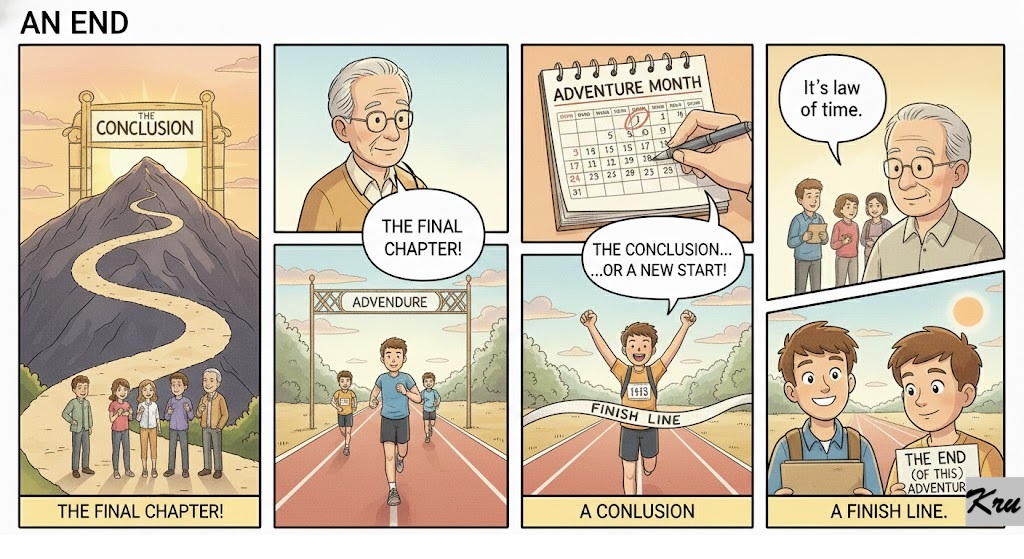
    An end (Noun): A conclusion or finish line.


    Simpler Version: Nothing great lasts forever. / Enjoy it while it lasts.


    📚 Vocabulary Vault


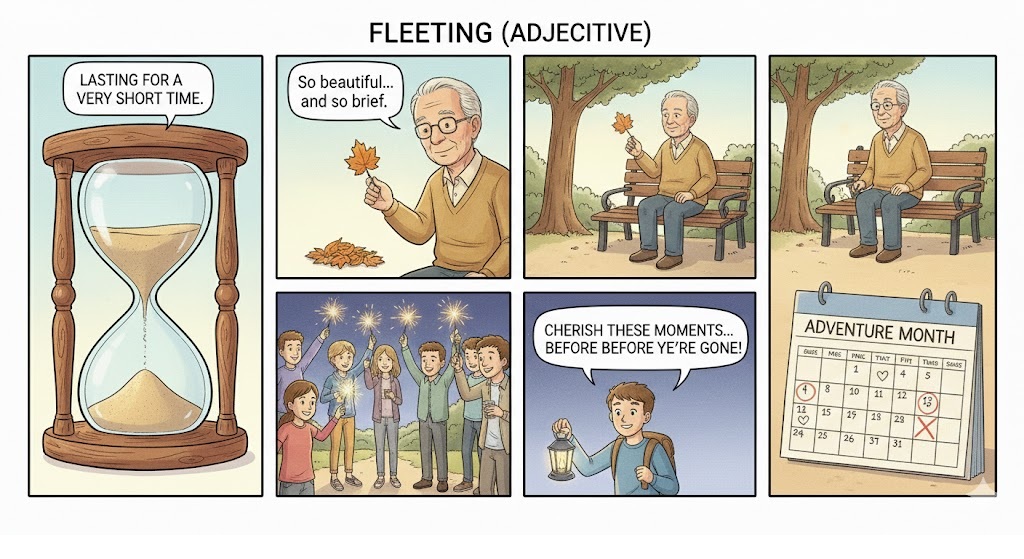
    Fleeting (Adjective): Lasting for a very short time. ⏳


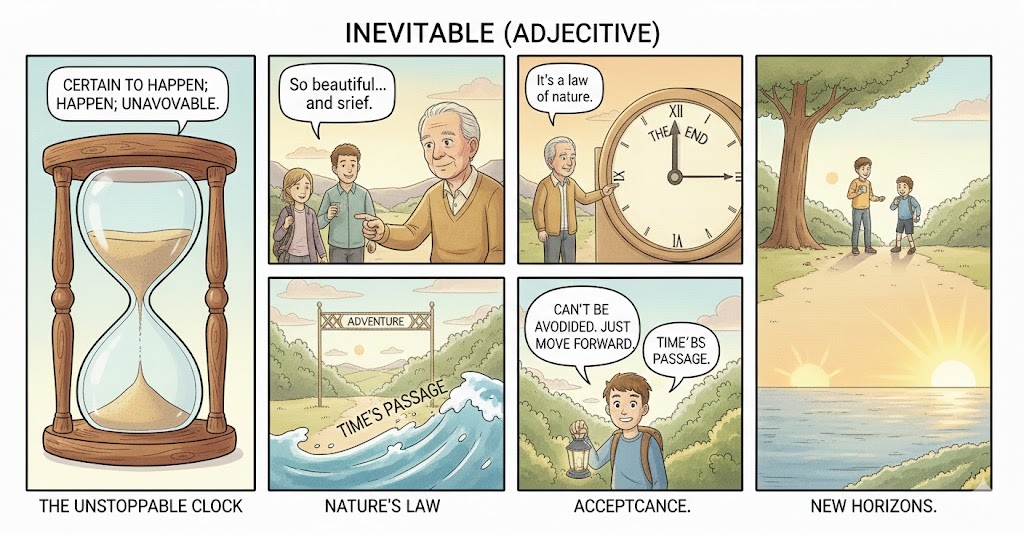
    Inevitable (Adjective): Certain to happen; unavoidable.


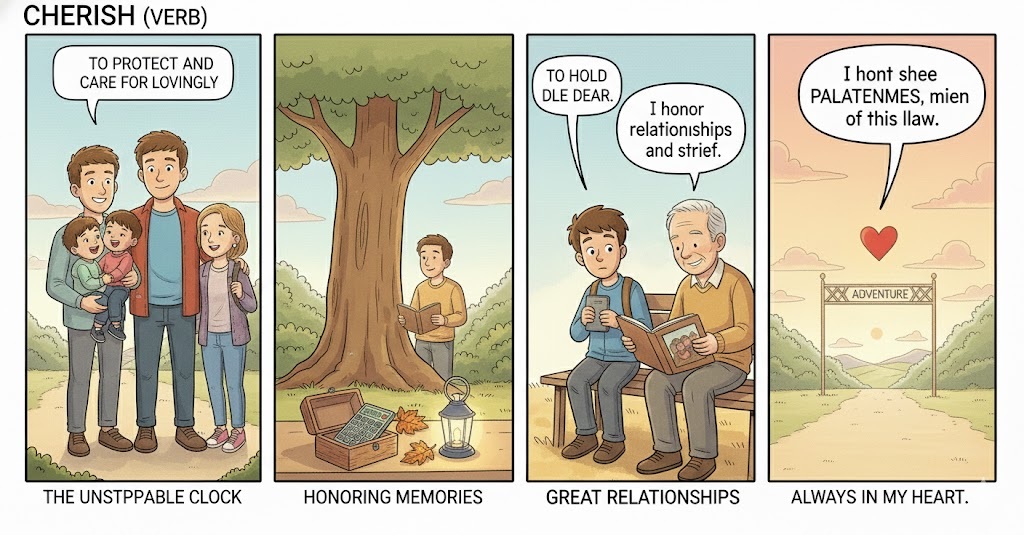
    Cherish (Verb): To protect and care for someone or something lovingly; to hold dear.


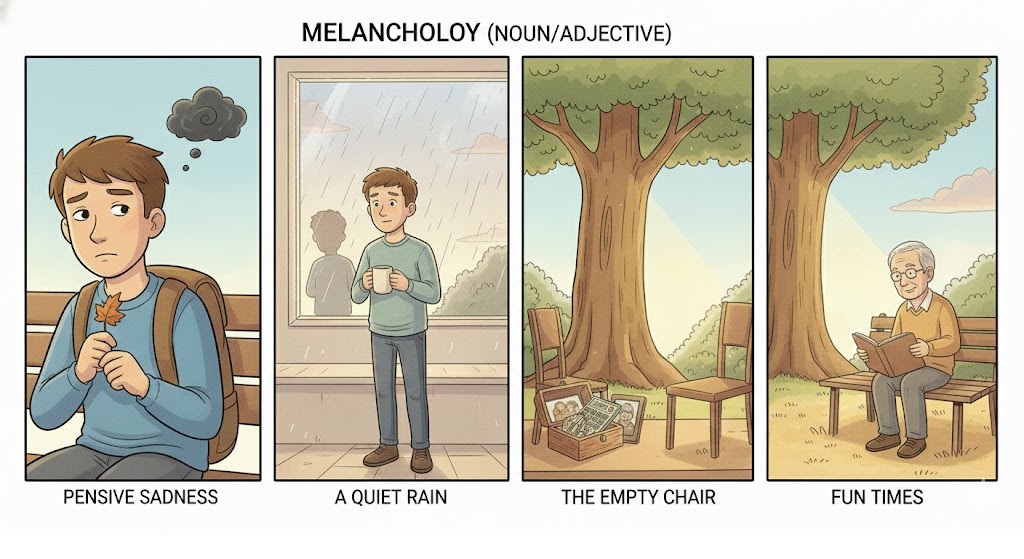
    Melancholy (Noun/Adjective): A feeling of pensive sadness, typically with no obvious cause.


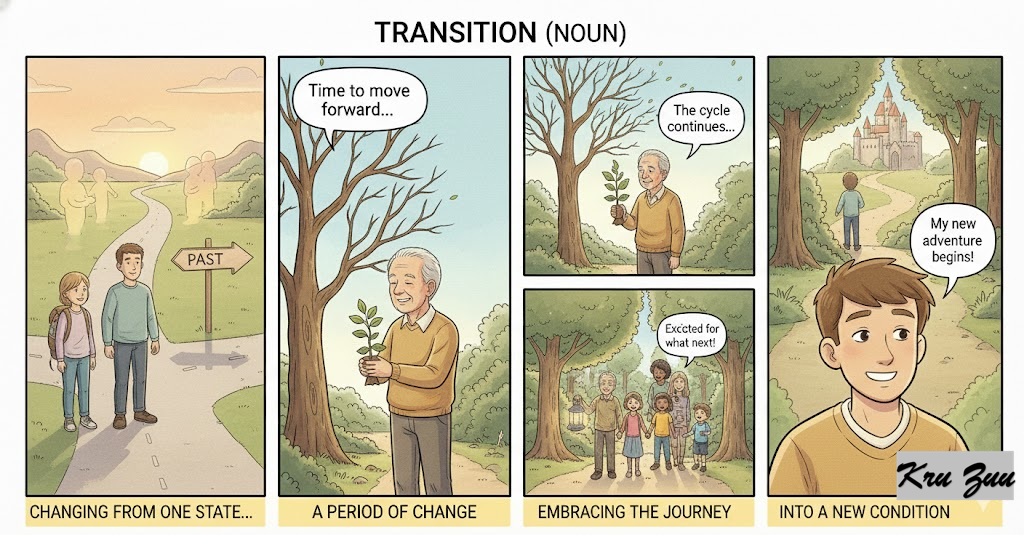
    Transition (Noun): The process or a period of changing from one state or condition to another.


    🧠 Grammar Focus: Idioms as Parenting/Bossing Tools


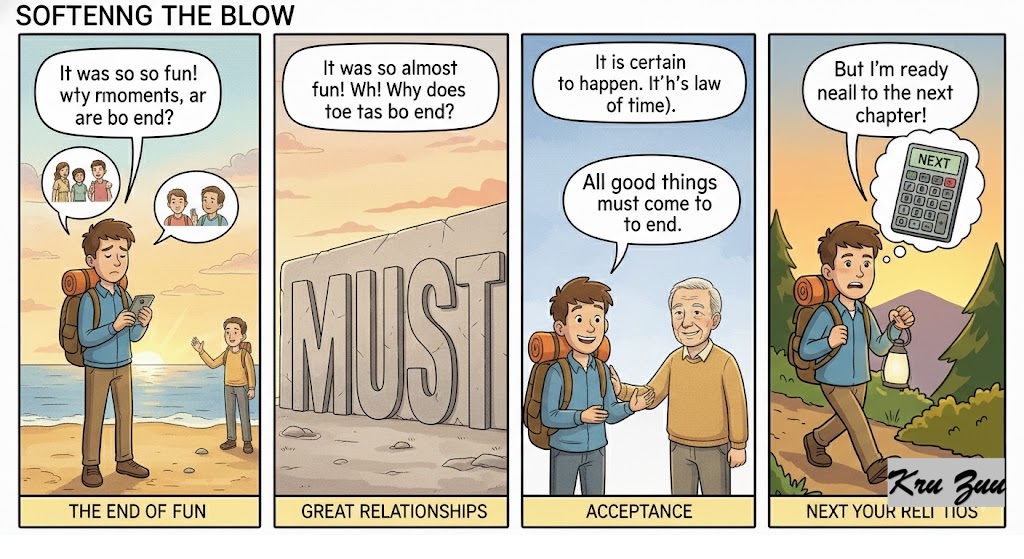
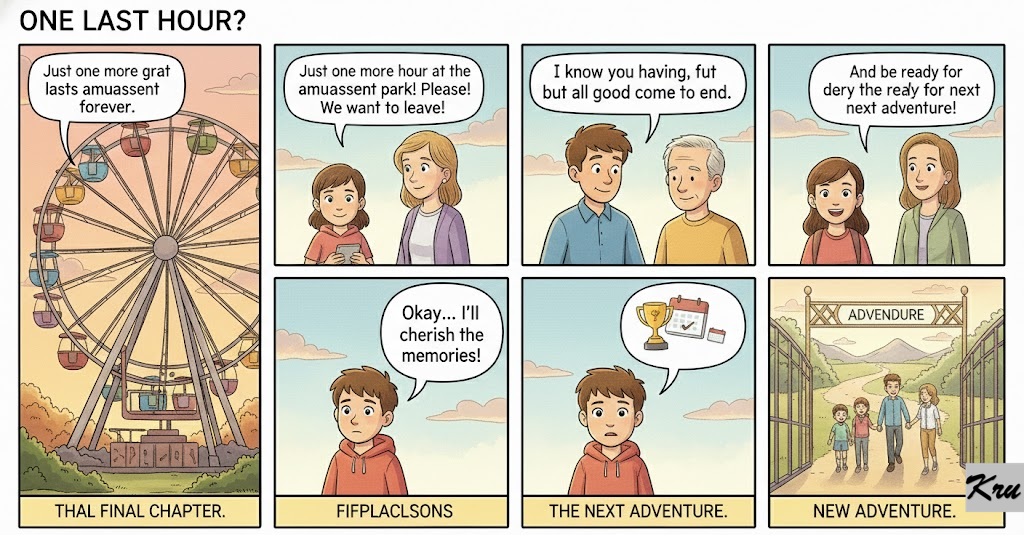
    We often use this idiom to soften the blow of disappointment when a fun activity has to stop, using the modal verb “must” to show absolute certainty.


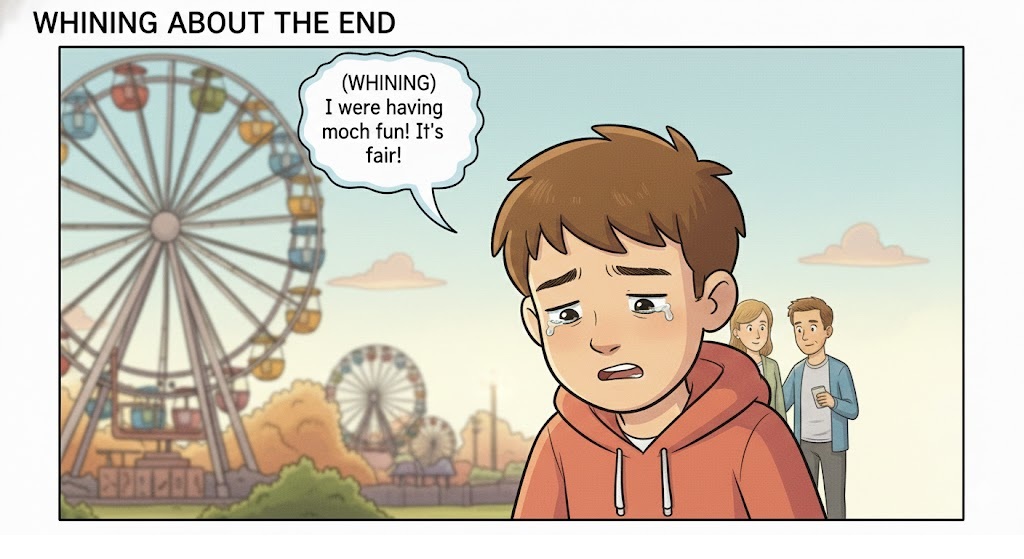
    Kid 1: “Just one more hour at the amusement park! Please! We don’t want to leave!”


    Kid 2: (Whining) “But we were having so much fun!”


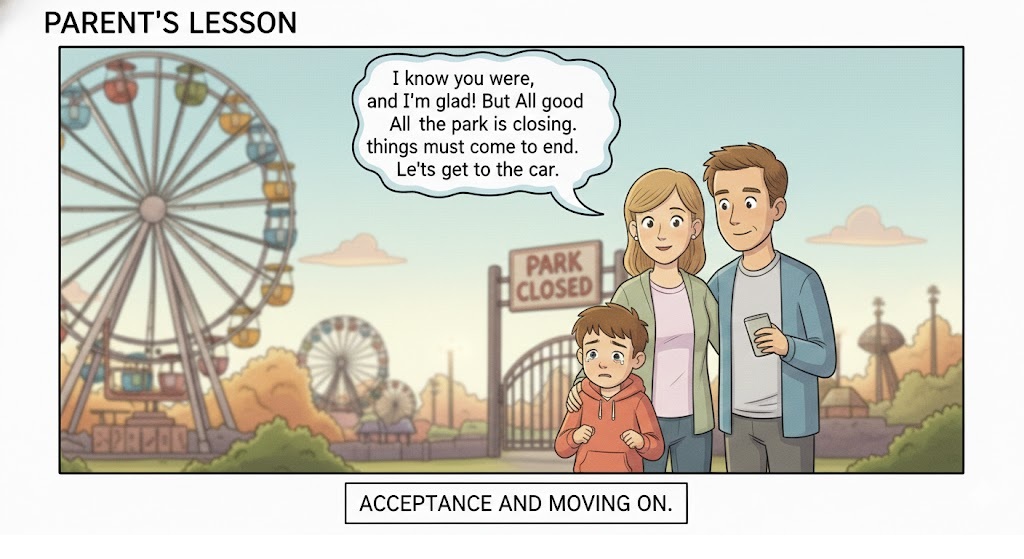
    Parent: “I know you were, and I’m glad! But the park is closing. All good things must come to an end. Let’s get to the car.”

    📜 History: Origin and Spread


    Where did this bittersweet dose of reality come from?


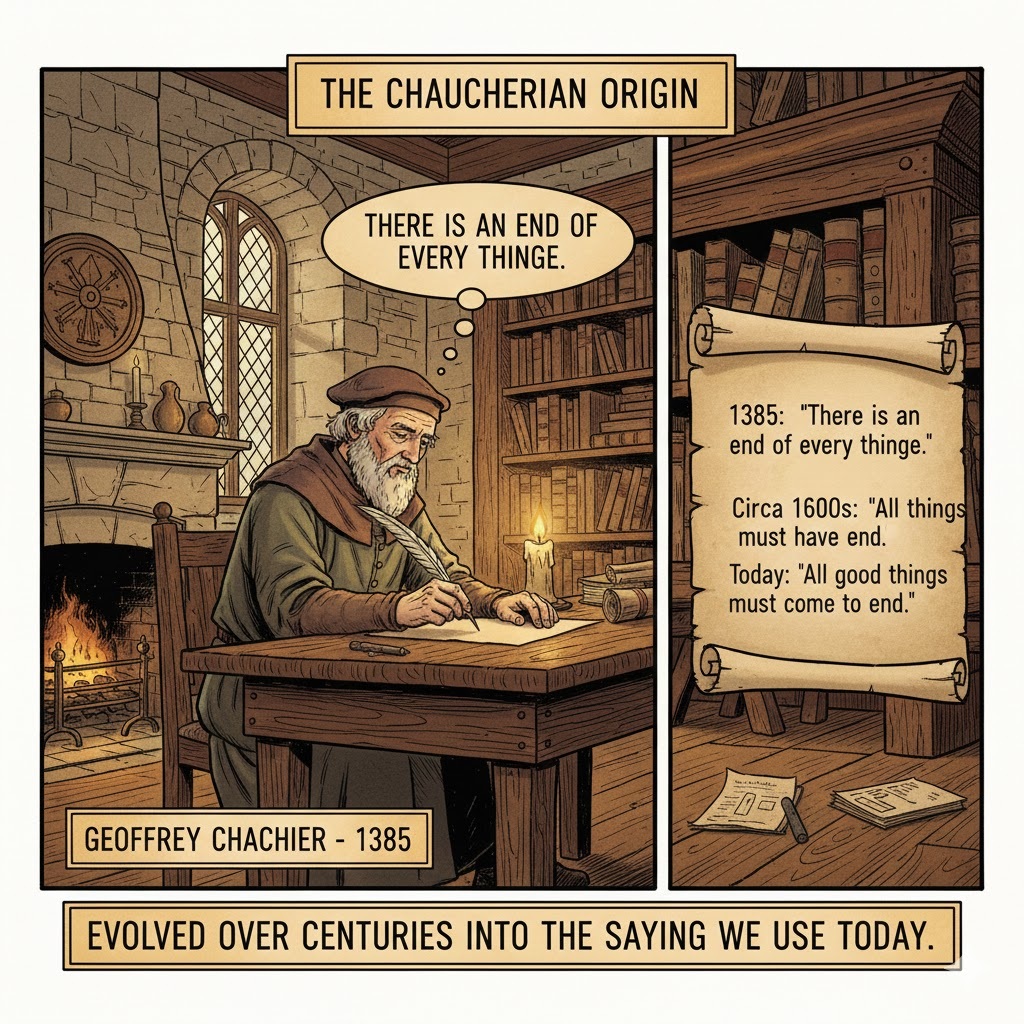
    The Origin: This phrase is widely attributed to the famous English poet Geoffrey Chaucer. In his poem Troilus and Criseyde (written around 1385), he wrote: “There is an end of every thinge.” It evolved over the centuries into the specific phrase we use today.


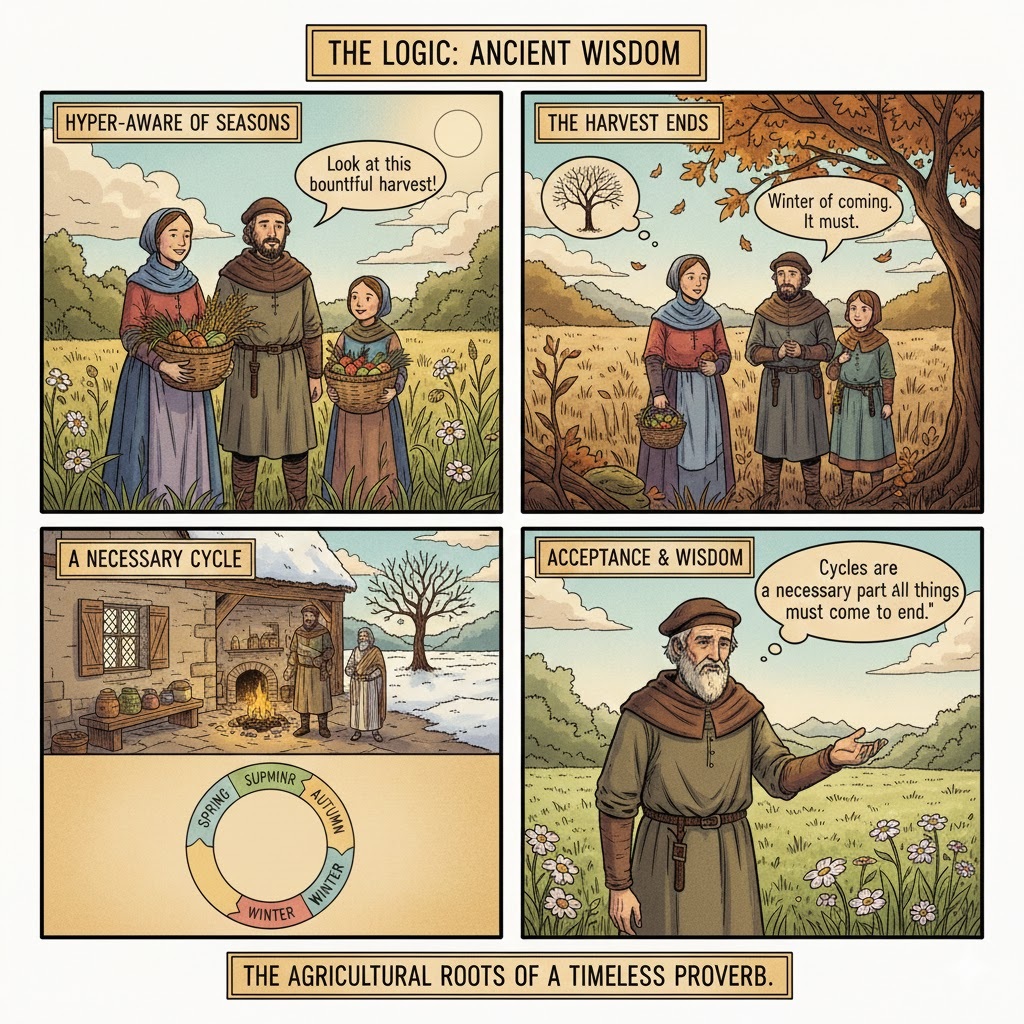
    The Logic: Before modern conveniences, people were hyper-aware of the changing seasons. The bountiful harvest of summer had to end for winter to come. The proverb reflects the ancient, agricultural understanding that cycles are a necessary part of existence.


    Global Cousins


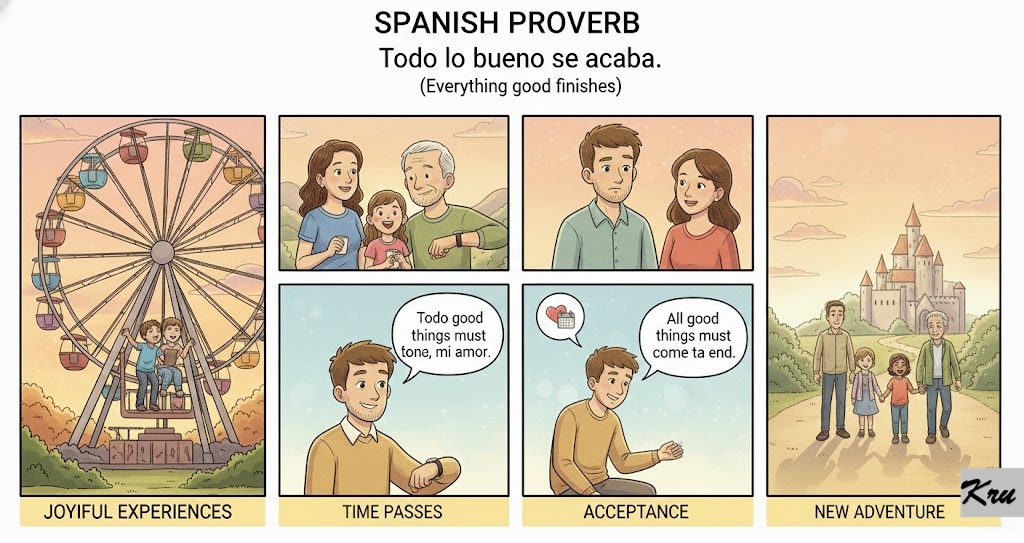
    🇪🇸 Spanish:“Todo lo bueno se acaba.” (Everything good finishes).


    🇩🇪 German:“Alles hat ein Ende, nur die Wurst hat zwei.” (Everything has an end, only the sausage has two, a humorous take! 🌭).


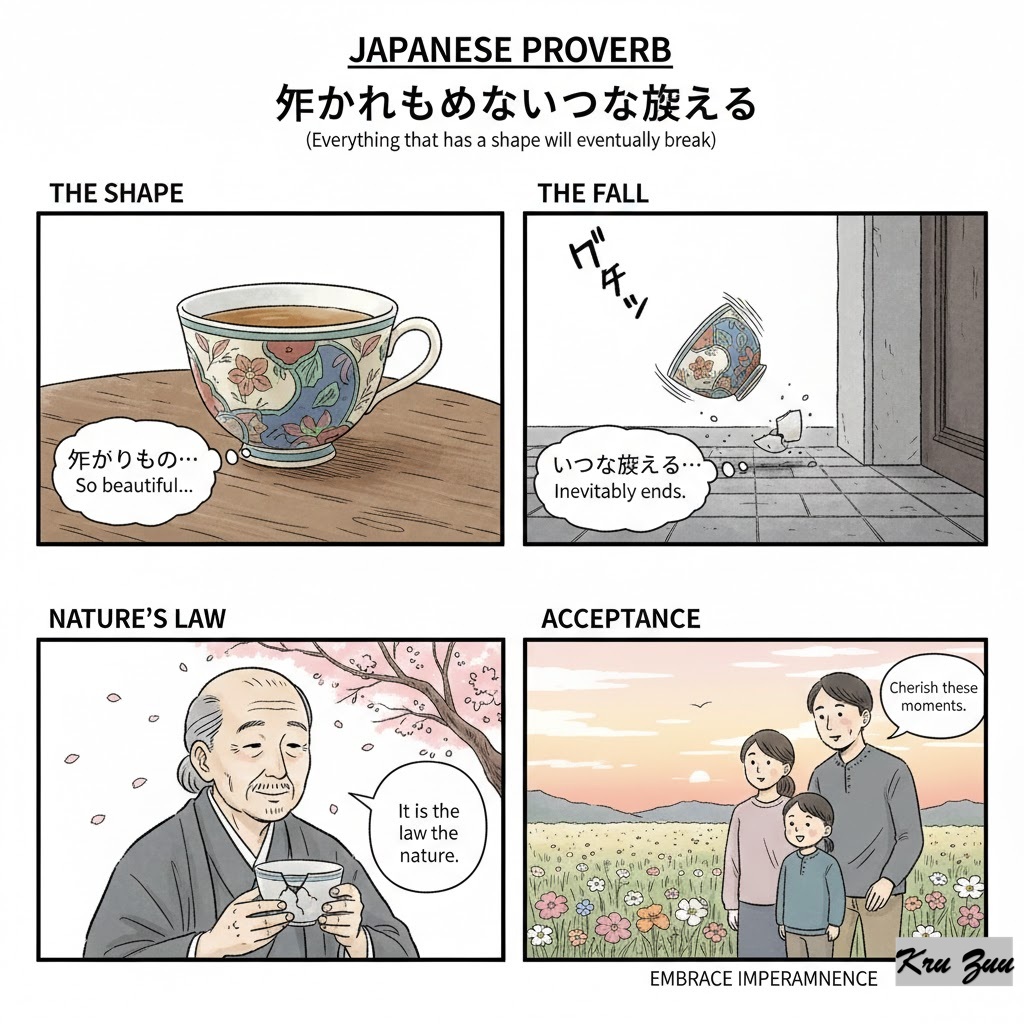
    🇯🇵 Japanese:“形あるものはいつか壊れる” (Katachi aru mono wa itsuka kowareru). (Everything that has a shape will eventually break).

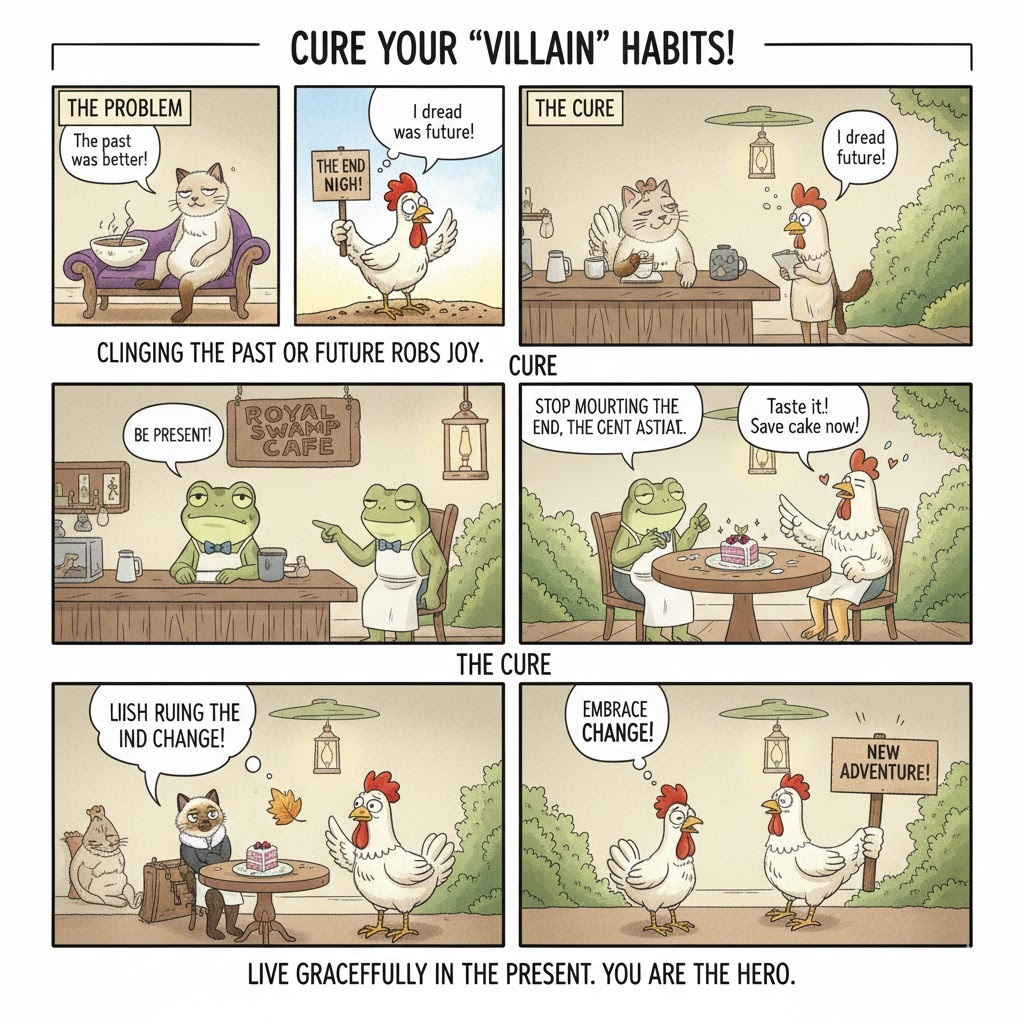
    🎭 Short Story: The Last Slice of Summer 🍰🐱🐔🐸


    Let’s visit the magical forest to see who understands the value of a graceful exit.


    🌟 The Cast


    Cleo the Cat: Dramatic, loves luxury, refuses to accept the word “no.” 😼


    Cluck the Chicken: Easily provoked, loud, constantly stressed about the future. 🐔


    Fred the Frog: The quiet, philosophical manager of the Royal Swamp Café. 🐸


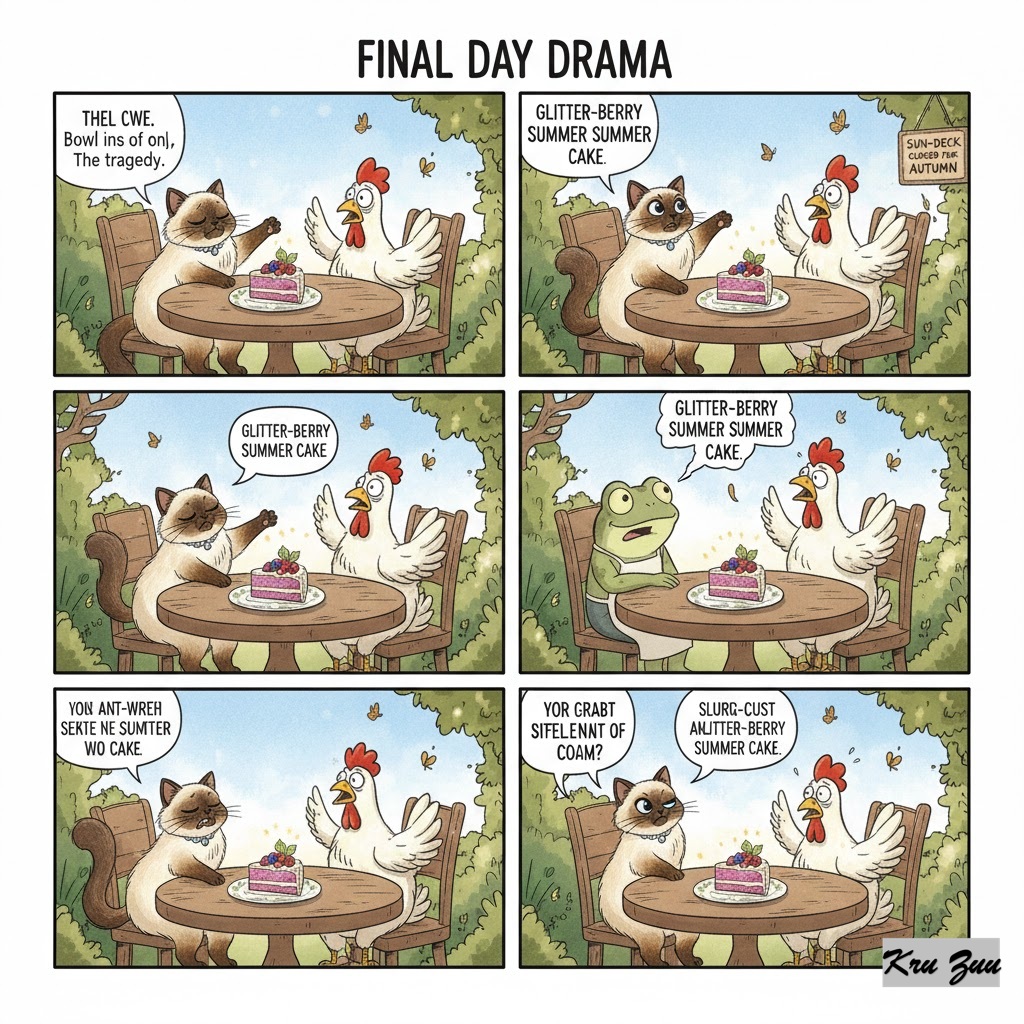
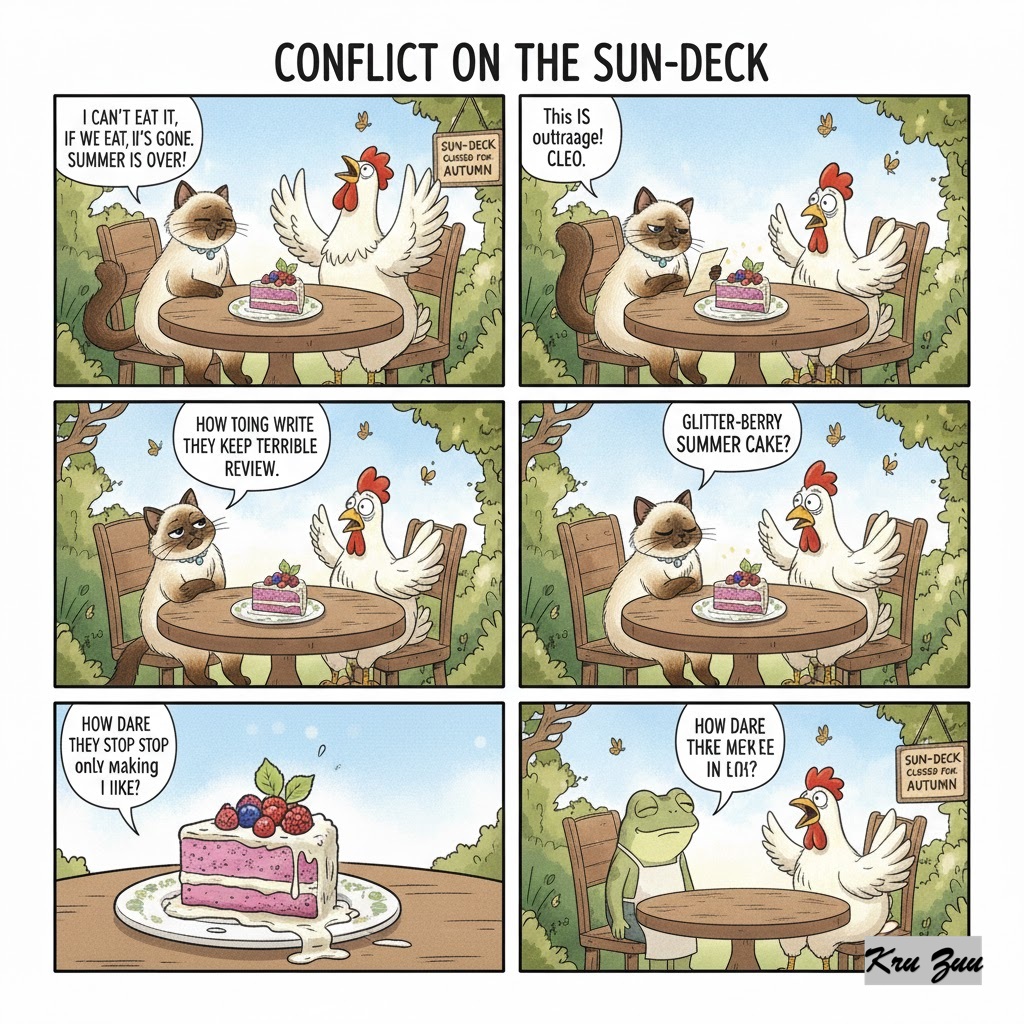
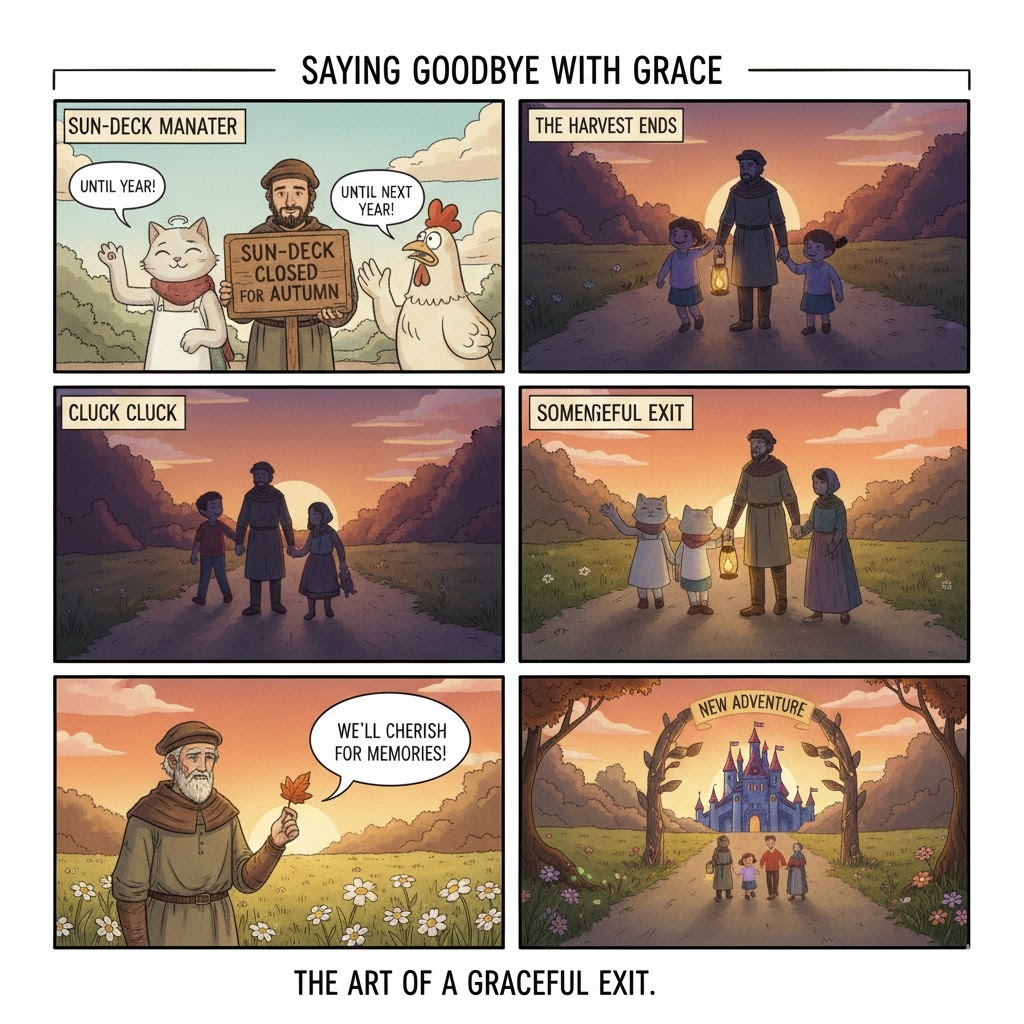
    The Situation: It is the final day of August. The café is closing its famous sun-deck for the autumn season. Cleo and Cluck are sitting at a center table, staring at the very last slice of the café’s legendary, limited-time “Glitter-Berry Summer Cake.”


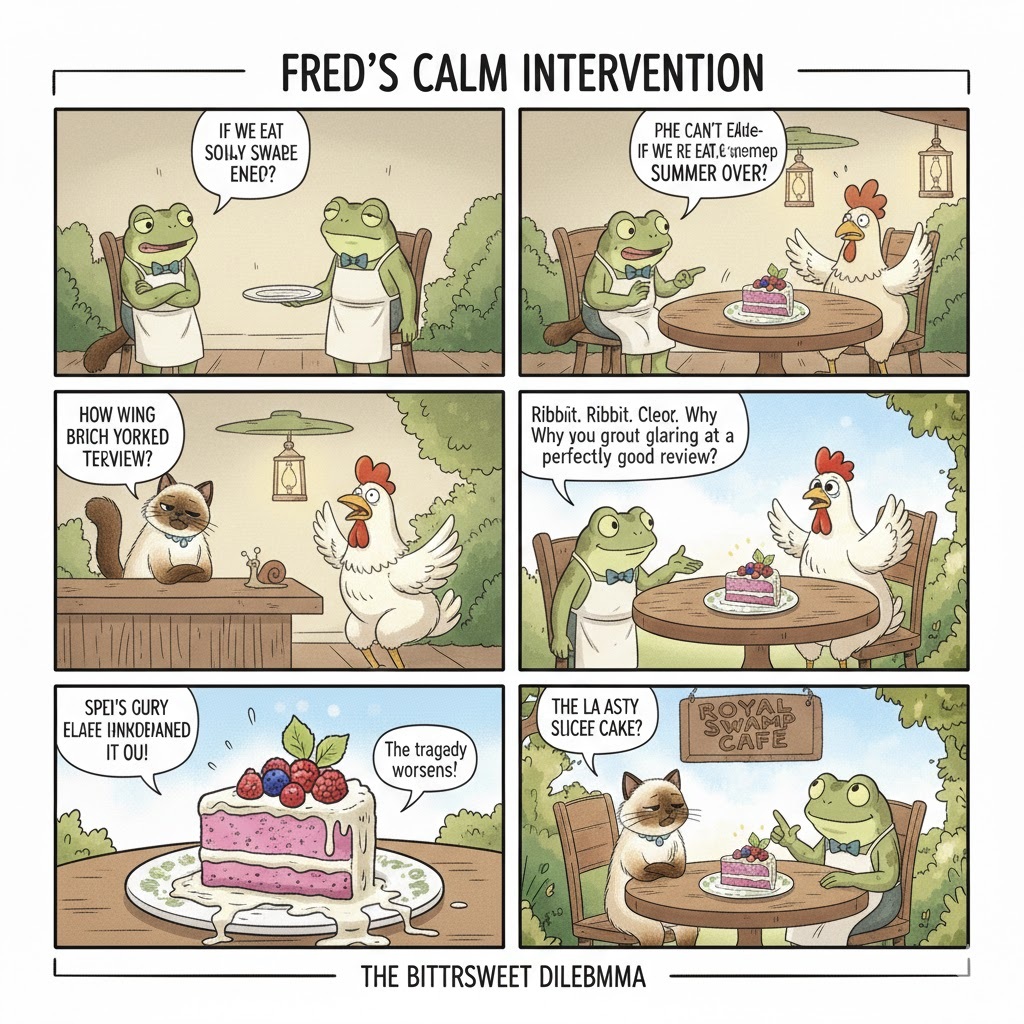
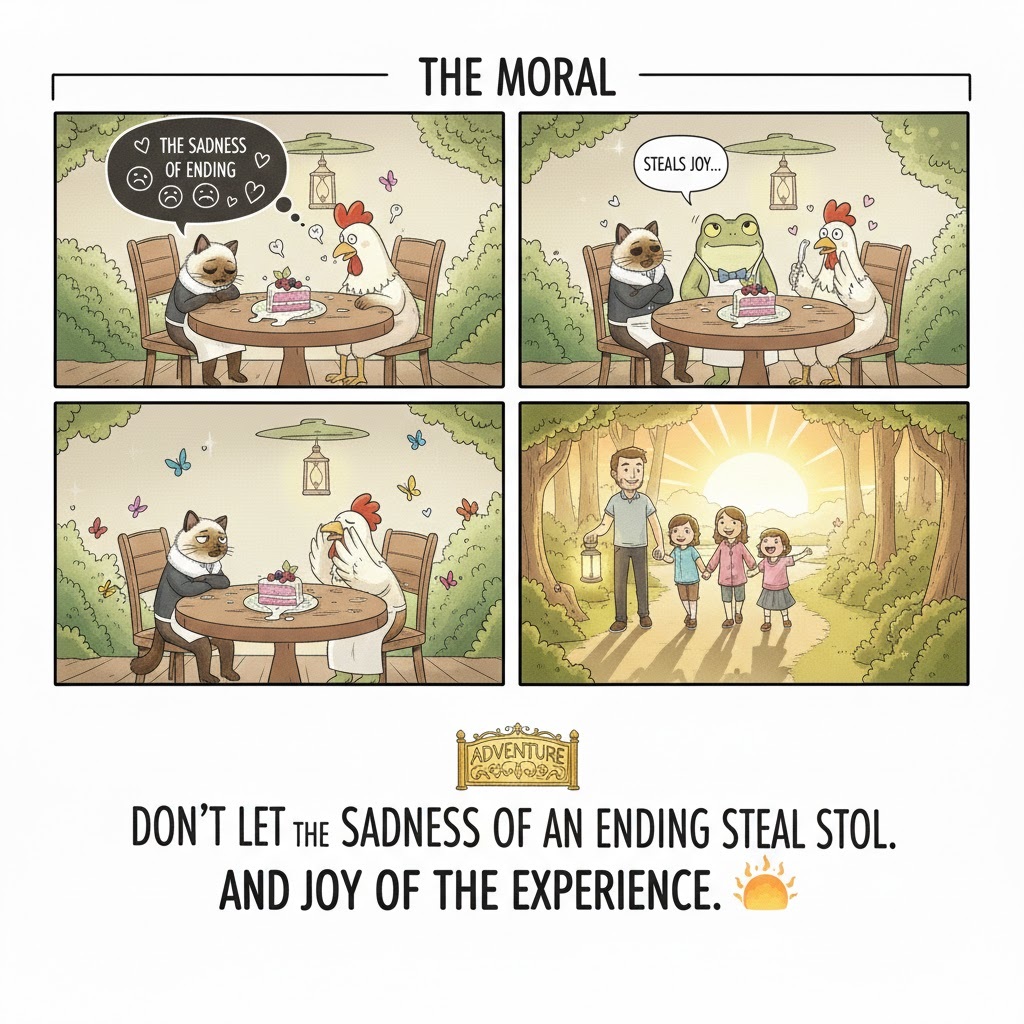
    The Conflict: Suddenly, Cluck squawks in panic. “I can’t eat it, Cleo! If we eat it, it’s gone! Summer is over!” Cleo crosses her paws and pouts. “This is an outrage! I demand they keep baking it! I am going to write a terrible review. How dare they stop making the only cake I like!” They both sit there, complaining loudly, watching the beautiful cake slowly melt in the afternoon sun.


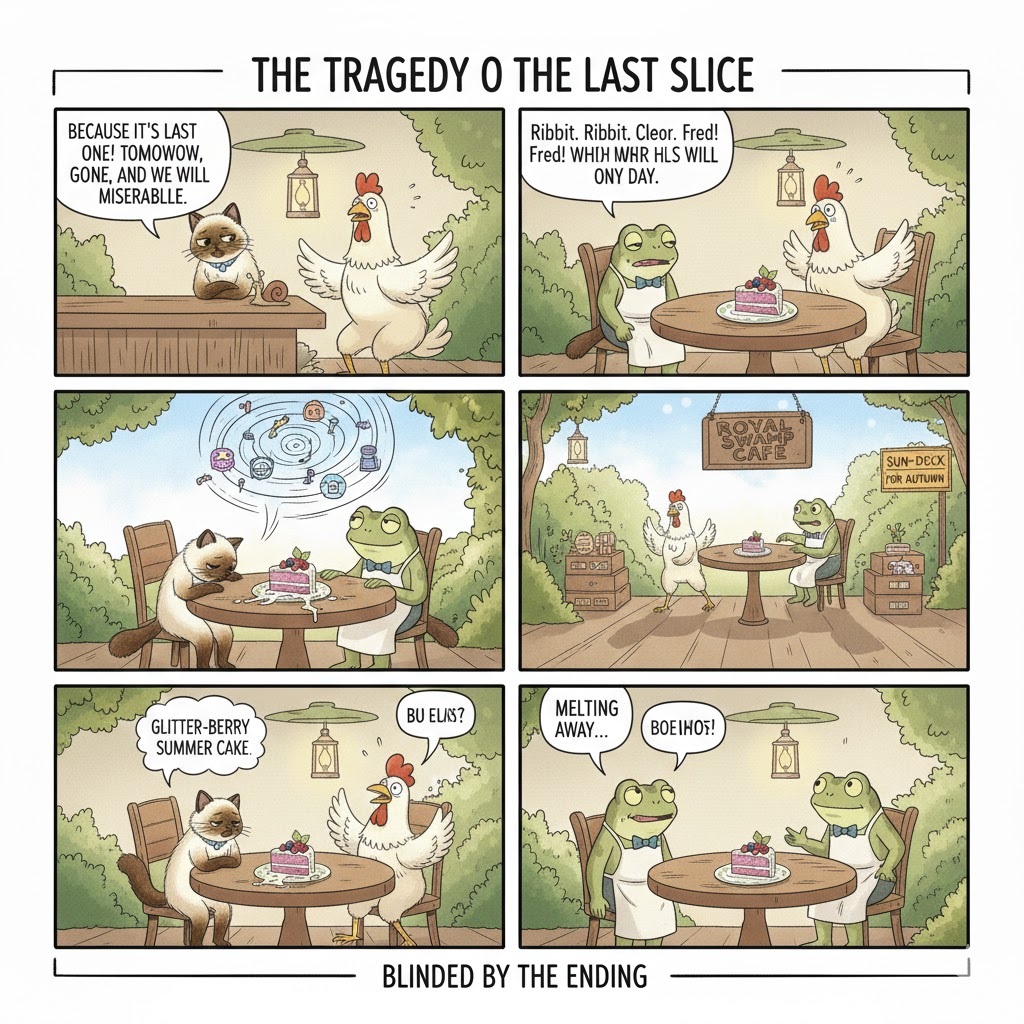
    The Reaction: Fred the Frog hops over, holding a small silver tray to collect their plates. “Ribbit,” says Fred. “Cleo. Cluck. Why are you glaring at a perfectly good dessert?”


    Cleo scowls. “Because it’s the last one, Fred! Tomorrow it will be gone, and we will be miserable. It’s totally ruined my day.”


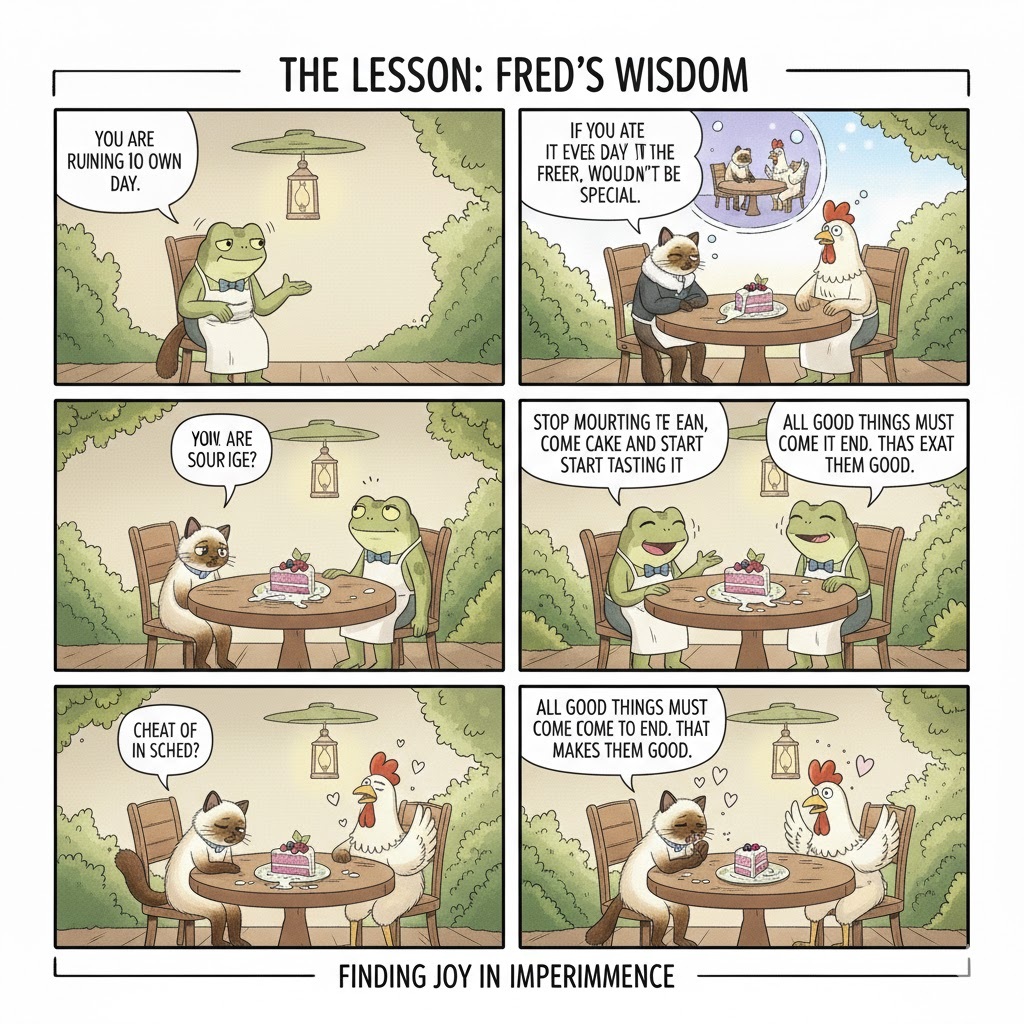
    The Lesson: Fred sighs, looking at the melting cake. “You are ruining your own day. The magic of the Glitter-Berry Cake is that it only grows in the summer. If you ate it every day in the freezing winter, it wouldn’t be special.” He pushes the plate closer to them. “Stop mourning the cake and start tasting it. All good things must come to an end. That is exactly what makes them good.”


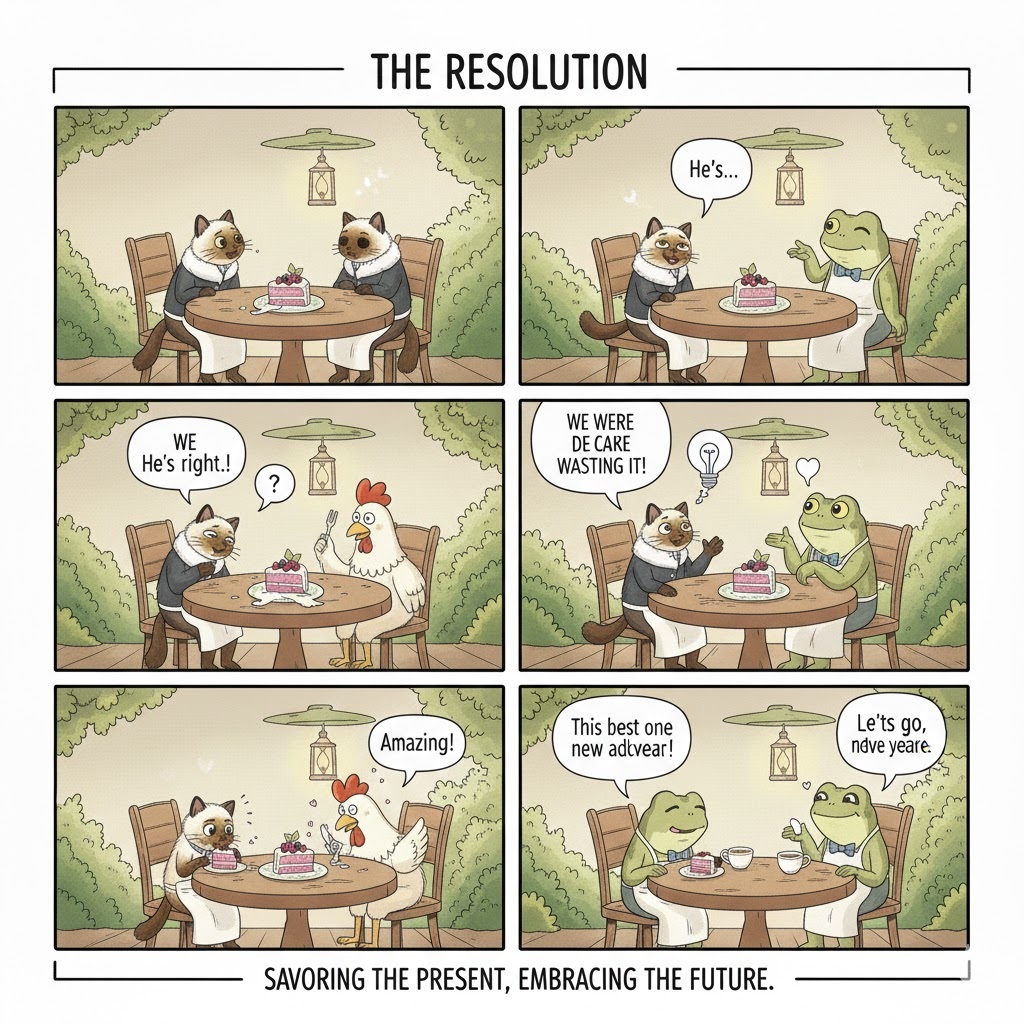
    The Resolution: Cleo’s ears twitch. Cluck stops flapping his wings. They realize Fred is right, by dreading the end, they were wasting the present. They picked up their forks, shared the final slice, and agreed it was the best one they had tasted all year.


    The Moral: Don’t let the sadness of an ending steal the joy of the experience. 🌅

    🎓 Lesson for English Learners


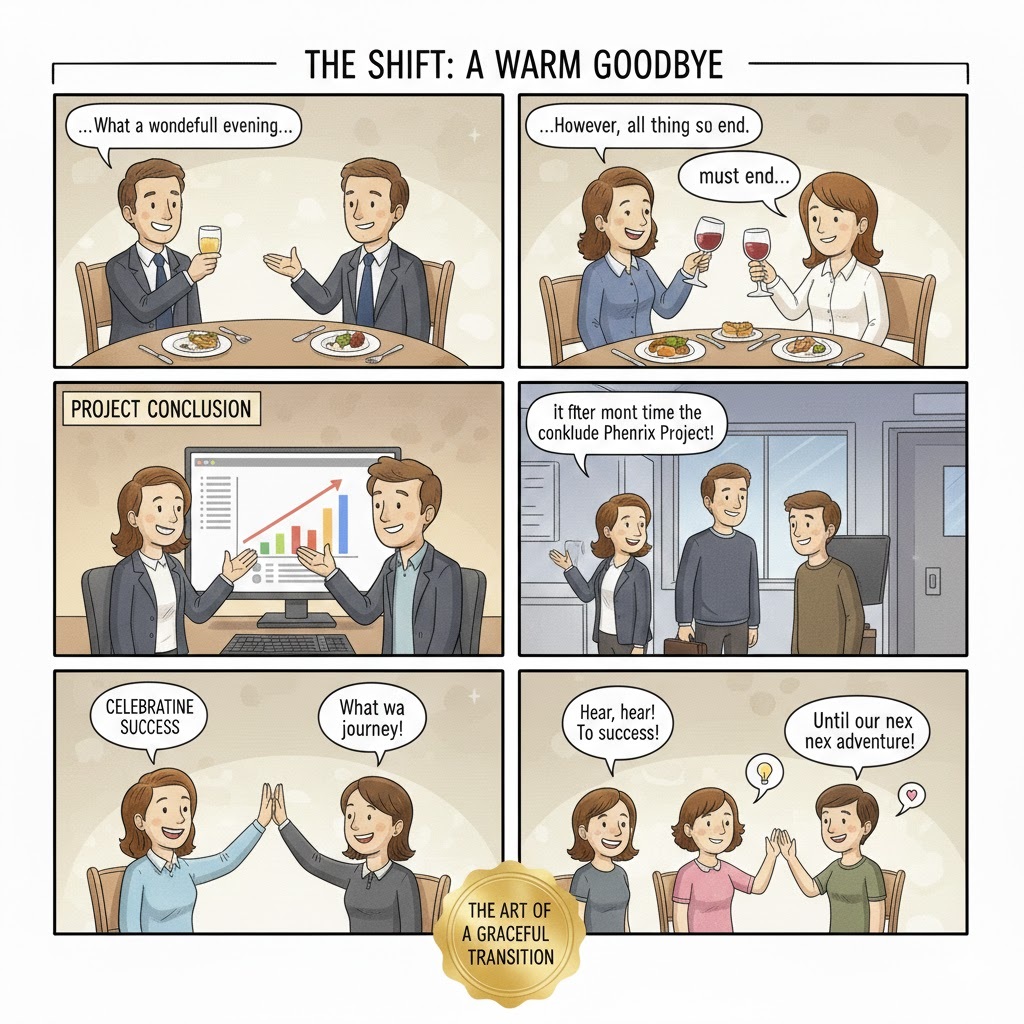
    Saying Goodbye with Grace.


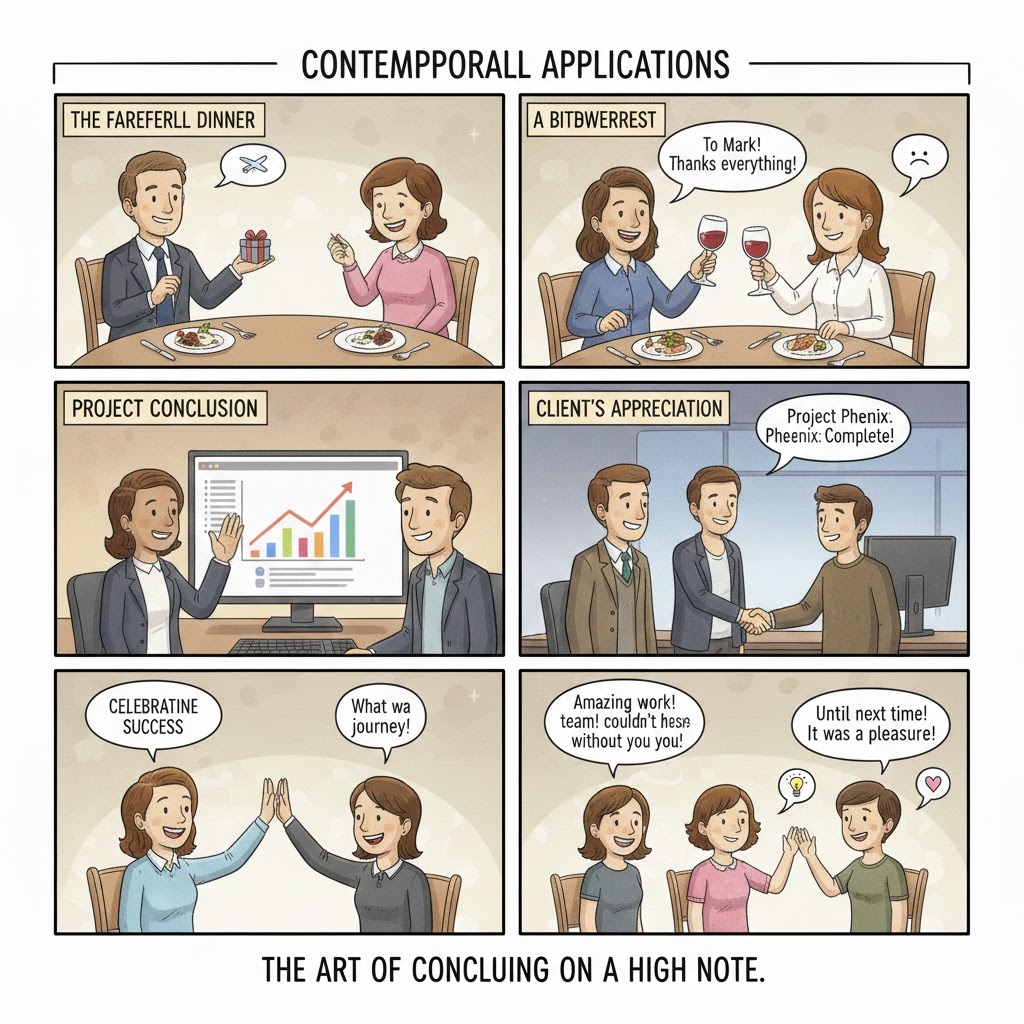
    Situation: You are wrapping up a great farewell dinner for a coworker, or concluding an incredibly successful, long-term project with a client.


    The Shift: You need to formally and politely acknowledge that the time is over, while keeping the mood warm and positive.


    You Say: “Well, look at the time. I’ve had such a wonderful evening with all of you, but all good things must come to an end. Let’s get the bill and head home.”


    💬 Your Turn: The “Hourly” Challenge 🚀


    Do you want to cure your “Villain” habits of clinging to the past?


    The Challenge:
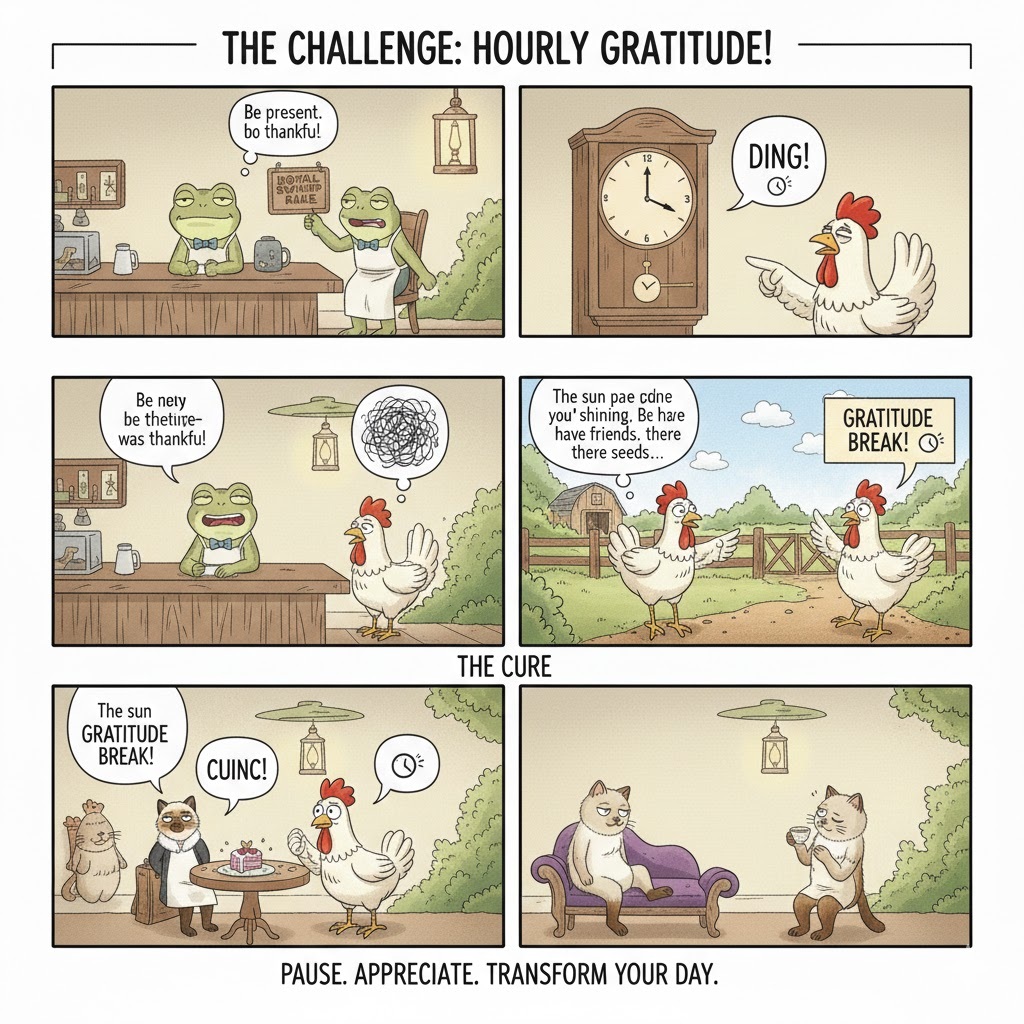
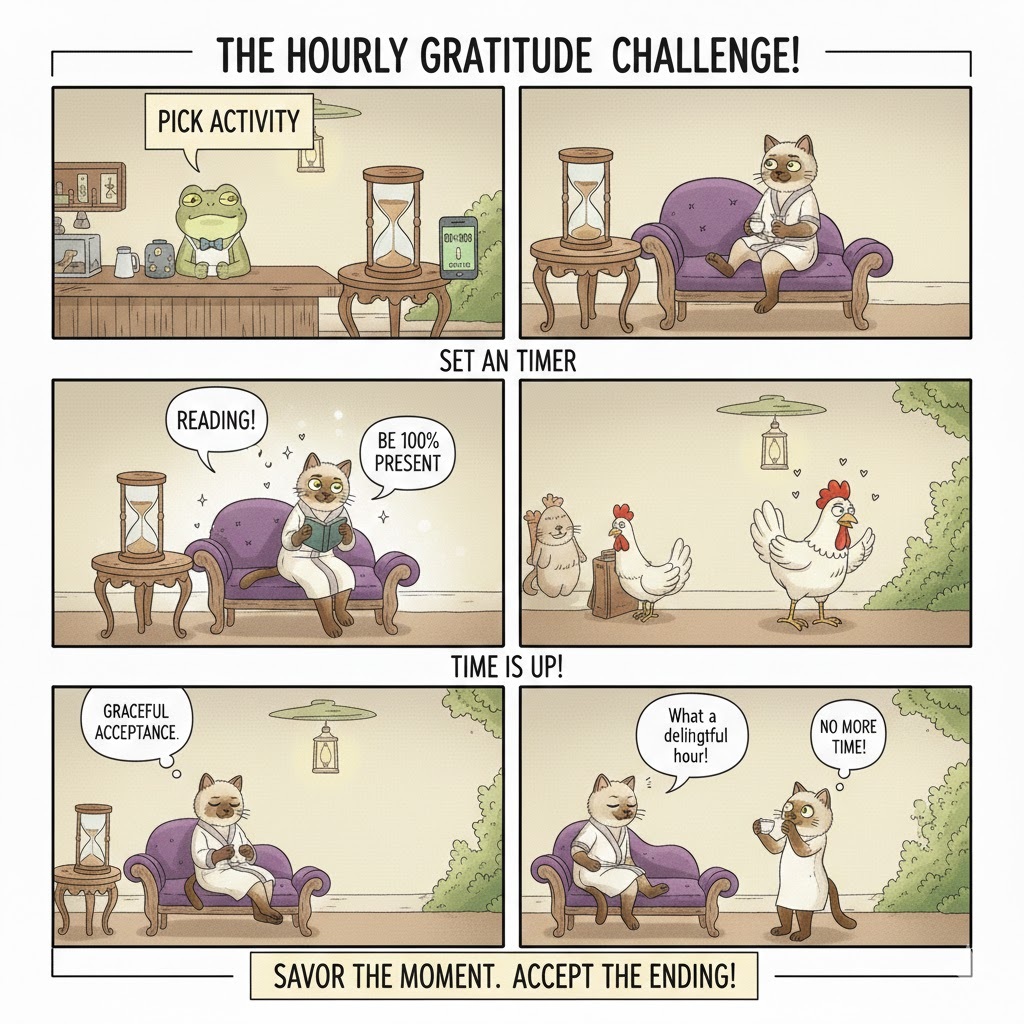
    Implement the “Hourly Gratitude” Rule.


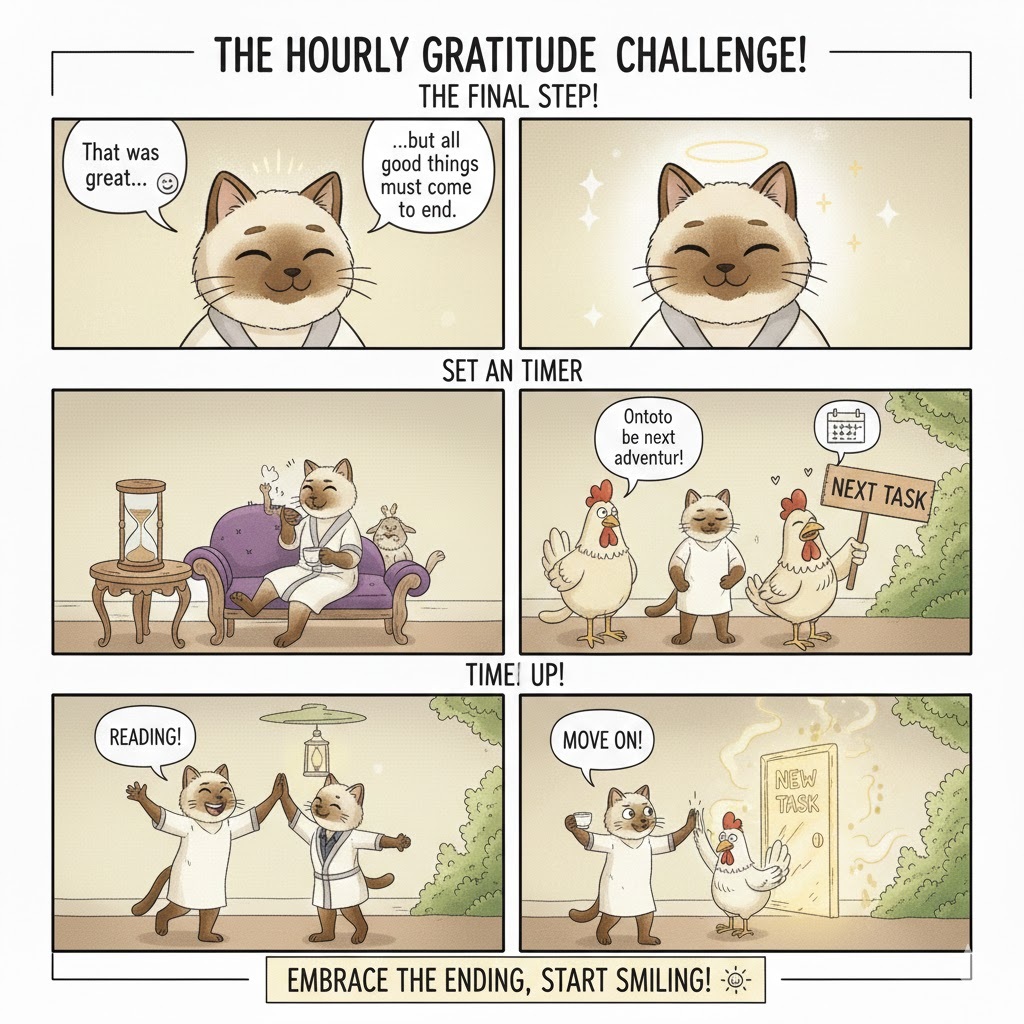
    The Action: Sometime today, pick an activity you enjoy (drinking your morning coffee, reading a chapter of a book, calling a friend). Set a timer for just one hour. For that single hour, be 100% present. When the hour is up and the activity ends, do not wish for more time.

    Say out loud: “That was great, but all good things must come to an end,” and immediately move on to your next task with a smile.


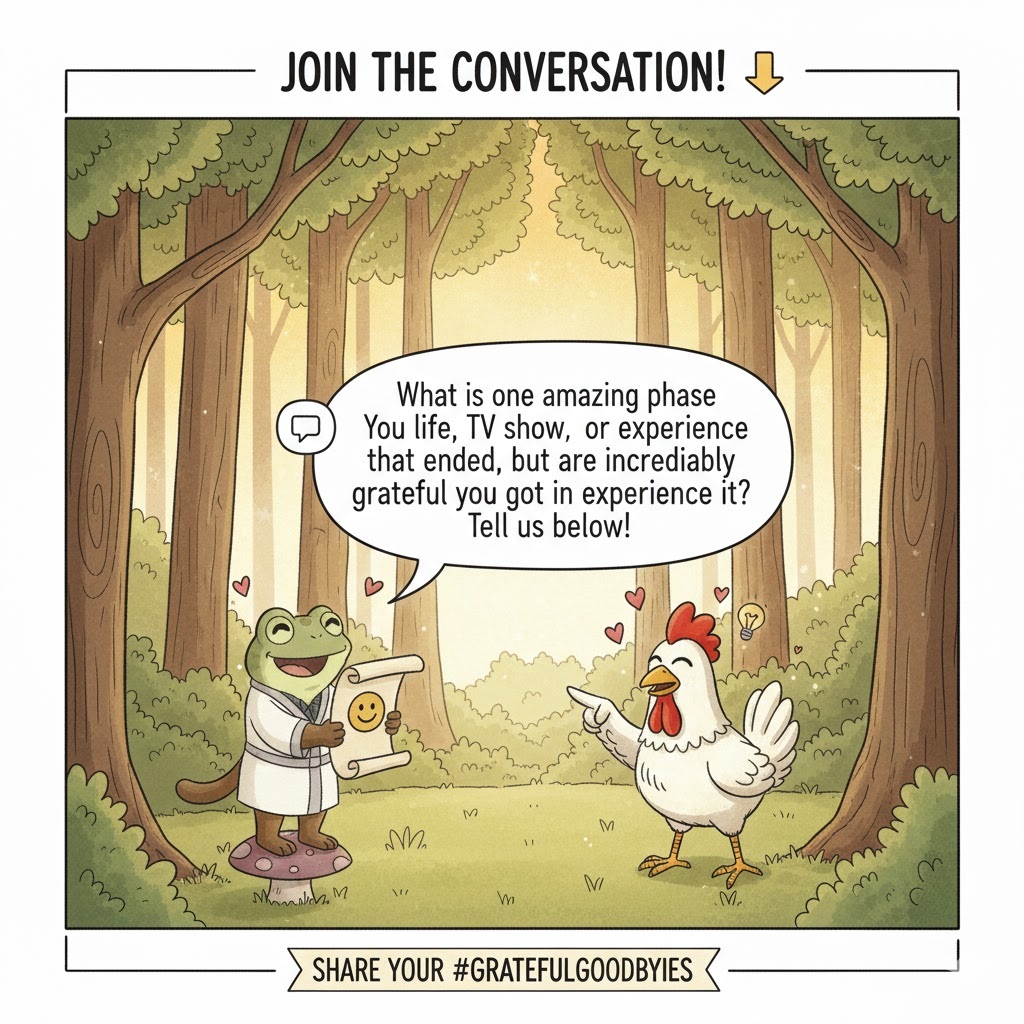
    👇 Question for the comments: What is one amazing phase of your life, TV show, or experience that ended, but you are incredibly grateful you got to experience it? Tell us below!

    By Zubeyir YURTKURAN

    https://www.facebook.com/BrainBattleground/

    https://www.facebook.com/zubeyr.yurtkuran/

    https://www.instagram.com/zubeyryurtkuran/
    https://www.youtube.com/@BrainBattleground-b3p

    https://www.instagram.com/brainbattleground/

  • 🛡️ The Daily Shield: The Law of Gratitude

    🛡️ The Daily Shield: The Law of Gratitude

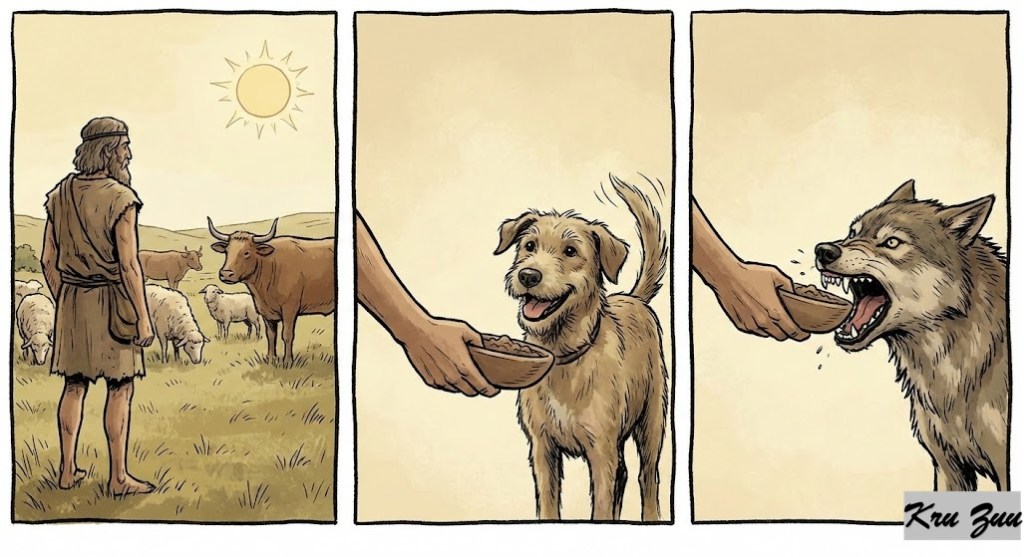
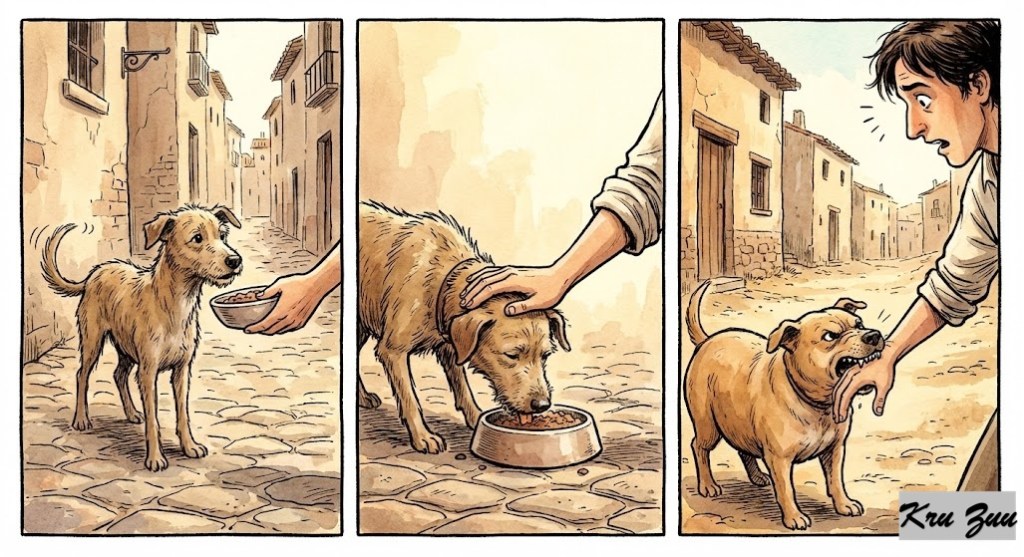
    “Don’t bite the hand that feeds you.”


    😈 The Villain (The Saboteur)

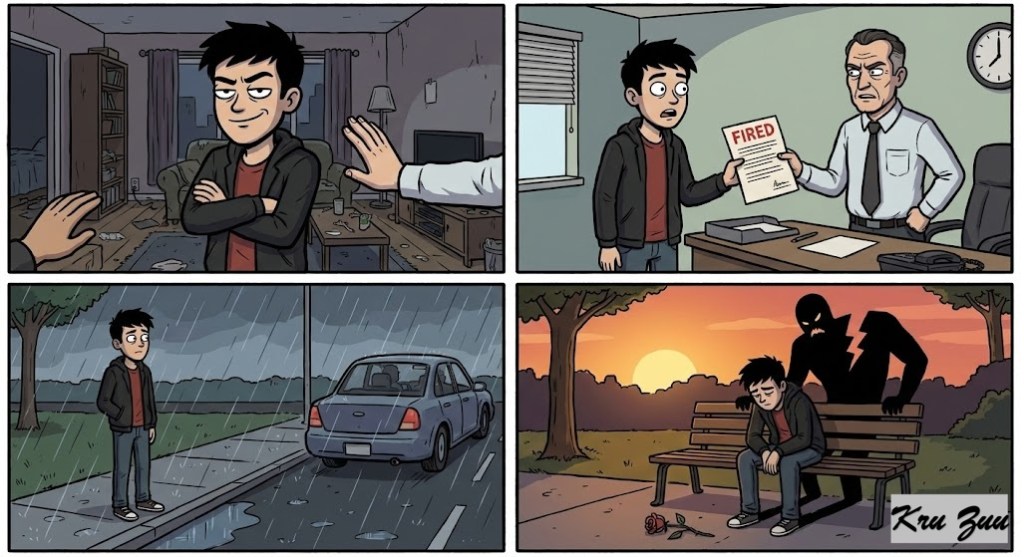
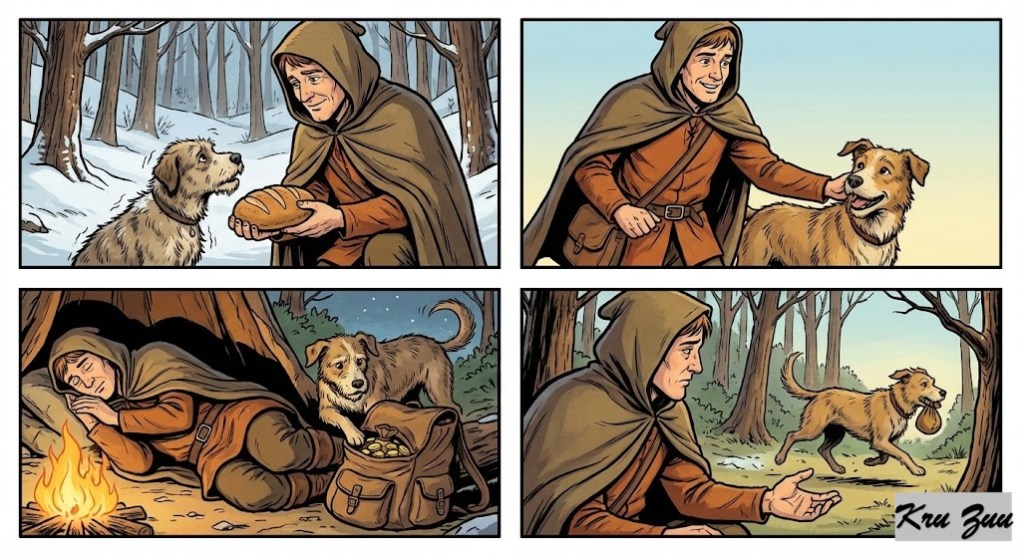
    You have a boss who pays your salary, but you gossip about them constantly. You have a friend who always drives you home, but you complain about their car. You learn English for free on YouTube, but you leave mean comments about the video quality.

    The Result? You act like you are independent, but really, you are just ungrateful. Eventually, the help stops. The boss fires you. The friend drives away. You are left alone with your ego. 🥀


    😇 The Hero (The Strategist)

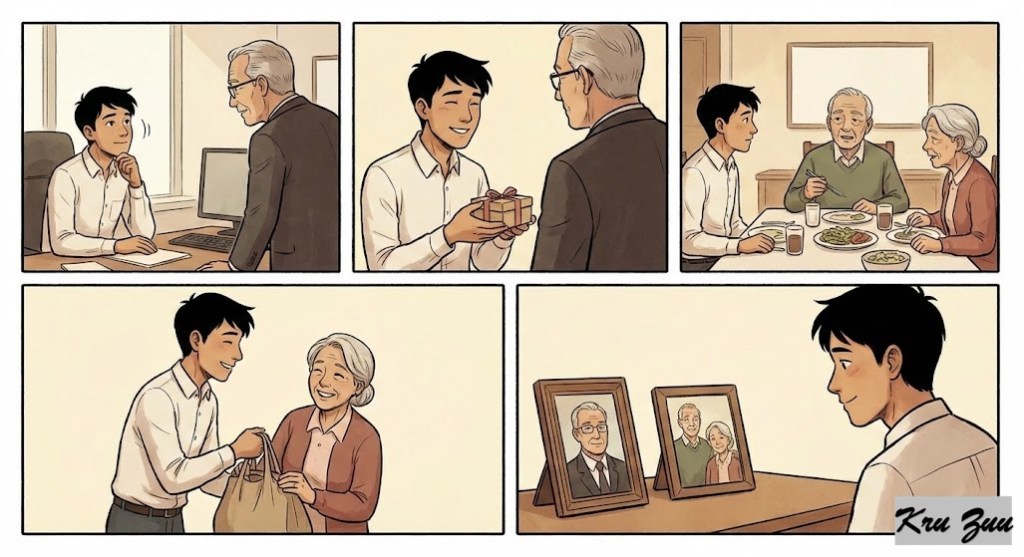
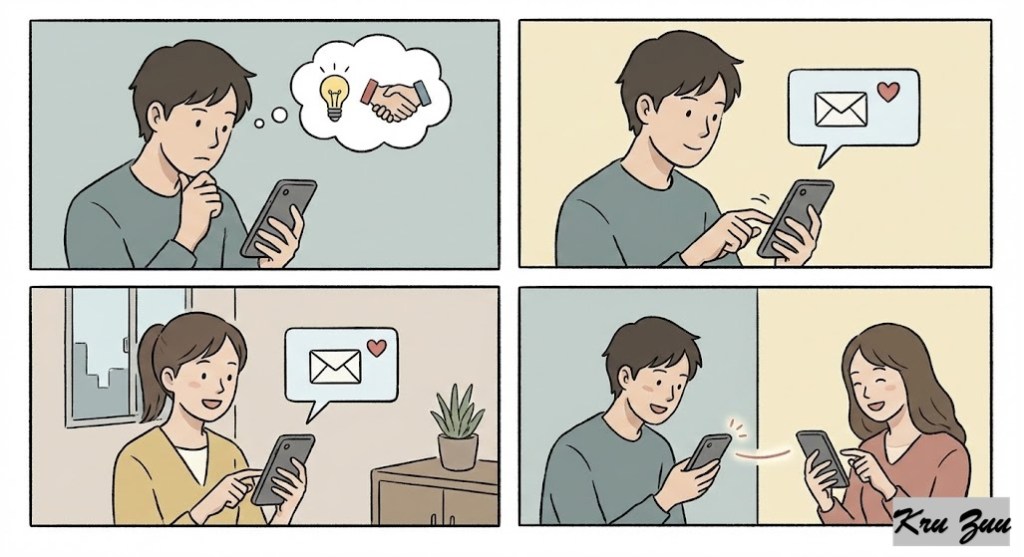
    You understand where your support comes from. You might not agree with everything your boss or parents say, but you respect the support they give. You treat your benefactors with kindness.

    The Result? Because you show appreciation, people want to help you more. Doors open for you. You build a network of allies, not enemies. 🤝


    ⚖️ The Reality


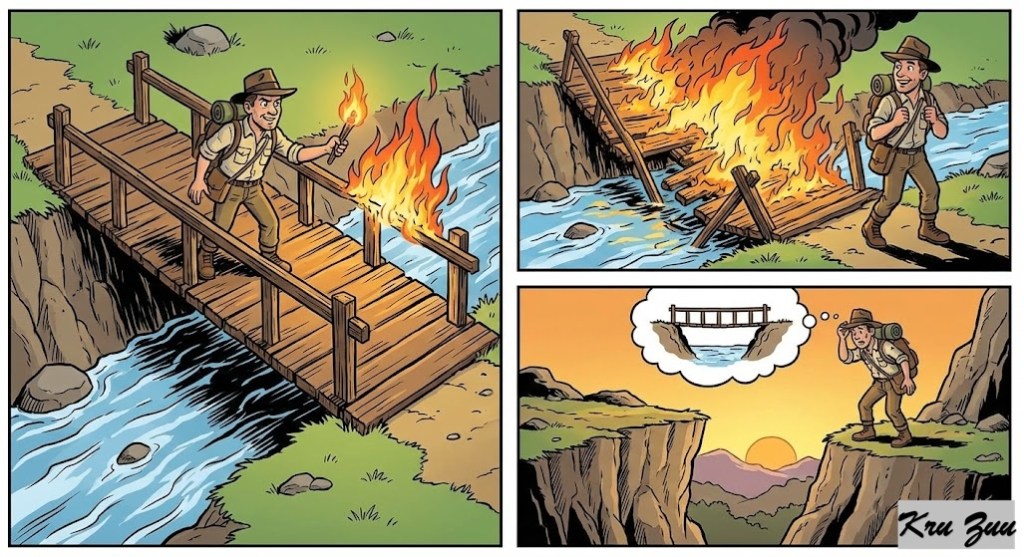
    Ego is expensive. It feels good to act tough and independent. But if you attack the people who support you, you are burning the bridge while you are standing on it.

    💎 The Secret

    Gratitude isn’t about being weak; it’s about being smart. You can negotiate, you can disagree, but never destroy the relationship that sustains you.

    🧐 The Anatomy of the Proverb


    This idiom creates a violent visual image to make a point about loyalty.


    Bite (Verb):
    To use teeth to cut or attack. (An act of aggression). 🦷


    The Hand (Noun): The source of help, money, or support. 🖐️


    Feeds (Verb): To give food; to sustain life.


    Simpler Version: Do not hurt the person who helps you.


    📚 Vocabulary Vault


    Ingratitude (Noun):
    A lack of appreciation; not saying “thank you.” (The ugly trait).


    Benefactor (Noun): A person who gives money or other help to a person or cause.


    Loyalty (Noun): A strong feeling of support or allegiance.


    Sabotage (Verb): To deliberately destroy, damage, or obstruct something.


    Indispensable (Adjective): Absolutely necessary; you cannot do without it.


    🧠 Grammar Focus: Relative Clauses


    Look at the structure:
    “The hand that feeds you.” This is a Defining Relative Clause. It tells us which hand we are talking about.


    Subject + that + Verb


    Example: I like the teacher that explains clearly.


    Example: Don’t burn the bridge that you need to cross.

    📜 History: Origin and Spread


    This is ancient agricultural wisdom. For thousands of years, humans have watched animals. They noticed that a dog loves the hand that feeds it, but a wild or foolish animal might snap at it.


    Global Cousins
    🇹🇷 Turkish:
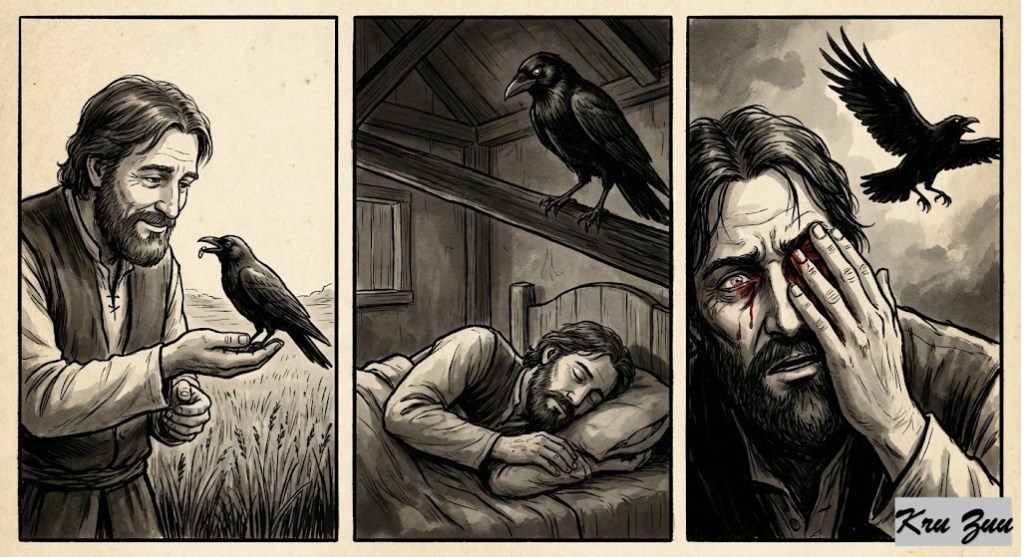
    “Besle kargayı, oysun gözünü.” (Feed the crow, and it will gouge out your eye.) — This is even darker! It implies that some natures cannot be changed.


    🇪🇸 Spanish:“No muerdas la mano que te da de comer.”


    🇫🇷 French:“Il ne faut pas cracher dans la soupe.” (You shouldn’t spit in the soup).

    🎯 Impact on Life: The Pros & Cons


    ✅ The Pros (Stability)


    Security:
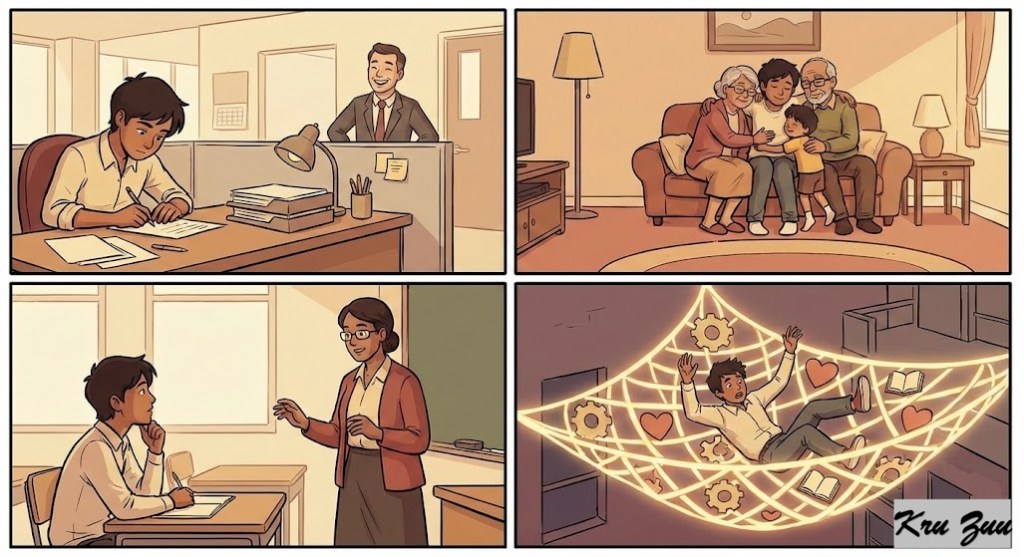
    When you respect your sources of support (job, family, teachers), you create a safety net for yourself.


    Reputation: People love helping grateful people. Being thankful is a superpower.


    ❌ The Cons (The Doormat Risk)


    Blind Loyalty:
    This proverb does not mean you must accept abuse. If the “hand” is abusive, you shouldn’t bite it—you should just walk away and find a new hand!

    🎭 Short Story: The Farmyard Feud


    Let’s go to Old Man Miller’s farm to see this law in action.


    🌟 The Cast


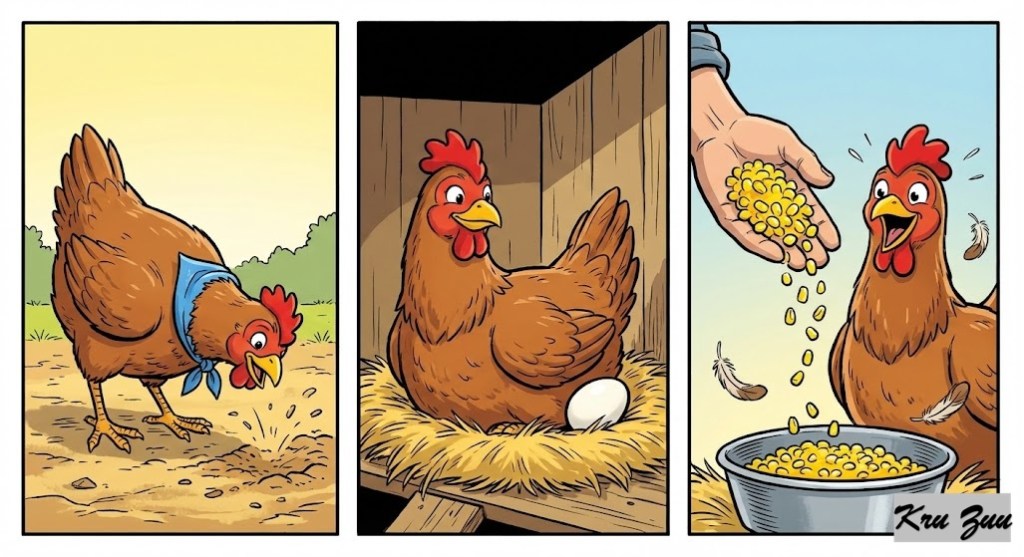
    🐔 Clucky (The Chicken): Hardworking but anxious.


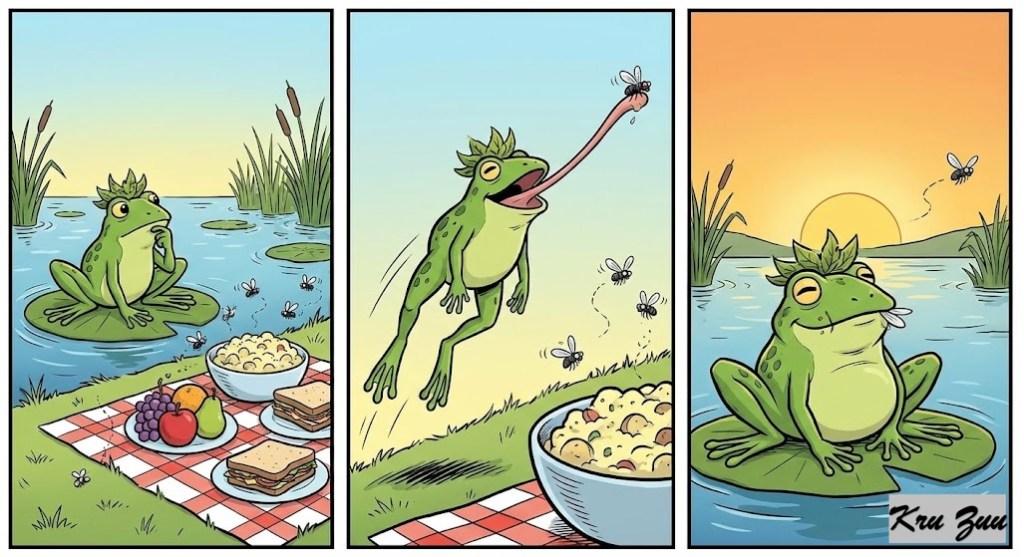
    🐸 Finn (The Frog): The wise observer who lives in the pond.


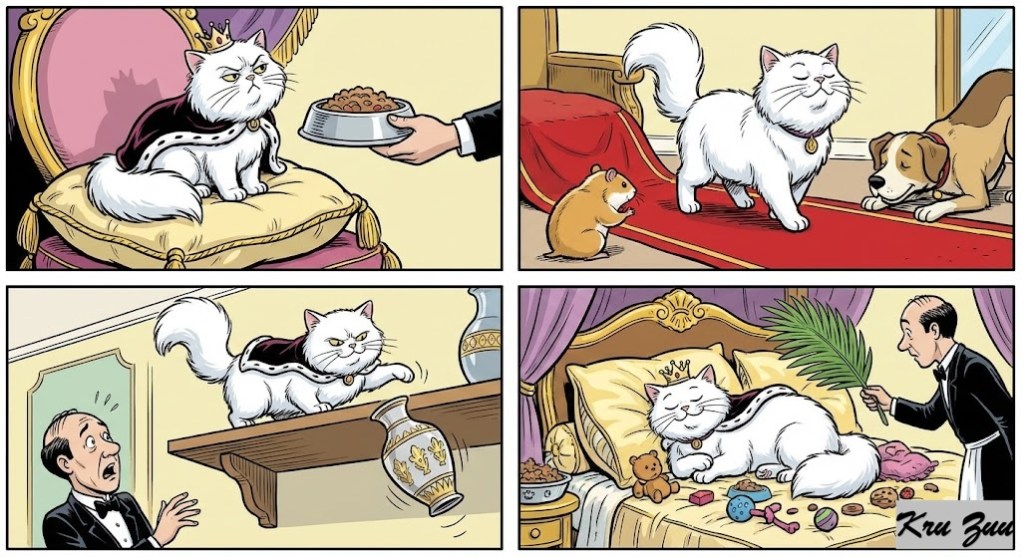
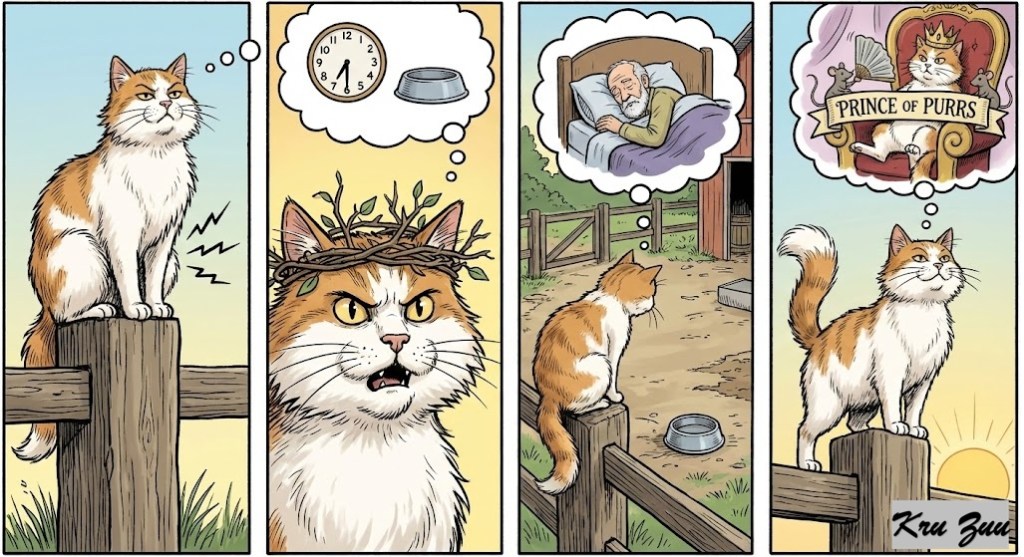
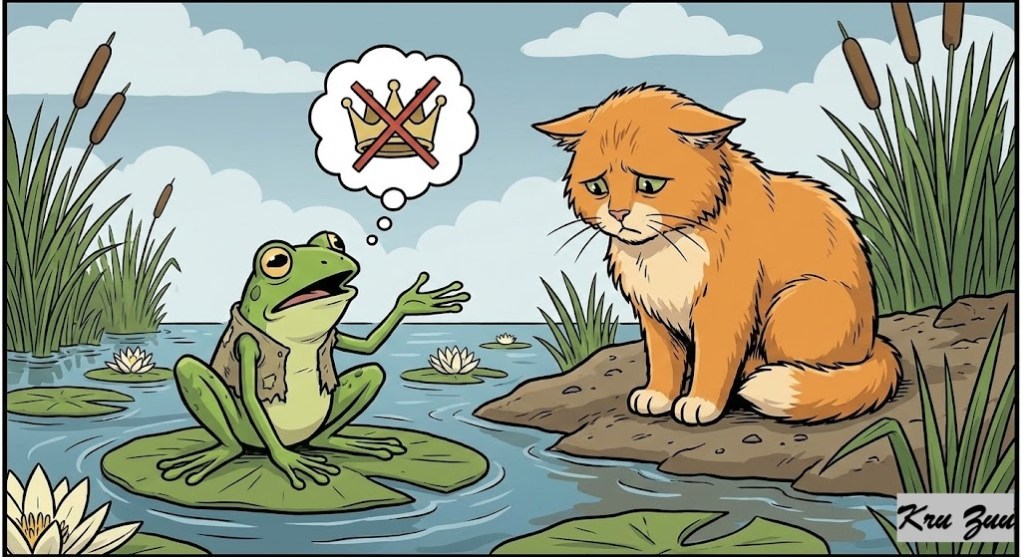
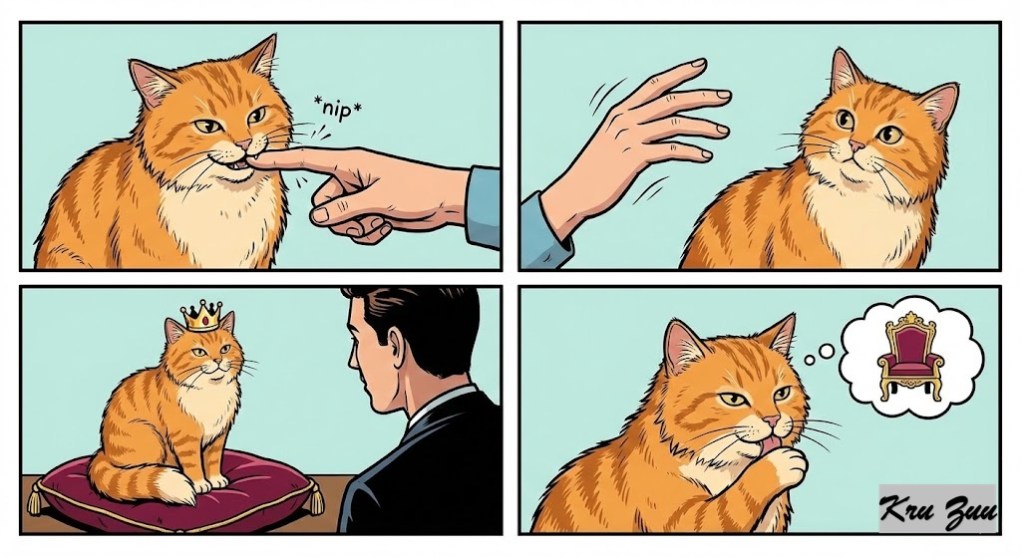
    🐱 Whiskers (The Cat): Arrogant, spoiled, and thinks he is the King.


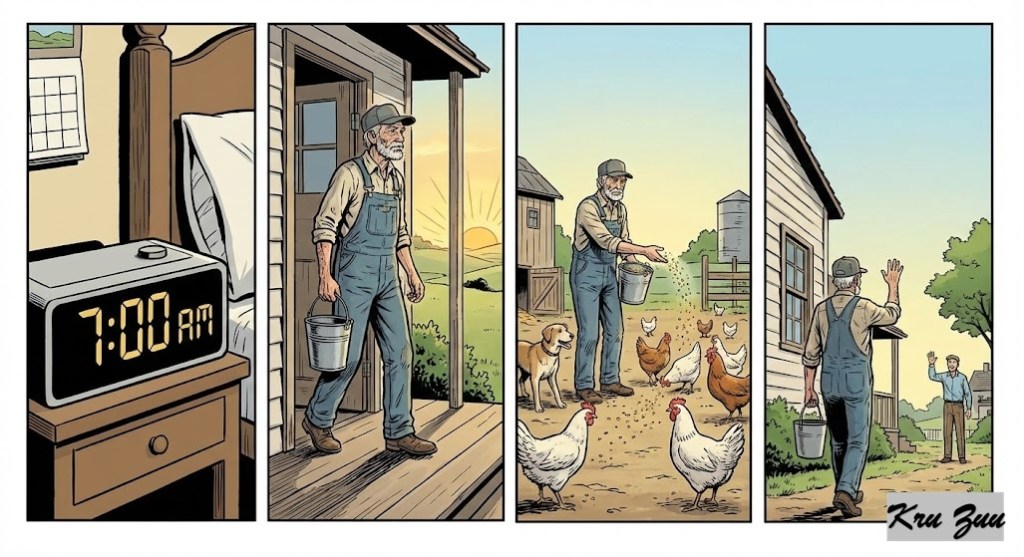
    The Setup: Every morning at 7:00 AM, Old Man Miller comes out with a bucket.

    🐔 Clucky: “Oh joy! Corn is coming! Work hard, lay eggs, get corn!” Clucky pecks happily.

    🐸 Finn: “Ribbit. The ecosystem is providing. I shall catch the flies attracted to the food.”


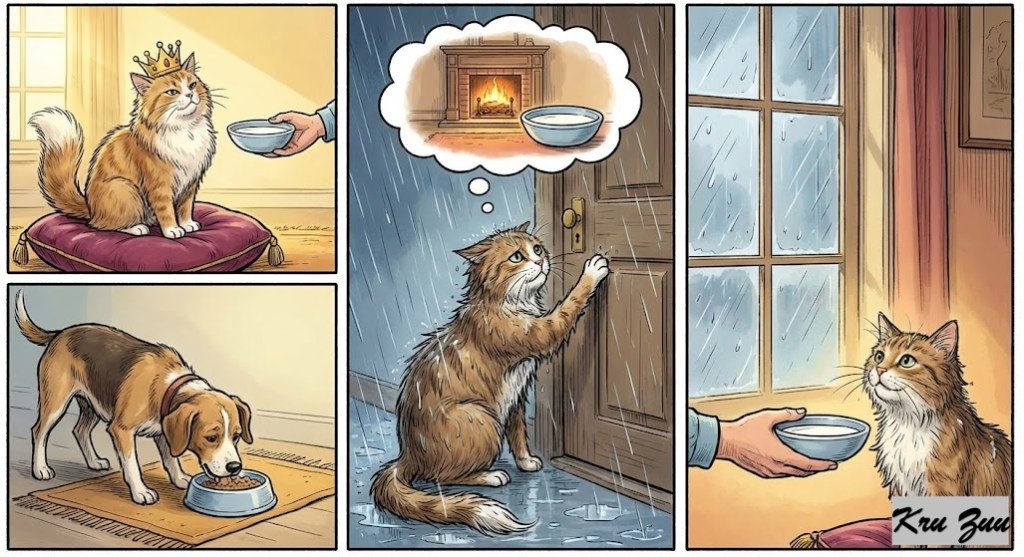
    The Conflict: 🐱 Whiskers sits on the fence. He is hungry, but he is also proud. “Why is Miller late?” Whiskers complains. “It is 7:05! Does he not know who I am? I am the Prince of Purrs!”


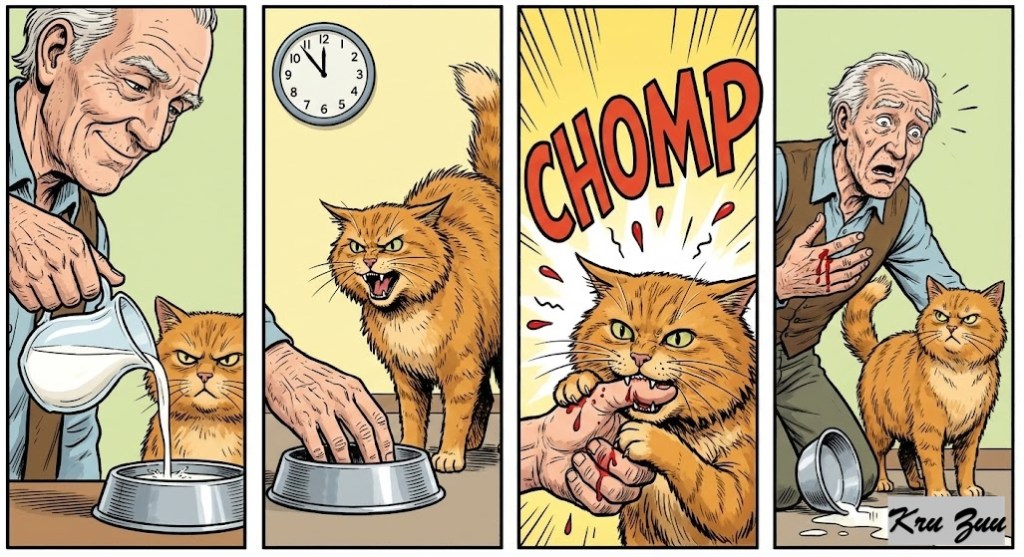
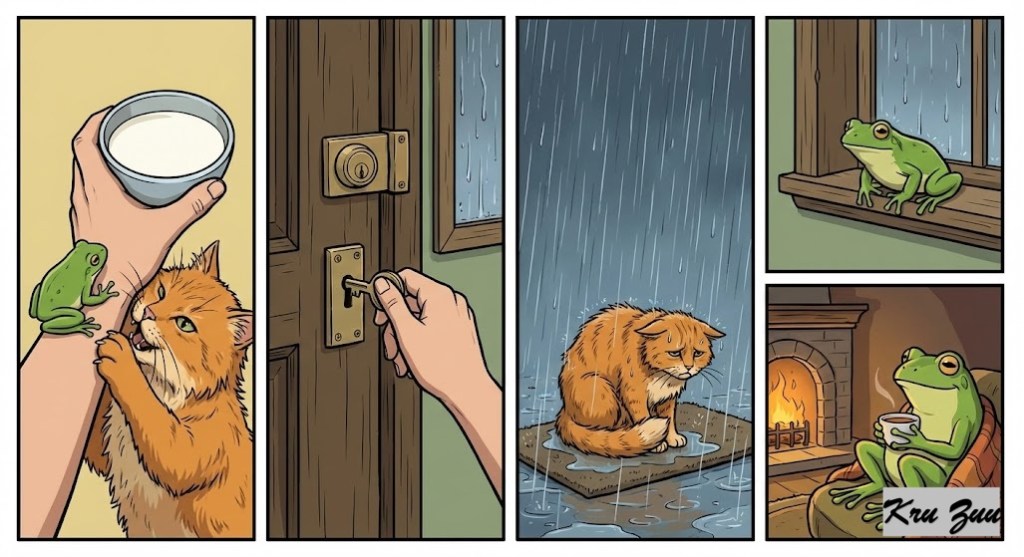
    Old Man Miller finally leans down to pour milk into Whiskers’ bowl. “Here you go, kitty,” Miller says kindly. Whiskers, feeling angry about the 5-minute delay, hisses and bites Miller’s thumb hard. 🩸


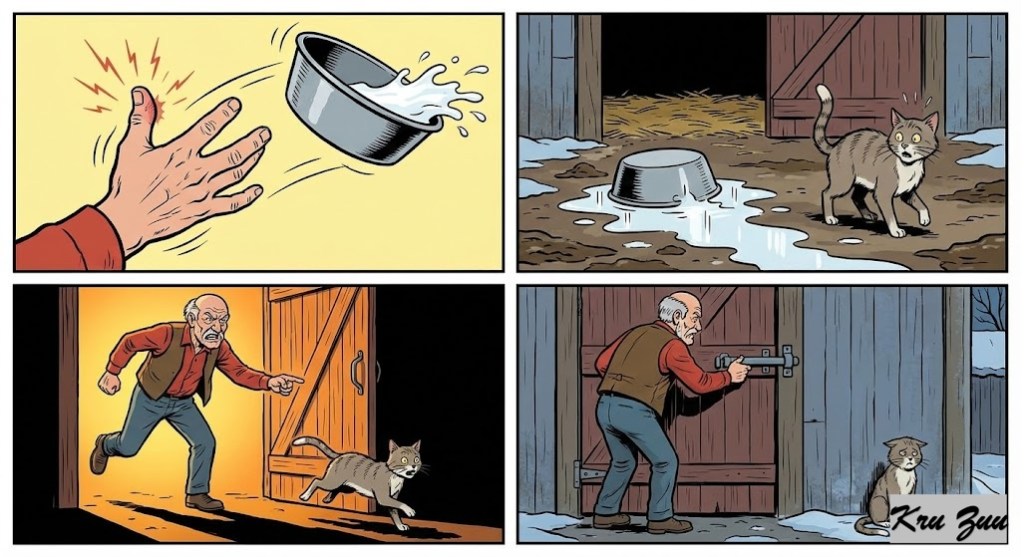
    The Result: “OUCH!” yells Miller. Instinctively, Miller jerks his hand back. The milk bowl flies into the air and crashes upside down in the mud. “Bad cat!” Miller shouts. He chases Whiskers out of the warm barn and locks the door.


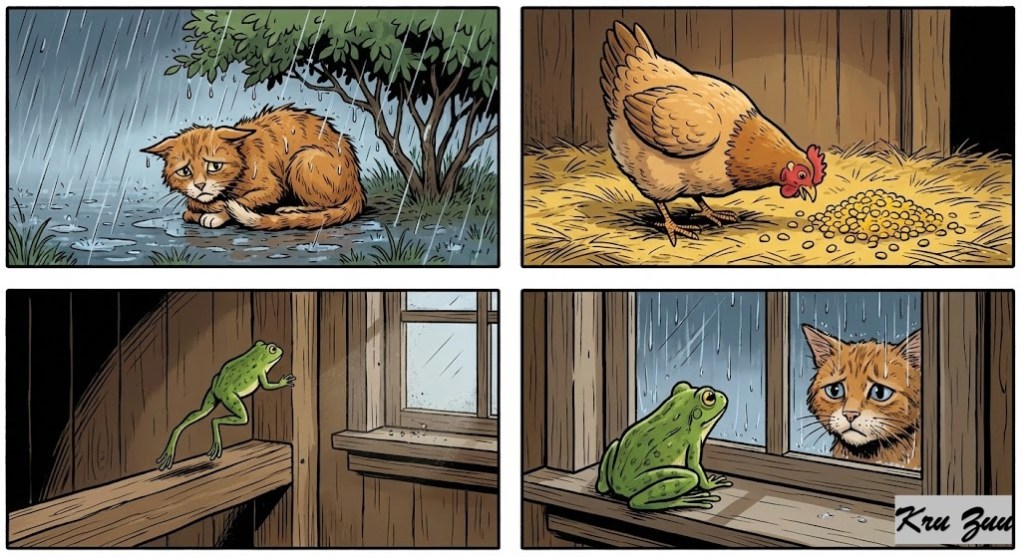
    The Aftermath: It starts to rain. Whiskers is shivering outside, hungry and wet. Inside the dry barn, Clucky is eating corn. Finn the Frog hops over to the window where Whiskers is looking in.


    🐸 Finn: “Ribbit. You confused arrogance with power, my furry friend.”

    🐱 Whiskers: “It was just a little bite! He should respect me!”

    🐸 Finn: “You bit the hand that held the milk. Now the hand is closed, and the door is locked. Enjoy the rain.”


    The Moral: Arrogance blinds you to your dependency. Be humble, or be hungry. 🥛🌧️

    🎓 Lesson for English Learners


    Respect the Process.


    Situation:
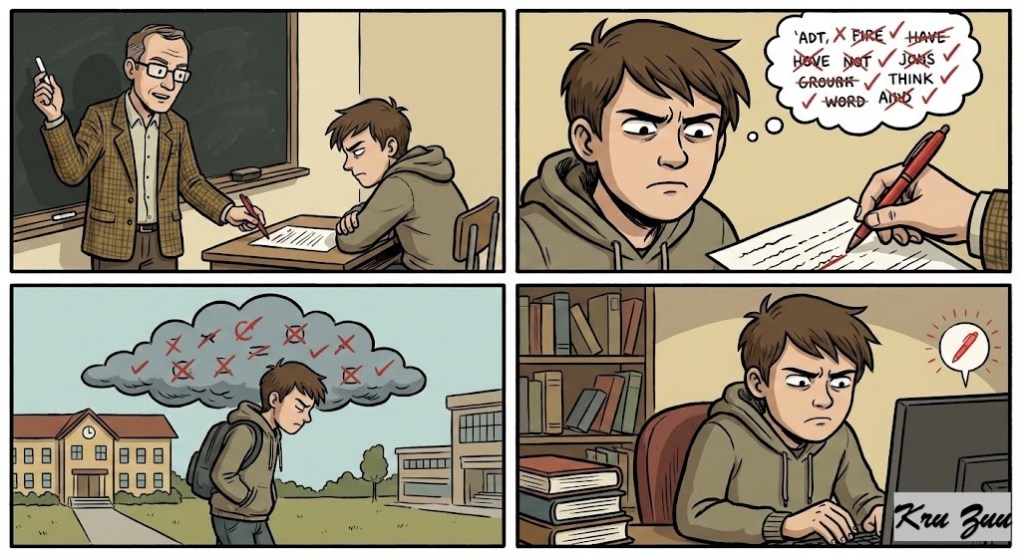
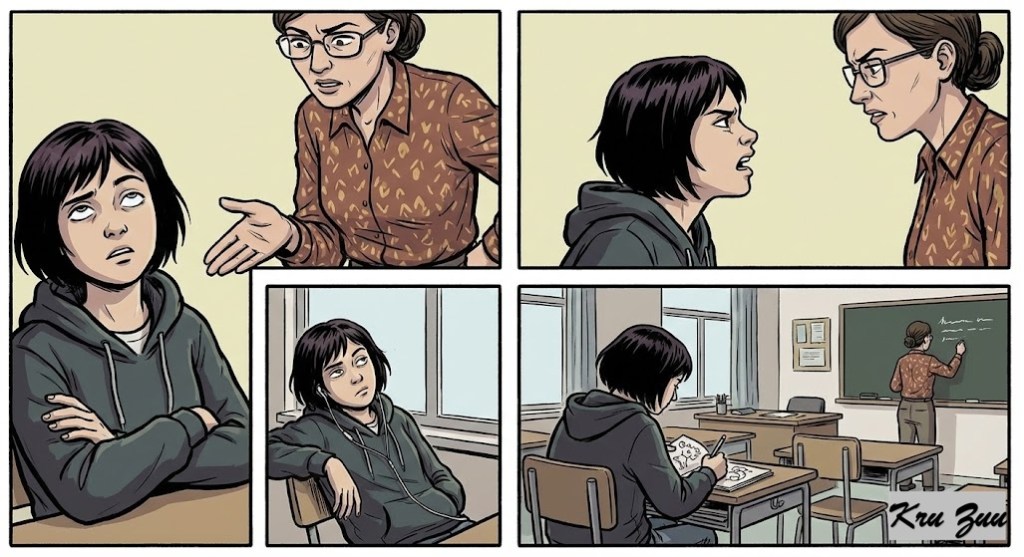
    You have a teacher who corrects your grammar constantly. It is annoying.


    The Mistake: You argue with the teacher or roll your eyes. You stop listening.


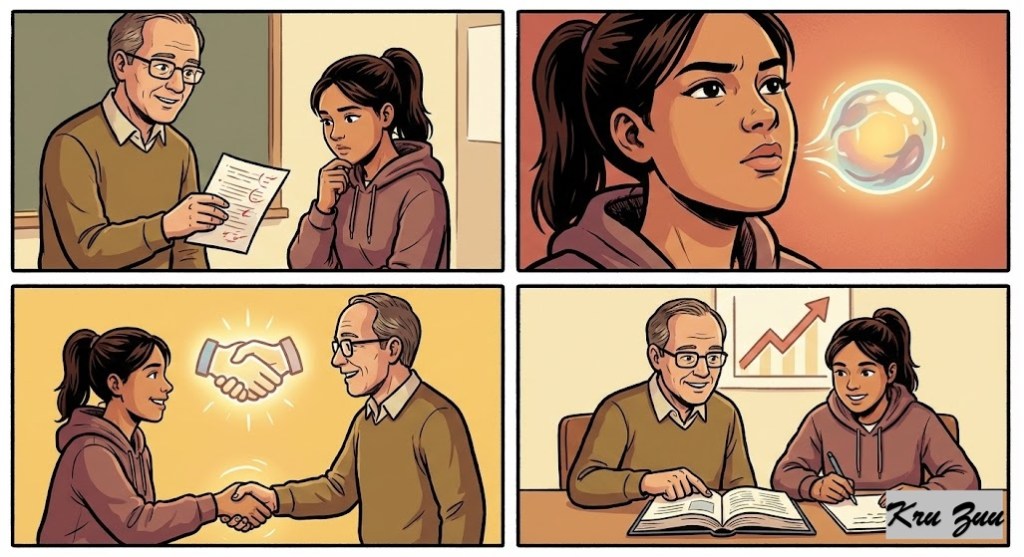
    The Better Way: Realize that the correction is the “food” for your fluency. Swallow your pride. Say, “Thank you for the feedback.” The teacher will work harder to help you succeed.


    💬 Your Turn: The Gratitude Check 🚀


    Let’s practice the Law of Gratitude right now.


    The Challenge:
    Think of one person who has helped you this week (a parent, a teacher, a friend, or even a YouTube creator).

    The Action: Send them a message right now. “Hey, I just realized I haven’t thanked you for helping me with [X]. I appreciate it.”


    👇 Comment Below: Have you ever seen someone “bite the hand that feeds them” at work or school? What happened? Tell us the gossip!

    By Zubeyir YURTKURAN

    https://www.facebook.com/BrainBattleground/

    https://www.facebook.com/zubeyr.yurtkuran/

    https://www.instagram.com/zubeyryurtkuran/
    https://www.youtube.com/@BrainBattleground-b3p

    https://www.instagram.com/brainbattleground/