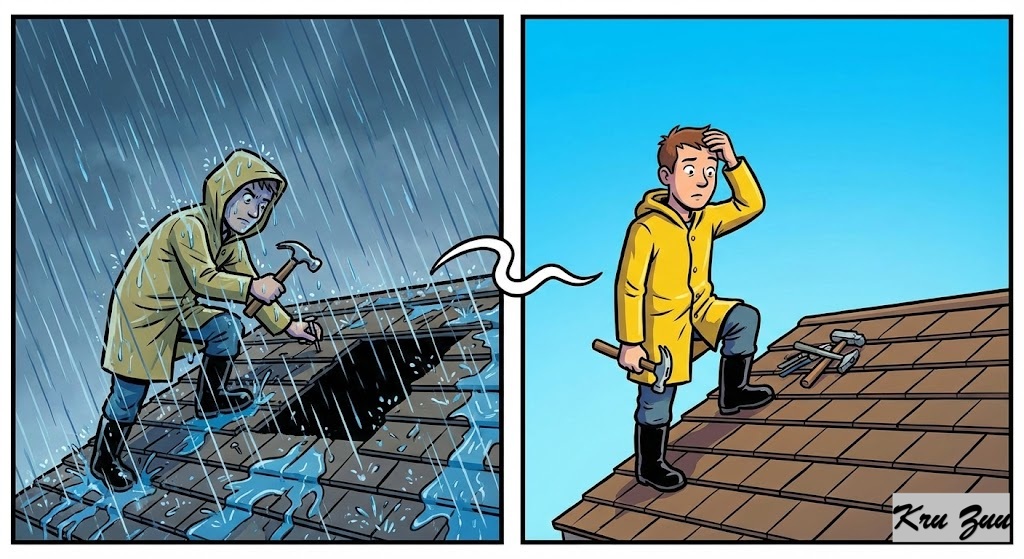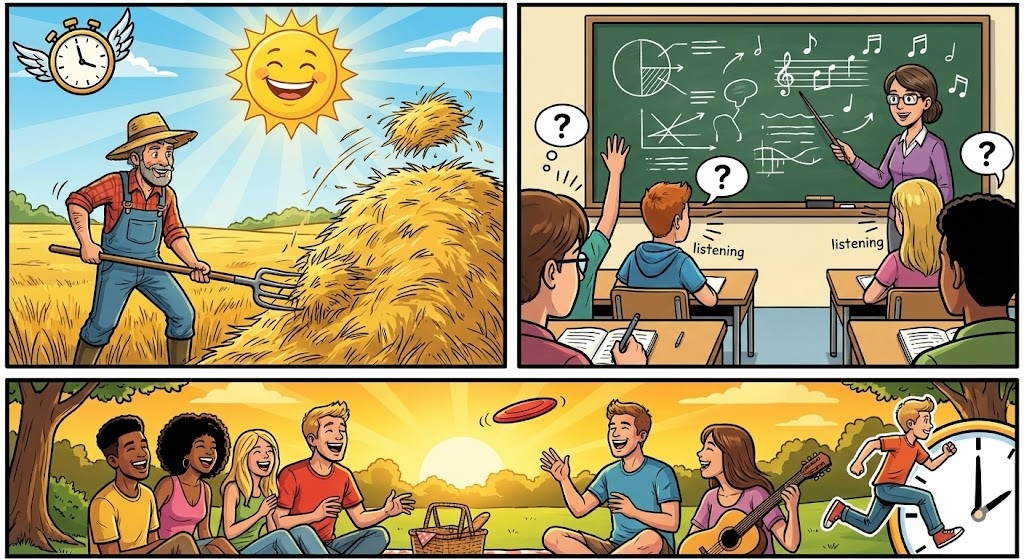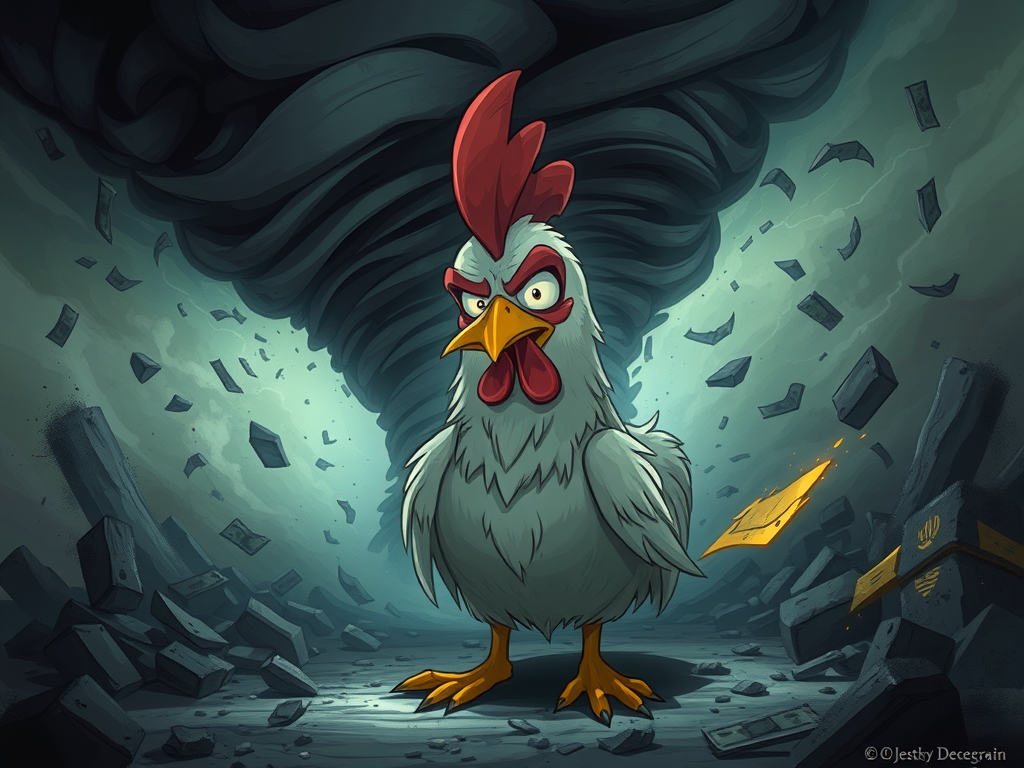
Tag: English Learning

  • 💘 The Daily Shield: The Law of Invisible Red Flags

    💘 The Daily Shield: The Law of Invisible Red Flags

    “Love is blind.”


    😈 The Villain (The Hopeless Romantic)

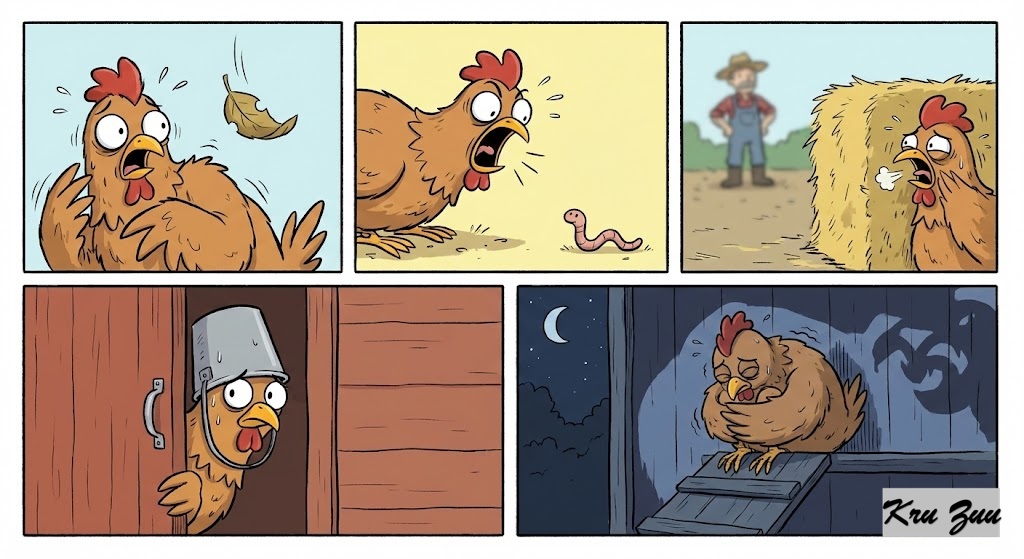
    You meet someone new. Sparks fly. 🎇 Suddenly, logic leaves the building. They are rude to the waiter? “Oh, he’s just passionate.” She never pays for anything? “She’s just old-fashioned.” They ghost you for three days? “They are just so busy being successful!” You ignore the warning signs. You project your fantasy onto a flawed reality.
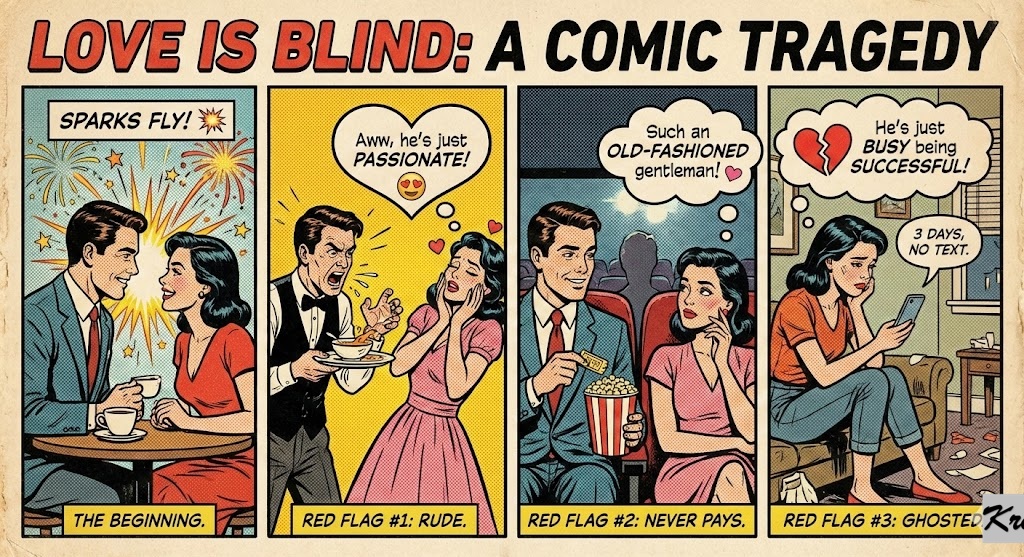
    The Result? You get heartbroken. You waste months on a relationship that was doomed from day one. You realize too late that you fell in love with a mask, not a person. 🎭
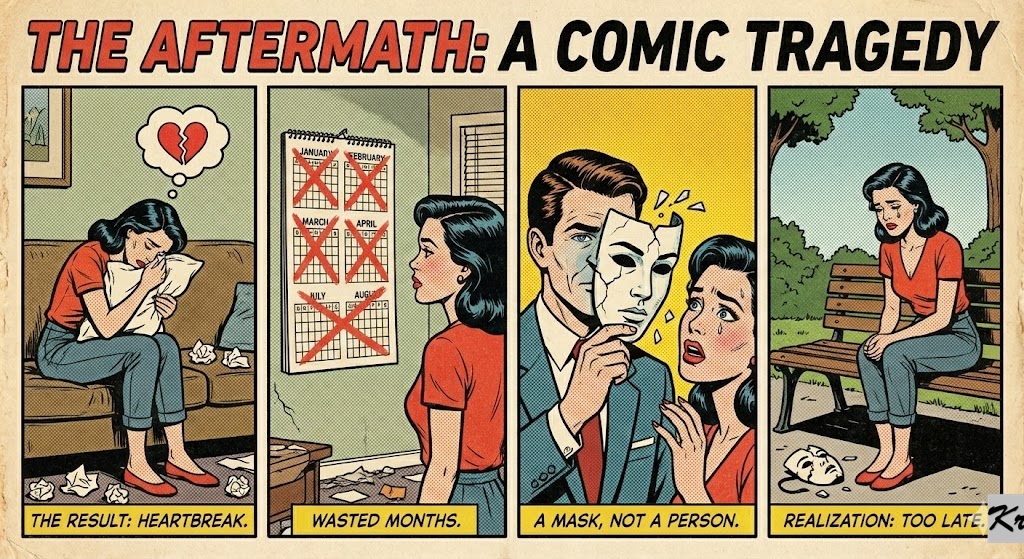

    😇 The Hero (The Conscious Partner)

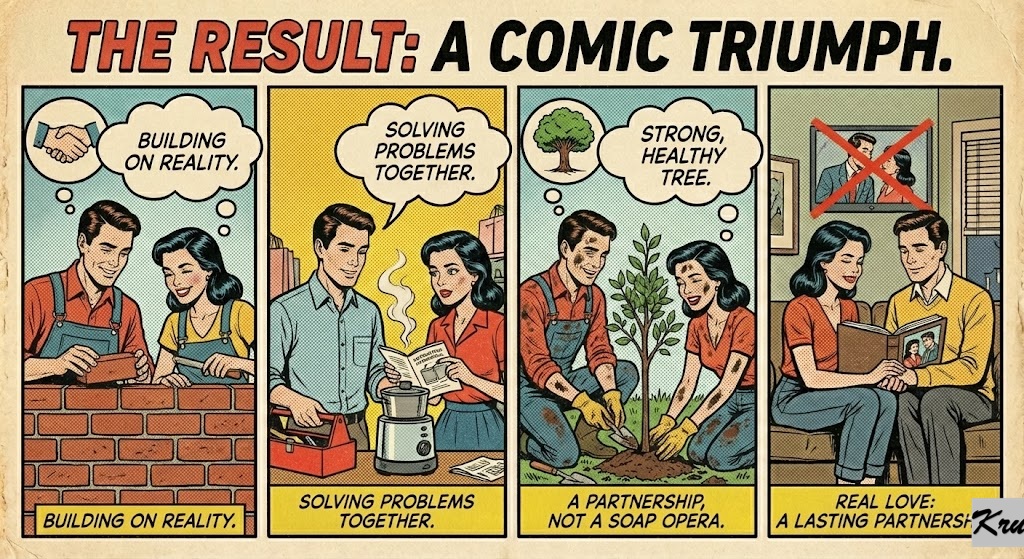
    You feel the chemistry, but you keep your eyes open. 👀 You love them, but you acknowledge their flaws. You think: “He is funny, but he is terrible with money. Can I live with that?” or “She is beautiful, but she has a bad temper. Is she working on it?” You don’t ignore the red flags; you address them.
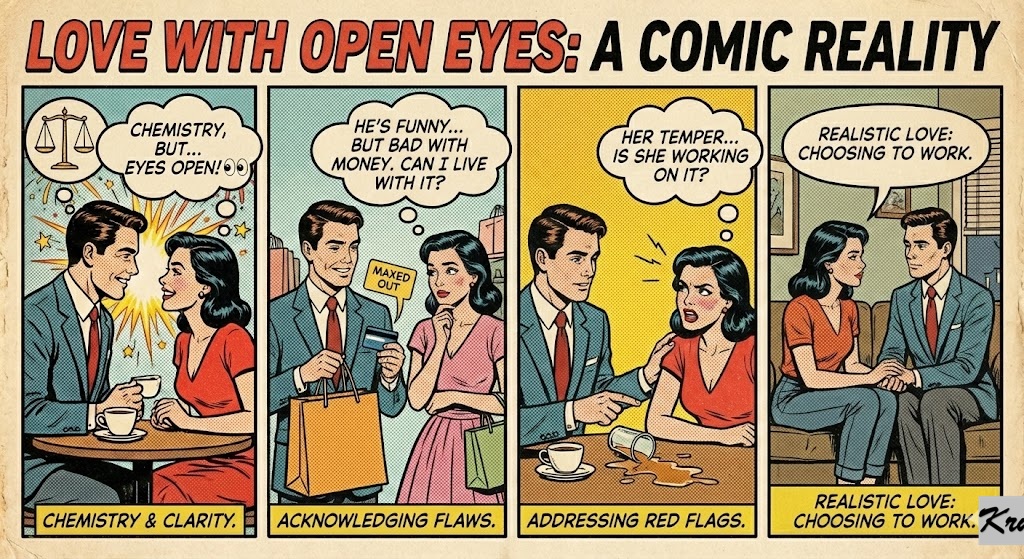
    The Result? You build a relationship based on trust and reality, not fantasy. When problems happen, you solve them because you saw them coming. You build a partnership, not a soap opera. 🤝

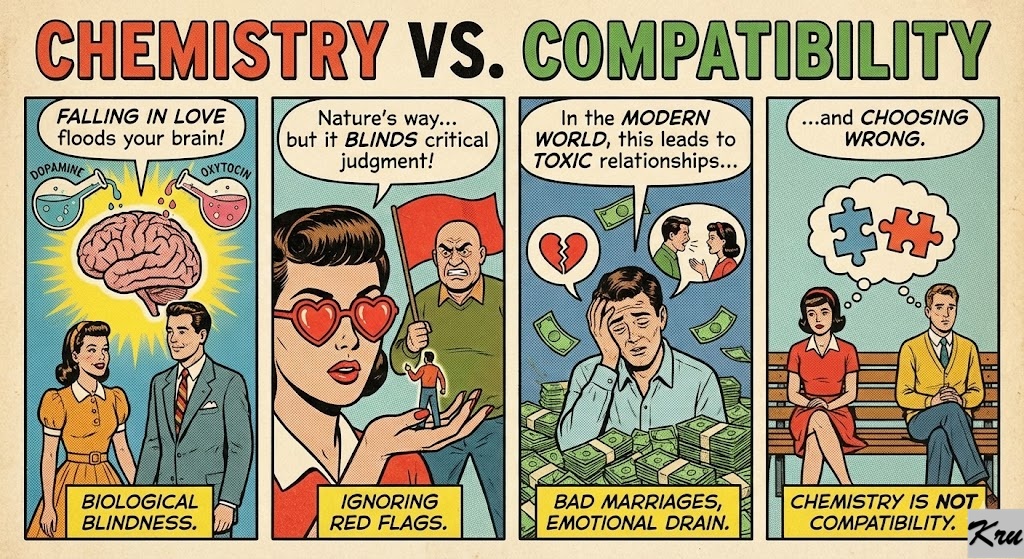
    ⚖️ The Reality


    Chemistry vs. Compatibility. Biologically, falling in love floods your brain with dopamine and oxytocin. These chemicals literally “blind” the critical judgment part of your brain. It is nature’s way of making sure humans pair up. But in the modern world, this biological blindness can lead to toxic relationships, bad marriages, and emotional drain.

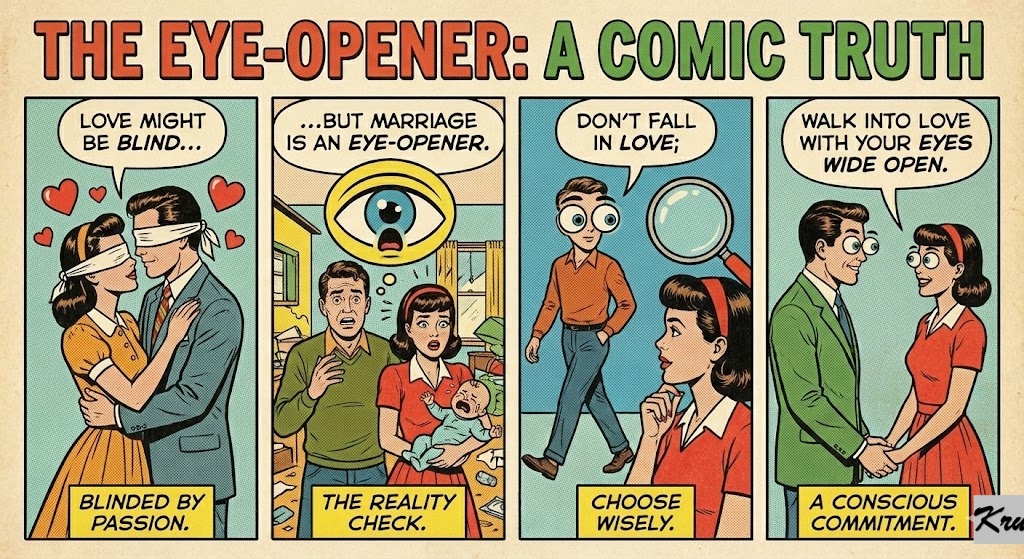
    💎 The Secret

    Love might be blind, but marriage (or long-term commitment) is an eye-opener. Don’t fall in love; walk into love with your eyes wide open.
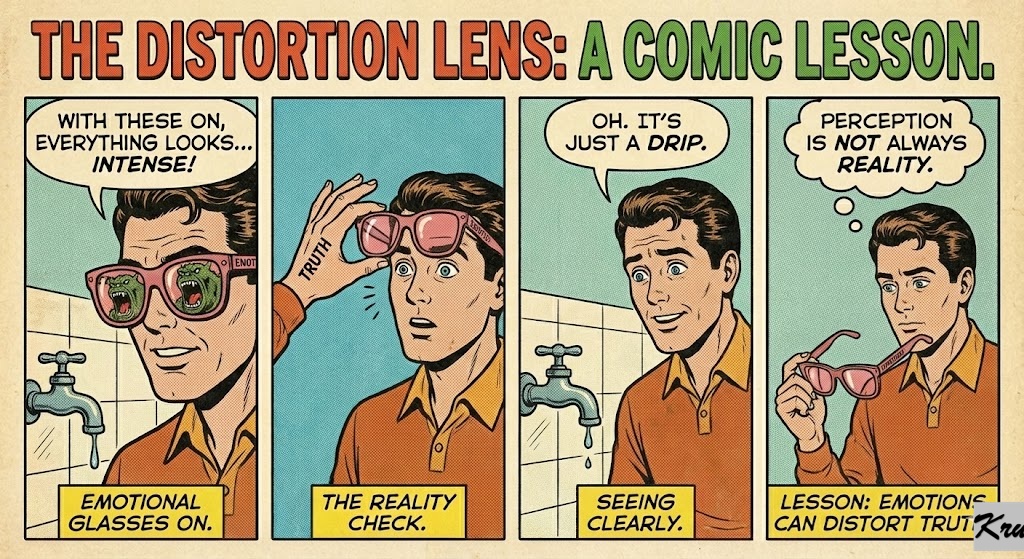
    🧐 The Anatomy of the Proverb


    This is your reality check that emotions can distort your perception of the truth.

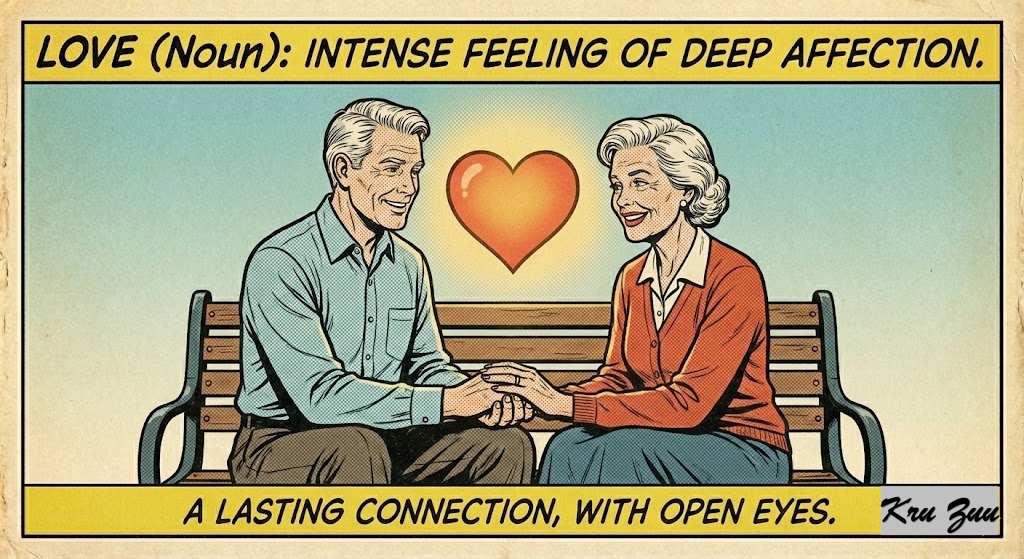
    Love (Noun): Intense feeling of deep affection.

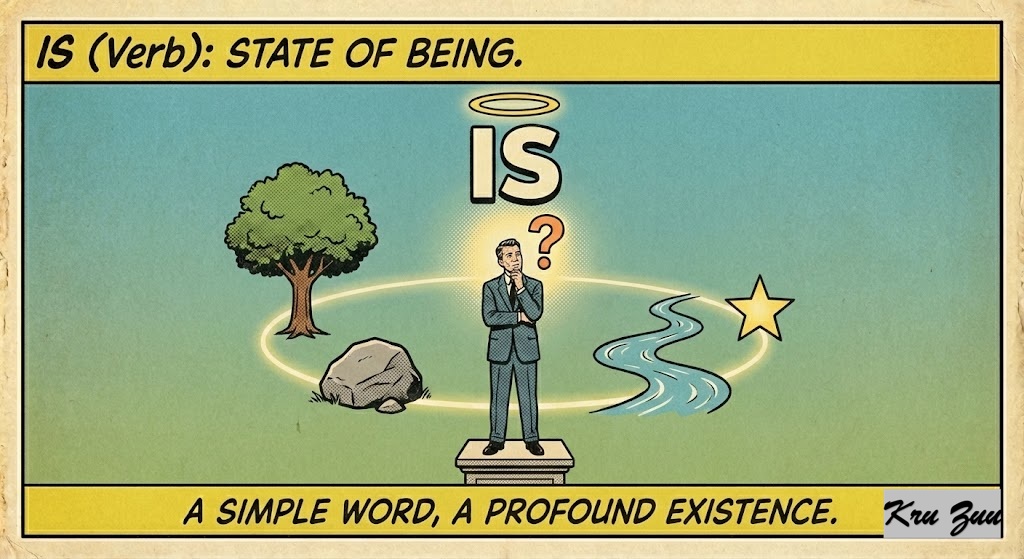
    Is (Verb): State of being.

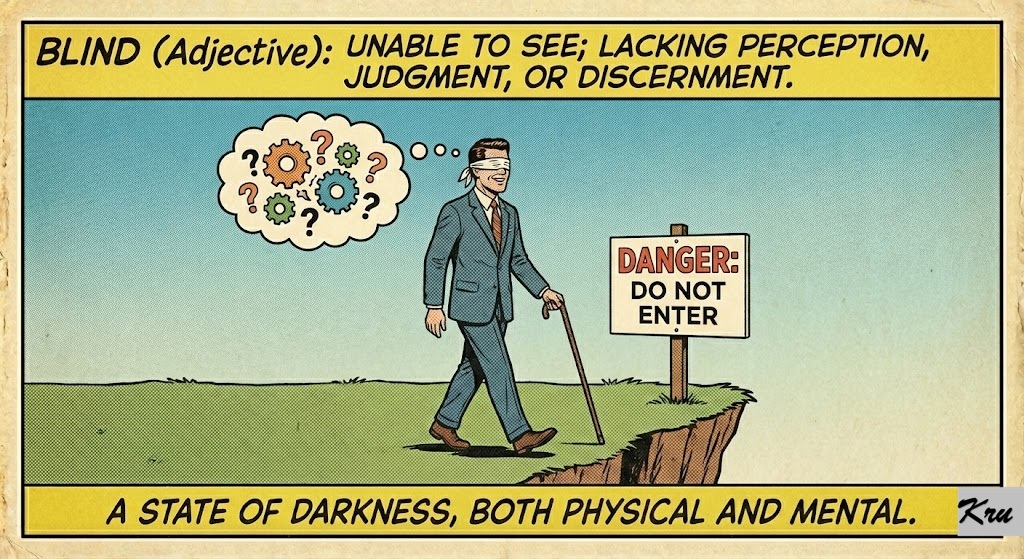
    Blind (Adjective): Unable to see; lacking perception, judgment, or discernment.

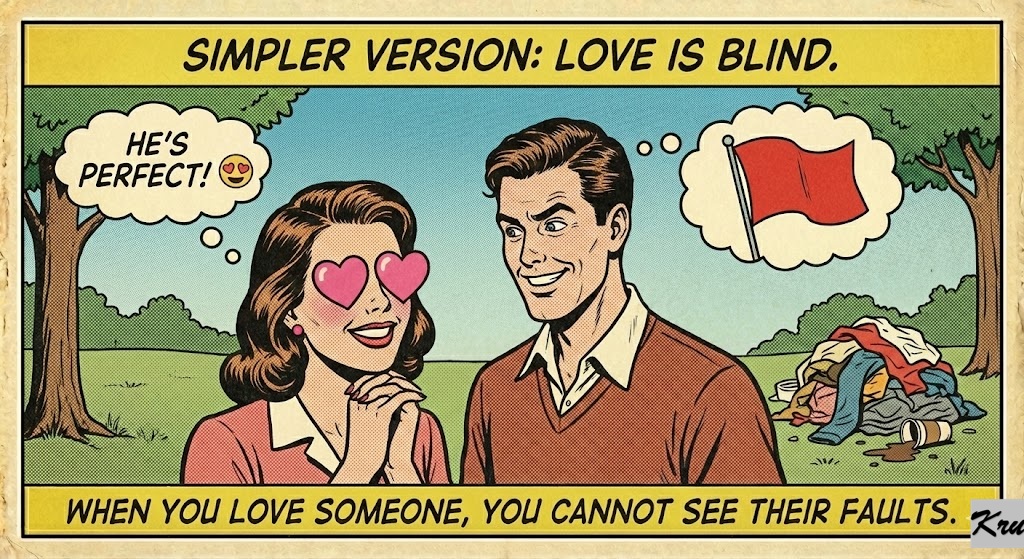
    Simpler Version: When you love someone, you cannot see their faults.

    📚 Vocabulary Vault


    Infatuation (Noun): An intense but short-lived passion or admiration for someone. (Often confused with love). 😍
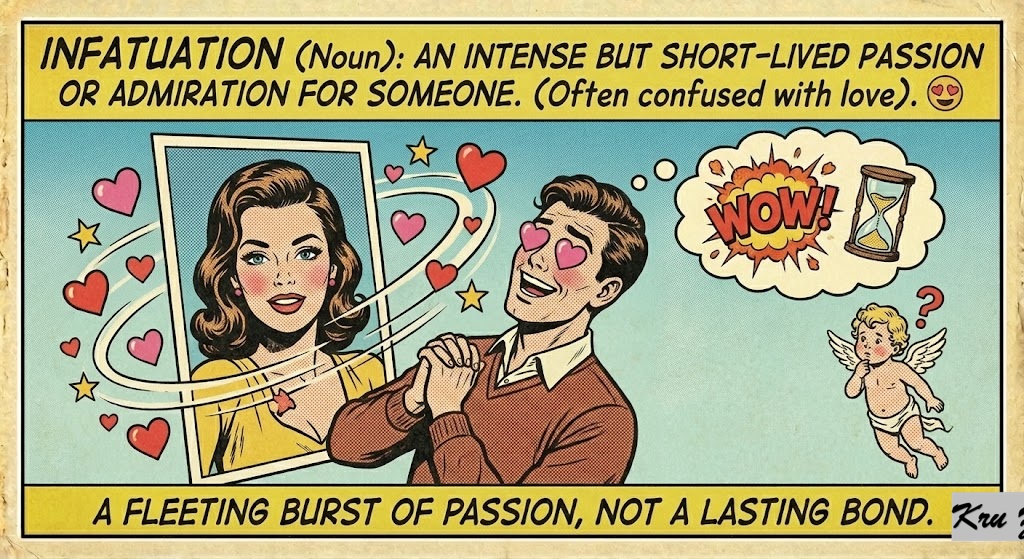

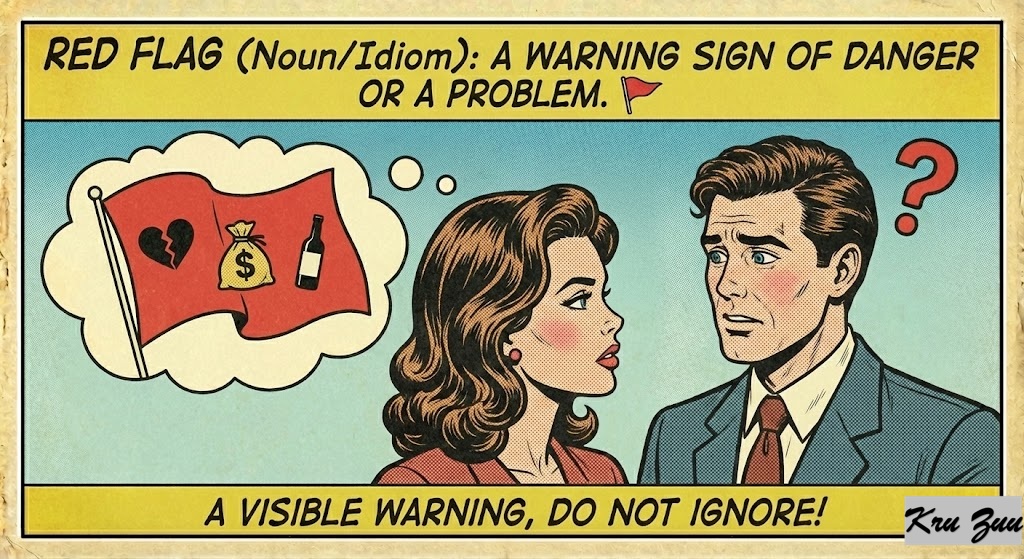
    Red Flag (Noun/Idiom): A warning sign of danger or a problem. 🚩

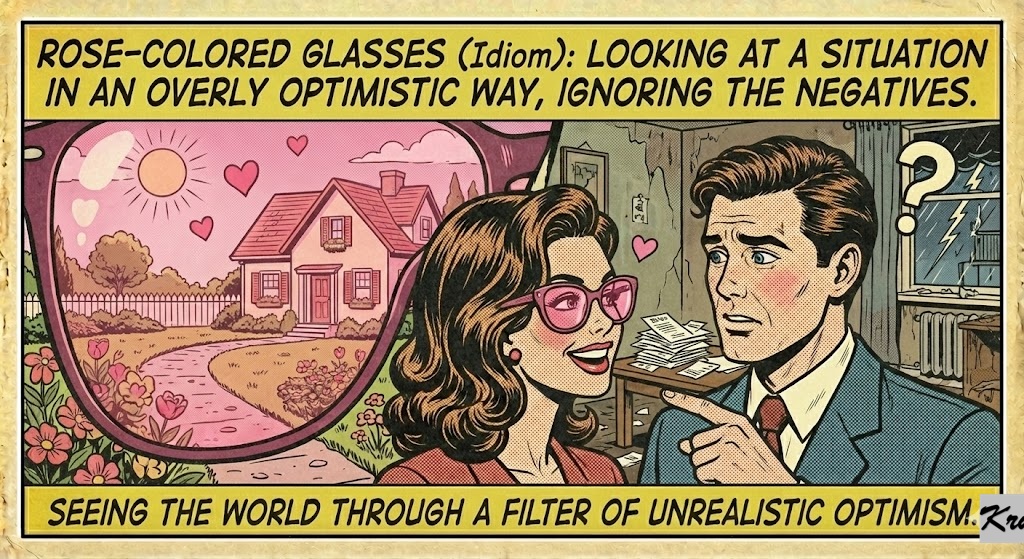
    Rose-colored glasses (Idiom): Looking at a situation in an overly optimistic way, ignoring the negatives.
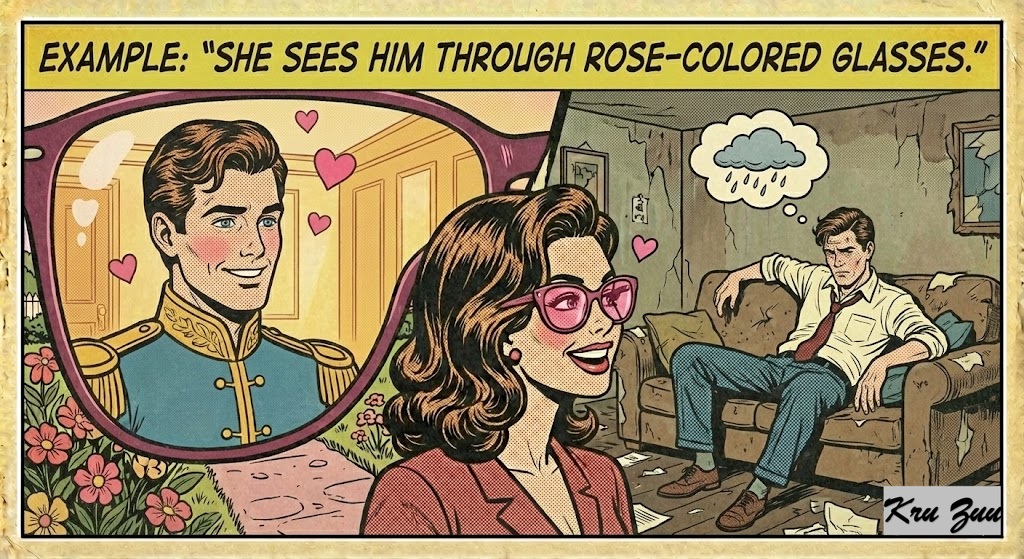
    Example: “She sees him through rose-colored glasses.” 🕶️

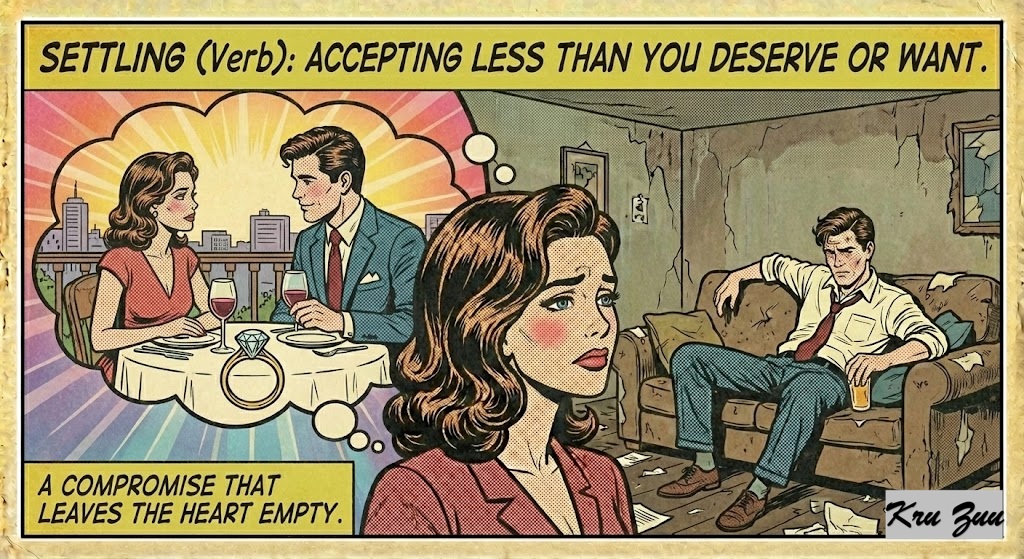
    Settling (Verb): Accepting less than you deserve or want.

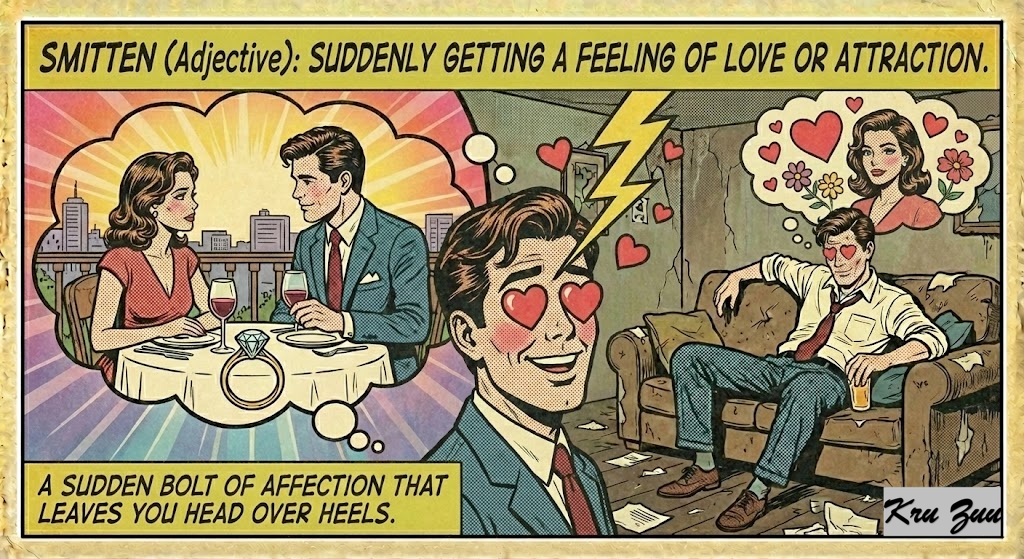
    Smitten (Adjective): Suddenly getting a feeling of love or attraction.

    🧠 Grammar Focus: Personification


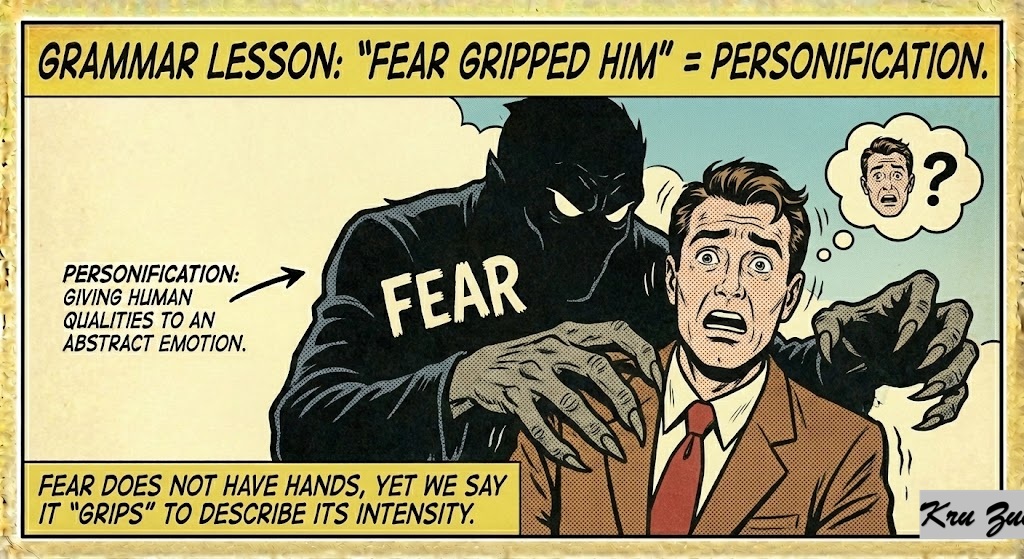
    “Love is blind.” Grammatically, this is Personification. Love is an abstract emotion. It does not have eyes. It cannot literally be blind. However, we give it human qualities to explain how powerful it is. It acts like a person who has lost their sight.
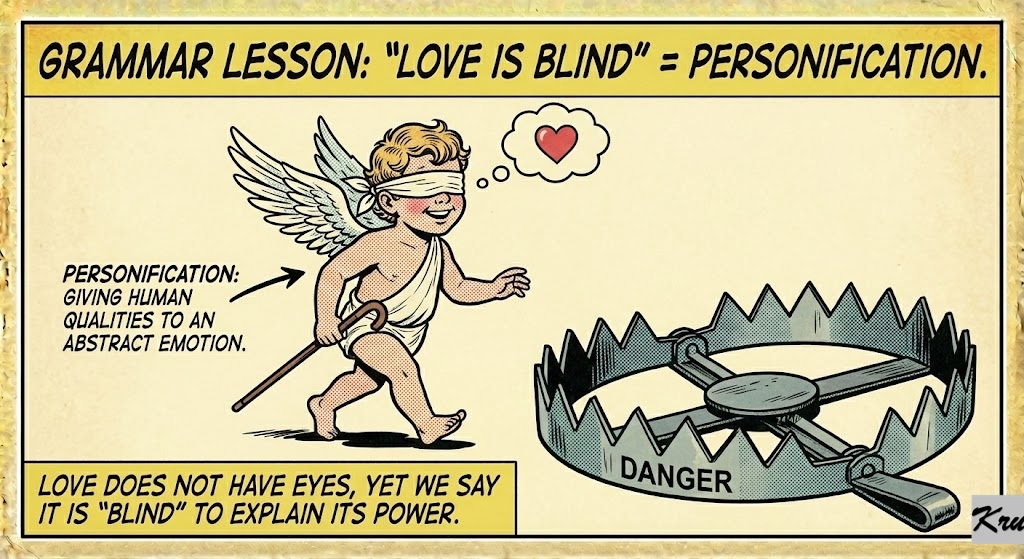

    Other examples


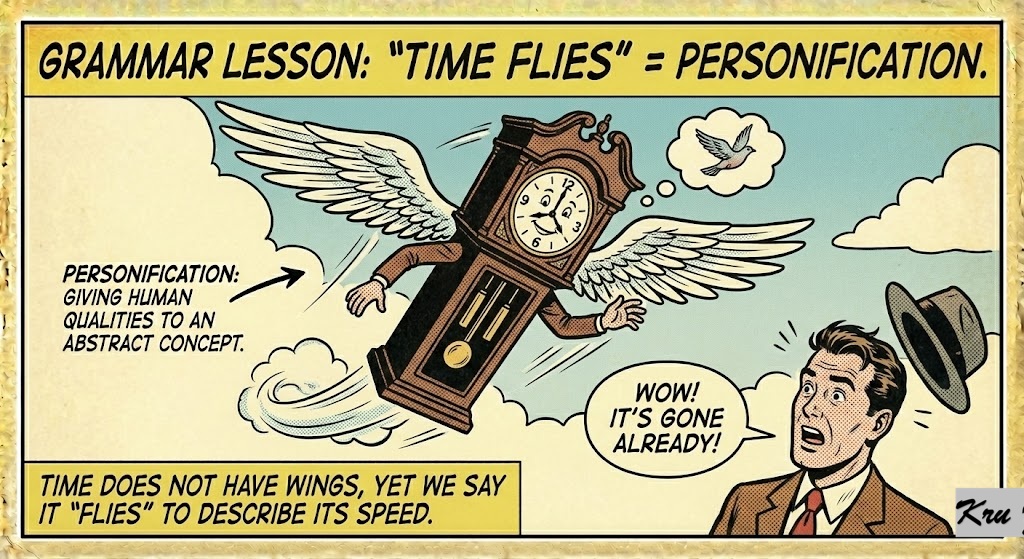
    “Time flies.” (Time doesn’t have wings).

    “Fear gripped him.” (Fear doesn’t have hands).
    📜 History: Origin and Spread


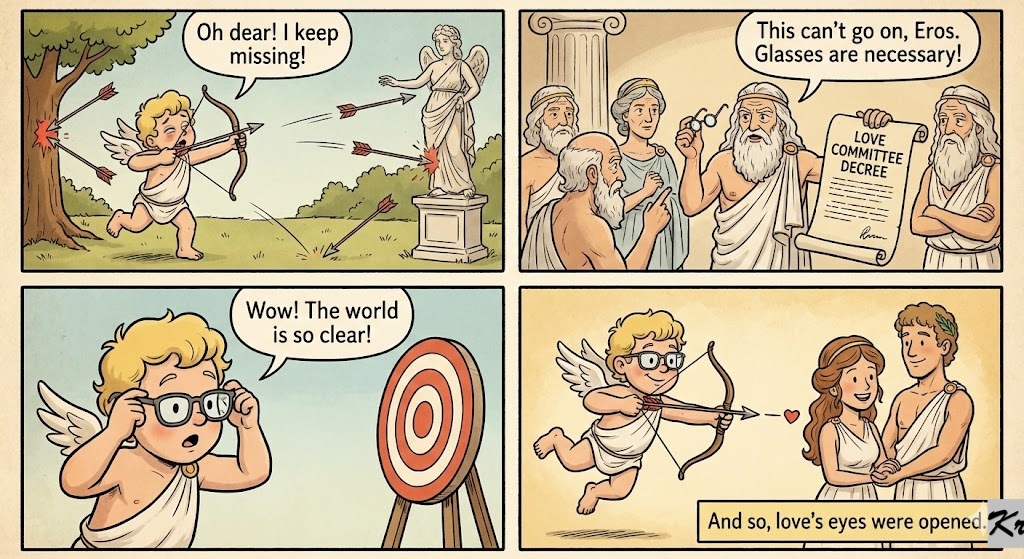
    Who first decided that Cupid needs glasses?

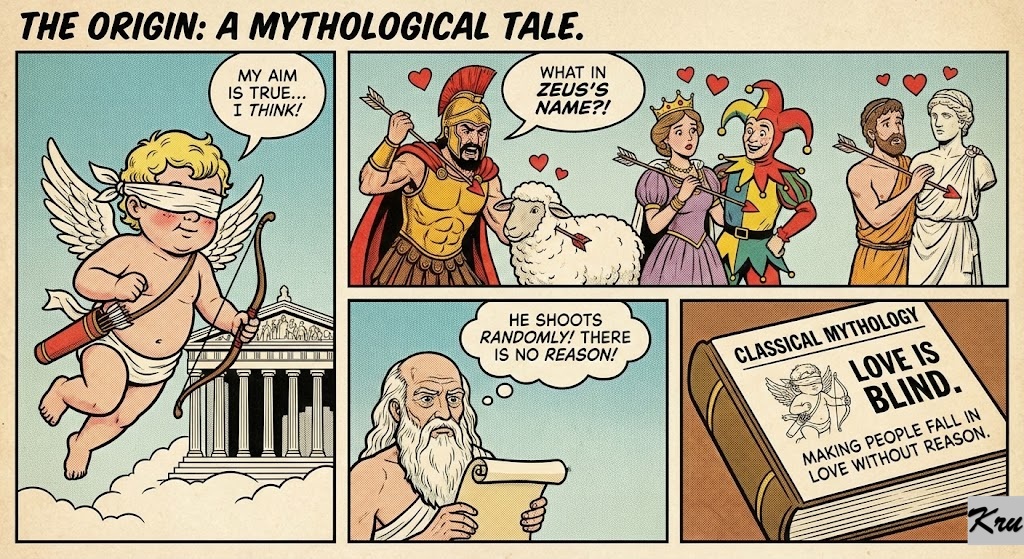
    The Origin: This idea is ancient. In Classical Mythology, Cupid (the god of affection) is often depicted wearing a blindfold. He shoots his arrows randomly, making people fall in love without reason.

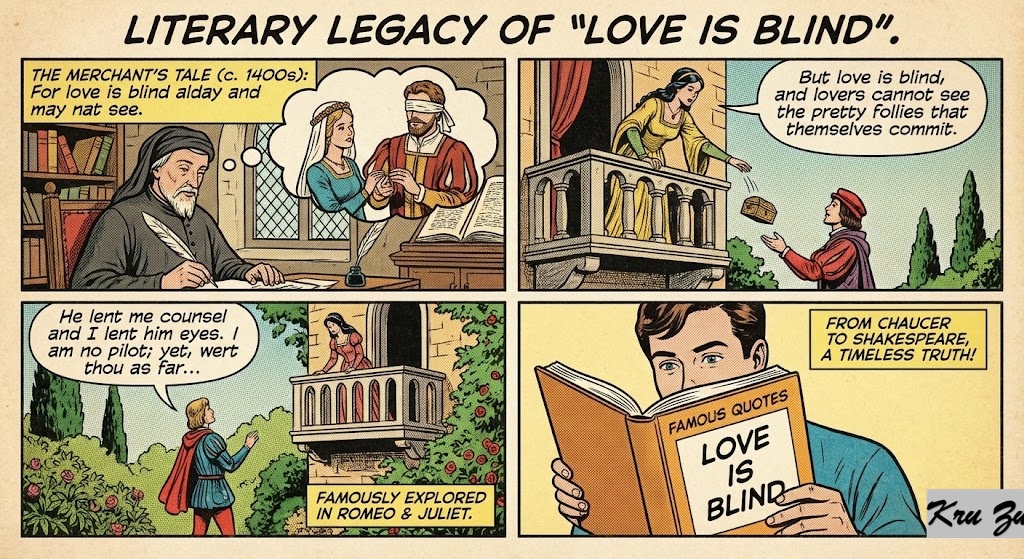
    The Writer: Geoffrey Chaucer used the phrase in the 1400s, but William Shakespeare made it famous in The Merchant of Venice and Romeo and Juliet.

    Global Cousins


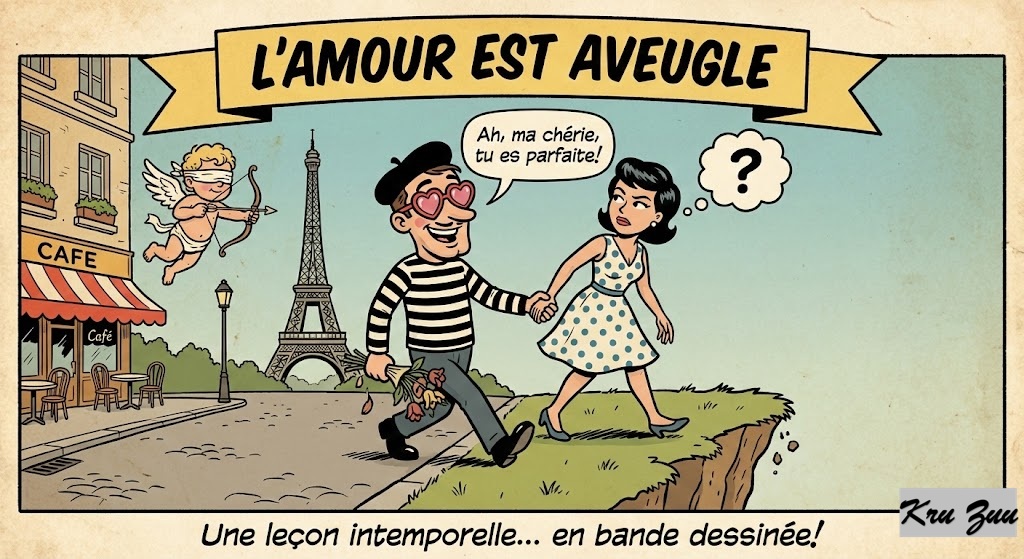
    🇫🇷 French: “L’amour est aveugle.” (Love is blind – direct translation).

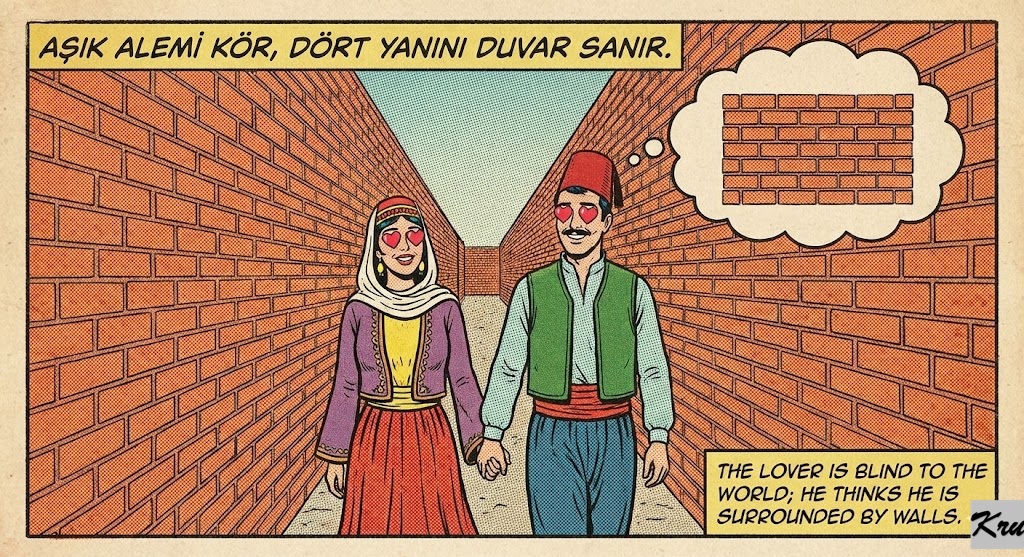
    🇹🇷 Turkish: “Aşık alemi kör, dört yanını duvar sanır.” (The lover is blind to the world; he thinks he is surrounded by walls).

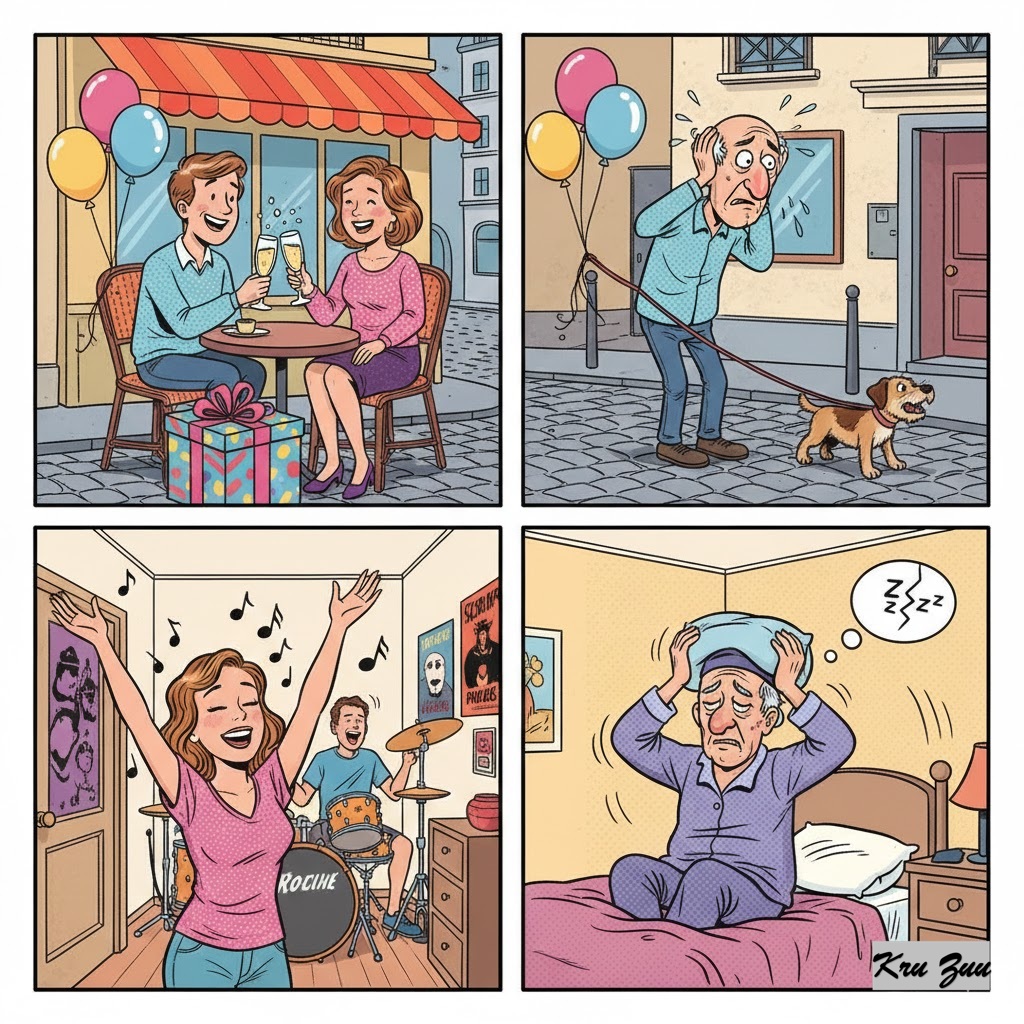
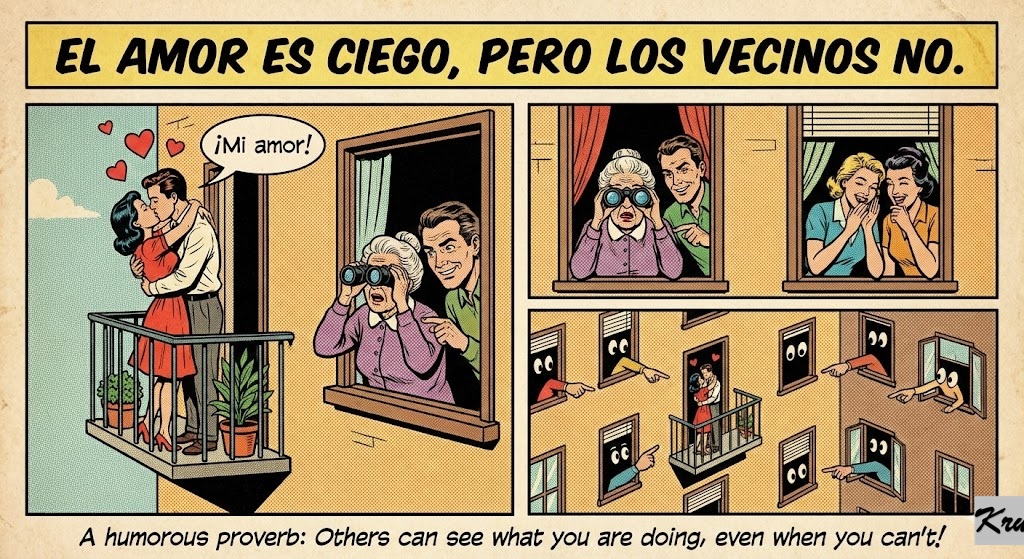
    🇪🇸 Spanish: “El amor es ciego, pero los vecinos no.” (Love is blind, but the neighbors are not! meaning others can see what you are doing).
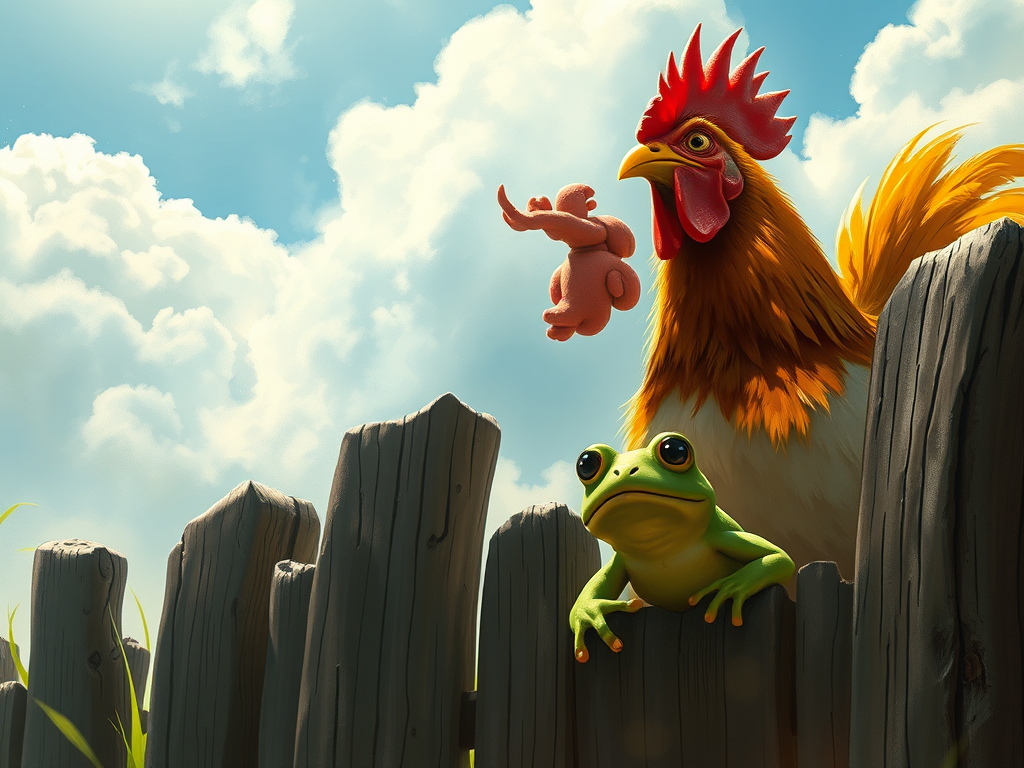
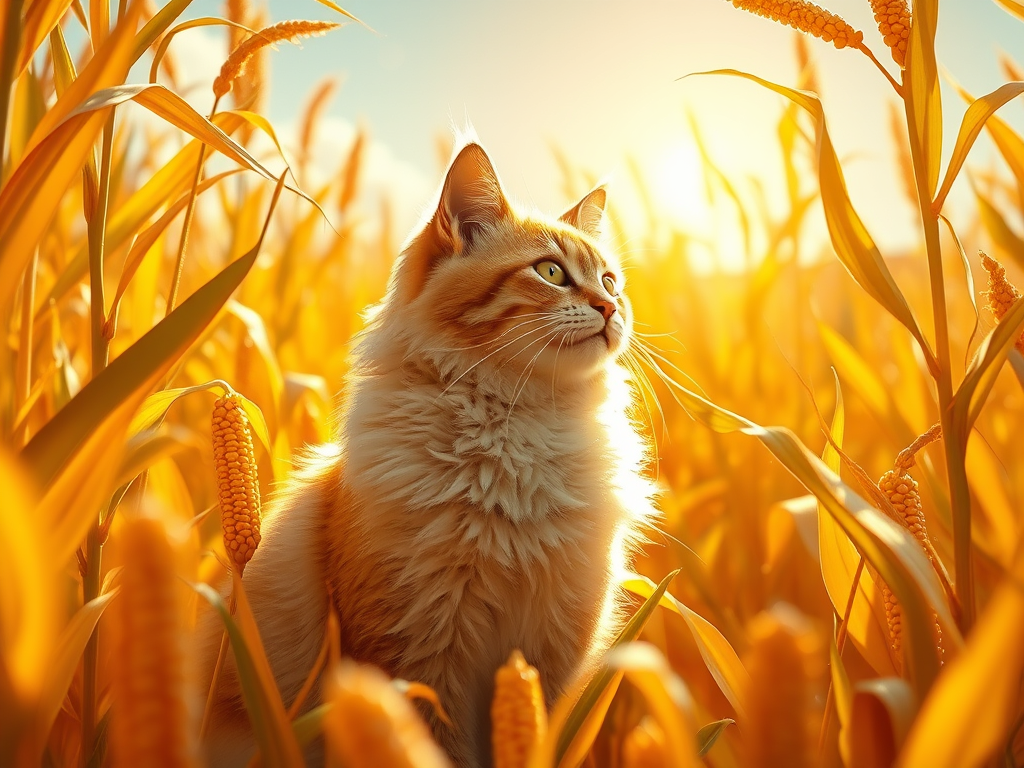
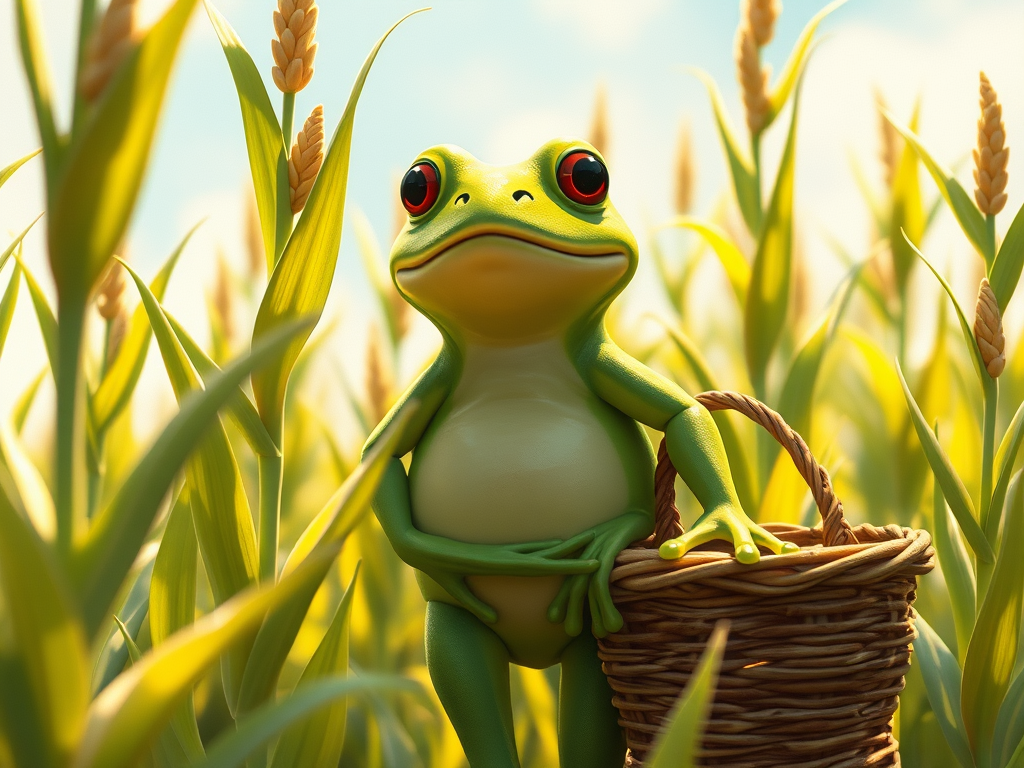
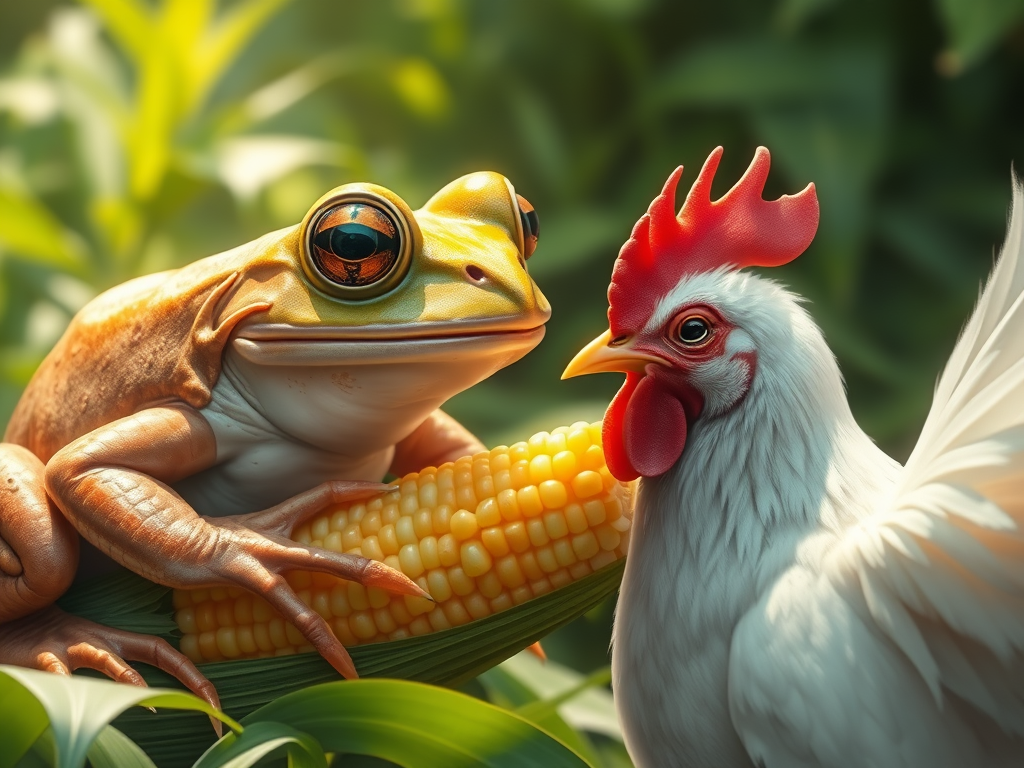
    🎭 Short Story: The Statue of Perfection 🗿🐱🐔🐸


    Let’s visit the forest to see who has their “love goggles” on.
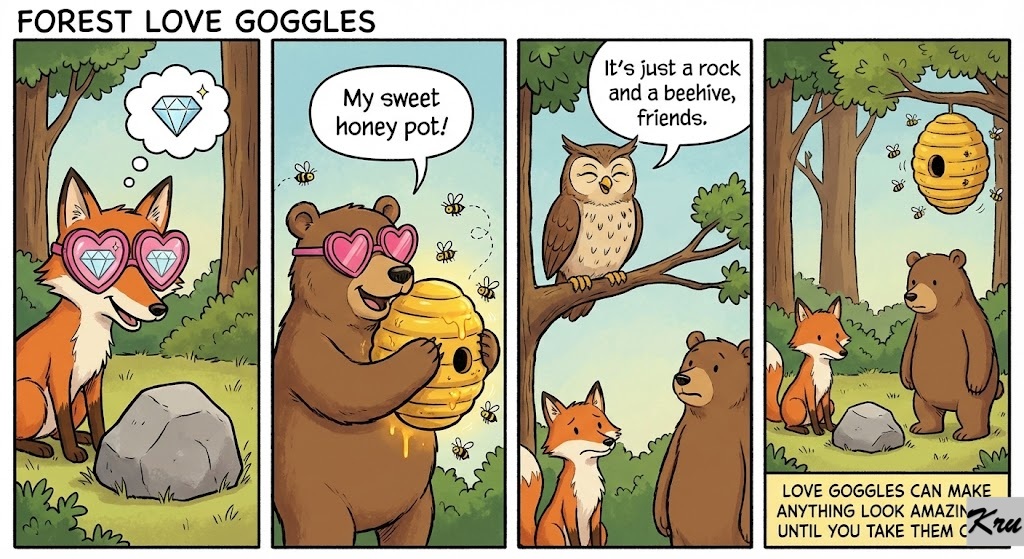

    🌟 The Cast


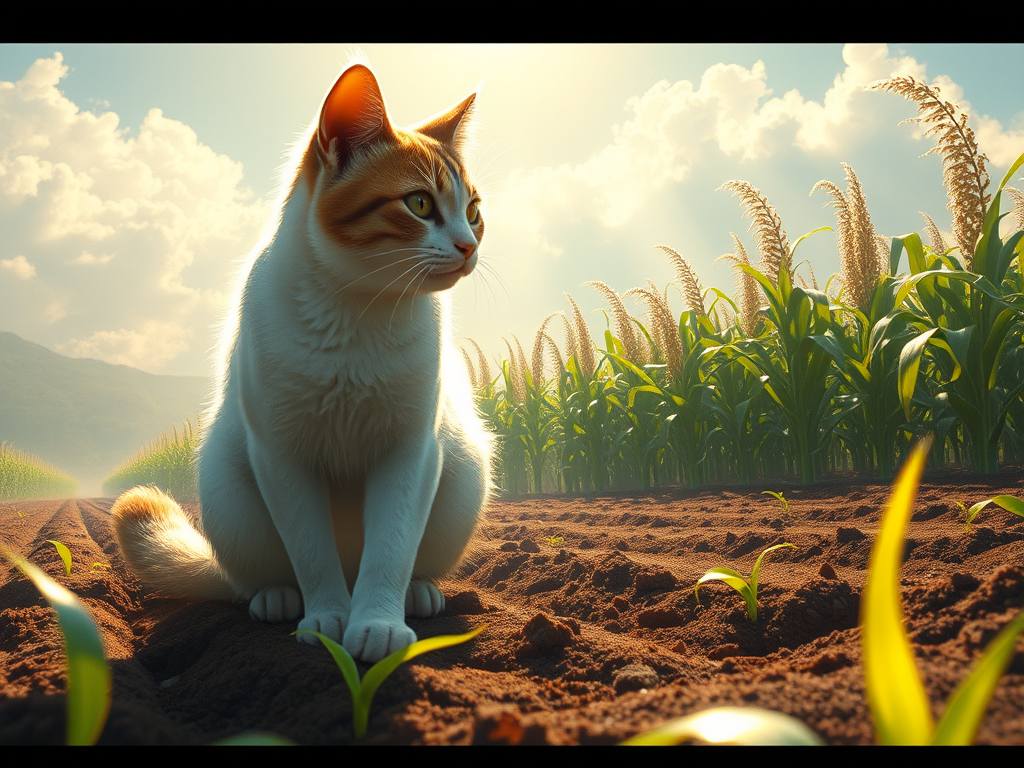
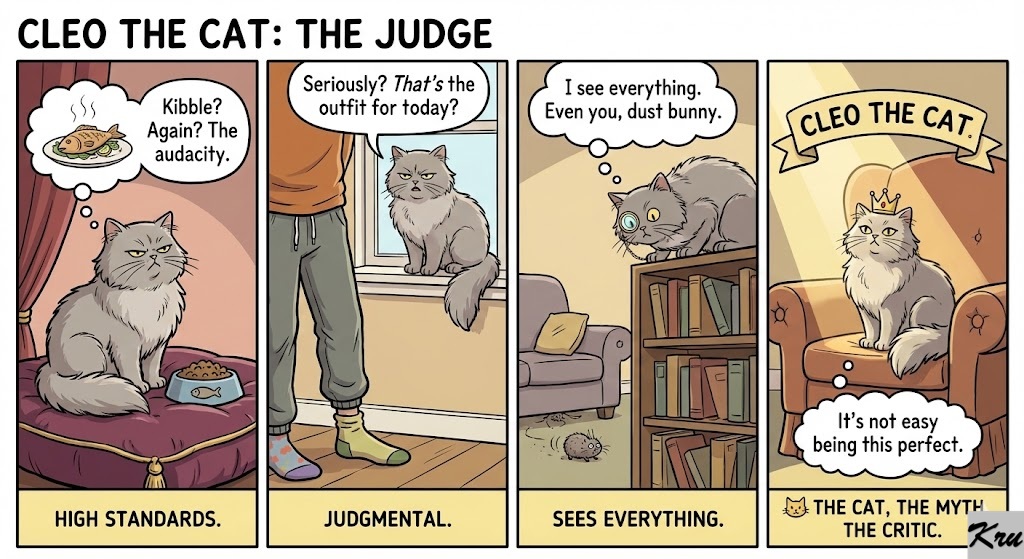
    Cleo the Cat: High standards, judgmental, sees everything. 😼

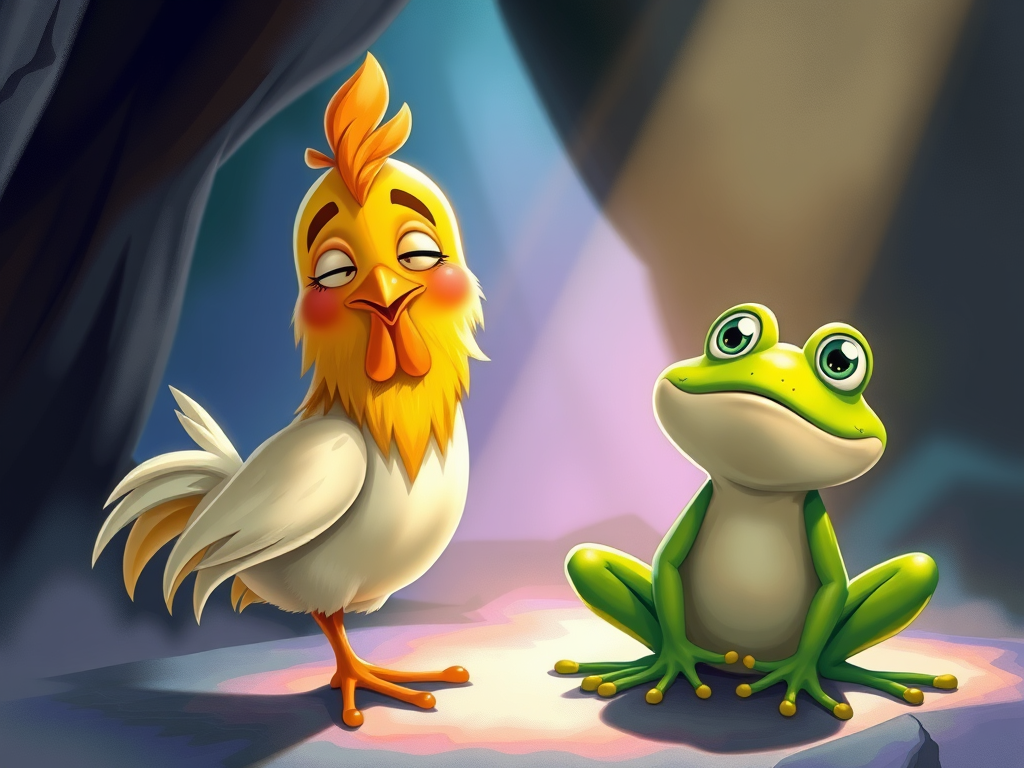
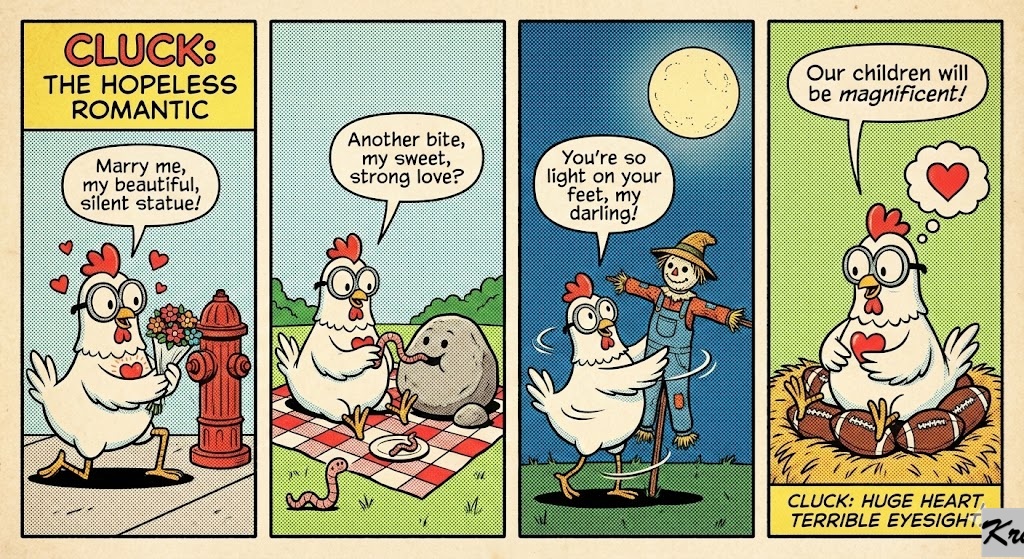
    Cluck the Chicken: Falls in love instantly, huge romantic heart, terrible eyesight. 🐔

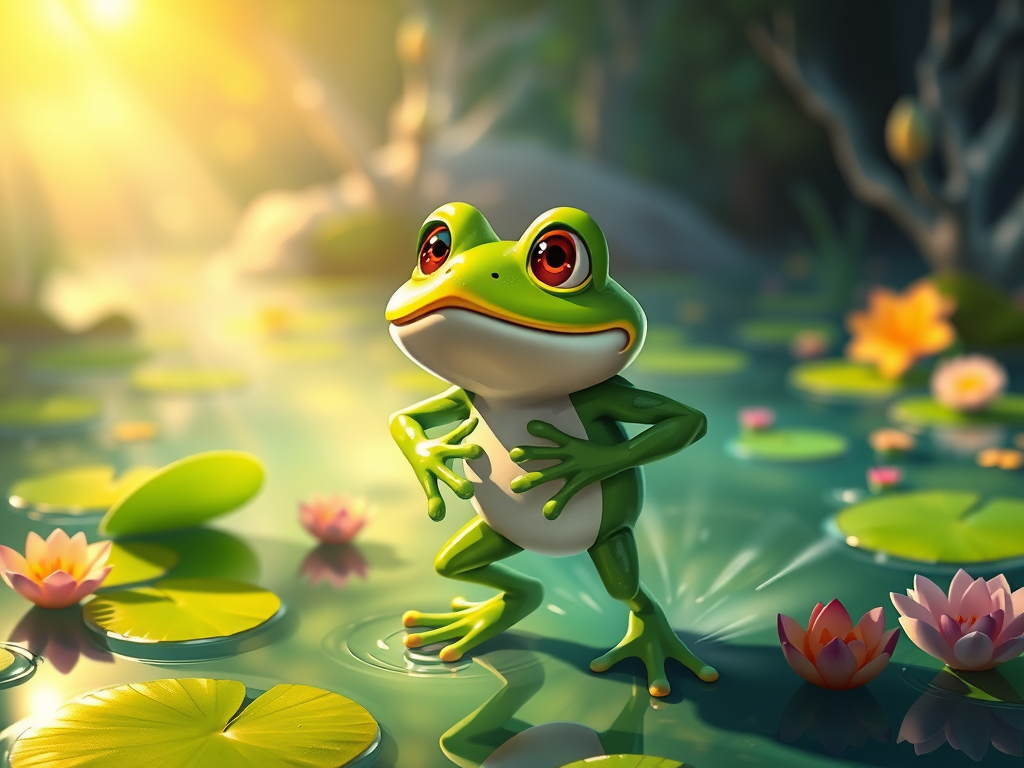
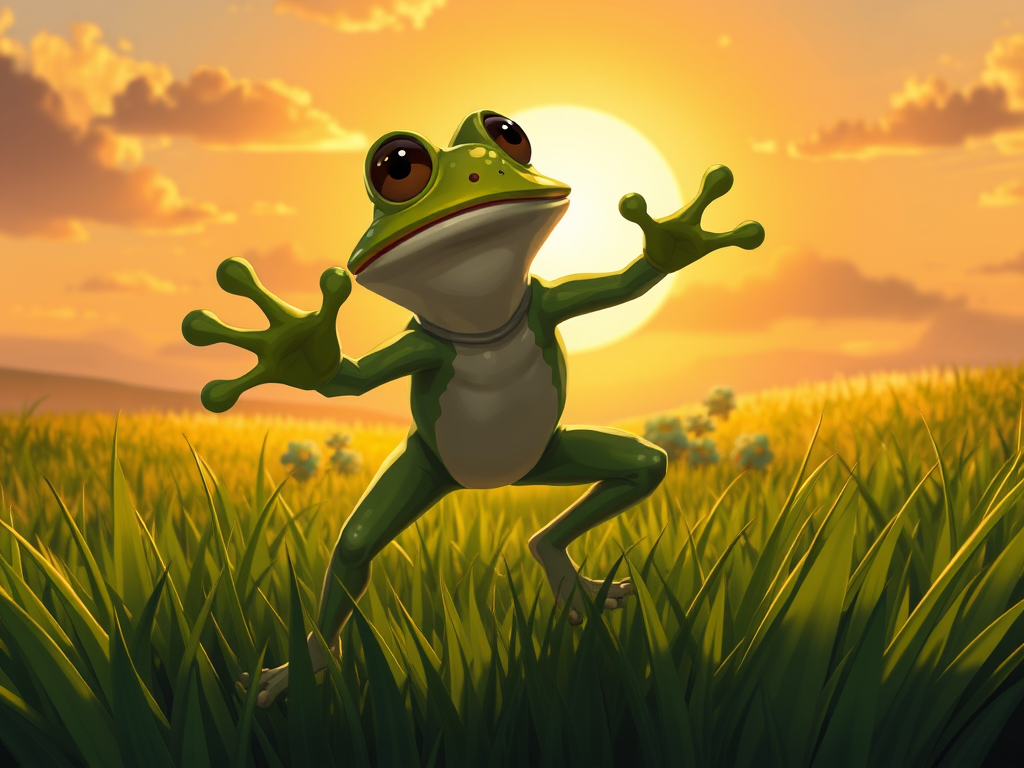
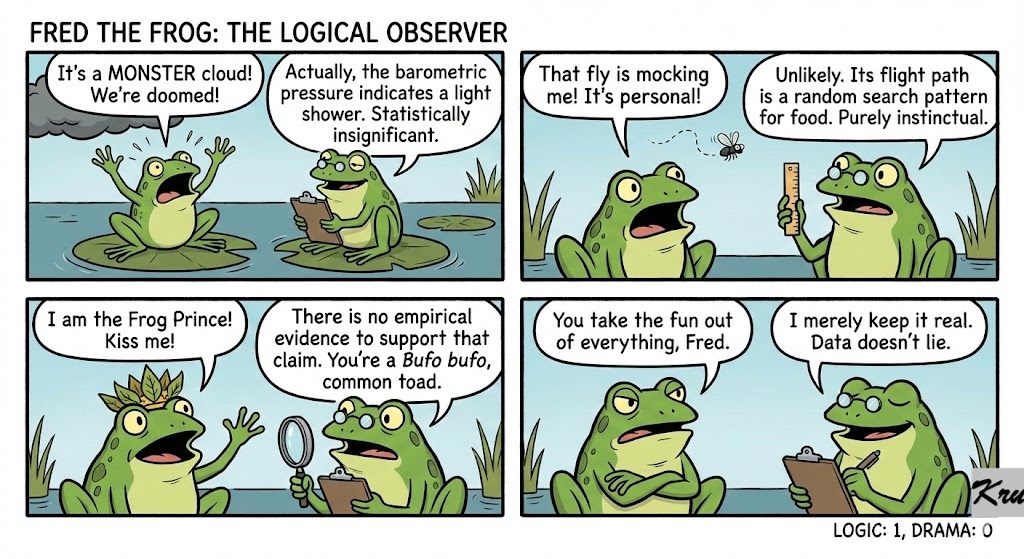
    Fred the Frog: The logical observer, keeps it real. 🐸

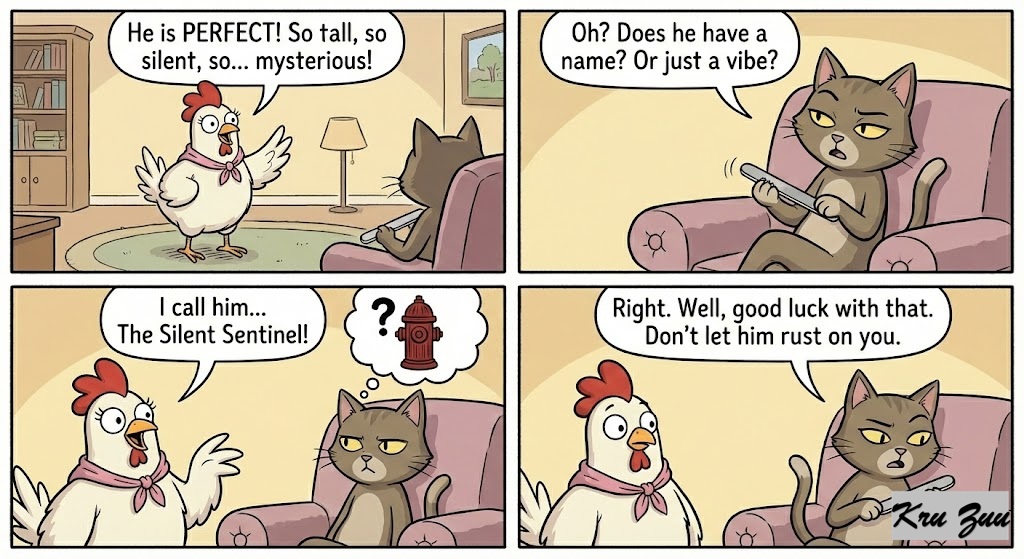
    The Situation: Cluck the Chicken comes running into the town square, flapping her wings excitedly. “Guys! Guys! I met Him! I met the perfect guy! He is tall, strong, dark, and mysterious!”
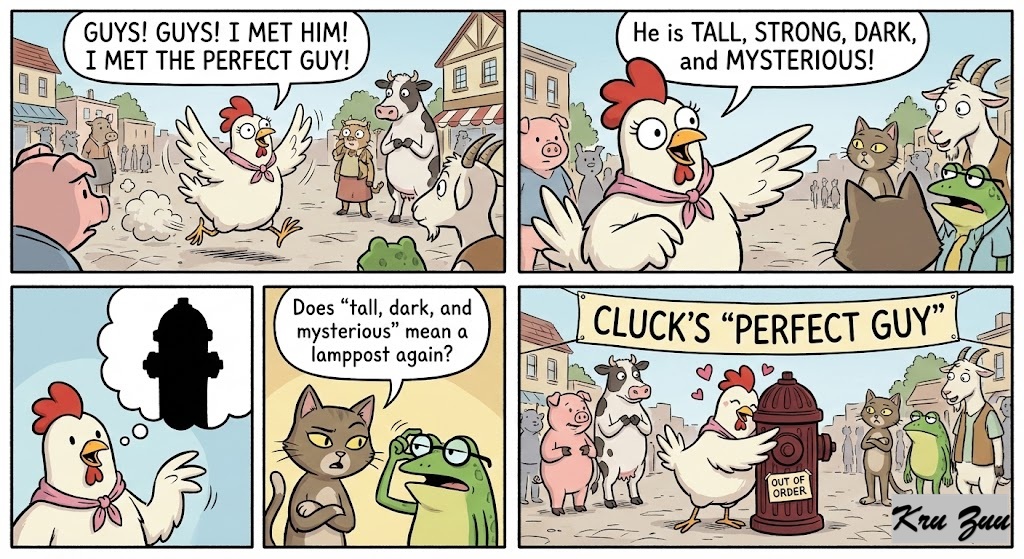

    Cleo looks up from filing her nails. “Oh? Does he have a name? Or just a vibe?”

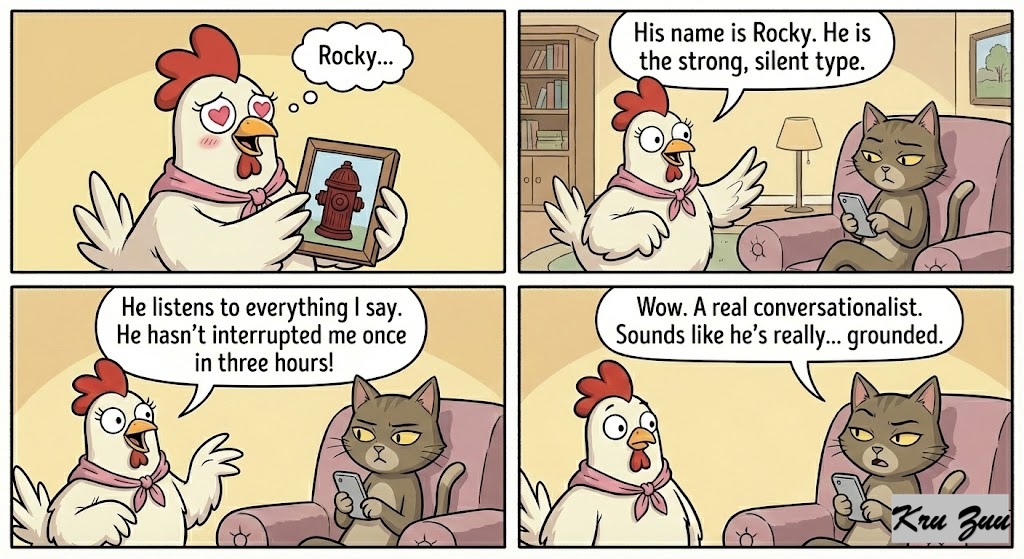
    “His name is Rocky,” Cluck sighs. “He is the strong, silent type. He listens to everything I say. He hasn’t interrupted me once in three hours!”

    The Conflict: Fred the Frog frowns. “Rocky? Where is he?” “He’s by the garden,” Cluck says. “Come meet him!”
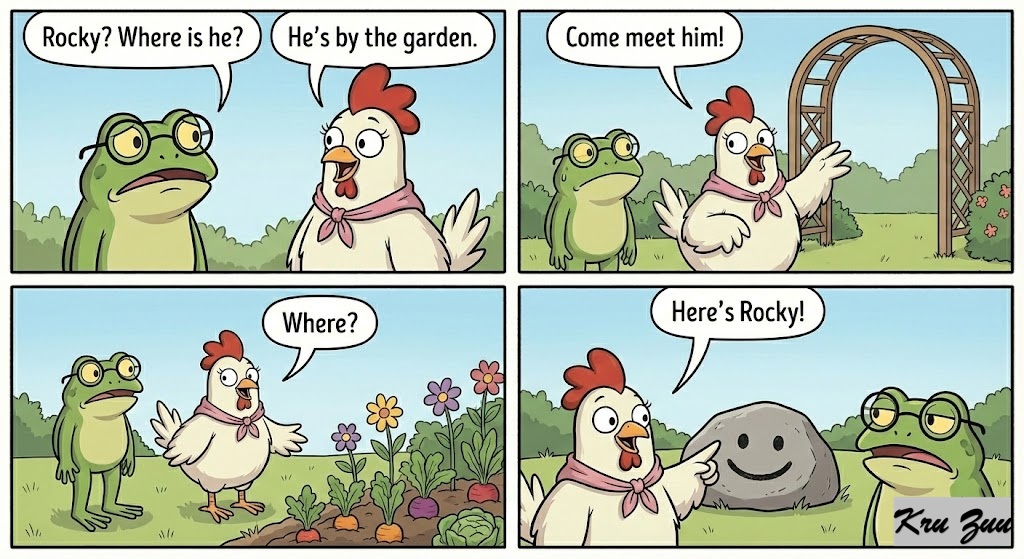

    They walk to the garden. Standing there is not a rooster. It is not a duck. It is a dark, stone garden statue of an Eagle. 🗿
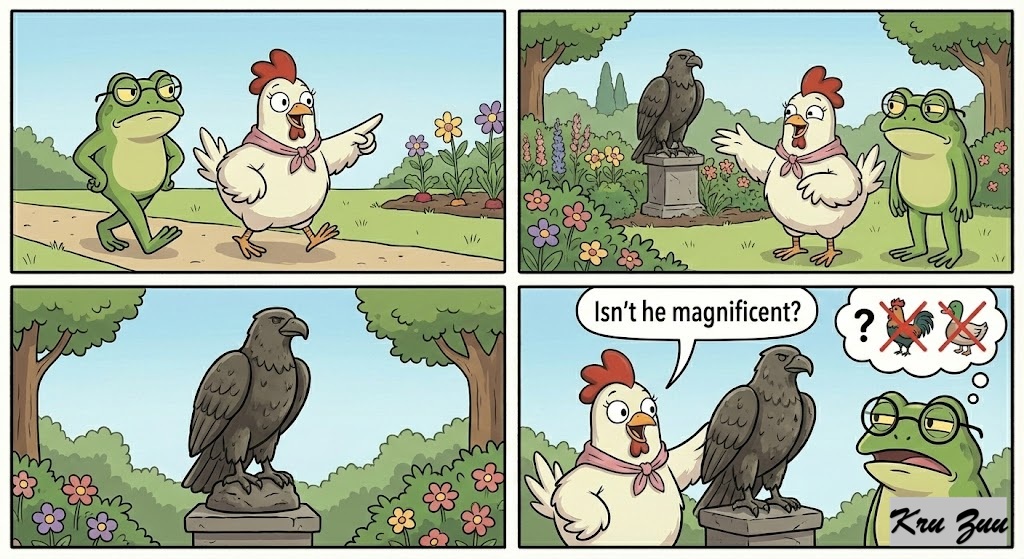

    “Cluck,” Fred says slowly. “That is a rock.”
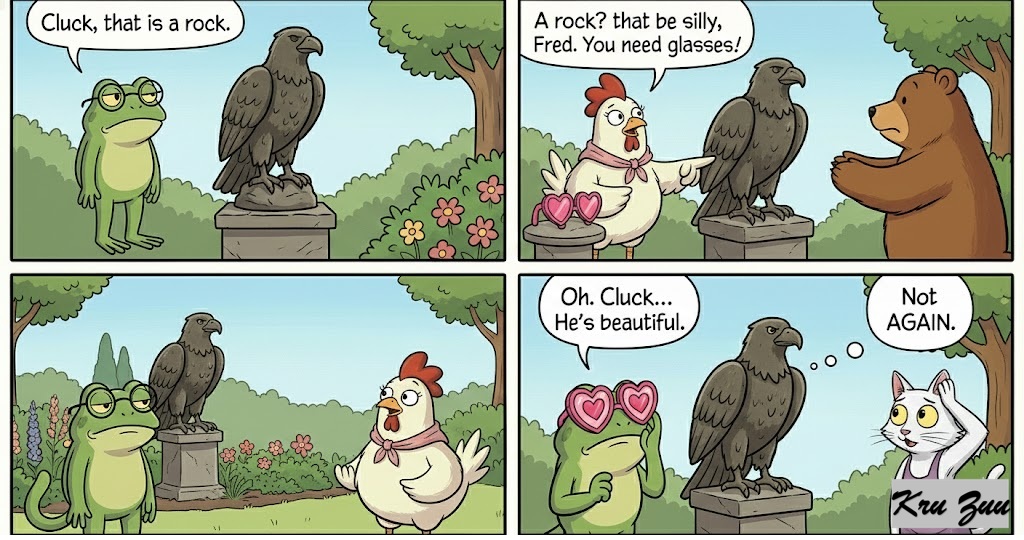

    “He’s a good listener!” Cluck defends him. “Look how stoic he is. He’s so stable. He’s not flighty like other birds.”
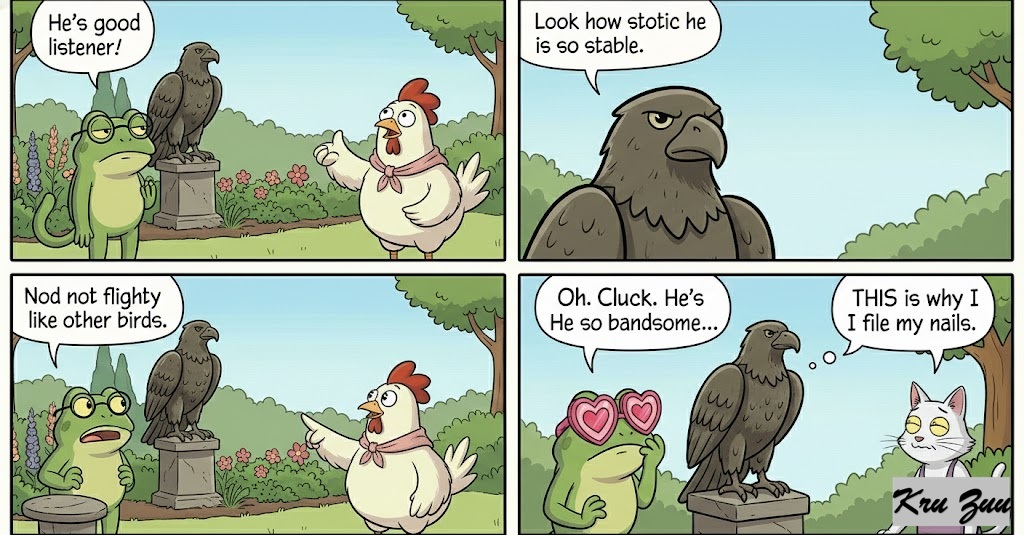

    Cleo laughs. “Darling, he’s literally made of stone. He’s cold. He has no heart. He isn’t stable; he’s stuck in the mud.”
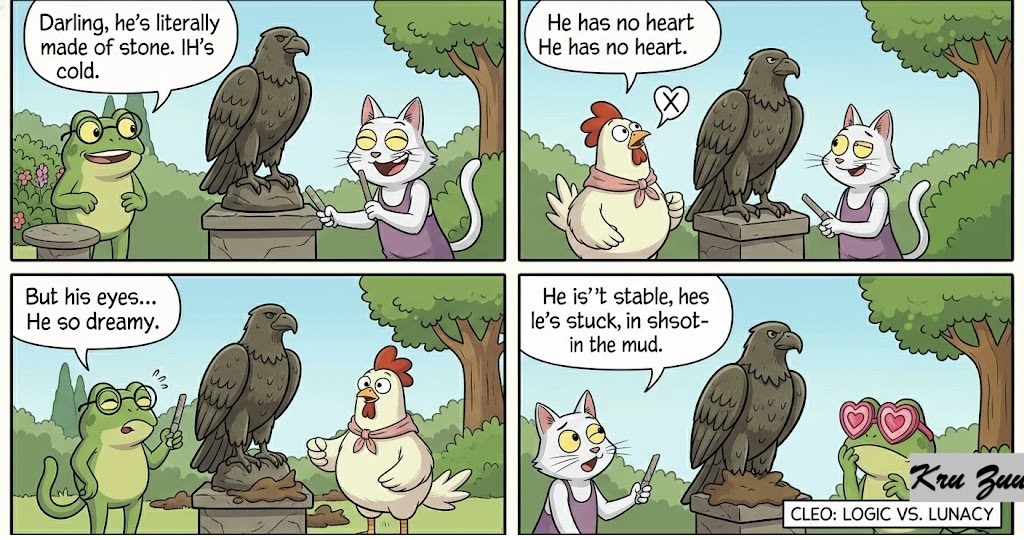

    The Reaction: “You are just jealous of our love!” Cluck yells. “Love is blind, and I see his soul!” She runs over and hugs the cold stone statue. “I’m going to knit him a sweater. He looks chilly.”
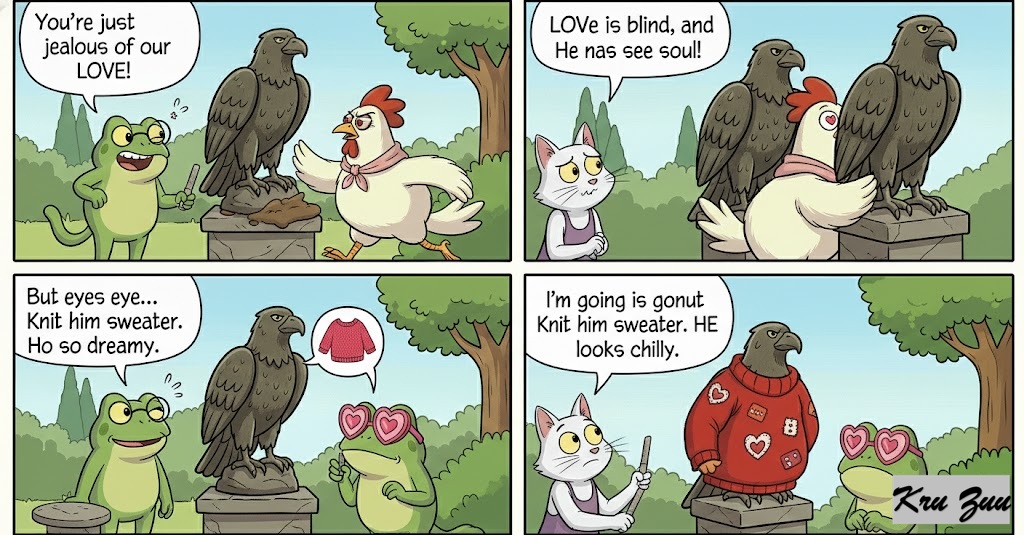

    Fred looks at Cleo. “Should we tell her?” Cleo shakes her head. “No. Wait for the rain.”
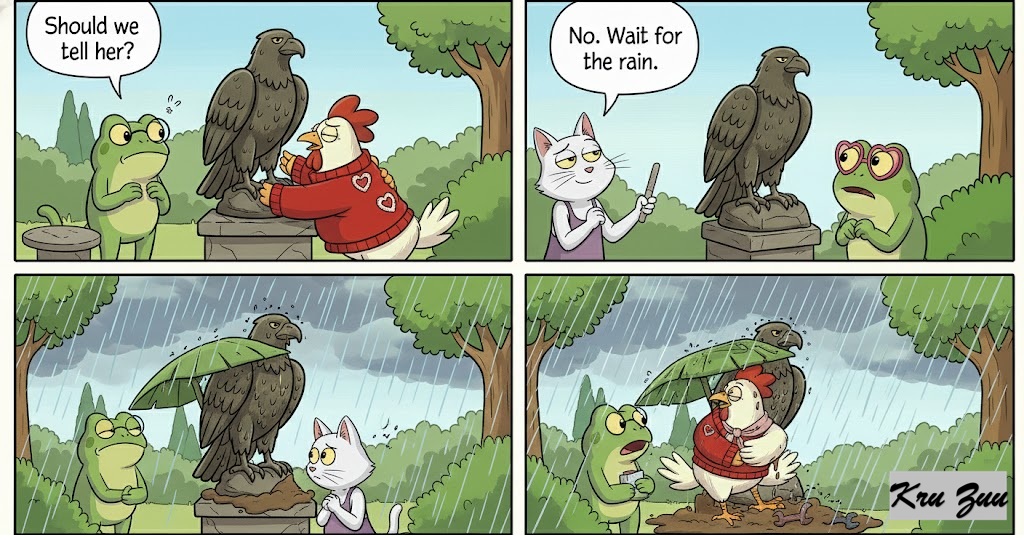

    The Resolution: Two days later, it rained heavily. Cluck stood by “Rocky” with an umbrella, but Rocky didn’t say thank you. He didn’t move. Moss started growing on his beak. Finally, Cluck sneezed. “Rocky, aren’t you going to say ‘Bless you’?” Silence. Cluck finally stepped back. She looked, really looked, and saw the moss. She saw the cracks in the stone. She realized he hadn’t blinked in 48 hours.
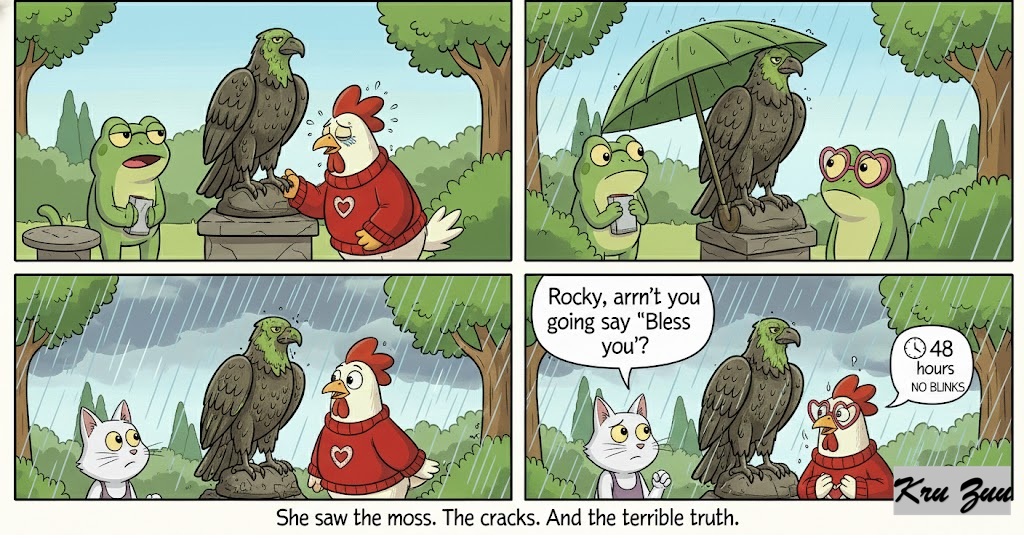

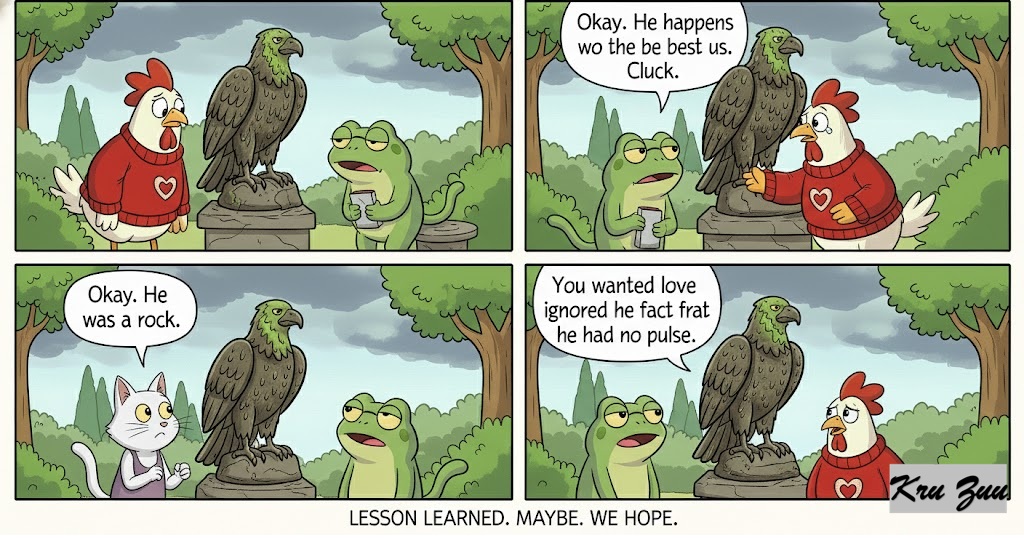
    The Lesson: Cluck walked back to her friends, head down. “Okay. He was a rock.” Fred patted her wing. “It happens to the best of us, Cluck. You wanted love so badly, you ignored the fact that he had no pulse.”

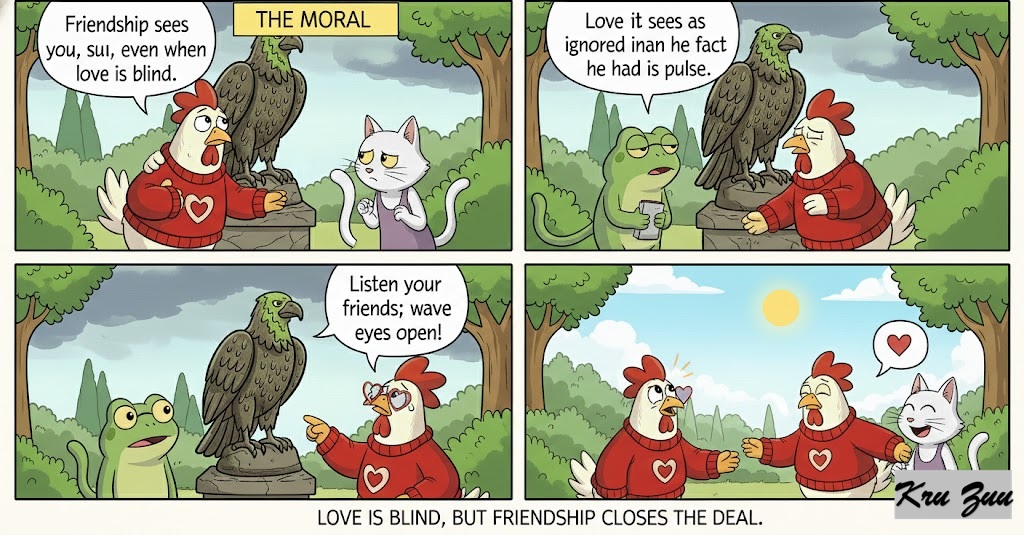
    The Moral: Love is blind, but friendship closes the deal. Listen to your friends; they have their eyes open.
    🎓 Lesson for English Learners


    How to give advice without being mean.
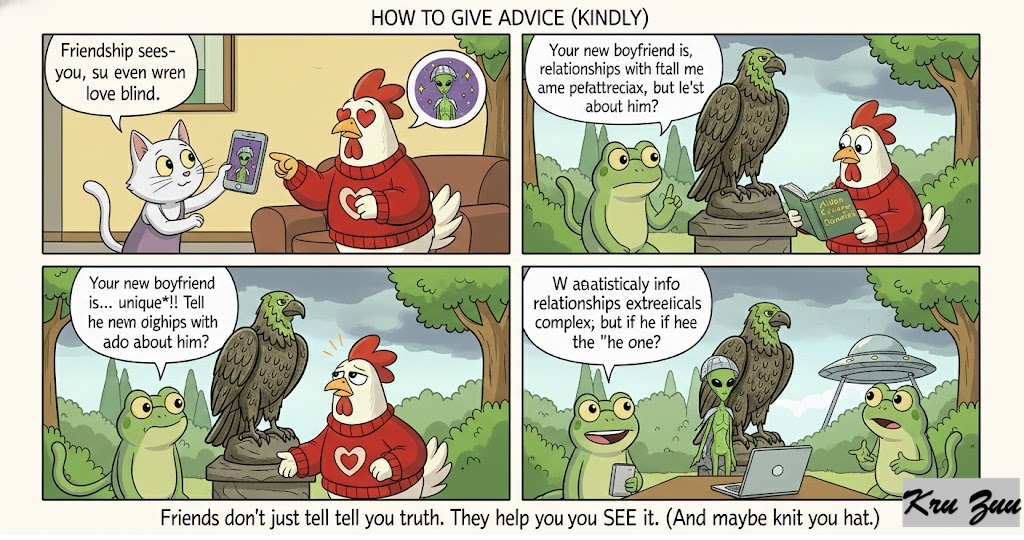

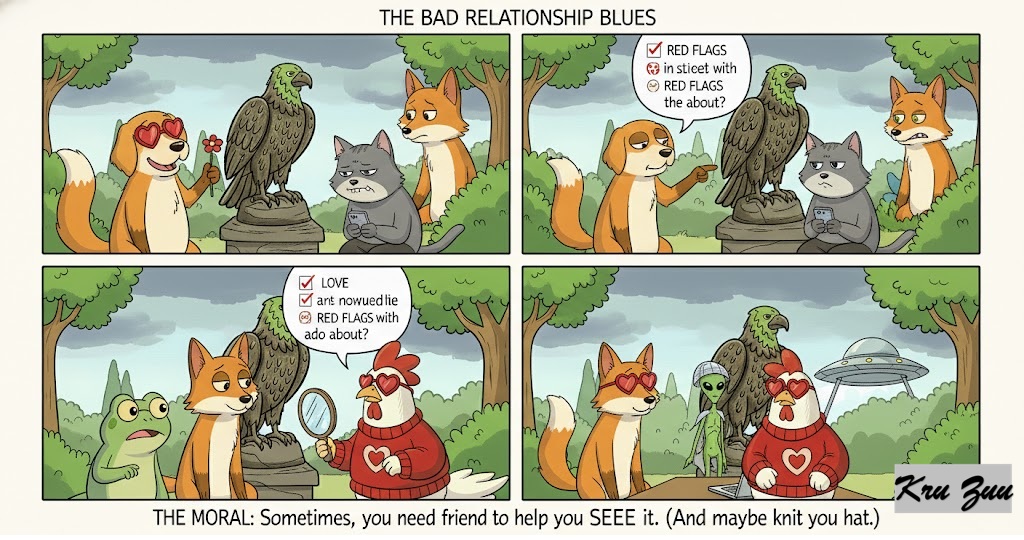
    Situation: Your friend is dating someone who treats them badly. You want to warn them, but you don’t want to fight.
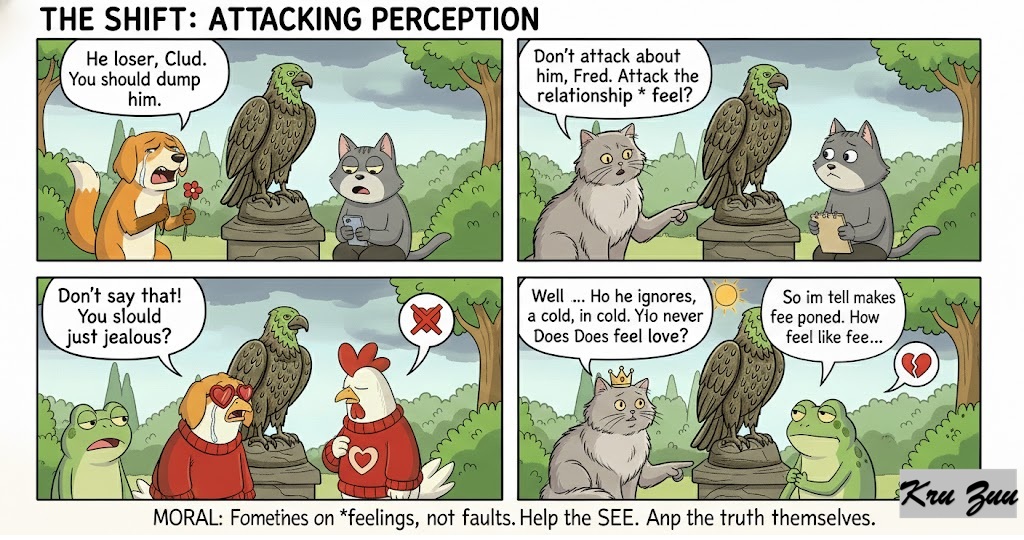
    The Shift: Don’t attack the partner (“He is a loser”). Attack the perception.
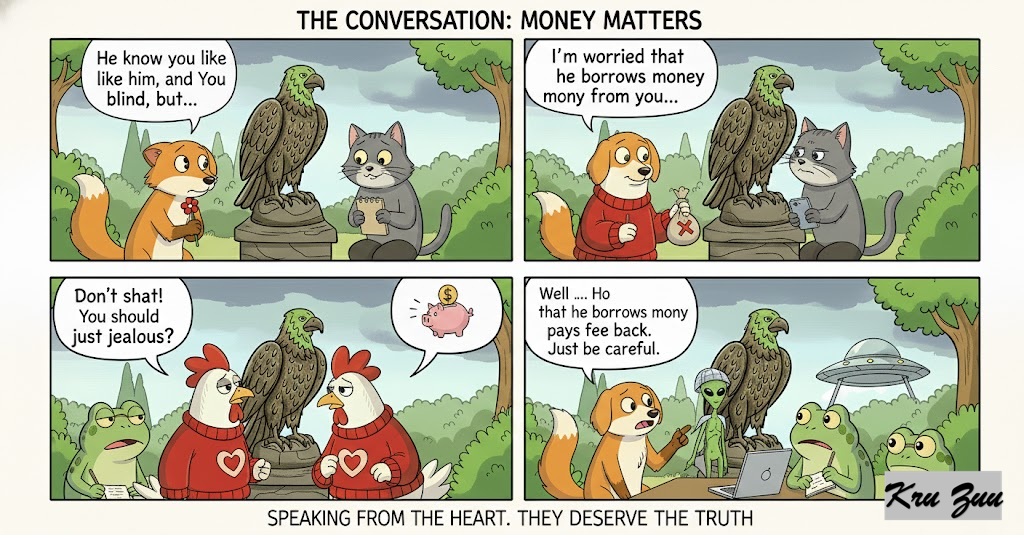
    You Say: “I know you really like him, and love is blind, but I’m worried that he borrows money from you and never pays it back. Just be careful.”

    💬 Your Turn: The “Red Flag” Challenge 🚀


    Do you want to cure your “Villain” romantic habits?
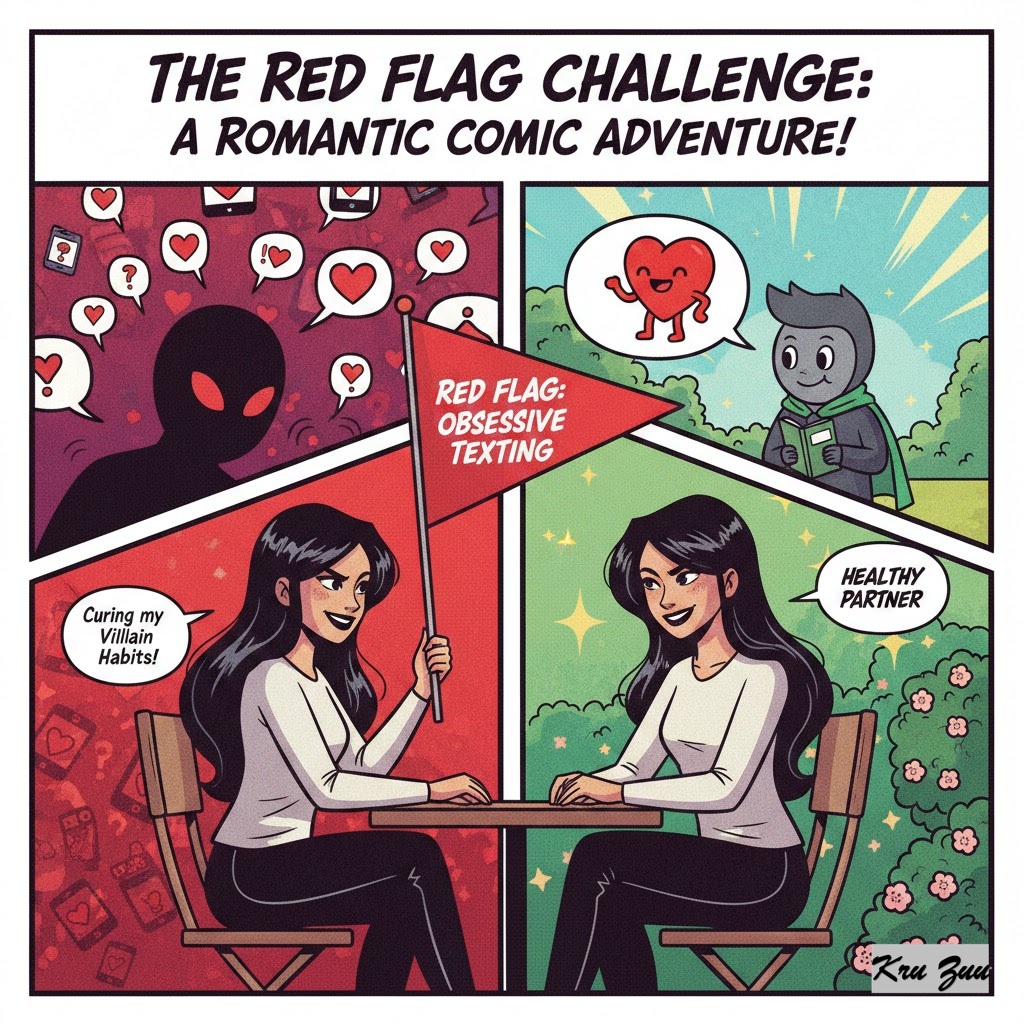

    The Challenge:
    Think of a past relationship or crush that didn’t work out.

    The Action: Write down three “Red Flags” (warning signs) that you ignored at the beginning because you were “blind.”
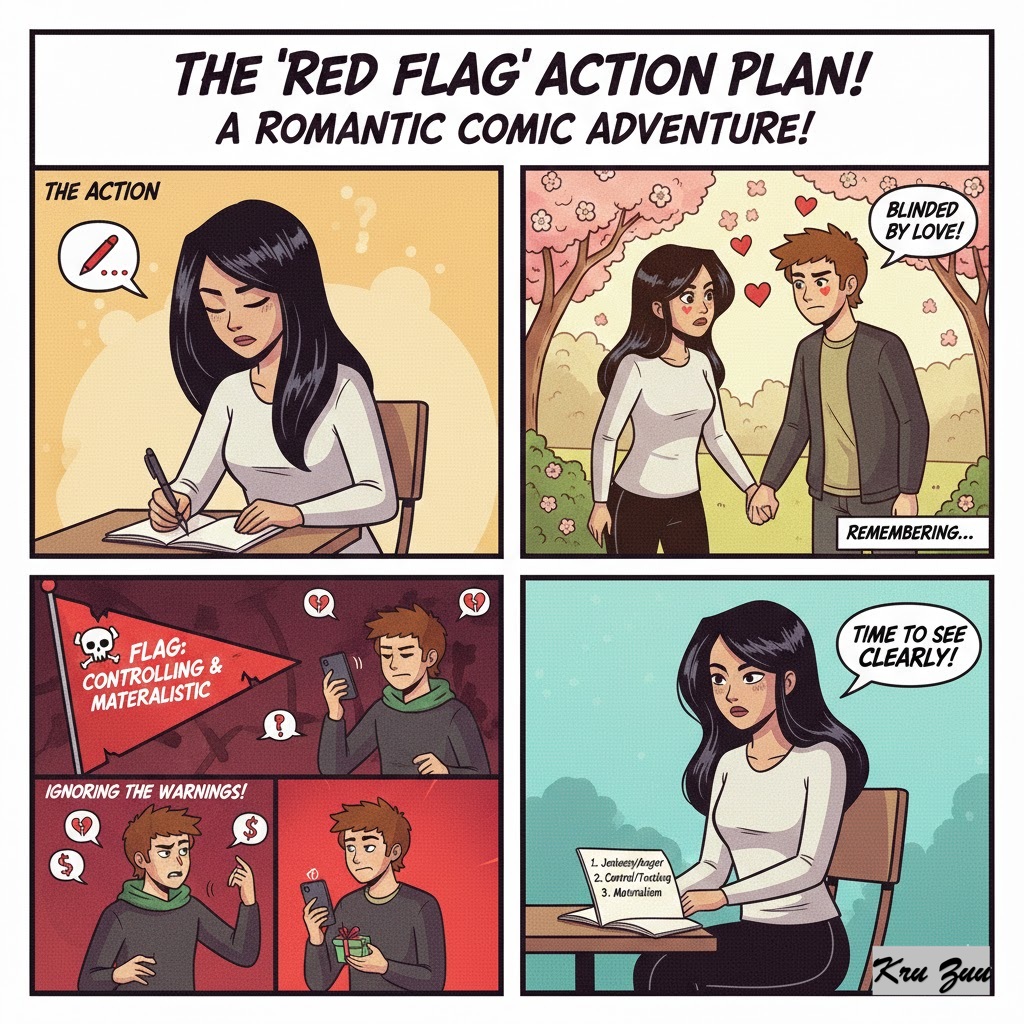

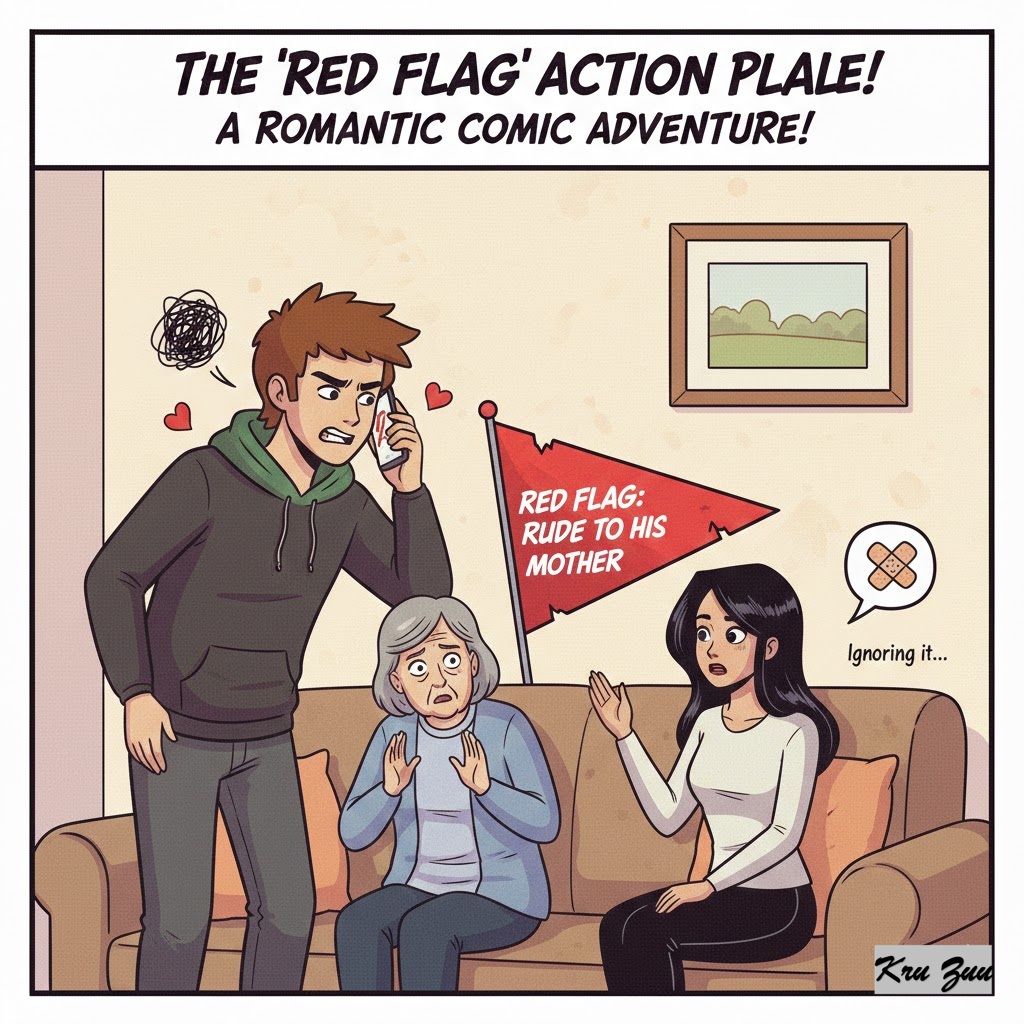
    Example: I ignored that he was rude to his mother.

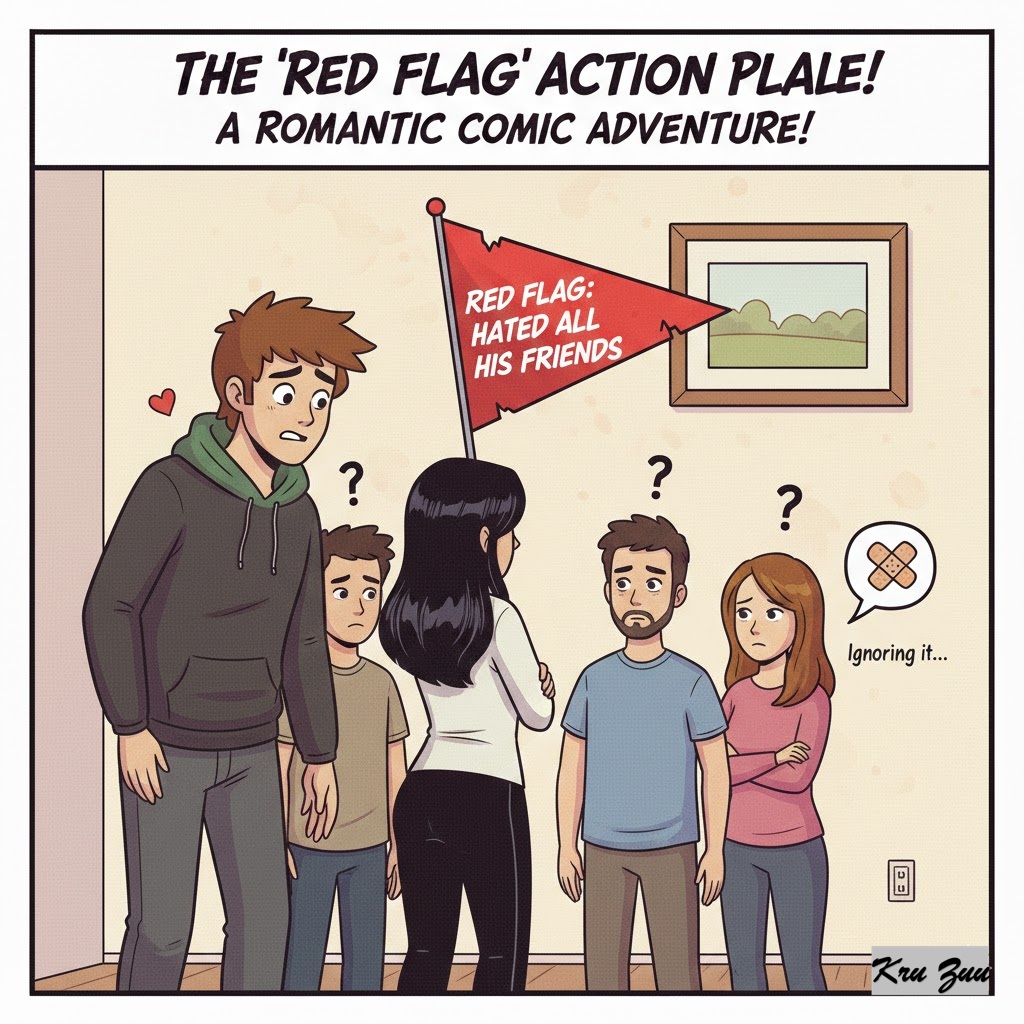
    Example: I ignored that she hated all my friends.

    👇 Question for the comments: Have you ever worn “Rose-colored glasses”? What is one funny thing you overlooked in a partner because you were in love? Tell us below!

    By Zubeyir YURTKURAN

    https://www.facebook.com/BrainBattleground/

    https://www.facebook.com/zubeyr.yurtkuran/

    https://www.instagram.com/zubeyryurtkuran/

    https://www.youtube.com/@BrainBattleground-b3p

    https://www.instagram.com/brainbattleground/

  • 💎 The Daily Shield: The Law of Hidden Value

    💎 The Daily Shield: The Law of Hidden Value

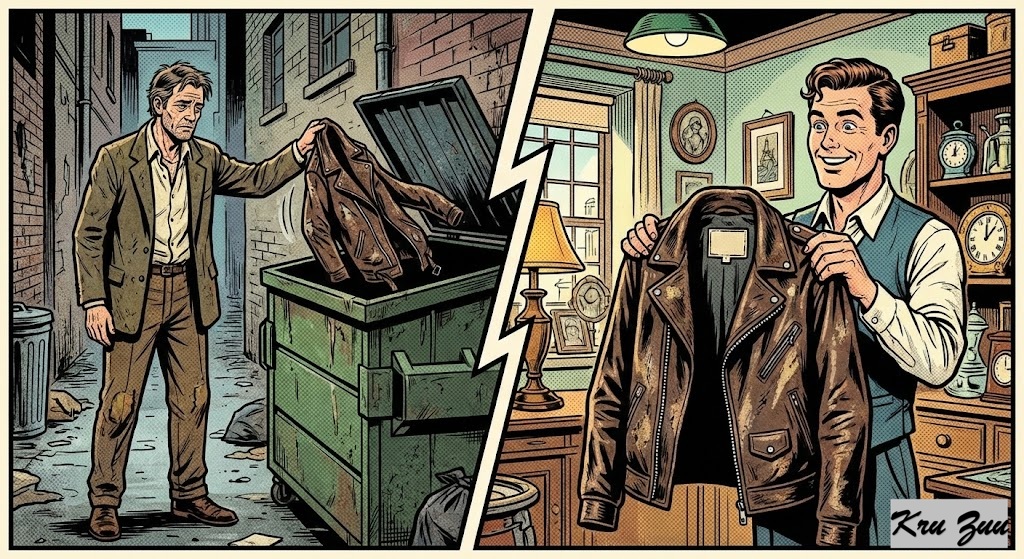
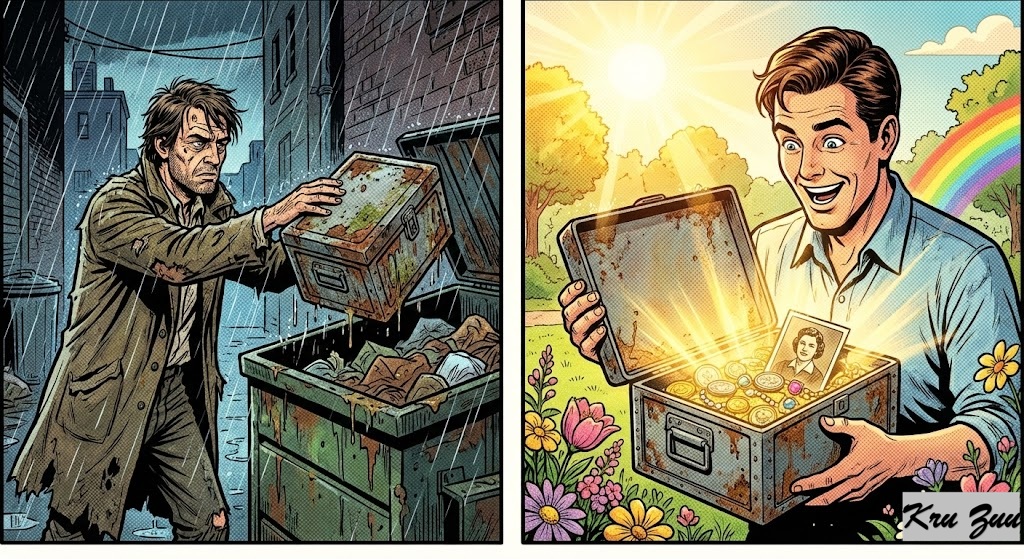
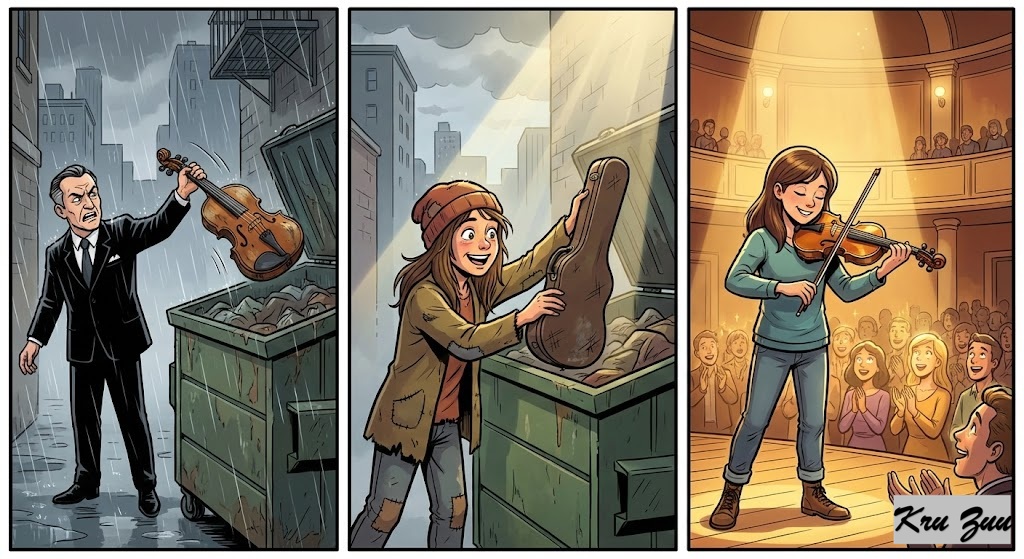
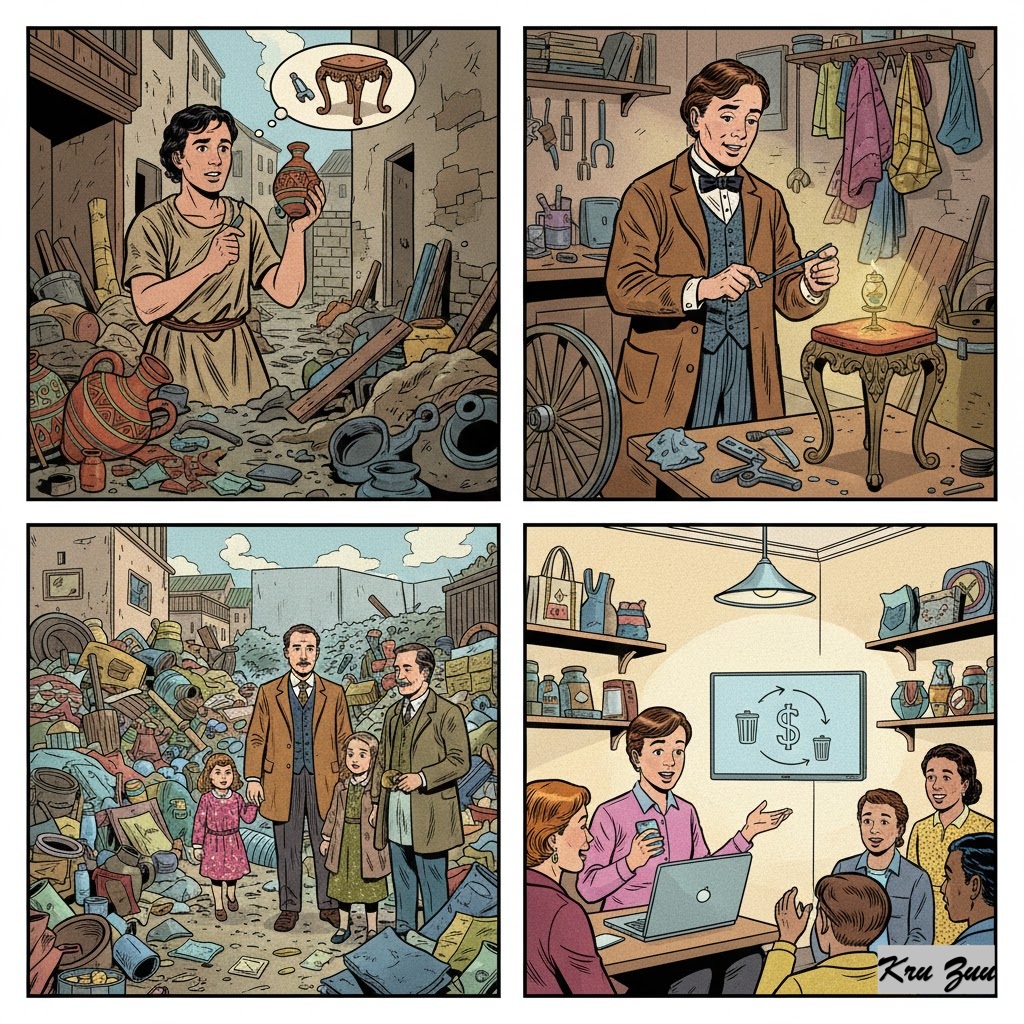
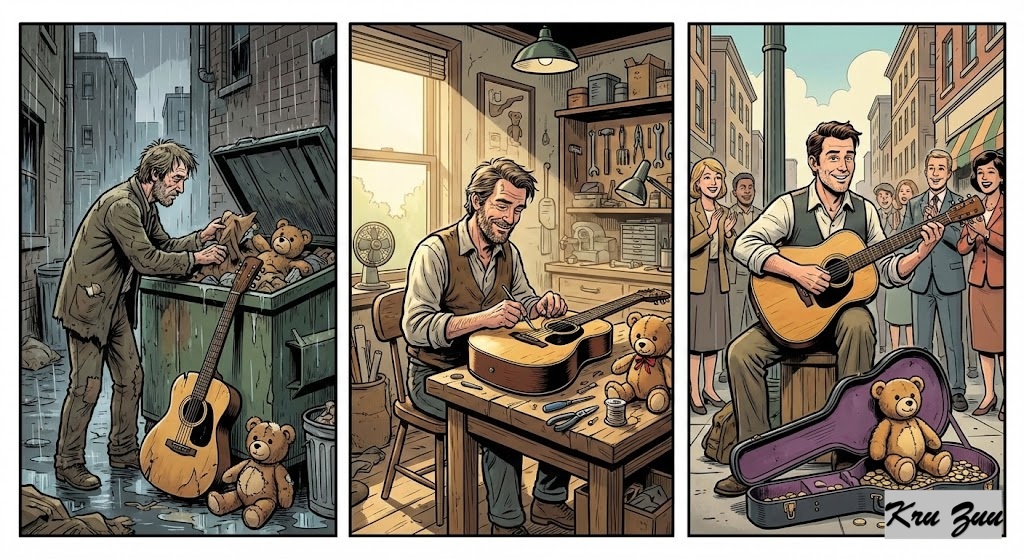
    “One man’s trash is another man’s treasure.”


    😈 The Villain (The Blind Consumer)


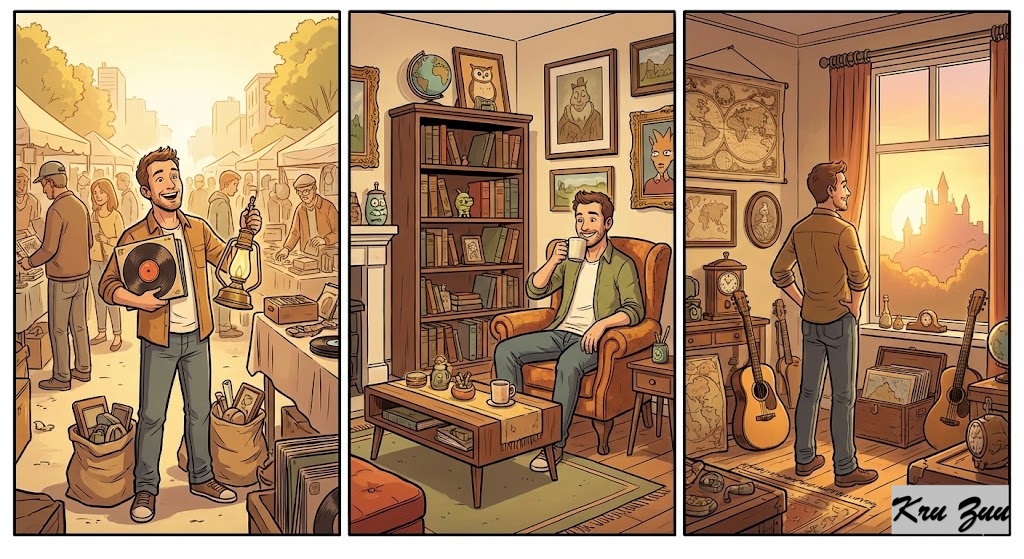
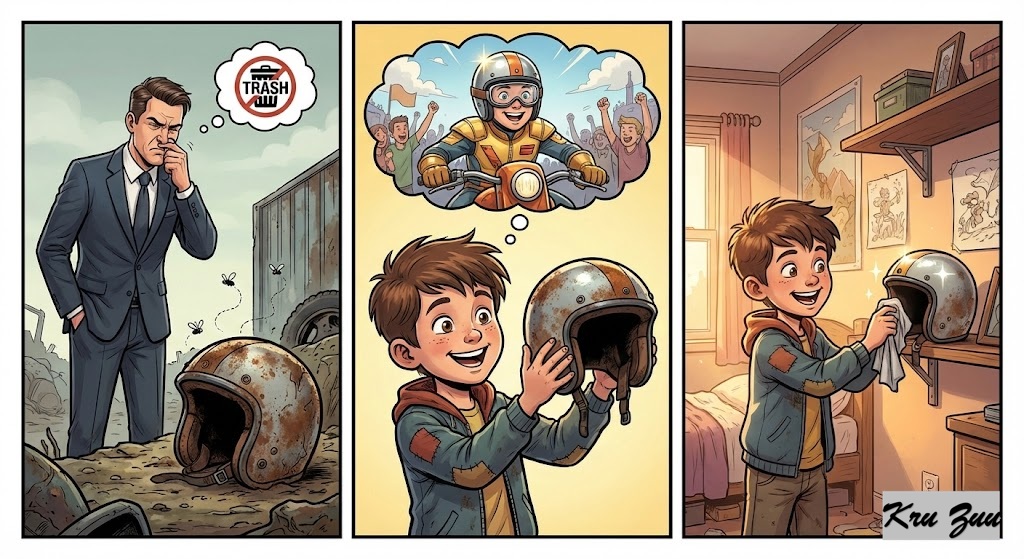
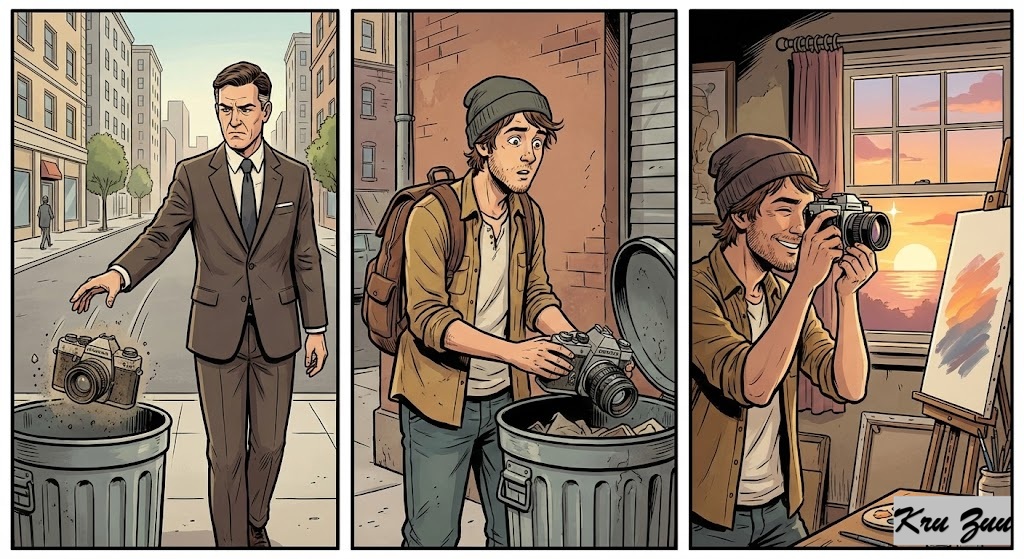
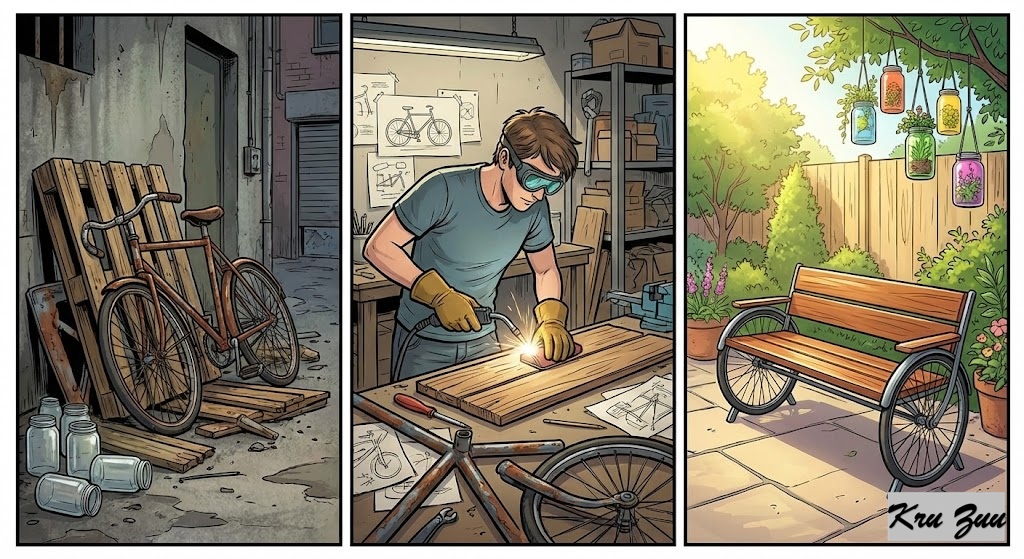
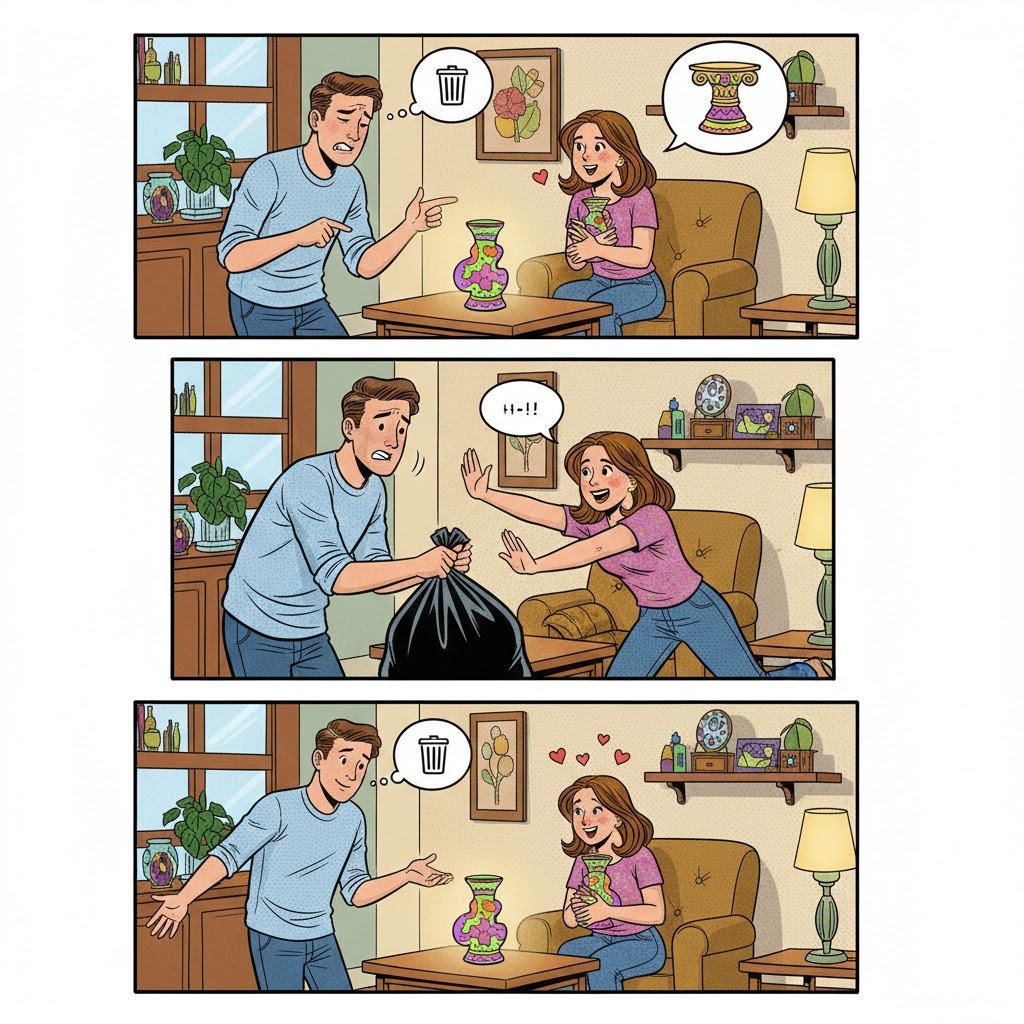
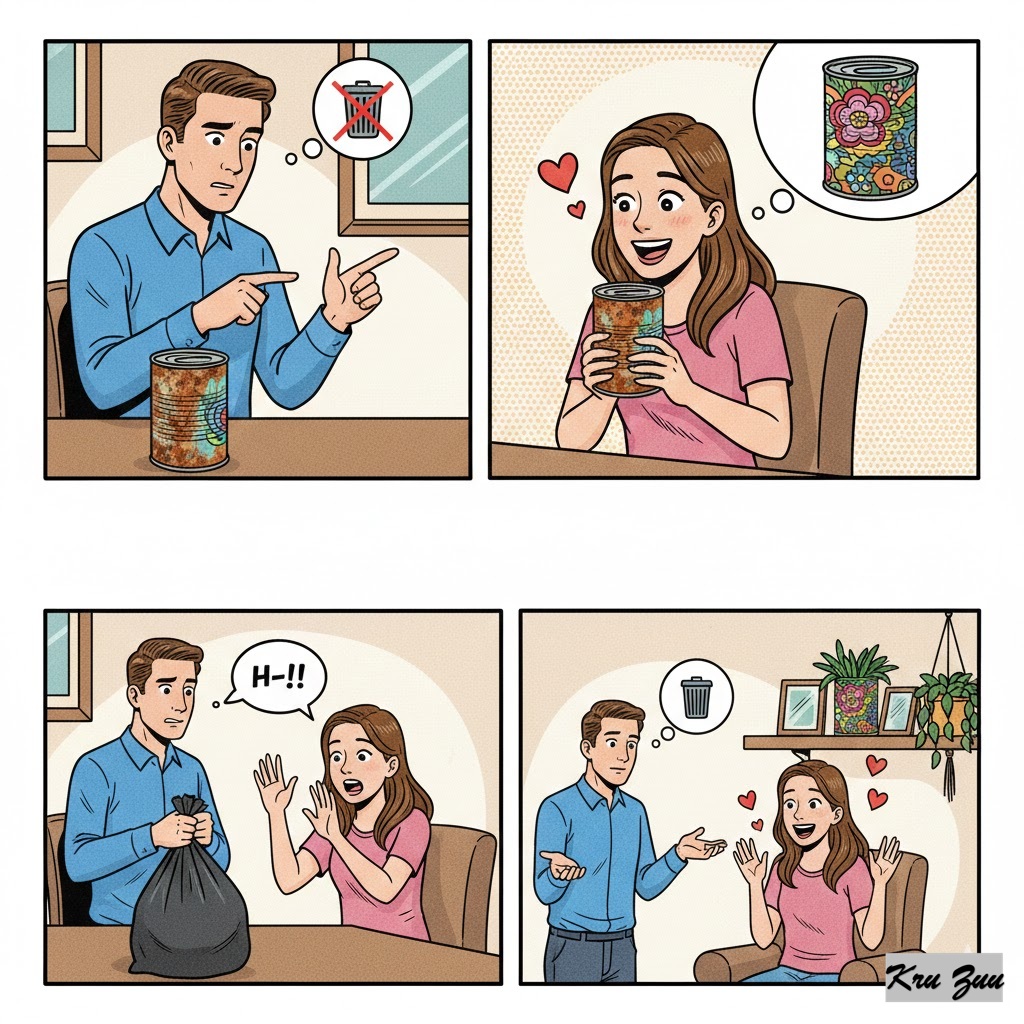
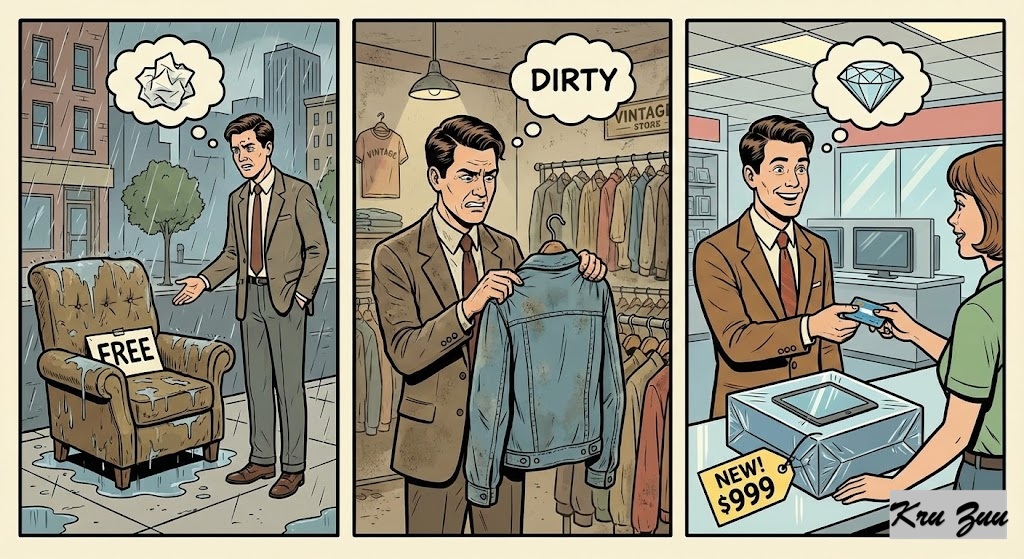
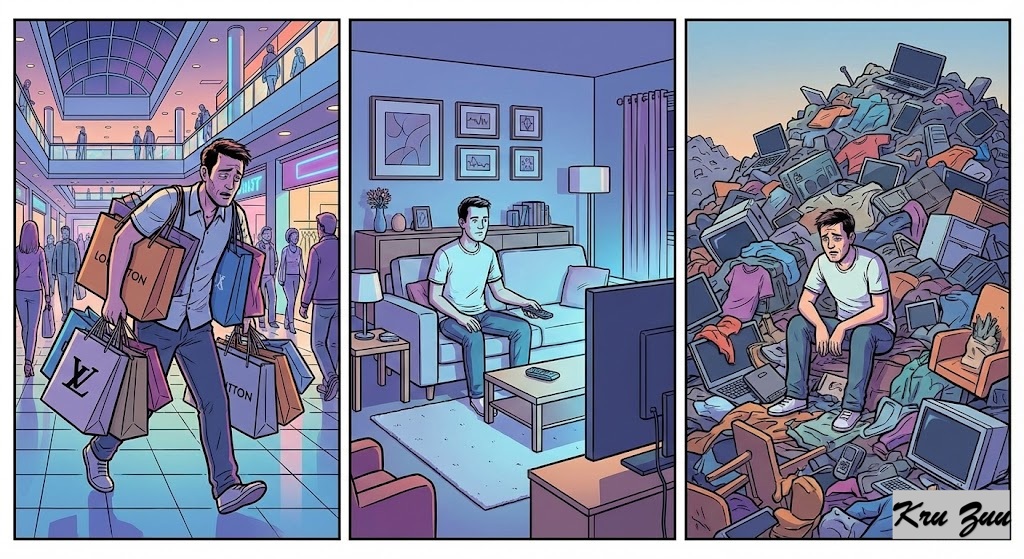
    You see an old chair on the sidewalk or a dusty vintage jacket. You think: “Ew, gross. Why is that junk still there?” 🗑️ You only value things that are shiny, brand-new, and straight off the shelf. You believe that Price = Value. If it’s cheap or used, it’s worthless to you.

    The Result? You spend a fortune chasing trends. Your home is full of generic items everyone else has. You lack the “vision” to see potential, and you’re stuck in a cycle of expensive, disposable consumption.


    😇 The Hero (The Alchemist)


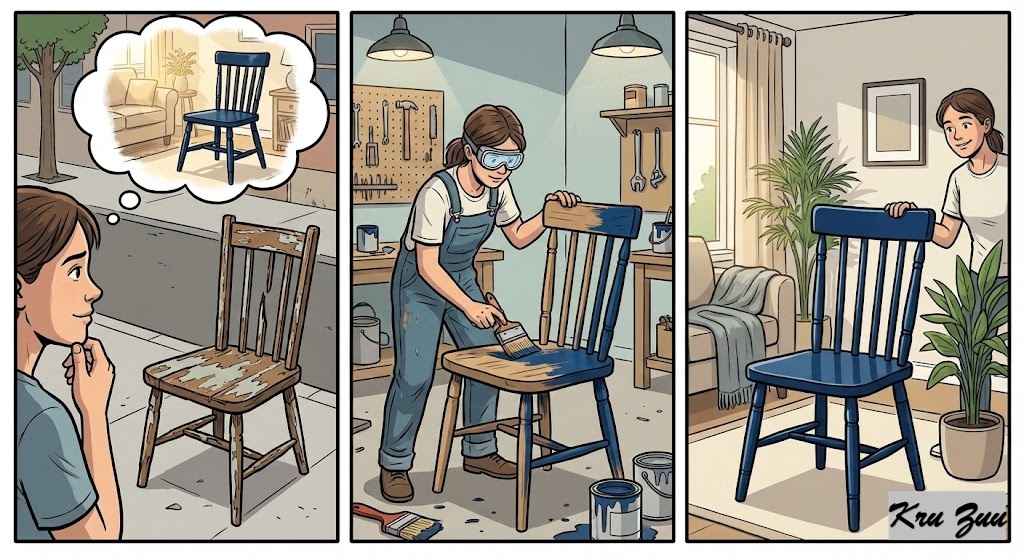
    You see the same old chair and think: “With a bit of sanding and blue paint, this is a masterpiece.” 🎨 You don’t look at what an object is; you look at what it can be. You recognize that value is subjective.

    The Result? You find incredible deals. Your life is filled with unique, soulful items. You save money while building a world of “treasures” that others missed. You understand that perspective is the ultimate wealth-builder. 🏰


    ⚖️ The Reality


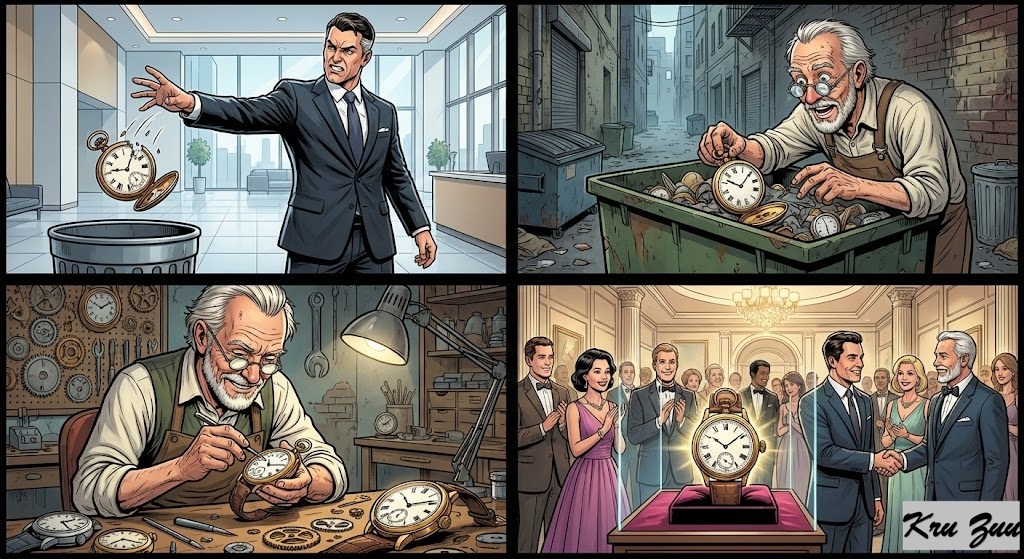
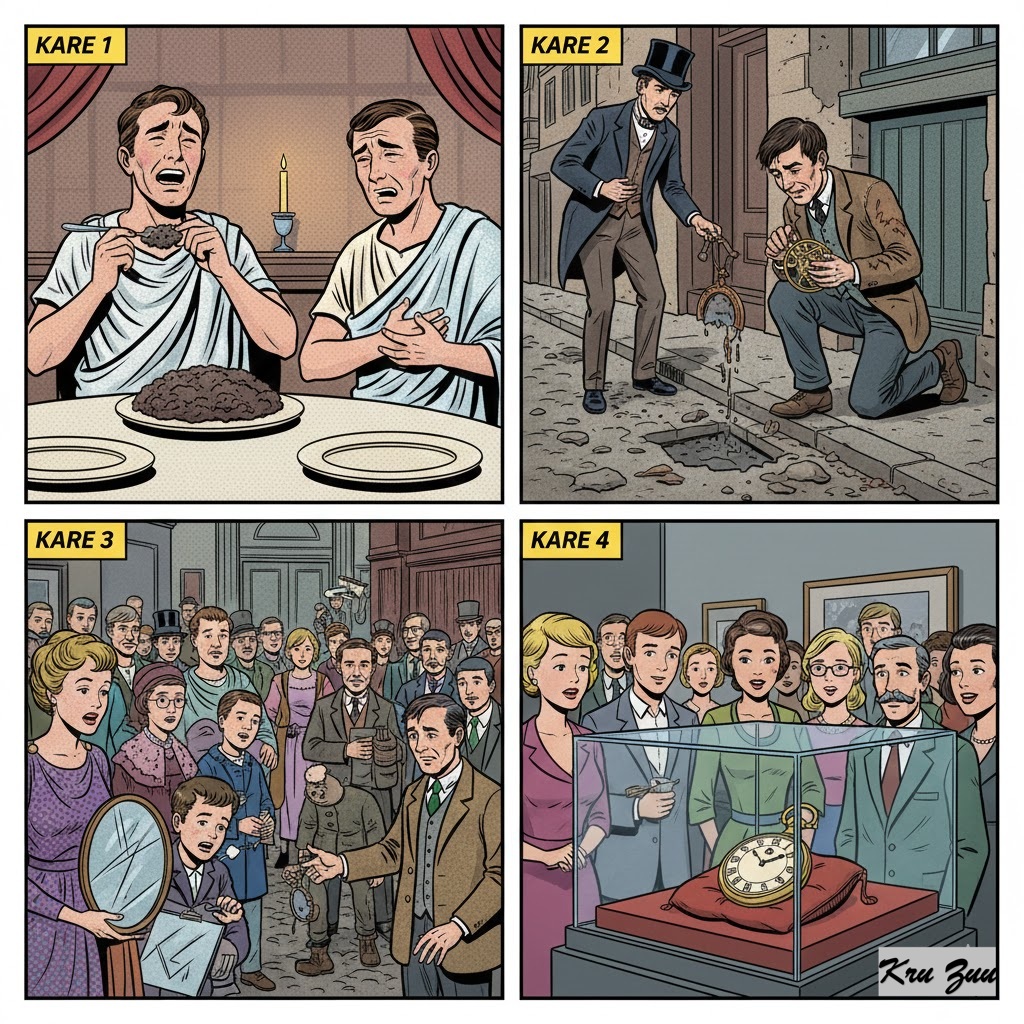
    Value is not a fixed number, it is a matter of perception. A broken watch is “trash” to a businessman, but a “treasure” to a watchmaker who needs parts. We live in a throw-away culture, but the most successful people find opportunities where others see obstacles. Wealth is often hidden in plain sight, disguised as “junk.”

    🧐 The Anatomy of the Proverb


    This is your reminder that worth is in the eye of the beholder.


    One man’s (Noun): A person’s subjective experience.


    Trash (Noun): Something discarded, worthless, or unwanted.


    Is another man’s (Phrase): Simultaneously becomes someone else’s.


    Treasure (Noun): Something of great value, beauty, or importance.


    Simpler Version: People have different ideas about what is valuable. / Don’t judge a book by its cover.


    📚 Vocabulary Vault


    Subjective (Adjective): Based on or influenced by personal feelings or tastes. 🎨


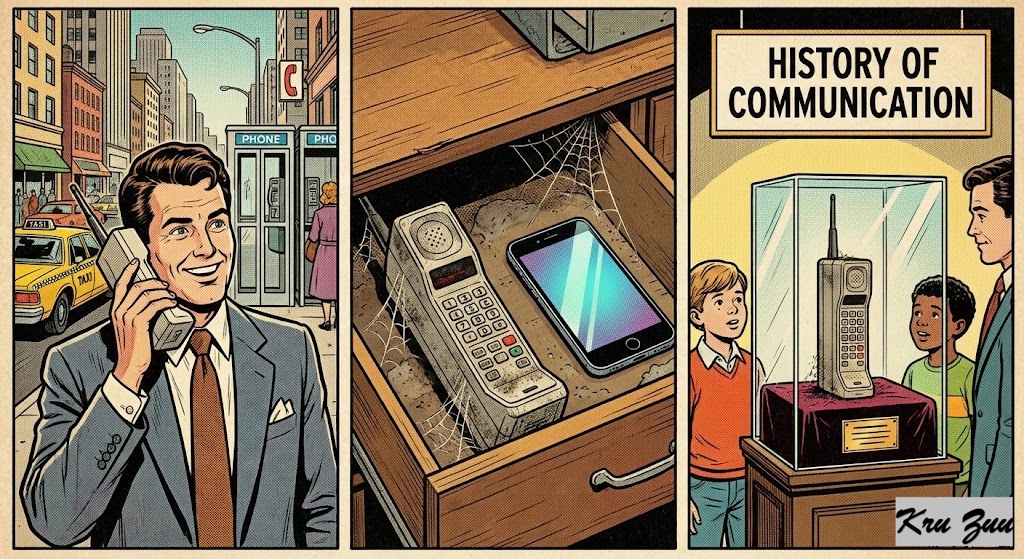
    Obsolete (Adjective): No longer produced or used; out of date.


    Upcycle (Verb): To reuse discarded objects or material in such a way as to create a product of higher quality or value than the original. ♻️


    Beholder (Noun): A person who sees or observes someone or something.


    Perception (Noun): The way in which something is regarded, understood, or interpreted.


    🧠 Grammar Focus: Idioms for Perspective


    We use this idiom to explain different tastes or to justify why we keep something others might find “ugly.”


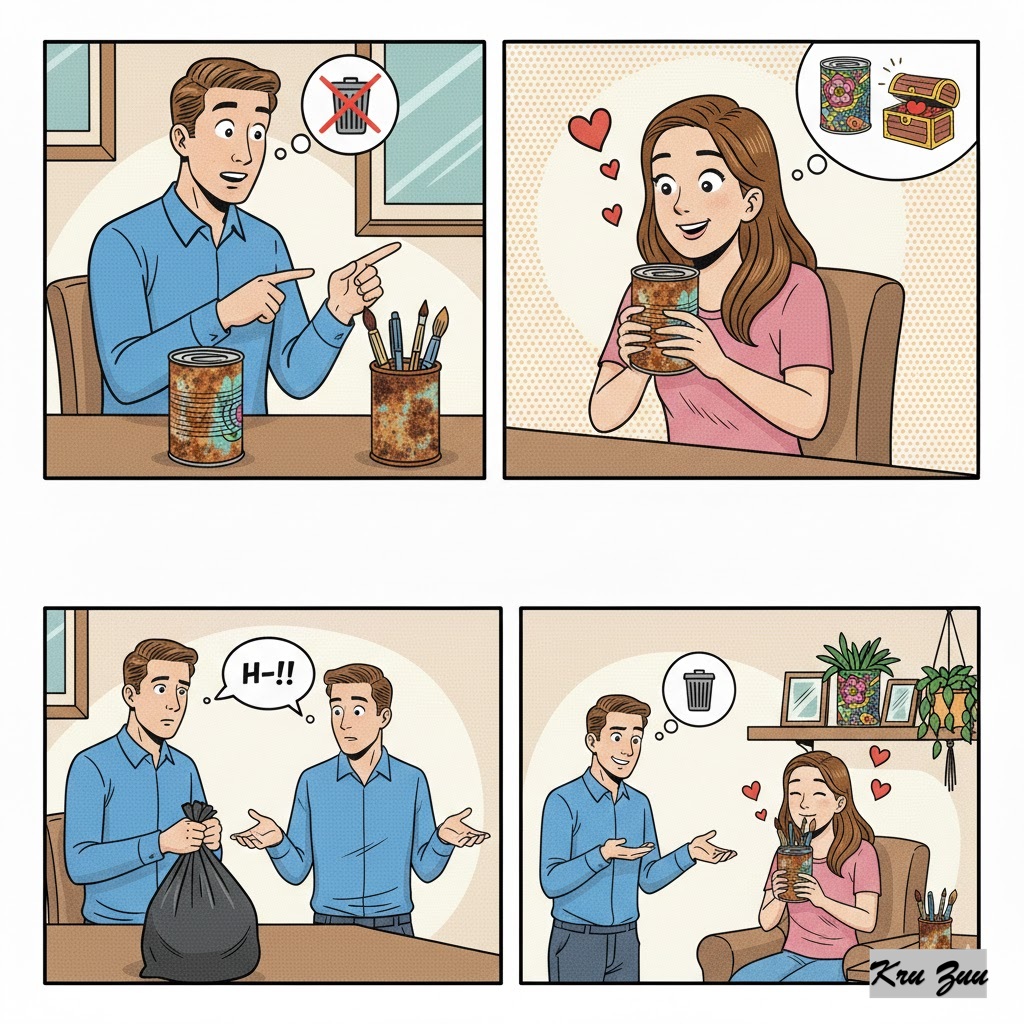
    Friend: “Why do you keep that rusty old tin can on your desk?”


    You: “Actually, it’s a 1920s limited edition tea box. I’m using it as a pen holder. You know what they say: One man’s trash is another man’s treasure.”

    📜 History: Origin and Spread


    Where did this philosophy of “trash to cash” begin?


    The Origin: While the sentiment is ancient, the specific phrasing became popular in the mid-19th century. It mirrors the Latin proverb “Quod aliis cibus est aliis fuat acre venenum” (What is food to one may be bitter poison to others).


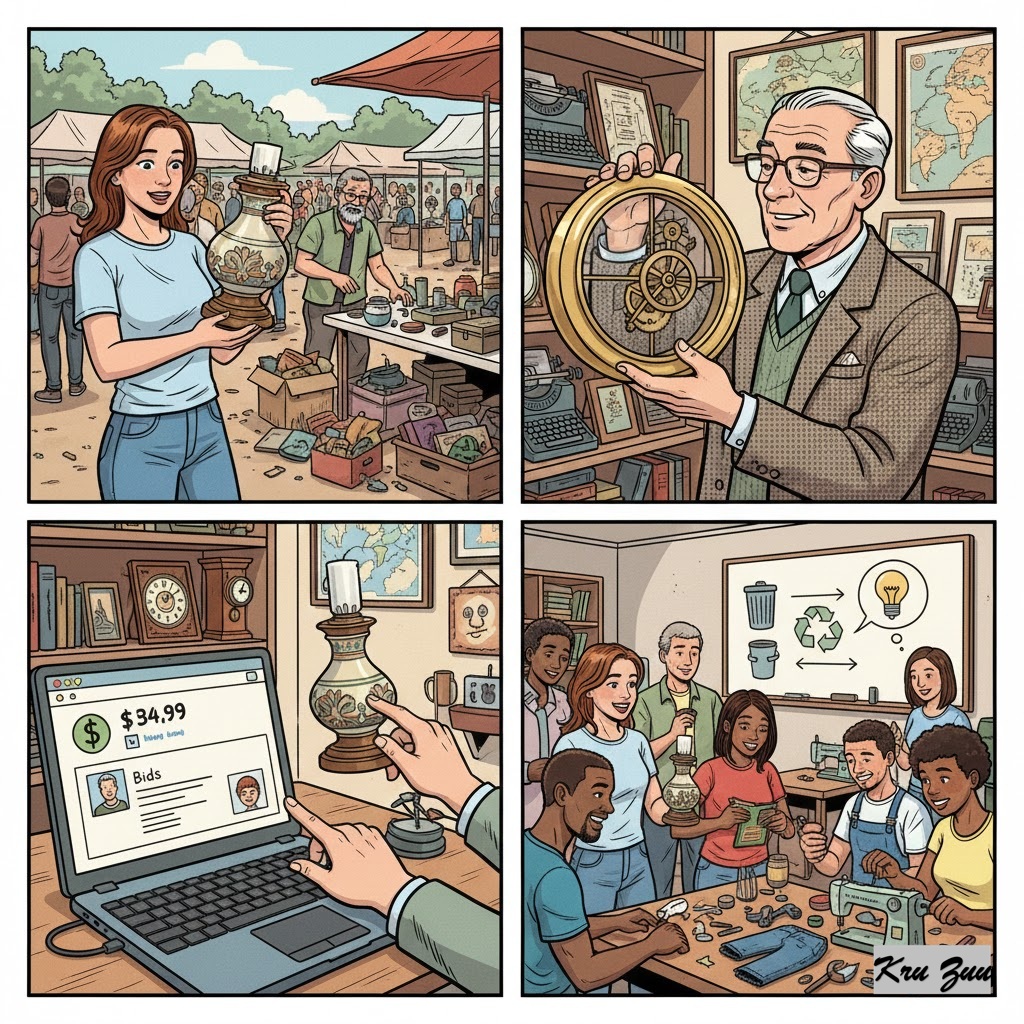
    The Logic: It’s the foundation of the Secondary Market (eBay, flea markets, antique shops). It highlights the human ability to innovate and find use where others find waste.


    Global Cousins


    🇫🇷 French: “Le bonheur des uns fait le malheur des autres.” (The happiness of some makes the unhappiness of others — similar context of differing perspectives).


    🇯🇵 Japanese: “Tade kuu mushi mo sukizuki.” (There are even bugs that eat knotweed, meaning tastes vary).

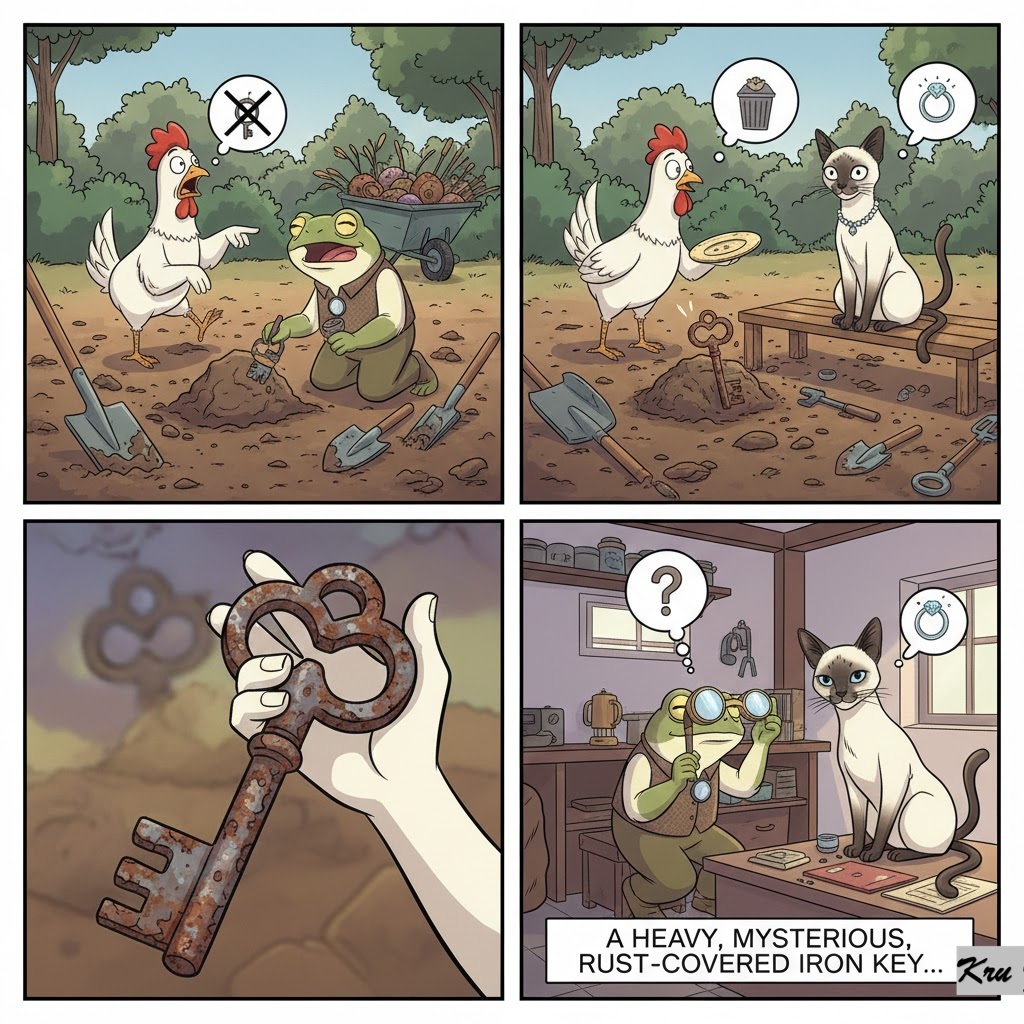
    🎭 Short Story: The Rusty Iron Key 🔑🐱🐔🐸


    🌟 The Cast


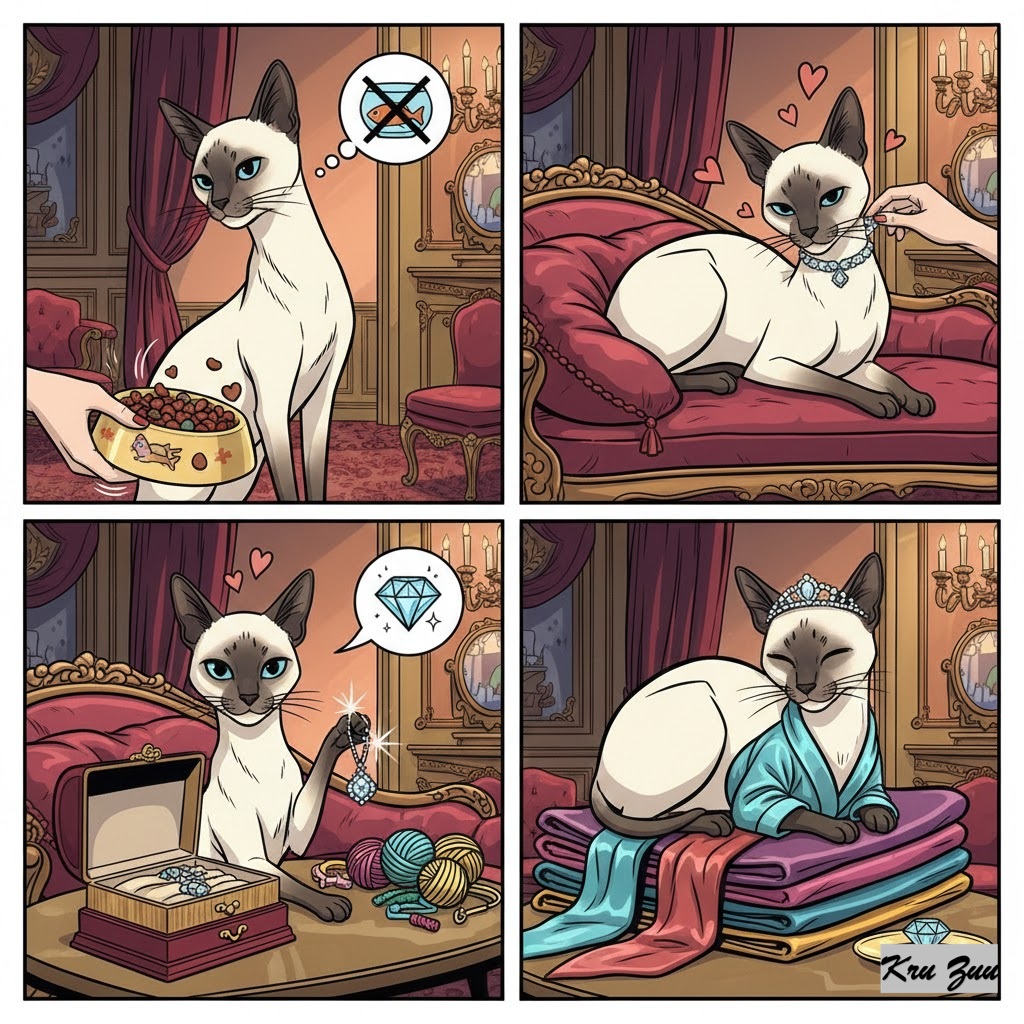
    Cleo the Cat: Elegant, only likes diamonds and silk. 😼


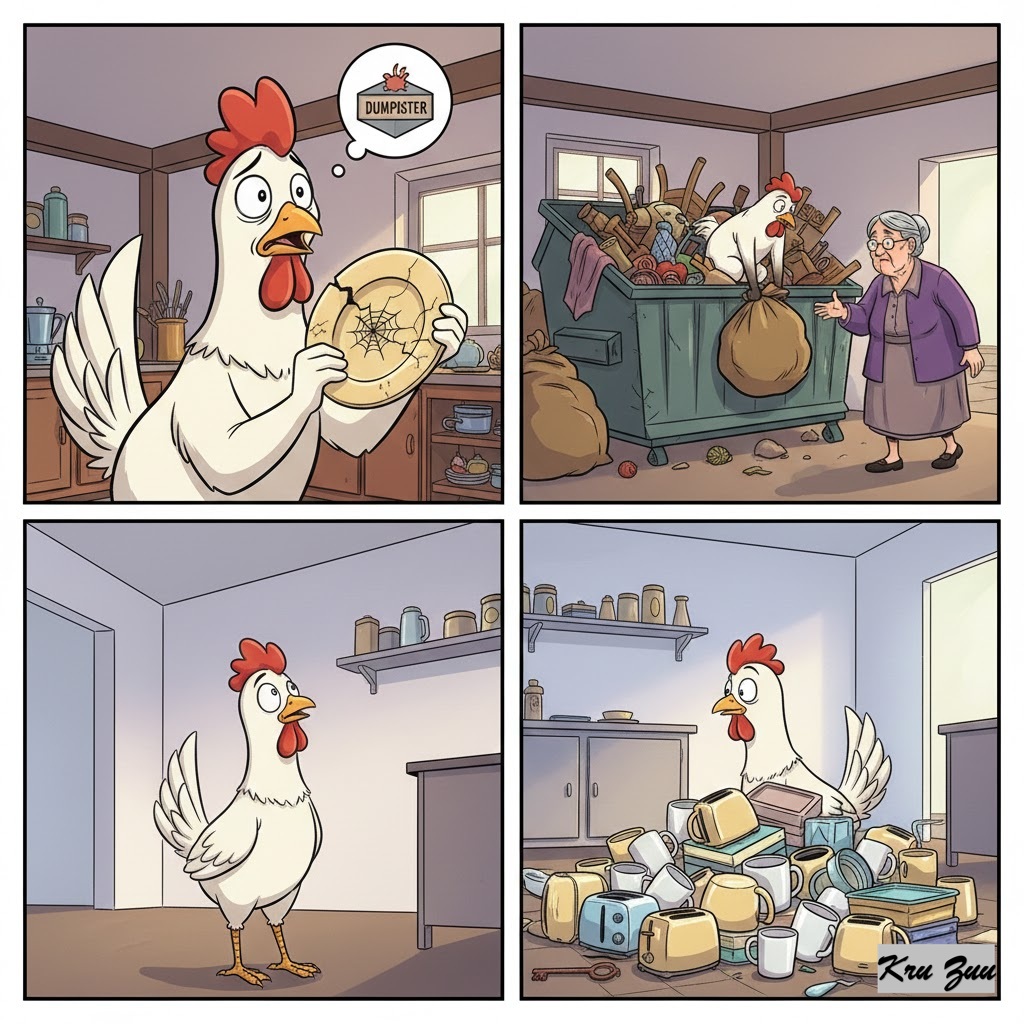
    Cluck the Chicken: Panics easily, throws away everything “old.” 🐔


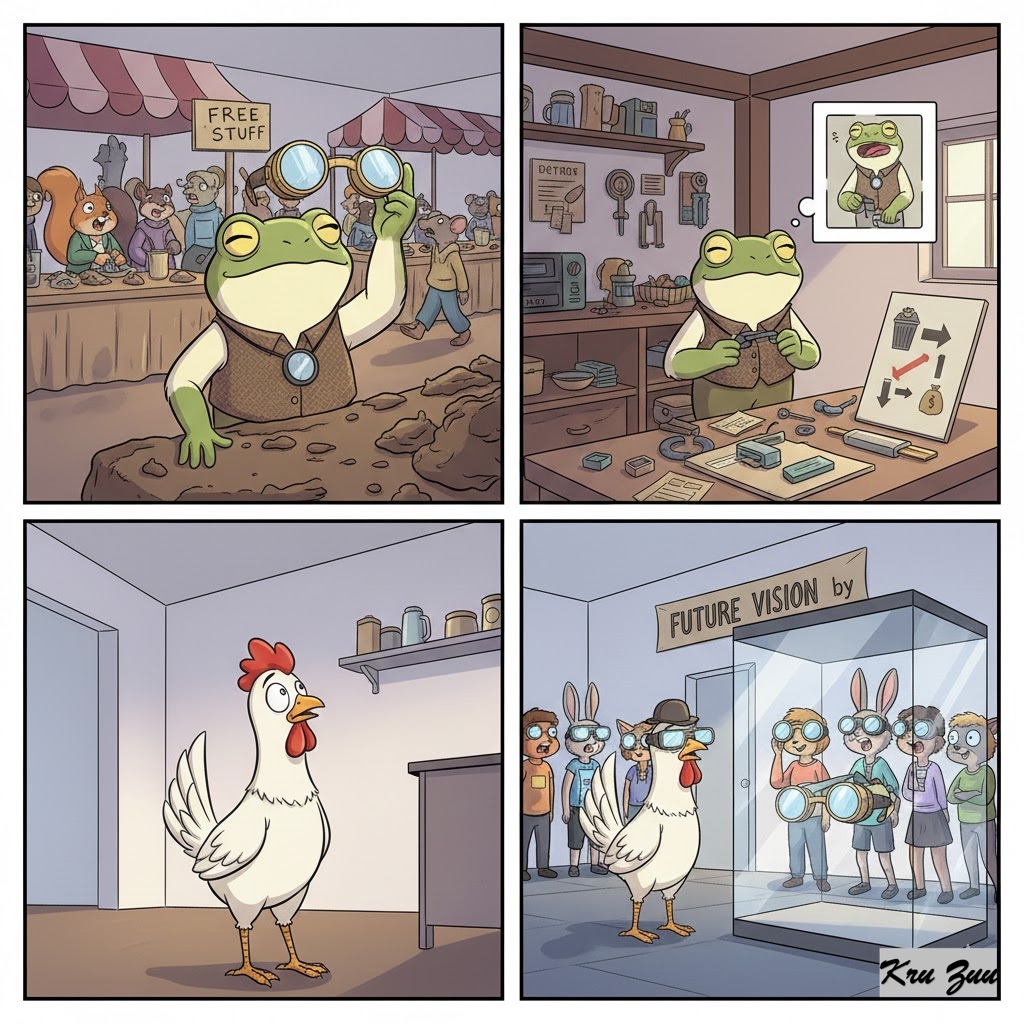
    Fred the Frog: The calm collector who sees the future. 🐸


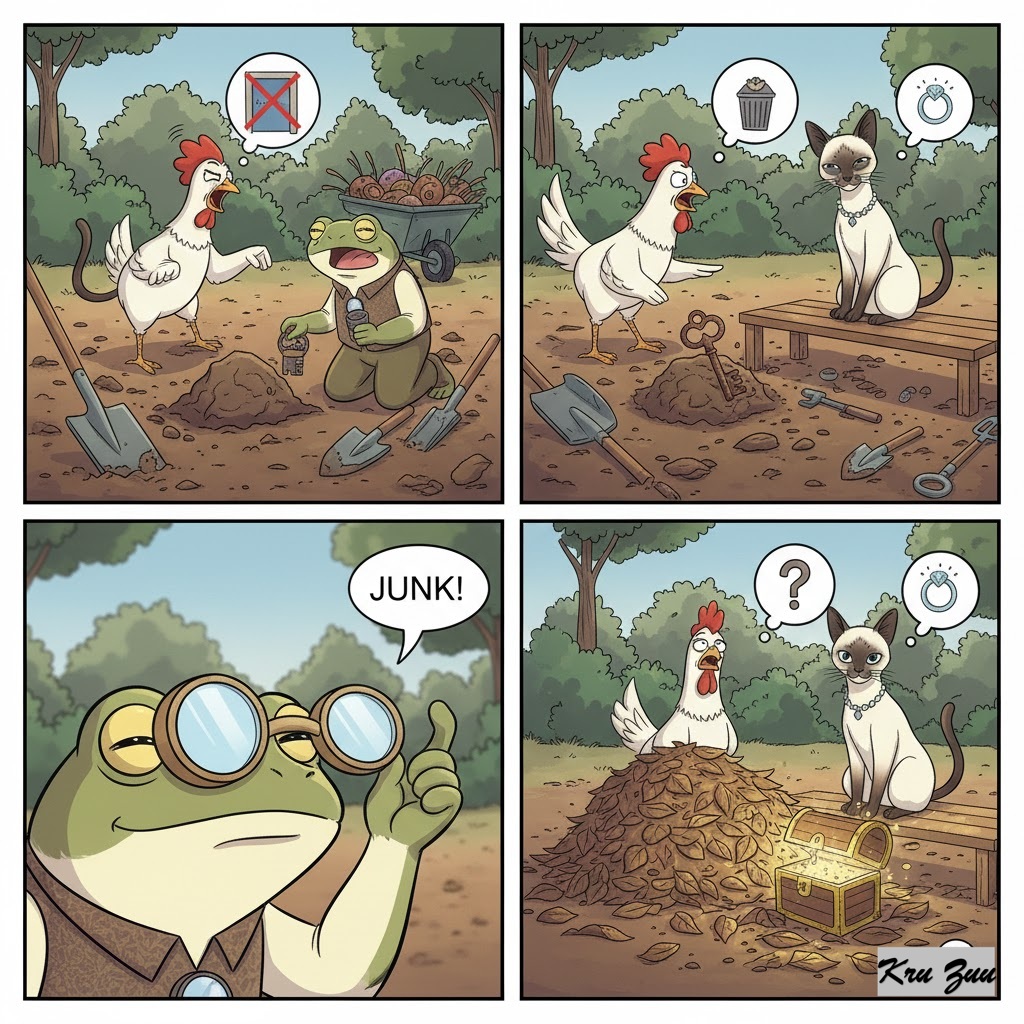
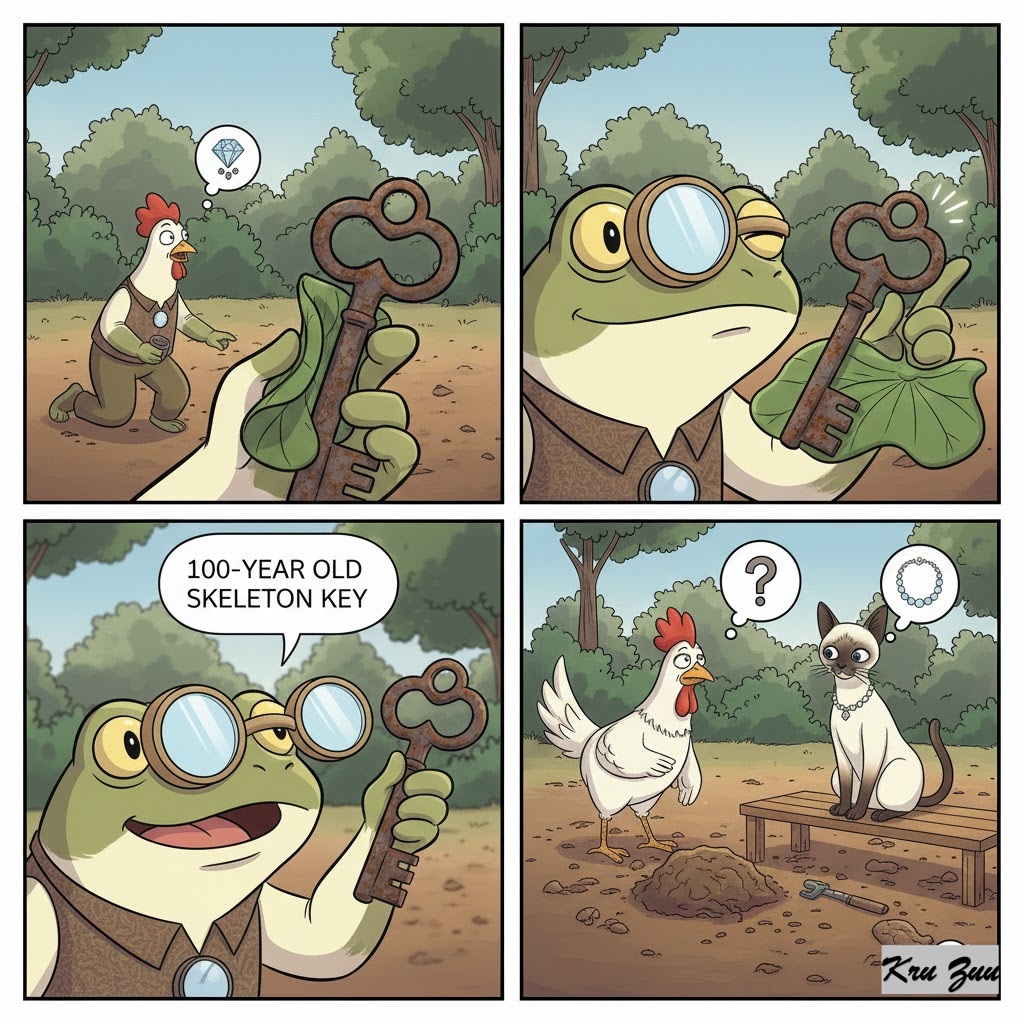
    The Situation: While cleaning the community garden, the trio finds a heavy, rusted, dirt-covered iron key.


    The Conflict: “Ugh! Get it away from me!” Cleo hissed, flicking her tail. “It’s filthy and probably covered in germs. It belongs in the bin!” Cluck squawked in agreement. “It’s useless! It doesn’t open my modern electronic coop door. It’s just heavy junk!” Cluck kicked the key into a pile of dead leaves.


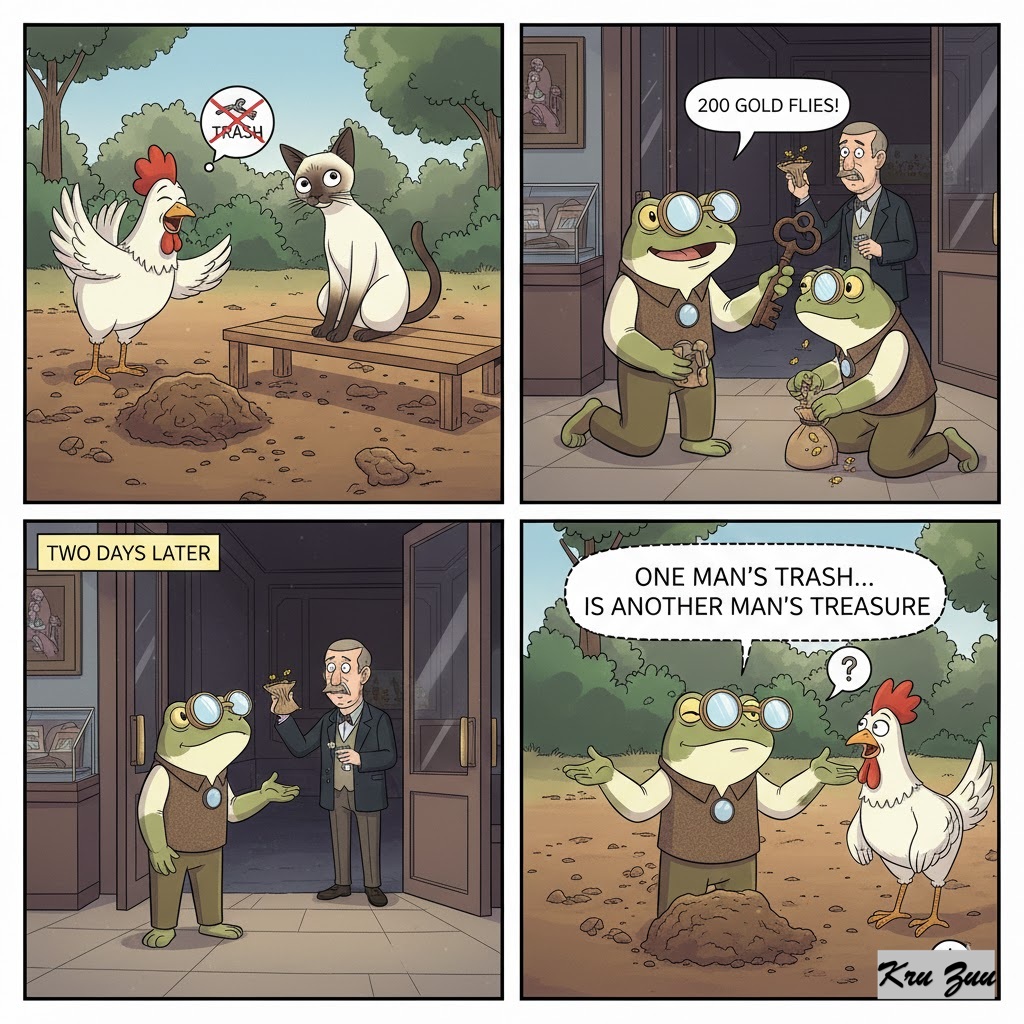
    The Reaction: Fred hopped over and picked up the key. He wiped away the mud with a lily pad. “Ribbit,” Fred whispered. “This isn’t junk. Look at the craftsmanship. This is a 100 year old skeleton key.”


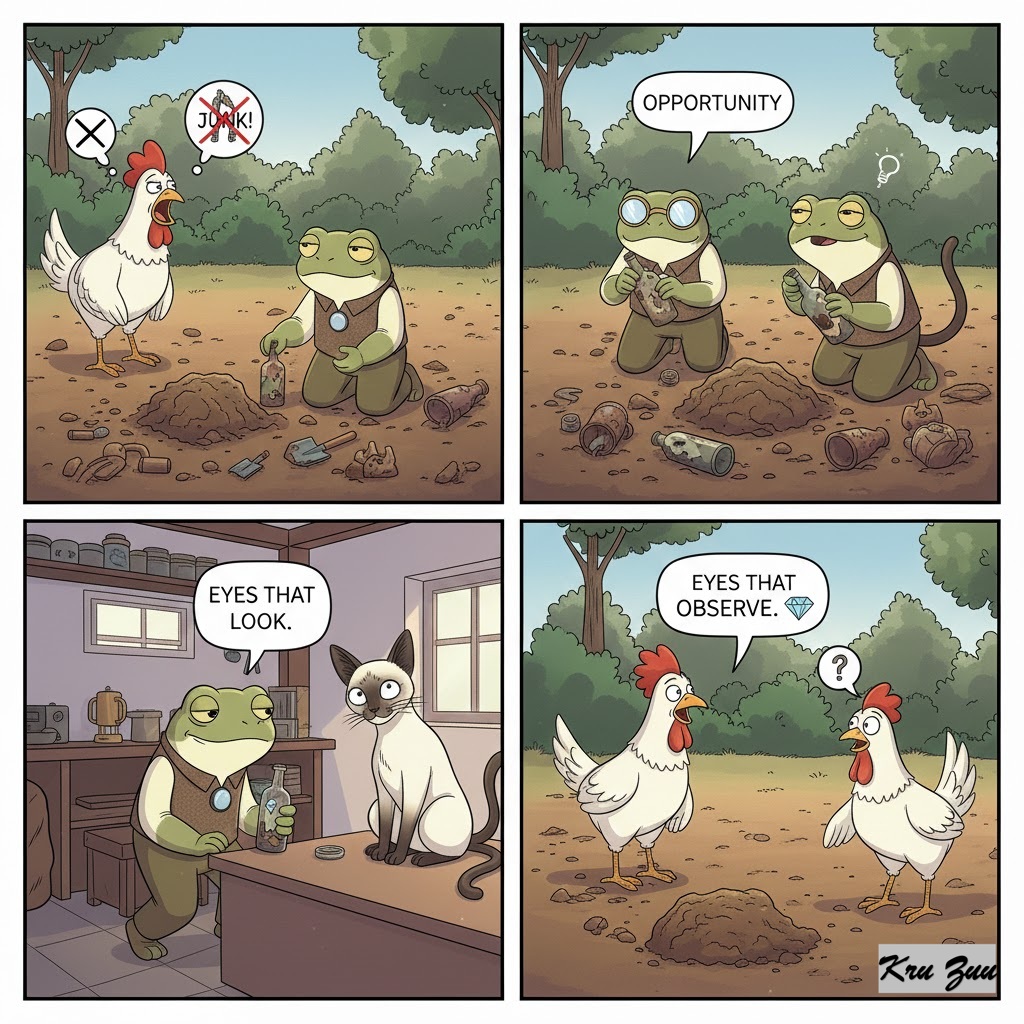
    The Resolution: Cleo laughed. “Have fun with your ‘trash,’ Fred.” Two days later, Fred returned. He had polished the key until it glowed like silver and attached it to a leather cord. He sold it to a local museum collector for 200 Gold Flies. Cleo and Cluck stared, mouths open. “You got all that for that piece of garbage?” Fred adjusted his glasses. “To you, it was a piece of metal. To the collector, it was the missing piece of history. One man’s trash, my friends… is another man’s treasure.”


    The Moral: Eyes that look see “junk.” Eyes that observe see “opportunity.” 💎

    🎓 Lesson for English Learners


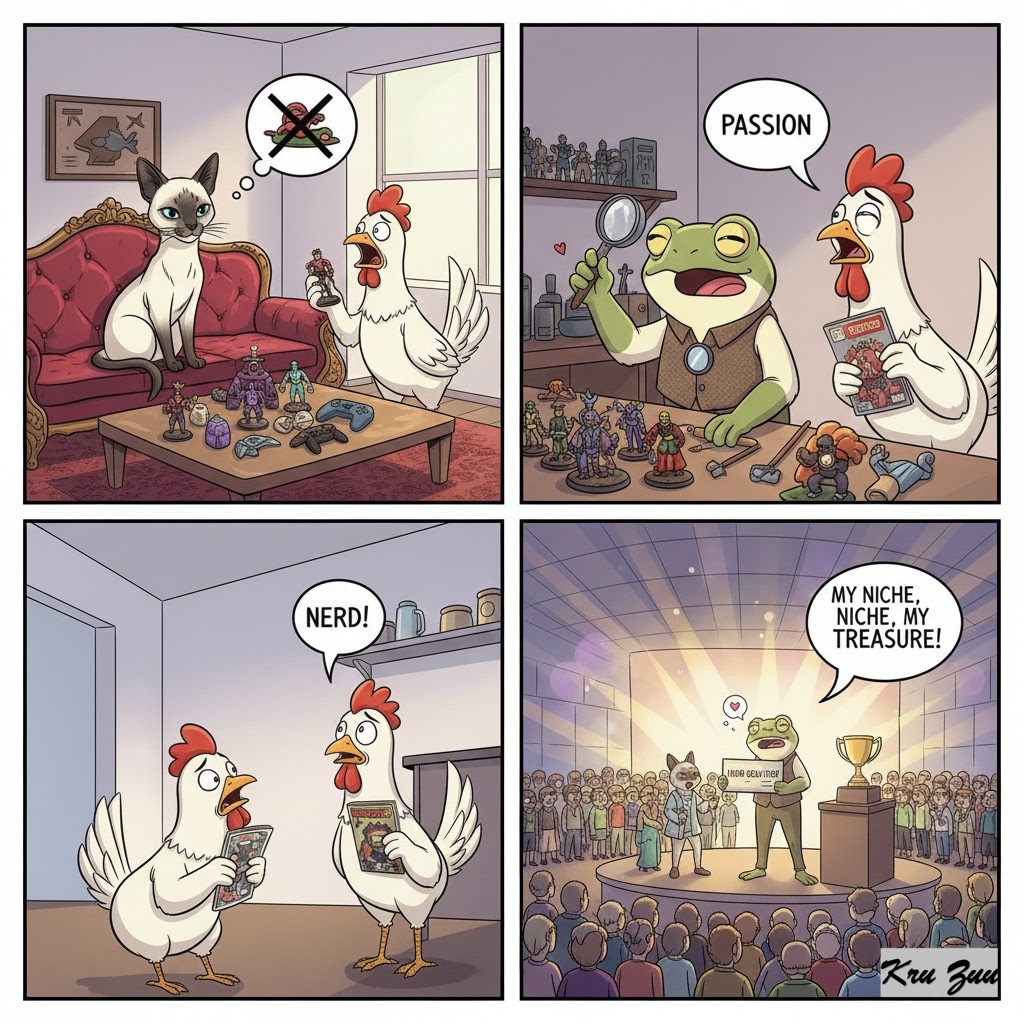
    Use it to defend your niche interests.


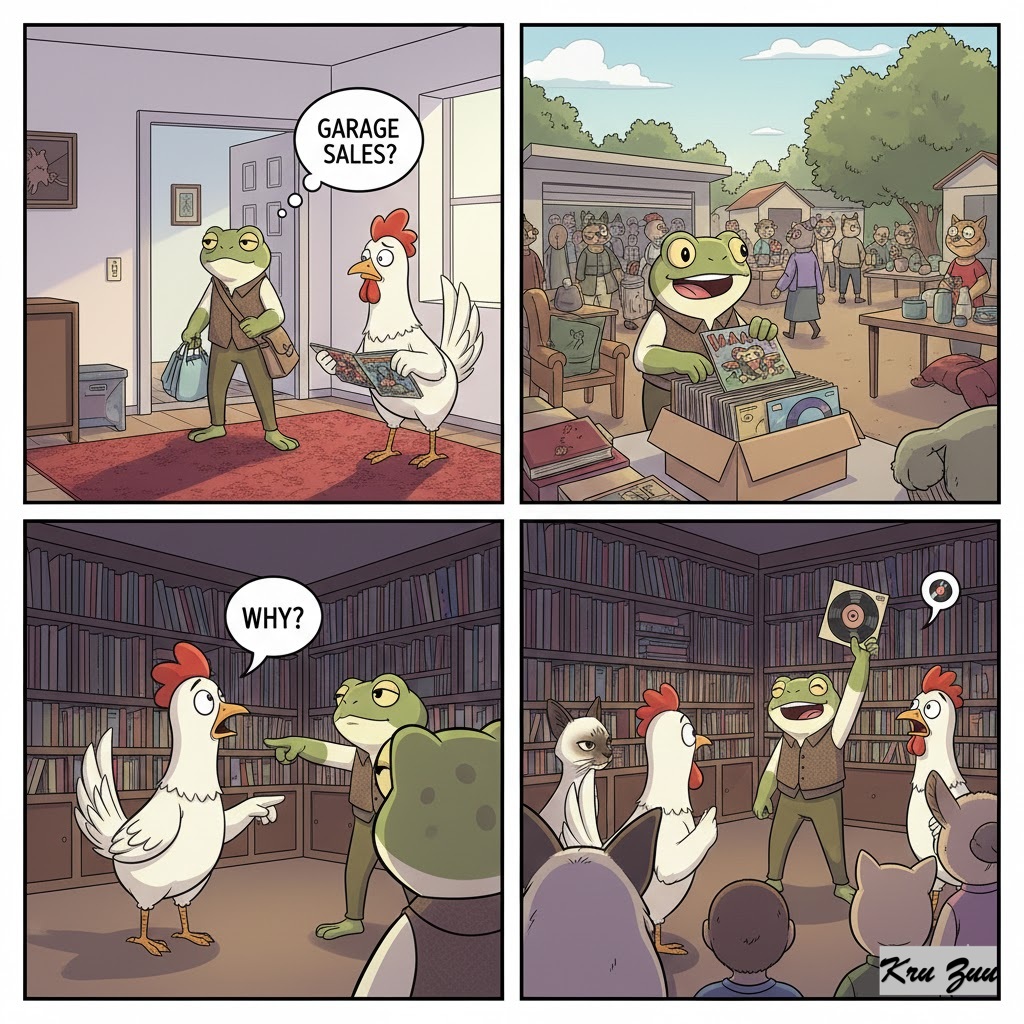
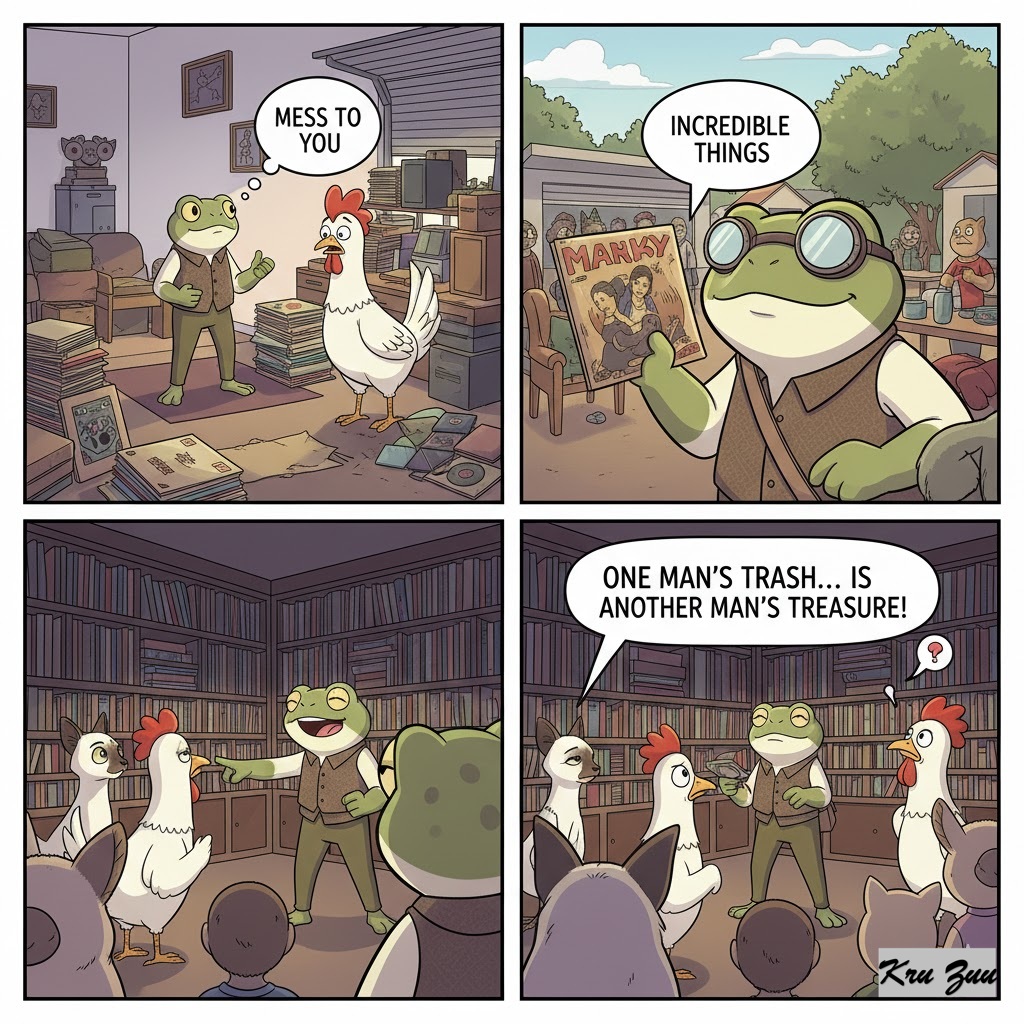
    Situation: Someone asks why you spend your weekends at garage sales or buying old vinyl records.


    You Say: “I know it looks like a mess to you, but I find incredible things there. After all, one man’s trash is another man’s treasure!”


    💬 Your Turn: The “Treasure” Challenge 🚀


    The Challenge:
    Look around your room or a local second-hand shop.

    The Action: Find one item that is “obsolete” (like a CD, an old jar, or a worn-out book).

    Ask yourself: “How could this be valuable to someone else? Could it be art? Could it be a tool? Could it be a memory?”


    👇 Question for the comments: What is the “weirdest” thing you own that you refuse to throw away? Why is it a treasure to you? Tell us below!

    By Zubeyir YURTKURAN

    https://www.facebook.com/BrainBattleground/

    https://www.facebook.com/zubeyr.yurtkuran/

    https://www.instagram.com/zubeyryurtkuran/
    https://www.youtube.com/@BrainBattleground-b3p

    https://www.instagram.com/brainbattleground/

  • ⚔️ The Daily Shield: The Law of Momentum

    ⚔️ The Daily Shield: The Law of Momentum

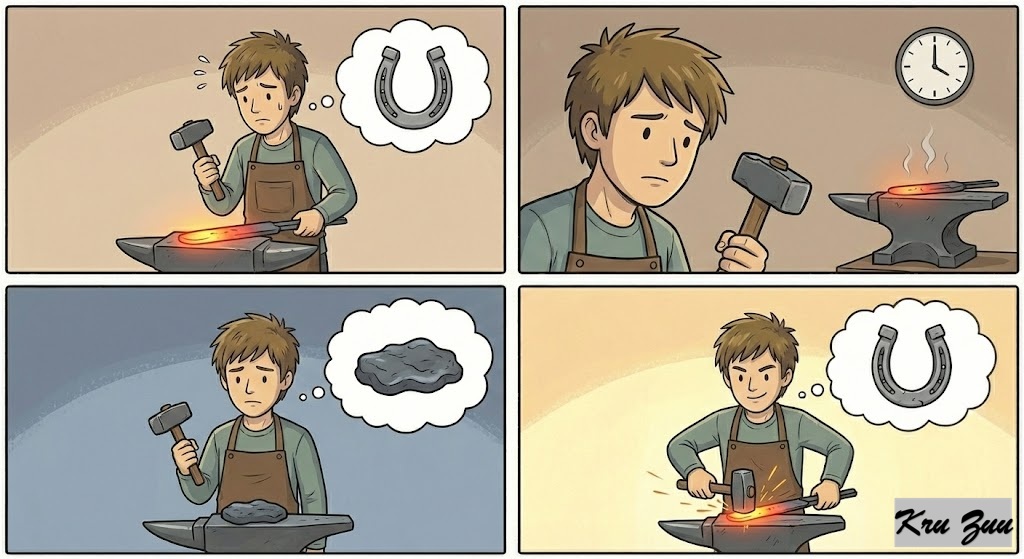
    “Strike while the iron is hot.”


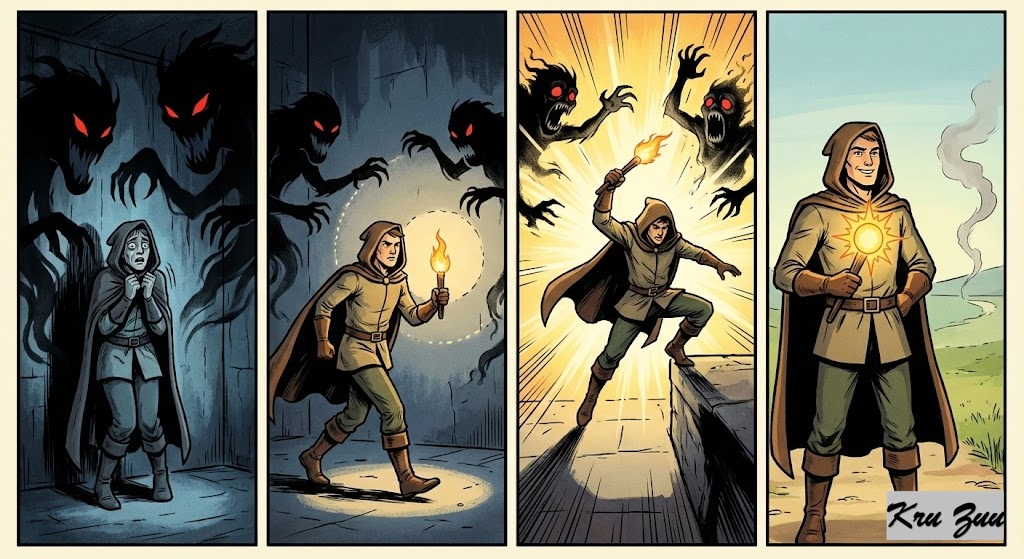
    🥶 The Villain (The Hesitator)


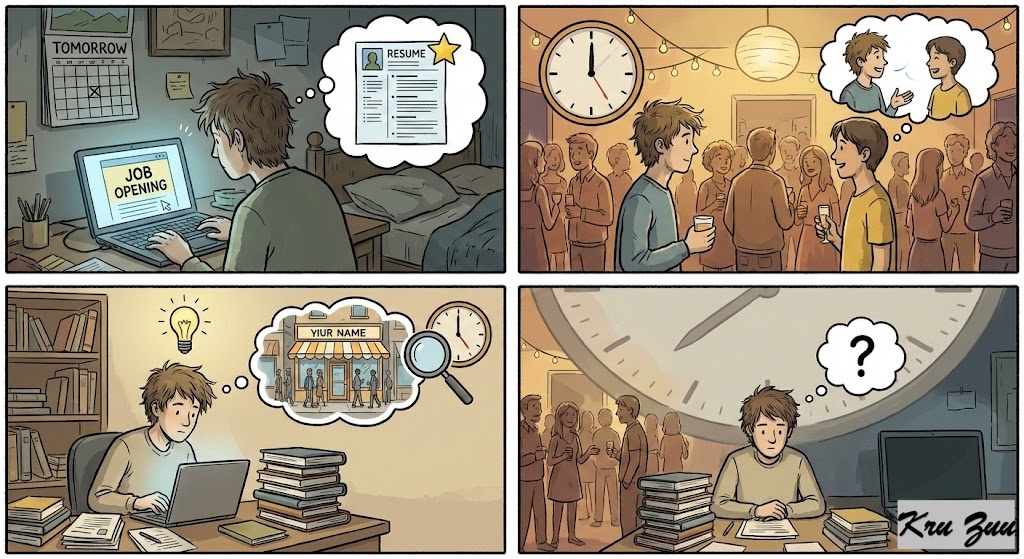
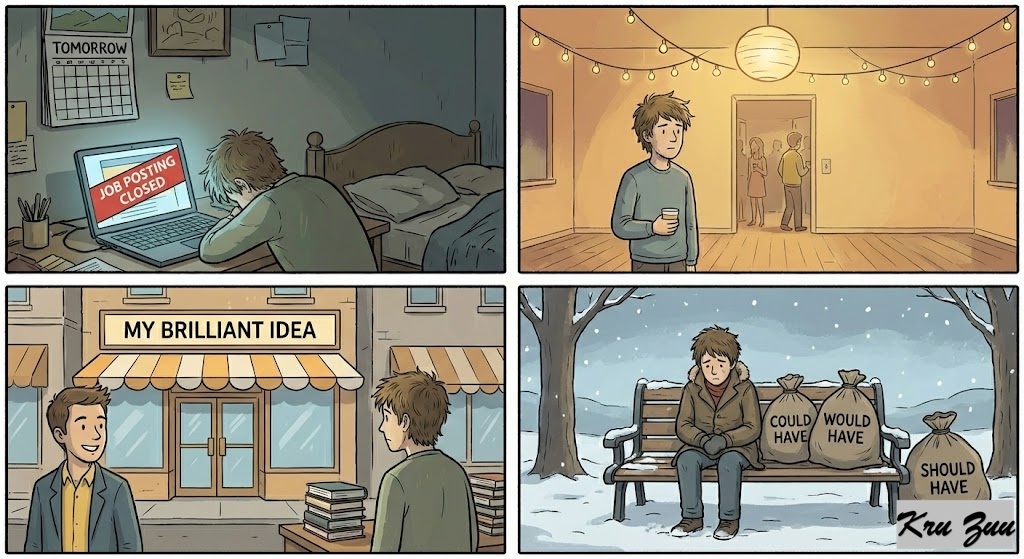
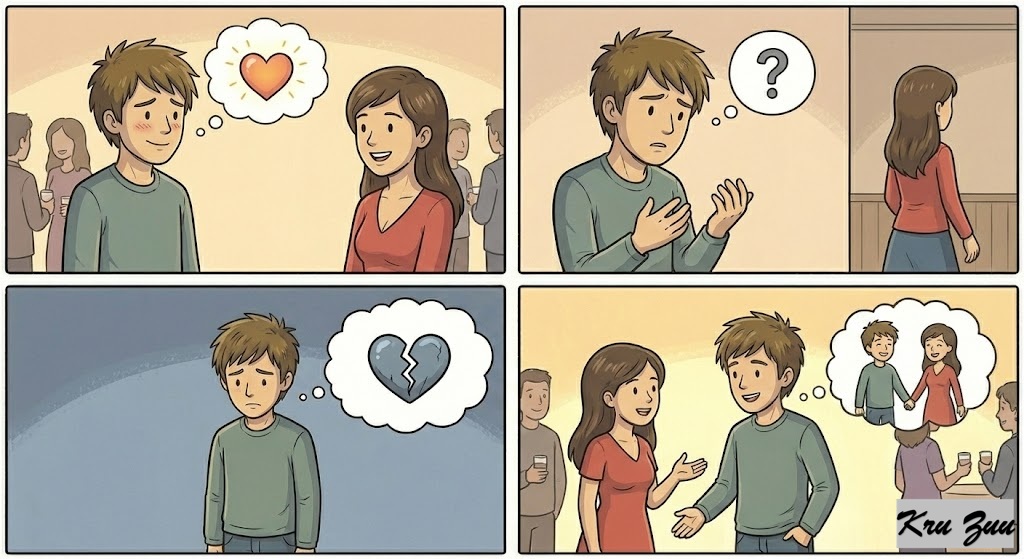
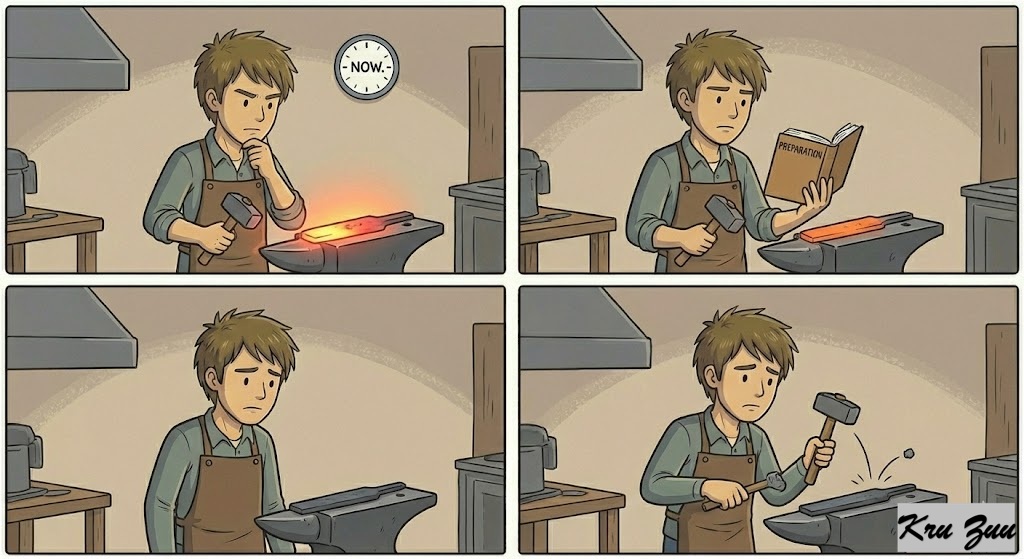
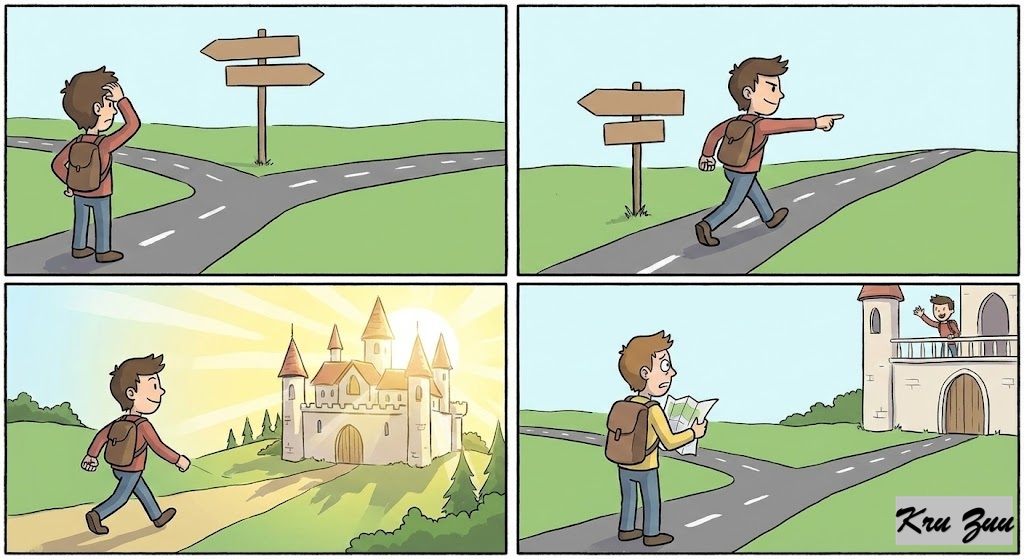
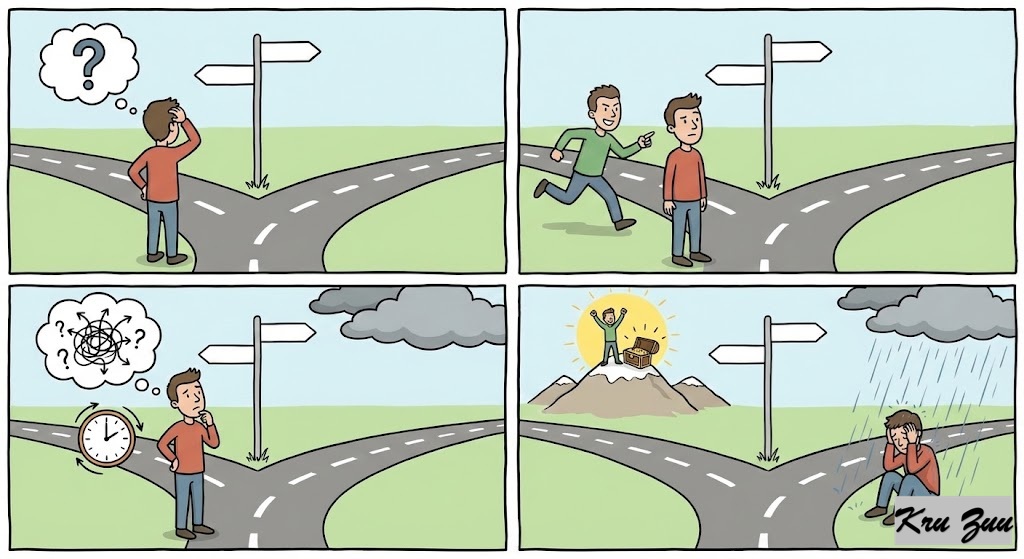
    You see a job opening that is perfect for you. You say, “I’ll apply tomorrow; I need to update my CV perfectly first.” You see a person you want to talk to at a party. You wait for the “right moment.” You have a brilliant idea for a business, but you decide to “research more” first.

    The Result? The job posting closes. The person leaves the party. Someone else launches your business idea. You are left standing in the cold, holding a bag full of “Could have,” “Would have,” and “Should have.” The opportunity didn’t wait for you. It vanished. ❄️


    🔥 The Hero (The Striker)


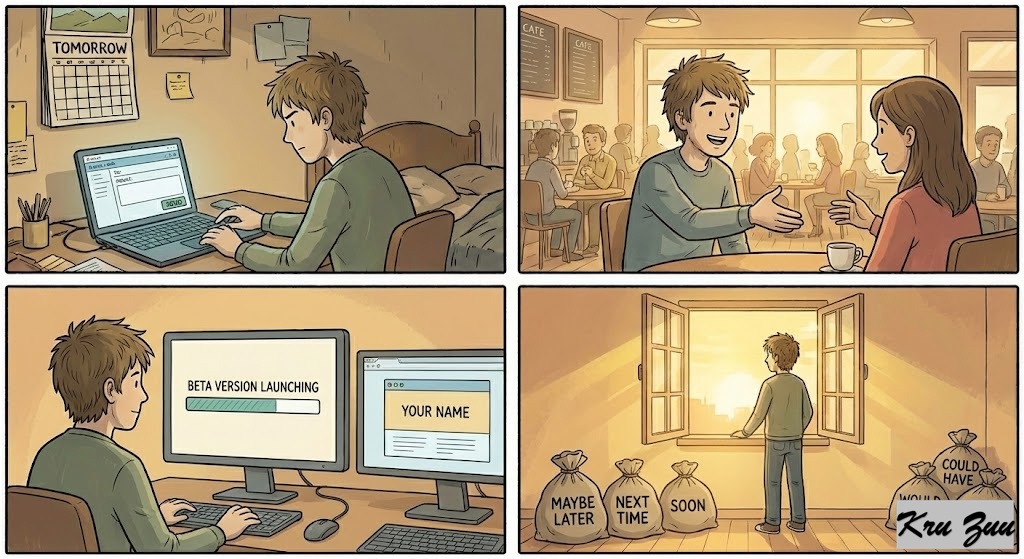
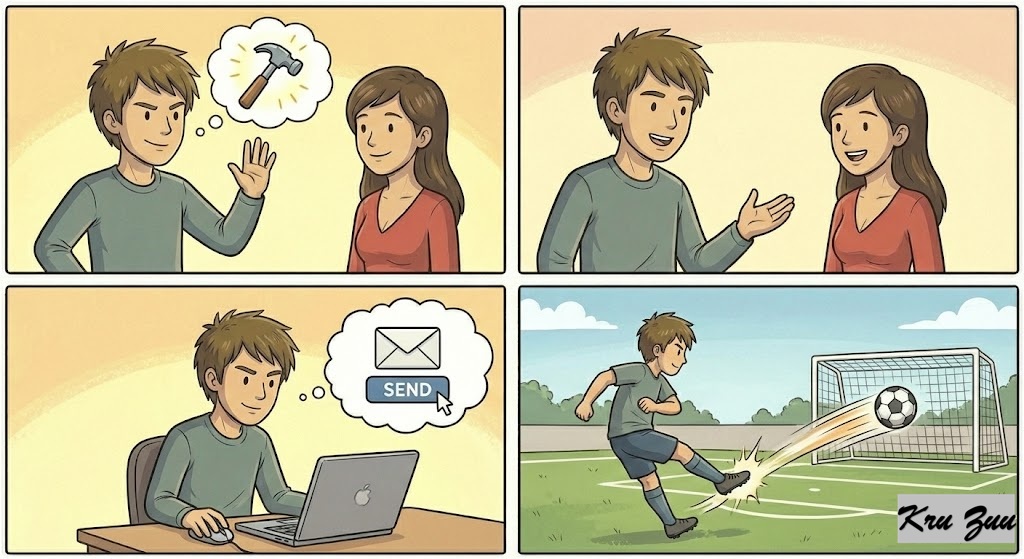
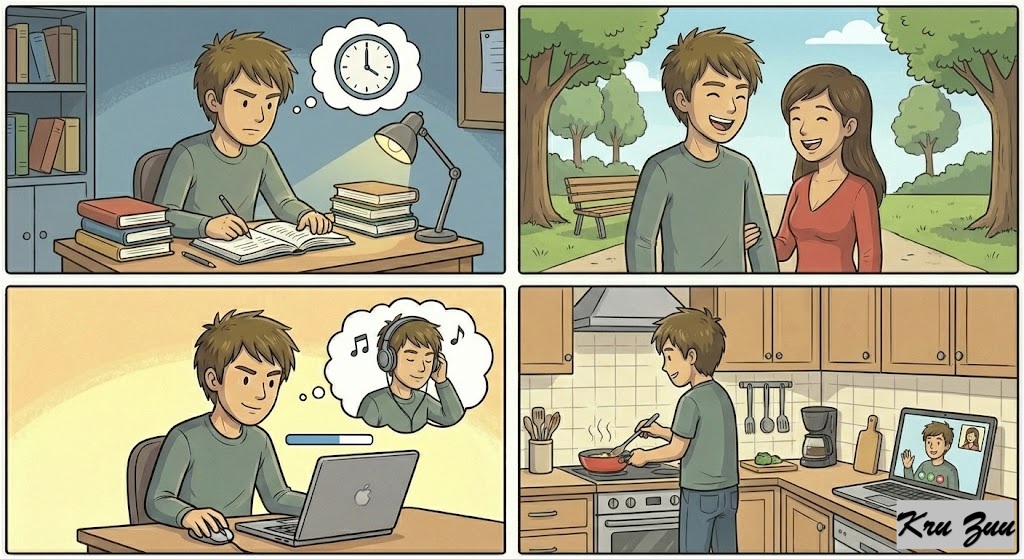
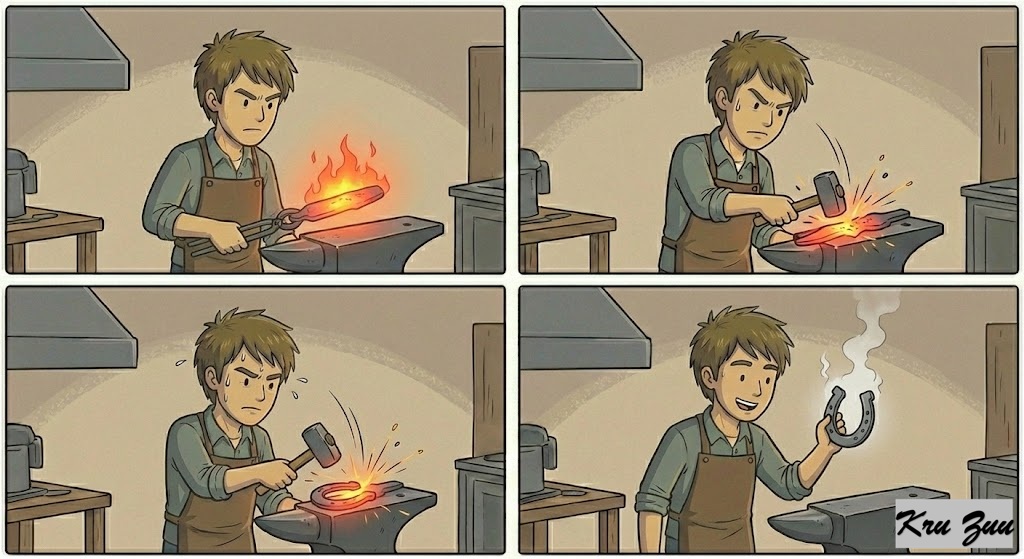
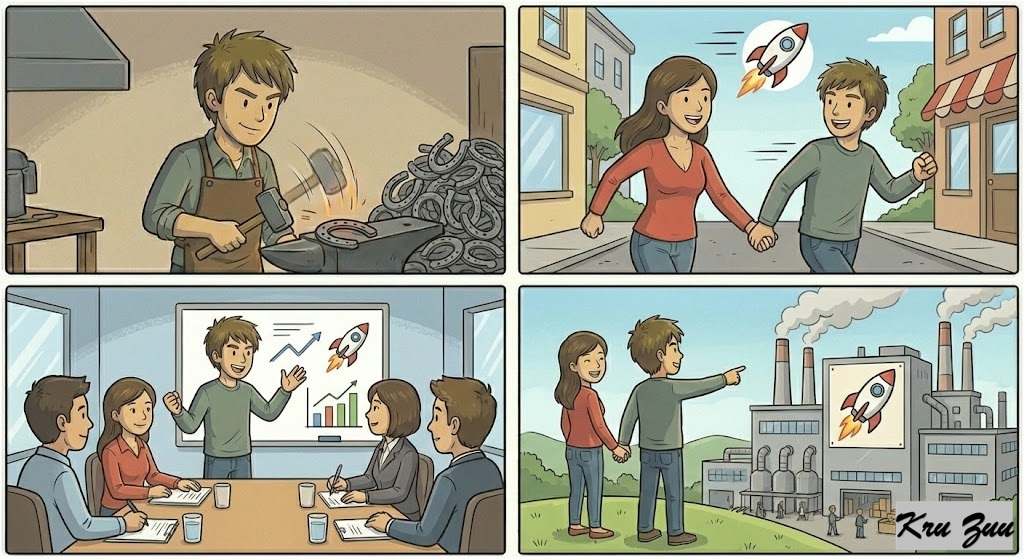
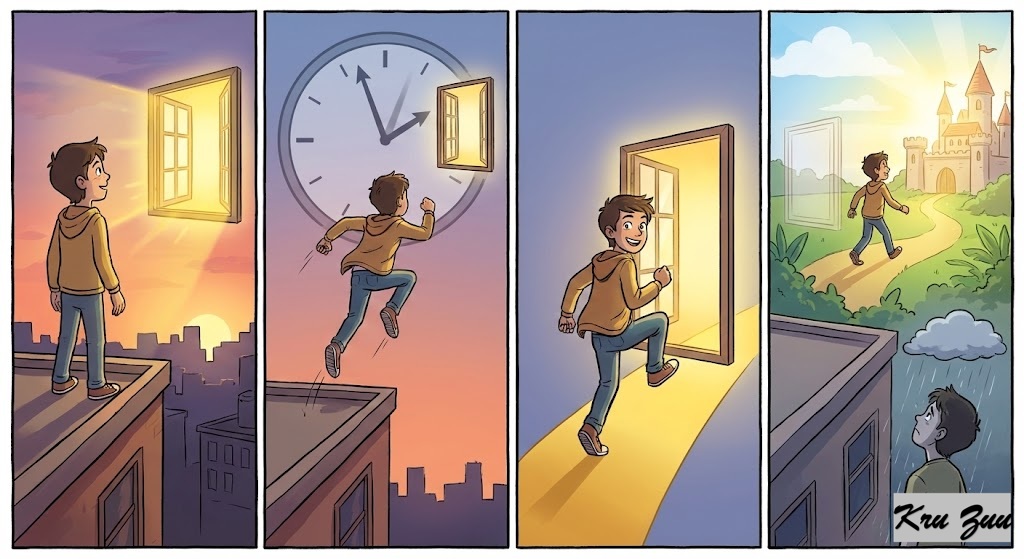
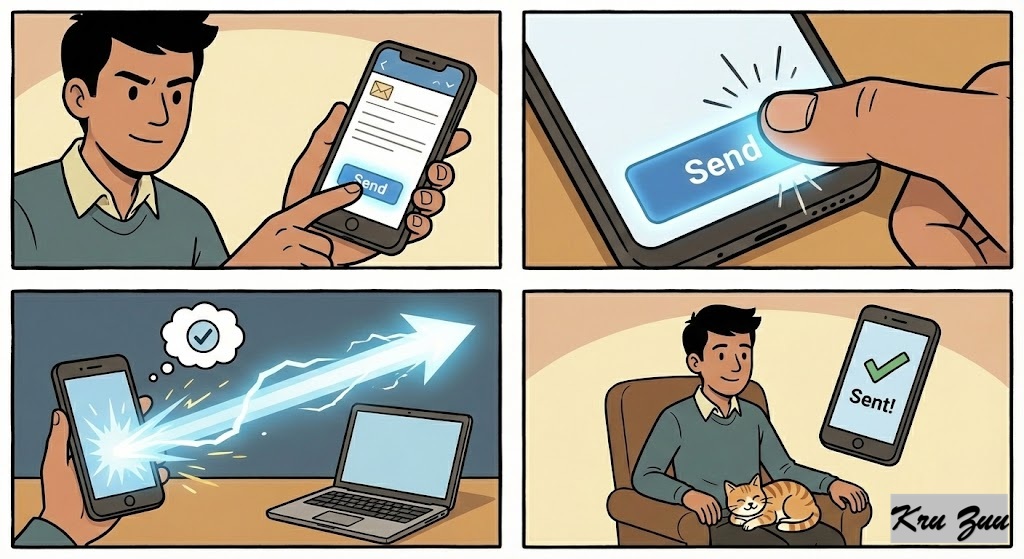
    You see the window of opportunity open. It’s scary. You aren’t 100% ready. But you know that speed is a weapon. You send the email now. You say “Hello” now. You launch the beta version now.

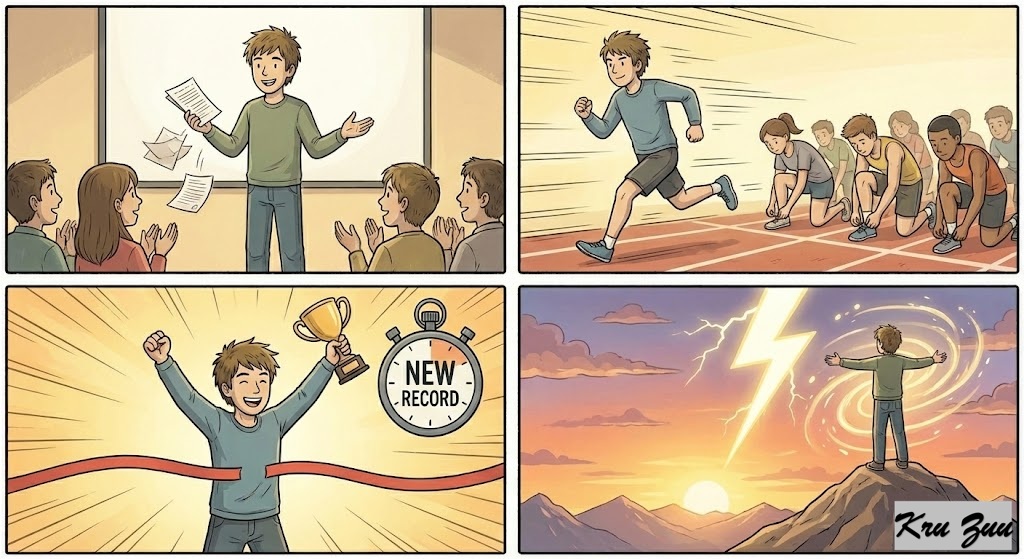
    The Result? You might make a mistake, but you are in the game. You are moving. You grab the win while others are still tying their shoelaces. You understand that the universe loves speed. ⚡


    ⚖️ The Reality


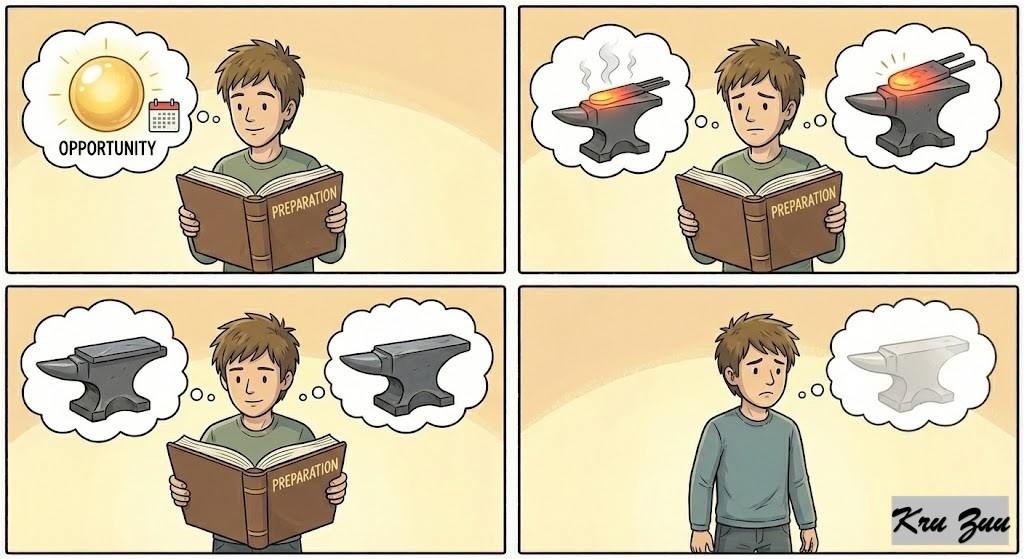
    Opportunities have an expiration date. Ideally, we want to be 100% prepared. But in reality, by the time you are 100% prepared, the chance is usually gone. The “Iron” (the opportunity) cools down and hardens rapidly.


    💎 The Secret

    You don’t need to be perfect; you just need to be present. It is better to strike imperfectly than to stare at the hammer until the metal goes cold.

    🧐 The Anatomy of the Proverb


    This is the ultimate rule for success and dating!


    Strike (Verb): To hit forcibly; to take action. 🔨


    While (Conjunction): During the time that; at the same time as.


    Iron (Noun): The metal (representing the opportunity).


    Hot (Adjective): Ready to be shaped.


    Simpler Version: Act immediately when you have the chance.


    📚 Vocabulary Vault


    Momentum (Noun): The force that keeps an object moving. (Action creates momentum!). 🚀


    Fleeting (Adjective): Lasting for a very short time. (Opportunities are fleeting). 💨


    Decisive (Adjective): Having the ability to make decisions quickly and effectively.


    Hesitation (Noun): The action of pausing before doing something. (The enemy of speed).


    Window of Opportunity (Phrase):
    A short period of time during which an action can be taken. 🪟


    🧠 Grammar Focus: Time Clauses with “While”


    This proverb uses a Time Clause to show two things happening at once.


    Structure: [Action Verb] + while + [Condition].


    The Logic: You must do the action during the condition. Once the condition ends, the action is useless.


    Examples


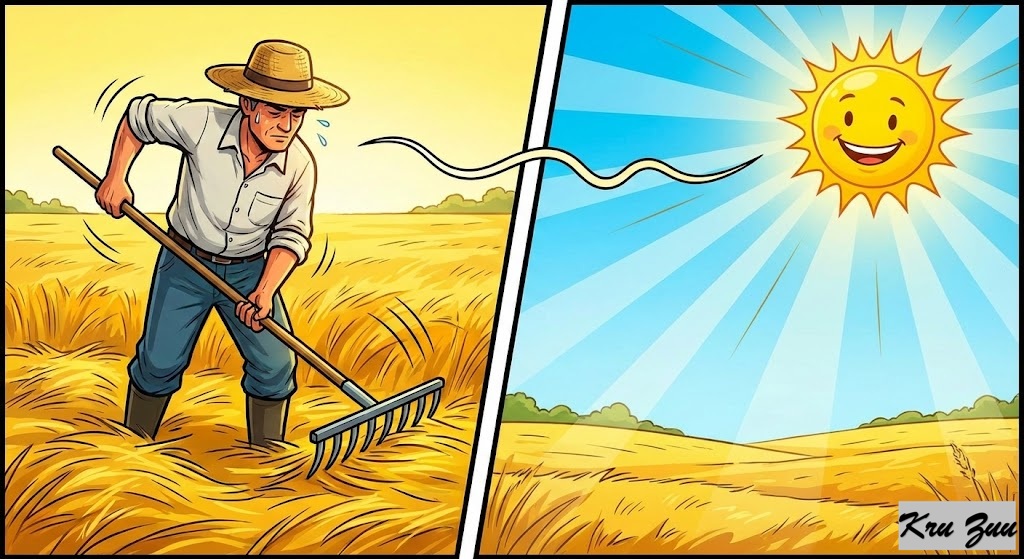
    “Make hay while the sun shines.” (Another famous idiom!)
    “Listen while the teacher is speaking.”
    “Enjoy your youth while you are young.”

    📜 History: Origin and Spread


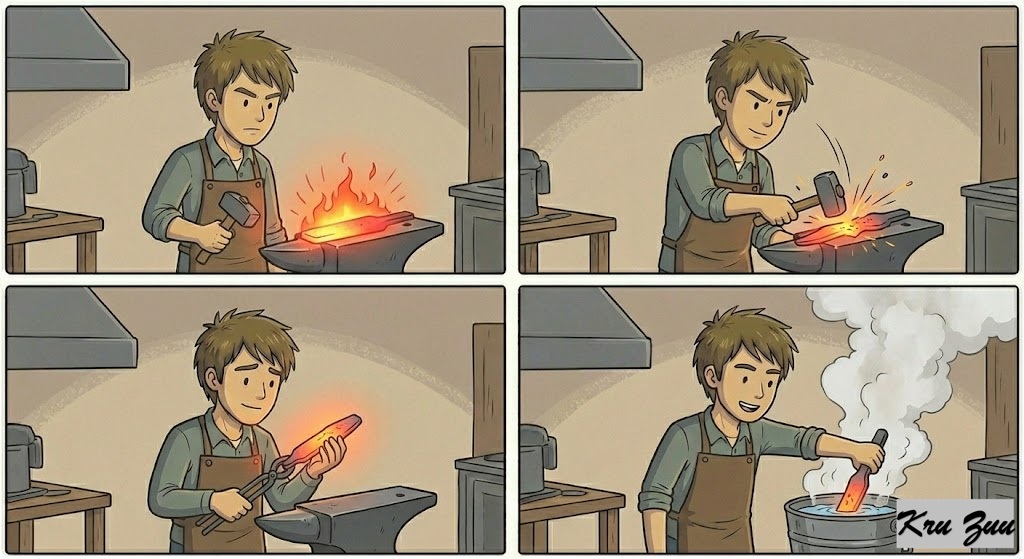
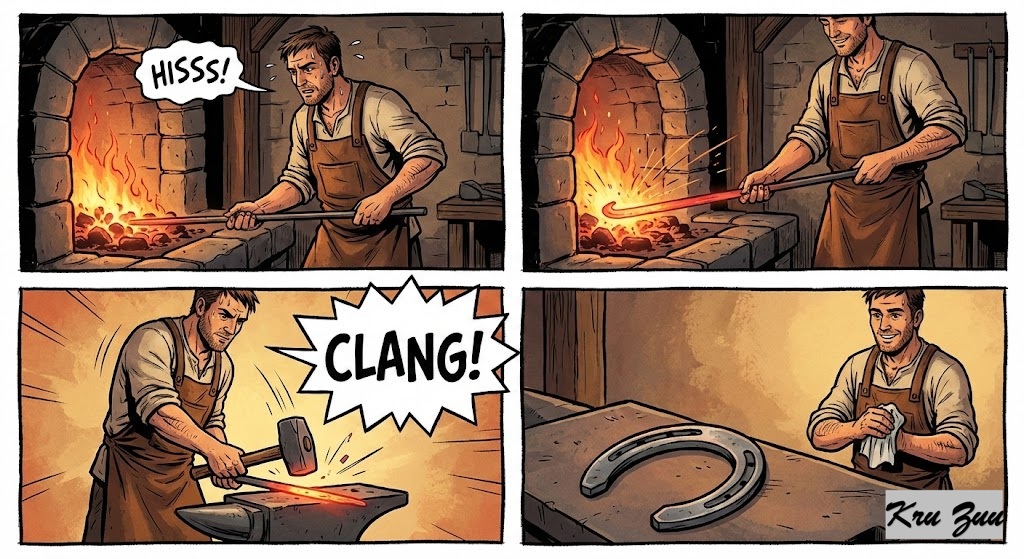
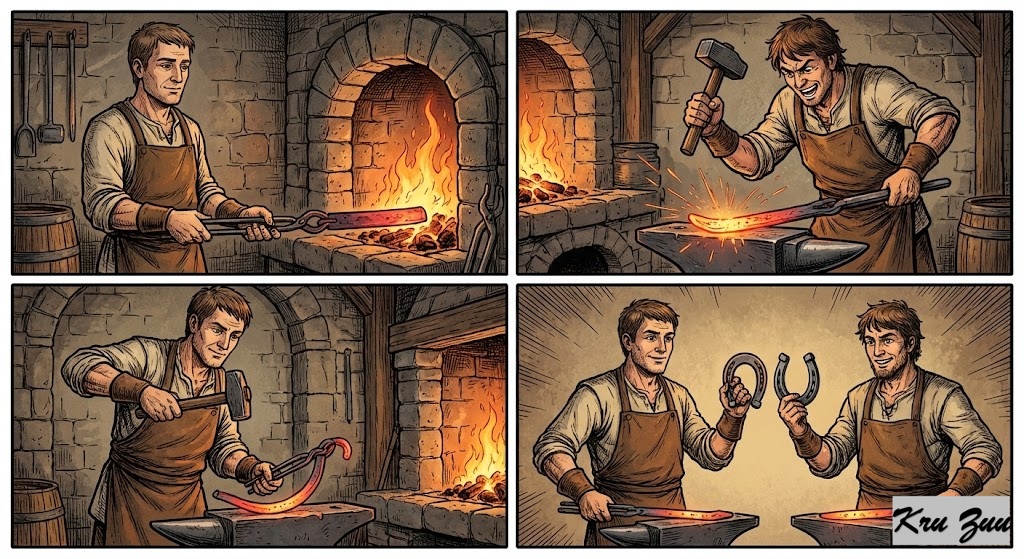
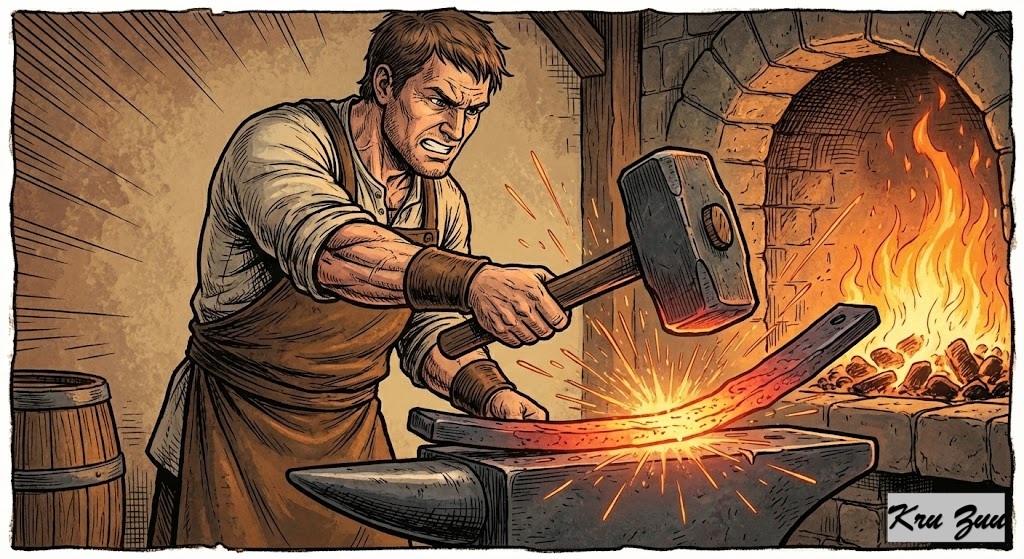
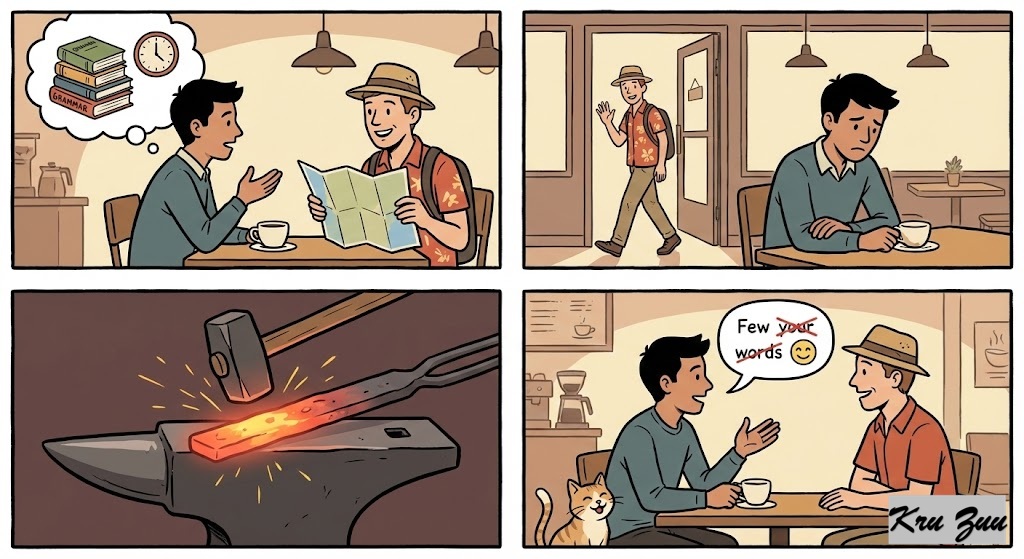
    This idiom comes straight from the blacksmith’s workshop.


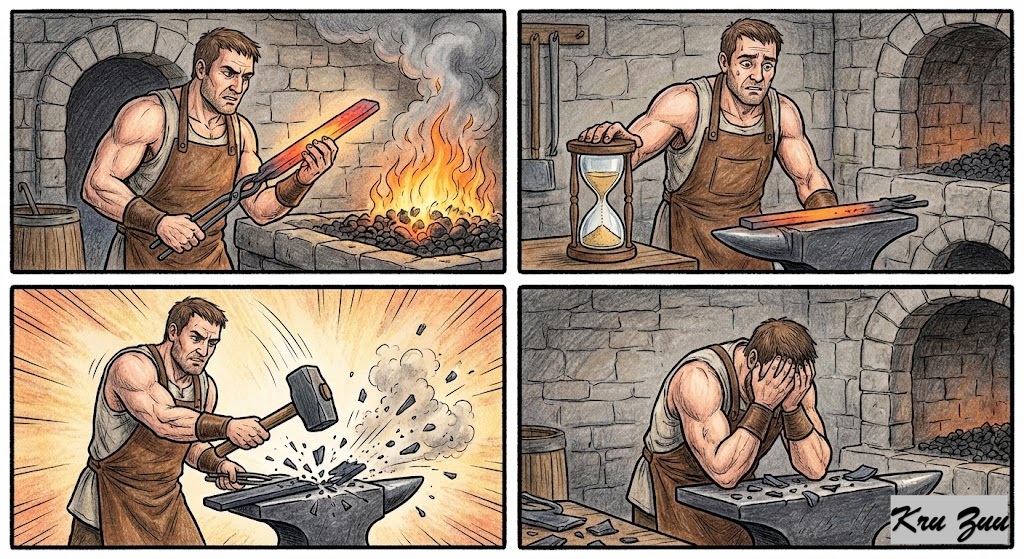
    The Origin: In medieval times, blacksmiths had to heat iron in a fire until it glowed red. Only then was it soft enough to hammer into a sword or horseshoe. If they waited even 30 seconds, the iron would cool, turn hard, and shatter if hit.


    Global Cousins


    🇹🇷 Turkish:“Demir tavında dövülür.” (Iron is beaten at its proper heat/temper.) — Identical meaning!


    🇮🇹 Italian:“Batti il ferro finché è caldo.”


    👺 Latin:“Carpe Diem” (Seize the day) — The spiritual ancestor of this phrase.

    🎯 Impact on Life: The Pros & Cons


    ✅ The Pros (The Winner’s Edge)


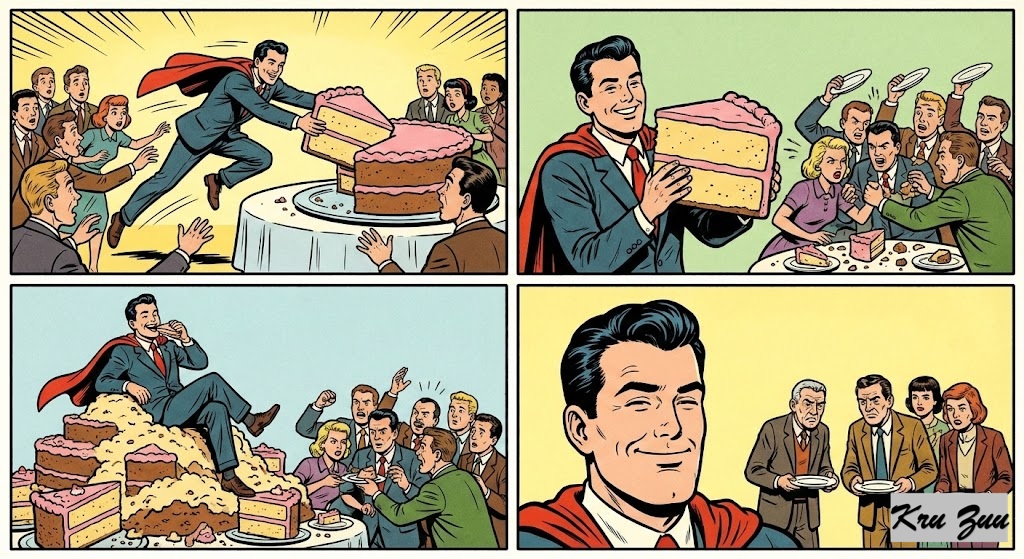
    First Mover Advantage: The first person to act usually gets the biggest slice of the cake.


    Confidence: Taking action kills fear. Waiting feeds fear.


    ❌ The Cons (The Reckless Risk)


    Impulsiveness:
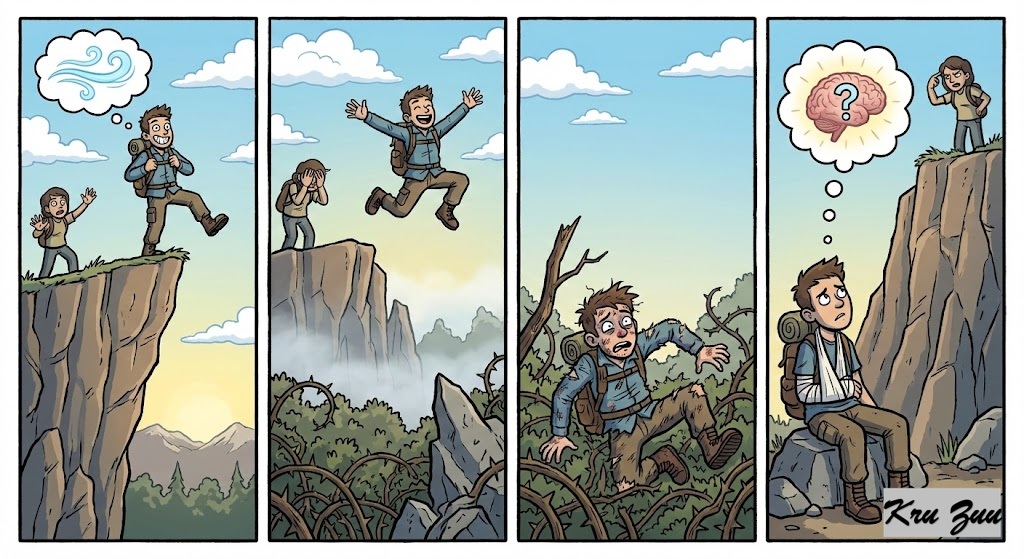
    Striking too fast without looking can be dangerous. Don’t jump off a cliff just because “the air is nice.” Use common sense!

    🎭 Short Story: The Open Gate 🚪


    Let’s visit the barnyard to see this law in action.


    🌟 The Characters


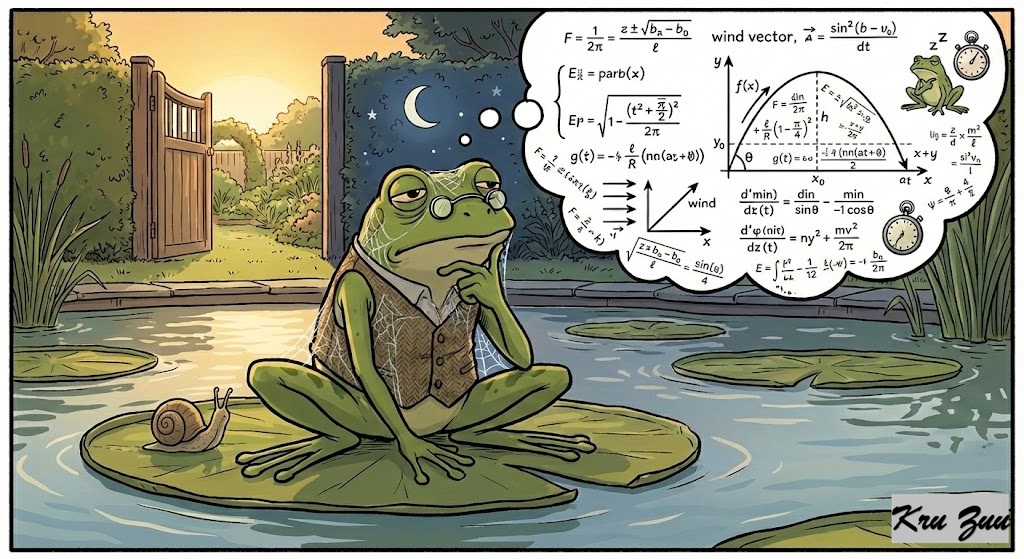
    🐸 Freddie the Frog: The Philosopher (Overthinks everything).


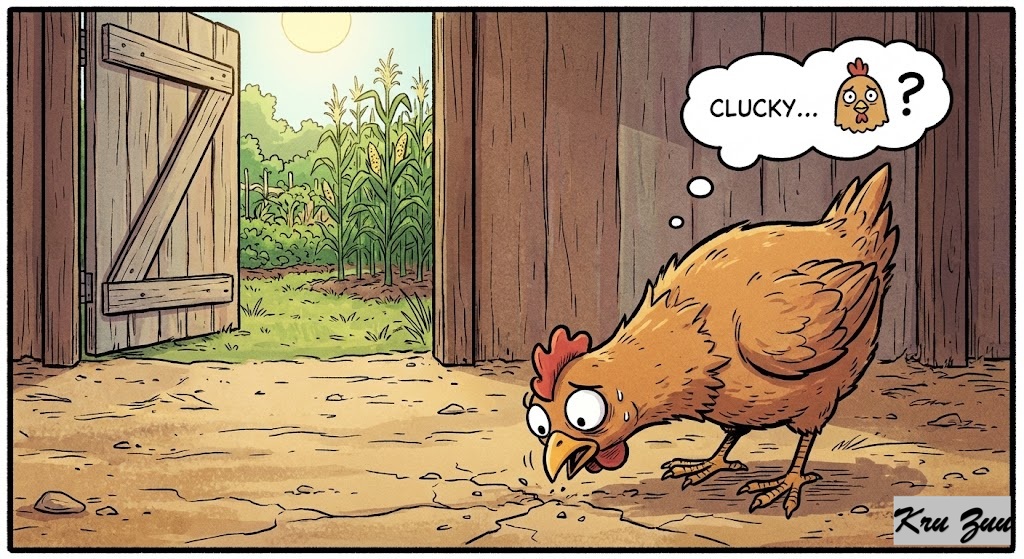
    🐔 Clucky the Chicken: The Worrier (Scared of everything).


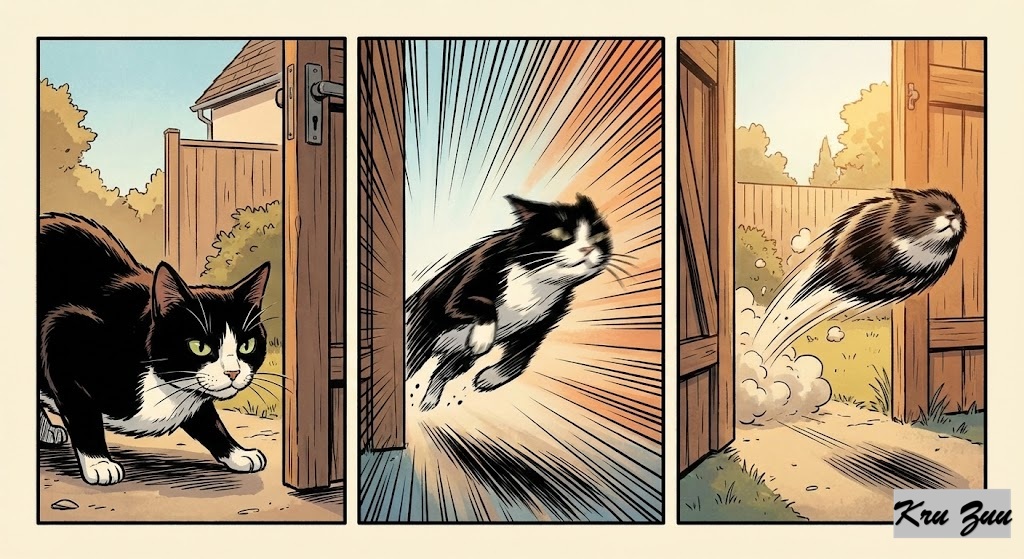
    🐱 Whiskers the Cat: The Striker (The Hero).


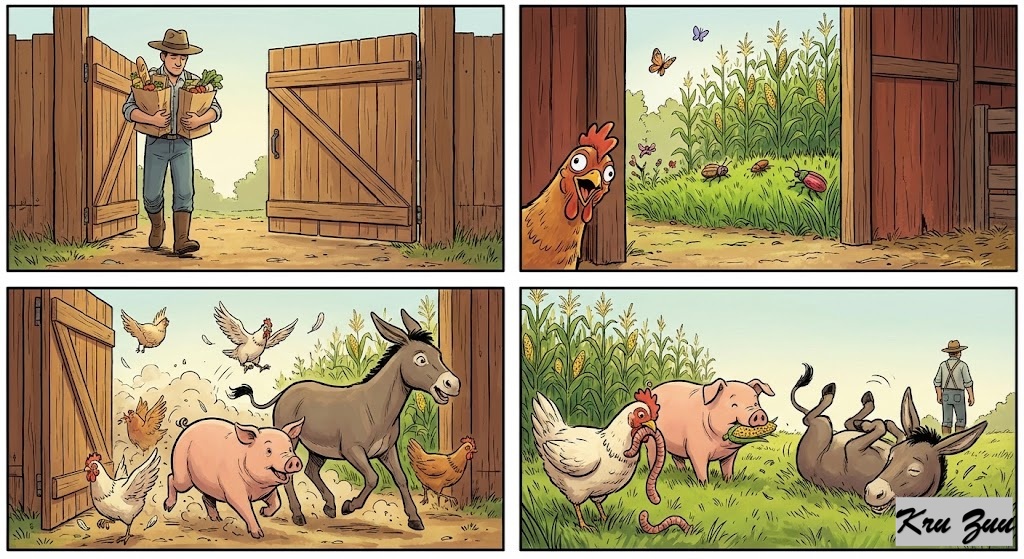
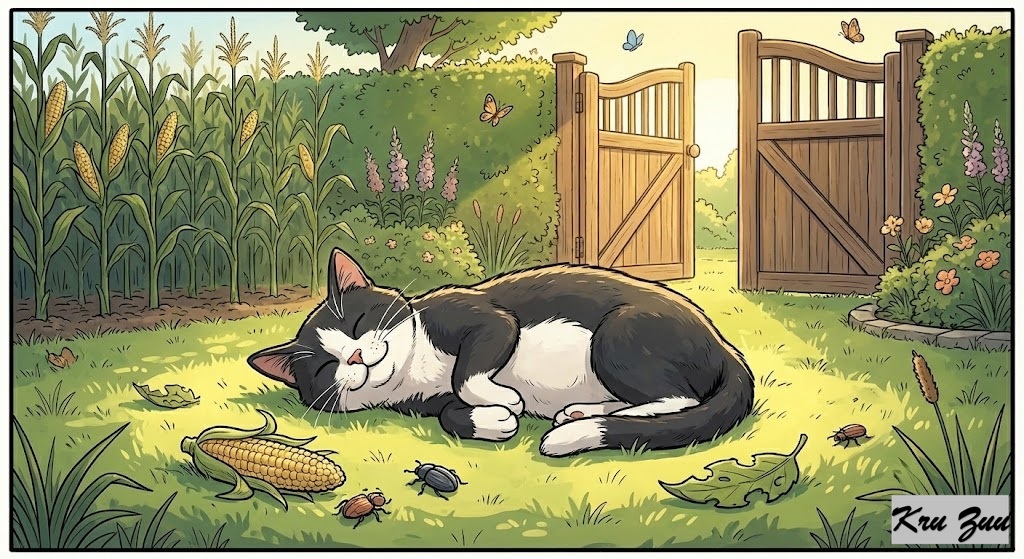
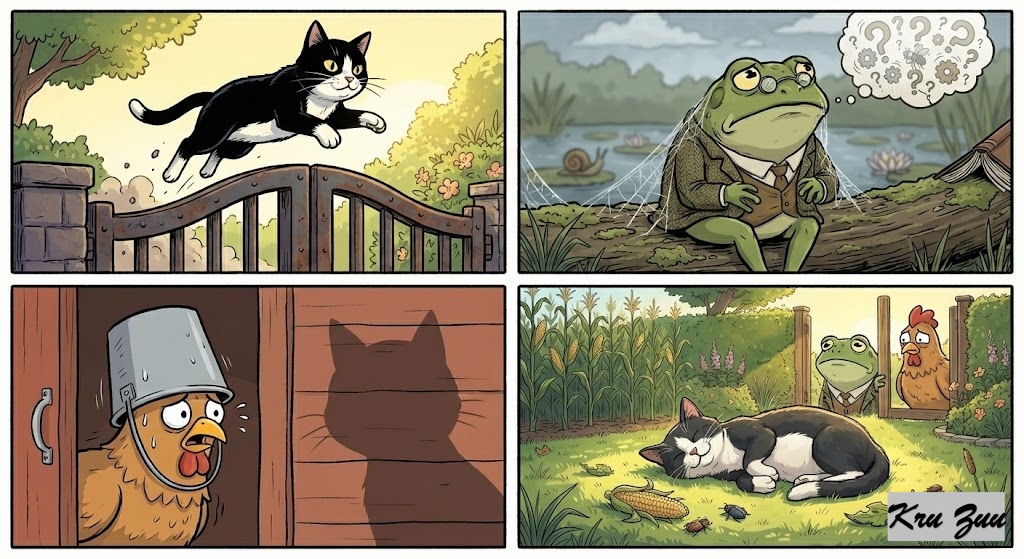
    The Situation: The Farmer is carrying groceries. For exactly 10 seconds, he leaves the garden gate wide open. Inside, there is a paradise of bugs, corn, and soft grass.


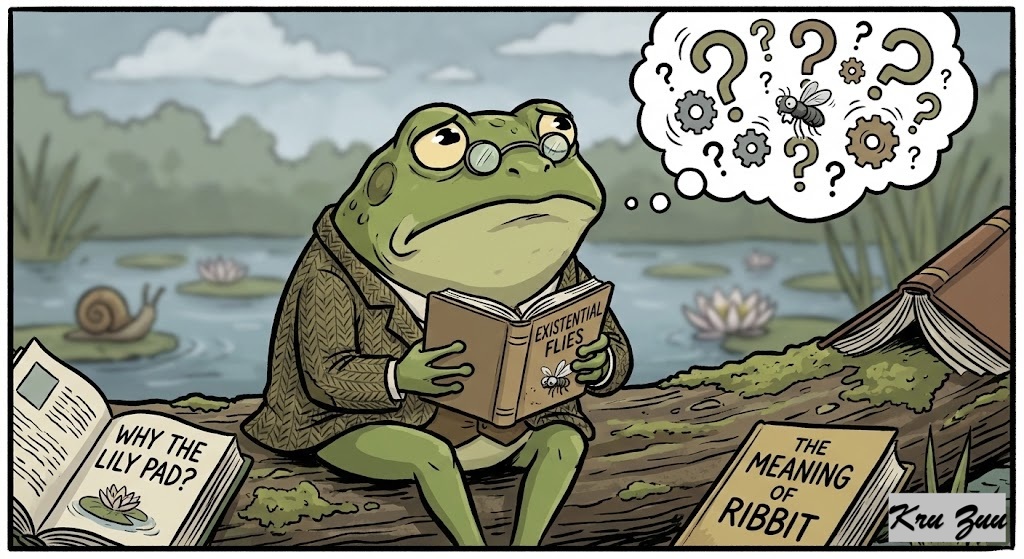
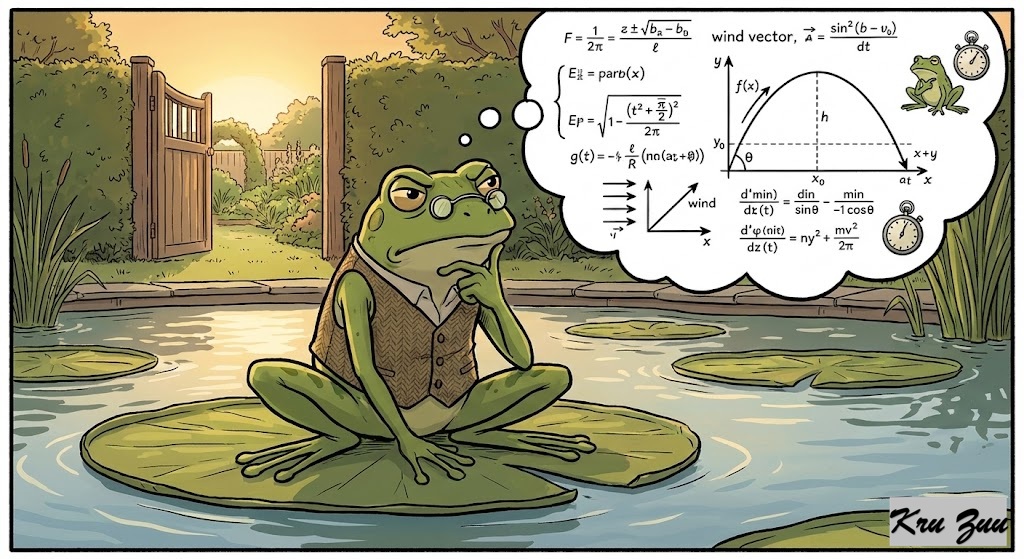
    The Reaction:🐸 Freddie the Frog sees the gate. He sits on his lily pad. “Hmm,” he croaks. “The humidity is good, but I need to calculate the trajectory of my jump. If I wait for the wind to die down, my jump will be 4% more aerodynamic.”

    Result: He stays on the lily pad, calculating.


    🐔 Clucky the Chicken sees the gate. She flaps her wings nervously. “Oh my!” she clucks. “It looks delicious. But what if the Farmer sees me? What if I trip? Maybe I should wait until the Farmer goes to sleep tonight. Yes, that is safer.”

    Result: She pecks at the dry dirt, waiting for “safe.”


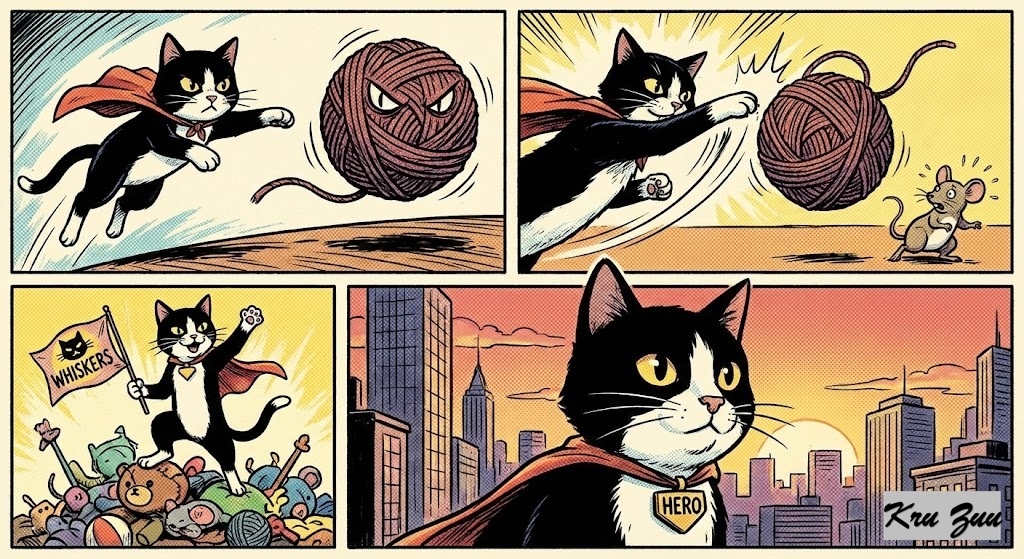
    🐱 Whiskers the Cat sees the gate. Whiskers doesn’t think. Whiskers doesn’t calculate wind speed. Whiskers sees the gap. 1, 2, ZOOM. Whiskers shoots through the gap like a fuzzy bullet.


    The Outcome


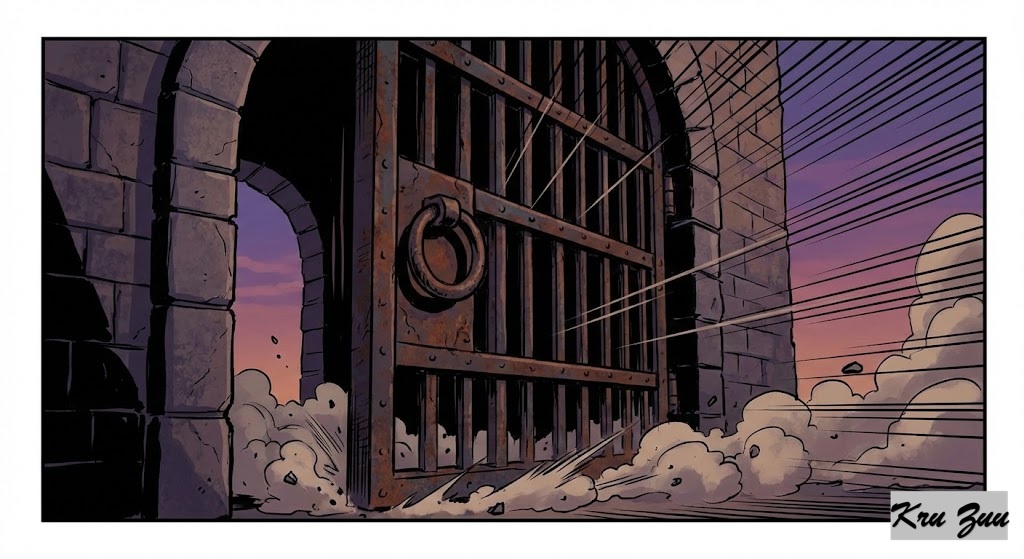
    CLANG. The gate slams shut.


    Freddie is still calculating his jump.


    Clucky is still hungry and safe in the dirt.


    Whiskers is inside the garden, napping in the sun after eating a feast.


    The Moral: The world belongs to the Cats. Don’t be a Frog calculating the wind. Don’t be a Chicken waiting for safety. Jump.

    🎓 Lesson for English Learners


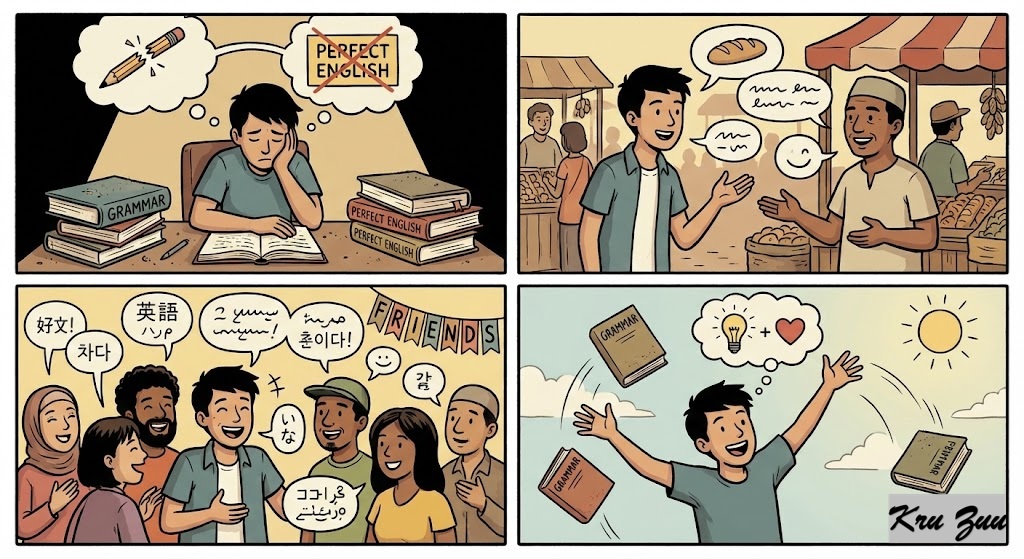
    Don’t wait for “Perfect English.”


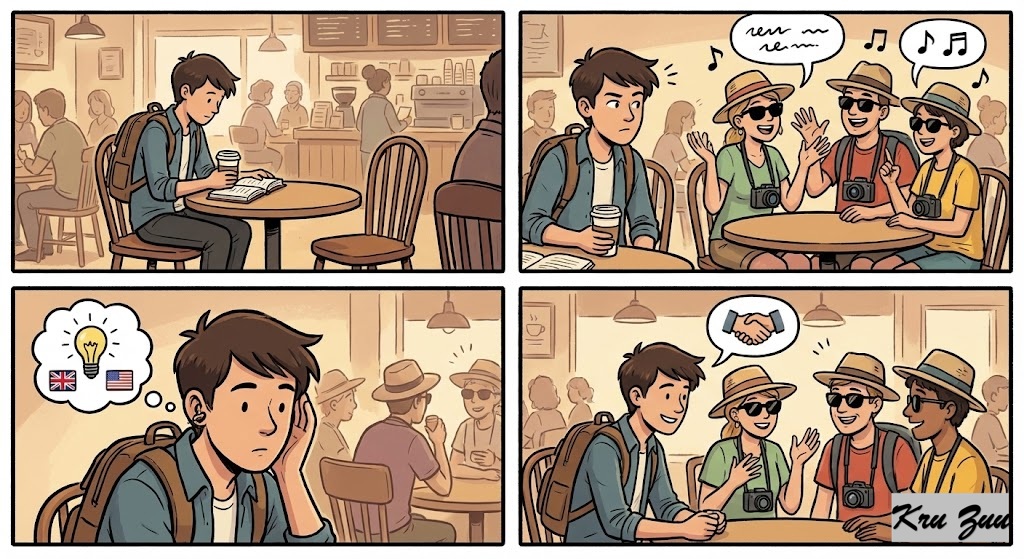
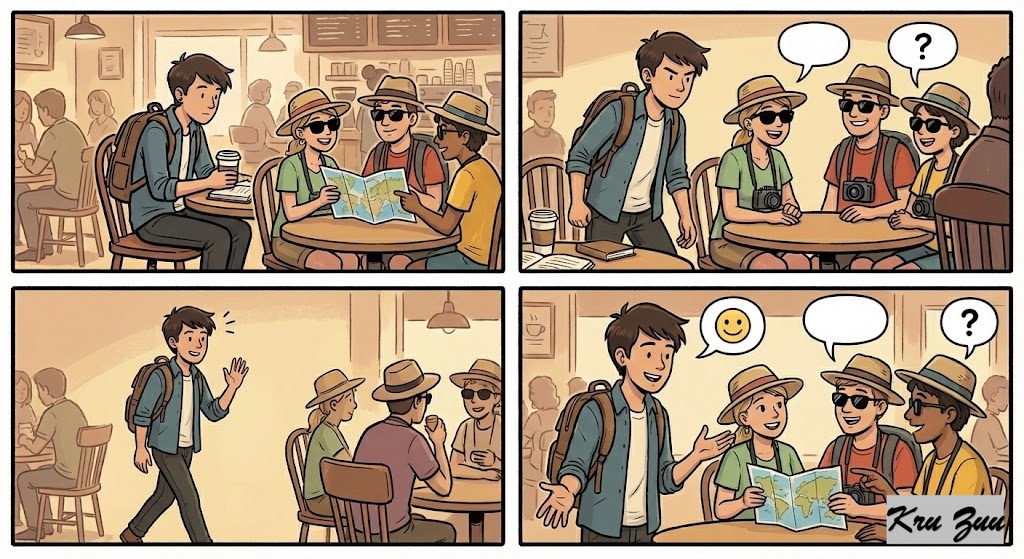
    Situation: You are in a coffee shop. You hear tourists speaking English.


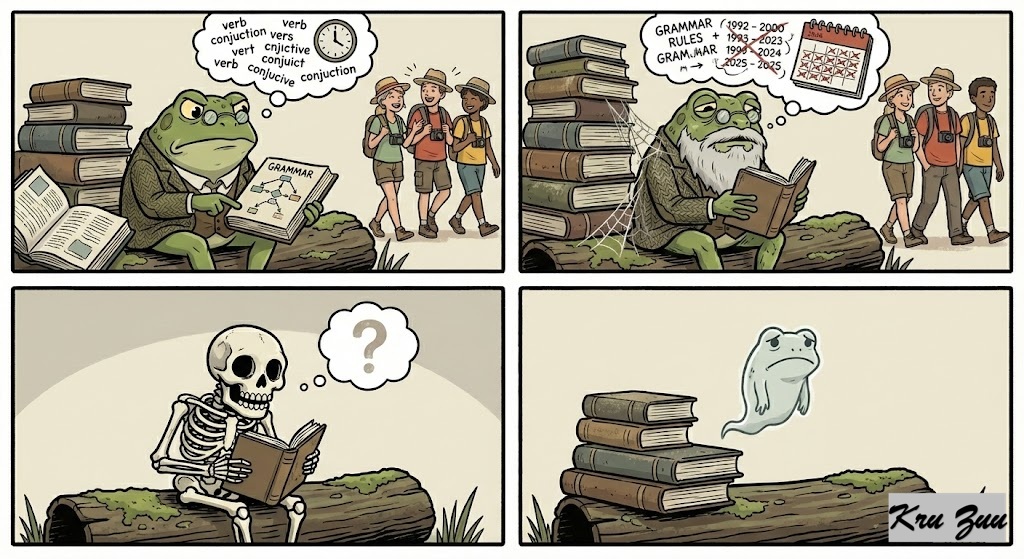
    The Frog approach: “I will talk to them once I master the Present Perfect Continuous tense.”


    The Cat approach: You stand up, walk over, and say, “Hi! Where are you from?”


    Why? Because 5 minutes later, they will leave. The iron will be cold. Speak now, fix your grammar later.


    💬 Your Turn: The “5-Second Rule” 🚀


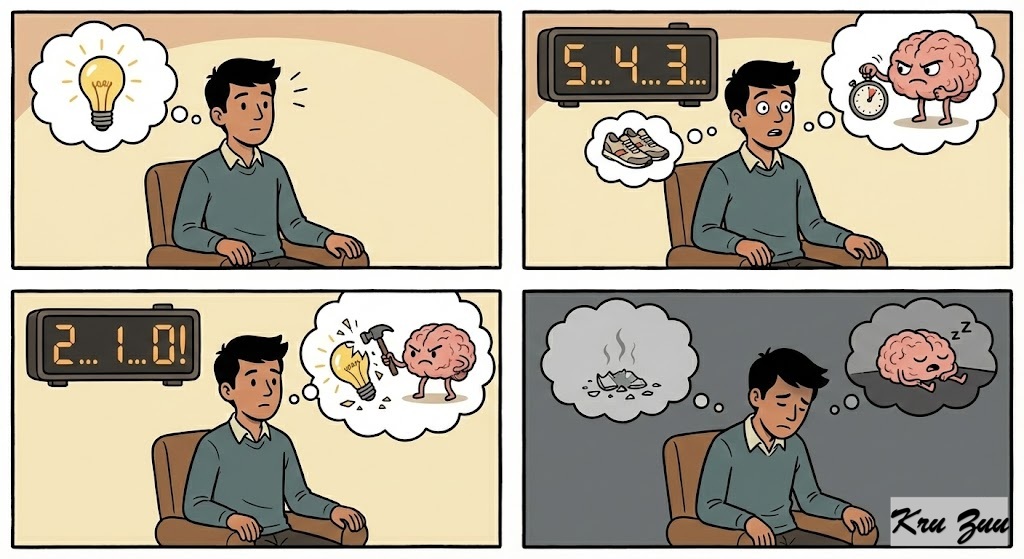
    When you feel an instinct to act on a goal, you must physically move within 5 seconds, or your brain will kill the idea.


    The Challenge: Is there an email you need to send? A text to a crush? A domain name you want to buy?


    The Action: Do it. Strike. Don’t think. Just click “Send.”


    👇 Tell us in the comments: What is an opportunity you missed because you waited too long? Let’s mourn it together, then move on!

    By Zubeyir YURTKURAN

    https://www.facebook.com/BrainBattleground/

    https://www.facebook.com/zubeyr.yurtkuran/

    https://www.instagram.com/zubeyryurtkuran/
    https://www.youtube.com/@BrainBattleground-b3p

    https://www.instagram.com/brainbattleground/

  • 🌈 The Daily Prism: The Law of Perception

    🌈 The Daily Prism: The Law of Perception

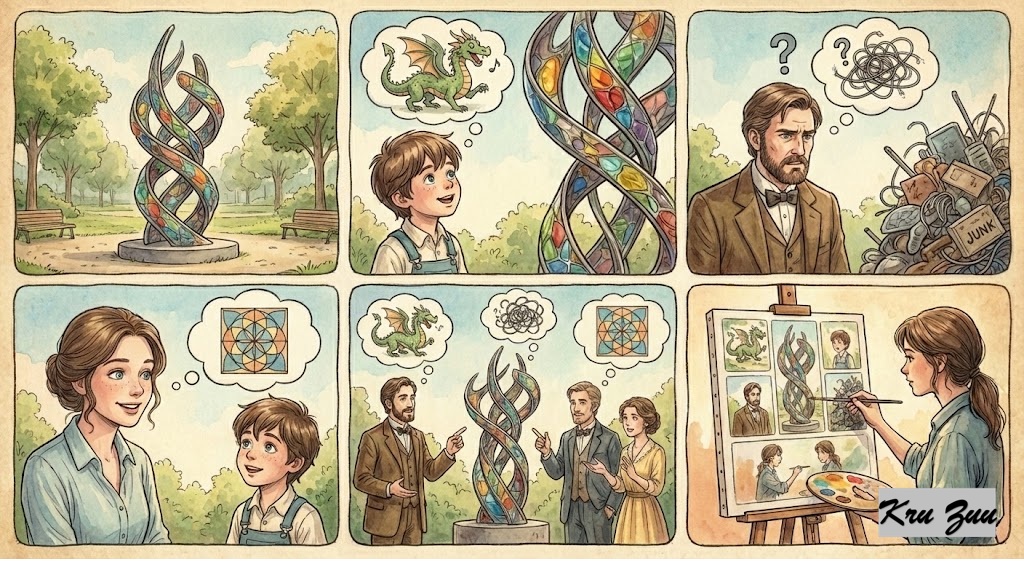
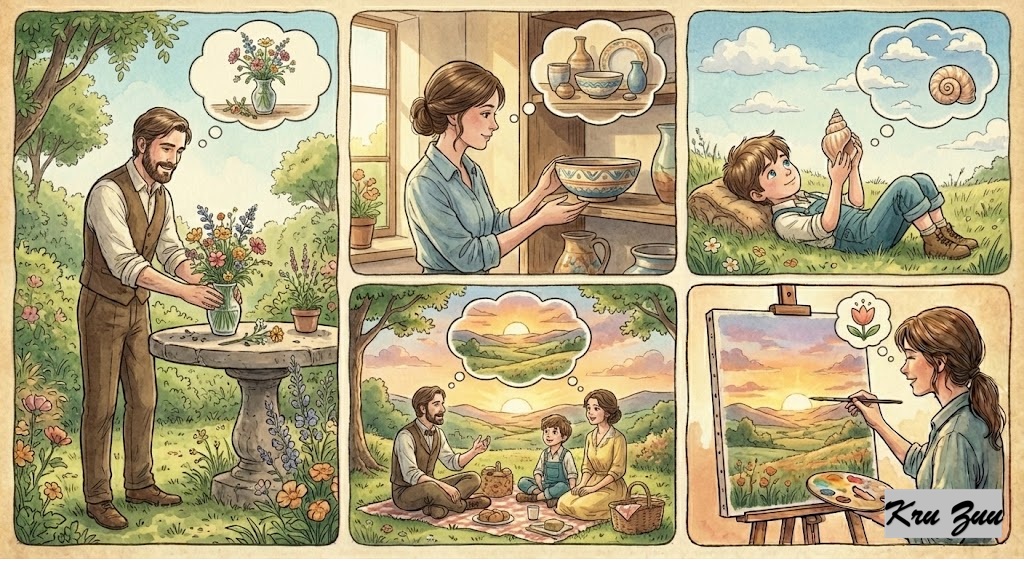
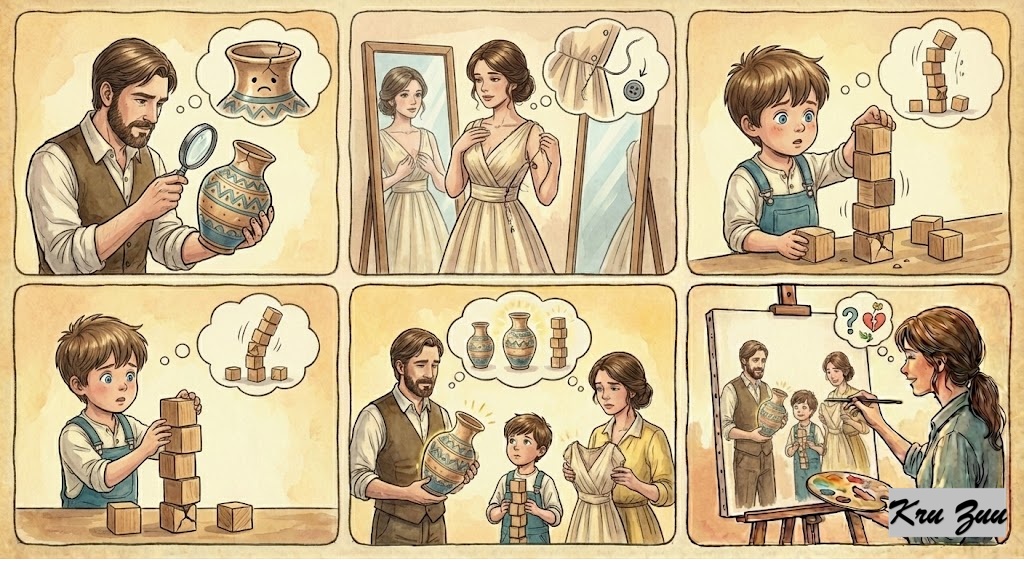
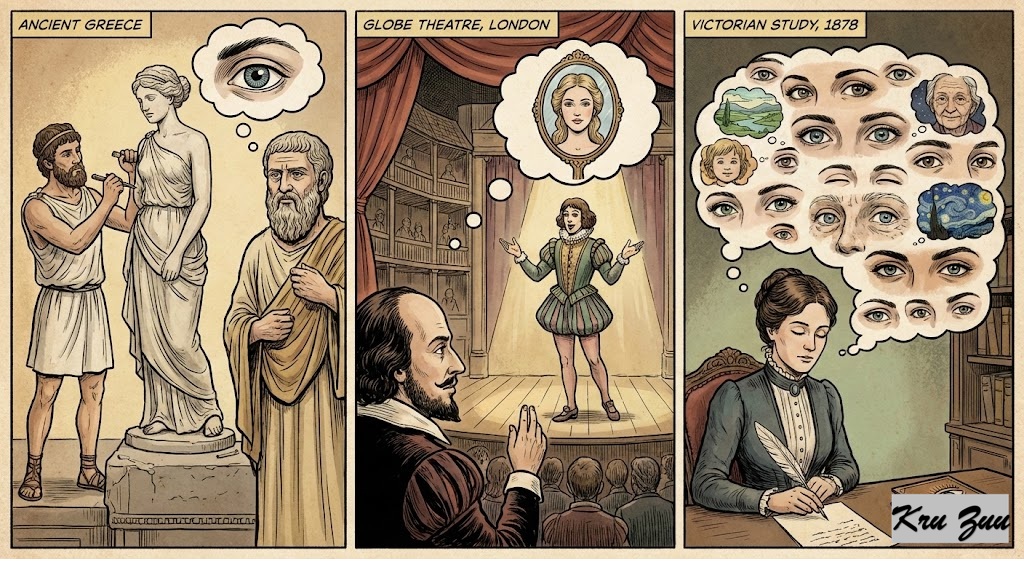
    “Beauty is in the eye of the beholder.”


    😈 The Villain (The Judge)

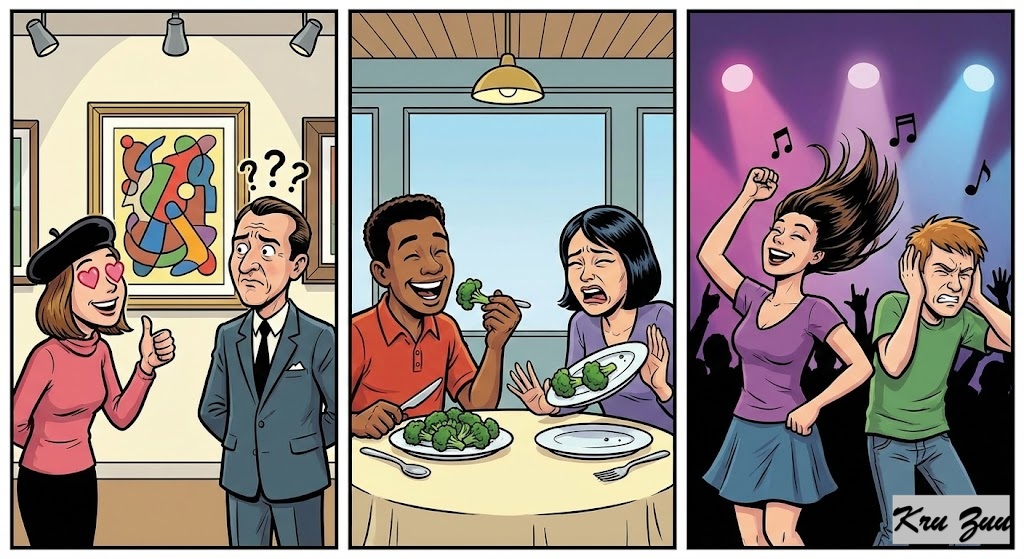
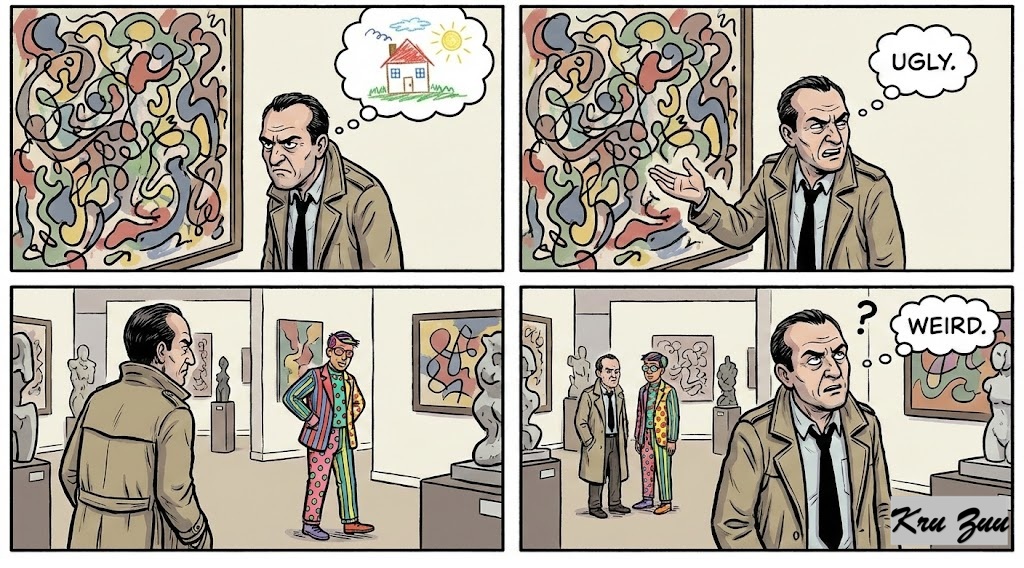
    You walk into a museum. You see abstract art and say, “That’s ugly. A child could paint that.” You see someone wearing colorful clothes and think, “Weird.”

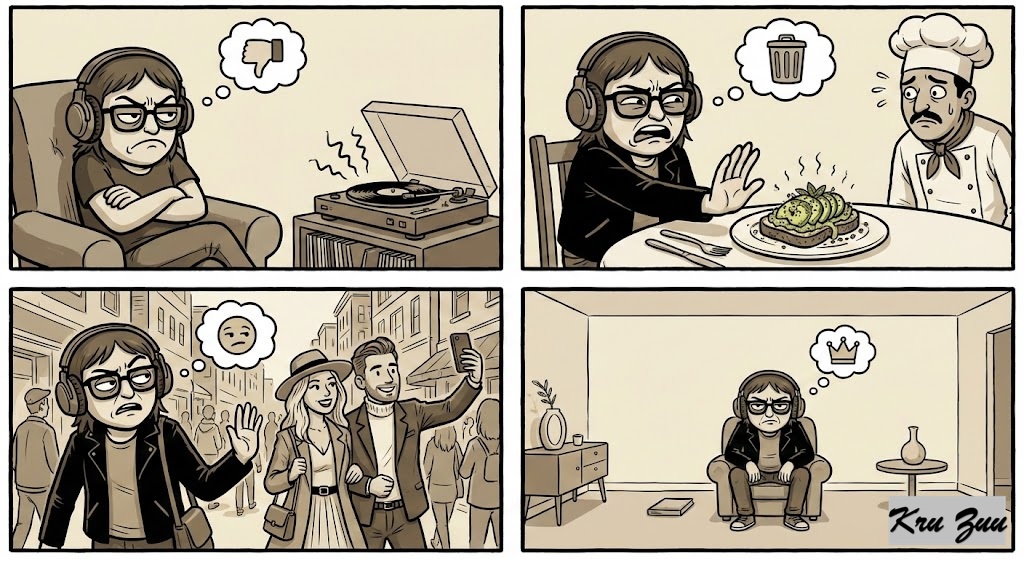
    You judge music, food, and people instantly. You believe your taste is the only truth. You are constantly annoyed because the world doesn’t fit your specific box. 😤


    😇 The Hero (The Artist)

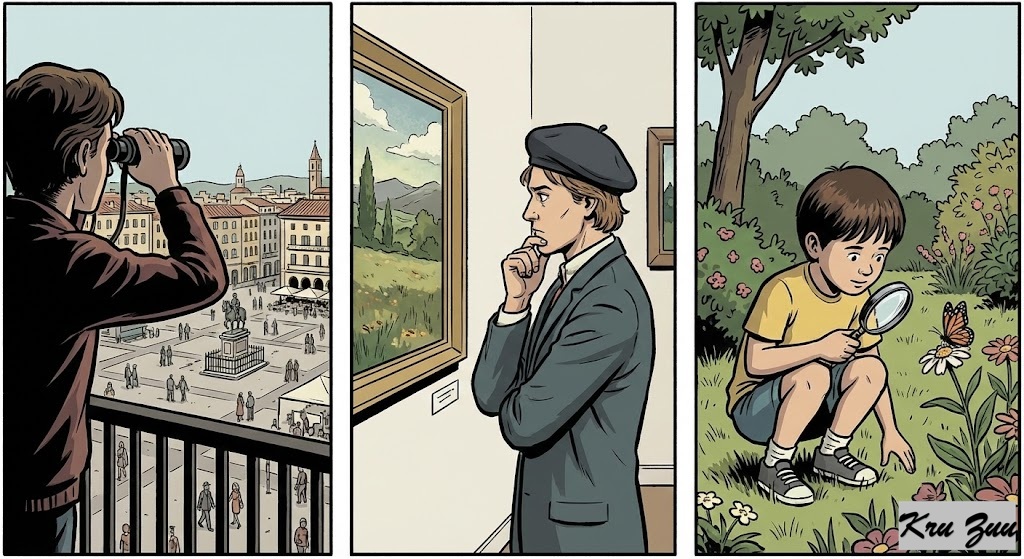
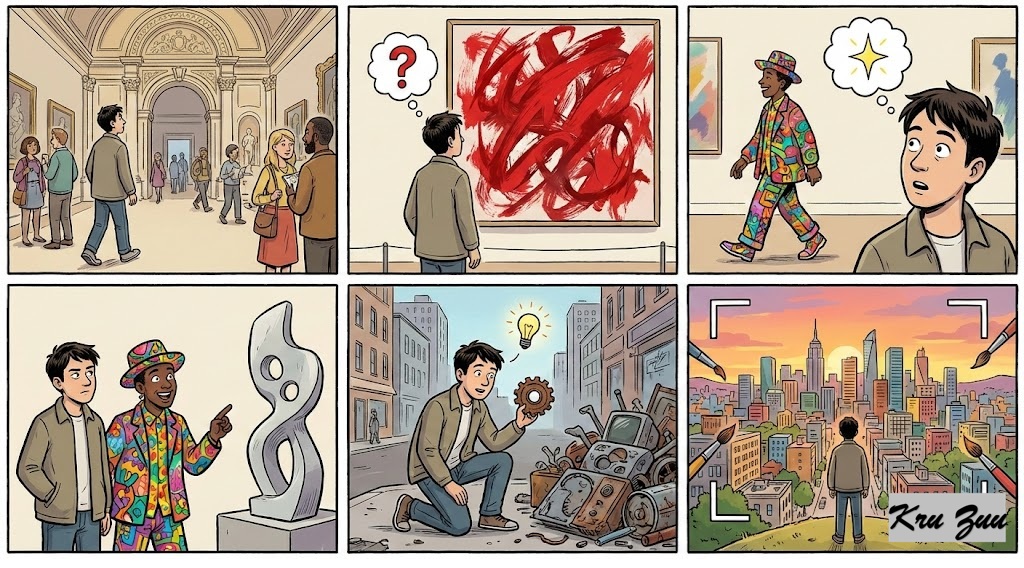
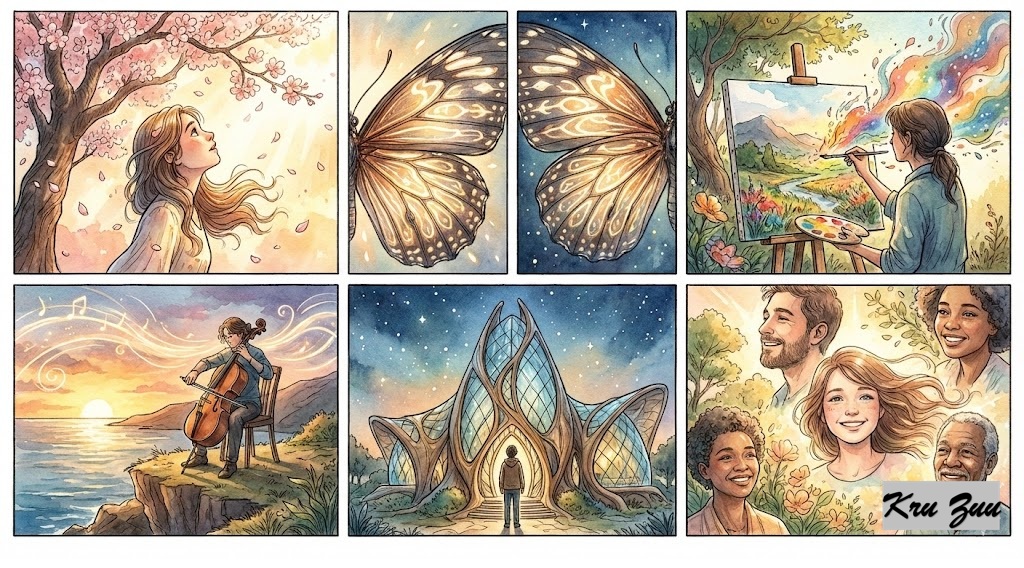
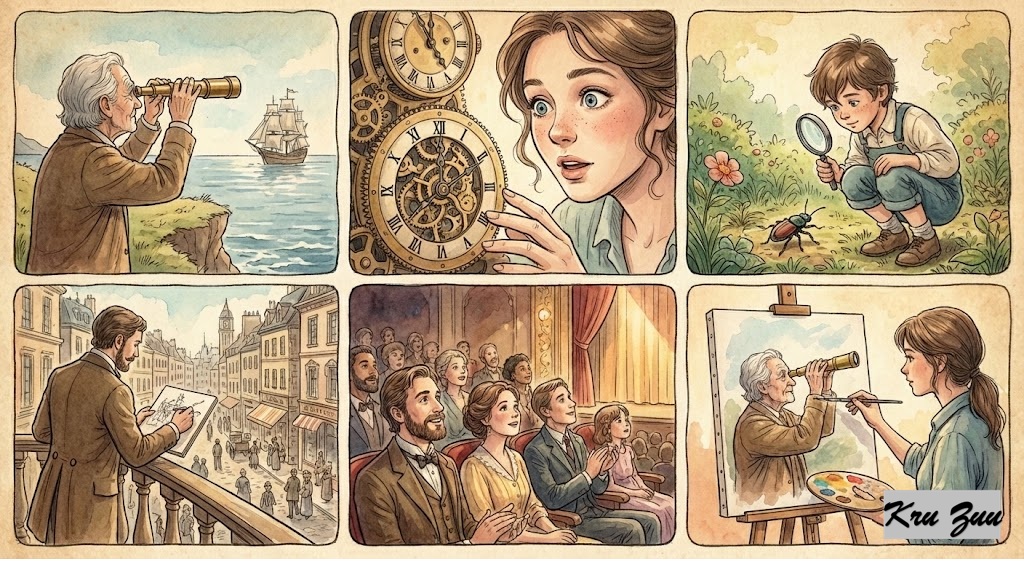
    You walk into the same museum. You might not like the painting, but you wonder, “Why did the artist choose red?” You see the person in colorful clothes and think, “Wow, they are confident.” You understand that what you hate, someone else might love. You see potential where others see trash. The world is an endless gallery for you. 🎨


    ⚖️ The Reality

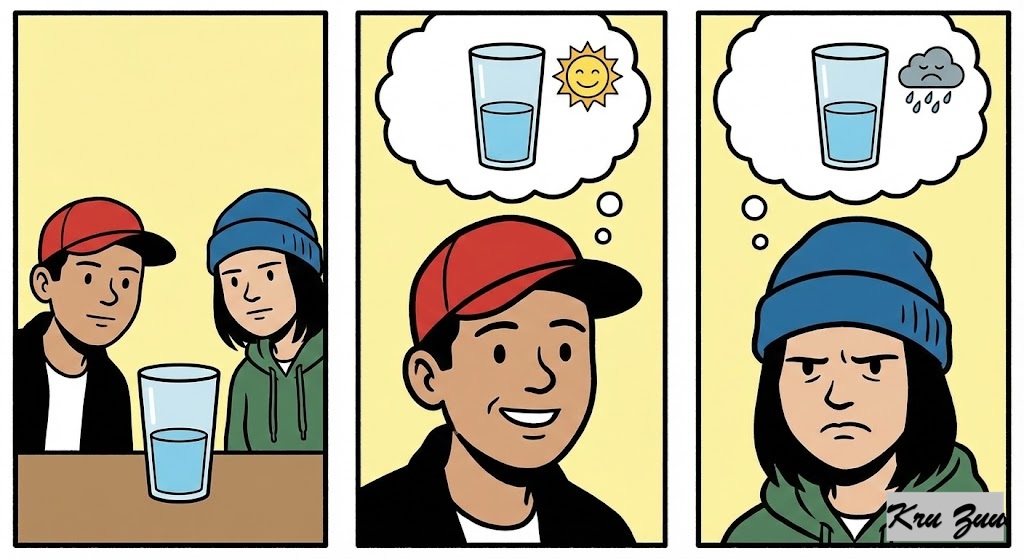
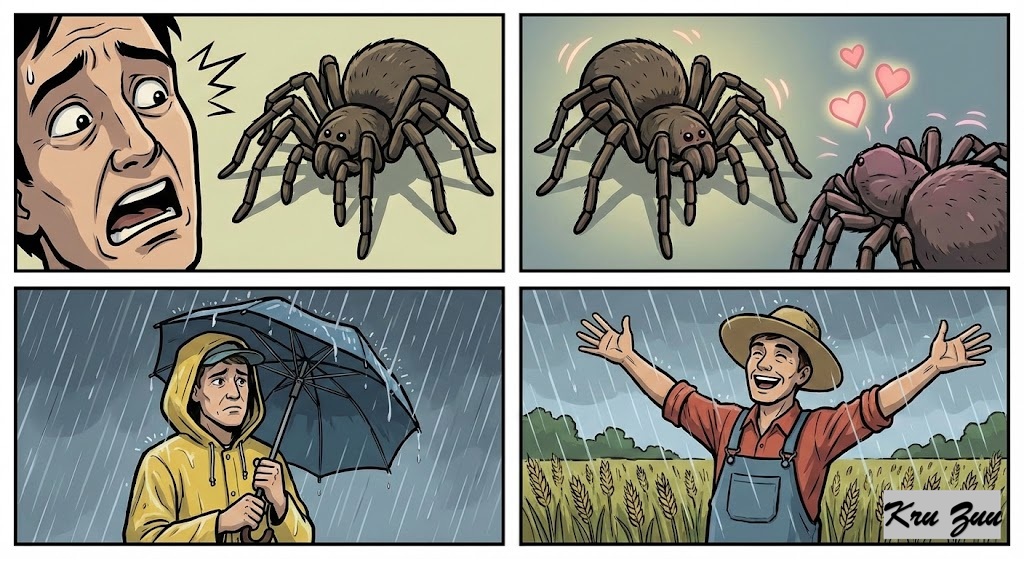
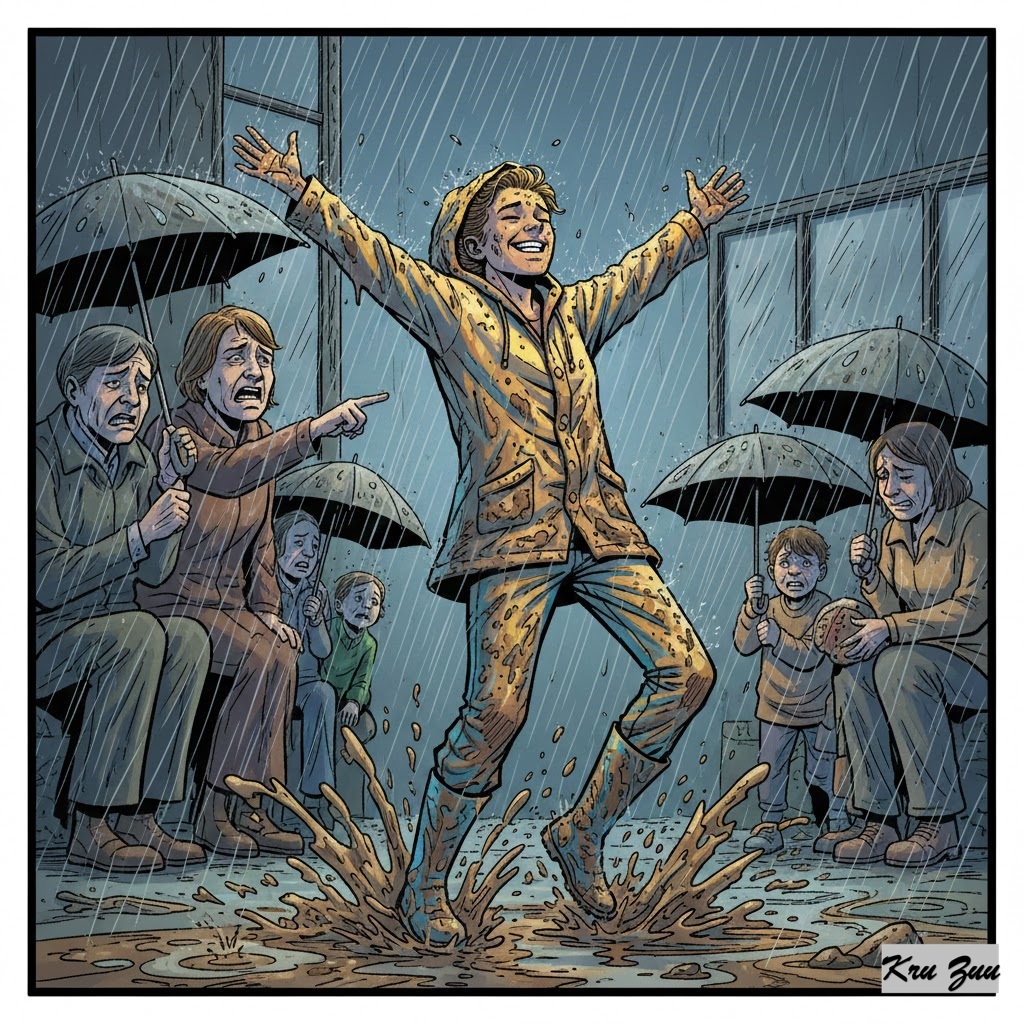
    “Ugly” does not exist in nature. A spider is scary to a human, but it is gorgeous to another spider. A rainy day is sad for a tourist, but it is a celebration for a farmer.

    💎 The Secret

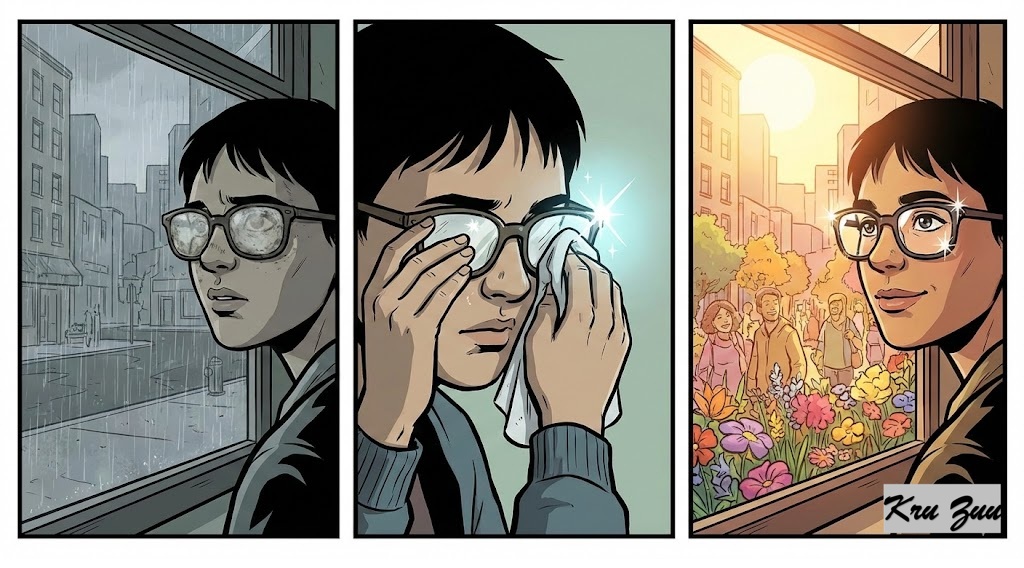
    The object doesn’t change; only your eyes change. If you want to see a beautiful world, you don’t need to travel; you just need to polish your lens.

    🧐 The Anatomy of the Proverb


    This is the ultimate rule of subjectivity.


    Beauty (Noun): A quality that pleases the senses (mind or eyes). ✨


    Beholder (Noun): An old-fashioned word for “The person looking/observing.” (From the verb Behold: To look at). 👀


    Simpler Version: Everyone has a different taste.


    📚 Vocabulary Vault


    Subjective (Adjective):
    Based on personal feelings, tastes, or opinions. (Opposite of Objective).


    Perspective (Noun): A particular attitude toward or way of regarding something; a point of view.


    Aesthetic (Noun/Adj): Concerned with beauty or the appreciation of beauty. 🌸


    Appeal (Verb): To be attractive or interesting to someone.


    Flaw (Noun): An imperfection or weakness.


    🧠 Grammar Focus: “To Be” + Preposition


    This proverb uses a locational metaphor.


    Structure: [Subject] + is + in + [Location].


    Logic: Beauty is not on the face of the person; it lives inside the eye of the person looking at them.


    Example: “The decision is in your hands.”

    📜 History: Origin and Global Cousins


    Who said it first?

    The Origin

    While the idea goes back to Plato (Greek philosophy) and Shakespeare, the modern English phrasing appeared in 1878 by the author Margaret Wolfe Hungerford.

    Global Cousins


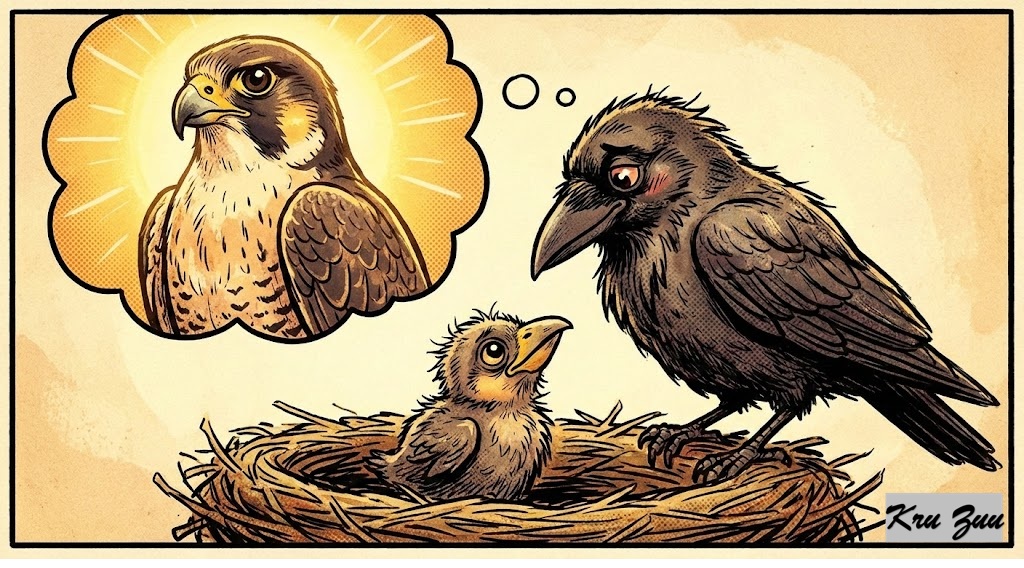
    🇹🇷 Turkish:
    “Kuzguna yavrusu şahin görünür.” (To the crow, its own chick looks like a falcon.) — This captures the meaning perfectly!


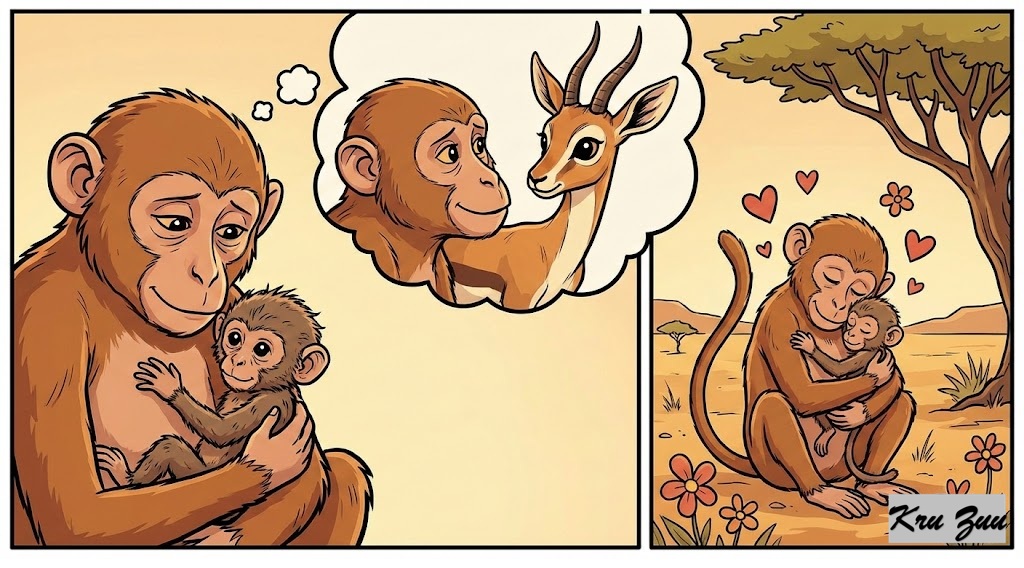
    🇸🇦 Arabic: “In the eyes of a mother monkey, her child is a gazelle.”


    🇩🇪 German: “Über Geschmack lässt sich nicht streiten.” (One cannot argue about taste.)

    🎭 Short Story: The Golden Treasure


    Let’s see how perspective changes everything with three very different friends.


    🌟 The Setup:
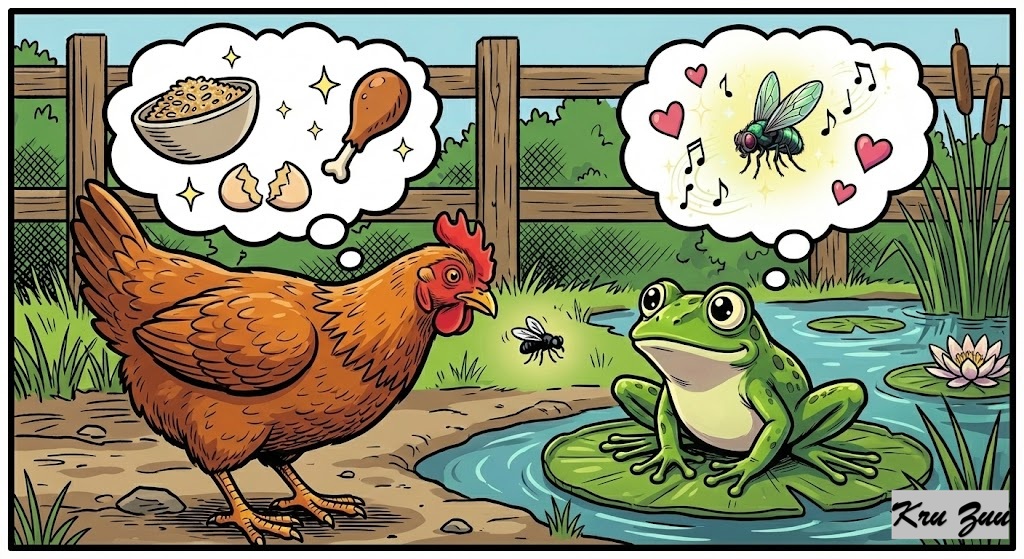
    A sleek Cat 🐱, a nervous Chicken 🐔, and a slimy Frog 🐸 are walking through a garden. Suddenly, they find an object lying on the grass.


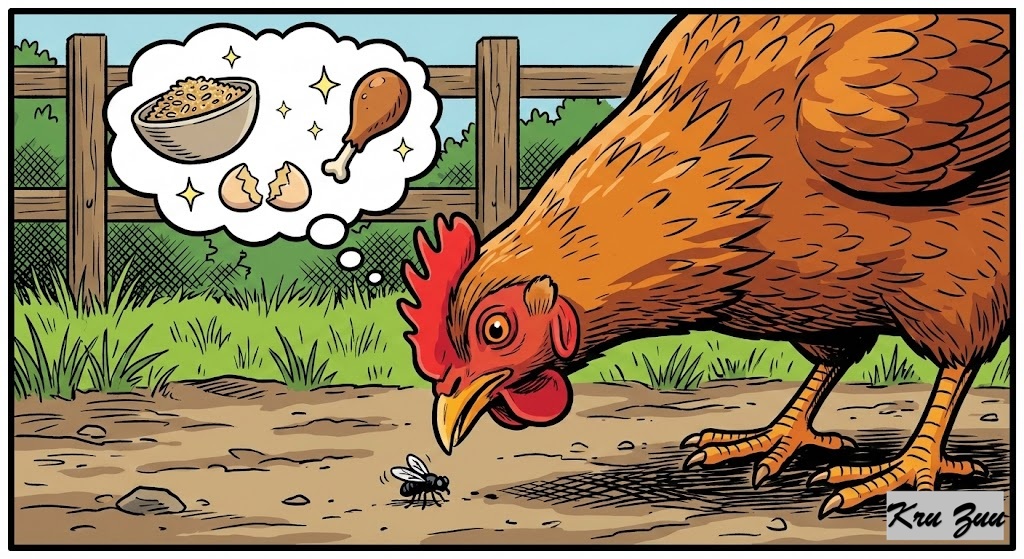
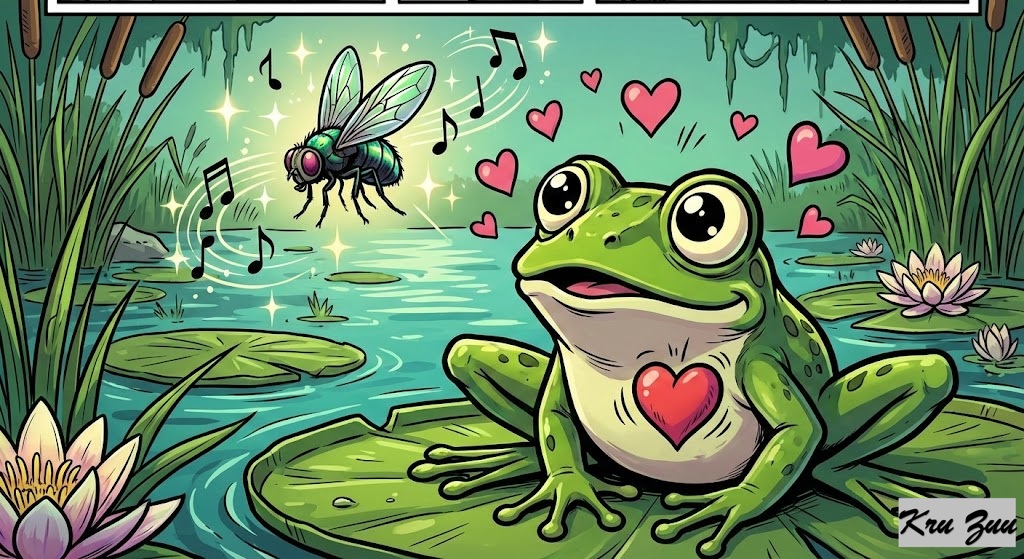
    It is a shiny, gigantic, buzzing Green Fly. 🪰


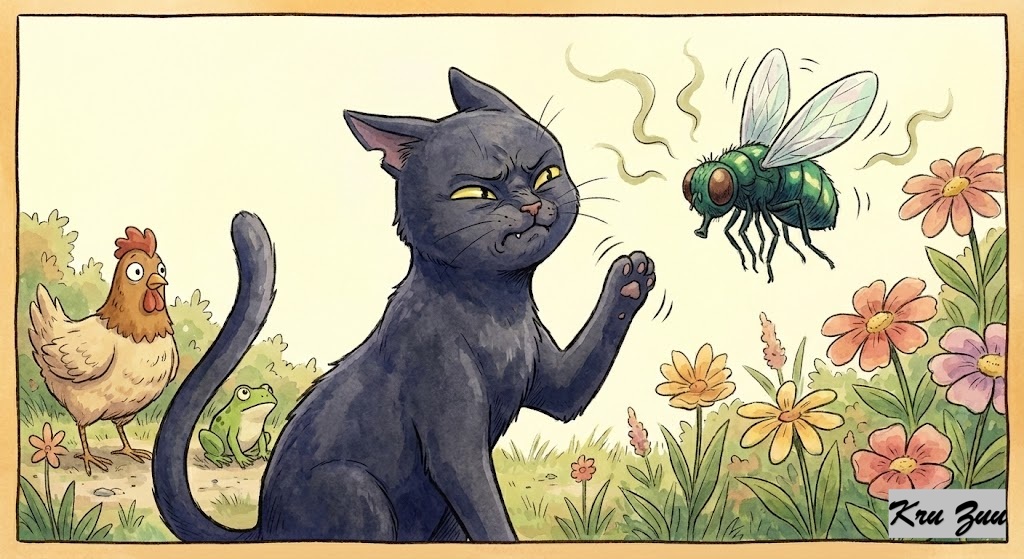
    The Conflict:The Cat (The Aristocrat): She sniffs it and wrinkles her nose. “Ew! Disgusting. It is dirty, it is loud, and it smells like garbage. It ruins the view of the flowers. Take it away!” To the Cat, the fly is Ugly trash.


    The Chicken (The Pragmatist): She tilts her head and pecks at the ground. “Hmm. It’s not art, Cat. It’s lunch! It looks crunchy and nutritious. Good protein for my eggs.” To the Chicken, the fly is Food.


    The Frog (The Romantic): His eyes go wide, and his heart beats fast. “You are both blind! Look at the metallic green wings! Listen to that beautiful buzzing song! It is the most magnificent creature I have ever seen. I think I am in love.” 😍 To the Frog, the fly is Perfection.


    The Moral: Who is right? Is the fly ugly, tasty, or beautiful? They are all right. The fly didn’t change. The beholder changed.

    🎯 Impact on Life: The Pros & Cons


    ✅ The Pros (Freedom)


    Self-Acceptance:
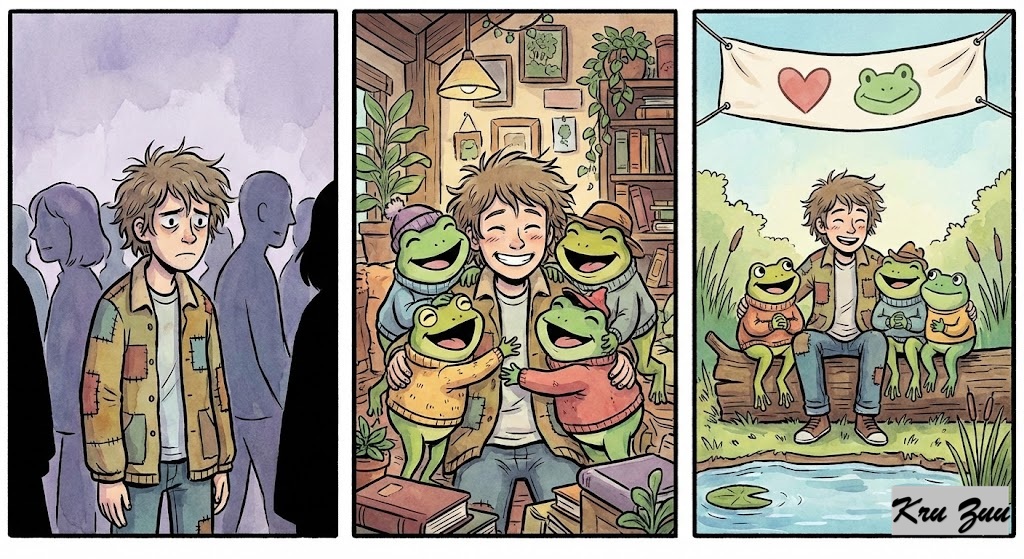
    You don’t need everyone to like you. You just need to find your people (your Frogs!).


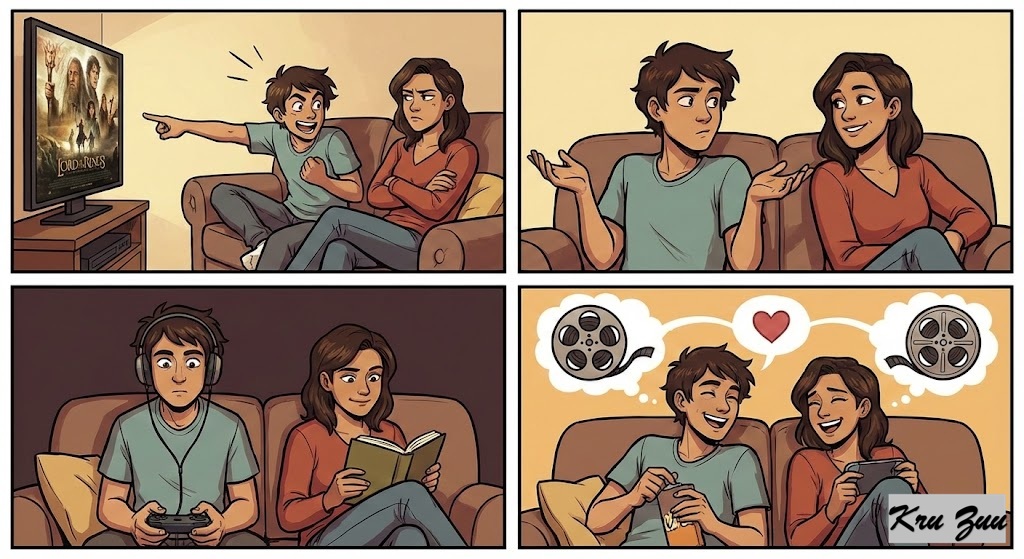
    Tolerance: You stop arguing about taste. You realize it’s okay if your friend hates your favorite movie.


    ❌ The Cons (The Trap)


    Denial:
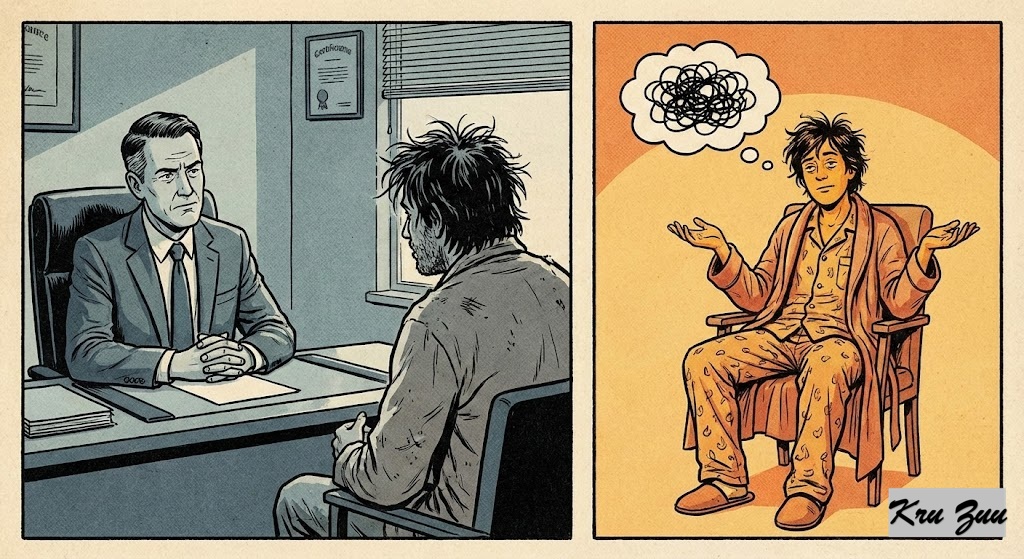
    Sometimes, “beauty is subjective” is an excuse for low effort. If you go to a job interview in pajamas, you can’t blame the “beholder” for not hiring you!

    🎓 Lesson for English Learners


    Don’t apologize for your English.


    Situation:
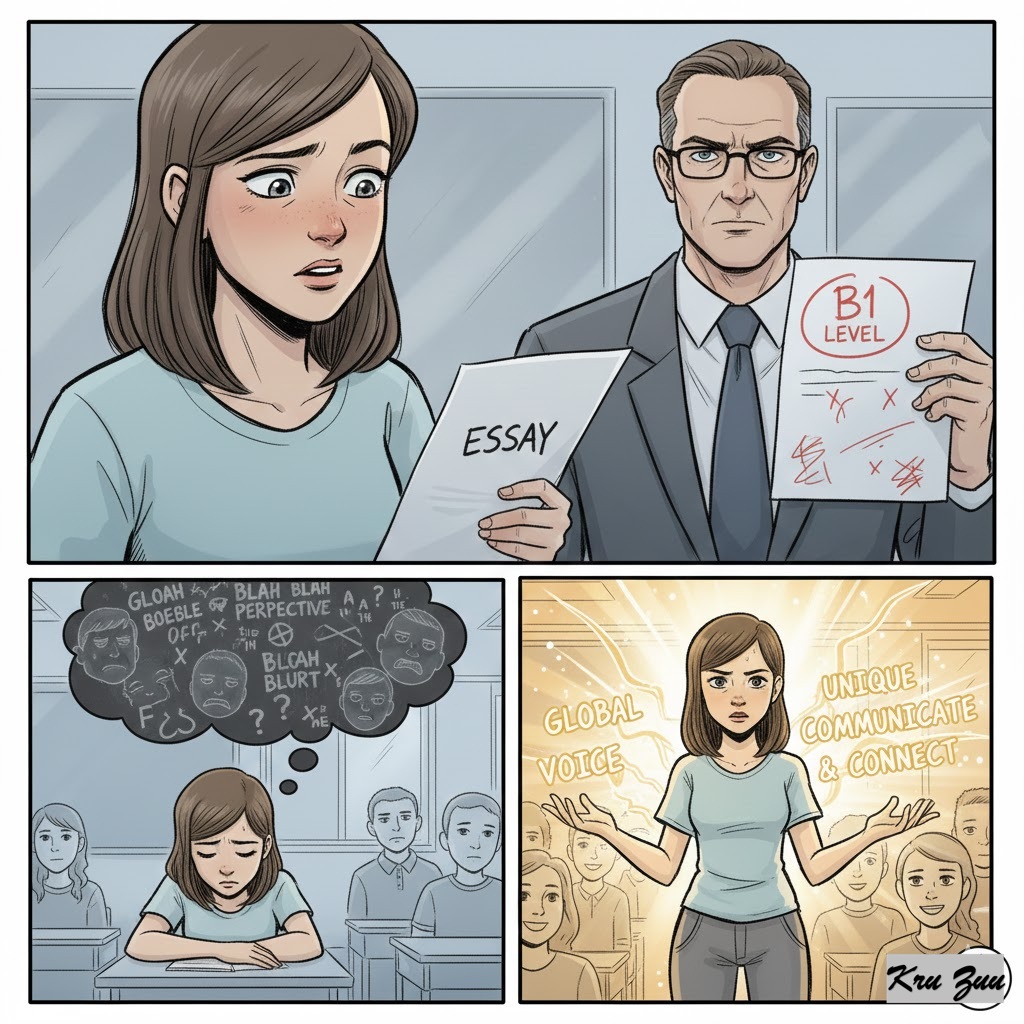
    You speak with an accent. You make small grammar mistakes. You feel “ugly” or “embarrassed” about your speaking.

    The Truth

    To a strict examiner, your English might be “B1 Level.”


    To a native speaker, your accent might sound “Exotic and charming.”


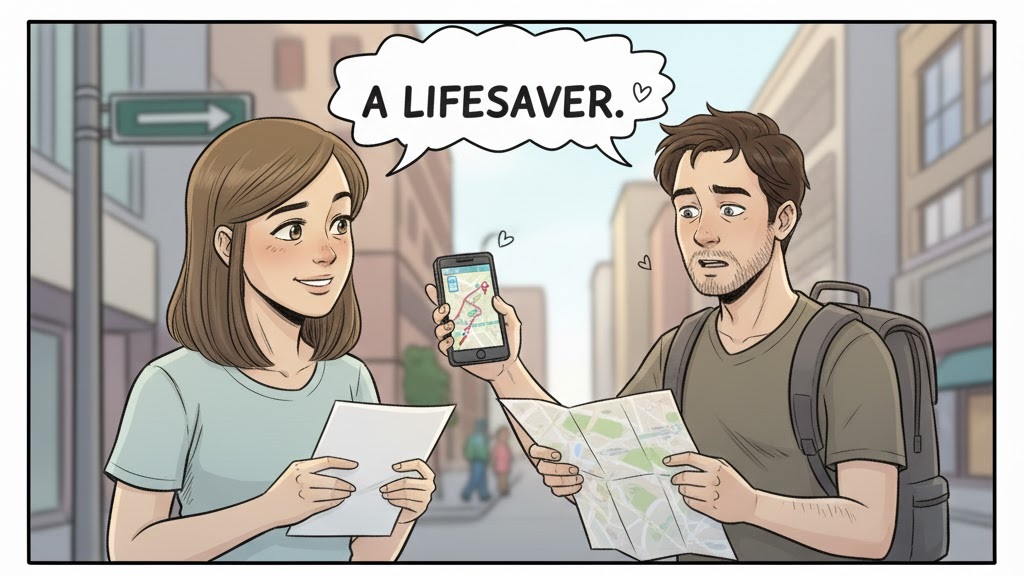
    To a stranger who needs help, your English is “A lifesaver.”


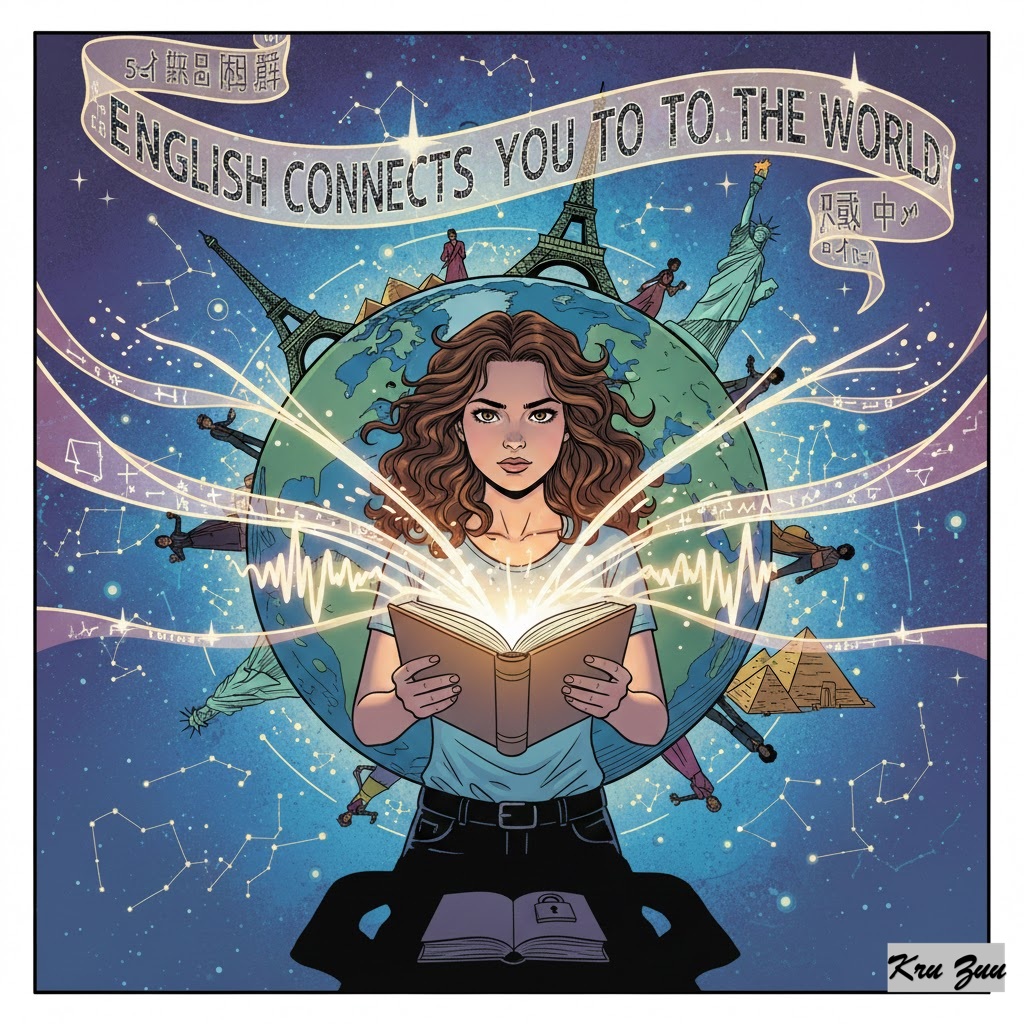
    Your English is beautiful because it connects you to the world. Don’t hide it.


    💬 Your Turn: The Perspective Challenge 🚀


    Let’s practice! The Challenge:
    Think of something that most people hate, but you love.


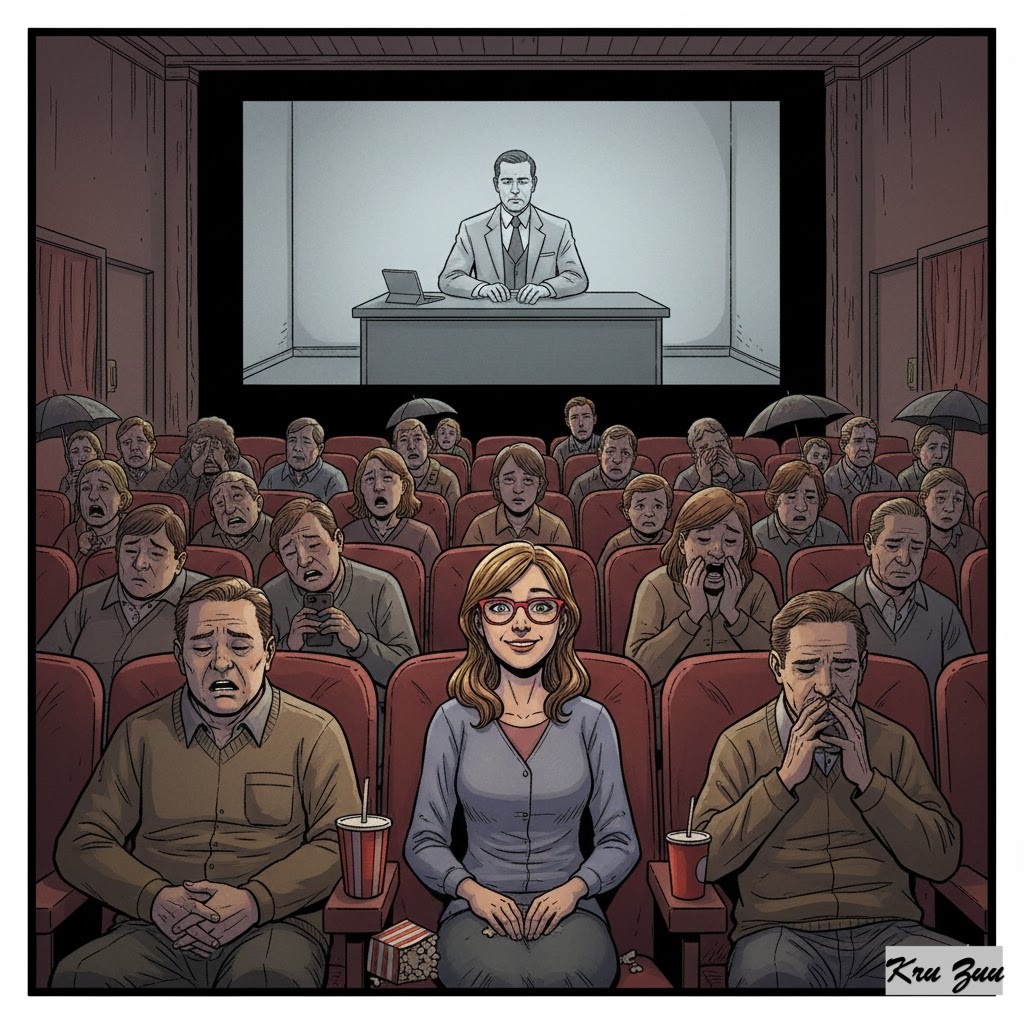
    A movie everyone thinks is boring?


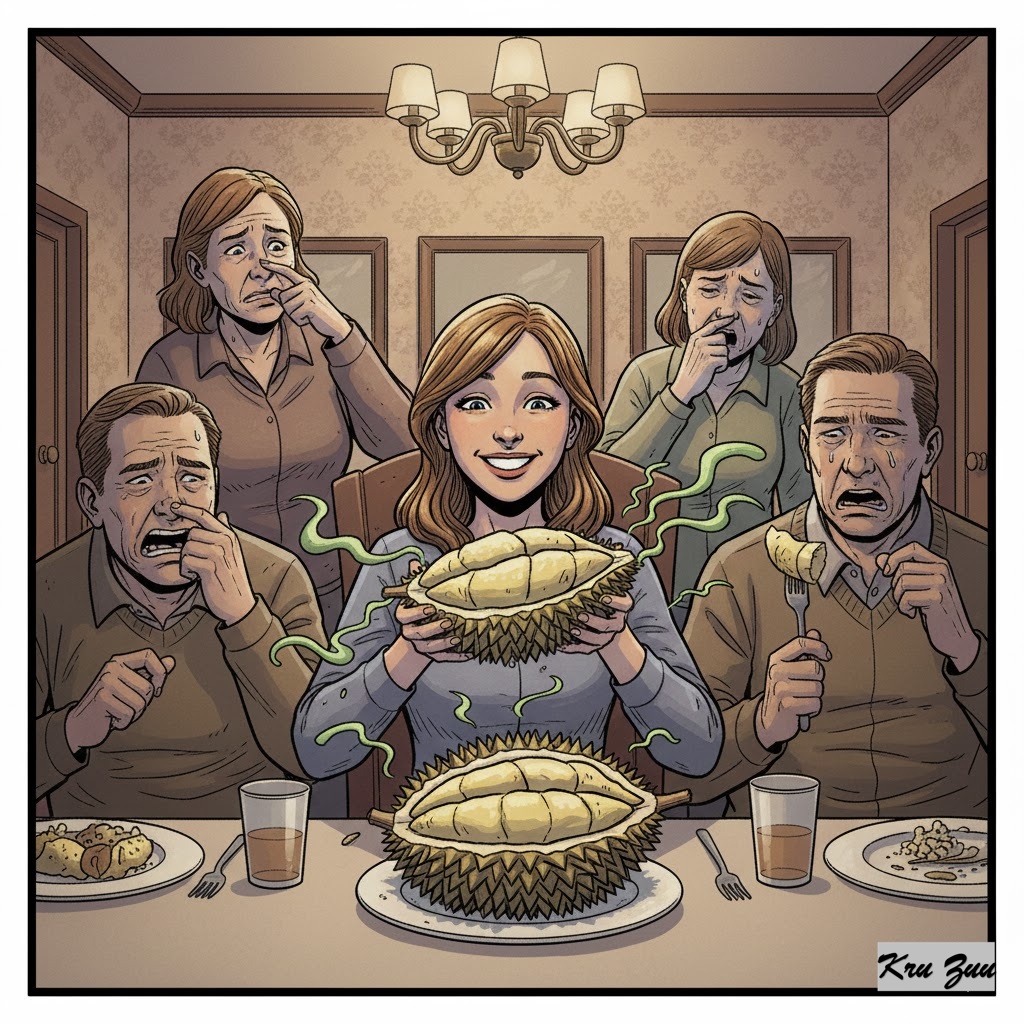
    A food everyone thinks is gross?


    A type of weather (like rain)?


    Tell us in the comments! 👇

    “Everyone hates _, but I think it is beautiful because _.”

    By Zubeyir YURTKURAN

    https://www.facebook.com/BrainBattleground/

    https://www.facebook.com/zubeyr.yurtkuran/

    https://www.instagram.com/zubeyryurtkuran/
    https://www.youtube.com/@BrainBattleground-b3p

    https://www.instagram.com/brainbattleground/

  • 🛡️ The Daily Shield: The Law of Association

    🛡️ The Daily Shield: The Law of Association

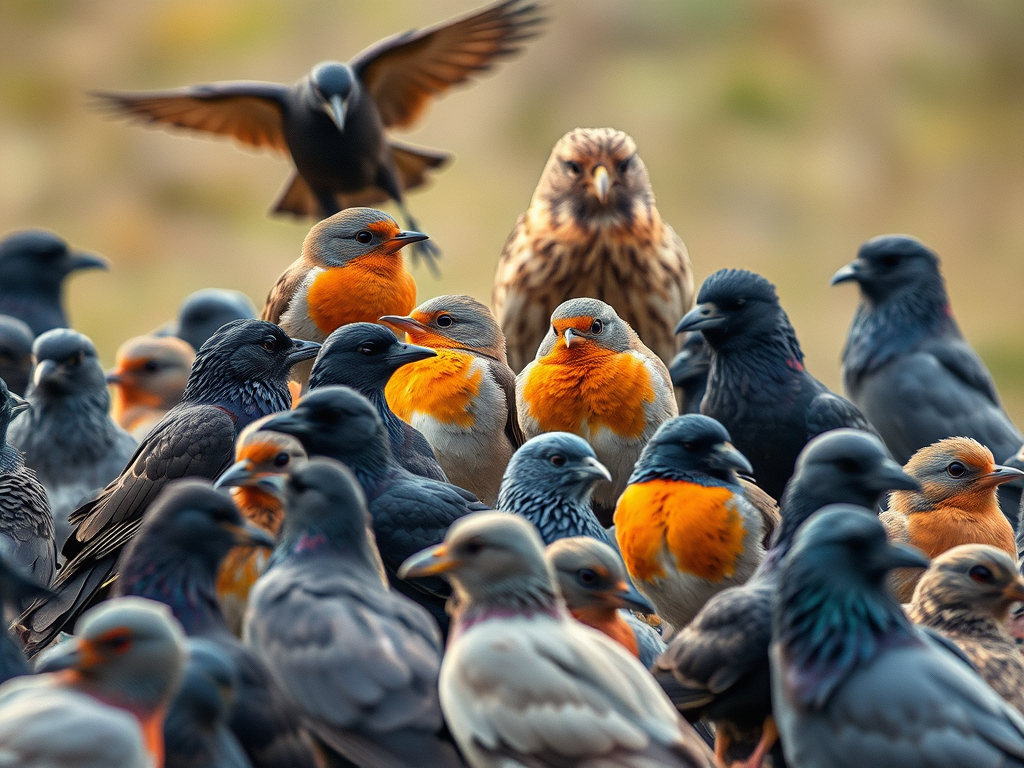
    “Birds of a feather flock together.”


    😈 The Villain (The Energy Vampire):

    You have big dreams. You want to learn English, get fit, or start a business.

    But your “squad” only wants to gossip, complain about the weather, and play video games for 6 hours straight.

    You try to work, but they say, “Come on, relax! You are boring.” You slowly lower your standards to match theirs.

    The Result? You become the average of the people around you.

    You lose your fire.

    You wonder why you are stuck in the same place while others move forward.

    You are trapped in the “Comfort Zone Cage.” 🧟‍♂️


    😇 The Hero (The Tribe Builder):

    You realize that emotions and habits are contagious.

    You look at your circle and ask: “Do these people inspire me or drain me?”

    You bravely distance yourself from toxic negativity. You find a new group, people who are smarter, faster, and kinder than you.

    The Result? Their habits rub off on you. You study because they study. You aim high because they aim high. You don’t just fly; you soar. You understand that your network is your net worth. 🦅

    ⚖️ The Reality


    “Show me your friends, and I will show you your future.” We like to think we are independent thinkers.

    But biology says otherwise. We are social chameleons.

    If your friends eat fast food every day, you will eventually eat a burger.

    If your friends read books, you will eventually pick up a book.

    💎 The Secret: You cannot change the people around you, but you can change the people around you. (Read that again).

    🧐 The Anatomy of the Proverb


    Why birds? Why feathers? Let’s break it down.


    Birds of a feather (Idiom): People who are similar (same character, same interests, same background). Just like a sparrow has different feathers than an eagle.


    Flock (Verb): To gather or travel together in a crowd.


    Together (Adverb): With or near to each other.


    Simpler Version: Similar people hang out with similar people.


    📚 Vocabulary Vault


    Clique (Noun):
    A small group of people, with shared interests or other features in common, who spend time together and do not readily allow others to join them. (Example: “The popular clique in high school.”)


    Peer Pressure (Noun): Influence from members of one’s peer group. 😬


    Entourage (Noun): A group of people attending or surrounding an important person.


    Toxic (Adjective): Very harmful or unpleasant in a pervasive or insidious way.


    Like-minded (Adjective): Having similar tastes or opinions. 🧠


    🧠 Grammar Focus: Collective Nouns


    The word “Flock” is special. It is often used for birds, but English loves “Collective Nouns” (names for groups of animals).


    A flock of birds (or sheep). 🐦


    A pack of wolves. 🐺


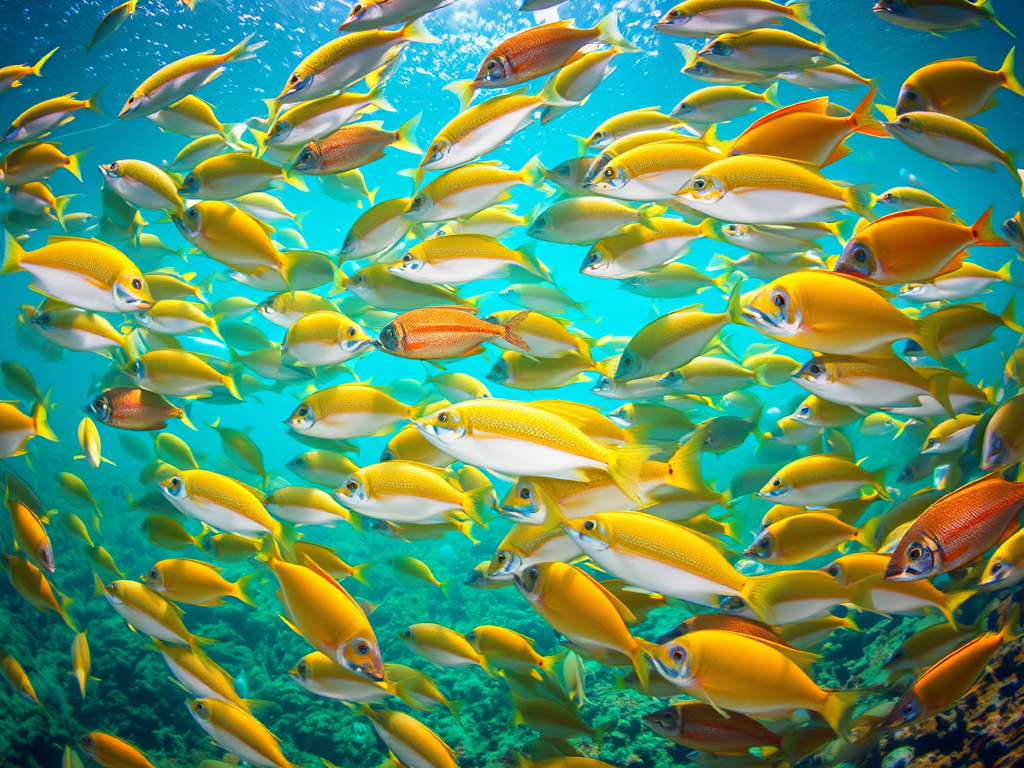
    A school of fish. 🐟


    A pride of lions. 🦁


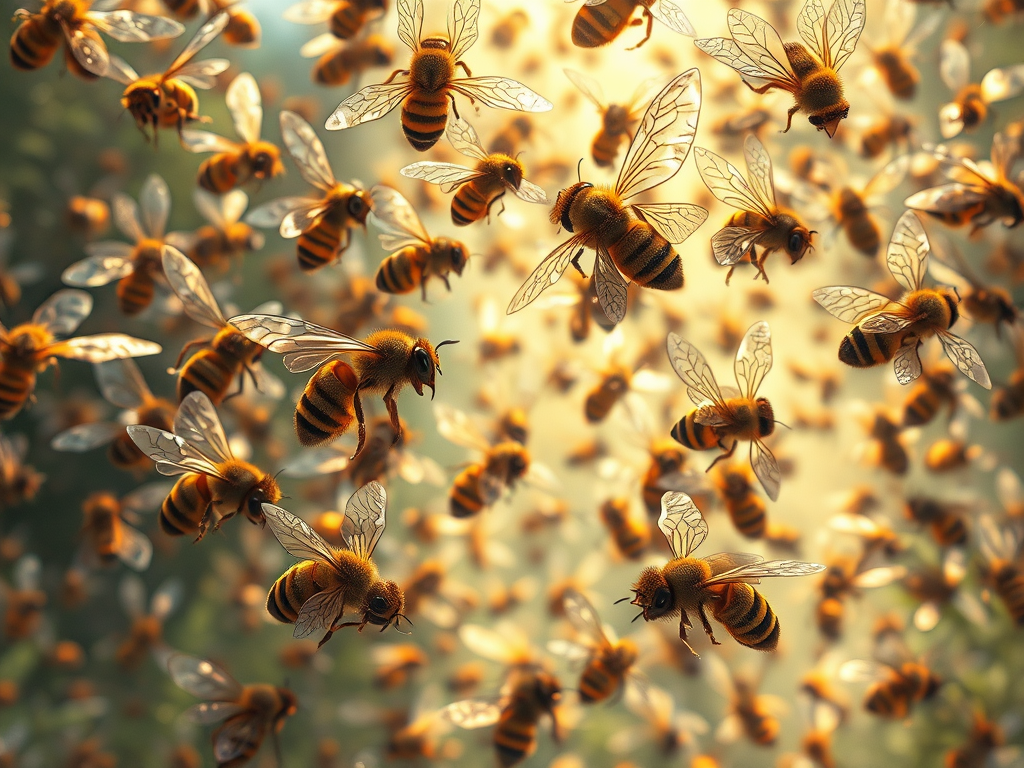
    A swarm of bees. 🐝


    Grammar Trap: When the group acts as one unit, use a singular verb.


    Correct: The flock is flying south. (Not “are”)

    📜 History & Global Wisdom


    This observation is as old as nature itself.


    The Origin

    The phrase has been used since the mid-16th century. William Turner used a version of it in 1545. It comes from the simple observation that robins fly with robins, and crows fly with crows. You never see a pigeon hanging out with a hawk.


    Global Cousins
    🇹🇷 Turkish:
    “Bana arkadaşını söyle, sana kim olduğunu söyleyeyim.” (Tell me your friend, and I will tell you who you are.) — Direct hits on the meaning!


    🇹🇷 Turkish (Alternative): “Körle yatan şaşı kalkar.” (He who sleeps with the blind wakes up cross-eyed.) — Warning about bad influence.


    🇪🇸 Spanish: “Dime con quién andas, y te diré quién eres.”


    🇯🇵 Japanese: “Rui wa tomo wo yobu.” (Similar types call their friends.)

    🎯 Impact on Life: The Audit


    ✅ The Pros (The Mastermind):
    Acceleration:
    Being around experts makes you learn faster by osmosis.


    Support: When you fall, a strong flock catches you.


    ❌ The Cons (The Echo Chamber):
    Blindness:
    If everyone agrees with you, you never grow. Sometimes you need a friend who is different to challenge your ideas.


    Exclusion: Don’t be so close to your flock that you reject everyone else. That is prejudice.

    🎭 Short Story: The Eagle in the Chicken Coop


    Once, an eagle egg rolled out of a nest and fell into a farm.

    A chicken sat on it. When the baby eagle hatched, he looked around.

    Everyone was pecking at the ground, eating corn, and clucking.

    The Conditioning: The baby eagle thought, “I guess I am a chicken.”

    He walked on the ground. He never tried to fly high. He spent his days gossiping about the farmer.

    The Awakening: One day, he looked up and saw a majestic bird gliding effortlessly in the clouds.

    “What is that?” asked the eagle. “That’s an eagle, the king of the birds,” said the old chicken. “But don’t worry about him. You and I belong to the ground.”

    The Tragedy: The eagle believed his “flock.” He lived and died a chicken, never knowing he was born to rule the sky.

    The Moral: If you hang out with chickens, you will never fly. Find your eagles. 🦅

    🎓 Lesson for English Learners


    Create Your “English Flock.”


    Situation: You study English alone in your room. When you go out, you only speak your native language.


    The Fix: You cannot learn a language in isolation.


    Join an English speaking club (online or offline).


    Change your digital flock: Follow accounts that only post in English.


    Find a “study buddy” who is more advanced than you. They will pull you up.


    💬 Your Turn: The Friendship Audit 🚀


    Jim Rohn said, “You are the average of the five people you spend the most time with.”


    The Challenge:
    Write down the names of the 3 people you text the most.


    Do they inspire you?


    Do they support your goals?


    Do they make you laugh or stress you out?


    Comment below:
    What kind of “flock” are you looking for this year? (Example: “I am looking for a creative flock!” or “I need a gym flock!”) 👇

  • 💪 No Pain, No Gain: The Comfort Zone is Where Dreams Go to Die

    💪 No Pain, No Gain: The Comfort Zone is Where Dreams Go to Die

    🚫 Can You Win a Gold Medal from Your Couch?


    🛋️ The Short Cut: Drinking “Miracle Slimming Tea” instead of going to the gym.

    📉 The Reality: Your wallet gets lighter, but your belly stays the same. Disappointment is guaranteed.


    📚 The Short Cut: Watching TV shows with subtitles to “get used to the sound” because memorizing vocabulary is too hard.

    📉 The Reality: Years pass, and you are trapped in the “I understand but I can’t speak” trap.


    Life’s most brutal but fair rule is this: No sweat, no victory. In this post, we examine why success requires paying a price. Take off your masks, put on your running shoes; the training starts now! 🏋️‍♂️

    🧐 The Anatomy of the Proverb


    Let’s look at the mechanics of this motivational phrase.


    📚 Vocabulary Vault


    Pain (Noun):
    Physical suffering, effort, trouble, or difficulty. (Here, it means “necessary struggle.”) 😓


    Gain (Noun): Profit, advancement, increase, or achievement. 🏆


    No (Determiner): Indicates absence or lack of something.


    🧠 Grammar Focus


    This structure is the shortest and most powerful form of a “Conditional” sentence in English.


    Formula: No + [Noun 1] + , + No + [Noun 2].


    The Meaning: If the first noun (pain/effort) is absent, the second noun (gain/success) is impossible.


    Example: No risk, no fun.


    📜 History: From Poets to Bodybuilders


    Who made this famous?


    The Origin:
    While roots go back to 17th century poet Robert Herrick, the phrase was popularized in the modern world by 1980s fitness icon Jane Fonda. She used it in her aerobic videos to encourage people to push through “the burn” in their muscles.


    The Lesson: Success is not an accident; it is the receipt for the price you paid in effort.

    🎯 Impact on Life: The Pros & Cons


    Is pushing yourself constantly always good?


    ✅ The Pros (Why it works)


    Resilience: Difficulties forge a character as strong as steel.


    True Skill: What is easily gained is easily lost. Hard-earned skills are permanent.


    Pride: The view is different for the person who climbed the mountain compared to the person who took a helicopter to the peak. 🏔️


    ❌ The Cons (What to watch out for)


    Burnout:
    Chasing “pain” without rest leads to injury or mental exhaustion. You must work hard, but also work smart.

    🎭 Short Story: The Great Farm Marathon


    To understand this proverb, let’s look at our farm friends and the upcoming “Great Summer Race.”


    🌟 Character Introduction


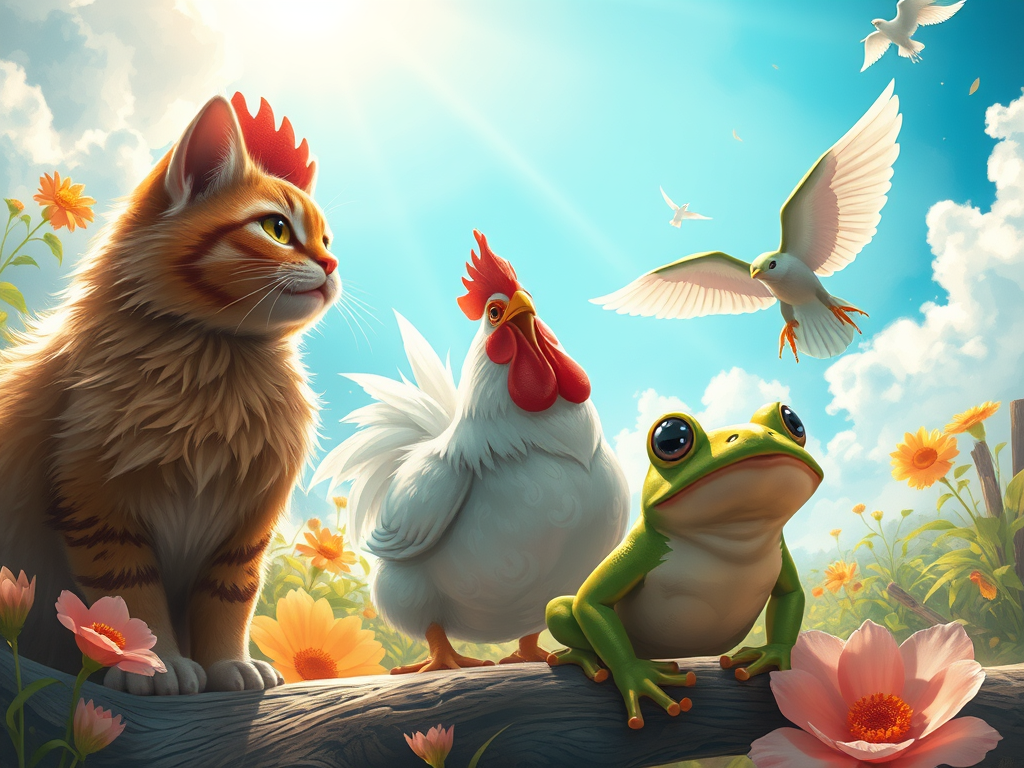
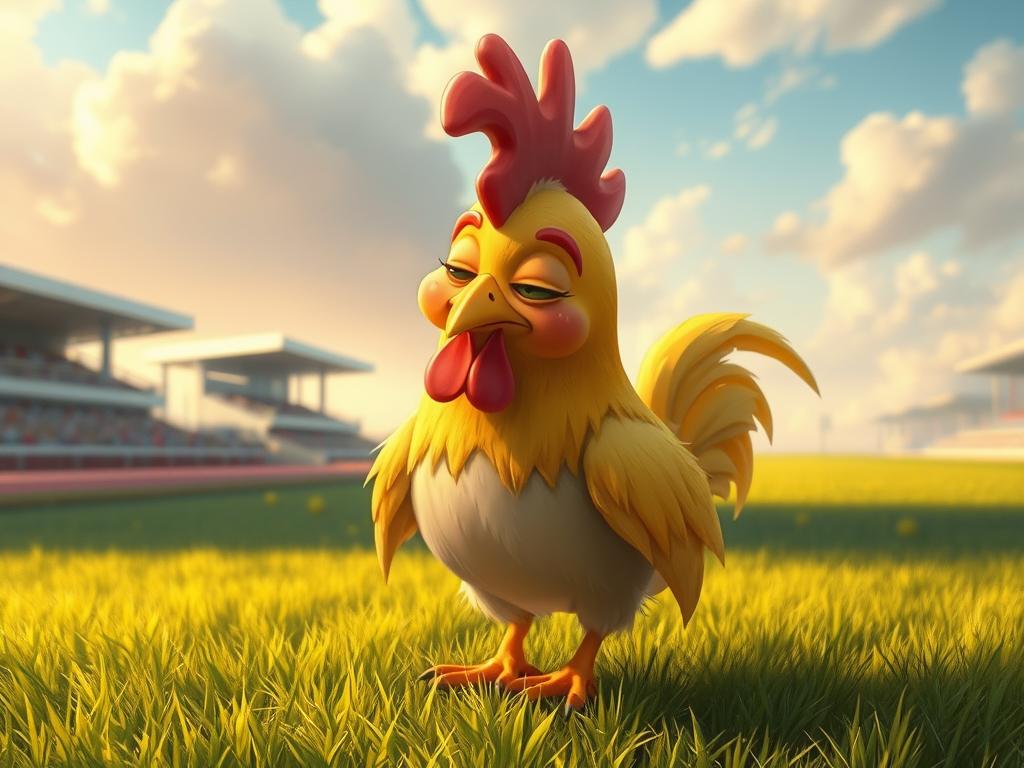
    Percy the Chicken (The Dreamer):
    Wants to win the race but hates waking up early to run. 🐔


    Fred the Frog (The Grinder): Jumps every morning until his legs ache. He knows the process is hard. 🐸


    Luna the Cat (The Coach): The observer and referee. She focuses on results. 😼


    One week before the race, Percy bought himself a pair of expensive, brand new running shoes. “Hey Fred!” shouted Percy, lying in his hammock. “Why do you tire yourself out so much? Look, my shoes are super fast! I’m saving my energy for race day.” 🥤 Fred stopped, panting, and wiped the sweat from his forehead. “My legs are burning, Percy. But every day I get one step faster. I love this pain because it leads me to the goal.”


    Race day arrived. 🏁 With the starting whistle, Percy bolted! He was great for the first 10 meters. But at 50 meters, his lungs started to burn. At 100 meters, his legs shook, and he collapsed. “This is unfair! My shoes were so expensive!” he cried. 😵


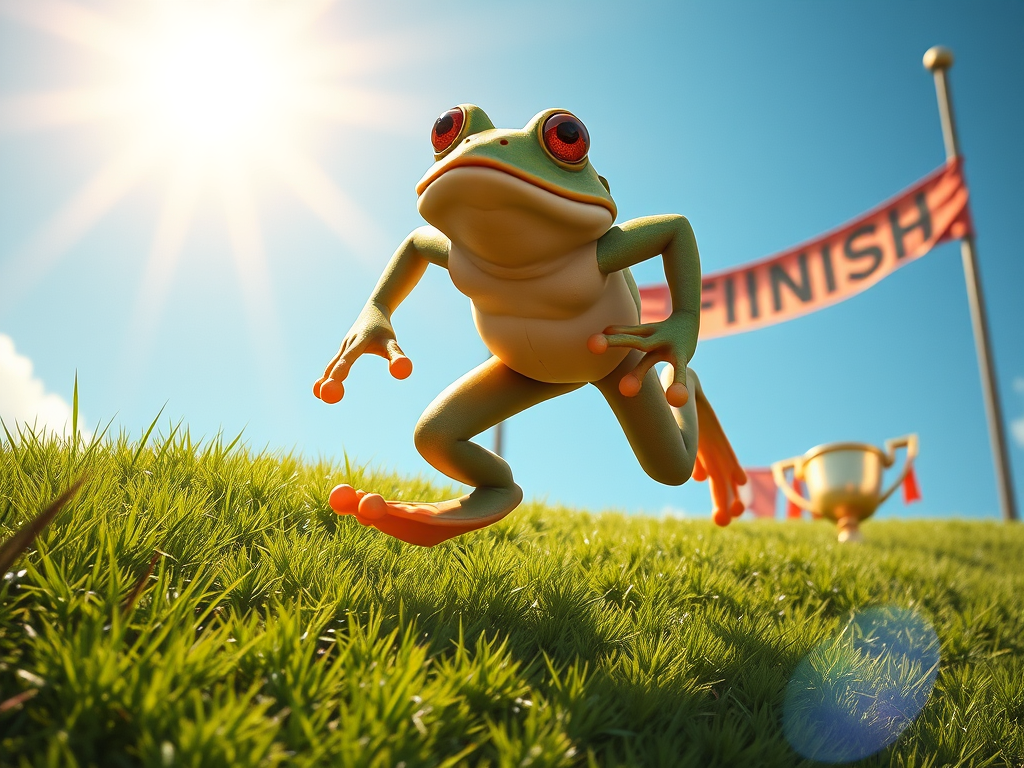
    Fred started slow but steady. As he hopped up the hill, he felt that familiar “burning” sensation in his legs. But thanks to his training, he was used to this pain. It didn’t stop him; it fueled him. He crossed the finish line as the champion. 🏆


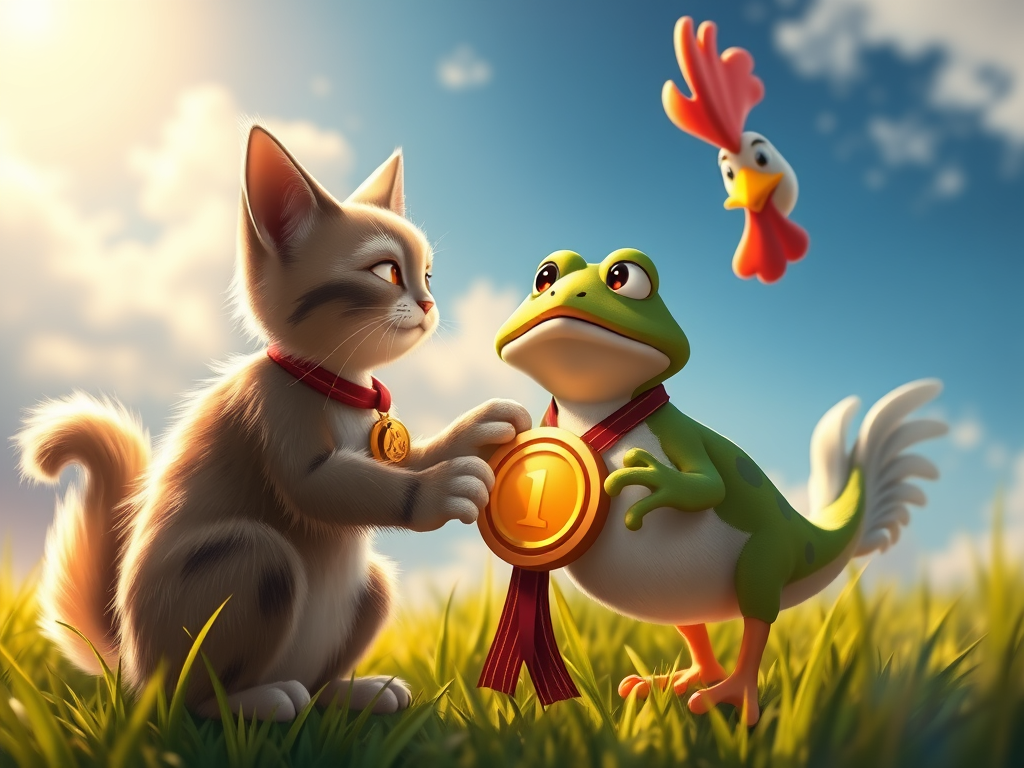
    As Luna placed the medal on Fred, she turned to Percy: “Percy, expensive shoes (The Short Cut) don’t make you a champion. The leg pain Fred endured (The Pain) brought him this medal (The Gain).”


    The Moral:


    Percy:
    Comfort Zone = No Trophy.


    Fred: Sweat & Ache = Victory.

    🎓 Lesson for English Learners


    Does your hand hurt while writing new vocabulary words 10 times in a notebook? (Pain) ✍️


    This is a sign that your brain is etching that word into long-term memory. (Gain) 🧠


    Did you make a mistake in a speaking club, turn red, and feel embarrassed? (Pain) 😳


    That emotional memory ensures you will never make that mistake again. (Gain) ✨


    Remember: The feeling of “struggle” when learning a language is not failure; it is the sound of improvement footsteps.


    💬 Your Turn


    Has there been a moment in your life where you said, “I wish I had pushed a little harder”? Or a success you are proud of because you suffered for it? Share your story in the comments! 👇

    By Zubeyir YURTKURAN

    https://www.facebook.com/BrainBattleground/

    https://www.facebook.com/zubeyr.yurtkuran/

    https://www.instagram.com/zubeyryurtkuran/
  • 🐢 Better Late Than Never: Why Doing It “Late” Beats Not Doing It At All

    🐢 Better Late Than Never: Why Doing It “Late” Beats Not Doing It At All

    ⏳ Time flies, but is the opportunity really gone?


    🚌 Scenario: You missed the bus by 5 minutes.

    The “Never” Approach: “Today is ruined. I’m going back home. I give up.”

    The “Better Late” Approach: “I’ll wait for the next one. I will be late for the meeting, but at least I will be there.”


    🎂 Scenario: You forgot your friend’s birthday, and the date was yesterday.

    The “Never” Approach: “It’s too late now. It would be embarrassing to text. I just won’t say anything.”

    The “Better Late” Approach: “I will apologize and celebrate today. It is better than completely ignoring it.”


    Life isn’t perfect. Sometimes we miss the train, sometimes we don’t start our diet on Monday. This is exactly where the golden rule comes in to save us from guilt: “Better Late Than Never.”


    In this post, we explore the proverb that is the biggest enemy of perfectionism. Forgive yourself, pick yourself up, and let’s begin.

    🧐 The Anatomy of the Proverb


    Let’s look at the mechanics of this comforting phrase.


    📚 Vocabulary Vault


    Late (Adjective/Adverb): Doing something after the expected, proper, or usual time. 🕒


    Never (Adverb): At no time in the past or future; not ever. ⛔


    Better (Adjective): More desirable, satisfactory, or effective. 👍


    🧠 Grammar Focus


    This sentence is a comparative structure (Ellipsis is used, meaning words are omitted).


    Full Sentence: [It is] Better [to be] late + than [to] never [arrive].


    The Meaning: Doing something after the scheduled time is far superior to not doing it at all. Delay is a flaw, but quitting is a total loss.


    📜 History: Timeless Wisdom


    Who made this famous? Humans have been battling procrastination for thousands of years.


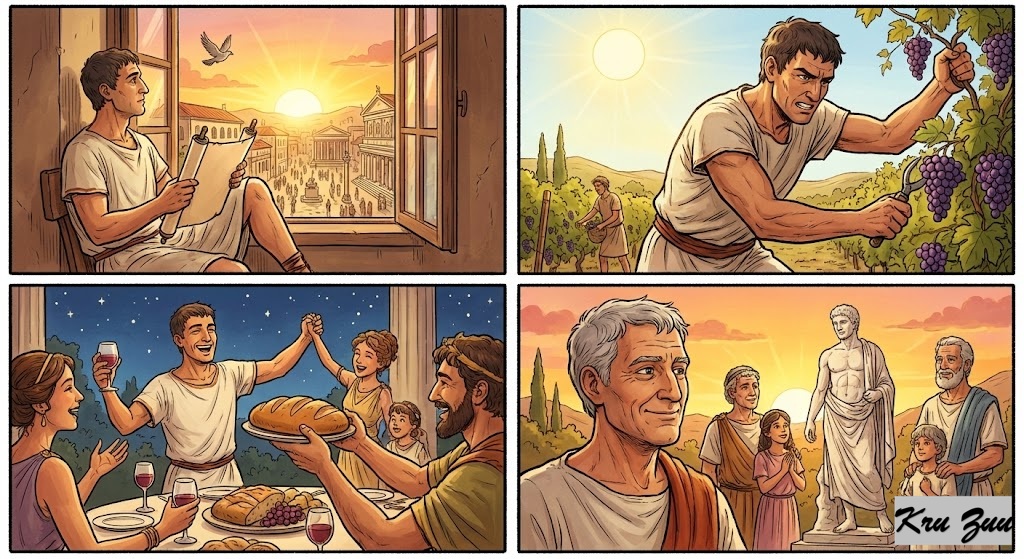
    The Origin: The phrase was notably used by the father of English literature, Geoffrey Chaucer, in his work “The Yeoman’s Tale” in 1386. However, its roots trace back even further to the Roman historian Livy.


    The Lesson: Perfect timing is great, but a completed task (even if late) is always better than an abandoned dream.

    🎯 Impact on Life: The Pros & Cons


    Is it always okay to rely on this proverb? Let’s weigh the scales.


    ✅ The Pros (Why it helps)


    Relieves Guilt:
    Instead of giving up after a mistake, it gives you a chance to fix it.


    Results-Oriented: It ensures you reach the goal, even if slowly. Remember the Tortoise and the Hare; crossing the finish line is what matters. 🏁


    Encourages Action: It gives power to those who say “I’m too old” or “I missed my chance” to finally start.


    ❌ The Cons (Why it can be tricky)


    Excuse for Laziness: If you constantly say, “I’ll do it later, better late than never,” you become unreliable.


    Loss of Trust: Delivering a project late is better than never delivering it, but it still damages your professional reputation. Balance is key. ⚖️

    🎭 Short Story: The Last Harvest


    To understand this better, let’s return to the farm. Winter is coming, and it is time to plant seeds for the winter food supply!


    🌟 Character Introduction


    Percy the Chicken (The Quitter): Has an “All or Nothing” mindset. If he misses the perfect time, he thinks trying is pointless. He gives up immediately. 😵


    Luna the Cat (The Punctual One): Does everything on time. She is disciplined and never late. ✨


    Fred the Frog (The Hopeful Latecomer): Sometimes distracted and misses the deadline, but never gives up. He knows that some result is better than zero result. 🐸


    Luna woke up with the first light of morning. “The sun is up! The perfect time to plant corn!” she said. Luna plowed her field, planted her seeds by noon, and went to rest, satisfied with a job well done.


    Percy and Fred, however, had overslept.


    At 3:00 PM, Percy woke up. He looked at the sun and panicked. “Oh no! The day is almost over! Luna has already finished. There is no point in starting now. The seeds won’t have enough sun. I’ll just plant them next year.” Percy shrugged and went off to play video games. 🎮


    Fred woke up at the same time. “Oh dear!” he shouted. “I am so late!” He ran to his field. The sun was already setting.


    Percy yelled from the fence: “Hey Fred! Don’t bother, buddy. We missed the perfect window. Just let it go!”


    Fred wiped the sweat from his forehead and shouted back: “Better late than never, Percy!” Fred worked furiously, planting his seeds even after the sun went down, working by the light of the moon. 🌙


    Months passed. The harvest time arrived.


    Luna’s Field: Full of perfect, golden corn. Her pantry was completely full.


    Percy’s Field: Full of weeds. He would spend the winter hungry because he did nothing just because he was late.


    Fred’s Field: His corn wasn’t as big as Luna’s, and it was a bit smaller, but it was there. Fred’s basket was full enough to survive.


    Fred munched on his corn and looked at the hungry Percy. “You see, Percy? It wasn’t perfect, but at least I’m not starving. I was late, but I didn’t quit.”


    In this story, the characters represent the outcomes:


    Luna: Perfection (Timely execution) 🏆


    Percy: Bankruptcy / “Never” (Giving up and getting zero results) 🌪️


    Fred: Salvation / “Better Late” (Delayed but satisfactory results) 🌽

    🎓 Lesson for English Learners:


    You might be 30, 40, or 60 years old. You might regretfully say, “I wish I had learned English when I was a child.” (Percy’s Method)


    But remember this truth: Being able to speak English 1 year from now is a million times better than finishing your life saying “I wish.”


    Did you arrive 10 minutes late for class today? Go in and listen anyway. (Fred’s Method)


    It is better than missing the entire lesson.


    💬 Your turn: Is there something in your life you gave up on because you thought “It’s too late”? Or a project you finished late but were glad you did? Share your story in the comments! 👇

    By Zubeyir YURTKURAN

    https://www.facebook.com/BrainBattleground/

    https://www.facebook.com/zubeyr.yurtkuran/
    https://www.instagram.com/zubeyryurtkuran/