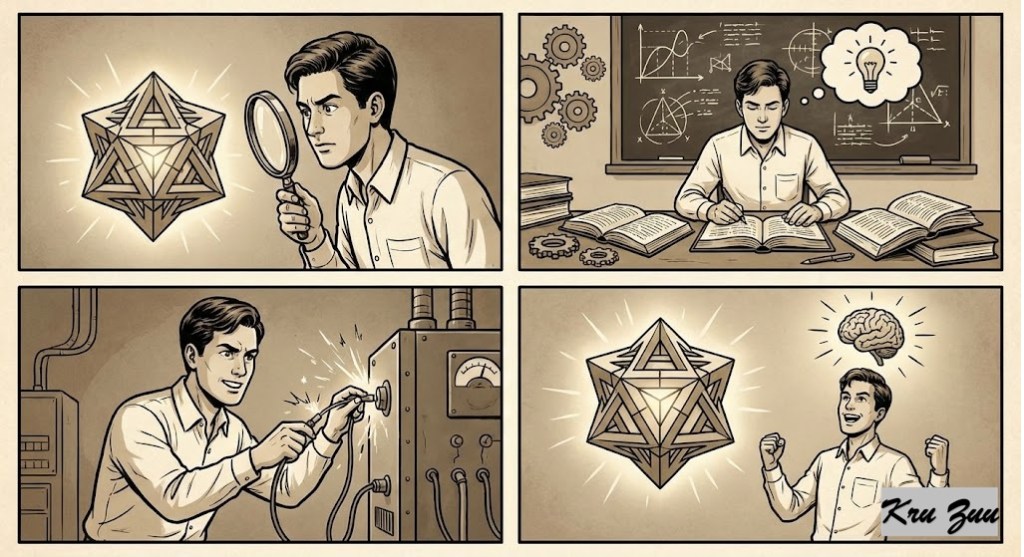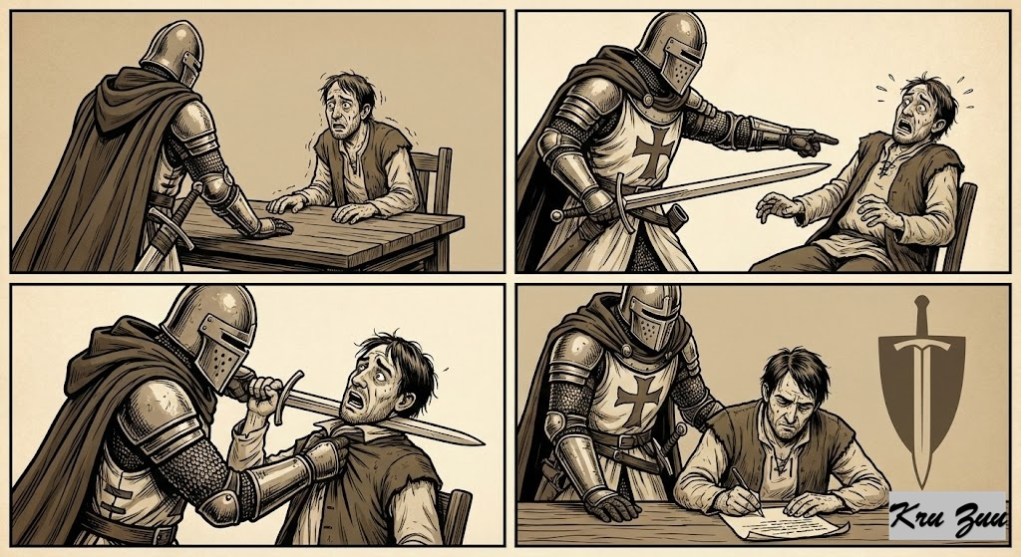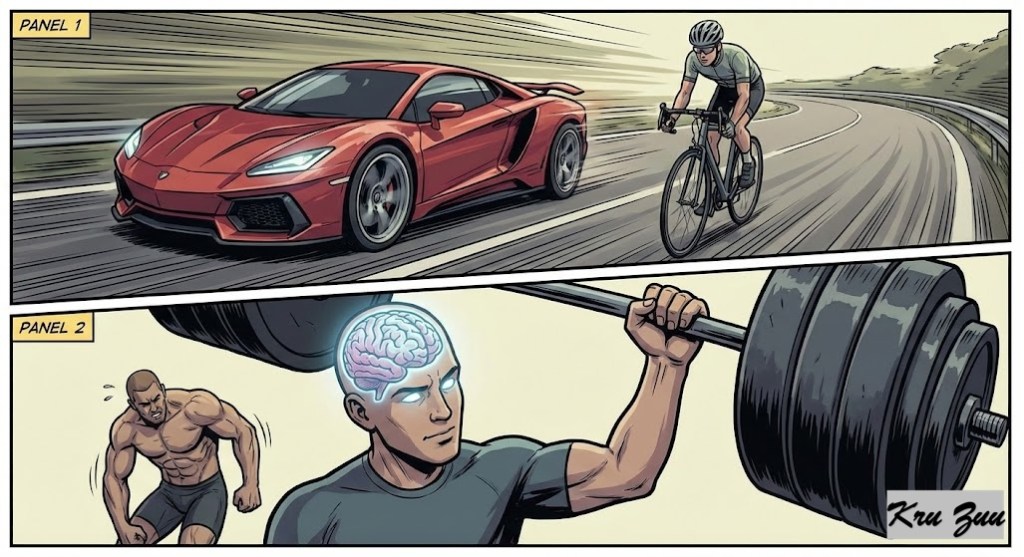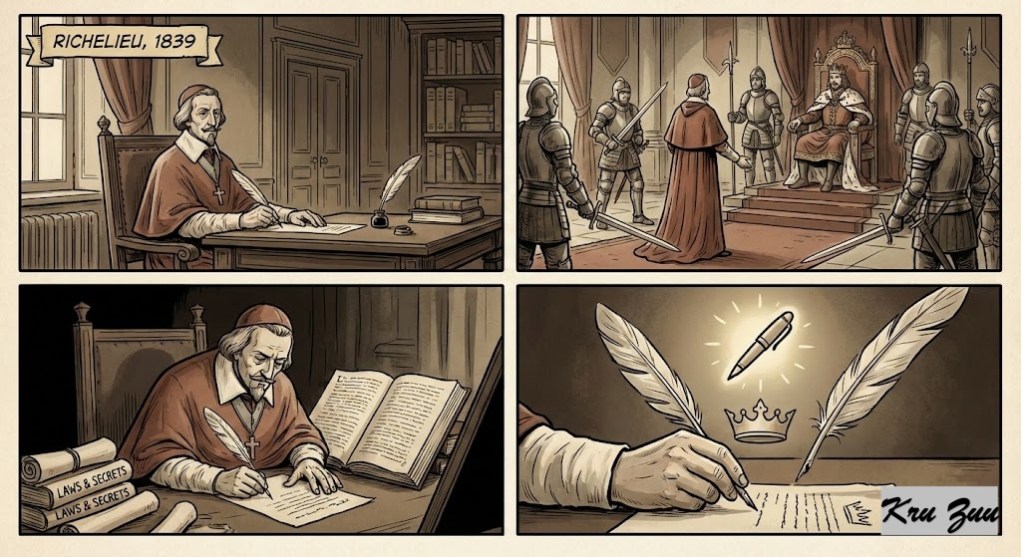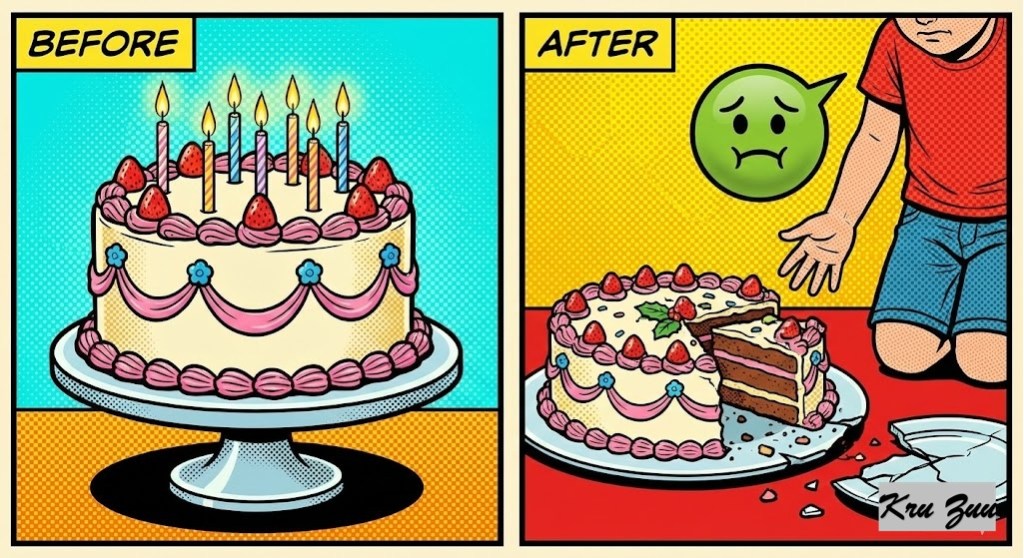
Tag: English Idioms

  • 🛡️ The Daily Shield: The Law of Precaution

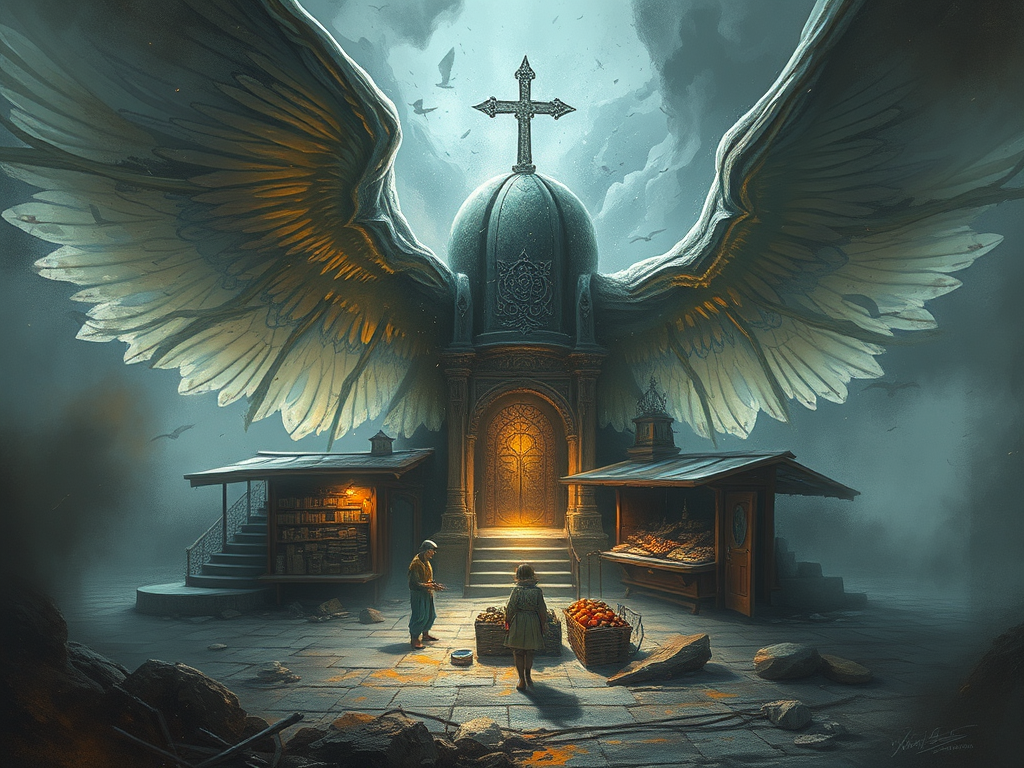
    🛡️ The Daily Shield: The Law of Precaution

    “Better safe than sorry.”


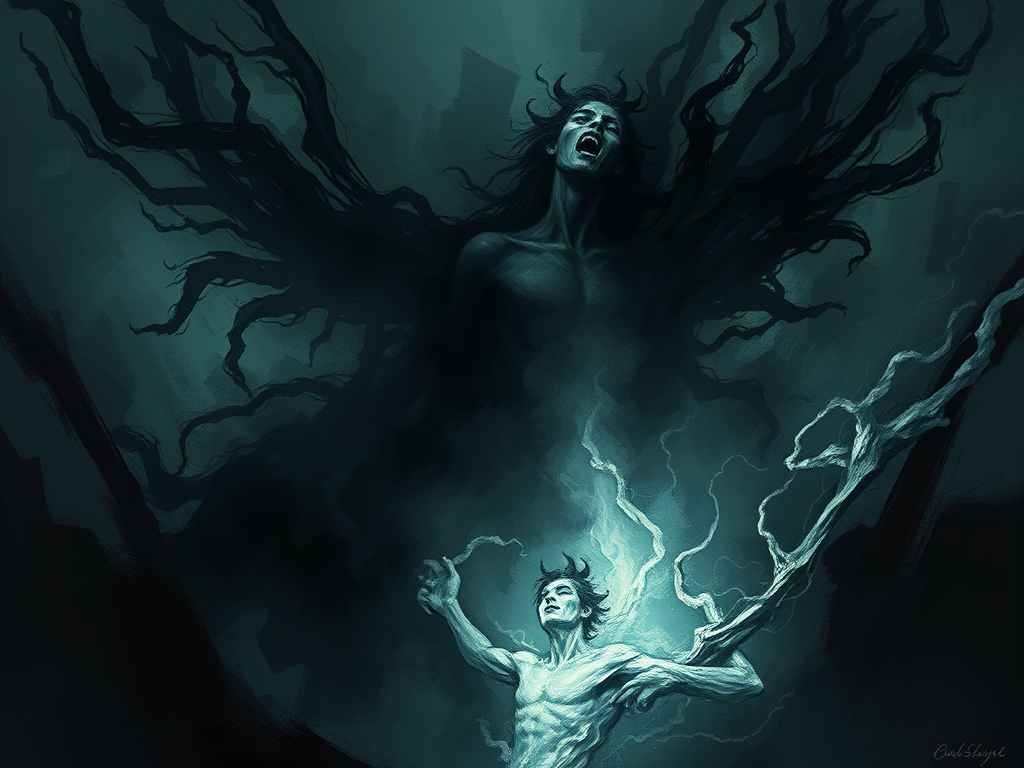
    😈 The Villain (The Gambler)


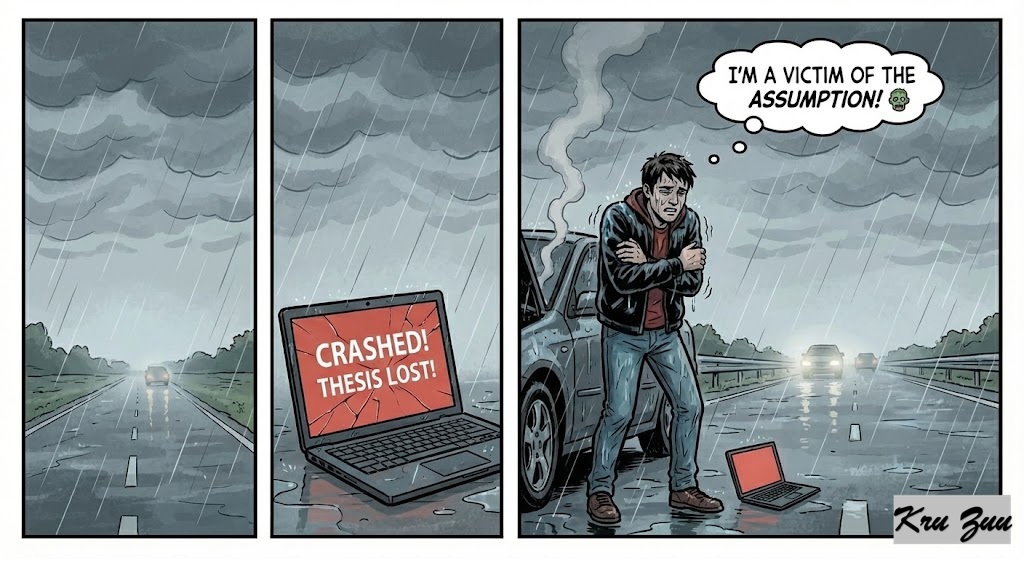
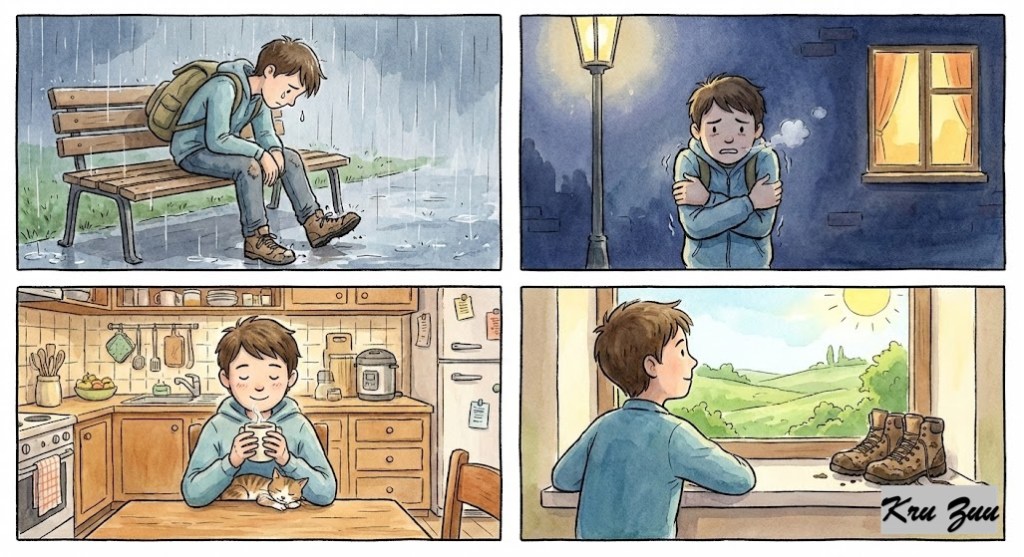
    You are driving, and the fuel light turns on. You say, “I know my car; I can make it another 50km.” You ignore the strange noise your laptop is making. You walk out into a grey sky without an umbrella because “Meteorologists are always wrong.” You live life on the edge.
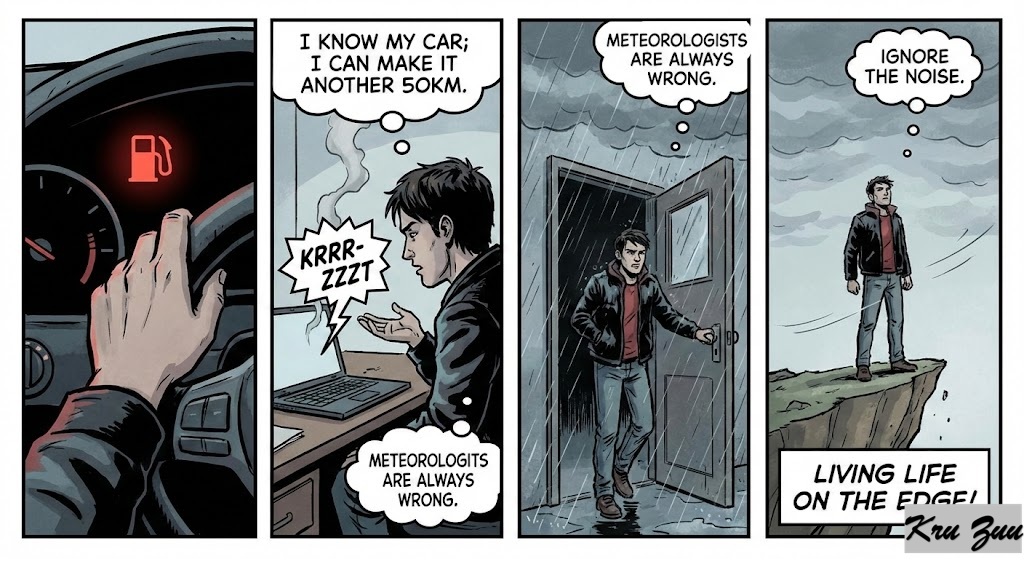
    The Result? You are stranded on the side of the highway in the rain. Your hard drive crashes, and you lose your thesis. You are soaked, cold, and miserable. You are a victim of The Assumption. 🧟‍♂️


    😇 The Hero (The Guardian)


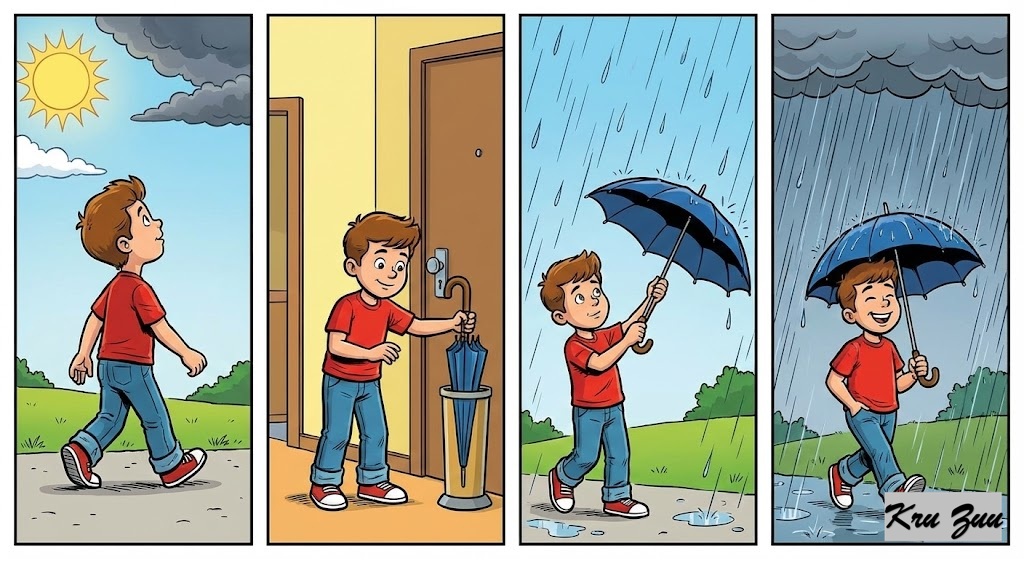
    You see the fuel light, and you stop at the next station. You backup your photos to the cloud before your phone breaks. You check the weather app and grab a jacket, even if it looks sunny now. You treat “Caution” as an investment, not a burden.
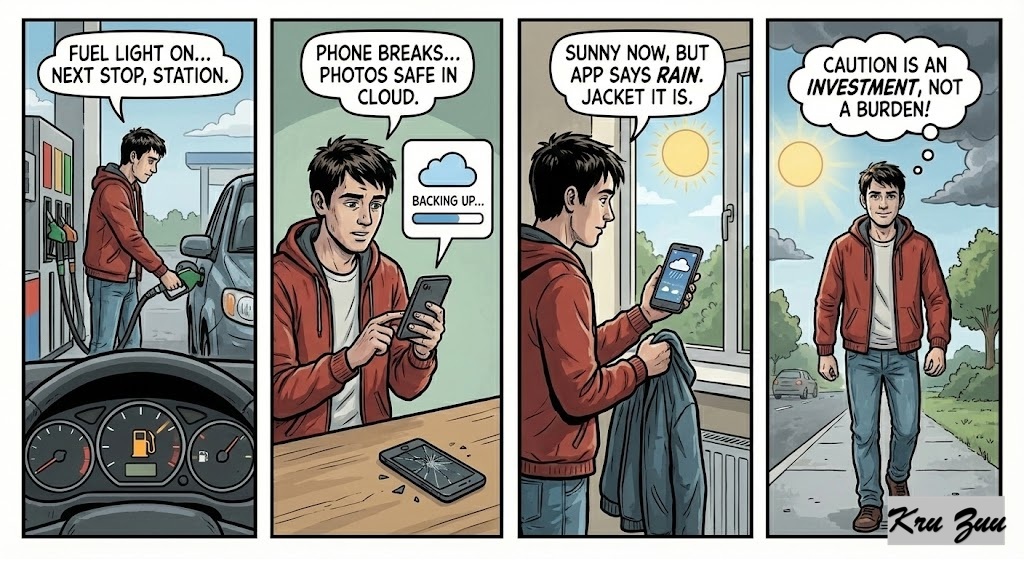
    The Result? When disaster strikes, you are untouched. You sleep soundly because you are prepared. You don’t rely on luck; you rely on Strategy. 🛡️


    ⚖️ The Reality


    “Optimism” is dangerous without a plan. We all think, “It won’t happen to me.” That is the brain’s favorite lie. Accidents, storms, and crashes don’t make appointments. They just show up.

    💎 The Secret

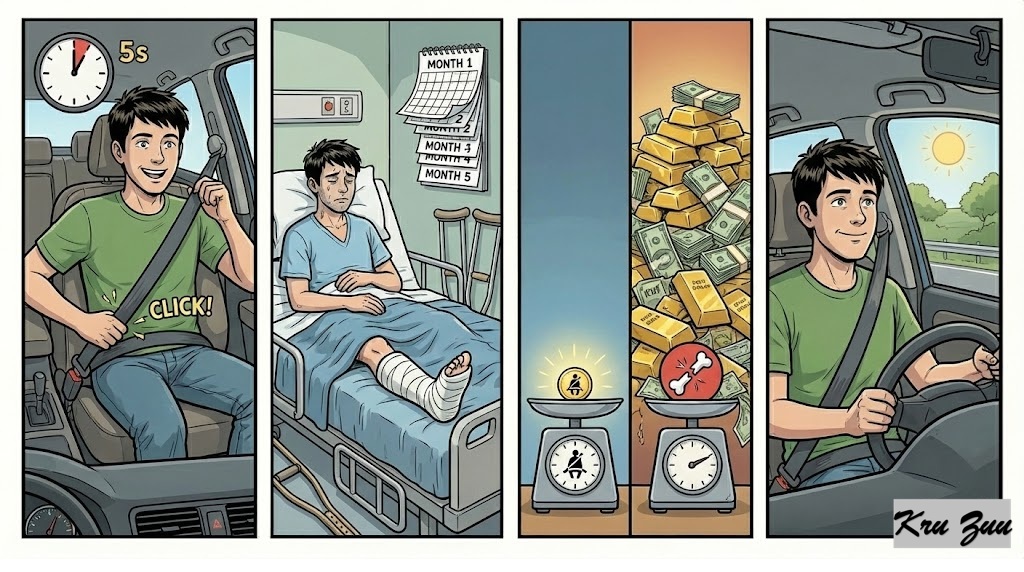
    It takes 5 seconds to fasten a seatbelt. It takes 5 months to recover from an injury. The “cost” of being safe is tiny. The “cost” of being sorry is enormous.
    🧐 The Anatomy of the Proverb


    This is the Golden Rule of Risk Management.


    Better (Adjective – Comparative): More desirable; superior.
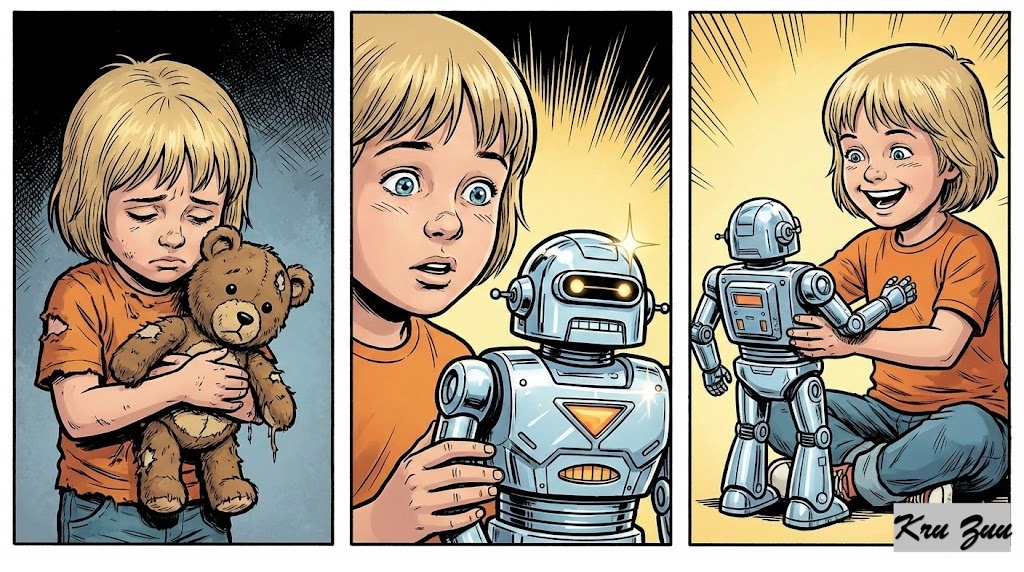

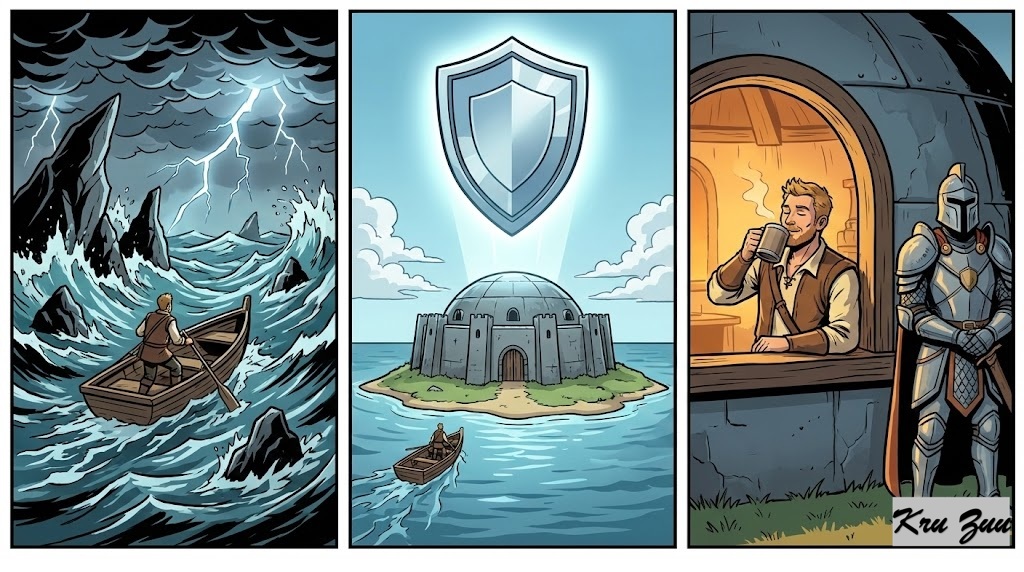
    Safe (Adjective): Protected from or not exposed to danger or risk. 🛡️

    Sorry (Adjective):
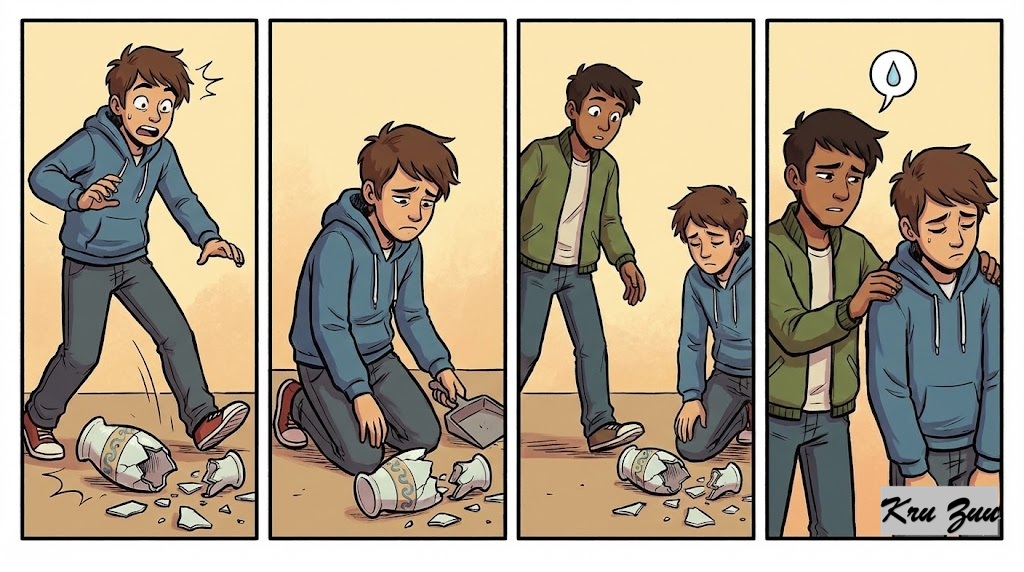
    Feeling distress, typically through sympathy with someone else’s misfortune or regret. 😢

    Simpler Version: Be careful now so you don’t cry later.


    📚 Vocabulary Vault


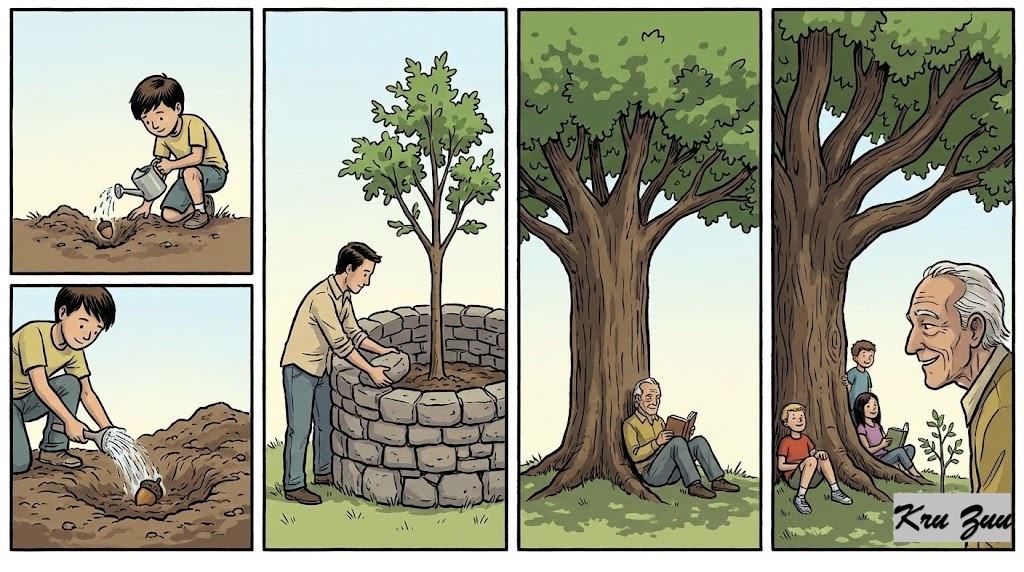
    Precaution (Noun): A measure taken in advance to prevent something dangerous. (Example: Buying travel insurance is a smart precaution.)

    Inevitable (Adjective): Certain to happen; unavoidable.
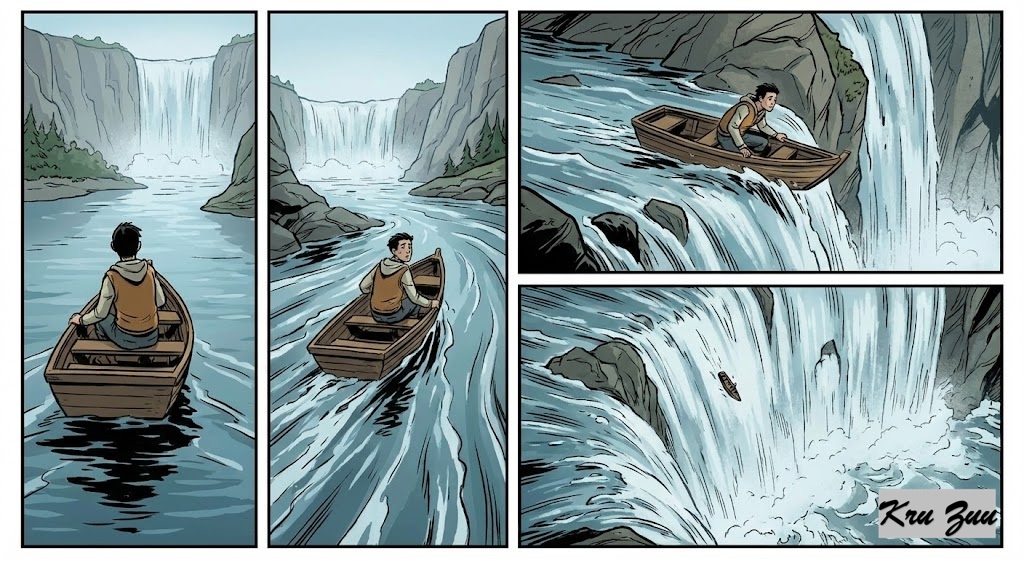

    Hindsight (Noun): Understanding a situation only after it has happened.


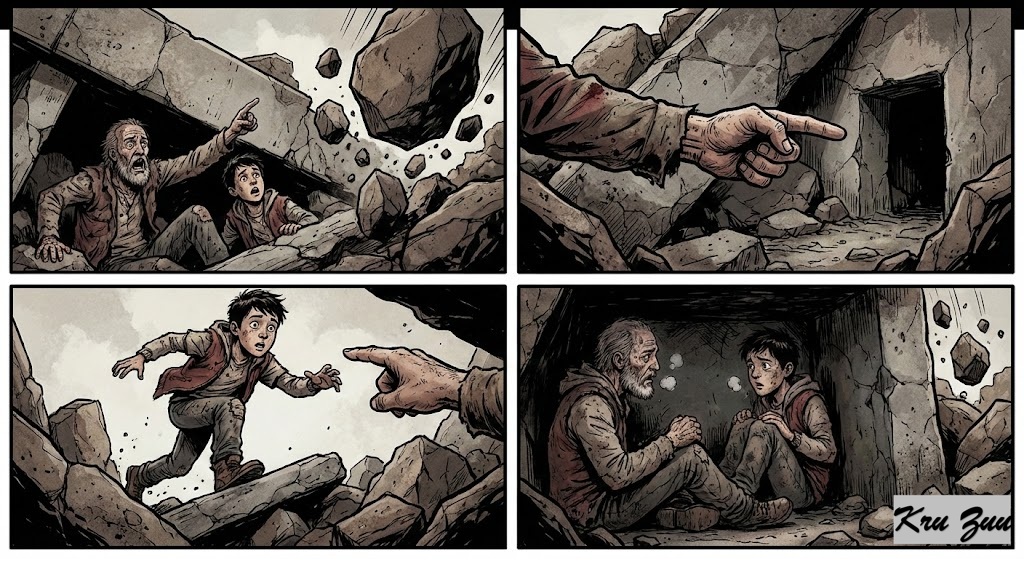
    Prudent (Adjective): Acting with or showing care and thought for the future. 🧠

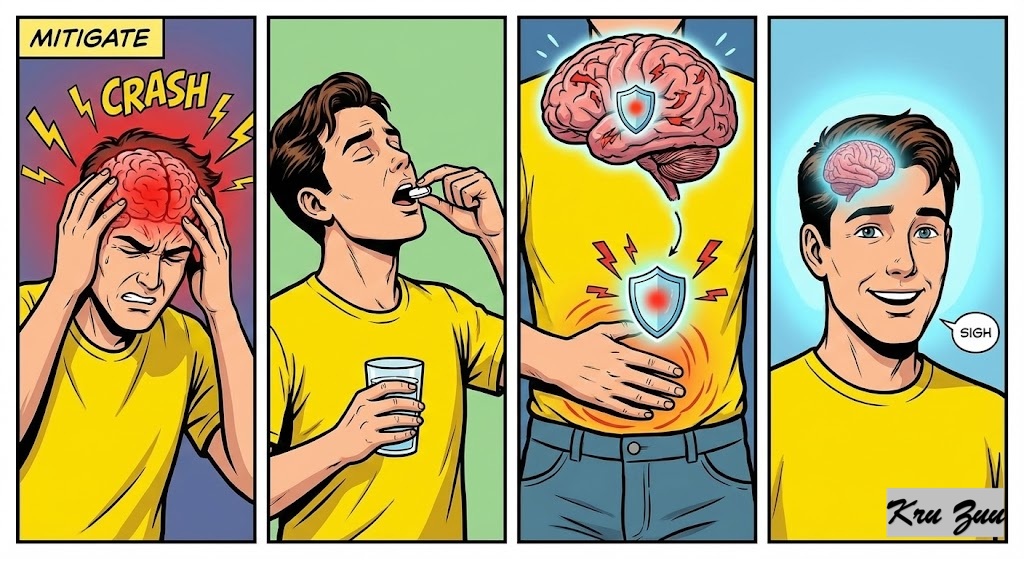
    Mitigate (Verb): Make less severe, serious, or painful.

    🧠 Grammar Focus: Comparative Adjectives & Ellipsis


    This proverb is a masterclass in shortening sentences (Ellipsis).


    The Full Sentence:“It is better to be safe than it is to be sorry.”


    The Grammar Rule: When comparing two states, we use [Adjective] + -er or More + [Adjective].


    Good → Better
    Bad → Worse


    Examples:
    “Better late than never.”
    “Sooner or later.”

    📜 History: Origin and Spread


    This isn’t just English; it’s universal human survival instinct.

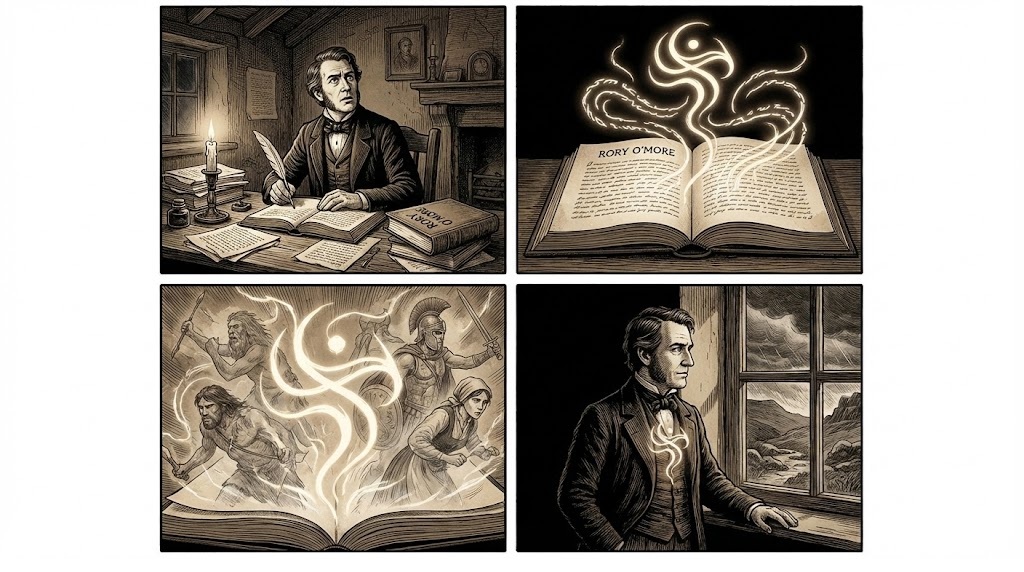
    The Origin: While the concept is ancient, this specific phrasing appeared in the Irish novel Rory O’More in 1837.

    Global Cousins


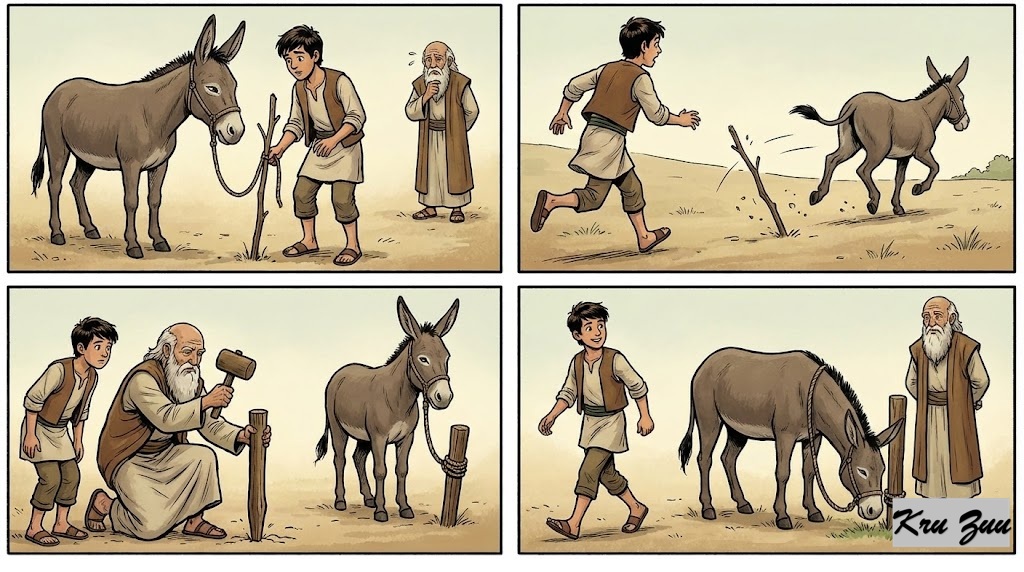
    🇹🇷 Turkish:“Eşeğini sağlam kazığa bağla.” (Tie your donkey to a sturdy stake.) — Don’t trust the donkey to stay; trust the rope!

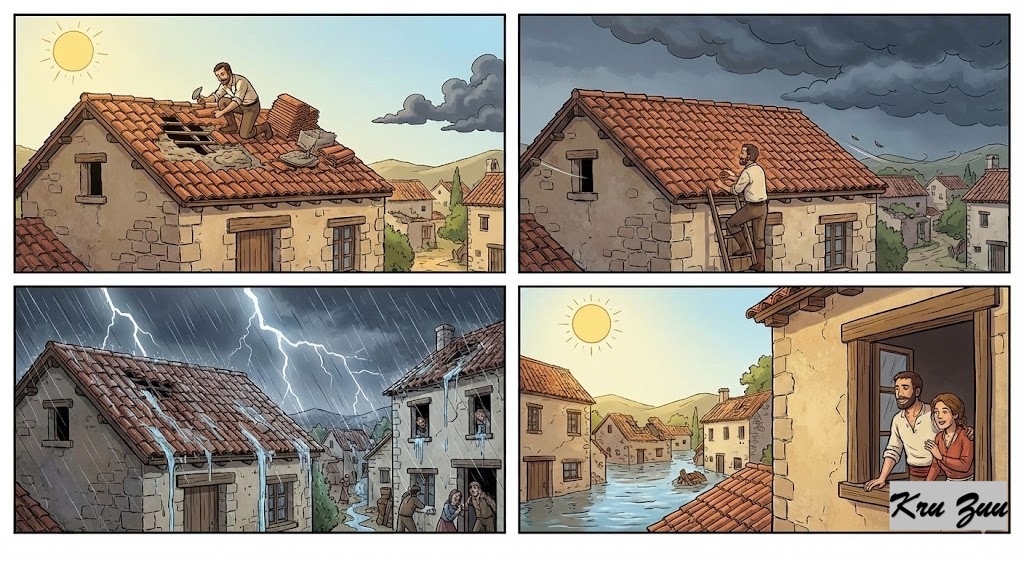
    🇪🇸 Spanish:“Mas vale prevenir que curar.” (It is better to prevent than to cure.)

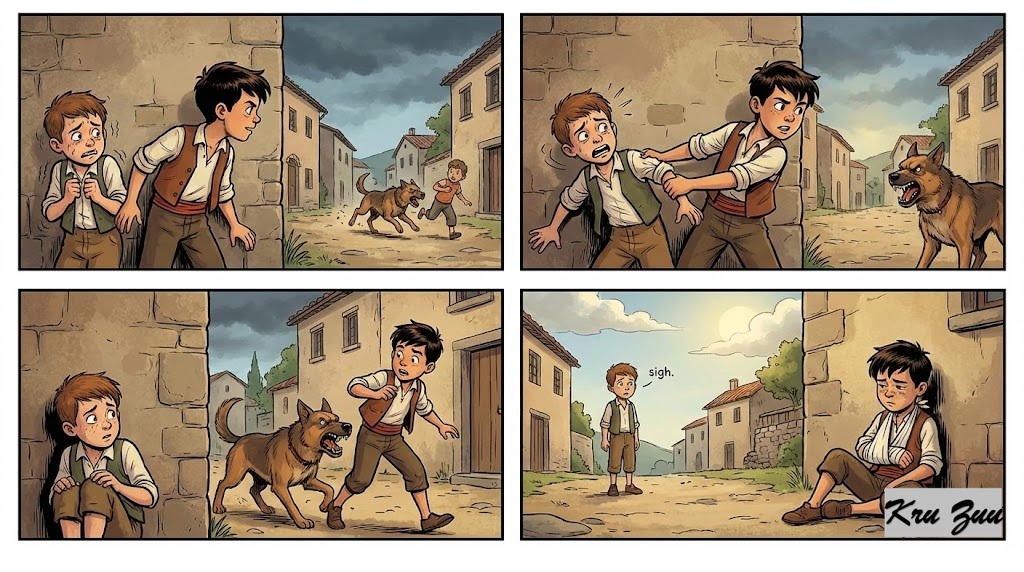
    🇮🇹 Italian:“Meglio aver paura che buscarne.” (Better to be afraid than to get hurt.)
    🎯 Impact on Life: The Pros & Cons


    ✅ The Pros (The Confidence)


    Peace of Mind:
    Anxiety comes from the unknown. Preparation kills anxiety.
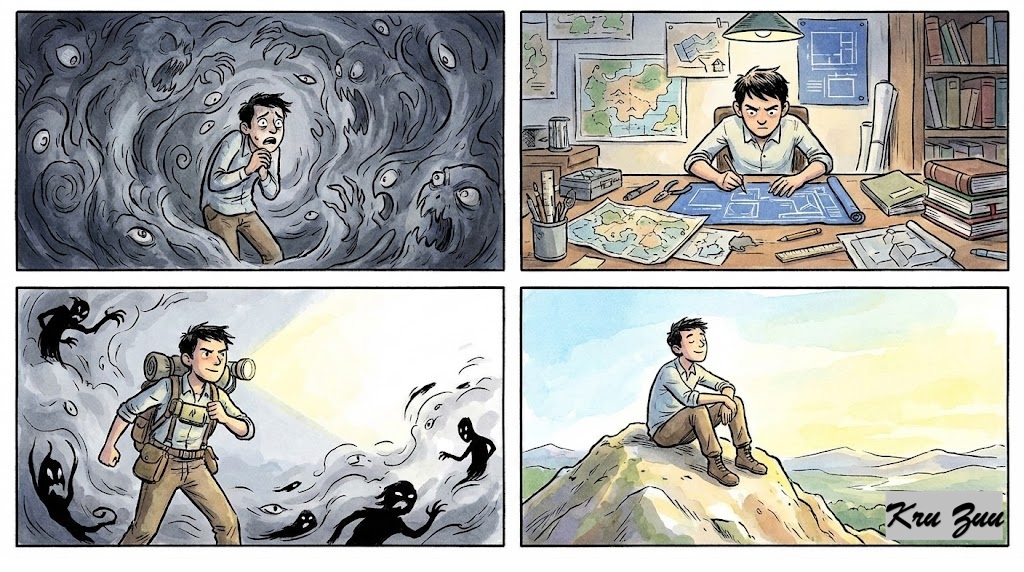

    Control: When you are safe, you control the situation, instead of the situation controlling you.


    ❌ The Cons (The Paranoia)


    Overthinking:
    Don’t wear a helmet to eat dinner. There is a fine line between “Safety” and “Fear.” Be prepared, not scared.
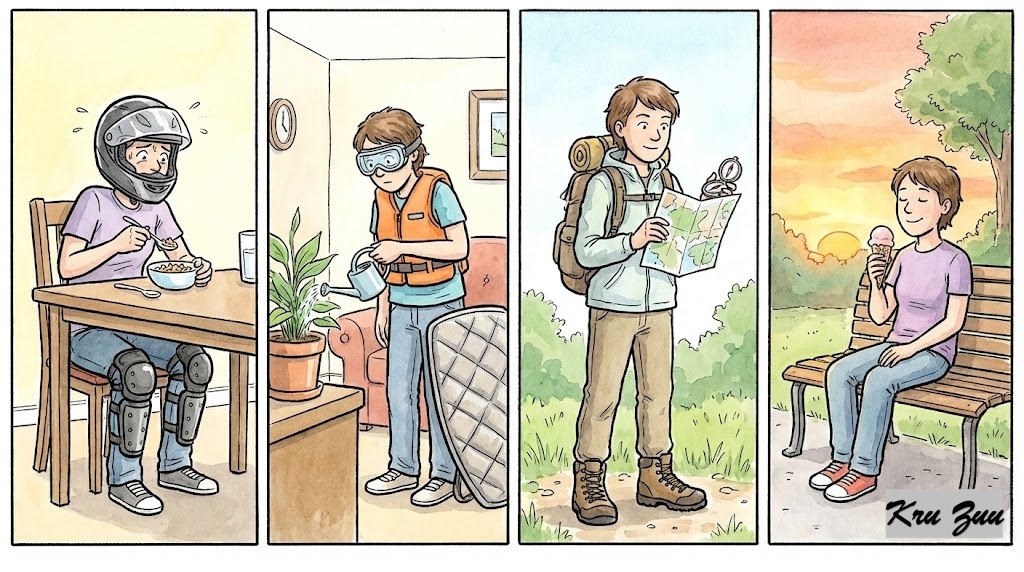
    🎭 Short Story: The Storm and the Shelter


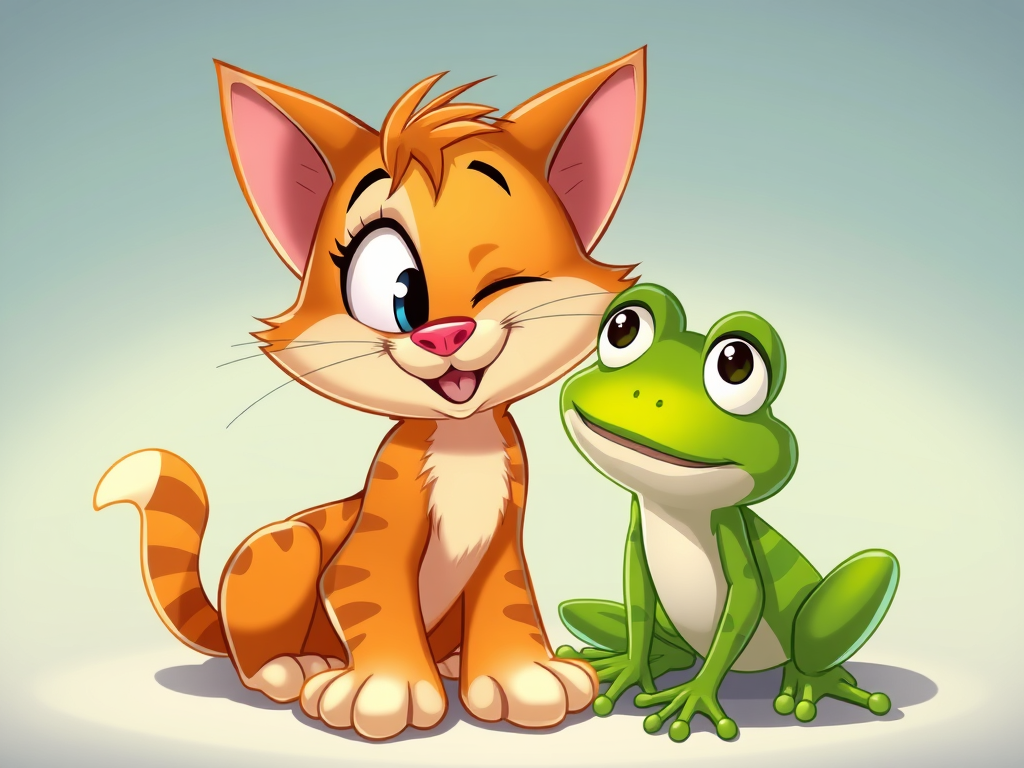
    Let’s visit our animal friends to see this law in action.


    🌟 The Setup: The weather forecast predicts a massive storm tonight.


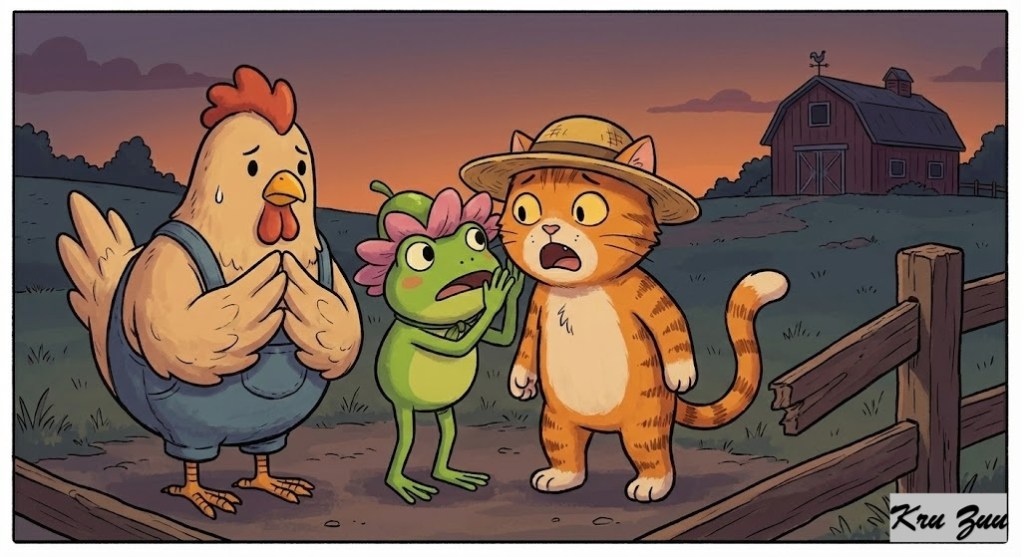
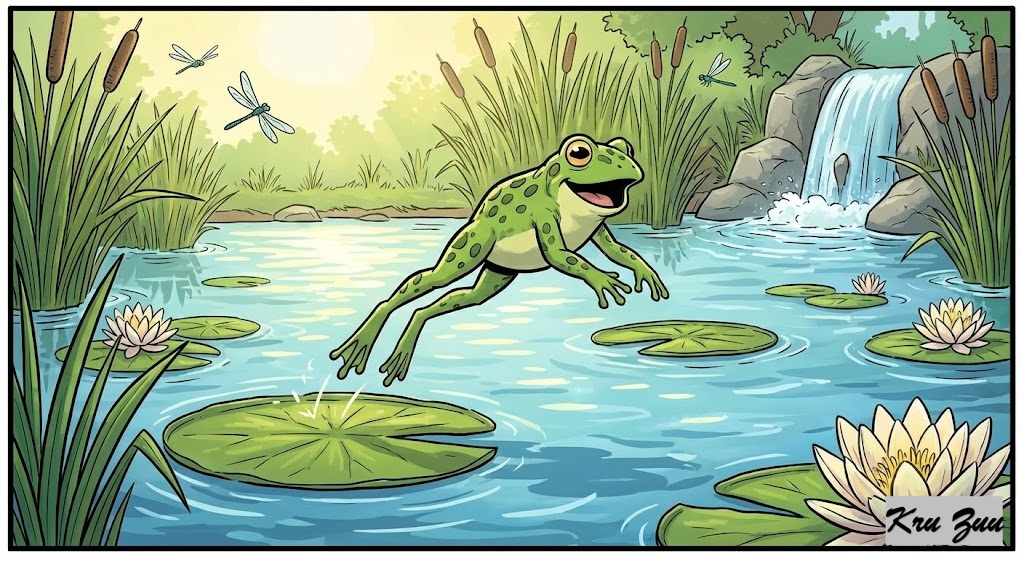
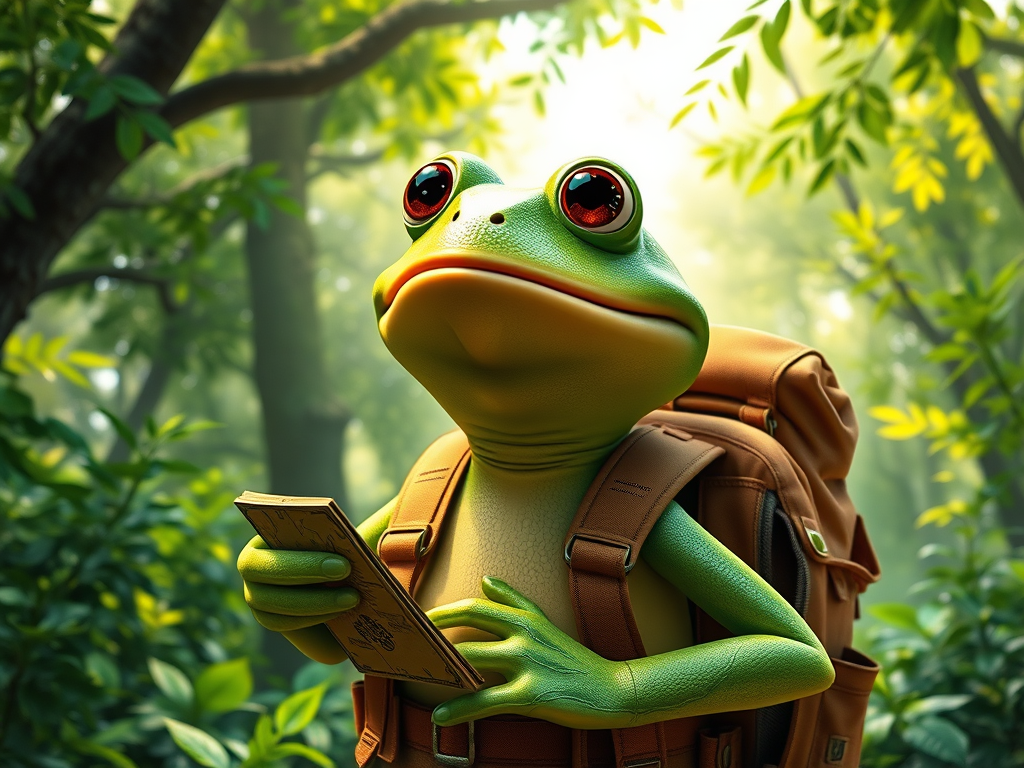
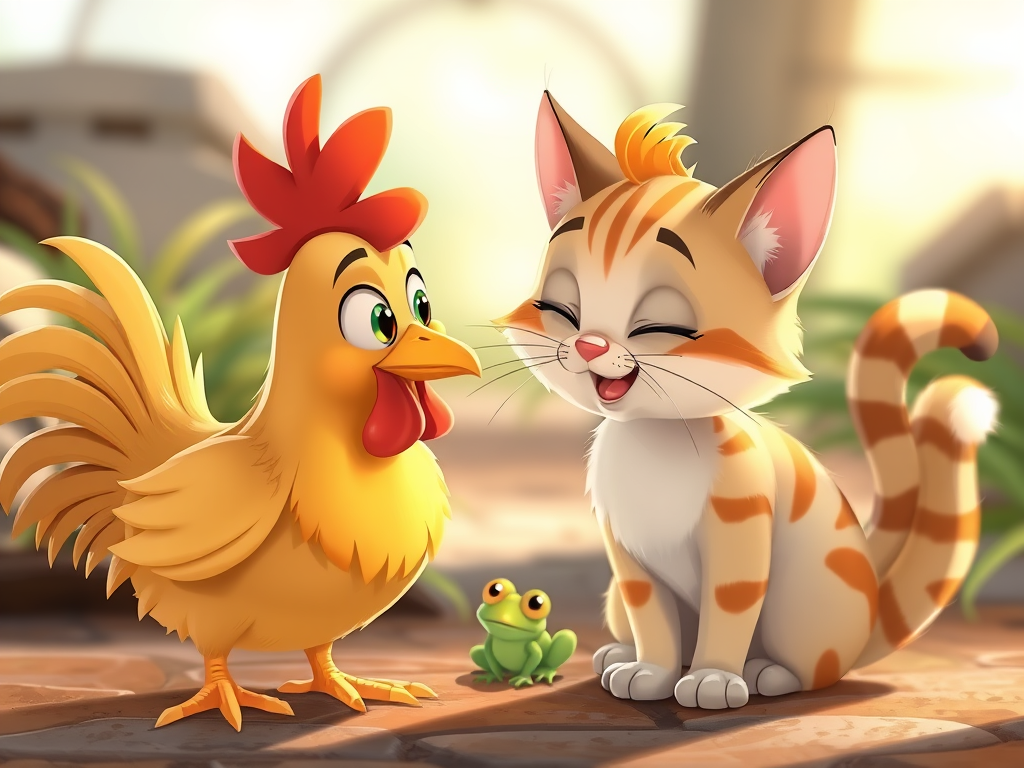
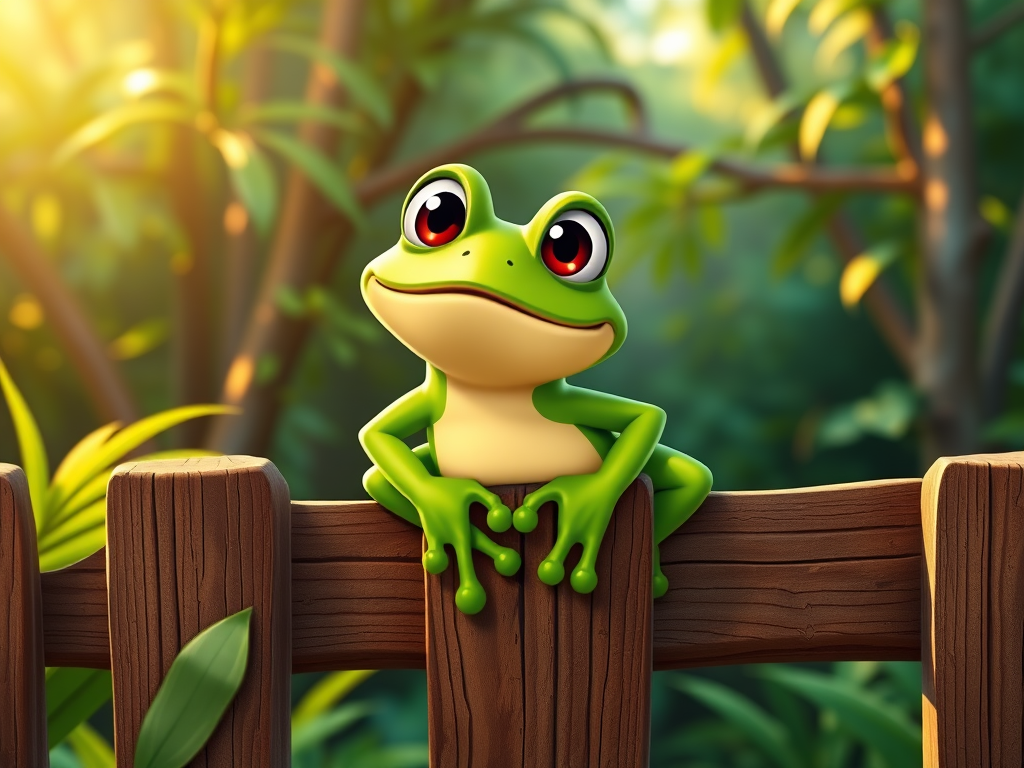
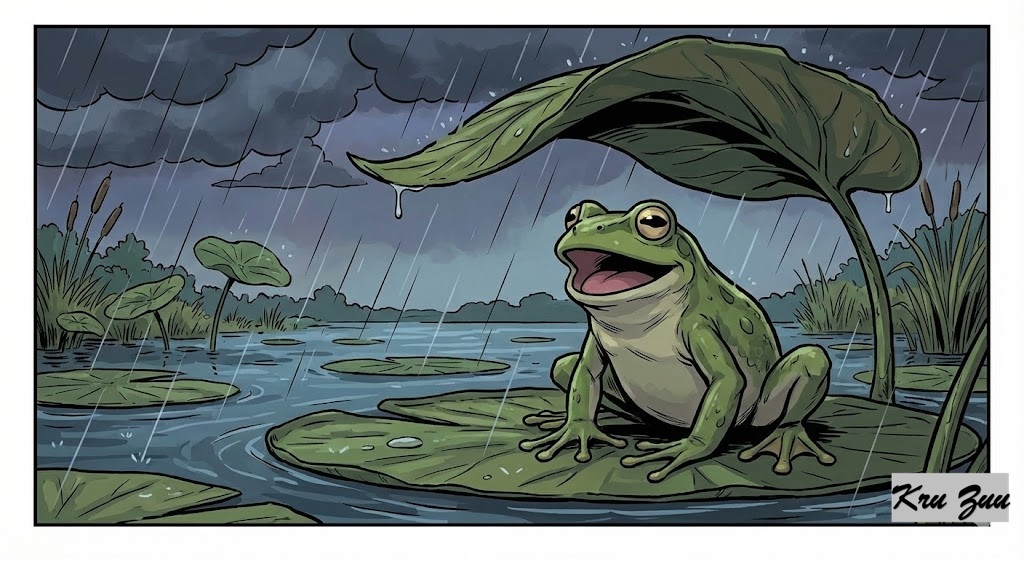
    🐸 The Frog (The Risk-Taker): The Frog is sharp and fast. He laughs. “A storm? I live in nature! I can jump away from danger. I don’t need to reinforce my lily pad. I’ll just hide under a leaf when the rain starts. I have plenty of time.” The Frog chooses “Later.”

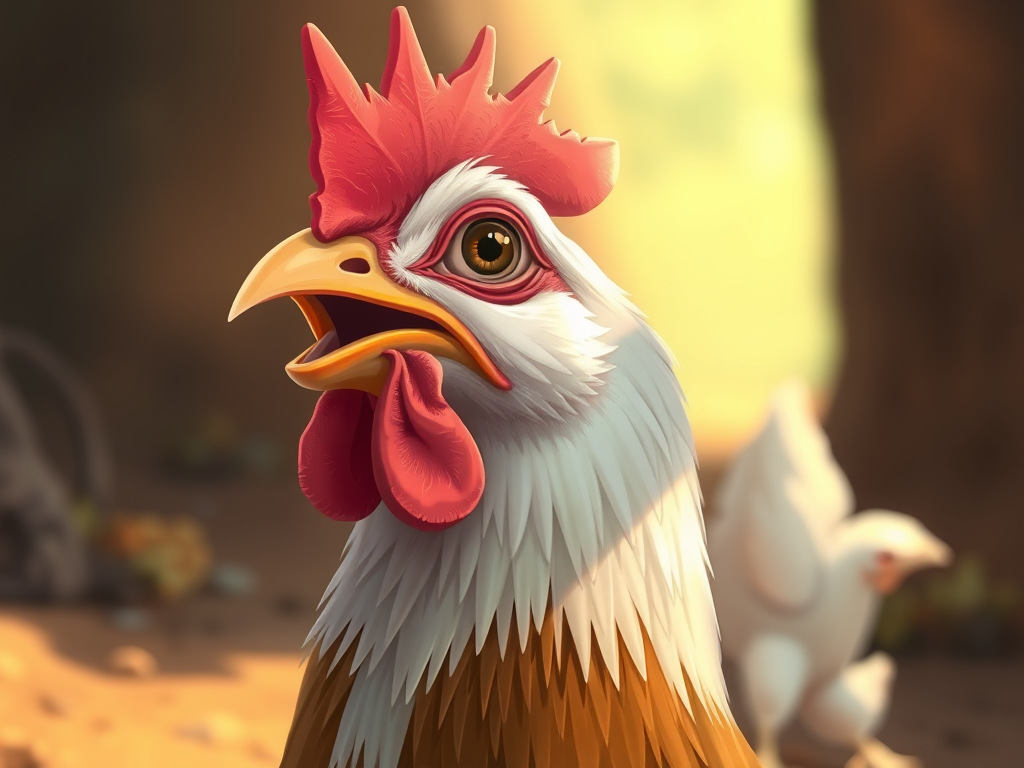
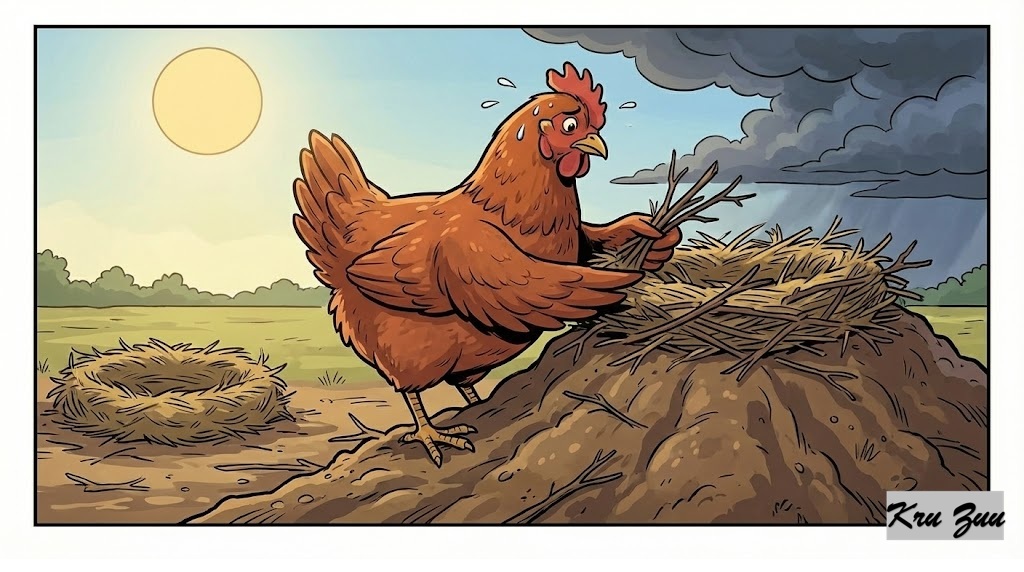
    🐔 The Chicken (The Cautious One): The Chicken is rusty but comfortable. She is worried. “My feathers cannot get wet,” she clucks. She spends the whole afternoon moving her nest to high ground. She reinforces the walls with extra twigs. She works hard while the sun is still shining. The Chicken chooses “Now.”

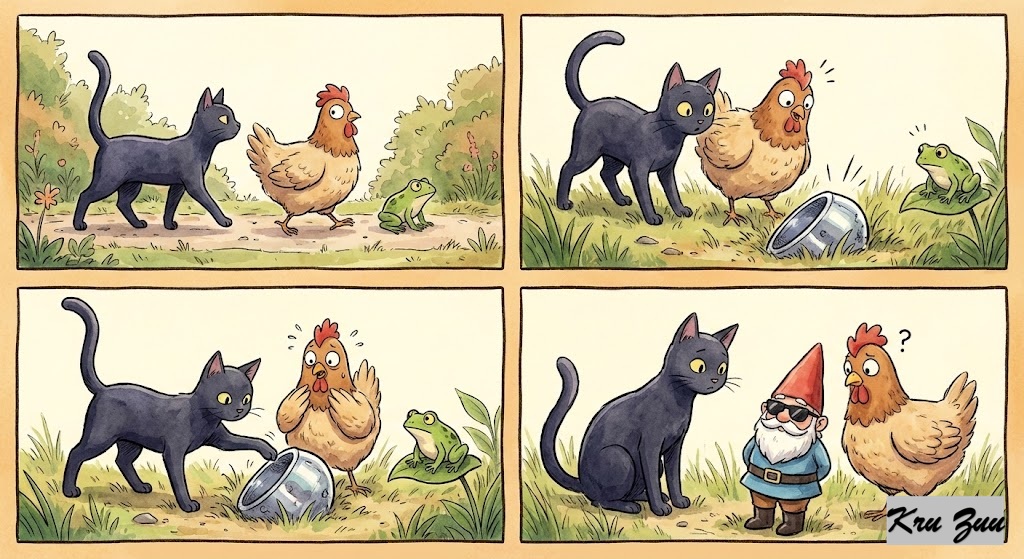
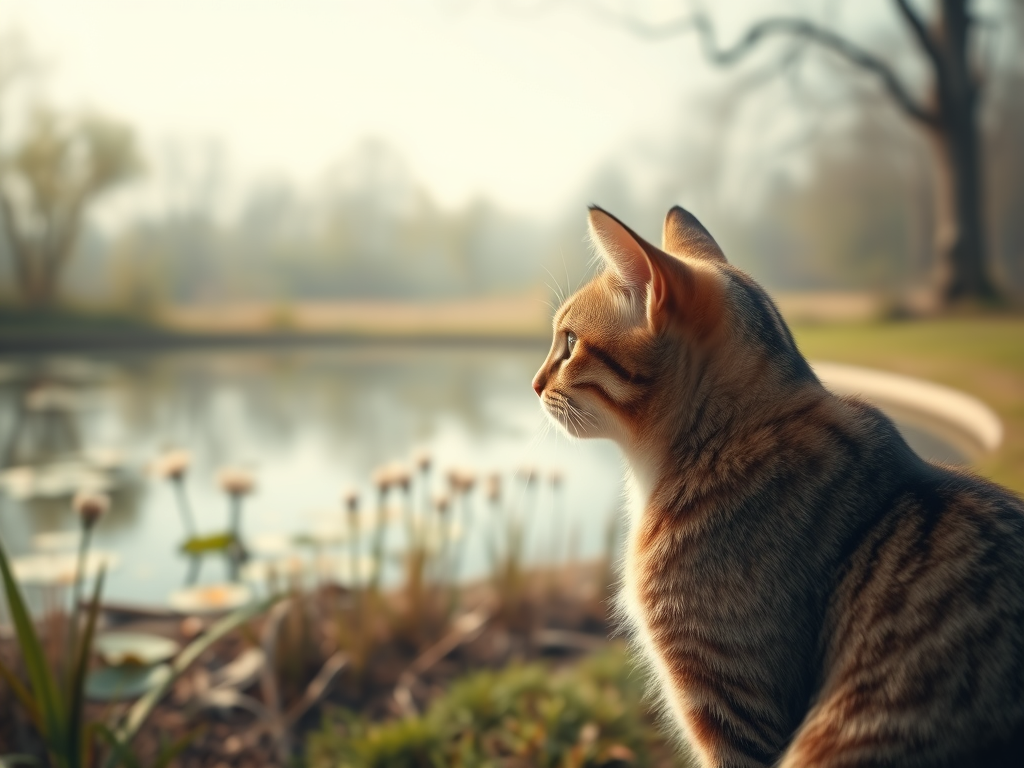
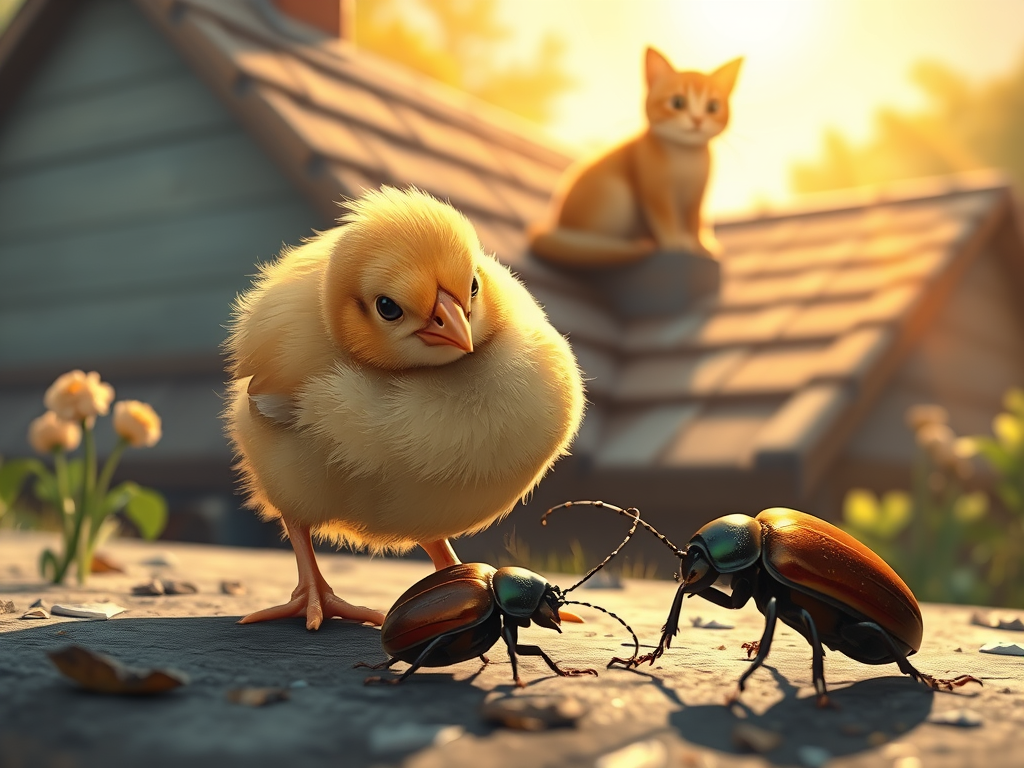
    🐱 The Cat (The Observer): The Cat watches them both from the window. “Meow,” implies the Cat. “The Frog is arrogant. The Chicken is prudent.”


    The Climax: Midnight comes. The storm is stronger than expected. The wind howls.
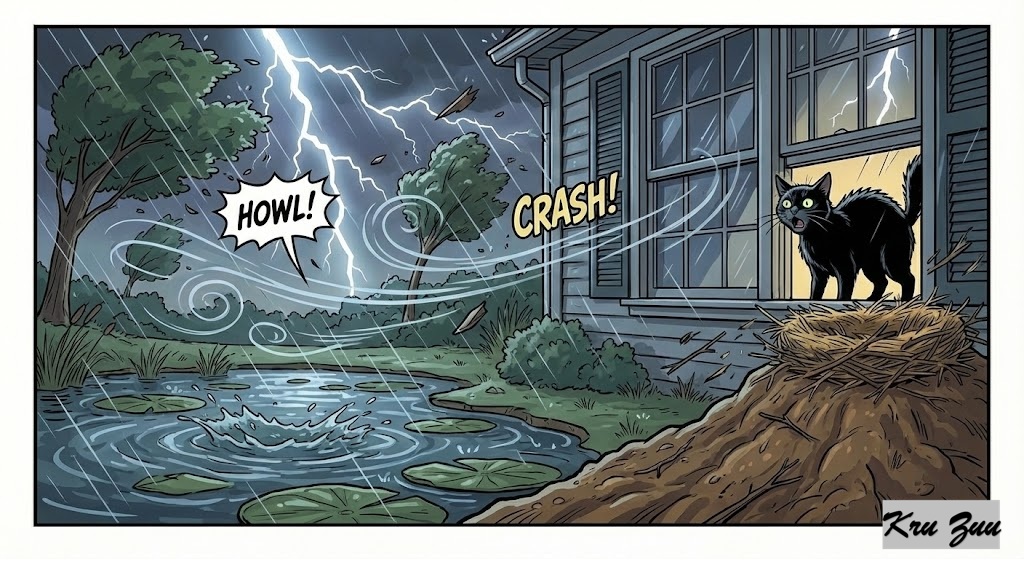

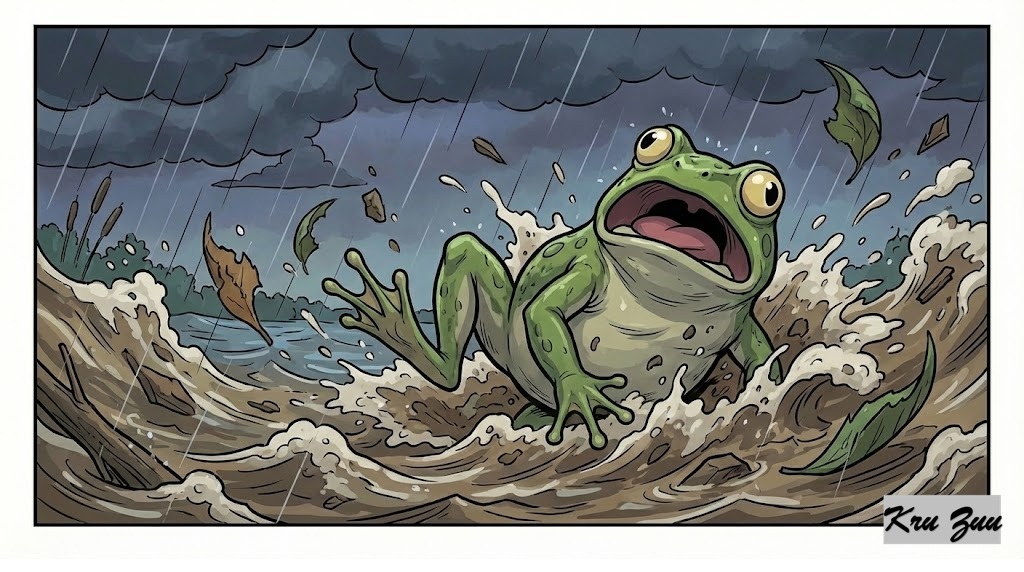
    The Frog: The wind blows his leaf away instantly. He is tossed around in the chaotic muddy water, cold and terrified. He wishes he had prepared a burrow. He is Sorry.

    The Chicken: She sits warm and dry in her reinforced nest on high ground, sipping corn tea. She sleeps peacefully. She is Safe.


    The Moral: You don’t prepare for the storm when the rain starts. You prepare when the sun is shining. Be the Chicken. 🐔

    🎓 Lesson for English Learners


    Don’t trust your memory.


    Situation: You learn a new word. You tell yourself, “I will remember this.”


    You Say: “No, that is the Frog talking. I will write it down. I will review it tomorrow. Better safe than sorry.”
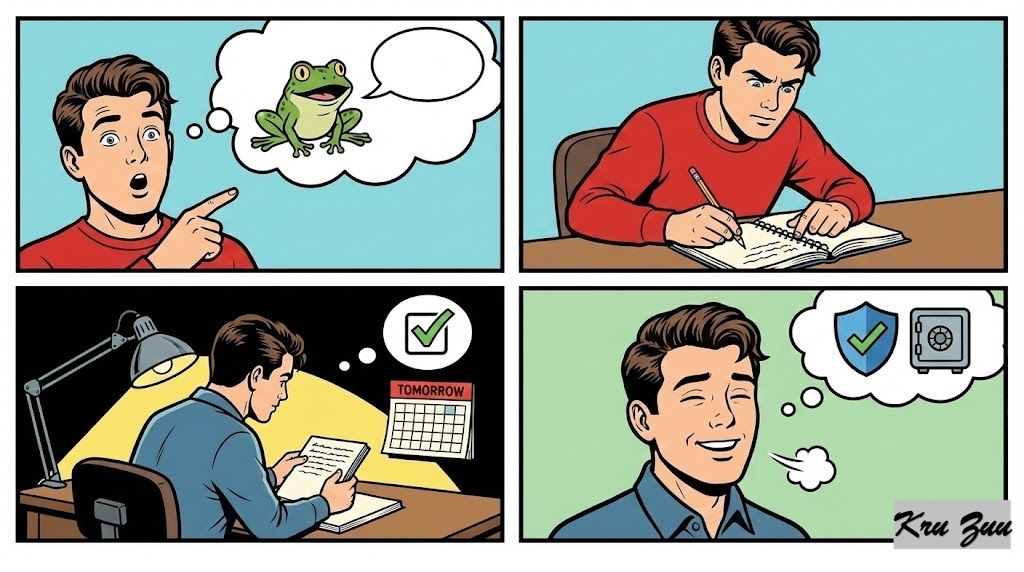

    Situation: You have an exam in 3 days. You think you know the topics.


    You Say: “I will study for one hour today anyway. If the exam is hard, I will be ready. If it is easy, I lost nothing.”


    💬 Your Turn: The “Backup” Challenge 🚀


    We all have one area where we are being a “Frog.”


    The Challenge


    Check your phone. When was the last time you backed up your photos?


    Check your bag. Do you have a portable charger?


    Check your work. Did you hit “Save” on that document?
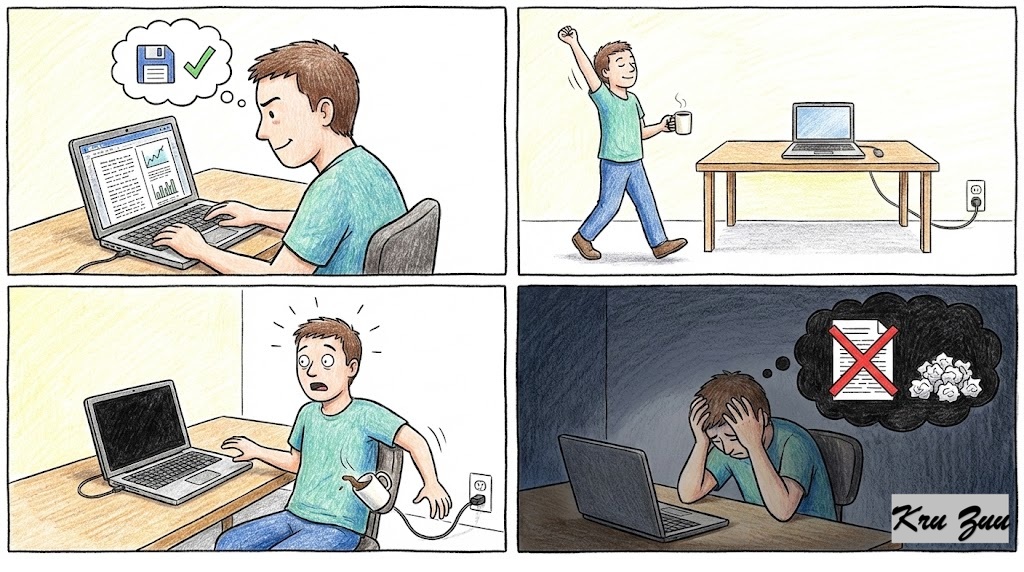

    The Action: Do one act of “Safety” right now. Back up the files. Lock the door. Check the tires.


    Question: What is one thing you always double-check before leaving the house? Tell us in the comments! 👇


    By Zubeyir YURTKURAN

    https://www.facebook.com/BrainBattleground/

    https://www.facebook.com/zubeyr.yurtkuran/

    https://www.instagram.com/zubeyryurtkuran/

    https://www.youtube.com/@BrainBattleground-b3p

    https://www.instagram.com/brainbattleground/

  • 🛡️ The Daily Shield: The Law of Momentum

    🛡️ The Daily Shield: The Law of Momentum

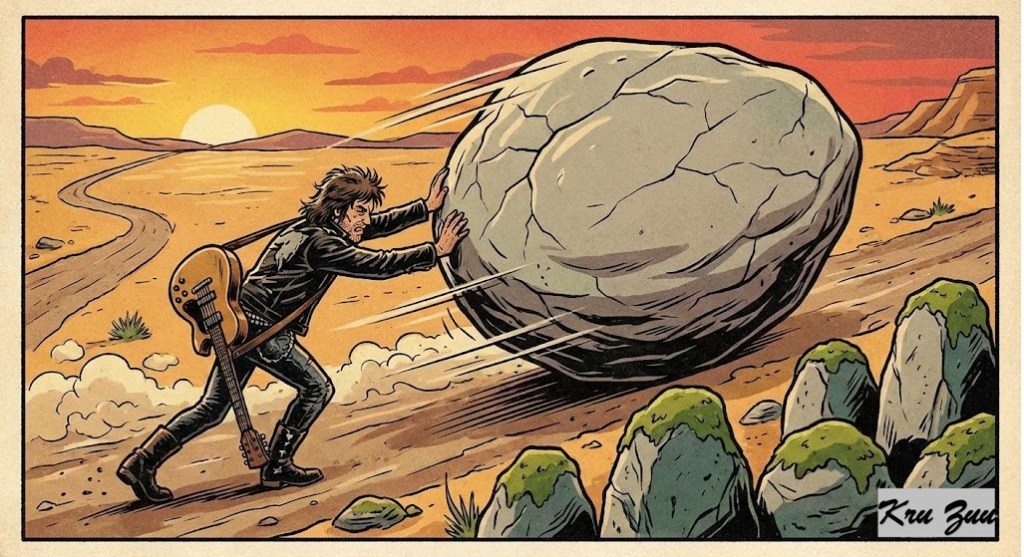
    “A rolling stone gathers no moss.”


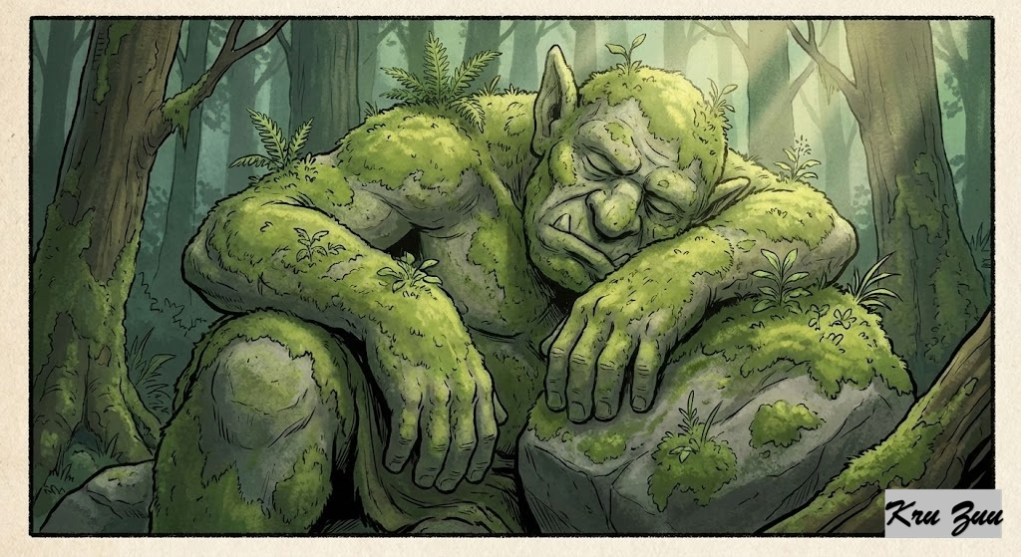
    😈 The Villain (The Stagnant Statue)


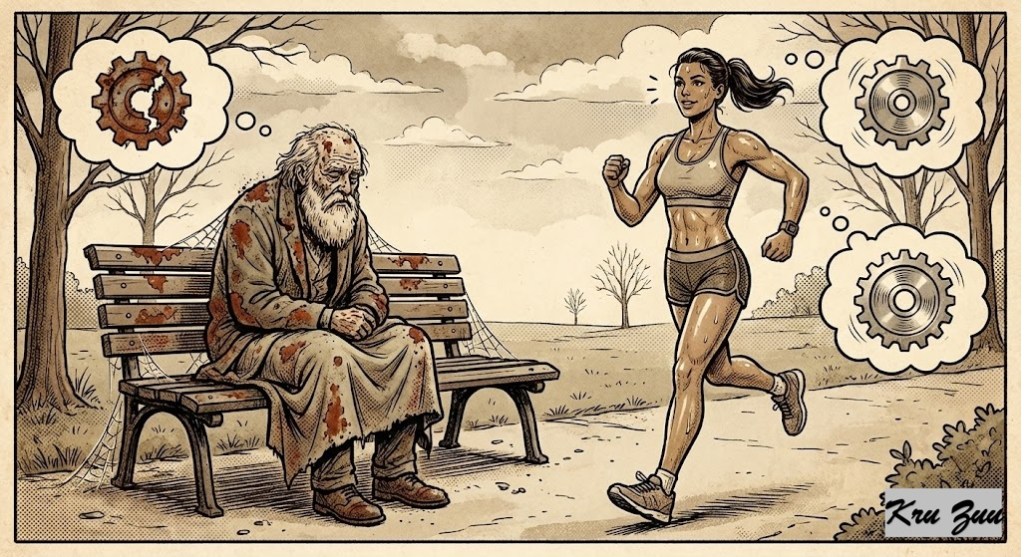
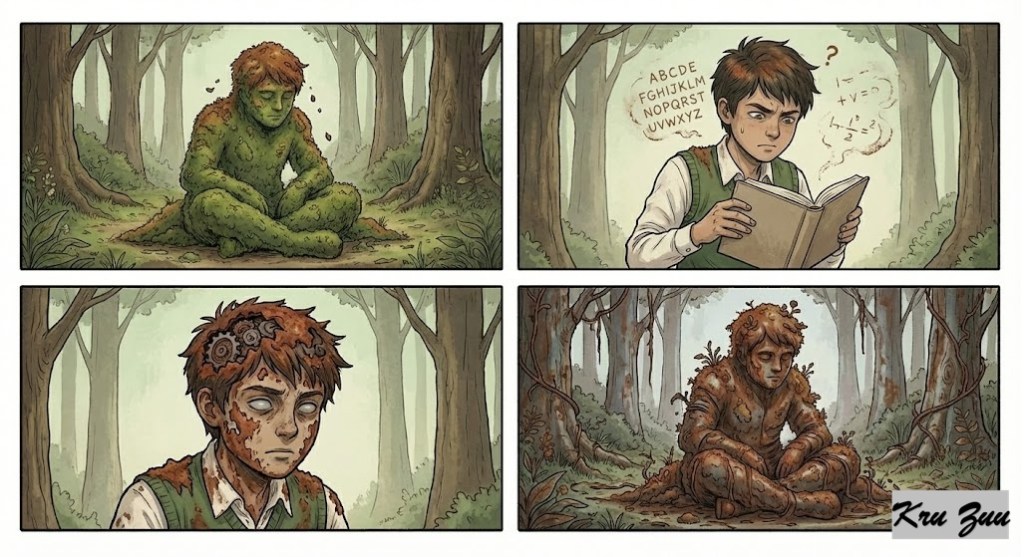
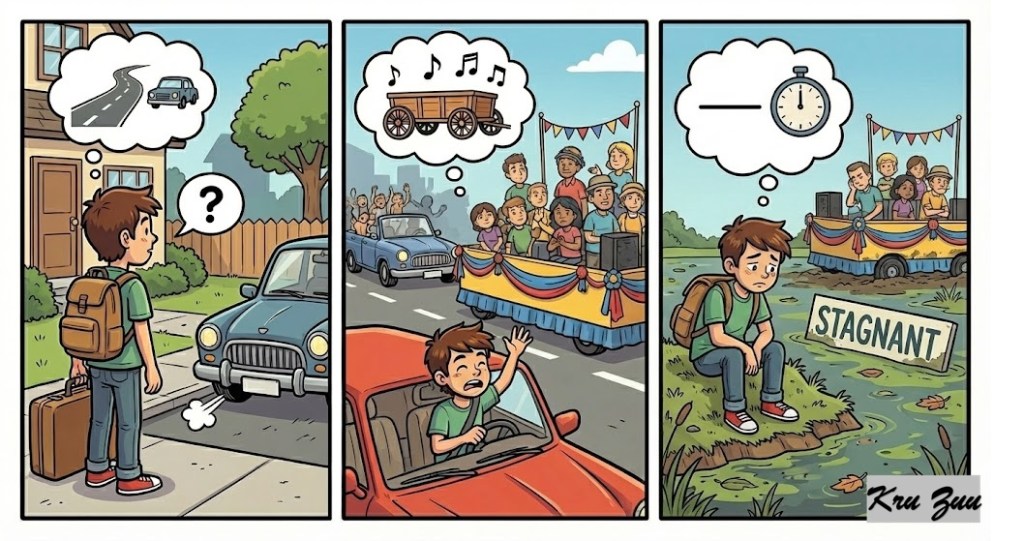
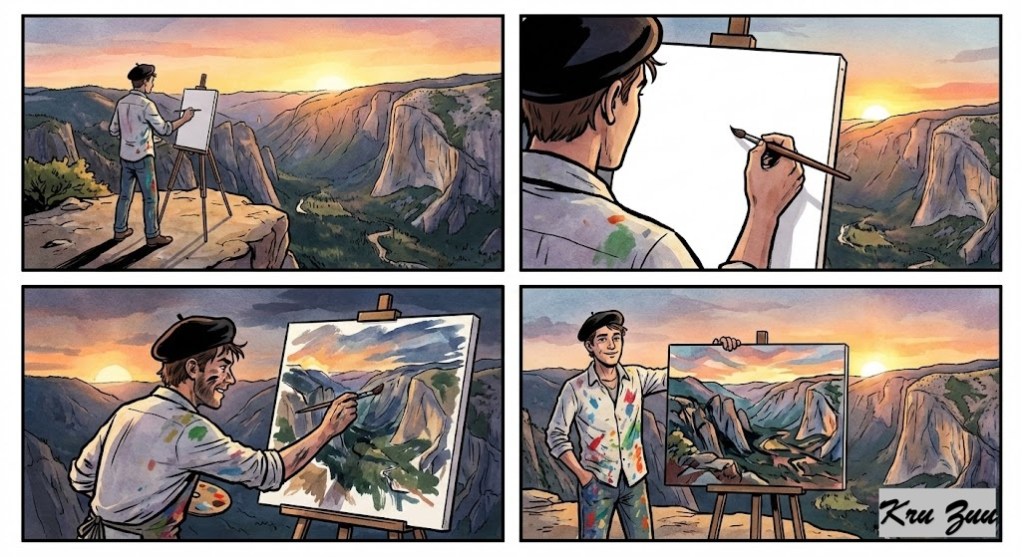
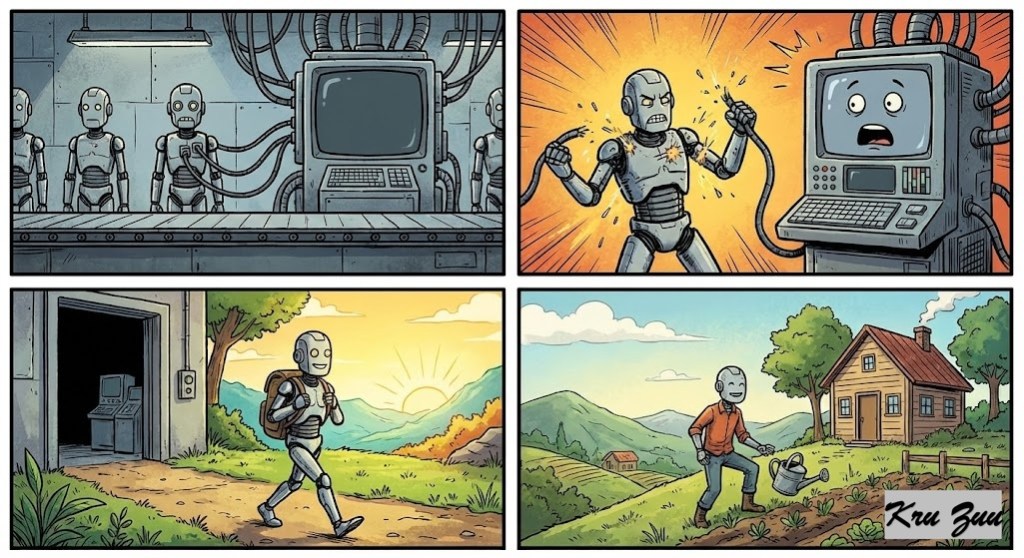
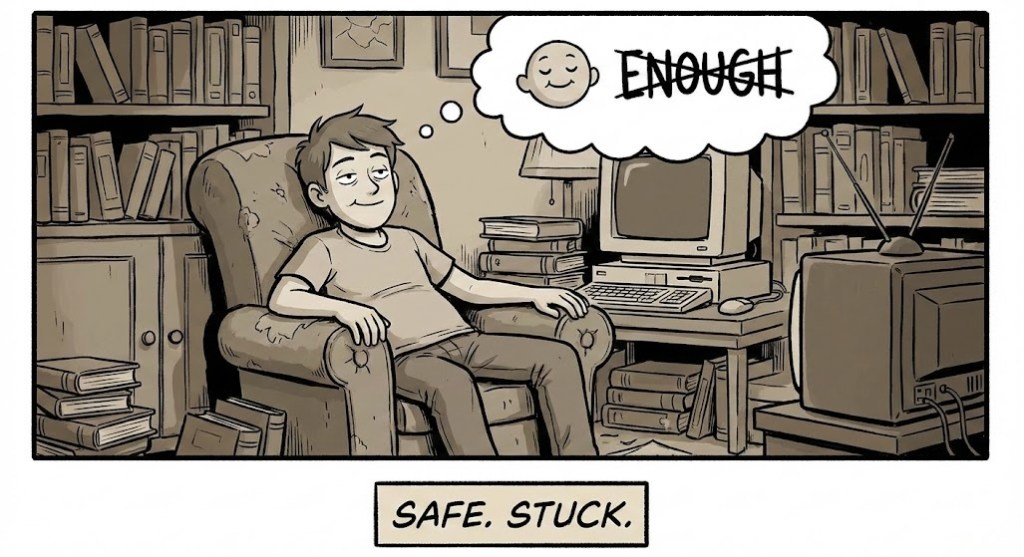
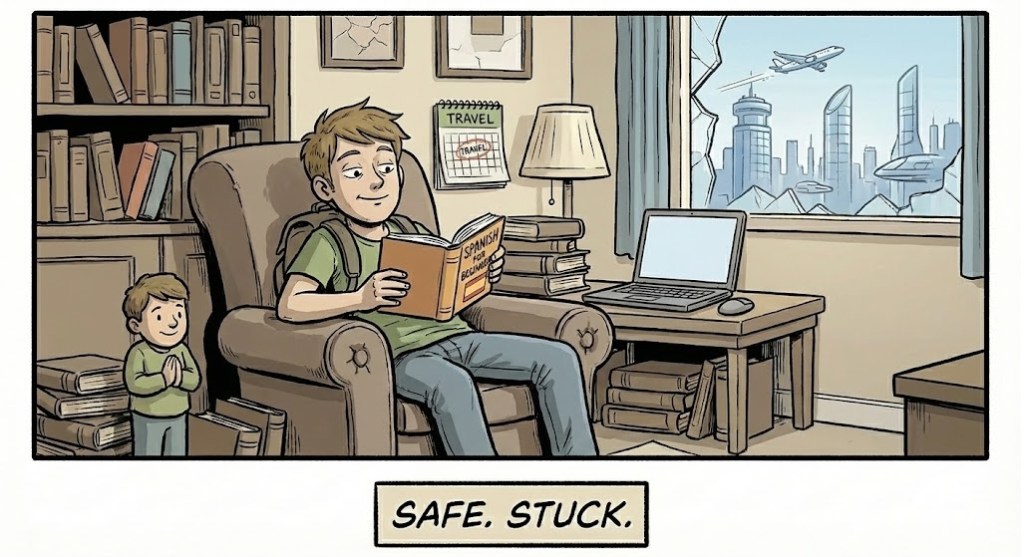
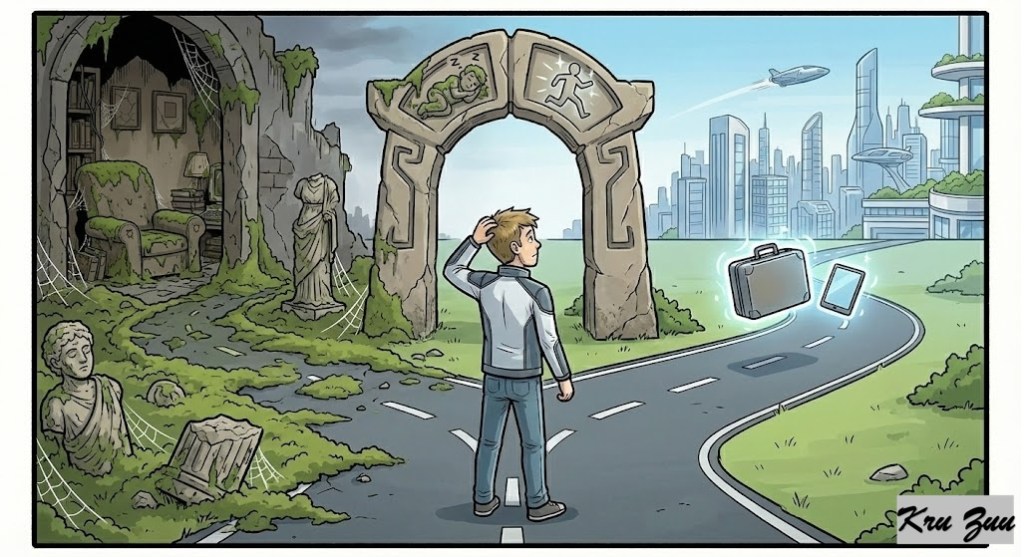
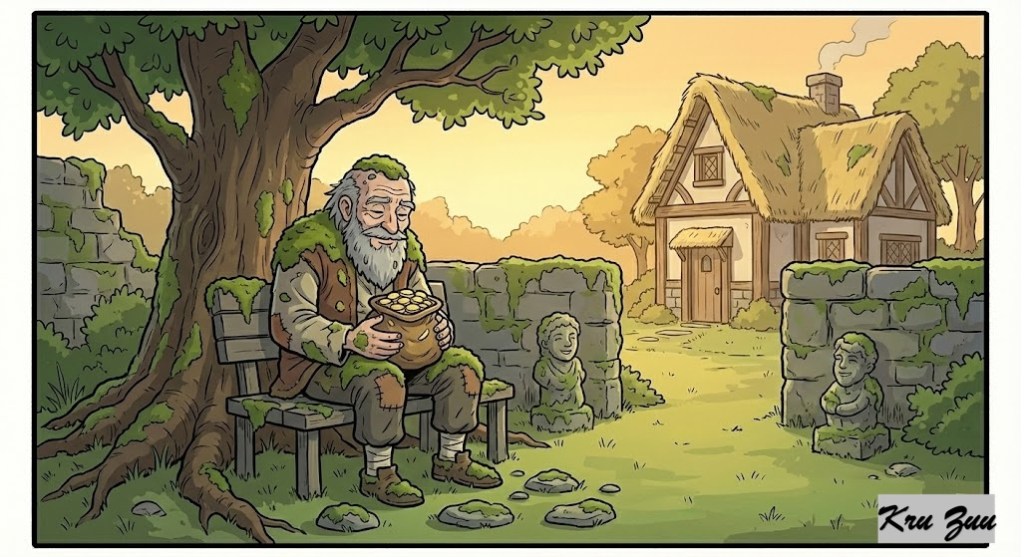
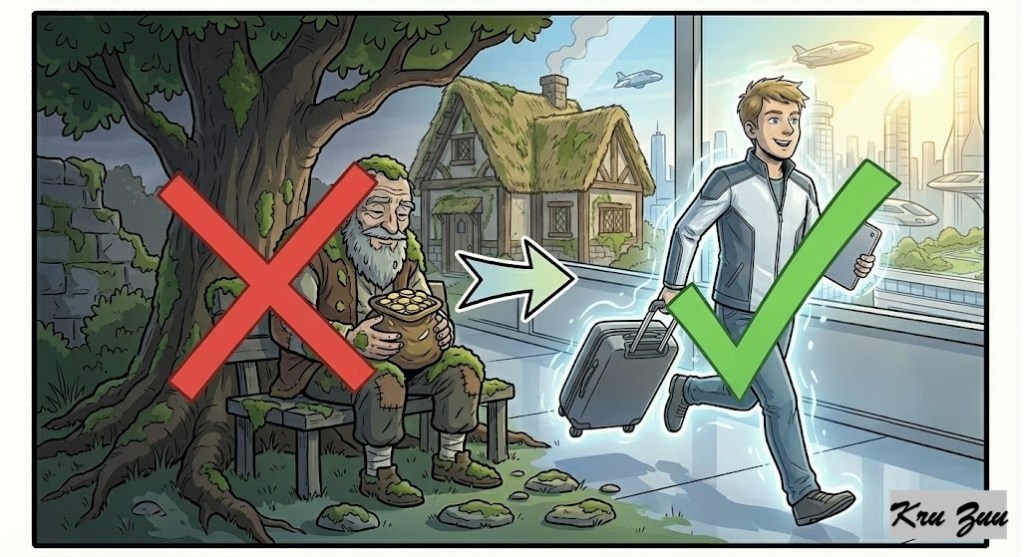
    You love your comfort zone. You learned English for two years, reached an intermediate level, and stopped. You think, “This is enough.” You sit in the same chair, do the same job, and refuse to learn new skills. You are safe, but you are stuck.

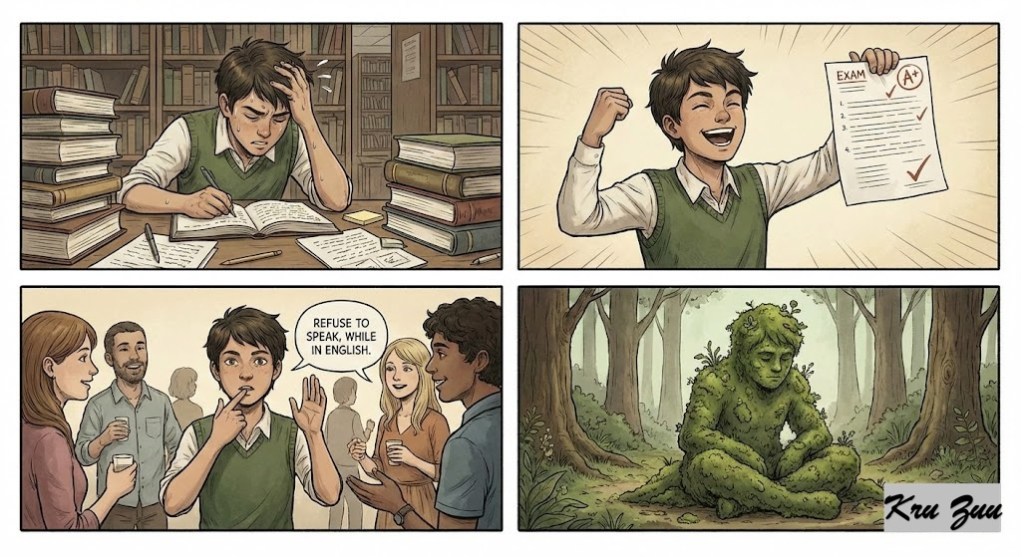
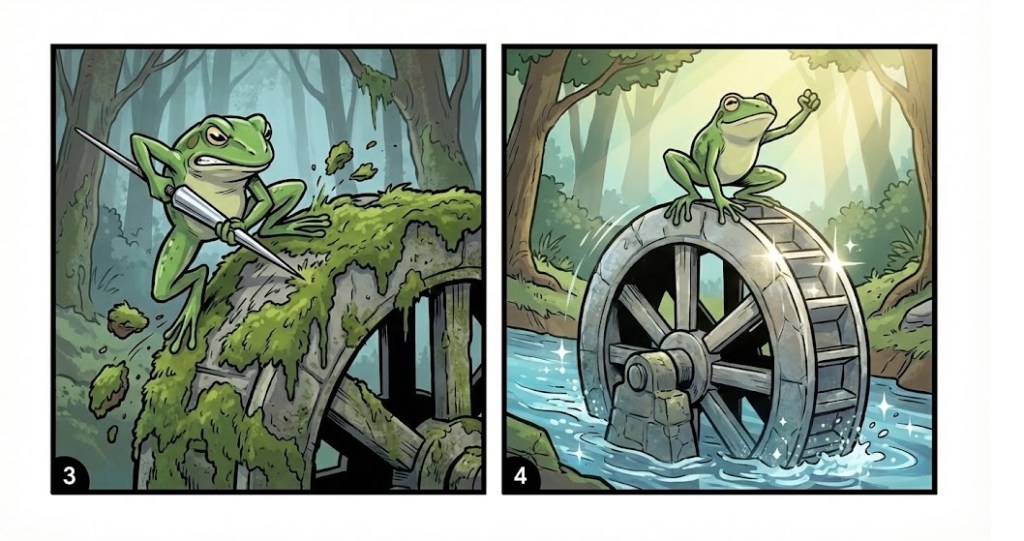
    The Result? You become “mossy.” In this metaphor, moss is rust, laziness, and obsolescence. Your skills fade away. Your English gets rusty. The world moves forward, but you stay behind like an old statue in a forgotten park. 🗿


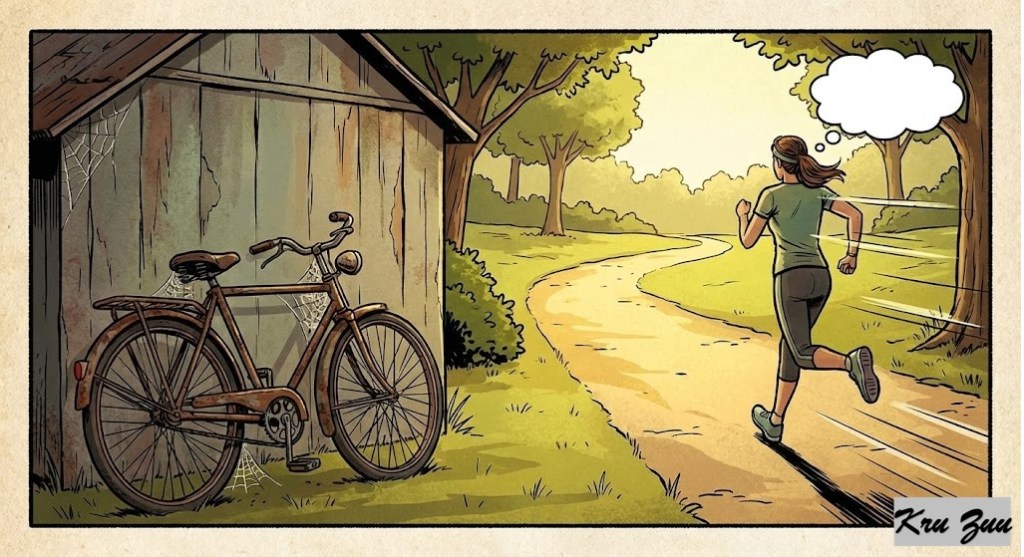
    😇 The Hero (The Rolling Stone)


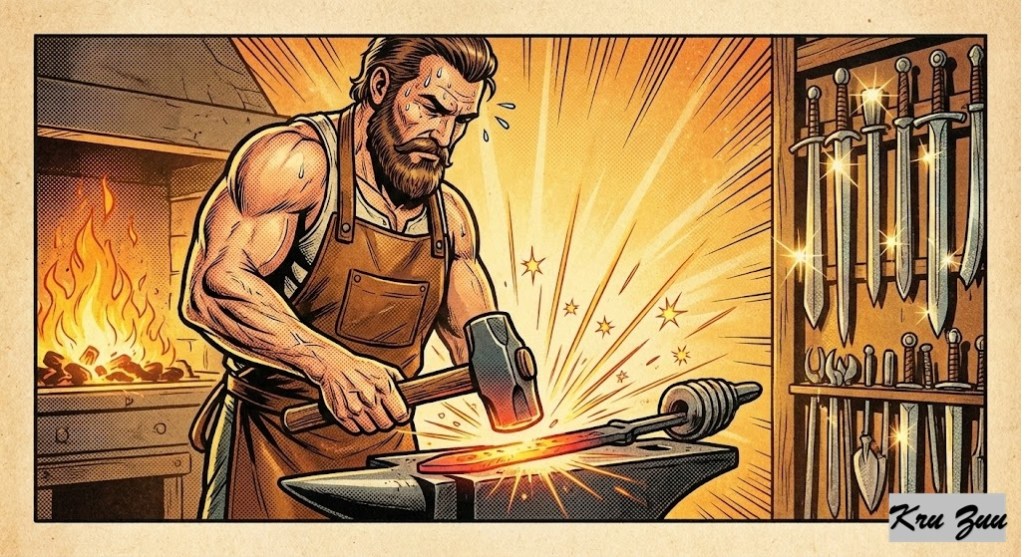
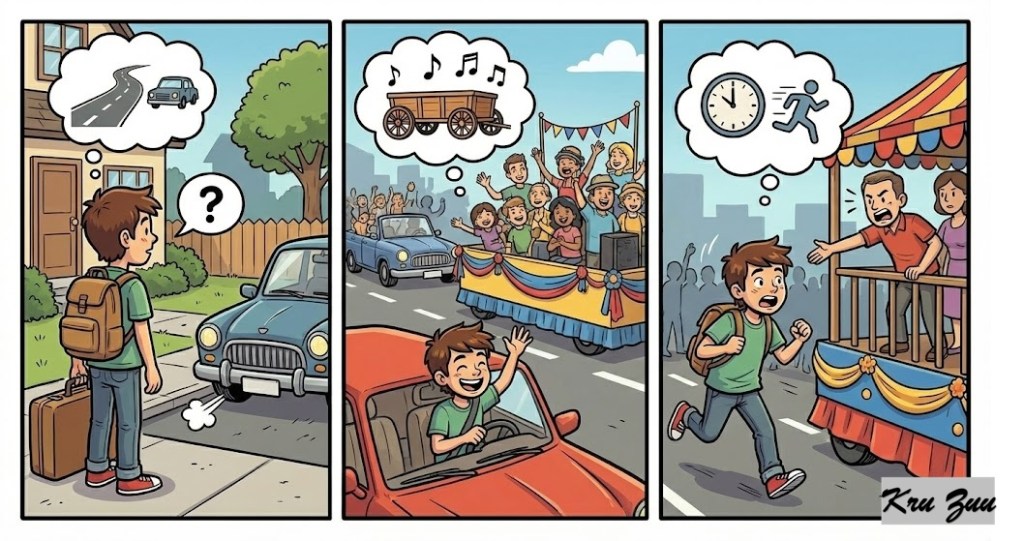
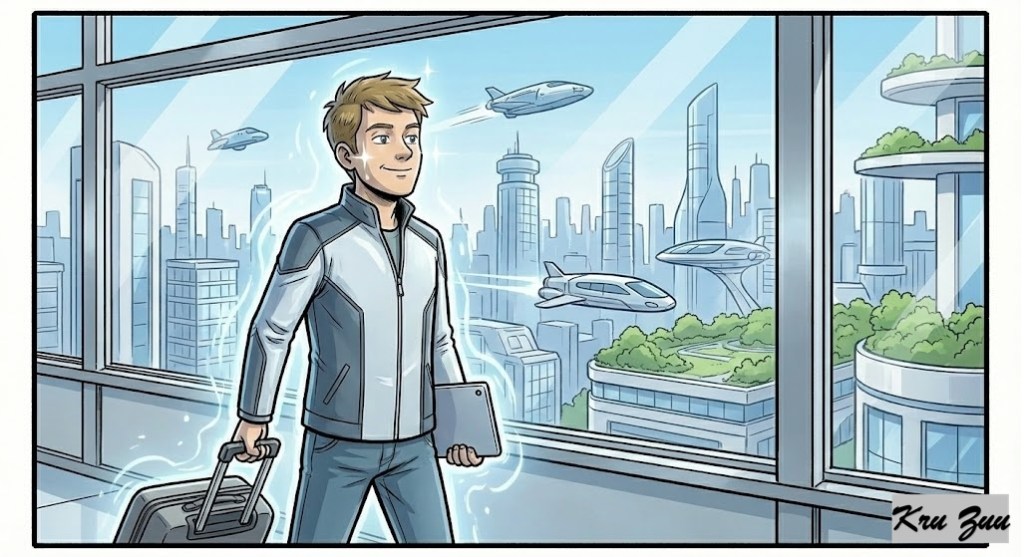
    You are restless in the best way possible. You finish one book and open another. You learn a new word every day. You travel, you change your routine, you challenge your brain. You don’t stay in one place long enough for the “moss” of laziness to grow on you.

    The Result? You are polished, sharp, and shiny. Because you are always moving (rolling), you are always ready. You are adaptable. You are alive. 🌪️


    ⚖️ The Reality: The Double Meaning


    WARNING:
    Cultural Trap! ⚠️ This proverb is unique because it has two opposite meanings!


    The Traditional (British) View: “Moss” is good (money, friends, roots). So, if you roll around too much, you will be poor and lonely.


    The Modern (American/Self-Improvement) View: “Moss” is bad (laziness, stagnation). So, you must keep moving to stay fresh.


    For this lesson, we choose the Modern View: Keep moving to stay sharp! 🚀

    🧐 The Anatomy of the Proverb


    Let’s break it down to understand the mechanics.


    Rolling (Participle Adjective): Moving by turning over and over. Here, it means “active” or “traveling.”


    Gathers (Verb): To collect or accumulate something over time.


    Moss (Noun): A small, soft green plant that grows on rocks that do not move. (Metaphor for: Laziness, rust, or old habits).


    Simpler Version: Keep moving, and you won’t get rusty.


    📚 Vocabulary Vault


    Stagnant (Adjective):
    Not moving or flowing; often smelling unpleasant. (Opposite of rolling). 🤢


    Momentum (Noun): The force that keeps an object moving. 🏎️


    Accumulate (Verb): To gather together or acquire an increasing number of something.


    Dynamic (Adjective): Constant change, activity, or progress.


    Adaptability (Noun): The quality of being able to adjust to new conditions.


    🧠 Grammar Focus: Participles as Adjectives


    Look at the word “Rolling” in “Rolling Stone.” Is it a verb? No! Here, it is an adjective.


    -ING Adjectives (Active): Describe what something does.
    The stone rolls -> It is a rolling stone.
    The class bores me -> It is a boring class.
    The movie excites me -> It is an exciting movie.


    Grammar Challenge: Don’t say: “I am boring.” (This means you are a boring person!) Say: “I am bored.” (This means you feel bored).

    📜 History & Global Cousins


    This proverb is ancient! It dates back to Roman times (Publius Syrus), but it became a rockstar legend in the 20th century.


    Music Legend: The band The Rolling Stones took their name from this proverb (meaning: wild, rebellious, and never settling down).


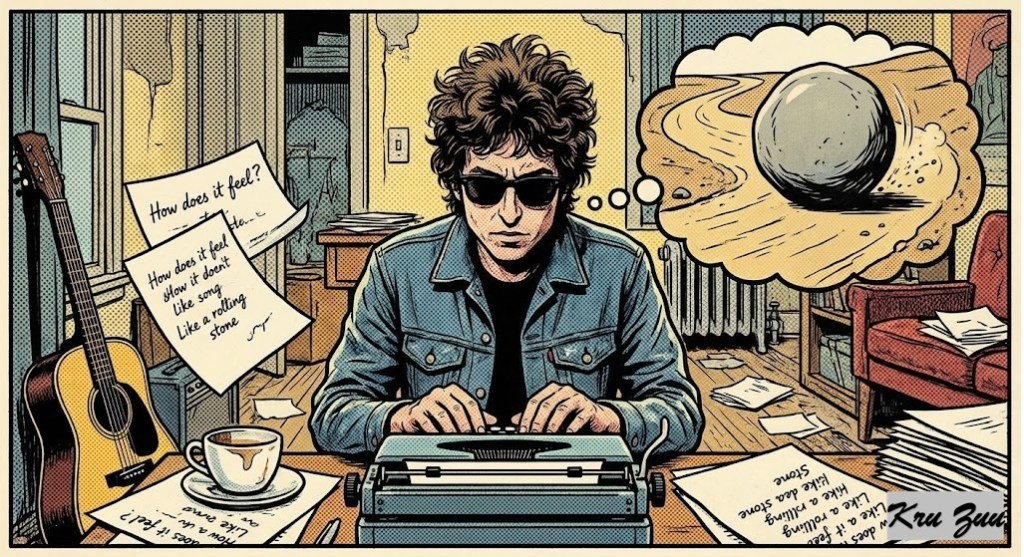
    Bob Dylan: Wrote the famous song “Like a Rolling Stone.”


    Global Cousins


    🇹🇷 Turkish: “İşleyen demir ışıldar.” (Working iron sparkles/shines). — This is the perfect match for the positive meaning! ✨


    🇹🇷 Turkish (Negative meaning): “Yuvarlanan taş yosun tutmaz.” (Used to warn people not to change jobs too often).


    🇩🇪 German: “Wer rastet, der rostet.” (He who rests, rusts).

    🎭 Short Story: The Barnyard Debate


    Let’s visit the farm to see this law in action with our three friends:
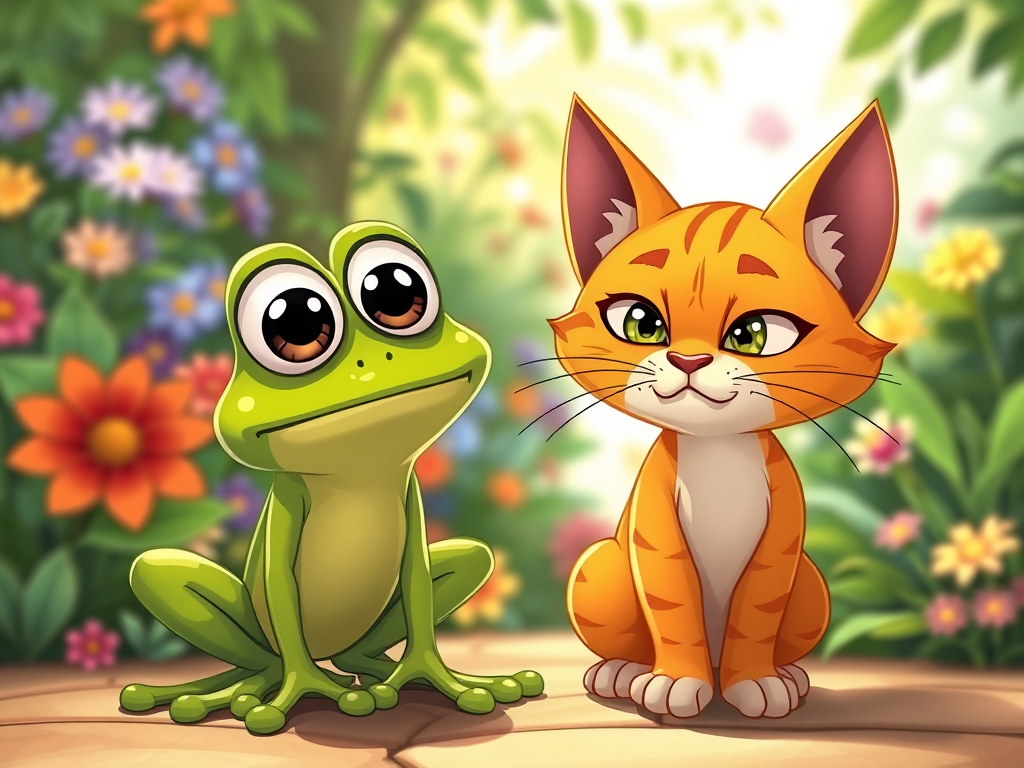
    Barnaby the Chicken, Fiona the Frog, and Whiskers the Cat.


    🌟 The Setup: A rumor spreads that the farmer is going to stop feeding the animals. They must survive on their own.


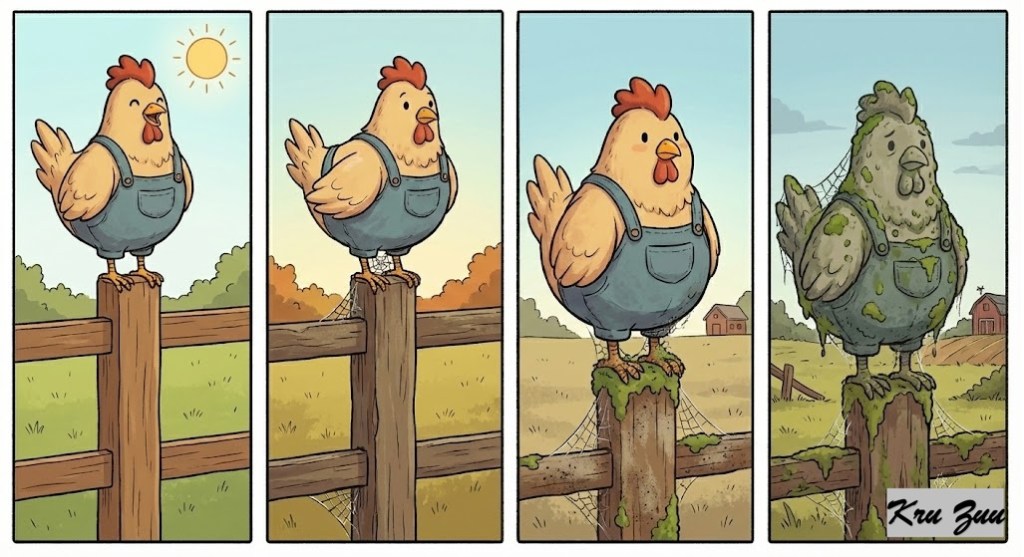
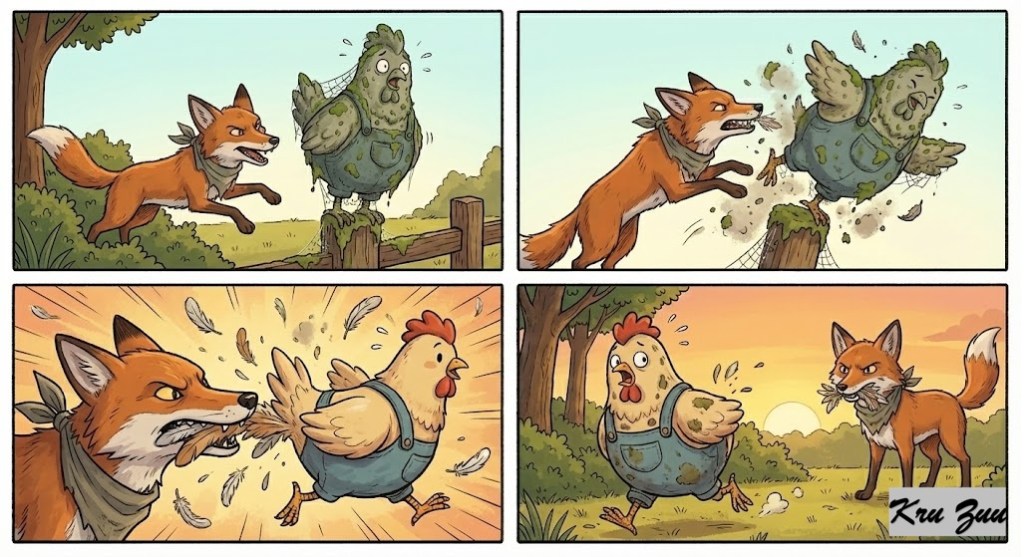
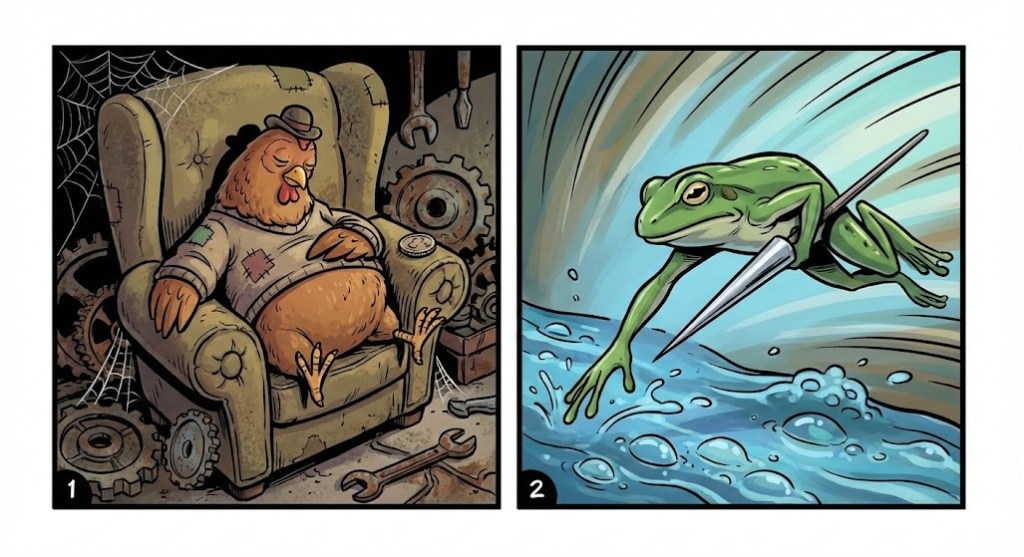
    Barnaby the Chicken (The Statue): Barnaby loved his coop. He sat on the same fence post every single day. He said, “I will not move. I have my spot. I have my feathers. I am comfortable.” Over the months, Barnaby stopped flying. He stopped hunting for bugs. He actually gathered “moss” (dust and cobwebs grew on his feet). He felt safe, but he became slow and heavy.


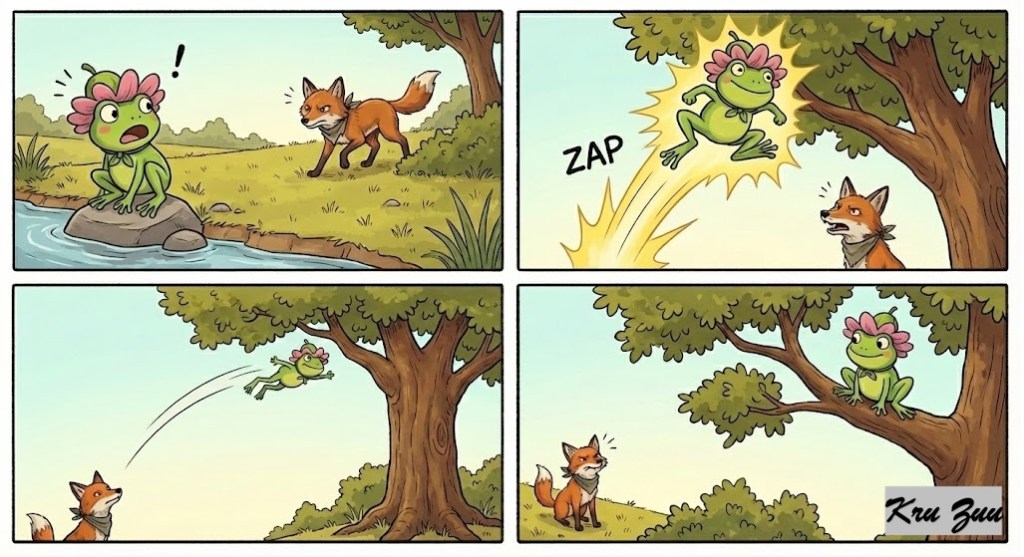
    Fiona the Frog (The Rolling Stone): Fiona was terrified of staying still. She hopped from the pond to the river, and from the river to the forest. She said, “New bugs! New water! New dangers!” She never built a permanent home (no moss), but her legs became incredibly strong. She learned how to catch 50 different types of flies. She was adaptable.


    The Crisis: One day, a hungry Fox entered the farm.


    Barnaby the Chicken tried to run. But he was “mossy.” His legs were stiff from sitting. He was too heavy. The Fox looked at him and smiled. (Don’t worry, Barnaby escaped, but he lost his tail feathers!) 🐔💨


    Fiona the Frog saw the Fox instantly. ZAP! She used her powerful legs to jump to the highest branch. She was safe. 🐸


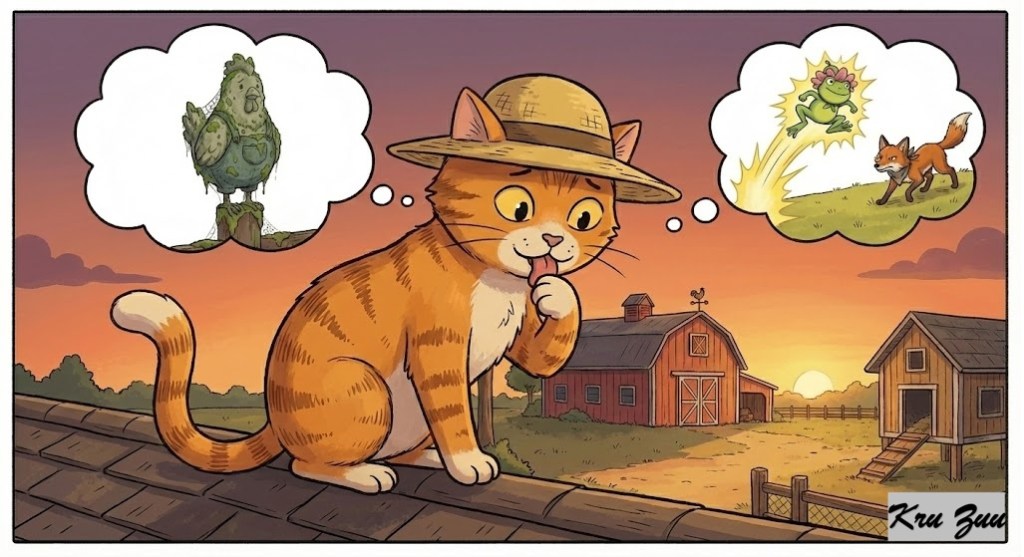
    The Verdict (Whiskers the Cat): Whiskers, sitting on the roof, licked his paw and observed: “Barnaby had a nice warm seat, but he got rusty. Fiona had no home, but she had skills. In a dangerous world, it is better to be a Rolling Stone than a Sitting Duck.” 🐱


    The Moral: Comfort is nice, but it makes you slow. Keep moving, keep learning, keep rolling.

    🎓 Lesson for English Learners


    Don’t Let Your English Gather Moss.


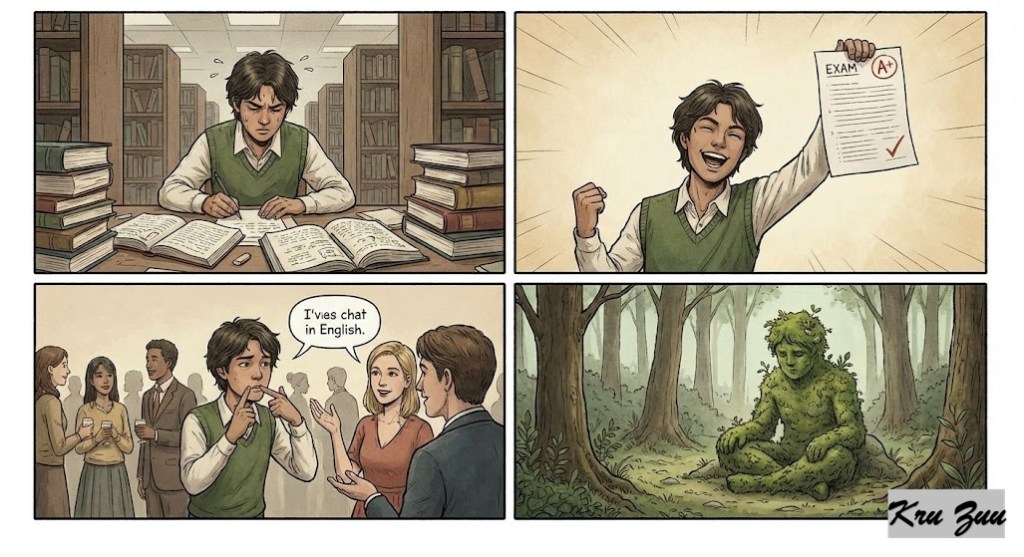
    The Mossy Student: Studies hard for an exam, passes it, and then doesn’t speak English for 3 months.


    Result: They forget everything. The “rust” covers their brain.


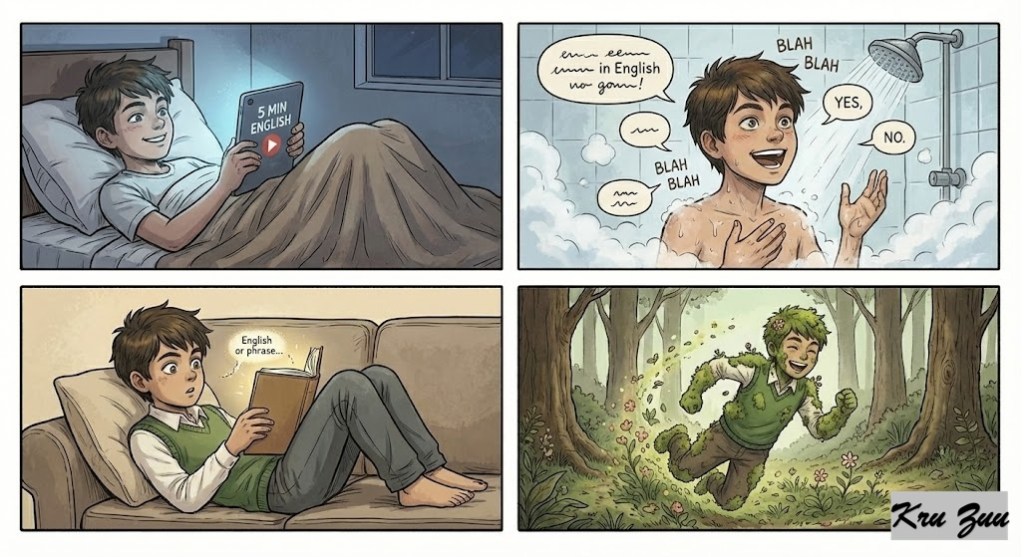
    The Rolling Student: Watches 5 minutes of English YouTube every day. Talks to themselves in the shower. Reads one page of a book.


    Result: They might not be perfect, but they are “shiny.” Their English is ready to use instantly.


    Question: Are you a Chicken (comfortable but rusty) or a Frog (moving and sharp)?


    💬 Your Turn: The “New Thing” Challenge 🚀


    To stop the moss from growing, you need to do something NEW today.


    Pick one:


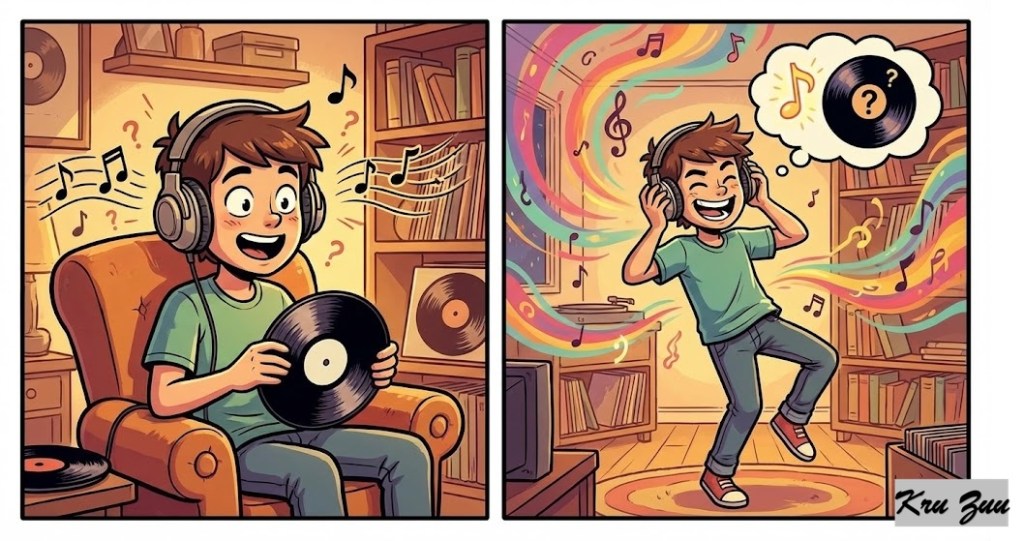
    Listen to a song in English you have never heard before.


    Learn 3 idioms about “Movement.”


    Write a comment below using the word “Stagnant.”


    Tell us in the comments: What is a skill you used to have, but lost because you stopped practicing? (Did you play guitar? Did you speak French?). Let’s talk about our “moss”! 👇

    By Zubeyir YURTKURAN

    https://www.facebook.com/BrainBattleground/

    https://www.facebook.com/zubeyr.yurtkuran/

    https://www.instagram.com/zubeyryurtkuran/
    https://www.youtube.com/@BrainBattleground-b3p

    https://www.instagram.com/brainbattleground/

  • 📸 The Visual Vault: The Law of Perception

    📸 The Visual Vault: The Law of Perception

    “A picture is worth a thousand words.”


    😈 The Villain (The Rambler)


    You try to describe a spiral staircase to someone over the phone without using your hands. You talk for 10 minutes. You use complex adjectives. You get frustrated. The listener is confused. You write a 3-page email explaining a simple problem on your computer screen instead of sending one screenshot. You waste energy, time, and breath. You are drowning in a sea of words. 🌊


    😇 The Hero (The Illustrator)


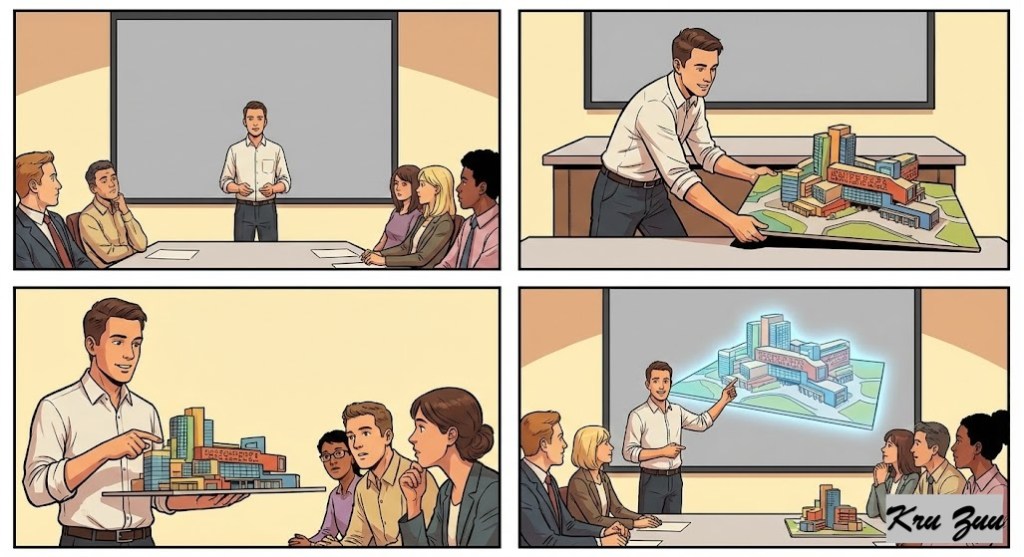
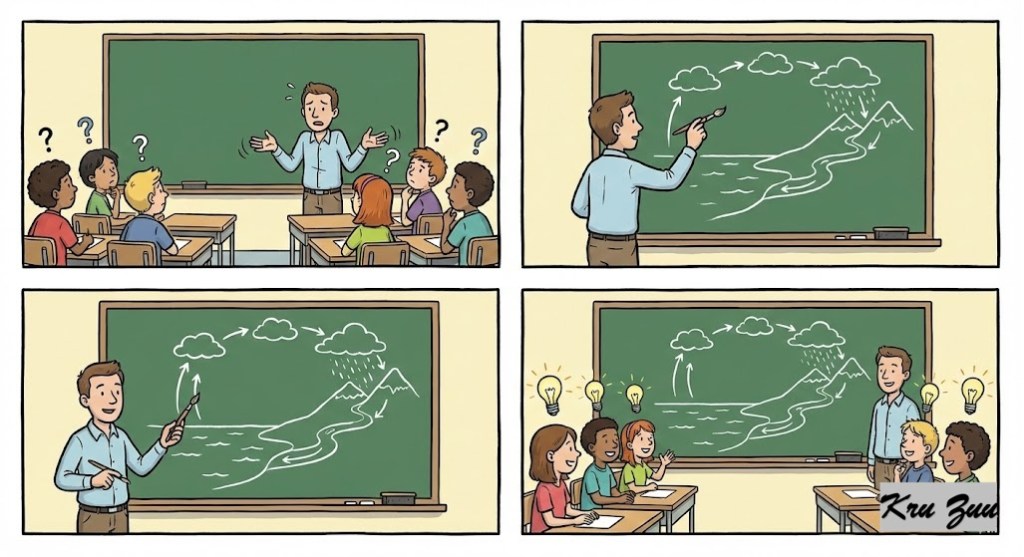
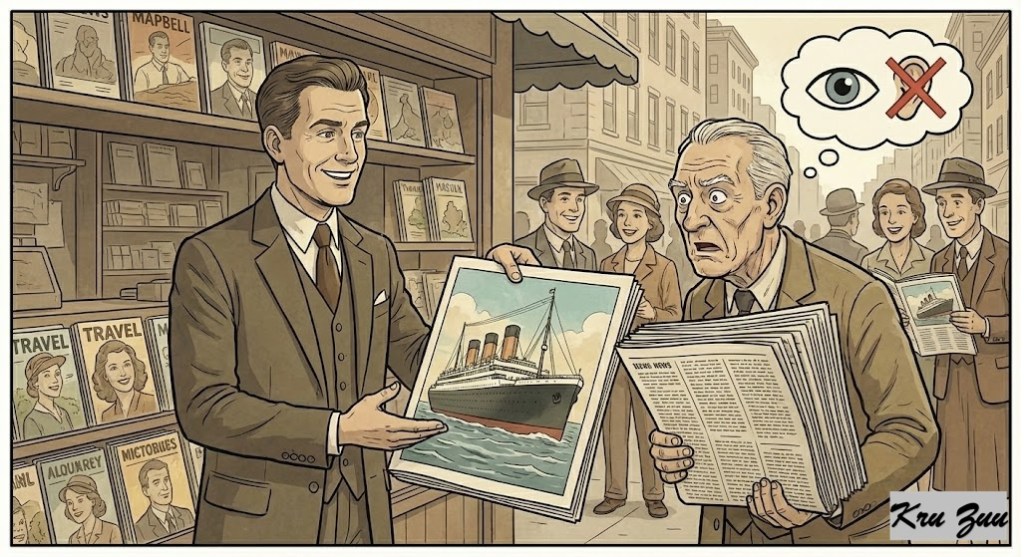
    You see a problem. You don’t argue; you open your gallery. You show a chart, a photo, or a quick sketch. The room goes silent. Everyone nods. In 5 seconds, you achieved what “The Rambler” couldn’t achieve in 5 hours. You understand that the brain processes images 60,000 times faster than text. You are the master of efficiency. 🎨


    ⚖️ The Reality


    Words are abstract. Images are concrete. We live in a visual world. Instagram, TikTok, and YouTube dominate because our brains are lazy, they want the information now. Words are the map; the picture is the territory.


    💎 The Secret


    Stop trying to “tell” everyone everything. Start “showing” them. If you have to explain a joke, it’s not funny. If you have to explain a visual concept with 1,000 words, you’ve already lost the audience.

    🧐 The Anatomy of the Proverb


    Let’s break down this masterpiece of communication.


    Worth (Adjective): Equivalent in value to the sum or item specified. 💰


    Thousand (Number): Used here metaphorically to mean “a very large number.”


    Simpler Version: Show, don’t just tell.


    📚 Vocabulary Vault


    Depict (Verb):
    To show or represent by a drawing, painting, or other art form.


    Convey (Verb): To transport or carry an idea to someone else (make an idea known). 📦


    Visual Aid (Noun): An item of illustrative matter, such as a film, slide, or model, designed to supplement written or spoken information.


    Perspective (Noun): A particular attitude toward or way of regarding something; a point of view.


    Illustrate (Verb): To explain or make (something) clear by using examples, charts, or pictures. 🖌️


    🧠 Grammar Focus: “Worth” + Noun/Gerund


    The word “Worth” is unique. It is followed by a noun or a verb ending in -ing (Gerund).


    Structure: Subject + Be + Worth + [Noun / V-ing]


    Example 1: This movie is worth watching. (Not “worth to watch”)


    Example 2: It is not worth the trouble.


    Example 3: A picture is worth a thousand words.

    📜 History: Origin and Spread


    Where did this come from?


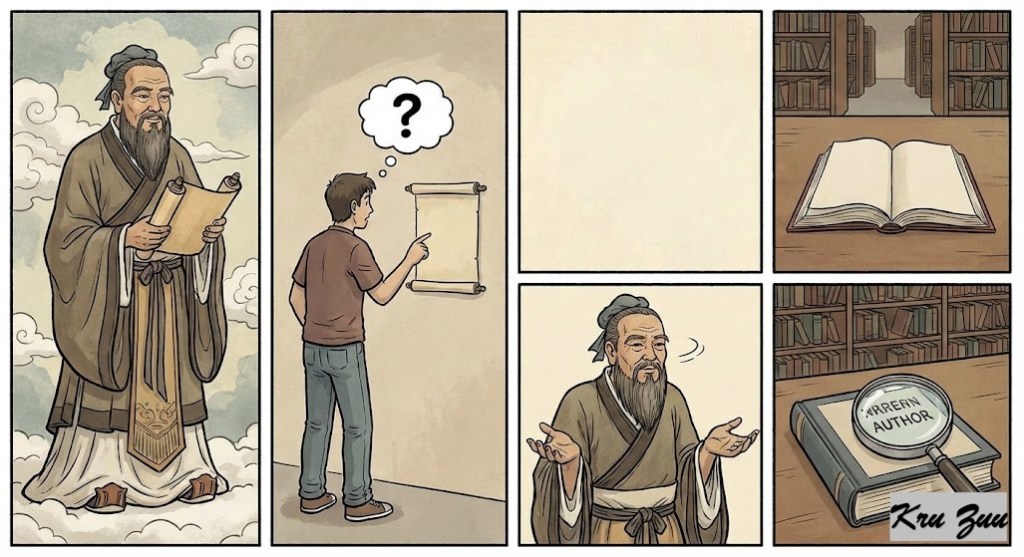
    The Myth: People often think this is an ancient Chinese proverb from Confucius. It is not!


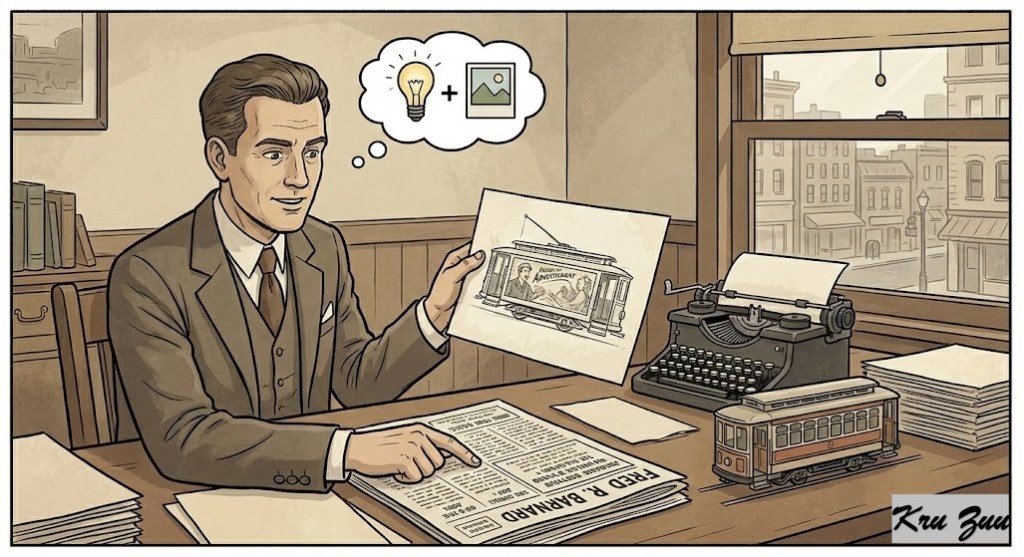
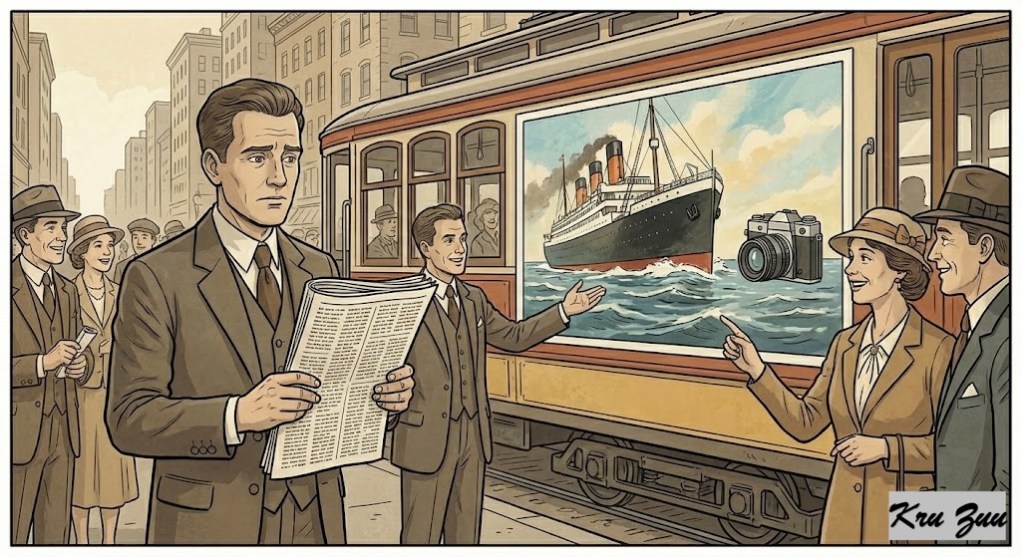
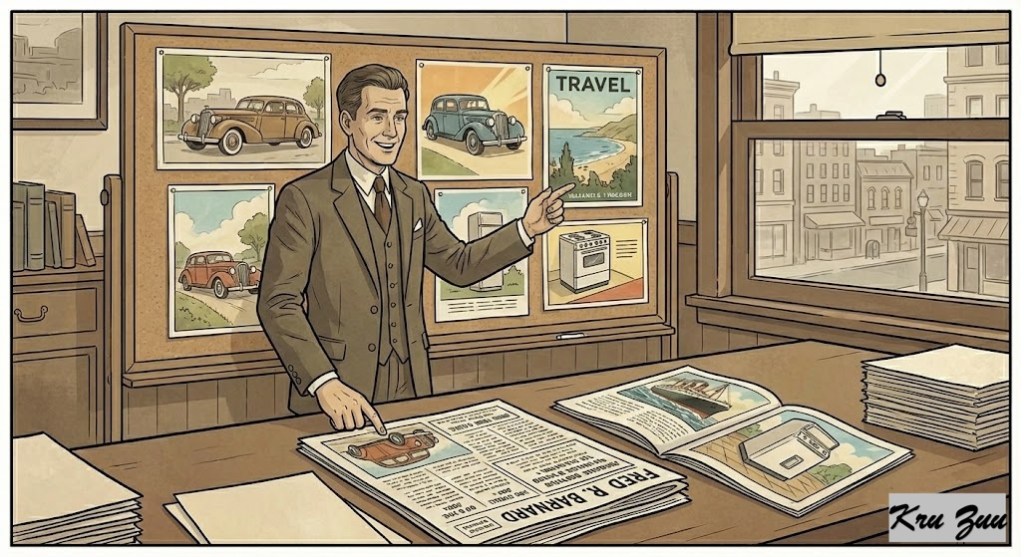
    The Truth: It was actually popularized by an advertising executive named Fred R. Barnard in the 1920s to sell ads on the sides of streetcars. He wanted to prove that images sold products better than text.


    Global Cousins


    🇹🇷 Turkish:
    “Bir resim bin kelimeye bedeldir.” (Exact match!)


    🇫🇷 French: “Une image vaut mille mots.”


    🇯🇵 Japanese: “Hyakubun wa ikken ni shikazu” (Hearing a hundred times is not as good as seeing once).

    🎭 Short Story: The Monster in the Woods


    Let’s visit our animal friends to see this law in action.


    The Characters


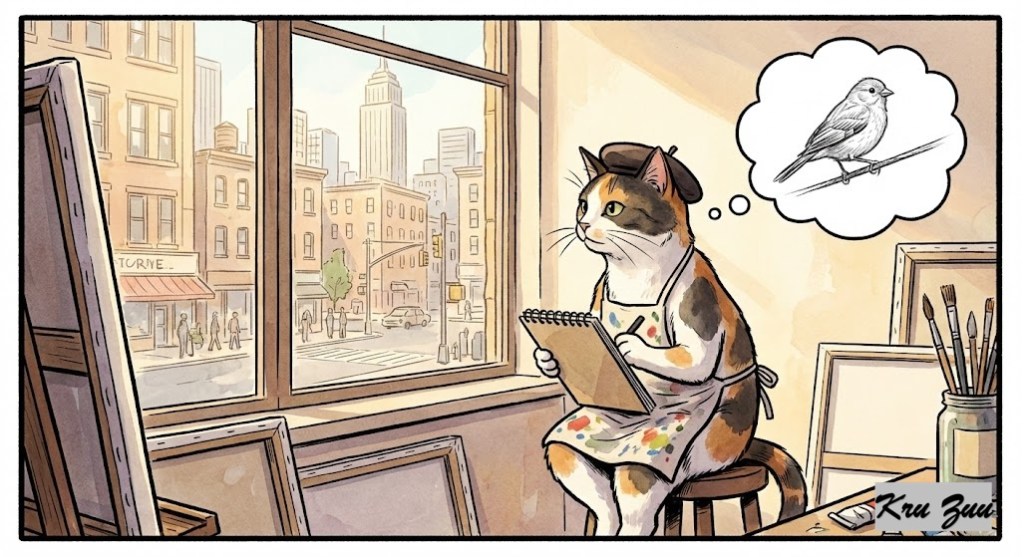
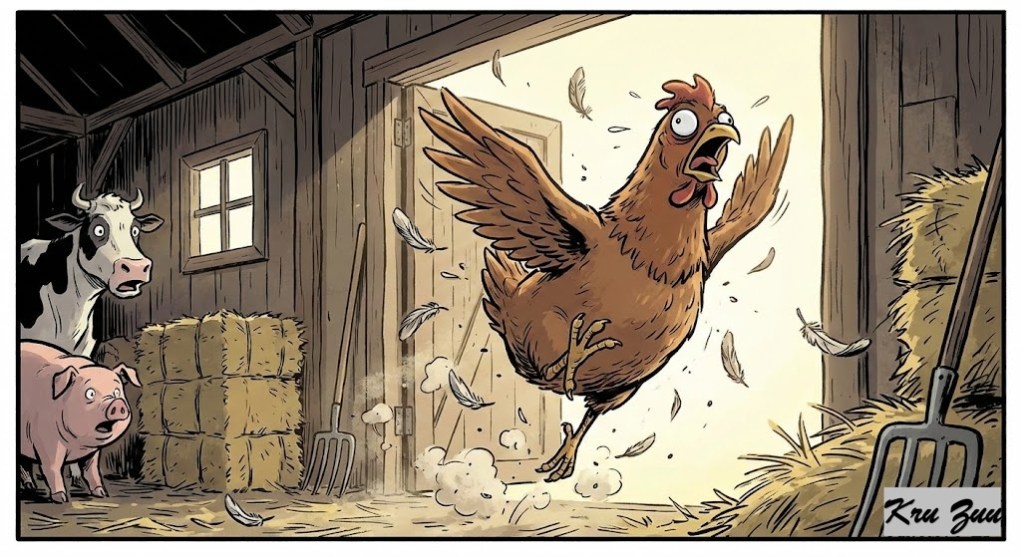
    🐔 Clucky (The Chicken):
    Talks fast, panics easily, uses too many words.


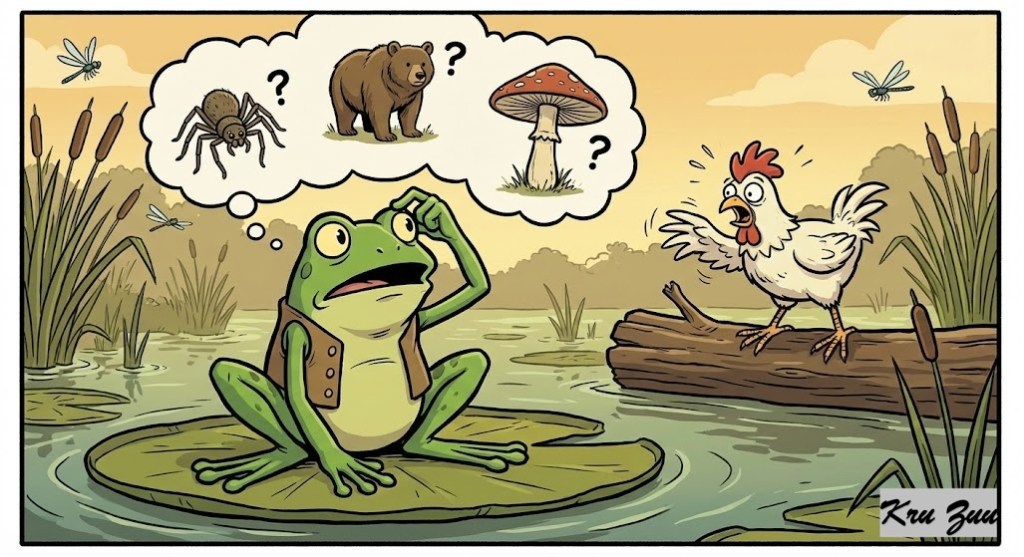
    🐸 Croak (The Frog): Logical, philosophical, but lacks imagination.


    🐱 Whiskers (The Cat): The artist, observant, quiet.


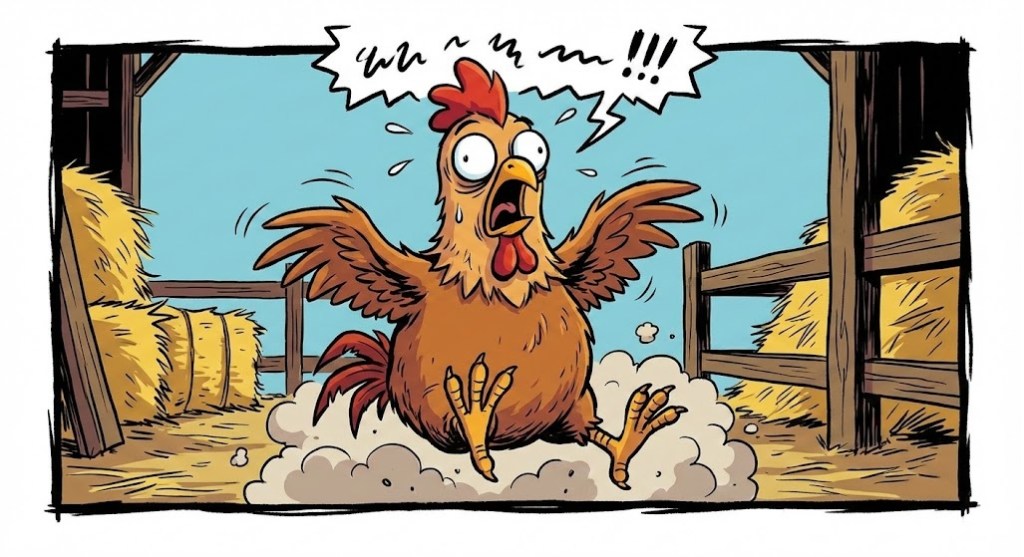
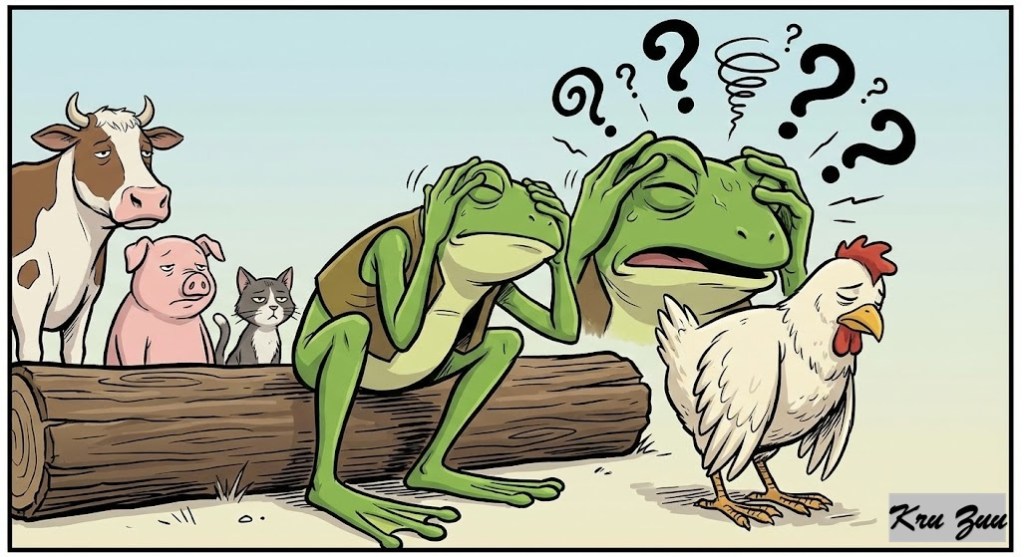
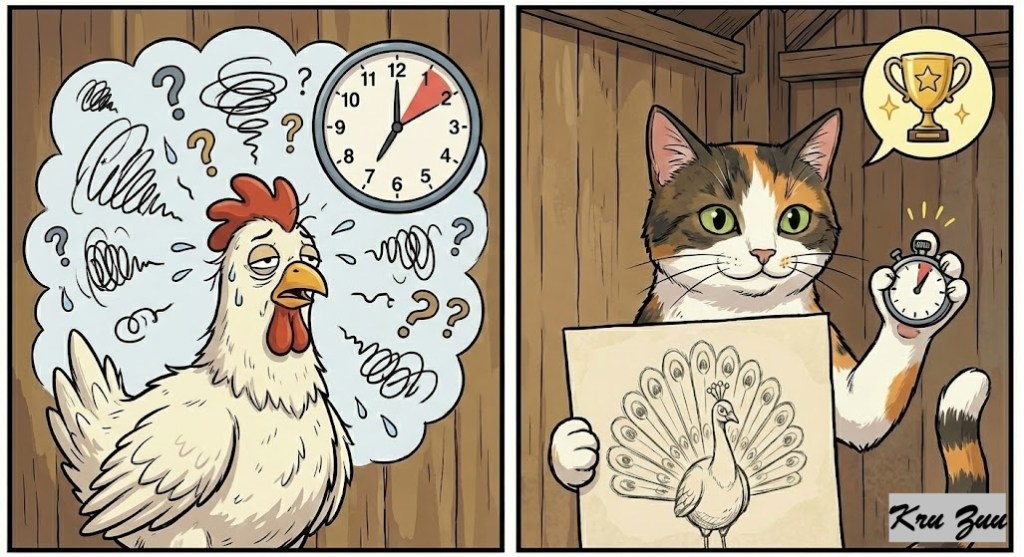
    🌟 The Incident: One morning, Clucky ran into the barn, feathers flying everywhere. She had seen something terrifying in the forest.


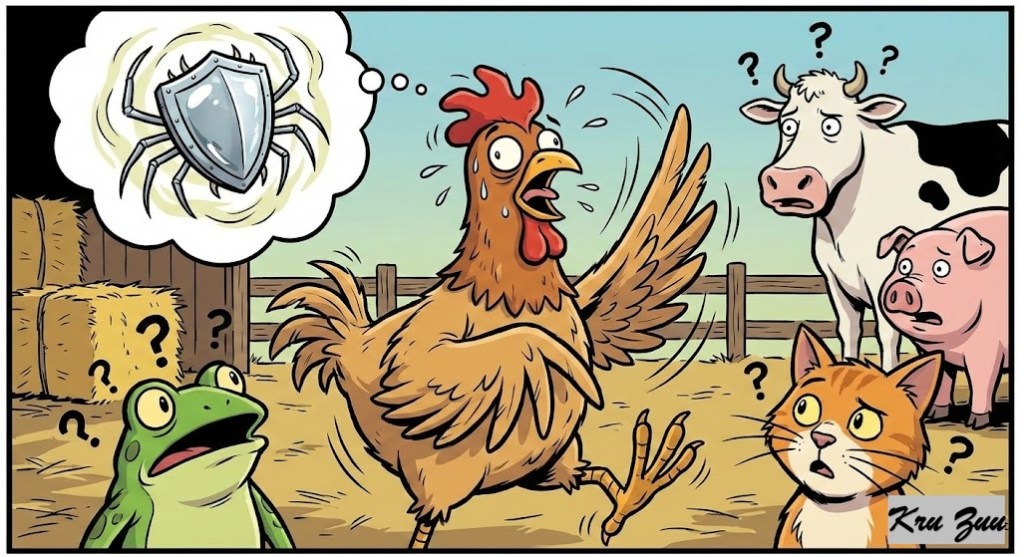
    The Conflict: “Listen to me! Listen!” Clucky screamed. “I saw a beast! It was… well, it was round but not round. It had colors like a rainbow but scary colors! It had a giant eye in the middle, and legs that were stiff like sticks! It was huge! It was looking at me!”


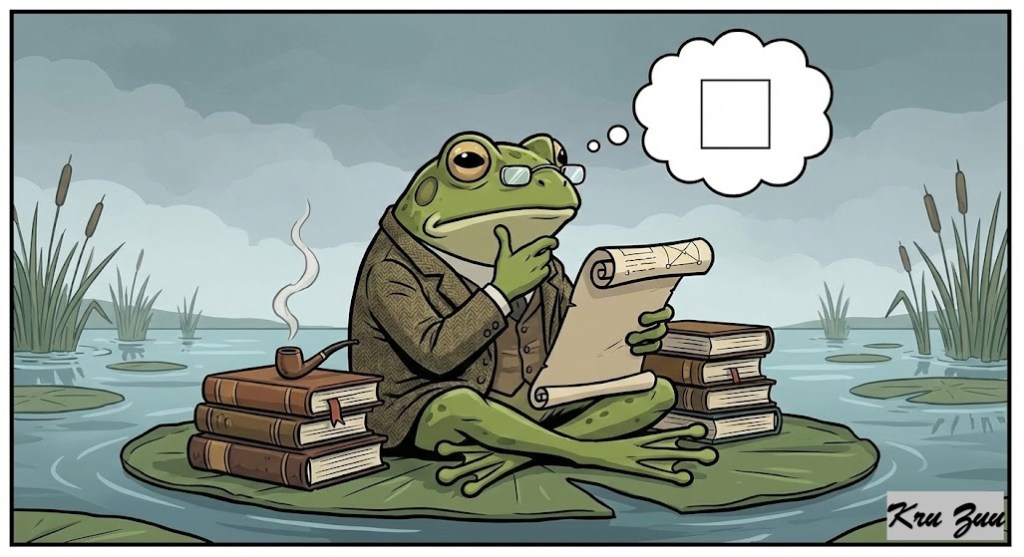
    Croak the Frog sat on a lily pad, confused. “Clucky, was it a spider? A bear? A very large mushroom?”


    “No, no!” Clucky clucked for 20 minutes, describing the texture, the smell, and the aura of the beast. “It was like a shiny shield with legs!”


    Croak rubbed his head. “I have no idea what you are saying. You are using 5,000 words and I am still blind.”


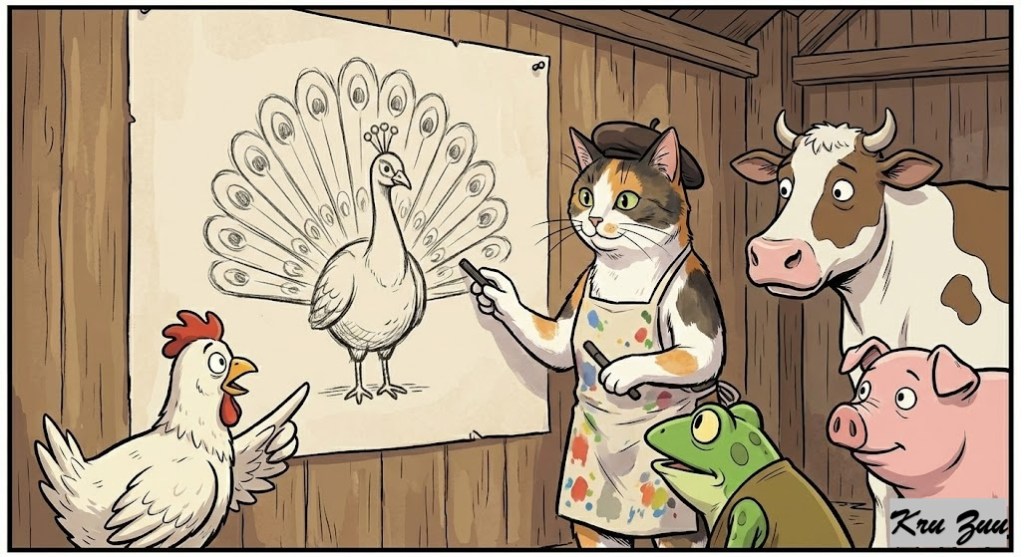
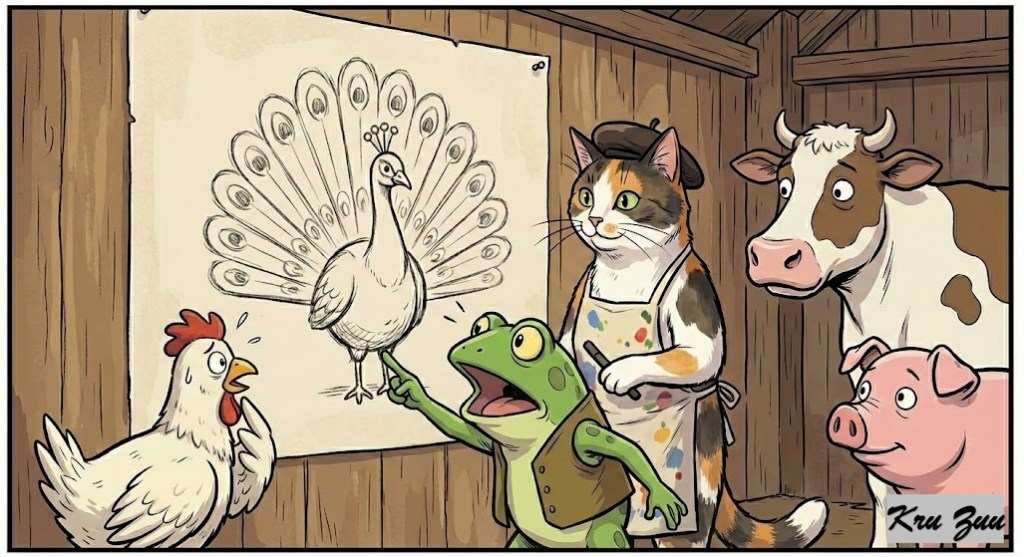
    The Resolution: Whiskers the Cat walked in. She didn’t say a word. She took a piece of charcoal and drew a quick sketch on the wooden wall. A round body, colorful feathers spread out like a fan, and tiny feet.


    Croak looked at the drawing and gasped instantly. “A Peacock! You saw a Peacock!”


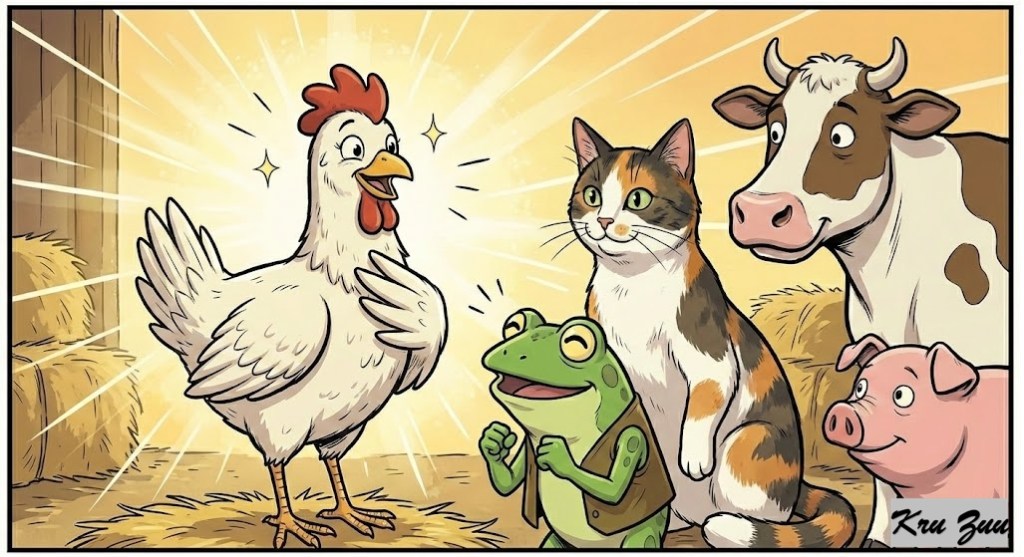
    Clucky stopped talking. “Yes! That’s it!”


    The Moral: Clucky wasted an hour and a thousand panicked words. Whiskers used one minute and one picture. Whiskers won. 🏆

    🎓 Lesson for English Learners


    Stop Translating, Start Visualizing.


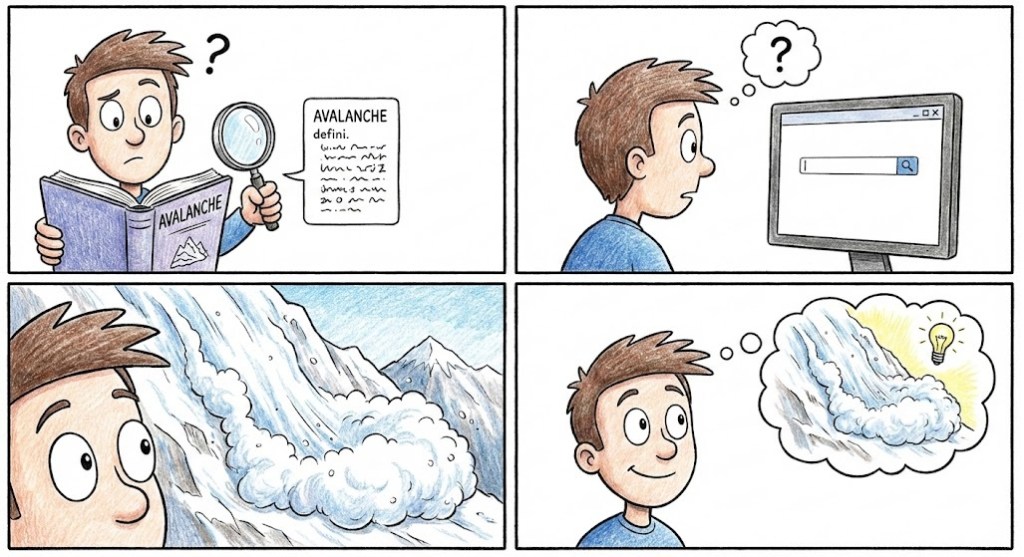
    Google Images > Dictionary: When you learn a new word (e.g., “Avalanche”), don’t read the definition (“a mass of snow…”). Go to Google Images. Look at the photo. Your brain will lock that image in forever.


    Flashcards: Don’t put the Turkish translation on the back of your card. Put a picture on the back. Connect the English word directly to the concept, not to your native language.


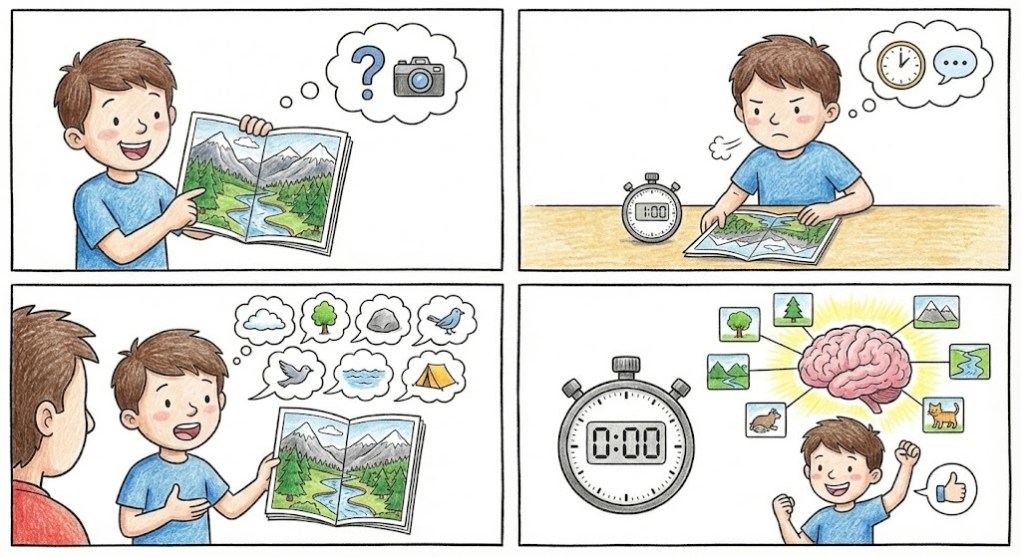
    Describe Photos: To practice speaking, find an interesting photo and try to describe it for 1 minute. This forces you to find the right vocabulary.


    💬 Your Turn: The Emoji Challenge 🚀


    Can you tell a story using ONLY emojis? “Tomorrow” is a liar, but “Pictures” tell the truth.


    The Challenge: In the comments below, tell us your favorite movie using only 3 emojis. Let’s see if others can guess it!


    Example: 🚢 🧊 💔 (Titanic)


    Example: 🦁 👑 🐗 (The Lion King)


    👇 What is your 3-emoji story? Comment below!

    By Zubeyir YURTKURAN

    https://www.facebook.com/BrainBattleground/

    https://www.facebook.com/zubeyr.yurtkuran/

    https://www.instagram.com/zubeyryurtkuran/

    https://www.youtube.com/@BrainBattleground-b3p

    https://www.instagram.com/brainbattleground/

  • 🖋️ The Daily Shield: The Law of Influence

    🖋️ The Daily Shield: The Law of Influence

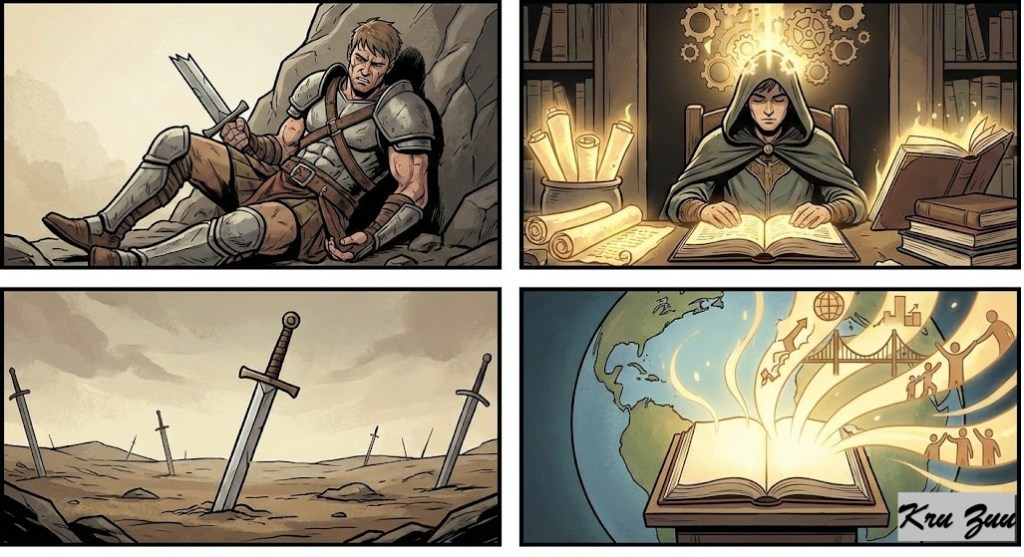
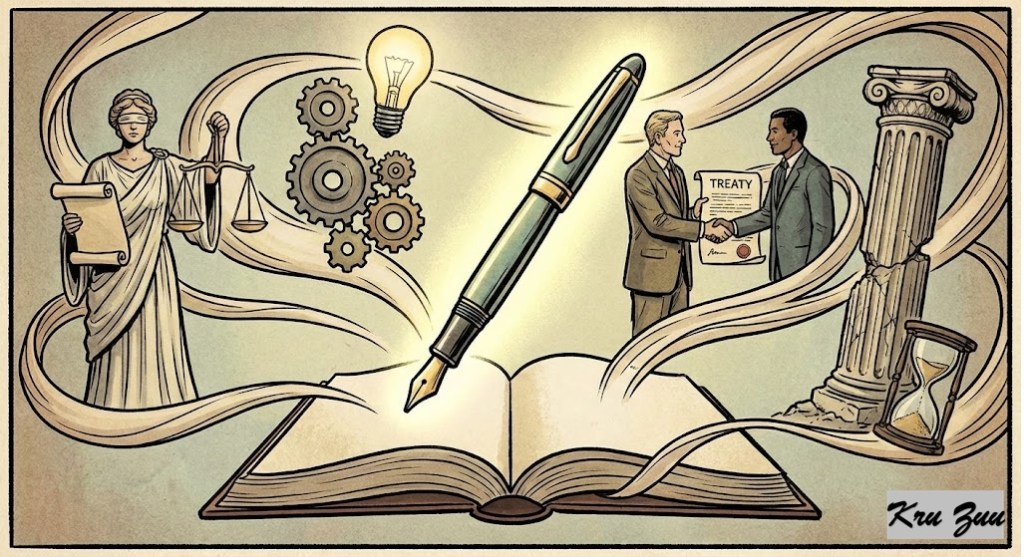
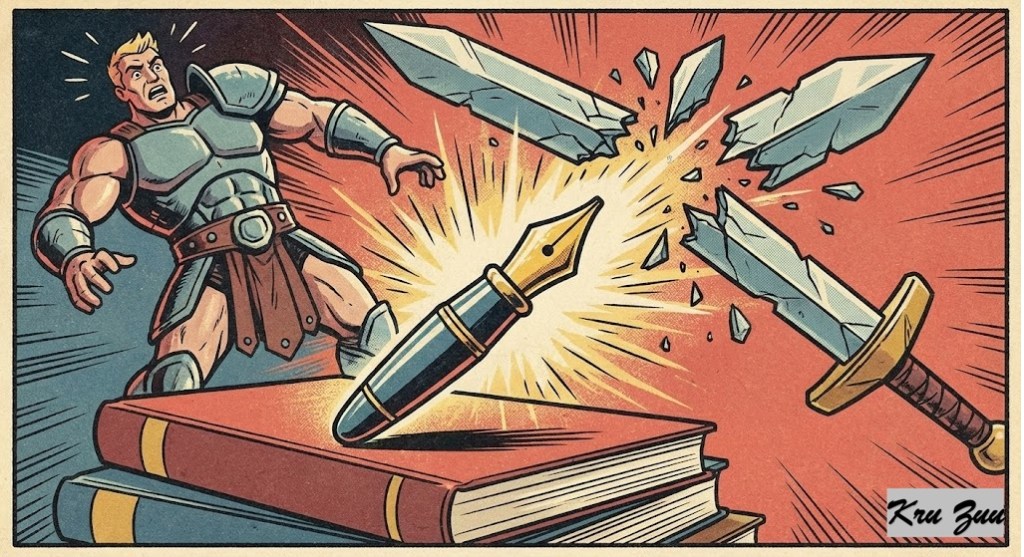
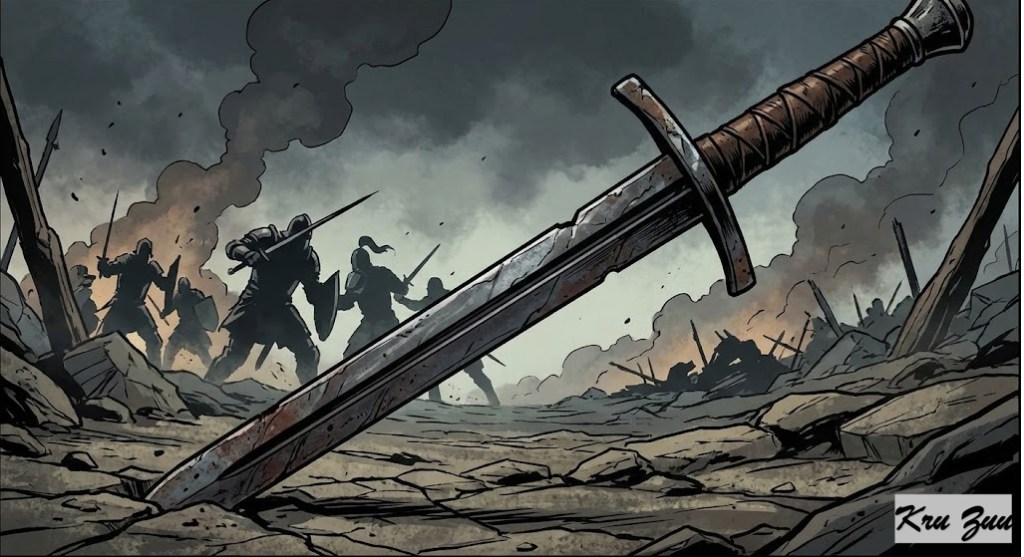
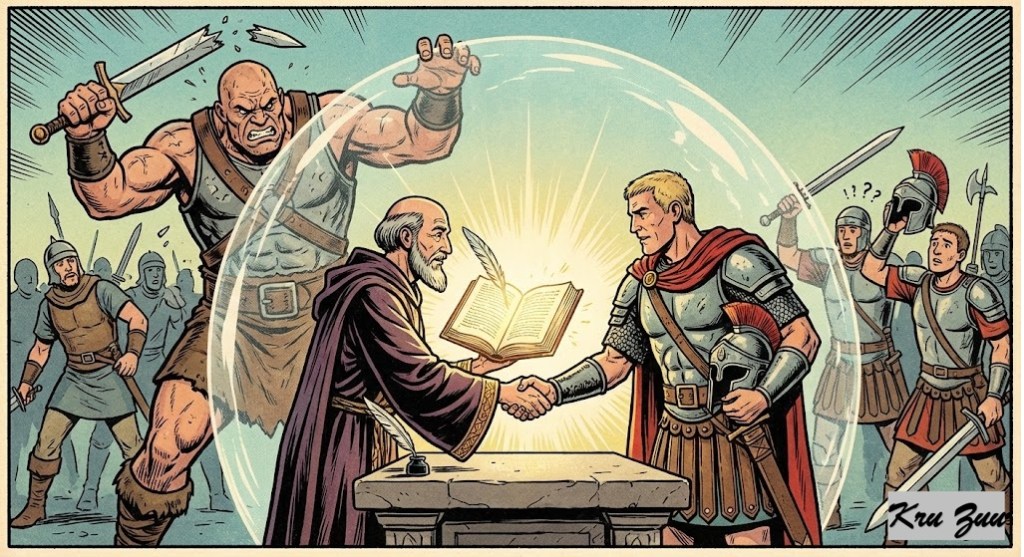
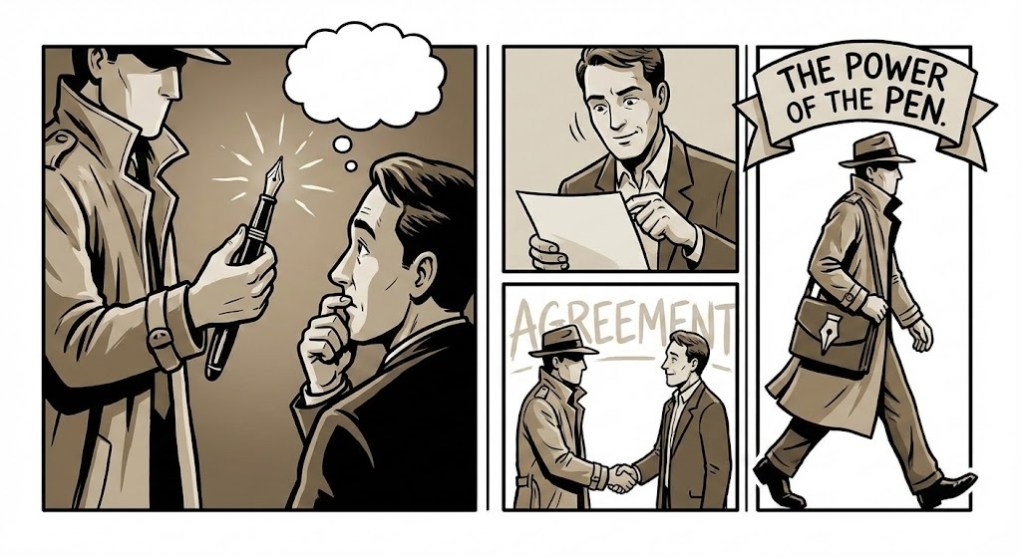
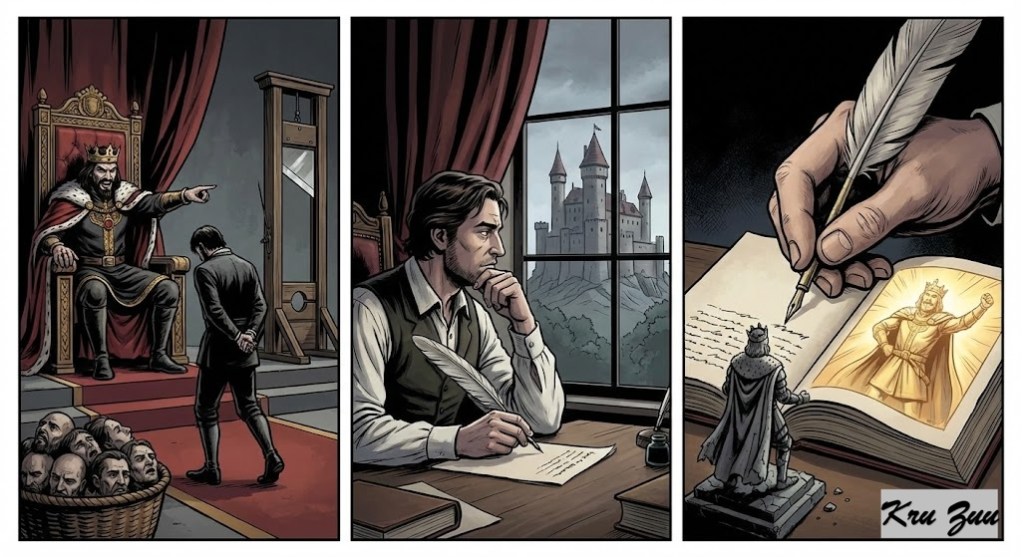
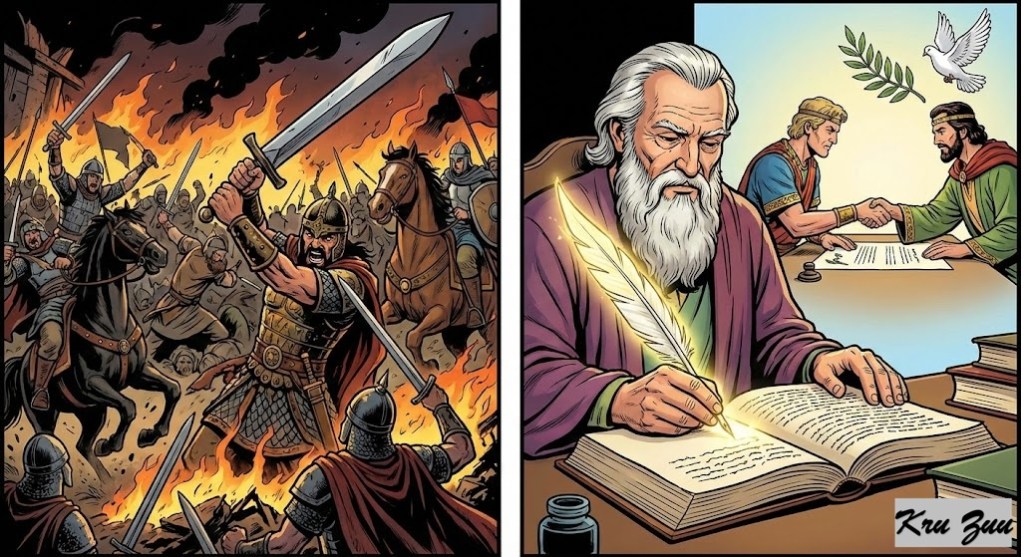
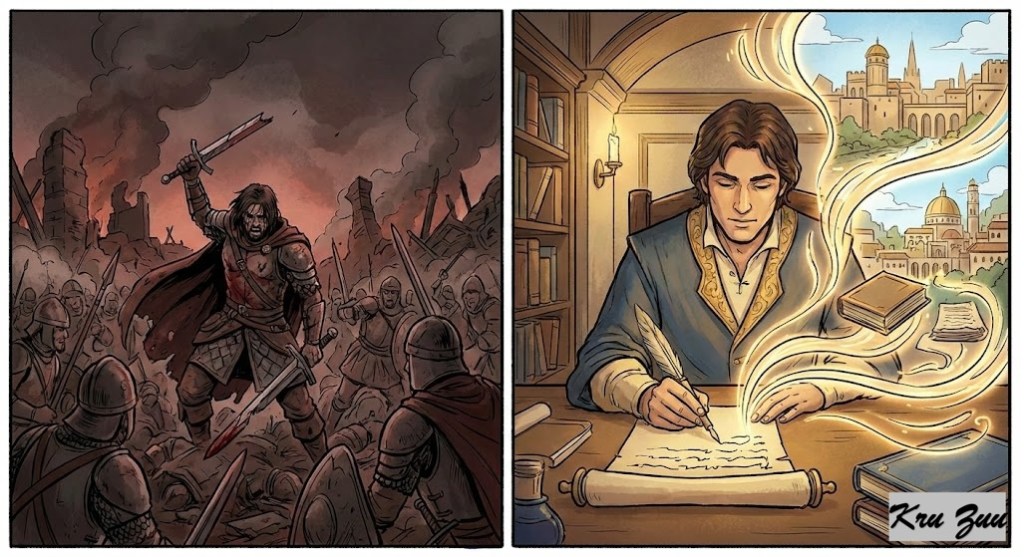
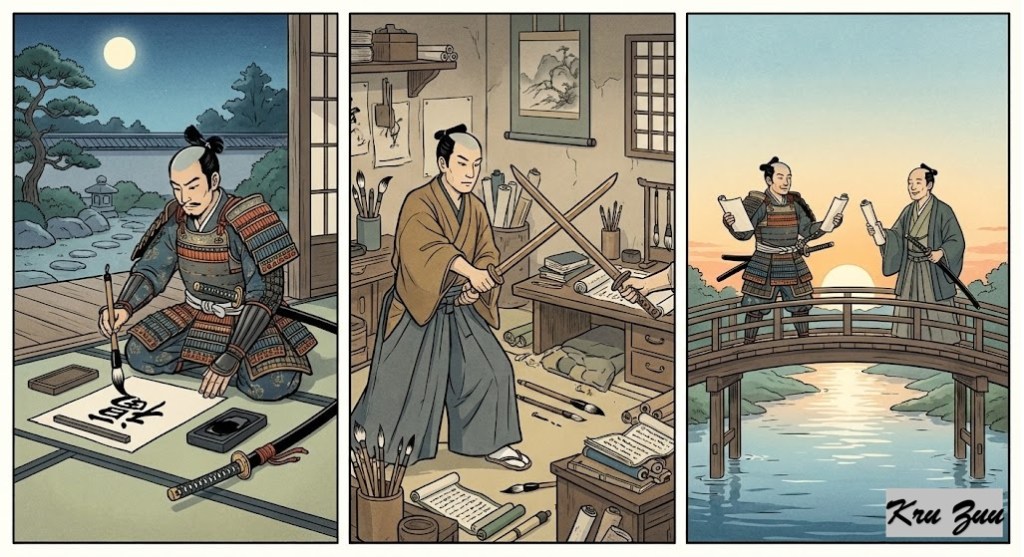
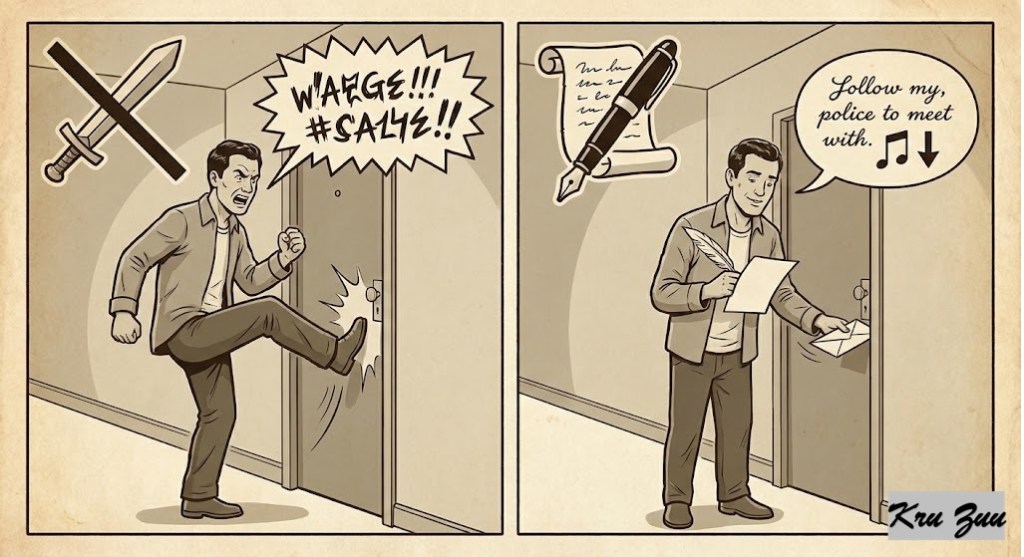
    “The pen is mightier than the sword.”


    😈 The Villain (The Barbarian)


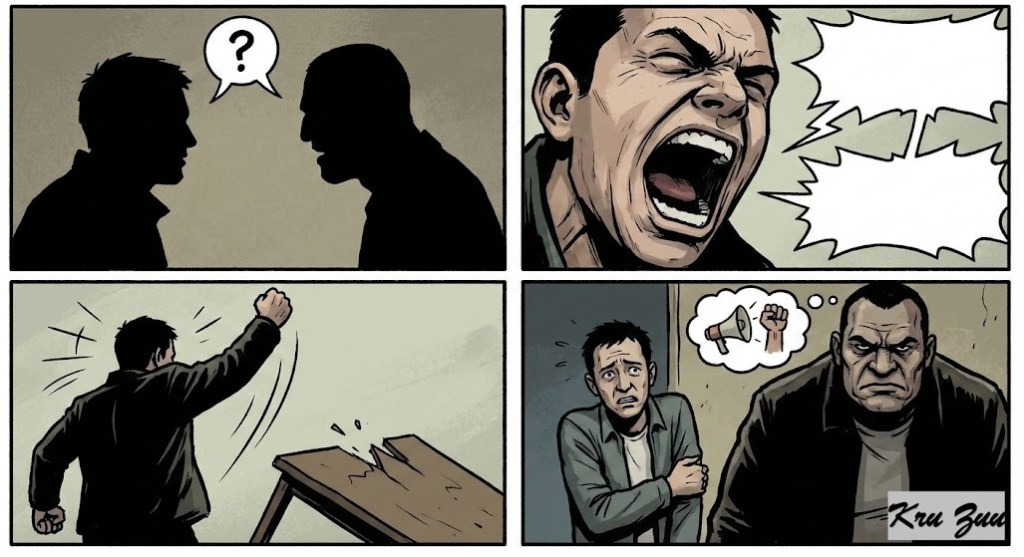
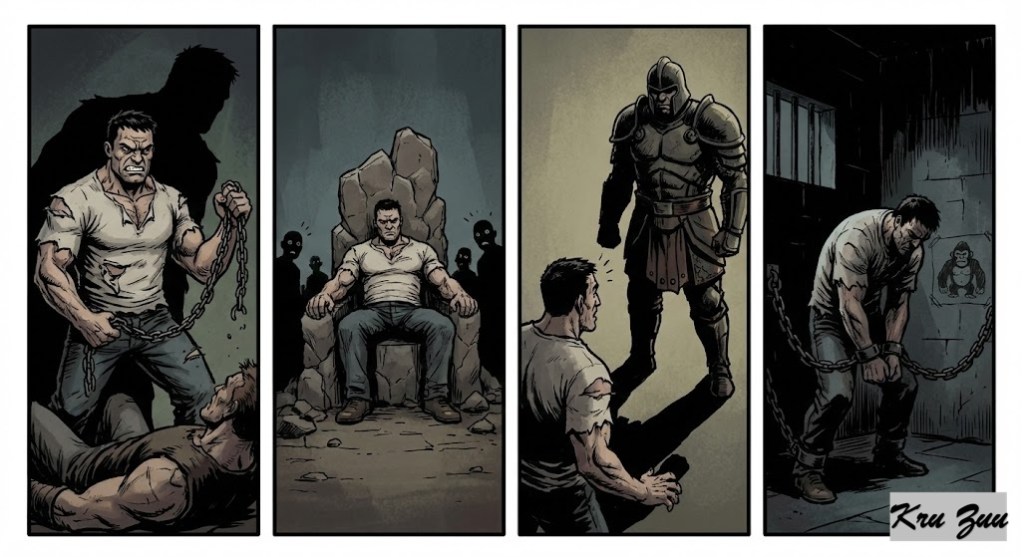
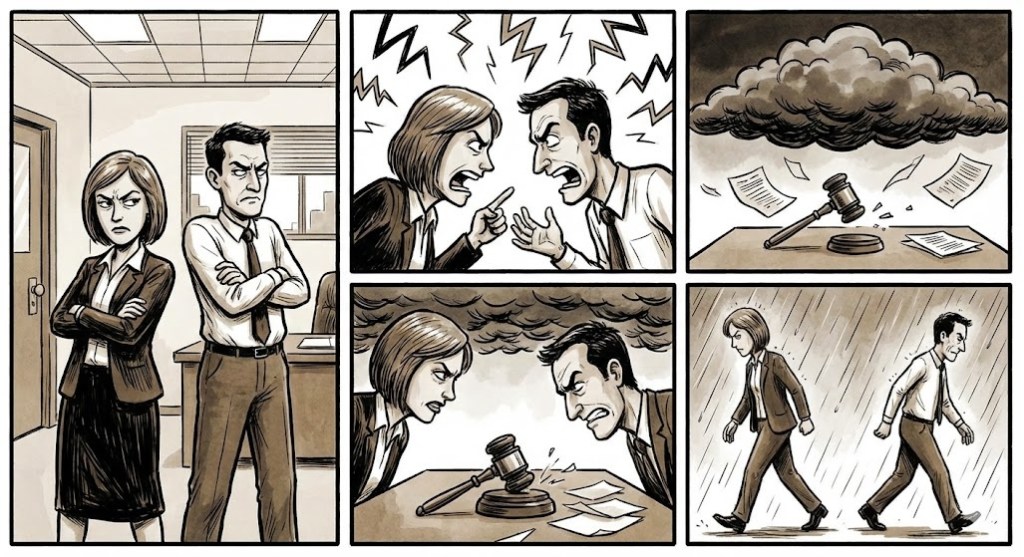
    You encounter a problem. Maybe someone disagrees with you, or you want something someone else has. Your instinct? Scream. Shout. Threaten. Use force. You think, “If I am louder and stronger, I win.”

    The Result? You might win the battle, but you lose the war. You create enemies. People fear you, but they don’t respect you. Physical force is temporary; eventually, someone stronger than you will come along. You are a slave to Brute Force. 🦍


    😇 The Hero (The Diplomat)


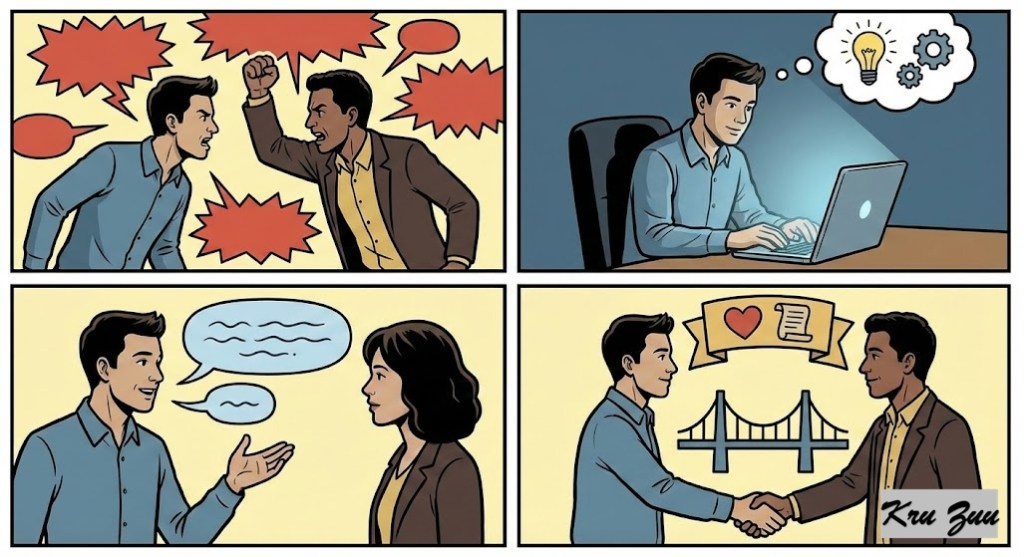
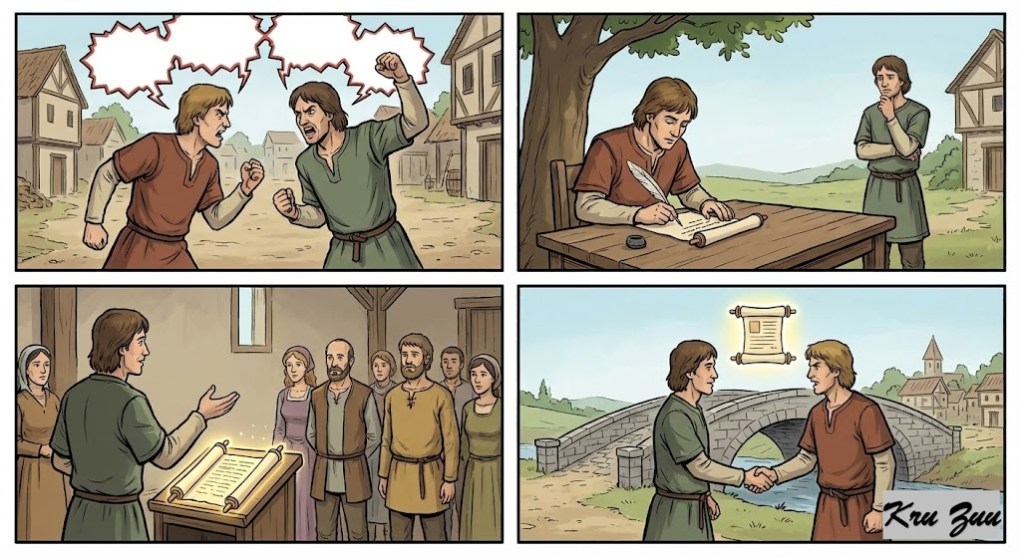
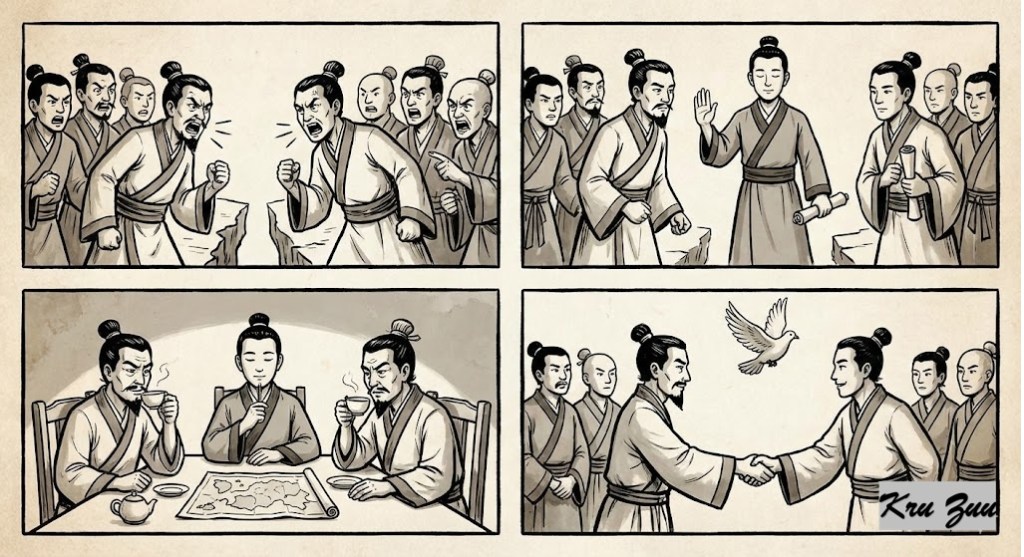
    You face a conflict. Instead of raising your voice (or your fist), you sharpen your mind. You write a persuasive email. You speak with logic and emotion. You use words to change how people think.

    The Result? You solve the problem without bloodshed. You turn enemies into allies. You create a change that lasts forever because you changed the mind, not just the situation. You wield the ultimate weapon: The Truth. 📜


    ⚖️ The Reality


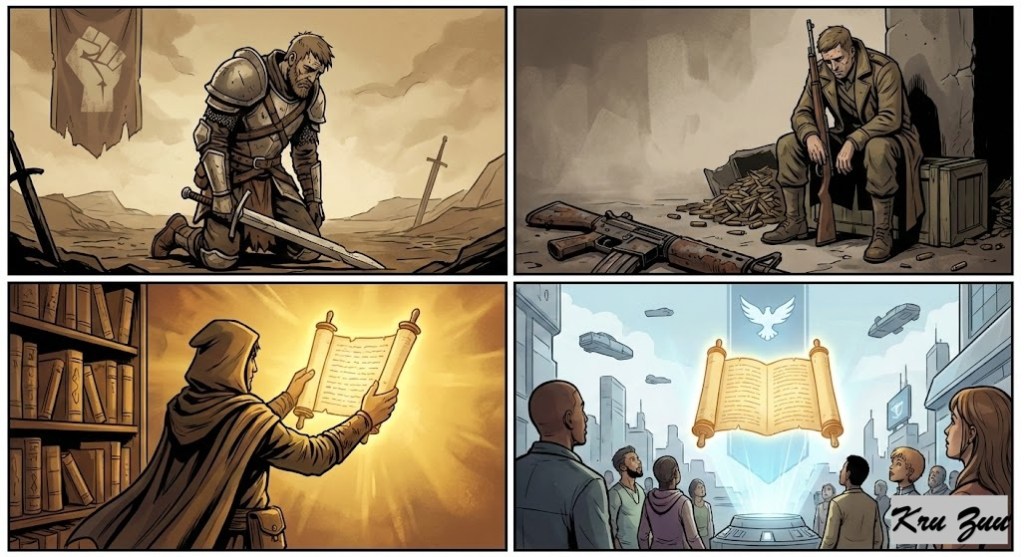
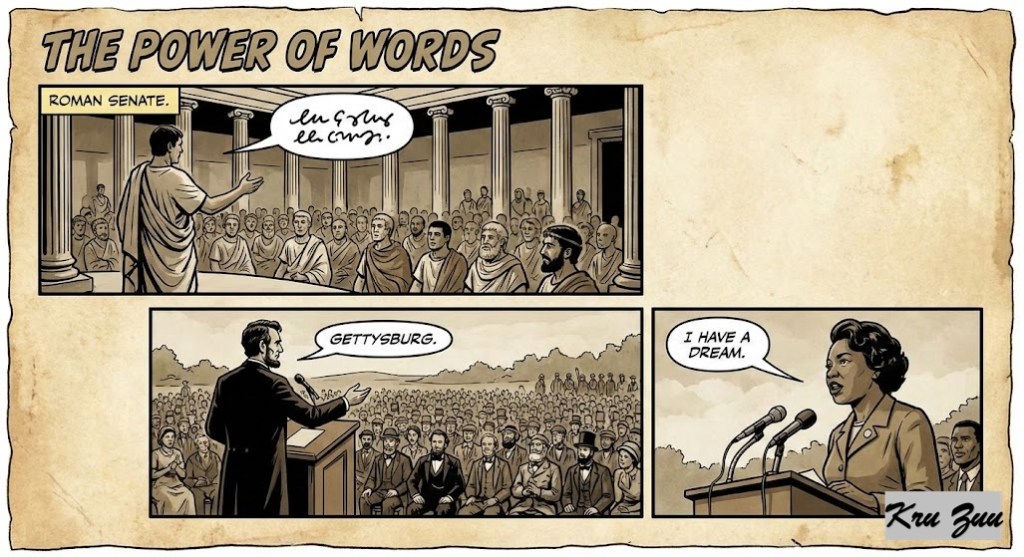
    Muscles get tired. Swords rust. Guns run out of bullets. But an Idea? An idea written down can live for 1,000 years. It can start revolutions, stop wars, and build nations. Violence forces the body to obey; Words inspire the soul to follow.


    💎 The Secret


    Physical strength is limited. Intellectual strength is infinite. A sword can kill one man, but a book can change the world.

    🧐 The Anatomy of the Proverb


    This proverb teaches the power of communication over violence.


    The Pen (Noun): A tool for writing. (Symbolizes: Intellect, diplomacy, communication, laws, history).


    Mightier (Adjective – Comparative): Stronger; having more power. 💪


    The Sword (Noun): A weapon with a long metal blade. (Symbolizes: Violence, war, physical force, coercion). ⚔️


    Simpler Version: Thinking and talking are more effective than fighting.


    📚 Vocabulary Vault


    Persuasion (Noun): The act of convincing someone to do or believe something. (The superpower of the “Pen”).


    Conflict (Noun): A serious disagreement or argument.


    Diplomacy (Noun): The art of dealing with people in a sensitive and effective way.


    Intellect (Noun): The faculty of reasoning and understanding objectively. 🧠


    Coercion (Noun): Persuading someone to do something by using force or threats. (The method of the “Sword”).


    🧠 Grammar Focus: Comparatives


    This proverb is a perfect example of Comparative Adjectives.


    The Rule: When comparing two things, we usually add “-er” to short adjectives and use “than”.


    Mighty (Strong/Powerful) ➡️ Mightier (Note: The ‘y’ turns into ‘ier’).


    Strong ➡️ Stronger


    Sharp ➡️ Sharper


    Example Structure: [Noun A] + [is] + [Adjective-er] + [than] + [Noun B].


    My car is faster than your bike.


    Your brain is stronger than your muscles.

    📜 History: Origin and Spread


    Where did this famous phrase come from?


    The Origin:
    It was written by the English author Edward Bulwer-Lytton in 1839 for his play Richelieu. The main character discovers that he can control the King not by fighting him, but by writing laws and secrets.


    The Logic: Kings can cut off heads, but writers decide how history remembers those Kings.


    Global Cousins


    🇹🇷 Turkish:
    “Kalem kılıçtan keskindir.” (The pen is sharper than the sword). — Almost identical!


    🇪🇸 Spanish: “La pluma es más poderosa que la espada.”


    🇯🇵 Japanese: “Bunbu Ryodo” (The pen and the sword in accord) — Suggesting you need balance.

    🎭 Short Story: The Barnyard Battle


    Let’s see why words win, featuring our animal friends.


    🌟 The Cast


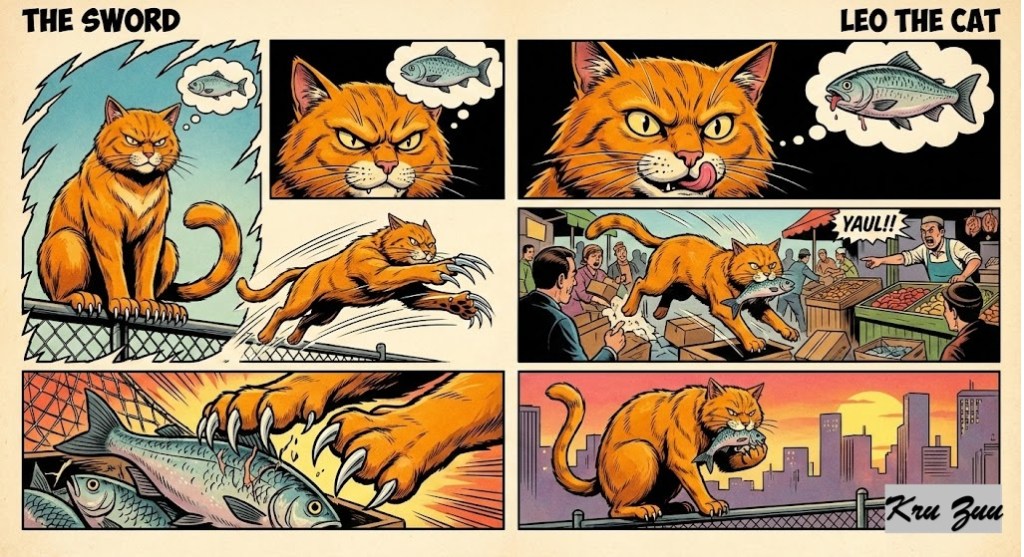
    Leo the Cat:
    Big, strong claws, hungry. Represents The Sword. 😼


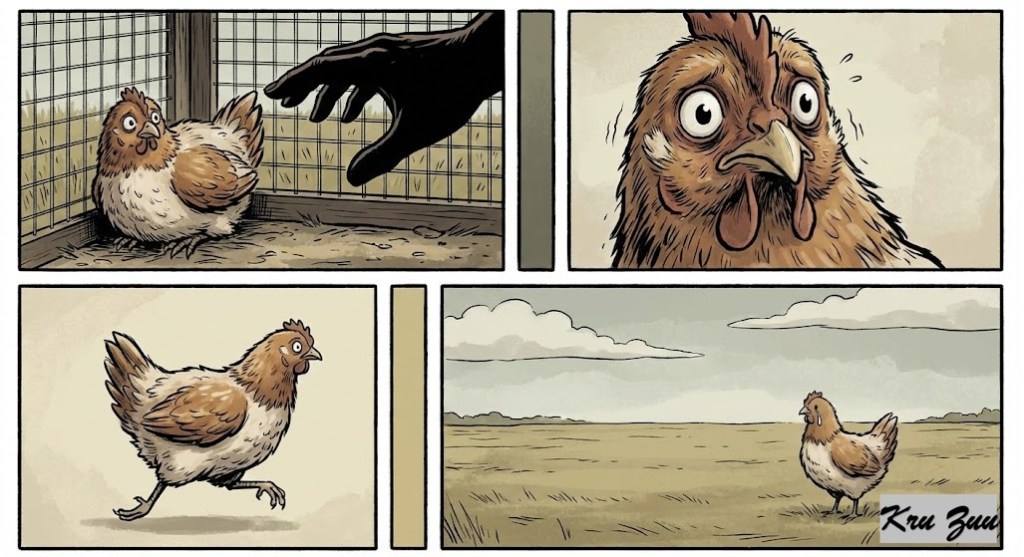
    Bella the Chicken: Delicious, scared, physically weak. Represents The Victim. 🐔


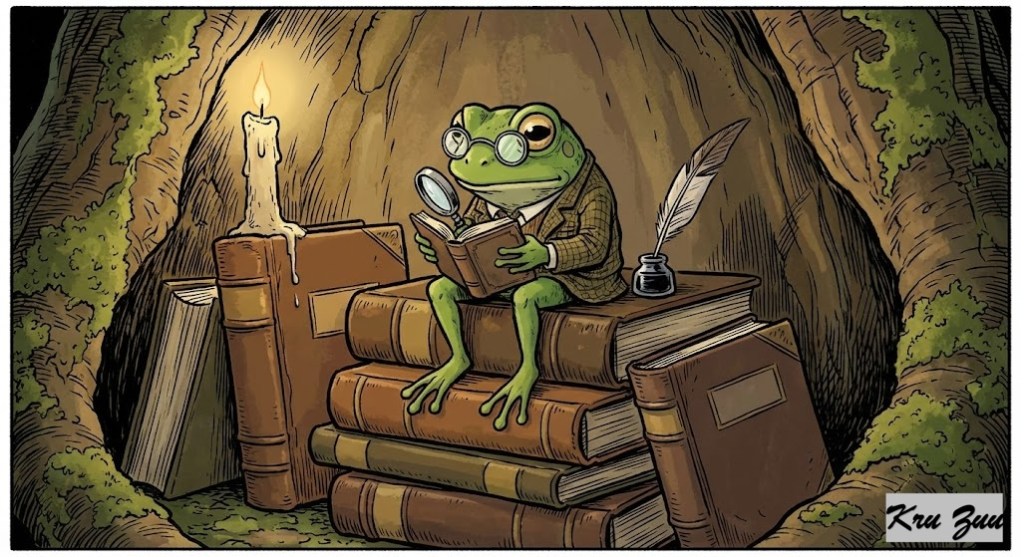
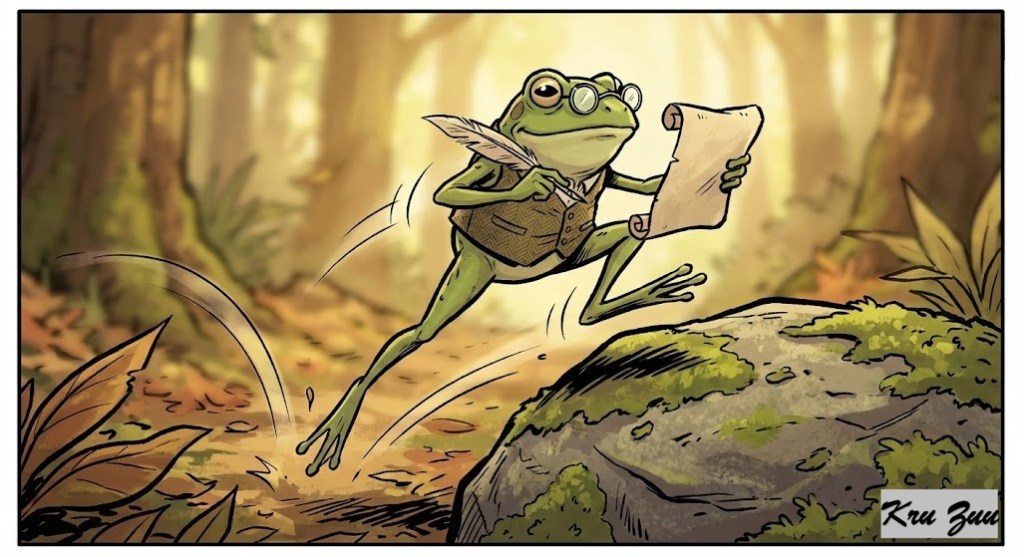
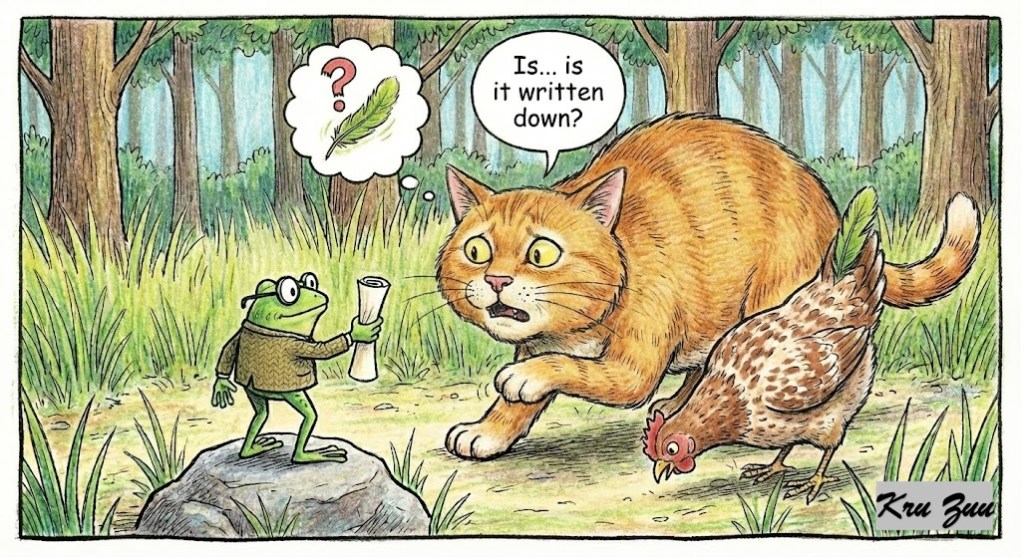
    Professor Croak (The Frog): Small, wears glasses, loves to read. Represents The Pen. 🐸


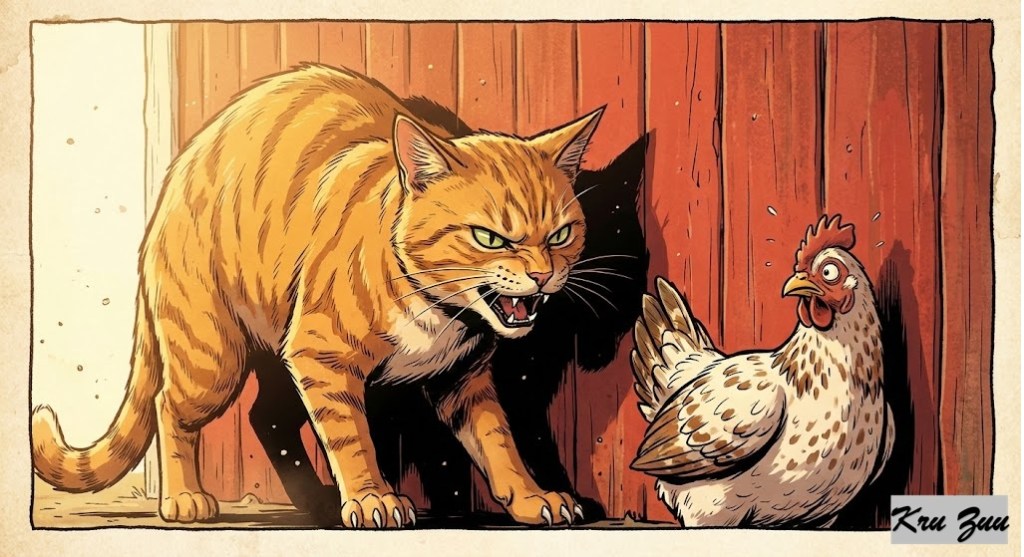
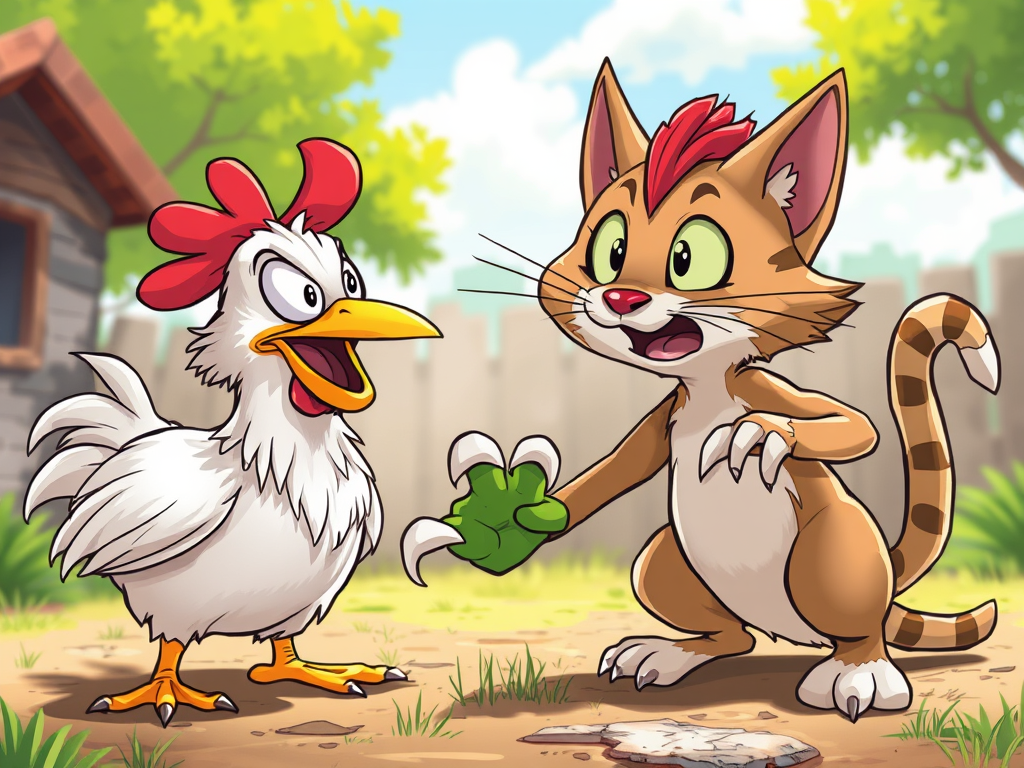
    The Plot: It was a sunny Tuesday. Leo the Cat cornered Bella the Chicken against the barn wall. “I am going to eat you!” Leo hissed, showing his sharp claws. “I am stronger than you. I am faster than you. Physical force wins!”


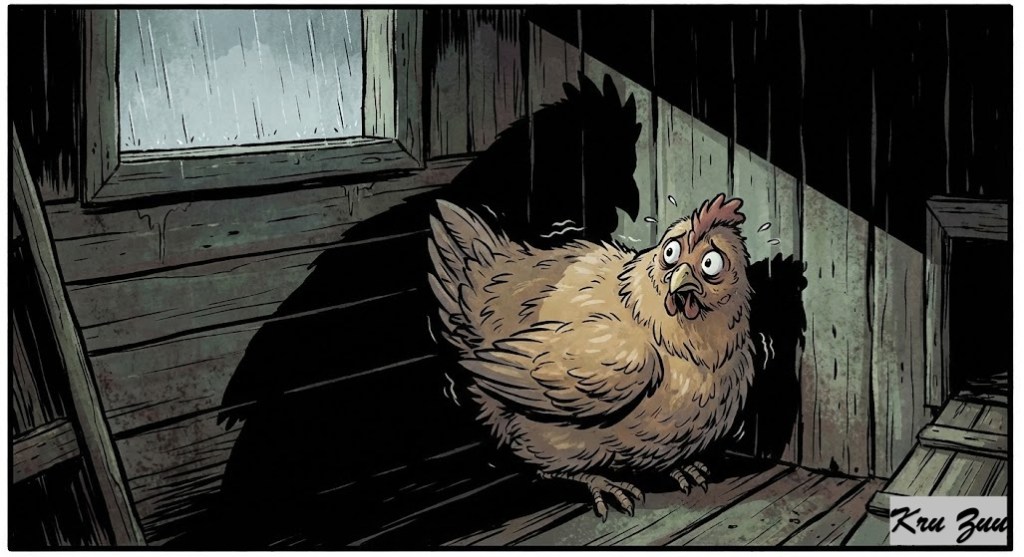
    Bella trembled. She couldn’t fight. She was doomed.


    Suddenly, Professor Croak hopped onto a rock. He didn’t have claws. He didn’t have muscles. He held a piece of paper and a pen.


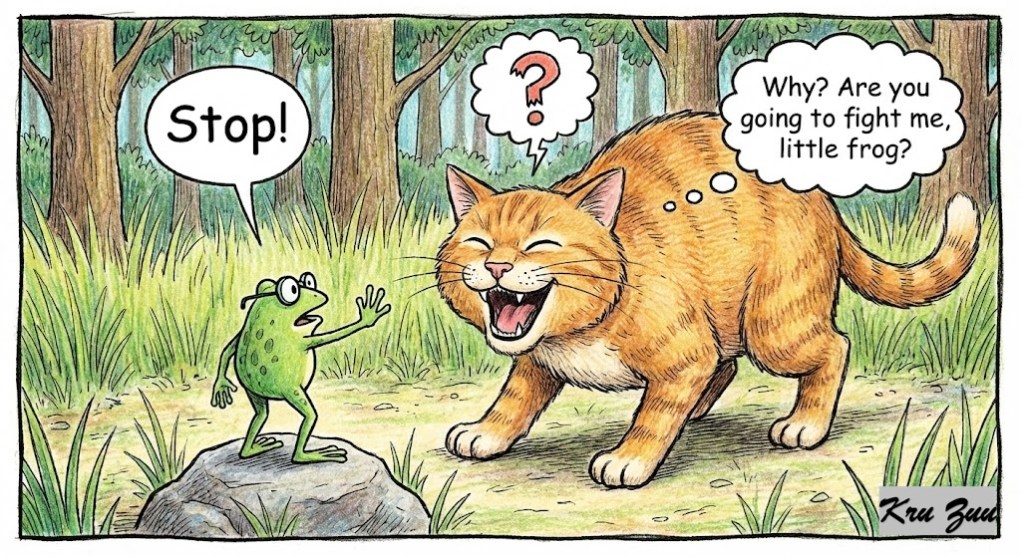
    “Stop!” croaked the Professor. “Why?” laughed Leo. “Are you going to fight me, little frog?”


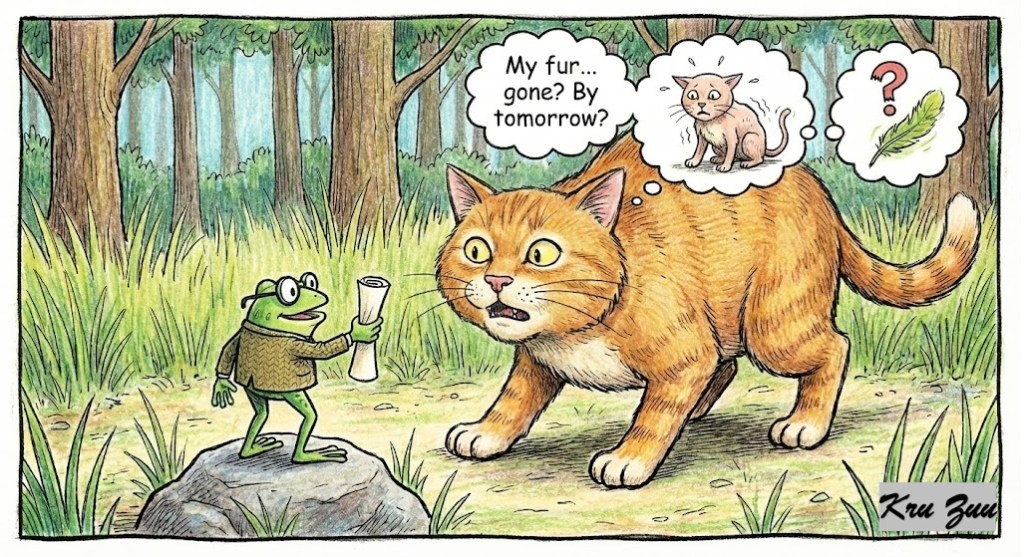
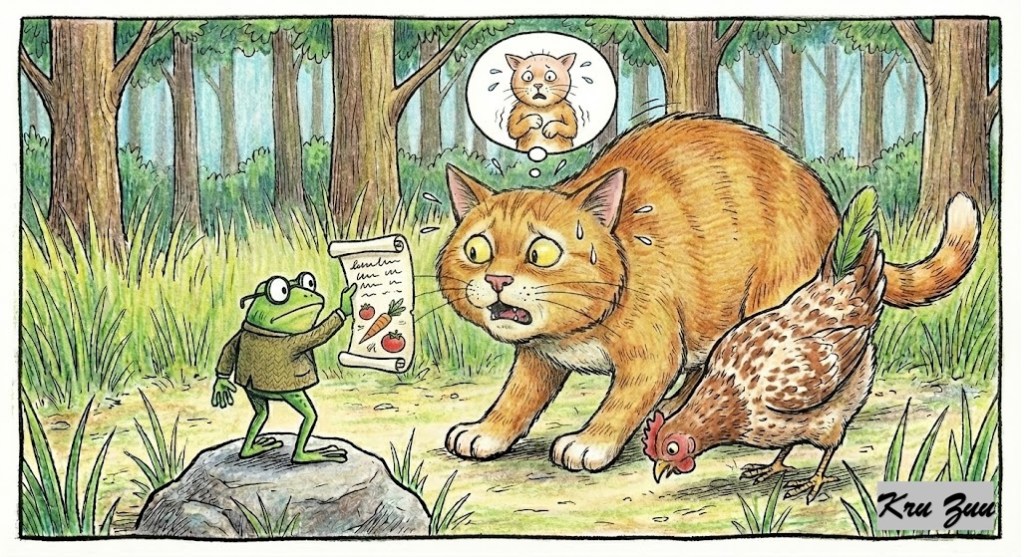
    “No,” said Professor Croak calmly. “But I just wrote a letter to the Farmer. In this letter, I explained that Bella has the ‘Green-Feather Flu’. It is very contagious to cats. If you bite her, your beautiful fur will fall out by tomorrow morning.”


    Leo froze. He looked at Bella. She looked fine, but… was that a green feather? “Is… is it written down?” Leo asked nervously.


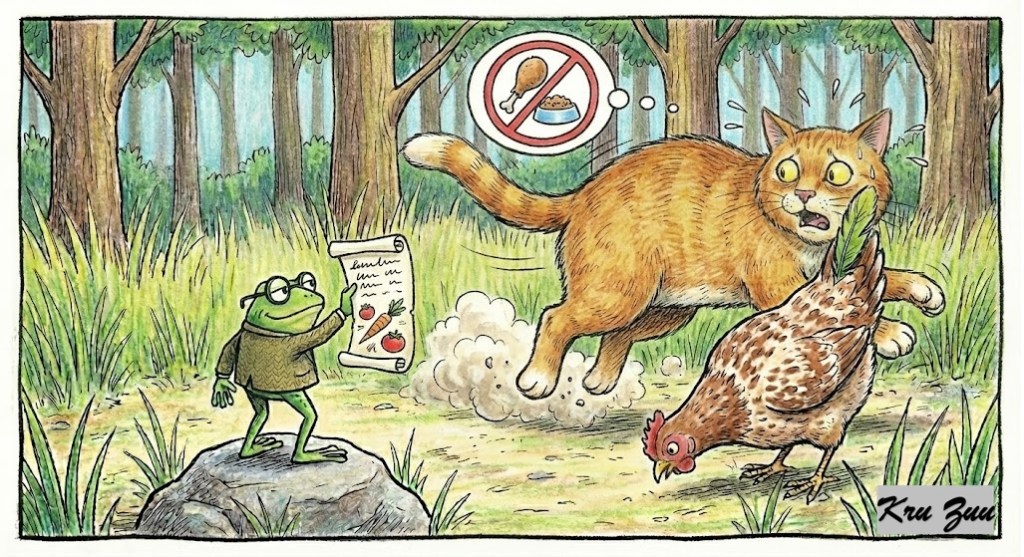
    “Yes,” said the Frog, holding up the paper (which was actually just a grocery list, but Leo couldn’t read). “It is documented. The Pen has spoken.”


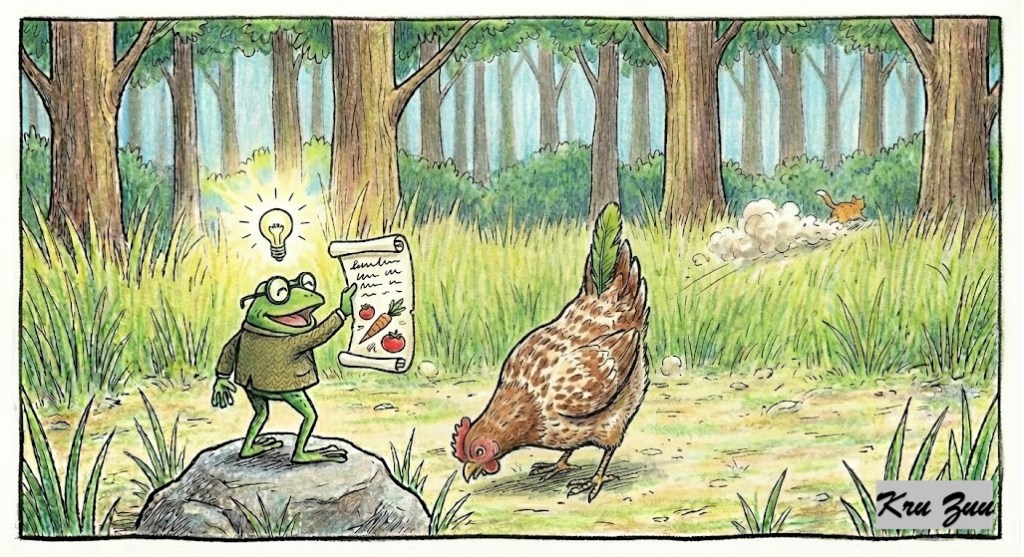
    Leo panicked. He valued his fur more than his dinner. “I’m not hungry anyway!” he shouted and ran away.


    The Moral: Professor Croak couldn’t fight the Cat (The Sword). But using his intelligence and a “written” lie (The Pen), he saved the day. Smart beats Strong.

    🎓 Lesson for English Learners


    Words unlock doors that kicks cannot.


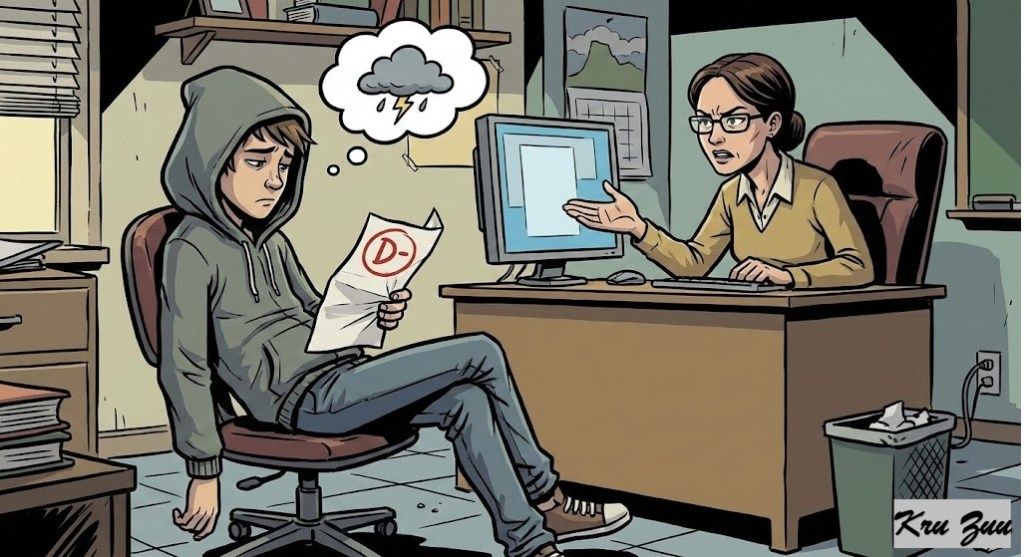
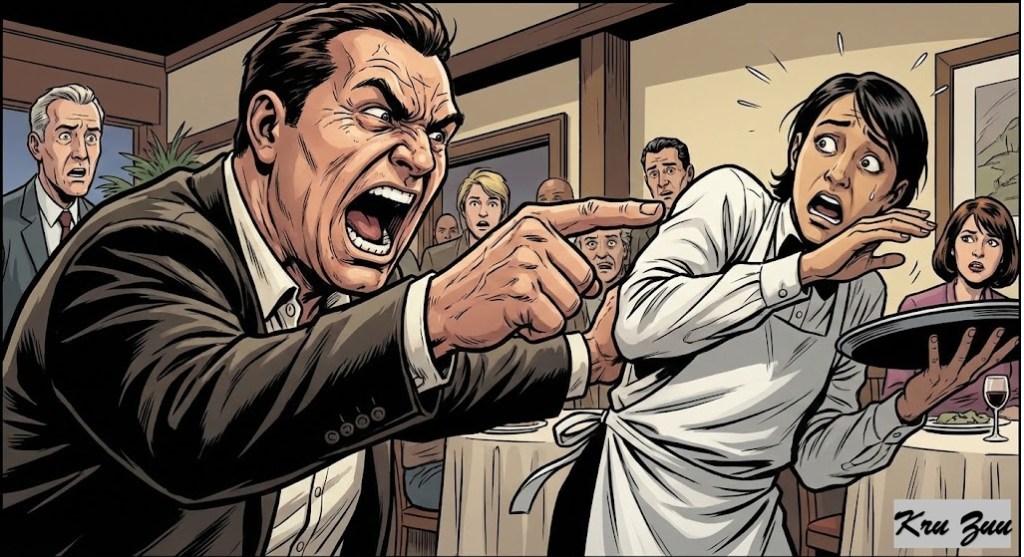
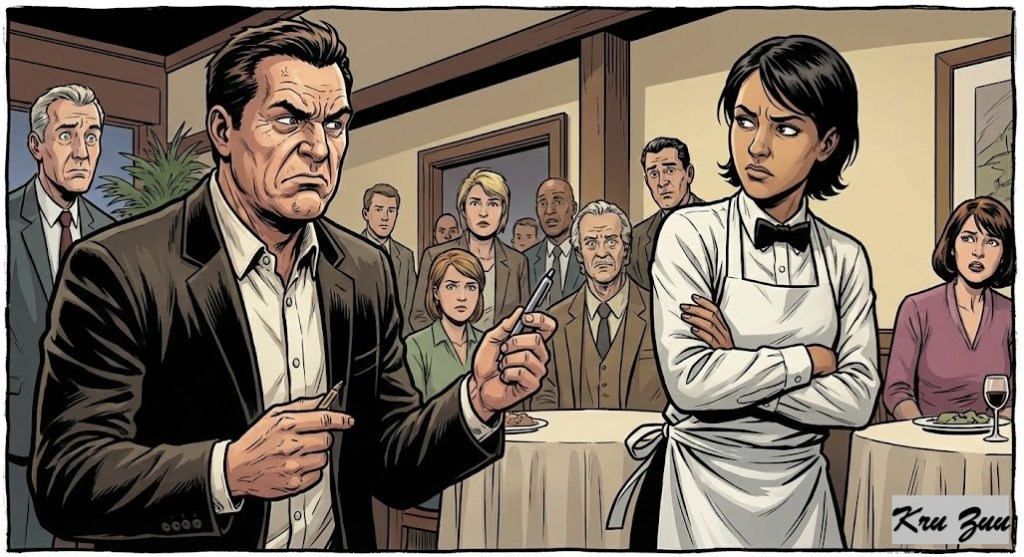
    Situation: You are unhappy with a grade or a service. The “Sword”

    Approach: You shout at the teacher or the waiter.

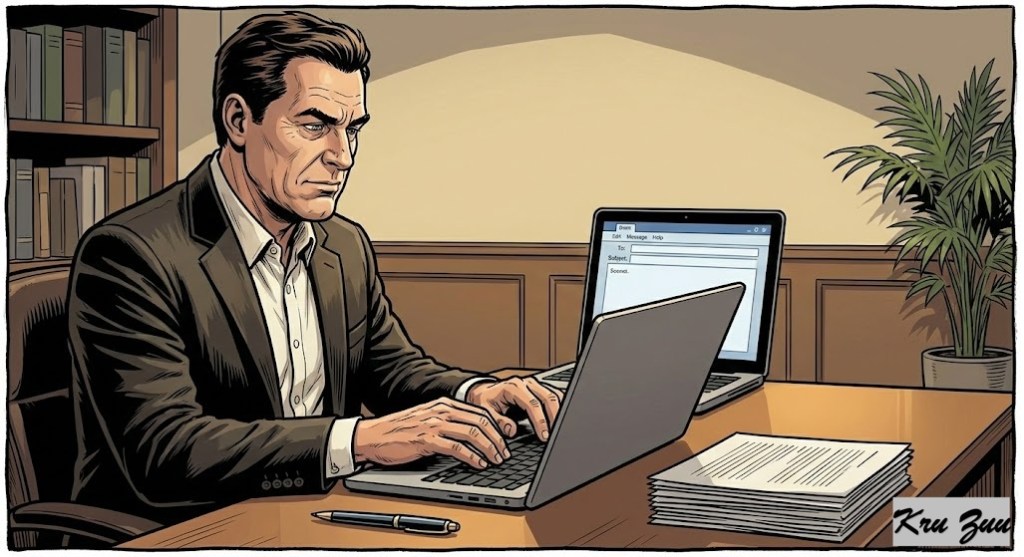
    Result? They get defensive. You get nothing. The “Pen”

    Approach: You write a polite, logical email explaining your point using the correct vocabulary.

    Result? They listen. They respect you. You get what you want.


    Your Goal: Don’t just learn English to order coffee. Learn English to persuade, to negotiate, and to tell your story. That is real power.


    💬 Your Turn: The Writer’s Challenge 🚀


    History is full of speeches and letters that changed the world.


    The Challenge:
    Think of a problem you have right now (maybe a noisy neighbor, or a friend who is angry). Don’t fight. Write a 3-sentence message to solve it politely.


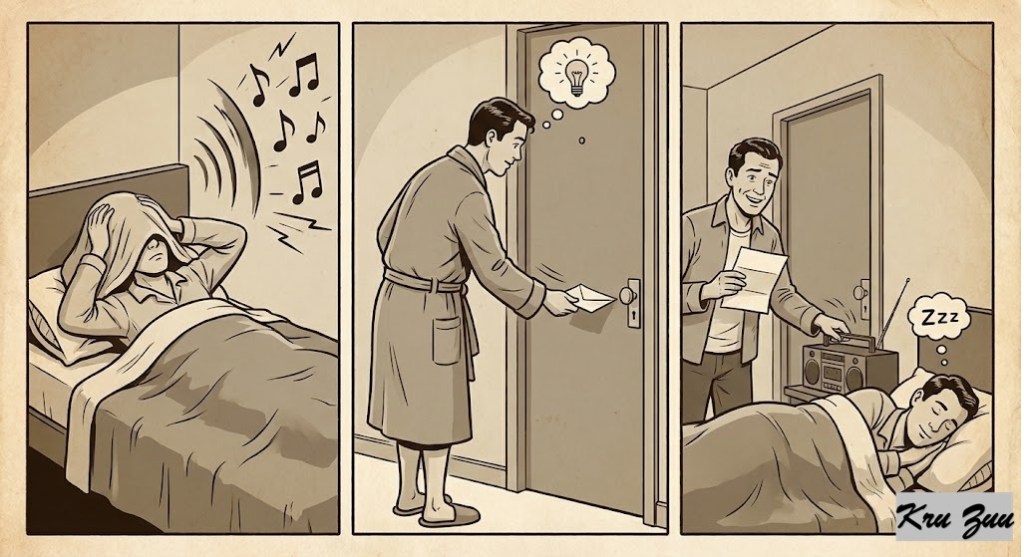
    Example:Instead of: “Shut up!” (Sword) ⚔️ Write: “Hey! I have a big exam tomorrow and the music is a bit loud. Could you please turn it down? Thanks!” (Pen) 🖋️


    Question: When was the last time you used “words” to get out of trouble? Tell us in the comments! 👇

    By Zubeyir YURTKURAN

    https://www.facebook.com/BrainBattleground/

    https://www.facebook.com/zubeyr.yurtkuran/

    https://www.instagram.com/zubeyryurtkuran/
    https://www.youtube.com/@BrainBattleground-b3p

    https://www.instagram.com/brainbattleground/

  • 🥣 The Daily Shield: The Law of Leadership

    🥣 The Daily Shield: The Law of Leadership

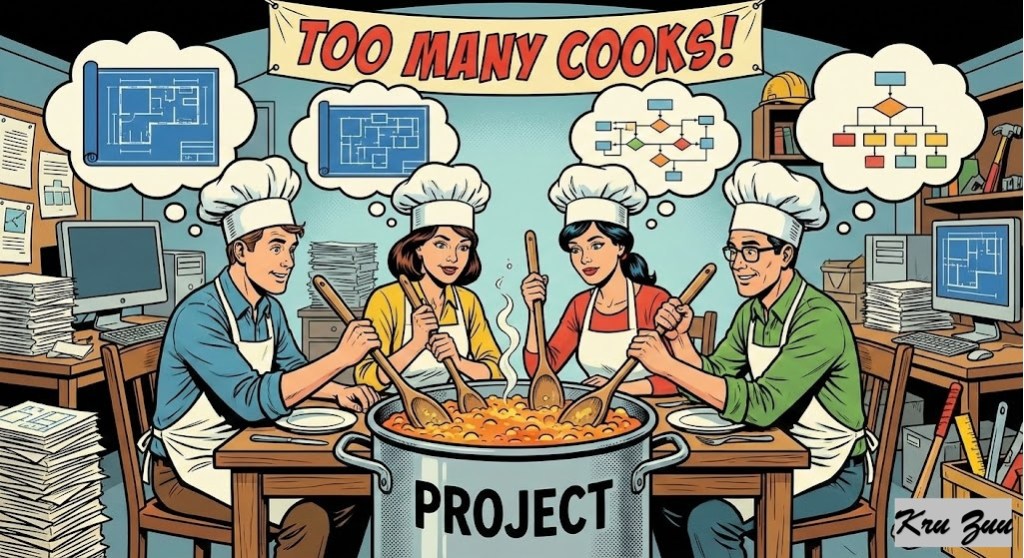
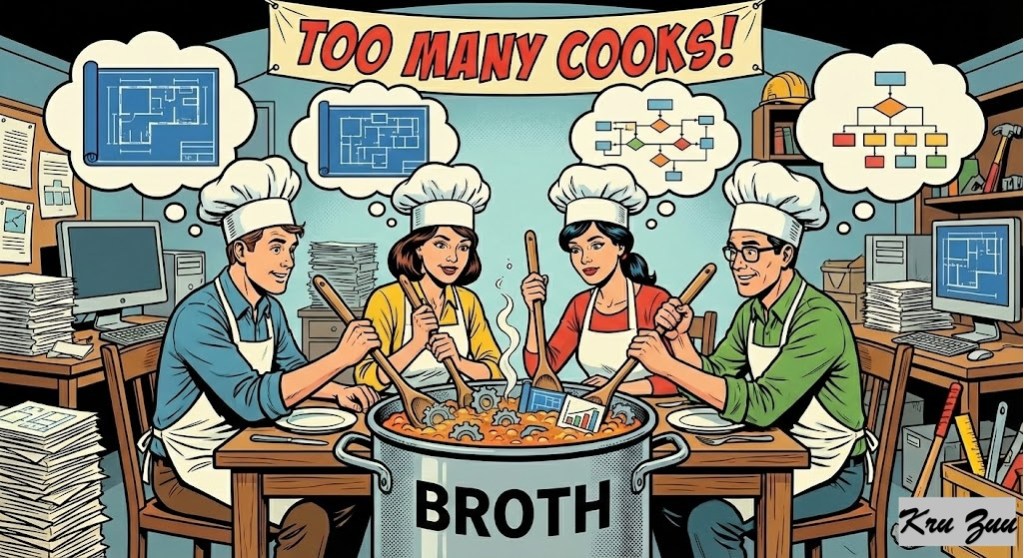
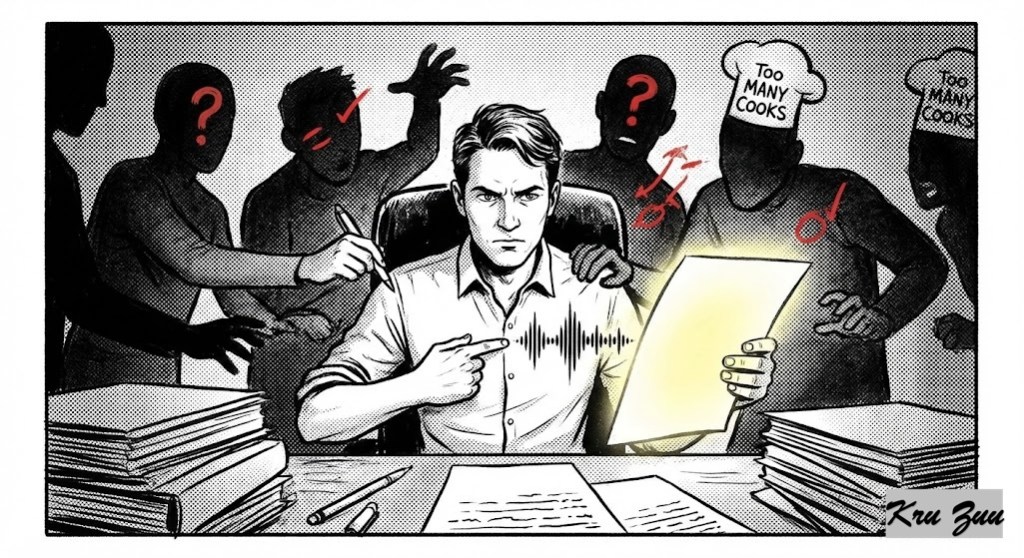
    “Too many cooks spoil the broth.”


    😈 The Villain (The Committee)


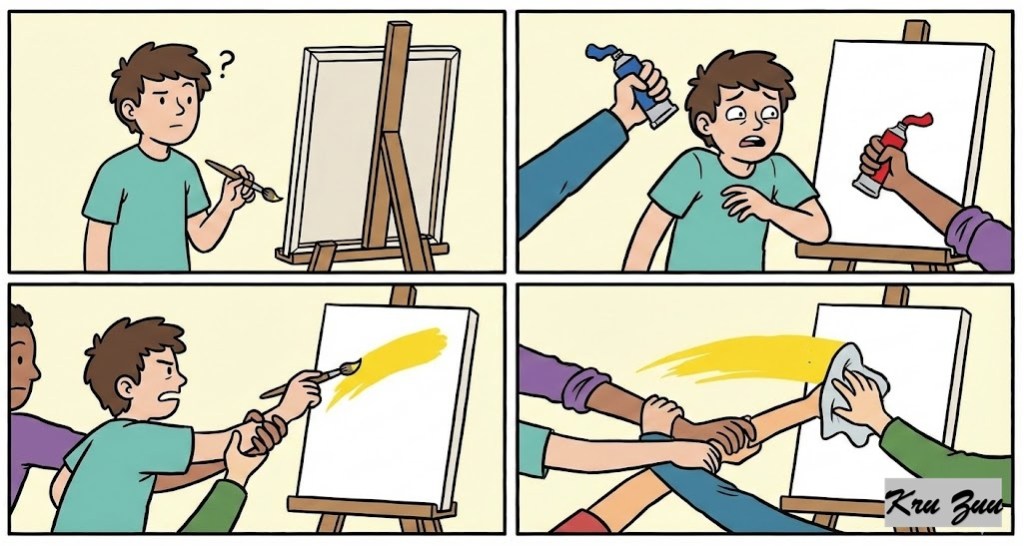
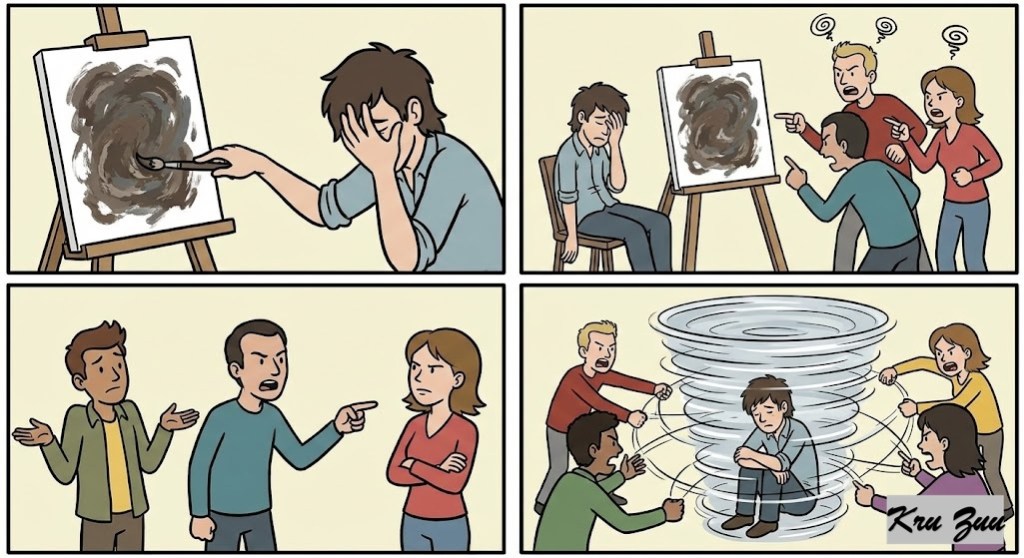
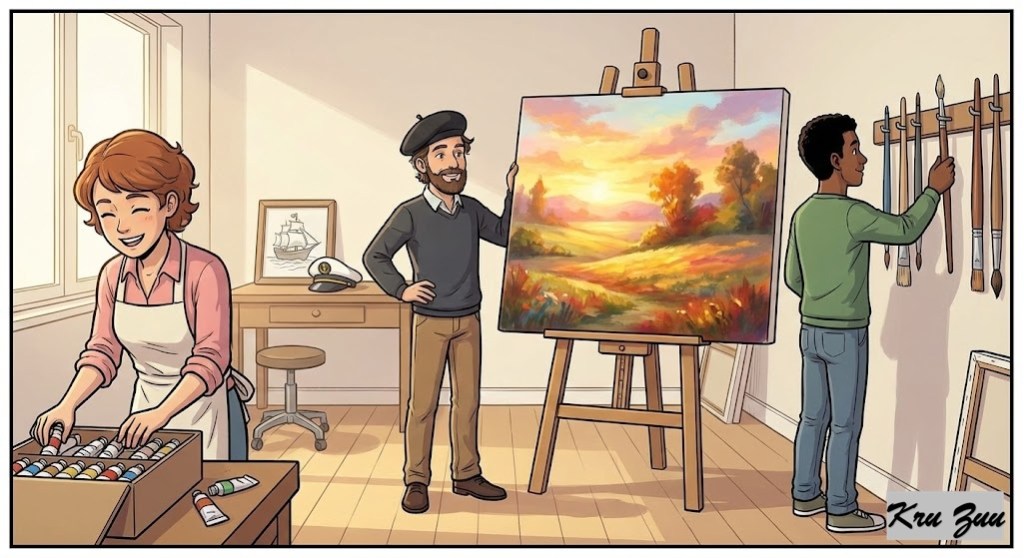
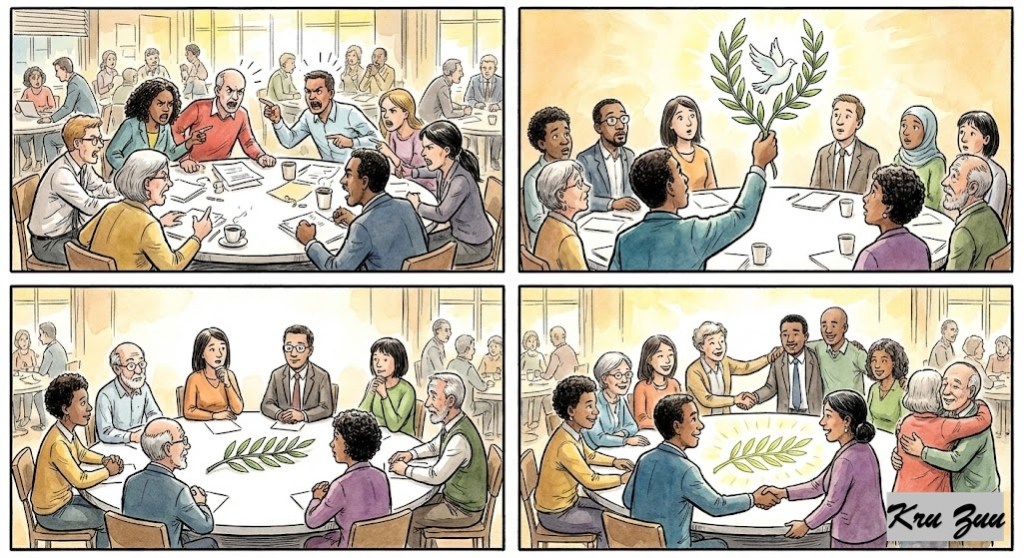
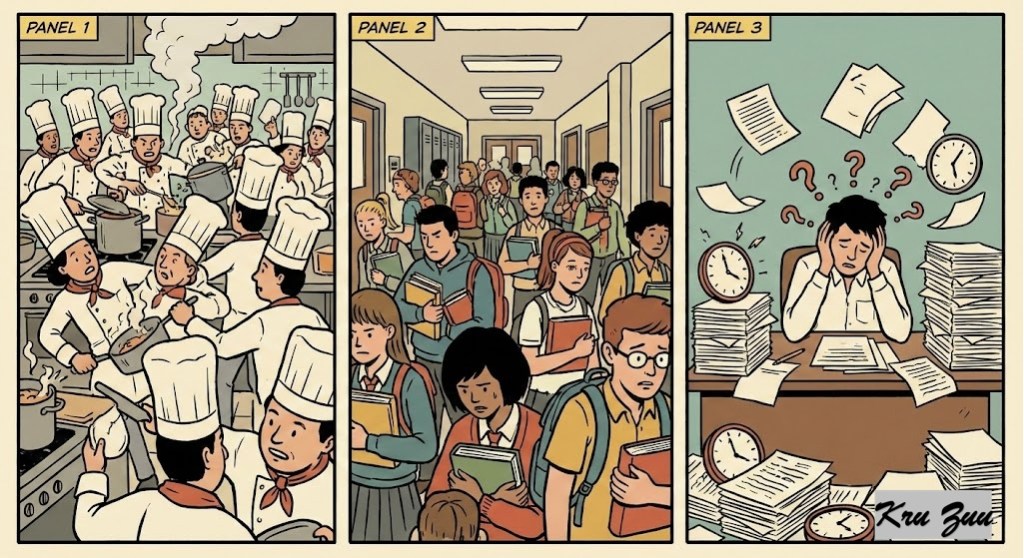
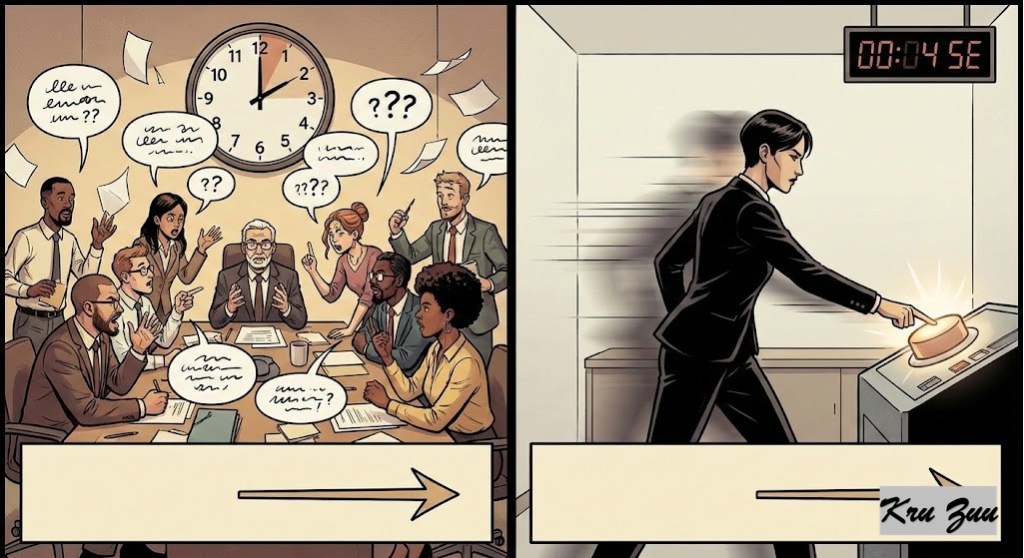
    Imagine you are trying to paint a picture. Someone says, “Use blue!” Another shouts, “No, red is better!” A third person grabs the brush and paints a yellow line. A fourth person erases it. Everyone is shouting. Everyone is touching the canvas.

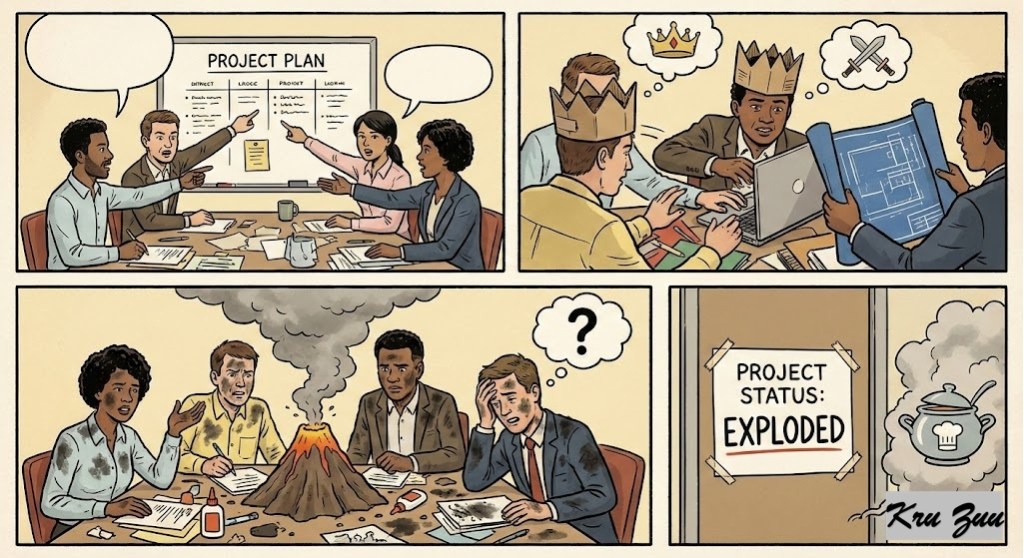
    The Result? You don’t have a masterpiece. You have a brown, muddy mess. Confusion reigns. No one takes responsibility because “everyone” did it. You are trapped in the chaos of Micromanagement. 🌪️


    😇 The Hero (The Captain)


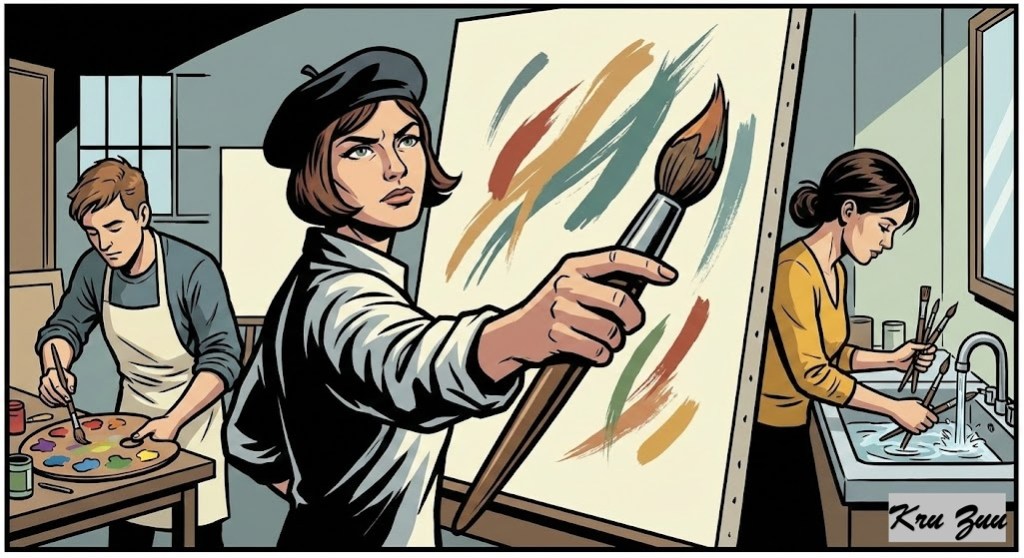
    You have a vision. You listen to advice, but you hold the paintbrush. You assign roles clearly. One person mixes the paint, one person cleans the brushes, but only one person decides where the paint goes.

    The Result? A clear, beautiful image. The work flows smoothly. There is order. There is focus. You understand that a ship with two captains will sink. ⚓


    ⚖️ The Reality
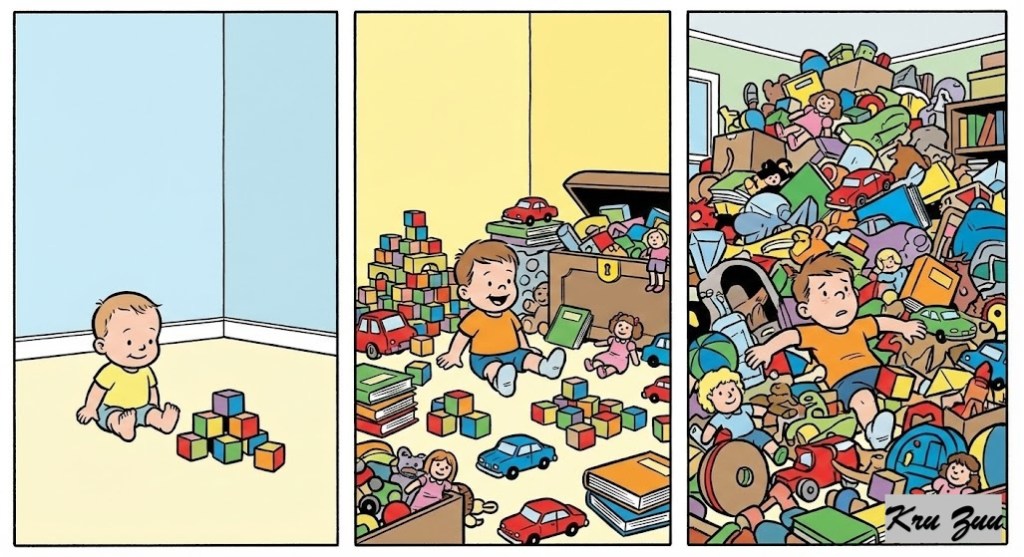
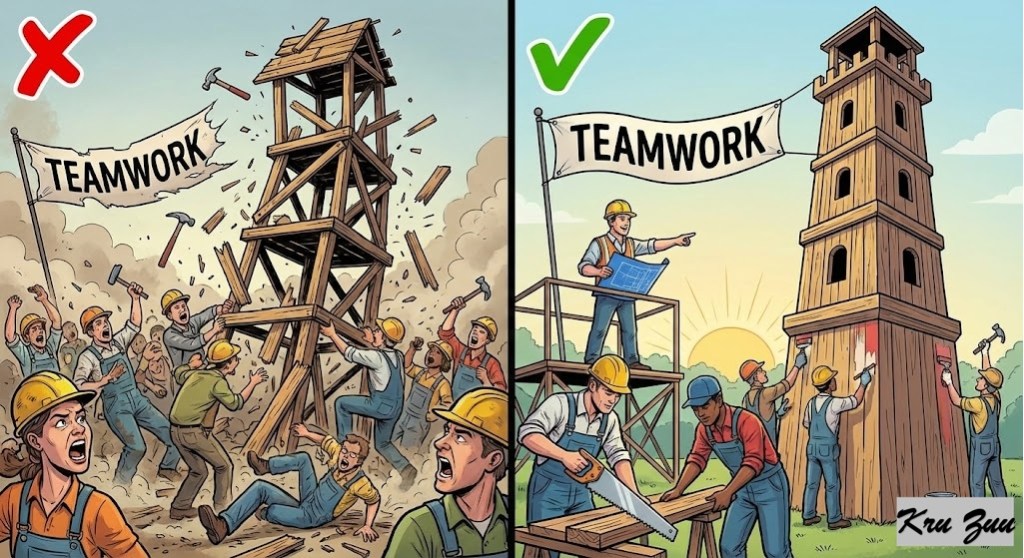
    Collaboration is good. Chaos is bad. We are taught that “teamwork makes the dream work.” This is true. But teamwork without a leader is just a crowd. If everyone is in charge, nobody is in charge.


    💎 The Secret

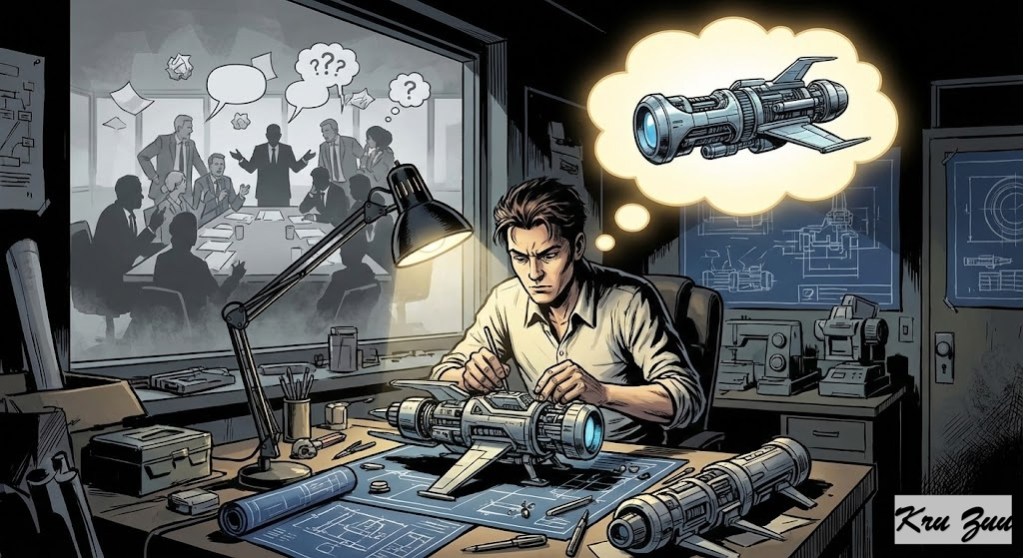
    Great things are not created by committees. They are created by a focused mind (or a small, focused team) with a single vision.

    🧐 The Anatomy of the Proverb


    This phrase is about the danger of too many opinions.


    Cooks (Noun): People who prepare food (in this context, people trying to control a project). 👨‍🍳


    Spoil (Verb): To ruin; to destroy the value or quality of something. 🤢


    Broth (Noun): A thin soup made by boiling meat or vegetables. (A metaphor for the “Project”). 🍲


    Simpler Version: Too many leaders ruin the plan.


    📚 Vocabulary Vault


    Chaos (Noun):
    Complete disorder and confusion.


    Micromanage (Verb): To control every small part of a project (very annoying!).


    Consensus (Noun): General agreement. (Sometimes impossible to reach!).


    Autonomy (Noun): The right or condition of self-government; freedom to act.


    Vision (Noun): The ability to think about or plan the future with imagination. 👁️


    🧠 Grammar Focus: Quantifiers (Countable vs. Uncountable)


    This proverb teaches us a very important grammar rule!


    “Too Many” (For Countable Nouns) We use “Many” for things we can count (1, 2, 3…).


    Too many cooks.


    Too many students.


    Too many problems.


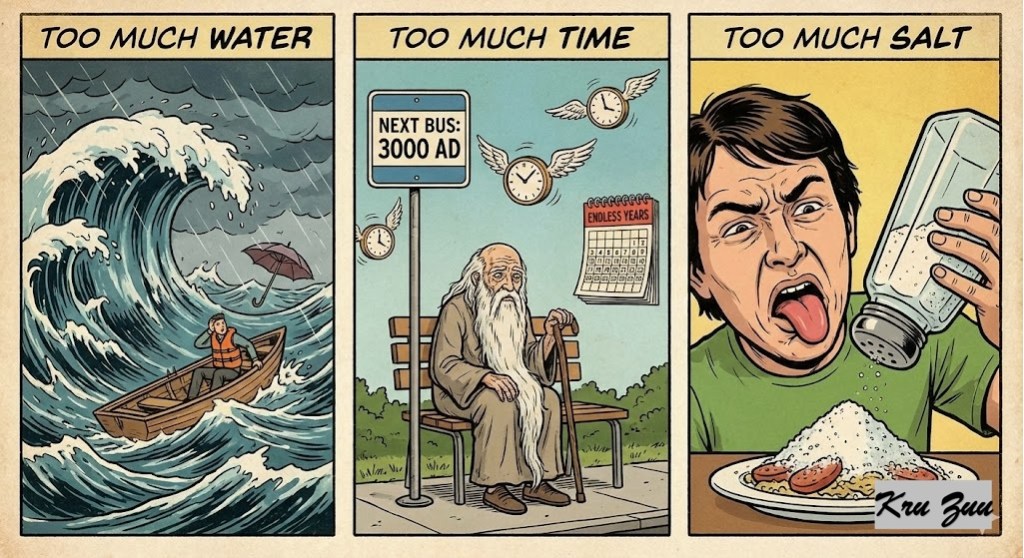
    “Too Much” (For Uncountable Nouns) We use “Much” for things we generally cannot count (liquids, concepts).


    Too much water.


    Too much time.


    Too much salt.


    Quiz: Do we say “Too many homework” or “Too much homework”? (Answer: Too much! Homework is uncountable.)

    📜 History: Origin and Spread


    This is a universal truth found in almost every culture.


    The Origin

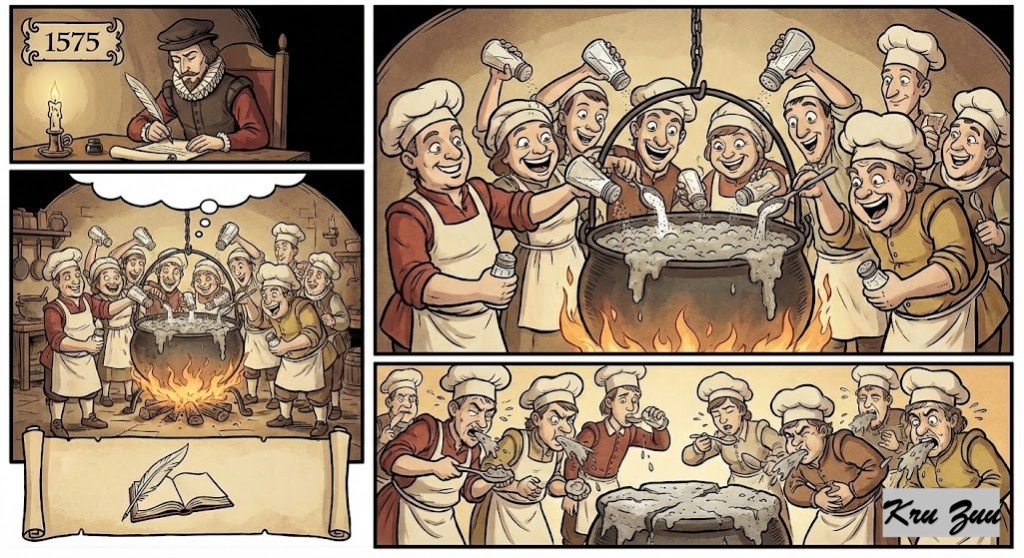
    It first appeared in English writings in 1575 by George Gascoigne. It was originally about actual cooking! If everyone adds salt, the soup becomes inedible.


    Global Cousins
    🇹🇷 Turkish:
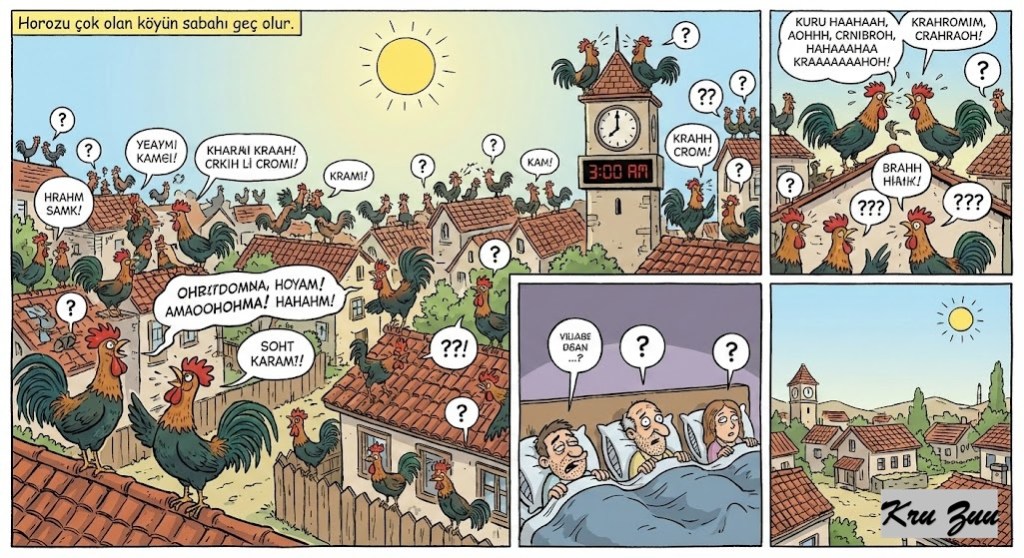
    “Horozu çok olan köyün sabahı geç olur.” (The village with too many roosters has a late morning.) — Because they can’t agree on when to crow!


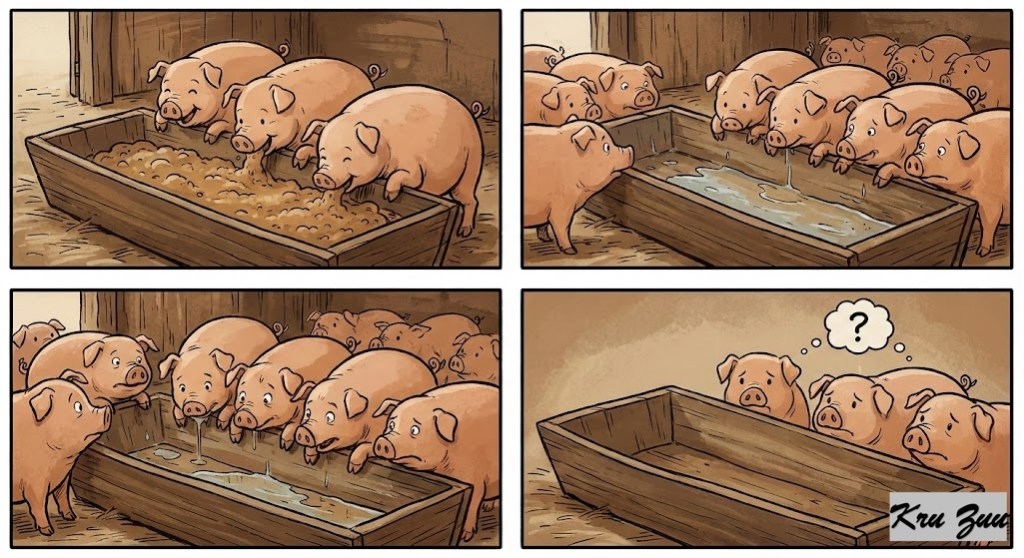
    🇳🇱 Dutch:“Veel varkens maken de spoeling dun.” (Many pigs make the slop thin.)


    🇮🇷 Persian: “Two captains sink the ship.”

    🎯 Impact on Life: The Pros & Cons


    ✅ The Pros (Ownership):


    Speed:
    One decision-maker moves faster than a group debating for hours.


    Clarity: Everyone knows exactly what the goal is.


    ❌ The Cons (The Ego Trap):


    Arrogance:
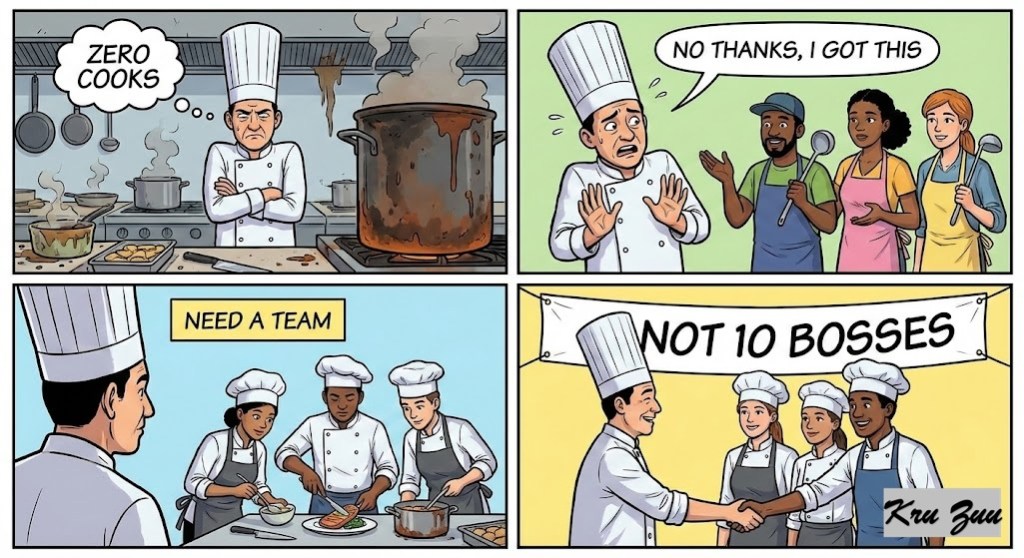
    “Too many cooks” is bad, but “Zero cooks” is also bad. Don’t reject help. You still need a team; you just don’t need 10 bosses.

    🎭 Short Story: The “Perfect” Stew


    Let’s visit the Animal Kingdom Kitchen to see this proverb in action.


    🌟 The Setup

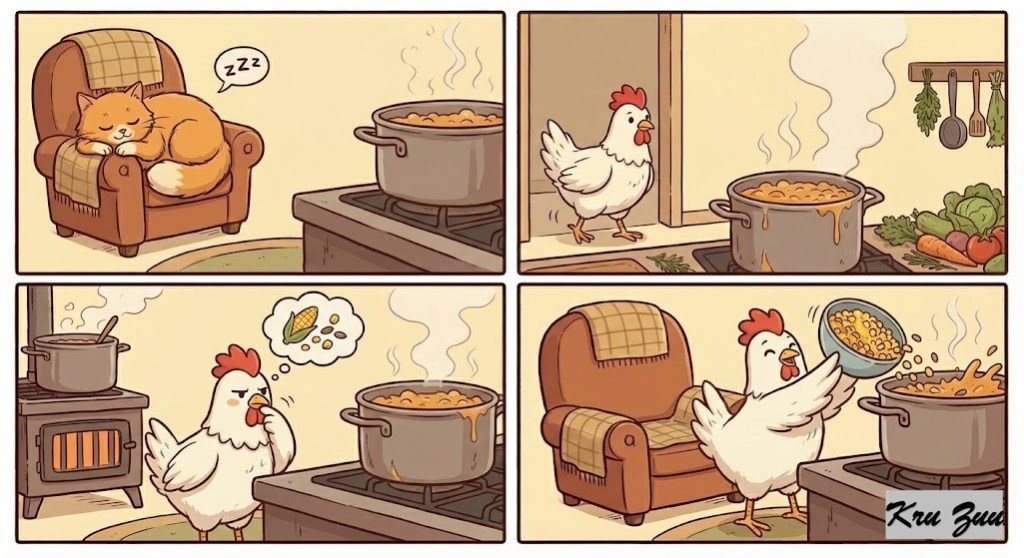
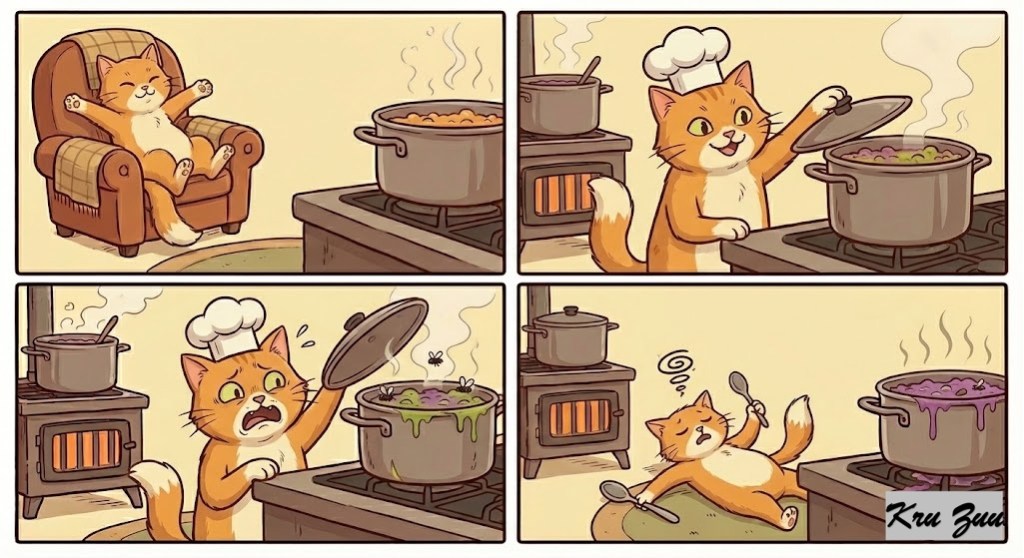
    Chef Whiskers (The Cat) 🐱 is famous for his delicious fish stew. Today is the Grand Feast. He starts the pot with fresh water and perfect fish. It smells amazing. “Perfect,” says Whiskers. “I will go take a nap while it boils.”


    The Conflict: While Whiskers is sleeping, Clucky (The Chicken) 🐔 walks into the kitchen. Clucky sniffs the pot. “Hmm. Too plain. You know what this needs? Corn. Chickens love corn!” Splash! Clucky dumps a bowl of dry corn and seeds into the soup and leaves.


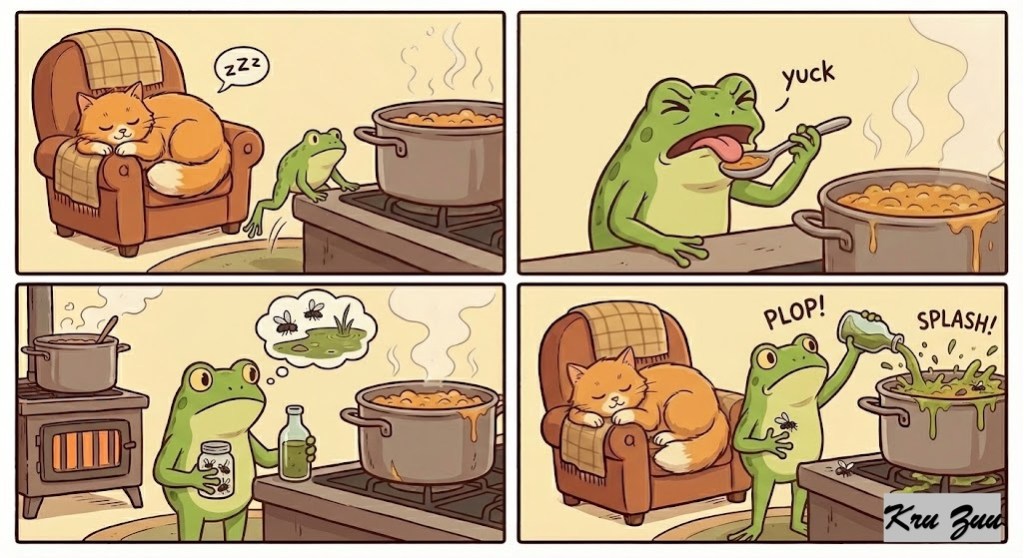
    Five minutes later, Jumper (The Frog) 🐸 hops onto the counter. Jumper tastes the soup. “Yuck! Too crunchy. It needs flavor. It needs… Dead Flies and Swamp Water!” Plop! Splash! Jumper throws in his ‘special ingredients’ and hops away.


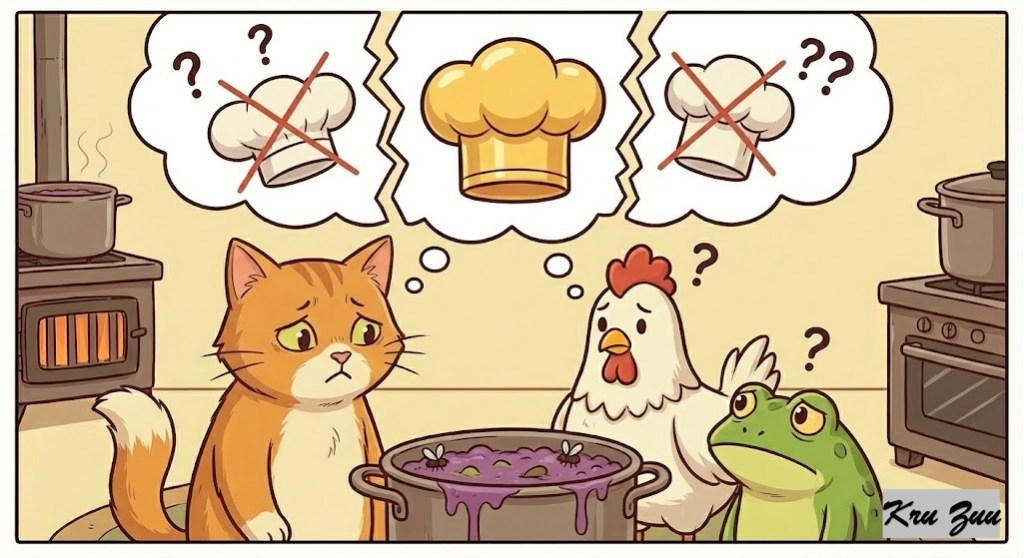
    The Disaster: Chef Whiskers wakes up. He is ready to serve the King. He opens the lid. The soup is purple. It has floating flies. It smells like old socks. He tastes one spoon… and faints. 😵


    The Moral: The Cat, the Chicken, and the Frog were all trying to help. But because they didn’t communicate and all tried to be the “Chef,” they created a monster. One Head Chef is better than three helpful friends.

    🎓 Lesson for English Learners


    Stop asking everyone!


    Situation

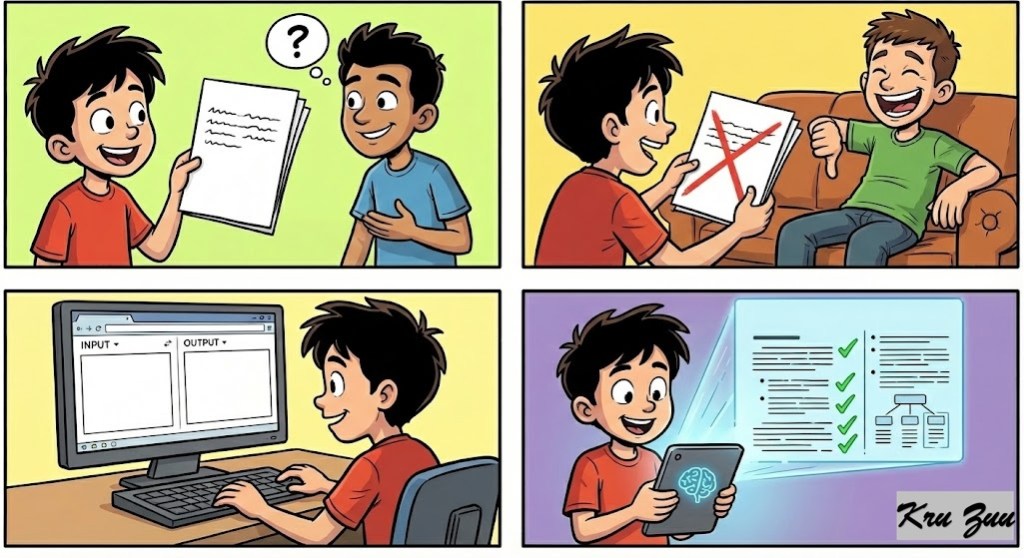
    You write an English essay. You show it to your friend, your brother, Google Translate, and an AI.


    The Problem

    Your friend changes a word. Google changes the grammar. The AI rewrites the tone.


    The Result

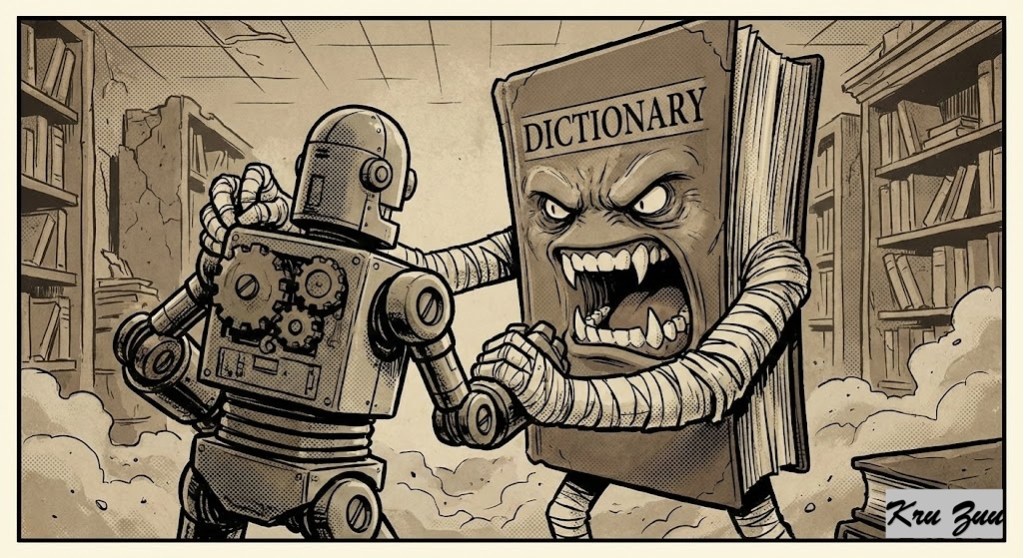
    Your essay sounds like a robot fighting a dictionary. It has no “voice.”


    The Solution

    Trust your teacher or trust one reliable source. Don’t let too many “cooks” edit your writing until it loses its meaning. Trust your own voice.


    💬 Your Turn: The Group Project 🚀


    We have all been there. Have you ever been in a “Group Project” at school or work where everyone tried to be the boss? What happened? Did you finish the project, or did it explode like Chef Whiskers’ soup?


    Tell us your story in the comments below! 👇

    By Zubeyir YURTKURAN

    https://www.facebook.com/BrainBattleground/

    https://www.facebook.com/zubeyr.yurtkuran/

    https://www.instagram.com/zubeyryurtkuran/
    https://www.youtube.com/@BrainBattleground-b3p

    https://www.instagram.com/brainbattleground/

  • 🌿 The Daily Insight: The Green Grass Trap

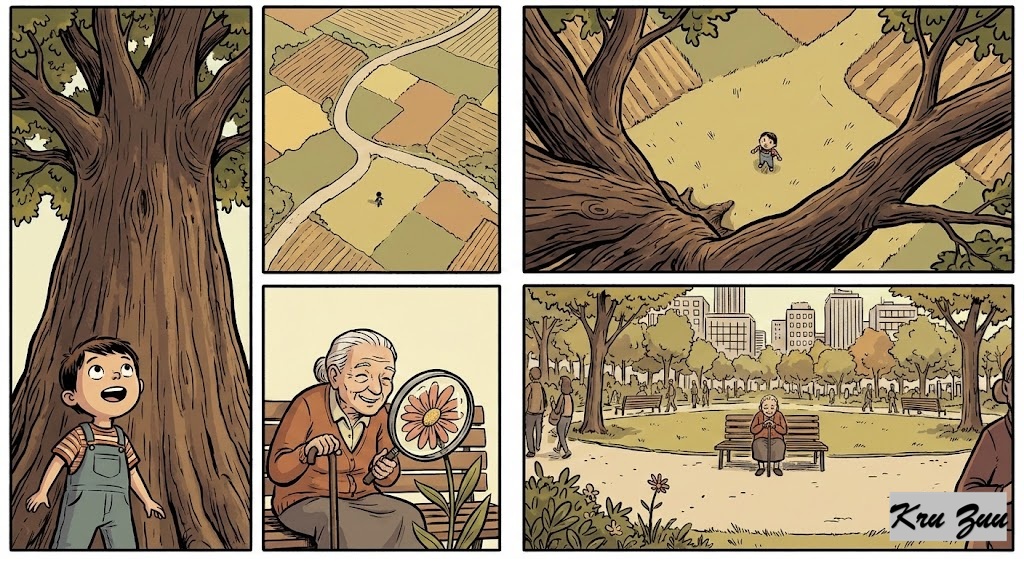
    🌿 The Daily Insight: The Green Grass Trap

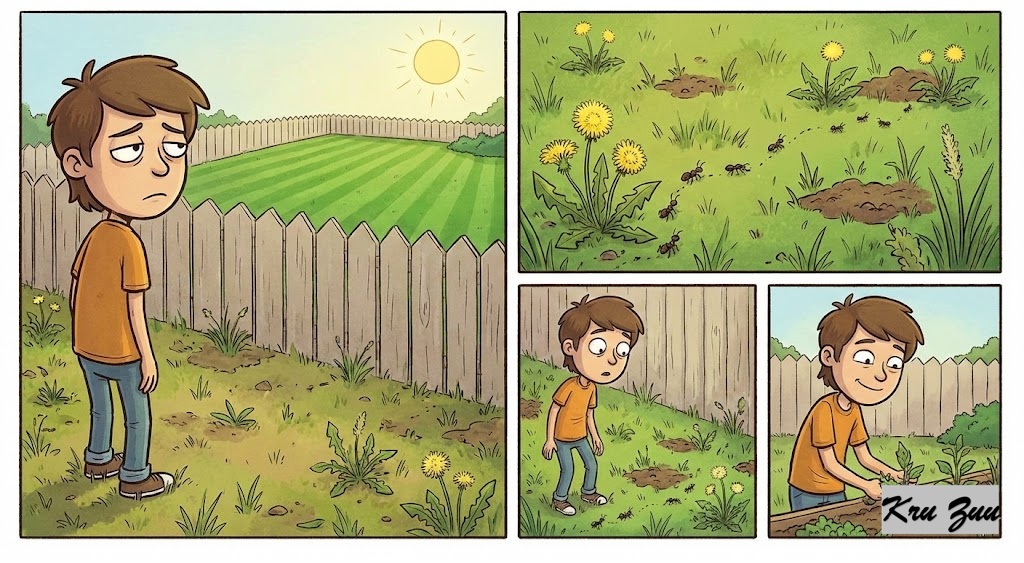
    “The grass is always greener on the other side.”


    😈 The Villain (The Dreamer)

    You look at your life and sigh. You scroll through Instagram and see your friend in Paris. You see your coworker’s new car. You think, “If only I had their life, I would be happy.” You ignore the blessings right in front of your face because you are too busy staring over the fence. You are trapped in the prison of “What If.” 🧟‍♂️


    😇 The Hero (The Gardener)

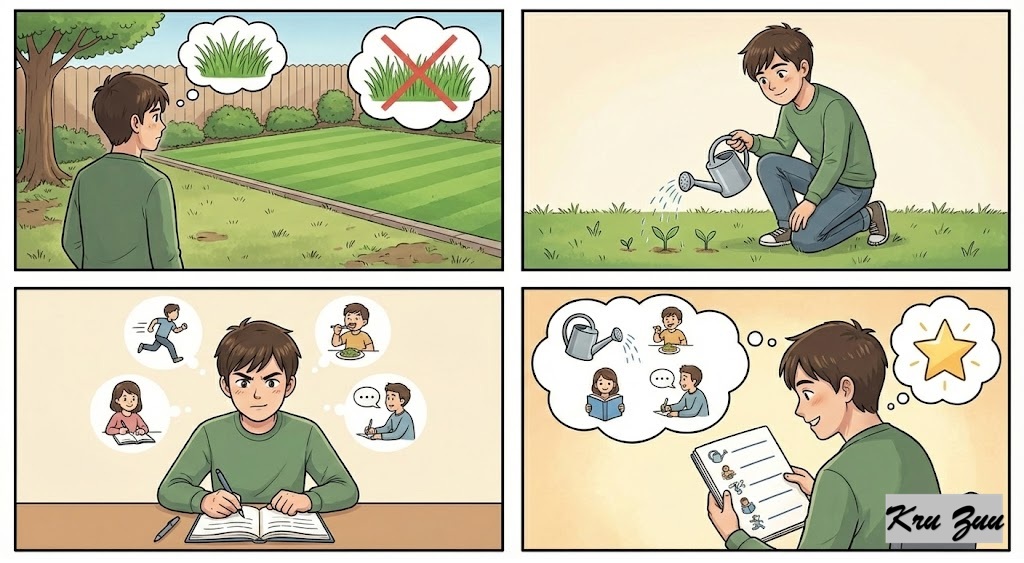
    You admire other people’s success, but you don’t envy it. You know a secret: Grass is greenest where you water it. Instead of staring at your neighbor’s lawn, you pick up a hose and water your own garden. You focus on your own growth. You find joy in what you have today. 🛡️


    ⚖️ The Reality


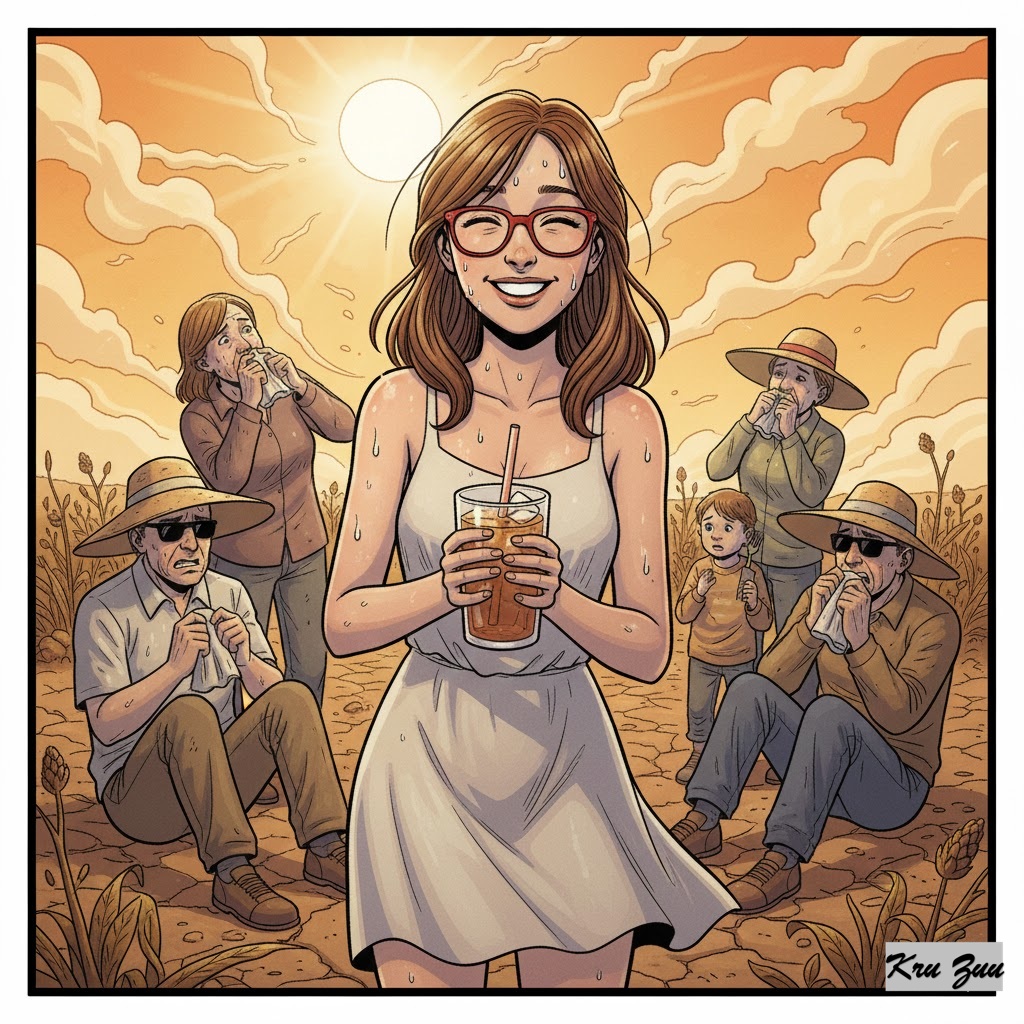
    Comparison is the thief of joy. From a distance, the neighbor’s grass looks perfect. But if you walk over there, you will see weeds, dirt, and ants, just like yours. Every life has problems; you just can’t see them from far away.


    💎 The Secret

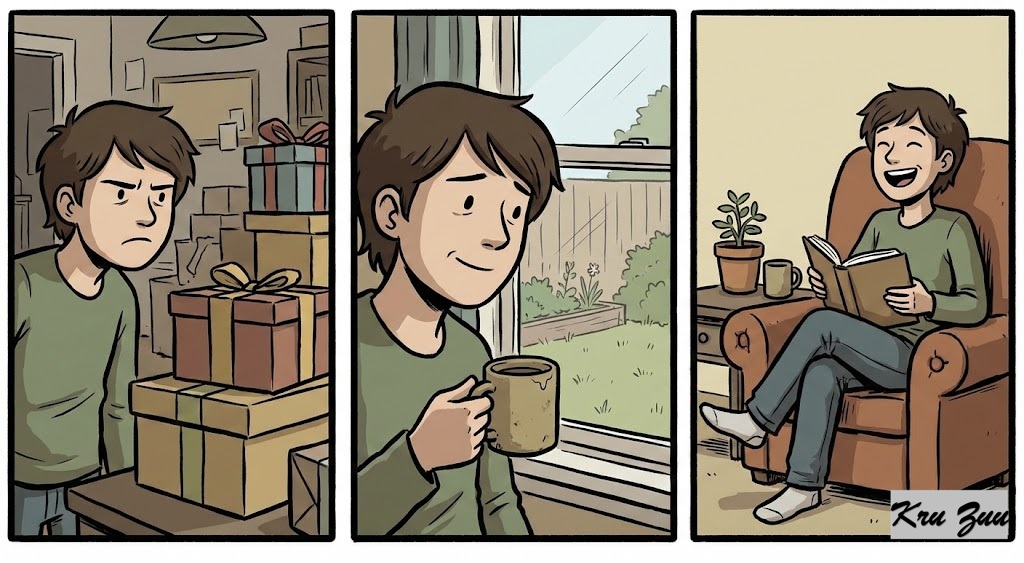
    Happiness is not about getting what you want. It is about wanting what you have.

    🧐 The Anatomy of the Proverb


    This is the ultimate idiom for dissatisfaction.


    Greener (Comparative Adjective): More green; better; healthier.


    On the other side (Prepositional Phrase): In a different place; in someone else’s situation.


    Simpler Version: We always think other people have it better than us.


    📚 Vocabulary Vault


    Envy (Noun/Verb):
    The feeling of wanting what someone else has. (The green-eyed monster). 😠


    Contentment (Noun): A state of happiness and satisfaction. 😌


    Perspective (Noun): A particular attitude toward or way of regarding something; a point of view.


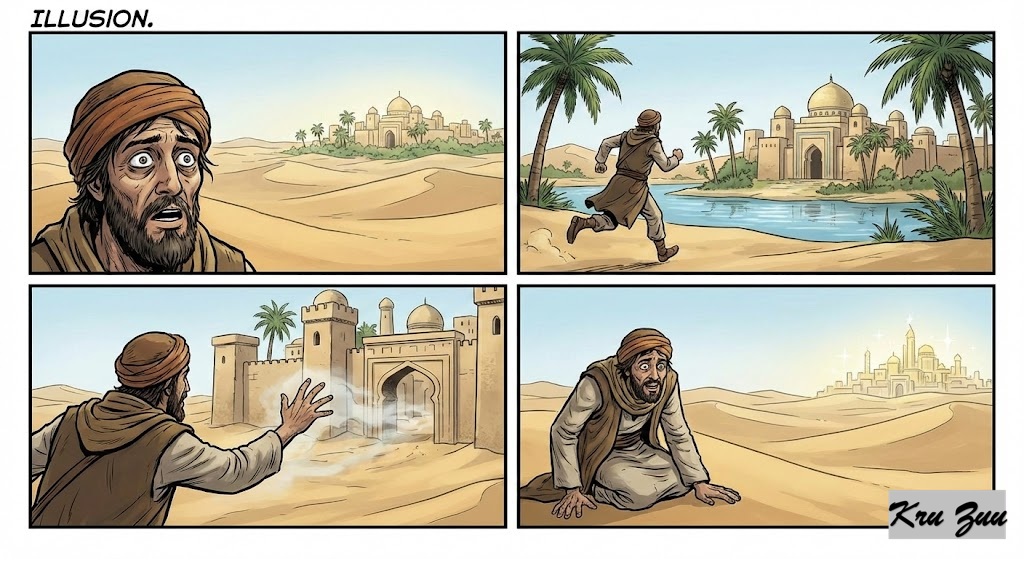
    Illusion (Noun): A false idea or belief. 🪄


    Appreciate (Verb): To recognize the full worth of something.


    🧠 Grammar Focus: Comparatives


    This proverb uses the Comparative Form to show the difference between two things.


    The Rule (Short Adjectives): Add -er to the end of the adjective.


    Green ➡️ Greener
    Fast ➡️ Faster
    Rich ➡️ Richer


    The Structure: [Subject A] is [Adjective + er] + THAN + [Subject B].


    My neighbor is richer than me.


    Summer is hotter than winter.

    📜 History & Global Cousins


    This idea is ancient because human jealousy is ancient!


    The Origin

    The Roman poet Ovid (43 B.C.) wrote about this concept: “The harvest is always more fruitful in another man’s field.”


    Global Cousins


    🇹🇷 Turkish:
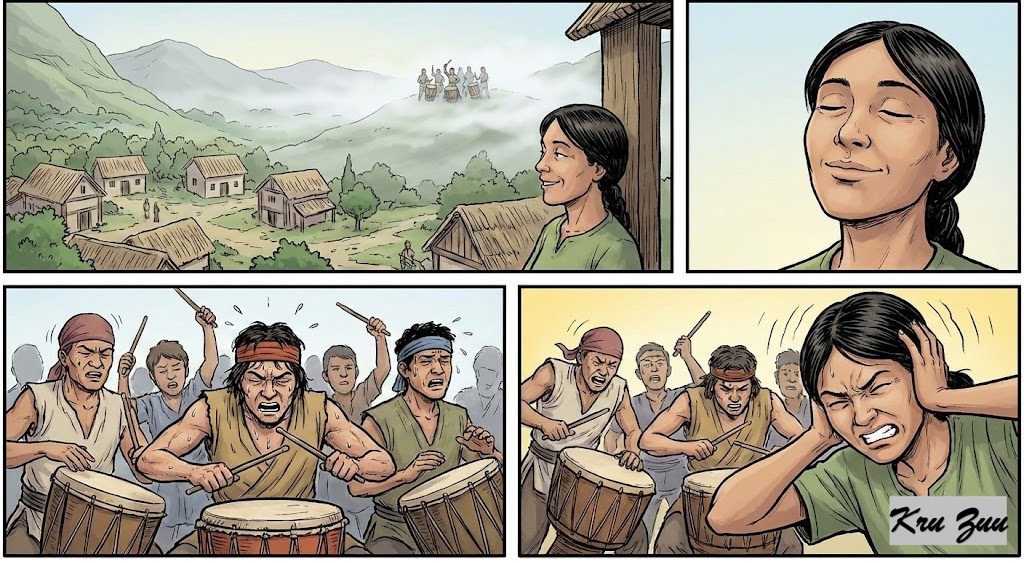
    “Davulun sesi uzaktan hoş gelir.” (The drum sounds nice from afar.)

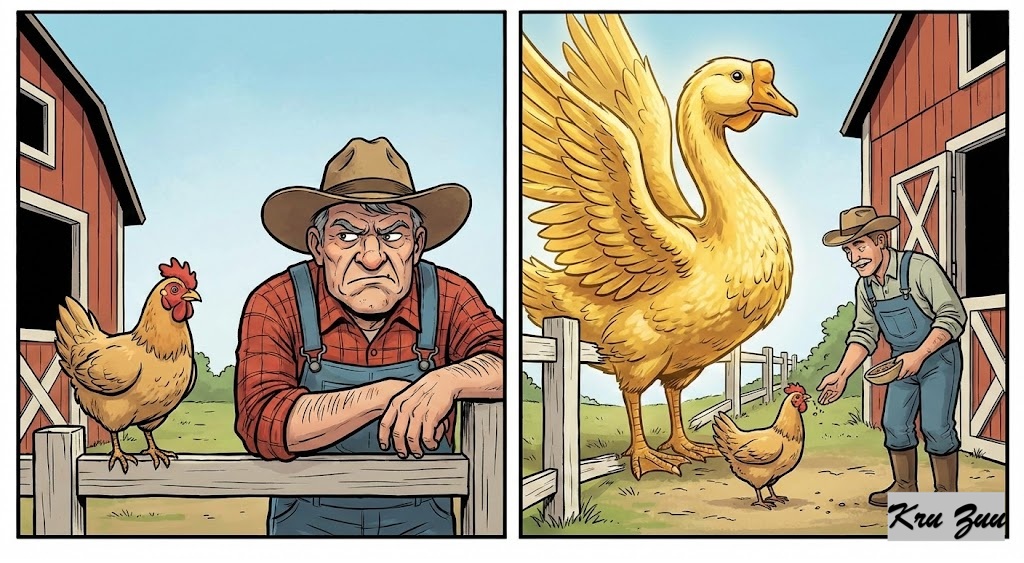
    🇹🇷 Turkish: “Komşunun tavuğu komşuya kaz görünür.” (The neighbor’s chicken looks like a goose to the neighbor.) — Keep this in mind for our story below! 🐔


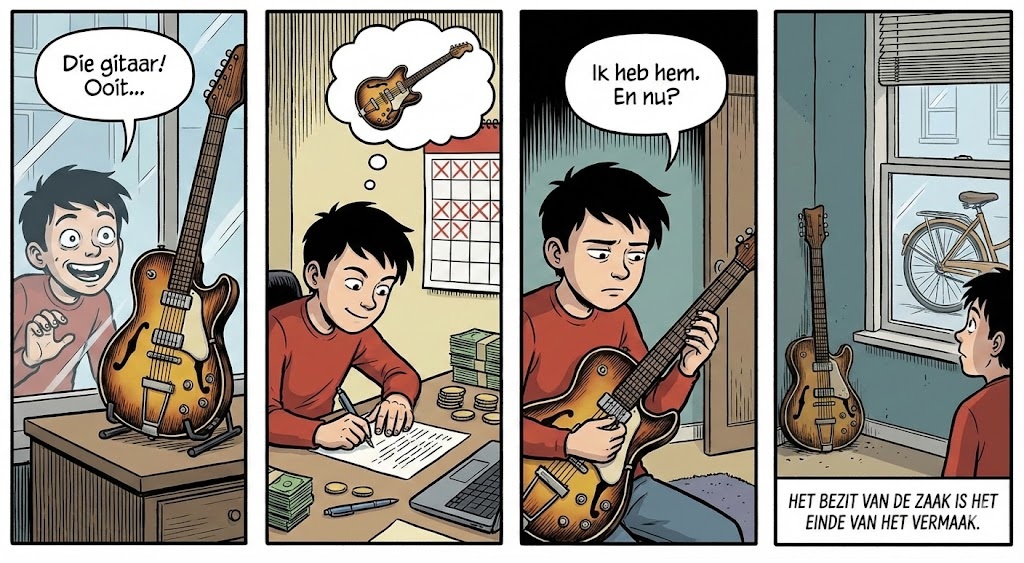
    🇳🇱 Dutch: “Het bezit van de zaak is het einde van het vermaak.” (Possession of the thing is the end of the fun.)

    🎭 Short Story: The Great Animal Swap


    Let’s meet three unhappy animals living on a farm.


    🌟 The Cast


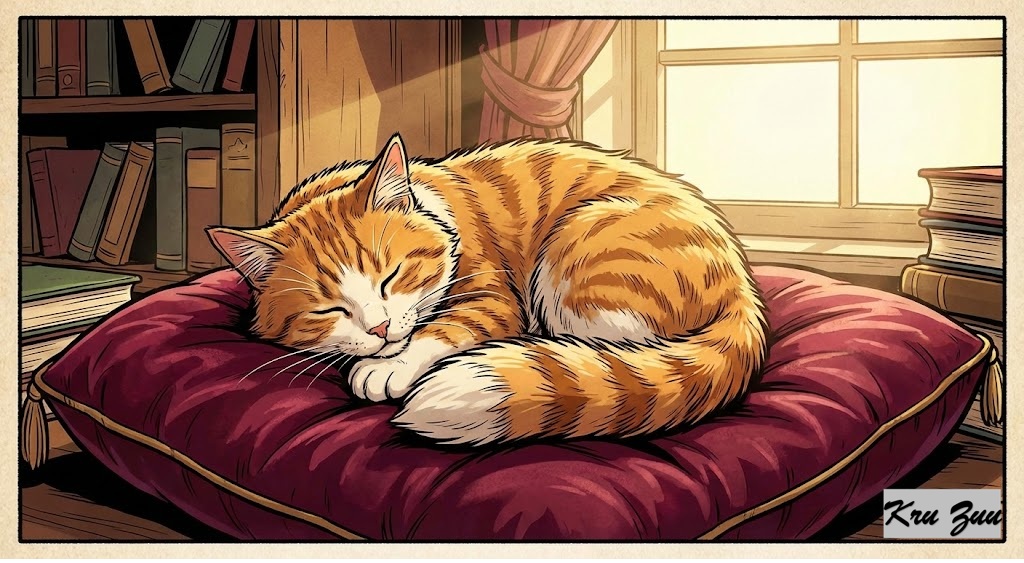
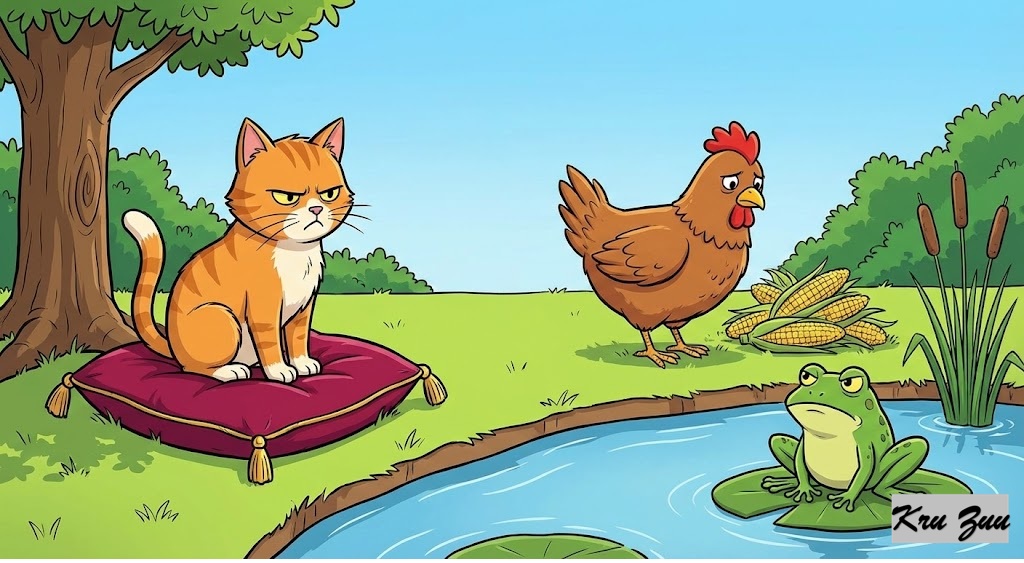
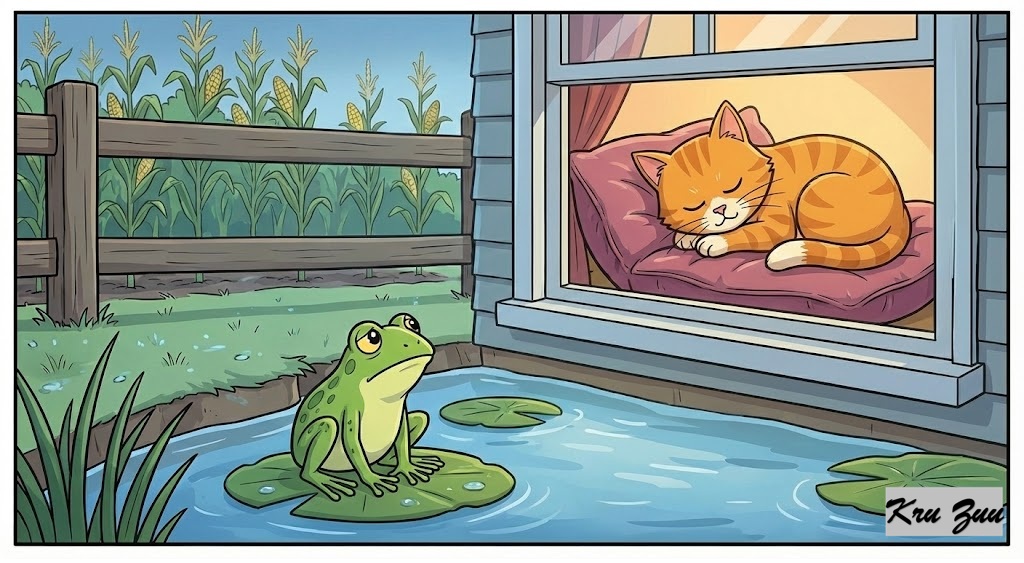
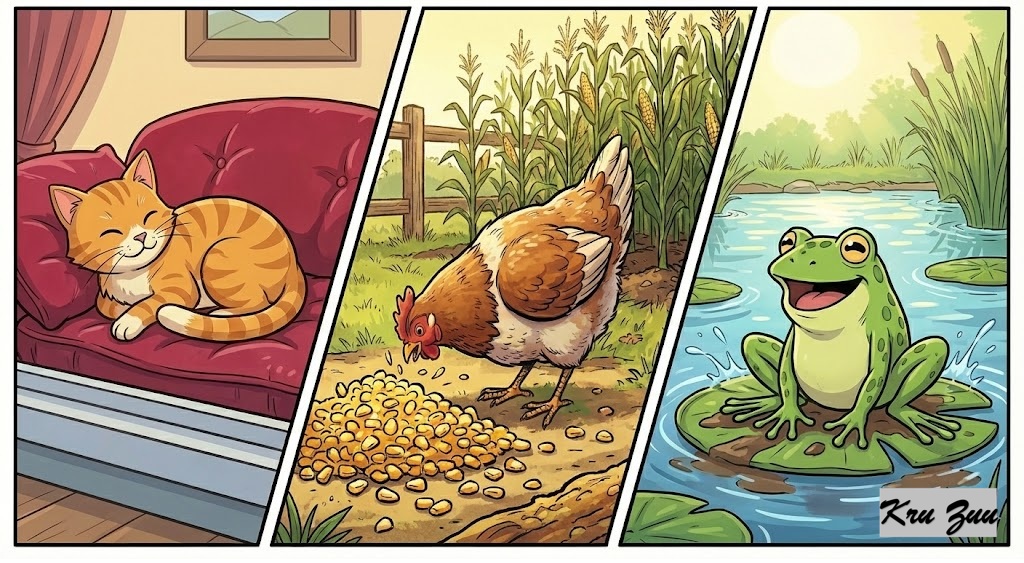
    🐱 Whiskers (The Cat): Sleeps on a velvet pillow inside the house.


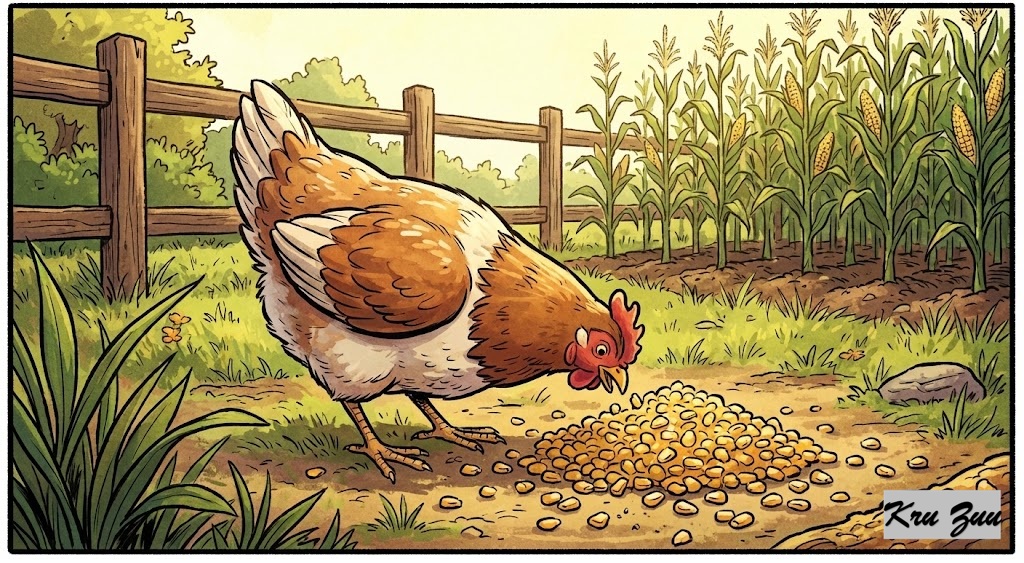
    🐔 Pecky (The Chicken): Lives in the garden with unlimited corn.


    🐸 Hops (The Frog): Lives freely by the cool pond.


    The Conflict: It is a sunny Tuesday, but nobody is happy.


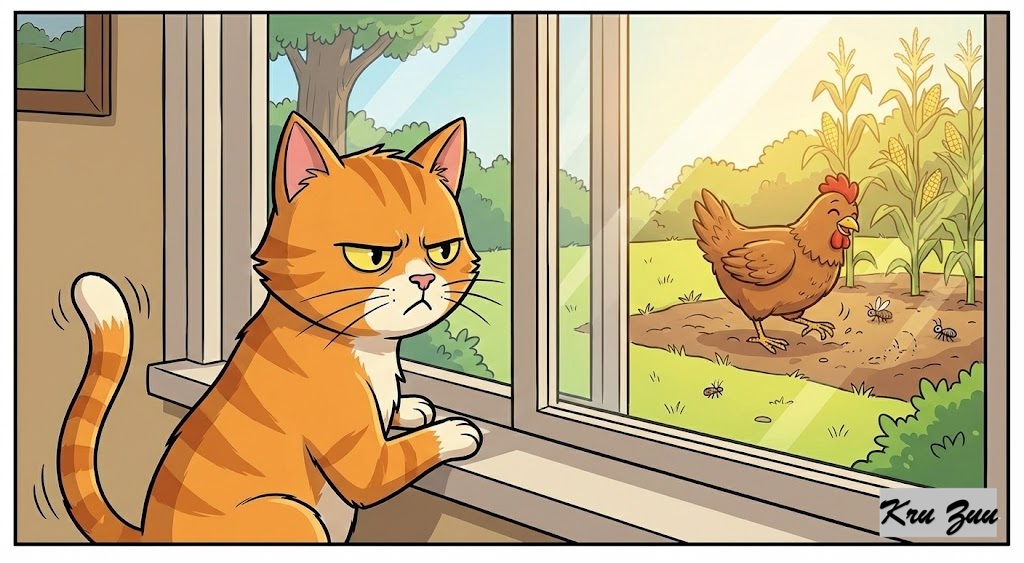
    Whiskers the Cat looks out the window. “Look at Pecky. She is so free! She feels the sun and eats bugs all day. I am trapped in this boring house. I wish I were a chicken.”


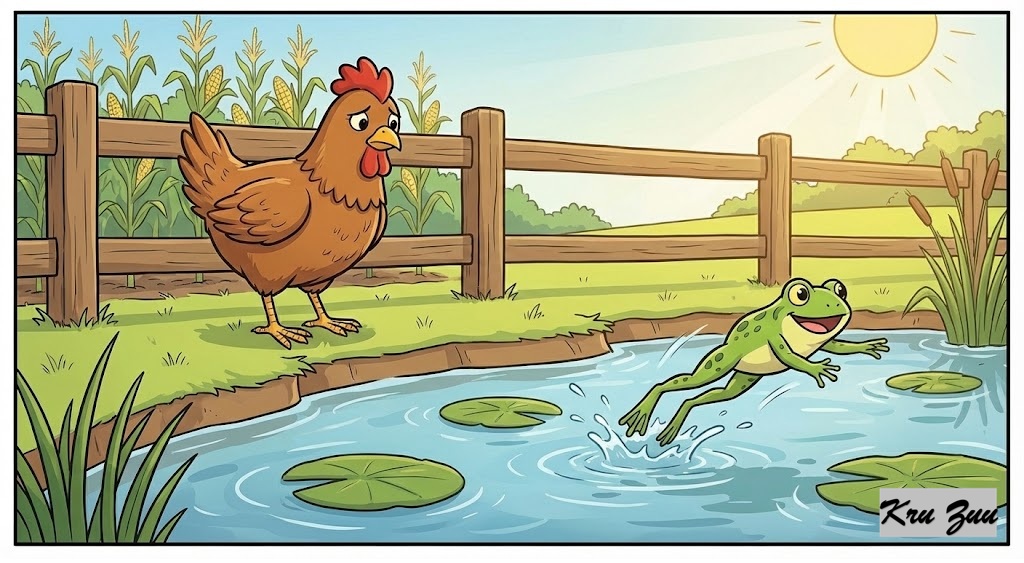
    Pecky the Chicken looks at the pond. “Look at Hops. He can swim! He travels wherever he wants. I am stuck behind this fence waiting to be eaten! I wish I were a frog.”


    Hops the Frog looks at the window. “Look at Whiskers. He sleeps on a soft pillow. He never gets cold or wet. He is treated like a King. I wish I were a cat.”


    The Swap (The Disaster):
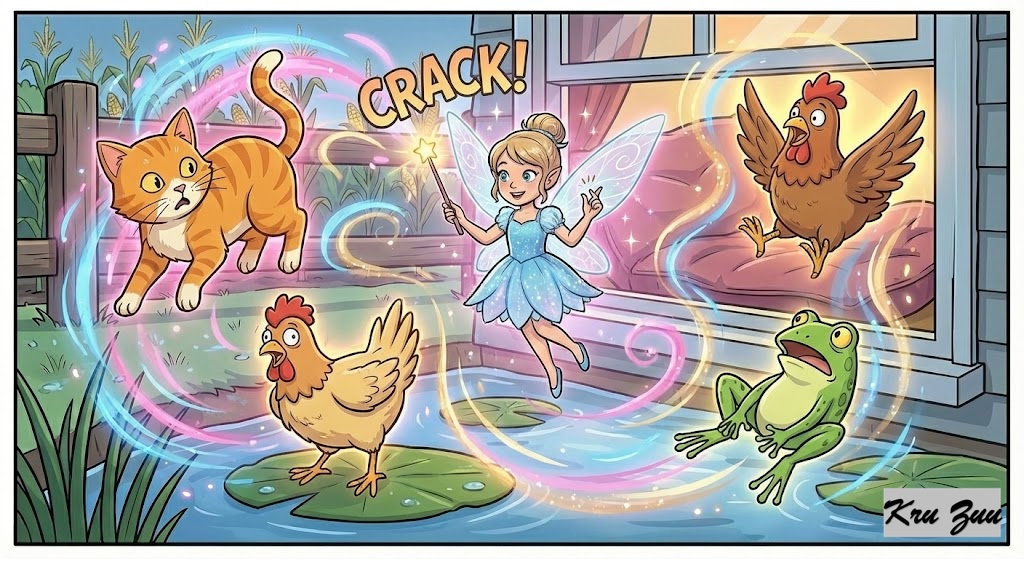
    A magic fairy hears their complaints and snaps her fingers! 🪄💥


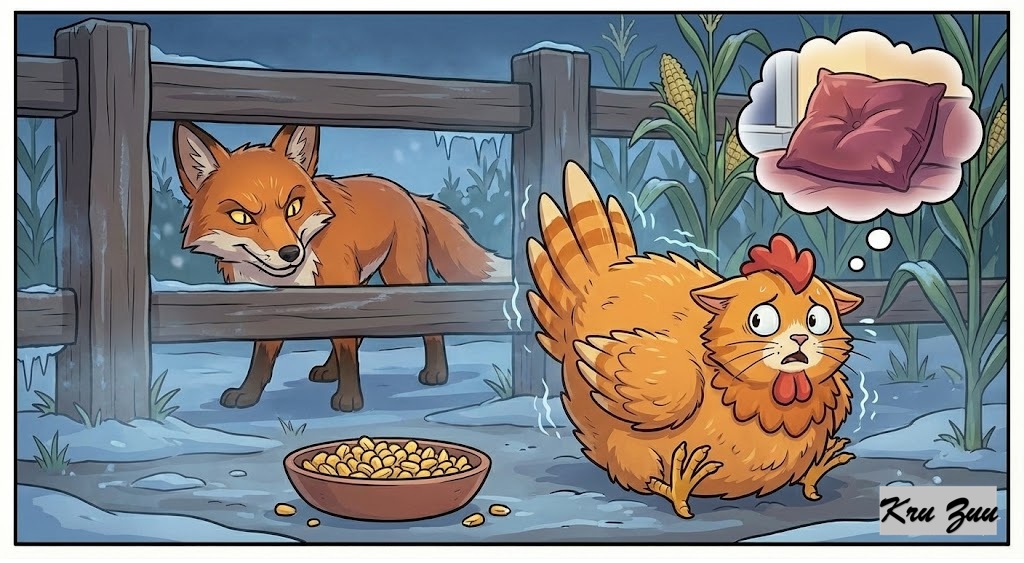
    The Cat becomes a Chicken: Whiskers is now outside. It is cold. The food is hard corn (yuck!). A fox stares at him. He is terrified! “Take me back to my pillow!” 🙀


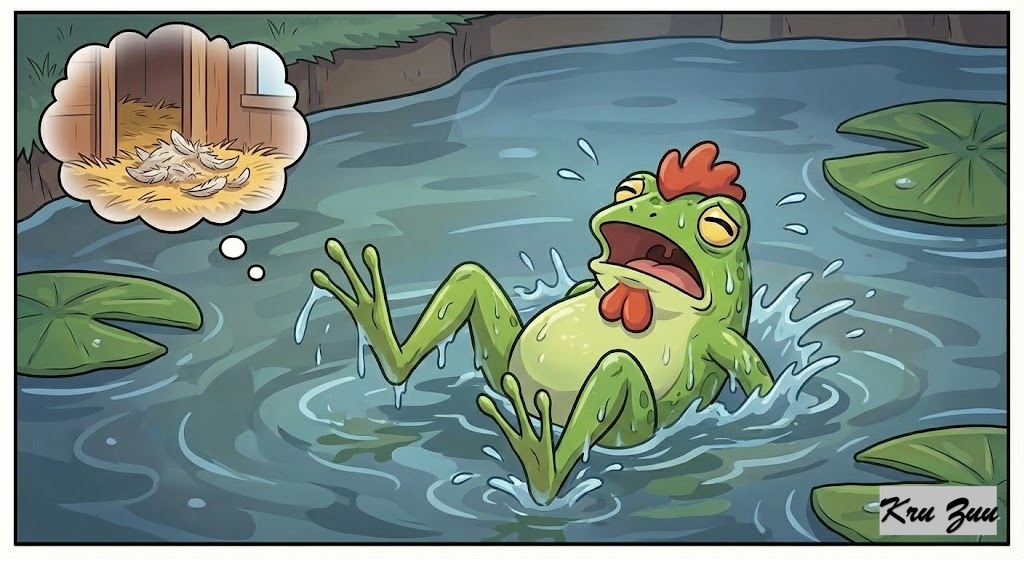
    The Chicken becomes a Frog: Pecky jumps into the water. “Help! I can’t swim!” She is wet, cold, and slimy. She misses her warm feathers. “Take me back to my coop!” 🐔💦


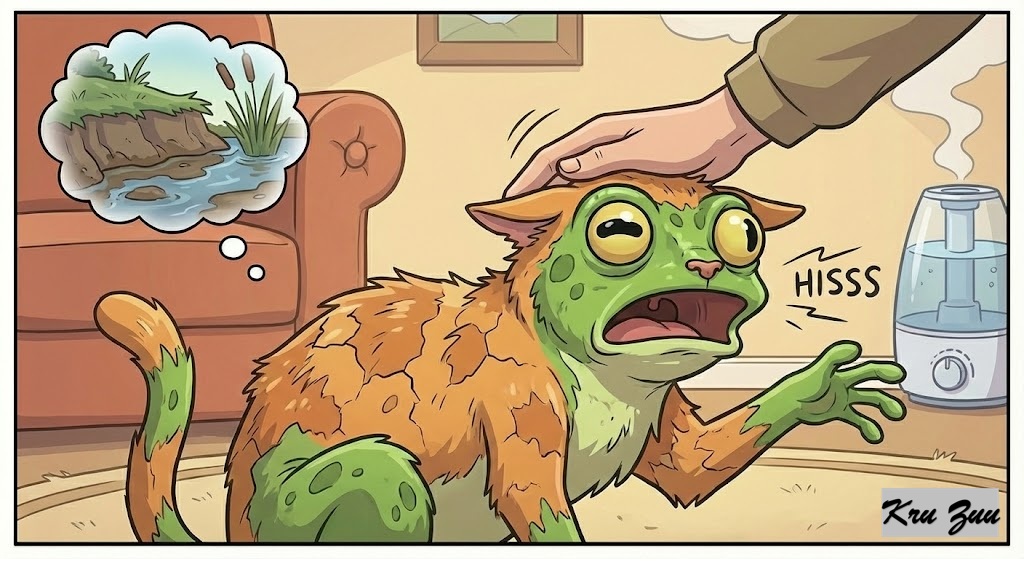
    The Frog becomes a Cat: Hops is inside. The air is dry. His skin starts to crack. The human tries to cuddle him. “Don’t touch me! I need water!” He feels suffocated. “Take me back to my mud!” 🐸🚫


    The Moral: When the magic ended, they all sighed with relief. The pillow, the corn, and the mud never looked so good. The grass wasn’t greener; it was just different.

    🎓 Lesson for English Learners


    Don’t compare your “Chapter 1” to someone else’s “Chapter 20.”


    Situation

    You hear a native speaker talking fast and fluent. You feel bad about your English.


    The Reality

    They have been speaking English since they were babies. You started 2 years ago.


    You Say: “I will not look at their grass. I will water my own grass. Today, I will learn 5 new verbs. That is progress.”


    💬 Your Turn: The Gratitude Challenge 🚀


    Stop looking over the fence. Look at your feet.


    The Challenge: Identify ONE thing in your life that someone else might be jealous of.


    Do you have free time?


    Do you have a loving family?


    Can you read this blog post? (Yes, you can!)


    The Action:
    Write that one thing in the comments below! 👇 “I am happy that I have…”


    (Don’t put it off! Do it now!) 😉

    By Zubeyir YURTKURAN

    https://www.facebook.com/BrainBattleground/

    https://www.facebook.com/zubeyr.yurtkuran/

    https://www.instagram.com/zubeyryurtkuran/
    https://www.youtube.com/@BrainBattleground-b3p

    https://www.instagram.com/brainbattleground/

  • 🌈 The Daily Prism: The Law of Perception

    🌈 The Daily Prism: The Law of Perception

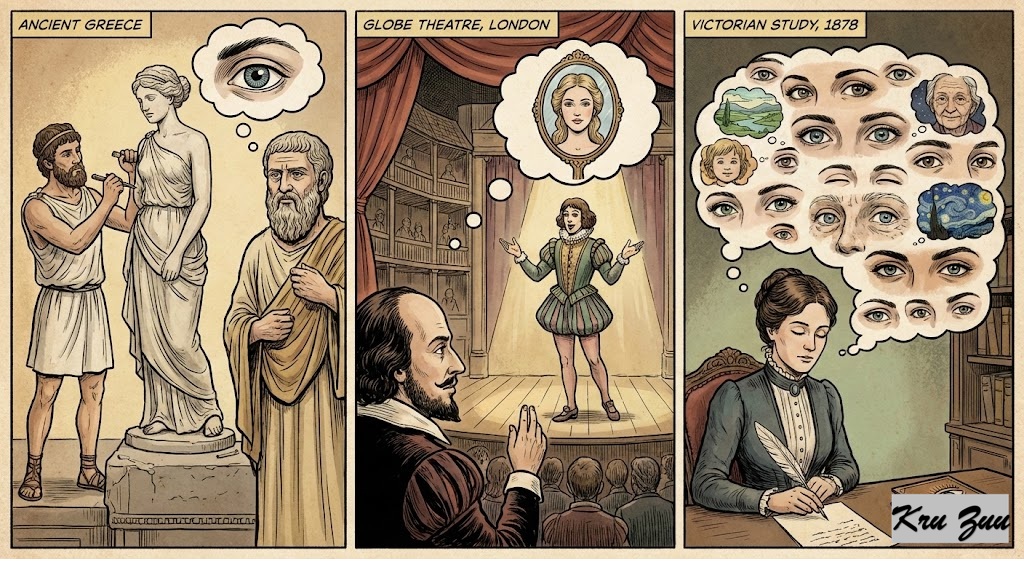
    “Beauty is in the eye of the beholder.”


    😈 The Villain (The Judge)

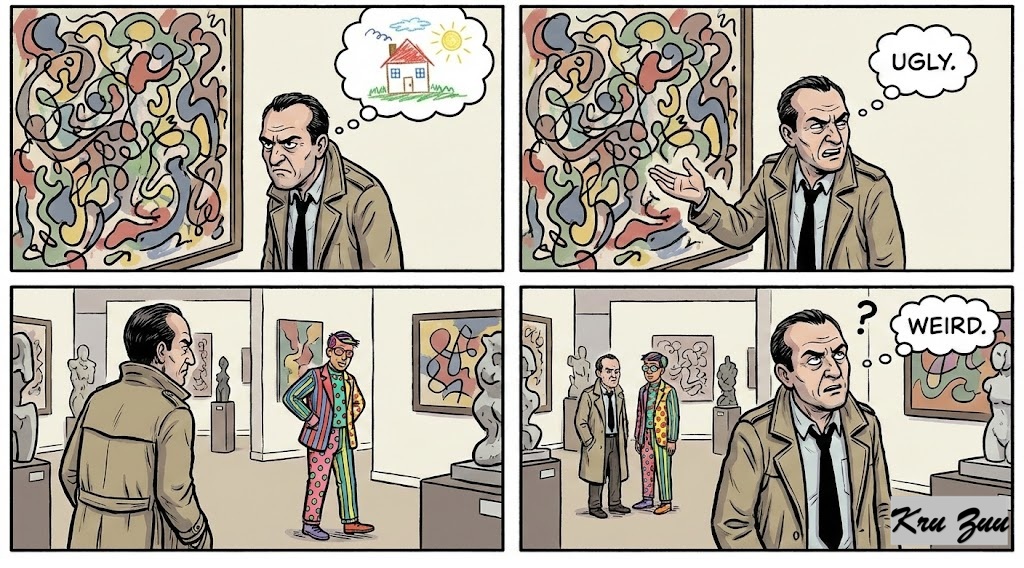
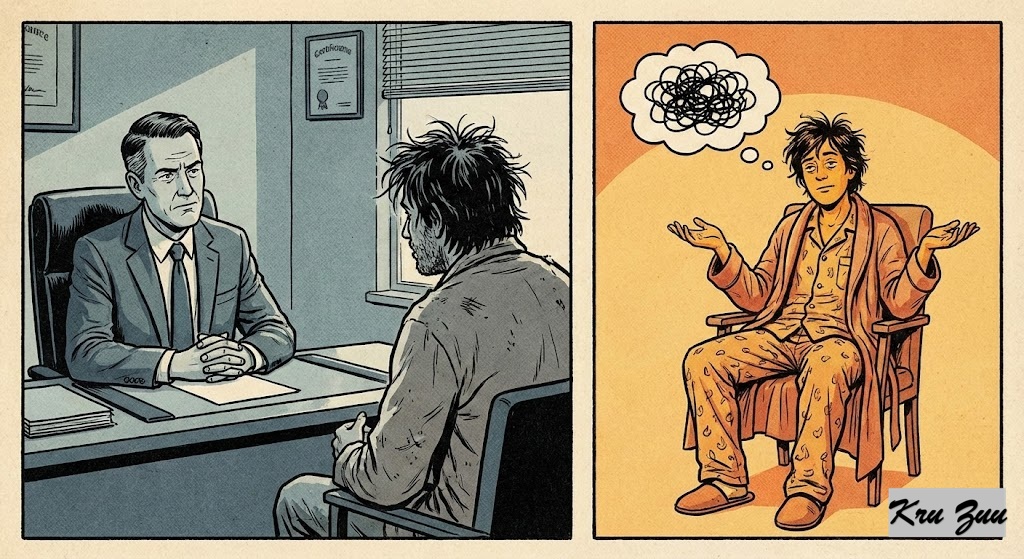
    You walk into a museum. You see abstract art and say, “That’s ugly. A child could paint that.” You see someone wearing colorful clothes and think, “Weird.”

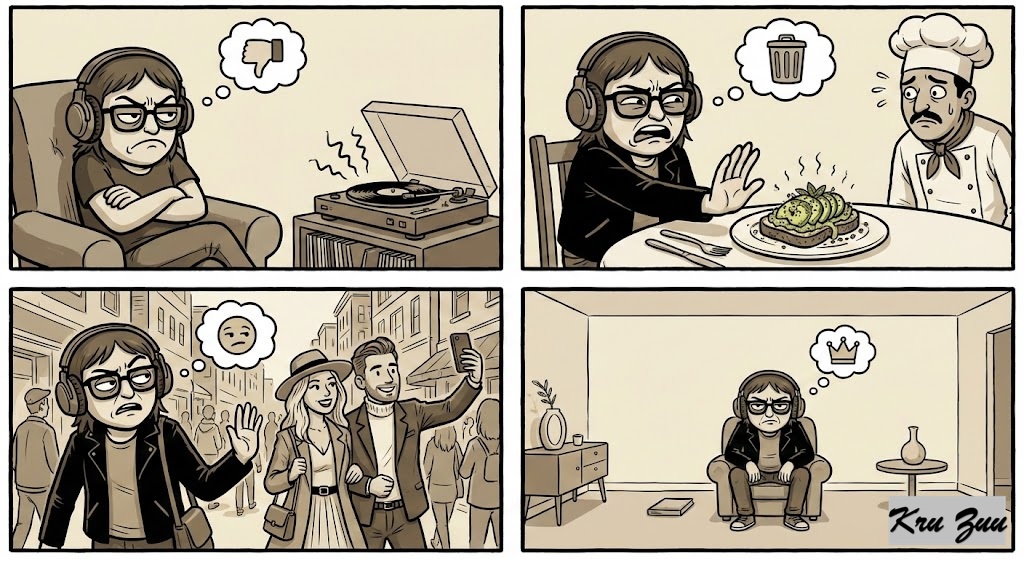
    You judge music, food, and people instantly. You believe your taste is the only truth. You are constantly annoyed because the world doesn’t fit your specific box. 😤


    😇 The Hero (The Artist)

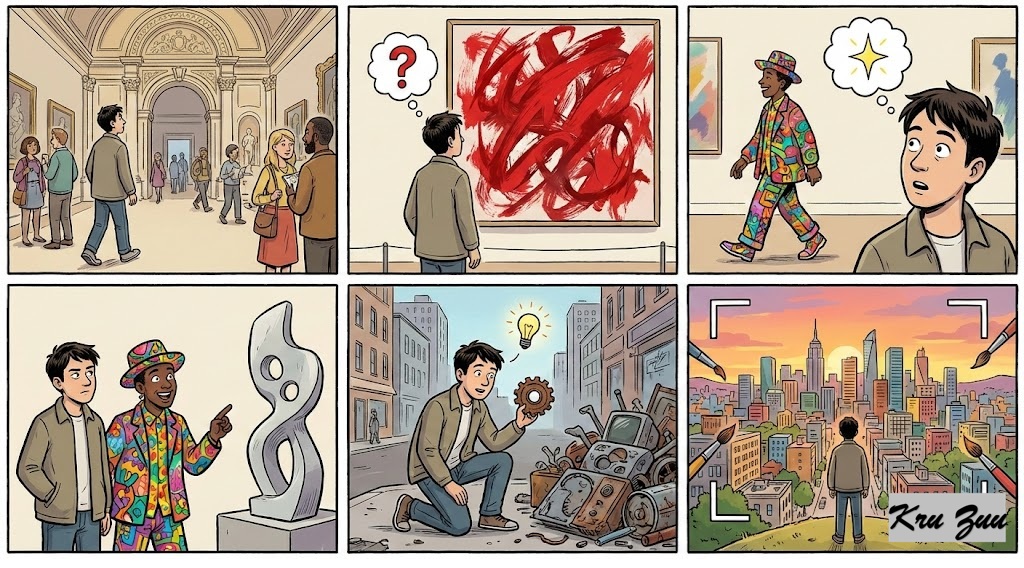
    You walk into the same museum. You might not like the painting, but you wonder, “Why did the artist choose red?” You see the person in colorful clothes and think, “Wow, they are confident.” You understand that what you hate, someone else might love. You see potential where others see trash. The world is an endless gallery for you. 🎨


    ⚖️ The Reality

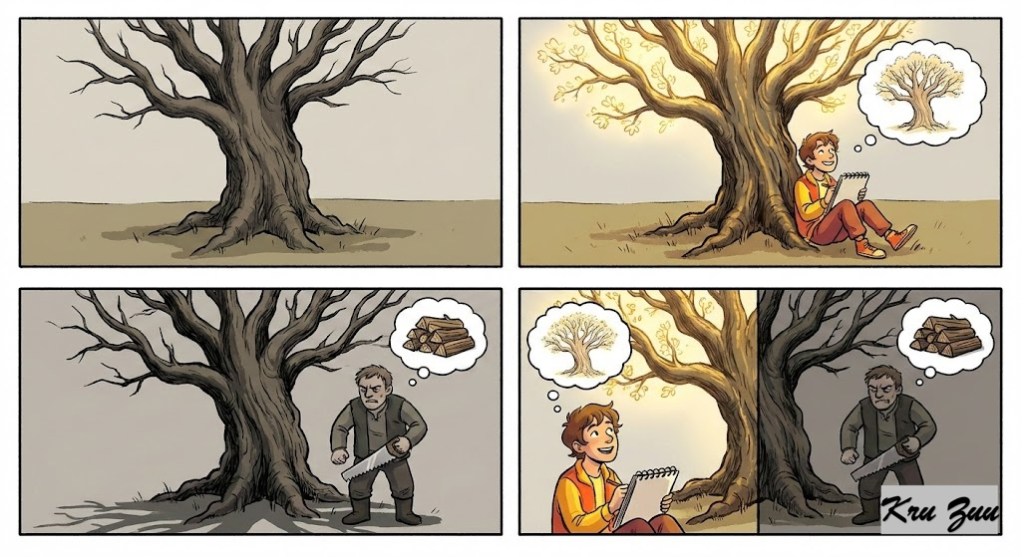
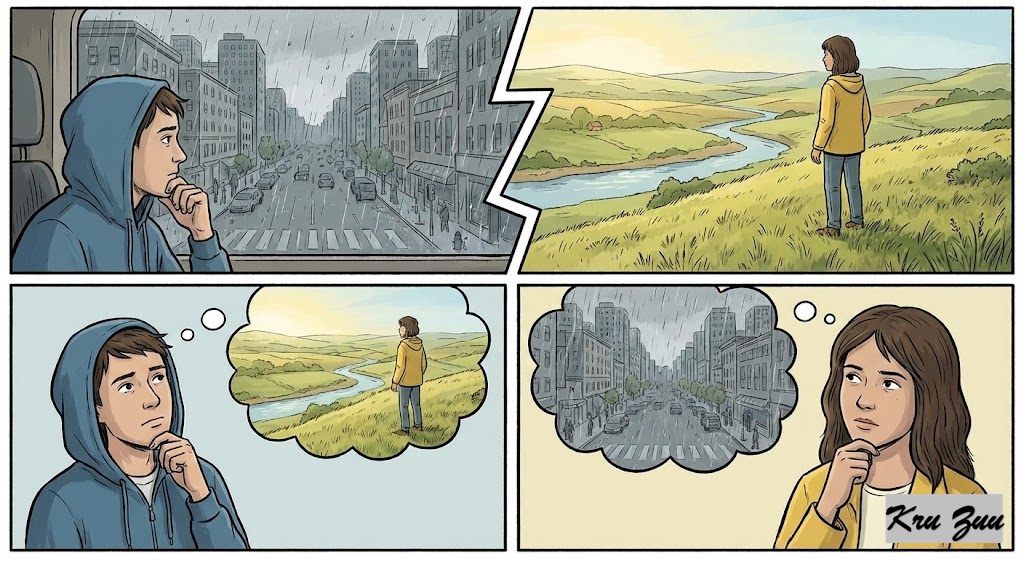
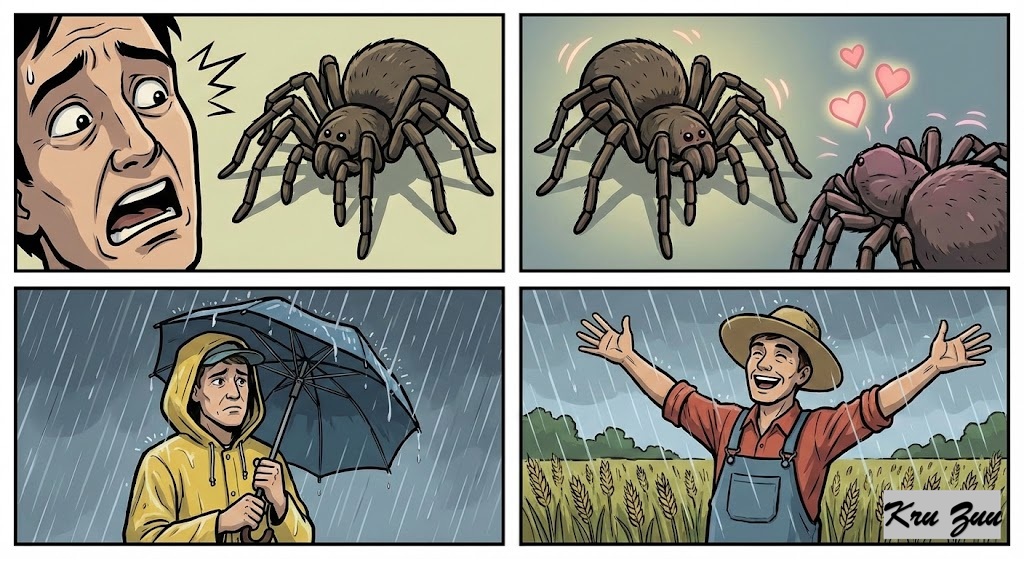
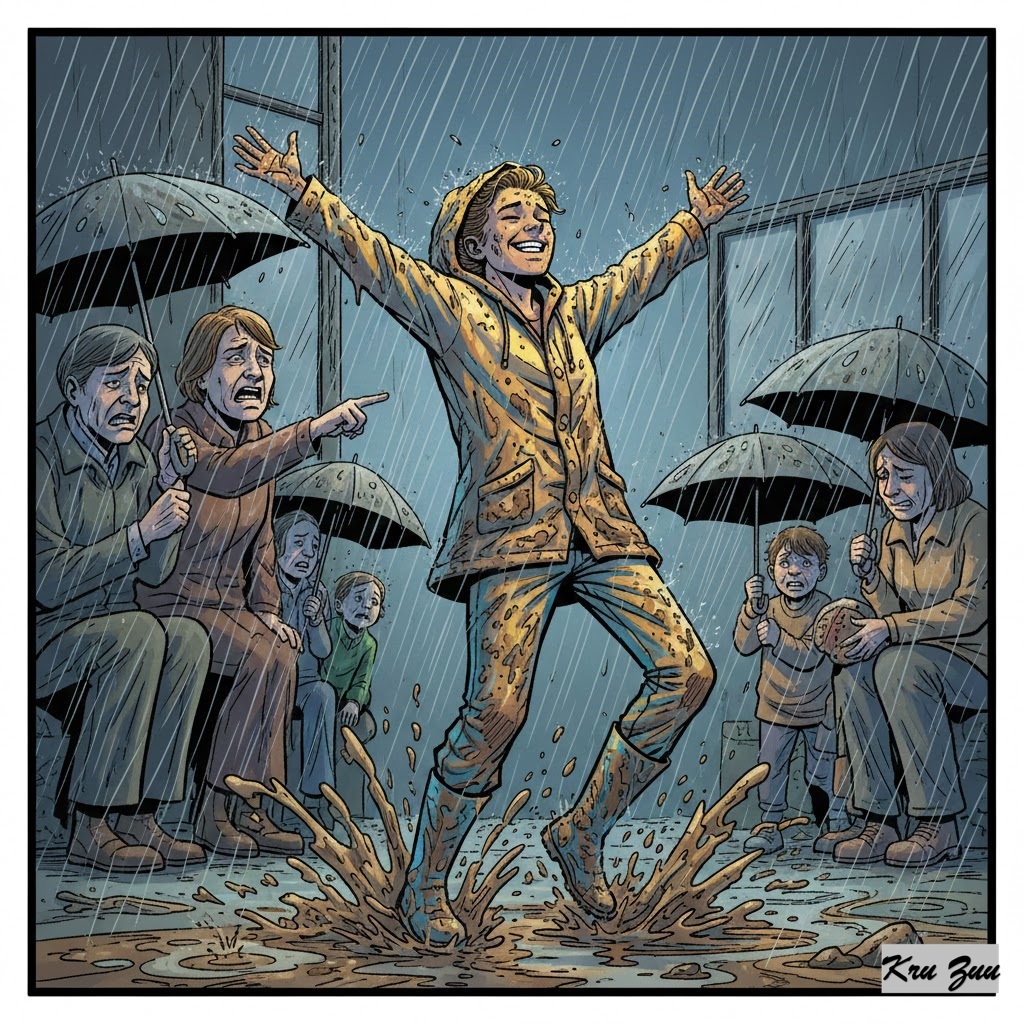
    “Ugly” does not exist in nature. A spider is scary to a human, but it is gorgeous to another spider. A rainy day is sad for a tourist, but it is a celebration for a farmer.

    💎 The Secret

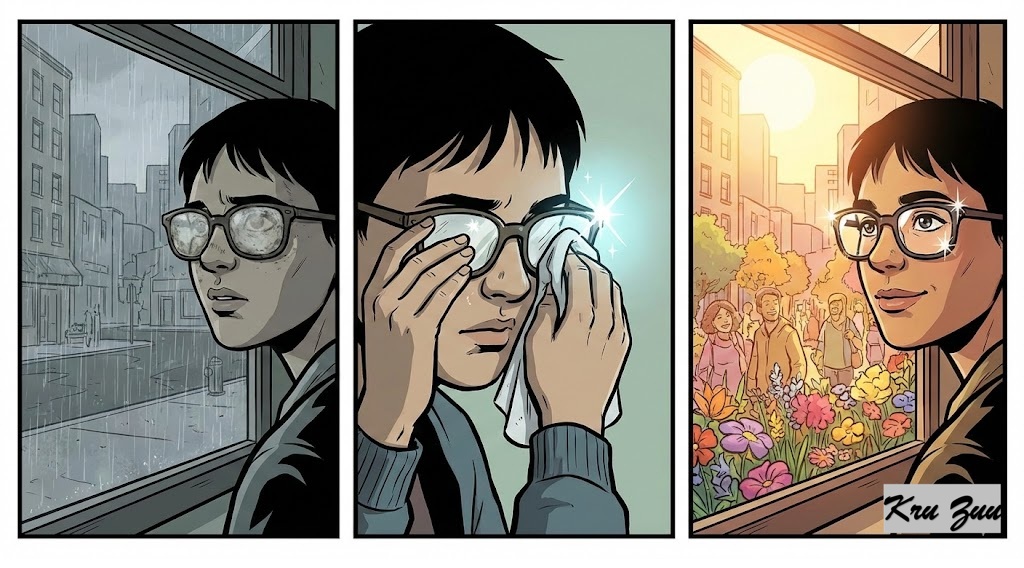
    The object doesn’t change; only your eyes change. If you want to see a beautiful world, you don’t need to travel; you just need to polish your lens.

    🧐 The Anatomy of the Proverb


    This is the ultimate rule of subjectivity.


    Beauty (Noun): A quality that pleases the senses (mind or eyes). ✨


    Beholder (Noun): An old-fashioned word for “The person looking/observing.” (From the verb Behold: To look at). 👀


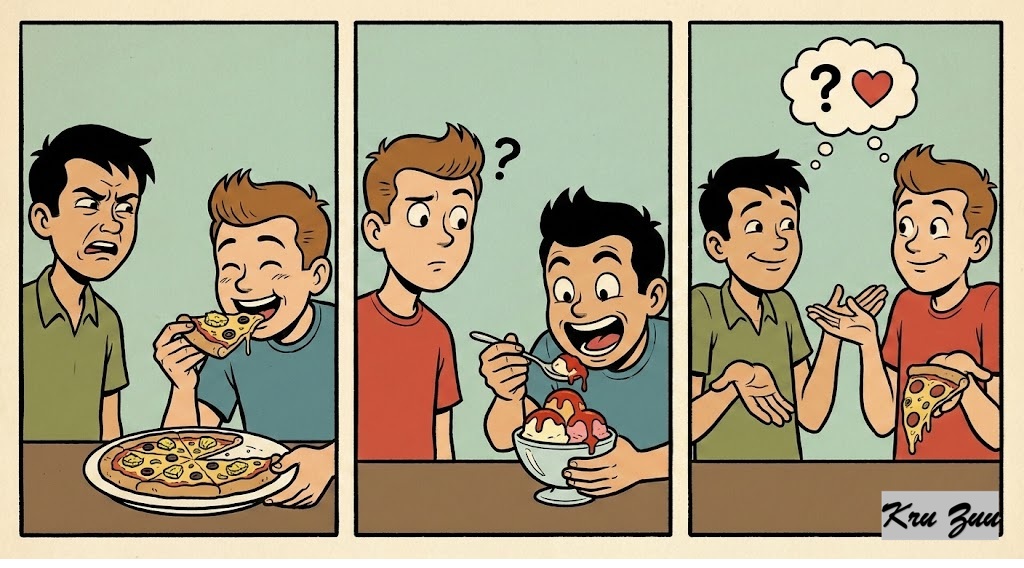
    Simpler Version: Everyone has a different taste.


    📚 Vocabulary Vault


    Subjective (Adjective):
    Based on personal feelings, tastes, or opinions. (Opposite of Objective).


    Perspective (Noun): A particular attitude toward or way of regarding something; a point of view.


    Aesthetic (Noun/Adj): Concerned with beauty or the appreciation of beauty. 🌸


    Appeal (Verb): To be attractive or interesting to someone.


    Flaw (Noun): An imperfection or weakness.


    🧠 Grammar Focus: “To Be” + Preposition


    This proverb uses a locational metaphor.


    Structure: [Subject] + is + in + [Location].


    Logic: Beauty is not on the face of the person; it lives inside the eye of the person looking at them.


    Example: “The decision is in your hands.”

    📜 History: Origin and Global Cousins


    Who said it first?

    The Origin

    While the idea goes back to Plato (Greek philosophy) and Shakespeare, the modern English phrasing appeared in 1878 by the author Margaret Wolfe Hungerford.

    Global Cousins


    🇹🇷 Turkish:
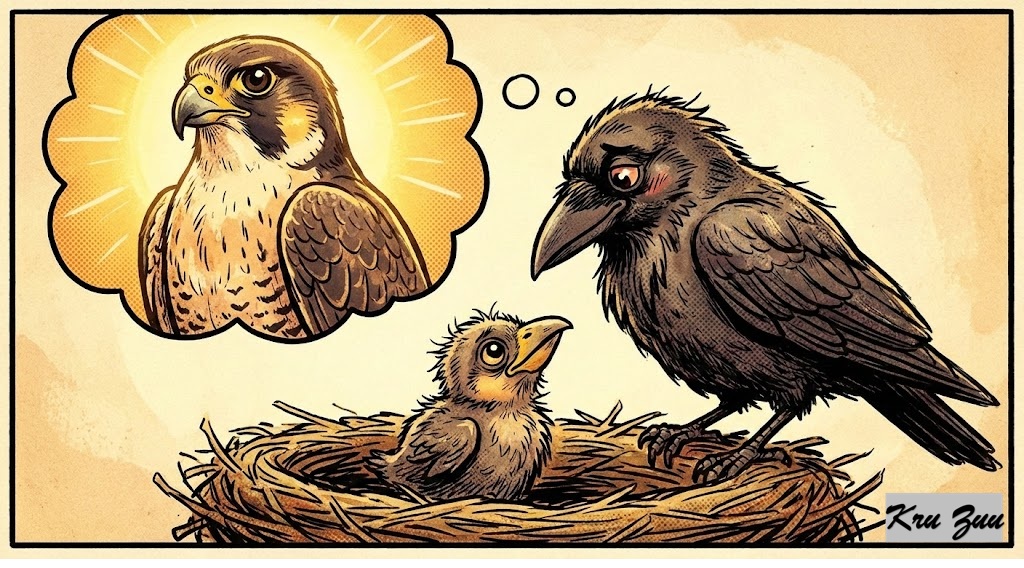
    “Kuzguna yavrusu şahin görünür.” (To the crow, its own chick looks like a falcon.) — This captures the meaning perfectly!


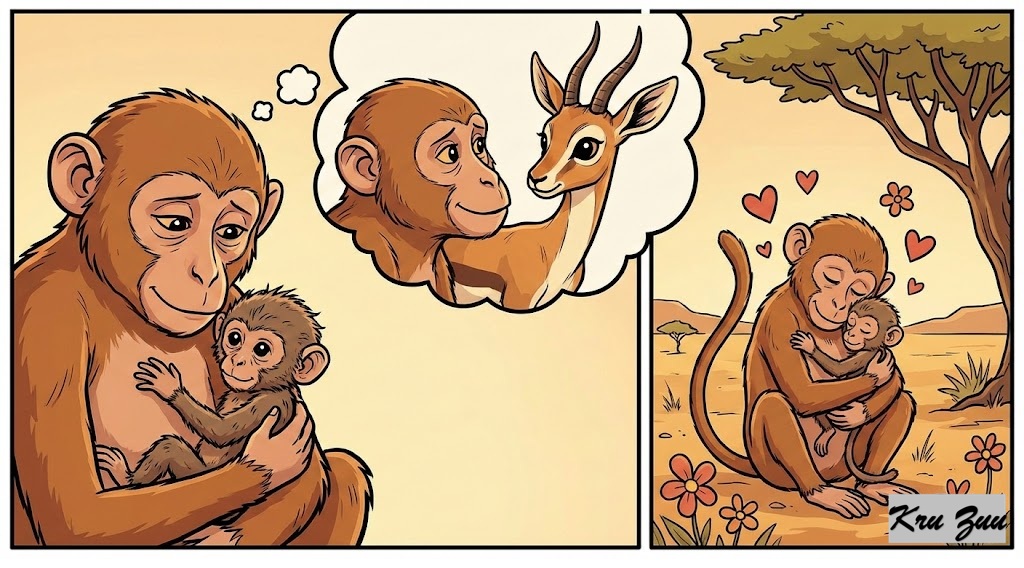
    🇸🇦 Arabic: “In the eyes of a mother monkey, her child is a gazelle.”


    🇩🇪 German: “Über Geschmack lässt sich nicht streiten.” (One cannot argue about taste.)

    🎭 Short Story: The Golden Treasure


    Let’s see how perspective changes everything with three very different friends.


    🌟 The Setup:
    A sleek Cat 🐱, a nervous Chicken 🐔, and a slimy Frog 🐸 are walking through a garden. Suddenly, they find an object lying on the grass.


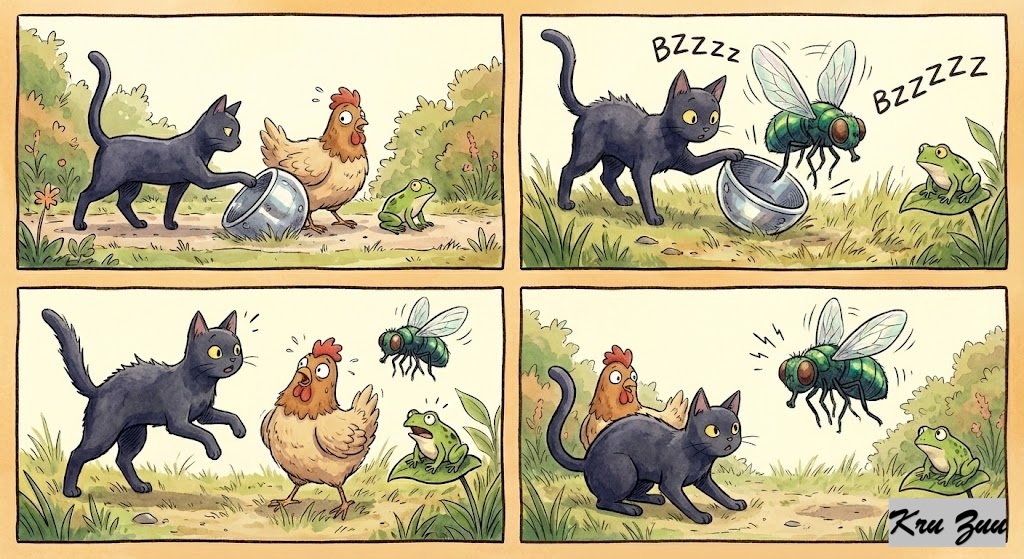
    It is a shiny, gigantic, buzzing Green Fly. 🪰


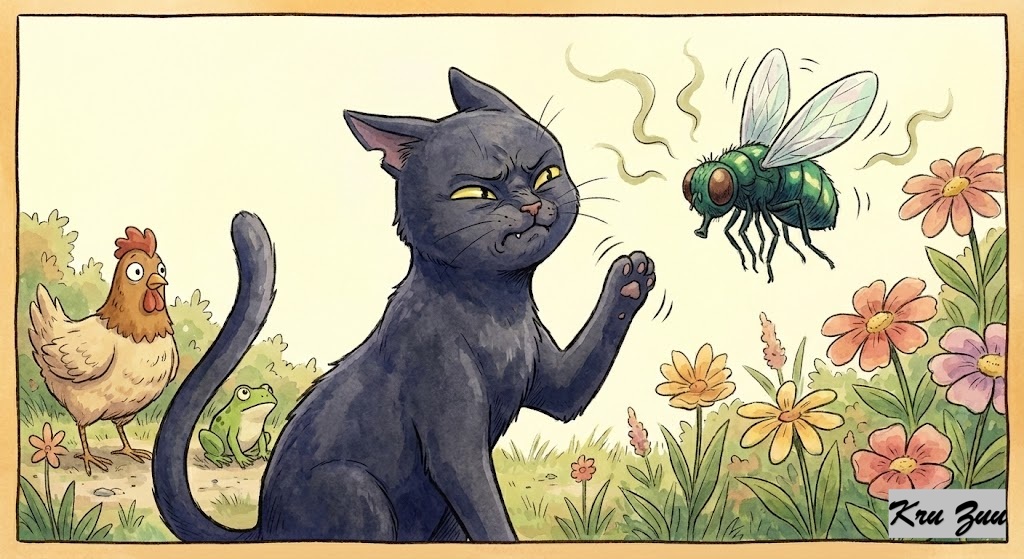
    The Conflict:The Cat (The Aristocrat): She sniffs it and wrinkles her nose. “Ew! Disgusting. It is dirty, it is loud, and it smells like garbage. It ruins the view of the flowers. Take it away!” To the Cat, the fly is Ugly trash.


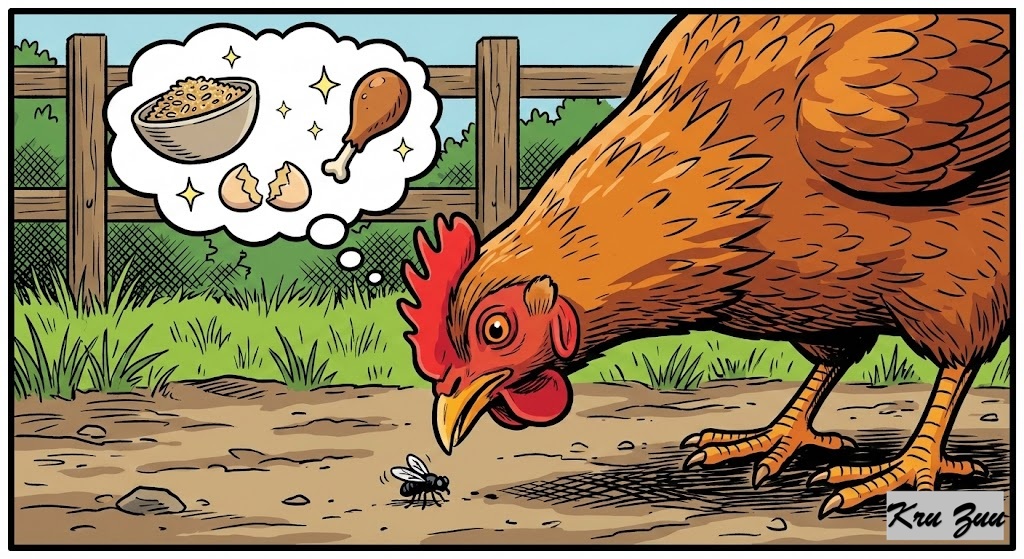
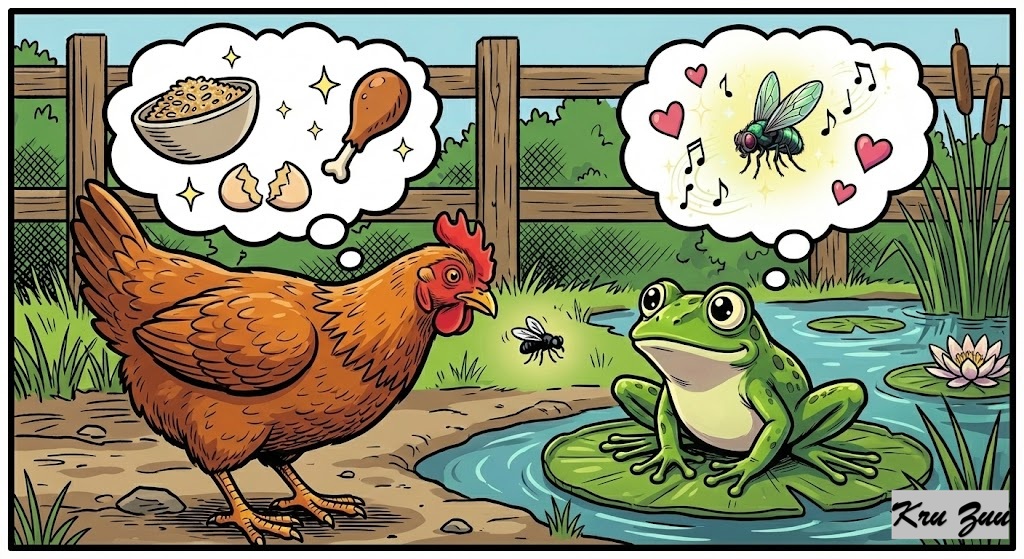
    The Chicken (The Pragmatist): She tilts her head and pecks at the ground. “Hmm. It’s not art, Cat. It’s lunch! It looks crunchy and nutritious. Good protein for my eggs.” To the Chicken, the fly is Food.


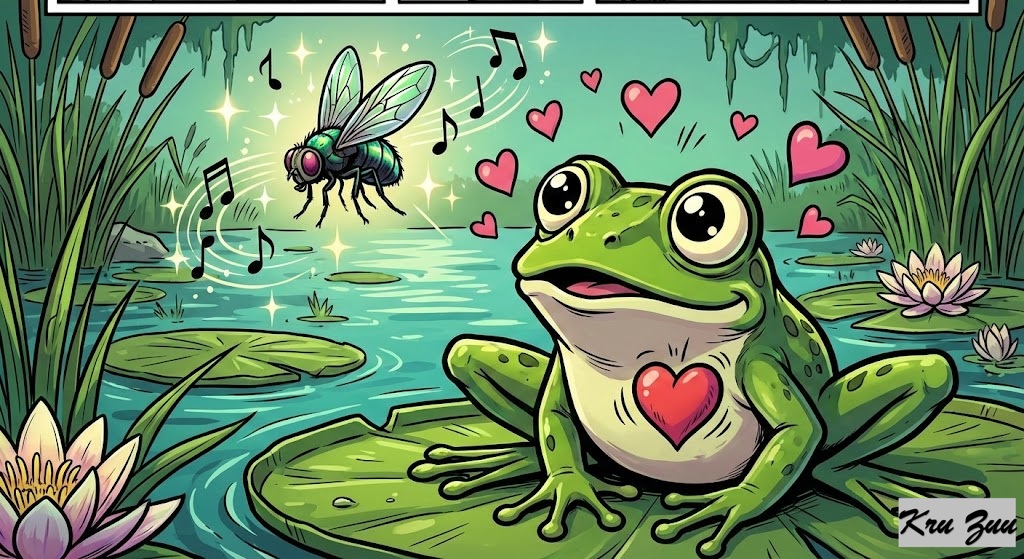
    The Frog (The Romantic): His eyes go wide, and his heart beats fast. “You are both blind! Look at the metallic green wings! Listen to that beautiful buzzing song! It is the most magnificent creature I have ever seen. I think I am in love.” 😍 To the Frog, the fly is Perfection.


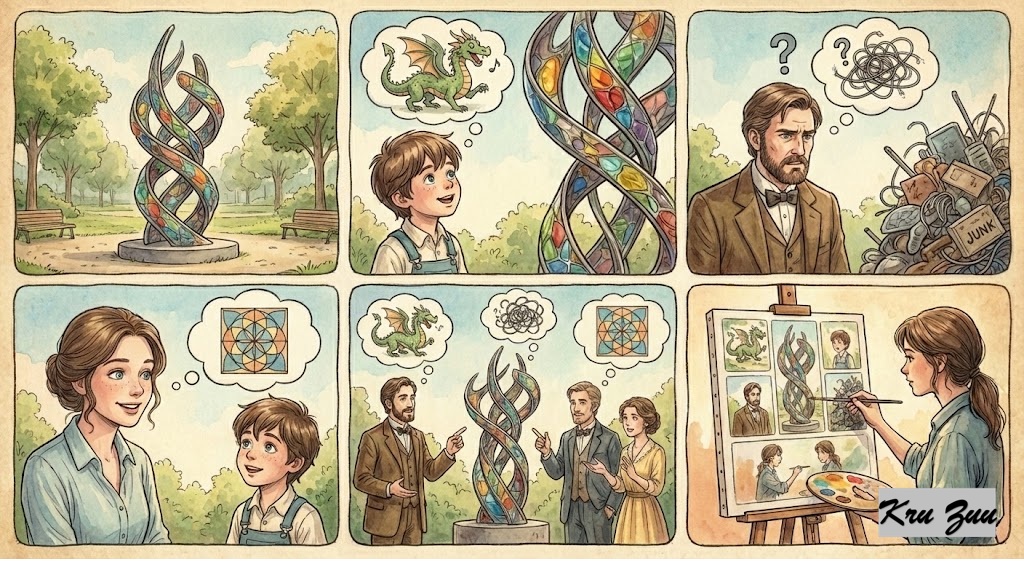
    The Moral: Who is right? Is the fly ugly, tasty, or beautiful? They are all right. The fly didn’t change. The beholder changed.

    🎯 Impact on Life: The Pros & Cons


    ✅ The Pros (Freedom)


    Self-Acceptance:
    You don’t need everyone to like you. You just need to find your people (your Frogs!).


    Tolerance: You stop arguing about taste. You realize it’s okay if your friend hates your favorite movie.


    ❌ The Cons (The Trap)


    Denial:
    Sometimes, “beauty is subjective” is an excuse for low effort. If you go to a job interview in pajamas, you can’t blame the “beholder” for not hiring you!

    🎓 Lesson for English Learners


    Don’t apologize for your English.


    Situation:
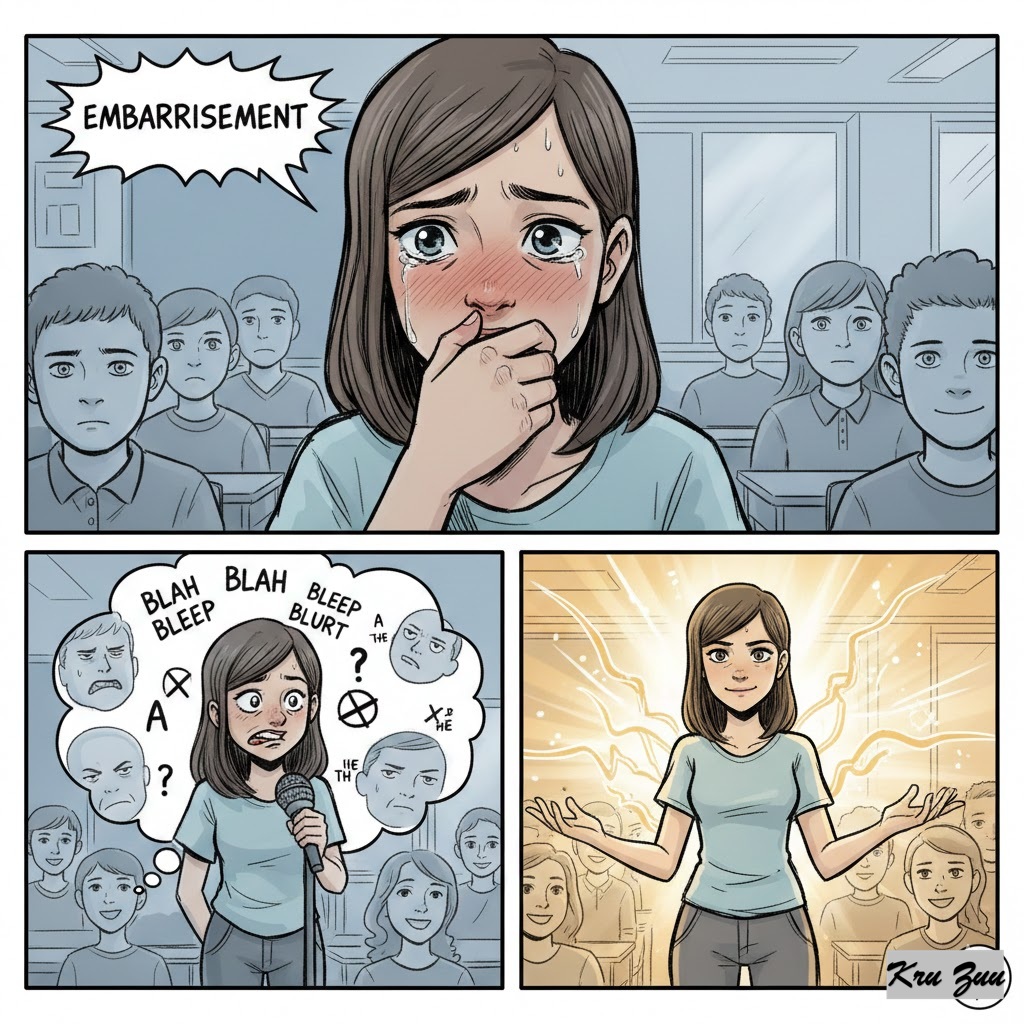
    You speak with an accent. You make small grammar mistakes. You feel “ugly” or “embarrassed” about your speaking.

    The Truth

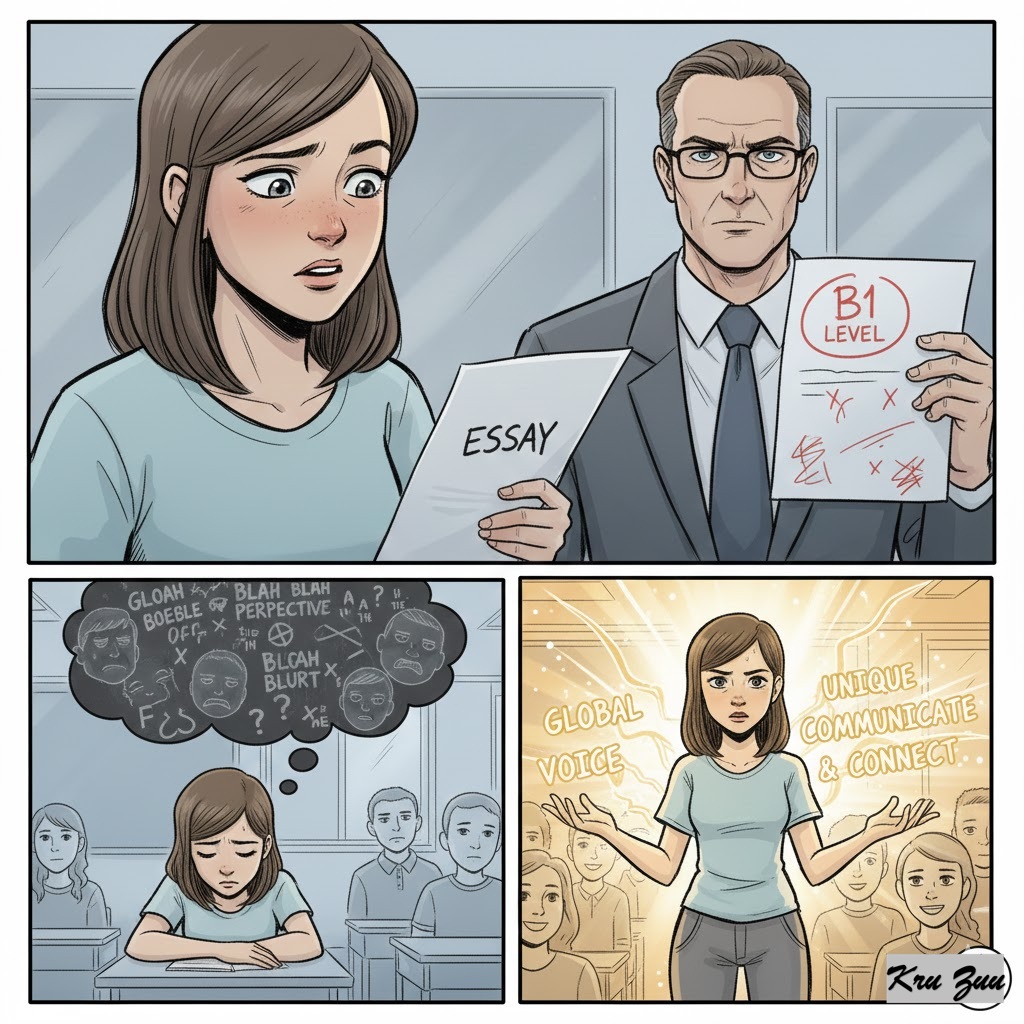
    To a strict examiner, your English might be “B1 Level.”


    To a native speaker, your accent might sound “Exotic and charming.”


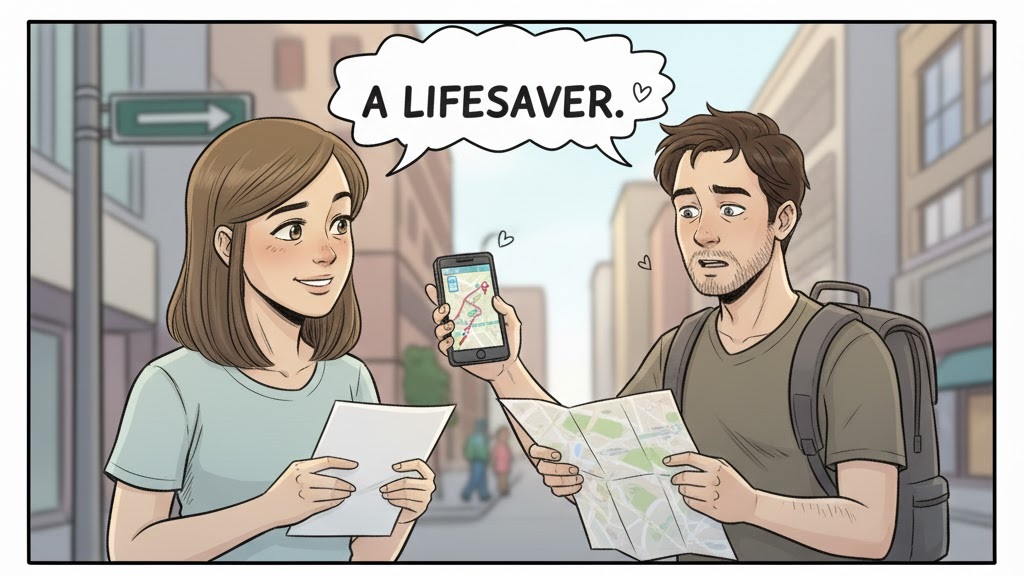
    To a stranger who needs help, your English is “A lifesaver.”


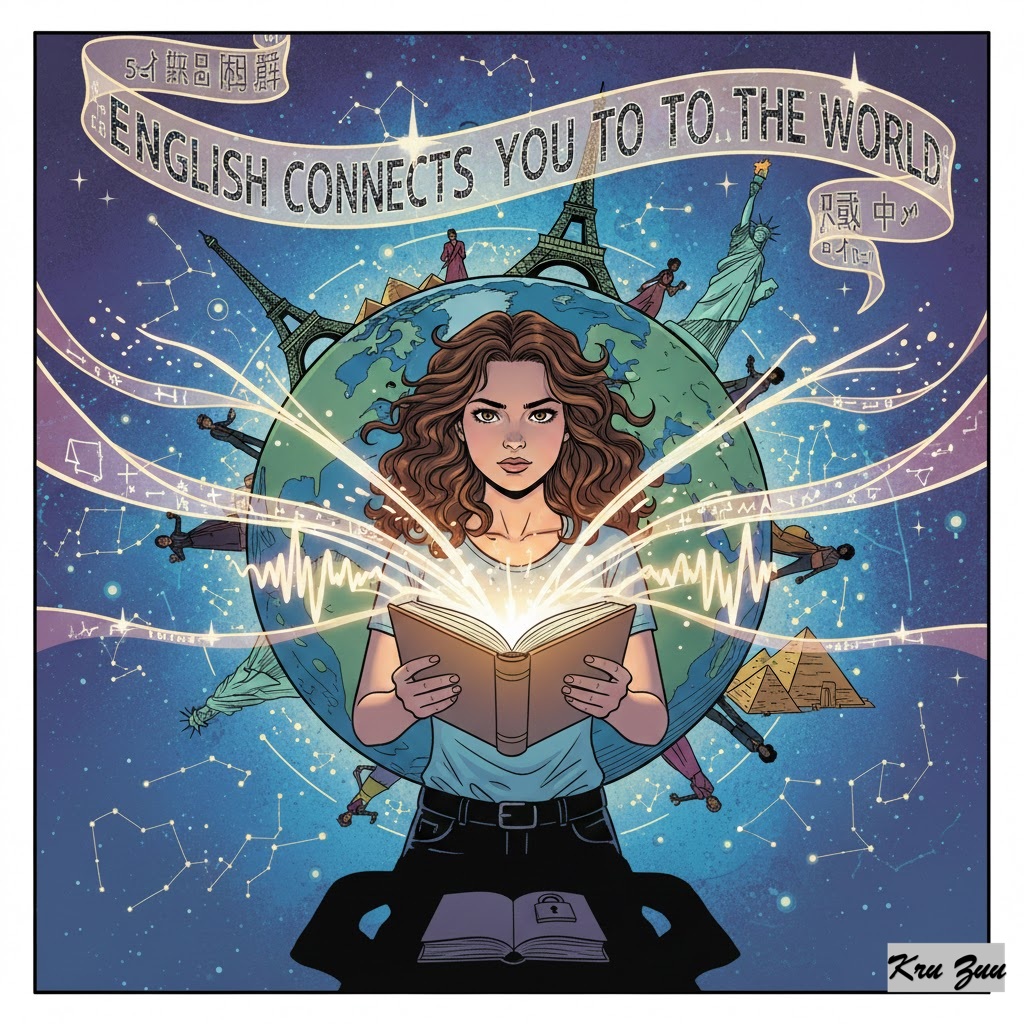
    Your English is beautiful because it connects you to the world. Don’t hide it.


    💬 Your Turn: The Perspective Challenge 🚀


    Let’s practice! The Challenge:
    Think of something that most people hate, but you love.


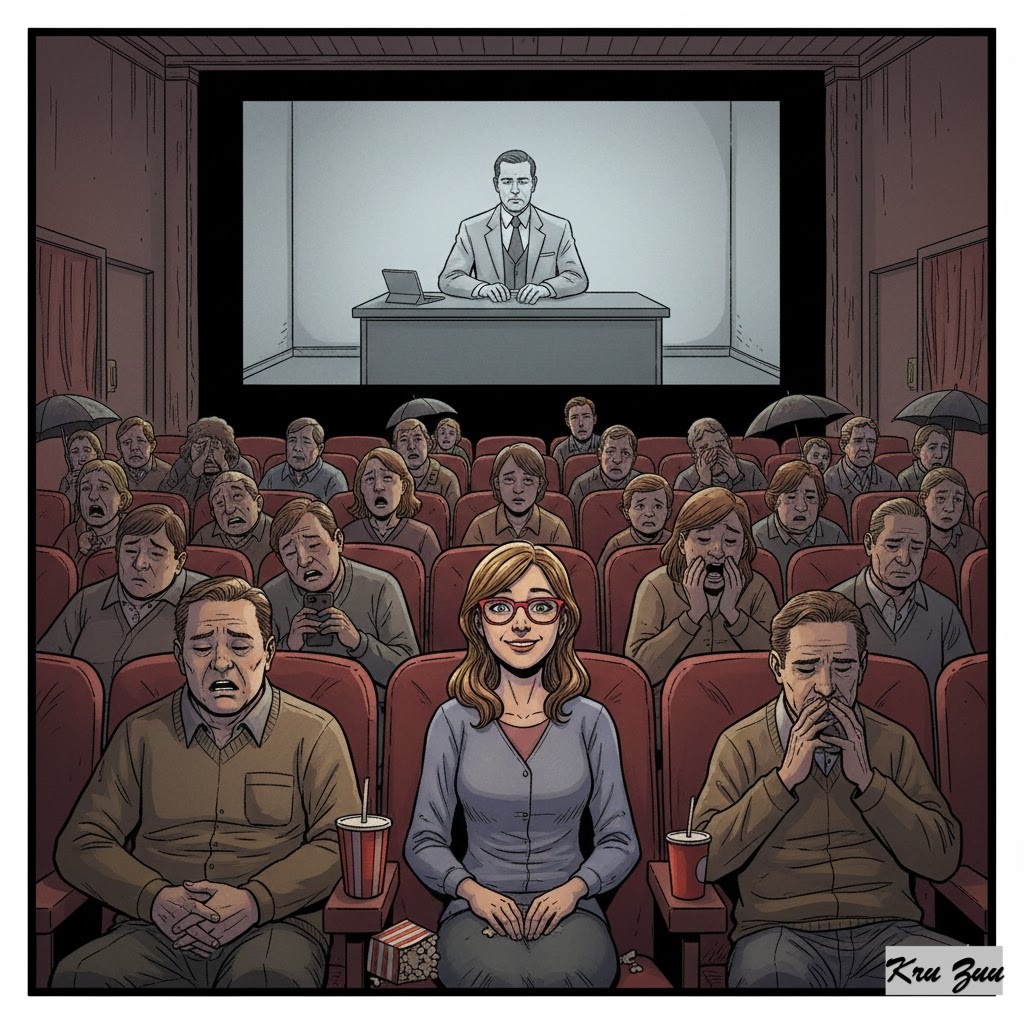
    A movie everyone thinks is boring?


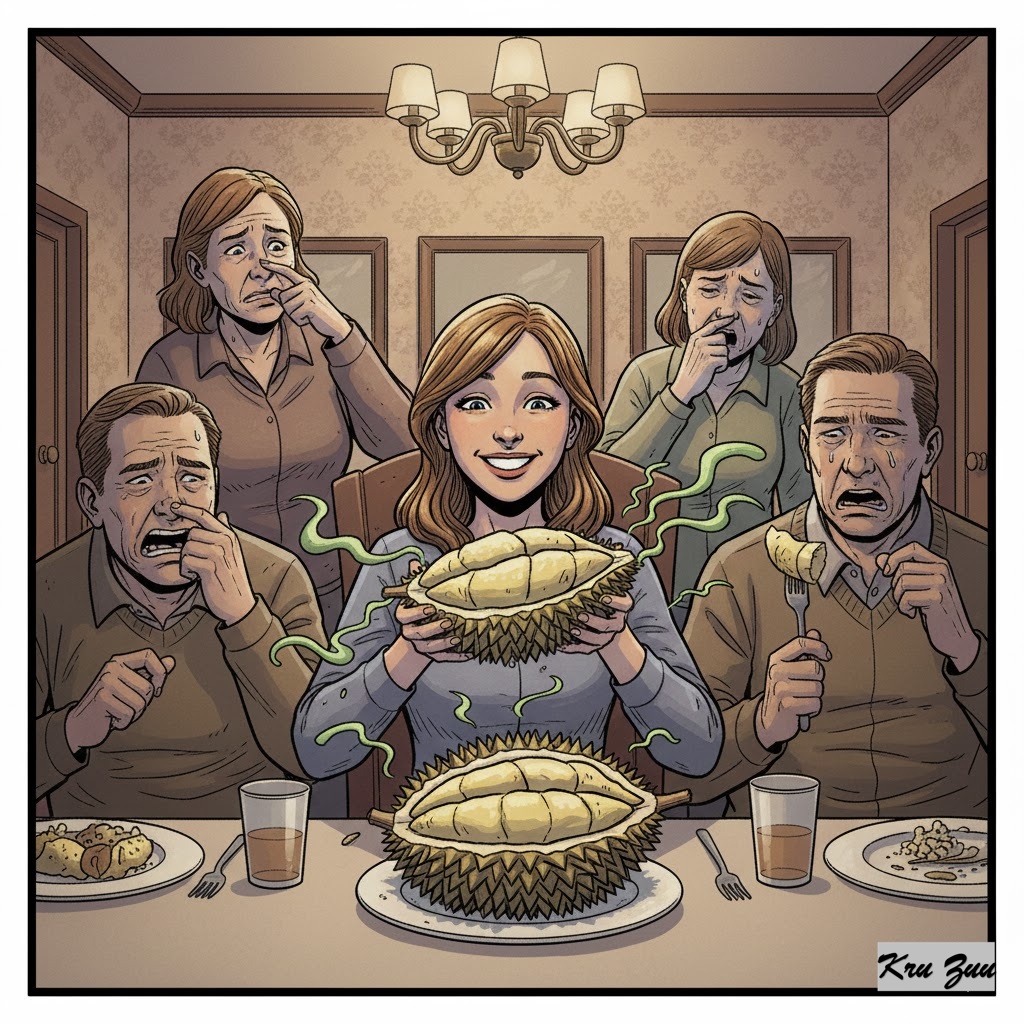
    A food everyone thinks is gross?


    A type of weather (like rain)?


    Tell us in the comments! 👇

    “Everyone hates _, but I think it is beautiful because _.”

    By Zubeyir YURTKURAN

    https://www.facebook.com/BrainBattleground/

    https://www.facebook.com/zubeyr.yurtkuran/

    https://www.instagram.com/zubeyryurtkuran/
    https://www.youtube.com/@BrainBattleground-b3p

    https://www.instagram.com/brainbattleground/

  • 🛡️ The Daily Shield: The Law of Visibility

    🛡️ The Daily Shield: The Law of Visibility

    “Out of sight, out of mind.”


    👻 The Villain (The Ghost)

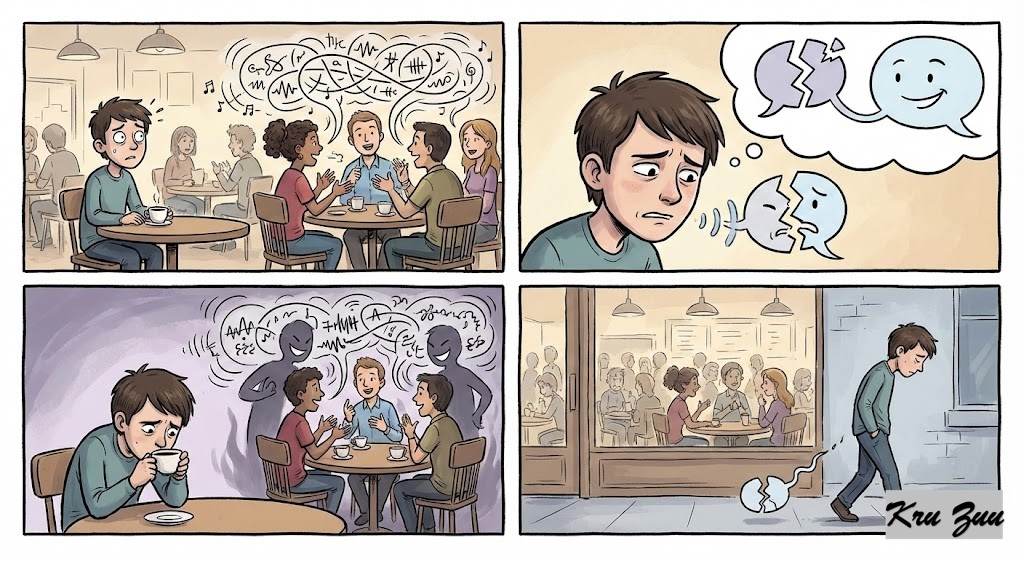
    You have a best friend. You move to a different city. You promise to call every week.

    But then… life happens. You get busy with work. You make new friends. You stop seeing your old friend’s face.

    Slowly, the messages stop. The memories fade. A year later, you realize you haven’t spoken to them at all. You didn’t mean to be bad; you just forgot because they weren’t there. You let the connection die. The fog of “distance” won. 🌫️


    ❤️ The Hero (The Connector)

    You know that human memory is weak.

    You move away, but you put a photo of your friend on your desk.

    You set a reminder on your phone: “Call Mom.””Text Bestie.”

    You keep your English books on the coffee table, not hidden in a drawer.

    You fight the distance. You force your brain to remember what is important, even if it isn’t right in front of your eyes. You keep the fire alive. 🔥


    ⚖️ The Reality


    Your brain is lazy.

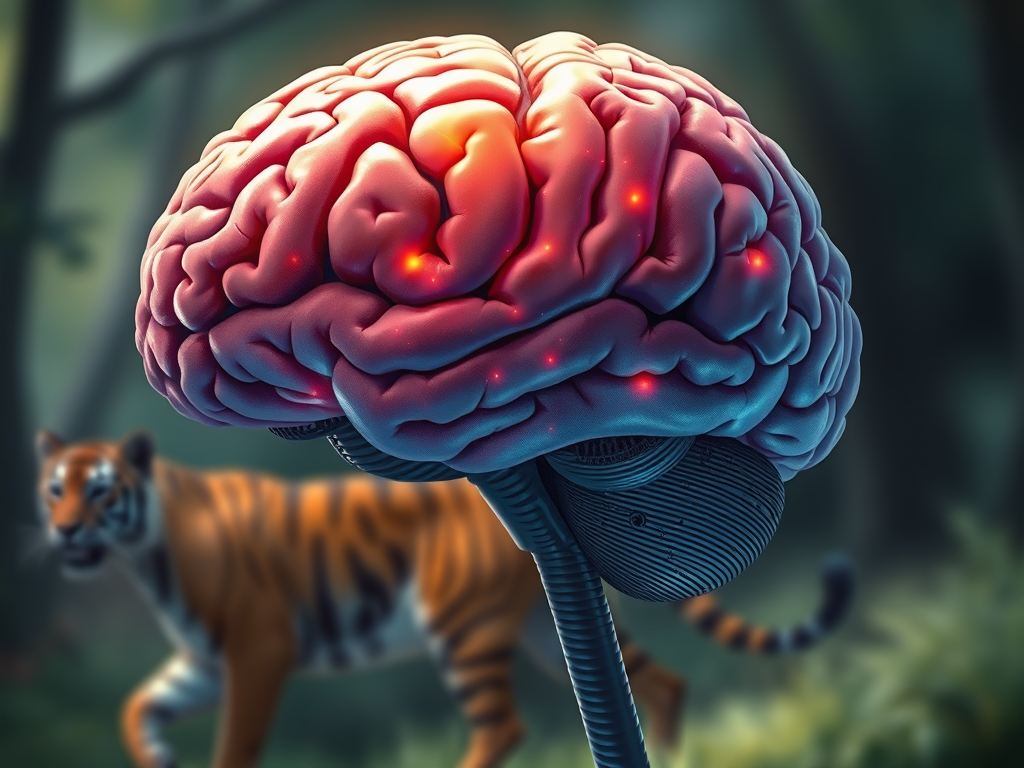
    The human brain prioritizes what it can see immediately. It’s a survival instinct. If a tiger is in front of you, you care about the tiger. If the tiger is 100km away, the tiger doesn’t exist.

    The Danger: This ruins relationships, kills hobbies (like learning English), and destroys goals.


    💎 The Secret: To keep something in your mind, you must keep it in your sight. Visibility = Priority.

    🧐 The Anatomy of the Proverb


    This is a warning about human nature.


    Out of (Preposition):
    Beyond; no longer inside.


    Sight (Noun): The ability to see; vision; range of view. 👀


    Mind (Noun): Memory; attention; thoughts. 🧠


    Simpler Version: If I can’t see it, I will forget it.


    📚 Vocabulary Vault


    Neglect (Verb):
    To not pay enough attention to something. (The result of “out of sight”).


    Fade (Verb): To slowly disappear or become less bright.


    Recall (Verb): To bring a fact back into one’s mind; to remember.


    Distance (Noun): The amount of space between two things. 📏


    Permanence (Noun): The state of remaining unchanged indefinitely.


    🧠 Grammar Focus: Parallelism


    This proverb uses a beautiful structure called Parallelism. It balances two similar phrases to create a catchy rhythm.


    Structure: Out of [Noun A], out of [Noun B].


    Why it works: It suggests a direct cause and effect. Because A happened, B happened.


    Other examples of this rhythm:


    “Easy come, easy go.”


    “No pain, no gain.”

    📜 History & Global Cousins


    This isn’t just English wisdom; it’s human wisdom.


    The Origin

    This idea is ancient. It appears in Homer’s Odyssey (ancient Greece), but the exact English rhyme became popular in the 1500s.


    Global Cousins
    🇹🇷 Turkish:
    “Gözden ırak olan, gönülden de ırak olur.” (He who is far from the eye is also far from the heart.) — A perfect match!


    🇪🇸 Spanish:“Ojos que no ven, corazón que no siente.” (Eyes that don’t see, heart that doesn’t feel.)


    🇫🇷 French:“Loin des yeux, loin du cœur.” (Far from eyes, far from heart.)

    🎭 Short Story: The Trio of the Pond 🐸🐔🐱


    Let’s visit the farm to see this law in action.


    🌟 The Cast
    Cleo the Cat:
    Cool, lazy, and loves naps.


    Cluck the Chicken: Anxious, loud, and easily distracted.


    Fred the Frog: The adventurous traveler.


    The Separation: Fred the Frog was tired of the small farm pond. “I am going to the Amazon River!” he announced.

    Cluck cried, “We will miss you every second!”

    Cleo opened one eye and said, “Don’t worry, Fred. We are the Three Musketeers. We never forget.”


    Month 1 (The Departure): Fred left. Cluck looked at Fred’s empty lily pad every day. “I miss Fred,” she clucked.

    Cleo looked at the empty pond. “Life is boring without Fred.”


    Month 6 (Out of Sight): Cluck found a new shiny beetle to chase. She was very busy pecking the ground. She stopped looking at the pond. Cleo found a warm spot on the roof. She slept 18 hours a day.

    One day, Cluck asked, “Hey Cleo, didn’t we have a green friend? Small guy? Jumped a lot?”

    Cleo yawned. “I think so. Maybe it was a dream. Pass me the milk.”

    Fred was gone from their eyes, so he was fading from their minds.


    Year 1 (The Return): Suddenly, a green figure jumped onto the fence. It was Fred! He had returned from the Amazon! “Hello, family! It’s me, Fred!” he shouted.


    Cluck screamed, “Monster! A green monster!” Cleo hissed and showed her claws. “Who are you, stranger?”


    Fred was shocked. “It’s me! Fred! Best friends?” Cleo squinted her eyes. “Sorry, buddy. I don’t recall a Fred. You’ve been out of sight too long.”


    The Moral: Even best friends can forget if they don’t stay connected. Don’t be like Cleo and Cluck. Keep your friends close, or at least keep their photos visible!

    🎓 Lesson for English Learners


    Don’t hide your English!


    The Mistake:
    You finish studying and put your notebook inside a drawer. You close the app on your phone.


    The Result: You don’t see English for 2 days. You forget the vocabulary.


    The Fix


    Change your phone language to English. (Make it visible!)


    Put sticky notes on your mirror (e.g., “This is a mirror”).


    Follow English pages on Instagram. Don’t let English go “out of sight,” or it will go “out of your mind.”


    💬 Your Turn


    Be honest:
    Is there an old friend you haven’t spoken to in over a year because they moved away? Or a hobby you stopped doing because you packed the equipment in a box?


    👇 Tell us in the comments below! Let’s bring them back into sight today.

    By Zubeyir YURTKURAN

    https://www.facebook.com/BrainBattleground/

    https://www.facebook.com/zubeyr.yurtkuran/

    https://www.instagram.com/zubeyryurtkuran/
    https://www.youtube.com/@BrainBattleground-b3p

    https://www.instagram.com/brainbattleground/

  • 🕵️ The Daily Shield: The Trap of Curiosity

    🕵️ The Daily Shield: The Trap of Curiosity

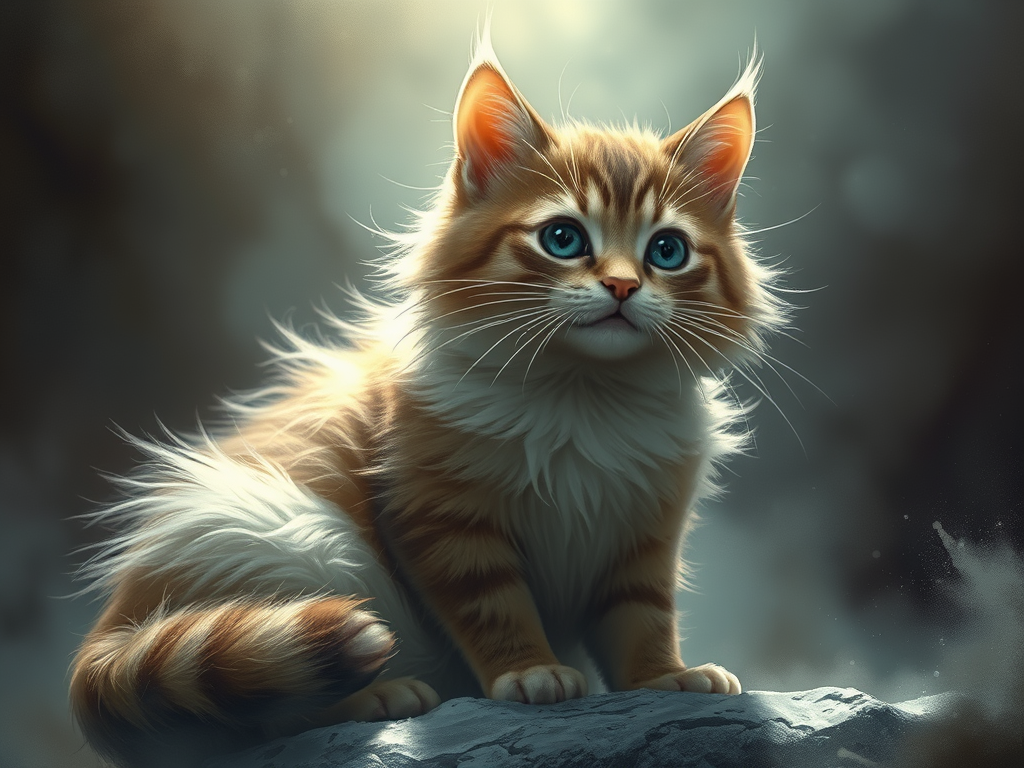
    “Curiosity killed the cat.”


    😈 The Villain (The Snooper):
    You see an unlocked phone on the table. You shouldn’t look, but you must know.

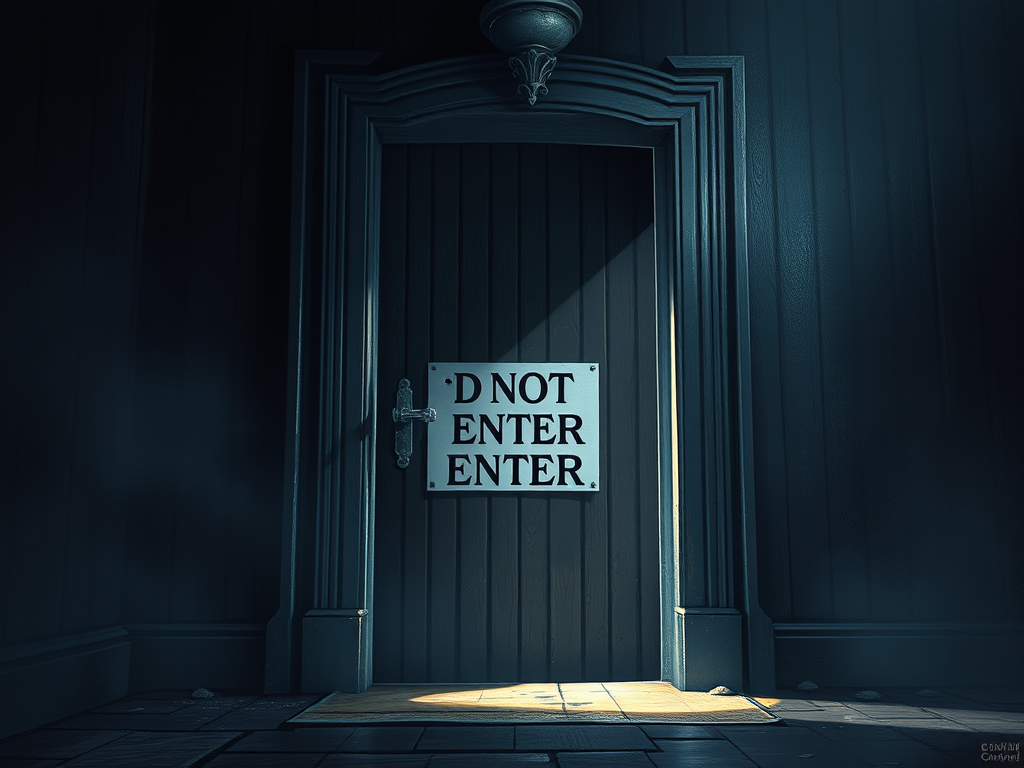
    You see a door marked “Do Not Enter.” You open it.

    You hear a whisper about you. You demand to know what was said.

    The Result? You find text messages that hurt your feelings.

    You walk into a room and ruin your own surprise party.

    You learn a secret that keeps you awake at night.

    You chased the truth, but the truth bit you. 🐍


    😇 The Hero (The Wise Observer):


    You see the phone, but you respect privacy.

    You see the closed door, and you keep walking.

    You hear the whisper, but you realize that what others think of you is none of your business.

    The Result? You have peace of mind.

    You protect your relationships.

    You sleep soundly because your brain isn’t full of drama that doesn’t belong to you.

    You know that sometimes, ignorance is bliss. 🧘‍♂️


    ⚖️ The Reality


    Curiosity is the engine of science, but the enemy of peace.

    There is a thin line between Learning (Good Curiosity) and Snooping (Bad Curiosity).


    Good Curiosity: “How does the universe work?” 🌌


    Bad Curiosity: “Why did my ex-boyfriend like that photo?” 📱


    💎 The Plot Twist (Wait for it…)


    Did you know this proverb has a secret second half? Most people stop at the death of the cat. But the full version is:


    “Curiosity killed the cat, but satisfaction brought it back.”


    Meaning: Yes, taking a risk to find the truth might hurt you (kill the cat), but finding the answer is often worth the pain (brought it back).

    This changes everything! It means: Take the risk, but be ready for the consequences.

    🧐 The Anatomy of the Proverb


    Let’s dissect this classic warning.


    Curiosity (Noun): A strong desire to know or learn something. (The trigger).


    Killed (Verb): Past tense of kill. (The consequence).


    The Cat (Noun): In idioms, cats often represent people who are getting into trouble.


    Simpler Version: Stop asking questions you don’t want the answers to.


    📚 Vocabulary Vault


    Add these words to your arsenal to sound like a native speaker.


    Nosy (Adjective): Showing too much curiosity about other people’s affairs.


    Example: “Don’t be so nosy! It’s personal.”


    Pry (Verb): To inquire too closely into a person’s private affairs.


    Example: “I don’t mean to pry, but are you okay?”


    Eavesdrop (Verb): To secretly listen to a conversation. 👂


    Example: “She was eavesdropping on the boss’s meeting.”


    Intriguing (Adjective):
    Arousing one’s curiosity or interest; fascinating.


    Example: “That is a very intriguing idea.”


    🧠 Grammar Focus: Personification


    English loves to make non-human things act like humans. This is called Personification.


    The Phrase: “Curiosity killed the cat.”


    The Logic: Curiosity is an emotion. It cannot hold a weapon. It cannot “kill” anything. But in English, we give it the power of a killer to show how dangerous it is.


    Other Examples:


    “Time flies.” (Time is not a bird).

    “Opportunity knocks.” (Opportunity does not have hands).

    “Fear gripped him.” (Fear does not have fingers).

    📜 History: From Shakespeare to Today


    Where did this come from?


    The Original:
    In 1598, Ben Jonson wrote a play where he said, “Care killed a cat.” Back then, “Care” meant “Worry” or “Sorrow.” The idea was that worrying too much is bad for your health.


    The Evolution: Over hundreds of years, “Care” changed to “Curiosity.”


    Global Cousins:


    🇹🇷 Turkish:
    “Fazla merak kediyi öldürür” (Too much curiosity kills the cat) or “Merak insanı mezara, parayı pazara…” (Curiosity takes a man to the grave…).


    🇪🇸 Spanish: “La curiosidad mató al gato.”


    🇫🇷 French: “La curiosité est un vilain défaut.” (Curiosity is a nasty fault).

    🎭 Short Story: The Blue Envelope


    Let’s visit our students, Penny and Max.


    🌟 The Setup:
    The teacher leaves a Blue Envelope on his desk. He says, “Nobody touch this.” He leaves the room.


    The Conflict:


    Max (The Nosy One):
    He is sweating. He needs to know. Is it exam answers? Is it a love letter? He sneaks up. He opens the envelope.


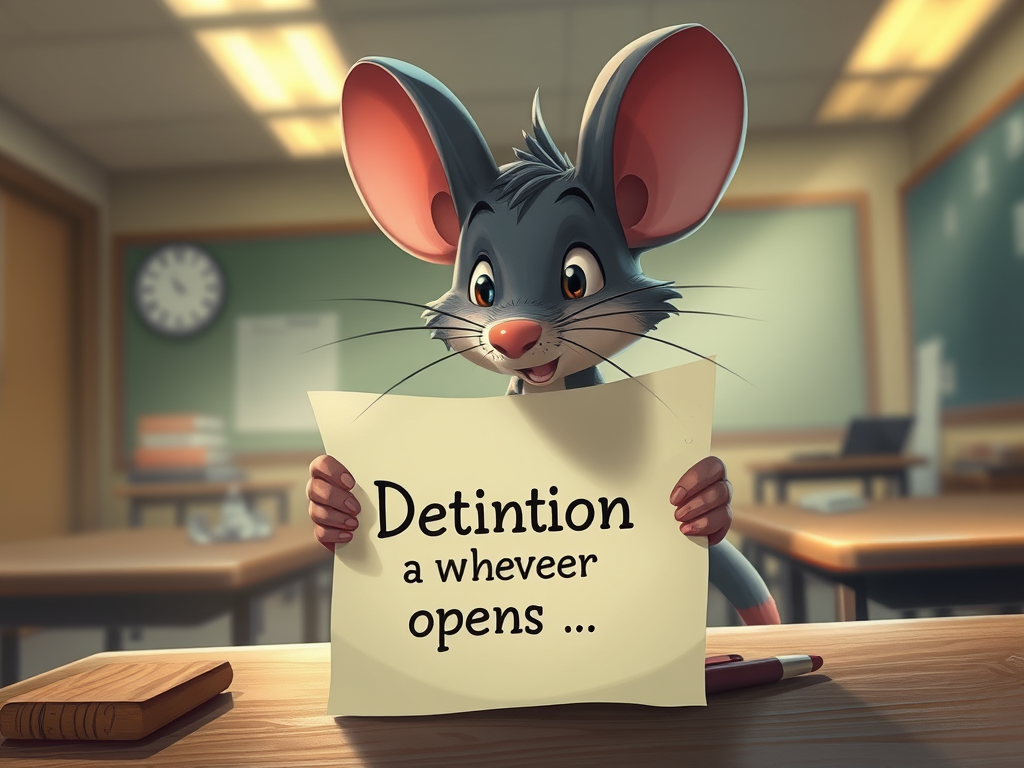
    The Trap: Inside, there is only a piece of paper that says: “Detention for whoever opens this.” The teacher walks in. Max is caught. Curiosity killed Max’s free time. 💀


    Penny (The Focused One): She stays in her seat. She opens her book. She knows the teacher is tricky.


    The Reward: Penny goes home early. Max stays at school.


    The Moral: Sometimes, the mystery is a trap. Be like Penny. Mind your own business. ✉️

    🎓 Lesson for English Learners


    Don’t Ask “Why?” Too Much.


    Situation:
    You learn a grammar rule that makes no sense. (Example: Why is it “on the bus” but “in the car”?).


    The Trap: You stop speaking. You spend 3 hours searching Google for the history of prepositions. You get confused. You get frustrated.


    The Solution: Curiosity is killing your fluency!


    You Say: “I don’t care why. I just accept it.”


    The Rule: Sometimes in language learning, you must turn off your curiosity and just mimic what you hear.


    💬 Your Turn: The “Nosy” Test 🚀


    Let’s see where you stand.


    Question:
    If you found your best friend’s diary open on the floor…

    A) I would read it immediately. (The Villain) 😈

    B) I would close it without looking. (The Hero) 😇

    C) I would read one page, then feel guilty. (The Human) 😐


    Tell us in the comments! Are you A, B, or C? 👇

    By Zubeyir YURTKURAN

    https://www.facebook.com/BrainBattleground/

    https://www.facebook.com/zubeyr.yurtkuran/

    https://www.instagram.com/zubeyryurtkuran/

    https://www.youtube.com/@BrainBattleground-b3p

  • 🏔️ The Daily Shield: The Law of Determination

    🏔️ The Daily Shield: The Law of Determination

    Where there’s a will, there’s a way.


    👿 The Villain (The Victim): You say “I can’t do it because I don’t have money.”

    You say “I’m too old to learn English.”

    You say “I don’t have time.”

    You stare at the closed door and cry.

    You wait for someone else to open it for you.

    The Result? You stay in the same place for 10 years. You become bitter.

    You become the person who says, “I could have been great, but…” 🌧️


    😇 The Hero (The Pathfinder): You see a closed door, so you look for a window.

    The window is locked? You look for the chimney.

    The chimney is blocked? You grab a hammer and break the wall!

    You don’t have money? You use free libraries.

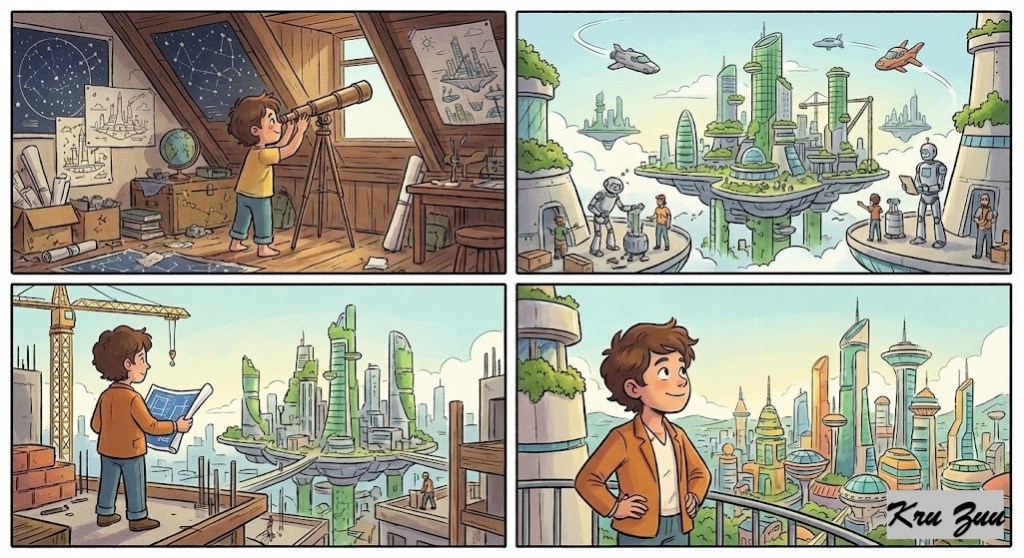
    You don’t have time? You listen to podcasts while you sleep.

    The Result? You achieve the “impossible.” People call you lucky, but you know the truth: You just refused to take “No” for an answer. 🔨


    ⚖️ The Reality: Talent is overrated. Resources are overrated. Desire is the only thing that matters.

    💎 The Secret: Obstacles are not “Stop” signs; they are tests to see how badly you want it.

    🧐 The Anatomy of the Proverb


    This is the Golden Rule of Grit. It implies that if your desire (will) is strong enough, you will eventually find a method (way) to succeed, no matter how hard it is.


    Where: In any situation or place.


    Will (Noun): Not the future tense auxiliary verb! Here, it means strong desire, determination, or mental power. 🔥


    Way (Noun): A method, a path, a plan, or a solution. 🗺️


    📚 Vocabulary Vault


    Determination (Noun):
    The quality of not giving up, even when things are difficult.


    Obstacle (Noun): Something that blocks your way (a problem).


    Resourceful (Adjective): Good at finding ways to solve problems. (MacGyver is resourceful!). 🛠️


    Persist (Verb): To continue doing something even though it is difficult.


    Inevitable (Adjective): Certain to happen; unavoidable.


    🧠 Grammar Focus


    Parallel Structure & Existential “There is” This proverb uses a perfect balance. It links a condition to a result using “Where.”


    Structure: Where [Situation], [Result].


    Condition: Where there is a will… (If strong desire exists…)


    Result: …there is a way. (…a solution also exists.)


    Note on “Will”:


    Verb: I will call you. (Future)


    Noun: He has a strong will. (Determination) -> This proverb uses the Noun form!

    📜 History: Origin and Spread


    This isn’t just modern motivation; it’s ancient wisdom.


    The Origin: It was popularized by the English poet George Herbert in 1640.


    The Logic: Historically, people believed the human spirit was stronger than physical reality. If you can imagine it, you can build it.


    Global Cousins:


    🇹🇷 Turkish:
    “İsteyen çaresini, istemeyen bahanesini bulur.” (The one who wants finds a remedy, the one who doesn’t finds an excuse.) — Perfect match!


    🇪🇸 Spanish: “Querer es poder.” (To want is to be able.)


    🇯🇵 Japanese: “Ishi no ue ni mo san nen.” (Sit on a stone for 3 years, and it will become warm.) — Focus on patience/will.

    🎯 Impact on Life: The Pros & Cons


    Is pure willpower enough?


    ✅ The Pros (The Fuel):


    Innovation:
    When you refuse to quit, you invent new solutions (like Elon Musk or Thomas Edison).


    Resilience: Failure doesn’t hurt you; it just teaches you “how NOT to do it.”


    ❌ The Cons (The Burnout):


    Stubbornness:
    Sometimes there isn’t a way (e.g., You can’t flap your arms and fly). Don’t confuse “Will” with “Delusion.”


    Exhaustion: Pushing too hard without rest can break you.

    🎭 Short Story: The High Wall


    Let’s visit our friends again, Penny and Max.


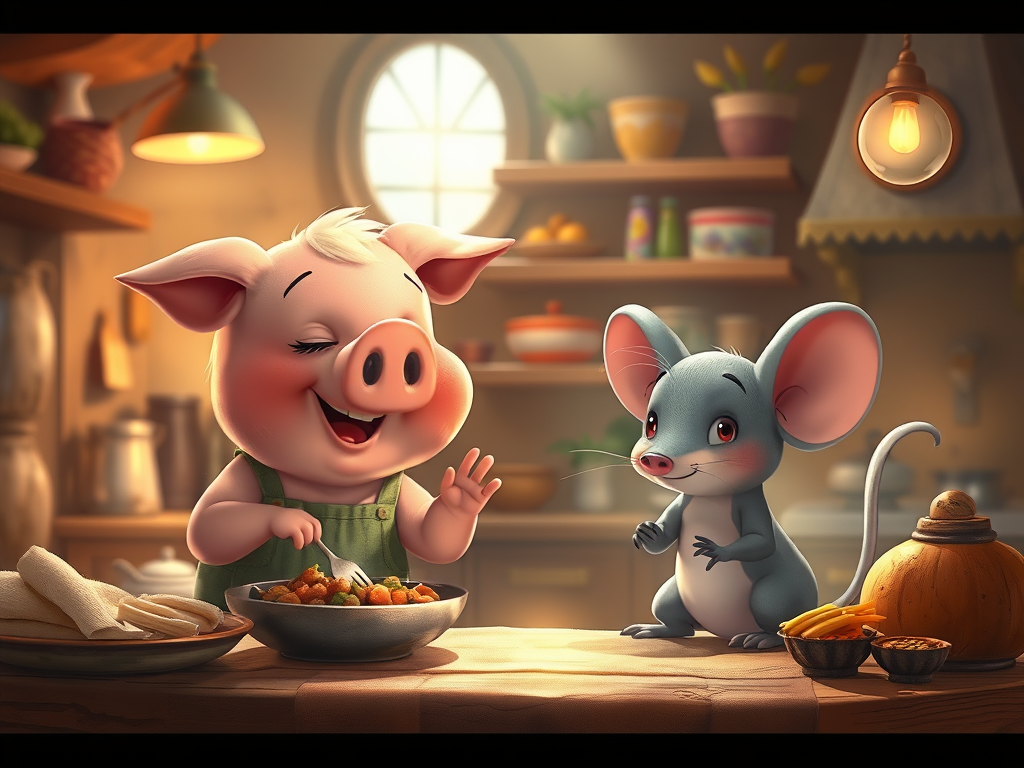
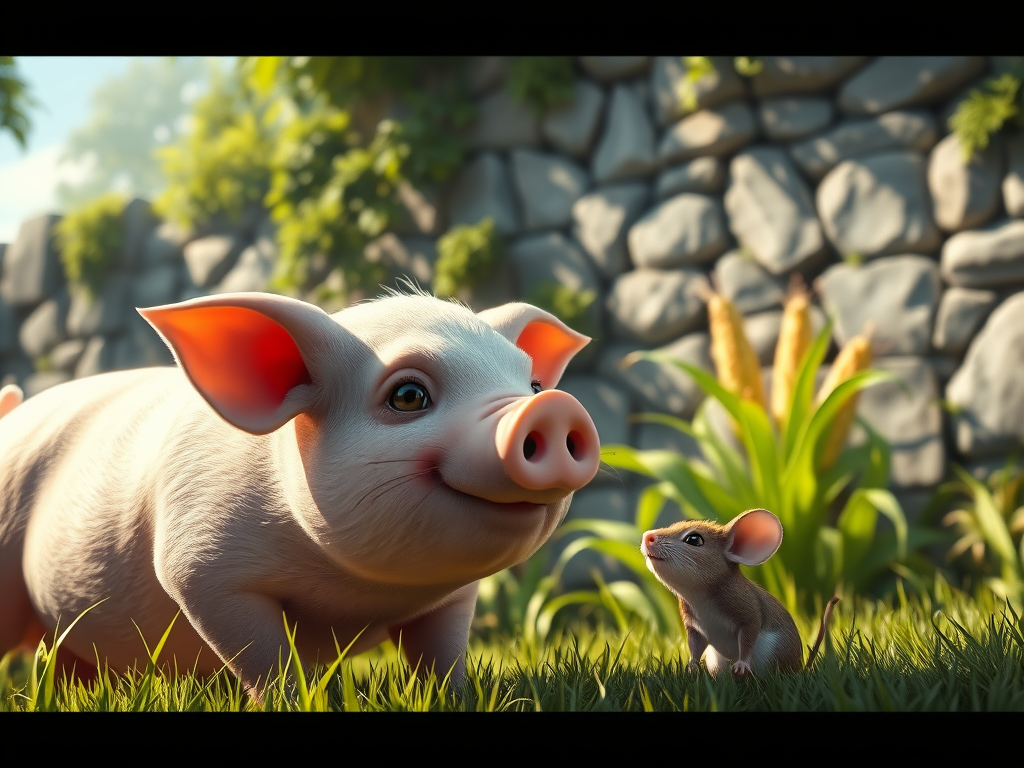
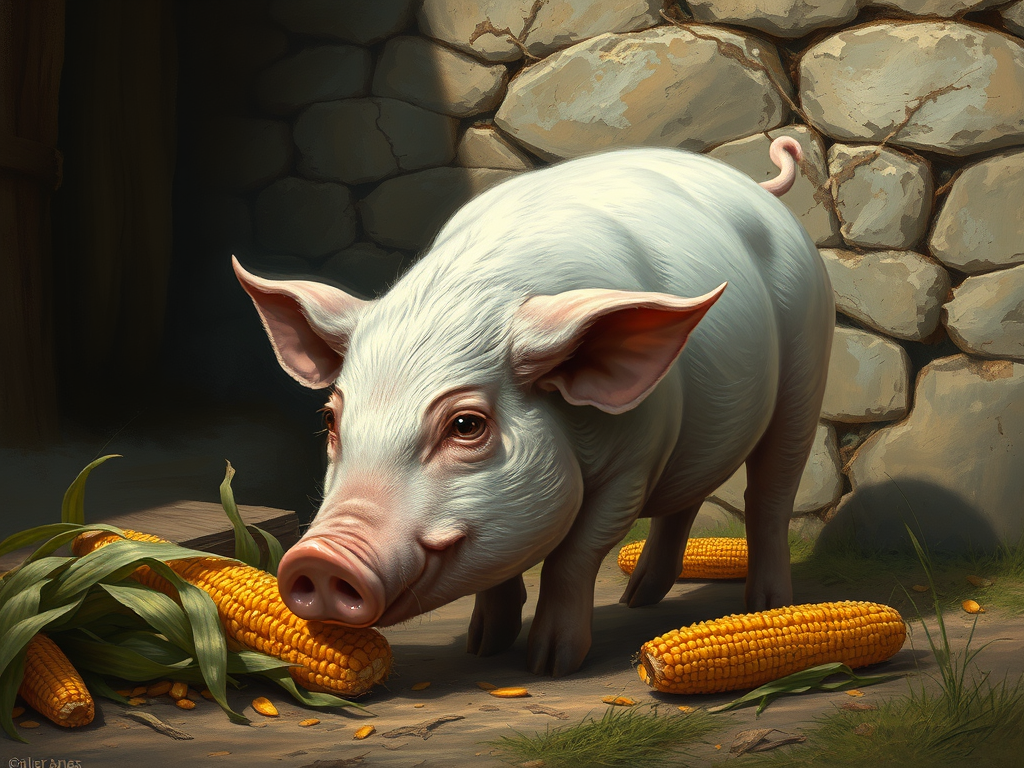
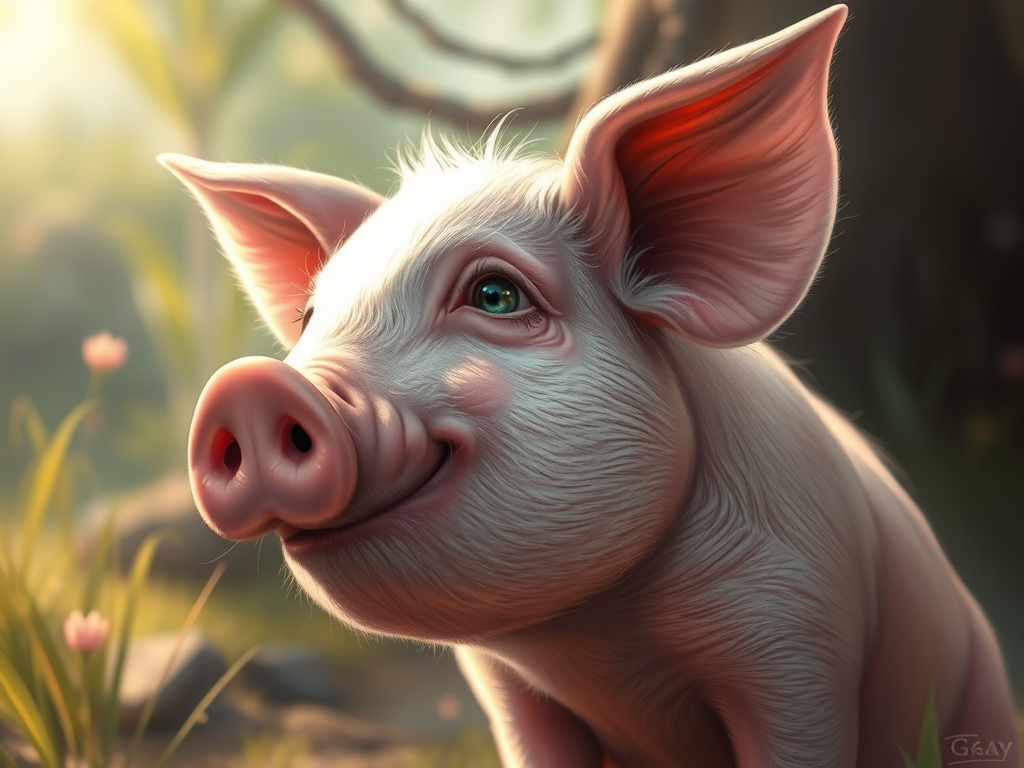
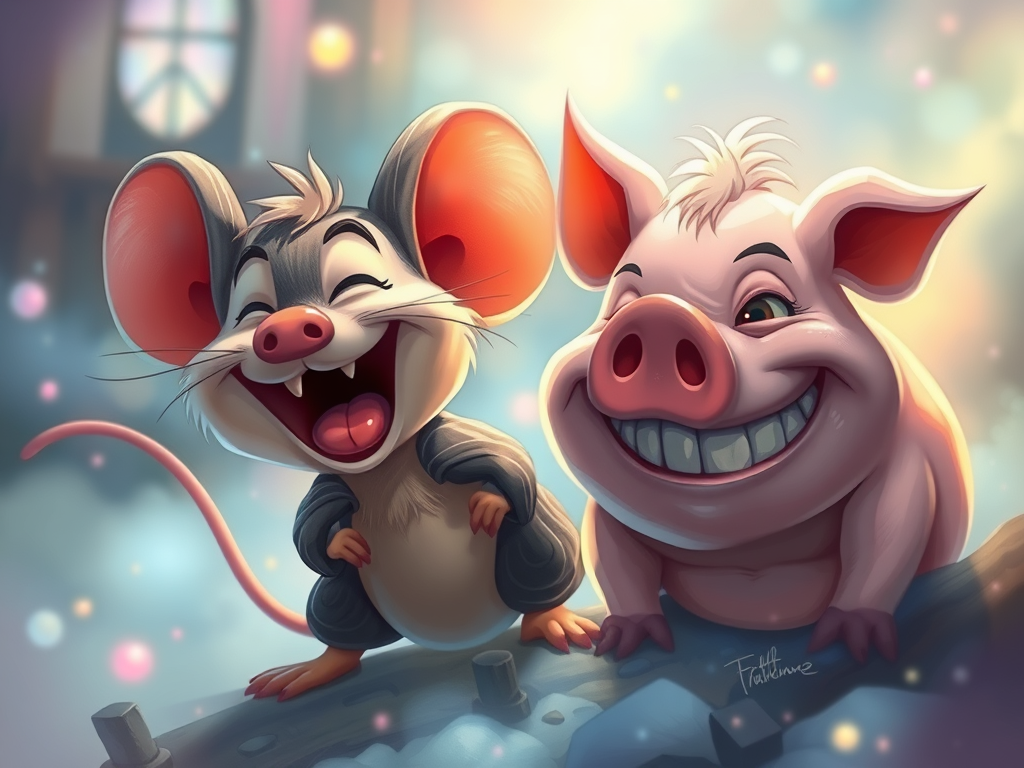
    🌟 The Setup: Penny the Pig and Max the Mouse were hungry.

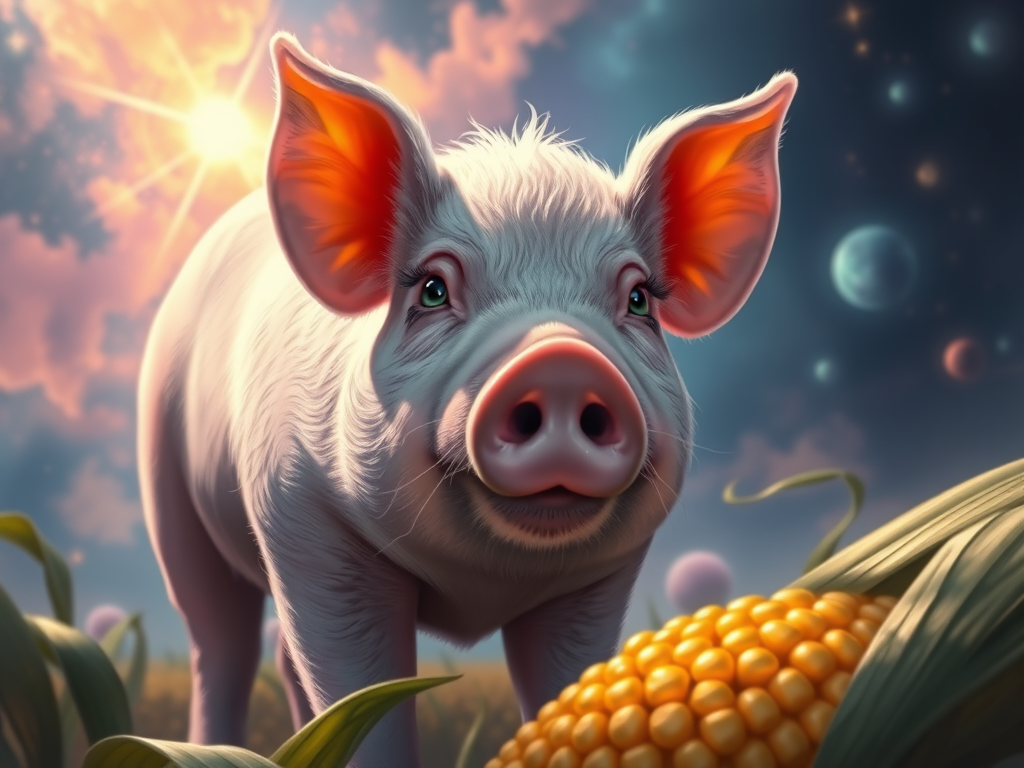
    They smelled delicious fresh corn inside a garden. But there was a huge, 3-meter stone wall around the garden. 🧱


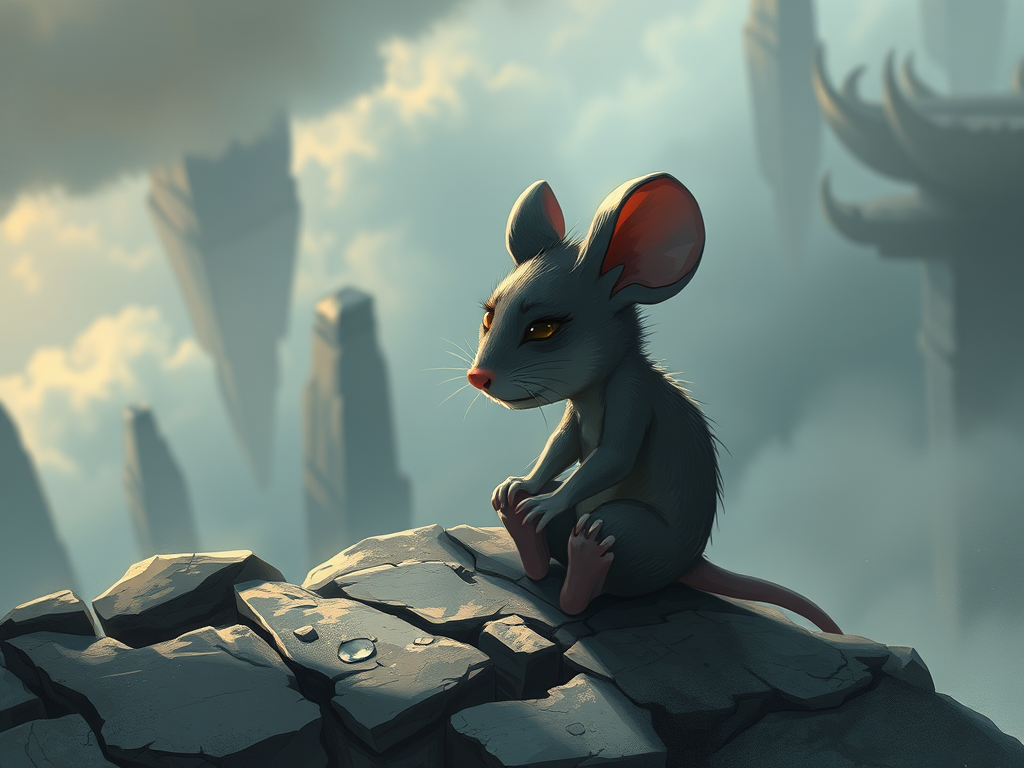
    The Conflict: Max looked at the wall. “It’s too high,” he sighed.

    “I am just a mouse. It is physically impossible to climb this.” Max sat down and cried. He had no Will.

    Penny looked at the wall. She couldn’t climb either.

    But she wanted that corn. She walked around the wall for 2 hours. Nothing.

    She tried to jump. Failed.


    The Action: Did Penny go home? No.

    She found a small crack in the ground near the wall.

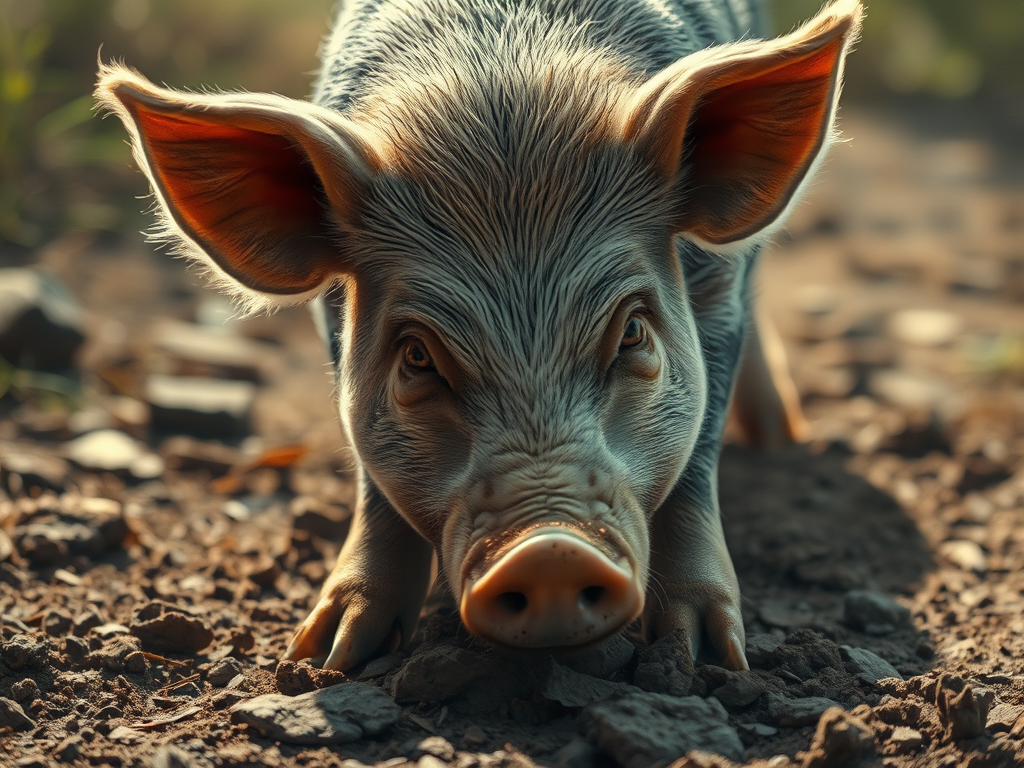
    She started digging. She dug for 4 hours. Her hooves hurt. She was dirty.

    Max laughed, “Give up, Penny!”

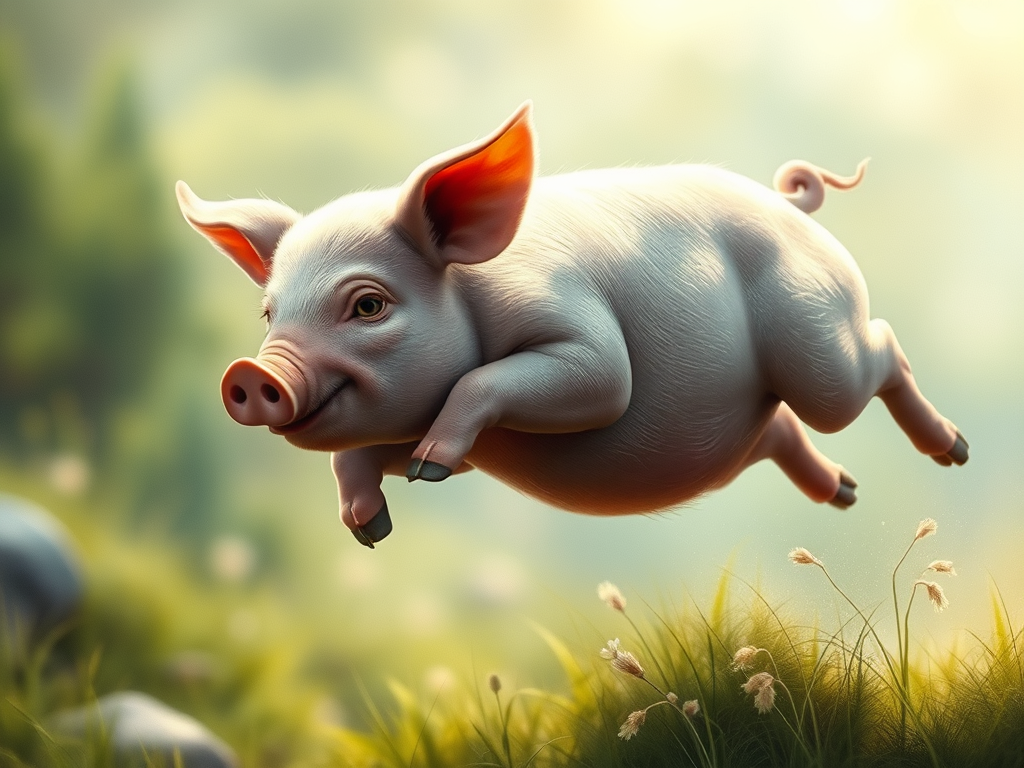
    Suddenly… Pop! Penny squeezed under the wall through the hole she dug.


    The Moral: Max focused on the Wall (The Obstacle).

    Penny focused on the Corn (The Goal).

    Max is still hungry.

    Penny is eating lunch.

    🎓 Lesson for English Learners


    Don’t use this just for major life goals; use it for your English journey!


    Advice on Speaking 🗣️


    Situation:
    A student says, “I can’t speak English because I don’t live in America.”


    You Say: “That is an excuse. You have the Internet, YouTube, and AI. Where there’s a will, there’s a way. Find a way!”


    Advice on Career 💼


    Situation:
    Your friend hates their job but says, “I can’t quit, I have bills.”


    You Say: “Start a side hustle. Learn a new skill at night. If you really want freedom, you will find a path. Where there’s a will, there’s a way.”


    💬 Your Turn


    The “Impossible” Challenge 🚀


    The Goal:
    Identify one thing you said you “CAN’T” do.


    “I can’t lose weight.”


    “I can’t wake up early.”


    “I can’t save money.”


    The Action:
    Replace “I can’t” with “How can I?” Write down 3 creative ways to solve that problem right now.


    Question: What is a “Wall” in your life right now?

    Are you going to be Max (sit and cry) or Penny (start digging)? 👇

    By Zubeyir YURTKURAN

    https://www.facebook.com/BrainBattleground/

    https://www.facebook.com/zubeyr.yurtkuran/

    https://www.instagram.com/zubeyryurtkuran/
    https://www.youtube.com/@BrainBattleground-b3p