
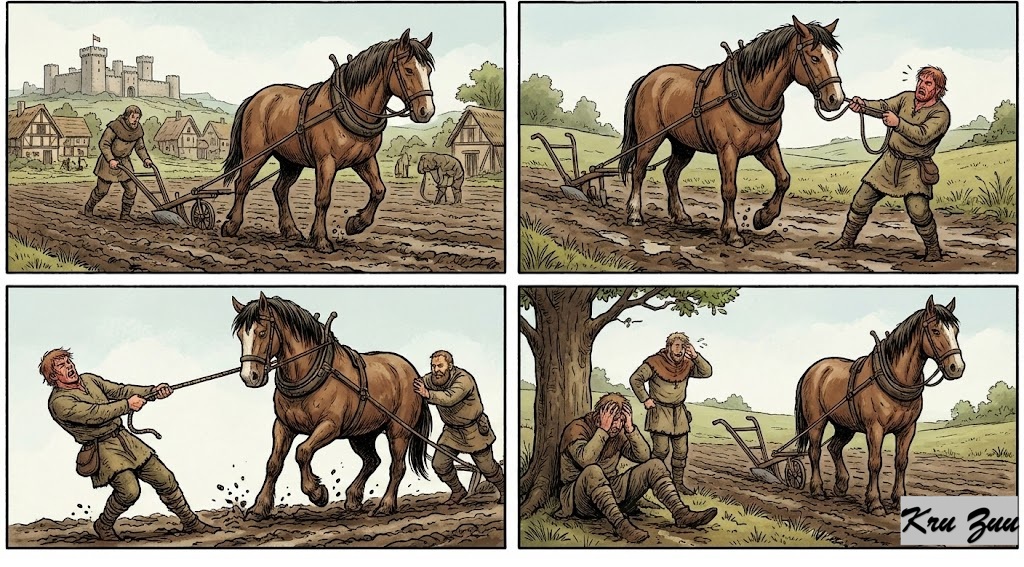
“You can lead a horse to water, but you can’t make him drink.”
😈 The Villain (The Control Freak)
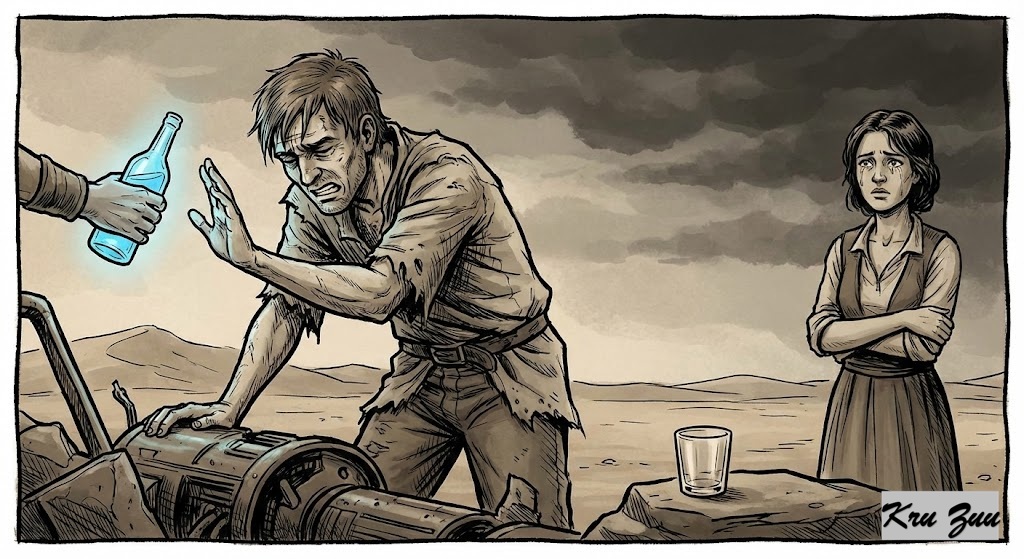
You want your friend to learn English. You buy them books, you send them links, you beg them to study. They don’t do it. You get angry.
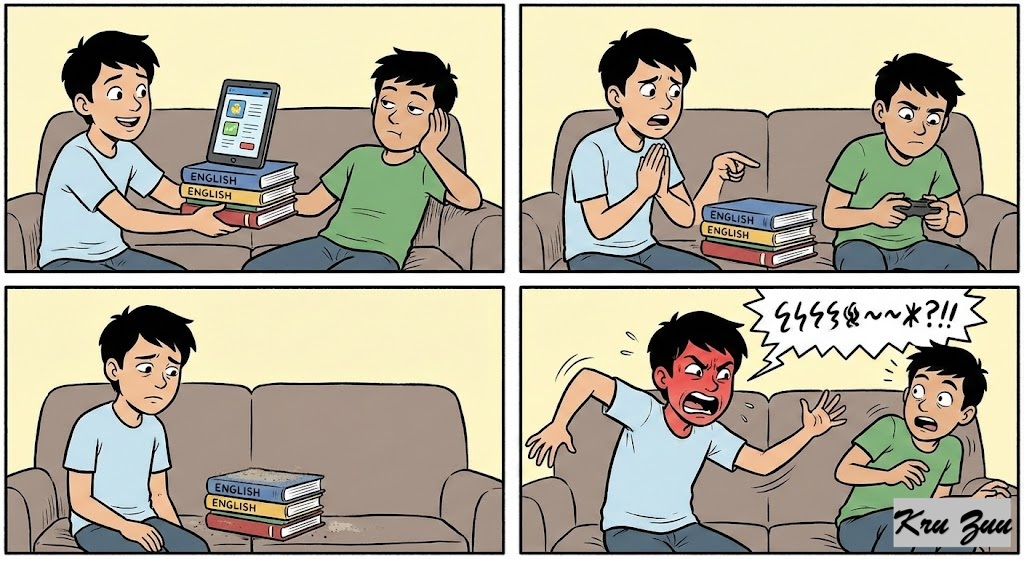
You want your brother to eat healthy. You cook him broccoli. He orders pizza. You feel frustrated and exhausted.

You think, “If I try harder, I can change them.” You are fighting a war you cannot win. You are trying to control another person’s mind. 🤯
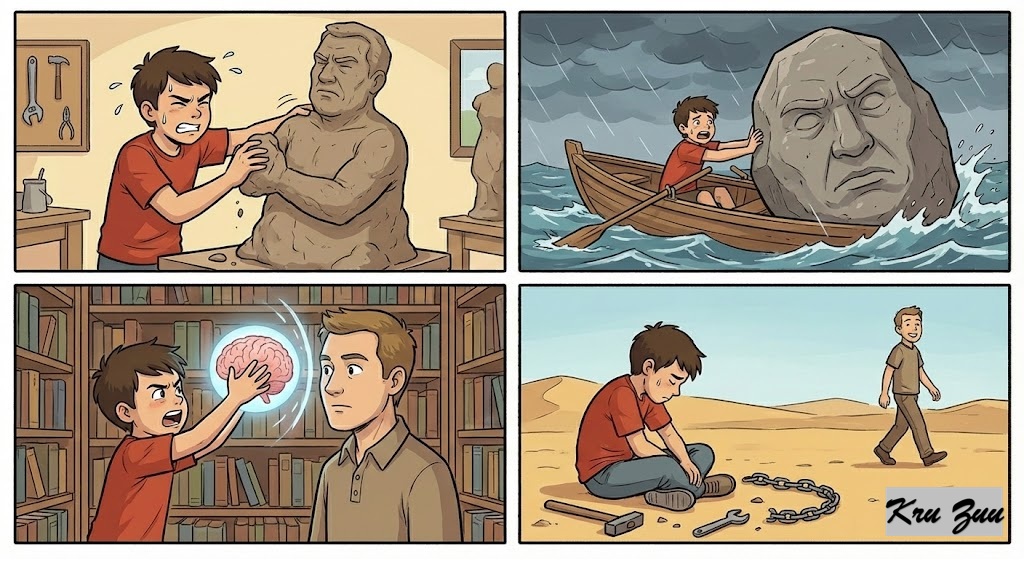
😇 The Hero (The Guide)
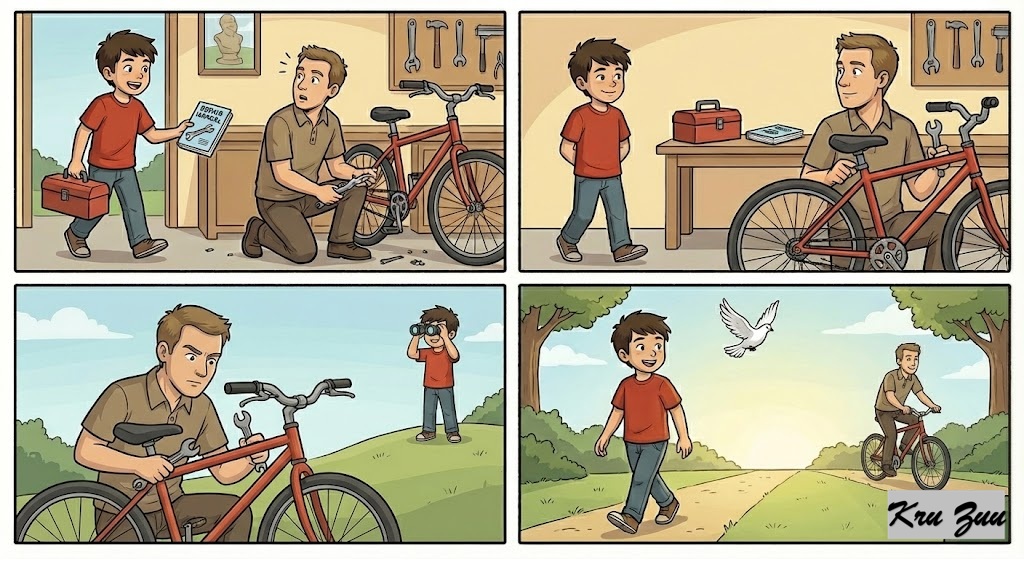
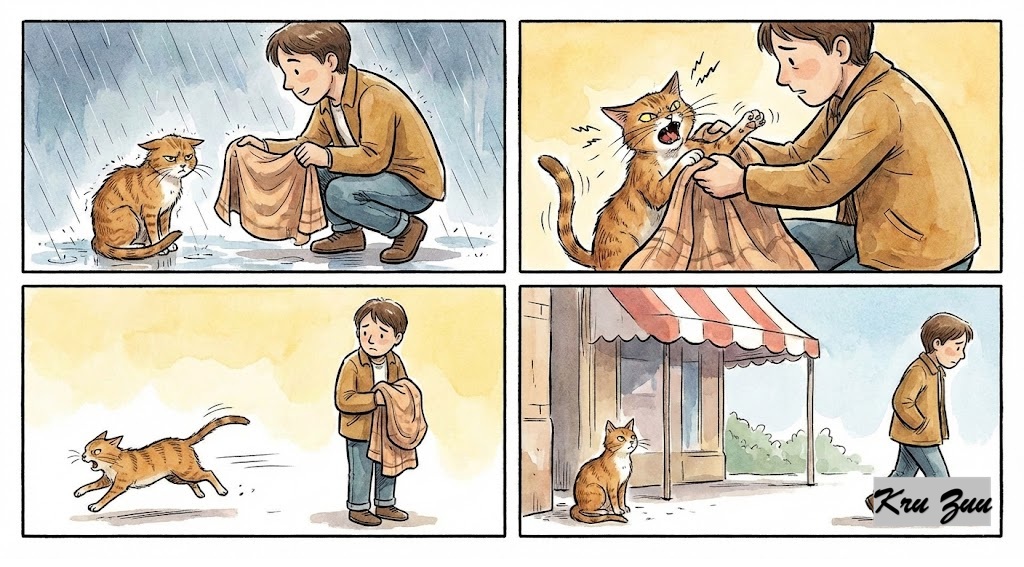
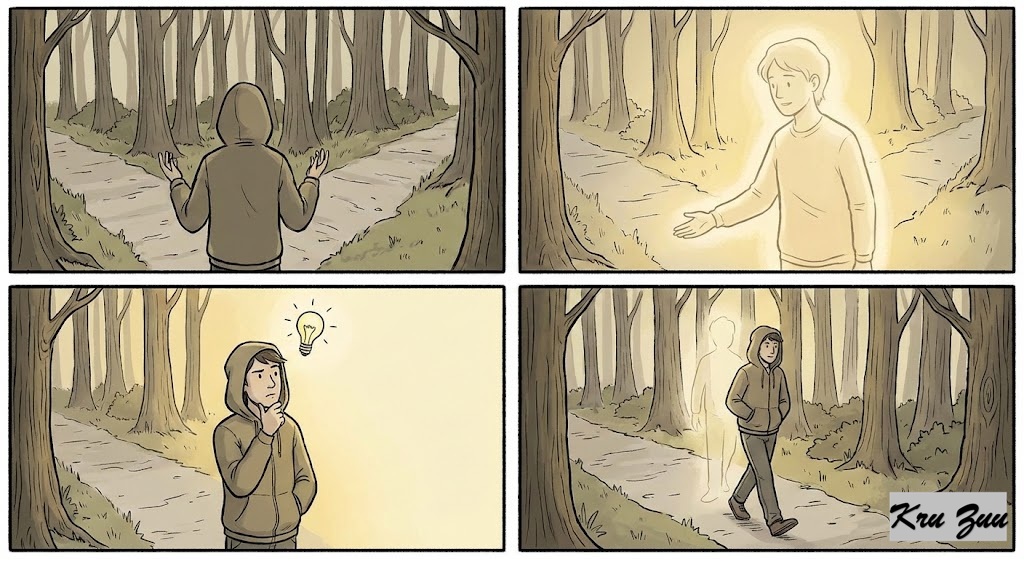
You offer help. You open the door. You say, “Here are the tools if you need them.” Then, you step back. You understand that you are the guide, not the commander. You focus on your own actions, not their reactions.
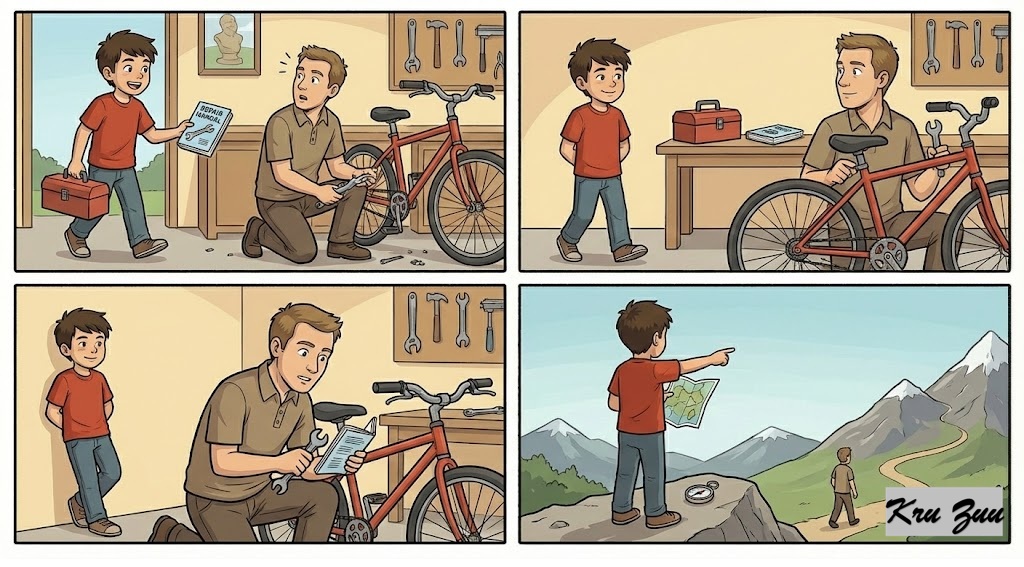
The Result? You protect your energy. You don’t take their refusal personally. You are helpful, but you are also free. 🕊️
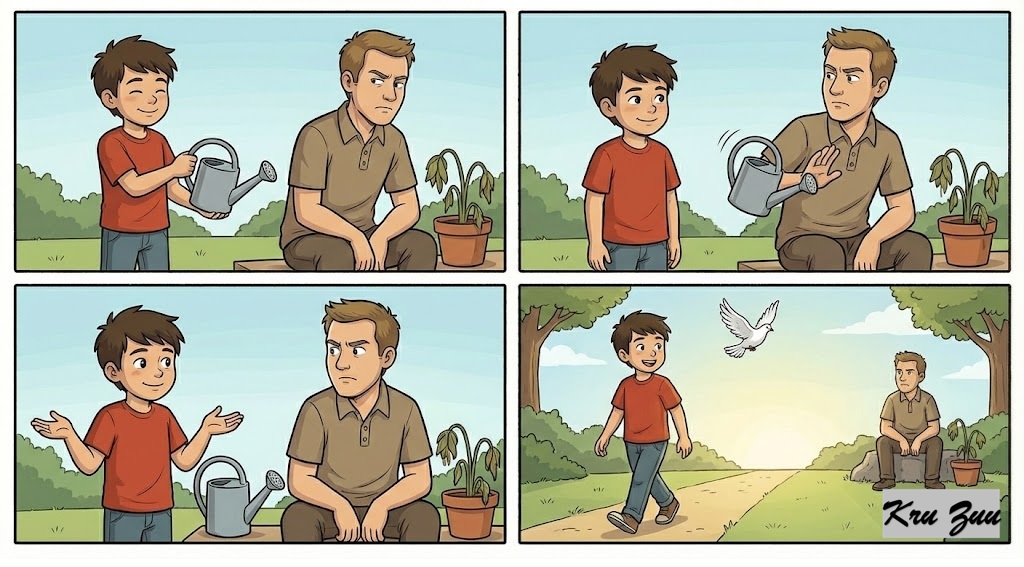
⚖️ The Reality
Help is not a forceful injection; it is an offering. You can provide the best opportunity in the world (the water), but the desire to take it (the drinking) must come from inside them. Motivation cannot be donated.
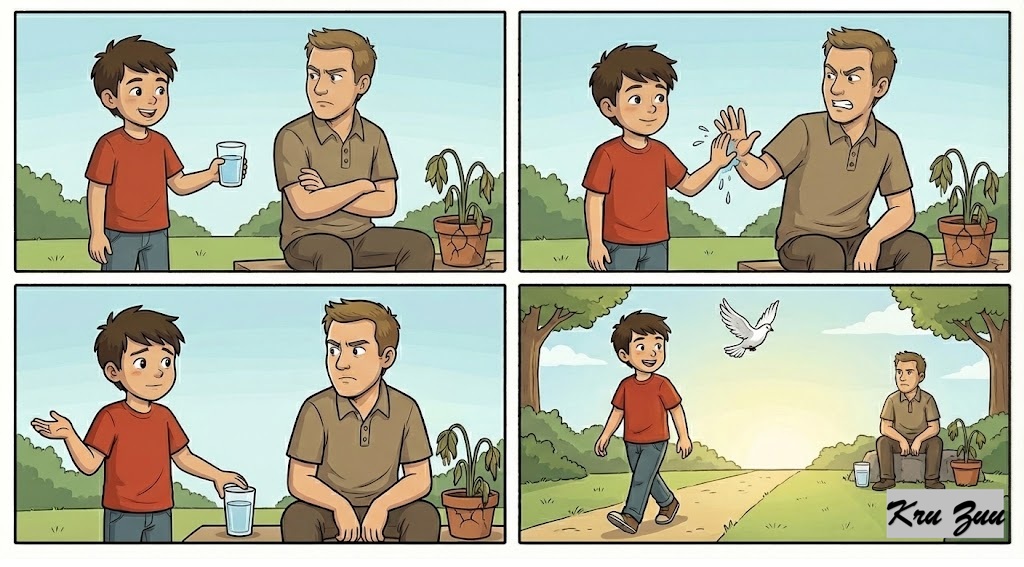
💎 The Secret: You are responsible to people (to help them), but you are not responsible for people (for their choices).
🧐 The Anatomy of the Proverb
This is the ultimate lesson in boundaries.
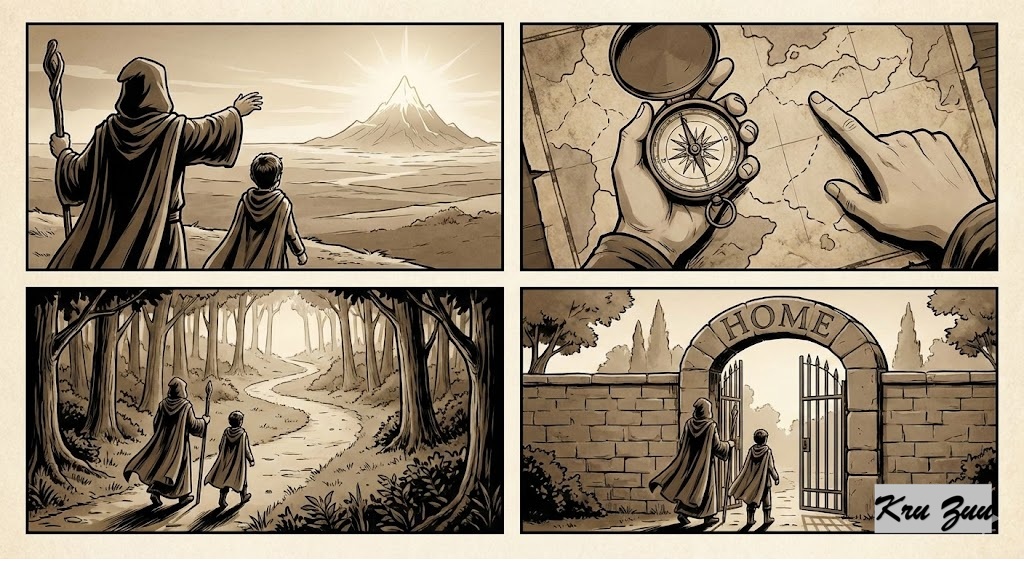
Lead (Verb): To show the way; to guide someone to a place. 🗺️
Make (Causative Verb): To force or compel someone to do something. (This is the impossible part!).

Simpler Version: You can’t force people to accept your help.
📚 Vocabulary Vault
Reluctant (Adjective): Unwilling and hesitant to do something.
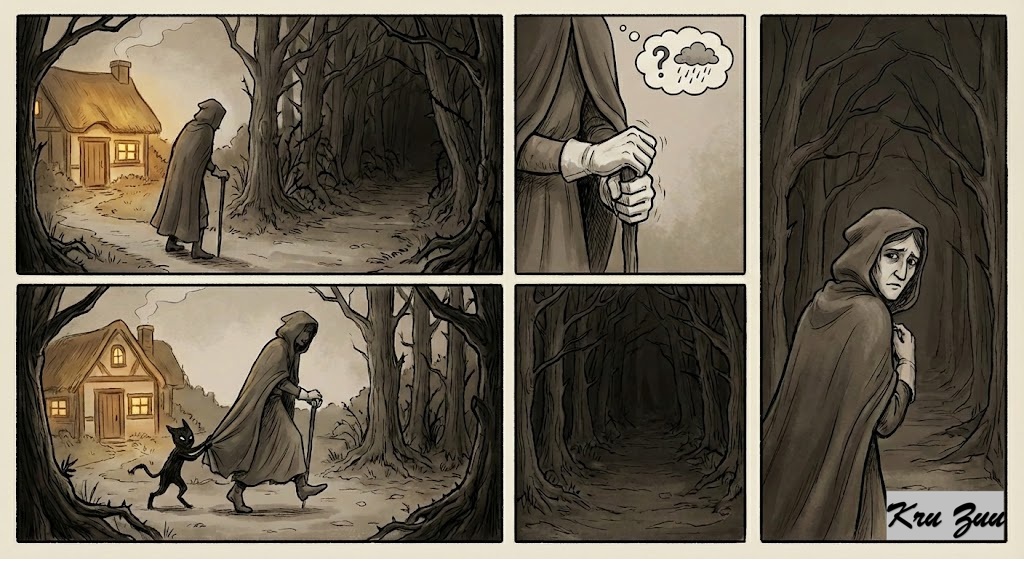
Initiative (Noun): The power or opportunity to act or take charge before others do.
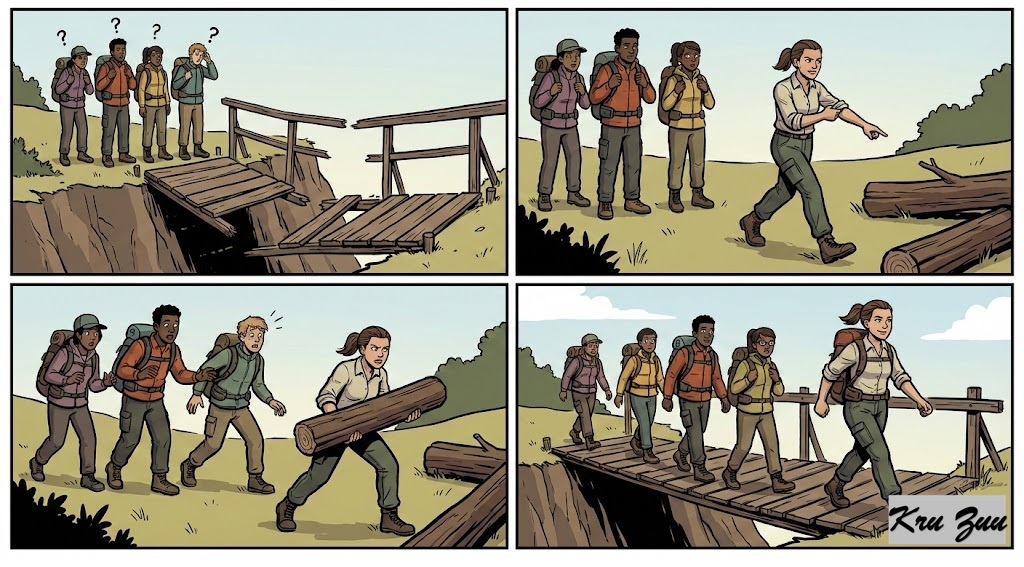
Stubborn (Adjective): Having a determination not to change one’s attitude. 🧱
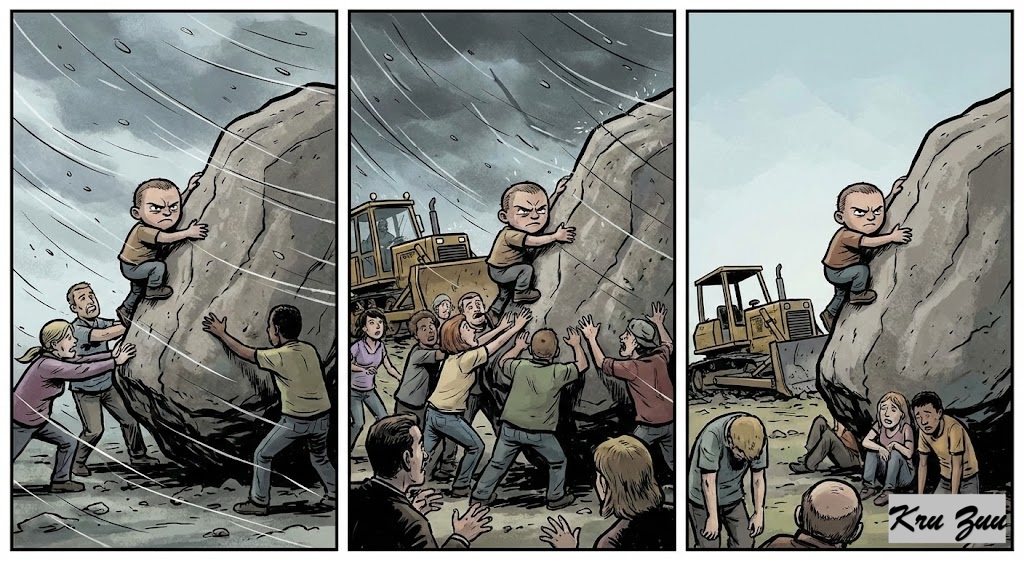
Autonomy (Noun): The right or condition of self-government; freedom to choose.
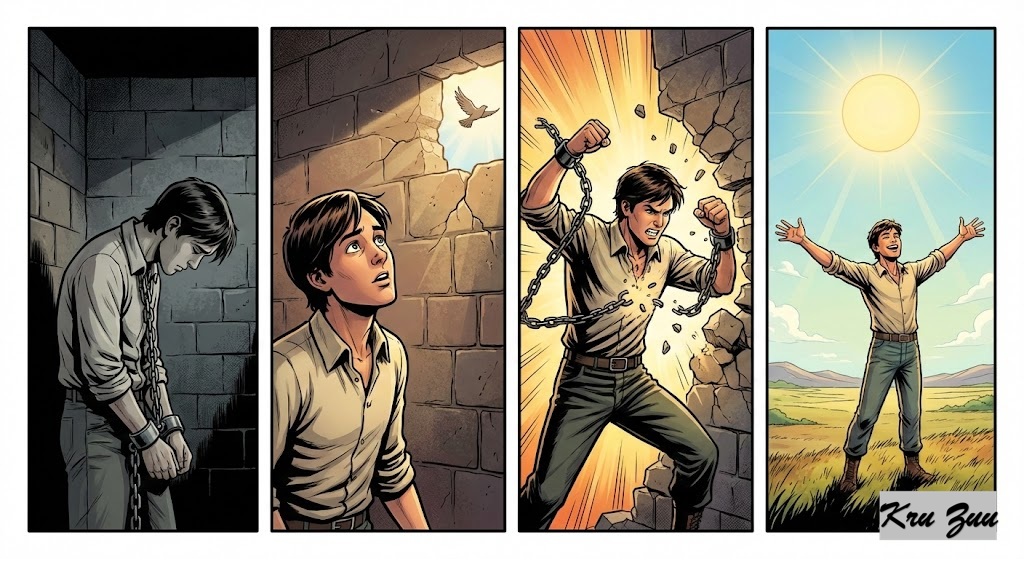
Influence (Verb/Noun): To have an effect on someone, but not total control.
🧠 Grammar Focus: Causative Verbs
This proverb uses a very specific grammar structure called Causative Verbs.
The Structure: Subject + Make + Person + Verb (Base Form).
Meaning: To force someone to do something.
Examples
❌ “You can’t make him to drink.” (Incorrect!)
✅ “You can’t make him drink.” (Correct)
“My teacher made me study extra hours.”
“Sad movies make me cry.”
📜 History: Origin and Spread
This is one of the oldest proverbs in the English language!
The Origin: It was first recorded in 1175 in Old English homilies. Horses were essential for survival (transport, farming). Everyone knew that a stubborn horse could not be moved, no matter how strong the farmer was.
Global Cousins
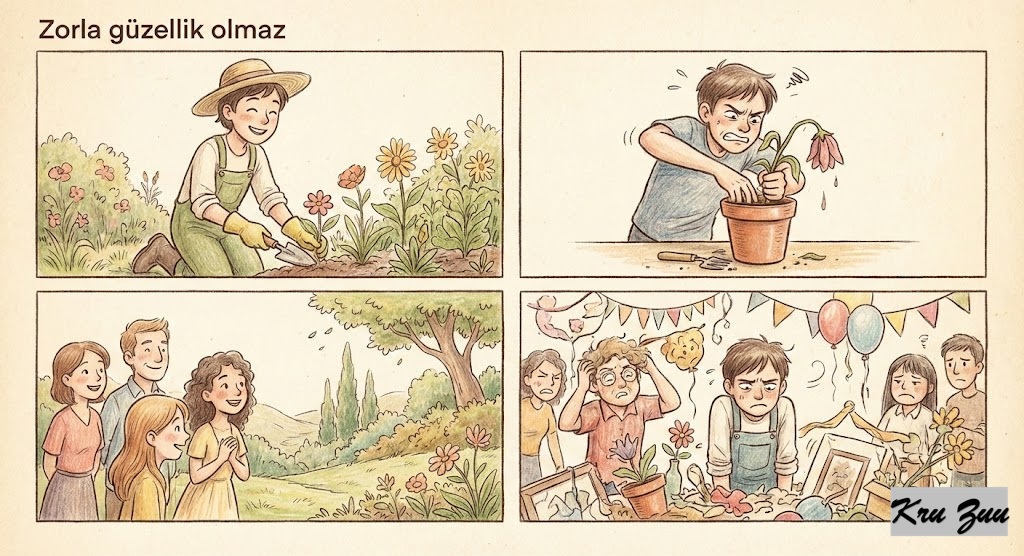
🇹🇷 Turkish: “Zorla güzellik olmaz.” (Beauty cannot be forced/There is no forced beauty.) OR “Zorla kuyu kazılmaz.”
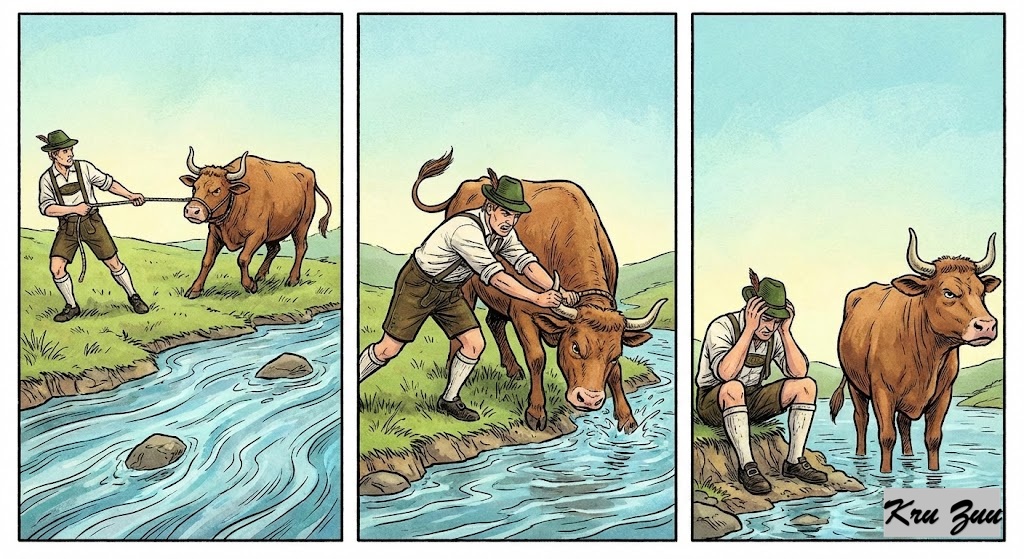
🇩🇪 German: “Man kann einen Ochsen zum Wasser führen, aber man kann ihn nicht zwingen, zu saufen.” (You can lead an ox to water, but you can’t force it to booze/drink.)
🎯 Impact on Life: The Pros & Cons
✅ The Pros (Inner Peace)
Relief: When you realize you can’t “fix” everyone, a huge weight lifts off your shoulders.

Respect: You respect others’ choices, even if they are bad choices.

❌ The Cons (The frustration)
Watching Failure: Sometimes, you have to watch people you love fail because they refuse the “water.” That requires emotional strength.
🎭 Short Story: The Chicken’s Great Feast
Let’s visit the farm to see this law in action.
🌟 The Characters
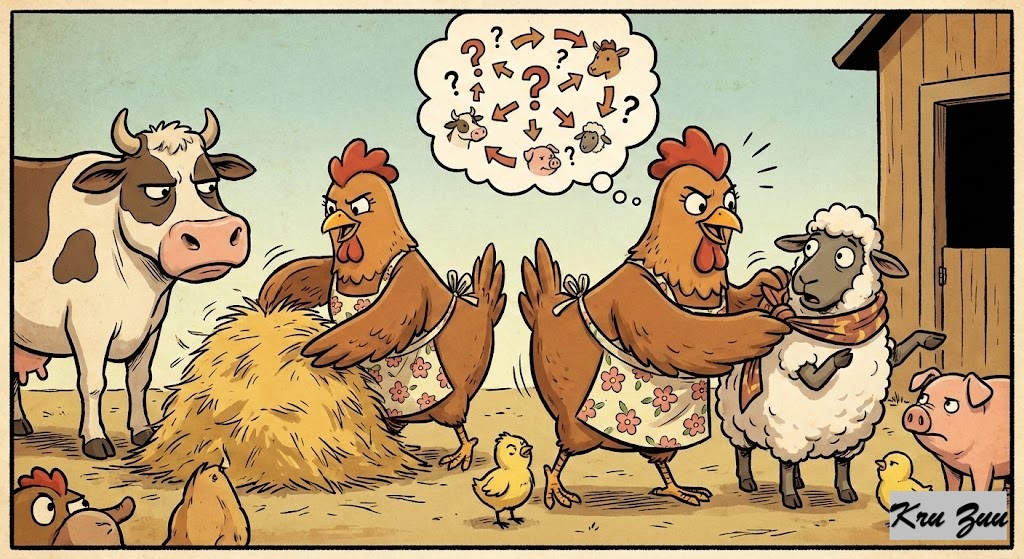
🐔 Mrs. Hen (The Over-Helper): She thinks she knows what is best for everyone.
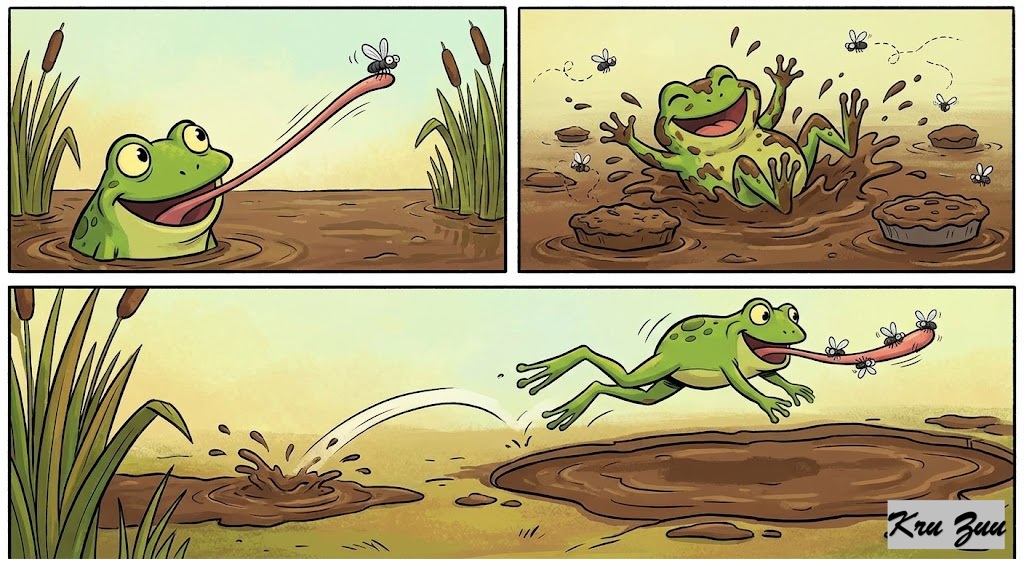
🐸 Freddy Frog: He loves flies and mud.
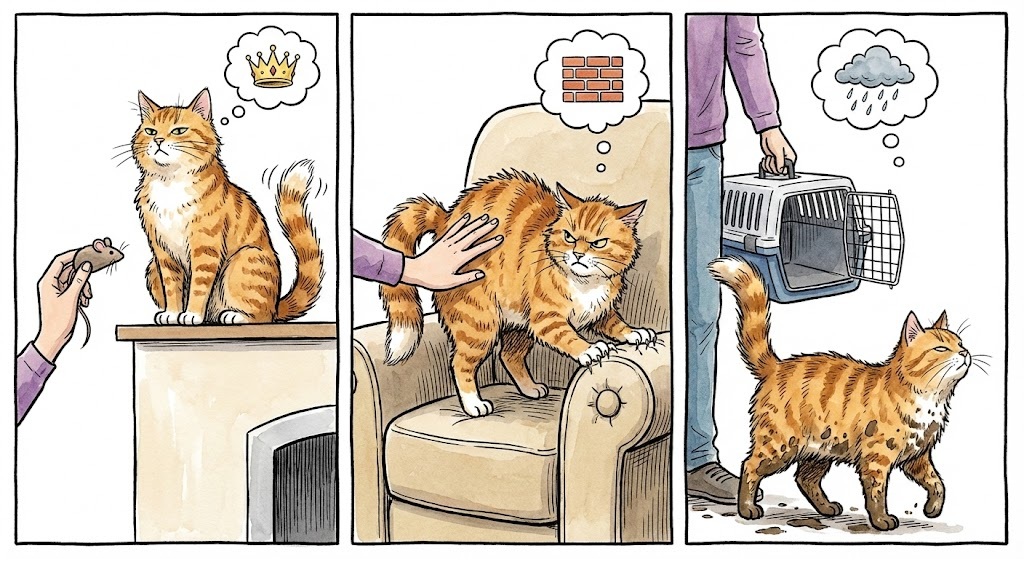
🐱 Leo the Cat: He is proud, stubborn, and hates being told what to do.
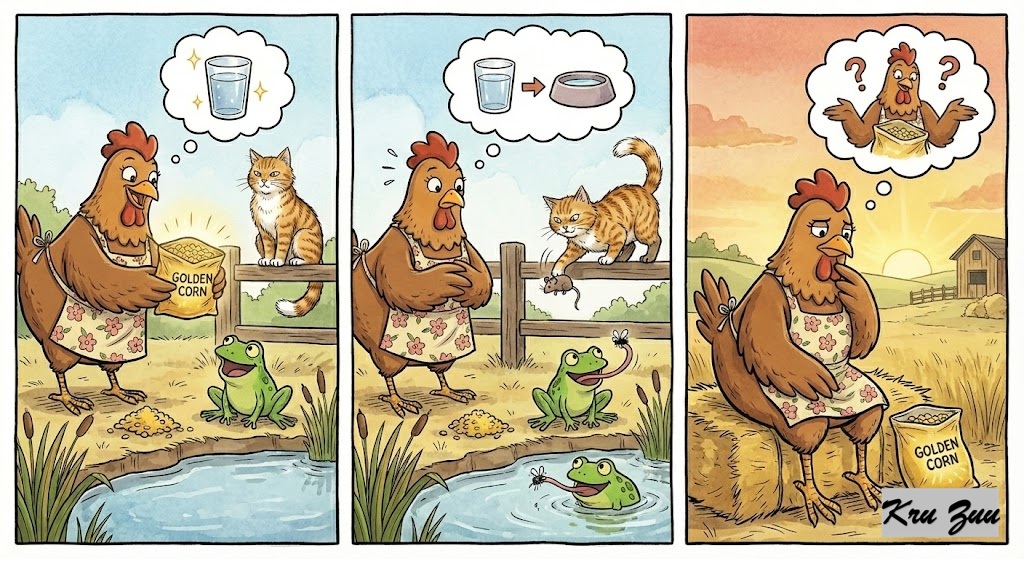
The Situation: Mrs. Hen found a bag of “Golden Corn.” It was the most delicious, expensive corn in the world. She was so excited! She wanted everyone to be happy and full.
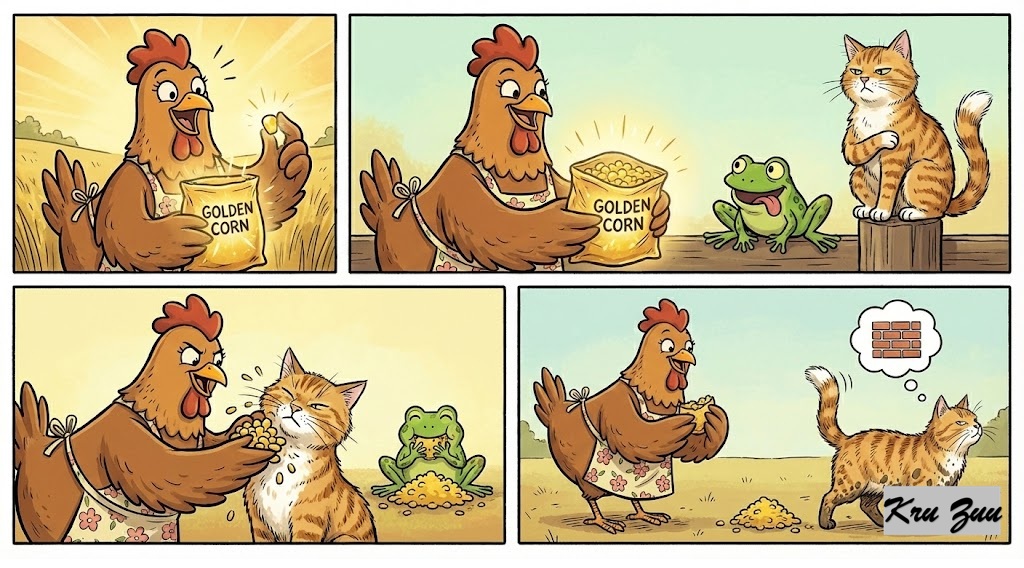
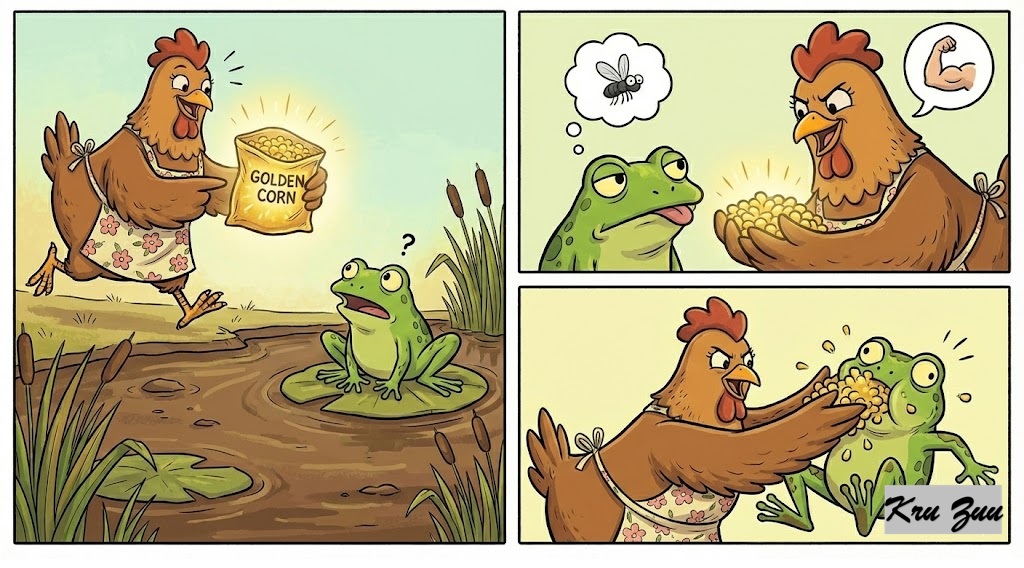
Scene 1: The Frog Mrs. Hen ran to the pond. “Freddy! Look! Golden Corn! Eat it, it will make you strong!” Freddy Frog looked at the corn. He looked at Mrs. Hen. “But I like flies,” Freddy said. “No, no! This is better than flies,” insisted Mrs. Hen. She pushed the corn into his face.
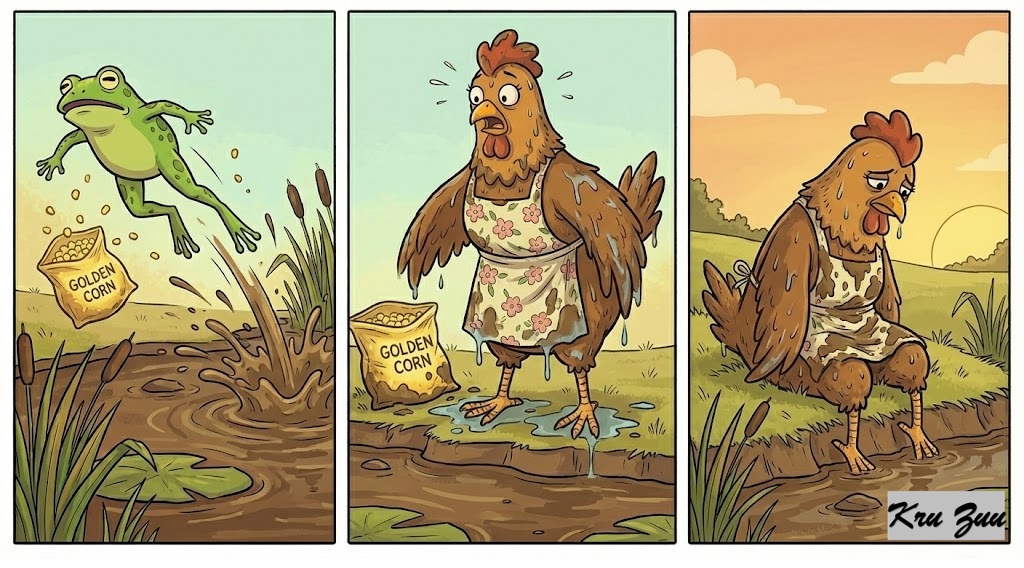
The Result: Freddy jumped into the muddy water to escape. Mrs. Hen was wet and sad.
Scene 2: The Cat Mrs. Hen didn’t give up. She went to the barn. “Leo! You are thin. You need this corn.” Leo the Cat was sleeping. He opened one eye. “I am a carnivore, Mrs. Hen. I eat meat.” “Just try it!” Mrs. Hen shouted. She tried to open Leo’s mouth to put the corn in. “You must eat it!”
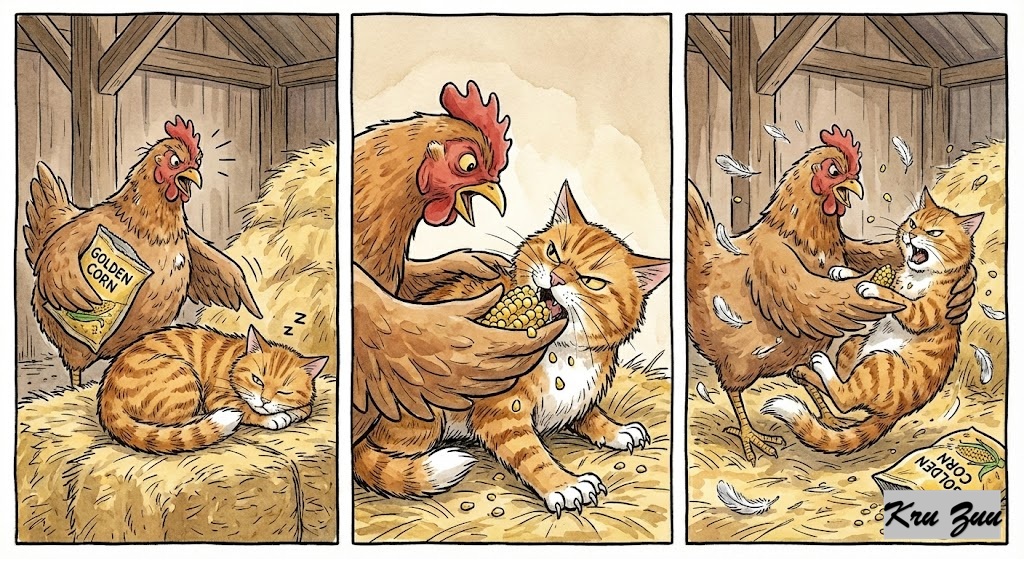
The Result:HISS! Leo scratched Mrs. Hen’s beak and ran up a tree.
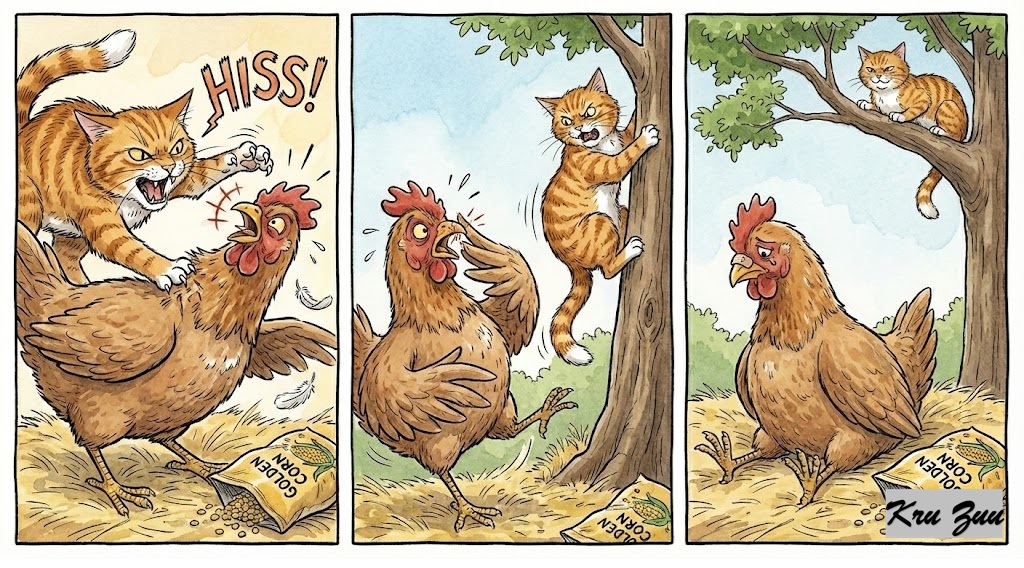
The Moral: Mrs. Hen had good intentions (The Water). But a Frog and a Cat have different needs (The Drinking). Mrs. Hen wasted her day trying to turn a Cat into a Chicken. Don’t be Mrs. Hen. Offer the corn, but don’t force the feast. 🌽
🎓 Lesson for English Learners
Stop Buying, Start Doing.
The Situation: You buy 10 grammar books. You download 5 language apps. You subscribe to 3 YouTube channels.
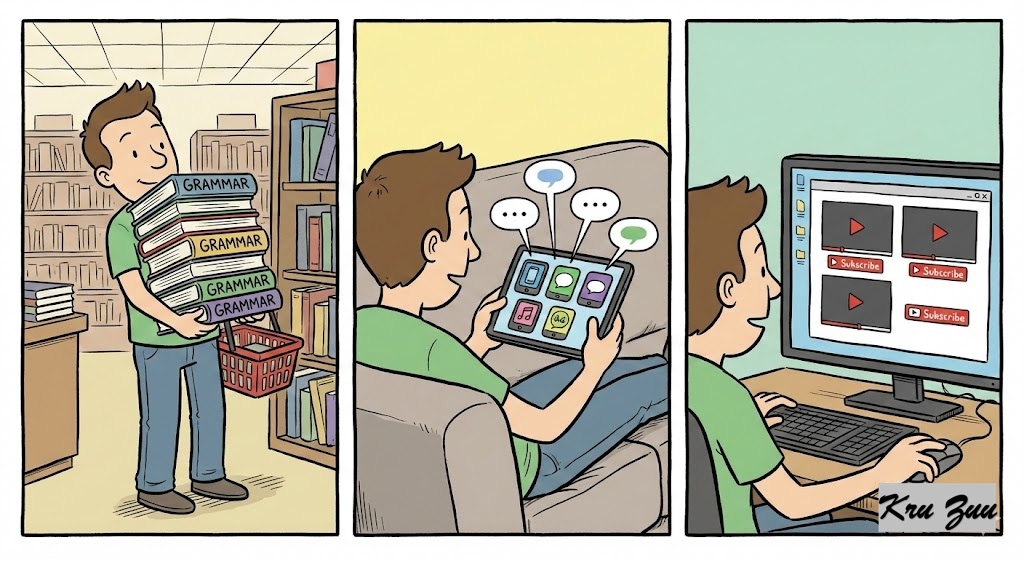
The Reality: The books and apps are just “the water.”
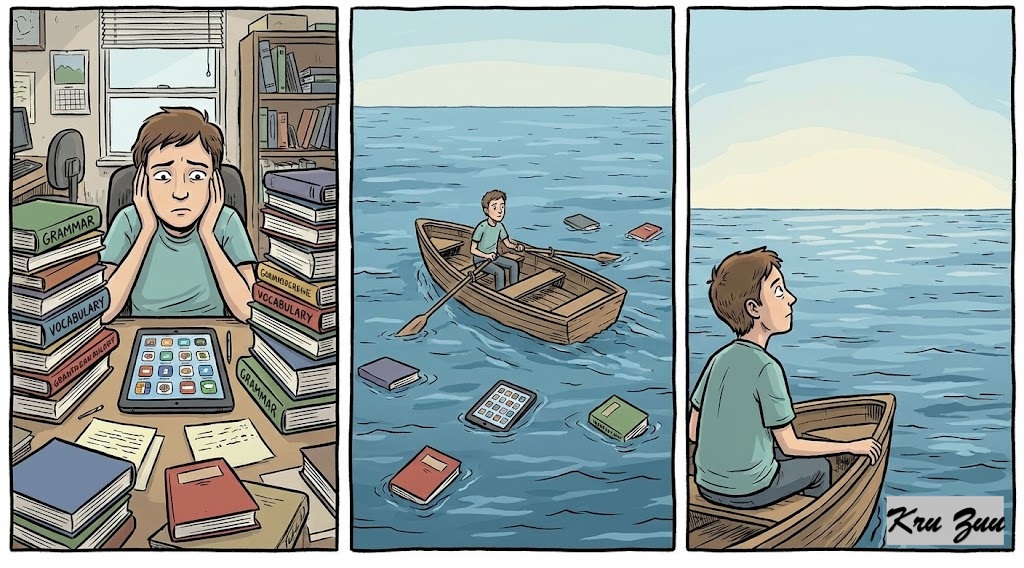
The Problem: You are standing by the river, but you aren’t drinking. Buying the book doesn’t put the English in your brain.
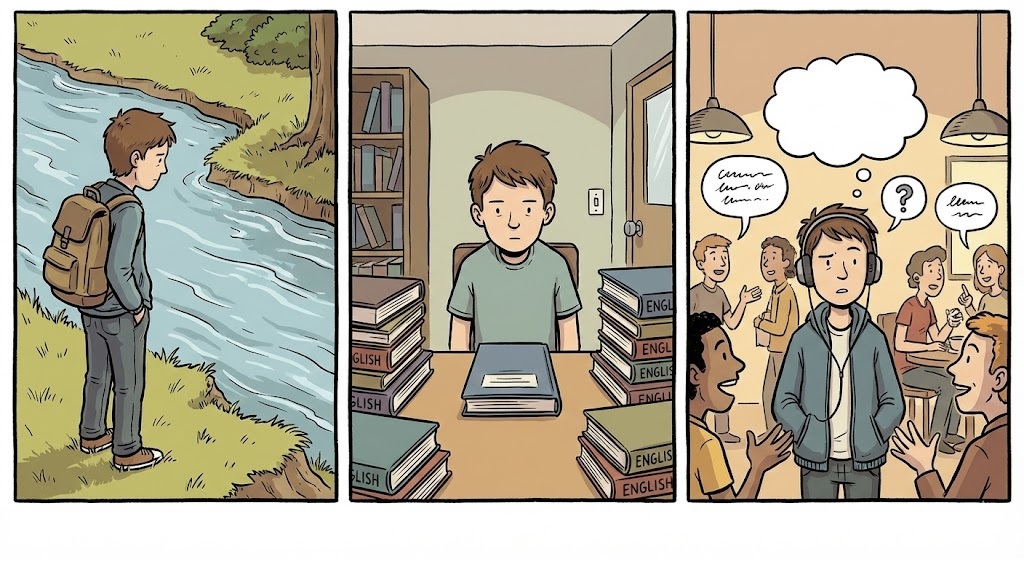
The Fix: One page read is better than ten books bought. Drink the water. 💧
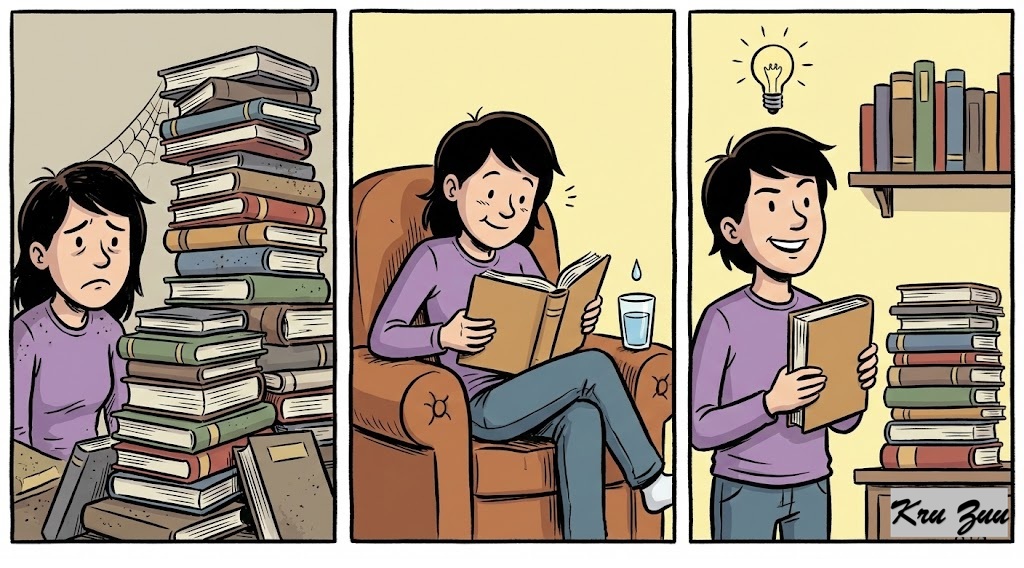
💬 Your Turn: The Reflection 🚀
Think about your life this week.
Who are you trying to “force” to drink? (A friend? A student? Yourself?)
Are you the stubborn horse? Is someone giving you good advice that you are ignoring?
👇 Tell us in the comments! Have you ever tried to help someone who didn’t want help?
https://www.facebook.com/BrainBattleground/
https://www.facebook.com/zubeyr.yurtkuran/
https://www.instagram.com/zubeyryurtkuran/
