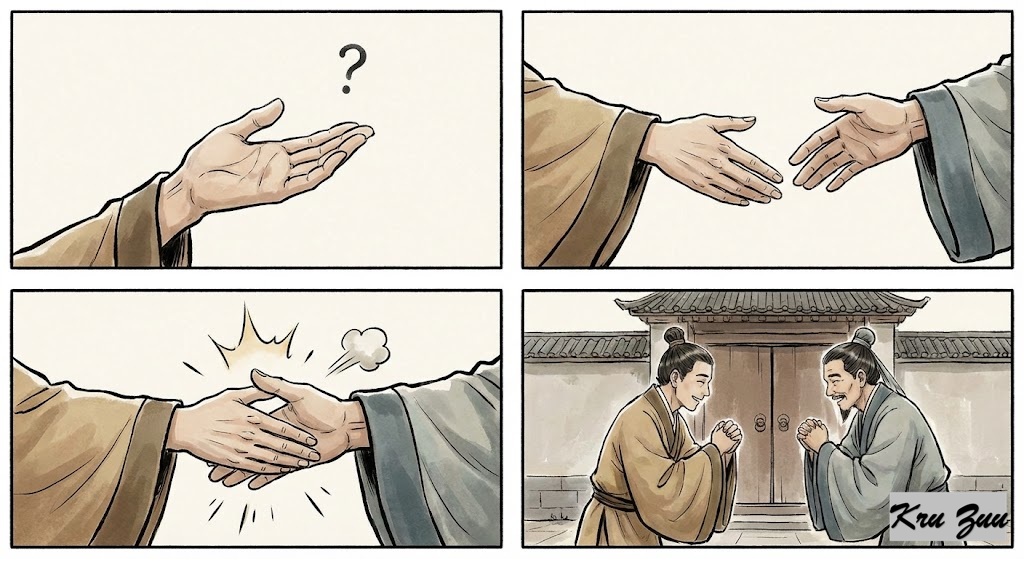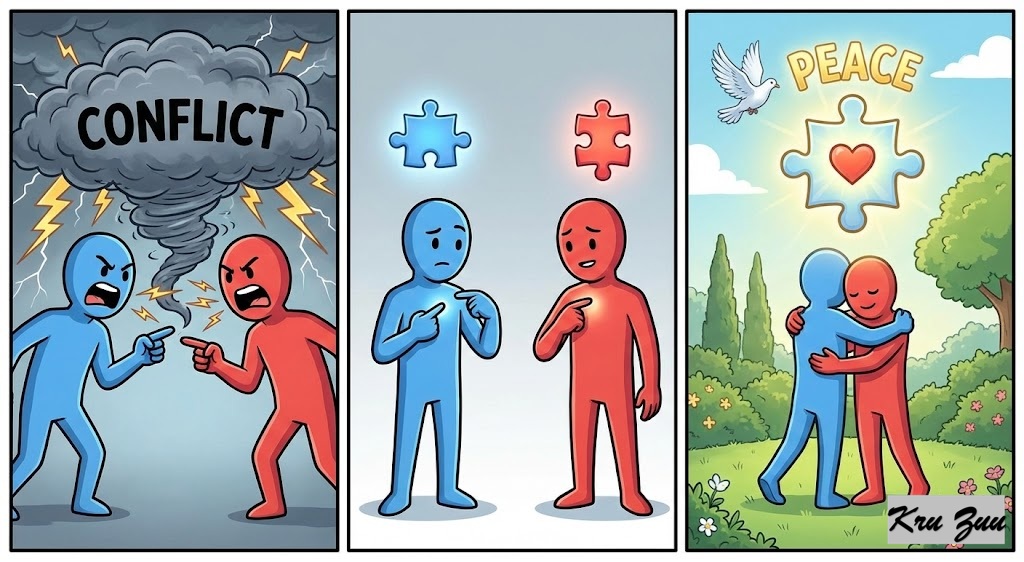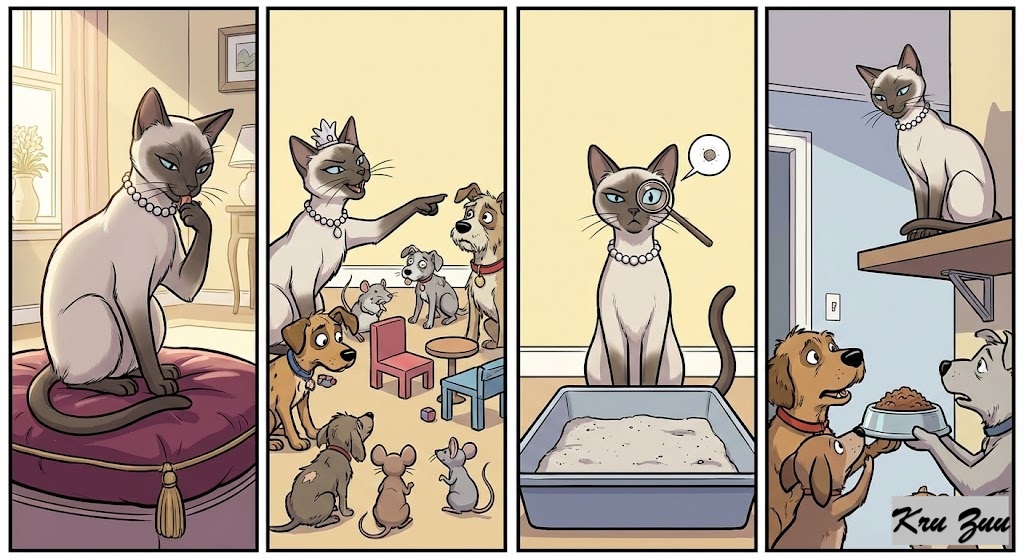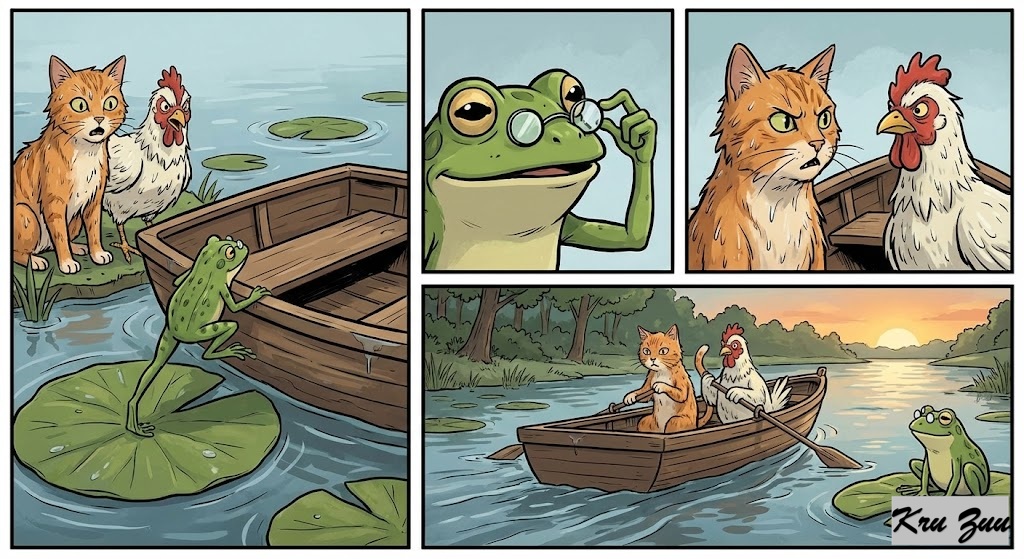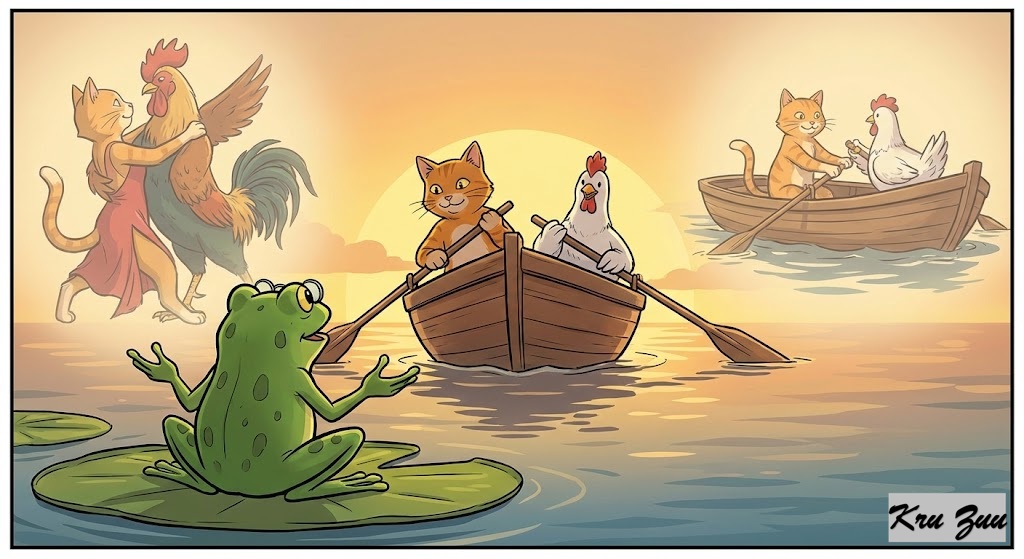
“Great minds think alike.”
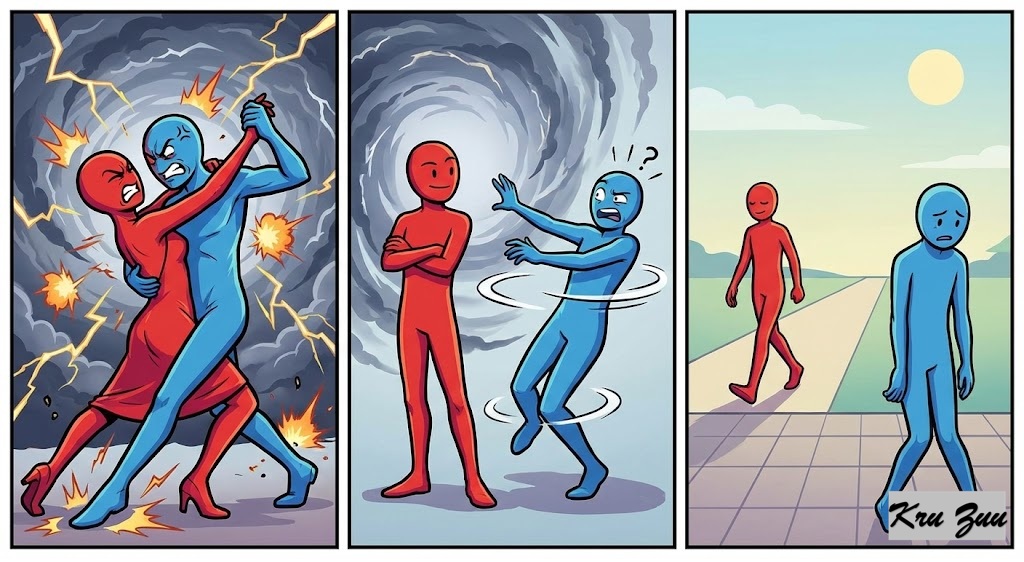
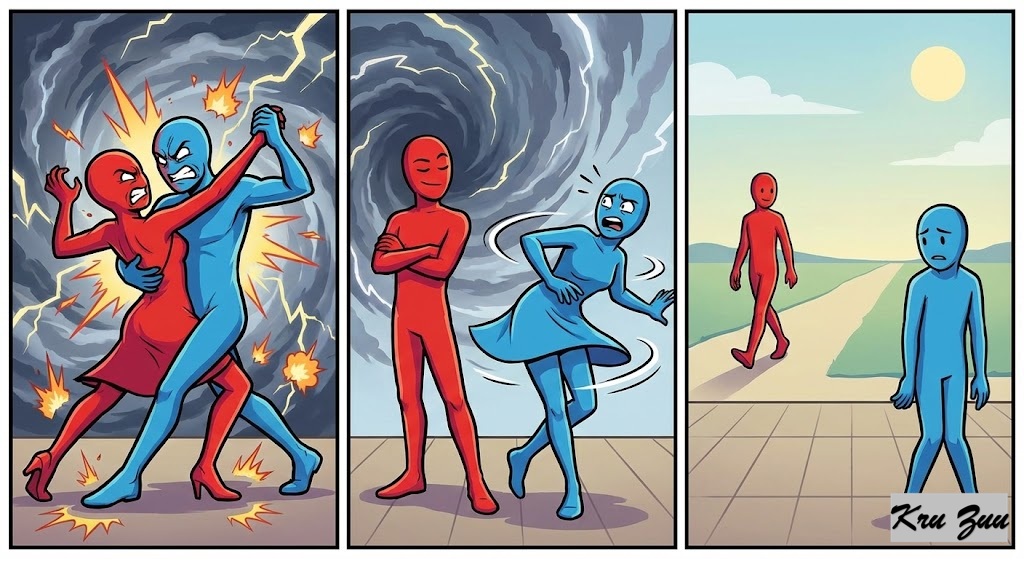
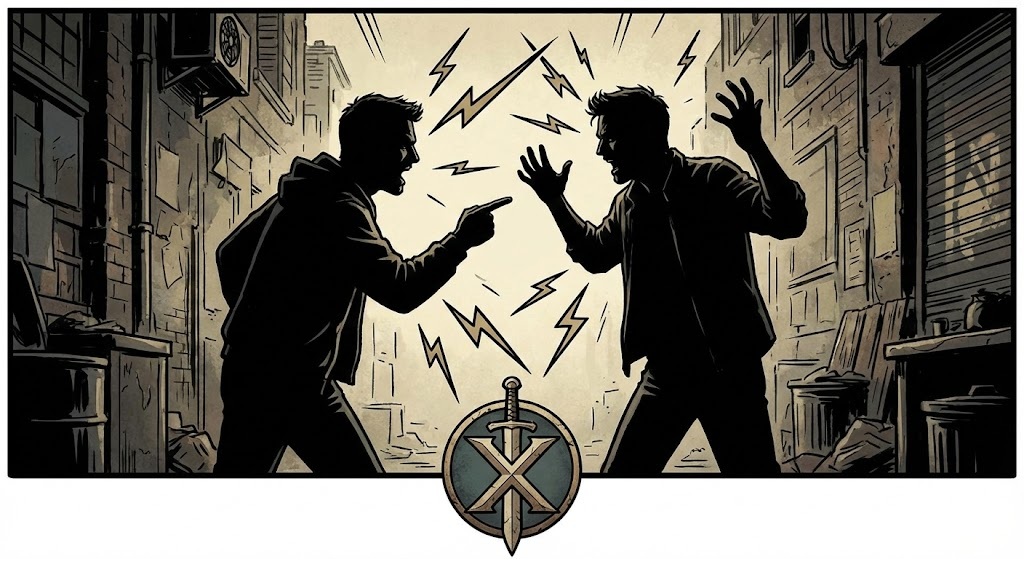
😈 The Villain (The Intellectual Snob)
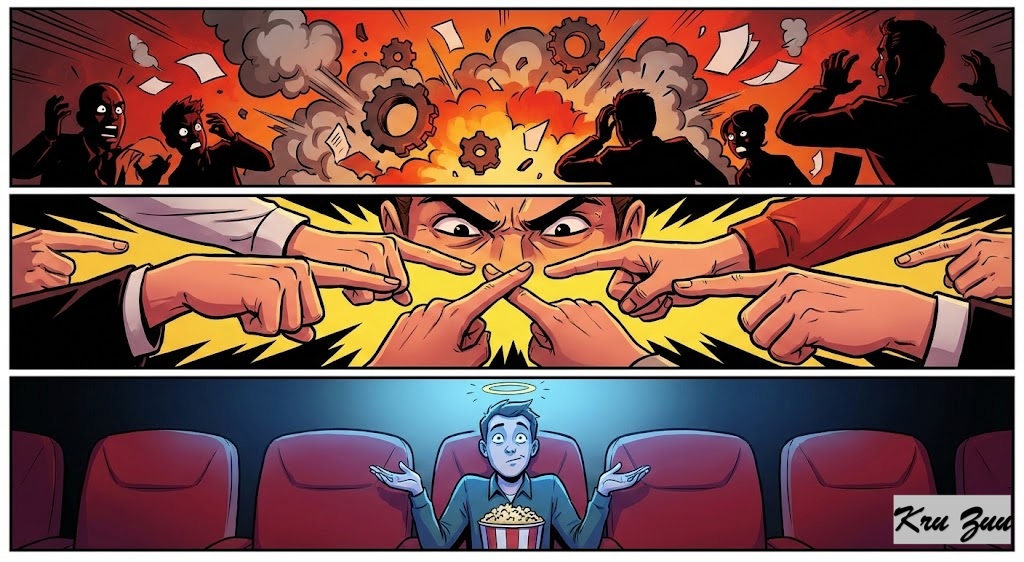
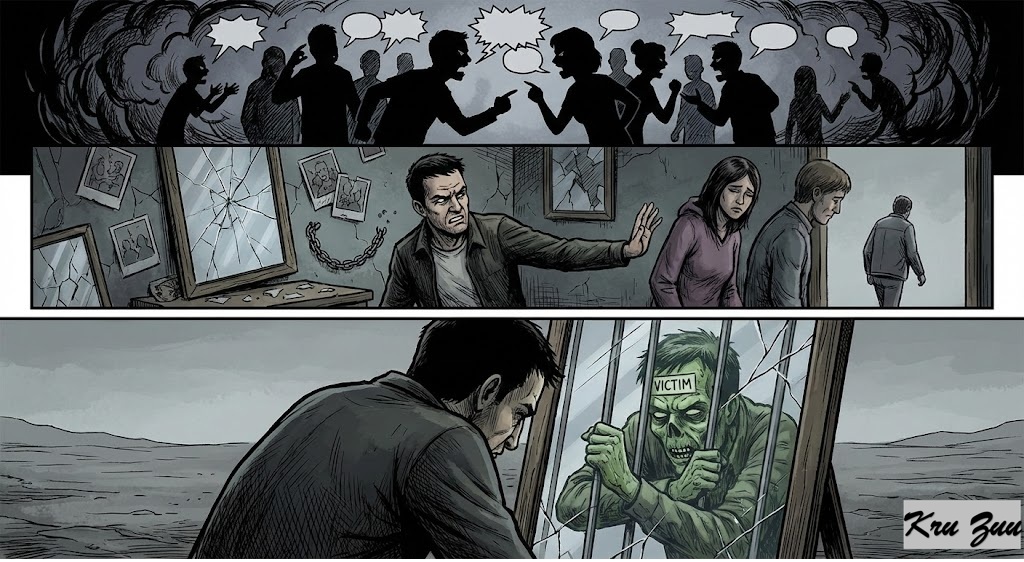
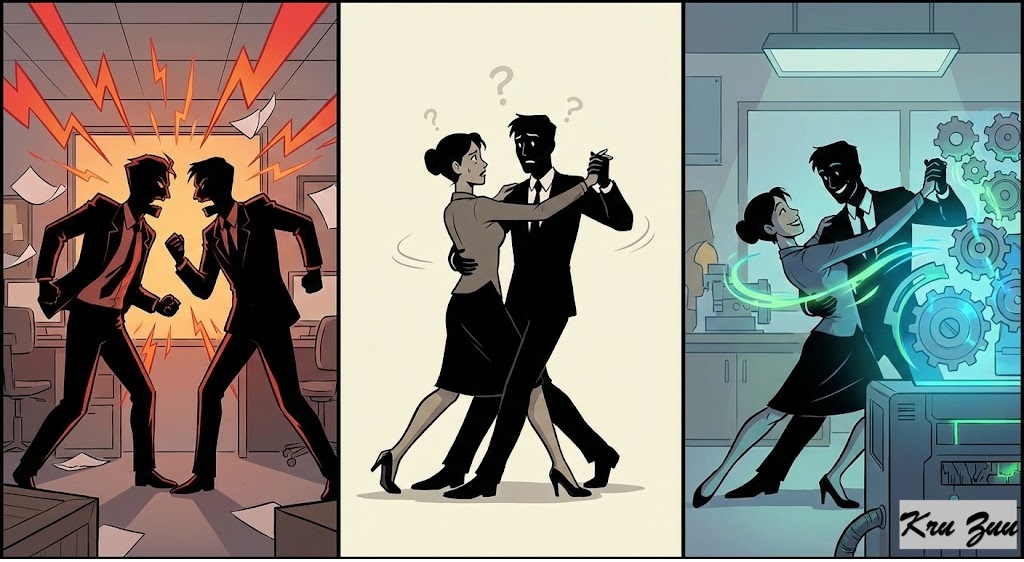
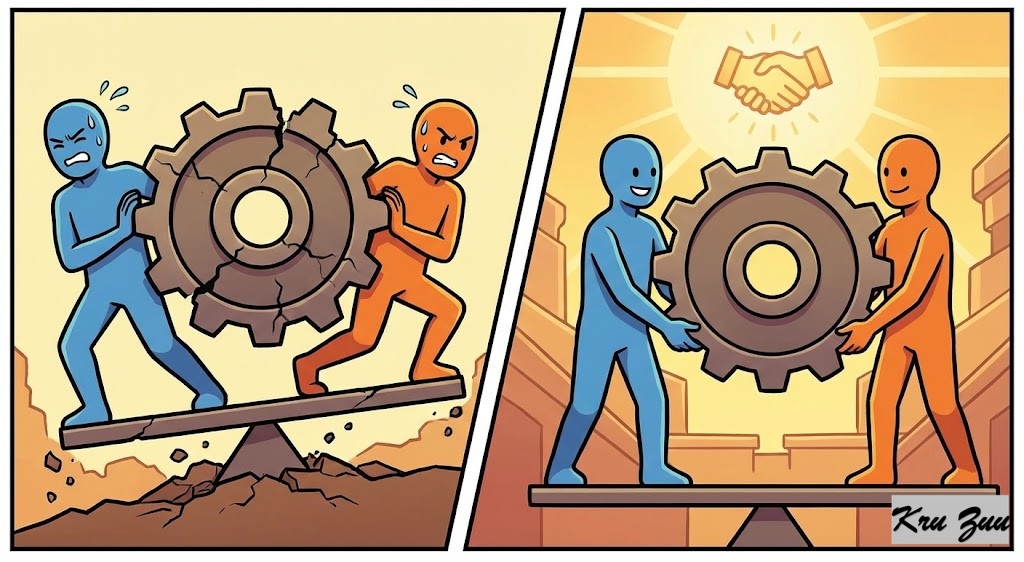
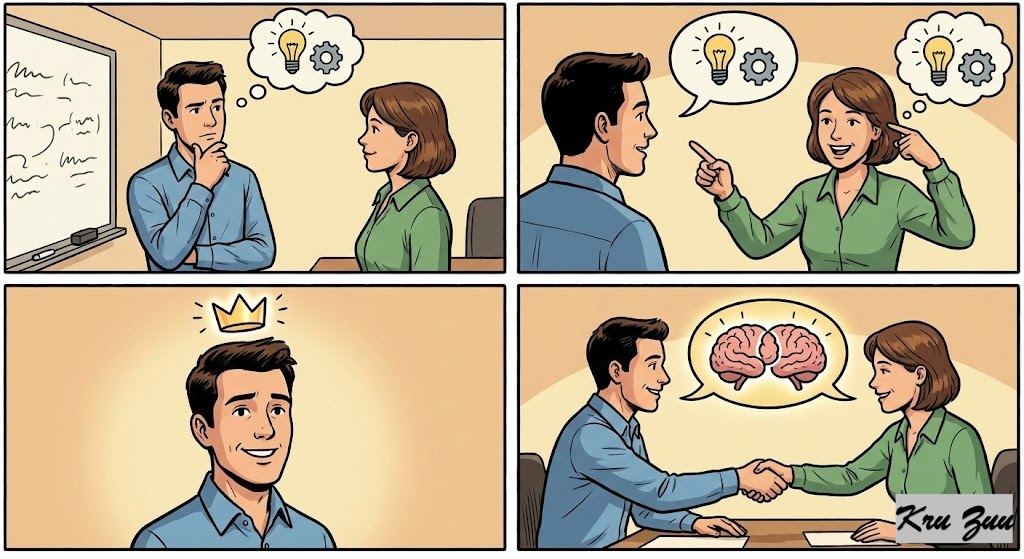
You have an idea. Someone else suggests the same thing. What do you do? You get annoyed. 😒 “Hey, I thought of that first!””Stop copying me!” You believe your ideas are special property. You see shared thoughts as theft, not connection. You want to be the “Lone Wolf” genius.
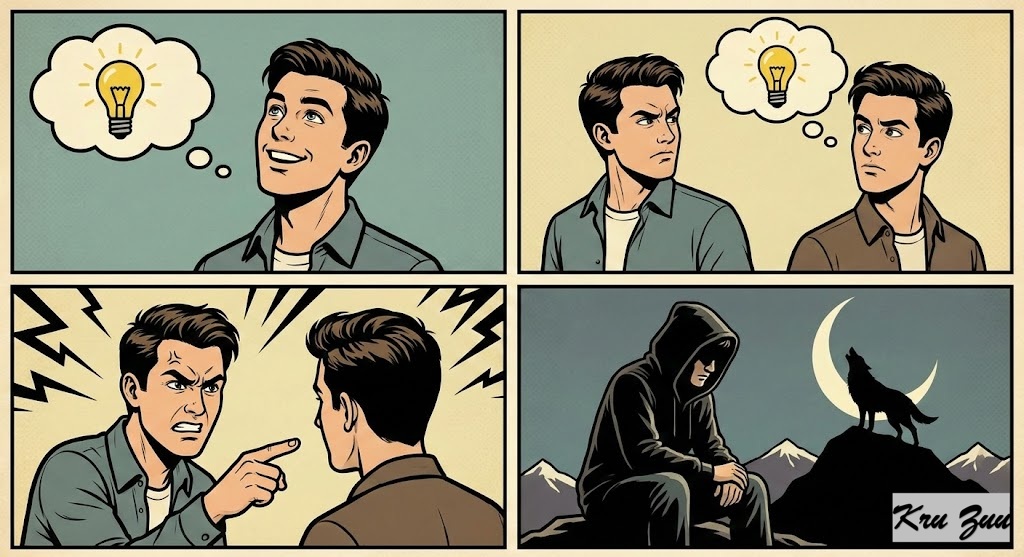
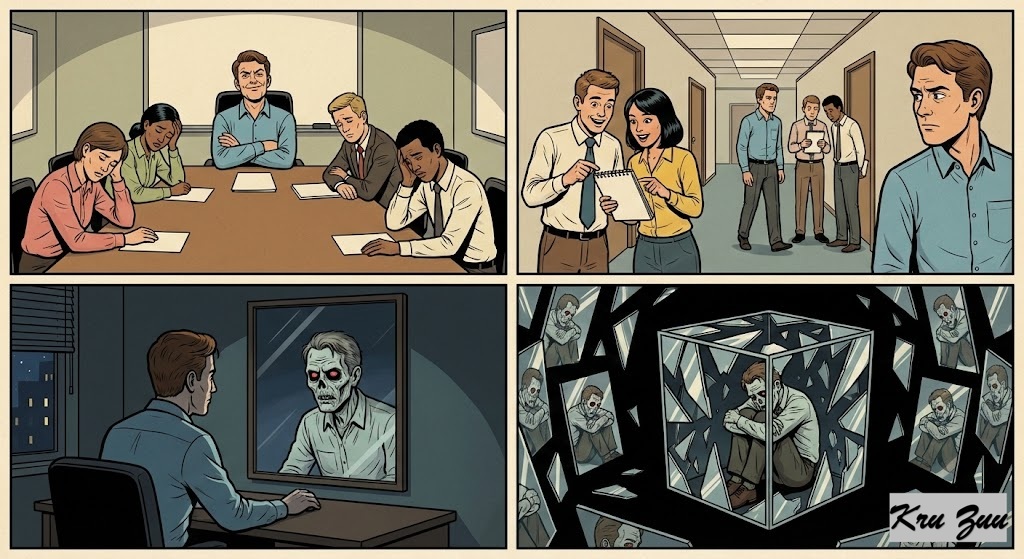
The Result? You isolate yourself. People feel awkward sharing ideas with you. You kill the momentum of the team because you are too busy claiming credit. You are trapped in the “Ego Trap.” 🧟♂️
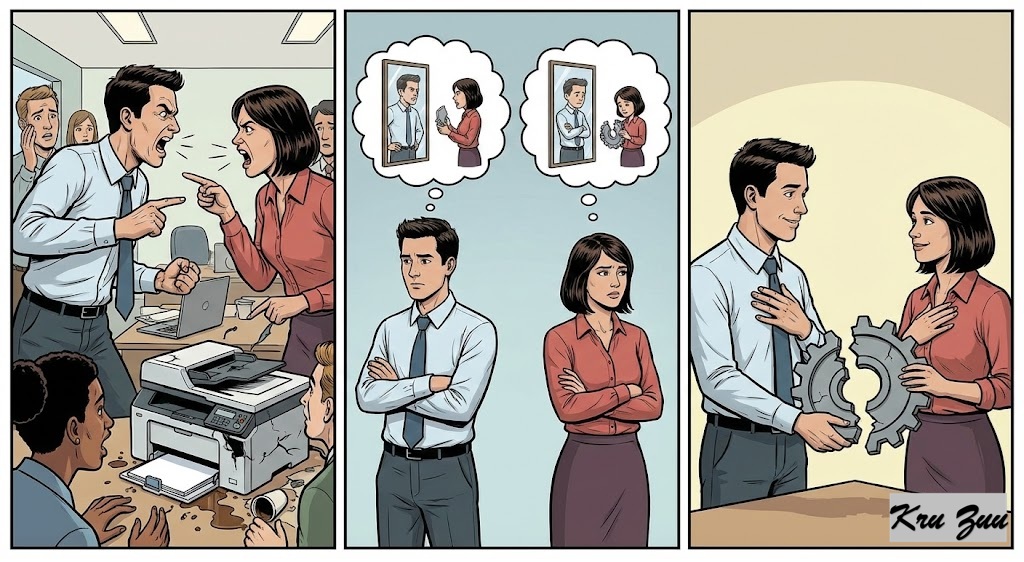
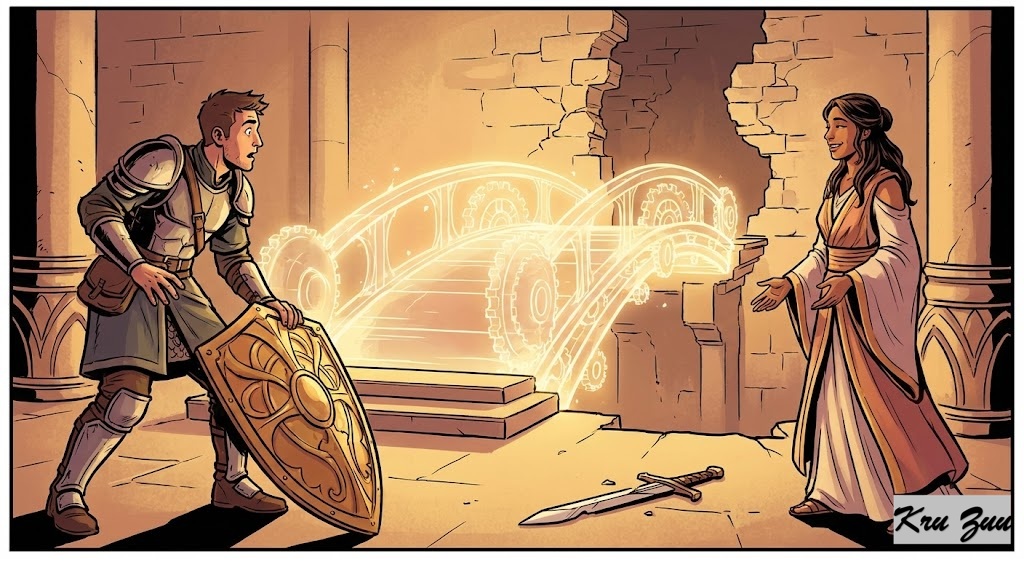
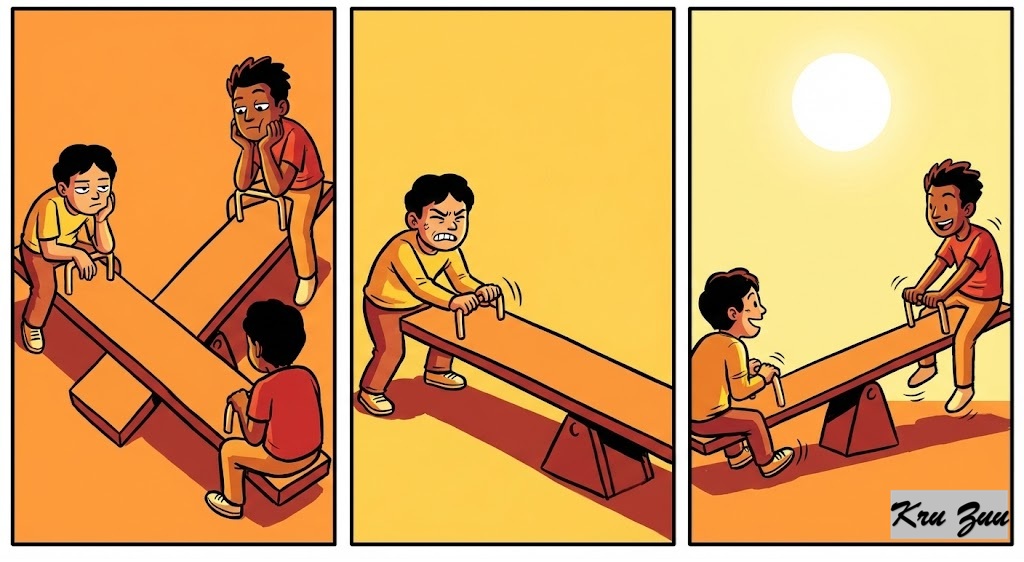
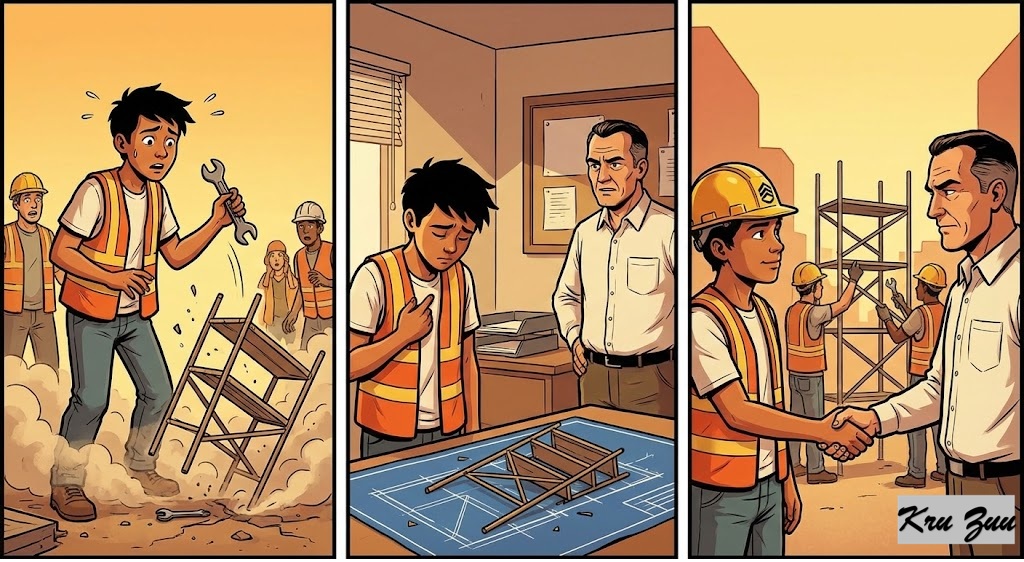
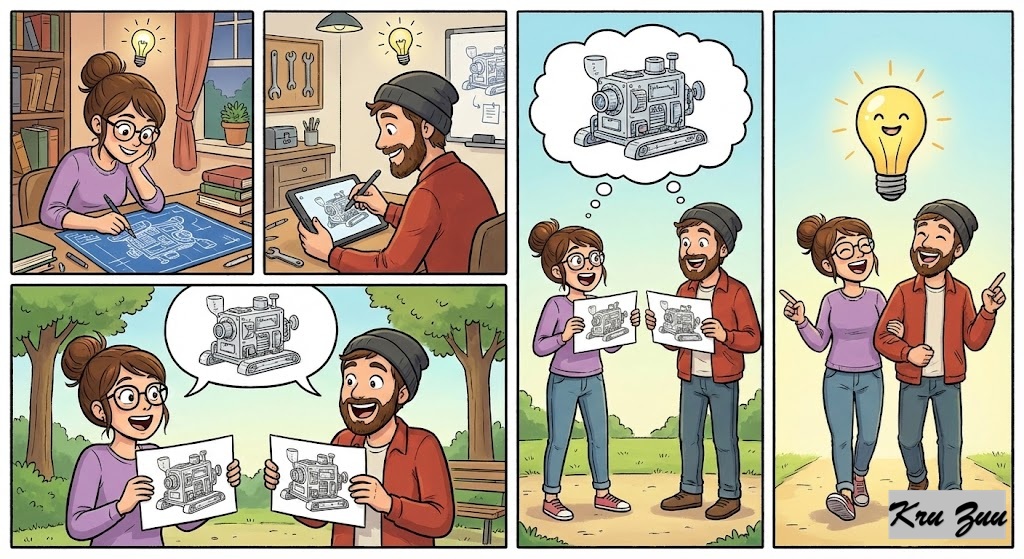
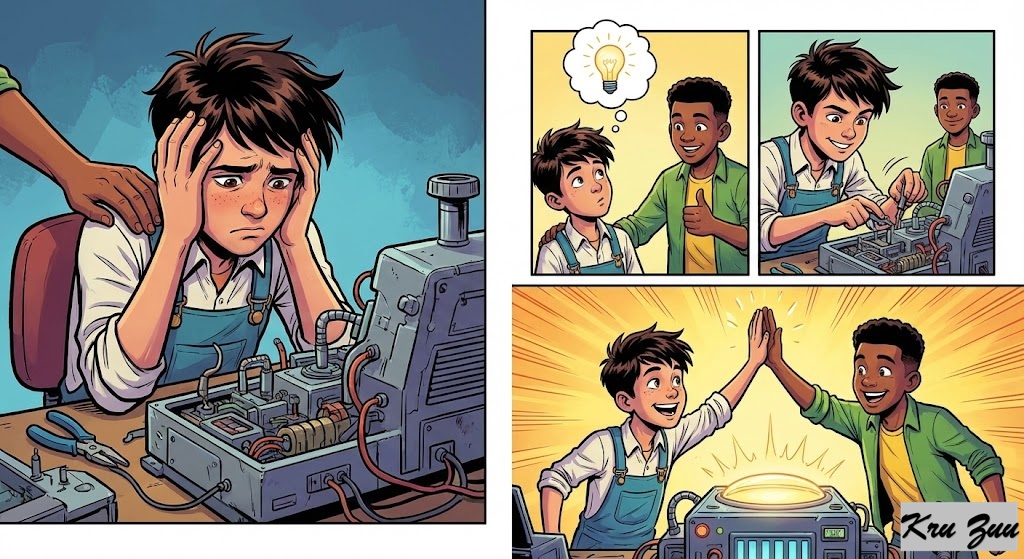
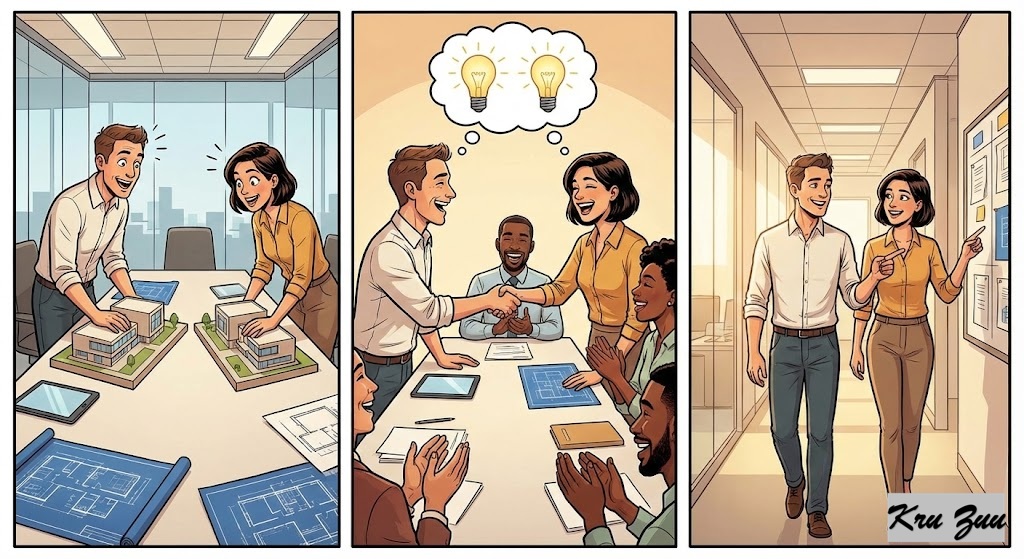
😇 The Hero (The Synergist): You are brainstorming. A colleague blurts out the exact solution you were just thinking of. Instead of getting jealous, you smile. 😄 You point at them and say: “Great minds think alike!” You validate their intelligence, which validates yours. You realize that shared thinking isn’t copying, it’s alignment.
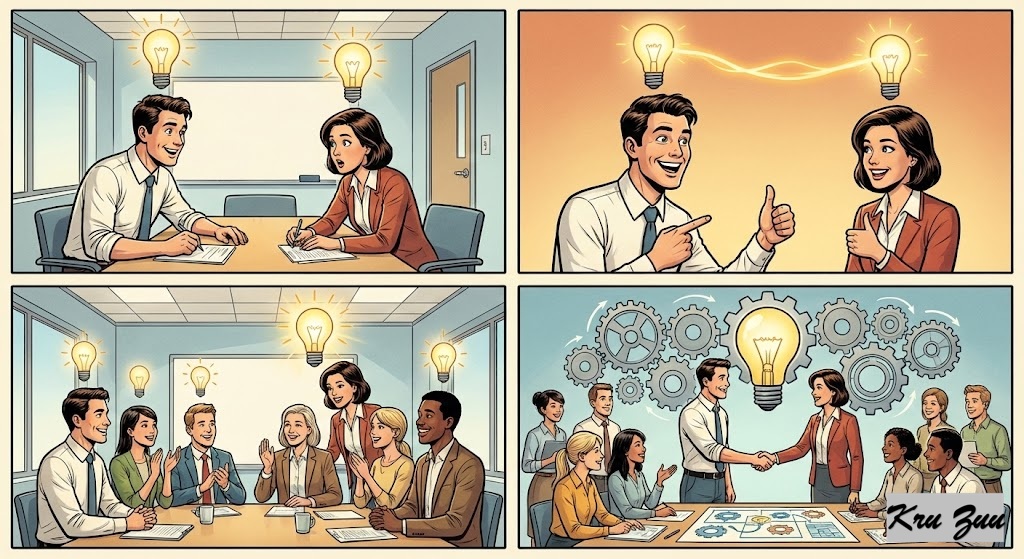
The Result? Instant rapport. The other person feels smart and connected to you. You create a bond of trust (“We are on the same wavelength”). You build a tribe, not just a resume. ⚡
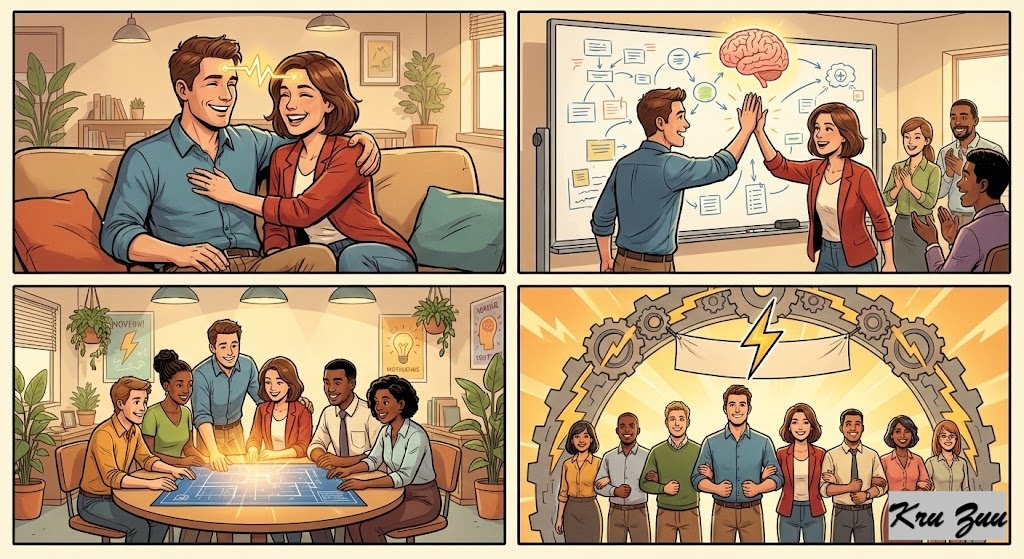
⚖️ The Reality
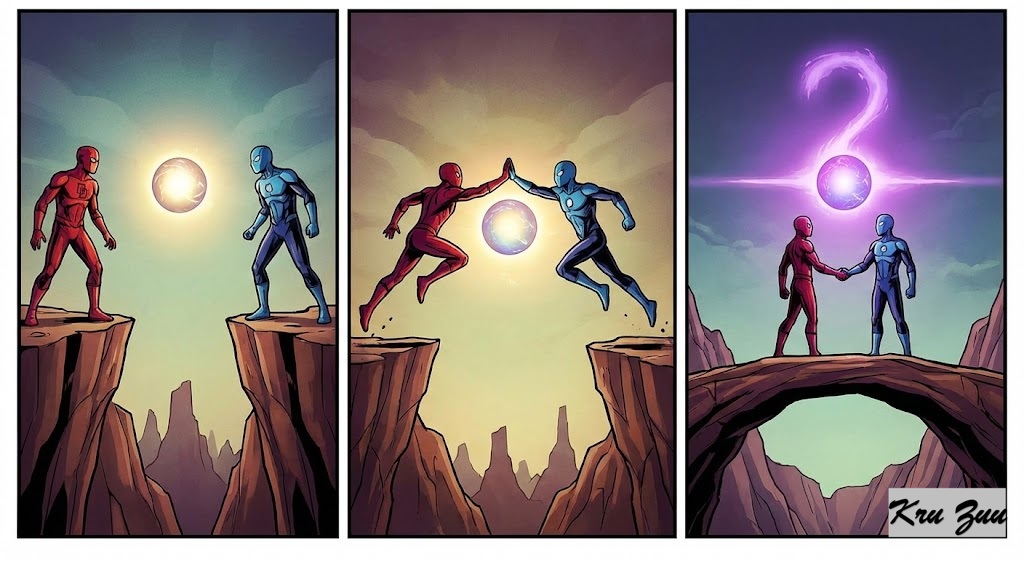
We are social creatures. When two people arrive at the same conclusion independently, it is a powerful signal of compatibility. It means your values, logic, or instincts are aligned. It is a moment of “mental high-five.” 👋
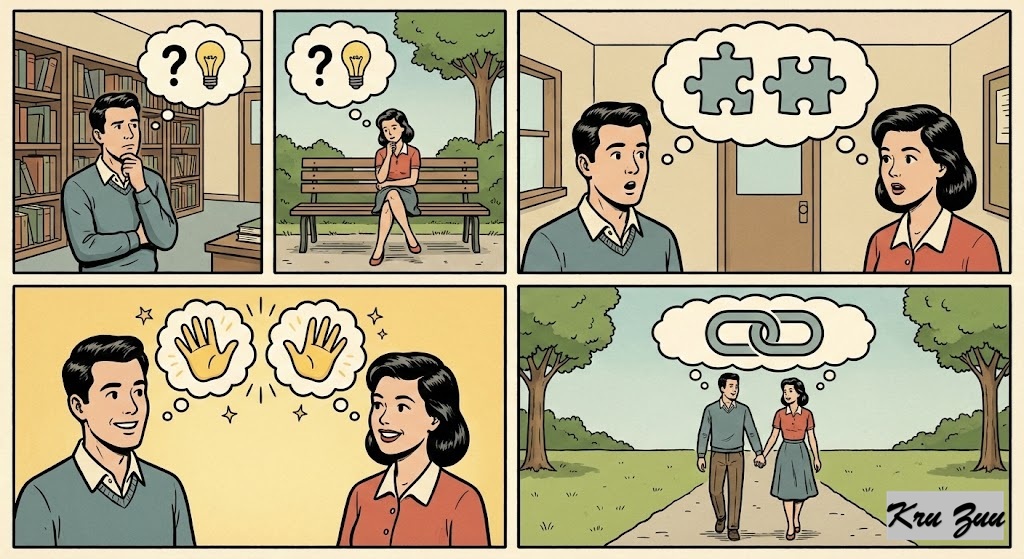
💎 The Secret
Using this phrase isn’t just about being right; it is a tool to make the other person feel good. It says, “You are smart because you think like me.”
🧐 The Anatomy of the Proverb
This is your go-to phrase for those “Jinx!” moments.
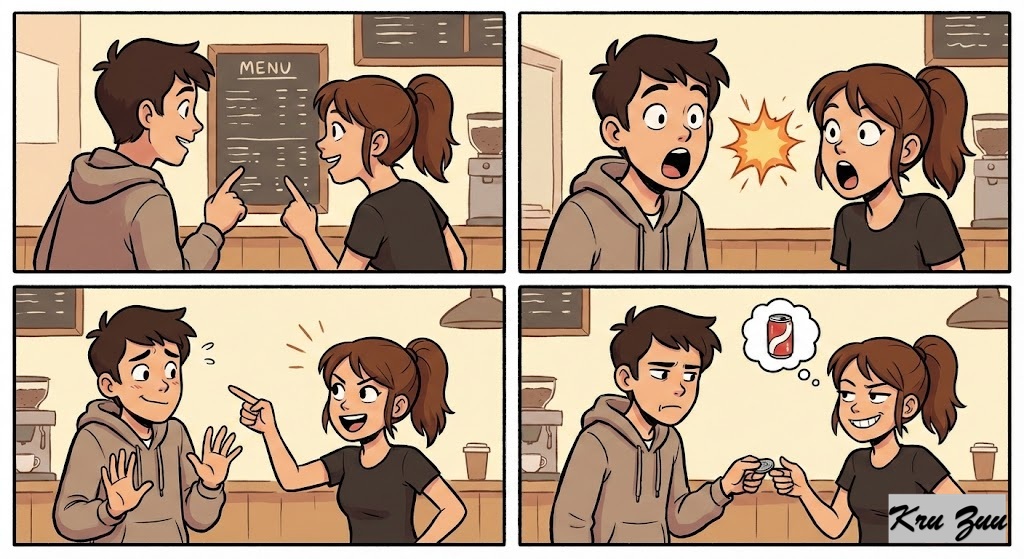
Great Minds (Noun Phrase): Intelligent people; thinkers; visionaries.
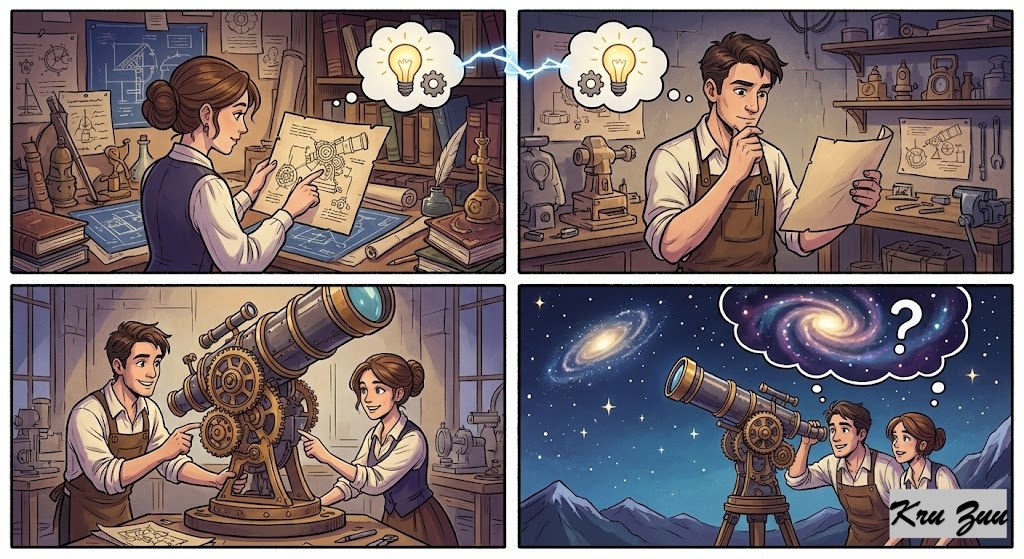
Think (Verb): To process thoughts/ideas.
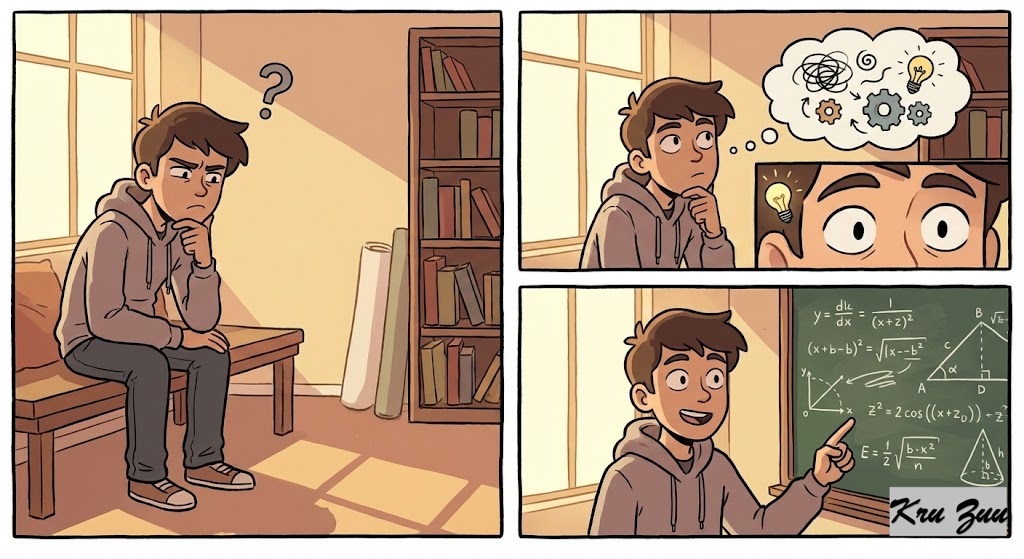
Alike (Adverb): In a similar way; identically.
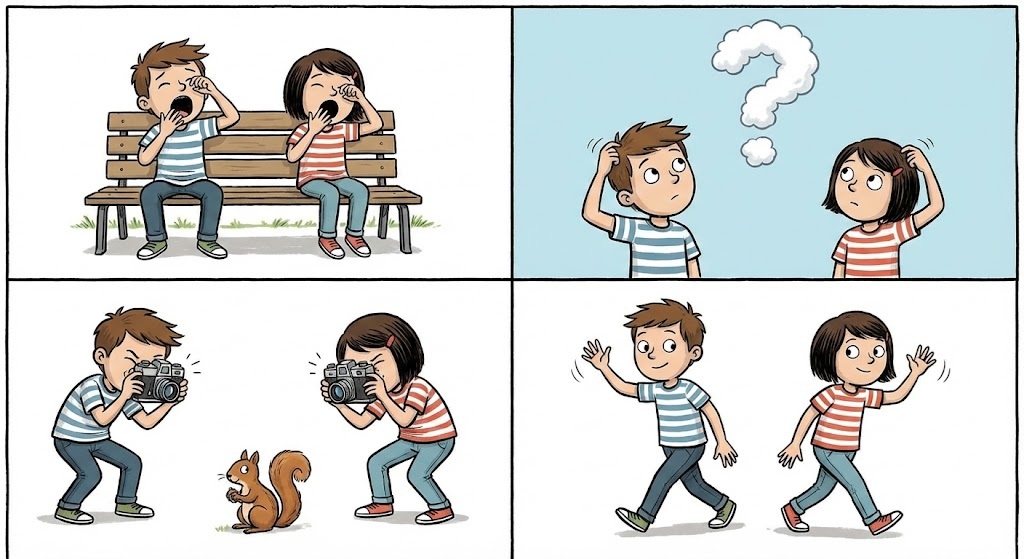
Simpler Version: Smart people have the same ideas. / We are on the same page.
📚 Vocabulary Vault
Synergy (Noun): When the combined effect is greater than the sum of separate effects. (1+1=3). 🚀

Telepathy (Noun): The supposed communication of thoughts by means other than the known senses. (e.g., “It’s like we have telepathy!”).
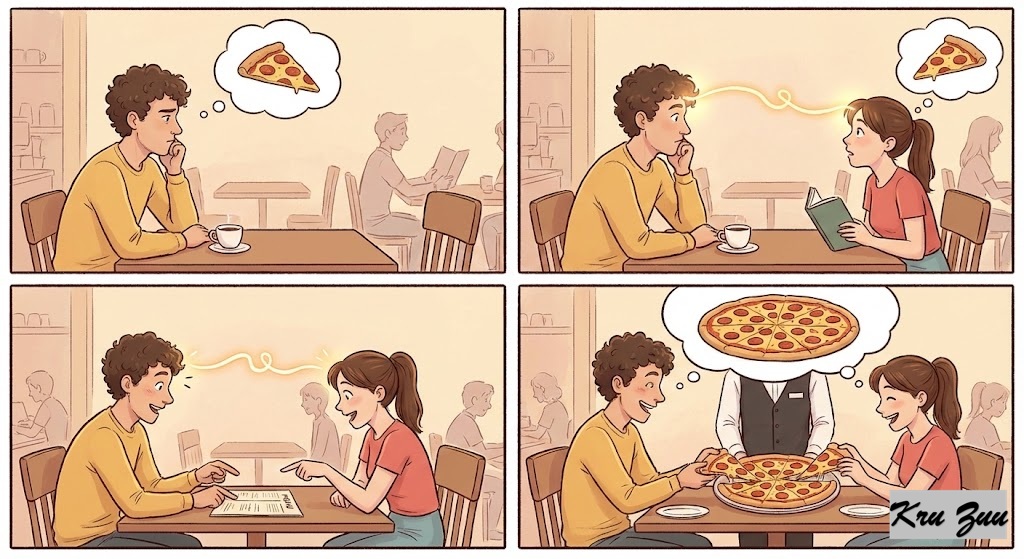
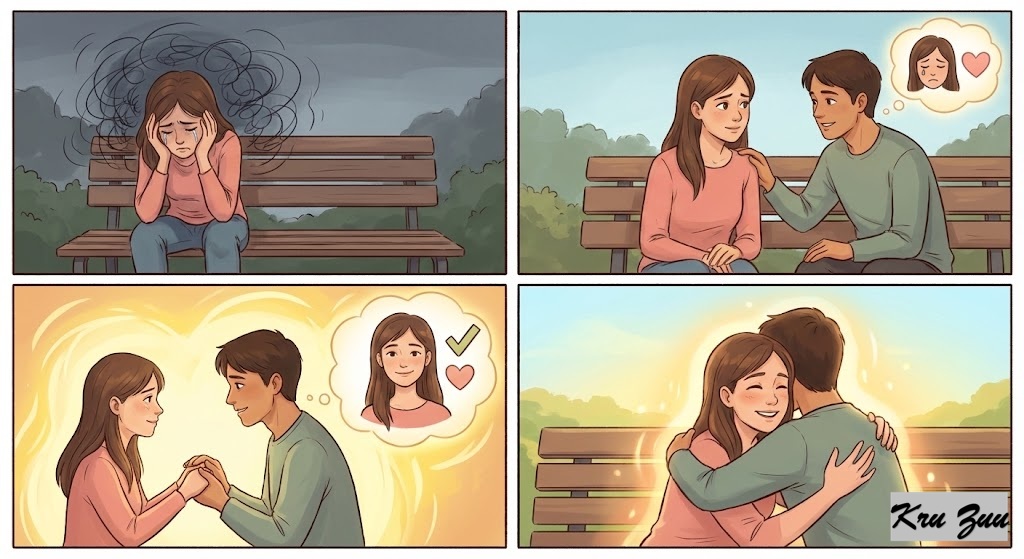
Validation (Noun): Recognition or affirmation that a person’s feelings or opinions are valid or worthwhile.
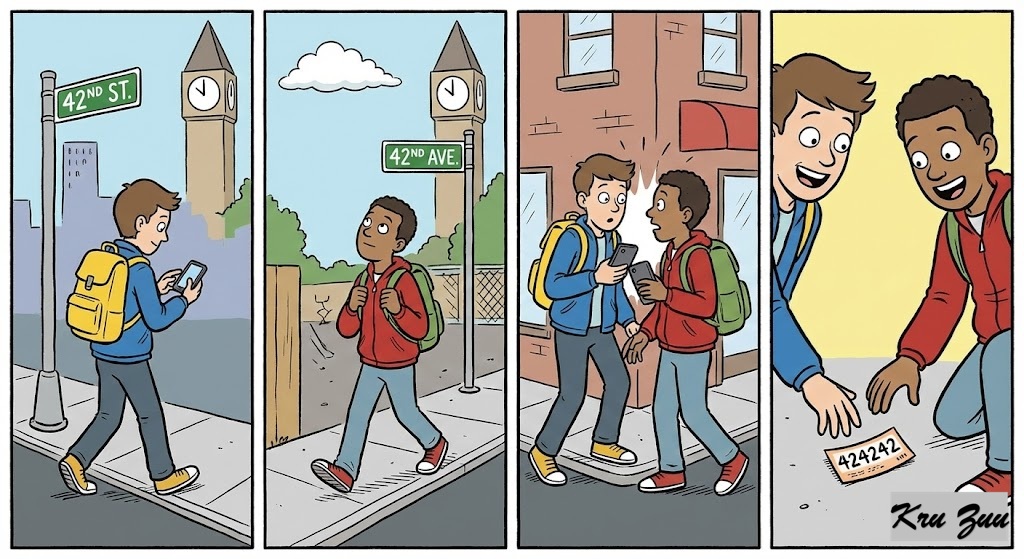
Coincidence (Noun): A remarkable concurrence of events or circumstances without apparent causal connection.
Wavelength (Noun):Idiom: “To be on the same wavelength” (To think similarly). 📻
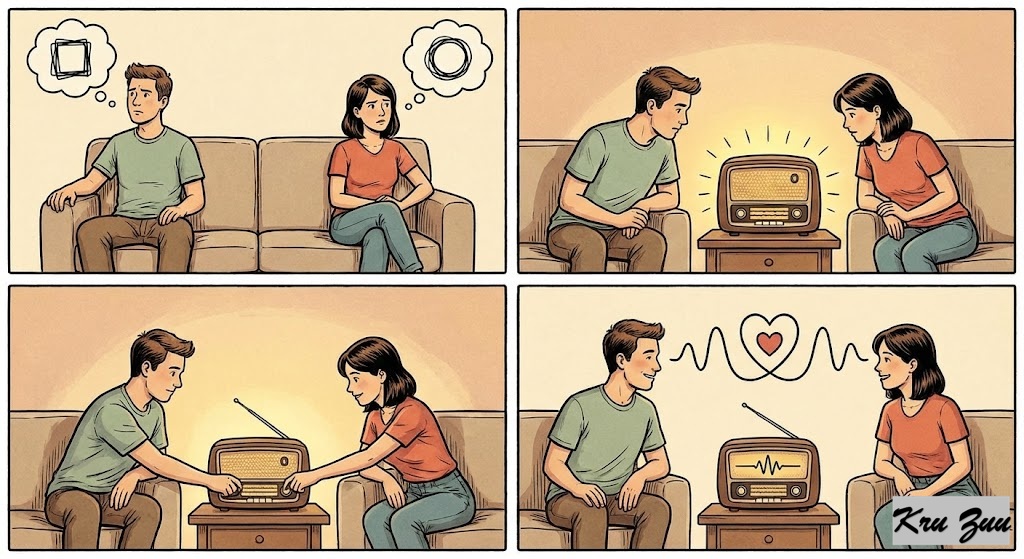
📜 History: Origin and The Twist
Where did this compliment come from?

The Origin: The idea has been around since the early 1600s. The original recorded phrase in English was “Great wits jump” (meaning “jump to the same conclusion”). It evolved into “Great minds think alike” over time.
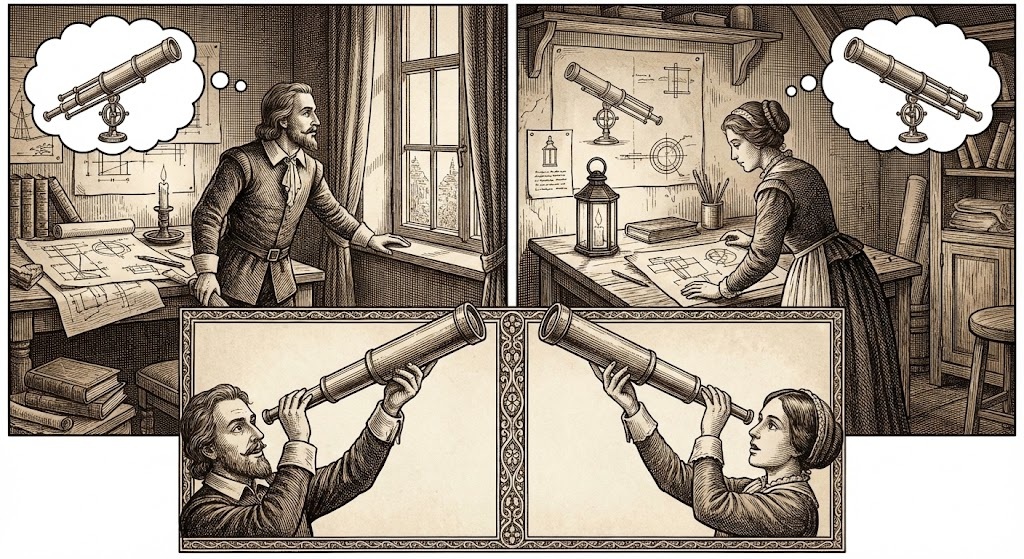
The Twist (The Humorous Truth): Did you know this idiom has a second half that is often left out? The full phrase is historically known as:”Great minds think alike, though fools seldom differ.”
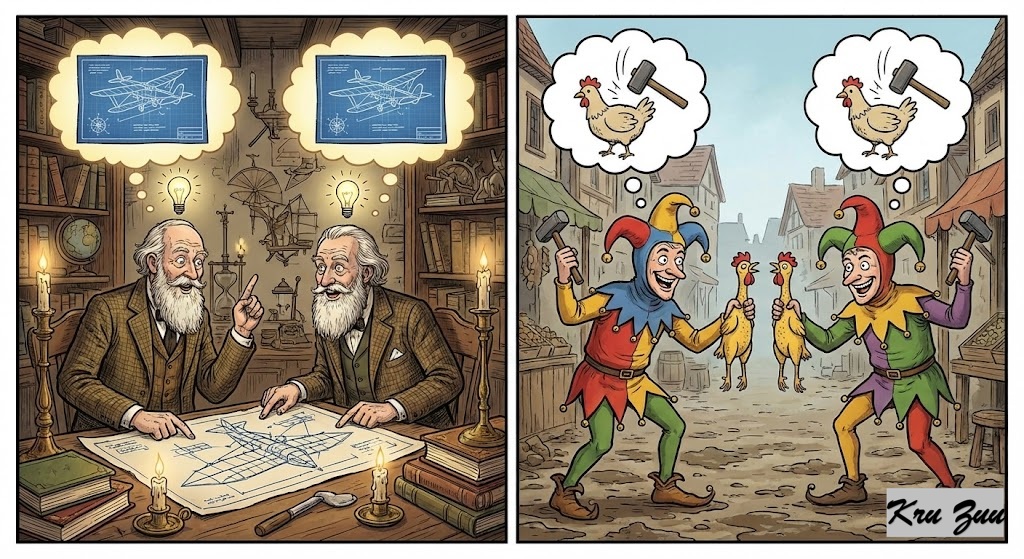
Translation: Smart people might have the same idea, but stupid people also follow the crowd! Note: We usually only use the first half (the polite half) in business and friendship! 😉
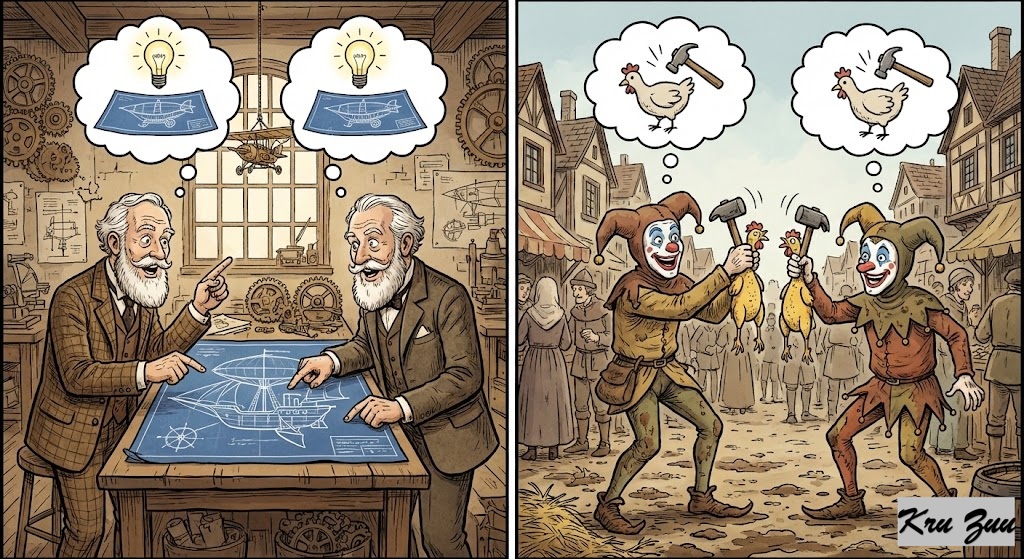
🎯 Impact on Life: The Pros & Cons
✅ The Pros (The Bond)
Speed: You don’t have to explain yourself. The other person already “gets it.”

Confidence: Knowing someone supports your idea makes you more likely to succeed.
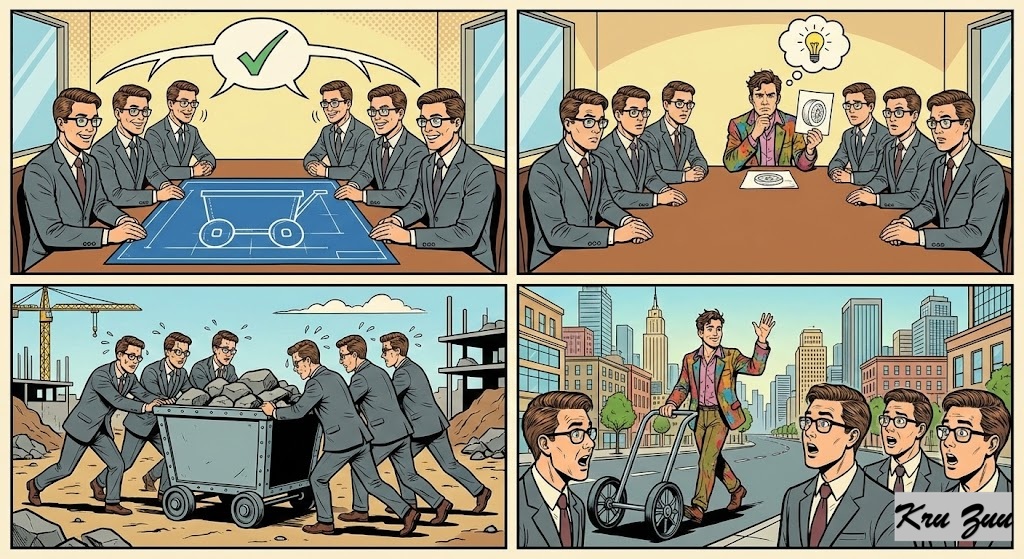
❌ The Cons (The Echo Chamber)
Groupthink: If everyone thinks alike, no one is spotting the mistakes. Sometimes you need a “Great Mind” who thinks differently to challenge you.
🎭 Short Story: The Mystery of the Locked Box 📦
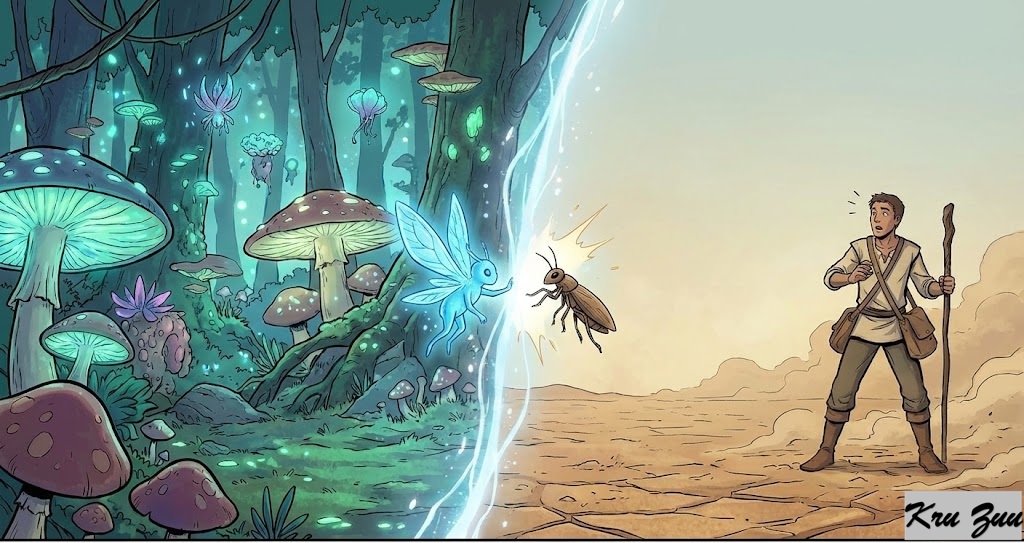
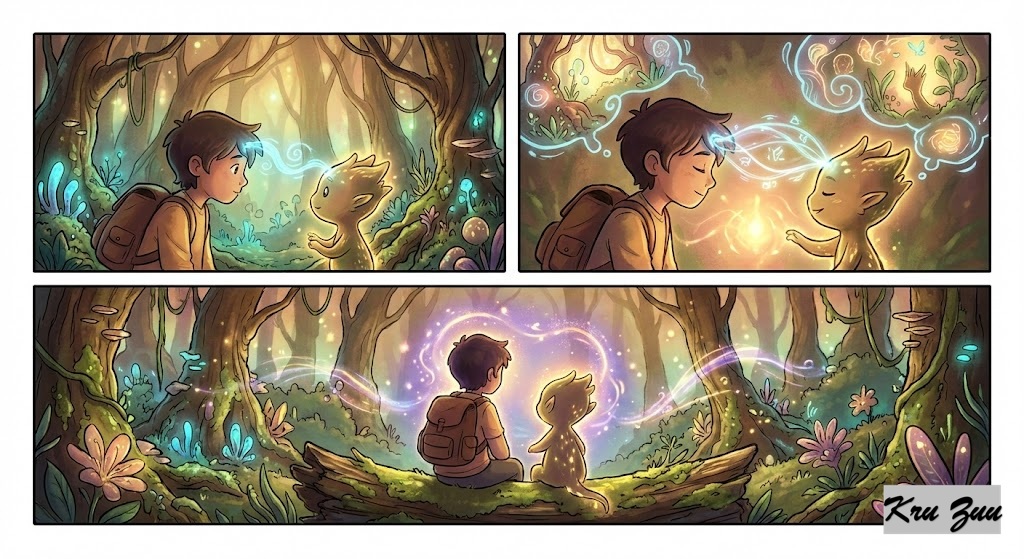
Let’s visit the magical forest to see how mental connection works.
🌟 The Cast
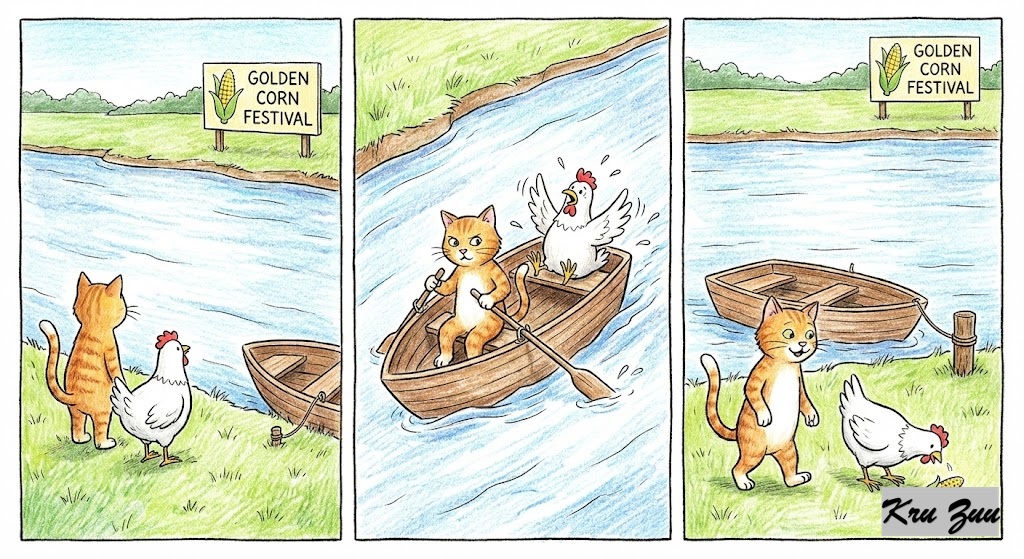
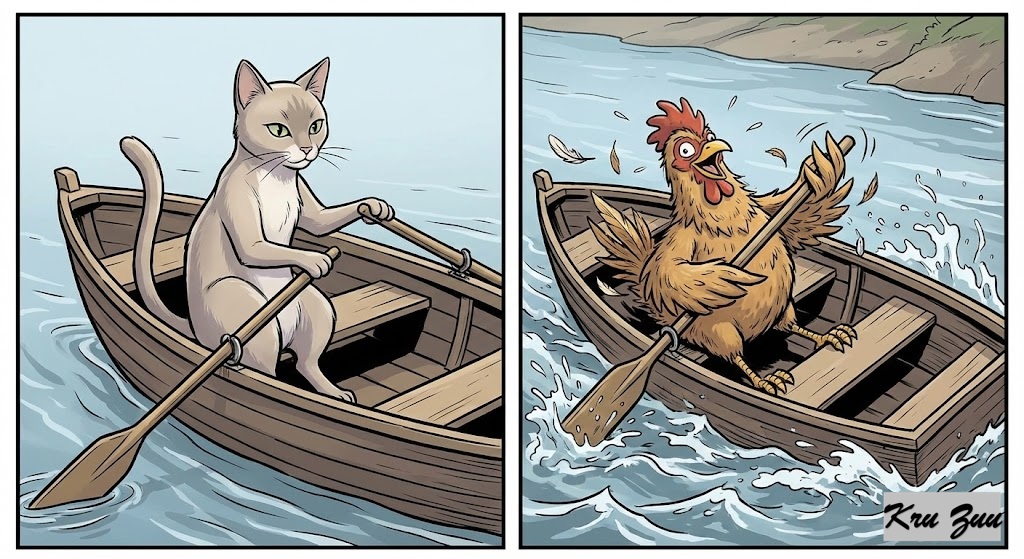
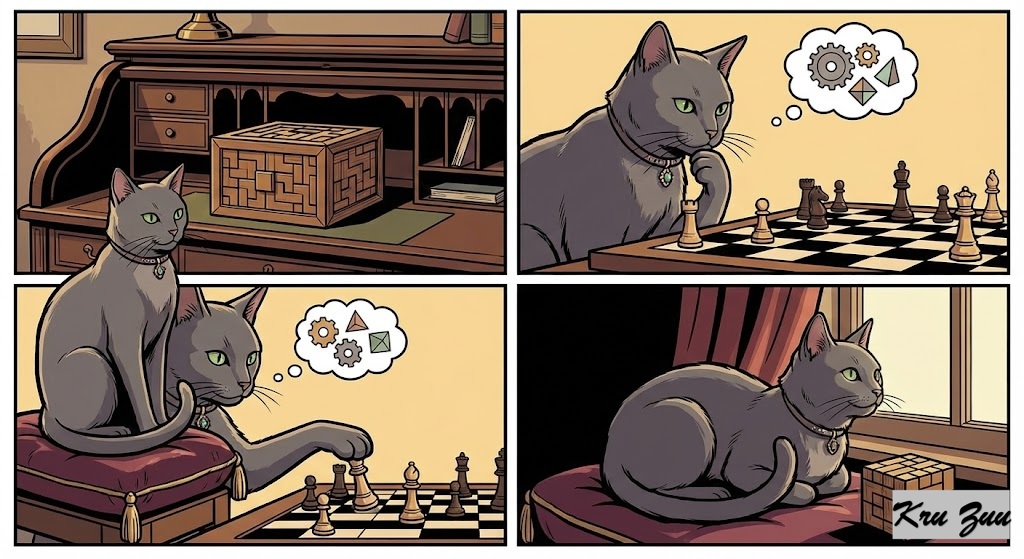
Cleo the Cat: Elegant, logical, loves puzzles. 😼
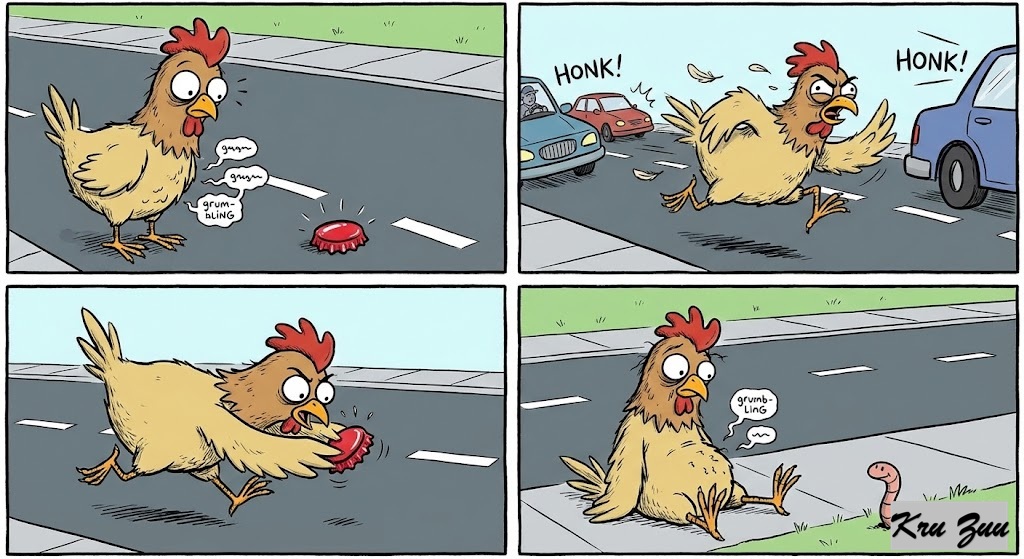
Cluck the Chicken: Impulsive, hungry, relies on gut instinct. 🐔
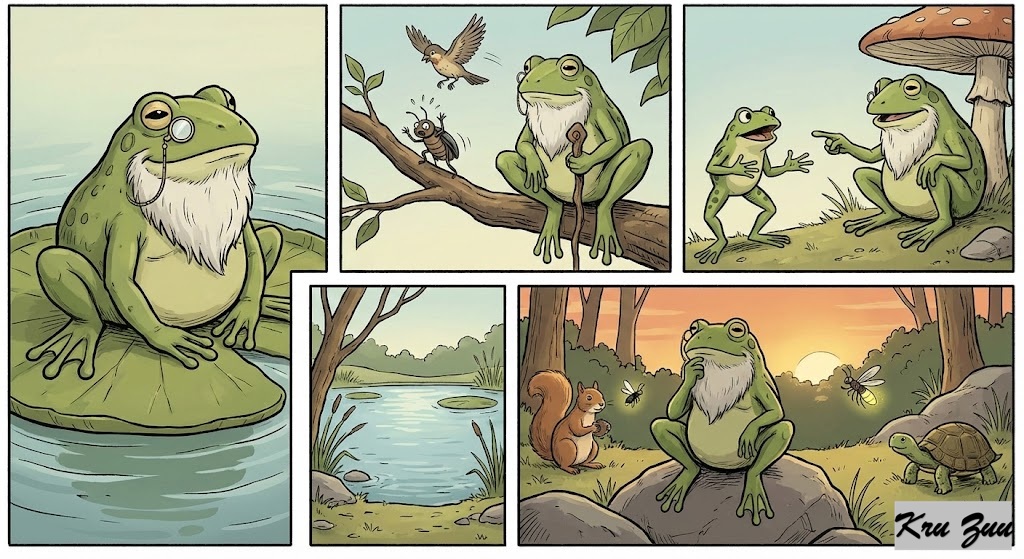
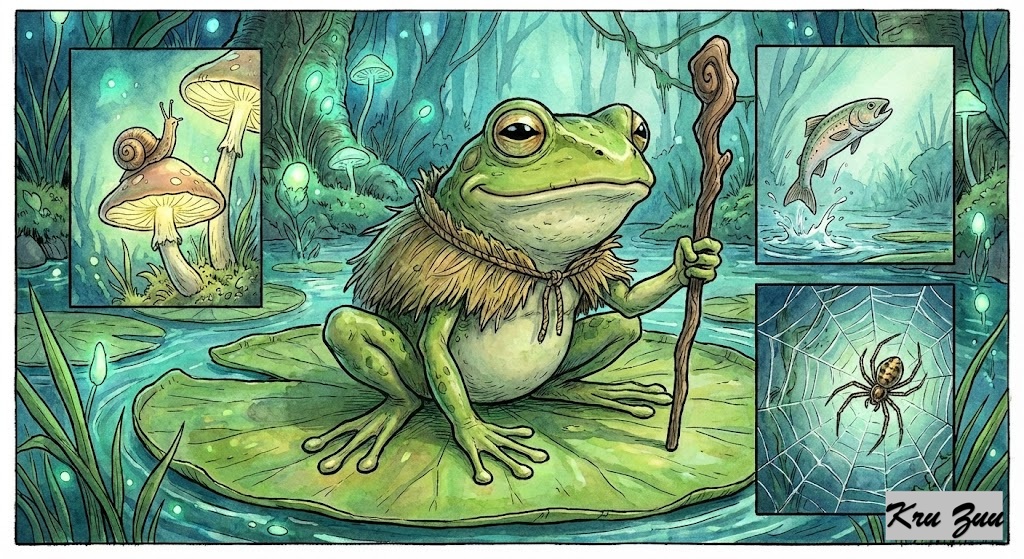
Fred the Frog: The wise, green observer. 🐸
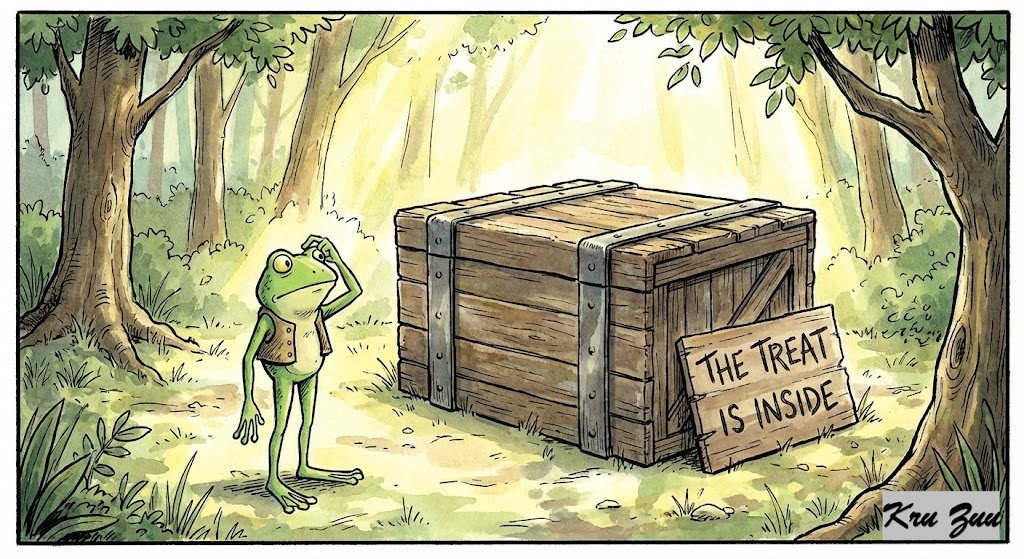
The Situation: Fred the Frog has placed a mysterious, heavy wooden box in the middle of the clearing. It has no keyhole. It has no handle. Just a sign that says: “The treat is inside.”
The Conflict: Cleo circles the box, analyzing the wood grain. She thinks hard. “The wood is loose on the top right corner. I need something thin to pry it open.” Cluck stares at the box, thinking about the corn inside. He feels a vibration. “The top right corner looks weak. I need something flat to poke it.”
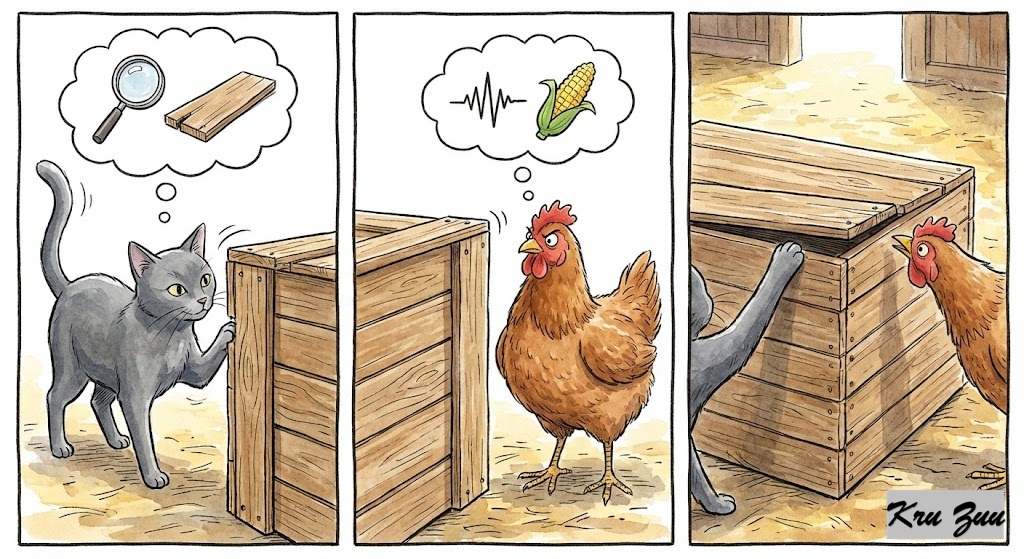
The Climax: Without saying a word to each other… Cleo runs to the left and grabs a flat, silver spoon from a picnic basket. 🥄 Cluck runs to the right and grabs a flat, loose slate of rock. 🪨
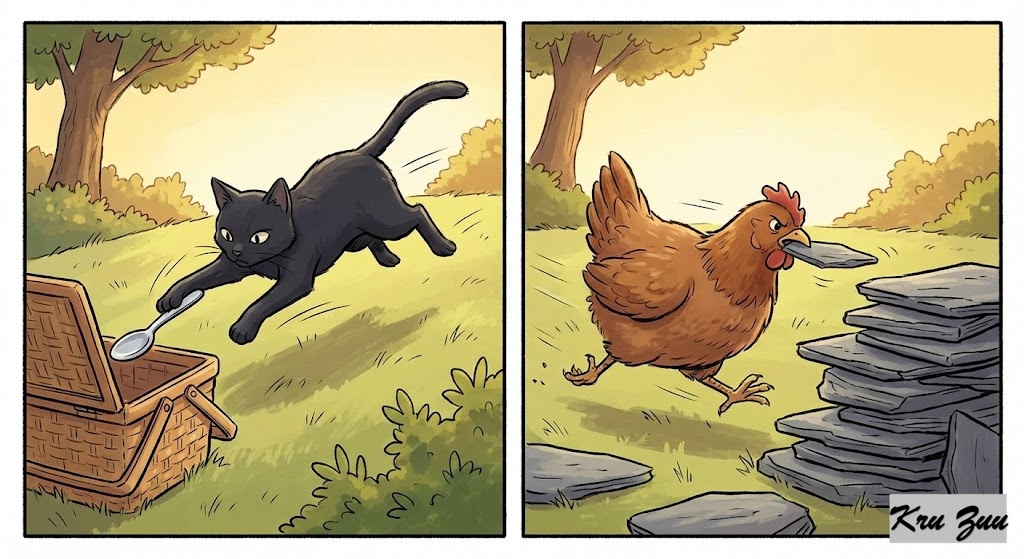
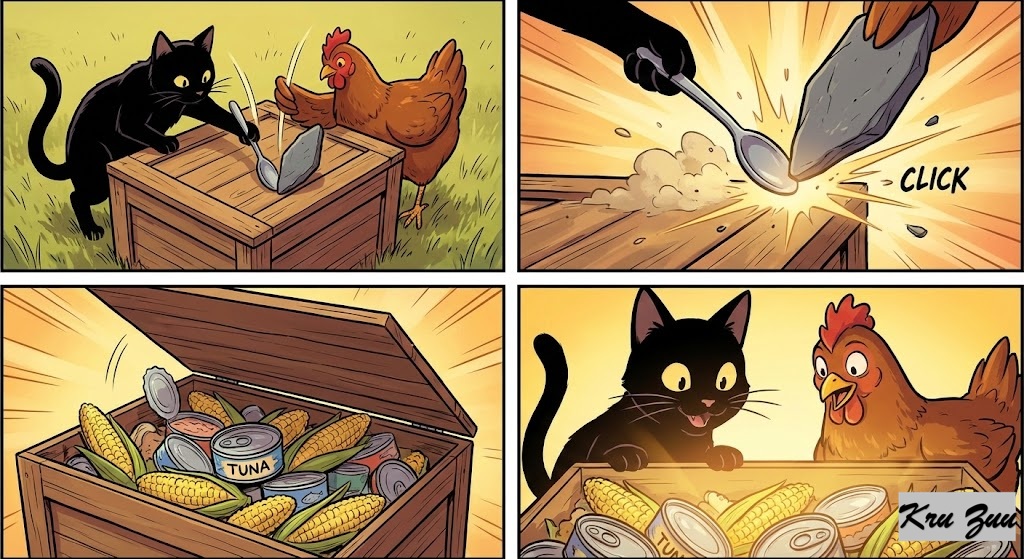
They both run back to the box and jam their tools into the exact same spot (the top right corner) at the exact same time. Click! The box pops open. It is filled with tuna and corn!
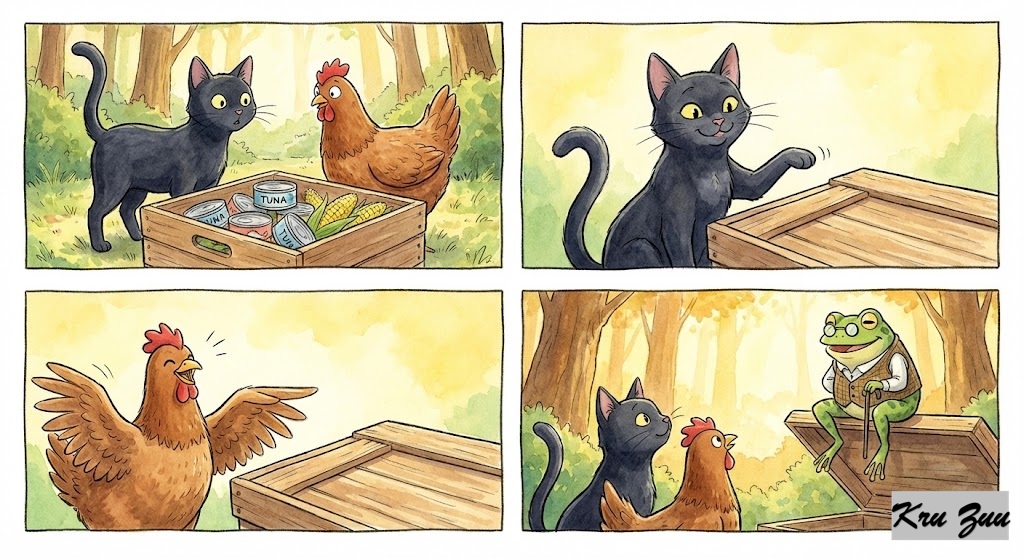
The Resolution: They look at each other, shocked. Cleo smiles, her tail twitching. “I was going for the leverage point.” Cluck laughs. “I just knew that was the weak spot!” Fred the Frog hops onto the open lid. He adjusts his tiny glasses. “Ribbit,” Fred says. “Different species, different styles, but the same solution. Great minds think alike.”
The Moral: You don’t have to be identical to be compatible. When you find someone who solves problems the way you do, hold onto them. That is your teammate.
🎓 Lesson for English Learners
Context is Key.
Situation: You and your friend both reach for the last slice of pizza at the same time.
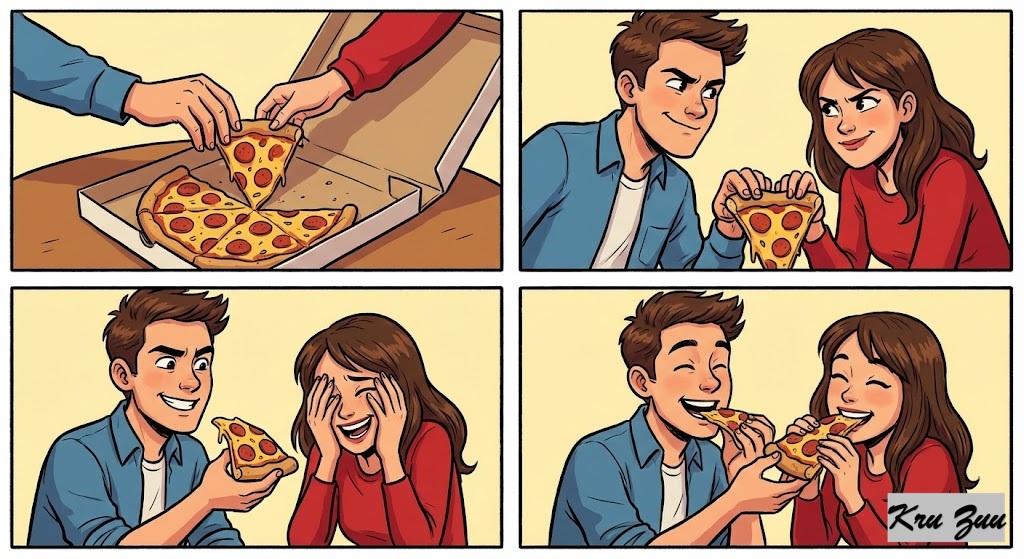
You Say: “Great minds think alike!” (This is funny/playful).
Situation: You and your boss both suggest the same marketing strategy in a meeting.
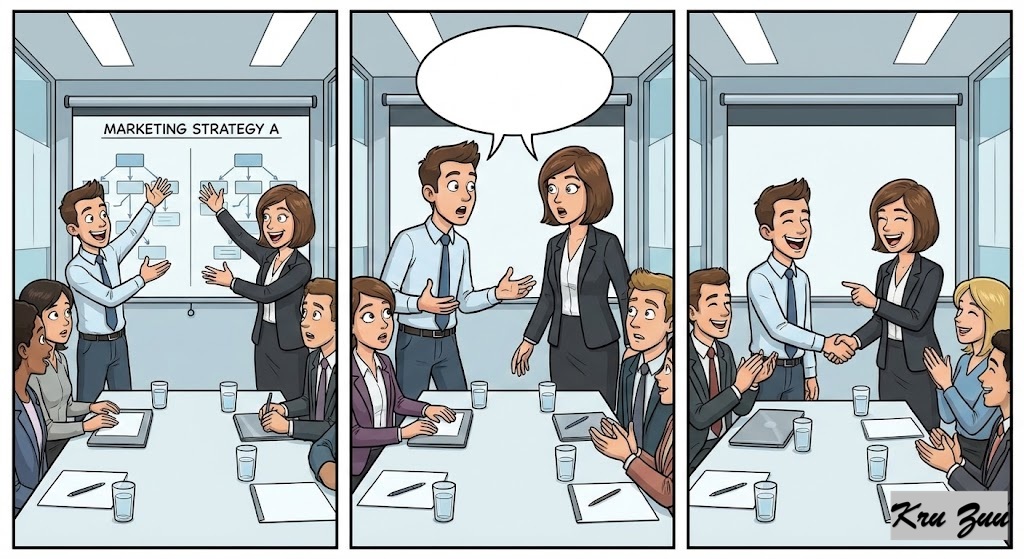
You Say: “Great minds think alike!” (This is complimentary and builds a professional bond).
💬 Your Turn: The Connection Challenge 🚀
Is there someone in your life (a partner, a best friend, a coworker) who often finishes your sentences?
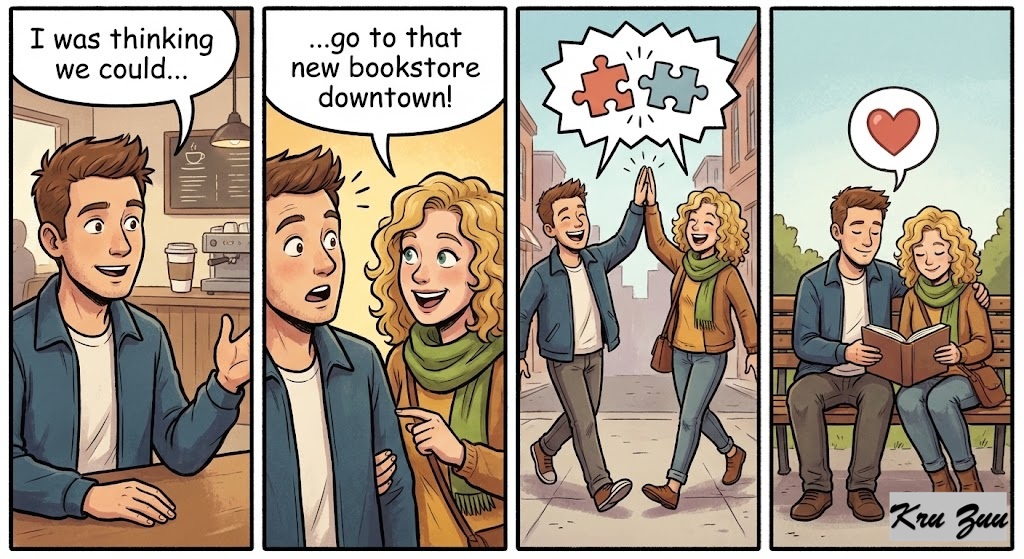
The Challenge: The next time this happens, the next time you both say the same thing or text each other at the same moment, do not ignore it.
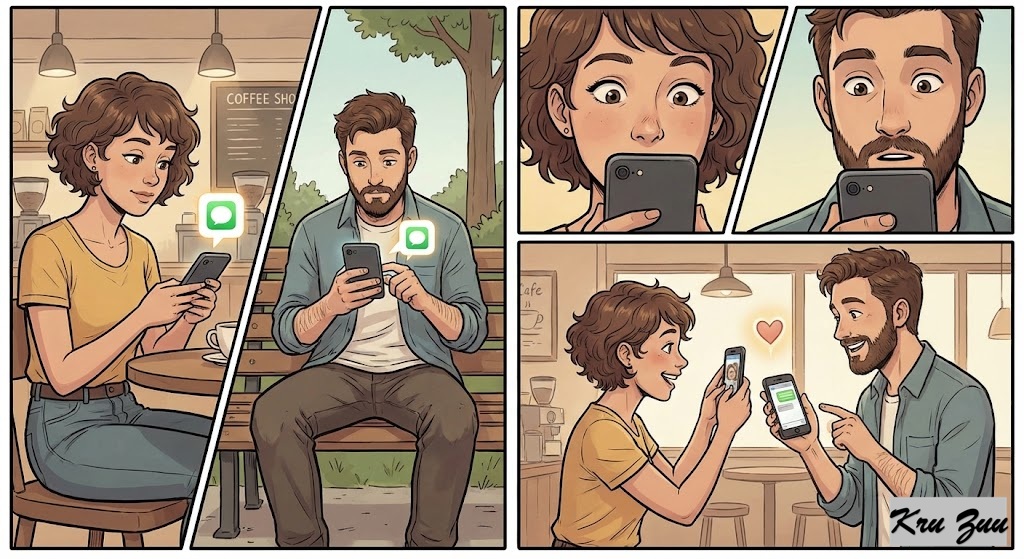
The Action: Immediately send them a message or say: “Great minds think alike! 🧠✨”
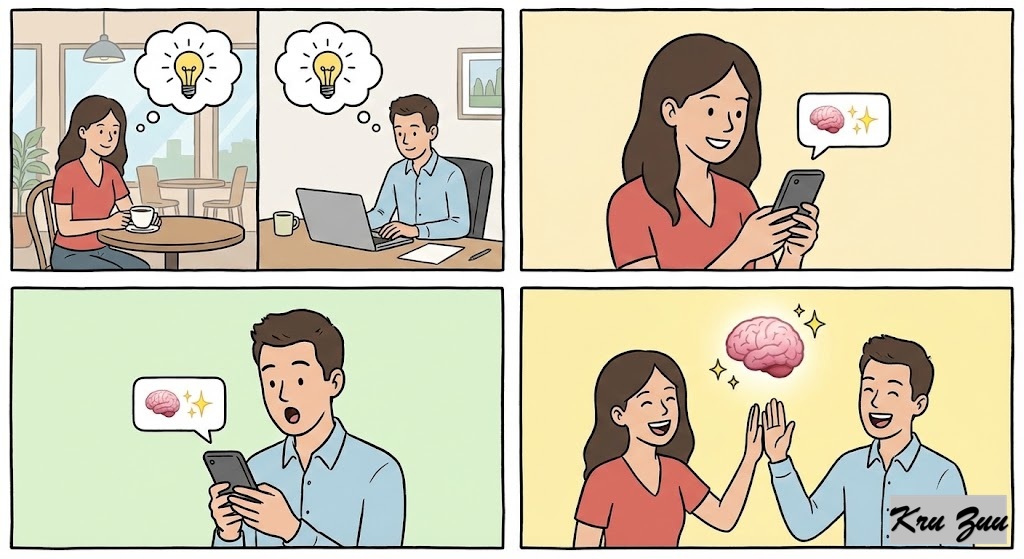
Celebrate the connection. It turns a coincidence into a relationship builder.
👇 Question for the comments: Who is your “Mind Twin”? Tag the person who always seems to know what you are thinking!