Tag: book-review

  • 🐆 The Daily Shield: The Law of True Nature

    🐆 The Daily Shield: The Law of True Nature

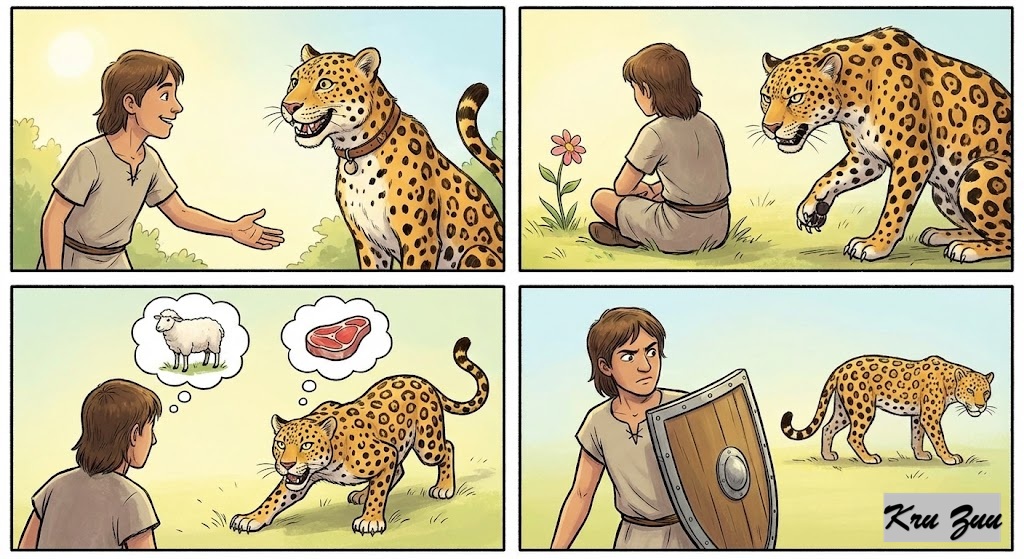
    “A leopard doesn’t change its spots.”


    😈 The Villain (The Wishful Thinker)

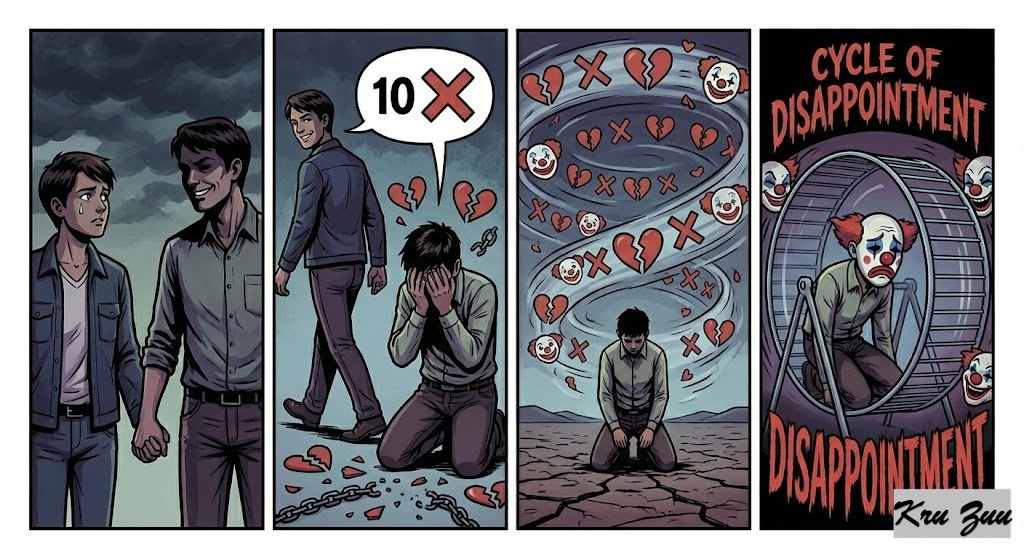
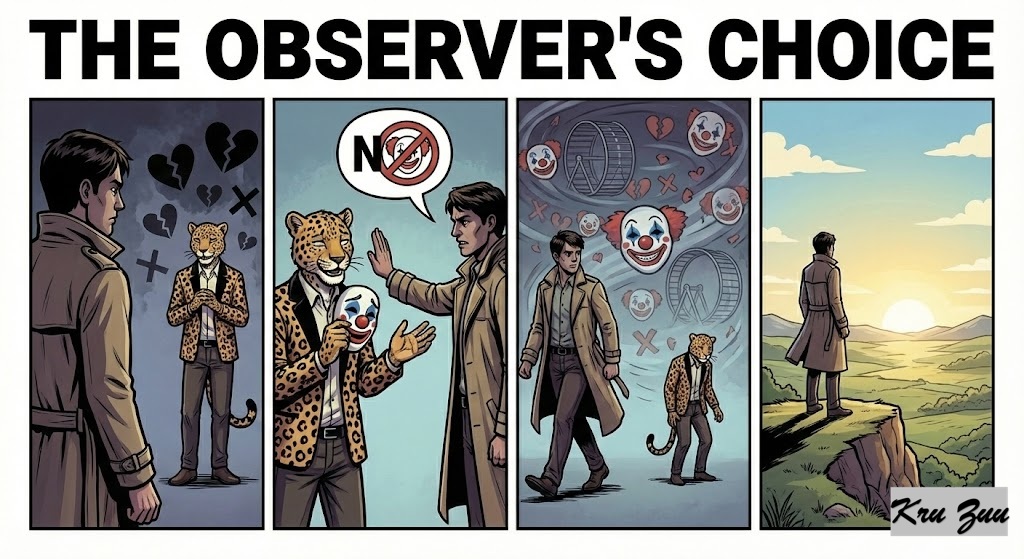
    You meet someone who has lied to you three times. They apologize and say, “I’ve changed! It won’t happen again.” What do you do? You believe them. You think you can “fix” people. You think your love or logic is strong enough to rewrite someone’s personality.

    The Result? You get hurt again. You feel betrayed by the same person, in the same way, for the tenth time. You are trapped in the “Cycle of Disappointment.” 🤡

    😇 The Hero (The Realist)

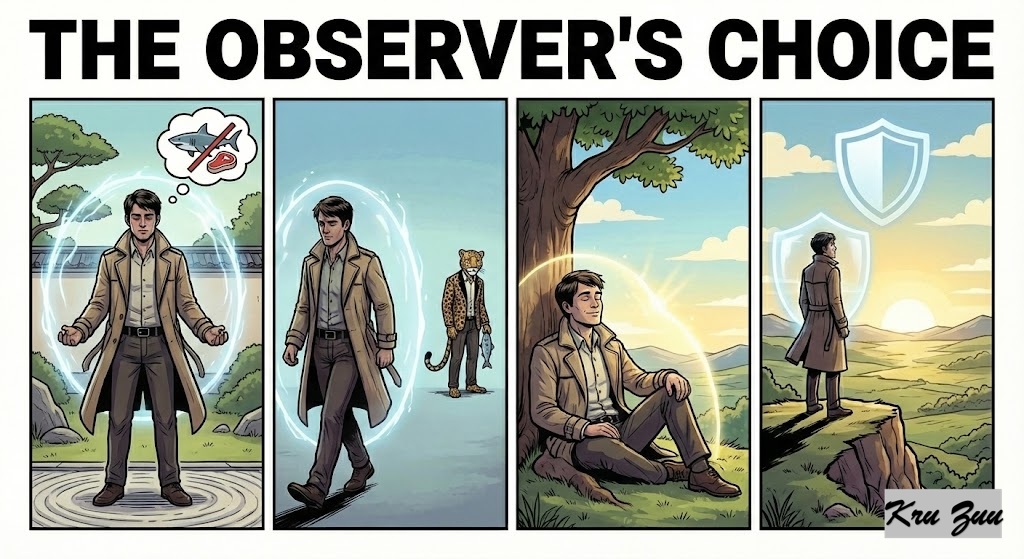
    You observe patterns. You understand that the best predictor of future behavior is past behavior. When someone shows you who they are, you believe them the first time. You don’t try to change the leopard; you simply don’t invite the leopard into your house.
    The Result? You protect your energy. You stop wasting time trying to turn a shark into a vegetarian. You find peace in acceptance. 🛡️

    ⚖️ The Reality


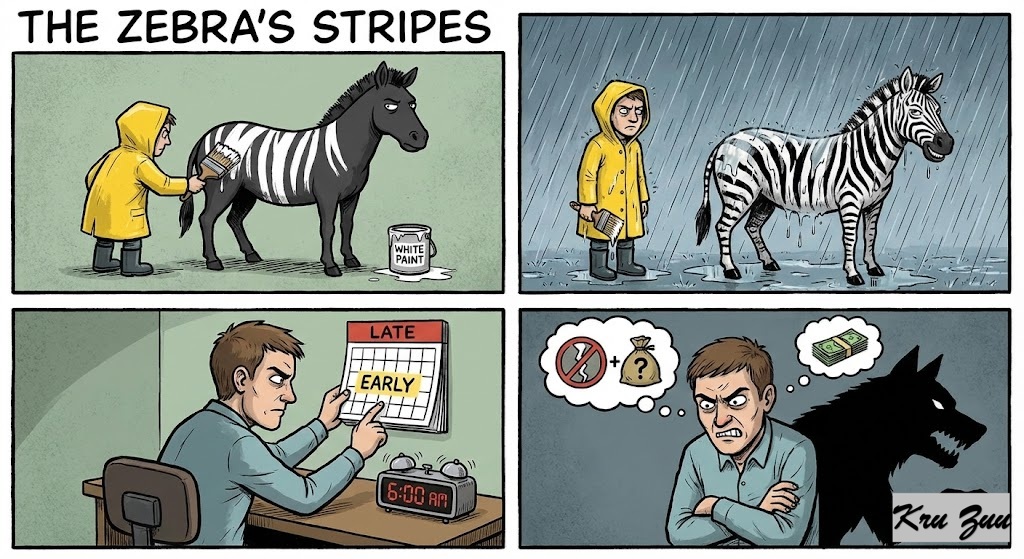
    You can paint a zebra with white paint, but under the rain, the stripes will always return. People can change their habits (diet, wake-up time), but they rarely change their nature (integrity, temperament, core values).
    💎 The Secret

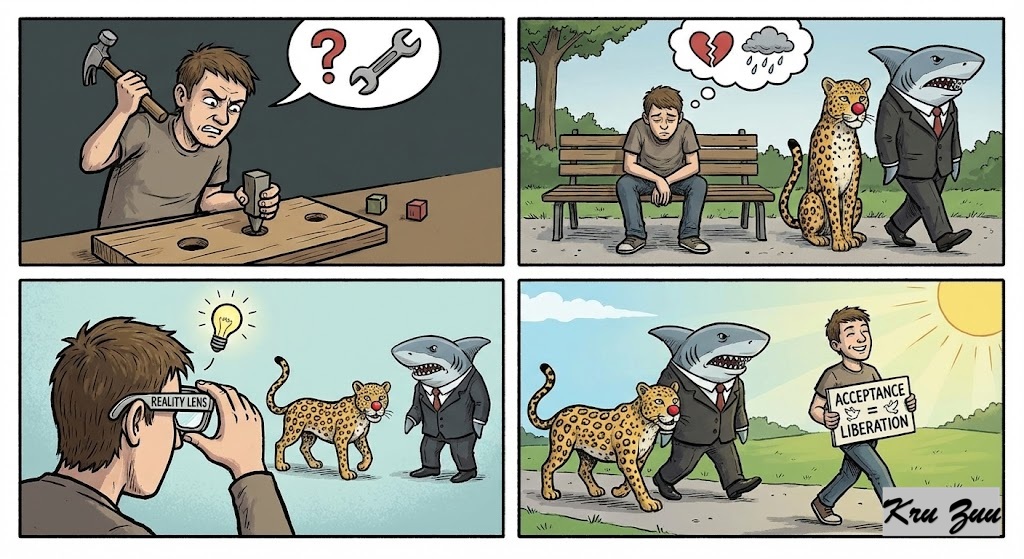
    Realizing this isn’t cynical; it’s liberating. Once you stop expecting people to be who they aren’t, you can deal with them as they are.
    🧐 The Anatomy of the Proverb


    This is your warning label for human behavior.
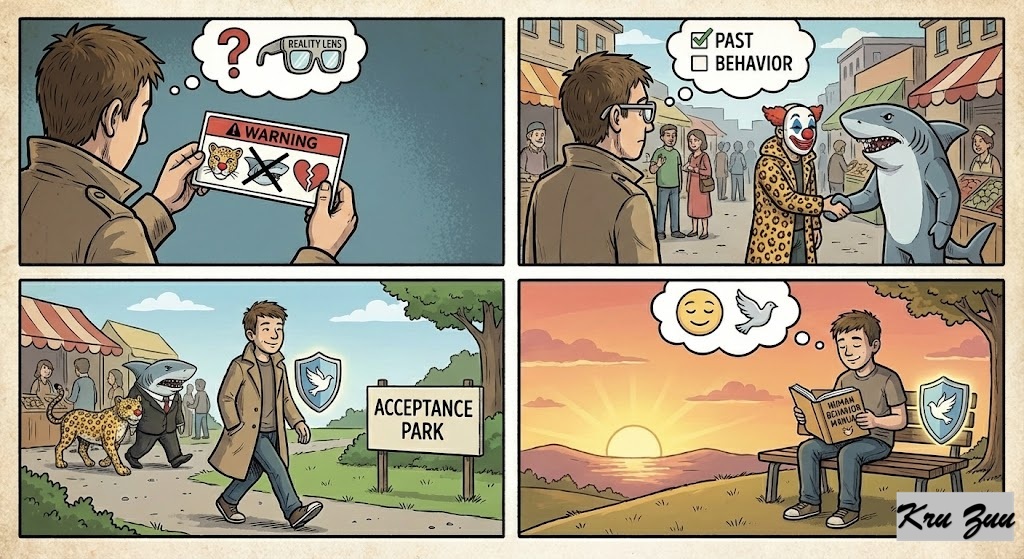

    A Leopard (The Subject): Represents a person with a strong, established reputation or nature.


    Doesn’t Change (Verb Phrase): Cannot alter or remove.


    Its Spots (The Object): Represents innate characteristics, bad habits, or true nature.


    Simpler Version: People stick to their true nature. / You cannot hide who you really are.
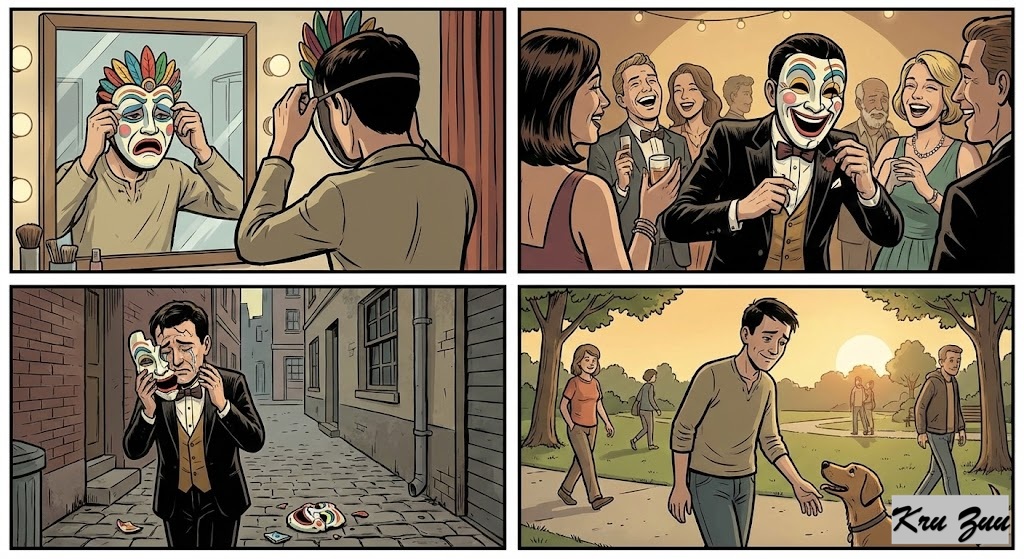

    📚 Vocabulary Vault


    Inherent (Adjective): Existing in something as a permanent, essential quality.


    Instinct (Noun): A natural or intuitive way of acting or thinking. 🧠
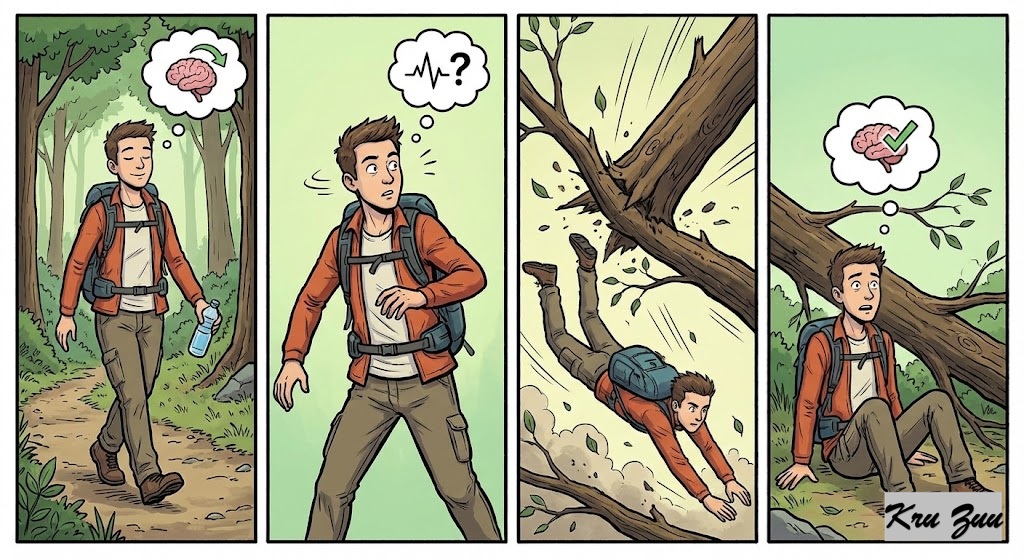

    Reputation (Noun): The beliefs or opinions that are generally held about someone.
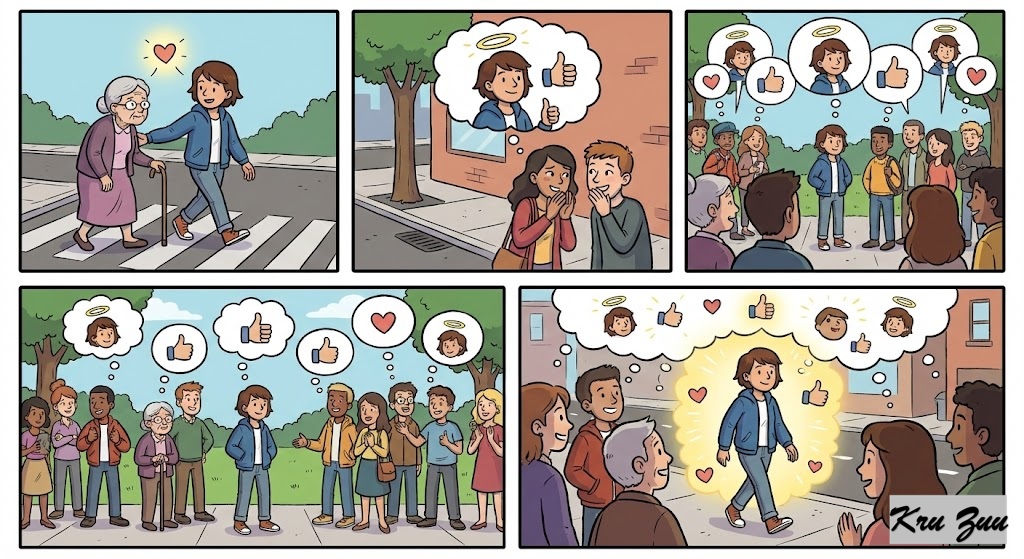

    Naive (Adjective): Showing a lack of experience, wisdom, or judgment. (Too trusting).


    Consistency (Noun): Acting in the same way over time.
    📜 History: Ancient Wisdom


    Where did this wild phrase come from?


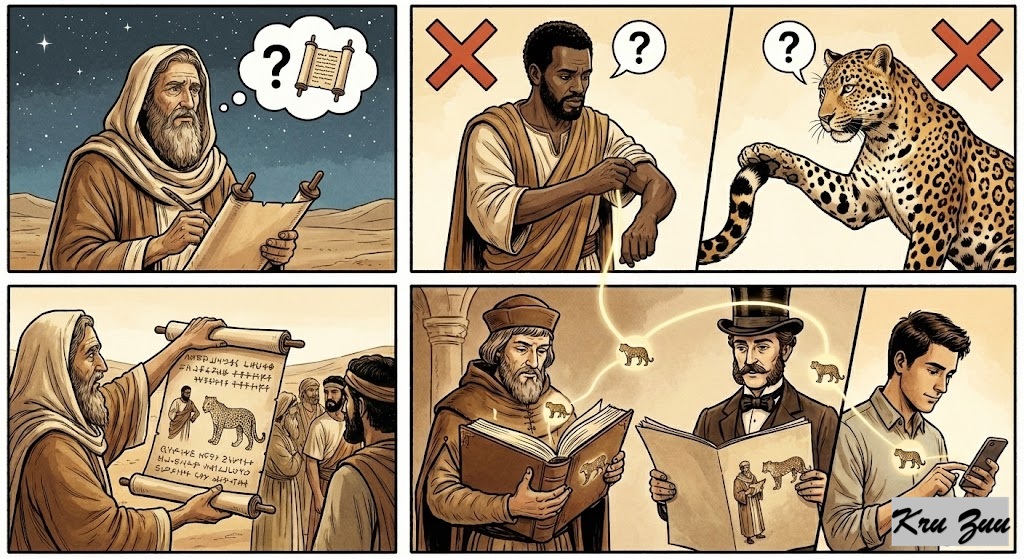
    The Origin: It is actually biblical! It comes from Jeremiah 13:23: “Can the Ethiopian change his skin, or the leopard his spots?” It was a rhetorical question meaning “No, it is impossible.”

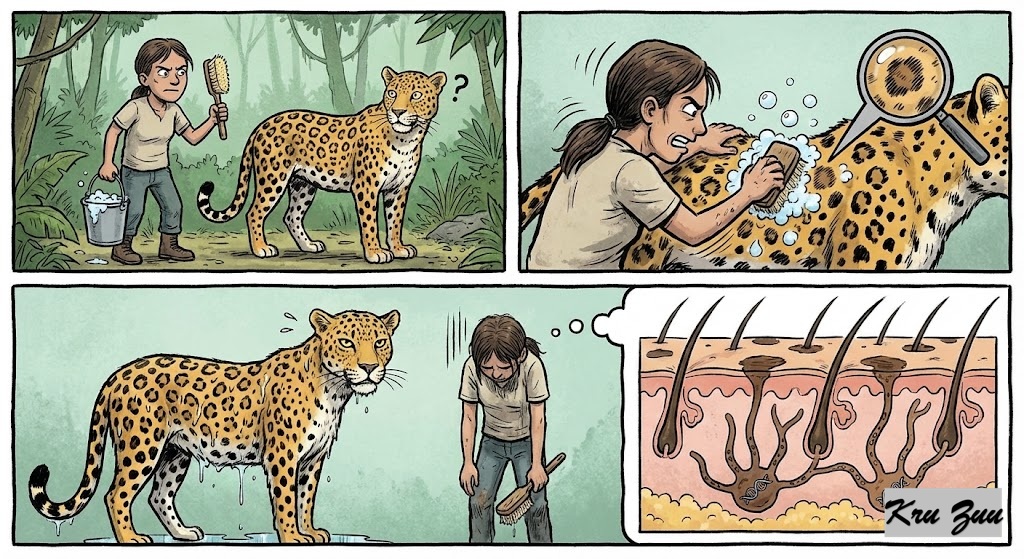
    The Logic: A leopard’s spots are not dyed on its fur; they are part of its genetics. You cannot wash them off.

    Global Cousins


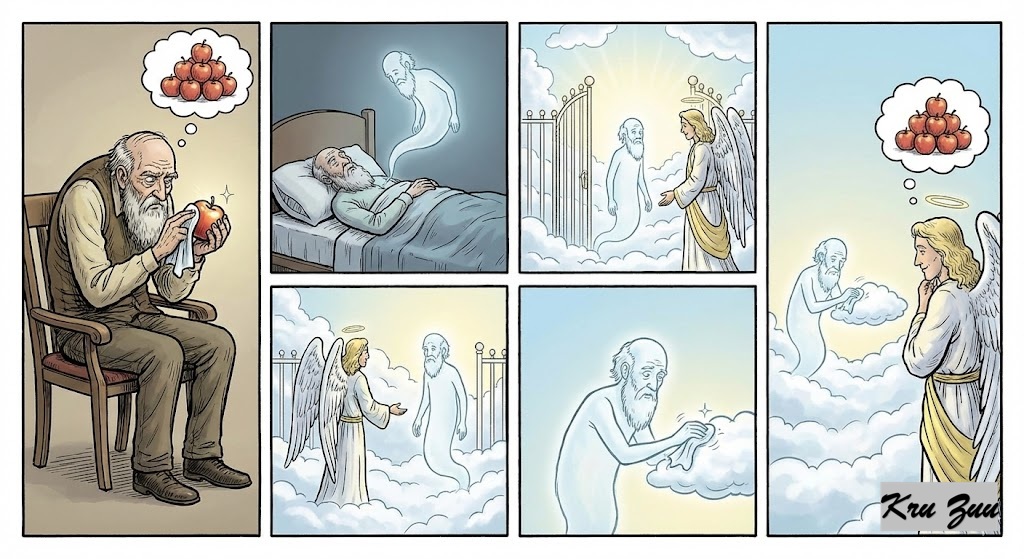
    🇹🇷 Turkish: “Can çıkar huy çıkmaz” (The soul leaves the body, but the habit/character does not).

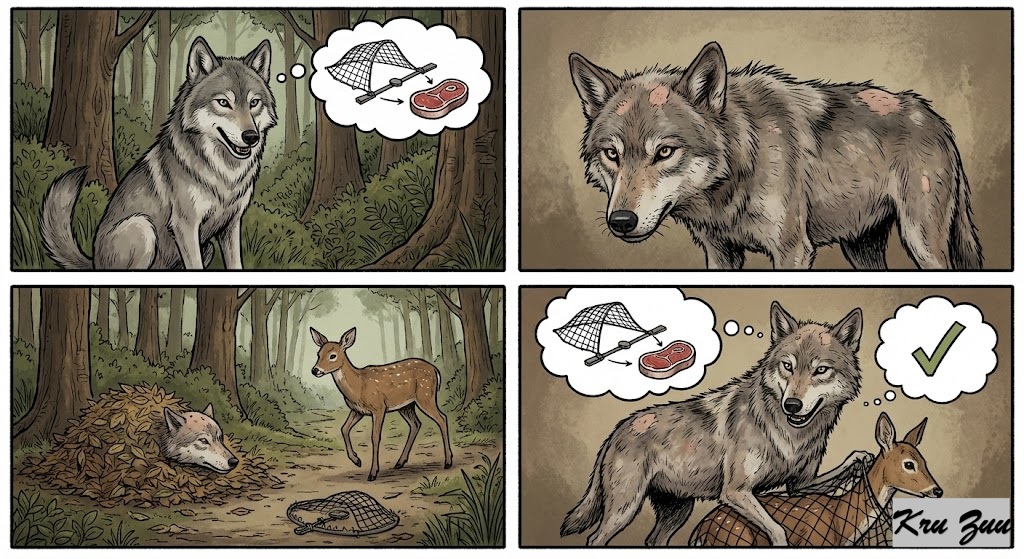
    🐺 Latin: “The wolf loses his hair, but not his tricks.”

    🐸 Arabic: “If you hear that a mountain moved, believe it; but if you hear that a man changed his character, do not believe it.”

    🎯 Impact on Life: The Pros & Cons


    ✅ The Pros (The Shield)


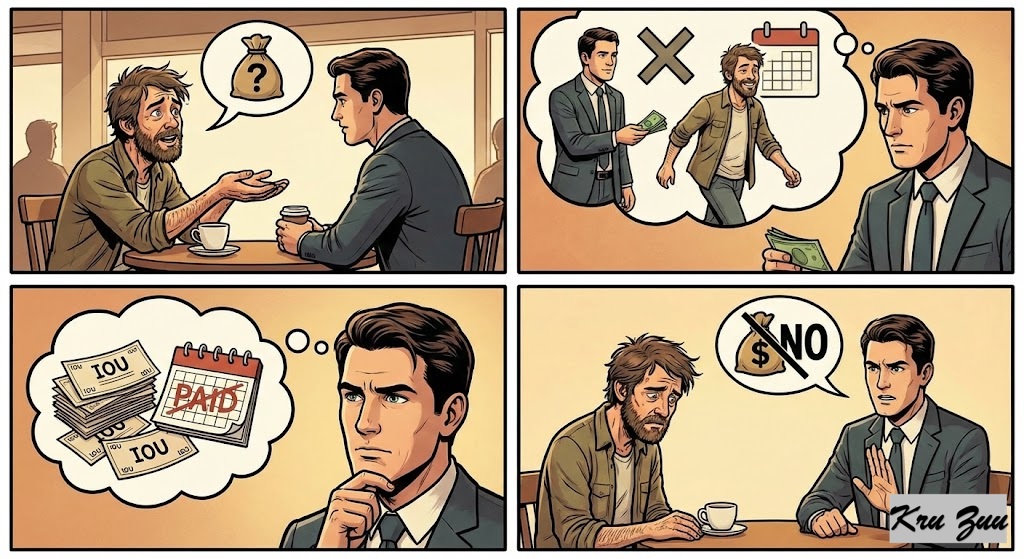
    Protection: You stop lending money to the friend who never pays you back.

    Clarity: You hire people based on their track record, not their promises.


    ❌ The Cons (The Trap)


    Cynicism: Be careful. If you believe no one can ever improve, you won’t give people a fair chance to grow. This idiom applies mostly to core character, not skills. A bad driver can learn to drive well, but a liar rarely becomes an honest man.

    🎭 Short Story: The “Vegetarian” Lunch 🥗😼🐔


    Let’s return to the magical forest to see if nature really changes.


    🌟 The Cast


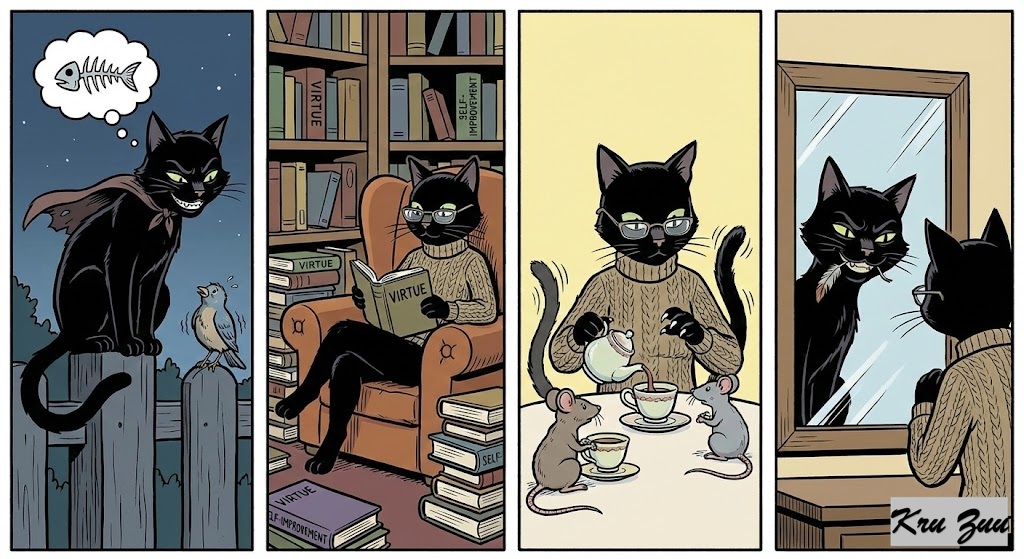
    Cleo the Cat:
    The predator who claims she is “reformed.” 😼

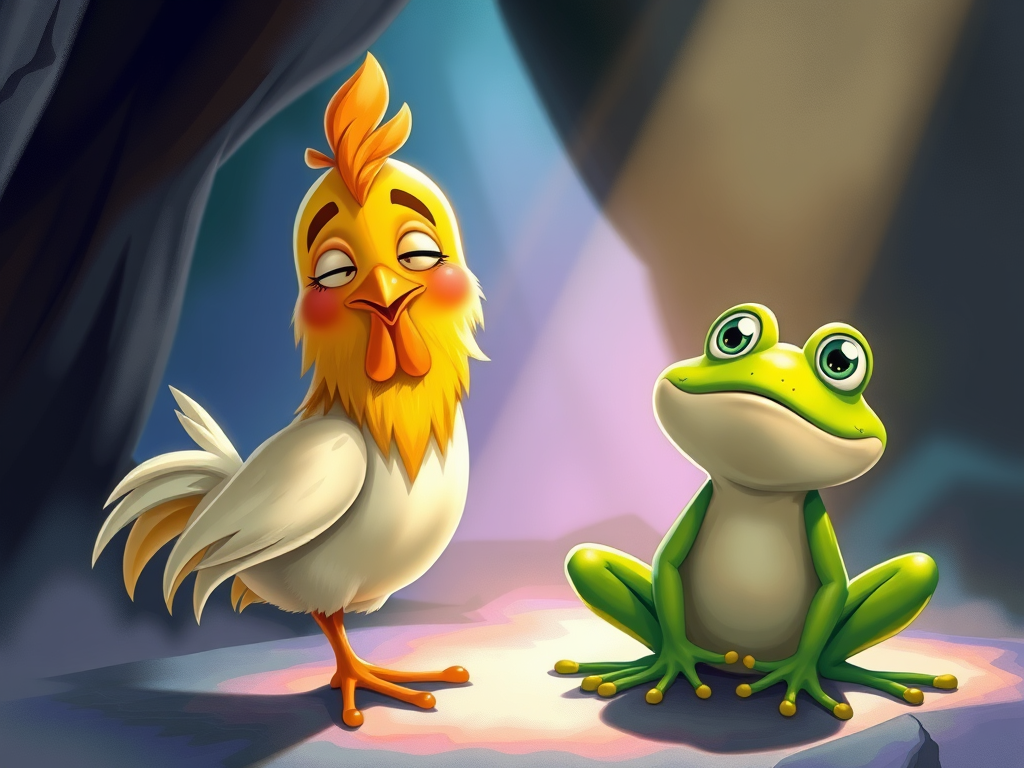
    Cluck the Chicken: The trusting optimist. 🐔

    Fred the Frog: The skeptical realist. 🐸

    The Situation: Cleo the Cat approaches Cluck and Fred. She is wearing a shirt that says “I Love Tofu.” “Good news!” Cleo purrs smoothly. “I have decided to change my lifestyle. I am no longer a hunter. I am a vegetarian now. I want to invite you both to lunch to celebrate my new life.”
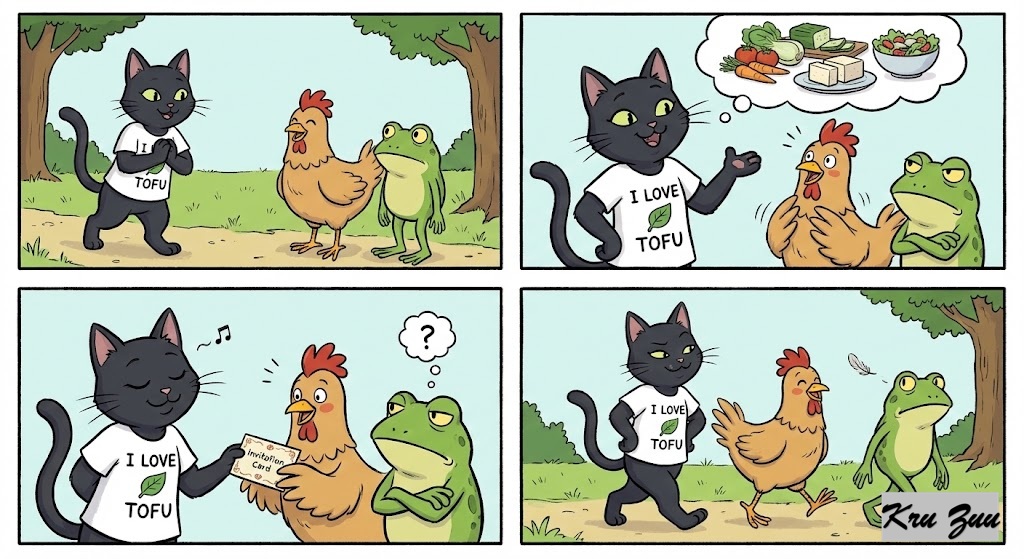

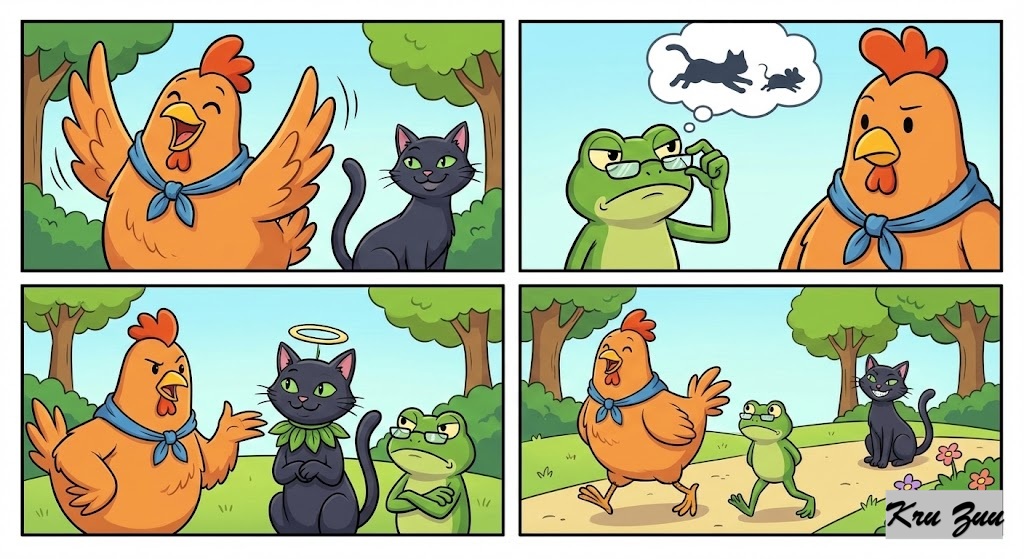
    The Conflict: Cluck is thrilled. “Oh, how wonderful!” Cluck chirps, flapping his wings. “I always knew you were good deep down, Cleo! We will be there!” Fred the Frog adjusts his glasses and frowns. “Ribbit. I don’t know, Cluck. She ate a mouse last Tuesday. A leopard or a cat, doesn’t change its spots.” “Don’t be so negative, Fred!” Cluck scolds. “She has changed!”

    The Lunch: They sit down at the picnic. There is a bowl of salad. Cleo tries to eat a leaf of lettuce. She chews it… and spits it out. She looks at Cluck. Her eyes get wide. Her tail starts to twitch. 🐈 Cluck is busy eating corn. “This is great, Cleo!” Suddenly, Cleo lunges! POUNCE! She jumps across the table, aiming right for Cluck’s feathery tail!
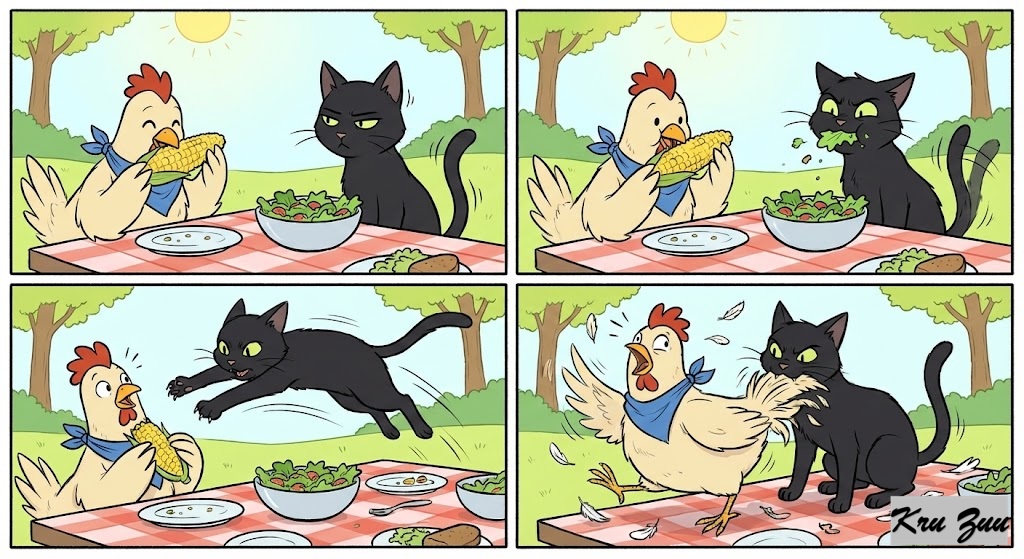

    The Resolution: Fred was ready. He kicks a bucket of water onto Cleo. 💦 Cleo hisses, “I couldn’t help it! He looked so delicious!” and runs away to dry off. Fred looks at the shaking Chicken. “Cluck, next time, believe history, not promises.”
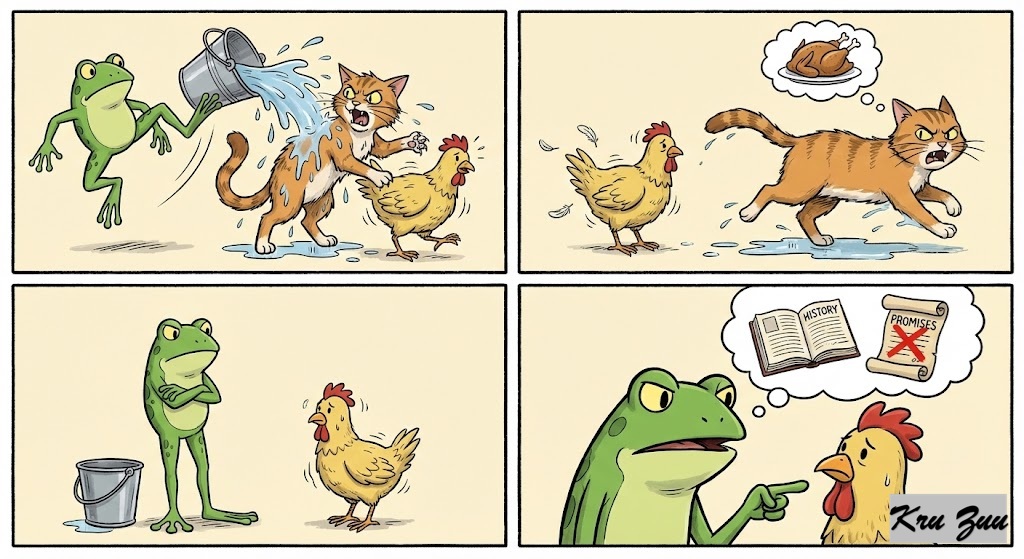

    The Moral: Instinct is powerful. Just because someone says they are different, doesn’t mean their “spots” are gone. Keep your guard up until you see real action.
    🎓 Lesson for English Learners


    Don’t force the translation.


    Situation: You keep making the same grammar mistake (e.g., saying “I have 20 years” instead of “I am 20 years old”).
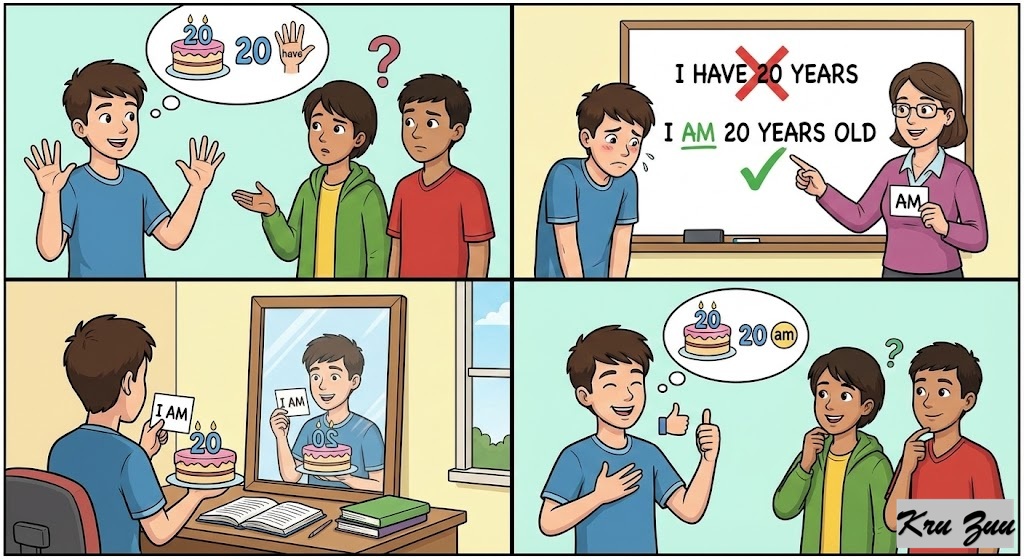

    The Shift: You might feel like you are the leopard—that you can’t change your bad habit.
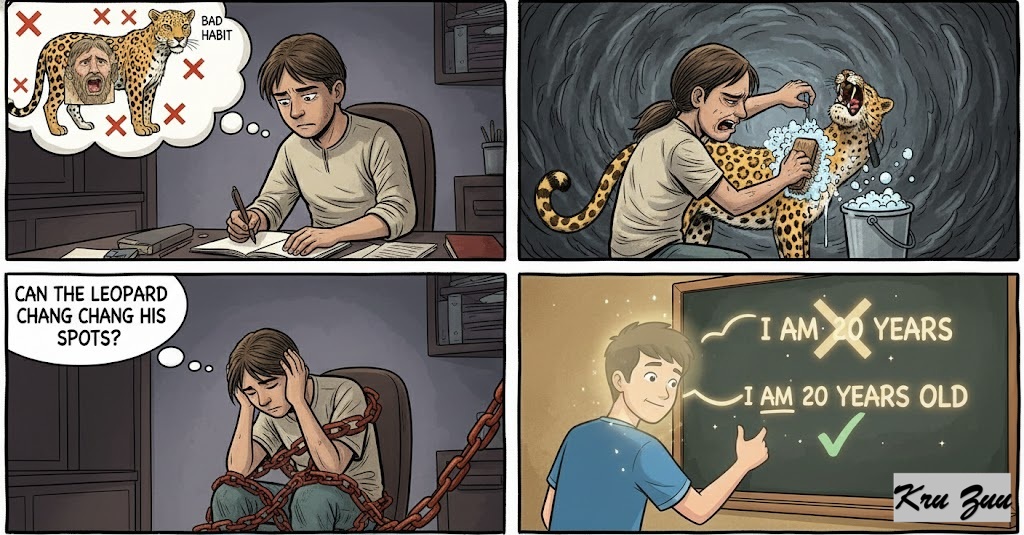

    The Fix: Unlike personality, language habits CAN change. But it takes “conscious repetition.” You must rewrite your spots.


    Usage: If a politician is caught lying again, you can shake your head and say to your friend: “Well, you know what they say… a leopard doesn’t change its spots.”


    💬 Your Turn: The Reality Check 🚀


    Is there someone in your life you are trying to “change”?


    Identify: Think of a person who has disappointed you in the same way 3 times.


    Accept: Say to yourself, “This is who they are. They are showing me their spots.”


    The Action: Stop trying to scrub their spots off. Instead, change your position. If they are a biter, step back so they can’t bite you.
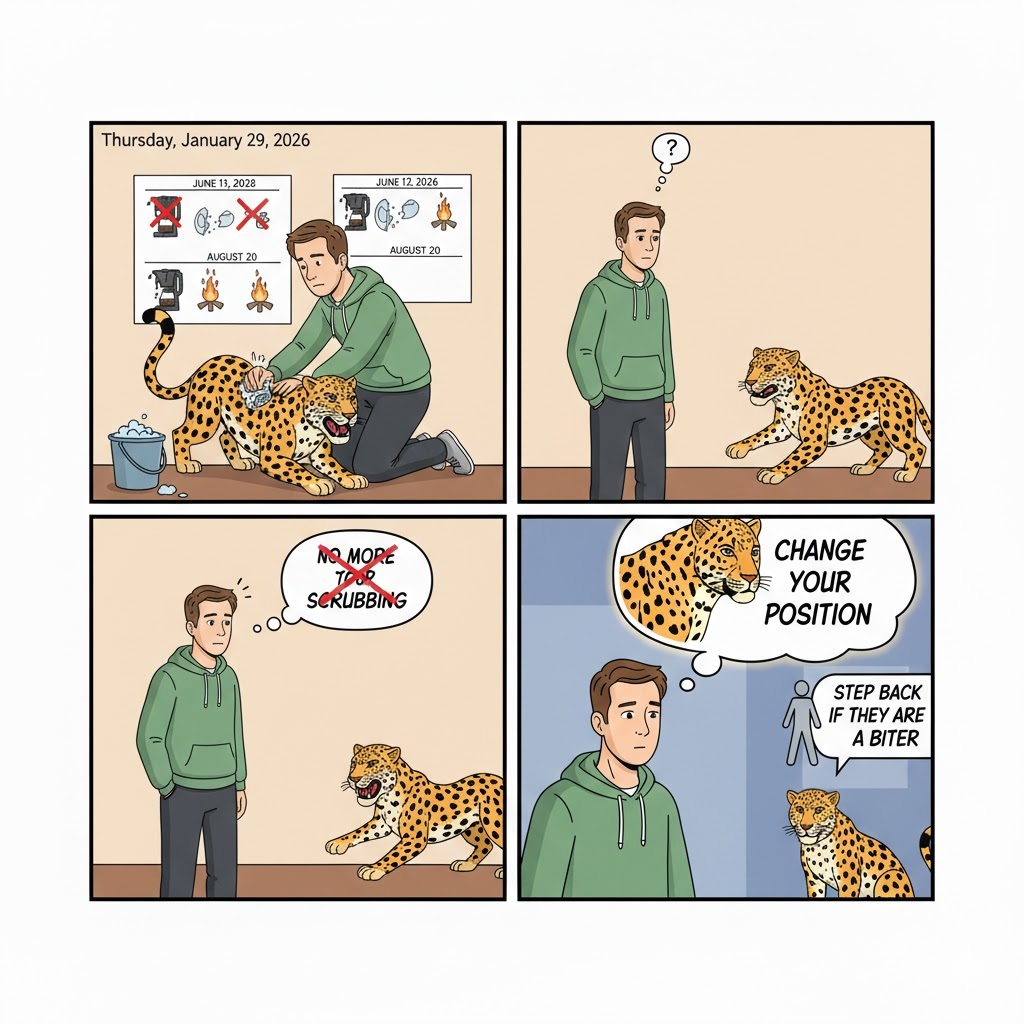

    👇 Question for the comments: Do you believe people can truly change their core personality? Or do we stay the same forever?

    Let me know your thoughts!

    By Zubeyir YURTKURAN

    https://www.facebook.com/BrainBattleground/

    https://www.facebook.com/zubeyr.yurtkuran/

    https://www.instagram.com/zubeyryurtkuran/

    https://www.youtube.com/@BrainBattleground-b3p

    https://www.instagram.com/brainbattleground/

  • 🐢 Better Late Than Never: Why Doing It “Late” Beats Not Doing It At All

    🐢 Better Late Than Never: Why Doing It “Late” Beats Not Doing It At All

    ⏳ Time flies, but is the opportunity really gone?


    🚌 Scenario: You missed the bus by 5 minutes.

    The “Never” Approach: “Today is ruined. I’m going back home. I give up.”

    The “Better Late” Approach: “I’ll wait for the next one. I will be late for the meeting, but at least I will be there.”


    🎂 Scenario: You forgot your friend’s birthday, and the date was yesterday.

    The “Never” Approach: “It’s too late now. It would be embarrassing to text. I just won’t say anything.”

    The “Better Late” Approach: “I will apologize and celebrate today. It is better than completely ignoring it.”


    Life isn’t perfect. Sometimes we miss the train, sometimes we don’t start our diet on Monday. This is exactly where the golden rule comes in to save us from guilt: “Better Late Than Never.”


    In this post, we explore the proverb that is the biggest enemy of perfectionism. Forgive yourself, pick yourself up, and let’s begin.

    🧐 The Anatomy of the Proverb


    Let’s look at the mechanics of this comforting phrase.


    📚 Vocabulary Vault


    Late (Adjective/Adverb): Doing something after the expected, proper, or usual time. 🕒


    Never (Adverb): At no time in the past or future; not ever. ⛔


    Better (Adjective): More desirable, satisfactory, or effective. 👍


    🧠 Grammar Focus


    This sentence is a comparative structure (Ellipsis is used, meaning words are omitted).


    Full Sentence: [It is] Better [to be] late + than [to] never [arrive].


    The Meaning: Doing something after the scheduled time is far superior to not doing it at all. Delay is a flaw, but quitting is a total loss.


    📜 History: Timeless Wisdom


    Who made this famous? Humans have been battling procrastination for thousands of years.


    The Origin: The phrase was notably used by the father of English literature, Geoffrey Chaucer, in his work “The Yeoman’s Tale” in 1386. However, its roots trace back even further to the Roman historian Livy.


    The Lesson: Perfect timing is great, but a completed task (even if late) is always better than an abandoned dream.

    🎯 Impact on Life: The Pros & Cons


    Is it always okay to rely on this proverb? Let’s weigh the scales.


    ✅ The Pros (Why it helps)


    Relieves Guilt:
    Instead of giving up after a mistake, it gives you a chance to fix it.


    Results-Oriented: It ensures you reach the goal, even if slowly. Remember the Tortoise and the Hare; crossing the finish line is what matters. 🏁


    Encourages Action: It gives power to those who say “I’m too old” or “I missed my chance” to finally start.


    ❌ The Cons (Why it can be tricky)


    Excuse for Laziness: If you constantly say, “I’ll do it later, better late than never,” you become unreliable.


    Loss of Trust: Delivering a project late is better than never delivering it, but it still damages your professional reputation. Balance is key. ⚖️

    🎭 Short Story: The Last Harvest


    To understand this better, let’s return to the farm. Winter is coming, and it is time to plant seeds for the winter food supply!


    🌟 Character Introduction


    Percy the Chicken (The Quitter): Has an “All or Nothing” mindset. If he misses the perfect time, he thinks trying is pointless. He gives up immediately. 😵


    Luna the Cat (The Punctual One): Does everything on time. She is disciplined and never late. ✨


    Fred the Frog (The Hopeful Latecomer): Sometimes distracted and misses the deadline, but never gives up. He knows that some result is better than zero result. 🐸


    Luna woke up with the first light of morning. “The sun is up! The perfect time to plant corn!” she said. Luna plowed her field, planted her seeds by noon, and went to rest, satisfied with a job well done.


    Percy and Fred, however, had overslept.


    At 3:00 PM, Percy woke up. He looked at the sun and panicked. “Oh no! The day is almost over! Luna has already finished. There is no point in starting now. The seeds won’t have enough sun. I’ll just plant them next year.” Percy shrugged and went off to play video games. 🎮


    Fred woke up at the same time. “Oh dear!” he shouted. “I am so late!” He ran to his field. The sun was already setting.


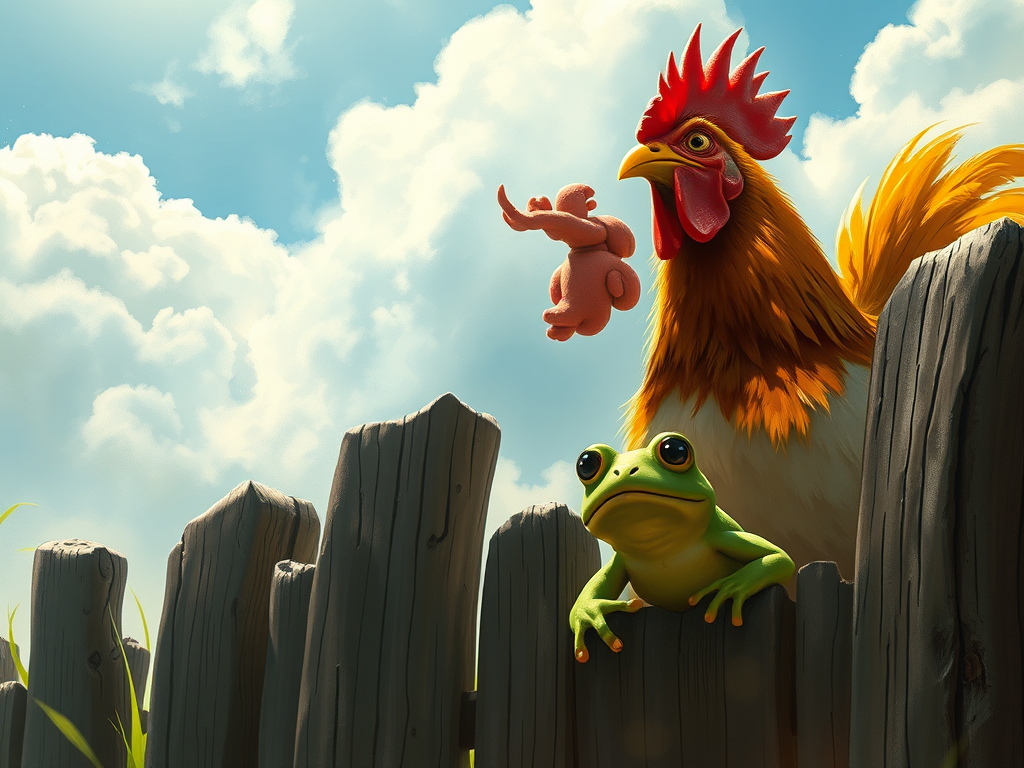
    Percy yelled from the fence: “Hey Fred! Don’t bother, buddy. We missed the perfect window. Just let it go!”


    Fred wiped the sweat from his forehead and shouted back: “Better late than never, Percy!” Fred worked furiously, planting his seeds even after the sun went down, working by the light of the moon. 🌙


    Months passed. The harvest time arrived.


    Luna’s Field: Full of perfect, golden corn. Her pantry was completely full.


    Percy’s Field: Full of weeds. He would spend the winter hungry because he did nothing just because he was late.


    Fred’s Field: His corn wasn’t as big as Luna’s, and it was a bit smaller, but it was there. Fred’s basket was full enough to survive.


    Fred munched on his corn and looked at the hungry Percy. “You see, Percy? It wasn’t perfect, but at least I’m not starving. I was late, but I didn’t quit.”


    In this story, the characters represent the outcomes:


    Luna: Perfection (Timely execution) 🏆


    Percy: Bankruptcy / “Never” (Giving up and getting zero results) 🌪️


    Fred: Salvation / “Better Late” (Delayed but satisfactory results) 🌽

    🎓 Lesson for English Learners:


    You might be 30, 40, or 60 years old. You might regretfully say, “I wish I had learned English when I was a child.” (Percy’s Method)


    But remember this truth: Being able to speak English 1 year from now is a million times better than finishing your life saying “I wish.”


    Did you arrive 10 minutes late for class today? Go in and listen anyway. (Fred’s Method)


    It is better than missing the entire lesson.


    💬 Your turn: Is there something in your life you gave up on because you thought “It’s too late”? Or a project you finished late but were glad you did? Share your story in the comments! 👇

    By Zubeyir YURTKURAN

    https://www.facebook.com/BrainBattleground/

    https://www.facebook.com/zubeyr.yurtkuran/

    https://www.instagram.com/zubeyryurtkuran/