
We have all been there.
🎮 You spend 3 hours playing video games, and suddenly you realize you haven’t studied for the big exam tomorrow.

📱 You scroll through TikTok “for just 5 minutes,” but look up to see that two hours have vanished.

🚌 You arrive at the bus stop 1 minute late, and now you have to wait an hour for the next one.

Life has a strict rule that successful people know well: “Time is money.”
In this post, we are looking at the most famous proverb about productivity. Put down your phone, focus your mind, and let’s dive in⏱
The Anatomy of the Proverb
Let’s look at the mechanics of this famous equation.
📚 Vocabulary Vault
Time (Noun): The indefinite continued progress of existence (measured in seconds, minutes, hours). 🕰️

Money (Noun): A current medium of exchange in the form of coins and banknotes. 💵

🧠 Grammar Focus This sentence is a perfect example of a Metaphor.
Formula: Time + [is] (Linking Verb) + [money] (Subject Complement).
The Metaphor: We aren’t saying time looks like a coin. We are saying time functions like money. You can “spend” it, “save” it, “waste” it, or “invest” it. But unlike money, once you spend time, you can never earn it back!
History: Benjamin Franklin’s Advice
Who turned this idea into a famous saying? It wasn’t a king or a warrior, but one of the Founding Fathers of the United States.

The Origin: In 1748, Benjamin Franklin wrote an essay titled “Advice to a Young Tradesman.”

The Meaning: He wanted to teach young workers that if they take a day off from work to be lazy, they aren’t just “saving energy.” They are actually losing the money they could have earned that day.

The Lesson: Every second you do nothing is a potential value lost.

Impact on Life: The Pros & Cons
Is living by the clock a good way to live? Let’s weigh the options.
✅ The Pros (Why it helps)
Motivation: It stops procrastination. Remembering that your time has value pushes you to work on your goals now instead of “later.”

Efficiency: It encourages you to find faster, smarter ways to do things so you don’t “waste” your valuable hours. 🚀

❌ The Cons (Why it can be tricky)
Stress: If you think every second must be “profitable,” you might feel guilty for relaxing.

Burnout: Humans are not machines. Sometimes, “wasting time” with friends or a hobby is actually good for your mental health. 🧘♂

Short Story: The Falling Berries
To understand this better, let’s visit our friends on the farm again.
It was a windy autumn afternoon. Percy the Chicken, Luna the Cat, and Fred the Frog were sitting under the Great Mulberry Tree. 🌳

Suddenly, a strong gust of wind shook the branches. Plop! Plop! Plop! Hundreds of delicious, sweet purple berries fell onto the grass.

“Wow!” shouted Percy. “A buffet! Look at all this free food!” He picked up one berry, ate it slowly, and then laid down on the soft grass. “I will eat the rest later. Right now, I want to take a nap in the sun.” 😴
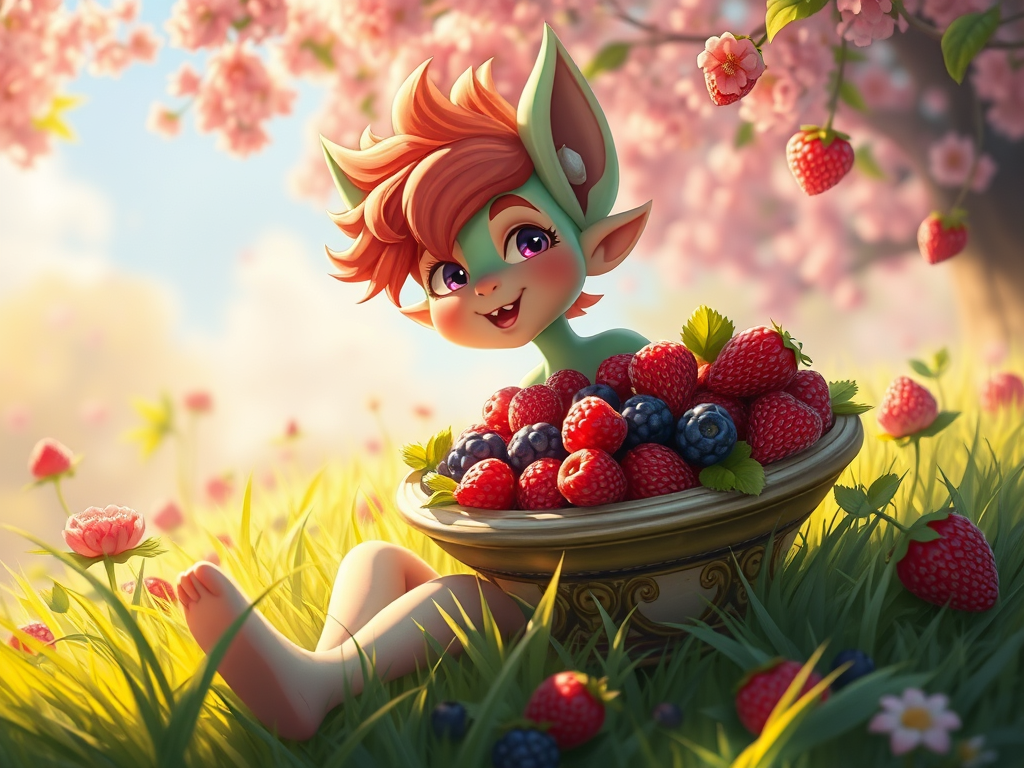
Luna the Cat shook her head. “I don’t eat berries,” she said, “but the farmer pays us in treats if we collect them for him. The wind is blowing harder, Percy.”

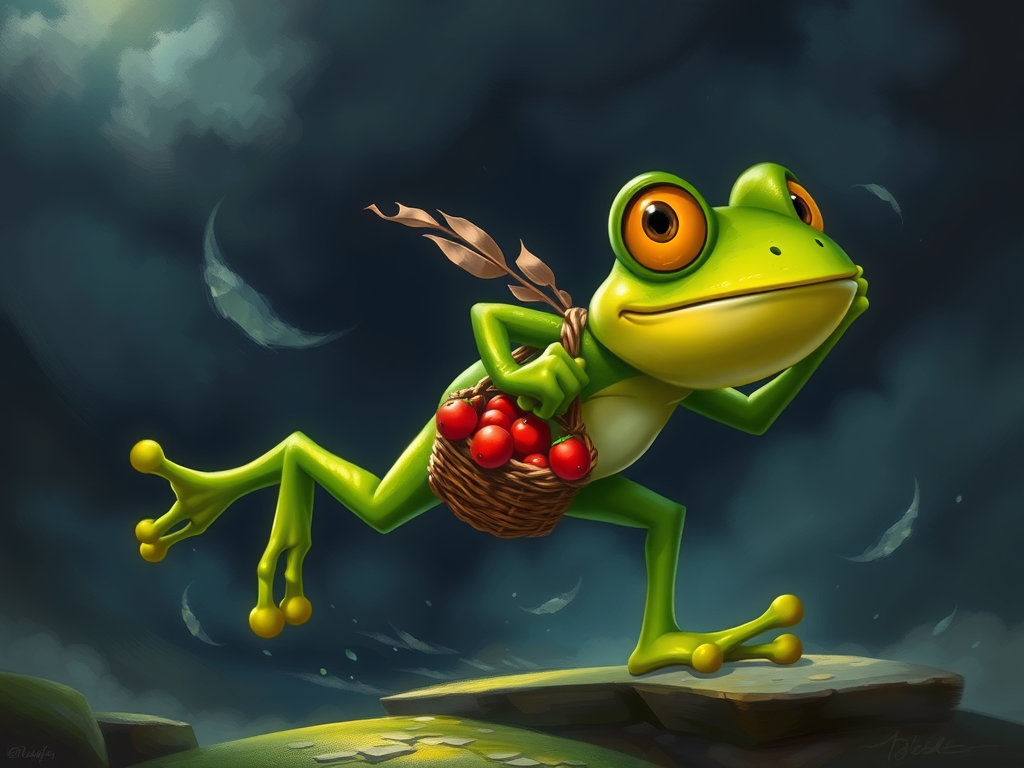
Fred the Frog was already hopping fast, putting berries into a small basket. “Hop to it, Percy! The storm is coming. Time is money!” 🐸
“Relax, Fred,” clucked Percy, closing his eyes. “The berries aren’t going anywhere. I have plenty of time.”

Ten minutes passed. Fred worked hard. Percy snored.

Suddenly, the sky turned dark. WOOSH! A massive storm wind blew across the farm. It was so strong that it blew all the uncollected berries into the muddy river nearby. They were gone instantly. 🌧️

Percy woke up with a start. “My lunch! My berries!” He ran around, but the grass was empty.

Fred sat on a dry rock, holding his full basket. “I collected these while you slept,” Fred said. “I used my time to get value. You used your time to nap, and now you have nothing.”

Percy’s stomach grumbled. He looked at the empty grass and frowned.

“I see now,” Percy whispered sadly. “I spent my time poorly, and it cost me my lunch. Time really is money.”
In this story, the characters represent how we manage our time:
Percy: Procrastination (Waiting until it is too late) 😵
Fred: Productivity (Using the moment wisely) 🤓
The Wind: Unforeseen Circumstances (Things we can’t control) 🌪️
Lesson for English Learners:
Learning English takes time. You cannot buy fluency. If you study for 10 minutes every day (Fred’s method), you are “investing” your time. If you wait until the night before the exam (Percy’s method), you will find that you are “bankrupt.”
💬 What about you? Do you prefer to “spend” your free time relaxing, or do you like to “invest” it in learning new skills? Tell me in the comments! 👇
By Zubeyir YURTKURAN
