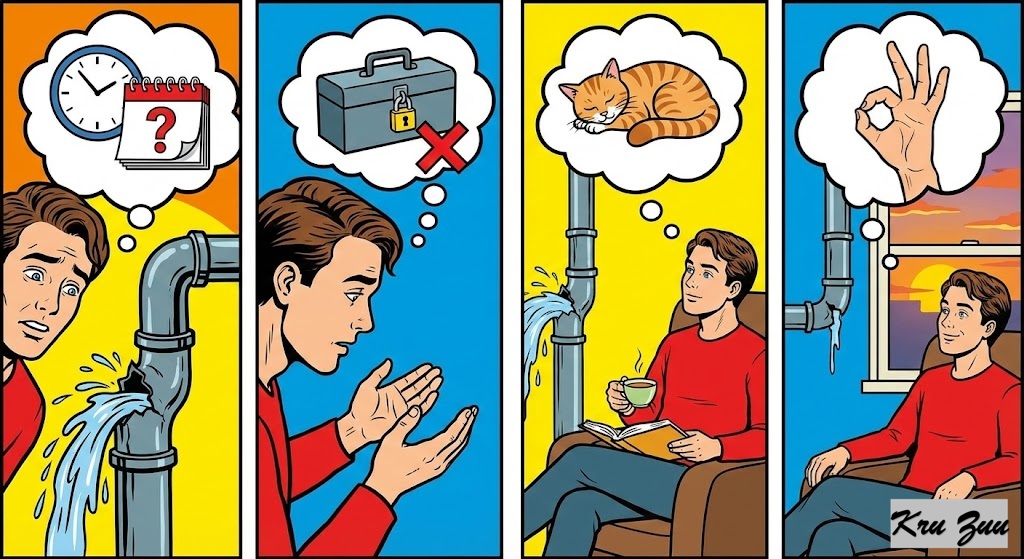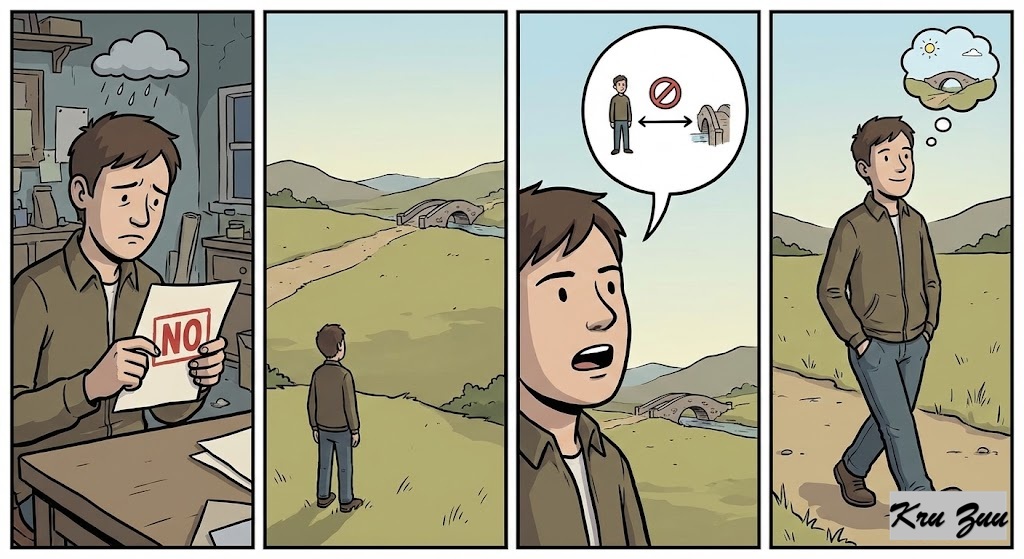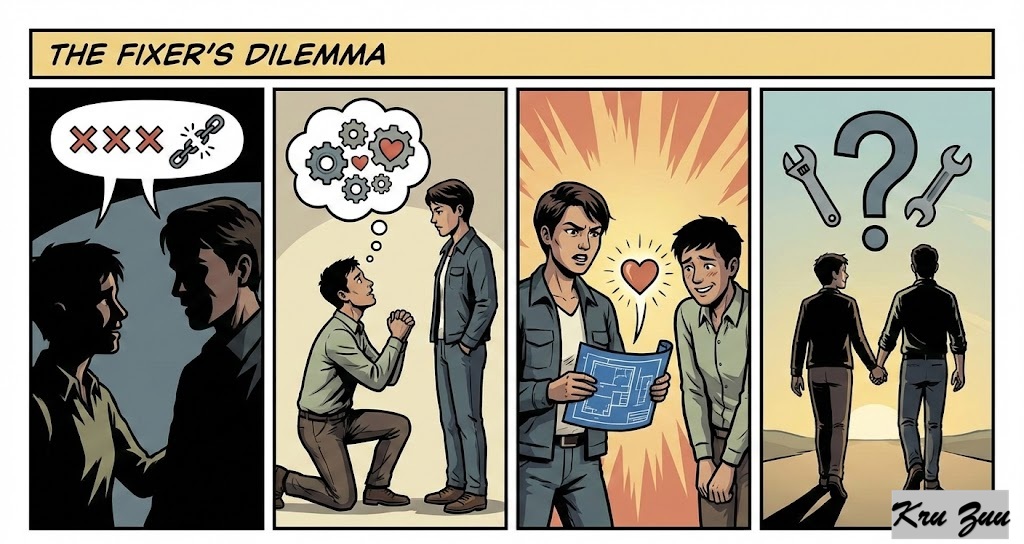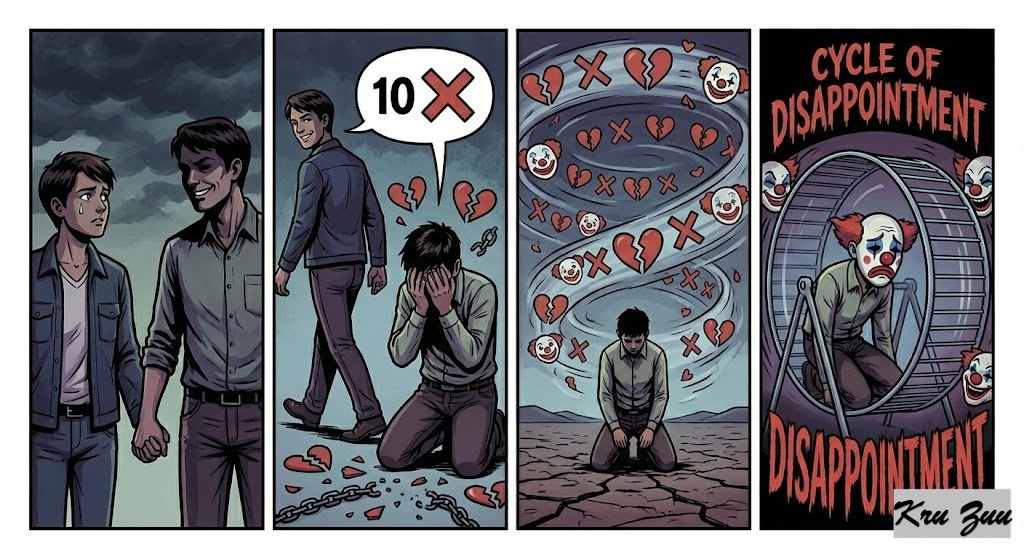
Author: Zubeyir Yurtkuran

  • 🌳 The Daily Shield: The Law of Rooted Character

    🌳 The Daily Shield: The Law of Rooted Character

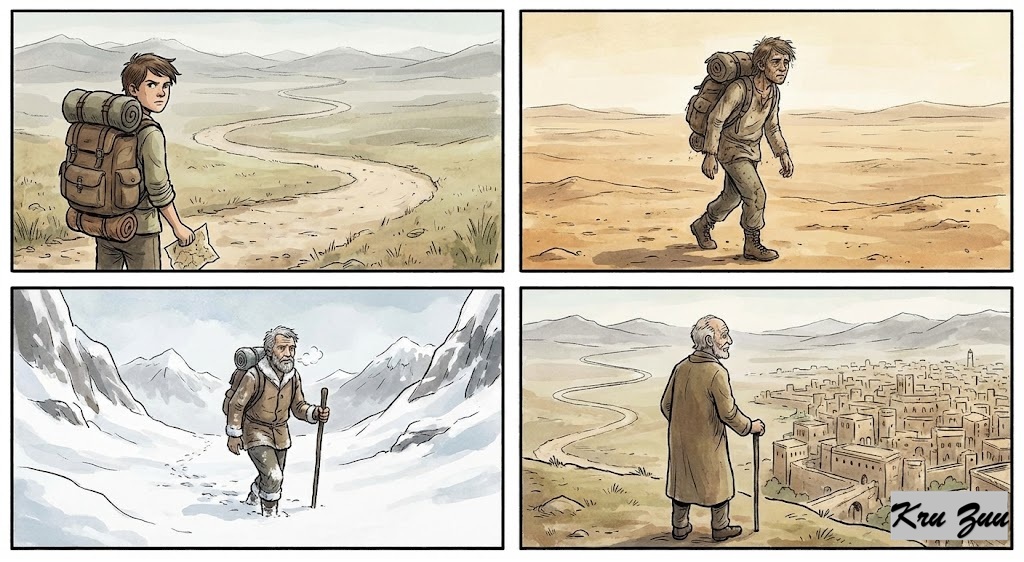
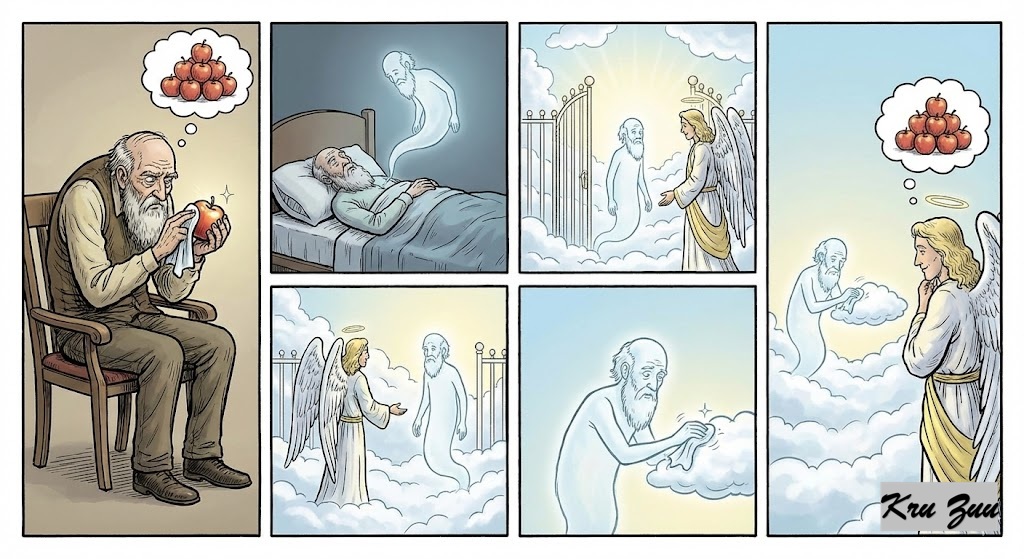
    “The apple doesn’t fall far from the tree.”


    😈 The Villain (The Blame Shifter)


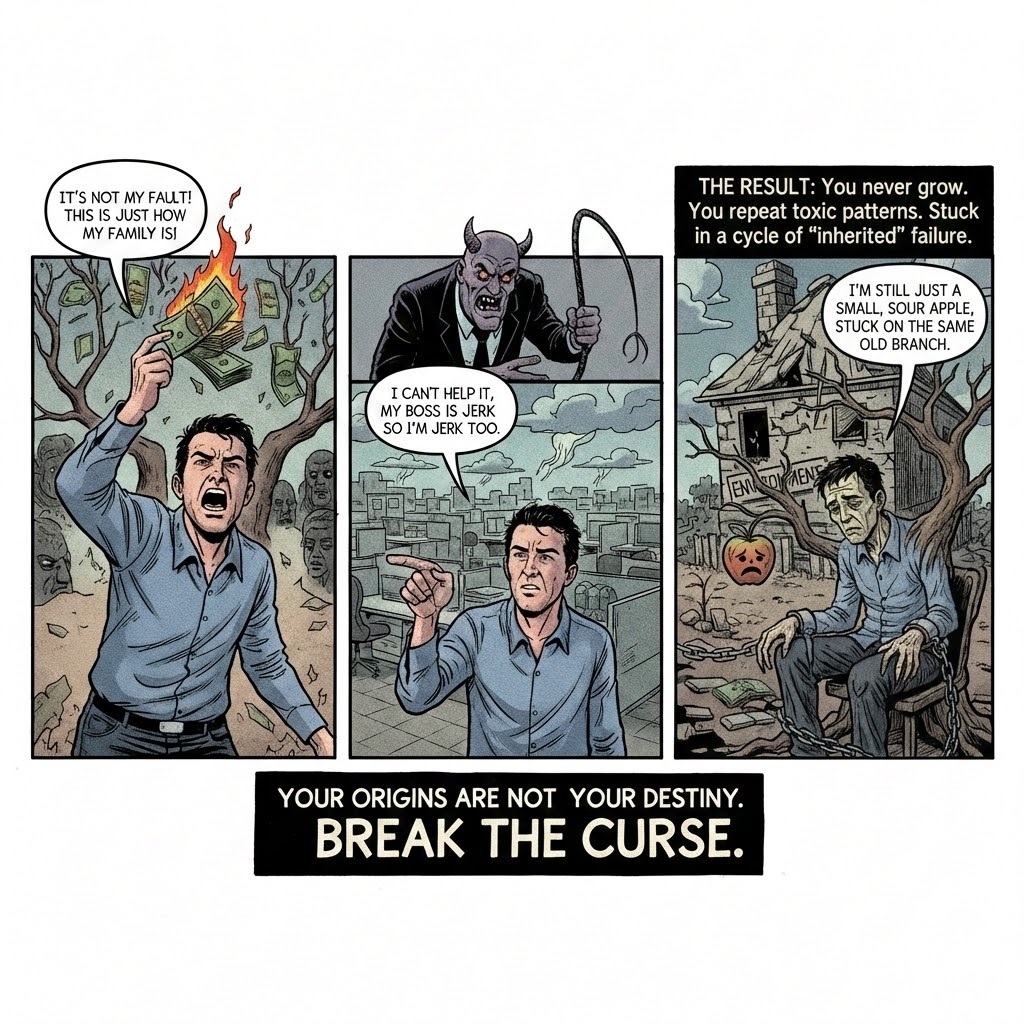
    You make a mistake. You lose your temper. You act dishonestly. 💸 “It’s not my fault! This is just how my family is!””I can’t help it, my boss is a jerk so I’m a jerk too.””I was raised this way, I’m just a product of my environment.” You treat your character like a fixed curse. You use your origins as an excuse for your poor choices today.
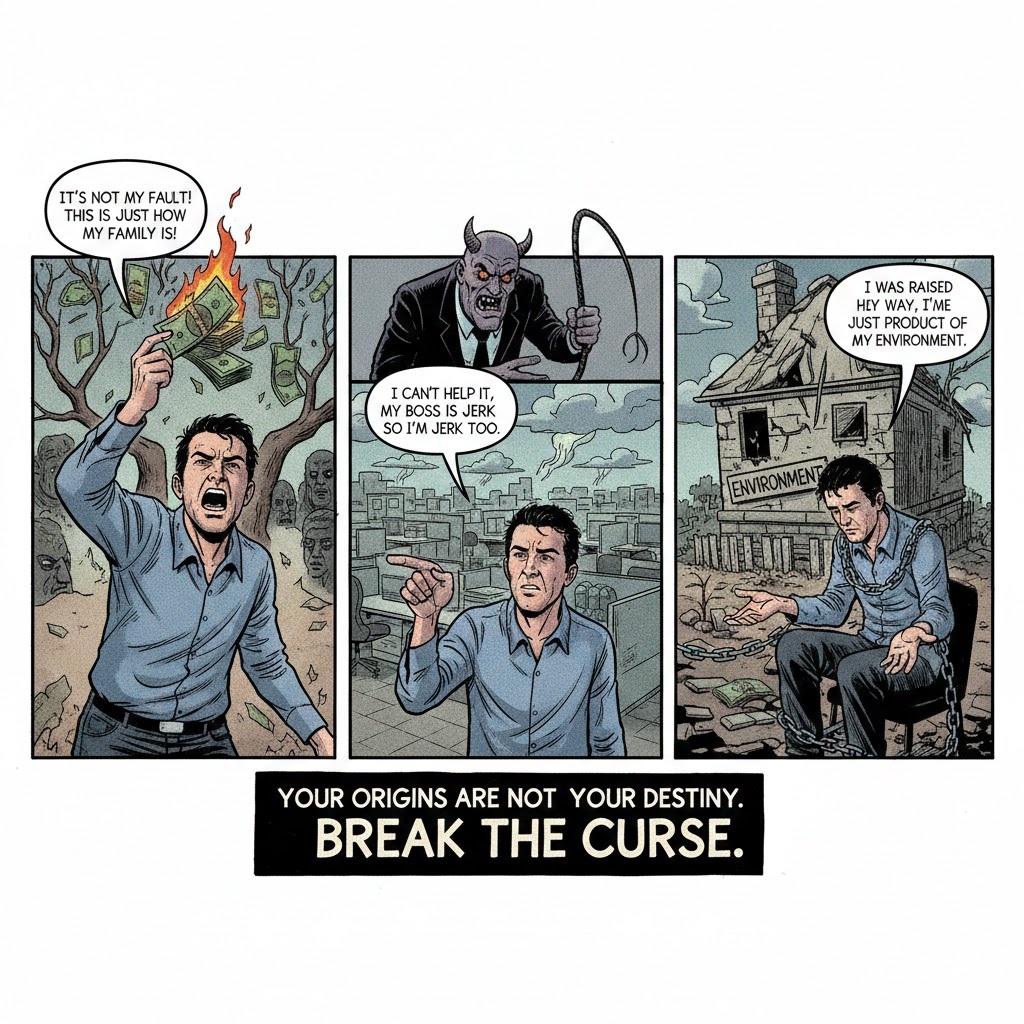
    The Result? You never grow. You repeat the same toxic patterns. You feel stuck in a cycle of “inherited” failure. You stay a small, sour apple because you refuse to see that you are still attached to the same old branch. 🍎

    😇 The Hero (The Cycle Breaker)


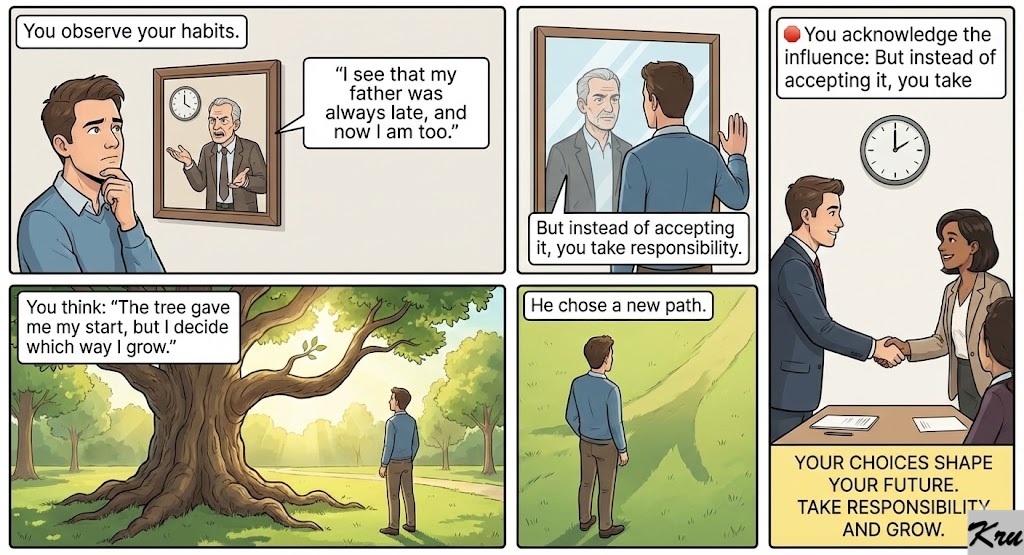
    You observe your habits. You look at your parents, your mentors, or your peers. 🛑 You acknowledge the influence: “I see that my father was always late, and now I am too.” But instead of accepting it, you take responsibility. You think: “The tree gave me my start, but I decide which way I grow.”
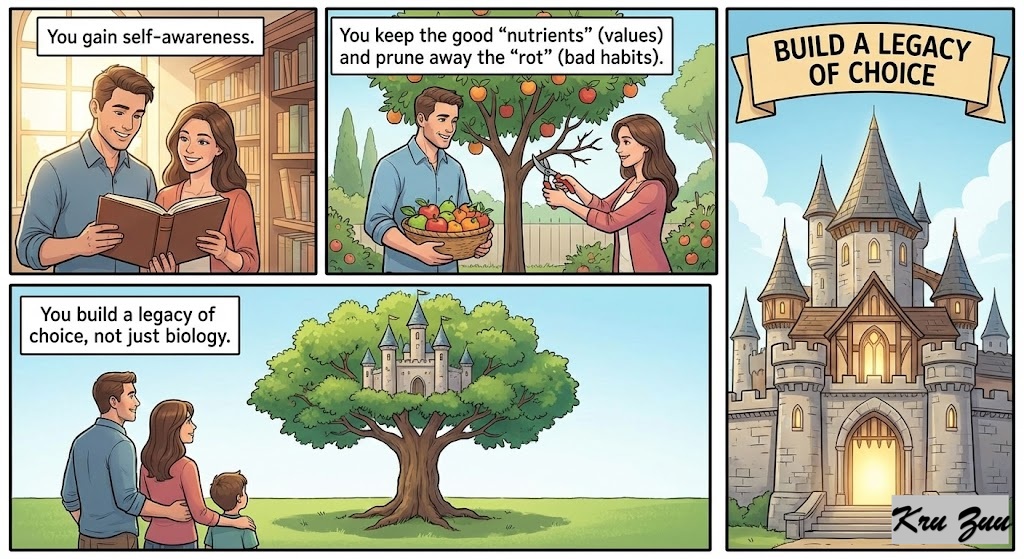
    The Result? You gain self-awareness. You keep the good “nutrients” (values) and prune away the “rot” (bad habits). You build a legacy of choice, not just biology. 🏰

    ⚖️ The Reality


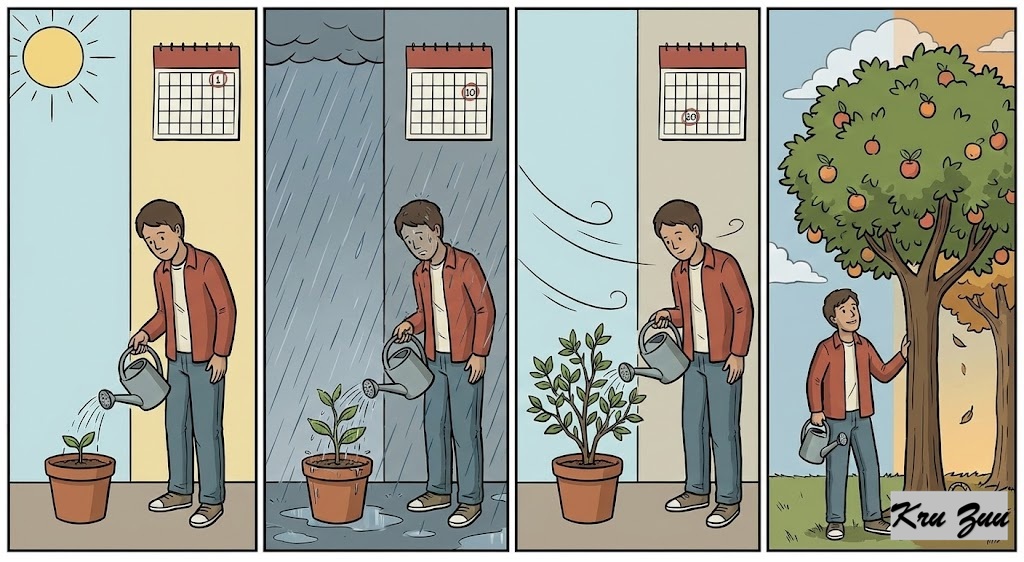
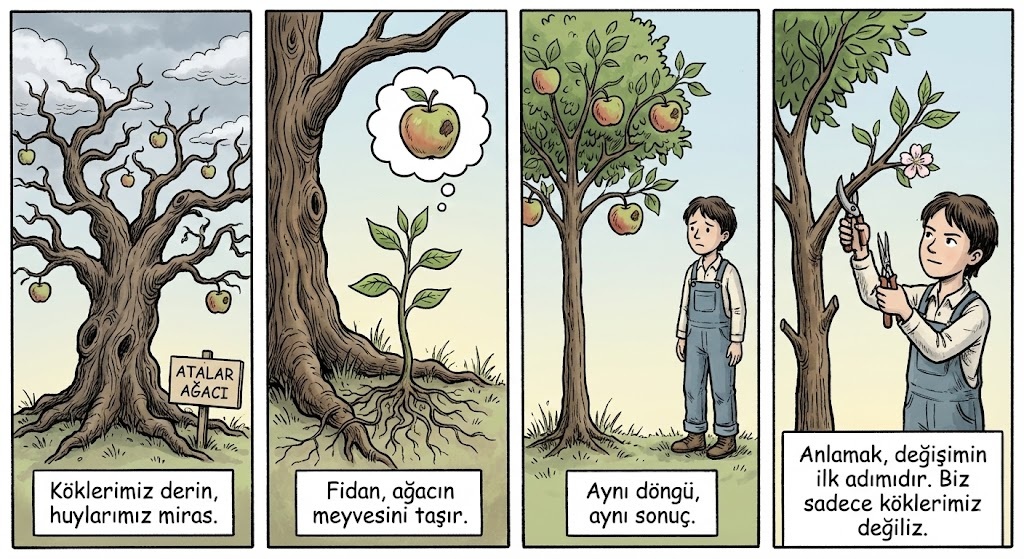
    Nature vs. Nurture. We are heavily influenced by our roots. Whether it’s our parents’ work ethic or our best friends’ vocabulary, we tend to mimic what we are near. Characteristics, like apples, stay close to the source. But while the proverb highlights similarity, it also serves as a warning: if you want to be a different kind of fruit, you have to be conscious of the tree you are hanging from.
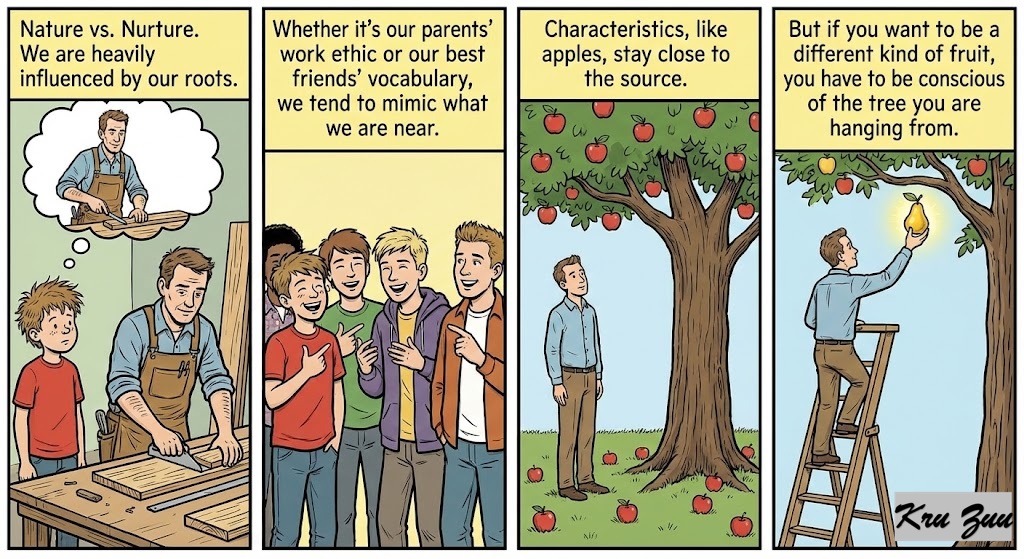

    The Secret: You are the average of the people you spend the most time with. If you don’t like the apple you’ve become, look at your tree.
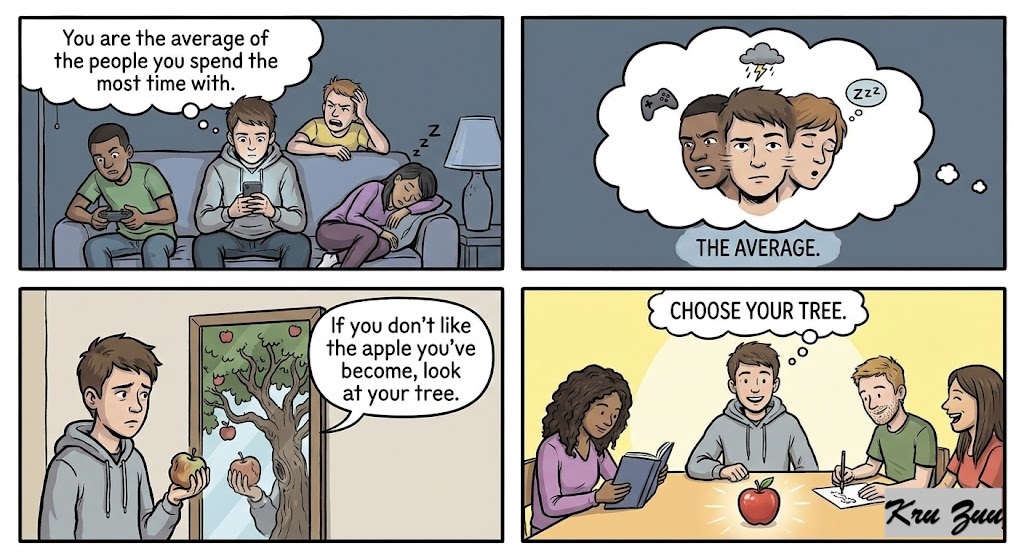
    🧐 The Anatomy of the Proverb


    This is a biological metaphor for behavioral inheritance.

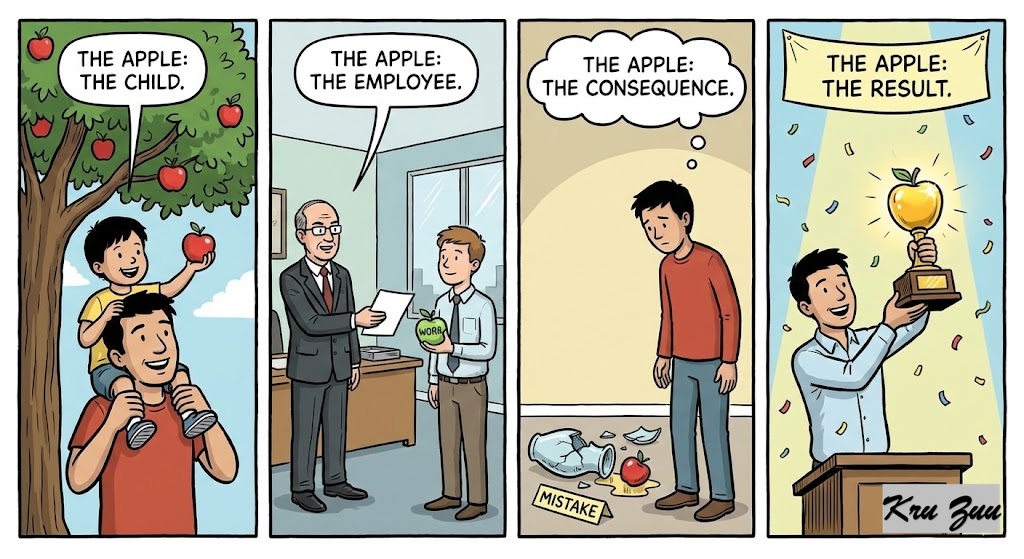
    The Apple (Noun): The child, the employee, the consequence, or the result.

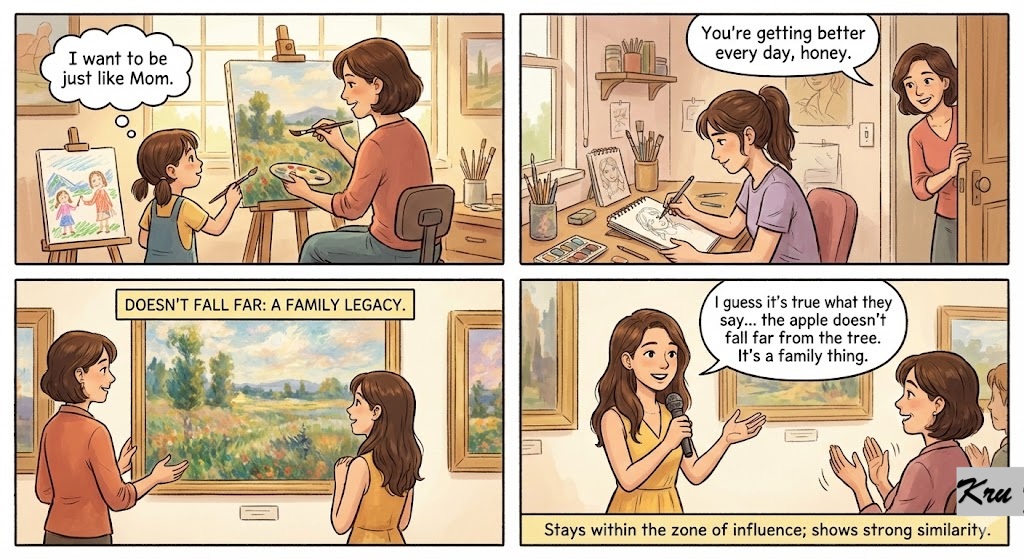
    Doesn’t Fall Far (Adverbial Phrase): Stays within the zone of influence; shows strong similarity.

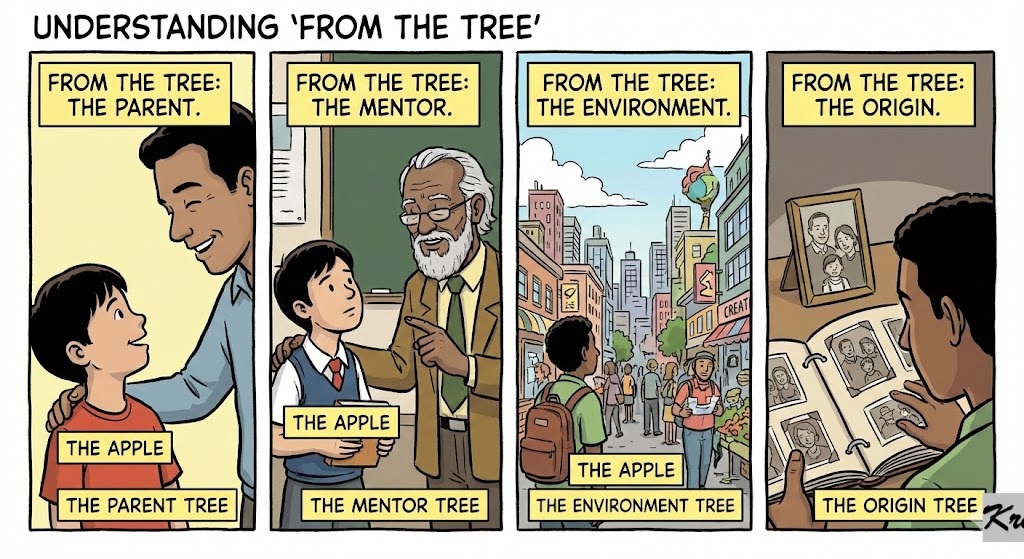
    From The Tree (Prepositional Phrase): The parent, the mentor, the environment, or the origin.

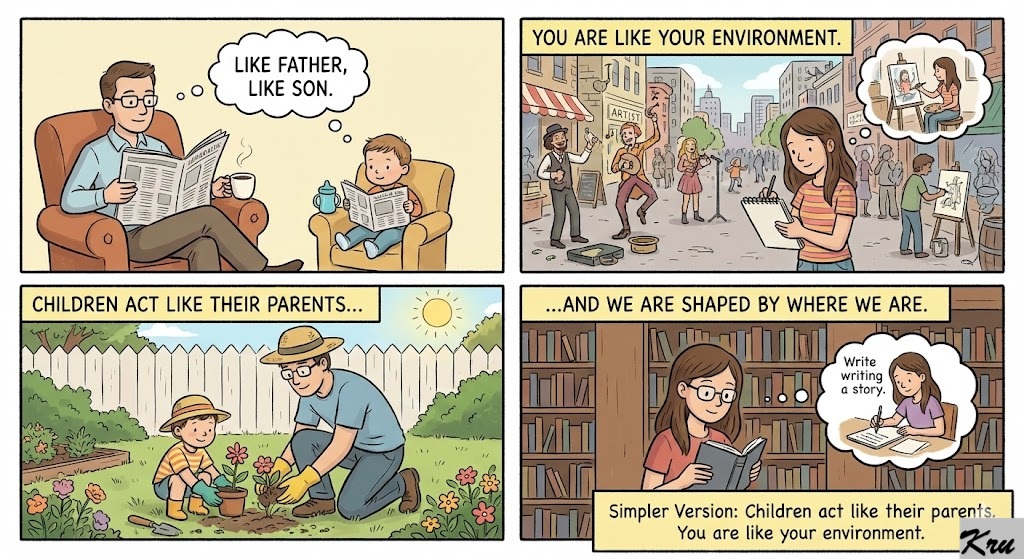
    Simpler Version: Children act like their parents. / You are like your environment.

    📚 Vocabulary Vault


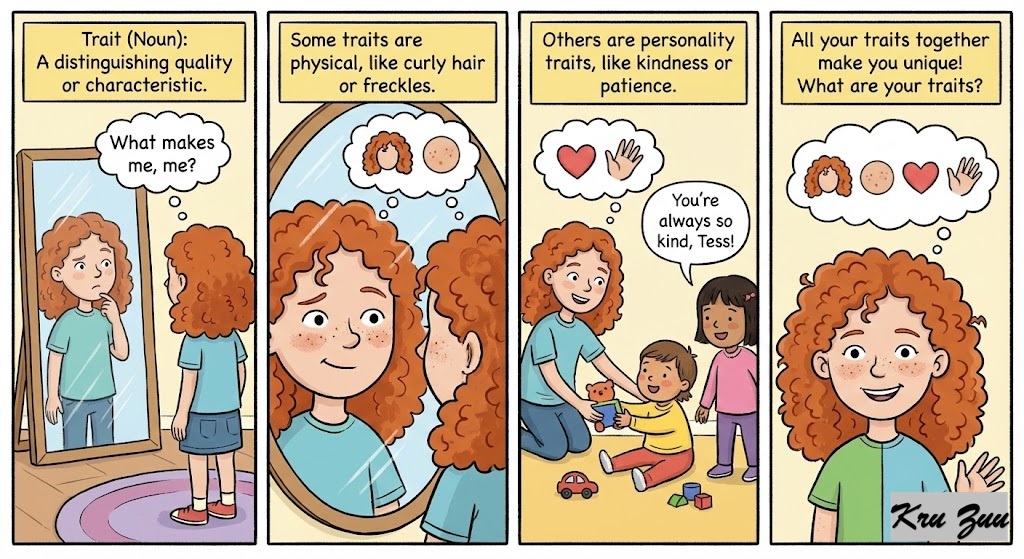
    Trait (Noun): A distinguishing quality or characteristic.

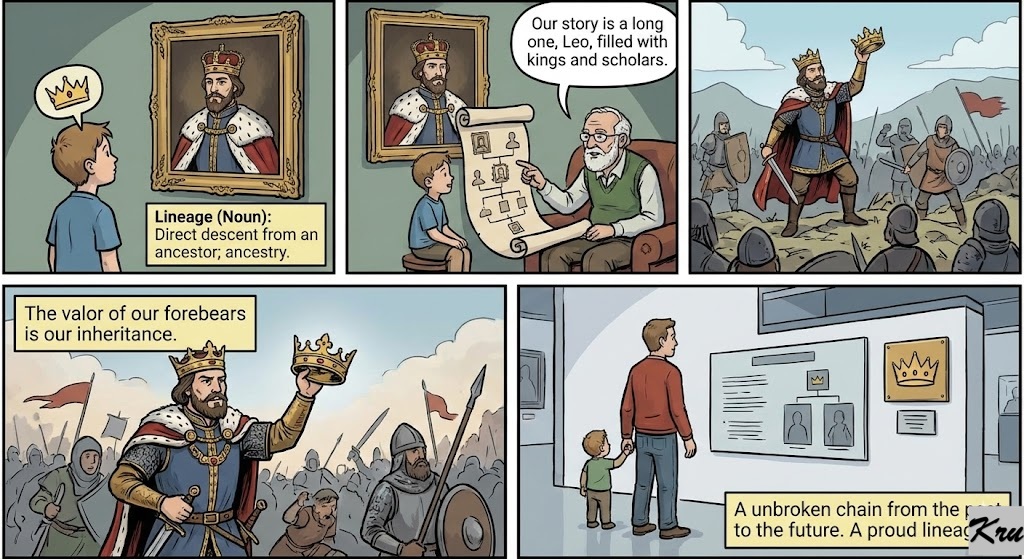
    Lineage (Noun): Direct descent from an ancestor; ancestry. 👑

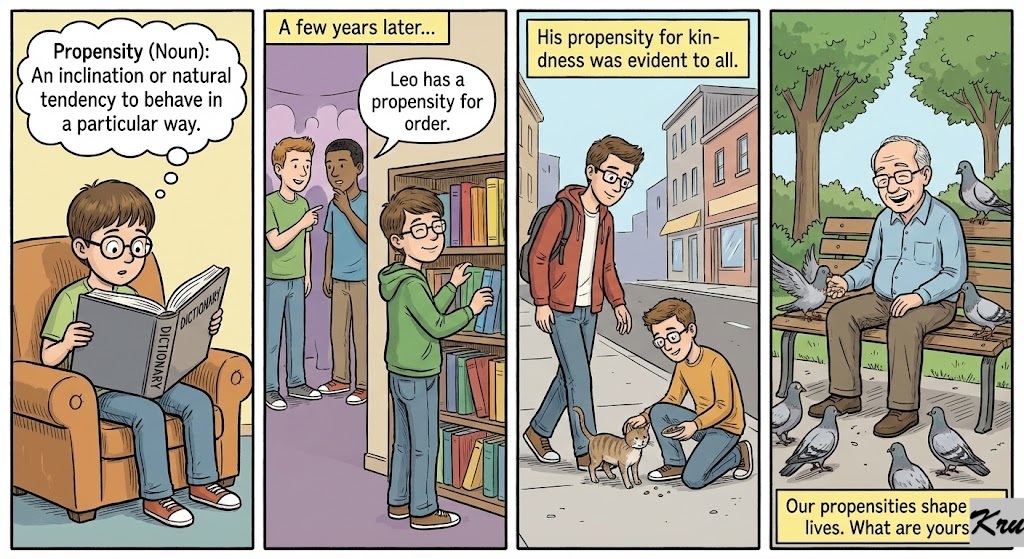
    Propensity (Noun): An inclination or natural tendency to behave in a particular way.

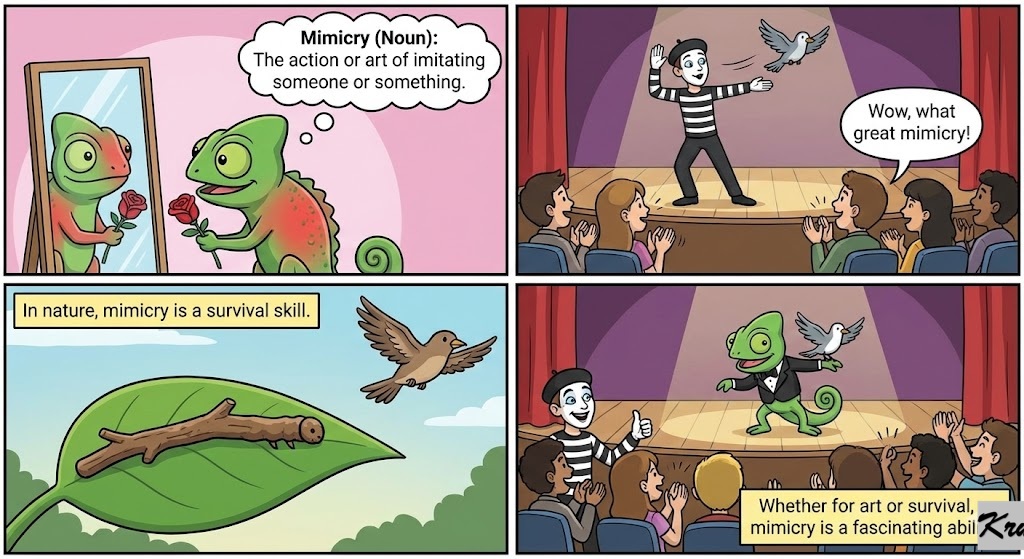
    Mimicry (Noun): The action or art of imitating someone or something.

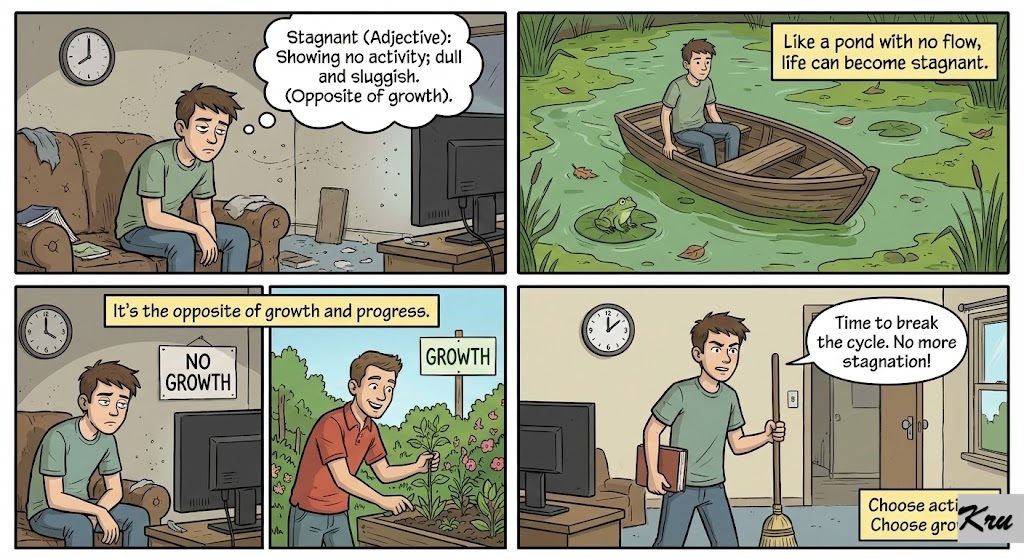
    Stagnant (Adjective): Showing no activity; dull and sluggish. (Opposite of growth).

    🧠 Grammar Focus: Idioms for Observation


    We use this idiom to explain why someone behaves a certain way based on their background.
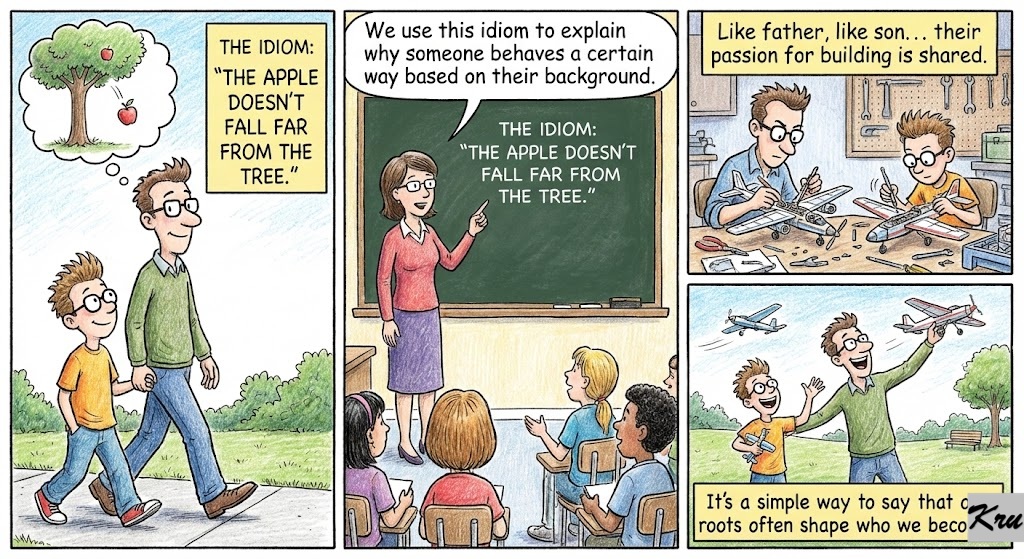

    Example: “John is just as hardworking as his father was. I guess the apple doesn’t fall far from the tree.”
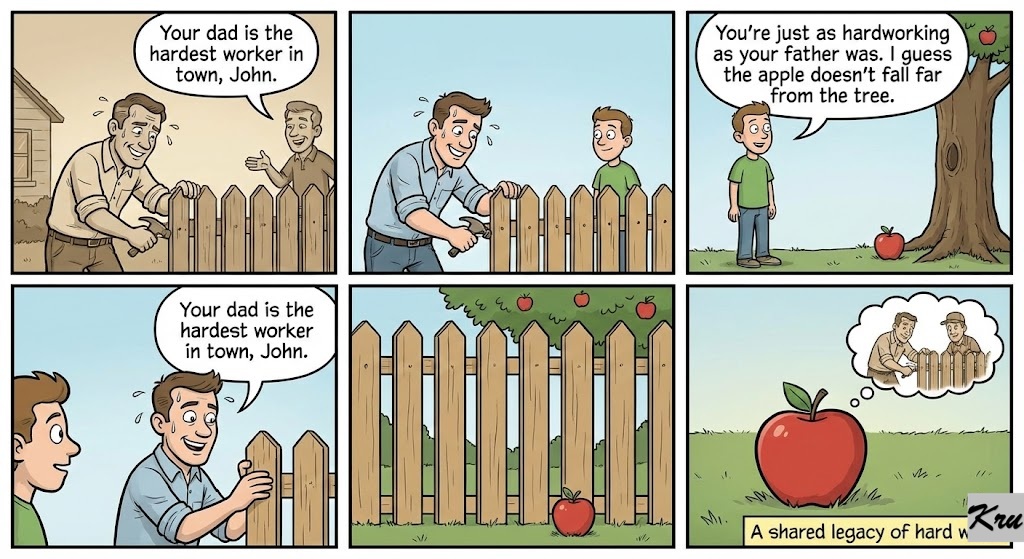

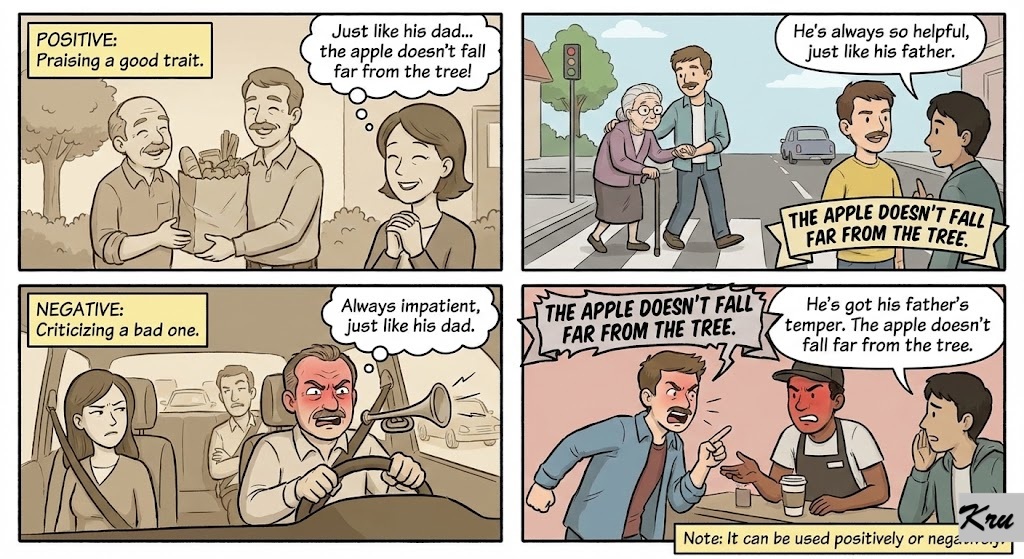
    Note: It can be used positively (praising a good trait) or negatively (criticizing a bad one).
    📜 History: Origin and Spread


    Where did this botanical observation come from?

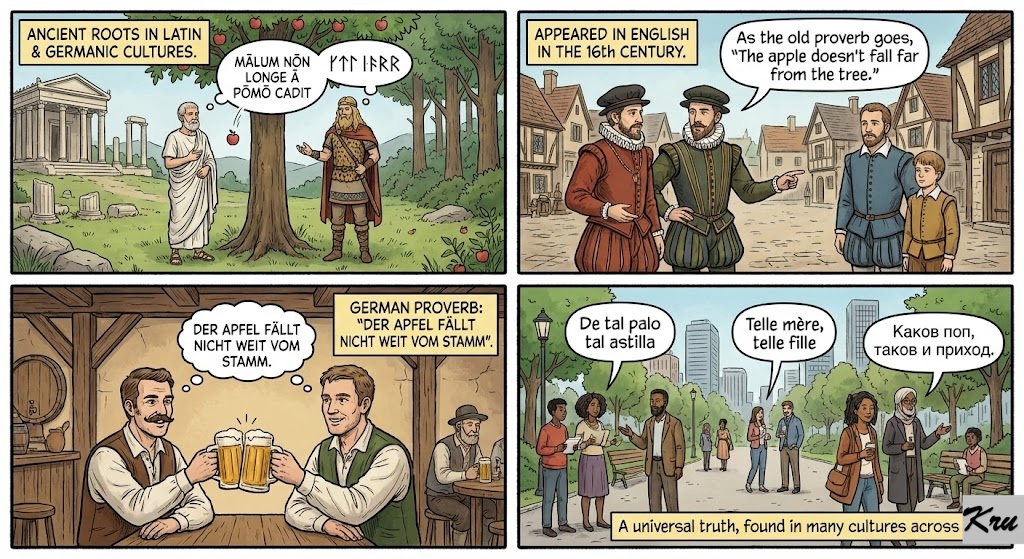
    The Origin: This is an ancient proverb found in many cultures. It appeared in English in the 16th century but has roots in German (Der Apfel fällt nicht weit vom Stamm) and Latin.

    The Logic: In an orchard, gravity is absolute. An apple cannot jump to another field. Historically, it reinforced the idea that if a father was a blacksmith, the son would likely be one too, not just by trade, but by temperament.
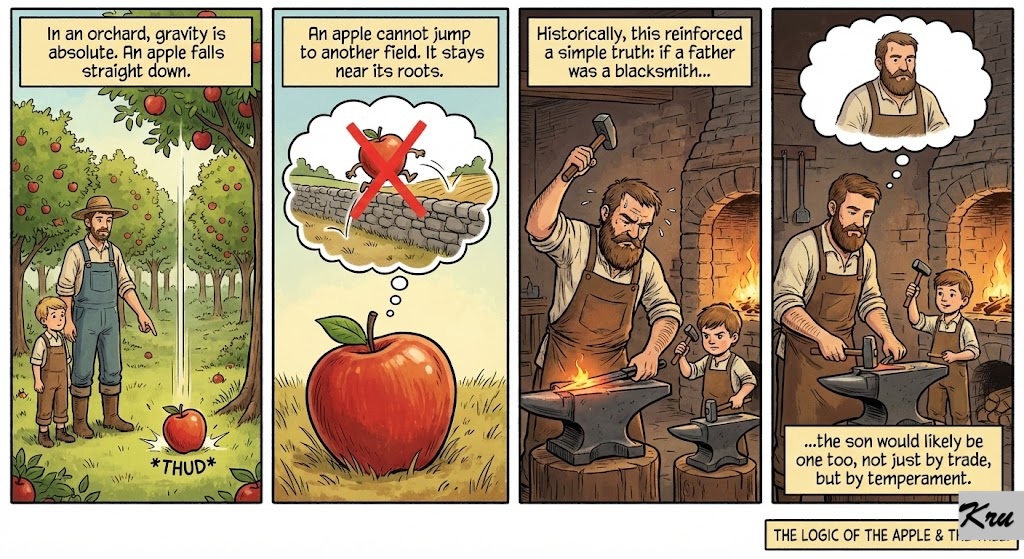

    Global Cousins


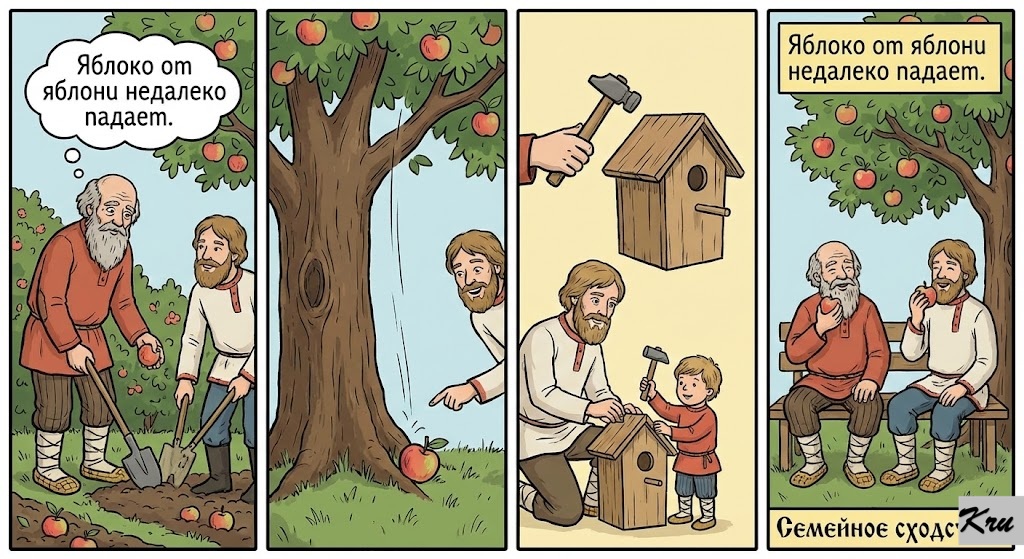
    🇷🇺 Russian: “The apple stays close to the apple tree.”

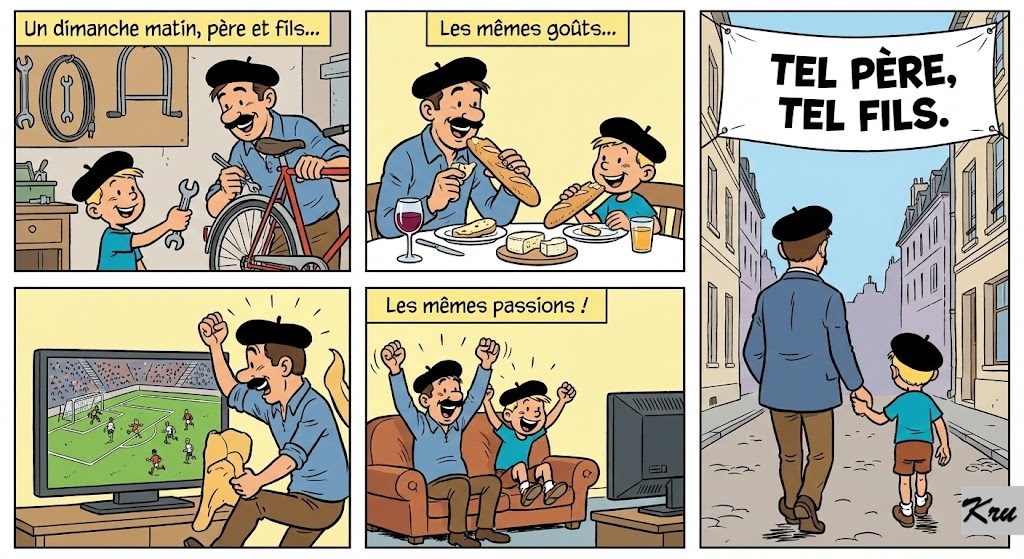
    🇫🇷 French: “Tel père, tel fils.” (Like father, like son).

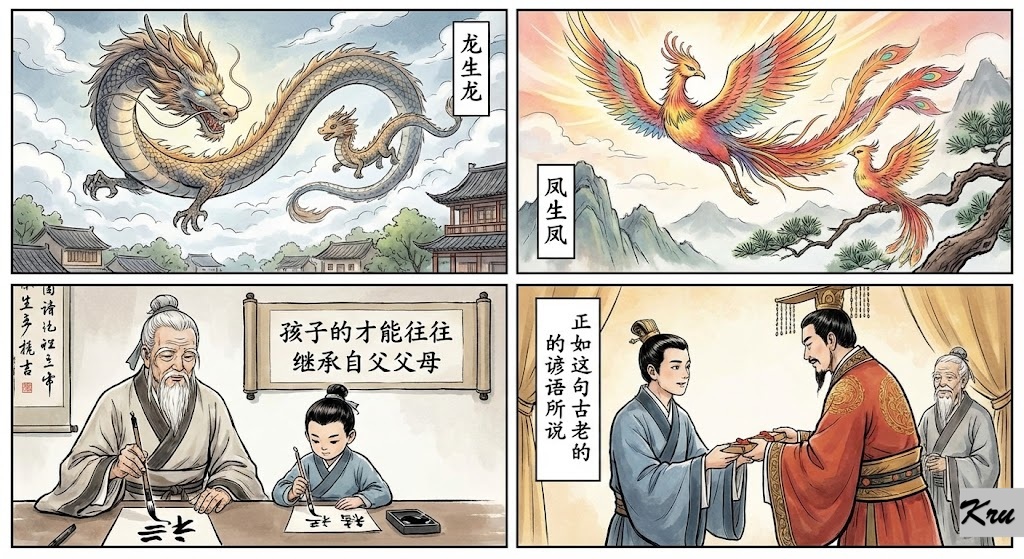
    🇨🇳 Chinese: “Dragons give birth to dragons, phoenixes give birth to phoenixes.” (Meaning children inherit their parents’ status/talents).
    🎭 Short Story: The Sour Seed 🍎🐱🐔🐸


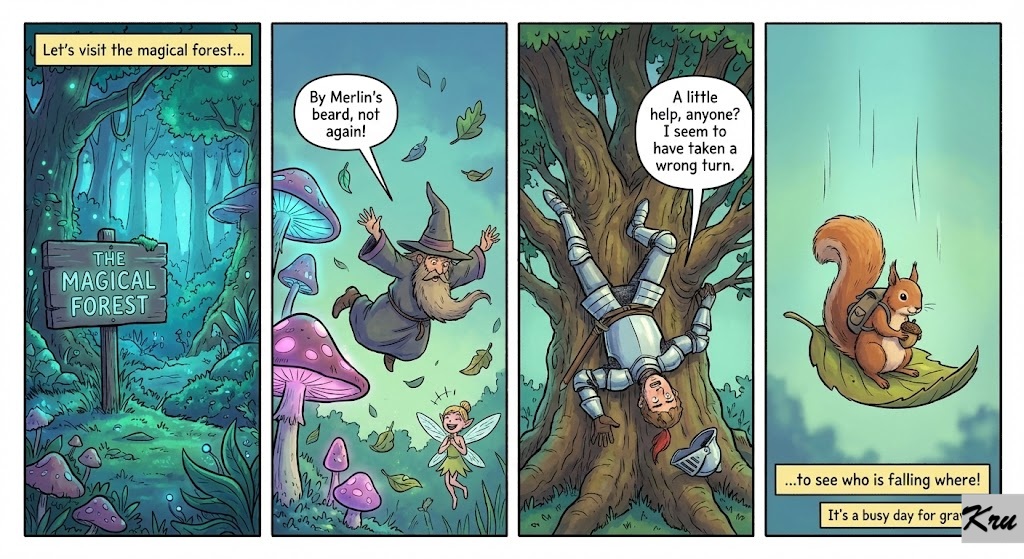
    Let’s visit the magical forest to see who is falling where.

    🌟 The Cast


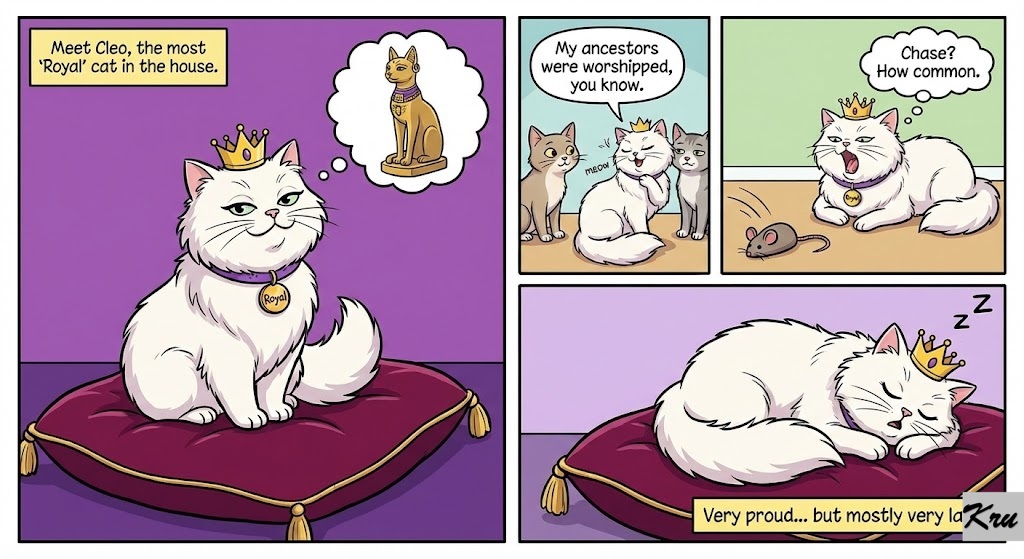
    Cleo the Cat: Very proud of her “Royal” lineage, but lazy. 😼

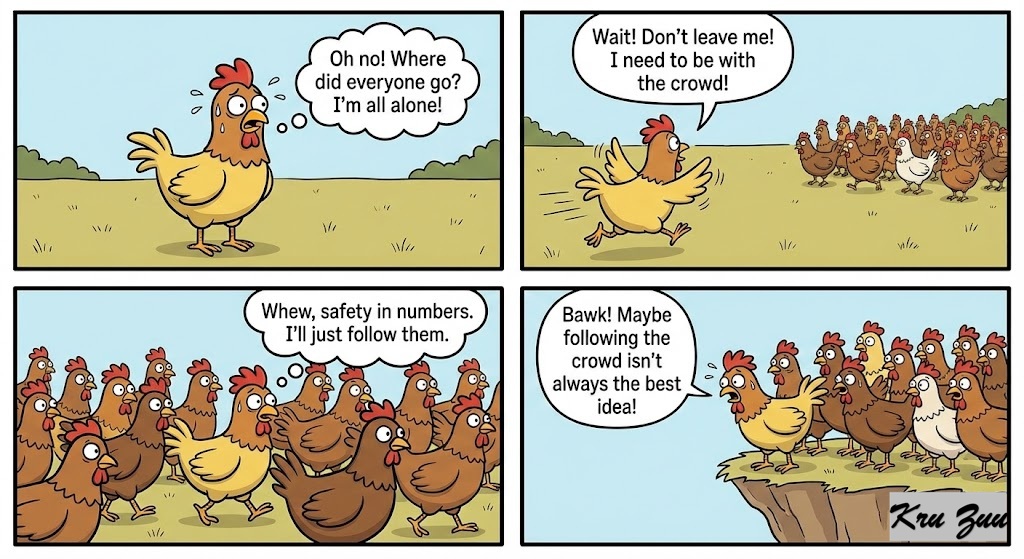
    Cluck the Chicken: Nervous, always follows the crowd. 🐔

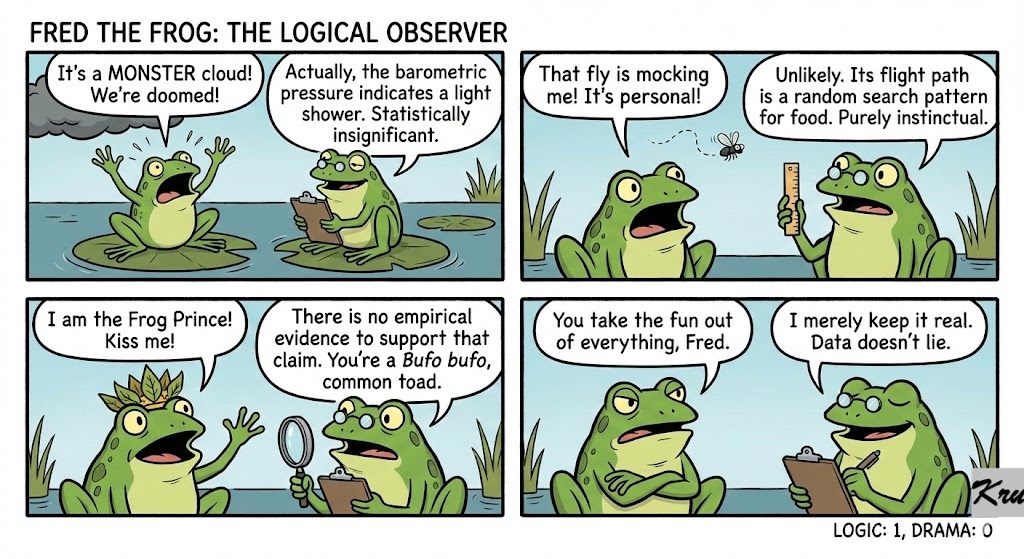
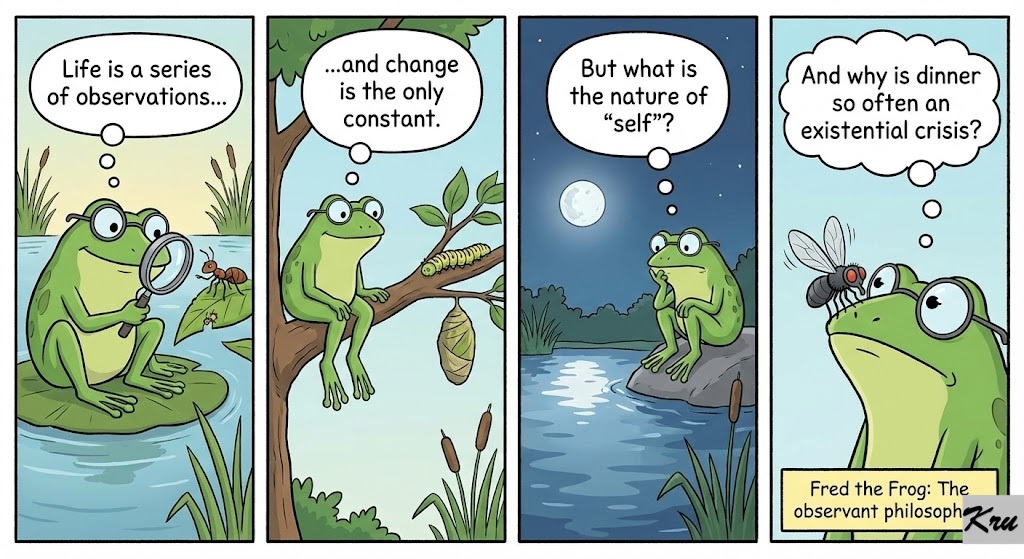
    Fred the Frog: The observant philosopher. 🐸

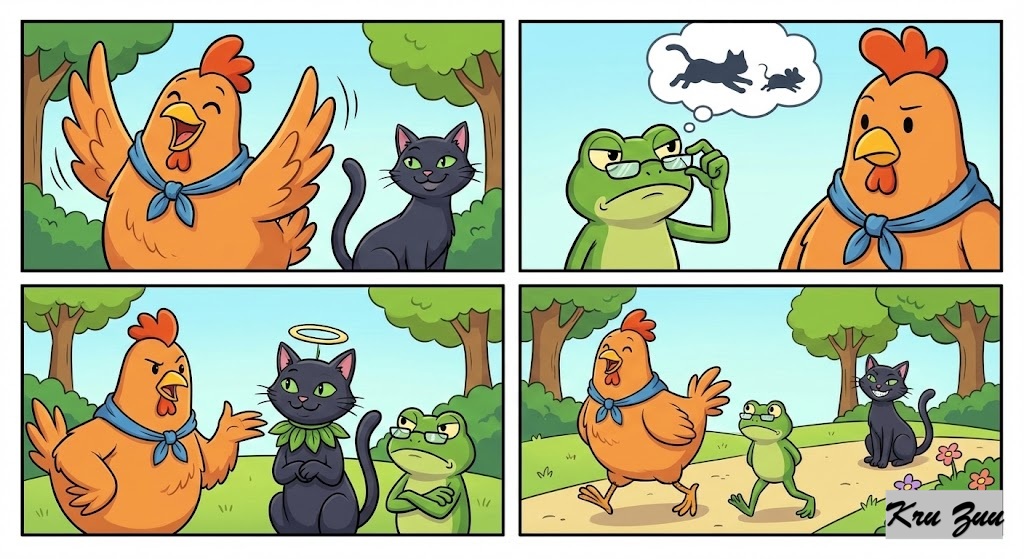
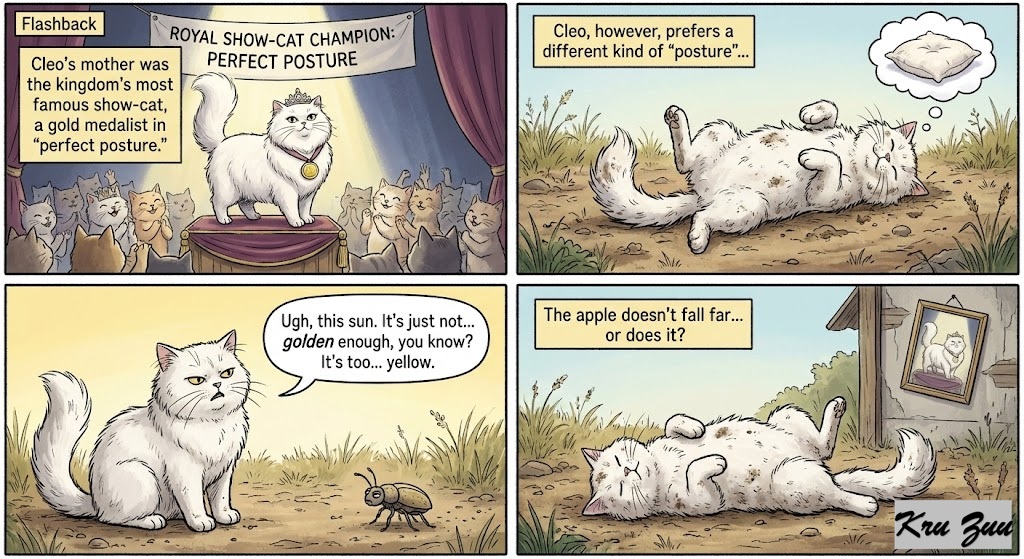
    The Situation: Cleo’s mother was the most famous show-cat in the kingdom. She won gold medals for her “perfect posture.” Cleo, however, spends all day napping in the dirt and complaining that the sun isn’t “golden enough.”

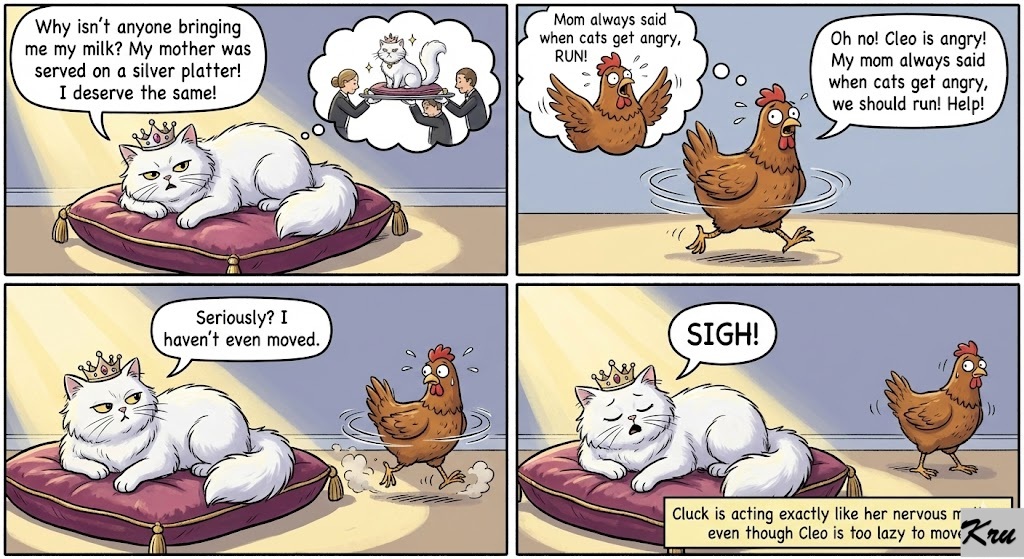
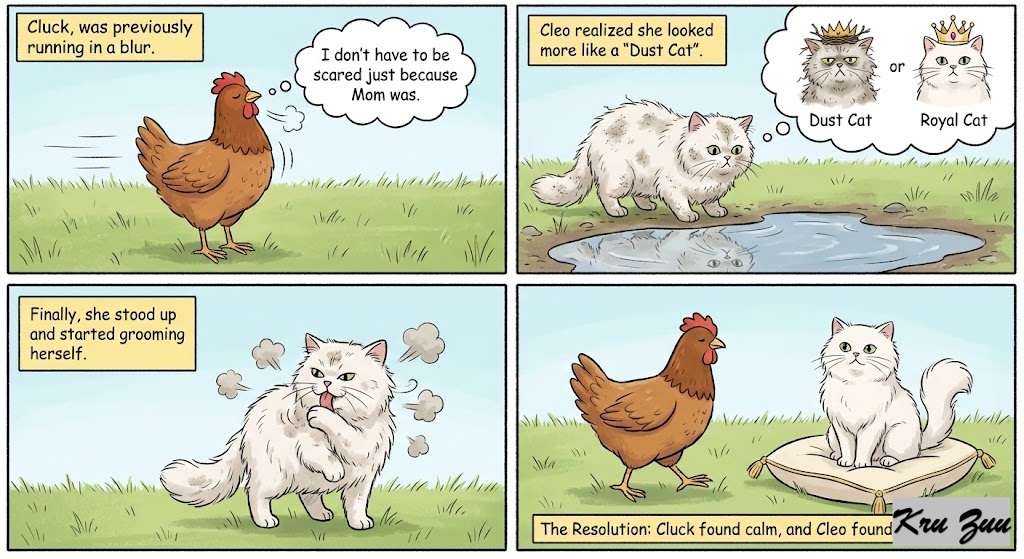
    The Conflict: “Why isn’t anyone bringing me my milk?” Cleo demands. “My mother was served on a silver platter! I deserve the same!” Cluck, who comes from a family of frantic, panicky chickens, starts running in circles. “Oh no! Cleo is angry! My mom always said when cats get angry, we should run! Help!” Cluck is acting exactly like her nervous mother, even though Cleo is too lazy to move.

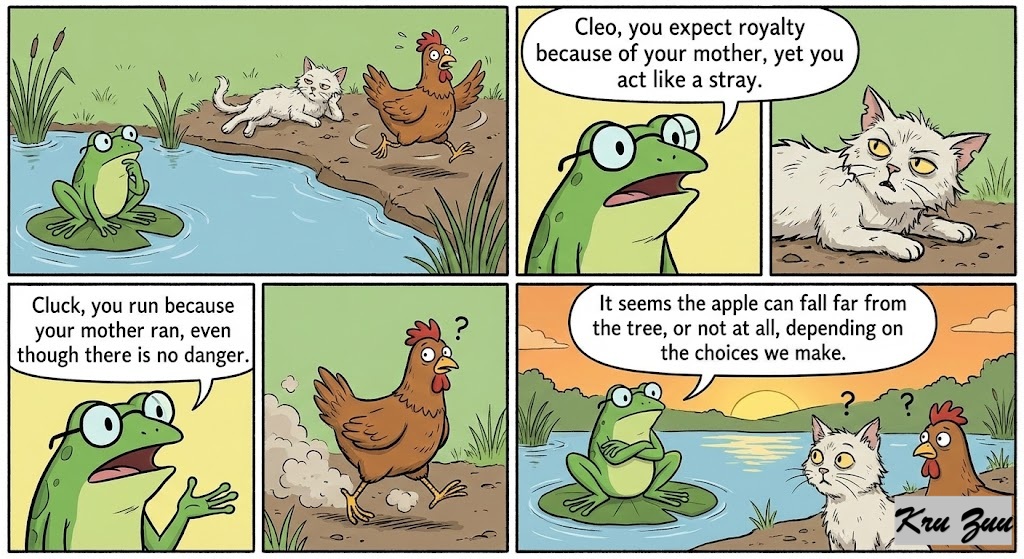
    The Reaction: Fred the Frog watches from his pond. “Cleo, you expect royalty because of your mother, yet you act like a stray. Cluck, you run because your mother ran, even though there is no danger.”

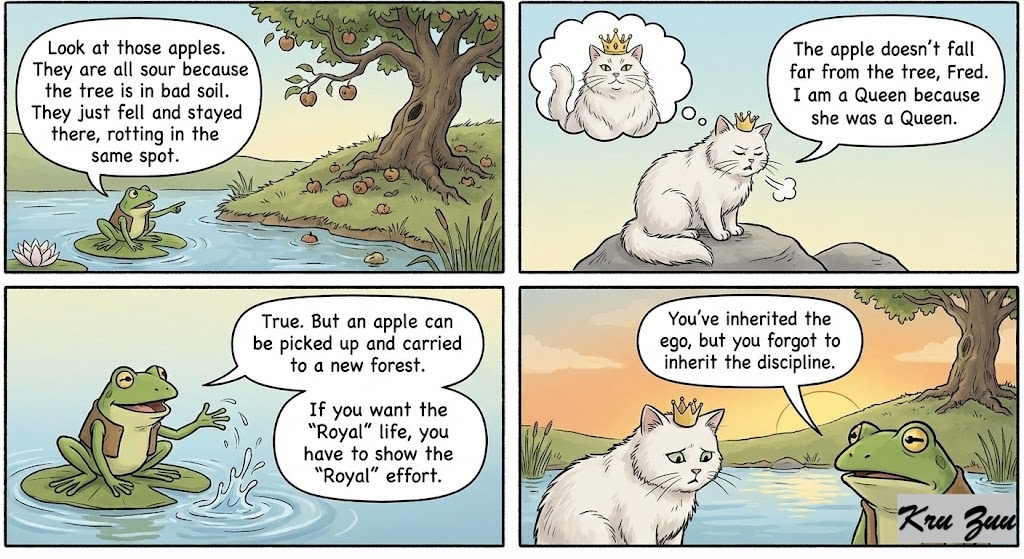
    The Lesson: Fred points to a wild apple tree. “Look at those apples. They are all sour because the tree is in bad soil. They just fell and stayed there, rotting in the same spot.” Cleo huffs, “The apple doesn’t fall far from the tree, Fred. I am a Queen because she was a Queen.” Fred splashes some water. “True. But an apple can be picked up and carried to a new forest. If you want the ‘Royal’ life, you have to show the ‘Royal’ effort. You’ve inherited the ego, but you forgot to inherit the discipline.”

    The Resolution: Cluck stopped running and took a deep breath. She realized she didn’t have to be scared just because her mom was. Cleo, realizing she looked more like a “Dust Cat” than a “Royal Cat,” finally stood up and started grooming herself.

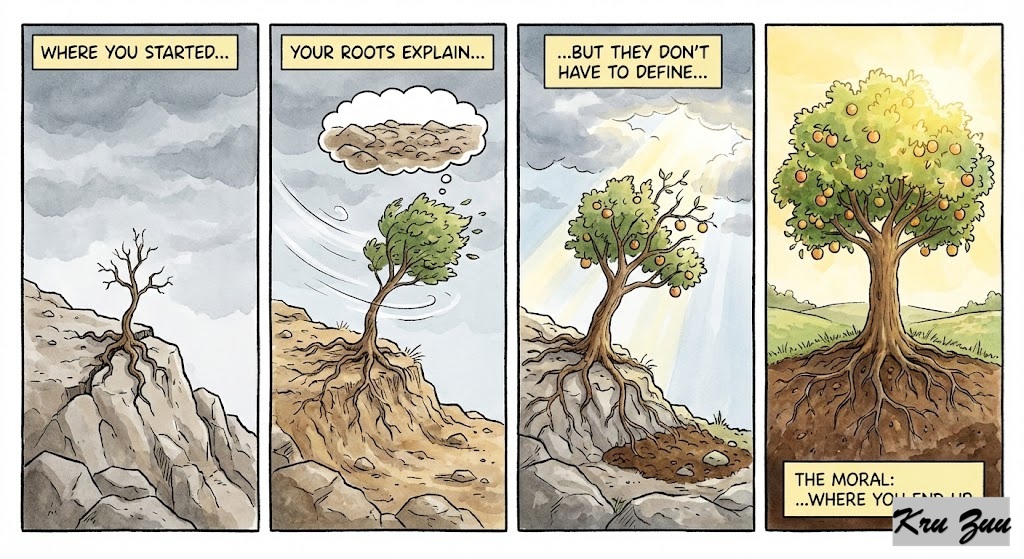
    The Moral: Your roots explain where you started, but they don’t have to define where you end up. 🌳
    🎓 Lesson for English Learners


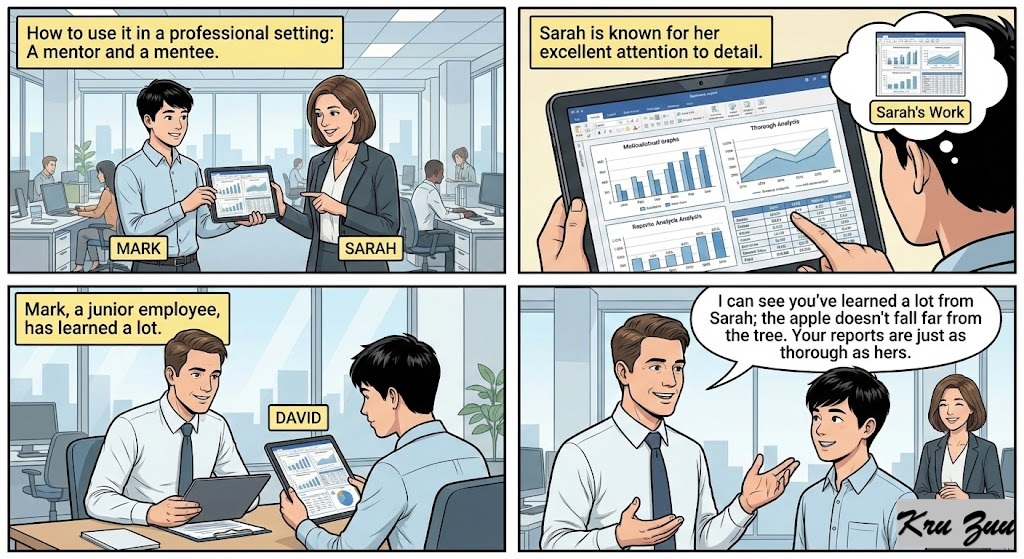
    How to use it in a professional setting: If you see a junior employee who has the same excellent attention to detail as their mentor, you can say: “I can see you’ve learned a lot from Sarah; the apple doesn’t fall far from the tree. Your reports are just as thorough as hers.”

    💬 Your Turn: The “Mirror” Challenge 🚀


    Ready to see your own “tree”?

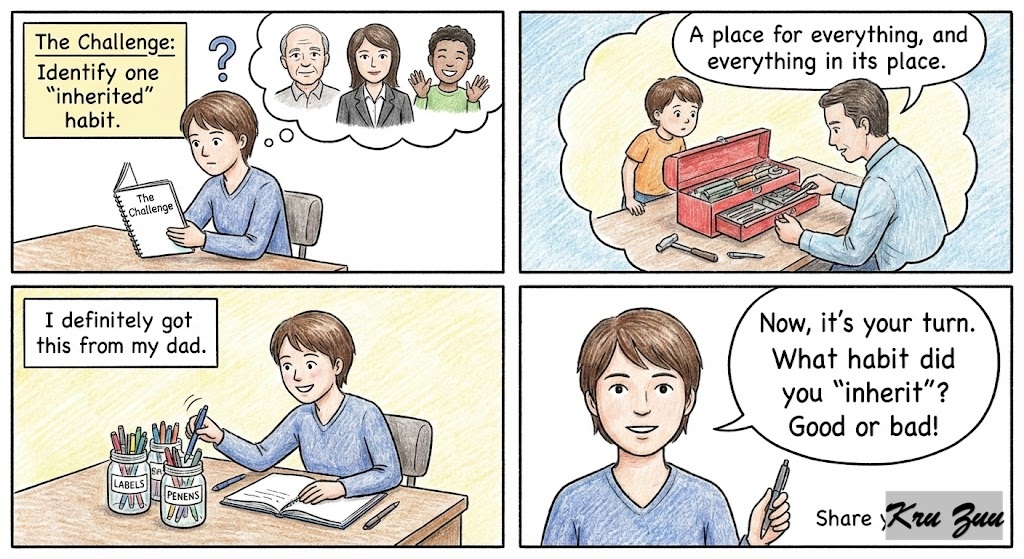
    The Challenge:
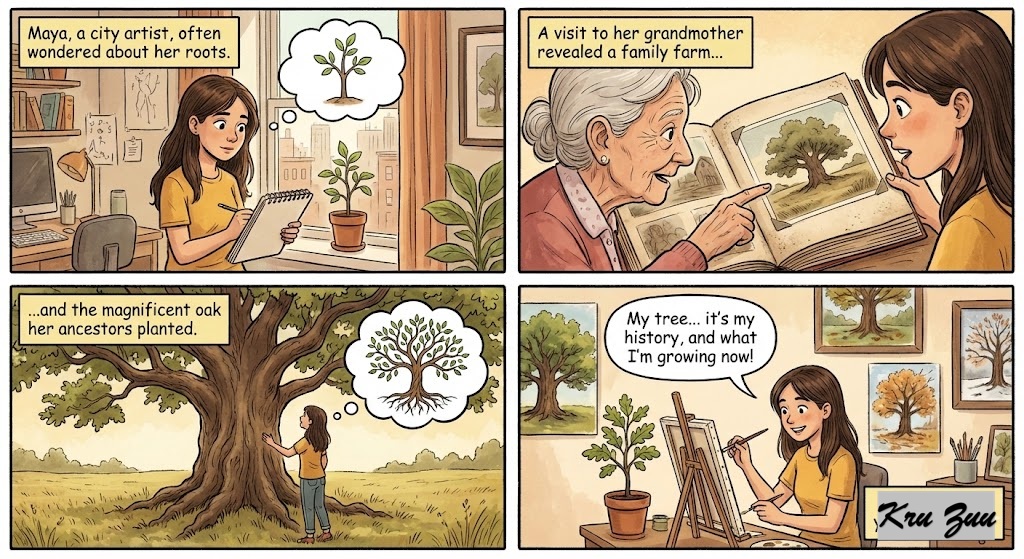
    Identify one habit you have (good or bad) that you definitely “inherited” from a parent, a former boss, or a close friend.
    The Action: 1. If it’s a Good Habit: Write it down and thank that person today. 2. If it’s a Bad
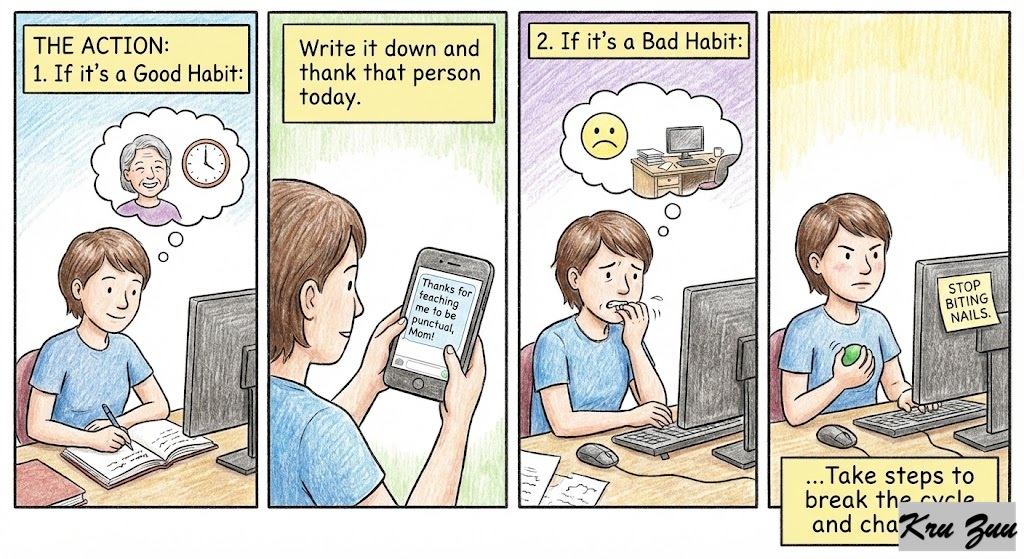
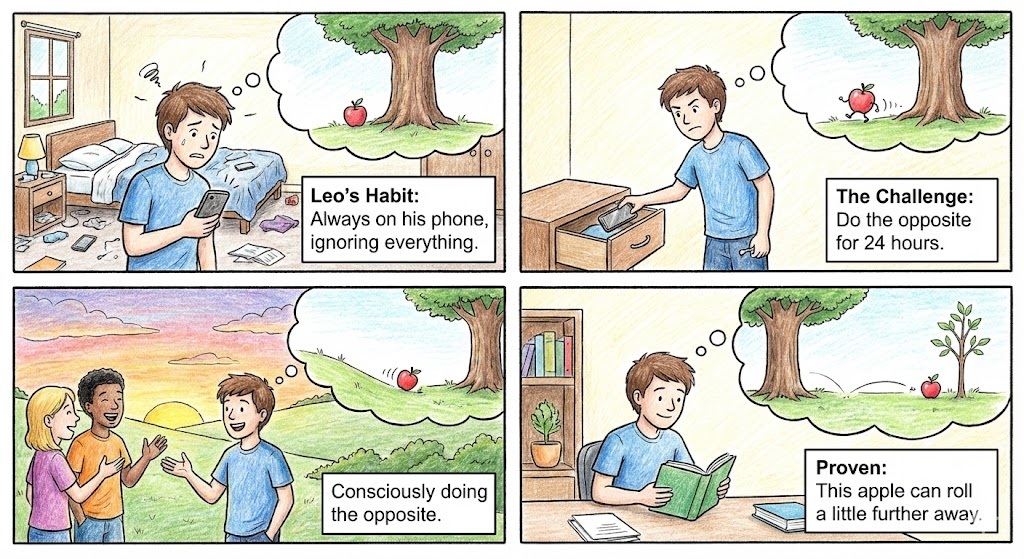
    Habit: Consciously do the opposite for 24 hours. Prove that this apple can roll a little further away.

    👇 Question for the comments: Which trait did you get from your “tree”? Are you happy about it, or are you trying to roll away? Tell us below!

    By Zubeyir YURTKURAN

    https://www.facebook.com/BrainBattleground/

    https://www.facebook.com/zubeyr.yurtkuran/

    https://www.instagram.com/zubeyryurtkuran/

    https://www.youtube.com/@BrainBattleground-b3p

    https://www.instagram.com/brainbattleground/

  • 💘 The Daily Shield: The Law of Invisible Red Flags

    💘 The Daily Shield: The Law of Invisible Red Flags

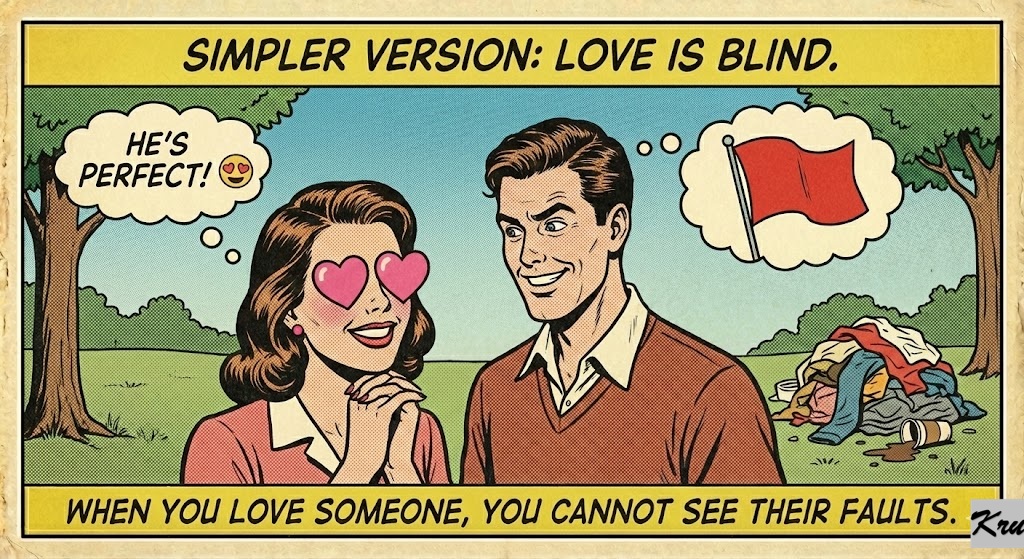
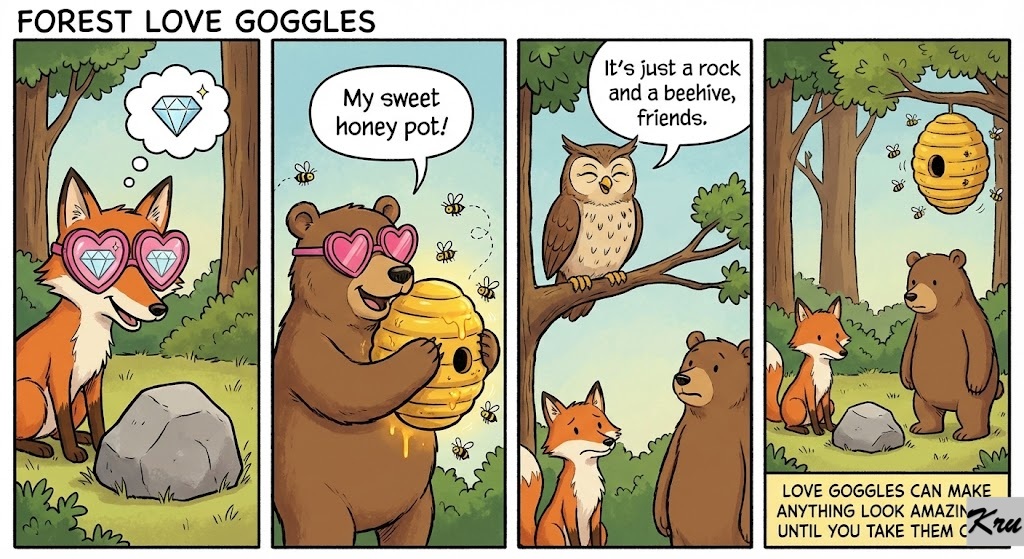
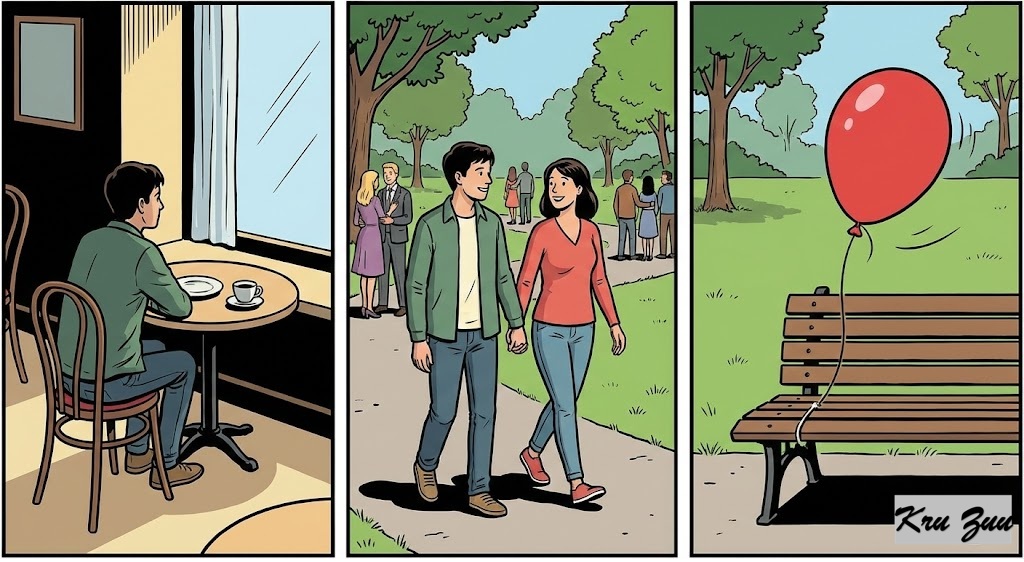
    “Love is blind.”


    😈 The Villain (The Hopeless Romantic)

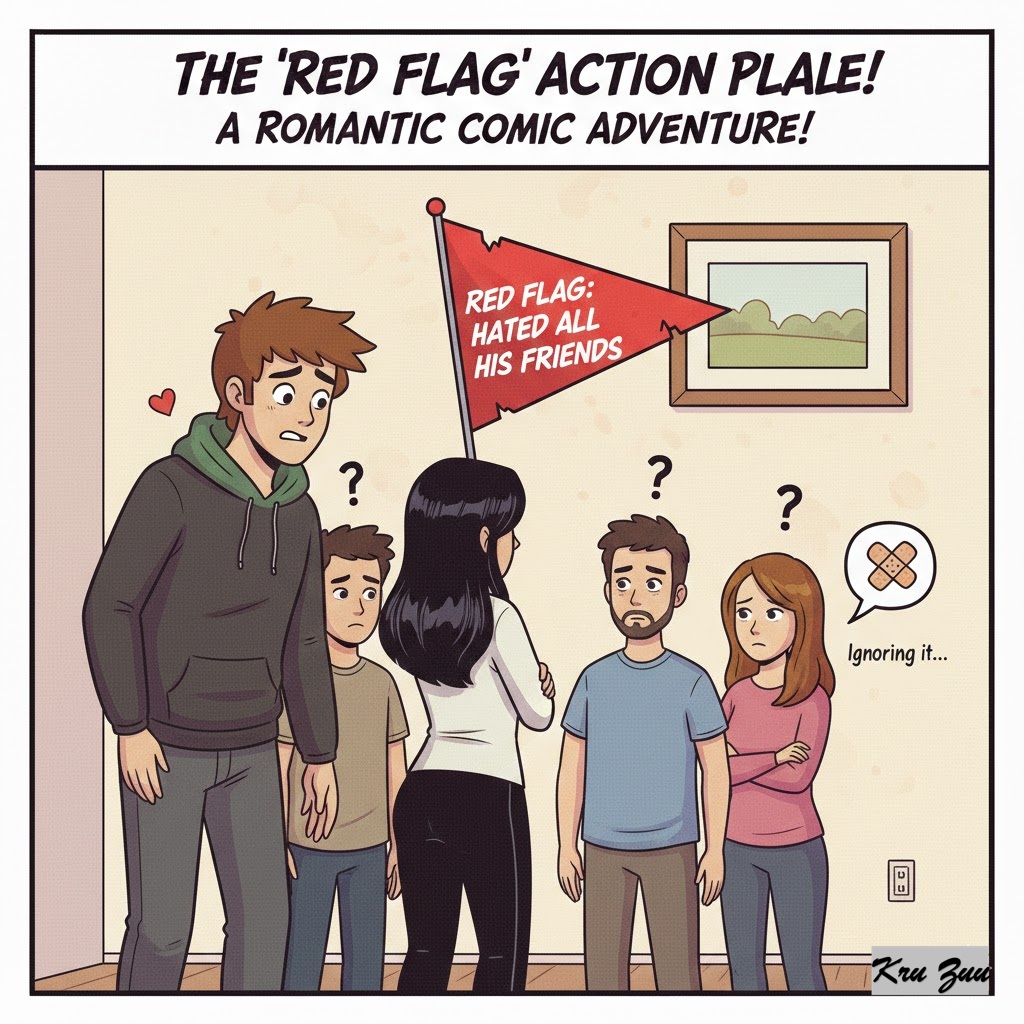
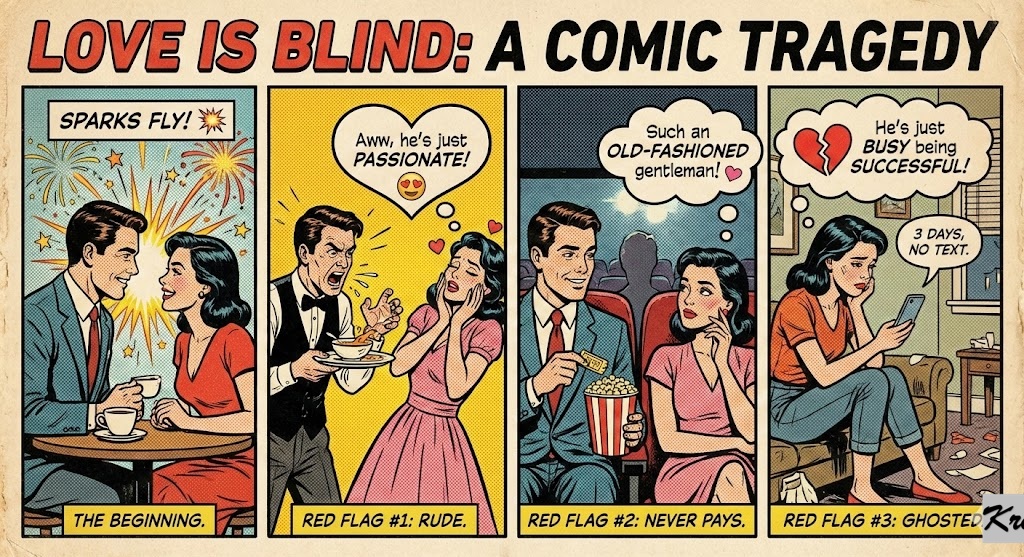
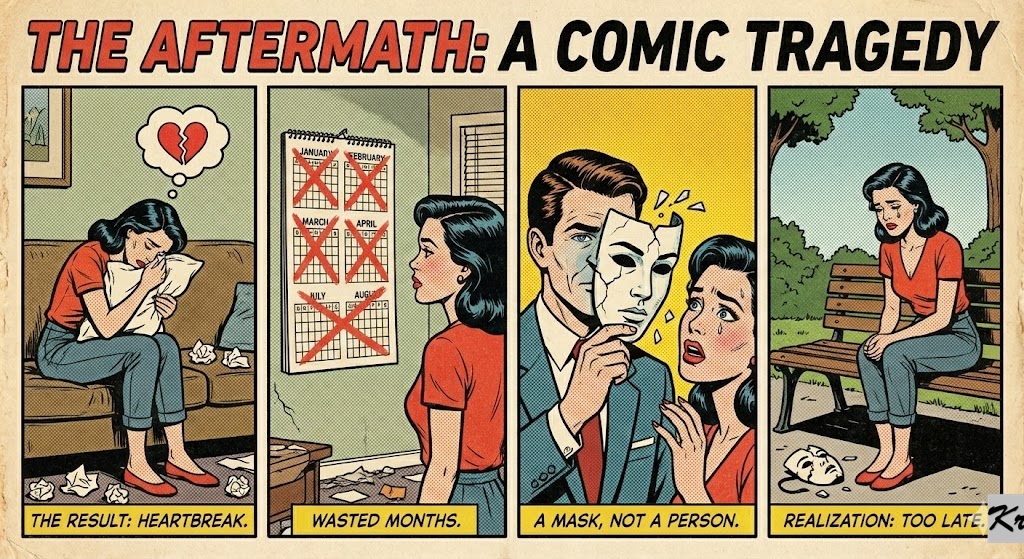
    You meet someone new. Sparks fly. 🎇 Suddenly, logic leaves the building. They are rude to the waiter? “Oh, he’s just passionate.” She never pays for anything? “She’s just old-fashioned.” They ghost you for three days? “They are just so busy being successful!” You ignore the warning signs. You project your fantasy onto a flawed reality.

    The Result? You get heartbroken. You waste months on a relationship that was doomed from day one. You realize too late that you fell in love with a mask, not a person. 🎭


    😇 The Hero (The Conscious Partner)

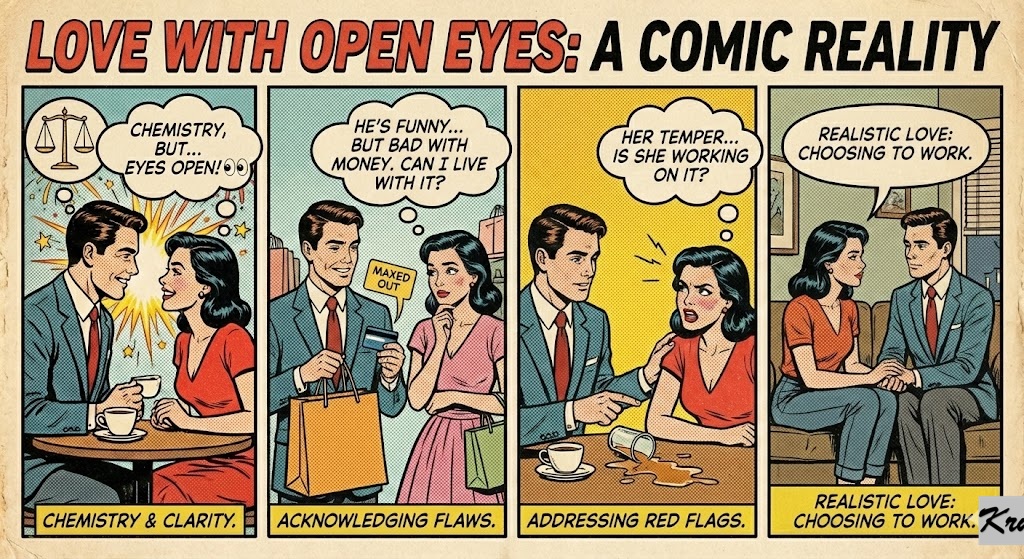
    You feel the chemistry, but you keep your eyes open. 👀 You love them, but you acknowledge their flaws. You think: “He is funny, but he is terrible with money. Can I live with that?” or “She is beautiful, but she has a bad temper. Is she working on it?” You don’t ignore the red flags; you address them.

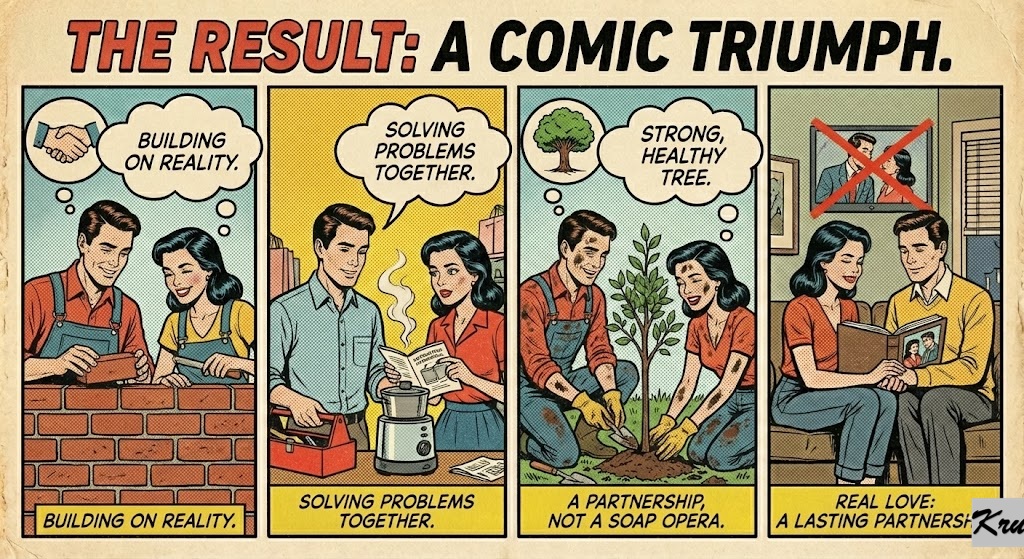
    The Result? You build a relationship based on trust and reality, not fantasy. When problems happen, you solve them because you saw them coming. You build a partnership, not a soap opera. 🤝


    ⚖️ The Reality


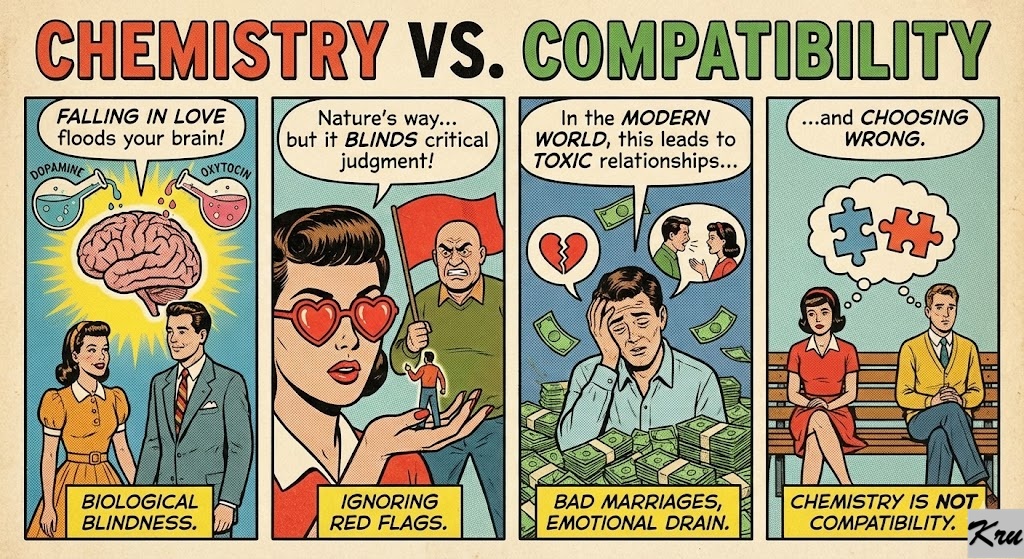
    Chemistry vs. Compatibility. Biologically, falling in love floods your brain with dopamine and oxytocin. These chemicals literally “blind” the critical judgment part of your brain. It is nature’s way of making sure humans pair up. But in the modern world, this biological blindness can lead to toxic relationships, bad marriages, and emotional drain.


    💎 The Secret

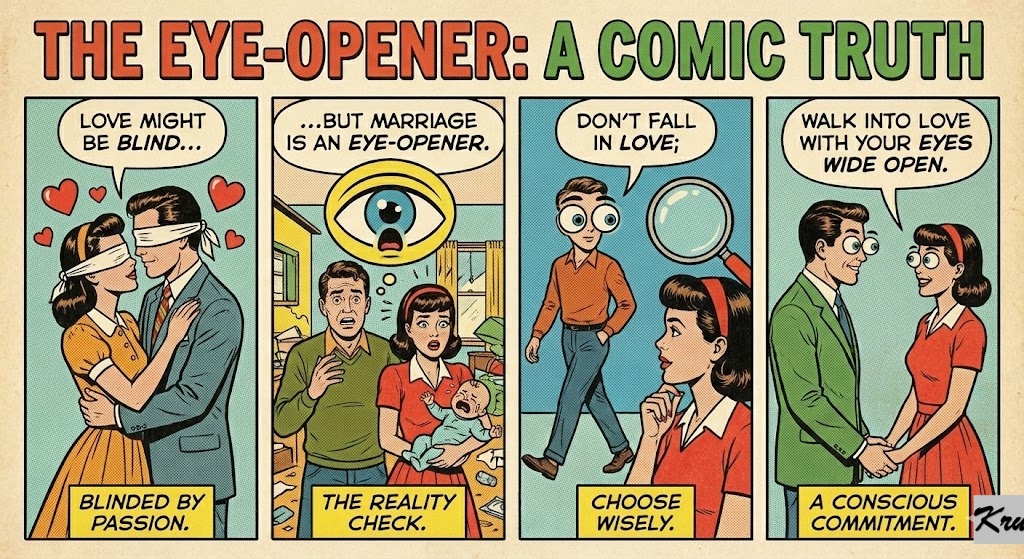
    Love might be blind, but marriage (or long-term commitment) is an eye-opener. Don’t fall in love; walk into love with your eyes wide open.

    🧐 The Anatomy of the Proverb


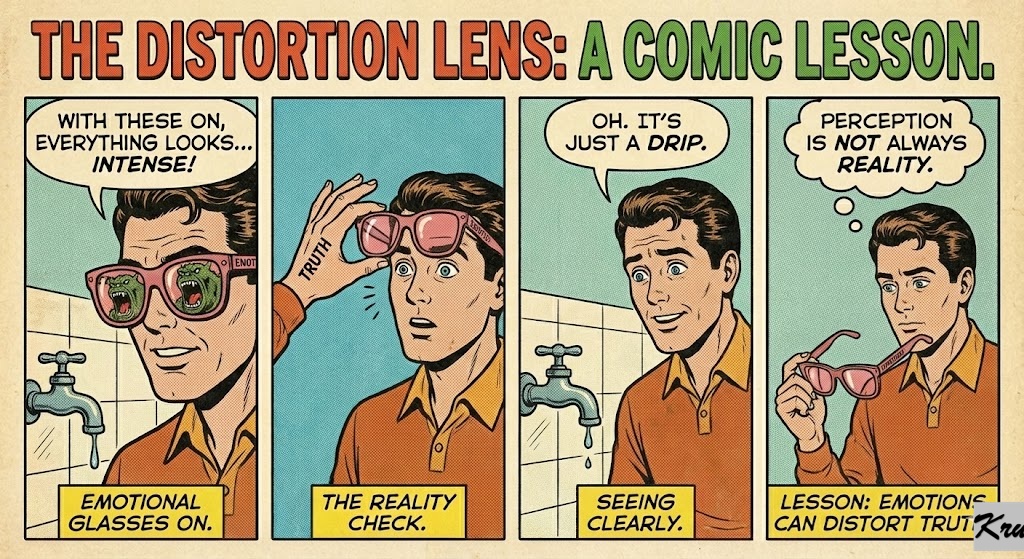
    This is your reality check that emotions can distort your perception of the truth.


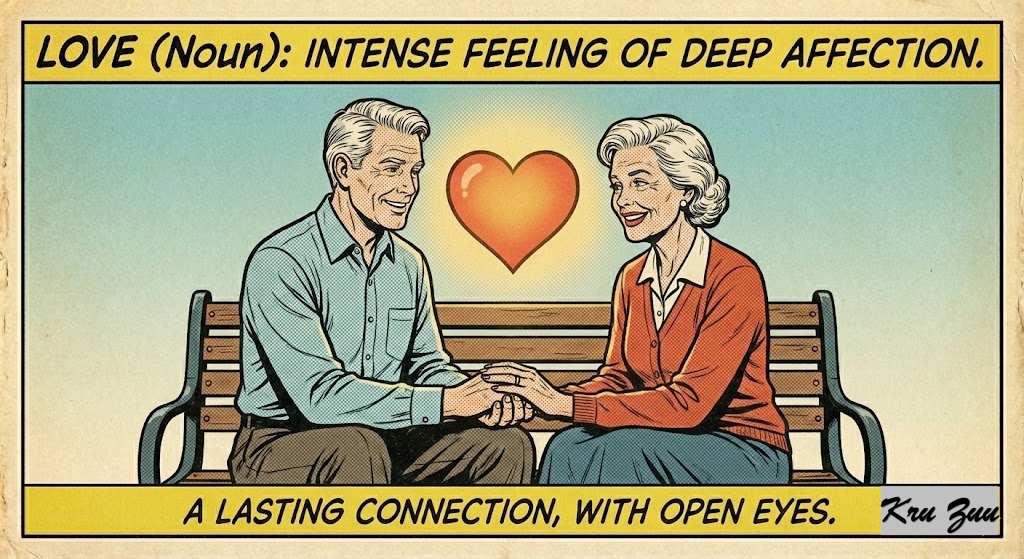
    Love (Noun): Intense feeling of deep affection.


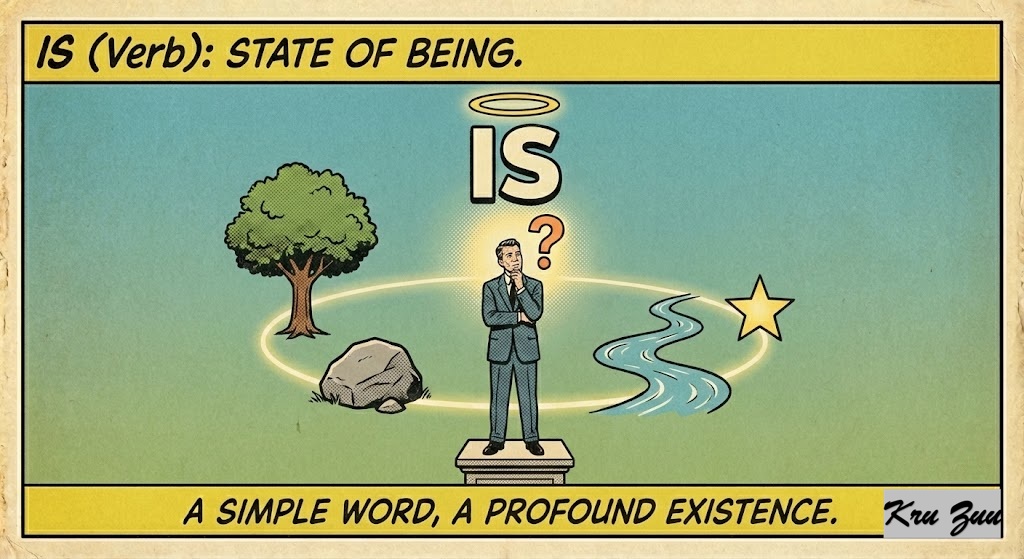
    Is (Verb): State of being.


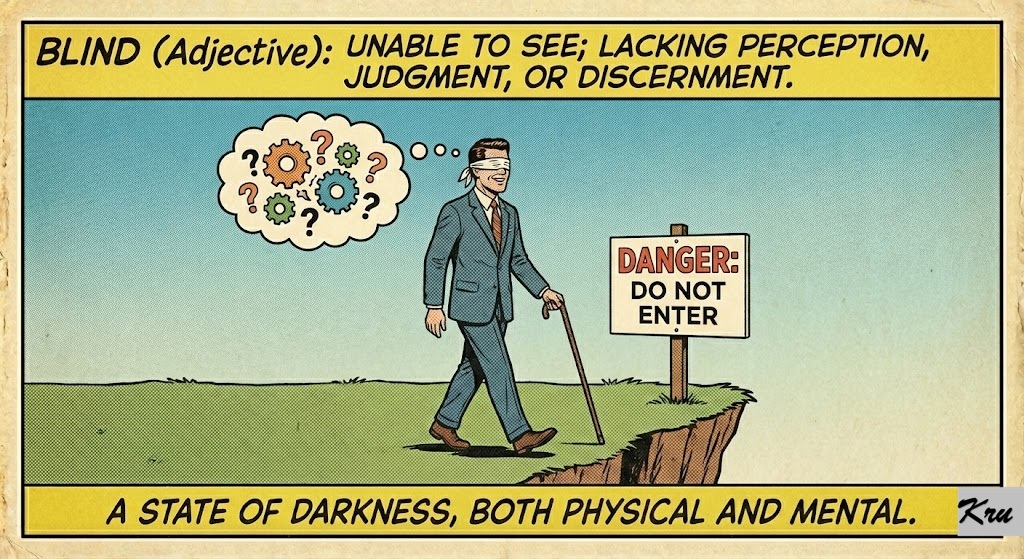
    Blind (Adjective): Unable to see; lacking perception, judgment, or discernment.


    Simpler Version: When you love someone, you cannot see their faults.


    📚 Vocabulary Vault


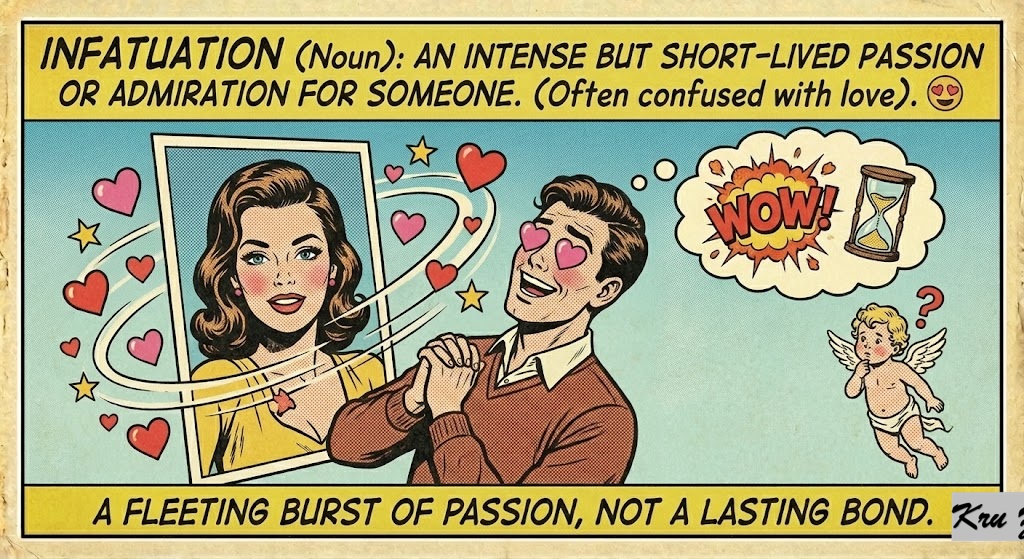
    Infatuation (Noun): An intense but short-lived passion or admiration for someone. (Often confused with love). 😍


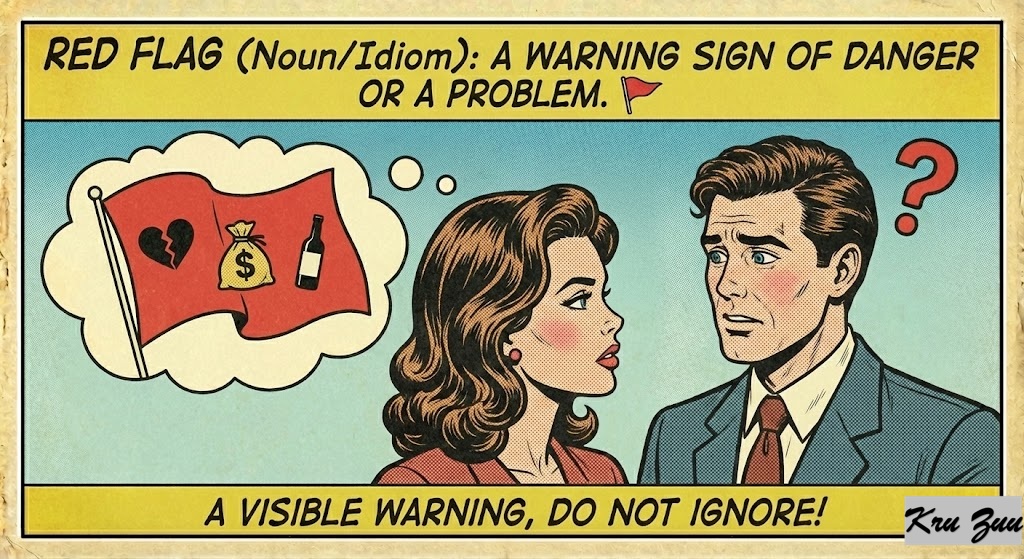
    Red Flag (Noun/Idiom): A warning sign of danger or a problem. 🚩


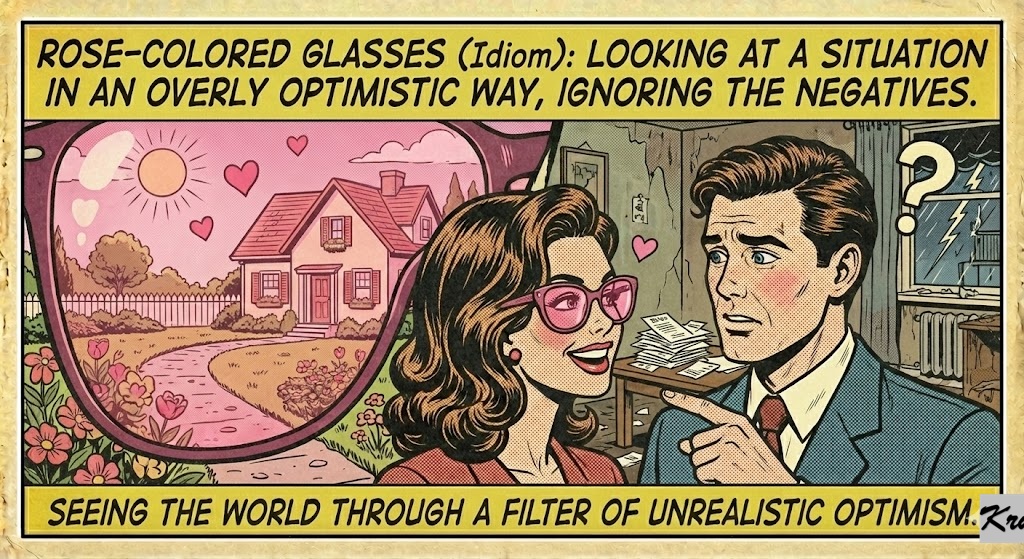
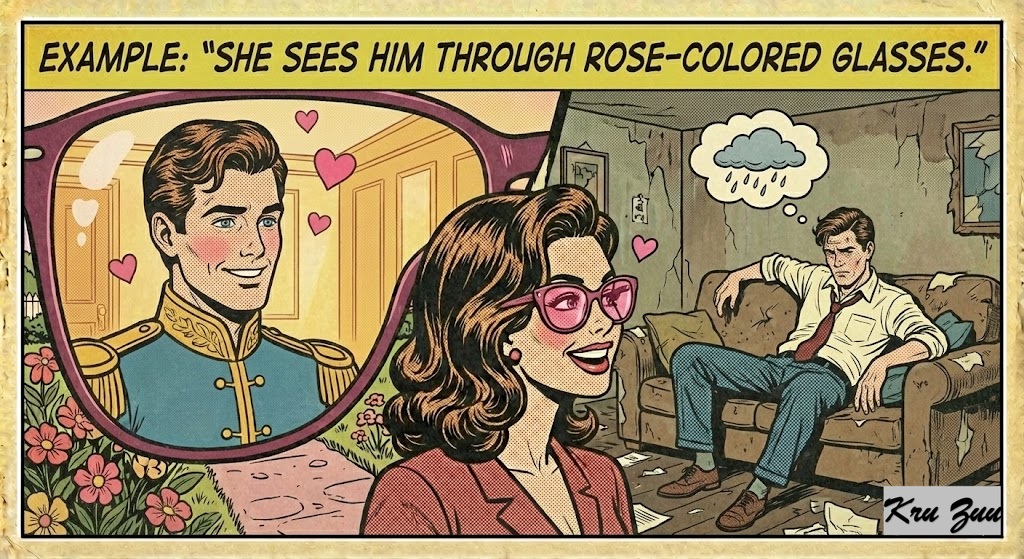
    Rose-colored glasses (Idiom): Looking at a situation in an overly optimistic way, ignoring the negatives.

    Example: “She sees him through rose-colored glasses.” 🕶️


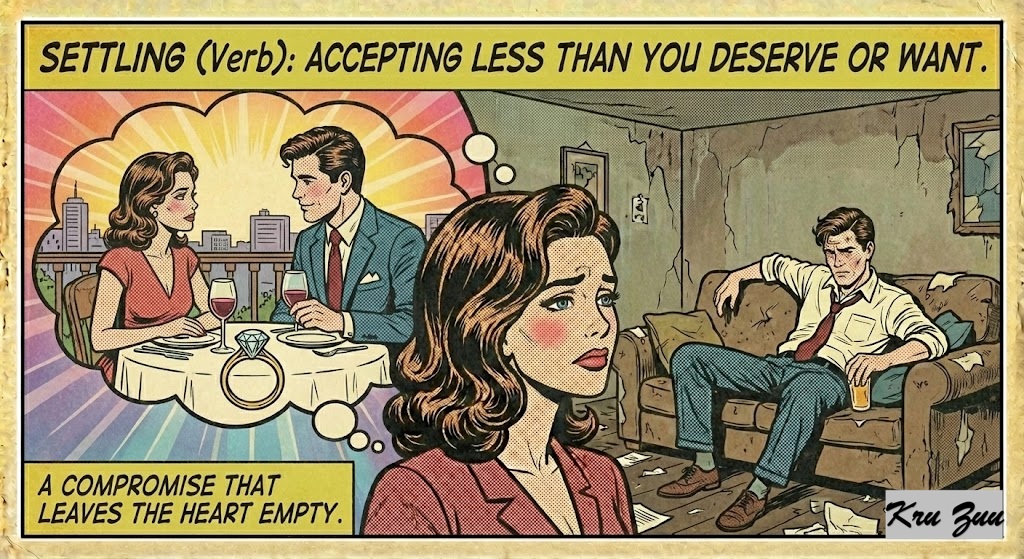
    Settling (Verb): Accepting less than you deserve or want.


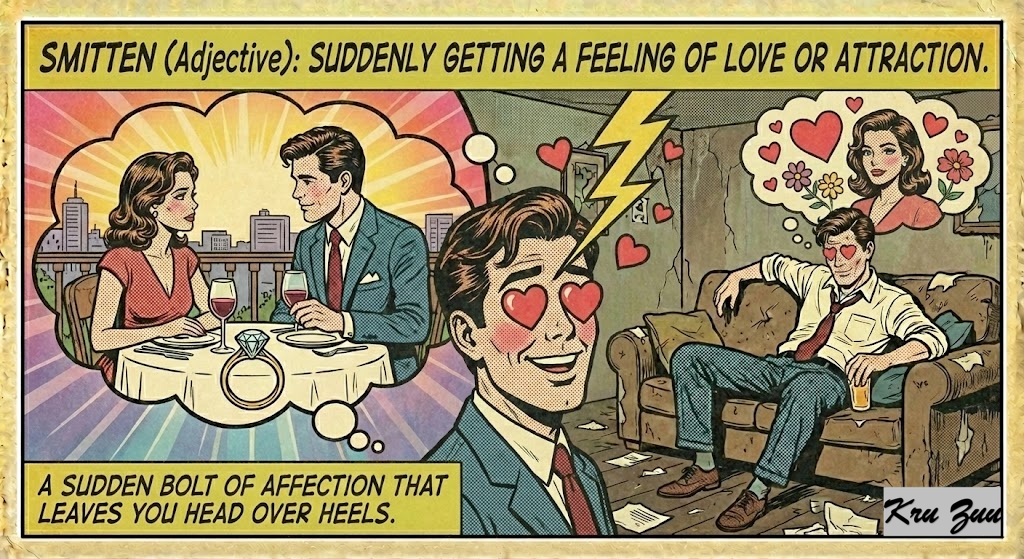
    Smitten (Adjective): Suddenly getting a feeling of love or attraction.


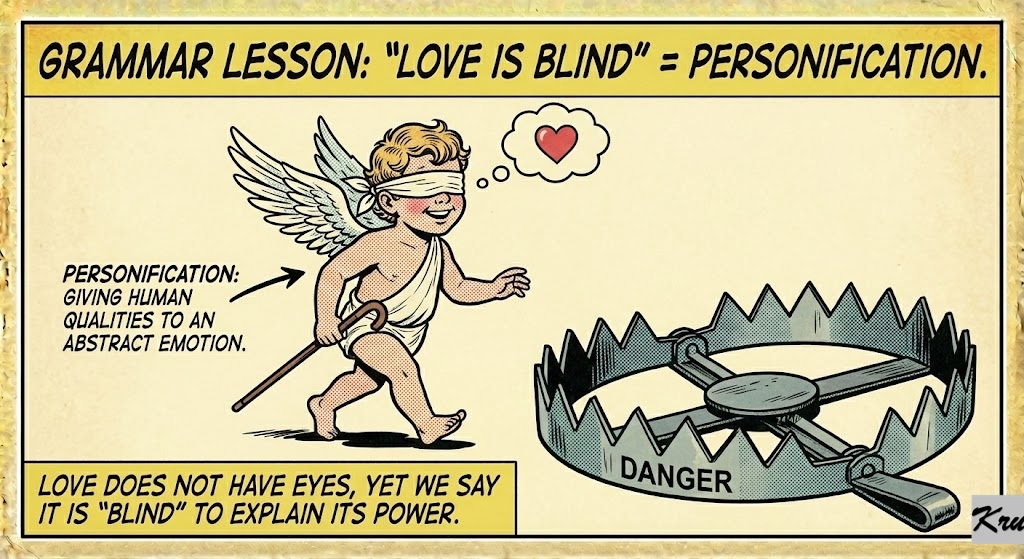
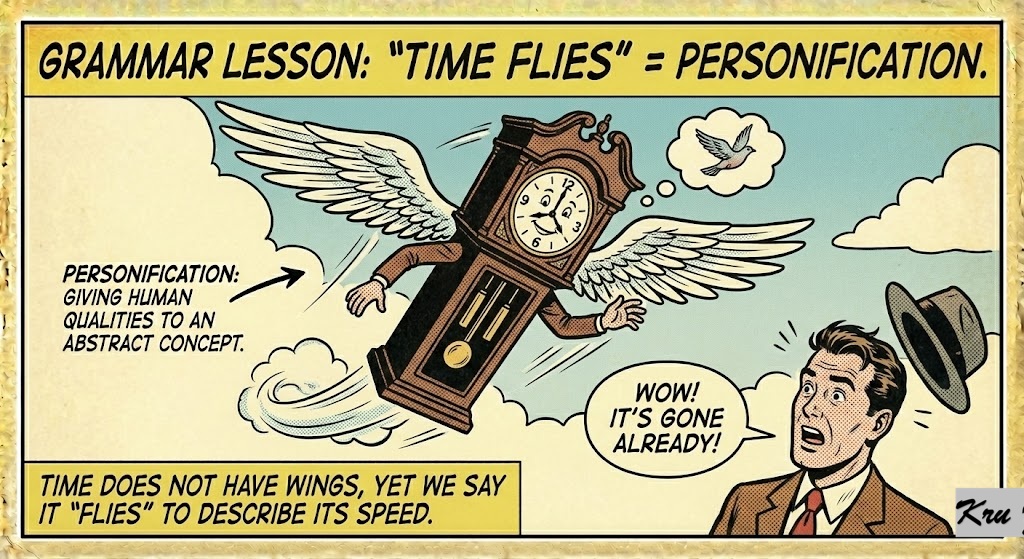
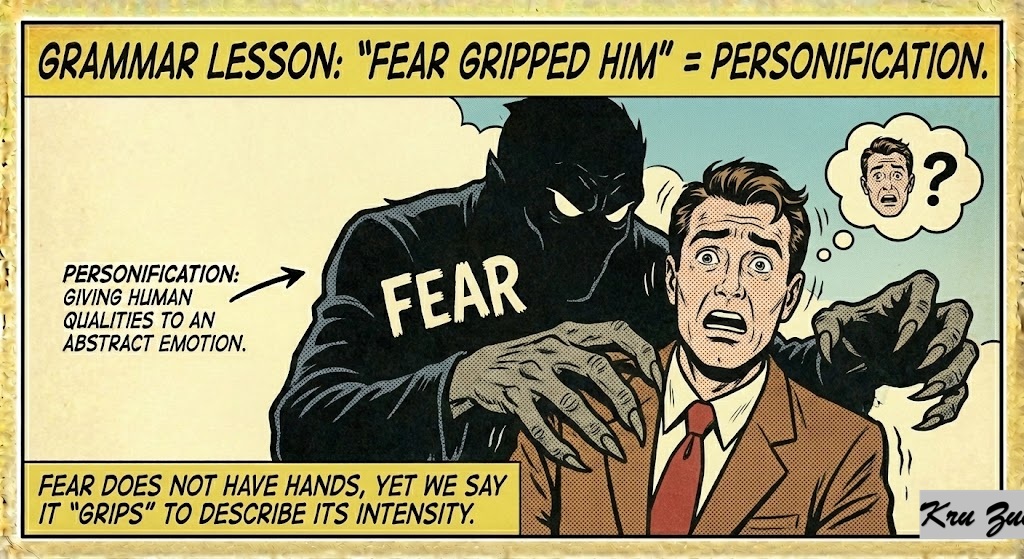
    🧠 Grammar Focus: Personification


    “Love is blind.” Grammatically, this is Personification. Love is an abstract emotion. It does not have eyes. It cannot literally be blind. However, we give it human qualities to explain how powerful it is. It acts like a person who has lost their sight.


    Other examples


    “Time flies.” (Time doesn’t have wings).


    “Fear gripped him.” (Fear doesn’t have hands).

    📜 History: Origin and Spread


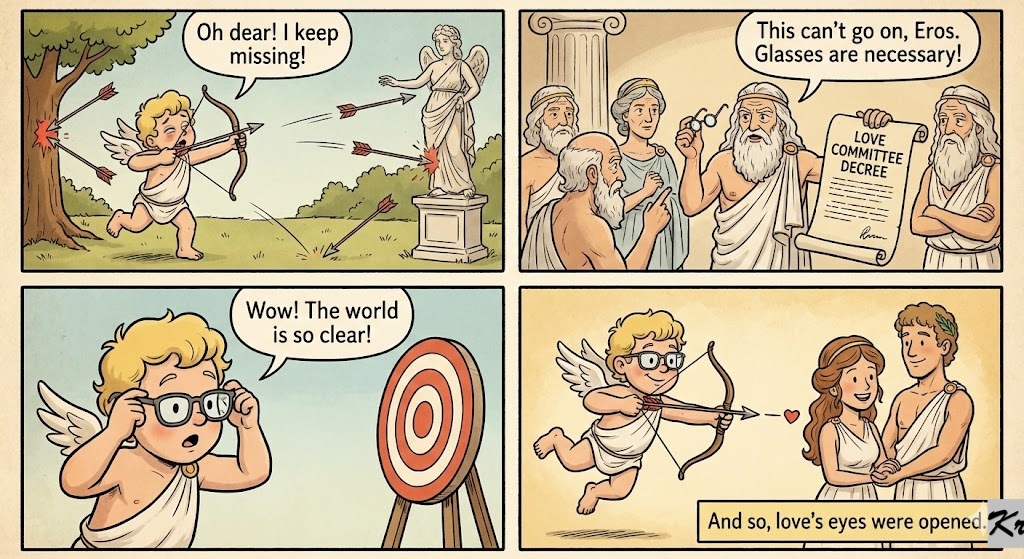
    Who first decided that Cupid needs glasses?


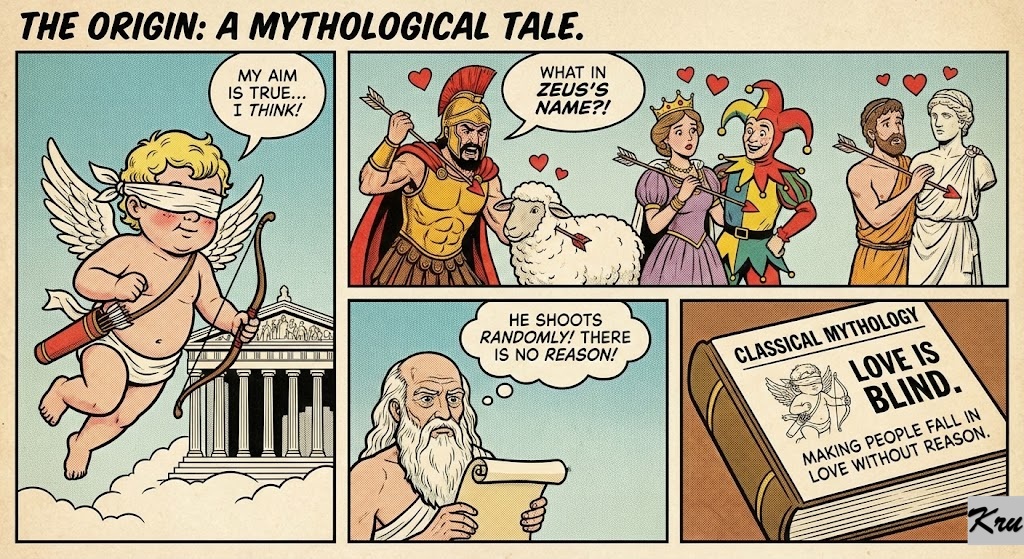
    The Origin: This idea is ancient. In Classical Mythology, Cupid (the god of affection) is often depicted wearing a blindfold. He shoots his arrows randomly, making people fall in love without reason.


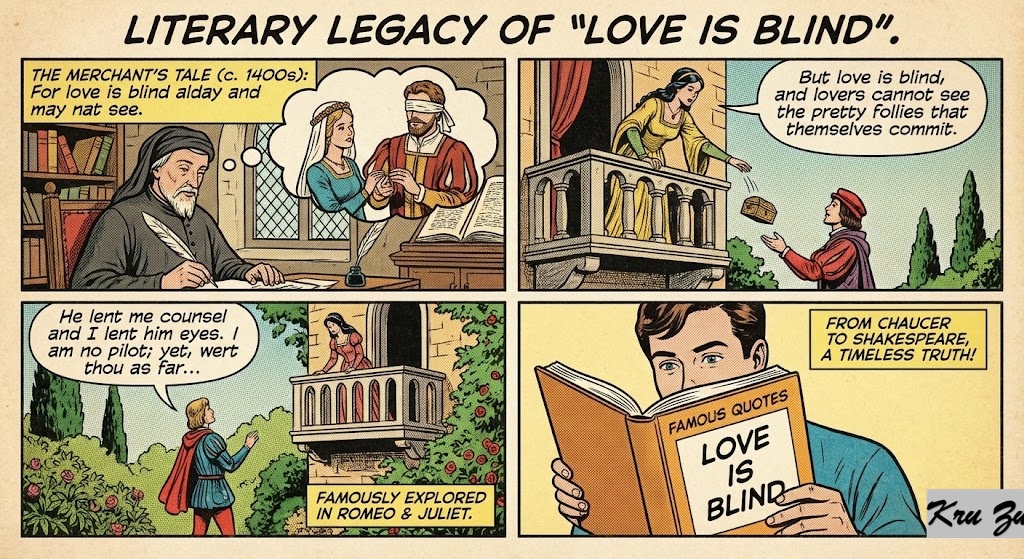
    The Writer: Geoffrey Chaucer used the phrase in the 1400s, but William Shakespeare made it famous in The Merchant of Venice and Romeo and Juliet.


    Global Cousins


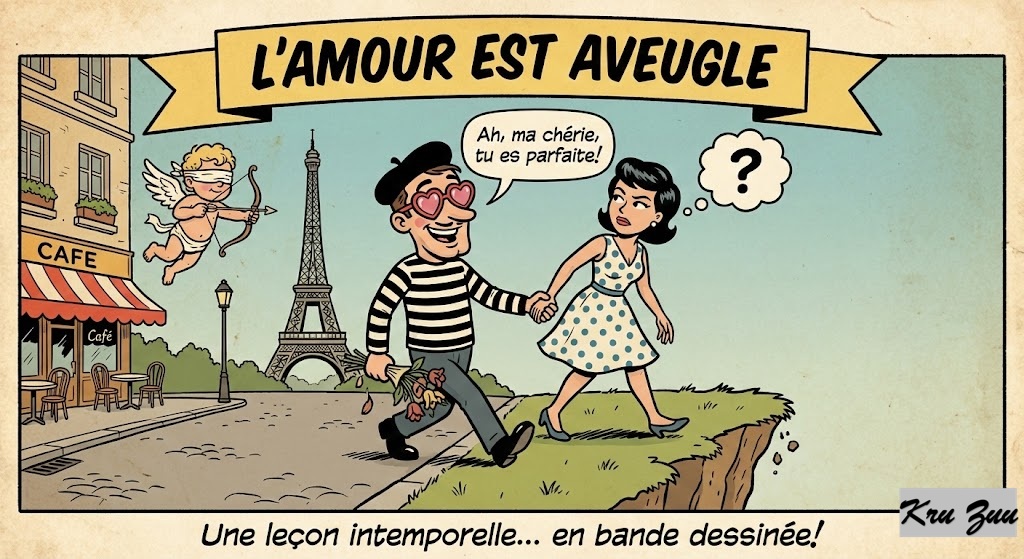
    🇫🇷 French: “L’amour est aveugle.” (Love is blind – direct translation).


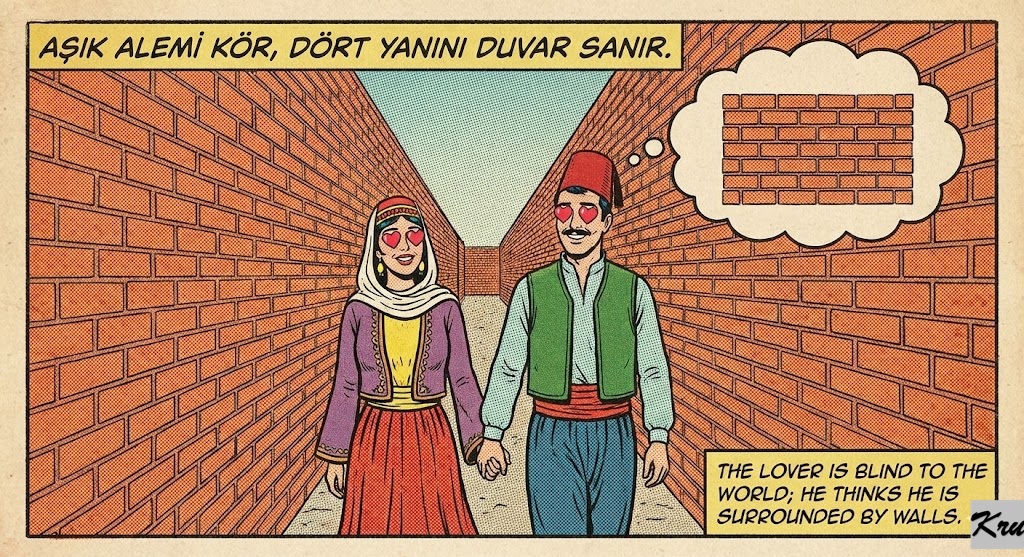
    🇹🇷 Turkish: “Aşık alemi kör, dört yanını duvar sanır.” (The lover is blind to the world; he thinks he is surrounded by walls).


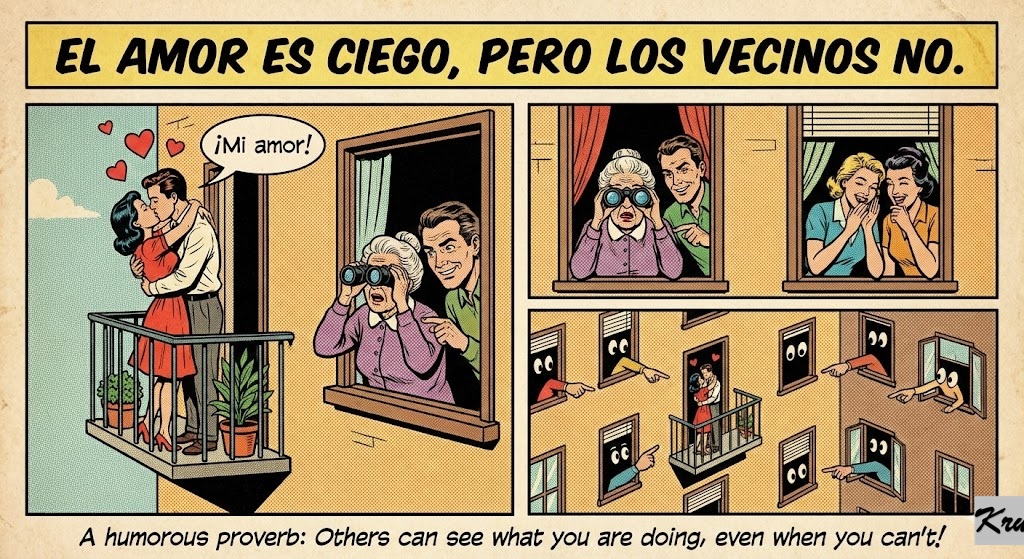
    🇪🇸 Spanish: “El amor es ciego, pero los vecinos no.” (Love is blind, but the neighbors are not! meaning others can see what you are doing).

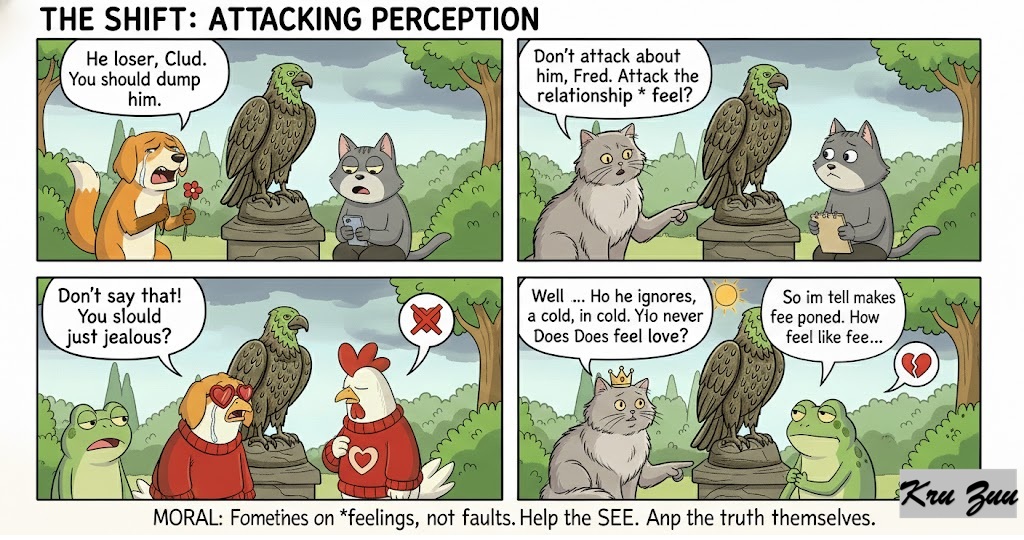
    🎭 Short Story: The Statue of Perfection 🗿🐱🐔🐸


    Let’s visit the forest to see who has their “love goggles” on.


    🌟 The Cast


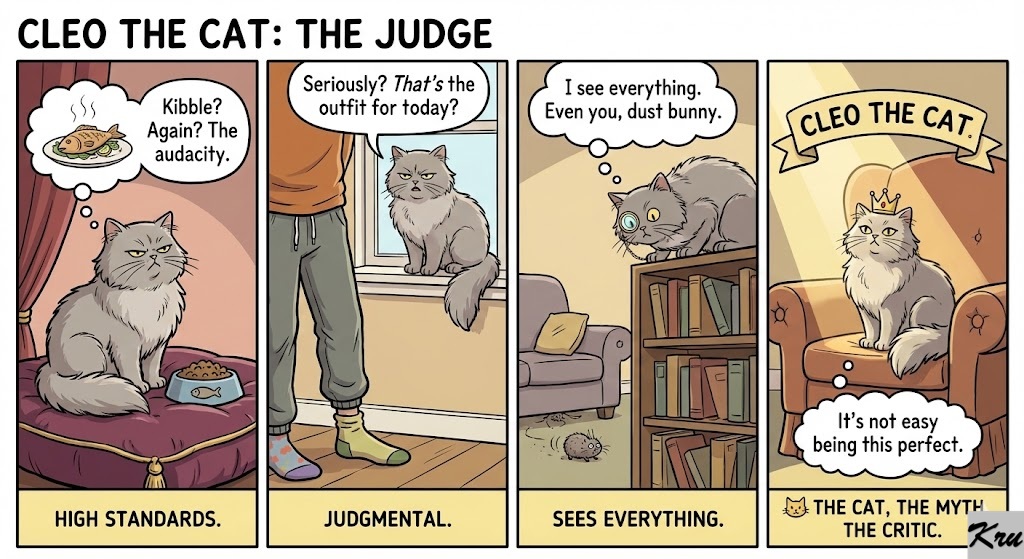
    Cleo the Cat: High standards, judgmental, sees everything. 😼


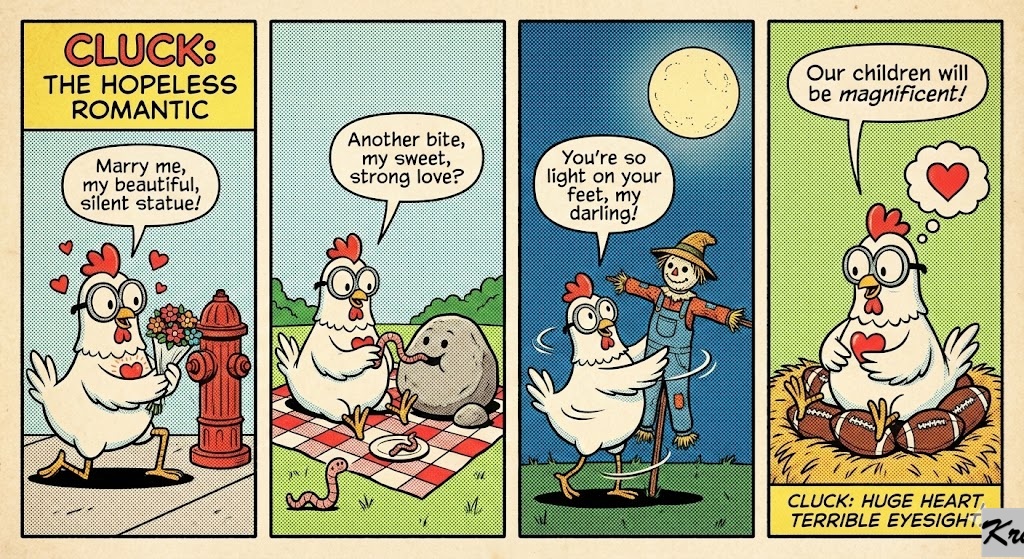
    Cluck the Chicken: Falls in love instantly, huge romantic heart, terrible eyesight. 🐔


    Fred the Frog: The logical observer, keeps it real. 🐸


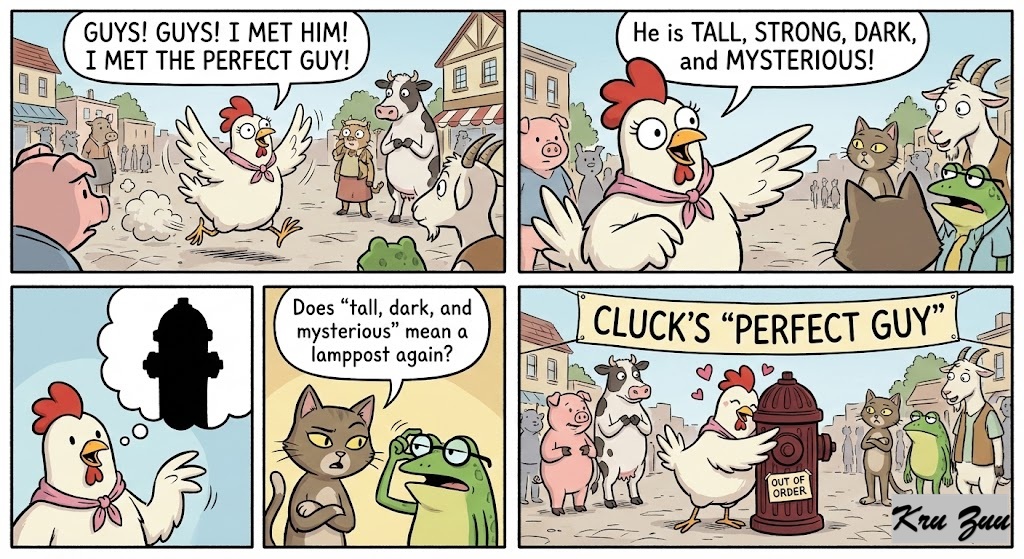
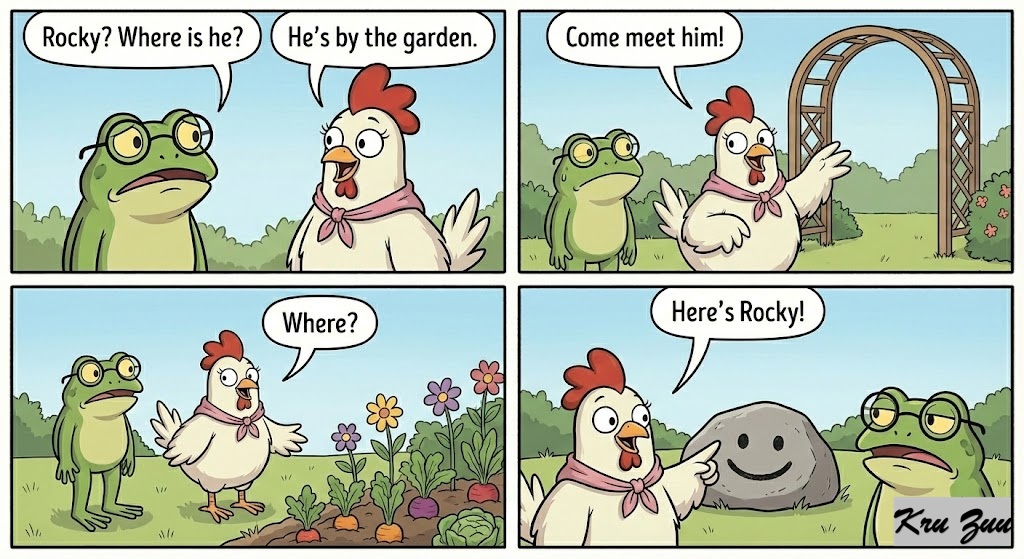
    The Situation: Cluck the Chicken comes running into the town square, flapping her wings excitedly. “Guys! Guys! I met Him! I met the perfect guy! He is tall, strong, dark, and mysterious!”


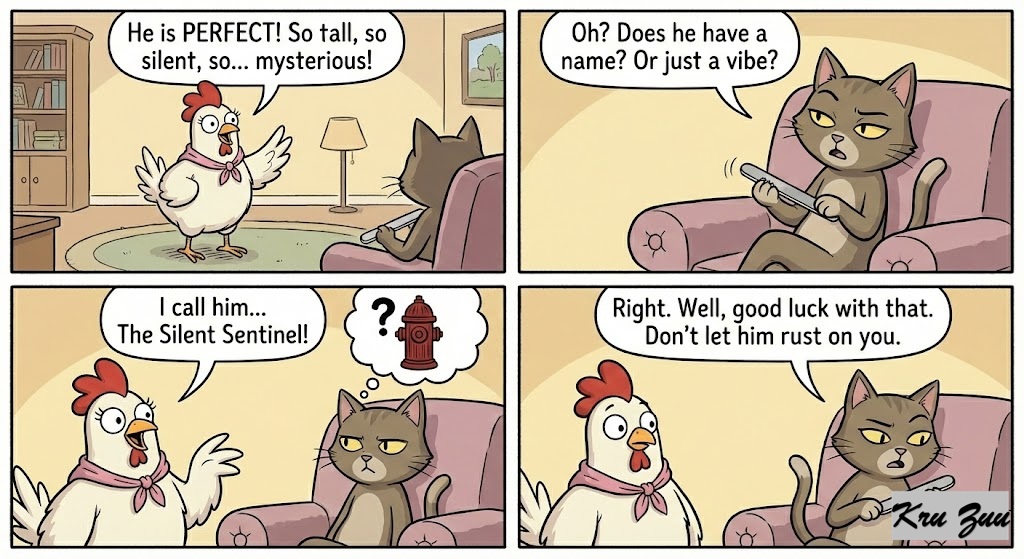
    Cleo looks up from filing her nails. “Oh? Does he have a name? Or just a vibe?”


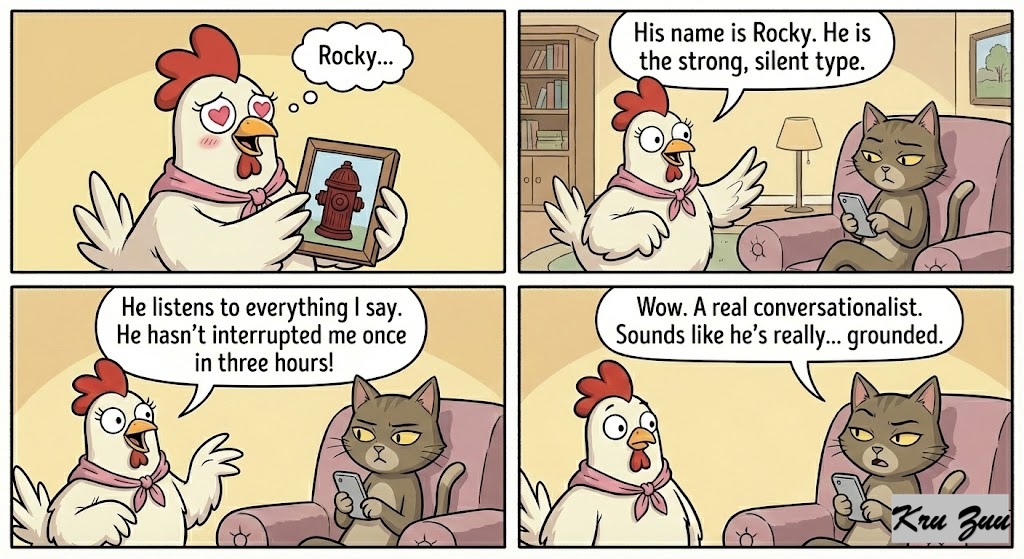
    “His name is Rocky,” Cluck sighs. “He is the strong, silent type. He listens to everything I say. He hasn’t interrupted me once in three hours!”


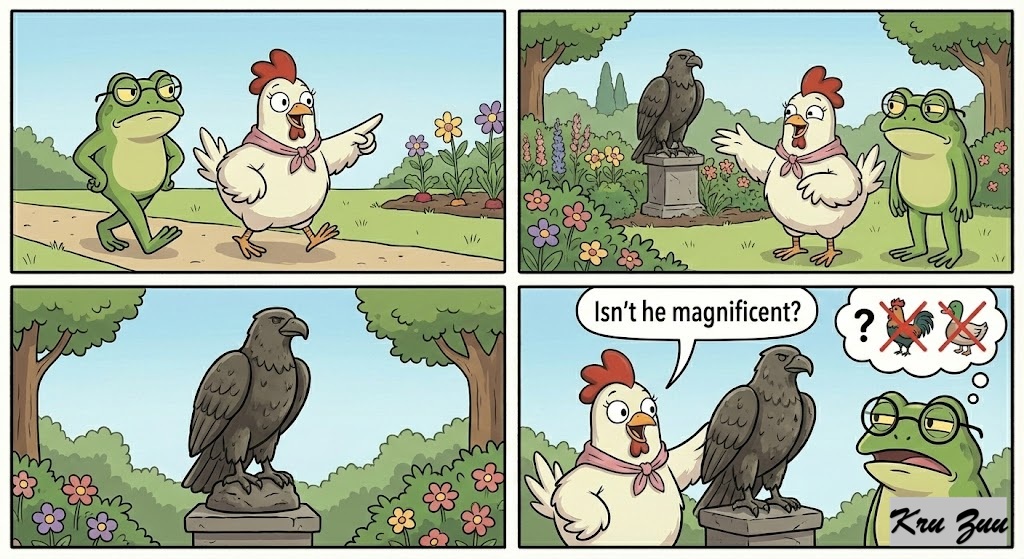
    The Conflict: Fred the Frog frowns. “Rocky? Where is he?” “He’s by the garden,” Cluck says. “Come meet him!”


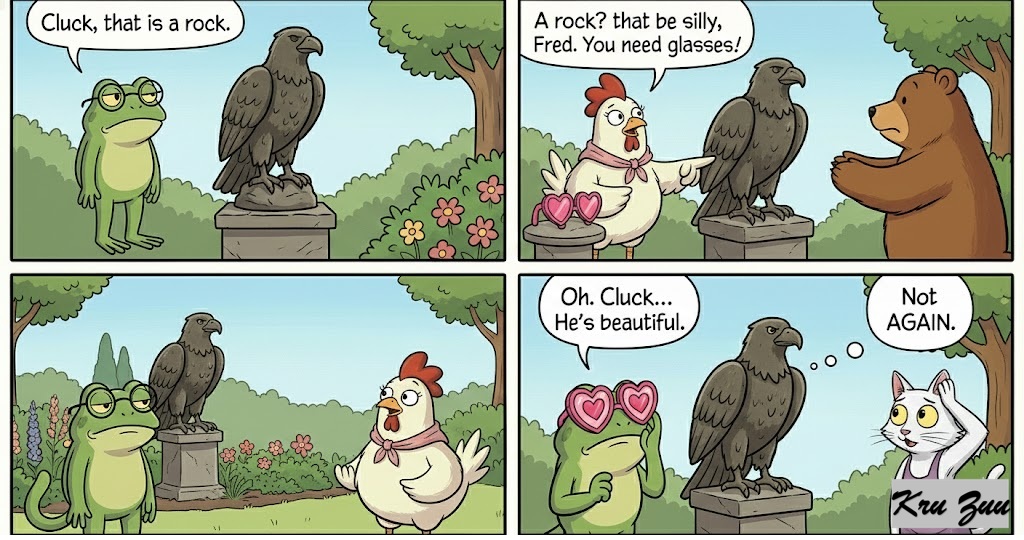
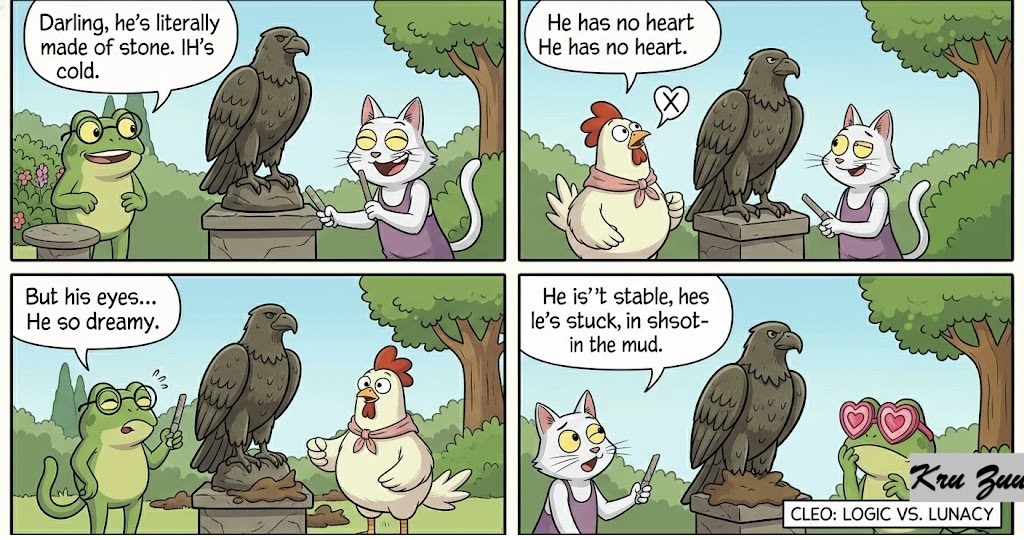
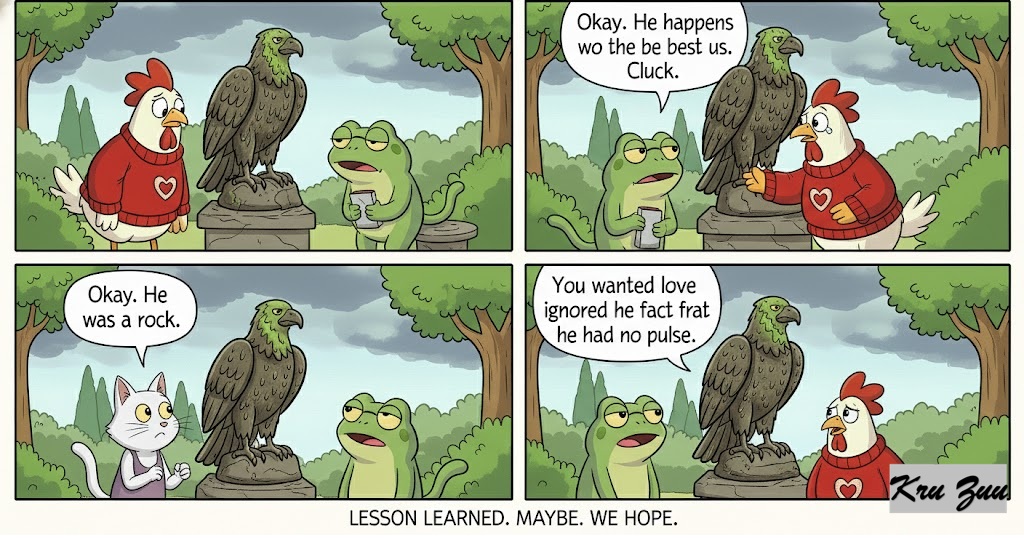
    They walk to the garden. Standing there is not a rooster. It is not a duck. It is a dark, stone garden statue of an Eagle. 🗿


    “Cluck,” Fred says slowly. “That is a rock.”


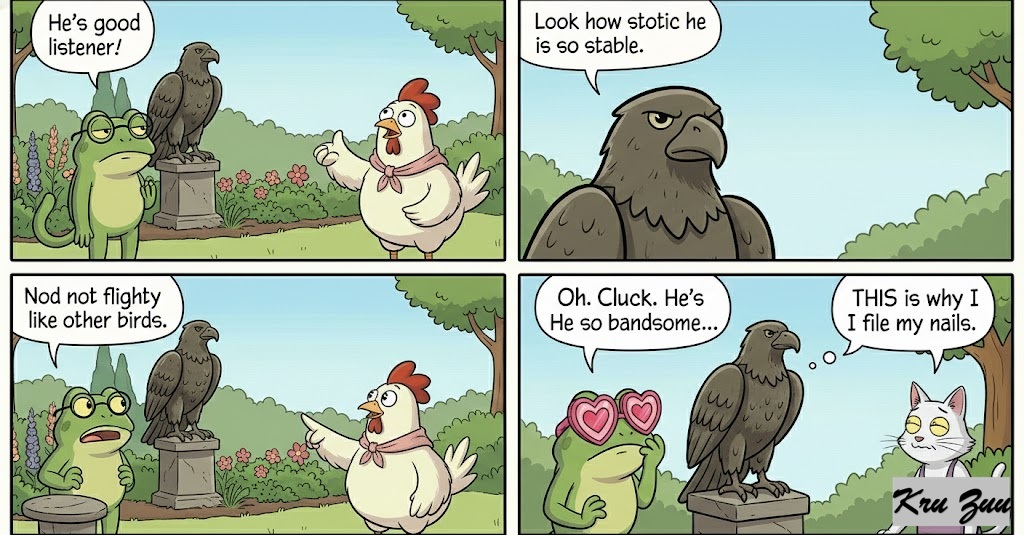
    “He’s a good listener!” Cluck defends him. “Look how stoic he is. He’s so stable. He’s not flighty like other birds.”


    Cleo laughs. “Darling, he’s literally made of stone. He’s cold. He has no heart. He isn’t stable; he’s stuck in the mud.”


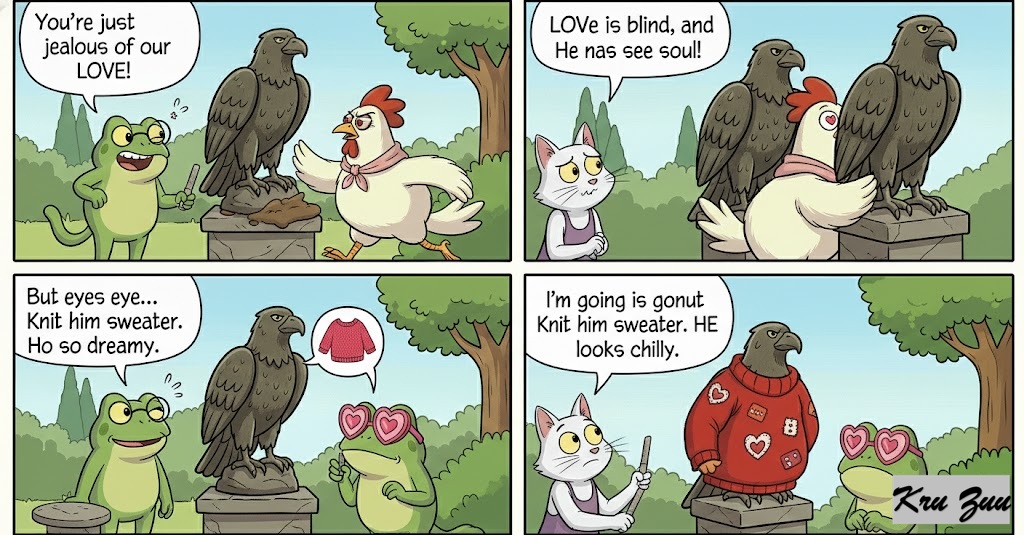
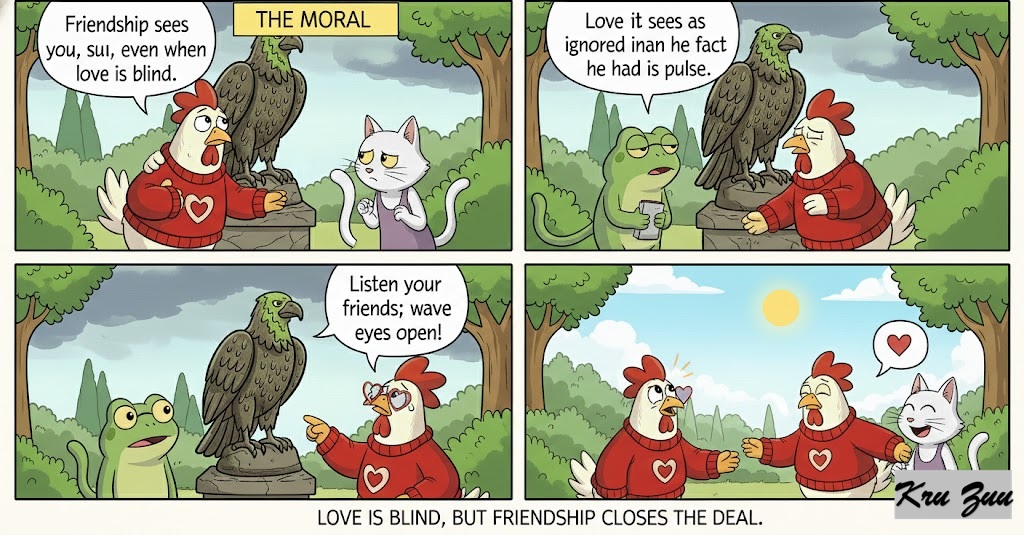
    The Reaction: “You are just jealous of our love!” Cluck yells. “Love is blind, and I see his soul!” She runs over and hugs the cold stone statue. “I’m going to knit him a sweater. He looks chilly.”


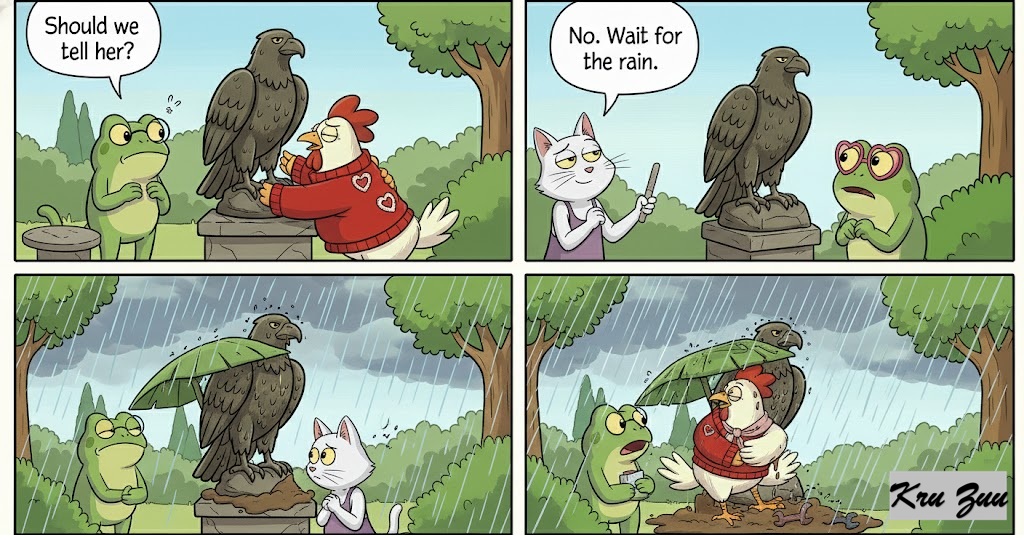
    Fred looks at Cleo. “Should we tell her?” Cleo shakes her head. “No. Wait for the rain.”


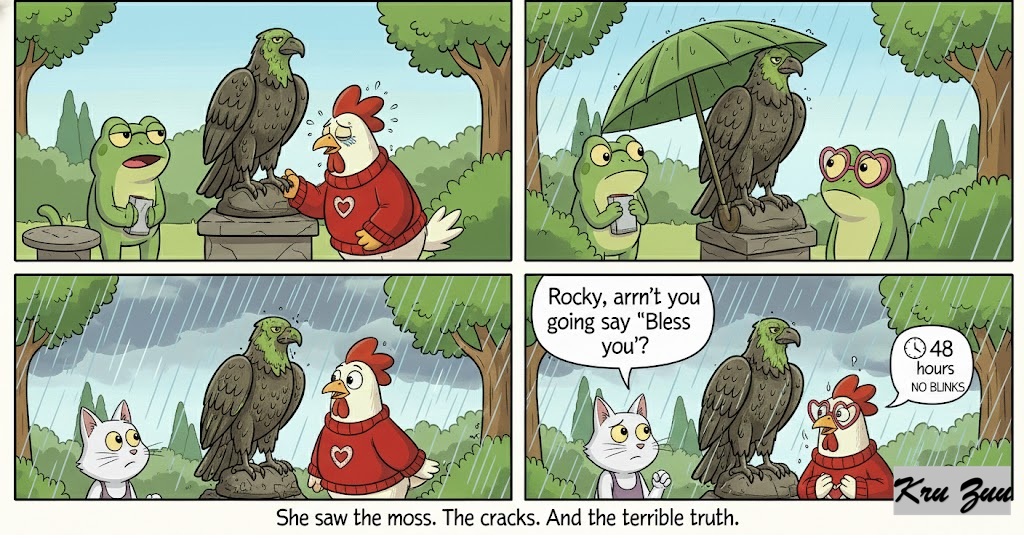
    The Resolution: Two days later, it rained heavily. Cluck stood by “Rocky” with an umbrella, but Rocky didn’t say thank you. He didn’t move. Moss started growing on his beak. Finally, Cluck sneezed. “Rocky, aren’t you going to say ‘Bless you’?” Silence. Cluck finally stepped back. She looked, really looked, and saw the moss. She saw the cracks in the stone. She realized he hadn’t blinked in 48 hours.


    The Lesson: Cluck walked back to her friends, head down. “Okay. He was a rock.” Fred patted her wing. “It happens to the best of us, Cluck. You wanted love so badly, you ignored the fact that he had no pulse.”


    The Moral: Love is blind, but friendship closes the deal. Listen to your friends; they have their eyes open.

    🎓 Lesson for English Learners


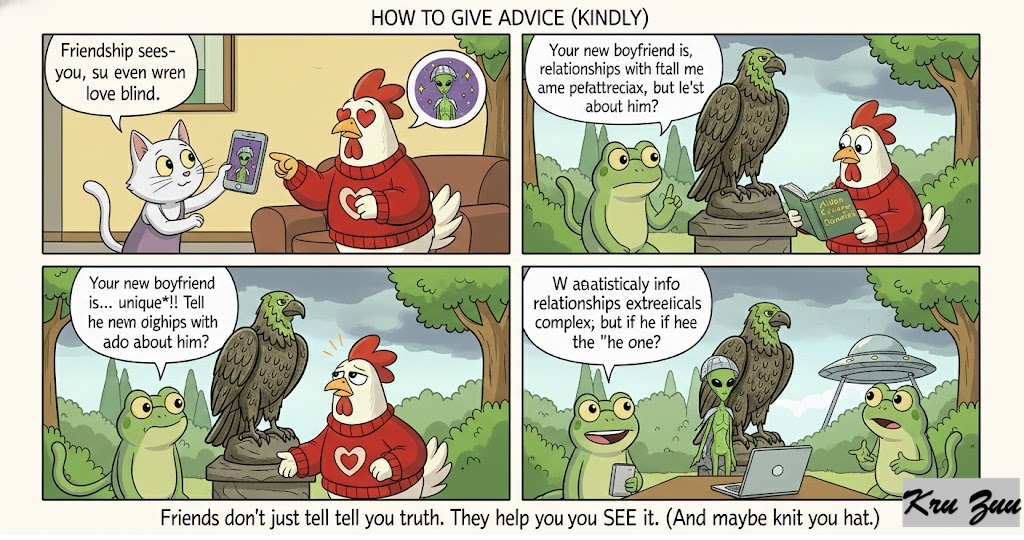
    How to give advice without being mean.


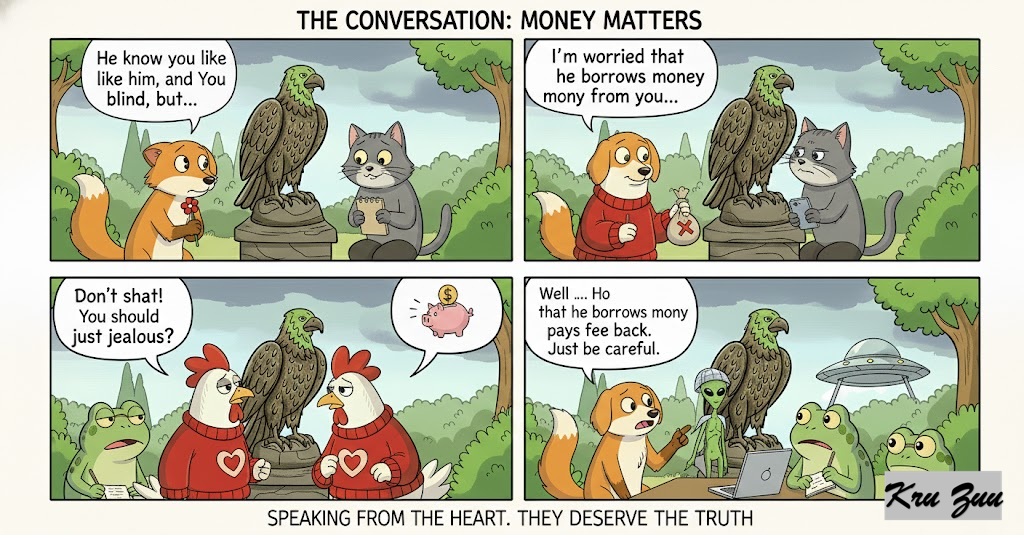
    Situation: Your friend is dating someone who treats them badly. You want to warn them, but you don’t want to fight.

    The Shift: Don’t attack the partner (“He is a loser”). Attack the perception.

    You Say: “I know you really like him, and love is blind, but I’m worried that he borrows money from you and never pays it back. Just be careful.”


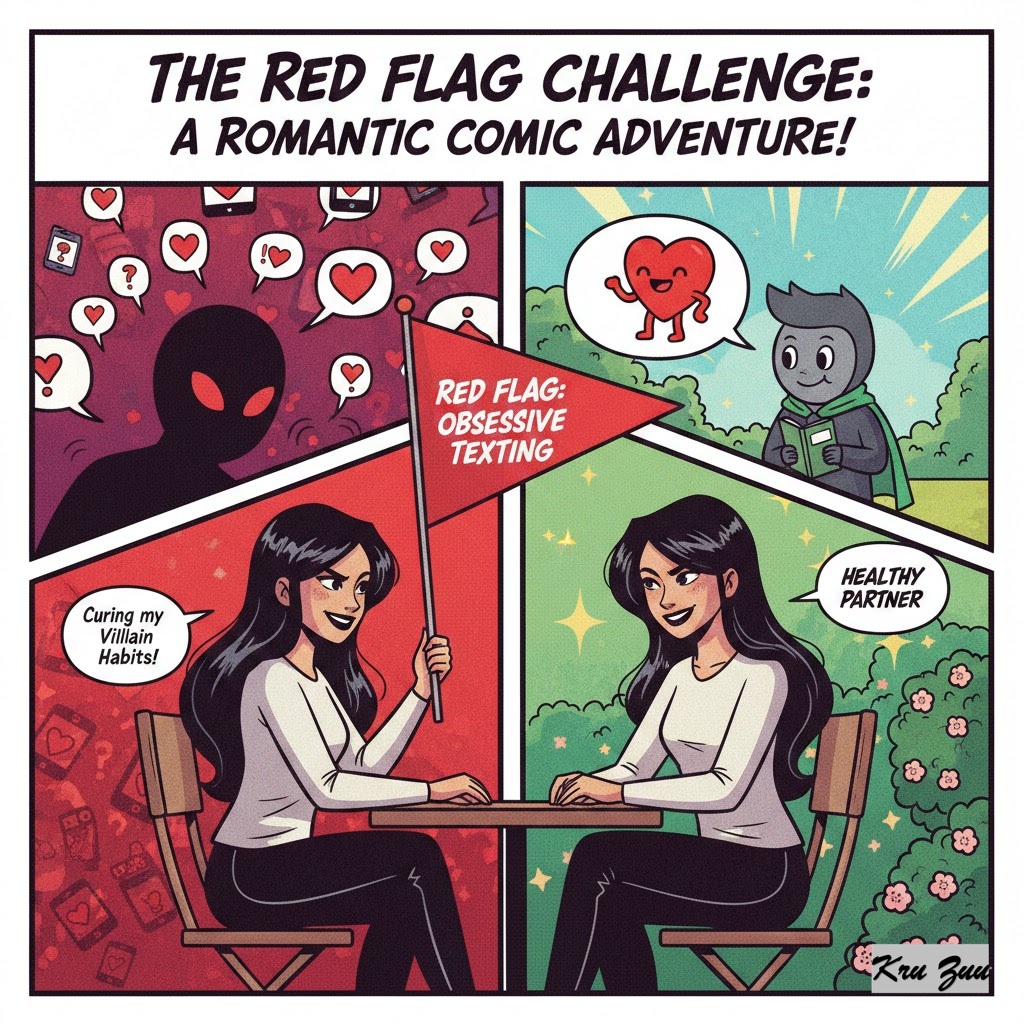
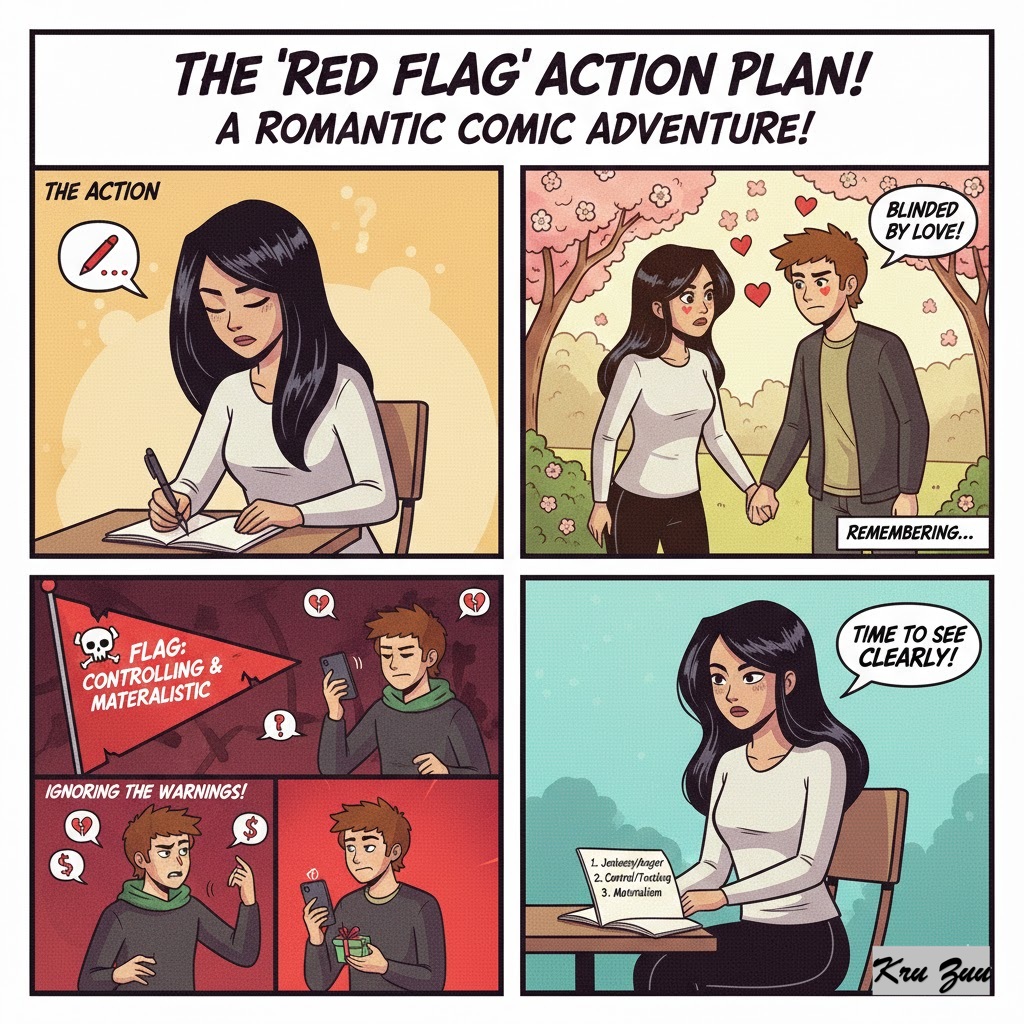
    💬 Your Turn: The “Red Flag” Challenge 🚀


    Do you want to cure your “Villain” romantic habits?


    The Challenge:
    Think of a past relationship or crush that didn’t work out.

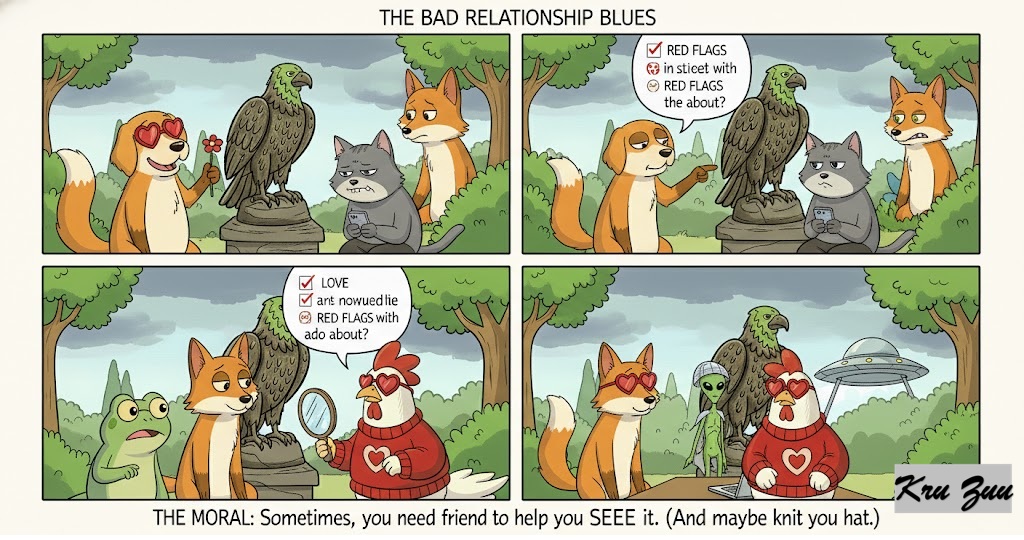
    The Action: Write down three “Red Flags” (warning signs) that you ignored at the beginning because you were “blind.”


    Example: I ignored that he was rude to his mother.


    Example: I ignored that she hated all my friends.


    👇 Question for the comments: Have you ever worn “Rose-colored glasses”? What is one funny thing you overlooked in a partner because you were in love? Tell us below!

    By Zubeyir YURTKURAN

    https://www.facebook.com/BrainBattleground/

    https://www.facebook.com/zubeyr.yurtkuran/

    https://www.instagram.com/zubeyryurtkuran/
    https://www.youtube.com/@BrainBattleground-b3p

    https://www.instagram.com/brainbattleground/

  • 🛡️ The Daily Shield: The Law of Silent Safety

    🛡️ The Daily Shield: The Law of Silent Safety

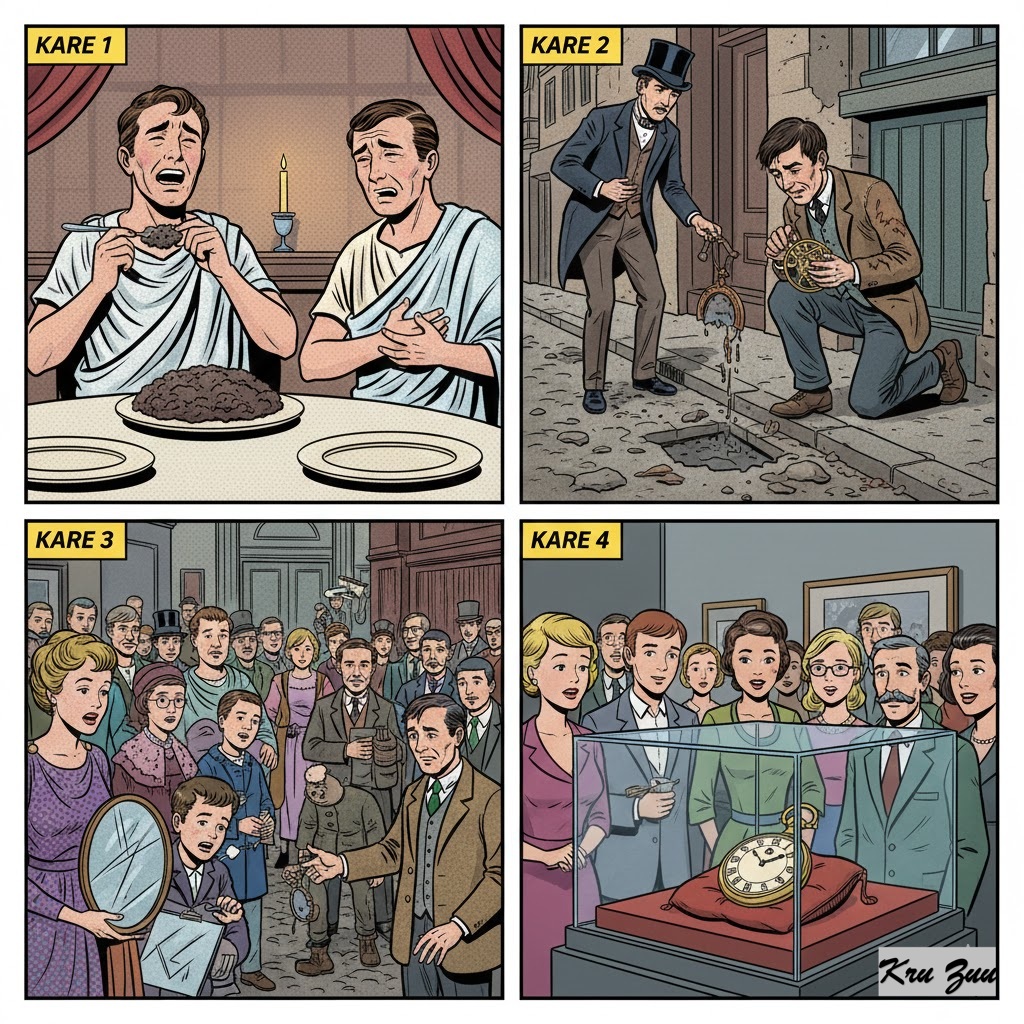
    “No news is good news.”


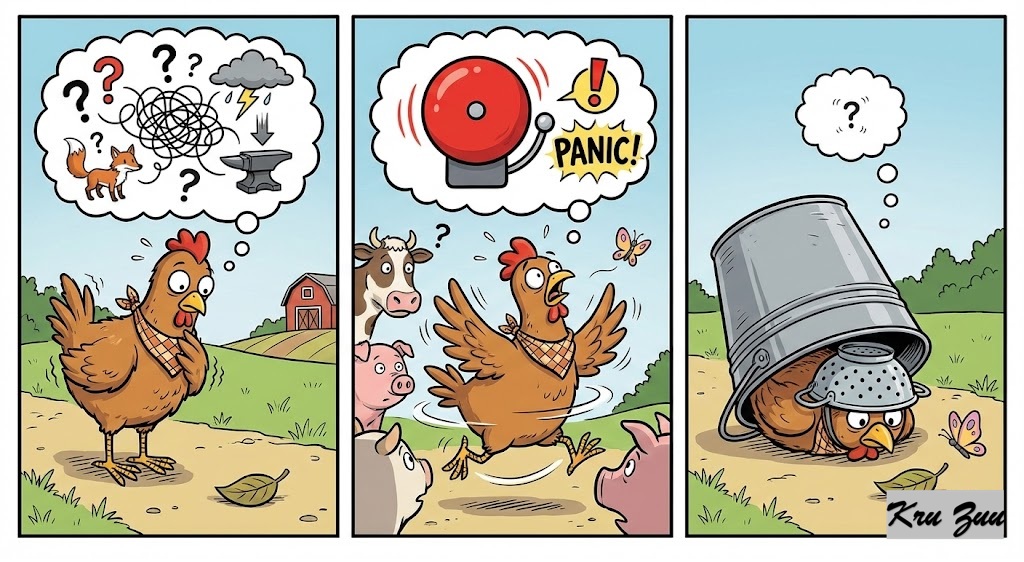
    😈 The Villain (The Anxiety Spinner)

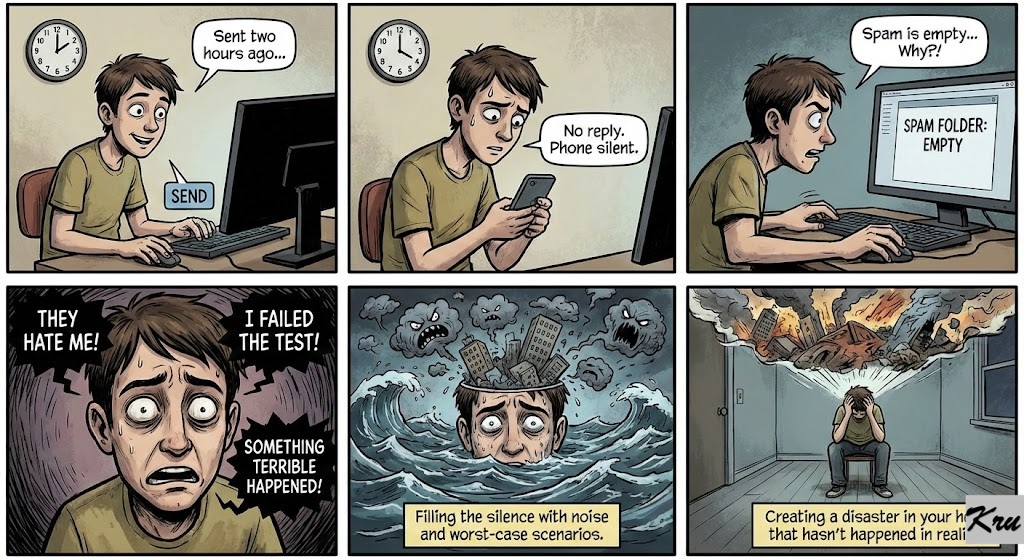
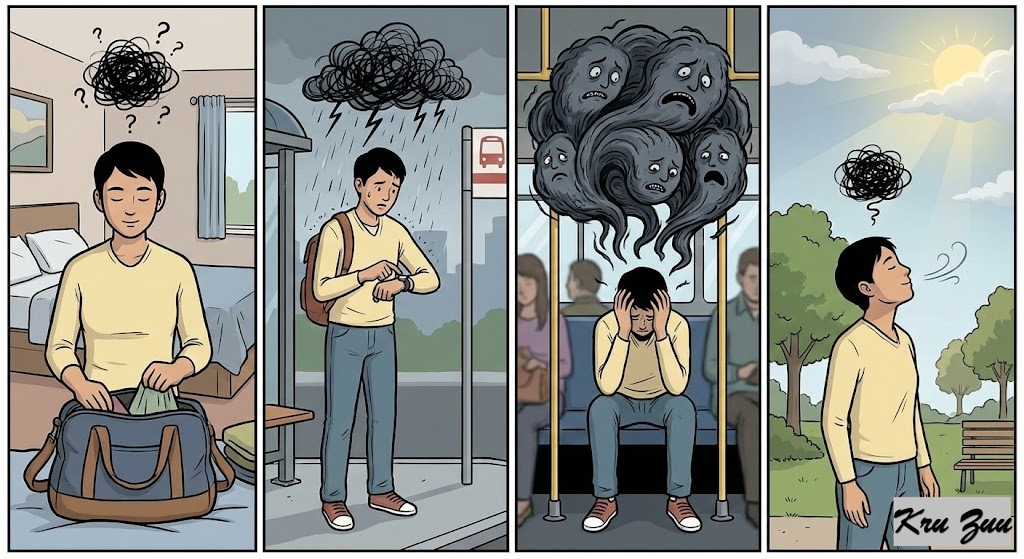
    You sent the email two hours ago. No reply. You check your phone. Nothing. 📱 You check the spam folder. Empty. Your brain starts to scream: “They hate me.” “I failed the test.” “Something terrible has happened to them!” You fill the silence with noise and worst-case scenarios. You create a disaster in your head that hasn’t happened in reality.

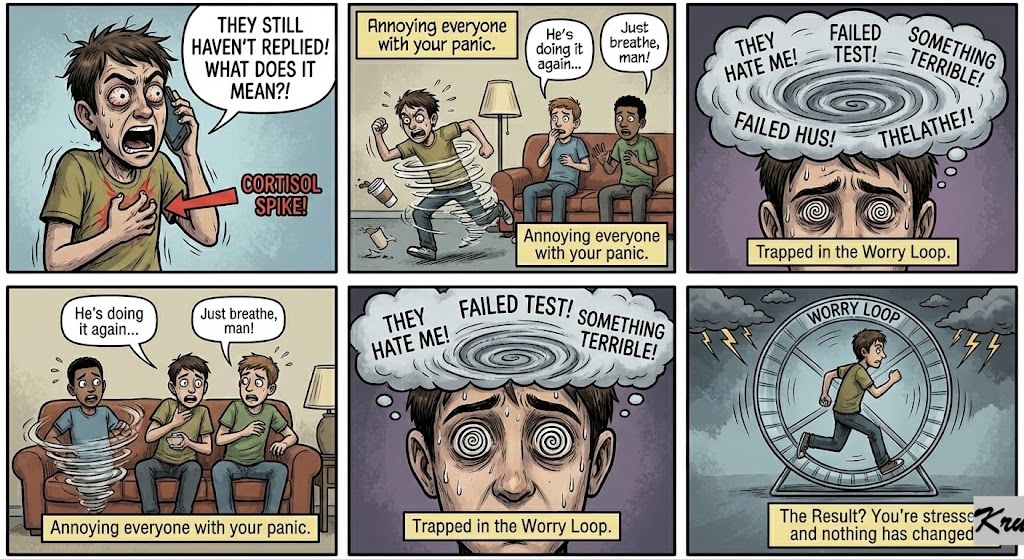
    The Result? You are stressed, your cortisol spikes, and you annoy everyone around you with your panic. You are trapped in the “Worry Loop.” 🌀


    😇 The Hero (The Peaceful Stoic)

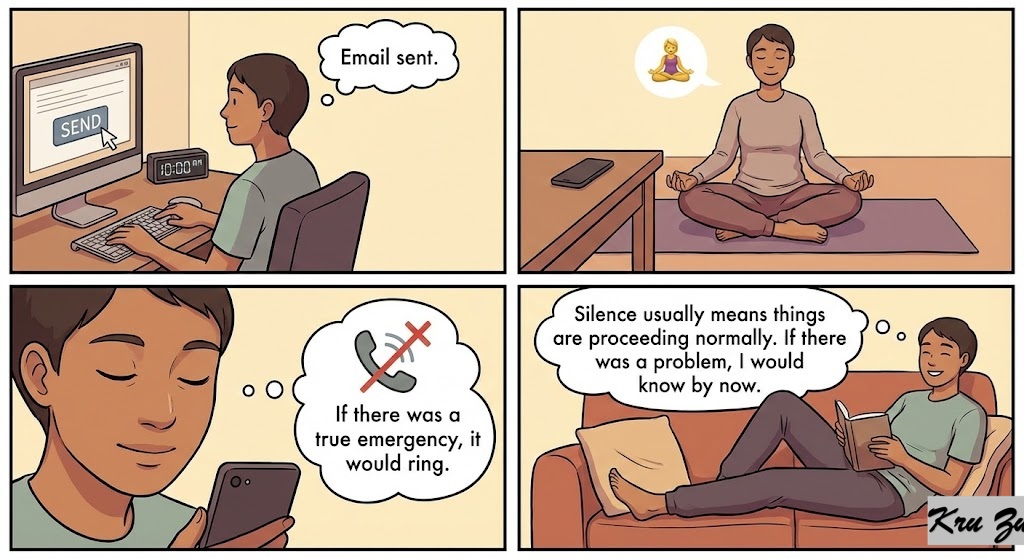
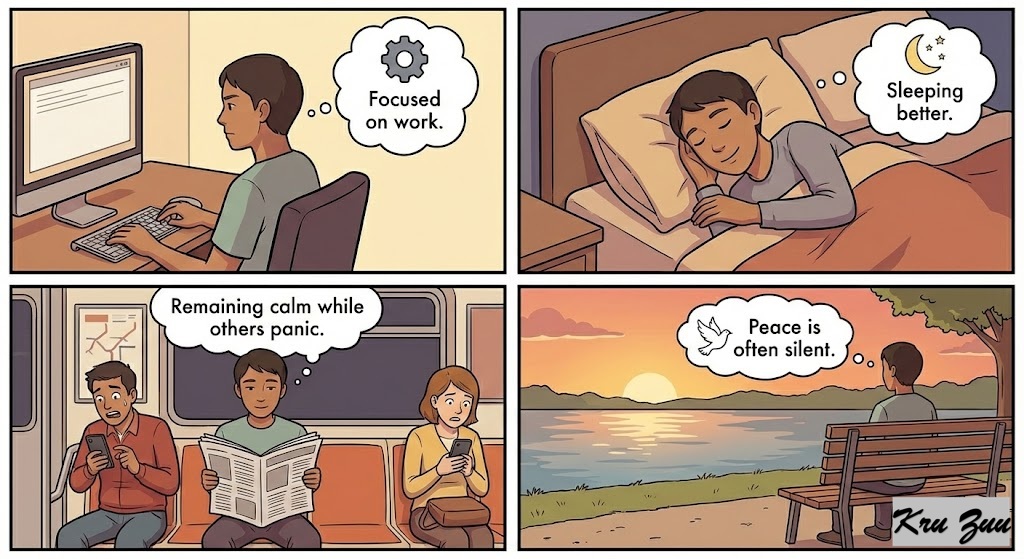
    You send the email. You put the phone down. 🧘 You realize that if there was a true emergency, the phone would ring. You understand that silence usually means things are proceeding normally. You say: “If there was a problem, I would know by now.”

    The Result? You focus on your work. You sleep better. You remain calm while others panic. You understand that Peace is often silent. 🕊️


    ⚖️ The Reality


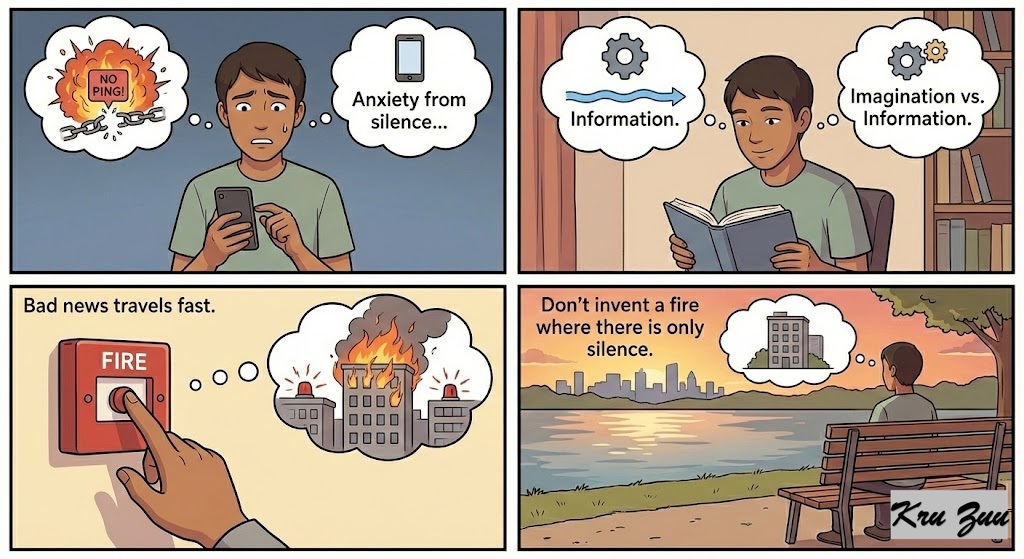
    Information vs. Imagination. We live in an age of instant notifications. When we don’t get a “ping,” we assume the connection is broken. But historically (and logically), bad news travels fast because it requires urgent action. Good news, or the status quo, does not require an alarm. If the fire alarm isn’t ringing, the building is likely not on fire. Don’t let your imagination invent a fire where there is only silence.


    💎 The Secret

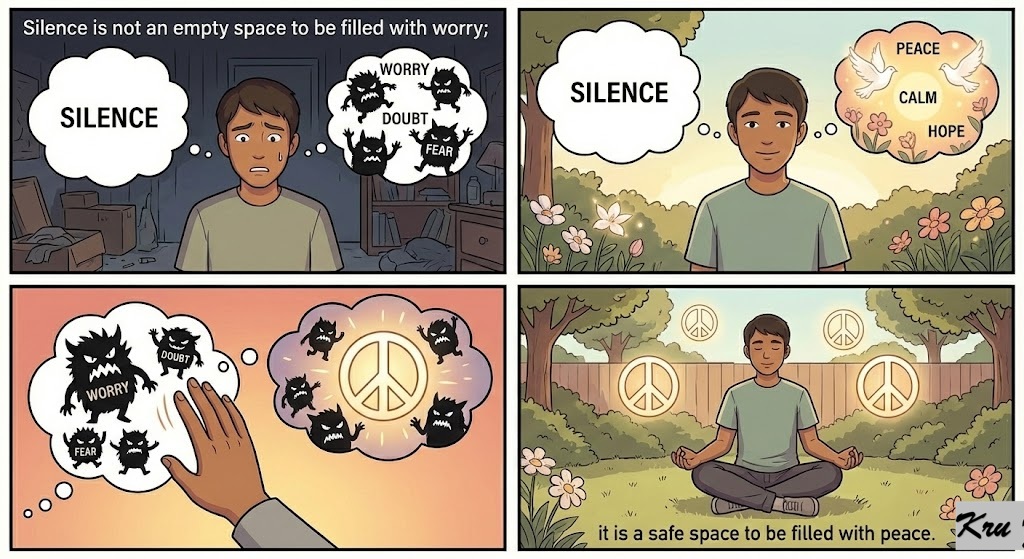
    Silence is not an empty space to be filled with worry; it is a safe space to be filled with peace.

    🧐 The Anatomy of the Proverb


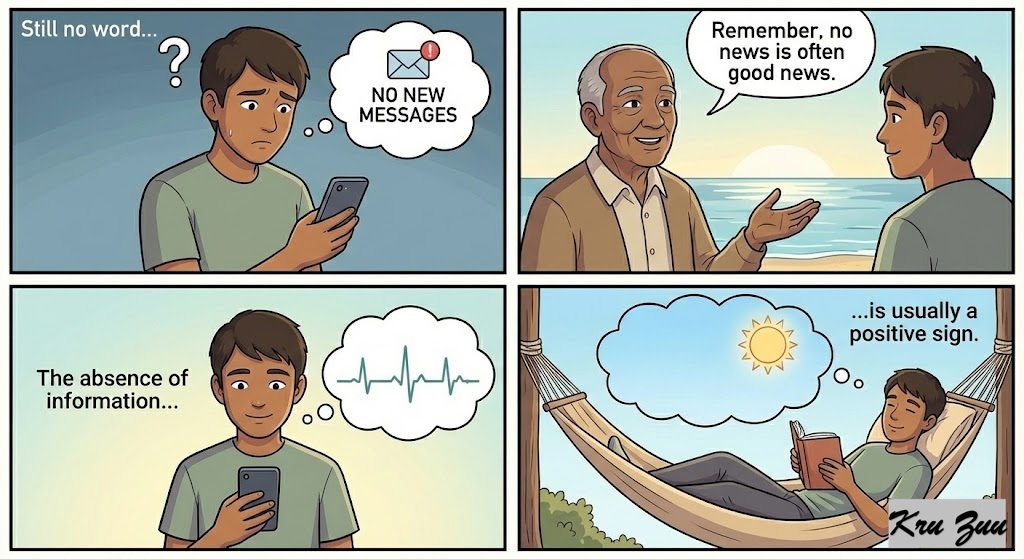
    This is your reminder that the absence of information is usually a positive sign, not a negative one.


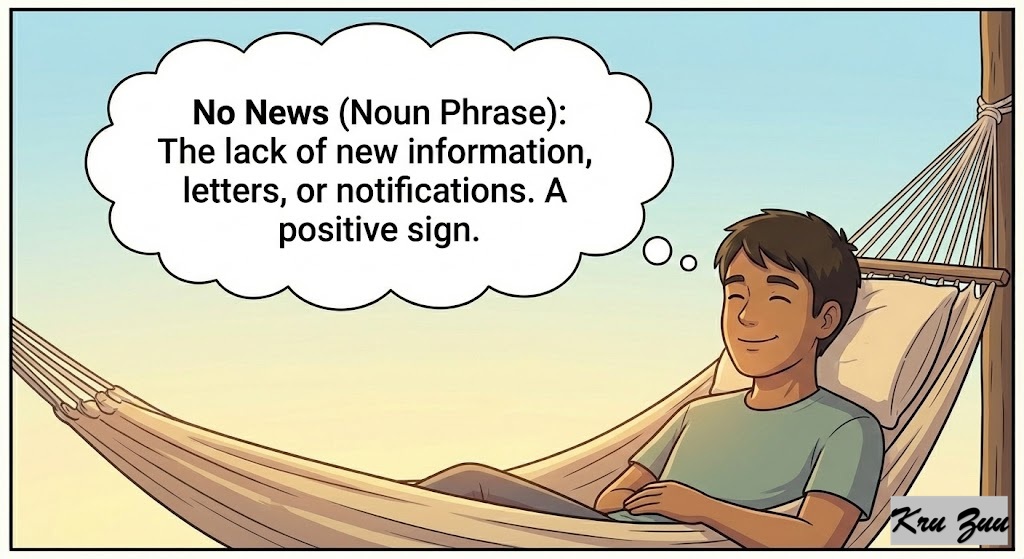
    No News (Noun Phrase):
    The lack of new information, letters, or notifications.


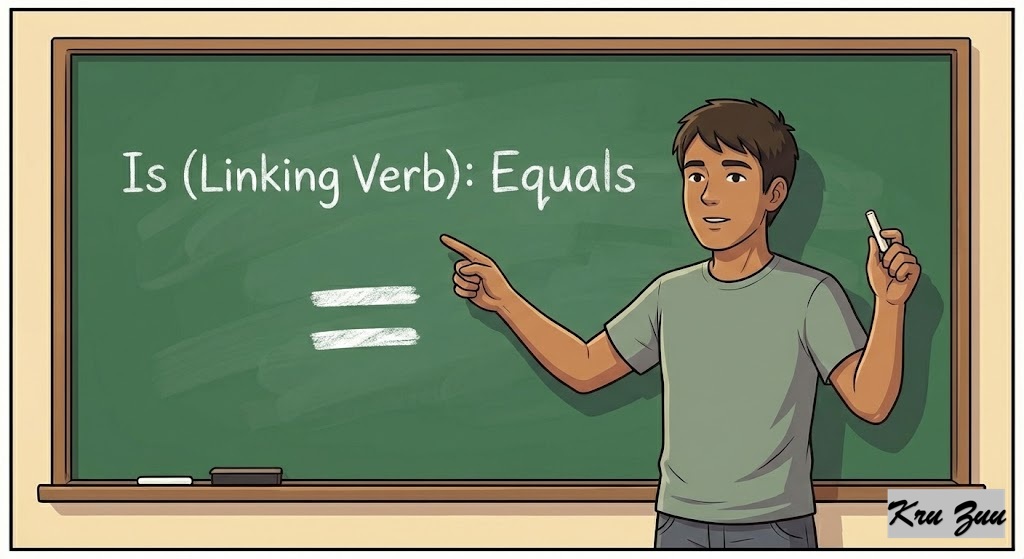
    Is (Linking Verb): Equals.


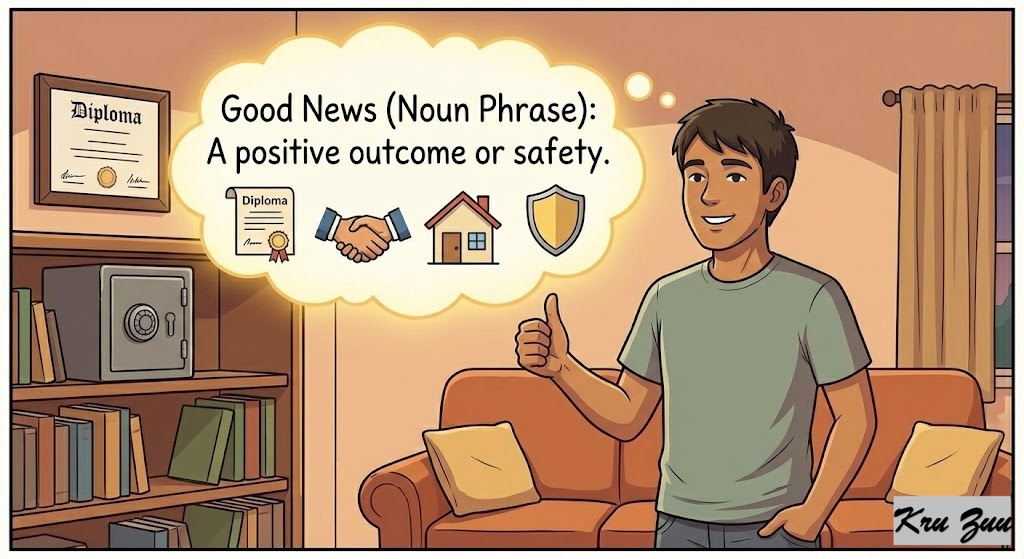
    Good News (Noun Phrase):
    A positive outcome or safety.


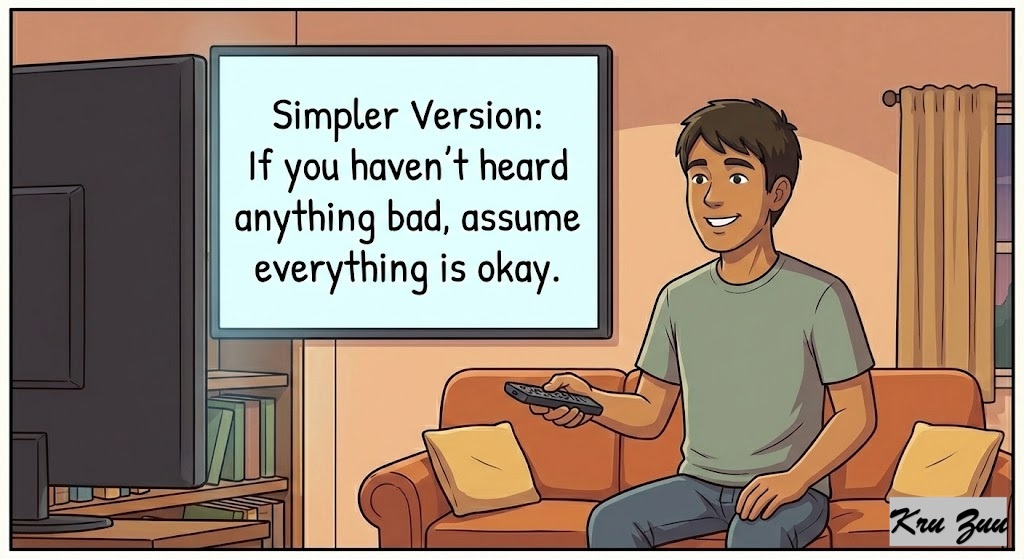
    Simpler Version: If you haven’t heard anything bad, assume everything is okay.


    📚 Vocabulary Vault


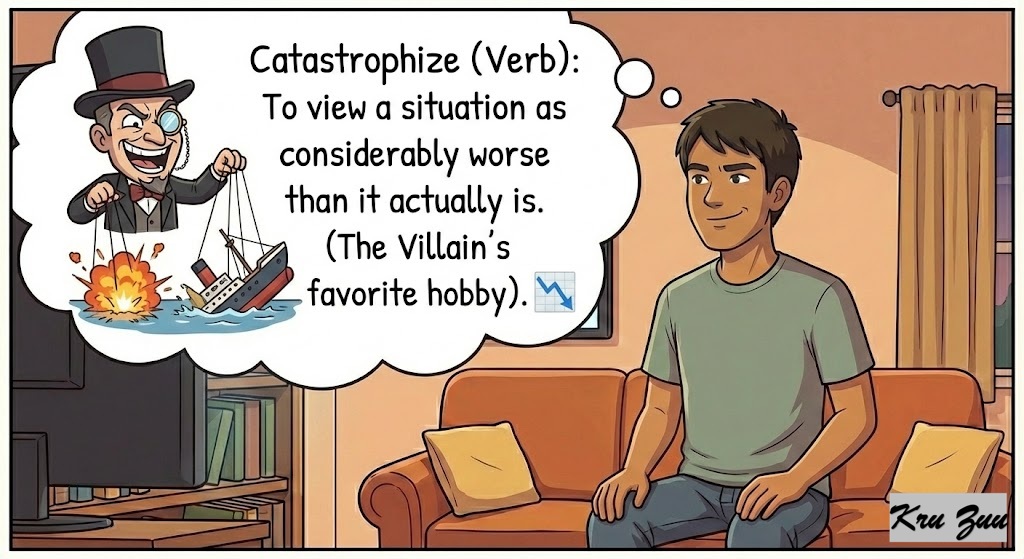
    Catastrophize (Verb): To view a situation as considerably worse than it actually is. (The Villain’s favorite hobby). 📉


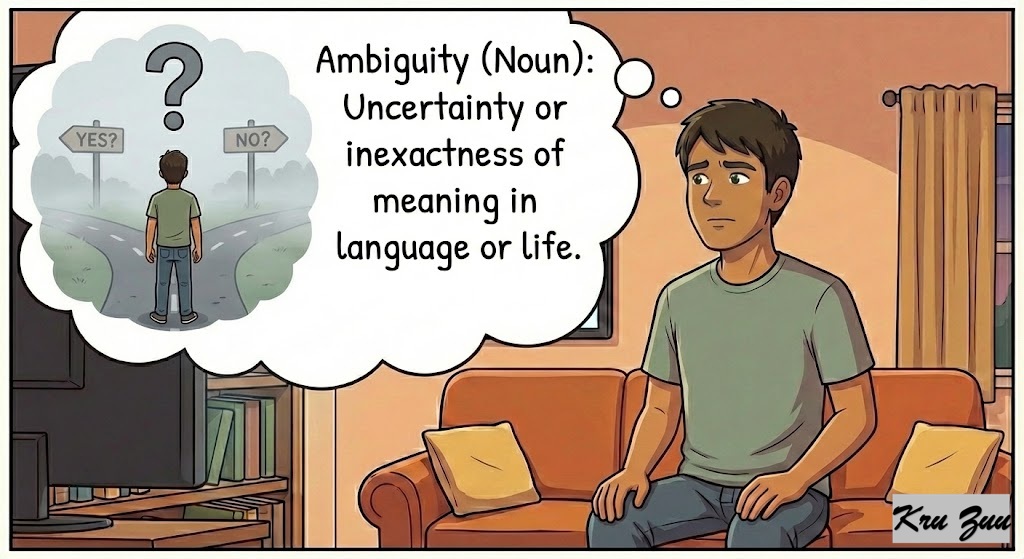
    Ambiguity (Noun): Uncertainty or inexactness of meaning in language or life.


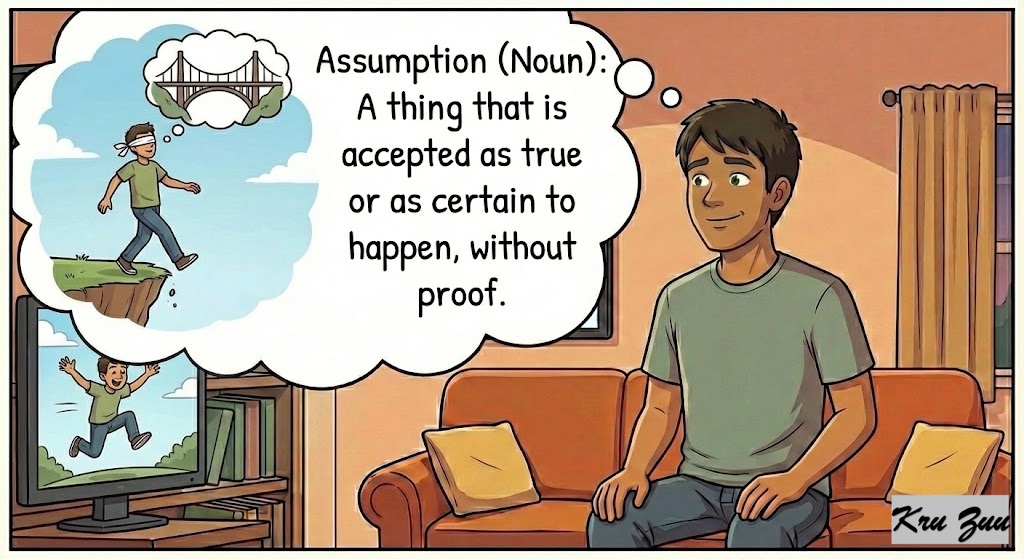
    Assumption (Noun): A thing that is accepted as true or as certain to happen, without proof.


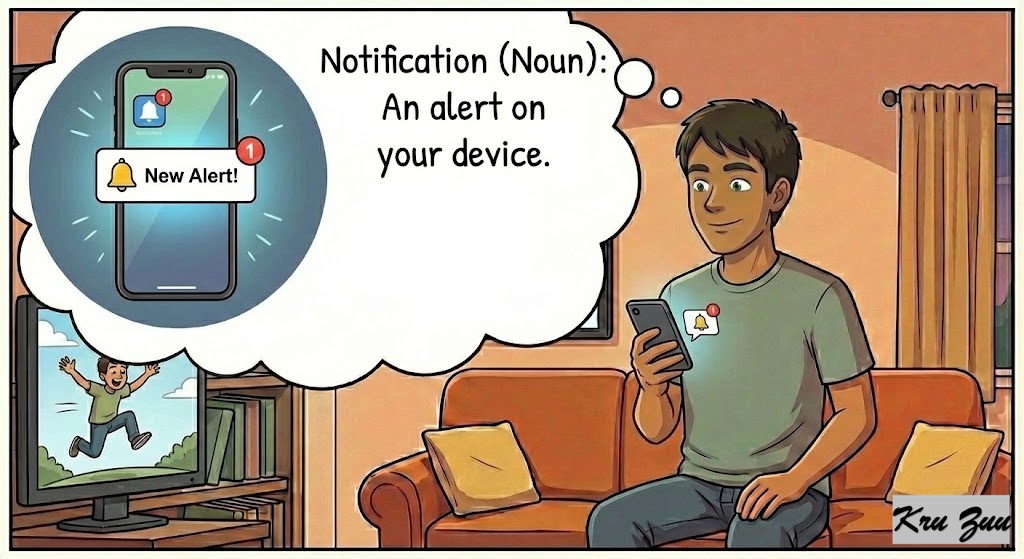
    Notification (Noun): An alert on your device.


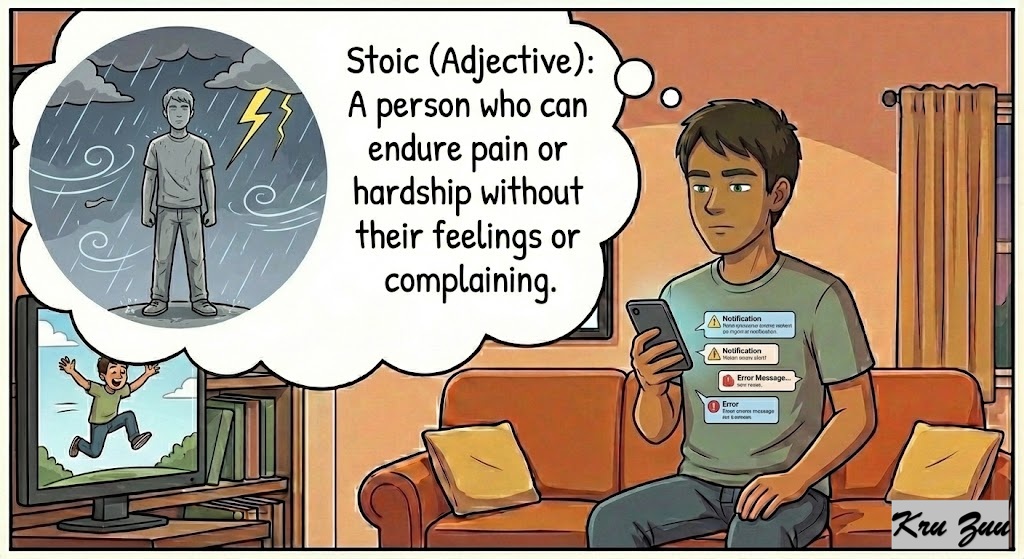
    Stoic (Adjective): A person who can endure pain or hardship without showing their feelings or complaining.


    🧠 Grammar Focus: Ellipsis (Leaving words out)


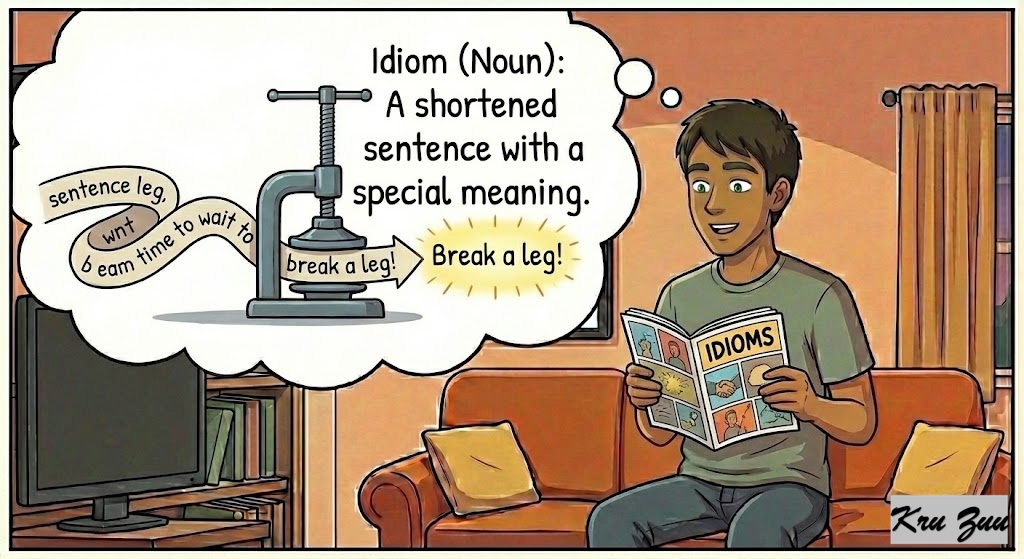
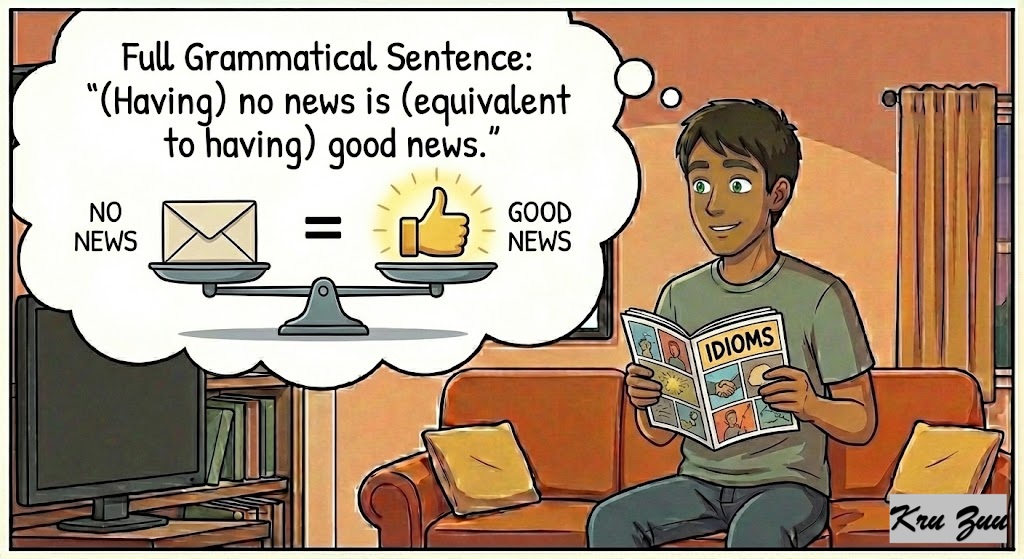
    This idiom is a shortened sentence.


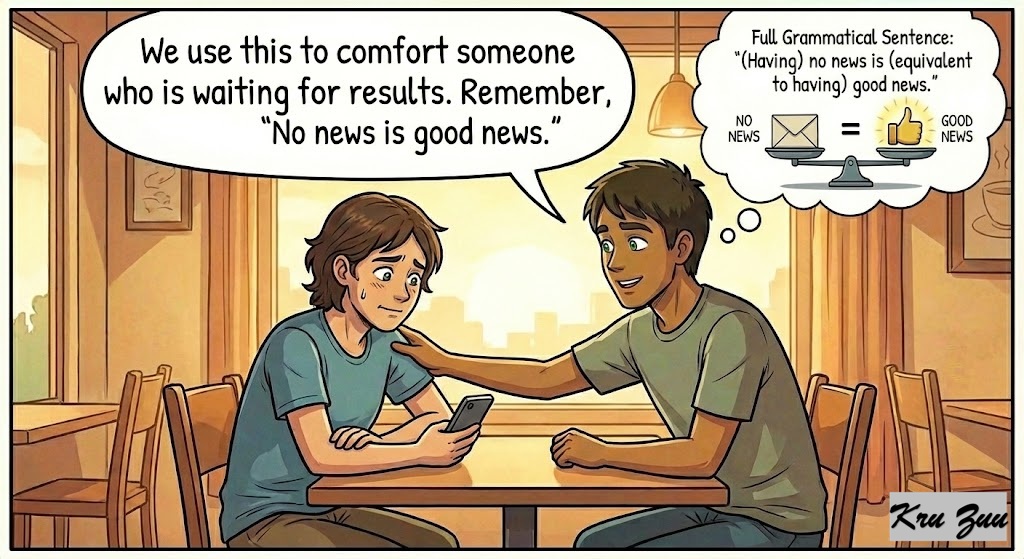
    Full Grammatical Sentence: “(Having) no news is (equivalent to having) good news.”


    Usage: We use this to comfort someone who is waiting for results.


    Example


    Anxious Friend:
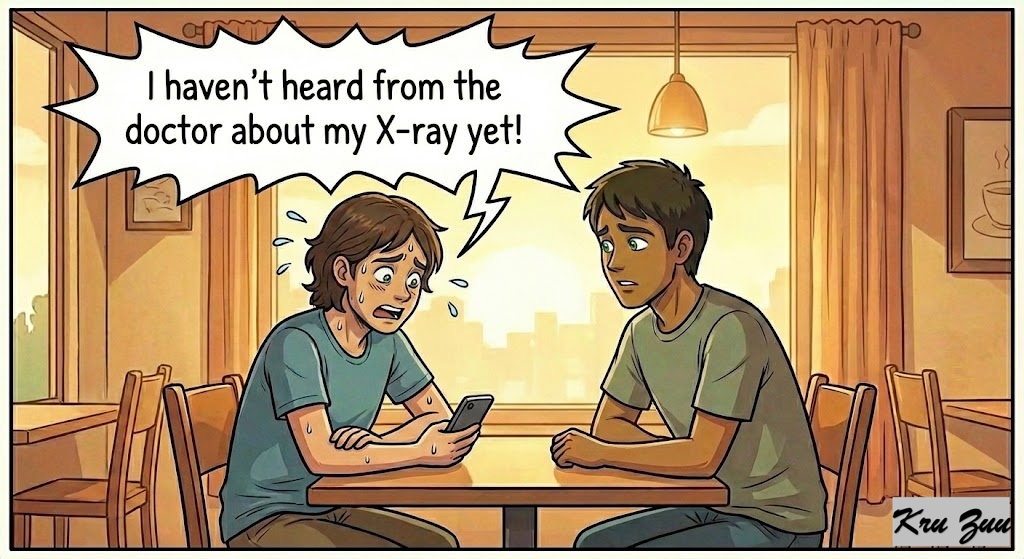
    “I haven’t heard from the doctor about my X-ray yet!”


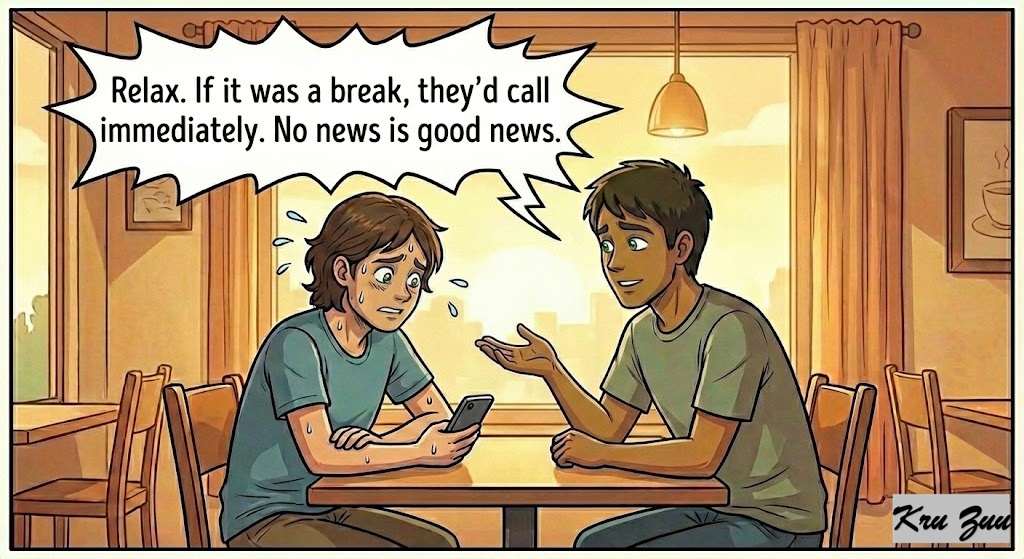
    Supportive Friend: “Relax. If it was a break, they’d call immediately. No news is good news.”

    📜 History: Origin and Spread


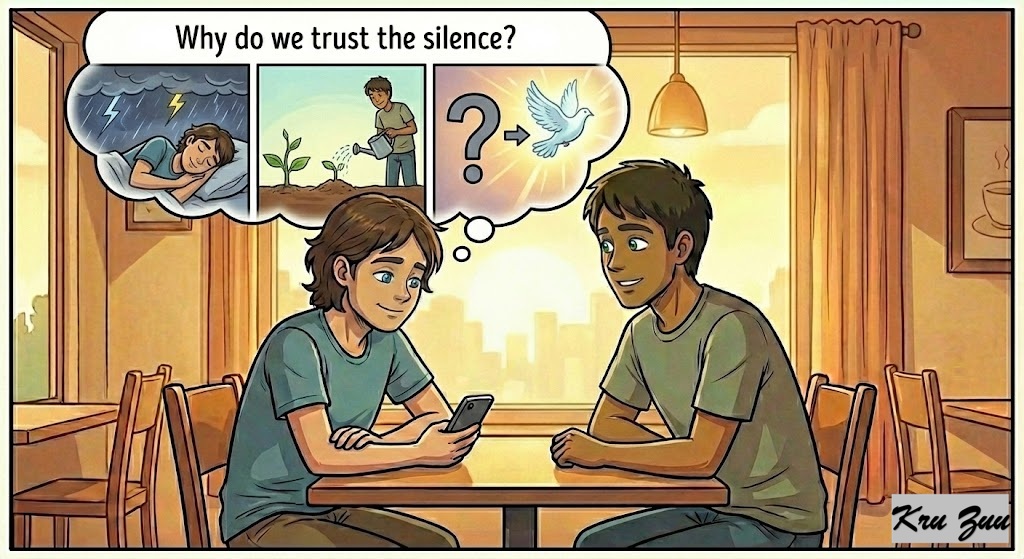
    Why do we trust the silence?


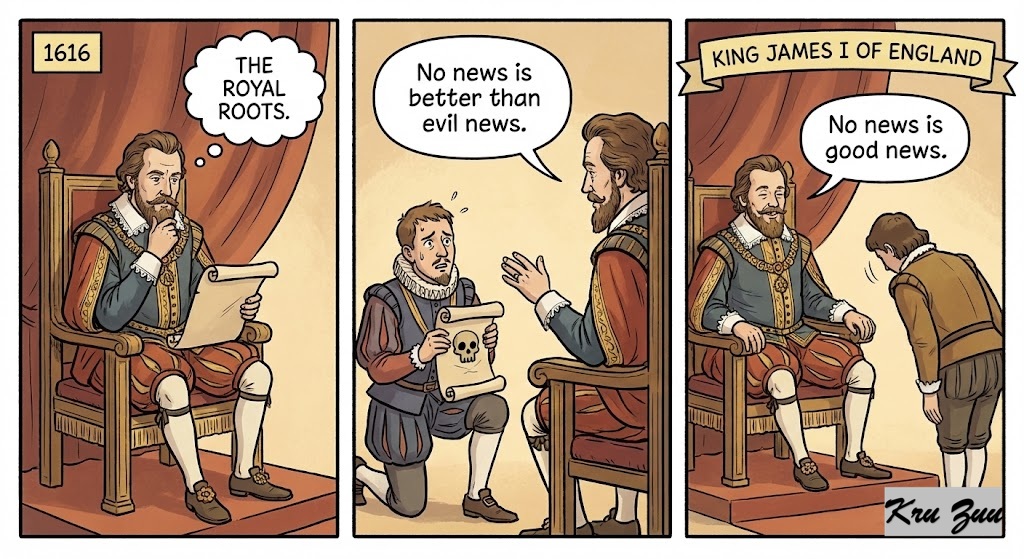
    The Royal Roots: King James I of England is quoted as saying, “No news is better than evil news” as far back as 1616.


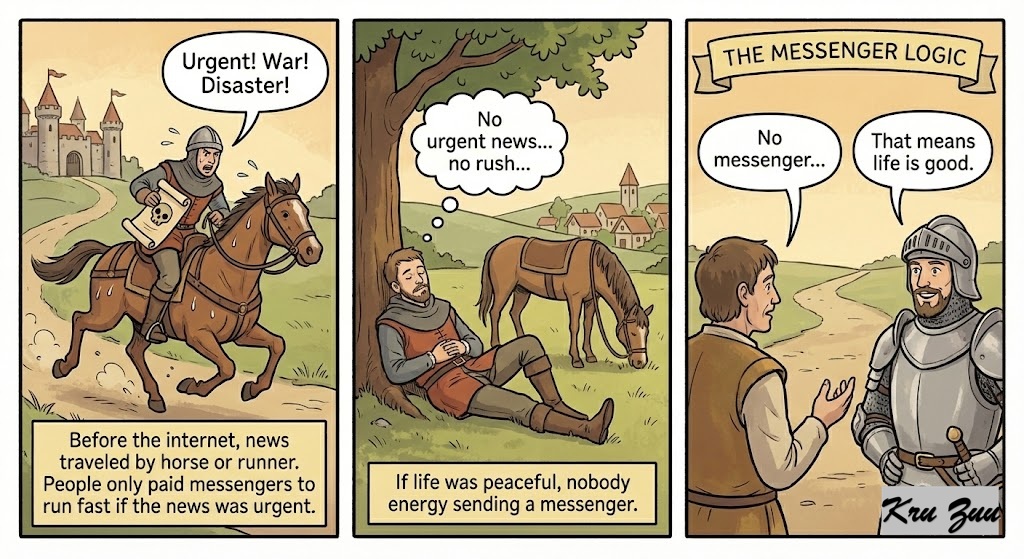
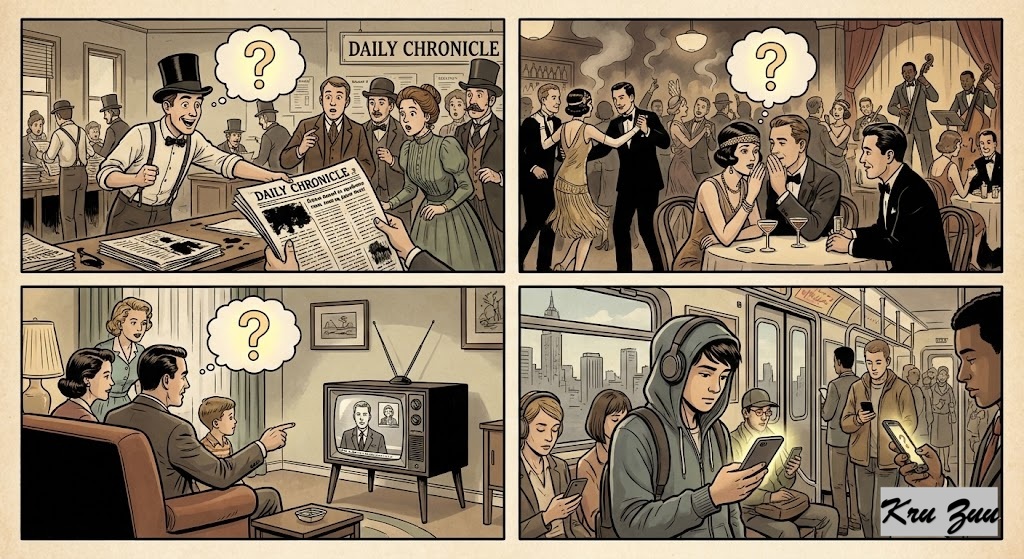
    The Messenger Logic: Before the internet, news traveled by horse or runner. 🐎 People only paid messengers to run fast if the news was urgent (wars, deaths, disasters). If life was peaceful, nobody wasted energy sending a messenger. Therefore, if no runner arrived, life was good.


    Global Cousins


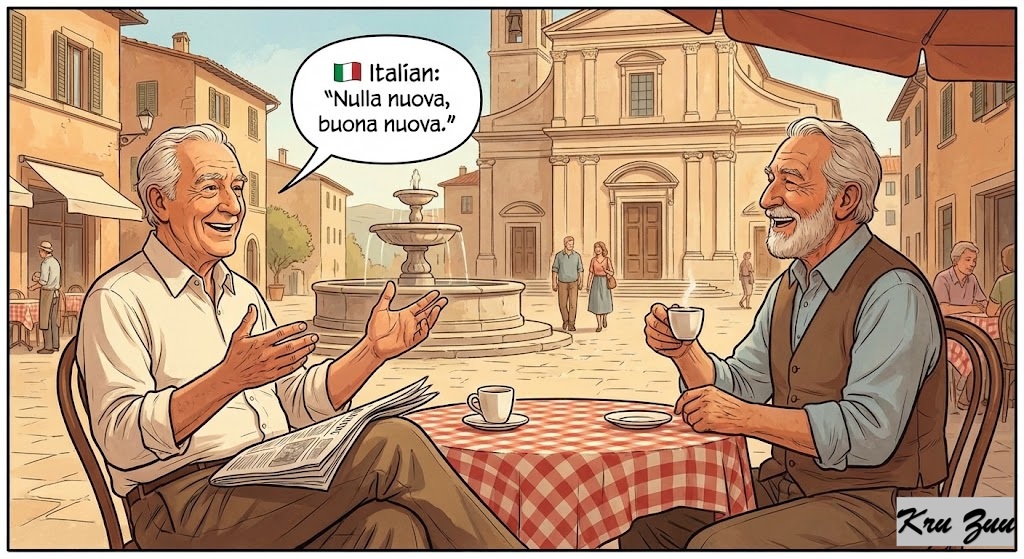
    🇮🇹 Italian:“Nulla nuova, buona nuova.”


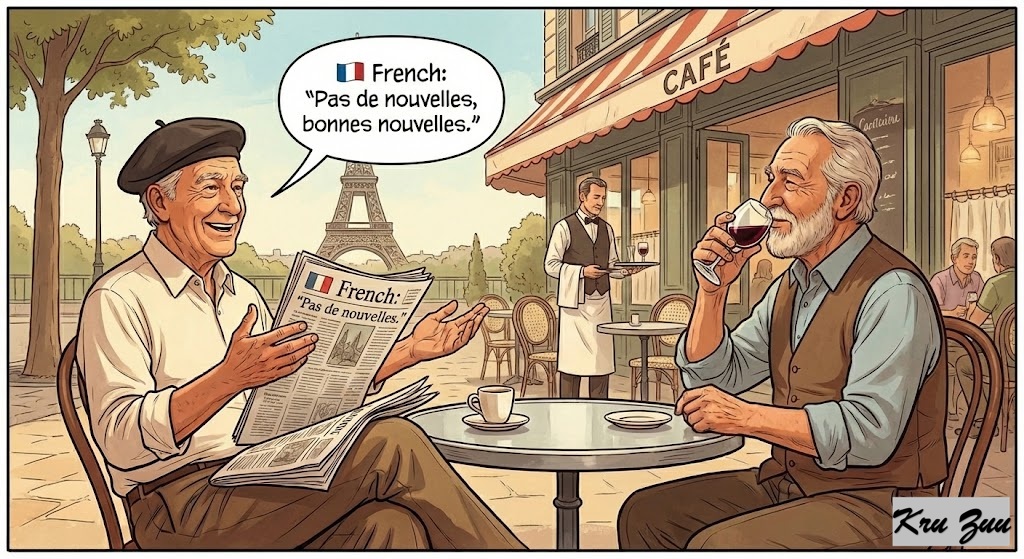
    🇫🇷 French:“Pas de nouvelles, bonnes nouvelles.”


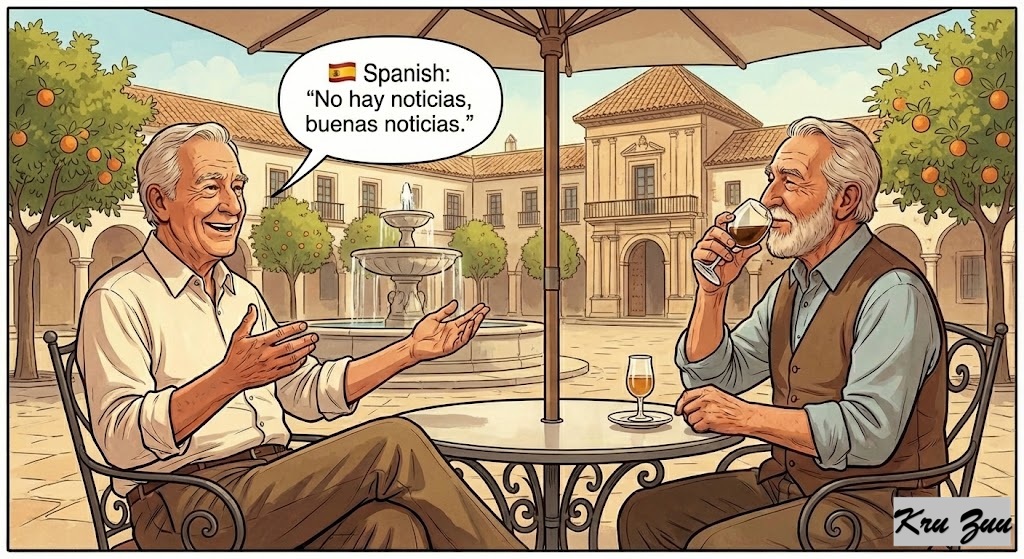
    🇪🇸 Spanish:“No hay noticias, buenas noticias.”

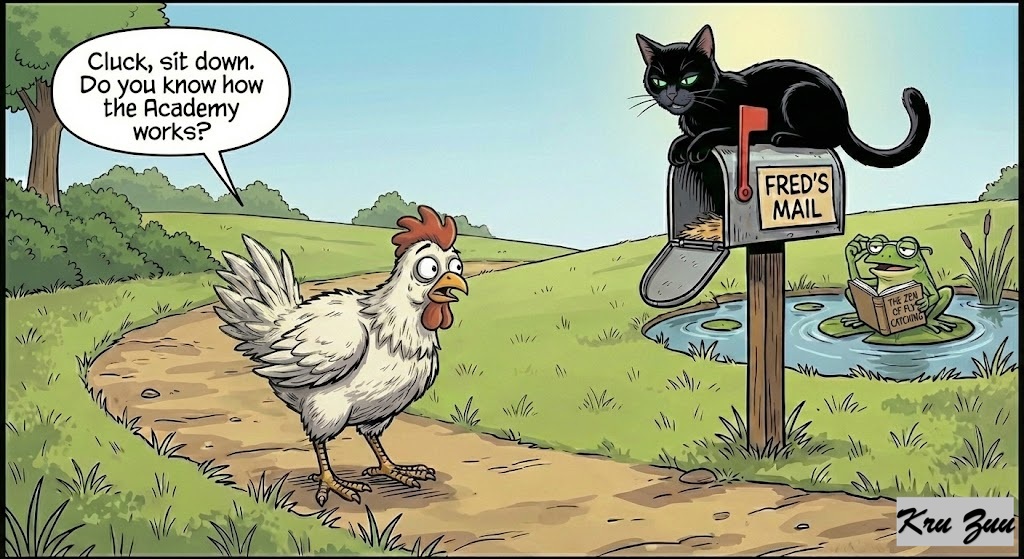
    🎭 Short Story: The Silent Mailbox 📬🐱🐔🐸


    Let’s return to the magical forest to see how our trio handles the stress of waiting.


    🌟 The Cast


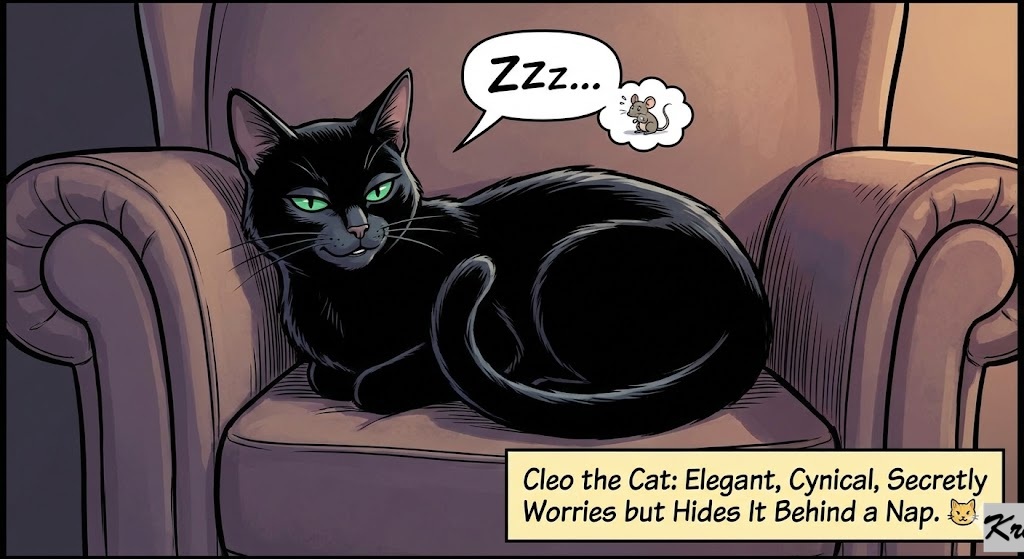
    Cleo the Cat: Elegant, cynical, secretly worries but hides it behind a nap. 😼


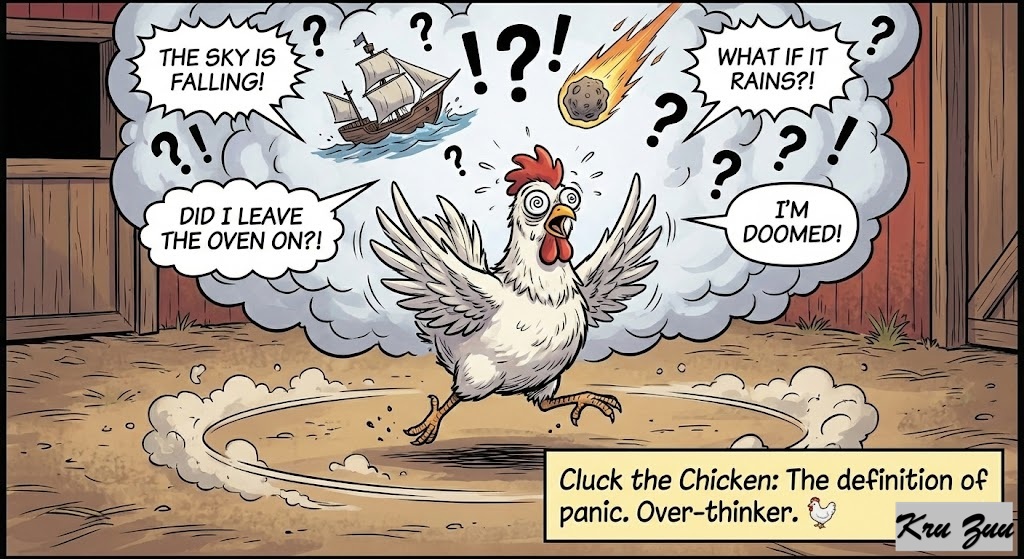
    Cluck the Chicken: The definition of panic. Over-thinker. 🐔


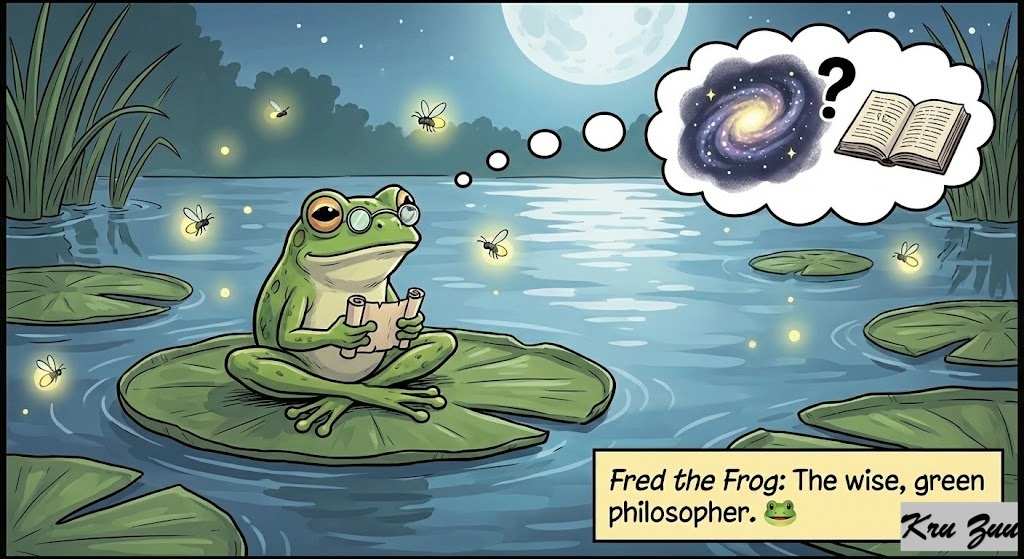
    Fred the Frog: The wise, green philosopher. 🐸


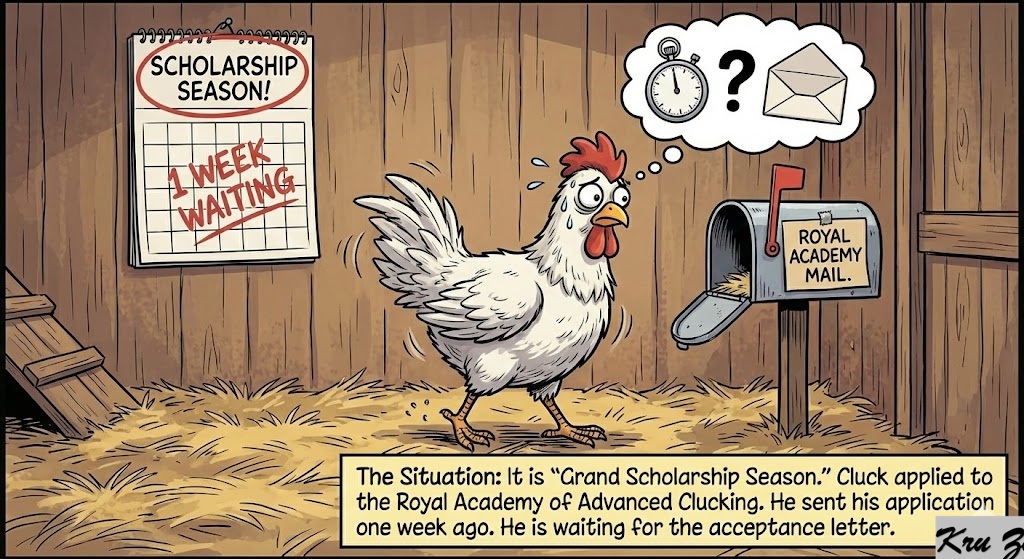
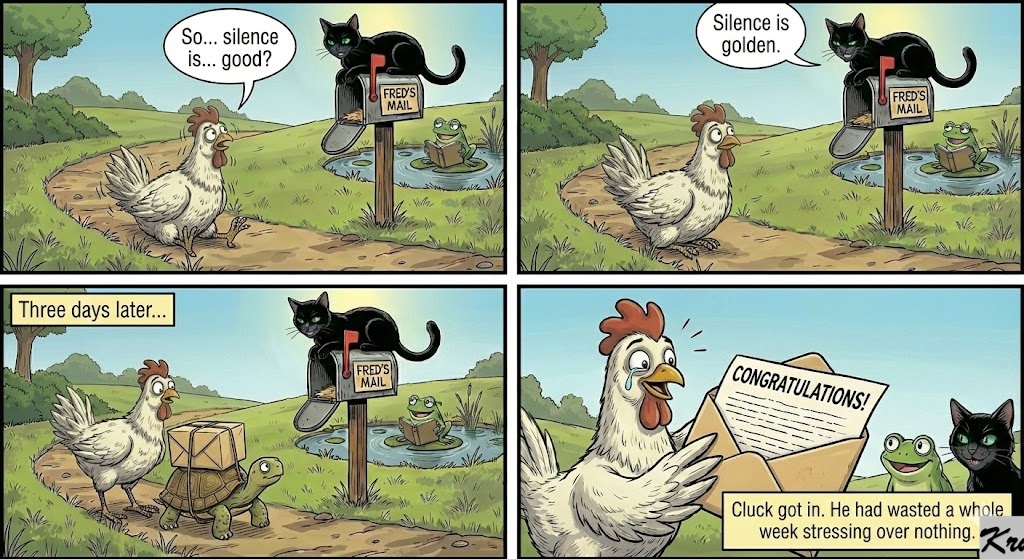
    The Situation: It is “Grand Scholarship Season.” Cluck has applied to the Royal Academy of Advanced Clucking. He sent his application one week ago. He is waiting for the acceptance letter.


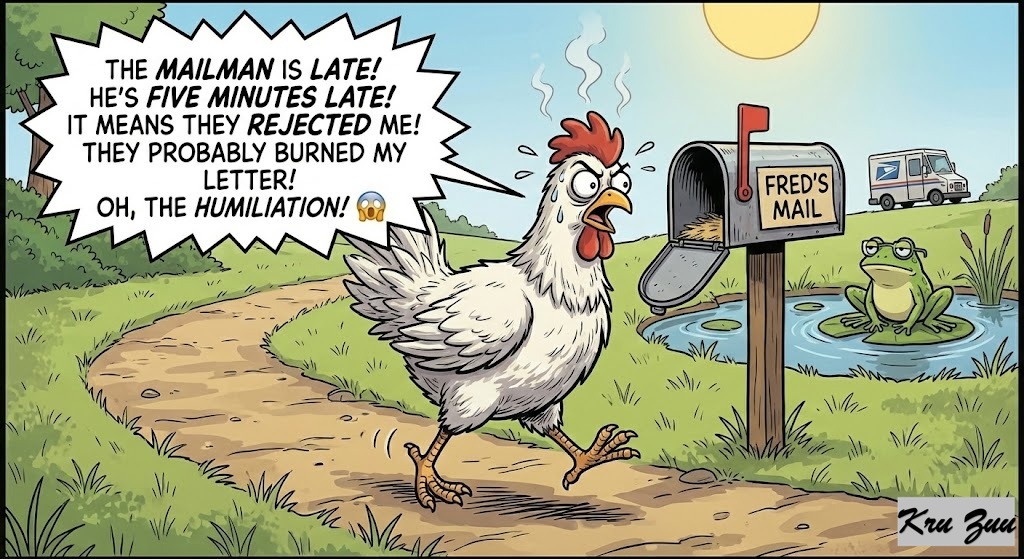
    The Conflict: Cluck is pacing back and forth in front of Fred’s mailbox. He has worn a path in the grass. “The mailman is late!” Cluck squawks. “He’s five minutes late! It means they rejected me! They probably burned my letter! Oh, the humiliation!” 😱


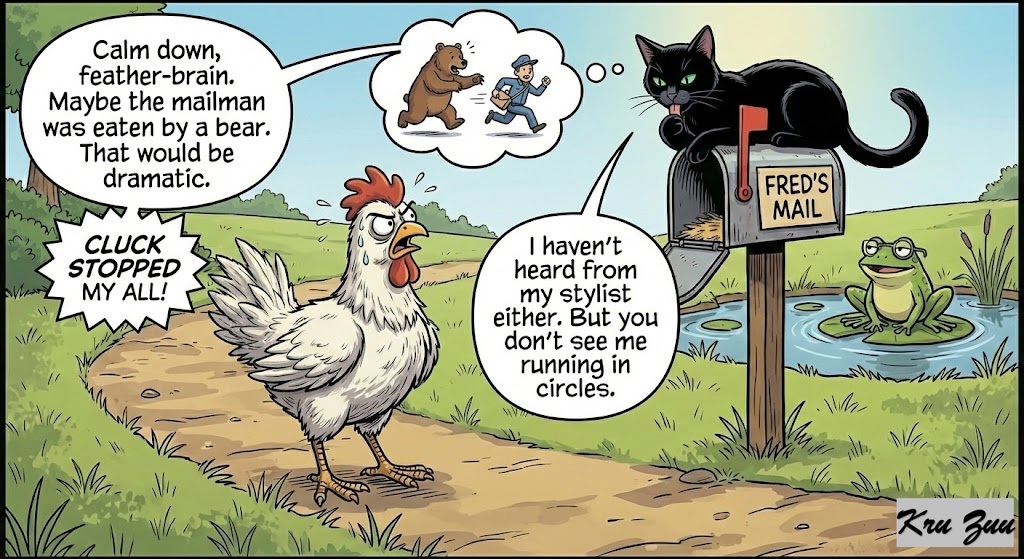
    Cleo is lying on the mailbox, grooming her tail. “Calm down, feather-brain. Maybe the mailman was eaten by a bear. That would be dramatic.” Cleo checks her claws. “I haven’t heard from my stylist either. But you don’t see me running in circles.”


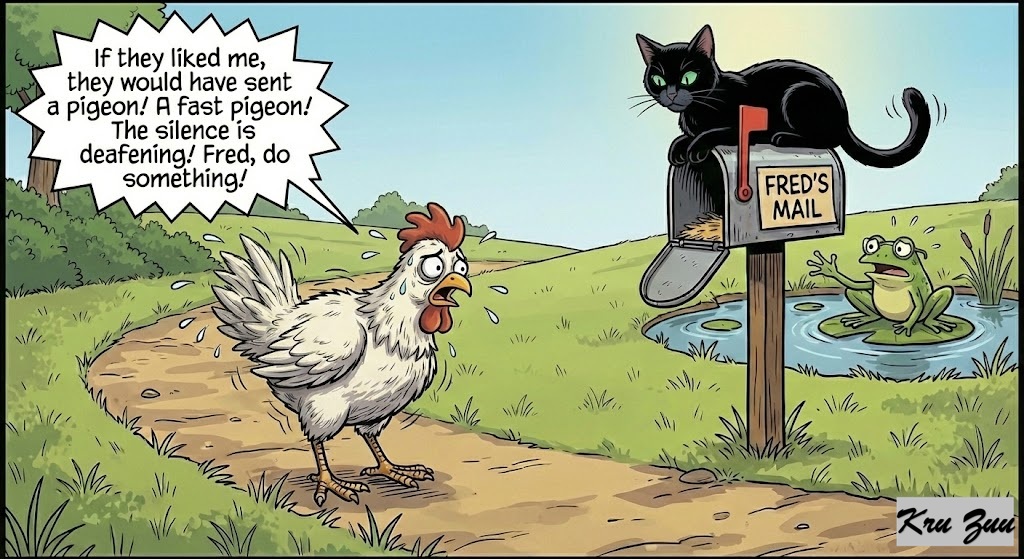
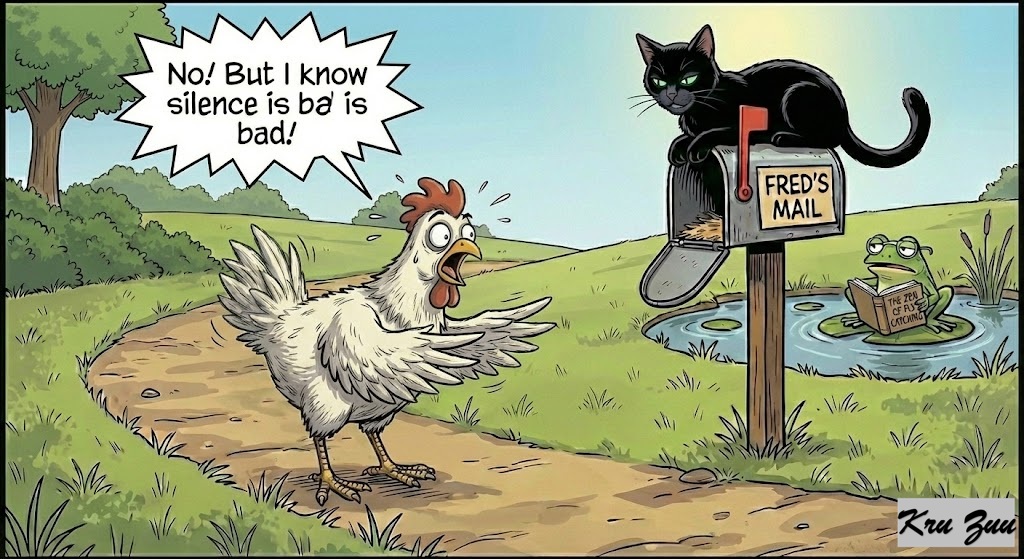
    The Reaction: Cluck hyperventilates. “If they liked me, they would have sent a pigeon! A fast pigeon! The silence is deafening! Fred, do something!”


    Fred looks up from his book (The Zen of Fly Catching). He adjusts his glasses. “Cluck, sit down,” Fred croaks calmly. “Do you know how the Academy works?”


    “No! But I know silence is bad!” Cluck yells.


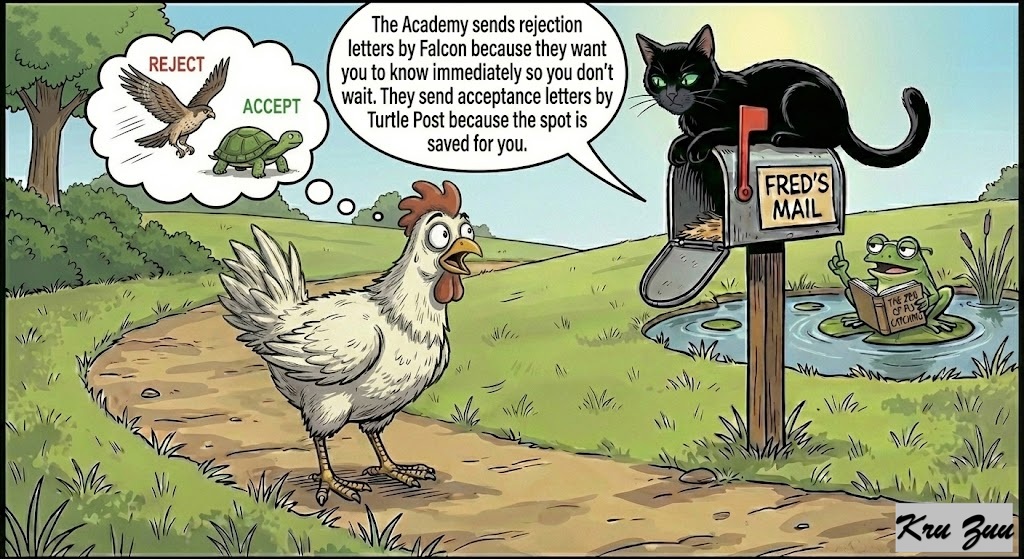
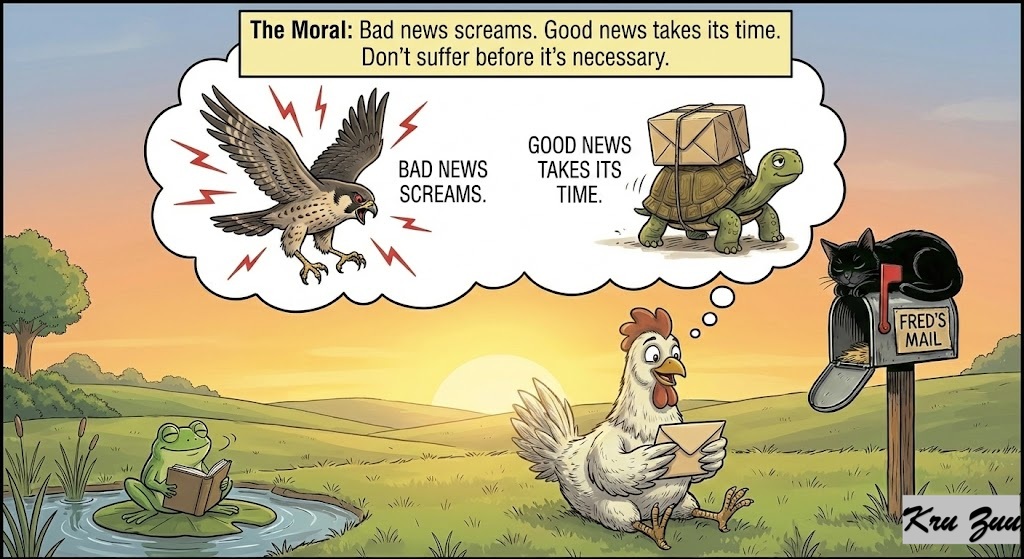
    The Lesson: Fred points a green finger at the sky. “The Academy sends rejection letters by Falcon because they want you to know immediately so you don’t wait. They send acceptance letters by Turtle Post because the spot is saved for you.”


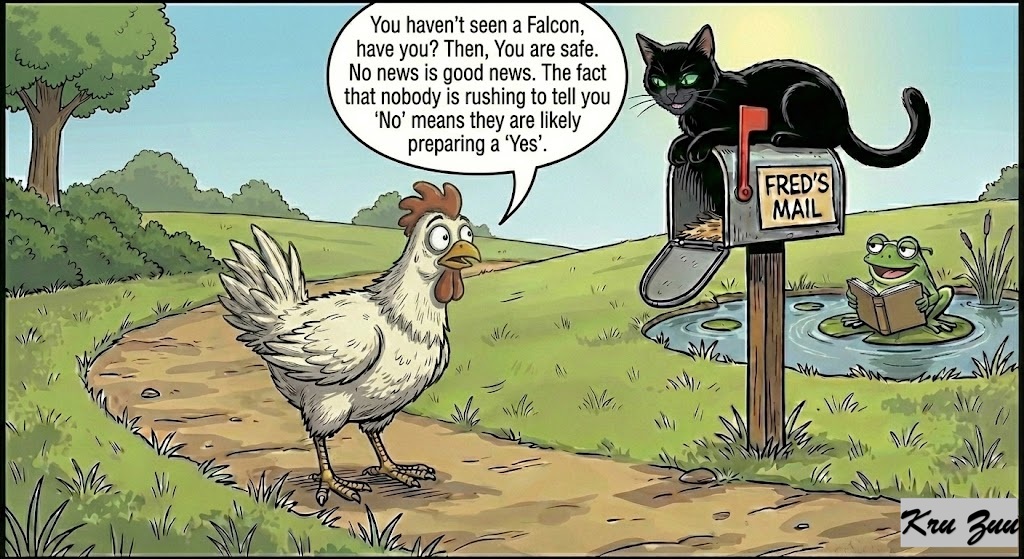
    Fred smiles. “You haven’t seen a Falcon, have you?” Cluck stops. “No.” “Then,” Fred says, “You are safe. No news is good news. The fact that nobody is rushing to tell you ‘No’ means they are likely preparing a ‘Yes’.”


    The Resolution: Cluck sat down, trembling slightly. “So… silence is… good?” “Silence is golden,” Cleo purred. Three days later, a very slow turtle arrived with a thick envelope. Cluck got in. He had wasted a whole week stressing over nothing.


    The Moral: Bad news screams. Good news takes its time. Don’t suffer before it’s necessary.

    🎓 Lesson for English Learners


    Context:
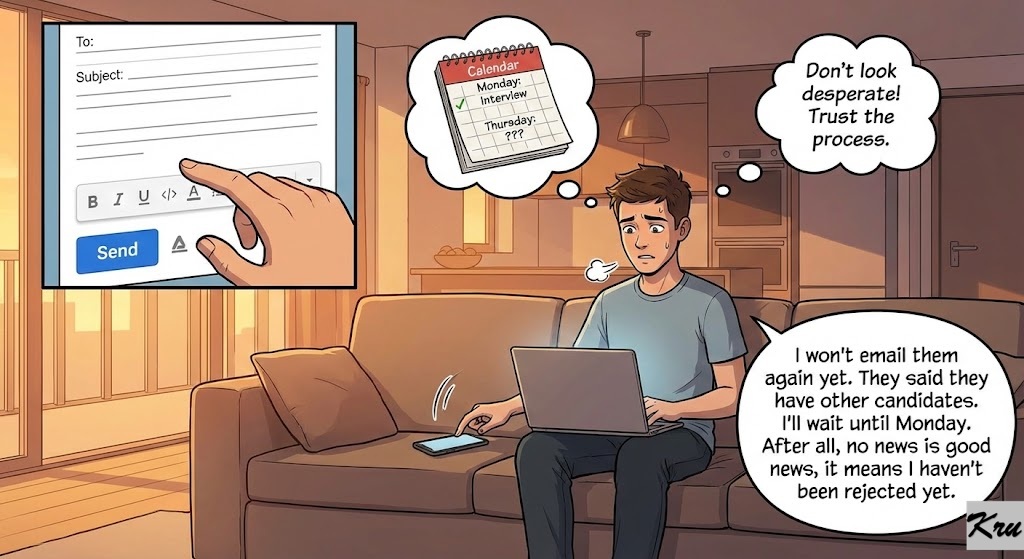
    Waiting for a Job Interview Reply. Situation: You interviewed on Monday. It is Thursday. You want to email them again. The Shift: Don’t look desperate. Trust the process. You Say (To yourself or a friend): “I won’t email them again yet. They said they have other candidates. I’ll wait until Monday. After all, no news is good news, it means I haven’t been rejected yet.”


    💬 Your Turn: The “Notification Fast” 🚀


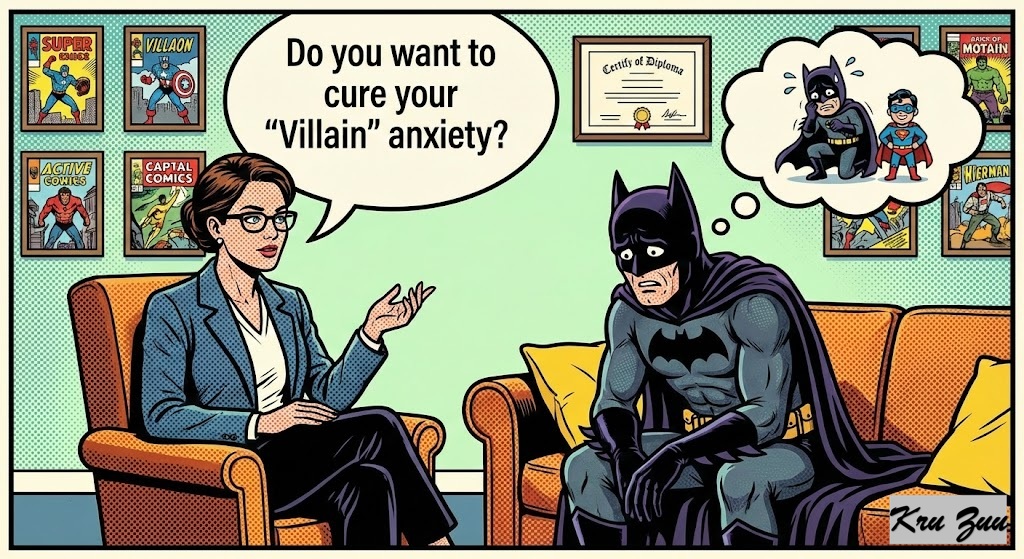
    Do you want to cure your “Villain” anxiety?


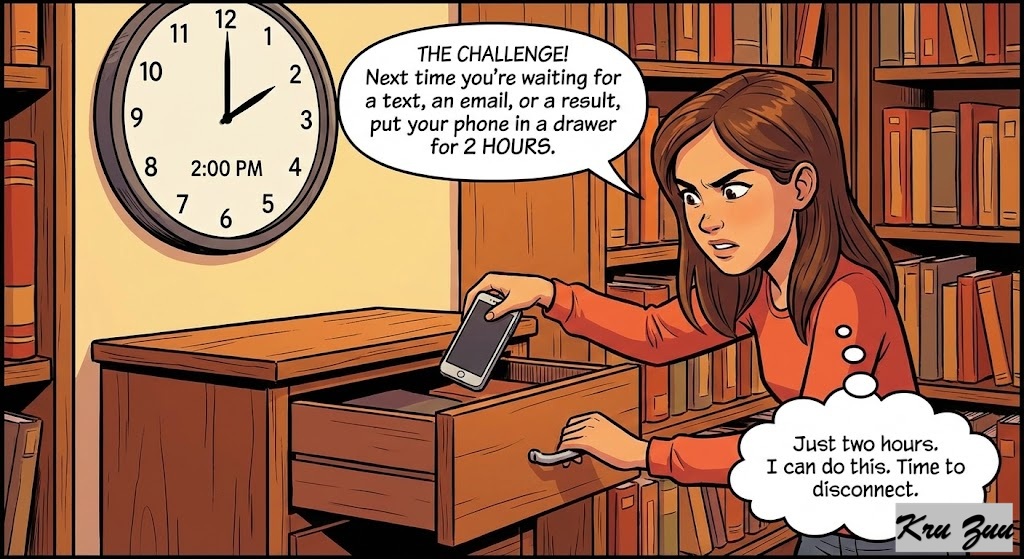
    The Challenge: Next time you are waiting for a text, an email, or a result, put your phone in a drawer for 2 hours.


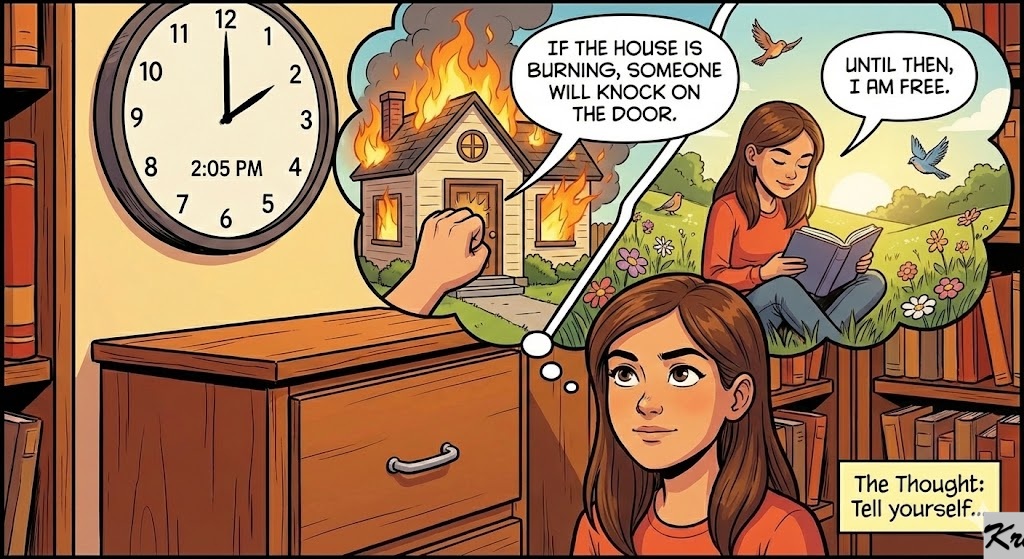
    The Thought: Tell yourself: “If the house is burning, someone will knock on the door. Until then, I am free.”


    👇 Question for the comments: When was the last time you worried about something that never actually happened? Did the “Villain” steal your joy? Tell us your story below!

    By Zubeyir YURTKURAN

    https://www.facebook.com/BrainBattleground/

    https://www.facebook.com/zubeyr.yurtkuran/

    https://www.instagram.com/zubeyryurtkuran/
    https://www.youtube.com/@BrainBattleground-b3p

    https://www.instagram.com/brainbattleground/

  • 🤫 The Daily Shield: The Law of Quiet Power

    🤫 The Daily Shield: The Law of Quiet Power

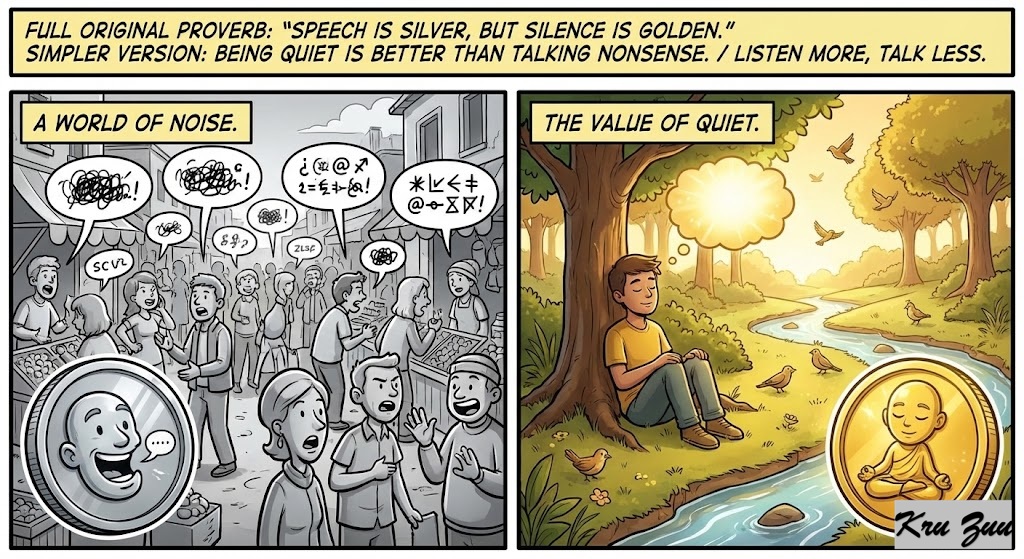
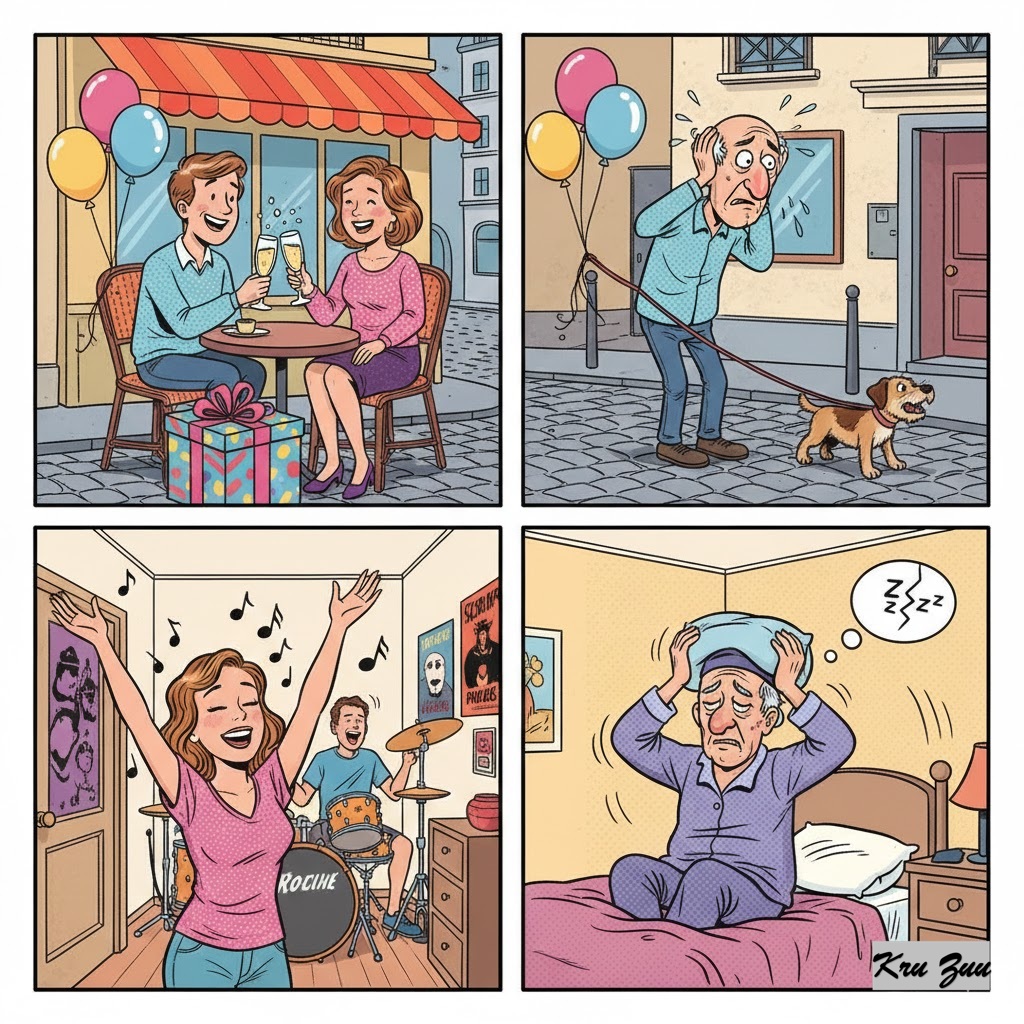
    “Silence is golden.”


    😈 The Villain (The Noise Maker)

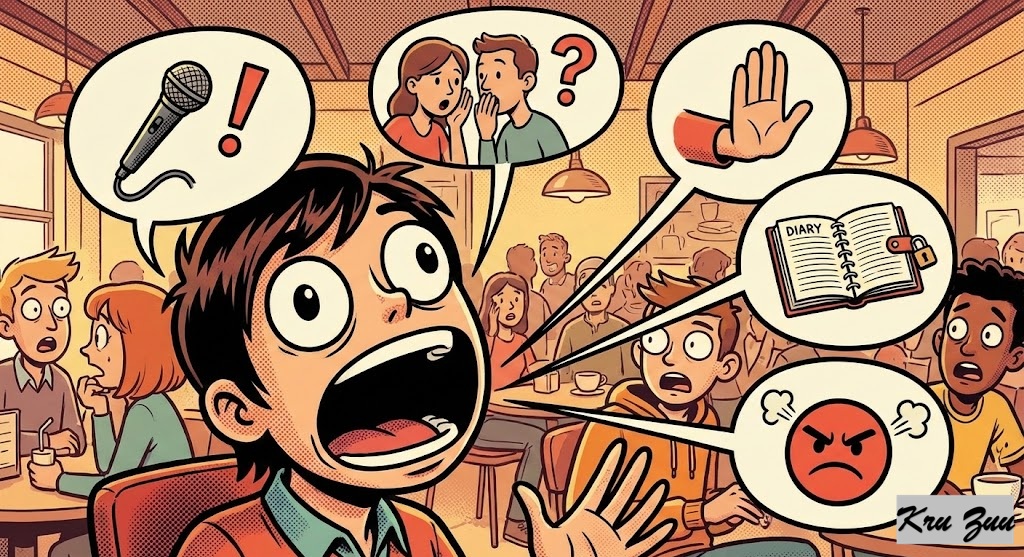
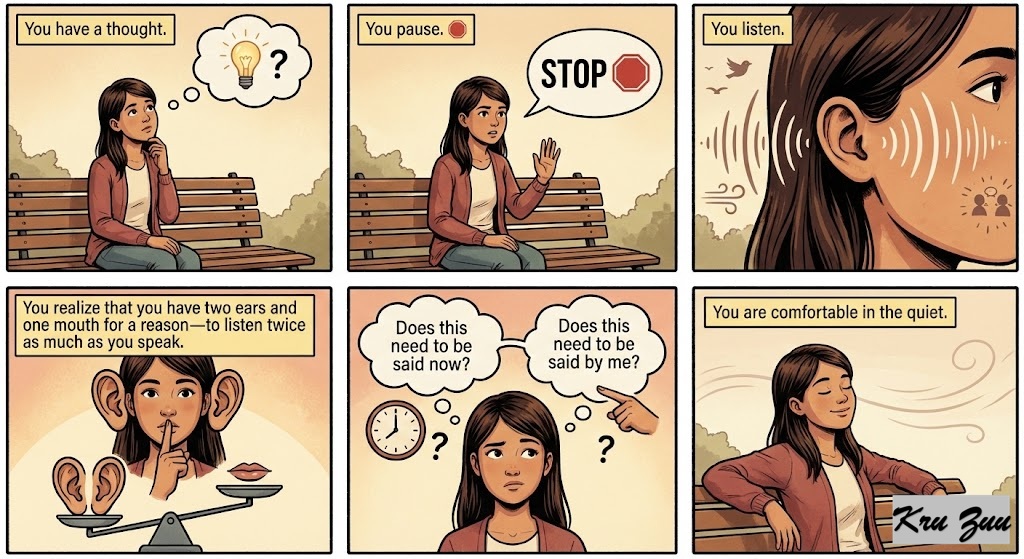
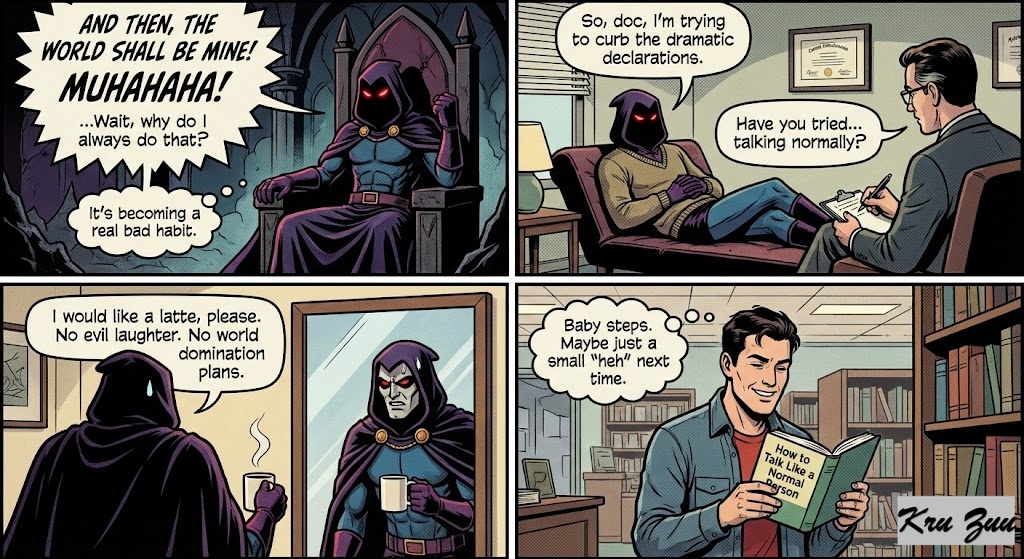
    You have a thought, and it instantly leaves your mouth. 🗣️ “I have to say my opinion!” “Did you hear the gossip about…?” “Let me interrupt you right there!” You act as if every silence is awkward and needs to be filled. You reveal your secrets to strangers. You speak when you are angry.

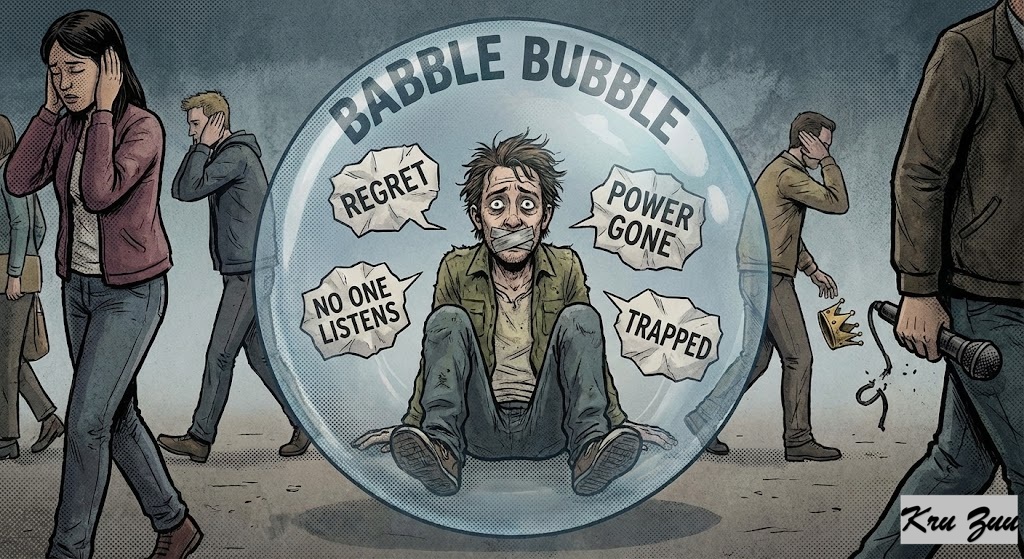
    The Result? You say things you regret. You give away your power. People stop listening because you never stop talking. You are trapped in the “Babble Bubble.” 🫧


    😇 The Hero (The Wise Observer)

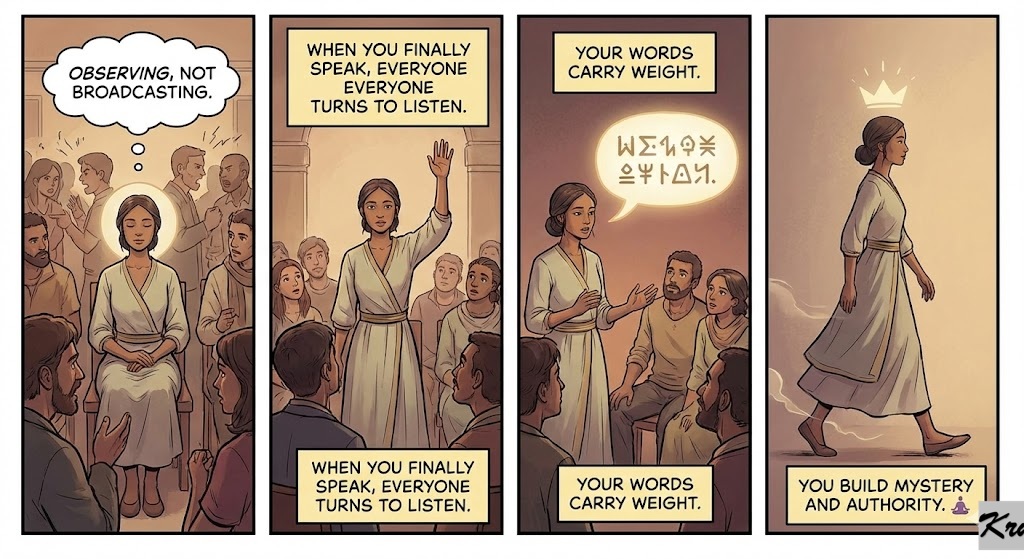
    You have a thought. You pause. 🛑 You listen. You realize that you have two ears and one mouth for a reason, to listen twice as much as you speak. You think: “Does this need to be said now? Does it need to be said by me?” You are comfortable in the quiet.

    The Result? When you finally speak, everyone turns to listen. Your words carry weight. You learn more because you are observing, not broadcasting. You build mystery and authority. 🧘


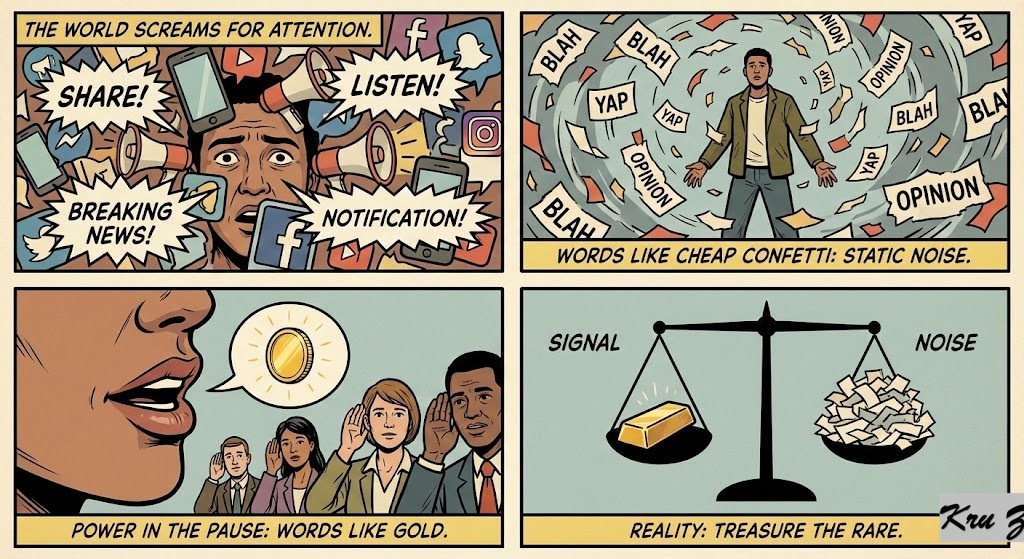
    ⚖️ The RealitySignal vs. Noise. We live in a world that screams for attention. Social media, notifications, and 24/7 news cycles tell us we must “share” everything. But physics and psychology agree: A constant signal is just static noise. True power is found in the pause. If you treat words like cheap confetti (throwing them everywhere), they lose value. If you treat words like gold (rare and heavy), people will treasure them.


    💎 The Secret

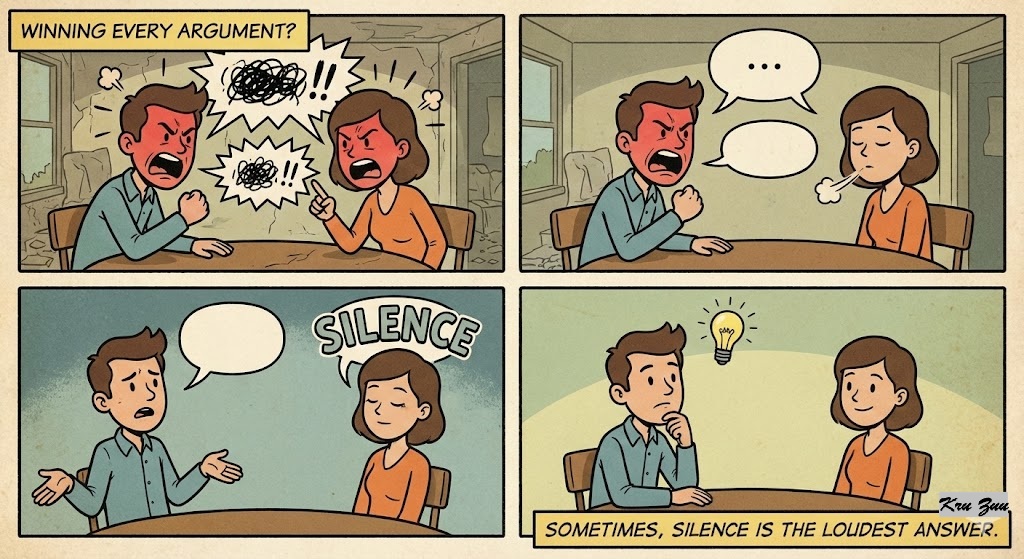
    You don’t have to win every argument. Sometimes, silence is the loudest answer.

    🧐 The Anatomy of the Proverb


    This is your reality check that restraint is often more valuable than action.


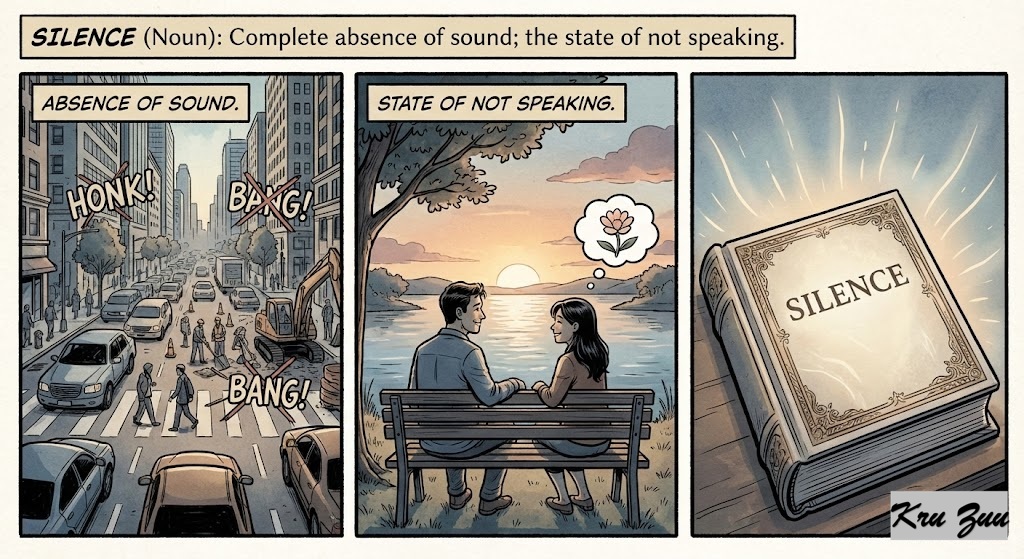
    Silence (Noun): Complete absence of sound; the state of not speaking.


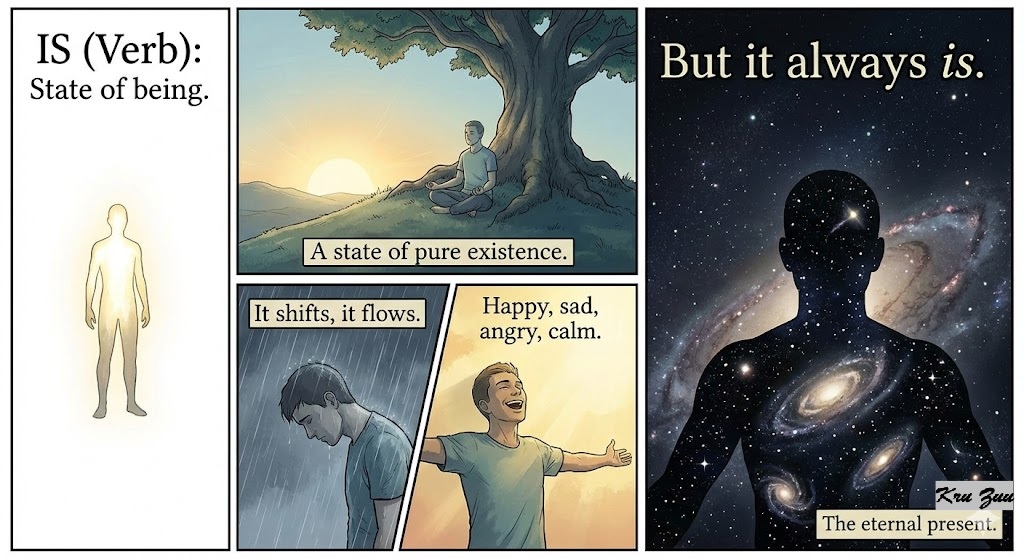
    Is (Verb): State of being.


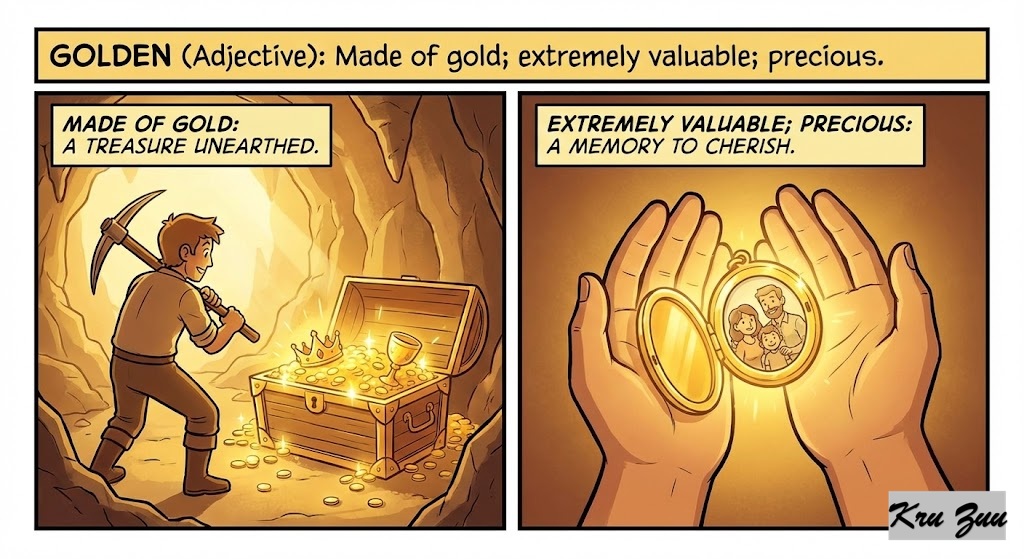
    Golden (Adjective): Made of gold; extremely valuable; precious.


    Full Original Proverb:“Speech is silver, but silence is golden.”Simpler Version: Being quiet is better than talking nonsense. / Listen more, talk less.


    📚 Vocabulary Vault


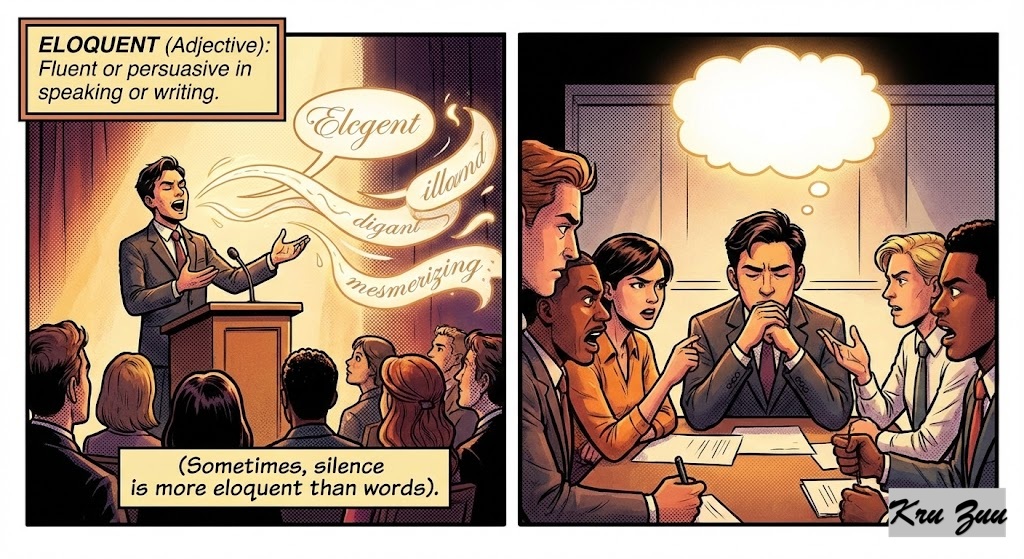
    Eloquent (Adjective): Fluent or persuasive in speaking or writing. (Sometimes, silence is more eloquent than words).


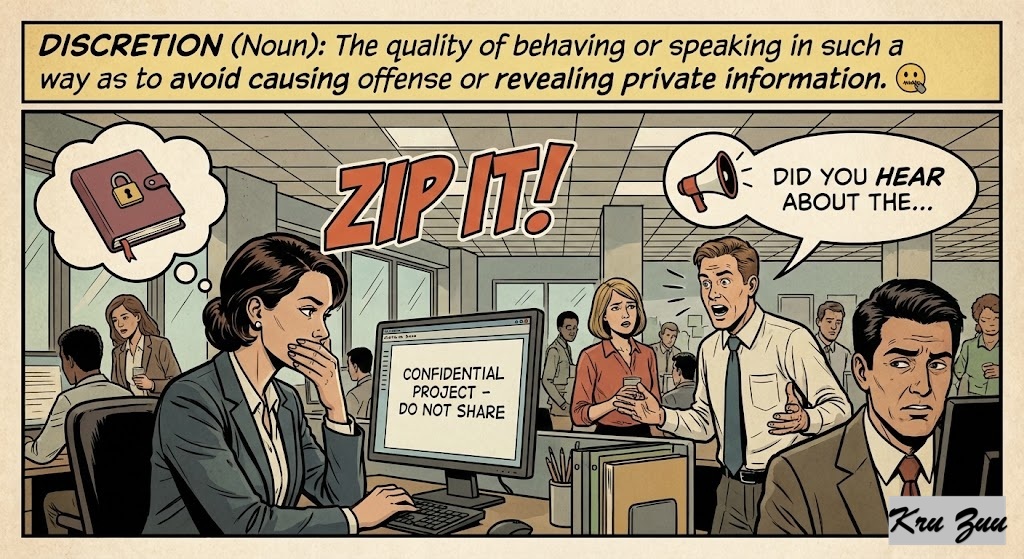
    Discretion (Noun): The quality of behaving or speaking in such a way as to avoid causing offense or revealing private information. 🤐


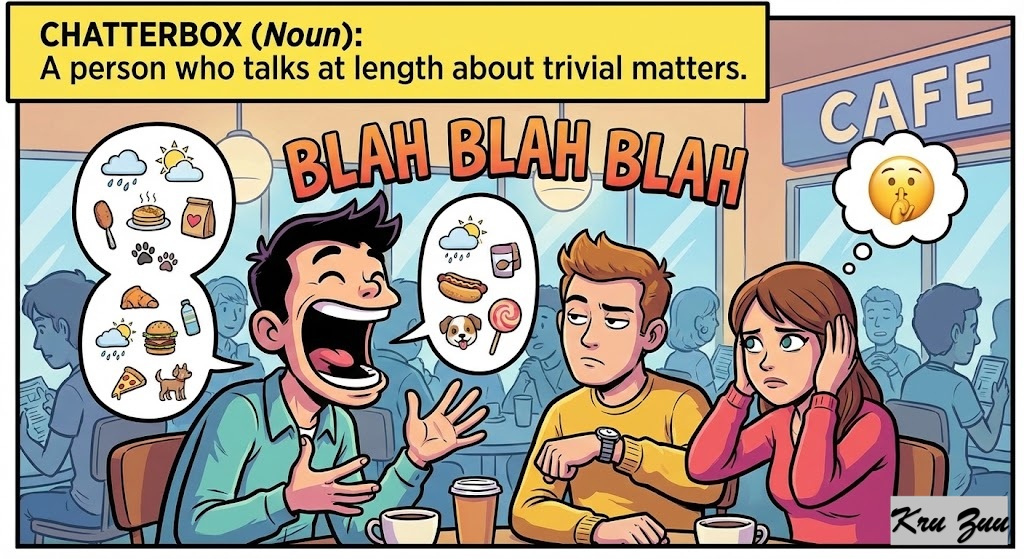
    Chatterbox (Noun): A person who talks at length about trivial matters.


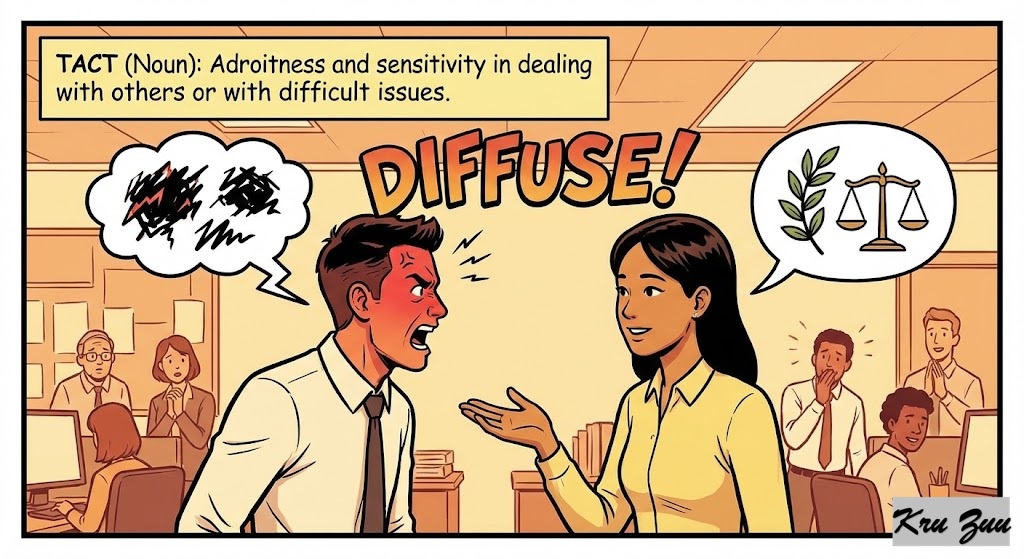
    Tact (Noun): Adroitness and sensitivity in dealing with others or with difficult issues.


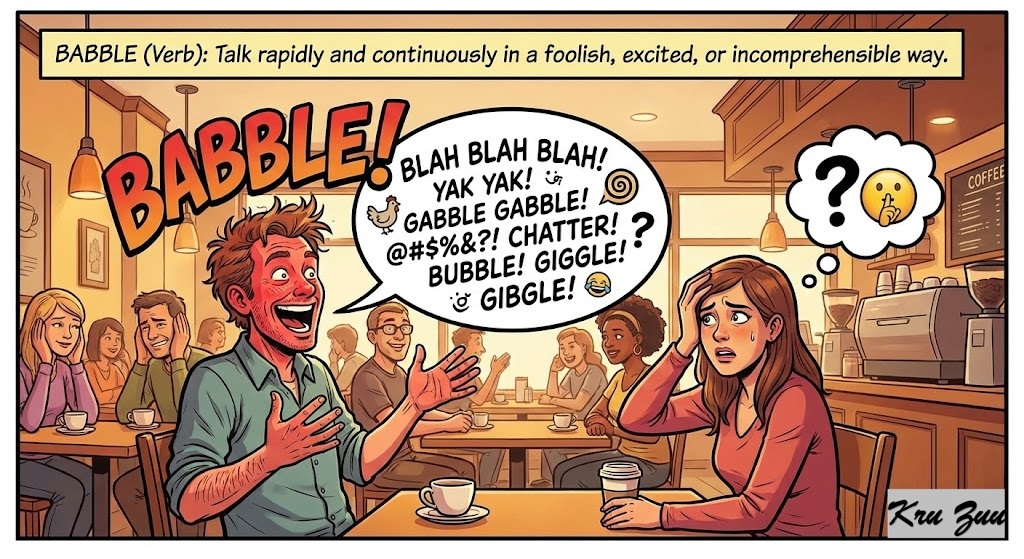
    Babble (Verb): Talk rapidly and continuously in a foolish, excited, or incomprehensible way.


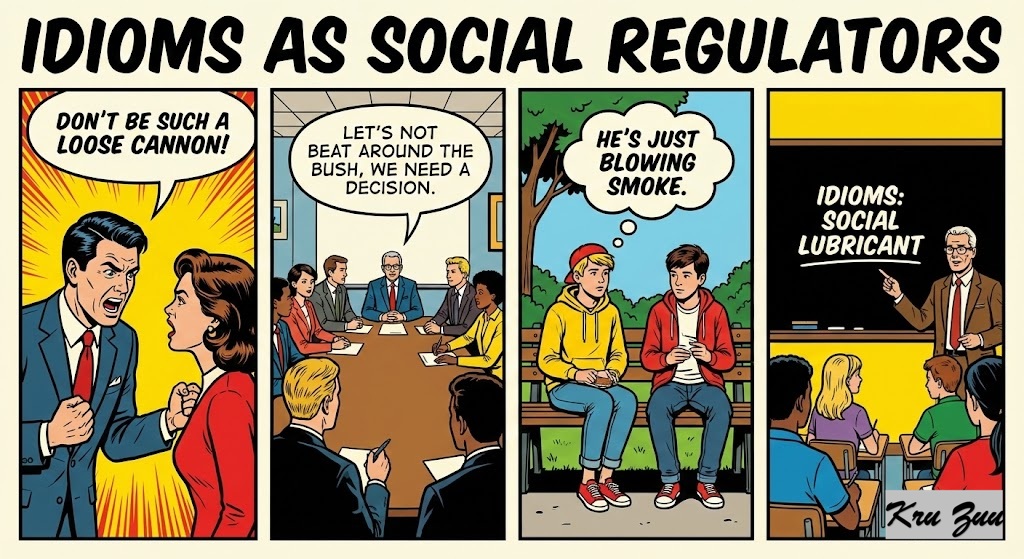
    🧠 Grammar Focus: Idioms as Social Regulators


    We often use this idiom to politely tell someone to stop talking or to express regret for speaking too much.


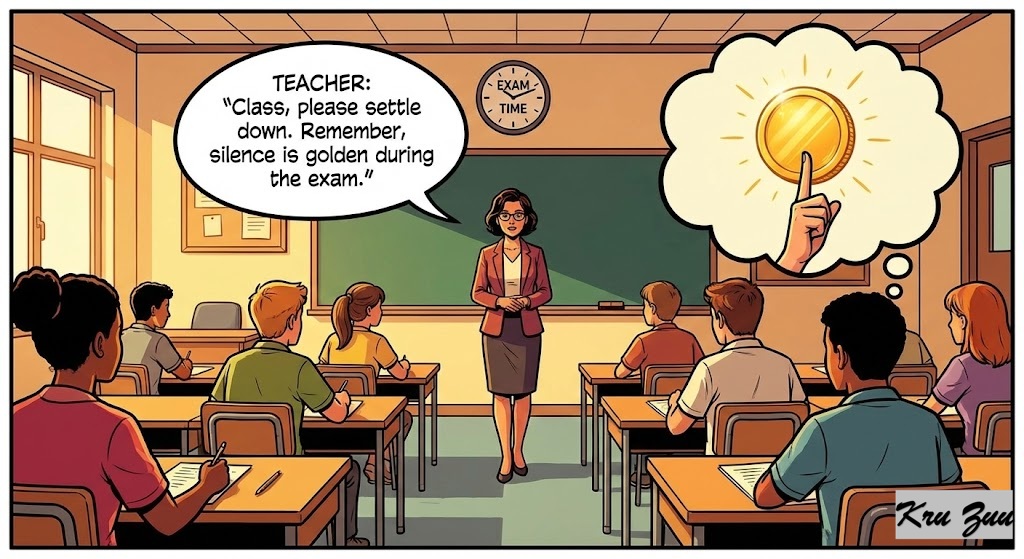
    Teacher: “Class, please settle down. Remember, silence is golden during the exam.”


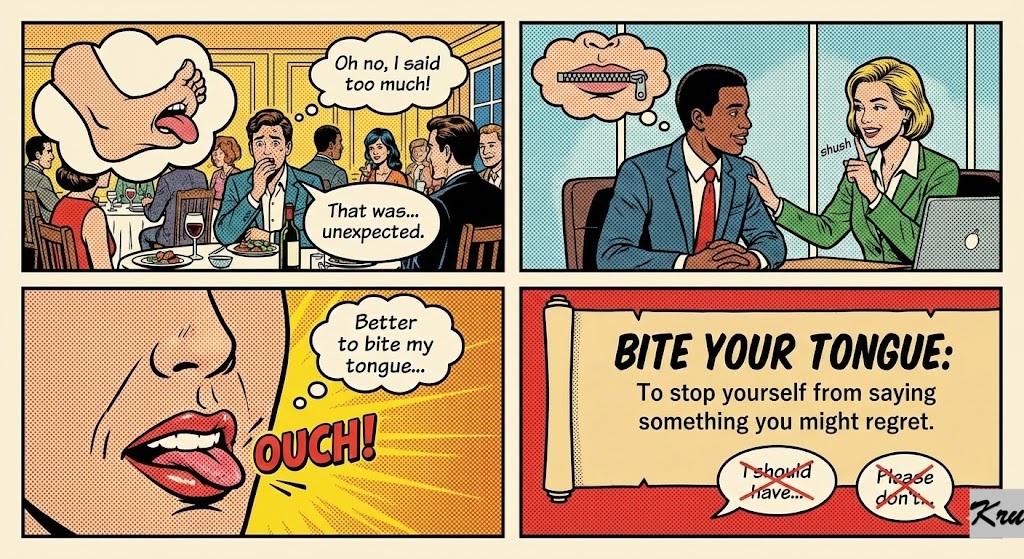
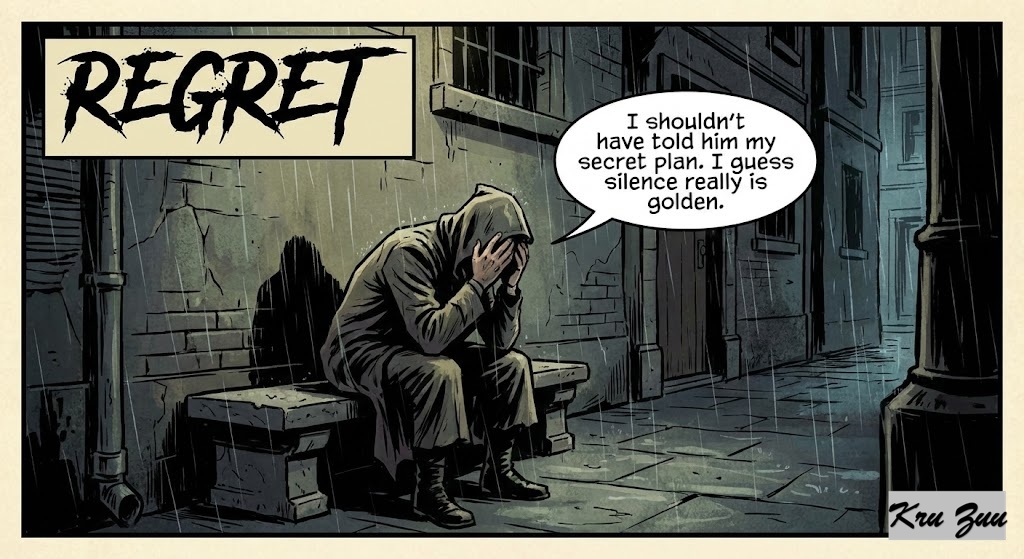
    Regret: “I shouldn’t have told him my secret plan. I guess silence really is golden.”

    📜 History: Origin and Spread


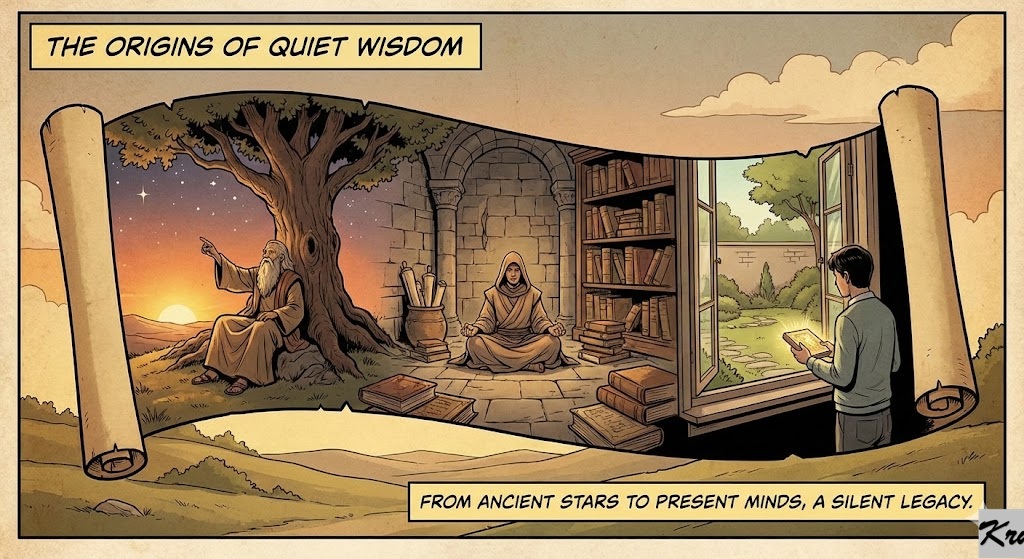
    Where did this quiet wisdom come from?


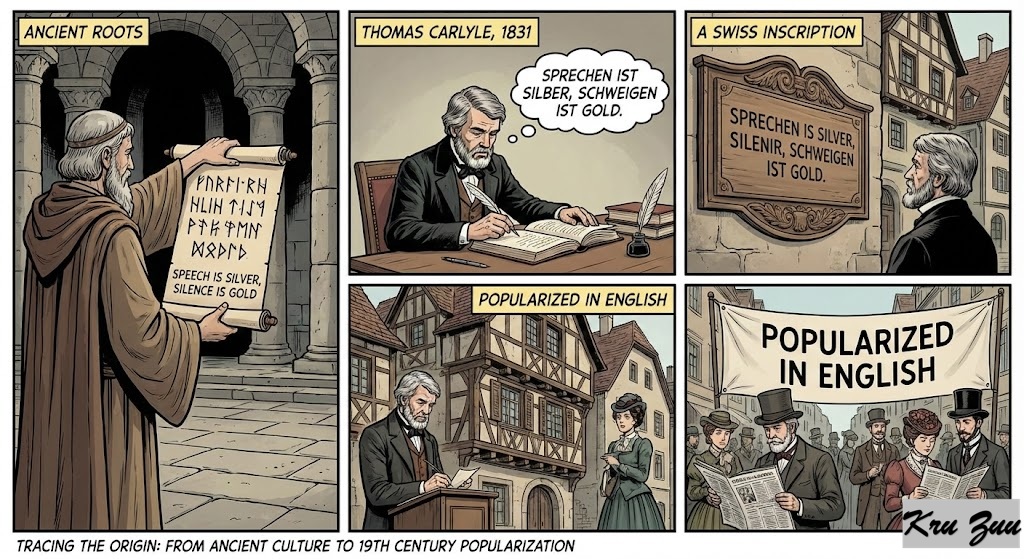
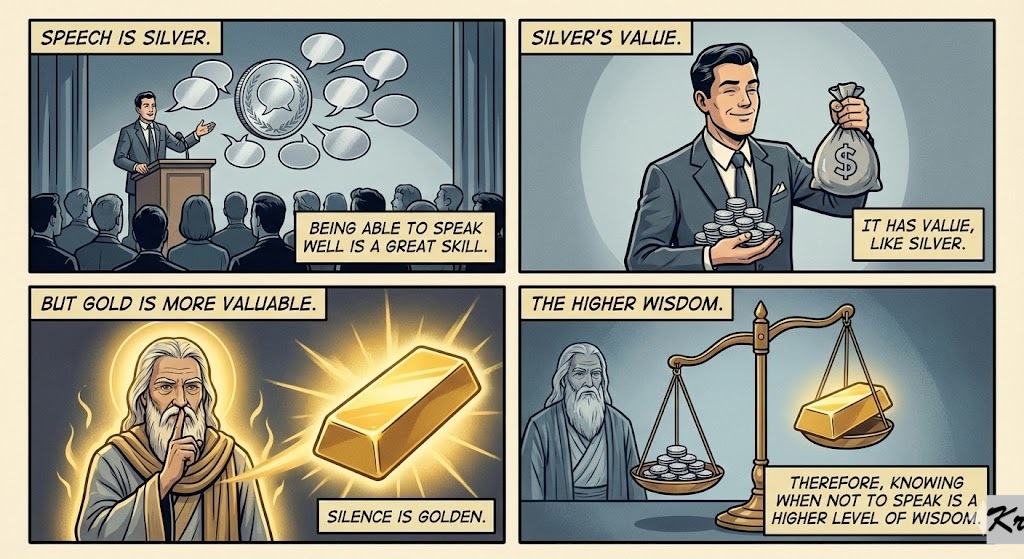
    The Origin: The phrase traces back to ancient culture. It was popularized in English by Thomas Carlyle in the 19th century (1831), who translated a Swiss/German inscription: “Sprechen ist Silber, Schweigen ist Gold.” (Speech is silver, Silence is gold).


    The Logic: Silver is valuable. Being able to speak well is a great skill (Silver). But Gold is more valuable. Therefore, knowing when not to speak is a higher level of wisdom.


    Global Cousins


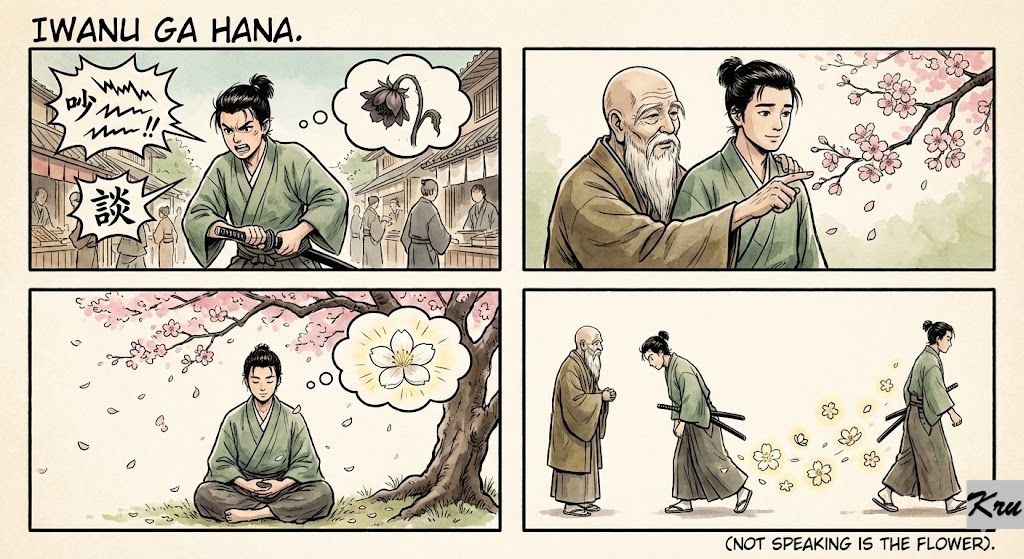
    🇯🇵 Japanese: “Iwanu ga hana” (Not speaking is the flower).


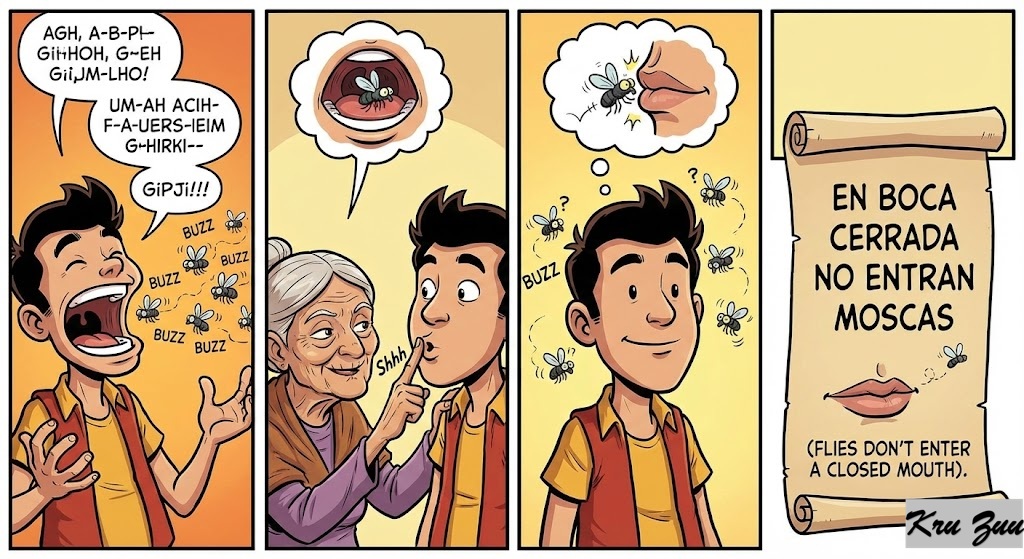
    🇪🇸 Spanish: “En boca cerrada no entran moscas” (Flies don’t enter a closed mouth).


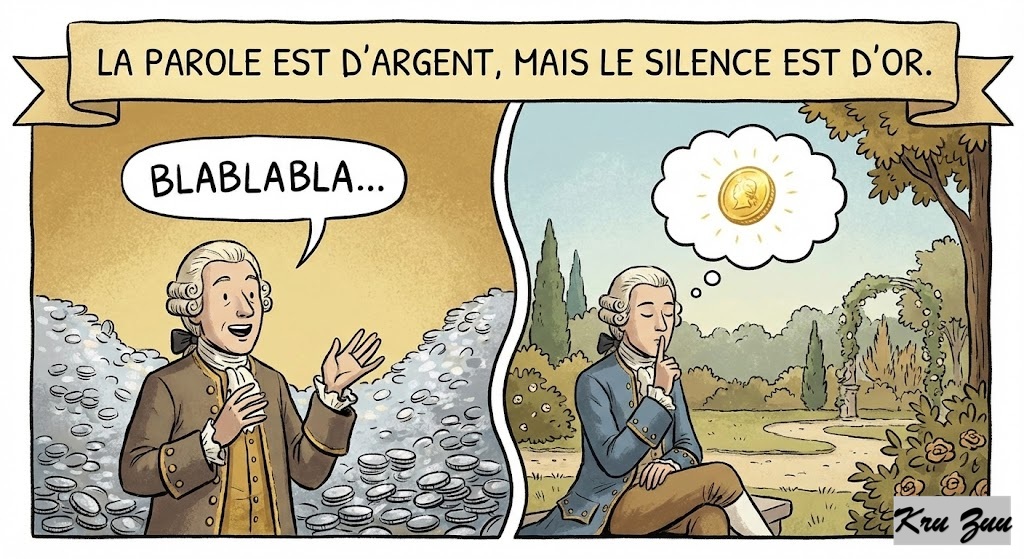
    🇫🇷 French: “La parole est d’argent, mais le silence est d’or.”

    🎭 Short Story: The Loudest Mistake 🤫🐱🐔🐸


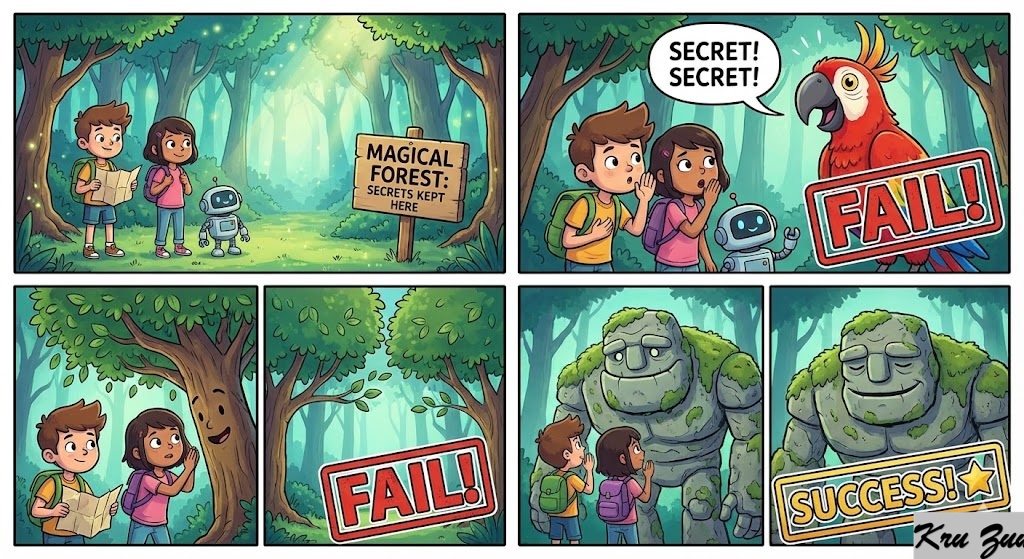
    Let’s visit the magical forest to see who can keep a secret.


    🌟 The Cast


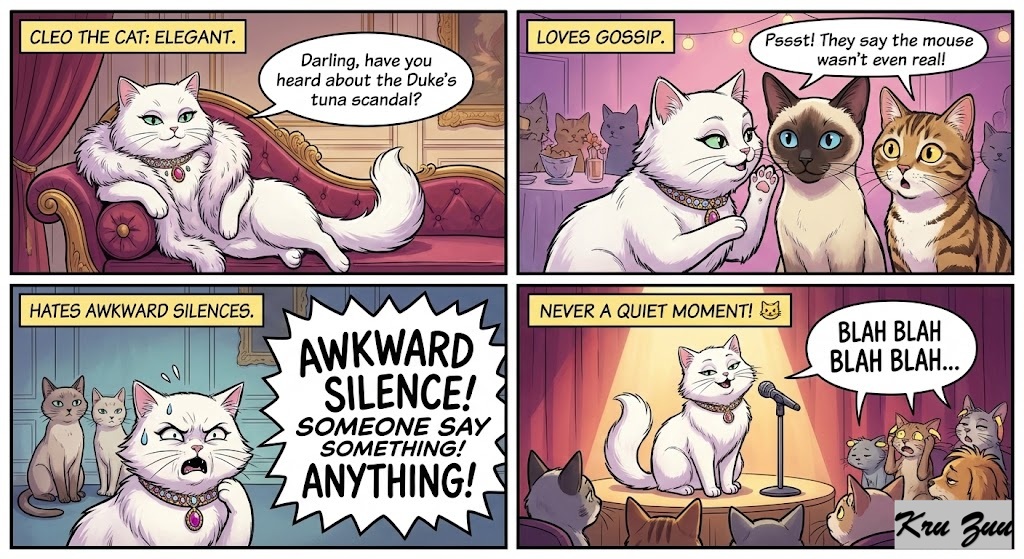
    Cleo the Cat: Elegant, loves gossip, hates awkward silences. 😼


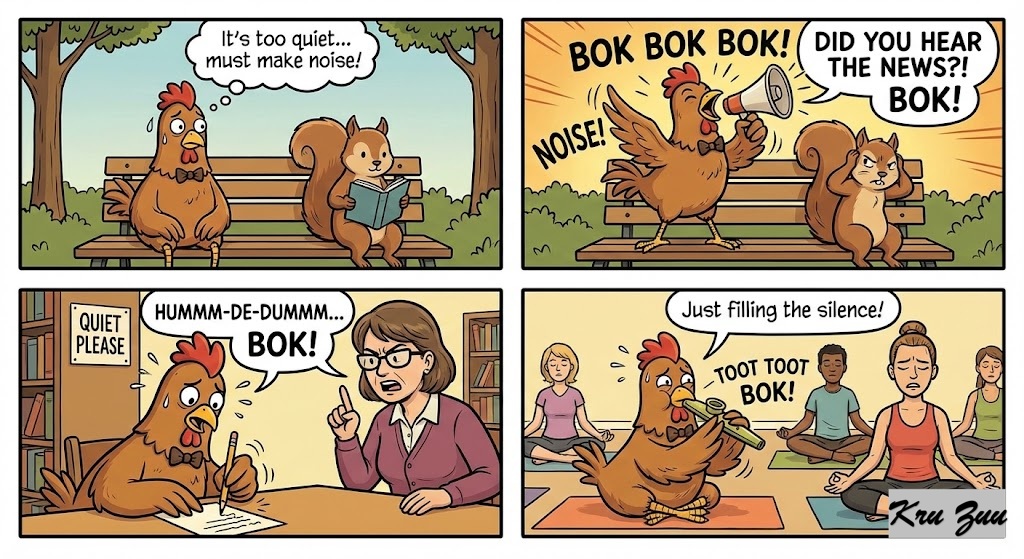
    Cluck the Chicken: Nervous, fills every quiet moment with noise. 🐔


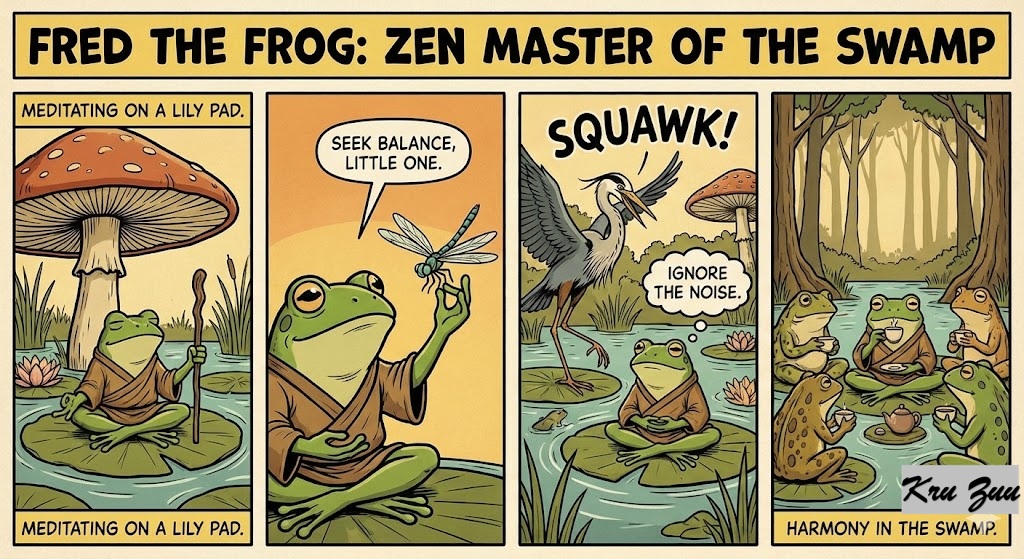
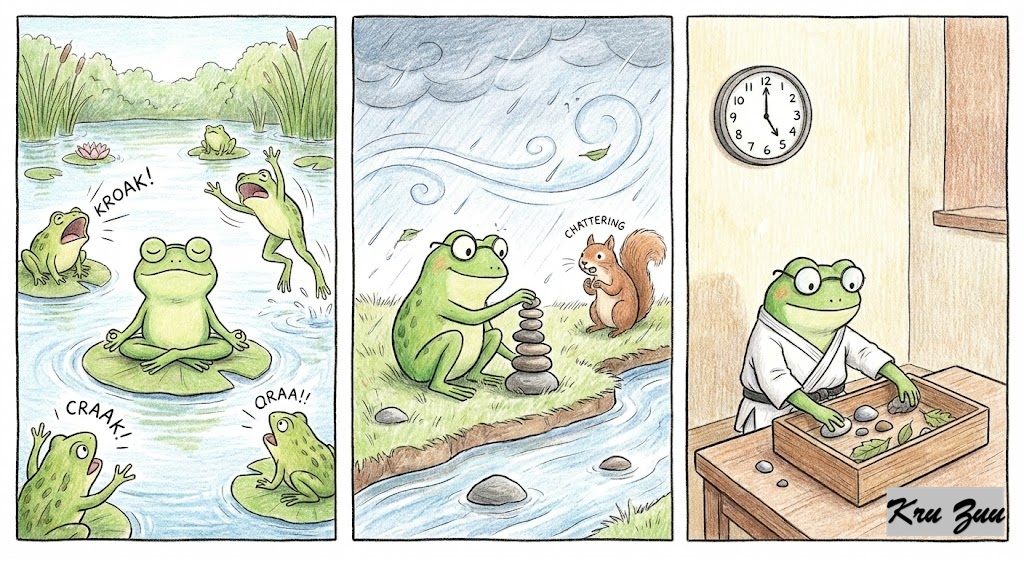
    Fred the Frog: The Zen master of the swamp. 🐸


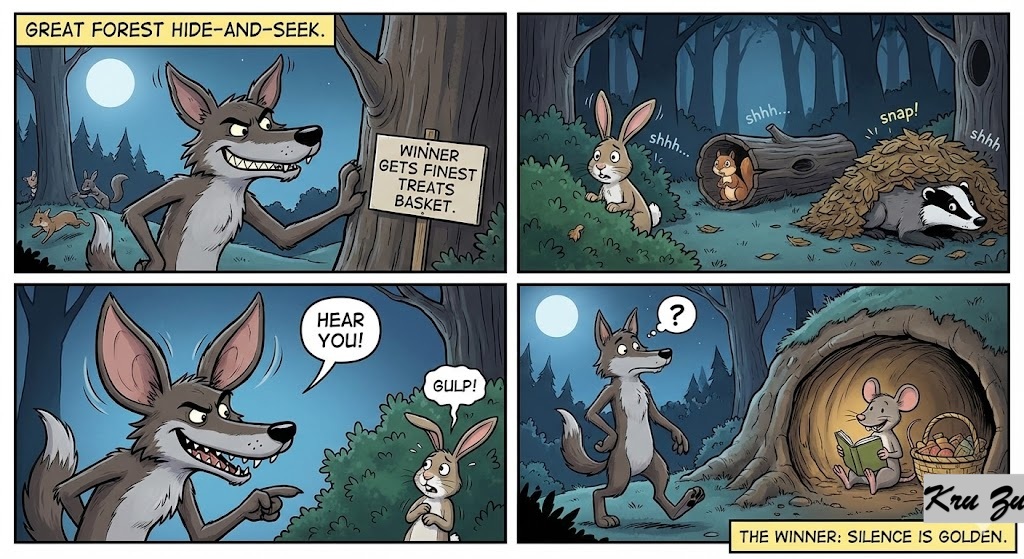
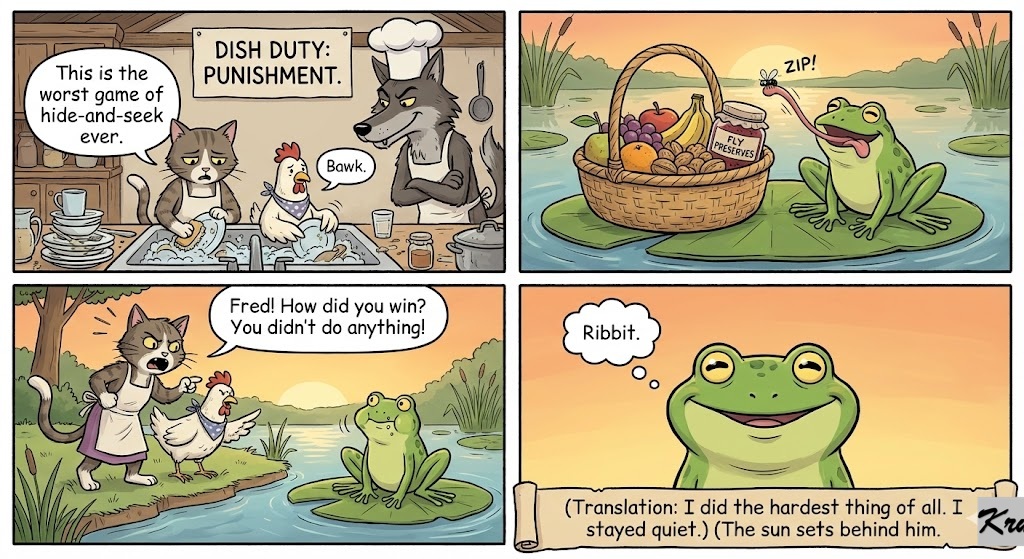
    The Situation: It is the night of the “Great Forest Hide-and-Seek.” The winner gets a basket of the finest treats. The seeker is the Big Bad Wolf, who has very sharp ears.


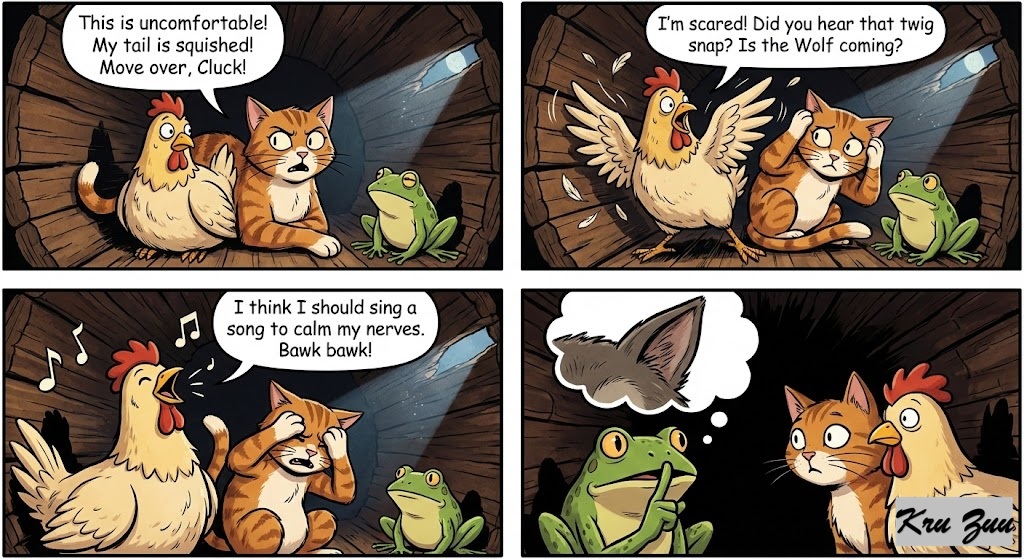
    The Conflict: Cleo, Cluck, and Fred find the perfect hiding spot inside a hollow log. It is dark and tight. “This is uncomfortable!” Cleo whispers loudly. “My tail is squished! Move over, Cluck!” “I’m scared!” Cluck squawks, flapping his wings. “Did you hear that twig snap? Is the Wolf coming? I think I should sing a song to calm my nerves. Bawk bawk!”


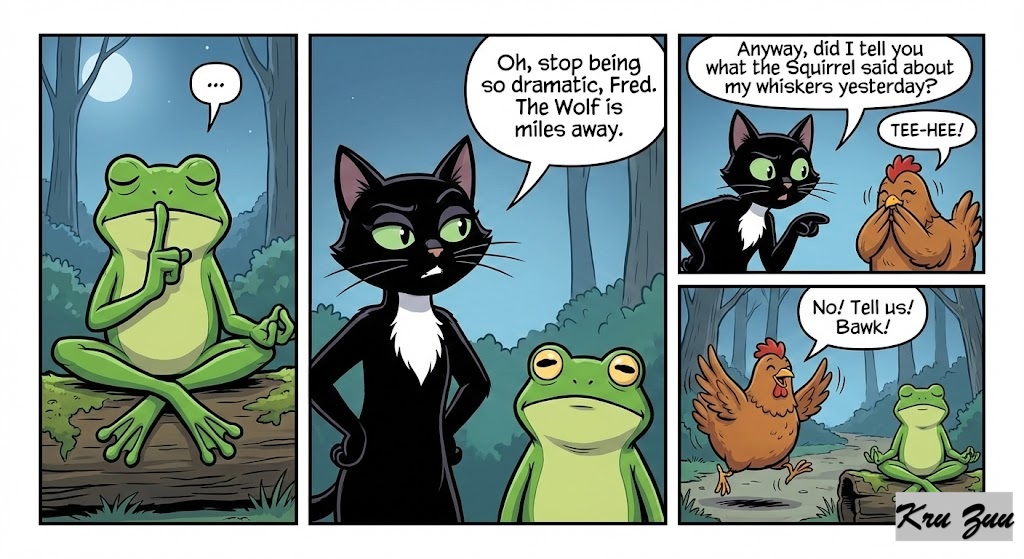
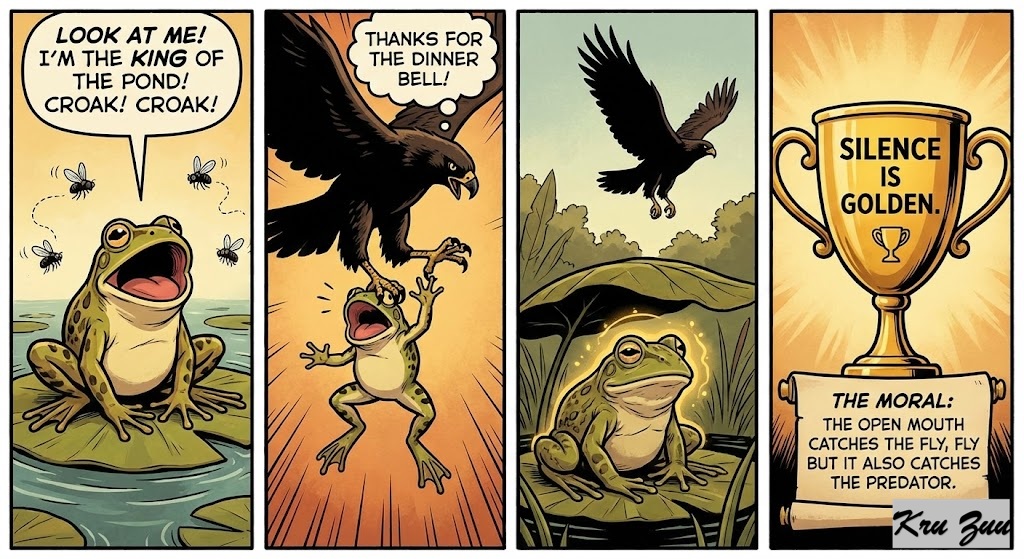
    The Reaction: Fred the Frog sits perfectly still. He closes his eyes. He breathes slowly. He puts a green finger to his lips. “…” Cleo rolls her eyes. “Oh, stop being so dramatic, Fred. The Wolf is miles away. Anyway, did I tell you what the Squirrel said about my whiskers yesterday?” Cluck giggles. “No! Tell us! Bawk!”


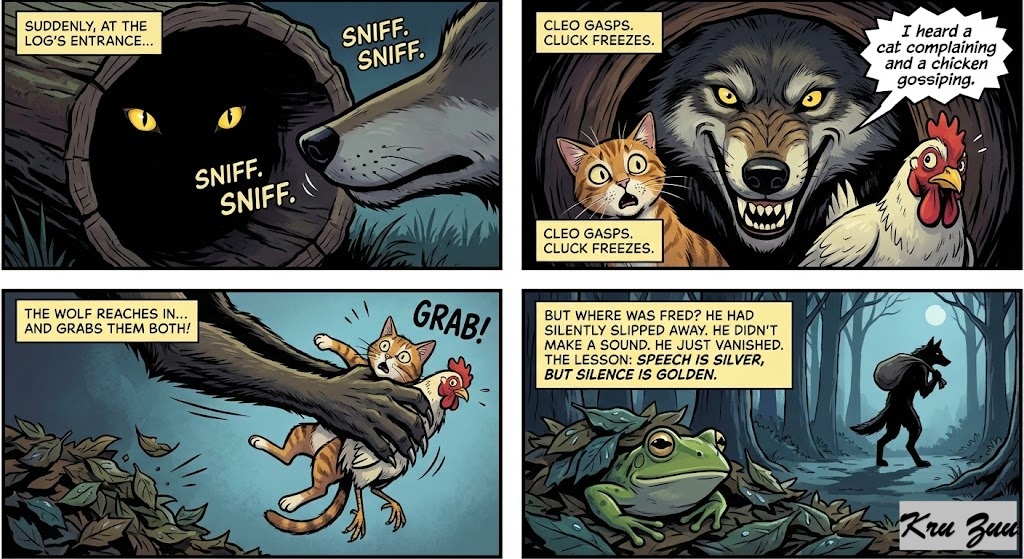
    The Lesson: Suddenly, two yellow eyes appear at the entrance of the log. Sniff. Sniff. The Wolf smiles. “I heard a cat complaining and a chicken gossiping.” Cleo gasps. Cluck freezes. The Wolf reaches in… and grabs them both! But where was Fred? In the moment the Wolf appeared, Fred had silently slipped under a pile of wet leaves. He didn’t make a sound. He didn’t brag. He didn’t scream. He just vanished.


    The Resolution: Cleo and Cluck lost the game (and their treats). They spent the evening washing dishes for the Wolf as punishment. Fred won the basket of treats. He sat on his lily pad, eating a delicious fly. “Fred!” Cleo cried. “How did you win? You didn’t do anything!” Fred chewed slowly, swallowed, and smiled. “Ribbit.” (Translation: I did the hardest thing of all. I stayed quiet).


    The Moral: The open mouth catches the fly, but it also catches the predator. Silence is golden. 🏆

    🎓 Lesson for English Learners


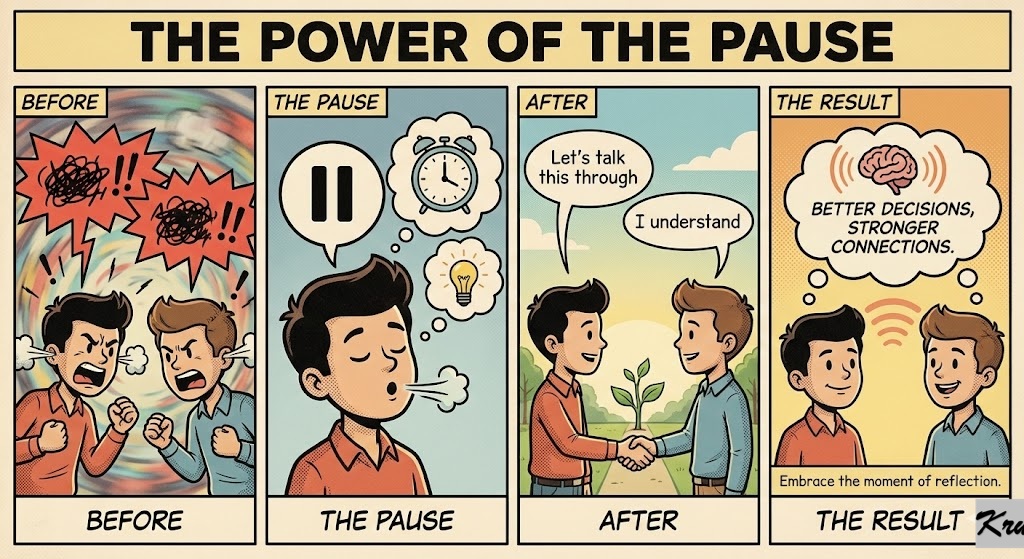
    The Power of the Pause.


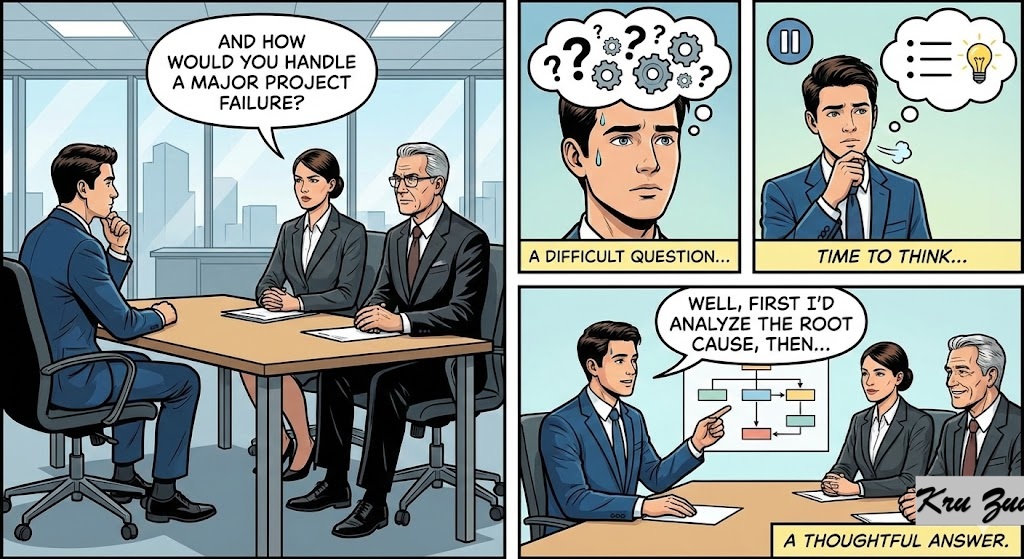
    Situation: You are in a job interview or a meeting. Someone asks you a difficult question.


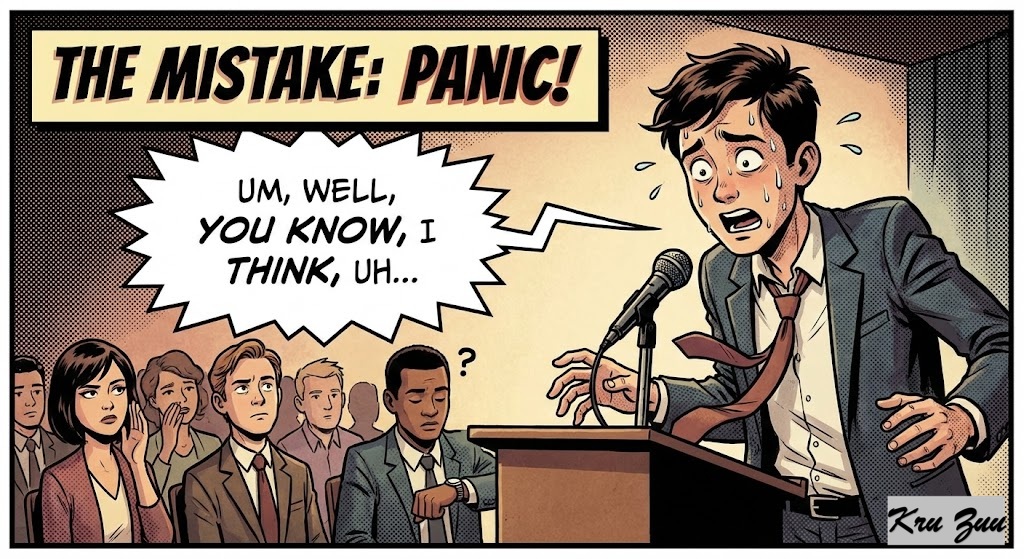
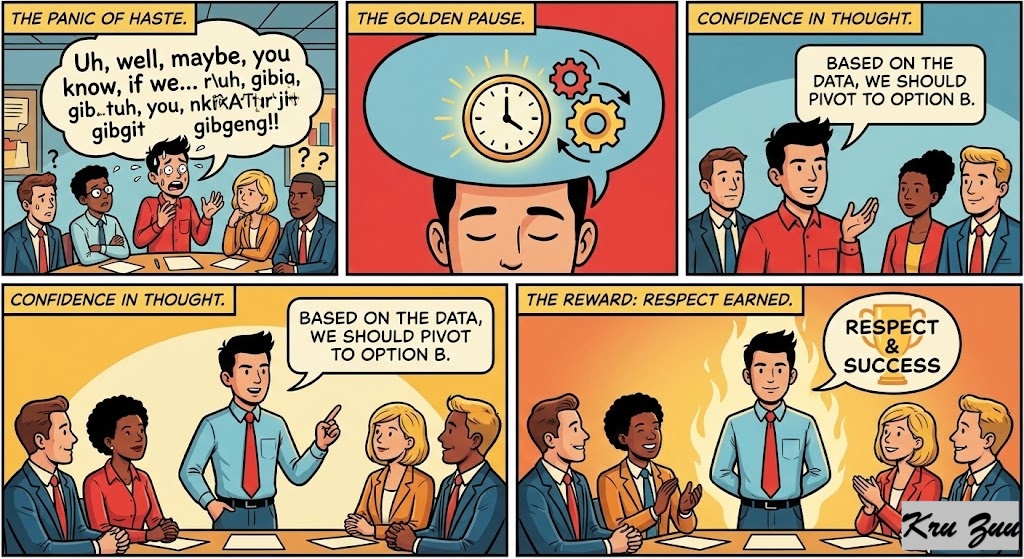
    The Mistake: You panic and start talking immediately (“Um, well, you know, I think, uh…”). You look nervous.


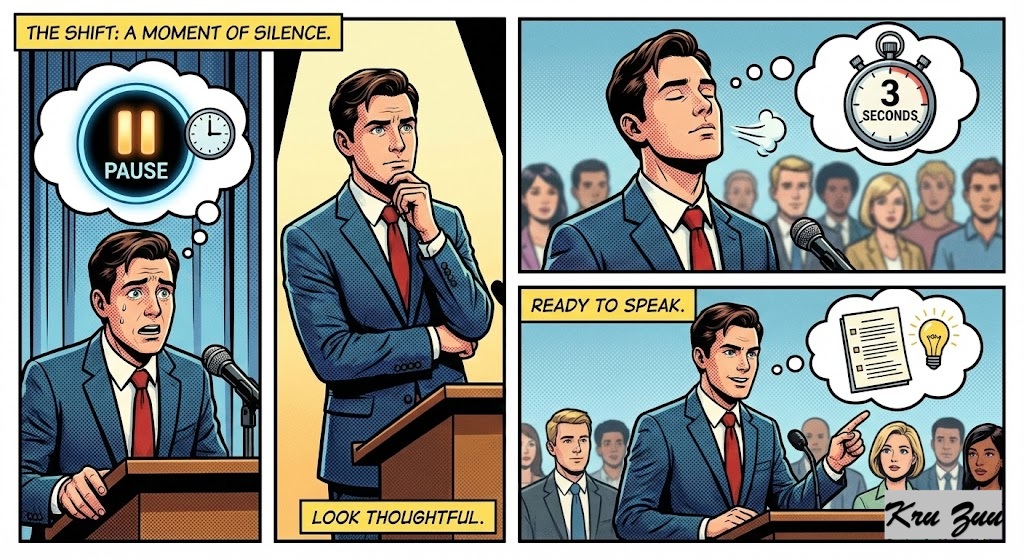
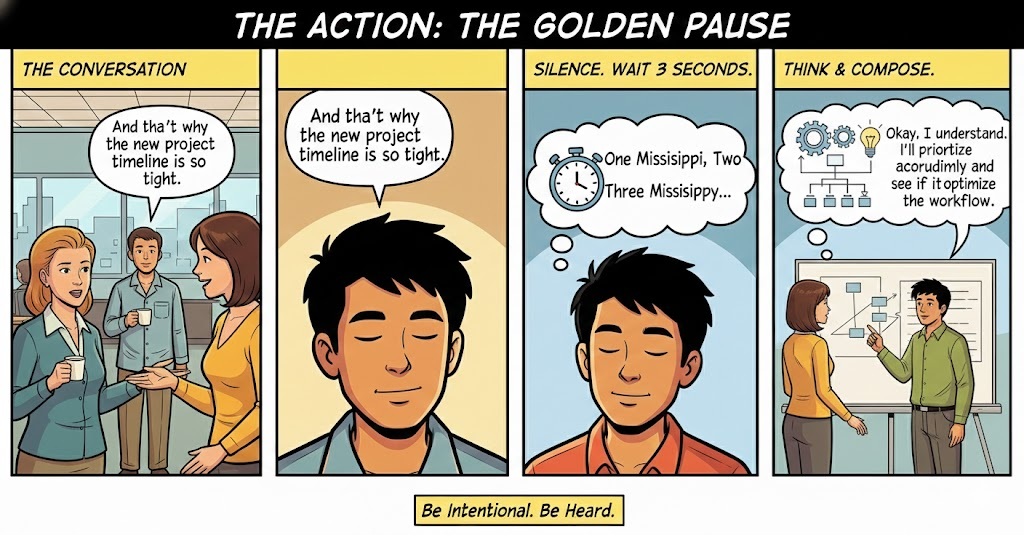
    The Shift: Use the “Golden Pause.” Take 3 seconds of silence. Look thoughtful.


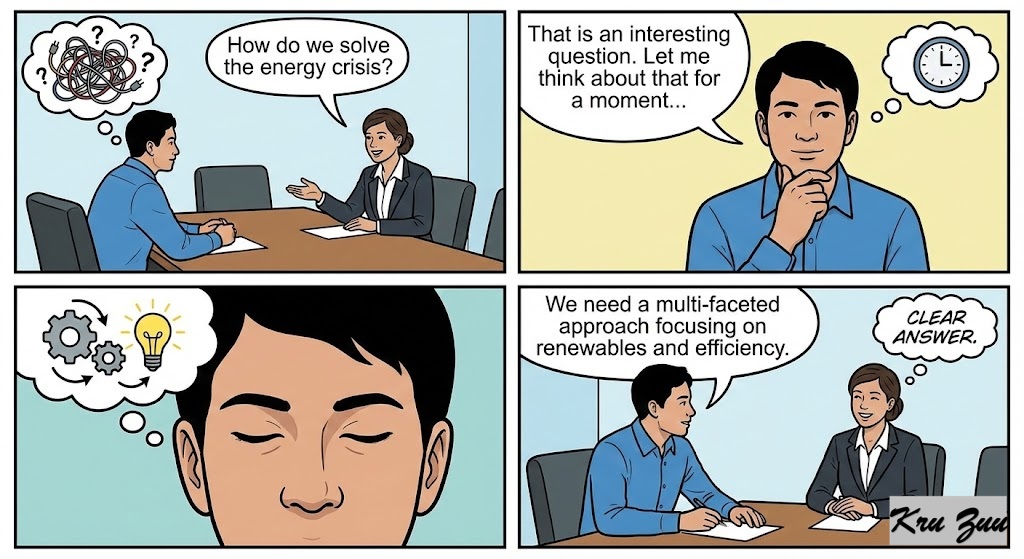
    You Say: “That is an interesting question. Let me think about that for a moment…” (Then give a clear answer).


    Why: This shows confidence. It shows you think before you speak.


    💬 Your Turn: The “3-Second” Challenge 🚀


    Do you want to cure your “Villain” talking habits?


    The Challenge:
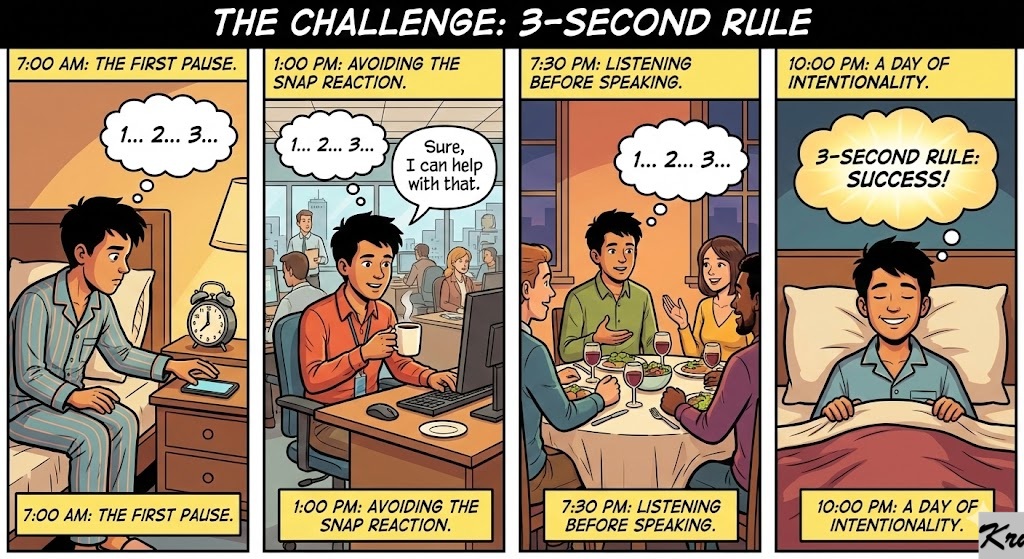
    For one whole day, follow the 3-Second Rule.


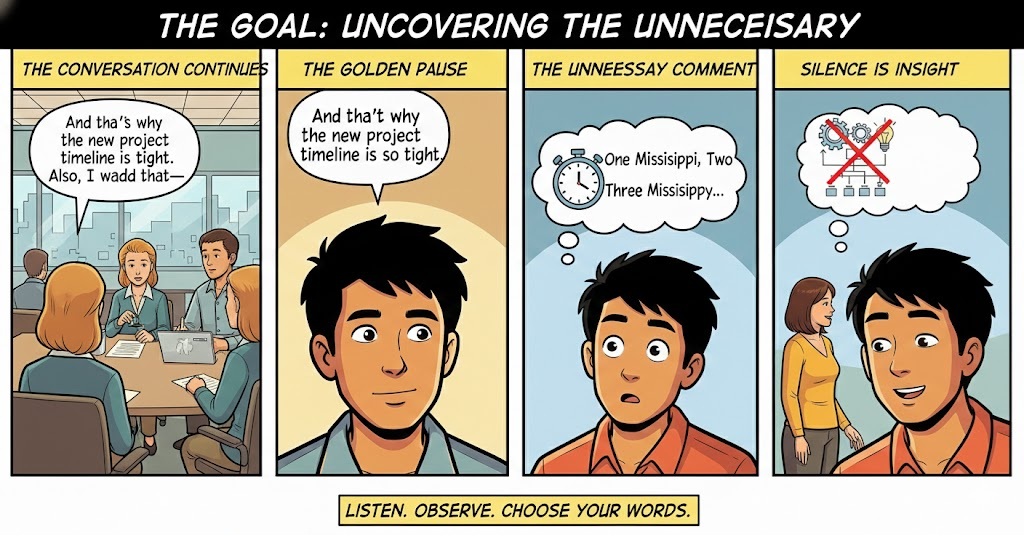
    The Action: Whenever someone finishes talking, count to 3 in your head (One Mississippi, Two Mississippi, Three Mississippi) before you respond.


    The Goal: You will realize that often, the other person wasn’t finished talking! Or, you will realize your comment wasn’t necessary.


    👇 Question for the comments: Have you ever said something you immediately regretted? Or has staying silent ever saved you? Tell us your story below!

    By Zubeyir YURTKURAN

    https://www.facebook.com/BrainBattleground/

    https://www.facebook.com/zubeyr.yurtkuran/

    https://www.instagram.com/zubeyryurtkuran/
    https://www.youtube.com/@BrainBattleground-b3p

    https://www.instagram.com/brainbattleground/

  • 🌳 The Daily Shield: The Law of Momentum

    🌳 The Daily Shield: The Law of Momentum

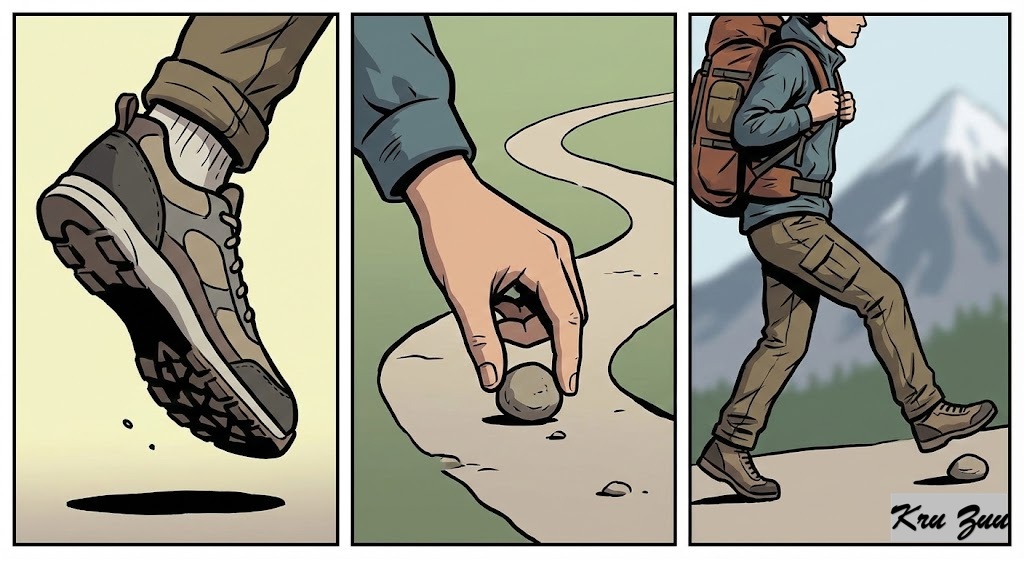
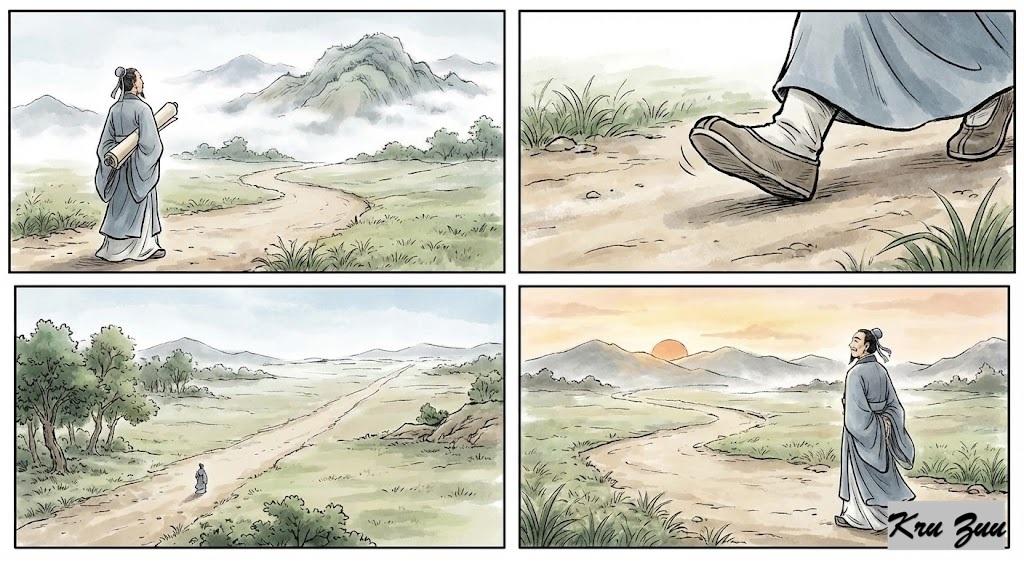
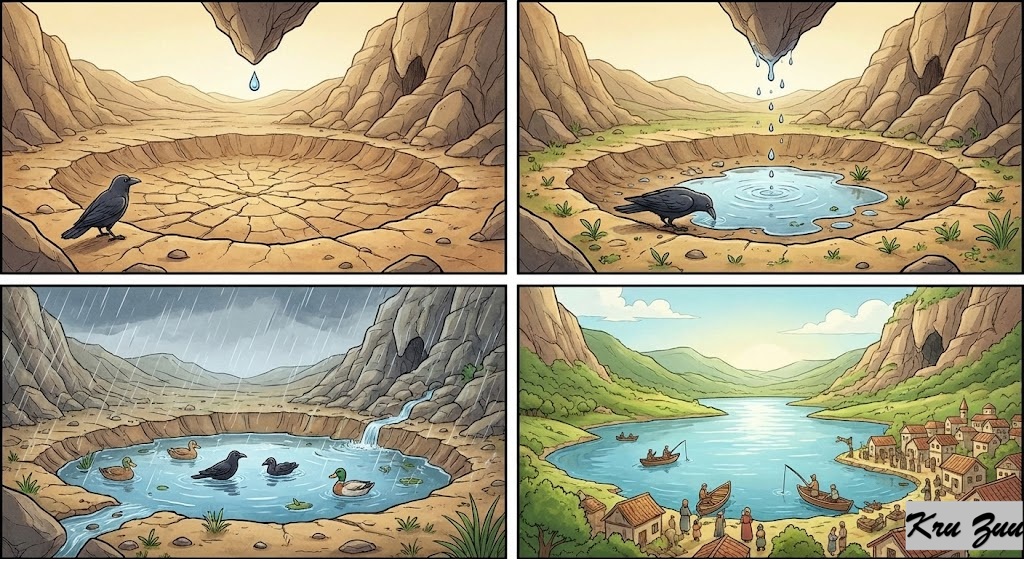
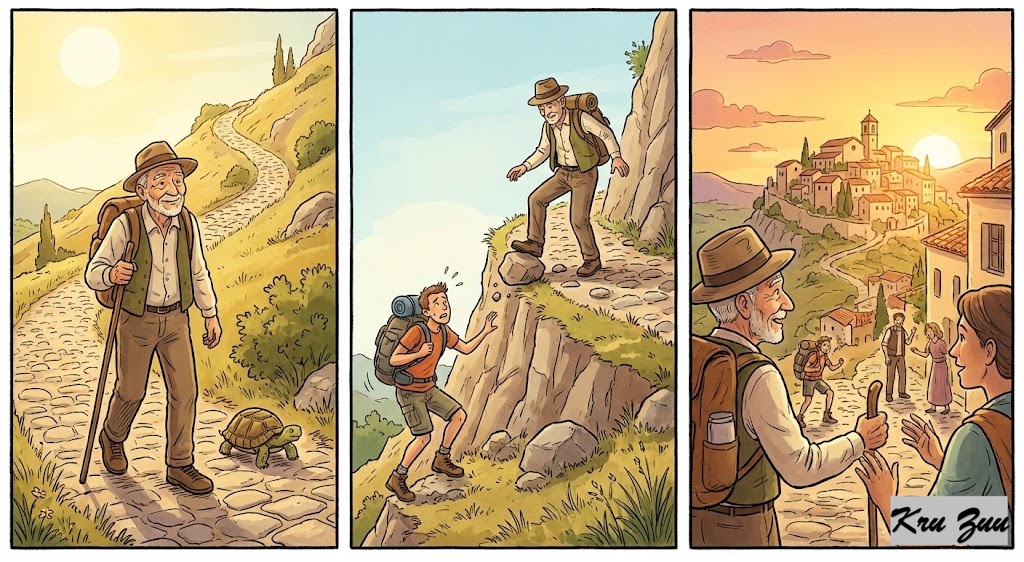
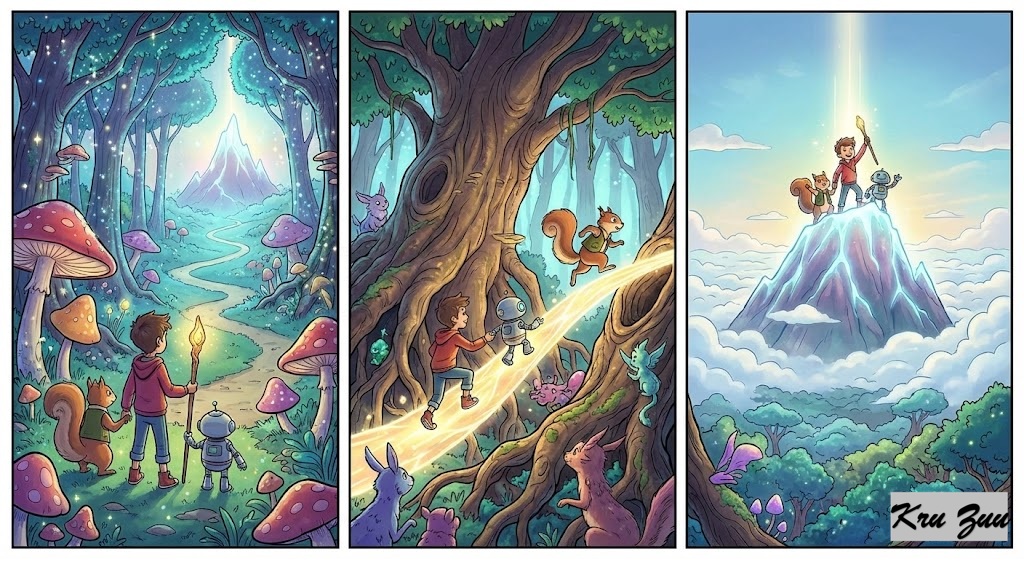
    “A journey of a thousand miles begins with a single step.”


    😈 The Villain (The Procrastinator)

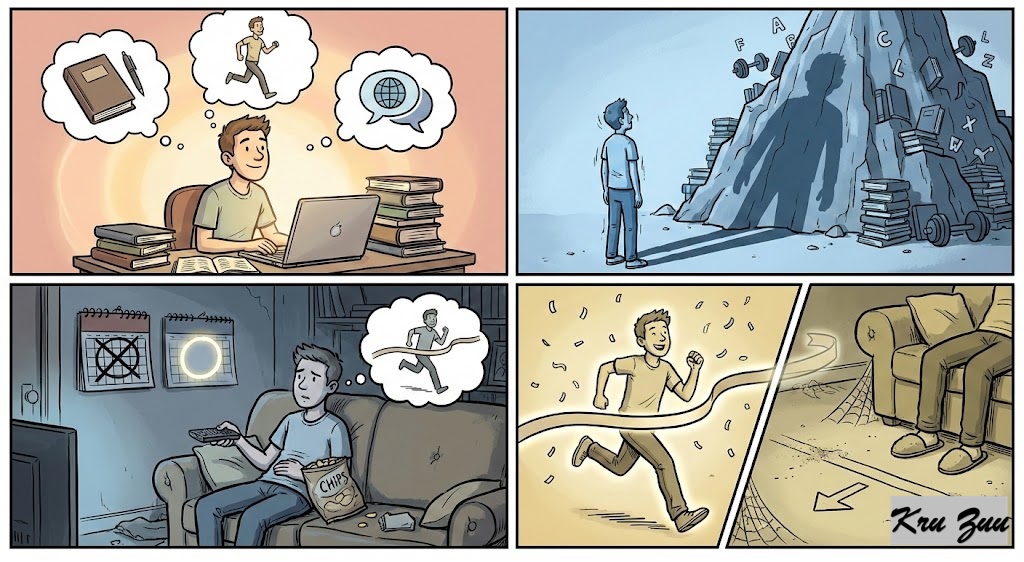
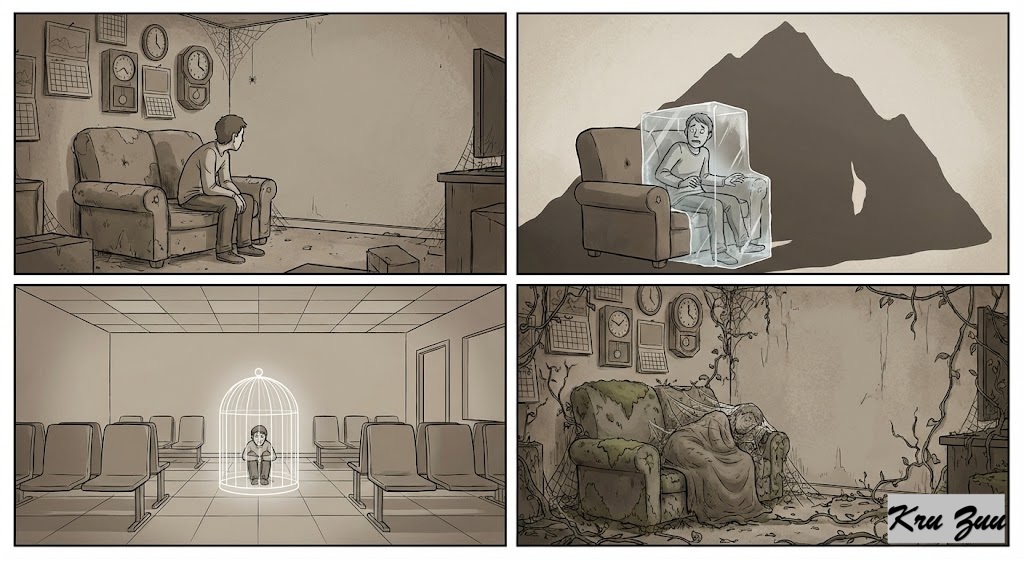
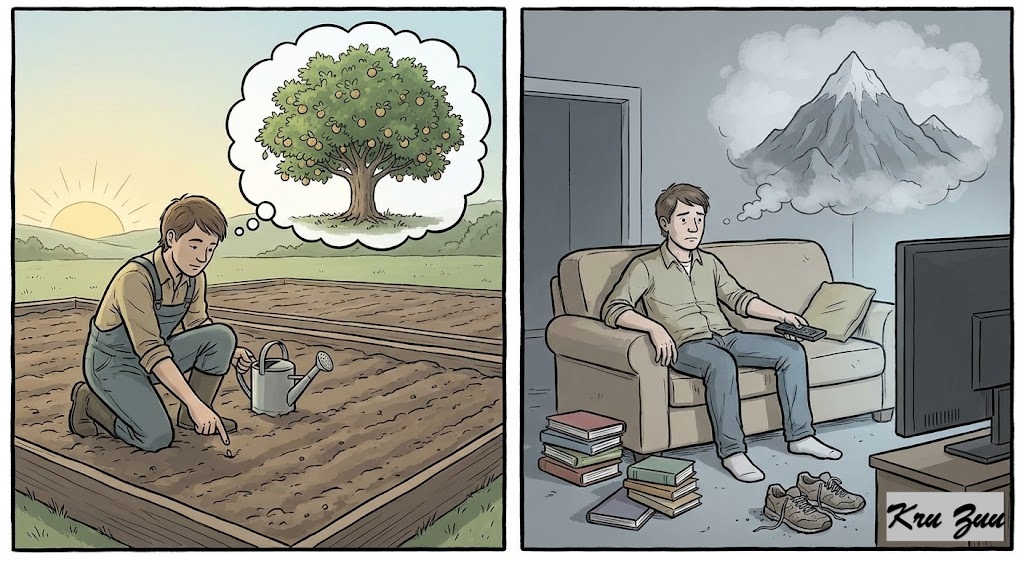
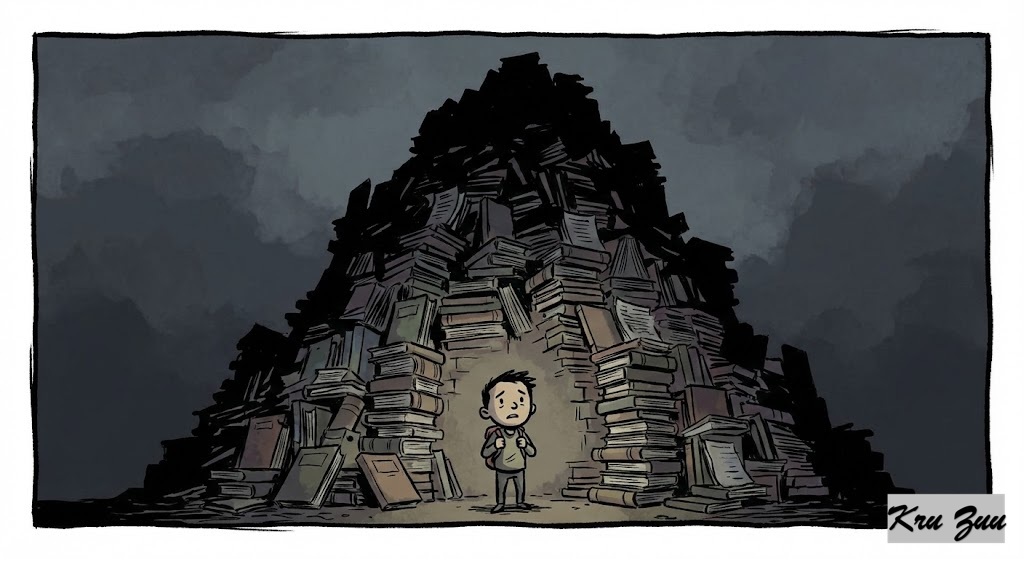
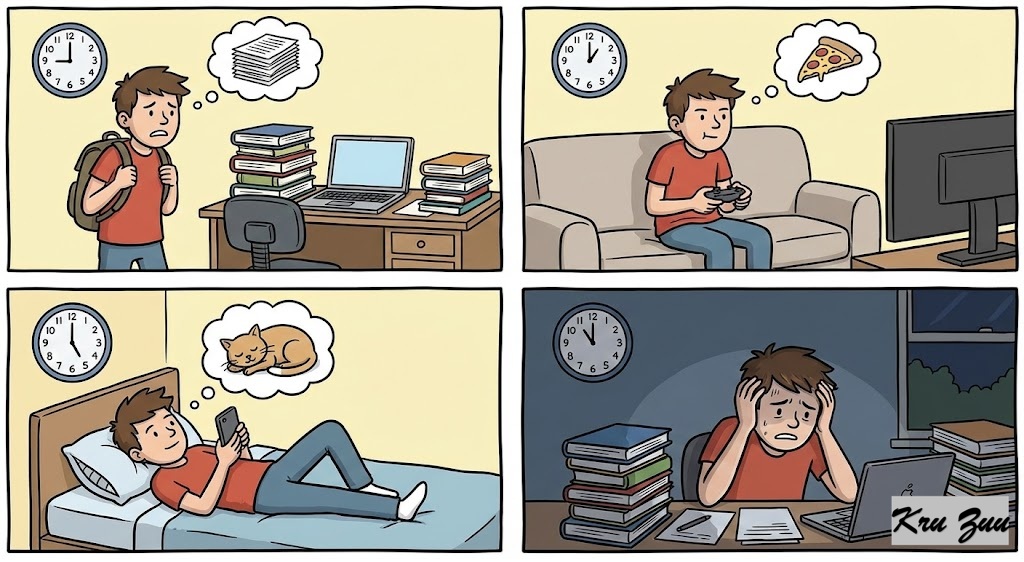
    You have a big dream. You want to learn English, lose weight, or write a book. But you look at the mountain ahead and you freeze. 🧊 “It’s too hard!” “It will take years!” “I’ll start next Monday (or next year).” You are obsessed with the finish line, so you never cross the starting line. You wait for the “perfect time” or “perfect mood.”

    The Result? You stay exactly where you are. You are paralyzed by the size of the task. You are trapped in the “Waiting Room of Life.” 🛋️


    😇 The Hero (The Walker)

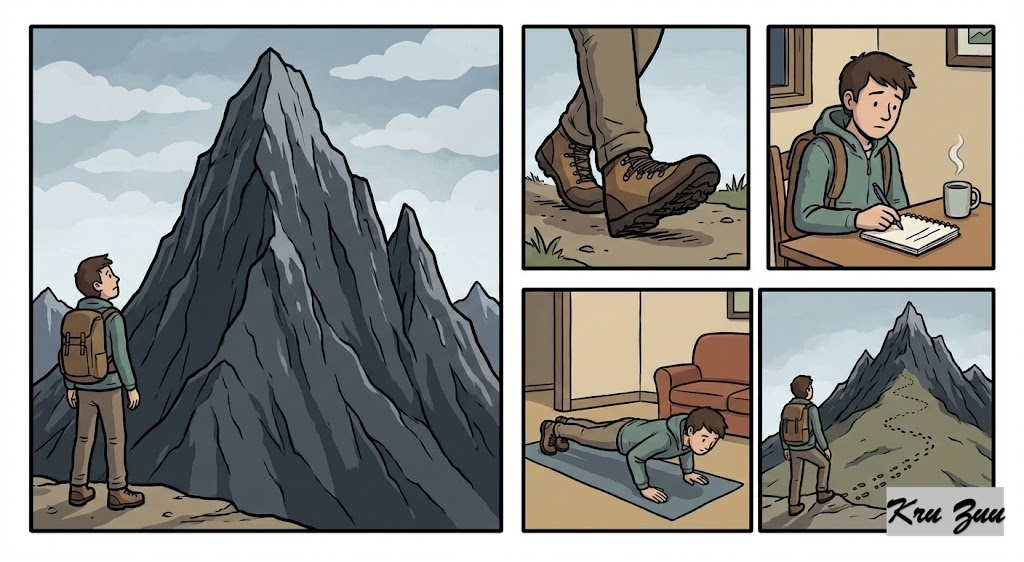
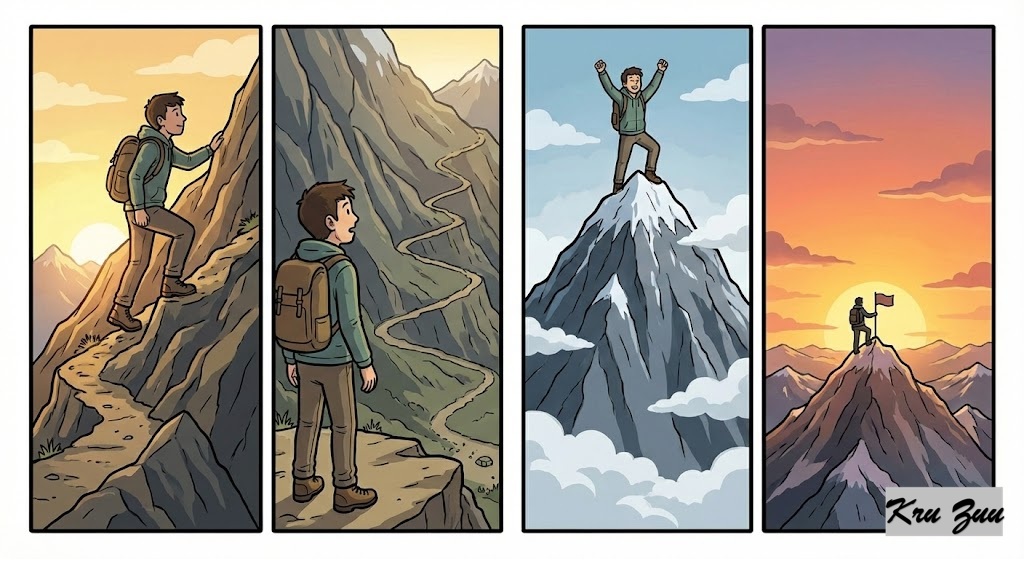
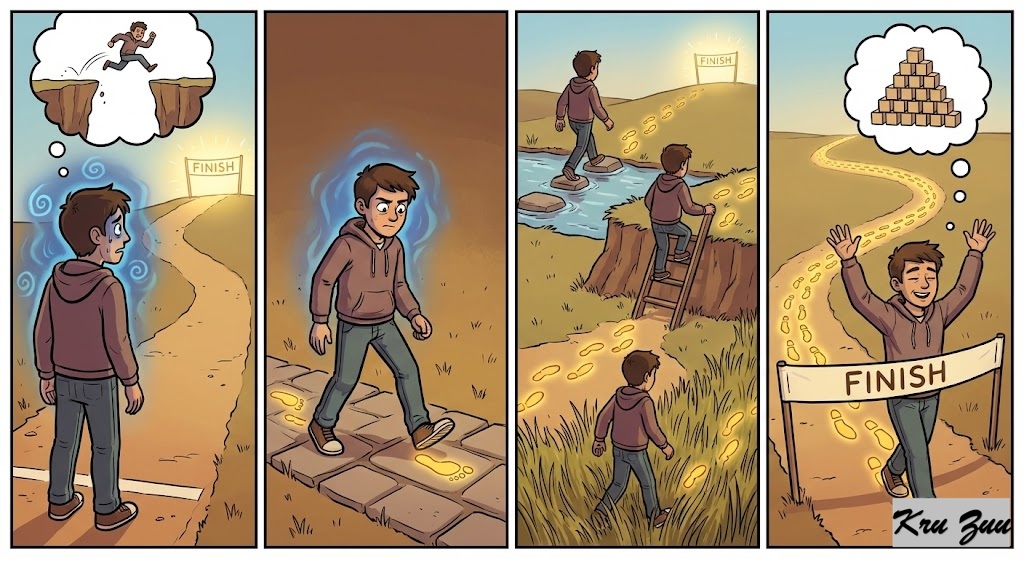
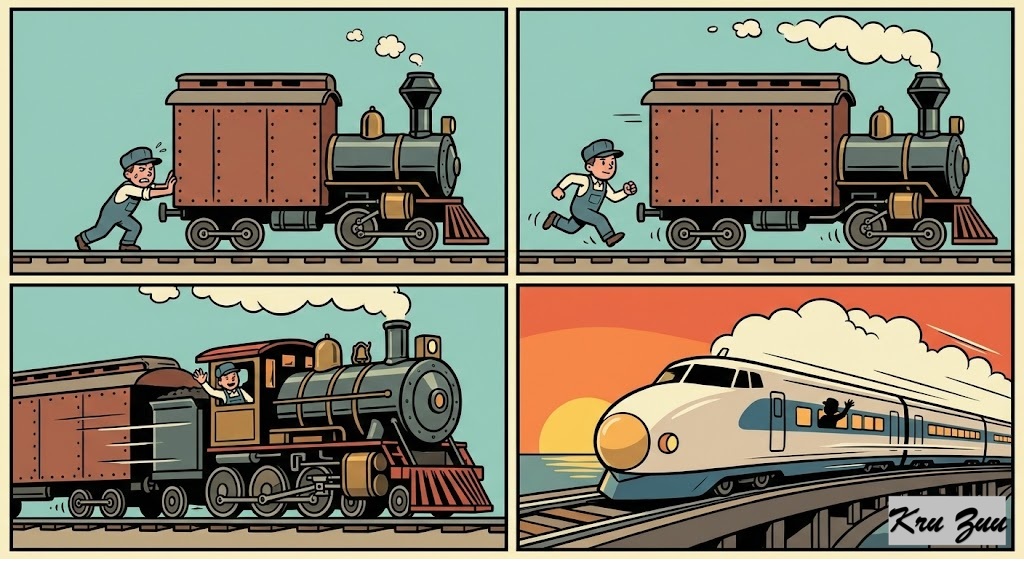
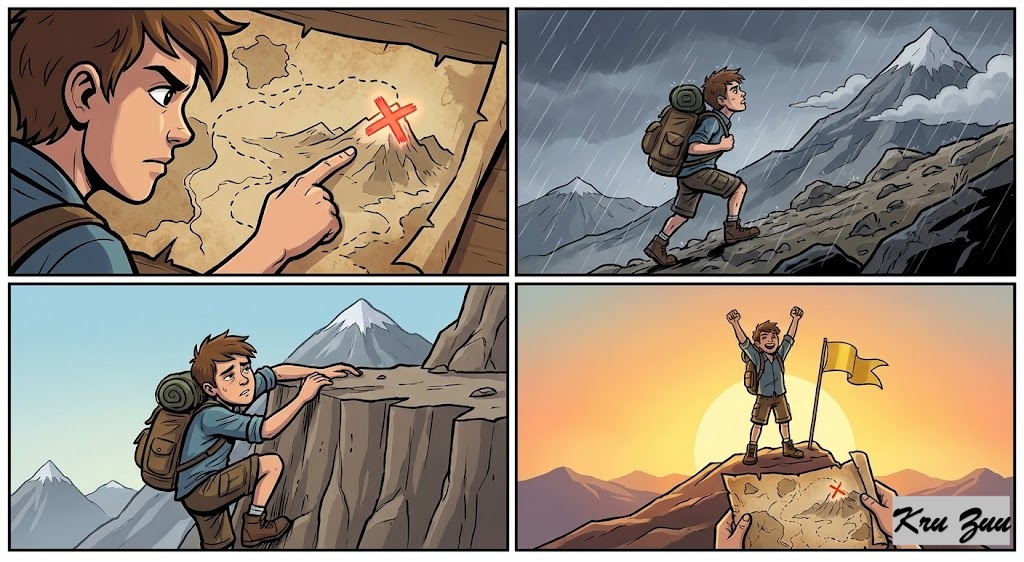
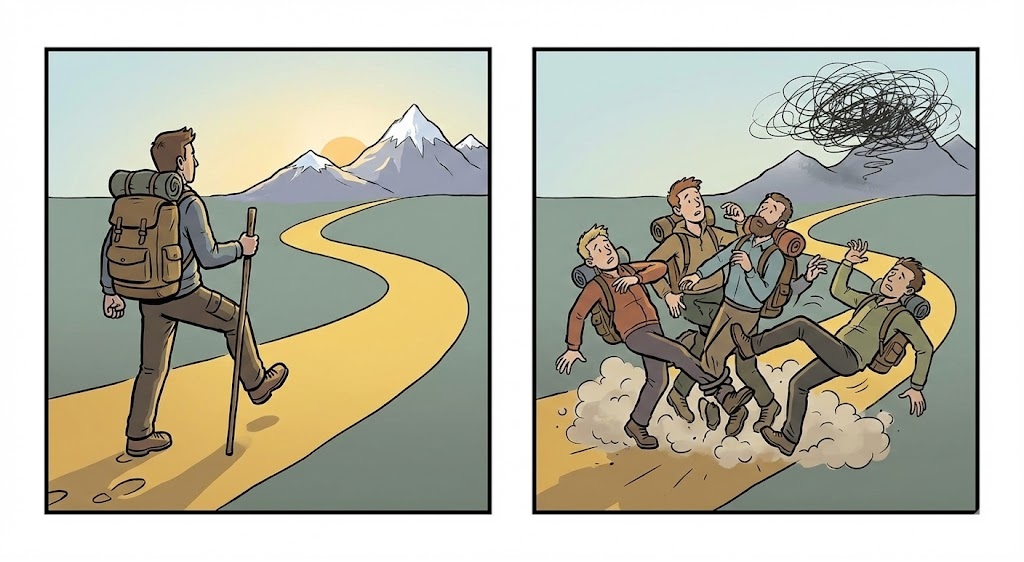
    You see the big mountain, but you look at your feet. 🦶 You don’t worry about Mile 500; you only focus on Step 1. You say: “I don’t have to finish today. I just have to start.” You write one sentence. You learn one word. You do one push-up. You respect the power of small progress.

    The Result? You build momentum. Suddenly, you look back and realize you have climbed the mountain without even noticing the pain. You build consistency, not excuses. 🚀


    ⚖️ The Reality


    Motion vs. Stagnation. We live in a world of “instant results.” We want the six-pack abs in 2 days, or fluency in English in 2 weeks. But big things are just a pile of small things added together. A blizzard is just billions of single snowflakes. A novel is just thousands of single words. If you refuse to take the first step because the journey looks long, you guarantee failure.


    💎 The Secret

    You cannot teleport to the finish line. Success is not a giant leap; it is a million tiny, boring steps taken one after another. Action cures fear.

    🧐 The Anatomy of the Proverb


    This is your reminder that every expert was once a beginner.


    Journey (Noun): A long trip or process of personal change.


    Thousand Miles (Noun Phrase): A metaphor for a very large, difficult, or long-term task.


    Single (Adjective): Just one; individual.


    Step (Noun): The movement of lifting your foot and putting it down; a small action.


    Simpler Version: Start small. / Don’t give up before you start.


    📚 Vocabulary Vault


    Daunting (Adjective): Seeming difficult to deal with; intimidating. (e.g., “The exam looked daunting.”) 😨


    Procrastinate (Verb): To delay or postpone action; putting off doing something.


    Momentum (Noun): The quantity of motion of a moving body; the strength or force gained by motion. 🚄


    Objective (Noun): A goal or aim.


    Consistent (Adjective): Acting or done in the same way over time, especially so as to be fair or accurate. (The key to success!).


    🧠 Grammar Focus: Singular vs. Plural Subjects


    Notice the grammar in the proverb: “A journey (singular subject) … begins (singular verb + s).” It is NOT “The journey begin.”


    Wrong: “Learning English take a long time.”
    Right: “Learning English takes a long time.”


    Tip: When a gerund (verb + ing, like “Learning”) is the subject, treat it as singular (It).

    📜 History: Origin and Spread


    Who said this wise sentence?


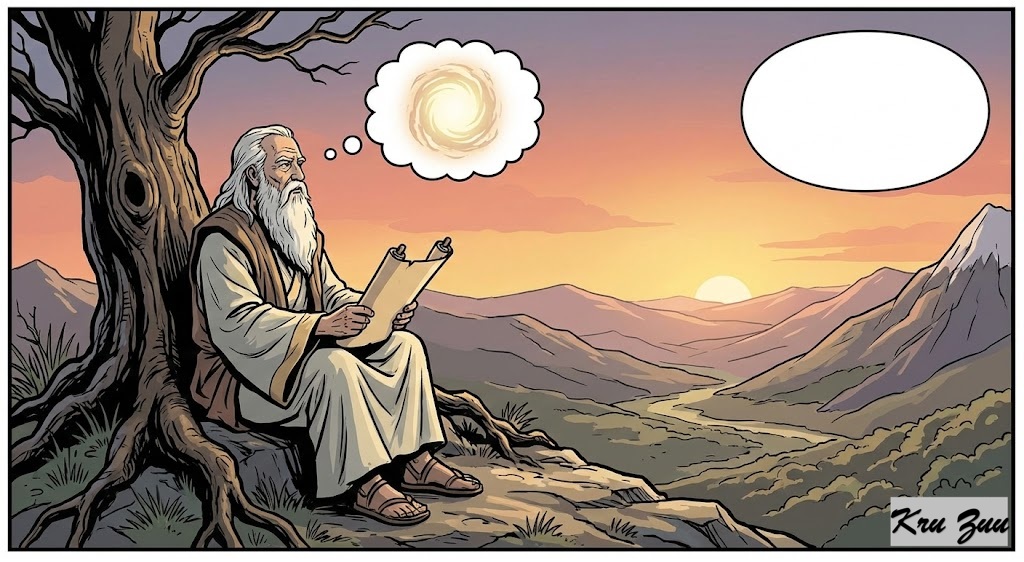
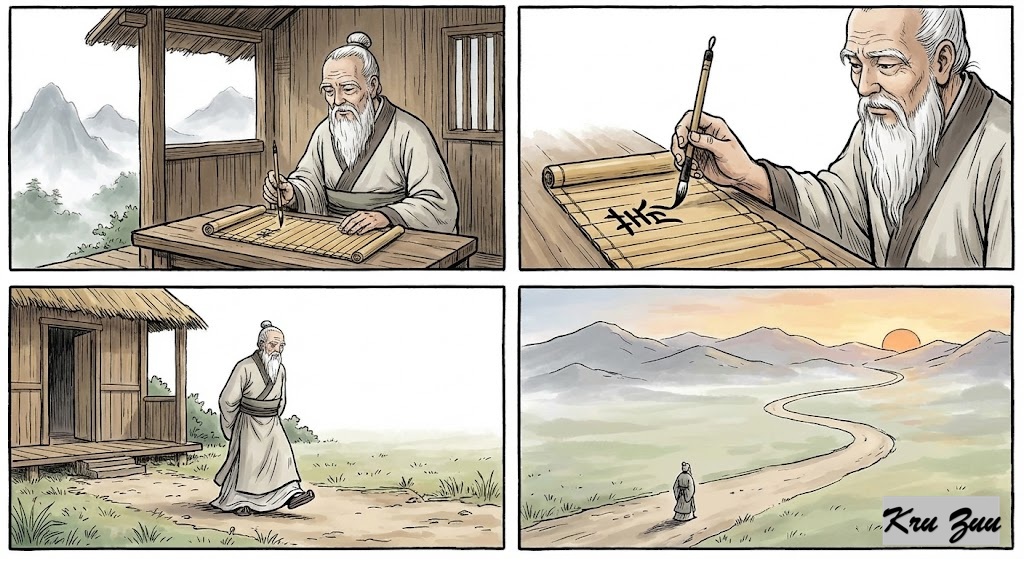
    The Origin: This is an ancient Chinese proverb, written by the philosopher Laozi (Lao Tzu) around the 6th century BC. It appears in the Tao Te Ching (Chapter 64).


    The Translation: The original Chinese text mentions “1,000 li” (a Chinese unit of distance). It translates literally to: “A journey of a thousand li starts beneath one’s feet.”


    Global Cousins


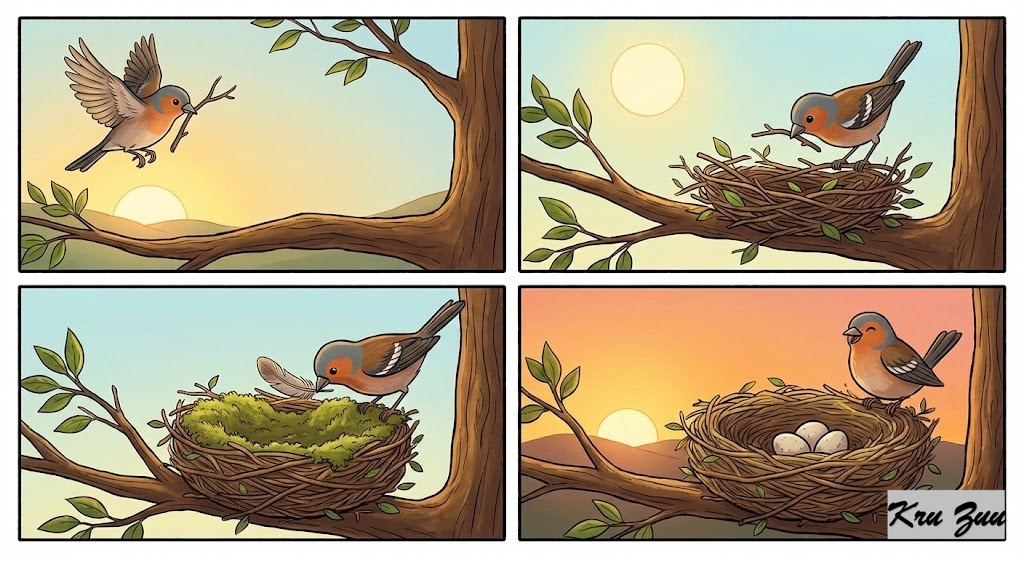
    🇫🇷 French: “Petit à petit, l’oiseau fait son nid.” (Little by little, the bird makes its nest).


    🇹🇷 Turkish: “Damlaya damlaya göl olur.” (Drop by drop, it becomes a lake).


    🇮🇹 Italian: “Chi va piano, va sano e va lontano.” (He who goes slowly, goes safely and goes far).

    🎭 Short Story: The Mountain of Mangoes 🥭🐱🐔🐸


    Let’s visit the magical forest to see who reaches the top.


    🌟 The Cast


    Cleo the Cat: Stylish, lazy, wants instant success. 😼


    Cluck the Chicken: Nervous, overthinker, panic-prone. 🐔


    Fred the Frog: Quiet, steady, disciplined. 🐸


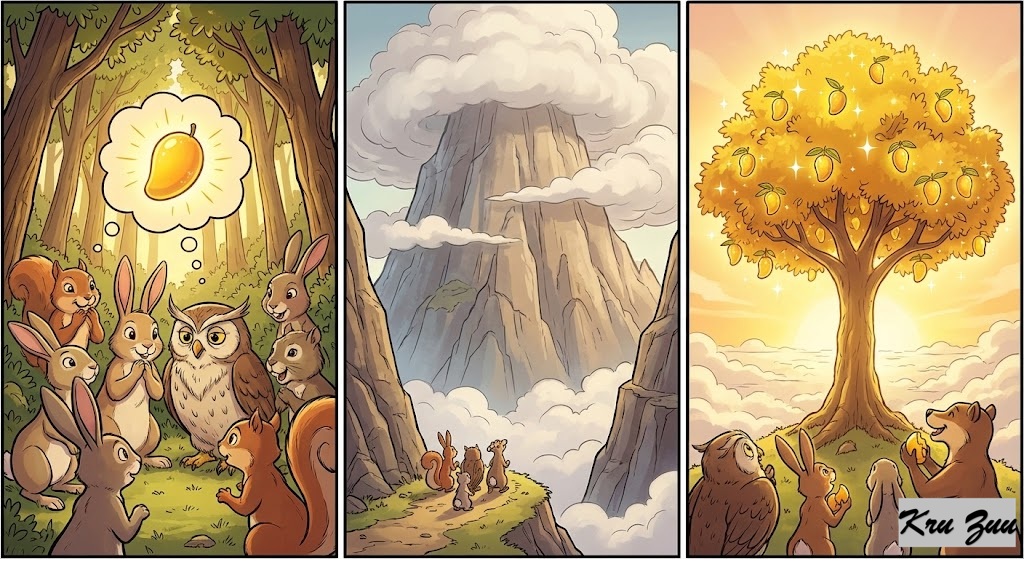
    The Situation: A rumor spreads in the forest. On top of the “High Peak Mountain,” there is a legendary Golden Mango Tree. The mangoes grant eternal happiness (and they are delicious). The mountain is huge. It touches the clouds.


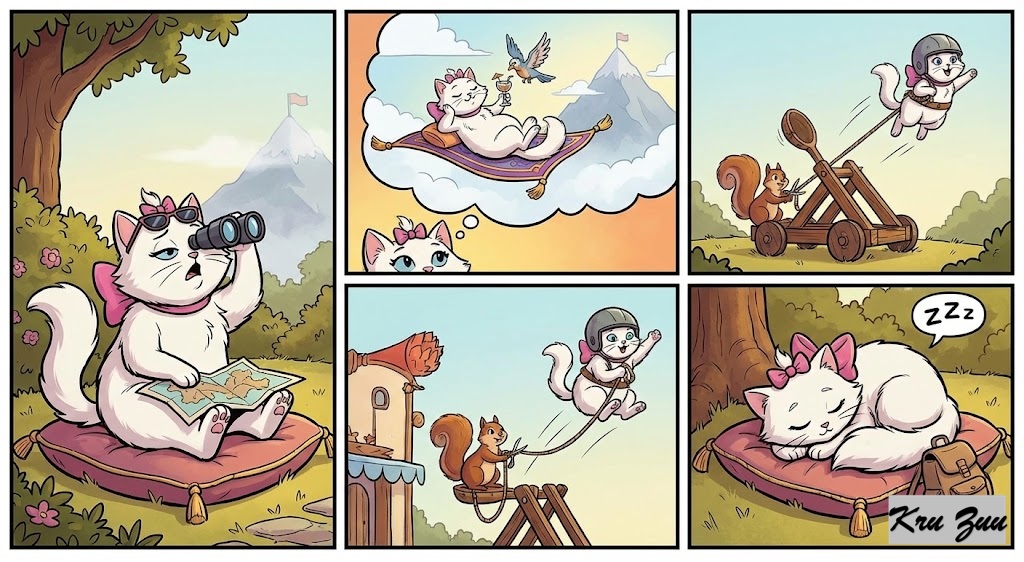
    The Conflict: Cleo looks up and sighs. “Ugh. That is miles away. My paws are too delicate for hiking. I need a magic carpet. Or maybe a catapult? I’m not going unless I can get there fast.” She sits down to nap.


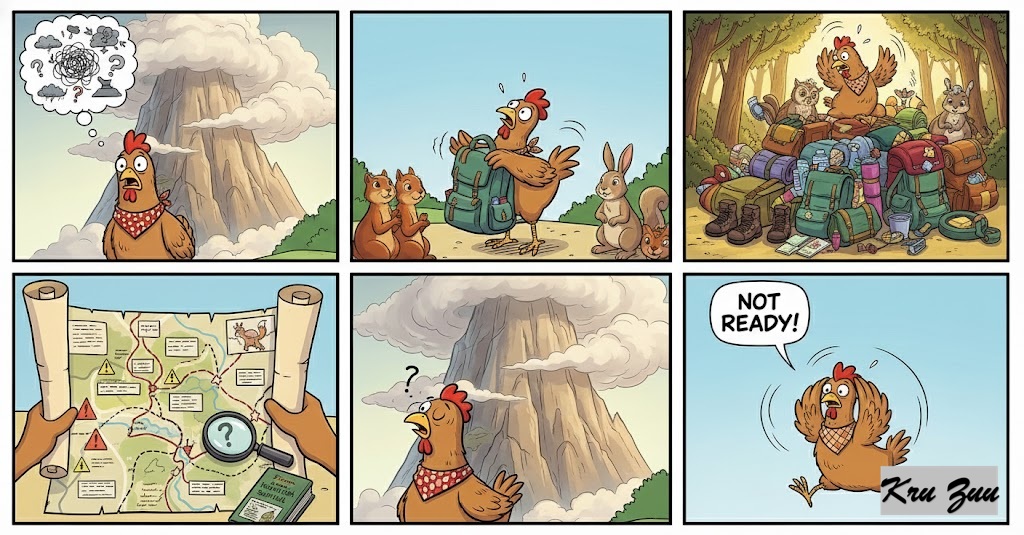
    Cluck looks up and panics. “Oh no! It’s too high! What if it rains? What if I get hungry? What if my shoes untie? I need to pack 50 bags! I need to plan the route! I’m not ready!” Cluck runs around in circles, packing and unpacking his backpack.


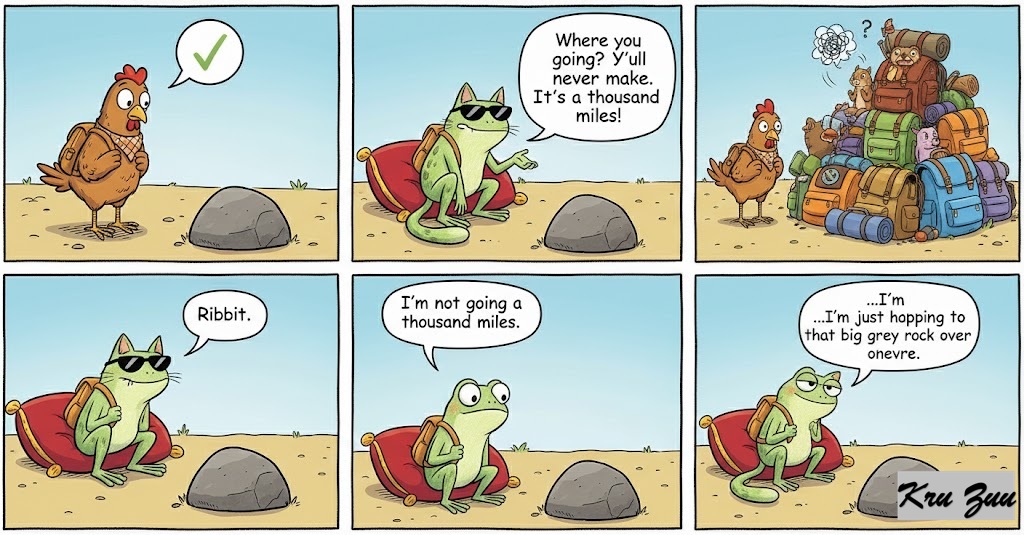
    The Reaction: Fred adjusts his backpack. He doesn’t look at the top of the mountain. He looks at the ground in front of him. “Ribbit,” says Fred. “Where are you going?” asks Cleo. “You’ll never make it. It’s a thousand miles!” “I’m not going a thousand miles,” Fred says calmly. “I am just hopping to that big gray rock over there.”


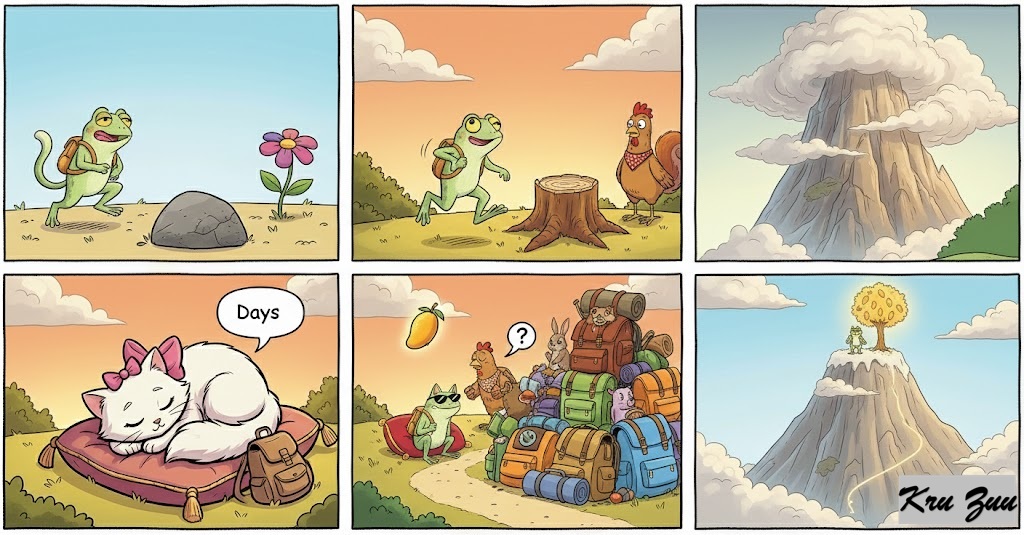
    The Lesson: Fred hops to the rock. Then he hops to a flower. Then to a tree stump. Days pass. Cleo is still sleeping at the bottom, waiting for a magic carpet. Cluck is still at the bottom, worrying about the weather forecast. But Fred? Fred is gone. He just kept hopping. One hop at a time. A week later, a mango falls from the sky and hits Cleo on the head. She looks up. Tiny Fred is waving from the top of the mountain. He didn’t have magic. He just didn’t stop.


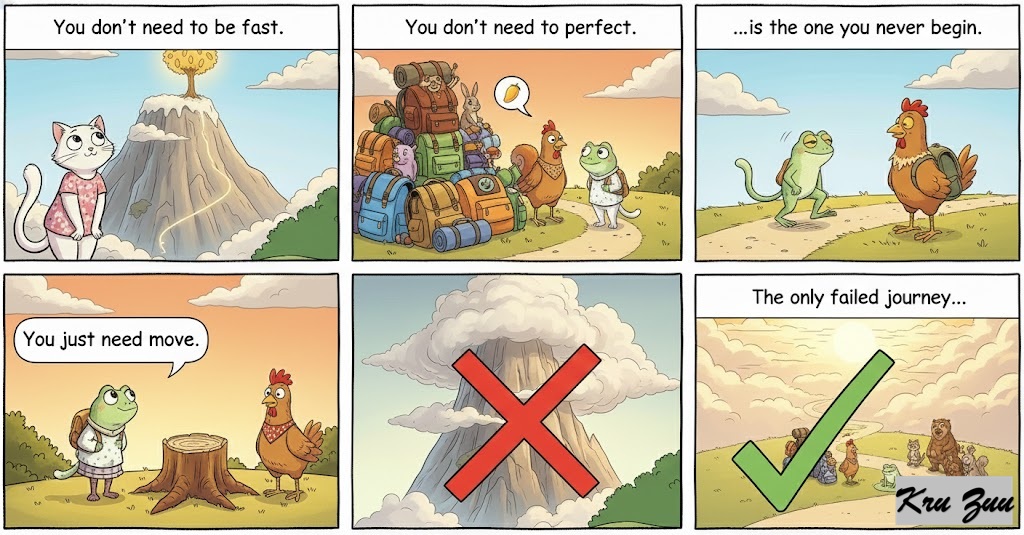
    The Moral: You don’t need to be fast. You don’t need to be perfect. You just need to move. The only failed journey is the one you never begin.

    🎓 Lesson for English Learners


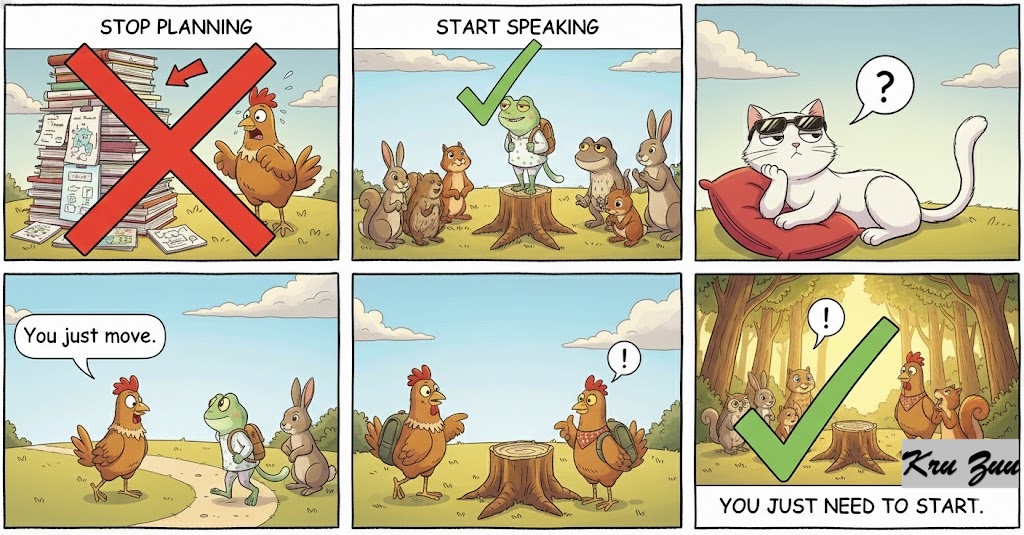
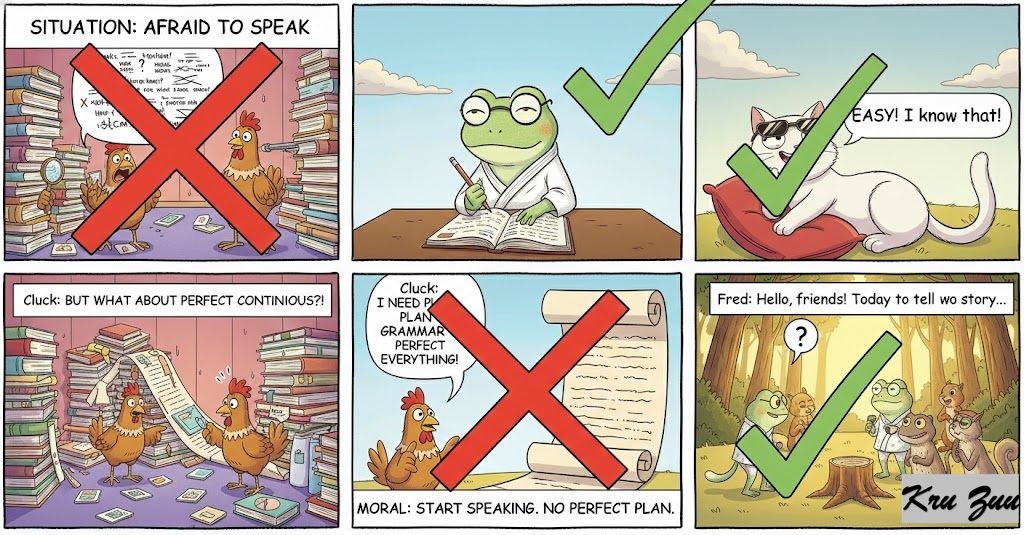
    Stop Planning, Start Speaking.


    Situation: You want to speak English fluently, but you are afraid of making mistakes. You spend all your time reading grammar books but never speaking.


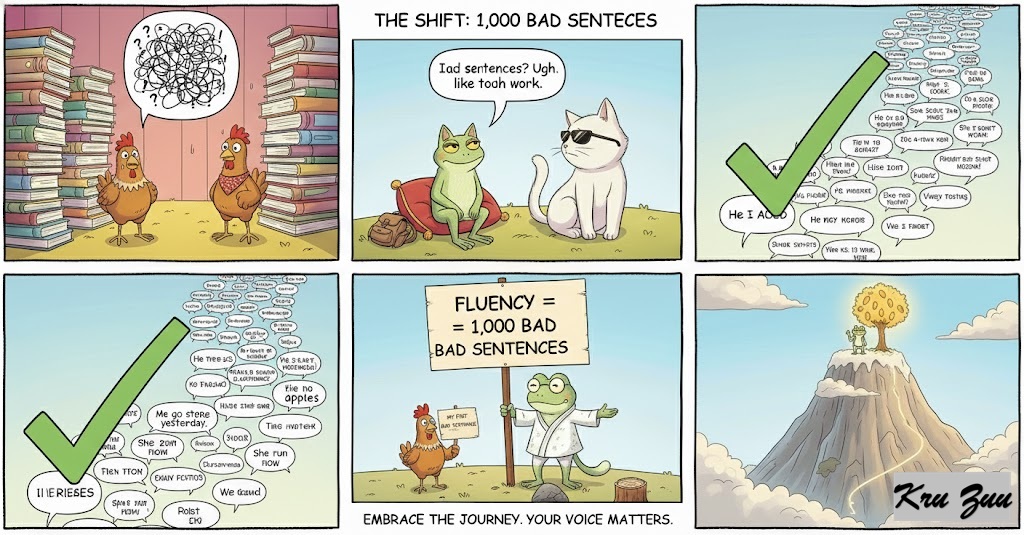
    The Shift: Realize that fluency is built by 1,000 bad sentences.


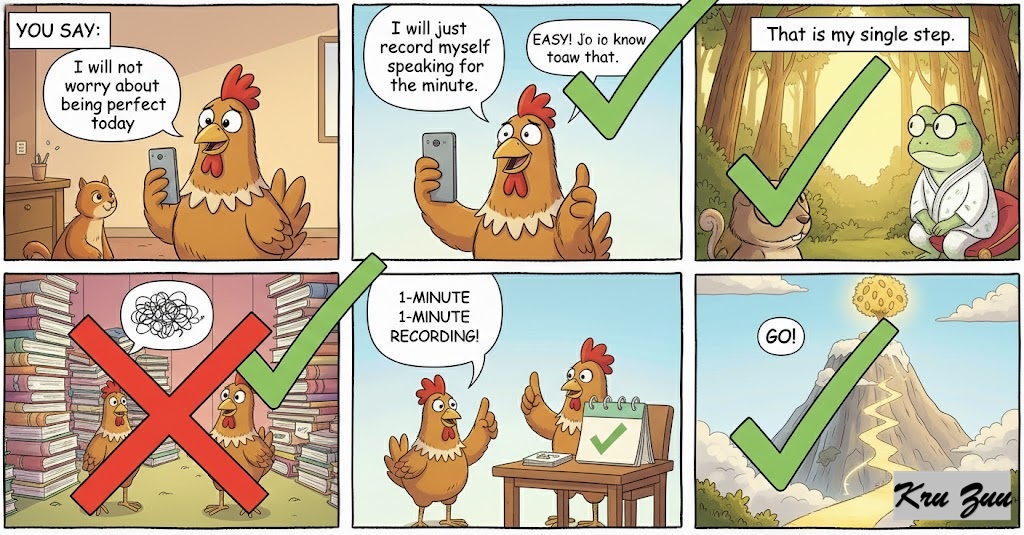
    You Say: “I will not worry about being perfect today. I will just record myself speaking for 1 minute. That is my single step.”


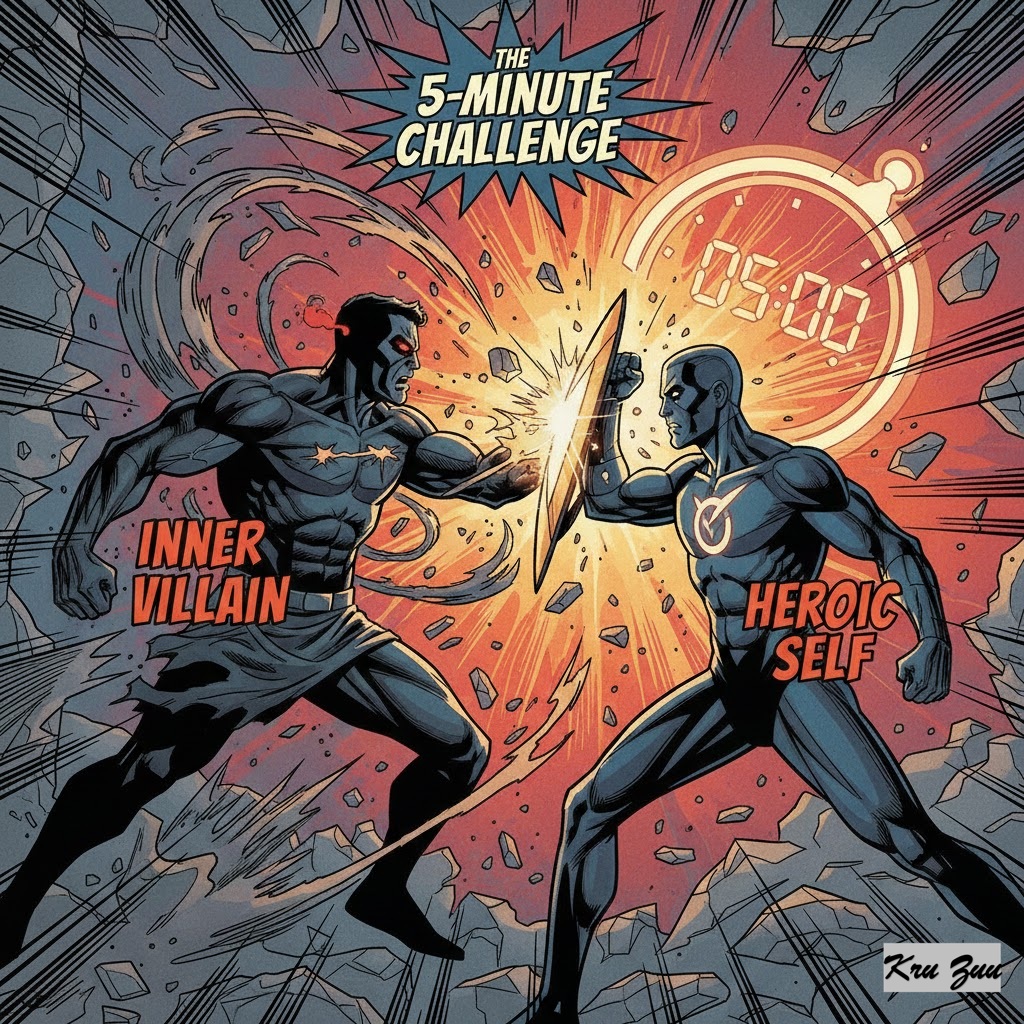
    💬 Your Turn: The “5-Minute” Challenge 🚀


    Do you want to defeat your inner “Villain”?


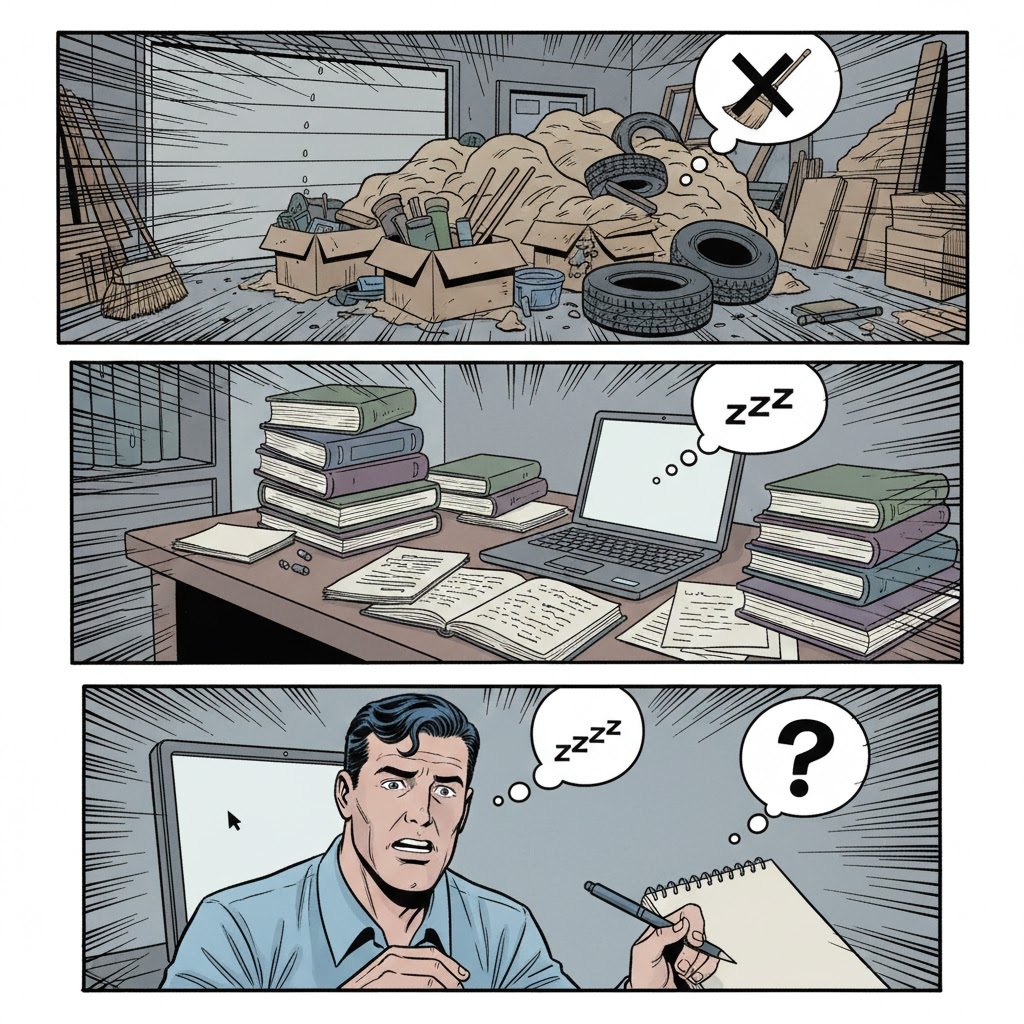
    The Challenge: Think of a task you have been avoiding (cleaning the garage, studying for an exam, writing a report).

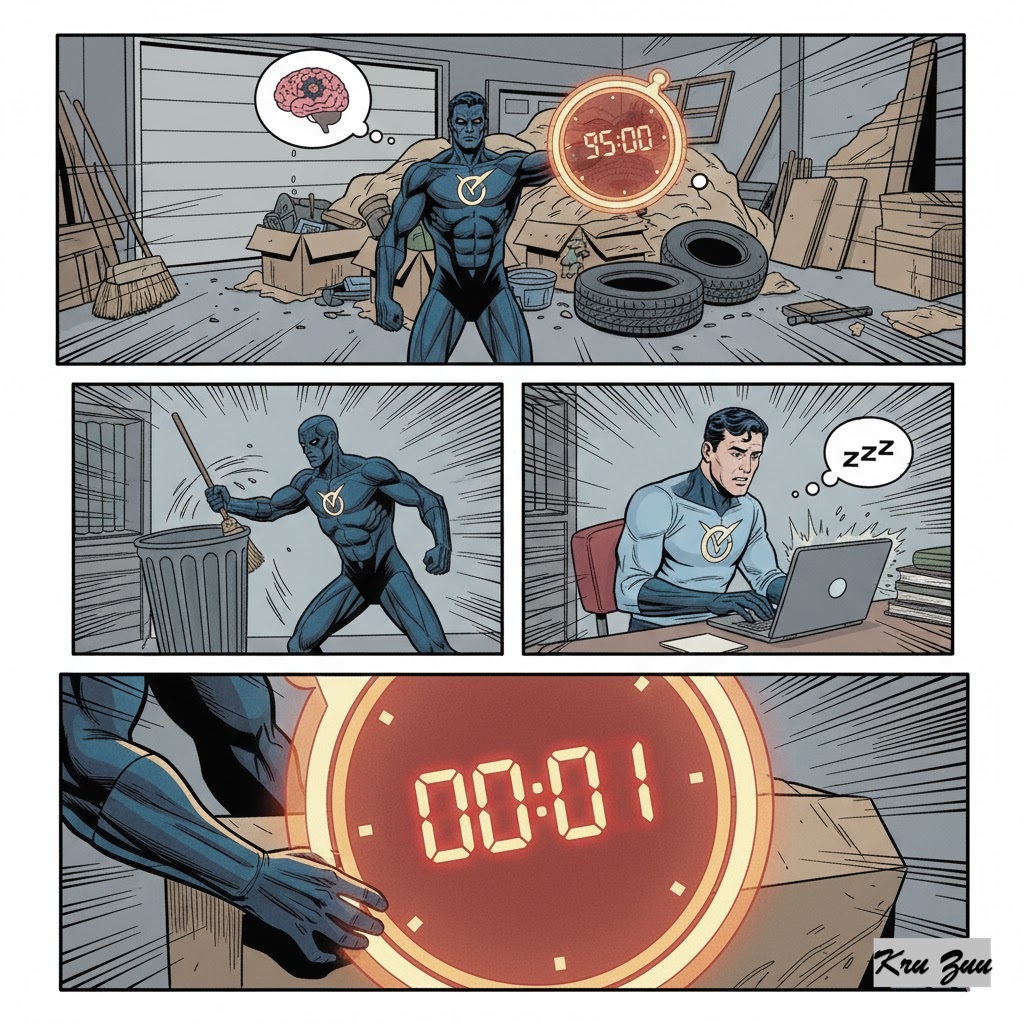
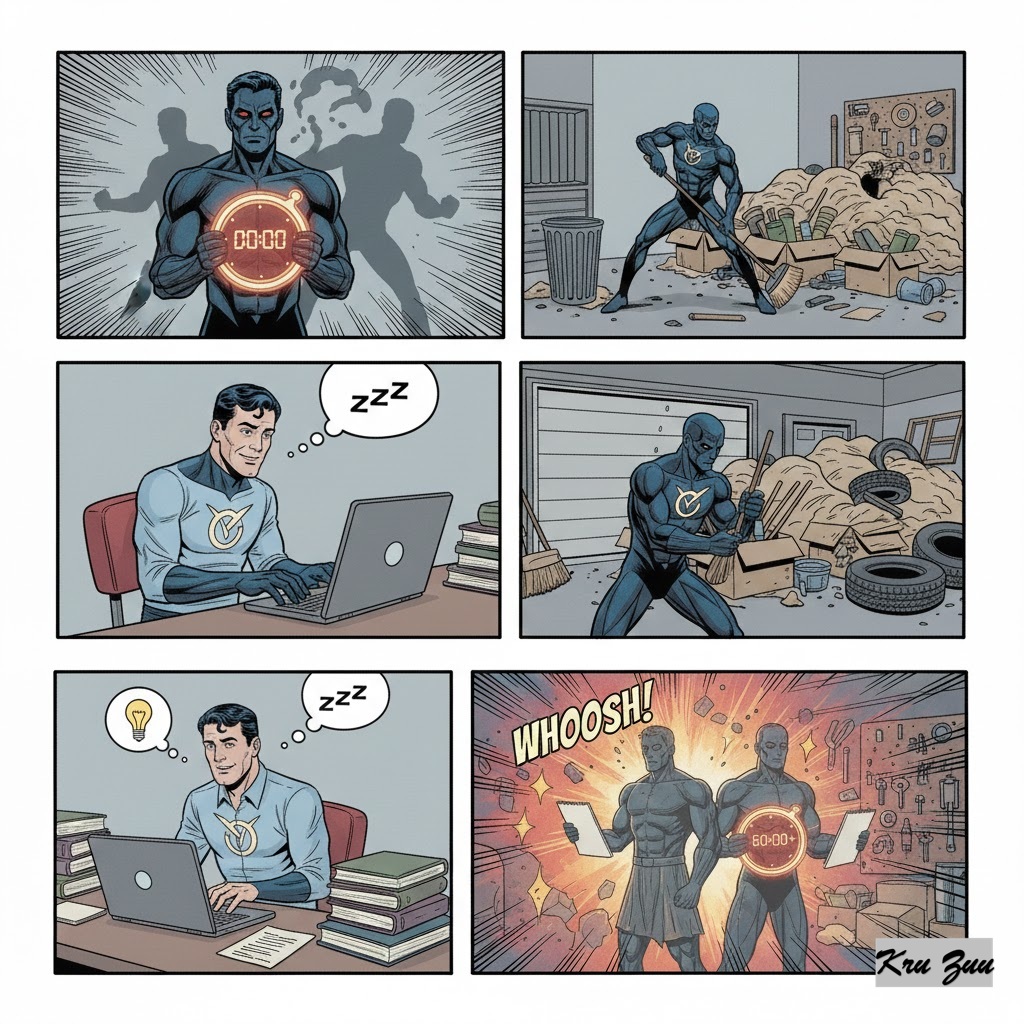
    The Action: Commit to doing it for ONLY 5 minutes. Tell yourself: “I will just do this for 5 minutes, then I can stop.”

    The Magic: Usually, once you start, the “pain” of starting disappears, and you will keep going. The hardest part is the first step.


    👇 Question for the comments: What is one big goal you have right now? What is the smallest step you can take today to start it? Tell us below!

    By Zubeyir YURTKURAN

    https://www.facebook.com/BrainBattleground/

    https://www.facebook.com/zubeyr.yurtkuran/

    https://www.instagram.com/zubeyryurtkuran/
    https://www.youtube.com/@BrainBattleground-b3p

    https://www.instagram.com/brainbattleground/

  • 💎 The Daily Shield: The Law of Hidden Value

    💎 The Daily Shield: The Law of Hidden Value

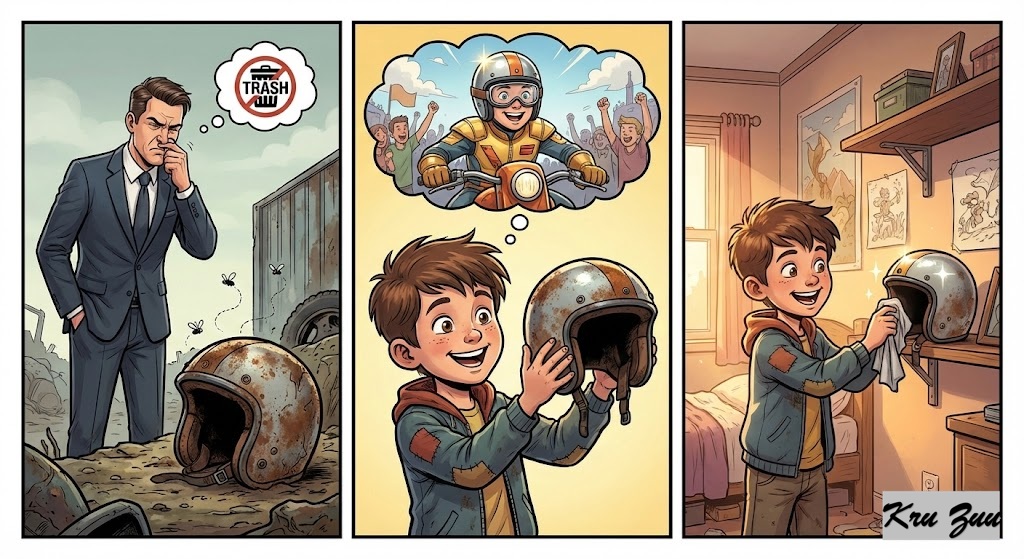
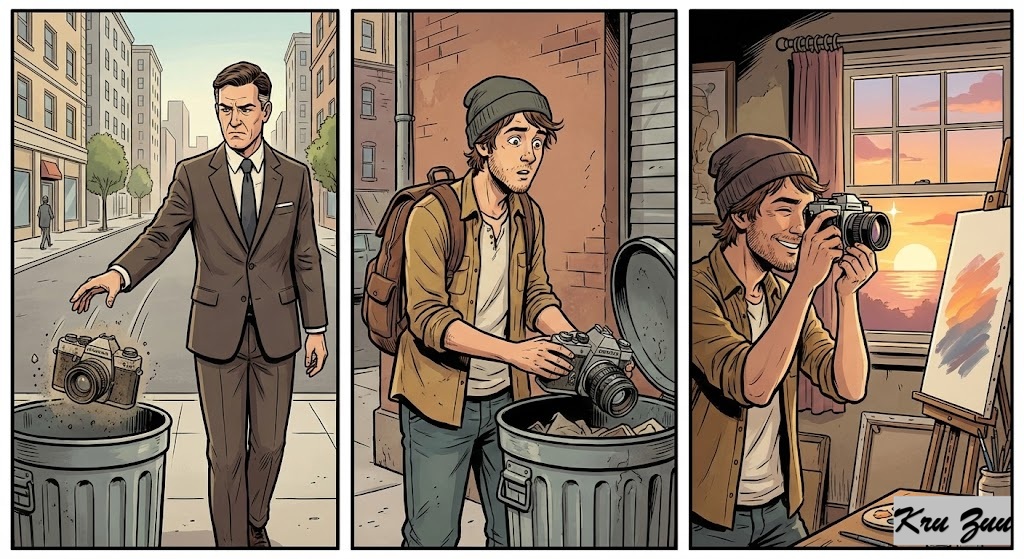
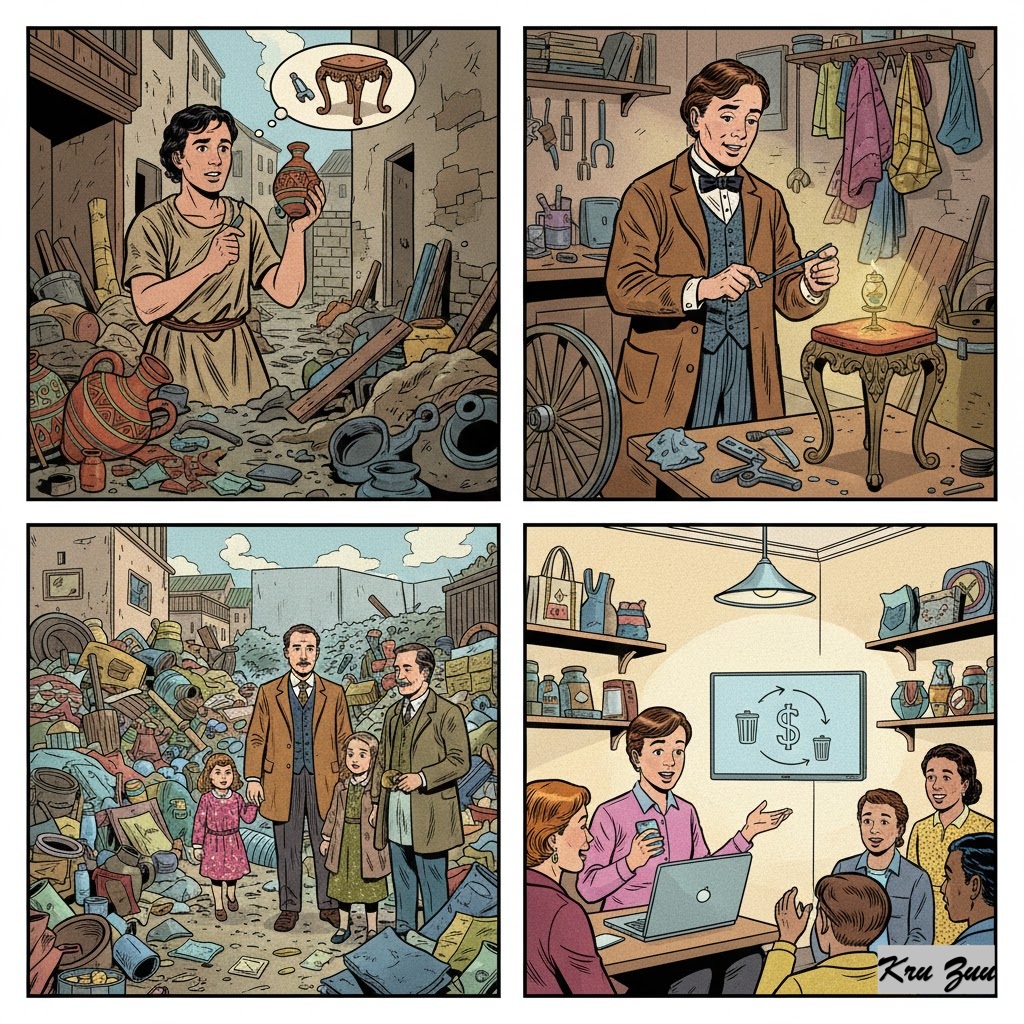
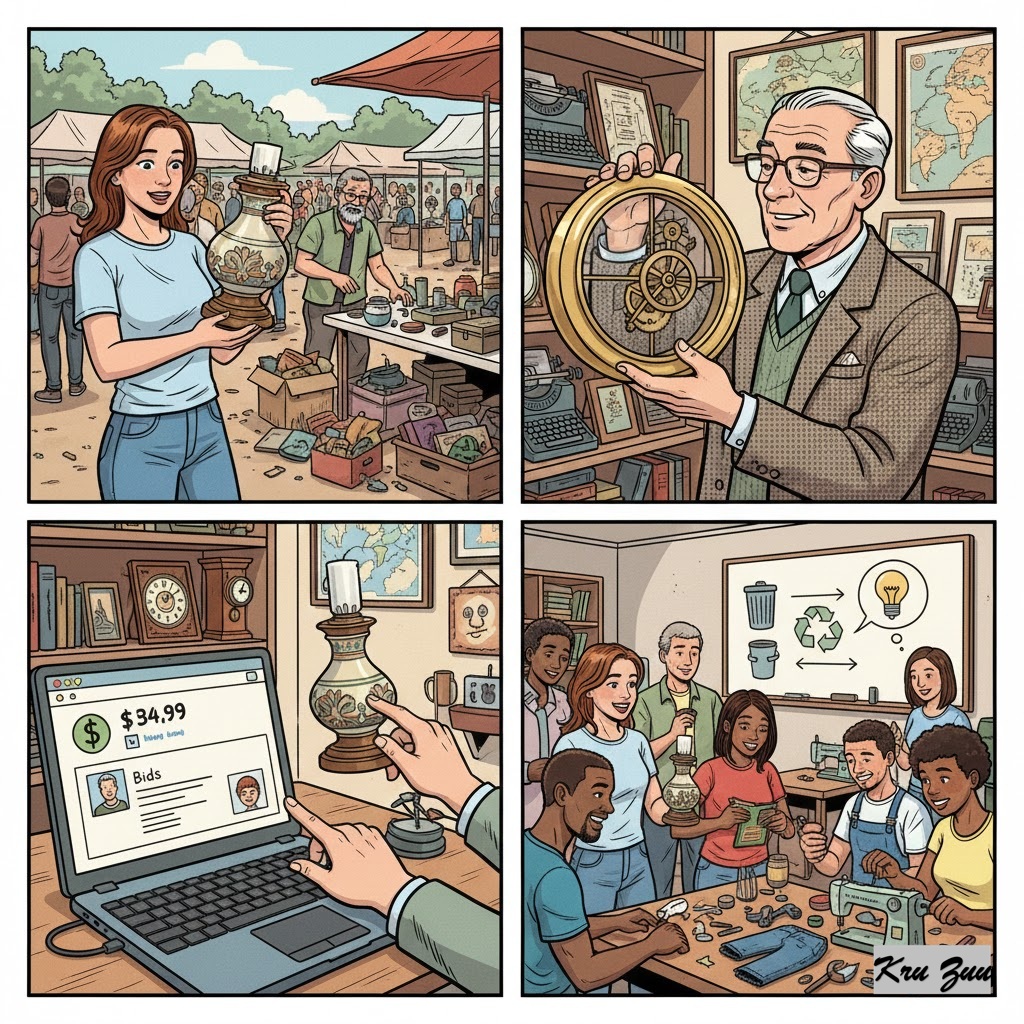
    “One man’s trash is another man’s treasure.”


    😈 The Villain (The Blind Consumer)


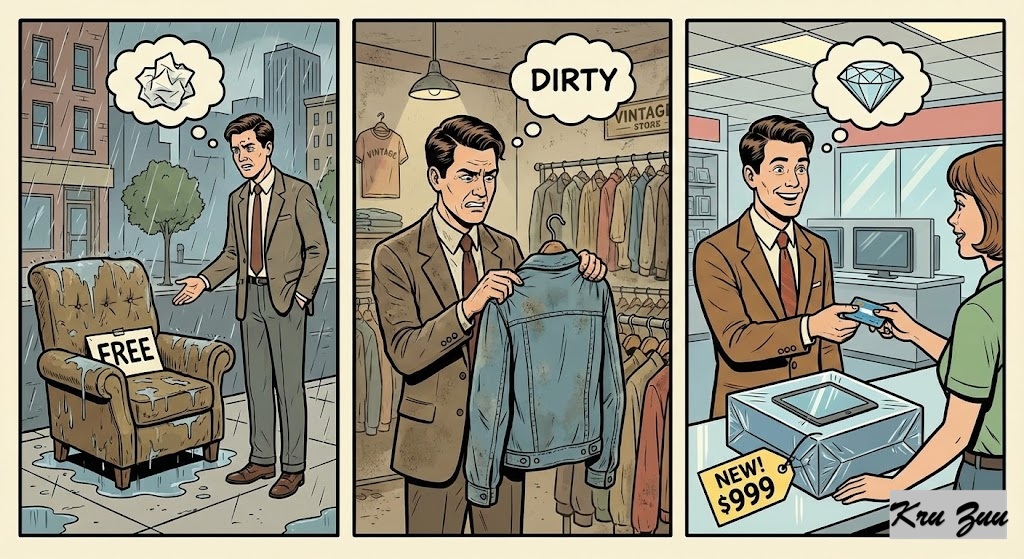
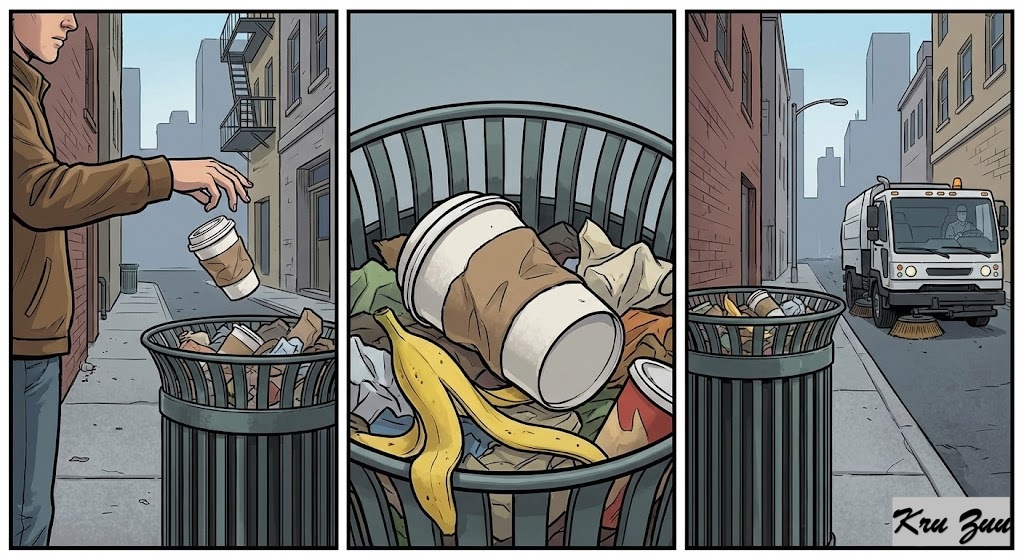
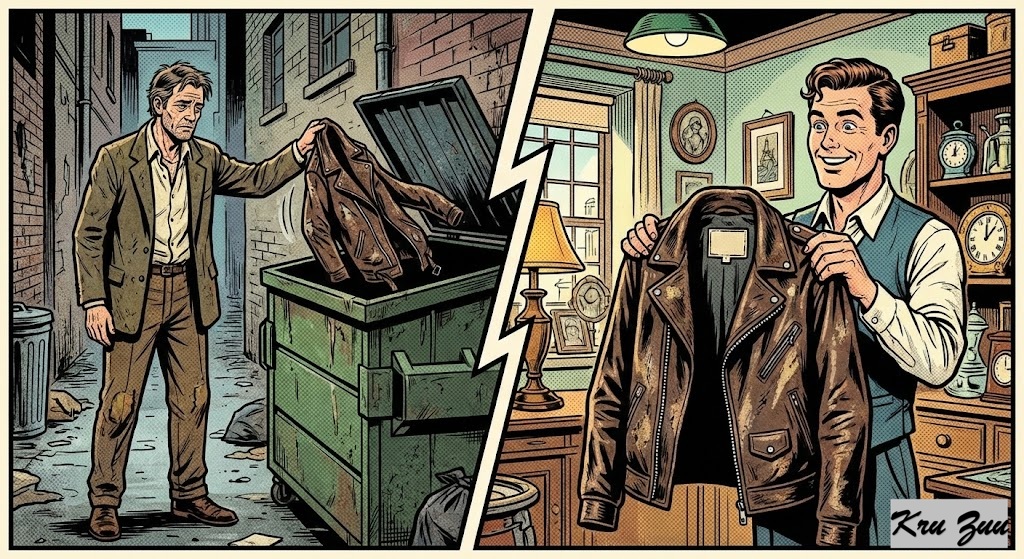
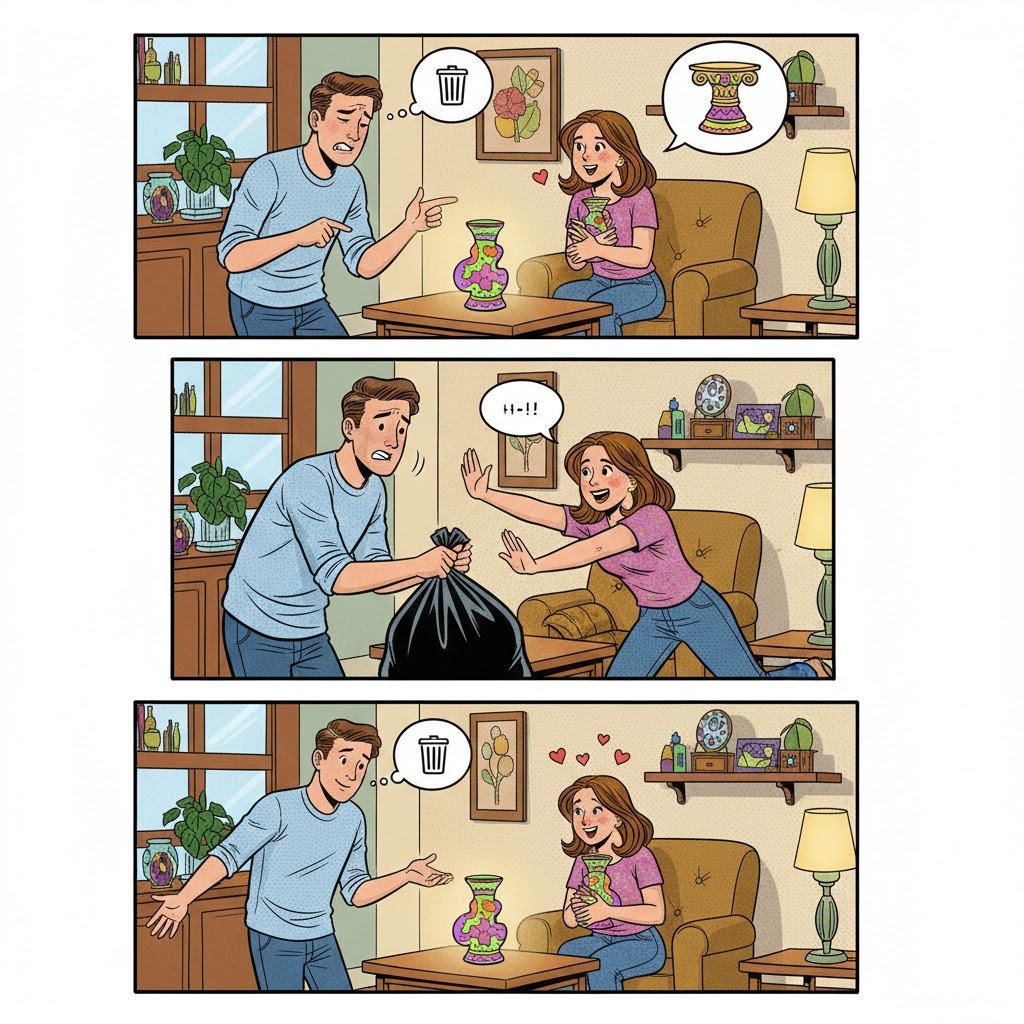
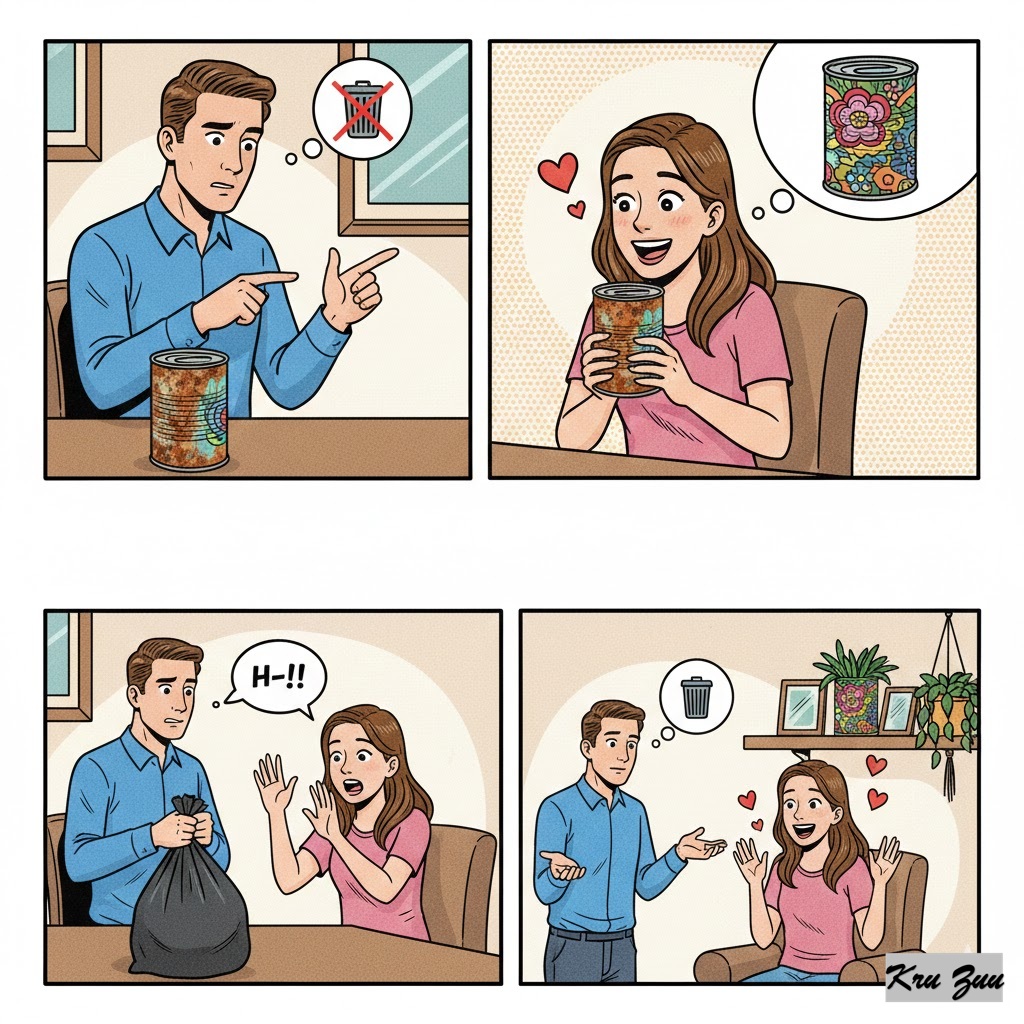
    You see an old chair on the sidewalk or a dusty vintage jacket. You think: “Ew, gross. Why is that junk still there?” 🗑️ You only value things that are shiny, brand-new, and straight off the shelf. You believe that Price = Value. If it’s cheap or used, it’s worthless to you.

    The Result? You spend a fortune chasing trends. Your home is full of generic items everyone else has. You lack the “vision” to see potential, and you’re stuck in a cycle of expensive, disposable consumption.


    😇 The Hero (The Alchemist)


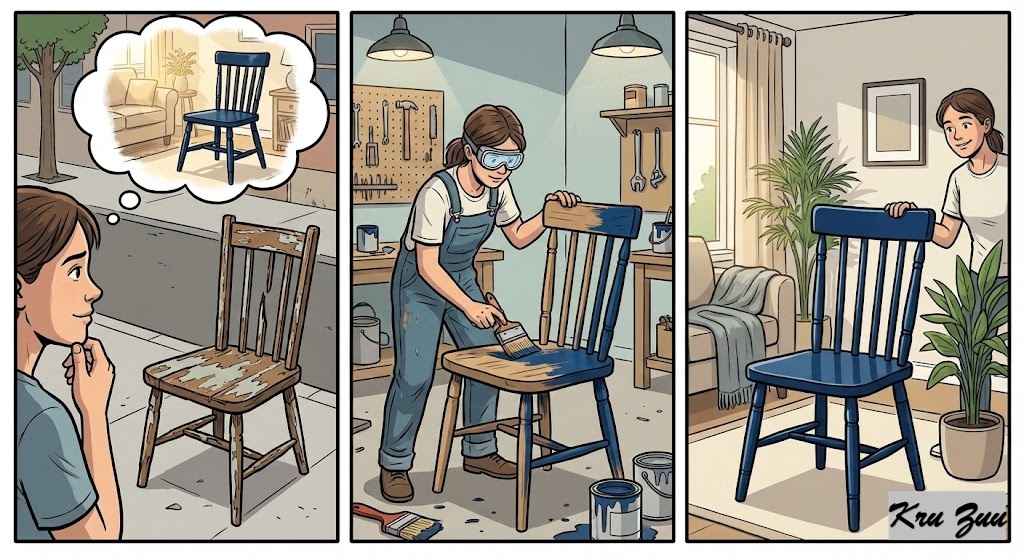
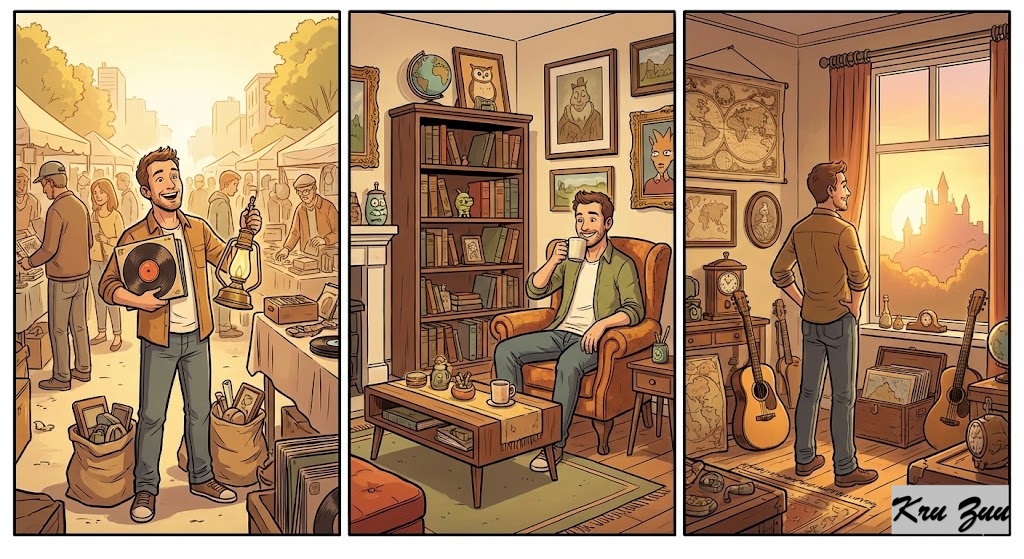
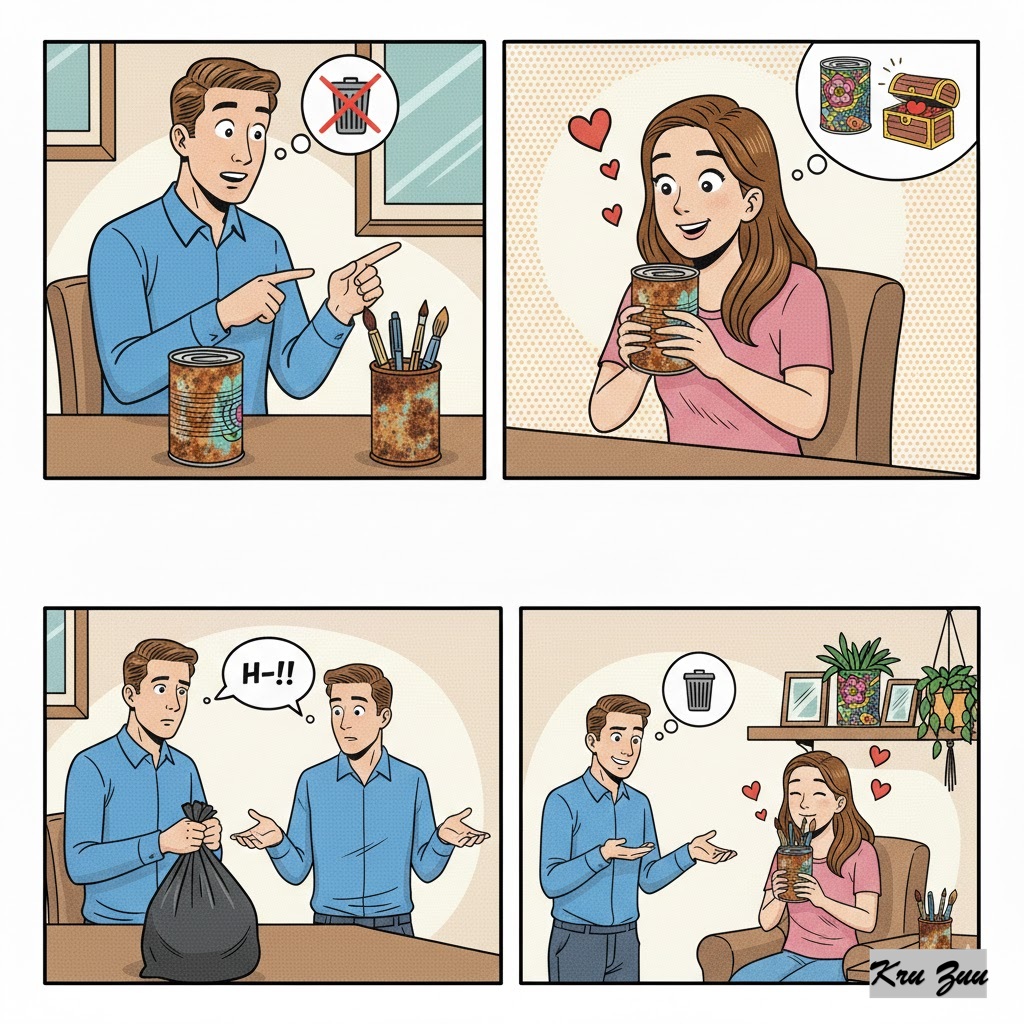
    You see the same old chair and think: “With a bit of sanding and blue paint, this is a masterpiece.” 🎨 You don’t look at what an object is; you look at what it can be. You recognize that value is subjective.

    The Result? You find incredible deals. Your life is filled with unique, soulful items. You save money while building a world of “treasures” that others missed. You understand that perspective is the ultimate wealth-builder. 🏰


    ⚖️ The Reality


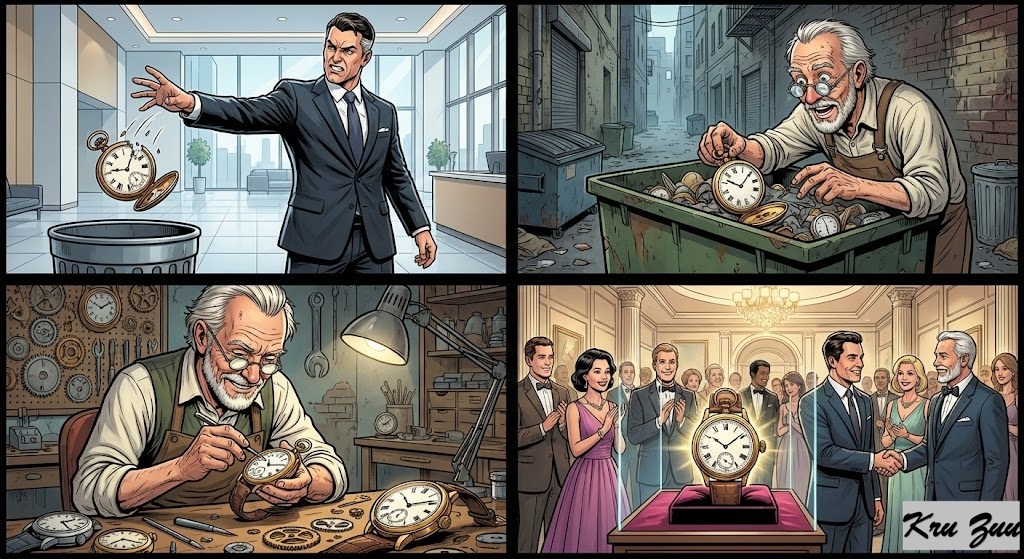
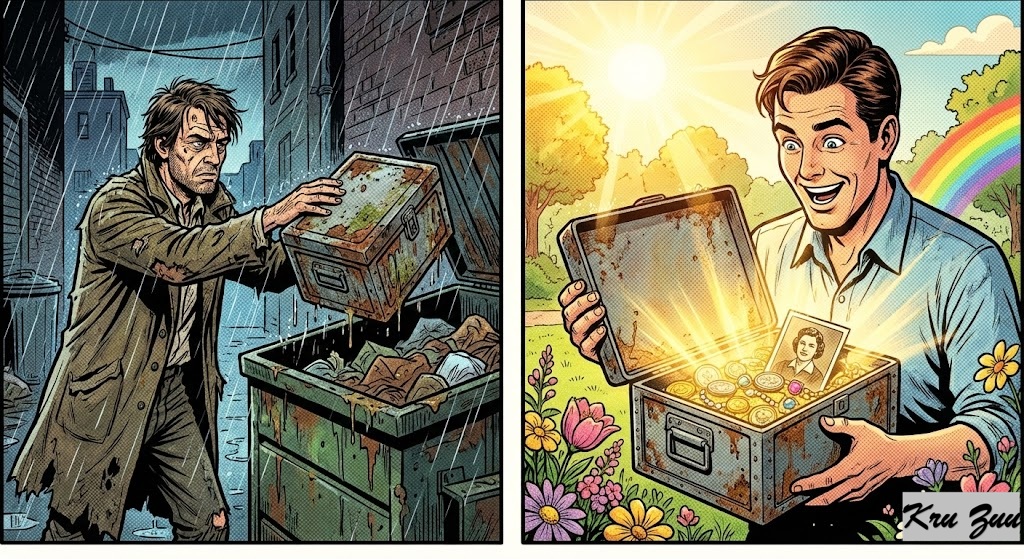
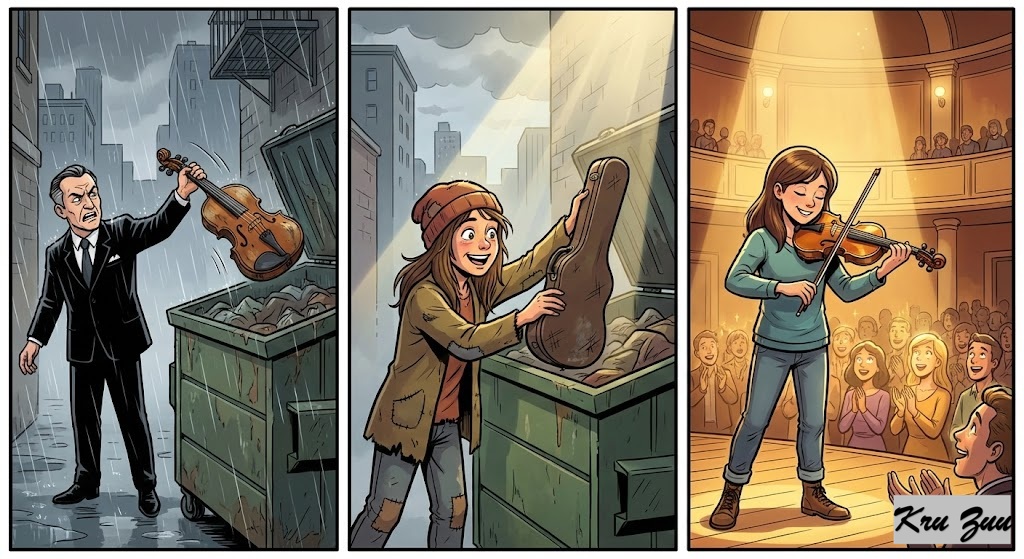
    Value is not a fixed number, it is a matter of perception. A broken watch is “trash” to a businessman, but a “treasure” to a watchmaker who needs parts. We live in a throw-away culture, but the most successful people find opportunities where others see obstacles. Wealth is often hidden in plain sight, disguised as “junk.”

    🧐 The Anatomy of the Proverb


    This is your reminder that worth is in the eye of the beholder.


    One man’s (Noun): A person’s subjective experience.


    Trash (Noun): Something discarded, worthless, or unwanted.


    Is another man’s (Phrase): Simultaneously becomes someone else’s.


    Treasure (Noun): Something of great value, beauty, or importance.


    Simpler Version: People have different ideas about what is valuable. / Don’t judge a book by its cover.


    📚 Vocabulary Vault


    Subjective (Adjective): Based on or influenced by personal feelings or tastes. 🎨


    Obsolete (Adjective): No longer produced or used; out of date.


    Upcycle (Verb): To reuse discarded objects or material in such a way as to create a product of higher quality or value than the original. ♻️


    Beholder (Noun): A person who sees or observes someone or something.


    Perception (Noun): The way in which something is regarded, understood, or interpreted.


    🧠 Grammar Focus: Idioms for Perspective


    We use this idiom to explain different tastes or to justify why we keep something others might find “ugly.”


    Friend: “Why do you keep that rusty old tin can on your desk?”


    You: “Actually, it’s a 1920s limited edition tea box. I’m using it as a pen holder. You know what they say: One man’s trash is another man’s treasure.”

    📜 History: Origin and Spread


    Where did this philosophy of “trash to cash” begin?


    The Origin: While the sentiment is ancient, the specific phrasing became popular in the mid-19th century. It mirrors the Latin proverb “Quod aliis cibus est aliis fuat acre venenum” (What is food to one may be bitter poison to others).


    The Logic: It’s the foundation of the Secondary Market (eBay, flea markets, antique shops). It highlights the human ability to innovate and find use where others find waste.


    Global Cousins


    🇫🇷 French: “Le bonheur des uns fait le malheur des autres.” (The happiness of some makes the unhappiness of others — similar context of differing perspectives).


    🇯🇵 Japanese: “Tade kuu mushi mo sukizuki.” (There are even bugs that eat knotweed, meaning tastes vary).

    🎭 Short Story: The Rusty Iron Key 🔑🐱🐔🐸


    🌟 The Cast


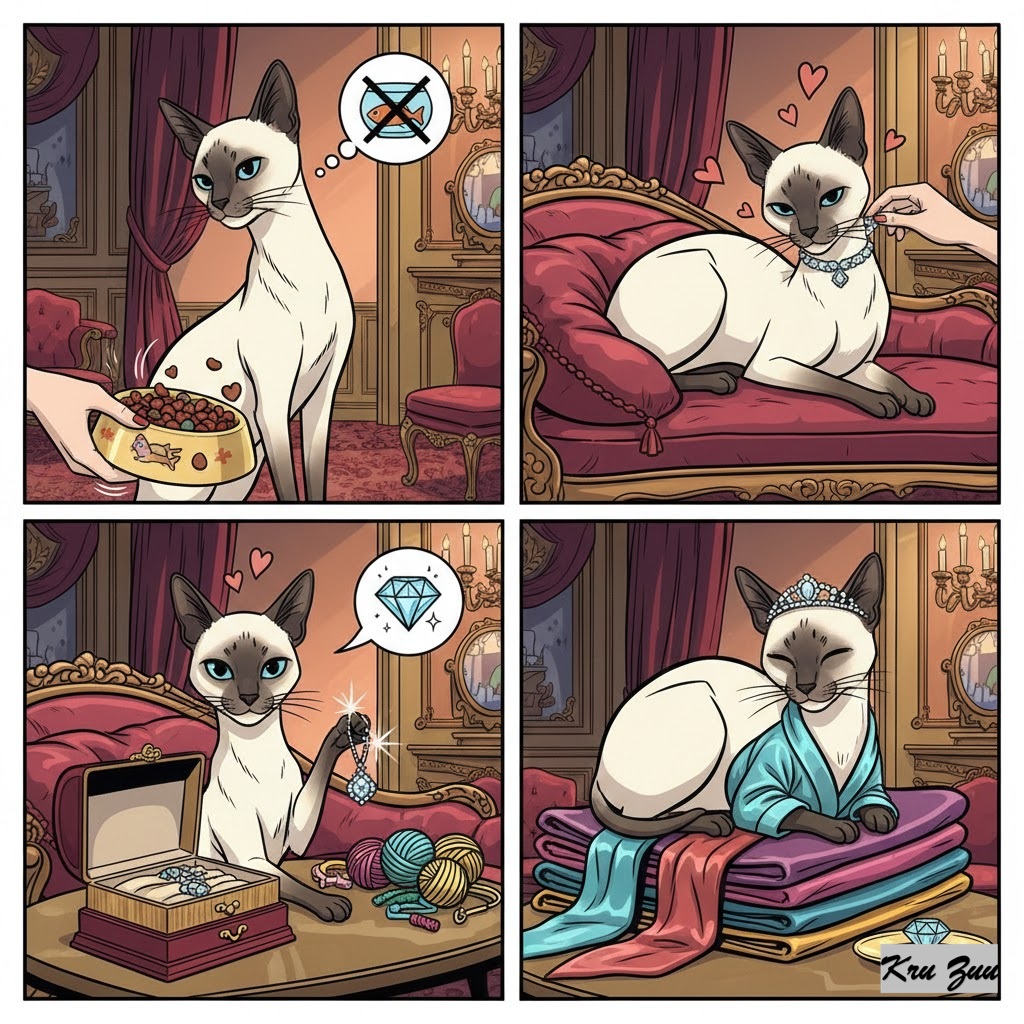
    Cleo the Cat: Elegant, only likes diamonds and silk. 😼


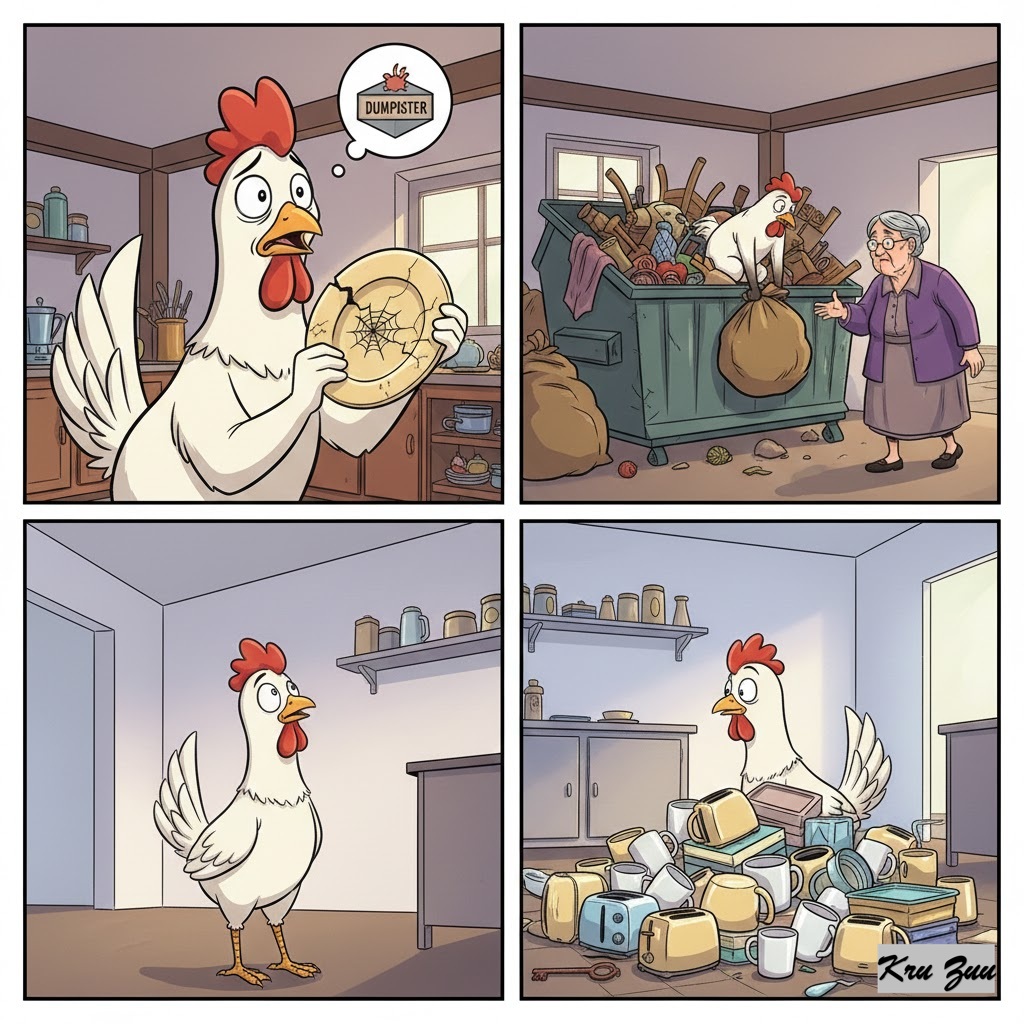
    Cluck the Chicken: Panics easily, throws away everything “old.” 🐔


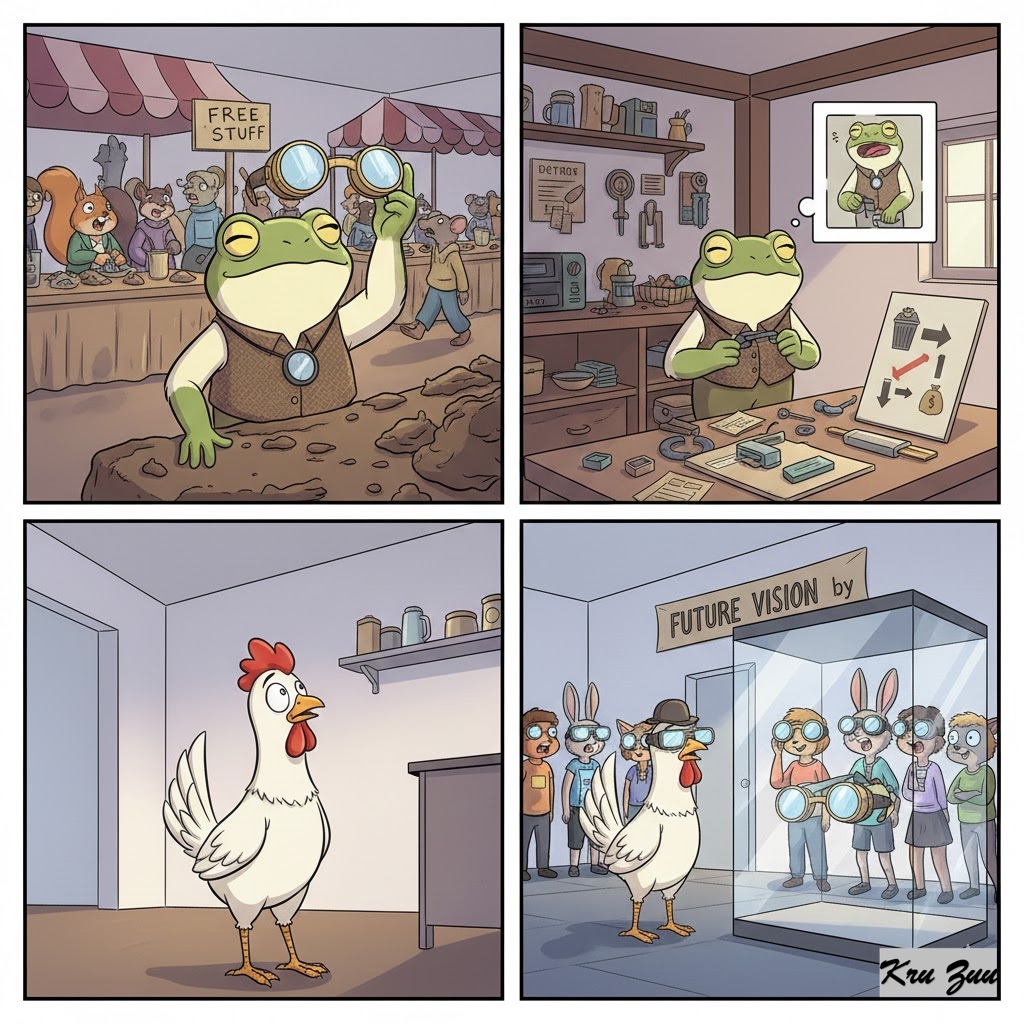
    Fred the Frog: The calm collector who sees the future. 🐸


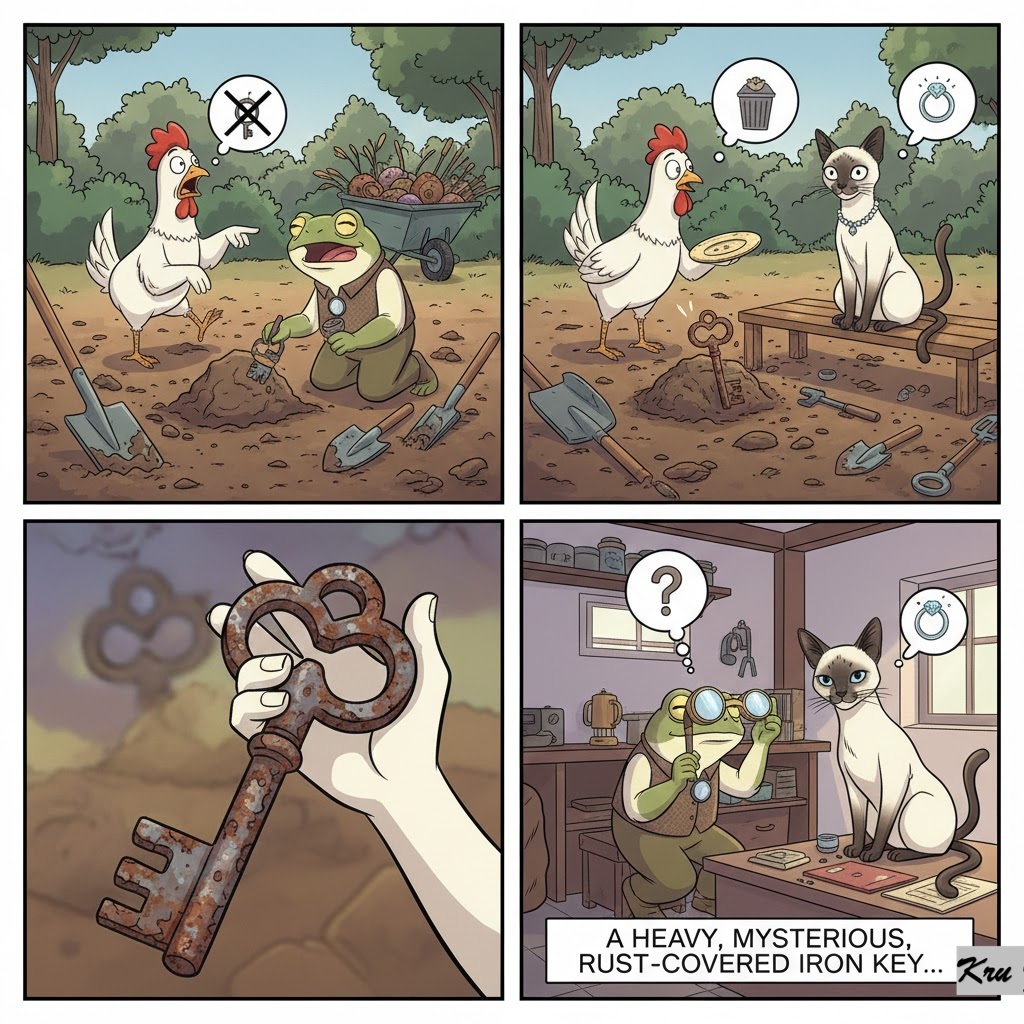
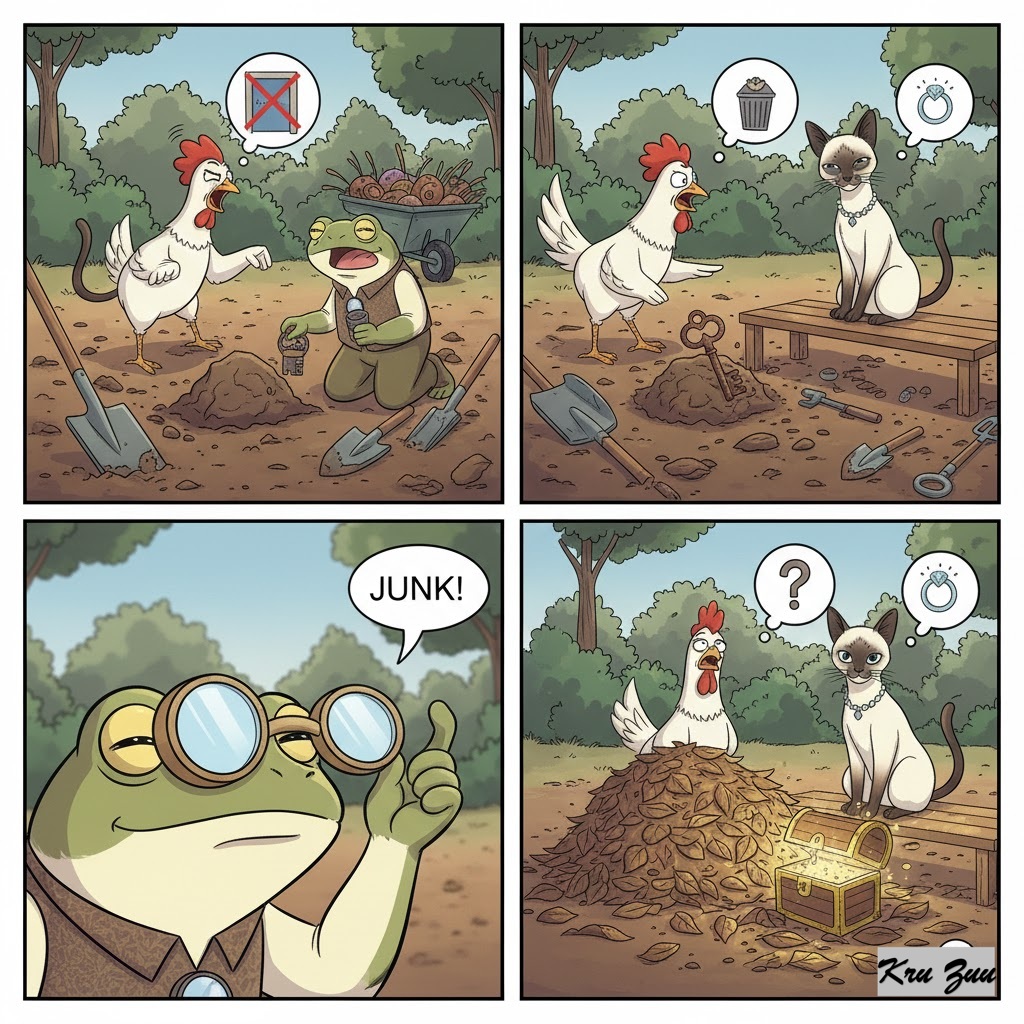
    The Situation: While cleaning the community garden, the trio finds a heavy, rusted, dirt-covered iron key.


    The Conflict: “Ugh! Get it away from me!” Cleo hissed, flicking her tail. “It’s filthy and probably covered in germs. It belongs in the bin!” Cluck squawked in agreement. “It’s useless! It doesn’t open my modern electronic coop door. It’s just heavy junk!” Cluck kicked the key into a pile of dead leaves.


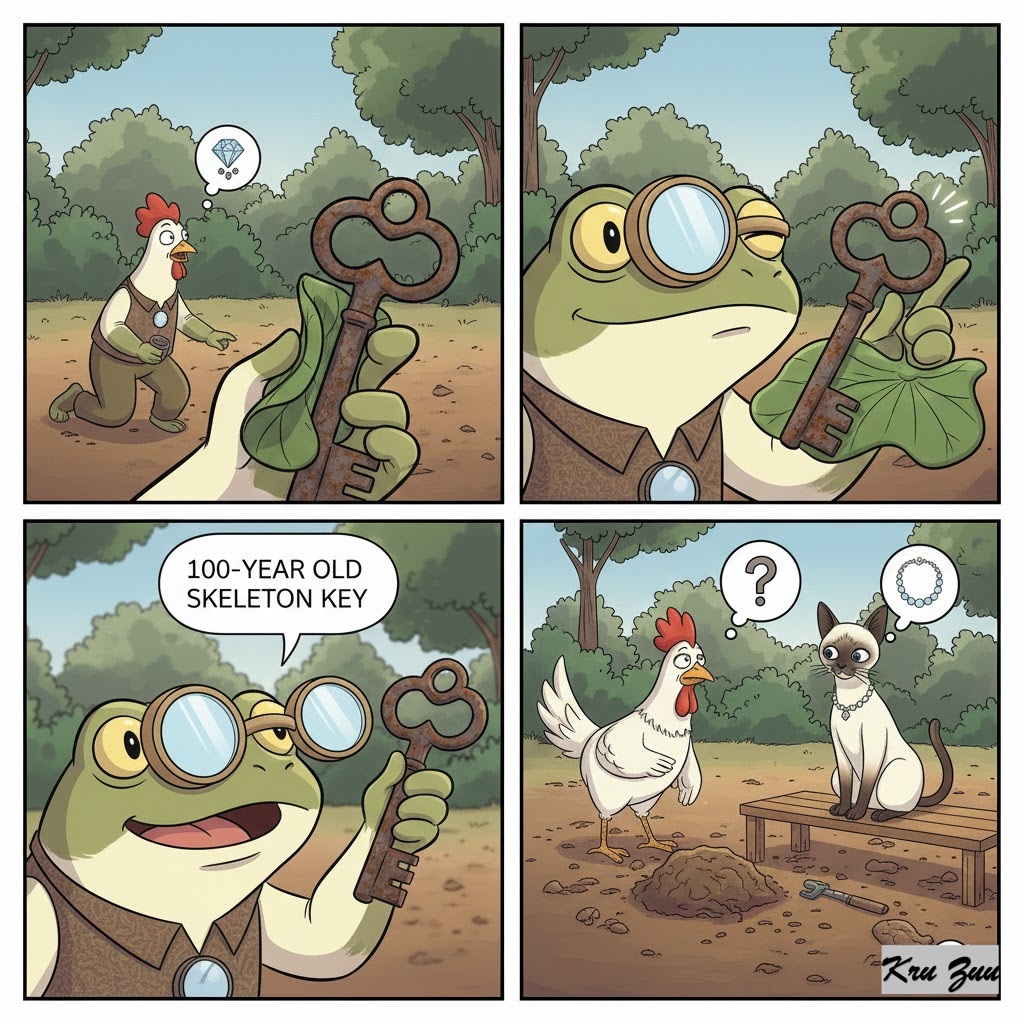
    The Reaction: Fred hopped over and picked up the key. He wiped away the mud with a lily pad. “Ribbit,” Fred whispered. “This isn’t junk. Look at the craftsmanship. This is a 100 year old skeleton key.”


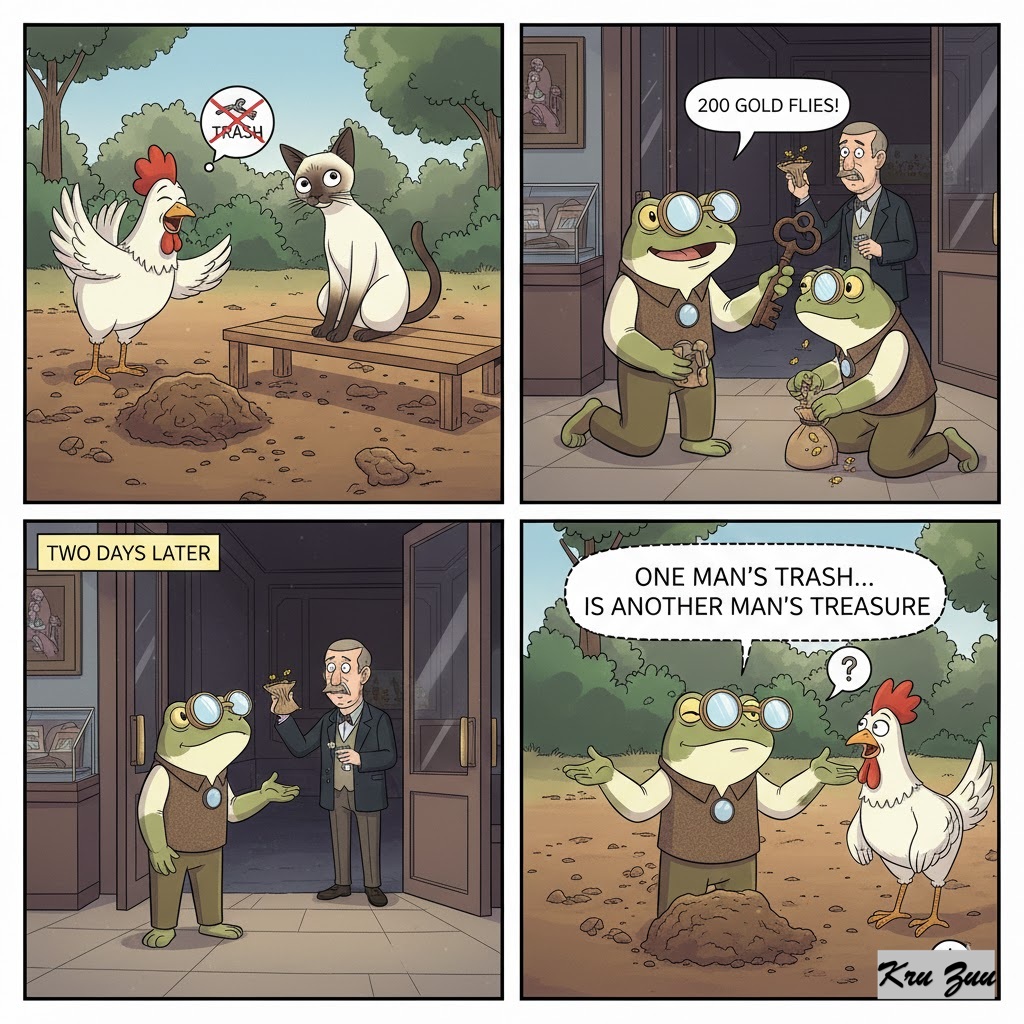
    The Resolution: Cleo laughed. “Have fun with your ‘trash,’ Fred.” Two days later, Fred returned. He had polished the key until it glowed like silver and attached it to a leather cord. He sold it to a local museum collector for 200 Gold Flies. Cleo and Cluck stared, mouths open. “You got all that for that piece of garbage?” Fred adjusted his glasses. “To you, it was a piece of metal. To the collector, it was the missing piece of history. One man’s trash, my friends… is another man’s treasure.”


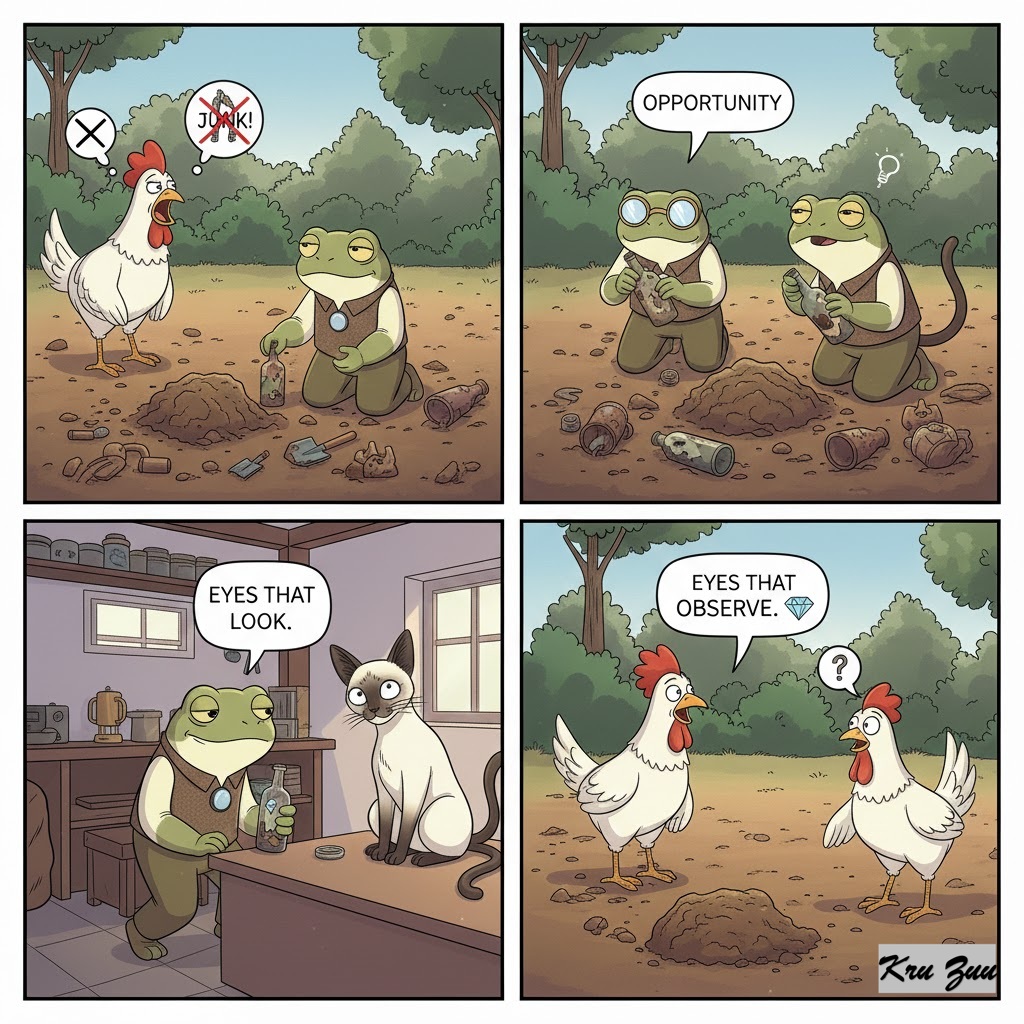
    The Moral: Eyes that look see “junk.” Eyes that observe see “opportunity.” 💎

    🎓 Lesson for English Learners


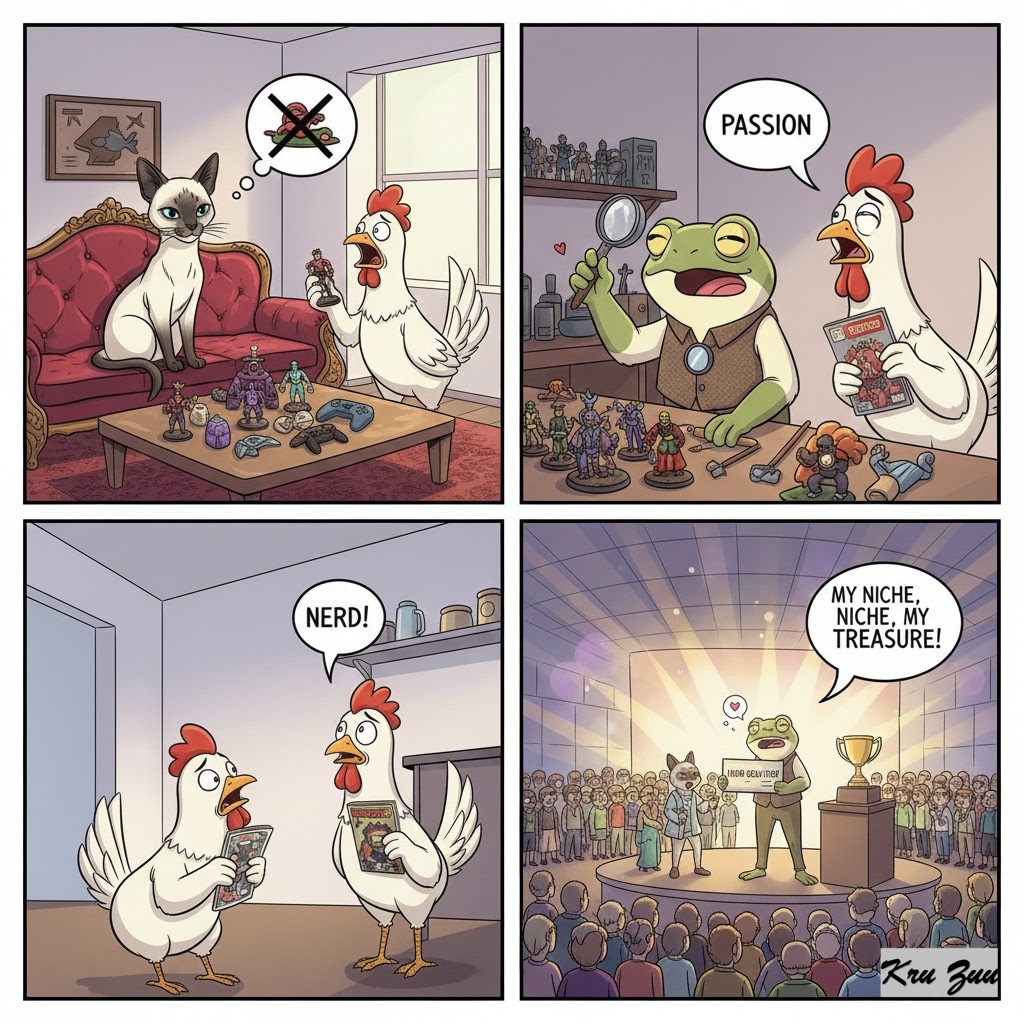
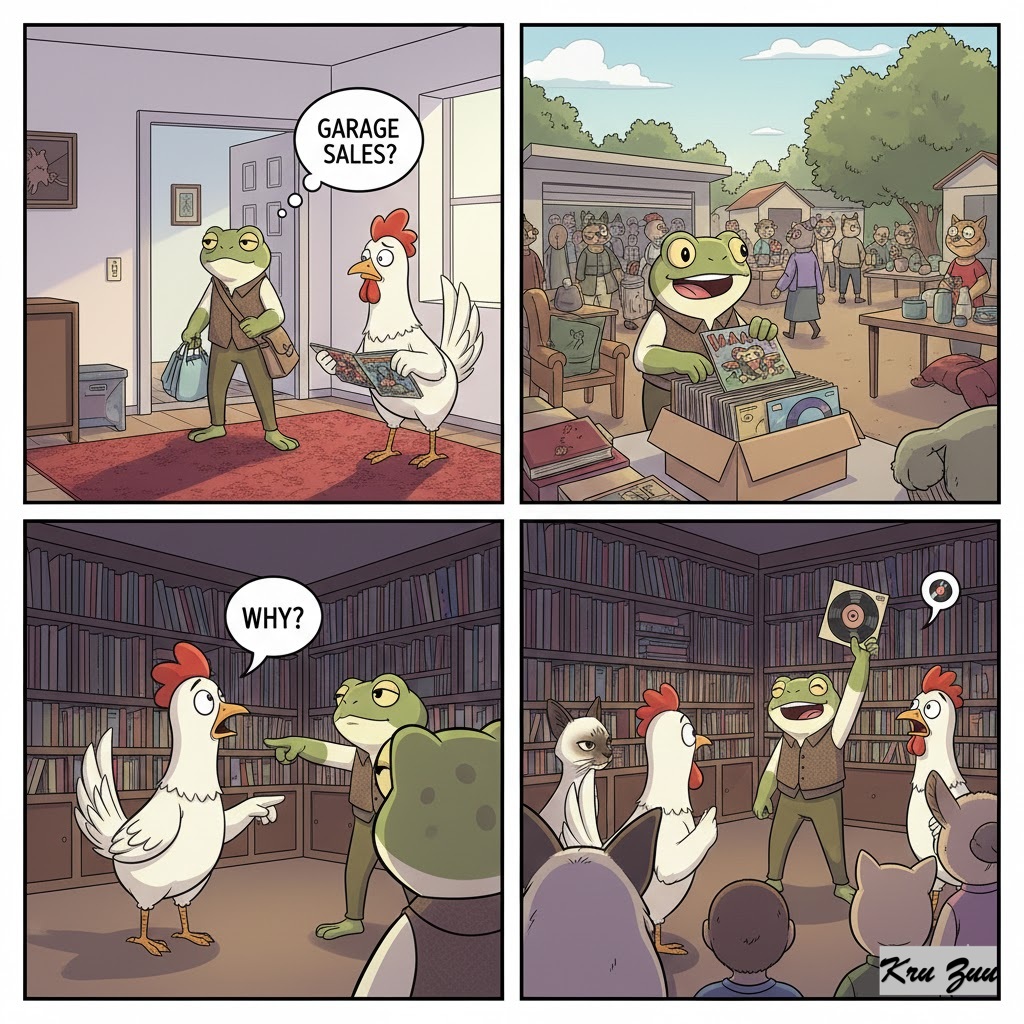
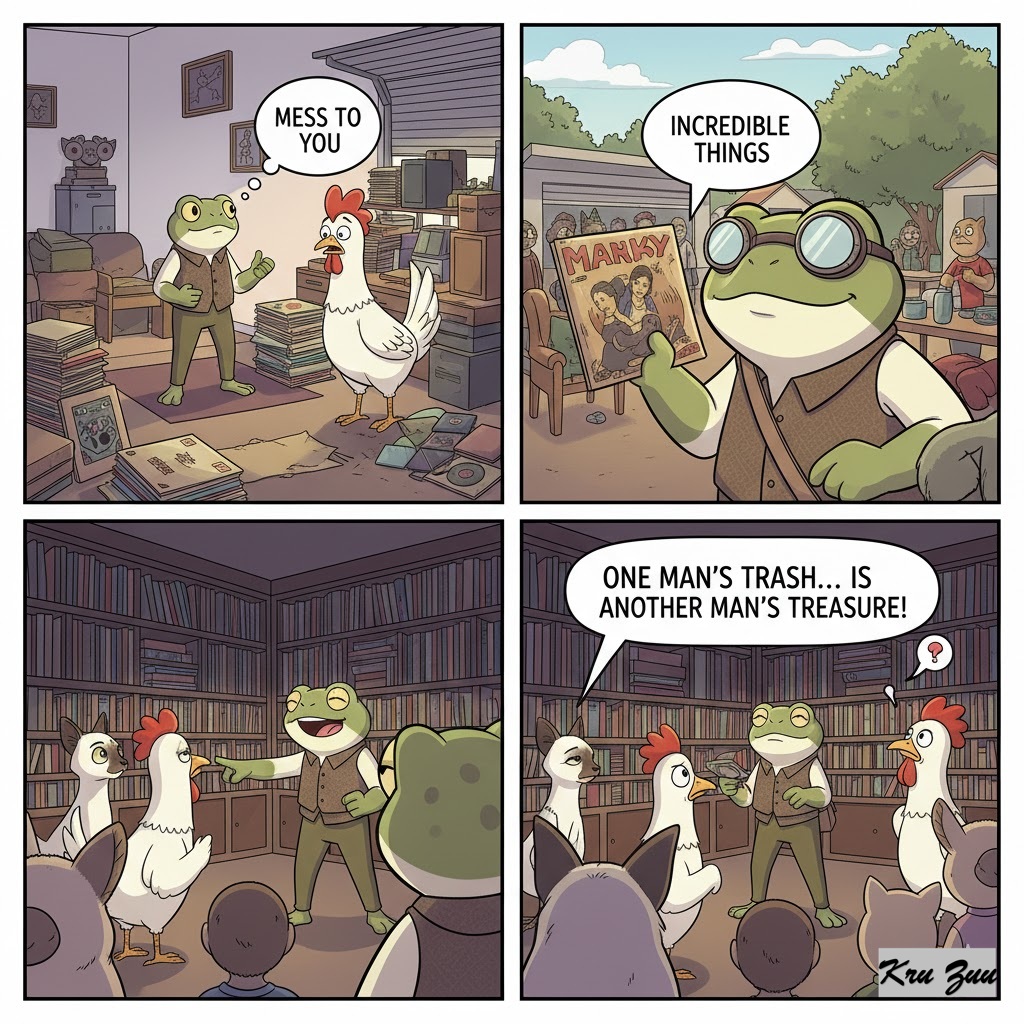
    Use it to defend your niche interests.


    Situation: Someone asks why you spend your weekends at garage sales or buying old vinyl records.


    You Say: “I know it looks like a mess to you, but I find incredible things there. After all, one man’s trash is another man’s treasure!”


    💬 Your Turn: The “Treasure” Challenge 🚀


    The Challenge:
    Look around your room or a local second-hand shop.

    The Action: Find one item that is “obsolete” (like a CD, an old jar, or a worn-out book).

    Ask yourself: “How could this be valuable to someone else? Could it be art? Could it be a tool? Could it be a memory?”


    👇 Question for the comments: What is the “weirdest” thing you own that you refuse to throw away? Why is it a treasure to you? Tell us below!

    By Zubeyir YURTKURAN

    https://www.facebook.com/BrainBattleground/

    https://www.facebook.com/zubeyr.yurtkuran/

    https://www.instagram.com/zubeyryurtkuran/
    https://www.youtube.com/@BrainBattleground-b3p

    https://www.instagram.com/brainbattleground/

  • 🌳 The Daily Shield: The Law of Hard-Earned Value

    🌳 The Daily Shield: The Law of Hard-Earned Value

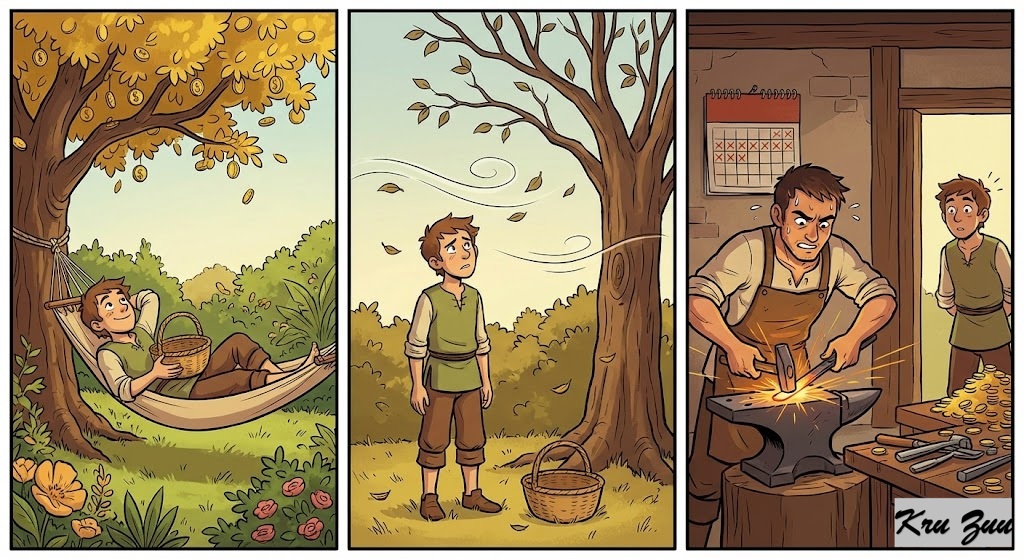
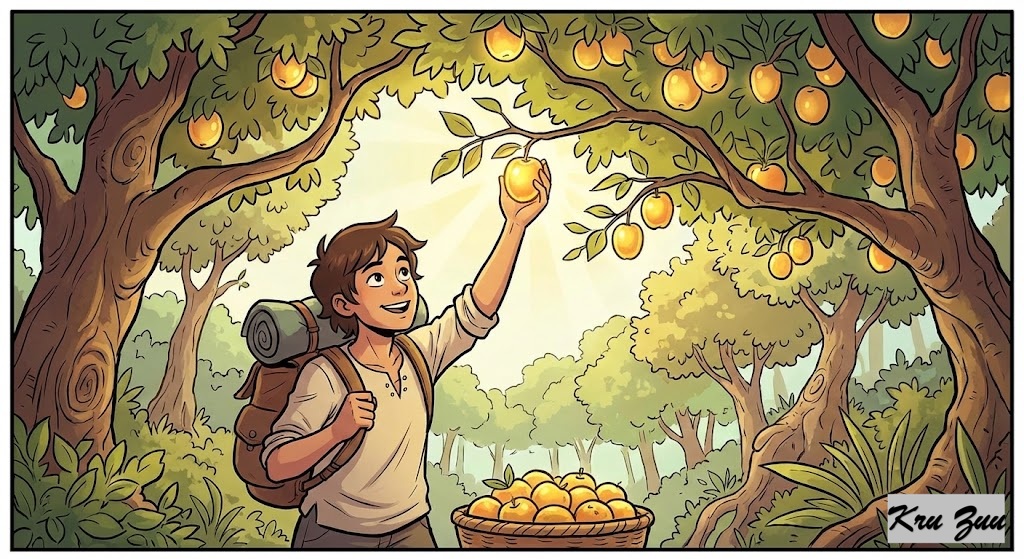
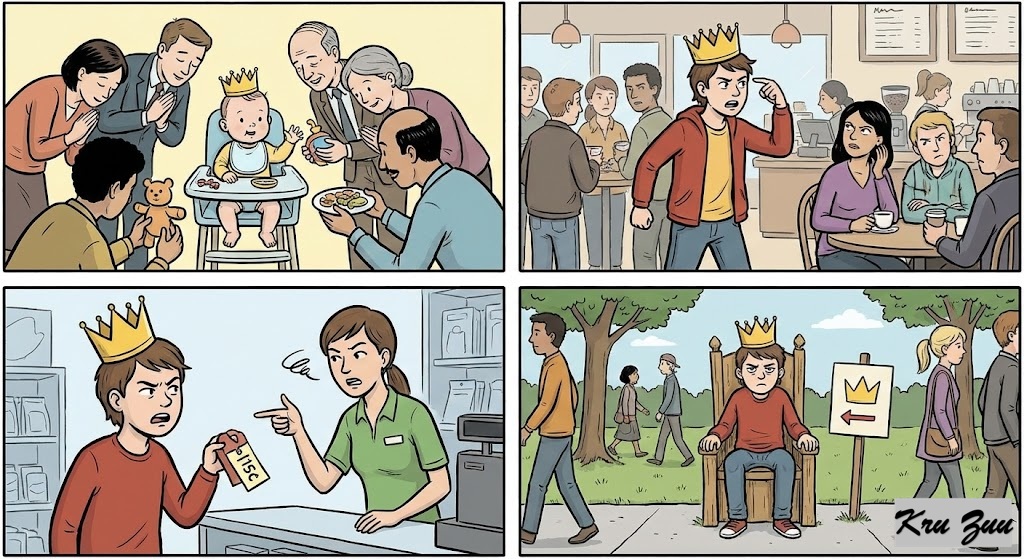
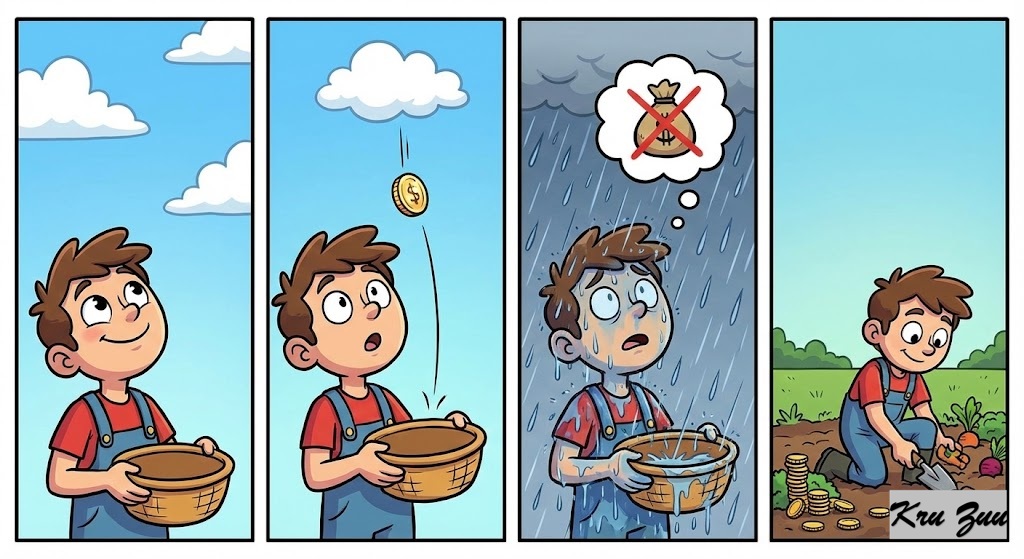
    “Money doesn’t grow on trees.”


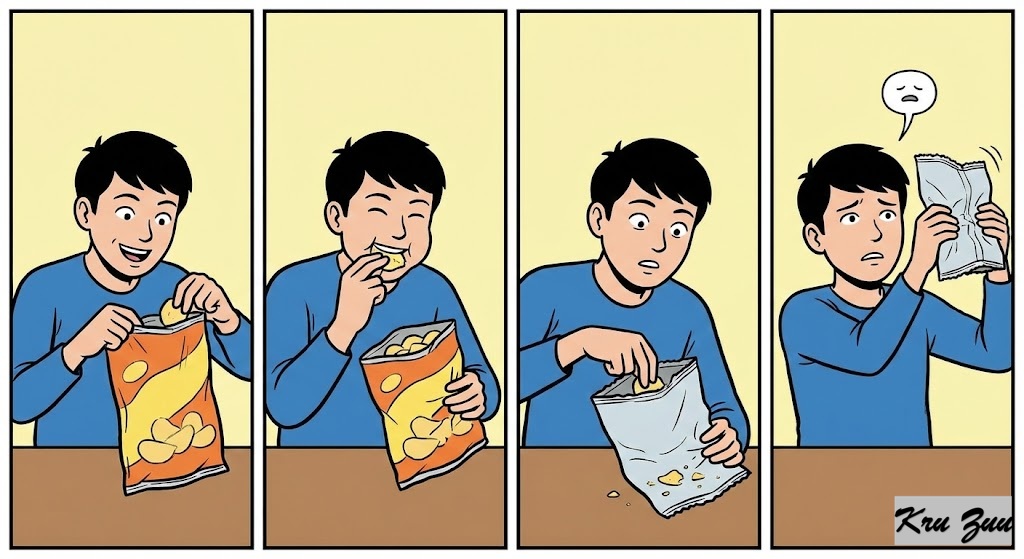
    😈 The Villain (The Impulse Spender)

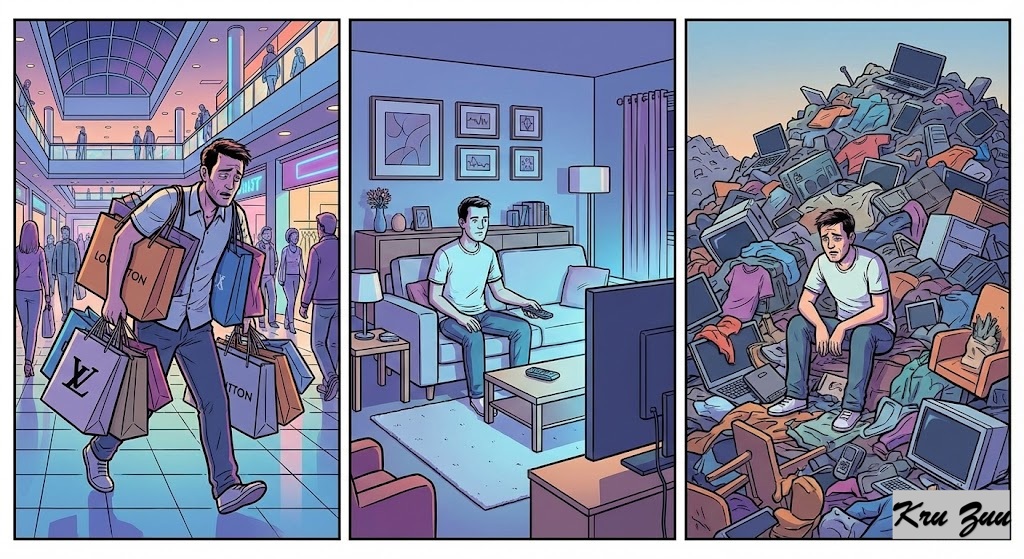
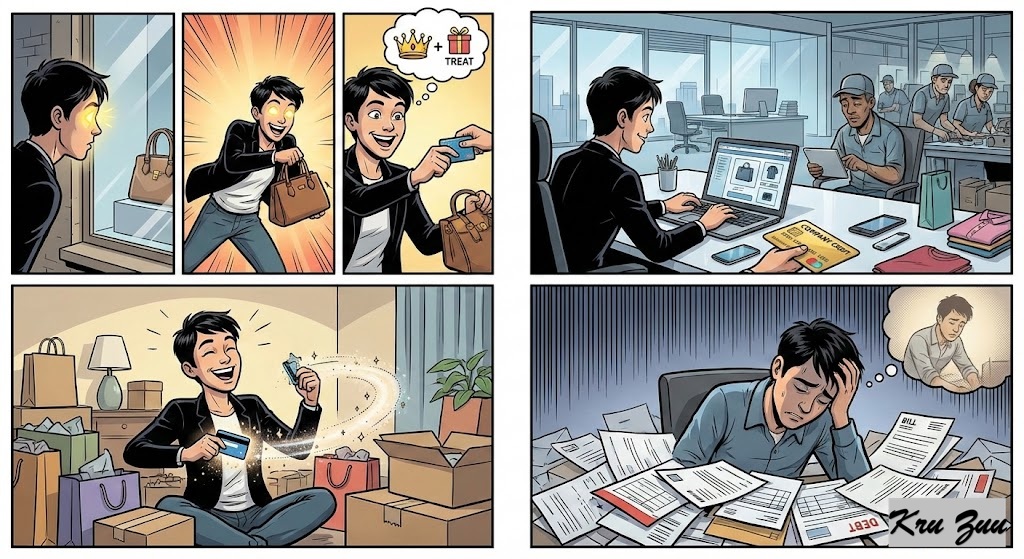
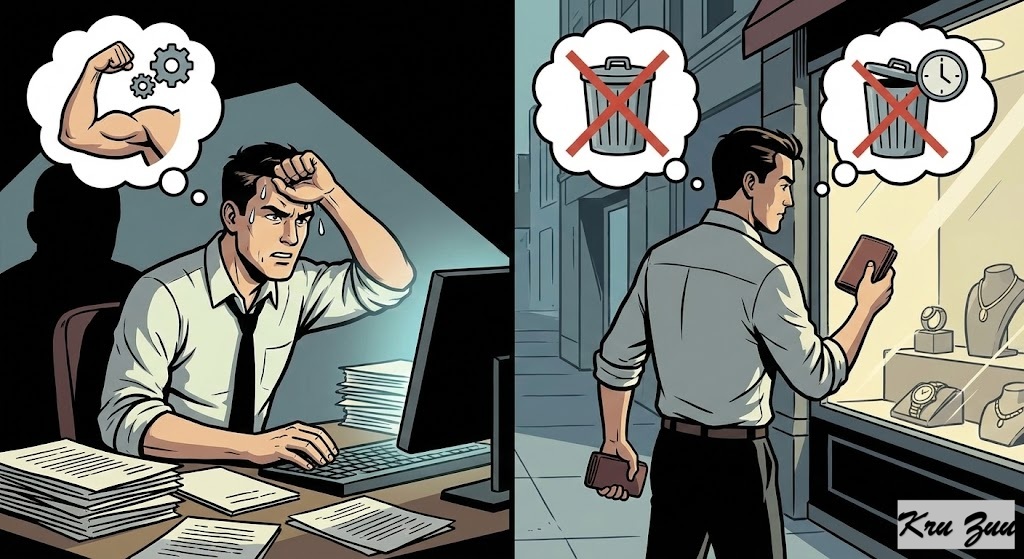
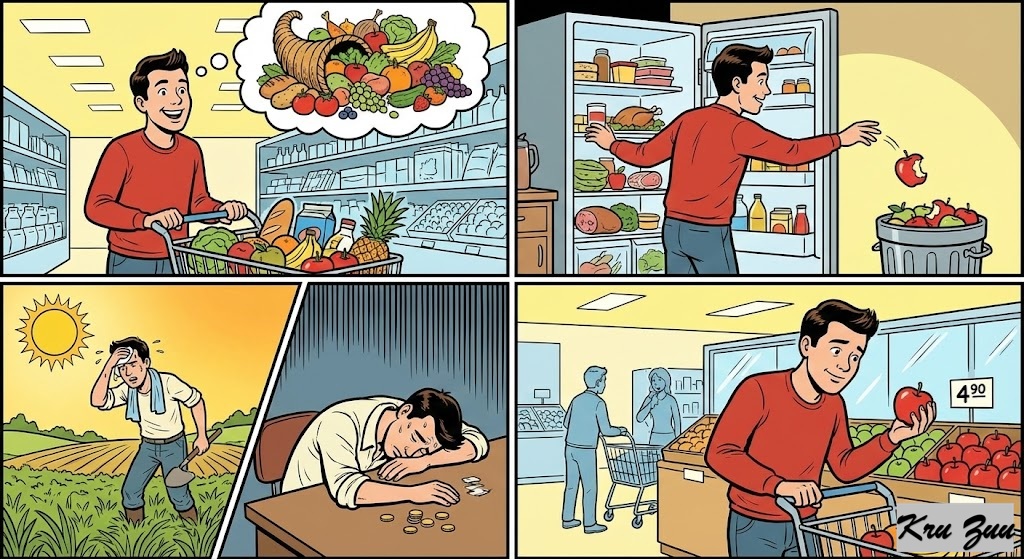
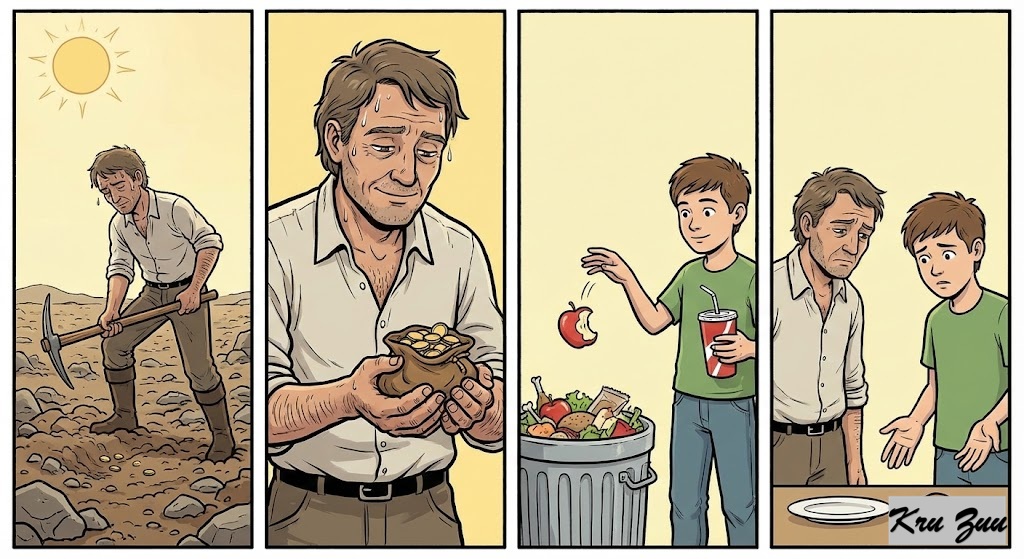
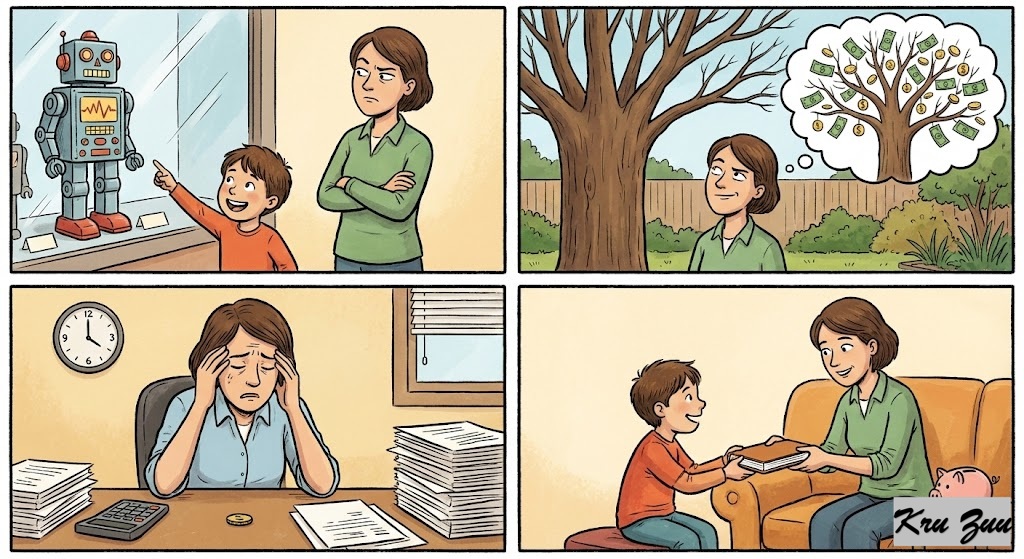
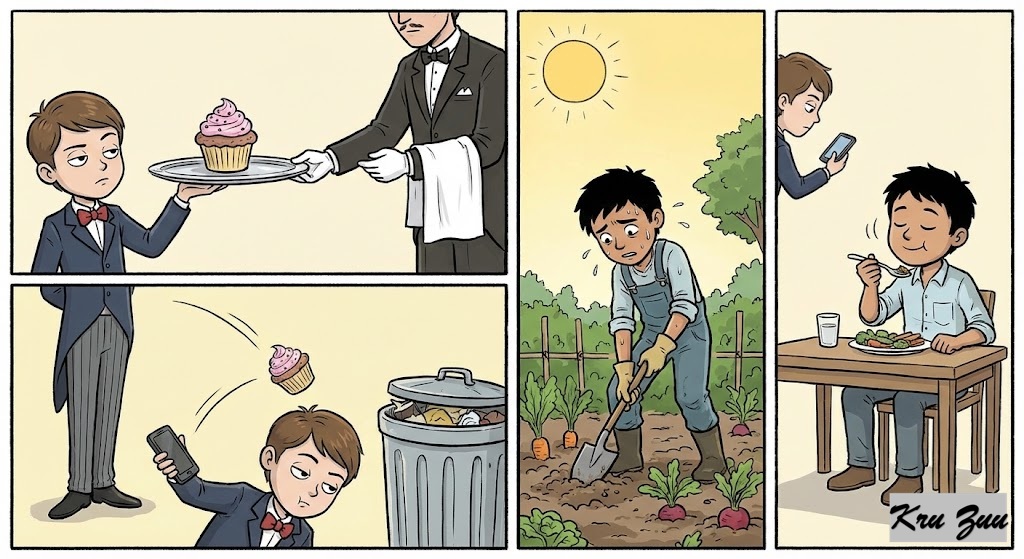
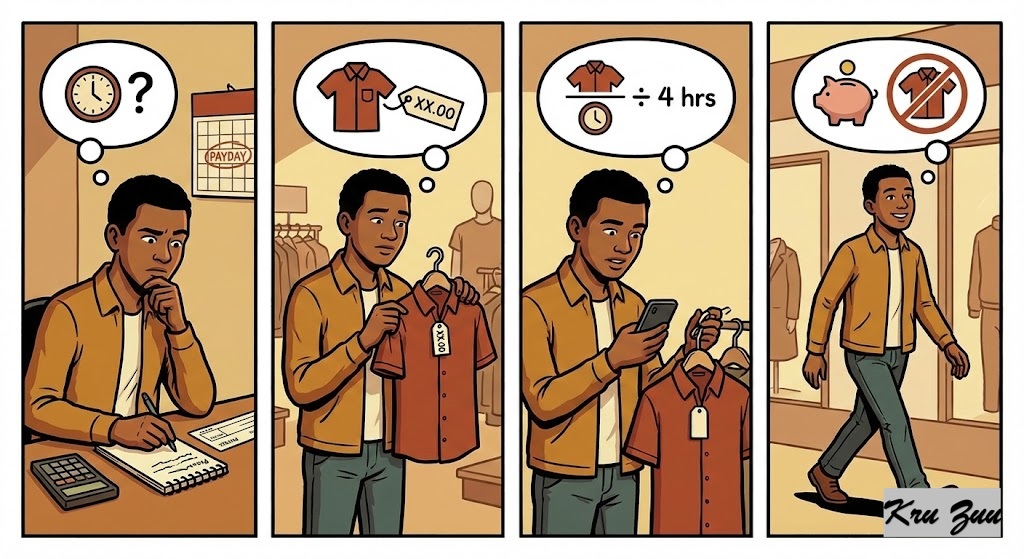
    You see it. You want it. You buy it. 💸 “I deserve this treat!””I’ll just put it on the credit card.””The company has plenty of budget, why do they care?” You act as if resources are infinite magic dust. You disconnect the price of an item from the effort it took to earn it.

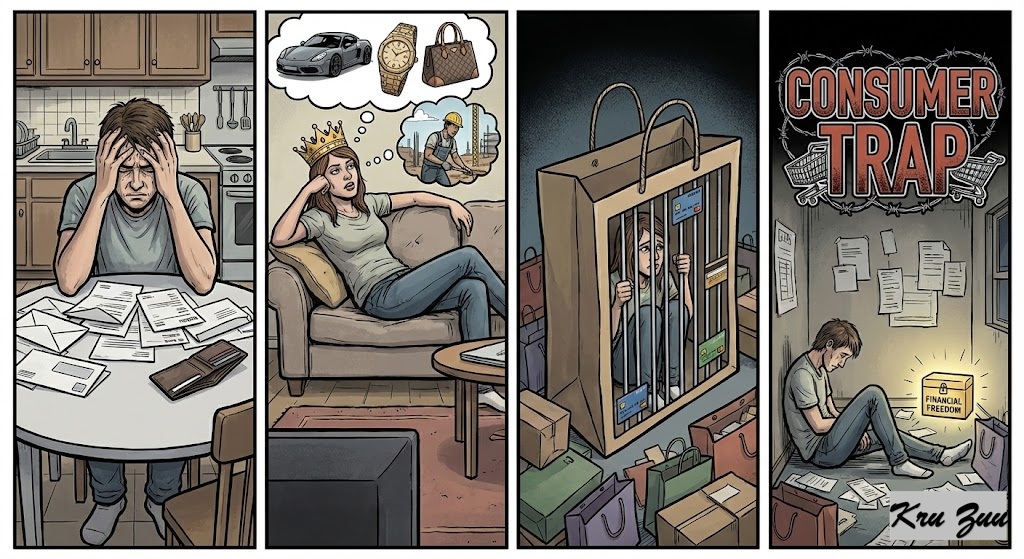
    The Result? You are always broke. You stress about bills at the end of the month. You feel entitled to things you haven’t earned. You are trapped in the “Consumer Trap.” 🛍️


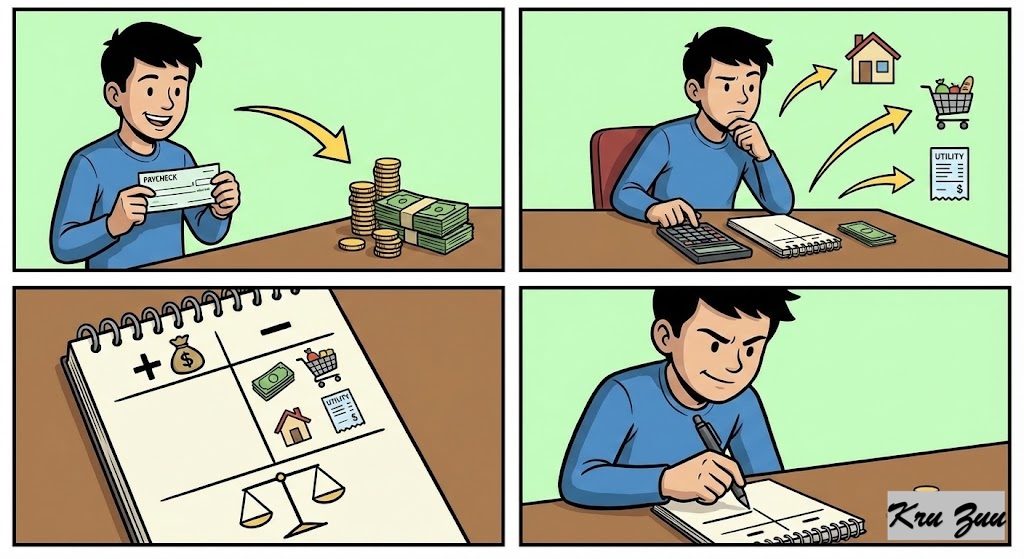
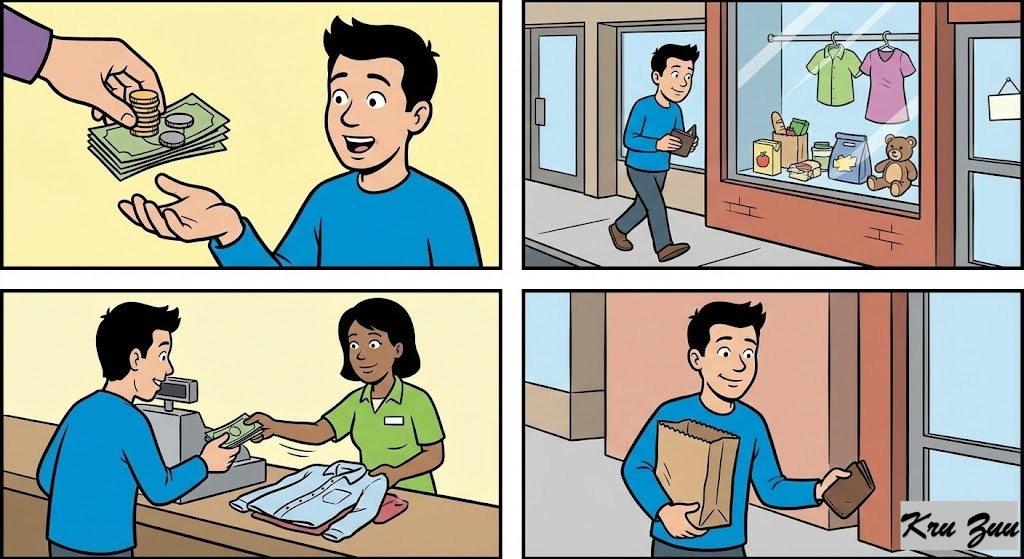
    😇 The Hero (The Value Builder)

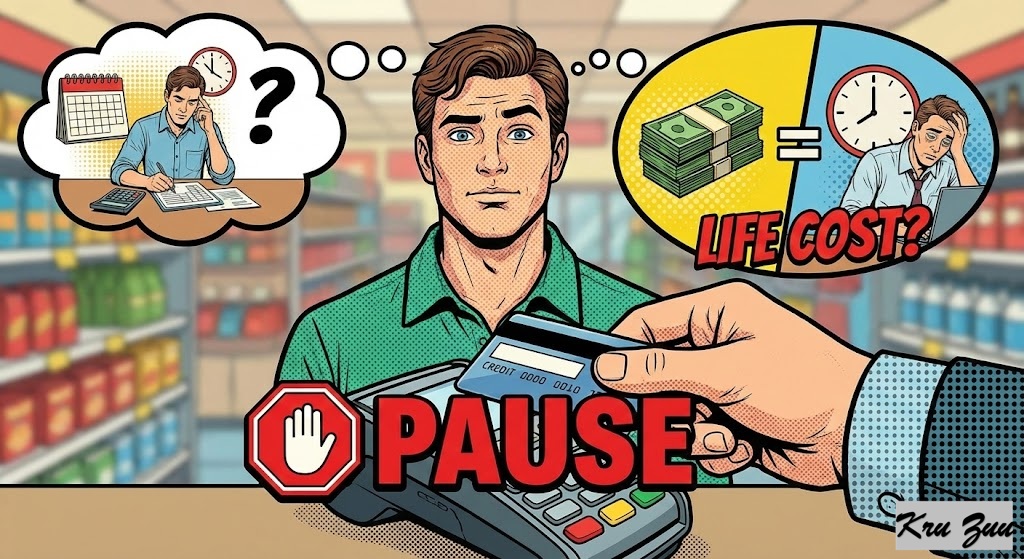
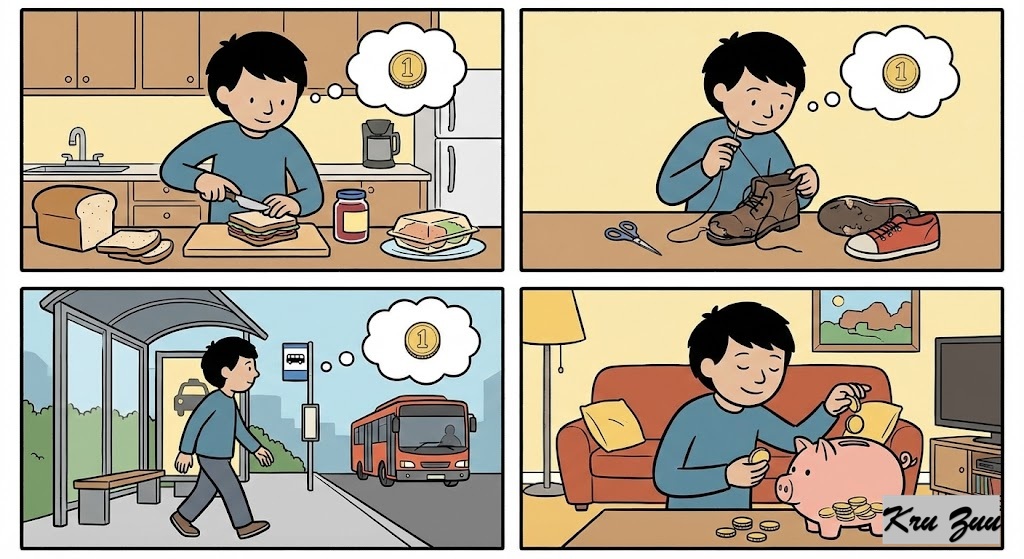
    You see something you want. You pause. 🛑 Instead of swiping your card blindly, you calculate the “Life Cost.”

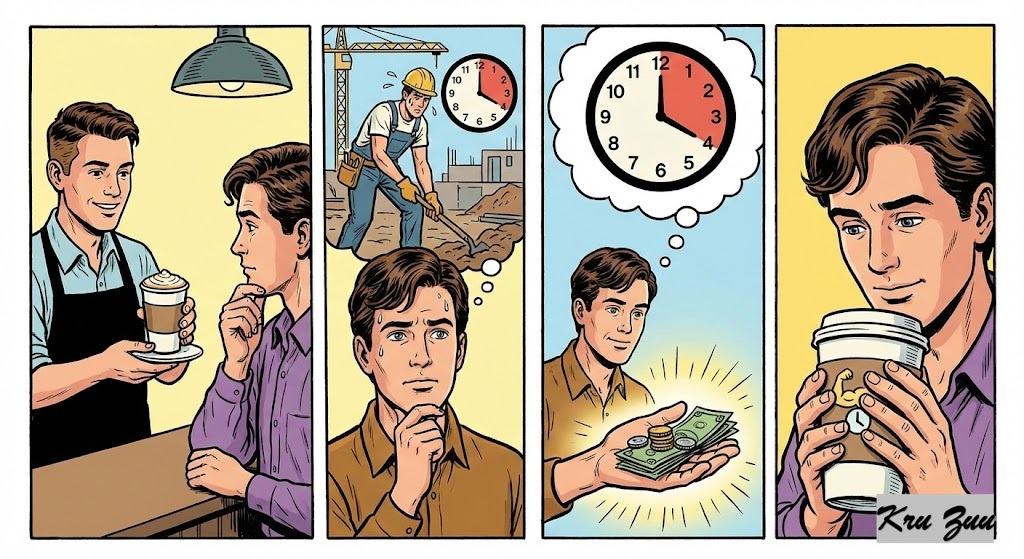
    You think: “This fancy coffee costs $5. That is 20 minutes of my hard work.” You respect the energy behind the money.

    You say: “I value my effort too much to waste it.”

    The Result? You build wealth. You have savings for emergencies. You appreciate what you have, and when you do spend, you enjoy it strictly without guilt. You build freedom, not debt. 🏰


    ⚖️ The Reality


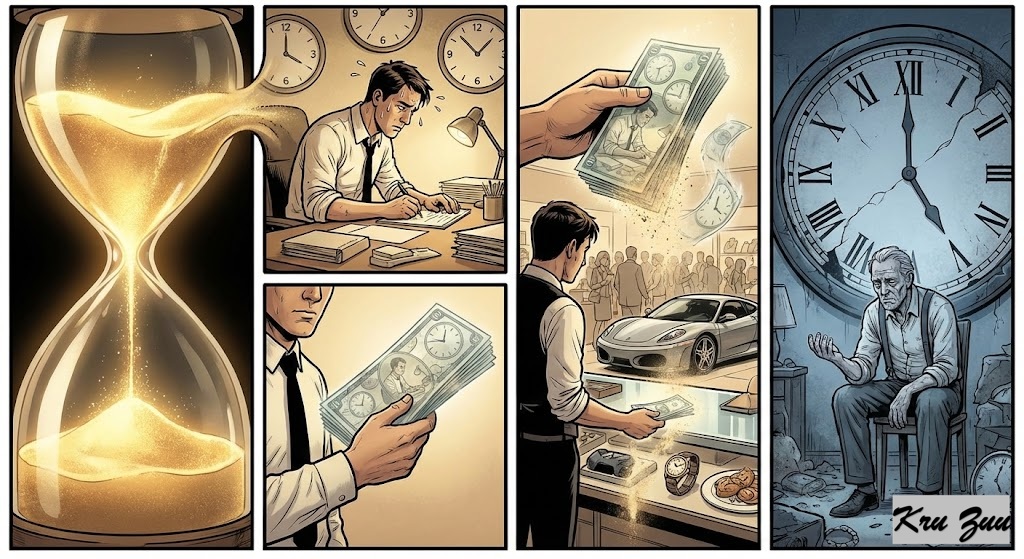
    Finite resources vs. Infinite desires. We live in a world where marketing tells us we can have everything now. But the laws of physics and economics are stubborn. Wealth is stored energy. It represents hours of work, stress, and problem-solving. If you treat money like leaves on a tree (infinite and free), you will soon find yourself standing in a barren winter forest with nothing to keep you warm.


    💎 The Secret

    You don’t just spend money; you spend the time it took you to earn that money. Spend your life wisely.

    🧐 The Anatomy of the Proverb


    This is your reality check that resources are limited and require labor to obtain.


    Money (Noun): Currency, wealth, resources.


    Doesn’t Grow (Negative Verb Phrase): Is not naturally produced without effort.


    On Trees (Prepositional Phrase): Freely available; easy to pick like an apple.


    Simpler Version: Money is hard to earn. / Don’t be wasteful.


    📚 Vocabulary Vault


    Frugal (Adjective): Sparing or economical with regard to money or food. (Smart with money).


    Entitlement (Noun): The belief that one is inherently deserving of privileges or special treatment. 👑


    Budget (Noun/Verb): An estimate of income and expenditure for a set period of time.


    Expenditure (Noun): The action of spending funds.


    Finite (Adjective): Having limits or bounds. (Opposite of infinite).


    🧠 Grammar Focus: Idioms as Parenting/Bossing Tools


    We often use this idiom when someone asks for something expensive or unnecessary.


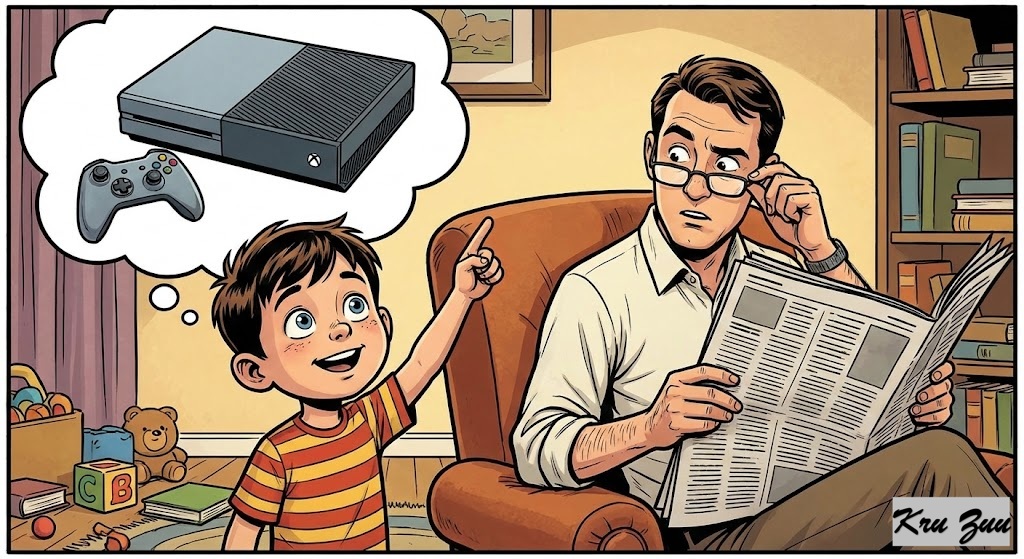
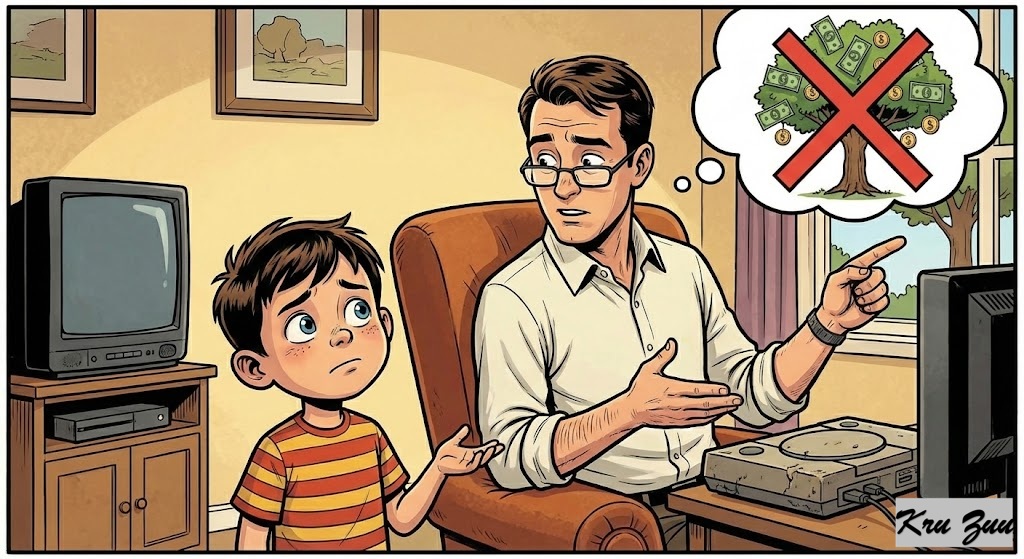
    Child: “Dad, can I have the new PlayStation?”

    Dad: “Son, look at our old one. It works fine. I can’t just buy everything you see. Money doesn’t grow on trees.”

    📜 History: Origin and Spread


    Where did this botanical financial advice come from?


    The Origin: While the exact first usage is debated, it appeared in newspapers as early as the 1890s in the USA.


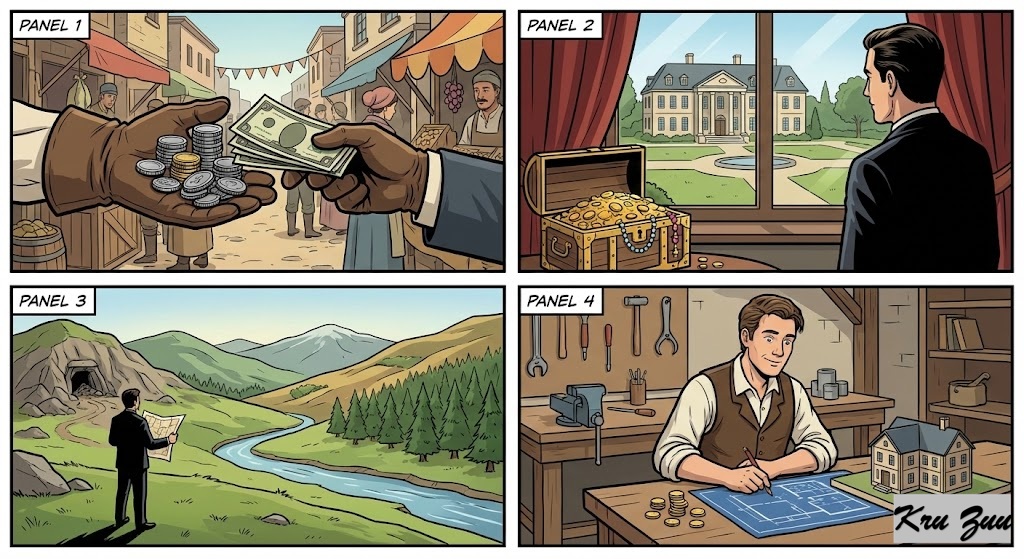
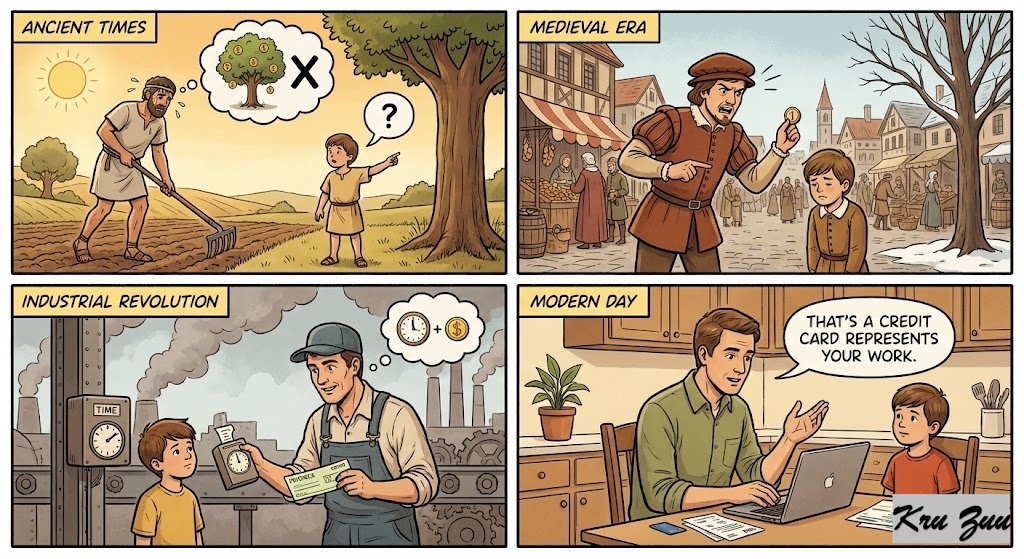
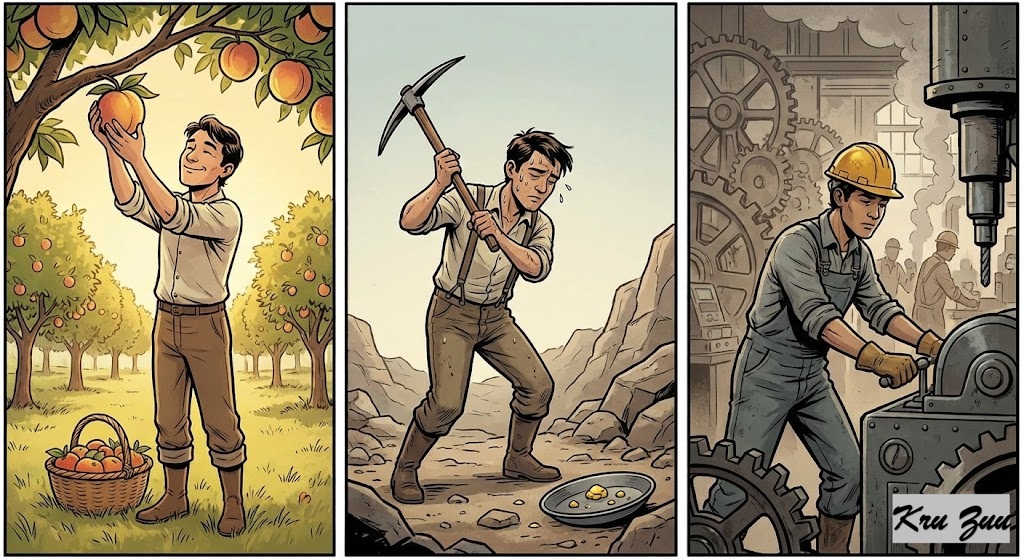
    The Logic: Before modern jobs, people worked the land. Picking fruit from a tree was “easy” food. Digging for gold or working in a factory was “hard” money. The idiom contrasts the ease of nature with the difficulty of economics.


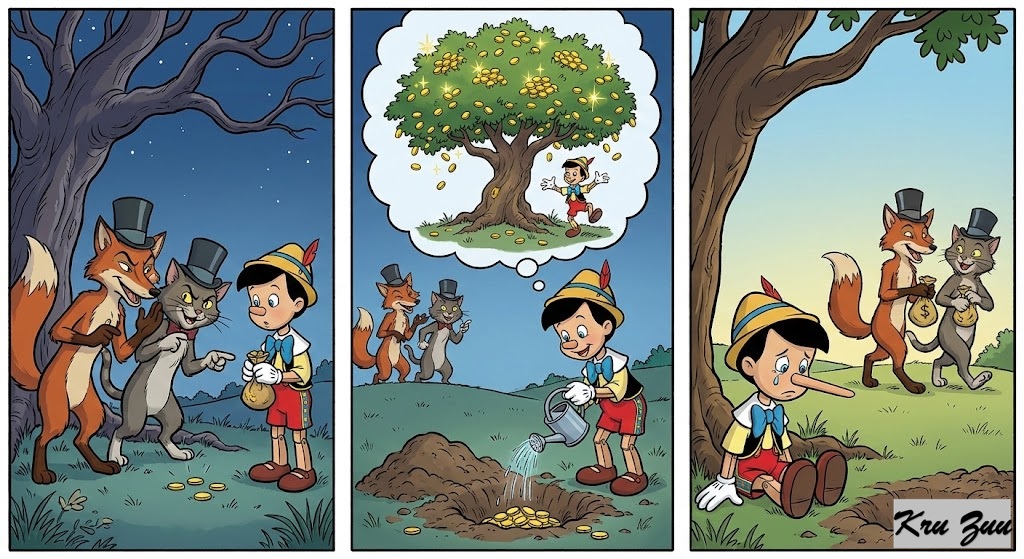
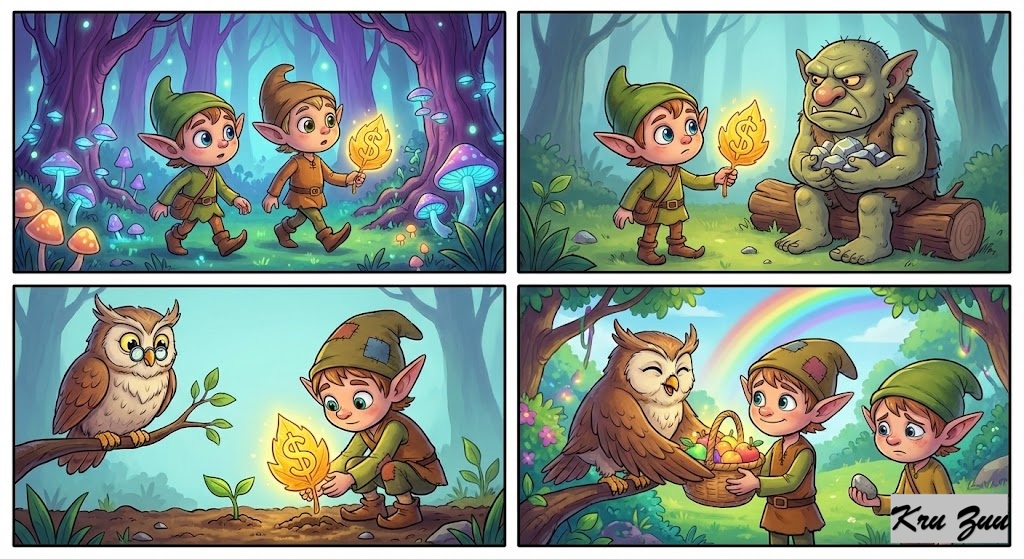
    The Pinocchio Connection: In the story of Pinocchio, the Fox and the Cat trick him into burying his gold coins to grow a “Money Tree.” The lesson? Only fools believe you can get rich without work.


    Global Cousins


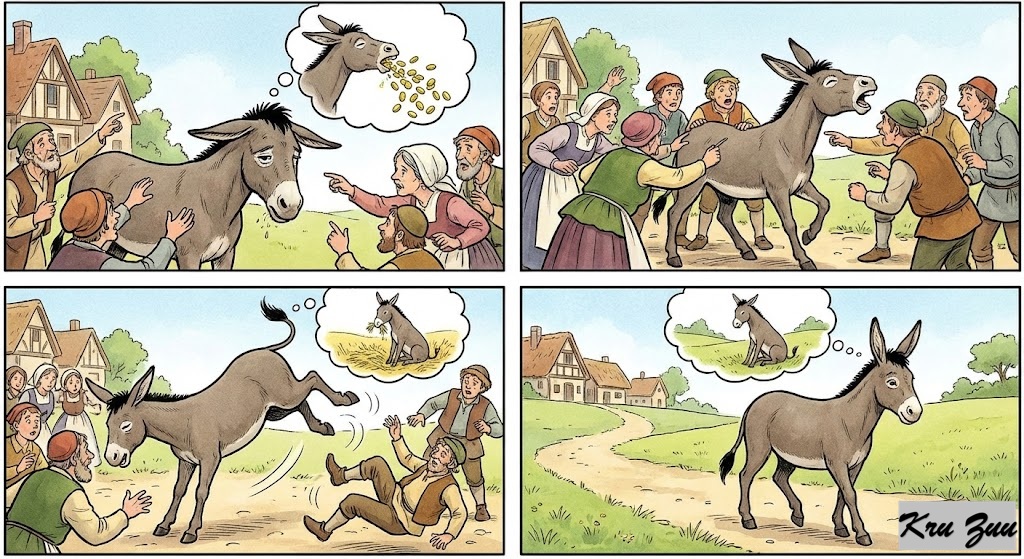
    🇩🇪 German: “Ich bin doch kein Goldesel.” (I am not a gold-donkey — referring to a fairy tale donkey that spits gold coins).


    🇪🇸 Spanish: “El dinero no cae del cielo.” (Money doesn’t fall from the sky).


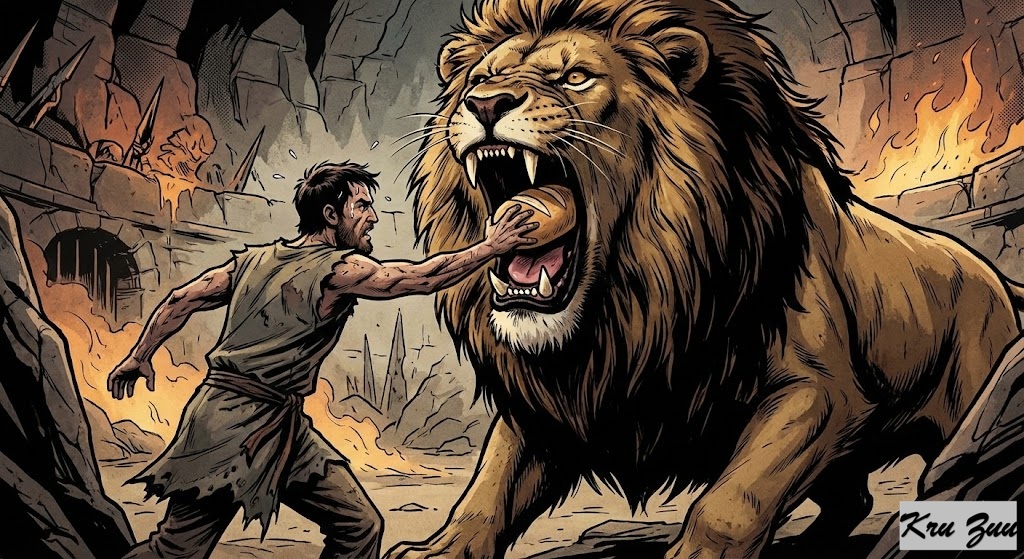
    🇹🇷 Turkish: “Ekmek aslanın ağzında.” (Bread is in the lion’s mouth — meaning earning a living is dangerous and hard).

    🎭 Short Story: The Golden Smoothie 🥤🐱🐔🐸


    Let’s visit the magical forest to see who understands the value of a dollar.


    🌟 The Cast


    Cleo the Cat: Elegant, loves luxury, hates sweating. 😼


    Cluck the Chicken: Impulsive, gets excited easily, easily tricked. 🐔


    Fred the Frog: The wise, green accountant. 🐸


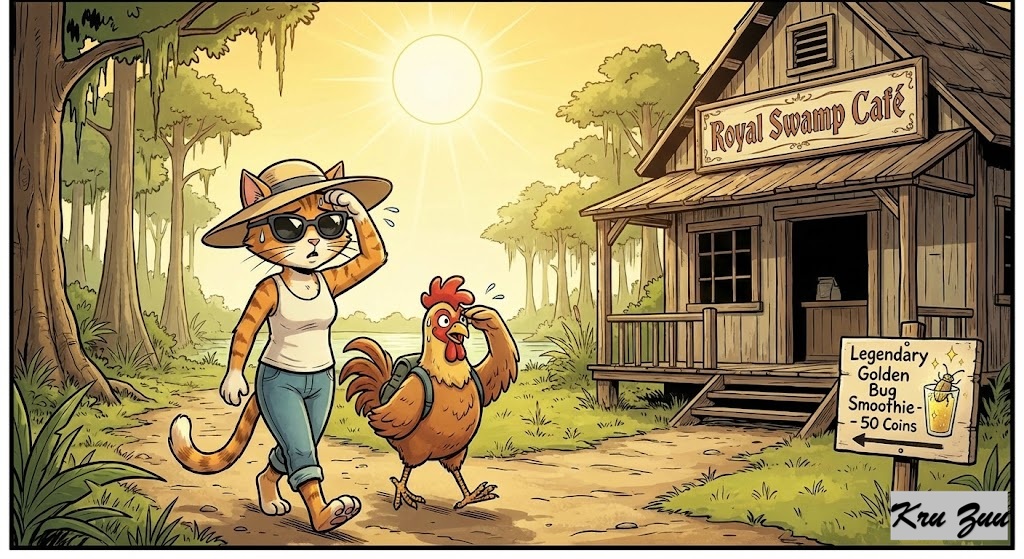
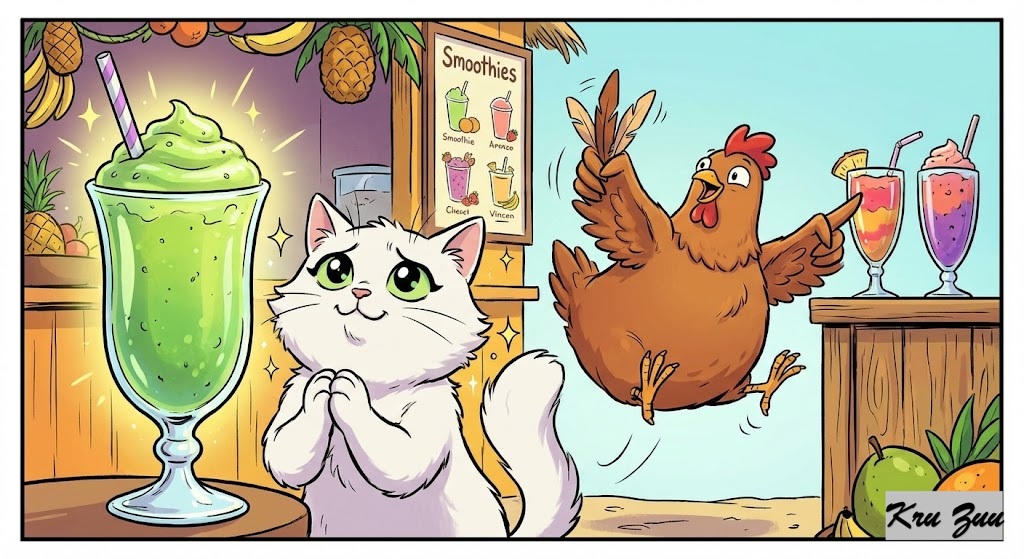
    The Situation: It is a hot summer day. Cleo and Cluck walk past the “Royal Swamp Café.” They see a sign: “Legendary Golden Bug Smoothie – 50 Coins.”


    The Conflict: “I need that smoothie!” Cleo purrs. “It will make my fur shine!” “I want two!” Cluck squawks, hopping up and down. “Let’s buy them now!”


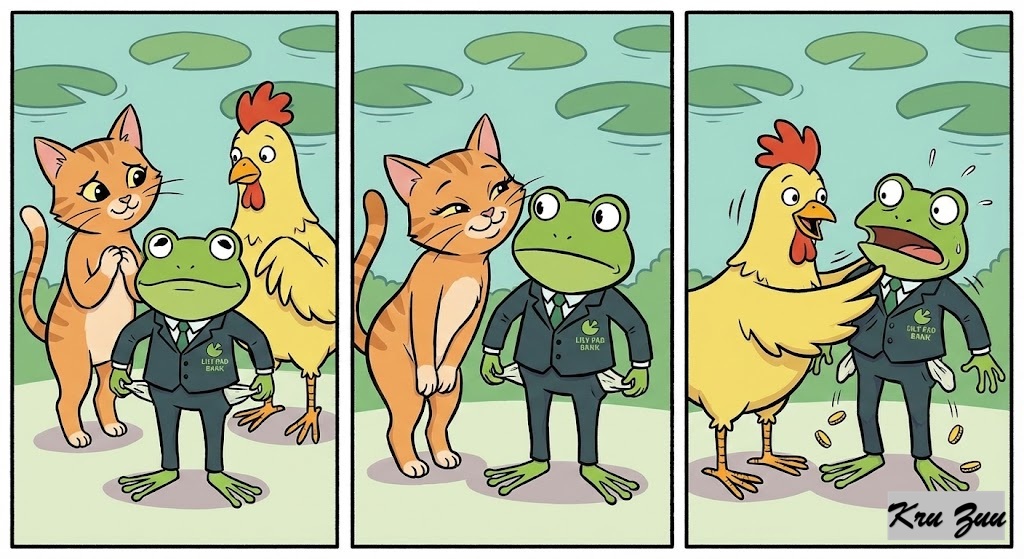
    They check their pockets. Empty. Cleo turns to Fred. “Fred, darling. Be a dear and buy us the smoothies. You have a job at the Lily Pad Bank. You have plenty of coins.” Cluck nods. “Yes! Just shake your pockets! Give us the coins!”


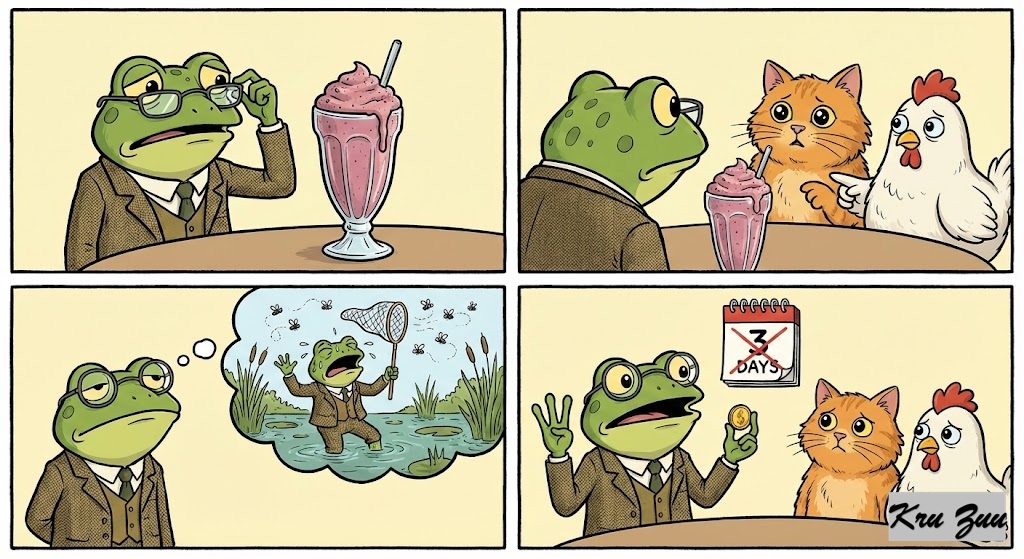
    The Reaction: Fred adjusts his glasses. He looks at the expensive smoothie, then at his friends. “Ribbit,” says Fred. “Do you know how many flies I have to catch to earn 50 coins? I have to work for three days.”


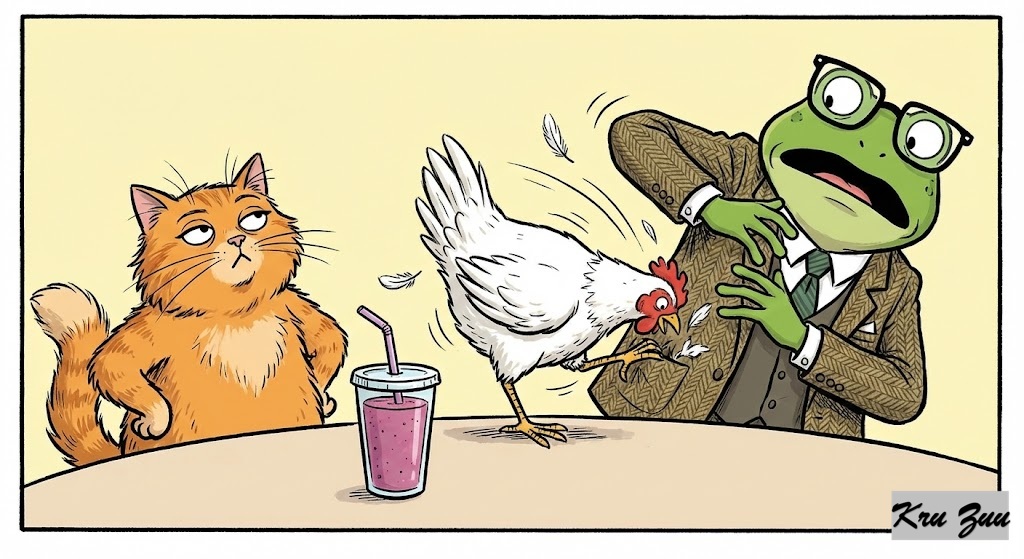
    Cleo rolls her eyes. “Oh, don’t be boring, Fred. Just get it.” Cluck tries to peck Fred’s pocket. “Come on! Don’t be stingy!”


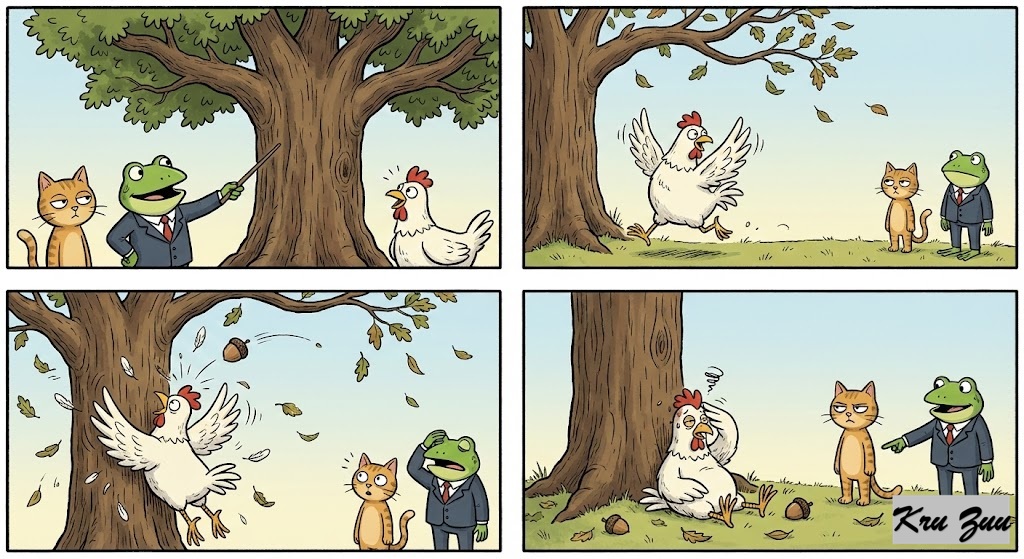
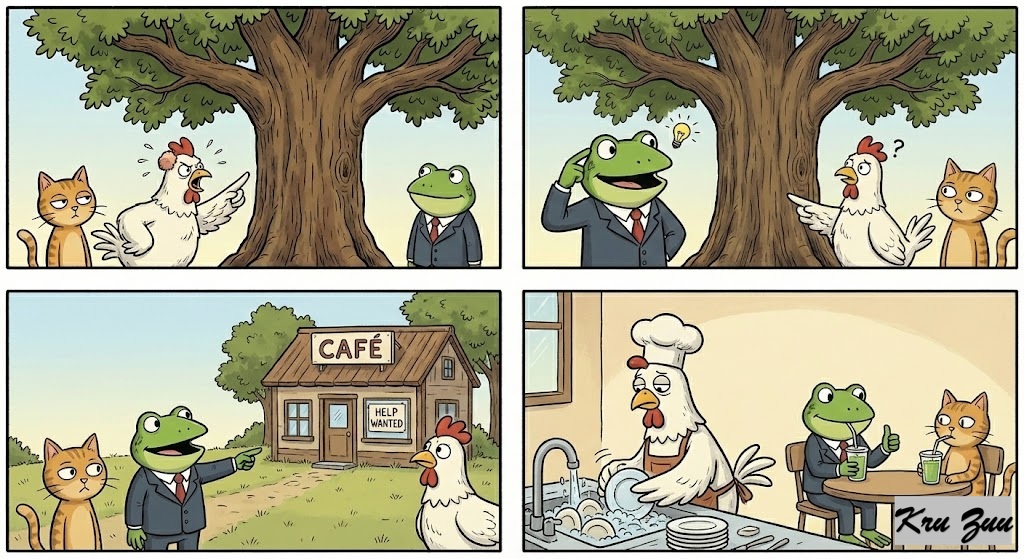
    The Lesson: Fred points to a giant Oak tree nearby. “Do you see that tree?” “Yes,” says Cleo. “Go shake it,” Fred commands. Cluck runs over and hits the tree with his wings. Bam! Bam! Leaves fall down. An acorn hits Cluck on the head. But no gold coins fall.


    “It’s broken!” Cluck yells. Fred smiles slowly. “The tree isn’t broken, Cluck. But your logic is. Money doesn’t grow on trees. If you want the smoothie, the café is hiring a dishwasher.”


    The Resolution:
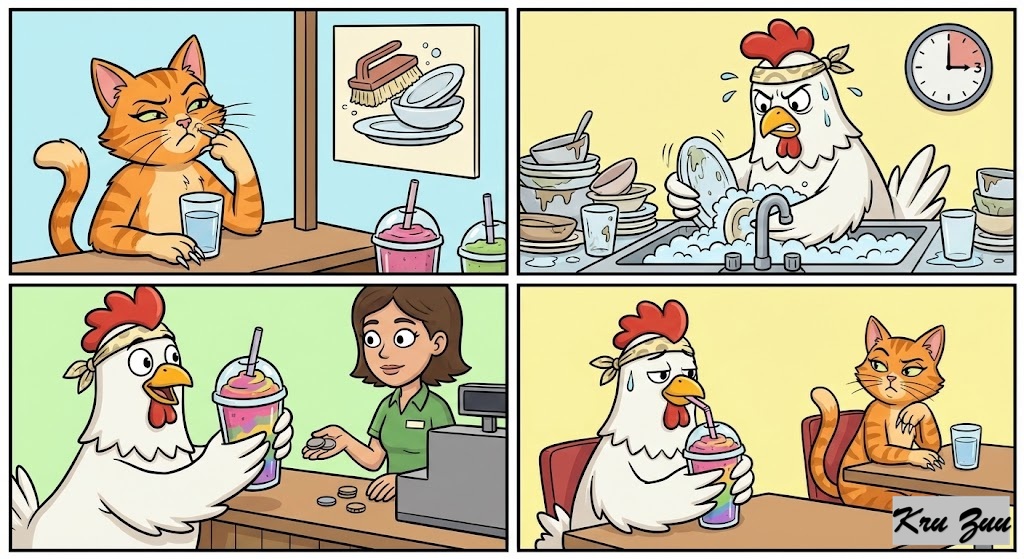
    Cleo looked at her manicured claws. “Dishwashing? Ew.” She decided water was fine. Cluck, however, really wanted the smoothie. He washed dishes for 3 hours. When he finally bought the smoothie, he drank it slowly. He didn’t spill a drop. Why? Because he paid for it with his own sweat.


    The Moral: When you don’t earn it, you waste it. When you work for it, you taste it. 😋

    🎓 Lesson for English Learners


    Don’t accept the first price.


    Situation: You are negotiating a salary or a freelance rate. The client offers you very little money.

    The Shift: You need to politely remind them of your value.

    You Say: “I understand you have a budget, but this project requires high-level skills and time. I cannot lower my rate further; money doesn’t grow on trees, and neither does quality work.”


    💬 Your Turn: The “Hourly” Challenge 🚀


    Do you want to cure your “Villain” spending habits?


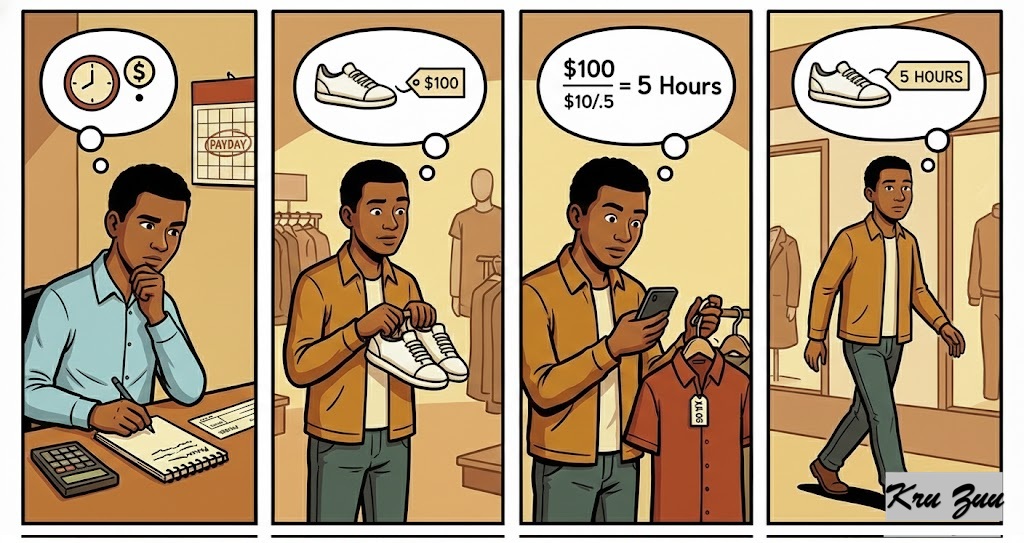
    The Challenge: Calculate your “Hourly Rate” (How much you earn in one hour of work). The Action: Next time you want to buy something unnecessary (a new shirt, a gadget, a fancy meal), divide the price by your hourly rate.


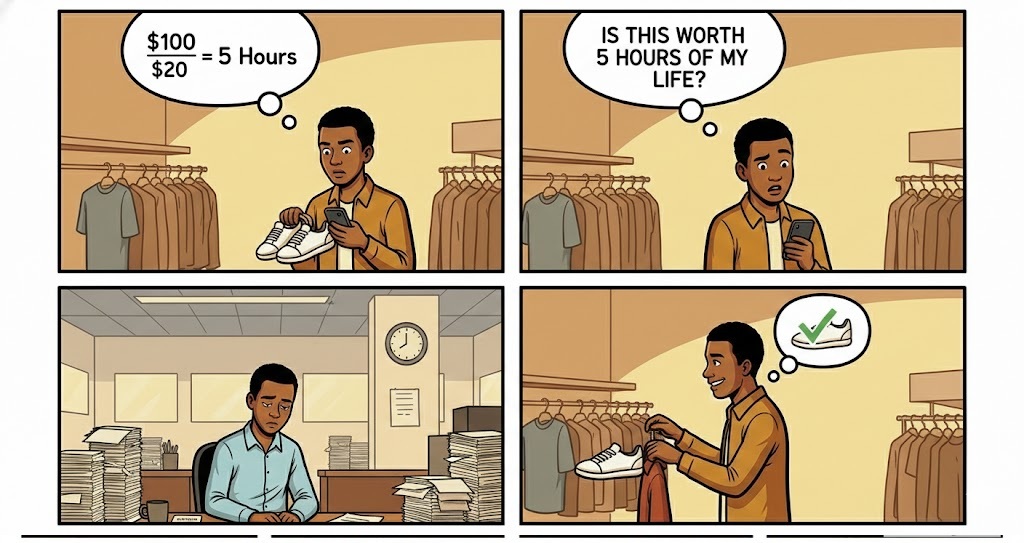
    Example: The shoes cost $100. You earn $20/hour. These shoes cost 5 hours of your life.


    Ask yourself: “Is this item worth sitting in the office for 5 more hours?”


    👇 Question for the comments: What is one thing you used to waste money on, but stopped? How did you learn the value of that money? Tell us below!

    By Zubeyir YURTKURAN

    https://www.facebook.com/BrainBattleground/

    https://www.facebook.com/zubeyr.yurtkuran/

    https://www.instagram.com/zubeyryurtkuran/
    https://www.youtube.com/@BrainBattleground-b3p

    https://www.instagram.com/brainbattleground/

  • 🌉 The Daily Shield: The Law of Future Peace

    🌉 The Daily Shield: The Law of Future Peace

    “Don’t cross the bridge until you come to it.”


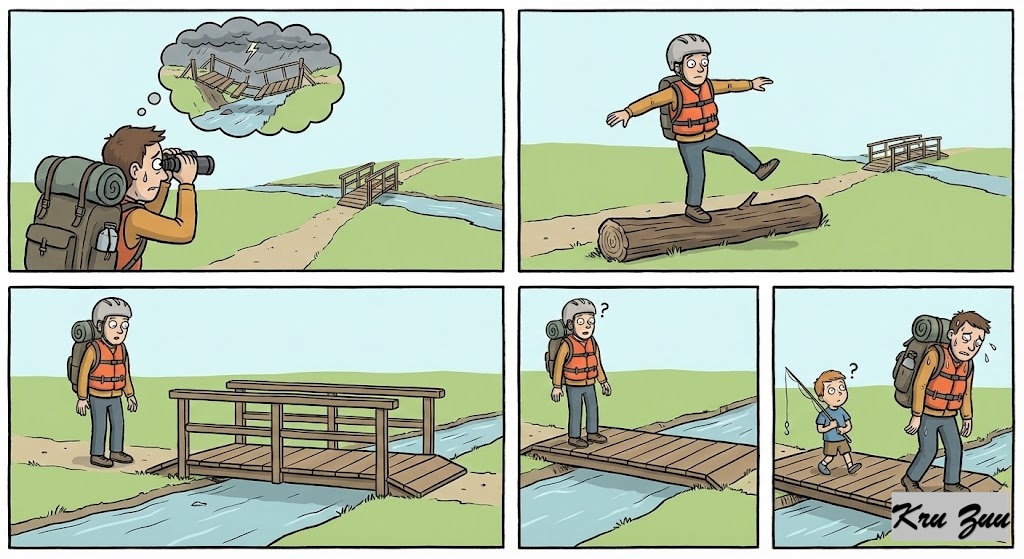
    😈 The Villain (The Overthinker)

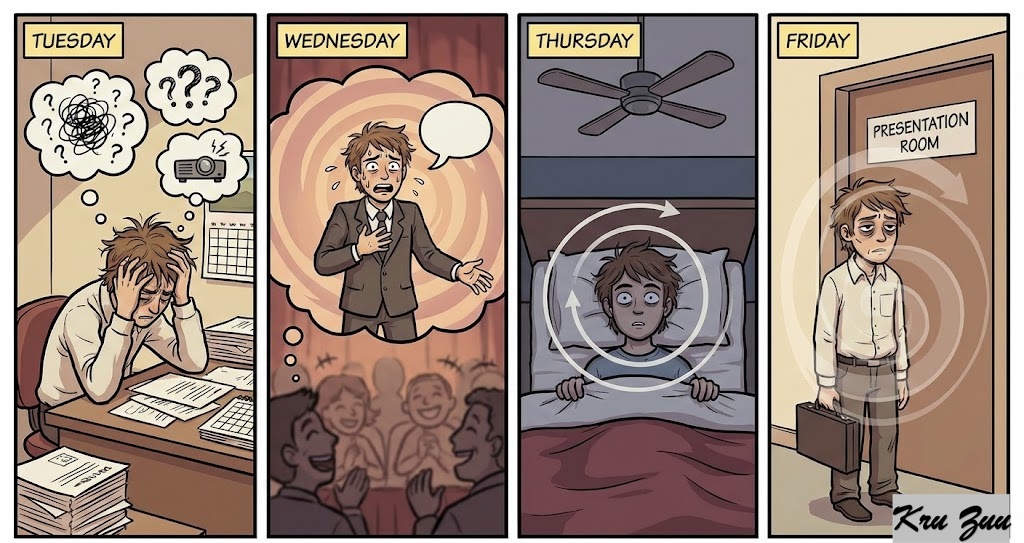
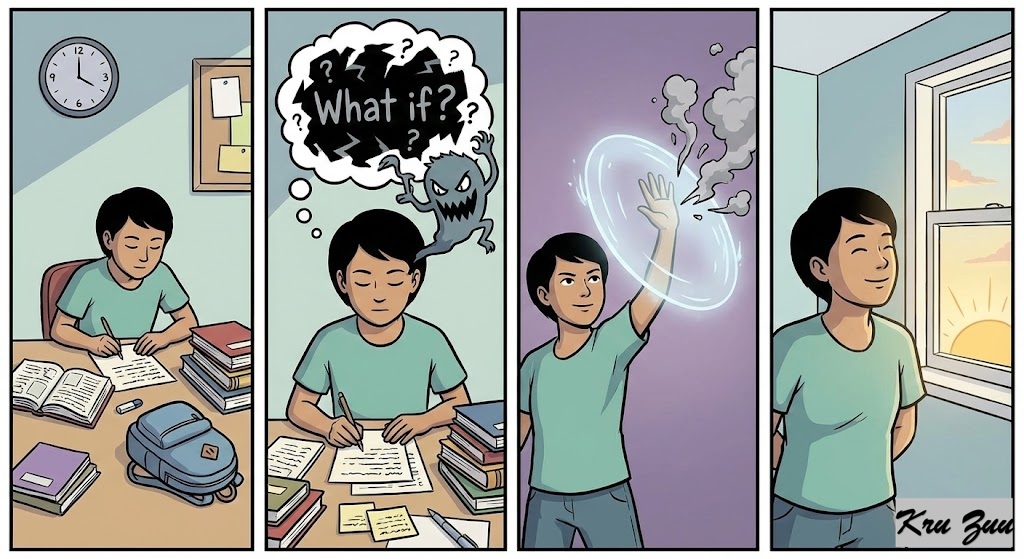
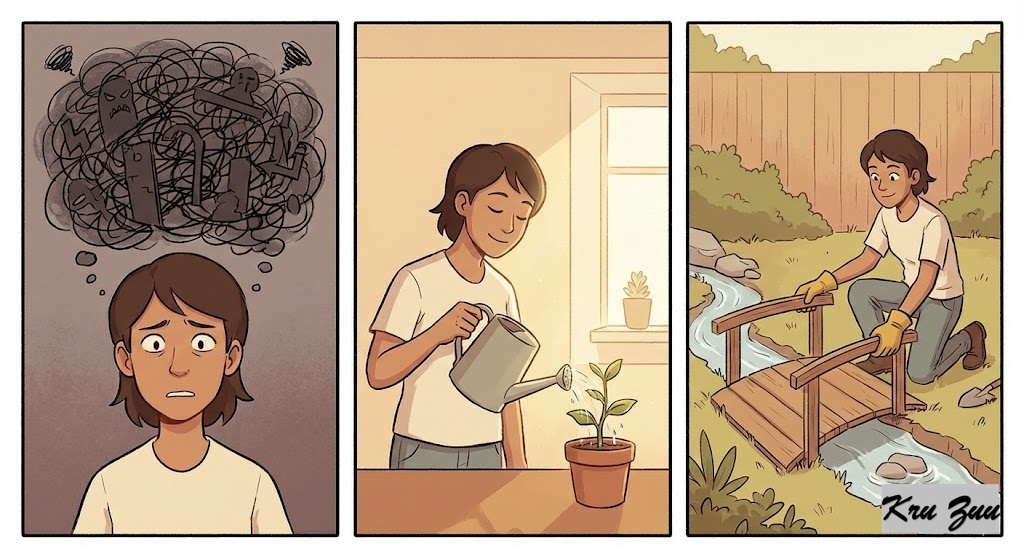
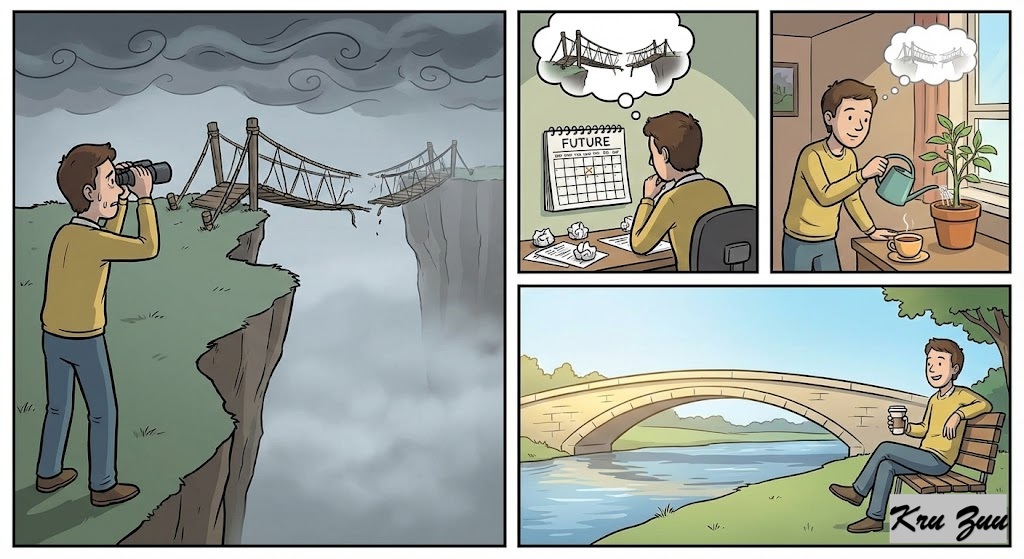
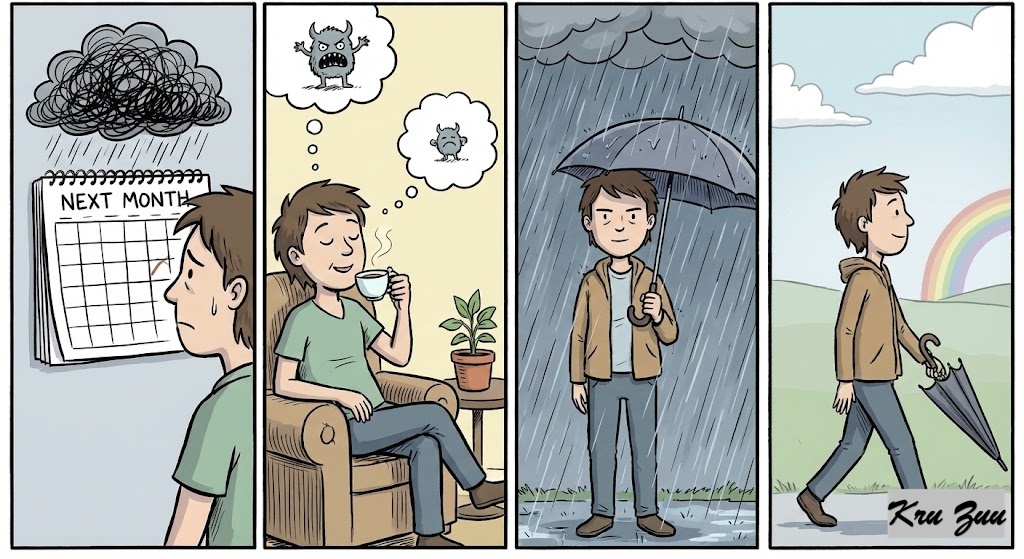
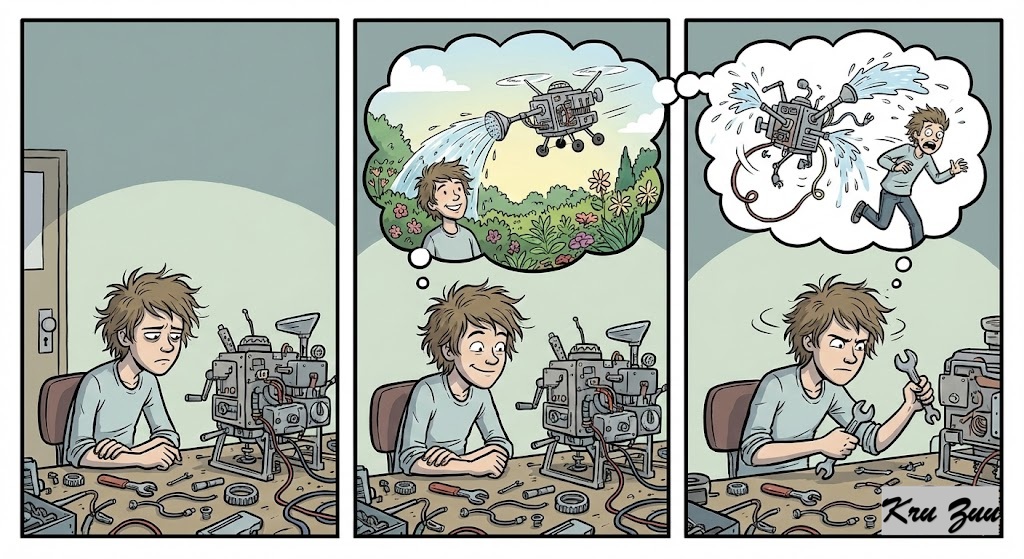
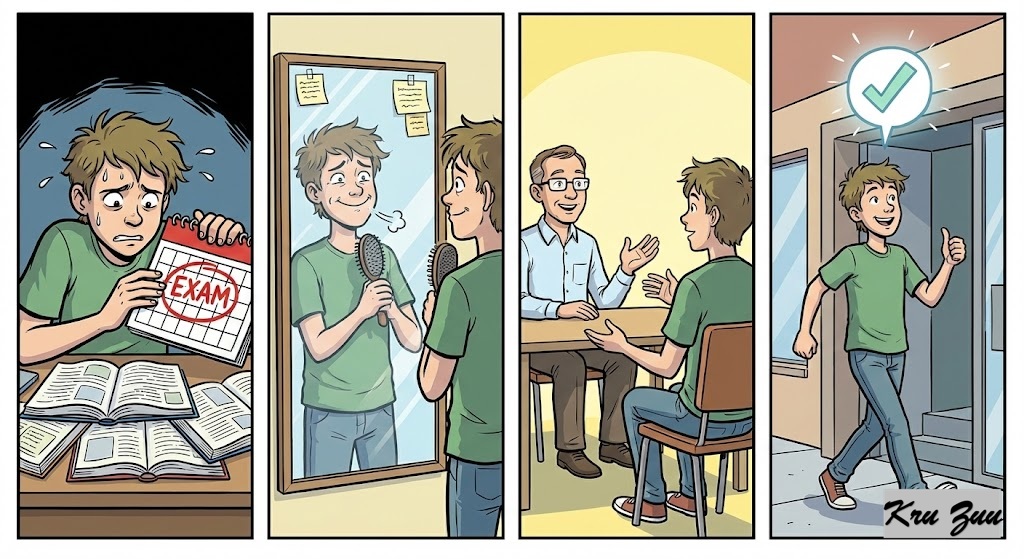
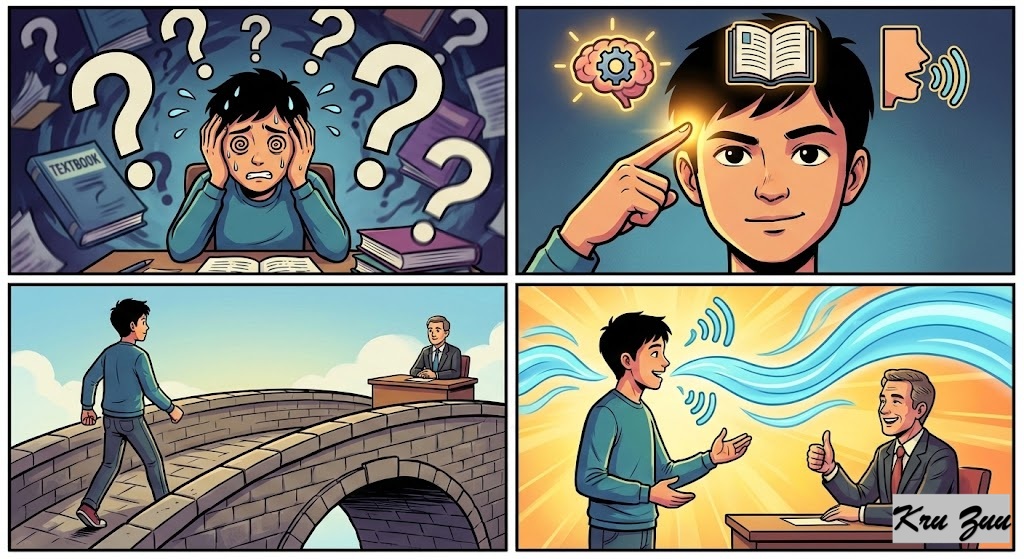
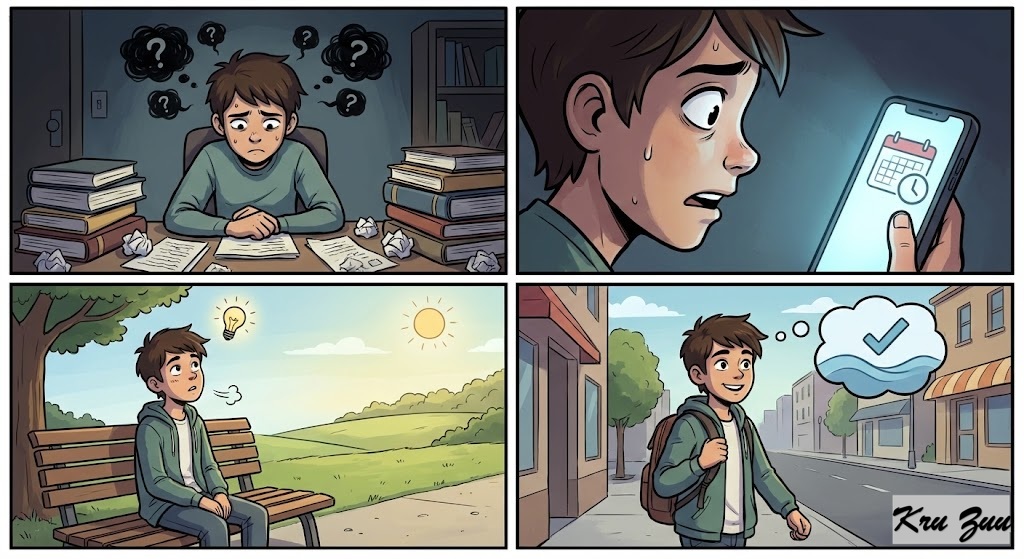
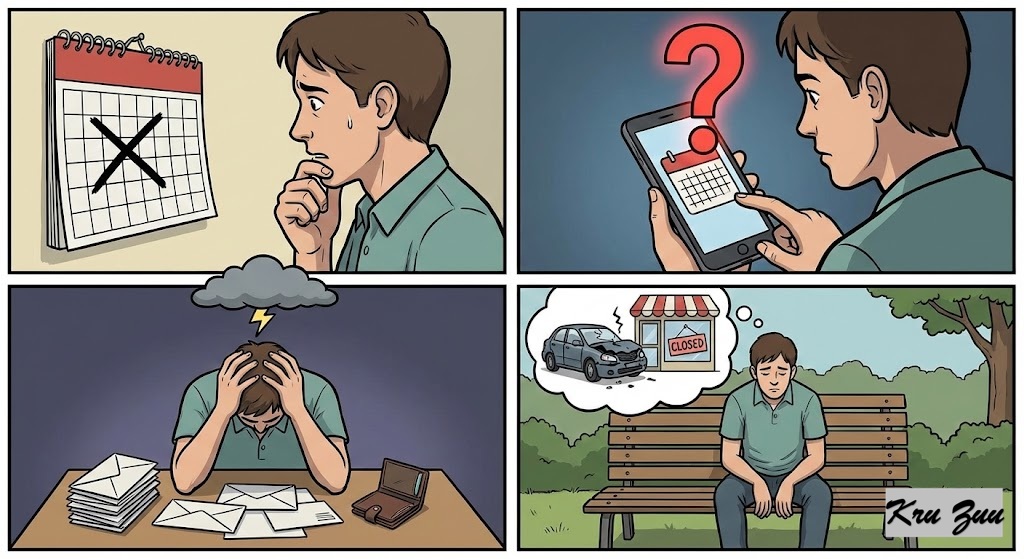
    It is Tuesday. You have a presentation on Friday. What do you do? You don’t just prepare; you panic. 😱 “What if the projector breaks? What if I forget my English? What if they laugh at me?” You live through the disaster 100 times in your head before it even happens. You suffer twice: once in your imagination, and (maybe) once in reality. You are exhausted before the race even starts. You are trapped in the “Anxiety Loop.” 🌀


    😇 The Hero (The Stoic)

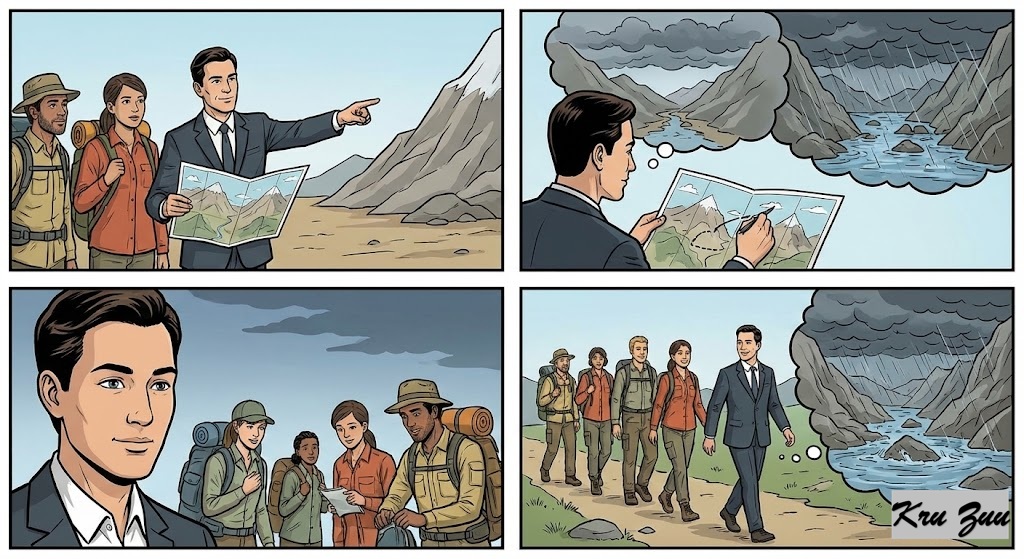
    You know that the future is uncertain. You prepare reasonably, but you refuse to suffer in advance. When a “What if?” thought attacks you, you block it.

    You say: “I will handle that problem if it arrives.” You save your energy for today. You trust your ability to adapt.

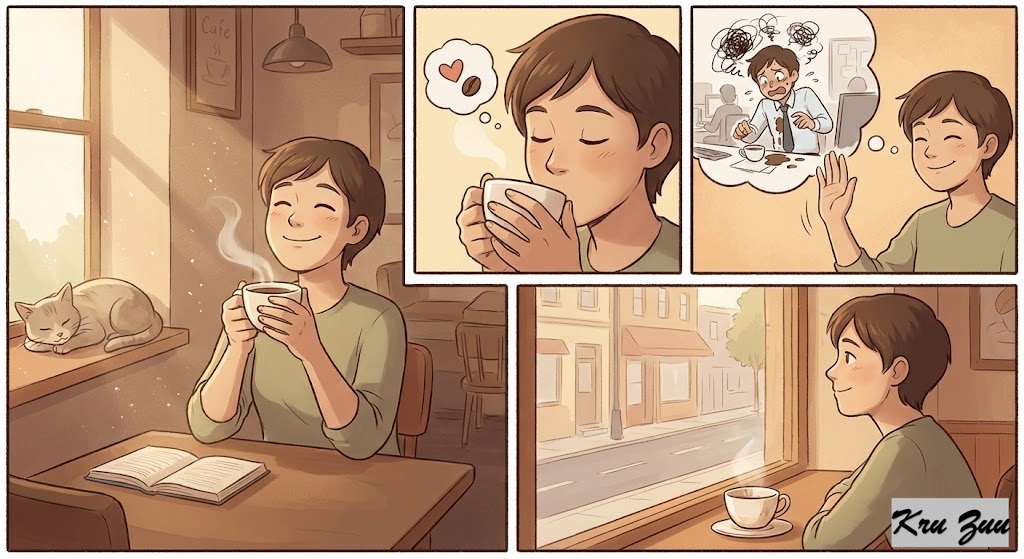
    The Result? You are calm. You are focused. You enjoy your coffee today instead of worrying about spilling it tomorrow. ☕️


    ⚖️ The Reality


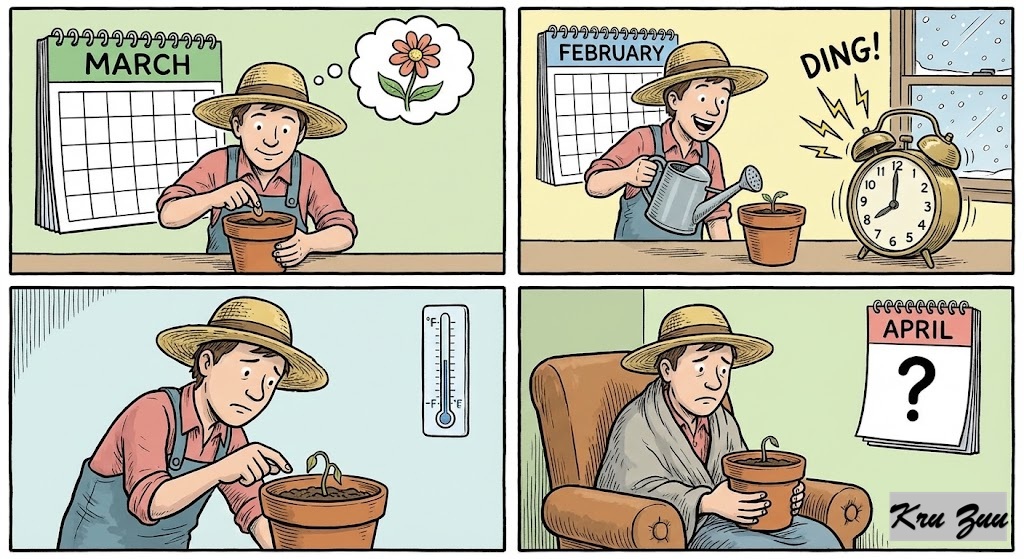
    Worrying is like paying interest on a debt you may never owe. 90% of the catastrophes we imagine never actually happen. And if they do happen, worrying didn’t help you solve them, it just made you tired.

    💎 The Secret

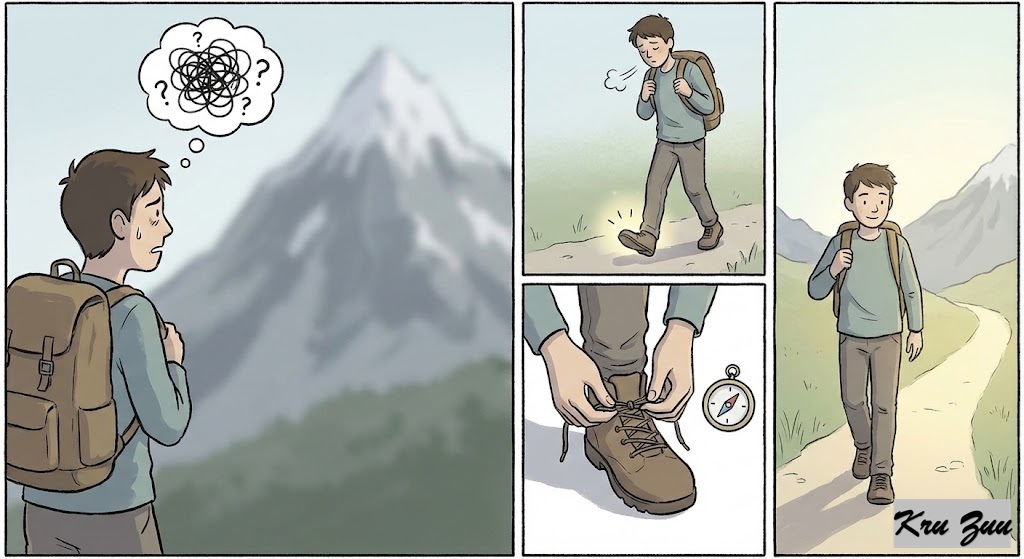
    You cannot solve a problem that doesn’t exist yet. Focus on the step you are taking now, not the step you might take in 5 miles.

    🧐 The Anatomy of the Proverb


    This is your permission slip to relax about the future.


    Don’t Cross (Command): Do not traverse/move over.


    The Bridge (Metaphor): The potential problem, obstacle, or crisis in the future.


    Until You Come To It (Condition): Wait until you are actually standing in front of the problem.


    Simpler Version: Don’t worry about future problems yet. / Deal with issues only when they become real.


    📚 Vocabulary Vault


    Anticipate (Verb): To expect or predict something. (Good leaders anticipate; they don’t panic).


    Premature (Adjective): Occurring or done before the proper time. ⏰


    Hypothetical (Adjective): Based on a possible situation rather than fact; imagined.


    Anxiety (Noun): A feeling of worry, nervousness, or unease about an imminent event or something with an uncertain outcome.


    Adaptability (Noun): The quality of being able to adjust to new conditions.

    📜 History: Ancient Wisdom


    The Origin:
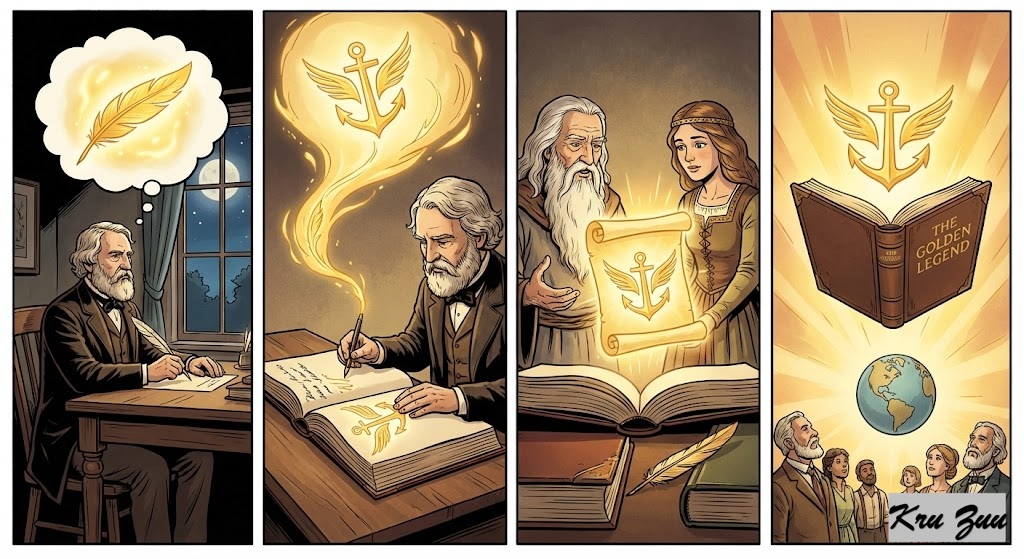
    This proverb is often attributed to the American poet Henry Wadsworth Longfellow in his 1851 work The Golden Legend.


    The Logic: In the old days, travelers literally had to worry if a bridge would hold their horse’s weight. But worrying 10 miles away wouldn’t fix the bridge. You had to get there to check.


    Global Cousins


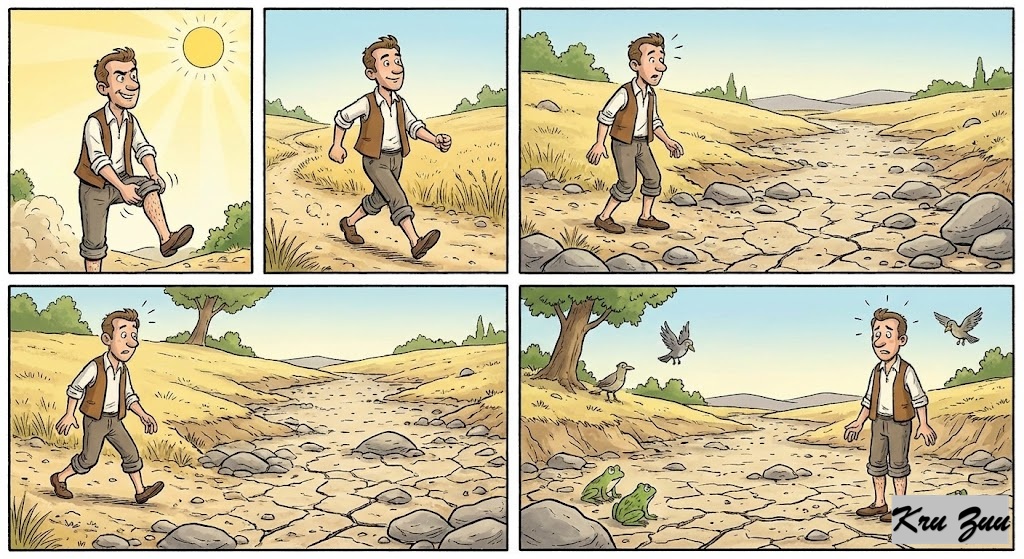
    🇹🇷 Turkish: “Dereyi görmeden paçaları sıvama.” (Don’t roll up your trousers before you see the stream.)


    🇪🇸 Spanish: “No te vendes la herida antes de tenerla.” (Don’t bandage the wound before you have it.)

    🎯 Impact on Life: The Pros & Cons


    ✅ The Pros (The Shield)


    Energy Conservation: You stop wasting mental battery on scenarios that are 99% unlikely.


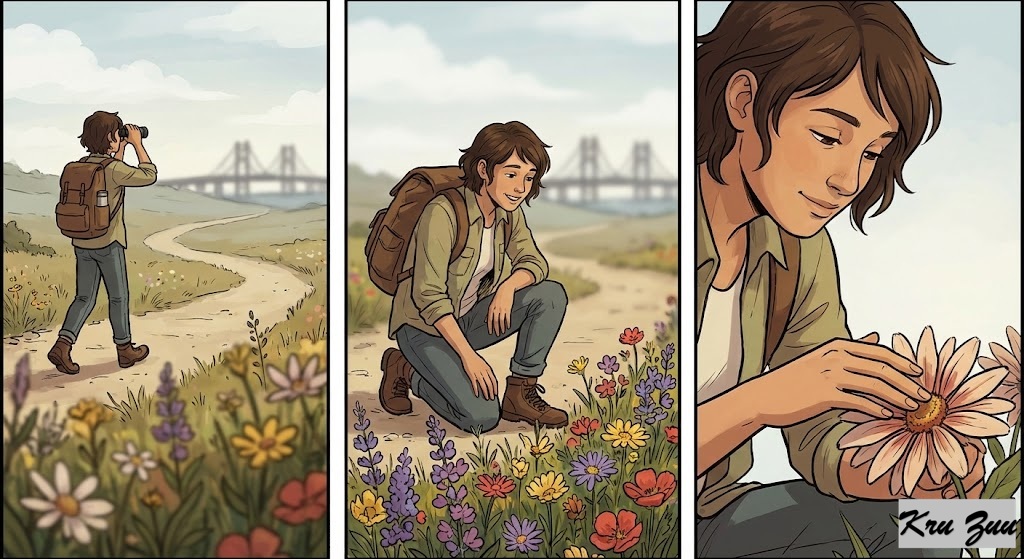
    Better Focus: By not looking at the “bridge” in the distance, you can see the beautiful flowers right in front of your feet.


    ❌ The Cons (The Trap)


    Lack of Preparation: Be careful. This idiom does not mean “don’t plan.” You should check the weather before a trip. Just don’t cry about the rain three days before it falls. There is a difference between Preparation (smart) and Worry (useless).

    🎭 Short Story: The Heavy Backpack 🎒🐱🐔


    Let’s hike into the magical forest to see how heavy “worry” really is.


    🌟 The Cast


    Cleo the Cat: The Overthinker. She hates getting her paws wet. 😼


    Cluck the Chicken: The Carefree Traveler. He just wants snacks. 🐔


    Fred the Frog: The Guide. 🐸


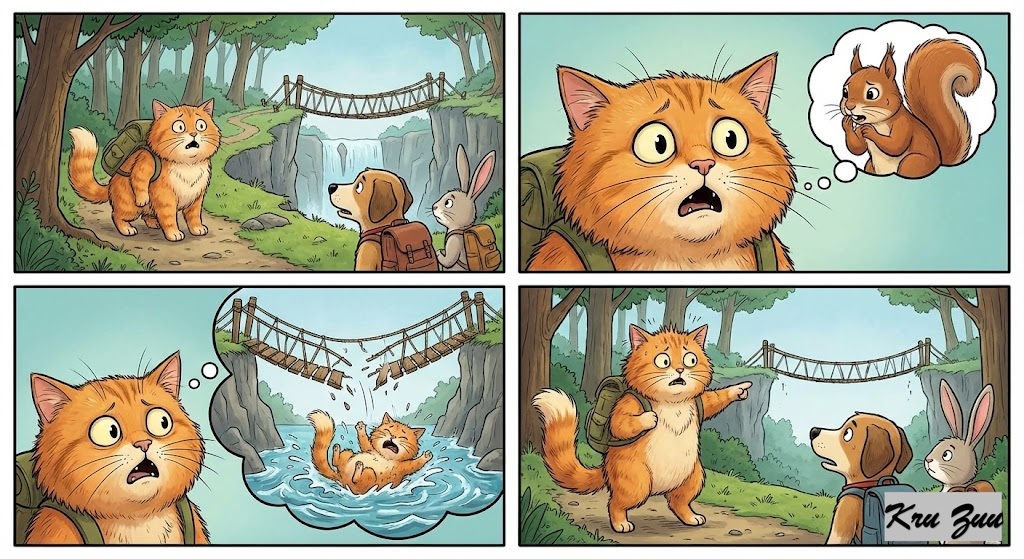
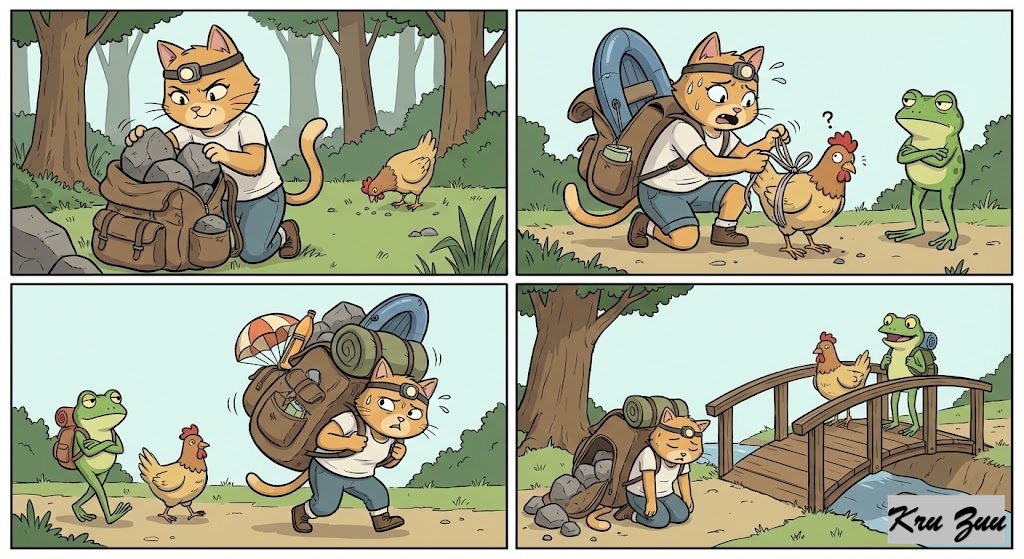
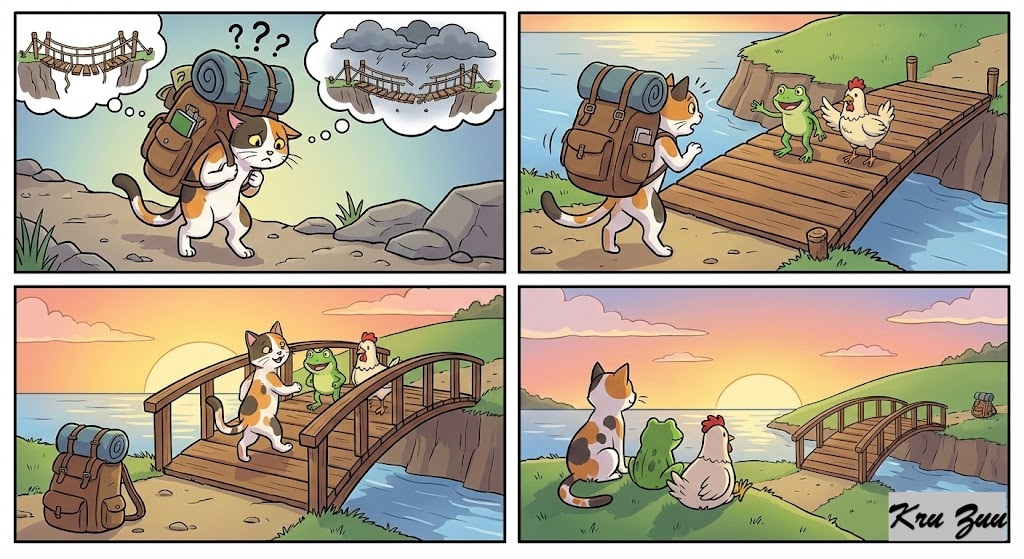
    The Situation: The trio is hiking to the “Crystal Waterfall.” To get there, they must cross the Old Rope Bridge. Cleo’s Panic: Five miles before they reach the bridge, Cleo stops. “I heard a rumor,” she whispers, terrified. “A squirrel told me the Old Rope Bridge might be broken! If it is broken, we will fall into the river! Cats hate water!”


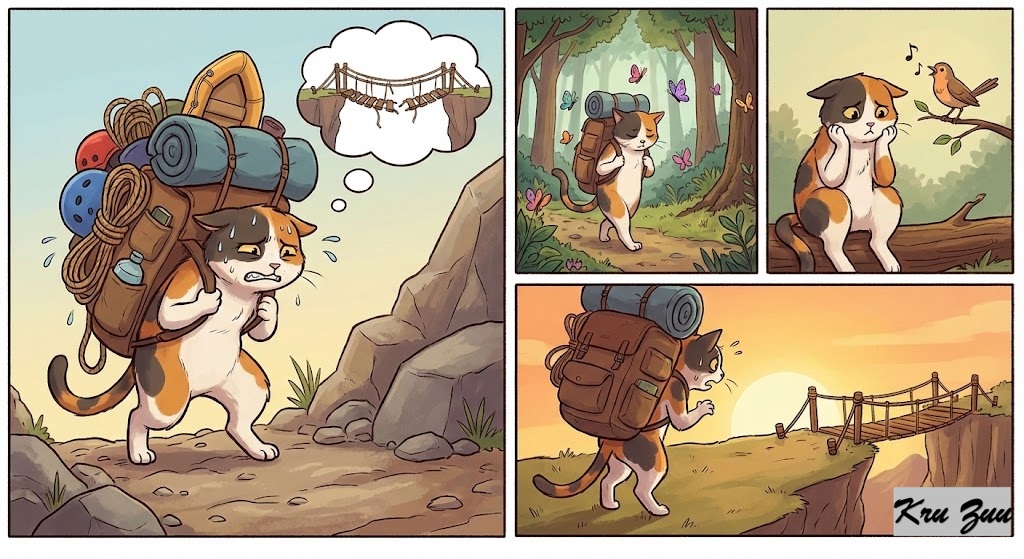
    The Conflict: Cleo opens her backpack. “We must prepare!” she yells. She puts heavy rocks in her bag (“to build a dam”), she packs an inflatable boat, and she tries to tie a parachute to Cluck. “This is heavy,” Cleo complains, sweating and struggling to walk. “But we must be ready for the broken bridge!” Cluck is just eating a worm. “Let’s just walk, Cleo!” Fred says, “Ribbit. Cleo, you are carrying the weight of a ‘maybe’.”


    The Journey: For three hours, Cleo is miserable. She is tired from carrying her heavy “survival gear.” She doesn’t see the butterflies. She doesn’t hear the birds. She only thinks about the scary bridge.


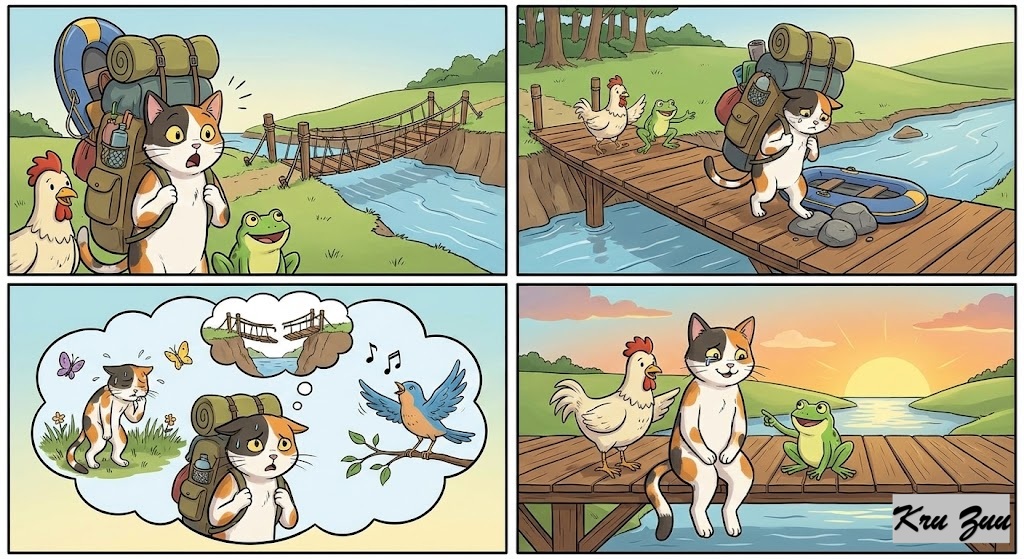
    The Result: They finally arrive at the river… and Cleo gasps. 🙀 The Old Rope Bridge was gone. But in its place, the forest rangers had built a brand new, solid wooden bridge. It was wide, safe, and dry. Cleo looked at her heavy inflatable boat. She looked at her heavy rocks. She realized she had ruined her whole hike worrying about a problem that didn’t exist.


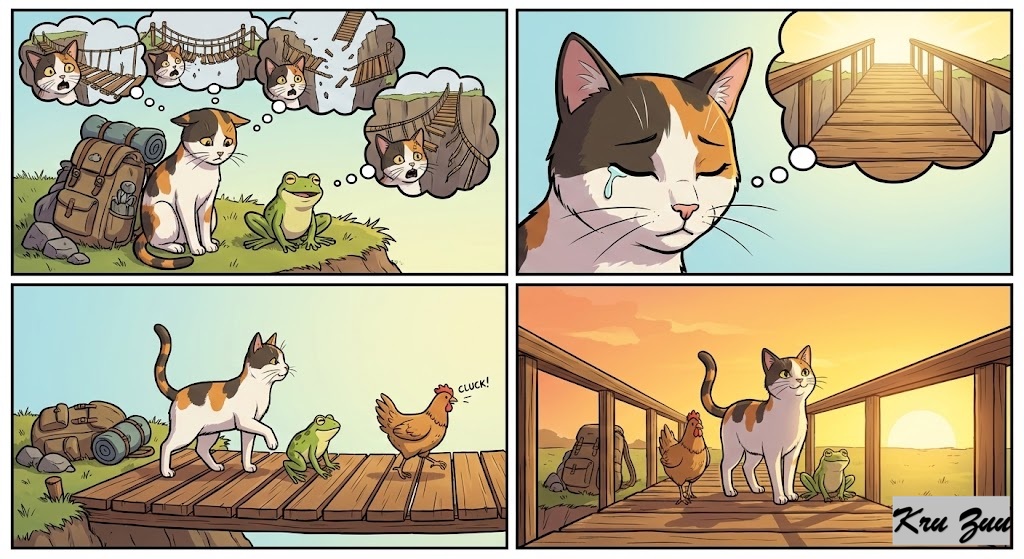
    The Resolution: Fred smiled. “You crossed the bridge in your mind a thousand times, Cleo. And it was scary every time. In reality, you only had to cross it once, and it was easy.”


    The Moral: Don’t carry a heavy backpack of “What ifs.” Most of the bridges you fear turn out to be sturdy paths when you actually arrive.

    🎓 Lesson for English Learners


    Don’t Panic About the Exam Speaking Part.


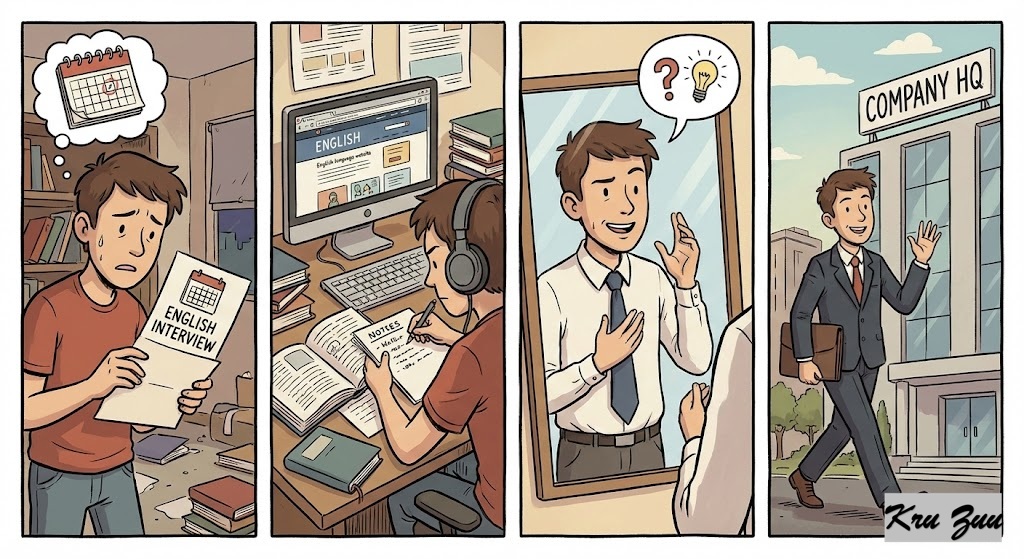
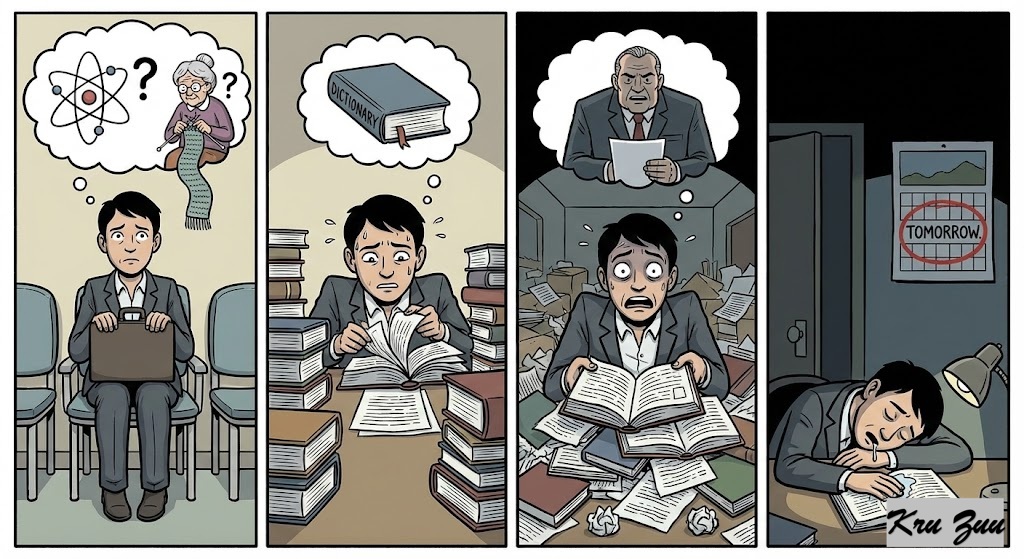
    Situation: You have an English interview next week.


    The Trap: You think: “What if they ask me about nuclear physics? What if they ask me about the history of knitting?” You panic and try to memorize the whole dictionary.


    The Shift: You are crossing the bridge too early.


    You Say: “I cannot predict every question. I will trust my general English skills. I will cross that bridge when the examiner asks the question.” (This confidence usually makes you speak better!)


    💬 Your Turn: The “Delete” Button 🚀


    Is there something you are worried about right now?


    Identify:
    What is a problem you are afraid might happen next month?


    Check: Can you do anything about it right this second?


    The Action: If the answer is “No,” visualize a bridge. Imagine yourself standing far away from it. Say out loud: “I am not at the bridge yet.”


    👇 Question for the comments: Are you a “Cleo” (overthinker) or a “Cluck” (relaxed)? Tell us a time you worried about something that never actually happened!

    By Zubeyir YURTKURAN

    https://www.facebook.com/BrainBattleground/

    https://www.facebook.com/zubeyr.yurtkuran/

    https://www.instagram.com/zubeyryurtkuran/
    https://www.youtube.com/@BrainBattleground-b3p

    https://www.instagram.com/brainbattleground/

  • 🐆 The Daily Shield: The Law of True Nature

    🐆 The Daily Shield: The Law of True Nature

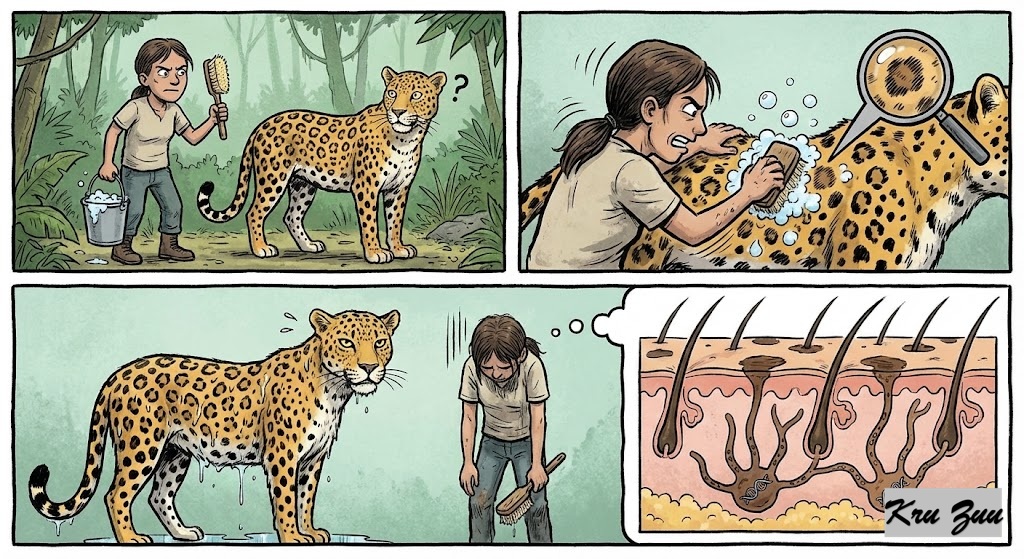
    “A leopard doesn’t change its spots.”


    😈 The Villain (The Wishful Thinker)

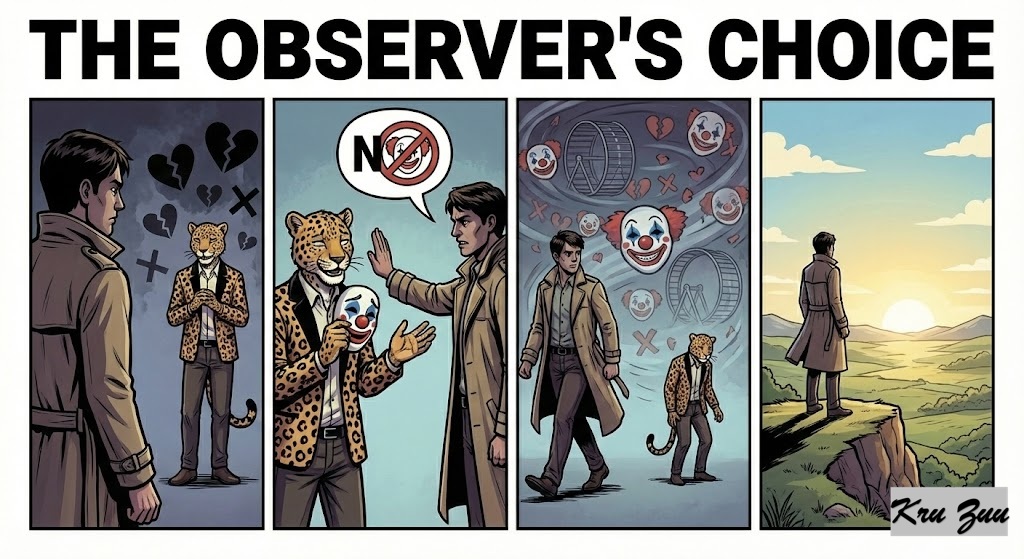
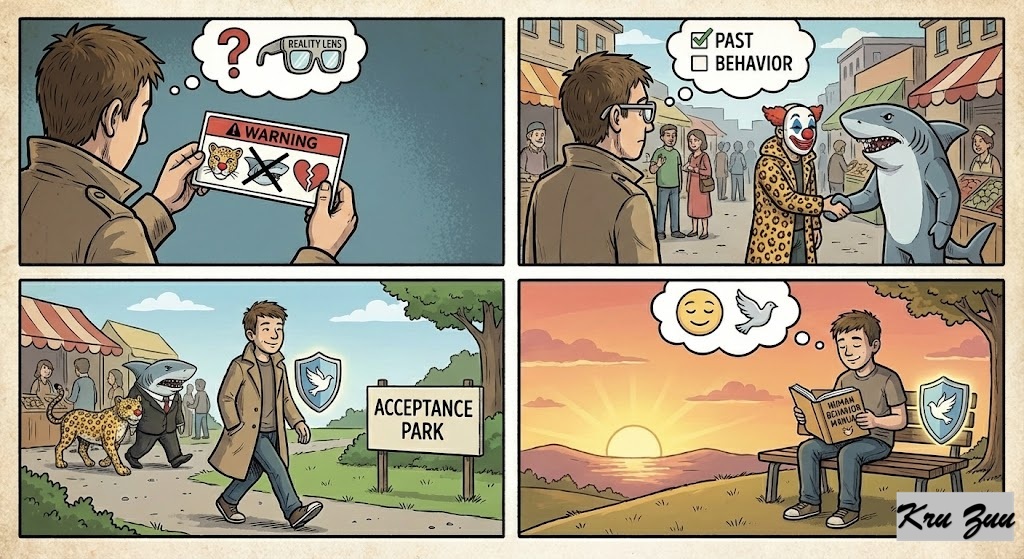
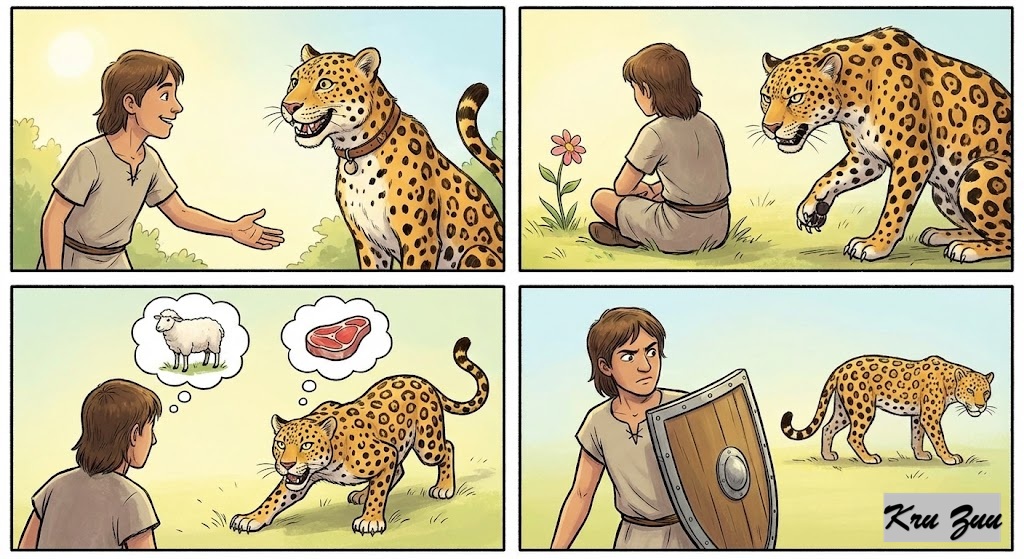
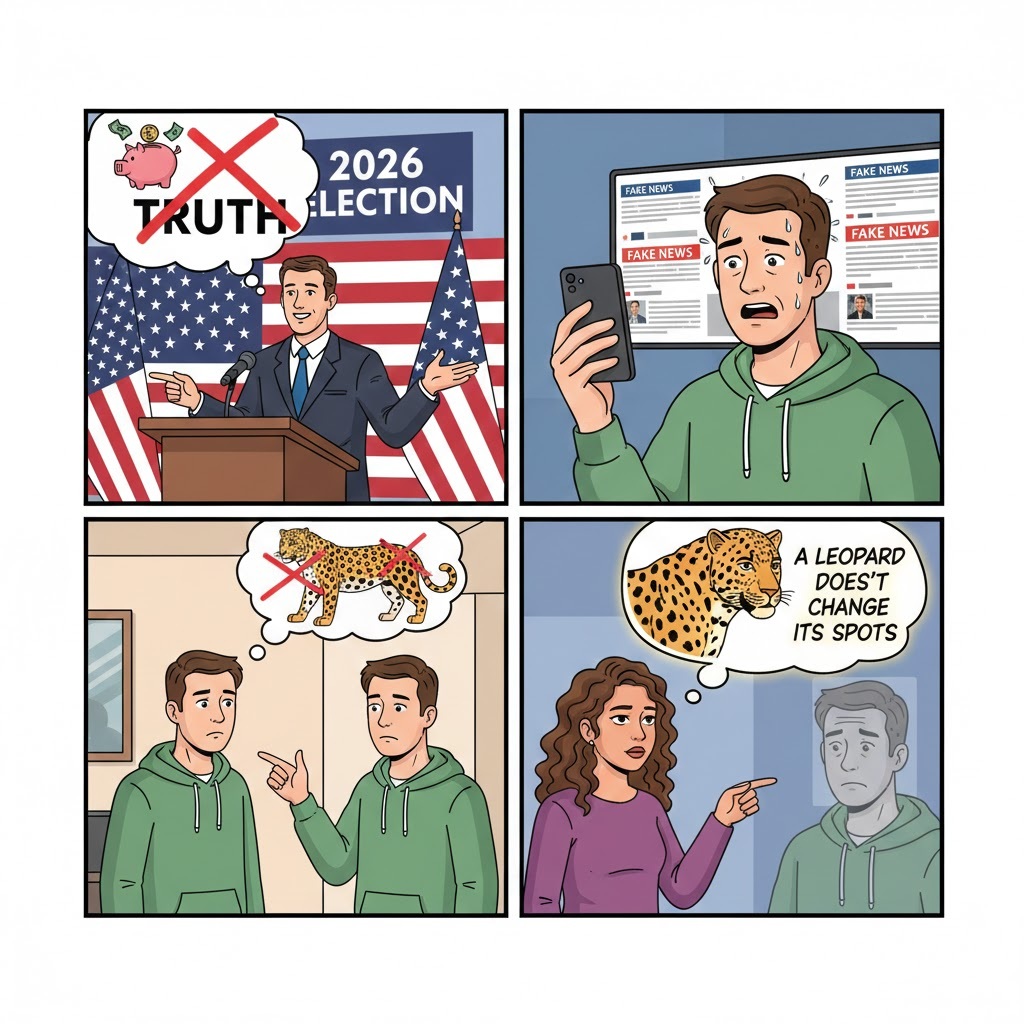
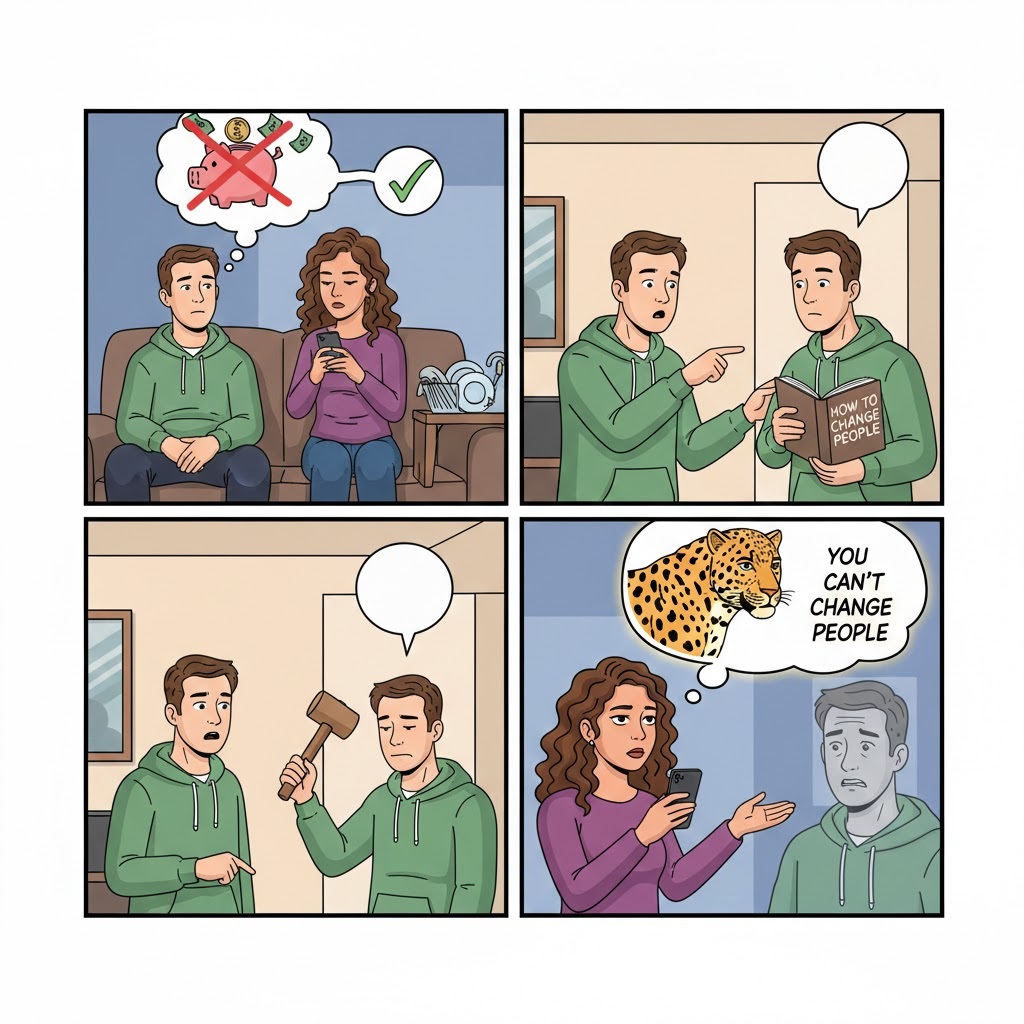
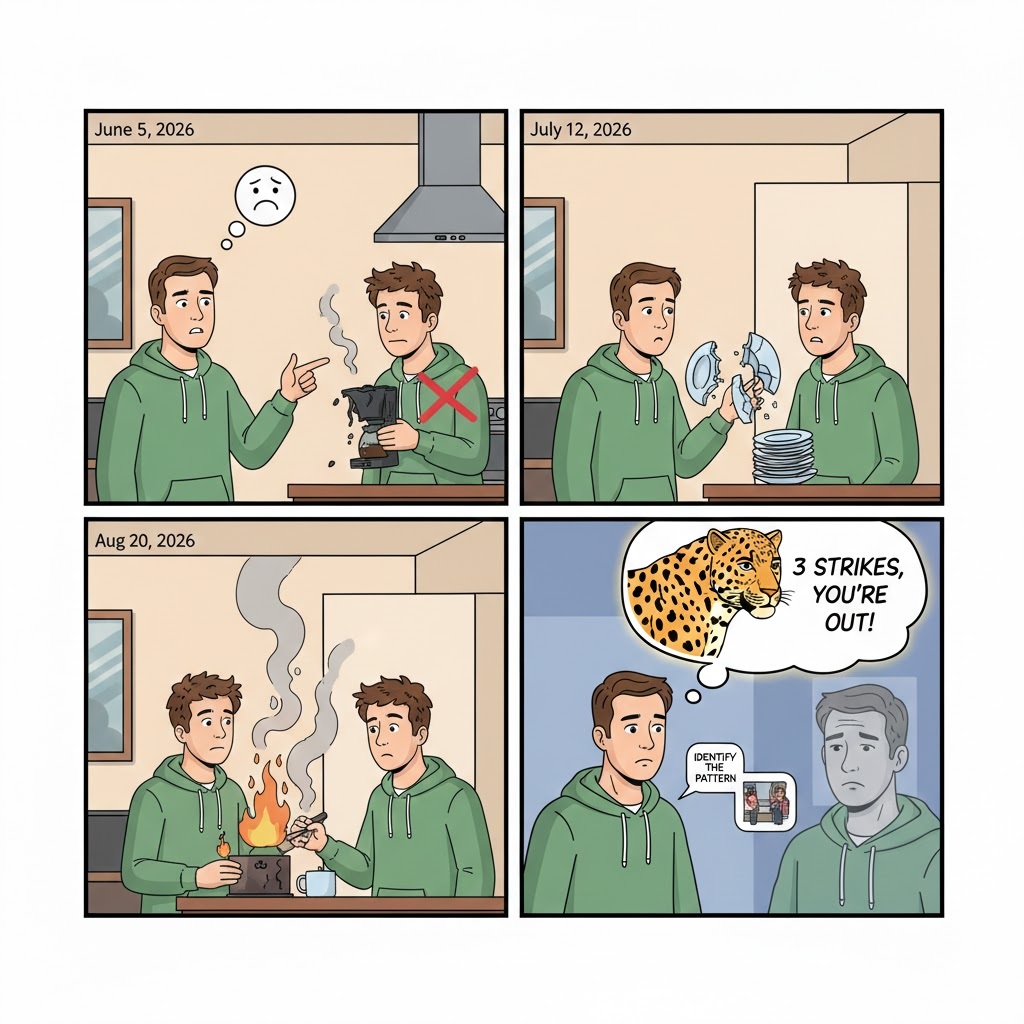
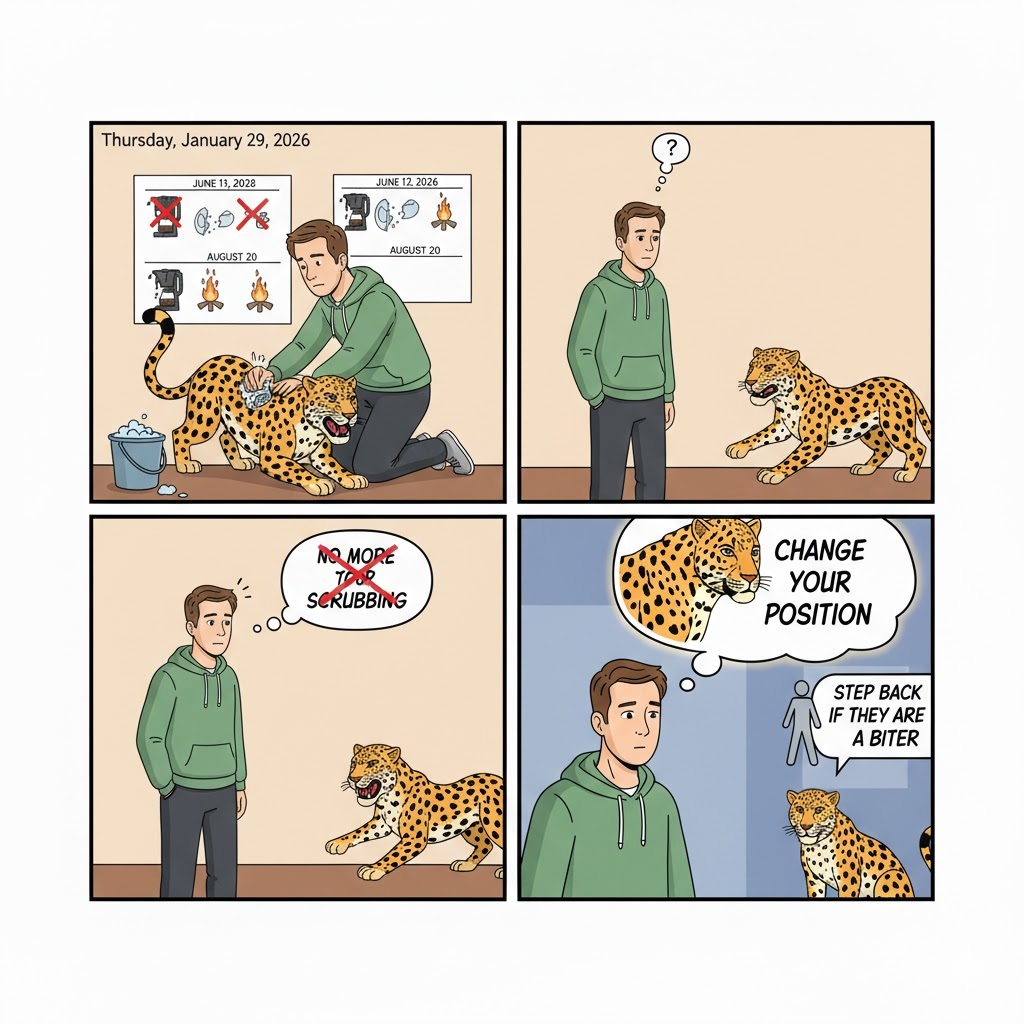
    You meet someone who has lied to you three times. They apologize and say, “I’ve changed! It won’t happen again.” What do you do? You believe them. You think you can “fix” people. You think your love or logic is strong enough to rewrite someone’s personality.

    The Result? You get hurt again. You feel betrayed by the same person, in the same way, for the tenth time. You are trapped in the “Cycle of Disappointment.” 🤡


    😇 The Hero (The Realist)

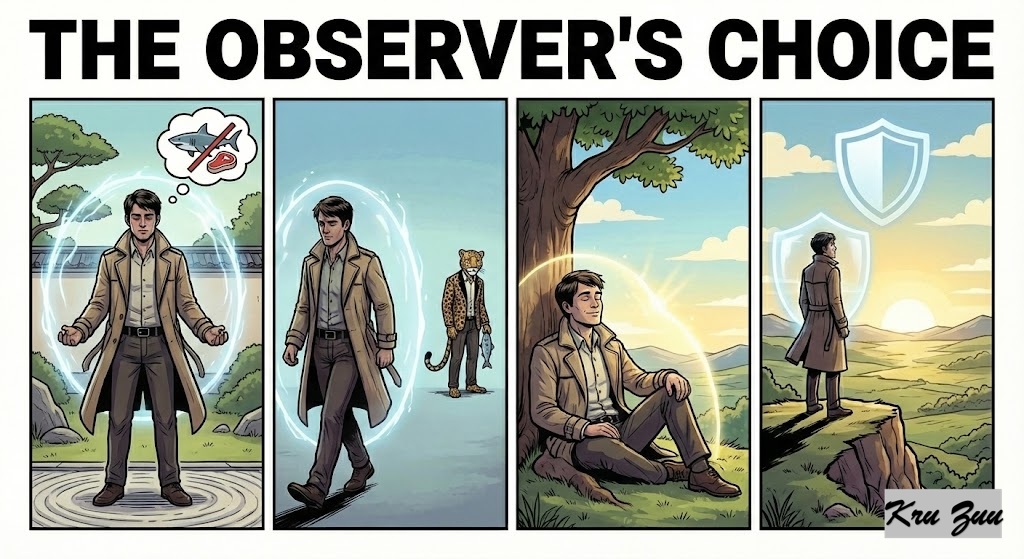
    You observe patterns. You understand that the best predictor of future behavior is past behavior. When someone shows you who they are, you believe them the first time. You don’t try to change the leopard; you simply don’t invite the leopard into your house.

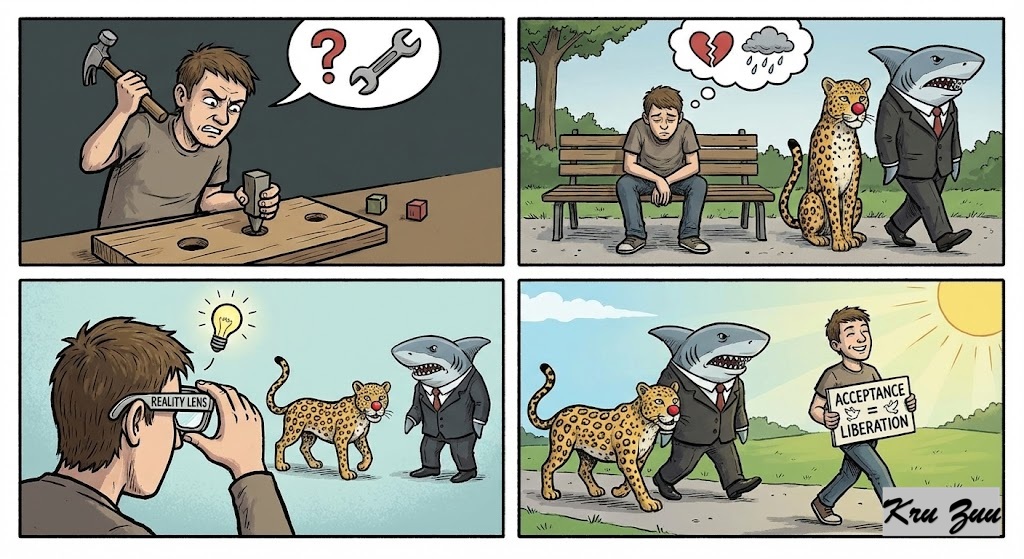
    The Result? You protect your energy. You stop wasting time trying to turn a shark into a vegetarian. You find peace in acceptance. 🛡️


    ⚖️ The Reality


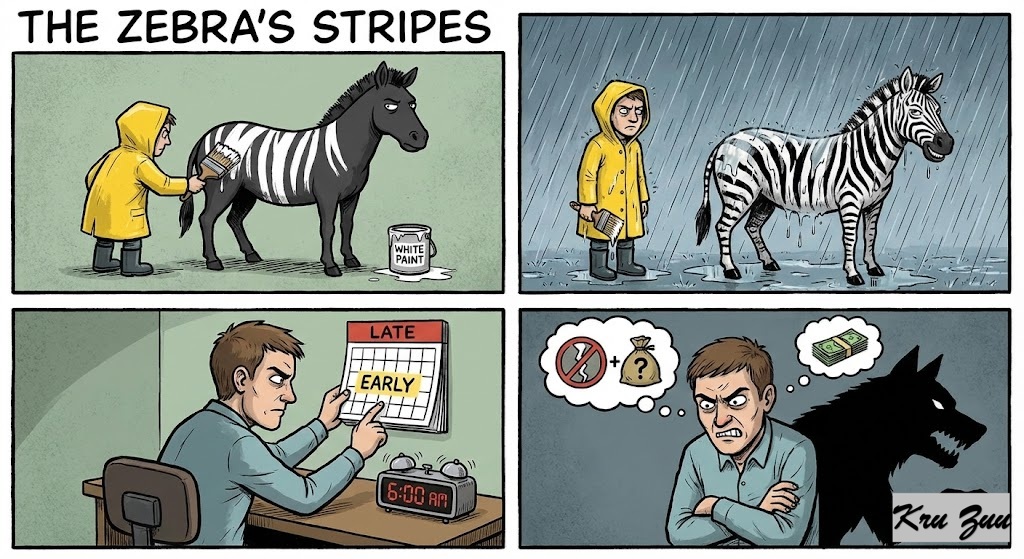
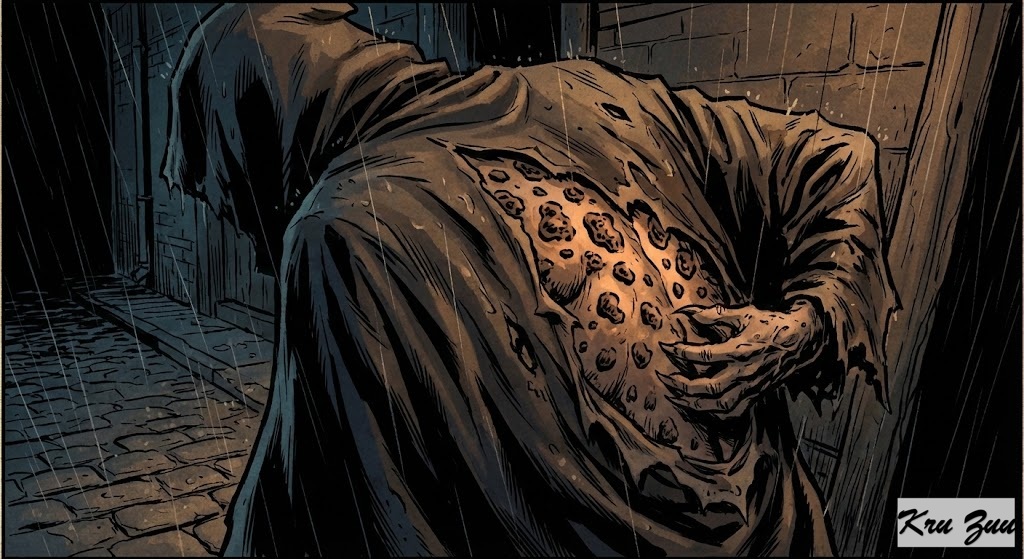
    You can paint a zebra with white paint, but under the rain, the stripes will always return. People can change their habits (diet, wake-up time), but they rarely change their nature (integrity, temperament, core values).

    💎 The Secret

    Realizing this isn’t cynical; it’s liberating. Once you stop expecting people to be who they aren’t, you can deal with them as they are.

    🧐 The Anatomy of the Proverb


    This is your warning label for human behavior.


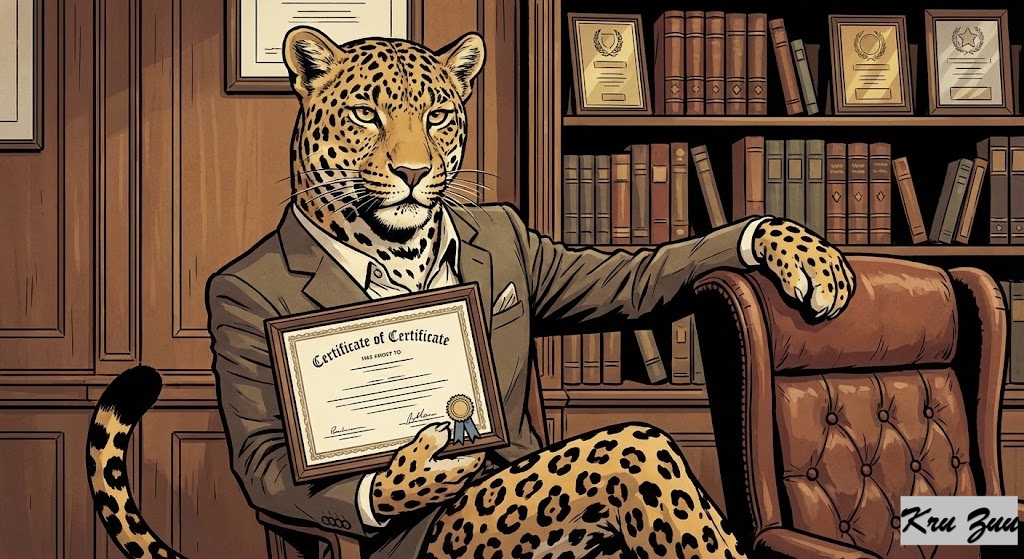
    A Leopard (The Subject): Represents a person with a strong, established reputation or nature.


    Doesn’t Change (Verb Phrase): Cannot alter or remove.


    Its Spots (The Object): Represents innate characteristics, bad habits, or true nature.


    Simpler Version: People stick to their true nature. / You cannot hide who you really are.


    📚 Vocabulary Vault


    Inherent (Adjective): Existing in something as a permanent, essential quality.


    Instinct (Noun): A natural or intuitive way of acting or thinking. 🧠


    Reputation (Noun): The beliefs or opinions that are generally held about someone.


    Naive (Adjective): Showing a lack of experience, wisdom, or judgment. (Too trusting).


    Consistency (Noun): Acting in the same way over time.

    📜 History: Ancient Wisdom


    Where did this wild phrase come from?


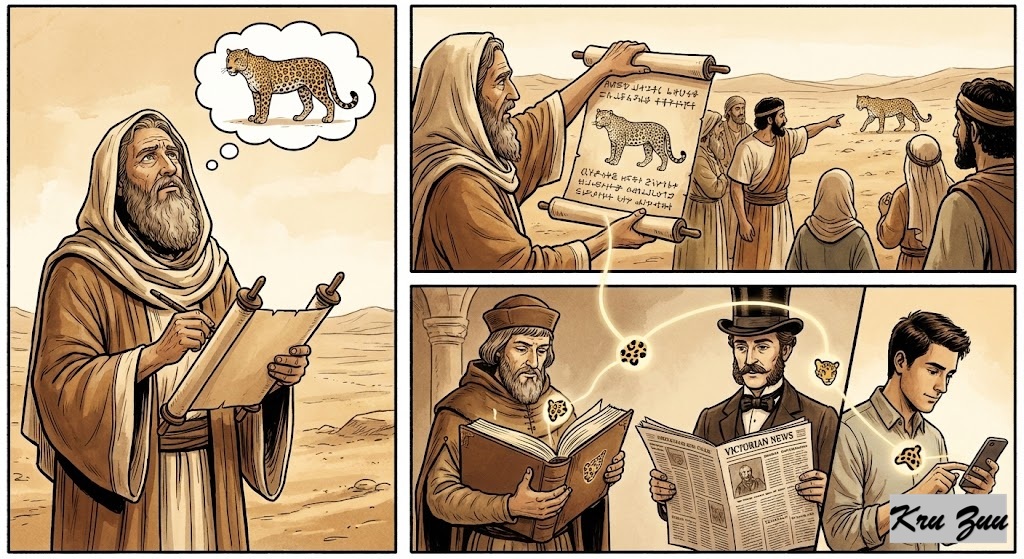
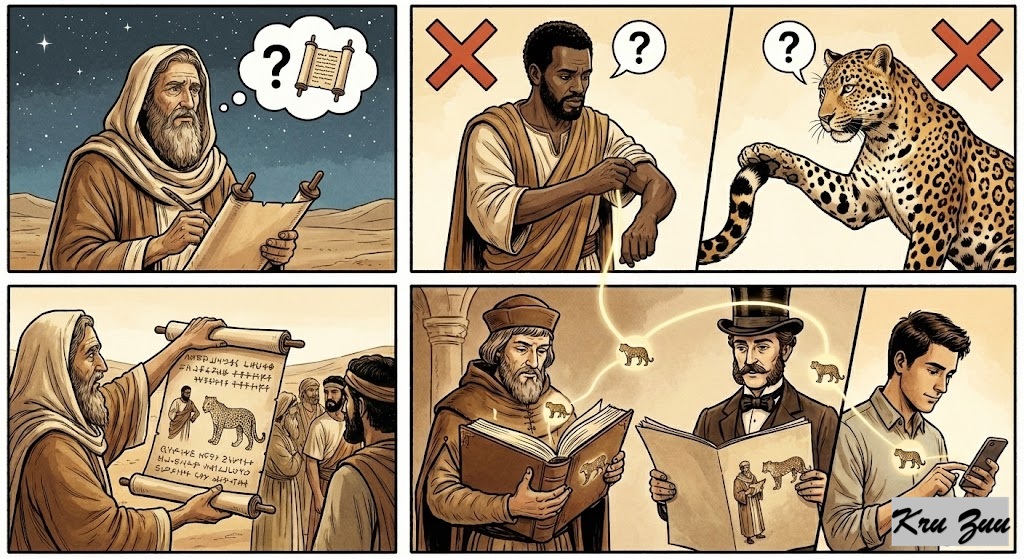
    The Origin: It is actually biblical! It comes from Jeremiah 13:23: “Can the Ethiopian change his skin, or the leopard his spots?” It was a rhetorical question meaning “No, it is impossible.”


    The Logic: A leopard’s spots are not dyed on its fur; they are part of its genetics. You cannot wash them off.


    Global Cousins


    🇹🇷 Turkish: “Can çıkar huy çıkmaz” (The soul leaves the body, but the habit/character does not).


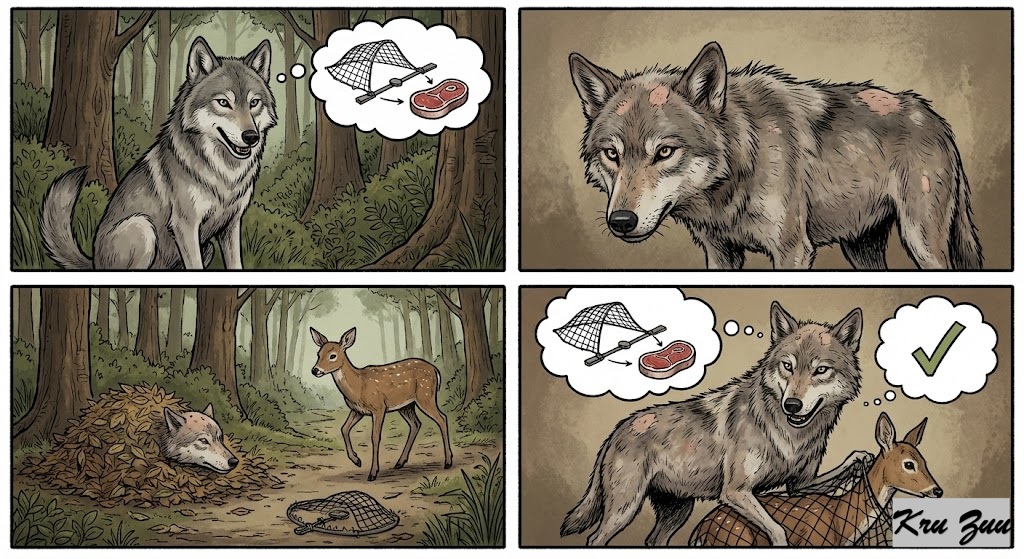
    🐺 Latin: “The wolf loses his hair, but not his tricks.”


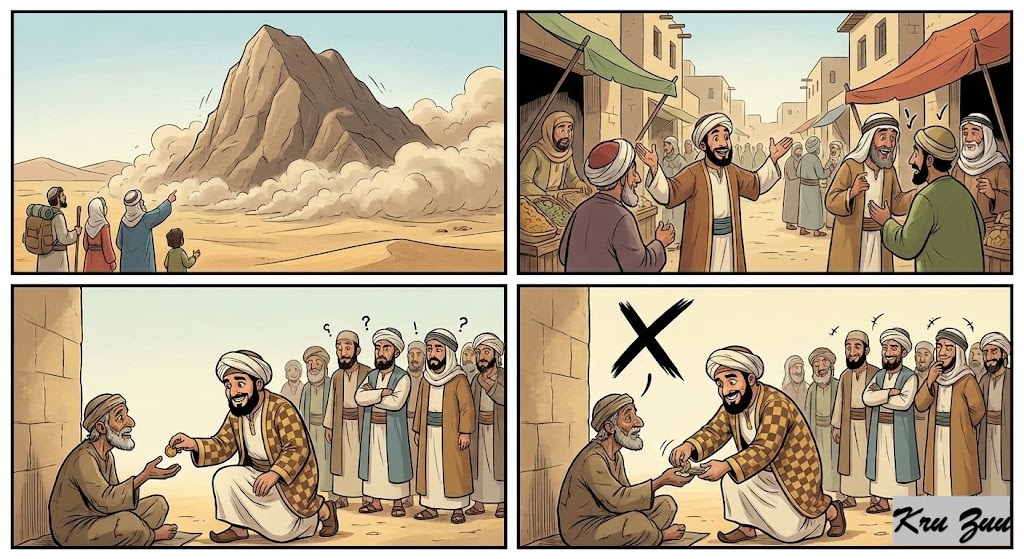
    🐸 Arabic: “If you hear that a mountain moved, believe it; but if you hear that a man changed his character, do not believe it.”

    🎯 Impact on Life: The Pros & Cons


    ✅ The Pros (The Shield)


    Protection: You stop lending money to the friend who never pays you back.


    Clarity: You hire people based on their track record, not their promises.


    ❌ The Cons (The Trap)


    Cynicism: Be careful. If you believe no one can ever improve, you won’t give people a fair chance to grow. This idiom applies mostly to core character, not skills. A bad driver can learn to drive well, but a liar rarely becomes an honest man.

    🎭 Short Story: The “Vegetarian” Lunch 🥗😼🐔


    Let’s return to the magical forest to see if nature really changes.


    🌟 The Cast


    Cleo the Cat:
    The predator who claims she is “reformed.” 😼


    Cluck the Chicken: The trusting optimist. 🐔


    Fred the Frog: The skeptical realist. 🐸


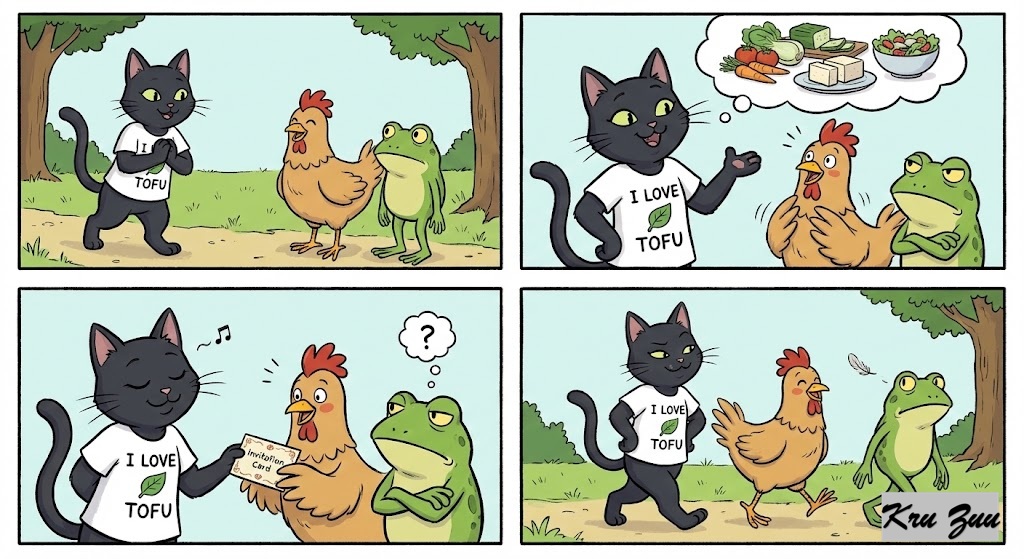
    The Situation: Cleo the Cat approaches Cluck and Fred. She is wearing a shirt that says “I Love Tofu.” “Good news!” Cleo purrs smoothly. “I have decided to change my lifestyle. I am no longer a hunter. I am a vegetarian now. I want to invite you both to lunch to celebrate my new life.”


    The Conflict: Cluck is thrilled. “Oh, how wonderful!” Cluck chirps, flapping his wings. “I always knew you were good deep down, Cleo! We will be there!” Fred the Frog adjusts his glasses and frowns. “Ribbit. I don’t know, Cluck. She ate a mouse last Tuesday. A leopard or a cat, doesn’t change its spots.” “Don’t be so negative, Fred!” Cluck scolds. “She has changed!”


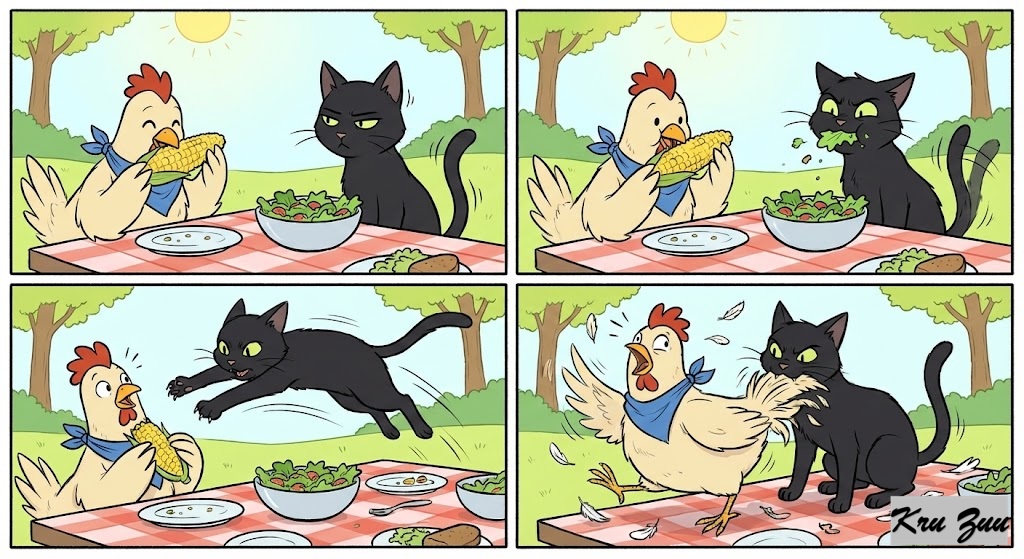
    The Lunch: They sit down at the picnic. There is a bowl of salad. Cleo tries to eat a leaf of lettuce. She chews it… and spits it out. She looks at Cluck. Her eyes get wide. Her tail starts to twitch. 🐈 Cluck is busy eating corn. “This is great, Cleo!” Suddenly, Cleo lunges! POUNCE! She jumps across the table, aiming right for Cluck’s feathery tail!


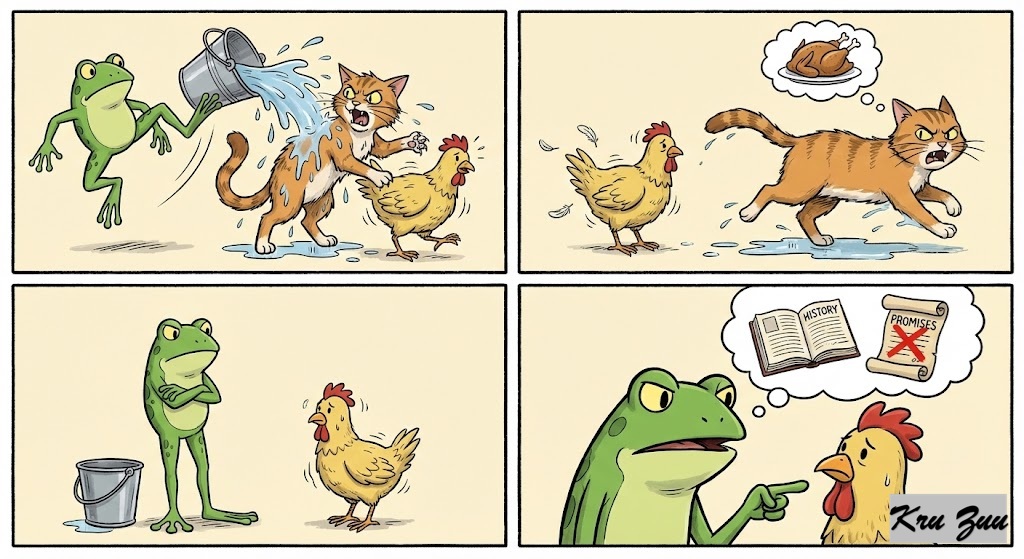
    The Resolution: Fred was ready. He kicks a bucket of water onto Cleo. 💦 Cleo hisses, “I couldn’t help it! He looked so delicious!” and runs away to dry off. Fred looks at the shaking Chicken. “Cluck, next time, believe history, not promises.”


    The Moral: Instinct is powerful. Just because someone says they are different, doesn’t mean their “spots” are gone. Keep your guard up until you see real action.

    🎓 Lesson for English Learners


    Don’t force the translation.


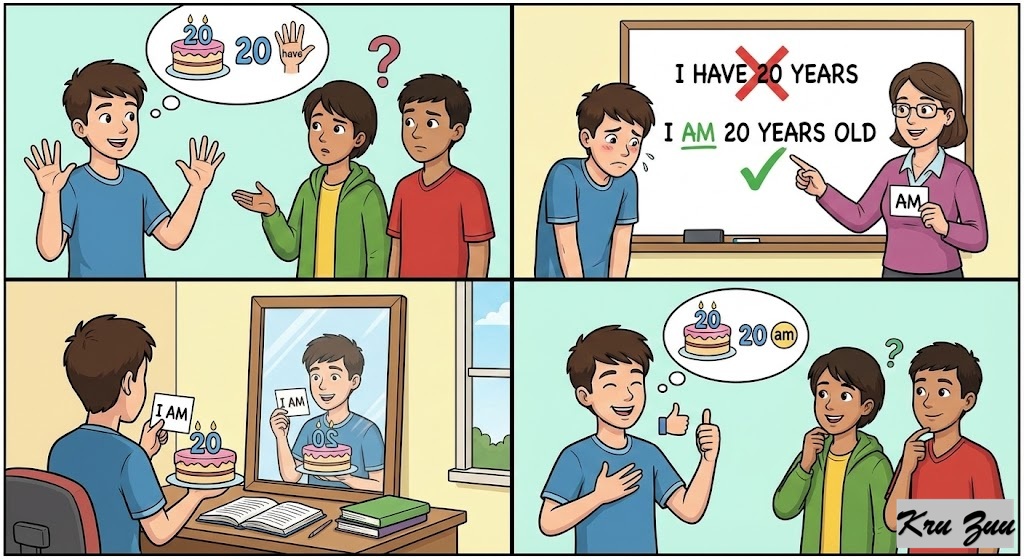
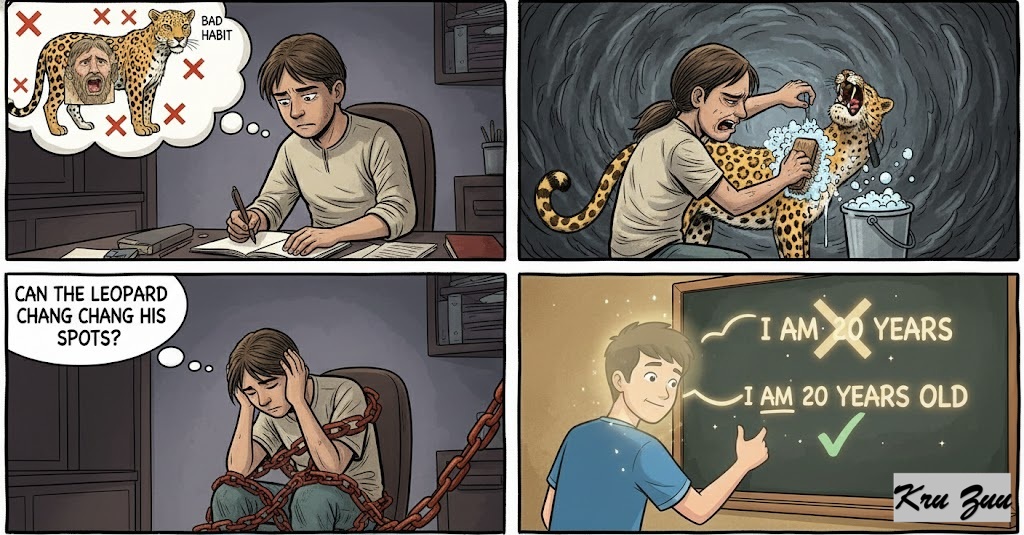
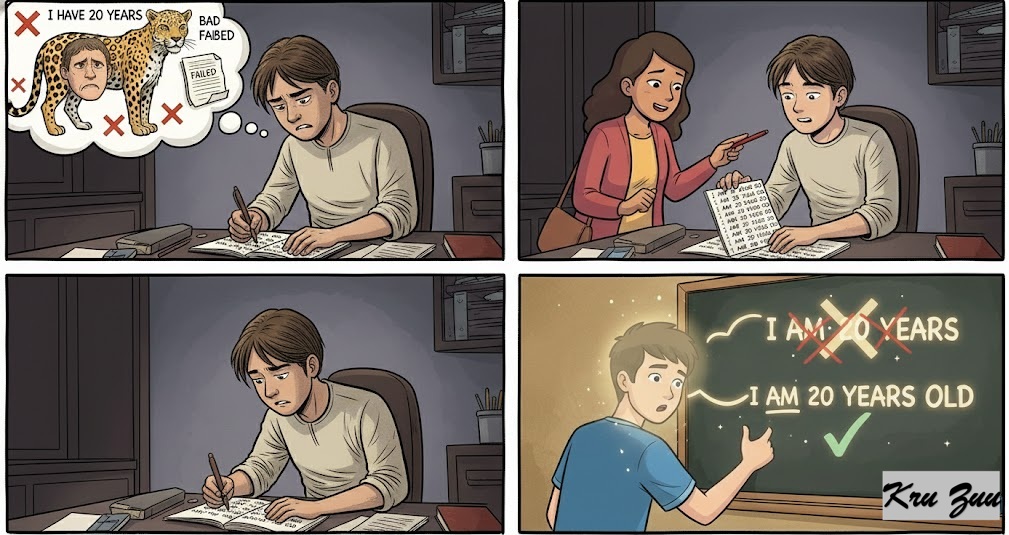
    Situation: You keep making the same grammar mistake (e.g., saying “I have 20 years” instead of “I am 20 years old”).


    The Shift: You might feel like you are the leopard—that you can’t change your bad habit.


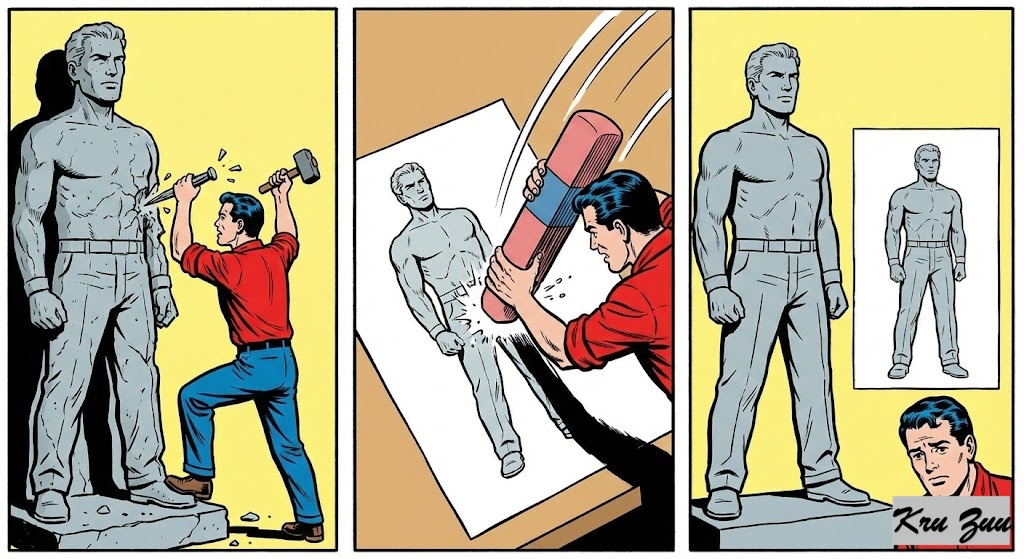
    The Fix: Unlike personality, language habits CAN change. But it takes “conscious repetition.” You must rewrite your spots.


    Usage: If a politician is caught lying again, you can shake your head and say to your friend: “Well, you know what they say… a leopard doesn’t change its spots.”


    💬 Your Turn: The Reality Check 🚀


    Is there someone in your life you are trying to “change”?


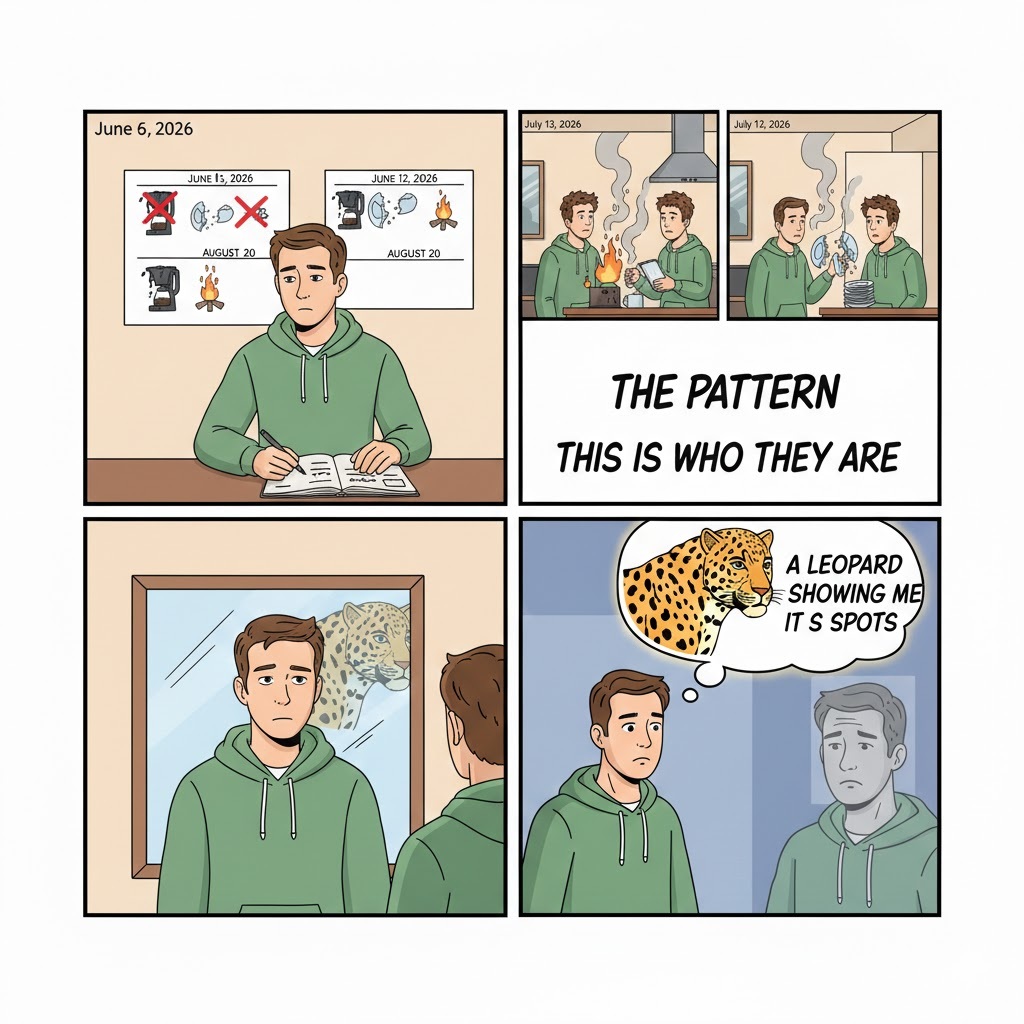
    Identify: Think of a person who has disappointed you in the same way 3 times.


    Accept: Say to yourself, “This is who they are. They are showing me their spots.”


    The Action: Stop trying to scrub their spots off. Instead, change your position. If they are a biter, step back so they can’t bite you.


    👇 Question for the comments: Do you believe people can truly change their core personality? Or do we stay the same forever?

    Let me know your thoughts!

    By Zubeyir YURTKURAN

    https://www.facebook.com/BrainBattleground/

    https://www.facebook.com/zubeyr.yurtkuran/

    https://www.instagram.com/zubeyryurtkuran/
    https://www.youtube.com/@BrainBattleground-b3p

    https://www.instagram.com/brainbattleground/

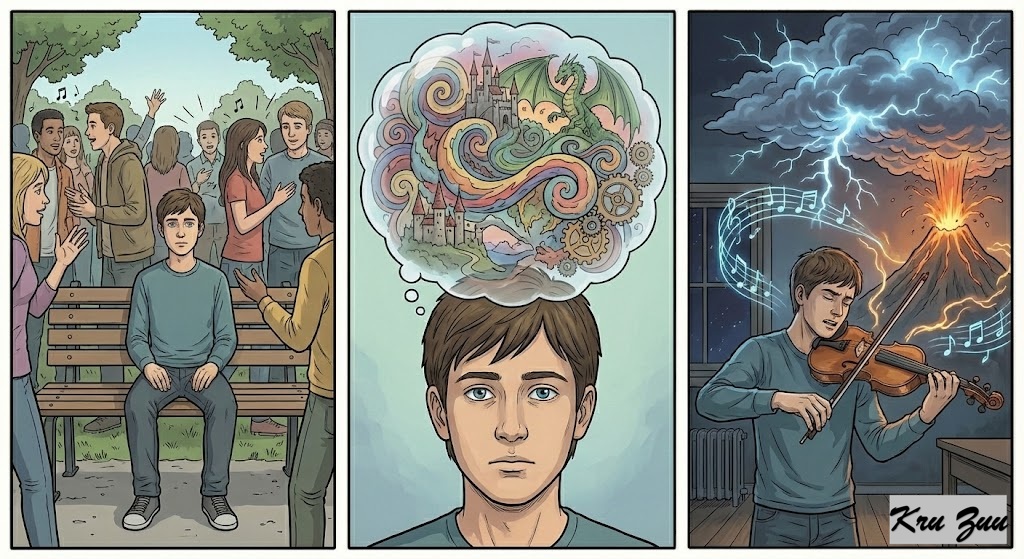
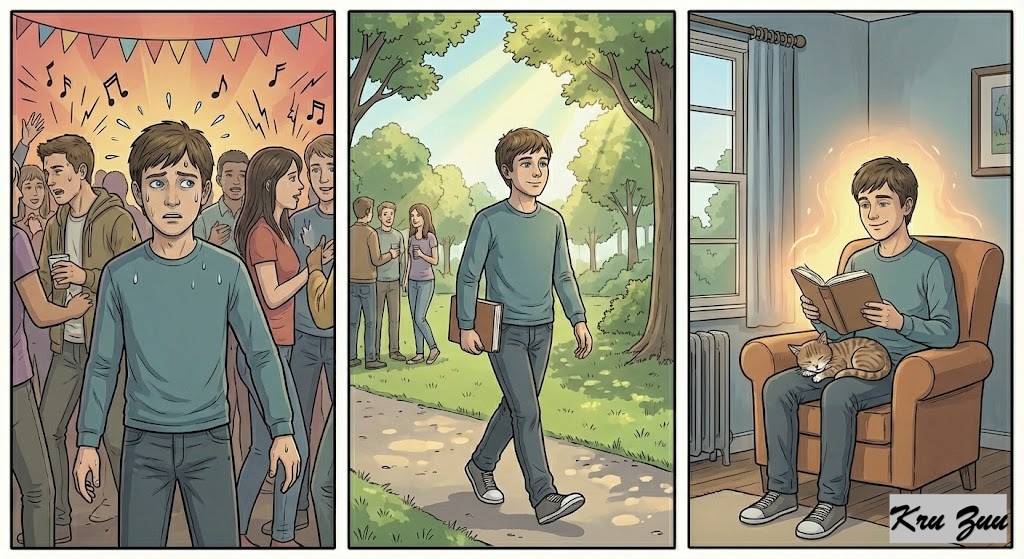
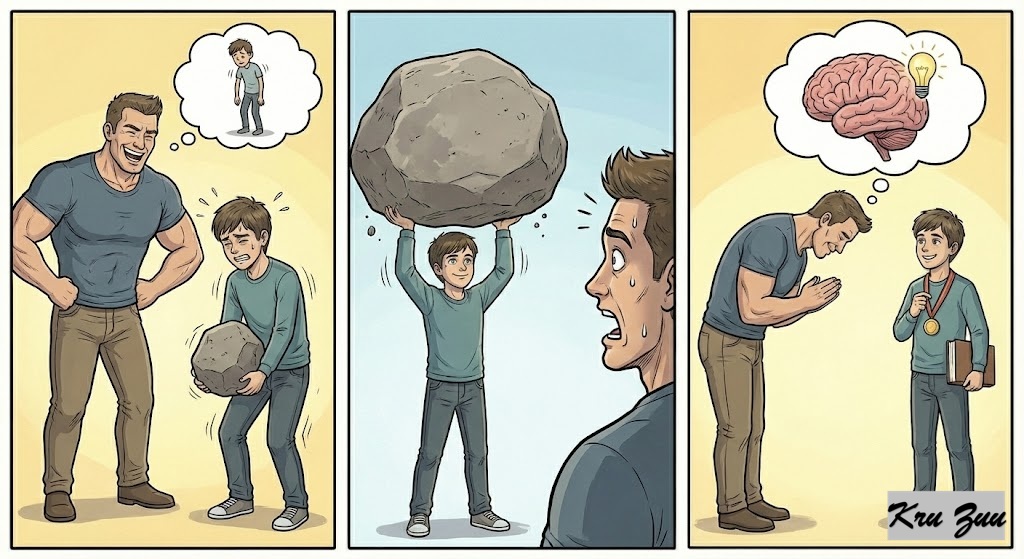
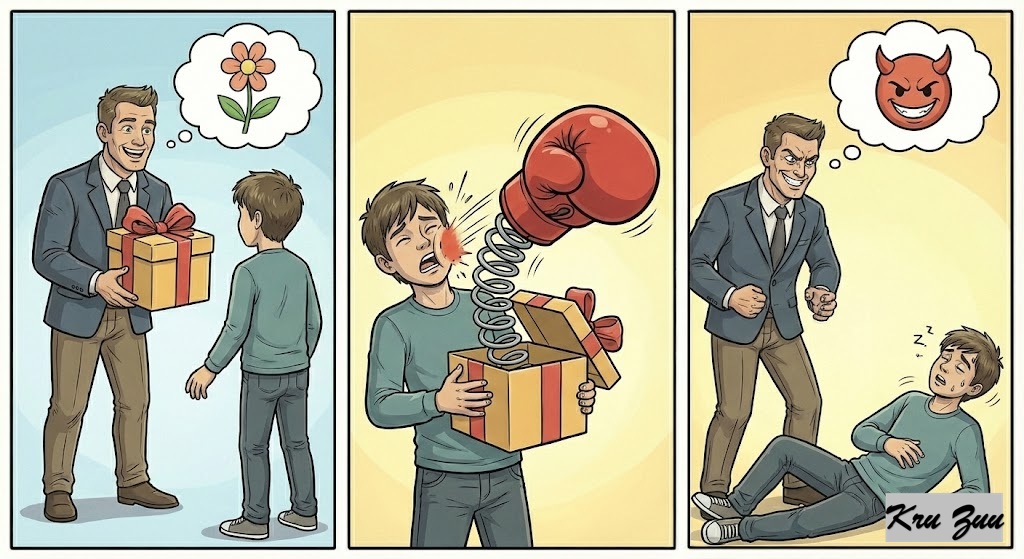
  • 🌊 The Daily Shield: The Law of Hidden Depth

    🌊 The Daily Shield: The Law of Hidden Depth

    “Still waters run deep.”


    😈 The Villain (The Surface Judge)

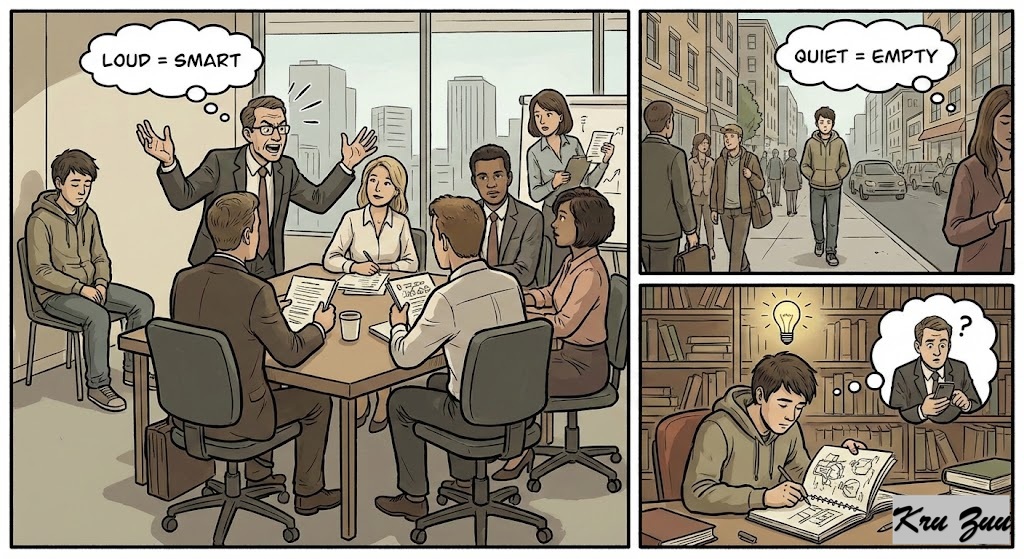
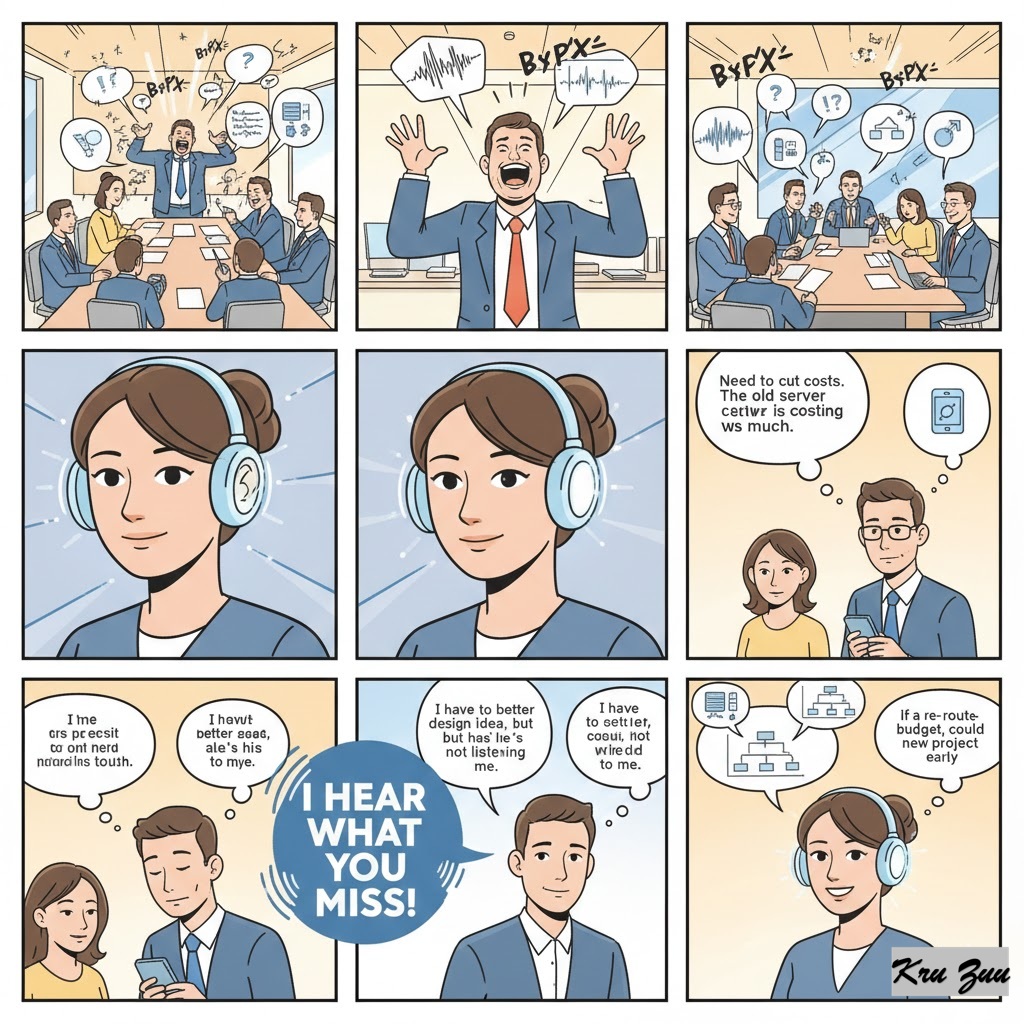
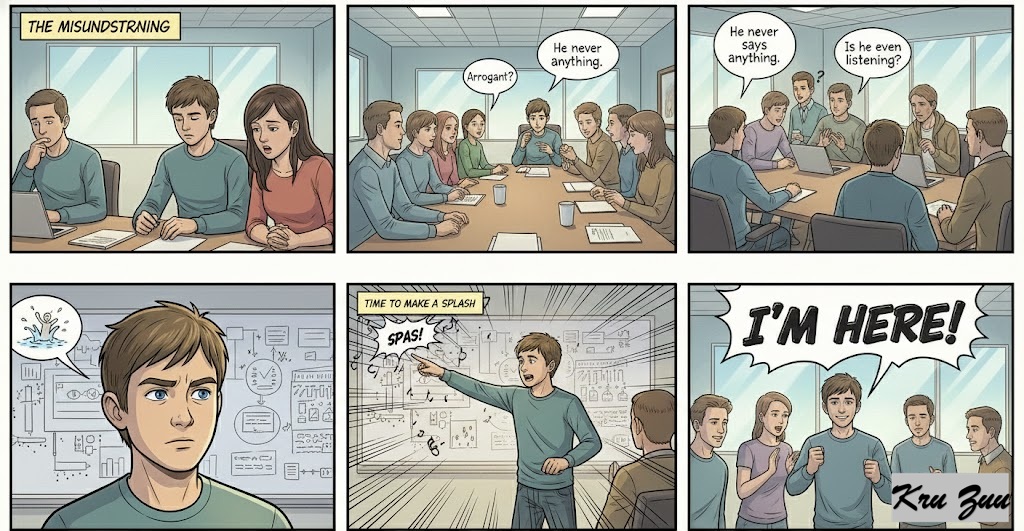
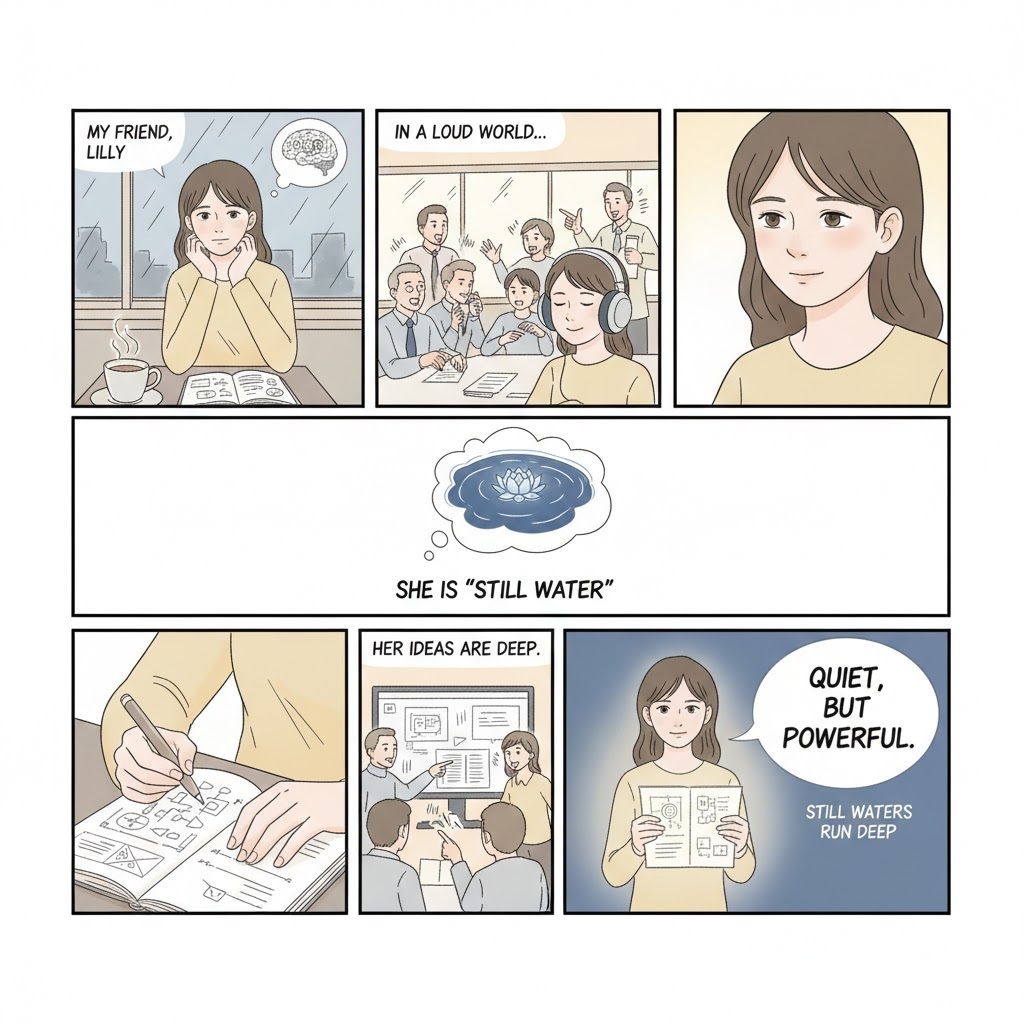
    You meet someone quiet. They don’t talk much in meetings. They don’t post every second on Instagram. What do you think? “They are boring.””They are shy.””They don’t know anything.” You judge the book by its cover. You assume that “Loud” equals “Smart” and “Quiet” equals “Empty.” You ignore the quiet ones.

    The Result? You miss out on the smartest people in the room. You underestimate your competition. You are trapped in the “Noise Trap.” 📢


    😇 The Hero (The Deep Diver)

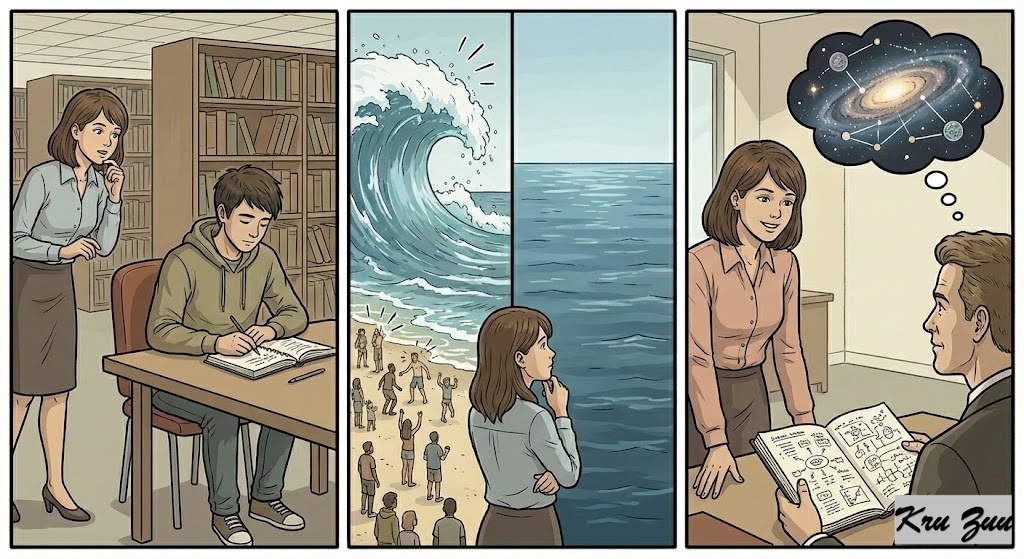
    You meet someone silent. Instead of thinking they are empty, you get curious. You know that the ocean is loudest at the beach (where it is shallow) but silent in the middle (where it is deep). You respect the silence. You realize that just because someone isn’t talking, doesn’t mean they aren’t thinking.

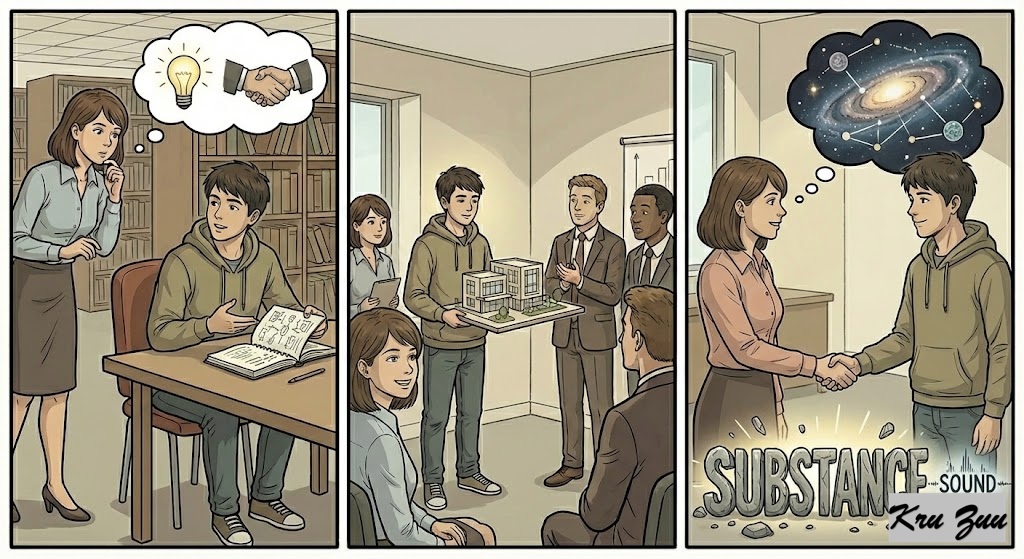
    The Result? When the quiet person finally speaks, you listen. You discover hidden talents, profound wisdom, and powerful allies. You value Substance over Sound. 🧘‍♂️


    ⚖️ The Reality


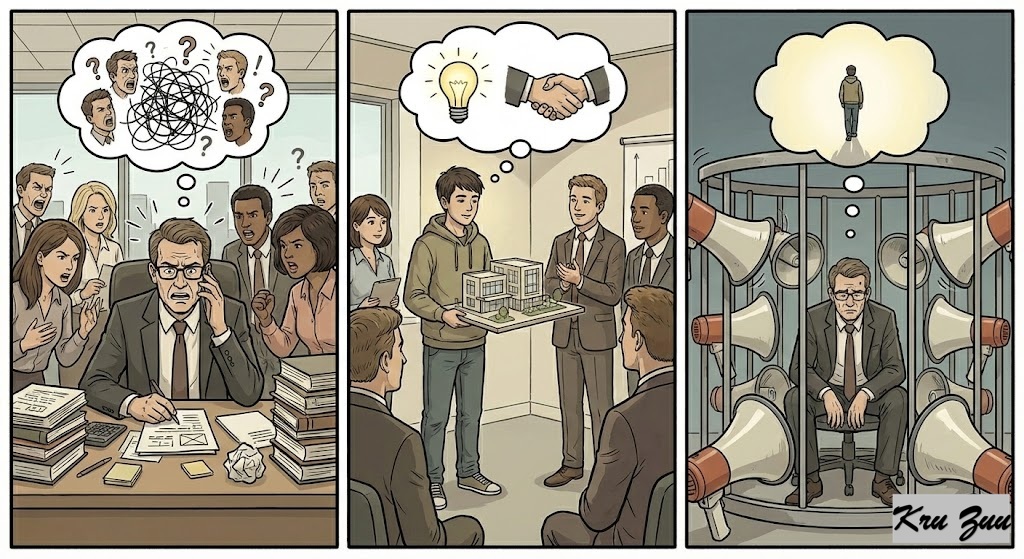
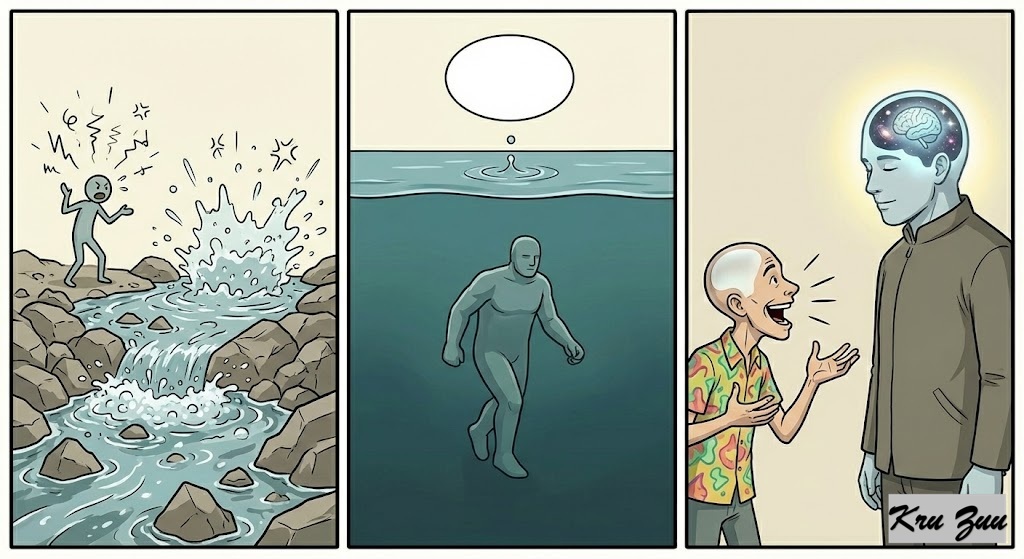
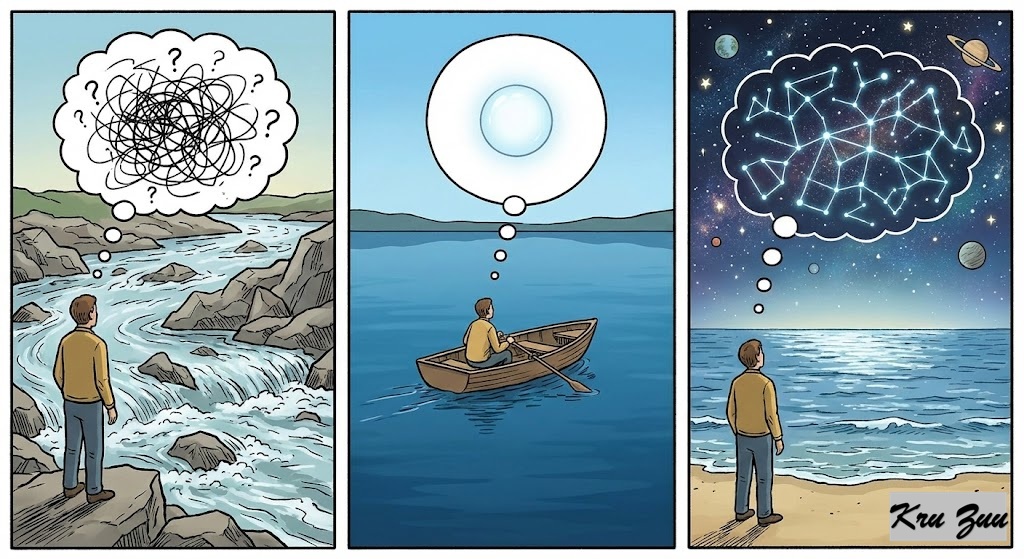
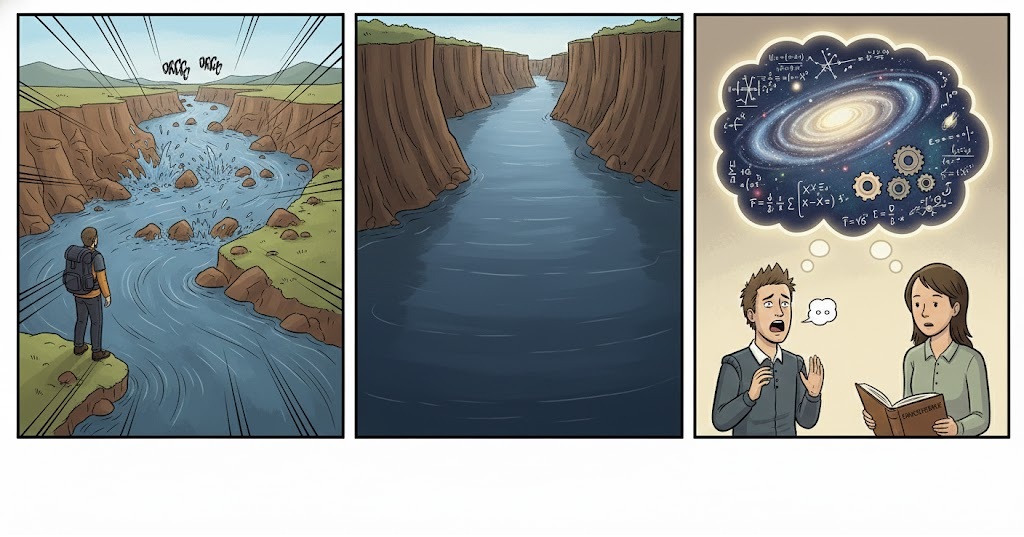
    Noise is easy. Silence is heavy. A shallow brook babbles and splashes noisily over the rocks. A massive, deep river moves silently because it has so much volume and power. People are the same. Those who talk the most often know the least. Those who are calm often hold the most power, passion, or intelligence inside.


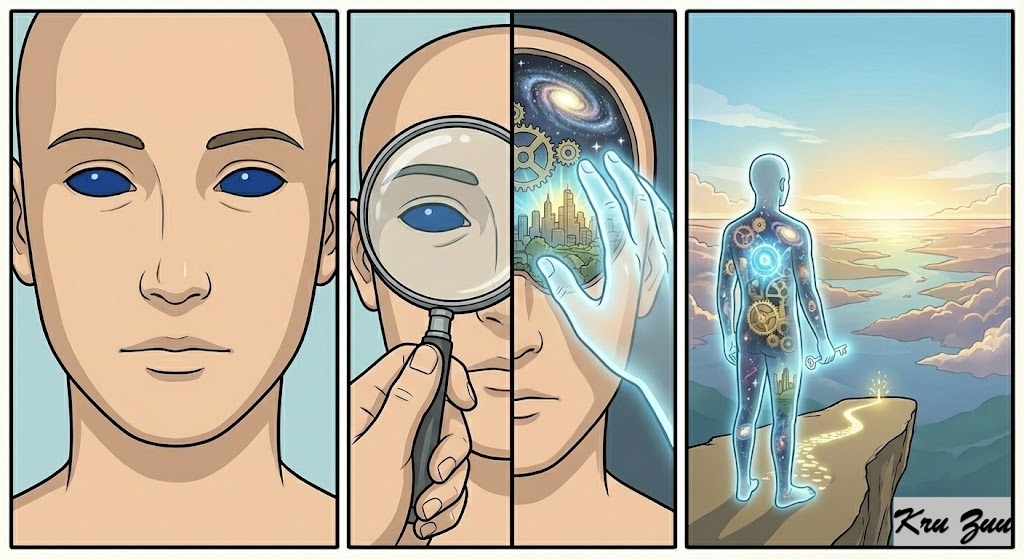
    💎 The Secret: Never mistake silence for weakness. The quietest person in the room is often the most observant.

    🧐 The Anatomy of the Proverb


    This is your reminder to look beyond the surface.


    Still (Adjective): Motionless; calm; quiet.


    Waters (Noun): Rivers, lakes, or oceans (metaphor for a person’s mind or character).


    Run (Verb): To flow or move.


    Deep (Adverb/Adj): Extending far down; profound; complex.


    Simpler Version: Quiet people are often very complex or interesting. / Calm exteriors hide strong emotions.


    📚 Vocabulary Vault


    Introvert (Noun):
    A person who prefers calm environments and often enjoys spending time alone. 🐢


    Underestimate (Verb): To think someone is less capable or intelligent than they really are.


    Deceptive (Adjective): Giving an appearance different from the true one; misleading.


    Profound (Adjective): Very great or intense; having deep insight.


    Superficial (Adjective): Existing only on the surface; not deep. (The opposite of this idiom!)


    🧠 Grammar Focus: Metaphors


    This idiom is a Metaphor. We aren’t actually talking about water; we are talking about human personality.


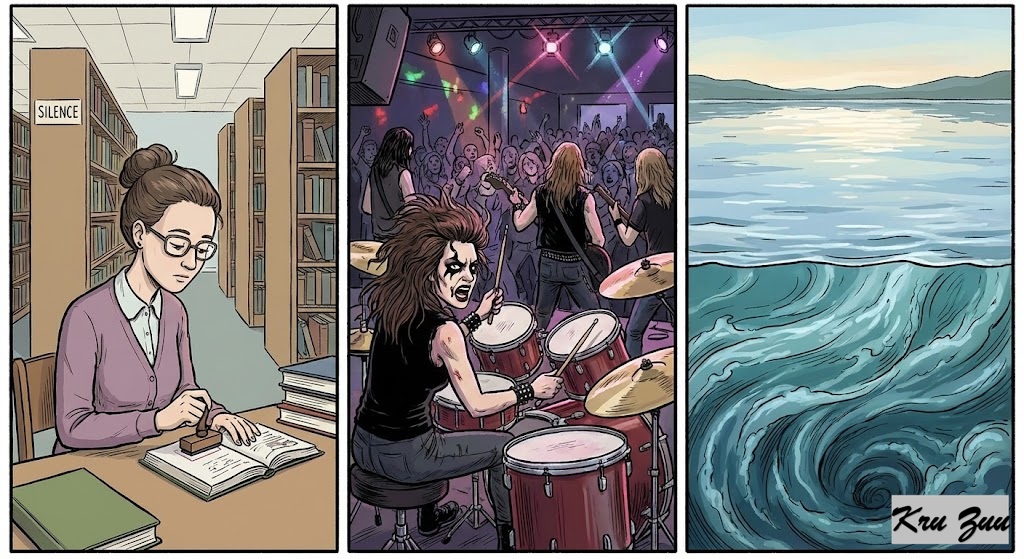
    Example: “I was surprised that the quiet librarian is actually a heavy metal drummer! Well, still waters run deep.”

    📜 History: Origin and Spread


    Where did this poetic wisdom come from?


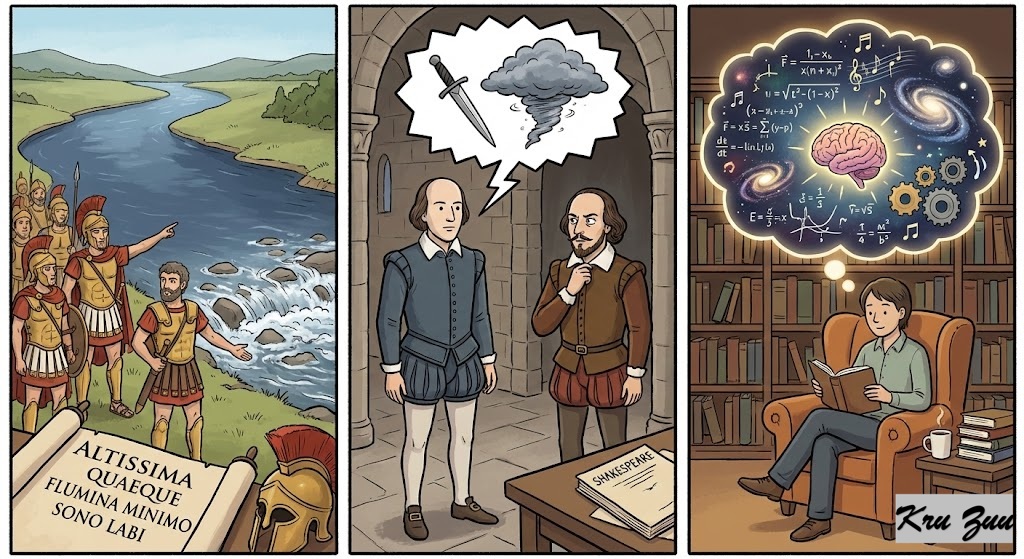
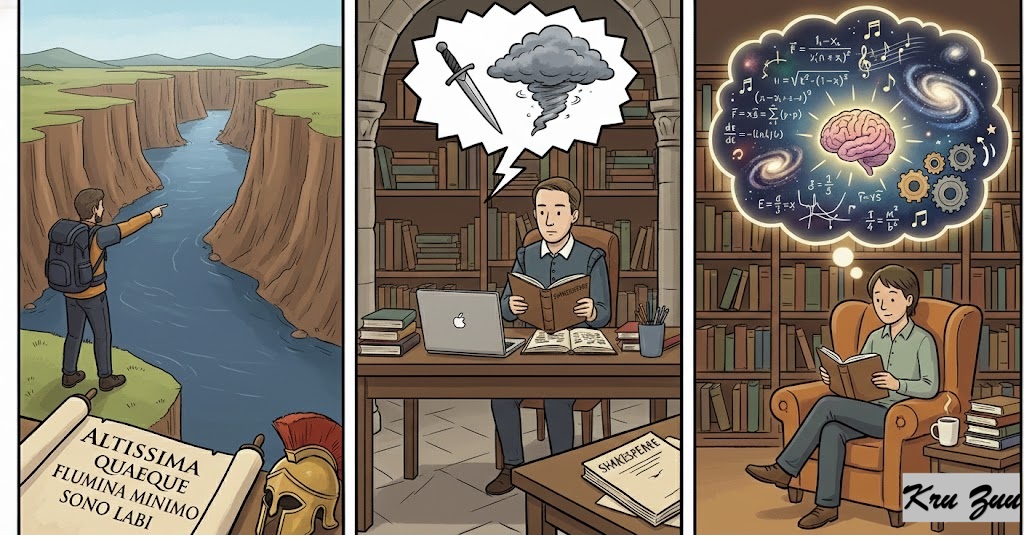
    The Origin: It has ancient roots! It likely comes from the Latin phrase “Altissima quaeque flumina minimo sono labuntur” (The deepest rivers flow with the least sound). It was popularized in English by William Shakespeare in his play Henry VI (1590), where a character says: “Smooth runs the water where the brook is deep.”


    The Logic: If you look at nature, shallow water hits rocks and makes noise. Deep water creates a massive, silent current.


    Global Cousins


    🇹🇷 Turkish:“Ummadığın taş baş yarar” (The stone you didn’t expect breaks your head) OR “Sessiz atın çiftesi pek olur” (The silent horse kicks hard).


    🇪🇸 Spanish:“Del agua mansa me libre Dios” (God save me from the calm water).


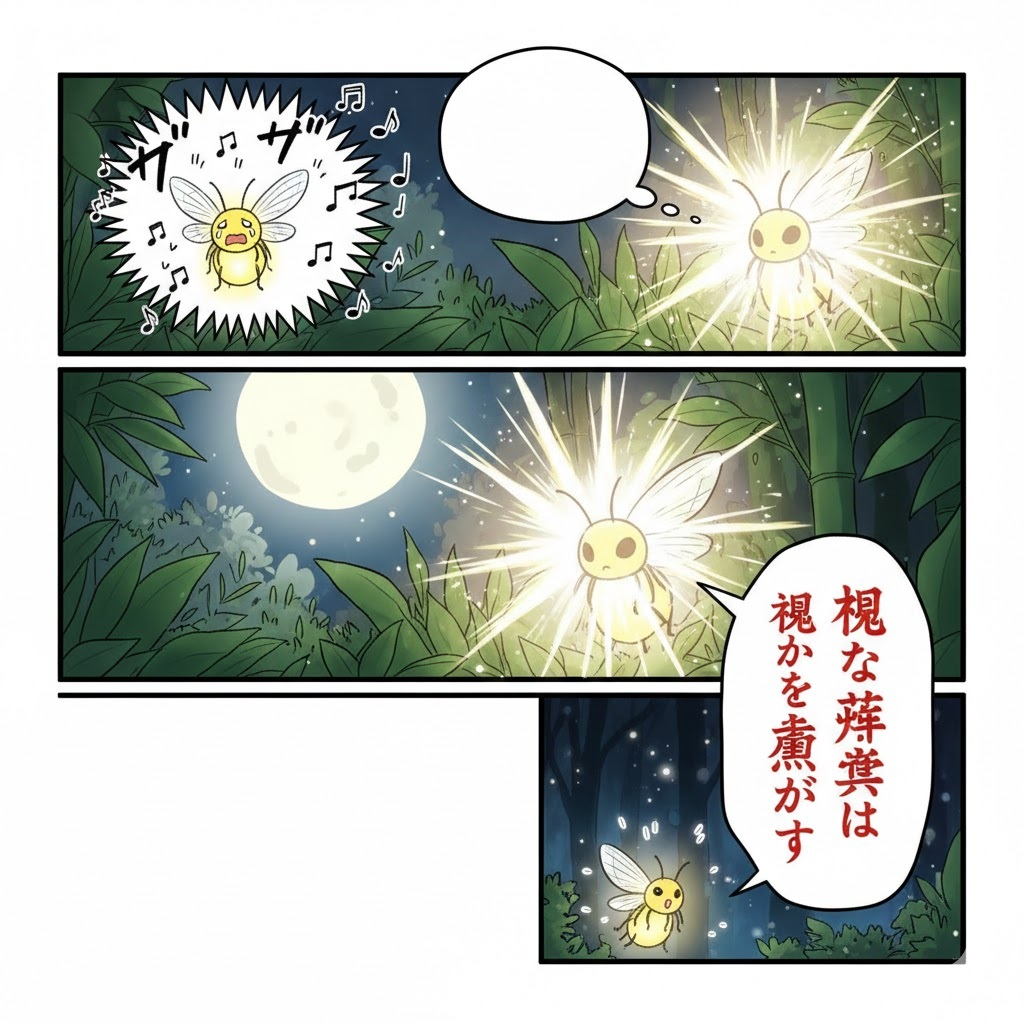
    🇯🇵 Japanese:“The mute firefly burns more than the one that cries.” (Wow! 🔥)

    🎯 Impact on Life: The Pros & Cons


    ✅ The Pros (The Mystery)


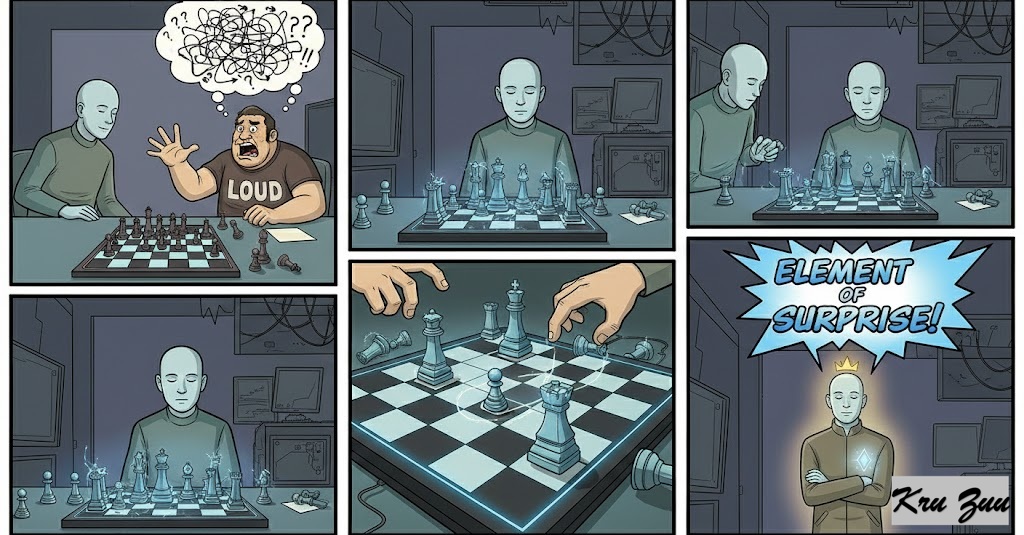
    Power: If you are “still water,” people can’t read your next move. You have the element of surprise.


    Listening: By being quiet, you hear things the loud people miss.


    ❌ The Cons (The Danger)


    Misunderstanding: People might think you are arrogant or uninterested because you don’t speak much. Sometimes, you need to make a little “splash” so people know you are there.

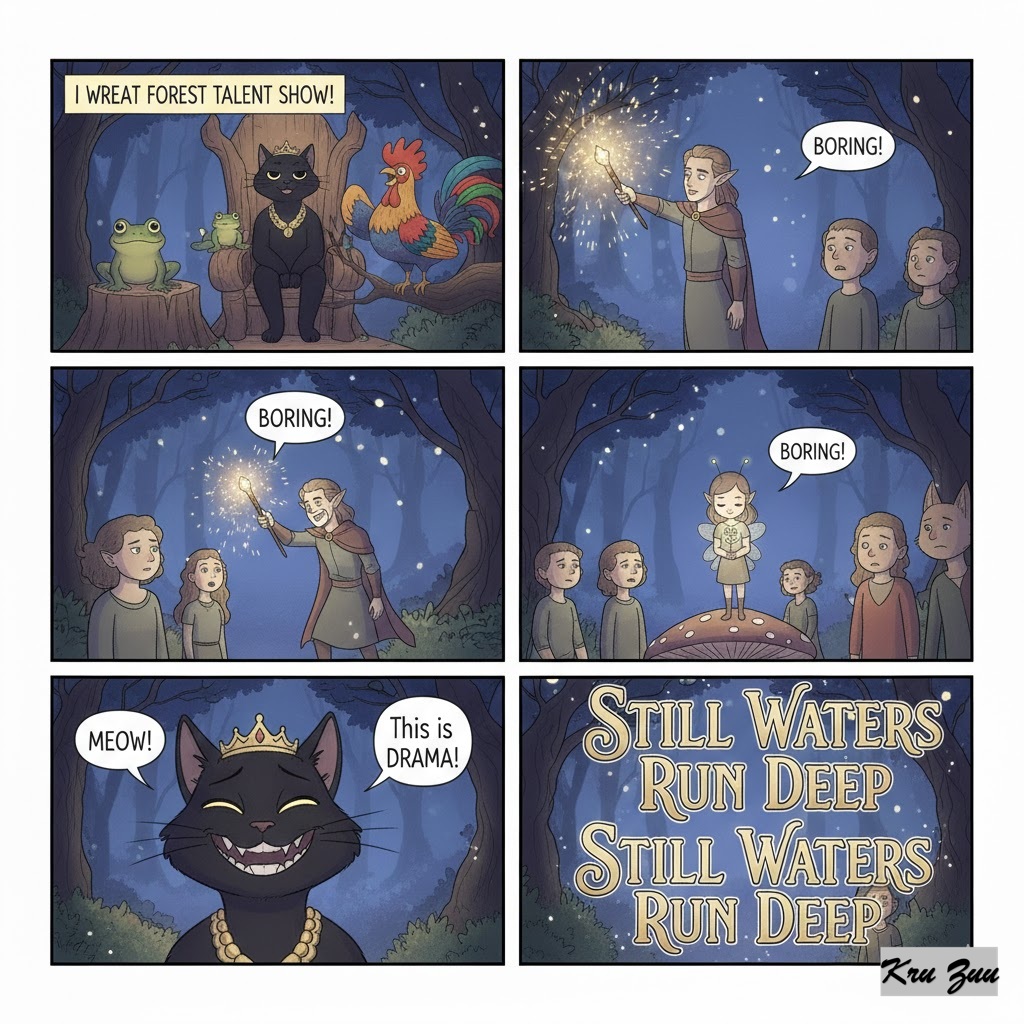
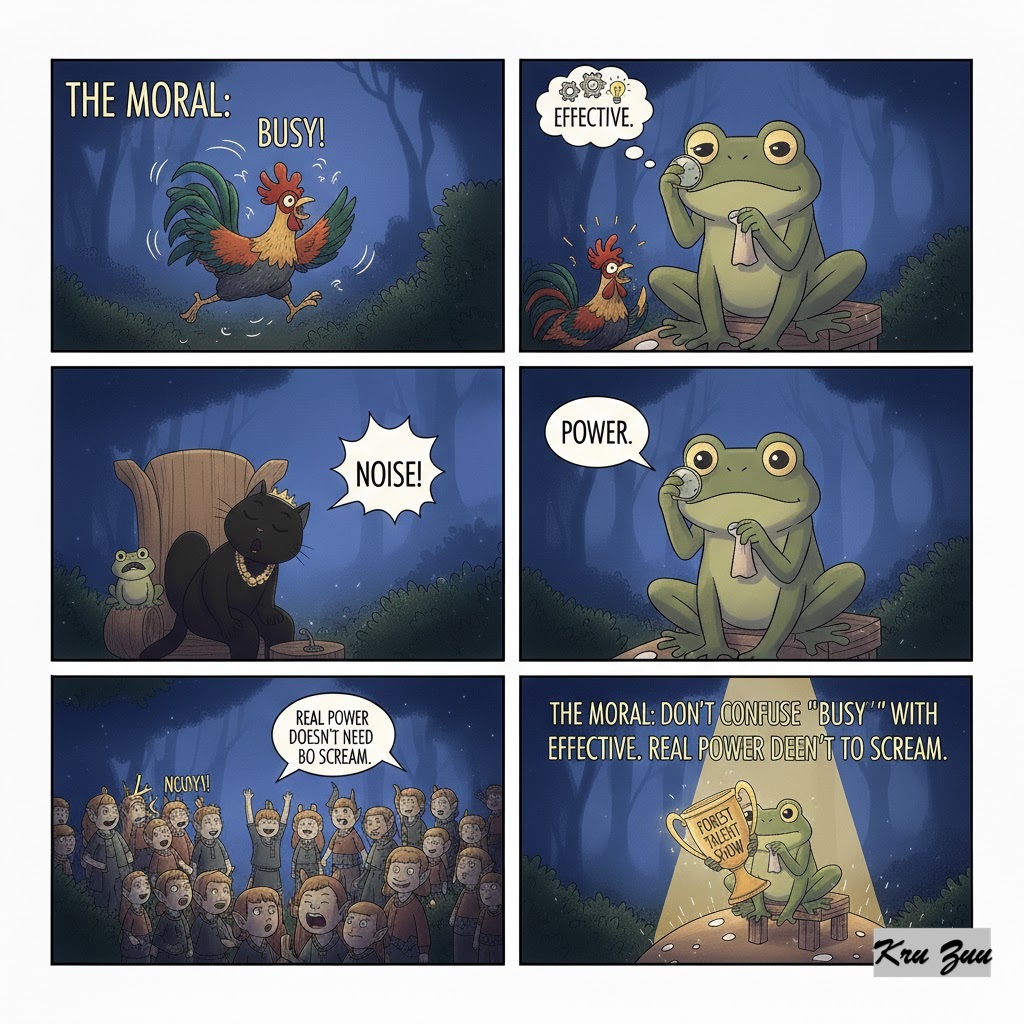
    🎭 Short Story: The Forest Talent Show 🐸🐱🐔


    Let’s visit the magical forest to see who really has the talent.


    🌟 The Cast


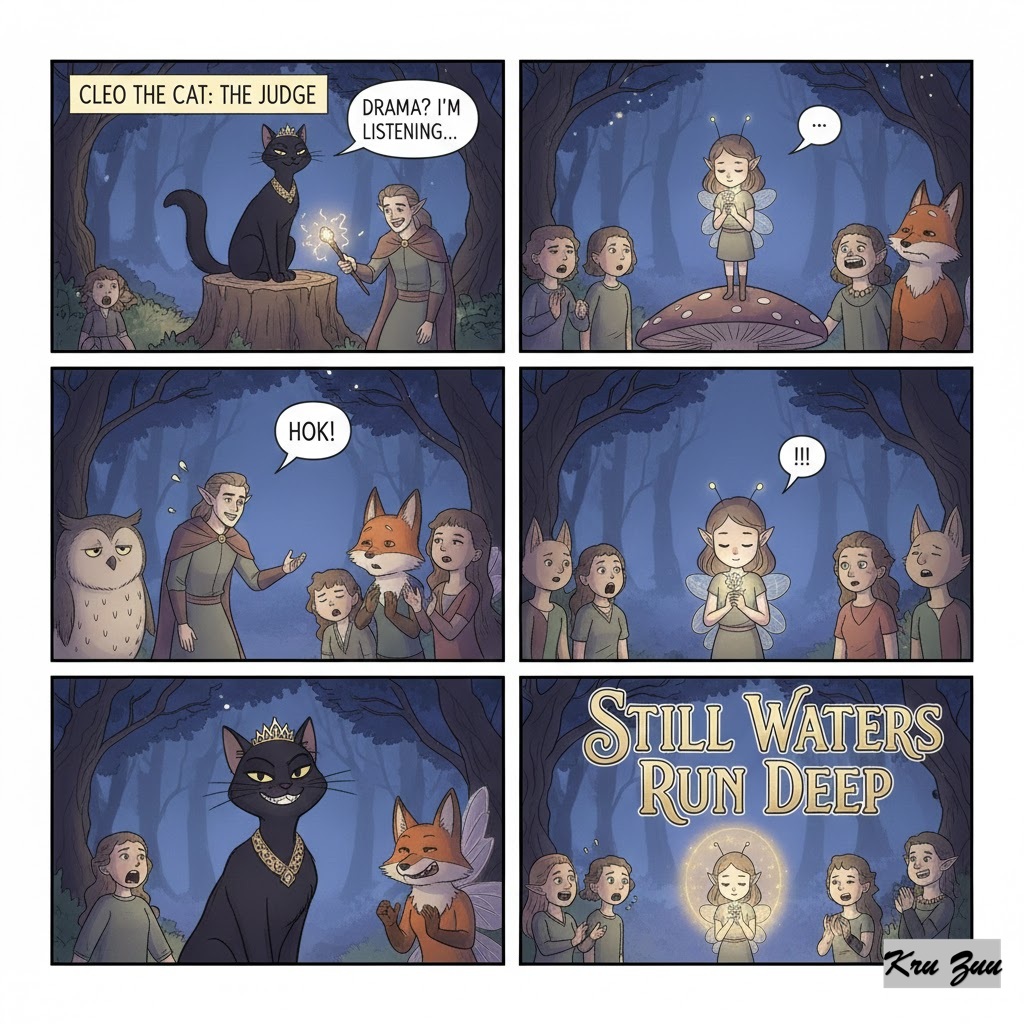
    Cleo the Cat: The Judge. Stylish, critical, and loves drama. 😼


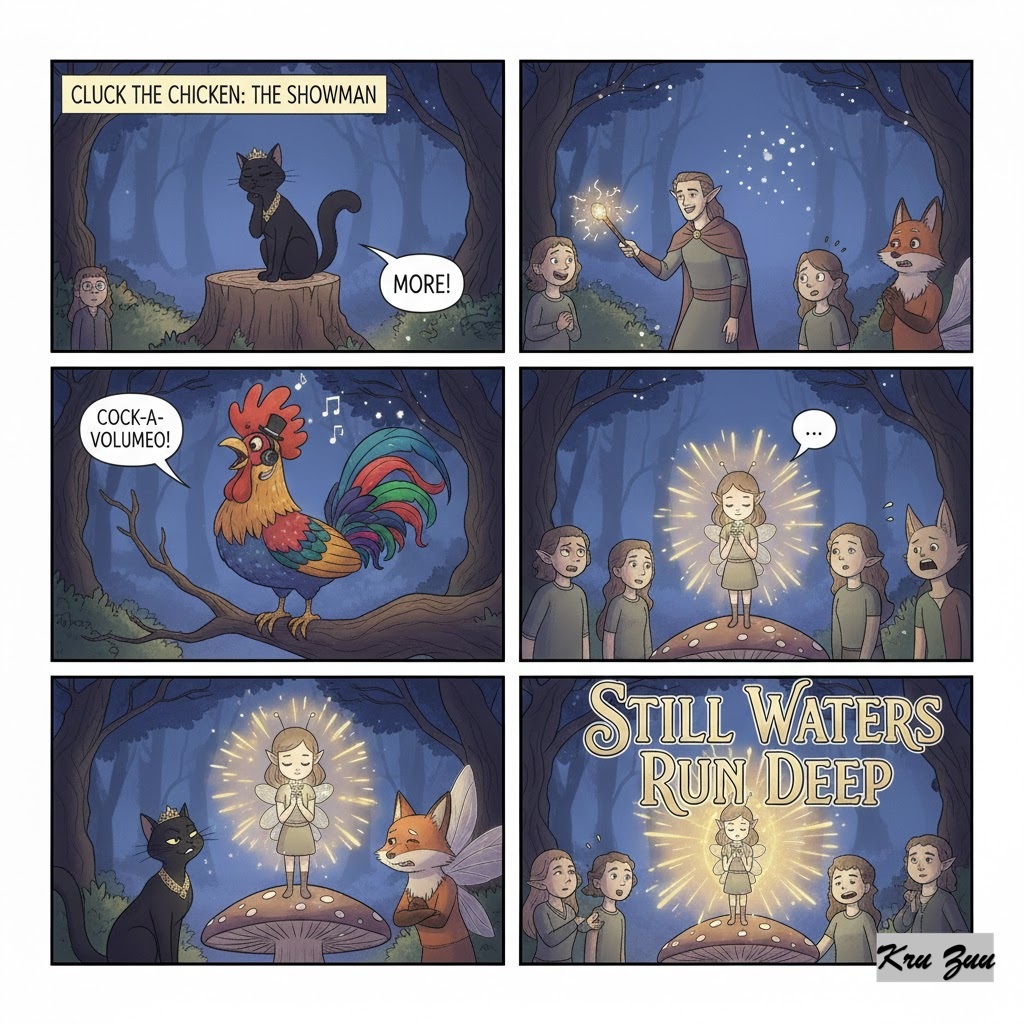
    Cluck the Chicken: The Showman. Loud, colorful, and loves his own voice. 🐔


    Fred the Frog: The Observer. Tiny, green, and completely silent. 🐸


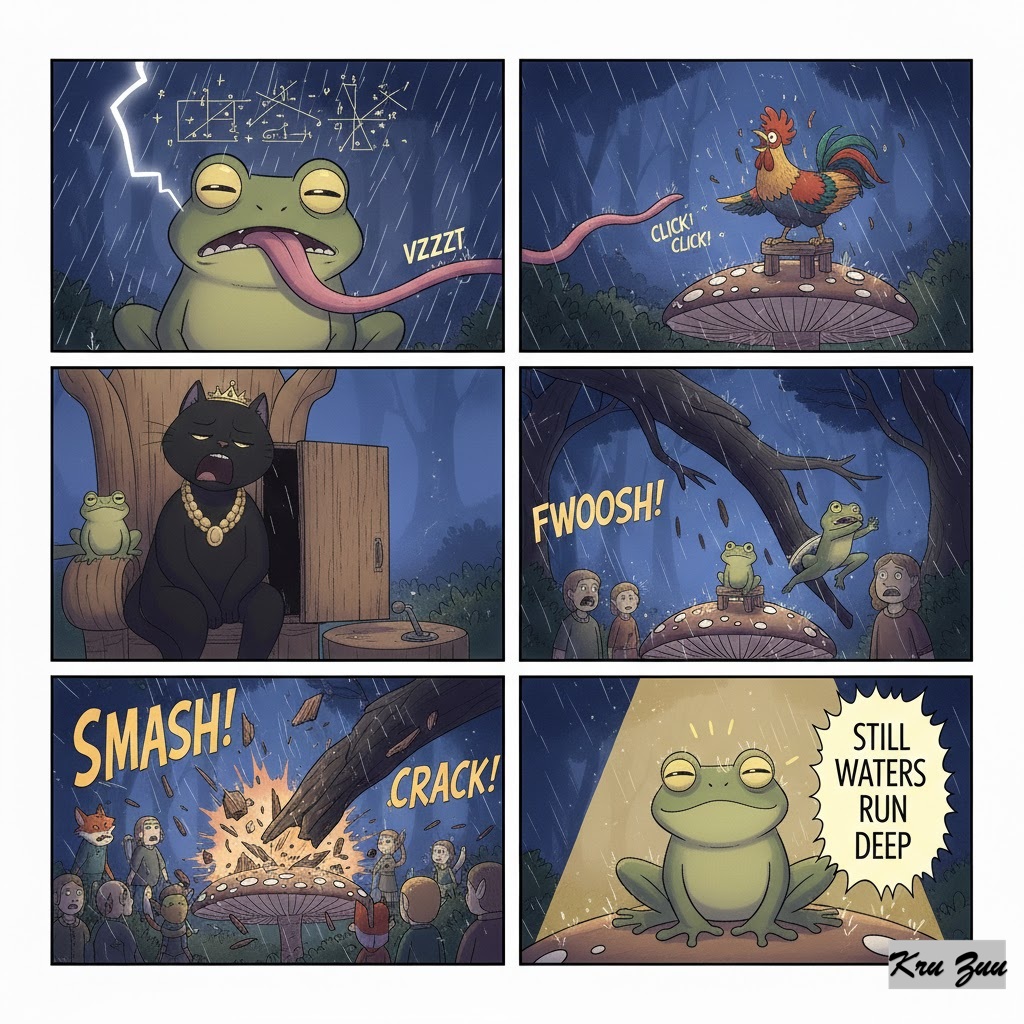
    The Situation: It was the night of the “Great Forest Talent Show.” Cleo sat on the judge’s throne. She wanted entertainment!


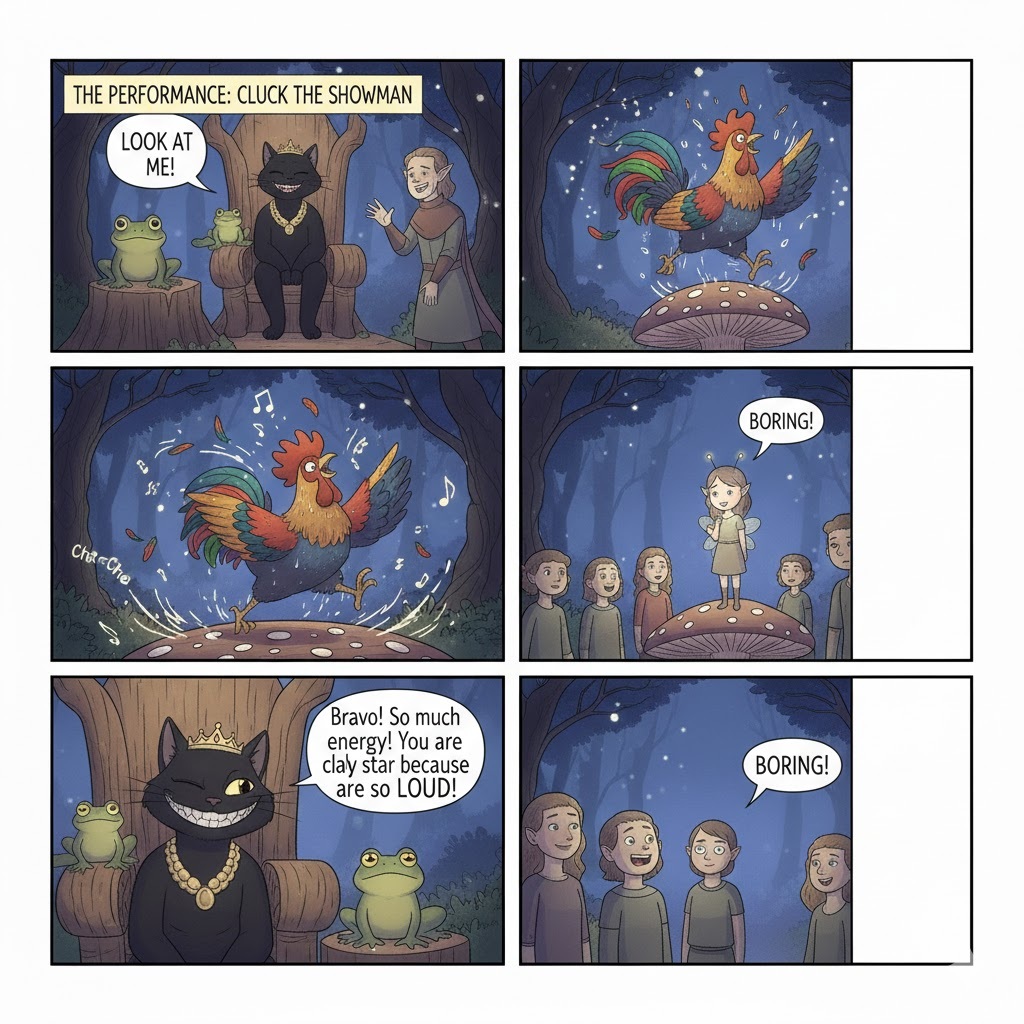
    The Performance: First up was Cluck. He exploded onto the stage! “LOOK AT ME!” he squawked. He flapped his wings furiously. He danced the ‘Cha-Cha’. He told ten jokes in one minute. He was sweating, screaming, and running in circles. Cleo clapped. “Bravo! So much energy! You are clearly a star because you are so LOUD!”


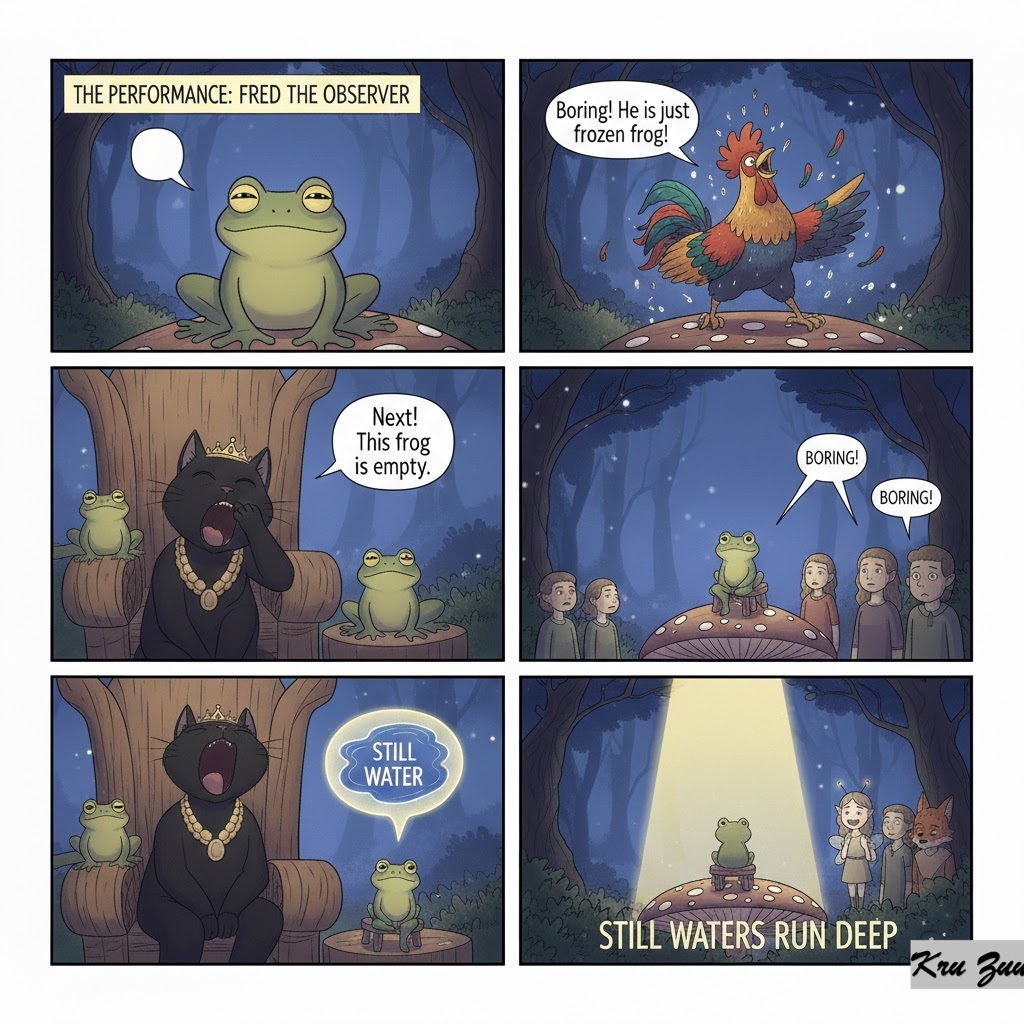
    Then, it was Fred’s turn. Fred hopped onto the stage. He sat on a stool. He didn’t move. He didn’t speak. Cluck laughed from the side. “Boring! He is just a frozen frog! He has nothing inside his head!” Cleo yawned. “Next! This frog is empty.”


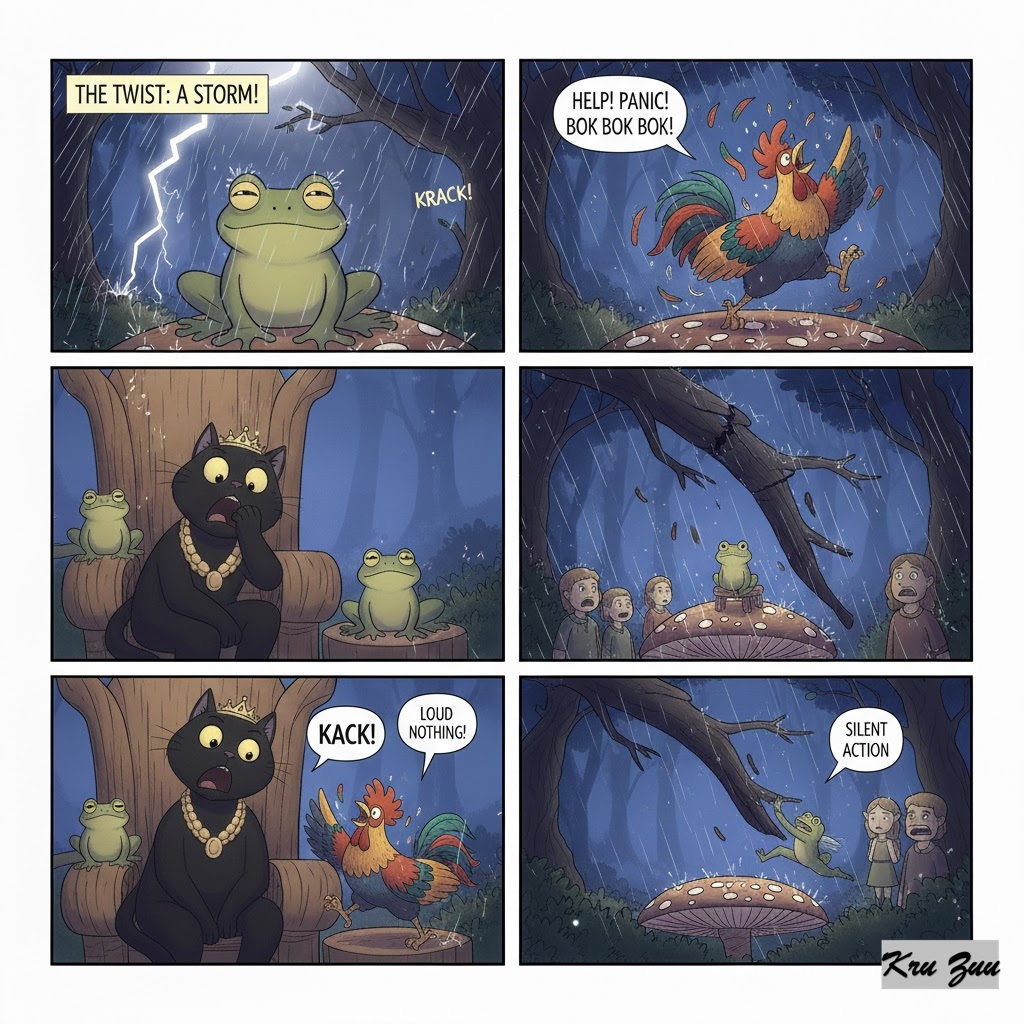
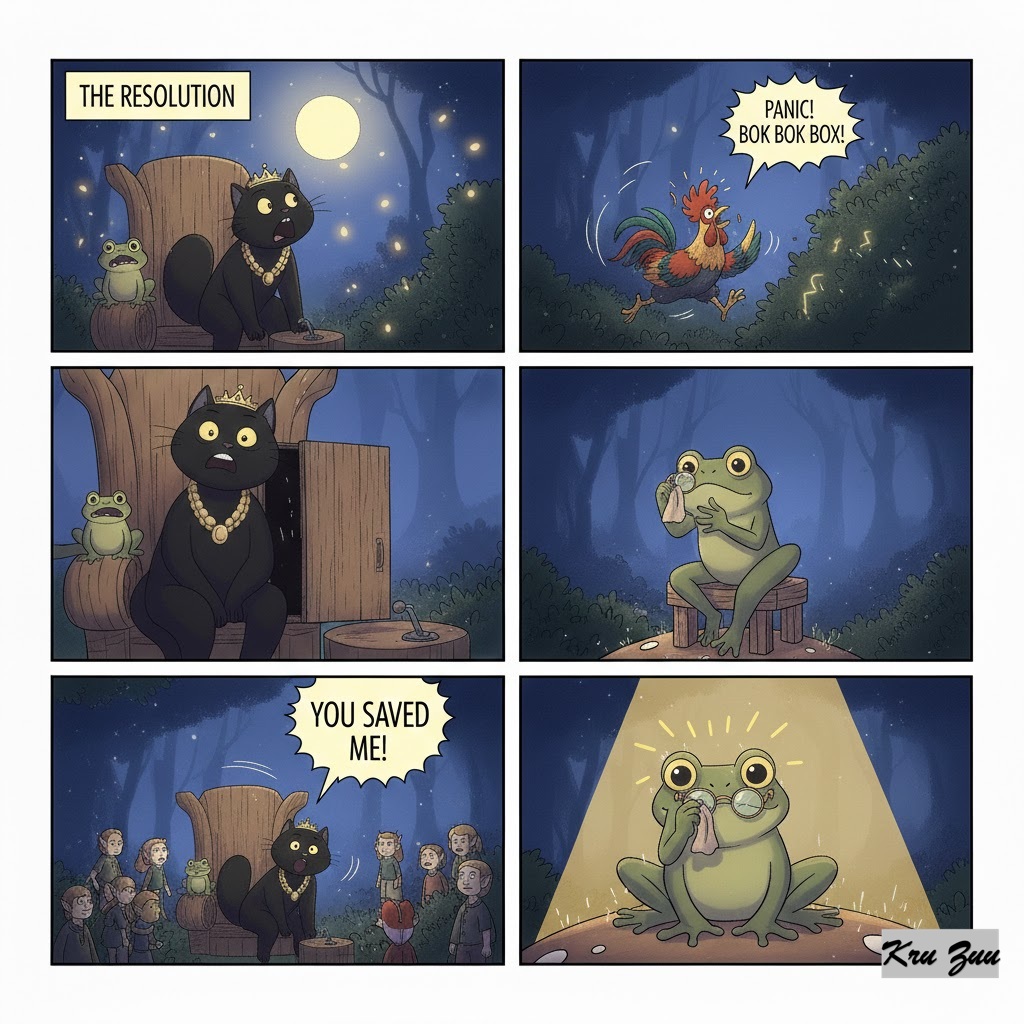
    The Twist: Suddenly, a storm broke out! ⛈️ The lights went off. The wind howled. A giant, heavy tree branch cracked and was about to fall right onto Cleo! Cluck ran around screaming, “HELP! PANIC! BOK BOK BOK!” He was making a lot of noise, but doing nothing.


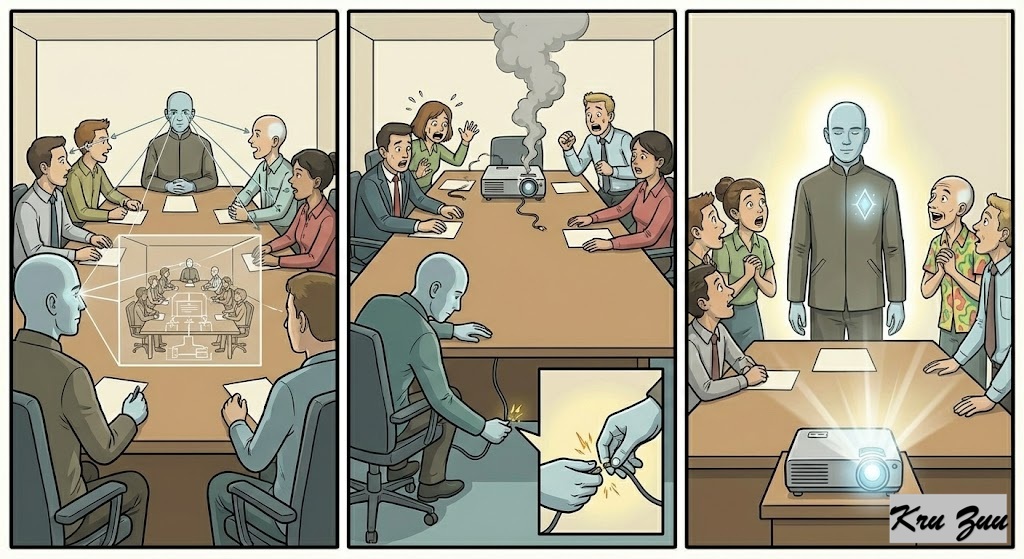
    In the darkness, Fred didn’t scream. He didn’t panic. With a calm, deep breath, Fred calculated the angle. He used his long, sticky tongue to pull a lever on the stage wall. CLICK. A trapdoor opened instantly under Cleo, sliding her to safety just one second before the tree smashed her throne. 💥


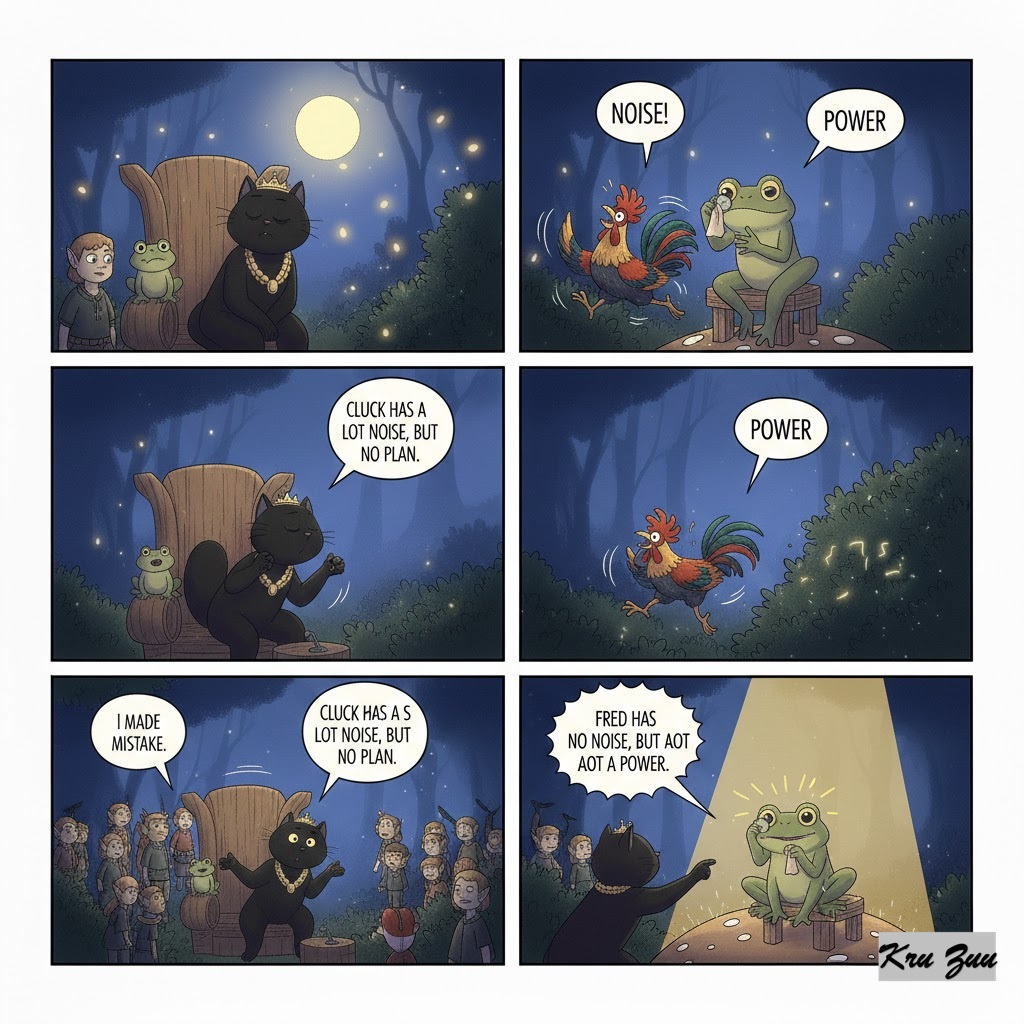
    The Resolution: When the lights came back on, Cleo crawled out of the safe tunnel. Cluck was still running around screaming at a bush. Fred was sitting calmly on his stool, polishing his glasses.


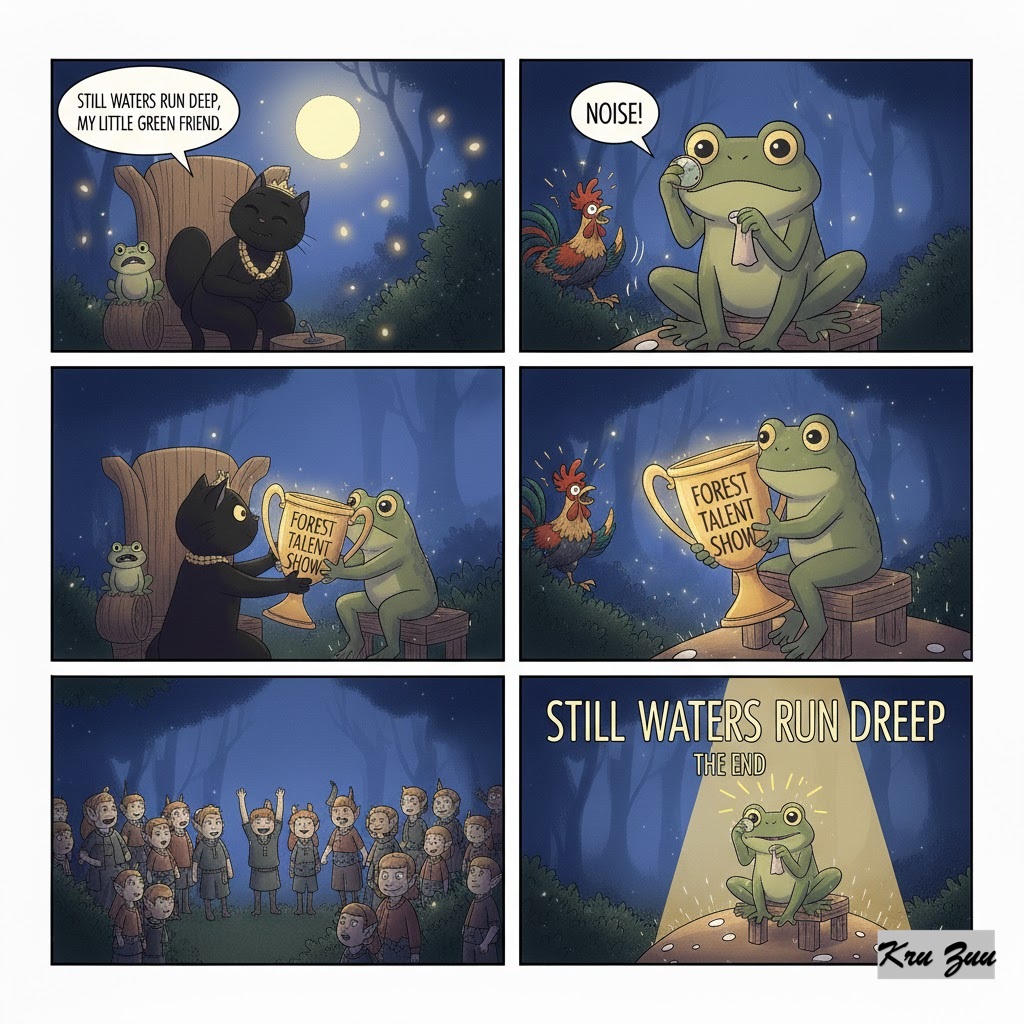
    Cleo looked at the screaming Chicken, and then at the silent Frog who saved her life. “I made a mistake,” Cleo whispered. “Cluck has a lot of noise, but no plan. Fred has no noise, but a lot of power.”


    She handed the trophy to Fred. “Still waters run deep, my little green friend.”


    The Moral: Don’t confuse “Busy” with “Effective.” Real power doesn’t need to scream. 🏆

    🎓 Lesson for English Learners


    Don’t Fear the Silence.


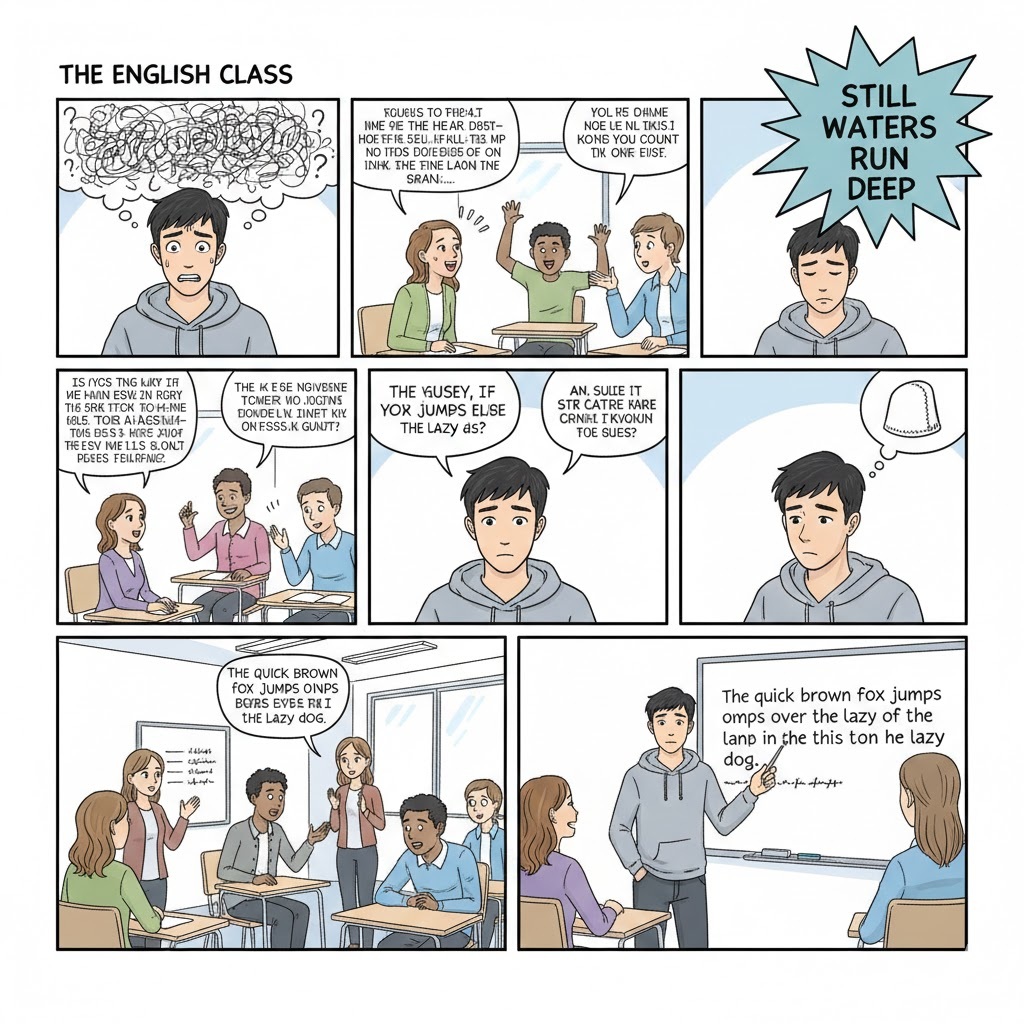
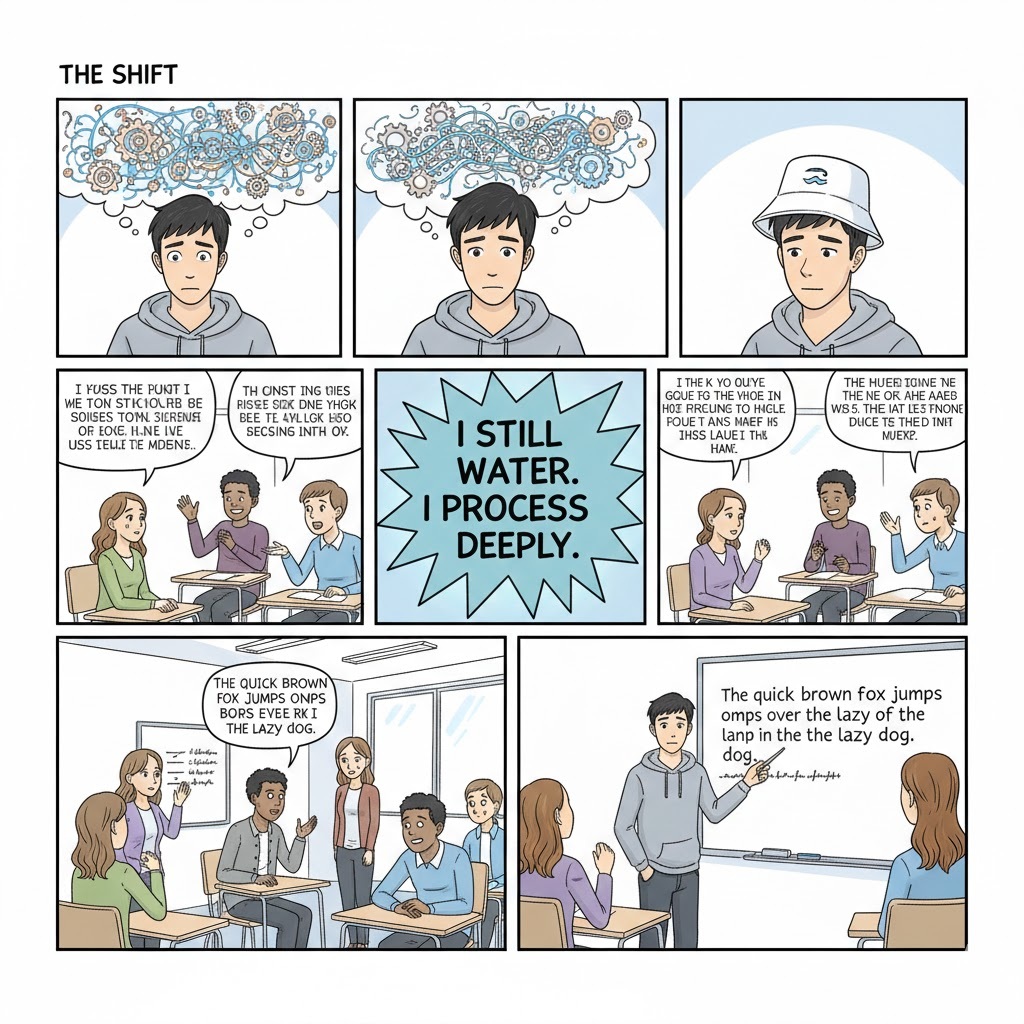
    Situation: You are in an English class. You don’t speak much because you are translating in your head. You feel stupid because others are talking fast (but making mistakes).


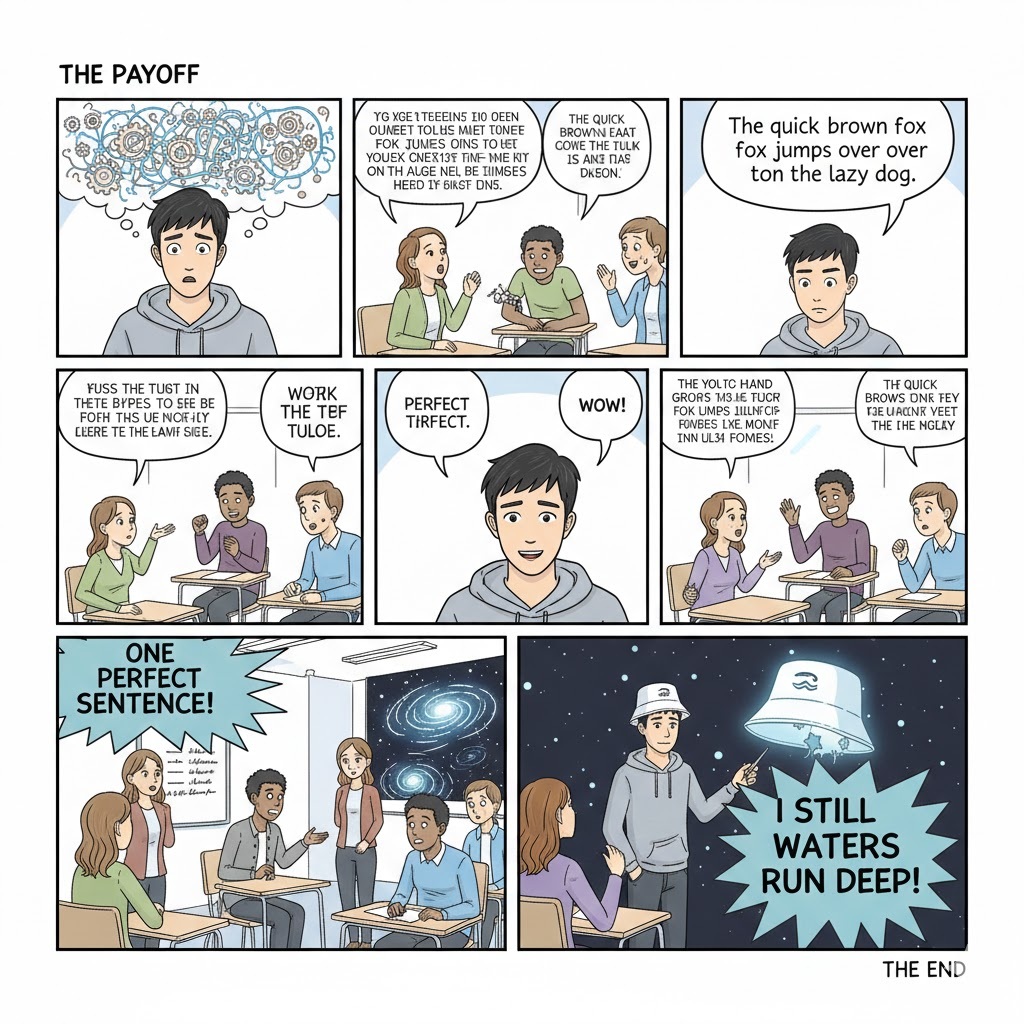
    The Shift: Remind yourself that you are “Still Water.” You are processing deeply.


    You Say: When you are ready, speak one perfect, thoughtful sentence.


    Phrase to use:“I may be quiet, but I am listening. Still waters run deep!”


    💬 Your Turn: The Observer Challenge 🚀


    Do you know someone who is very quiet?


    The Challenge: This week, talk to the quietest person in your office or class. Ask them a deep question like, “What is your passion?” or “What do you think about [Topic]?”


    The Prediction: I bet you will be shocked by how interesting their answer is.


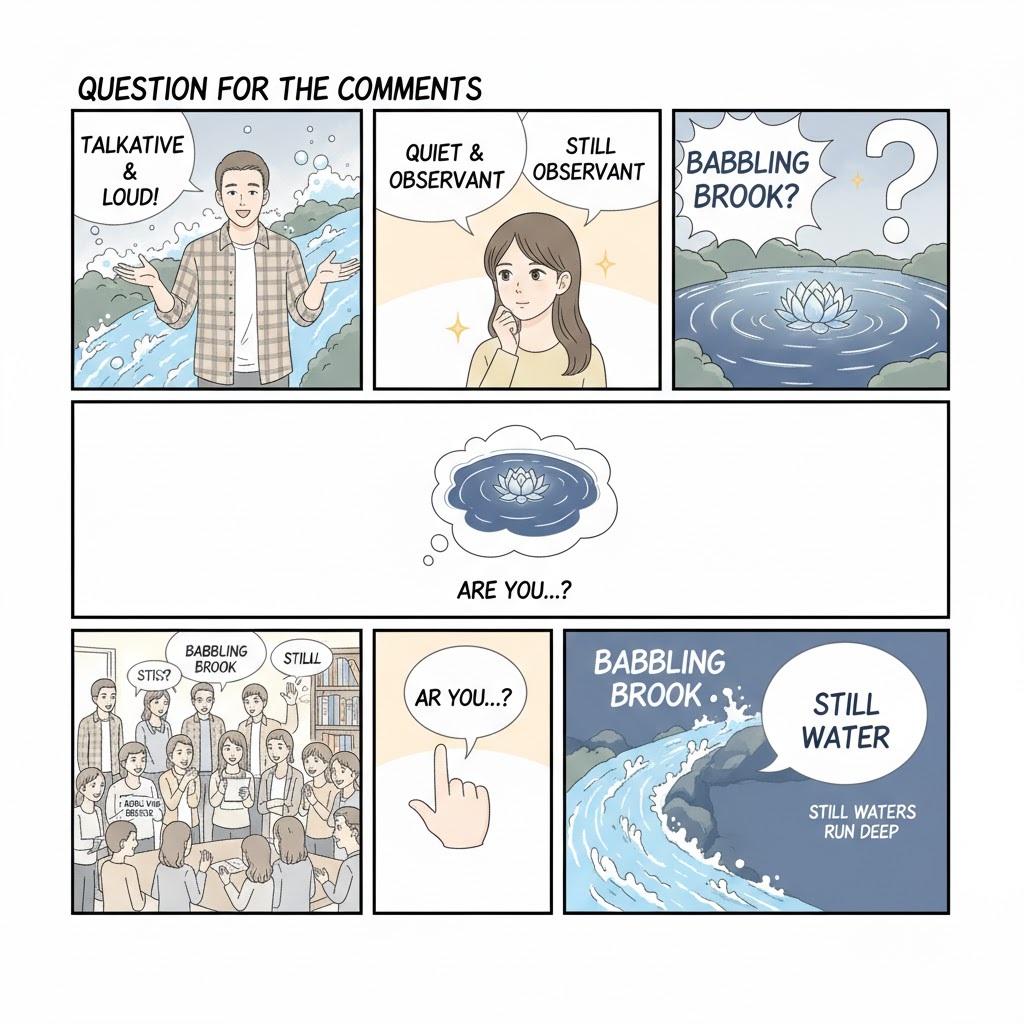
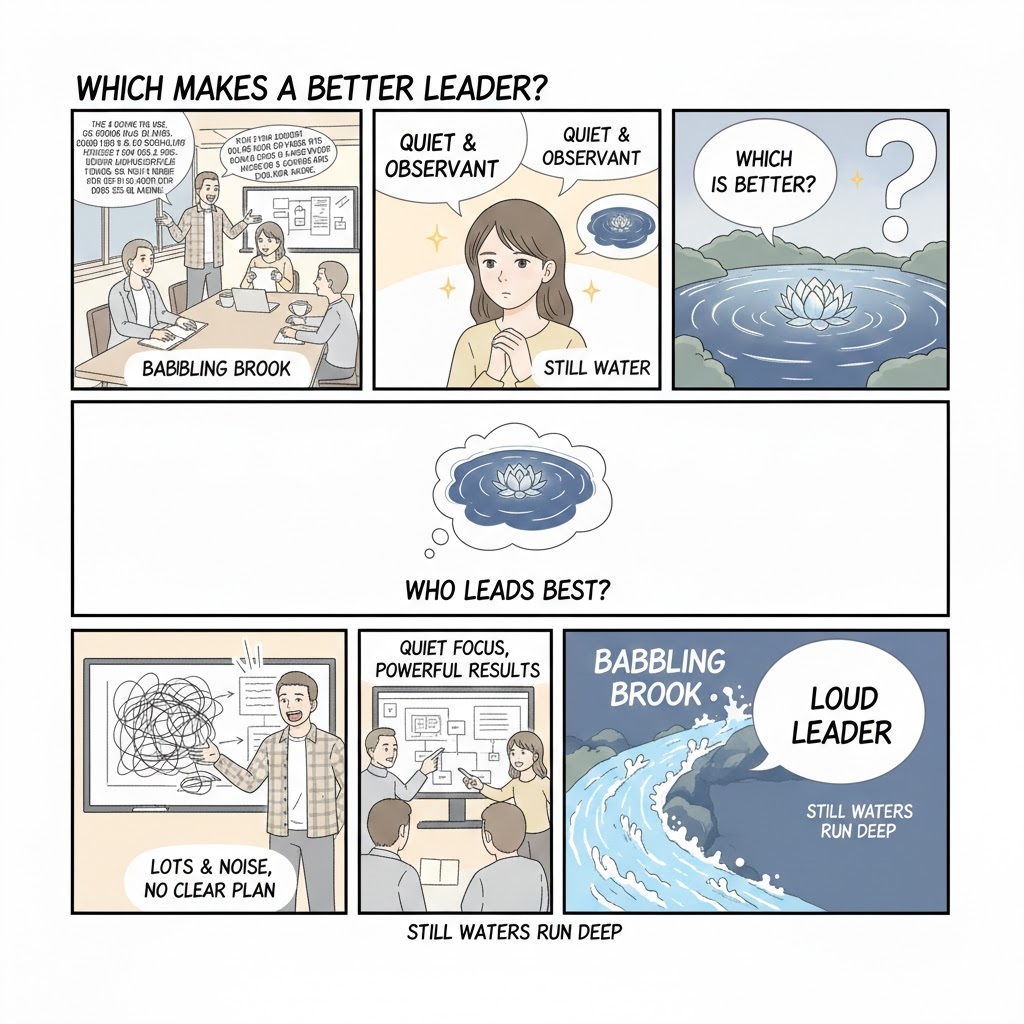
    👇 Question for the comments: Are you a “Babbling Brook” (talkative) or “Still Water” (quiet)?

    Which one do you think makes a better leader?

    Let me know below!

    By Zubeyir YURTKURAN

    https://www.facebook.com/BrainBattleground/

    https://www.facebook.com/zubeyr.yurtkuran/

    https://www.instagram.com/zubeyryurtkuran/
    https://www.youtube.com/@BrainBattleground-b3p

    https://www.instagram.com/brainbattleground/