Tag: food

  • 🤫 The Daily Shield: The Law of Quiet Power

    🤫 The Daily Shield: The Law of Quiet Power

    “Silence is golden.”


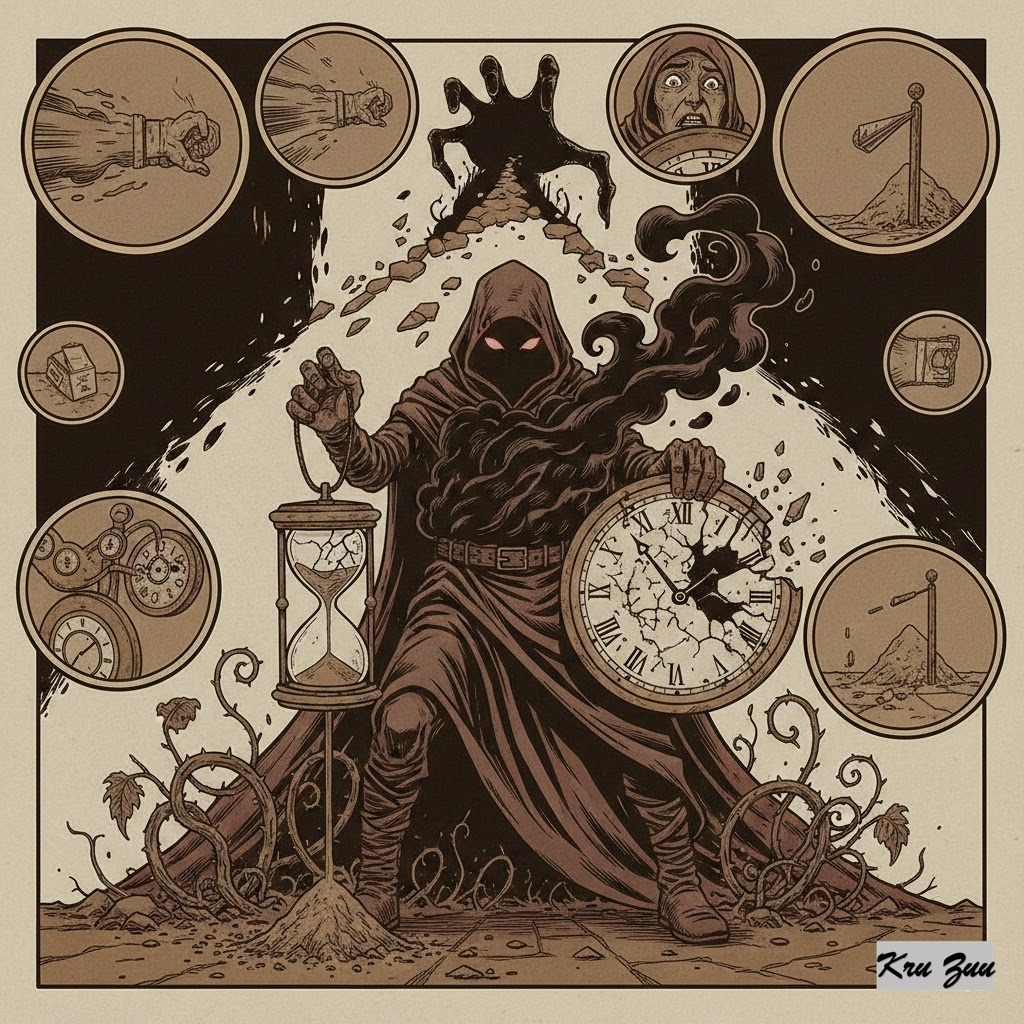
    😈 The Villain (The Noise Maker)

    You have a thought, and it instantly leaves your mouth. 🗣️ “I have to say my opinion!” “Did you hear the gossip about…?” “Let me interrupt you right there!” You act as if every silence is awkward and needs to be filled. You reveal your secrets to strangers. You speak when you are angry.
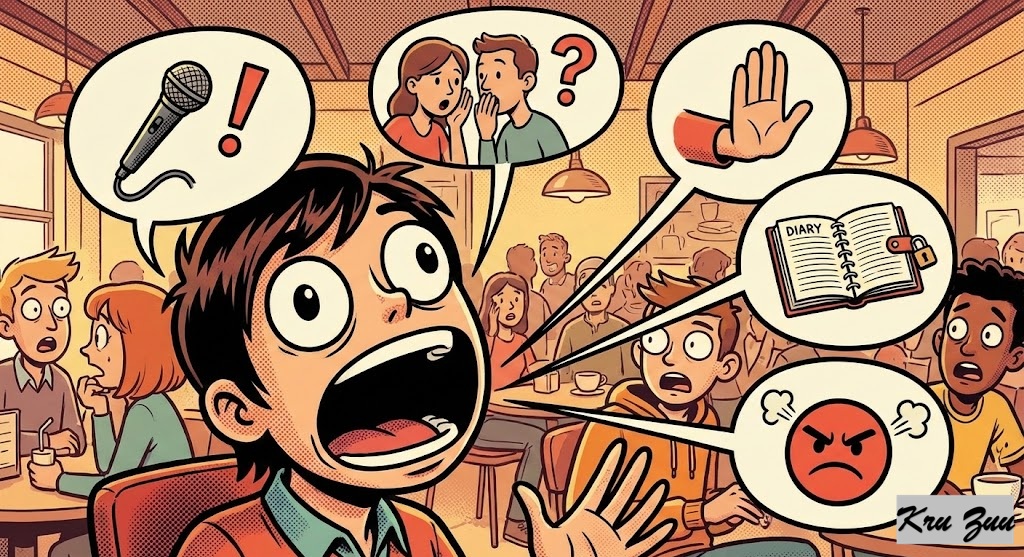
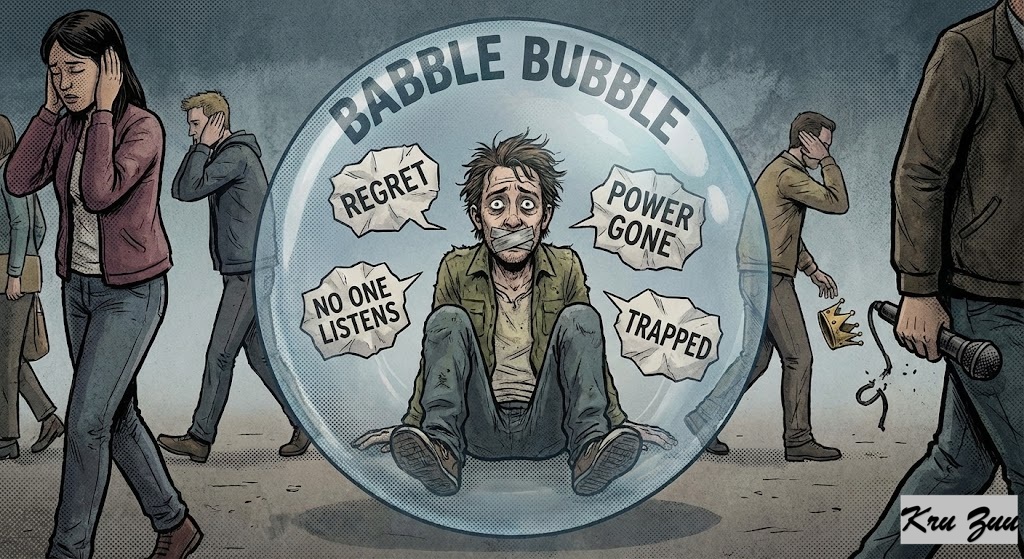
    The Result? You say things you regret. You give away your power. People stop listening because you never stop talking. You are trapped in the “Babble Bubble.” 🫧

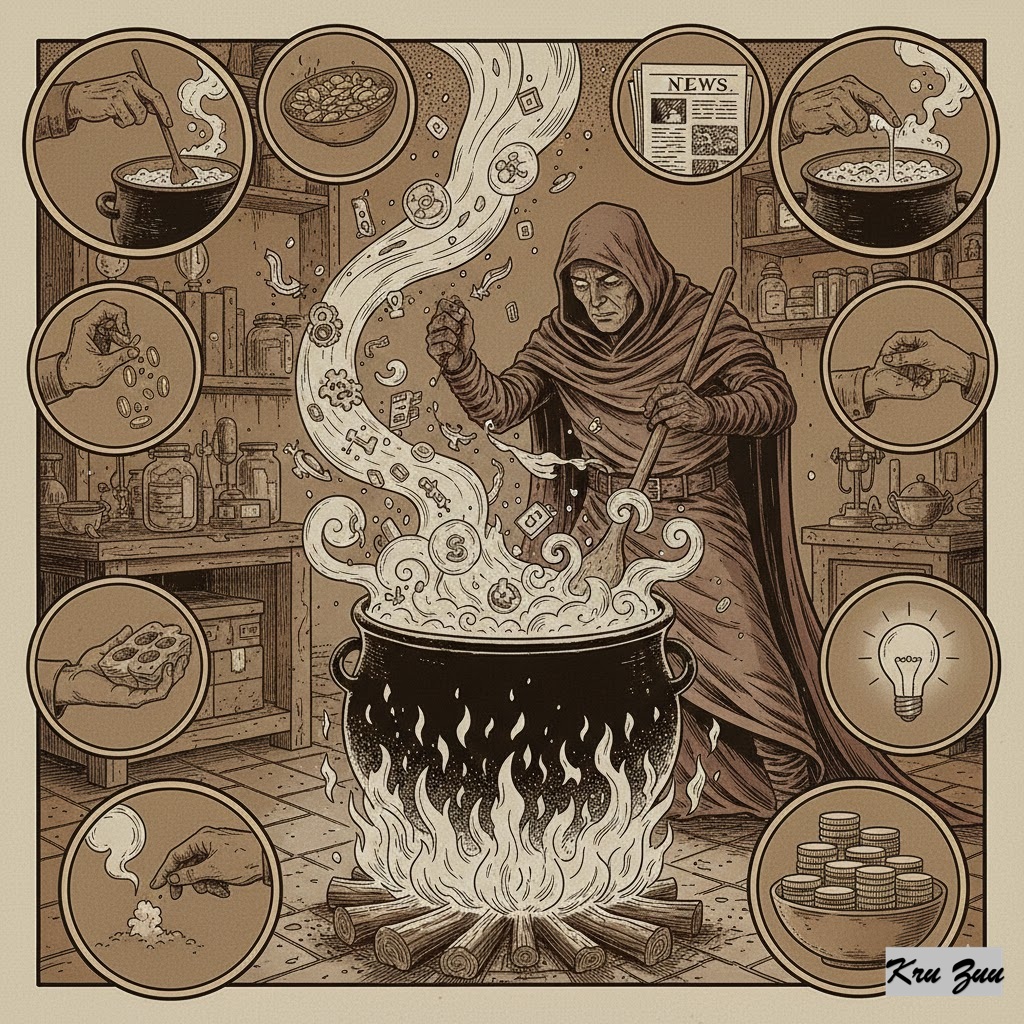
    😇 The Hero (The Wise Observer)

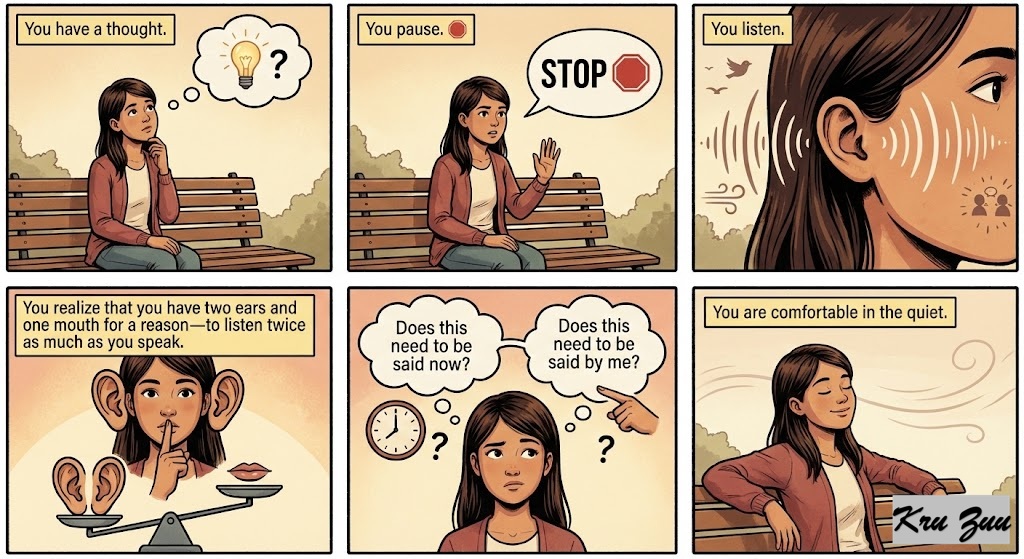
    You have a thought. You pause. 🛑 You listen. You realize that you have two ears and one mouth for a reason, to listen twice as much as you speak. You think: “Does this need to be said now? Does it need to be said by me?” You are comfortable in the quiet.
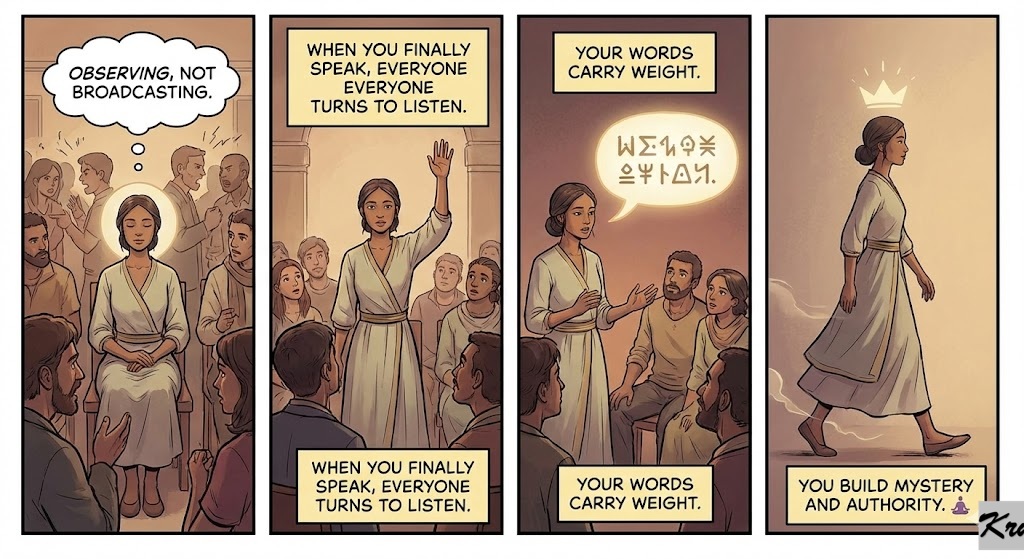
    The Result? When you finally speak, everyone turns to listen. Your words carry weight. You learn more because you are observing, not broadcasting. You build mystery and authority. 🧘

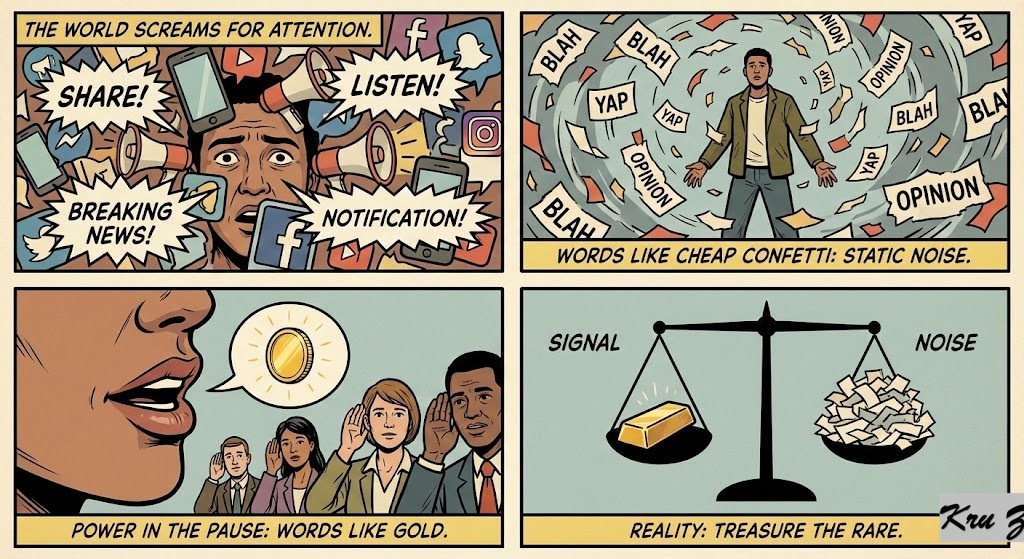
    ⚖️ The RealitySignal vs. Noise. We live in a world that screams for attention. Social media, notifications, and 24/7 news cycles tell us we must “share” everything. But physics and psychology agree: A constant signal is just static noise. True power is found in the pause. If you treat words like cheap confetti (throwing them everywhere), they lose value. If you treat words like gold (rare and heavy), people will treasure them.

    💎 The Secret

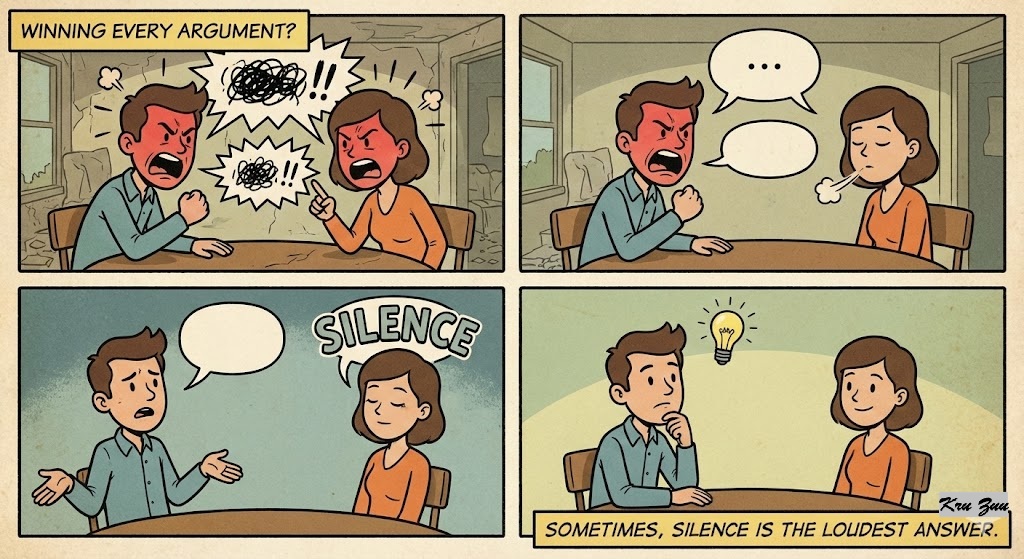
    You don’t have to win every argument. Sometimes, silence is the loudest answer.
    🧐 The Anatomy of the Proverb


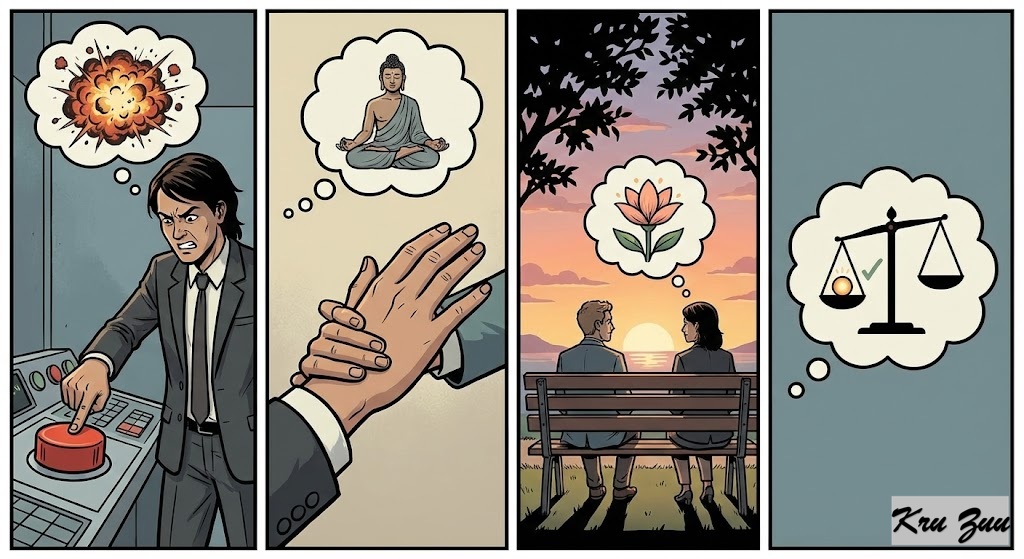
    This is your reality check that restraint is often more valuable than action.

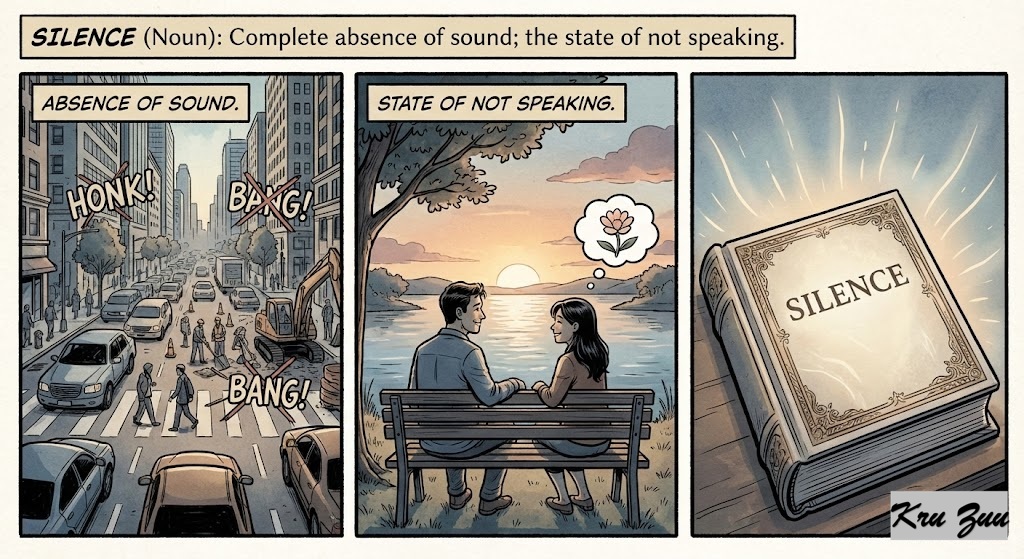
    Silence (Noun): Complete absence of sound; the state of not speaking.

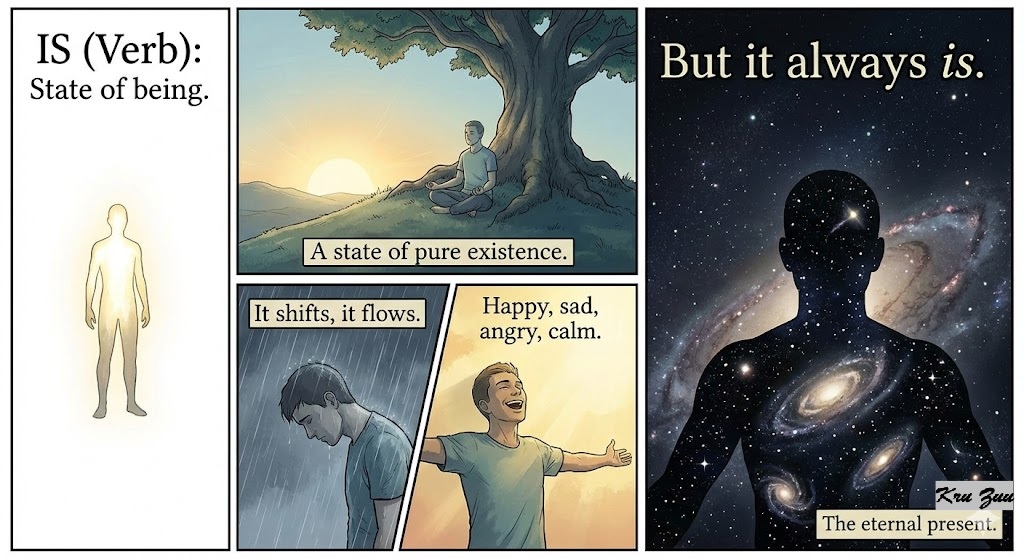
    Is (Verb): State of being.

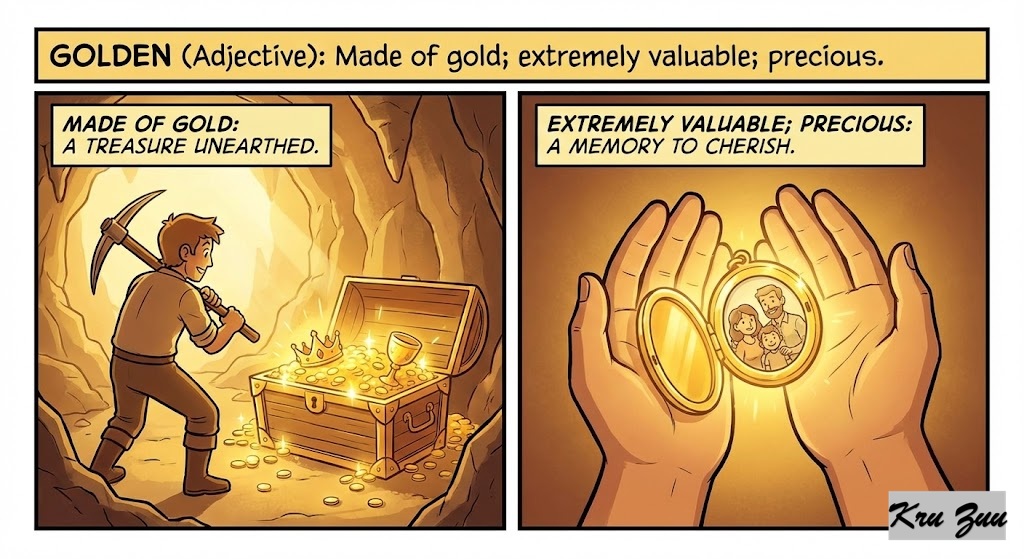
    Golden (Adjective): Made of gold; extremely valuable; precious.

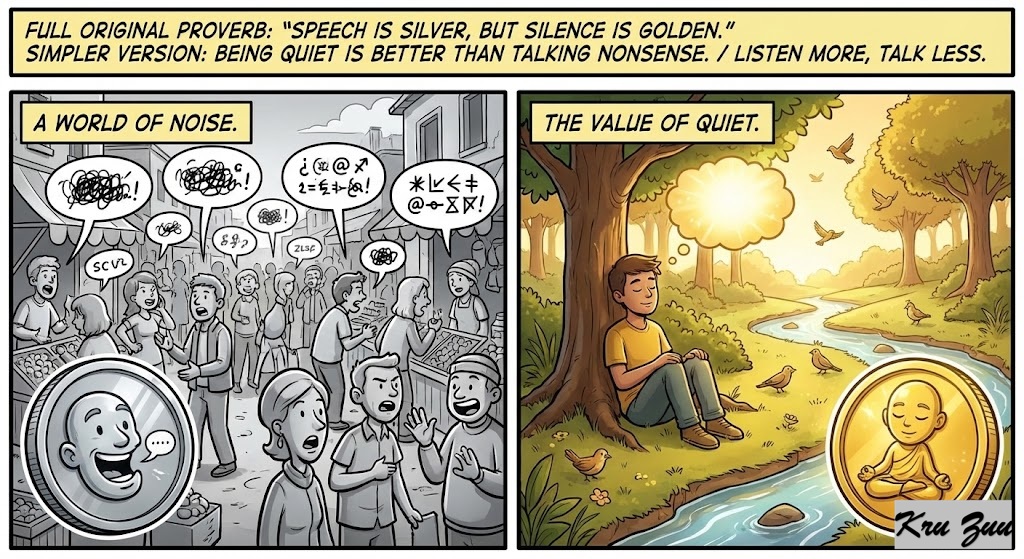
    Full Original Proverb:“Speech is silver, but silence is golden.”Simpler Version: Being quiet is better than talking nonsense. / Listen more, talk less.

    📚 Vocabulary Vault


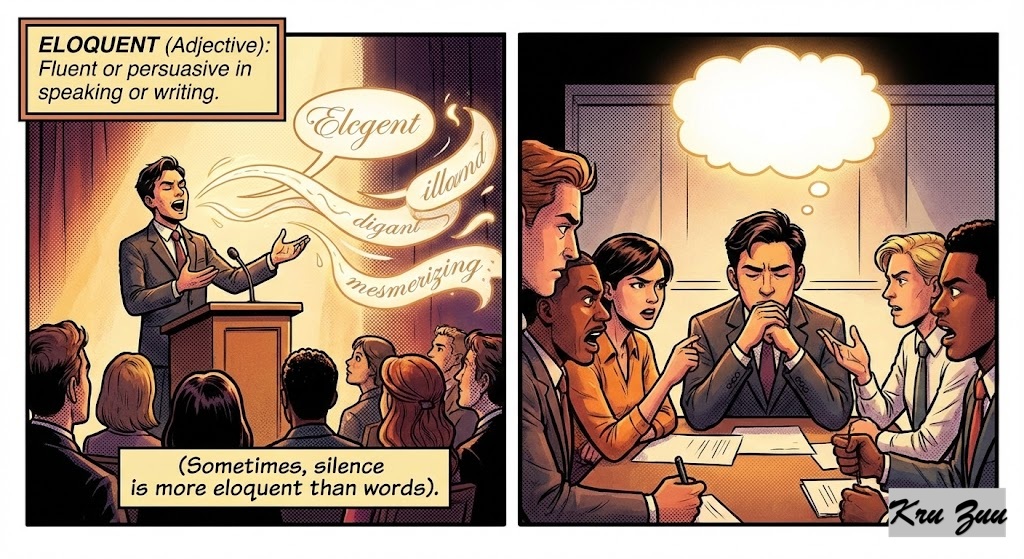
    Eloquent (Adjective): Fluent or persuasive in speaking or writing. (Sometimes, silence is more eloquent than words).

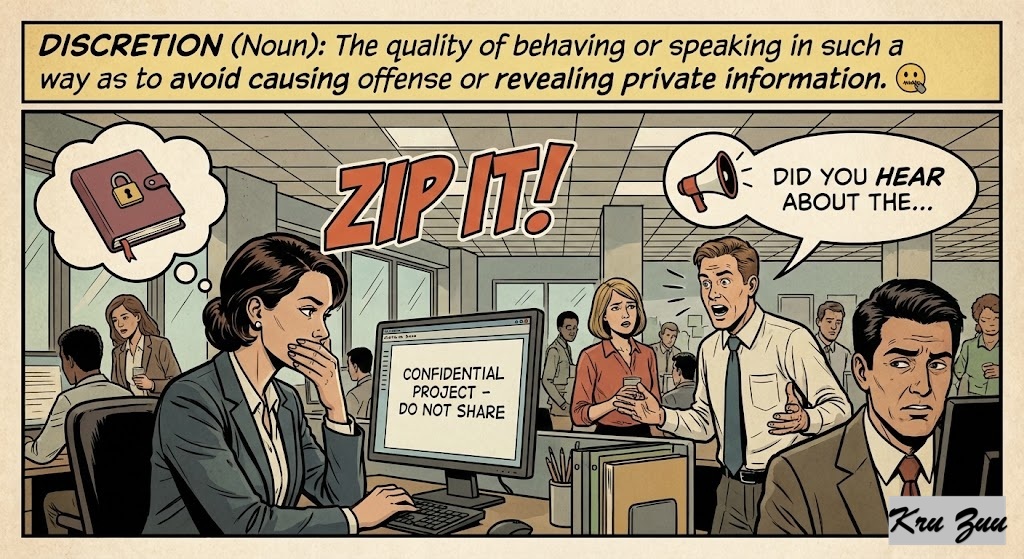
    Discretion (Noun): The quality of behaving or speaking in such a way as to avoid causing offense or revealing private information. 🤐

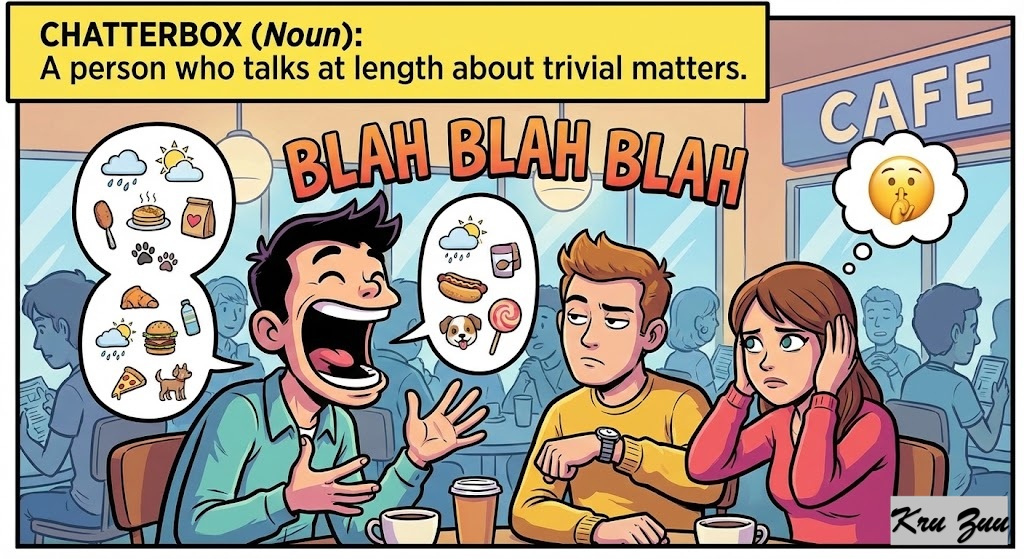
    Chatterbox (Noun): A person who talks at length about trivial matters.

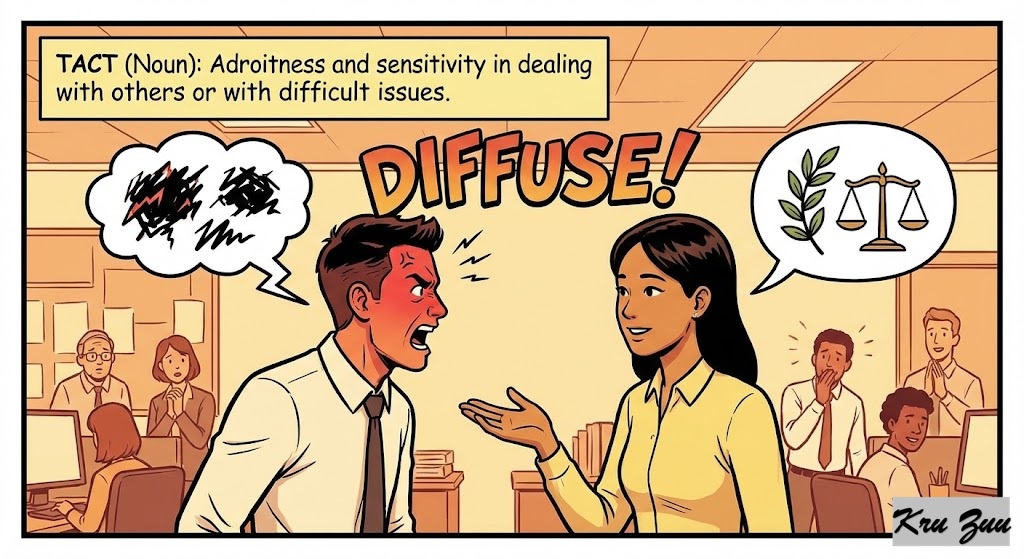
    Tact (Noun): Adroitness and sensitivity in dealing with others or with difficult issues.

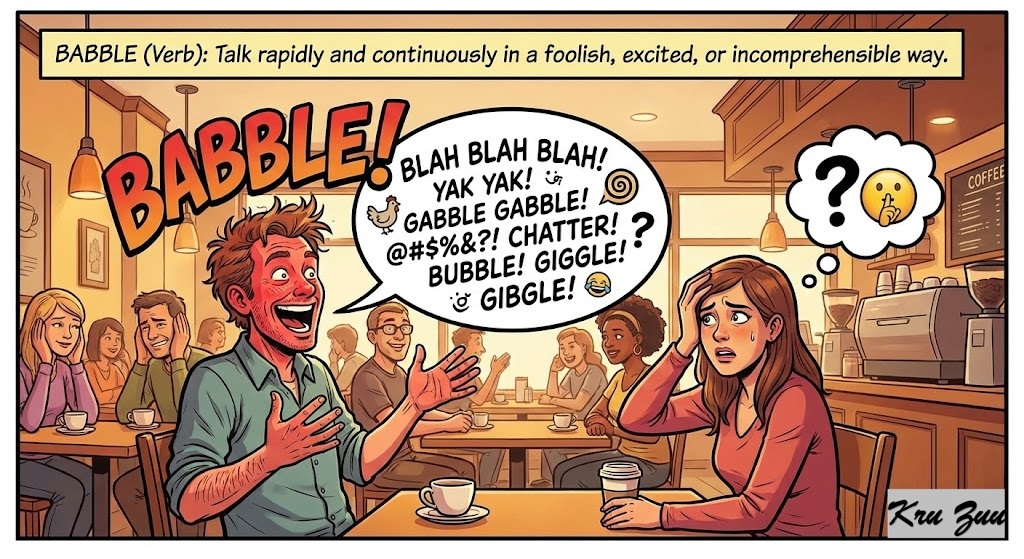
    Babble (Verb): Talk rapidly and continuously in a foolish, excited, or incomprehensible way.

    🧠 Grammar Focus: Idioms as Social Regulators


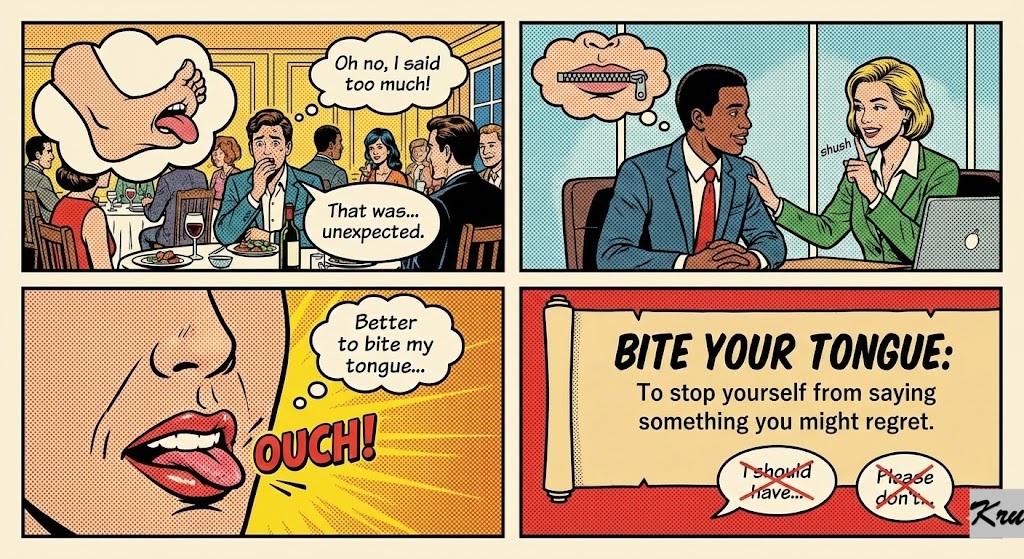
    We often use this idiom to politely tell someone to stop talking or to express regret for speaking too much.

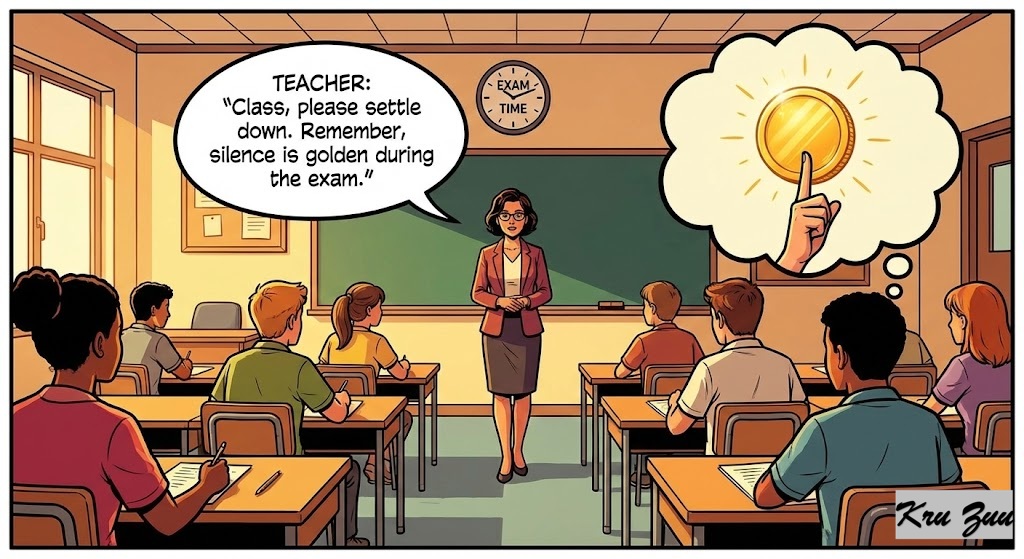
    Teacher: “Class, please settle down. Remember, silence is golden during the exam.”

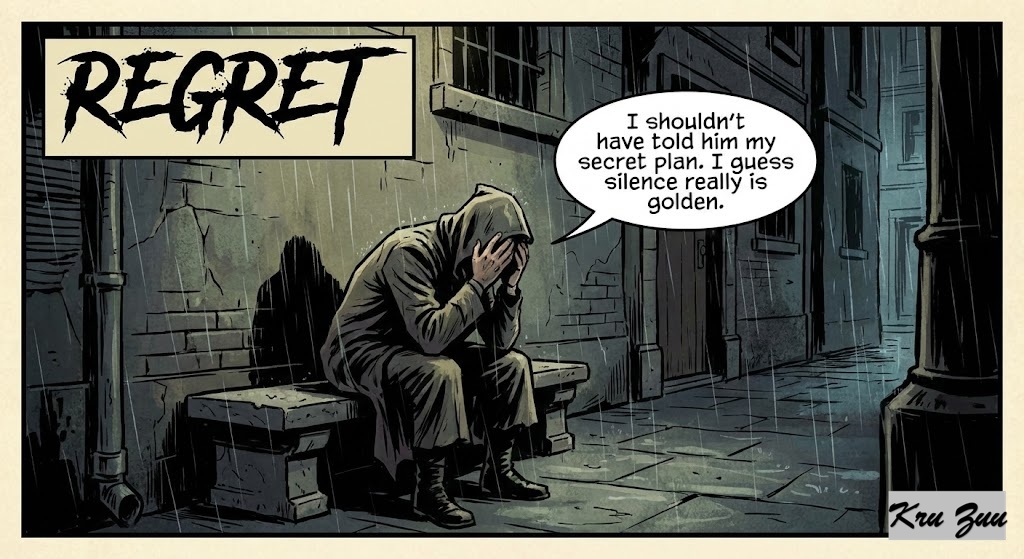
    Regret: “I shouldn’t have told him my secret plan. I guess silence really is golden.”
    📜 History: Origin and Spread


    Where did this quiet wisdom come from?
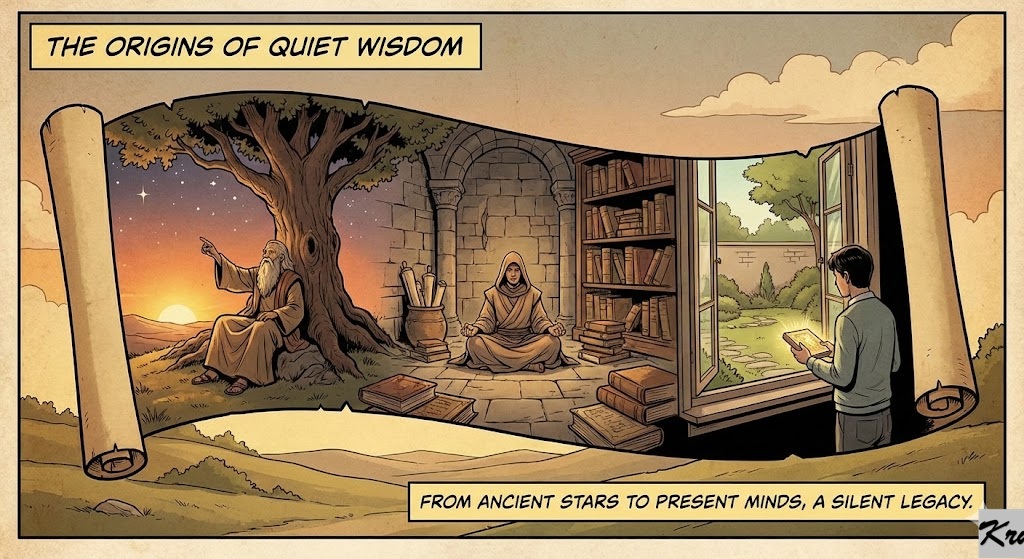

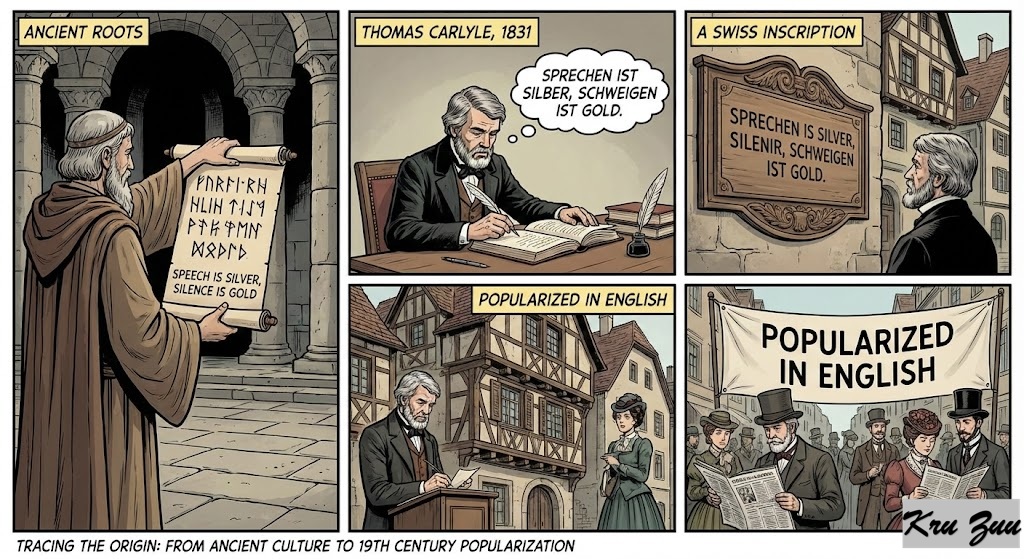
    The Origin: The phrase traces back to ancient culture. It was popularized in English by Thomas Carlyle in the 19th century (1831), who translated a Swiss/German inscription: “Sprechen ist Silber, Schweigen ist Gold.” (Speech is silver, Silence is gold).

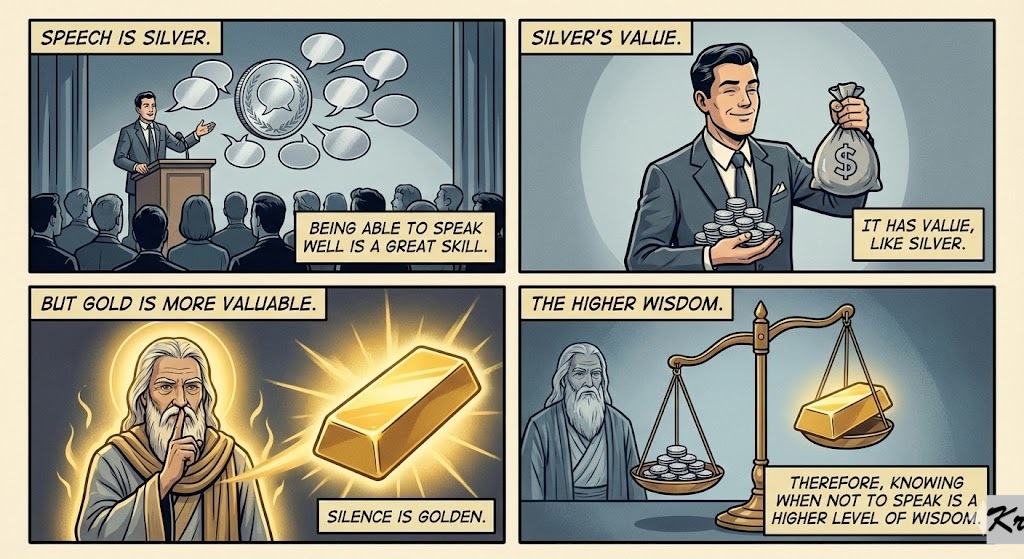
    The Logic: Silver is valuable. Being able to speak well is a great skill (Silver). But Gold is more valuable. Therefore, knowing when not to speak is a higher level of wisdom.

    Global Cousins


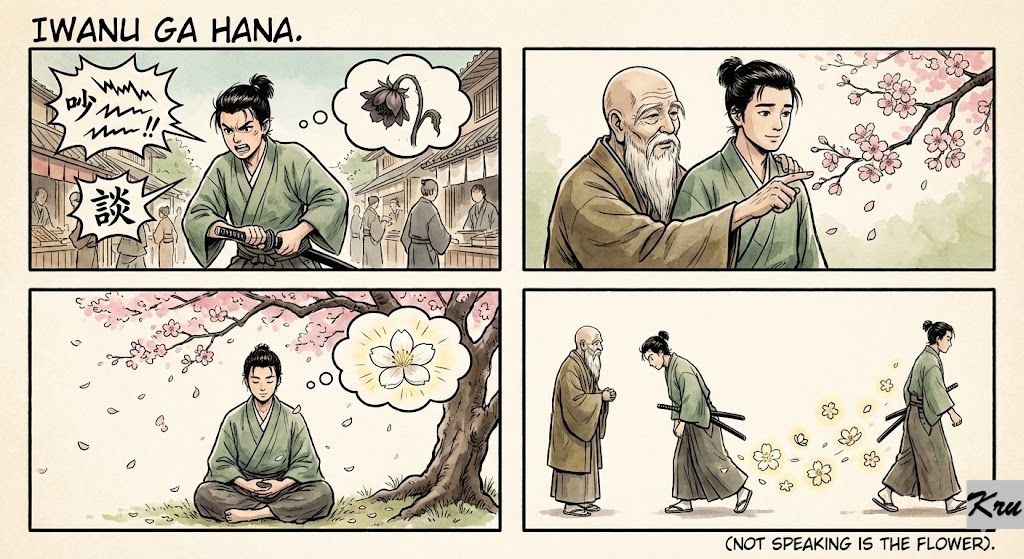
    🇯🇵 Japanese: “Iwanu ga hana” (Not speaking is the flower).

    🇪🇸 Spanish: “En boca cerrada no entran moscas” (Flies don’t enter a closed mouth).


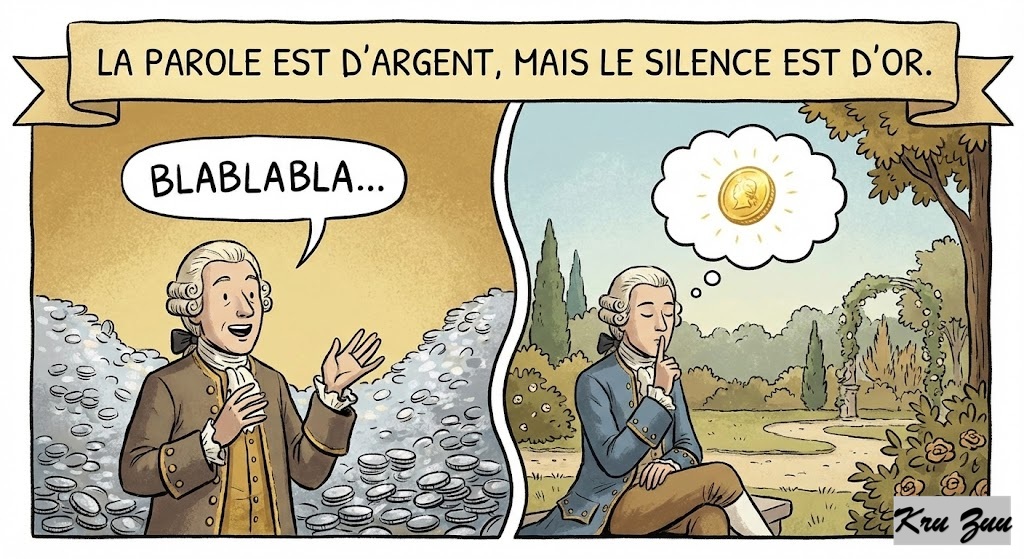
    🇫🇷 French: “La parole est d’argent, mais le silence est d’or.”
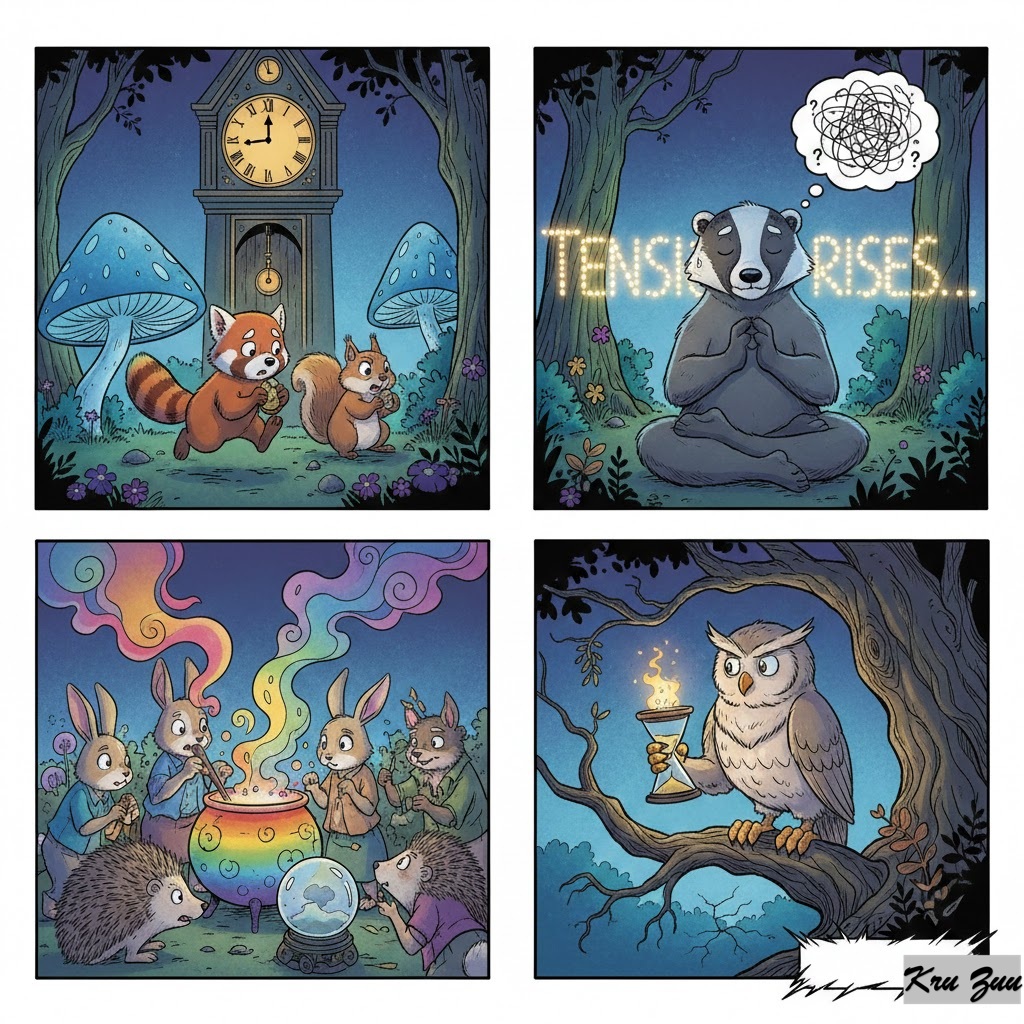
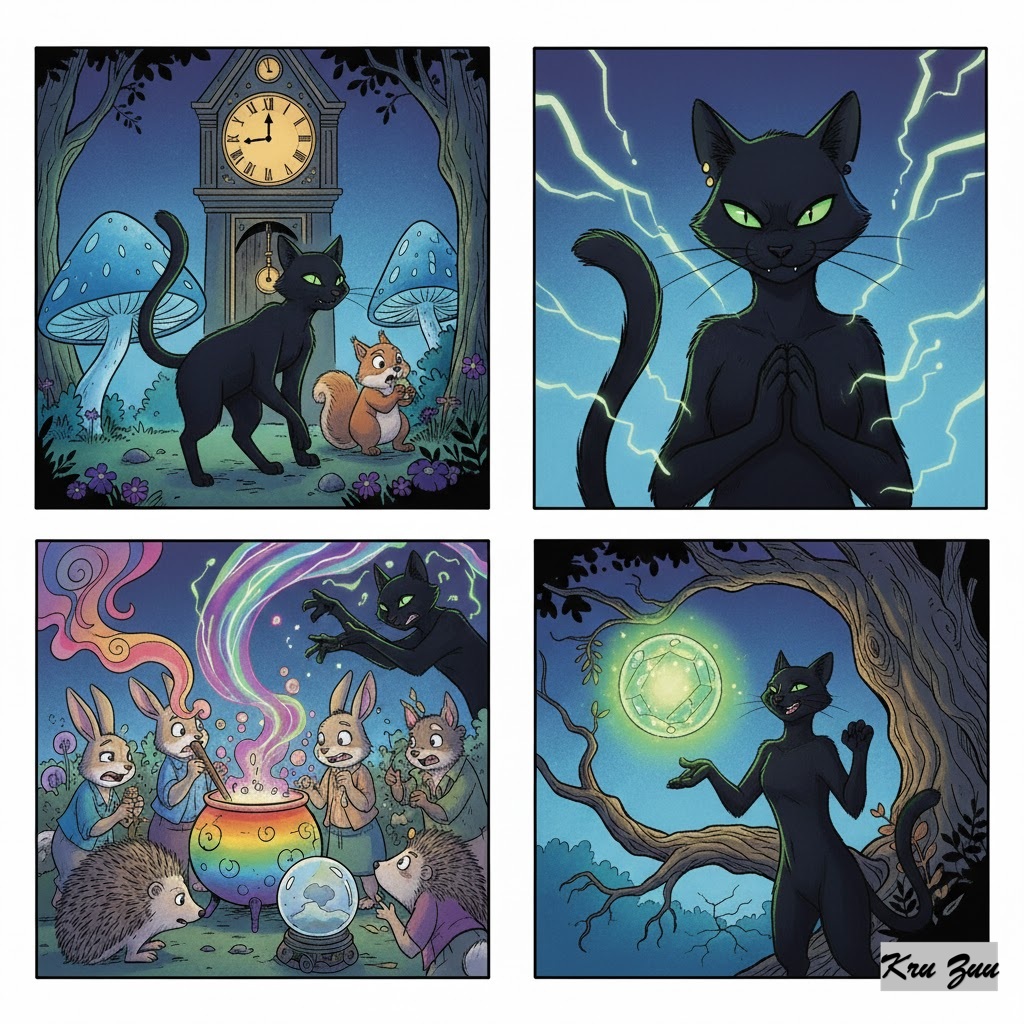
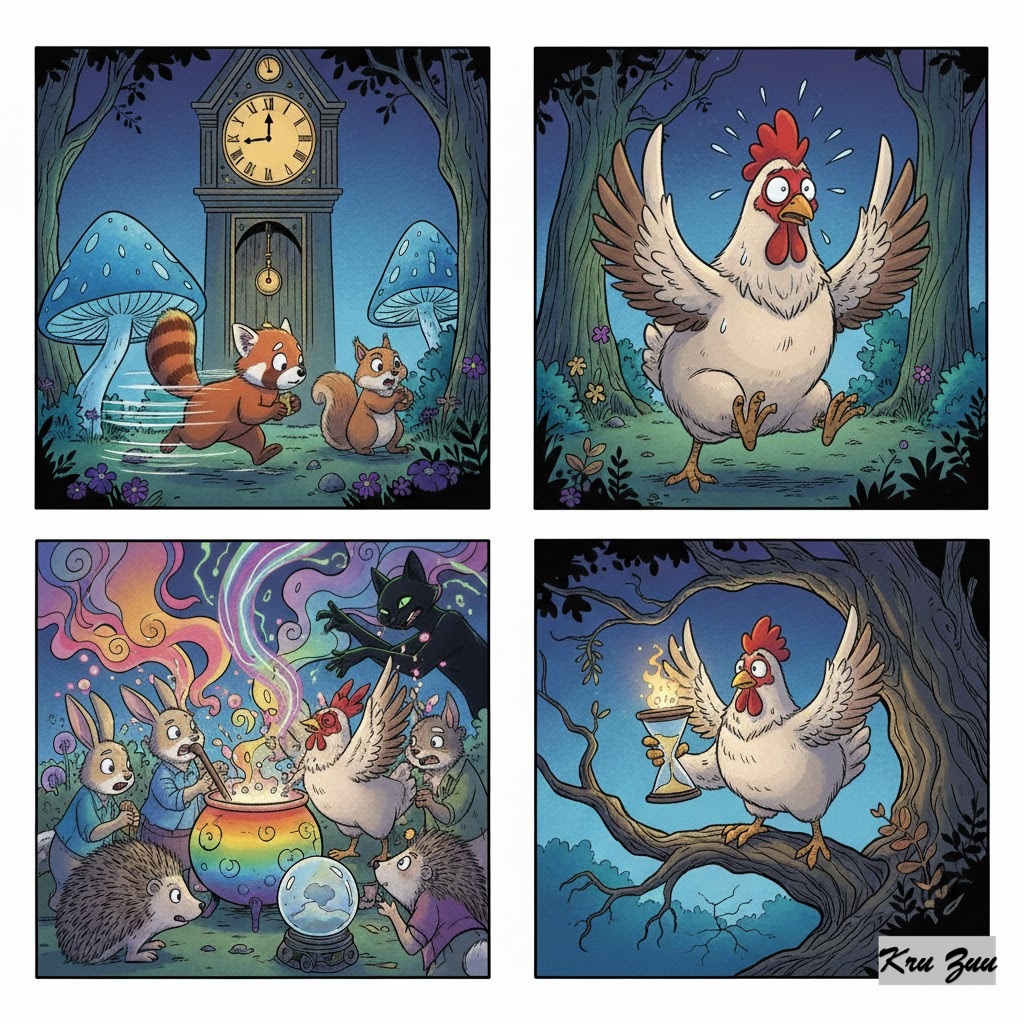
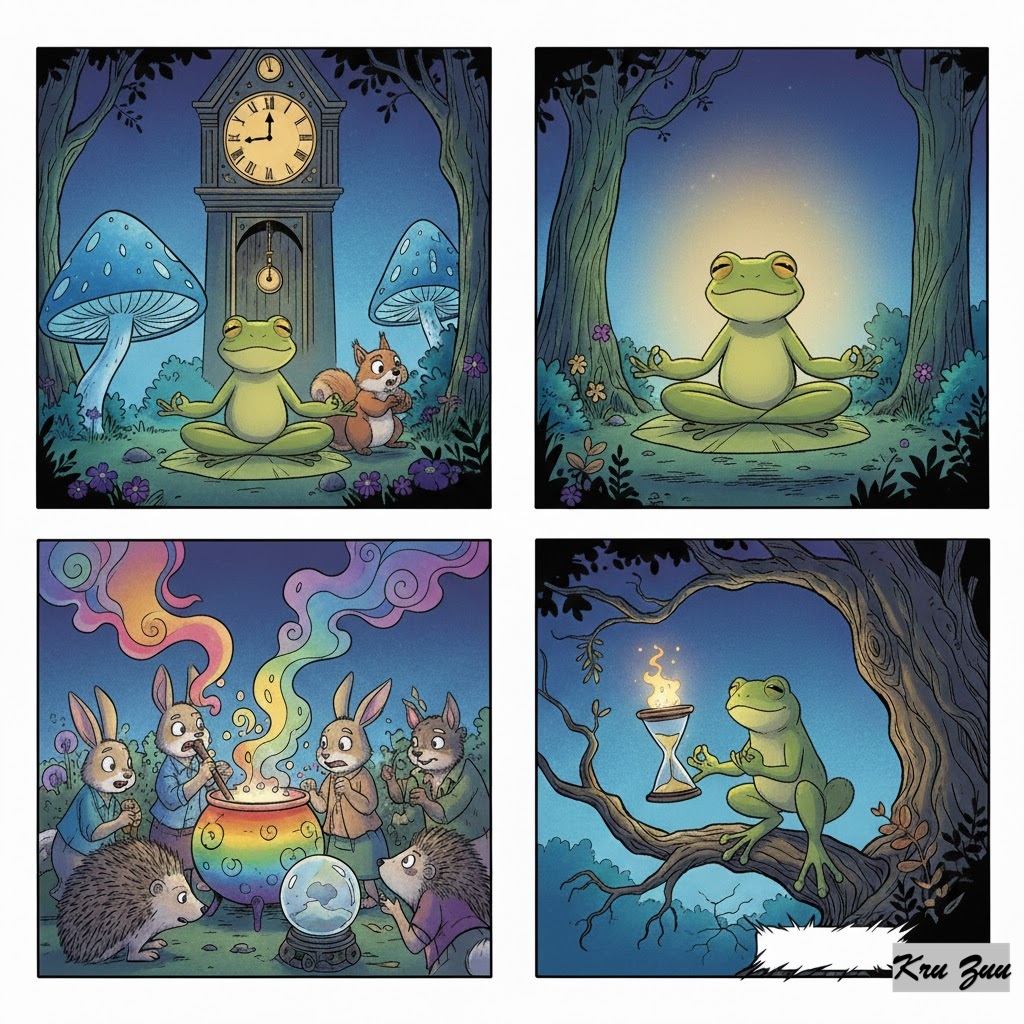
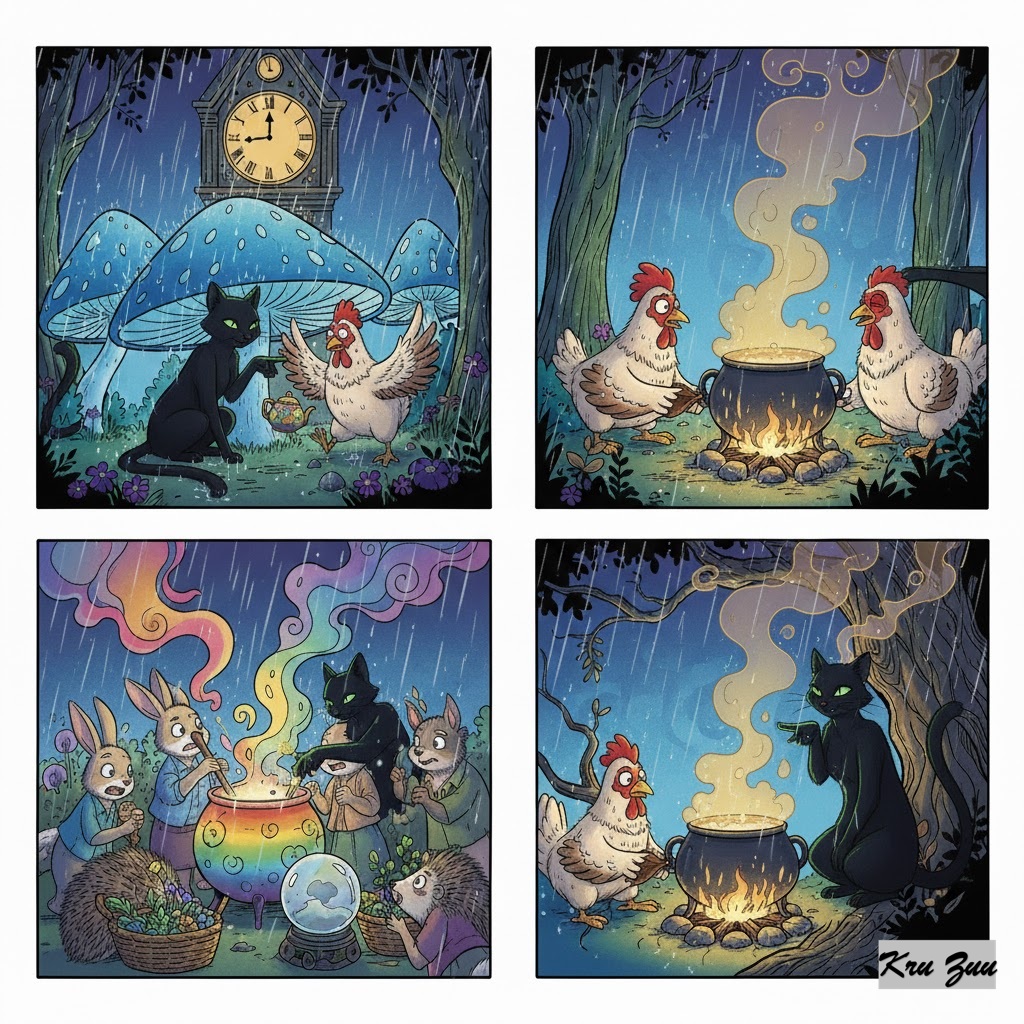
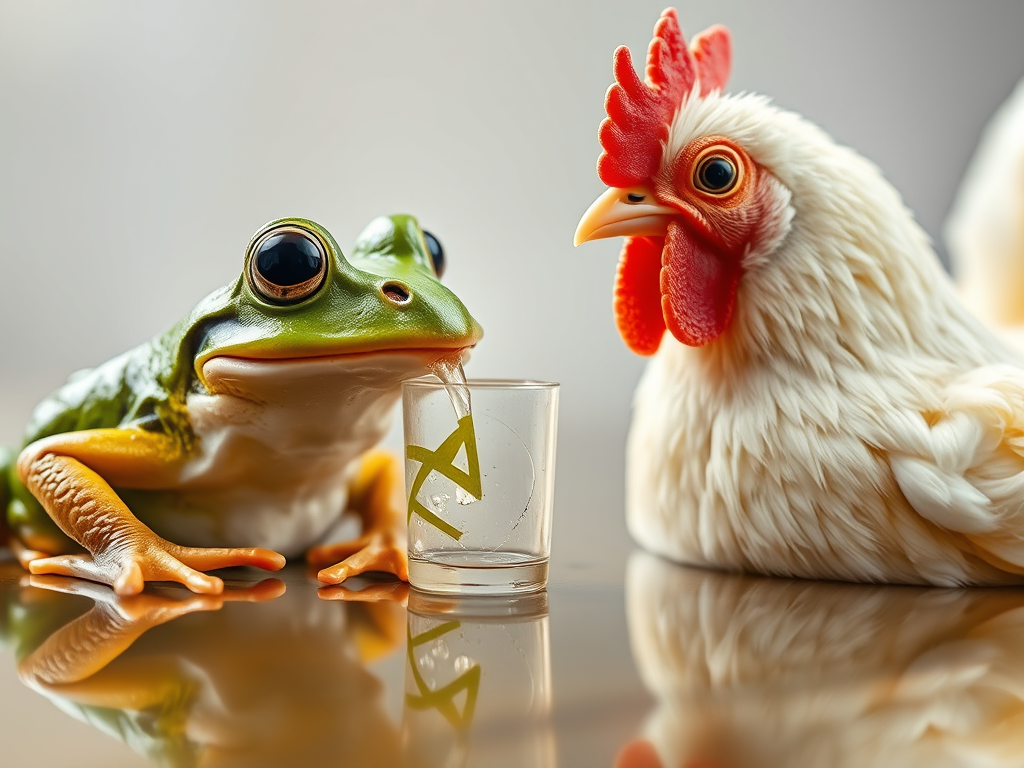
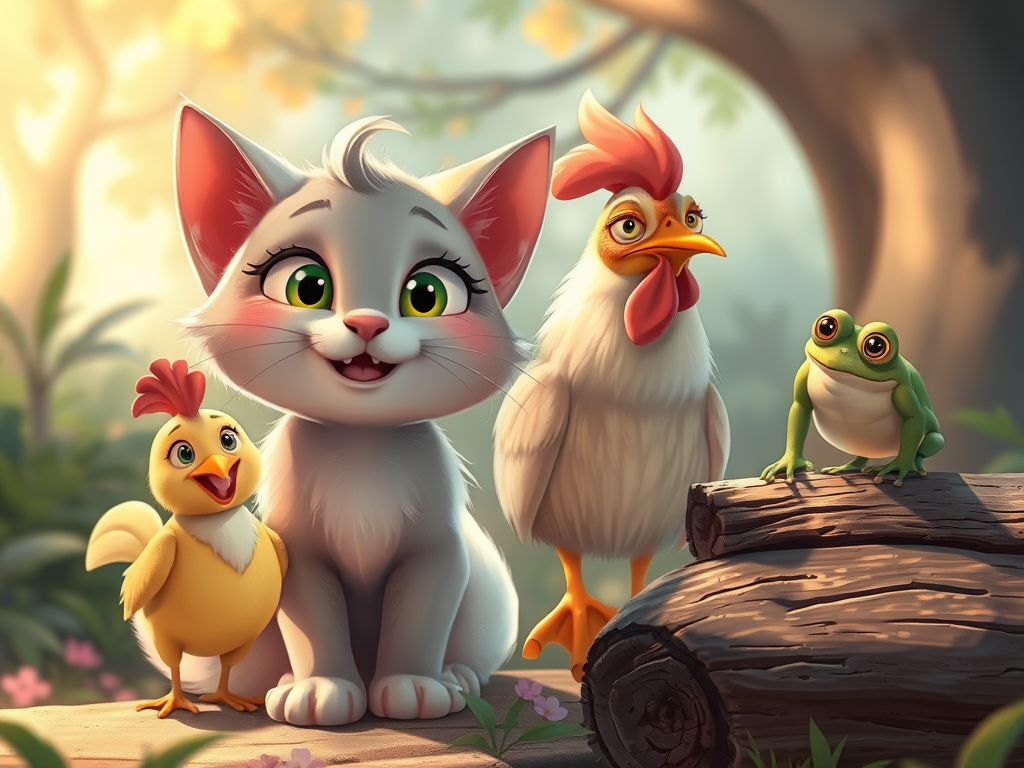
    🎭 Short Story: The Loudest Mistake 🤫🐱🐔🐸


    Let’s visit the magical forest to see who can keep a secret.
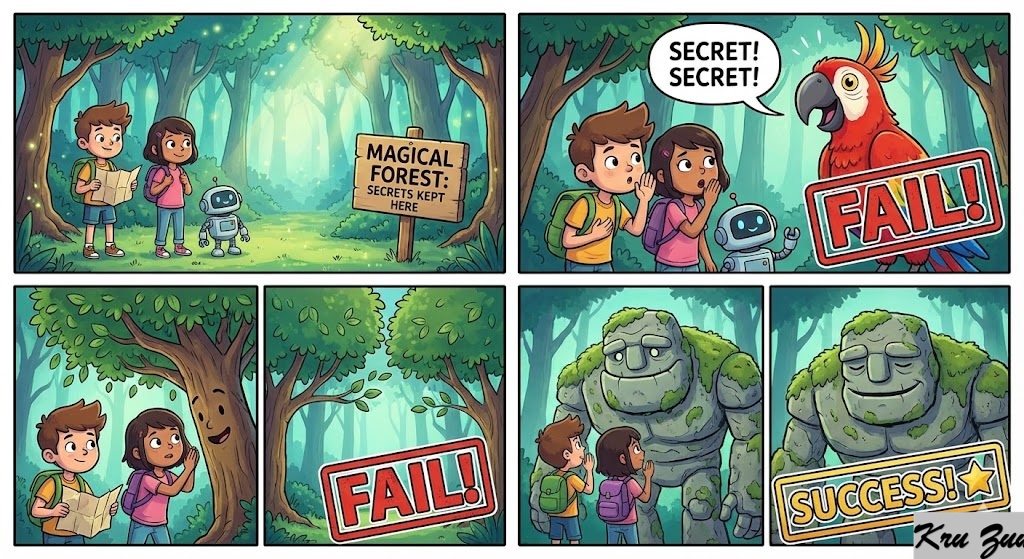

    🌟 The Cast


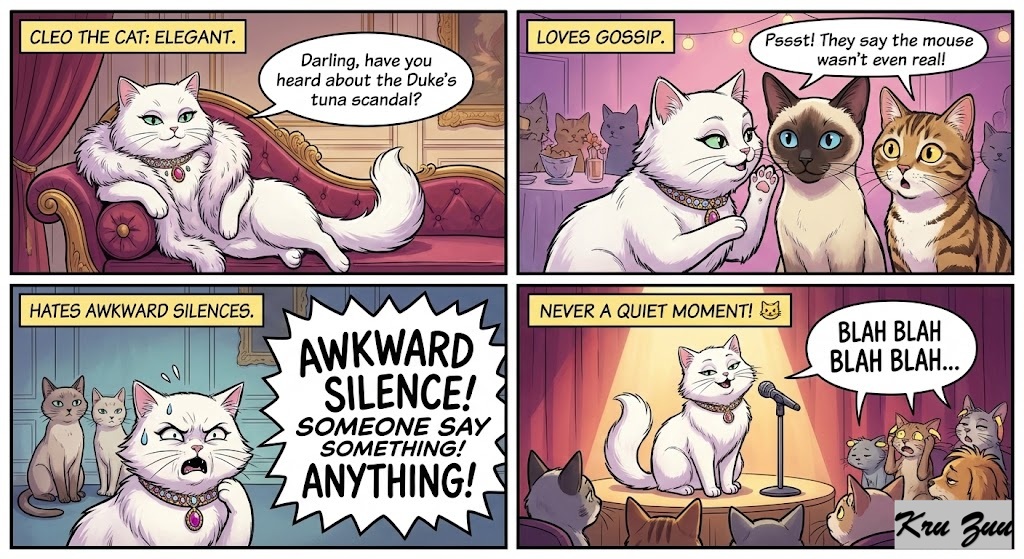
    Cleo the Cat: Elegant, loves gossip, hates awkward silences. 😼

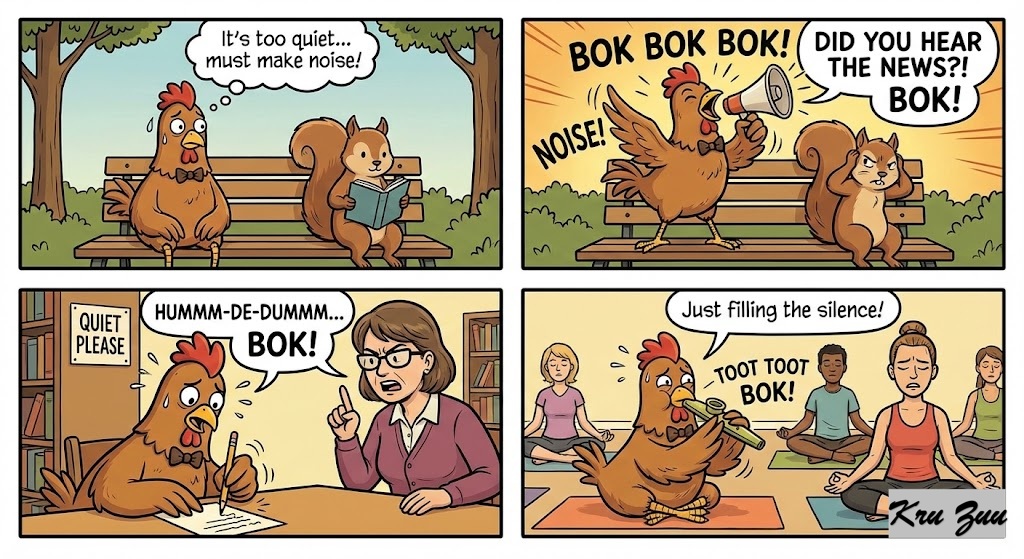
    Cluck the Chicken: Nervous, fills every quiet moment with noise. 🐔

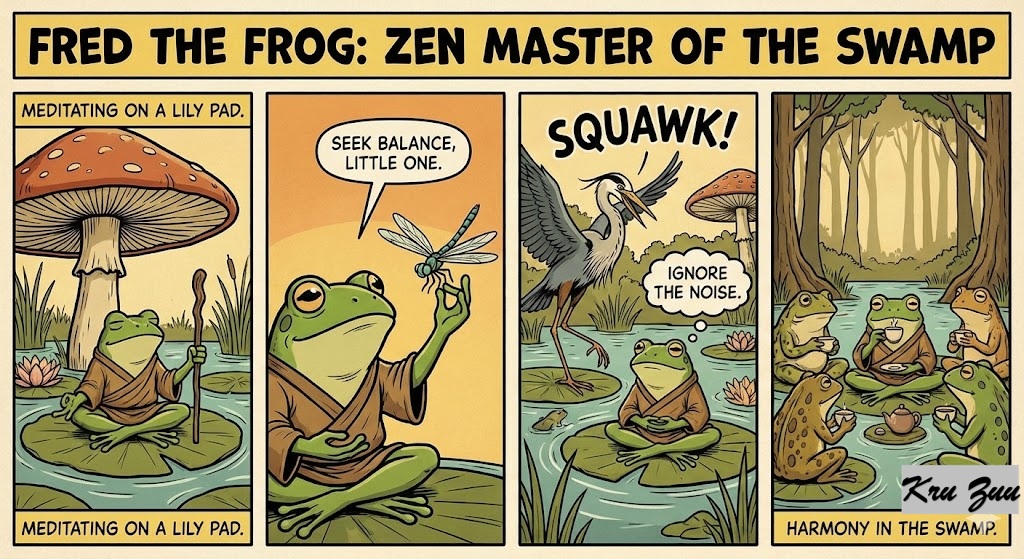
    Fred the Frog: The Zen master of the swamp. 🐸

    The Situation: It is the night of the “Great Forest Hide-and-Seek.” The winner gets a basket of the finest treats. The seeker is the Big Bad Wolf, who has very sharp ears.
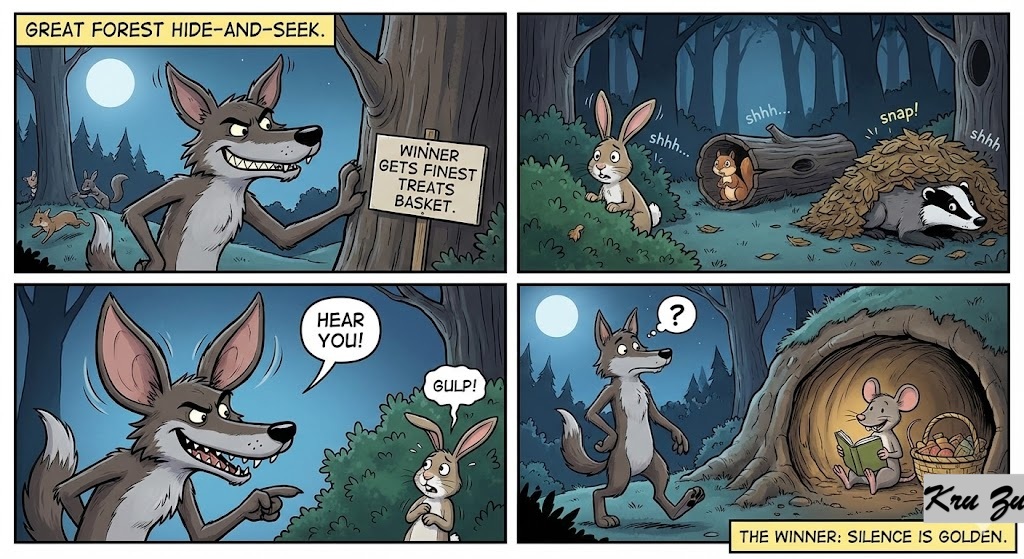

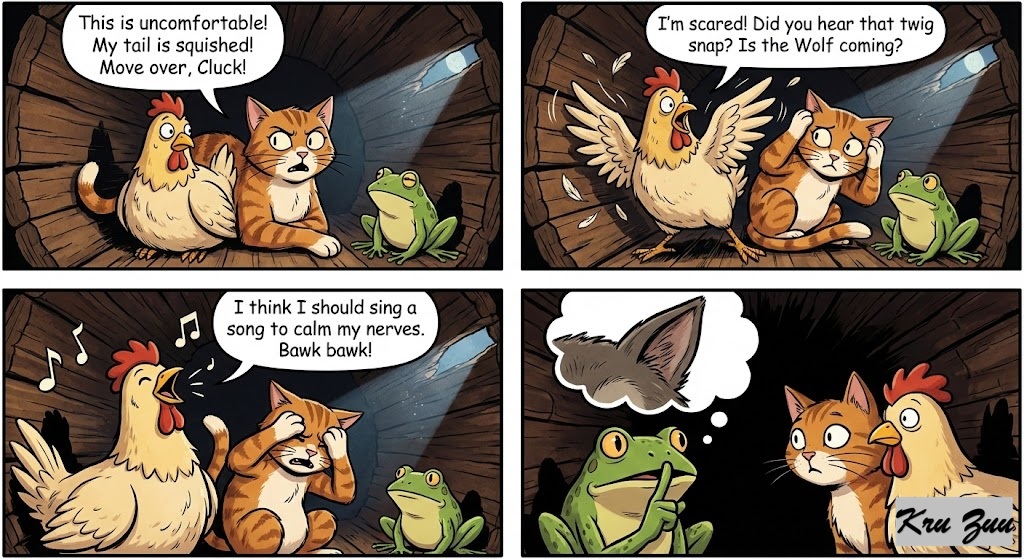
    The Conflict: Cleo, Cluck, and Fred find the perfect hiding spot inside a hollow log. It is dark and tight. “This is uncomfortable!” Cleo whispers loudly. “My tail is squished! Move over, Cluck!” “I’m scared!” Cluck squawks, flapping his wings. “Did you hear that twig snap? Is the Wolf coming? I think I should sing a song to calm my nerves. Bawk bawk!”

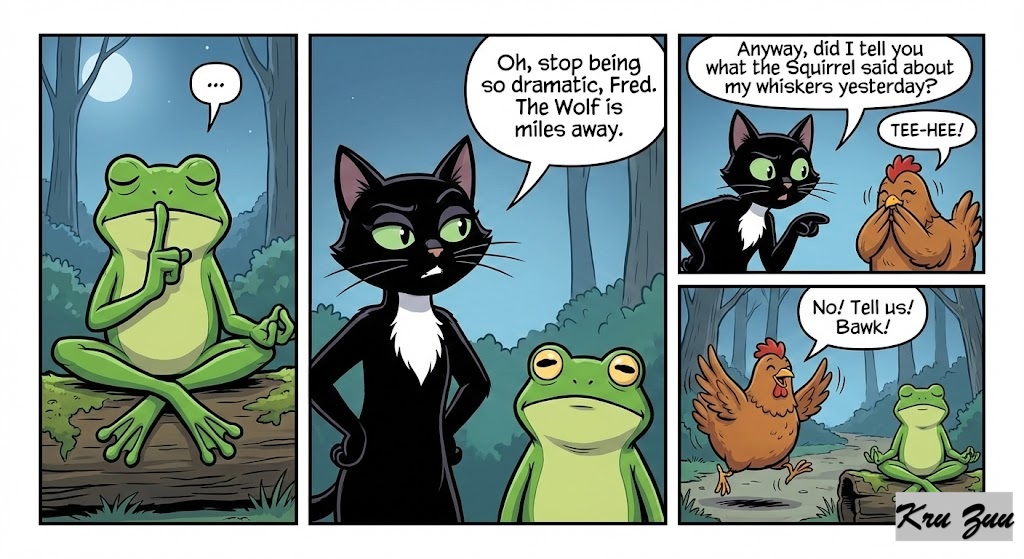
    The Reaction: Fred the Frog sits perfectly still. He closes his eyes. He breathes slowly. He puts a green finger to his lips. “…” Cleo rolls her eyes. “Oh, stop being so dramatic, Fred. The Wolf is miles away. Anyway, did I tell you what the Squirrel said about my whiskers yesterday?” Cluck giggles. “No! Tell us! Bawk!”

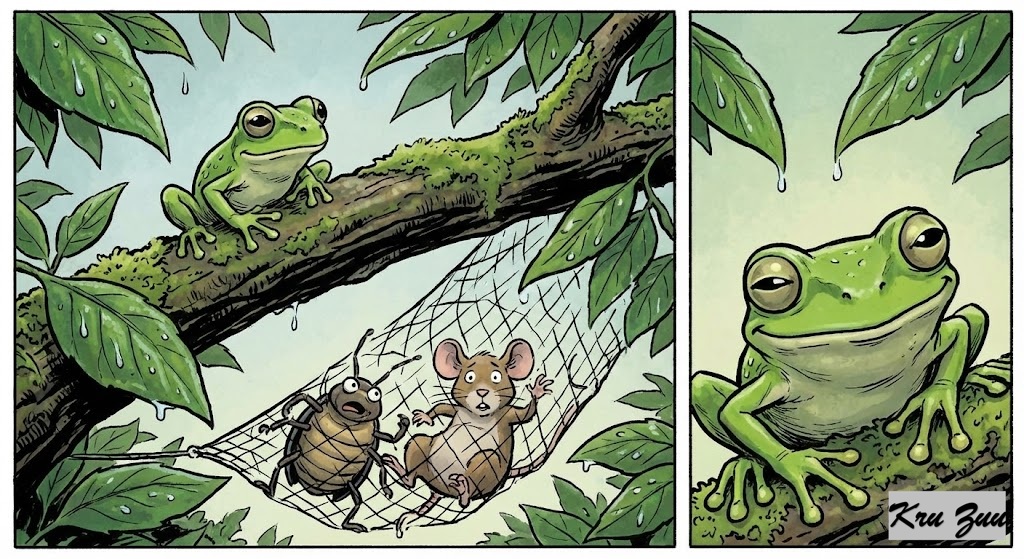
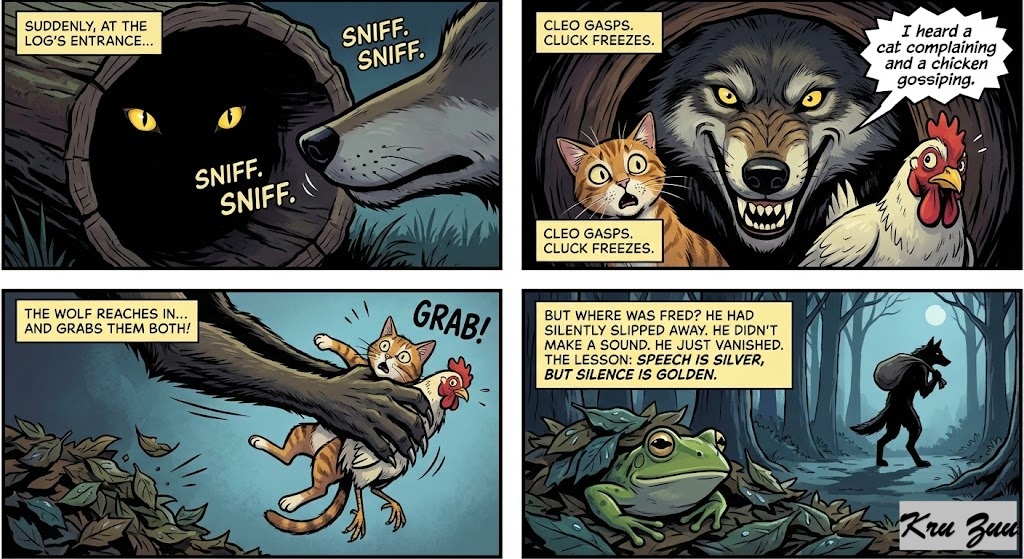
    The Lesson: Suddenly, two yellow eyes appear at the entrance of the log. Sniff. Sniff. The Wolf smiles. “I heard a cat complaining and a chicken gossiping.” Cleo gasps. Cluck freezes. The Wolf reaches in… and grabs them both! But where was Fred? In the moment the Wolf appeared, Fred had silently slipped under a pile of wet leaves. He didn’t make a sound. He didn’t brag. He didn’t scream. He just vanished.

    The Resolution: Cleo and Cluck lost the game (and their treats). They spent the evening washing dishes for the Wolf as punishment. Fred won the basket of treats. He sat on his lily pad, eating a delicious fly. “Fred!” Cleo cried. “How did you win? You didn’t do anything!” Fred chewed slowly, swallowed, and smiled. “Ribbit.” (Translation: I did the hardest thing of all. I stayed quiet).
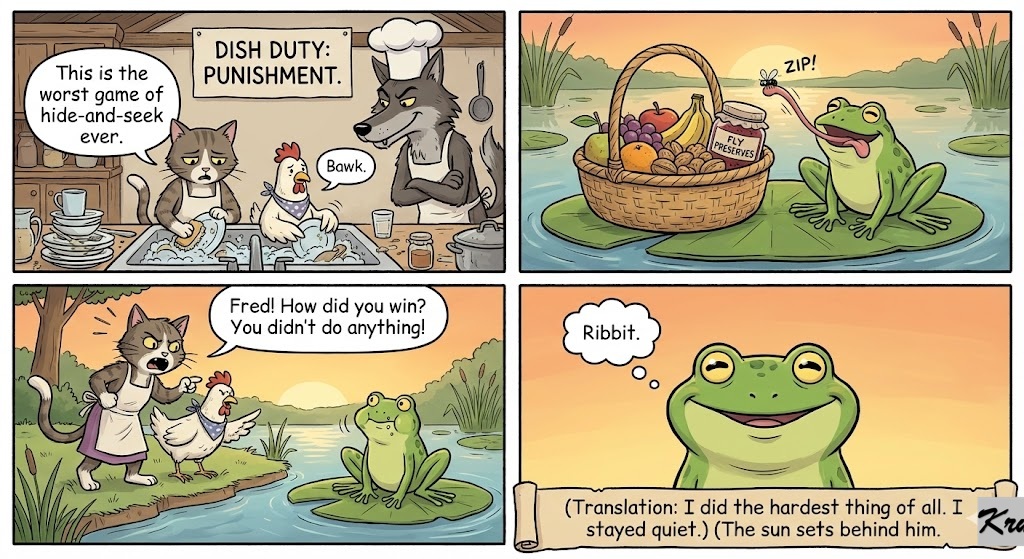

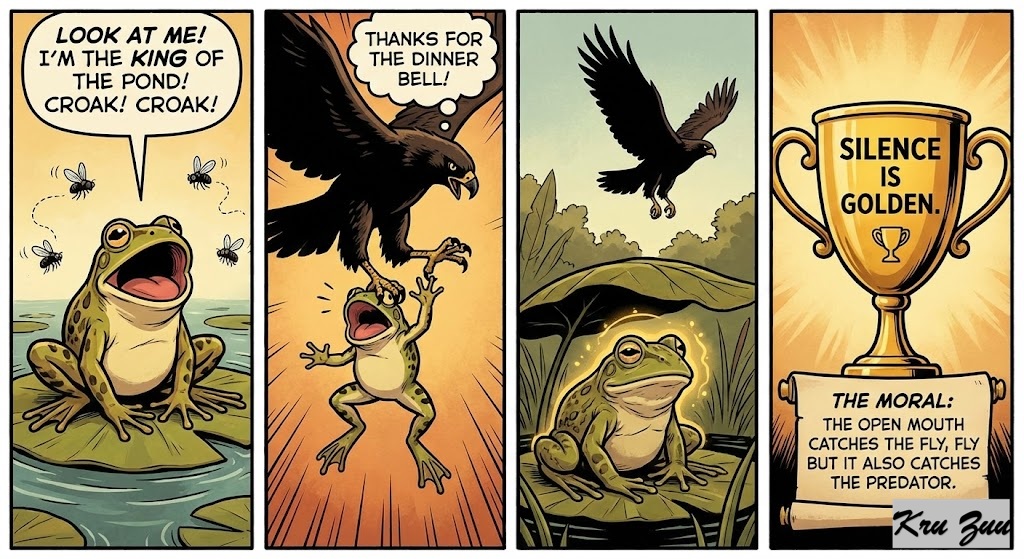
    The Moral: The open mouth catches the fly, but it also catches the predator. Silence is golden. 🏆
    🎓 Lesson for English Learners


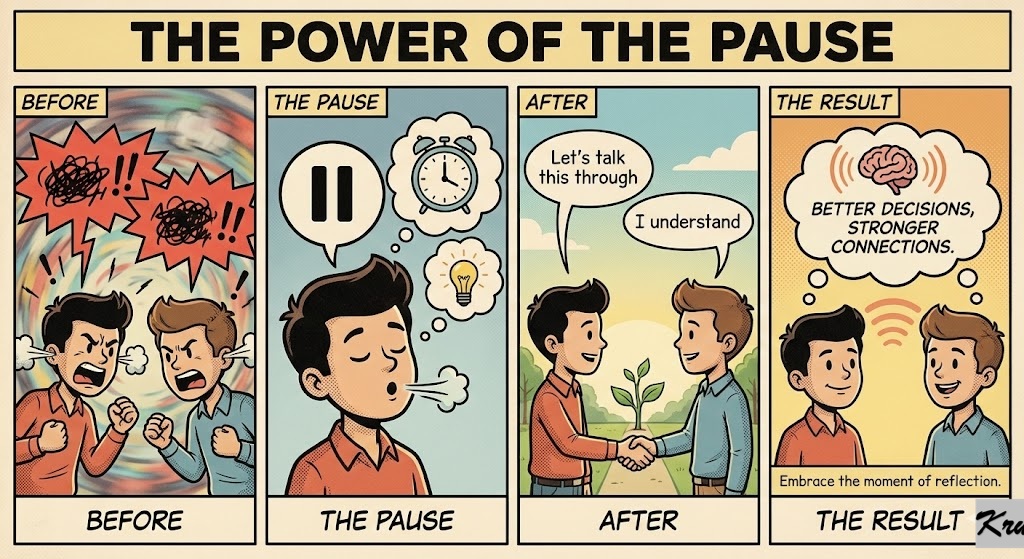
    The Power of the Pause.

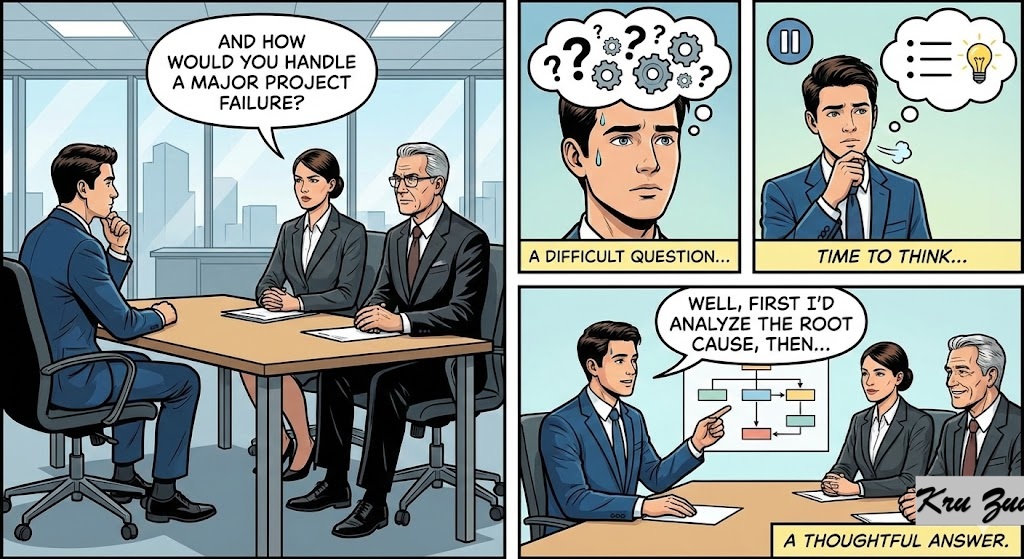
    Situation: You are in a job interview or a meeting. Someone asks you a difficult question.

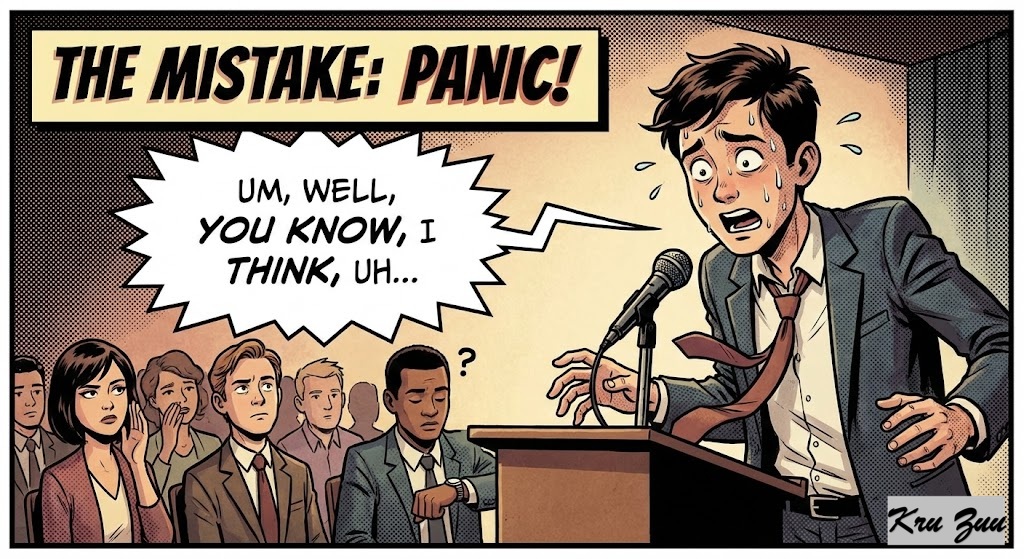
    The Mistake: You panic and start talking immediately (“Um, well, you know, I think, uh…”). You look nervous.

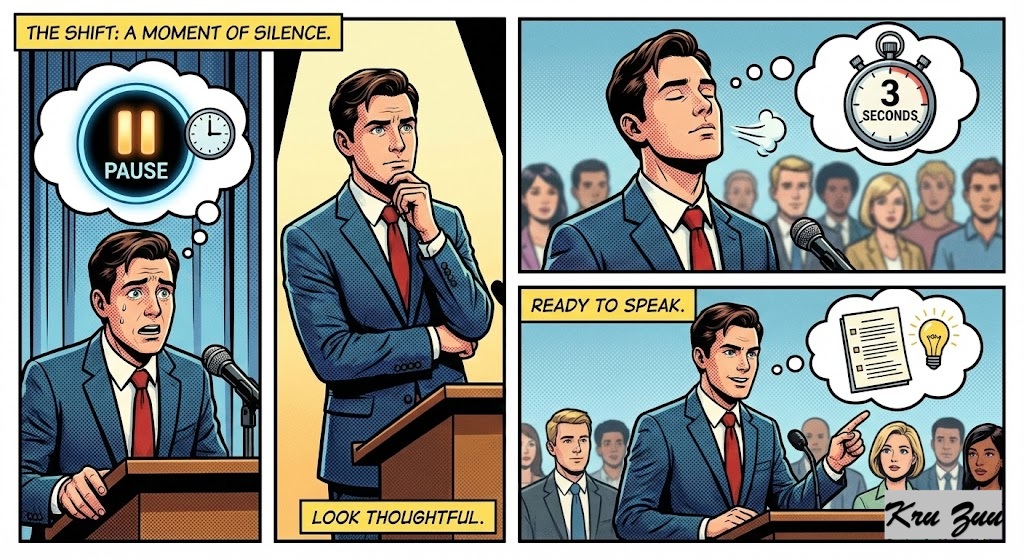
    The Shift: Use the “Golden Pause.” Take 3 seconds of silence. Look thoughtful.

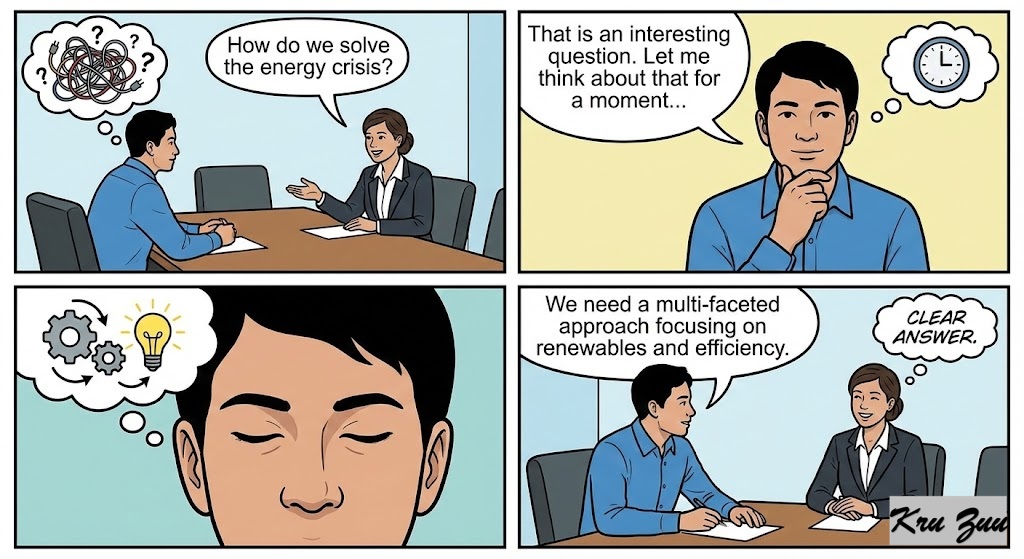
    You Say: “That is an interesting question. Let me think about that for a moment…” (Then give a clear answer).

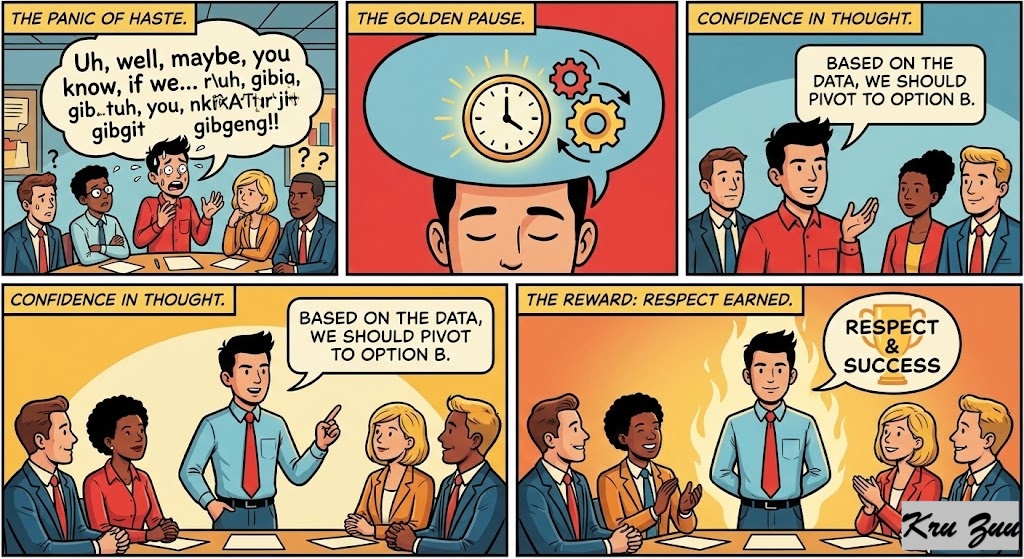
    Why: This shows confidence. It shows you think before you speak.

    💬 Your Turn: The “3-Second” Challenge 🚀


    Do you want to cure your “Villain” talking habits?


    The Challenge:
    For one whole day, follow the 3-Second Rule.
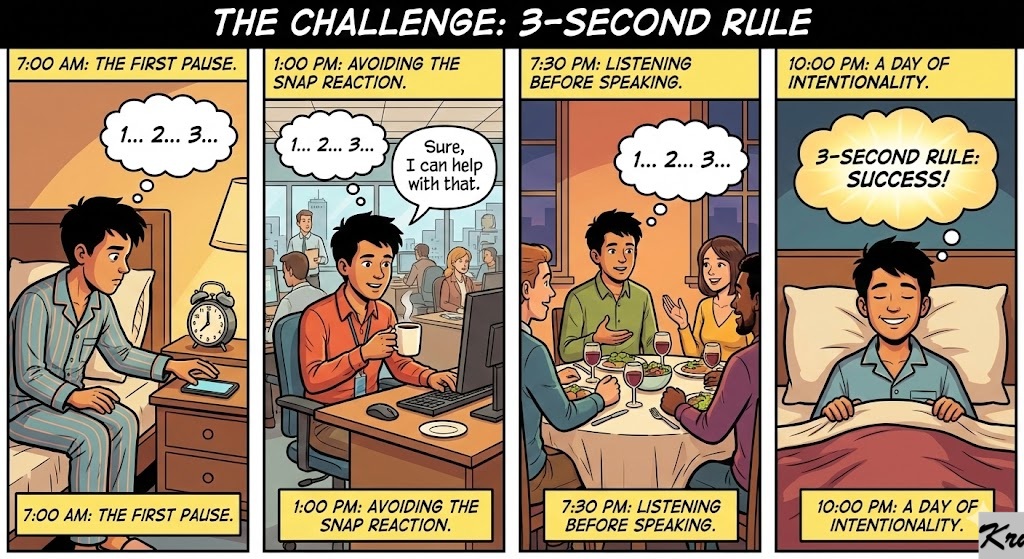

    The Action: Whenever someone finishes talking, count to 3 in your head (One Mississippi, Two Mississippi, Three Mississippi) before you respond.
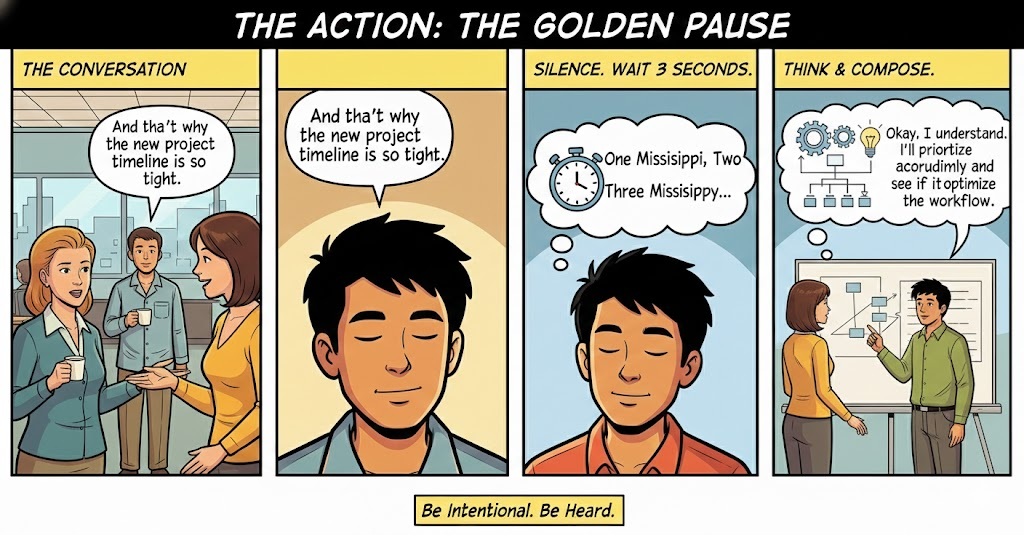

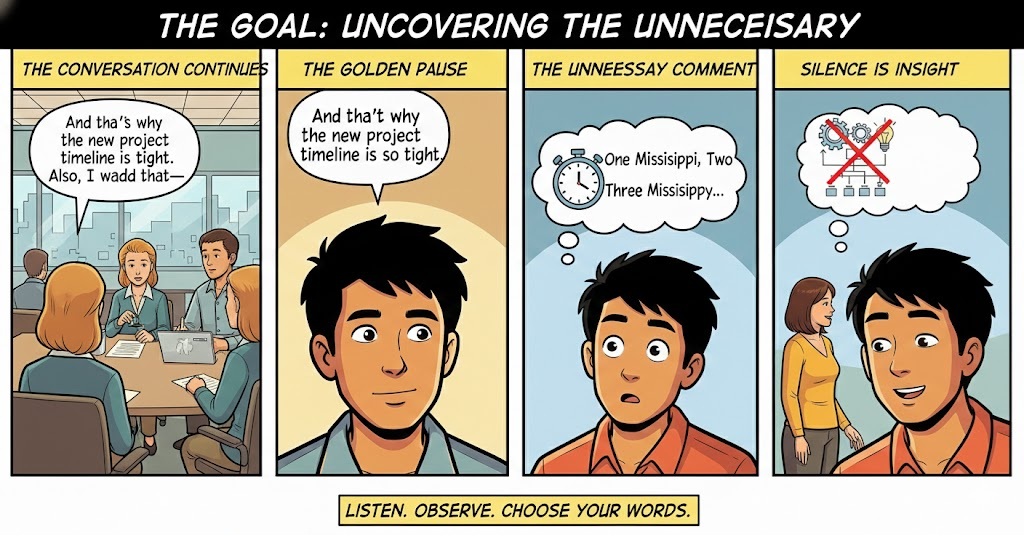
    The Goal: You will realize that often, the other person wasn’t finished talking! Or, you will realize your comment wasn’t necessary.

    👇 Question for the comments: Have you ever said something you immediately regretted? Or has staying silent ever saved you? Tell us your story below!

    By Zubeyir YURTKURAN

    https://www.facebook.com/BrainBattleground/

    https://www.facebook.com/zubeyr.yurtkuran/

    https://www.instagram.com/zubeyryurtkuran/

    https://www.youtube.com/@BrainBattleground-b3p

    https://www.instagram.com/brainbattleground/

  • 🕰️ The Daily Shield: The Law of Patience

    🕰️ The Daily Shield: The Law of Patience

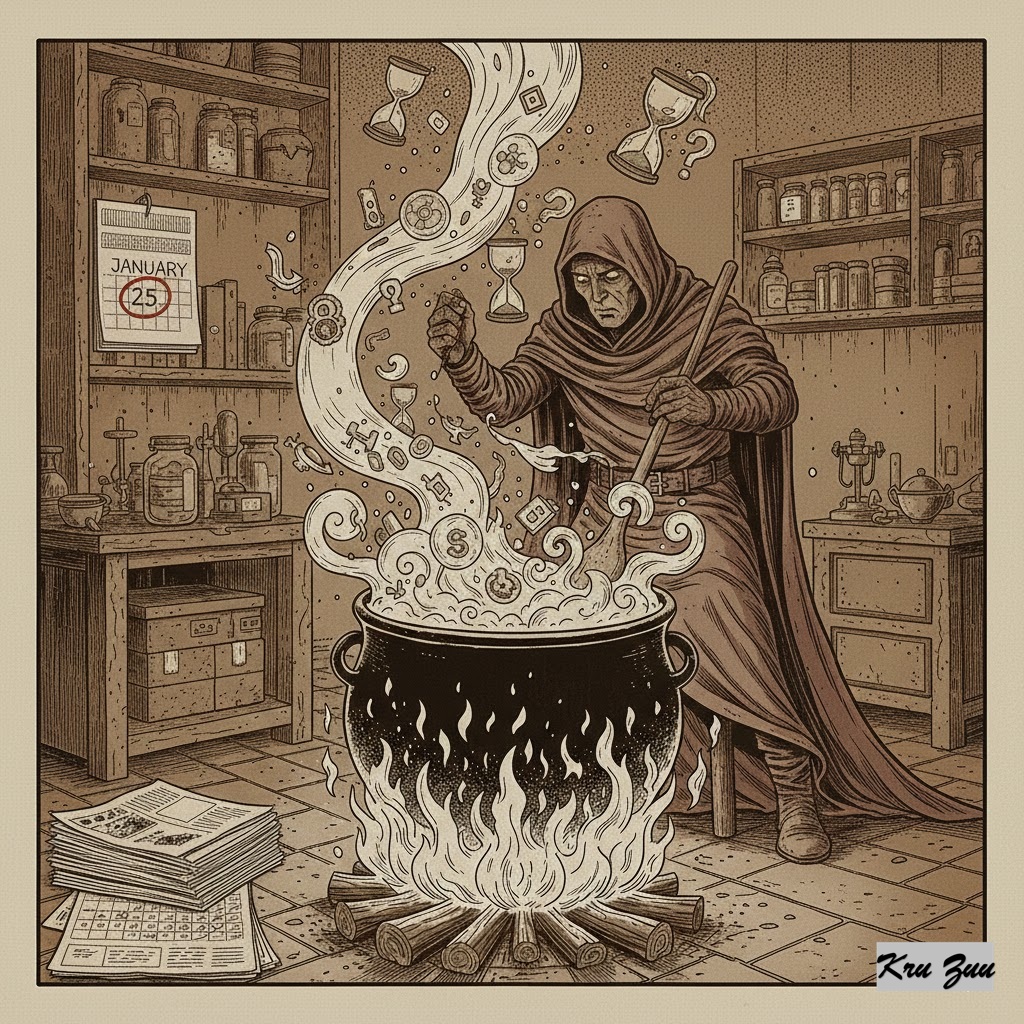
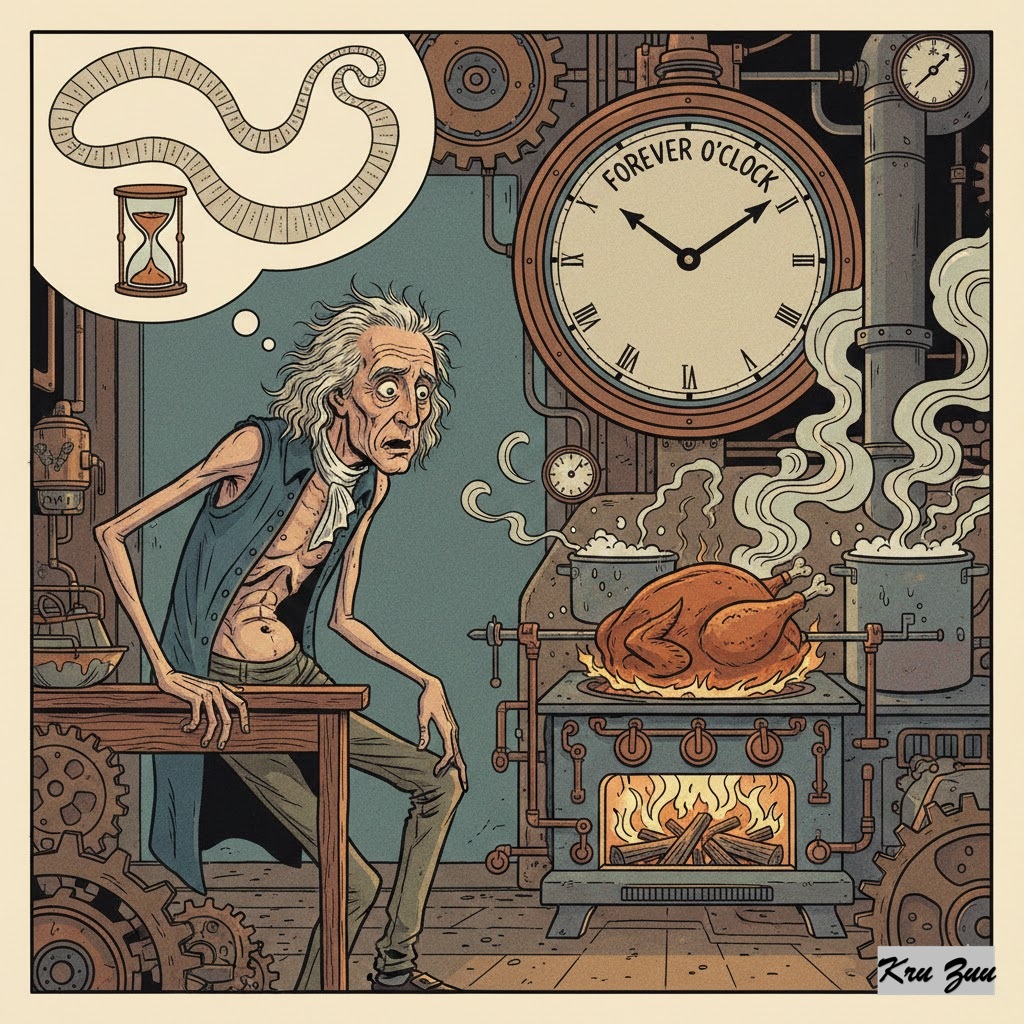
    “A watched pot never boils.”


    😈 The Villain (The Checker)

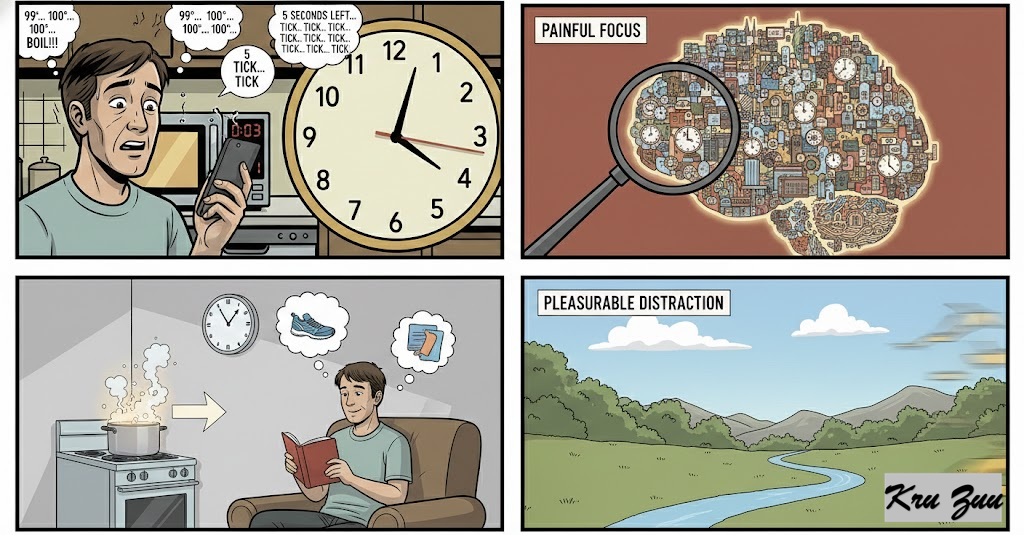
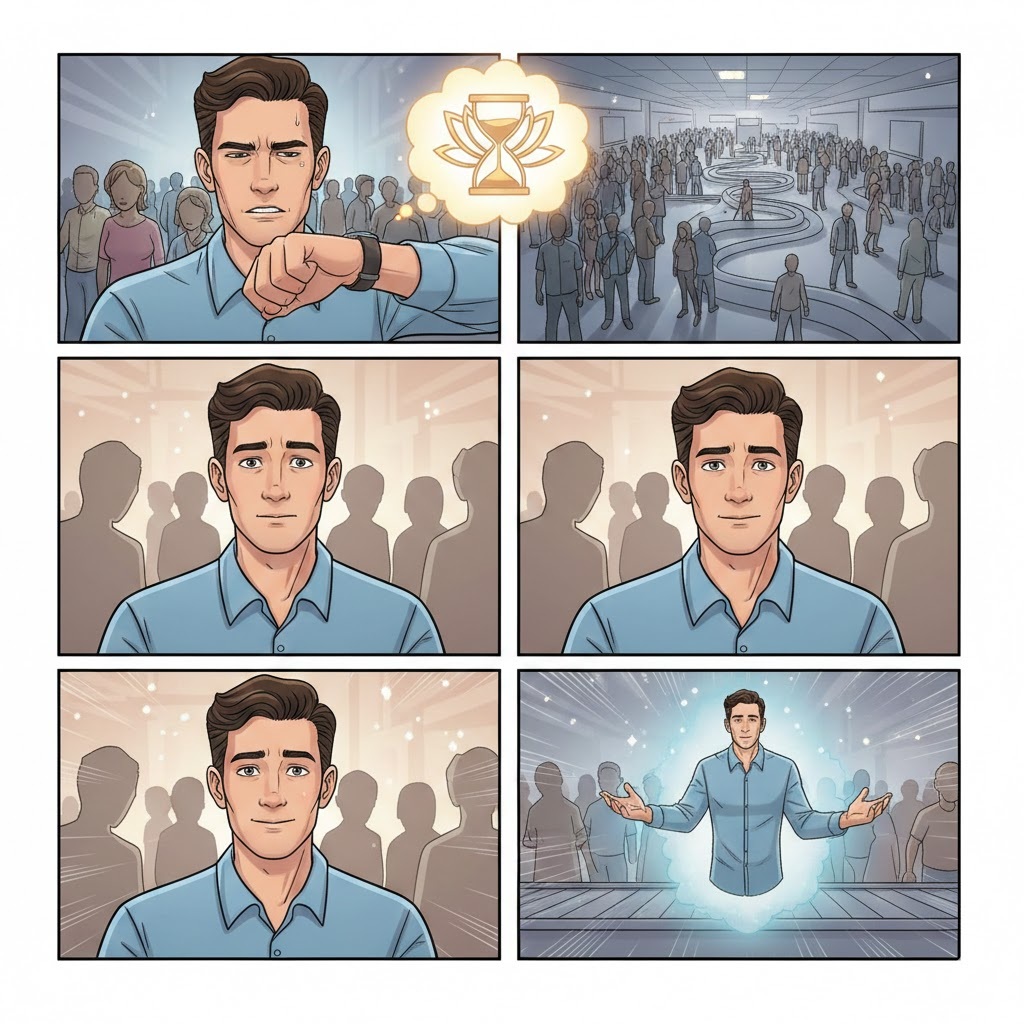
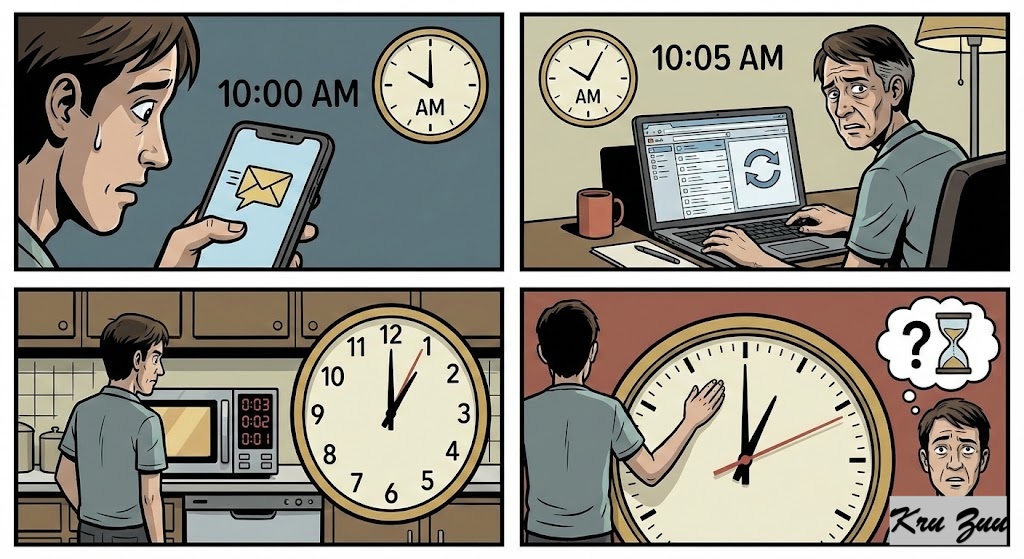
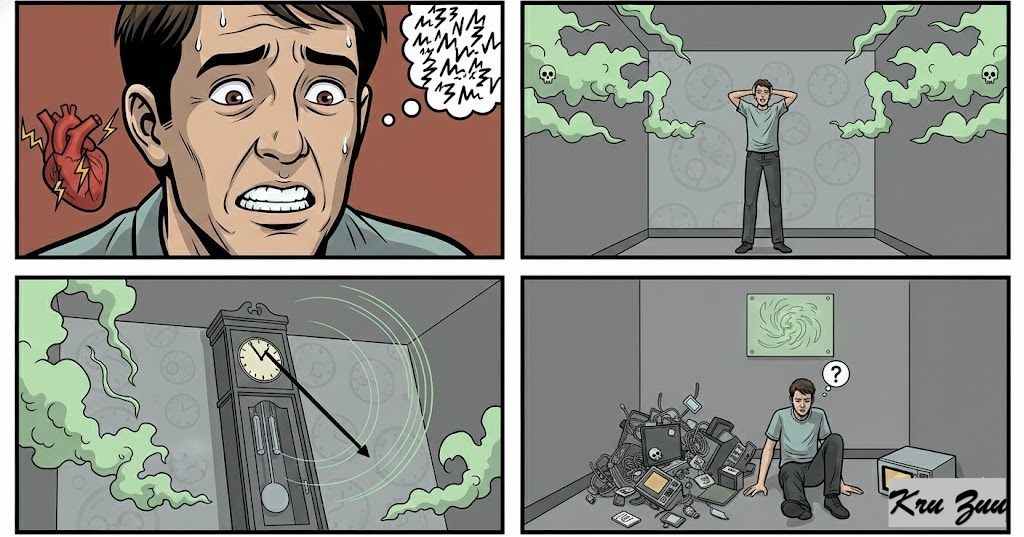
    You send an important text message. 💬 You check your phone. Nothing. You check again 10 seconds later. Still nothing. You refresh your email 50 times in one hour waiting for a job offer. You stand in front of the microwave, staring at the numbers counting down: 5… 4… 3… Why does one minute feel like one hour?

    The Result? Anxiety spikes. Stress hormones flood your body. The more you obsess over the outcome, the slower time seems to move. You are trapped in the “Waiting Room of Misery.” 😫


    😇 The Hero (The Flow Master)

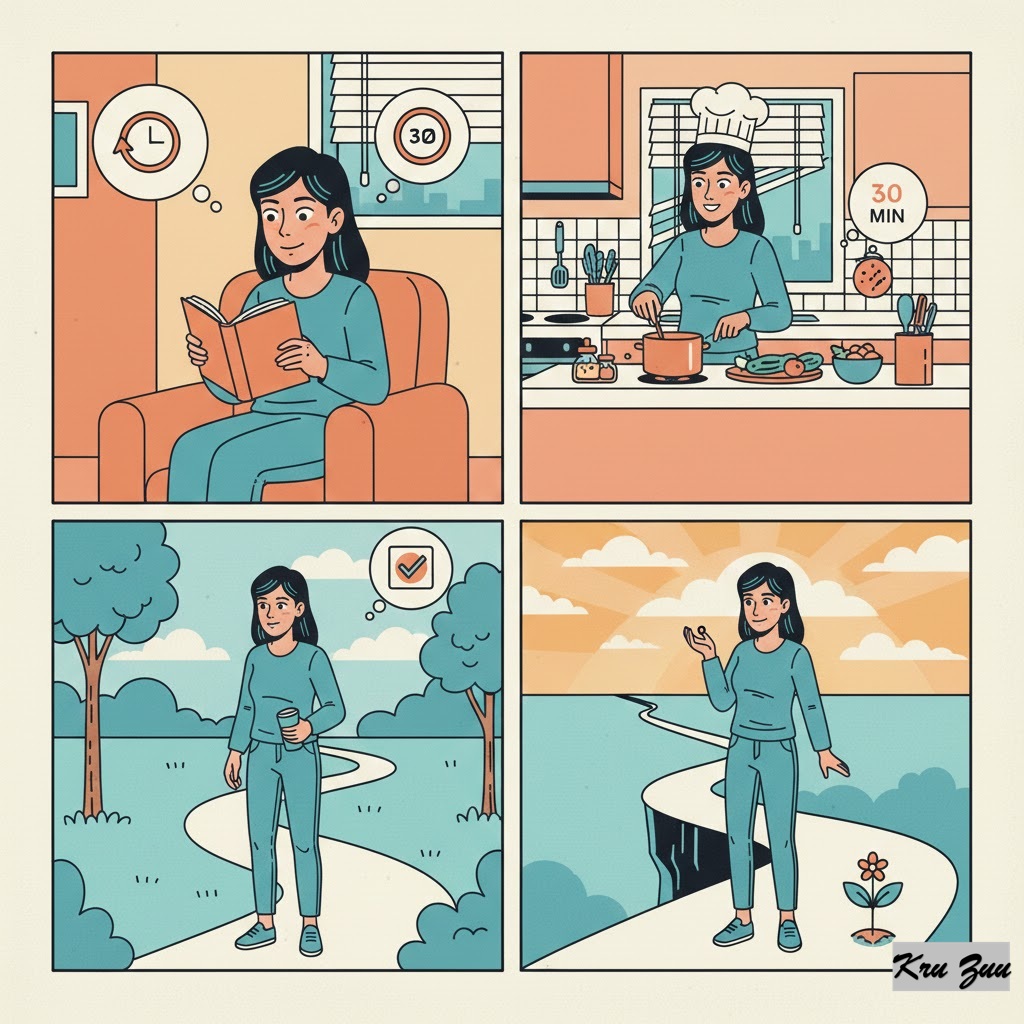
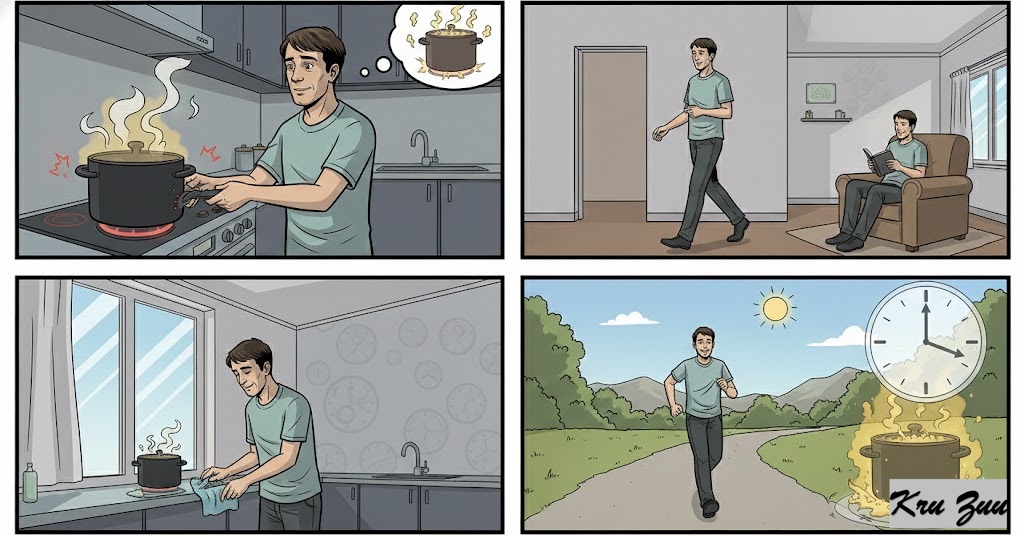
    You have a goal (the pot). You turn on the heat (do the work). Then, instead of staring at it, you walk away. You read a book. You clean the house. You go for a run. You trust the process.

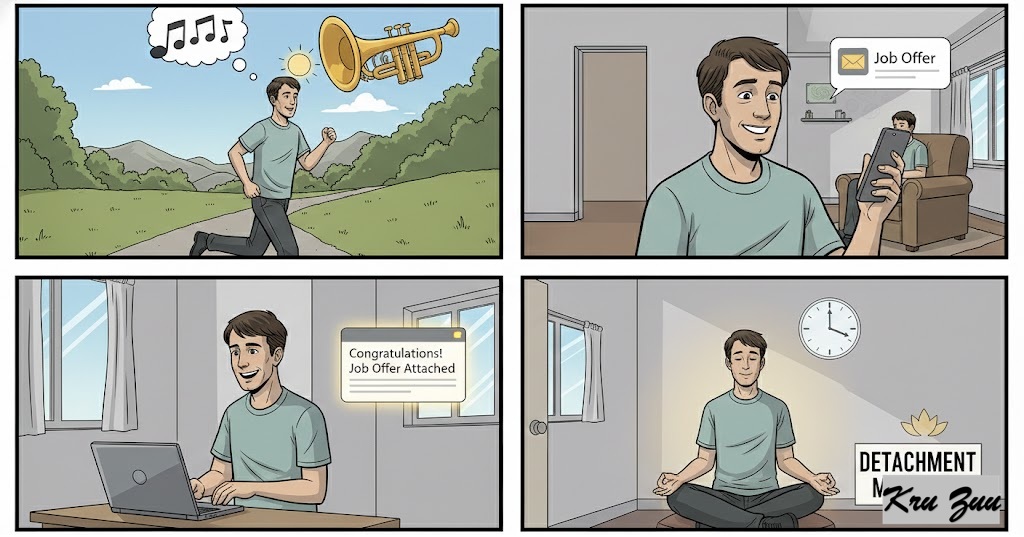
    The Result? Suddenly, you hear the whistle! 🎺 The water is boiling. The email arrives. The text pops up. Because you were busy living your life, the waiting period felt instant. You mastered the art of Detachment. 🧘‍♂️


    ⚖️ The Reality


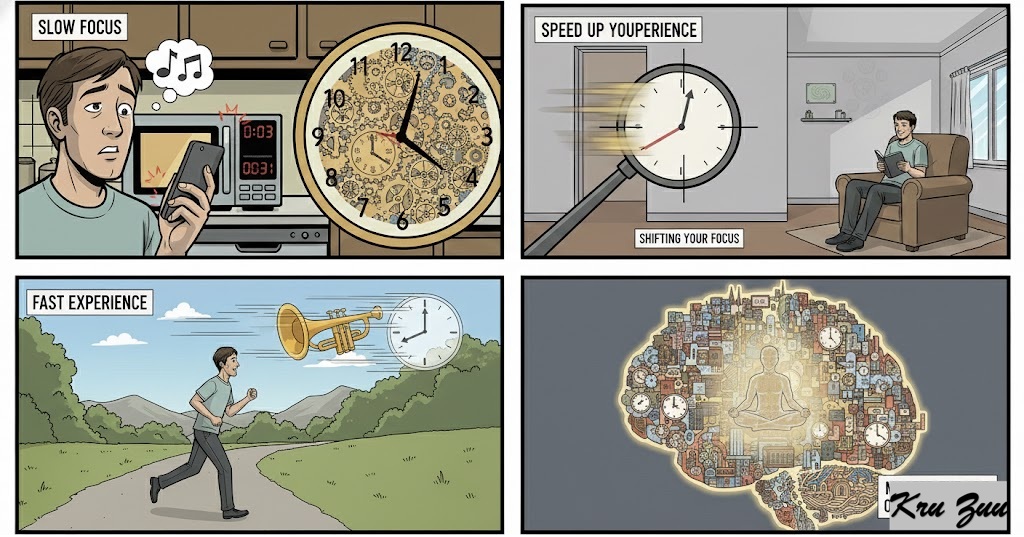
    Physics tells us that water boils at 100°C regardless of whether you look at it or not. But Psychology tells a different story. When you focus entirely on the passage of time, your brain notices every single second. It is painful. When you distract yourself, your brain skips the boring parts.


    💎 The Secret

    You cannot speed up time, but you can speed up your experience of time by shifting your focus.

    🧐 The Anatomy of the Proverb


    This is your reminder that obsession kills patience.


    Watched (Adjective): Observed closely; stared at with anxiety.


    Pot (Noun): The vessel holding your goal (cooking, results, news).


    Never Boils (Phrase): It seems like the desired result will never happen.


    Simpler Version: If you wait anxiously for something, it seems to take a very long time.


    📚 Vocabulary Vault


    Patience (Noun): The capacity to accept delay without getting angry. (A superpower!) 🦸


    Anticipation (Noun): The action of waiting for something exciting (or scary).


    Distraction (Noun): Something that prevents you from giving full attention to something else. (In this case, a good thing).


    Outcome (Noun): The final result.


    Process (Noun): A series of actions taken to achieve an end.

    📜 History: Origin and Science


    The Origin:
    This phrase is often attributed to Benjamin Franklin (the American inventor and writer) around 1785. He used it in a report, noting that he was so hungry that looking at the food cooking made it seem like it was taking forever!


    Global Cousins


    🇹🇷 Turkish:“Beklenen gün gelmek bilmez” (The awaited day does not know how to come) or “Sakınılan göze çöp batar” (A stick pokes the protected eye – focusing too much causes issues).


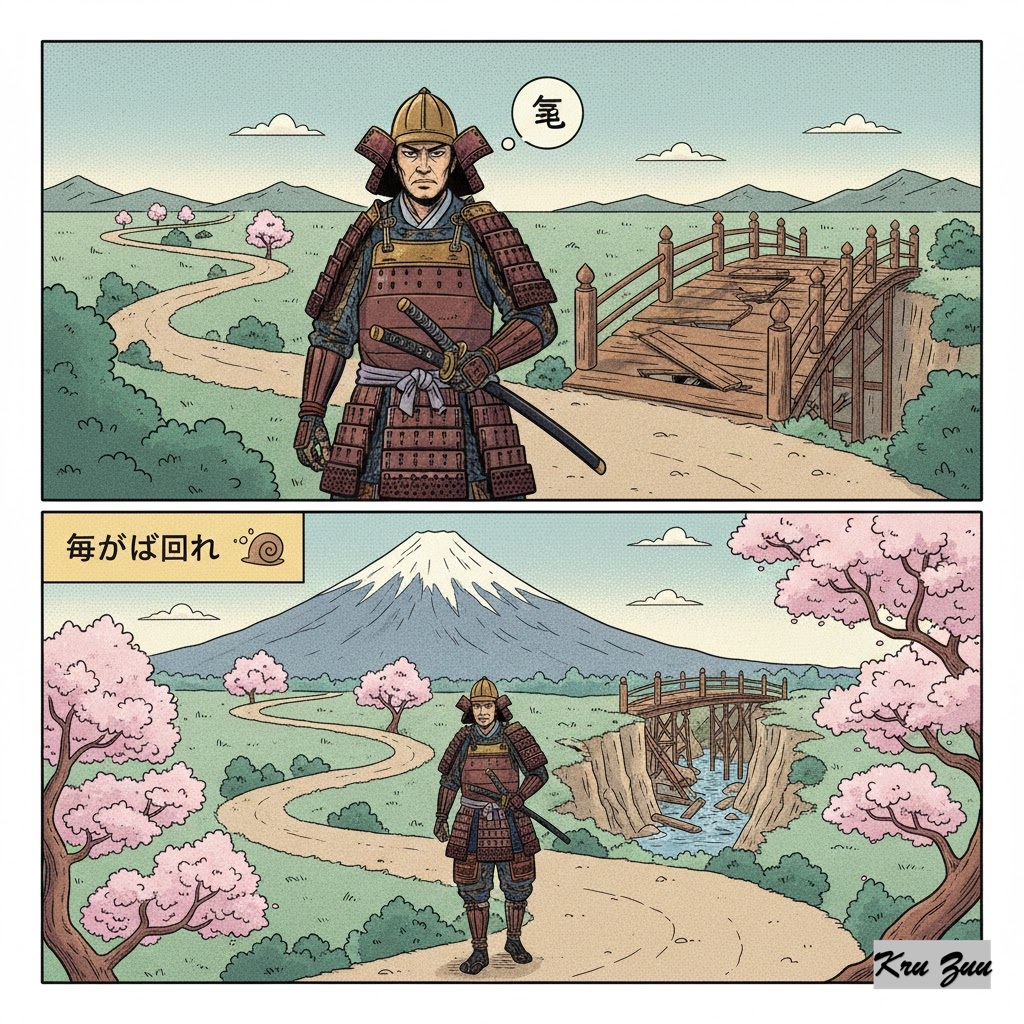
    🇯🇵 Japanese:“Isoba maware” (If you are in a hurry, go the long way around).

    🎭 Short Story: The Perfect Cup of Tea 🍵


    Let’s return to the magical forest to see how our friends handle the pressure of waiting.


    🌟 The Cast


    Cleo the Cat:
    😼 Elegant, impatient, demands instant results.


    Cluck the Chicken: 🐔 Nervous, fidgety, cannot sit still.


    Fred the Frog: 🐸 The Zen master of the swamp.


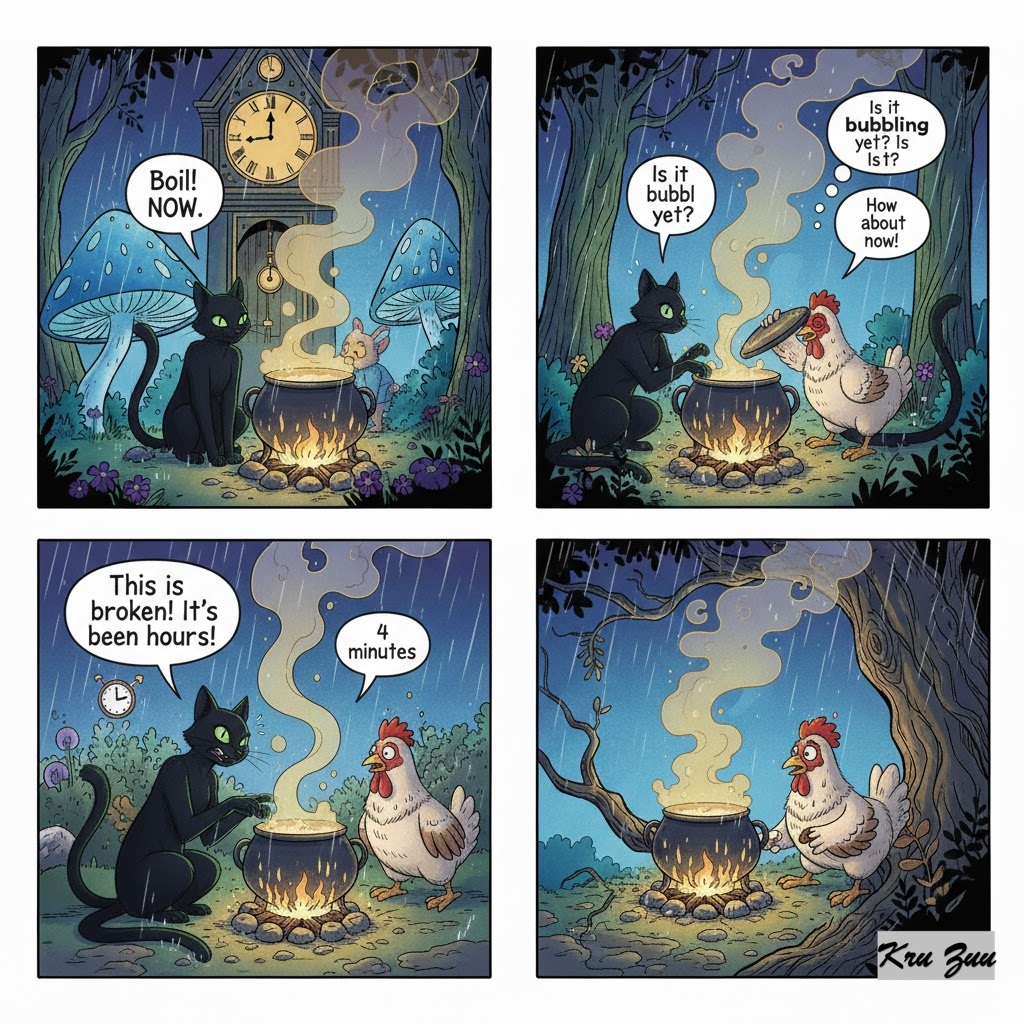
    The Situation: It is a cold, rainy afternoon. Cleo and Cluck decide to make the legendary “Golden Swamp Tea.” It is delicious, but the water must boil perfectly over a slow fire.


    The Conflict: They put the heavy iron pot on the fire. Cleo sits directly in front of the pot. Her tail twitches. She stares at the water with intense green eyes. “Boil,” she commands. “Boil NOW.” Cluck is even worse. Every 30 seconds, he lifts the lid to peek inside. “Is it bubbling yet? Is it? How about now?” 🐔 By lifting the lid, Cluck lets the heat escape! By staring at it, Cleo makes the 10 minutes feel like 10 years. “This is broken!” Cleo yells. “It’s been hours!” (It had been 4 minutes).


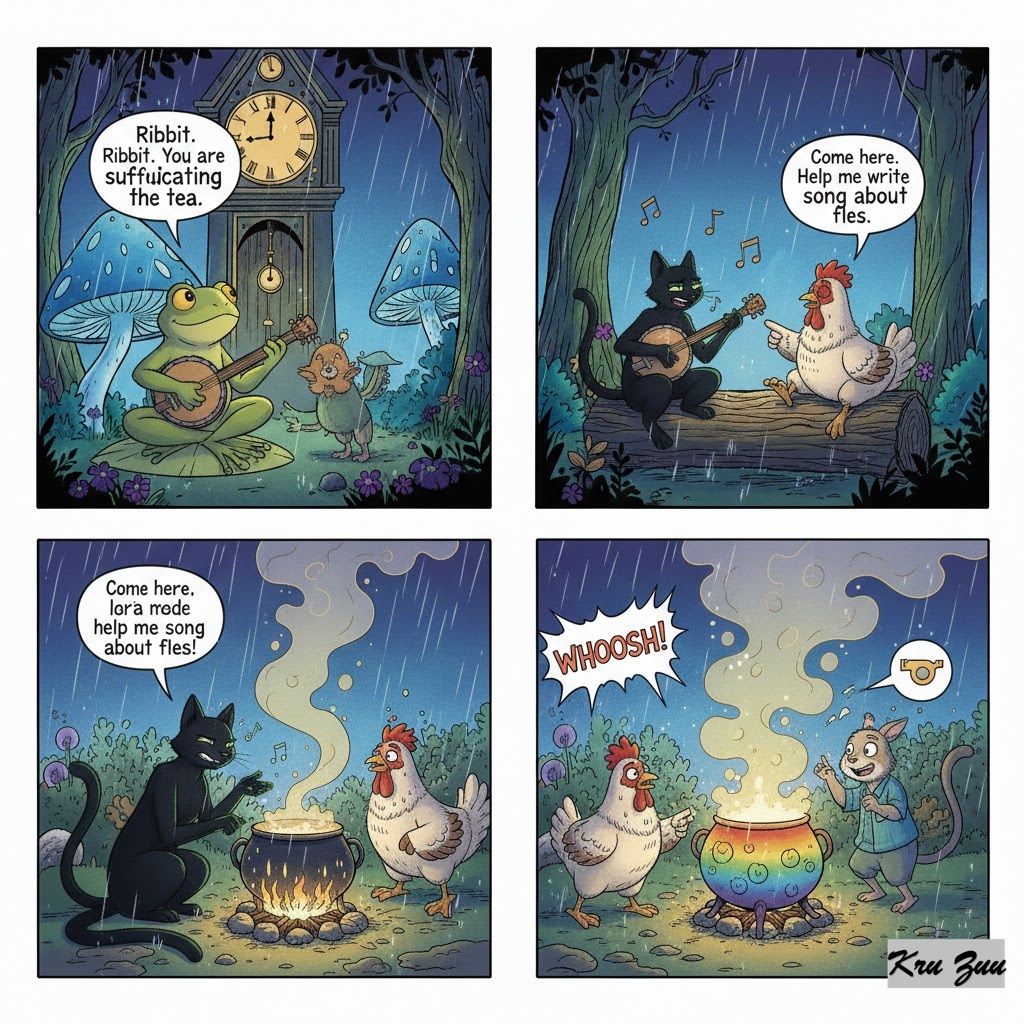
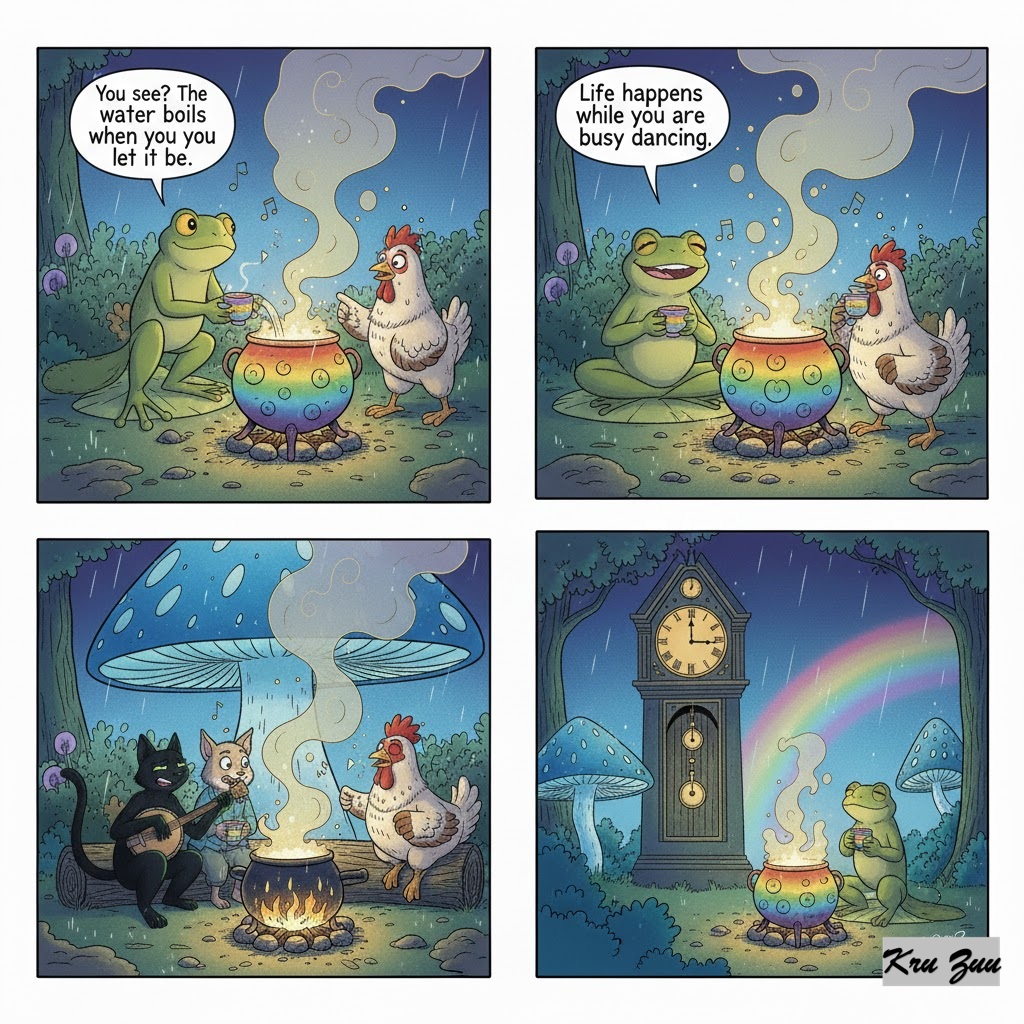
    The Resolution: Fred the Frog hops into the kitchen, carrying a banjo. He sees them stressed and staring at the silent water. “Ribbit,” Fred croaks. “You are suffocating the tea.” Fred starts to play a happy song on his banjo. 🎶 “Come here,” he says. “Help me write a song about flies.” Reluctantly, Cleo turns away from the stove to correct Fred’s lyrics. Cluck starts dancing to the music. They laugh. They argue about rhymes. They forget the kitchen exists. WHOOSH! 💨 Suddenly, steam whistles from the pot! The water is boiling vigorously.


    The Moral: Fred pours the tea. “You see?” he smiles. “The water boils when you let it be. Life happens while you are busy dancing.”

    🎓 Lesson for English Learners


    Don’t obsess over your level.


    Situation: You study English every day. You constantly ask yourself: “Am I fluent yet? Why is my accent still bad?”


    The Problem: You are watching the pot. You are stressing over the result instead of enjoying the process.


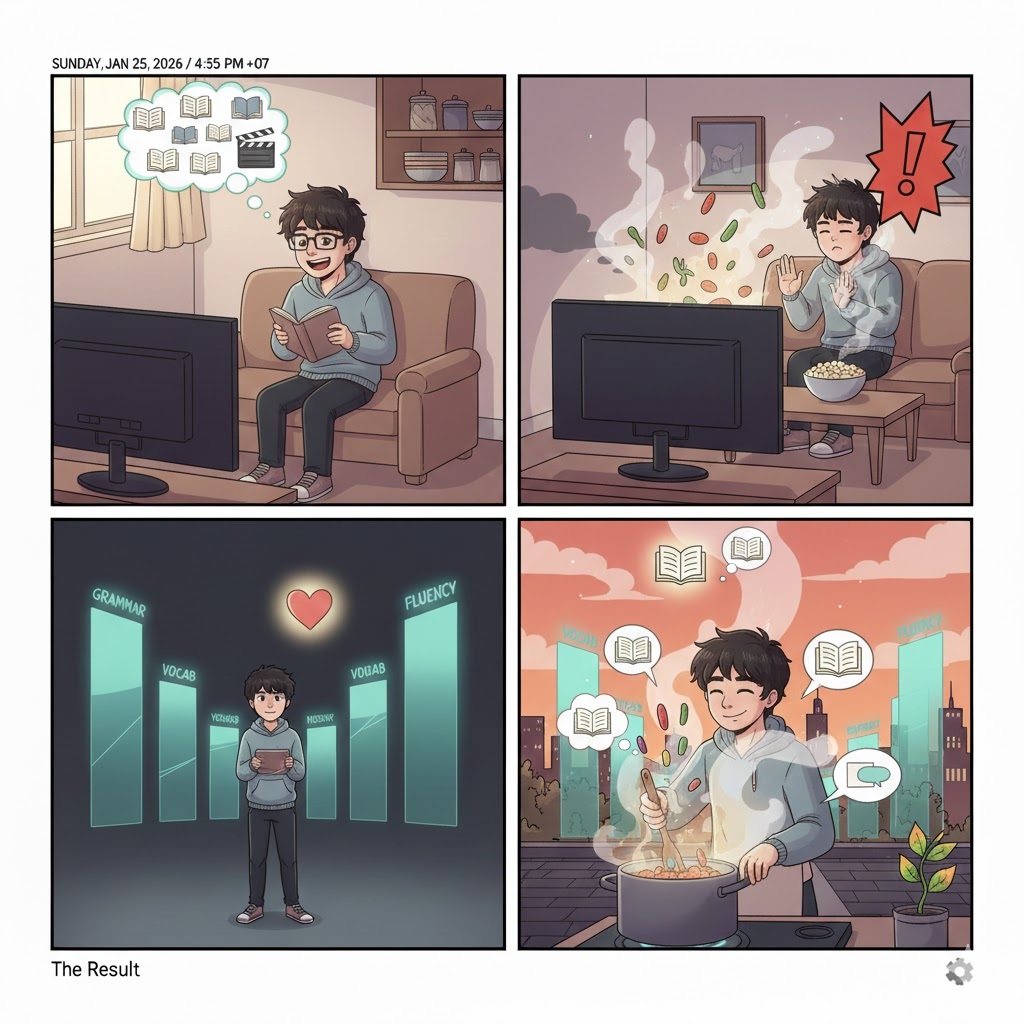
    The Shift: Stop testing yourself every day. Read a book you enjoy. Watch a movie. Talk to friends. Forget about “studying” and just “use” the language.


    The Result: One day, you will realize you understood a whole movie without subtitles. The pot boiled while you weren’t looking! 🎬


    💬 Your Turn: The Distraction Challenge 🚀


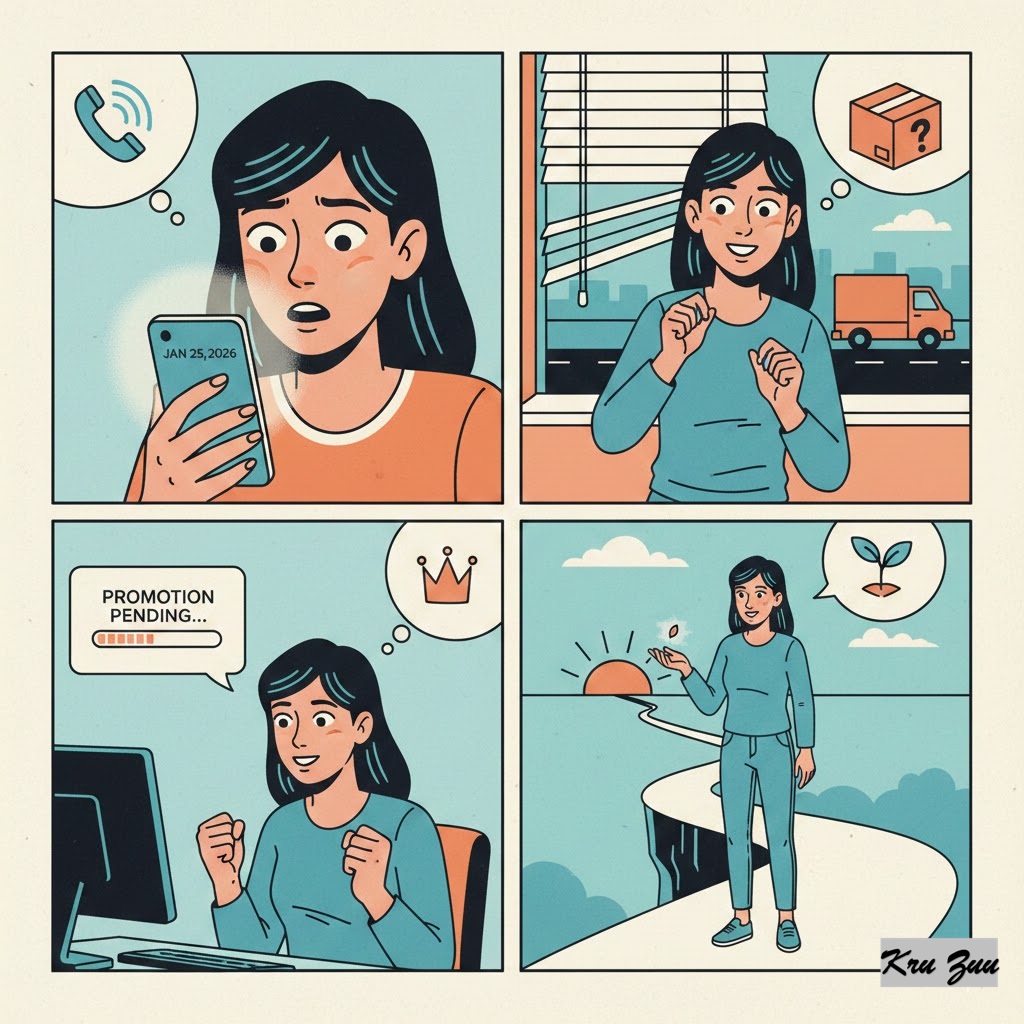
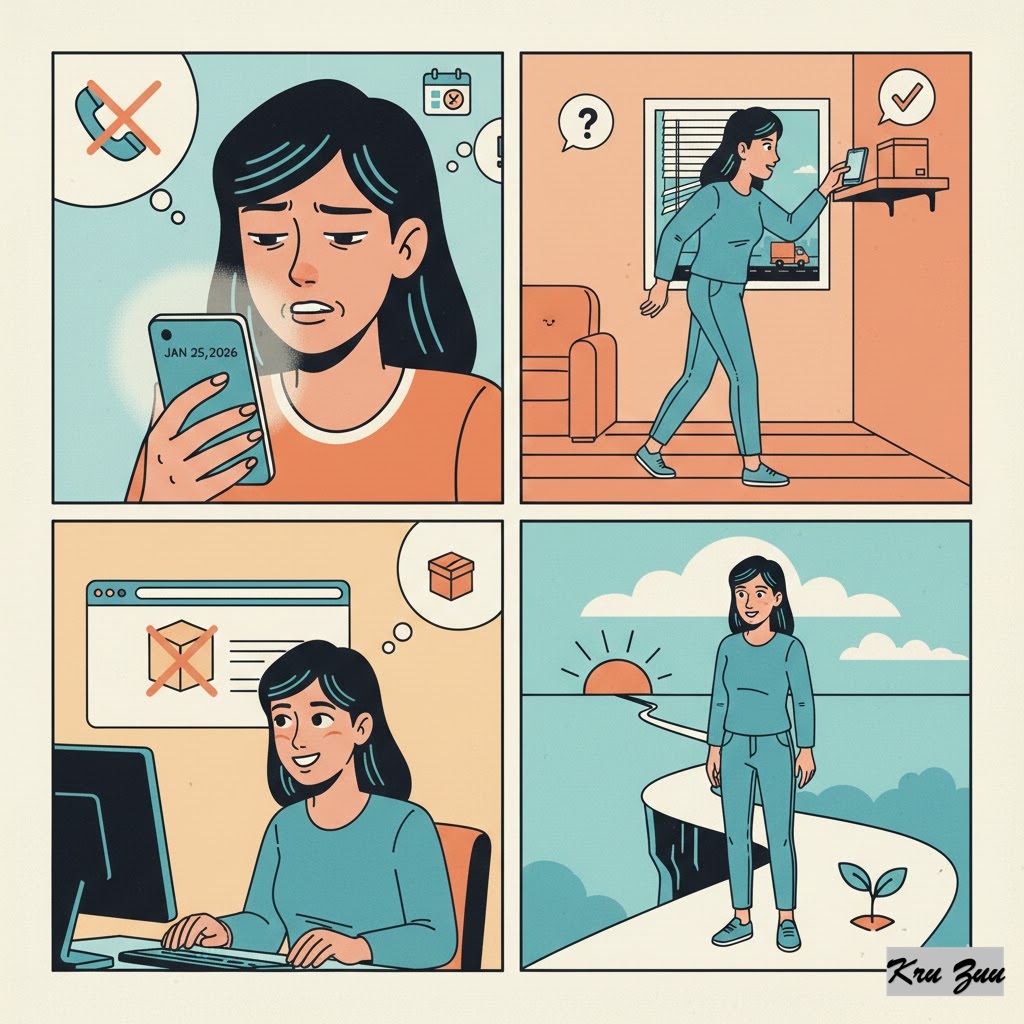
    Is there something you are waiting for right now? (A message, a package, a promotion, a life change?)


    The Challenge: Stop checking. Put your phone in another room. Close the tracking tab.

    The Action: Pick a task that takes 30 minutes (Read a chapter, cook a meal, go for a walk).

    Do NOT check the status until the task is done.

    Comment Below: 👇 What is the “Pot” you are watching too closely today? Tell us your strategy to stop staring at it!

    By Zubeyir YURTKURAN

    https://www.facebook.com/BrainBattleground/

    https://www.facebook.com/zubeyr.yurtkuran/

    https://www.instagram.com/zubeyryurtkuran/
    https://www.youtube.com/@BrainBattleground-b3p

    https://www.instagram.com/brainbattleground/

  • 🛡️ The Daily Shield: The Art of Strategy

    🛡️ The Daily Shield: The Art of Strategy

    “If you can’t beat them, join them.”


    🥊 The Fighter (The Stubborn Ego)


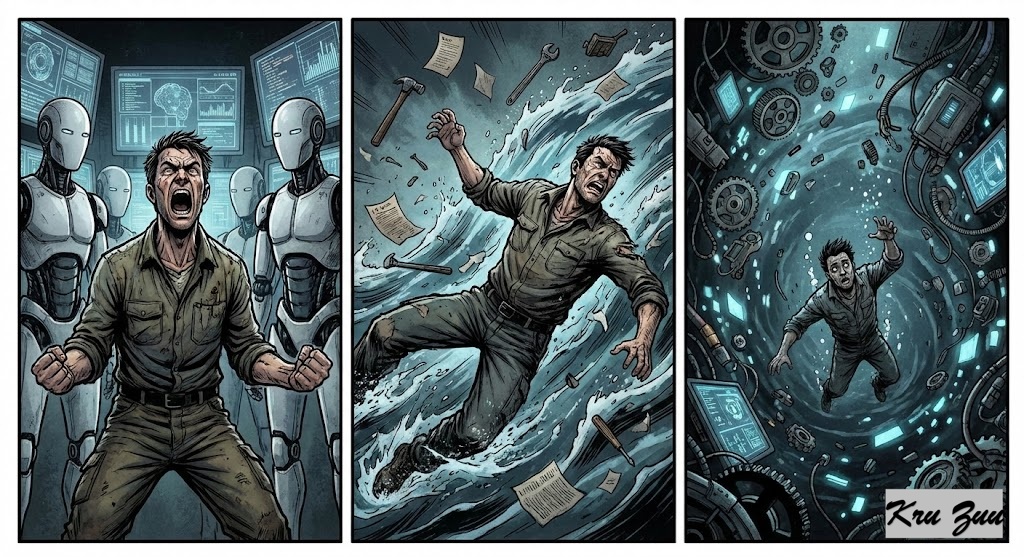
    You are fighting a losing battle. Maybe it’s a new technology at work (AI?), a strict boss, or a change in the market. You scream, “I will never change!” You waste all your energy swimming against the current. You are proud, but you are drowning.

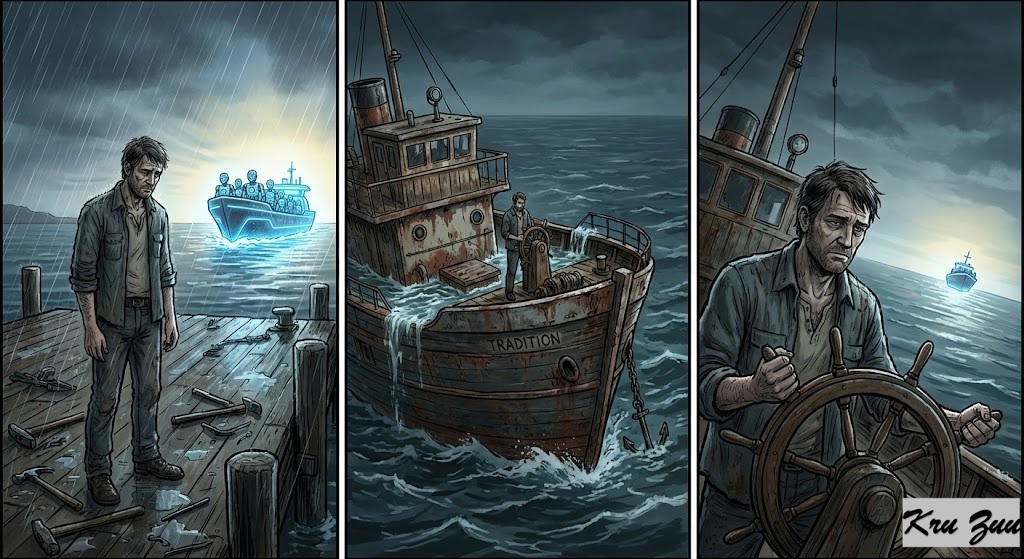
    The Result? You get left behind. You lose your job, your energy, or your opportunity. You are the captain of a sinking ship. ⚓


    🤝 The Strategist (The Smart Adapter)


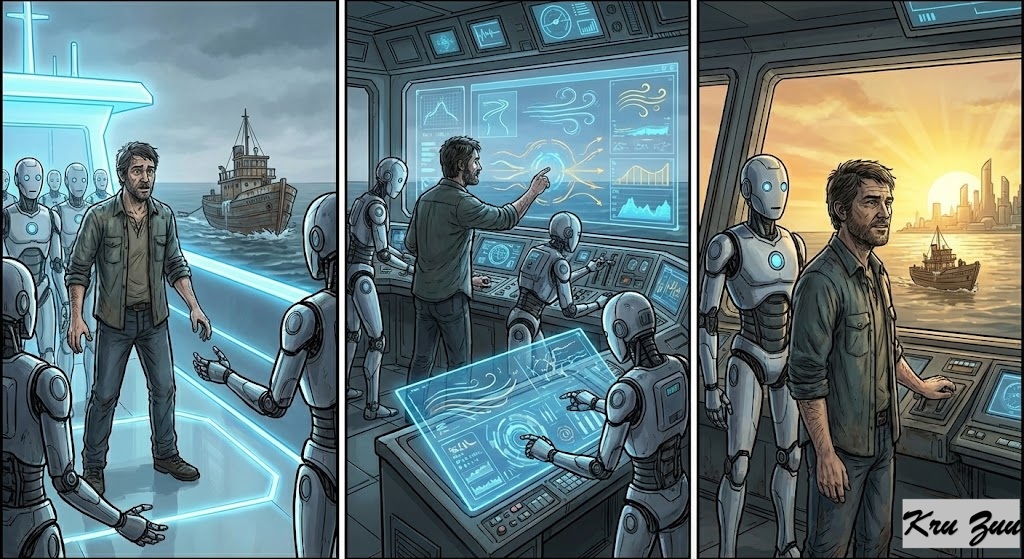
    You look at the opponent. You realize, “I cannot win this fight with force.” So, you change tactics. Instead of being a wall, you become water. You find a way to align your goals with theirs. You turn an enemy into an ally.

    The Result? You survive. You thrive. You didn’t lose; you just found a different way to win. 🧠


    ⚖️ The Reality


    Survival is not about being the strongest; it is about being the smartest. This proverb isn’t about giving up. It is about Pragmatism. If fighting destroys you, and joining saves you, only a fool chooses destruction.


    💎 The Secret: Sometimes, the best way to destroy an enemy is to make them your friend.

    🧐 The Anatomy of the Proverb


    This is the ultimate rule for politics, business, and marriage!


    Beat (Verb): To defeat; to win against someone. 🥊


    Join (Verb): To become part of; to collaborate with. 🤝


    If (Condition): This sets the rule.


    Simpler Version: Don’t fight a force you cannot stop. Work with it.

    🎭 Short Story: The Barnyard Battle 🐔🐸🐱


    Let’s go to the chaotic farm to see this law in action.


    The Characters


    Leo the Cat (The Boss):
    Huge, fluffy, and controls the warm fireplace inside the house. 😼


    Cluck the Chicken (The Stubborn Fighter): Loud, aggressive, but not very smart. 🐔


    Greenie the Frog (The Observer): Small, quiet, but very clever. 🐸


    The Situation: It is a freezing cold winter night. Everyone wants to be inside by the warm fire. But Leo the Cat guards the door. He does not like guests.


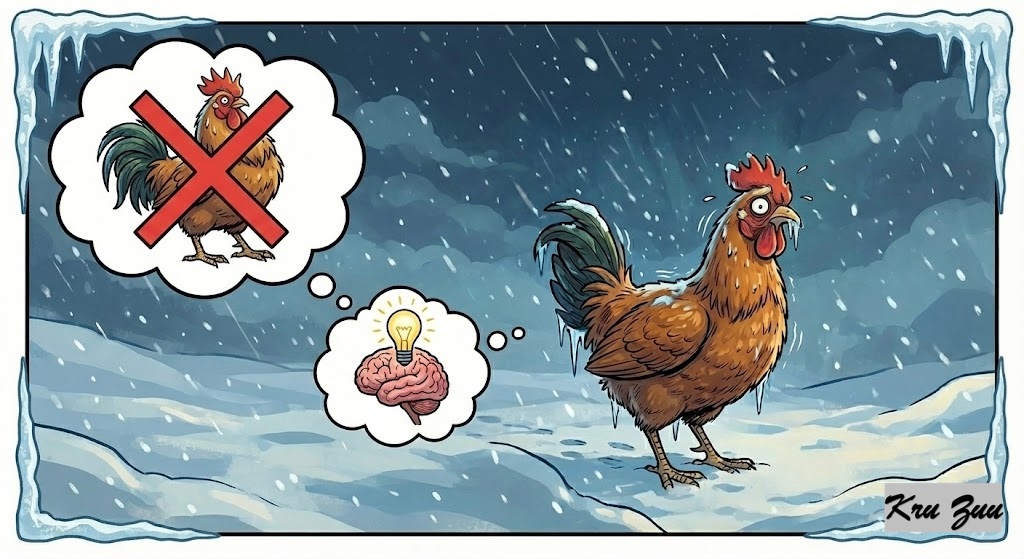
    Scene 1: The Chicken Attacks (Trying to Beat Them) Cluck freezes outside. She gets angry. She puffs up her feathers and charges at the door! “I have a beak! I am strong!” she screams. She pecks Leo’s tail.

    The Result: Bad idea. Leo swipes his paw. BAM! Cluck flies into a pile of snow. She is cold, defeated, and missing a few feathers. She tried to beat a giant, and she lost.


    Scene 2: The Frog Adapts (Joining Them) Greenie sees Cluck shivering in the snow. He looks at Leo the Cat. He knows he cannot fight a cat. One bite, and he is a snack. Greenie notices something: Leo is annoyed by a buzzing fly near his ear. Leo is too lazy to catch it.

    The Strategy: Greenie hops silently to the door. He doesn’t attack. instead, ZAP! He catches the fly with his tongue. Leo looks down. He is surprised. He purrs. He realizes this little green guy is useful. He nudges the door open for Greenie.

    The Ending: Greenie sleeps warmly next to the fire, protected by the Cat. Cluck is still freezing outside.


    The Moral: Cluck let her ego drive. Greenie used his brain. Don’t be a frozen chicken. ❄️

    📚 Vocabulary Vault


    Ally (Noun):
    A person or group that helps you. (Opposite of Enemy).


    Stubborn (Adjective): Refusing to change your ideas or stop doing something. 🐂


    Compromise (Verb/Noun): An agreement where both sides give up a little bit to agree.


    Adapt (Verb): To change your behavior to survive in a new situation.


    Inevitability (Noun): Something that is certain to happen; you cannot avoid it.


    🧠 Grammar Focus: The First Conditional


    This proverb uses a classic Conditional structure. It talks about a real possibility.


    Formula: If + [Present Simple], + [Imperative / Will].


    Example: “If you can’t beat them, join them.” (Imperative/Command)


    Example: “If it rains, I will stay home.”


    Language Tip: In English, we often use this structure for advice.


    “If you want to learn English, practice every day.”

    📜 History & Global Cousins


    This idea is universal. Wise people all over the world figured this out centuries ago.


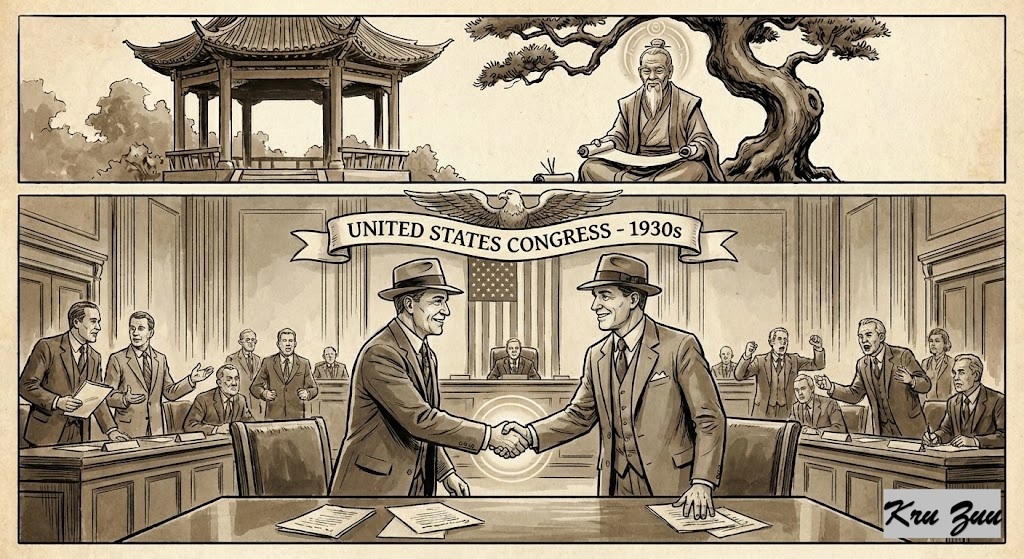
    🇺🇸 The Origin: While the concept is ancient, this specific English phrase became popular in US politics in the 1930s. Politics is the art of compromise!


    🇹🇷 Turkish Cousin: You know this one very well! “Bükemediğin eli öpeceksin.” (You must kiss the hand you cannot bend).


    The logic is identical: Show respect to a superior force to survive.

    🎓 Lesson for English Learners


    Stop fighting the language.


    Situation: You complain, “Why is English spelling so weird? Why are there so many irregular verbs? It makes no sense!”


    The Problem: You are fighting the language (Like Cluck the Chicken). You cannot change English rules.


    The Solution: Join them! Accept the craziness. Laugh at it. Don’t say “This is wrong.” Say “Okay, this is how they do it. I will do it too.”


    💬 Your Turn: The “Ego Check” Challenge 🚀


    Is there a change in your life you are resisting?


    Is your company forcing you to use new software?


    Is your new teacher using a method you hate?


    Are your friends obsessed with a hobby you think is silly?


    Challenge: This week, stop fighting. Try to find one benefit in that thing. Try to “Join them” for just 24 hours.


    👇 Tell me in the comments: When was the last time you had to “Kiss the hand you couldn’t bend”? Did it work out for you?


    By Zubeyir YURTKURAN

    https://www.facebook.com/BrainBattleground/

    https://www.facebook.com/zubeyr.yurtkuran/

    https://www.instagram.com/zubeyryurtkuran/
    https://www.youtube.com/@BrainBattleground-b3p

    https://www.instagram.com/brainbattleground/

  • 🍎 The Daily Shield: The Law of Maintenance

    🍎 The Daily Shield: The Law of Maintenance

    An apple a day keeps the doctor away.


    👿 The Villain (The Gambler): You skip the gym because “one day won’t matter.”

    You ignore the weird noise your car is making.

    You eat fast food for lunch because you are “too busy.”

    You study only the night before the exam.

    The Result? One day, your body collapses.

    Your car breaks down on the highway.

    You fail the exam.

    You treated your life like a sprint, not a marathon.

    You waited for the disaster to happen before you paid attention. 🚑


    😇 The Hero (The Architect): You are not a superhero; you are just consistent.

    You walk for 20 minutes every day.

    You drink water.

    You save $5 every morning.

    You read 10 pages of a book before bed.

    The Result? You don’t get sick often.

    Your bank account grows.

    You speak fluent English while others are still struggling.

    You didn’t do anything “magic” you just stacked small bricks every day to build a fortress. 🏰


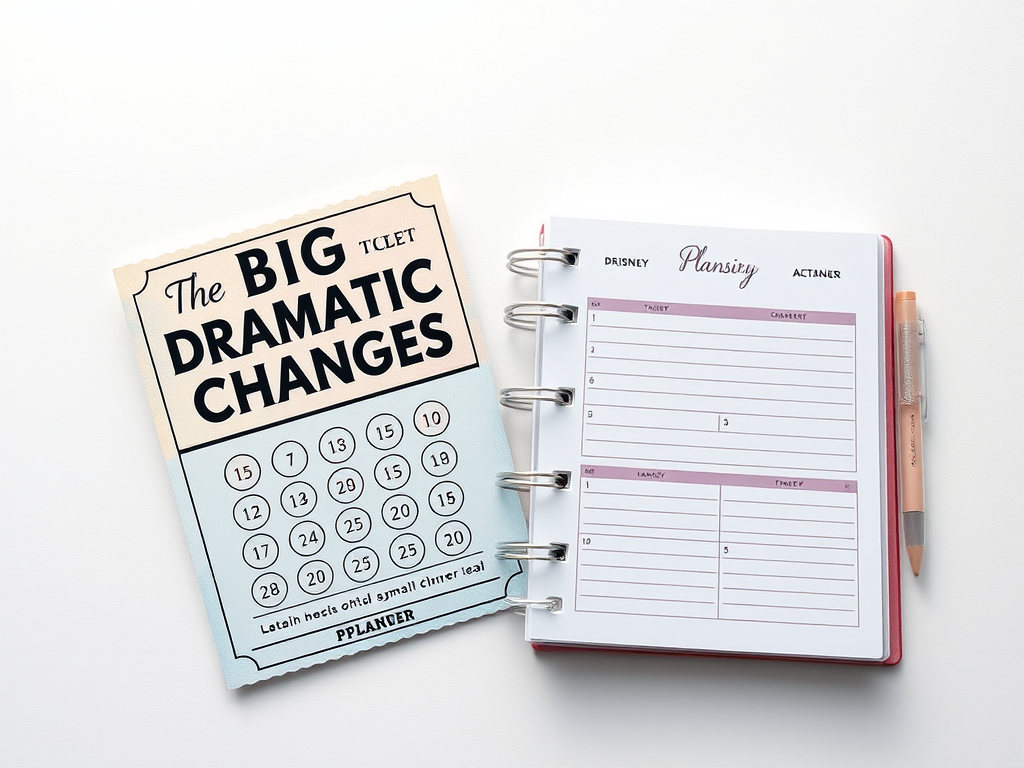
    ⚖️ The Reality: We love “Big Dramatic Changes” (Crash diets, lottery wins). But reality respects “Small Boring Actions.”

    💎 The Secret: Success is not a one-time event; it is a habit. The “Apple” is a metaphor for discipline.

    🧐 The Anatomy of the Proverb


    This is the golden rule of Preventive Care. It suggests that small, healthy habits practiced daily will prevent big problems in the future.


    Apple: Represents any healthy habit (exercise, vitamins, reading, meditation).


    Doctor: Represents the “Crisis” or the “Fixer” (Surgery, debt, failure).


    Keeps Away: To prevent someone/something from coming near. 🛡️


    📚 Vocabulary Vault


    Prevention (Noun):
    The action of stopping something from happening or arising. (Better than cure!)


    Consistency (Noun): Acting in the same way over time. (Doing it every single day). 🔄


    Maintenance (Noun): The process of keeping something in good condition.


    Compound Effect (Concept): Small actions + Time = Huge Results. 📈


    Sedentary (Adjective): Tending to spend much time seated; somewhat inactive. (The enemy of the Apple!)


    🧠 Grammar Focus


    Simple Present Tense for General Truths Proverbs almost always use the Simple Present because they are timeless facts.


    Subject: An apple


    Frequency: [a day] (Adverbial phrase)


    Verb: [keeps] (Third Person Singular – don’t forget the ‘s’!)


    Object: [the doctor]


    Direction: [away]


    Incorrect: An apple a day keep the doctor away. ❌


    Correct: An apple a day keeps the doctor away. ✅

    📜 History: Origin and Spread


    Did you know this phrase started as a rhyme?


    The Origin: It originated in Wales (Pembrokeshire) in the 1860s.

    The original phrasing was: “Eat an apple on going to bed, and you’ll keep the doctor from earning his bread.”


    The Logic: In the 19th century, food hygiene was poor. Apples were clean, full of fiber, and “cleaned” the teeth. It was a cheap way to stay alive!


    Global Cousins:


    🇹🇷 Turkish:
    “Güneş giren eve doktor girmez.” (The doctor does not enter the house where the sun enters.) — Emphasis on environment.


    🇪🇸 Spanish: “Más vale prevenir que curar.” (It is worth more to prevent than to cure.)


    🇮🇹 Italian: “Una mela al giorno toglie il medico di torno.” (An apple a day gets the doctor out of the way.) — Almost identical!

    🎯 Impact on Life: The Pros & Cons


    Is it just about fruit, or a lifestyle?


    ✅ The Pros (The Insurance):


    Control:
    It makes you feel in charge of your health/destiny.


    Efficiency: It is much cheaper to buy apples (prevention) than to pay for surgery (cure).


    Discipline: It builds a mindset that helps you in business and relationships too.


    ❌ The Cons (The Illusion):


    False Security:
    Eating an apple won’t fix a broken leg. Don’t ignore professional help when you really need it.


    Obsession: Don’t stress so much about “perfect health” that you forget to enjoy life.

    🎭 Short Story: The Old Car


    Let’s visit Penny, Fiona, and Max!


    🌟 The Setup: Penny and Max both bought cars on the same day.

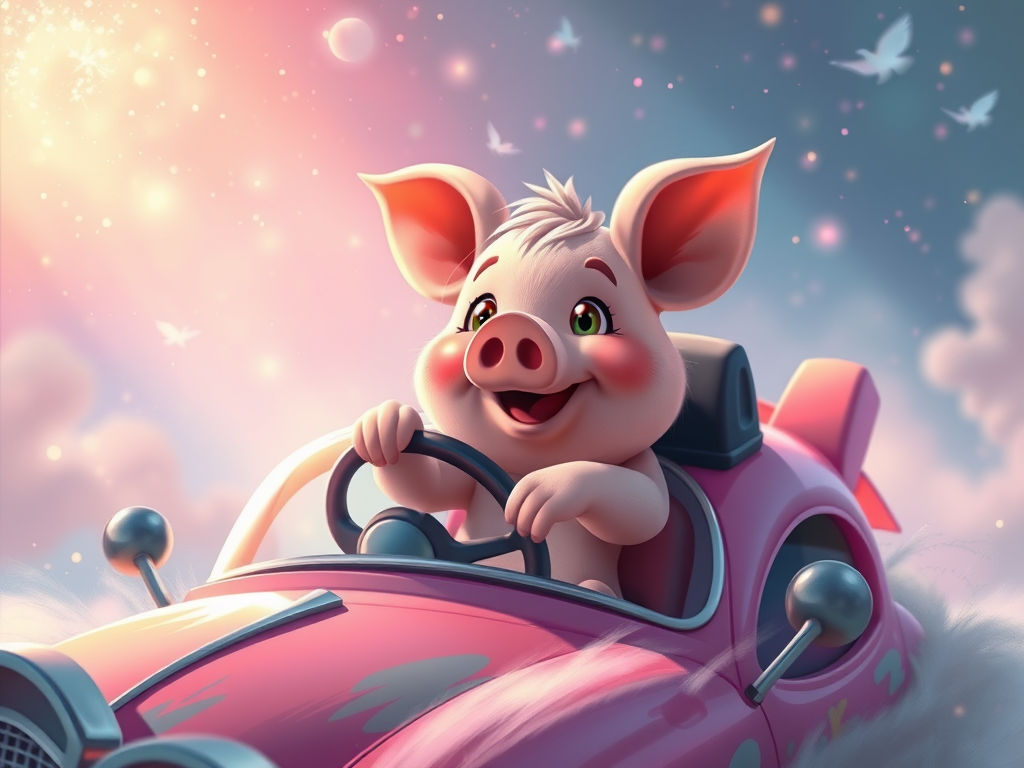
    Penny the Pig loved her car.

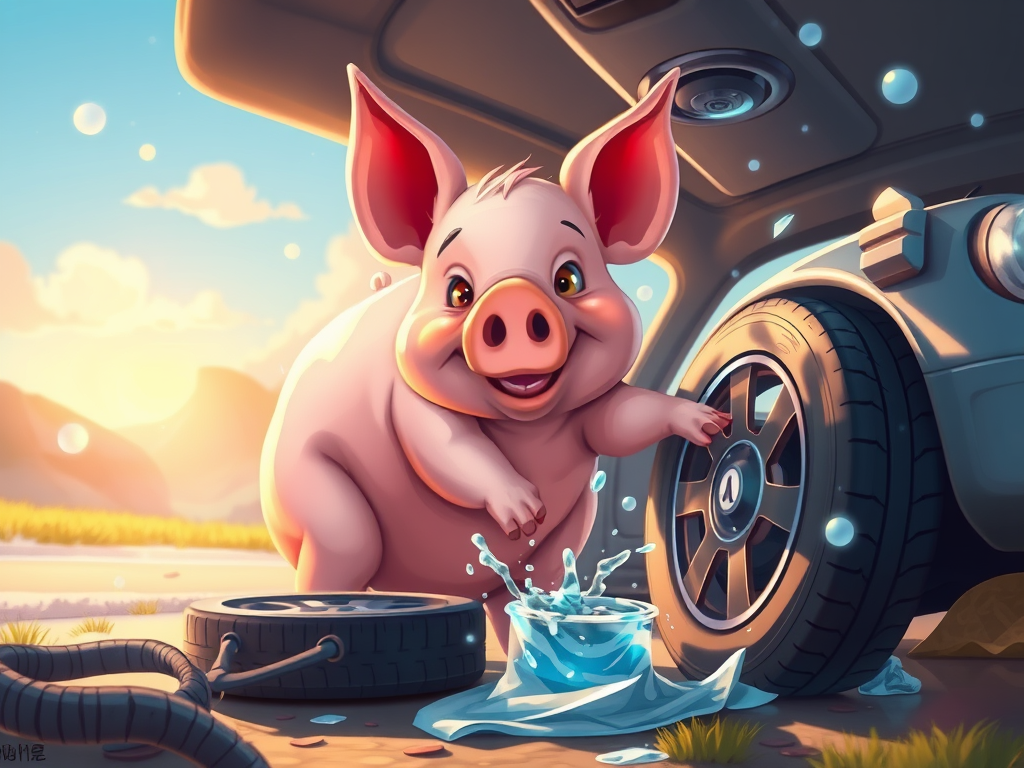
    Every Sunday morning, she checked the oil, cleaned the tires, and washed the windows. (This was her “Apple”).

    Max the Mouse loved his car too, but he just wanted to drive fast.

    “Maintenance is boring!” he said. “I’ll fix it when it breaks.”


    The Conflict: One year later, they planned a road trip to the beach. 🏖️

    Penny’s car started smoothly: Purr… purr… purr…

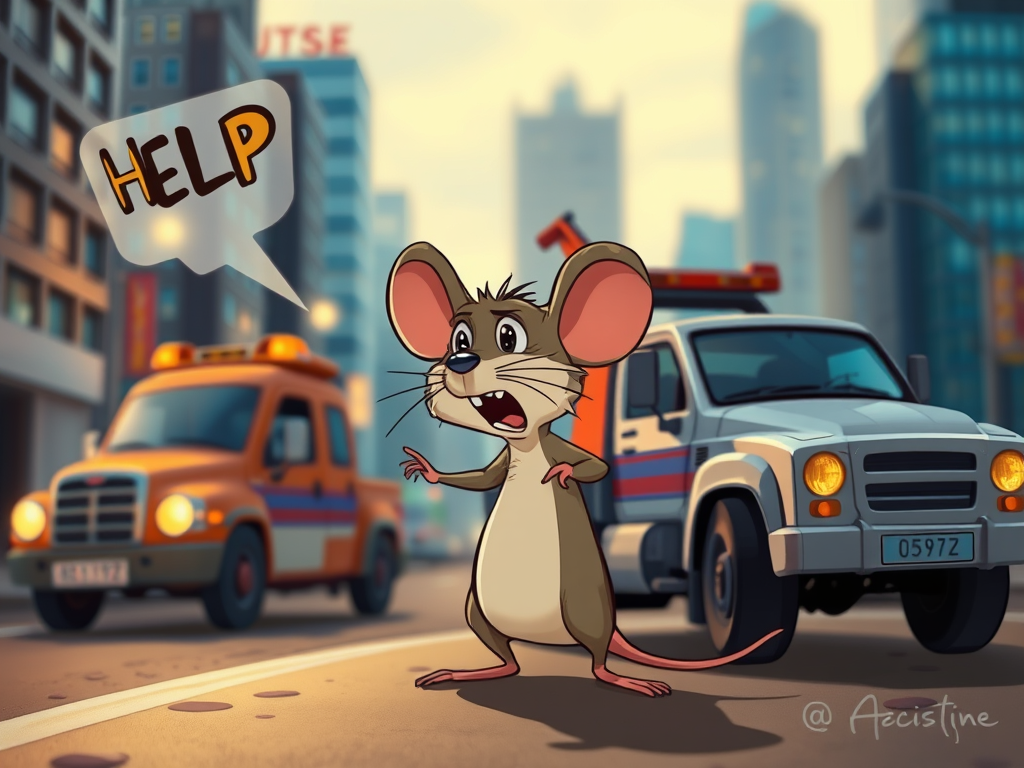
    Max’s car made a scary sound: CLUNK! BANG! HISSS! Smoke came out of the engine.


    The Action: Max was stuck on the side of the road.

    “Why me?” he cried. He had to call a tow truck (The Doctor).

    It cost him all his vacation money.

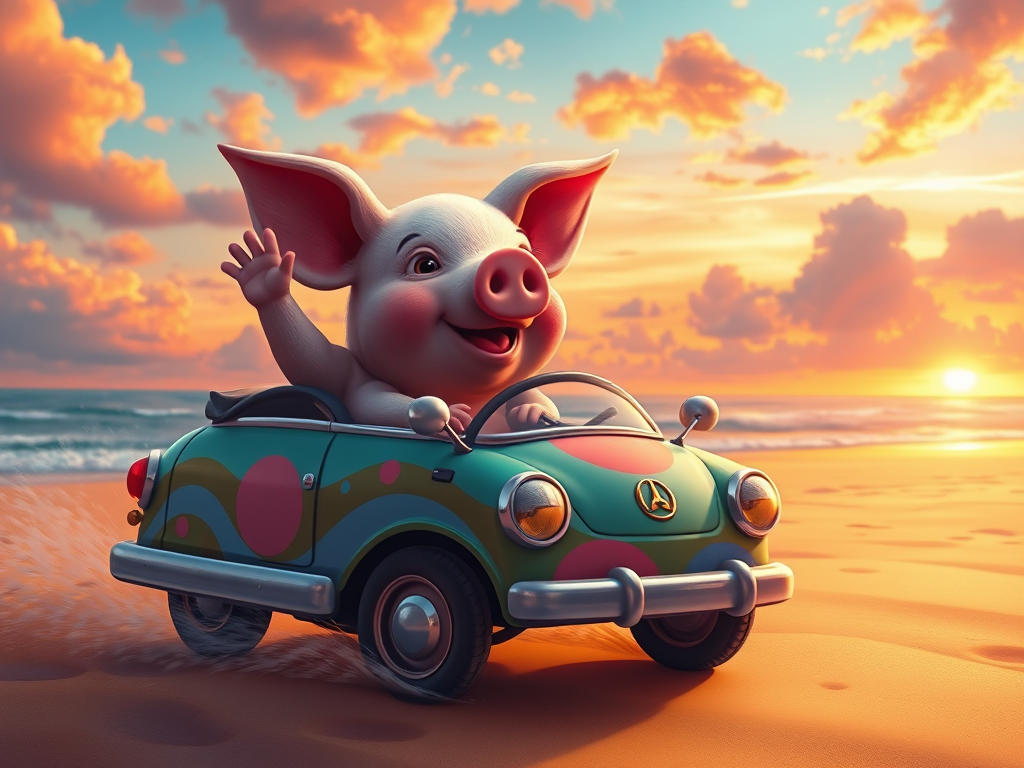
    Penny drove by, waved, and enjoyed the sunset at the beach.


    The Moral: Penny paid a little bit of attention every day.

    Max paid a huge price at the end.

    Penny’s “apple a day” kept the mechanic away.

    🎓 Lesson for English Learners


    This idiom is versatile! Use it for more than just health.


    Advice on Studying 📖


    Situation:
    Your student asks how to learn 1,000 words in one night.


    You say: “You can’t cram everything. Study 5 words every morning.

    An apple a day keeps the doctor away, and daily practice keeps the failure away.”


    Advice on Relationships ❤️


    Situation:
    A friend ignores their partner for weeks, then buys a huge gift to apologize.


    You say: “Don’t just buy gifts when things are bad. Show small love every day. An apple a day keeps the doctor away.”


    💬 Your Turn


    The “Micro-Habit” Challenge 🤏


    Let’s prove the theory.


    The Goal: Choose one tiny positive thing to do every day for the next 7 days.


    Examples: Drink 1 glass of water before coffee

    Do 5 pushups

    Read 1 page

    Save 1 coin.


    The Prediction: How will you feel in a week?


    Action Step: Go eat a piece of fruit right now. Seriously. Go do it. Your body will thank you! 🍏


    Question: What is YOUR “Apple”? What is the one small thing you do every day that keeps your life running smoothly?

    By Zubeyir YURTKURAN

    https://www.facebook.com/BrainBattleground/

    https://www.facebook.com/zubeyr.yurtkuran/

    https://www.instagram.com/zubeyryurtkuran/
    https://www.youtube.com/@BrainBattleground-b3p

  • 💡 The Spark of Genius: Why Problems Are Good for You

    💡 The Spark of Genius: Why Problems Are Good for You

    Necessity is the mother of invention.


    🏖️ The Comfort Zone: You have a car, a GPS, and a full tank of gas. You don’t need to think about directions. You just drive.

    📉 The Reality: You rely on tools. If the battery dies, you are lost. Comfort kills creativity.


    🔥 The Danger Zone: You are lost in the jungle. Your phone is dead. It is getting dark.

    📈 The Reality: Suddenly, your brain wakes up! You build a shelter, you find north using the sun, you find water. You become a genius because you have no choice.


    Life has a secret rule: We rarely change when we are comfortable. We change when we need to.


    In this post, we explore why “problems” are actually “gifts.” Let’s unlock your inner inventor! 🔓

    🧐 The Anatomy of the Proverb


    Let’s dismantle this mechanical masterpiece.


    📚 Vocabulary Vault


    Necessity (Noun):
    A situation where something is absolutely required or essential. (A “must-have” situation). 🆘


    Mother (Noun – Metaphor): The source, origin, or creator of something. (Not a biological mom, but the “starting point”). 🌱


    Invention (Noun): The action of inventing something typically a process or device. (Creating something new). ⚙️


    🧠 Grammar Focus


    This sentence uses a powerful literary device called a Metaphor.


    Subject: Necessity (Abstract Noun)


    Verb: Is (State of being)


    Object: The mother of invention (Noun Phrase)


    Formula: [Problem] = [Creator of Solution].

    Note: We are comparing “Need” to a “Mother.” Just as a mother gives birth to a child, a “Need” gives birth to a “New Idea.”

    📜 History: From Plato to Smartphones


    Is this just a catchy slogan? No, it is ancient wisdom.


    The Origin: The concept appears in Plato’s Republic (Ancient Greece), where he wrote: “Our need will be the real creator.”


    The Evolution: It entered English in 1519, but the phrasing we use today became famous in the 1700s.


    Real Life Example: Why was the Internet created? Because the military needed a way to communicate if phone lines were destroyed.


    The Lesson: Don’t complain about problems. Problems are the fuel for progress.

    🎯 Impact on Life: The Pros & Cons


    Is being under pressure always good?


    ✅ The Pros (Why it works)


    Focus:
    When you have a deadline in 1 hour, you don’t check Instagram. You focus 100%.


    Innovation: People didn’t invent the umbrella because they liked carrying sticks. They invented it because they hated getting wet! ☔


    Survival: Your brain is lazy. It only works hard when it feels it is necessary.


    ❌ The Cons (What to watch out for)


    Stress:
    Constant necessity (always being in “survival mode”) causes burnout. 😫


    Ugly Solutions: Sometimes, a quick fix is ugly. (Like fixing a broken window with duct tape). It works, but it isn’t “perfect.”

    🎭 Short Story: The Heatwave & The Bucket


    Let’s visit our farm friends to see who survives the summer heat!


    🌟 Character Introduction


    Percy the Chicken (The Complainer):
    Waits for others to solve his problems. 🐔


    Fred the Frog (The Thinker): Uses what he has to get what he needs. 🐸


    Luna the Cat (The Observer): Watching from the shade. 😼


    It was the hottest day of the year. The farmer had left a tall, narrow bucket of cold water in the yard. But the water level was very low right at the bottom.


    The Problem: The animals were thirsty, but their heads couldn’t reach down to the water.


    Percy: Poked his beak into the bucket. Bonk. He couldn’t reach. “This is unfair!” Percy squawked. “The farmer forgot us! I will just sit here and be thirsty until he comes back.” Percy sat in the hot dust, miserable and waiting.


    Fred: Looked at the water. He was drying out. He needed that water to survive. He tried to jump in, but the bucket was too narrow. Luna watched lazily. “Give up, Fred. It’s physics.”


    Fred didn’t give up. He looked around. He saw a pile of small pebbles (stones) near the garden.

    Idea! 💡 Fred picked up a pebble and dropped it into the bucket. Plop. Nothing happened. He dropped another. Plop. He dropped ten. Twenty. Fifty!


    Percy laughed: “Now you are just playing with rocks, you silly frog.”


    The Result: With every stone Fred dropped, the water level rose higher due to displacement. After the 100th stone, the cool water rose to the very top of the bucket.


    Fred took a long, refreshing drink. 🥤 Percy looked shocked.


    Luna smiled: “Percy, you saw a problem. Fred saw a puzzle.”


    The Moral:


    Percy:
    Had a need, but waited for help = Thirsty.


    Fred: Had a need, and created a solution = Satisfied.

    🎓 Lesson for English Learners


    How does this apply to learning a language?


    Don’t wait until you are “Ready.” Wait until you are “Desperate.”


    The “Survival” Method: If you study English in a classroom, you might be lazy. But imagine if you are dropped in the middle of London, hungry, and need to find a bathroom. Necessity will force you to speak. You won’t care about grammar rules; you will care about communication.


    Create Your Own Necessity:


    Don’t just read books.


    Change your phone language to English. (Now you need to understand it to use your phone).


    Promise to teach a friend a topic in English. (Now you need to learn it so you don’t look foolish).


    Remember: We learn fastest when we have no other choice.


    💬 Your Turn


    Have you ever fixed something using a strange object (like opening a box with a key, or fixing glasses with a paperclip) because you didn’t have the right tool? 🛠️🖇️


    Tell us your best “MacGyver Moment” in the comments! 👇

    By Zubeyir YURTKURAN

    https://www.facebook.com/BrainBattleground/

    https://www.facebook.com/zubeyr.yurtkuran/

    https://www.instagram.com/zubeyryurtkuran/
  • Part 6: For Those Who Want to Teach Abroad: Golden Tips for Inside and Outside the Classroom

    Part 6: For Those Who Want to Teach Abroad: Golden Tips for Inside and Outside the Classroom

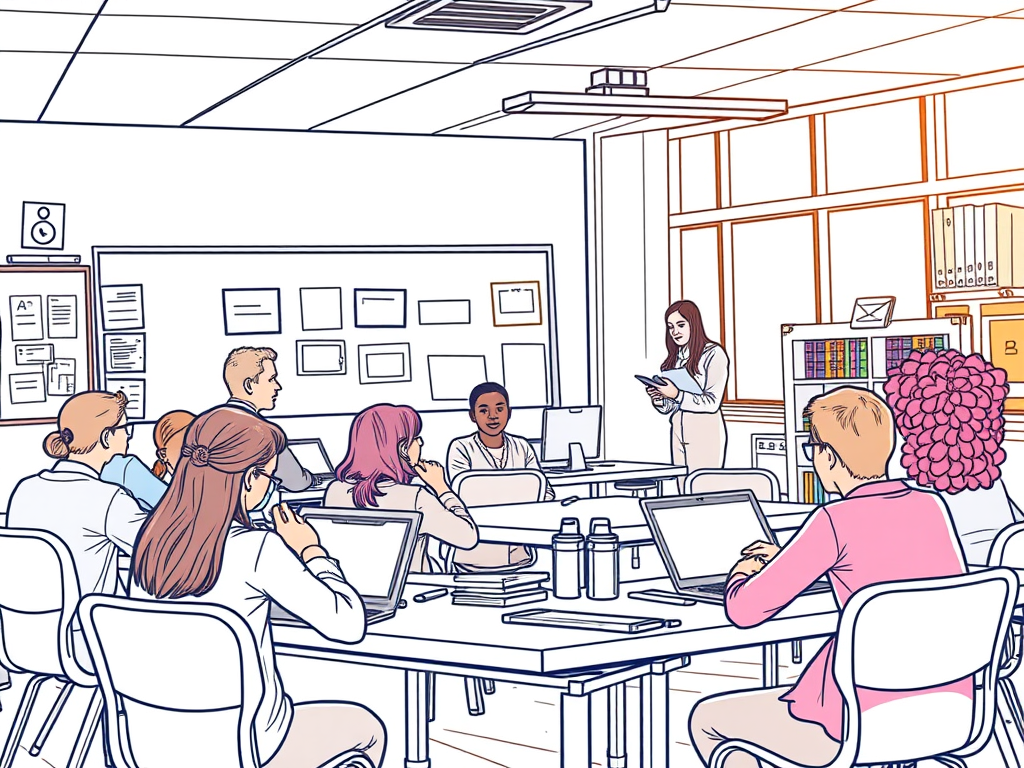
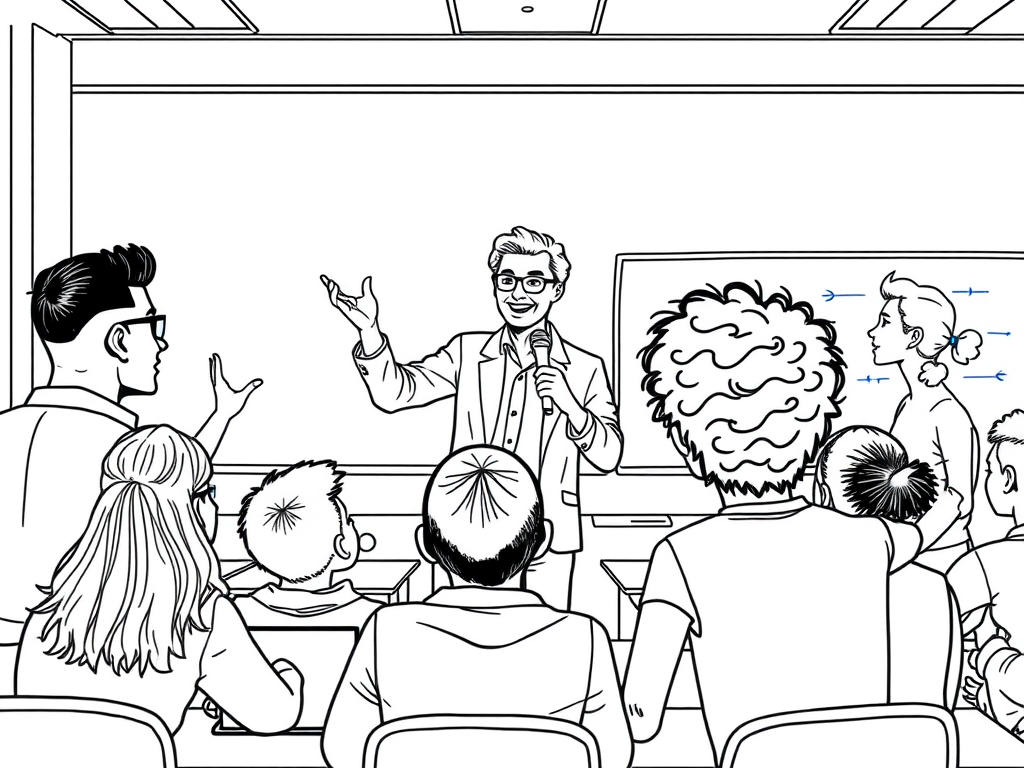
    Be Active in the Classroom: Move, Engage, Inspire

    Great teaching doesn’t only happen at the front of the room.

    Too often, teachers fall into the habit of standing in one spot usually near the board while explaining lessons. While this might seem organized and controlled, it can unintentionally create distance between you and your students. If your students feel distant from you, they may mentally disconnect from the lesson too.

    That’s why it’s important to be active, move around, and bring your presence to every corner of the room.

    Why Movement Matters

    Walking around the classroom keeps students alert. It also sends a message:

    “I am with you. I see you. I care.”

    Students are less likely to lose focus or get distracted when they feel that the teacher might appear next to them at any moment. This kind of presence encourages participation and accountability not out of fear, but out of connection.

    The Power of Surprise Questions

    While you walk, ask spontaneous, friendly questions:

    “What do you think about this?”
    “Can you explain it in your own words?”
    “Can you give an example?”
    These questions:
    Break the routine
    Encourage deeper thinking
    Show students that everyone is expected to participate
    Even students who usually stay quiet begin to listen more carefully, just in case their turn is next!

    Being Among Your Students Builds Trust

    When you walk between the rows of desks, kneel next to a struggling student, or high-five someone who gave a great answer, you’re doing more than teaching content you’re building a human connection.

    Your movement makes you feel more real and more approachable. Students are more likely to ask for help, share opinions, and take academic risks when they feel supported, not judged.

    Energy Is Contagious

    When you move with purpose and enthusiasm, your energy spreads. The classroom feels more alive. Learning becomes dynamic instead of static. Instead of being a spectator sport, class becomes something students are part of.

    Remember, your energy often sets the tone for the entire room.

    Practical Tips for Active Teaching

    Walk slowly and intentionally—don’t rush, but stay mobile.
    Make eye contact with students at all areas of the room.
    Use your voice and gestures to emphasize key points.
    Smile and make your presence a positive force.

    Final Thought: Teach With Your Whole Body

    You are not just a voice. You are not just words on a board.
    You are a full presence—a guide, a motivator, a leader.

    So, don’t just stand and deliver—move and connect.
    Because when students feel your presence, they give you their attention.
    And that’s where the real teaching begins.

    “Where you move, attention follows.”

    Be the teacher who brings the lesson to life with every step you take.

    Let your presence be the spark.

    In every step you take, every glance you share, every question you ask you’re not just teaching a subject, you’re shaping an experience. The classroom is more than four walls; it’s a stage where movement creates magic, where connection fuels curiosity. So keep moving, keep engaging, and keep inspiring because when you teach with your whole self, you invite your students to learn with their whole hearts.

    For Those Who Want to Teach Abroad: Golden Tips for Inside and Outside the Classroom will continue. Until then, I’d love to hear your thoughts, suggestions, or memories that left a mark on your heart. See you in the next article. Stay safe, patient and kind.

  • My First Days in Thailand: New Smiles, New Lessons

    My First Days in Thailand: New Smiles, New Lessons

    Leaving your home country and stepping into the unknown is both exciting and scary.
    When I first arrived in Thailand to begin my journey as an English teacher, I didn’t know what to expect. The language, the culture, the food — everything was different.
    But from the very beginning, Thailand welcomed me with open arms and warm smiles.

    Here’s a glimpse into my very first days in the Land of Smiles.

    Arrival at the Airport: A Mix of Excitement and Nerves

    The moment I stepped off the plane, I was hit by the heat and humidity — a big change from what I was used to.
    At the airport, signs were in both Thai and English, but I still felt a little lost. Luckily, Thai people were kind and willing to help, even with limited English.

    The first lesson I learned? A smile goes a long way.

    Settling In: First Impressions of My Town

    I was placed in a small town surrounded by rice fields, hills, and temples. It was peaceful and quiet — very different from the busy cities I had known.
    The streets were filled with motorbikes, markets, and friendly faces. I quickly noticed how respectful and polite people were — especially students!

    Even though I couldn’t speak Thai, neighbors smiled at me, offered food, or waved from across the road.

    On my second day, I had my first real Thai meal — Pad Kra Pao (spicy basil chicken) with rice and a fried egg on top. It was spicy, but delicious!
    I quickly learned that not all food stalls have English menus, but pointing and smiling helped a lot.
    One kind vendor even taught me how to say “A little spicy” in Thai:
    “Pet nit noy” (เผ็ดนิดหน่อย) – a phrase I still use today!

    First Day at School: Meeting My Students

    Walking into a classroom in a new country, surrounded by curious eyes, was a moment I’ll never forget.
    Some students shouted “Hello, teacher!” while others were shy and giggled from behind their desks.
    Even though I felt nervous, their energy made me feel at home.

    I used basic games and gestures to break the ice — and it worked! We laughed, clapped, and began learning together.

    Cultural Surprises

    Some things really surprised me in the first few days:

    Students greet teachers with a “wai” (palms together, bowing slightly).

    There’s a school-wide morning assembly every day with national anthem.

    People remove shoes before entering classrooms or homes.

    These traditions were beautiful — and I did my best to show respect and adapt.

    Learning to Let Go of Control

    My biggest personal lesson in those first days?
    Be flexible.
    Plans will change, timetables may shift, communication won’t always be clear. But if you stay calm, open-minded, and positive, everything works out.

    Final Thoughts

    My first days in Thailand were filled with learning, laughter, and a little bit of confusion — and I wouldn’t change a thing.
    Those early experiences helped shape who I am today: a more patient, understanding, and adaptable person.

    If you’re thinking of teaching or traveling abroad, I encourage you to take that leap. You’ll discover a new world — and maybe even a new version of yourself.

    Thanks for reading!
    Have you ever had a culture shock experience or moved to a new country? Share your story in the comments — I’d love to hear it!

    My next blog post will focus on my personal experiences and observations for those who are considering teaching abroad — including important things to keep in mind both inside and outside the classroom.

    See you soon krubb.