Tag: Short Stories

  • 🐣 The Daily Shield: The Law of Patience

    🐣 The Daily Shield: The Law of Patience

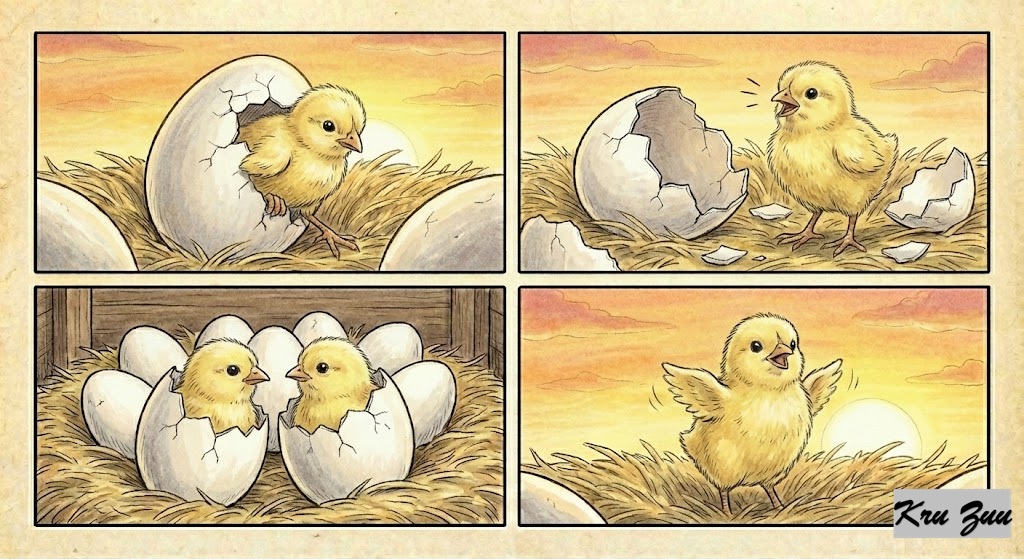
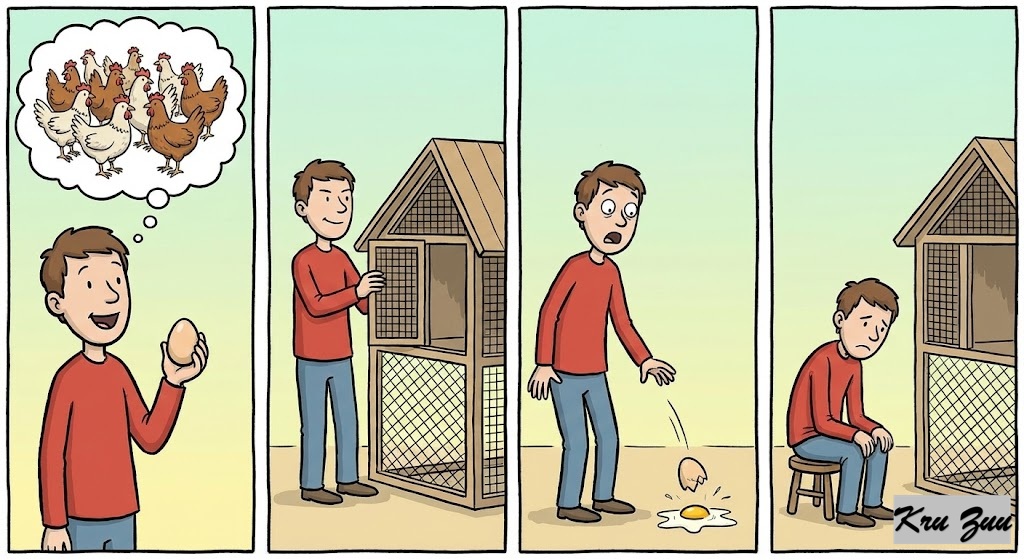
    “Don’t count your chickens before they hatch.”


    🀑 The Villain (The Daydreamer)


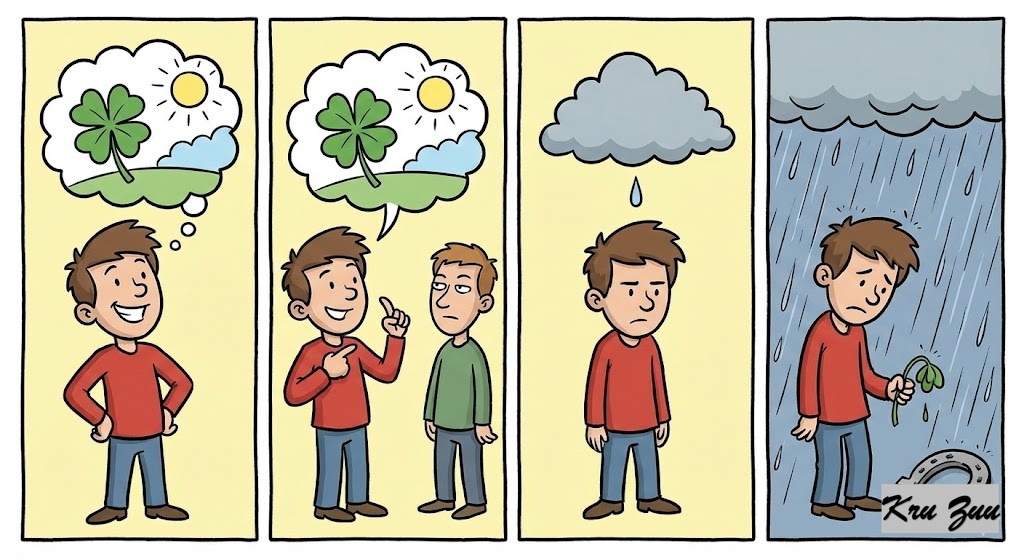
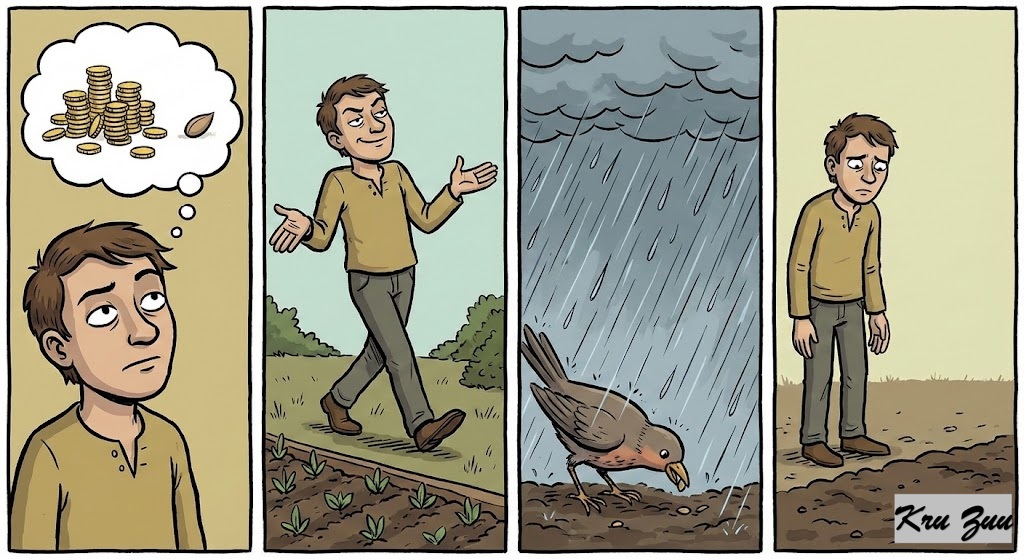
    You buy a lottery ticket. You haven’t won yet, but you are already mentally buying a Ferrari. You tell your boss, “I quit!” because you are sure you will win. You plan a vacation to the Maldives.

    The Result? The numbers come out. You lose. Now you have no job, no Ferrari, and you look foolish. You fell in love with a future that didn’t exist yet. πŸ“‰


    🀠 The Hero (The Realist)


    You apply for a new job. The interview went great! But you don’t post about it on Instagram yet. You don’t buy a new suit yet. You wait for the signed contract. You stay focused.

    The Result? If you get the job, you celebrate for real. If you don’t, you aren’t embarrassed, and you move to the next opportunity. You protect your heart from disappointment. πŸ›‘οΈ


    βš–οΈ The Reality


    “Almost” is not “Done.” Excitement is a drug. It feels good to imagine success. But celebrating early is dangerous, it tricks your brain into thinking the work is finished when it hasn’t even started.


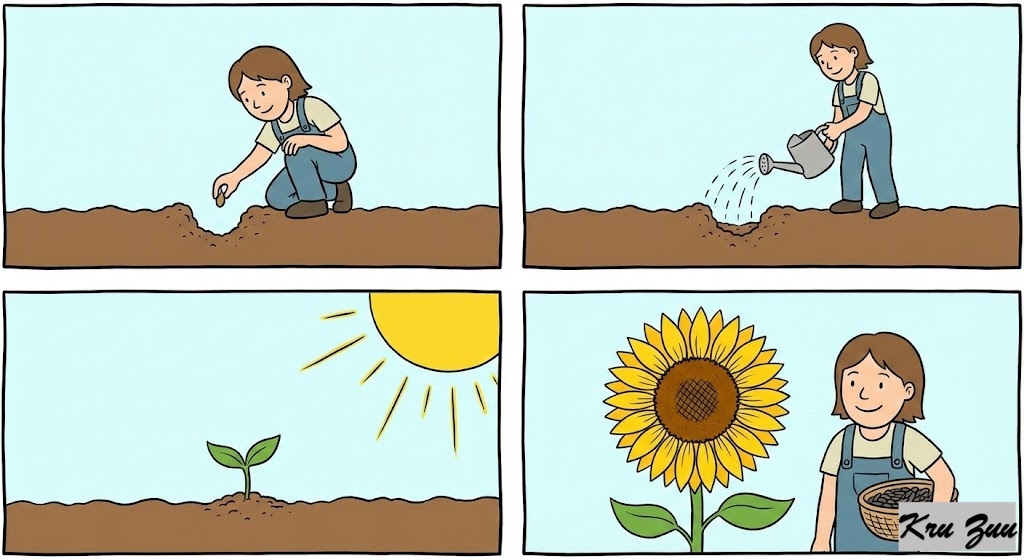
    πŸ’Ž The Secret: Focus on the process (the egg), not the prize (the chicken). If you take care of the egg, the chicken will come.
    🧐 The Anatomy of the Proverb


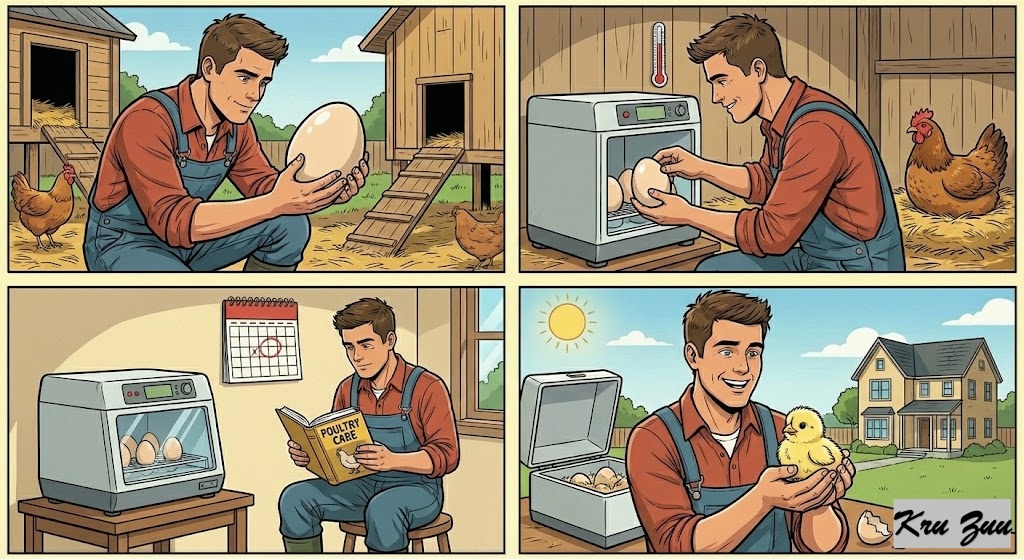
    This proverb warns against over-confidence and assuming a result before it happens.

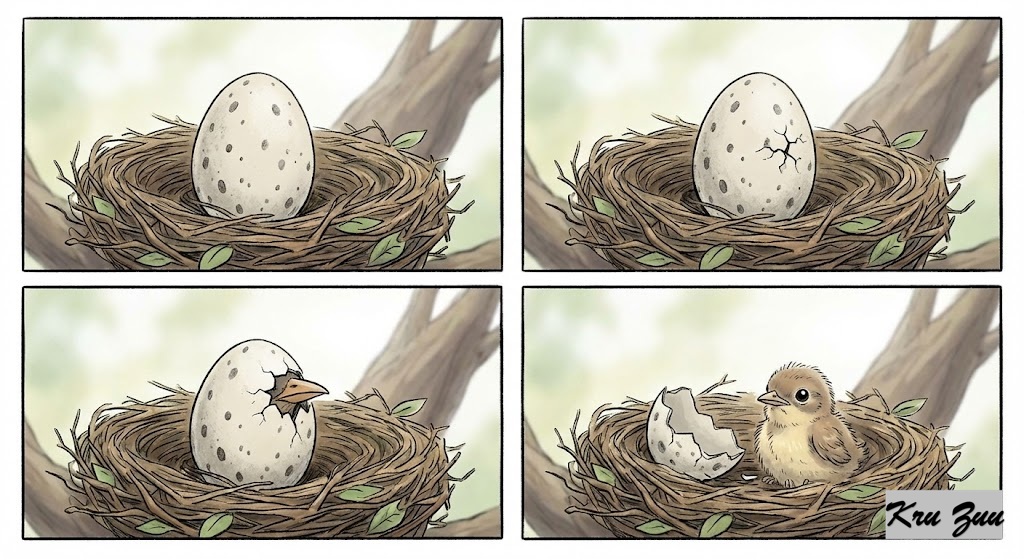
    Hatch (Verb): When a baby bird breaks out of its egg. 🐣

    Count (Verb):
    To calculate the total number.

    Before (Preposition): Earlier than.

    Simpler Version: Don’t make plans based on something that hasn’t happened yet.

    πŸ“š Vocabulary Vault


    Premature (Adjective):
    Happening or done too soon. (e.g., A premature celebration.)


    Assumption (Noun): Believing something is true without proof.

    Anticipate (Verb): To expect or predict.
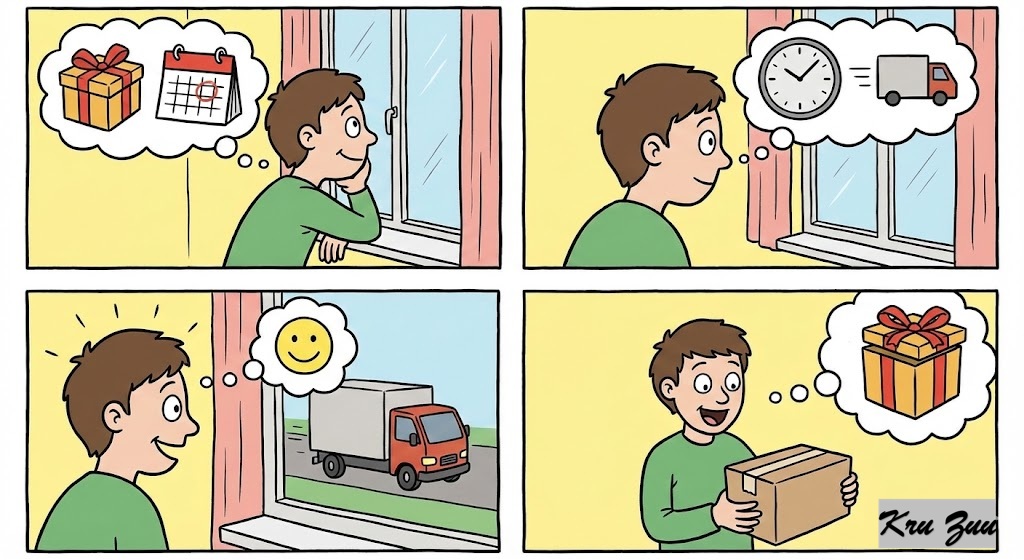

    Jinx (Verb): To bring bad luck by talking about a good result too early. πŸ€


    Outcome (Noun): The final result.


    🧠 Grammar Focus: “Before” Clauses
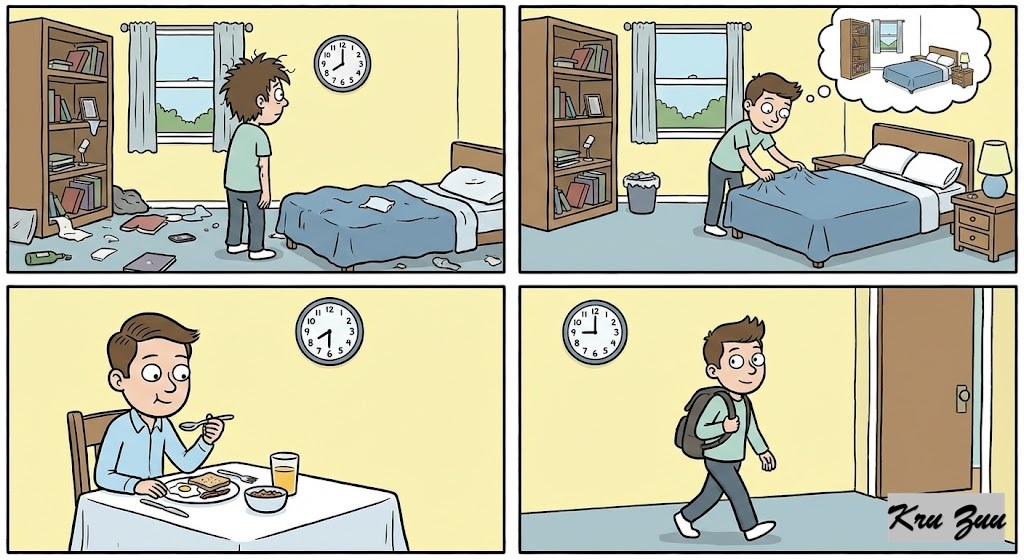

    This proverb uses a time clause with “Before.”


    Structure: Don’t + [Verb] + [Object] + before + [Subject] + [Verb].


    Rule: Even though we are talking about the future, we use the Present Simple tense after “before.”


    Incorrect: Before they will hatch.
    Correct: Before they hatch.

    πŸ“œ History & Global Cousins


    This wisdom is ancient. It comes from one of Aesop’s Fables (“The Milkmaid and Her Pail”), where a girl imagines selling milk to buy eggs to buy chickens… until she drops the milk bucket and loses everything.


    Global Cousins


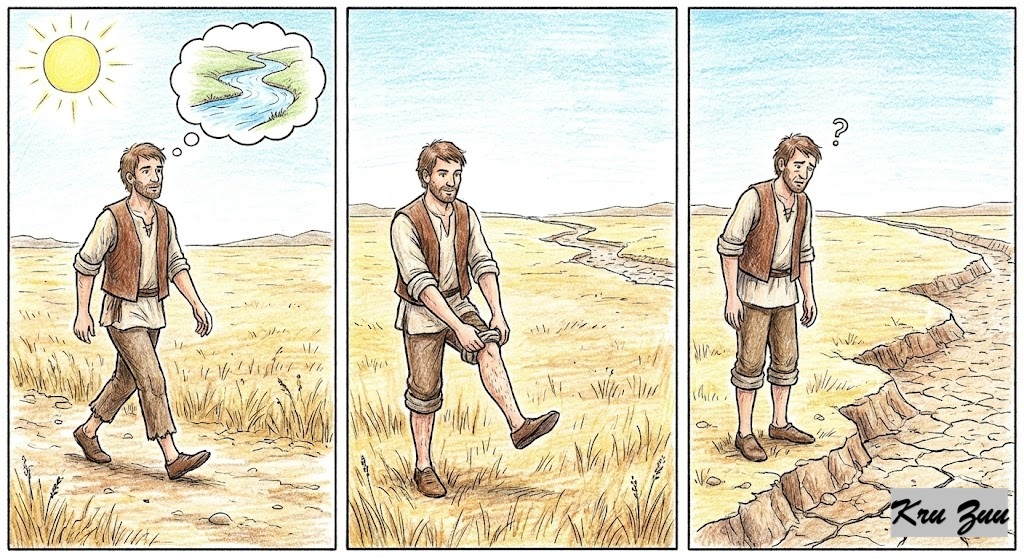
    πŸ‡ΉπŸ‡· Turkish:
    “Dereyi gΓΆrmeden paΓ§alarΔ± sΔ±vama.” (Don’t roll up your trousers before you see the stream/river.) β€” Perfect match!


    πŸ‡ͺπŸ‡Έ Spanish:“No vendas la piel del oso antes de cazarlo.” (Don’t sell the bear’s skin before you hunt it.)
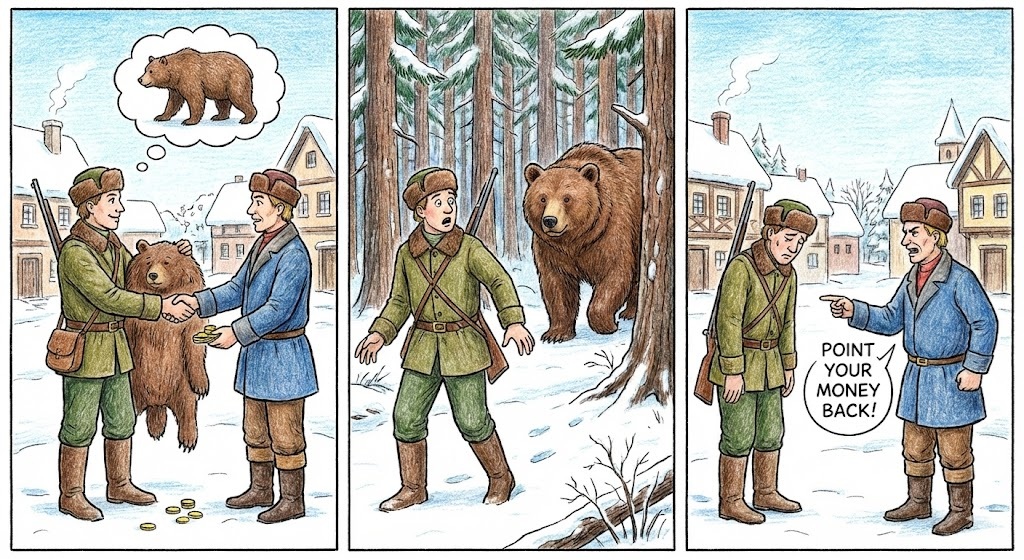

    πŸ‡«πŸ‡· French:“Il ne faut pas vendre la peau de l’ours avant de l’avoir tuΓ©.”

    🎭 Short Story: The Feast That Never Happened


    Let’s go to the farm to see this proverb in action.


    The Cast


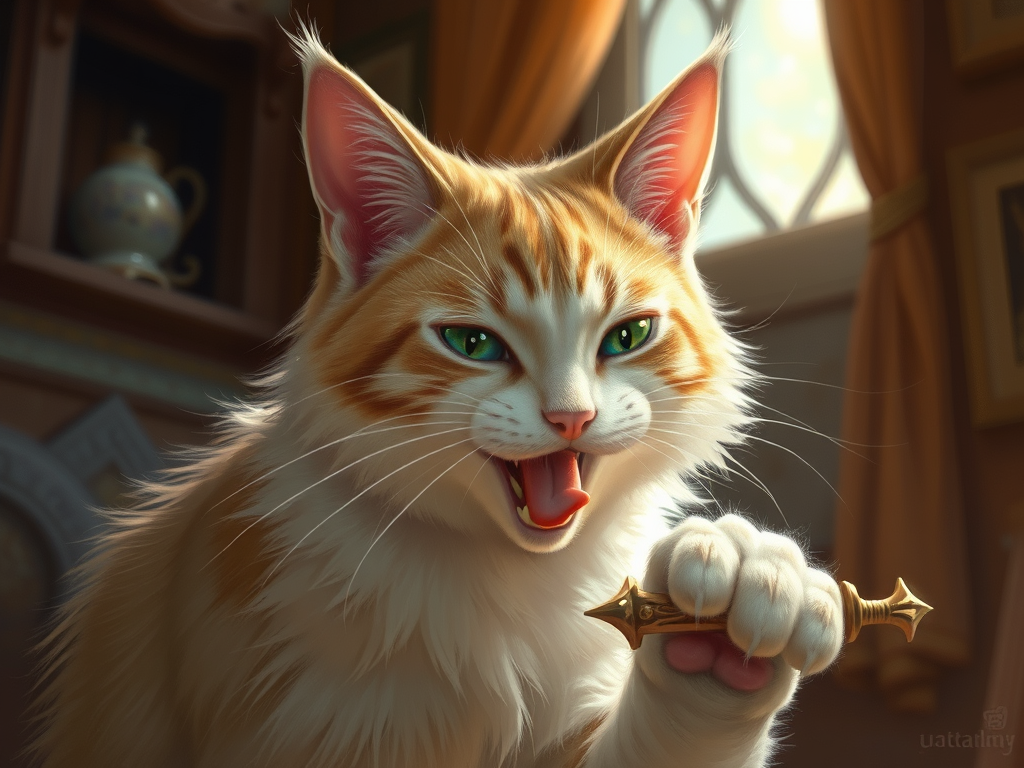
    😼 Whiskers (The Cat):
    Hungry, arrogant, and impatient.
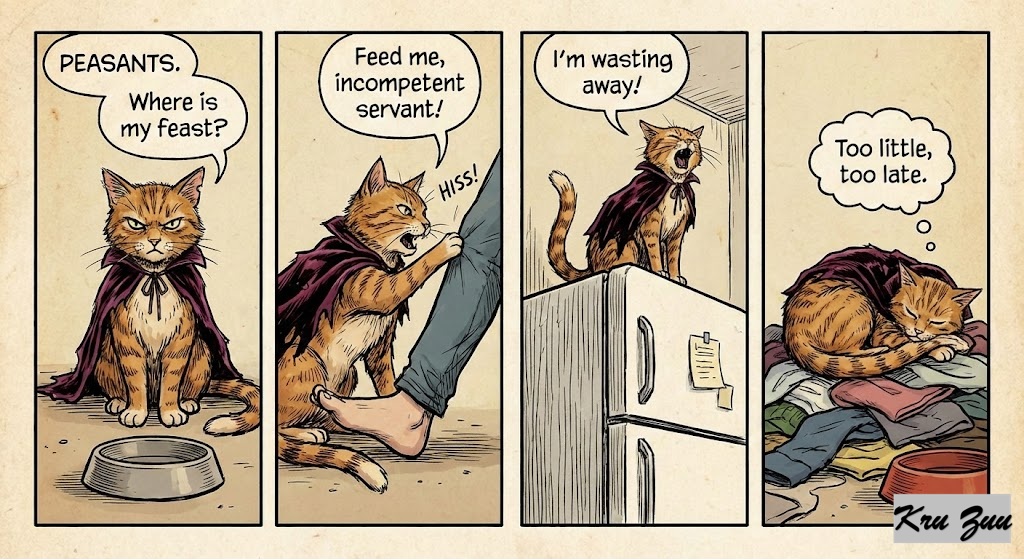

    πŸ” Mrs. Pecks (The Chicken): Hardworking and silent.
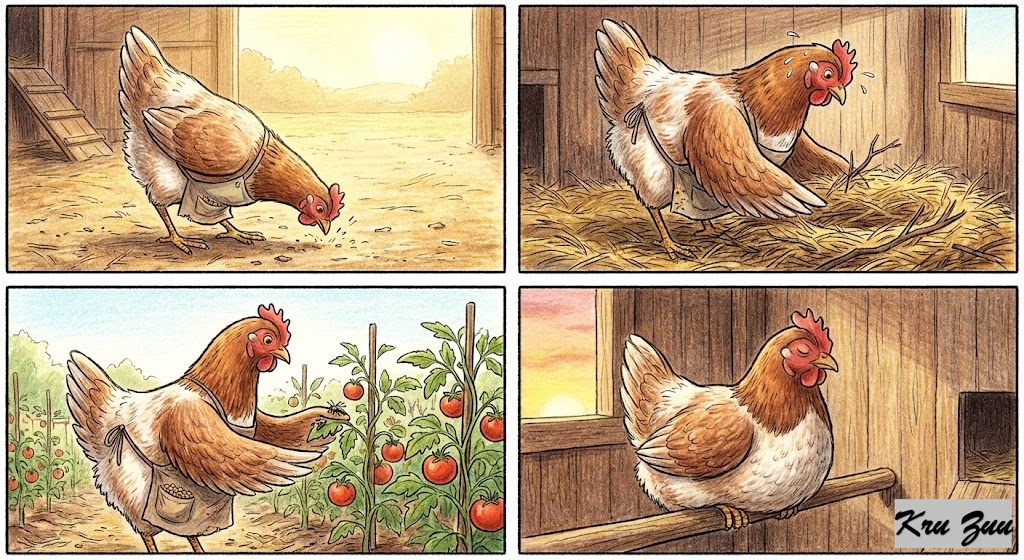

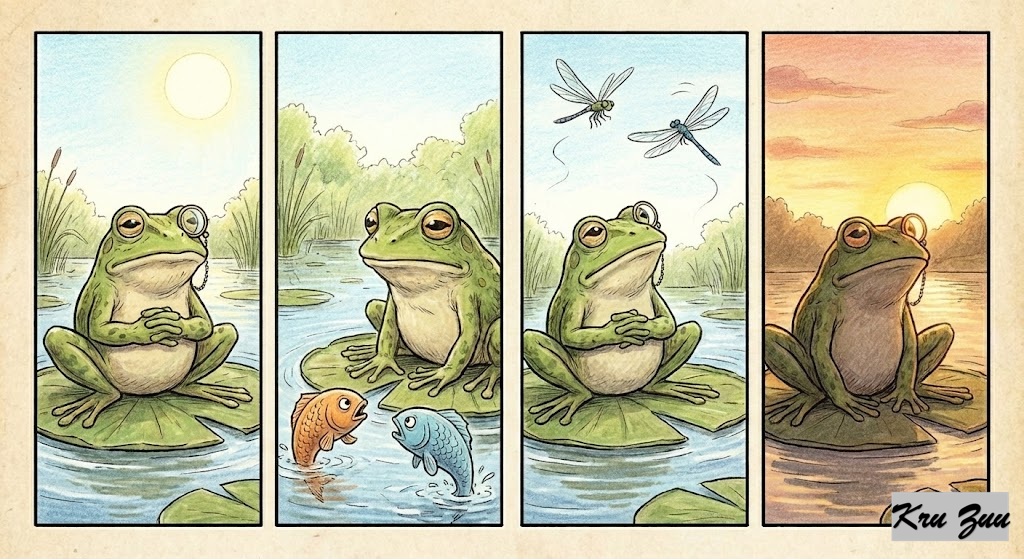
    🐸 Croak (The Frog): The wise observer by the pond.

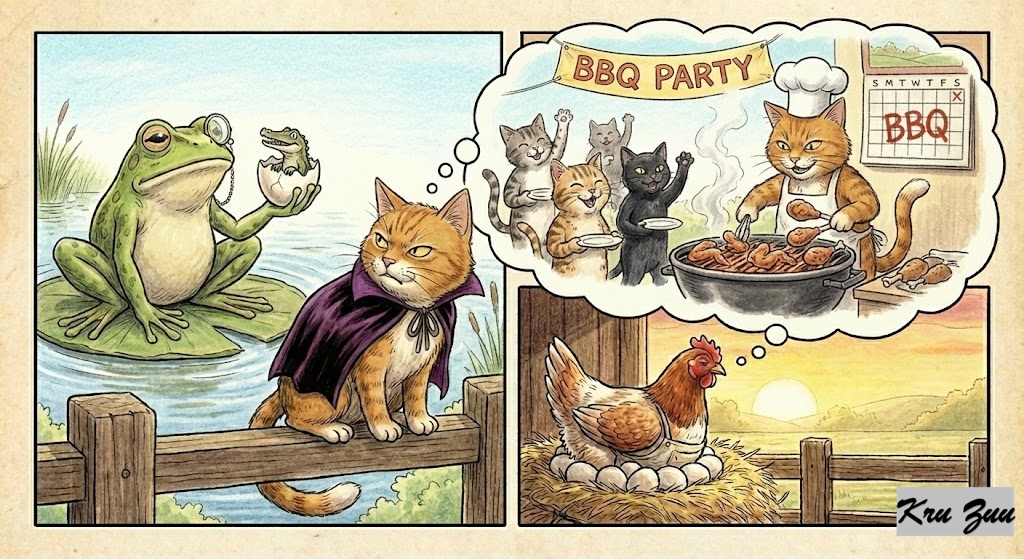
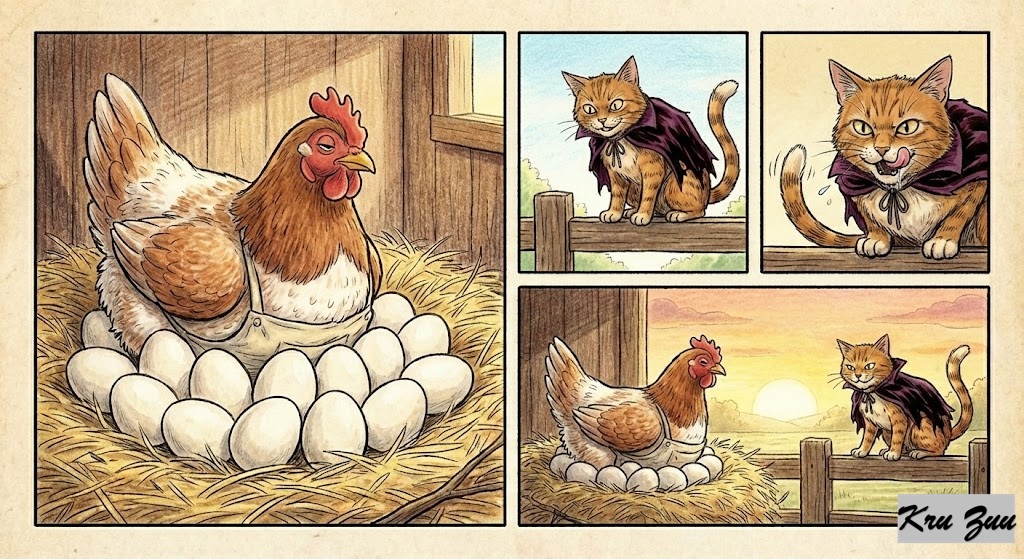
    The Scene: Mrs. Pecks was sitting on 12 big, white eggs. She sat quietly, keeping them warm. Whiskers the Cat watched from the fence, licking his lips.

    The Dialogue:Whiskers: “Look at that! 12 eggs! That means 12 fat, juicy little chicks for my dinner next week. I will eat two on Monday, two on Tuesday…”
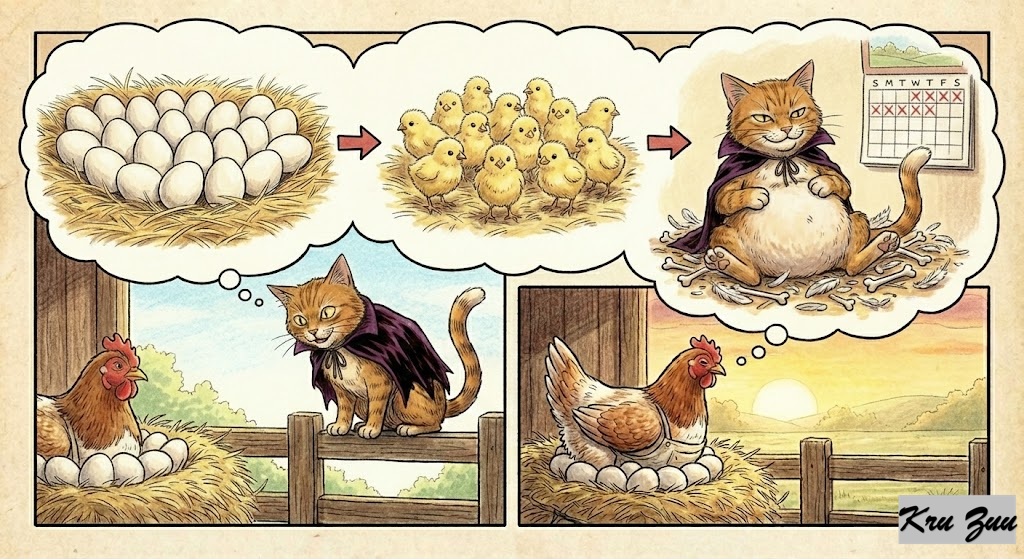
    Croak (The Frog): “Ribbit. Careful, cat. Nature is unpredictable. Not every egg holds a chick.” Whiskers: “Quiet, you slimy green thing! I am already inviting my friends for a BBQ. I can taste the wings already!” πŸ—


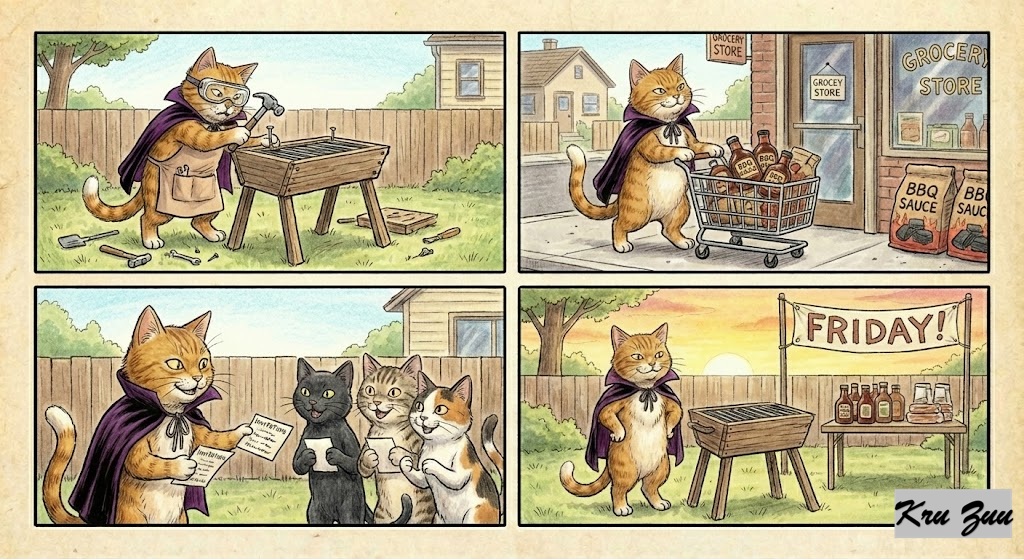
    Whiskers spent the whole week building a grill and buying BBQ sauce. He told all the neighborhood cats, “Come to my house on Friday! Huge feast!”

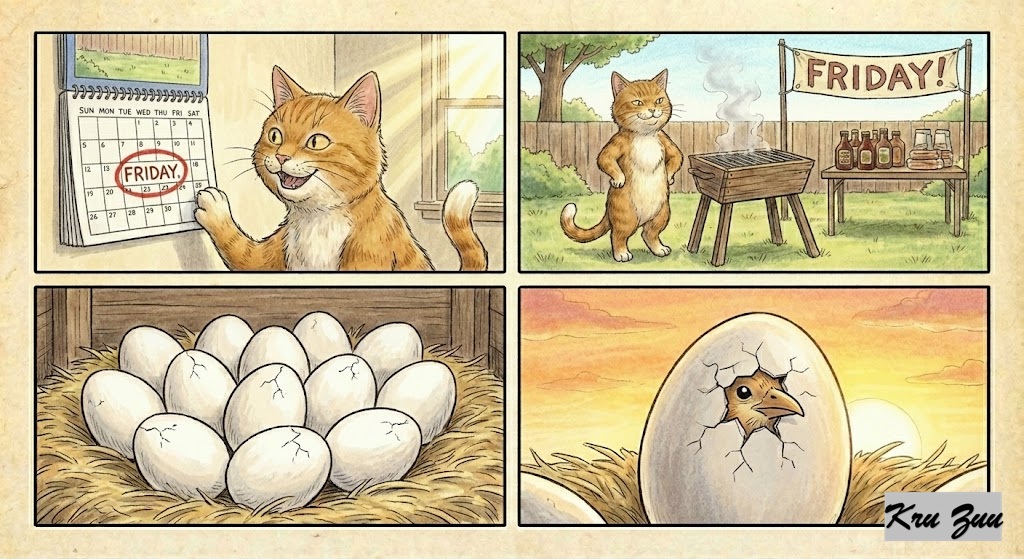
    The Result: Friday came. The eggs began to crack.

    Egg 1-4: Out popped cute yellow chicks! πŸ₯


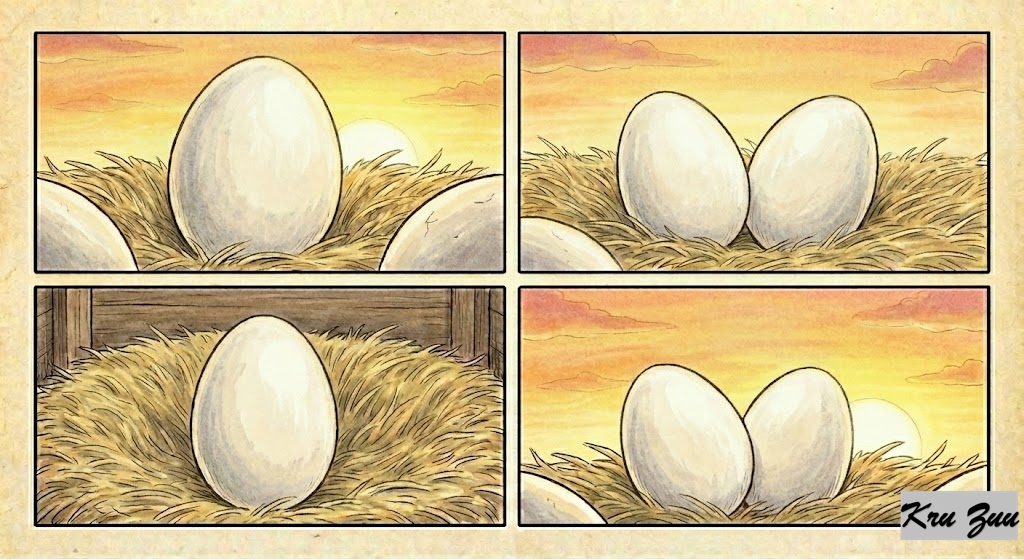
    Egg 5-8: … Nothing happened. They were empty.

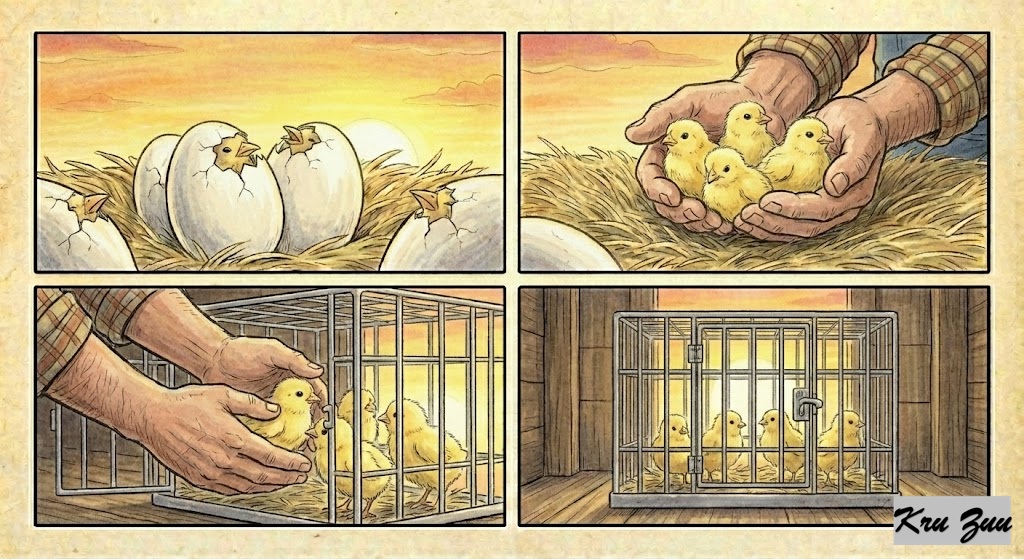
    Egg 9-12: The Farmer came out, picked up the remaining chicks, and put them in a secure metal cage. “Safe from predators!” the Farmer said.

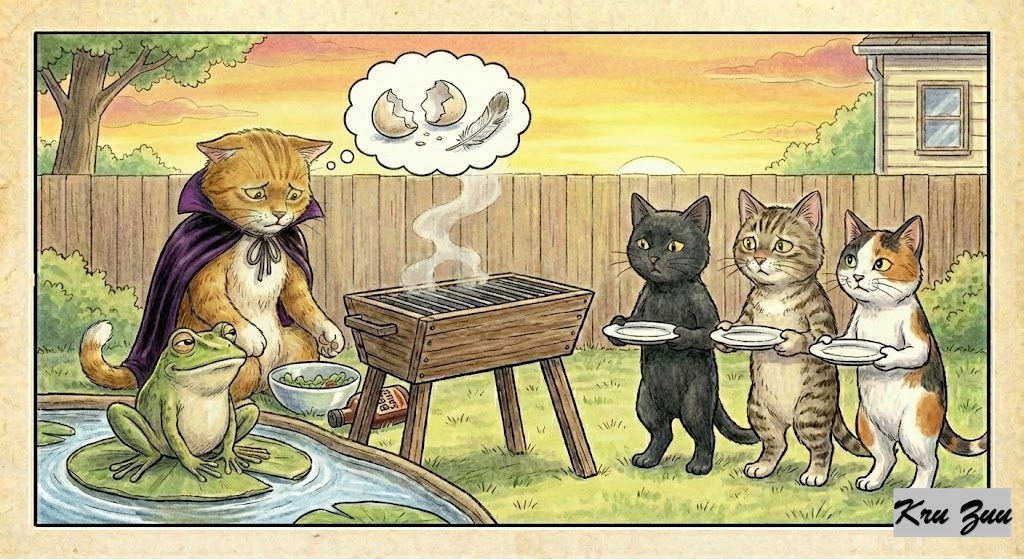
    Whiskers stood there with his BBQ sauce. No chicks. His friends arrived, hungry.

    Whiskers: “Uhh… would you guys like some salad?”
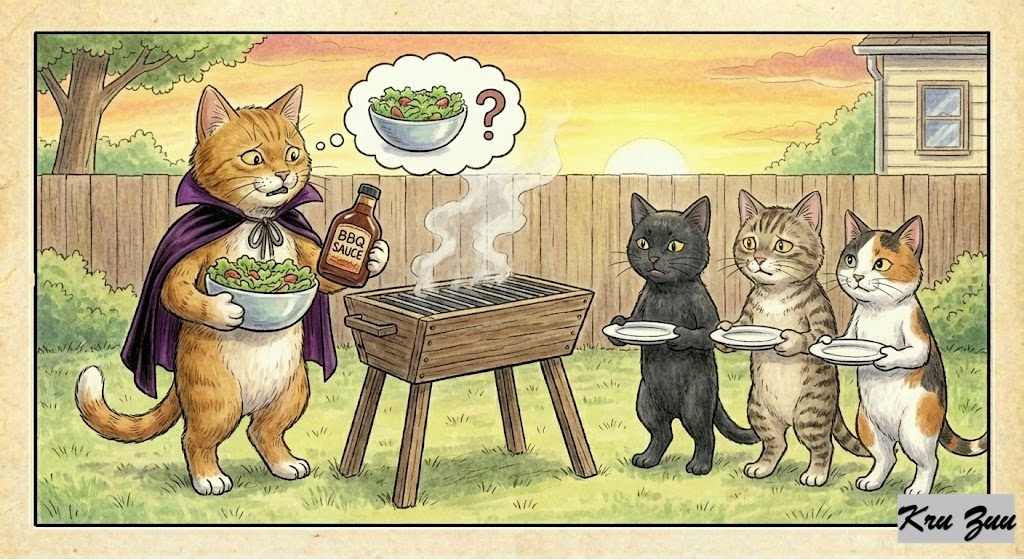
    Croak: “Ribbit. I told you. You counted your chickens, but now you only have an empty stomach.”
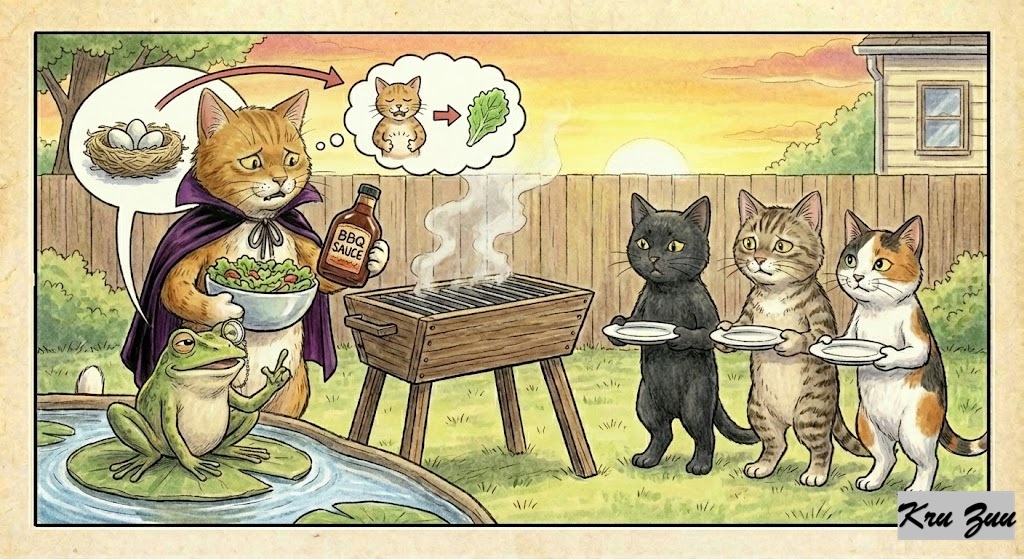

    The Moral: Whiskers focused on the feast, not the reality. Don’t set the table until the dinner is ready.
    πŸŽ“ Lesson for English Learners


    Don’t Rely on “Luck.”


    Situation:
    You take an English exam (IELTS/TOEFL). You feel good.

    The Mistake: You stop studying because you assume you passed. You tell everyone, “I’m going to university in London!”

    The Better Way: Wait for the score. Keep studying just in case. If you pass, great! If not, you are still ready to try again.


    Situation: You apply for a visa.

    The Mistake: You buy your flight ticket before the visa is approved.

    The Better Way: Wait for the stamp in your passport. Don’t count your flights before the visa is printed!


    πŸ’¬ Your Turn: The Reality Check βœ…


    We have all been “Whiskers the Cat” at least once.


    Question:
    Have you ever celebrated something too early and then it didn’t happen?
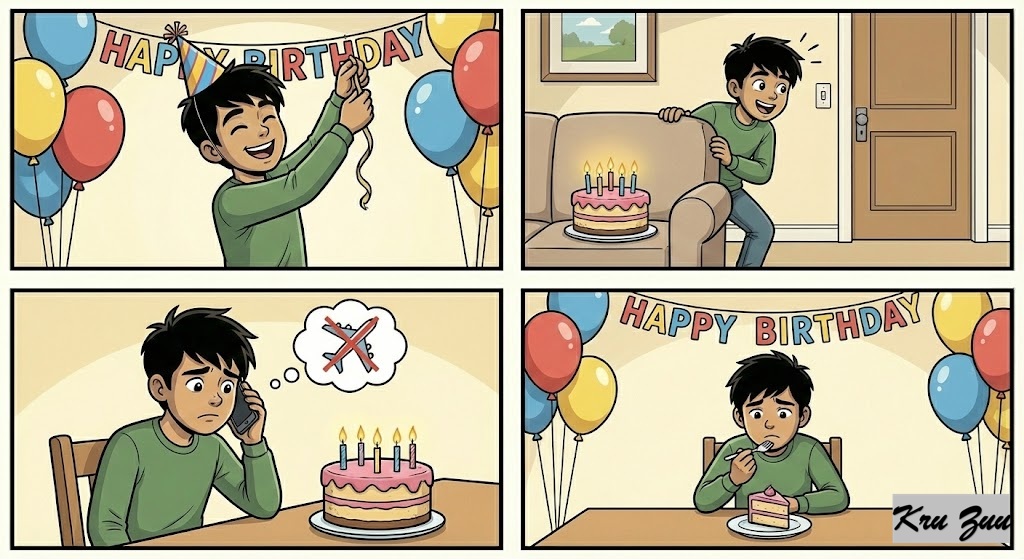

    Did you buy clothes for a party that got cancelled?
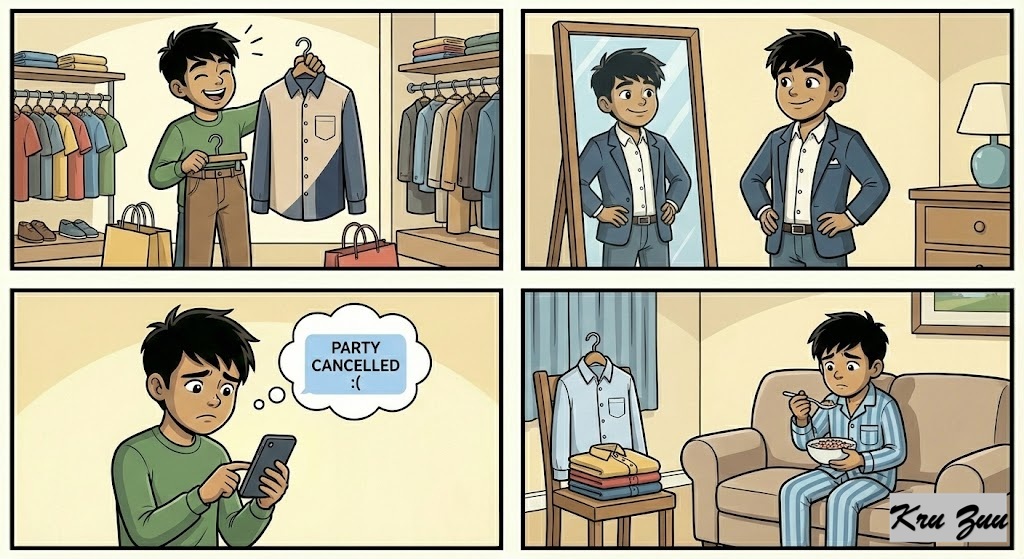

    Did you plan how to spend money you didn’t have yet?
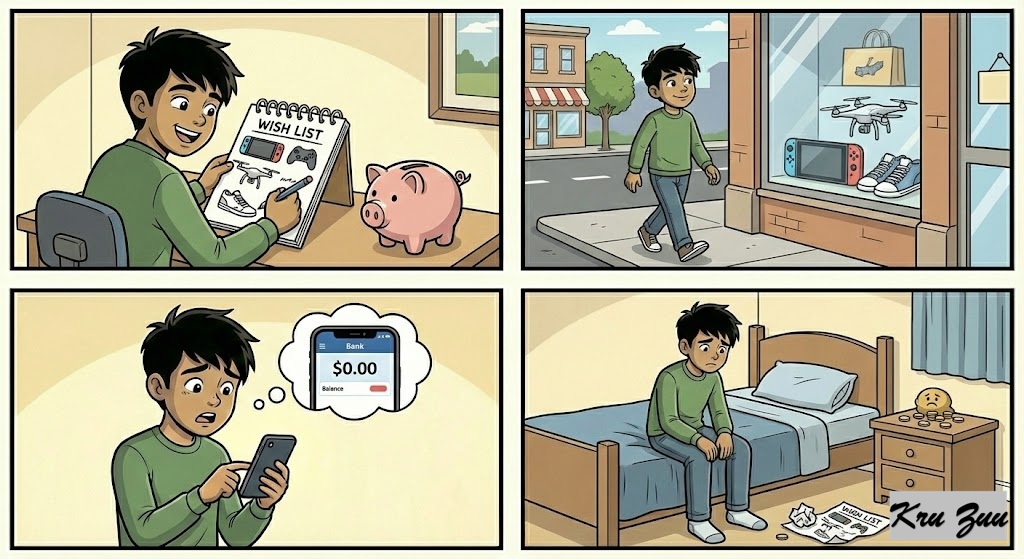

    Tell us your story in the comments! πŸ‘‡

    By Zubeyir YURTKURAN

    https://www.facebook.com/BrainBattleground/

    https://www.facebook.com/zubeyr.yurtkuran/

    https://www.instagram.com/zubeyryurtkuran/

    https://www.youtube.com/@BrainBattleground-b3p

    https://www.instagram.com/brainbattleground/

  • Why You Shouldn’t Trust Your Eyes: A Lesson on Glitter and Gold

    Why You Shouldn’t Trust Your Eyes: A Lesson on Glitter and Gold

    Shakespeare, Chickens, and Fake Gold: The Truth About “All That Glitters”

    We have all been there.
    πŸ” A job offer that looks perfect on paper but turns out to be a nightmare.

    🎁 A beautifully packaged meal that tastes like cardboard.

    😎 A person who looks incredibly cool on Instagram but has zero personality in real life.


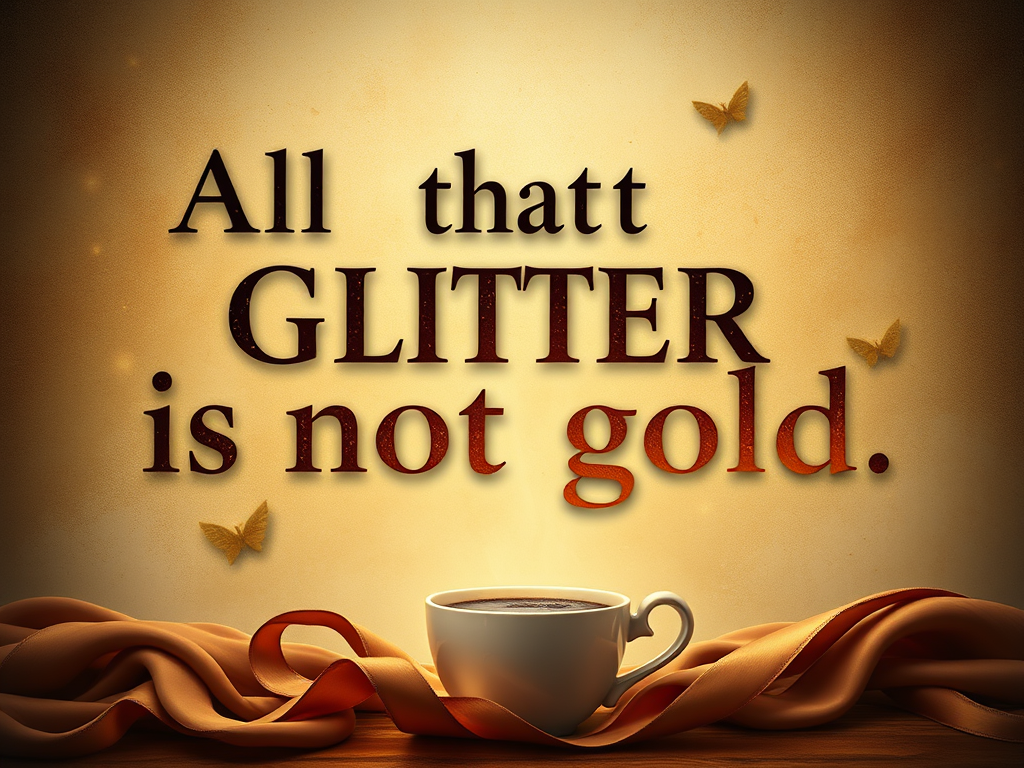
    Life has a way of teaching us this lesson over and over again: “All that glitters is not gold.”
    In this post, we are putting one of the most popular and historically rich English proverbs under the microscope. Grab your coffee, and let’s dive in! β˜•

    The Anatomy of the Proverb


    Let’s break this sentence down like a linguist.
    πŸ“š Vocabulary Vault
    Glitter (Verb):
    To shine with a bright, shimmering, reflected light (think of a disco ball or a diamond). ✨


    Gold (Noun): A precious yellow metal. In this context, it represents anything that is “genuine,” “valuable,” or “real.” πŸ†

    🧠 Grammar Focus
    Here is the secret formula of the sentence:
    All (Subject) + [that glitters] (Relative Clause) + is (Verb) + not gold (Object/Complement).
    The Relative Clause: The phrase “that glitters” defines the subject “All.” We aren’t talking about everything in the world, just the things that shine.
    Subject-Verb Agreement: Watch out! In this proverb, “All” acts as a singular concept (everything). That’s why we say “glitters” (with an -s) and “is” (not are).

    History: Aesop or Shakespeare?


    The roots of this saying go deeper than you might think. It’s a battle between Ancient Greece and Renaissance England!


    πŸ›οΈ Ancient Roots: As far back as the 6th Century B.C., the Greek storyteller Aesop explored the idea that “not everything that looks good is actually good” in his fables.


    🎭 The Shakespeare Touch: The proverb became a celebrity thanks to William Shakespeare. In his play The Merchant of Venice (1596), a character chooses a gold casket hoping to win a prize, only to find a scroll inside that reads: “All that glisters is not gold.”


    Fun Fact: Shakespeare used the old word “glisters.” Over centuries, language evolved, and by the 19th century, we switched to the modern word “glitters.”

    Impact on Life: The Pros & Cons


    Should you adopt this proverb as your life philosophy? Let’s weigh the options.


    βœ… The Pros (Why it helps)
    Critical Thinking:
    It encourages you not to trust first impressions blindly. It pushes you to look beneath the surface.


    Protection: Whether it’s a scam product or a “too good to be true” promise, this proverb acts as a shield against deception. πŸ›‘οΈ


    ❌ The Cons (Why it can be tricky)
    Cynicism:
    If you take it too far, you might become overly suspicious of everyone, unable to trust sincere people.


    Missing the Beauty:
    Sometimes, things are just beautiful because they glitter, and that is enough. Constantly looking for a “flaw” might make you miss the joy of the moment.

    Short Story: The Shiny Pebble


    To understand this better, let’s visit our friends on the farm.
    It was a bright, sunny morning. Percy the Chicken, Luna the Cat, and Fred the Frog were relaxing near the farm pond. β˜€οΈ


    Suddenly, Percy froze. He saw something shining at the bottom of the shallow water. It was bright, sparkly, and yellow.


    “Look!” clucked Percy, his feathers puffing up with excitement. “A piece of the sun has fallen into the water! It must be magic gold corn. I will eat it and become the King of Chickens!” πŸ‘‘


    Luna the Cat yawned lazily and licked her paw. She looked at the shiny object with narrowed, skeptical eyes. “I wouldn’t do that if I were you, Percy,” she purred. “It looks sharp. Not everything that shines is food.” 🐱


    “You are just jealous because you didn’t find it first!” shouted Percy. He prepared to jump into the water to peck the treasure.


    Just then, Fred the Frog hopped onto a lily pad right next to the object. He looked at it closely, blinked his big eyes, and laughed. “Croak! Percy, stop!” 🐸


    “Move away, Fred! That is my gold!” Percy insisted, flapping his wings.


    Fred stuck out his long, sticky tongue and flipped the object over. It wasn’t gold. It wasn’t magic corn. It was just a jagged, sharp piece of a broken yellow soda bottle.


    “The sun makes it shine,” said Fred wisely, “but underneath, it is just dangerous trash.”


    Percy stopped in his tracks. He realized he had almost cut his beak on a piece of glass. He looked at his friends, lowered his head, and sighed.
    “I guess all that glitters is not gold,” Percy admitted.

    In this story, the characters represent different mindsets:


    Percy:
    Naivety and Greed 😡
    Luna: Skepticism 🧐
    Fred: Experience and Truth πŸ€“


    Lesson for English Learners: When learning a language, fancy words (glitter) are nice, but knowing how to use simple words correctly (gold) is often much more valuable.


    πŸ’¬ What about you? Have you ever experienced a moment where “all that glitters was not gold”? Tell me in the comments!

    By Zubeyir YURTKURAN

    https://www.facebook.com/BrainBattleground/

    https://www.facebook.com/zubeyr.yurtkuran/

    https://www.instagram.com/zubeyryurtkuran/