Tag: Psychology

  • 🌿 The Daily Insight: The Green Grass Trap

    🌿 The Daily Insight: The Green Grass Trap

    “The grass is always greener on the other side.”


    😈 The Villain (The Dreamer)

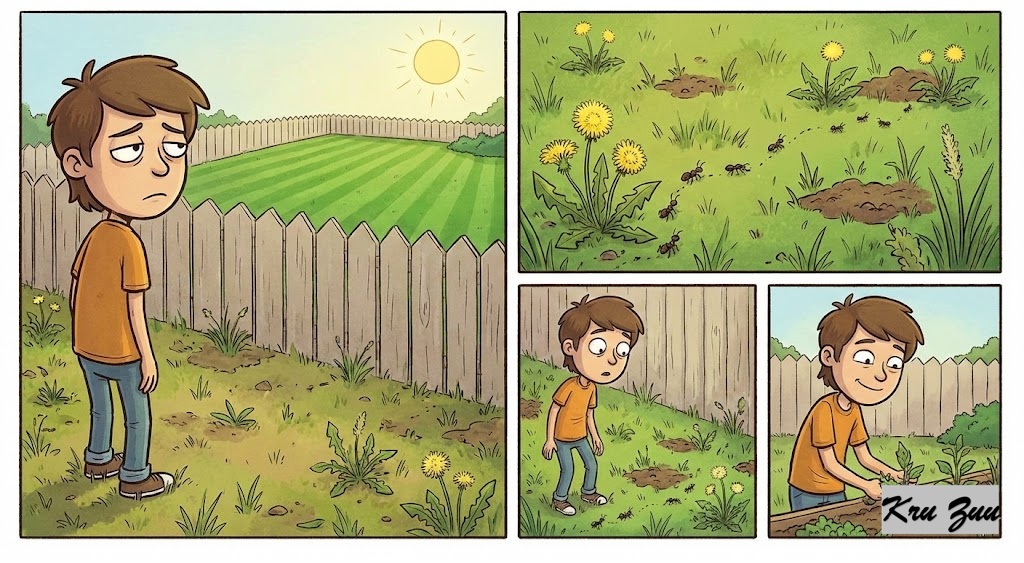
    You look at your life and sigh. You scroll through Instagram and see your friend in Paris. You see your coworker’s new car. You think, “If only I had their life, I would be happy.” You ignore the blessings right in front of your face because you are too busy staring over the fence. You are trapped in the prison of “What If.” 🧟‍♂️


    😇 The Hero (The Gardener)

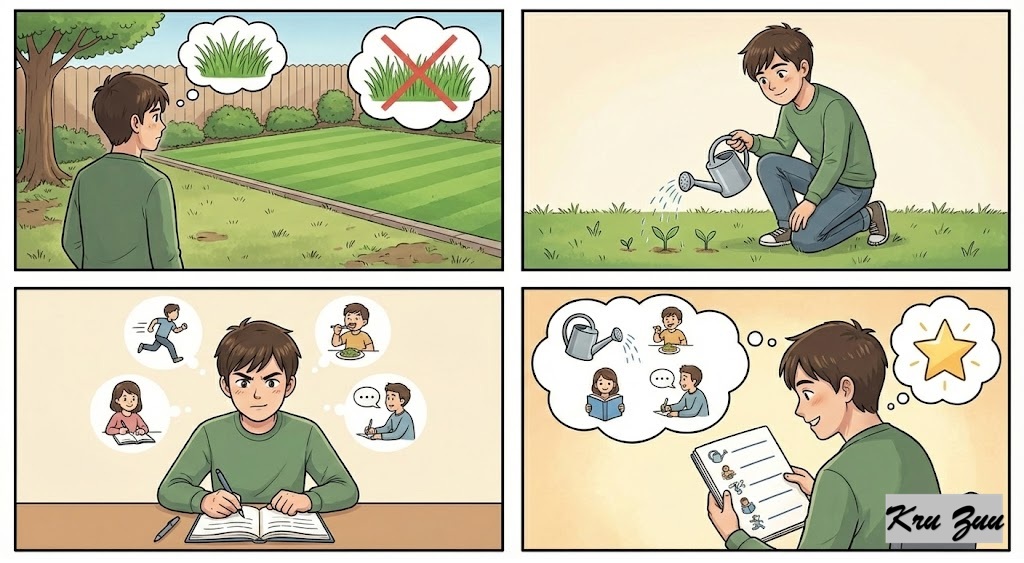
    You admire other people’s success, but you don’t envy it. You know a secret: Grass is greenest where you water it. Instead of staring at your neighbor’s lawn, you pick up a hose and water your own garden. You focus on your own growth. You find joy in what you have today. 🛡️


    ⚖️ The Reality


    Comparison is the thief of joy. From a distance, the neighbor’s grass looks perfect. But if you walk over there, you will see weeds, dirt, and ants, just like yours. Every life has problems; you just can’t see them from far away.

    💎 The Secret

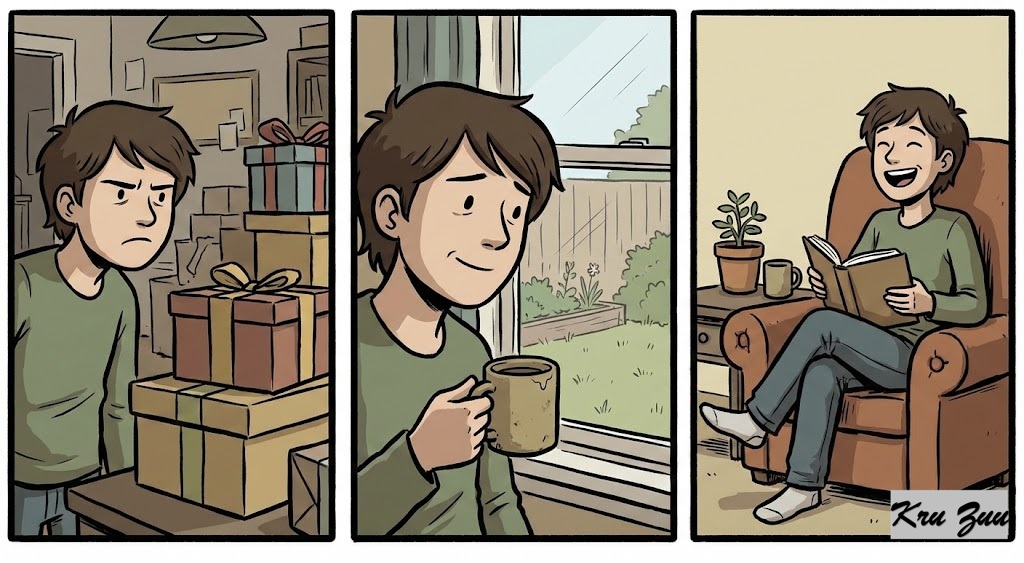
    Happiness is not about getting what you want. It is about wanting what you have.
    🧐 The Anatomy of the Proverb


    This is the ultimate idiom for dissatisfaction.


    Greener (Comparative Adjective): More green; better; healthier.
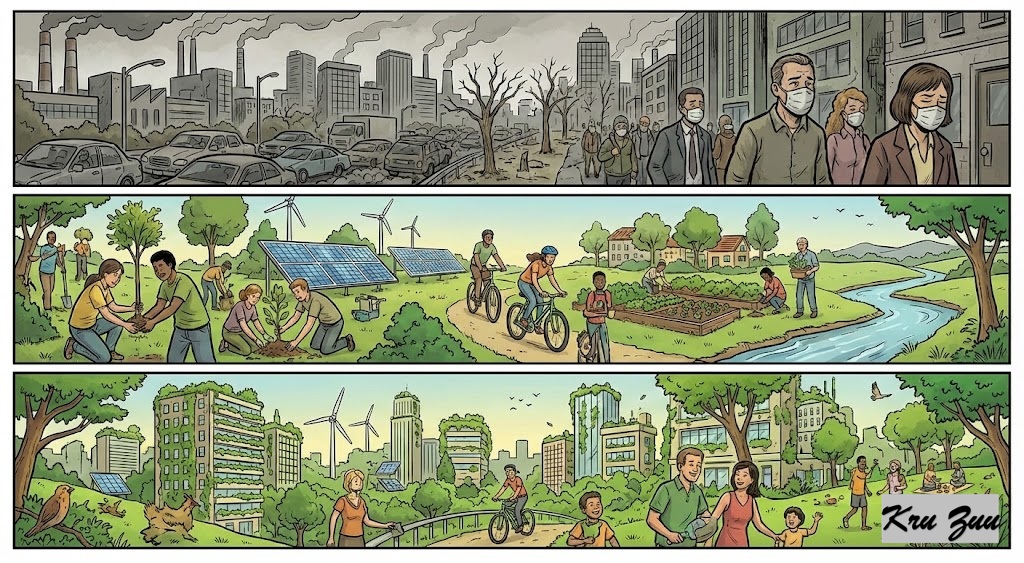

    On the other side (Prepositional Phrase): In a different place; in someone else’s situation.
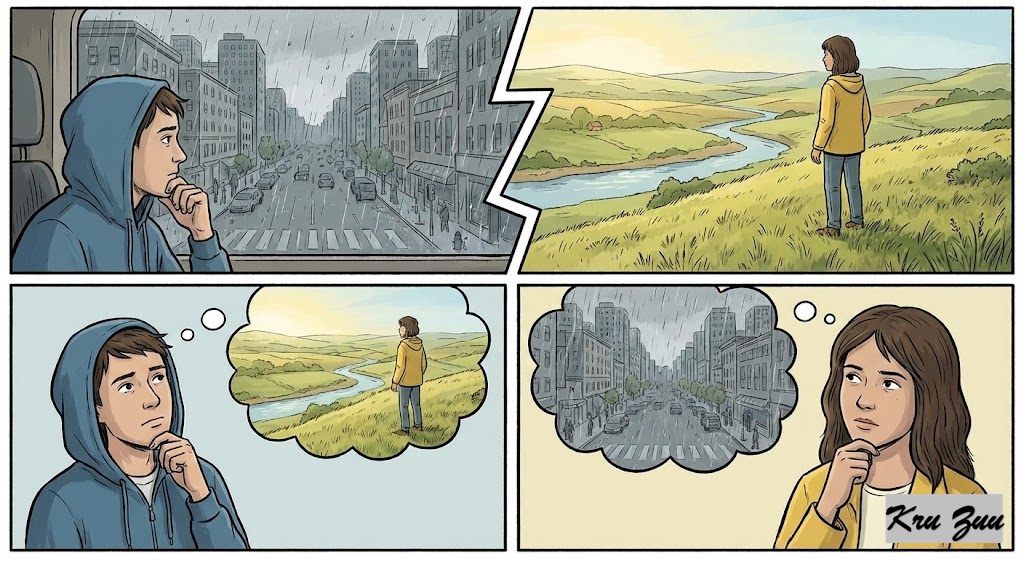

    Simpler Version: We always think other people have it better than us.


    📚 Vocabulary Vault


    Envy (Noun/Verb):
    The feeling of wanting what someone else has. (The green-eyed monster). 😠
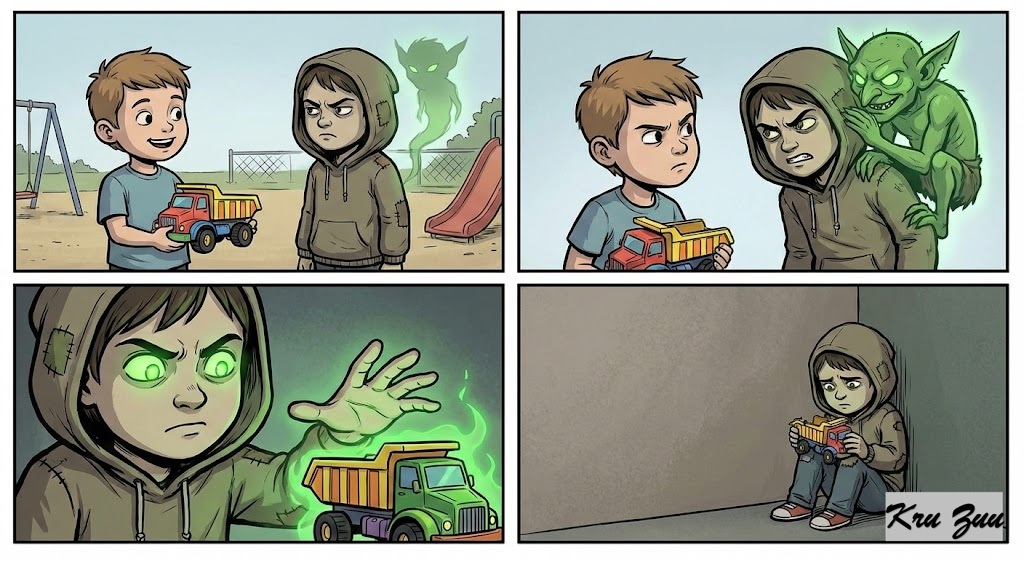

    Contentment (Noun): A state of happiness and satisfaction. 😌
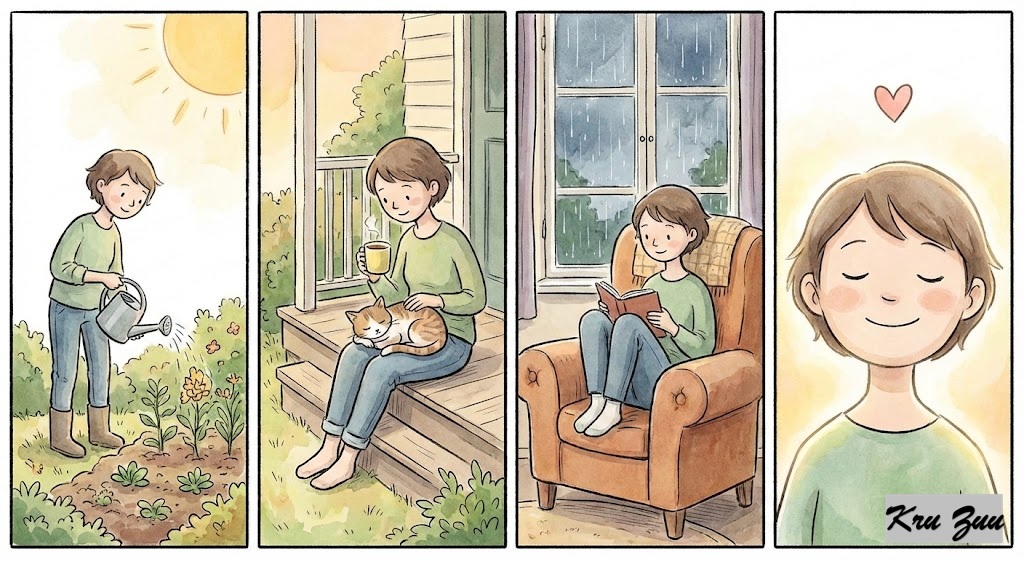

    Perspective (Noun): A particular attitude toward or way of regarding something; a point of view.
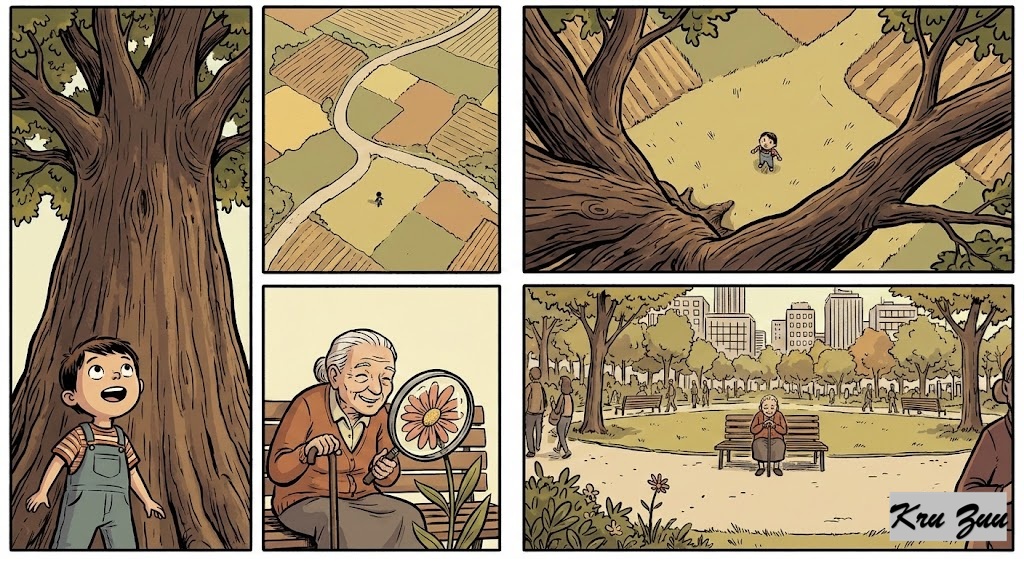

    Illusion (Noun): A false idea or belief. 🪄


    Appreciate (Verb): To recognize the full worth of something.
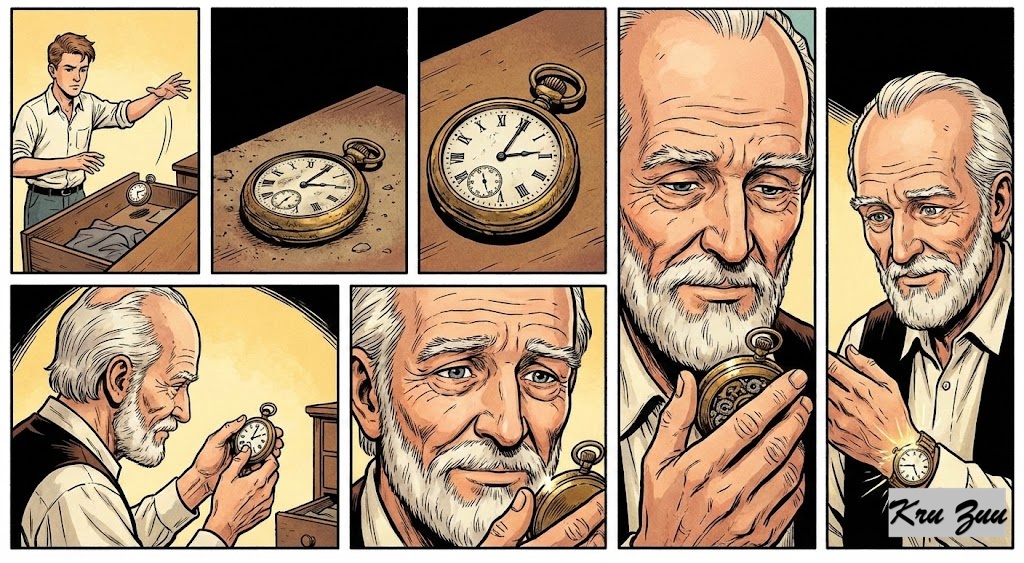

    🧠 Grammar Focus: Comparatives


    This proverb uses the Comparative Form to show the difference between two things.


    The Rule (Short Adjectives): Add -er to the end of the adjective.


    Green ➡️ Greener
    Fast ➡️ Faster
    Rich ➡️ Richer


    The Structure: [Subject A] is [Adjective + er] + THAN + [Subject B].


    My neighbor is richer than me.


    Summer is hotter than winter.

    📜 History & Global Cousins


    This idea is ancient because human jealousy is ancient!


    The Origin

    The Roman poet Ovid (43 B.C.) wrote about this concept: “The harvest is always more fruitful in another man’s field.”


    Global Cousins


    🇹🇷 Turkish:
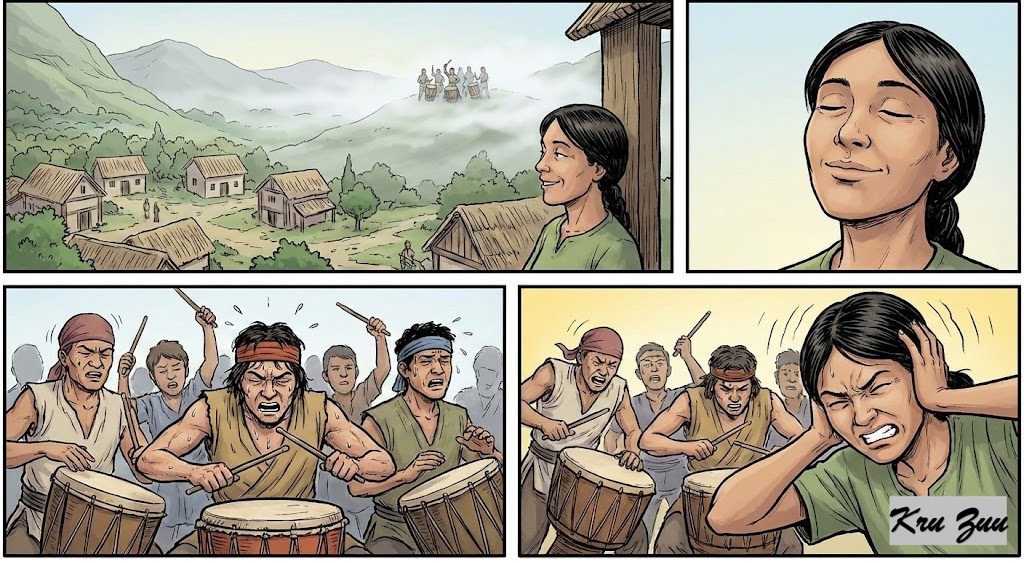
    “Davulun sesi uzaktan hoş gelir.” (The drum sounds nice from afar.)
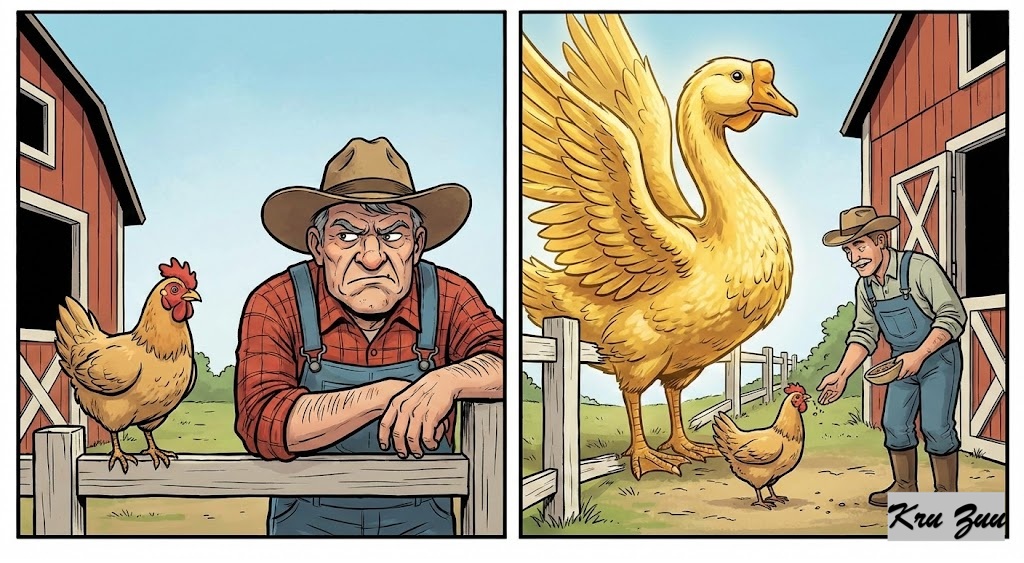
    🇹🇷 Turkish: “Komşunun tavuğu komşuya kaz görünür.” (The neighbor’s chicken looks like a goose to the neighbor.) — Keep this in mind for our story below! 🐔

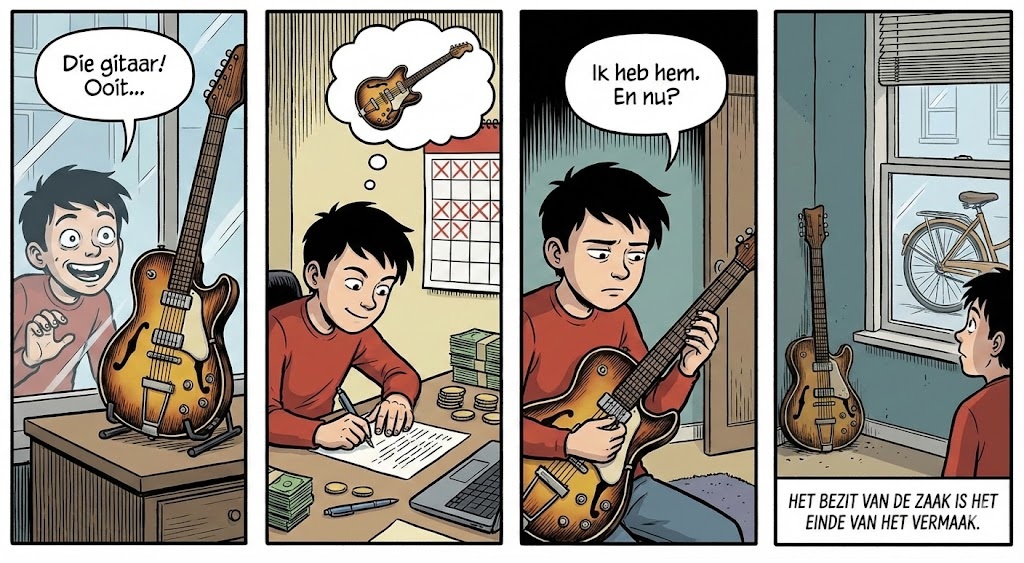
    🇳🇱 Dutch: “Het bezit van de zaak is het einde van het vermaak.” (Possession of the thing is the end of the fun.)
    🎭 Short Story: The Great Animal Swap


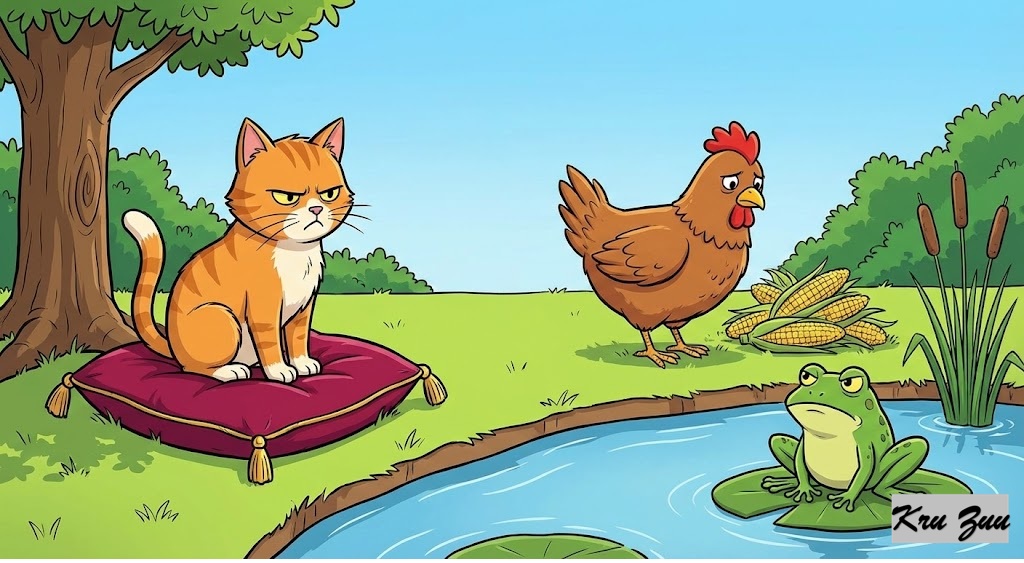
    Let’s meet three unhappy animals living on a farm.


    🌟 The Cast


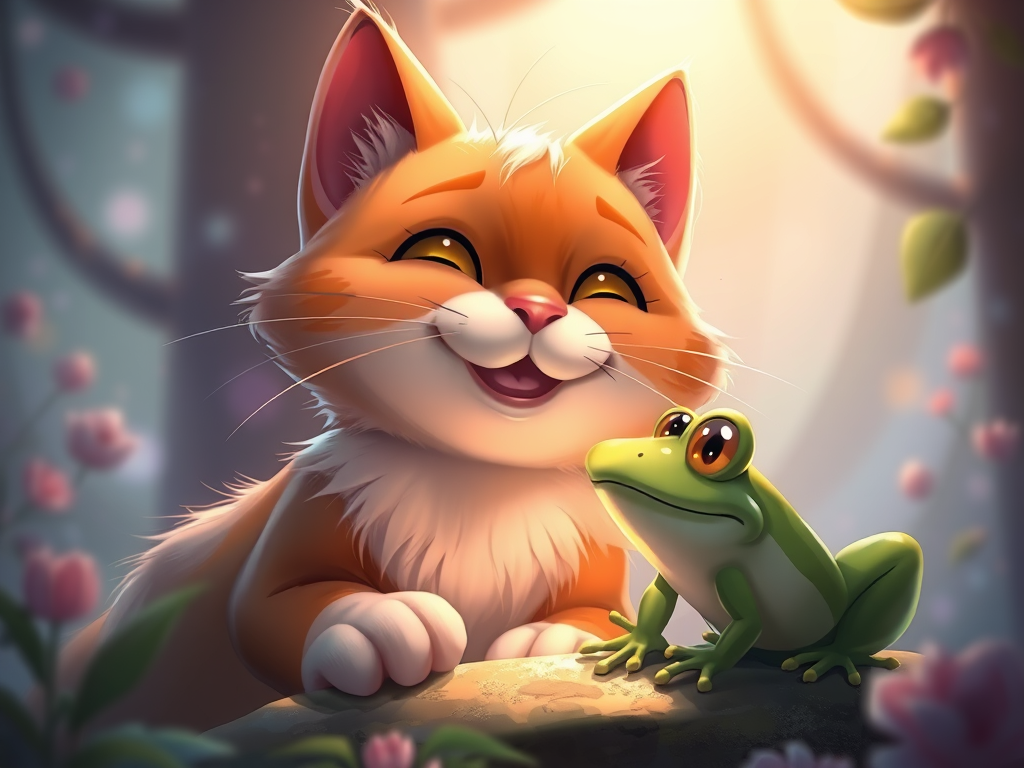
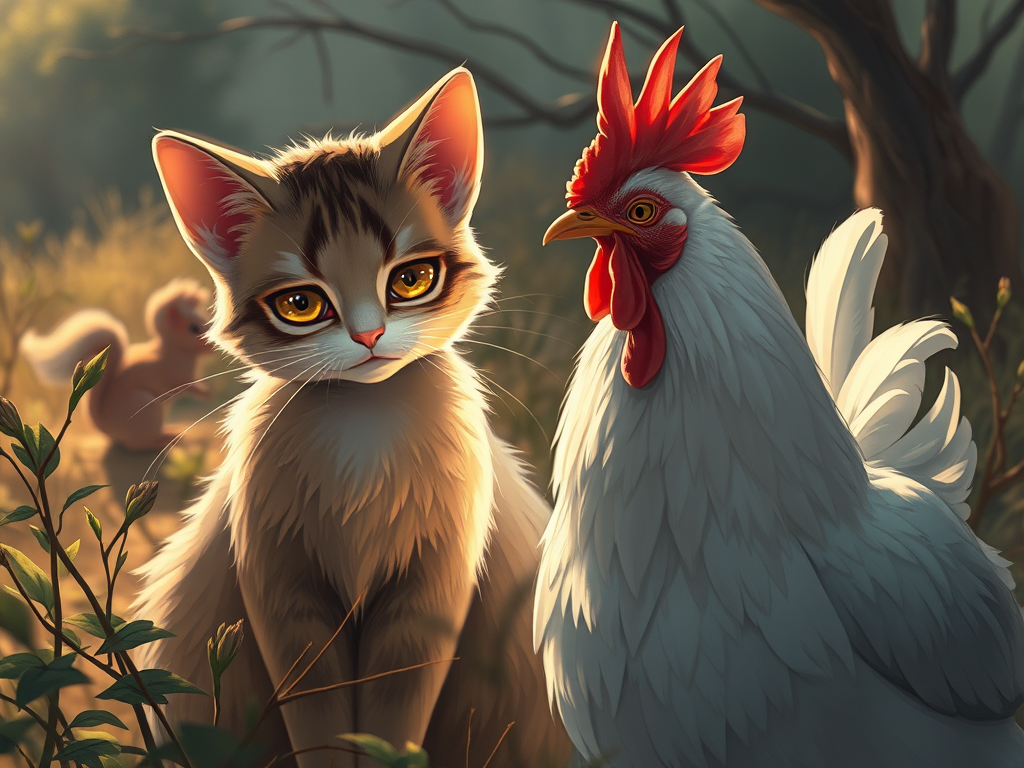
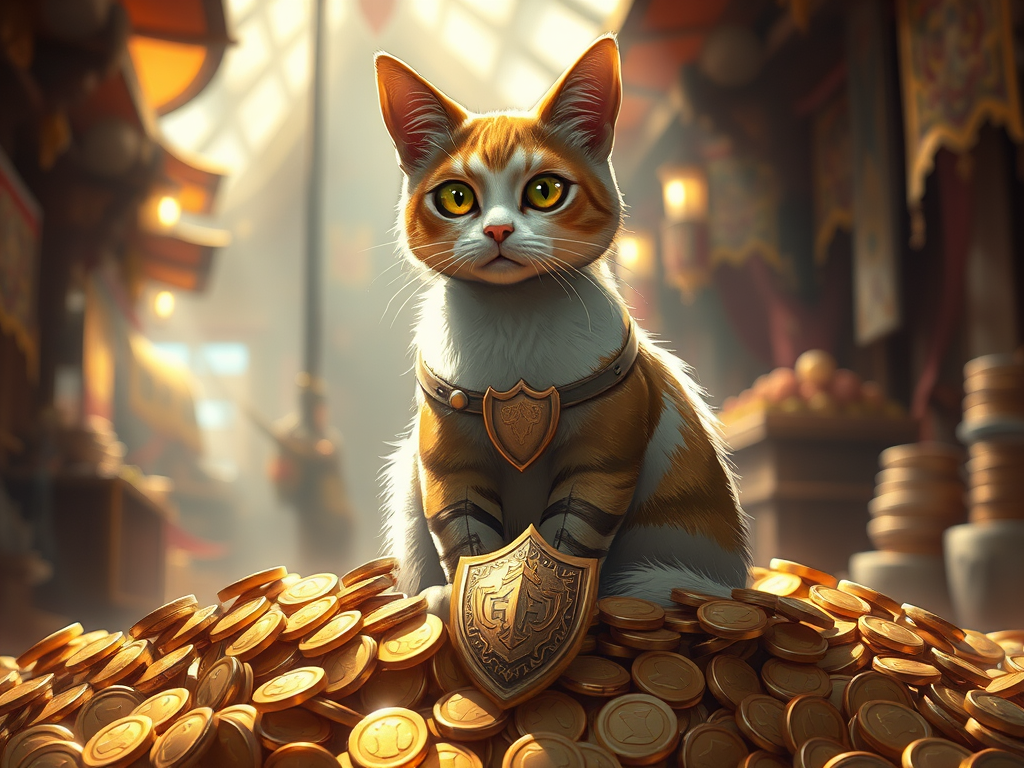
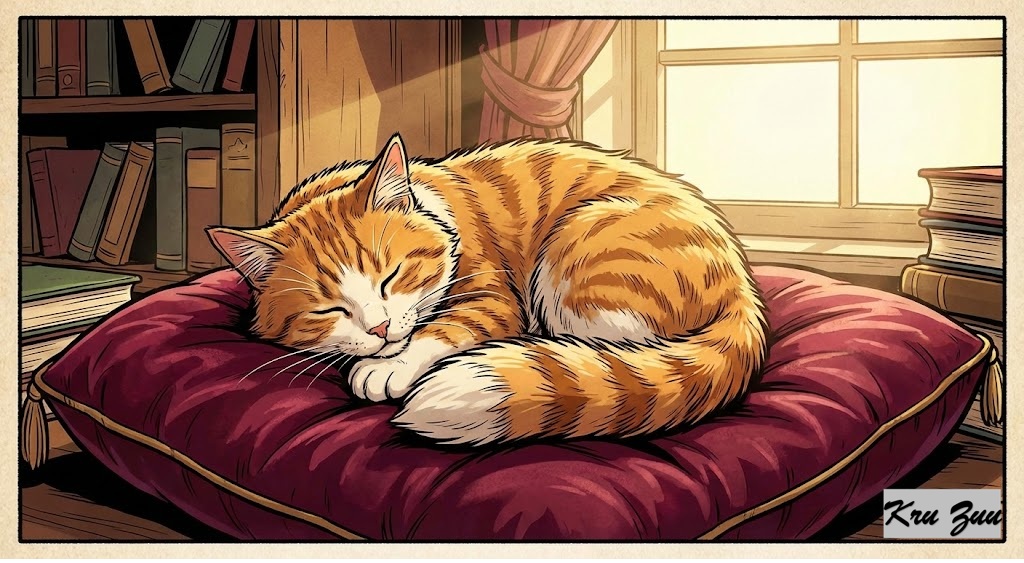
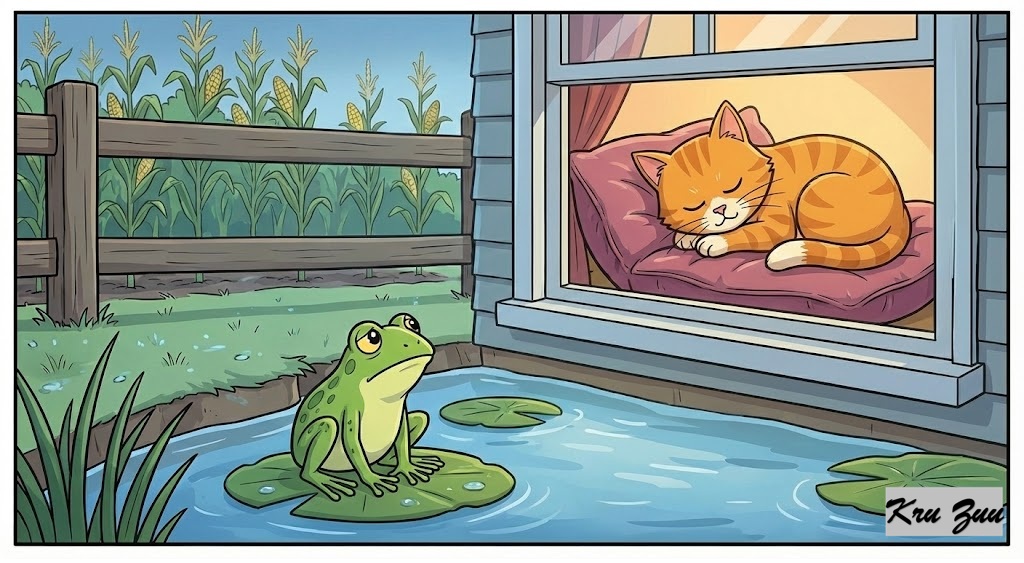
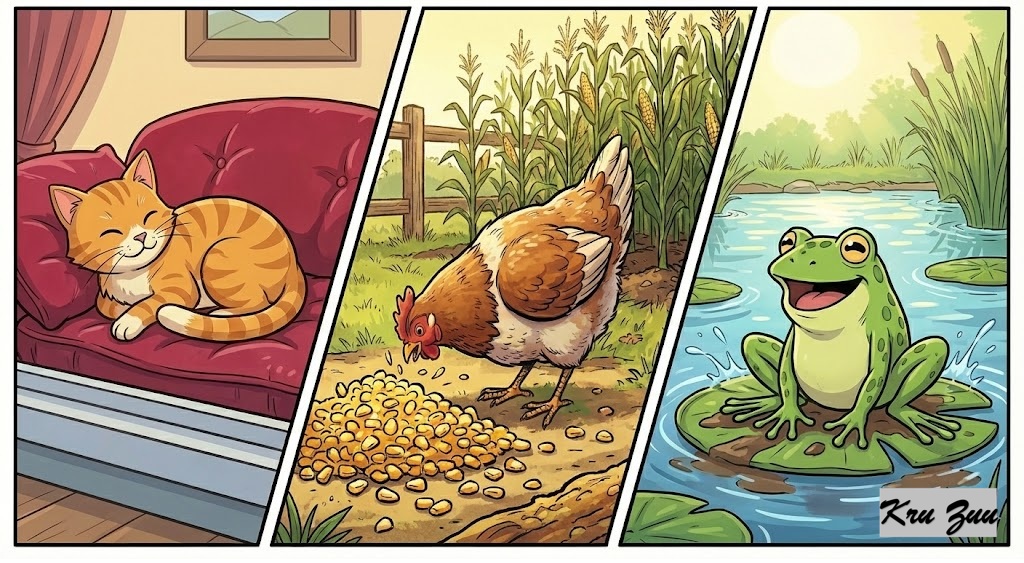
    🐱 Whiskers (The Cat): Sleeps on a velvet pillow inside the house.

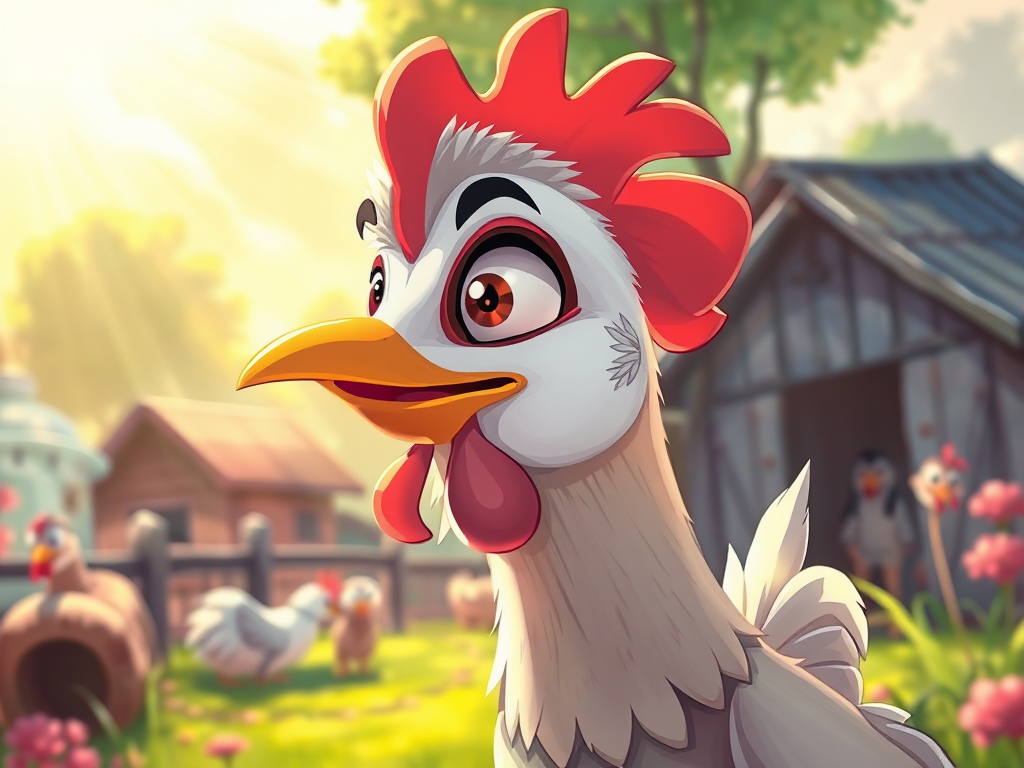
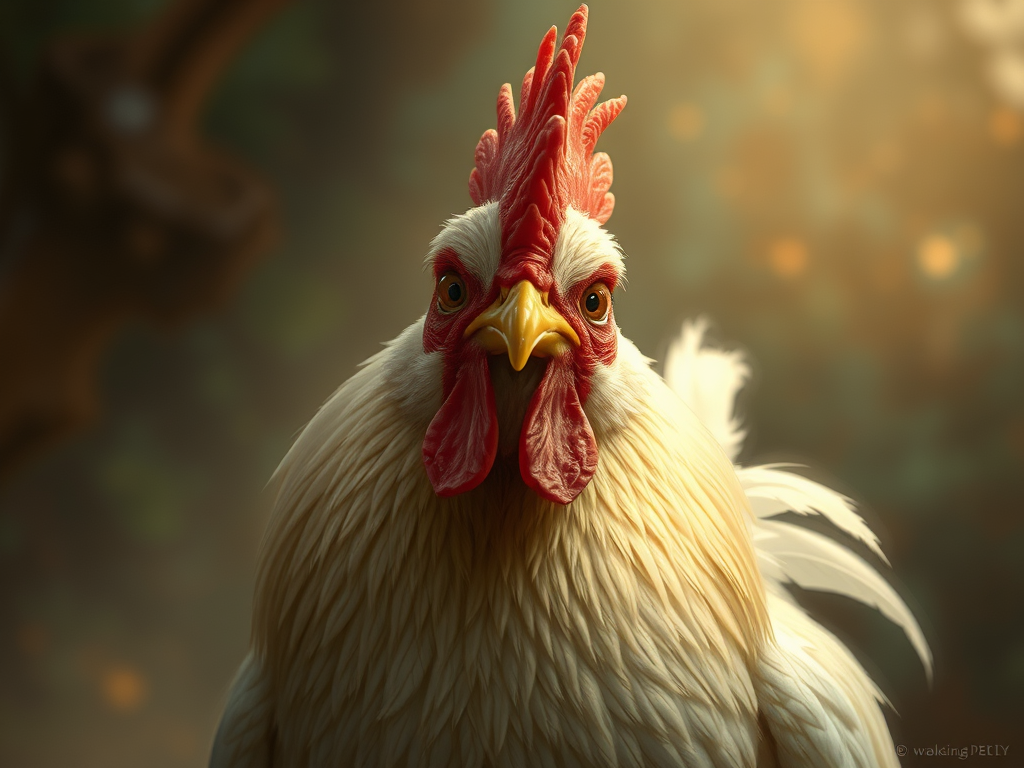
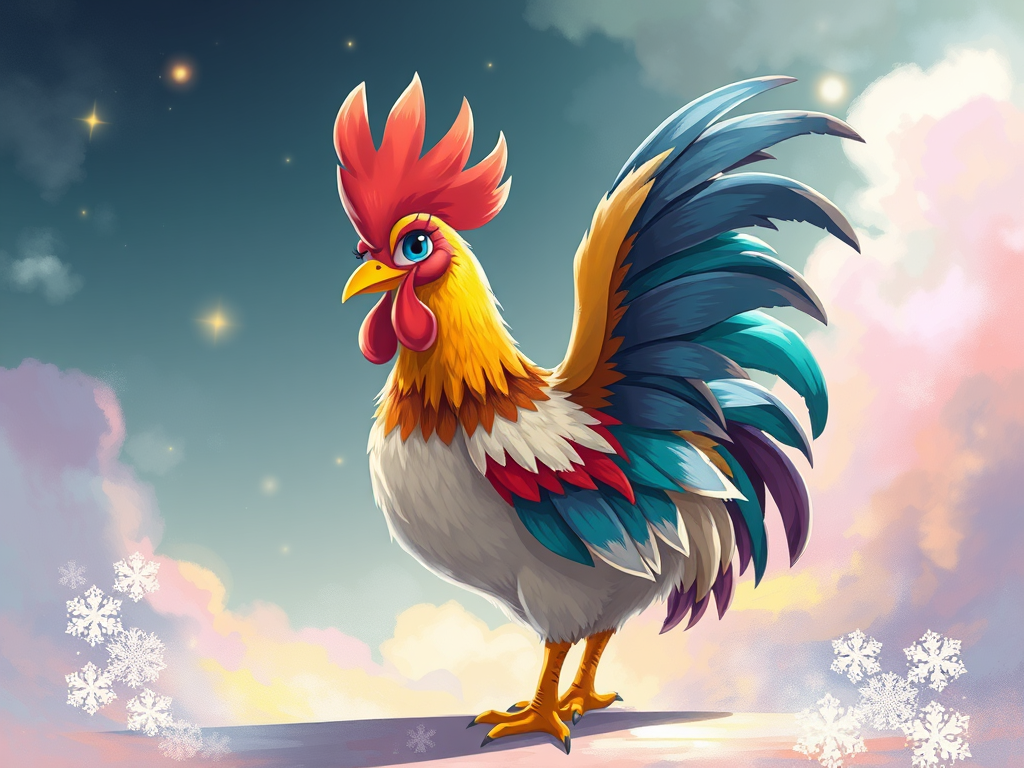
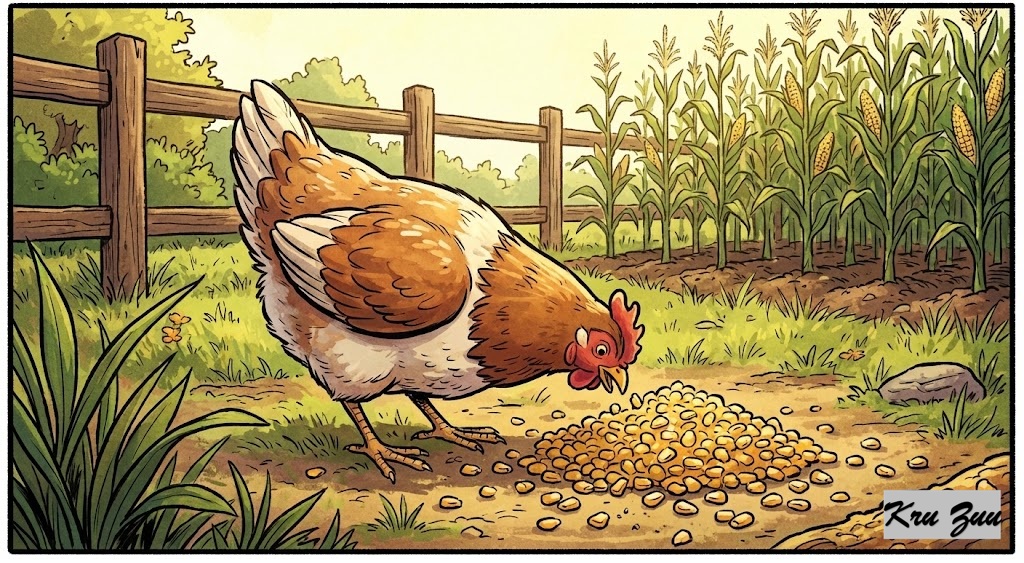
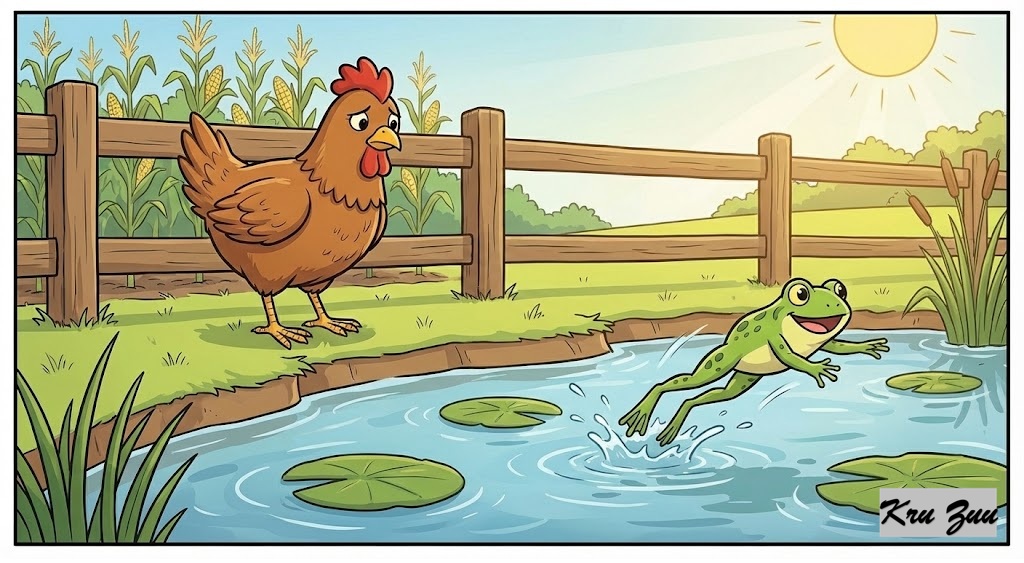
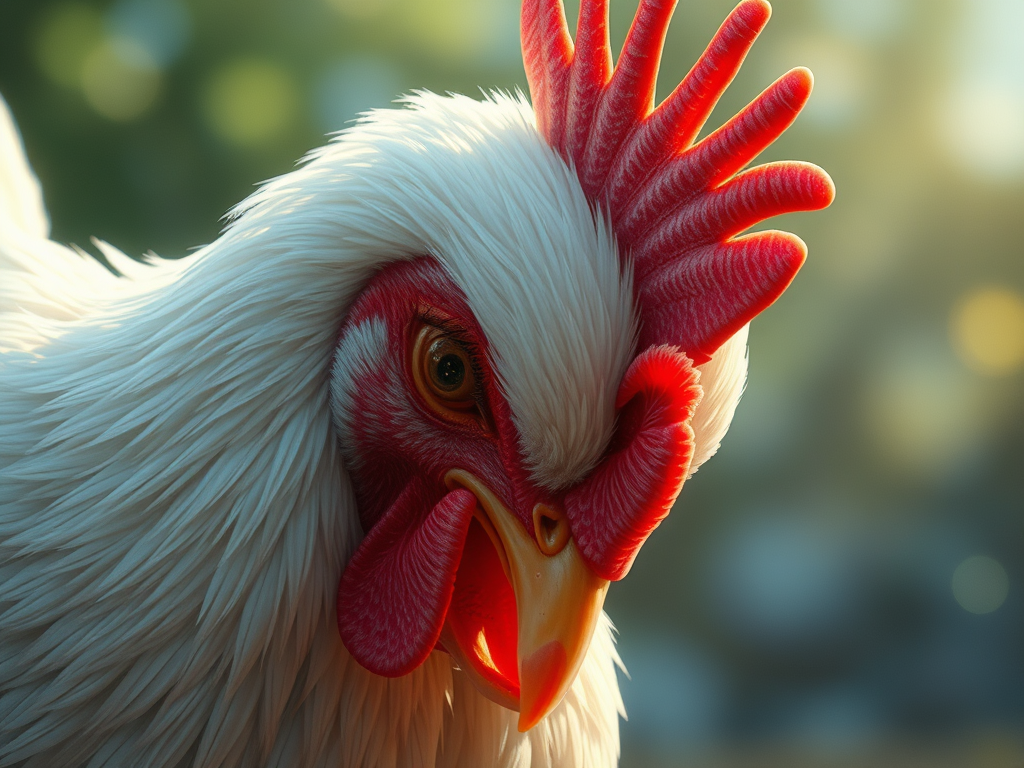
    🐔 Pecky (The Chicken): Lives in the garden with unlimited corn.

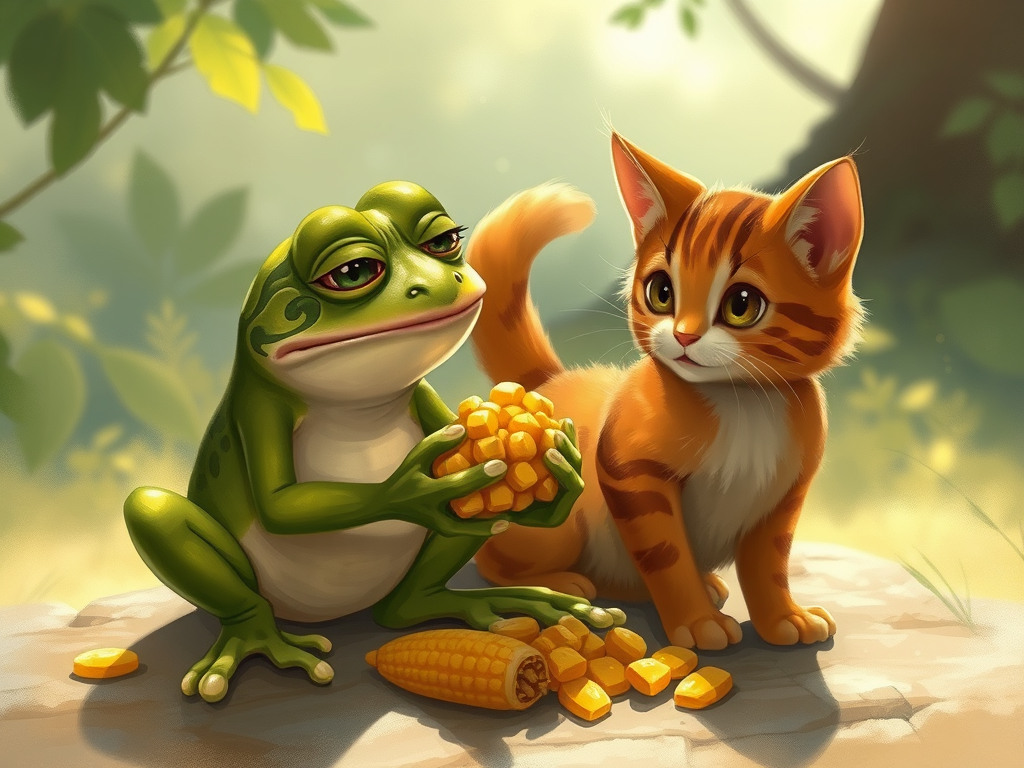
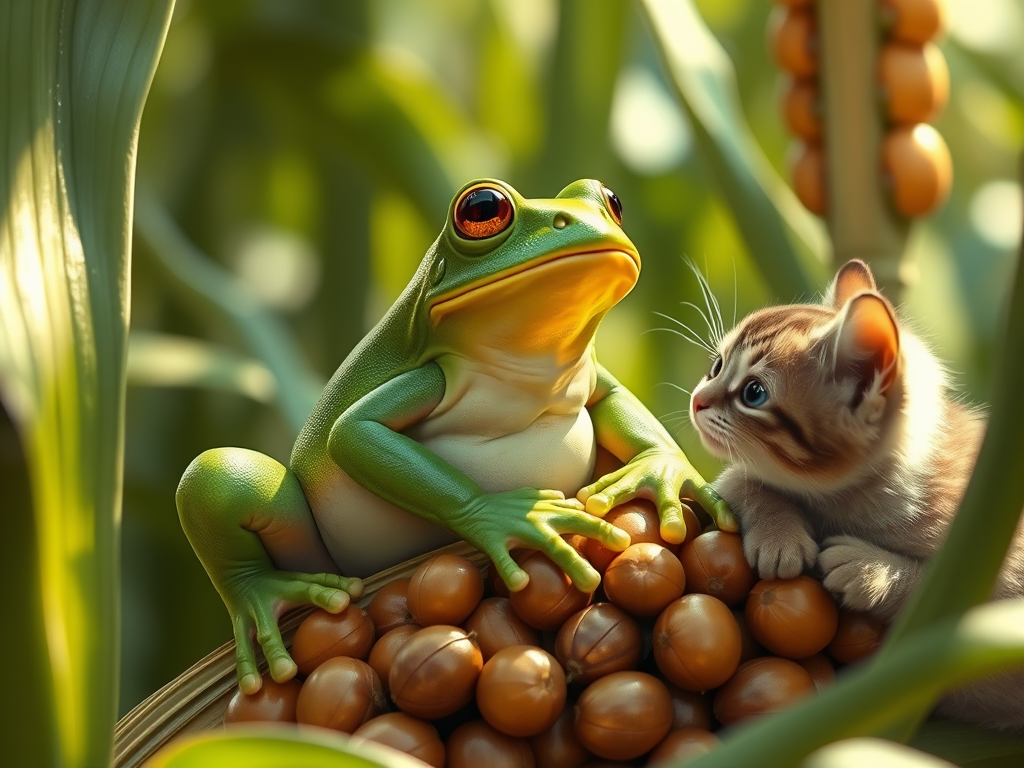
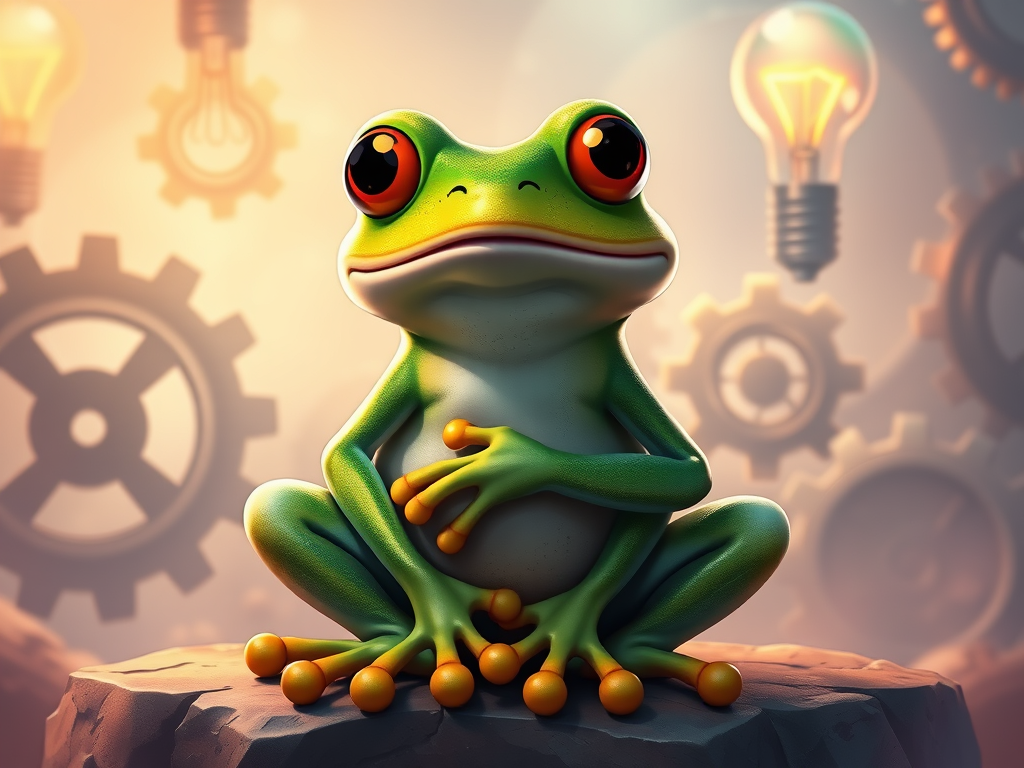
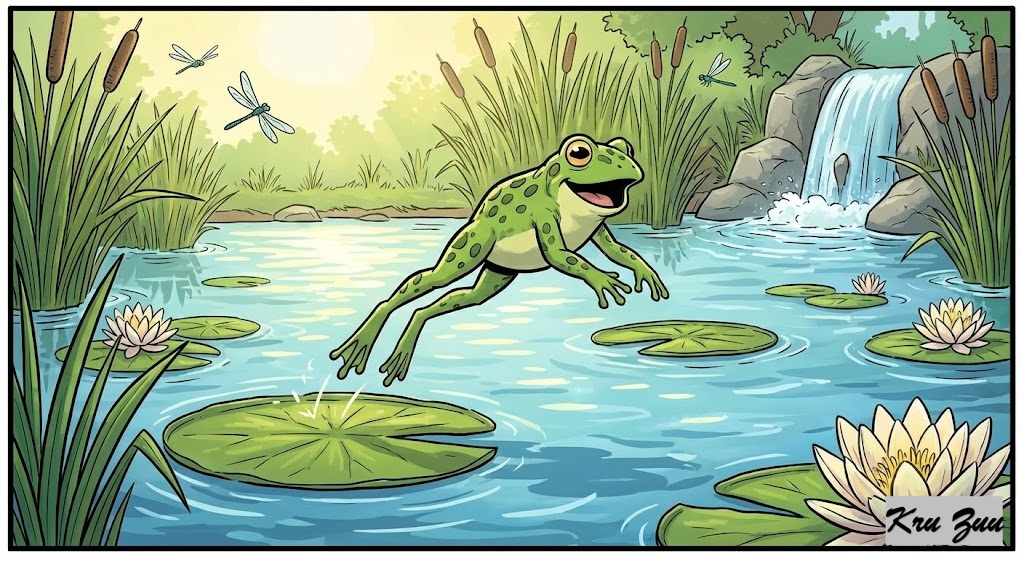
    🐸 Hops (The Frog): Lives freely by the cool pond.

    The Conflict: It is a sunny Tuesday, but nobody is happy.

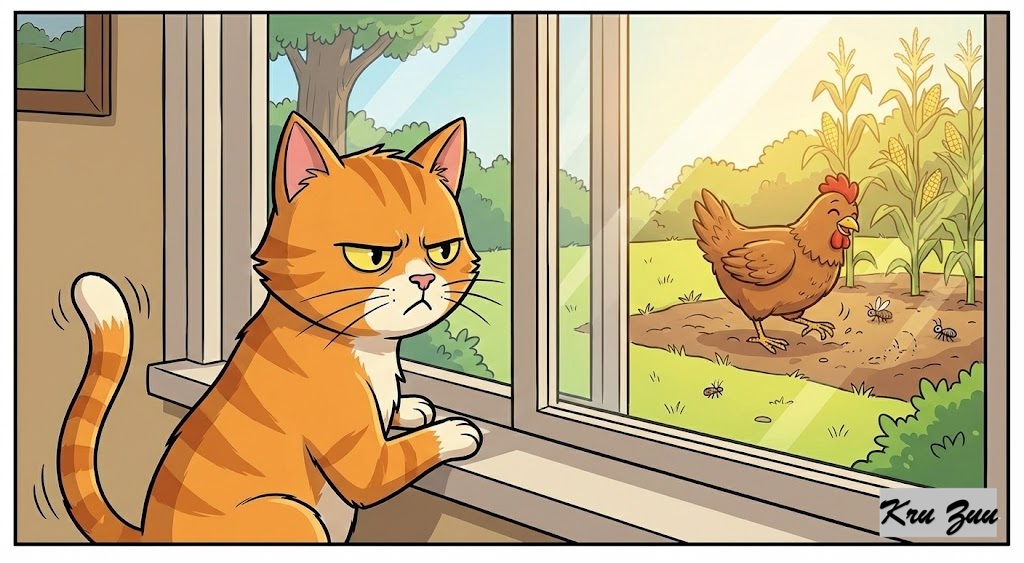
    Whiskers the Cat looks out the window. “Look at Pecky. She is so free! She feels the sun and eats bugs all day. I am trapped in this boring house. I wish I were a chicken.”

    Pecky the Chicken looks at the pond. “Look at Hops. He can swim! He travels wherever he wants. I am stuck behind this fence waiting to be eaten! I wish I were a frog.”

    Hops the Frog looks at the window. “Look at Whiskers. He sleeps on a soft pillow. He never gets cold or wet. He is treated like a King. I wish I were a cat.”

    The Swap (The Disaster):
    A magic fairy hears their complaints and snaps her fingers! 🪄💥
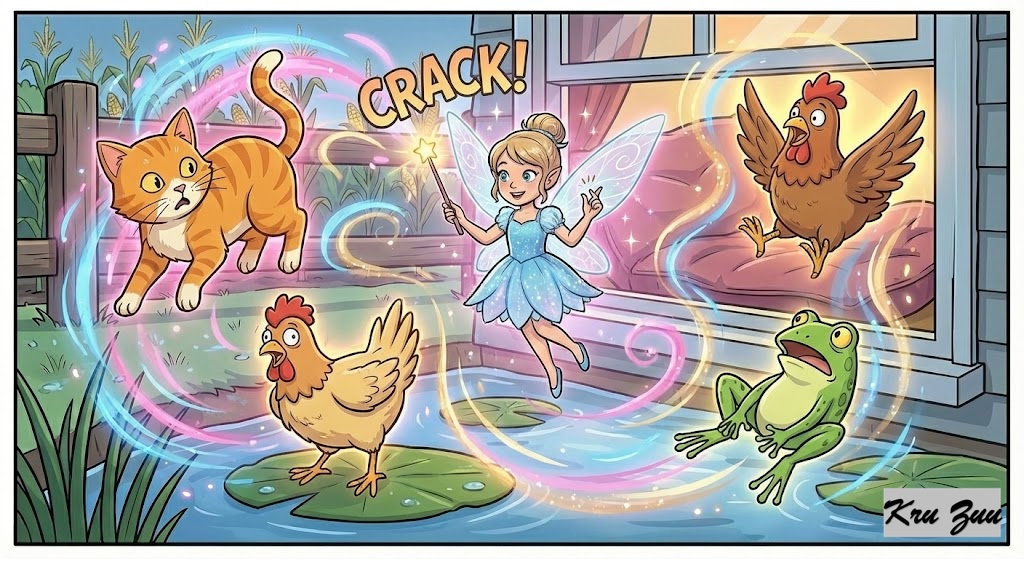

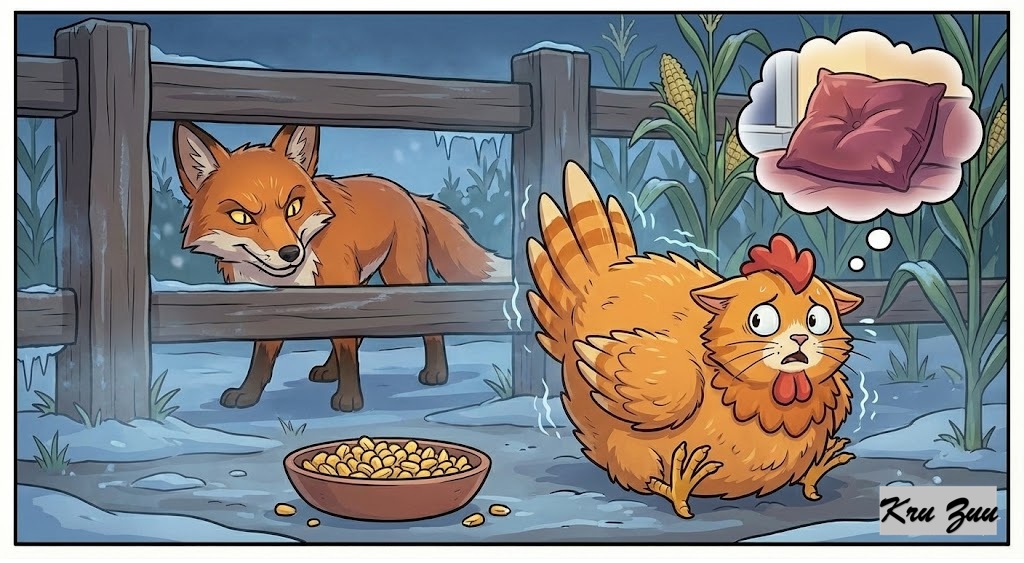
    The Cat becomes a Chicken: Whiskers is now outside. It is cold. The food is hard corn (yuck!). A fox stares at him. He is terrified! “Take me back to my pillow!” 🙀

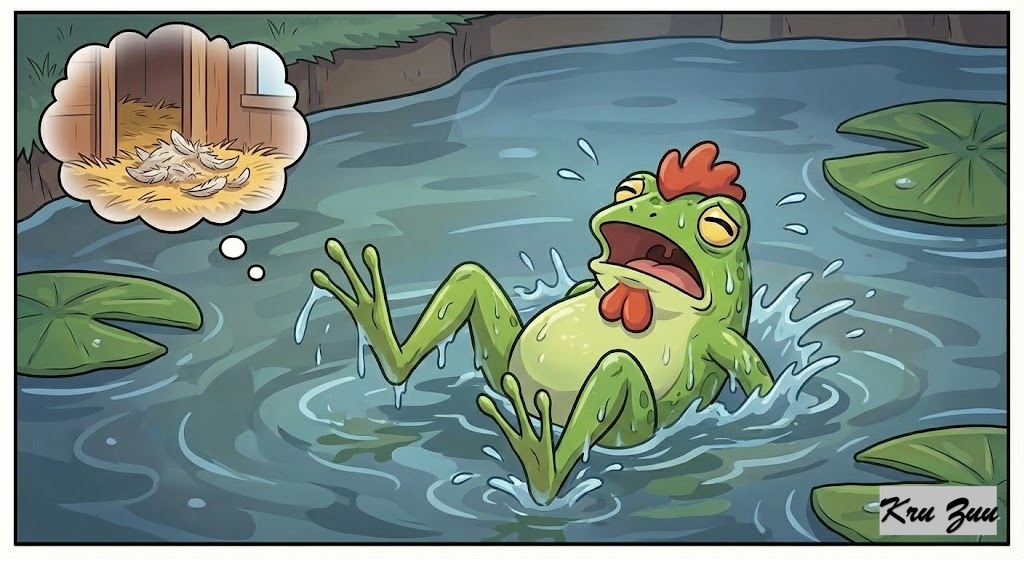
    The Chicken becomes a Frog: Pecky jumps into the water. “Help! I can’t swim!” She is wet, cold, and slimy. She misses her warm feathers. “Take me back to my coop!” 🐔💦

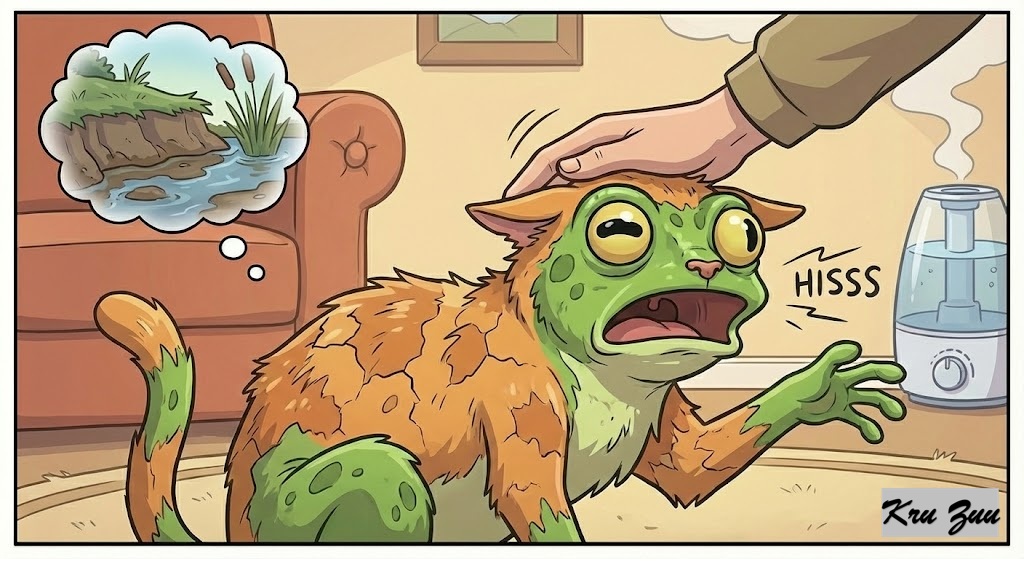
    The Frog becomes a Cat: Hops is inside. The air is dry. His skin starts to crack. The human tries to cuddle him. “Don’t touch me! I need water!” He feels suffocated. “Take me back to my mud!” 🐸🚫

    The Moral: When the magic ended, they all sighed with relief. The pillow, the corn, and the mud never looked so good. The grass wasn’t greener; it was just different.
    🎓 Lesson for English Learners


    Don’t compare your “Chapter 1” to someone else’s “Chapter 20.”


    Situation

    You hear a native speaker talking fast and fluent. You feel bad about your English.
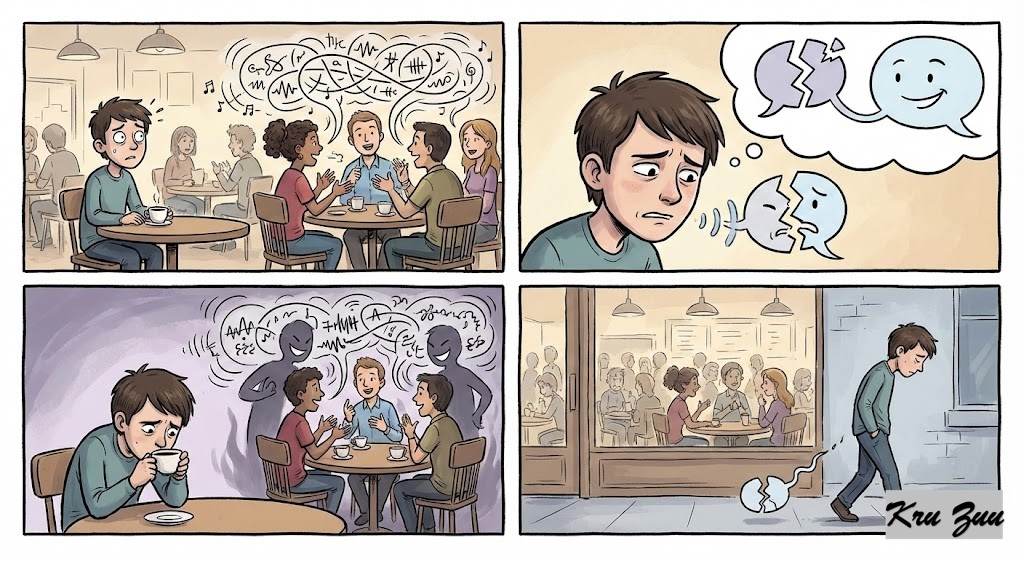

    The Reality

    They have been speaking English since they were babies. You started 2 years ago.


    You Say: “I will not look at their grass. I will water my own grass. Today, I will learn 5 new verbs. That is progress.”

    💬 Your Turn: The Gratitude Challenge 🚀


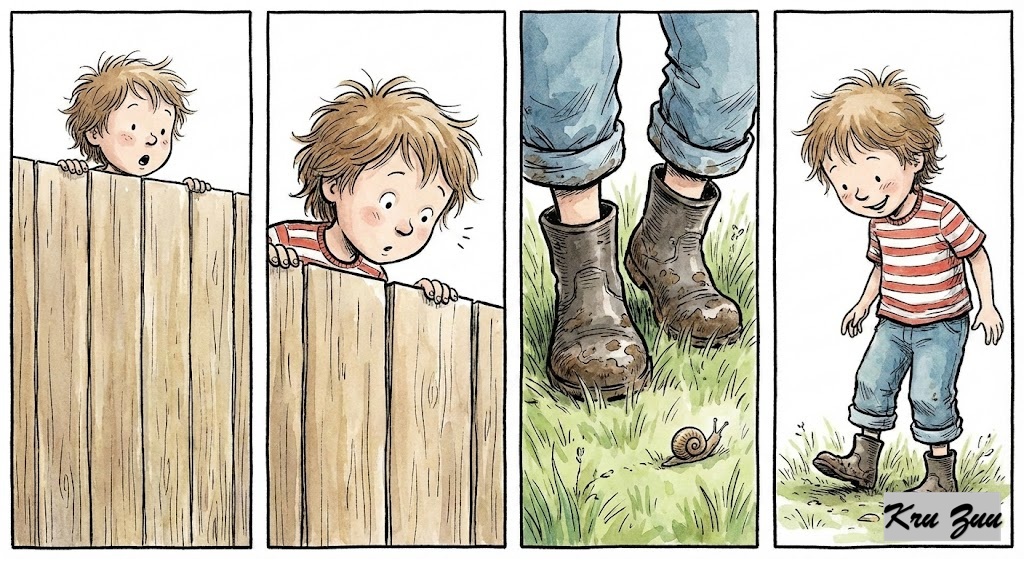
    Stop looking over the fence. Look at your feet.

    The Challenge: Identify ONE thing in your life that someone else might be jealous of.
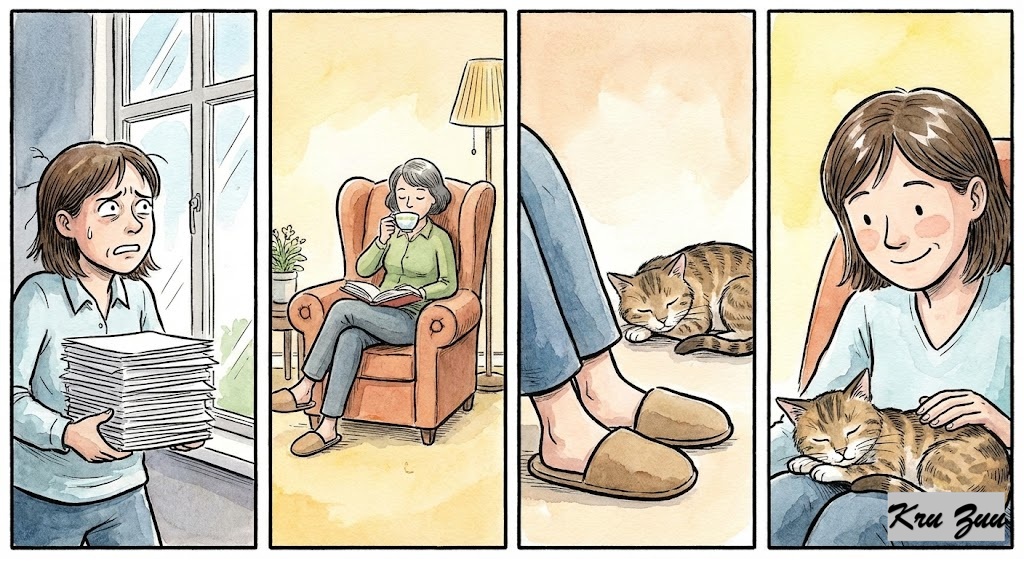

    Do you have free time?
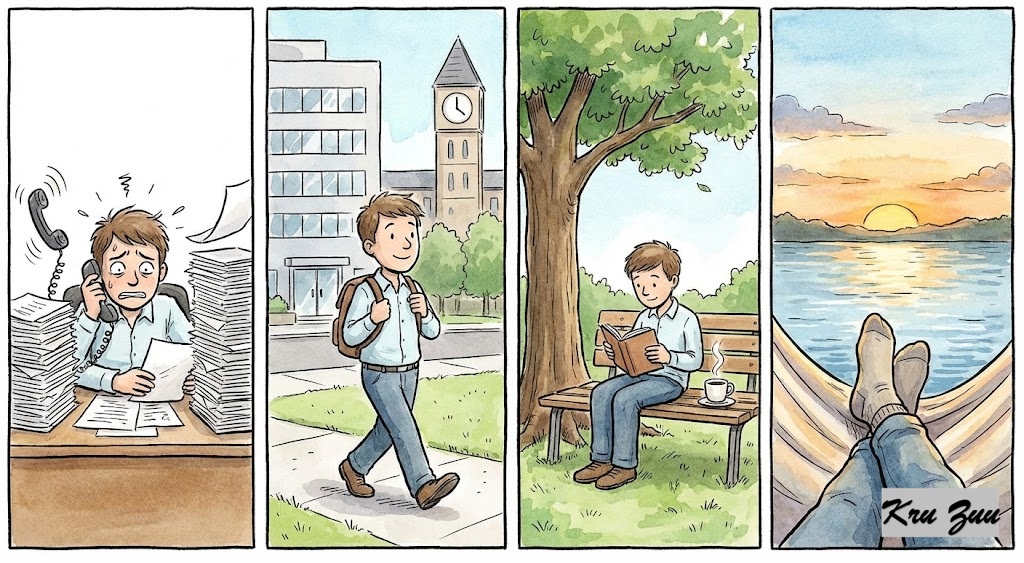

    Do you have a loving family?
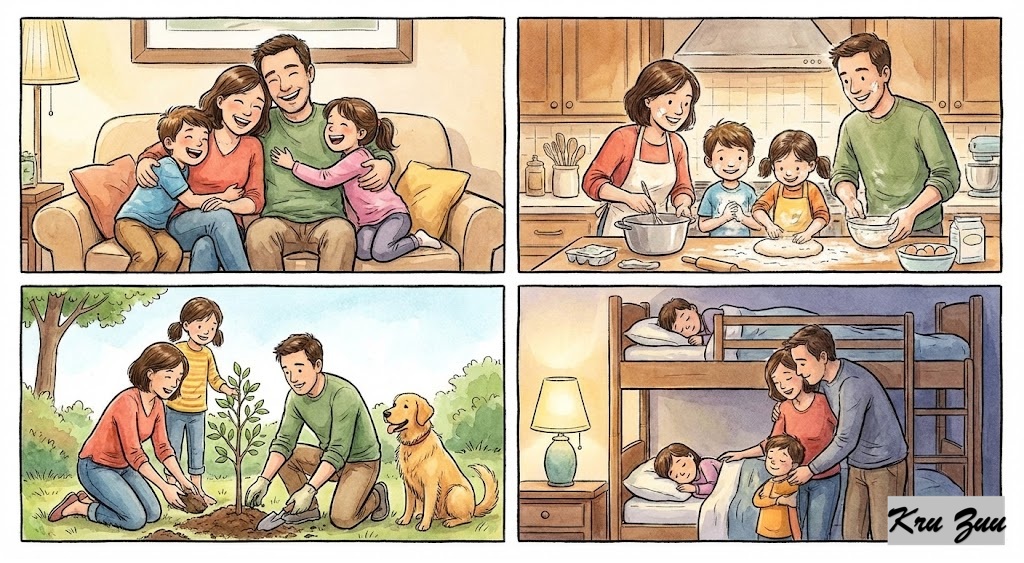

    Can you read this blog post? (Yes, you can!)


    The Action:
    Write that one thing in the comments below! 👇 “I am happy that I have…”


    (Don’t put it off! Do it now!) 😉

    By Zubeyir YURTKURAN

    https://www.facebook.com/BrainBattleground/

    https://www.facebook.com/zubeyr.yurtkuran/

    https://www.instagram.com/zubeyryurtkuran/
    https://www.youtube.com/@BrainBattleground-b3p

    https://www.instagram.com/brainbattleground/

  • Honesty Is The Best Policy: How Short-Term Comfort Kills Long-Term Trust

    Honesty Is The Best Policy: How Short-Term Comfort Kills Long-Term Trust

    🧐 When Does the Liar’s Lamp Go Out?


    📝 The Short Cut: Fabricating an excuse to cover up that you haven’t finished a report.

    🔥 The Long-Term Cost: Having to invent three more lies to support the first one; permanently losing your manager’s/friend’s trust.


    💰 The Short Cut: Intentionally concealing a small piece of information in a deal to gain immediate profit.

    📉 The Long-Term Cost: Your reputation spreading, being labeled “untrustworthy” in the industry, and losing all future major deals.


    Life constantly proves a rule well-known to successful people: “Honesty Is The Best Policy.”


    In this post, we examine why a simple ethical rule is the most profitable strategy in life. Take off your masks, take a deep breath, and let’s dive into the value of trust. 💡

    🧐 The Anatomy of the Proverb


    Let’s look at the mechanics of this ethical compass.


    📚 Vocabulary Vault


    Honesty (Noun):
    The quality of being truthful, sincere, and possessing integrity. 🛡️


    Policy (Noun): A course of action or set of principles adopted by an individual or organization to achieve a goal. ⚖️


    Best (Adjective): Most profitable, most advantageous, or most long-lasting.


    🧠 Grammar Focus


    This sentence is a defining statement that establishes honesty as the wisest strategy.


    Formula: Honesty + [is] (Linking Verb) + [the best policy].


    The Meaning: Even if it causes immediate difficulty, honesty is the smartest policy because it secures reputation, trust, and therefore, long-term success.


    📜 History: The Price of Trust


    When did this idea become popular? People have known the societal cost of trust since they started living in groups.


    The Origin:
    The proverb is commonly associated with the American Founding Father, Benjamin Franklin. Franklin believed that honesty would lead to financial success in business. However, the saying itself predates him.


    The Lesson: The price of dishonesty (lost trust) is always higher than the immediate cost of telling the truth (the consequence of confession).

    🎯 Impact on Life: The Pros & Cons


    Is being 100% honest always a viable lifestyle? Let’s weigh the options.


    ✅ The Pros (Why it helps)


    Reputation: It builds and sustains trust, the most valuable asset one can acquire in the marketplace.


    Mental Peace: You don’t have to remember your lies. Your mind is free from the stress of managing a web of deceit. 🧘


    Simplifies Life: Instead of building complex lies, it simplifies your life and allows you to focus.


    ❌ The Cons (Why it can be tricky)


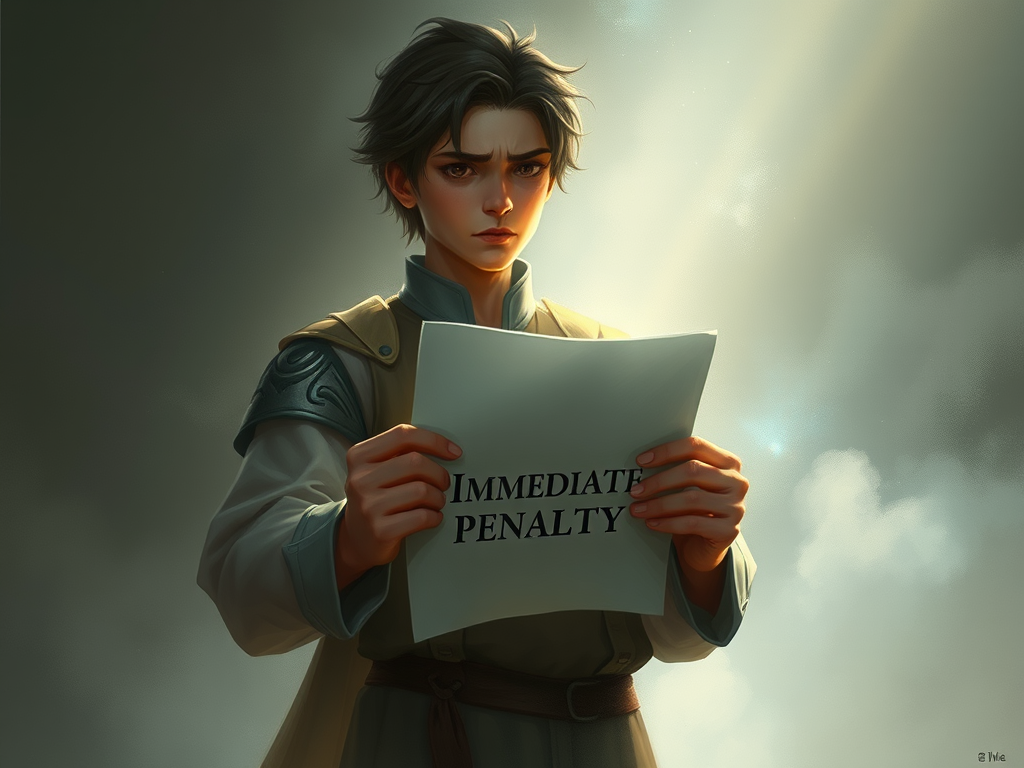
    Immediate Penalty:
    Sometimes, honesty means admitting a mistake or deficiency, which can result in an instant penalty.


    Emotional Harm: In sensitive social situations where white lies are often preferred, excessive blunt honesty can cause emotional damage.

    🎭 Short Story: The Missing Nut Fund


    To understand this proverb better, let’s revisit our friends on the farm. The communal winter provisions fund (nuts and corn) is running low.


    🌟 Character Introduction


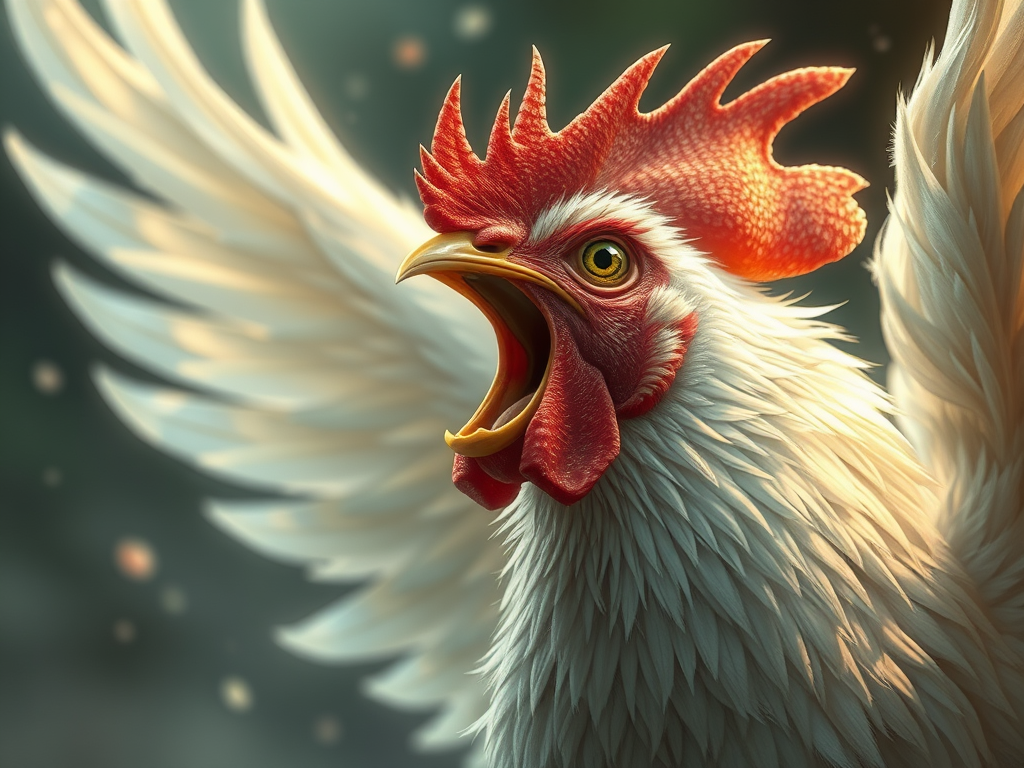
    Percy the Chicken (The Short-Cutter): Resorts to big lies for instant relief. He prioritizes short-term gain over long-term reputation. 😵


    Luna the Cat (The Trust Manager): Manages the farm’s funds. She highly values trust, and once broken, it cannot be easily restored. ✨


    Fred the Frog (The Integrity Expert): If he makes a mistake, he confesses immediately and knows that rectifying his error is the most profitable path. 🐸


    Luna noticed a small amount of nuts was missing from the winter provisions fund.


    Percy immediately rushed over. “Ah, Luna! I’m sure that pesky squirrel, Sneaky Tail, came and stole it! I saw him this morning, he’s very crafty!” Percy had actually secretly eaten the nuts but blamed someone else. 🤥


    Meanwhile, Fred approached Luna to confess that he had accidentally knocked over and spilled a tiny portion of corn due to fatigue.


    Percy whispered to him: “Shhh, Fred! No one will notice two kernels of corn. Why put yourself in trouble by confessing?”


    Fred shrugged. He turned to Luna: “Luna, I am very sorry. I spilled two kernels of corn because I was tired. I will immediately replace them. I promise to bring back double tomorrow.” 🐸


    Luna smiled at Fred. “Thank you, Fred. There is no penalty for your honesty. Your integrity is worth far more than two kernels of corn.”


    A week later, inconsistencies in Percy’s story surfaced. Luna realized that the specific type of squirrel he mentioned didn’t even live in that area. Luna approached Percy: “The nuts are gone. But worse, my trust is gone.”


    Percy bowed his head in ashamed regret.


    Fred, that week, not only replaced the corn but also found extra nuts, solidifying his position as Luna’s most trusted partner.


    In this story, the characters represent the cost of integrity:


    Percy’s Lie:
    Short-term comfort (No immediate penalty) 😵


    Fred’s Truth: Immediate cost (Confession and promise to fix) 🤓


    Luna’s Trust: Long-term profit (The most valuable asset in the marketplace) 🛡️

    🎓 Lesson for English Learners:


    You made a mistake in a speaking club and mispronounced a word. You ignored your error out of shame. (Percy’s Method)


    If your teacher asks, “Did I make a mistake?” and you confess and correct it immediately, the moment of shame is fleeting, but the correct learning is guaranteed. (Fred’s Method)


    True learning lies not in concealing errors, but in openly confessing and correcting them.


    💬 Your turn: Was there a time when honesty opened a big door for you, or a lie cost you dearly in life? Share your story in the comments! 👇

    By Zubeyir YURTKURAN

    https://www.facebook.com/BrainBattleground/

    https://www.facebook.com/zubeyr.yurtkuran/

    https://www.instagram.com/zubeyryurtkuran/

  • Don’t Judge a Book by Its Cover: How Appearance Hides True Value

    Don’t Judge a Book by Its Cover: How Appearance Hides True Value

    First Impressions Can Be Deceiving


    The Cover: A speaker in a perfect suit, delivering a cool, confident presentation.

    The Truth: All the data in the presentation was copied from someone else’s work, and the content is fundamentally empty.


    The Cover: A person using a plain, old phone and wearing modest clothes.

    The Truth: That person is managing the stock exchange of a massive tech company in minutes on that very phone.


    The Cover: A beat-up, old laptop showing signs of heavy use.

    The Truth: This computer is the place where the code for a groundbreaking future AI application was written.


    Life constantly proves a rule well-known to successful people: “Don’t Judge a Book by Its Cover.”


    In this post, we dive into the depths of this famous proverb, focusing on discovering the true value hidden behind the surface. Set aside your biases, open your mind, and let’s dive in.

    The Anatomy of the Proverb


    Let’s look at the mechanics of this famous phrase.


    Vocabulary Vault


    Cover (Noun): The exterior surface of something; the part seen first (Clothing, title, physical appearance).


    Book (Noun): The inner value of something; the essence, content, and depth (Character, knowledge, skill).


    Grammar Focus


    This sentence is a cautionary idiom.


    Formula: Don’t + judge + [a book] + [by] + [its cover].


    The Meaning: Do not make the mistake of determining the worth of a person or thing based solely on its outward appearance or first impression. True value lies in the content.


    History: Essence Matters More Than Reputation


    When did this idea become popular? People have always understood the risks of being fooled by showiness.


    The Origin: The sentiment has existed since the 17th century. However, the exact phrase is known to have been used in modern English for the first time in Robert Casey’sThe Secret of the Old House in 1944.


    The Lesson: What matters is not what someone looks like, but who they are or what an object actually does.

    Impact on Life: The Pros & Cons


    Is ignoring external appearance a good way to live? Let’s weigh the options.


    The Pros (Why it helps)


    Discovery: It allows you to see the hidden potential in people or ideas that society has labeled as “unimportant.”


    Equality: It helps you value people based on their character and abilities, not their title, wealth, or outward beauty.


    Authenticity: It encourages focusing on substance and originality instead of just playing to external perceptions.


    The Cons (Why it can be tricky)


    Security Risk: Sometimes, first impressions indicate danger or incompatibility. Always “ignoring the cover” may not be practical or safe.


    Time Consumption: You might end up spending time reading every “book under the cover.” This can be challenging in situations requiring quick decisions.

    Short Story: The Rusty Key


    To understand this proverb better, let’s visit our friends on the farm again.


    Character Introduction


    Percy the Chicken (The Show-Off):
    Always believes the brightest, newest, and most noticeable thing is the best. He trusts appearance 100%.


    Luna the Cat (The Practical Observer): Quickly assesses the situation and often prefers to act on the first impression. She favors outward beauty.


    Fred the Frog (The Value Expert): Ignores appearance. He always focuses on something’s true function, what it does, and the power within.


    One day, the lock on the old barn door was stuck. No one could get inside.


    Luna brought a shiny, gleaming silver key. “Let’s try this one,” Luna said. “Look how bright and new it looks!”


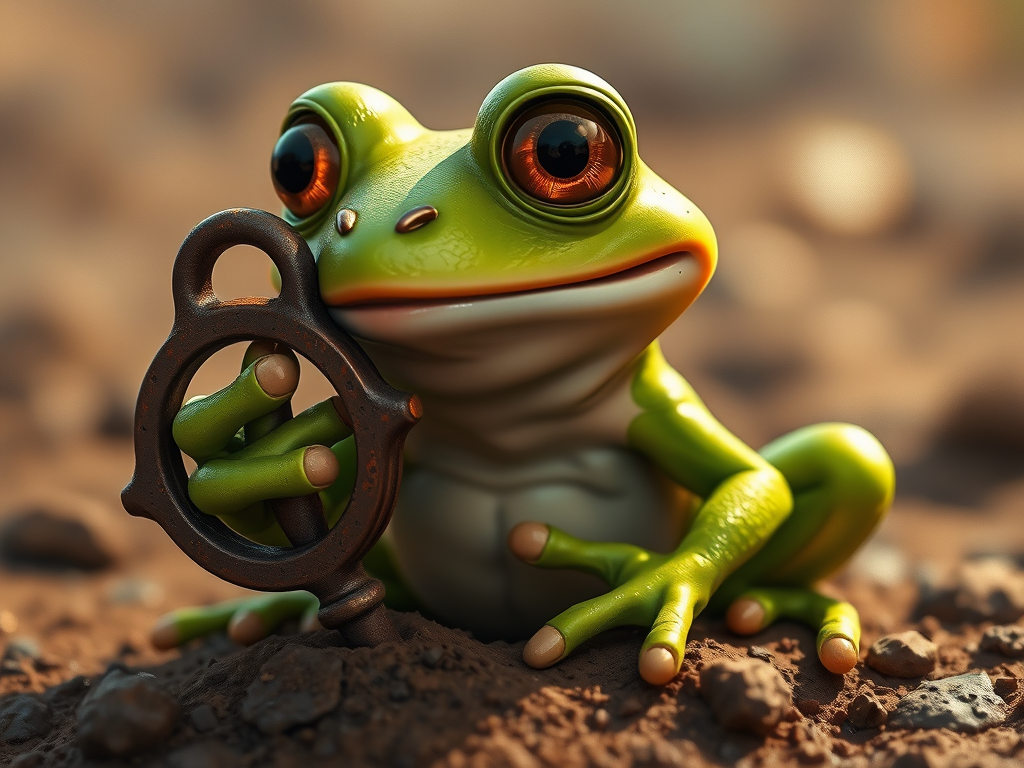
    Fred held a rusty, crooked key he had found in the muddy dirt on the ground. “The cover doesn’t matter,” Fred mumbled. “What matters are the teeth of the lock.”


    Percy, as usual, chose the bright and showy option. “Of course, Luna’s will work! Look at yours, Fred, it’s completely dirty and rusty!”


    Luna tried to insert the silver key into the lock, but the key was too large. The lock didn’t budge. Luna was disappointed.


    Fred quietly took the small, rusty key. The exterior of the key looked terrible, but its function was perfect. Click! The lock opened instantly.


    Percy’s mouth dropped open. “Unbelievable! It looked so bad…”


    Fred shrugged as he walked through the unlocked door. “You shouldn’t look at the outer shine, but at the correct function inside. Don’t judge a book by its cover.”


    In this story, the characters represent our tendency to judge:


    The Silver Key (Luna’s Choice):
    High Appearance, Low Function (Being fooled by showiness)


    The Rusty Key (Fred’s Choice): Low Appearance, High Function (Focusing on true value)


    The Lock: Opportunity (The path to valuable things)

    Lesson for English Learners


    A native speaker explaining a complex grammar rule might sometimes sound unenthusiastic or have slow English. (The Rusty Key)
    Conversely, someone teaching you simple greetings with a perfect accent on social media might know nothing about the depth of the language. (The Silver Key)
    True learning value is always more important than outward appearance.


    What do you think? Have you ever missed a “rusty key” in your life, or regretted judging something by its cover? Tell me in the comments!

    By Zubeyir YURTKURAN

    https://www.facebook.com/BrainBattleground/

    https://www.facebook.com/zubeyr.yurtkuran/
    https://www.instagram.com/zubeyryurtkuran/