Tag: Risk Management

  • 👀 Look Before You Leap: The Art of Calculated Action

    👀 Look Before You Leap: The Art of Calculated Action

    Look before you leap.


    🚀 The Leaper (The Impulsive):
    You quit your job because you had one bad day.

    You bought a used car without checking the engine. You sent an angry text message the second you felt annoyed.

    The Result? You are unemployed with bills to pay.

    The car breaks down in a week.

    You lost a friend over a misunderstanding.

    Regret hits you instantly. You are in a hole you dug yourself. 🕳️


    🕵️ The Looker (The Strategist): You updated your resume and saved money before quitting.

    You paid a mechanic to inspect the car first.

    You wrote the angry text but waited 24 hours to send it (and then deleted it).

    The Result? You transitioned smoothly to a better career.

    You bought a reliable vehicle.

    You kept your relationships drama-free.

    You control the situation; the situation does not control you. 🕶️


    📉 The Reality: This isn’t just about jumping over puddles. It’s about Due Diligence.

    In the age of “Instant Everything” (instant messages, instant buys), the ability to pause and think is a superpower. ⏸️


    💎 The Secret: Speed is good, but direction is better. Moving fast in the wrong direction just gets you lost faster.

    🧐 The Anatomy of the Proverb


    This classic phrase is a warning against acting on impulse without considering the consequences.


    📚 Vocabulary Vault


    To Leap (Verb):
    To jump high or a long way. (Here: To take a sudden, significant action.) 🏃‍♂️


    Example: “He leapt over the fence.”


    To Look (Verb): To use your eyes. (Here: To examine, research, or analyze the situation.) 🔍


    Consequences (Bonus Word): The results (usually unpleasant) of an action.


    Impulsive (Bonus Word): Acting without thinking.


    🧠 Grammar Focus


    The Temporal Clause (Time Connectors):
    The sentence uses the conjunction “Before” to connect two actions. It establishes a mandatory order of operations.


    Structure: [Imperative Command] + [Conjunction of Time] + [Secondary Action].


    Incorrect: Leap and then look. ❌


    Correct: Look before you leap. ✅


    Real Life: “Check your wallet before you order the expensive steak.”

    📜 History: Origin and Spread


    The wisdom of this proverb dates back to ancient storytelling.


    The Origin: It is attributed to Aesop’s Fables (The Fox and the Goat).

    A fox falls into a well. A thirsty goat sees him and asks if the water is good.

    The fox says, “It’s amazing! Jump in!” The goat jumps in without thinking.

    The fox climbs on the goat’s horns to escape, leaving the goat stuck.

    The moral? Check the exit before you enter. 🦊


    Global Cousins:


    🇹🇷 Turkish:
    “İki ölç, bir biç.” (Measure twice, cut once. – Focuses on precision.)

    🇹🇷 Turkish: “Dereyi görmeden paçaları sıvama.” (Don’t roll up trousers before seeing the creek.)


    🇪🇸 Spanish: “Antes de que te cases, mira lo que haces.” (Before you get married, look at what you are doing.)


    🇩🇪 German: “Erst wägen, dann wagen.” (First weigh, then dare.)

    🎯 Impact on Life: The Pros & Cons


    Is it always good to wait? Let’s analyze.


    ✅ The Pros (The Shield):


    Risk Reduction:
    You avoid catastrophic failures and financial loss.


    Confidence: When you finally “leap,” you do so with full commitment because you know the facts.


    Reputation: You are seen as wise, reliable, and level-headed.


    ❌ The Cons (The Trap):


    Analysis Paralysis: If you look too long, you might never leap at all. You get stuck in “overthinking” mode. 🗿


    Missed Opportunities: Sometimes, a window of opportunity closes quickly. If you hesitate too long, someone else will take the prize.

    🎭 Short Story: The Forest Shortcut


    Let’s visit our friends Penny, Fiona, and Max again!


    🌟 The Setup: Penny the Pig and Fiona the Fox were late for a birthday party.

    Max the Mouse pointed to a dark, overgrown path. “That’s a shortcut,” Max squeaked. “It saves 20 minutes!”


    The Conflict: Penny, worried about being late, shouted, “Let’s go!” and sprinted into the tall grass immediately.

    Fiona, however, stopped. She picked up a long stick and poked the grass in front of her.


    The Action: Penny was running full speed when, SPLAT!

    She fell straight into a hidden mud pit that looked like solid ground.

    She was stuck up to her neck in sticky mud! 🐷💩


    The Solution: Fiona, having “looked” with her stick, found the solid path around the pit.

    She used the stick to pull Penny out.

    They arrived at the party late, and Penny was covered in mud.


    The Moral: A saved minute is worthless if it costs you an hour of cleaning up a mess. Penny leapt; Fiona looked.

    🎓 Lesson for English Learners


    How to sound smart using this concept in conversation.


    Advice Language 🗣️


    To a friend buying a suspicious crypto-coin:
    “Hey, I know the returns look good, but look before you leap. Have you read the whitepaper?”


    To a colleague quitting in anger: “Don’t just walk out. Look before you leap, do you have another offer signed?”


    Vocabulary Expansion 📚


    Due Diligence (Noun): Reasonable steps taken by a person to satisfy a legal requirement or before buying something. “He did his due diligence before buying the house.”


    Calculated Risk (Noun): A chance taken after careful estimation of the probable outcome. “It wasn’t a gamble; it was a calculated risk.”


    Hasty (Adjective): Done with excessive speed or urgency; hurried. “Don’t make a hasty decision.”


    💬 Your Turn


    The “24-Hour Rule” Challenge 📝


    Think of a decision you are feeling pressured to make right now (buying something expensive, sending a risky text, signing up for a course).


    The Leap: What does your impulse want to do immediately?


    The Look: What specific detail do you need to check first? (e.g., Check bank account, read reviews, ask a mentor).


    Action Step: Commit to waiting 24 hours before making that decision. Use that time to “Look.”


    Question: Have you ever “Leapt” without “Looking” and regretted it? Tell us your story in the comments! 👇

    By Zubeyir YURTKURAN

    https://www.facebook.com/BrainBattleground/

    https://www.facebook.com/zubeyr.yurtkuran/

    https://www.instagram.com/zubeyryurtkuran/

    https://www.youtube.com/@BrainBattleground-b3p

  • 🧺 Don’t Put All Your Eggs in One Basket: The Secret to Risk Management

    🧺 Don’t Put All Your Eggs in One Basket: The Secret to Risk Management

    Don’t put all your eggs in one basket.


    👿 The Risk Taker:
    You invested all your savings in a single stock.

    You applied to only one university. You are waiting solely for the job offer from one company.

    The Result? If that stock tanks, everything is gone. If that university rejects you, you have no backup.

    Stress levels skyrocket, and your entire life is tied to one fragile point. 🌋


    😇 The Planner (The Diversifier): You spread your money across different bank accounts and investment tools.

    You applied to three different colleges.

    You are learning a new skill while also taking on some freelance work.

    The Result? If one investment dips, the others protect you. There is always a ‘Plan B.’ Your life rests on solid ground. 🛡️


    📉 The Reality: This saying is not just about finance. It applies to career, relationships, hobbies, and education too.

    Life is not a lottery where one thing saves you; it’s a strategic game where you manage probabilities. 🎯


    💎 The Secret: Flexibility is your power in life. If one area fails, the others can support you. Successful people always have a contingency plan.

    🧐 The Anatomy of the Proverb


    This common English phrase is a direct warning against making your life dependent on a single thing.


    📚 Vocabulary Vault


    Basket (Noun):
    A container. (Here: An area of investment, an opportunity, or an effort.) 🍎


    Example: “She keeps all her laundry in a plastic basket.”


    To Put (Verb): To place. (Here: To invest, to focus, to trust.)


    All Your Eggs: All your eggs. (Here: All your resources, money, energy, or hopes.) 🥚


    Diversification (Bonus Word):
    The strategy of investing in a variety of assets to reduce risk.


    🧠 Grammar Focus


    The Negative Imperative Mood (The Bossy Verb, Negative):


    The sentence starts with “Don’t” (Do not). Like the positive imperative “Treat others…”, this is a direct instruction or strong piece of advice.


    Normal: You should not put…


    Imperative:Don’t put all your eggs… (You are strongly advised not to do this!)

    📜 History: Origin and Spread


    The saying is based on a centuries old agricultural metaphor.


    The Origin: The phrase can be traced back to the 1600s in Spanish literature and the works of English writer Miguel de Cervantes (author of Don Quixote). The basic idea is simple: if you drop the basket, all your eggs break. 🍳


    Global Cousins:


    🇹🇷 Turkish:
    “Bütün yumurtalarını tek bir sepete koyma.” (Direct translation and most common usage.)


    🇨🇳 Chinese: “A man who wants his own end hangs himself from a single tree.” (The idea of finding alternative solutions.)


    🇮🇳 Hindi: “Taking risks is fine, but don’t risk your entire existence.” (Emphasizing the same theme.)

    🎯 Impact on Life: The Pros & Cons


    What are the benefits of living by this philosophy?


    ✅ The Pros (The Safety Net):


    Resilience:
    One failure doesn’t derail your whole life. You can recover quickly.


    Mental Peace: It reduces the pressure that comes from being over-reliant on a single outcome.


    Broader Experience: Trying different areas diversifies your skills and capabilities.


    ❌ The Cons (The Pitfalls):


    Dilution of Focus:
    If you spend too little energy on too many things, you might not achieve true excellence in any of them. (Too many baskets, too few eggs!)


    Missed Opportunity: Sometimes, taking a big risk can yield a big reward. This rule can sometimes lead to excessive caution.

    🎭 Short Story: The Village Market


    Let’s check in with our farm friends again!


    🌟 Character Introduction


    Penny the Pig:
    Ambitious, highly focused. 🐷


    Fiona the Fox: Cunning, risk-management expert. 🦊


    Max the Mouse:
    The market accountant. 🐭


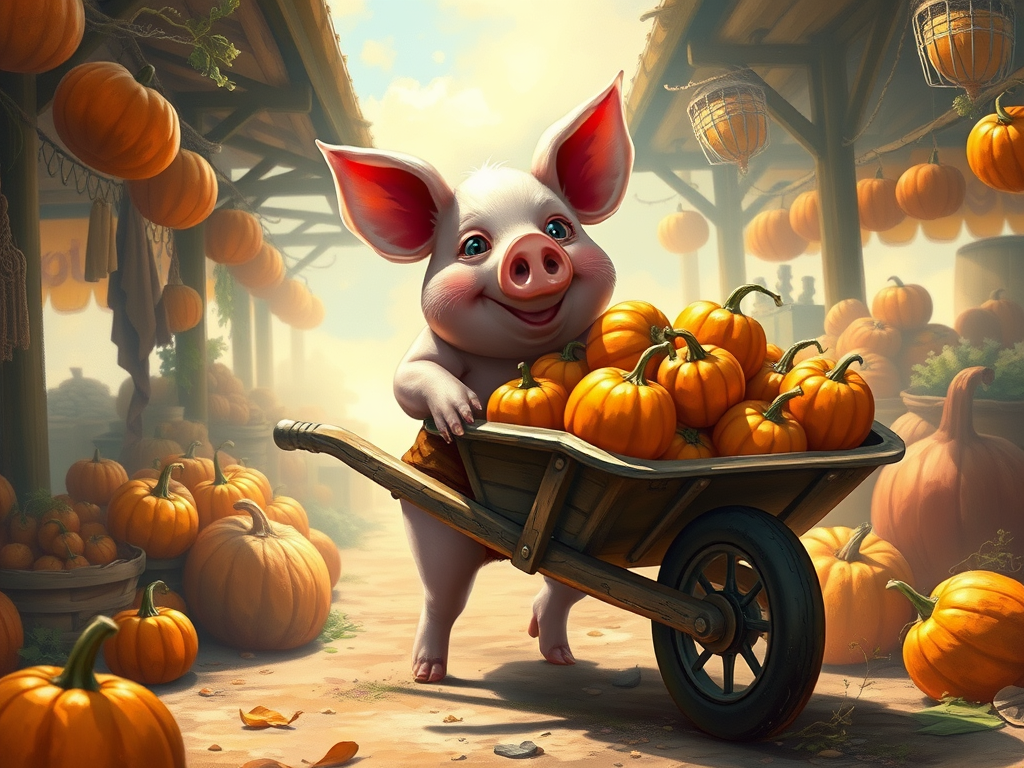
    The Setup: It was market day. Penny loaded all her delicious pumpkins onto one massive wheelbarrow. “This is the fastest way!” she thought.

    Fiona, however, divided her pumpkins into three separate smaller baskets, ready to sell at three different stalls.


    The Conflict: The path was bumpy, and just as Penny was descending a hill, her large wheelbarrow’s wheel came loose, and the WHOLE THING CRASHED! All her pumpkins were smashed. 🎃


    The Solution: As Penny cried, Fiona realized that two of her three baskets were still perfectly fine. Even though the third basket had tipped, the bulk of her loss was contained.

    Max the Mouse summed it up: “Penny’s loss is 100%. Fiona’s loss is only 33%. Fiona earned less, but she didn’t crash.”


    The Moral: Success is measured not only by what you gain but by what you avoid losing. Separating the baskets minimizes the cost of risk.

    🎓 Lesson for English Learners


    How can you use “The Basket Proverb” in your English conversations?


    Advice Language 🗣️


    If your friend applies to only one company:
    “Hey, don’t put all your eggs in one basket. Maybe apply to two or three more places as a backup.”


    To someone stressing over an exam: “Remember to study a variety of topics. Don’t put all your eggs in one basket for the final exam!”


    Vocabulary Expansion 📚


    Contingency Plan (Noun):
    A plan for a possible future event. “We need a contingency plan in case the main project fails.”


    Mitigate (Verb): To make less severe or serious. “The strategy is designed to mitigate risk.”


    Prudent (Adjective): Acting with or showing care for the future. “It is prudent to have multiple sources of income.”


    💬 Your Turn


    The Life Portfolio Challenge 📝


    Right now, think about the 3 most important “baskets” in your life and the “eggs” (energy/resources) you put into them.


    Basket 1 (e.g., Career/Job)


    Basket 2 (e.g., Health/Fitness)


    Basket 3 (e.g., Relationships/Family)


    Question: If one basket completely crashed (like losing your job), would the other two baskets be strong enough to save you? Or have you put all your eggs into one place?


    Tell me in the comments below which basket you’ve decided to strengthen! 👇

    By Zubeyir YURTKURAN

    https://www.facebook.com/BrainBattleground/

    https://www.facebook.com/zubeyr.yurtkuran/

    https://www.instagram.com/zubeyryurtkuran/

    https://www.youtube.com/@BrainBattleground-b3p