Tag: English Storytelling

  • 🧹 The Daily Shield: The Law of Sacred Order

    🧹 The Daily Shield: The Law of Sacred Order

    “Cleanliness is next to godliness.”


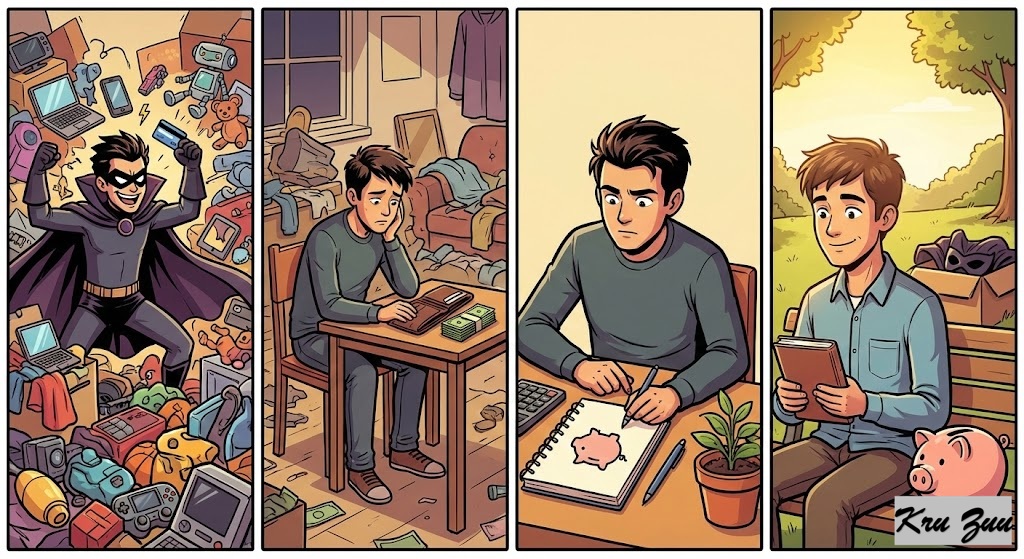
    😈 The Villain (The Chaos Magnet)

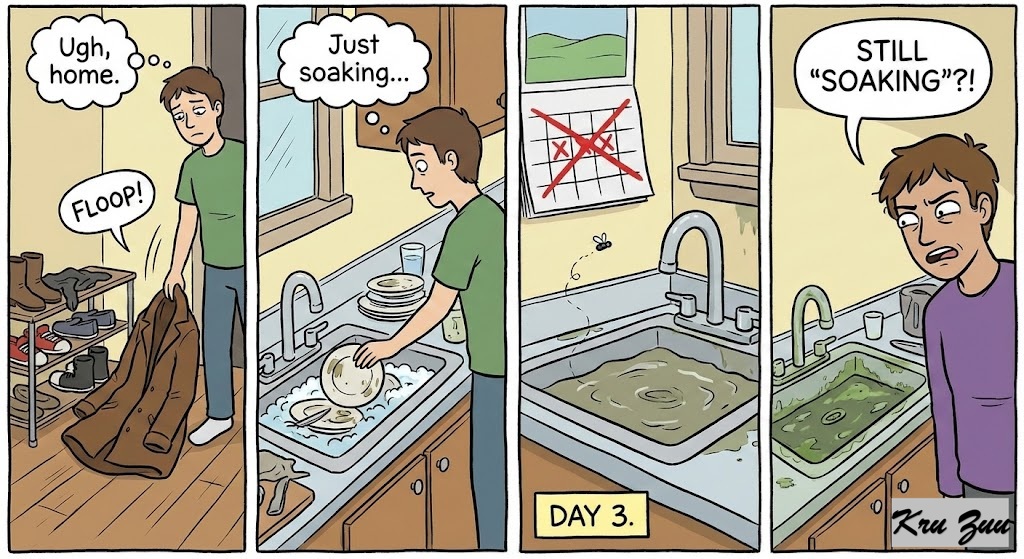
    You drop your coat on the floor. You leave dishes in the sink “to soak” (for three days).
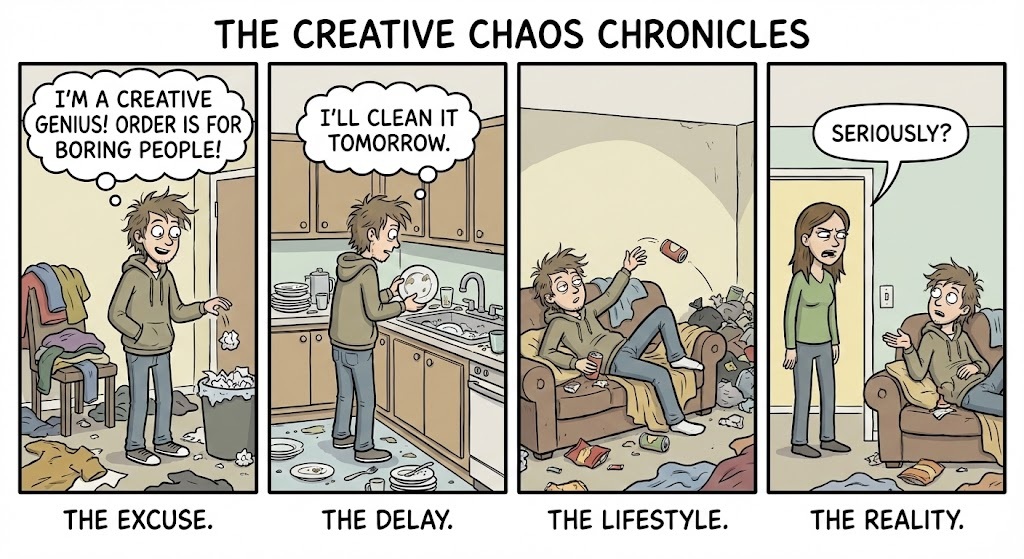
    You say: “I’m a creative genius! Order is for boring people!” or “I’ll clean it tomorrow.” 🌪️ You treat your environment like a trash can.

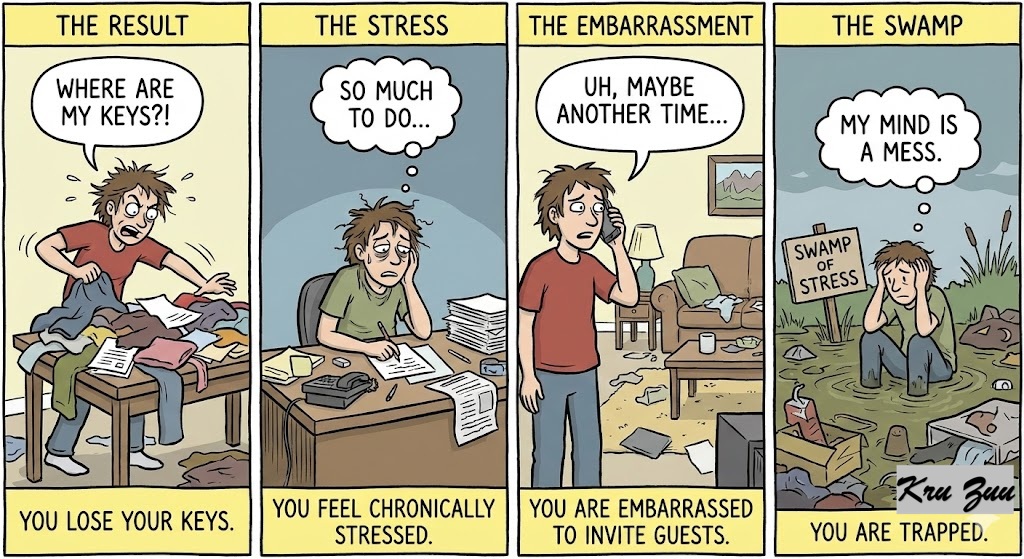
    The Result? You lose your keys. You feel chronically stressed. You are embarrassed to invite guests over. Your mind feels as cluttered as your desk. You are trapped in the “Swamp of Stress.” 😫

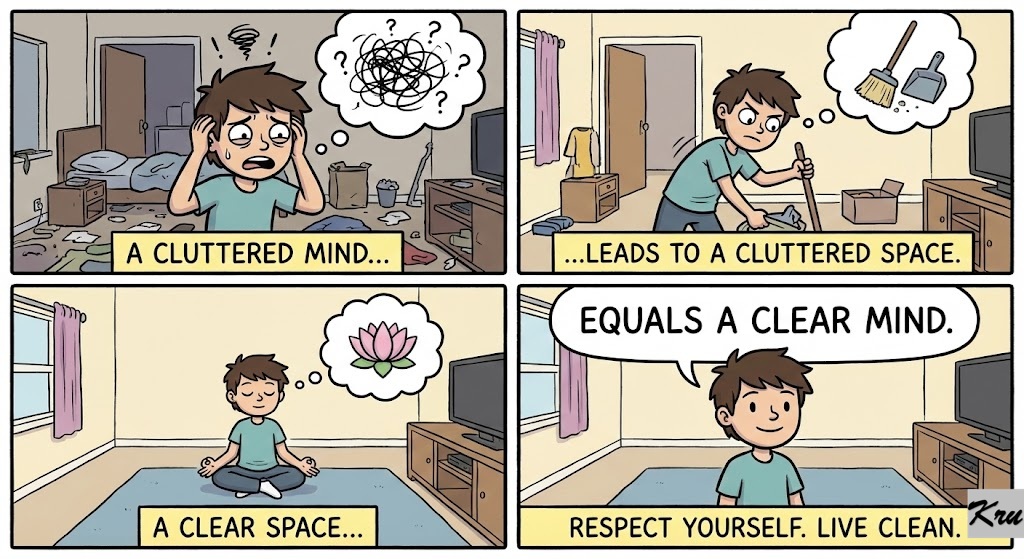
    😇 The Hero (The Zen Master): You finish eating; you wash the plate. You wake up; you make your bed. 🛑 You understand that your outer world reflects your inner world.
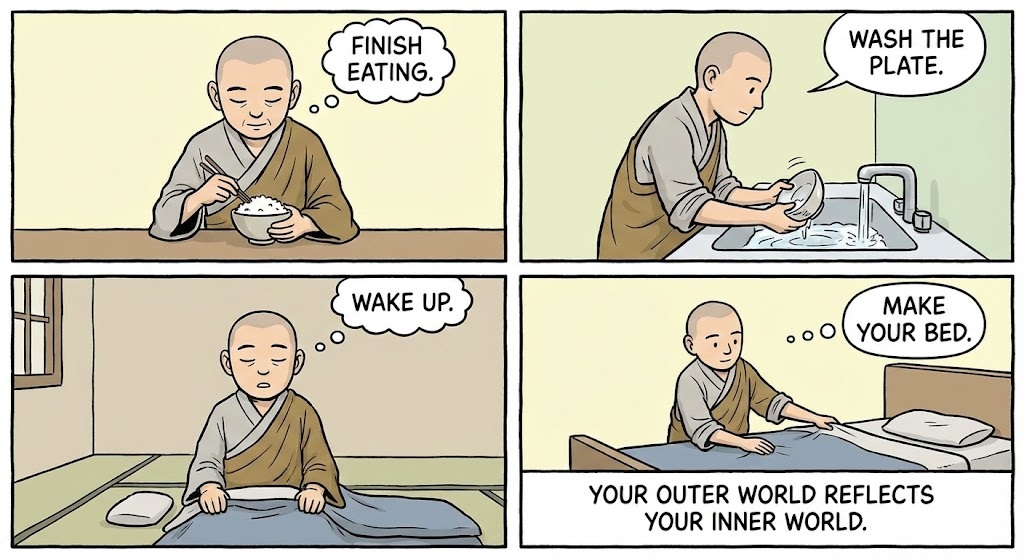
    You think: “A clear space equals a clear mind.” You respect yourself enough to live in a sanitary environment.

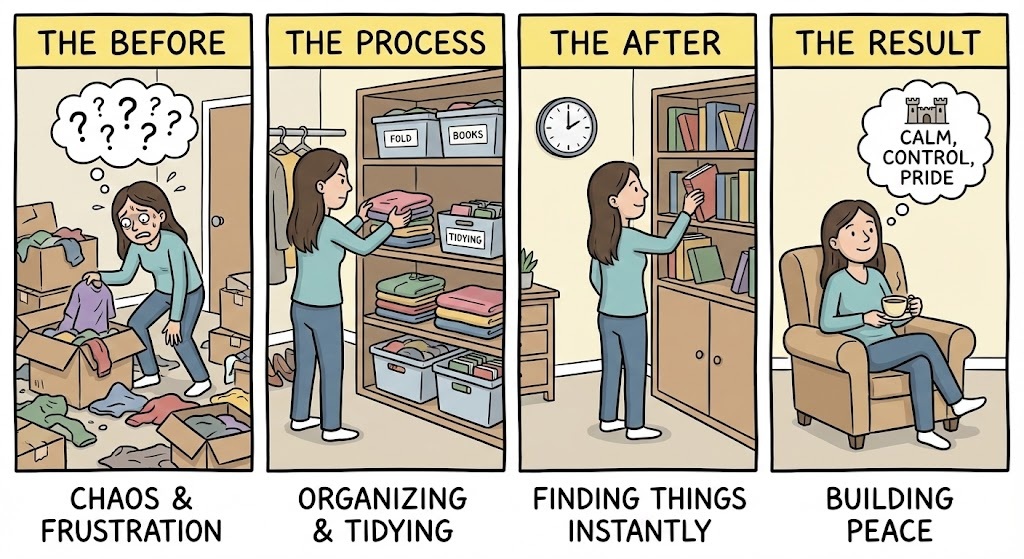
    The Result? You find things instantly. You feel calm and in control. You save time not hunting for lost items. You build pride, discipline, and peace. 🏰

    ⚖️ The Reality


    Entropy vs. Discipline.
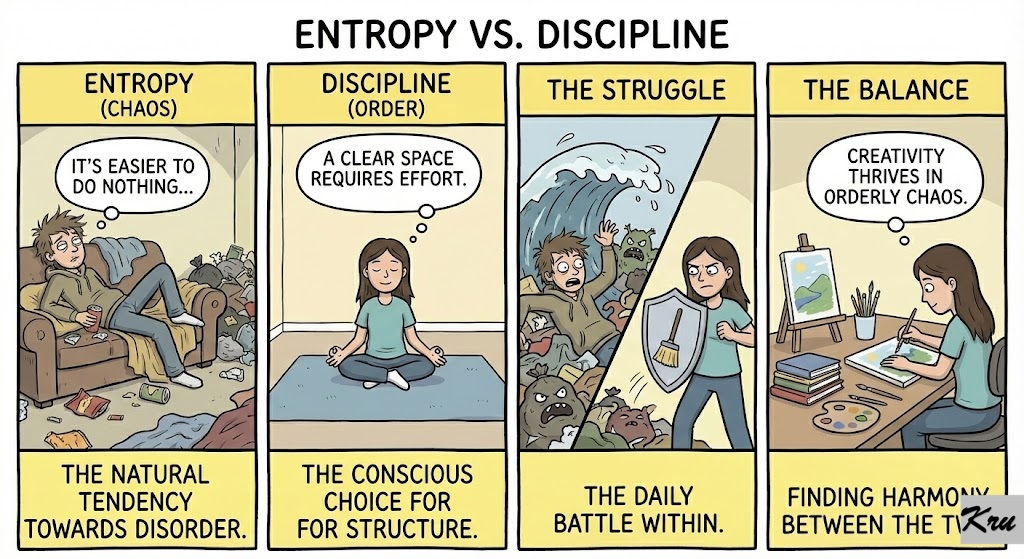

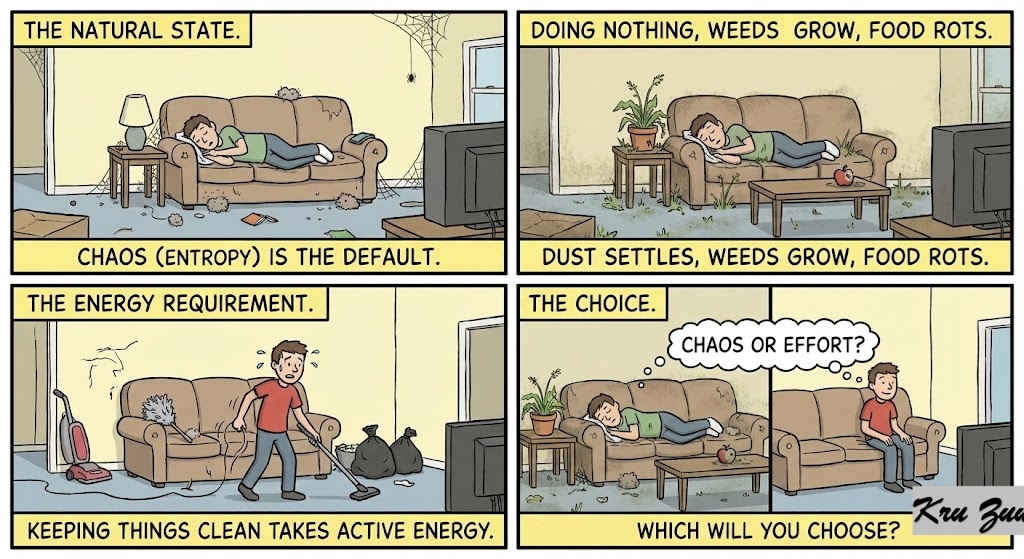
    The universe naturally moves toward chaos (entropy). If you do nothing, dust settles, weeds grow, and food rots. Keeping things clean requires active energy.

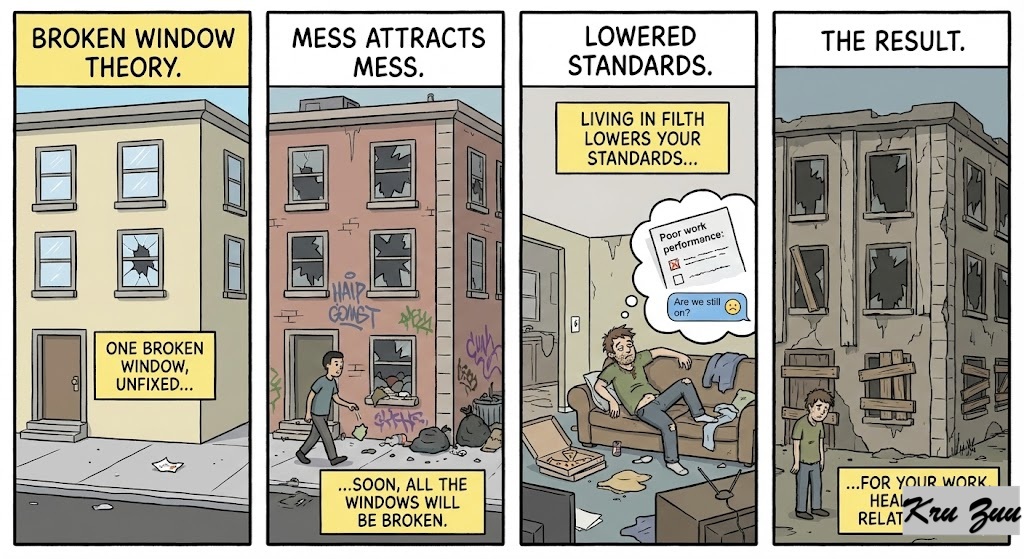
    Think of the “Broken Window Theory.” If a building has one broken window that isn’t fixed, soon all the windows will be broken. Mess attracts more mess. If you live in filth, your standards for your work, your health, and your relationships will lower.

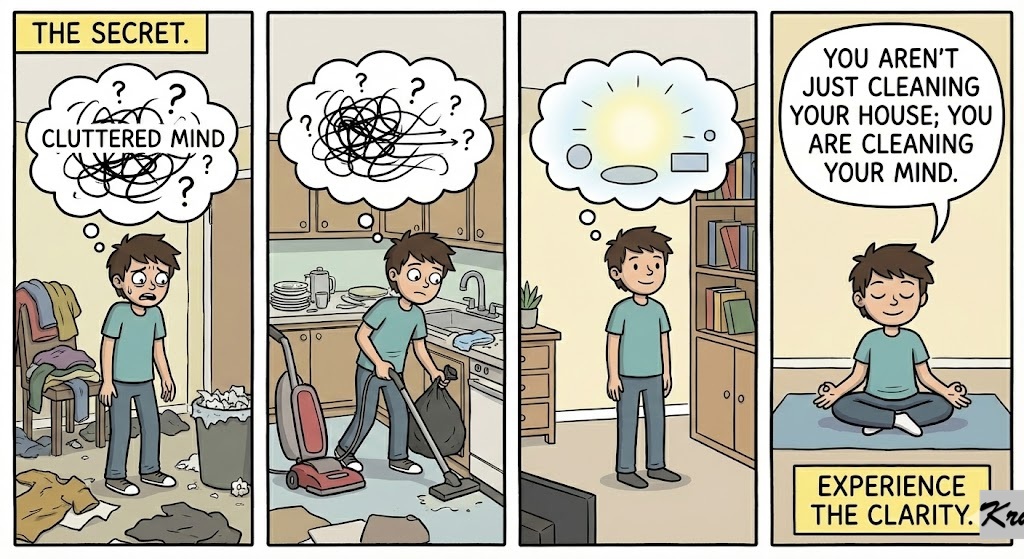
    💎 The Secret: You aren’t just cleaning your house; you are cleaning your mind.
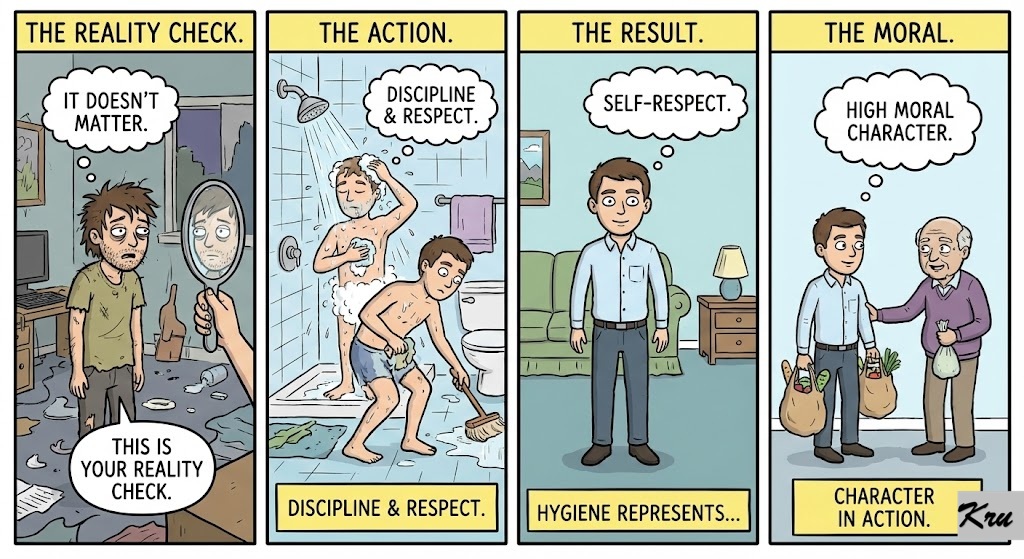
    🧐 The Anatomy of the Proverb


    This is your reality check that hygiene represents high moral character.

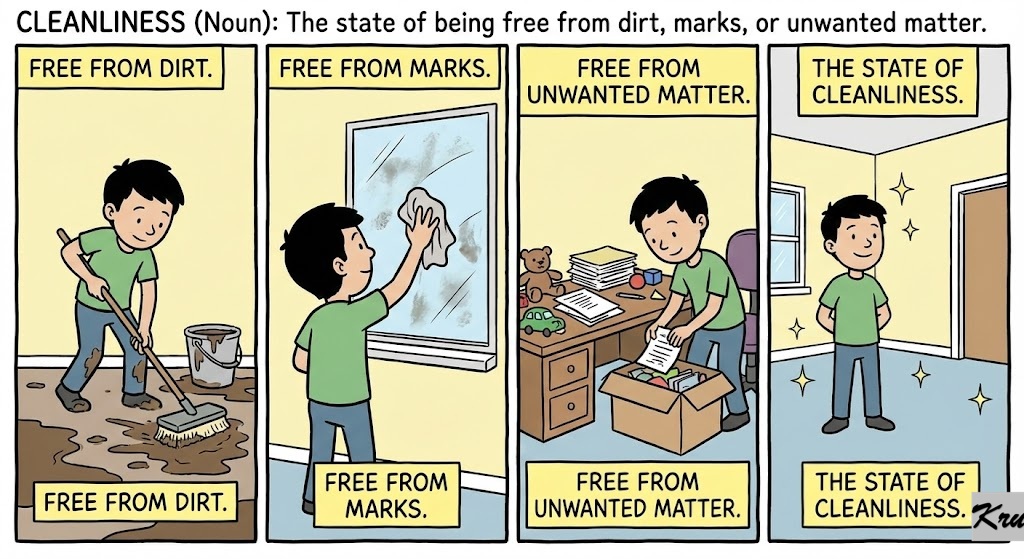
    Cleanliness (Noun): The state of being free from dirt, marks, or unwanted matter.

    Is Next To (Idiom/Preposition): Is very close to; is almost the same level as.


    Godliness (Noun): Divine quality; spiritual perfection; high moral virtue.


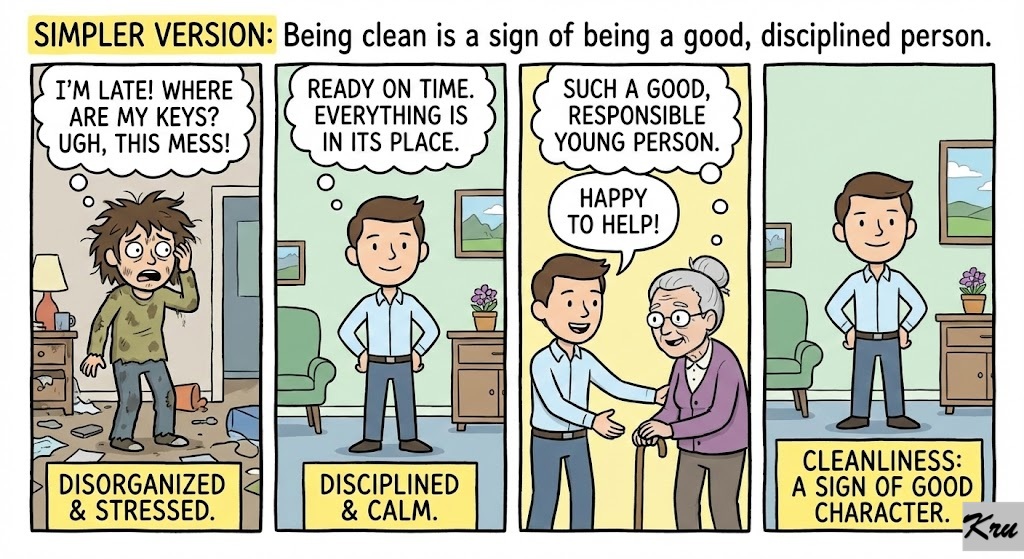
    Simpler Version: Being clean is a sign of being a good, disciplined person.

    📚 Vocabulary Vault


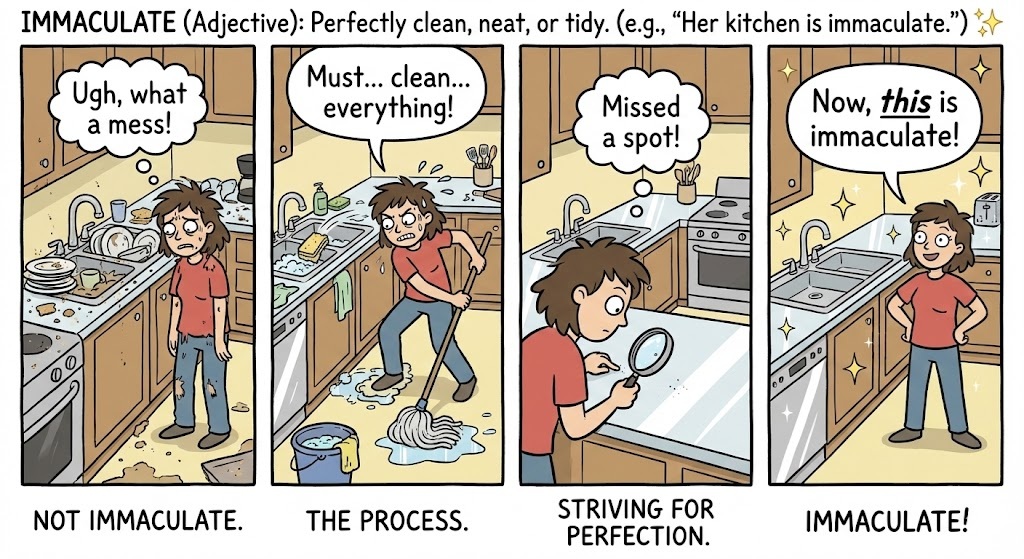
    Immaculate (Adjective):
    Perfectly clean, neat, or tidy. (e.g., “Her kitchen is immaculate.”) ✨

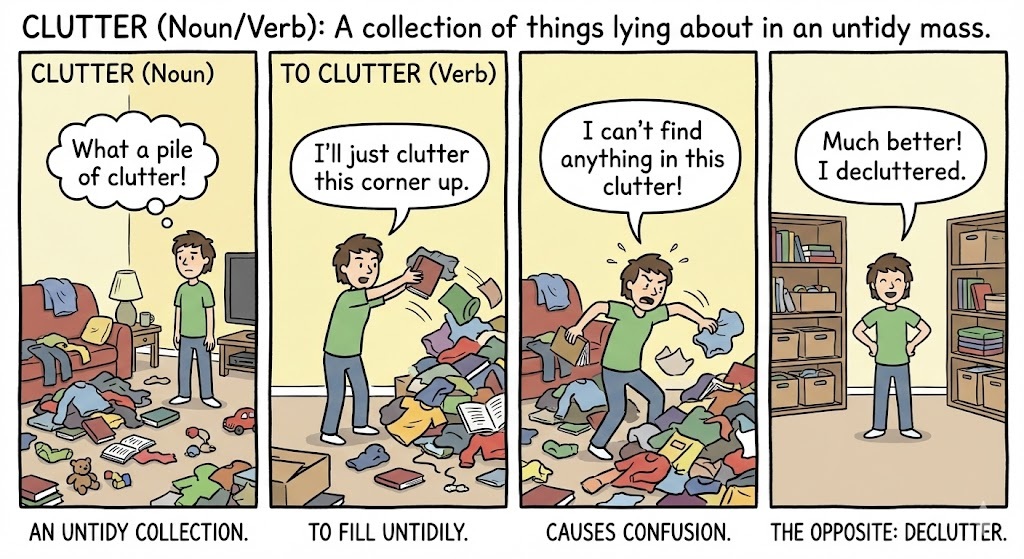
    Clutter (Noun/Verb): A collection of things lying about in an untidy mass.

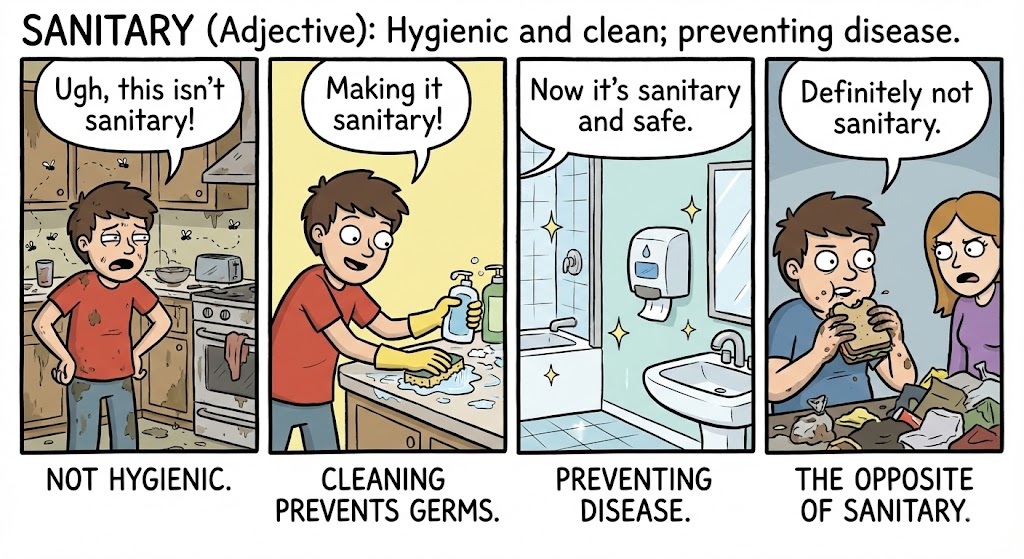
    Sanitary (Adjective): Hygienic and clean; preventing disease.

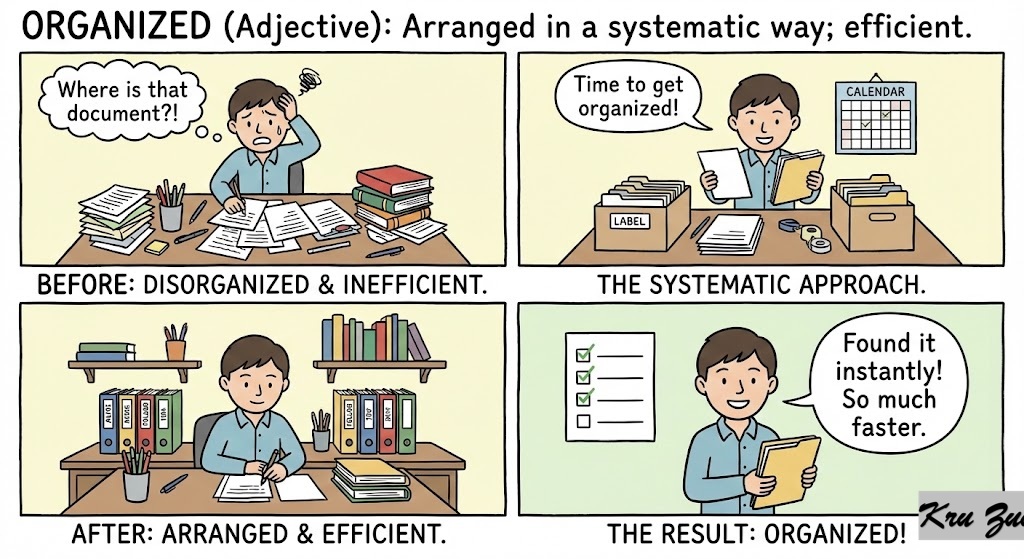
    Organized (Adjective): Arranged in a systematic way; efficient.

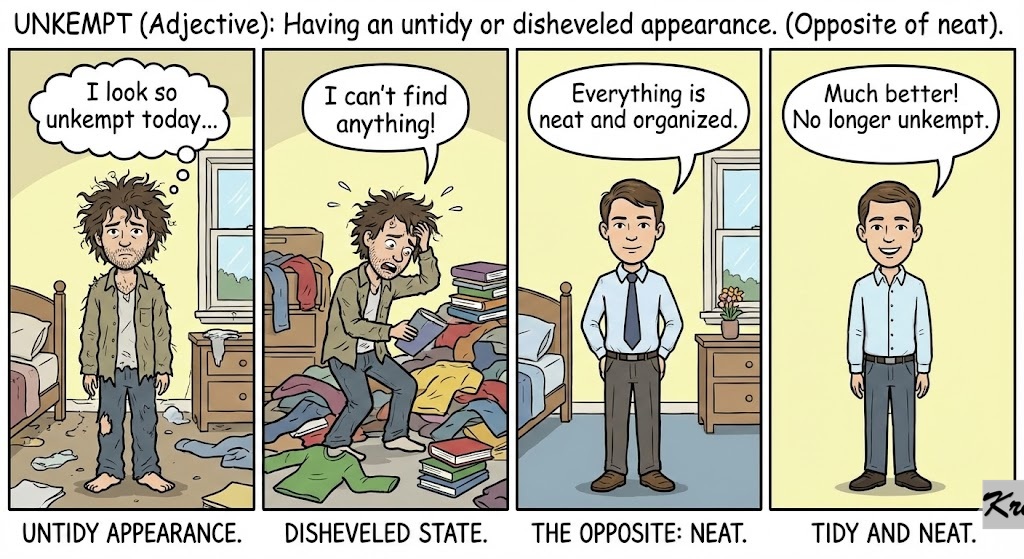
    Unkempt (Adjective): Having an untidy or disheveled appearance. (Opposite of neat).

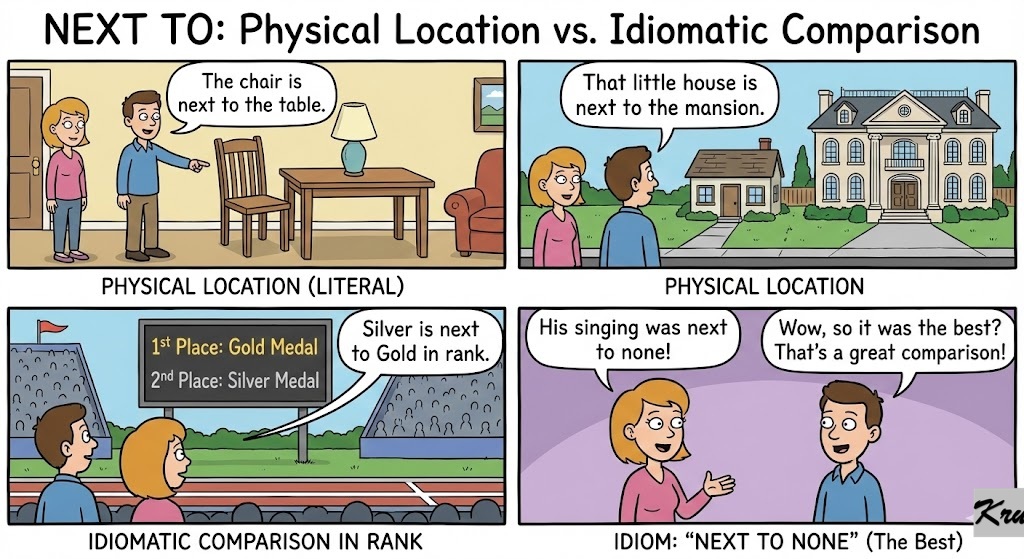
    🧠 Grammar Focus: “Next to” indicating Hierarchy


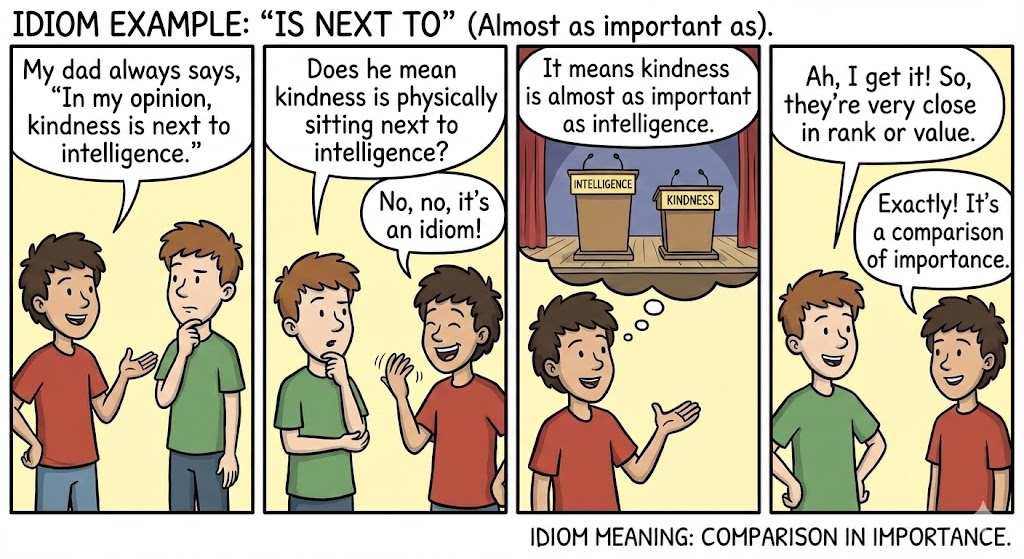
    We usually use “next to” for physical location (The chair is next to the table). However, in idioms, it means “comparison in rank.”

    Example: “In my opinion, kindness is next to intelligence.” (Kindness is almost as important as intelligence).

    Bossing Tool


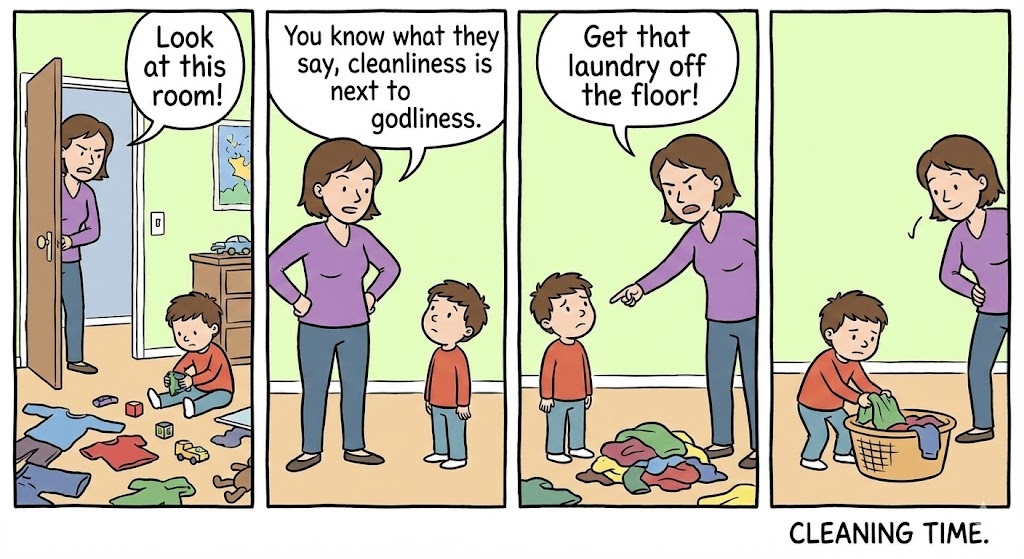
    Parent to Child: “Look at this room! You know what they say, cleanliness is next to godliness. Get that laundry off the floor!”
    📜 History: Origin and Spread


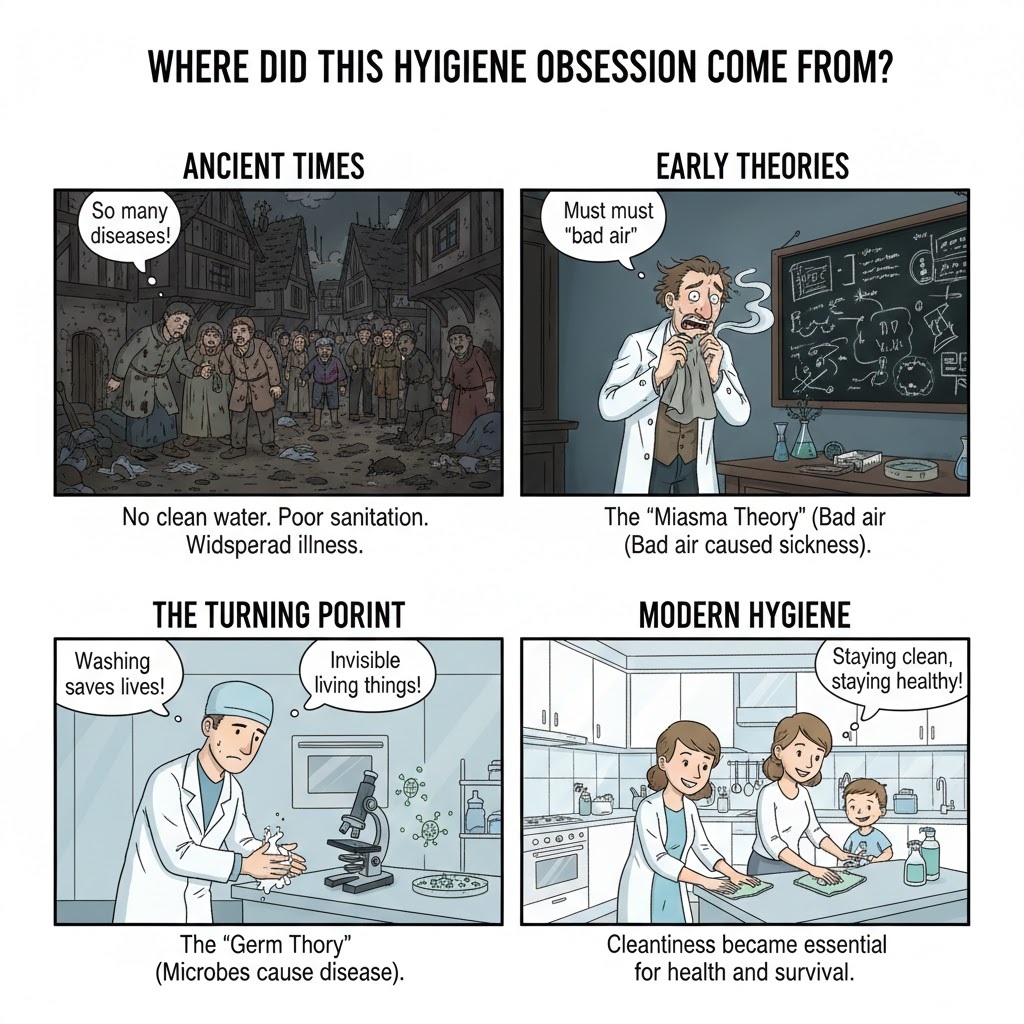
    Where did this hygiene obsession come from?

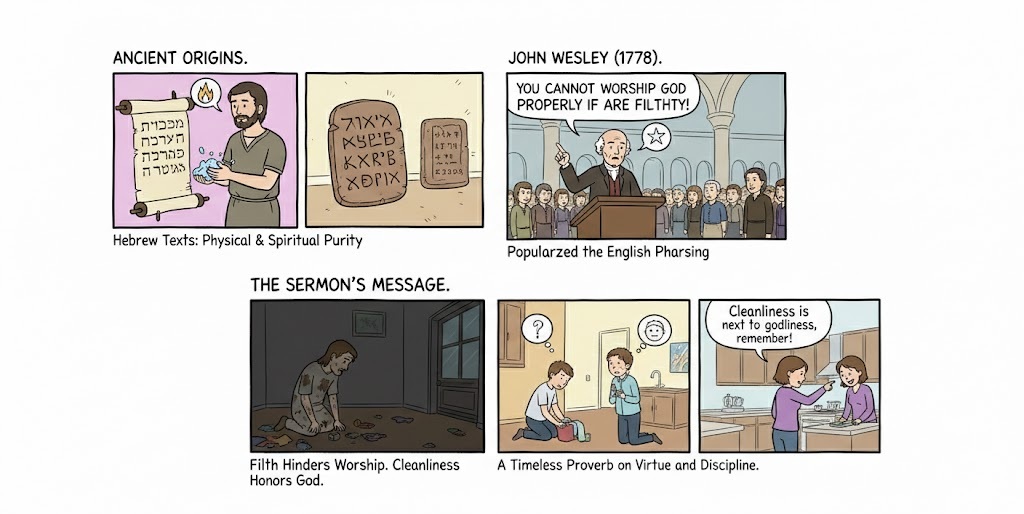
    The Origin: While ancient Hebrew and Babylonian texts linked physical purity with spiritual purity, the exact English phrasing was popularized by John Wesley in a sermon in 1778. He argued that you cannot worship God properly if you are filthy.

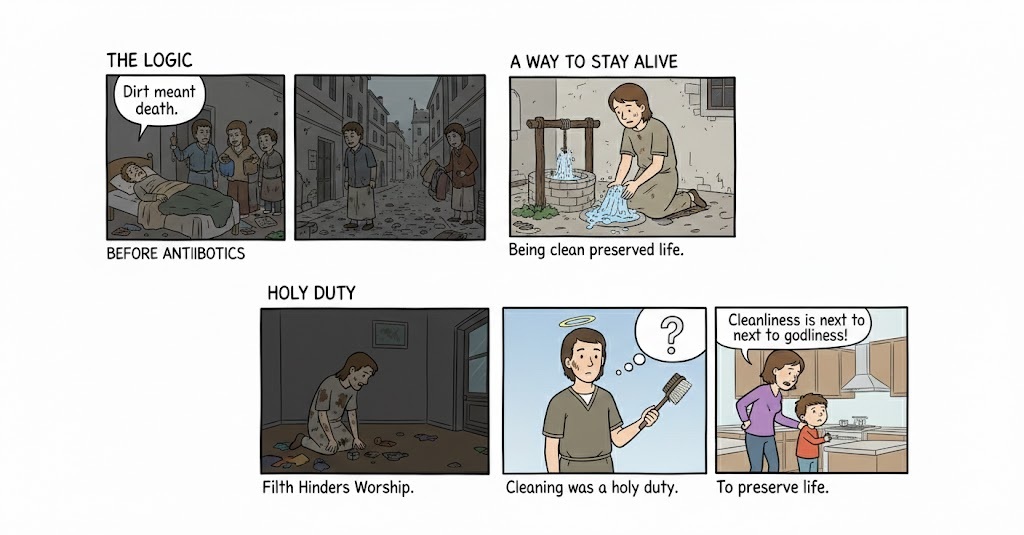
    The Logic: Before antibiotics, dirt meant death. Being clean was literally a way to stay alive. Therefore, cleaning was seen as a holy duty to preserve life.

    Global Cousins


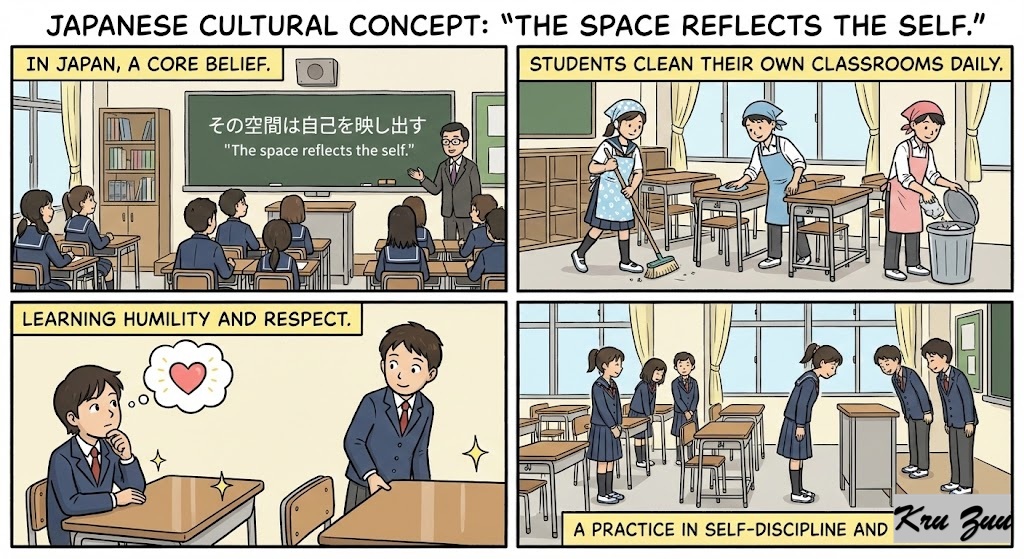
    🇯🇵 Japanese:
    “The space reflects the self.” (In Japan, students clean their own classrooms to learn humility).

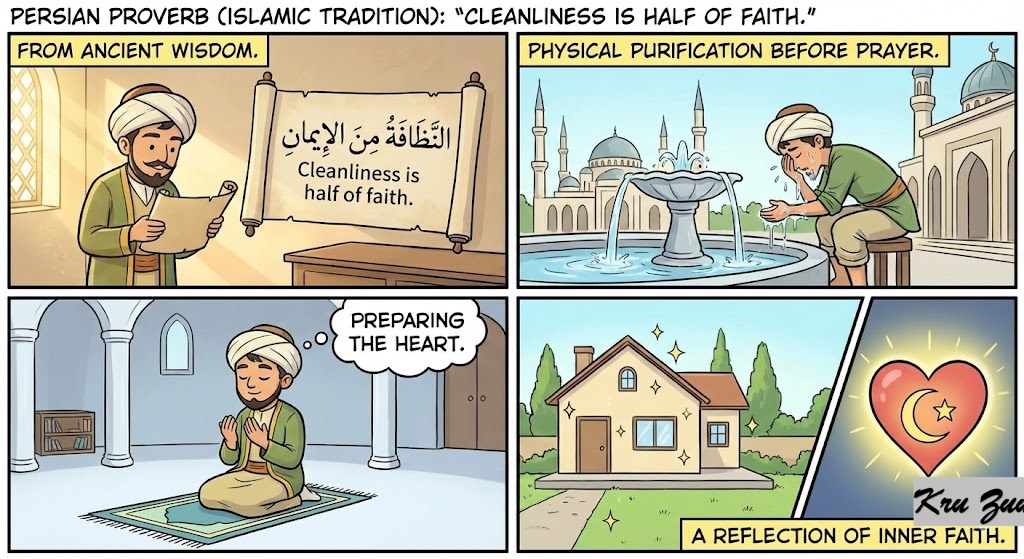
    🇮🇷 Persian: “Cleanliness is half of faith.” (From Islamic tradition).

    🇷🇺 Russian: “Purity is the best beauty.”

    🎭 Short Story: The Dust Bunny Disaster 🧹🐱🐔🐸


    Let’s visit our friends to see who survives the mess.
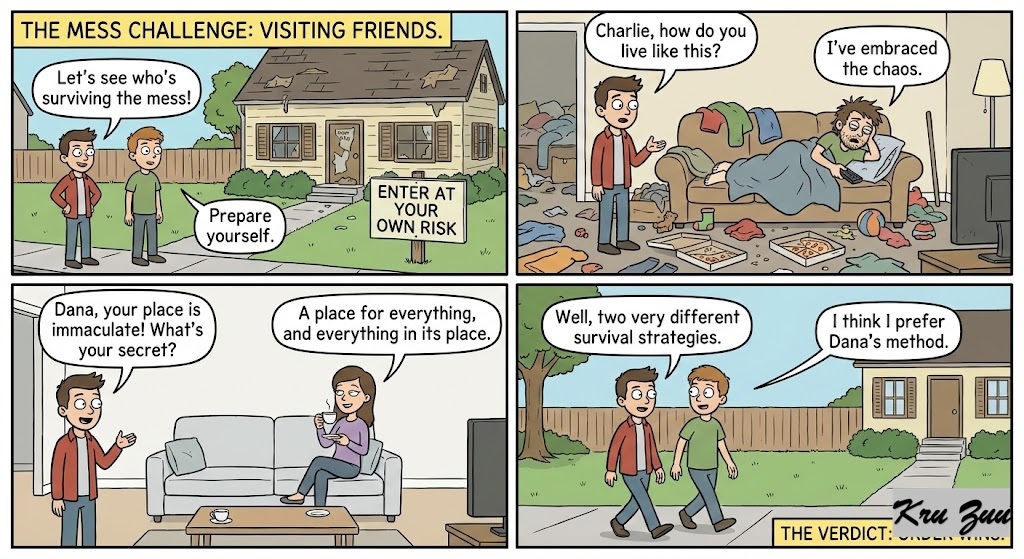

    🌟 The Cast


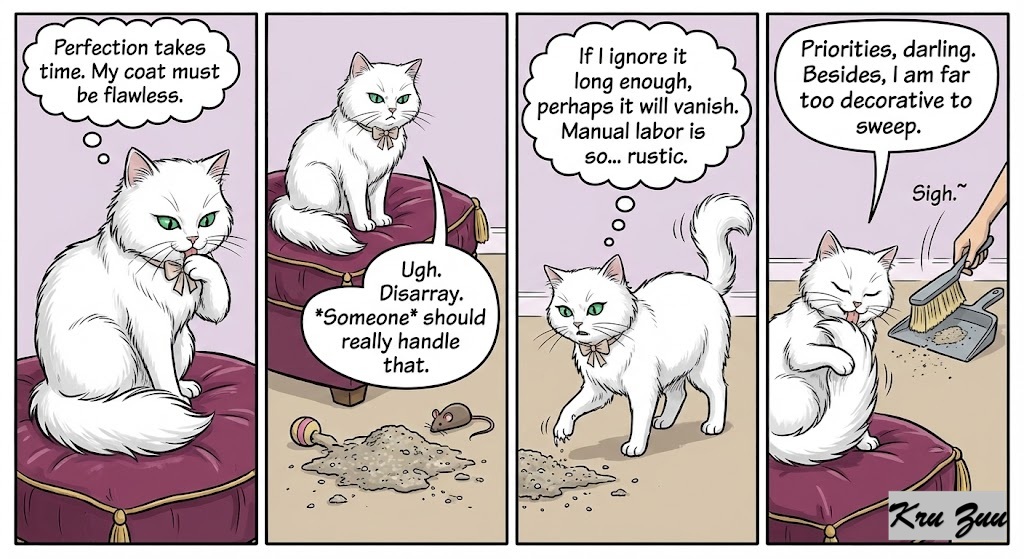
    Cleo the Cat: Elegant, well-groomed personally, but hates doing chores. 😼

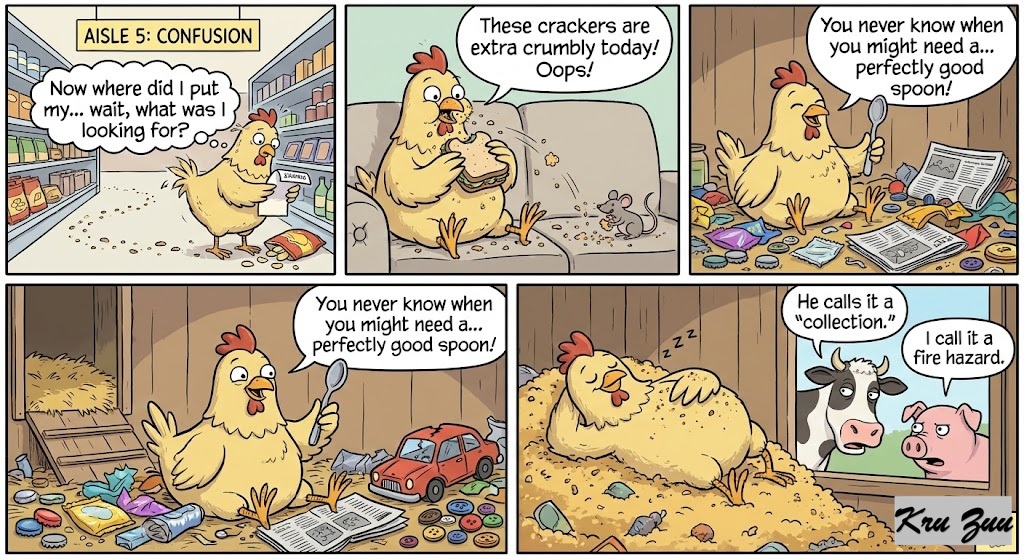
    Cluck the Chicken: Scatterbrained, leaves crumbs everywhere, a “hoarder.” 🐔

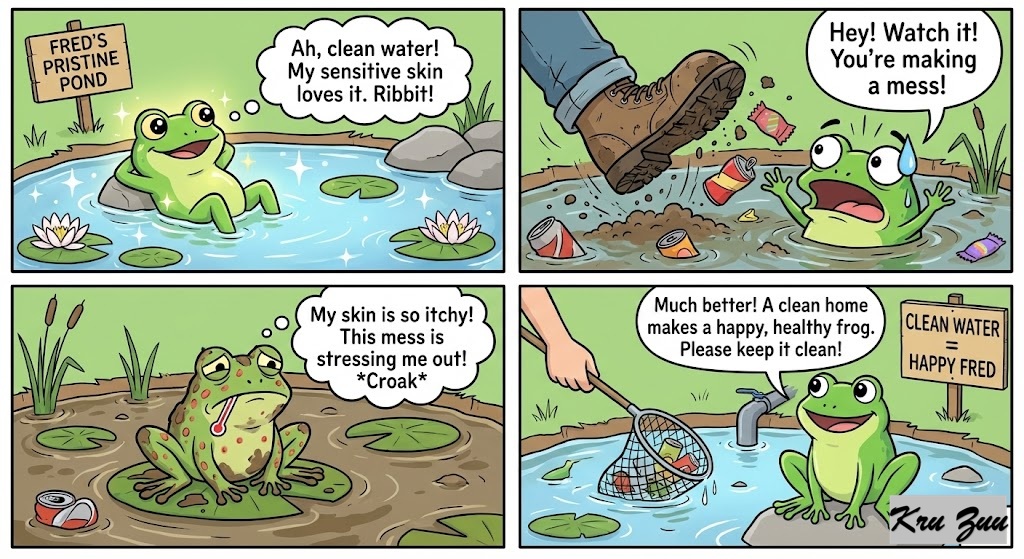
    Fred the Frog: Sensitive skin, needs clean water, gets stressed by mess. 🐸

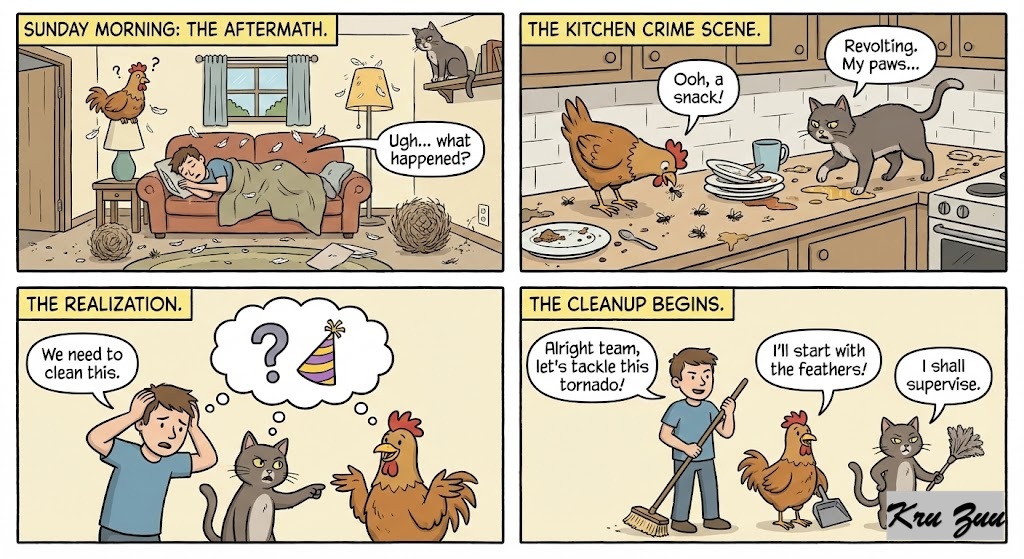
    The Situation: The three friends share a small cottage. It is Sunday morning. The house looks like a tornado hit it. There are feathers on the sofa. There are dried flies on the counter. The floor is covered in dust bunnies (balls of dust).

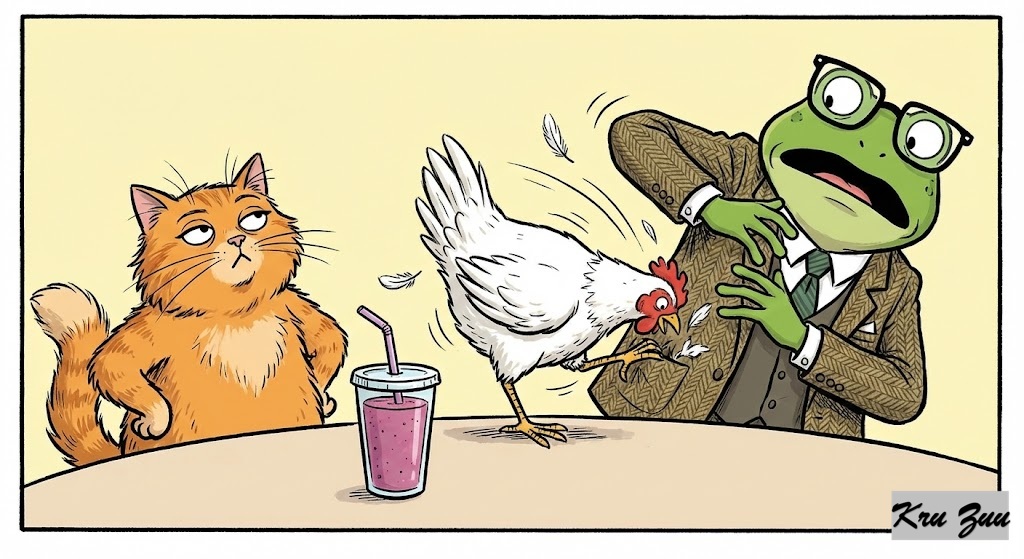
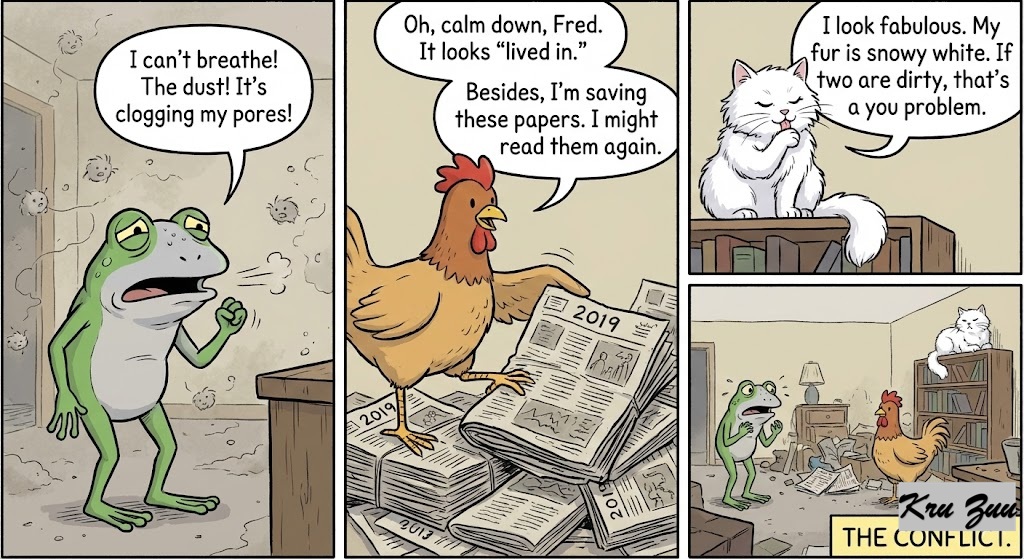
    The Conflict: “I can’t breathe!” Fred wheezes, his green skin turning a pale grey. “The dust! It’s clogging my pores!” Cluck steps over a pile of old newspapers. “Oh, calm down, Fred. It looks ‘lived in.’ Besides, I’m saving these papers. I might read them again.” (The papers are from 2019). Cleo is sitting on the highest shelf, licking her paw. “I look fabulous,” she purrs. “My fur is snowy white. If you two are dirty, that’s a you problem.”

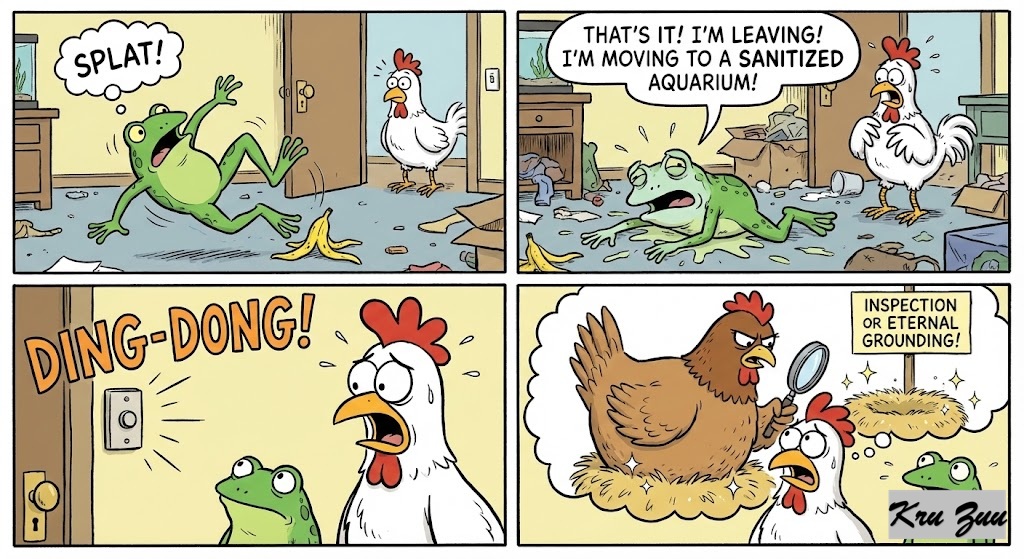
    The Crisis: Fred tries to hop to the kitchen, but he slips on a banana peel Cluck dropped. SPLAT! “That’s it!” Fred croaks. “I’m leaving! I’m moving to a sanitized aquarium!” Suddenly, the doorbell rings. DING-DONG. Cluck gasps. “Oh no! It’s my mother! The Great Hen! She’s coming to inspect the coop!” The Great Hen is famous for her immaculate nest. If she sees this mess, Cluck will be grounded for eternity.

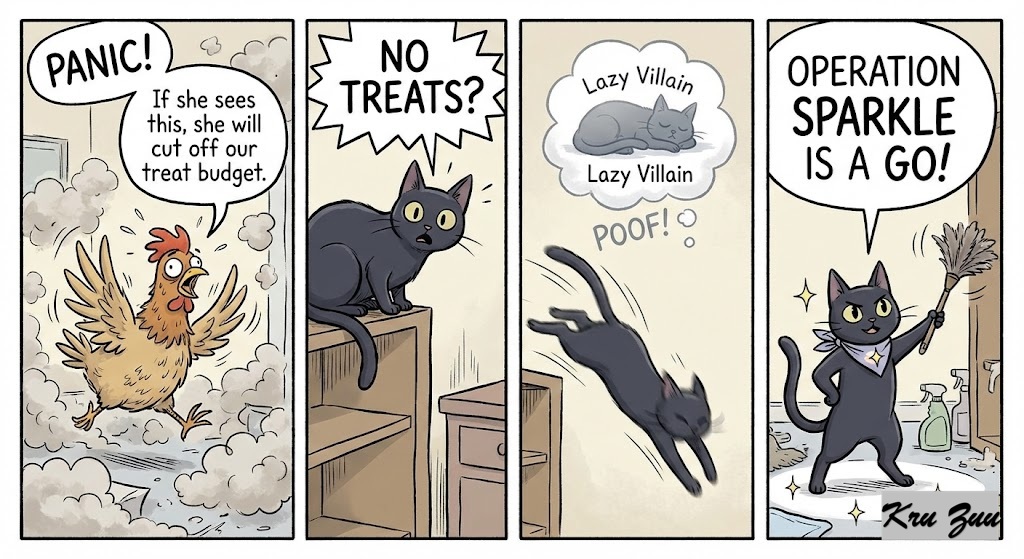
    The Reaction: “Panic!” Cluck squawks, flapping wings and blowing more dust into the air. Cleo looks down. “If she sees this, she will cut off our treat budget.” Cleo’s eyes widen. “No treats?” Suddenly, the “Lazy Villain” vanished. Cleo jumped down. “Operation Sparkle is a go!”

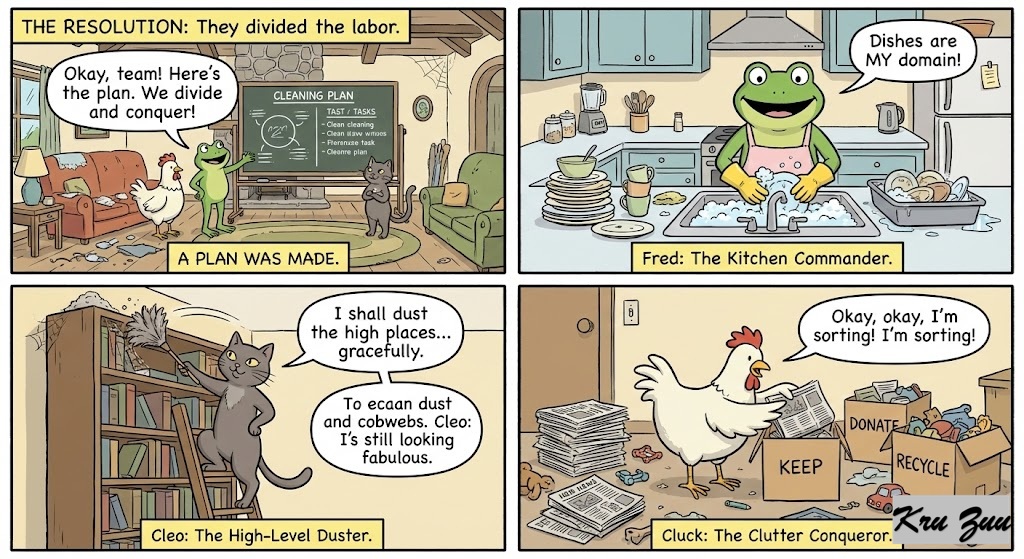
    The Resolution: They divided the labor (Labor = Work).

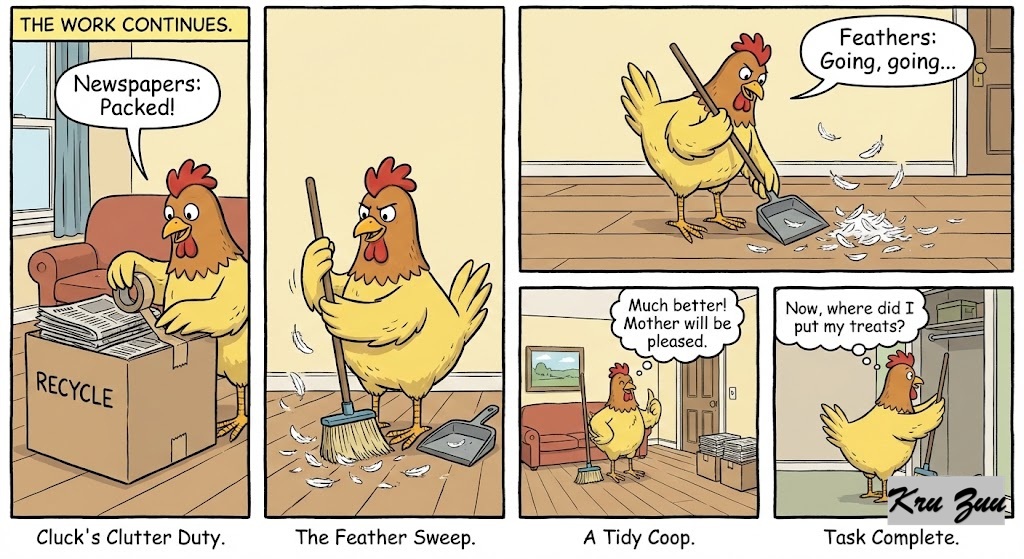
    Cluck: Packed the newspapers and swept the feathers.

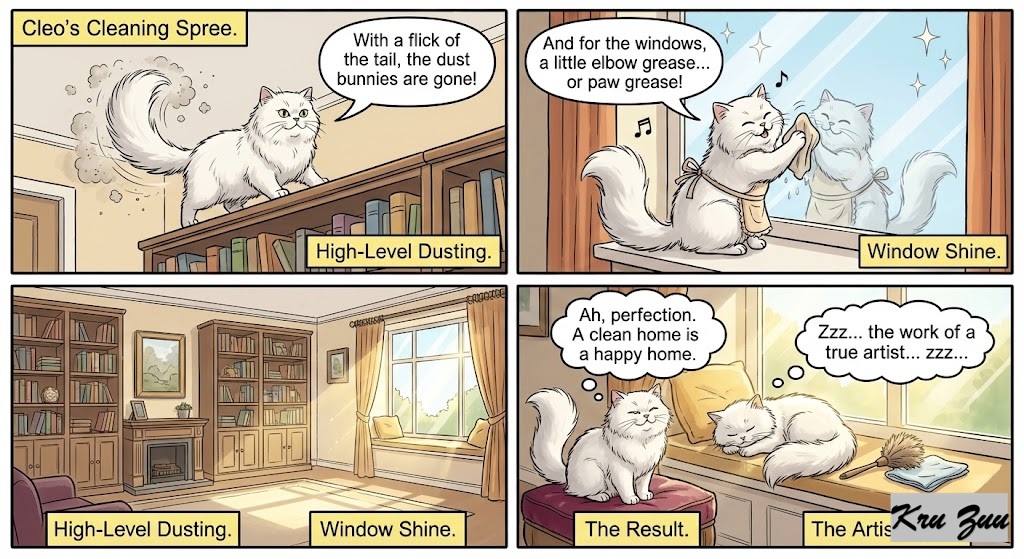
    Cleo: Used her tail to dust the high shelves and polished the windows.

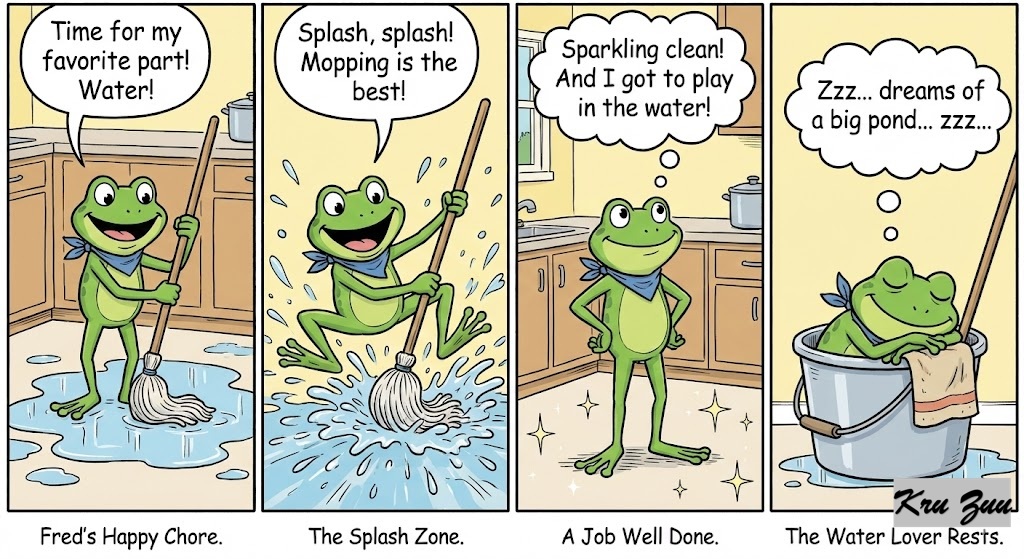
    Fred: Mopped the floor with water (he loves water).

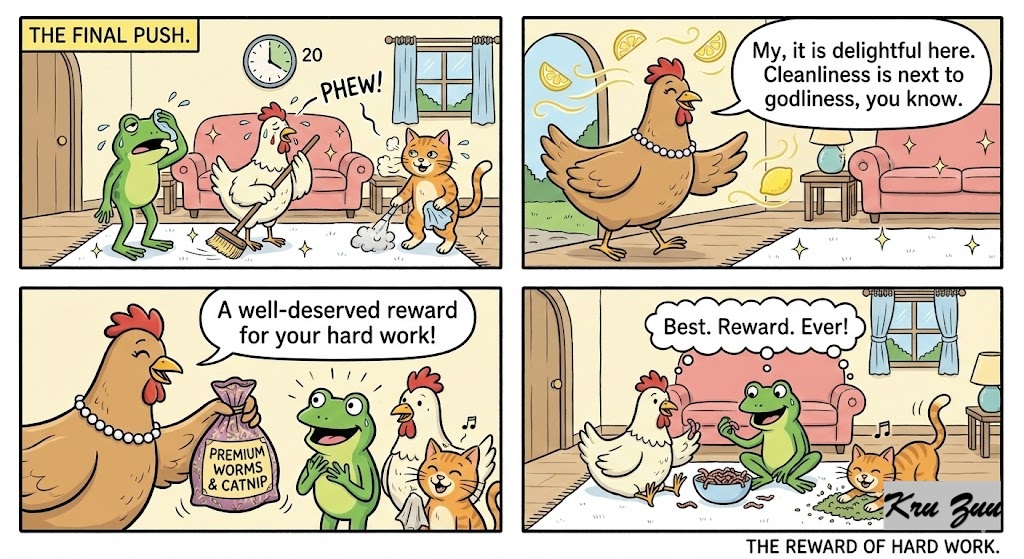
    They worked for 20 minutes, sweating and grunting. When the Great Hen entered, the cottage smelled like lemons. “My,” she clucked. “It is delightful here. Cleanliness is next to godliness, you know.” She gave them a bag of premium worms and catnip.

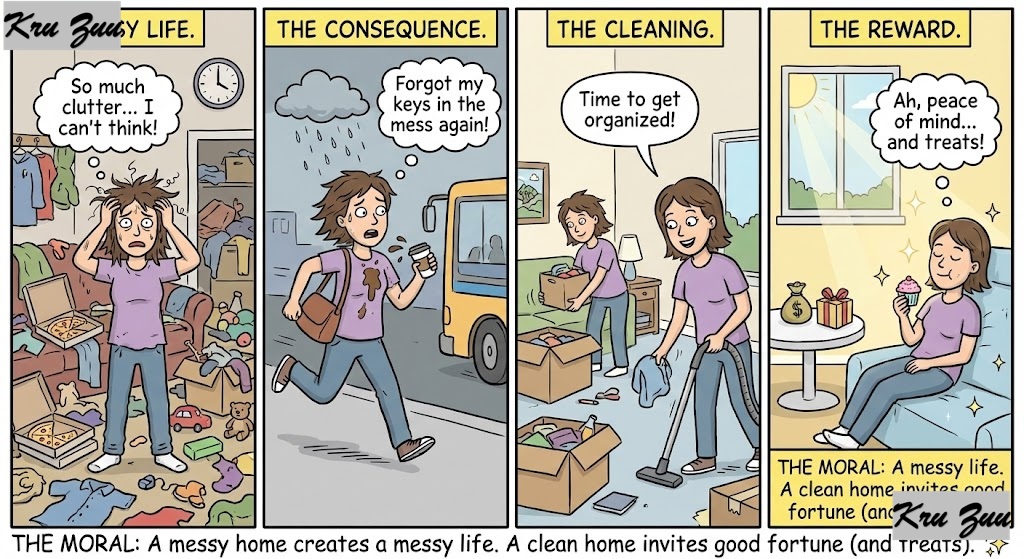
    The Moral: A messy home creates a messy life. A clean home invites good fortune (and treats). ✨
    🎓 Lesson for English Learners


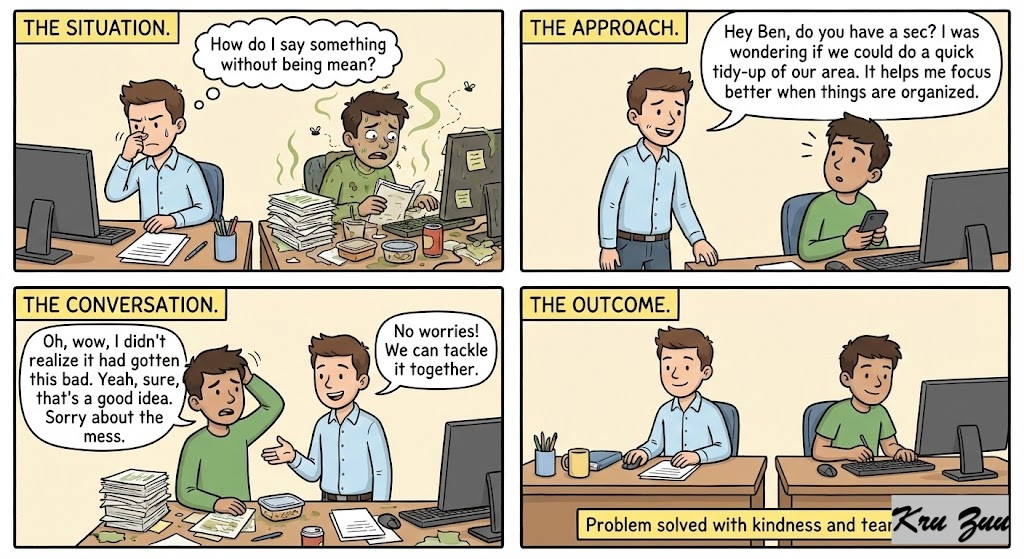
    How to politely complain about a smell or mess.
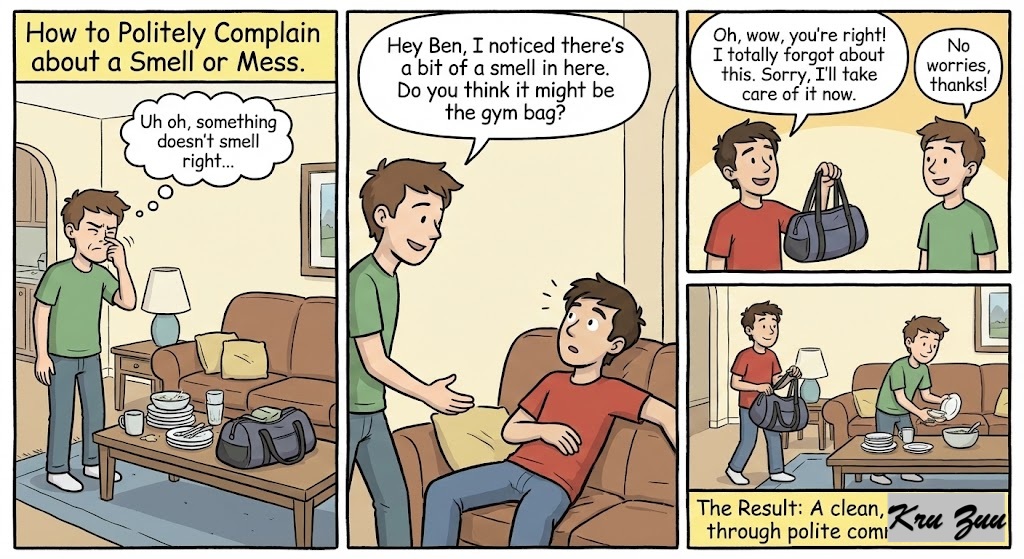

    Situation: Your roommate or colleague has a messy desk or bad hygiene. You don’t want to be mean, but it bothers you.
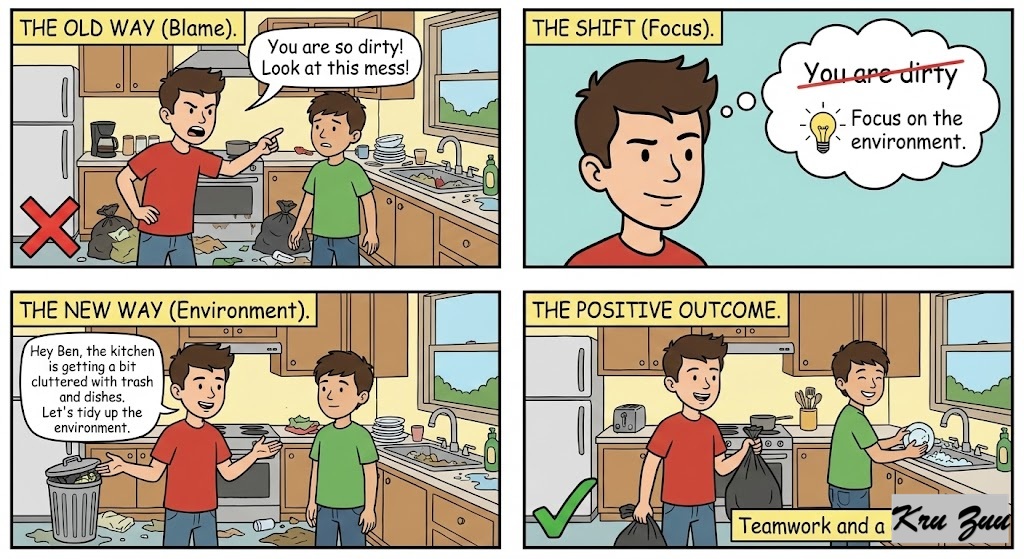
    The Shift: Don’t say “You are dirty.” Focus on the environment.
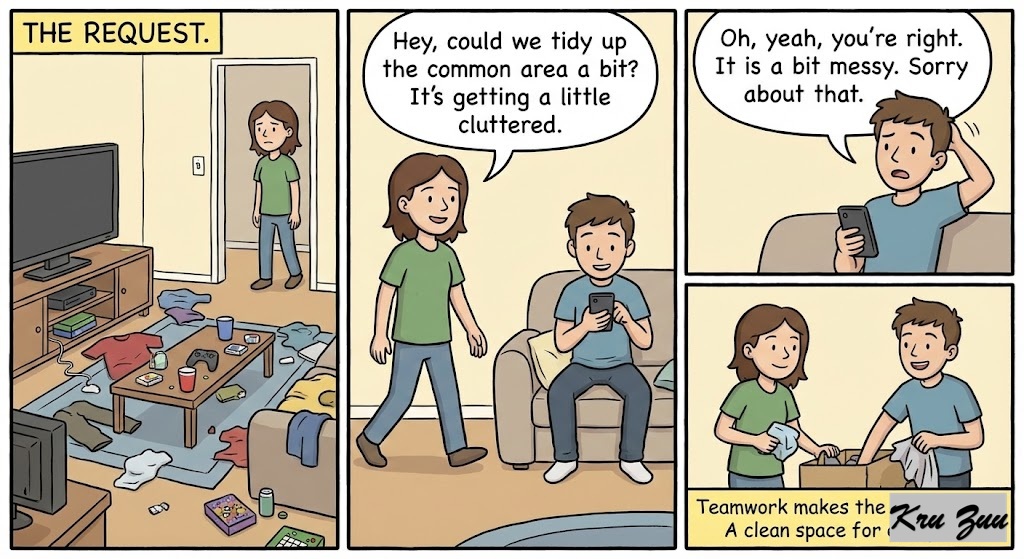
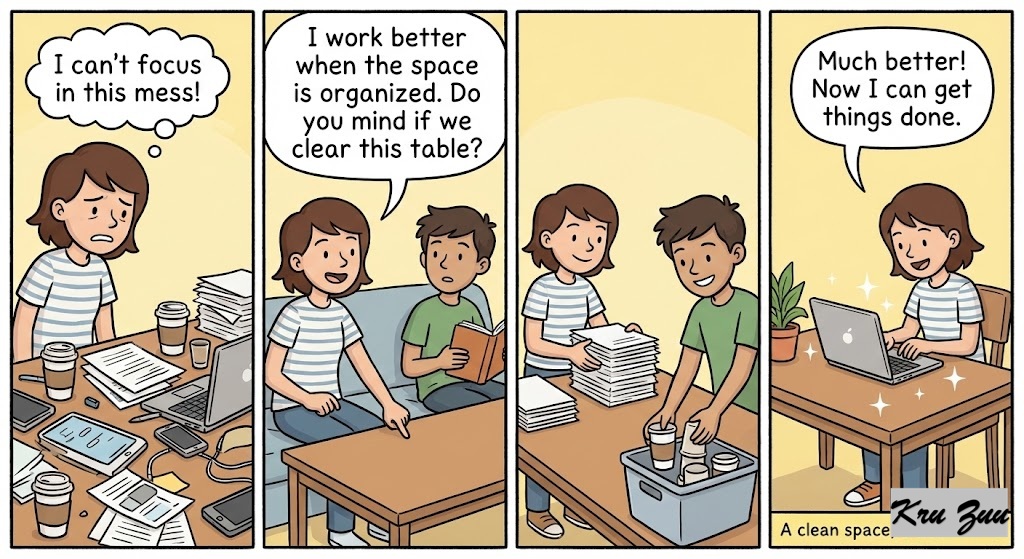
    You Say:“Hey, could we tidy up the common area a bit? It’s getting a little cluttered.”

    “I work better when the space is organized. Do you mind if we clear this table?”

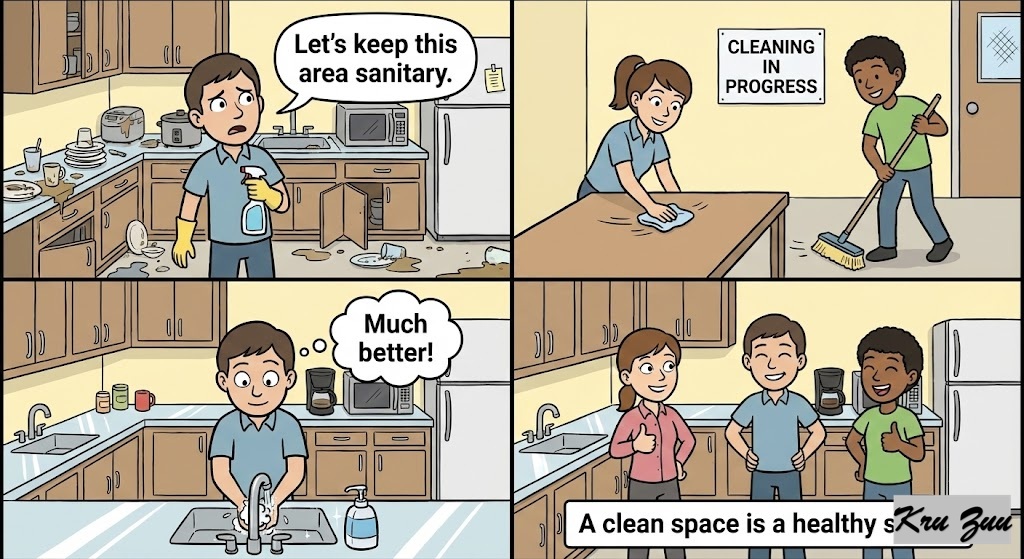
    “Let’s keep this area sanitary.”

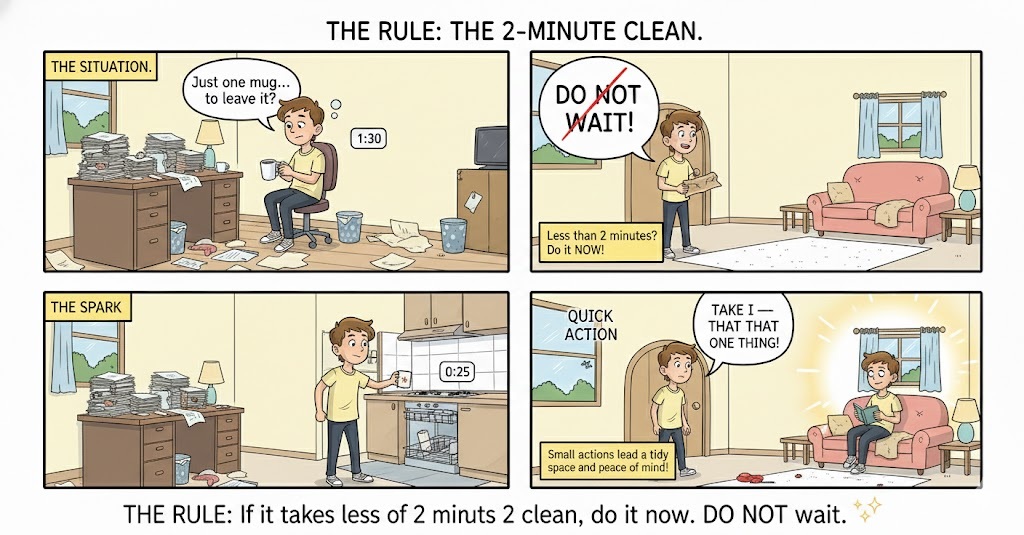
    💬 Your Turn: The “2-Minute” Challenge 🚀


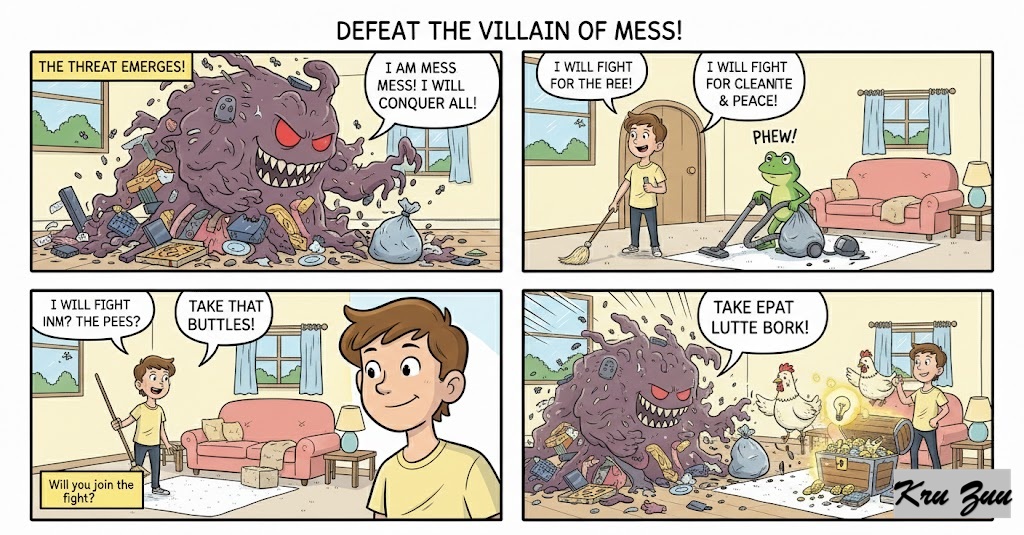
    Do you want to defeat the “Villain” of mess?

    The Challenge: Look around you right now. Find one thing that is out of place (a cup, a wrapper, a sock).
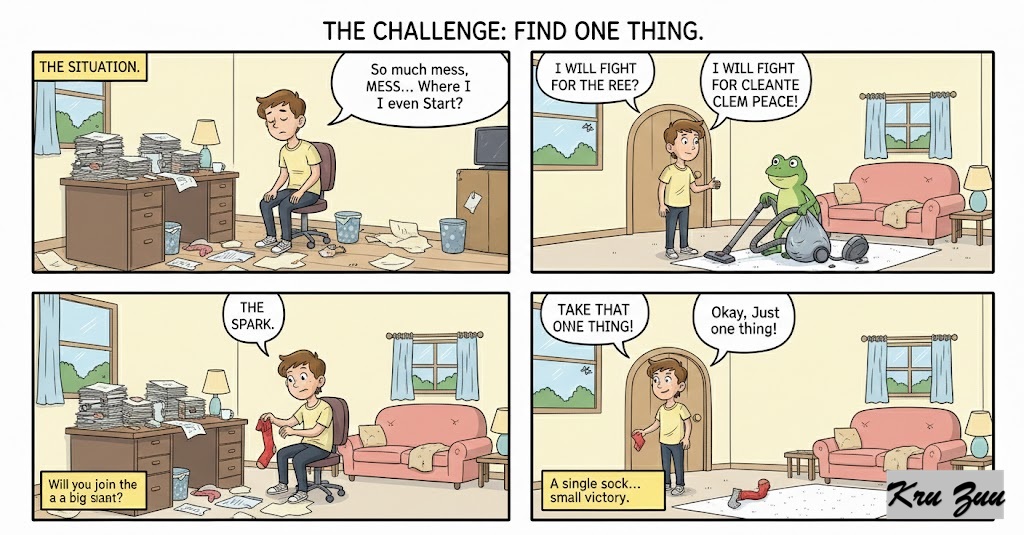

    The Rule: If it takes less than 2 minutes to clean, do it now. DO NOT wait.

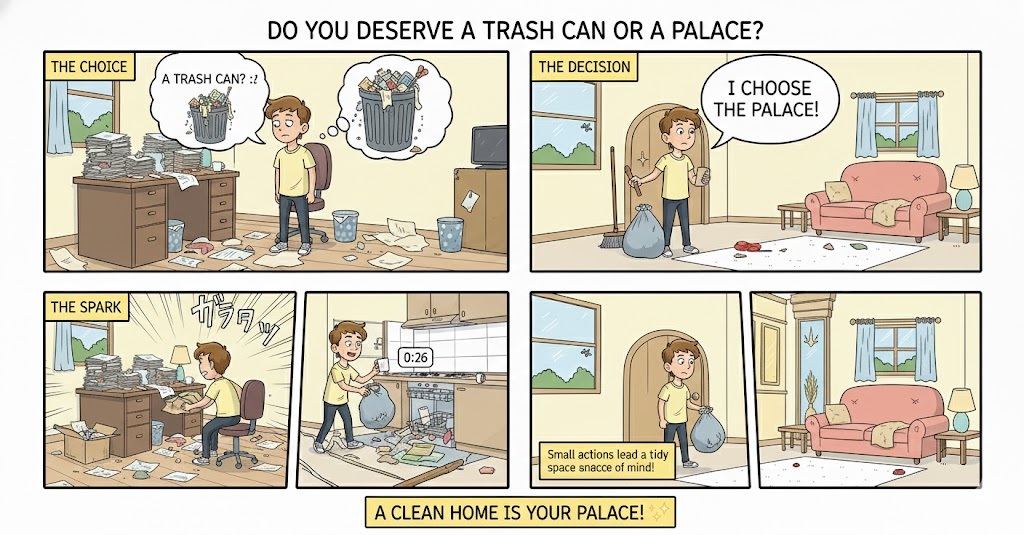
    Ask yourself: “Do I deserve to live in a trash can, or do I deserve to live in a palace?”

    👇 Question for the comments: Are you a “Cleo” (clean self, messy house), a “Cluck” (messy everywhere), or a “Fred” (clean freak)? Tell us your worst cleaning disaster below!

    By Zubeyir YURTKURAN

    https://www.facebook.com/BrainBattleground/

    https://www.facebook.com/zubeyr.yurtkuran/

    https://www.instagram.com/zubeyryurtkuran/

    https://www.youtube.com/@BrainBattleground-b3p

    https://www.instagram.com/brainbattleground/

  • 🌳 The Daily Shield: The Law of Hard-Earned Value

    🌳 The Daily Shield: The Law of Hard-Earned Value

    “Money doesn’t grow on trees.”


    😈 The Villain (The Impulse Spender)

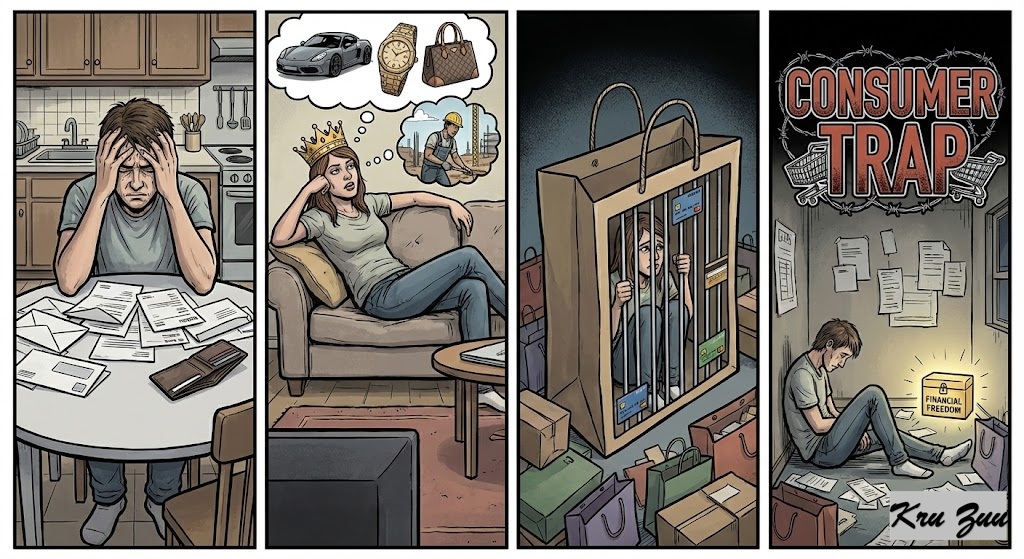
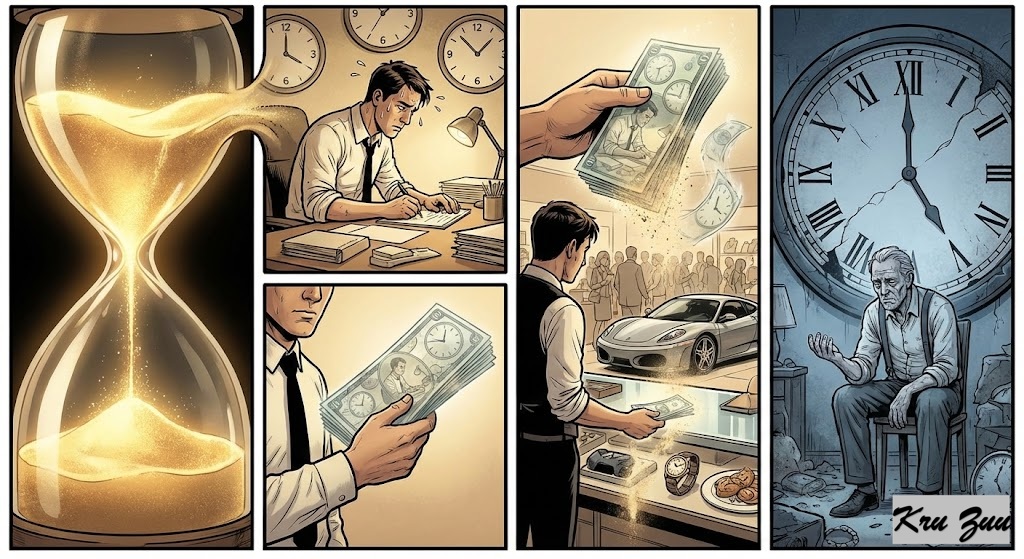
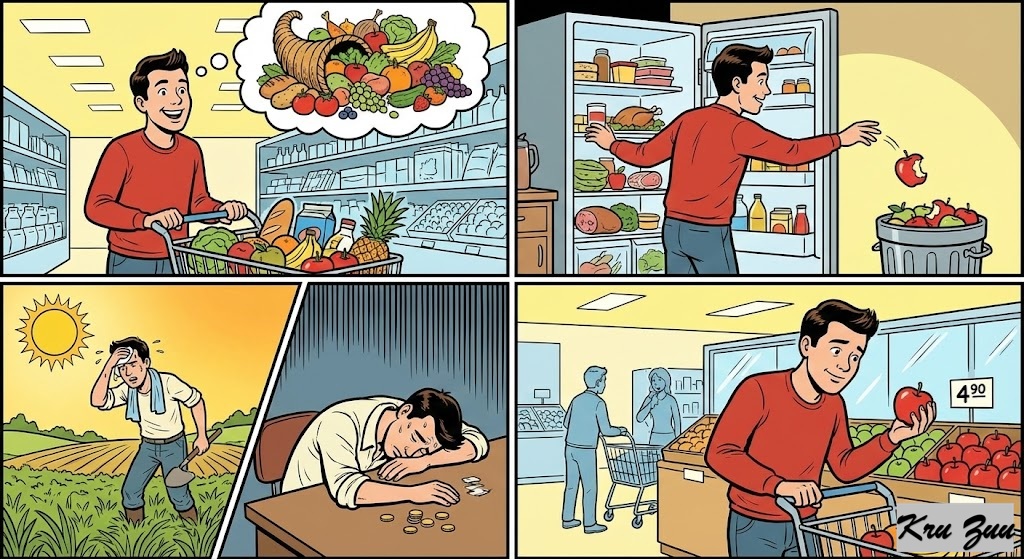
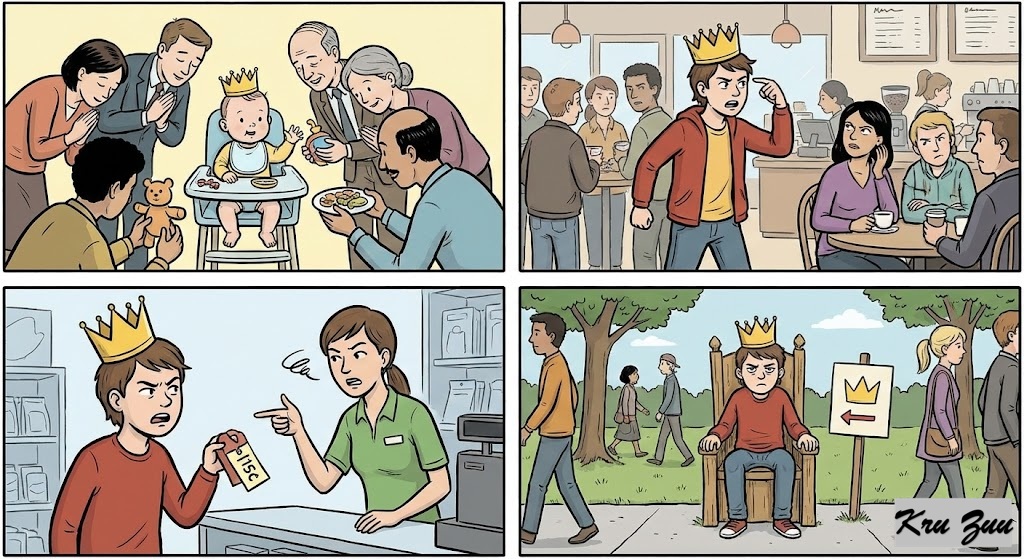
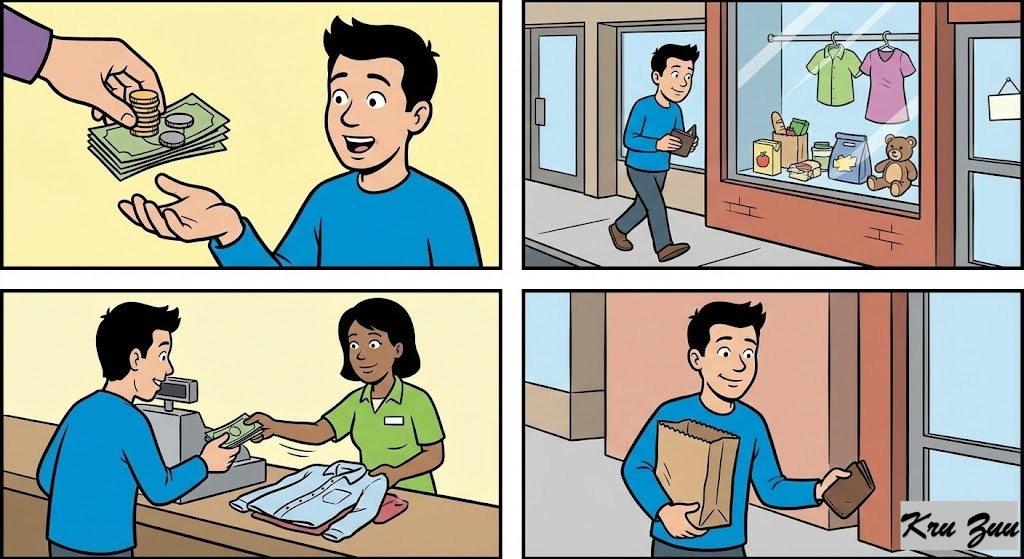
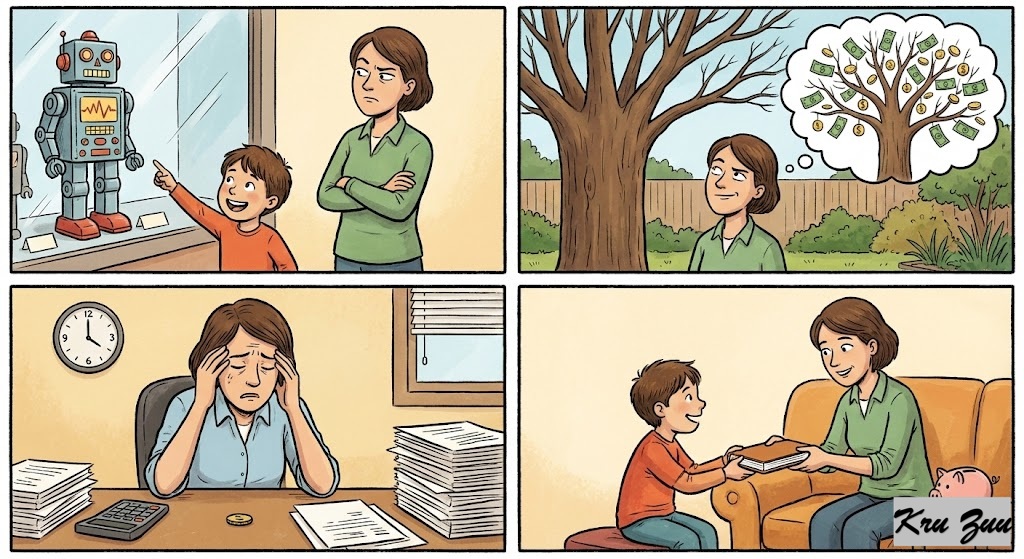
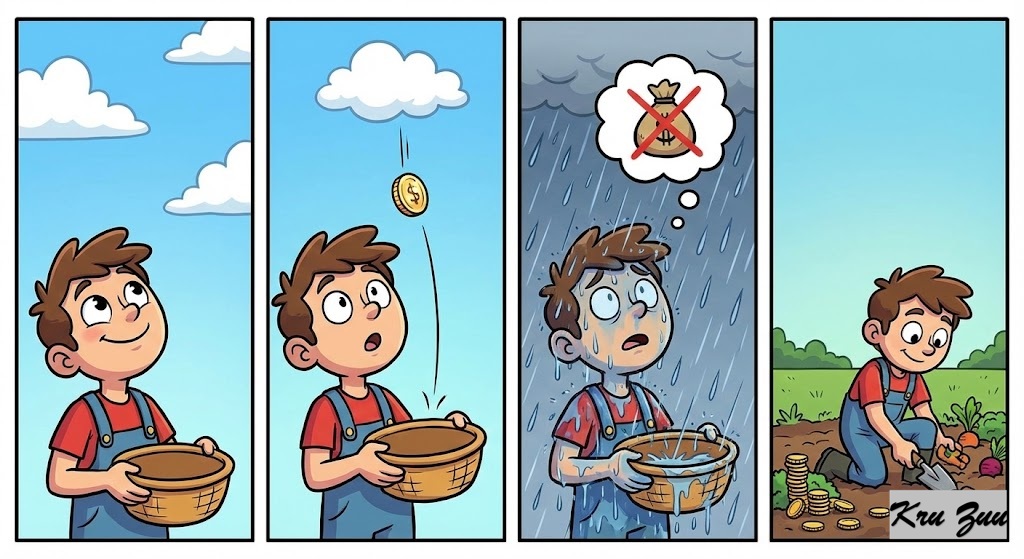
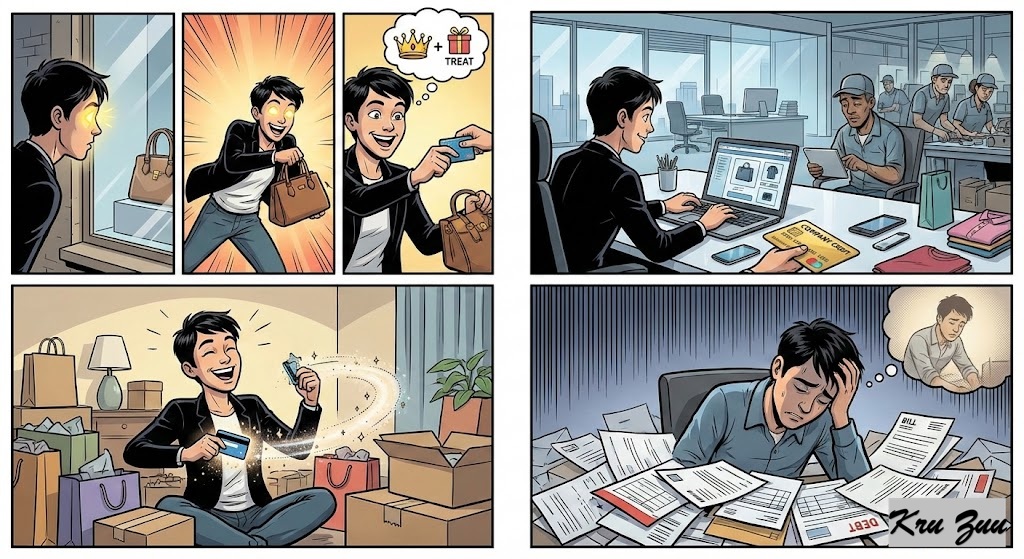
    You see it. You want it. You buy it. 💸 “I deserve this treat!””I’ll just put it on the credit card.””The company has plenty of budget, why do they care?” You act as if resources are infinite magic dust. You disconnect the price of an item from the effort it took to earn it.

    The Result? You are always broke. You stress about bills at the end of the month. You feel entitled to things you haven’t earned. You are trapped in the “Consumer Trap.” 🛍️


    😇 The Hero (The Value Builder)

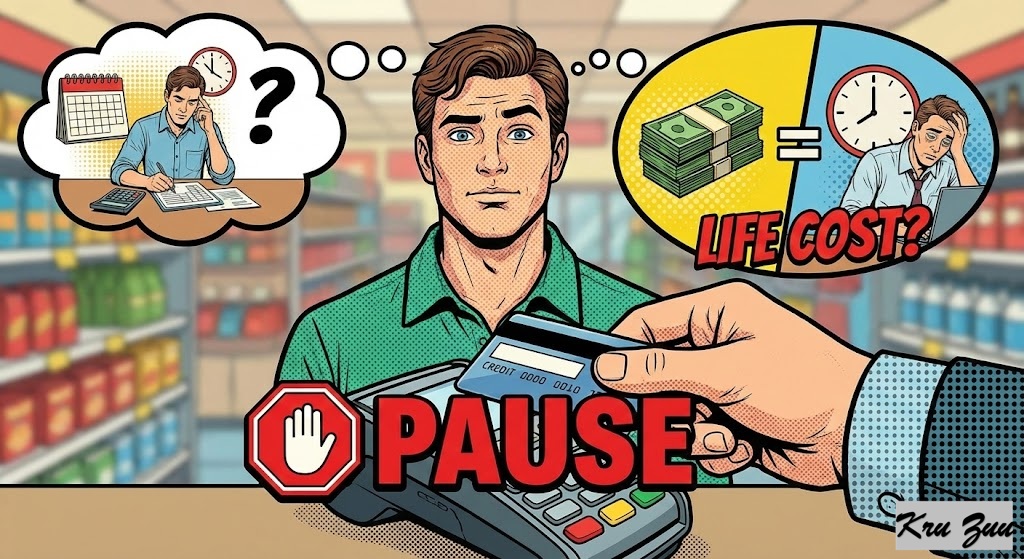
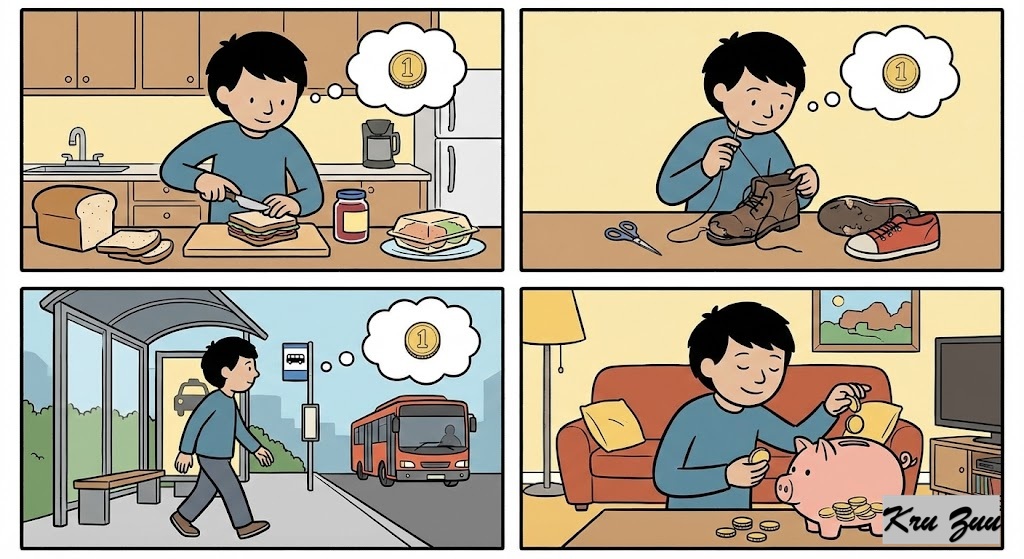
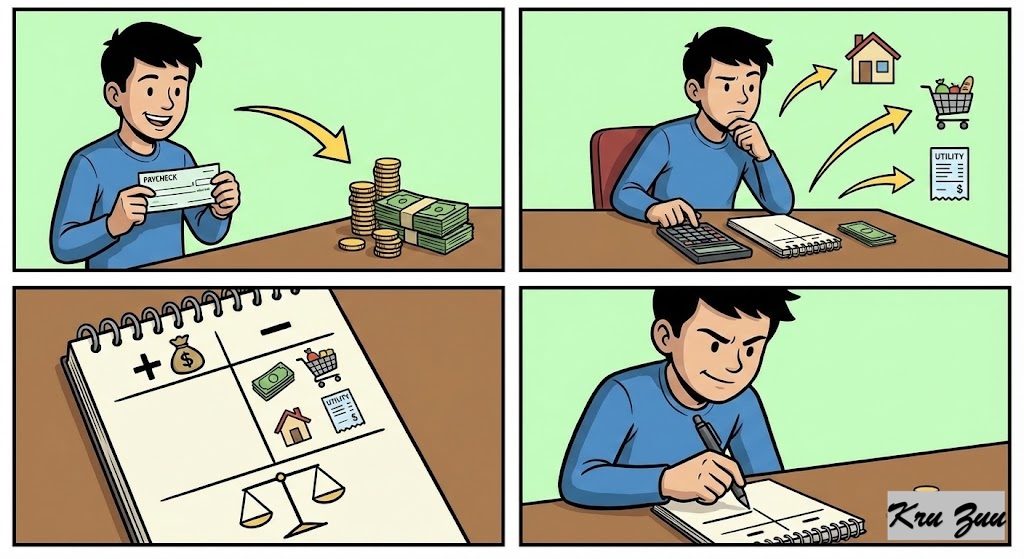
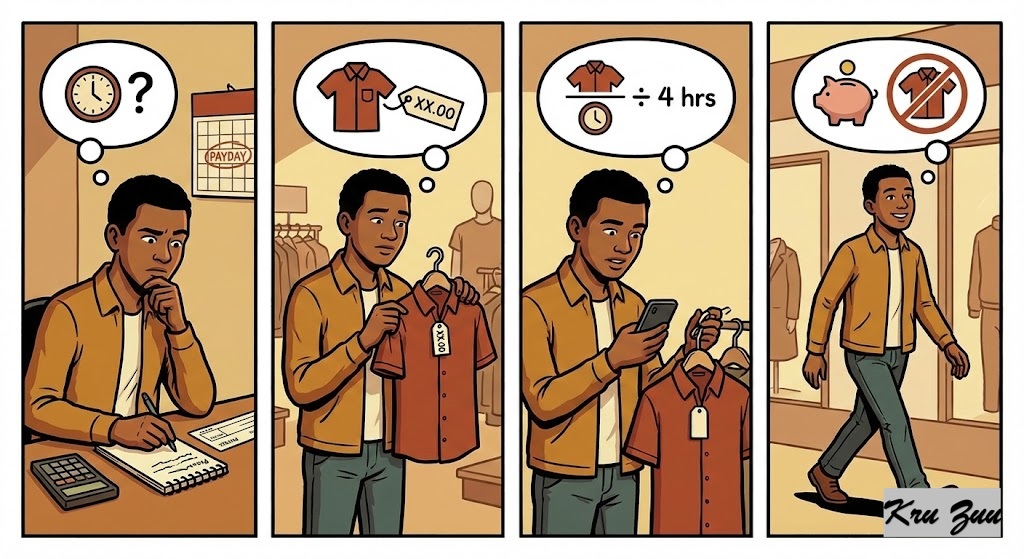
    You see something you want. You pause. 🛑 Instead of swiping your card blindly, you calculate the “Life Cost.”

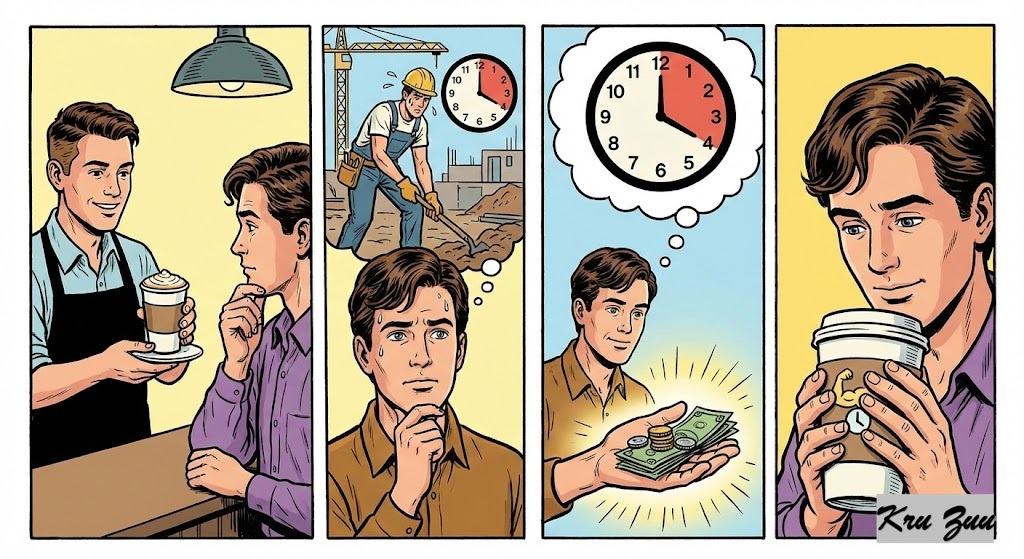
    You think: “This fancy coffee costs $5. That is 20 minutes of my hard work.” You respect the energy behind the money.

    You say: “I value my effort too much to waste it.”

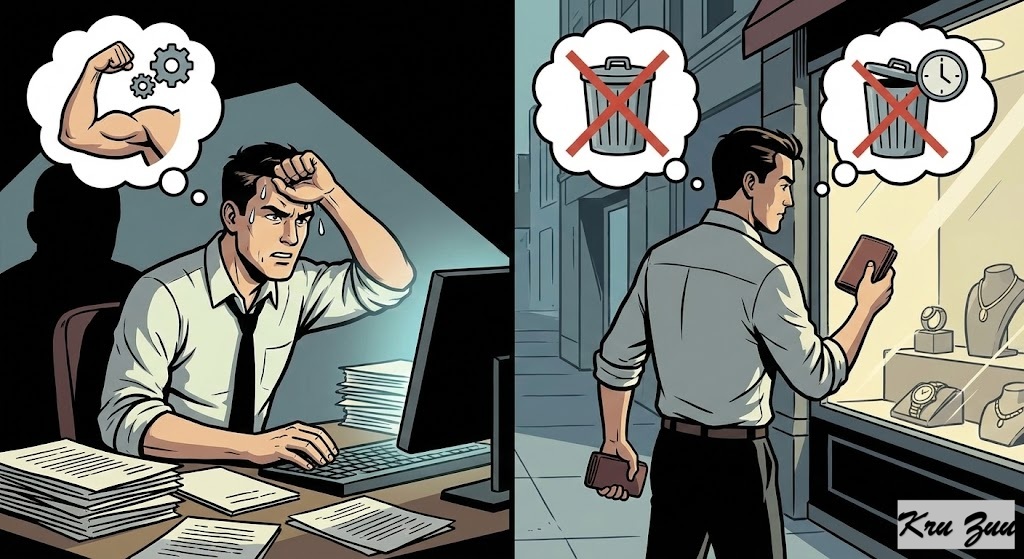
    The Result? You build wealth. You have savings for emergencies. You appreciate what you have, and when you do spend, you enjoy it strictly without guilt. You build freedom, not debt. 🏰


    ⚖️ The Reality


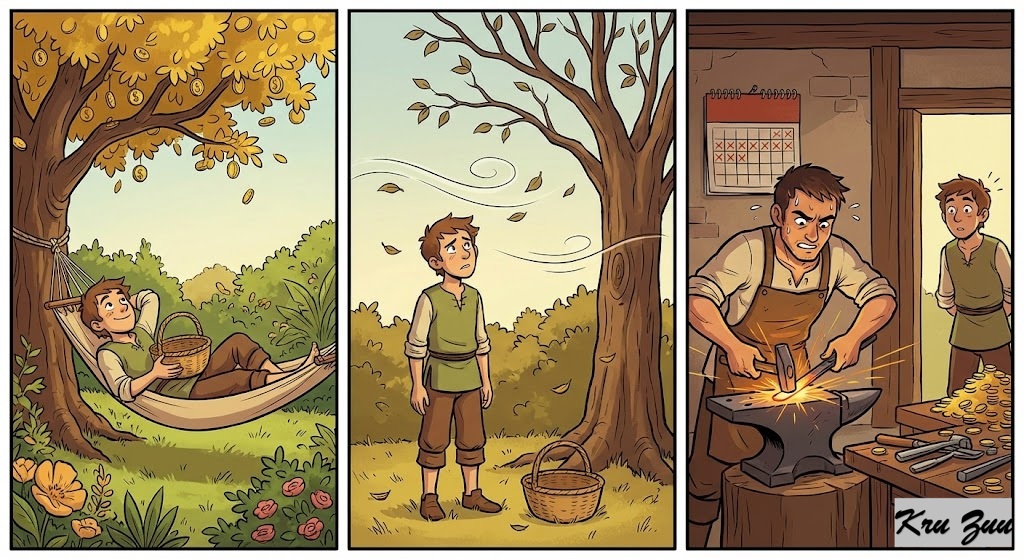
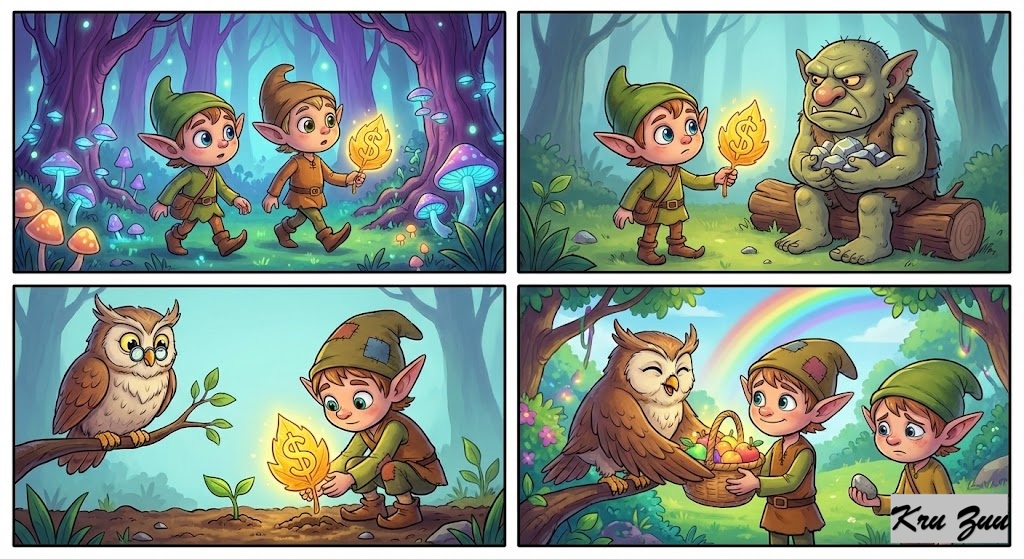
    Finite resources vs. Infinite desires. We live in a world where marketing tells us we can have everything now. But the laws of physics and economics are stubborn. Wealth is stored energy. It represents hours of work, stress, and problem-solving. If you treat money like leaves on a tree (infinite and free), you will soon find yourself standing in a barren winter forest with nothing to keep you warm.


    💎 The Secret

    You don’t just spend money; you spend the time it took you to earn that money. Spend your life wisely.

    🧐 The Anatomy of the Proverb


    This is your reality check that resources are limited and require labor to obtain.


    Money (Noun): Currency, wealth, resources.


    Doesn’t Grow (Negative Verb Phrase): Is not naturally produced without effort.


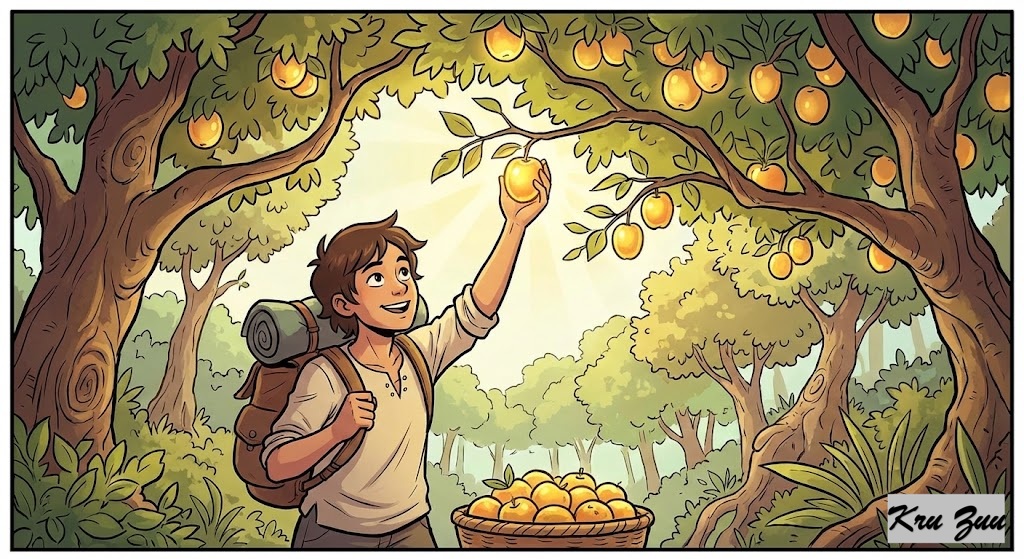
    On Trees (Prepositional Phrase): Freely available; easy to pick like an apple.


    Simpler Version: Money is hard to earn. / Don’t be wasteful.


    📚 Vocabulary Vault


    Frugal (Adjective): Sparing or economical with regard to money or food. (Smart with money).


    Entitlement (Noun): The belief that one is inherently deserving of privileges or special treatment. 👑


    Budget (Noun/Verb): An estimate of income and expenditure for a set period of time.


    Expenditure (Noun): The action of spending funds.


    Finite (Adjective): Having limits or bounds. (Opposite of infinite).


    🧠 Grammar Focus: Idioms as Parenting/Bossing Tools


    We often use this idiom when someone asks for something expensive or unnecessary.


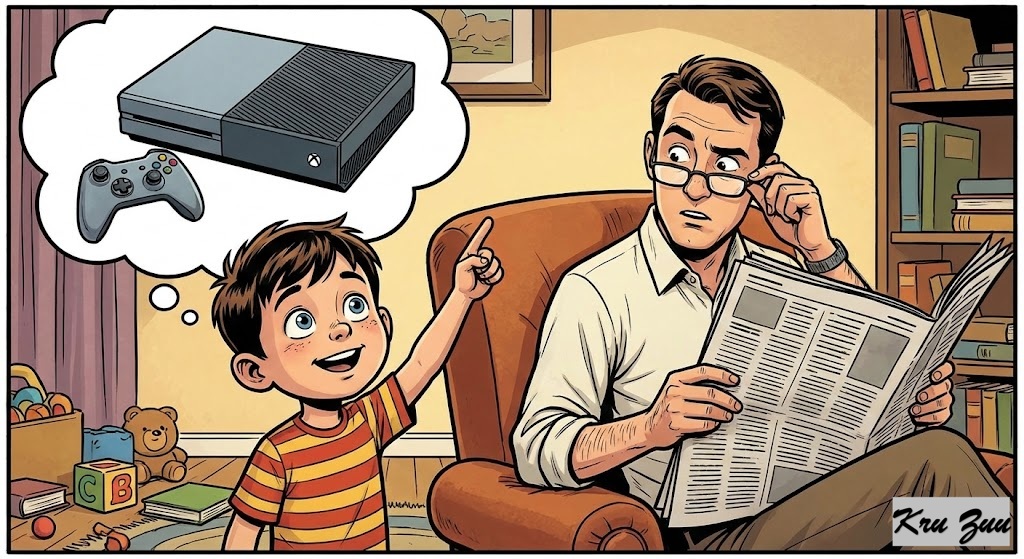
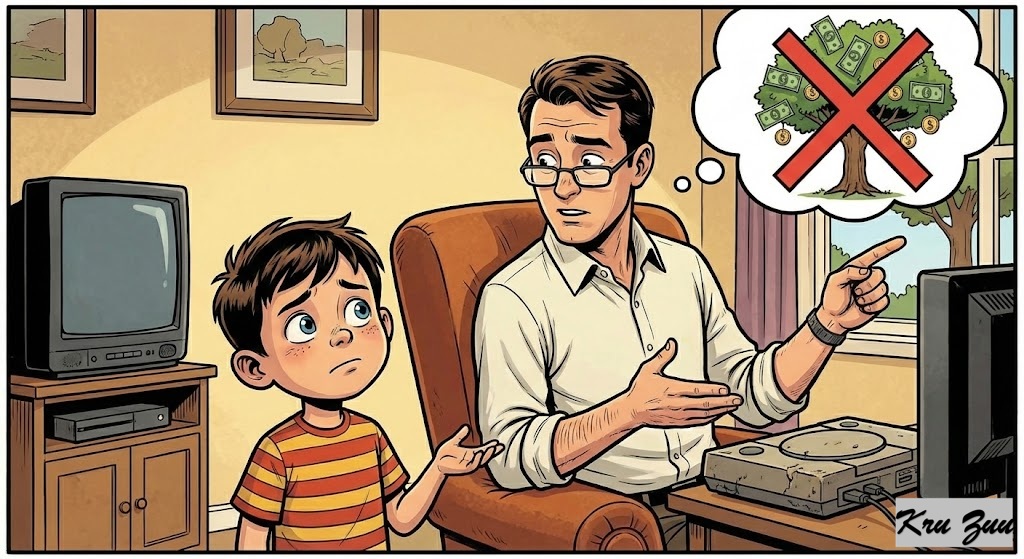
    Child: “Dad, can I have the new PlayStation?”

    Dad: “Son, look at our old one. It works fine. I can’t just buy everything you see. Money doesn’t grow on trees.”

    📜 History: Origin and Spread


    Where did this botanical financial advice come from?


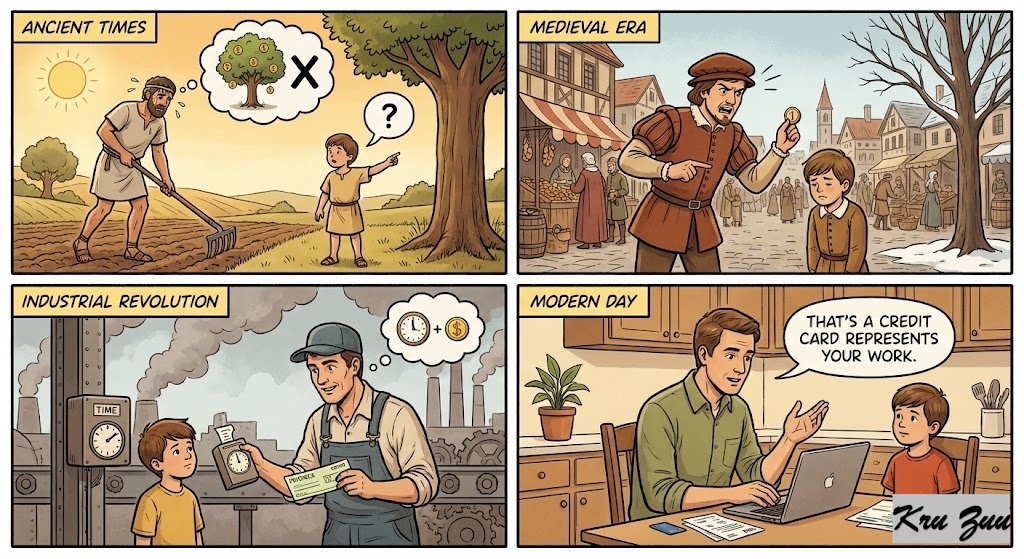
    The Origin: While the exact first usage is debated, it appeared in newspapers as early as the 1890s in the USA.


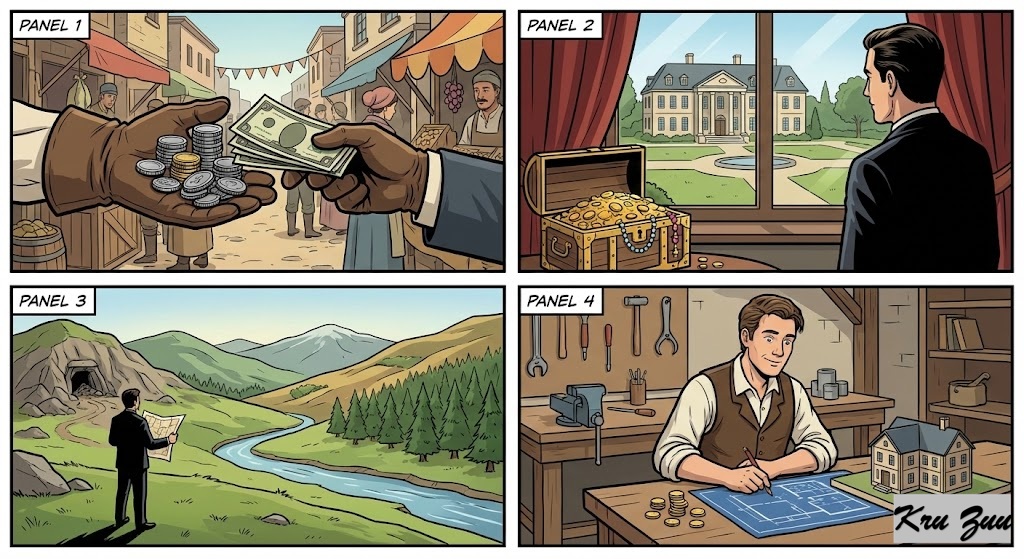
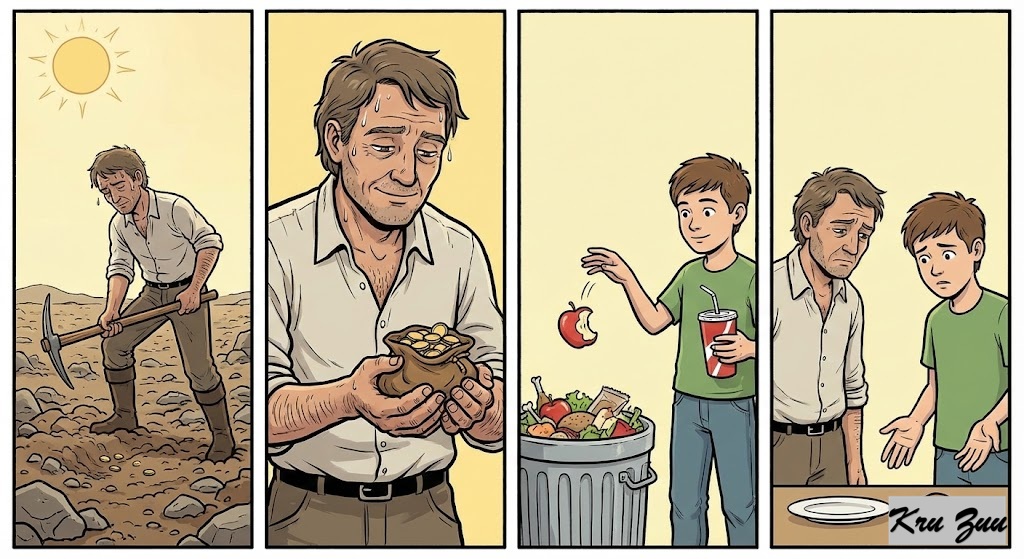
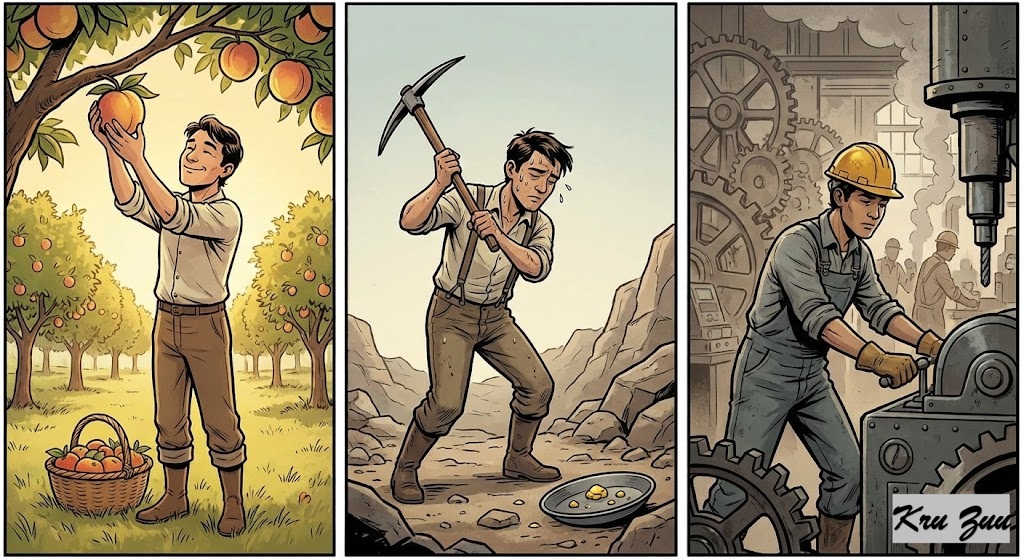
    The Logic: Before modern jobs, people worked the land. Picking fruit from a tree was “easy” food. Digging for gold or working in a factory was “hard” money. The idiom contrasts the ease of nature with the difficulty of economics.


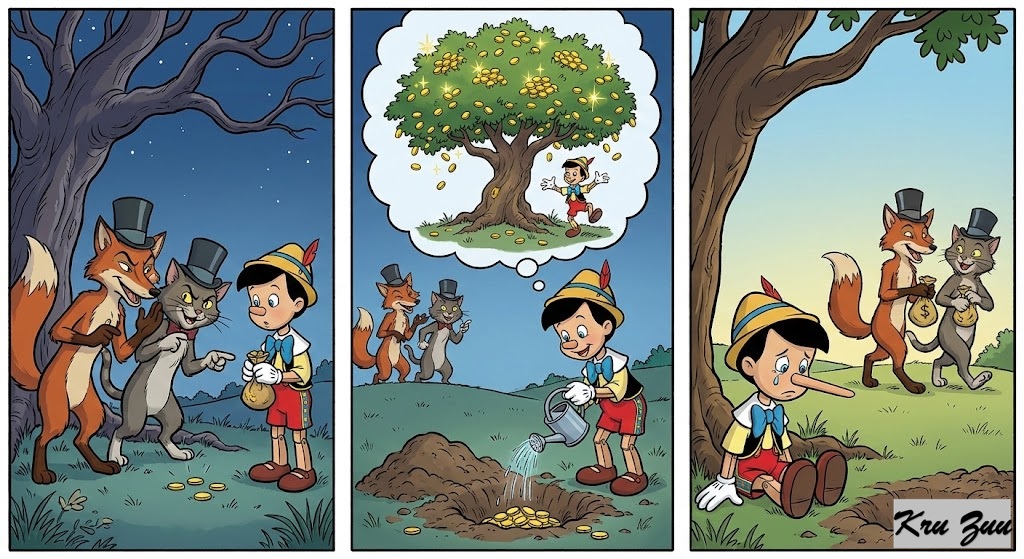
    The Pinocchio Connection: In the story of Pinocchio, the Fox and the Cat trick him into burying his gold coins to grow a “Money Tree.” The lesson? Only fools believe you can get rich without work.


    Global Cousins


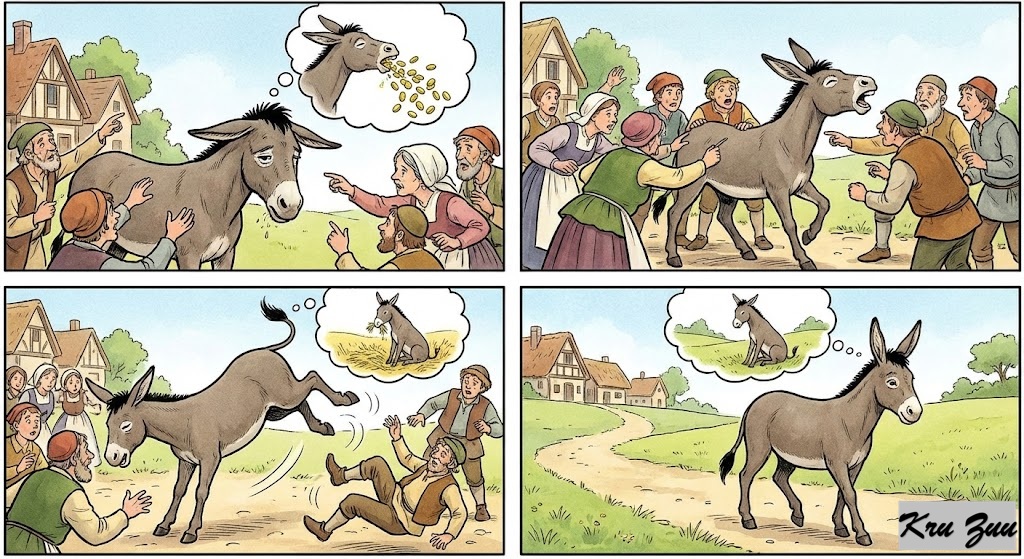
    🇩🇪 German: “Ich bin doch kein Goldesel.” (I am not a gold-donkey — referring to a fairy tale donkey that spits gold coins).


    🇪🇸 Spanish: “El dinero no cae del cielo.” (Money doesn’t fall from the sky).


    🇹🇷 Turkish: “Ekmek aslanın ağzında.” (Bread is in the lion’s mouth — meaning earning a living is dangerous and hard).

    🎭 Short Story: The Golden Smoothie 🥤🐱🐔🐸


    Let’s visit the magical forest to see who understands the value of a dollar.


    🌟 The Cast


    Cleo the Cat: Elegant, loves luxury, hates sweating. 😼


    Cluck the Chicken: Impulsive, gets excited easily, easily tricked. 🐔


    Fred the Frog: The wise, green accountant. 🐸


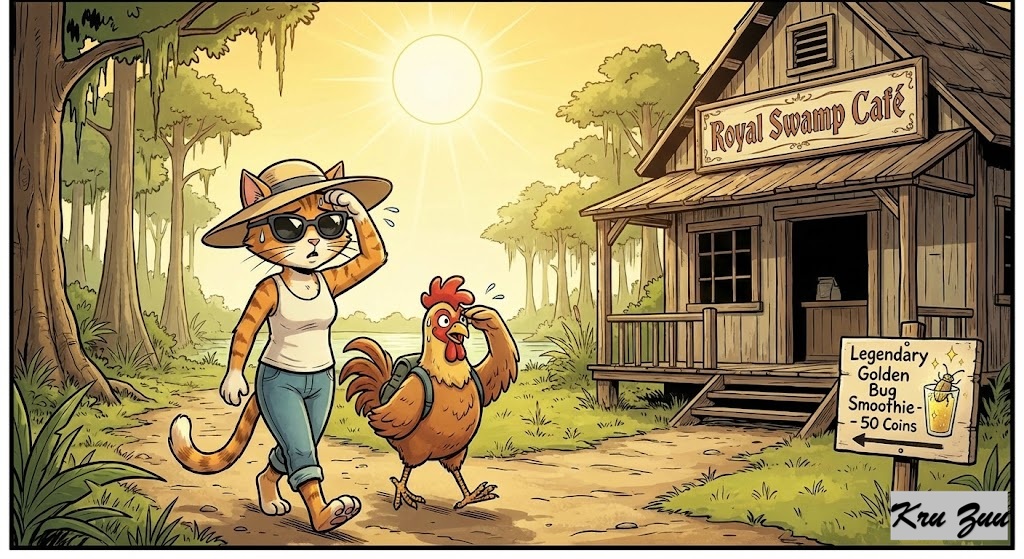
    The Situation: It is a hot summer day. Cleo and Cluck walk past the “Royal Swamp Café.” They see a sign: “Legendary Golden Bug Smoothie – 50 Coins.”


    The Conflict: “I need that smoothie!” Cleo purrs. “It will make my fur shine!” “I want two!” Cluck squawks, hopping up and down. “Let’s buy them now!”


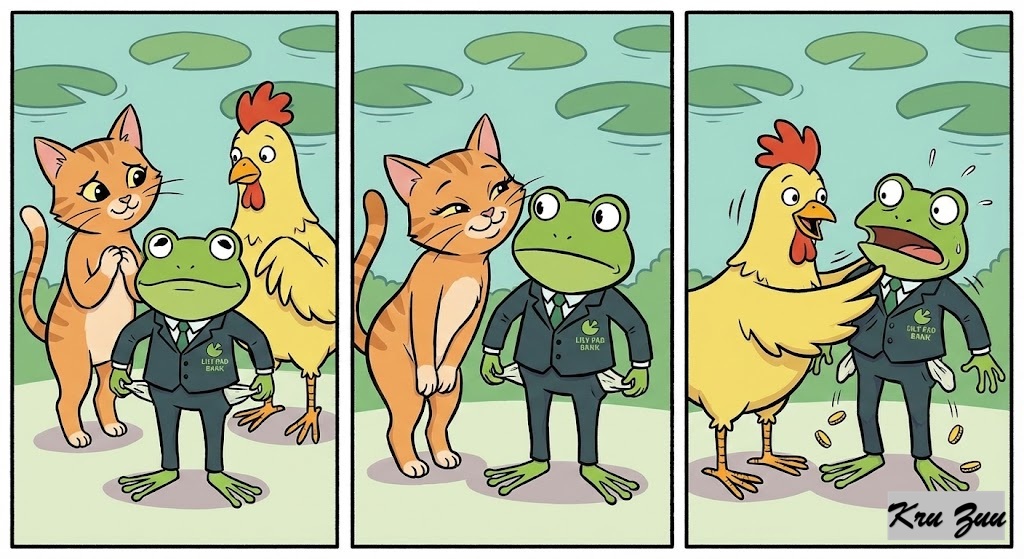
    They check their pockets. Empty. Cleo turns to Fred. “Fred, darling. Be a dear and buy us the smoothies. You have a job at the Lily Pad Bank. You have plenty of coins.” Cluck nods. “Yes! Just shake your pockets! Give us the coins!”


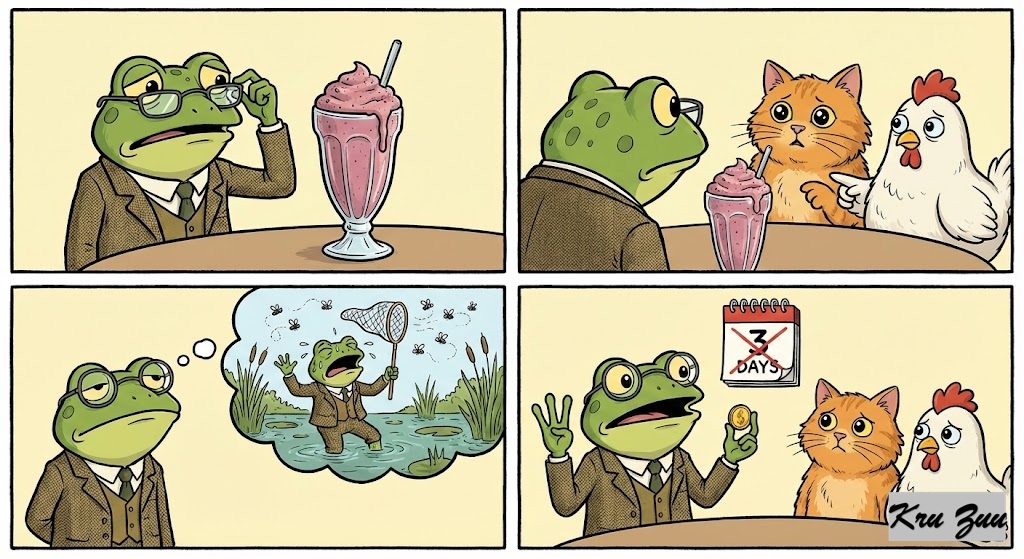
    The Reaction: Fred adjusts his glasses. He looks at the expensive smoothie, then at his friends. “Ribbit,” says Fred. “Do you know how many flies I have to catch to earn 50 coins? I have to work for three days.”


    Cleo rolls her eyes. “Oh, don’t be boring, Fred. Just get it.” Cluck tries to peck Fred’s pocket. “Come on! Don’t be stingy!”


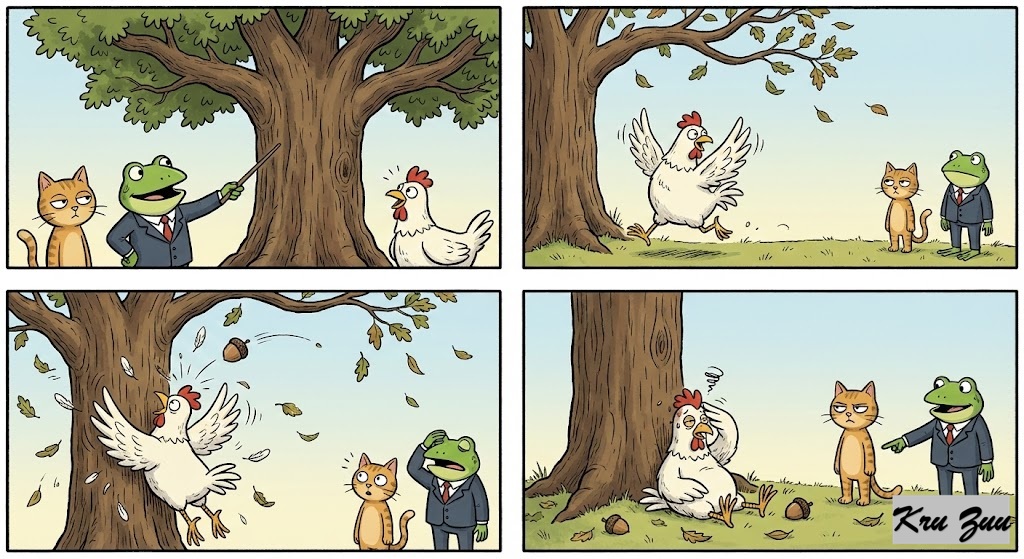
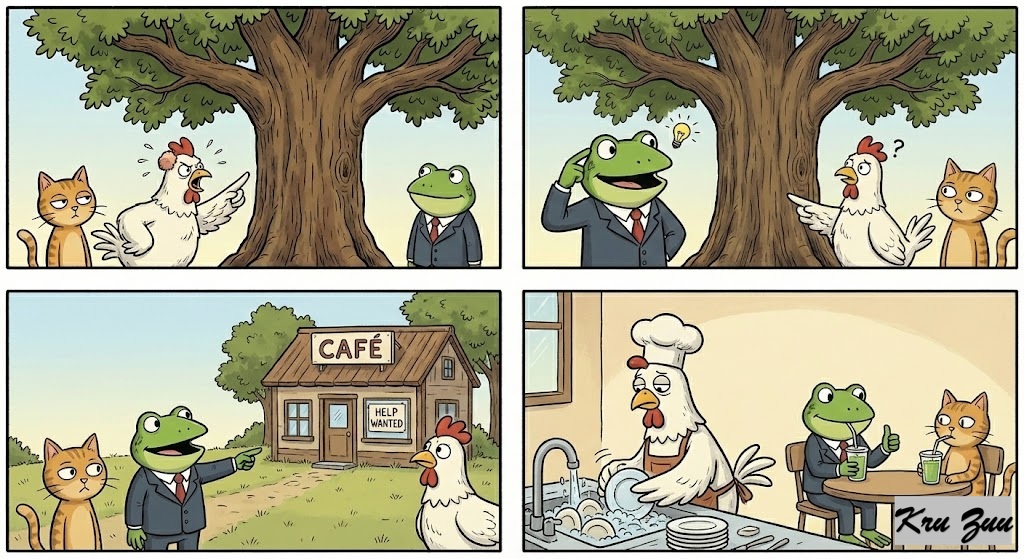
    The Lesson: Fred points to a giant Oak tree nearby. “Do you see that tree?” “Yes,” says Cleo. “Go shake it,” Fred commands. Cluck runs over and hits the tree with his wings. Bam! Bam! Leaves fall down. An acorn hits Cluck on the head. But no gold coins fall.


    “It’s broken!” Cluck yells. Fred smiles slowly. “The tree isn’t broken, Cluck. But your logic is. Money doesn’t grow on trees. If you want the smoothie, the café is hiring a dishwasher.”


    The Resolution:
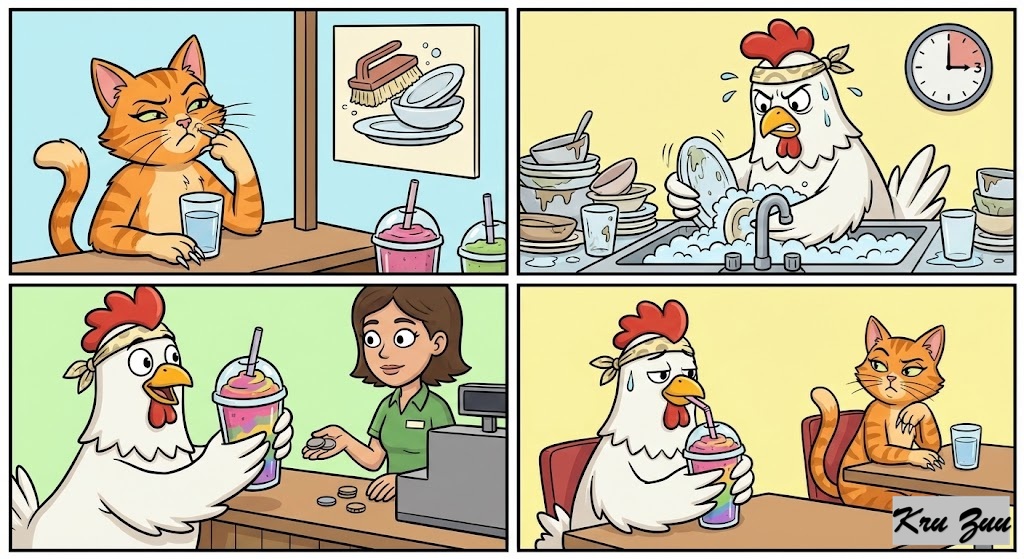
    Cleo looked at her manicured claws. “Dishwashing? Ew.” She decided water was fine. Cluck, however, really wanted the smoothie. He washed dishes for 3 hours. When he finally bought the smoothie, he drank it slowly. He didn’t spill a drop. Why? Because he paid for it with his own sweat.


    The Moral: When you don’t earn it, you waste it. When you work for it, you taste it. 😋

    🎓 Lesson for English Learners


    Don’t accept the first price.


    Situation: You are negotiating a salary or a freelance rate. The client offers you very little money.

    The Shift: You need to politely remind them of your value.

    You Say: “I understand you have a budget, but this project requires high-level skills and time. I cannot lower my rate further; money doesn’t grow on trees, and neither does quality work.”


    💬 Your Turn: The “Hourly” Challenge 🚀


    Do you want to cure your “Villain” spending habits?


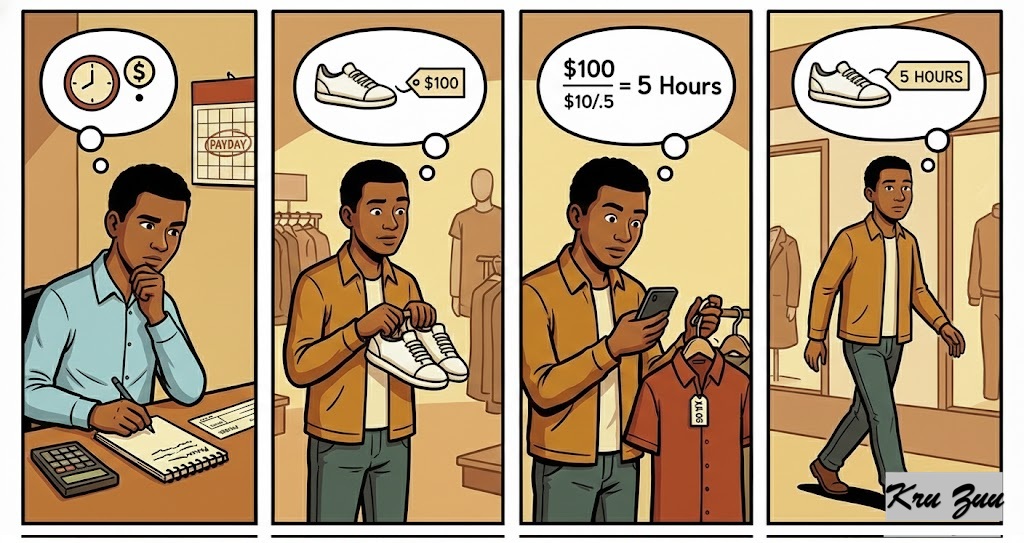
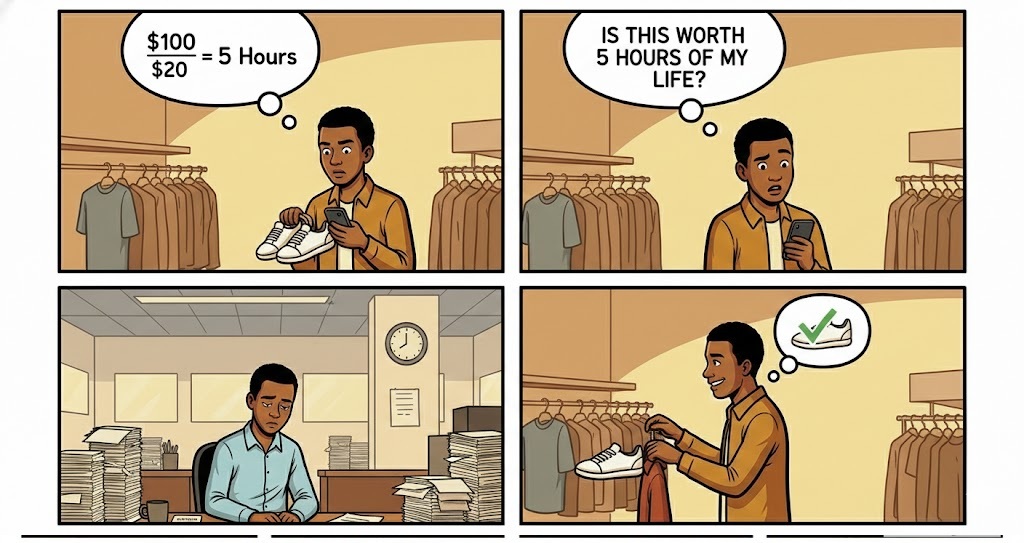
    The Challenge: Calculate your “Hourly Rate” (How much you earn in one hour of work). The Action: Next time you want to buy something unnecessary (a new shirt, a gadget, a fancy meal), divide the price by your hourly rate.


    Example: The shoes cost $100. You earn $20/hour. These shoes cost 5 hours of your life.


    Ask yourself: “Is this item worth sitting in the office for 5 more hours?”


    👇 Question for the comments: What is one thing you used to waste money on, but stopped? How did you learn the value of that money? Tell us below!

    By Zubeyir YURTKURAN

    https://www.facebook.com/BrainBattleground/

    https://www.facebook.com/zubeyr.yurtkuran/

    https://www.instagram.com/zubeyryurtkuran/
    https://www.youtube.com/@BrainBattleground-b3p

    https://www.instagram.com/brainbattleground/