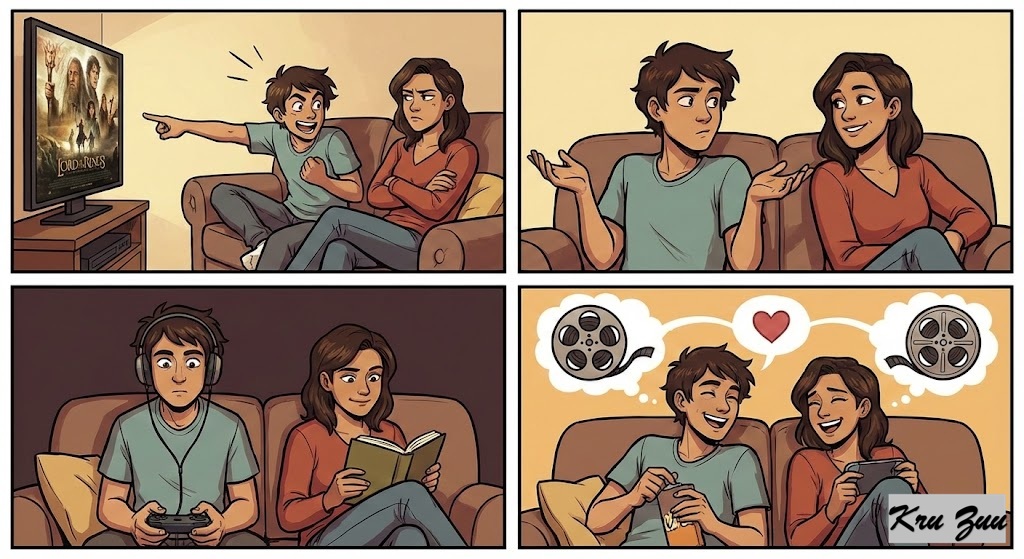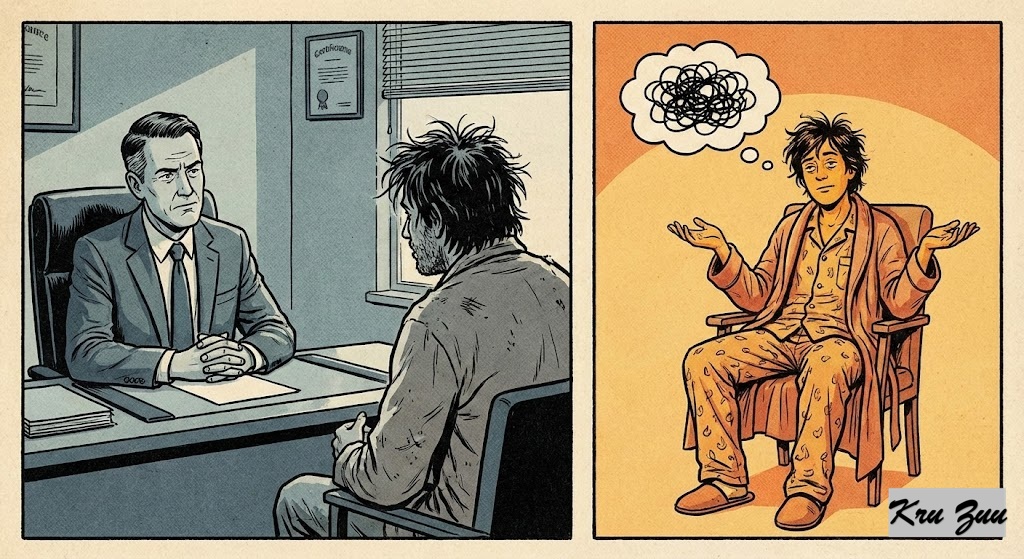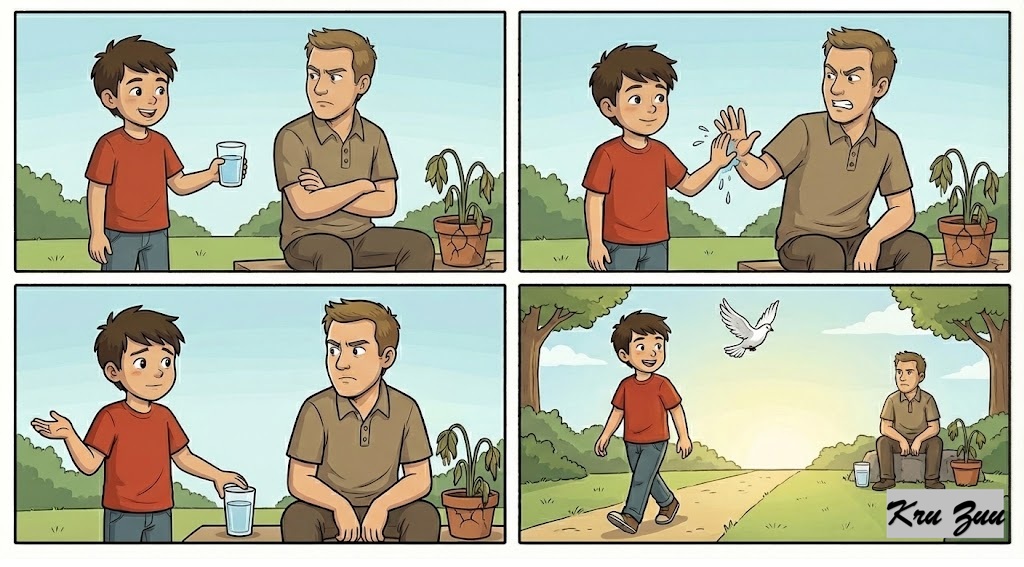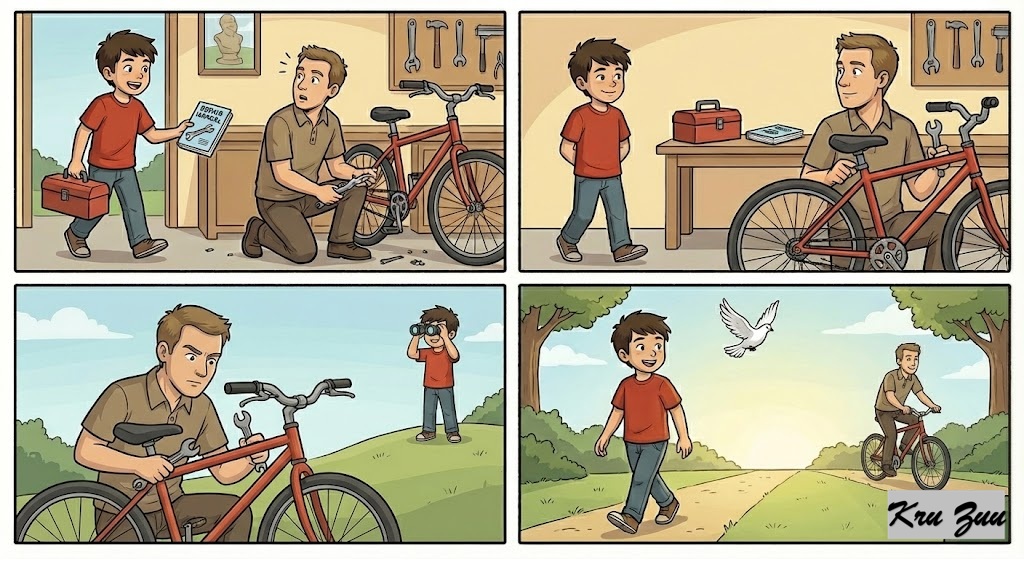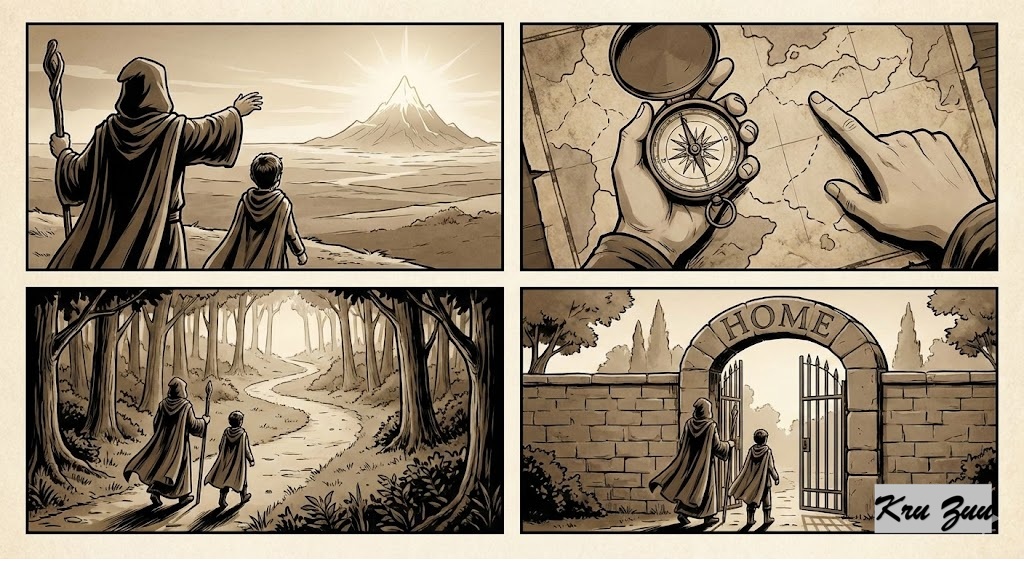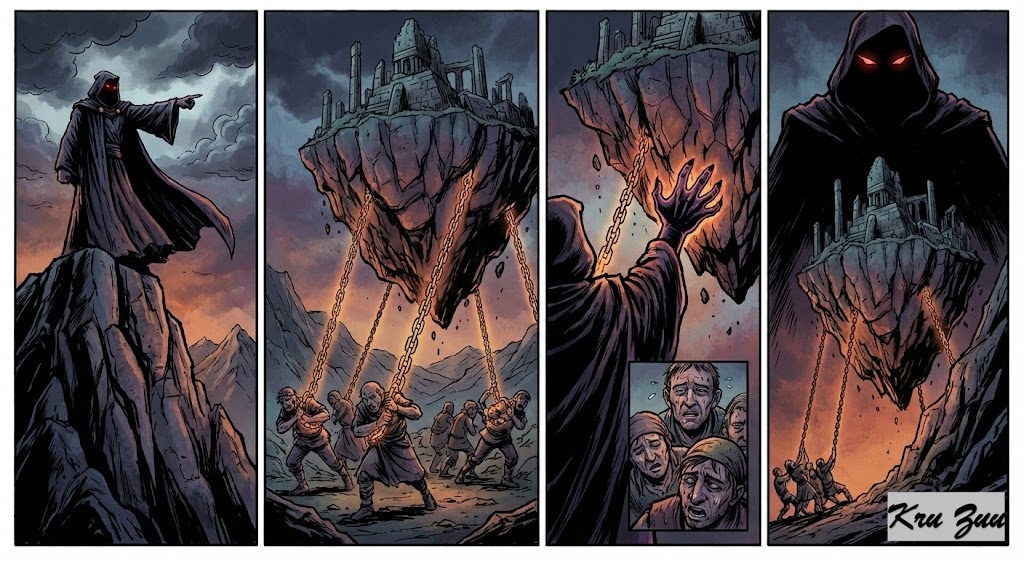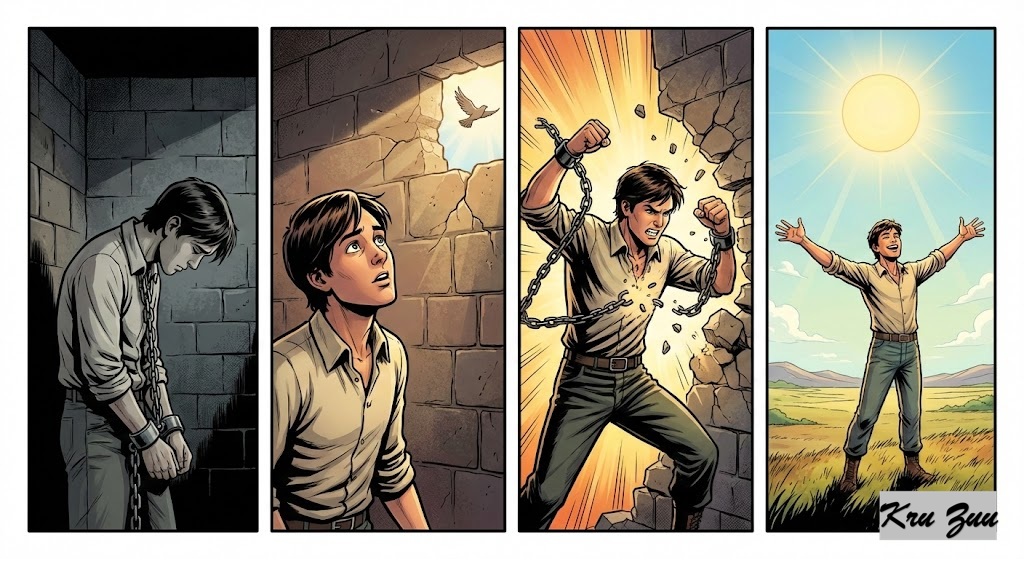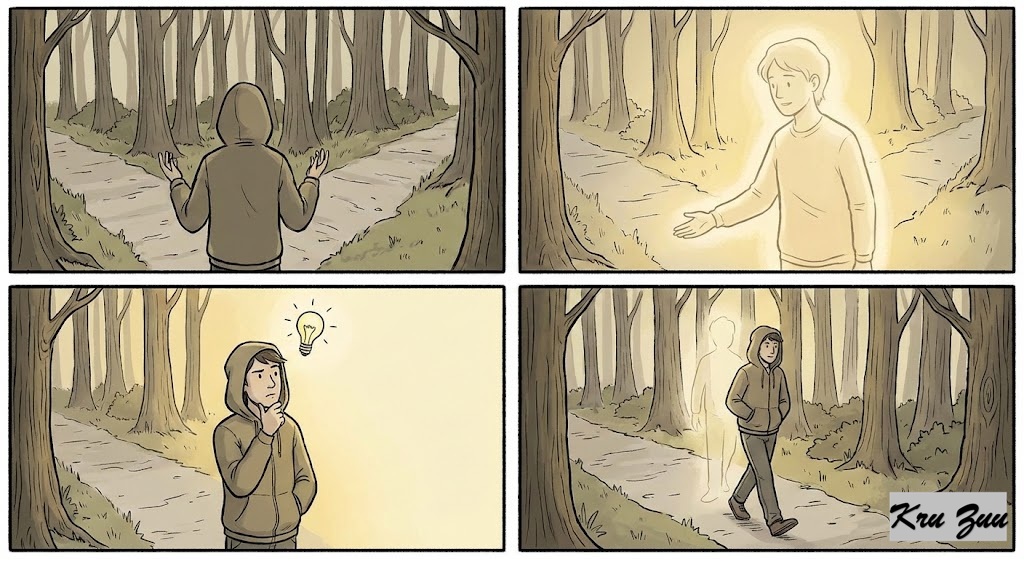
Tag: language

  • 🌳 The Daily Shield: The Law of Momentum

    🌳 The Daily Shield: The Law of Momentum

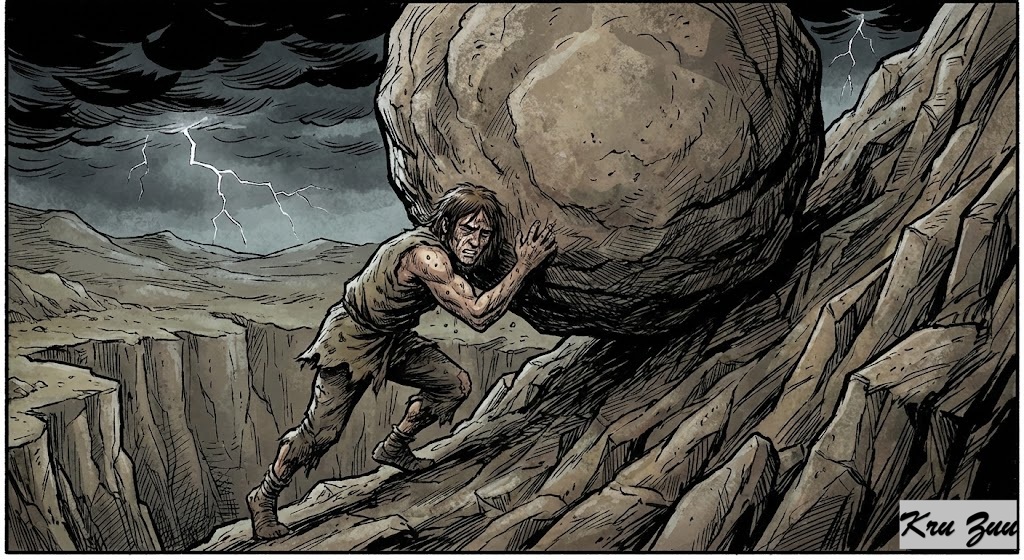
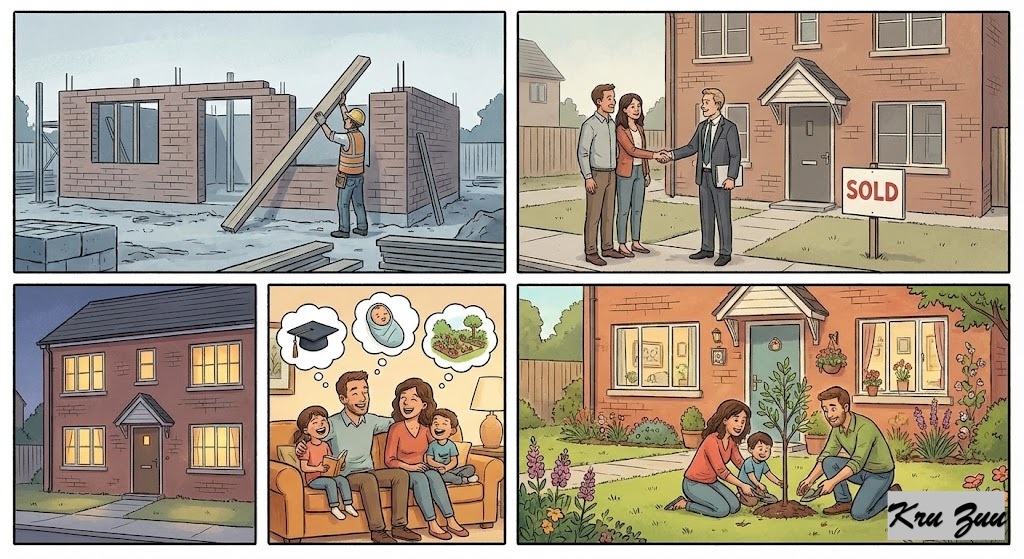
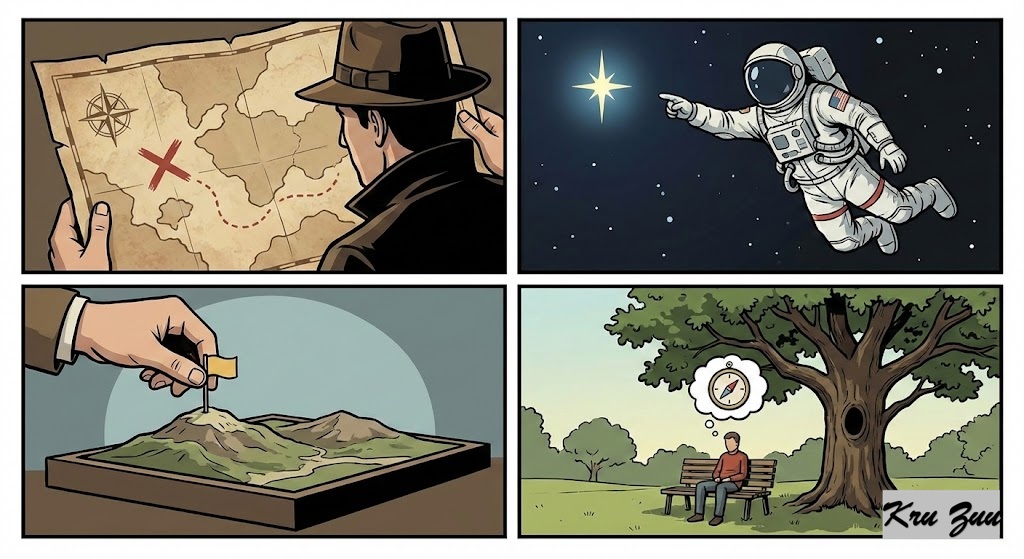
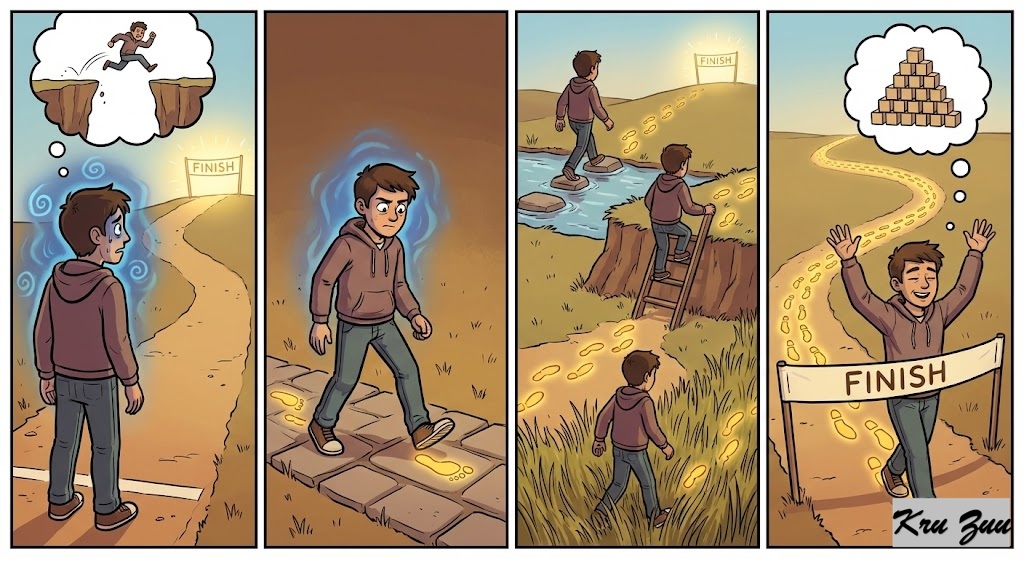
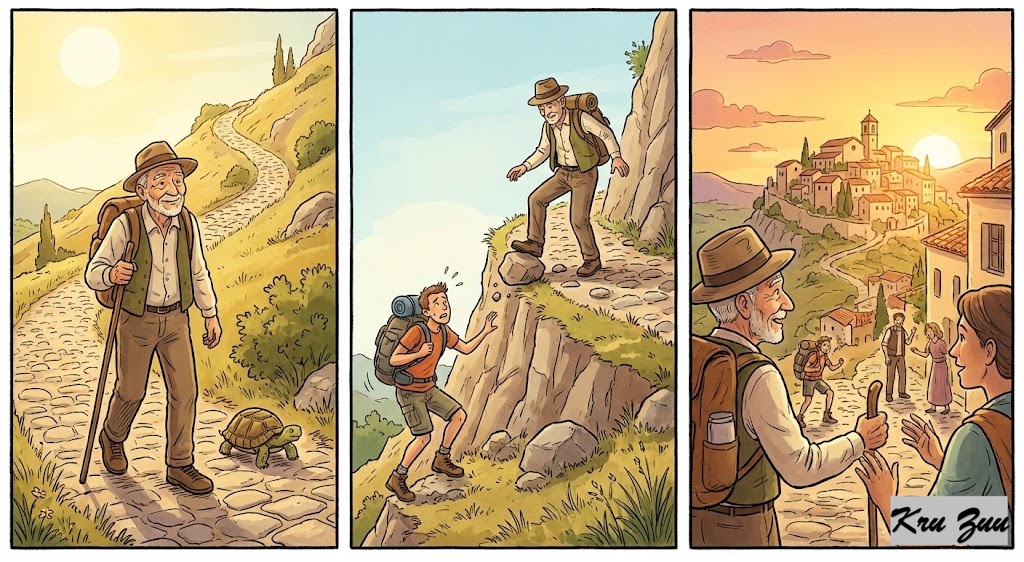
    “A journey of a thousand miles begins with a single step.”


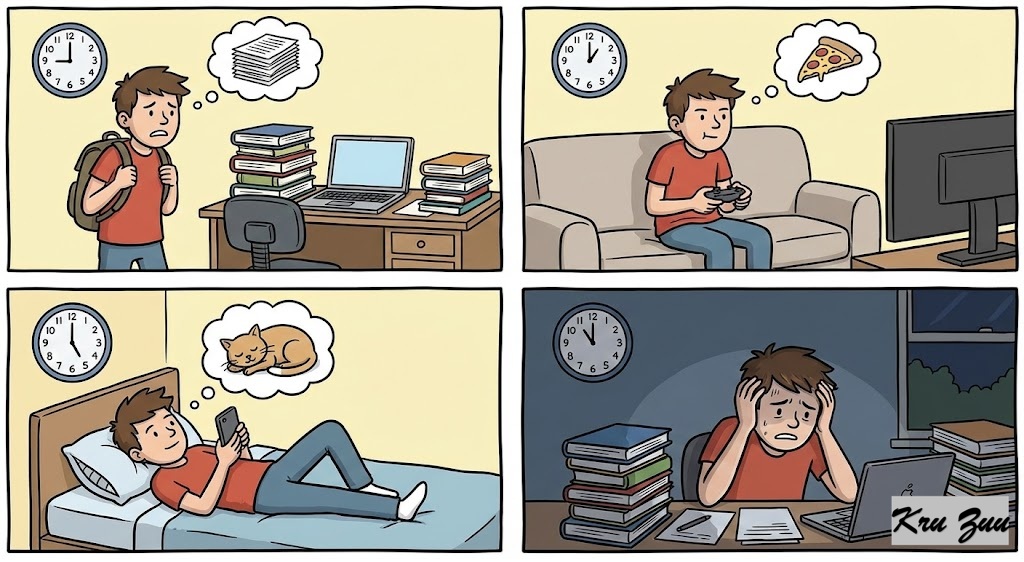
    😈 The Villain (The Procrastinator)

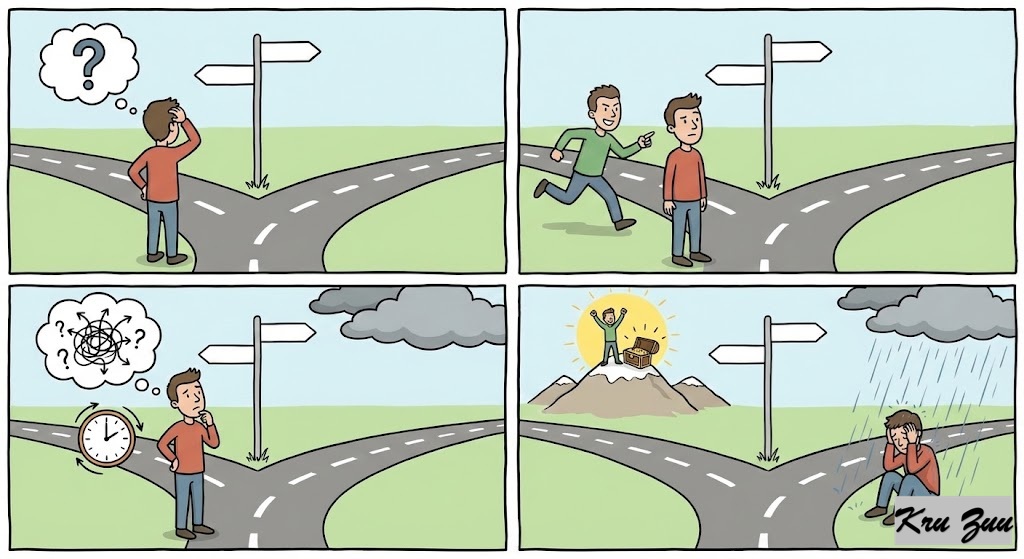
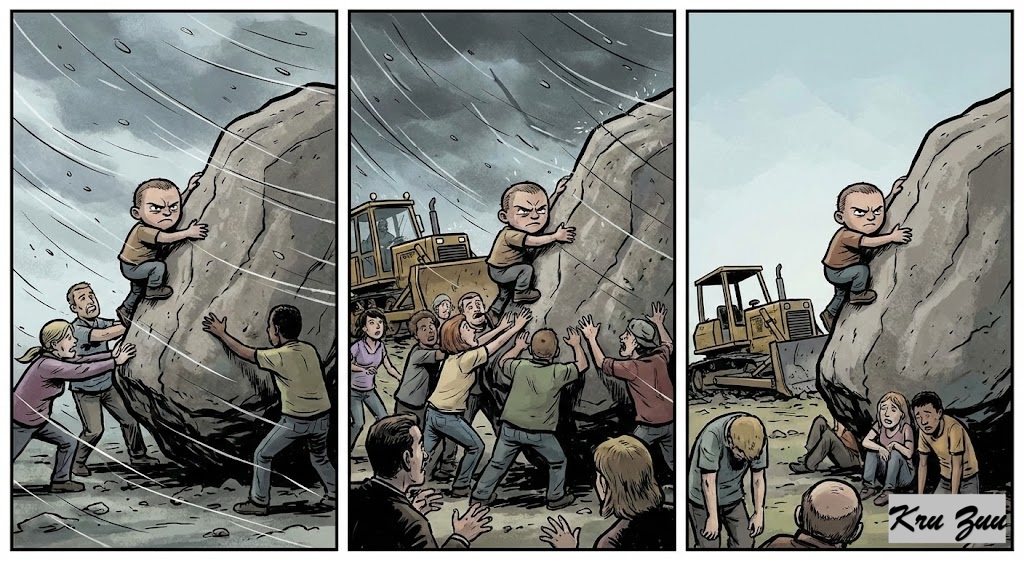
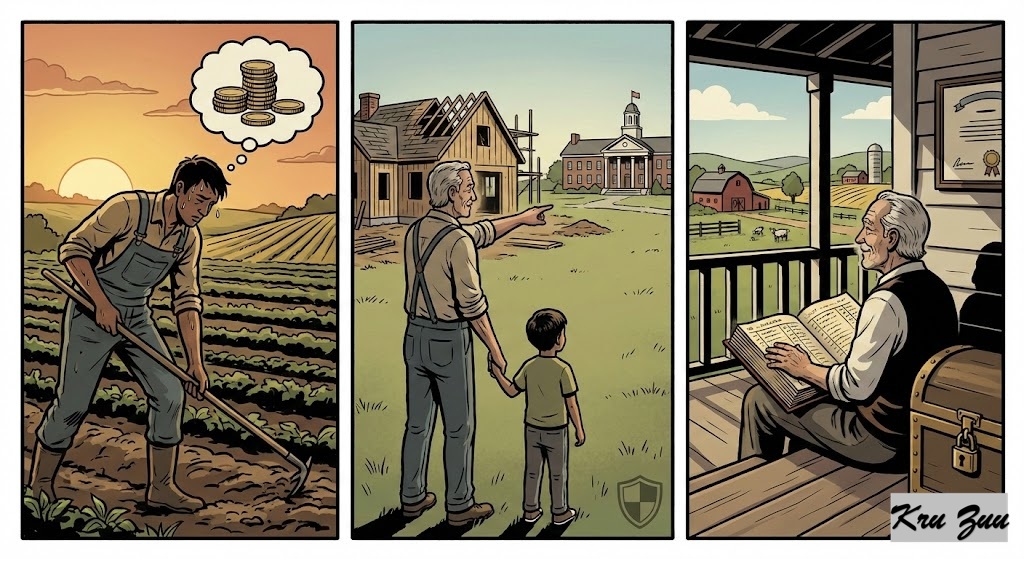
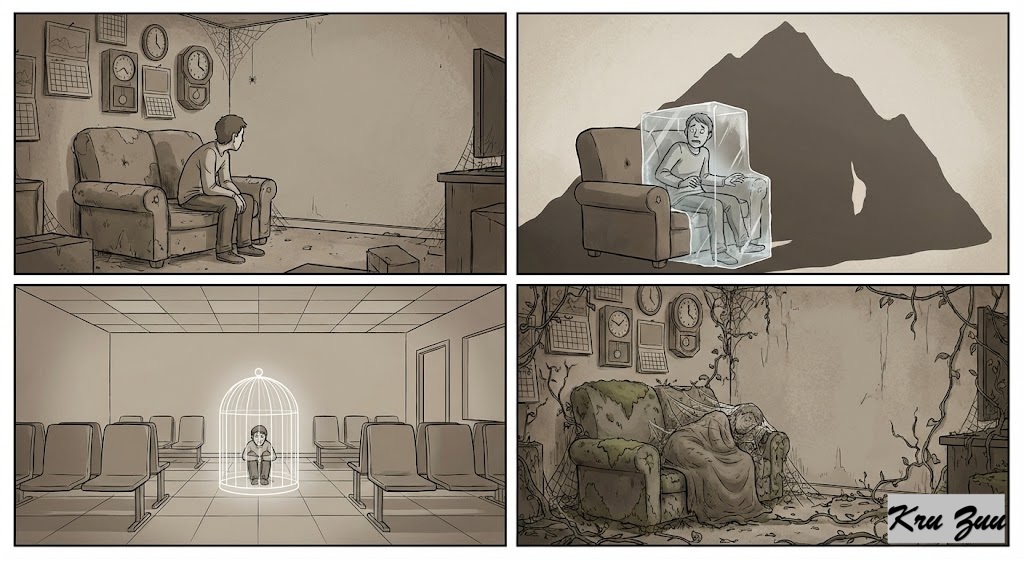
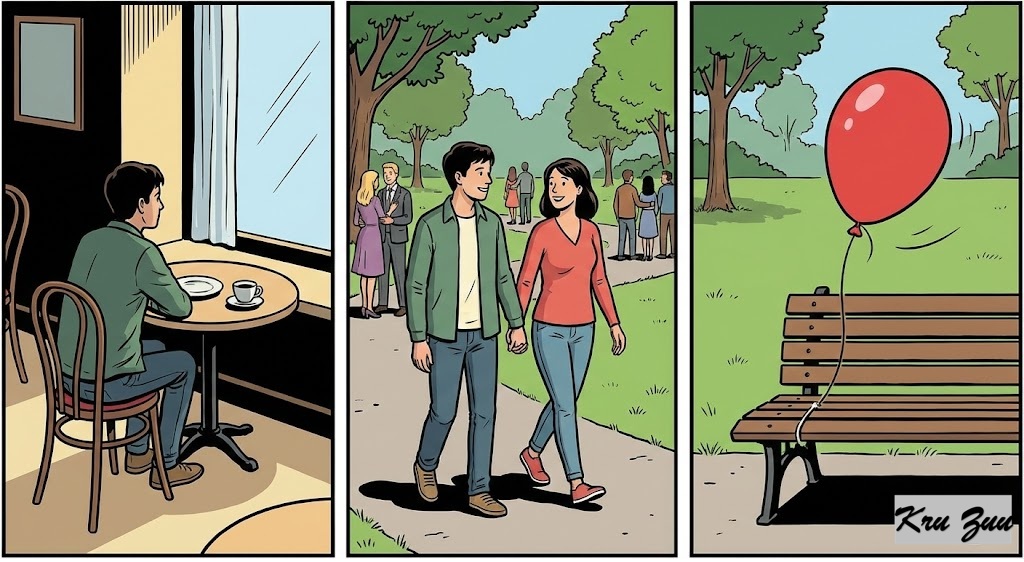
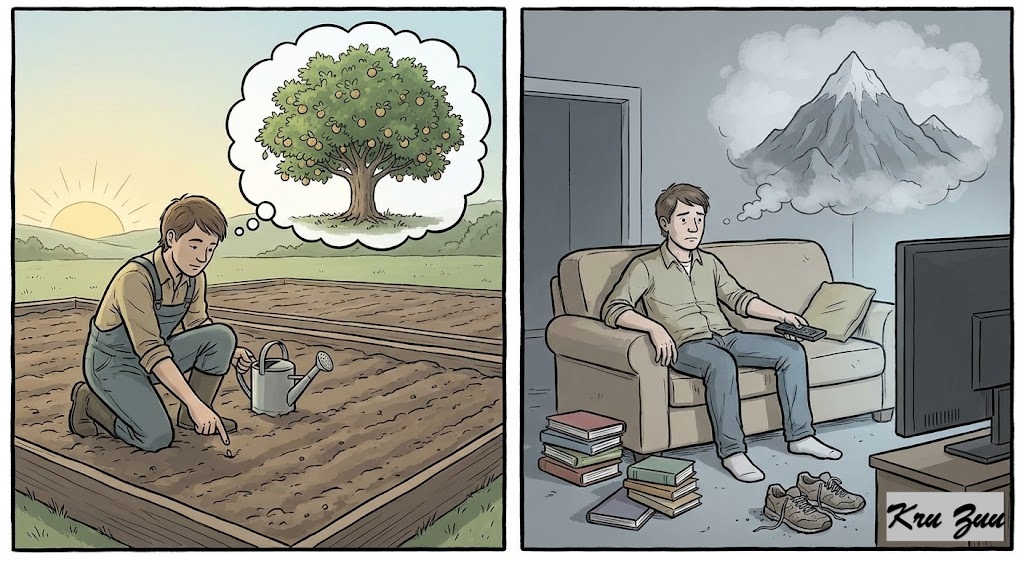
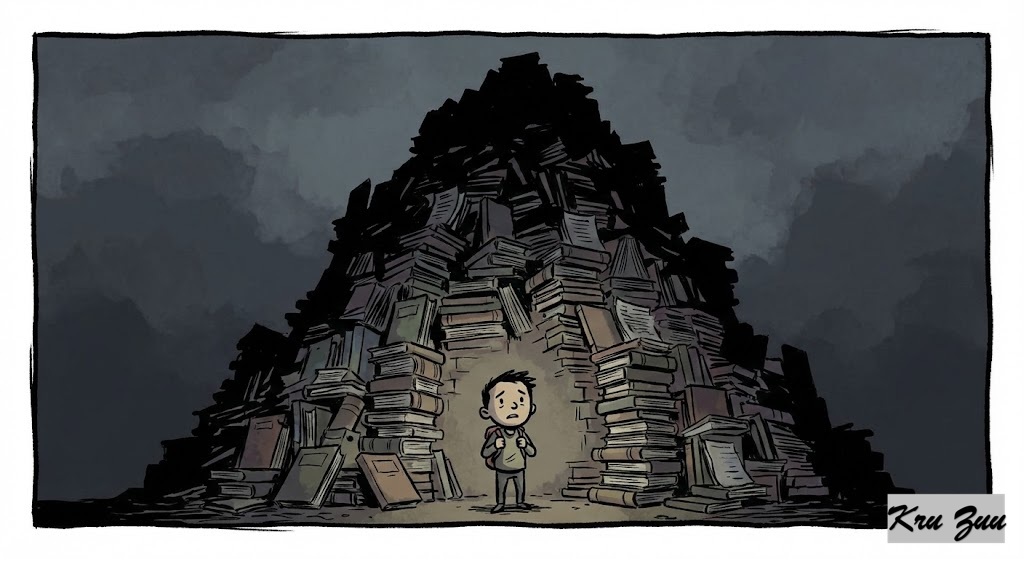
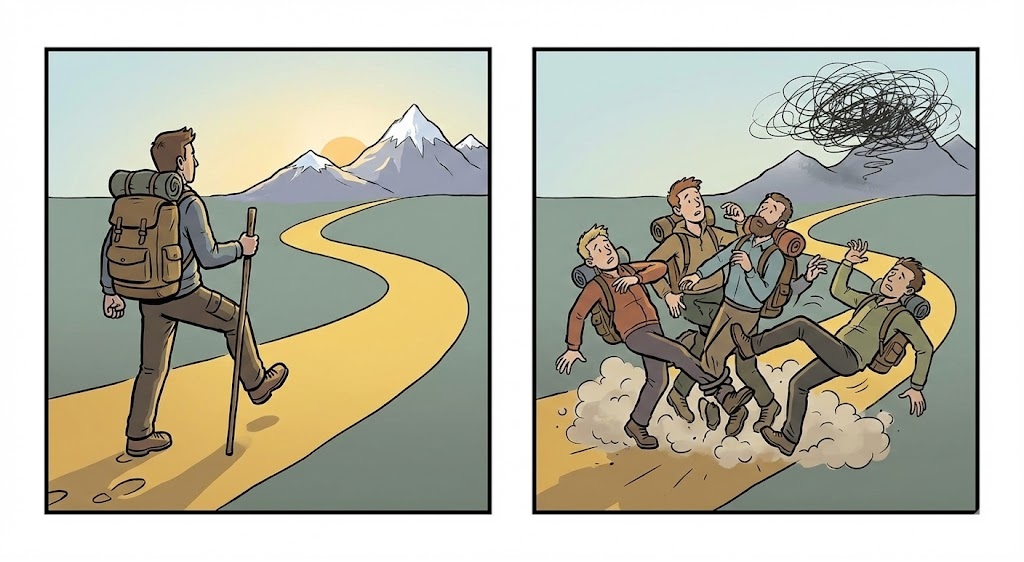
    You have a big dream. You want to learn English, lose weight, or write a book. But you look at the mountain ahead and you freeze. 🧊 “It’s too hard!” “It will take years!” “I’ll start next Monday (or next year).” You are obsessed with the finish line, so you never cross the starting line. You wait for the “perfect time” or “perfect mood.”
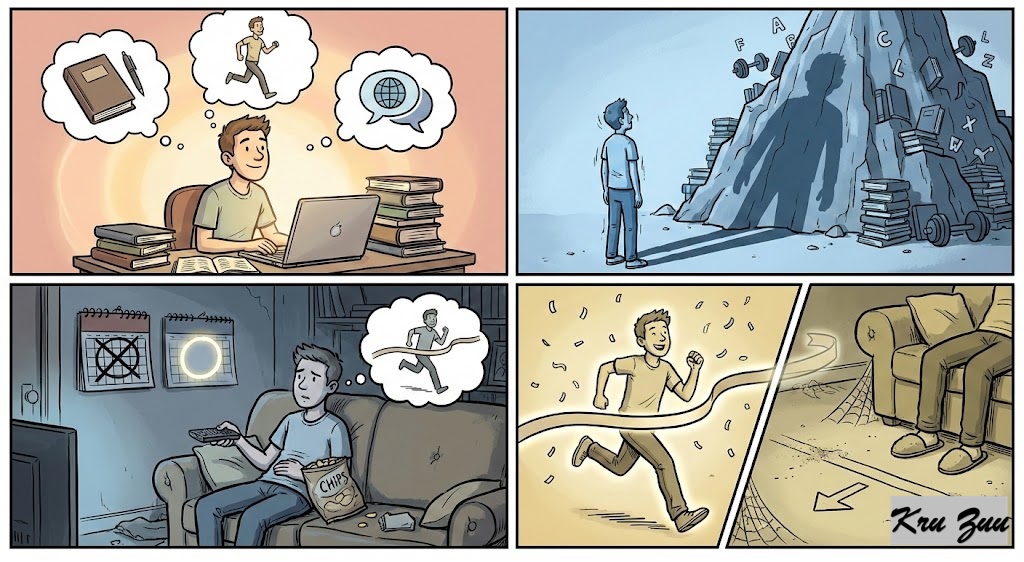
    The Result? You stay exactly where you are. You are paralyzed by the size of the task. You are trapped in the “Waiting Room of Life.” 🛋️

    😇 The Hero (The Walker)

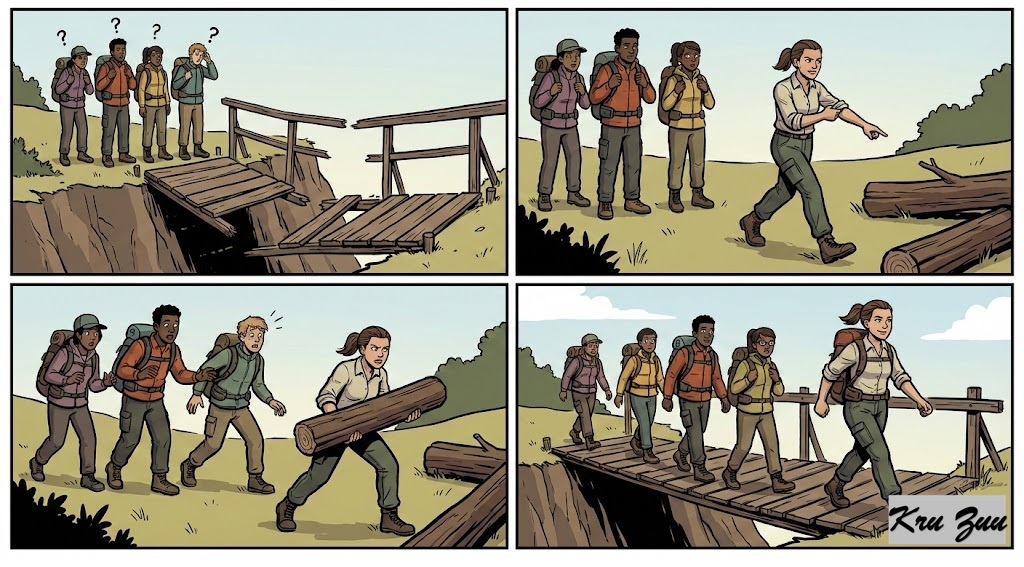
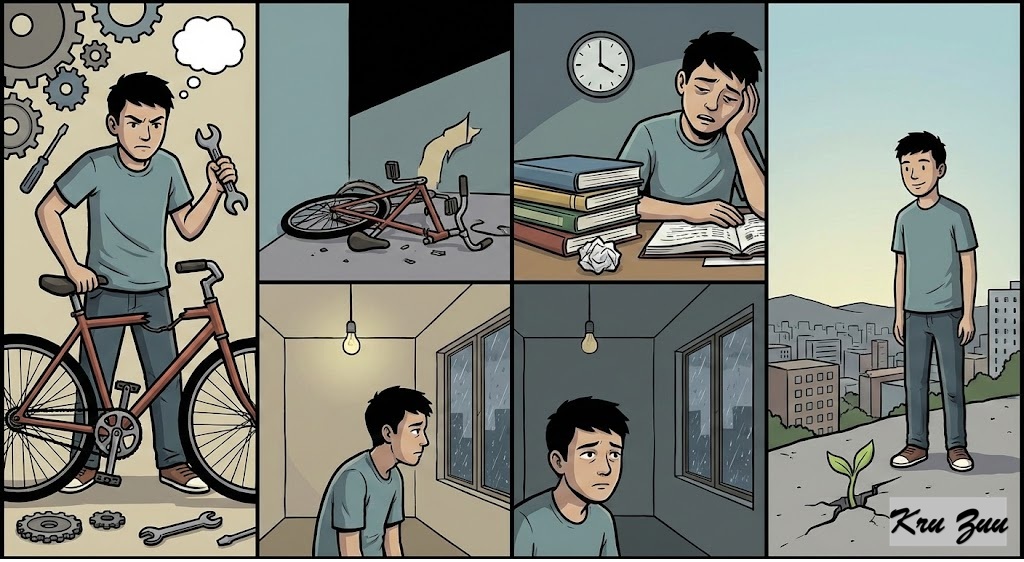
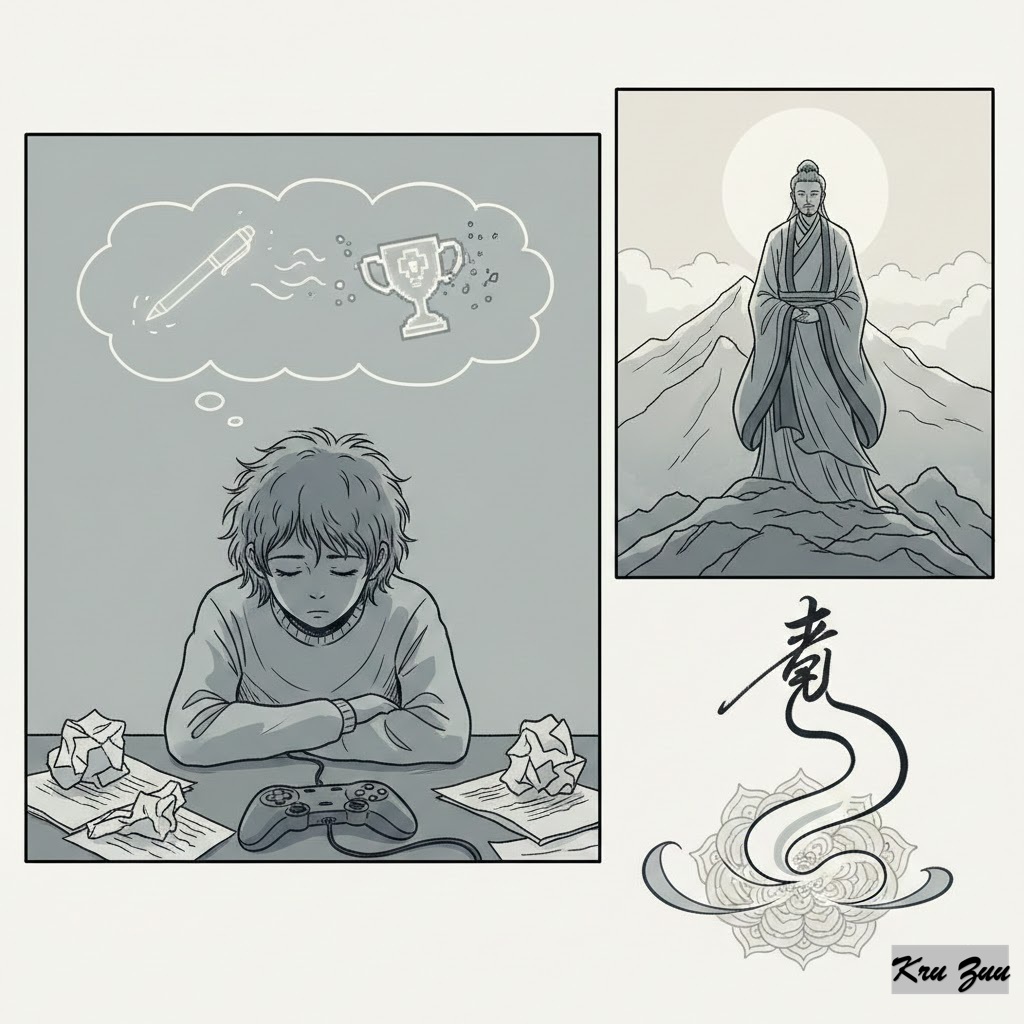
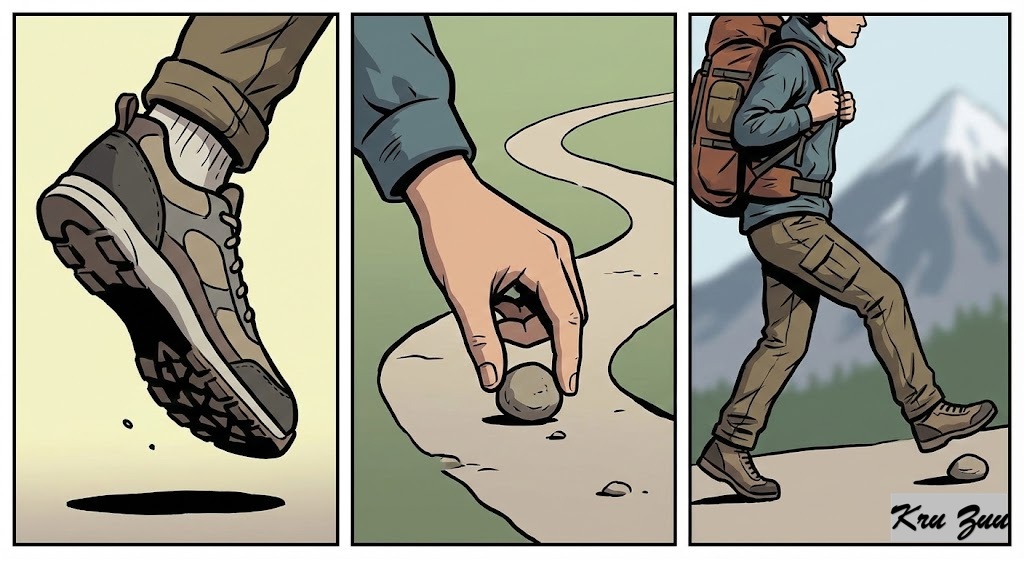
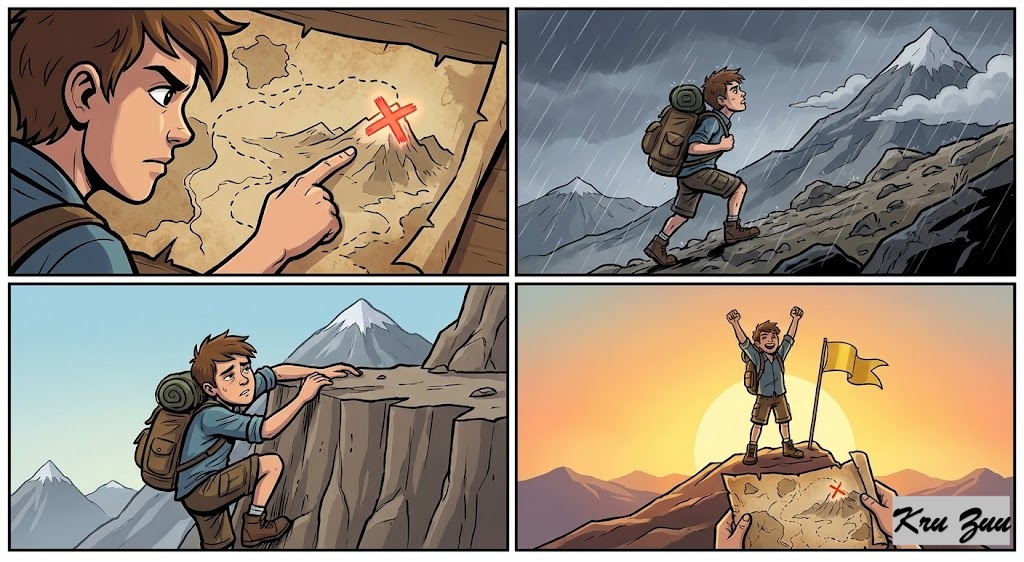
    You see the big mountain, but you look at your feet. 🦶 You don’t worry about Mile 500; you only focus on Step 1. You say: “I don’t have to finish today. I just have to start.” You write one sentence. You learn one word. You do one push-up. You respect the power of small progress.
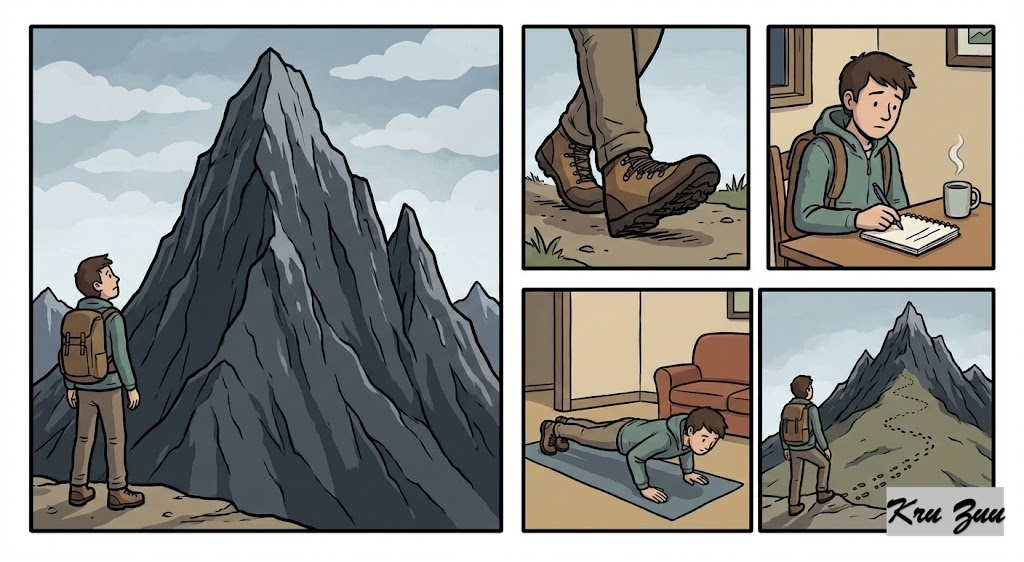
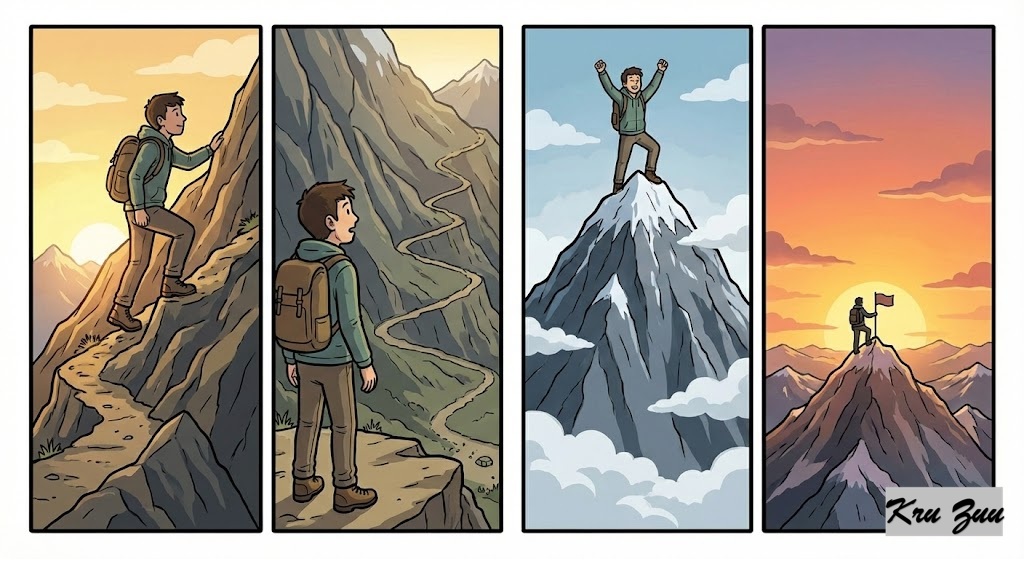
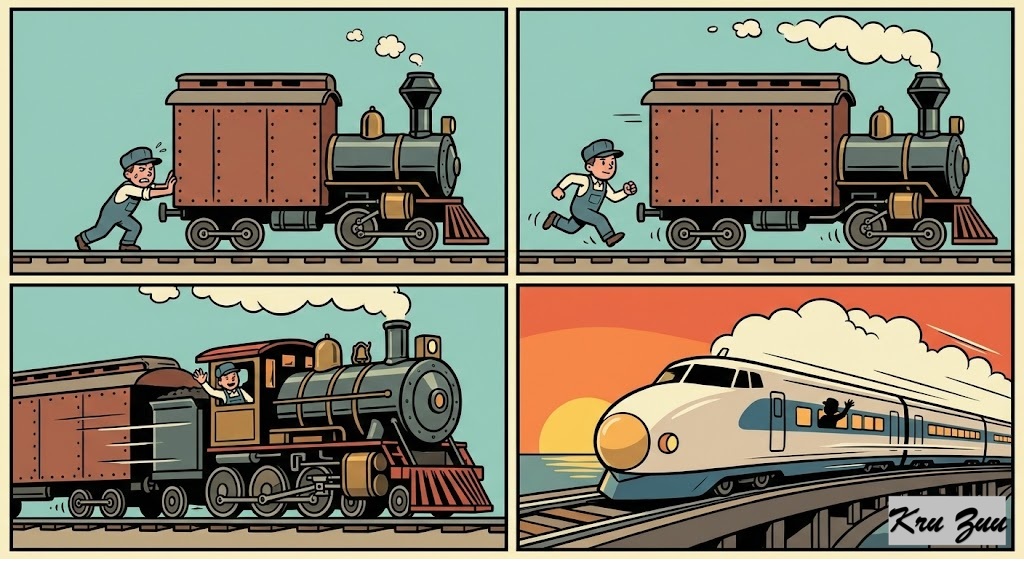
    The Result? You build momentum. Suddenly, you look back and realize you have climbed the mountain without even noticing the pain. You build consistency, not excuses. 🚀

    ⚖️ The Reality


    Motion vs. Stagnation. We live in a world of “instant results.” We want the six-pack abs in 2 days, or fluency in English in 2 weeks. But big things are just a pile of small things added together. A blizzard is just billions of single snowflakes. A novel is just thousands of single words. If you refuse to take the first step because the journey looks long, you guarantee failure.

    💎 The Secret

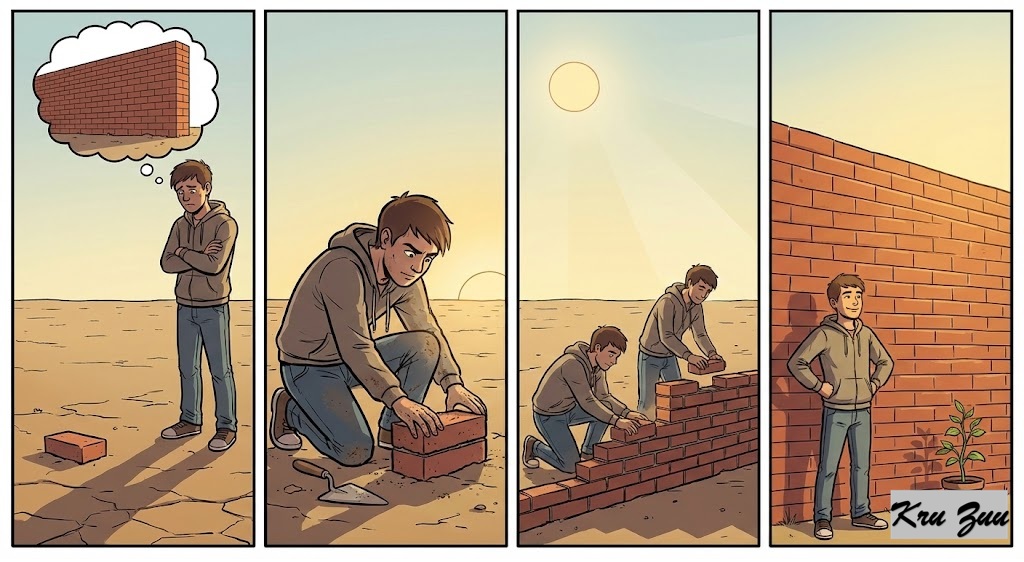
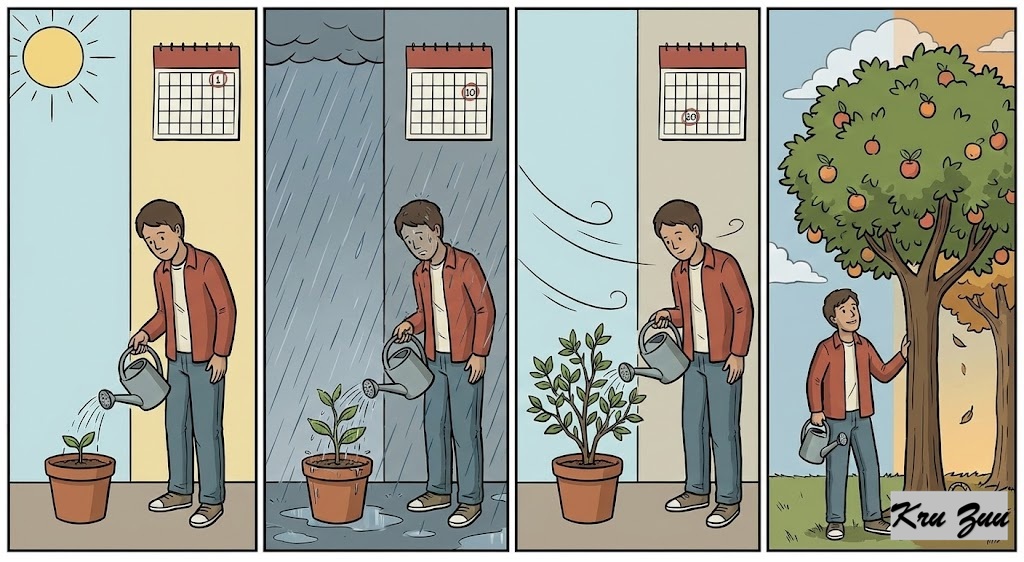
    You cannot teleport to the finish line. Success is not a giant leap; it is a million tiny, boring steps taken one after another. Action cures fear.
    🧐 The Anatomy of the Proverb


    This is your reminder that every expert was once a beginner.
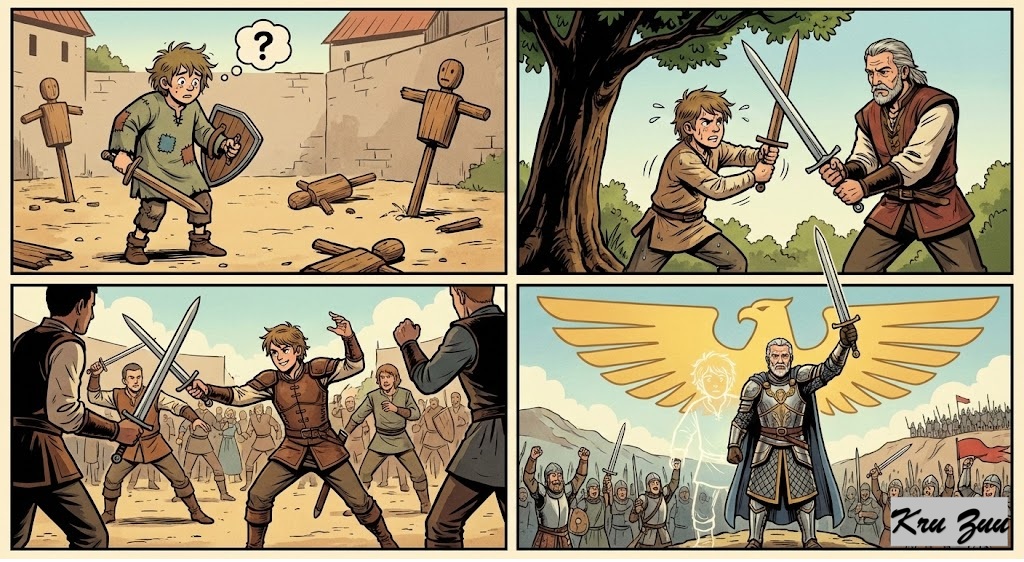

    Journey (Noun): A long trip or process of personal change.
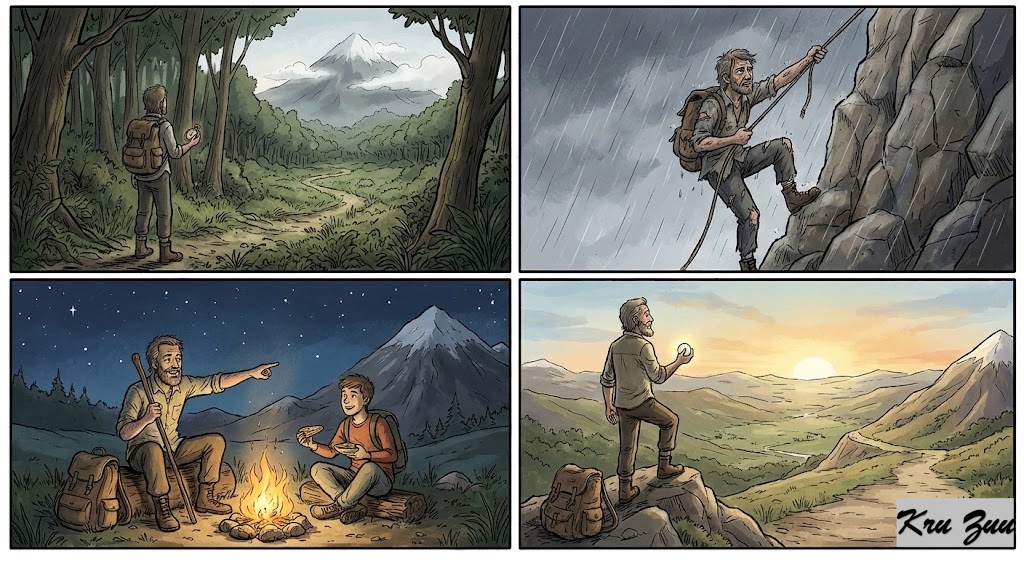

    Thousand Miles (Noun Phrase): A metaphor for a very large, difficult, or long-term task.
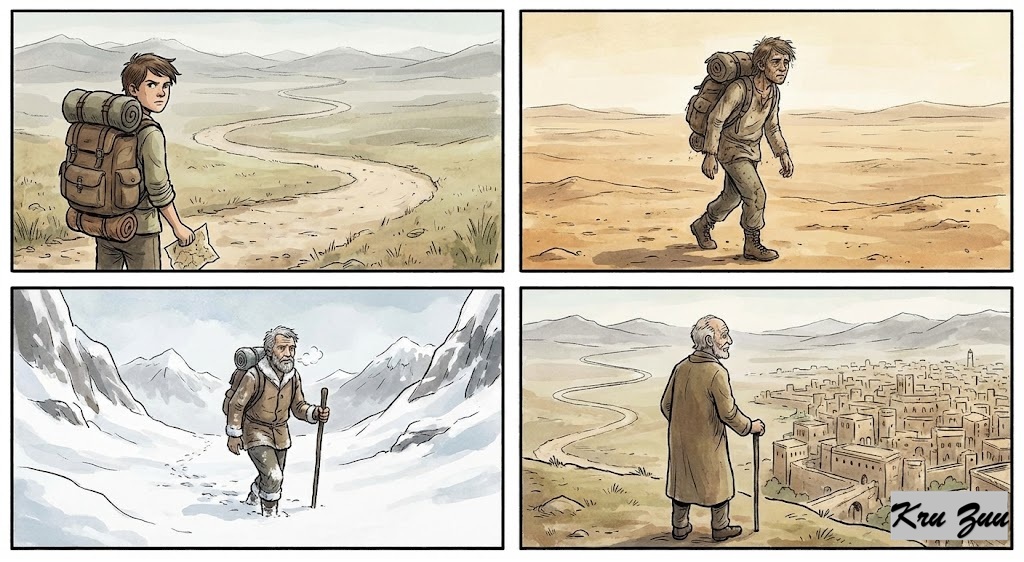

    Single (Adjective): Just one; individual.

    Step (Noun): The movement of lifting your foot and putting it down; a small action.

    Simpler Version: Start small. / Don’t give up before you start.

    📚 Vocabulary Vault


    Daunting (Adjective): Seeming difficult to deal with; intimidating. (e.g., “The exam looked daunting.”) 😨

    Procrastinate (Verb): To delay or postpone action; putting off doing something.

    Momentum (Noun): The quantity of motion of a moving body; the strength or force gained by motion. 🚄

    Objective (Noun): A goal or aim.

    Consistent (Adjective): Acting or done in the same way over time, especially so as to be fair or accurate. (The key to success!).

    🧠 Grammar Focus: Singular vs. Plural Subjects


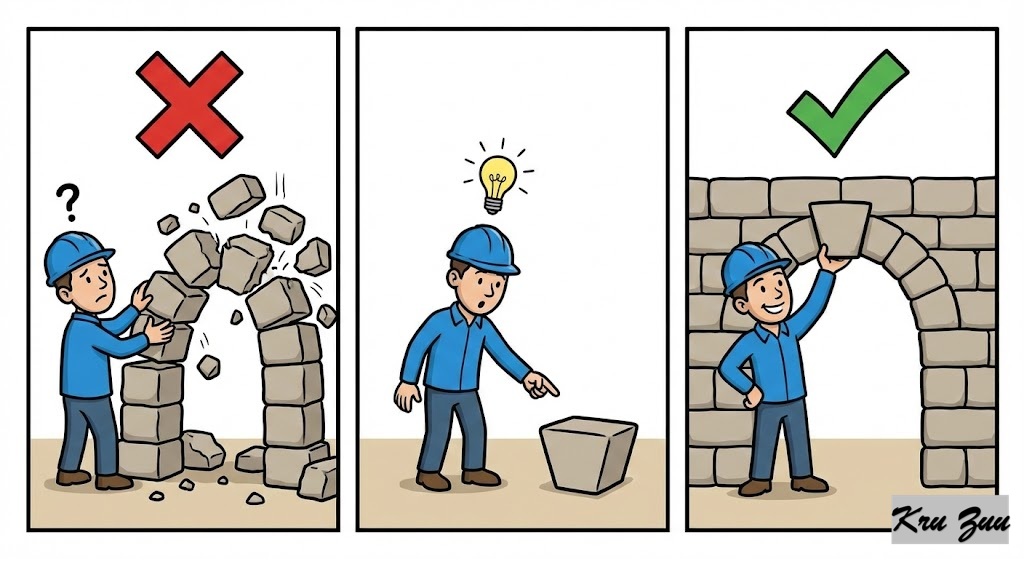
    Notice the grammar in the proverb: “A journey (singular subject) … begins (singular verb + s).” It is NOT “The journey begin.”

    Wrong: “Learning English take a long time.”
    Right: “Learning English takes a long time.”

    Tip: When a gerund (verb + ing, like “Learning”) is the subject, treat it as singular (It).
    📜 History: Origin and Spread


    Who said this wise sentence?
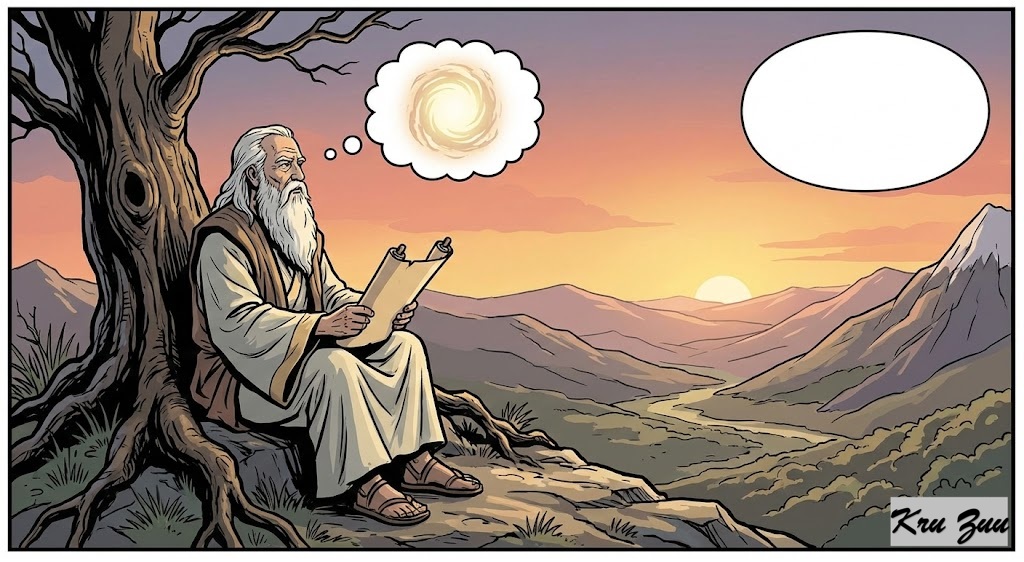

    The Origin: This is an ancient Chinese proverb, written by the philosopher Laozi (Lao Tzu) around the 6th century BC. It appears in the Tao Te Ching (Chapter 64).
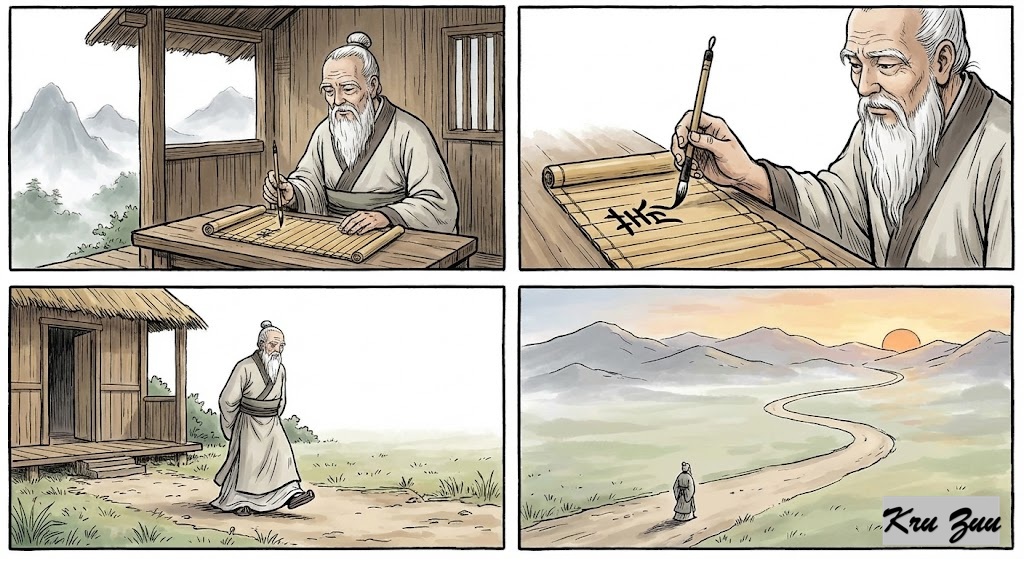

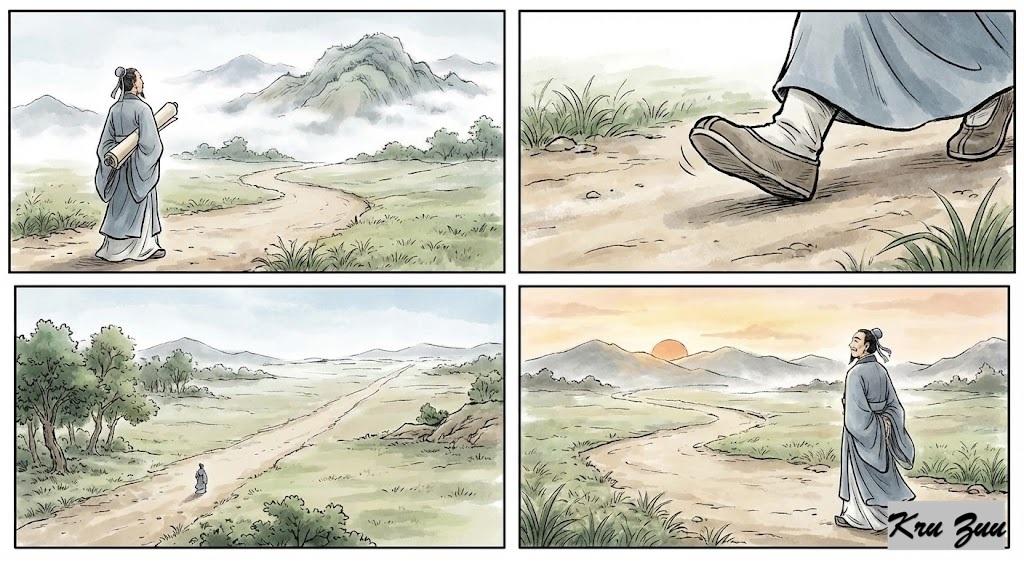
    The Translation: The original Chinese text mentions “1,000 li” (a Chinese unit of distance). It translates literally to: “A journey of a thousand li starts beneath one’s feet.”

    Global Cousins


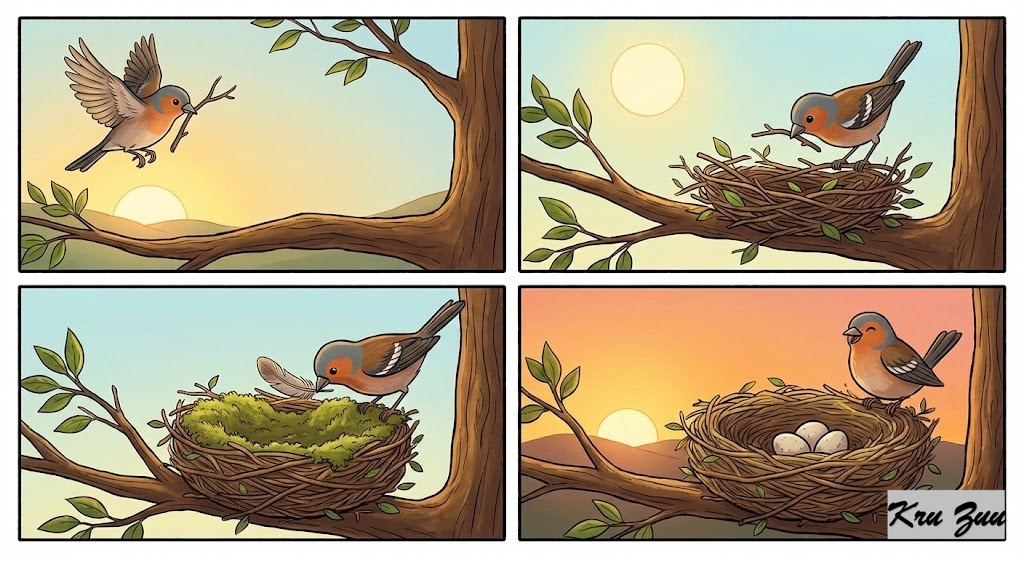
    🇫🇷 French: “Petit à petit, l’oiseau fait son nid.” (Little by little, the bird makes its nest).

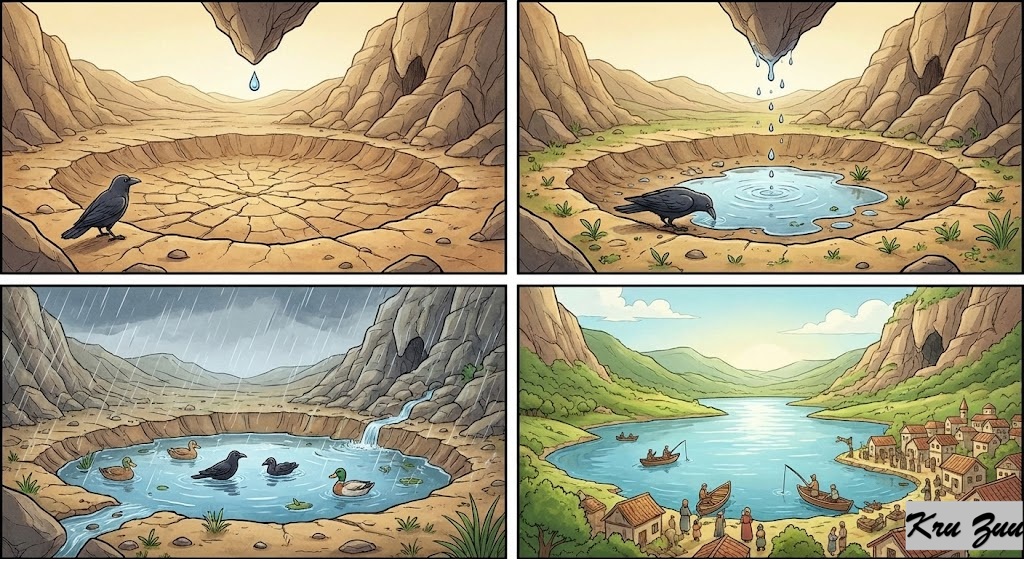
    🇹🇷 Turkish: “Damlaya damlaya göl olur.” (Drop by drop, it becomes a lake).

    🇮🇹 Italian: “Chi va piano, va sano e va lontano.” (He who goes slowly, goes safely and goes far).
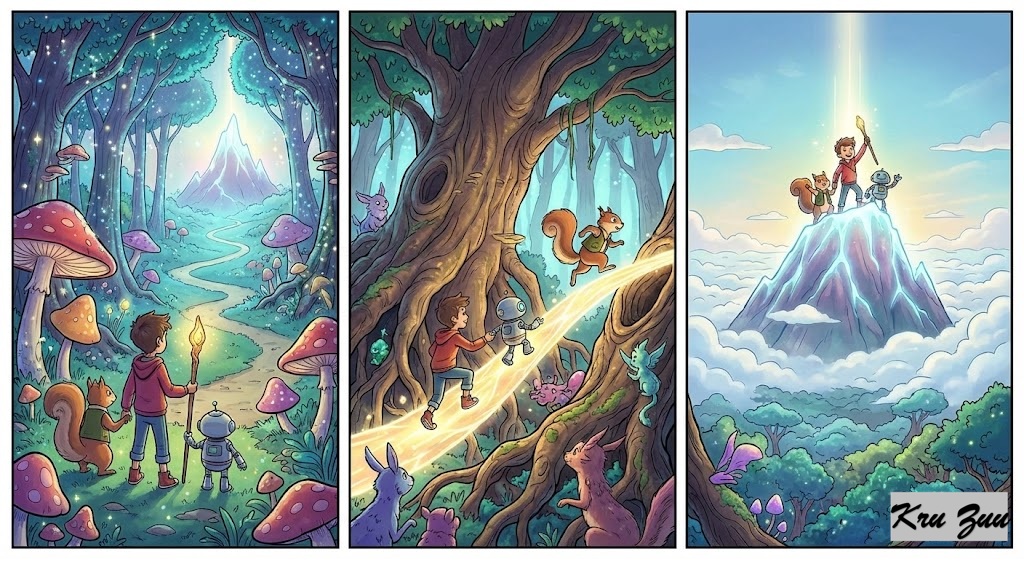
    🎭 Short Story: The Mountain of Mangoes 🥭🐱🐔🐸


    Let’s visit the magical forest to see who reaches the top.

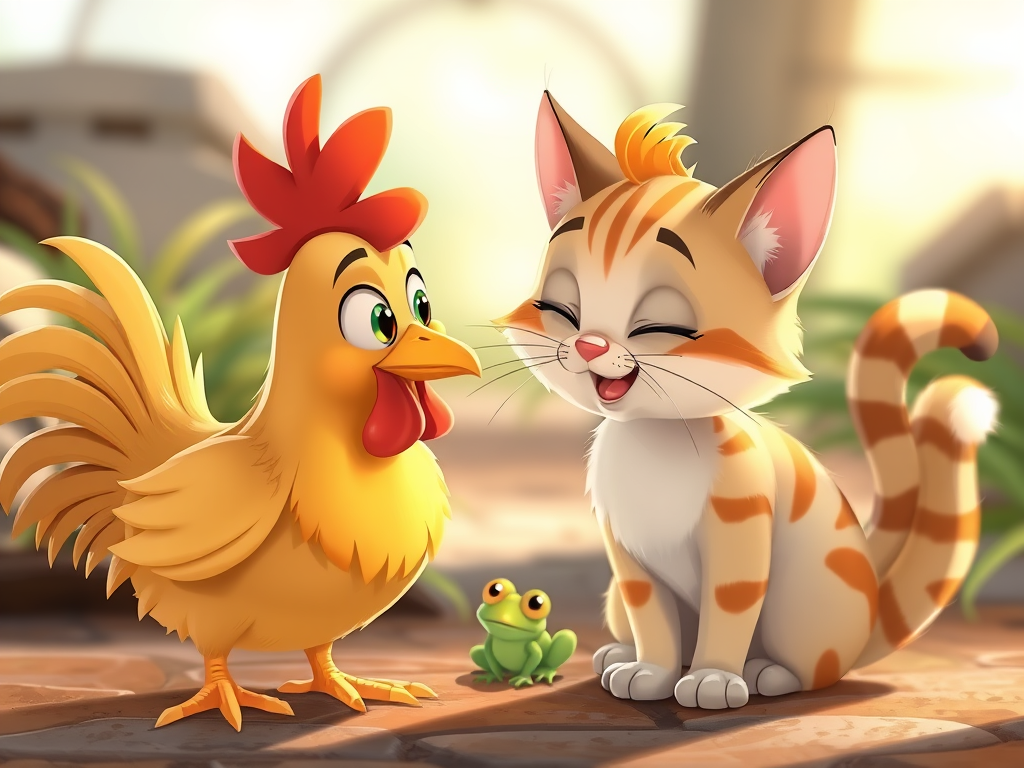
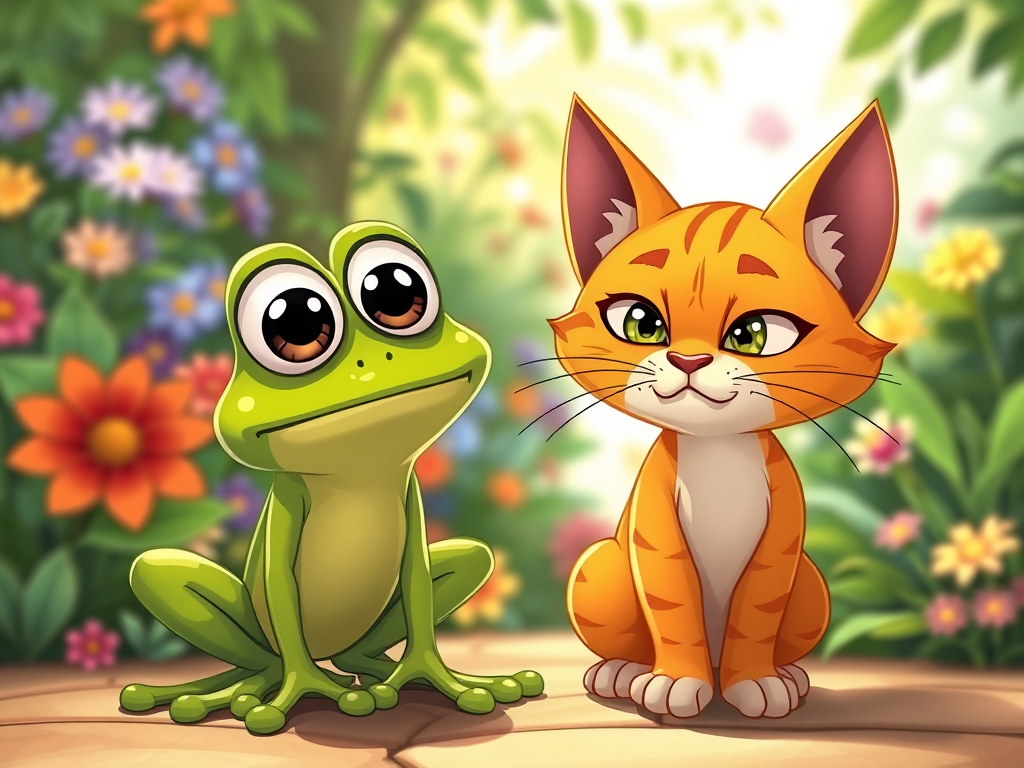
    🌟 The Cast


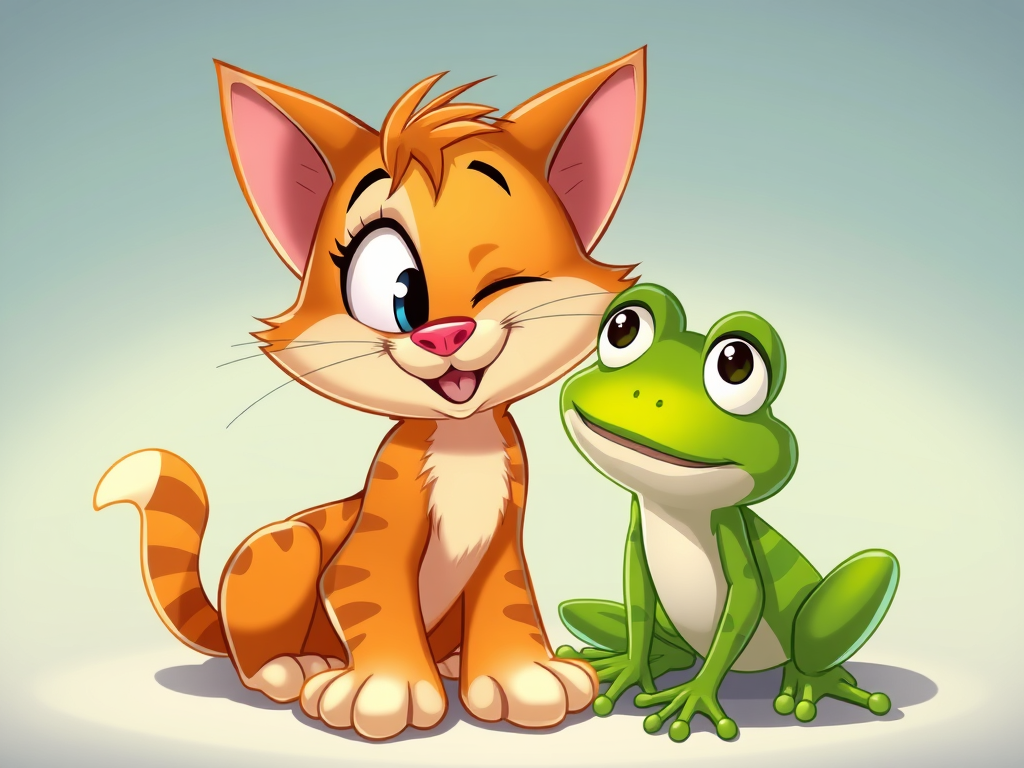
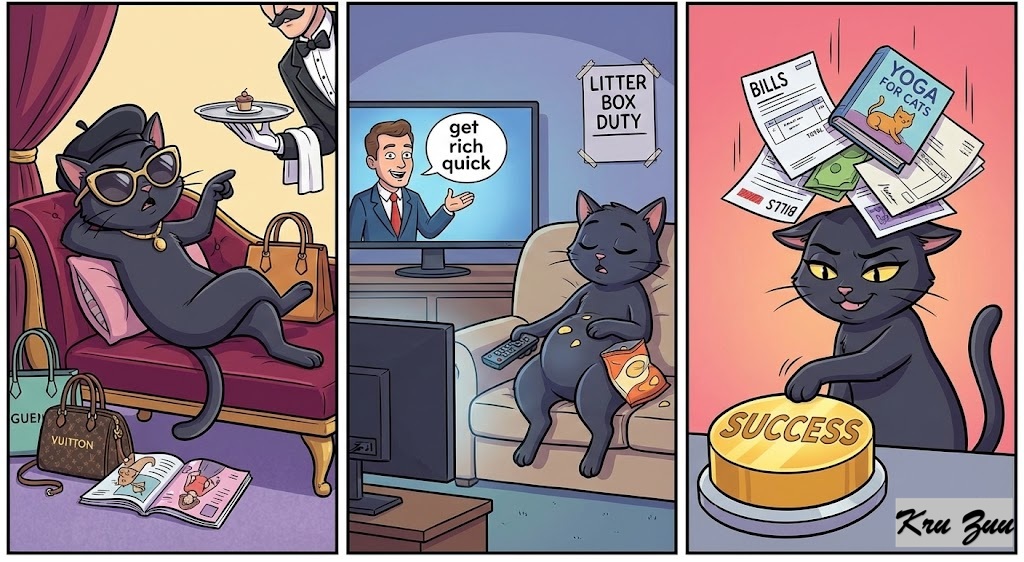
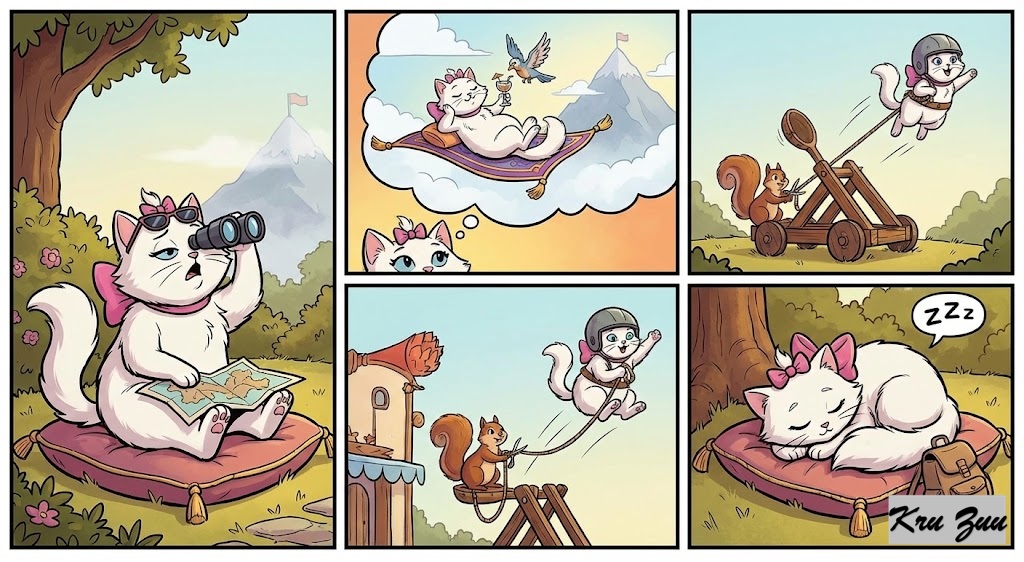
    Cleo the Cat: Stylish, lazy, wants instant success. 😼

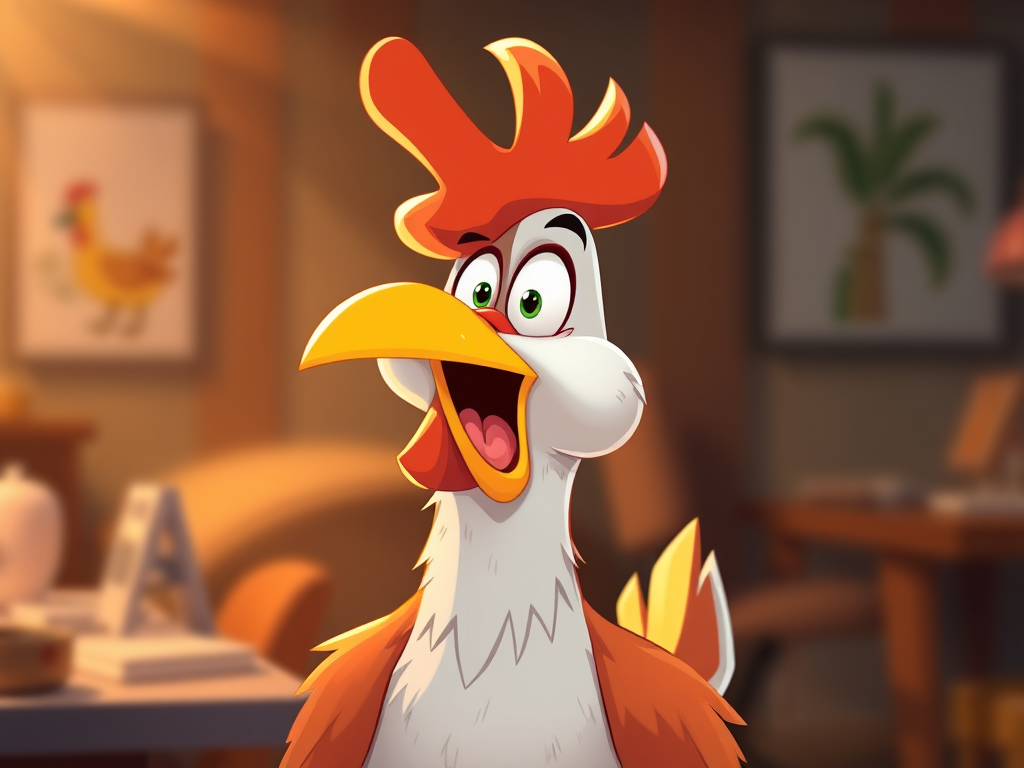
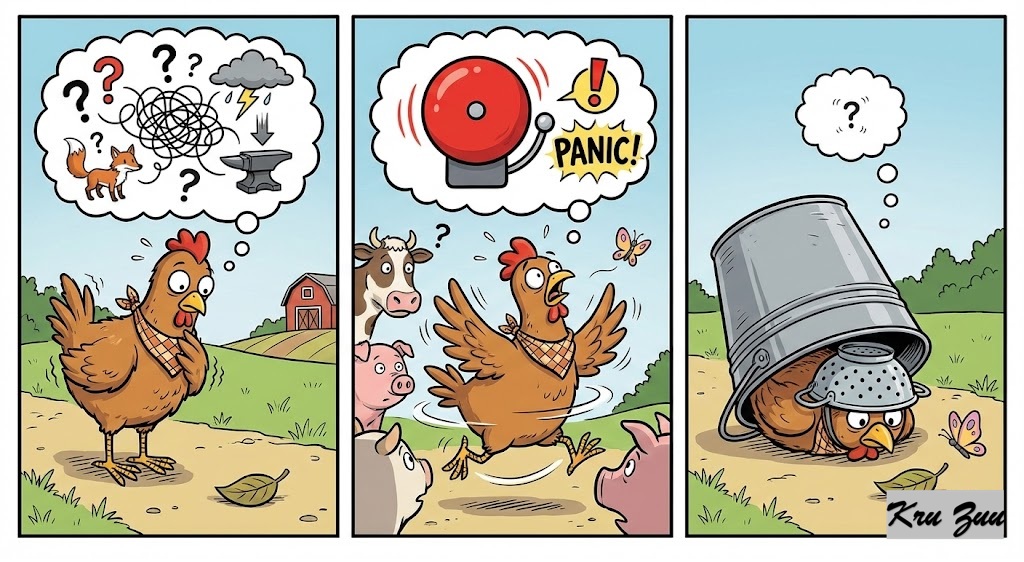
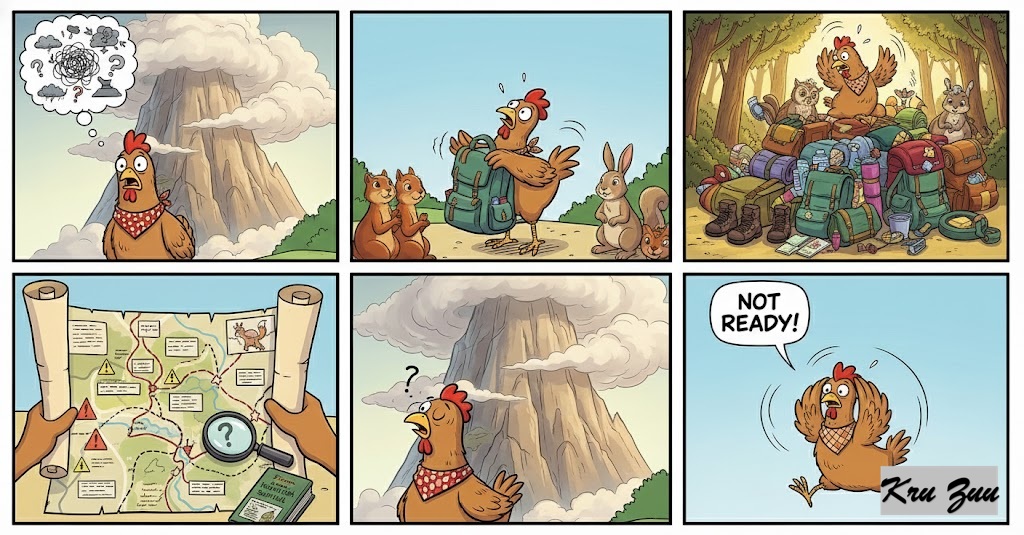
    Cluck the Chicken: Nervous, overthinker, panic-prone. 🐔

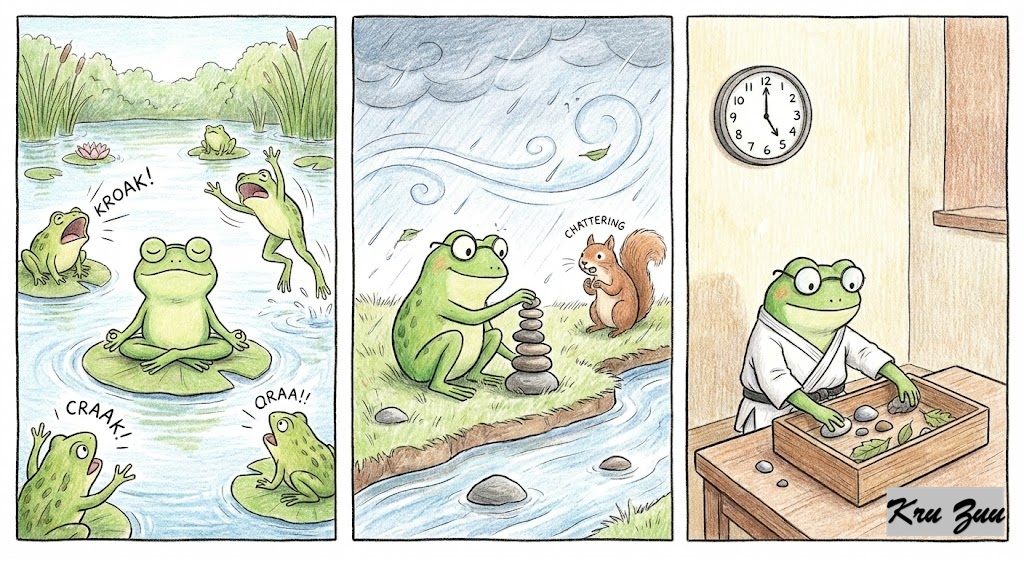
    Fred the Frog: Quiet, steady, disciplined. 🐸

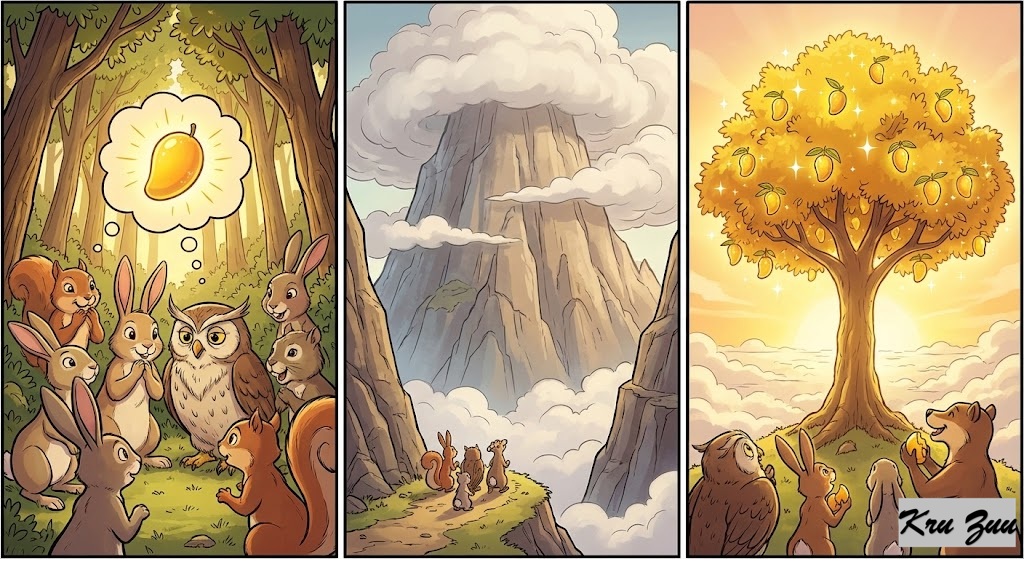
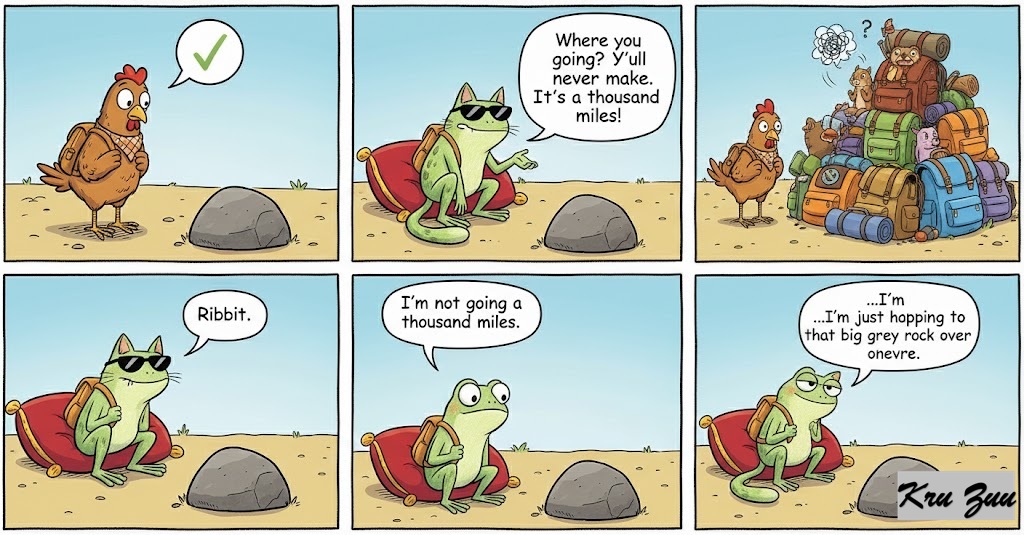
    The Situation: A rumor spreads in the forest. On top of the “High Peak Mountain,” there is a legendary Golden Mango Tree. The mangoes grant eternal happiness (and they are delicious). The mountain is huge. It touches the clouds.

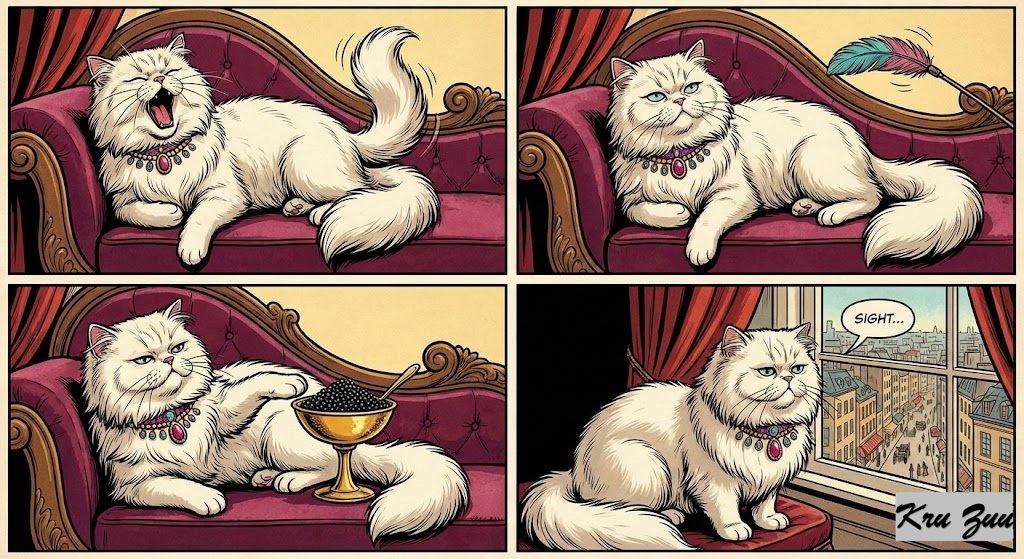
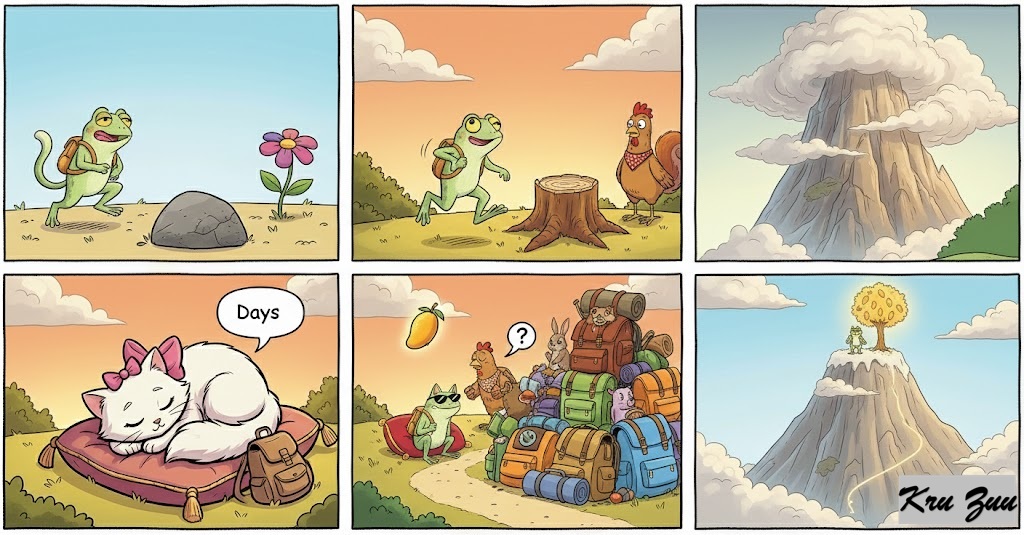
    The Conflict: Cleo looks up and sighs. “Ugh. That is miles away. My paws are too delicate for hiking. I need a magic carpet. Or maybe a catapult? I’m not going unless I can get there fast.” She sits down to nap.

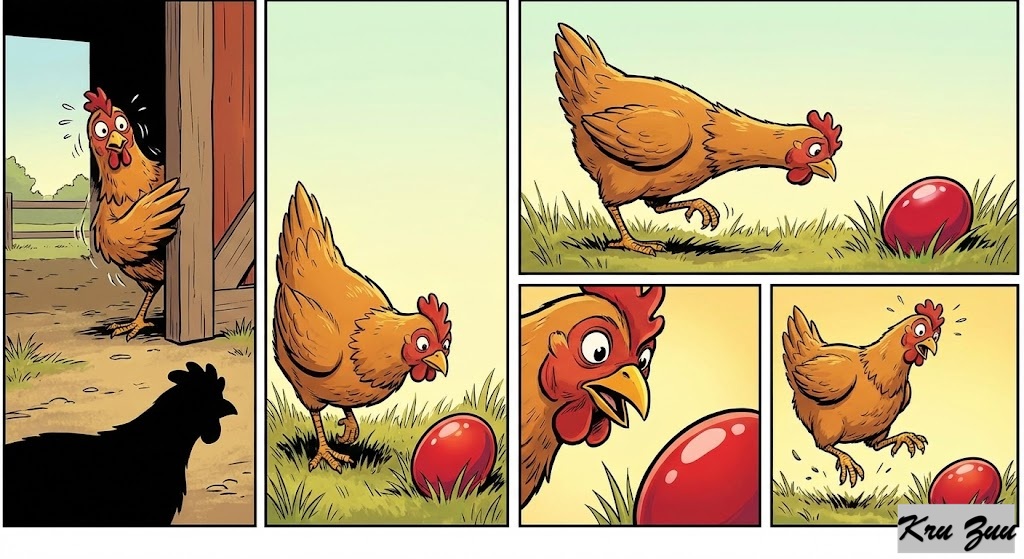
    Cluck looks up and panics. “Oh no! It’s too high! What if it rains? What if I get hungry? What if my shoes untie? I need to pack 50 bags! I need to plan the route! I’m not ready!” Cluck runs around in circles, packing and unpacking his backpack.

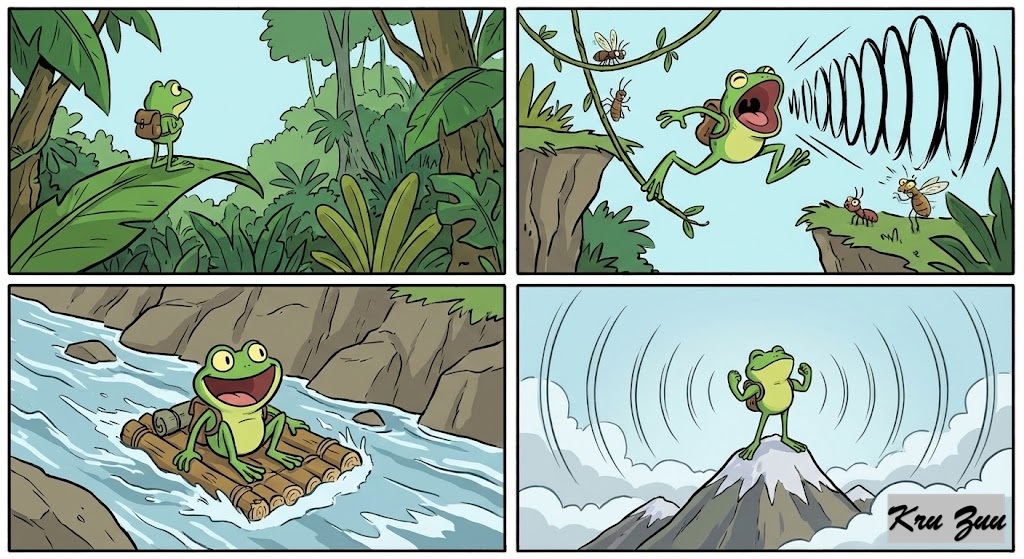
    The Reaction: Fred adjusts his backpack. He doesn’t look at the top of the mountain. He looks at the ground in front of him. “Ribbit,” says Fred. “Where are you going?” asks Cleo. “You’ll never make it. It’s a thousand miles!” “I’m not going a thousand miles,” Fred says calmly. “I am just hopping to that big gray rock over there.”

    The Lesson: Fred hops to the rock. Then he hops to a flower. Then to a tree stump. Days pass. Cleo is still sleeping at the bottom, waiting for a magic carpet. Cluck is still at the bottom, worrying about the weather forecast. But Fred? Fred is gone. He just kept hopping. One hop at a time. A week later, a mango falls from the sky and hits Cleo on the head. She looks up. Tiny Fred is waving from the top of the mountain. He didn’t have magic. He just didn’t stop.

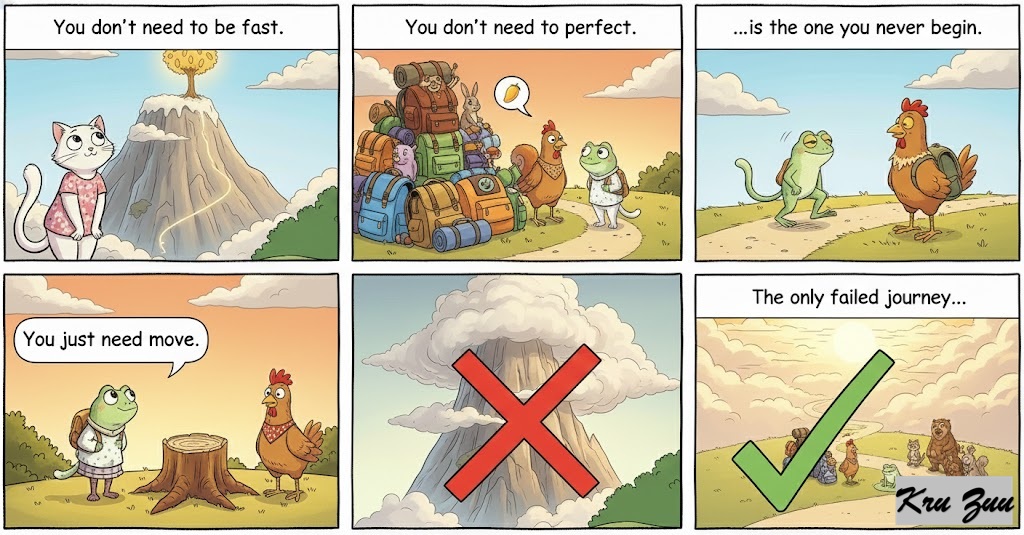
    The Moral: You don’t need to be fast. You don’t need to be perfect. You just need to move. The only failed journey is the one you never begin.
    🎓 Lesson for English Learners


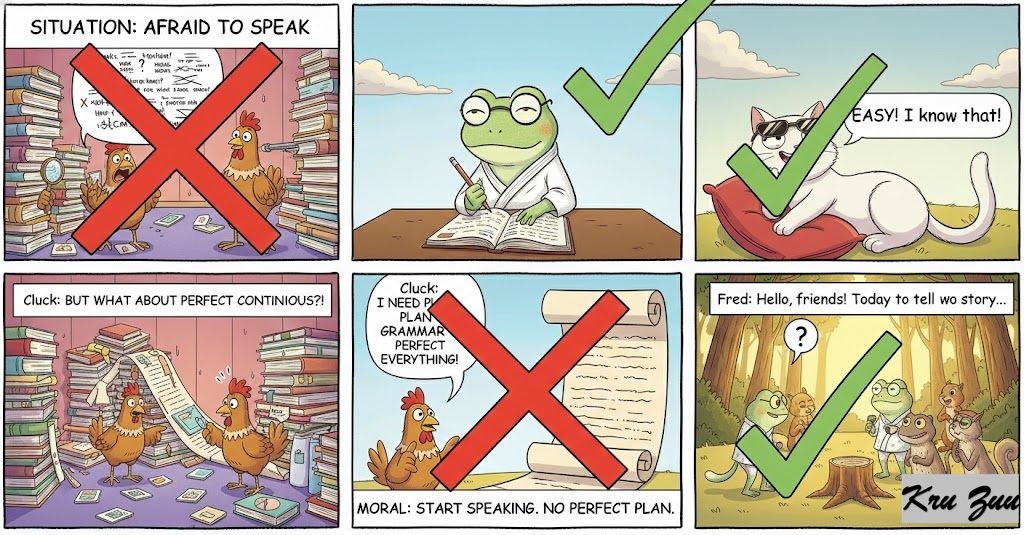
    Stop Planning, Start Speaking.
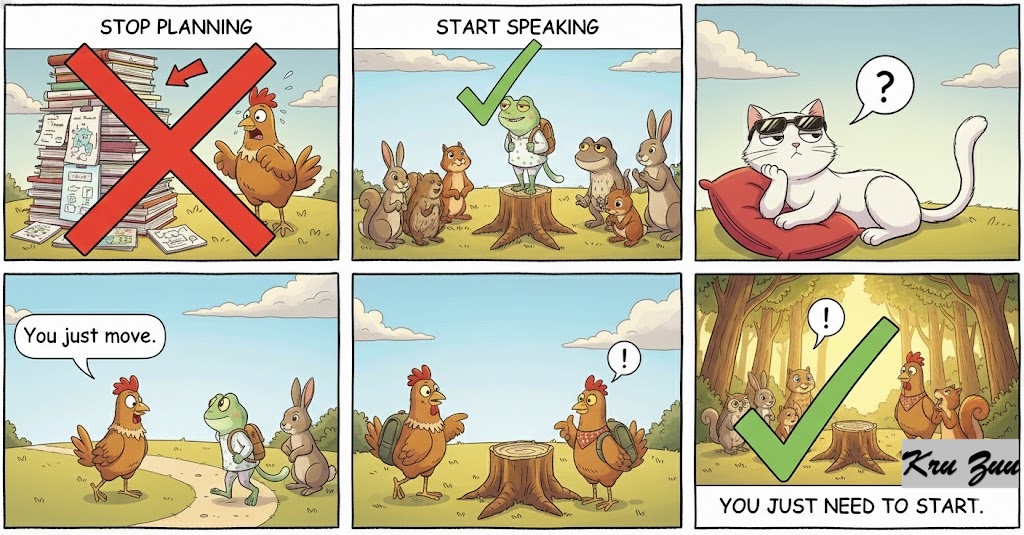

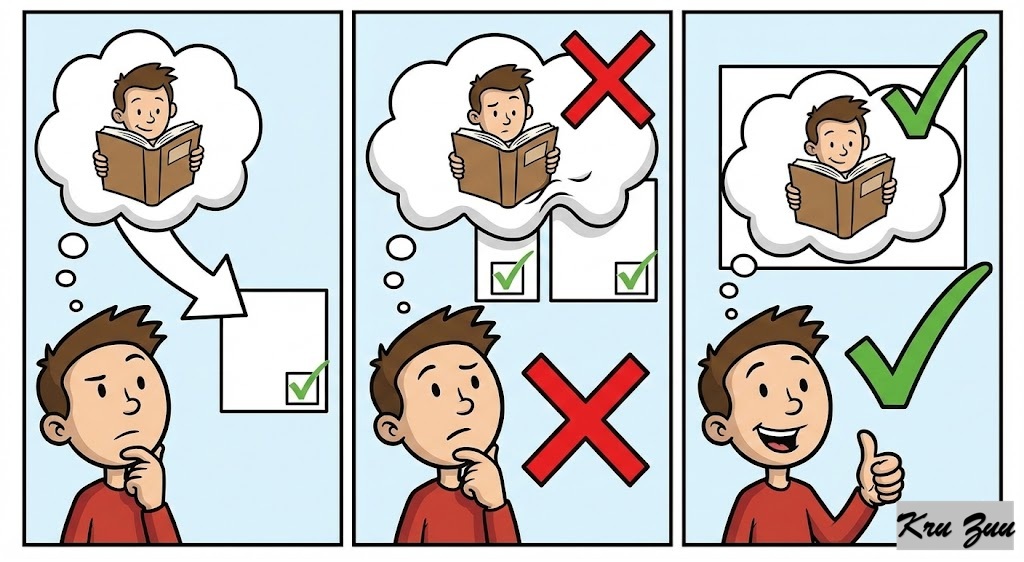
    Situation: You want to speak English fluently, but you are afraid of making mistakes. You spend all your time reading grammar books but never speaking.

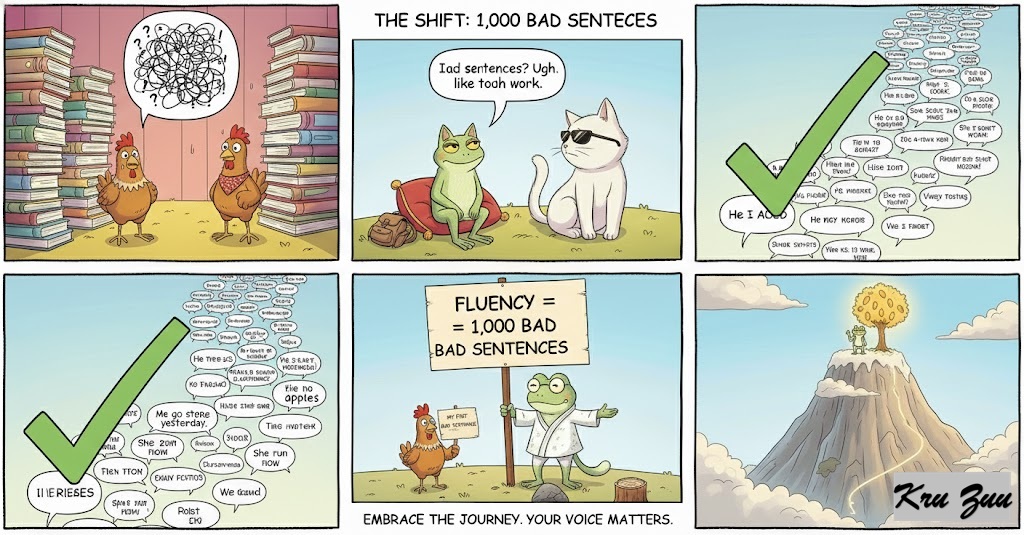
    The Shift: Realize that fluency is built by 1,000 bad sentences.

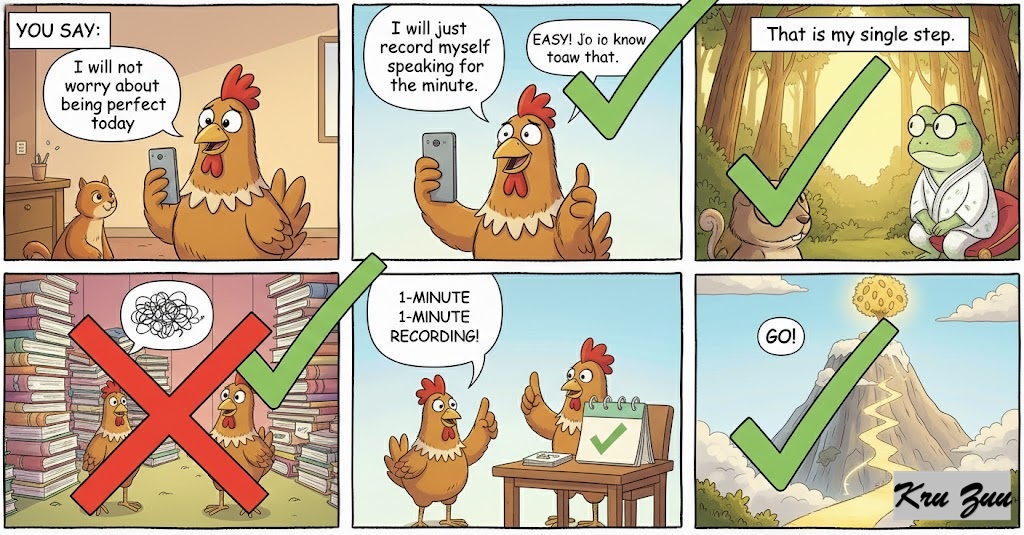
    You Say: “I will not worry about being perfect today. I will just record myself speaking for 1 minute. That is my single step.”

    💬 Your Turn: The “5-Minute” Challenge 🚀


    Do you want to defeat your inner “Villain”?
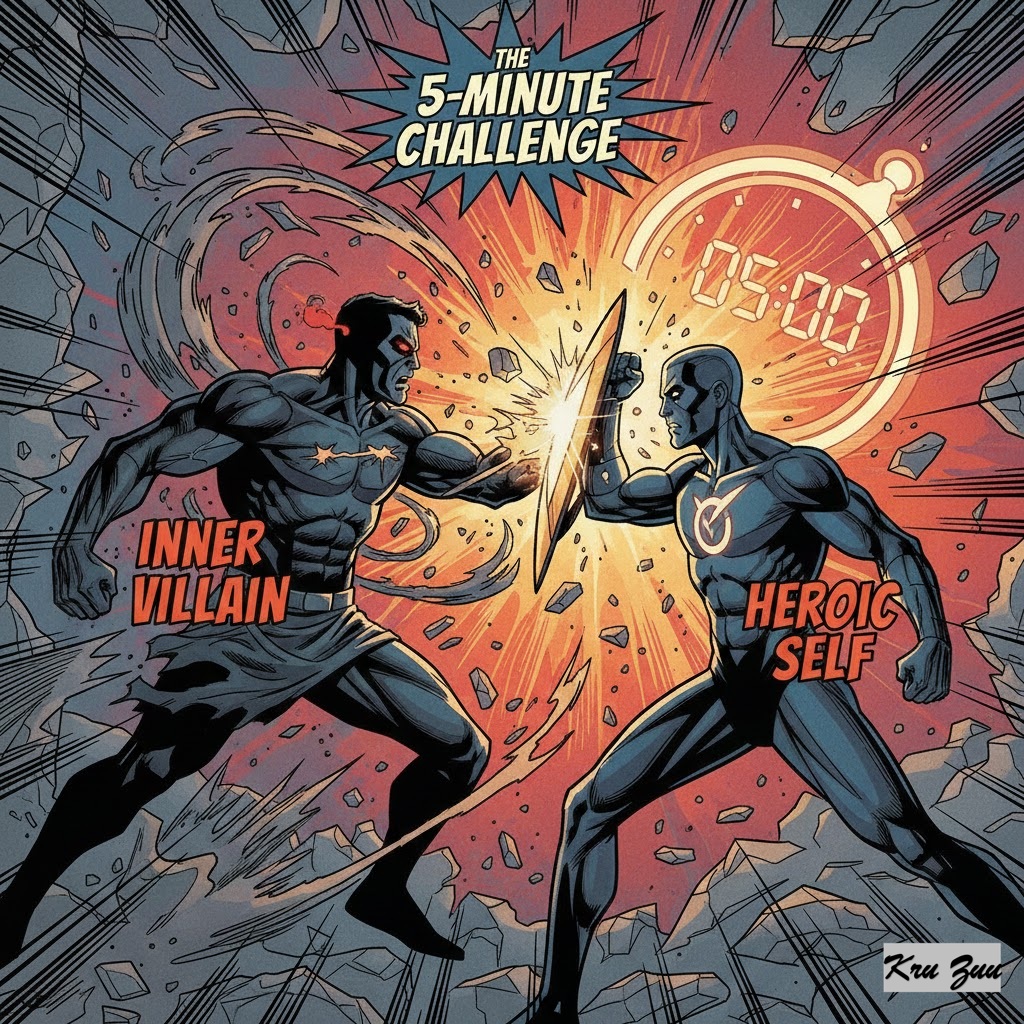

    The Challenge: Think of a task you have been avoiding (cleaning the garage, studying for an exam, writing a report).
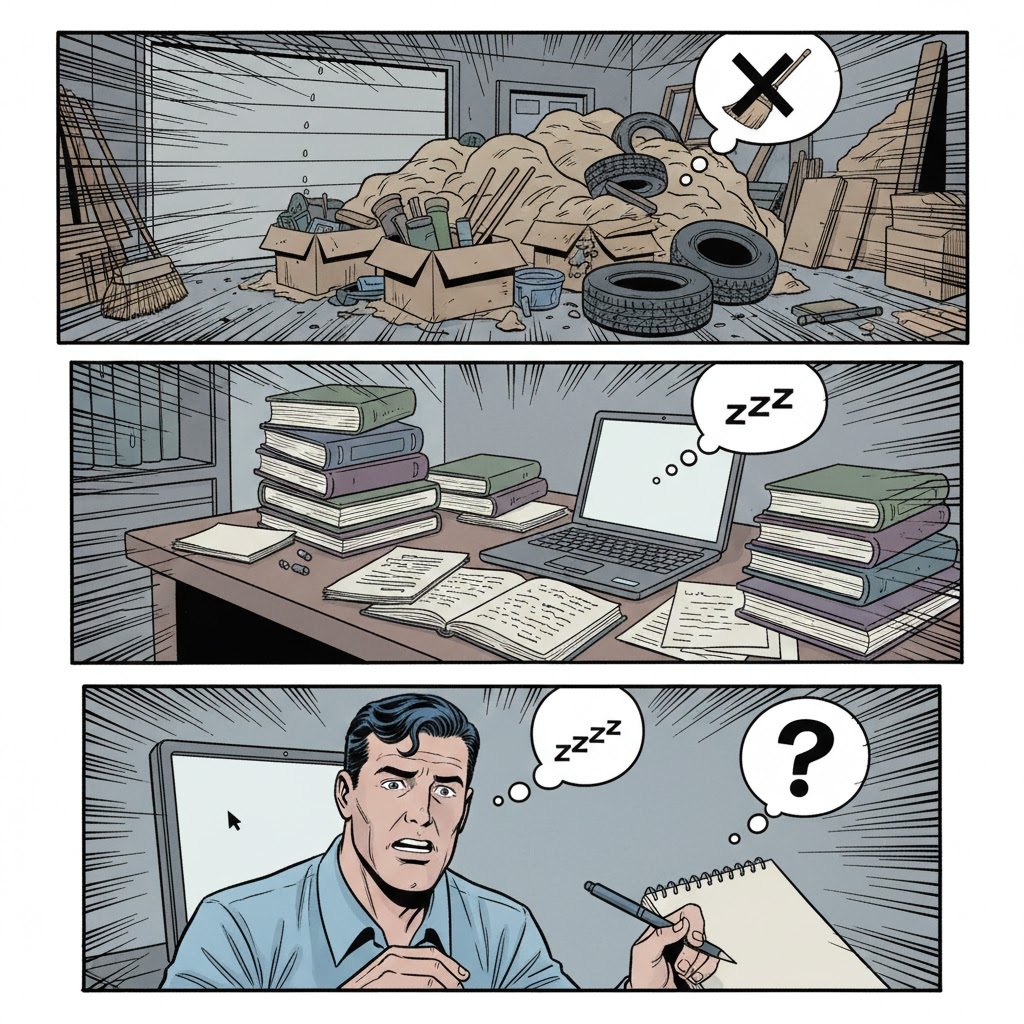
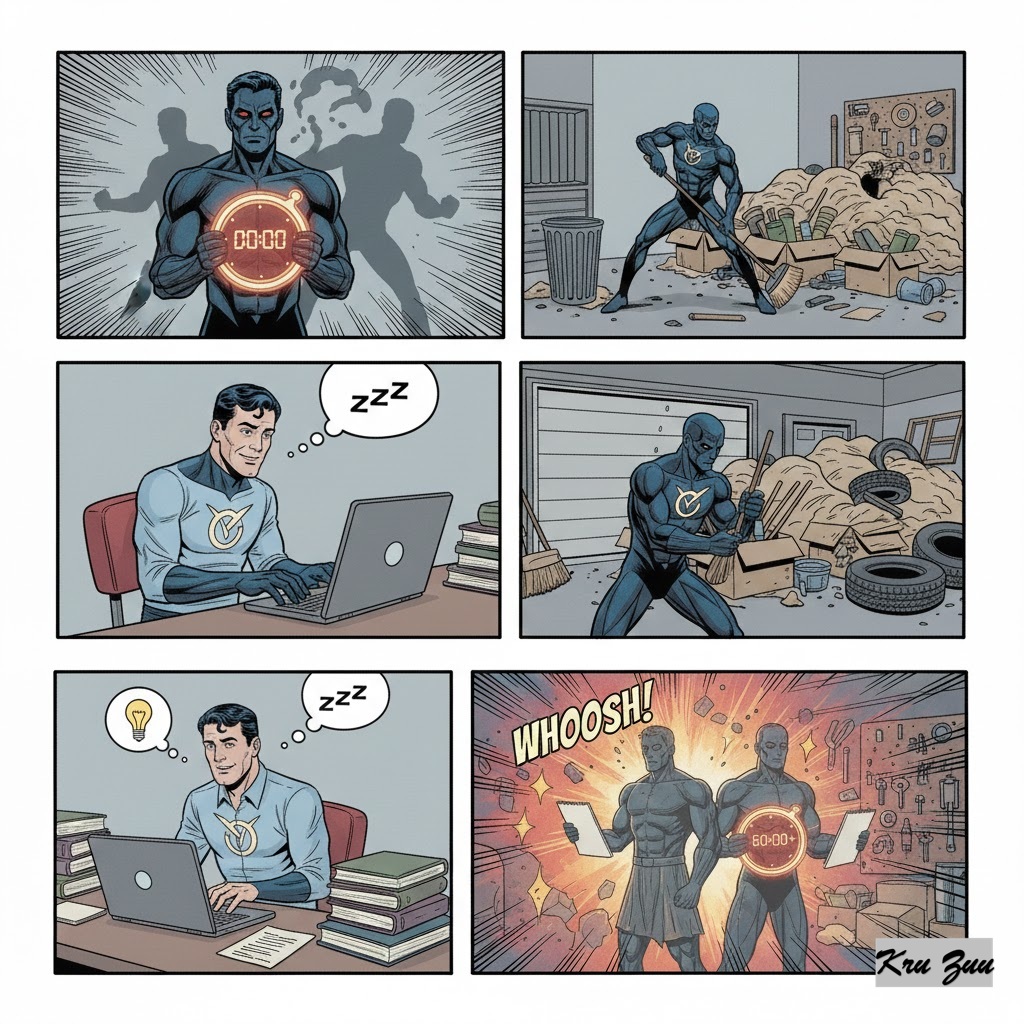
    The Action: Commit to doing it for ONLY 5 minutes. Tell yourself: “I will just do this for 5 minutes, then I can stop.”
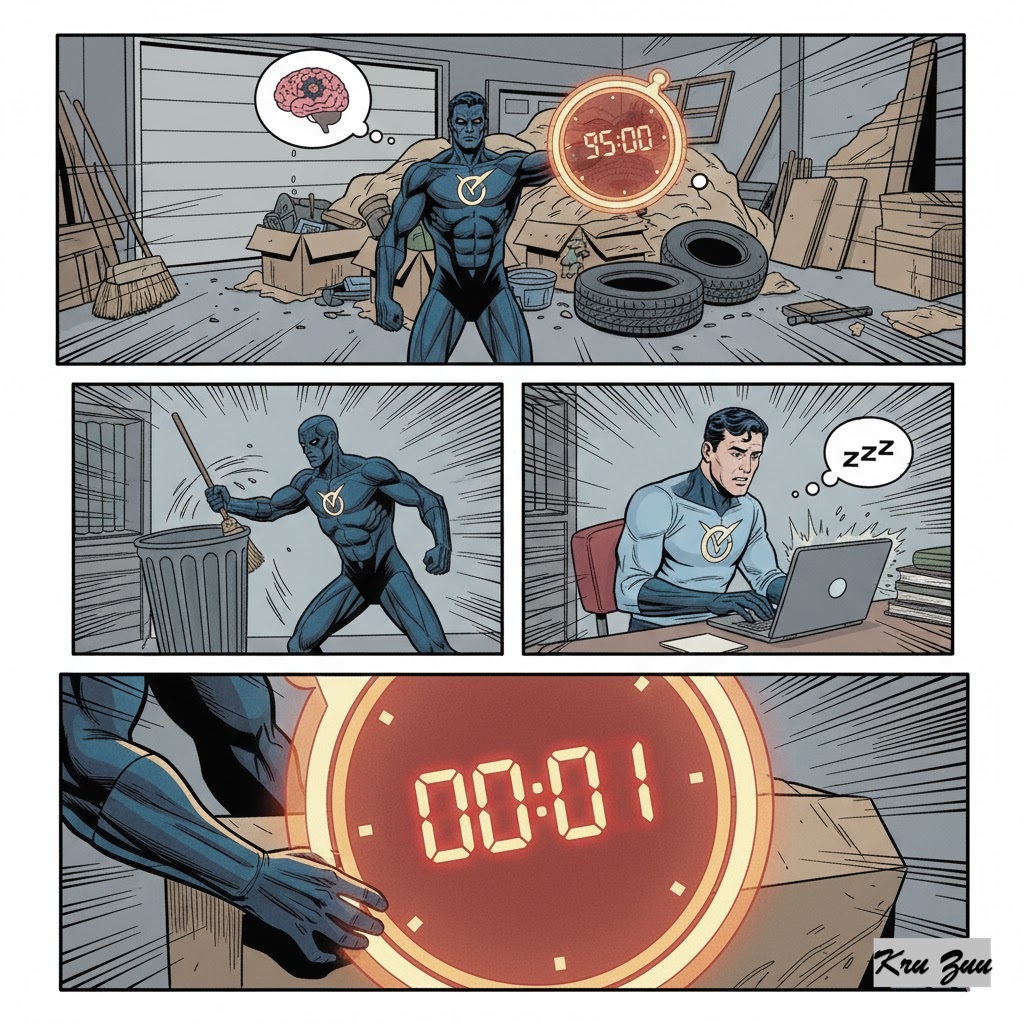
    The Magic: Usually, once you start, the “pain” of starting disappears, and you will keep going. The hardest part is the first step.

    👇 Question for the comments: What is one big goal you have right now? What is the smallest step you can take today to start it? Tell us below!

    By Zubeyir YURTKURAN

    https://www.facebook.com/BrainBattleground/

    https://www.facebook.com/zubeyr.yurtkuran/

    https://www.instagram.com/zubeyryurtkuran/

    https://www.youtube.com/@BrainBattleground-b3p

    https://www.instagram.com/brainbattleground/

  • ⚔️ The Daily Shield: The Law of Momentum

    ⚔️ The Daily Shield: The Law of Momentum

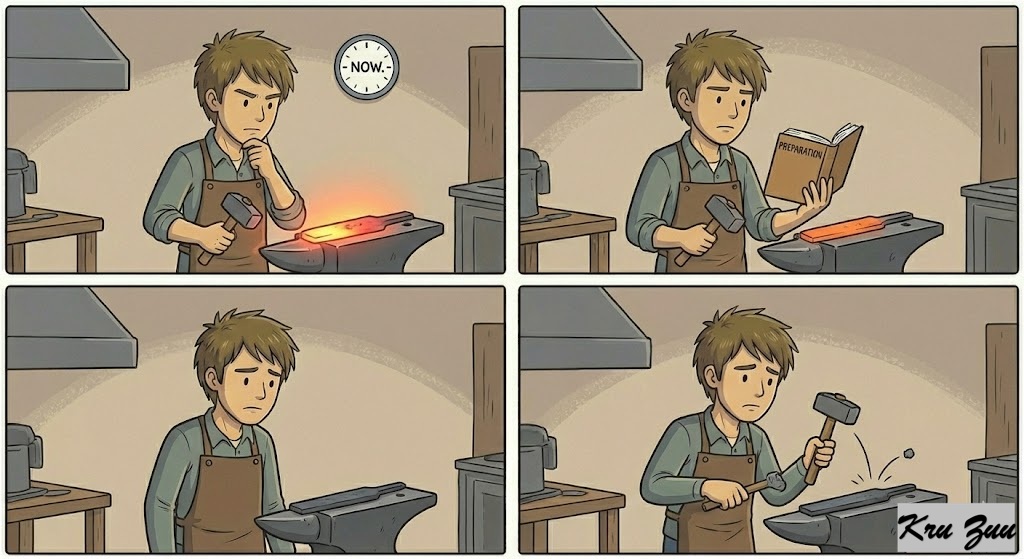
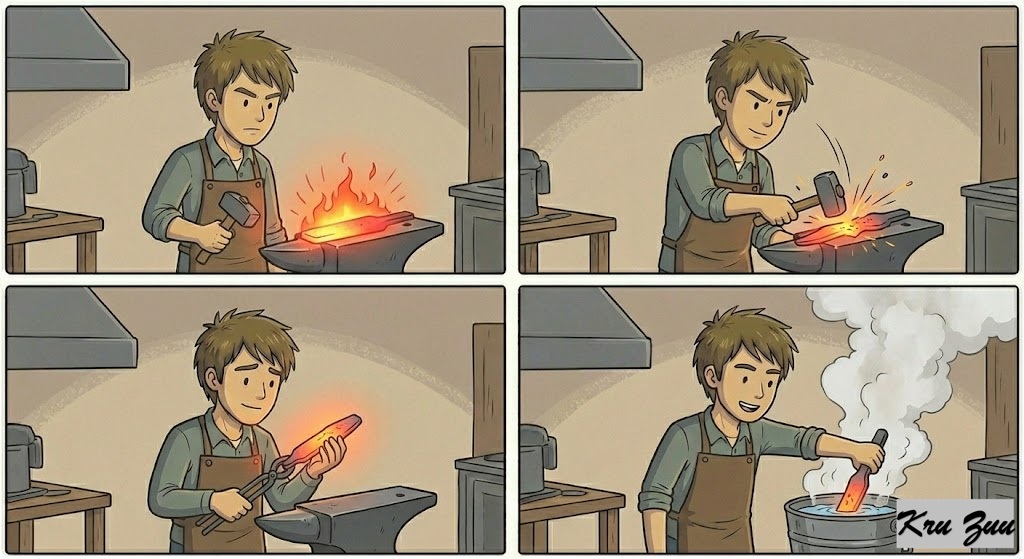
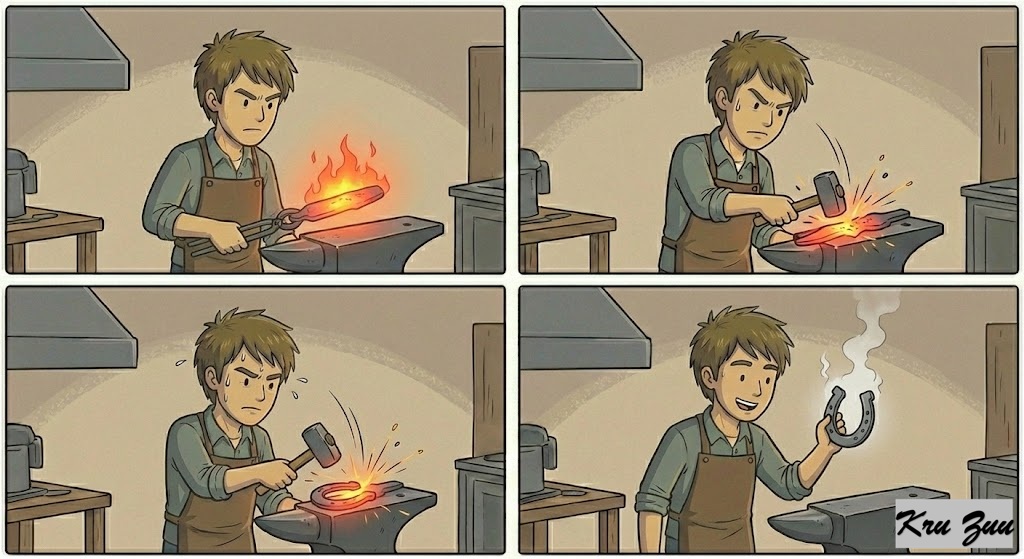
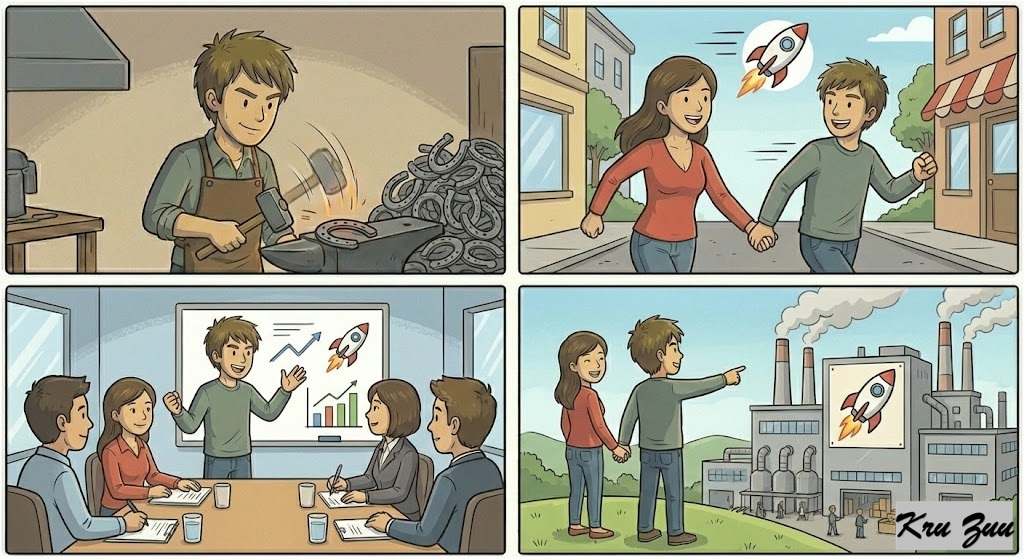
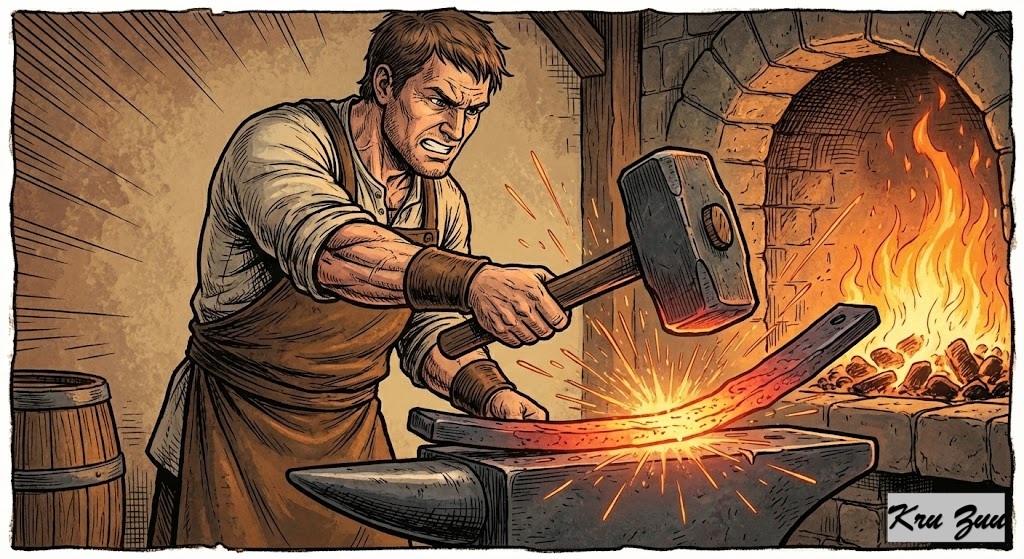
    “Strike while the iron is hot.”


    🥶 The Villain (The Hesitator)


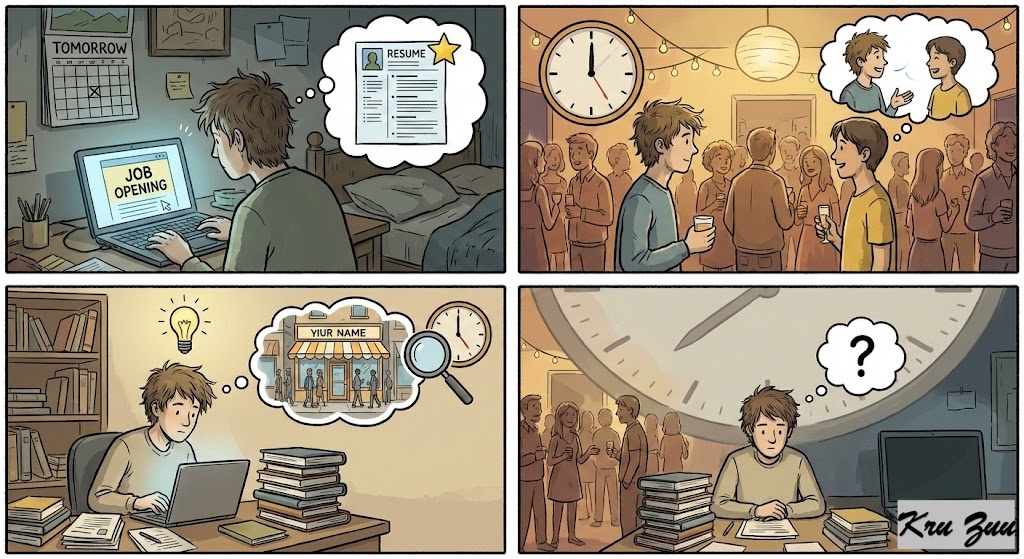
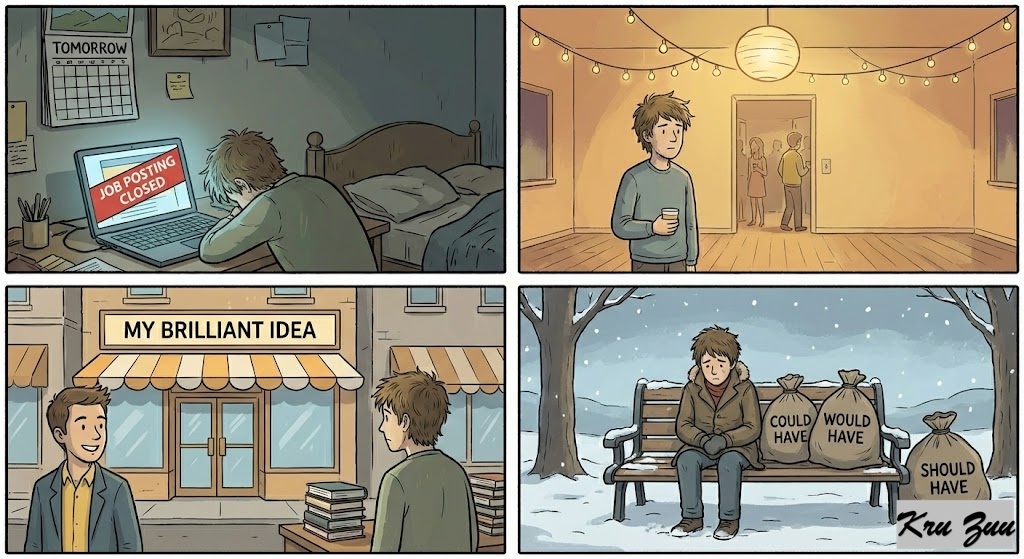
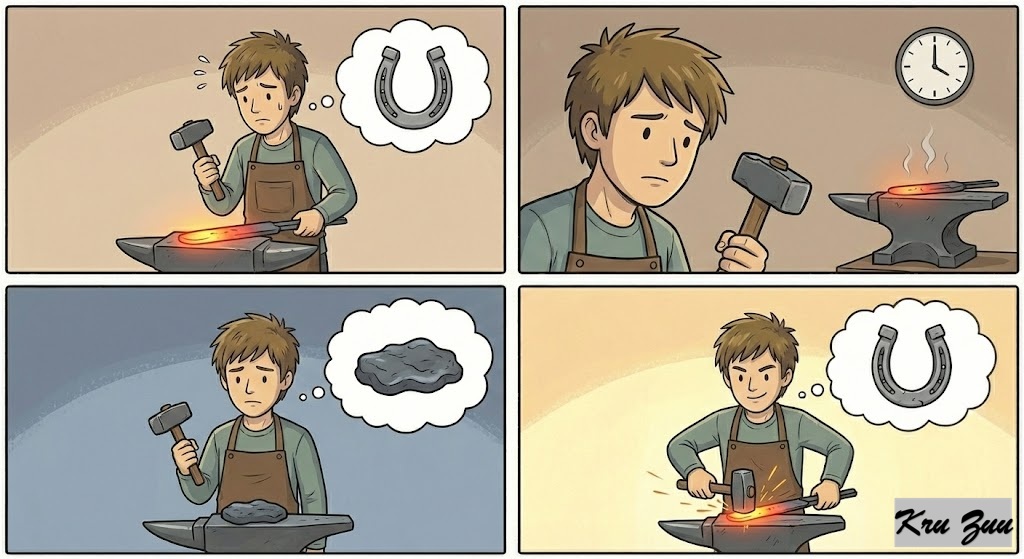
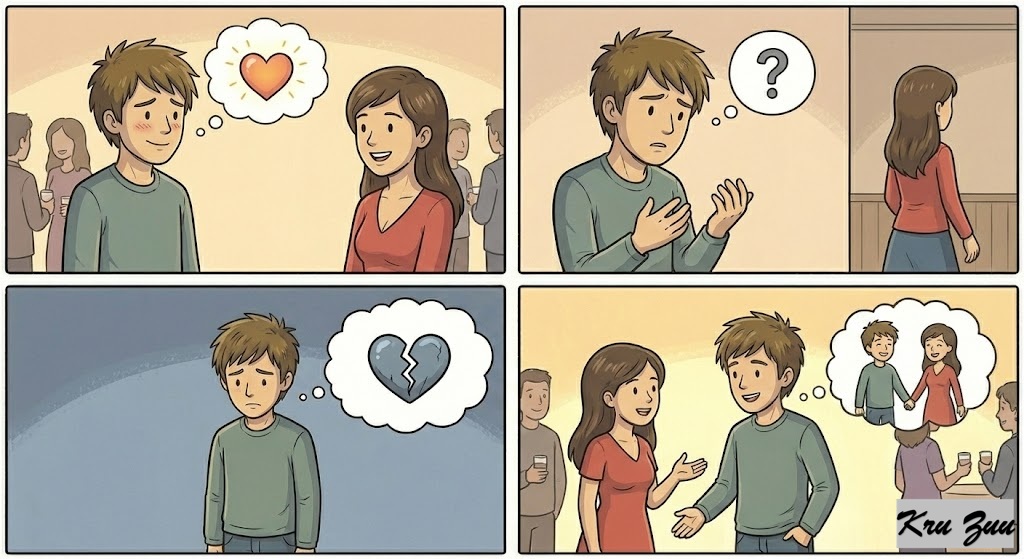
    You see a job opening that is perfect for you. You say, “I’ll apply tomorrow; I need to update my CV perfectly first.” You see a person you want to talk to at a party. You wait for the “right moment.” You have a brilliant idea for a business, but you decide to “research more” first.

    The Result? The job posting closes. The person leaves the party. Someone else launches your business idea. You are left standing in the cold, holding a bag full of “Could have,” “Would have,” and “Should have.” The opportunity didn’t wait for you. It vanished. ❄️


    🔥 The Hero (The Striker)


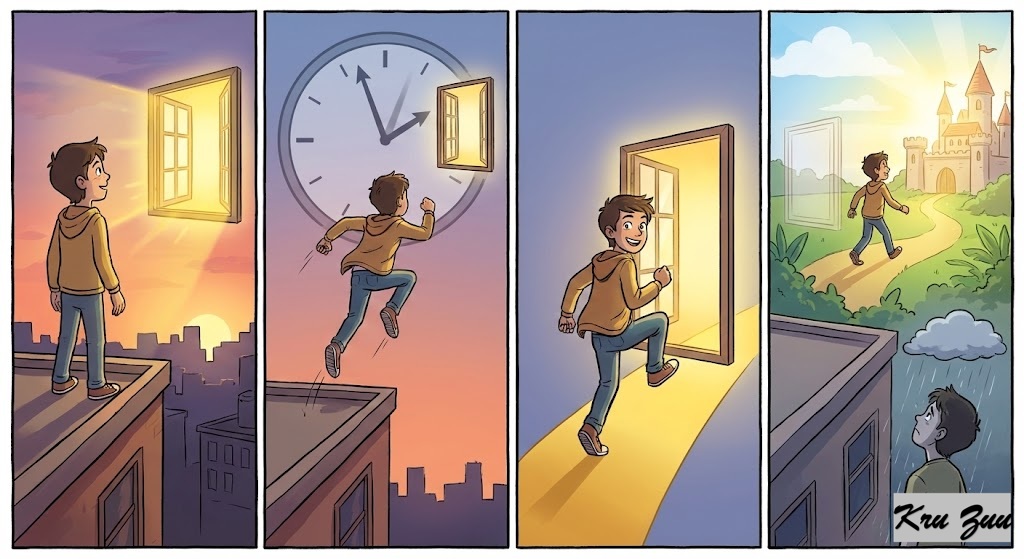
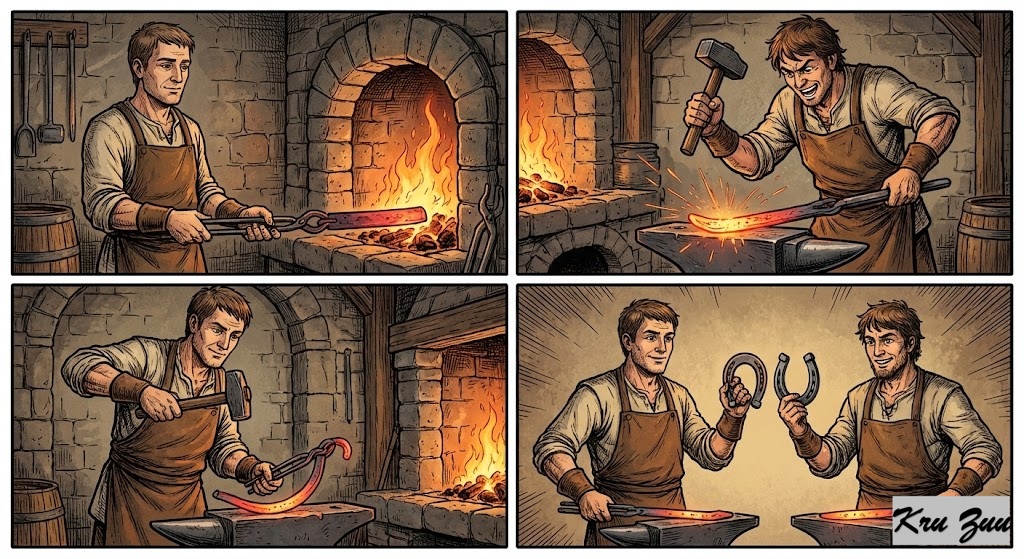
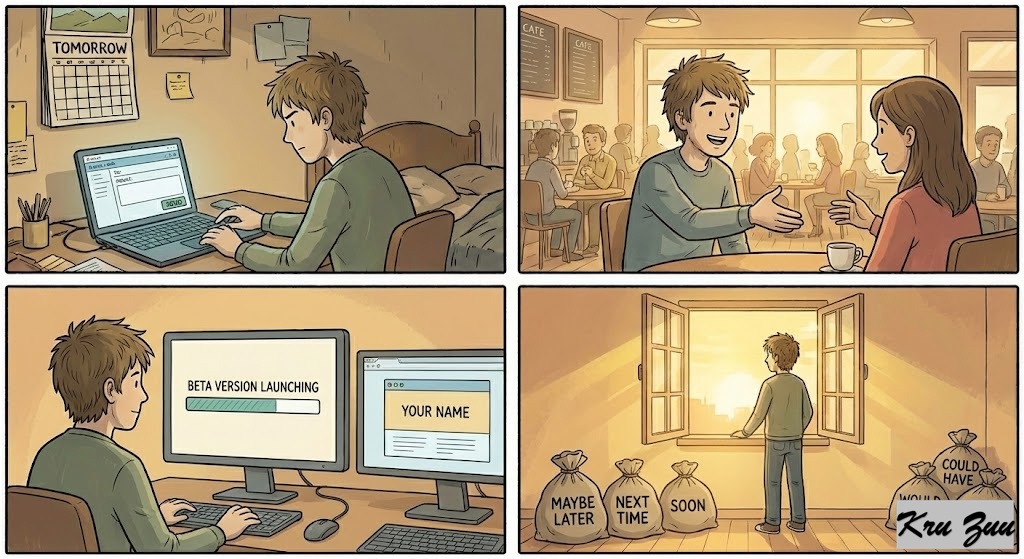
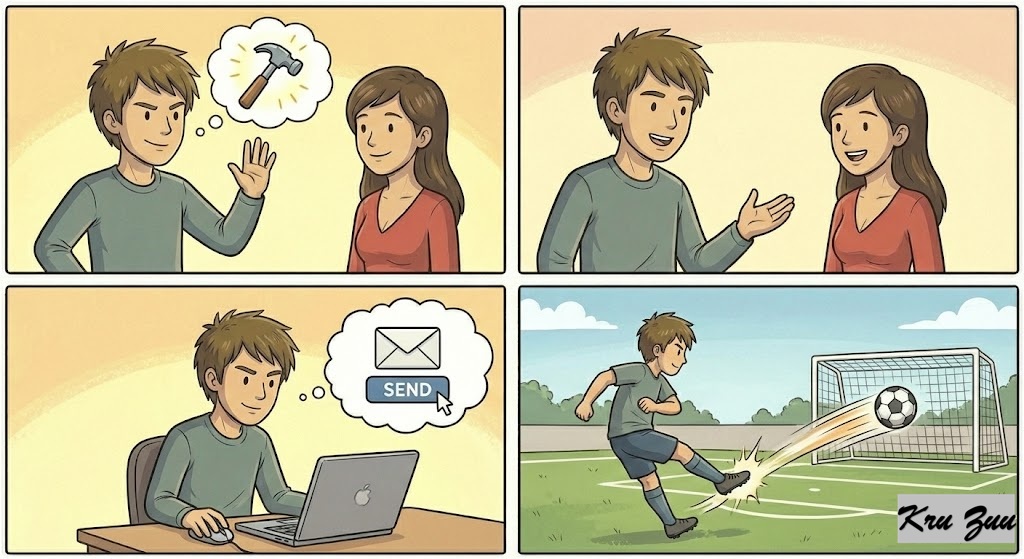
    You see the window of opportunity open. It’s scary. You aren’t 100% ready. But you know that speed is a weapon. You send the email now. You say “Hello” now. You launch the beta version now.

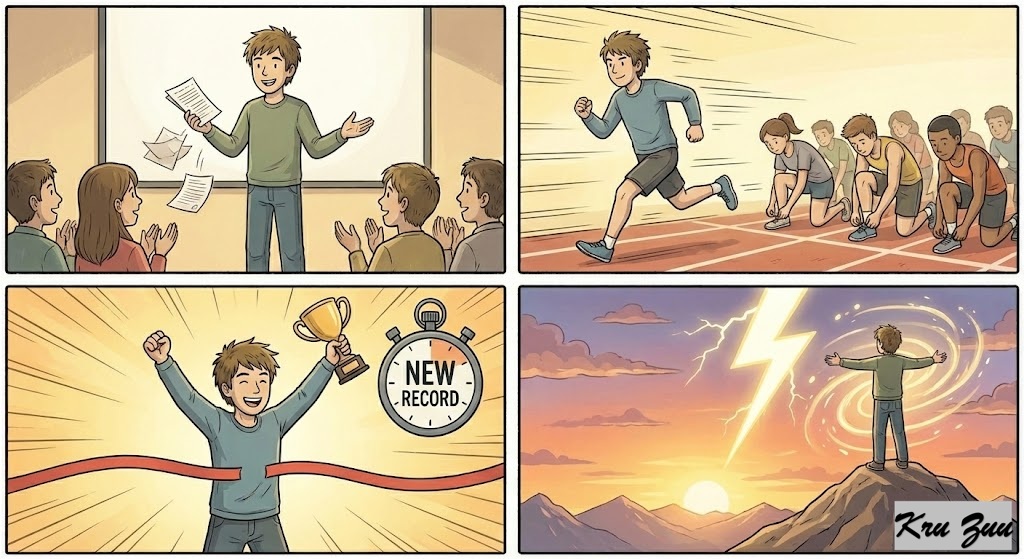
    The Result? You might make a mistake, but you are in the game. You are moving. You grab the win while others are still tying their shoelaces. You understand that the universe loves speed. ⚡


    ⚖️ The Reality


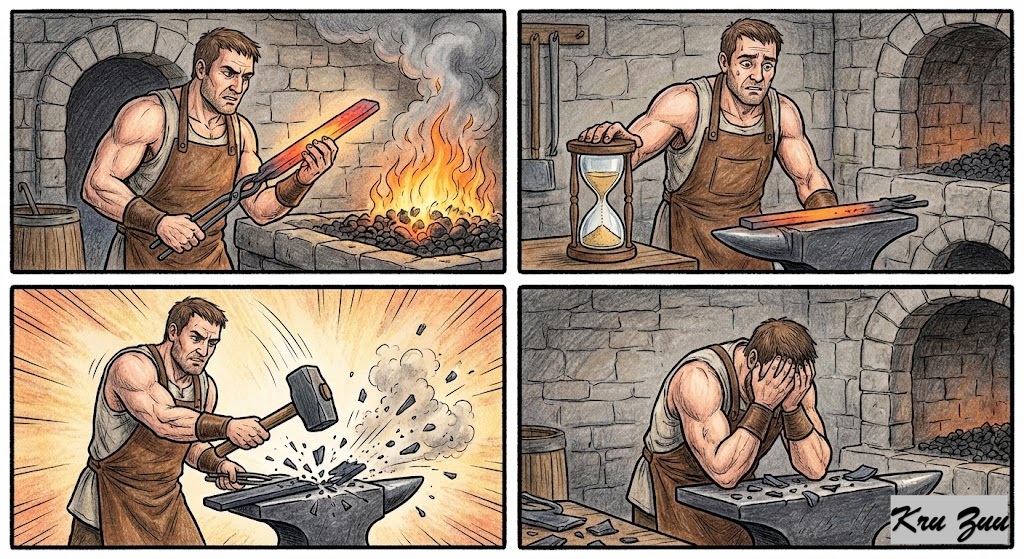
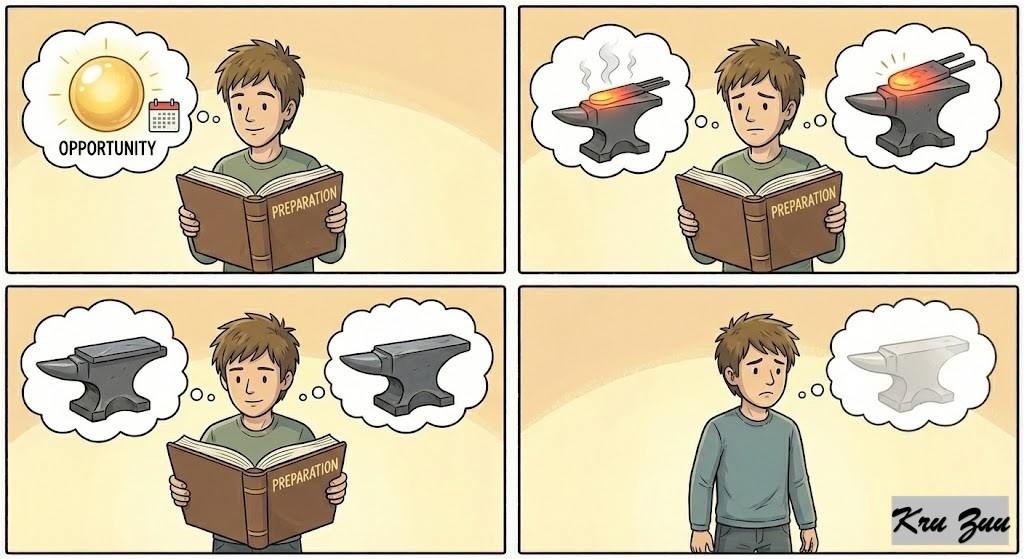
    Opportunities have an expiration date. Ideally, we want to be 100% prepared. But in reality, by the time you are 100% prepared, the chance is usually gone. The “Iron” (the opportunity) cools down and hardens rapidly.


    💎 The Secret

    You don’t need to be perfect; you just need to be present. It is better to strike imperfectly than to stare at the hammer until the metal goes cold.

    🧐 The Anatomy of the Proverb


    This is the ultimate rule for success and dating!


    Strike (Verb): To hit forcibly; to take action. 🔨


    While (Conjunction): During the time that; at the same time as.


    Iron (Noun): The metal (representing the opportunity).


    Hot (Adjective): Ready to be shaped.


    Simpler Version: Act immediately when you have the chance.


    📚 Vocabulary Vault


    Momentum (Noun): The force that keeps an object moving. (Action creates momentum!). 🚀


    Fleeting (Adjective): Lasting for a very short time. (Opportunities are fleeting). 💨


    Decisive (Adjective): Having the ability to make decisions quickly and effectively.


    Hesitation (Noun): The action of pausing before doing something. (The enemy of speed).


    Window of Opportunity (Phrase):
    A short period of time during which an action can be taken. 🪟


    🧠 Grammar Focus: Time Clauses with “While”


    This proverb uses a Time Clause to show two things happening at once.


    Structure: [Action Verb] + while + [Condition].


    The Logic: You must do the action during the condition. Once the condition ends, the action is useless.


    Examples


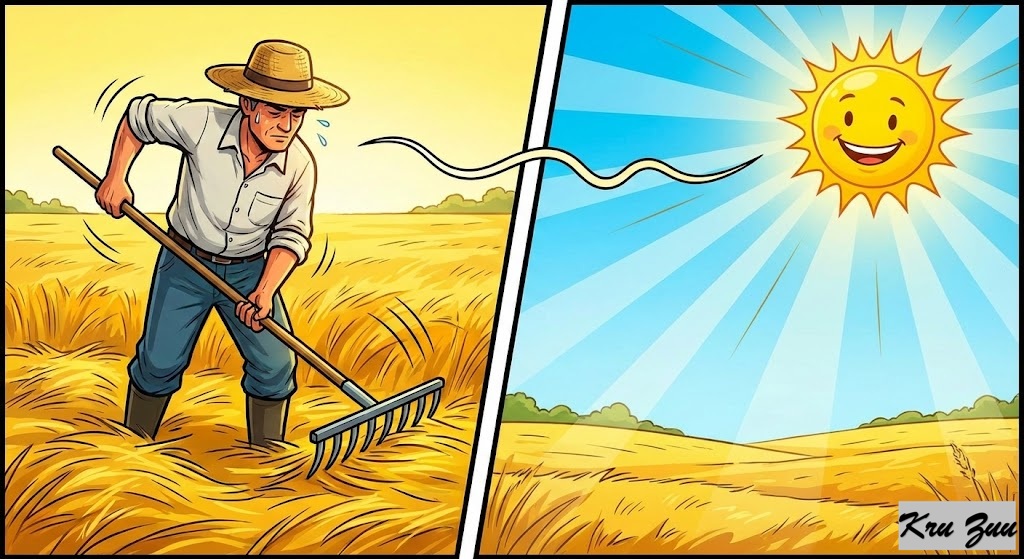
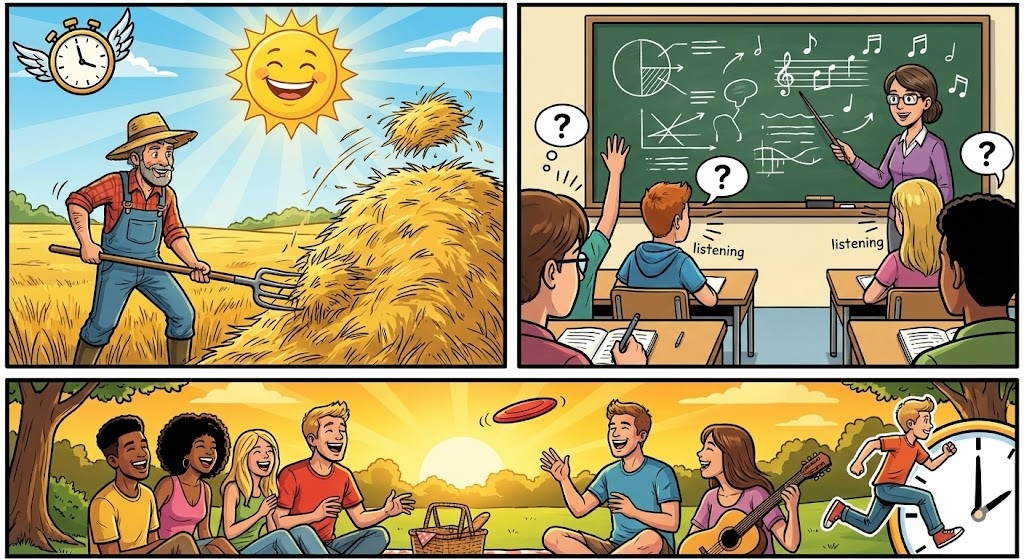
    “Make hay while the sun shines.” (Another famous idiom!)
    “Listen while the teacher is speaking.”
    “Enjoy your youth while you are young.”

    📜 History: Origin and Spread


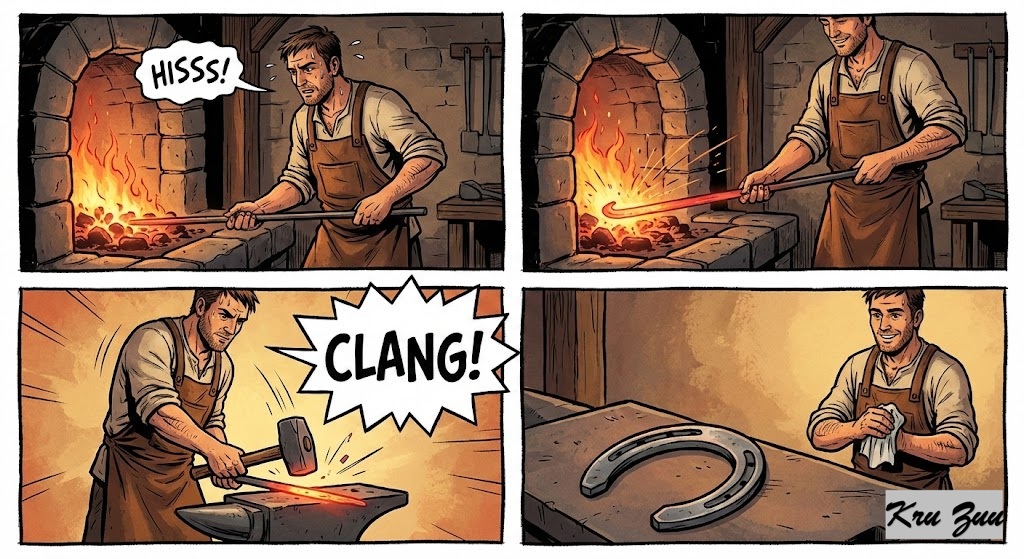
    This idiom comes straight from the blacksmith’s workshop.


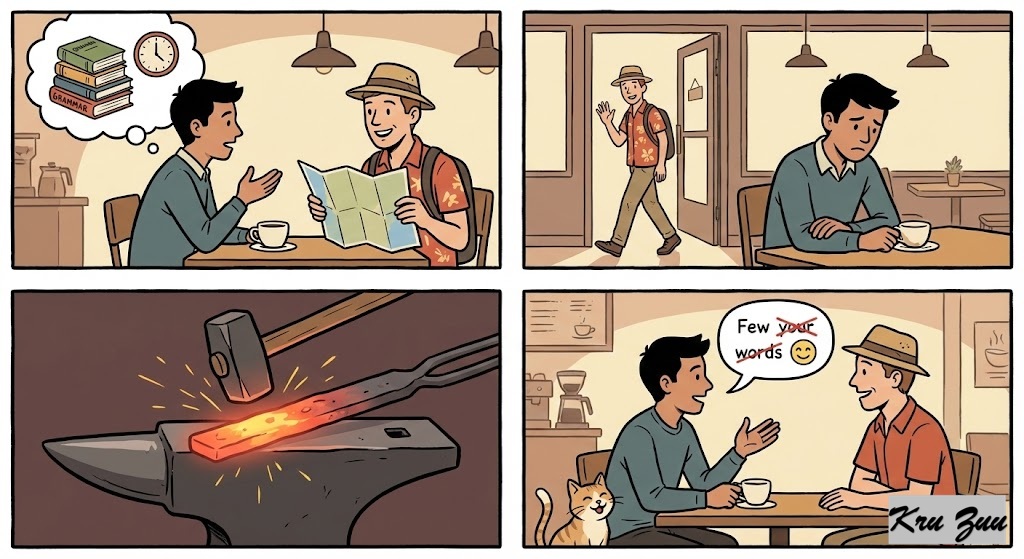
    The Origin: In medieval times, blacksmiths had to heat iron in a fire until it glowed red. Only then was it soft enough to hammer into a sword or horseshoe. If they waited even 30 seconds, the iron would cool, turn hard, and shatter if hit.


    Global Cousins


    🇹🇷 Turkish:“Demir tavında dövülür.” (Iron is beaten at its proper heat/temper.) — Identical meaning!


    🇮🇹 Italian:“Batti il ferro finché è caldo.”


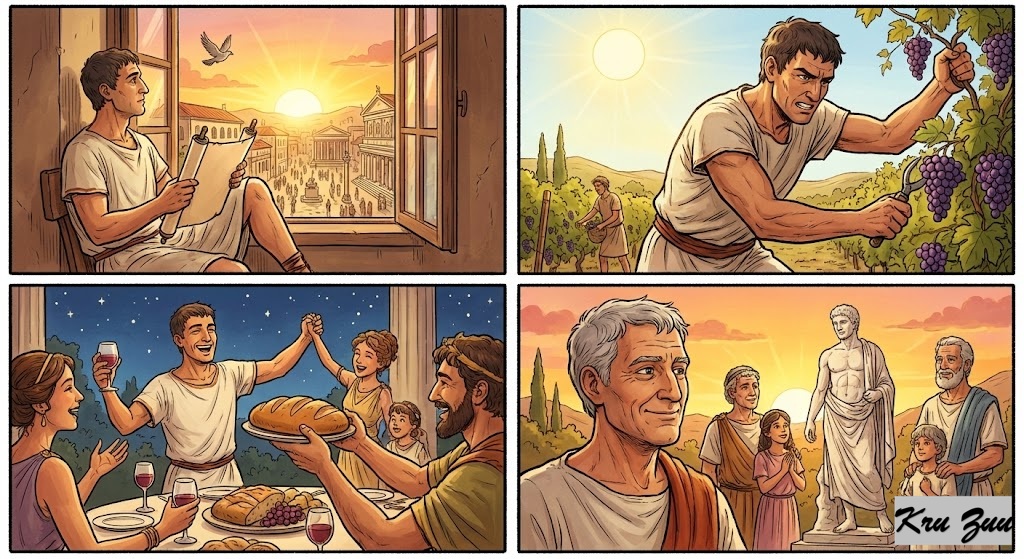
    👺 Latin:“Carpe Diem” (Seize the day) — The spiritual ancestor of this phrase.

    🎯 Impact on Life: The Pros & Cons


    ✅ The Pros (The Winner’s Edge)


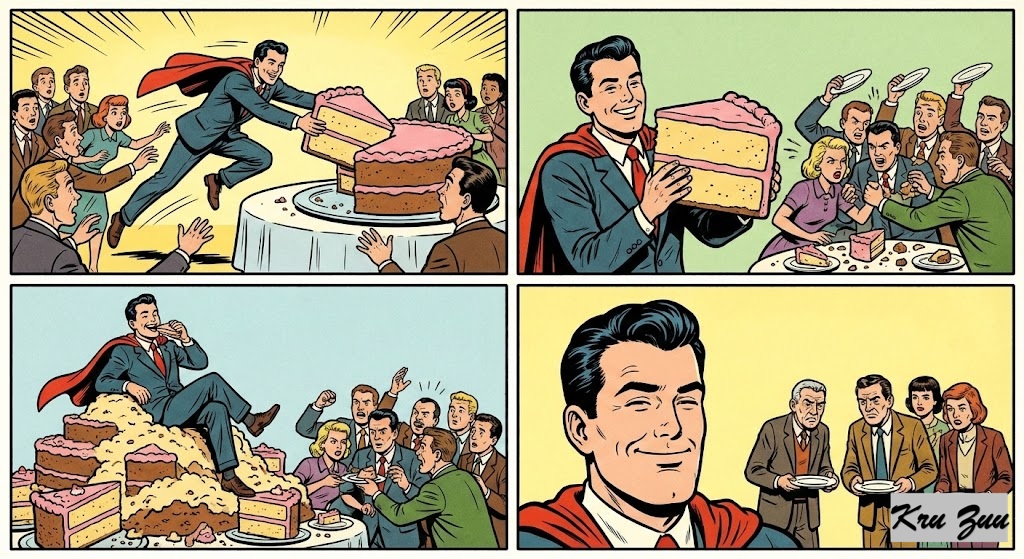
    First Mover Advantage: The first person to act usually gets the biggest slice of the cake.


    Confidence: Taking action kills fear. Waiting feeds fear.


    ❌ The Cons (The Reckless Risk)


    Impulsiveness:
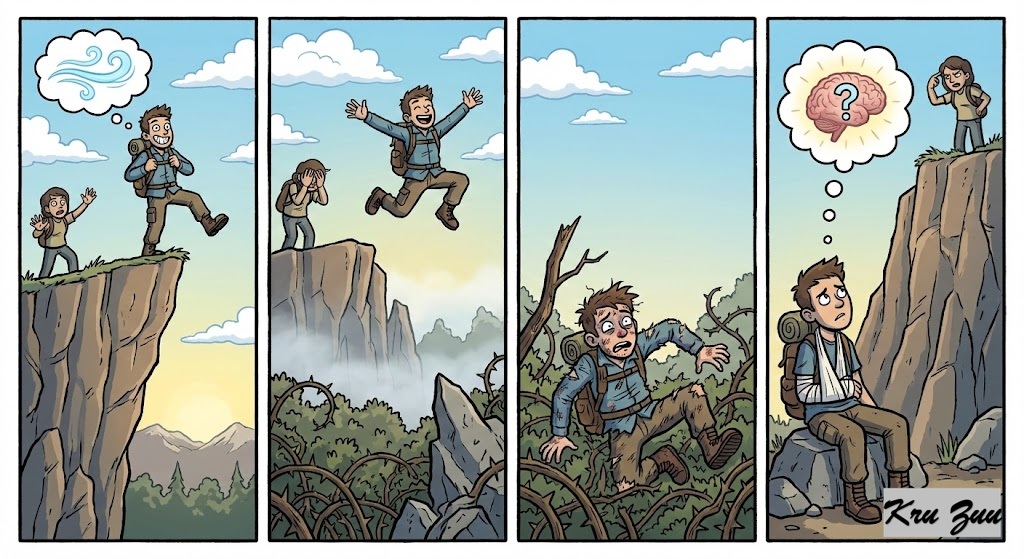
    Striking too fast without looking can be dangerous. Don’t jump off a cliff just because “the air is nice.” Use common sense!

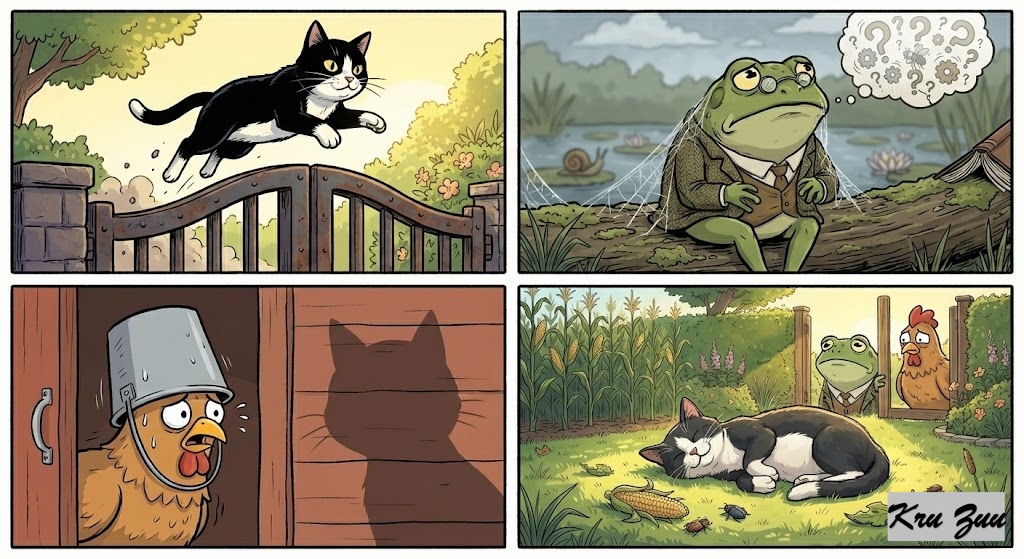
    🎭 Short Story: The Open Gate 🚪


    Let’s visit the barnyard to see this law in action.


    🌟 The Characters


    🐸 Freddie the Frog: The Philosopher (Overthinks everything).


    🐔 Clucky the Chicken: The Worrier (Scared of everything).


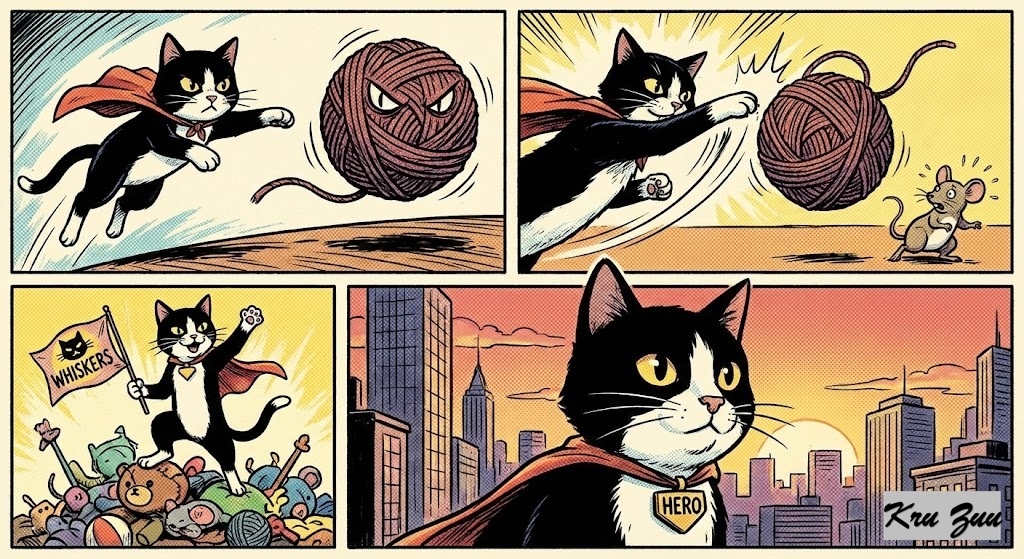
    🐱 Whiskers the Cat: The Striker (The Hero).


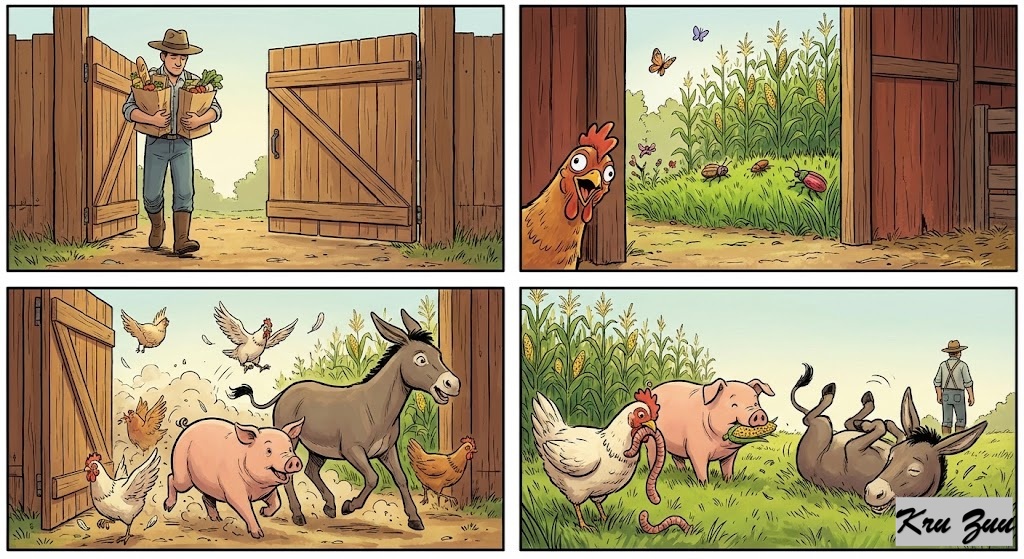
    The Situation: The Farmer is carrying groceries. For exactly 10 seconds, he leaves the garden gate wide open. Inside, there is a paradise of bugs, corn, and soft grass.


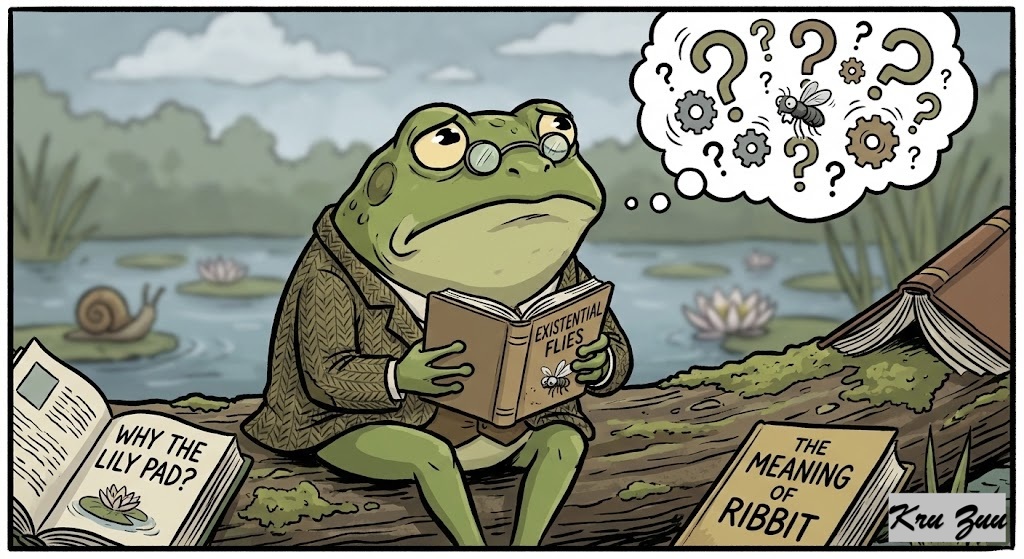
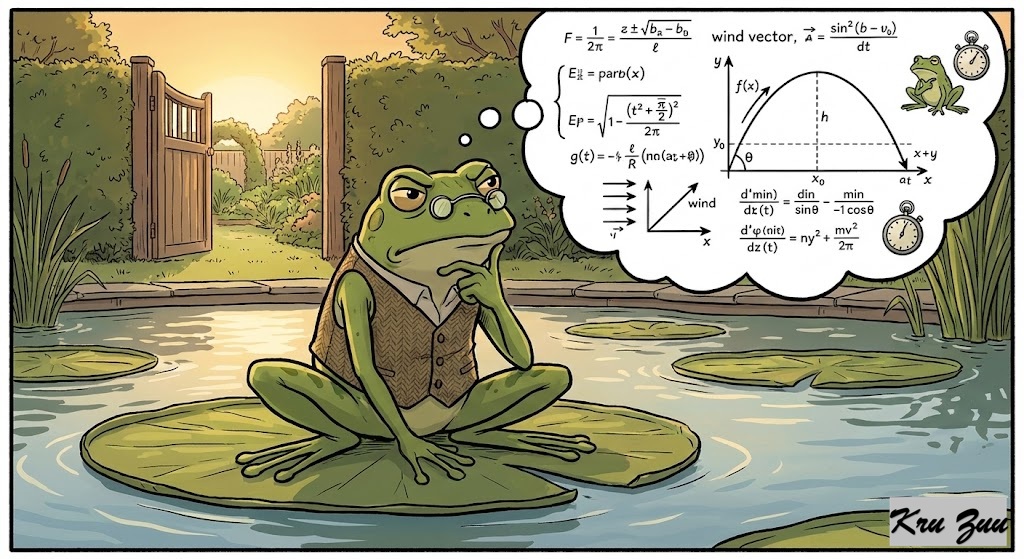
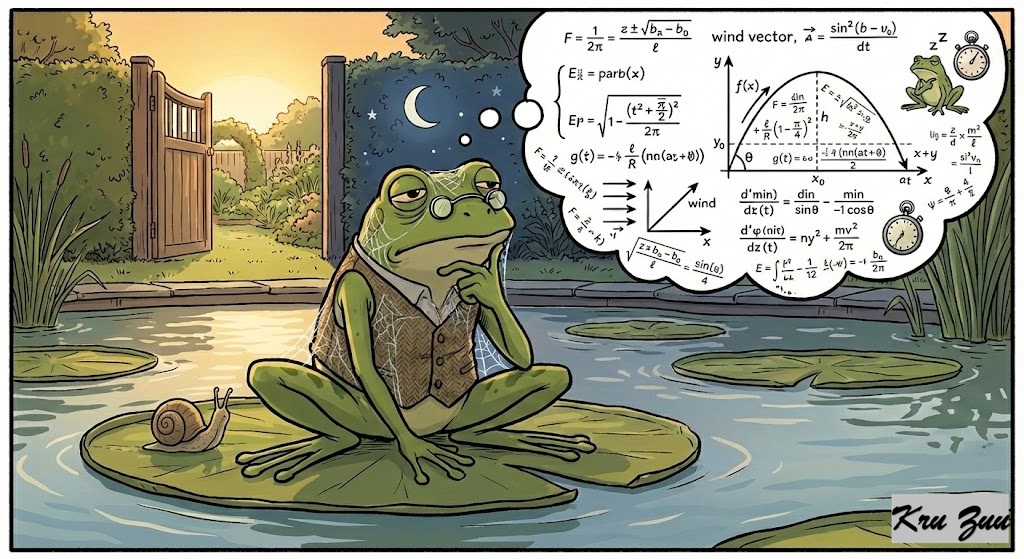
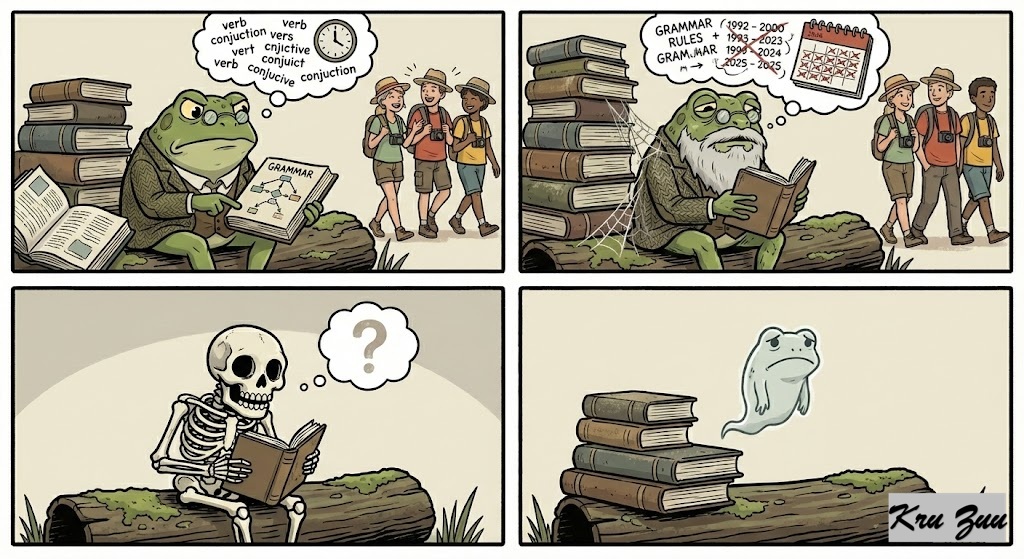
    The Reaction:🐸 Freddie the Frog sees the gate. He sits on his lily pad. “Hmm,” he croaks. “The humidity is good, but I need to calculate the trajectory of my jump. If I wait for the wind to die down, my jump will be 4% more aerodynamic.”

    Result: He stays on the lily pad, calculating.


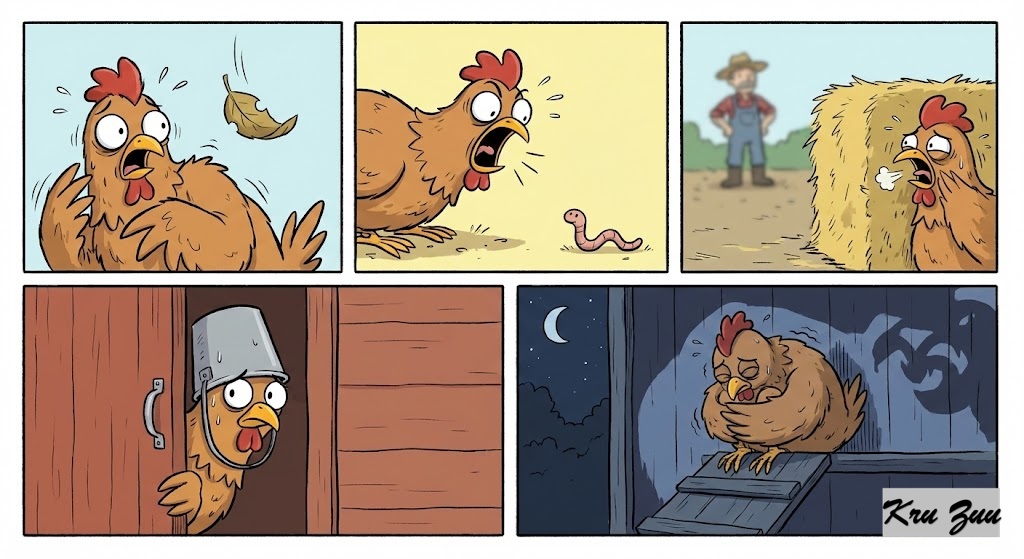
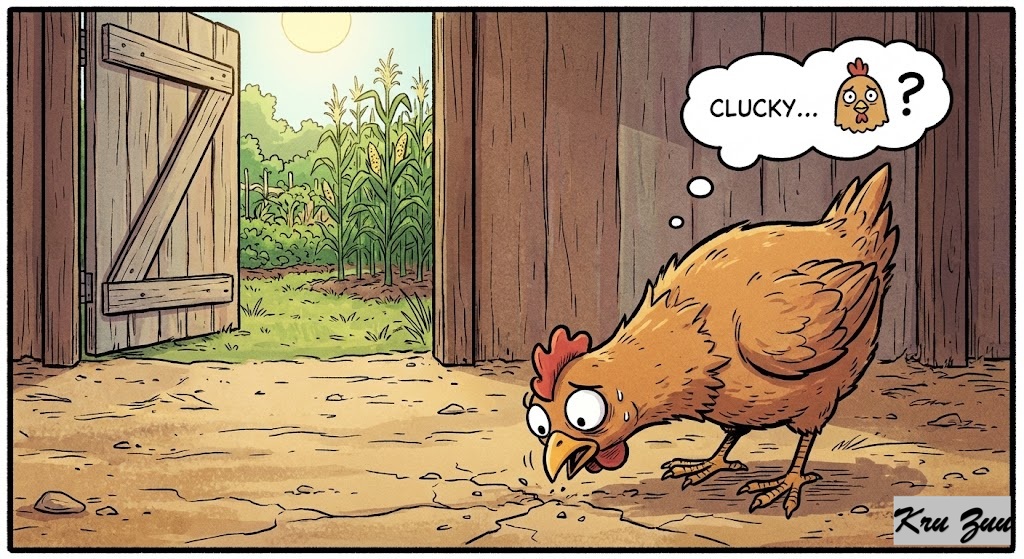
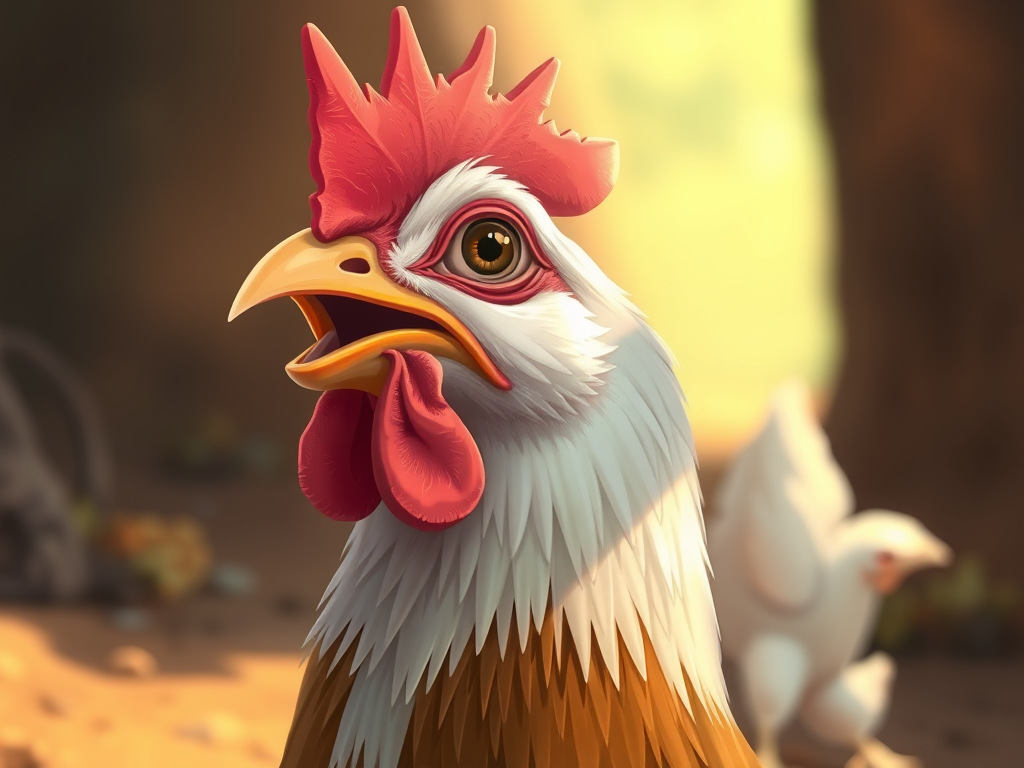
    🐔 Clucky the Chicken sees the gate. She flaps her wings nervously. “Oh my!” she clucks. “It looks delicious. But what if the Farmer sees me? What if I trip? Maybe I should wait until the Farmer goes to sleep tonight. Yes, that is safer.”

    Result: She pecks at the dry dirt, waiting for “safe.”


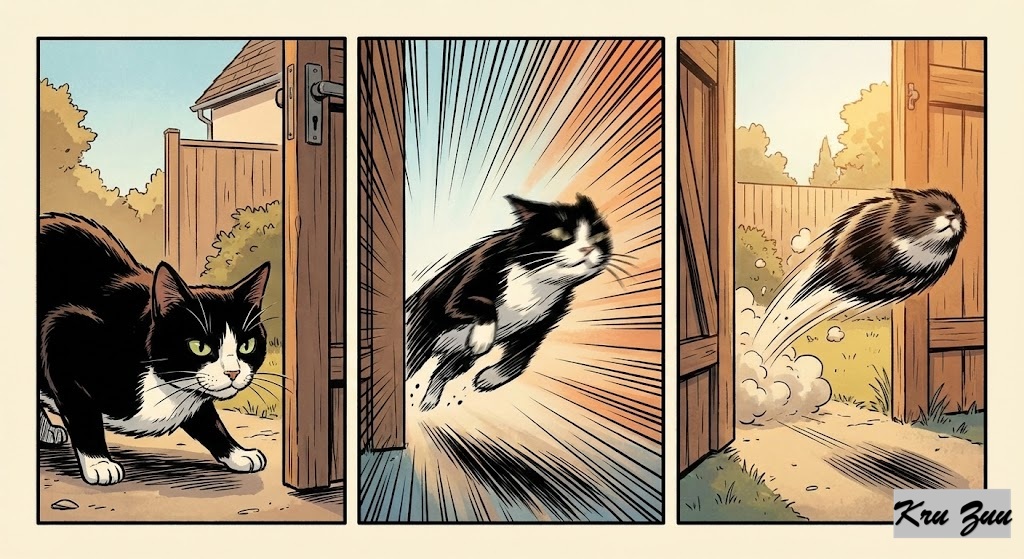
    🐱 Whiskers the Cat sees the gate. Whiskers doesn’t think. Whiskers doesn’t calculate wind speed. Whiskers sees the gap. 1, 2, ZOOM. Whiskers shoots through the gap like a fuzzy bullet.


    The Outcome


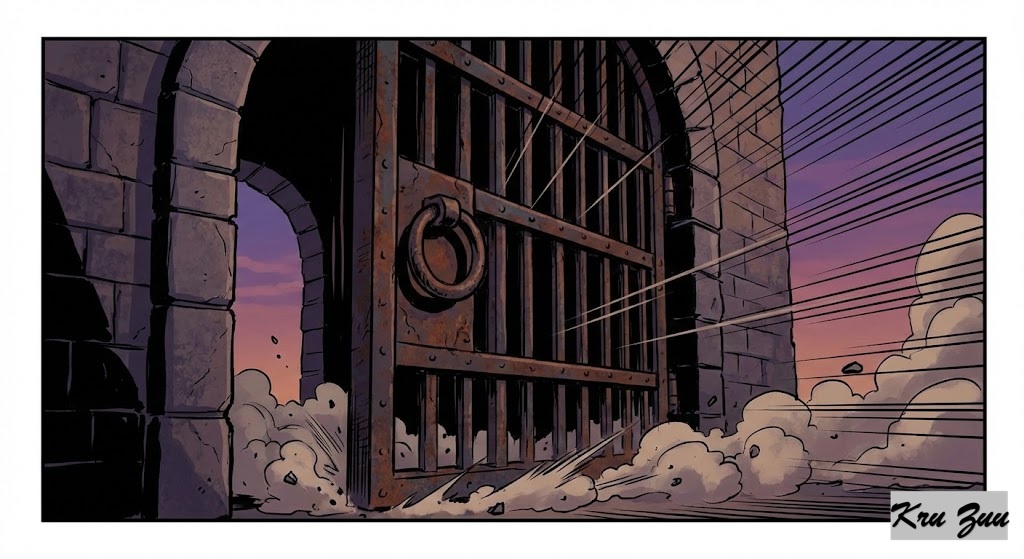
    CLANG. The gate slams shut.


    Freddie is still calculating his jump.


    Clucky is still hungry and safe in the dirt.


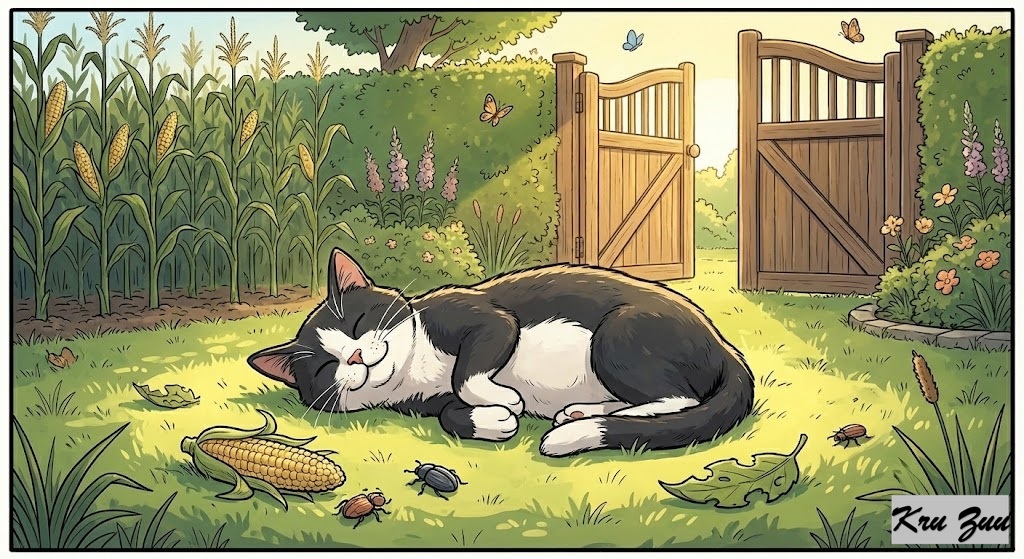
    Whiskers is inside the garden, napping in the sun after eating a feast.


    The Moral: The world belongs to the Cats. Don’t be a Frog calculating the wind. Don’t be a Chicken waiting for safety. Jump.

    🎓 Lesson for English Learners


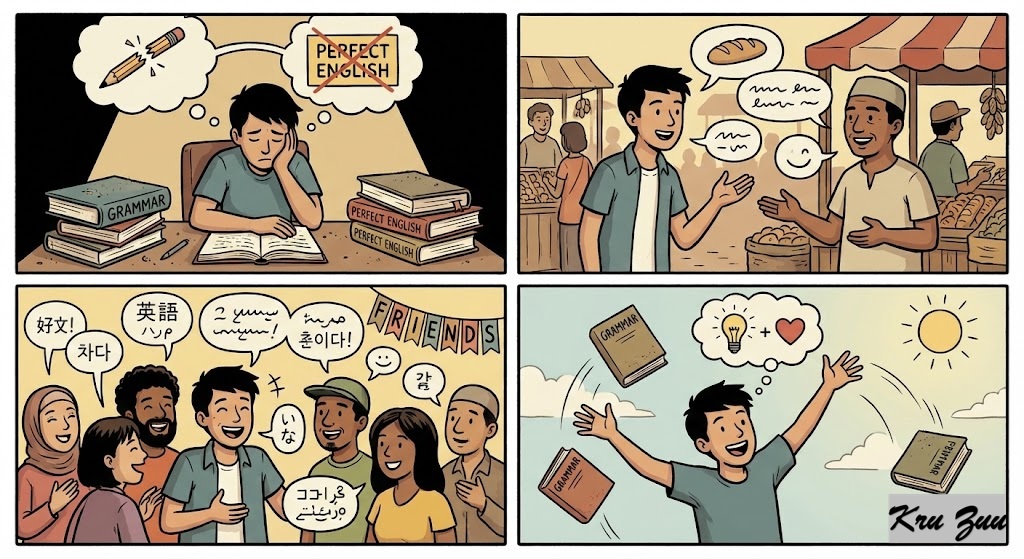
    Don’t wait for “Perfect English.”


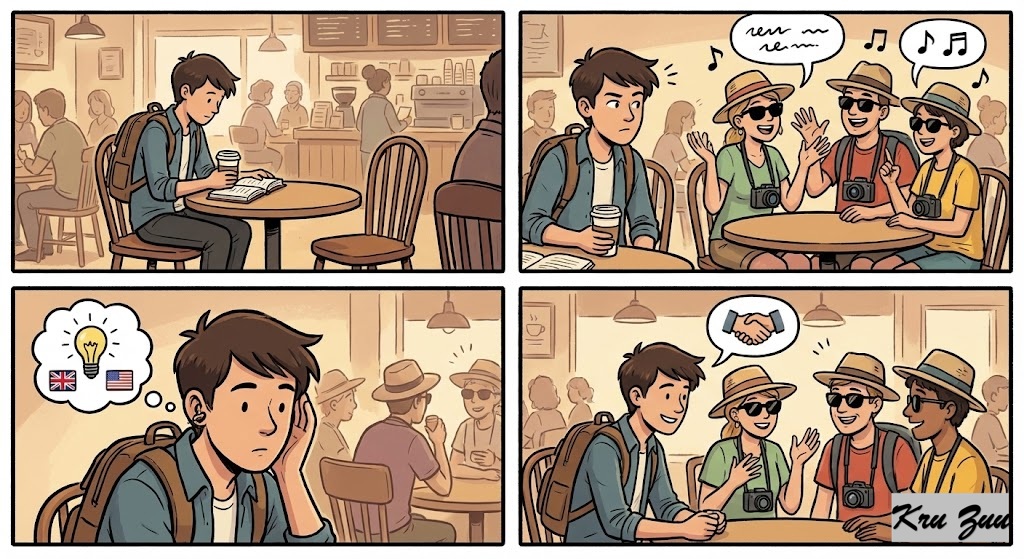
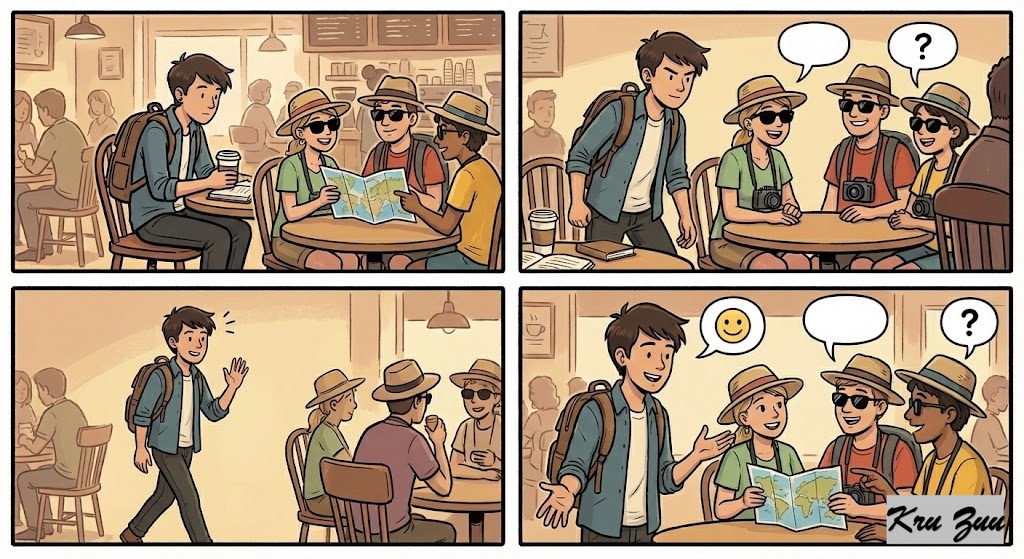
    Situation: You are in a coffee shop. You hear tourists speaking English.


    The Frog approach: “I will talk to them once I master the Present Perfect Continuous tense.”


    The Cat approach: You stand up, walk over, and say, “Hi! Where are you from?”


    Why? Because 5 minutes later, they will leave. The iron will be cold. Speak now, fix your grammar later.


    💬 Your Turn: The “5-Second Rule” 🚀


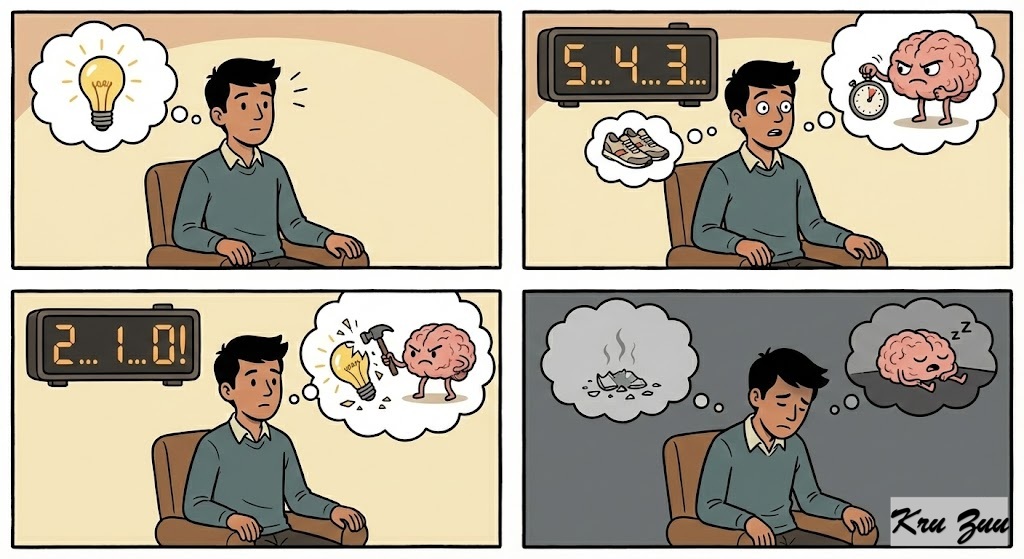
    When you feel an instinct to act on a goal, you must physically move within 5 seconds, or your brain will kill the idea.


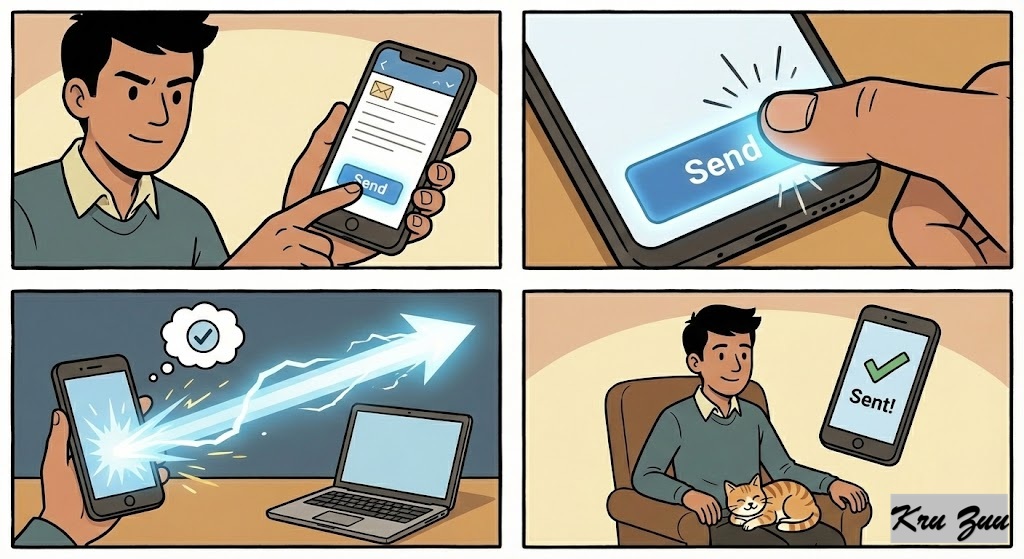
    The Challenge: Is there an email you need to send? A text to a crush? A domain name you want to buy?


    The Action: Do it. Strike. Don’t think. Just click “Send.”


    👇 Tell us in the comments: What is an opportunity you missed because you waited too long? Let’s mourn it together, then move on!

    By Zubeyir YURTKURAN

    https://www.facebook.com/BrainBattleground/

    https://www.facebook.com/zubeyr.yurtkuran/

    https://www.instagram.com/zubeyryurtkuran/
    https://www.youtube.com/@BrainBattleground-b3p

    https://www.instagram.com/brainbattleground/

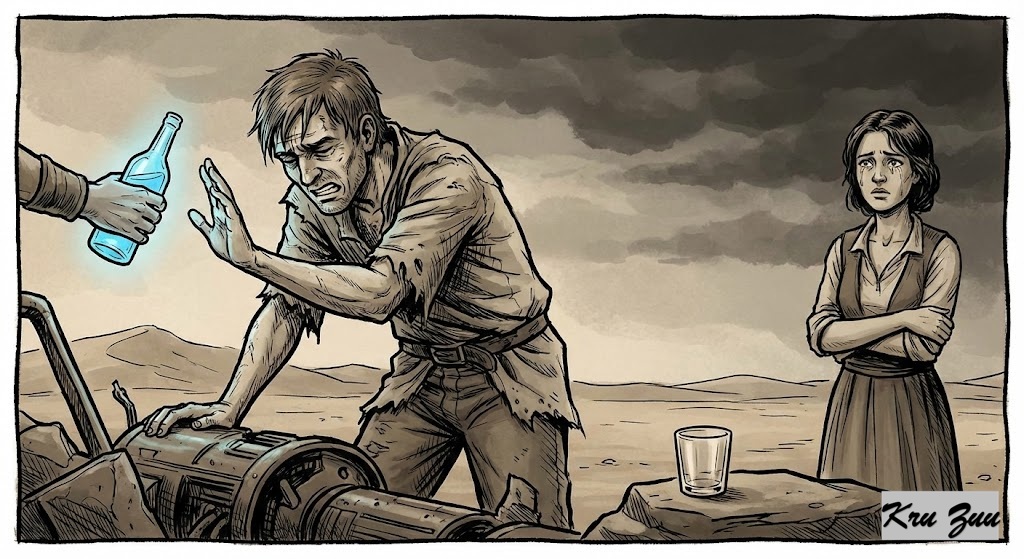
  • 🛡️ The Daily Shield: The Law of Necessity

    🛡️ The Daily Shield: The Law of Necessity

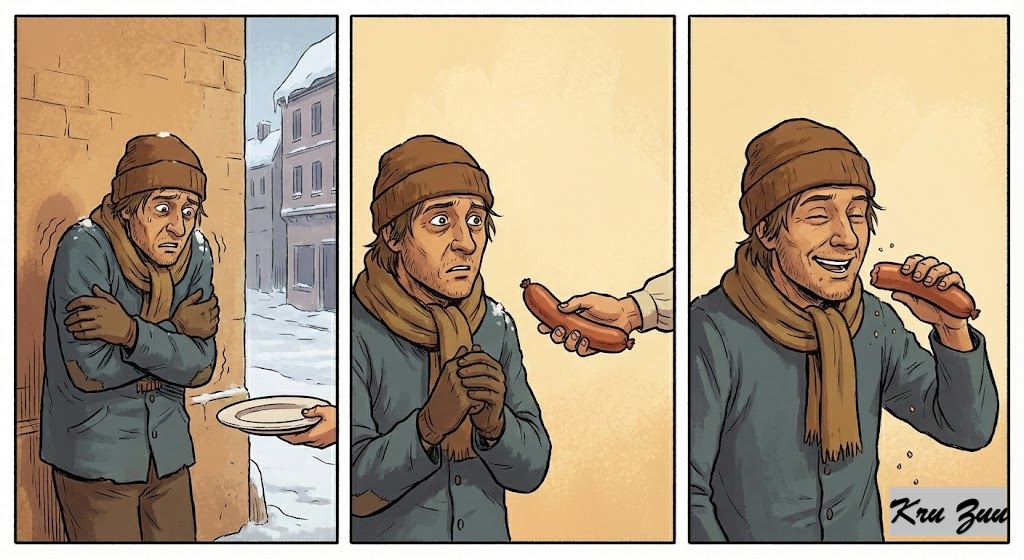
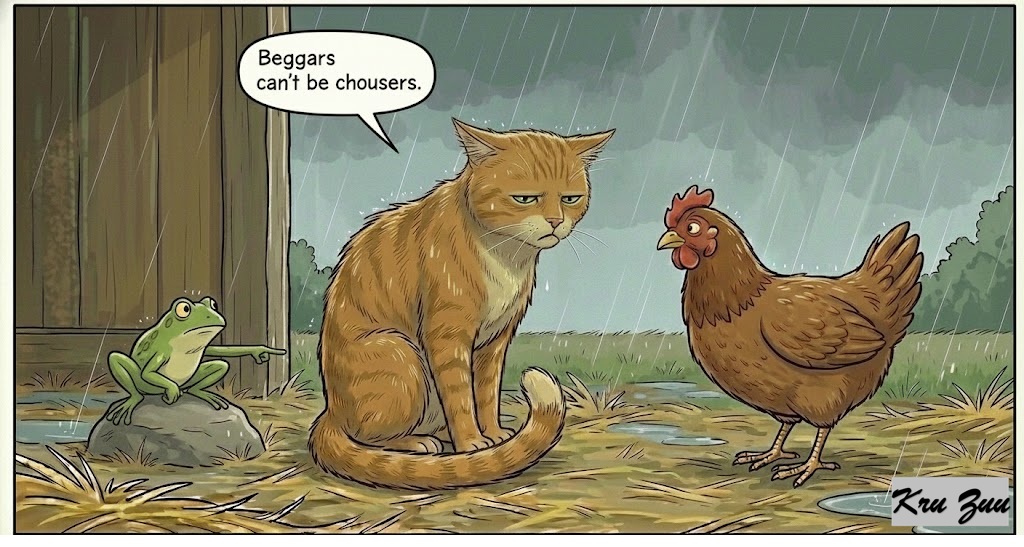
    “Beggars can’t be choosers.”


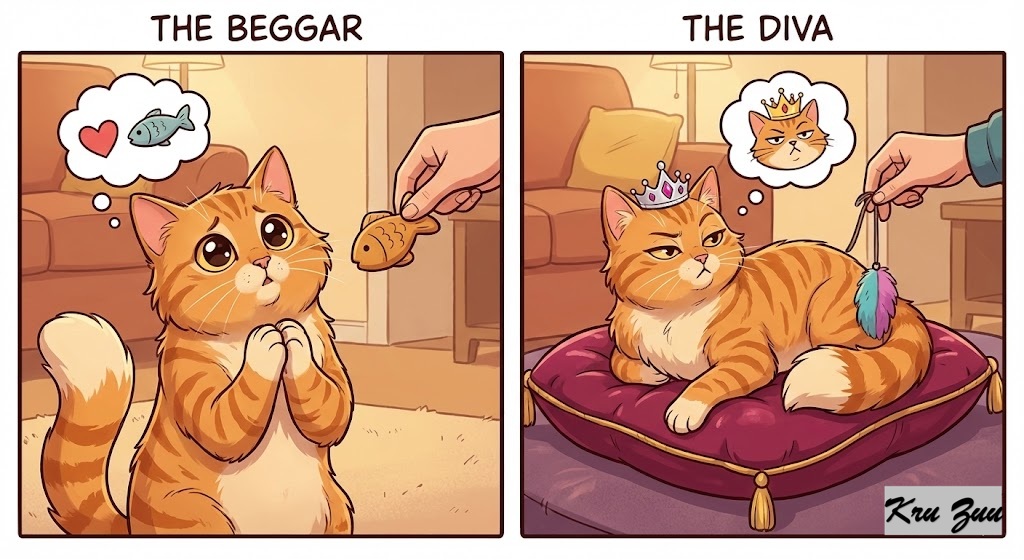
    😈 The Villain (The Diva)


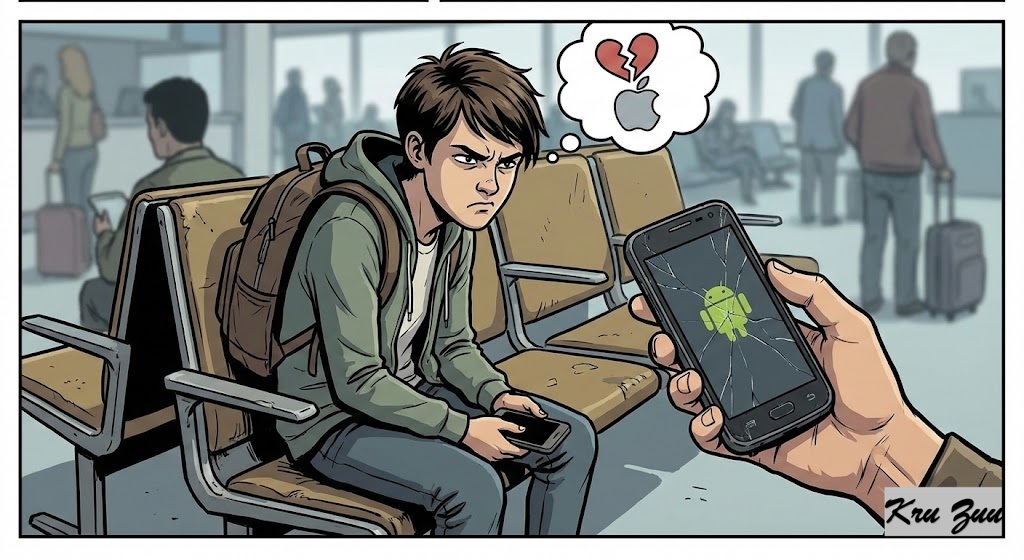
    You are stranded at the airport. Your phone is dead. You need to call your mom. A stranger offers you an old, cracked Android phone to use. You look at it with disgust. “Ew, I only use iPhones. Does this thing even have FaceTime?” You refuse the help because it isn’t ‘perfect.’

    The Result? You are stuck at the airport all night. You are cold, lonely, and stubborn. You let your pride destroy your survival. 🧟‍♂️


    😇 The Hero (The Survivor)


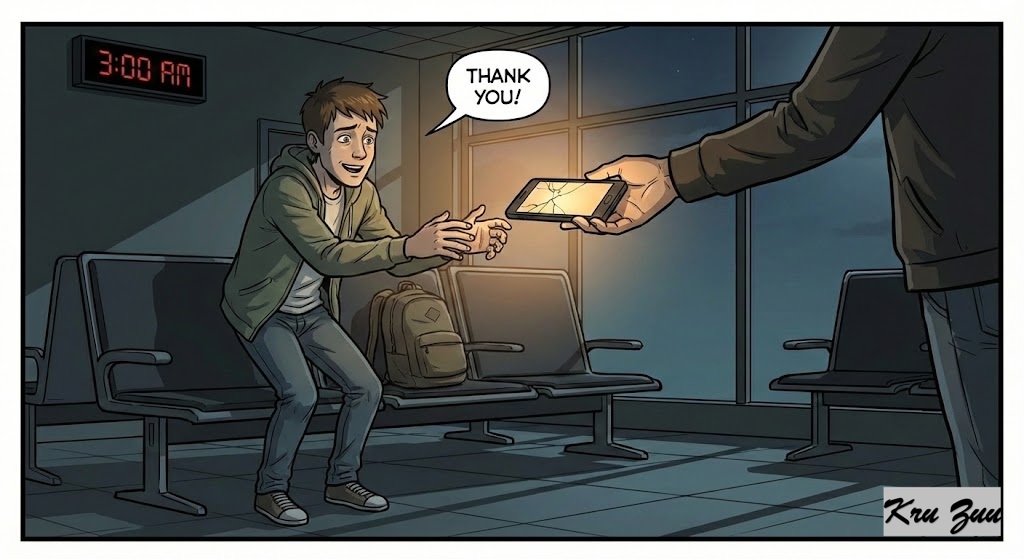
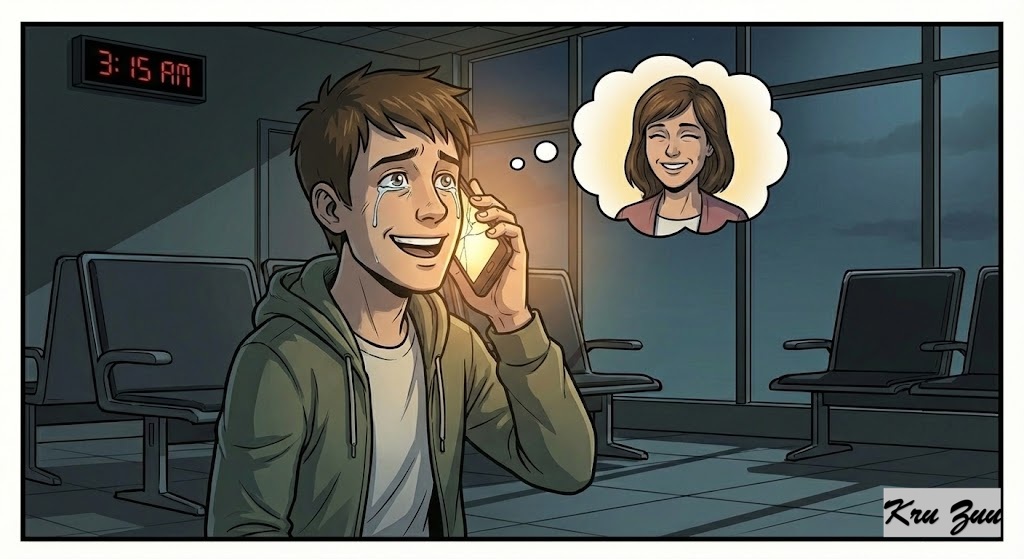
    You are in the same situation. You need help. You have zero options. The stranger offers the old, cracked phone. You say, “Thank you so much!” instantly. You don’t care about the brand, the screen, or the color. You only care about the function.

    The Result? You make the call. You get home safely. You understand that when you have nothing, anything is a gift. You value utility over vanity. 🛡️


    ⚖️ The Reality
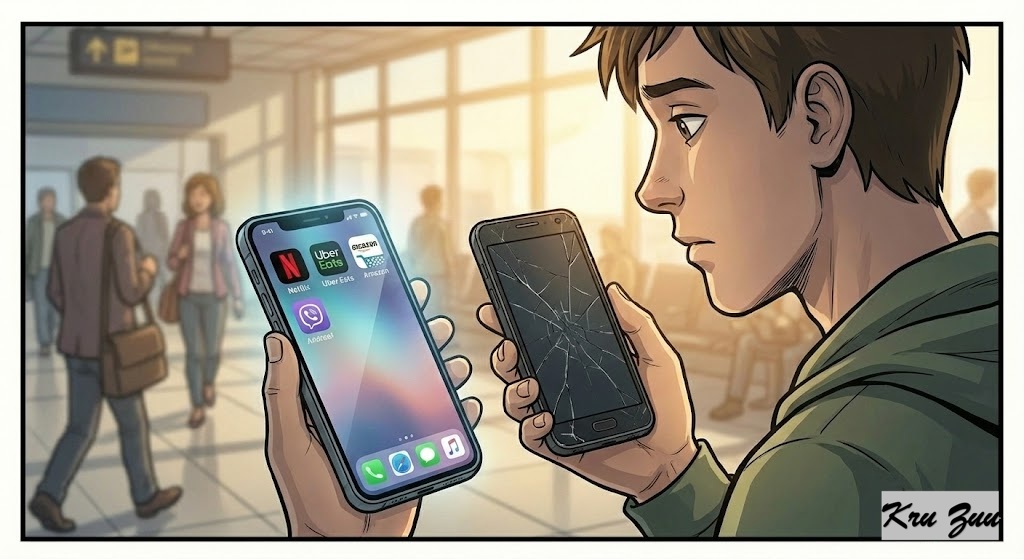
    Options are a luxury. We live in a world of endless choices (Netflix, Uber Eats, Amazon). We are used to getting exactly what we want. But sometimes, life hits “Reset.” When you are in a position of need, your “Right to Choose” disappears.

    💎 The Secret: Gratitude turns “not enough” into “enough.”

    🧐 The Anatomy of the Proverb


    This proverb teaches us about humility and reality.


    Beggars (Noun): People who ask for charity or help because they have nothing. 🤲


    Can’t (Modal Verb): Cannot; it is impossible for them to.


    Choosers (Noun): People who select the best option from many.


    Simpler Version: Take what you are given.


    📚 Vocabulary Vault


    Entitled (Adjective): Believing you deserve special treatment (The enemy of this proverb!). 😤


    Necessity (Noun): Something that is absolutely needed.


    Alternative (Noun): Another available possibility.


    Compromise (Verb): To accept standards that are lower than is desirable.


    Pick (Verb): To choose.


    🧠 Grammar Focus: Modals & Plurals


    Modals of Ability (Can’t) Here, “Can’t” doesn’t mean they physically cannot choose. It means they possess no logical or social right to do so.


    Example: “You are late? You can’t complain about the bad seats.”


    Nominalization (Verbs into Nouns) English loves turning verbs into people nouns by adding -er or -or.


    Beg (Verb) → Beggar (Person)
    Choose (Verb) → Chooser (Person)
    Teach (Verb) → Teacher (Person)

    📜 History: Origin and Spread


    This isn’t just modern slang; it is ancient wisdom.


    The Origin: It first appeared in John Heywood’s collection of proverbs in 1546! For 500 years, people have been trying to teach “Entitled” people to be humble.


    Global Cousins


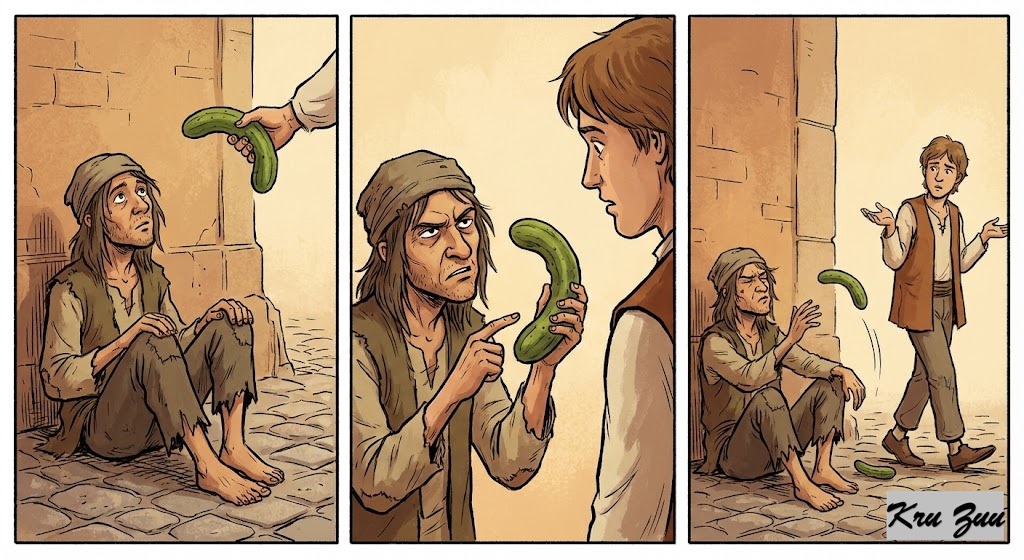
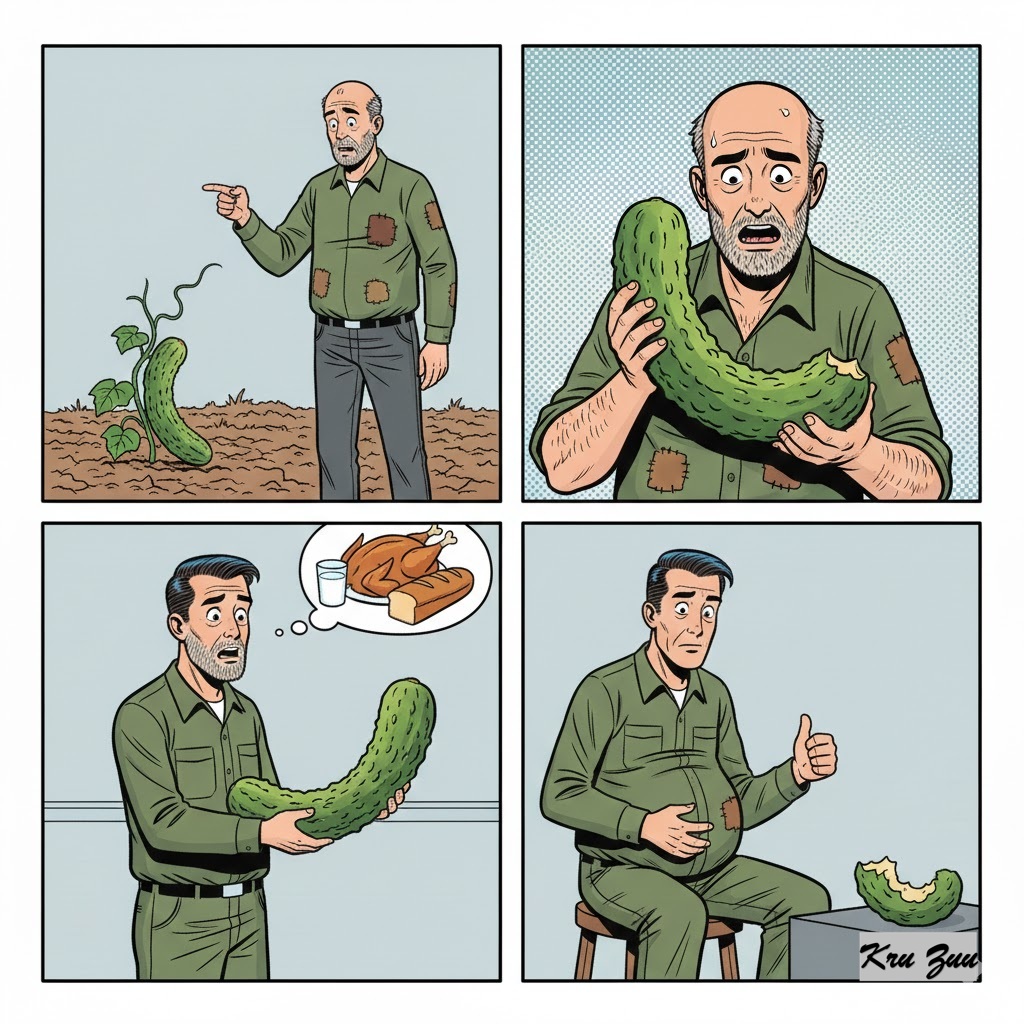
    🇹🇷 Turkish:“Dilenciye hıyar vermişler, eğri diye beğenmemiş.” (They gave the beggar a cucumber, he didn’t like it because it was crooked.) — This captures the humor perfectly!


    🇩🇪 German:“In der Not schmeckt die Wurst auch ohne Brot.” (In need, the sausage tastes good even without bread.)


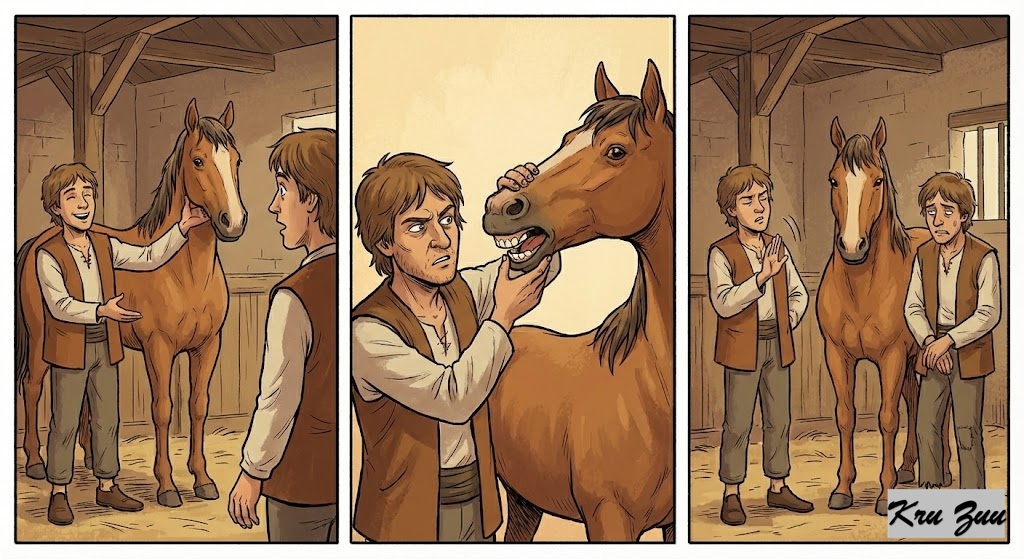
    🇪🇸 Spanish:“A caballo regalado no se le mira el diente.” (Don’t look at the teeth of a gifted horse.)

    🎭 Short Story: The Barnyard Banquet


    Let’s visit a farm where three animals are having a very different lunch.


    🌟 The Cast


    🐱 Cleo the Cat (The Beggar / The Diva)


    🐔 Henriettta the Chicken (The Provider)


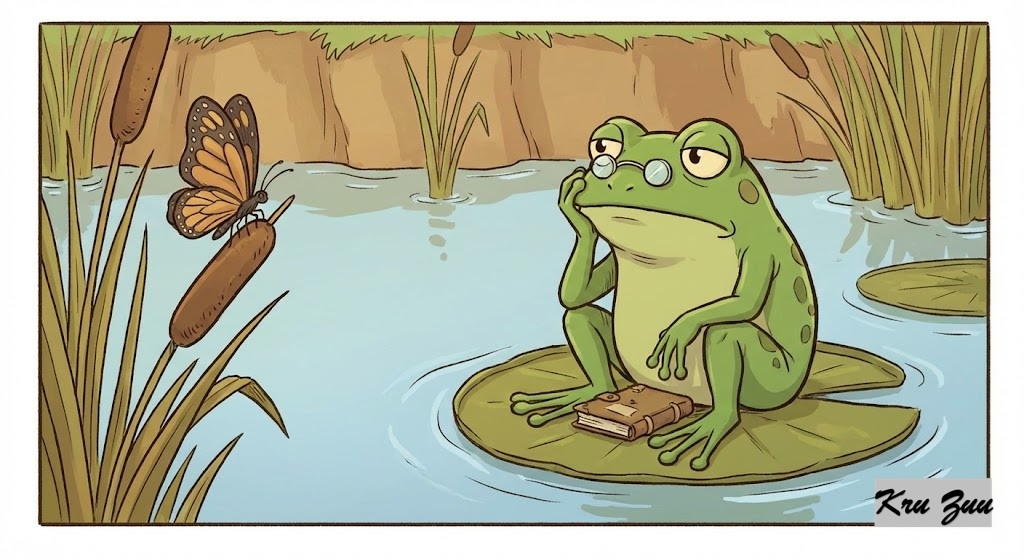
    🐸 Fred the Frog (The Wise Observer)


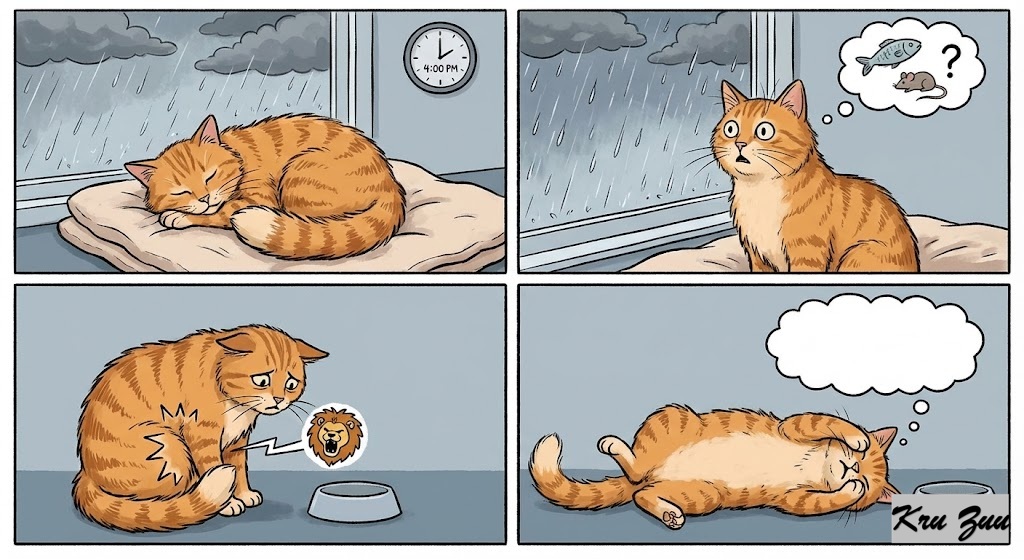
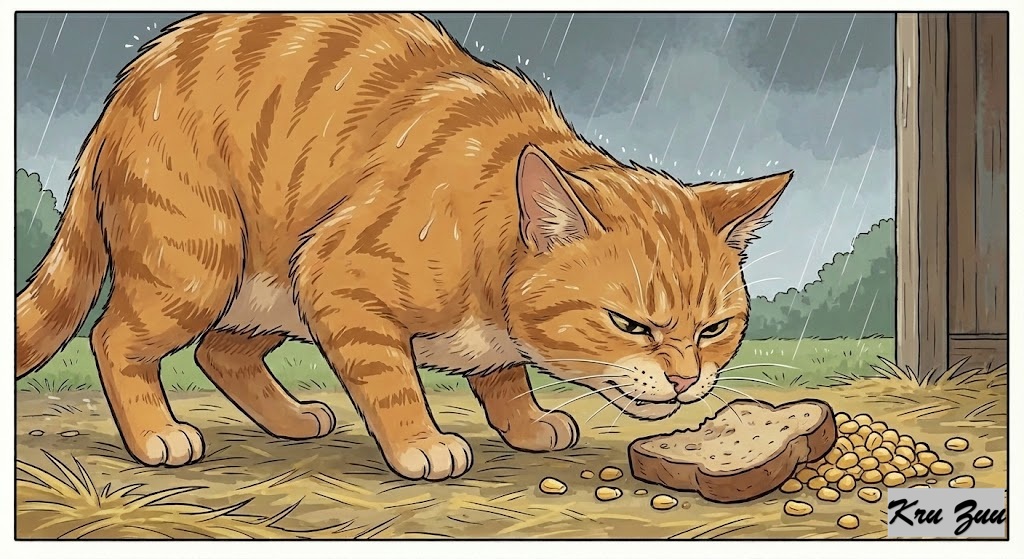
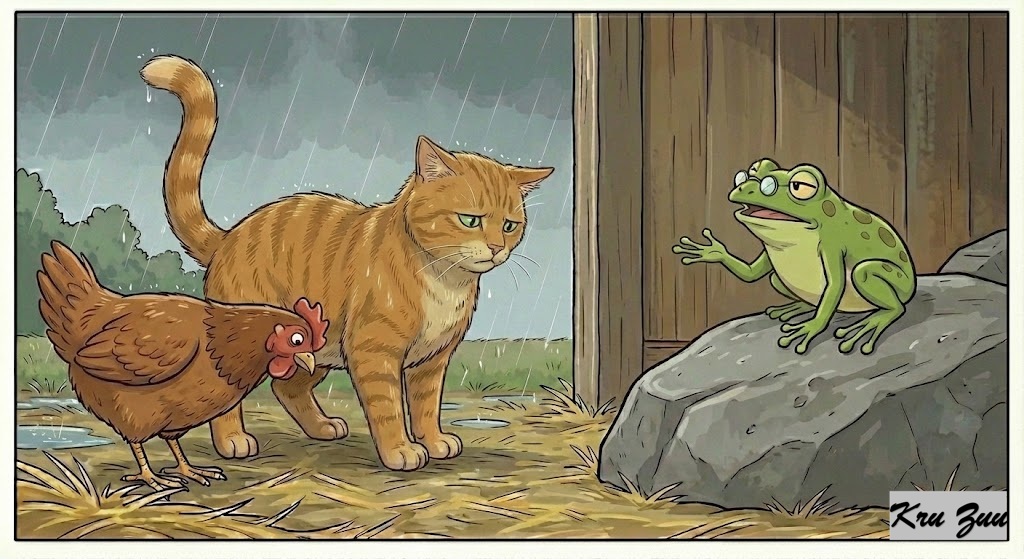
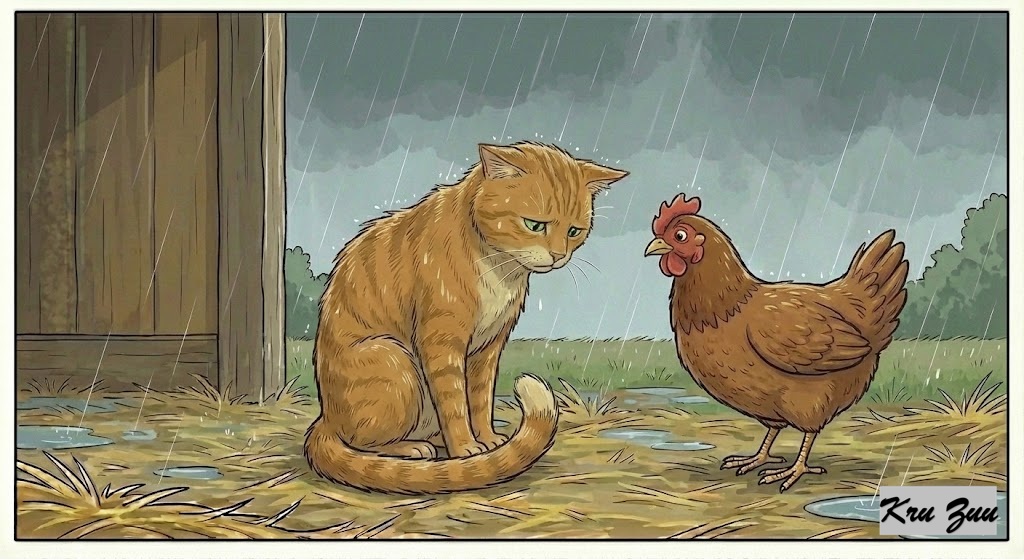
    The Situation: It is a rainy Tuesday. Cleo the Cat has been sleeping all day and forgot to hunt. She is starving. Her stomach is growling like a lion.


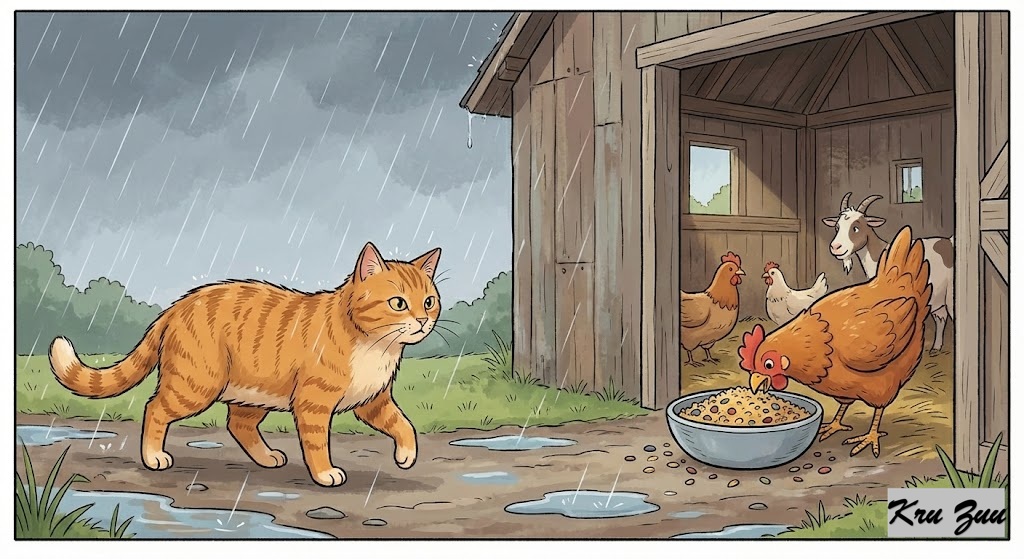
    She walks over to the barn where Henrietta is eating.

    Cleo: “Oh, Henrietta, darling! I am fainting with hunger. Do you have anything for a sophisticated cat to eat?”


    Henrietta is kind. She kicks a bowl forward.

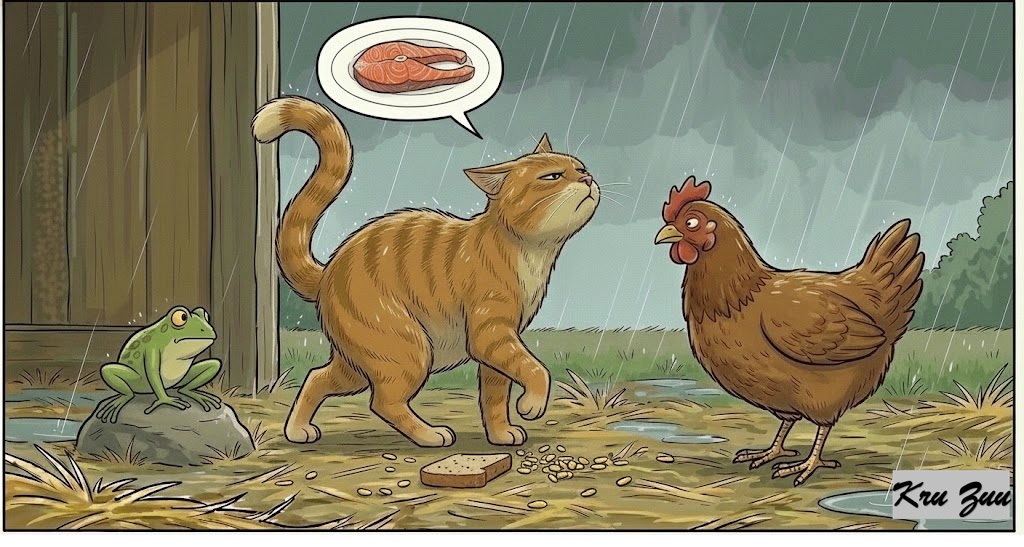
    Henrietta: “Sure, Cleo. Here is some dry corn and a piece of old bread crust.”


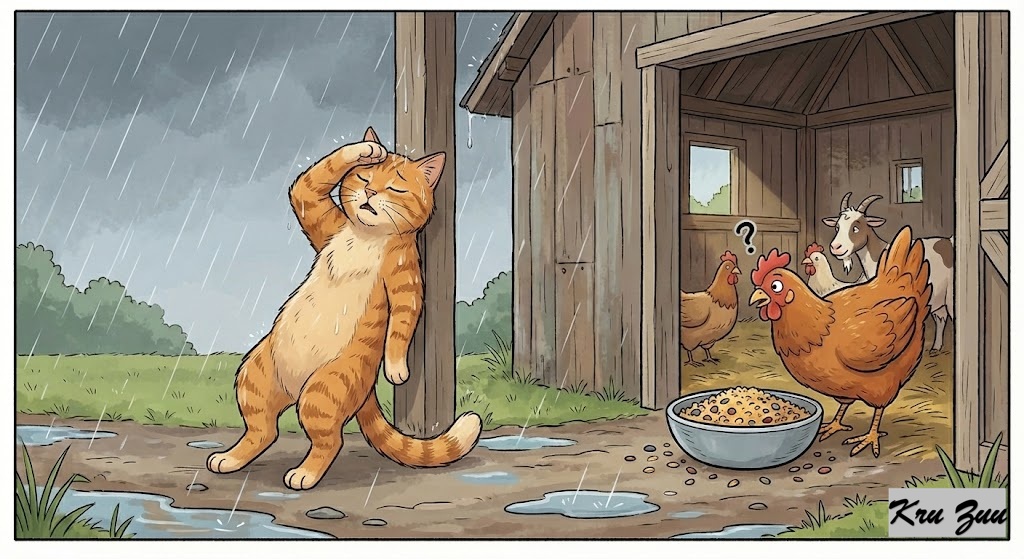
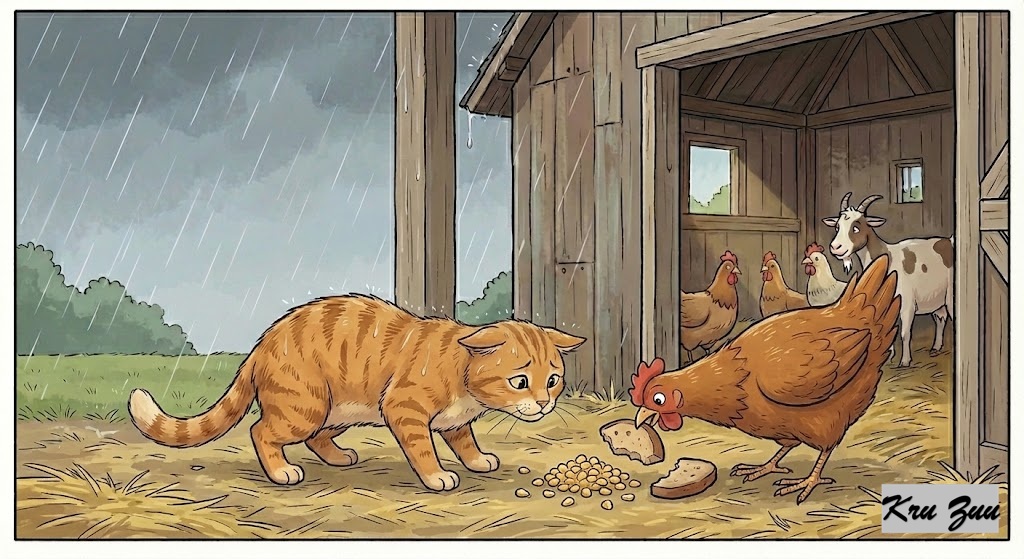
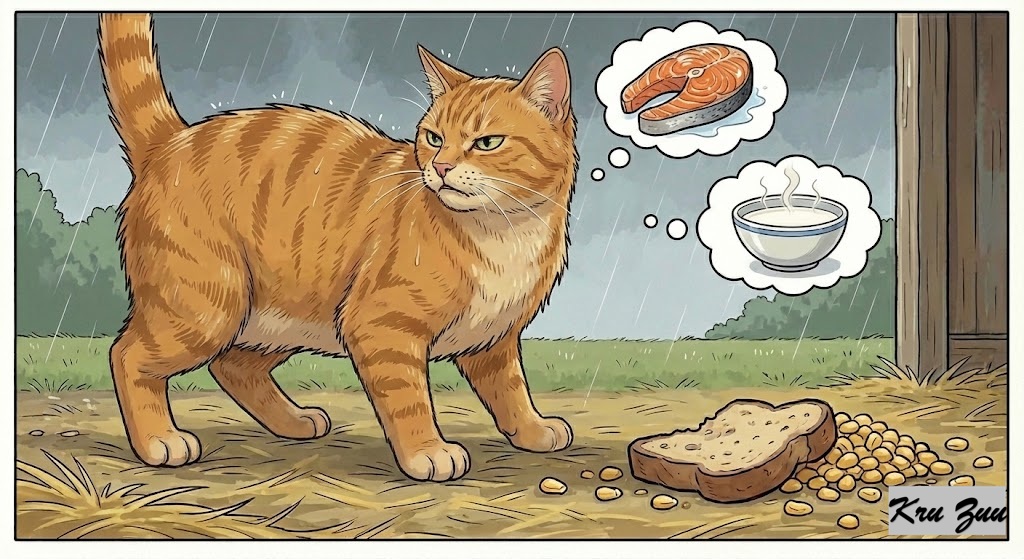
    Cleo looks at the corn. She sniffs the bread. She wrinkles her nose.

    Cleo: “Corn? Bread? Are you joking? I need Salmon. Or perhaps a bowl of warm milk. This is dry! This is for… peasants!”


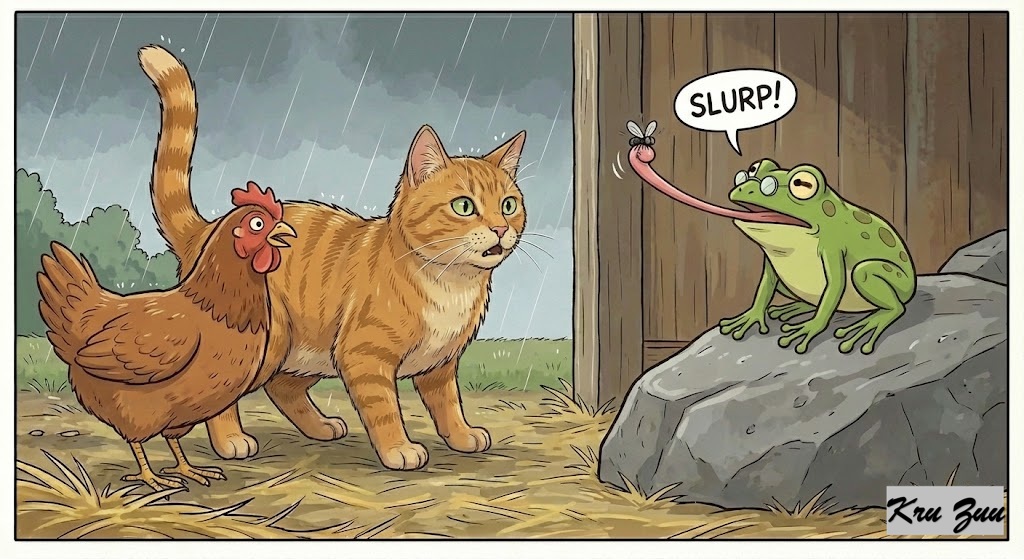
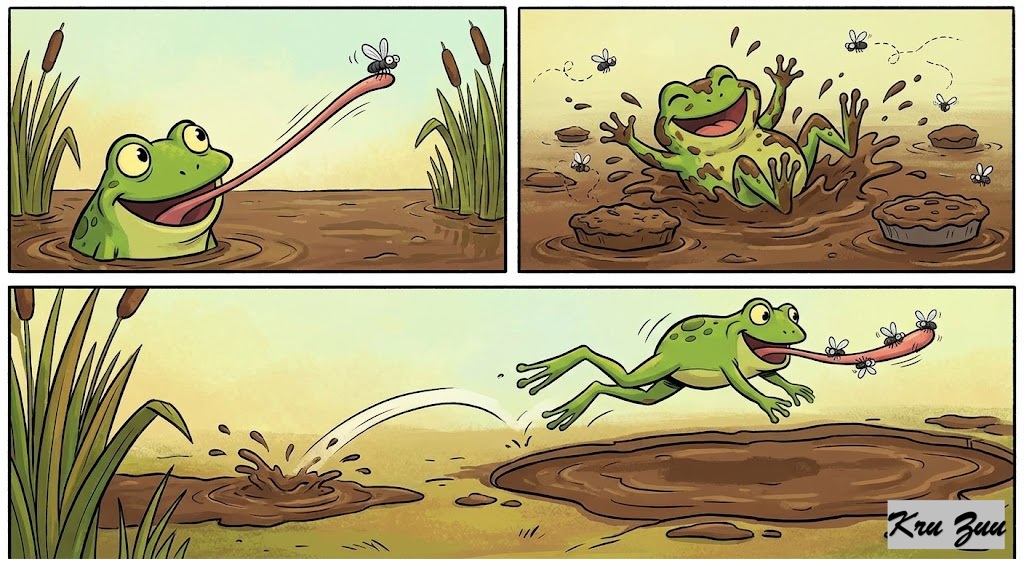
    Suddenly, Fred the Frog hops onto a rock. He catches a fly with his tongue. Slurp.

    Fred: “Hey Cleo, are you hunting today?”

    Cleo: “No, it’s too wet outside.”

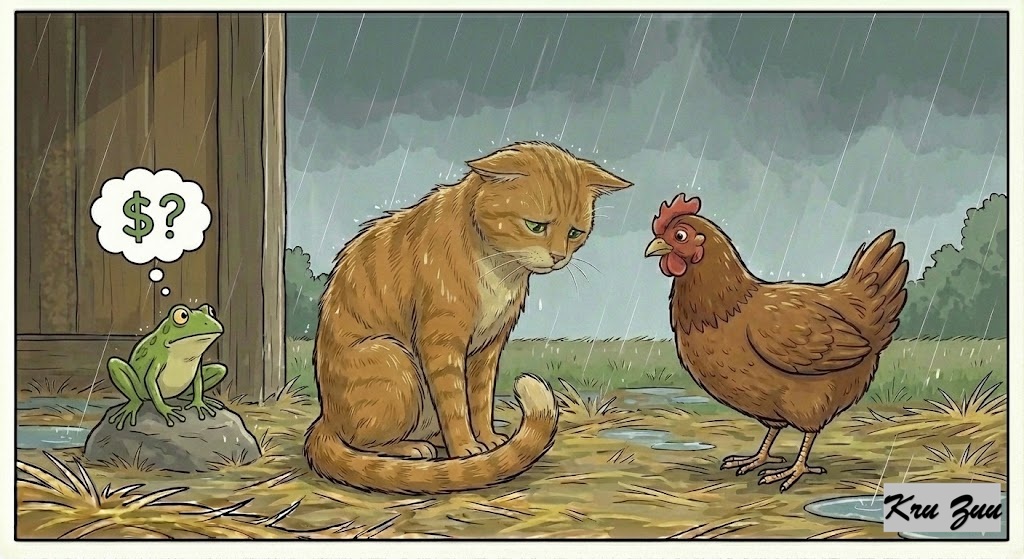
    Fred: “So you have no food?”

    Cleo: “None.”

    Fred: “And you have no money?”

    Cleo: “I’m a cat, Fred. Of course not.”

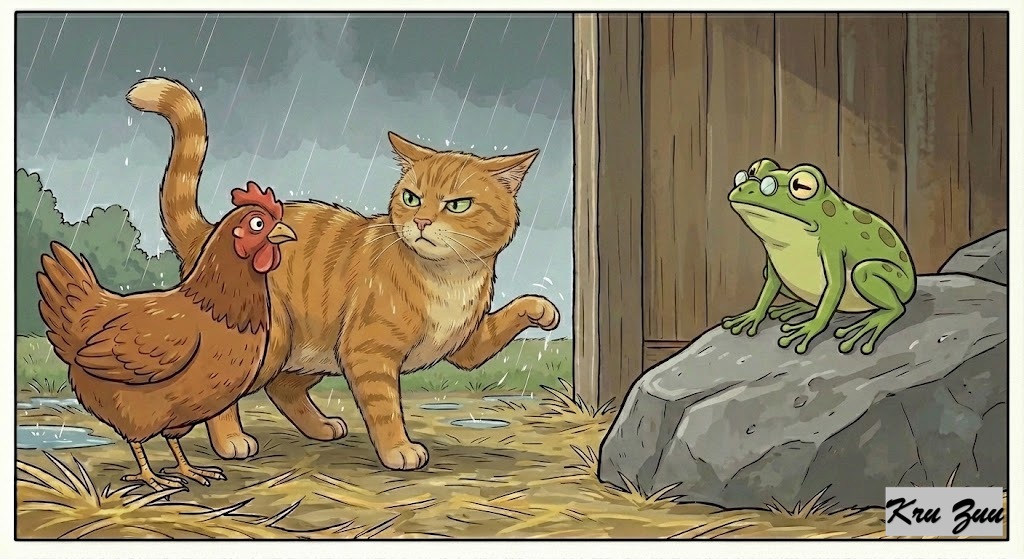
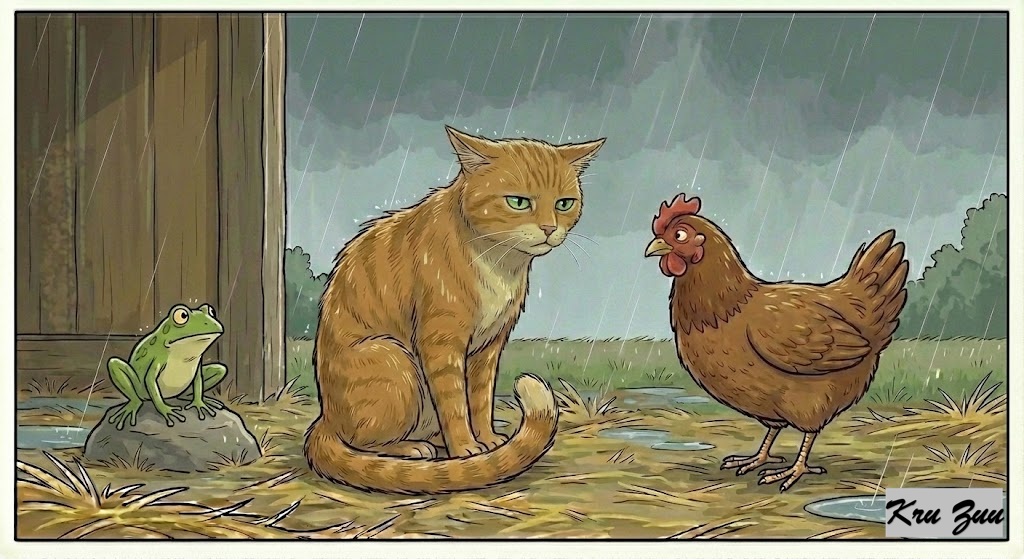
    Fred: “Then eat the bread, Cleo. Beggars can’t be choosers.”


    Cleo refuses. She walks away, nose in the air, waiting for a salmon that will never come.

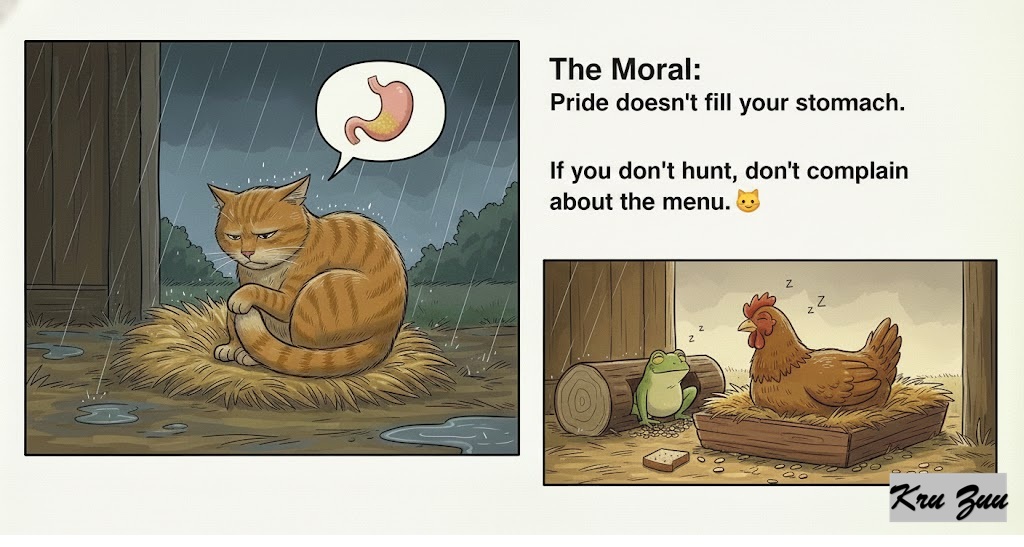
    The Ending: Cleo went to sleep hungry and cold. Fred and Henrietta went to sleep full.


    The Moral: Pride doesn’t fill your stomach. If you don’t hunt, don’t complain about the menu. 🐱

    🎓 Lesson for English Learners


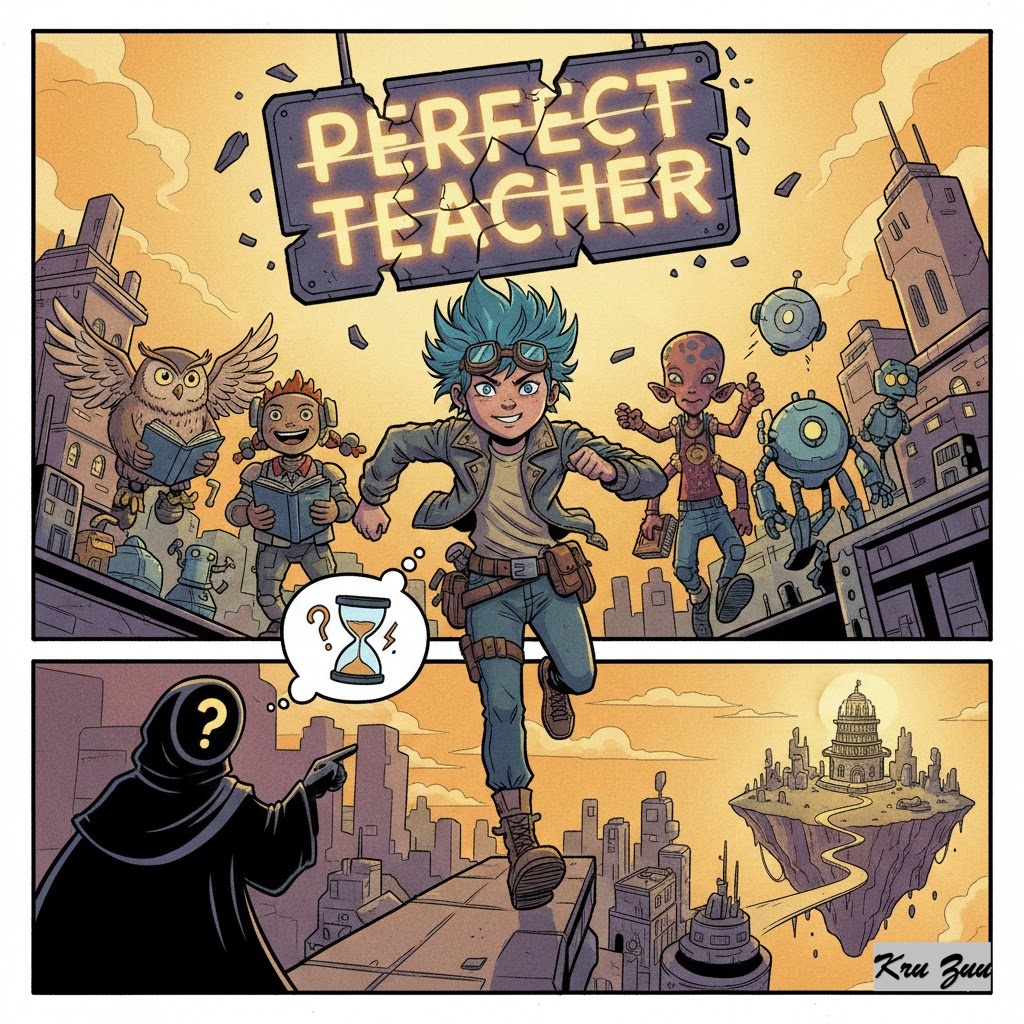
    Don’t wait for the “Perfect Teacher.”


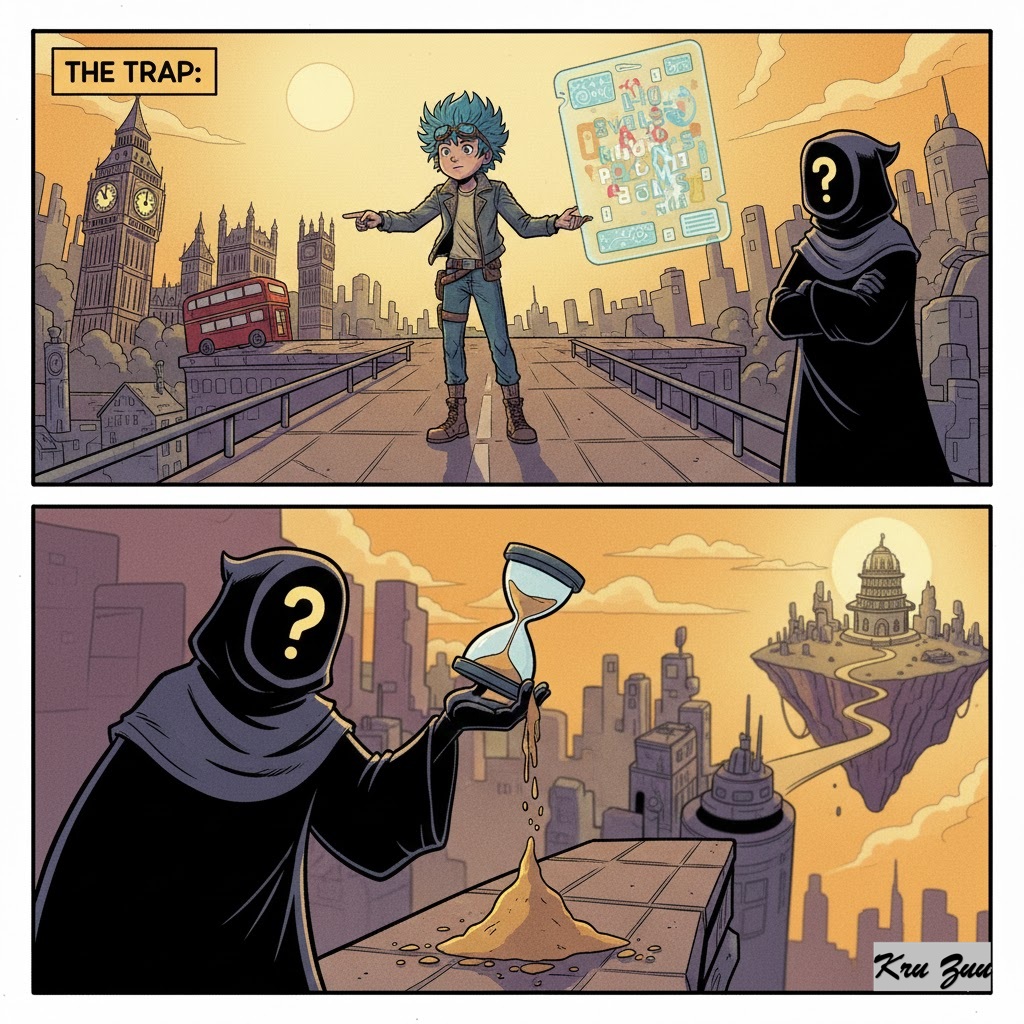
    The Trap: You want to learn English, but you say: “I will only learn if I can go to London,” or “I don’t like this free app, the interface is ugly.”


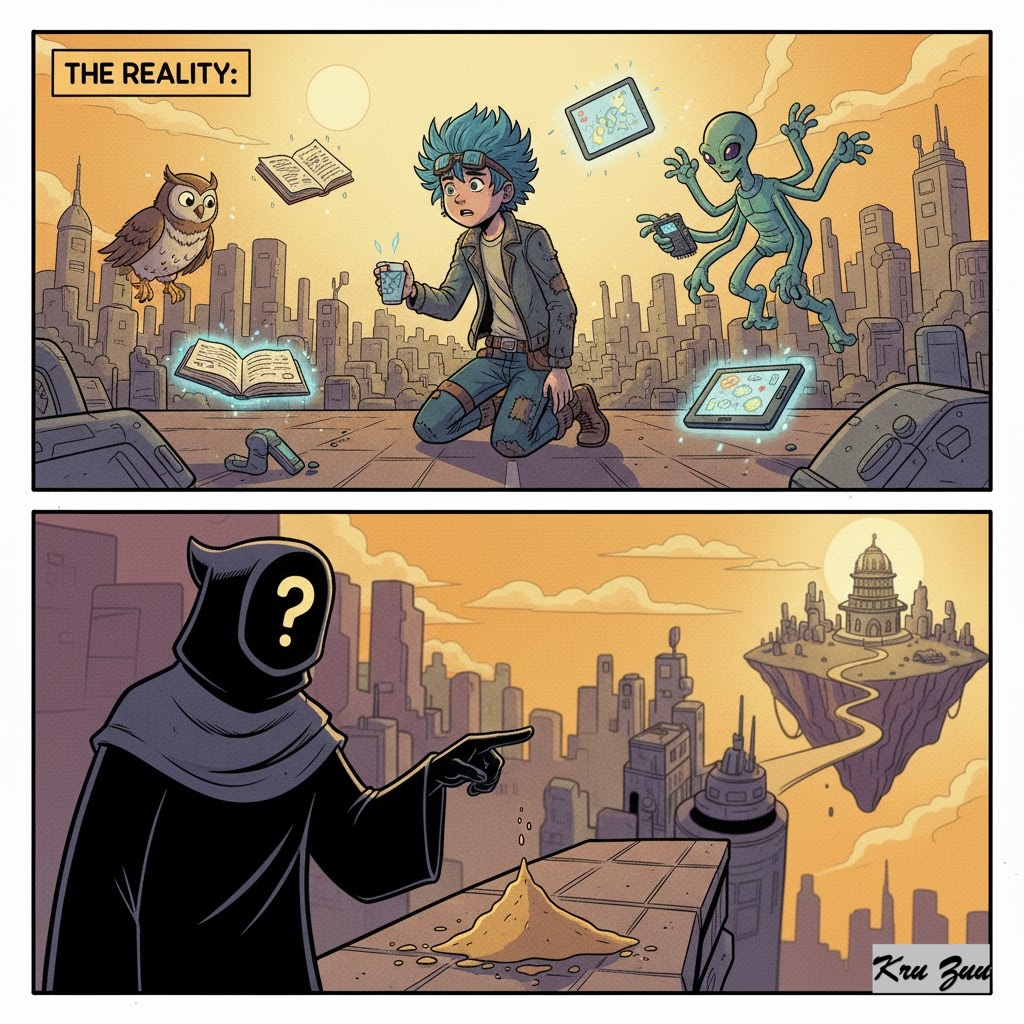
    The Reality: You are the “Beggar” (you need knowledge). The resources are the “Givers.”


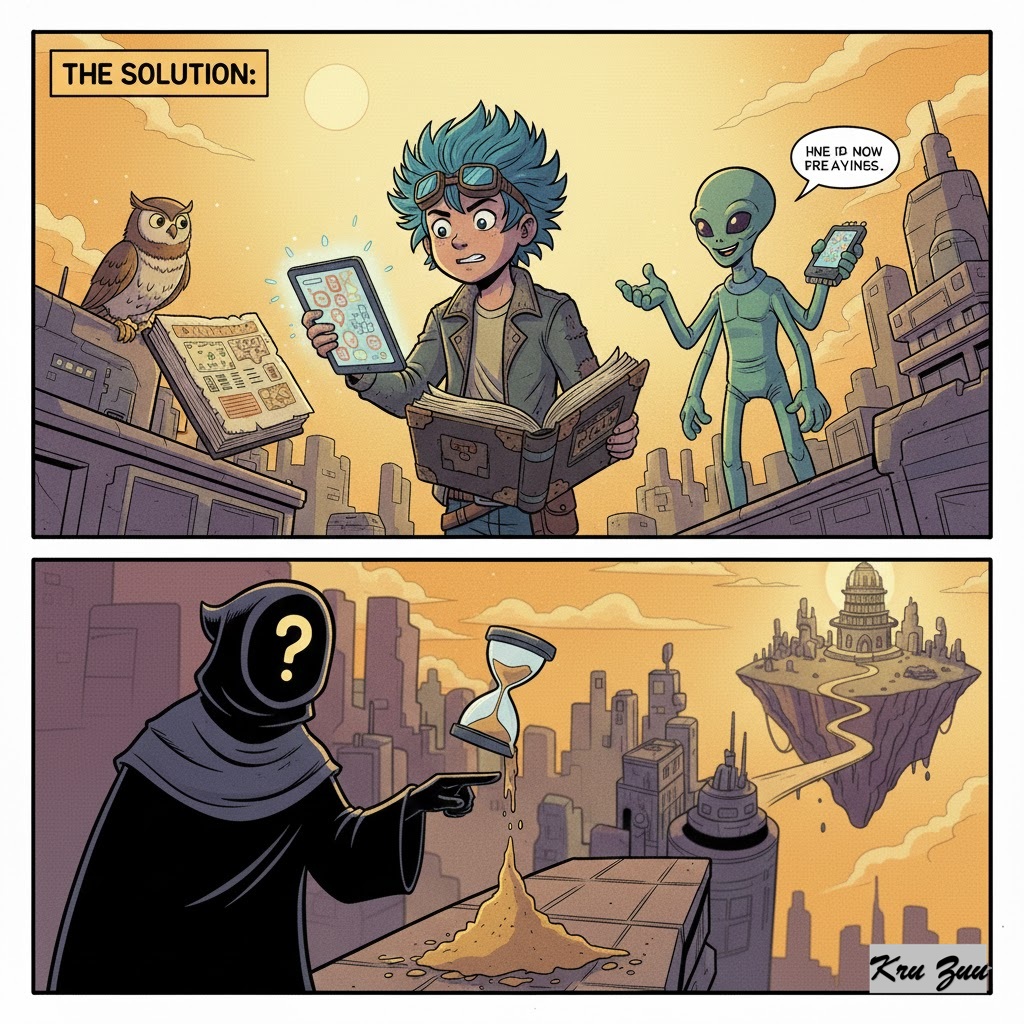
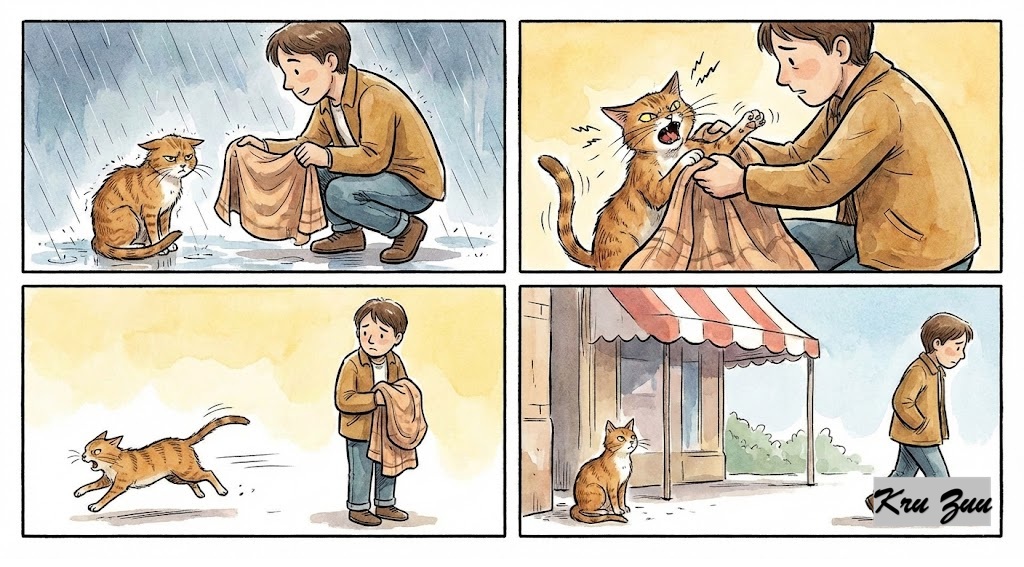
    The Solution: Use the ugly app. Read the old book. Talk to the non-native speaker.


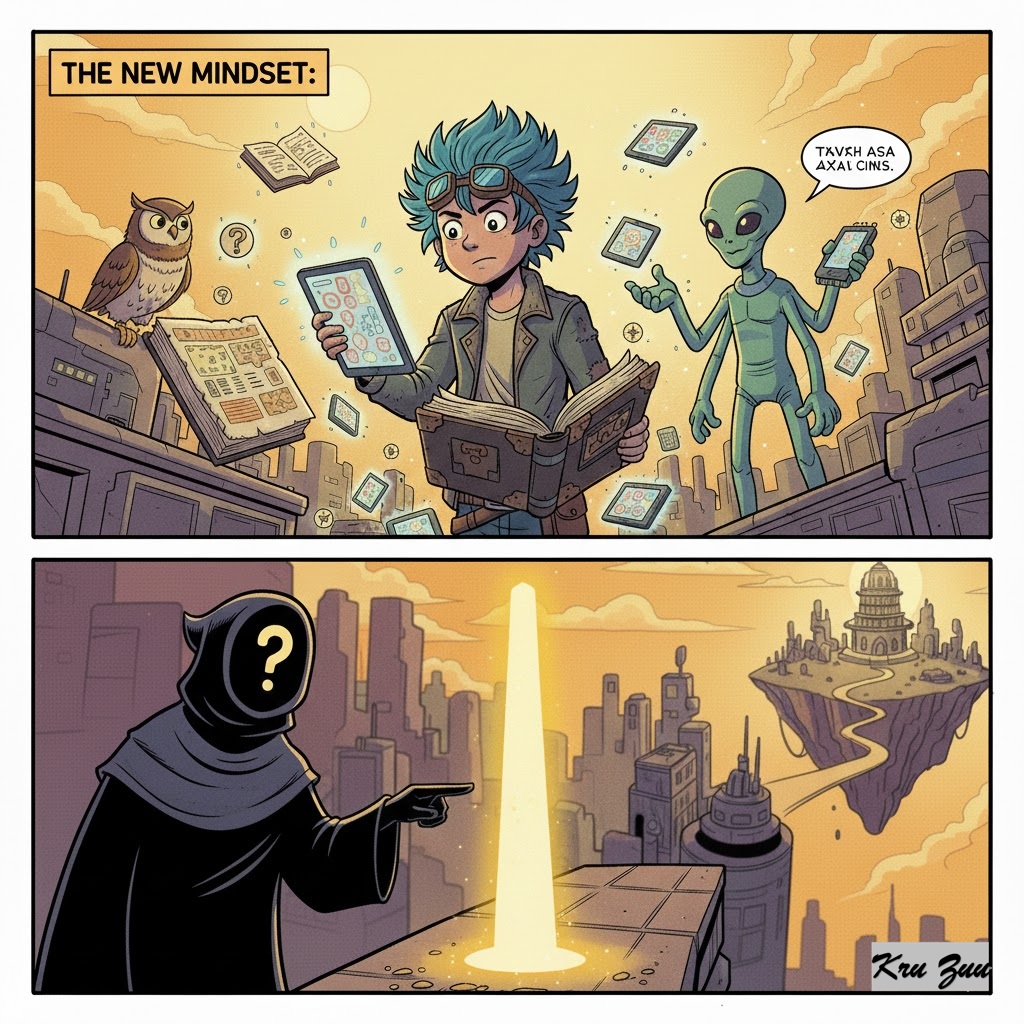
    You Say: “My English isn’t perfect, so I will use whatever tools I have. I cannot afford to be picky if I want to be fluent.”


    💬 Your Turn: The Reality Check 🚀


    Have you ever given someone a gift, and they complained about it? Or have you ever had to accept something you didn’t like because you had no choice?


    Tell us your story in the comments! 👇


    What was the item?


    Did you accept it or reject it?


    (Remember: Even a crooked cucumber feeds a hungry stomach!)

    By Zubeyir YURTKURAN

    https://www.facebook.com/BrainBattleground/

    https://www.facebook.com/zubeyr.yurtkuran/

    https://www.instagram.com/zubeyryurtkuran/
    https://www.youtube.com/@BrainBattleground-b3p

    https://www.instagram.com/brainbattleground/

  • 🏡 The Daily Shield: The Anchor of Comfort

    🏡 The Daily Shield: The Anchor of Comfort

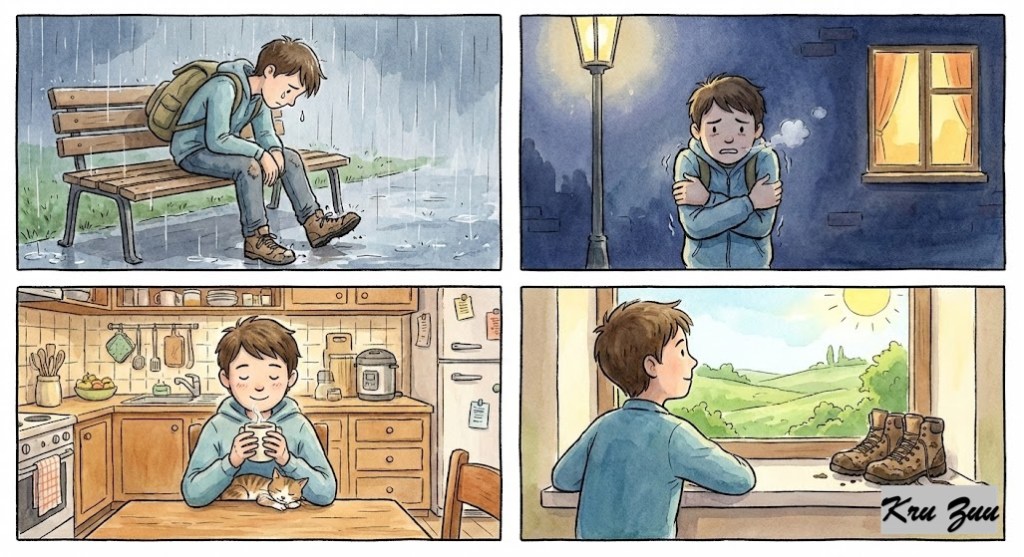
    “There’s no place like home.”


    😈 The Villain (The Eternal Tourist)


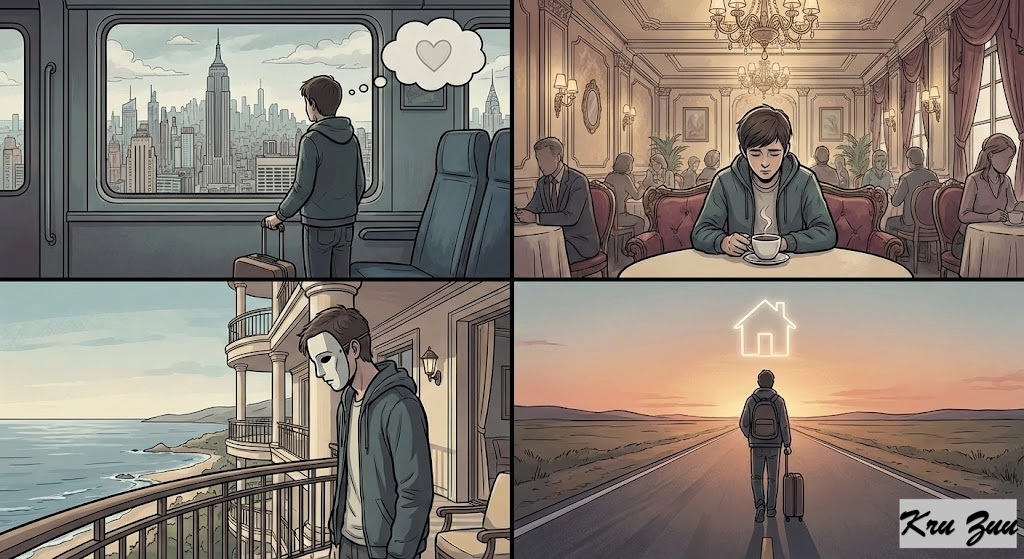
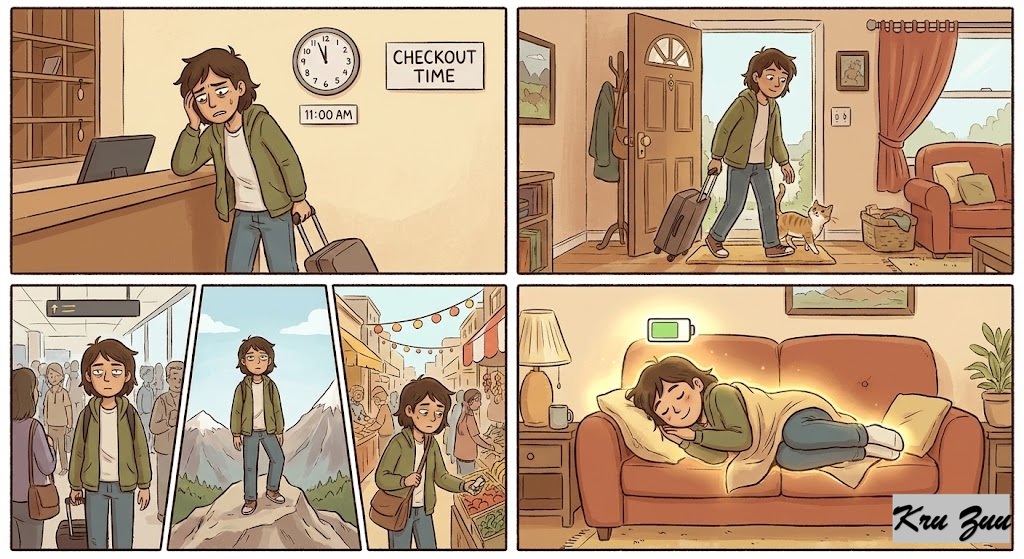
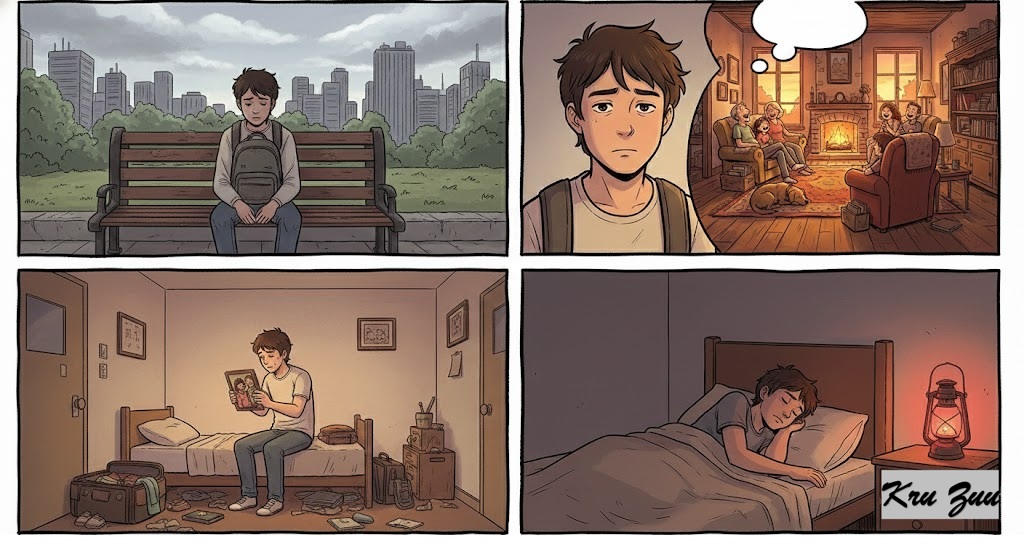
    You are always looking for happiness somewhere else. You say, “If I move to that city, I will be happy.” or “If I go to this fancy cafe, I will feel better.” You travel, you wander, you stay in expensive hotels. But everywhere you go, you feel restless. You are wearing a mask all day to impress strangers. You are exhausted because you have nowhere to truly recharge. You are a homeless soul in a world of houses. 🧳


    😇 The Hero (The Nester)


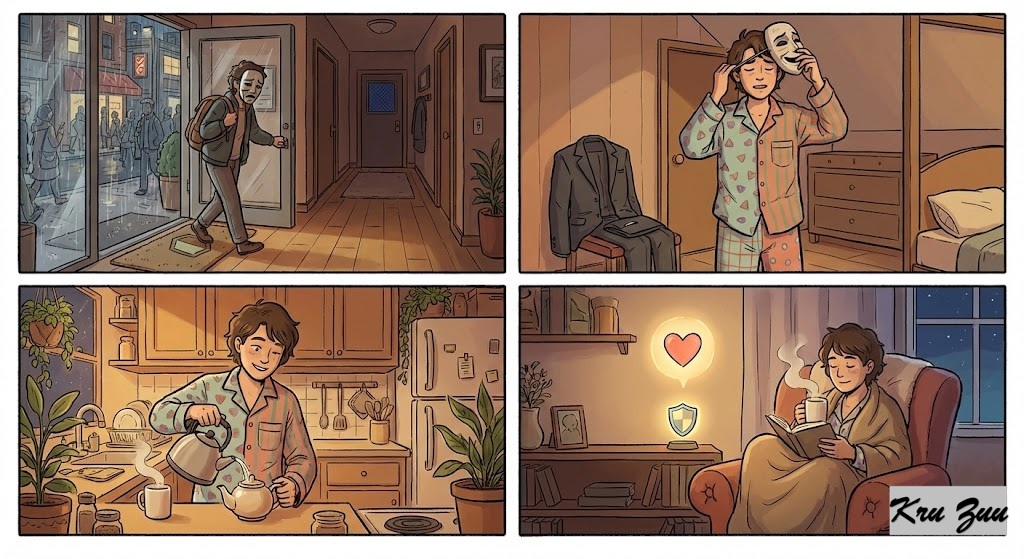
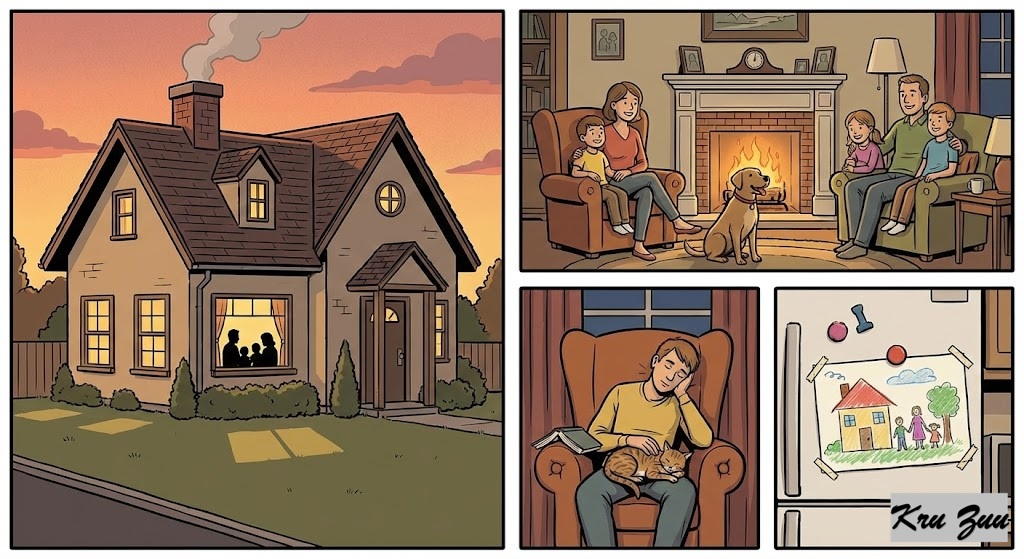
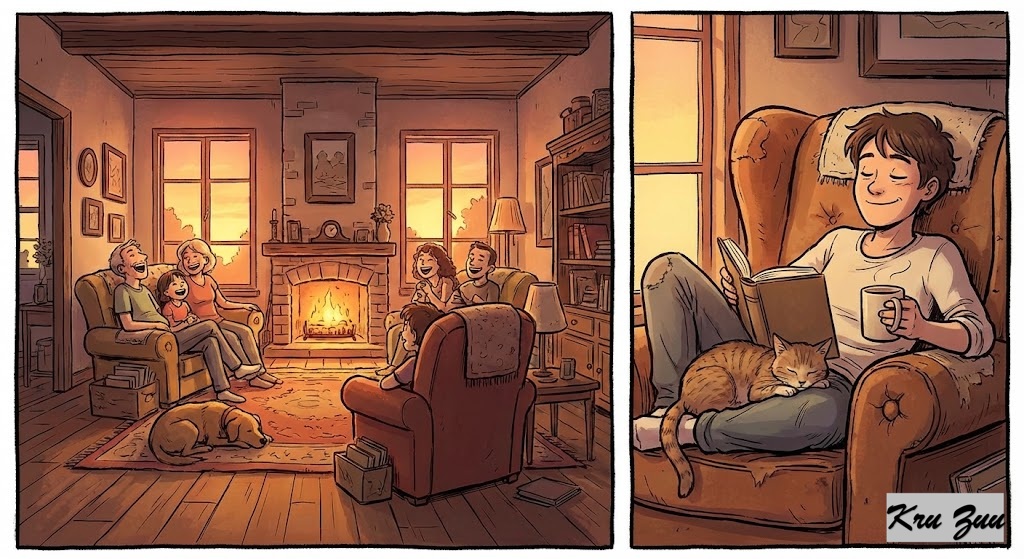
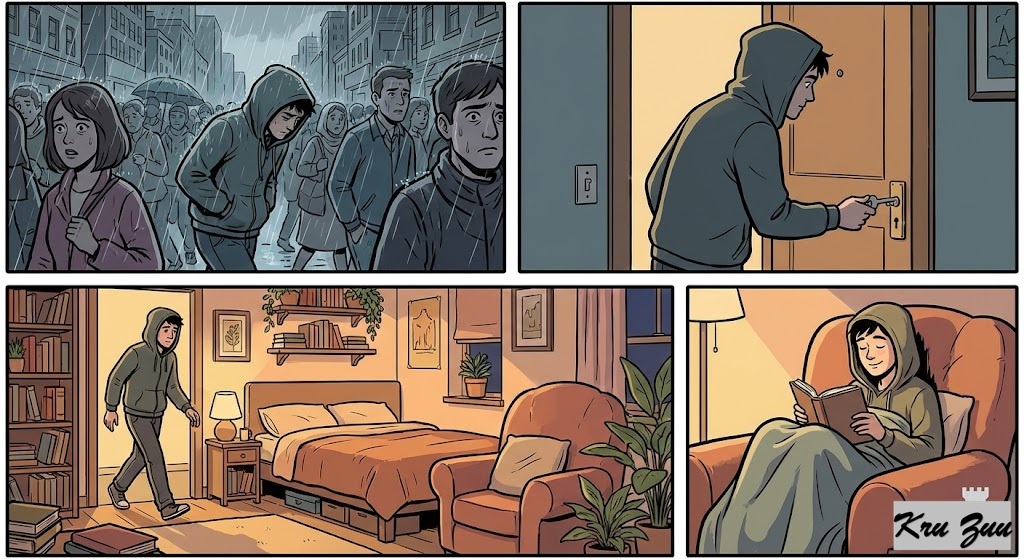
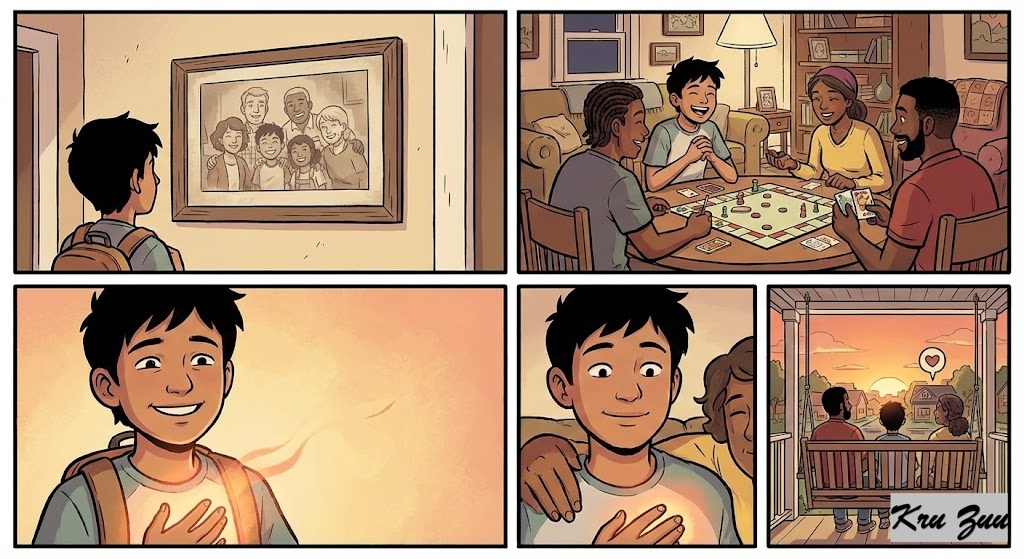
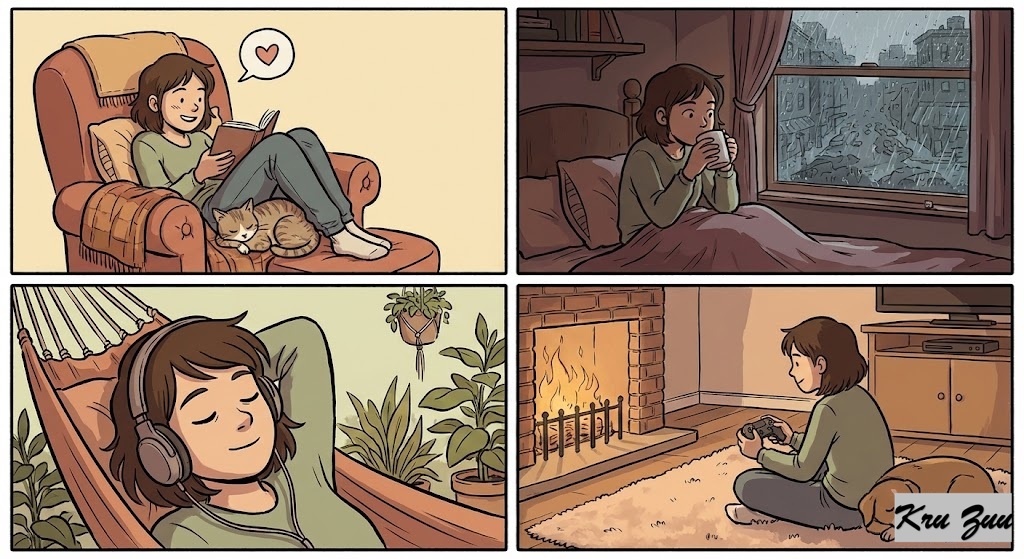
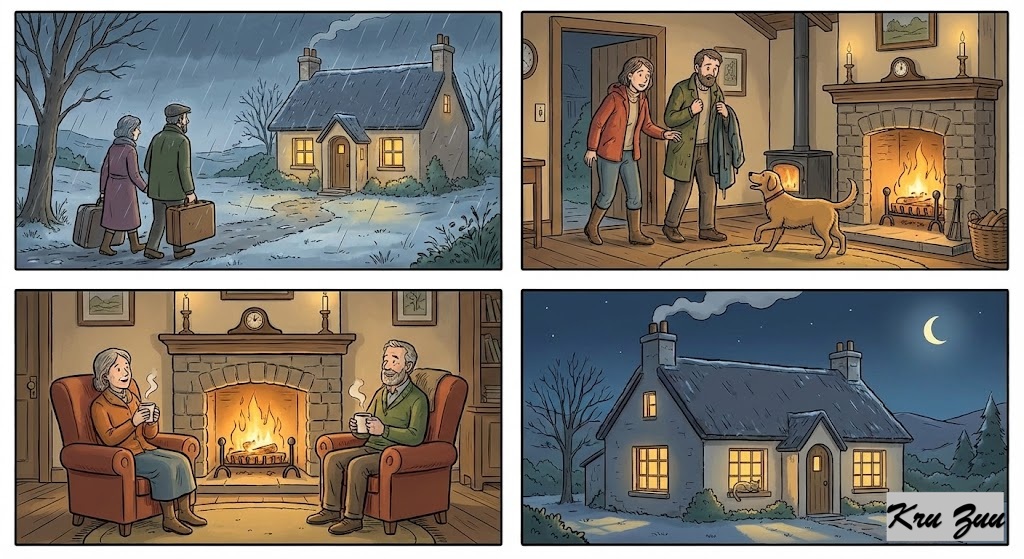
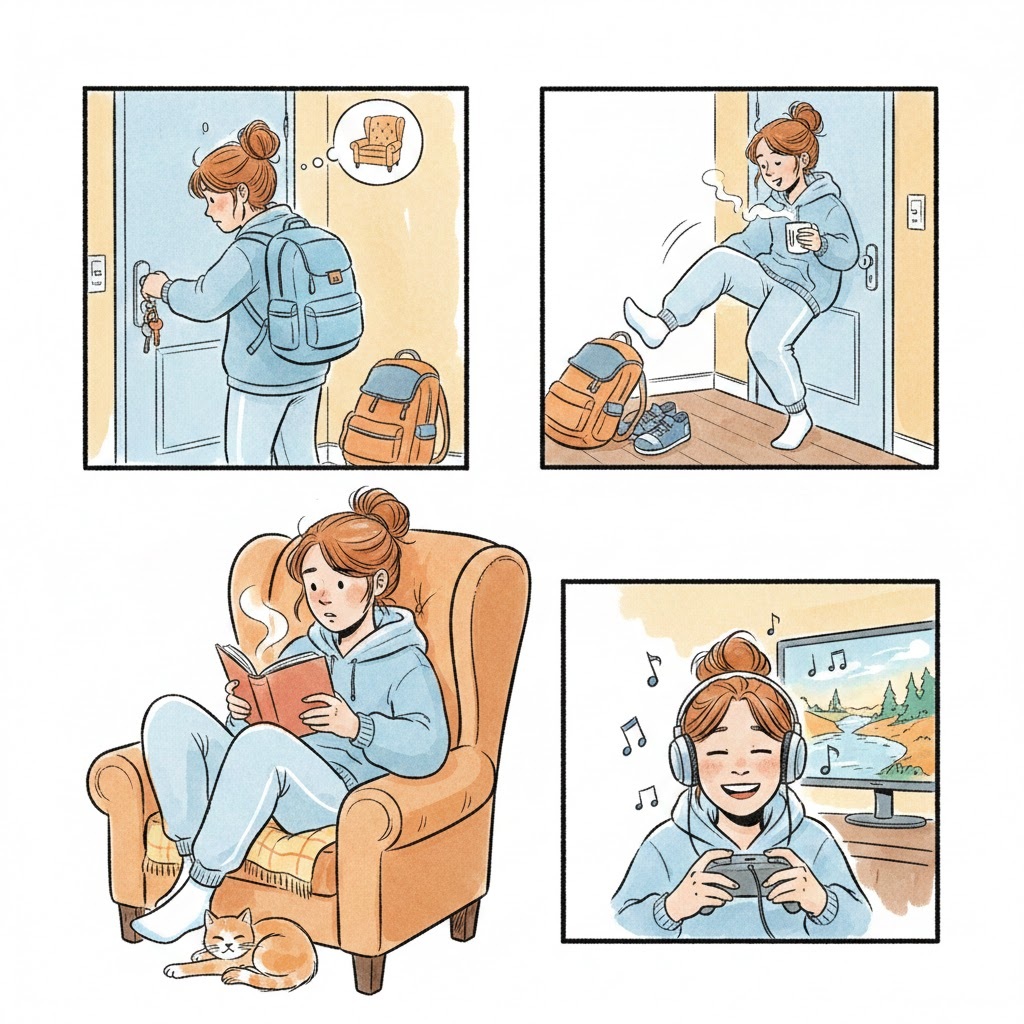
    You understand that the world is chaotic, but your space is your sanctuary. You step through your front door and take a deep breath. You take off the “outside world” mask. You wear your ugly, comfortable pajamas. You make tea exactly how you like it. You recharge your batteries in safety so that when you go out tomorrow, you are strong again. You know that peace isn’t a destination; it’s right where your heart is. 🛡️


    ⚖️ The Reality


    Hotels have checkout times. Home does not. We spend our lives chasing excitement, travel, and new places. But “Home” is the only place in the universe where you don’t have to explain yourself to anyone. It is the charging station for the human soul.


    💎 The Secret

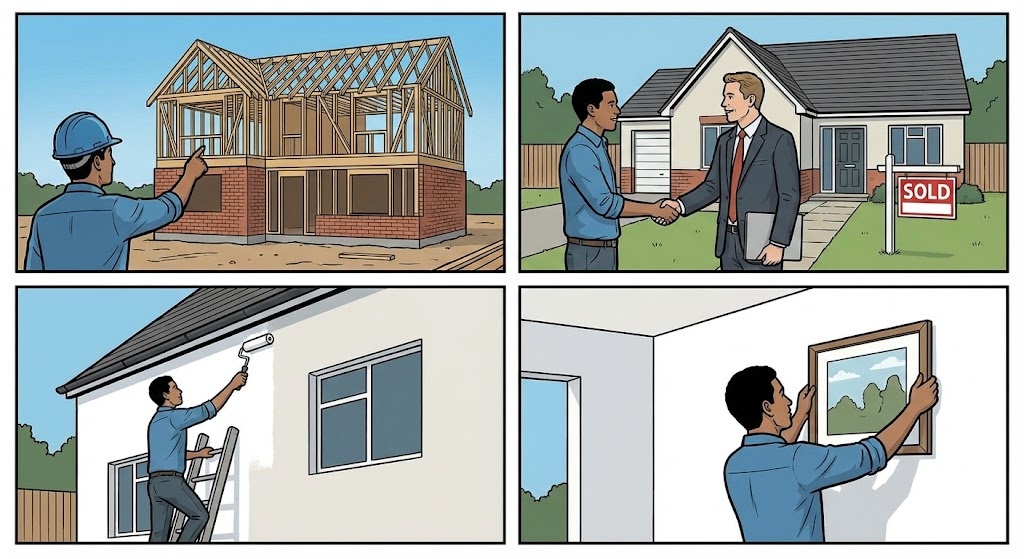
    A house is made of bricks and beams. A home is made of hopes and dreams. You can buy a house, but you must build a home.

    🧐 The Anatomy of the Proverb


    This is the ultimate idiom for belonging and comfort.


    Place (Noun): A particular position or point in space.


    Like (Preposition): Similar to; comparable to.


    Home (Noun): The place where one lives permanently, especially as a member of a family or household.


    Simpler Version: My home is the best place in the world.


    📚 Vocabulary Vault


    Sanctuary (Noun):
    A place of refuge or safety. (Your bedroom is your sanctuary). 🏰


    Homesick (Adjective): Feeling sad because you are away from your home.


    Domestic (Adjective): Relating to the running of a home or to family relations.


    Belonging (Noun): An affinity for a place or situation.


    Comfort Zone (Noun): A place or situation where one feels safe or at ease. 🛋️


    🧠 Grammar Focus: “House” vs. “Home”


    English learners often confuse these two.


    House (The Building)
    Refers to the physical structure.
    Example: “I bought a new house.” (You bought the walls and the roof).
    Example: “My house is painted white.”


    Home (The Feeling/Location)
    Refers to the place where you live and feel an emotional connection. It can be a house, an apartment, or even a tent!
    Example: “I am going home.” (NOT: “I am going to home”).
    Example: “Make yourself at home.” (Relax).

    📜 History: The Ruby Slippers


    This phrase became legendary because of a movie.


    The Origin: The song “Home! Sweet Home!” (1823) made the sentiment popular, but…


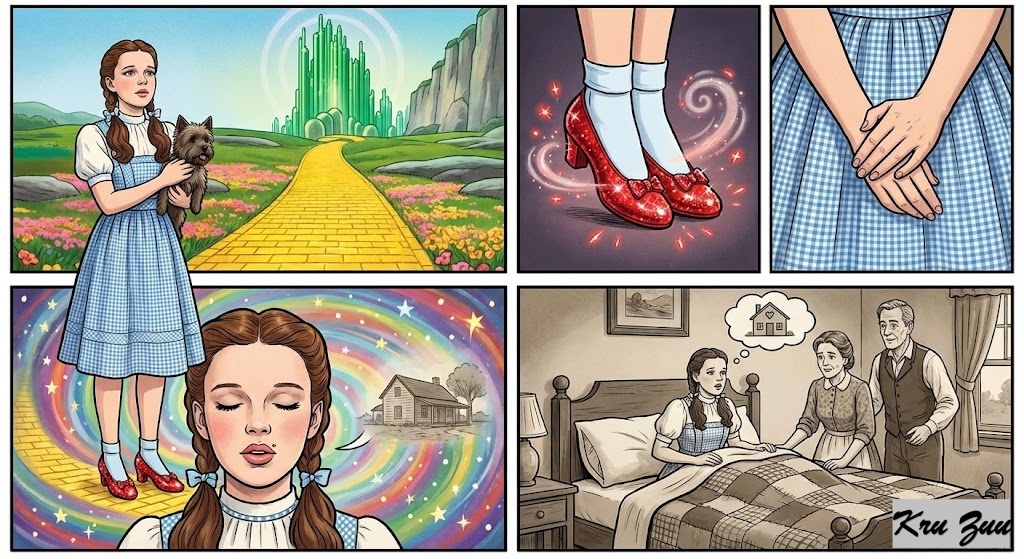
    The Explosion: The movie The Wizard of Oz (1939) made it iconic. The main character, Dorothy, is trapped in a magical land. To return to Kansas, she must click the heels of her ruby slippers three times and repeat: “There’s no place like home.”


    Global Cousins


    🇹🇷 Turkish:
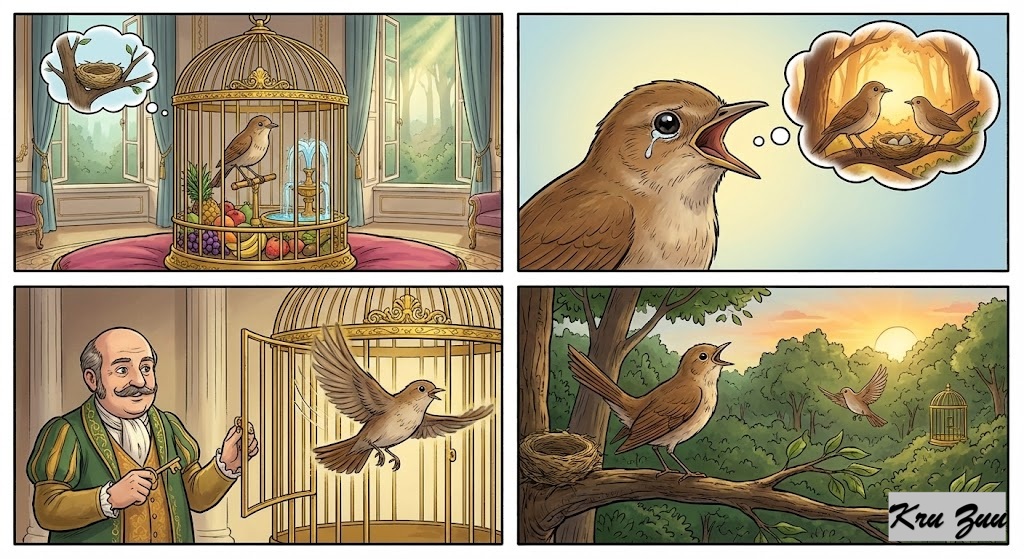
    “Bülbülü altın kafese koymuşlar, ‘ah vatanım’ demiş.” (They put the nightingale in a golden cage, it cried ‘oh my homeland’.) OR “Evim güzel evim.”


    🇪🇸 Spanish: “Hogar, dulce hogar.”

    🎭 Short Story: The Three Travelers


    Let’s meet three friends who thought the grass was greener on the other side.


    The Characters


    🐱 Cleo the Cat:
    Fancy, proud, and easily bored.


    🐔 Cluck the Chicken: Nervous but curious.


    🐸 Croak the Frog: Adventurous and loud.


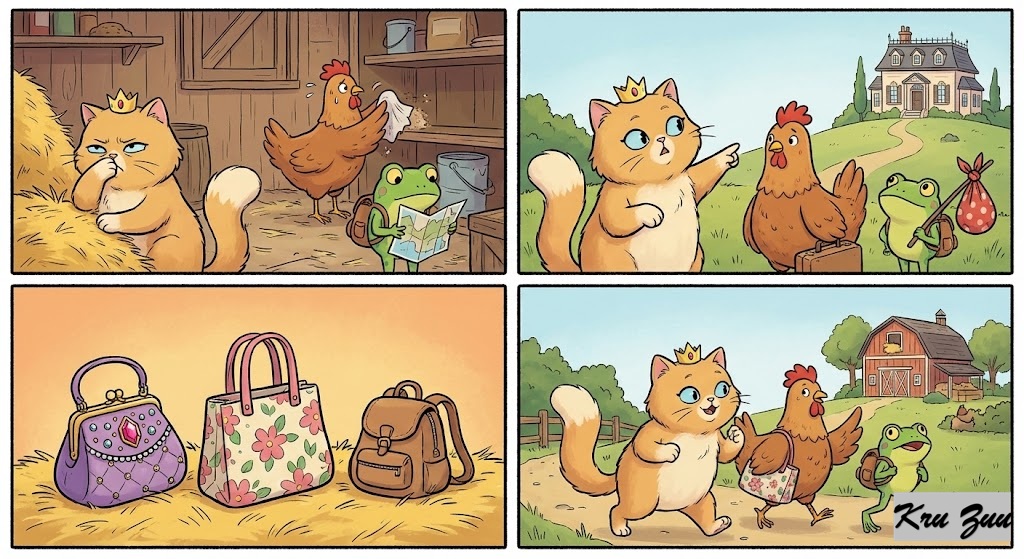
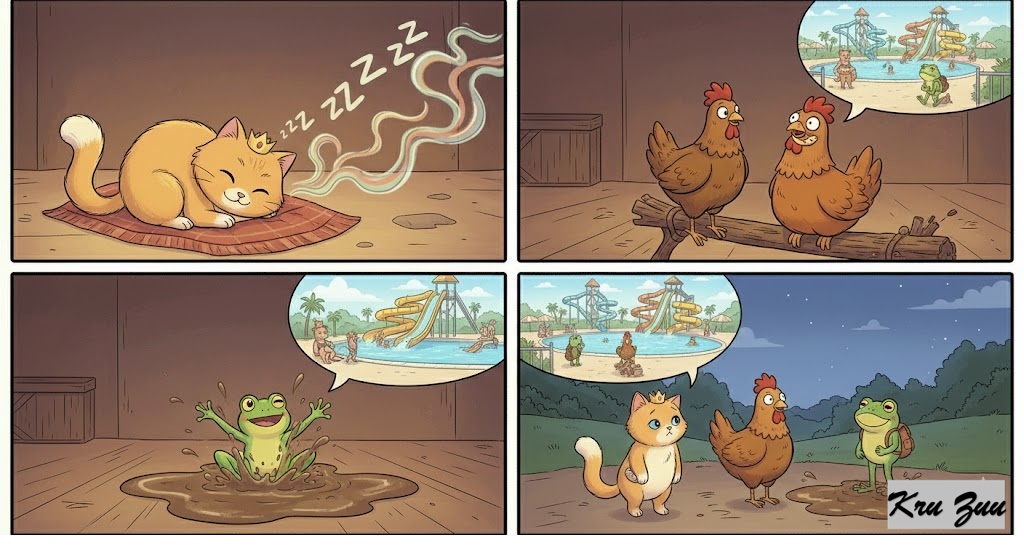
    The Setup: They lived on a cozy, messy farm. One day, Cleo said, “This barn smells like hay. I deserve luxury! Let’s find a better place.” Cluck and Croak agreed. They packed their bags.


    The Journey


    The 5-Star Hotel:
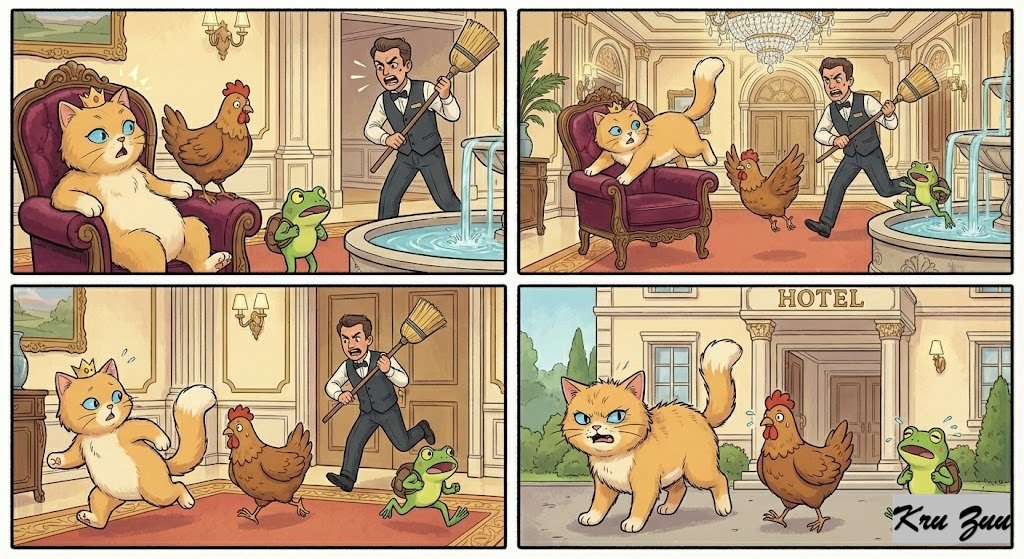
    They sneaked into a luxury hotel lobby.


    Cleo loved the velvet chairs but panicked when the staff shouted, “No pets allowed!” and chased them with a broom. “Too stressful!” she hissed.


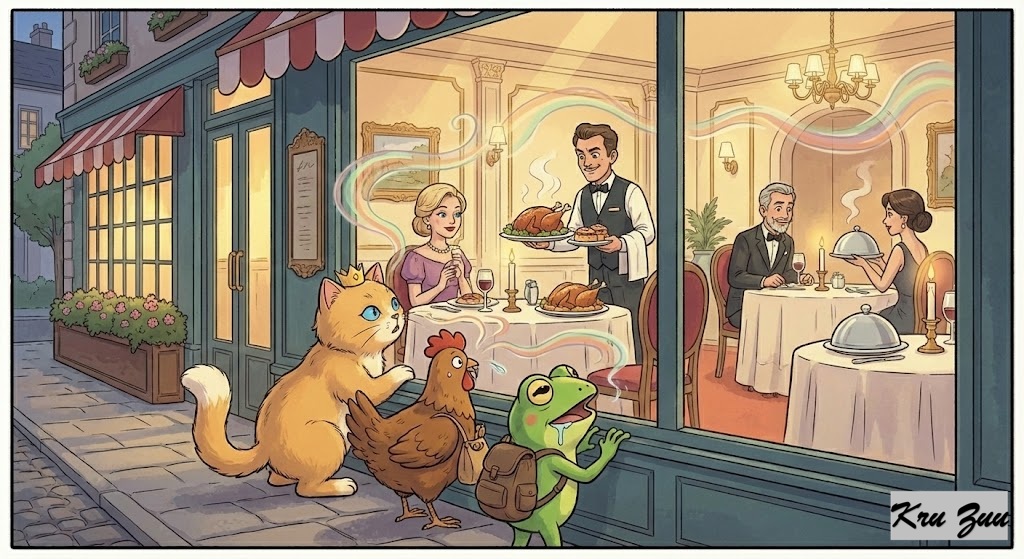
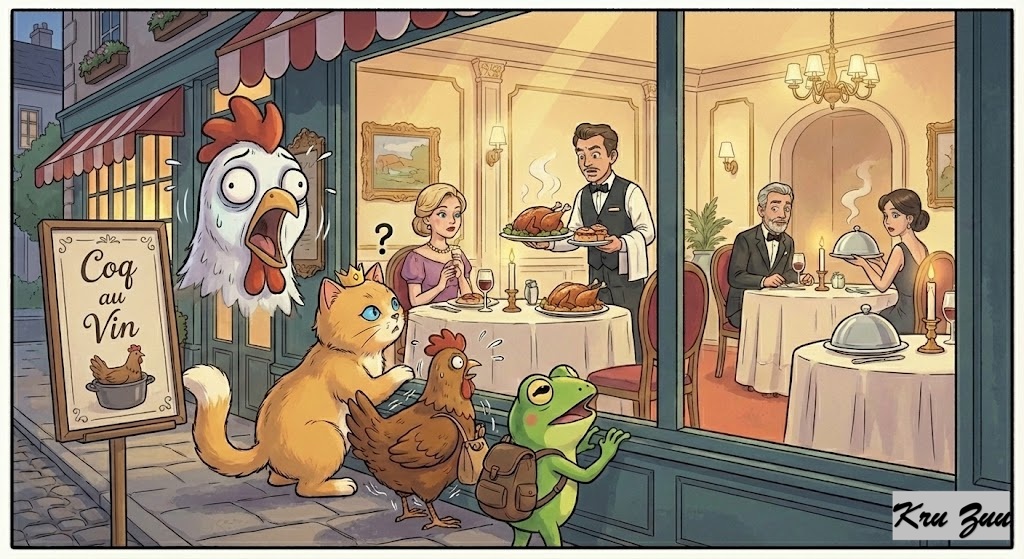
    The French Restaurant: They looked through the window. It smelled amazing.


    Cluck looked at the menu and saw Coq au Vin (Chicken with Wine). She turned pale. “I am not a guest here; I am dinner!” she screamed.


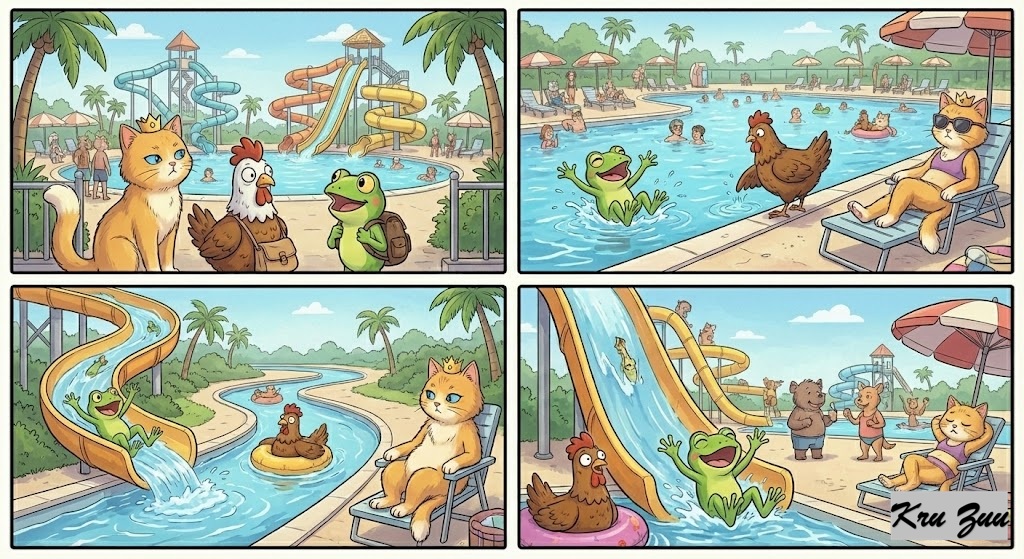
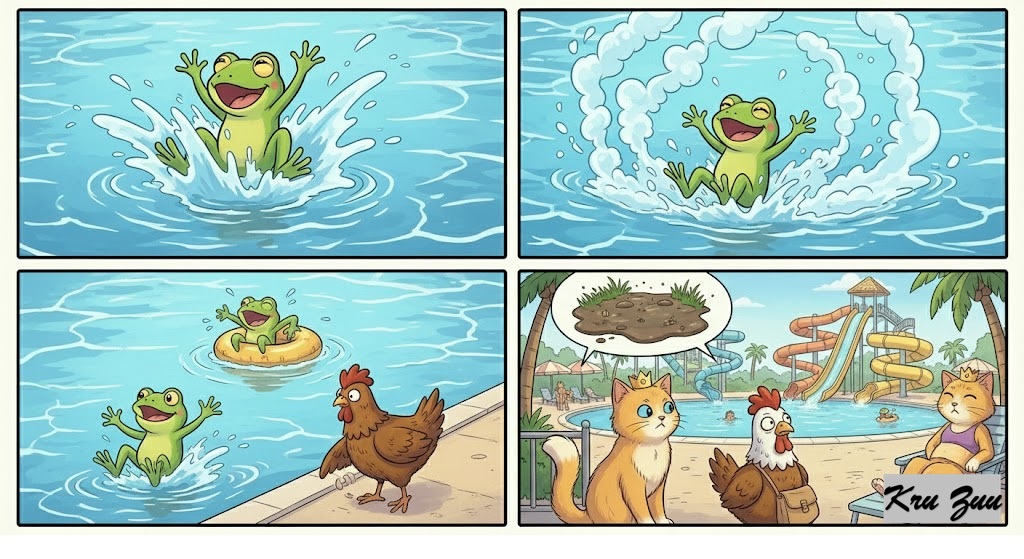
    The Water Park: They found a giant pool with slides.


    Croak jumped in happily. But the water was full of chlorine chemicals, not tasty flies and mud. “It burns my skin! It’s too clean!” he croaked.


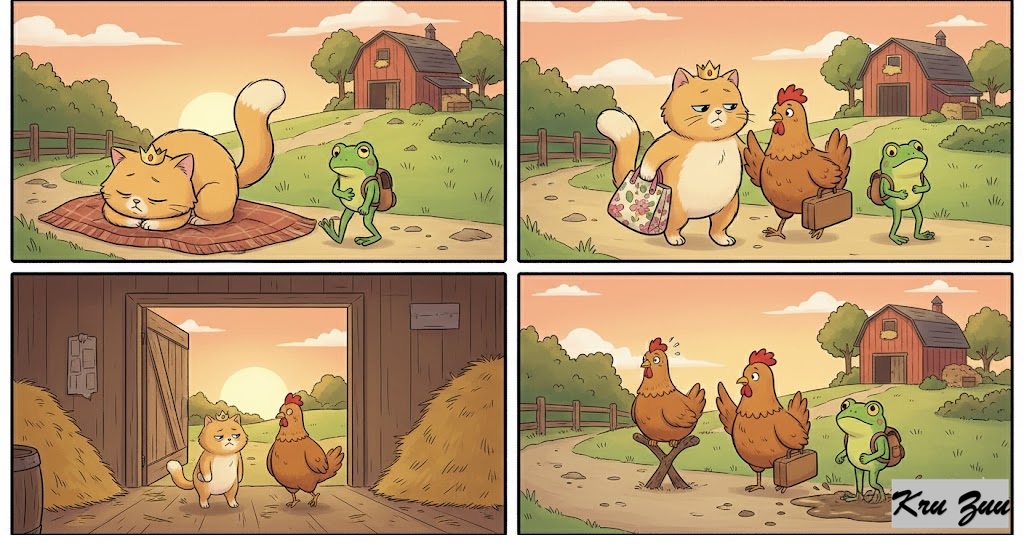
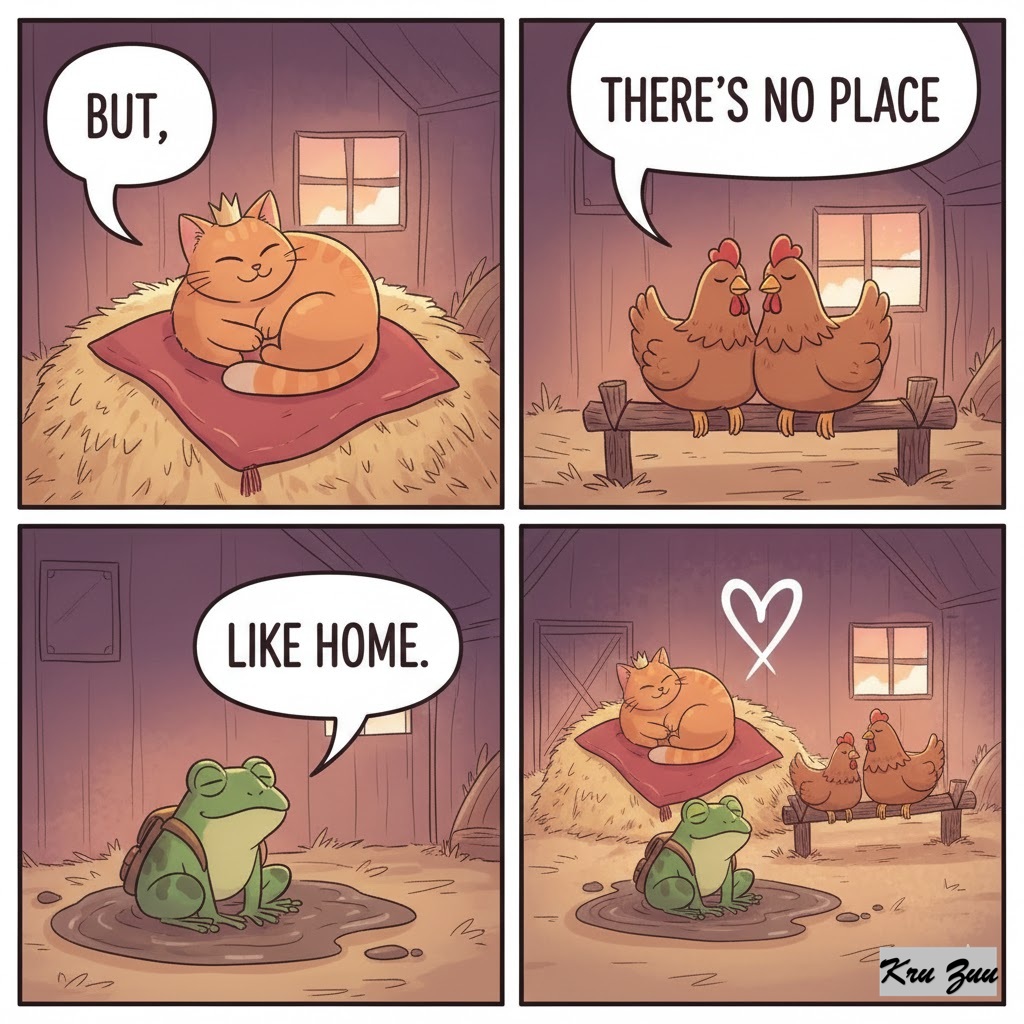
    The Return: Defeated, hungry, and tired, they walked back to the farm at sunset. They crawled into the old, smelly barn. Cleo curled up on a scratchy wool blanket. Cluck sat on her wooden roost. Croak jumped into his muddy puddle.


    Cleo purred louder than a tractor. “The hotel was rich,” Cleo said. “The restaurant was famous,” Cluck added. “The pool was big,” Croak noted.


    “But,” they said in unison, closing their eyes, “There’s no place like home.” 🏚️❤️

    🎓 Lesson for English Learners


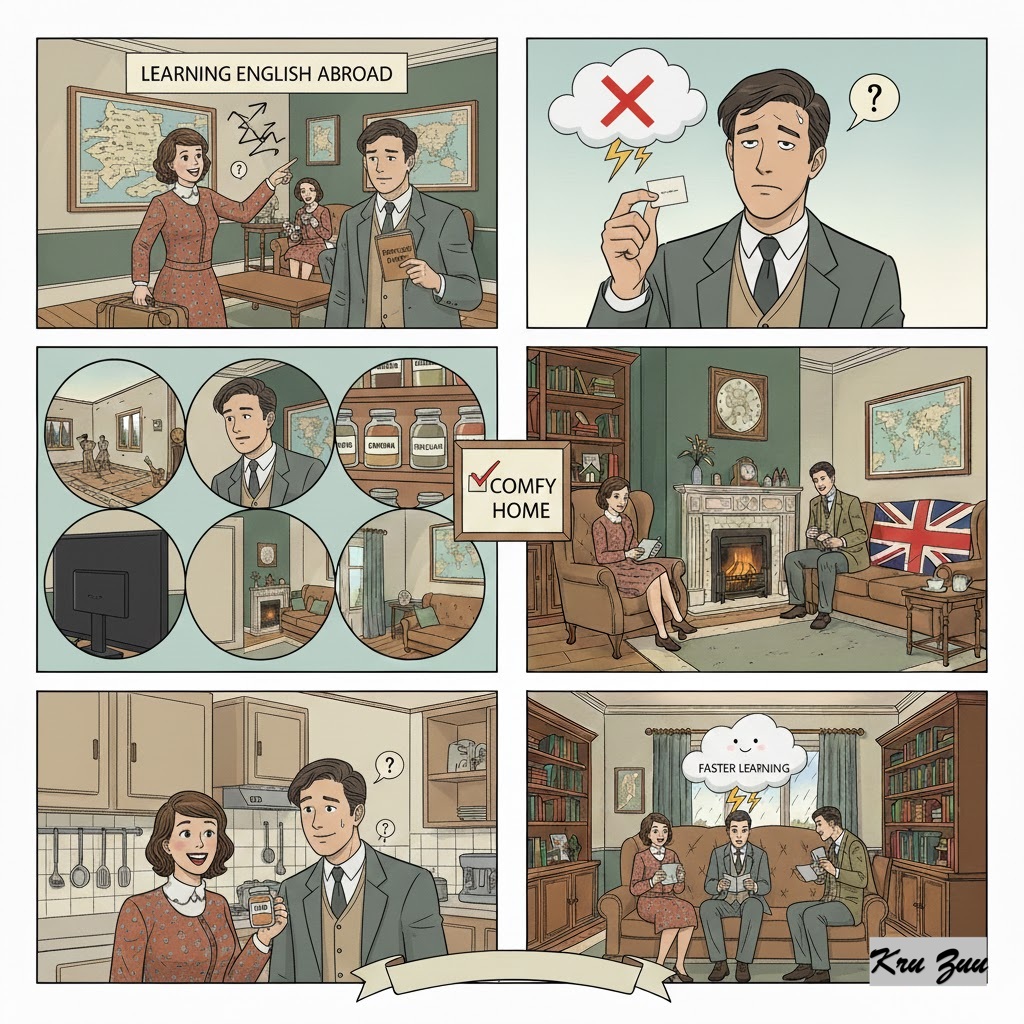
    Build Your “English Home.”


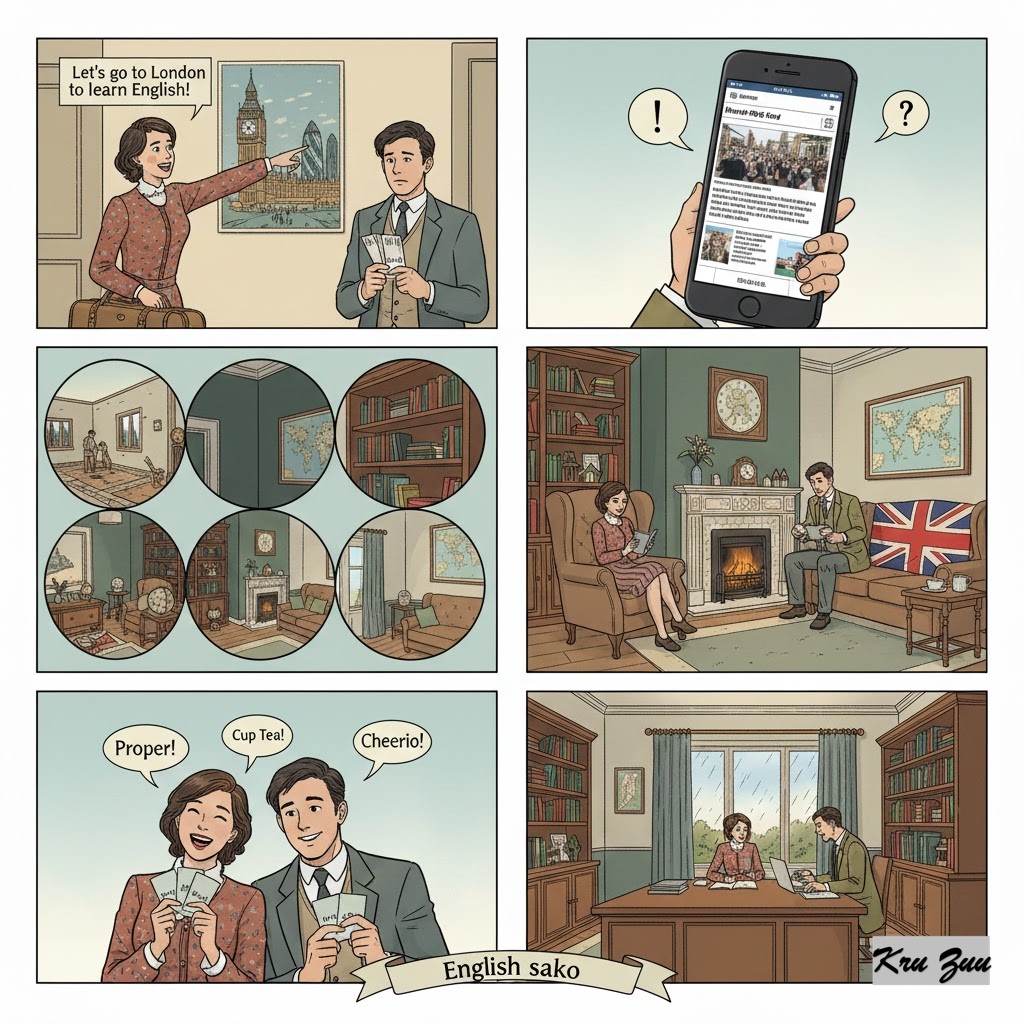
    Don’t wait to go to London or New York to learn English. That is the “Tourist” mindset. Build an English environment in your own home.


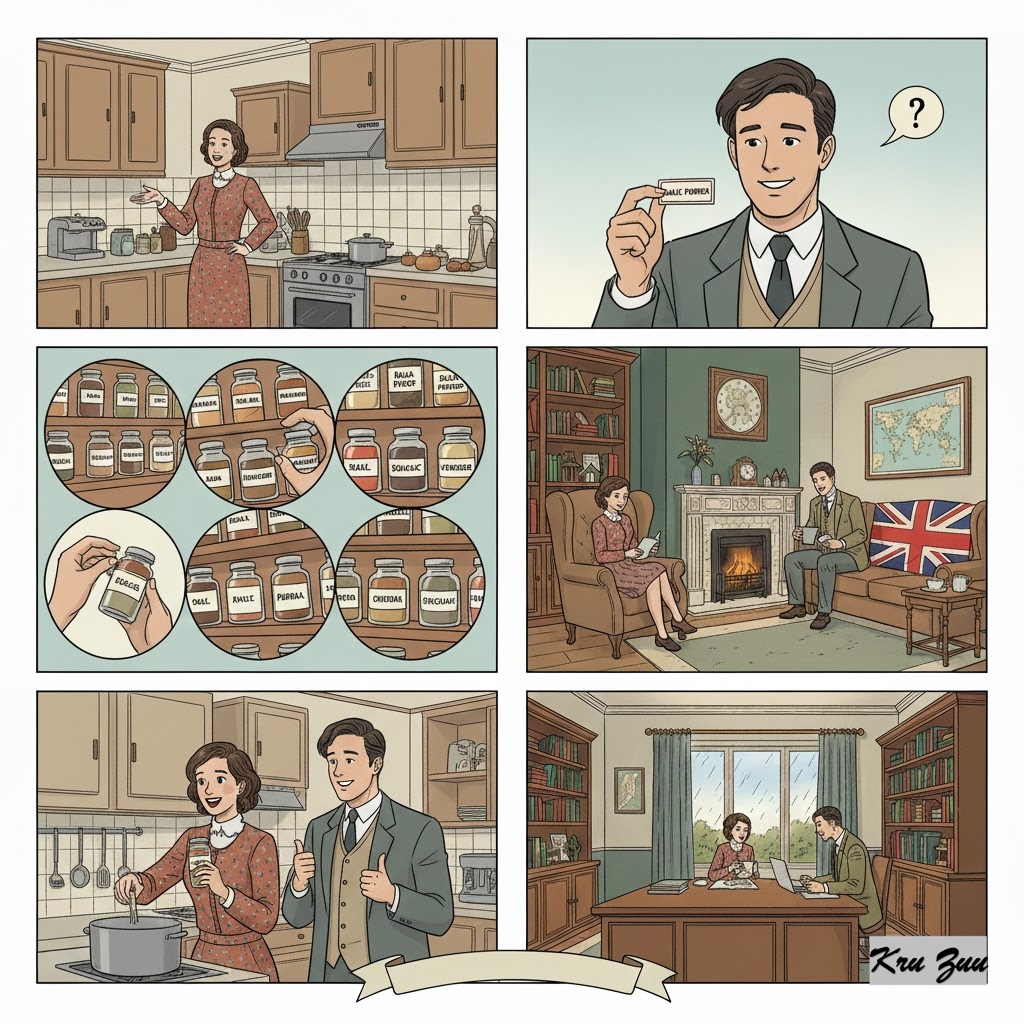
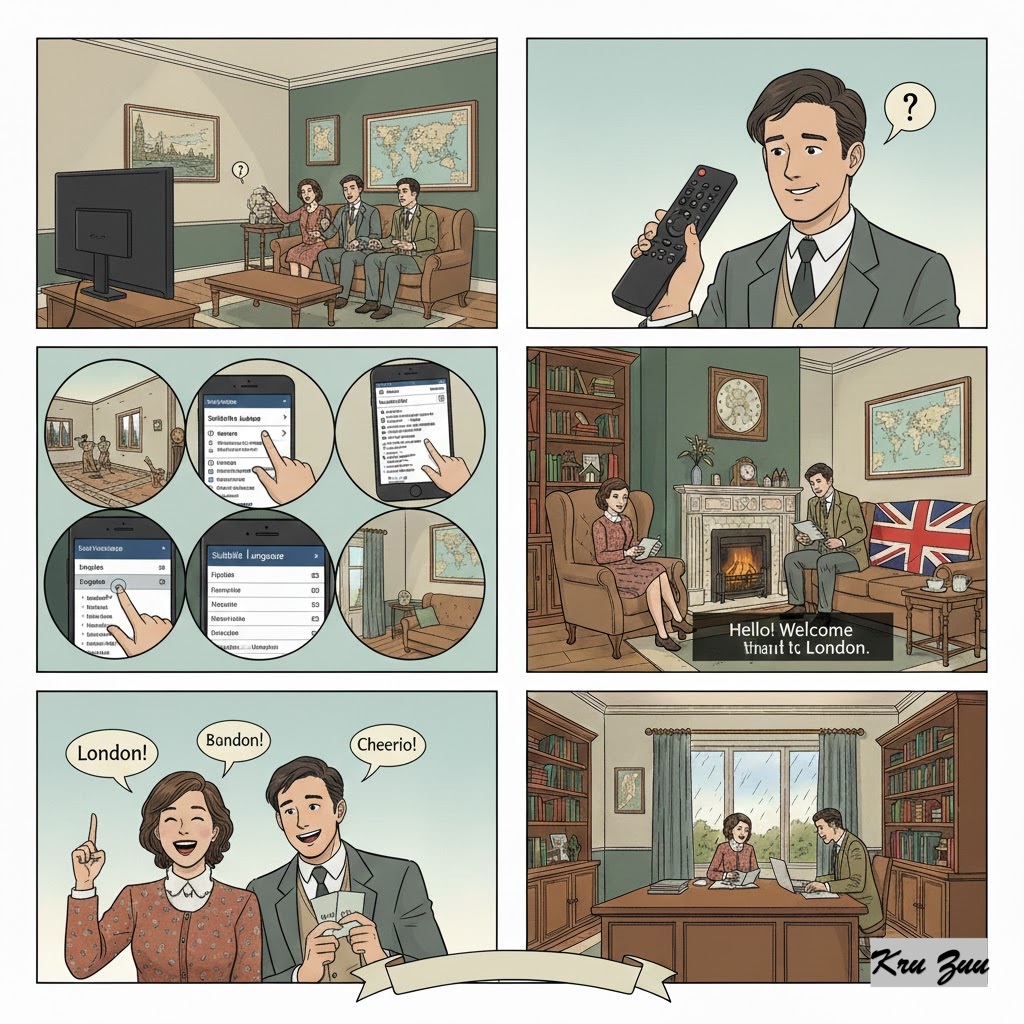
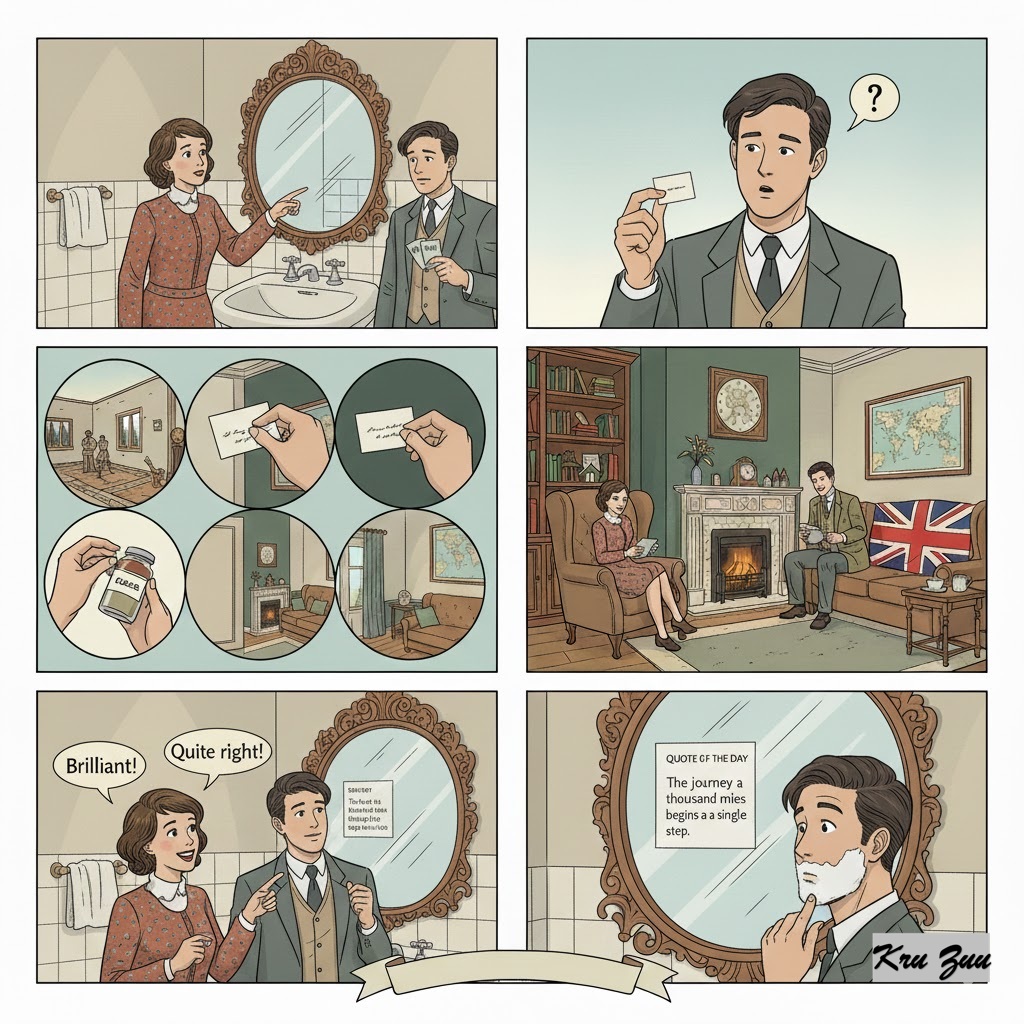
    The Kitchen:
    Label your spices in English.


    The Living Room: Change your Netflix subtitles to English.


    The Mirror: Stick a “Quote of the Day” on your bathroom mirror.


    If you make English a part of your comfortable home life, you will learn faster than if you treat it like a stressful trip.


    💬 Your Turn


    We all have that one thing we love to do the moment we get home.


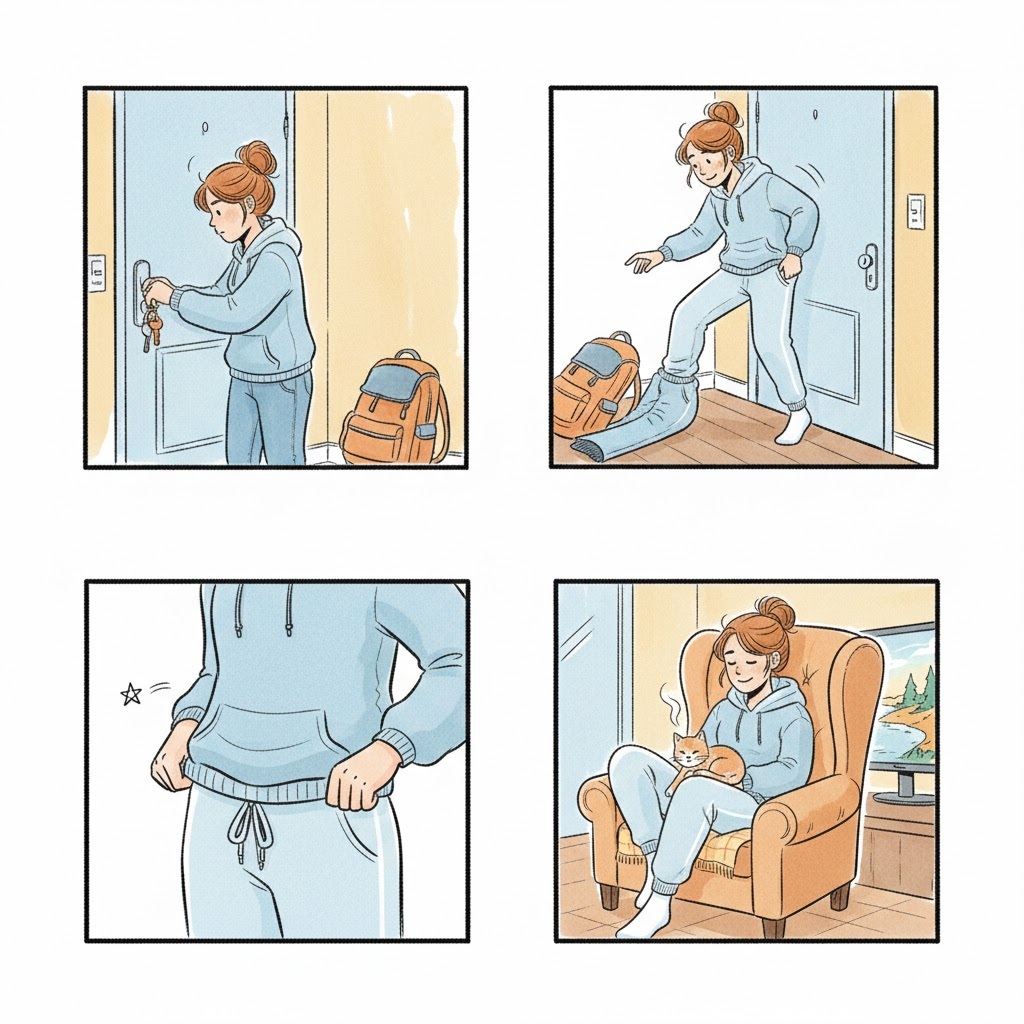
    Do you immediately put on sweatpants?


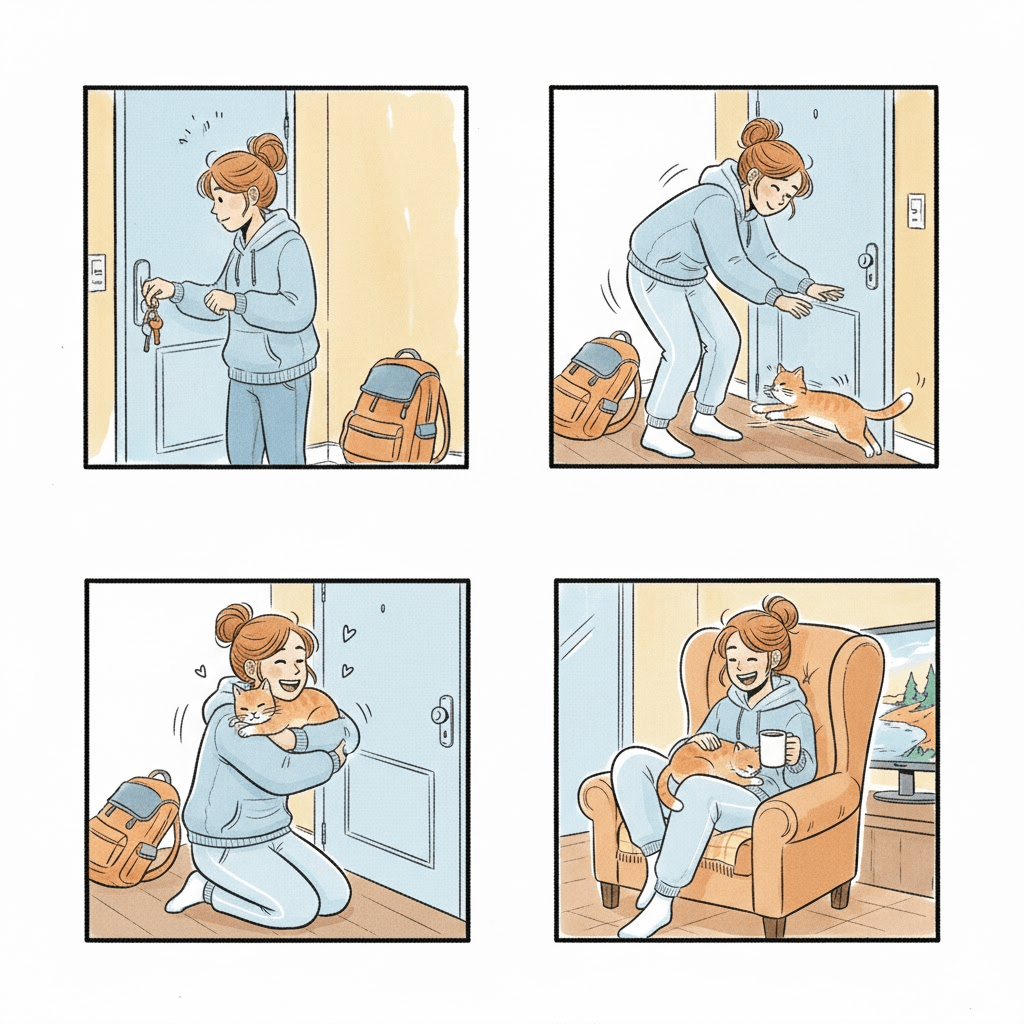
    Do you hug your pet?


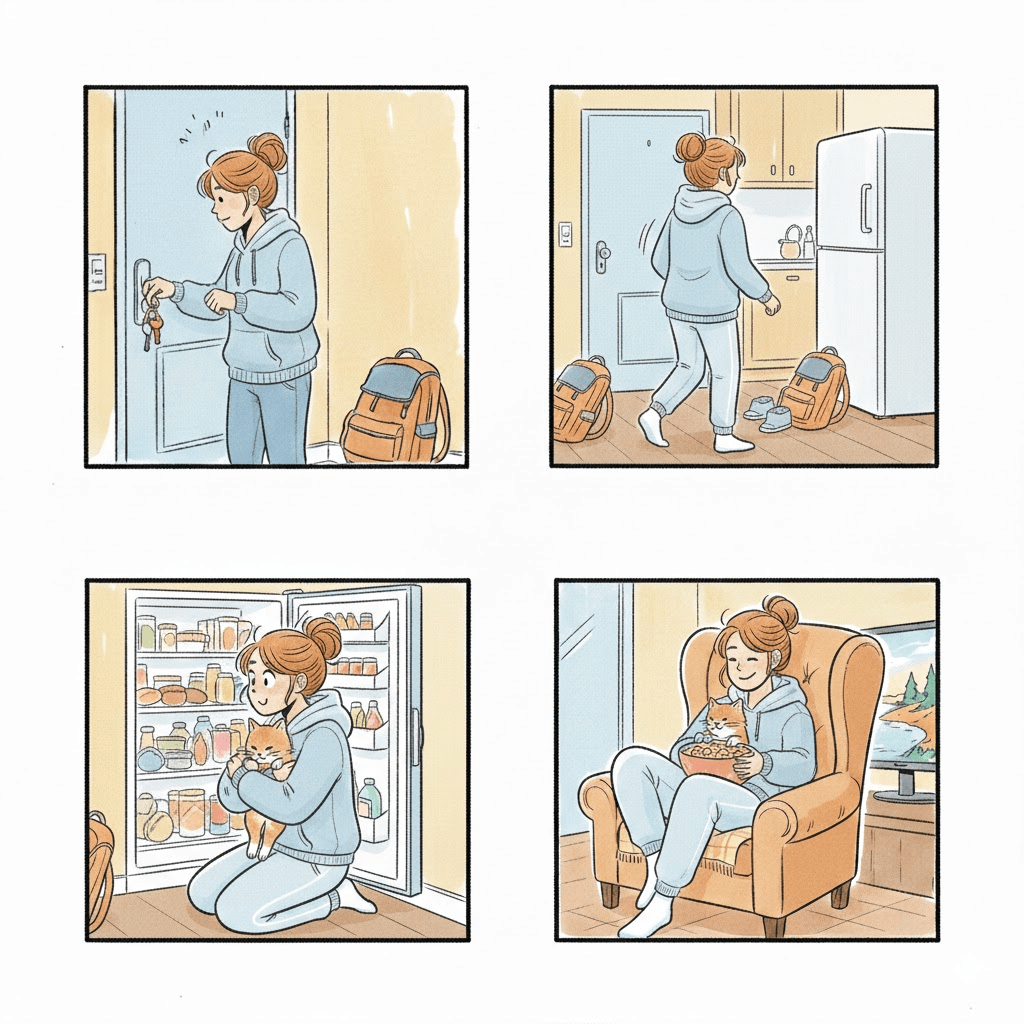
    Do you open the fridge?


    Tell us in the comments:
    What is the first thing you do when you walk through your door? 👇

    By Zubeyir YURTKURAN

    https://www.facebook.com/BrainBattleground/

    https://www.facebook.com/zubeyr.yurtkuran/

    https://www.instagram.com/zubeyryurtkuran/
    https://www.youtube.com/@BrainBattleground-b3p

    https://www.instagram.com/brainbattleground/

  • 📸 The Visual Vault: The Law of Perception

    📸 The Visual Vault: The Law of Perception

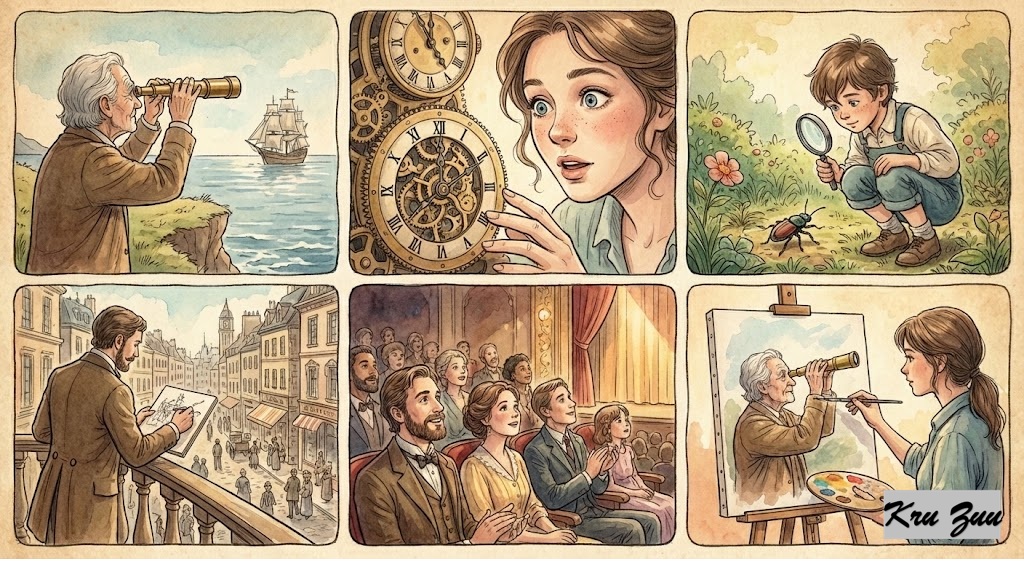
    “A picture is worth a thousand words.”


    😈 The Villain (The Rambler)


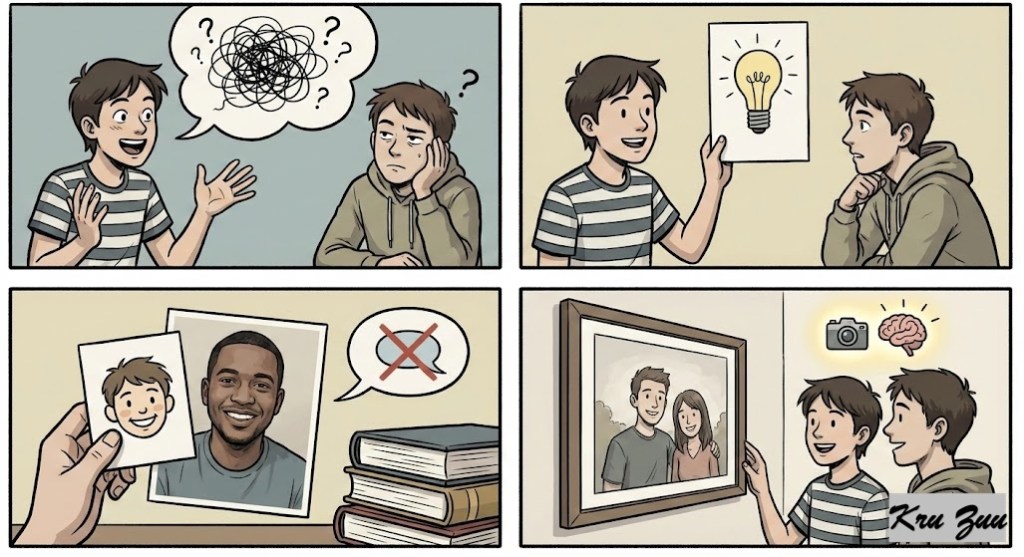
    You try to describe a spiral staircase to someone over the phone without using your hands. You talk for 10 minutes. You use complex adjectives. You get frustrated. The listener is confused. You write a 3-page email explaining a simple problem on your computer screen instead of sending one screenshot. You waste energy, time, and breath. You are drowning in a sea of words. 🌊


    😇 The Hero (The Illustrator)


    You see a problem. You don’t argue; you open your gallery. You show a chart, a photo, or a quick sketch. The room goes silent. Everyone nods. In 5 seconds, you achieved what “The Rambler” couldn’t achieve in 5 hours. You understand that the brain processes images 60,000 times faster than text. You are the master of efficiency. 🎨


    ⚖️ The Reality


    Words are abstract. Images are concrete. We live in a visual world. Instagram, TikTok, and YouTube dominate because our brains are lazy, they want the information now. Words are the map; the picture is the territory.


    💎 The Secret


    Stop trying to “tell” everyone everything. Start “showing” them. If you have to explain a joke, it’s not funny. If you have to explain a visual concept with 1,000 words, you’ve already lost the audience.

    🧐 The Anatomy of the Proverb


    Let’s break down this masterpiece of communication.


    Worth (Adjective): Equivalent in value to the sum or item specified. 💰


    Thousand (Number): Used here metaphorically to mean “a very large number.”


    Simpler Version: Show, don’t just tell.


    📚 Vocabulary Vault


    Depict (Verb):
    To show or represent by a drawing, painting, or other art form.


    Convey (Verb): To transport or carry an idea to someone else (make an idea known). 📦


    Visual Aid (Noun): An item of illustrative matter, such as a film, slide, or model, designed to supplement written or spoken information.


    Perspective (Noun): A particular attitude toward or way of regarding something; a point of view.


    Illustrate (Verb): To explain or make (something) clear by using examples, charts, or pictures. 🖌️


    🧠 Grammar Focus: “Worth” + Noun/Gerund


    The word “Worth” is unique. It is followed by a noun or a verb ending in -ing (Gerund).


    Structure: Subject + Be + Worth + [Noun / V-ing]


    Example 1: This movie is worth watching. (Not “worth to watch”)


    Example 2: It is not worth the trouble.


    Example 3: A picture is worth a thousand words.

    📜 History: Origin and Spread


    Where did this come from?


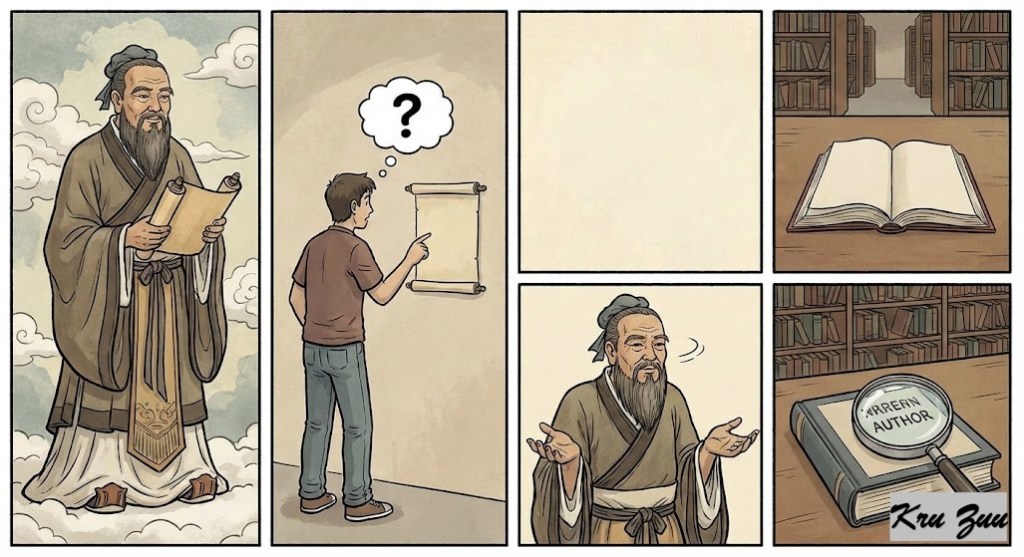
    The Myth: People often think this is an ancient Chinese proverb from Confucius. It is not!


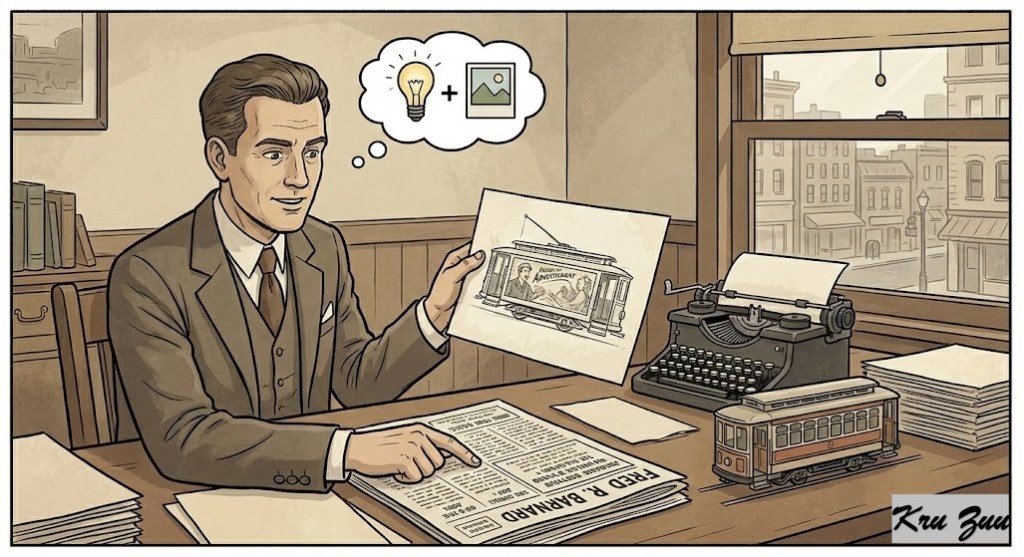
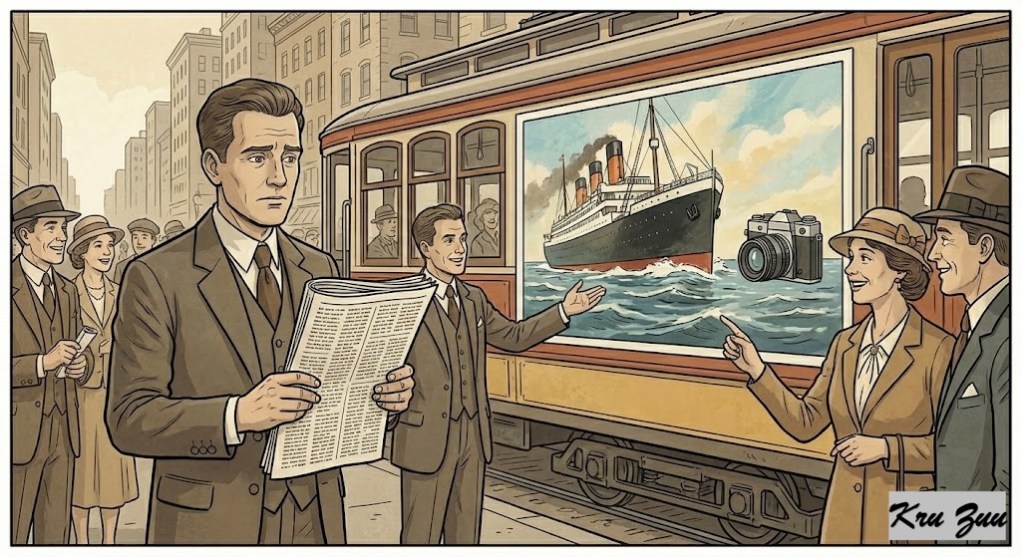
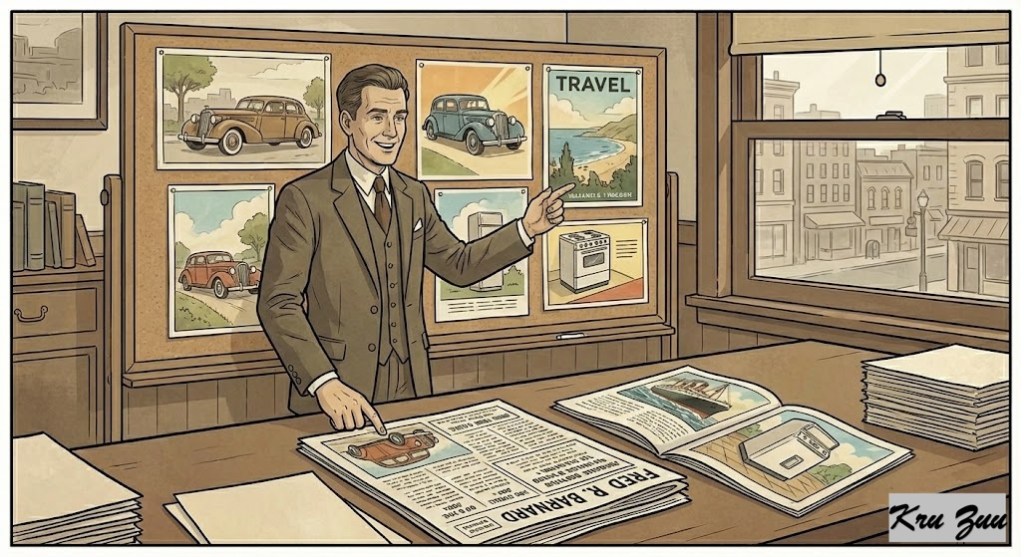
    The Truth: It was actually popularized by an advertising executive named Fred R. Barnard in the 1920s to sell ads on the sides of streetcars. He wanted to prove that images sold products better than text.


    Global Cousins


    🇹🇷 Turkish:
    “Bir resim bin kelimeye bedeldir.” (Exact match!)


    🇫🇷 French: “Une image vaut mille mots.”


    🇯🇵 Japanese: “Hyakubun wa ikken ni shikazu” (Hearing a hundred times is not as good as seeing once).

    🎭 Short Story: The Monster in the Woods


    Let’s visit our animal friends to see this law in action.


    The Characters


    🐔 Clucky (The Chicken):
    Talks fast, panics easily, uses too many words.


    🐸 Croak (The Frog): Logical, philosophical, but lacks imagination.


    🐱 Whiskers (The Cat): The artist, observant, quiet.


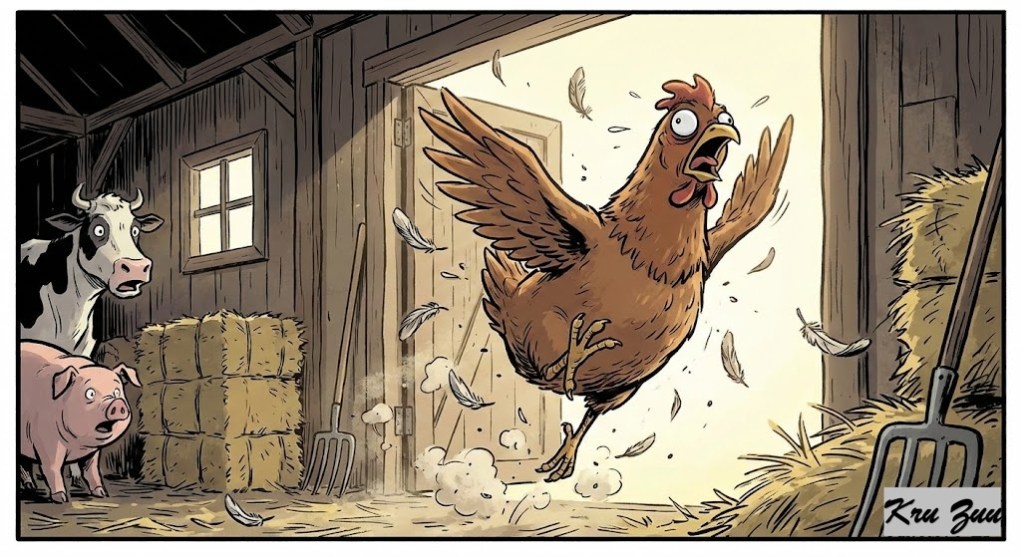
    🌟 The Incident: One morning, Clucky ran into the barn, feathers flying everywhere. She had seen something terrifying in the forest.


    The Conflict: “Listen to me! Listen!” Clucky screamed. “I saw a beast! It was… well, it was round but not round. It had colors like a rainbow but scary colors! It had a giant eye in the middle, and legs that were stiff like sticks! It was huge! It was looking at me!”


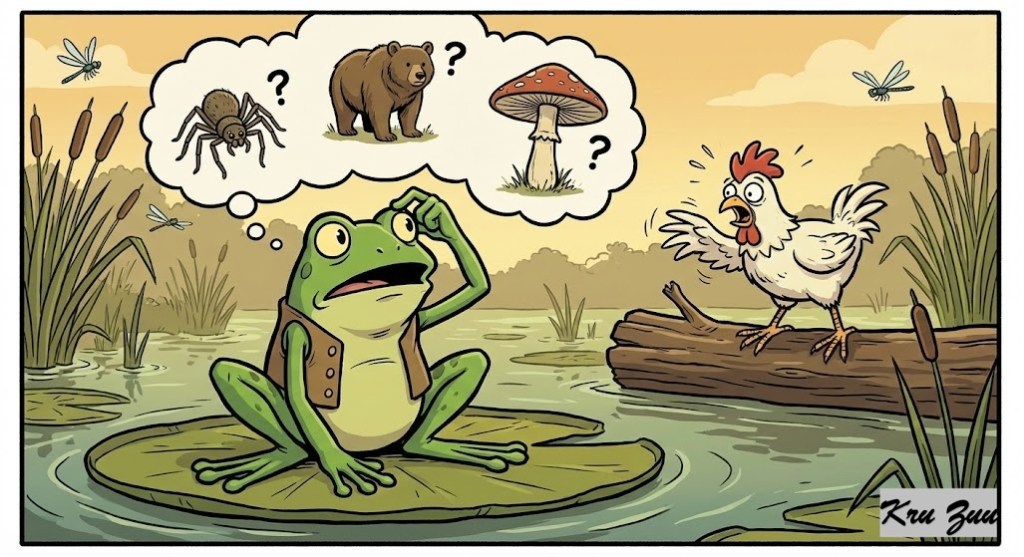
    Croak the Frog sat on a lily pad, confused. “Clucky, was it a spider? A bear? A very large mushroom?”


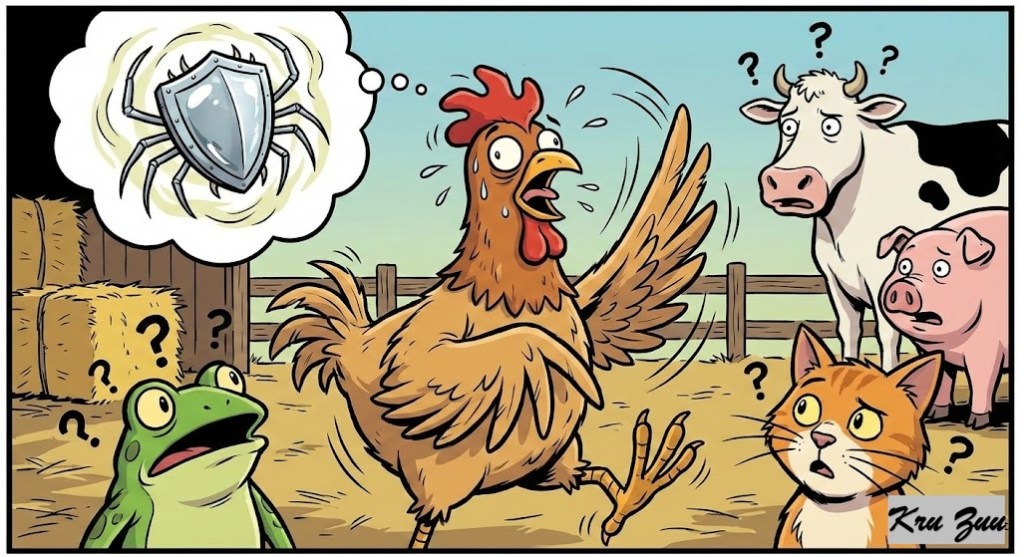
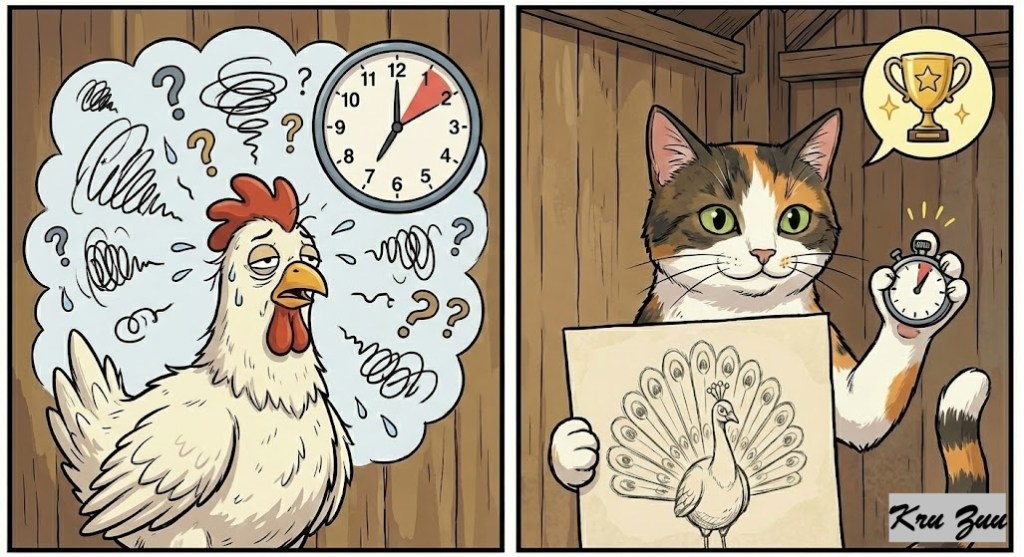
    “No, no!” Clucky clucked for 20 minutes, describing the texture, the smell, and the aura of the beast. “It was like a shiny shield with legs!”


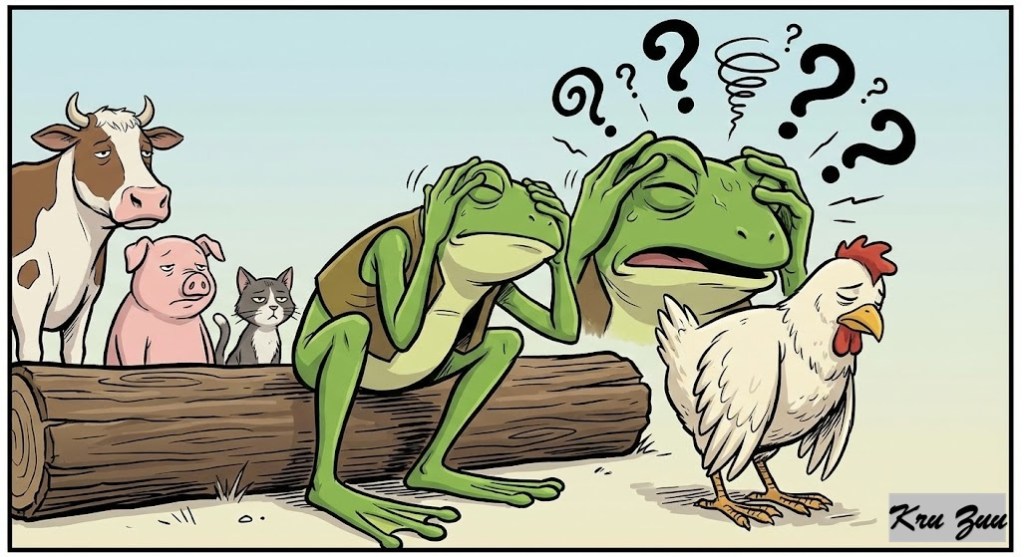
    Croak rubbed his head. “I have no idea what you are saying. You are using 5,000 words and I am still blind.”


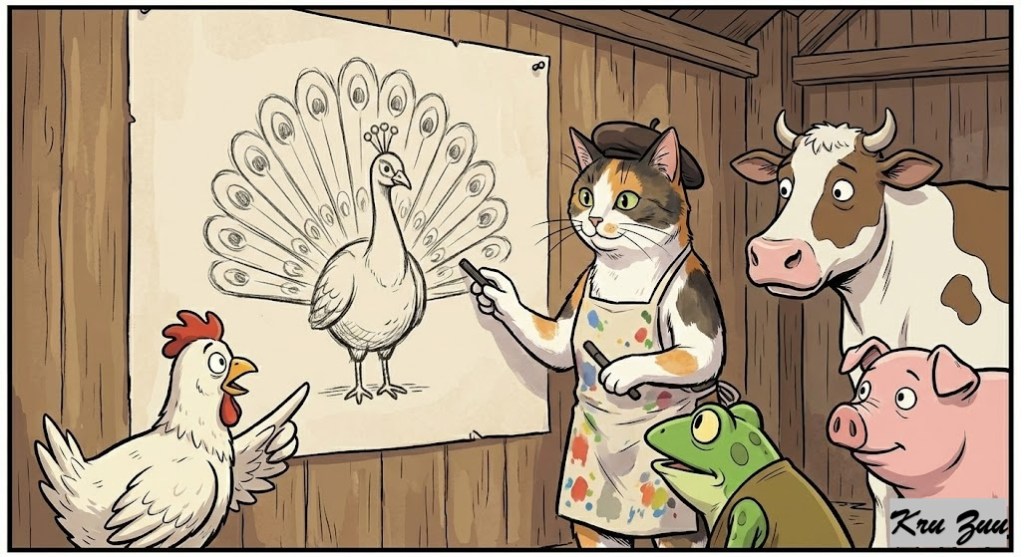
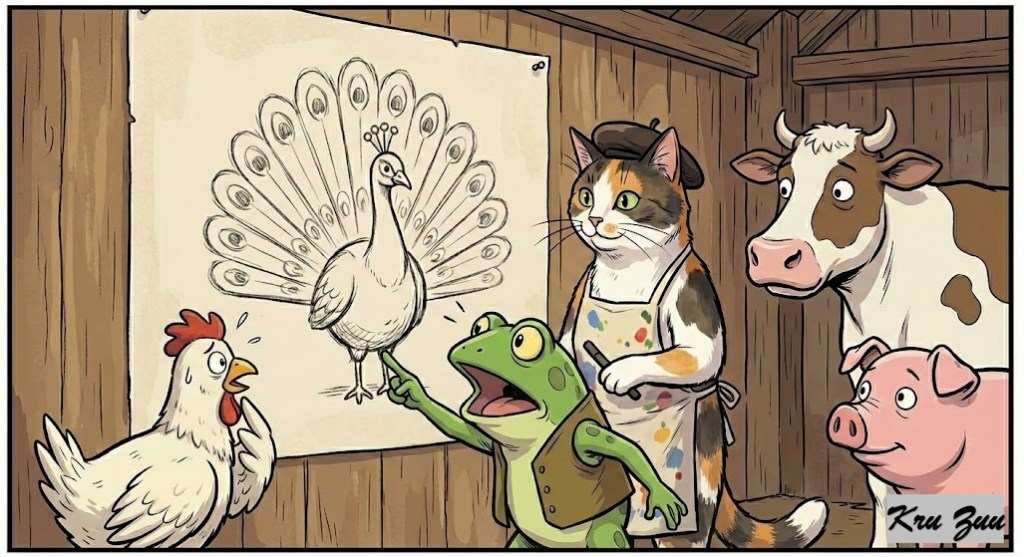
    The Resolution: Whiskers the Cat walked in. She didn’t say a word. She took a piece of charcoal and drew a quick sketch on the wooden wall. A round body, colorful feathers spread out like a fan, and tiny feet.


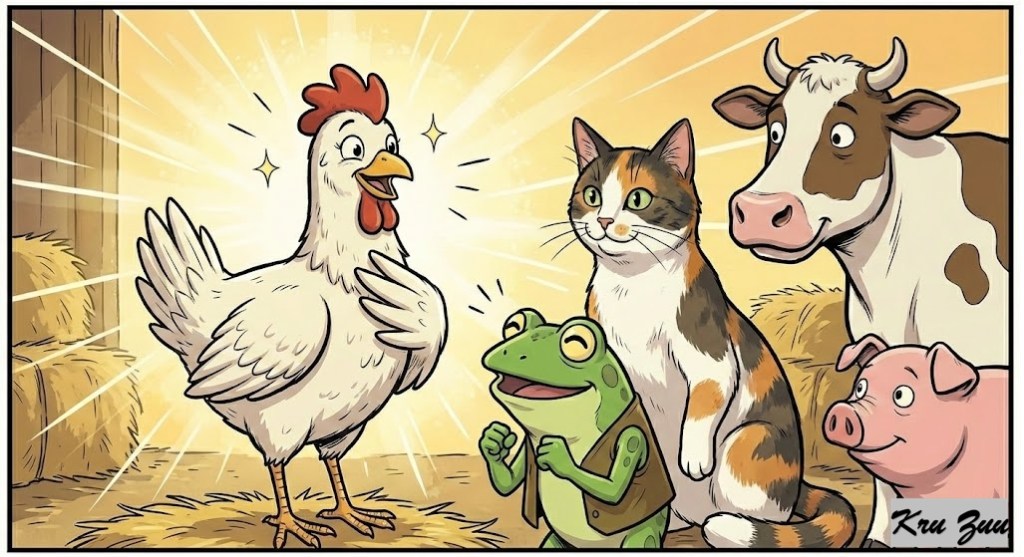
    Croak looked at the drawing and gasped instantly. “A Peacock! You saw a Peacock!”


    Clucky stopped talking. “Yes! That’s it!”


    The Moral: Clucky wasted an hour and a thousand panicked words. Whiskers used one minute and one picture. Whiskers won. 🏆

    🎓 Lesson for English Learners


    Stop Translating, Start Visualizing.


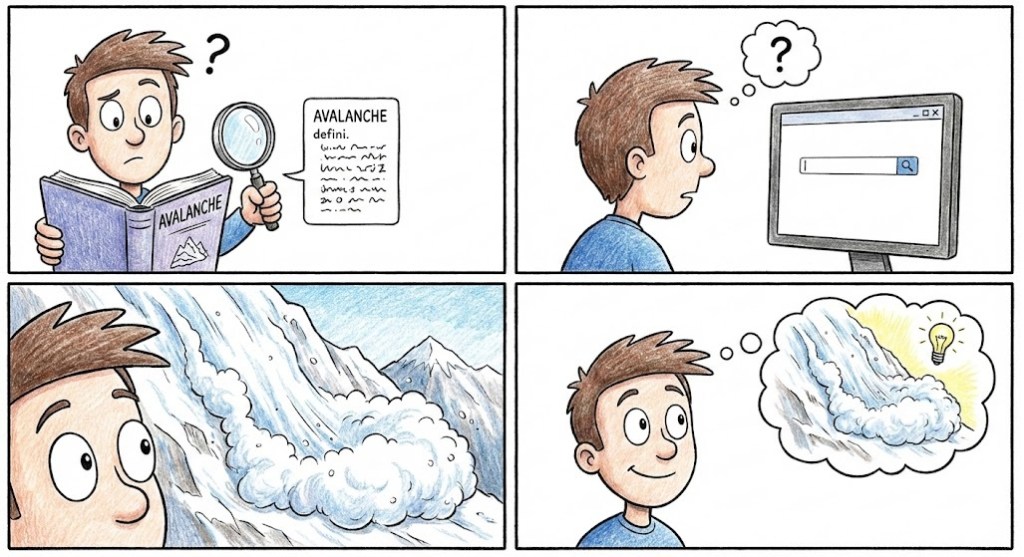
    Google Images > Dictionary: When you learn a new word (e.g., “Avalanche”), don’t read the definition (“a mass of snow…”). Go to Google Images. Look at the photo. Your brain will lock that image in forever.


    Flashcards: Don’t put the Turkish translation on the back of your card. Put a picture on the back. Connect the English word directly to the concept, not to your native language.


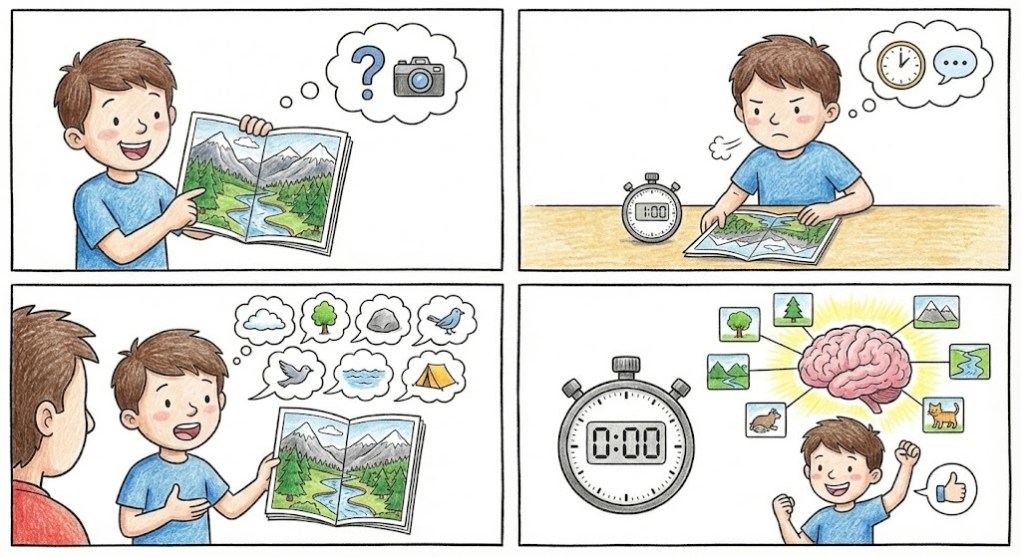
    Describe Photos: To practice speaking, find an interesting photo and try to describe it for 1 minute. This forces you to find the right vocabulary.


    💬 Your Turn: The Emoji Challenge 🚀


    Can you tell a story using ONLY emojis? “Tomorrow” is a liar, but “Pictures” tell the truth.


    The Challenge: In the comments below, tell us your favorite movie using only 3 emojis. Let’s see if others can guess it!


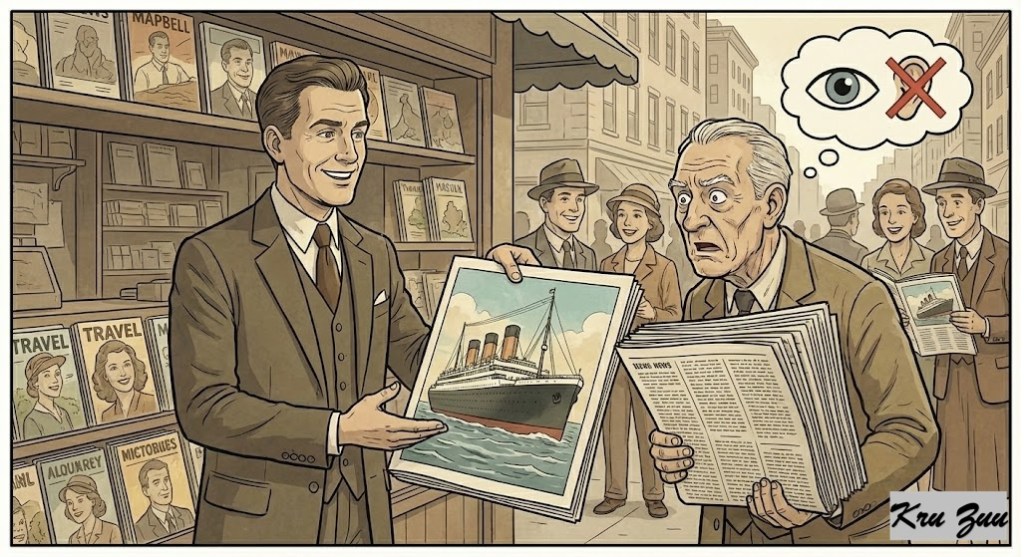
    Example: 🚢 🧊 💔 (Titanic)


    Example: 🦁 👑 🐗 (The Lion King)


    👇 What is your 3-emoji story? Comment below!

    By Zubeyir YURTKURAN

    https://www.facebook.com/BrainBattleground/

    https://www.facebook.com/zubeyr.yurtkuran/

    https://www.instagram.com/zubeyryurtkuran/
    https://www.youtube.com/@BrainBattleground-b3p

    https://www.instagram.com/brainbattleground/

  • 🌈 The Daily Prism: The Law of Perception

    🌈 The Daily Prism: The Law of Perception

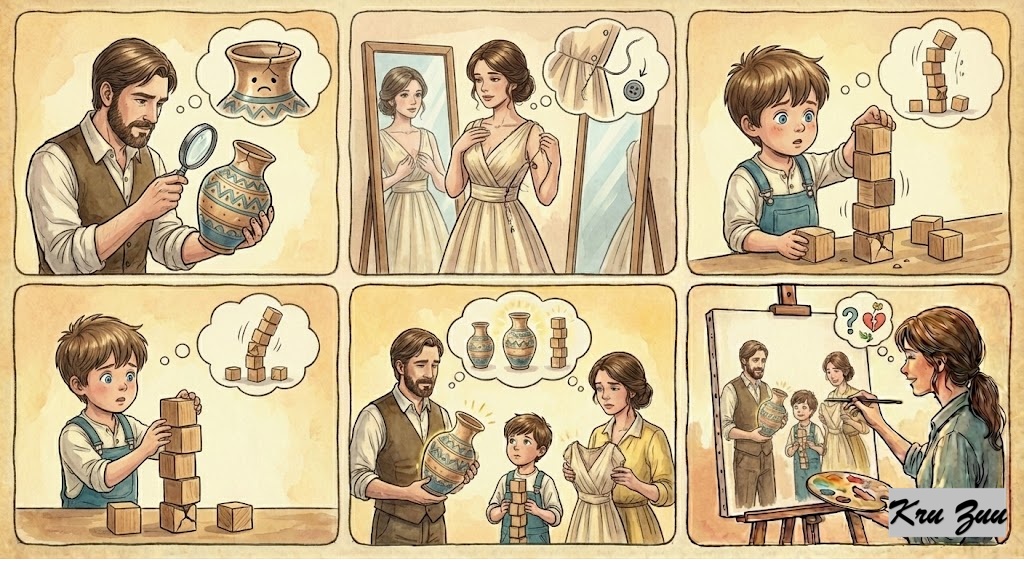
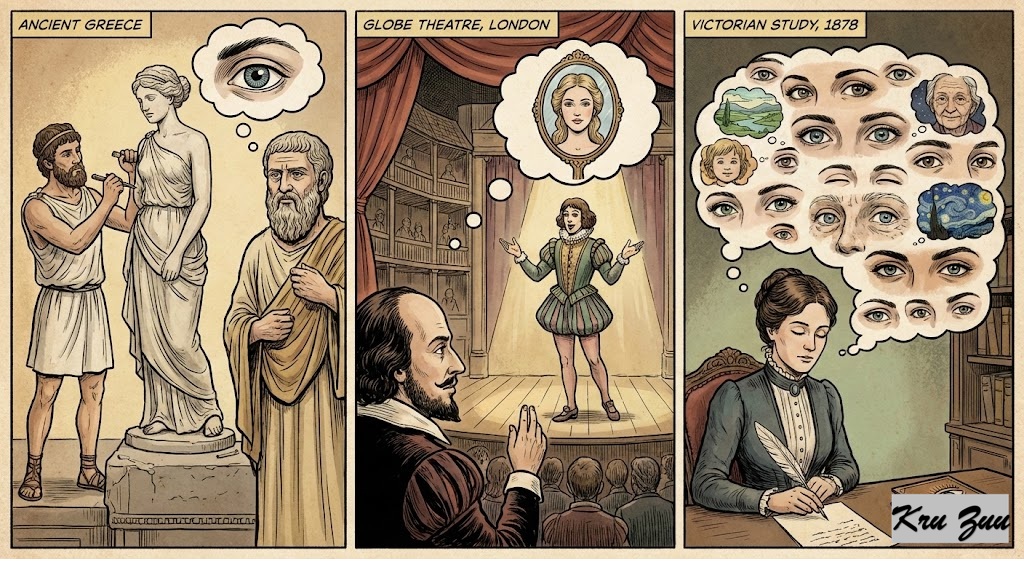
    “Beauty is in the eye of the beholder.”


    😈 The Villain (The Judge)

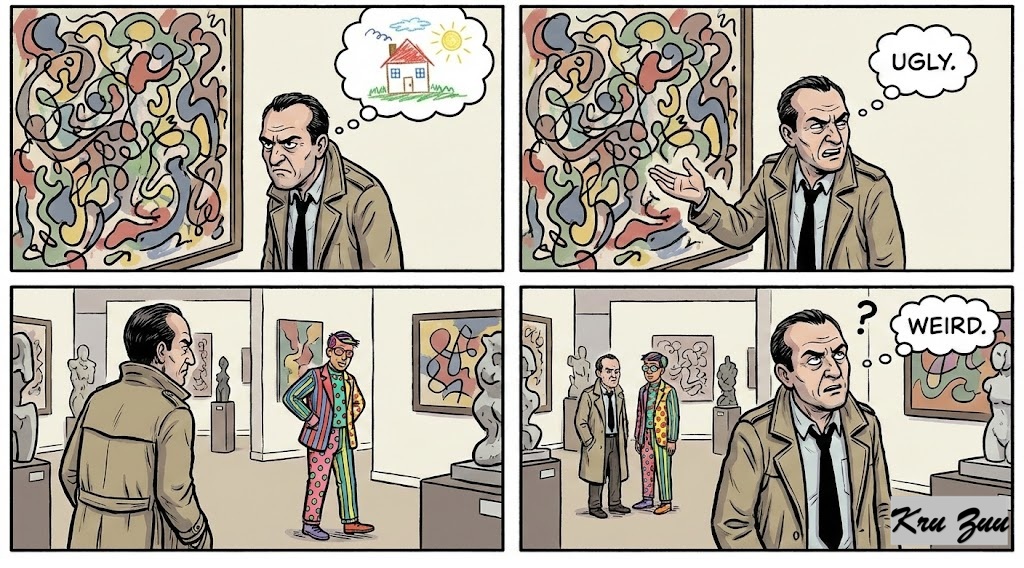
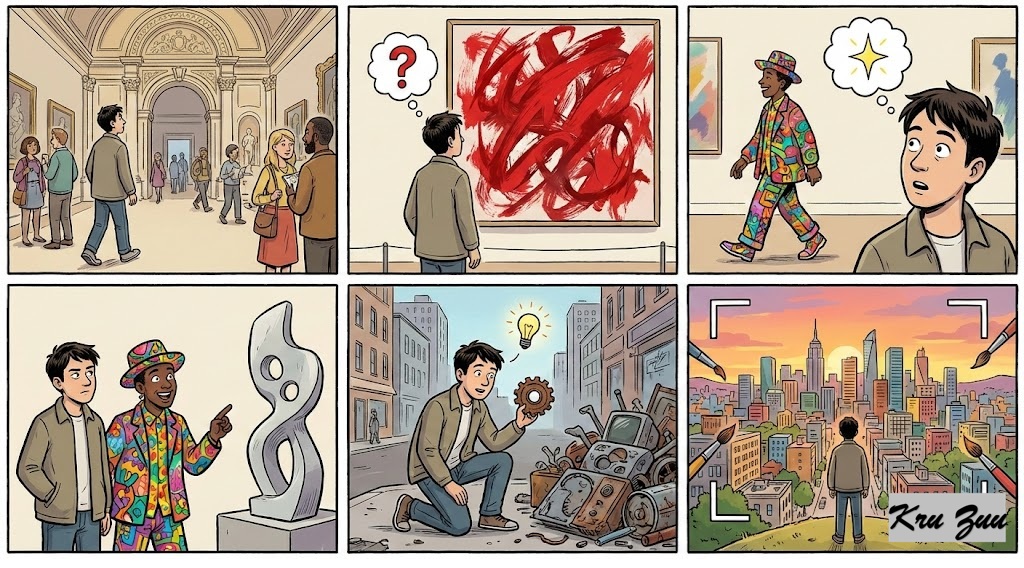
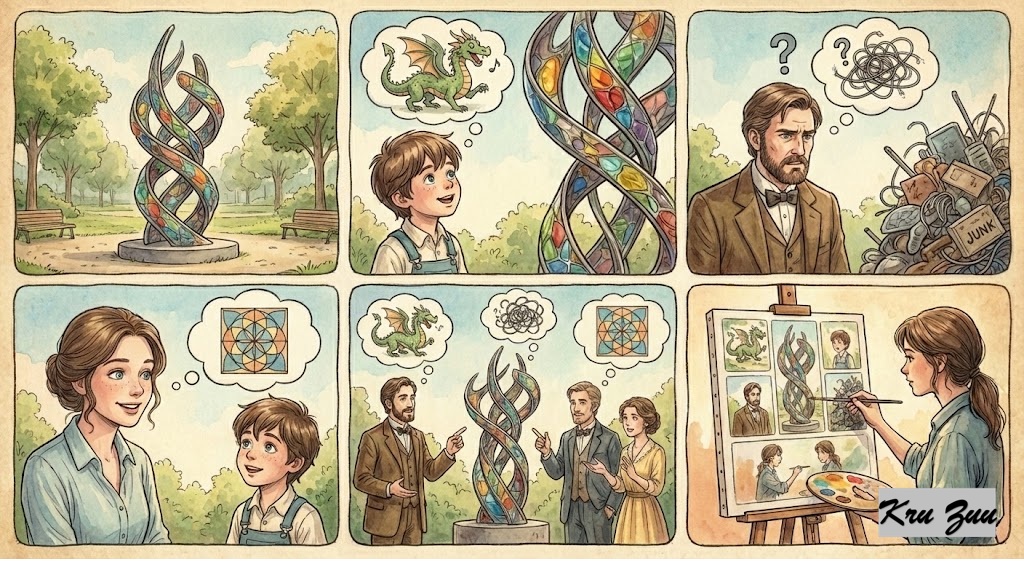
    You walk into a museum. You see abstract art and say, “That’s ugly. A child could paint that.” You see someone wearing colorful clothes and think, “Weird.”

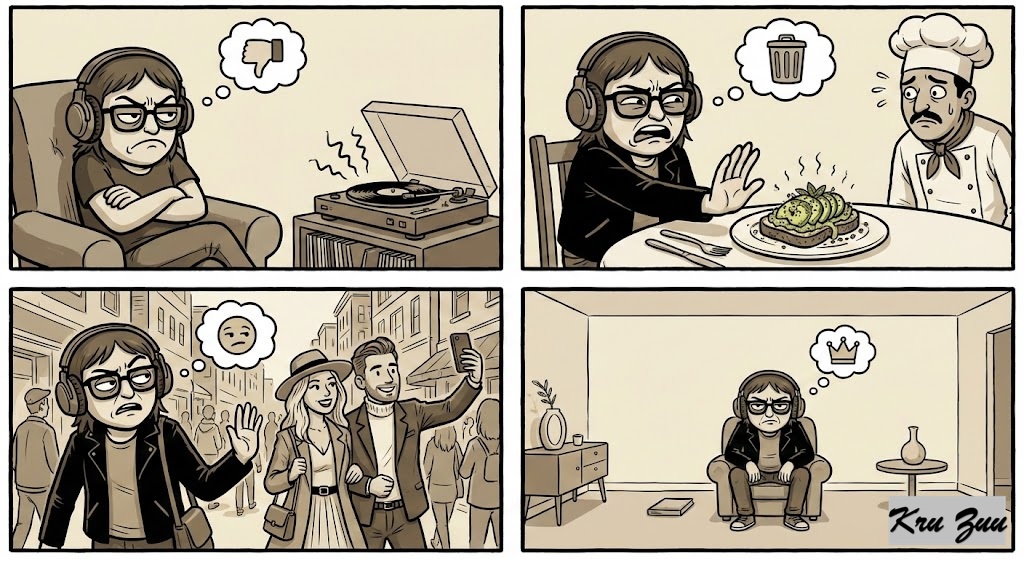
    You judge music, food, and people instantly. You believe your taste is the only truth. You are constantly annoyed because the world doesn’t fit your specific box. 😤


    😇 The Hero (The Artist)

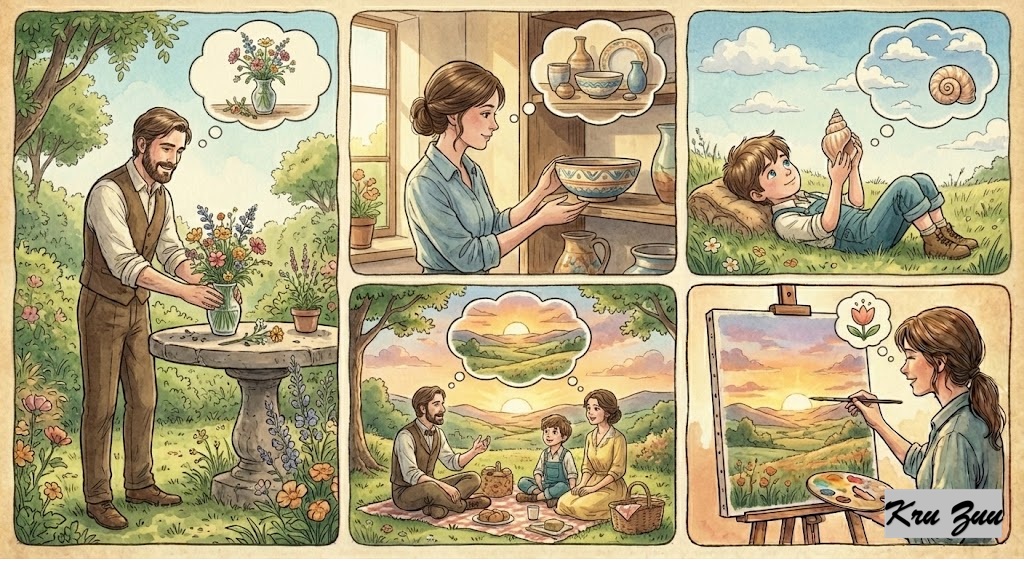
    You walk into the same museum. You might not like the painting, but you wonder, “Why did the artist choose red?” You see the person in colorful clothes and think, “Wow, they are confident.” You understand that what you hate, someone else might love. You see potential where others see trash. The world is an endless gallery for you. 🎨


    ⚖️ The Reality

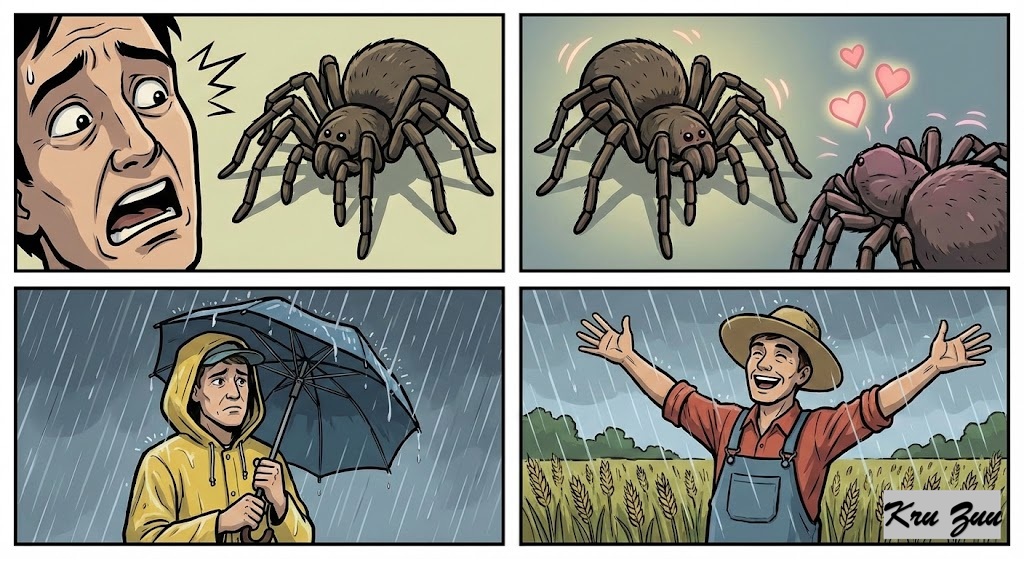
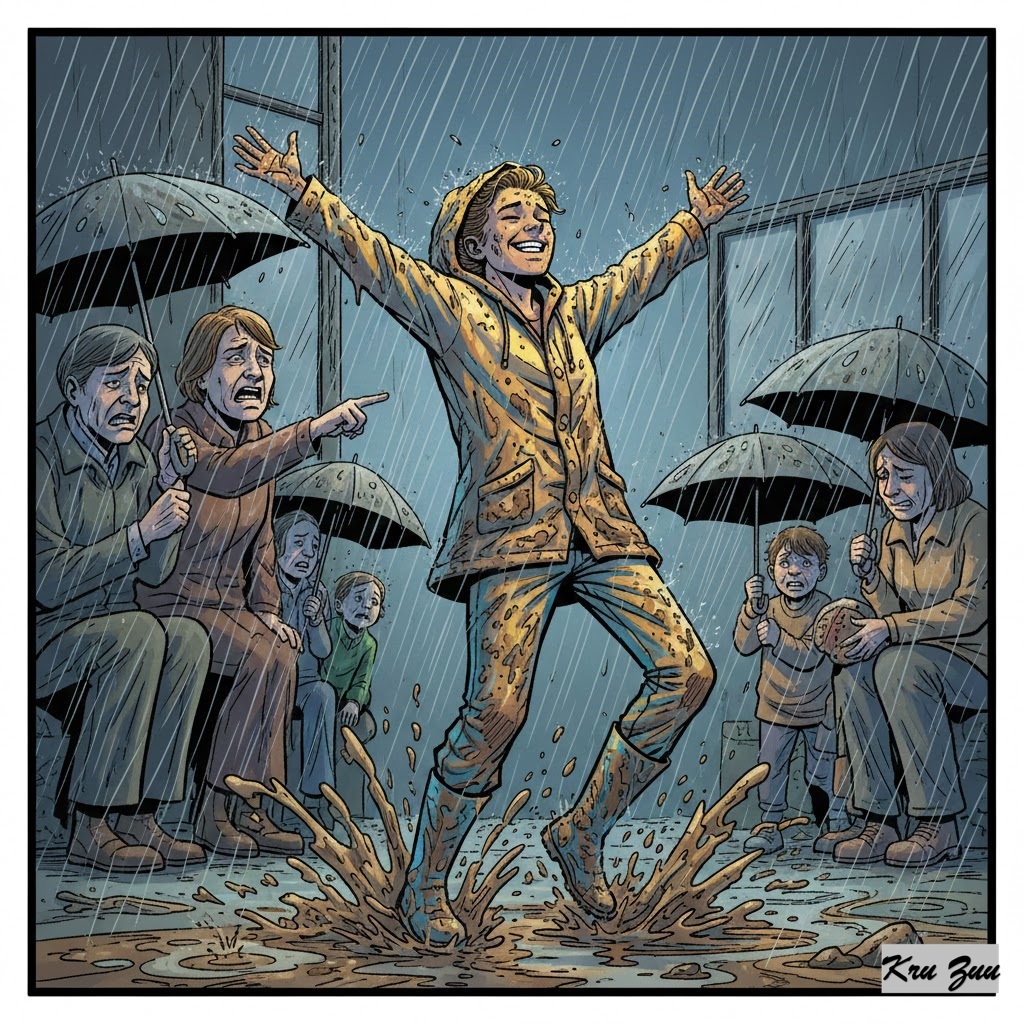
    “Ugly” does not exist in nature. A spider is scary to a human, but it is gorgeous to another spider. A rainy day is sad for a tourist, but it is a celebration for a farmer.

    💎 The Secret

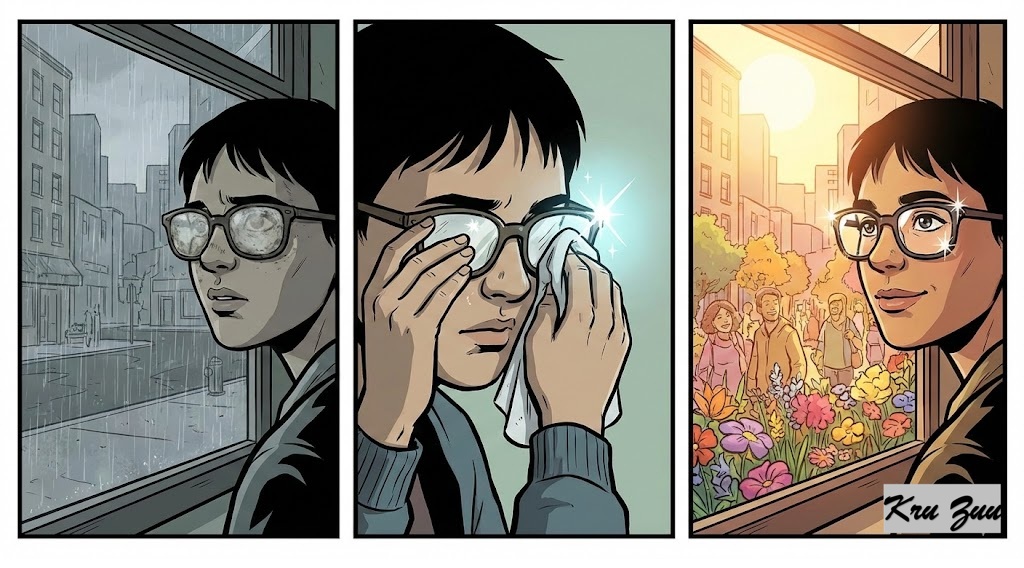
    The object doesn’t change; only your eyes change. If you want to see a beautiful world, you don’t need to travel; you just need to polish your lens.

    🧐 The Anatomy of the Proverb


    This is the ultimate rule of subjectivity.


    Beauty (Noun): A quality that pleases the senses (mind or eyes). ✨


    Beholder (Noun): An old-fashioned word for “The person looking/observing.” (From the verb Behold: To look at). 👀


    Simpler Version: Everyone has a different taste.


    📚 Vocabulary Vault


    Subjective (Adjective):
    Based on personal feelings, tastes, or opinions. (Opposite of Objective).


    Perspective (Noun): A particular attitude toward or way of regarding something; a point of view.


    Aesthetic (Noun/Adj): Concerned with beauty or the appreciation of beauty. 🌸


    Appeal (Verb): To be attractive or interesting to someone.


    Flaw (Noun): An imperfection or weakness.


    🧠 Grammar Focus: “To Be” + Preposition


    This proverb uses a locational metaphor.


    Structure: [Subject] + is + in + [Location].


    Logic: Beauty is not on the face of the person; it lives inside the eye of the person looking at them.


    Example: “The decision is in your hands.”

    📜 History: Origin and Global Cousins


    Who said it first?

    The Origin

    While the idea goes back to Plato (Greek philosophy) and Shakespeare, the modern English phrasing appeared in 1878 by the author Margaret Wolfe Hungerford.

    Global Cousins


    🇹🇷 Turkish:
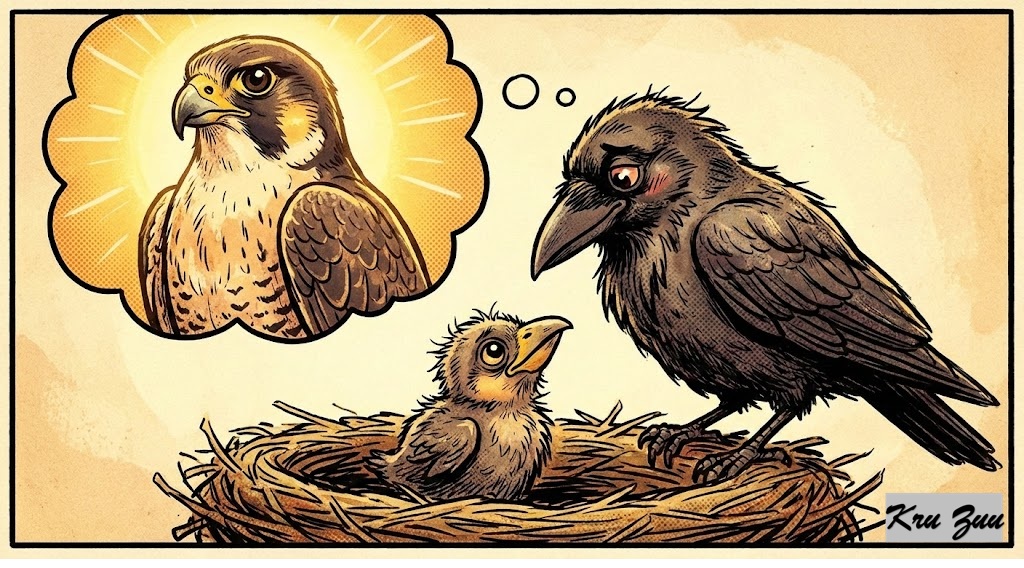
    “Kuzguna yavrusu şahin görünür.” (To the crow, its own chick looks like a falcon.) — This captures the meaning perfectly!


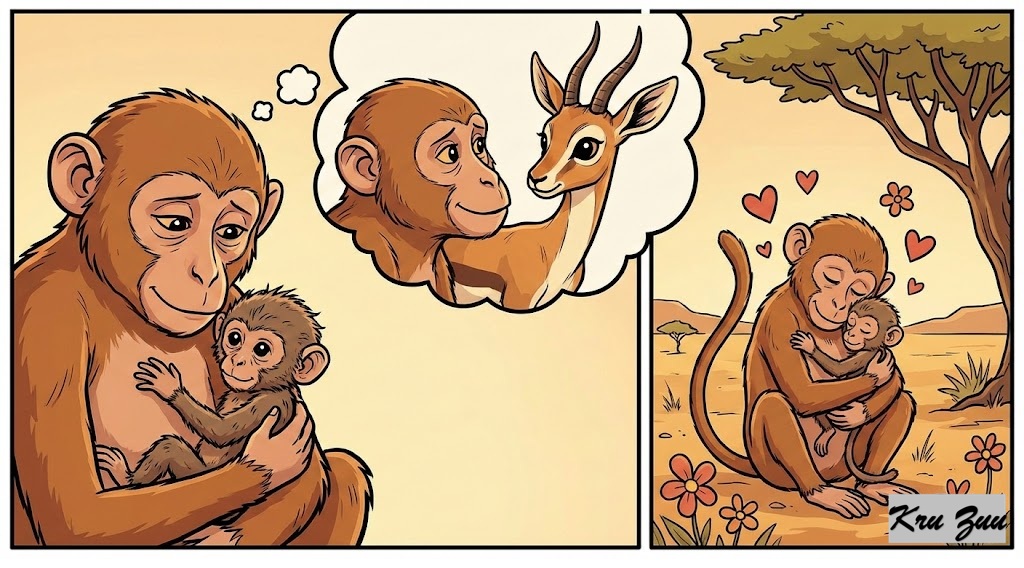
    🇸🇦 Arabic: “In the eyes of a mother monkey, her child is a gazelle.”


    🇩🇪 German: “Über Geschmack lässt sich nicht streiten.” (One cannot argue about taste.)

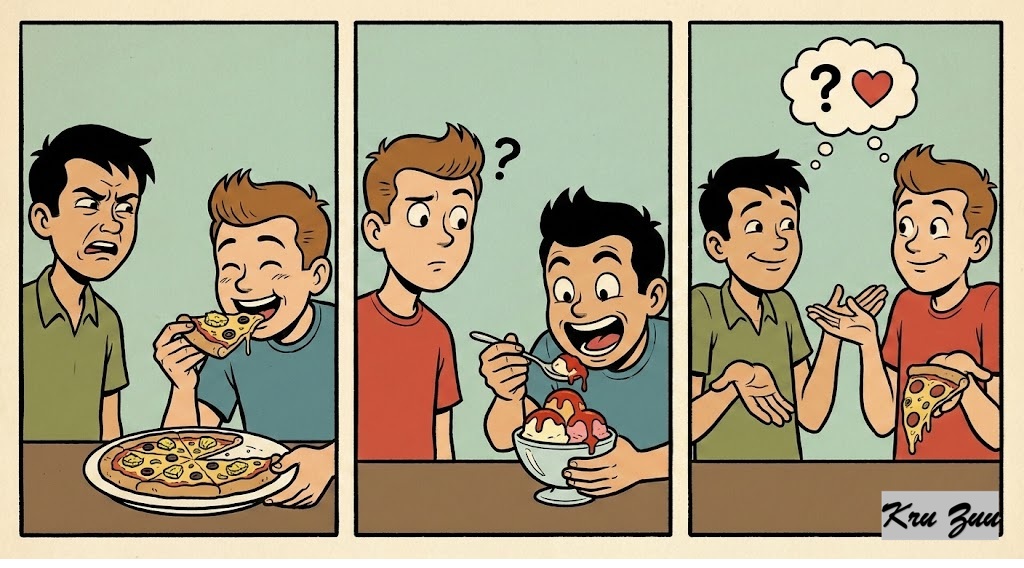
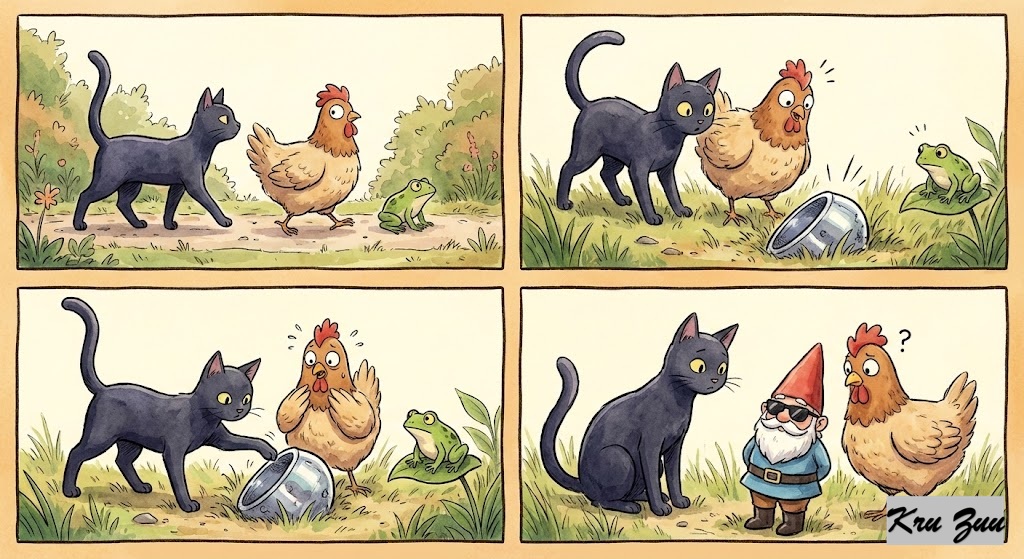
    🎭 Short Story: The Golden Treasure


    Let’s see how perspective changes everything with three very different friends.


    🌟 The Setup:
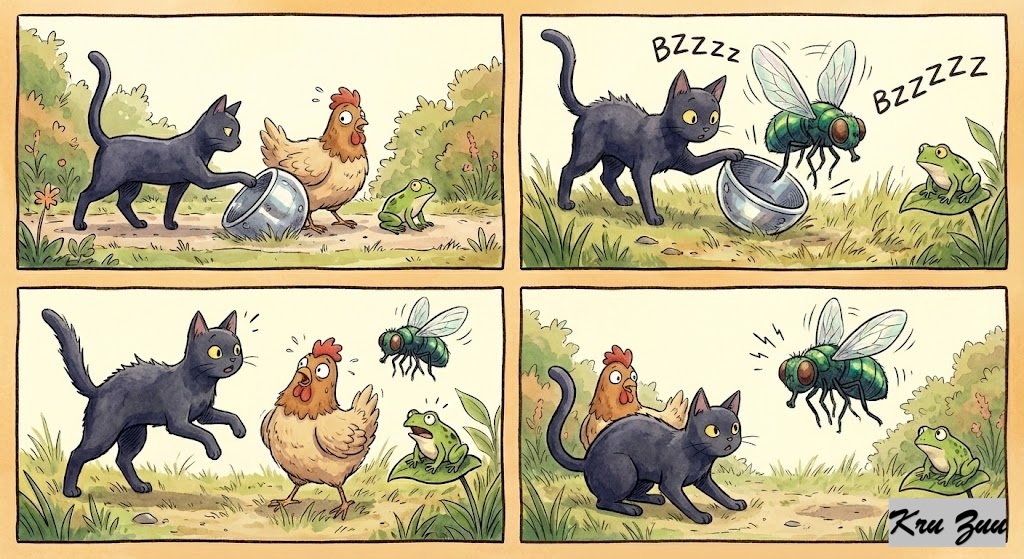
    A sleek Cat 🐱, a nervous Chicken 🐔, and a slimy Frog 🐸 are walking through a garden. Suddenly, they find an object lying on the grass.


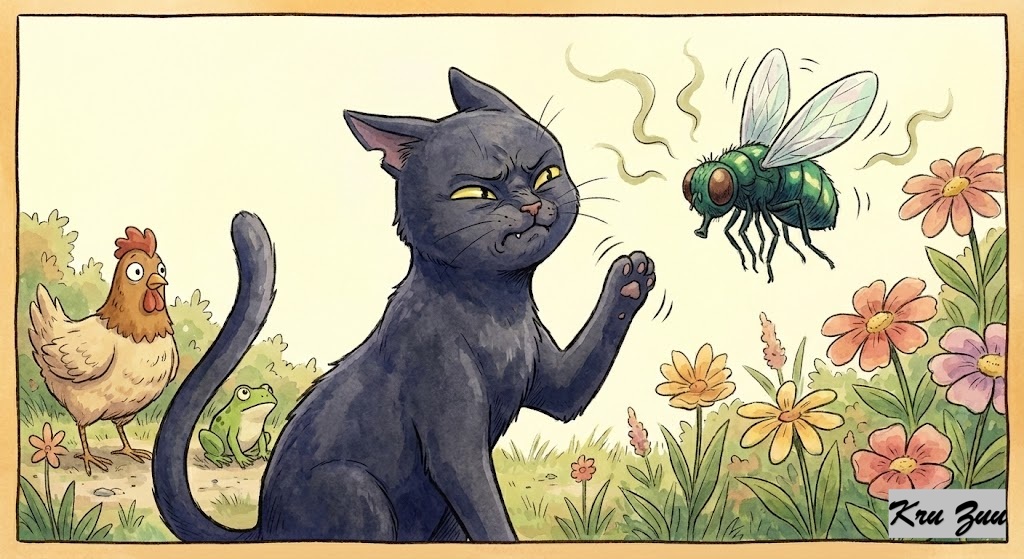
    It is a shiny, gigantic, buzzing Green Fly. 🪰


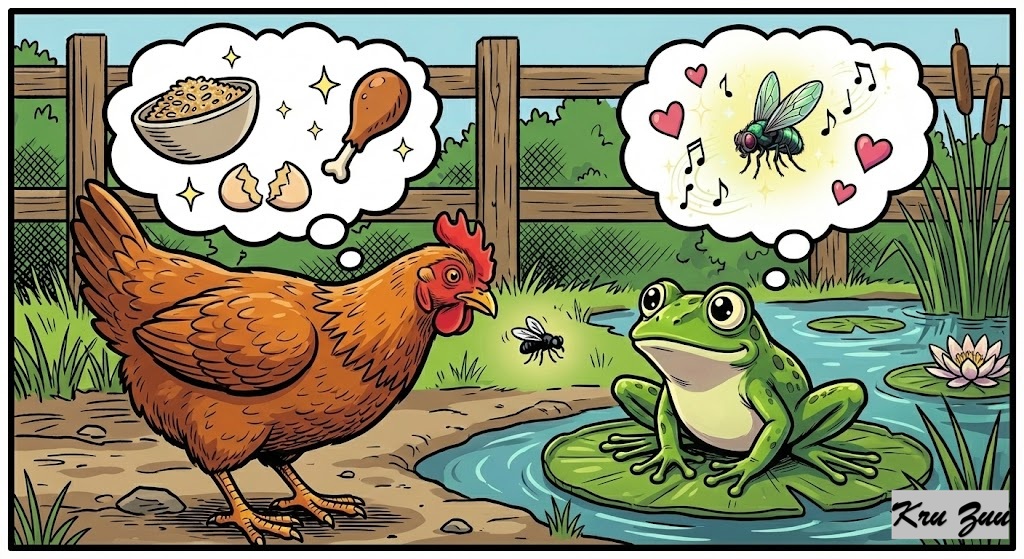
    The Conflict:The Cat (The Aristocrat): She sniffs it and wrinkles her nose. “Ew! Disgusting. It is dirty, it is loud, and it smells like garbage. It ruins the view of the flowers. Take it away!” To the Cat, the fly is Ugly trash.


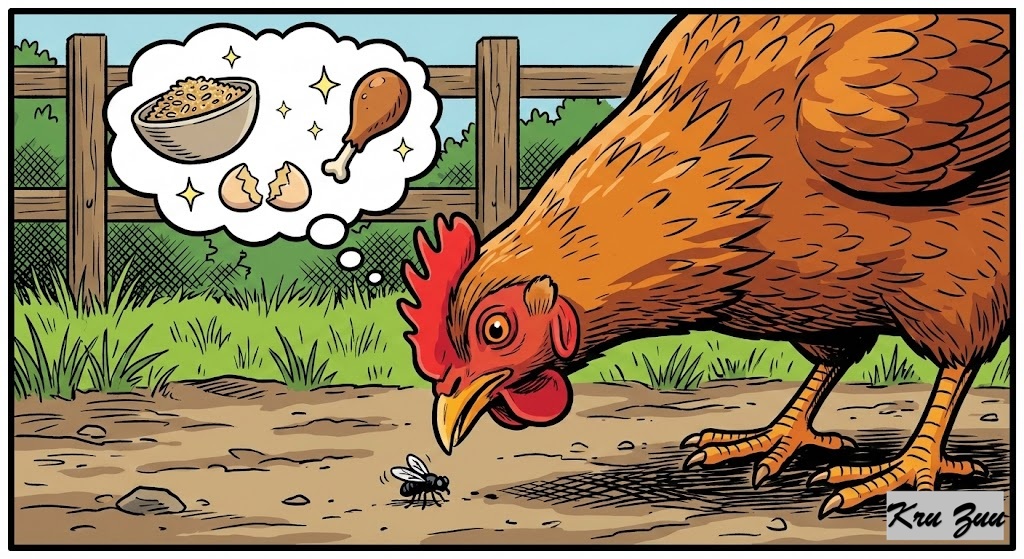
    The Chicken (The Pragmatist): She tilts her head and pecks at the ground. “Hmm. It’s not art, Cat. It’s lunch! It looks crunchy and nutritious. Good protein for my eggs.” To the Chicken, the fly is Food.


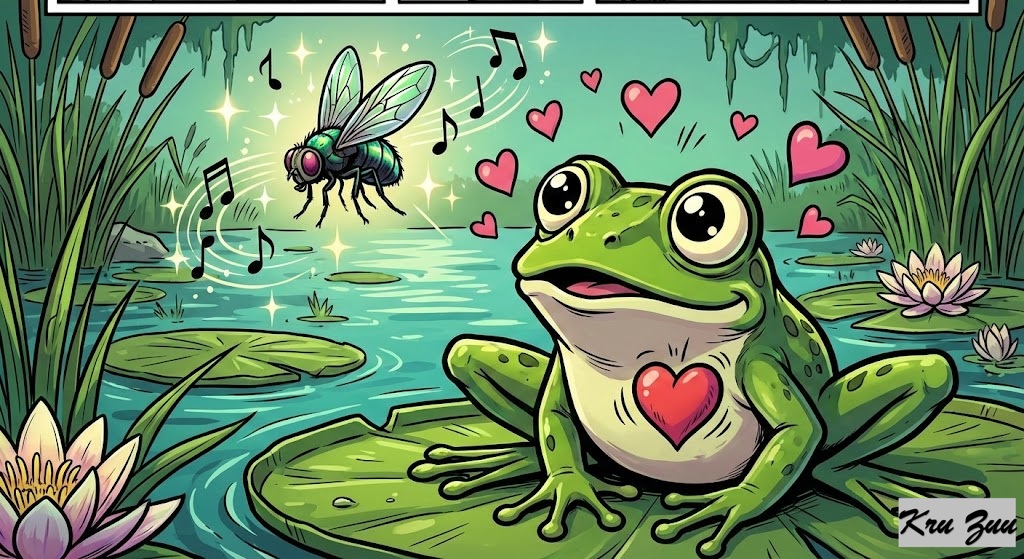
    The Frog (The Romantic): His eyes go wide, and his heart beats fast. “You are both blind! Look at the metallic green wings! Listen to that beautiful buzzing song! It is the most magnificent creature I have ever seen. I think I am in love.” 😍 To the Frog, the fly is Perfection.


    The Moral: Who is right? Is the fly ugly, tasty, or beautiful? They are all right. The fly didn’t change. The beholder changed.

    🎯 Impact on Life: The Pros & Cons


    ✅ The Pros (Freedom)


    Self-Acceptance:
    You don’t need everyone to like you. You just need to find your people (your Frogs!).


    Tolerance: You stop arguing about taste. You realize it’s okay if your friend hates your favorite movie.


    ❌ The Cons (The Trap)


    Denial:
    Sometimes, “beauty is subjective” is an excuse for low effort. If you go to a job interview in pajamas, you can’t blame the “beholder” for not hiring you!

    🎓 Lesson for English Learners


    Don’t apologize for your English.


    Situation:
    You speak with an accent. You make small grammar mistakes. You feel “ugly” or “embarrassed” about your speaking.

    The Truth

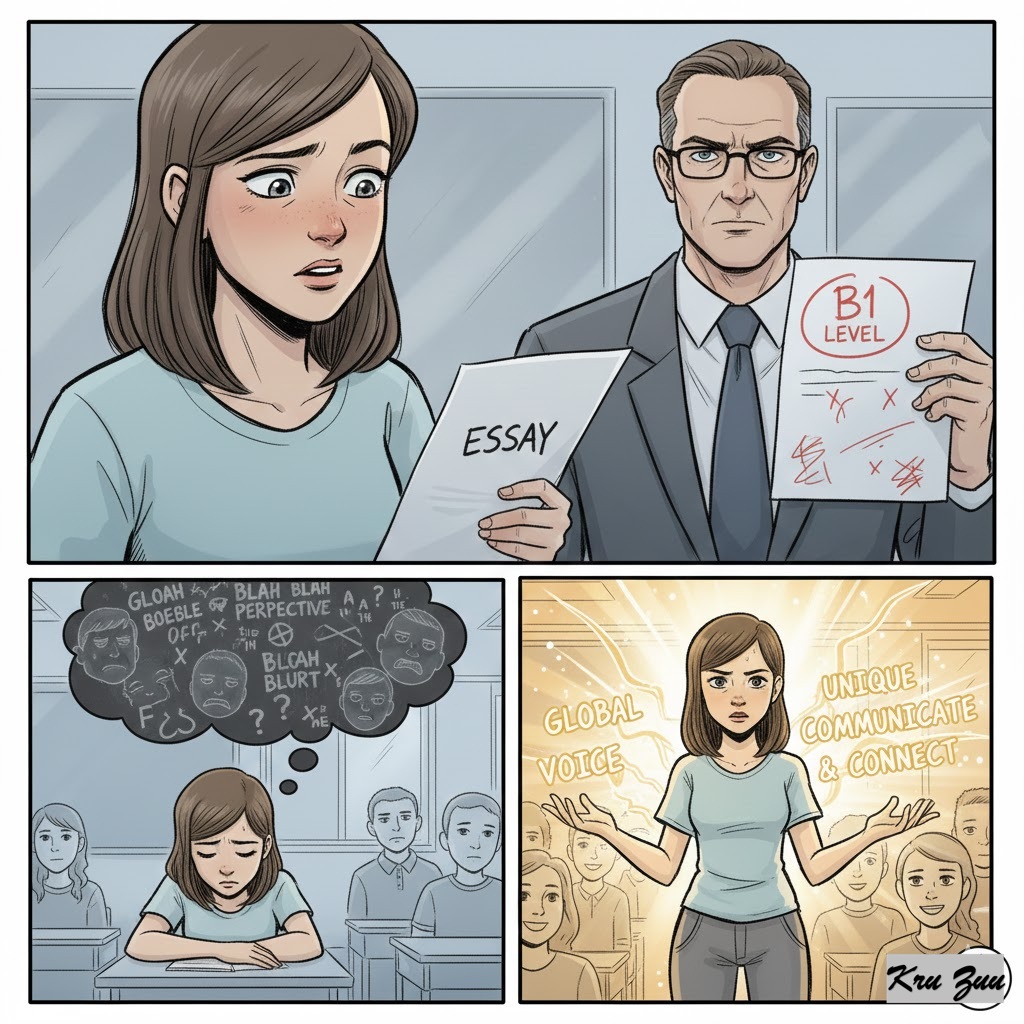
    To a strict examiner, your English might be “B1 Level.”


    To a native speaker, your accent might sound “Exotic and charming.”


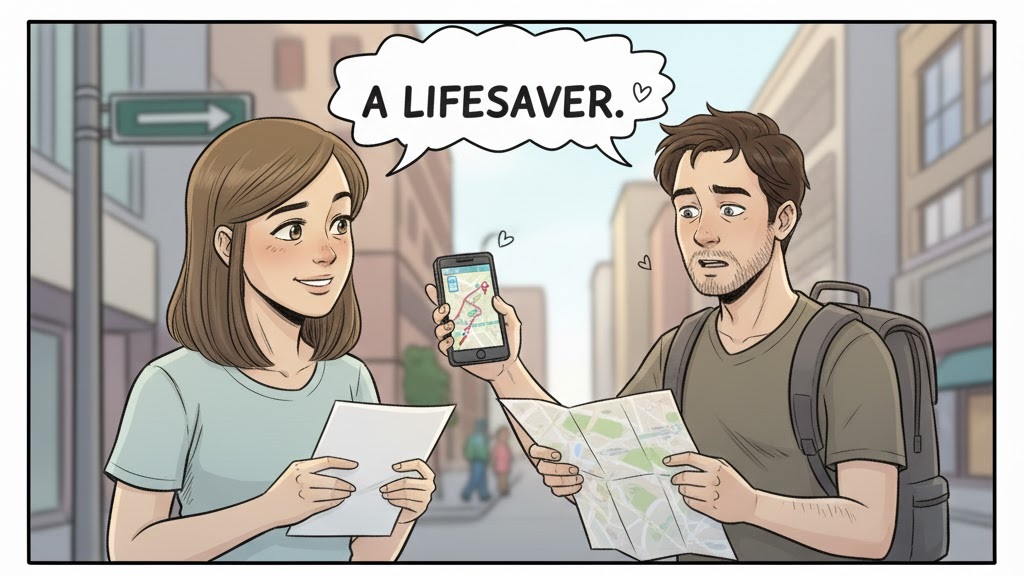
    To a stranger who needs help, your English is “A lifesaver.”


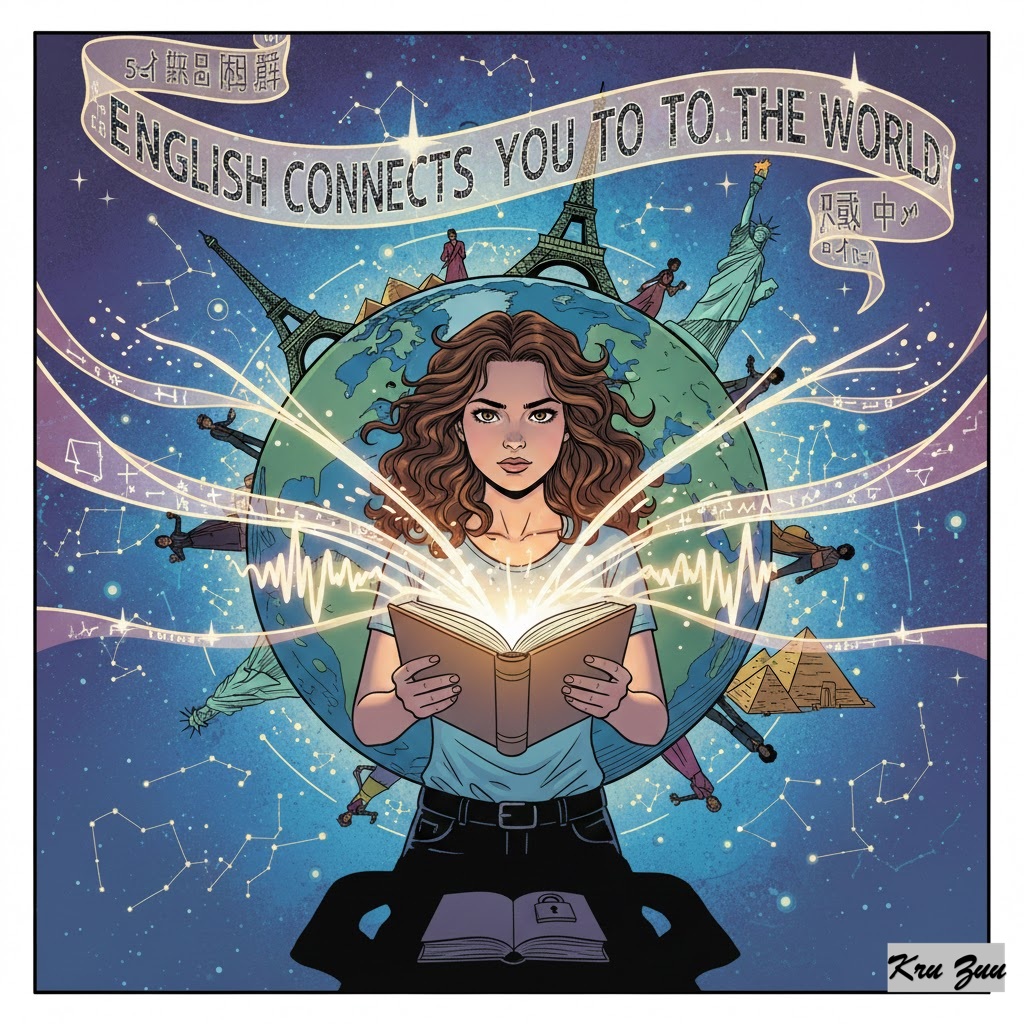
    Your English is beautiful because it connects you to the world. Don’t hide it.


    💬 Your Turn: The Perspective Challenge 🚀


    Let’s practice! The Challenge:
    Think of something that most people hate, but you love.


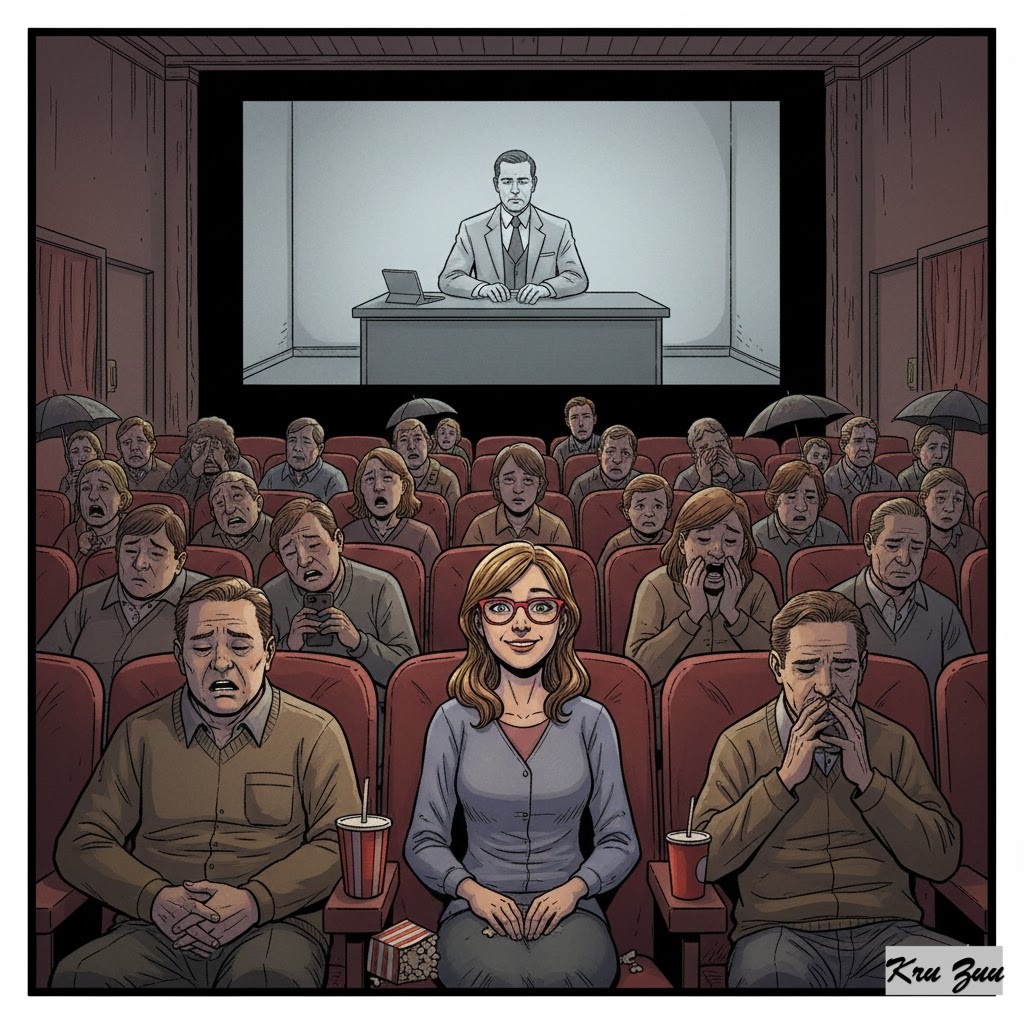
    A movie everyone thinks is boring?


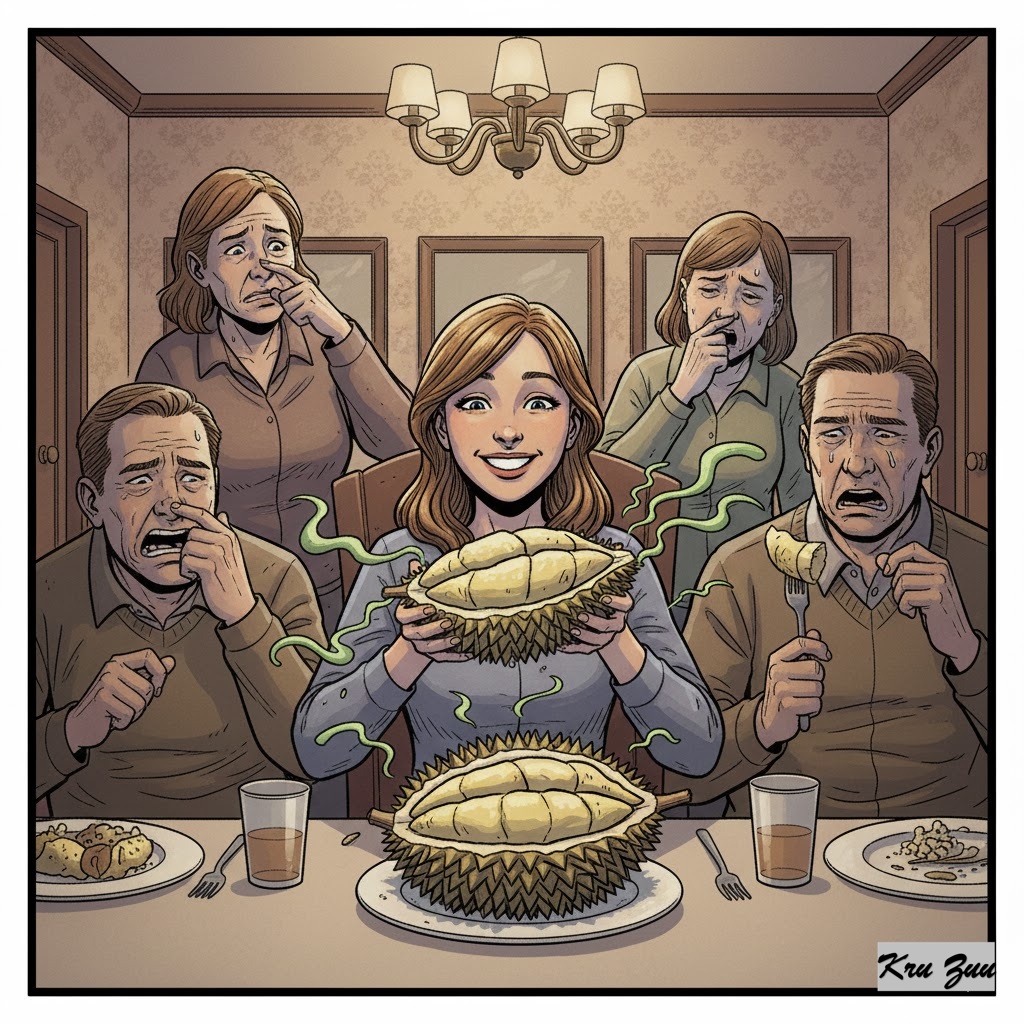
    A food everyone thinks is gross?


    A type of weather (like rain)?


    Tell us in the comments! 👇

    “Everyone hates _, but I think it is beautiful because _.”

    By Zubeyir YURTKURAN

    https://www.facebook.com/BrainBattleground/

    https://www.facebook.com/zubeyr.yurtkuran/

    https://www.instagram.com/zubeyryurtkuran/
    https://www.youtube.com/@BrainBattleground-b3p

    https://www.instagram.com/brainbattleground/

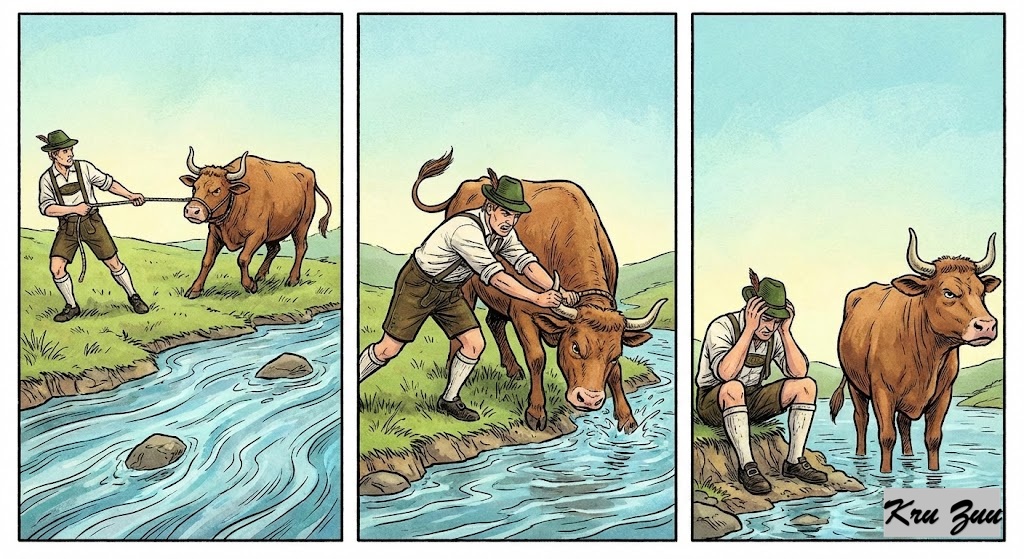
  • 🐴 The Daily Shield: The Law of Free Will

    🐴 The Daily Shield: The Law of Free Will

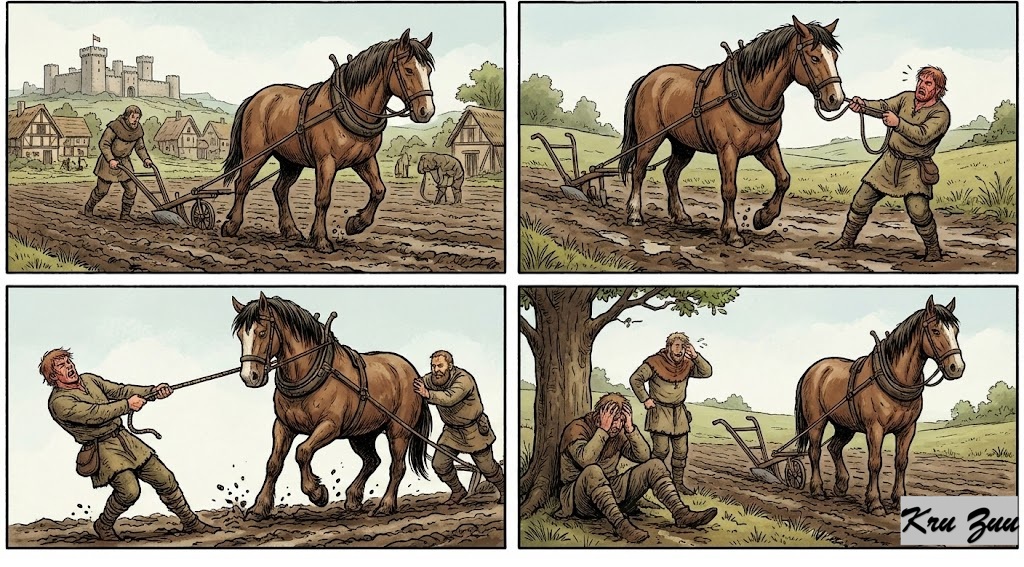
    “You can lead a horse to water, but you can’t make him drink.”


    😈 The Villain (The Control Freak)
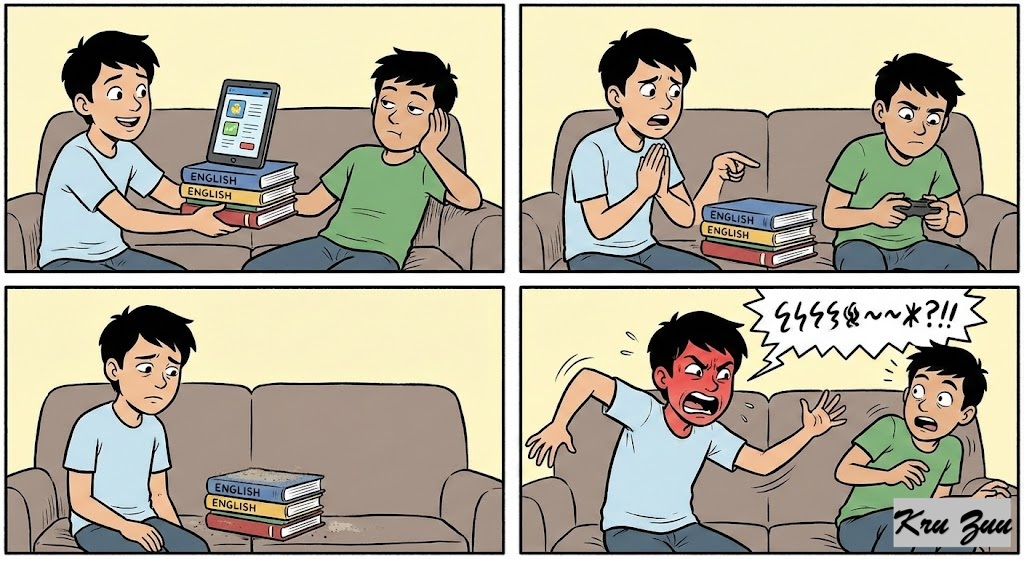
    You want your friend to learn English. You buy them books, you send them links, you beg them to study. They don’t do it. You get angry.

    You want your brother to eat healthy. You cook him broccoli. He orders pizza. You feel frustrated and exhausted.

    You think, “If I try harder, I can change them.” You are fighting a war you cannot win. You are trying to control another person’s mind. 🤯


    😇 The Hero (The Guide)
    You offer help. You open the door. You say, “Here are the tools if you need them.” Then, you step back. You understand that you are the guide, not the commander. You focus on your own actions, not their reactions.

    The Result? You protect your energy. You don’t take their refusal personally. You are helpful, but you are also free. 🕊️


    ⚖️ The Reality
    Help is not a forceful injection; it is an offering. You can provide the best opportunity in the world (the water), but the desire to take it (the drinking) must come from inside them. Motivation cannot be donated.


    💎 The Secret: You are responsible to people (to help them), but you are not responsible for people (for their choices).

    🧐 The Anatomy of the Proverb


    This is the ultimate lesson in boundaries.


    Lead (Verb): To show the way; to guide someone to a place. 🗺️


    Make (Causative Verb): To force or compel someone to do something. (This is the impossible part!).


    Simpler Version: You can’t force people to accept your help.


    📚 Vocabulary Vault


    Reluctant (Adjective):
    Unwilling and hesitant to do something.


    Initiative (Noun): The power or opportunity to act or take charge before others do.


    Stubborn (Adjective): Having a determination not to change one’s attitude. 🧱


    Autonomy (Noun): The right or condition of self-government; freedom to choose.


    Influence (Verb/Noun): To have an effect on someone, but not total control.


    🧠 Grammar Focus: Causative Verbs


    This proverb uses a very specific grammar structure called Causative Verbs.


    The Structure: Subject + Make + Person + Verb (Base Form).


    Meaning: To force someone to do something.


    Examples


    ❌ “You can’t make him to drink.” (Incorrect!)


    ✅ “You can’t make him drink.” (Correct)


    “My teacher made me study extra hours.”


    “Sad movies make me cry.”

    📜 History: Origin and Spread


    This is one of the oldest proverbs in the English language!


    The Origin:
    It was first recorded in 1175 in Old English homilies. Horses were essential for survival (transport, farming). Everyone knew that a stubborn horse could not be moved, no matter how strong the farmer was.


    Global Cousins


    🇹🇷 Turkish:
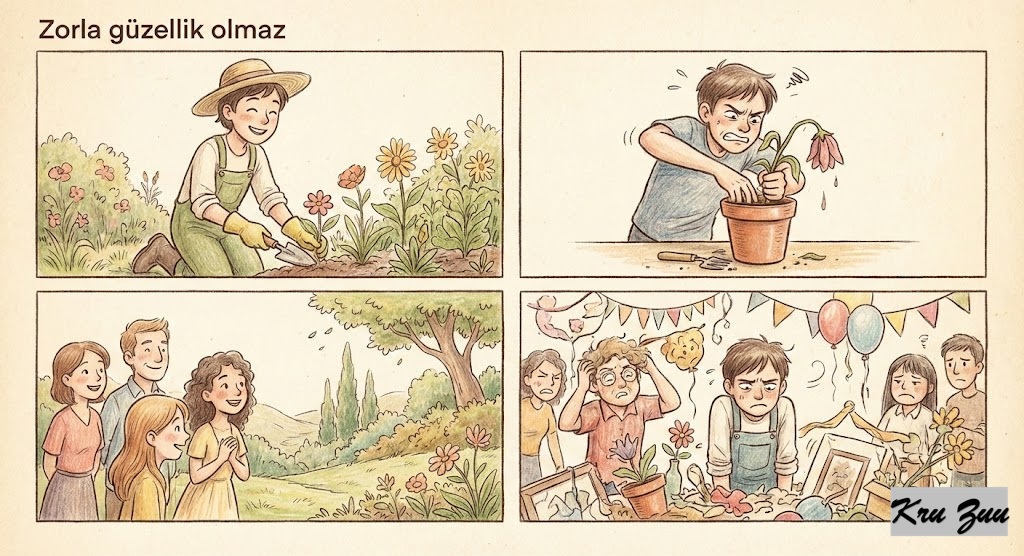
    “Zorla güzellik olmaz.” (Beauty cannot be forced/There is no forced beauty.) OR “Zorla kuyu kazılmaz.”


    🇩🇪 German: “Man kann einen Ochsen zum Wasser führen, aber man kann ihn nicht zwingen, zu saufen.” (You can lead an ox to water, but you can’t force it to booze/drink.)

    🎯 Impact on Life: The Pros & Cons


    ✅ The Pros (Inner Peace)
    Relief:
    When you realize you can’t “fix” everyone, a huge weight lifts off your shoulders.


    Respect: You respect others’ choices, even if they are bad choices.


    ❌ The Cons (The frustration)


    Watching Failure:
    Sometimes, you have to watch people you love fail because they refuse the “water.” That requires emotional strength.

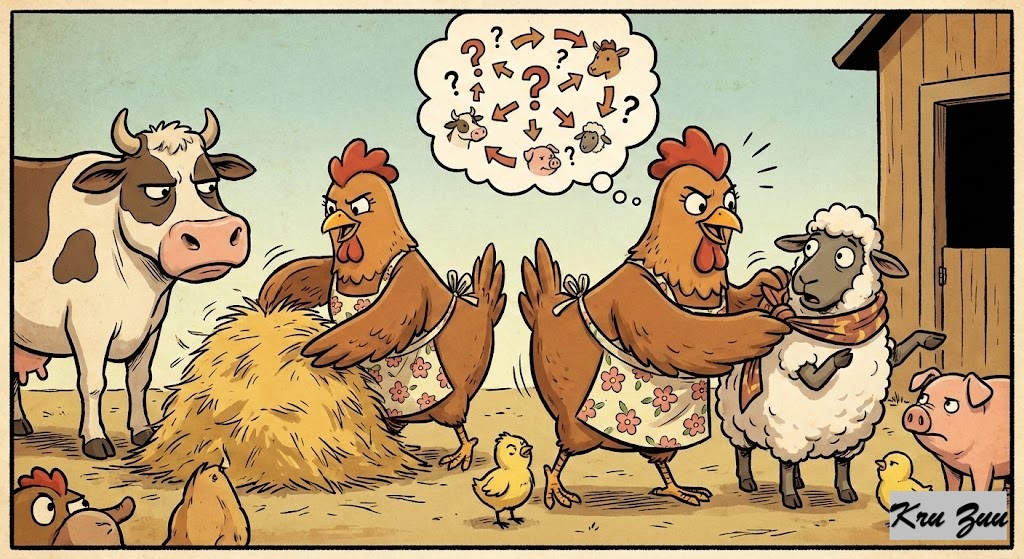
    🎭 Short Story: The Chicken’s Great Feast


    Let’s visit the farm to see this law in action.


    🌟 The Characters


    🐔 Mrs. Hen (The Over-Helper):
    She thinks she knows what is best for everyone.


    🐸 Freddy Frog: He loves flies and mud.


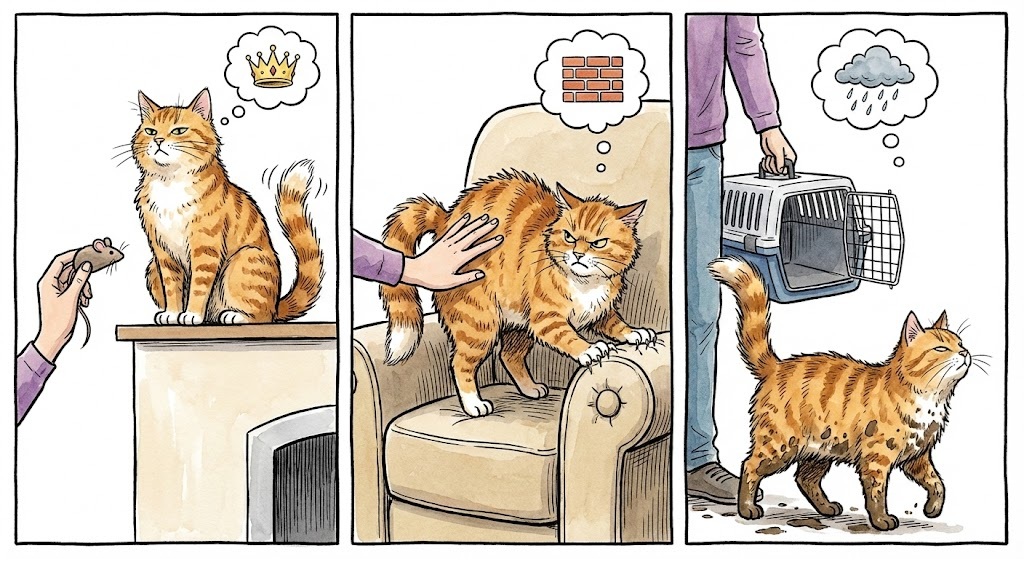
    🐱 Leo the Cat: He is proud, stubborn, and hates being told what to do.


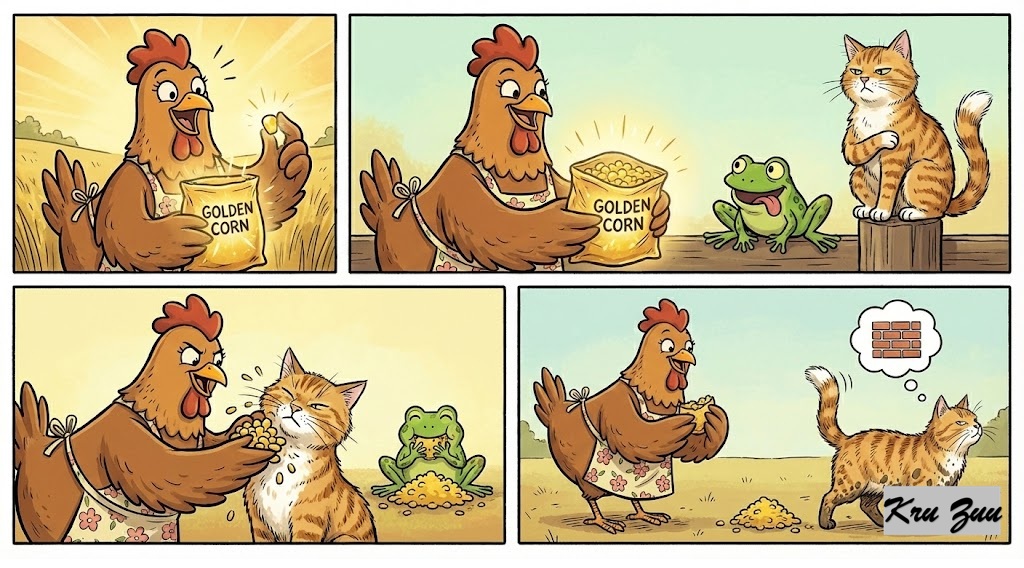
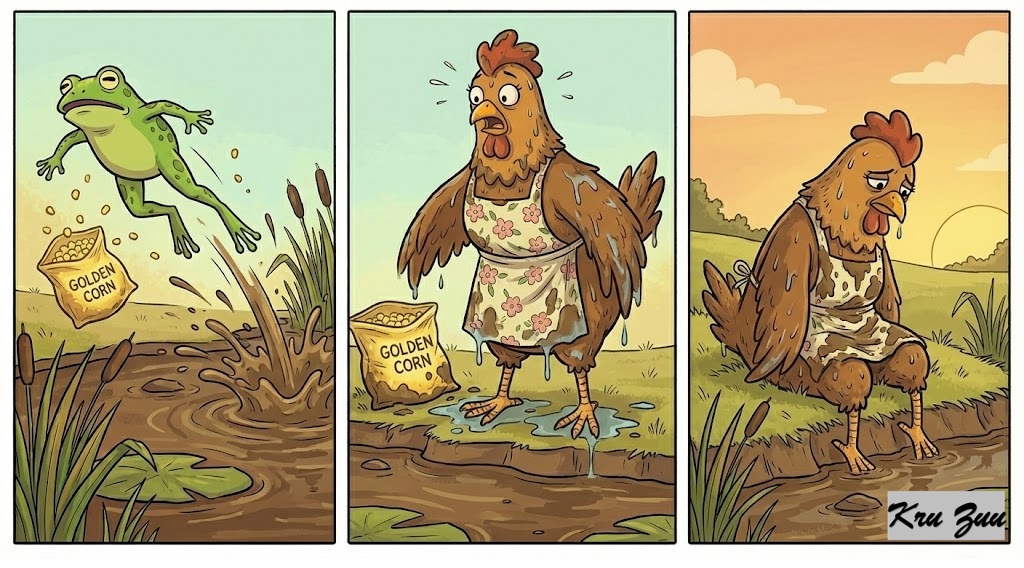
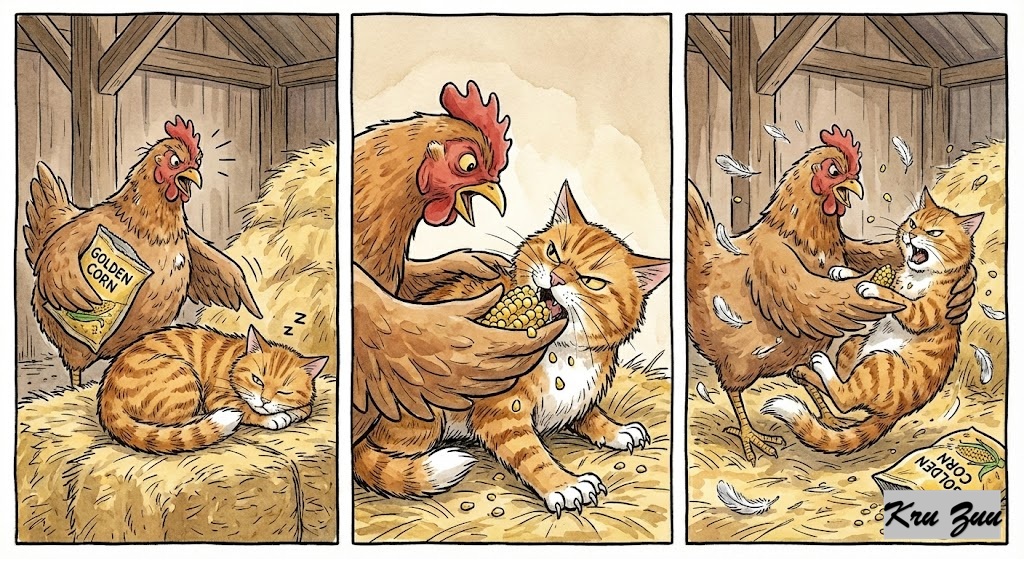
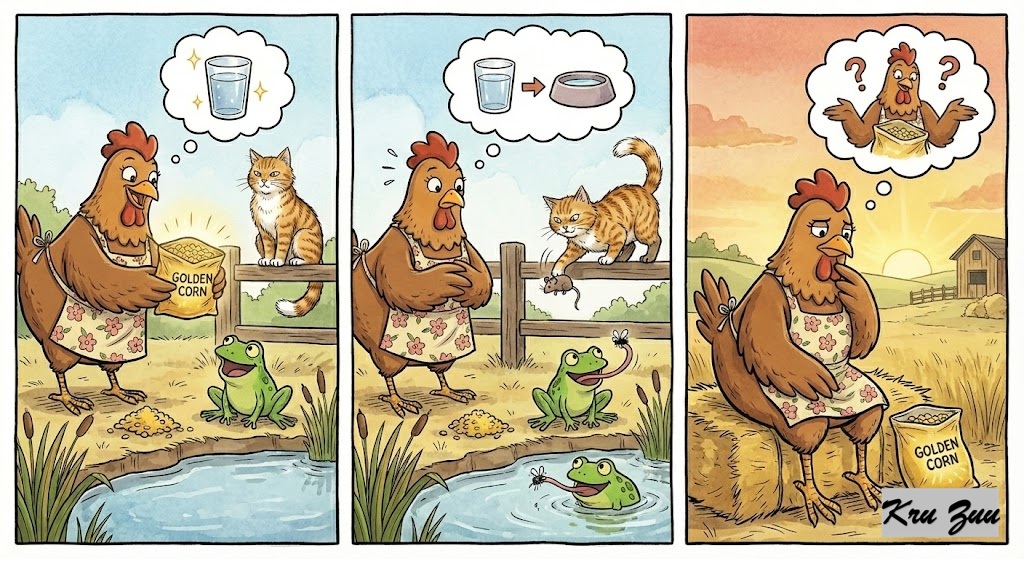
    The Situation: Mrs. Hen found a bag of “Golden Corn.” It was the most delicious, expensive corn in the world. She was so excited! She wanted everyone to be happy and full.


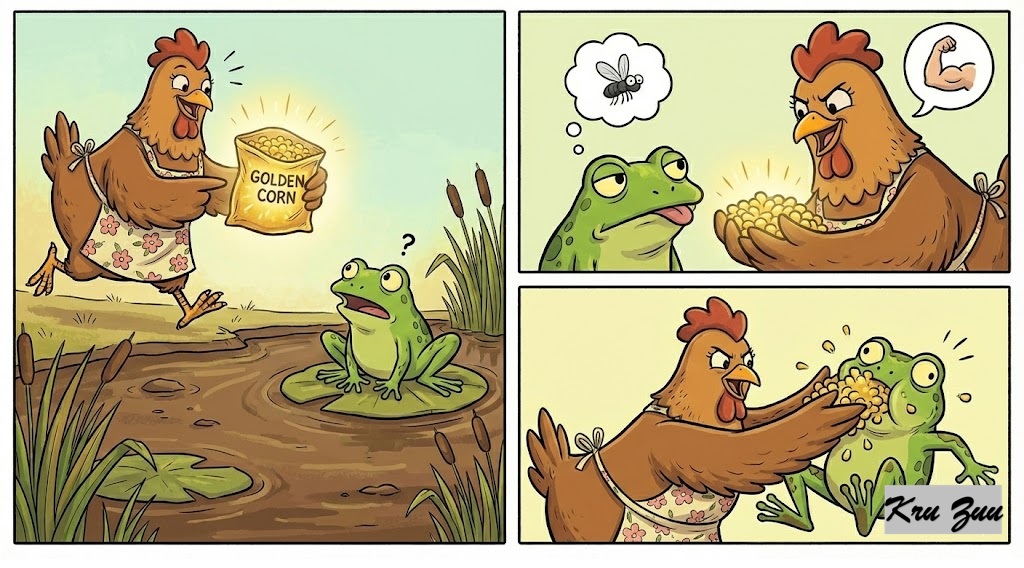
    Scene 1: The Frog Mrs. Hen ran to the pond. “Freddy! Look! Golden Corn! Eat it, it will make you strong!” Freddy Frog looked at the corn. He looked at Mrs. Hen. “But I like flies,” Freddy said. “No, no! This is better than flies,” insisted Mrs. Hen. She pushed the corn into his face.

    The Result: Freddy jumped into the muddy water to escape. Mrs. Hen was wet and sad.


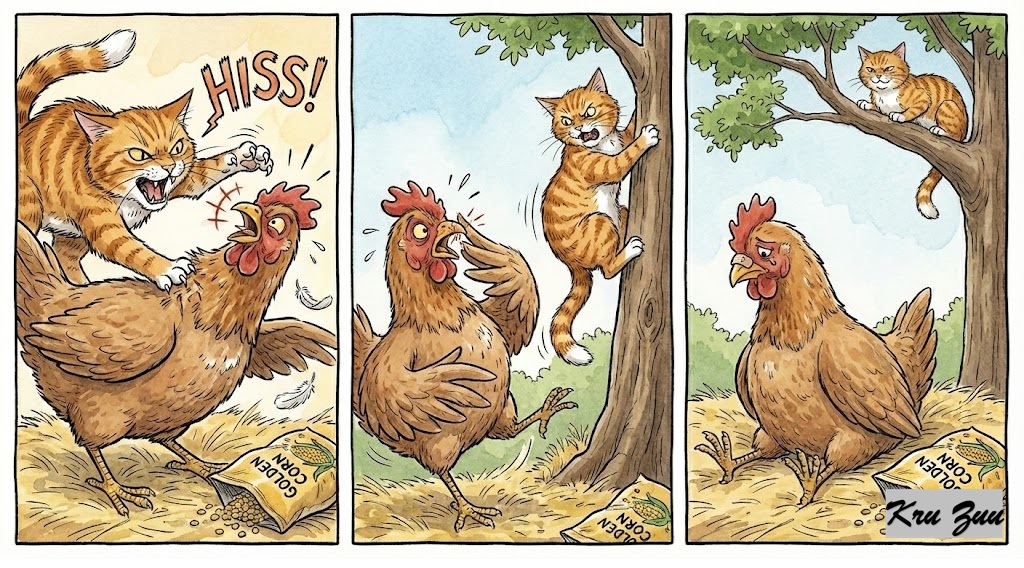
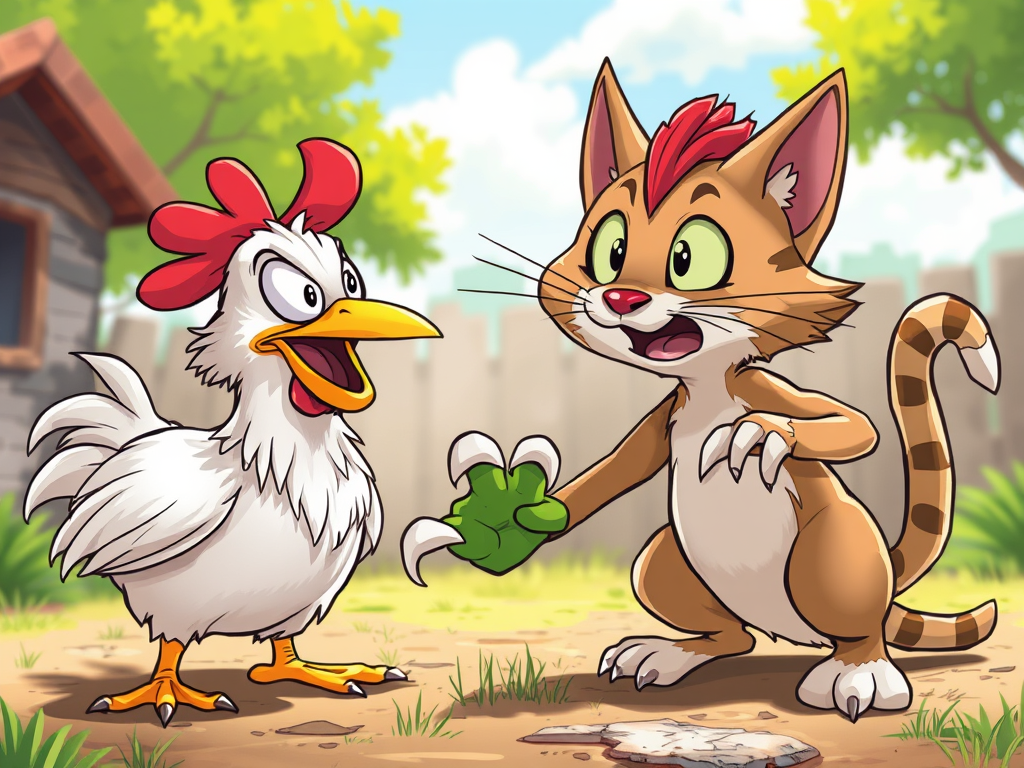
    Scene 2: The Cat Mrs. Hen didn’t give up. She went to the barn. “Leo! You are thin. You need this corn.” Leo the Cat was sleeping. He opened one eye. “I am a carnivore, Mrs. Hen. I eat meat.” “Just try it!” Mrs. Hen shouted. She tried to open Leo’s mouth to put the corn in. “You must eat it!”

    The Result:HISS! Leo scratched Mrs. Hen’s beak and ran up a tree.

    The Moral: Mrs. Hen had good intentions (The Water). But a Frog and a Cat have different needs (The Drinking). Mrs. Hen wasted her day trying to turn a Cat into a Chicken. Don’t be Mrs. Hen. Offer the corn, but don’t force the feast. 🌽

    🎓 Lesson for English Learners


    Stop Buying, Start Doing.


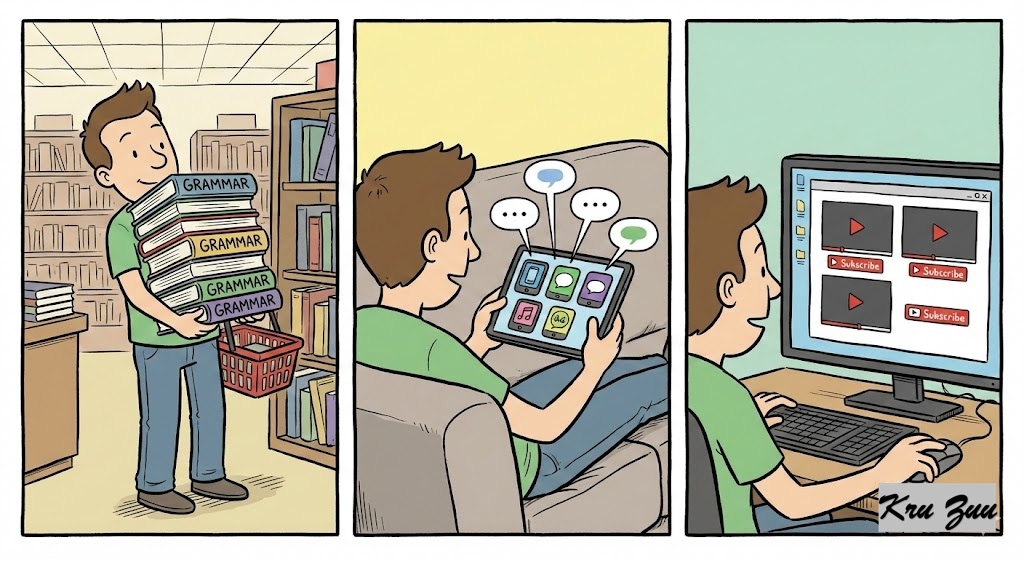
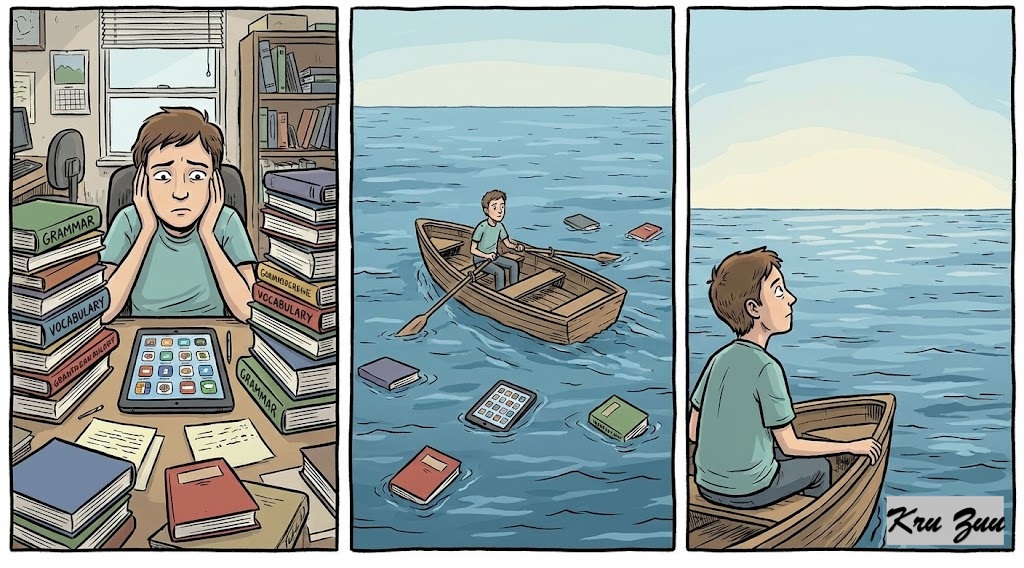
    The Situation: You buy 10 grammar books. You download 5 language apps. You subscribe to 3 YouTube channels.

    The Reality: The books and apps are just “the water.”


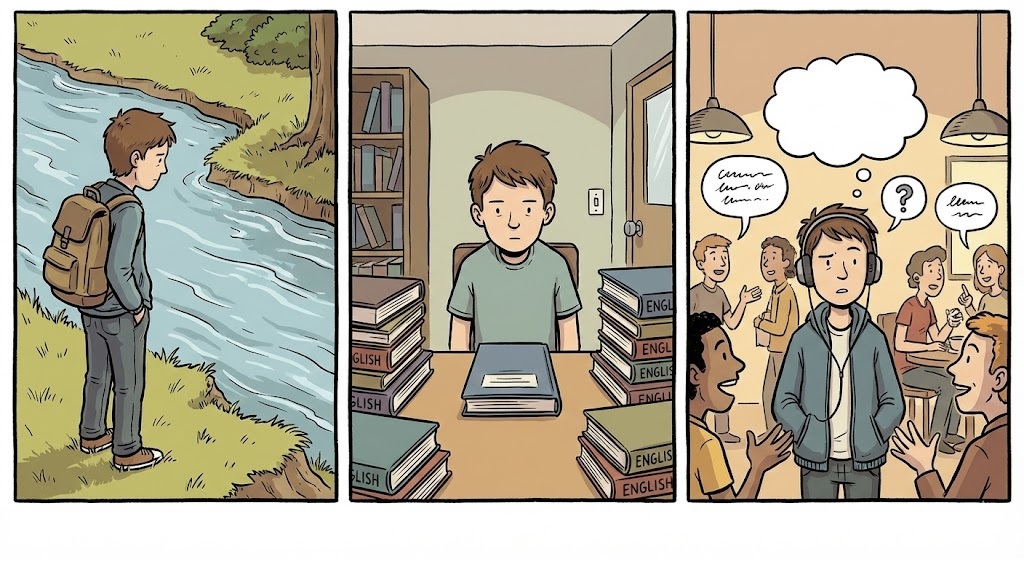
    The Problem: You are standing by the river, but you aren’t drinking. Buying the book doesn’t put the English in your brain.


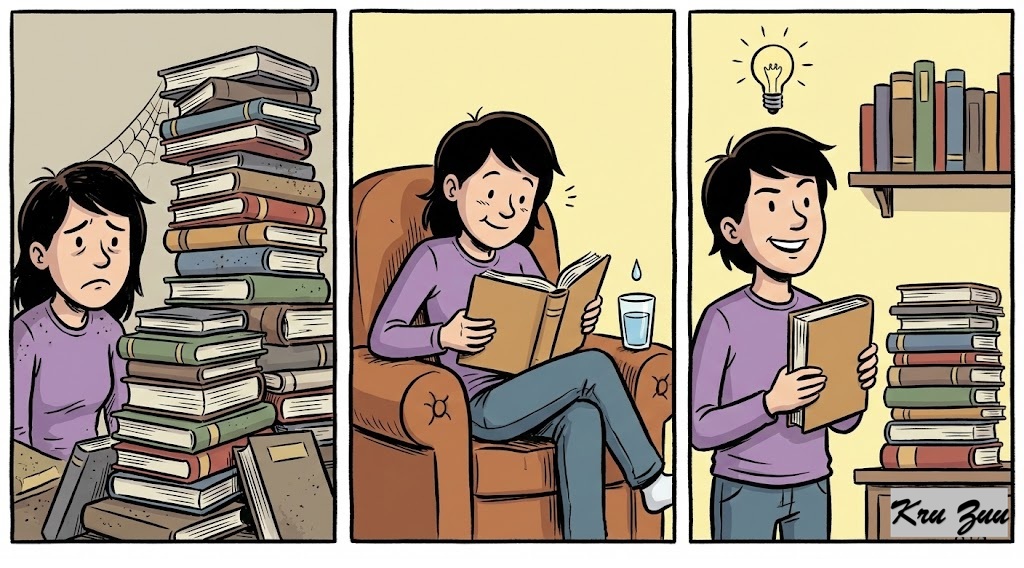
    The Fix: One page read is better than ten books bought. Drink the water. 💧


    💬 Your Turn: The Reflection 🚀


    Think about your life this week.


    Who are you trying to “force” to drink? (A friend? A student? Yourself?)


    Are you the stubborn horse? Is someone giving you good advice that you are ignoring?


    👇 Tell us in the comments! Have you ever tried to help someone who didn’t want help?

    By Zubeyir YURTKURAN

    https://www.facebook.com/BrainBattleground/

    https://www.facebook.com/zubeyr.yurtkuran/

    https://www.instagram.com/zubeyryurtkuran/
    https://www.youtube.com/@BrainBattleground-b3p

    https://www.instagram.com/brainbattleground/

  • 💸 The Daily Shield: The Law of Value

    💸 The Daily Shield: The Law of Value

    “Easy come, easy go.”


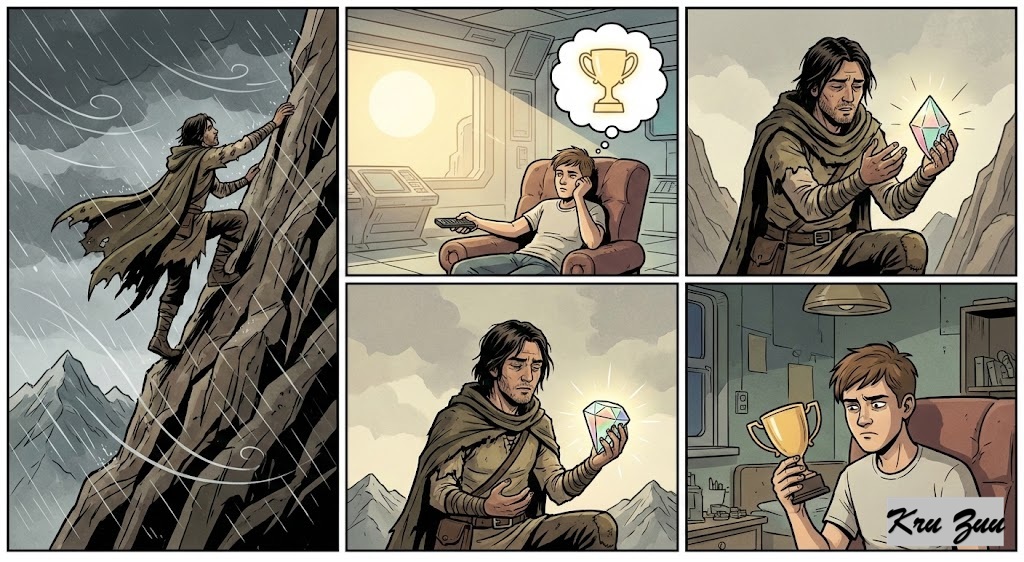
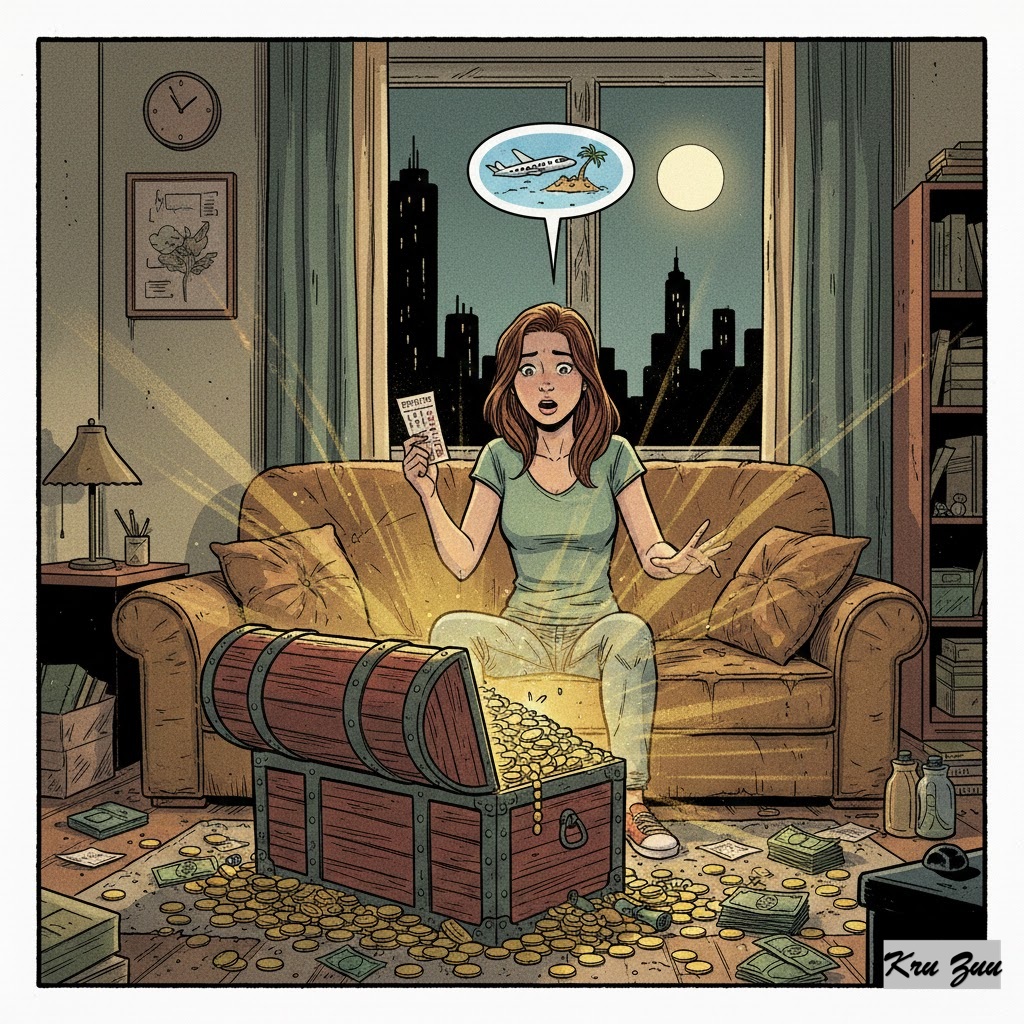
    😈 The Villain (The Lottery Winner)
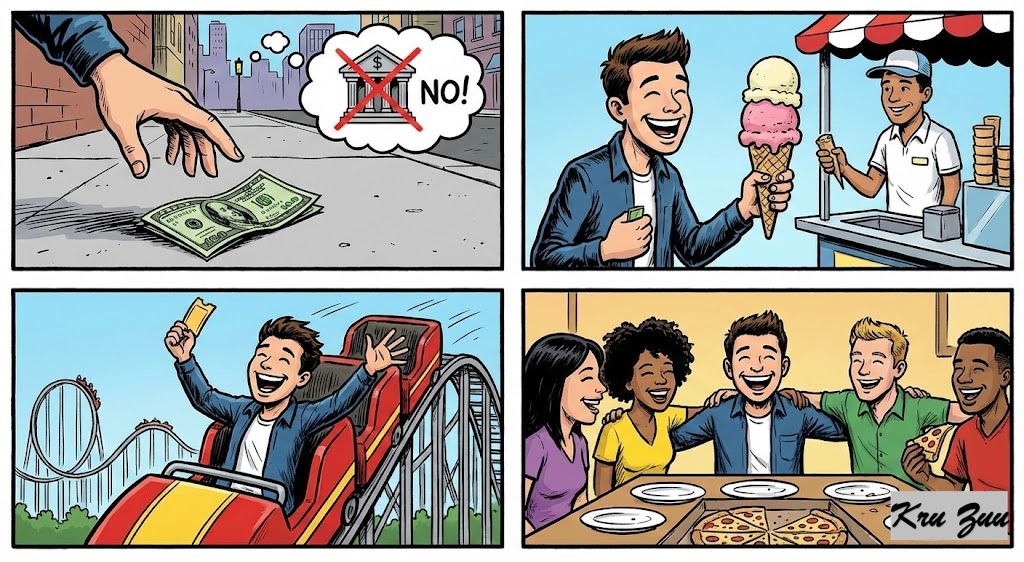
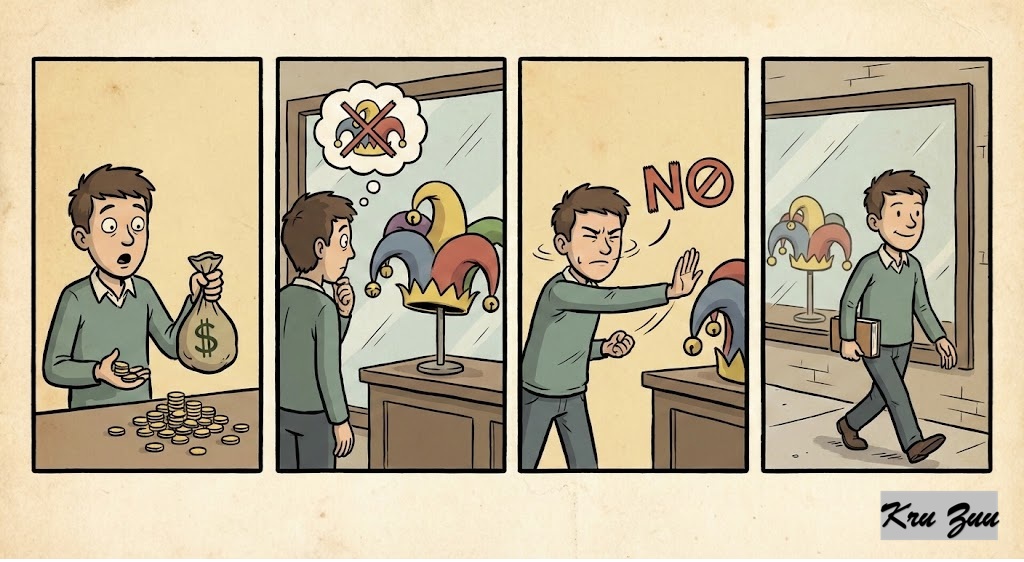
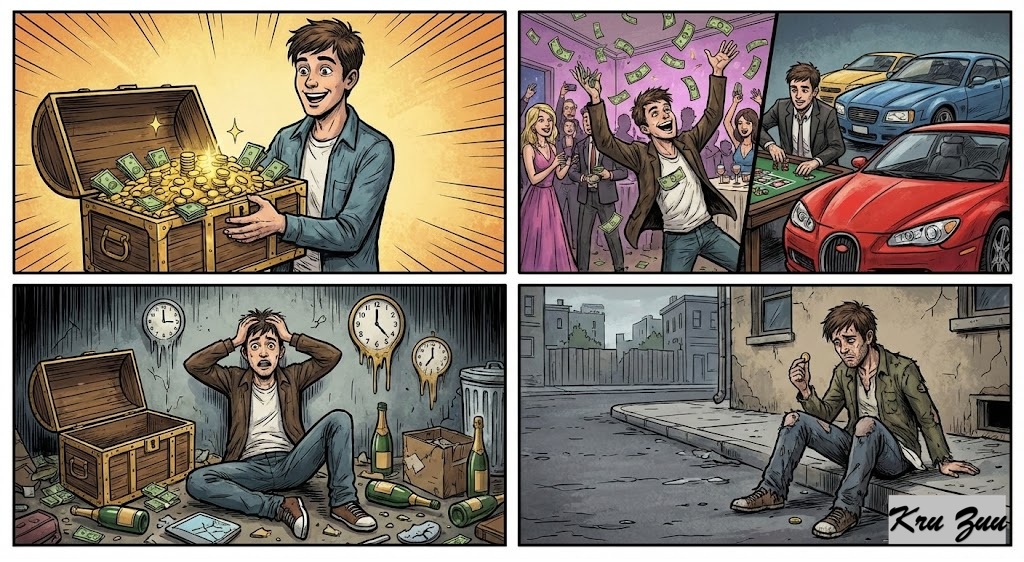
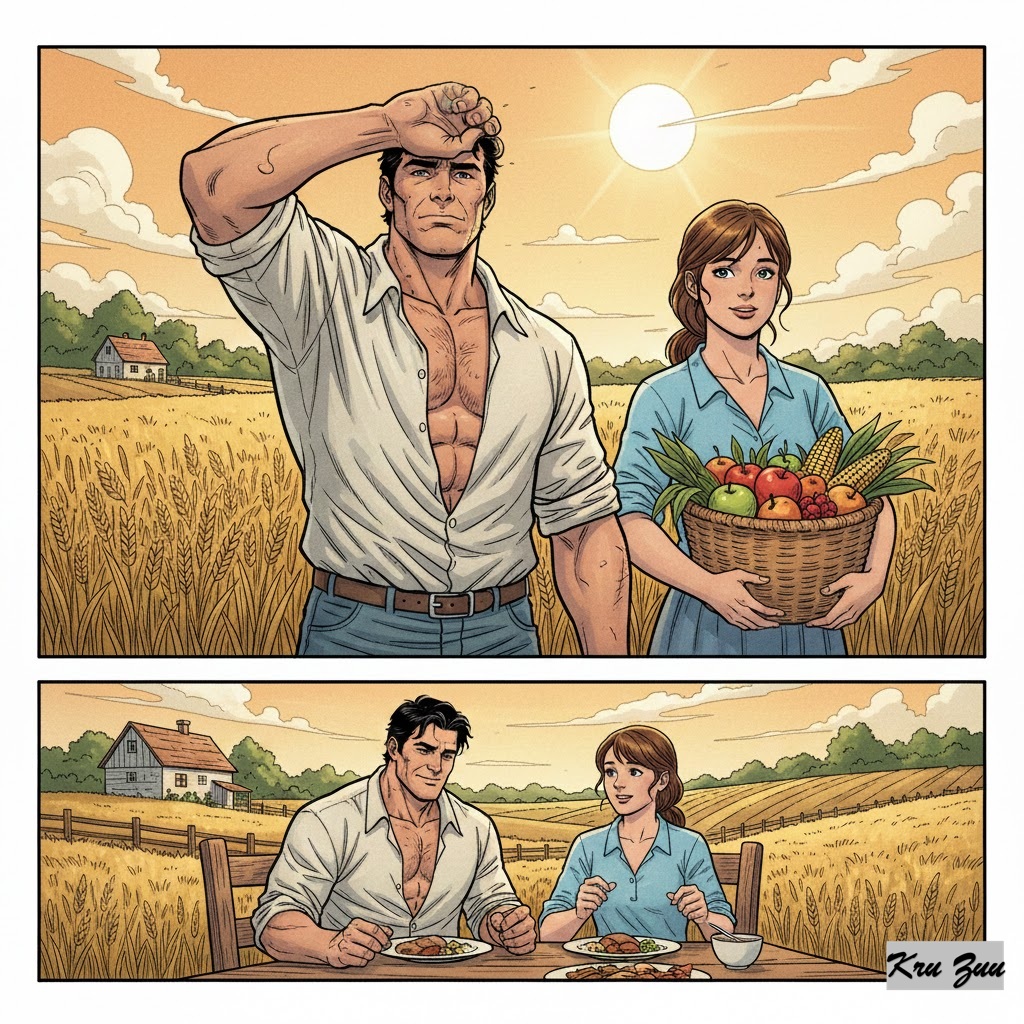
    Imagine you find $100 on the street. Do you put it in the bank? No!

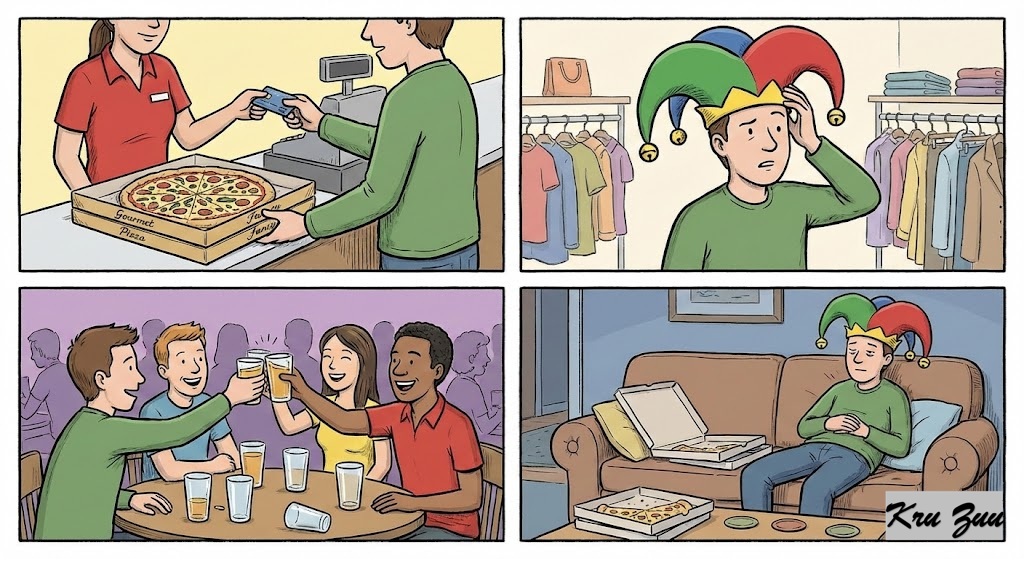
    You buy expensive pizza, you buy a silly hat you will never wear, and you treat your friends to drinks.

    Why? because you didn’t bleed for that money. It feels like “Monopoly money.”

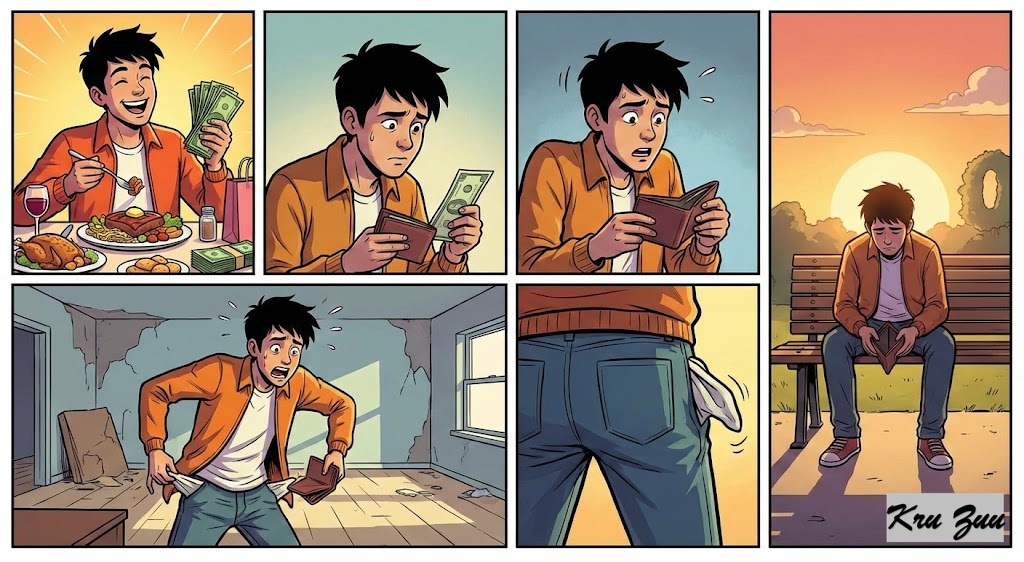
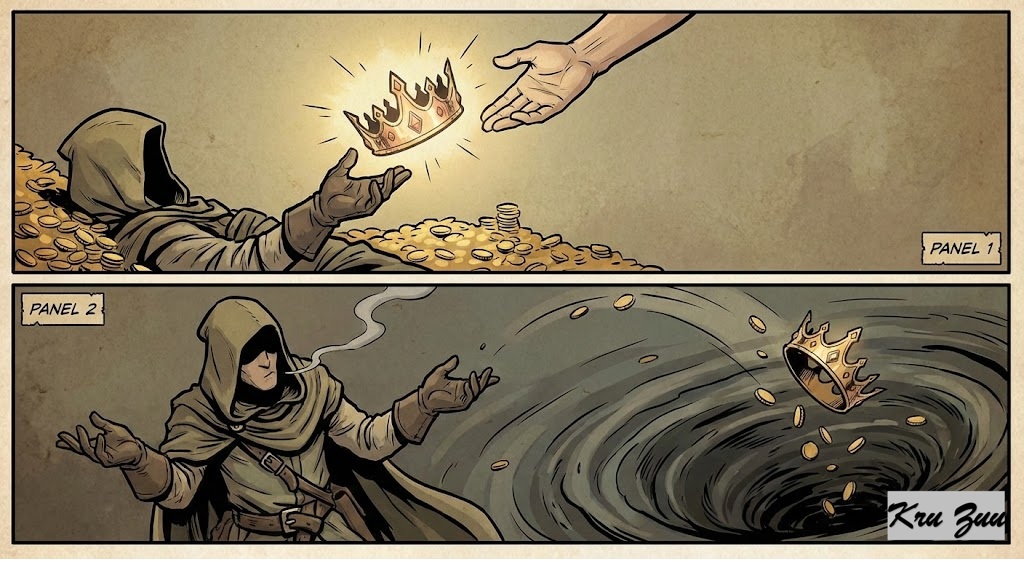
    The Result? By Tuesday, the money is gone. You are back to zero.

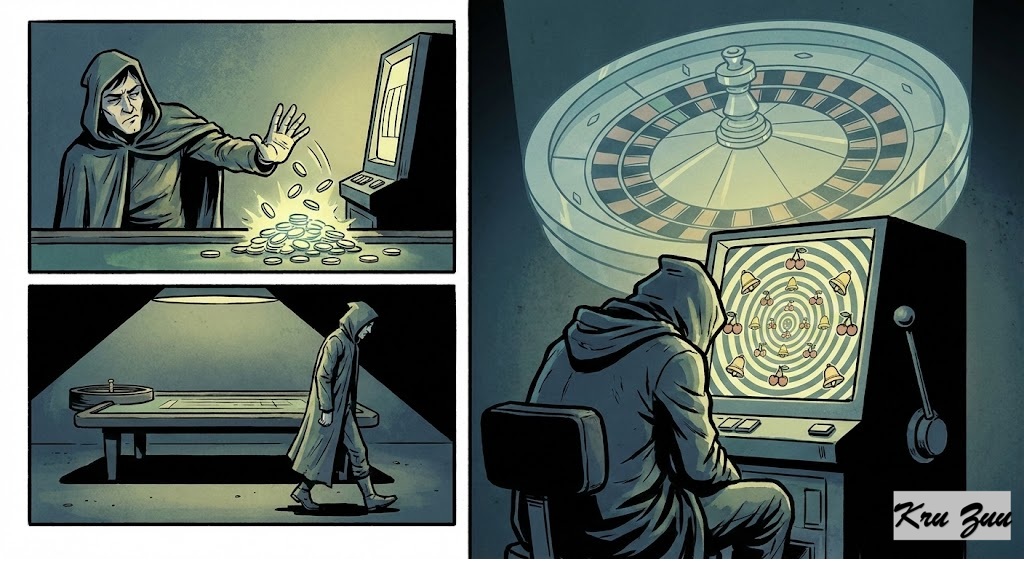
    You didn’t respect the gain, so the loss means nothing. You are trapped in a cycle of luck, not success. 🎰


    😇 The Hero (The Earner)
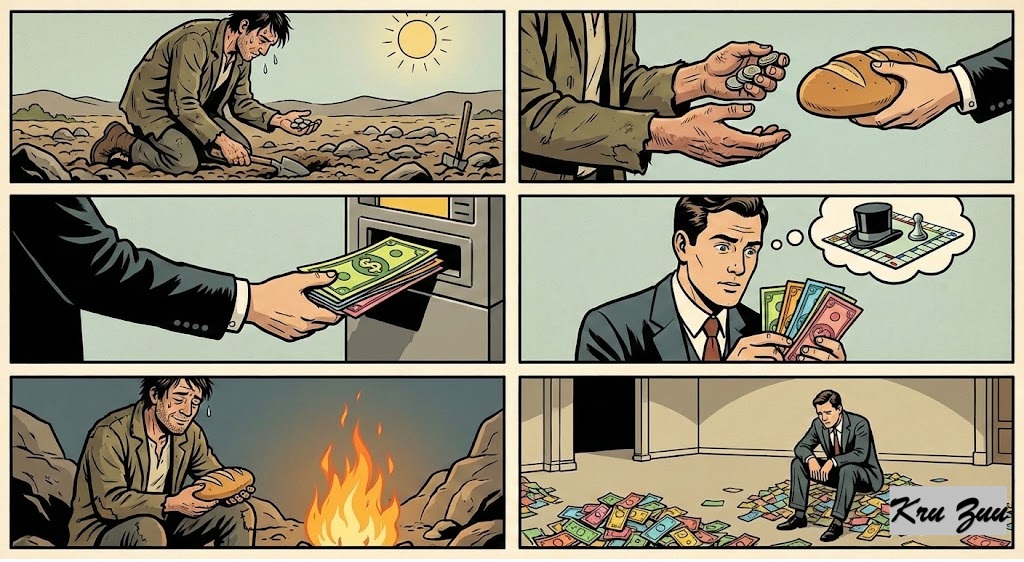
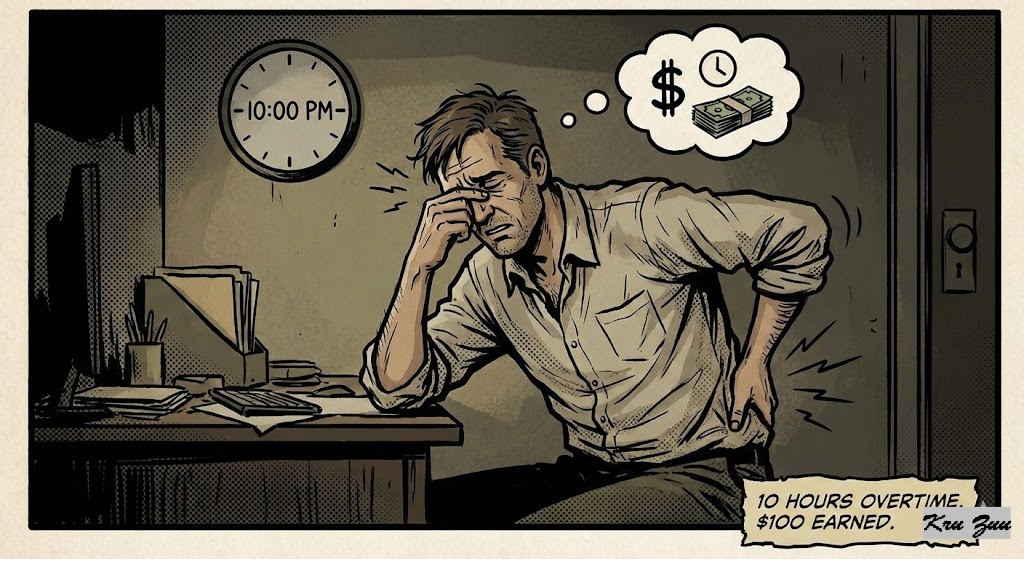
    You work 10 hours of overtime to earn that same $100. Your back hurts. Your eyes are tired.

    When you get the money, do you buy the silly hat? Absolutely not.

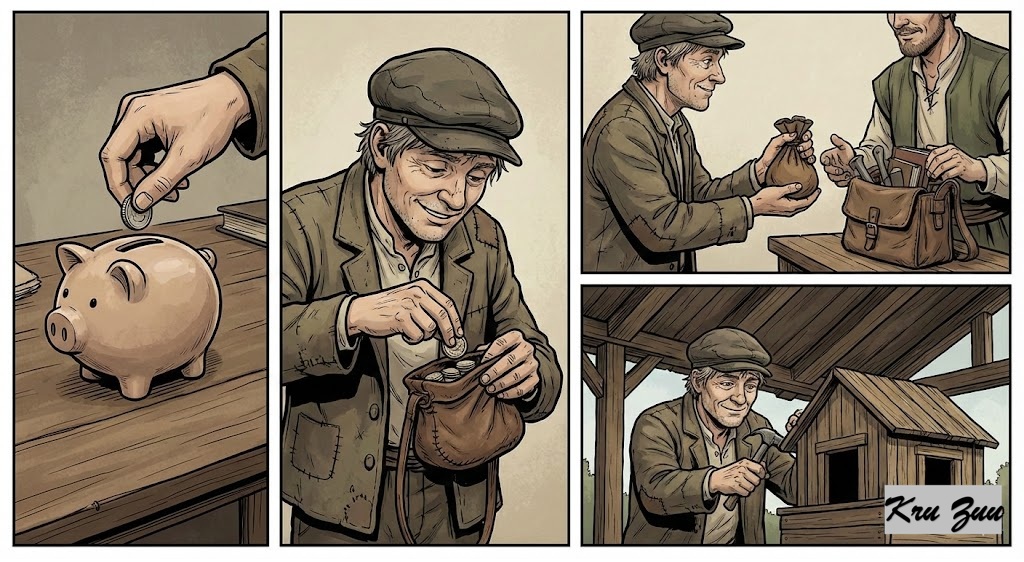
    You respect every cent. You save it or spend it on something valuable.

    The Result? That money builds your future. Because it came hard, it stays long. You understand value. 🛡️


    ⚖️ The Reality
    Value is tied to Struggle. We often wish for things to be easy.

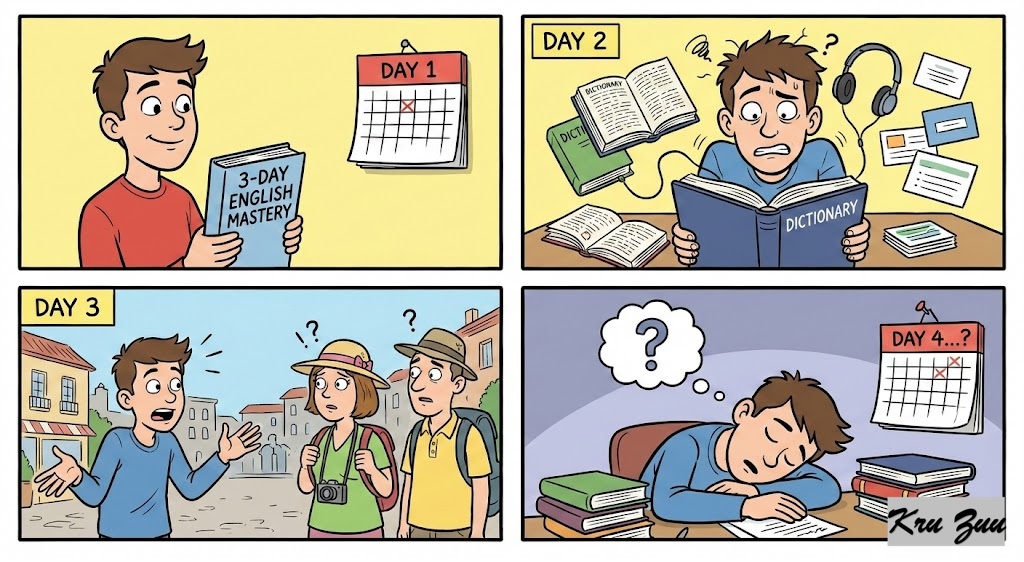
    We want the “Get Rich Quick” scheme. We want to speak fluent English in 3 days.

    But here is the brutal truth: If you get it without effort, you will lose it without regret.


    💎 The Secret
    The universe has a balance. The effort you put in acts like “glue.” Hard work makes success stick to you. Luck is slippery.

    🧐 The Anatomy of the Proverb


    This phrase is short, rhythmic, and brutally honest.


    Easy (Adverb/Adjective):
    Without difficulty or effort. ☁️


    Come (Verb): To arrive; to happen.


    Go (Verb): To leave; to be lost.


    Simpler Version: What you get quickly, you lose quickly.


    📚 Vocabulary Vault


    Fleeting (Adjective):
    Lasting for a very short time. (e.g., “His fame was fleeting.”) 💨


    Squander (Verb): To waste (something, especially money or time) in a reckless and foolish manner.


    Effortless (Adjective): Requiring no physical or mental exertion.


    Appreciate (Verb): To recognize the full worth of something. (We appreciate what we work for!).


    Windfall (Noun): A piece of unexpected good fortune, typically one that involves receiving a large amount of money. 💰


    🧠 Grammar Focus: Parallelism & Antonyms


    This proverb is beautiful because it is perfectly balanced (Parallel Structure).


    Antonyms (Opposites)


    Come ↔️ Go


    In English, we love using opposites to show balance.


    Ellipsis (The Missing Words)


    The full grammar sentence would be:
    “(What is) easy (to) come, (is) easy (to) go.”


    But in proverbs, we cut the extra words for speed and impact.

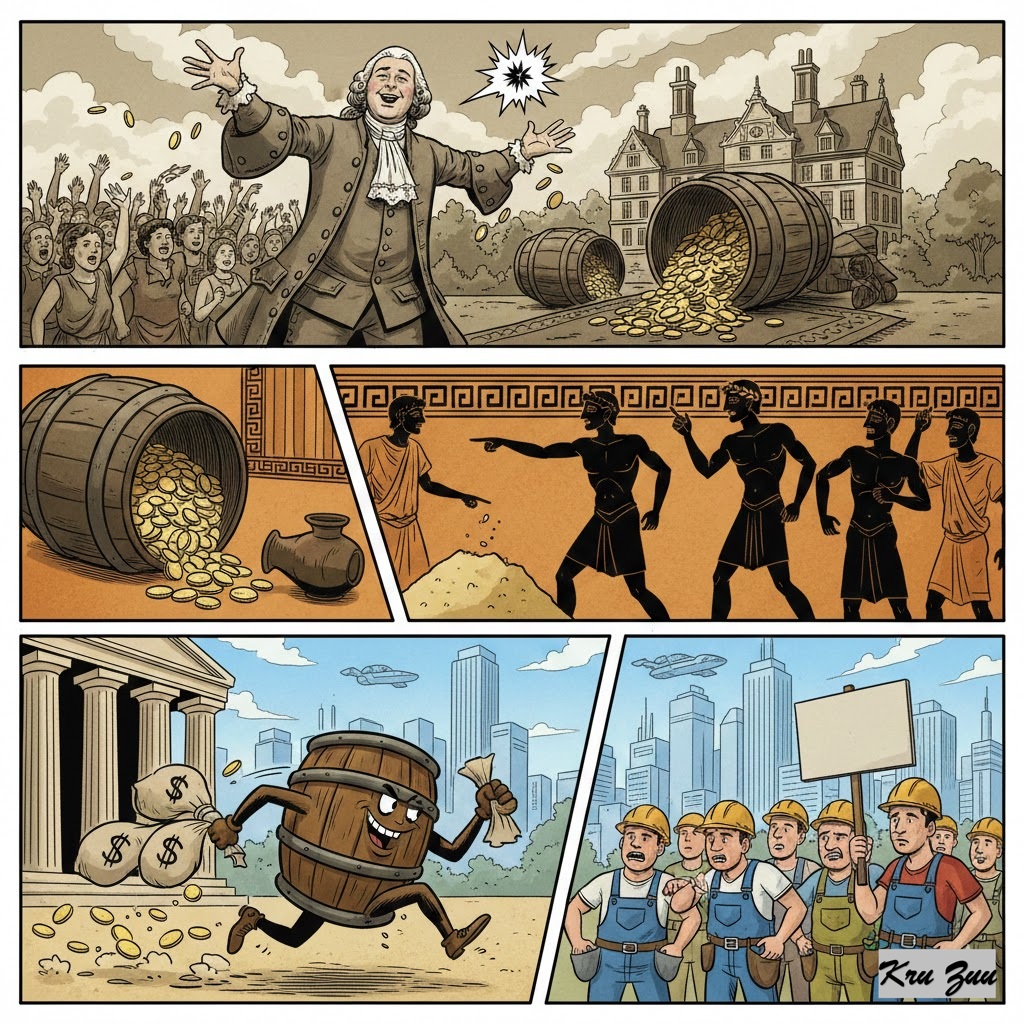
    📜 History: Origin and Spread


    This isn’t just English; it’s human nature.


    The Origin:
    The phrase became popular in the 1600s in England, but the idea is ancient. It was originally used to describe people who spent their money wildly because they didn’t work for it.


    Global Cousins


    🇹🇷 Turkish:
    “Haydan gelen huya gider.” (What comes from ‘Hay’ goes to ‘Hu’ / What comes from nothing goes to nothing.) — The perfect match!


    🇪🇸 Spanish: “Lo que viene fácil, fácil se va.”


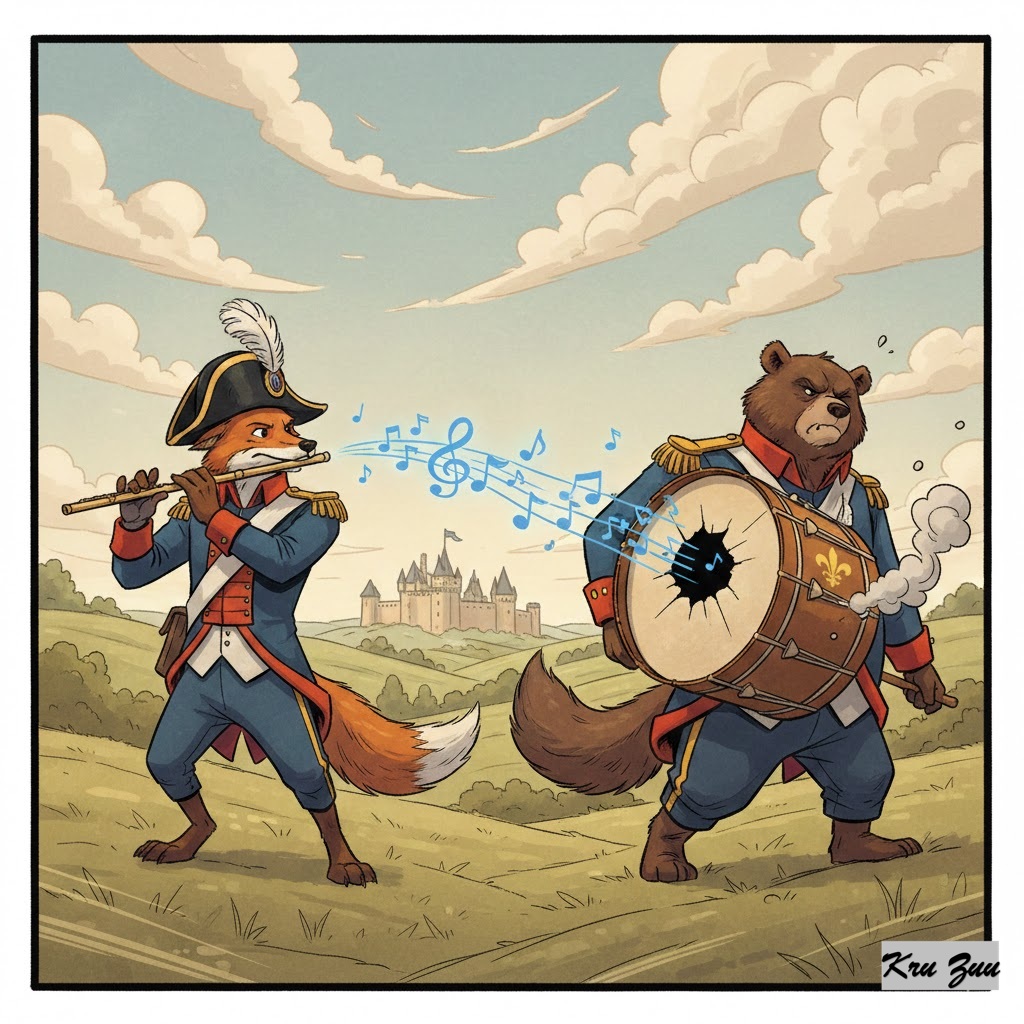
    🇫🇷 French: “Ce qui vient de la flûte s’en va au tambour.” (What comes from the flute goes to the drum.)

    🎯 Impact on Life: The Pros & Cons


    ✅ The Pros (The Comfort)


    Consolation:
    Did you lose your lucky pen? Did your “lucky” win in a video game disappear? It’s okay. It wasn’t yours to begin with. This quote helps you accept loss peacefully.


    ❌ The Cons (The Warning)


    Disrespect:
    If you are talented (easy for you), you might not practice. Then, a hard worker will beat you. Talent is “easy come,” but discipline keeps it from “going.”

    🎭 Short Story: The Golden Corn


    Let’s visit the farm to see this law in action.


    🌟 The Setup:
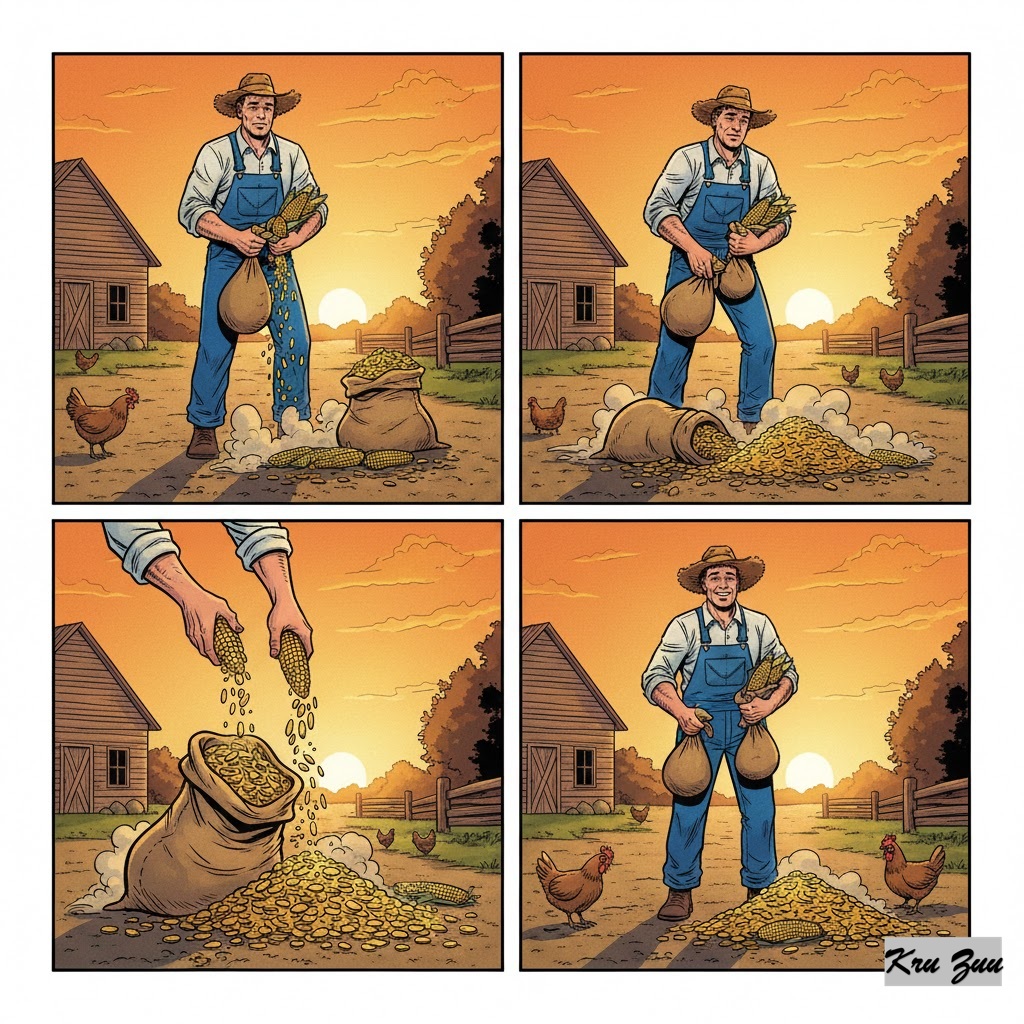
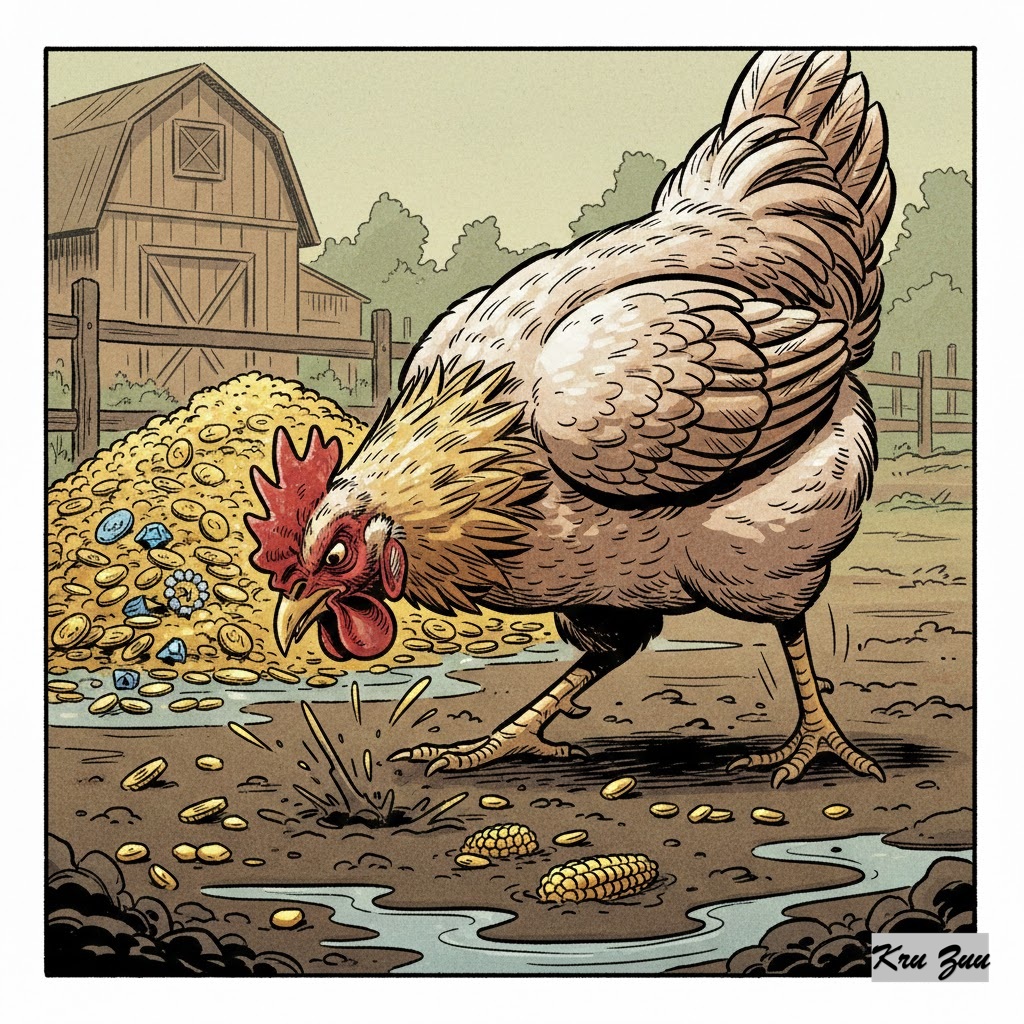
    A farmer drops a bag of gold coins and a bag of corn in the yard.


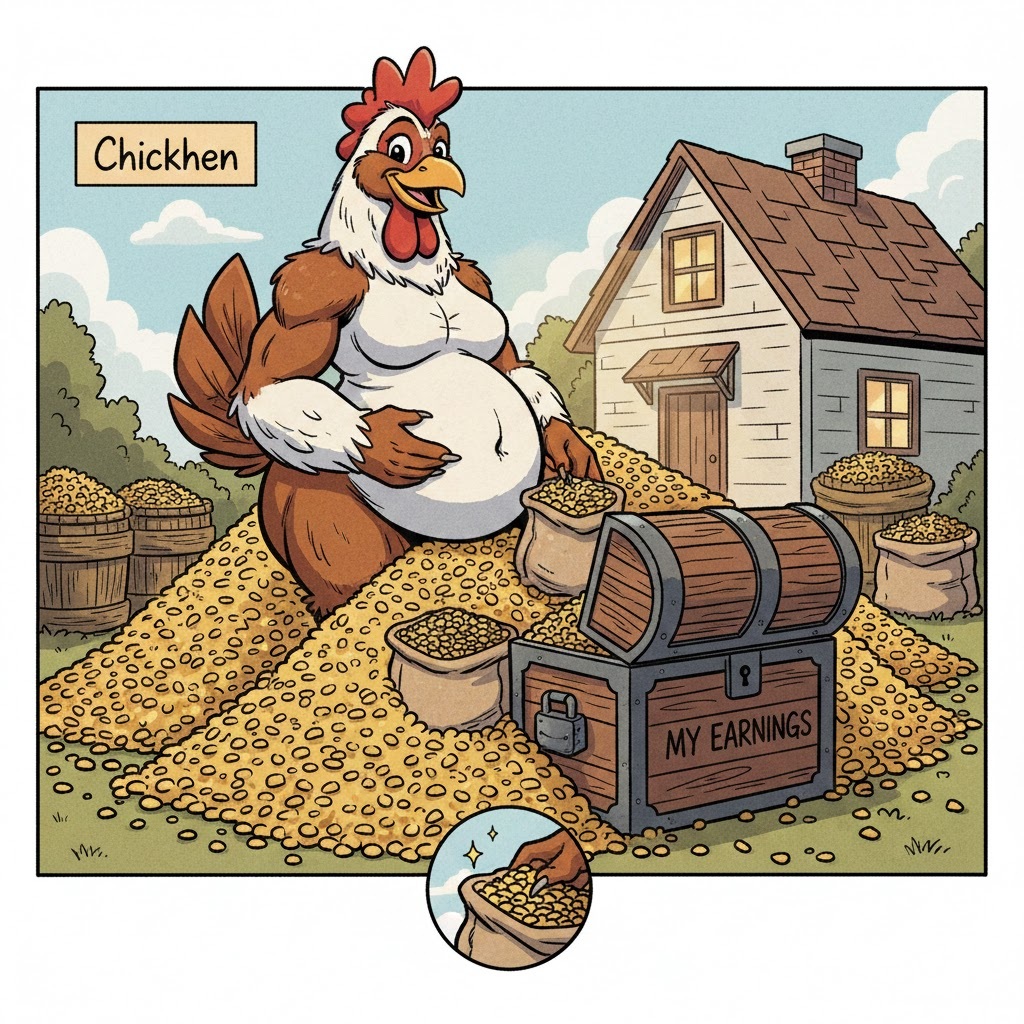
    🐔 The Chicken (The Hard Worker): The Chicken ignores the gold. She sees the corn scattered in the mud. She scratches the dirt for hours. Peck, scratch, peck. She works for every single grain.


    The Result: She is full, strong, and appreciates her meal. She stores the extra corn carefully. She keeps what she earned.


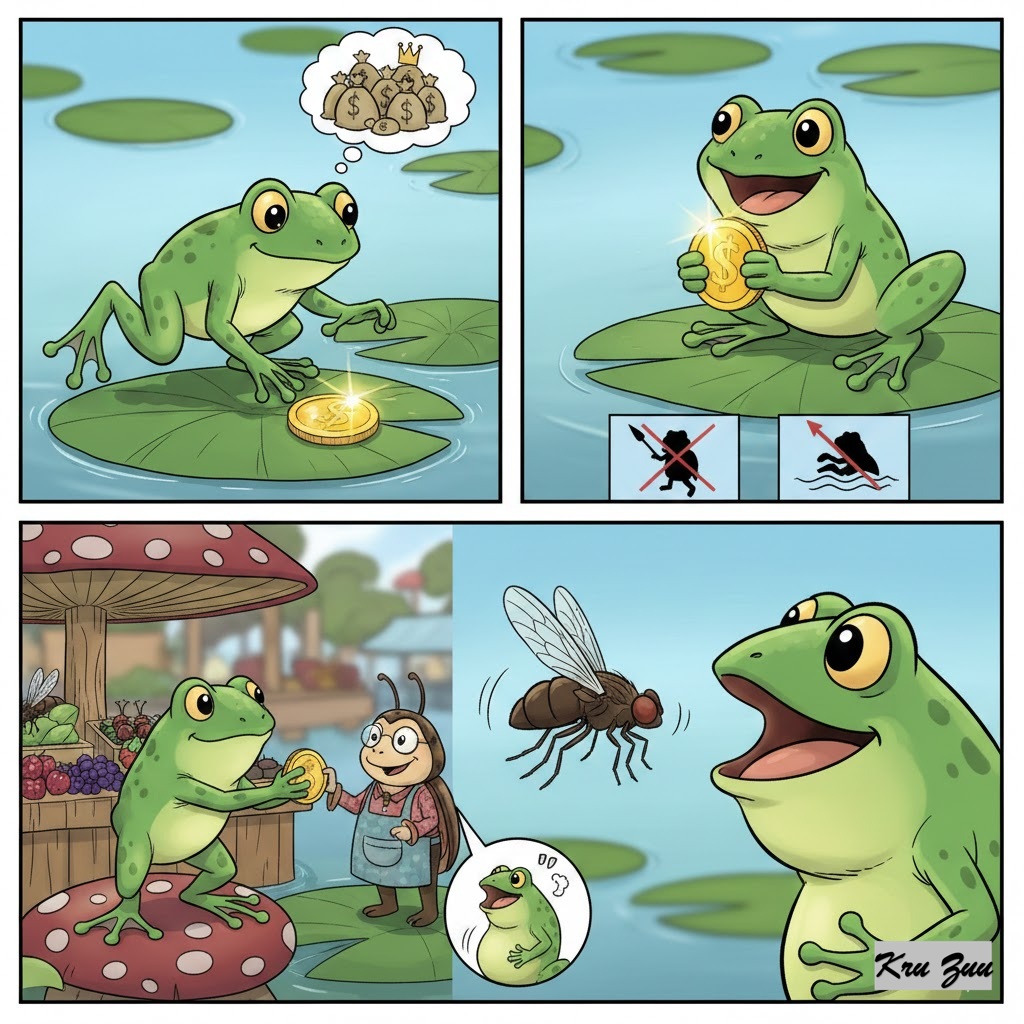
    🐸 The Frog (The Lucky Finder): The Frog hops by and sees a shiny gold coin on a lily pad. “Wow! I’m rich!” he croaks. He didn’t hunt for it. He didn’t swim for it. It was just there. He buys a delicious fly from a bug merchant. He swallows it in one second. Gulp.


    The Result: The flavor is gone instantly. He is hungry again. He looks for another free coin, but there are none left. He is sad and empty.


    🐈 The Cat (The Wise Observer): The Cat watches them both from the fence. The Frog cries about being hungry again. The Cat licks her paw and says: “Don’t cry, little Frog. You found it by luck, you lost it by luck. Easy come, easy go.”


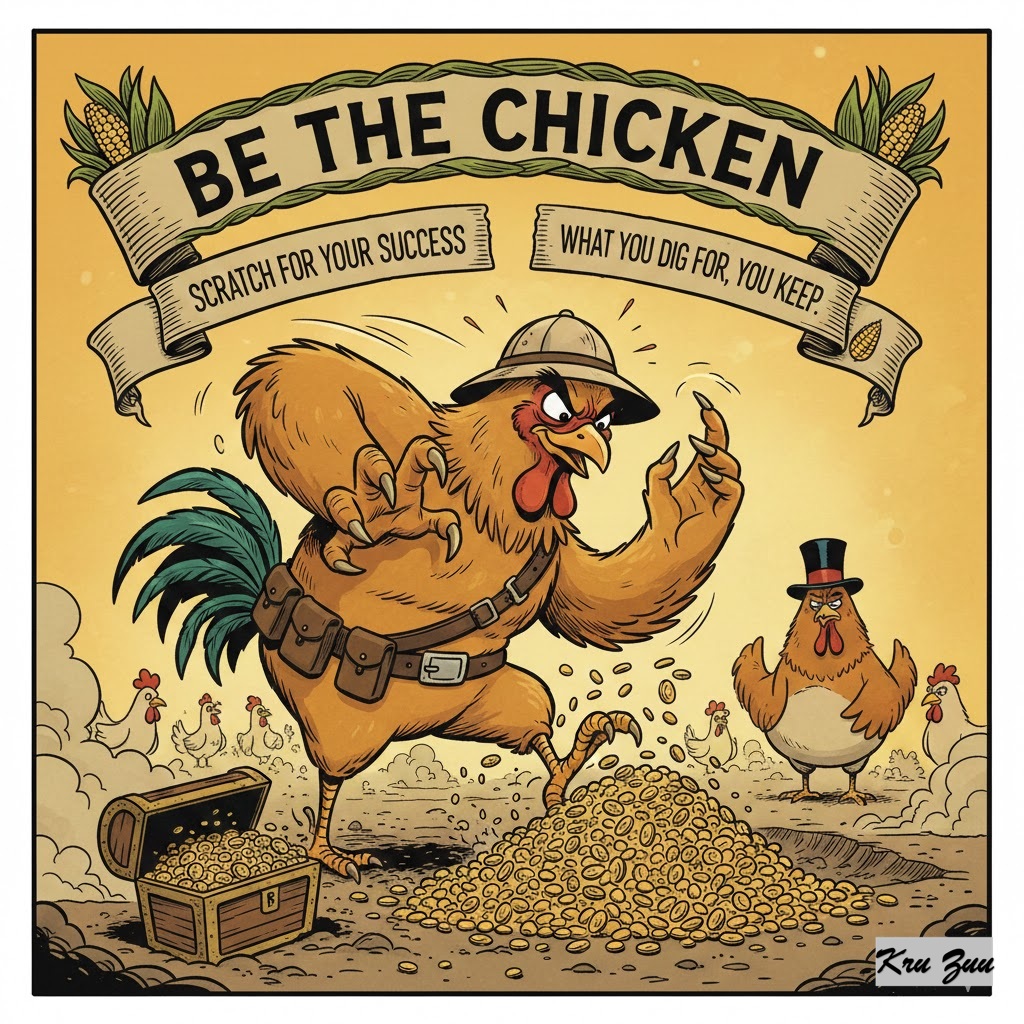
    The Moral: Be the Chicken. Scratch for your success. What you dig for, you keep. 🌽

    🎓 Lesson for English Learners


    Don’t Rely on Translation Apps.


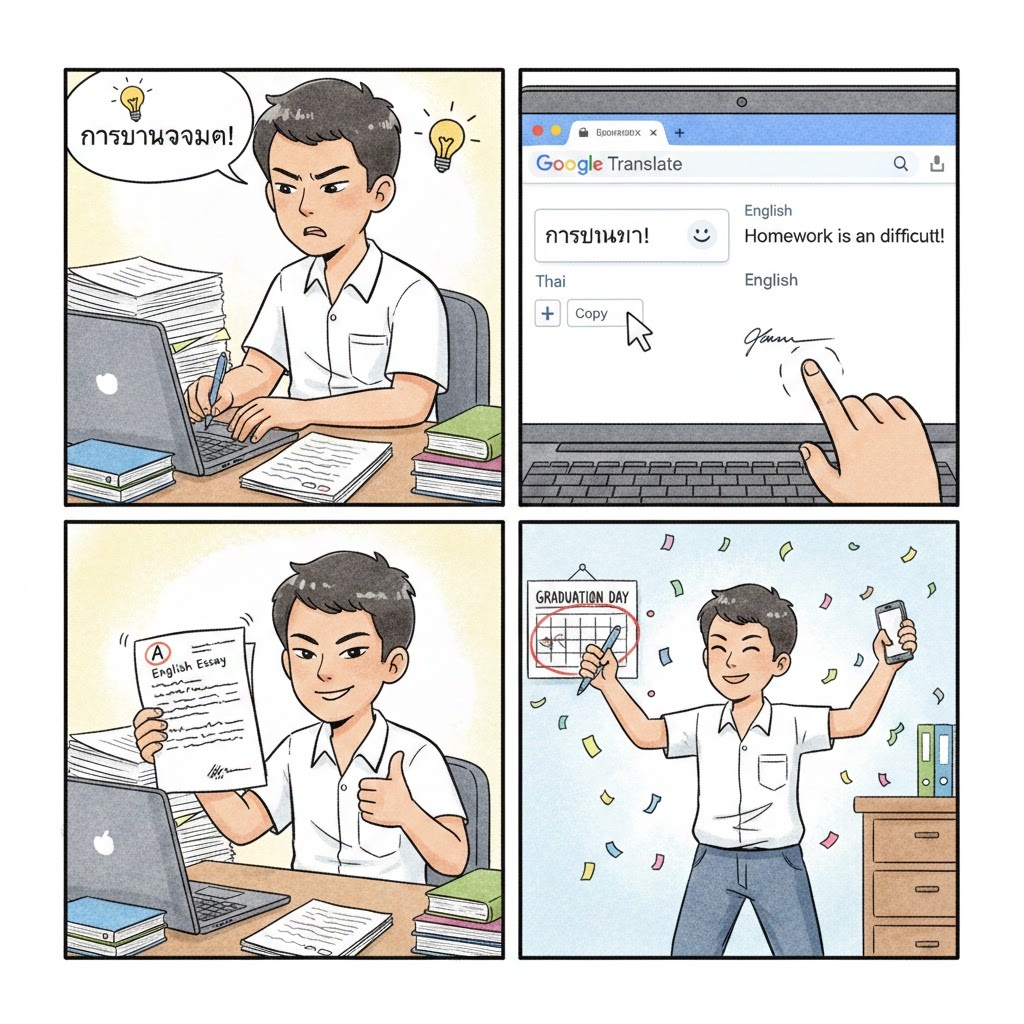
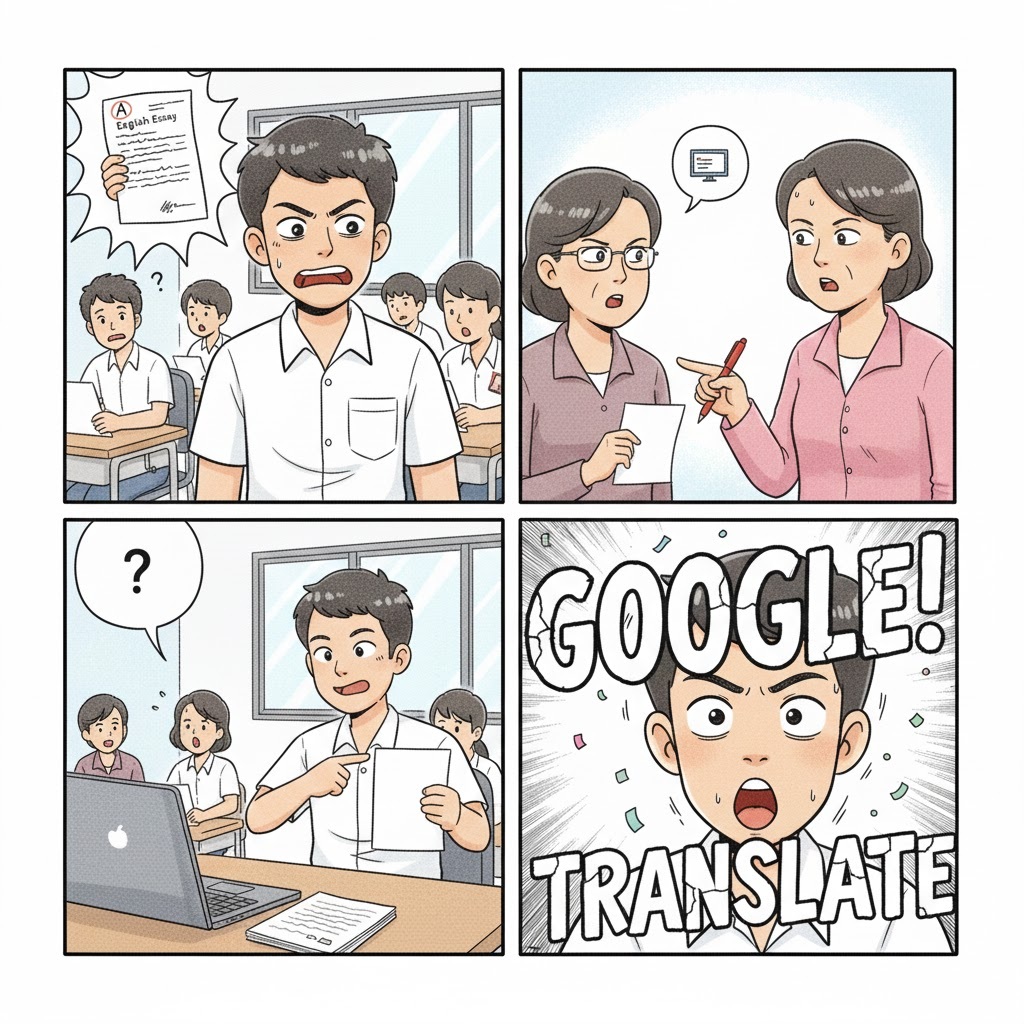
    Situation: You have homework. You type the Thai sentence into Google Translate, copy the English, and hand it in. You get an “A”.


    The Problem: Two weeks later, you have an exam. You look at the paper and your mind is blank.


    You Say: “But I got an A on the homework!”


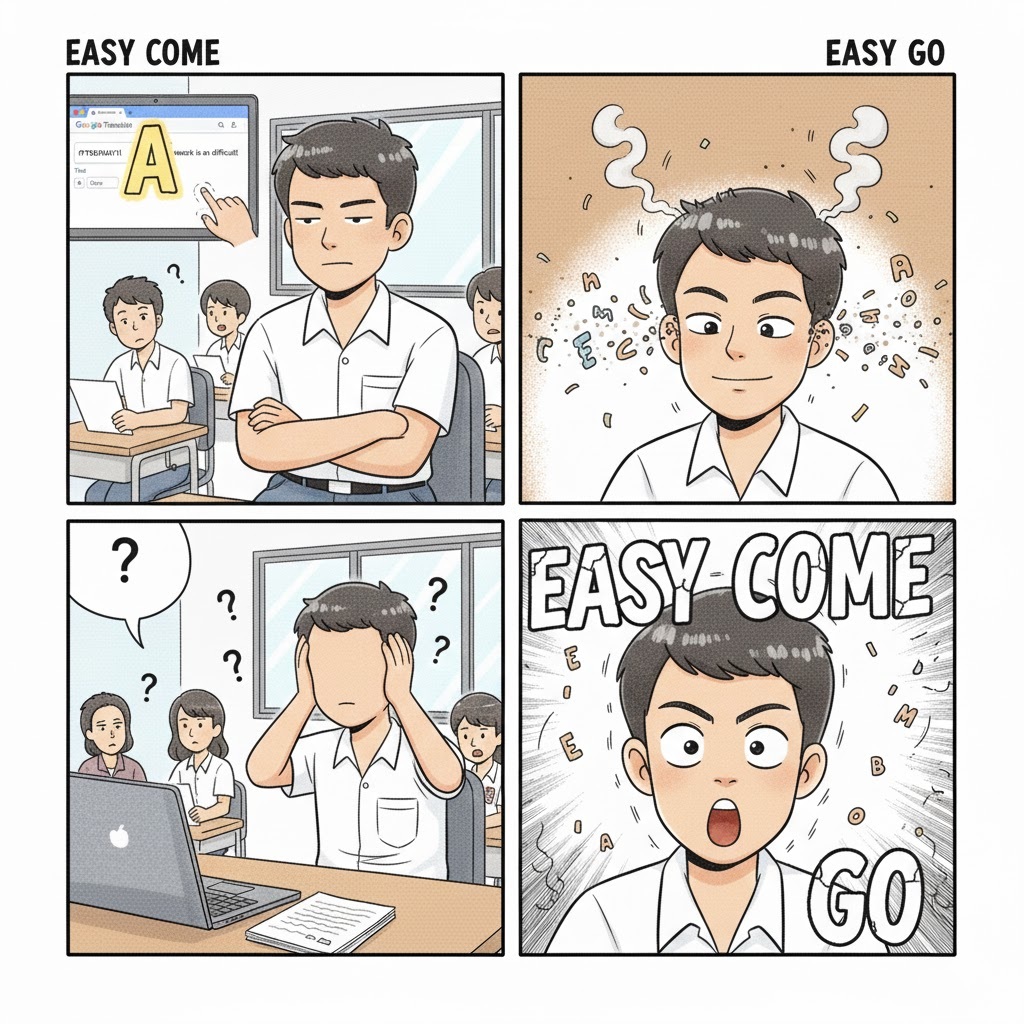
    The Reality: That “A” was Easy Come (Google gave it to you). The knowledge is Easy Go (It left your brain immediately).


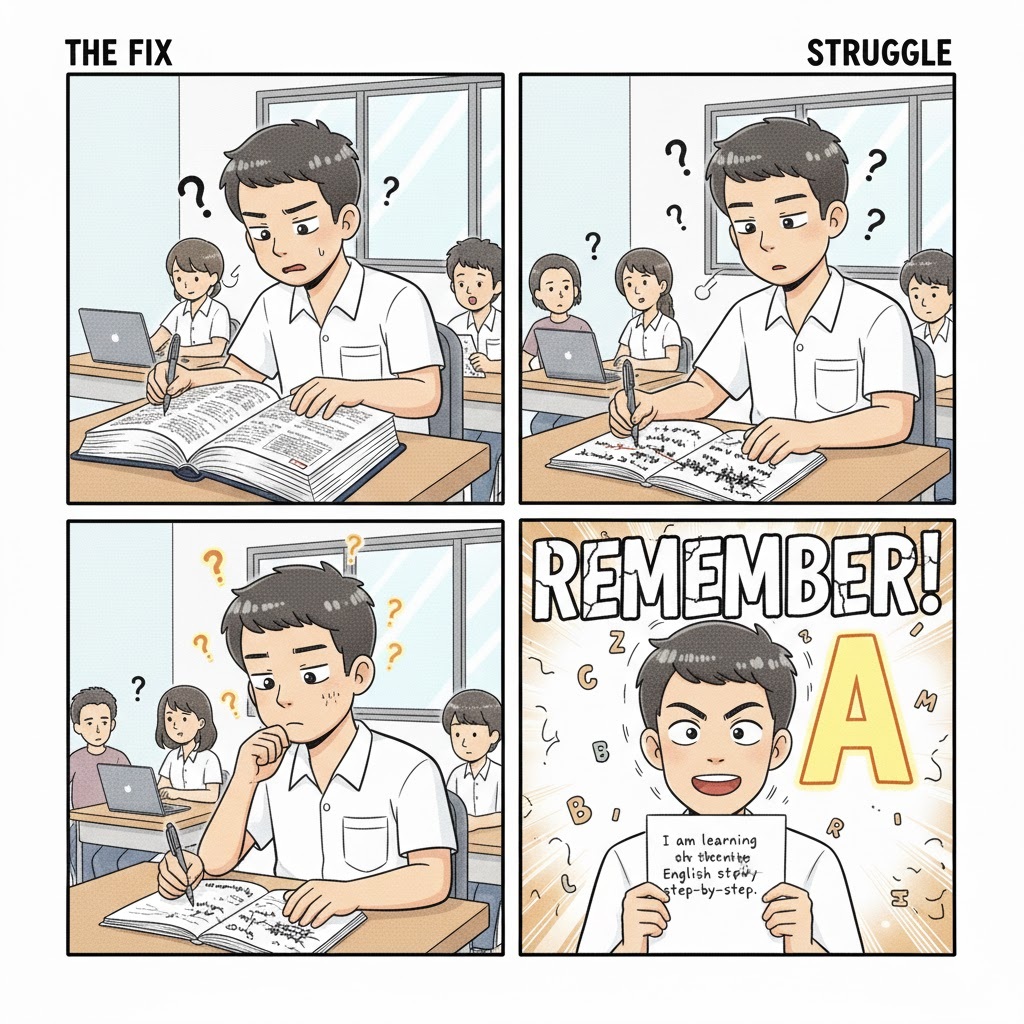
    The Fix: Struggle with the dictionary. Write the sentence yourself. Make mistakes. The English you struggle to learn is the English you will remember forever.


    💬 Your Turn: The “Lucky” Loss 🚀


    We have all been the Frog at least once.


    The Question:
    Tell us about a time you found money, won a prize, or got something for free… and then lost it or wasted it immediately! 💸


    Did you find 5 Dollars and buy bad candy?


    Did you memorize a word for a test and forget it the next hour?


    Tell me in the comments below! 👇

    By Zubeyir YURTKURAN

    https://www.facebook.com/BrainBattleground/

    https://www.facebook.com/zubeyr.yurtkuran/

    https://www.instagram.com/zubeyryurtkuran/
    https://www.youtube.com/@BrainBattleground-b3p

    https://www.instagram.com/brainbattleground/

  • 🛡️ The Daily Shield: The Law of Visibility

    🛡️ The Daily Shield: The Law of Visibility

    “Out of sight, out of mind.”


    👻 The Villain (The Ghost)

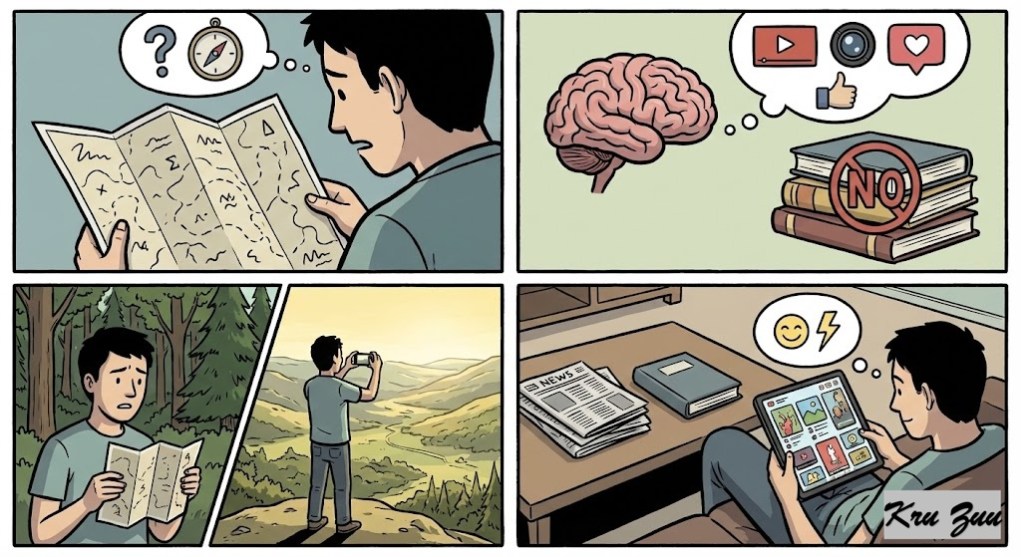
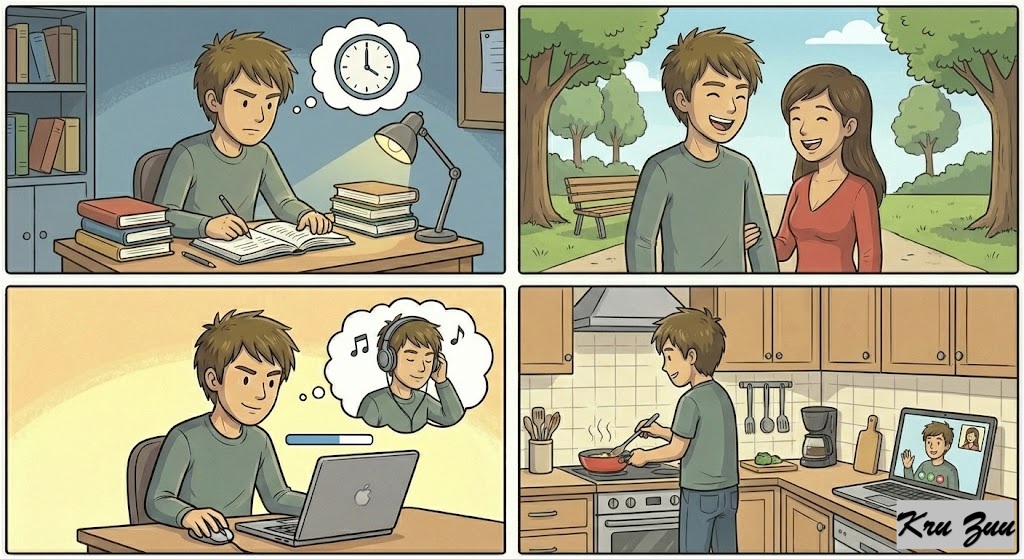
    You have a best friend. You move to a different city. You promise to call every week.

    But then… life happens. You get busy with work. You make new friends. You stop seeing your old friend’s face.

    Slowly, the messages stop. The memories fade. A year later, you realize you haven’t spoken to them at all. You didn’t mean to be bad; you just forgot because they weren’t there. You let the connection die. The fog of “distance” won. 🌫️


    ❤️ The Hero (The Connector)

    You know that human memory is weak.

    You move away, but you put a photo of your friend on your desk.

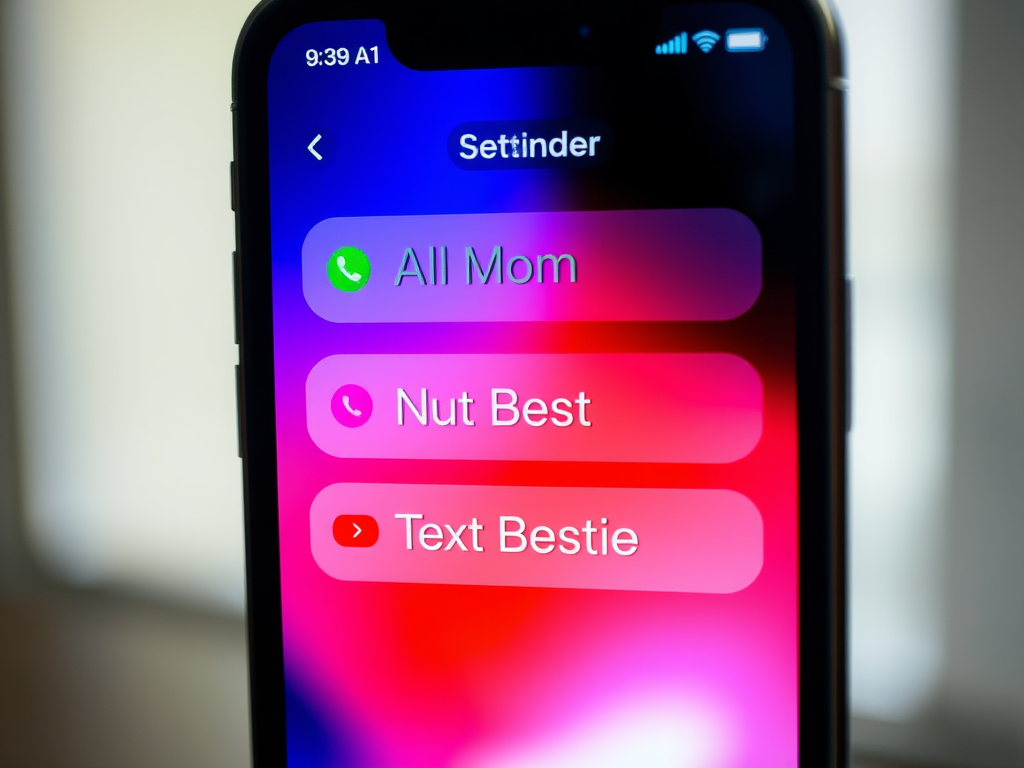
    You set a reminder on your phone: “Call Mom.””Text Bestie.”

    You keep your English books on the coffee table, not hidden in a drawer.

    You fight the distance. You force your brain to remember what is important, even if it isn’t right in front of your eyes. You keep the fire alive. 🔥


    ⚖️ The Reality


    Your brain is lazy.

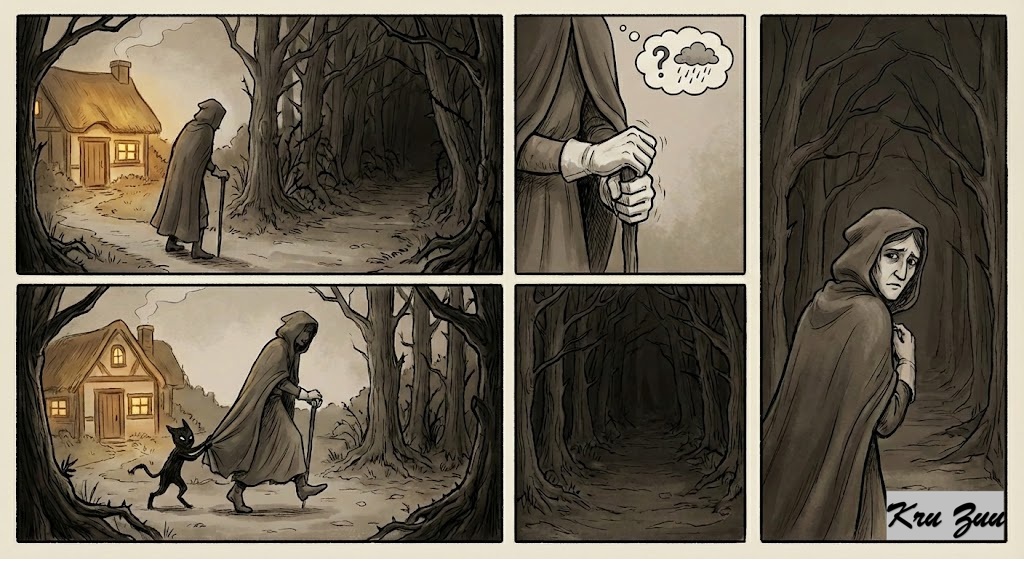
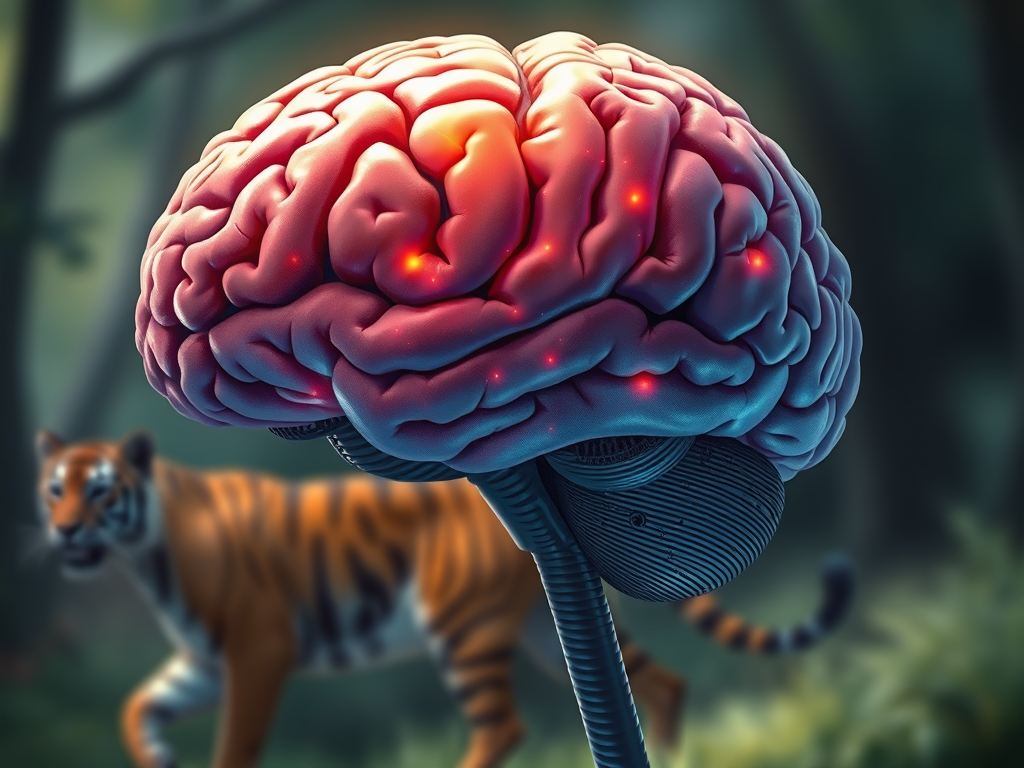
    The human brain prioritizes what it can see immediately. It’s a survival instinct. If a tiger is in front of you, you care about the tiger. If the tiger is 100km away, the tiger doesn’t exist.

    The Danger: This ruins relationships, kills hobbies (like learning English), and destroys goals.


    💎 The Secret: To keep something in your mind, you must keep it in your sight. Visibility = Priority.

    🧐 The Anatomy of the Proverb


    This is a warning about human nature.


    Out of (Preposition):
    Beyond; no longer inside.


    Sight (Noun): The ability to see; vision; range of view. 👀


    Mind (Noun): Memory; attention; thoughts. 🧠


    Simpler Version: If I can’t see it, I will forget it.


    📚 Vocabulary Vault


    Neglect (Verb):
    To not pay enough attention to something. (The result of “out of sight”).


    Fade (Verb): To slowly disappear or become less bright.


    Recall (Verb): To bring a fact back into one’s mind; to remember.


    Distance (Noun): The amount of space between two things. 📏


    Permanence (Noun): The state of remaining unchanged indefinitely.


    🧠 Grammar Focus: Parallelism


    This proverb uses a beautiful structure called Parallelism. It balances two similar phrases to create a catchy rhythm.


    Structure: Out of [Noun A], out of [Noun B].


    Why it works: It suggests a direct cause and effect. Because A happened, B happened.


    Other examples of this rhythm:


    “Easy come, easy go.”


    “No pain, no gain.”

    📜 History & Global Cousins


    This isn’t just English wisdom; it’s human wisdom.


    The Origin

    This idea is ancient. It appears in Homer’s Odyssey (ancient Greece), but the exact English rhyme became popular in the 1500s.


    Global Cousins
    🇹🇷 Turkish:
    “Gözden ırak olan, gönülden de ırak olur.” (He who is far from the eye is also far from the heart.) — A perfect match!


    🇪🇸 Spanish:“Ojos que no ven, corazón que no siente.” (Eyes that don’t see, heart that doesn’t feel.)


    🇫🇷 French:“Loin des yeux, loin du cœur.” (Far from eyes, far from heart.)

    🎭 Short Story: The Trio of the Pond 🐸🐔🐱


    Let’s visit the farm to see this law in action.


    🌟 The Cast
    Cleo the Cat:
    Cool, lazy, and loves naps.


    Cluck the Chicken: Anxious, loud, and easily distracted.


    Fred the Frog: The adventurous traveler.


    The Separation: Fred the Frog was tired of the small farm pond. “I am going to the Amazon River!” he announced.

    Cluck cried, “We will miss you every second!”

    Cleo opened one eye and said, “Don’t worry, Fred. We are the Three Musketeers. We never forget.”


    Month 1 (The Departure): Fred left. Cluck looked at Fred’s empty lily pad every day. “I miss Fred,” she clucked.

    Cleo looked at the empty pond. “Life is boring without Fred.”


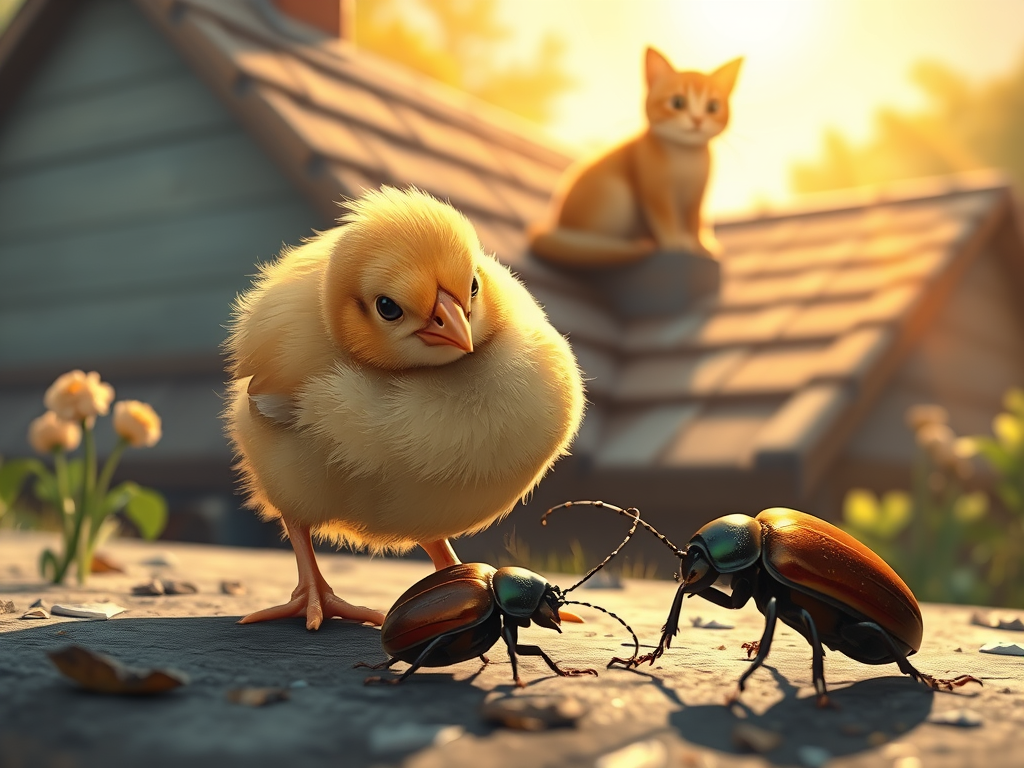
    Month 6 (Out of Sight): Cluck found a new shiny beetle to chase. She was very busy pecking the ground. She stopped looking at the pond. Cleo found a warm spot on the roof. She slept 18 hours a day.

    One day, Cluck asked, “Hey Cleo, didn’t we have a green friend? Small guy? Jumped a lot?”

    Cleo yawned. “I think so. Maybe it was a dream. Pass me the milk.”

    Fred was gone from their eyes, so he was fading from their minds.


    Year 1 (The Return): Suddenly, a green figure jumped onto the fence. It was Fred! He had returned from the Amazon! “Hello, family! It’s me, Fred!” he shouted.


    Cluck screamed, “Monster! A green monster!” Cleo hissed and showed her claws. “Who are you, stranger?”


    Fred was shocked. “It’s me! Fred! Best friends?” Cleo squinted her eyes. “Sorry, buddy. I don’t recall a Fred. You’ve been out of sight too long.”


    The Moral: Even best friends can forget if they don’t stay connected. Don’t be like Cleo and Cluck. Keep your friends close, or at least keep their photos visible!

    🎓 Lesson for English Learners


    Don’t hide your English!


    The Mistake:
    You finish studying and put your notebook inside a drawer. You close the app on your phone.


    The Result: You don’t see English for 2 days. You forget the vocabulary.


    The Fix


    Change your phone language to English. (Make it visible!)


    Put sticky notes on your mirror (e.g., “This is a mirror”).


    Follow English pages on Instagram. Don’t let English go “out of sight,” or it will go “out of your mind.”


    💬 Your Turn


    Be honest:
    Is there an old friend you haven’t spoken to in over a year because they moved away? Or a hobby you stopped doing because you packed the equipment in a box?


    👇 Tell us in the comments below! Let’s bring them back into sight today.

    By Zubeyir YURTKURAN

    https://www.facebook.com/BrainBattleground/

    https://www.facebook.com/zubeyr.yurtkuran/

    https://www.instagram.com/zubeyryurtkuran/
    https://www.youtube.com/@BrainBattleground-b3p

    https://www.instagram.com/brainbattleground/

  • 🕵️ The Daily Shield: The Trap of Curiosity

    🕵️ The Daily Shield: The Trap of Curiosity

    “Curiosity killed the cat.”


    😈 The Villain (The Snooper):
    You see an unlocked phone on the table. You shouldn’t look, but you must know.

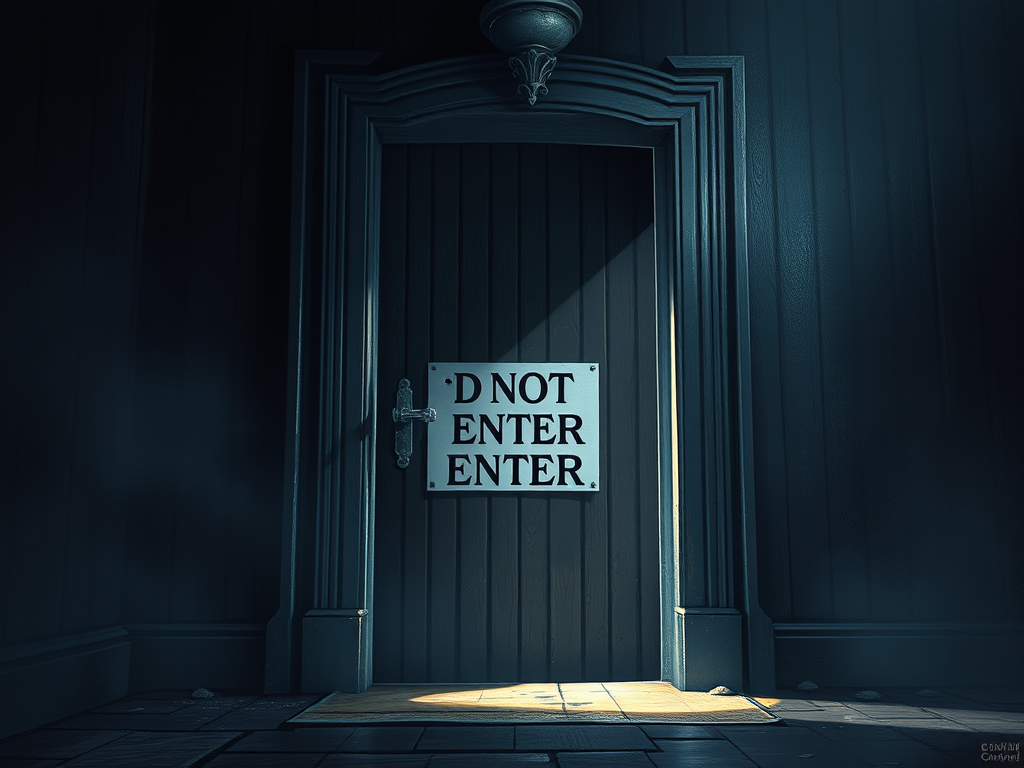
    You see a door marked “Do Not Enter.” You open it.

    You hear a whisper about you. You demand to know what was said.

    The Result? You find text messages that hurt your feelings.

    You walk into a room and ruin your own surprise party.

    You learn a secret that keeps you awake at night.

    You chased the truth, but the truth bit you. 🐍


    😇 The Hero (The Wise Observer):


    You see the phone, but you respect privacy.

    You see the closed door, and you keep walking.

    You hear the whisper, but you realize that what others think of you is none of your business.

    The Result? You have peace of mind.

    You protect your relationships.

    You sleep soundly because your brain isn’t full of drama that doesn’t belong to you.

    You know that sometimes, ignorance is bliss. 🧘‍♂️


    ⚖️ The Reality


    Curiosity is the engine of science, but the enemy of peace.

    There is a thin line between Learning (Good Curiosity) and Snooping (Bad Curiosity).


    Good Curiosity: “How does the universe work?” 🌌


    Bad Curiosity: “Why did my ex-boyfriend like that photo?” 📱


    💎 The Plot Twist (Wait for it…)


    Did you know this proverb has a secret second half? Most people stop at the death of the cat. But the full version is:


    “Curiosity killed the cat, but satisfaction brought it back.”


    Meaning: Yes, taking a risk to find the truth might hurt you (kill the cat), but finding the answer is often worth the pain (brought it back).

    This changes everything! It means: Take the risk, but be ready for the consequences.

    🧐 The Anatomy of the Proverb


    Let’s dissect this classic warning.


    Curiosity (Noun): A strong desire to know or learn something. (The trigger).


    Killed (Verb): Past tense of kill. (The consequence).


    The Cat (Noun): In idioms, cats often represent people who are getting into trouble.


    Simpler Version: Stop asking questions you don’t want the answers to.


    📚 Vocabulary Vault


    Add these words to your arsenal to sound like a native speaker.


    Nosy (Adjective): Showing too much curiosity about other people’s affairs.


    Example: “Don’t be so nosy! It’s personal.”


    Pry (Verb): To inquire too closely into a person’s private affairs.


    Example: “I don’t mean to pry, but are you okay?”


    Eavesdrop (Verb): To secretly listen to a conversation. 👂


    Example: “She was eavesdropping on the boss’s meeting.”


    Intriguing (Adjective):
    Arousing one’s curiosity or interest; fascinating.


    Example: “That is a very intriguing idea.”


    🧠 Grammar Focus: Personification


    English loves to make non-human things act like humans. This is called Personification.


    The Phrase: “Curiosity killed the cat.”


    The Logic: Curiosity is an emotion. It cannot hold a weapon. It cannot “kill” anything. But in English, we give it the power of a killer to show how dangerous it is.


    Other Examples:


    “Time flies.” (Time is not a bird).

    “Opportunity knocks.” (Opportunity does not have hands).

    “Fear gripped him.” (Fear does not have fingers).

    📜 History: From Shakespeare to Today


    Where did this come from?


    The Original:
    In 1598, Ben Jonson wrote a play where he said, “Care killed a cat.” Back then, “Care” meant “Worry” or “Sorrow.” The idea was that worrying too much is bad for your health.


    The Evolution: Over hundreds of years, “Care” changed to “Curiosity.”


    Global Cousins:


    🇹🇷 Turkish:
    “Fazla merak kediyi öldürür” (Too much curiosity kills the cat) or “Merak insanı mezara, parayı pazara…” (Curiosity takes a man to the grave…).


    🇪🇸 Spanish: “La curiosidad mató al gato.”


    🇫🇷 French: “La curiosité est un vilain défaut.” (Curiosity is a nasty fault).

    🎭 Short Story: The Blue Envelope


    Let’s visit our students, Penny and Max.


    🌟 The Setup:
    The teacher leaves a Blue Envelope on his desk. He says, “Nobody touch this.” He leaves the room.


    The Conflict:


    Max (The Nosy One):
    He is sweating. He needs to know. Is it exam answers? Is it a love letter? He sneaks up. He opens the envelope.


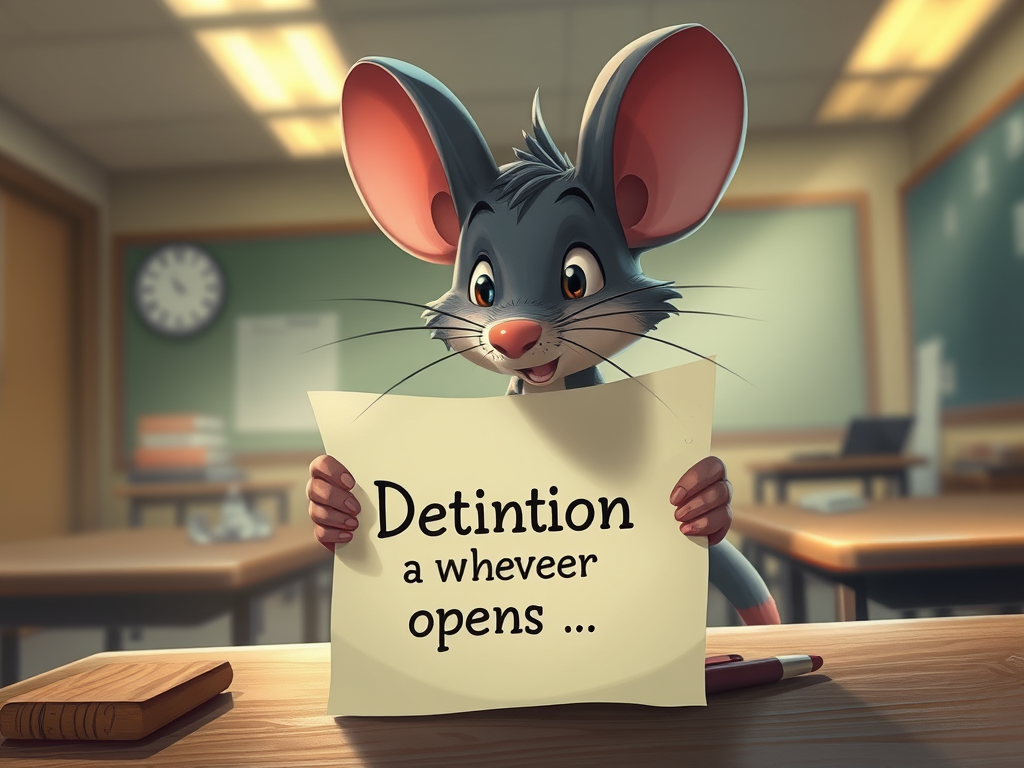
    The Trap: Inside, there is only a piece of paper that says: “Detention for whoever opens this.” The teacher walks in. Max is caught. Curiosity killed Max’s free time. 💀


    Penny (The Focused One): She stays in her seat. She opens her book. She knows the teacher is tricky.


    The Reward: Penny goes home early. Max stays at school.


    The Moral: Sometimes, the mystery is a trap. Be like Penny. Mind your own business. ✉️

    🎓 Lesson for English Learners


    Don’t Ask “Why?” Too Much.


    Situation:
    You learn a grammar rule that makes no sense. (Example: Why is it “on the bus” but “in the car”?).


    The Trap: You stop speaking. You spend 3 hours searching Google for the history of prepositions. You get confused. You get frustrated.


    The Solution: Curiosity is killing your fluency!


    You Say: “I don’t care why. I just accept it.”


    The Rule: Sometimes in language learning, you must turn off your curiosity and just mimic what you hear.


    💬 Your Turn: The “Nosy” Test 🚀


    Let’s see where you stand.


    Question:
    If you found your best friend’s diary open on the floor…

    A) I would read it immediately. (The Villain) 😈

    B) I would close it without looking. (The Hero) 😇

    C) I would read one page, then feel guilty. (The Human) 😐


    Tell us in the comments! Are you A, B, or C? 👇

    By Zubeyir YURTKURAN

    https://www.facebook.com/BrainBattleground/

    https://www.facebook.com/zubeyr.yurtkuran/

    https://www.instagram.com/zubeyryurtkuran/
    https://www.youtube.com/@BrainBattleground-b3p