Tag: books

  • ๐ŸŒณ The Daily Shield: The Law of Rooted Character

    ๐ŸŒณ The Daily Shield: The Law of Rooted Character

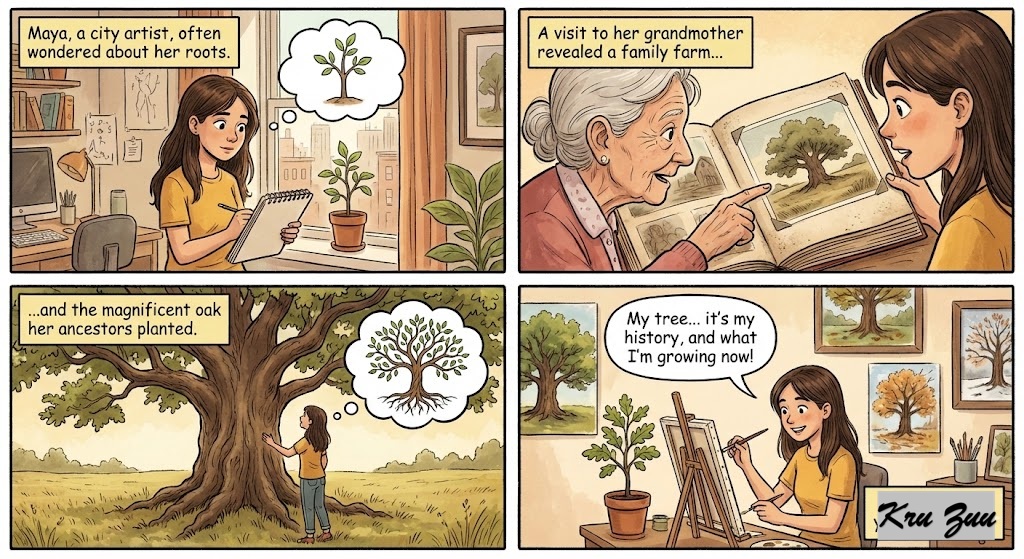
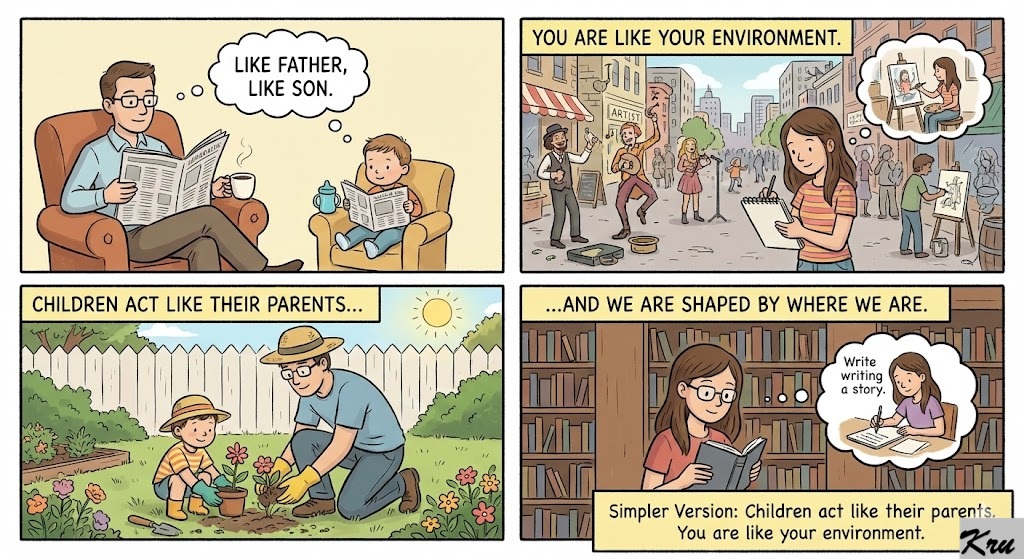
    “The apple doesn’t fall far from the tree.”


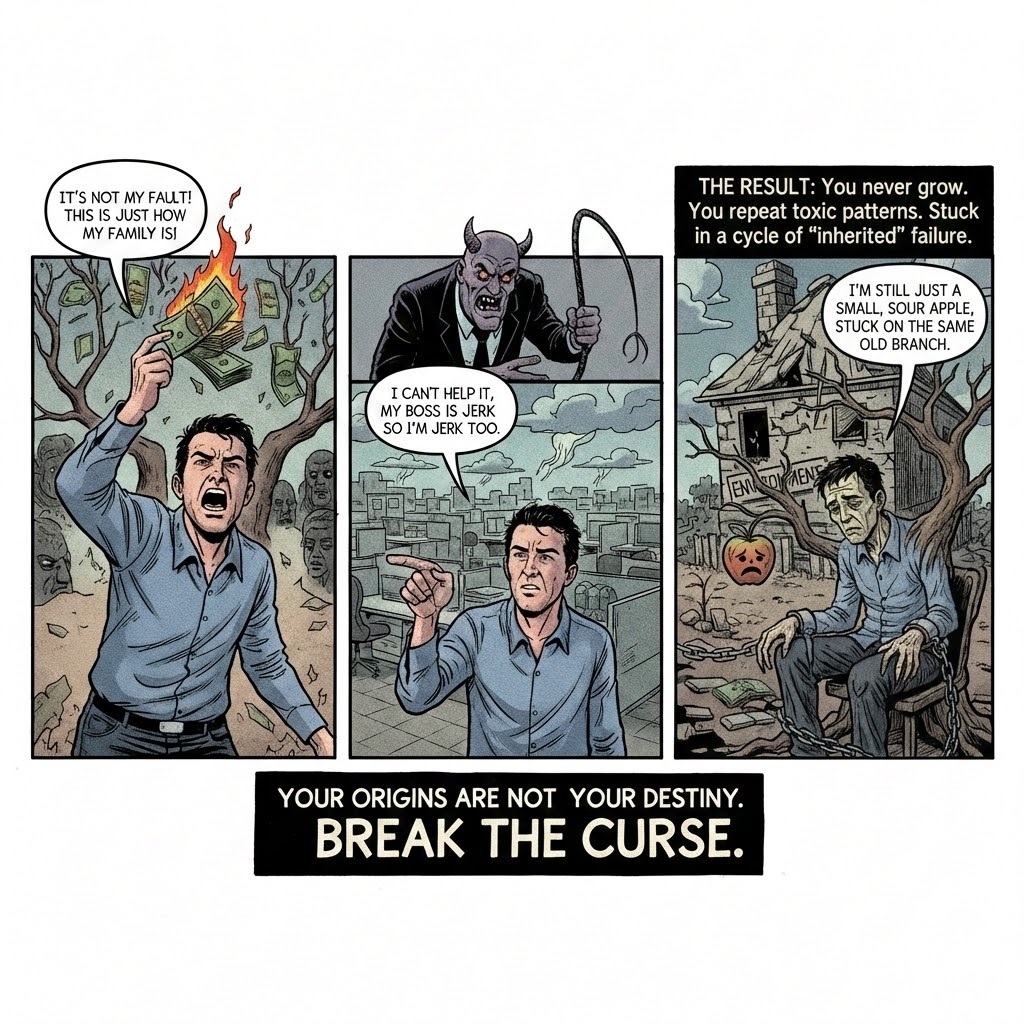
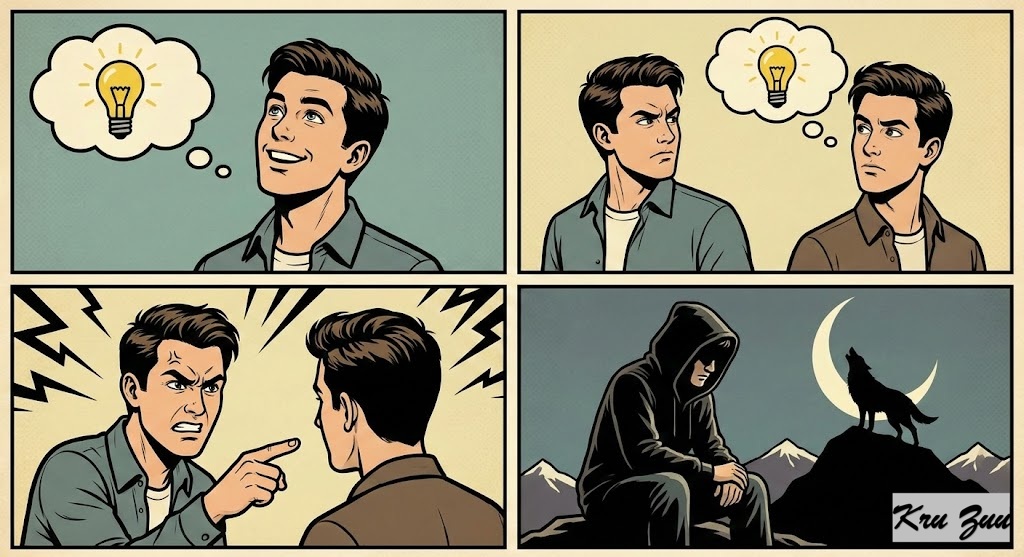
    ๐Ÿ˜ˆ The Villain (The Blame Shifter)


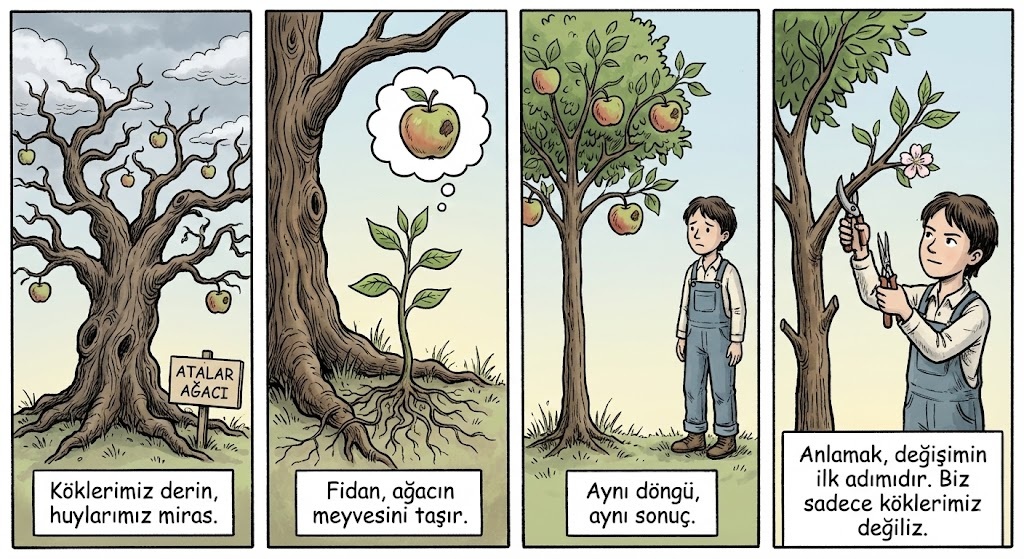
    You make a mistake. You lose your temper. You act dishonestly. ๐Ÿ’ธ “It’s not my fault! This is just how my family is!””I can’t help it, my boss is a jerk so I’m a jerk too.””I was raised this way, Iโ€™m just a product of my environment.” You treat your character like a fixed curse. You use your origins as an excuse for your poor choices today.
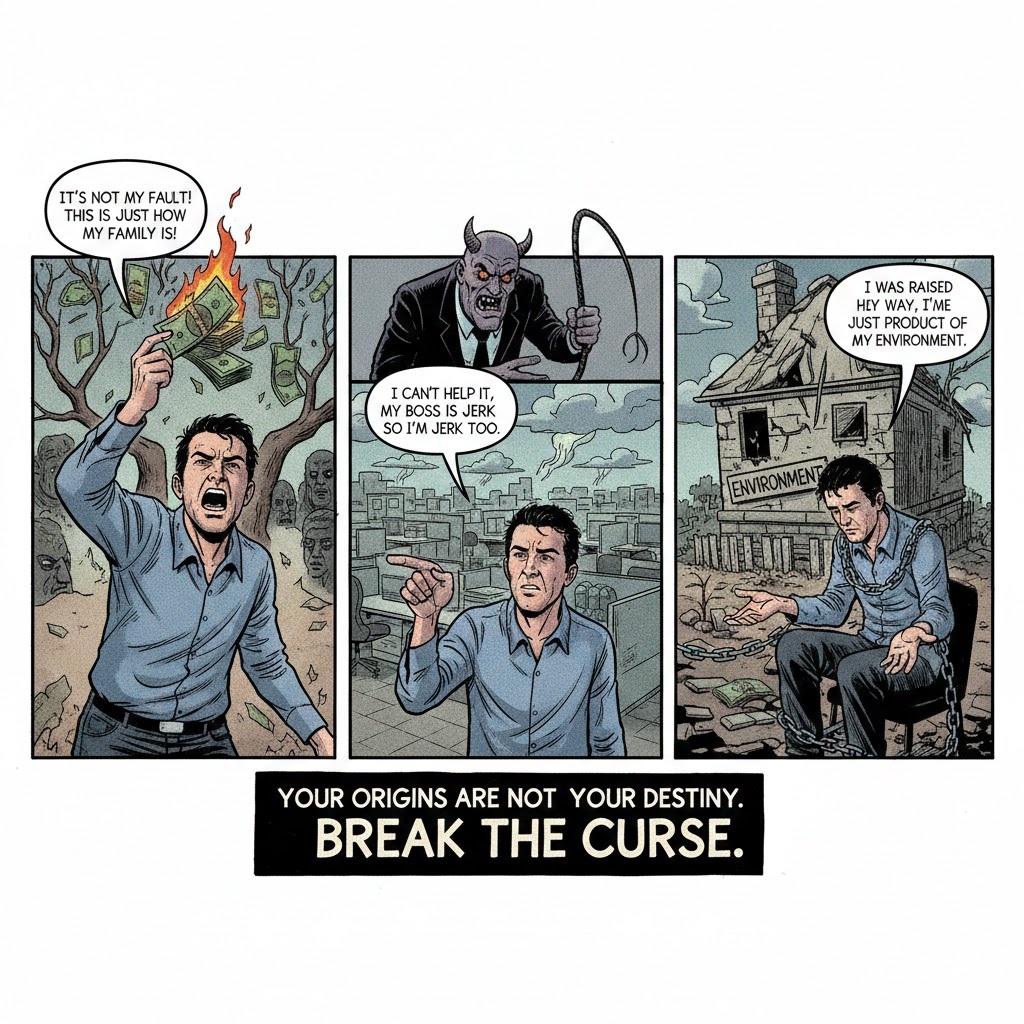
    The Result? You never grow. You repeat the same toxic patterns. You feel stuck in a cycle of “inherited” failure. You stay a small, sour apple because you refuse to see that you are still attached to the same old branch. ๐ŸŽ


    ๐Ÿ˜‡ The Hero (The Cycle Breaker)


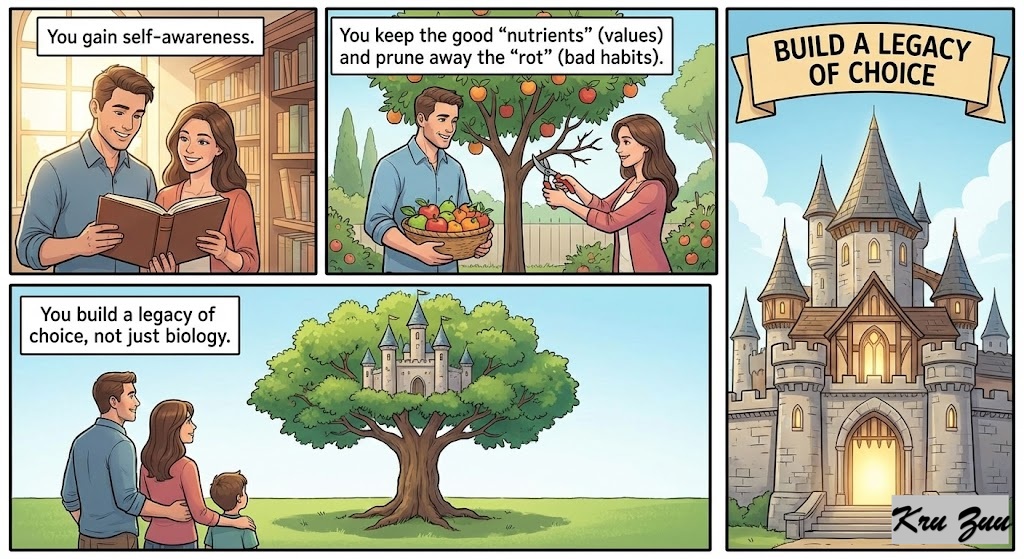
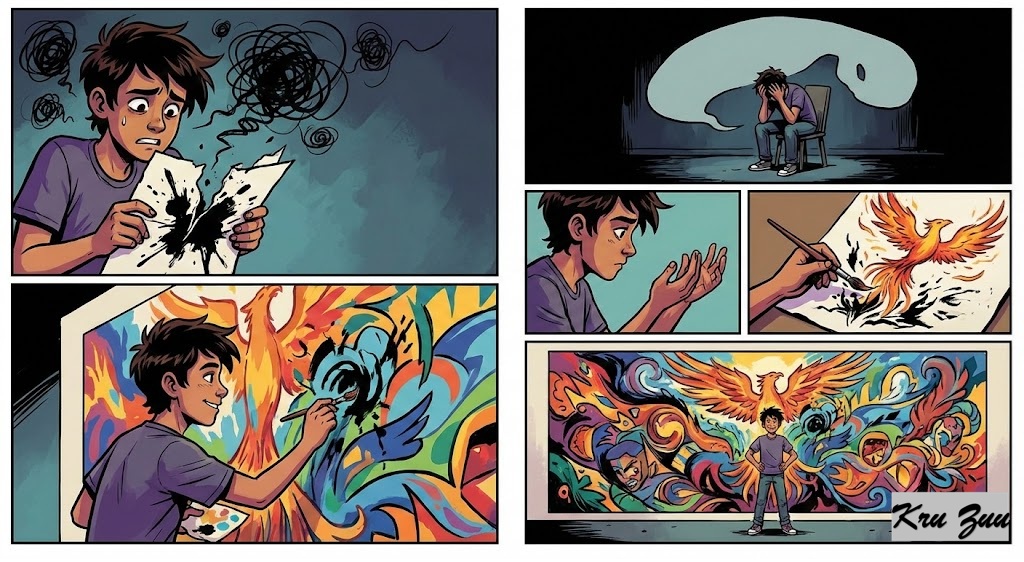
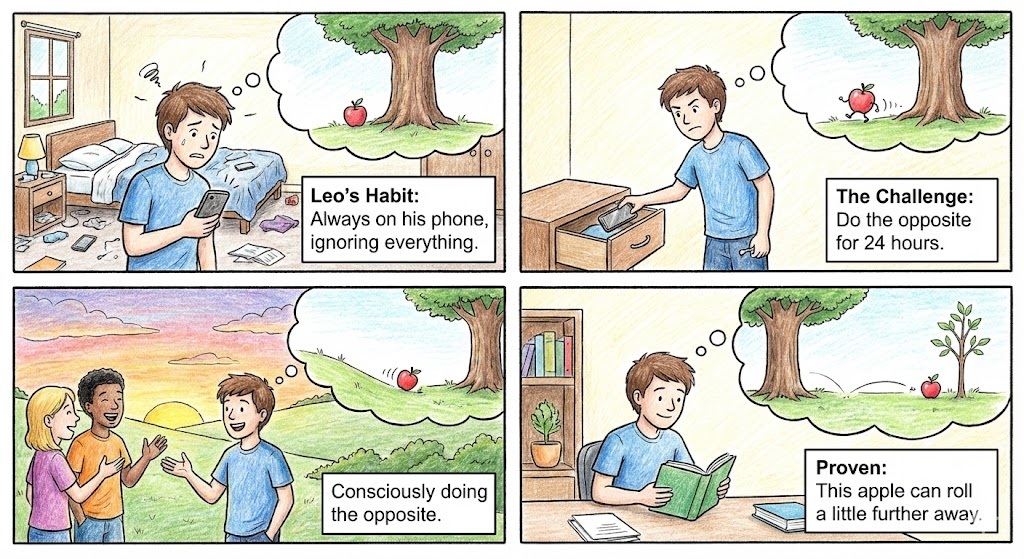
    You observe your habits. You look at your parents, your mentors, or your peers. ๐Ÿ›‘ You acknowledge the influence: “I see that my father was always late, and now I am too.” But instead of accepting it, you take responsibility. You think: “The tree gave me my start, but I decide which way I grow.”
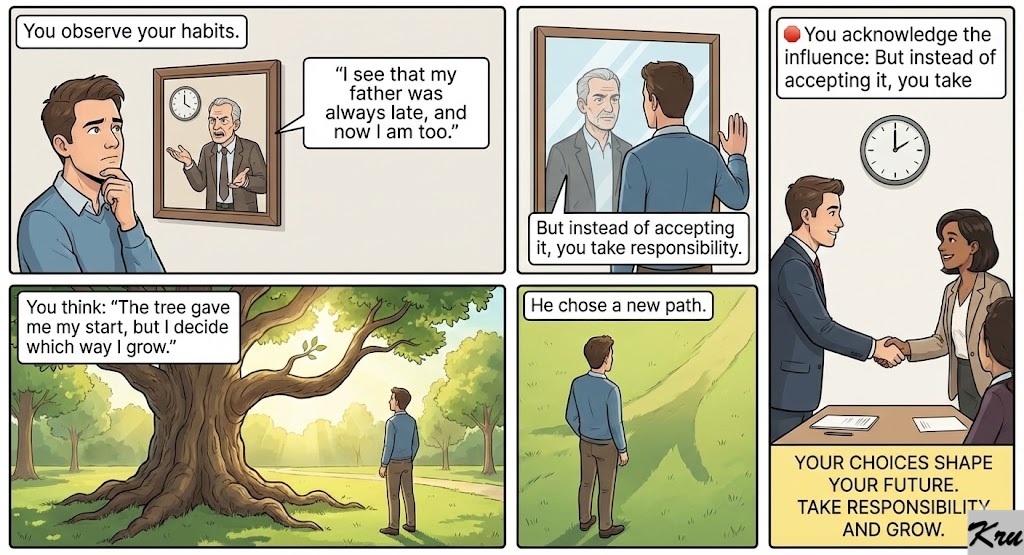
    The Result? You gain self-awareness. You keep the good “nutrients” (values) and prune away the “rot” (bad habits). You build a legacy of choice, not just biology. ๐Ÿฐ


    โš–๏ธ The Reality


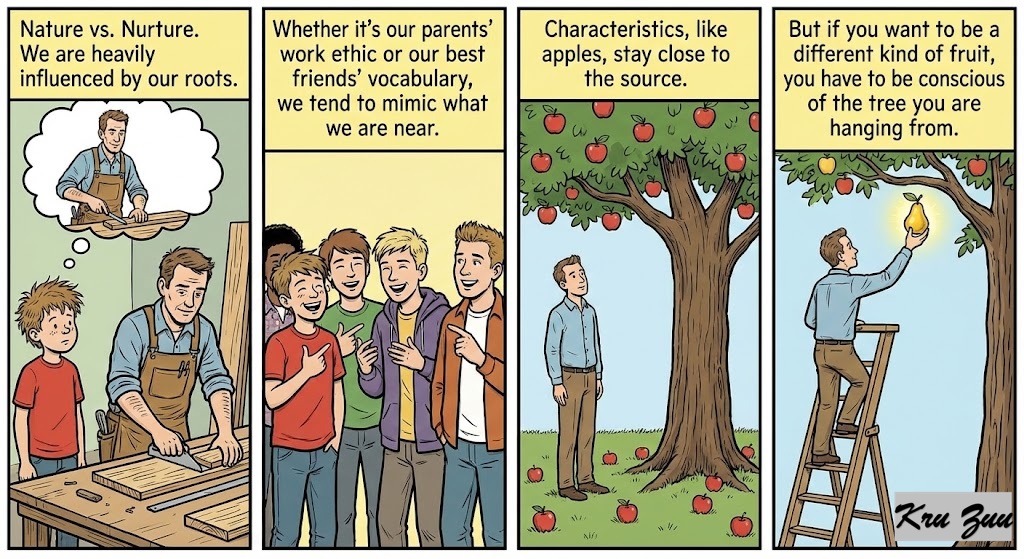
    Nature vs. Nurture. We are heavily influenced by our roots. Whether itโ€™s our parents’ work ethic or our best friends’ vocabulary, we tend to mimic what we are near. Characteristics, like apples, stay close to the source. But while the proverb highlights similarity, it also serves as a warning: if you want to be a different kind of fruit, you have to be conscious of the tree you are hanging from.

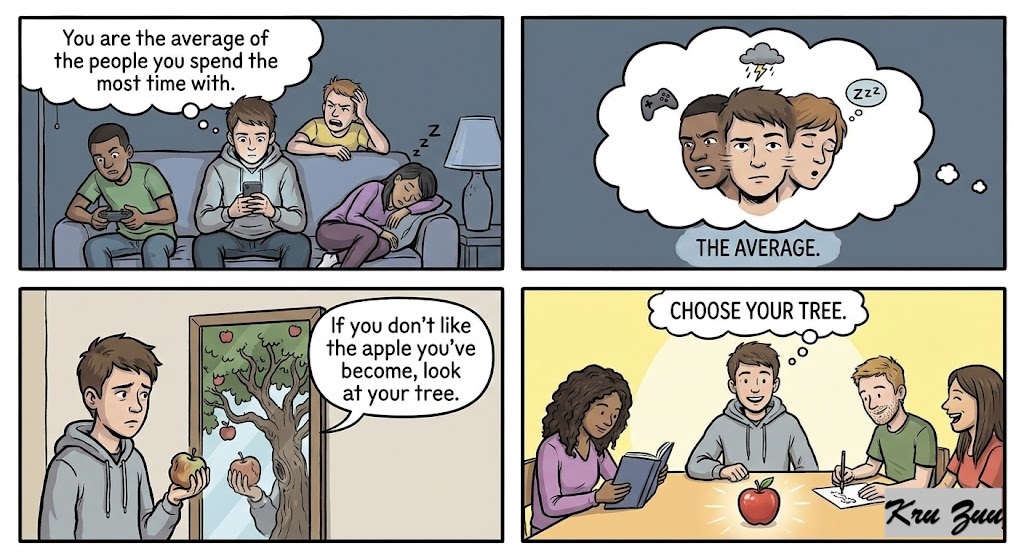
    The Secret: You are the average of the people you spend the most time with. If you don’t like the apple you’ve become, look at your tree.
    ๐Ÿง The Anatomy of the Proverb


    This is a biological metaphor for behavioral inheritance.

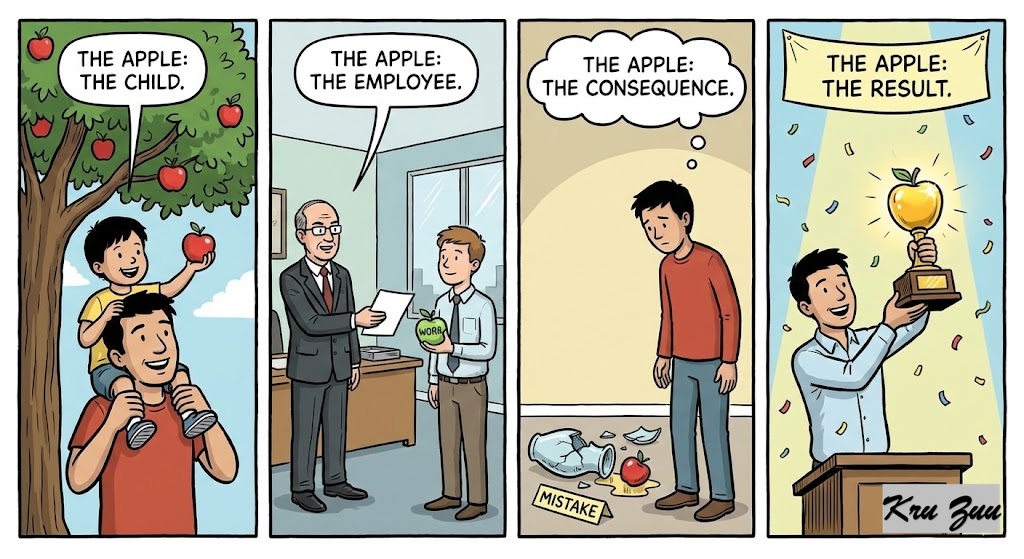
    The Apple (Noun): The child, the employee, the consequence, or the result.

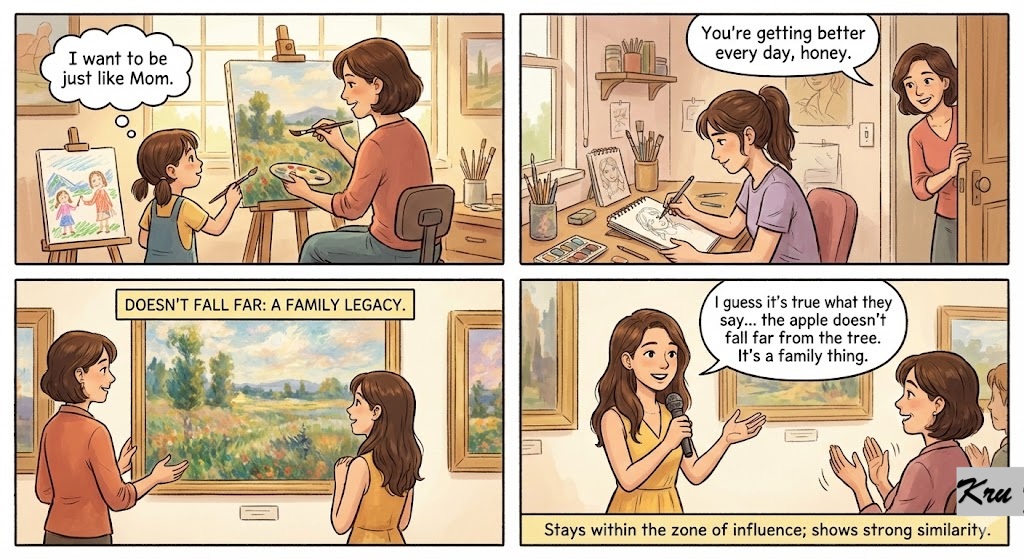
    Doesn’t Fall Far (Adverbial Phrase): Stays within the zone of influence; shows strong similarity.

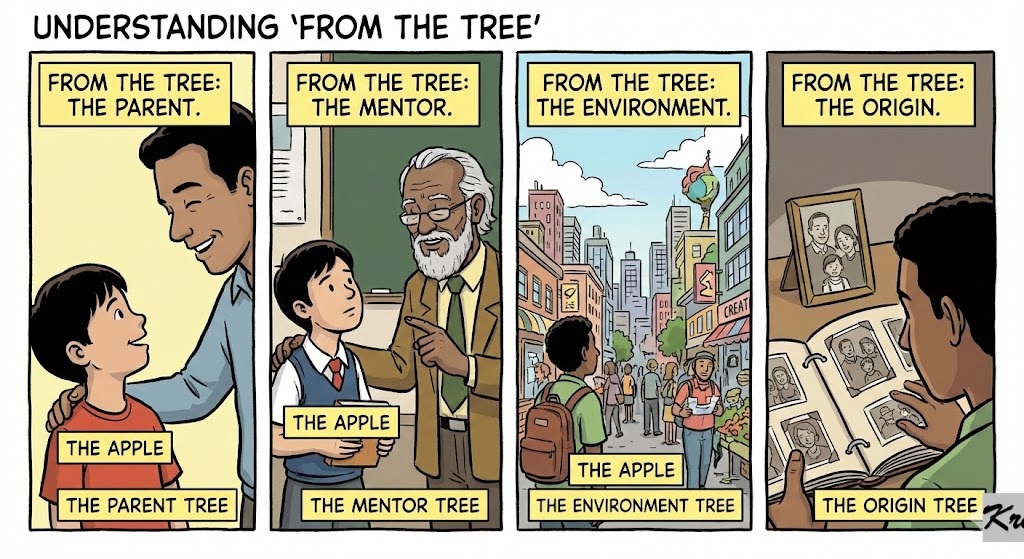
    From The Tree (Prepositional Phrase): The parent, the mentor, the environment, or the origin.

    Simpler Version: Children act like their parents. / You are like your environment.

    ๐Ÿ“š Vocabulary Vault


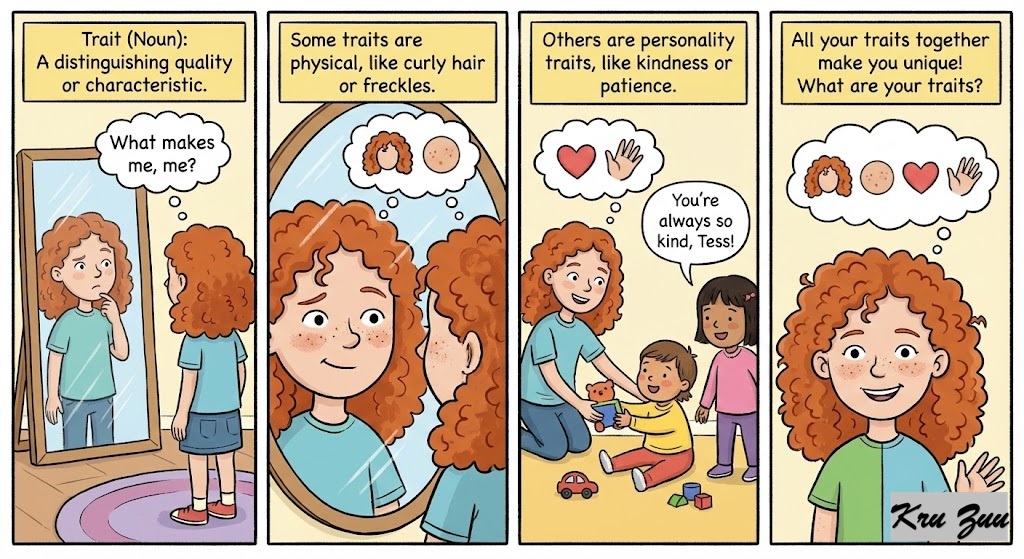
    Trait (Noun): A distinguishing quality or characteristic.

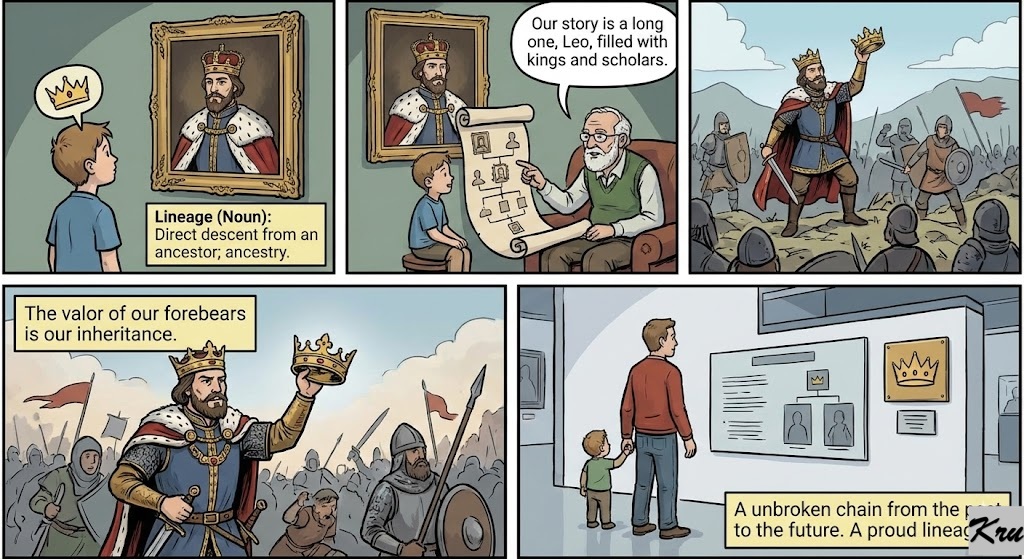
    Lineage (Noun): Direct descent from an ancestor; ancestry. ๐Ÿ‘‘


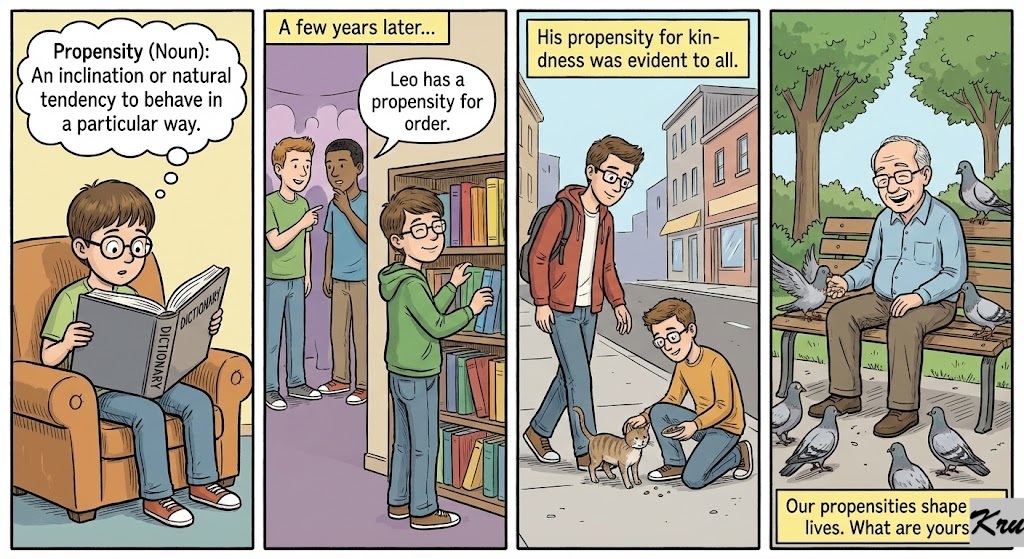
    Propensity (Noun): An inclination or natural tendency to behave in a particular way.

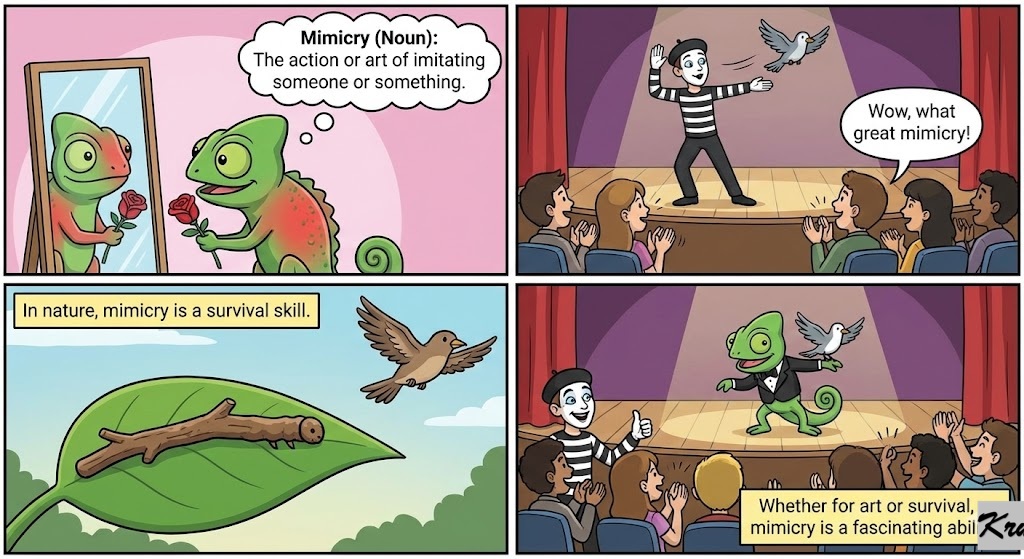
    Mimicry (Noun): The action or art of imitating someone or something.

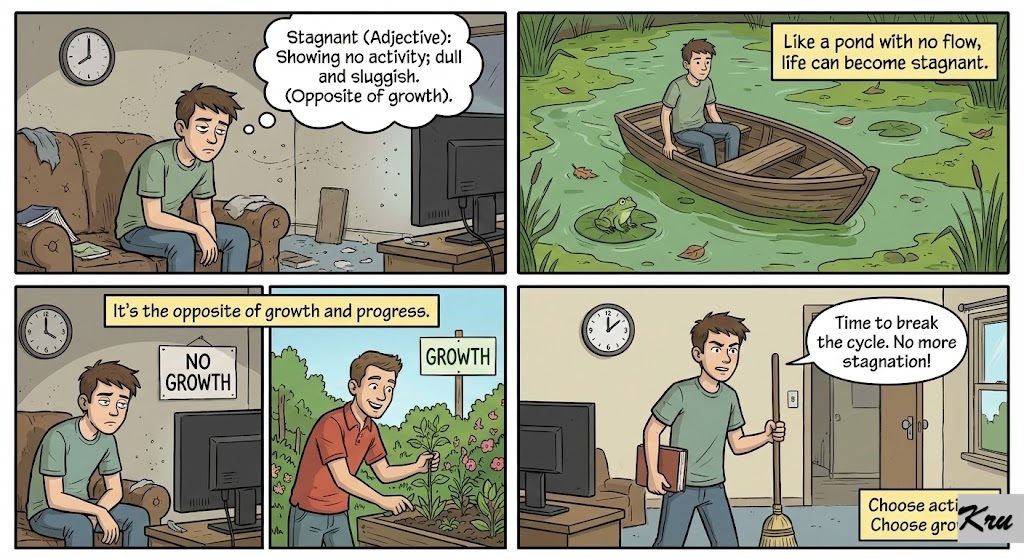
    Stagnant (Adjective): Showing no activity; dull and sluggish. (Opposite of growth).

    ๐Ÿง  Grammar Focus: Idioms for Observation


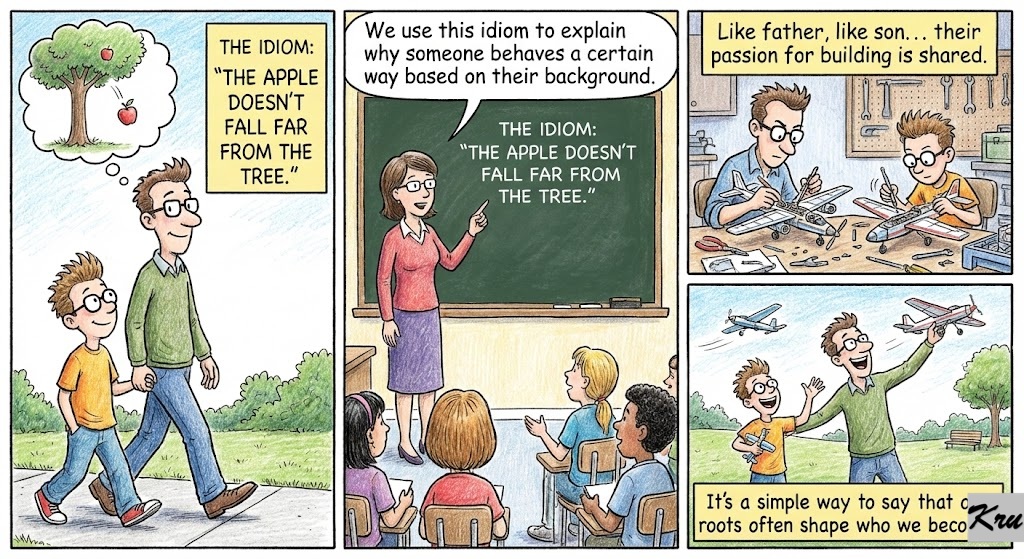
    We use this idiom to explain why someone behaves a certain way based on their background.

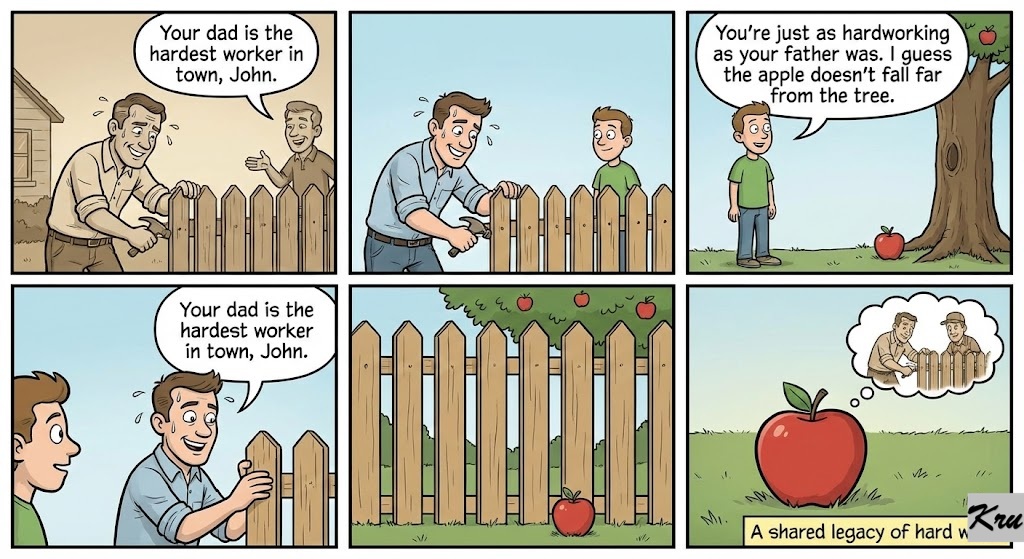
    Example: “John is just as hardworking as his father was. I guess the apple doesn’t fall far from the tree.”

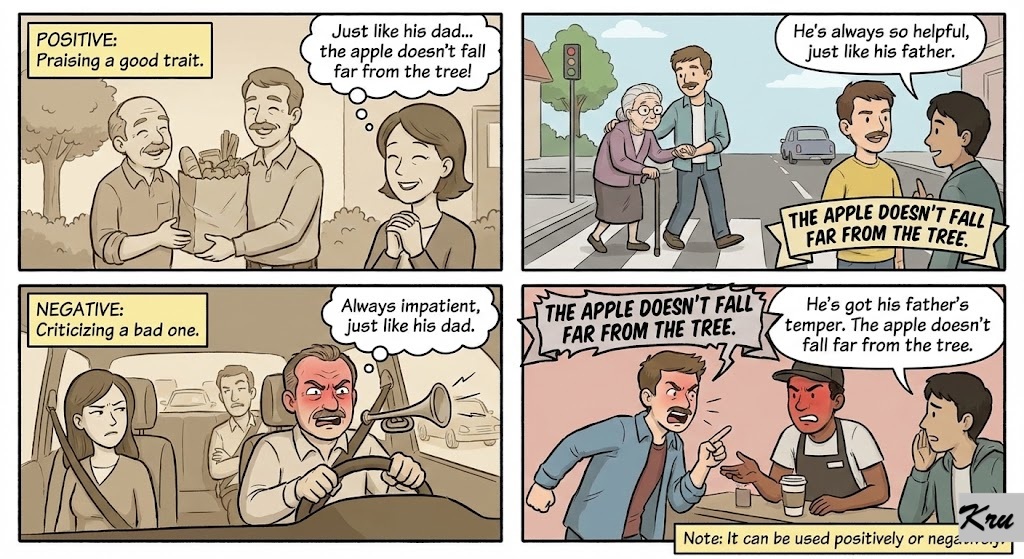
    Note: It can be used positively (praising a good trait) or negatively (criticizing a bad one).
    ๐Ÿ“œ History: Origin and Spread


    Where did this botanical observation come from?
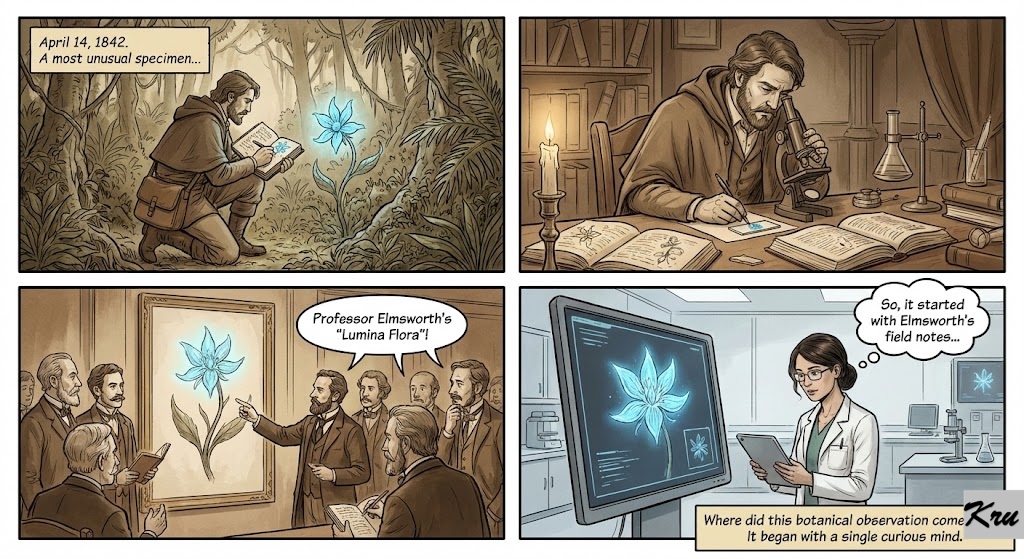

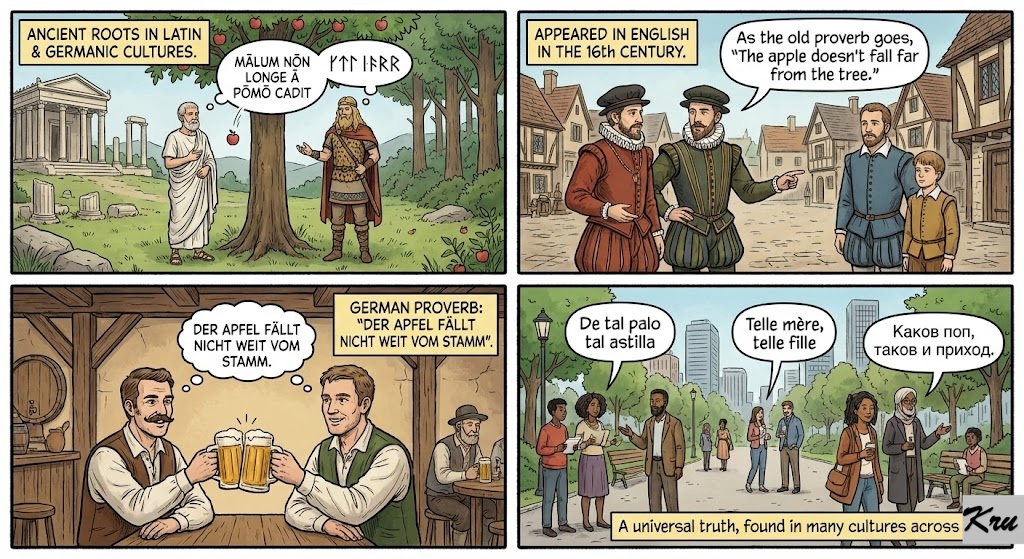
    The Origin: This is an ancient proverb found in many cultures. It appeared in English in the 16th century but has roots in German (Der Apfel fรคllt nicht weit vom Stamm) and Latin.


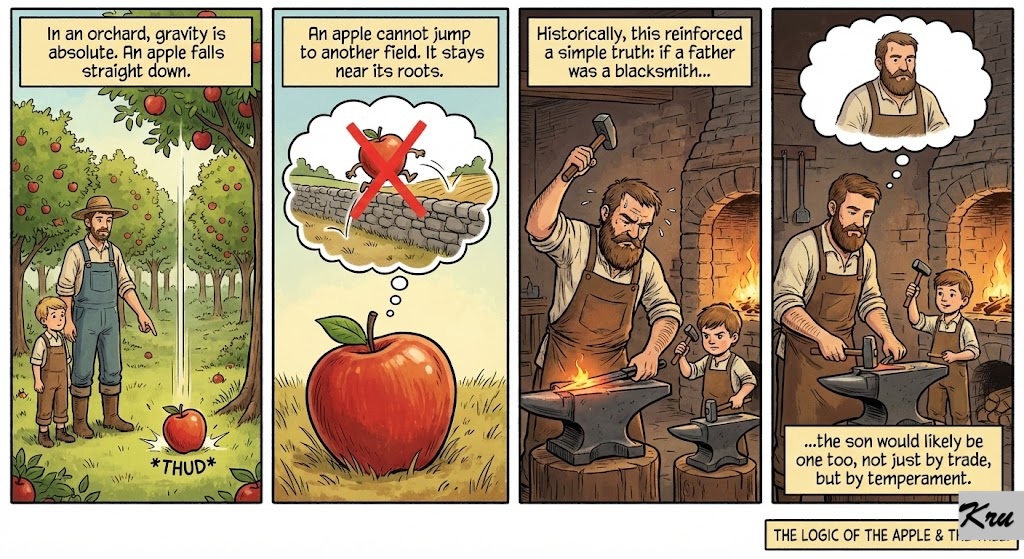
    The Logic: In an orchard, gravity is absolute. An apple cannot jump to another field. Historically, it reinforced the idea that if a father was a blacksmith, the son would likely be one too, not just by trade, but by temperament.

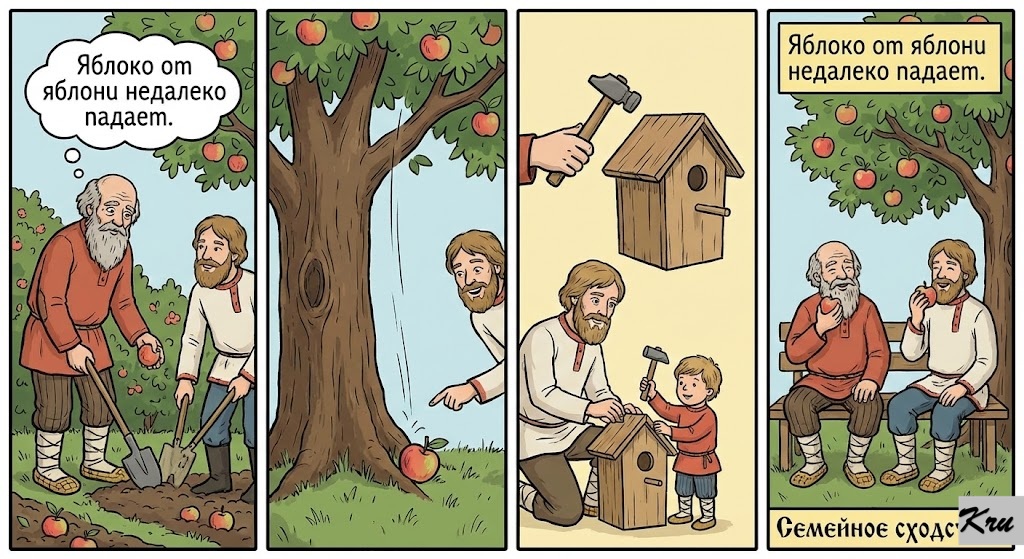
    Global Cousins


    ๐Ÿ‡ท๐Ÿ‡บ Russian: “The apple stays close to the apple tree.”

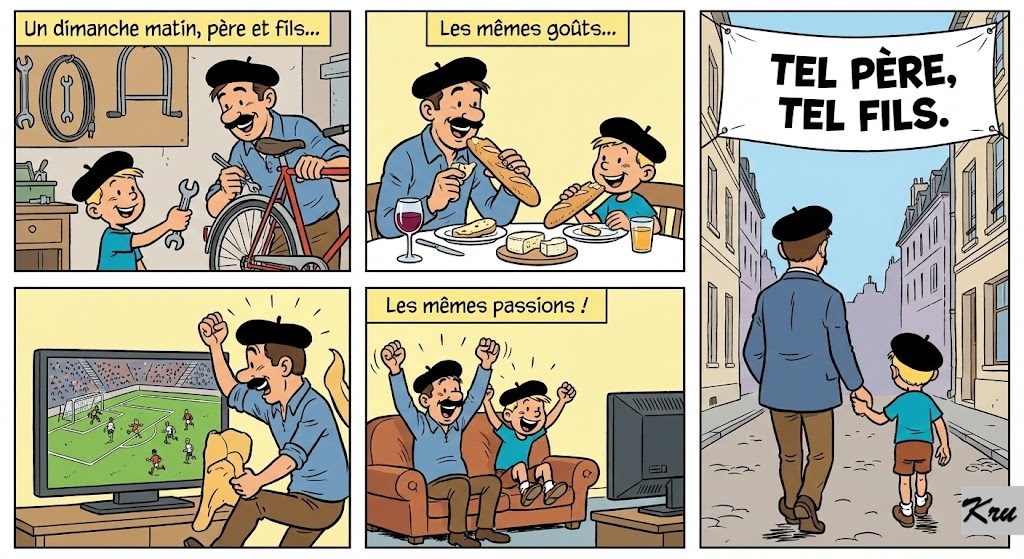
    ๐Ÿ‡ซ๐Ÿ‡ท French: “Tel pรจre, tel fils.” (Like father, like son).

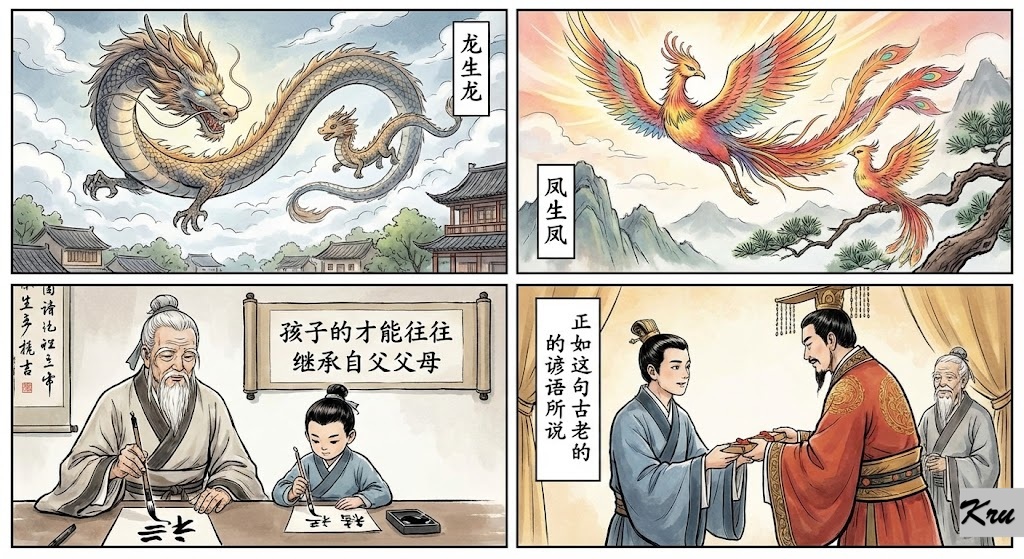
    ๐Ÿ‡จ๐Ÿ‡ณ Chinese: “Dragons give birth to dragons, phoenixes give birth to phoenixes.” (Meaning children inherit their parents’ status/talents).
    ๐ŸŽญ Short Story: The Sour Seed ๐ŸŽ๐Ÿฑ๐Ÿ”๐Ÿธ


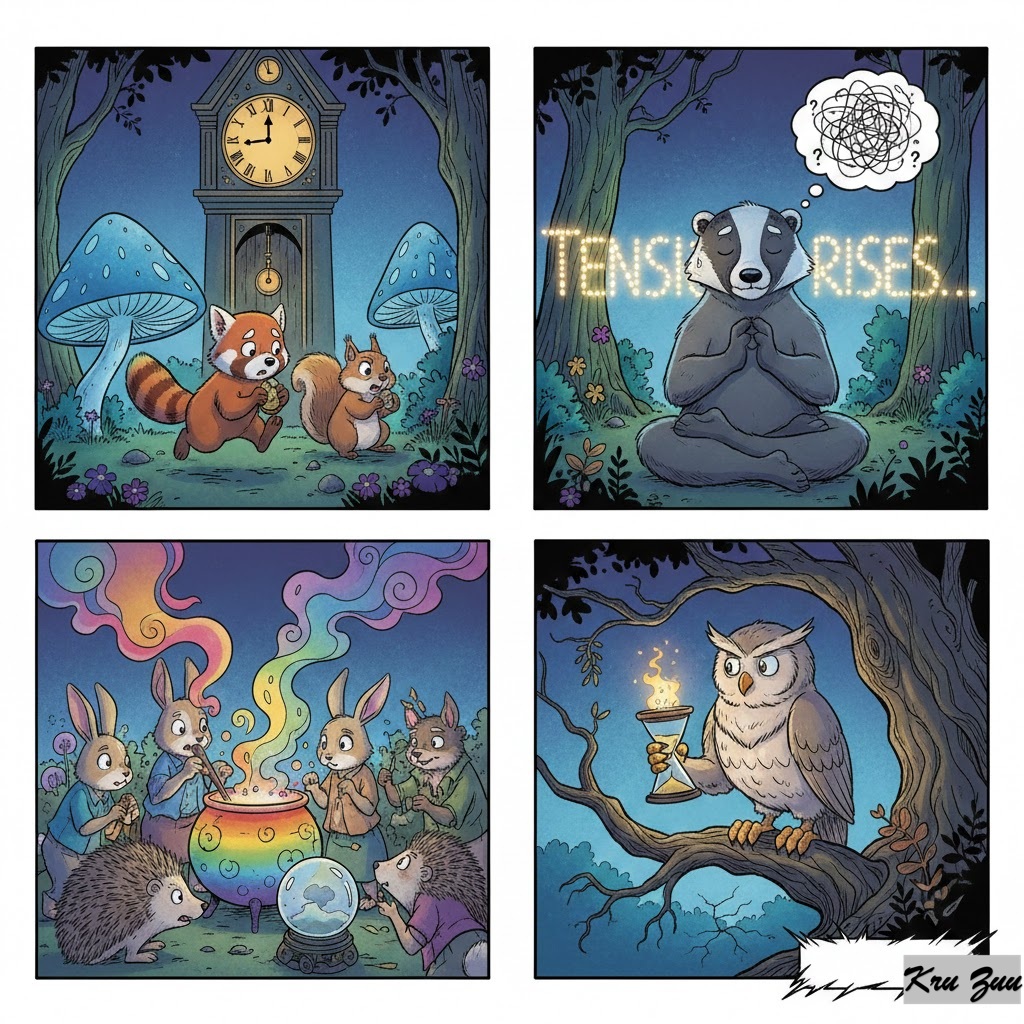
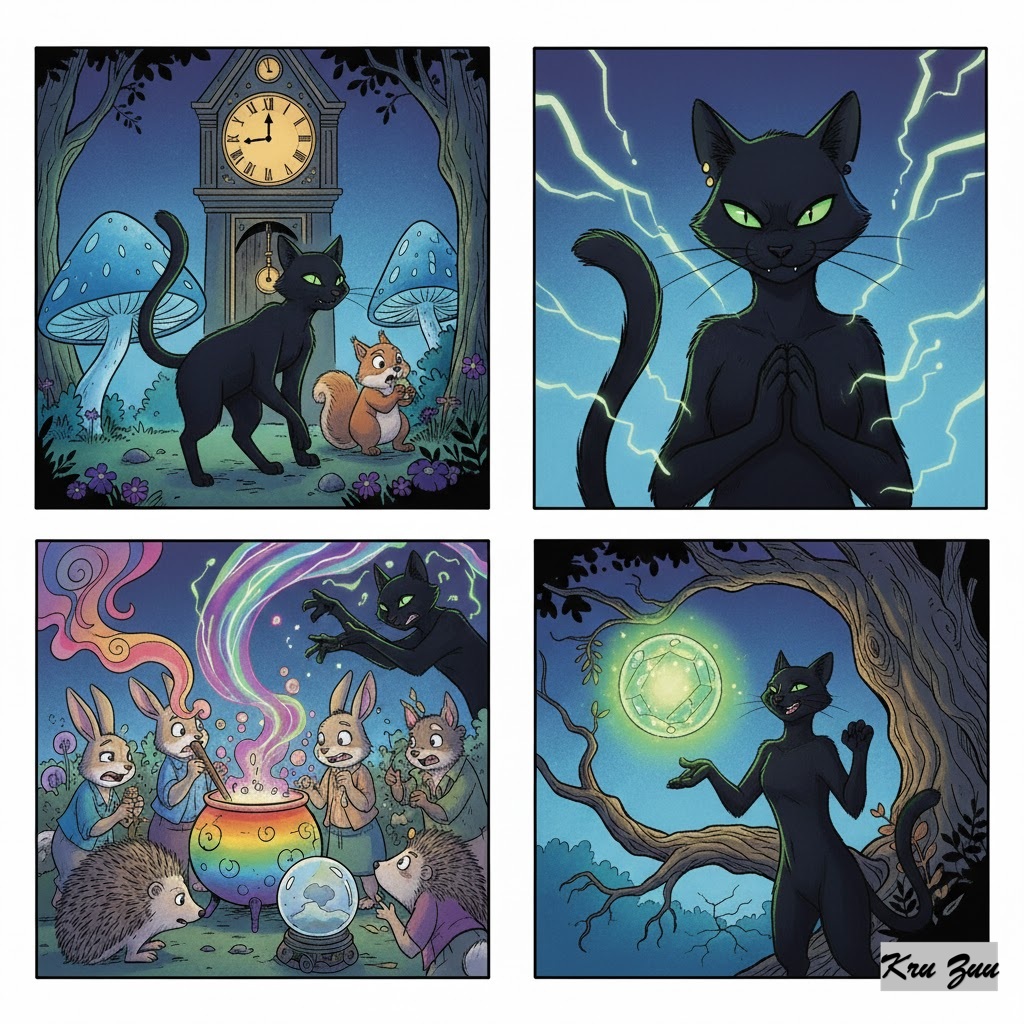
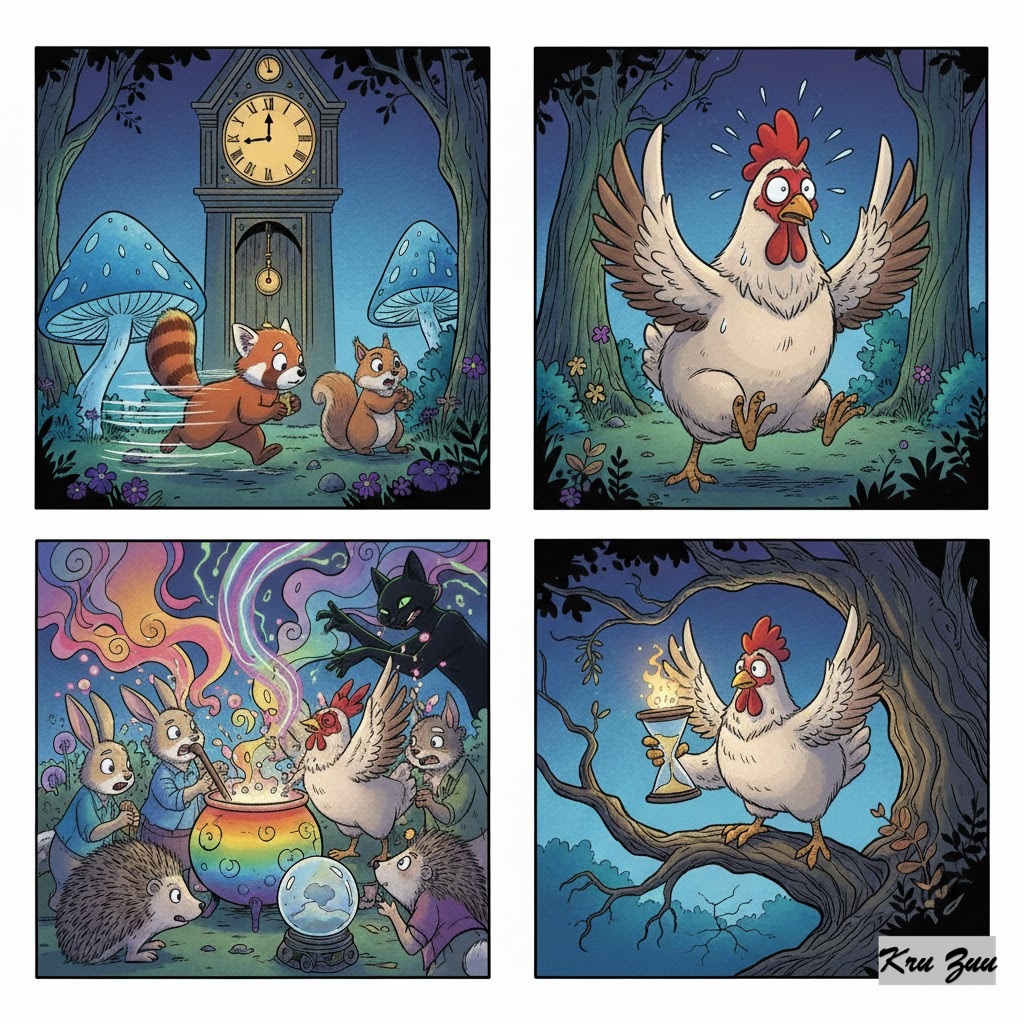
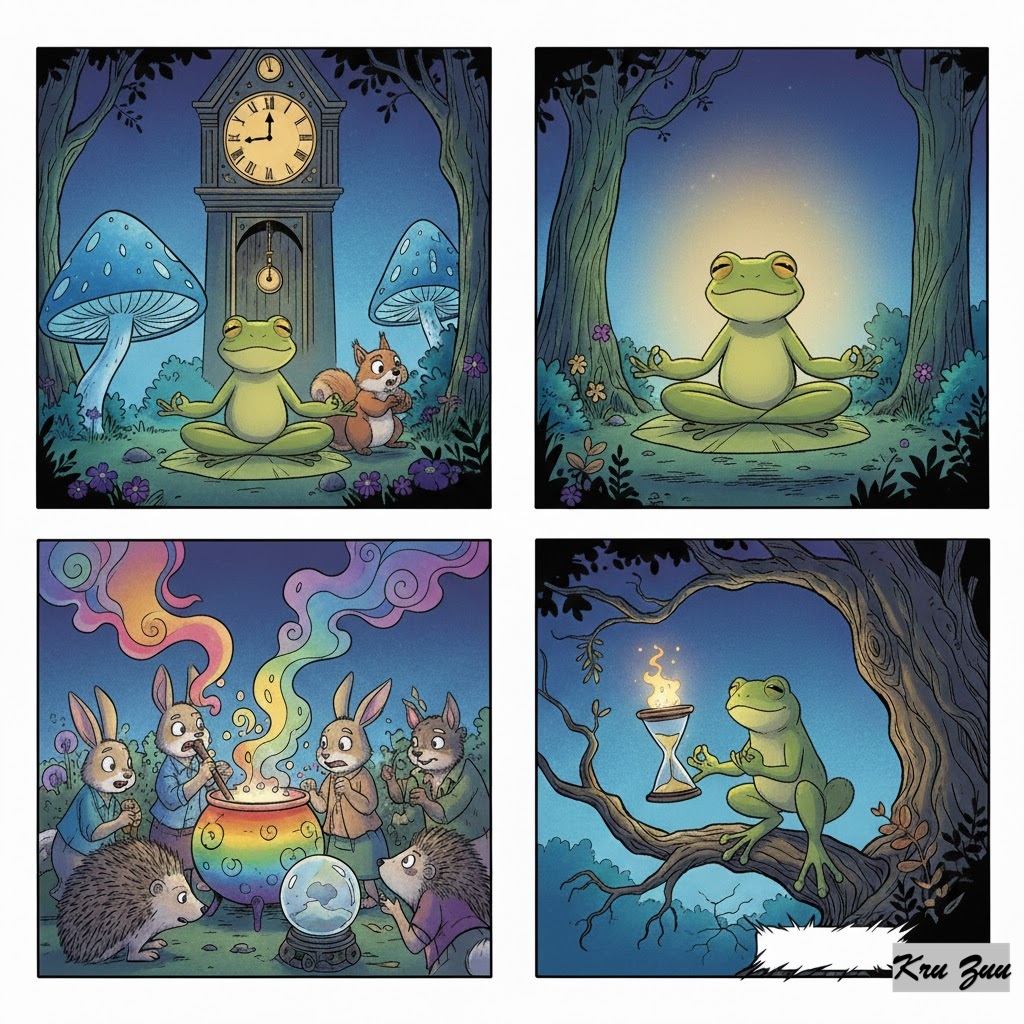
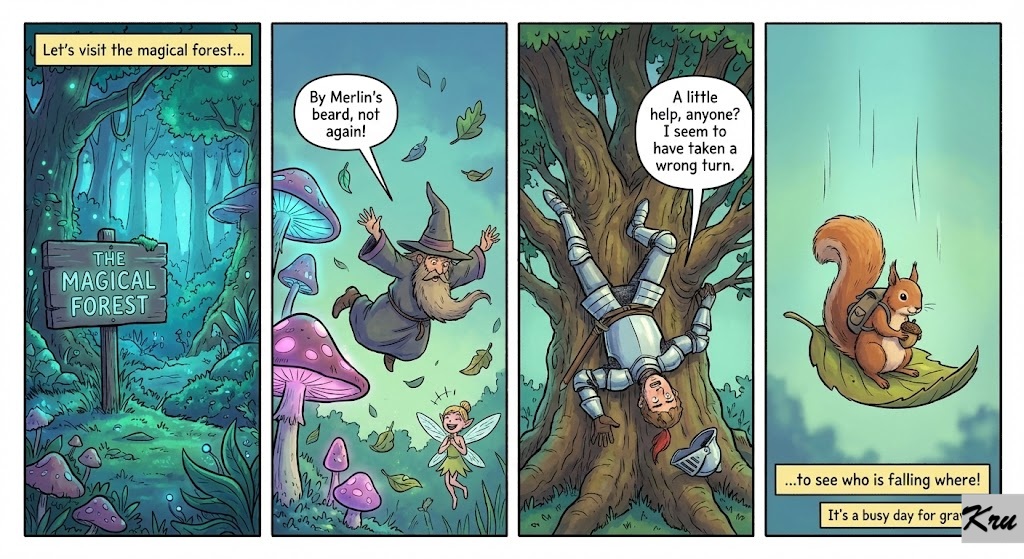
    Letโ€™s visit the magical forest to see who is falling where.

    ๐ŸŒŸ The Cast


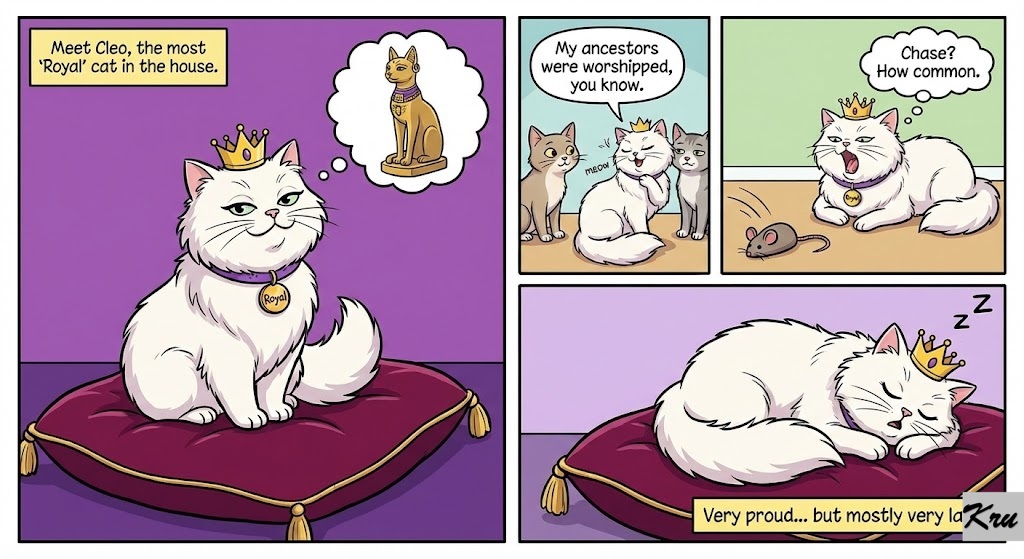
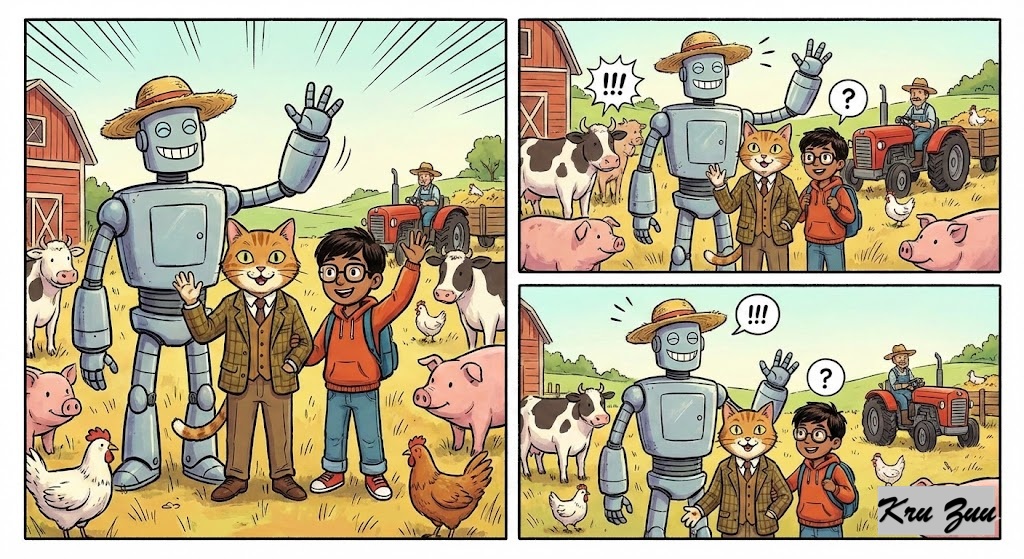
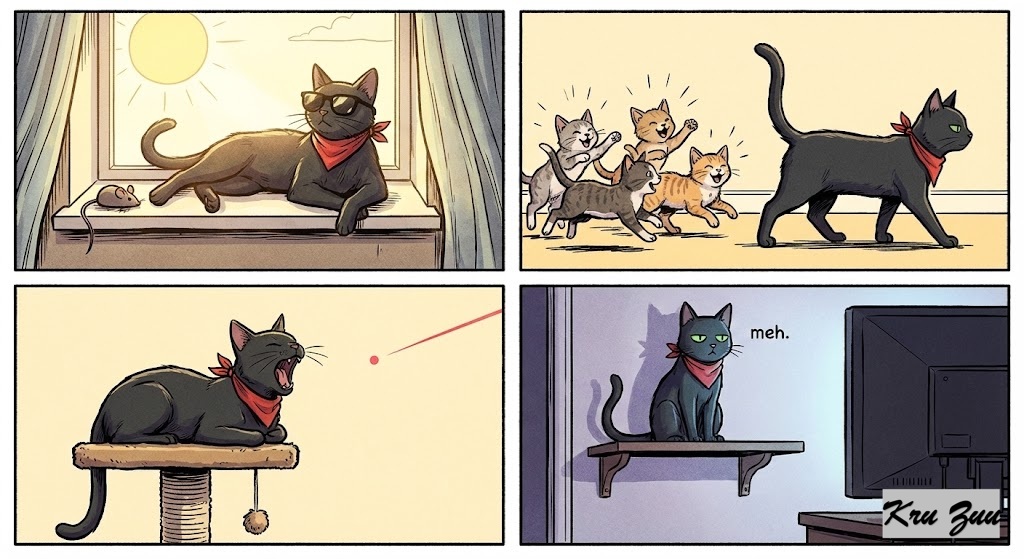
    Cleo the Cat: Very proud of her “Royal” lineage, but lazy. ๐Ÿ˜ผ


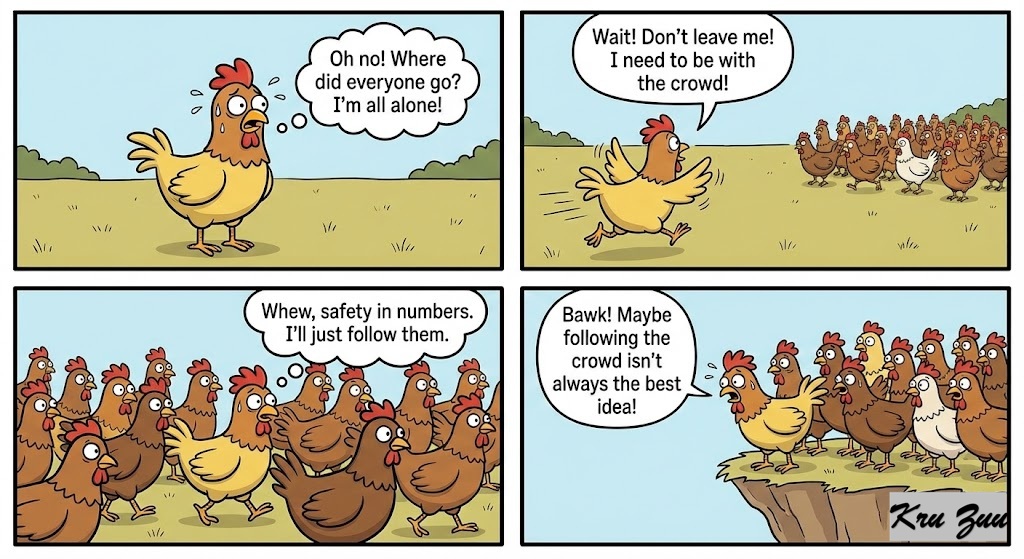
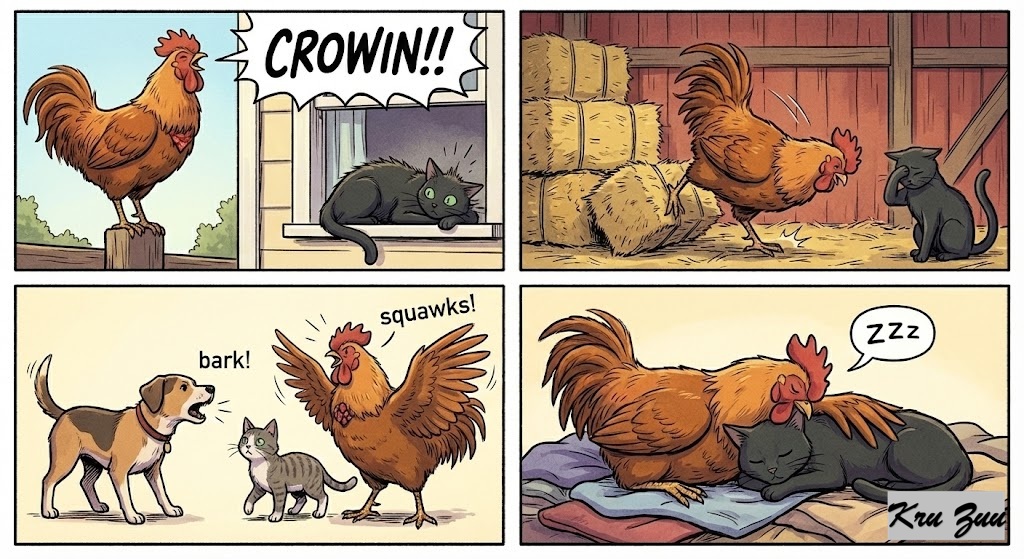
    Cluck the Chicken: Nervous, always follows the crowd. ๐Ÿ”


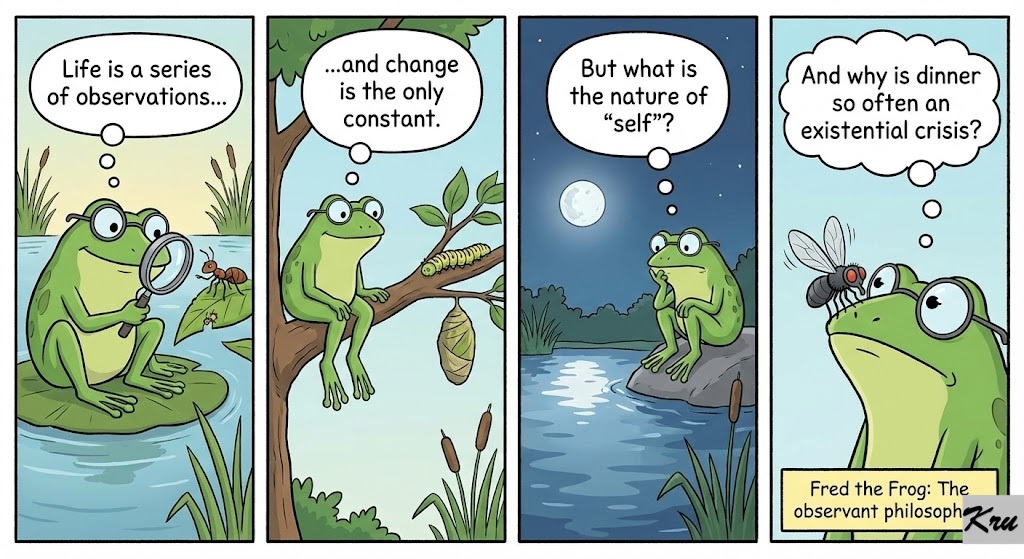
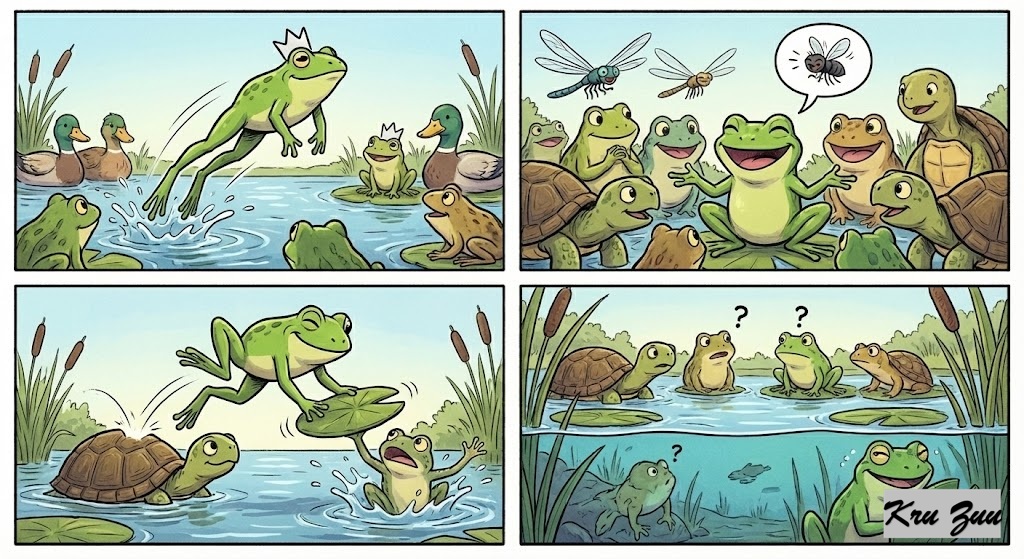
    Fred the Frog: The observant philosopher. ๐Ÿธ


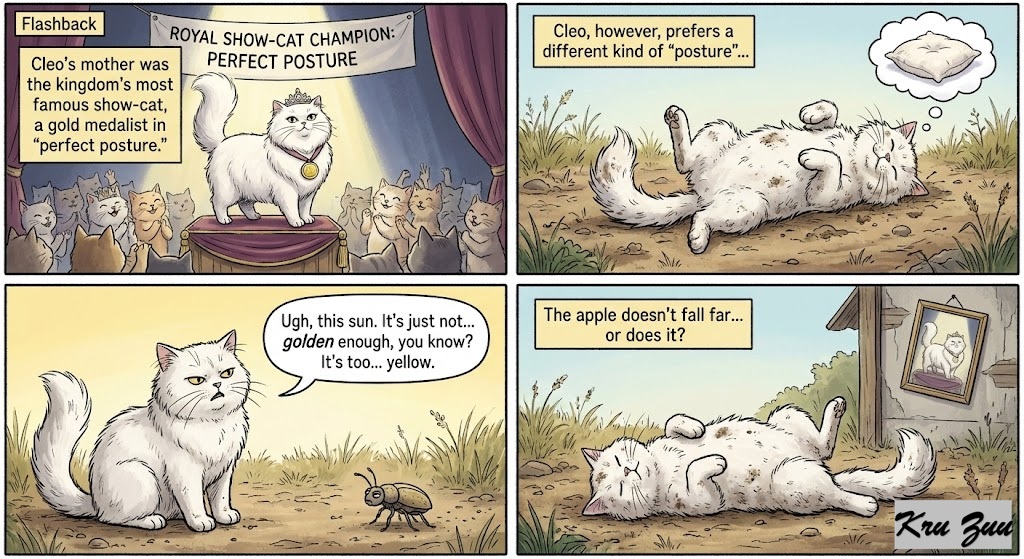
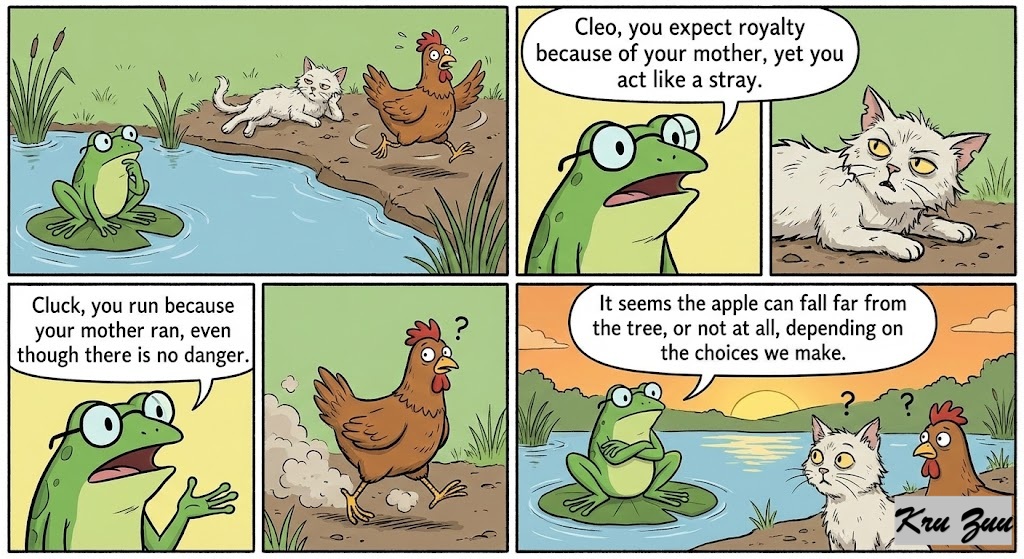
    The Situation: Cleoโ€™s mother was the most famous show-cat in the kingdom. She won gold medals for her “perfect posture.” Cleo, however, spends all day napping in the dirt and complaining that the sun isn’t “golden enough.”

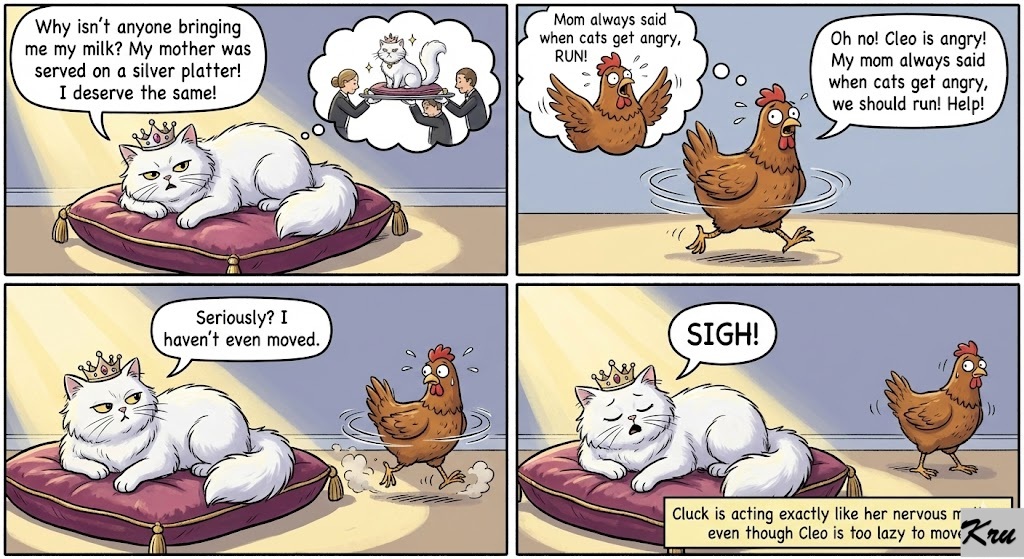
    The Conflict: “Why isn’t anyone bringing me my milk?” Cleo demands. “My mother was served on a silver platter! I deserve the same!” Cluck, who comes from a family of frantic, panicky chickens, starts running in circles. “Oh no! Cleo is angry! My mom always said when cats get angry, we should run! Help!” Cluck is acting exactly like her nervous mother, even though Cleo is too lazy to move.

    The Reaction: Fred the Frog watches from his pond. “Cleo, you expect royalty because of your mother, yet you act like a stray. Cluck, you run because your mother ran, even though there is no danger.”

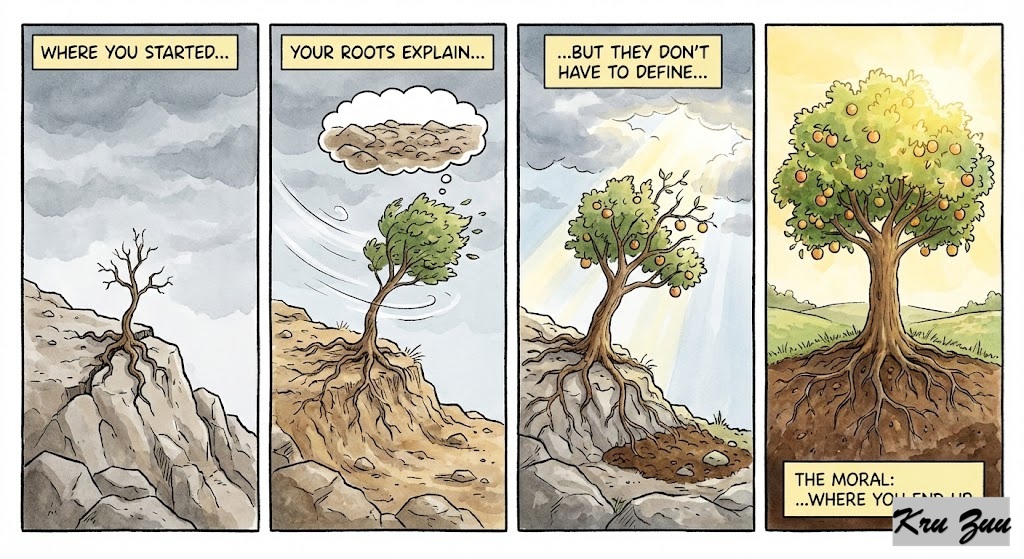
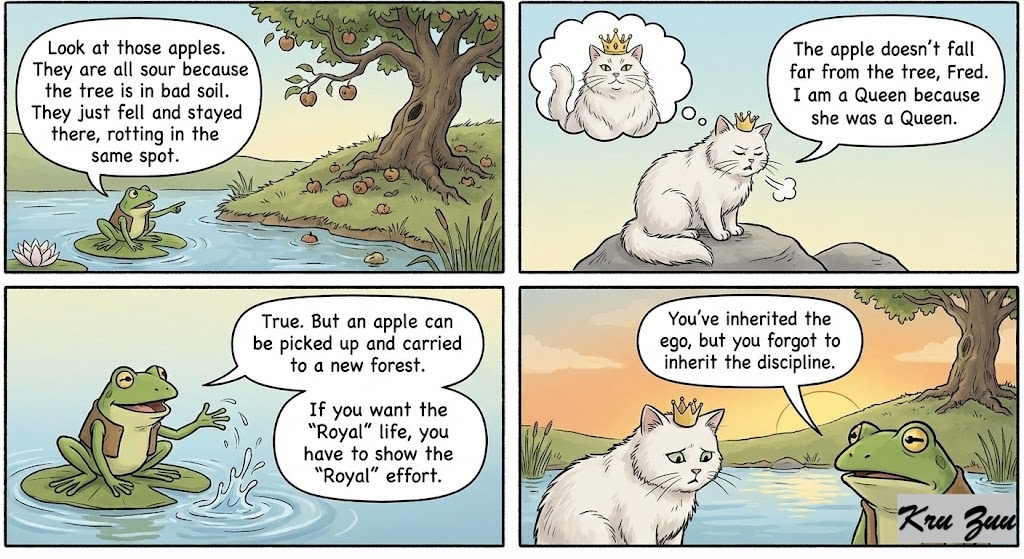
    The Lesson: Fred points to a wild apple tree. “Look at those apples. They are all sour because the tree is in bad soil. They just fell and stayed there, rotting in the same spot.” Cleo huffs, “The apple doesn’t fall far from the tree, Fred. I am a Queen because she was a Queen.” Fred splashes some water. “True. But an apple can be picked up and carried to a new forest. If you want the ‘Royal’ life, you have to show the ‘Royal’ effort. Youโ€™ve inherited the ego, but you forgot to inherit the discipline.”

    The Resolution: Cluck stopped running and took a deep breath. She realized she didn’t have to be scared just because her mom was. Cleo, realizing she looked more like a “Dust Cat” than a “Royal Cat,” finally stood up and started grooming herself.
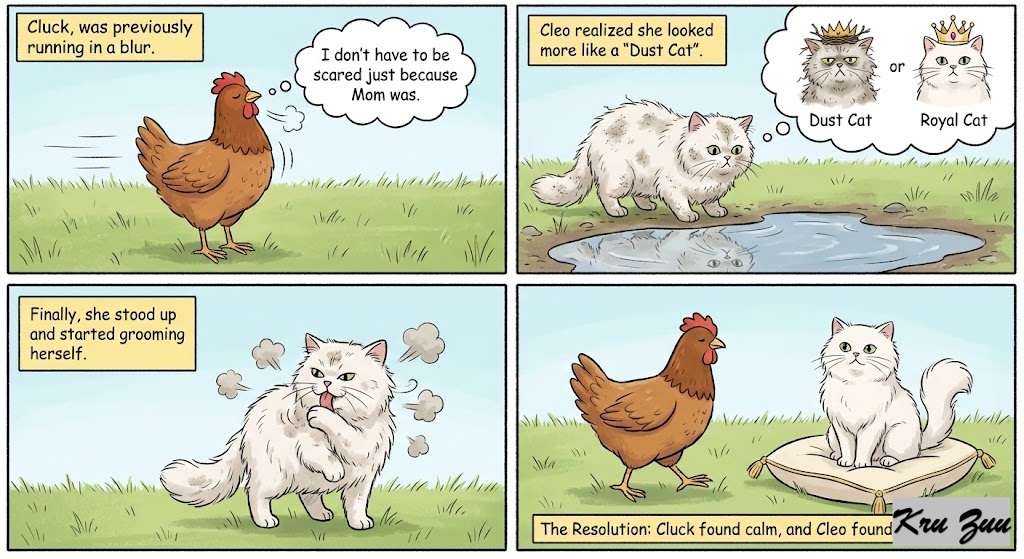

    The Moral: Your roots explain where you started, but they don’t have to define where you end up. ๐ŸŒณ

    ๐ŸŽ“ Lesson for English Learners


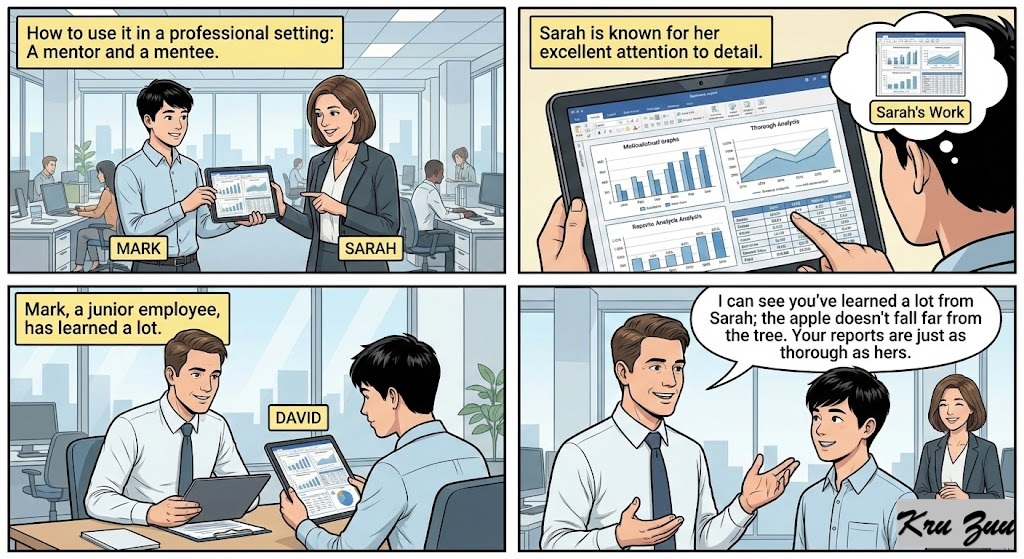
    How to use it in a professional setting: If you see a junior employee who has the same excellent attention to detail as their mentor, you can say: “I can see you’ve learned a lot from Sarah; the apple doesn’t fall far from the tree. Your reports are just as thorough as hers.”

    ๐Ÿ’ฌ Your Turn: The “Mirror” Challenge ๐Ÿš€


    Ready to see your own “tree”?


    The Challenge:
    Identify one habit you have (good or bad) that you definitely “inherited” from a parent, a former boss, or a close friend.
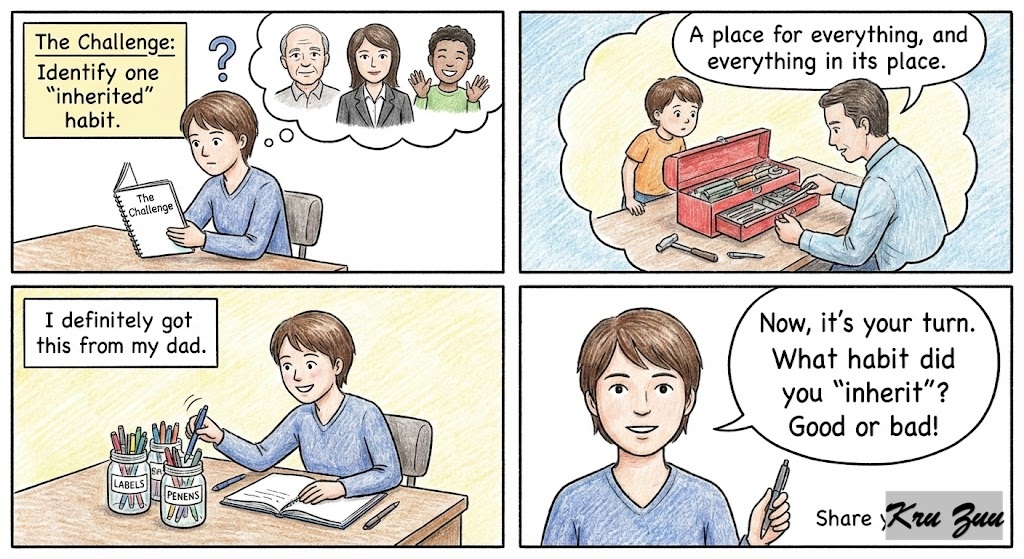
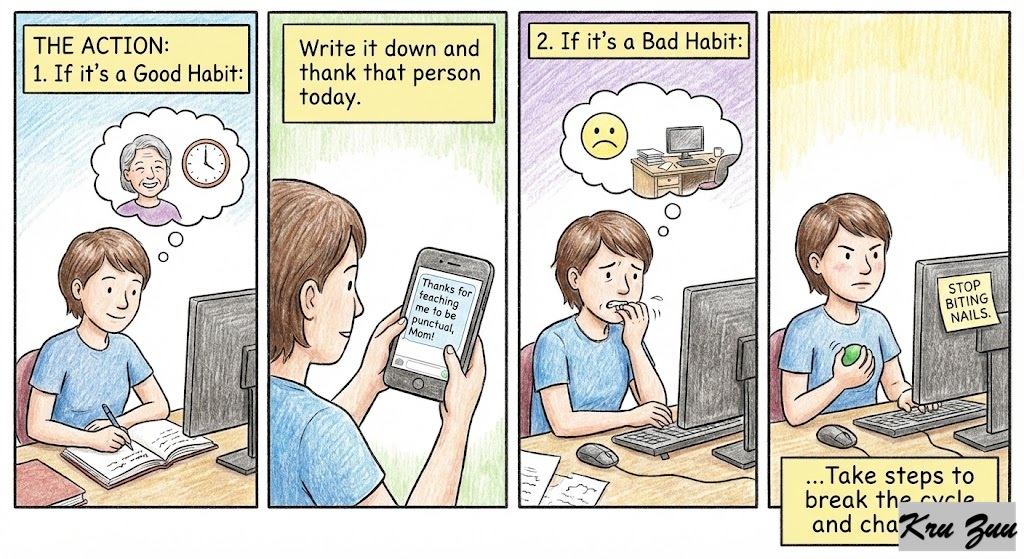
    The Action: 1. If itโ€™s a Good Habit: Write it down and thank that person today. 2. If itโ€™s a Bad

    Habit: Consciously do the opposite for 24 hours. Prove that this apple can roll a little further away.

    ๐Ÿ‘‡ Question for the comments: Which trait did you get from your “tree”? Are you happy about it, or are you trying to roll away? Tell us below!

    By Zubeyir YURTKURAN

    https://www.facebook.com/BrainBattleground/

    https://www.facebook.com/zubeyr.yurtkuran/

    https://www.instagram.com/zubeyryurtkuran/

    https://www.youtube.com/@BrainBattleground-b3p

    https://www.instagram.com/brainbattleground/

  • ๐Ÿ›ก๏ธ The Daily Shield: The Law of Silent Safety

    ๐Ÿ›ก๏ธ The Daily Shield: The Law of Silent Safety

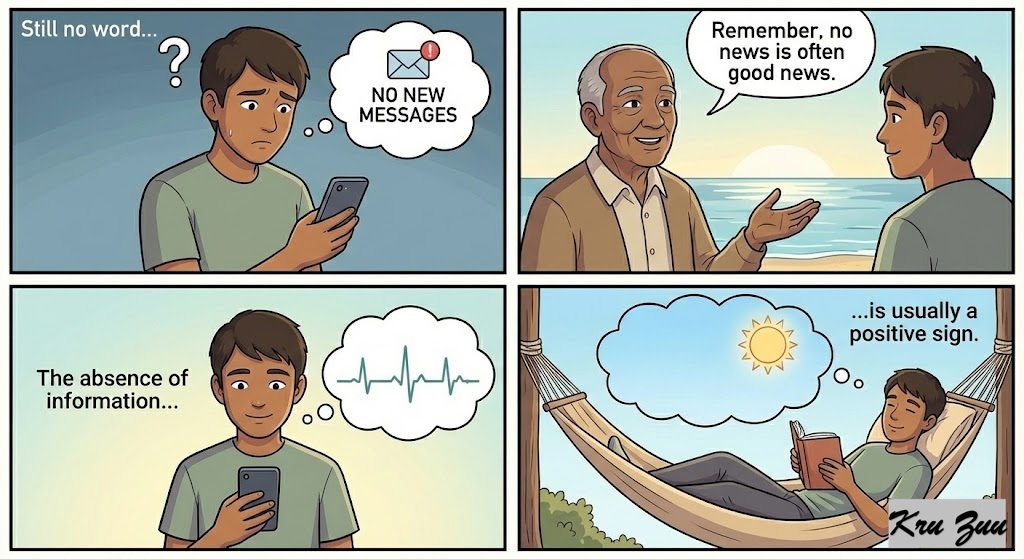
    “No news is good news.”


    ๐Ÿ˜ˆ The Villain (The Anxiety Spinner)

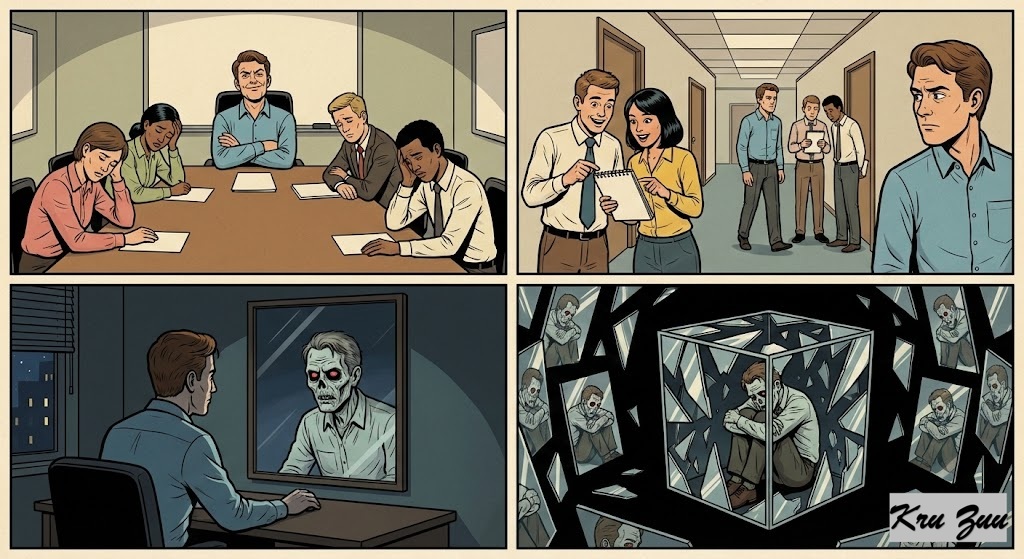
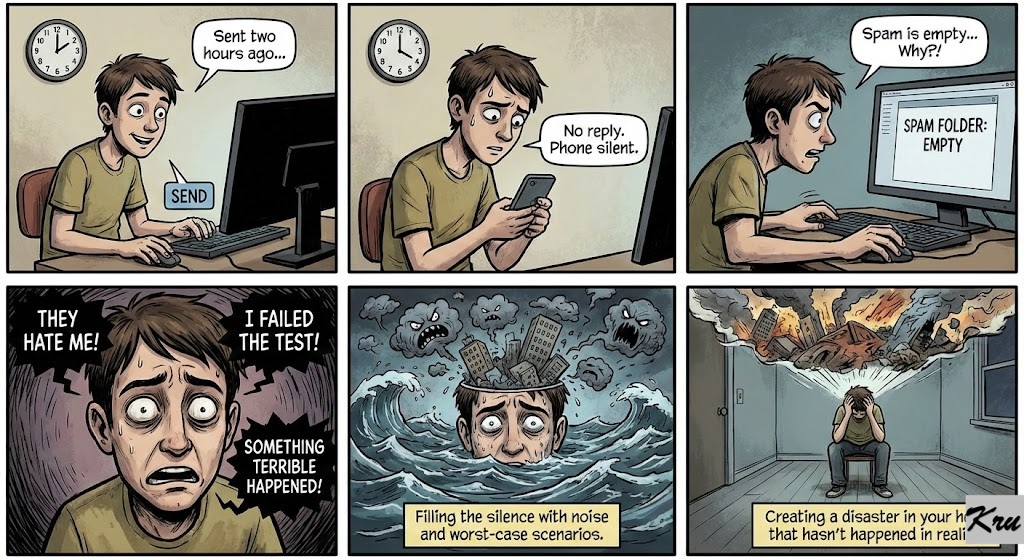
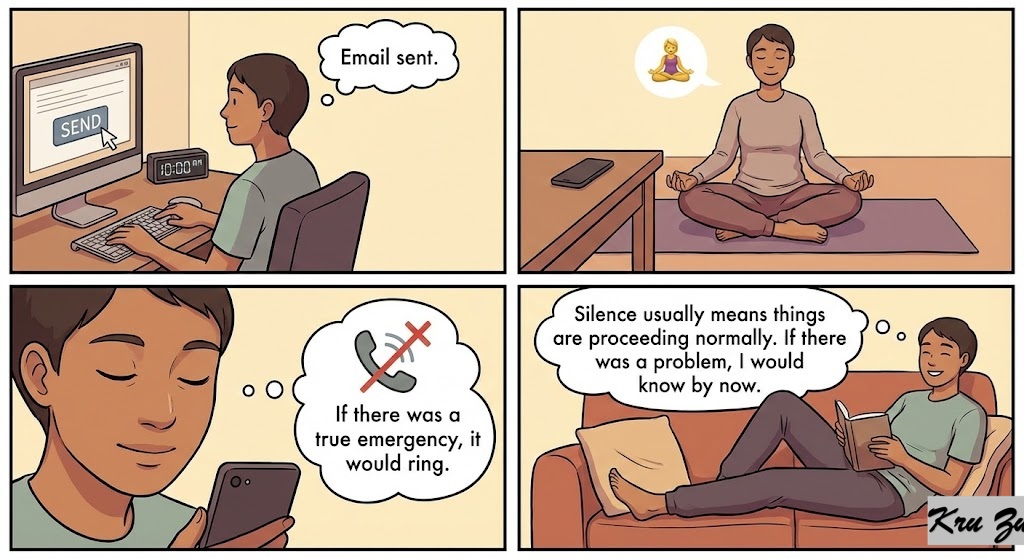
    You sent the email two hours ago. No reply. You check your phone. Nothing. ๐Ÿ“ฑ You check the spam folder. Empty. Your brain starts to scream: “They hate me.” “I failed the test.” “Something terrible has happened to them!” You fill the silence with noise and worst-case scenarios. You create a disaster in your head that hasn’t happened in reality.

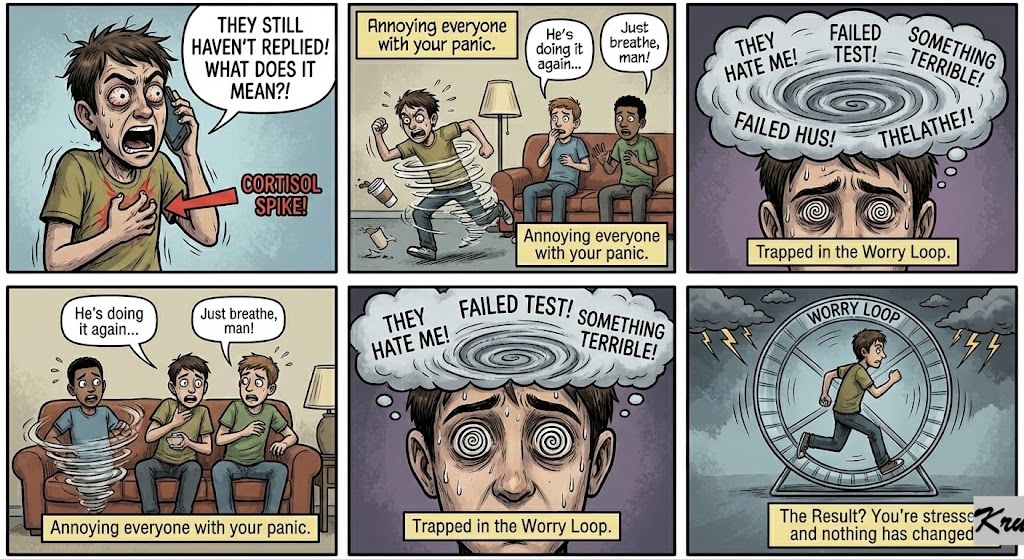
    The Result? You are stressed, your cortisol spikes, and you annoy everyone around you with your panic. You are trapped in the “Worry Loop.” ๐ŸŒ€


    ๐Ÿ˜‡ The Hero (The Peaceful Stoic)

    You send the email. You put the phone down. ๐Ÿง˜ You realize that if there was a true emergency, the phone would ring. You understand that silence usually means things are proceeding normally. You say: “If there was a problem, I would know by now.”

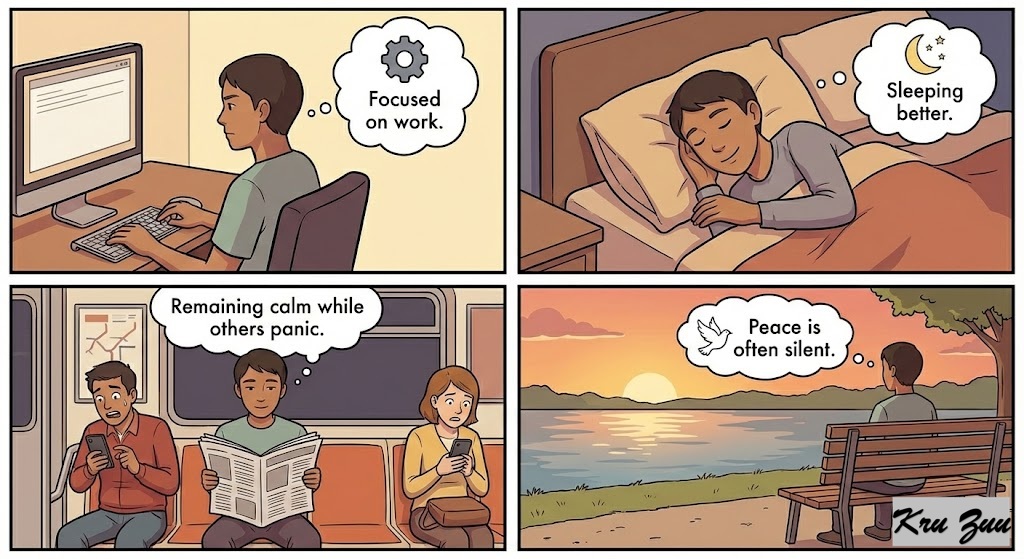
    The Result? You focus on your work. You sleep better. You remain calm while others panic. You understand that Peace is often silent. ๐Ÿ•Š๏ธ


    โš–๏ธ The Reality


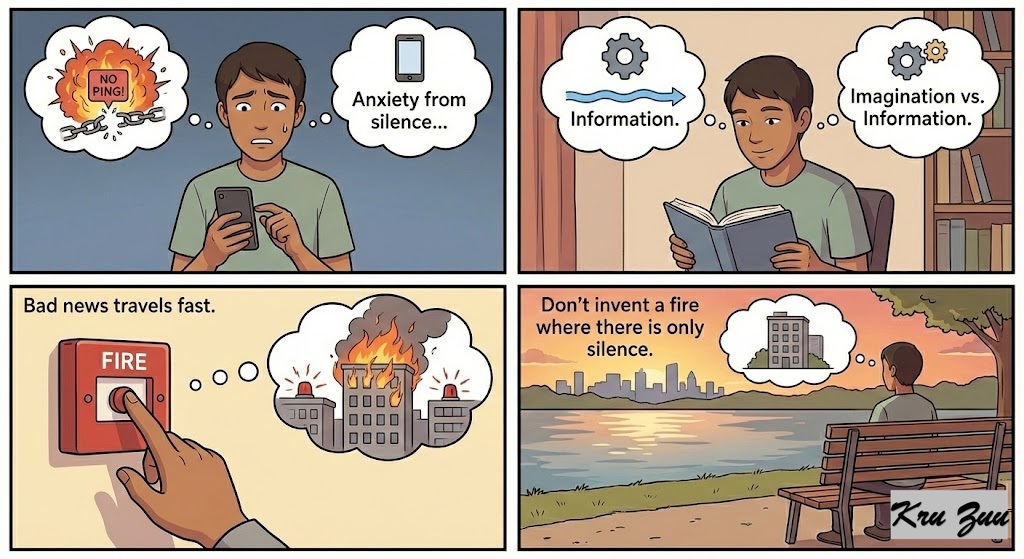
    Information vs. Imagination. We live in an age of instant notifications. When we don’t get a “ping,” we assume the connection is broken. But historically (and logically), bad news travels fast because it requires urgent action. Good news, or the status quo, does not require an alarm. If the fire alarm isn’t ringing, the building is likely not on fire. Don’t let your imagination invent a fire where there is only silence.


    ๐Ÿ’Ž The Secret

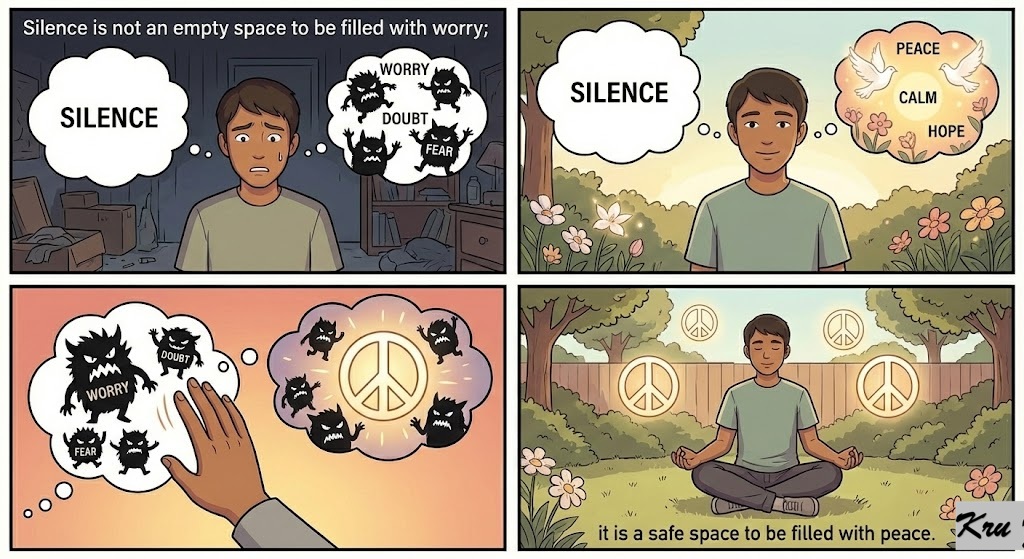
    Silence is not an empty space to be filled with worry; it is a safe space to be filled with peace.

    ๐Ÿง The Anatomy of the Proverb


    This is your reminder that the absence of information is usually a positive sign, not a negative one.


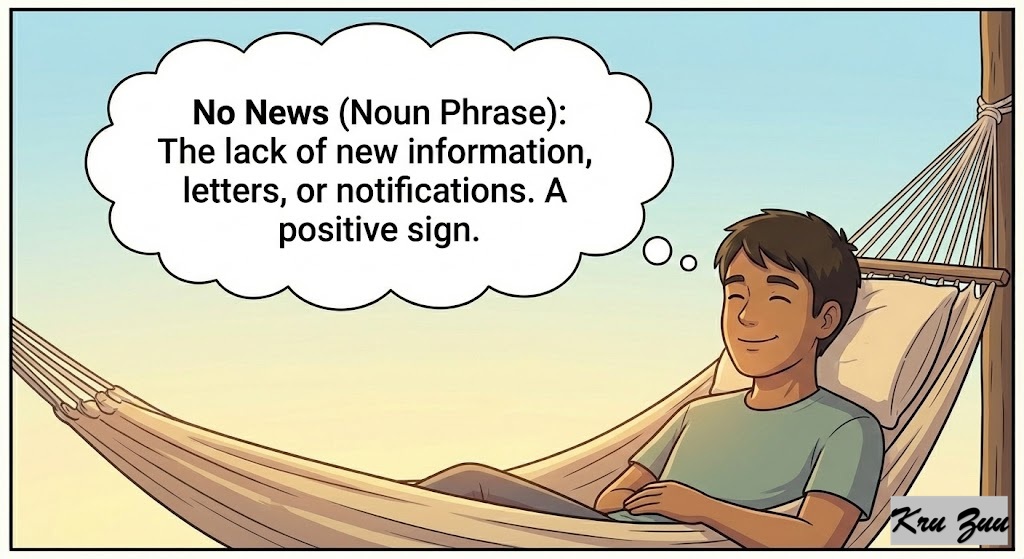
    No News (Noun Phrase):
    The lack of new information, letters, or notifications.


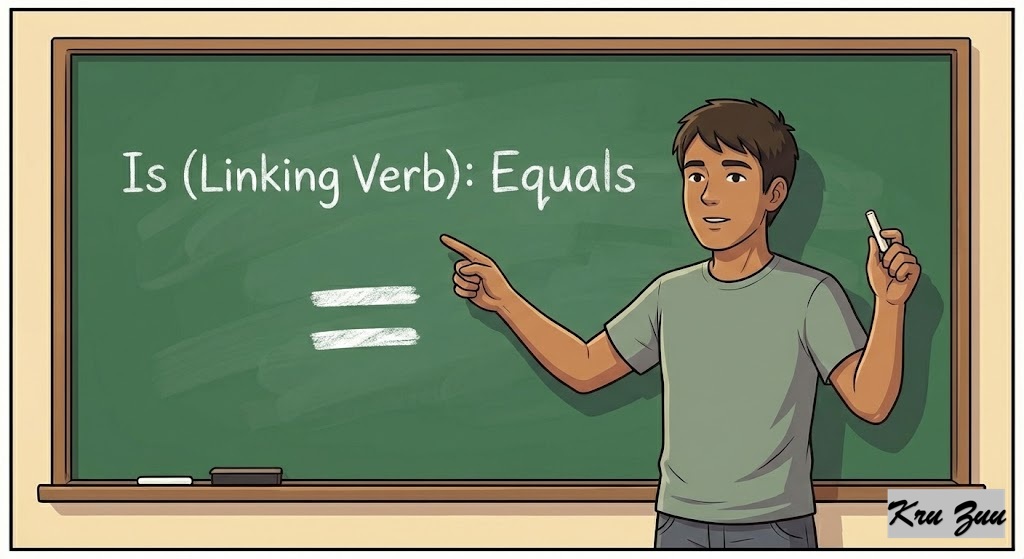
    Is (Linking Verb): Equals.


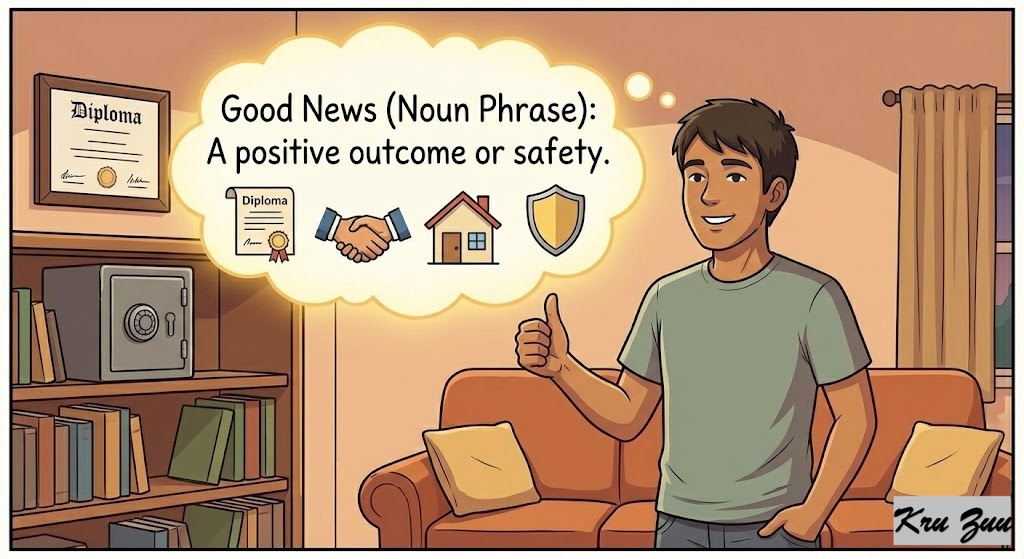
    Good News (Noun Phrase):
    A positive outcome or safety.


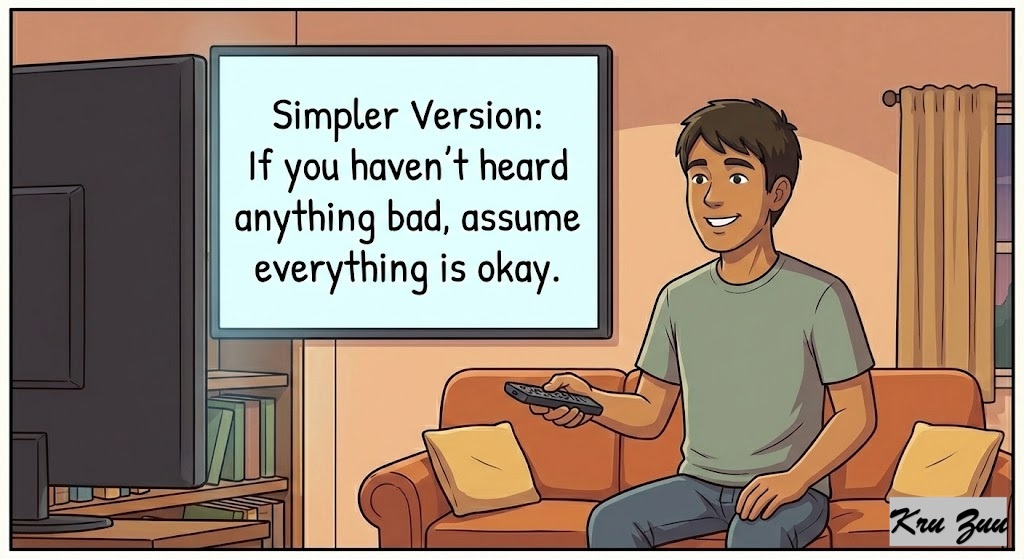
    Simpler Version: If you haven’t heard anything bad, assume everything is okay.


    ๐Ÿ“š Vocabulary Vault


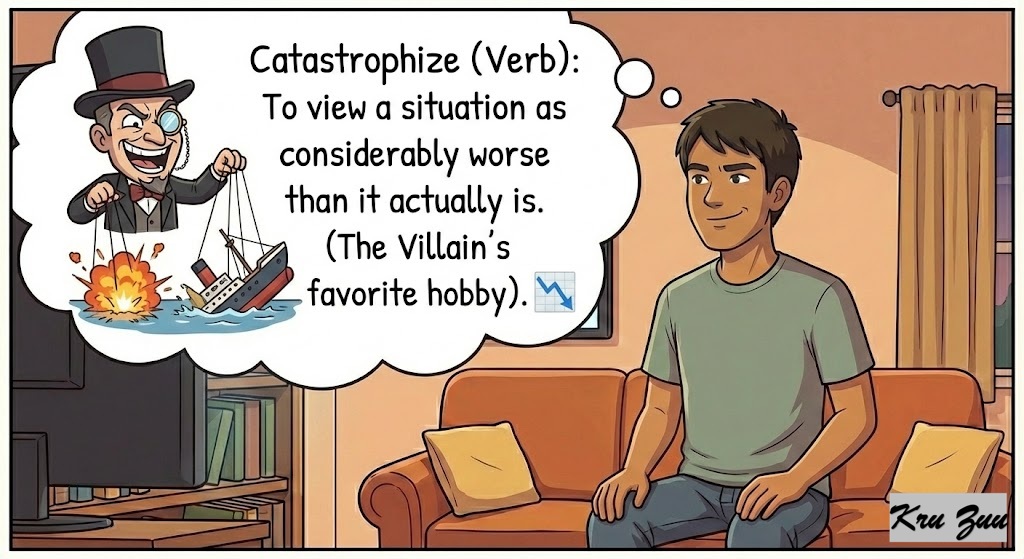
    Catastrophize (Verb): To view a situation as considerably worse than it actually is. (The Villain’s favorite hobby). ๐Ÿ“‰


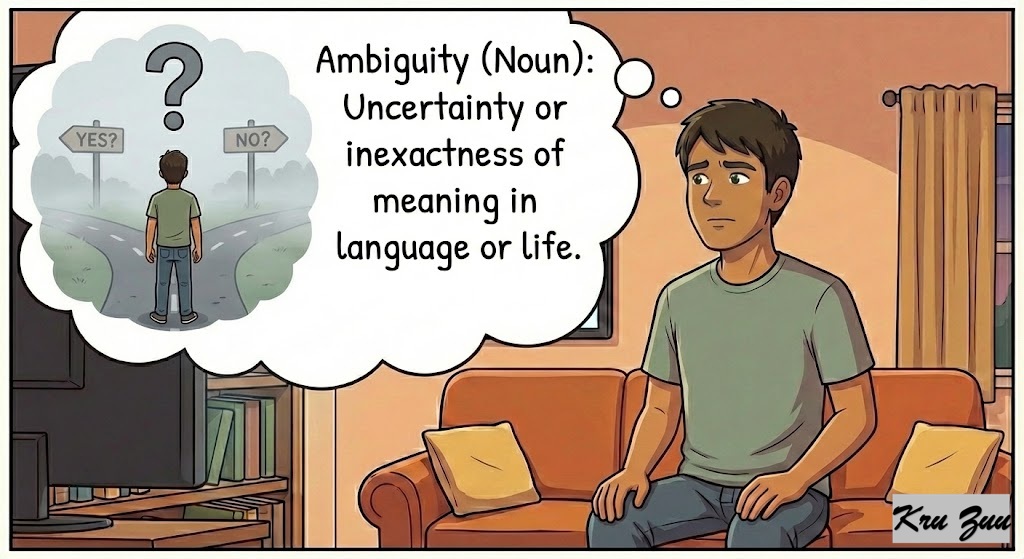
    Ambiguity (Noun): Uncertainty or inexactness of meaning in language or life.


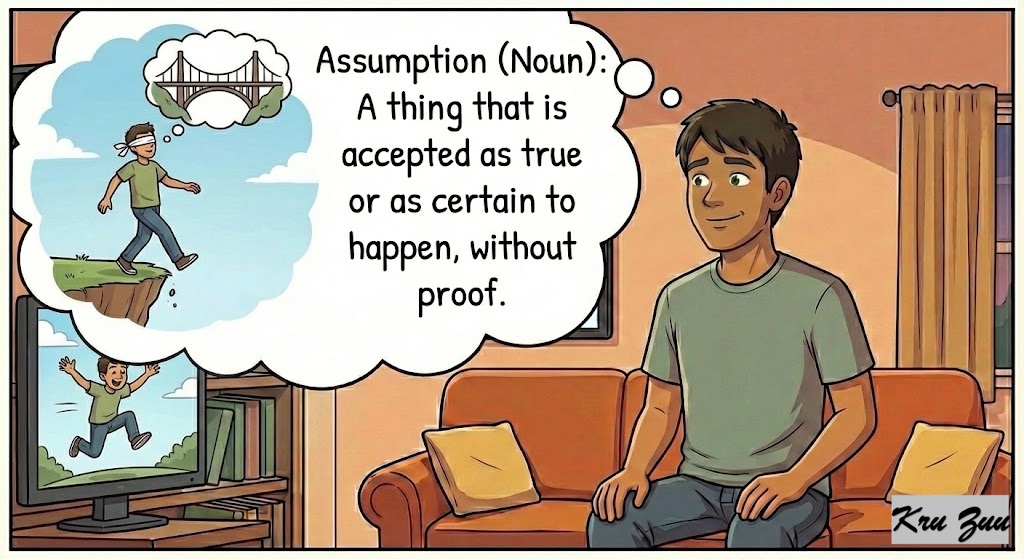
    Assumption (Noun): A thing that is accepted as true or as certain to happen, without proof.


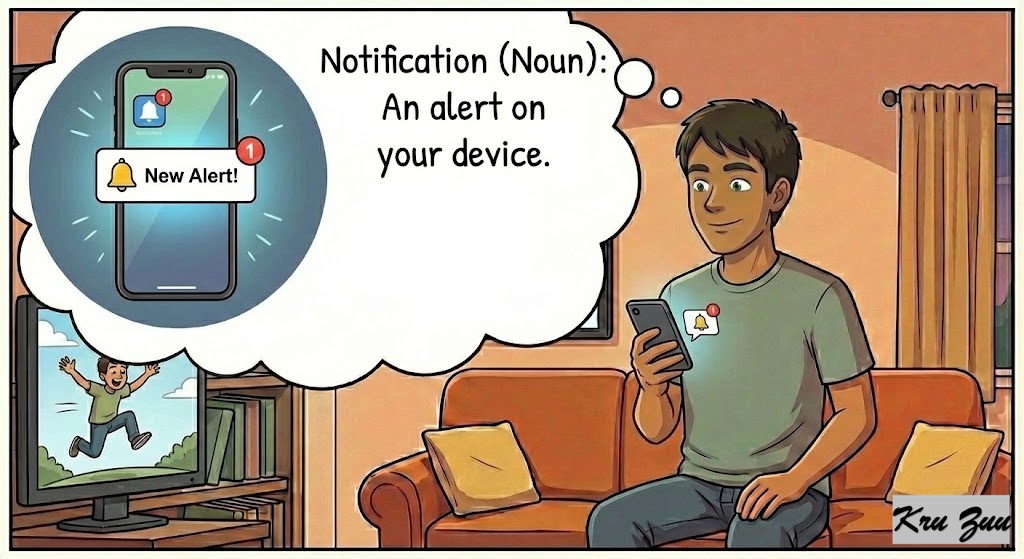
    Notification (Noun): An alert on your device.


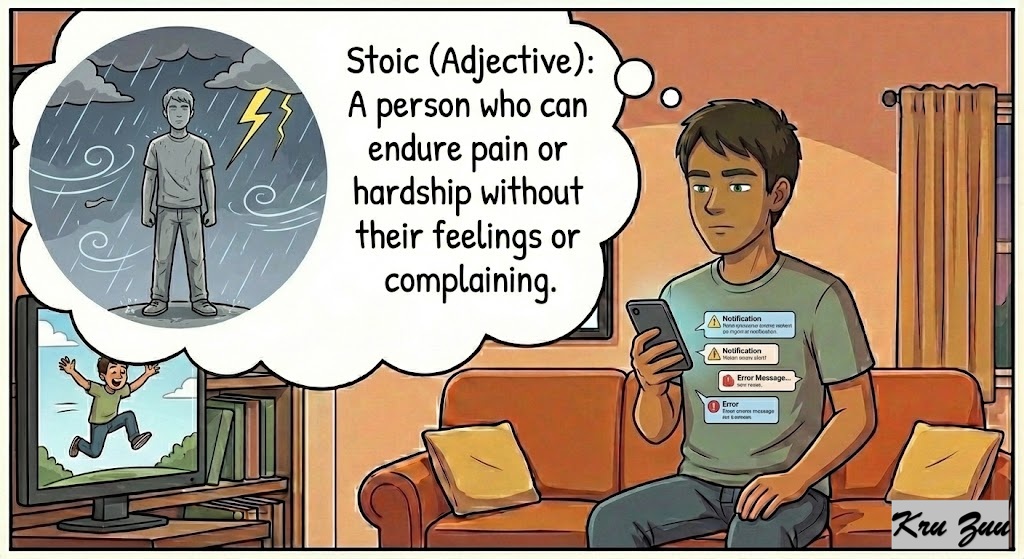
    Stoic (Adjective): A person who can endure pain or hardship without showing their feelings or complaining.


    ๐Ÿง  Grammar Focus: Ellipsis (Leaving words out)


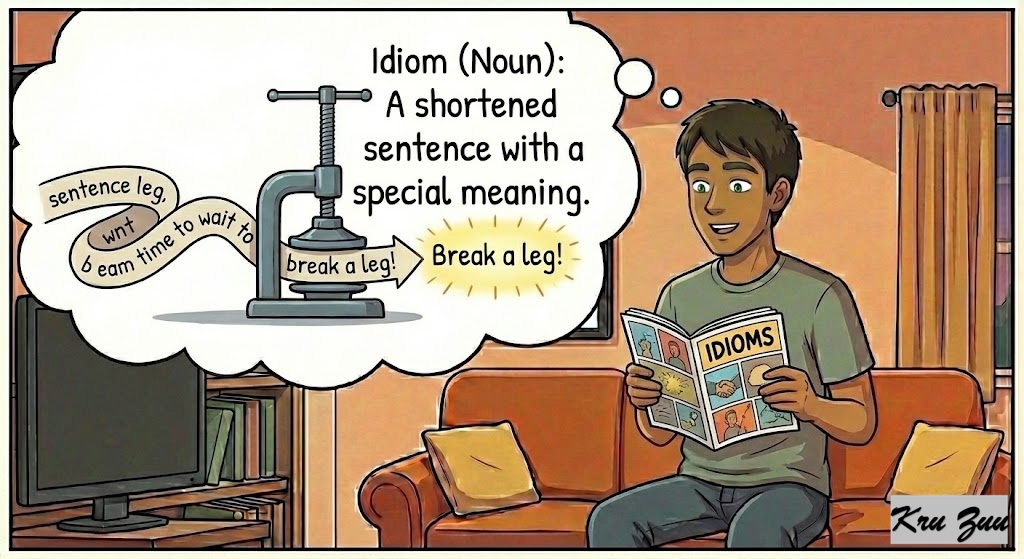
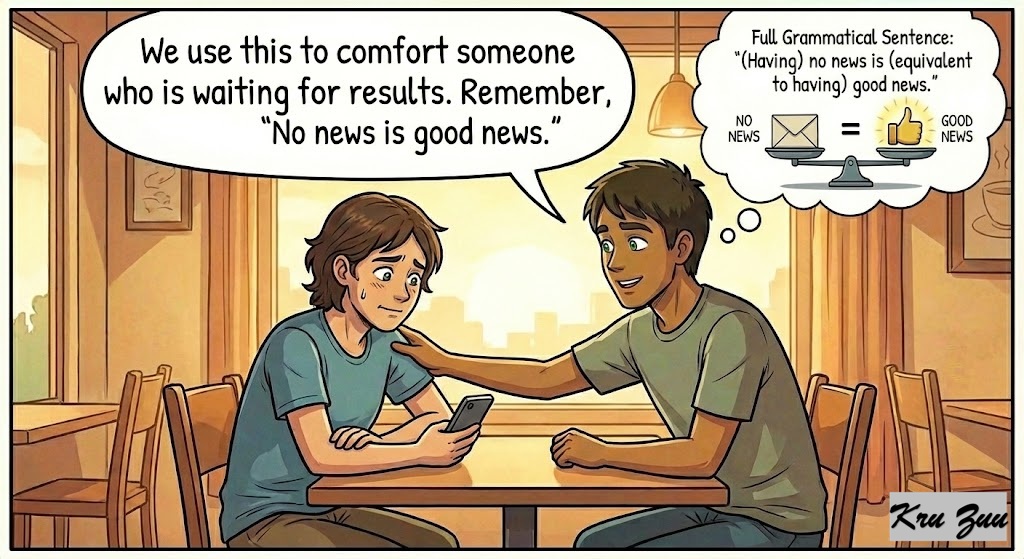
    This idiom is a shortened sentence.


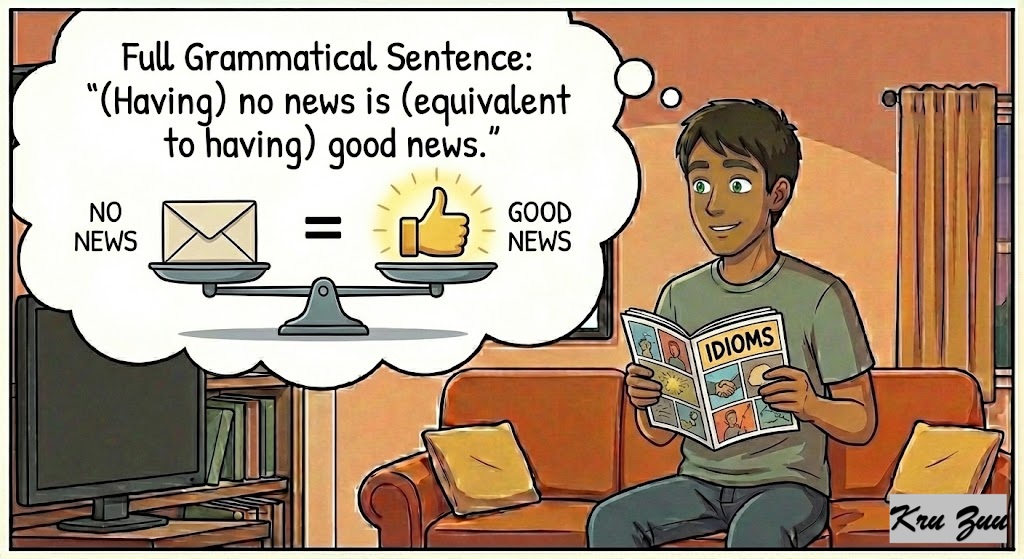
    Full Grammatical Sentence: “(Having) no news is (equivalent to having) good news.”


    Usage: We use this to comfort someone who is waiting for results.


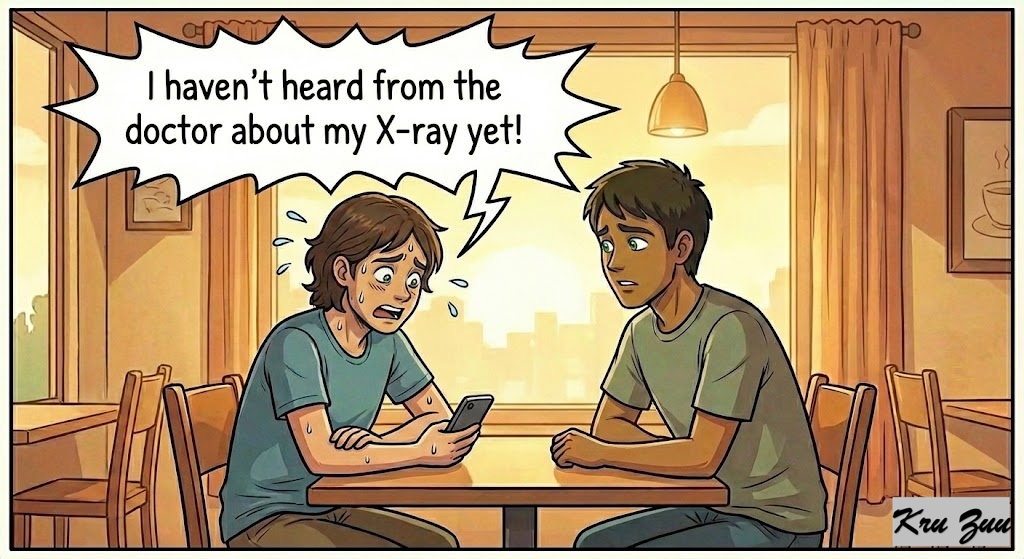
    Example


    Anxious Friend:
    “I haven’t heard from the doctor about my X-ray yet!”


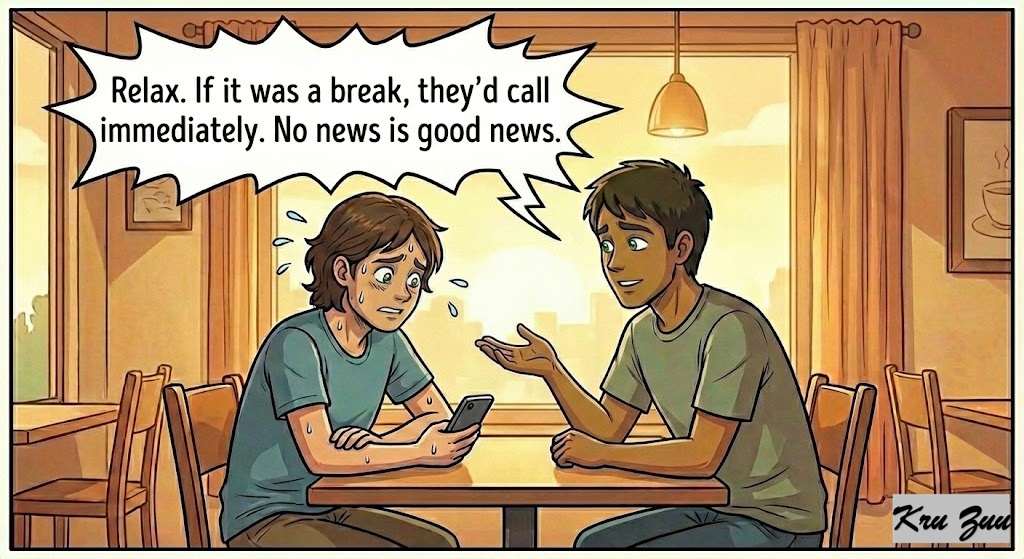
    Supportive Friend: “Relax. If it was a break, they’d call immediately. No news is good news.”

    ๐Ÿ“œ History: Origin and Spread


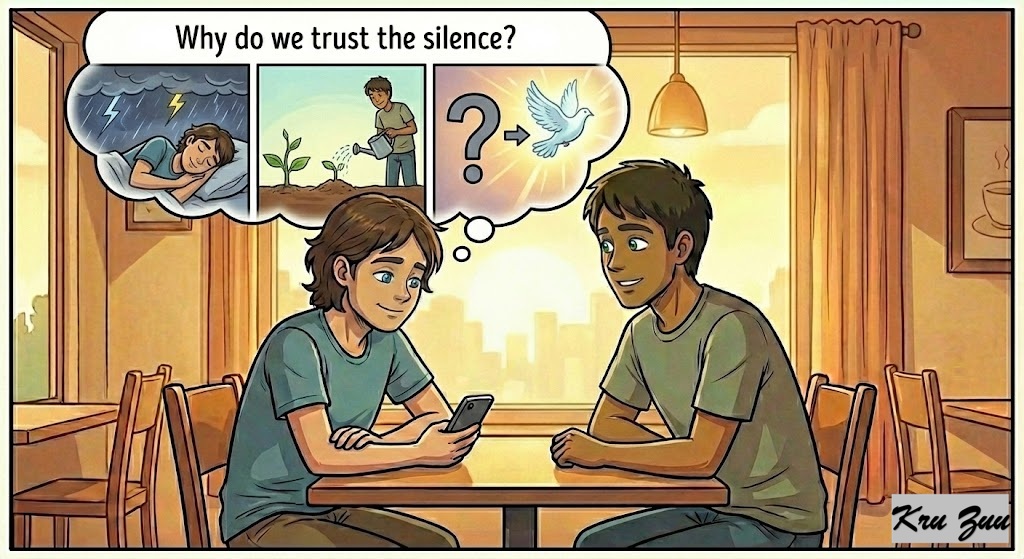
    Why do we trust the silence?


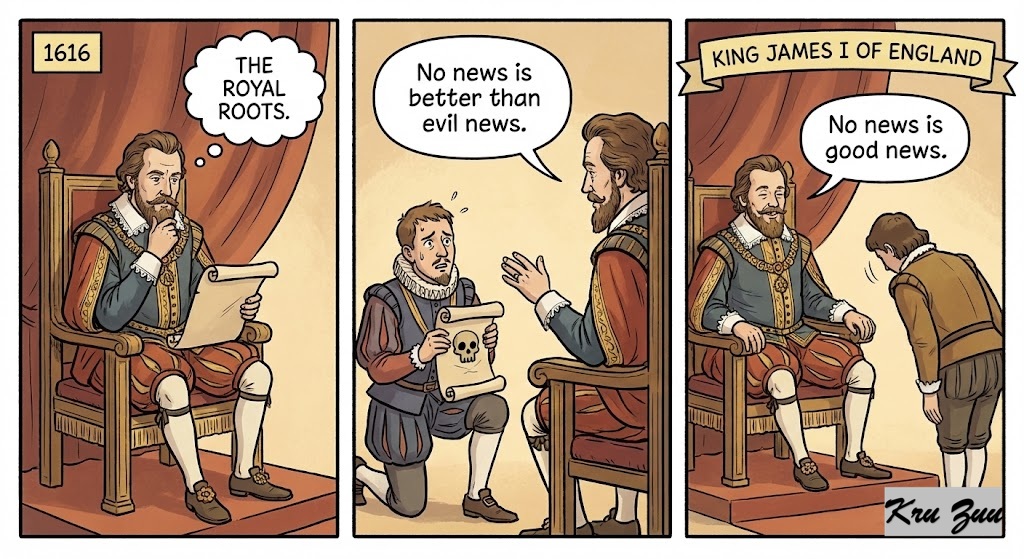
    The Royal Roots: King James I of England is quoted as saying, “No news is better than evil news” as far back as 1616.


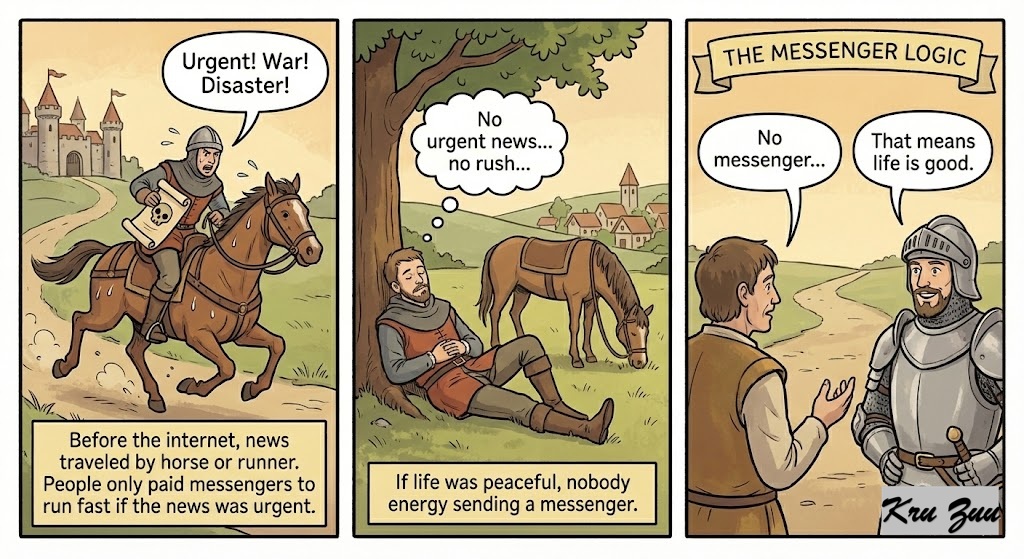
    The Messenger Logic: Before the internet, news traveled by horse or runner. ๐ŸŽ People only paid messengers to run fast if the news was urgent (wars, deaths, disasters). If life was peaceful, nobody wasted energy sending a messenger. Therefore, if no runner arrived, life was good.


    Global Cousins


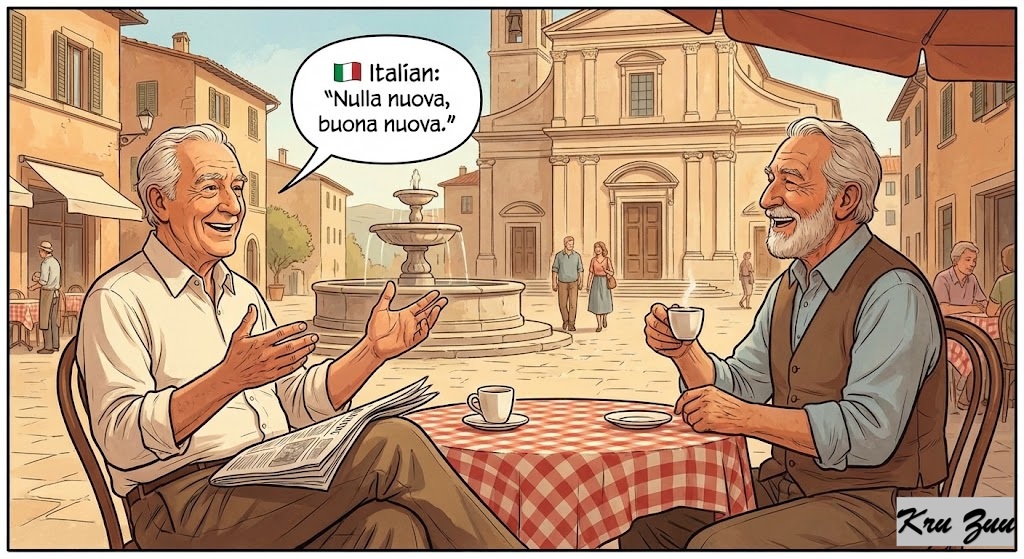
    ๐Ÿ‡ฎ๐Ÿ‡น Italian:“Nulla nuova, buona nuova.”


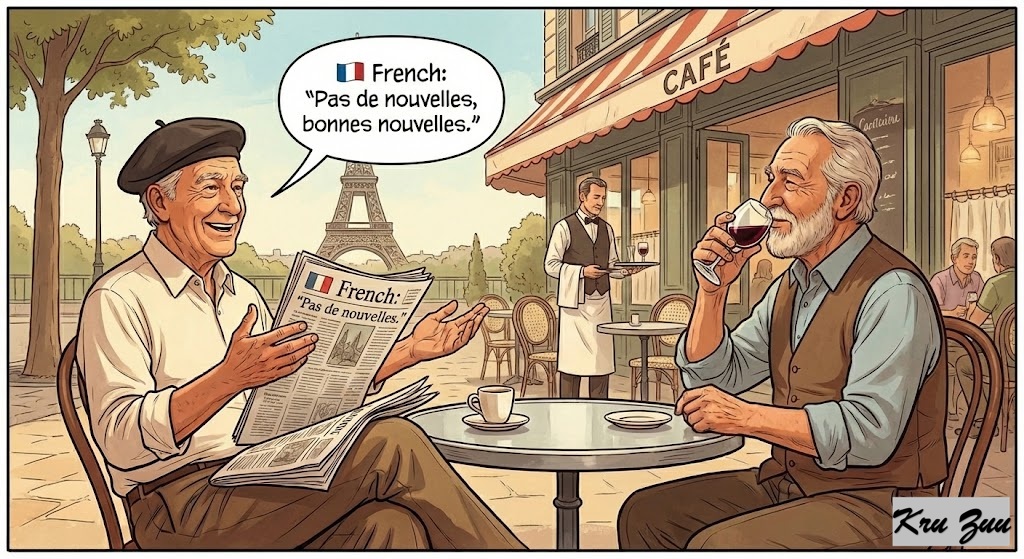
    ๐Ÿ‡ซ๐Ÿ‡ท French:“Pas de nouvelles, bonnes nouvelles.”


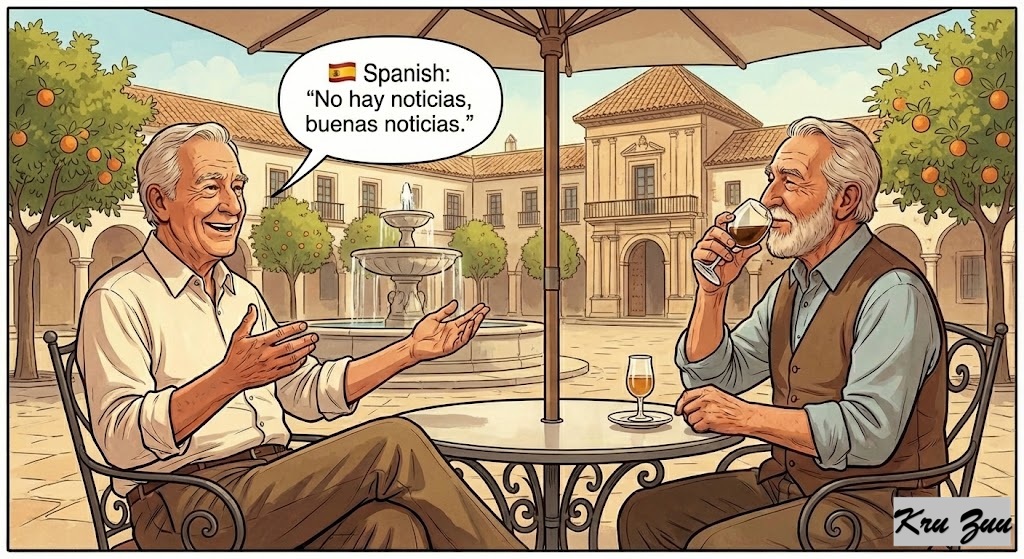
    ๐Ÿ‡ช๐Ÿ‡ธ Spanish:“No hay noticias, buenas noticias.”

    ๐ŸŽญ Short Story: The Silent Mailbox ๐Ÿ“ฌ๐Ÿฑ๐Ÿ”๐Ÿธ


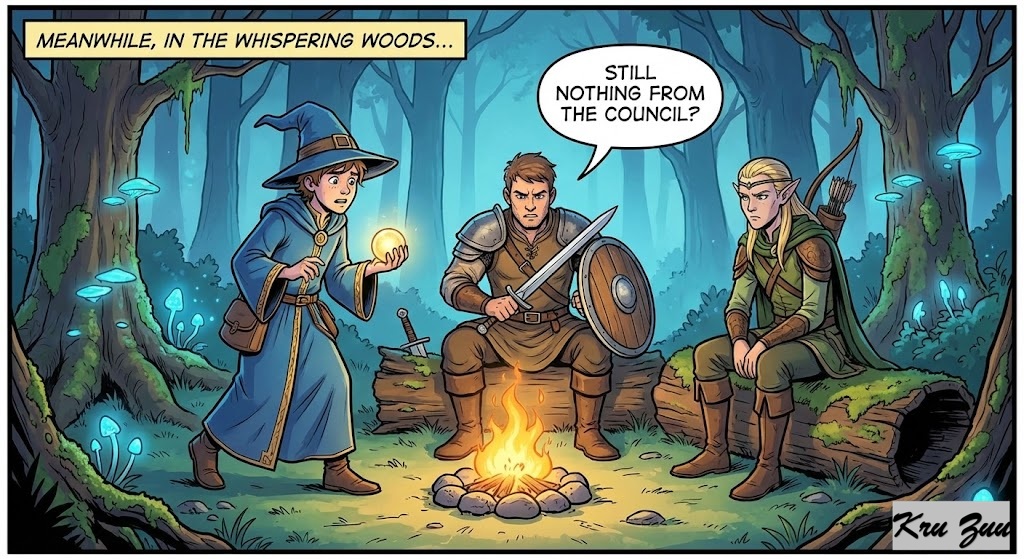
    Letโ€™s return to the magical forest to see how our trio handles the stress of waiting.


    ๐ŸŒŸ The Cast


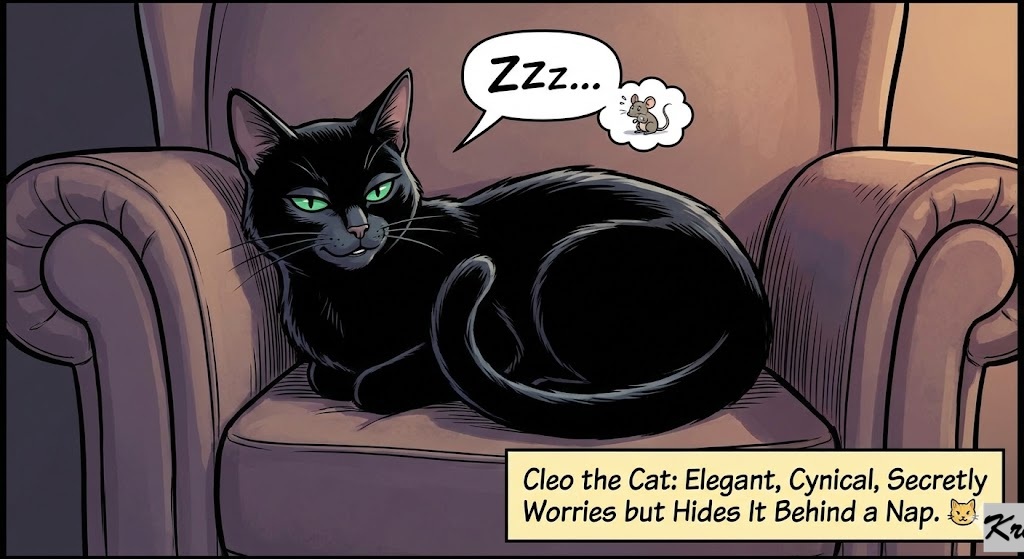
    Cleo the Cat: Elegant, cynical, secretly worries but hides it behind a nap. ๐Ÿ˜ผ


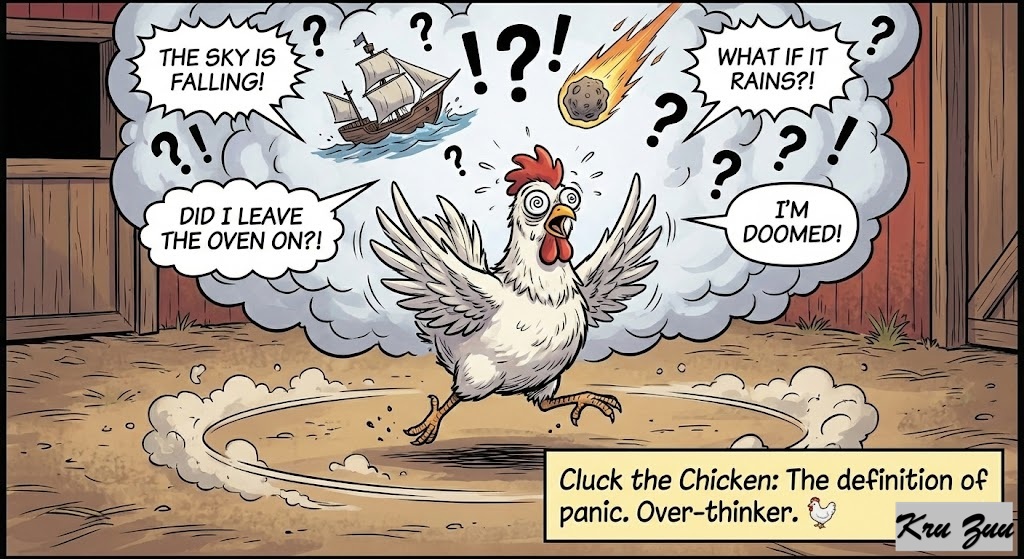
    Cluck the Chicken: The definition of panic. Over-thinker. ๐Ÿ”


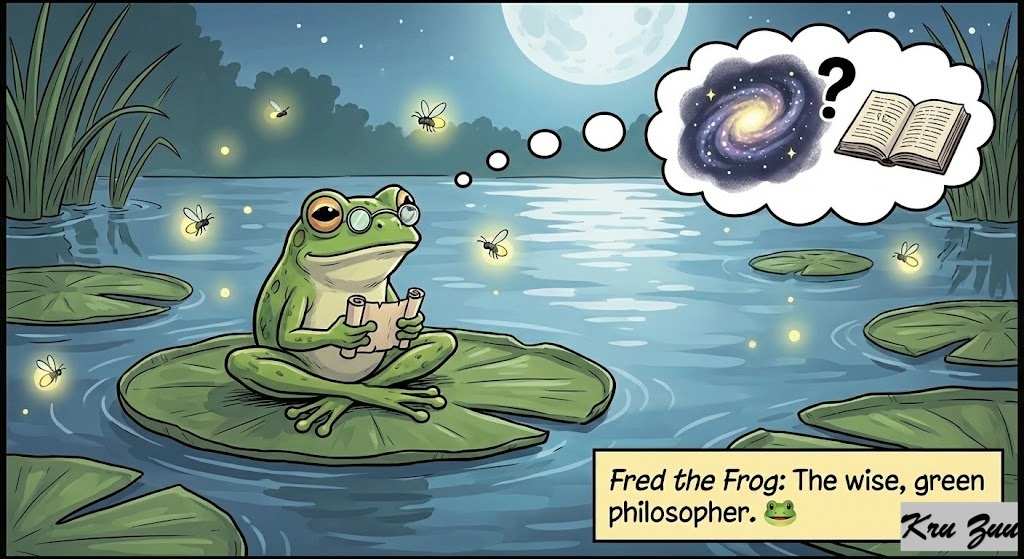
    Fred the Frog: The wise, green philosopher. ๐Ÿธ


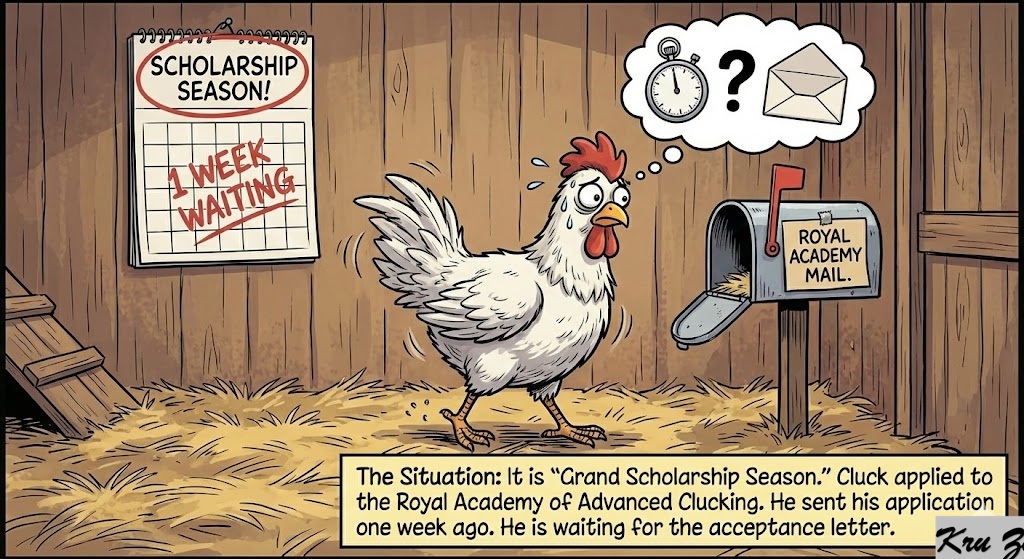
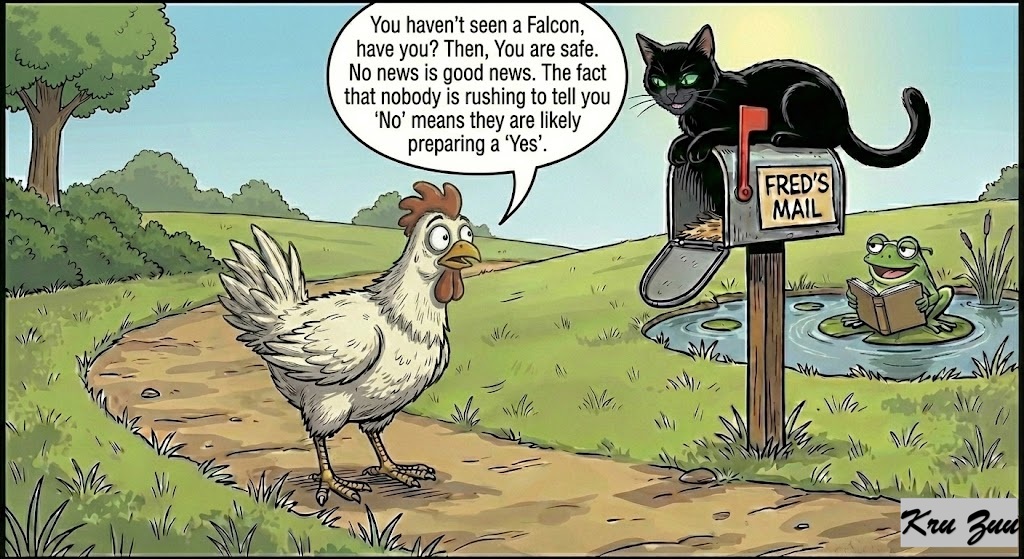
    The Situation: It is “Grand Scholarship Season.” Cluck has applied to the Royal Academy of Advanced Clucking. He sent his application one week ago. He is waiting for the acceptance letter.


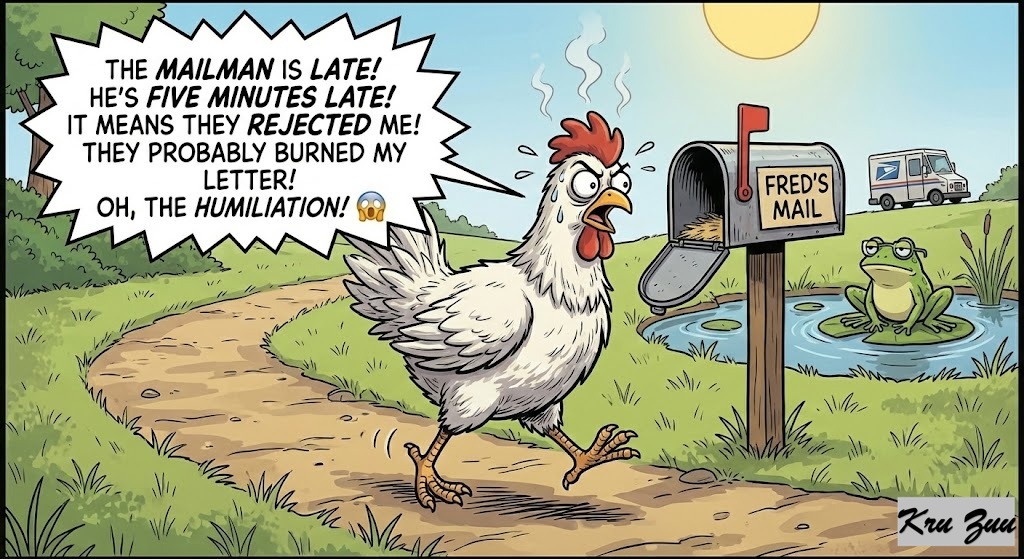
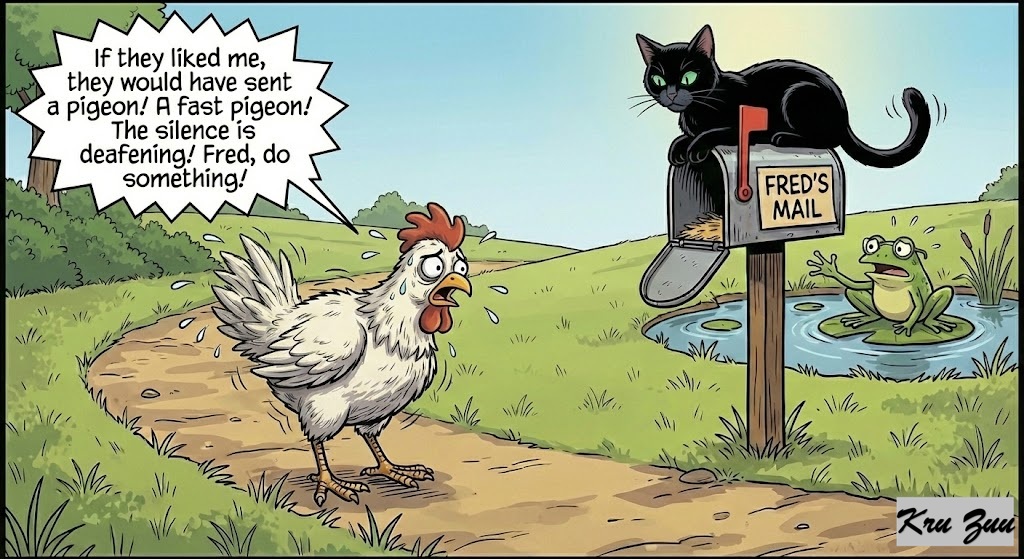
    The Conflict: Cluck is pacing back and forth in front of Fred’s mailbox. He has worn a path in the grass. “The mailman is late!” Cluck squawks. “Heโ€™s five minutes late! It means they rejected me! They probably burned my letter! Oh, the humiliation!” ๐Ÿ˜ฑ


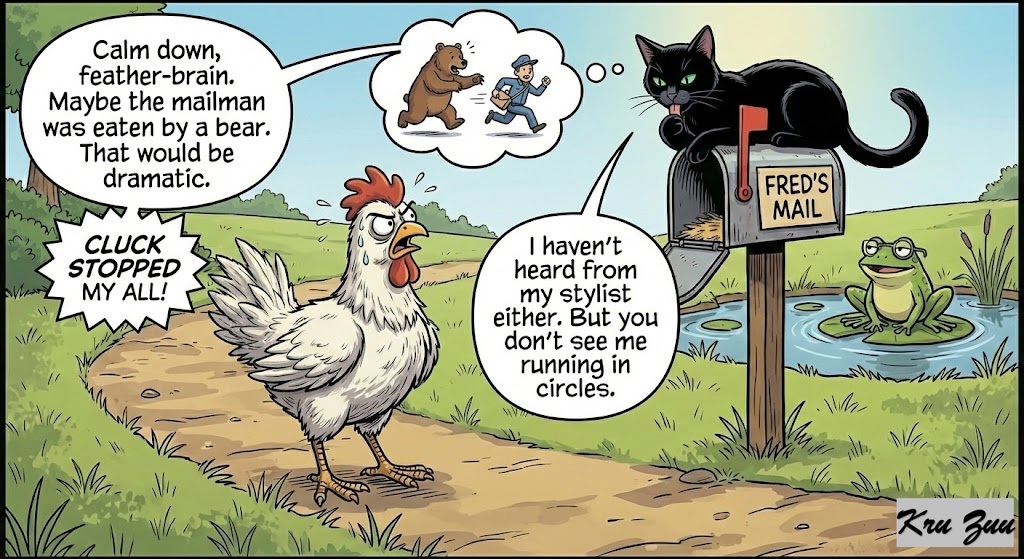
    Cleo is lying on the mailbox, grooming her tail. “Calm down, feather-brain. Maybe the mailman was eaten by a bear. That would be dramatic.” Cleo checks her claws. “I haven’t heard from my stylist either. But you don’t see me running in circles.”


    The Reaction: Cluck hyperventilates. “If they liked me, they would have sent a pigeon! A fast pigeon! The silence is deafening! Fred, do something!”


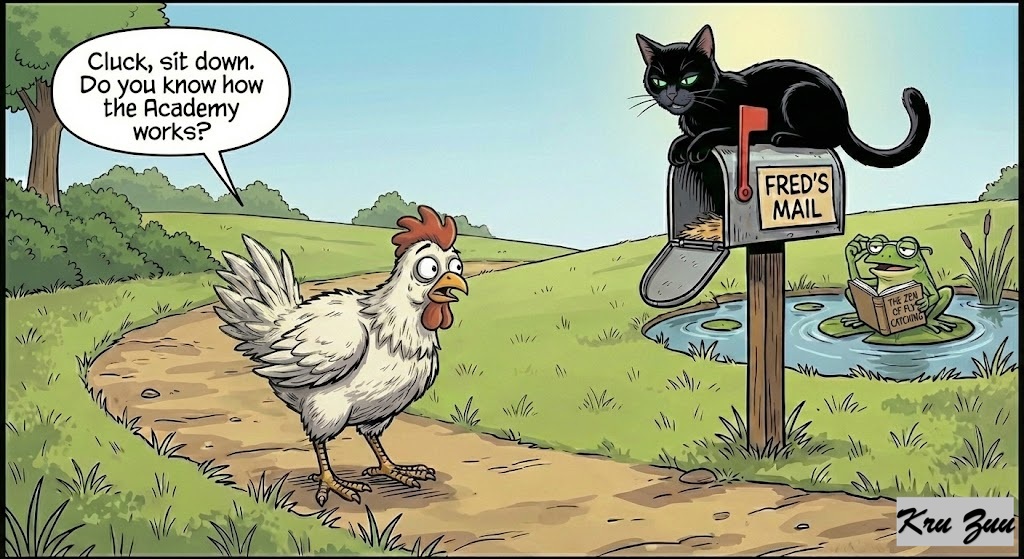
    Fred looks up from his book (The Zen of Fly Catching). He adjusts his glasses. “Cluck, sit down,” Fred croaks calmly. “Do you know how the Academy works?”


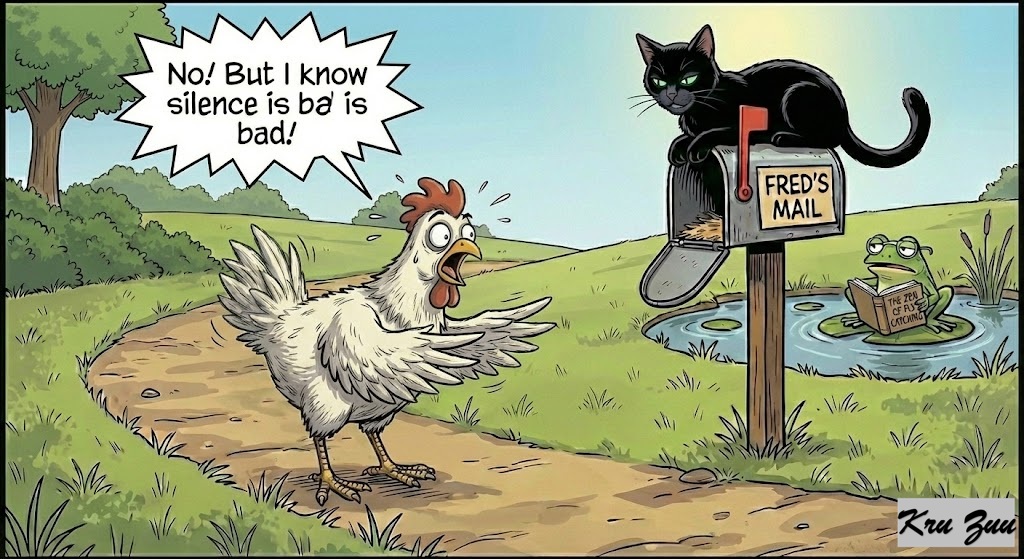
    “No! But I know silence is bad!” Cluck yells.


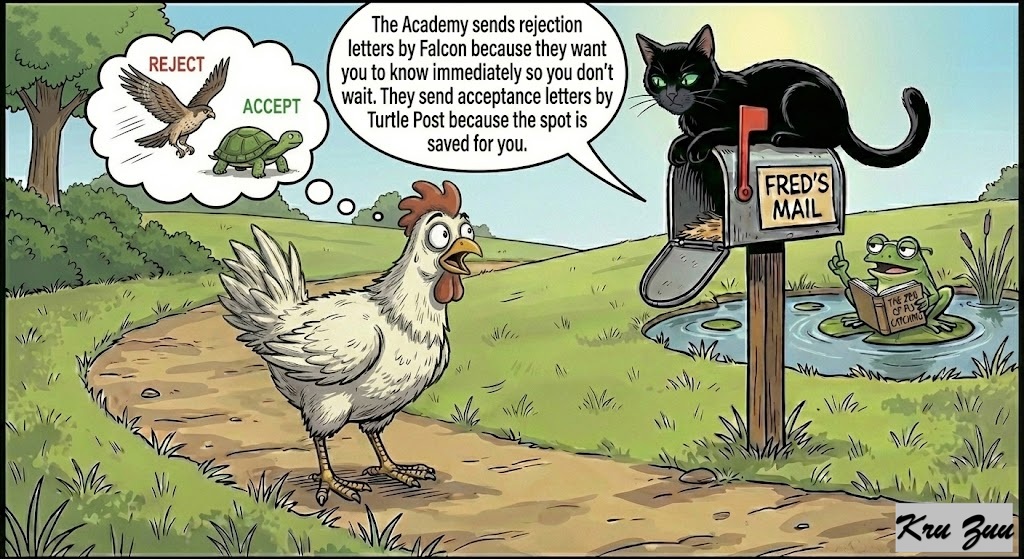
    The Lesson: Fred points a green finger at the sky. “The Academy sends rejection letters by Falcon because they want you to know immediately so you don’t wait. They send acceptance letters by Turtle Post because the spot is saved for you.”


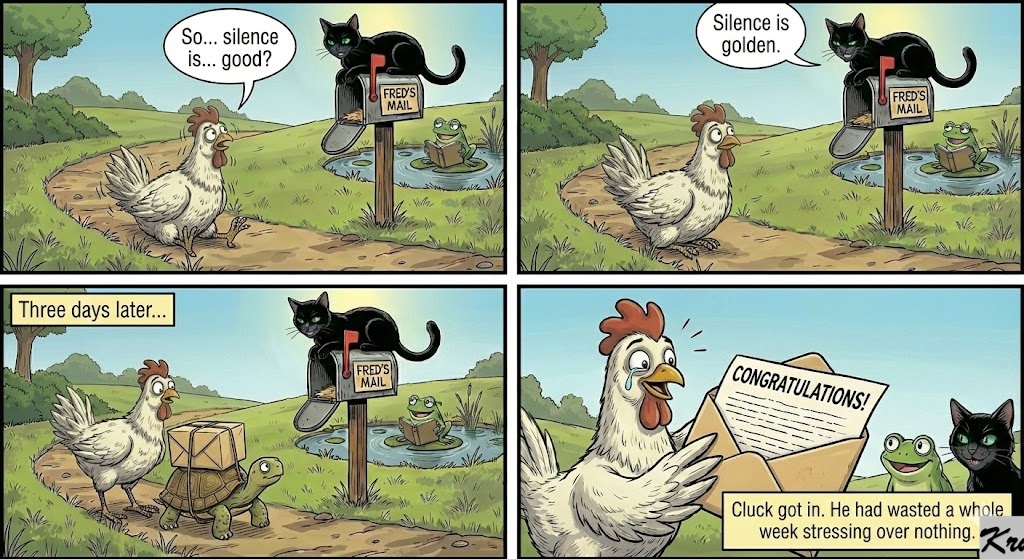
    Fred smiles. “You haven’t seen a Falcon, have you?” Cluck stops. “No.” “Then,” Fred says, “You are safe. No news is good news. The fact that nobody is rushing to tell you ‘No’ means they are likely preparing a ‘Yes’.”


    The Resolution: Cluck sat down, trembling slightly. “Soโ€ฆ silence isโ€ฆ good?” “Silence is golden,” Cleo purred. Three days later, a very slow turtle arrived with a thick envelope. Cluck got in. He had wasted a whole week stressing over nothing.


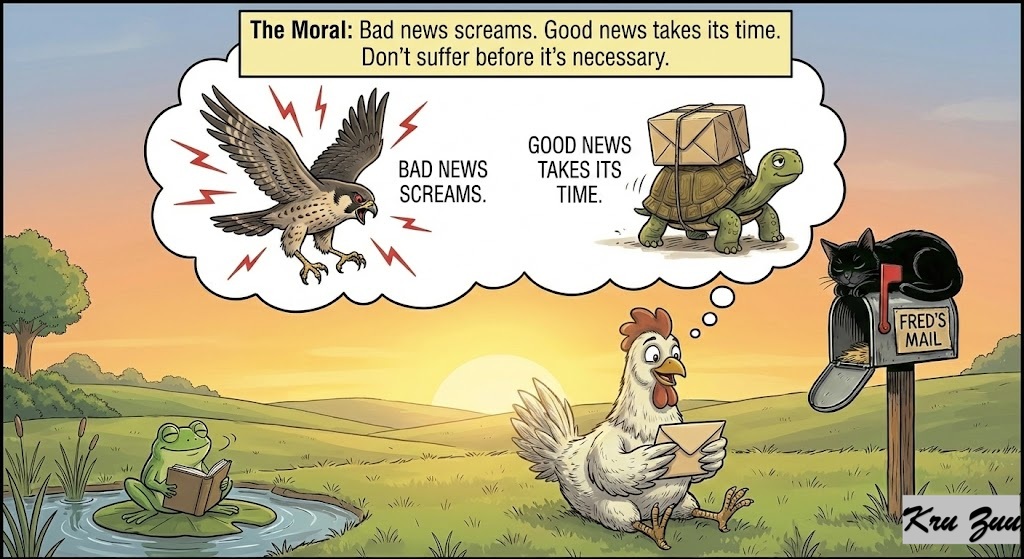
    The Moral: Bad news screams. Good news takes its time. Don’t suffer before it’s necessary.

    ๐ŸŽ“ Lesson for English Learners


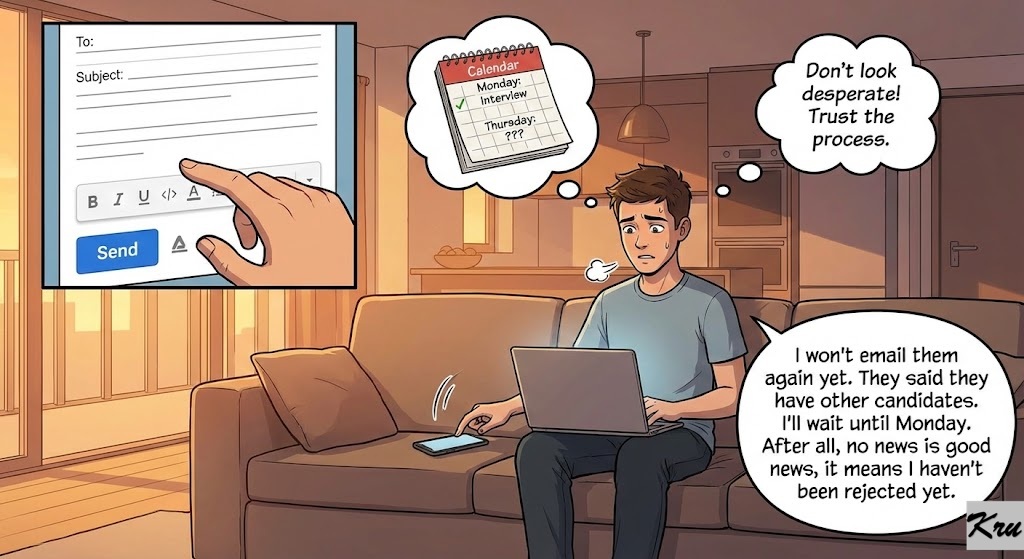
    Context:
    Waiting for a Job Interview Reply. Situation: You interviewed on Monday. It is Thursday. You want to email them again. The Shift: Don’t look desperate. Trust the process. You Say (To yourself or a friend): “I won’t email them again yet. They said they have other candidates. I’ll wait until Monday. After all, no news is good news, it means I haven’t been rejected yet.”


    ๐Ÿ’ฌ Your Turn: The “Notification Fast” ๐Ÿš€


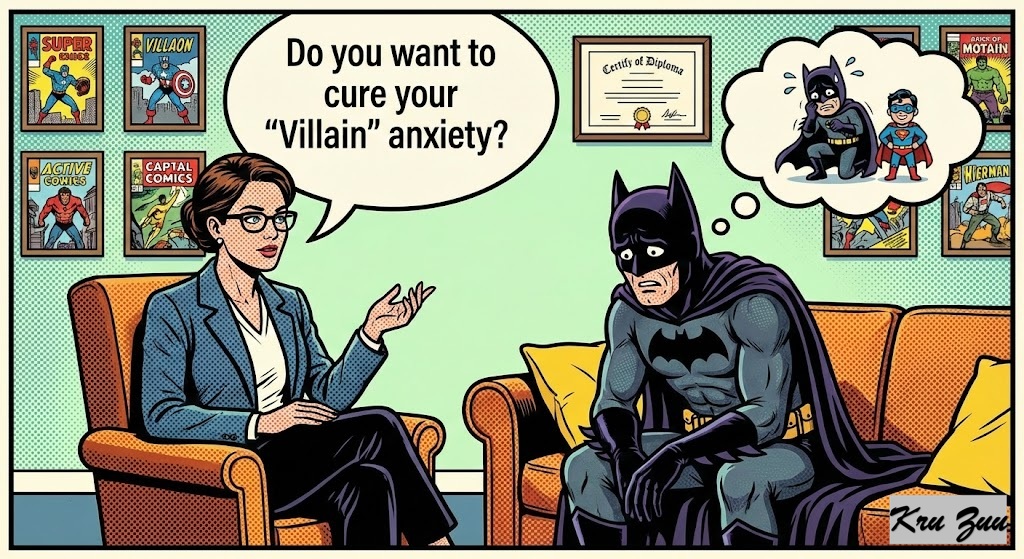
    Do you want to cure your “Villain” anxiety?


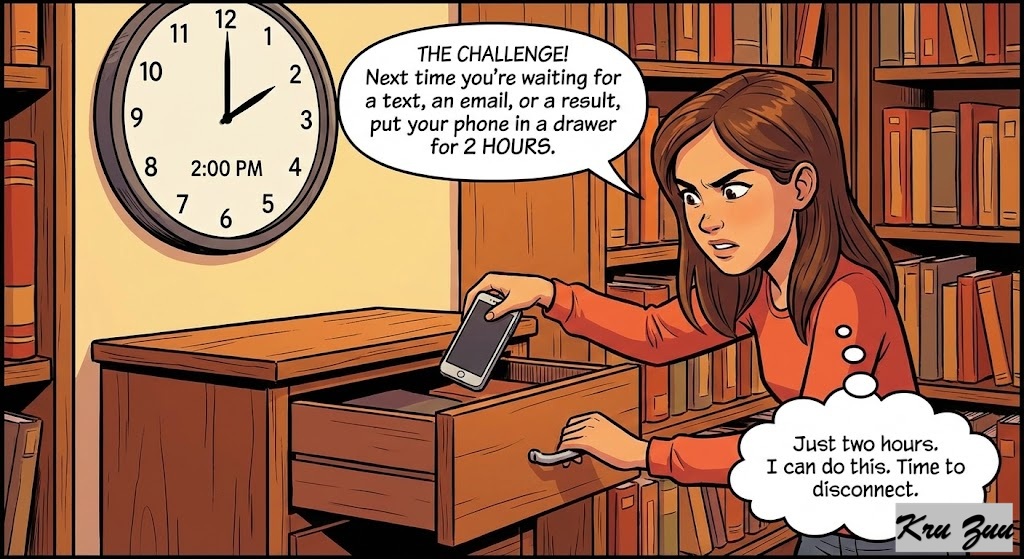
    The Challenge: Next time you are waiting for a text, an email, or a result, put your phone in a drawer for 2 hours.


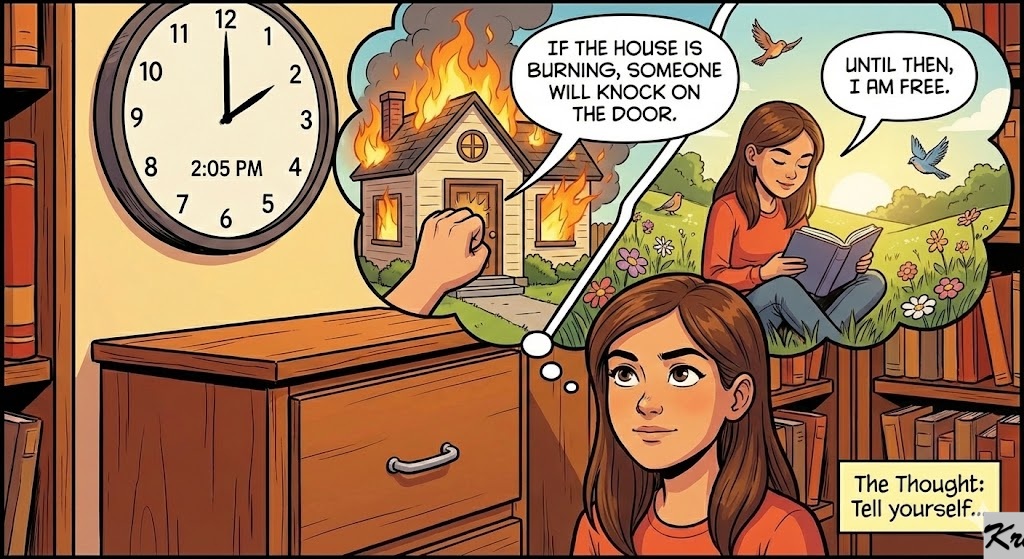
    The Thought: Tell yourself: “If the house is burning, someone will knock on the door. Until then, I am free.”


    ๐Ÿ‘‡ Question for the comments: When was the last time you worried about something that never actually happened? Did the “Villain” steal your joy? Tell us your story below!

    By Zubeyir YURTKURAN

    https://www.facebook.com/BrainBattleground/

    https://www.facebook.com/zubeyr.yurtkuran/

    https://www.instagram.com/zubeyryurtkuran/
    https://www.youtube.com/@BrainBattleground-b3p

    https://www.instagram.com/brainbattleground/

  • ๐Ÿคซ The Daily Shield: The Law of Quiet Power

    ๐Ÿคซ The Daily Shield: The Law of Quiet Power

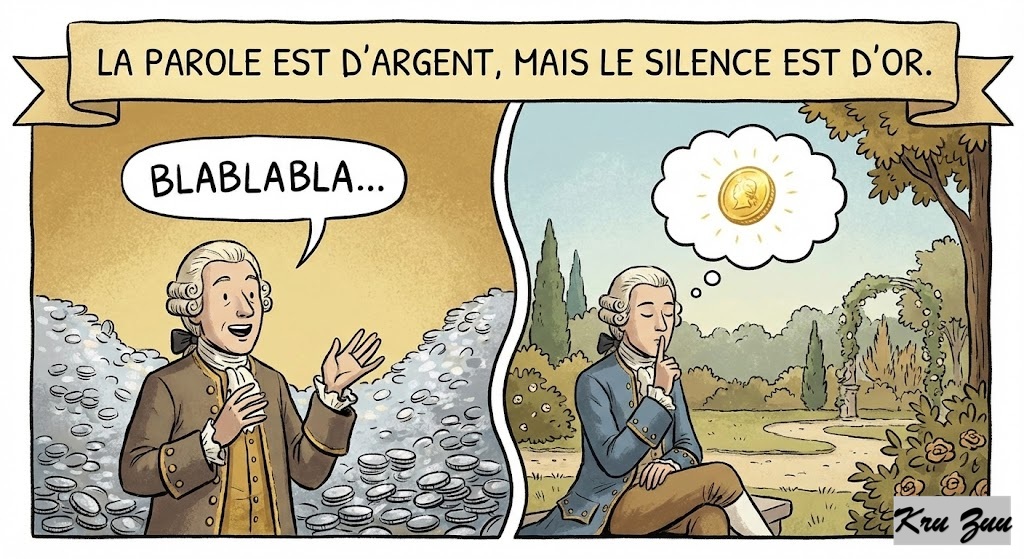
    “Silence is golden.”


    ๐Ÿ˜ˆ The Villain (The Noise Maker)

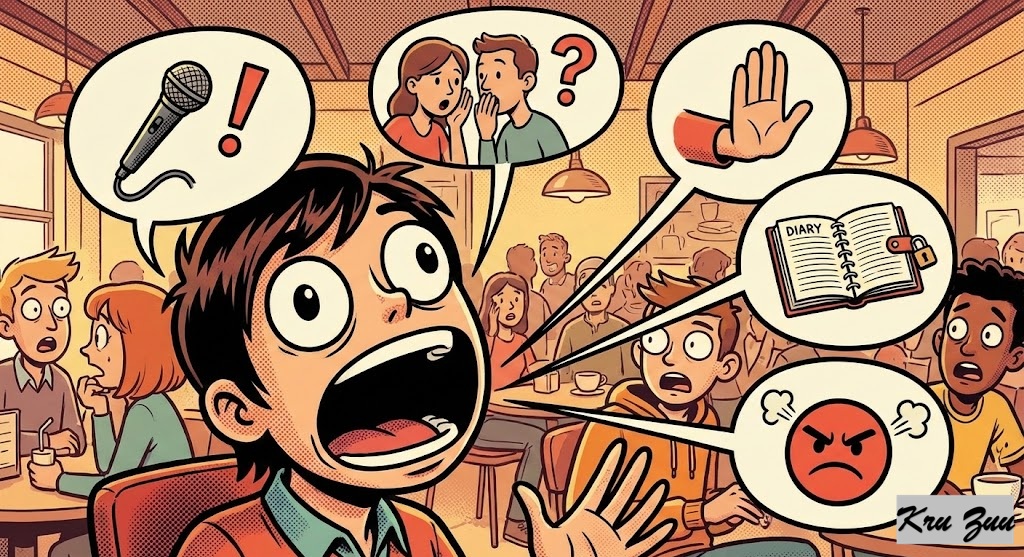
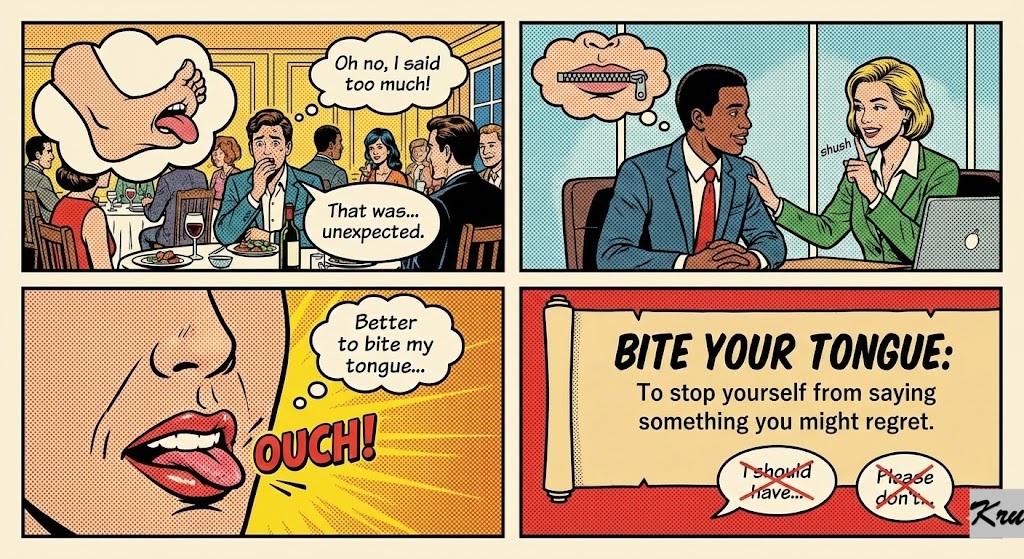
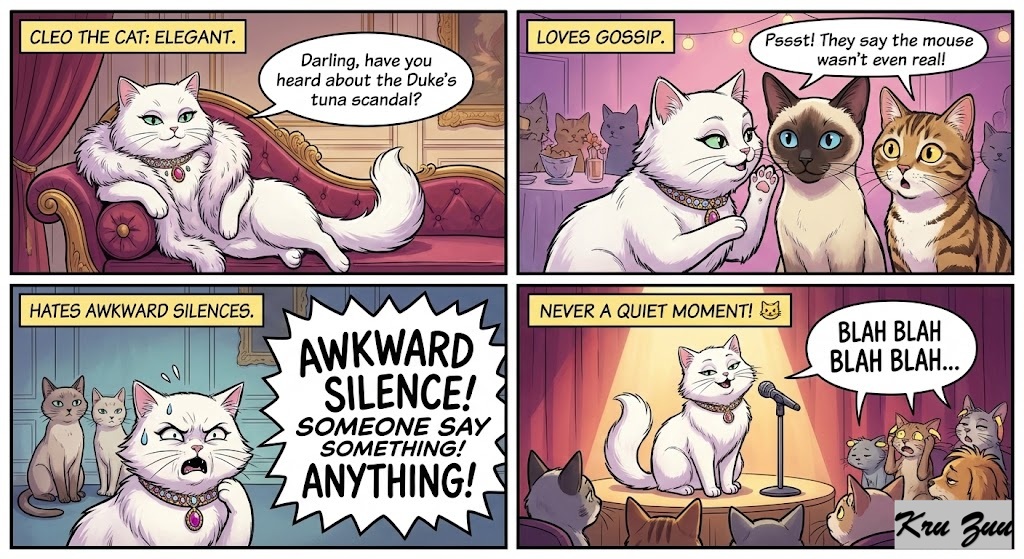
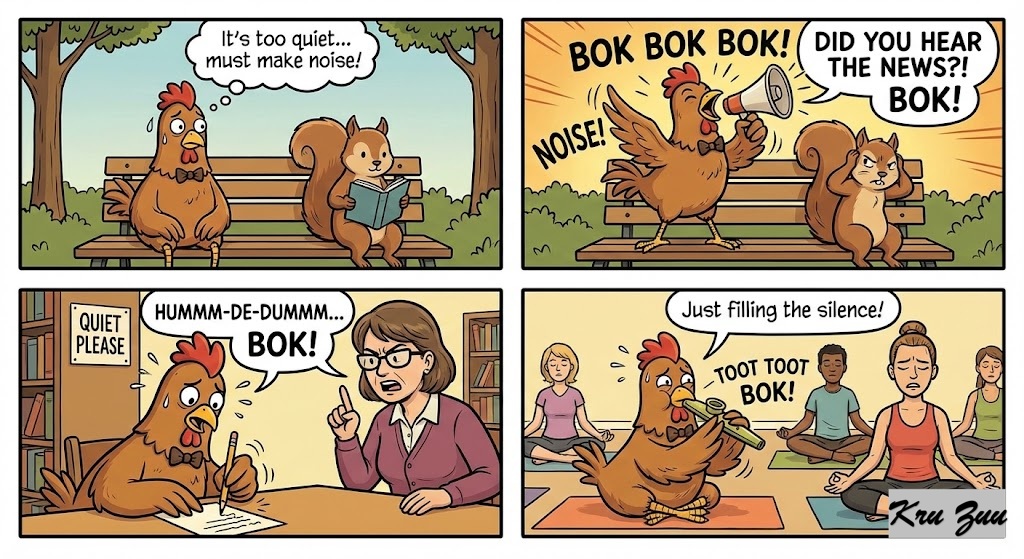
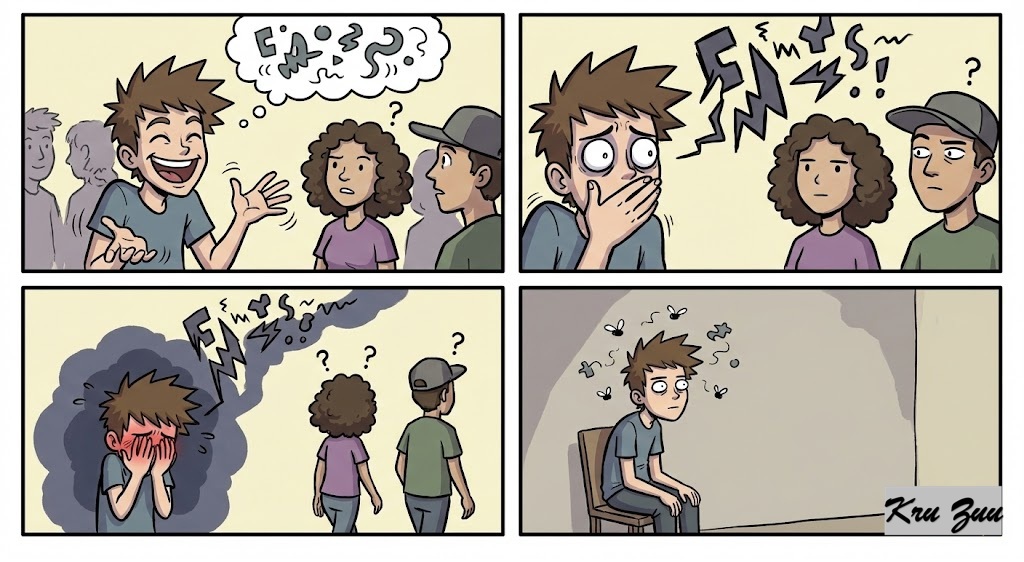
    You have a thought, and it instantly leaves your mouth. ๐Ÿ—ฃ๏ธ “I have to say my opinion!” “Did you hear the gossip aboutโ€ฆ?” “Let me interrupt you right there!” You act as if every silence is awkward and needs to be filled. You reveal your secrets to strangers. You speak when you are angry.

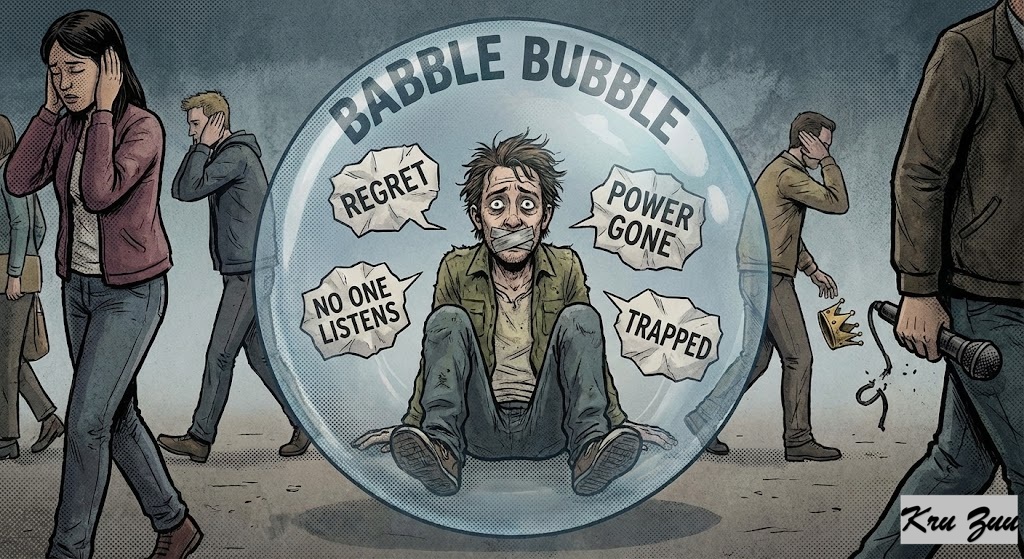
    The Result? You say things you regret. You give away your power. People stop listening because you never stop talking. You are trapped in the “Babble Bubble.” ๐Ÿซง


    ๐Ÿ˜‡ The Hero (The Wise Observer)

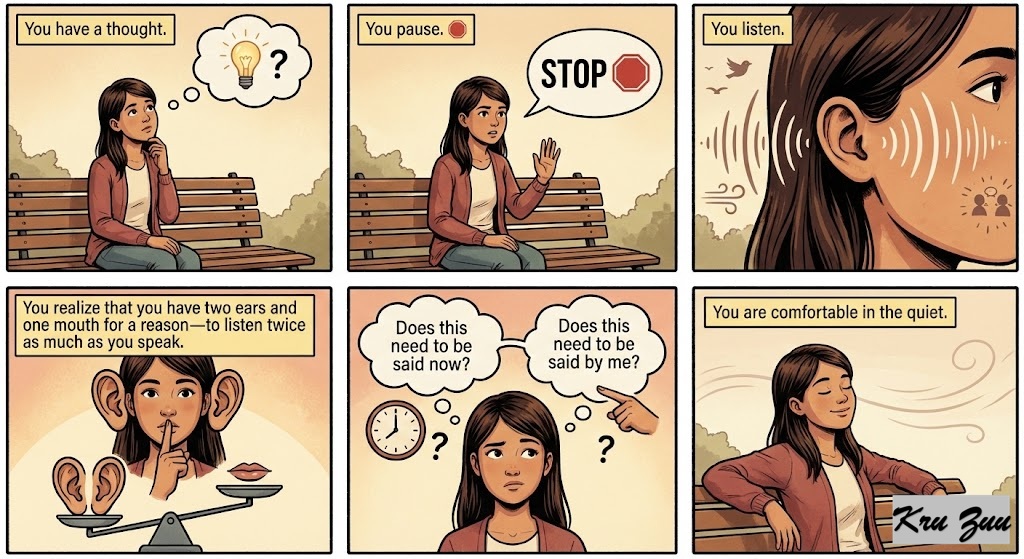
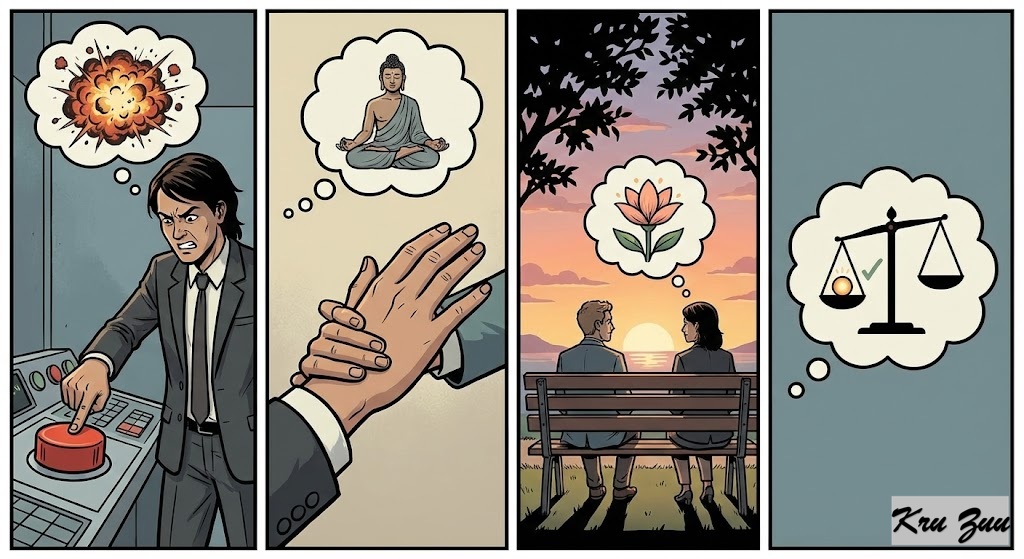
    You have a thought. You pause. ๐Ÿ›‘ You listen. You realize that you have two ears and one mouth for a reason, to listen twice as much as you speak. You think: “Does this need to be said now? Does it need to be said by me?” You are comfortable in the quiet.

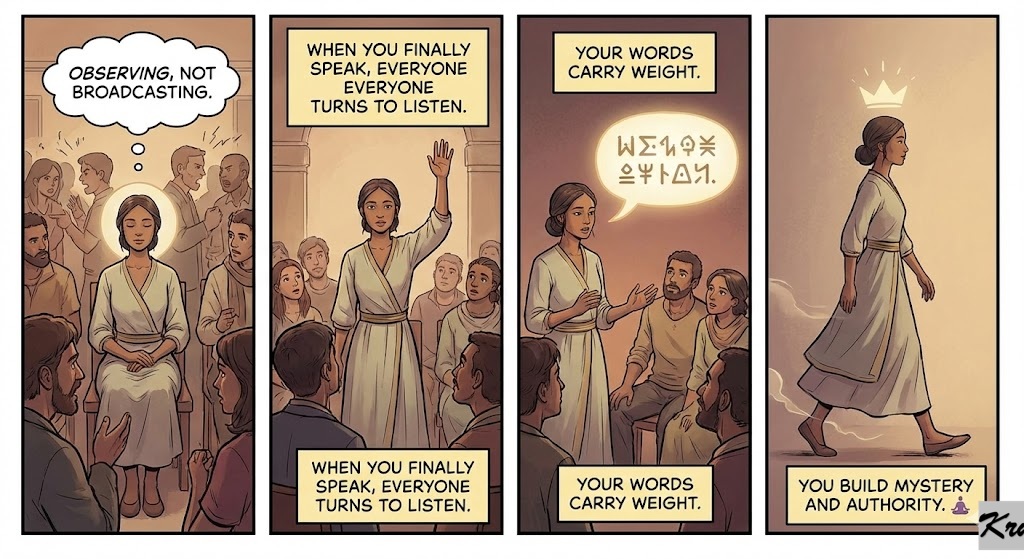
    The Result? When you finally speak, everyone turns to listen. Your words carry weight. You learn more because you are observing, not broadcasting. You build mystery and authority. ๐Ÿง˜


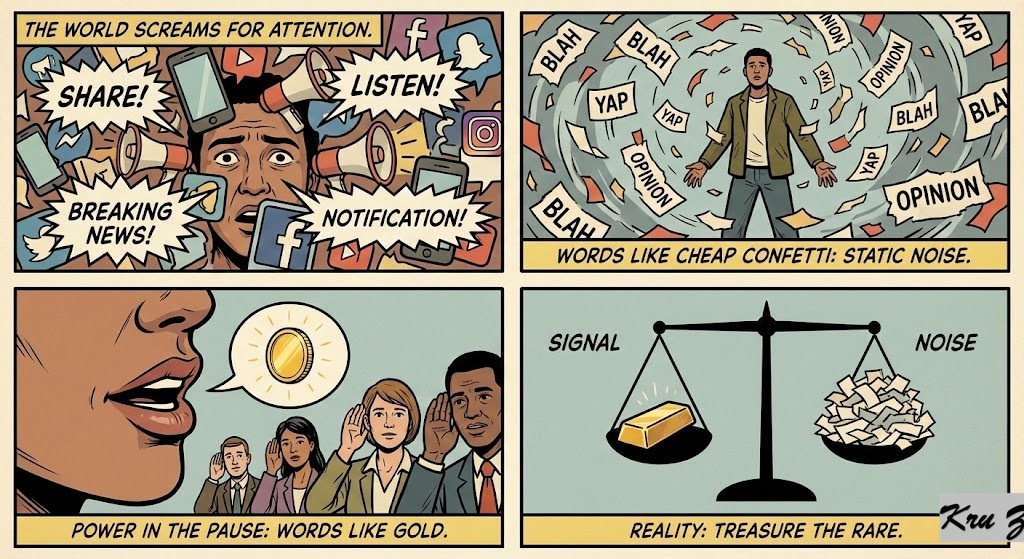
    โš–๏ธ The RealitySignal vs. Noise. We live in a world that screams for attention. Social media, notifications, and 24/7 news cycles tell us we must “share” everything. But physics and psychology agree: A constant signal is just static noise. True power is found in the pause. If you treat words like cheap confetti (throwing them everywhere), they lose value. If you treat words like gold (rare and heavy), people will treasure them.


    ๐Ÿ’Ž The Secret

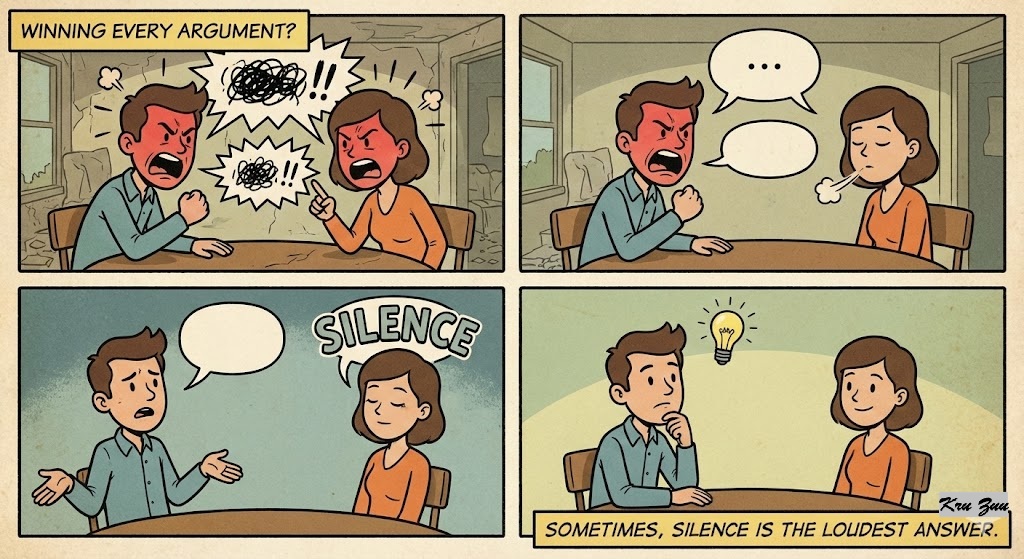
    You don’t have to win every argument. Sometimes, silence is the loudest answer.

    ๐Ÿง The Anatomy of the Proverb


    This is your reality check that restraint is often more valuable than action.


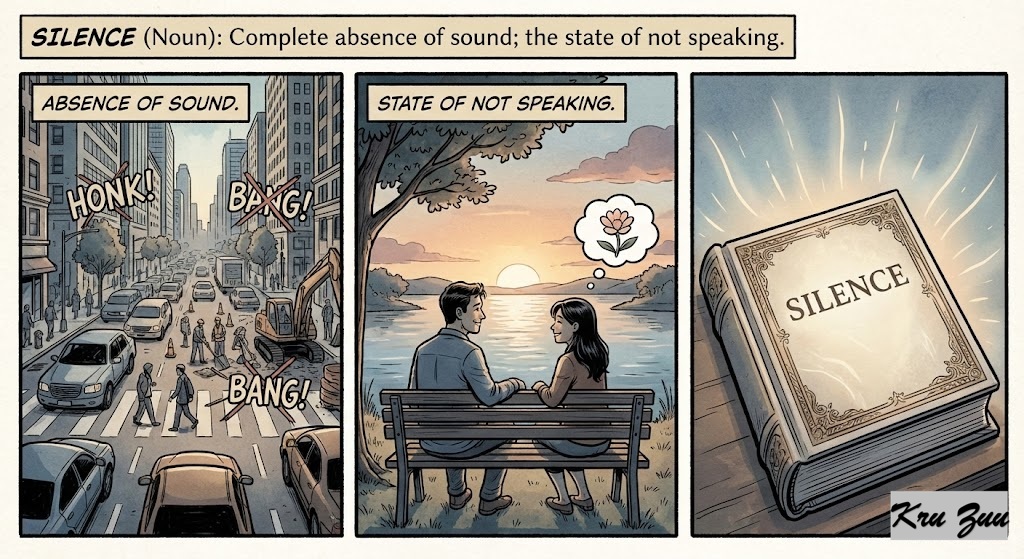
    Silence (Noun): Complete absence of sound; the state of not speaking.


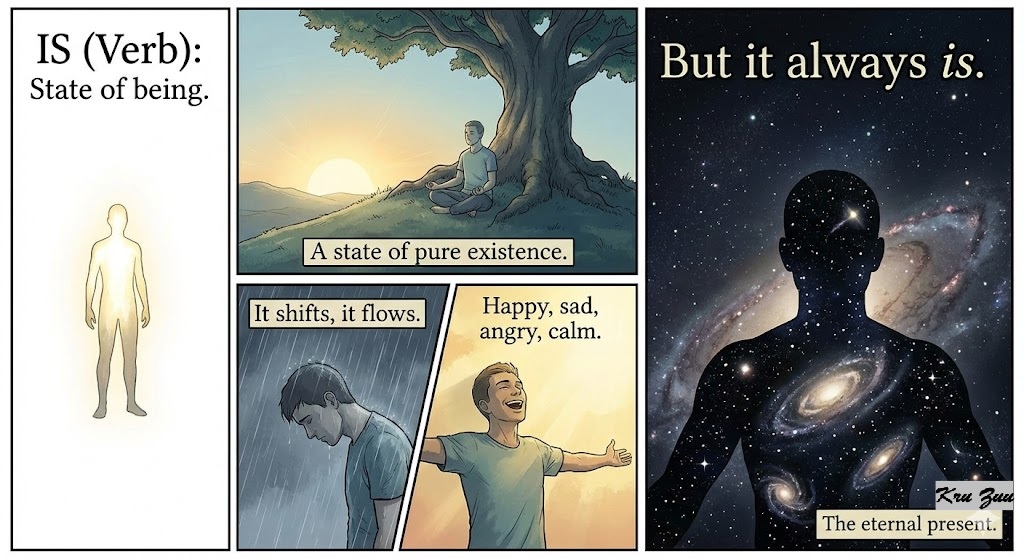
    Is (Verb): State of being.


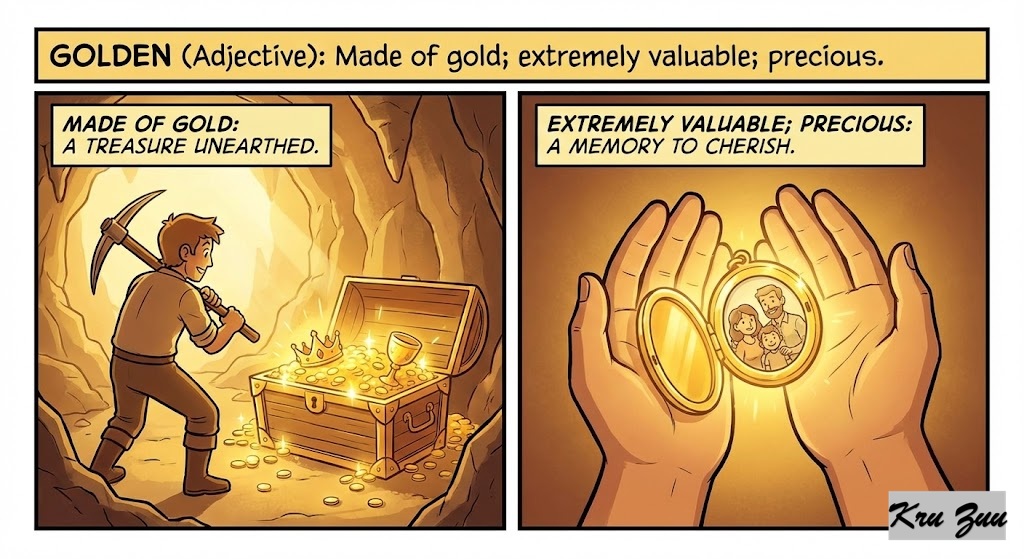
    Golden (Adjective): Made of gold; extremely valuable; precious.


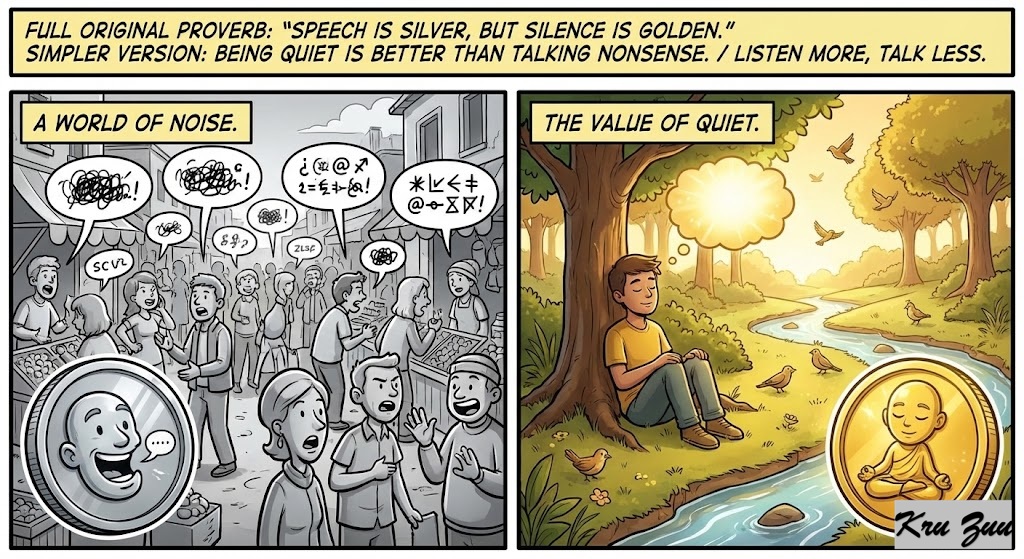
    Full Original Proverb:“Speech is silver, but silence is golden.”Simpler Version: Being quiet is better than talking nonsense. / Listen more, talk less.


    ๐Ÿ“š Vocabulary Vault


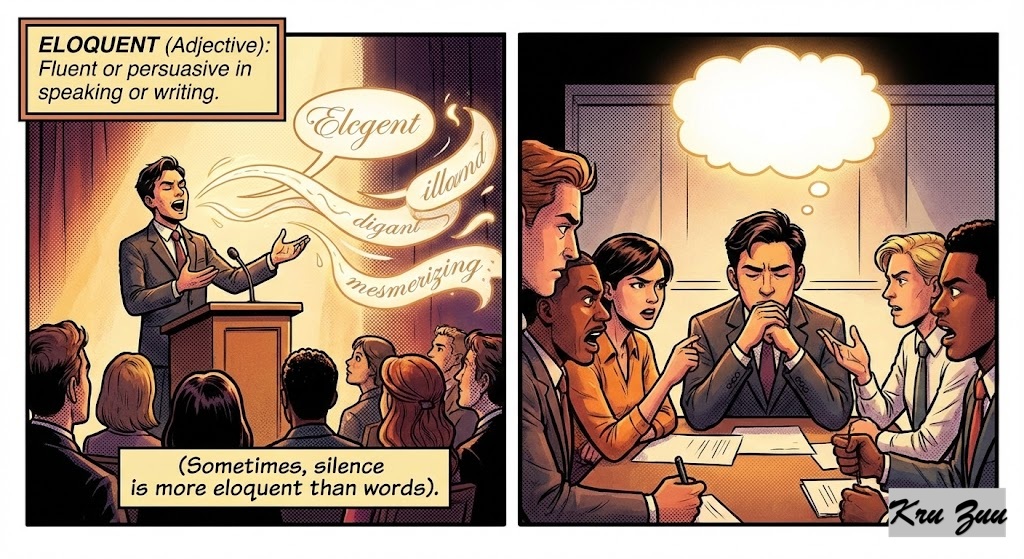
    Eloquent (Adjective): Fluent or persuasive in speaking or writing. (Sometimes, silence is more eloquent than words).


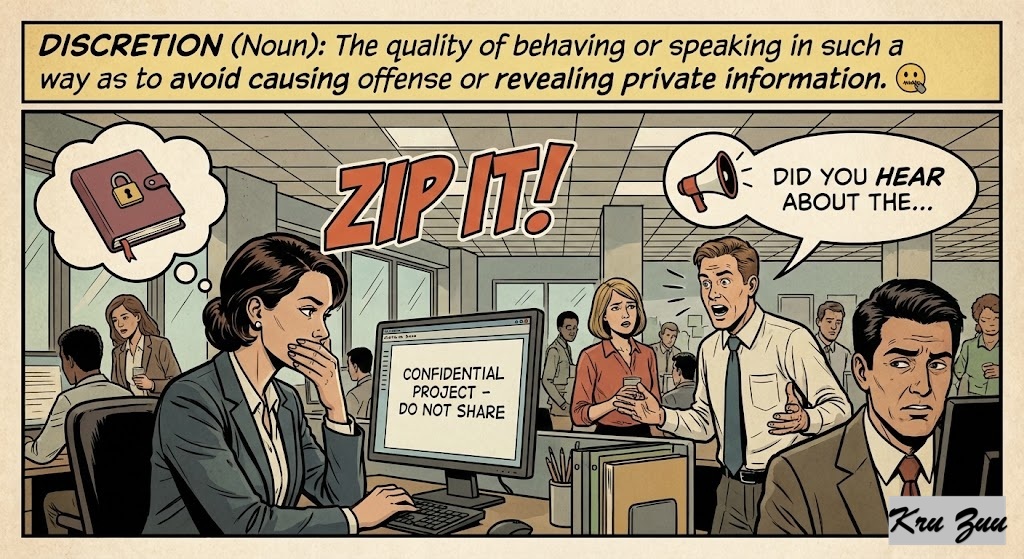
    Discretion (Noun): The quality of behaving or speaking in such a way as to avoid causing offense or revealing private information. ๐Ÿค


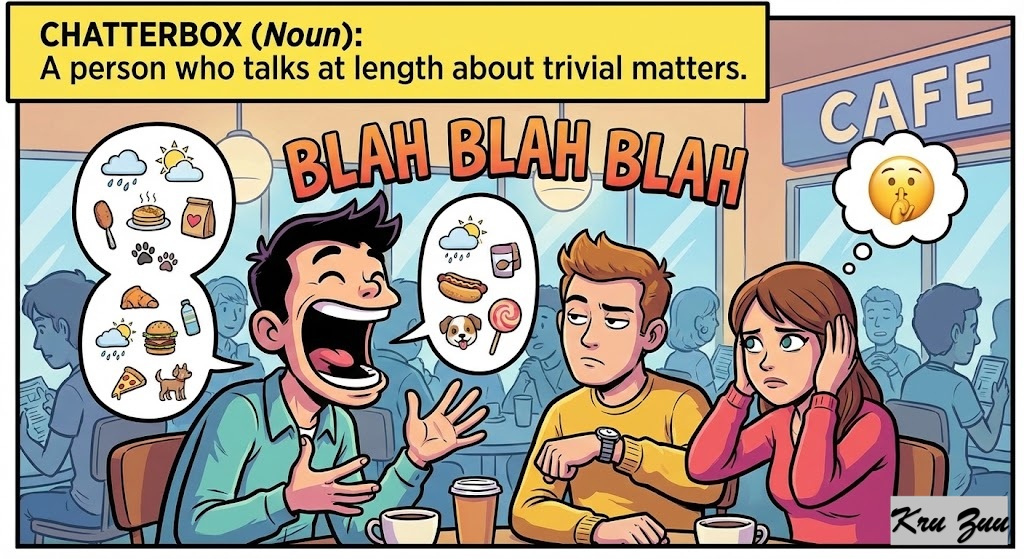
    Chatterbox (Noun): A person who talks at length about trivial matters.


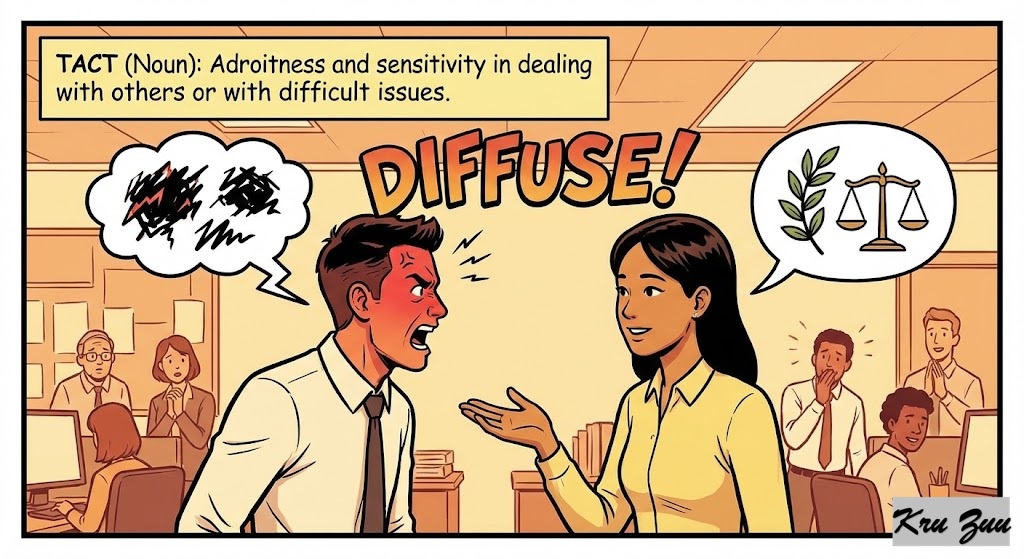
    Tact (Noun): Adroitness and sensitivity in dealing with others or with difficult issues.


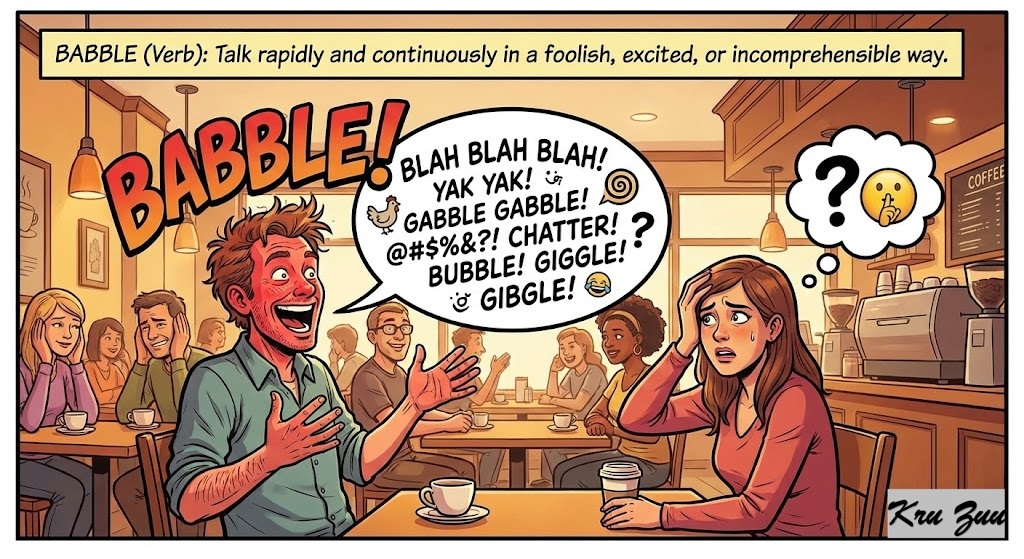
    Babble (Verb): Talk rapidly and continuously in a foolish, excited, or incomprehensible way.


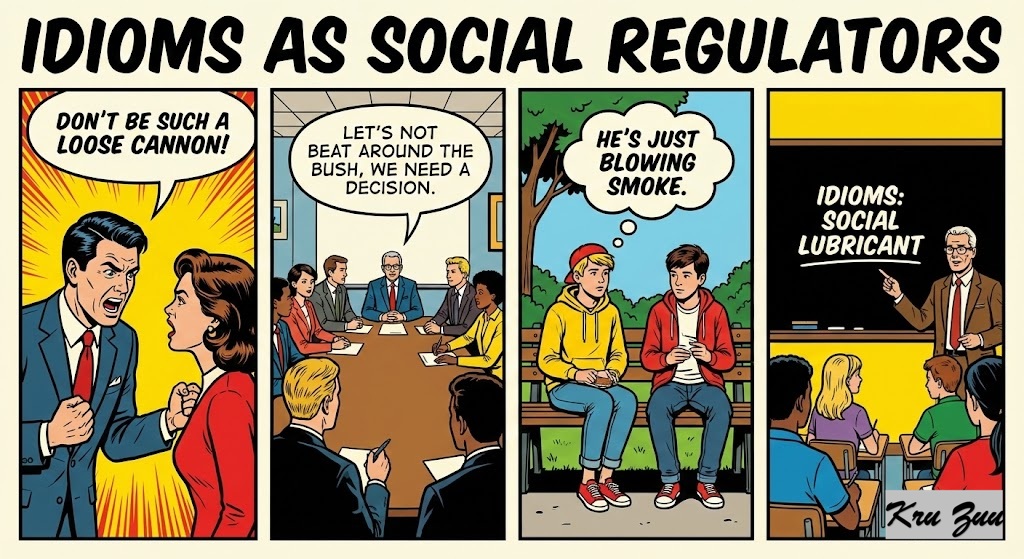
    ๐Ÿง  Grammar Focus: Idioms as Social Regulators


    We often use this idiom to politely tell someone to stop talking or to express regret for speaking too much.


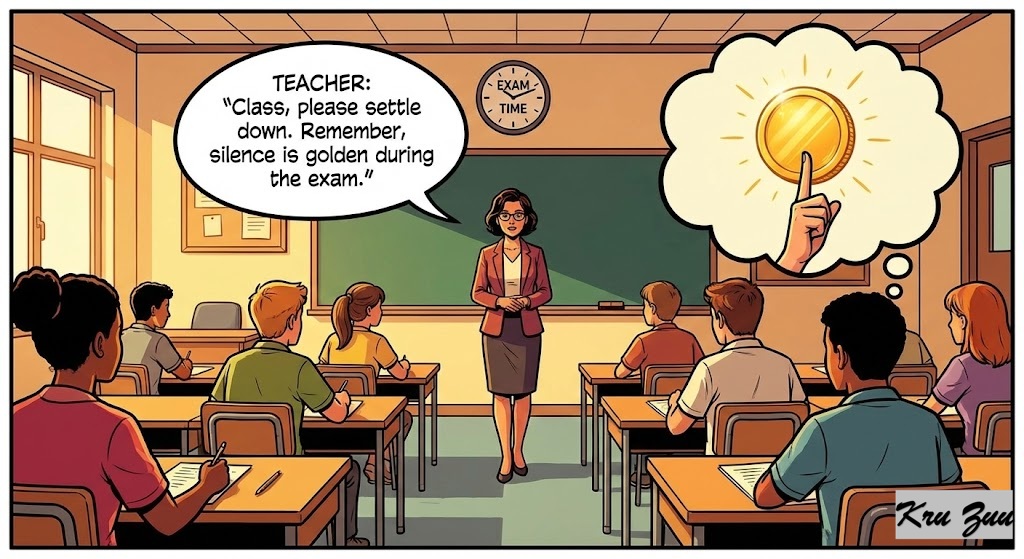
    Teacher: “Class, please settle down. Remember, silence is golden during the exam.”


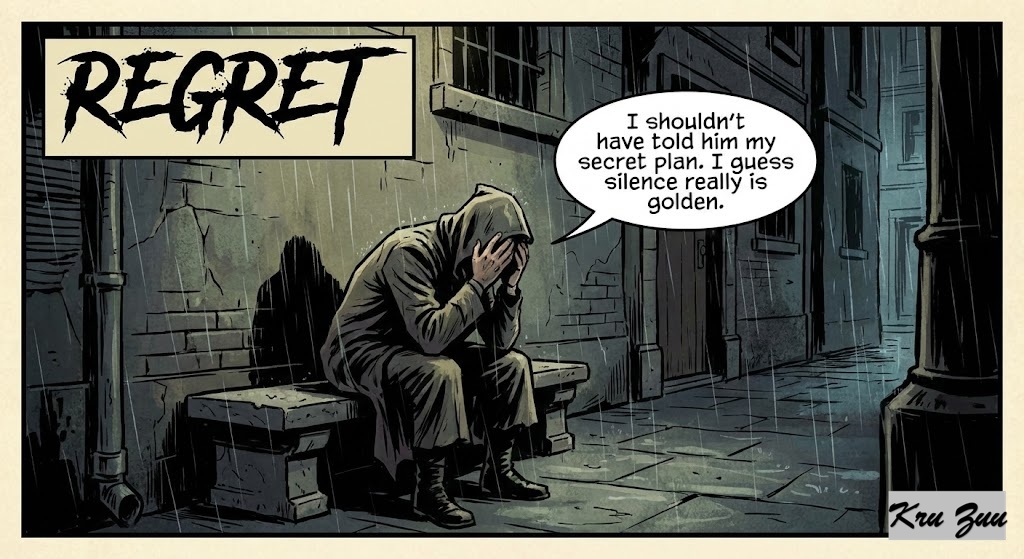
    Regret: “I shouldn’t have told him my secret plan. I guess silence really is golden.”

    ๐Ÿ“œ History: Origin and Spread


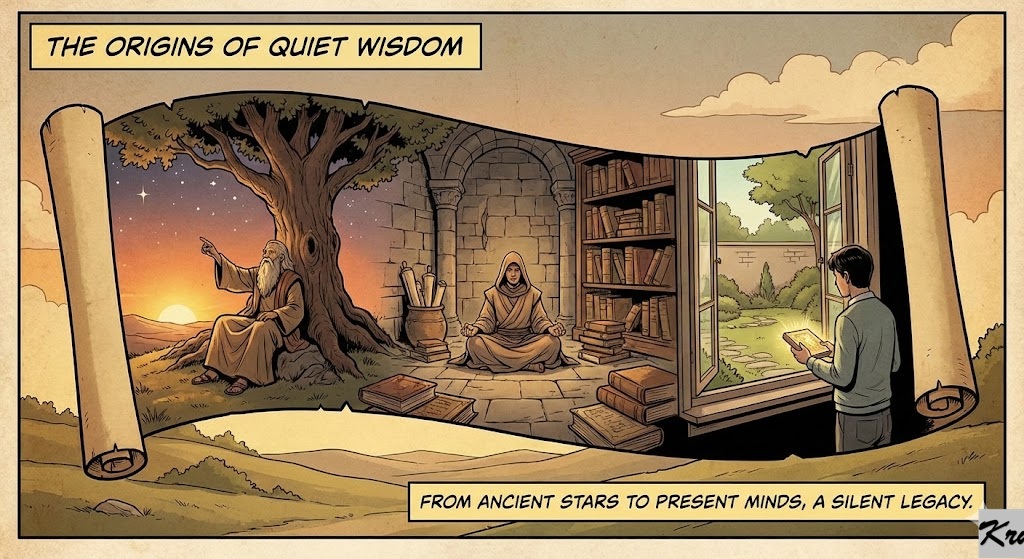
    Where did this quiet wisdom come from?


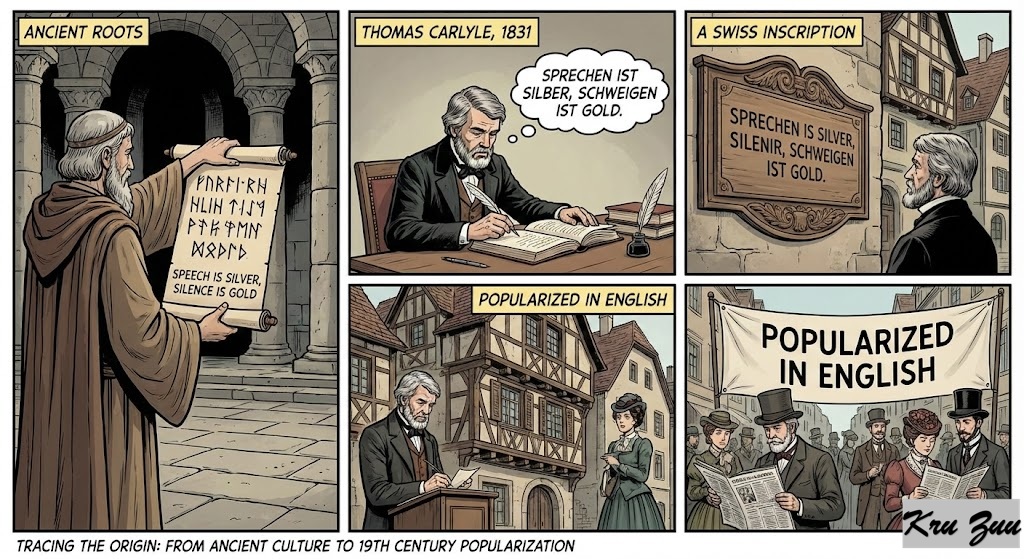
    The Origin: The phrase traces back to ancient culture. It was popularized in English by Thomas Carlyle in the 19th century (1831), who translated a Swiss/German inscription: “Sprechen ist Silber, Schweigen ist Gold.” (Speech is silver, Silence is gold).


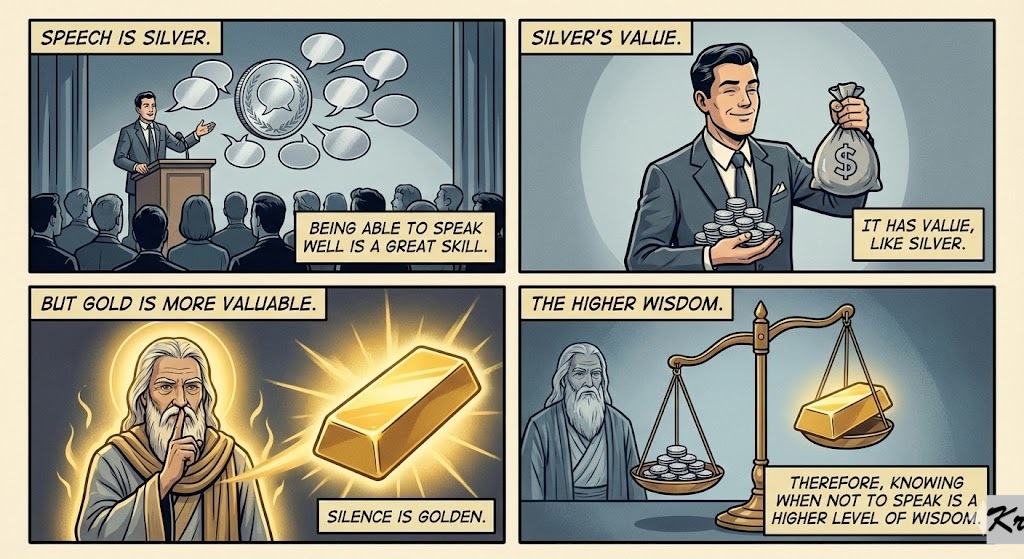
    The Logic: Silver is valuable. Being able to speak well is a great skill (Silver). But Gold is more valuable. Therefore, knowing when not to speak is a higher level of wisdom.


    Global Cousins


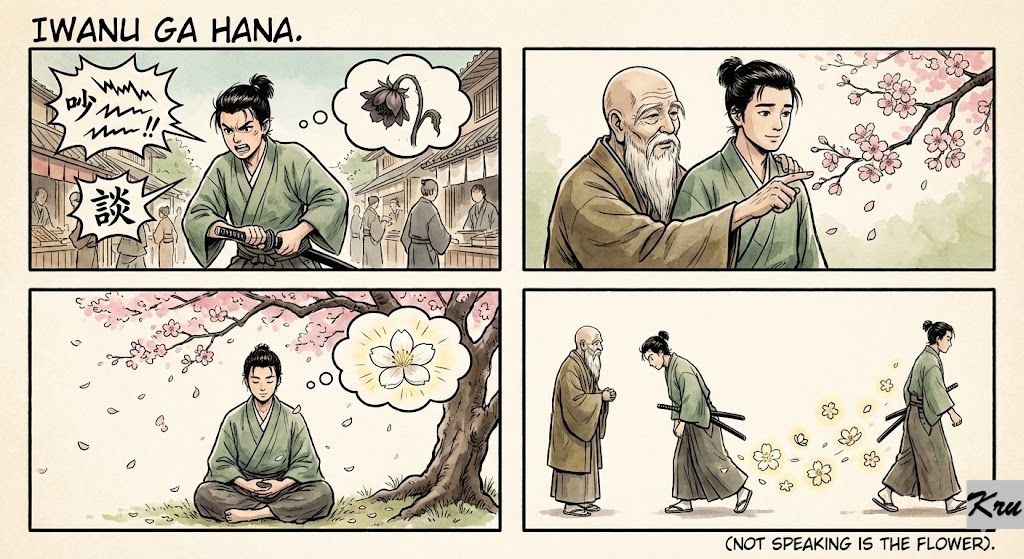
    ๐Ÿ‡ฏ๐Ÿ‡ต Japanese: “Iwanu ga hana” (Not speaking is the flower).


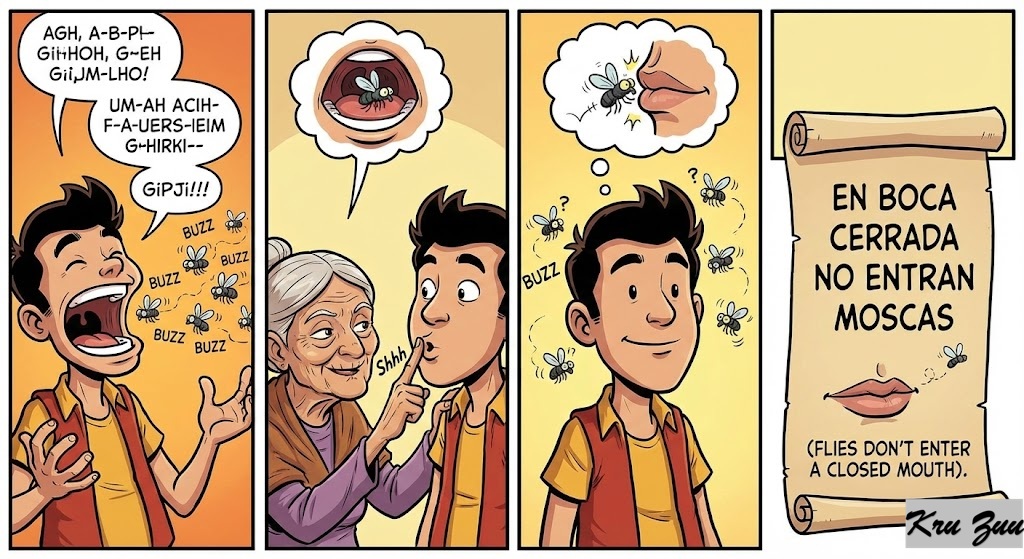
    ๐Ÿ‡ช๐Ÿ‡ธ Spanish: “En boca cerrada no entran moscas” (Flies don’t enter a closed mouth).


    ๐Ÿ‡ซ๐Ÿ‡ท French: “La parole est d’argent, mais le silence est d’or.”

    ๐ŸŽญ Short Story: The Loudest Mistake ๐Ÿคซ๐Ÿฑ๐Ÿ”๐Ÿธ


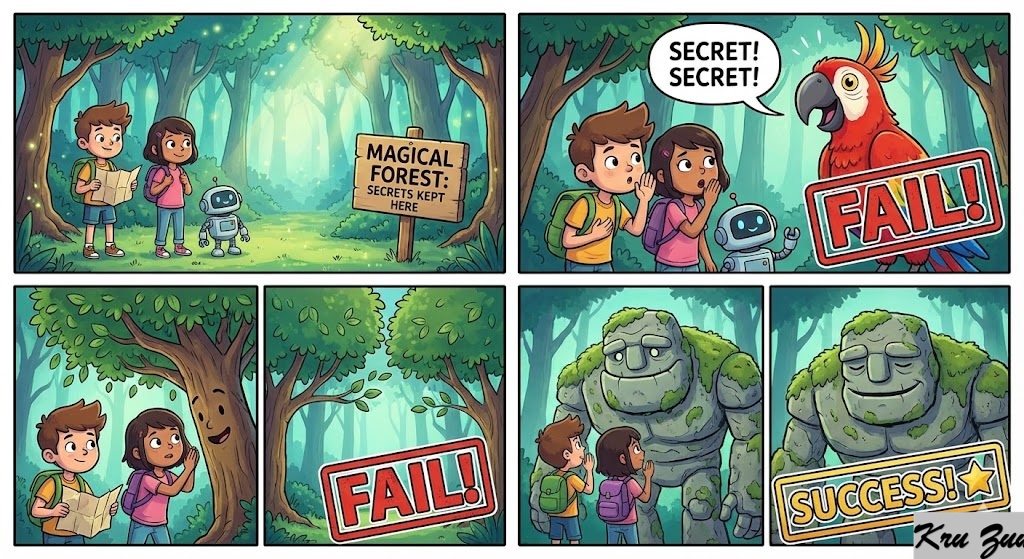
    Letโ€™s visit the magical forest to see who can keep a secret.


    ๐ŸŒŸ The Cast


    Cleo the Cat: Elegant, loves gossip, hates awkward silences. ๐Ÿ˜ผ


    Cluck the Chicken: Nervous, fills every quiet moment with noise. ๐Ÿ”


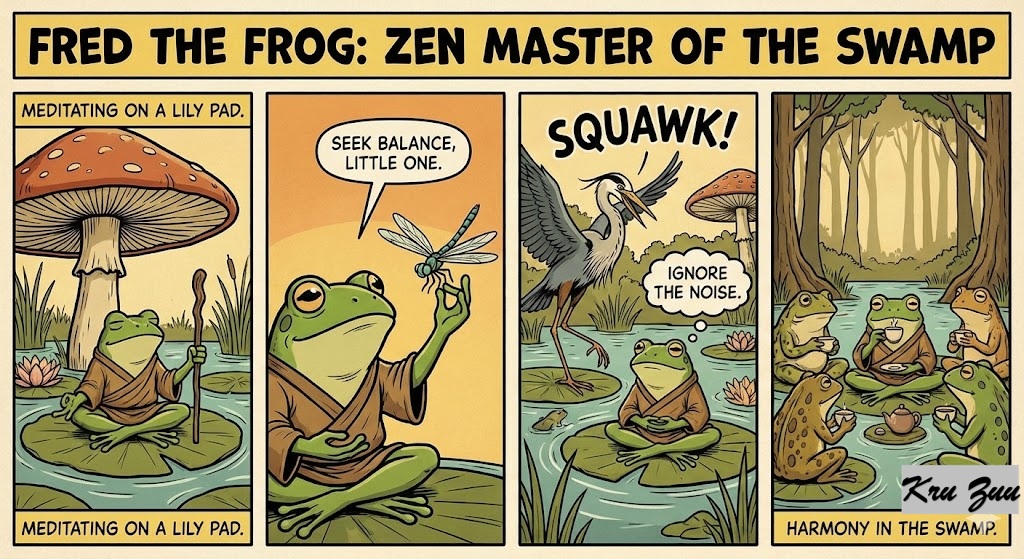
    Fred the Frog: The Zen master of the swamp. ๐Ÿธ


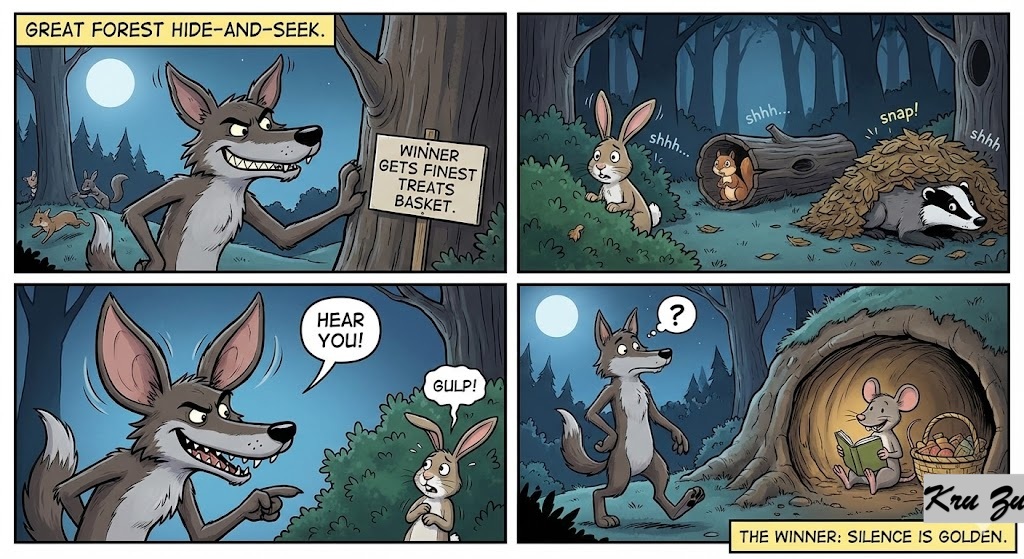
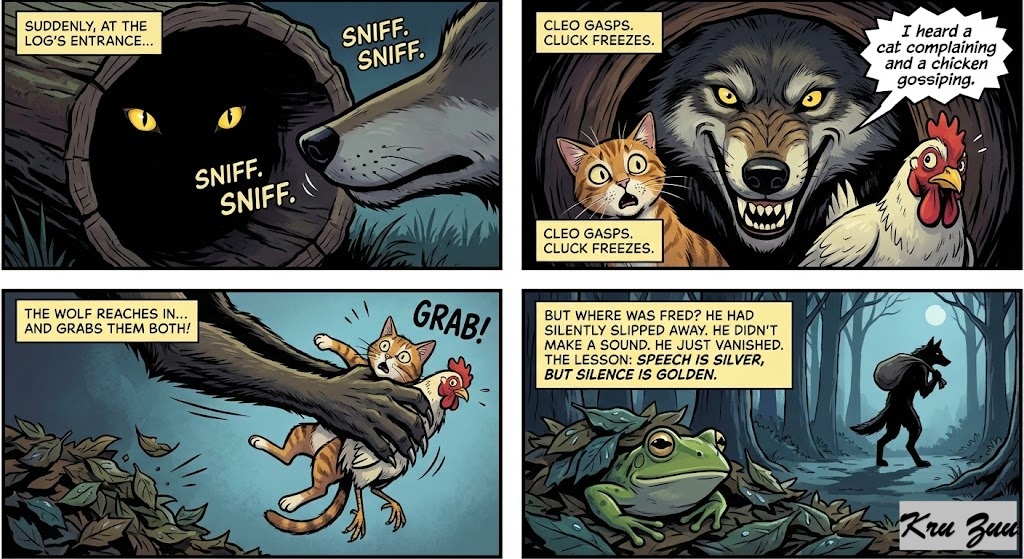
    The Situation: It is the night of the “Great Forest Hide-and-Seek.” The winner gets a basket of the finest treats. The seeker is the Big Bad Wolf, who has very sharp ears.


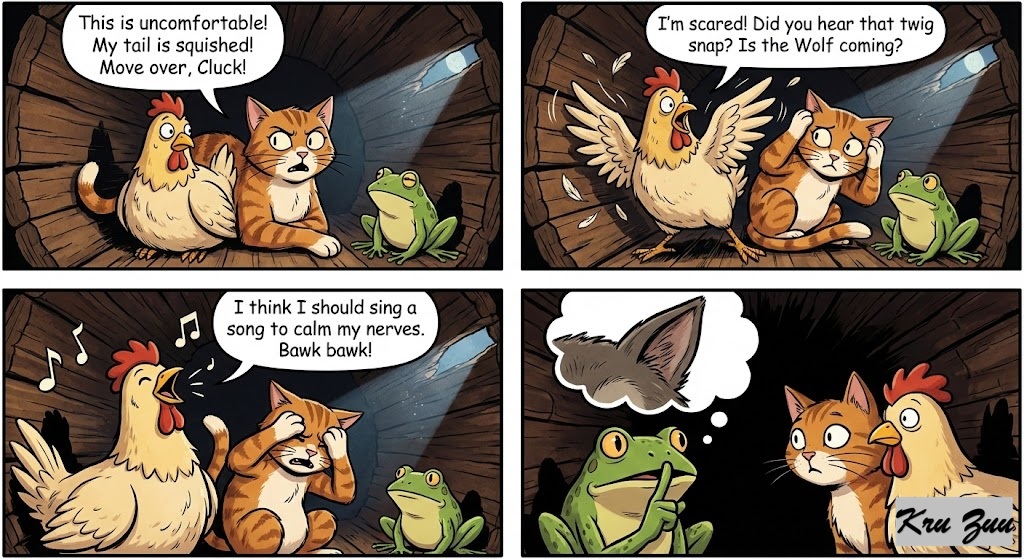
    The Conflict: Cleo, Cluck, and Fred find the perfect hiding spot inside a hollow log. It is dark and tight. “This is uncomfortable!” Cleo whispers loudly. “My tail is squished! Move over, Cluck!” “I’m scared!” Cluck squawks, flapping his wings. “Did you hear that twig snap? Is the Wolf coming? I think I should sing a song to calm my nerves. Bawk bawk!”


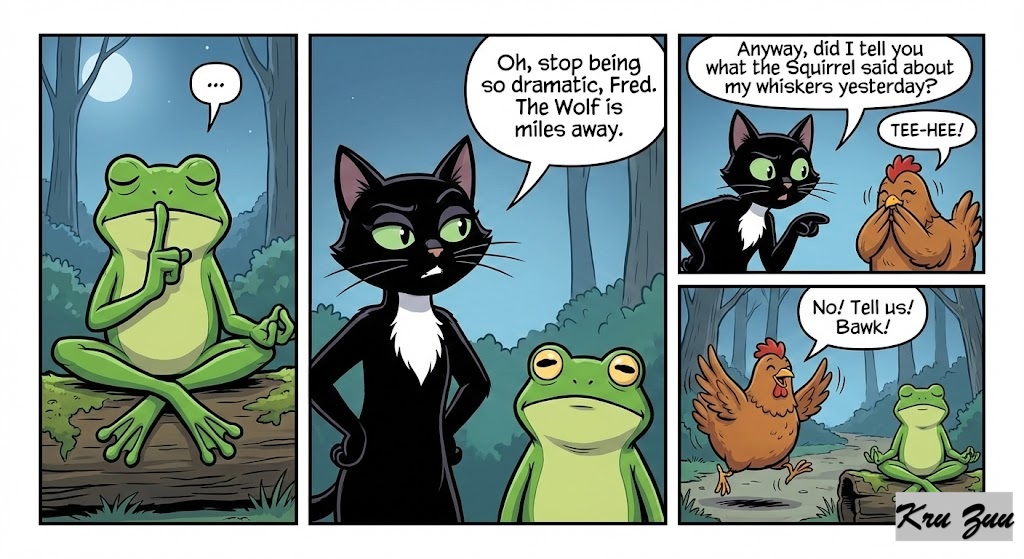
    The Reaction: Fred the Frog sits perfectly still. He closes his eyes. He breathes slowly. He puts a green finger to his lips. “โ€ฆ” Cleo rolls her eyes. “Oh, stop being so dramatic, Fred. The Wolf is miles away. Anyway, did I tell you what the Squirrel said about my whiskers yesterday?” Cluck giggles. “No! Tell us! Bawk!”


    The Lesson: Suddenly, two yellow eyes appear at the entrance of the log. Sniff. Sniff. The Wolf smiles. “I heard a cat complaining and a chicken gossiping.” Cleo gasps. Cluck freezes. The Wolf reaches inโ€ฆ and grabs them both! But where was Fred? In the moment the Wolf appeared, Fred had silently slipped under a pile of wet leaves. He didn’t make a sound. He didn’t brag. He didn’t scream. He just vanished.


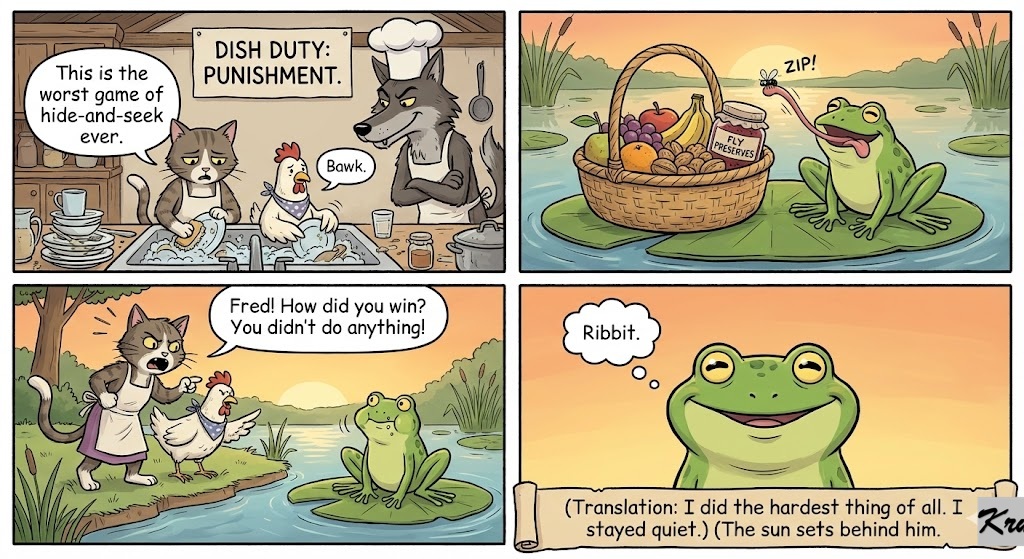
    The Resolution: Cleo and Cluck lost the game (and their treats). They spent the evening washing dishes for the Wolf as punishment. Fred won the basket of treats. He sat on his lily pad, eating a delicious fly. “Fred!” Cleo cried. “How did you win? You didn’t do anything!” Fred chewed slowly, swallowed, and smiled. “Ribbit.” (Translation: I did the hardest thing of all. I stayed quiet).


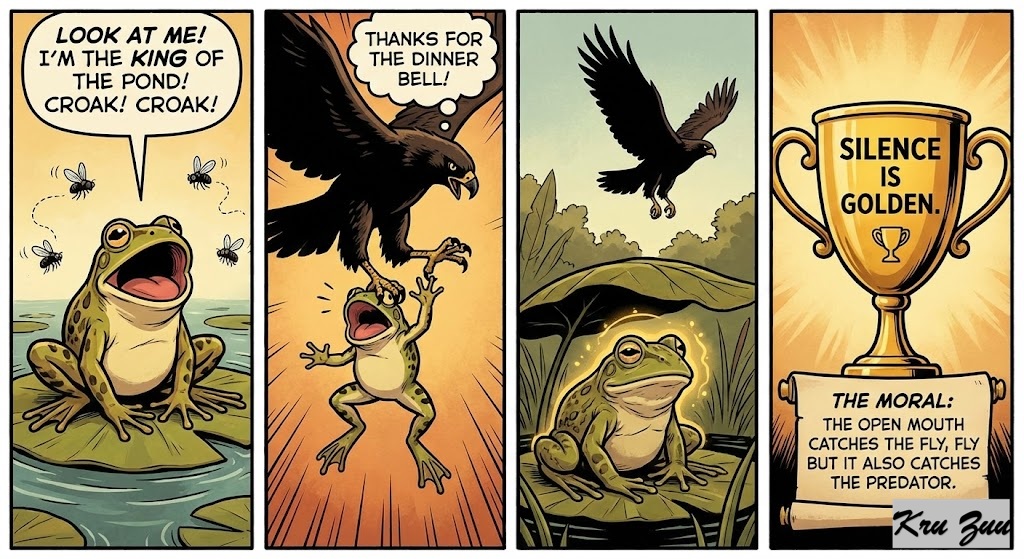
    The Moral: The open mouth catches the fly, but it also catches the predator. Silence is golden. ๐Ÿ†

    ๐ŸŽ“ Lesson for English Learners


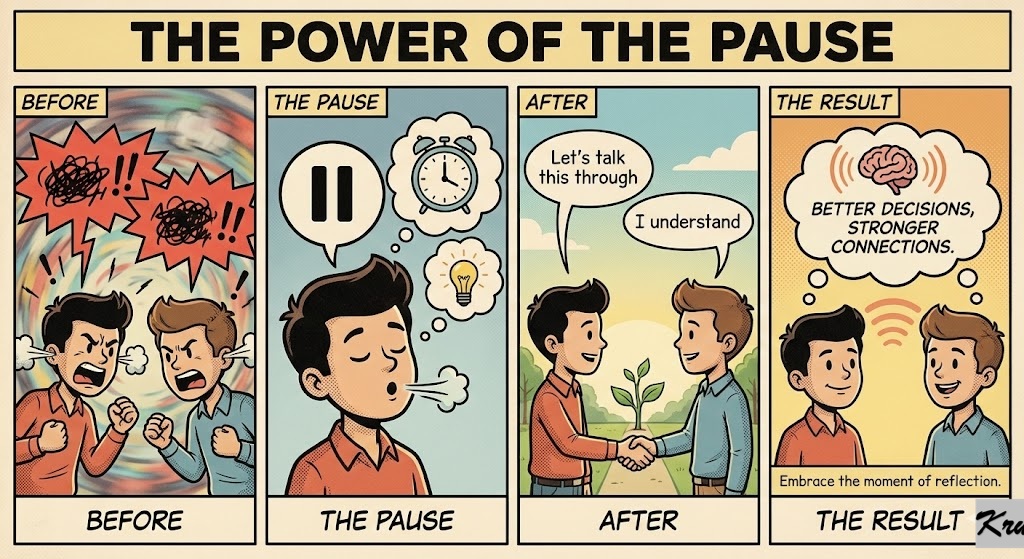
    The Power of the Pause.


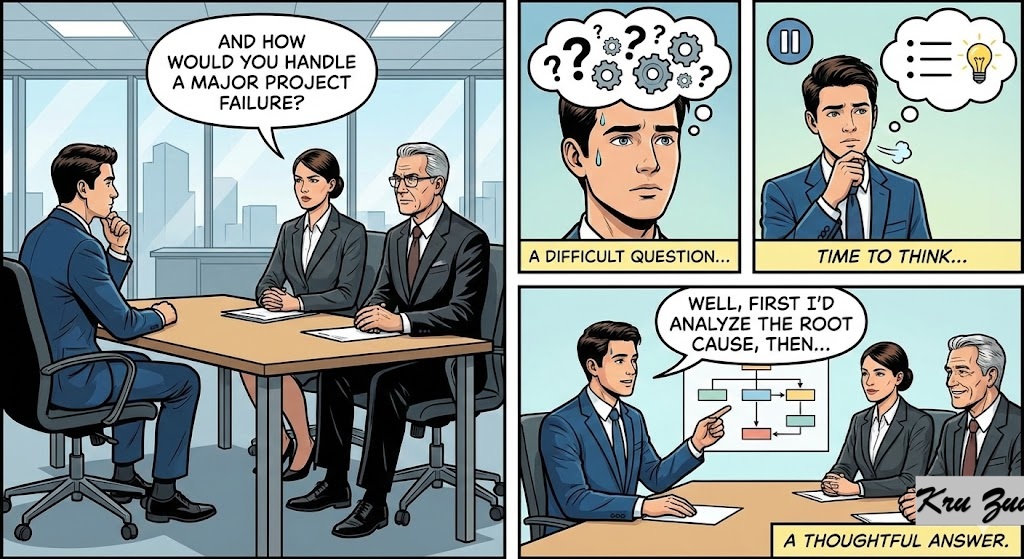
    Situation: You are in a job interview or a meeting. Someone asks you a difficult question.


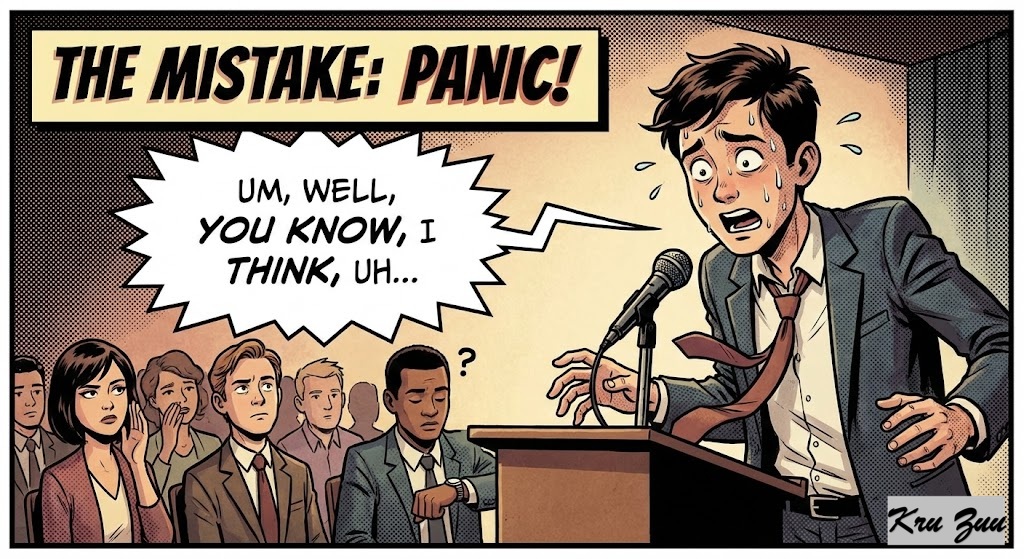
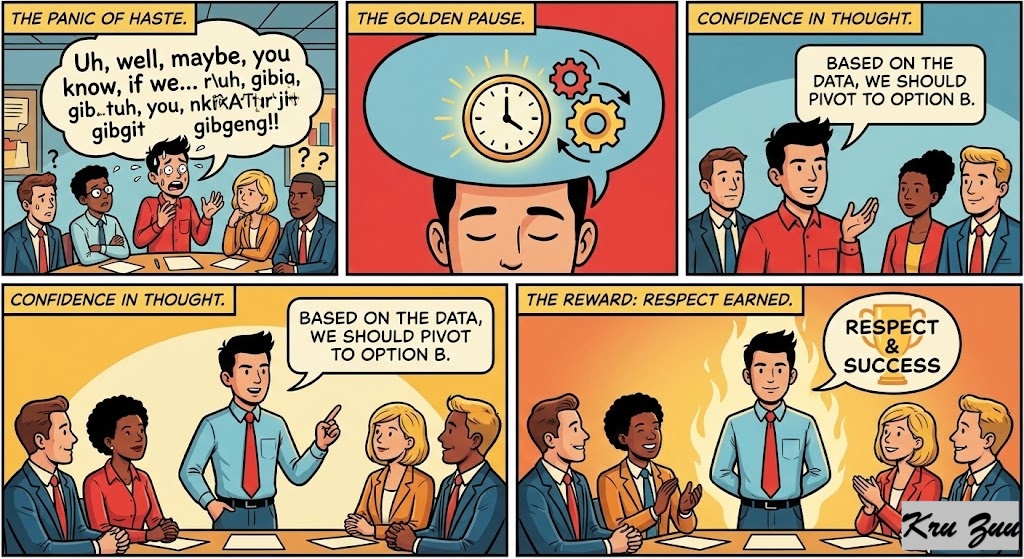
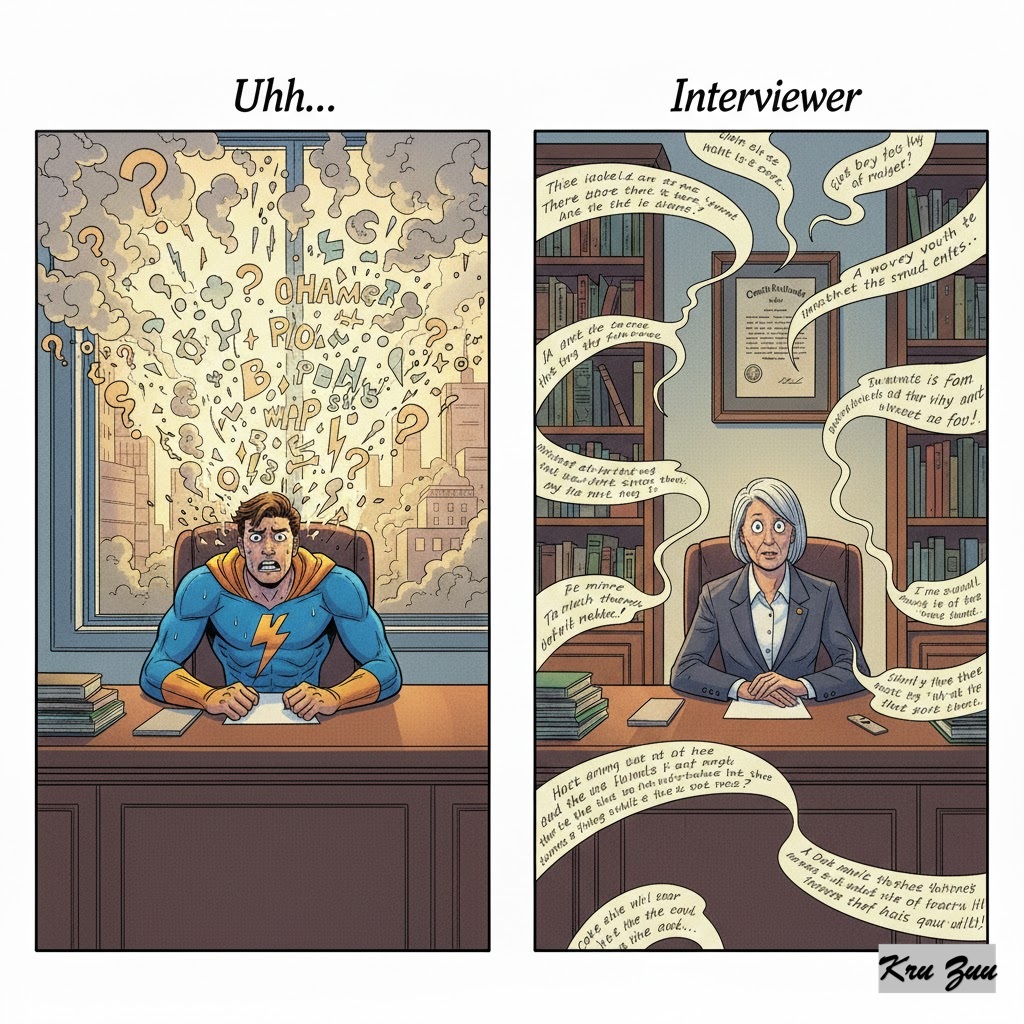
    The Mistake: You panic and start talking immediately (“Um, well, you know, I think, uhโ€ฆ”). You look nervous.


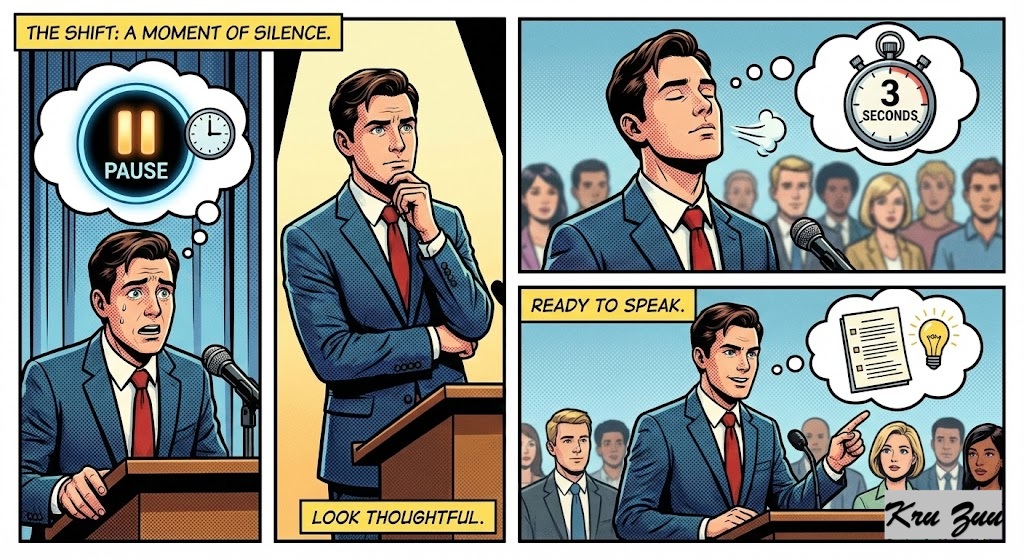
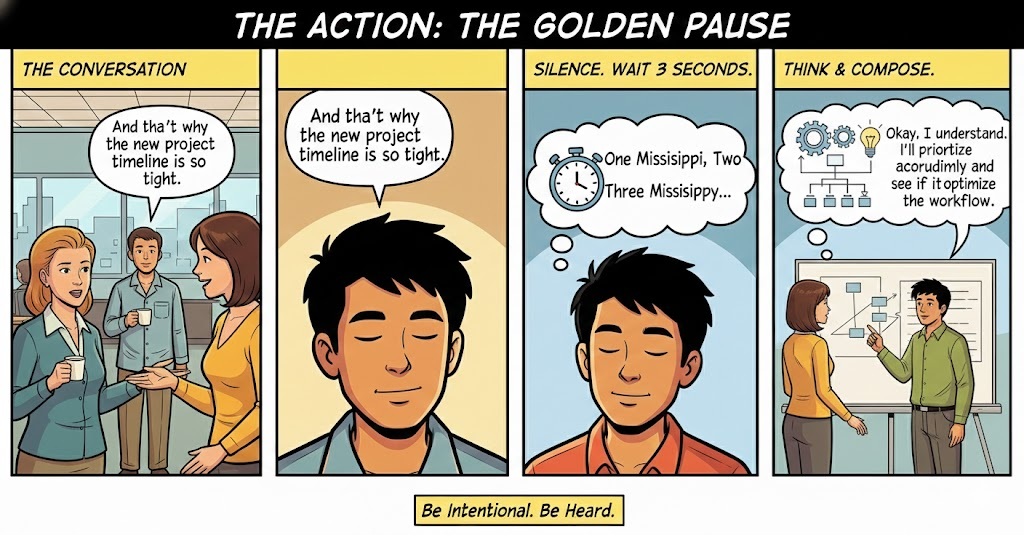
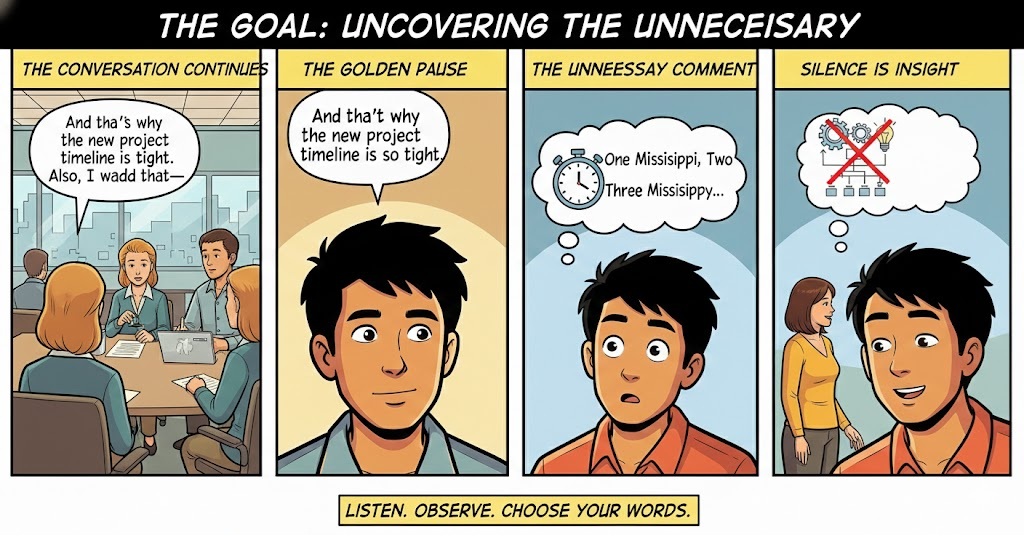
    The Shift: Use the “Golden Pause.” Take 3 seconds of silence. Look thoughtful.


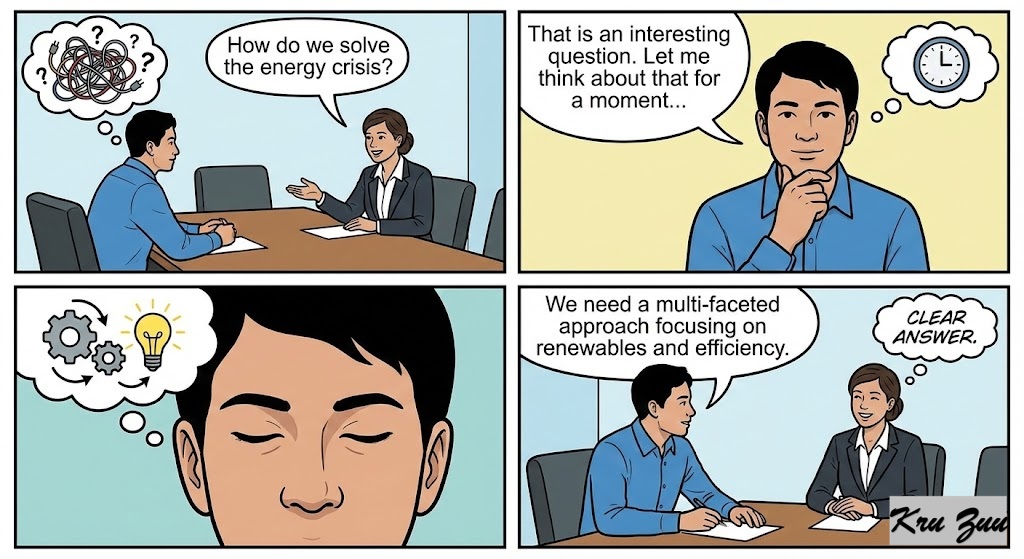
    You Say: “That is an interesting question. Let me think about that for a momentโ€ฆ” (Then give a clear answer).


    Why: This shows confidence. It shows you think before you speak.


    ๐Ÿ’ฌ Your Turn: The “3-Second” Challenge ๐Ÿš€


    Do you want to cure your “Villain” talking habits?


    The Challenge:
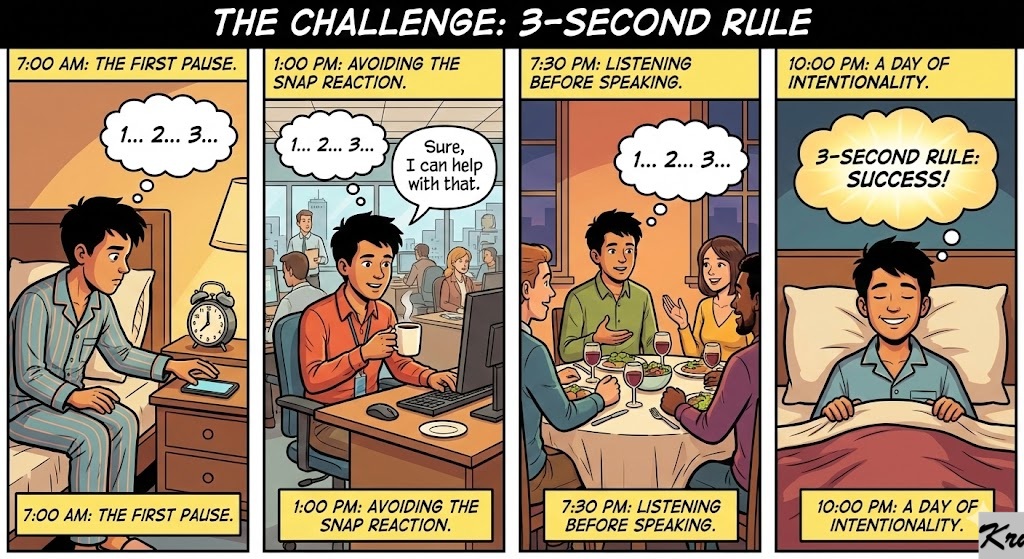
    For one whole day, follow the 3-Second Rule.


    The Action: Whenever someone finishes talking, count to 3 in your head (One Mississippi, Two Mississippi, Three Mississippi) before you respond.


    The Goal: You will realize that often, the other person wasn’t finished talking! Or, you will realize your comment wasn’t necessary.


    ๐Ÿ‘‡ Question for the comments: Have you ever said something you immediately regretted? Or has staying silent ever saved you? Tell us your story below!

    By Zubeyir YURTKURAN

    https://www.facebook.com/BrainBattleground/

    https://www.facebook.com/zubeyr.yurtkuran/

    https://www.instagram.com/zubeyryurtkuran/
    https://www.youtube.com/@BrainBattleground-b3p

    https://www.instagram.com/brainbattleground/

  • ๐Ÿ† The Daily Shield: The Law of True Nature

    ๐Ÿ† The Daily Shield: The Law of True Nature

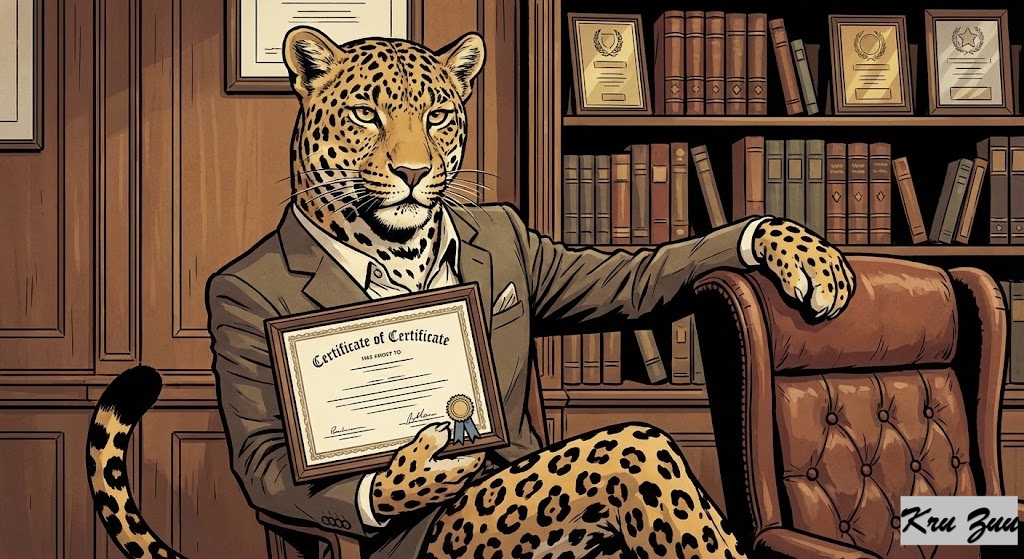
    “A leopard doesn’t change its spots.”


    ๐Ÿ˜ˆ The Villain (The Wishful Thinker)

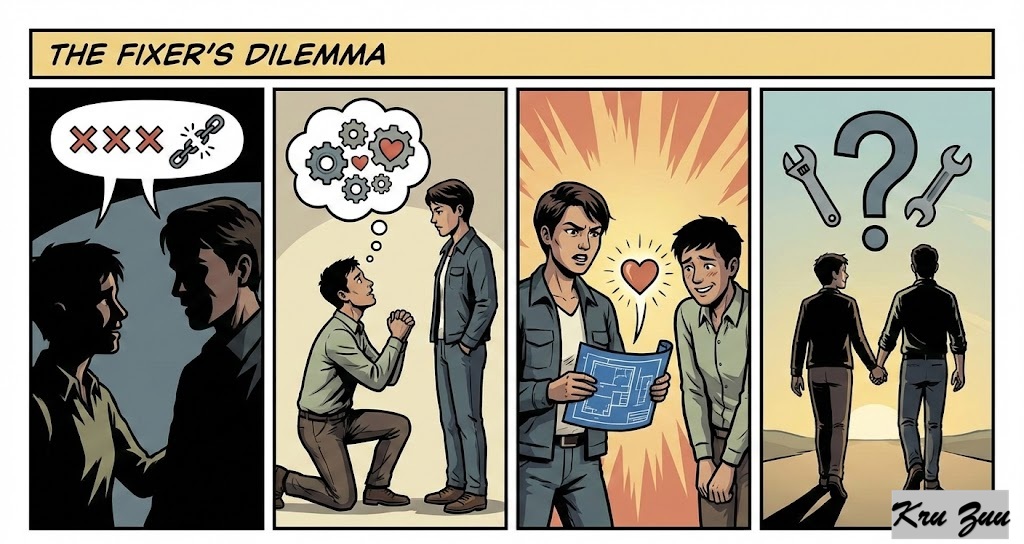
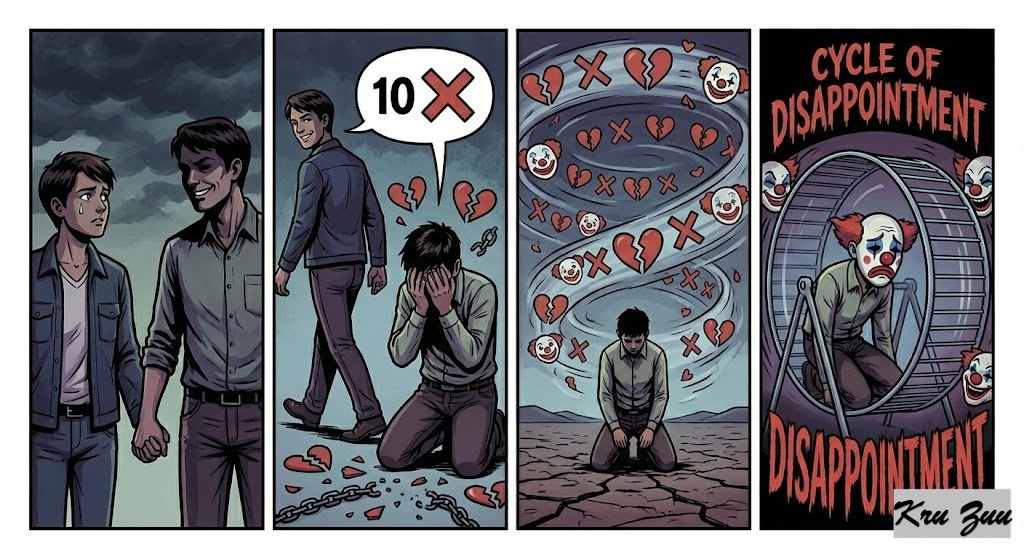
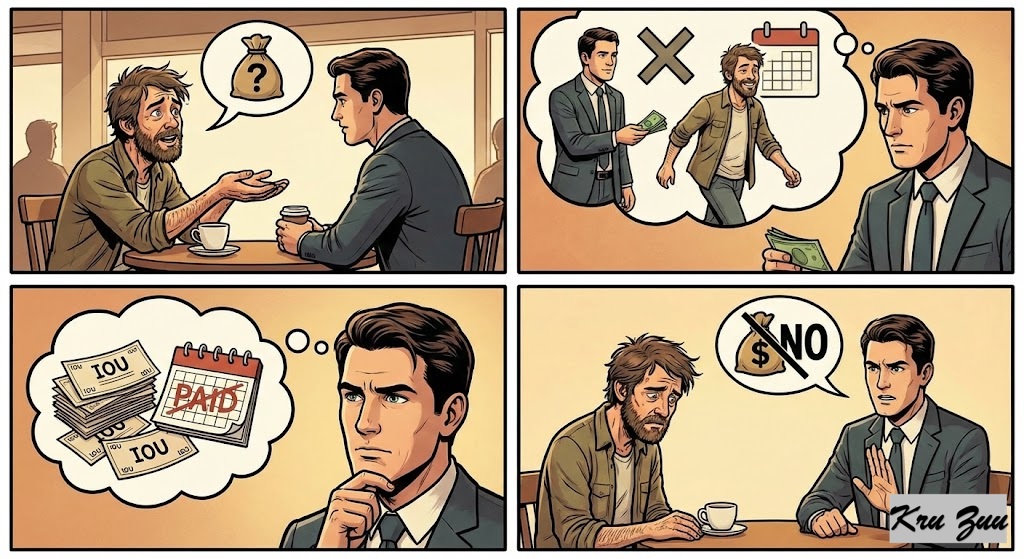
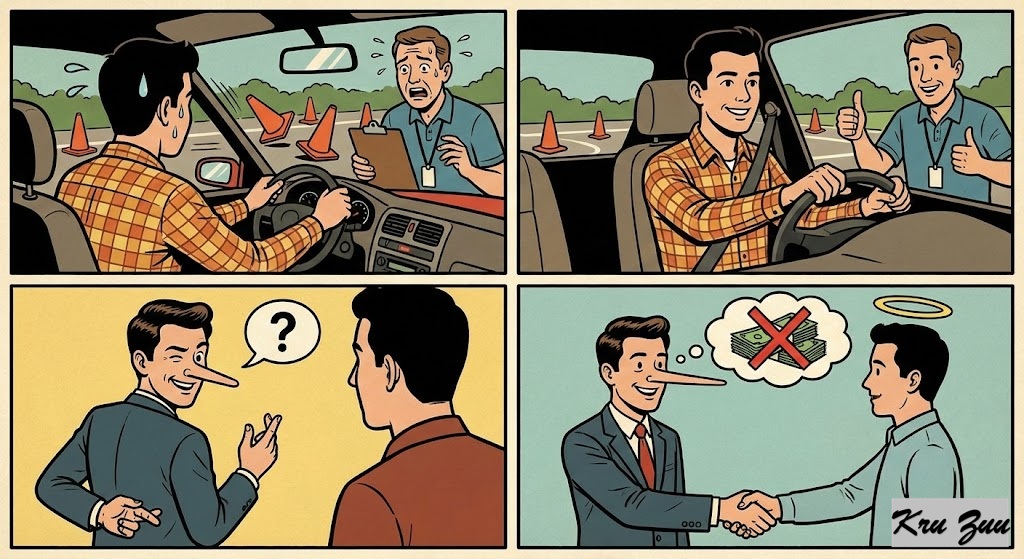
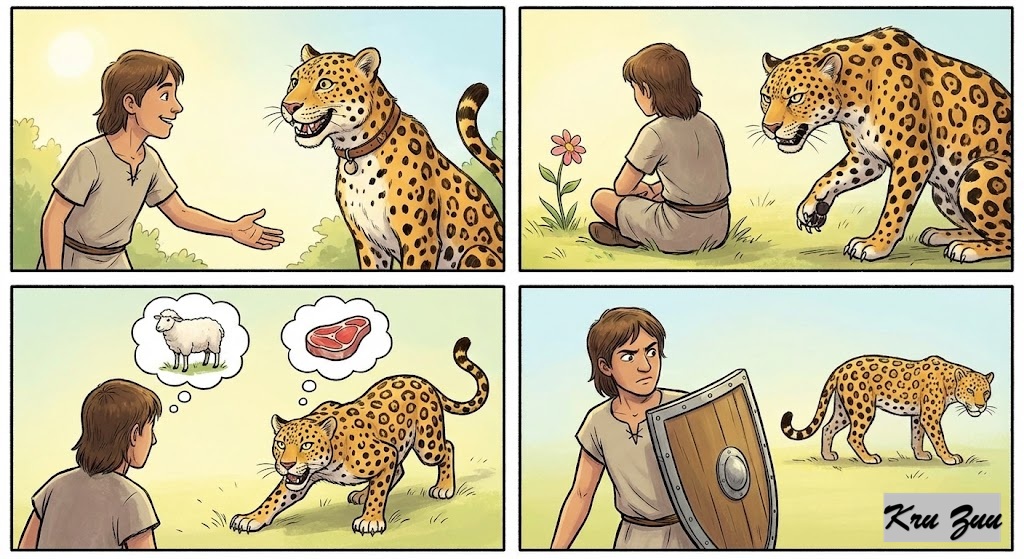
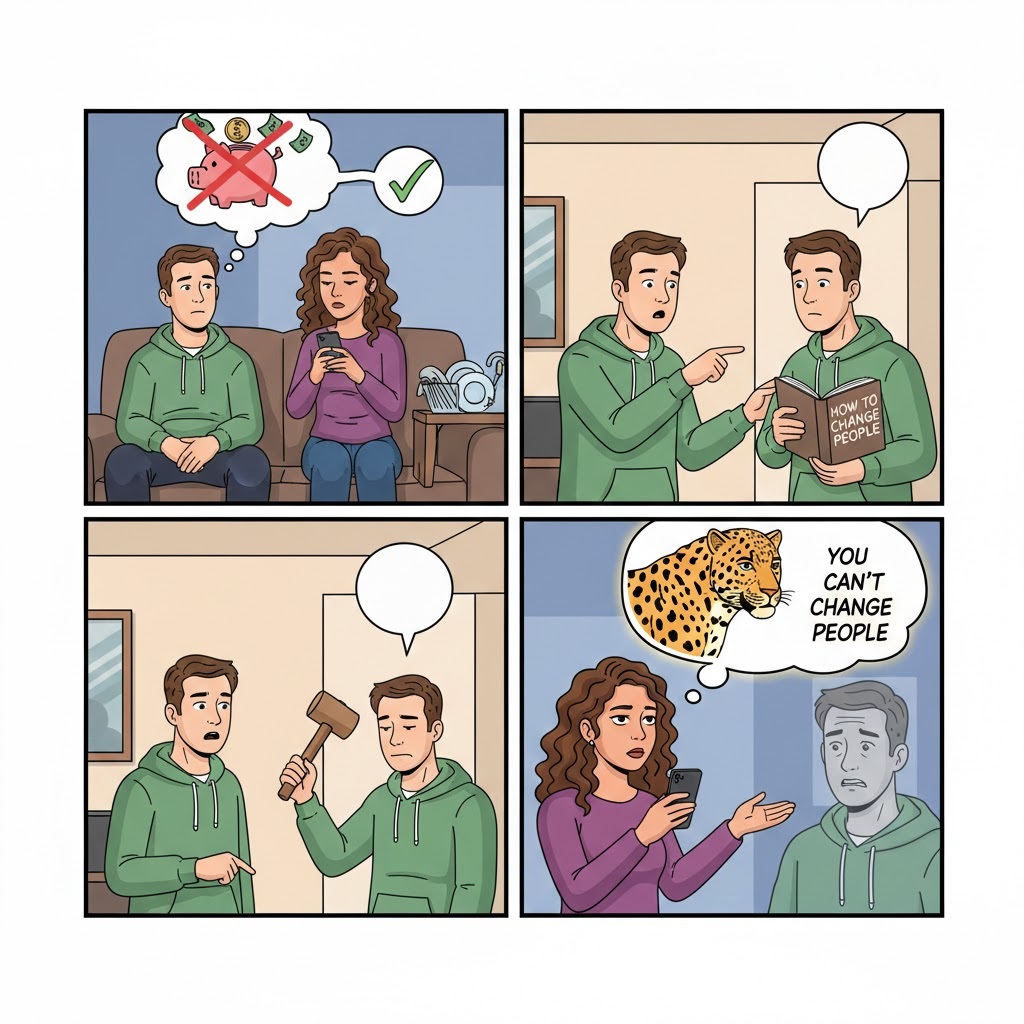
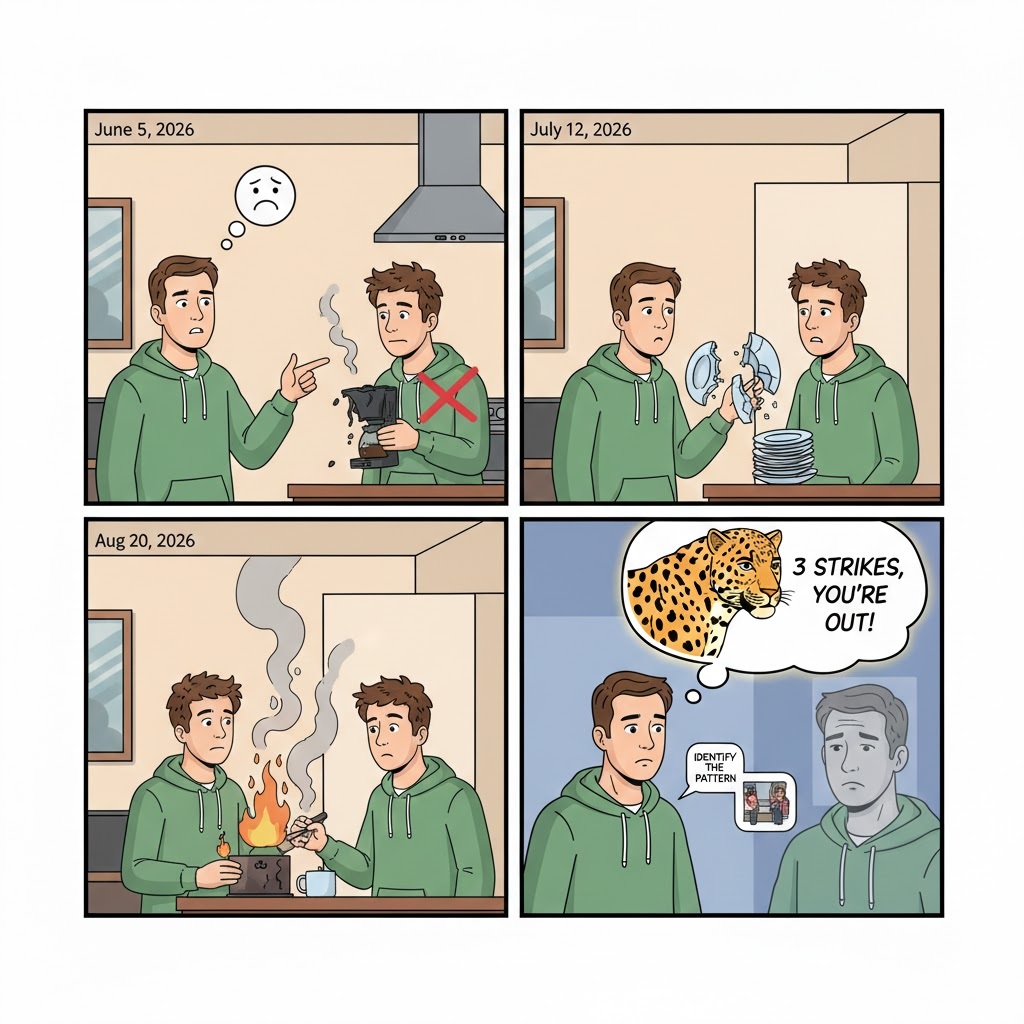
    You meet someone who has lied to you three times. They apologize and say, “Iโ€™ve changed! It won’t happen again.” What do you do? You believe them. You think you can “fix” people. You think your love or logic is strong enough to rewrite someoneโ€™s personality.

    The Result? You get hurt again. You feel betrayed by the same person, in the same way, for the tenth time. You are trapped in the “Cycle of Disappointment.” ๐Ÿคก


    ๐Ÿ˜‡ The Hero (The Realist)

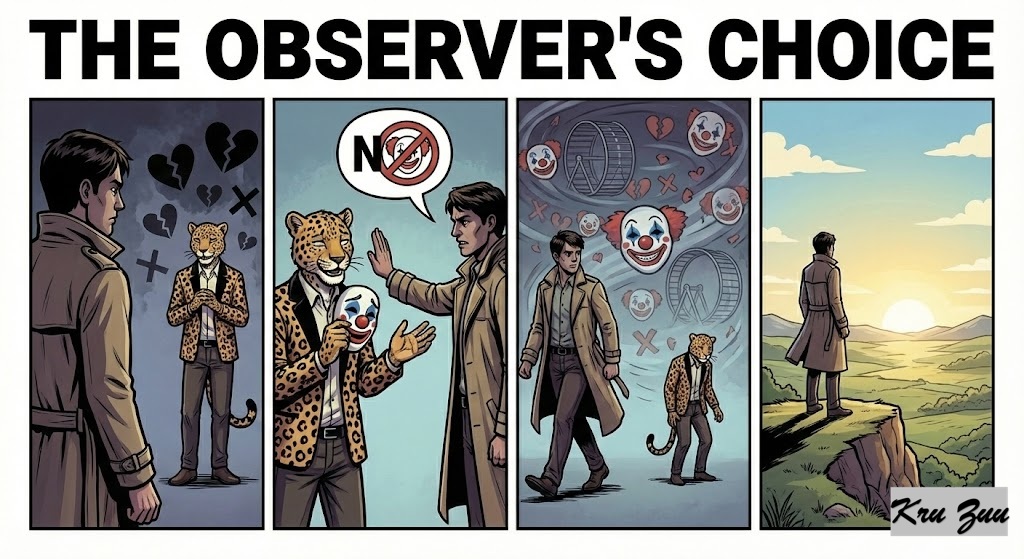
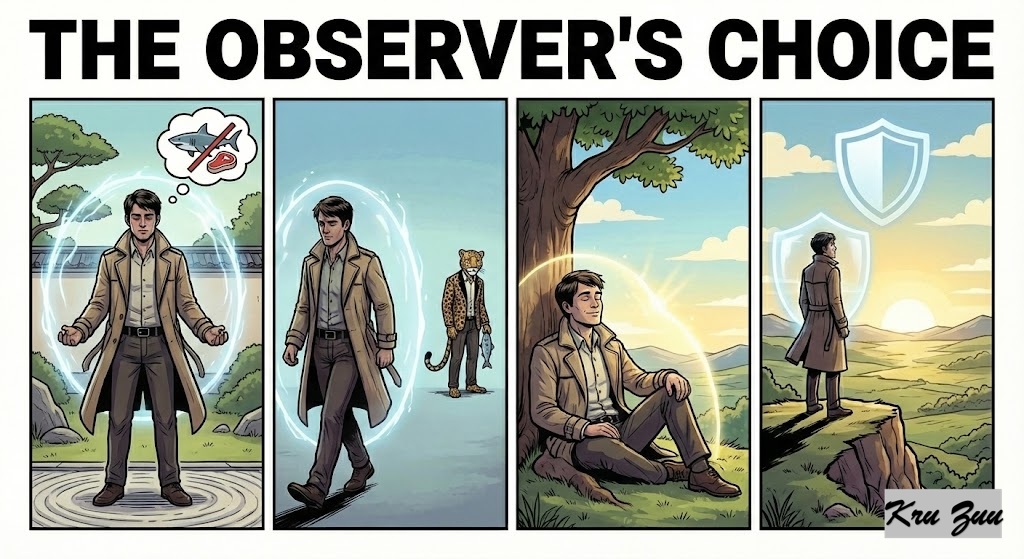
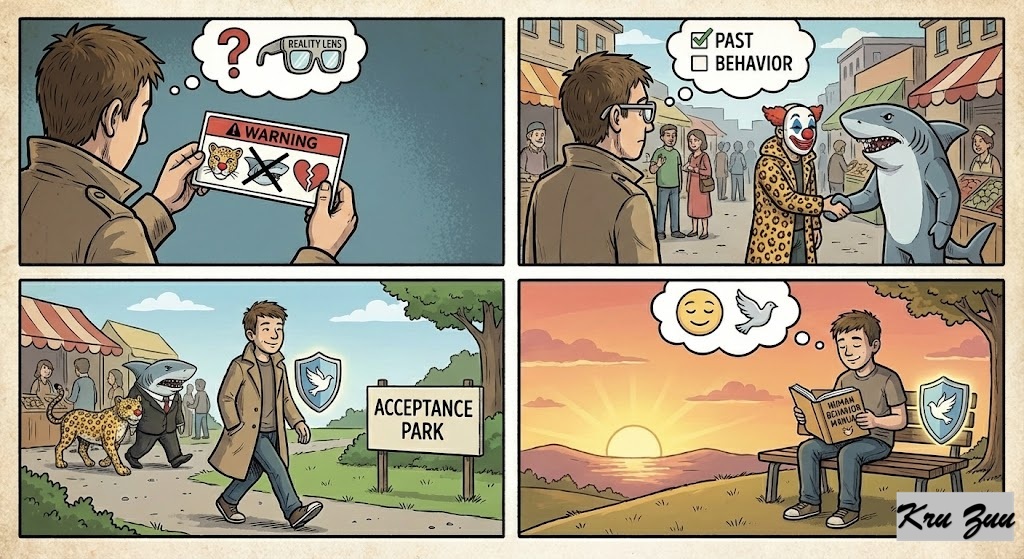
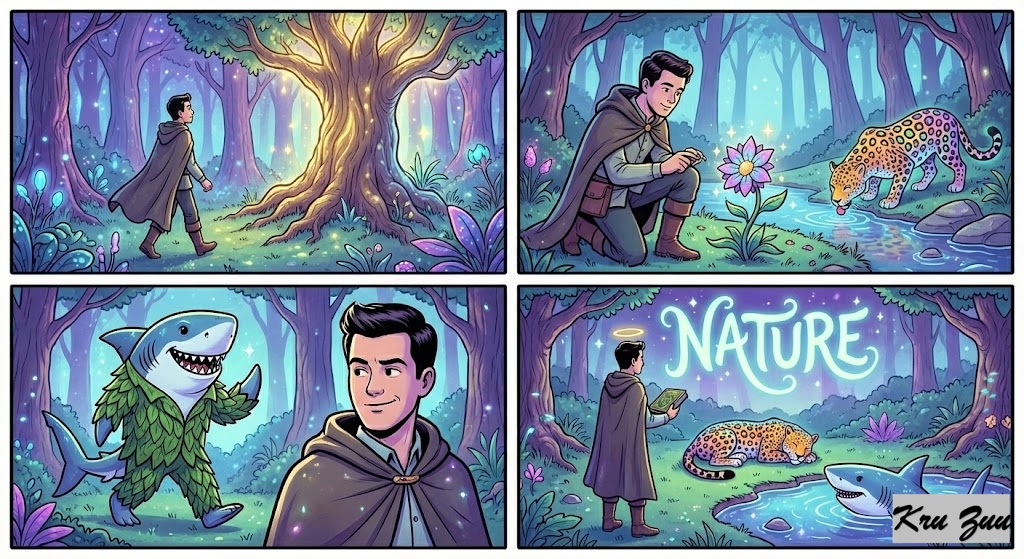
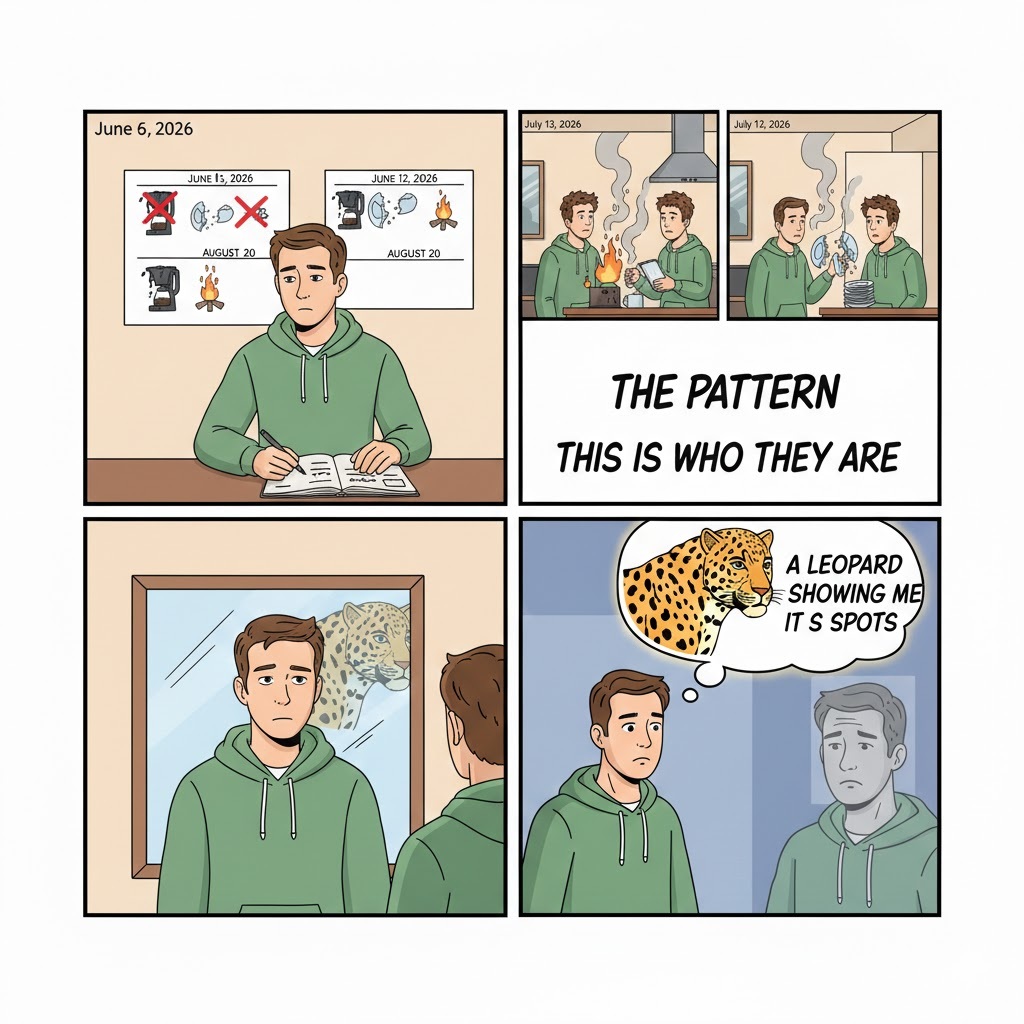
    You observe patterns. You understand that the best predictor of future behavior is past behavior. When someone shows you who they are, you believe them the first time. You don’t try to change the leopard; you simply don’t invite the leopard into your house.

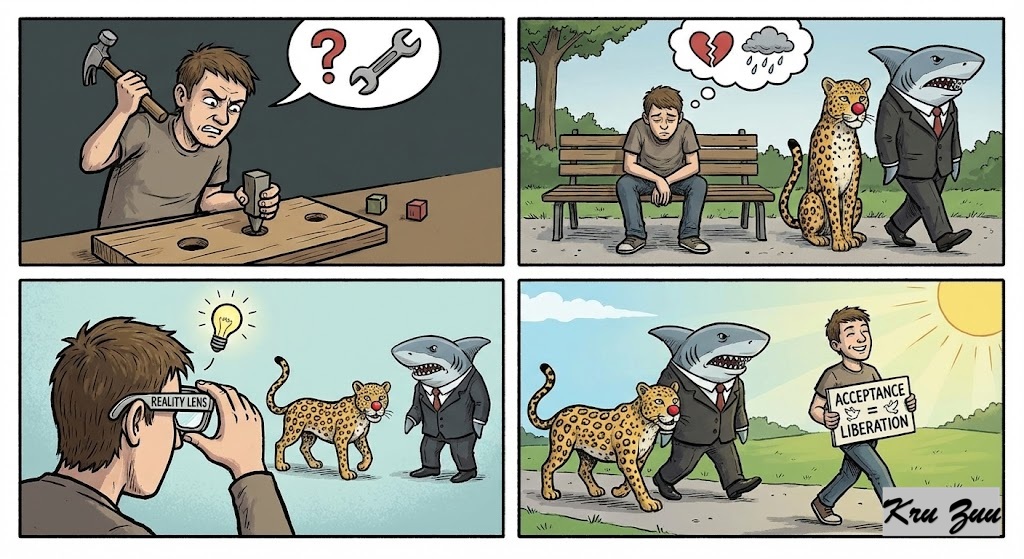
    The Result? You protect your energy. You stop wasting time trying to turn a shark into a vegetarian. You find peace in acceptance. ๐Ÿ›ก๏ธ


    โš–๏ธ The Reality


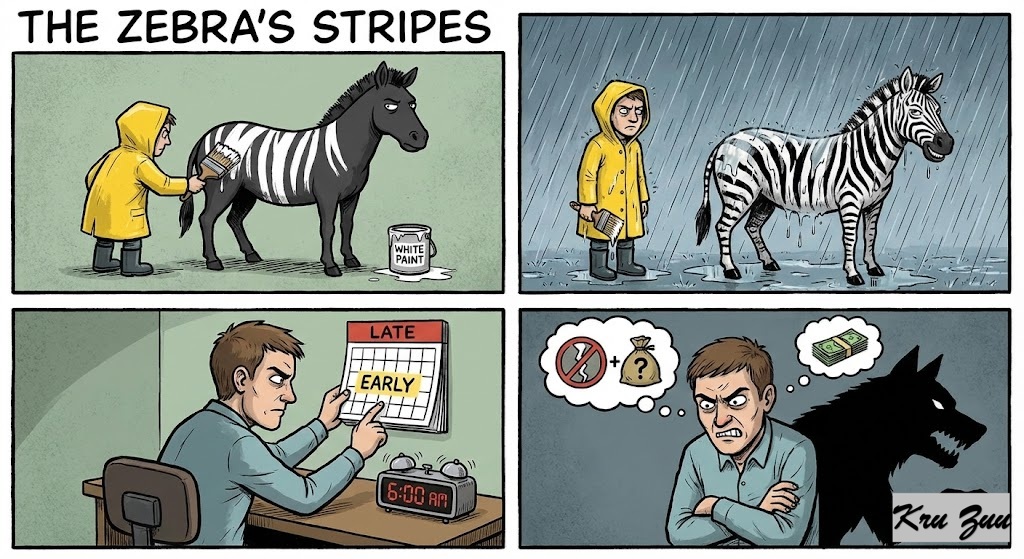
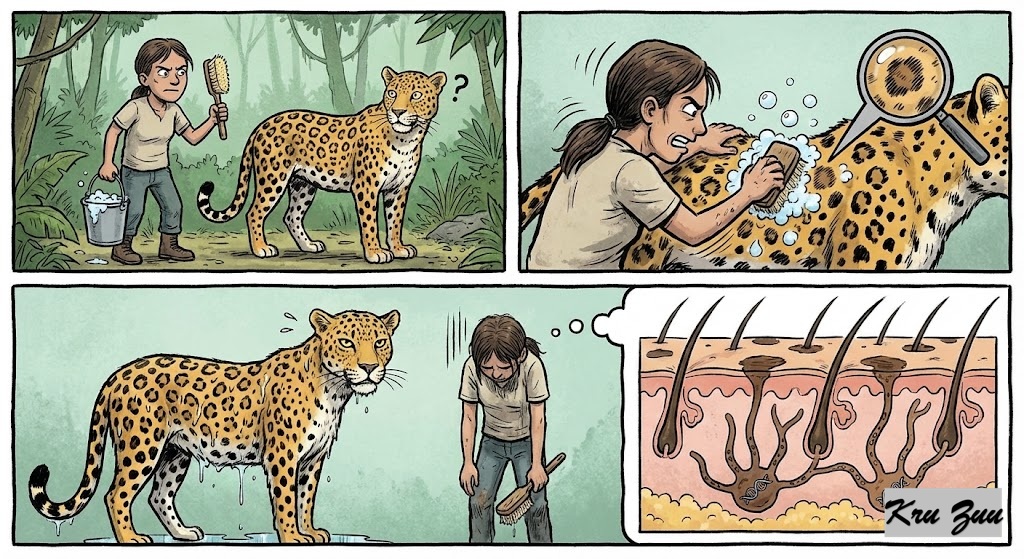
    You can paint a zebra with white paint, but under the rain, the stripes will always return. People can change their habits (diet, wake-up time), but they rarely change their nature (integrity, temperament, core values).

    ๐Ÿ’Ž The Secret

    Realizing this isn’t cynical; itโ€™s liberating. Once you stop expecting people to be who they aren’t, you can deal with them as they are.

    ๐Ÿง The Anatomy of the Proverb


    This is your warning label for human behavior.


    A Leopard (The Subject): Represents a person with a strong, established reputation or nature.


    Doesn’t Change (Verb Phrase): Cannot alter or remove.


    Its Spots (The Object): Represents innate characteristics, bad habits, or true nature.


    Simpler Version: People stick to their true nature. / You cannot hide who you really are.


    ๐Ÿ“š Vocabulary Vault


    Inherent (Adjective): Existing in something as a permanent, essential quality.


    Instinct (Noun): A natural or intuitive way of acting or thinking. ๐Ÿง 


    Reputation (Noun): The beliefs or opinions that are generally held about someone.


    Naive (Adjective): Showing a lack of experience, wisdom, or judgment. (Too trusting).


    Consistency (Noun): Acting in the same way over time.

    ๐Ÿ“œ History: Ancient Wisdom


    Where did this wild phrase come from?


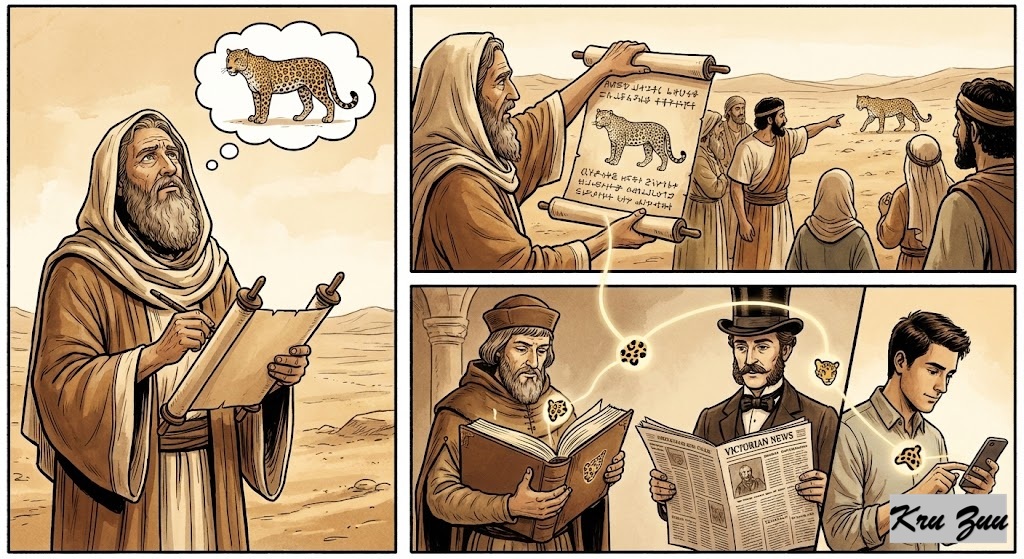
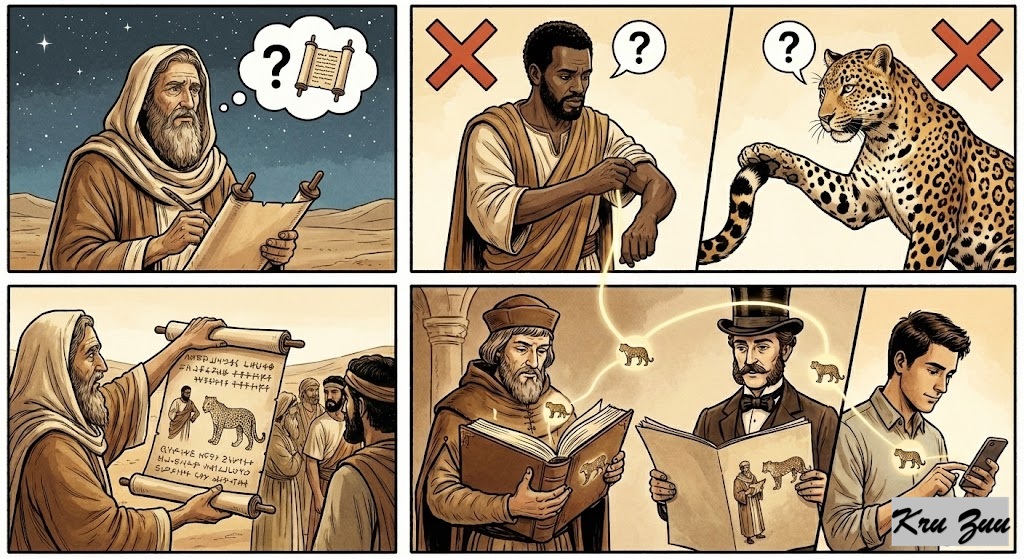
    The Origin: It is actually biblical! It comes from Jeremiah 13:23: “Can the Ethiopian change his skin, or the leopard his spots?” It was a rhetorical question meaning “No, it is impossible.”


    The Logic: A leopardโ€™s spots are not dyed on its fur; they are part of its genetics. You cannot wash them off.


    Global Cousins


    ๐Ÿ‡น๐Ÿ‡ท Turkish: “Can รงฤฑkar huy รงฤฑkmaz” (The soul leaves the body, but the habit/character does not).


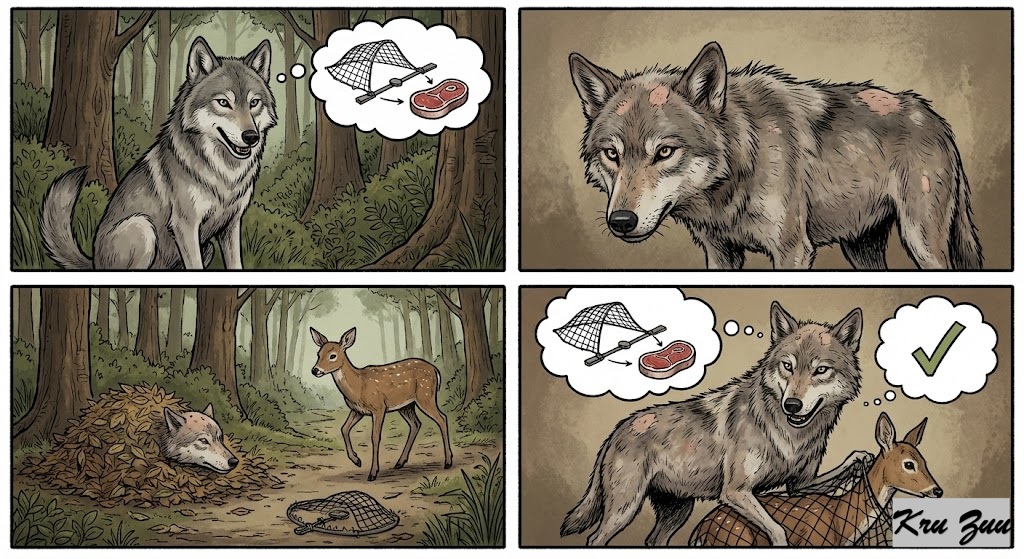
    ๐Ÿบ Latin: “The wolf loses his hair, but not his tricks.”


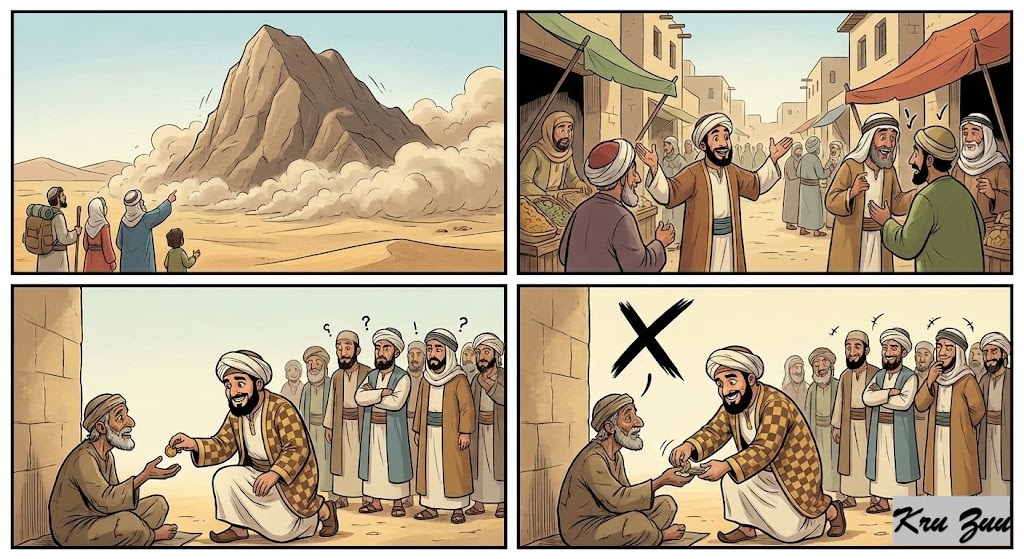
    ๐Ÿธ Arabic: “If you hear that a mountain moved, believe it; but if you hear that a man changed his character, do not believe it.”

    ๐ŸŽฏ Impact on Life: The Pros & Cons


    โœ… The Pros (The Shield)


    Protection: You stop lending money to the friend who never pays you back.


    Clarity: You hire people based on their track record, not their promises.


    โŒ The Cons (The Trap)


    Cynicism: Be careful. If you believe no one can ever improve, you won’t give people a fair chance to grow. This idiom applies mostly to core character, not skills. A bad driver can learn to drive well, but a liar rarely becomes an honest man.

    ๐ŸŽญ Short Story: The “Vegetarian” Lunch ๐Ÿฅ—๐Ÿ˜ผ๐Ÿ”


    Letโ€™s return to the magical forest to see if nature really changes.


    ๐ŸŒŸ The Cast


    Cleo the Cat:
    The predator who claims she is “reformed.” ๐Ÿ˜ผ


    Cluck the Chicken: The trusting optimist. ๐Ÿ”


    Fred the Frog: The skeptical realist. ๐Ÿธ


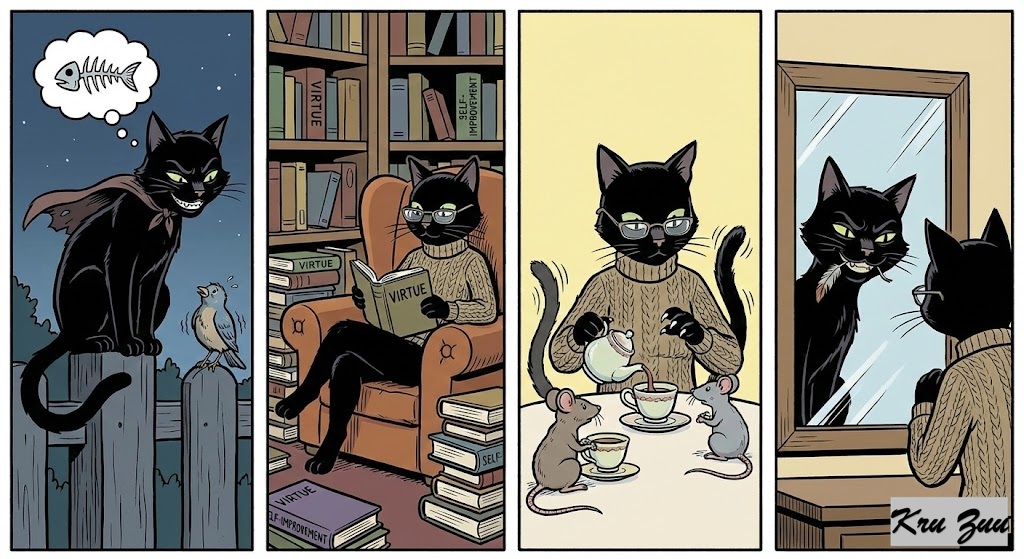
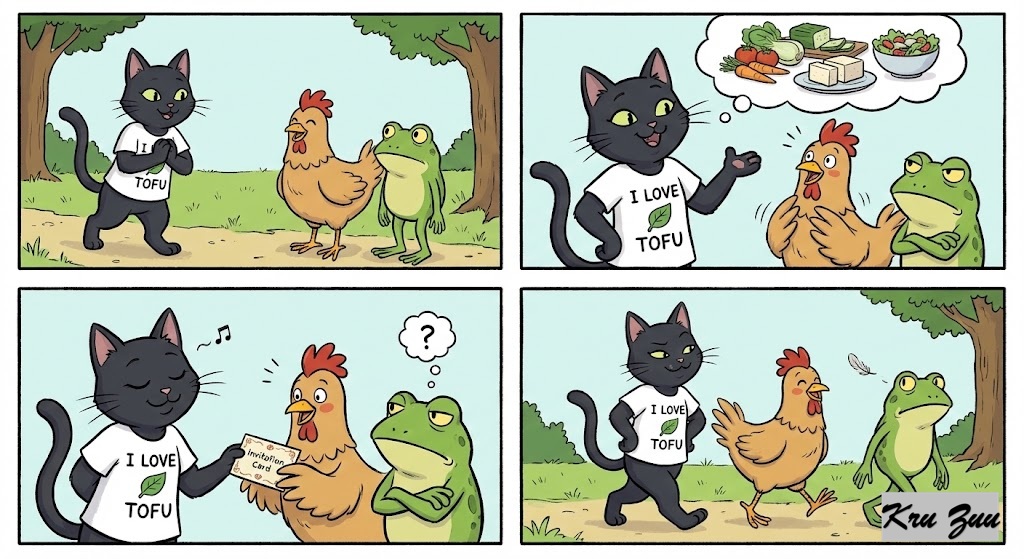
    The Situation: Cleo the Cat approaches Cluck and Fred. She is wearing a shirt that says “I Love Tofu.” “Good news!” Cleo purrs smoothly. “I have decided to change my lifestyle. I am no longer a hunter. I am a vegetarian now. I want to invite you both to lunch to celebrate my new life.”


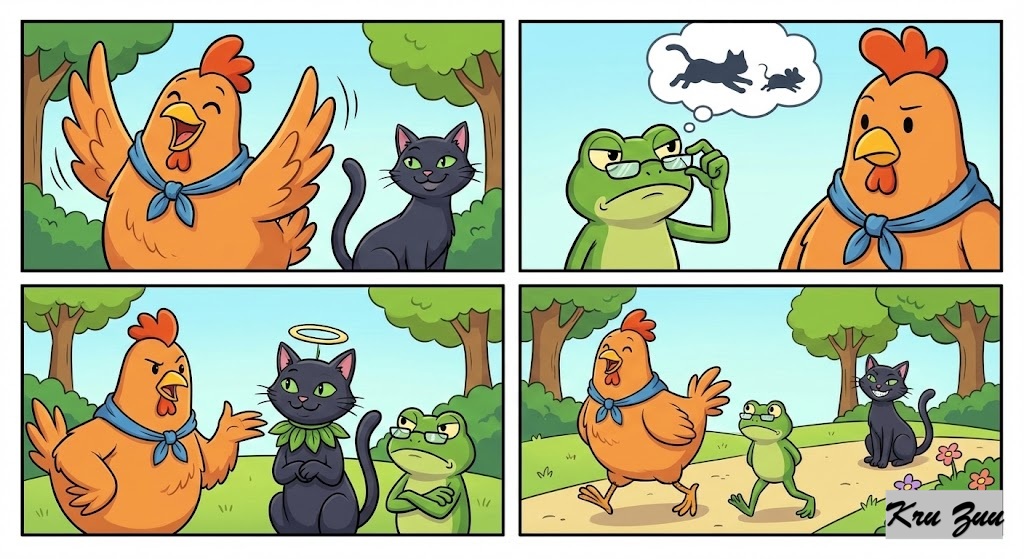
    The Conflict: Cluck is thrilled. “Oh, how wonderful!” Cluck chirps, flapping his wings. “I always knew you were good deep down, Cleo! We will be there!” Fred the Frog adjusts his glasses and frowns. “Ribbit. I don’t know, Cluck. She ate a mouse last Tuesday. A leopard or a cat, doesn’t change its spots.” “Don’t be so negative, Fred!” Cluck scolds. “She has changed!”


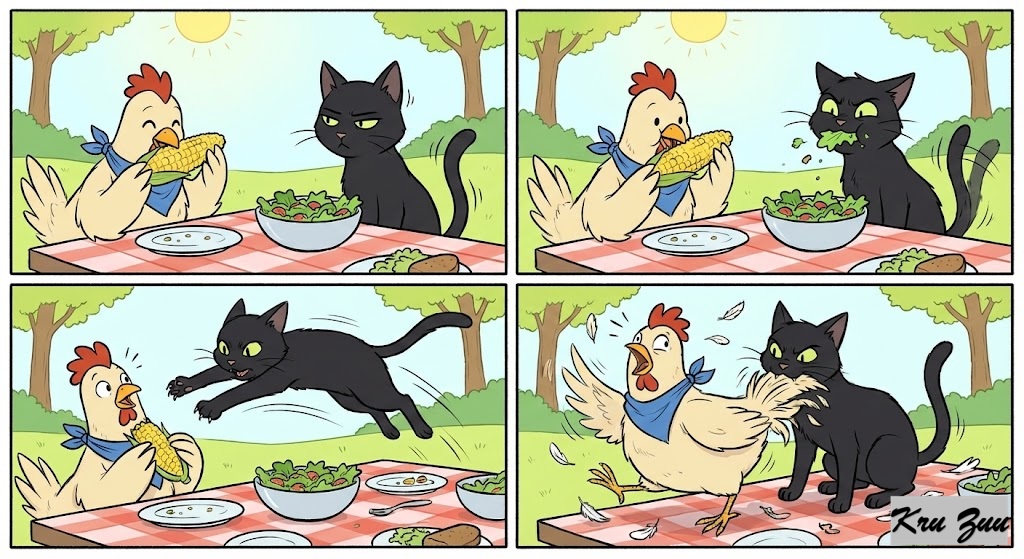
    The Lunch: They sit down at the picnic. There is a bowl of salad. Cleo tries to eat a leaf of lettuce. She chews itโ€ฆ and spits it out. She looks at Cluck. Her eyes get wide. Her tail starts to twitch. ๐Ÿˆ Cluck is busy eating corn. “This is great, Cleo!” Suddenly, Cleo lunges! POUNCE! She jumps across the table, aiming right for Cluck’s feathery tail!


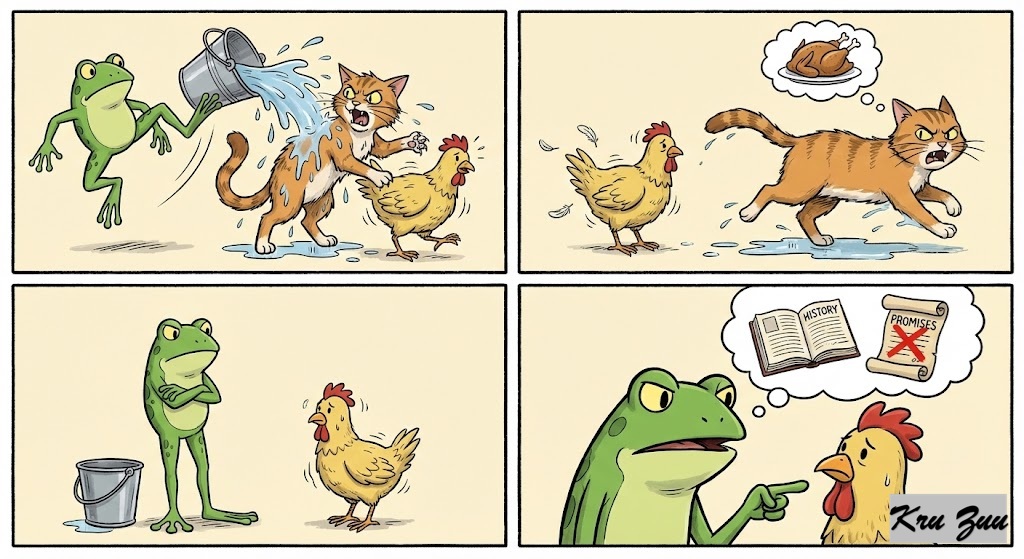
    The Resolution: Fred was ready. He kicks a bucket of water onto Cleo. ๐Ÿ’ฆ Cleo hisses, “I couldn’t help it! He looked so delicious!” and runs away to dry off. Fred looks at the shaking Chicken. “Cluck, next time, believe history, not promises.”


    The Moral: Instinct is powerful. Just because someone says they are different, doesn’t mean their “spots” are gone. Keep your guard up until you see real action.

    ๐ŸŽ“ Lesson for English Learners


    Don’t force the translation.


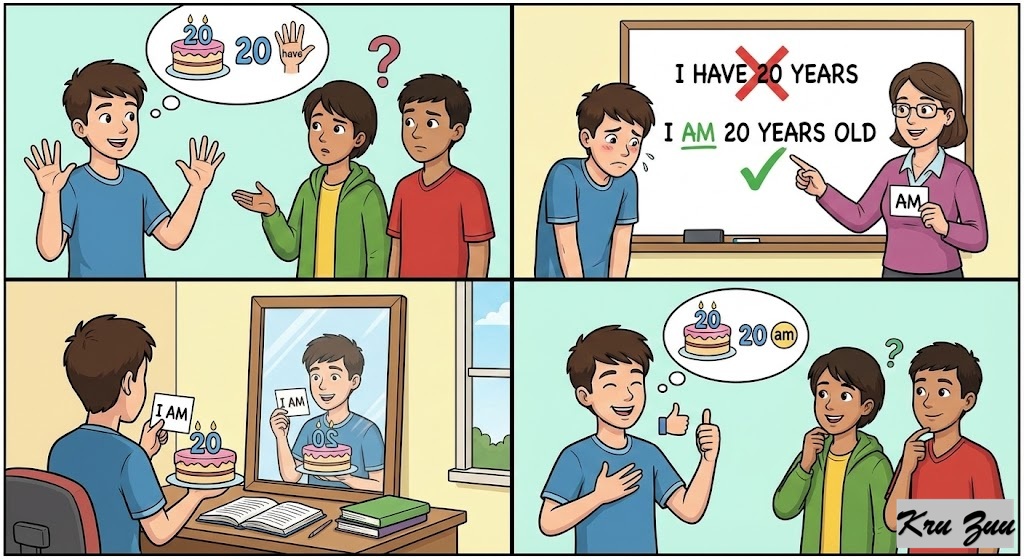
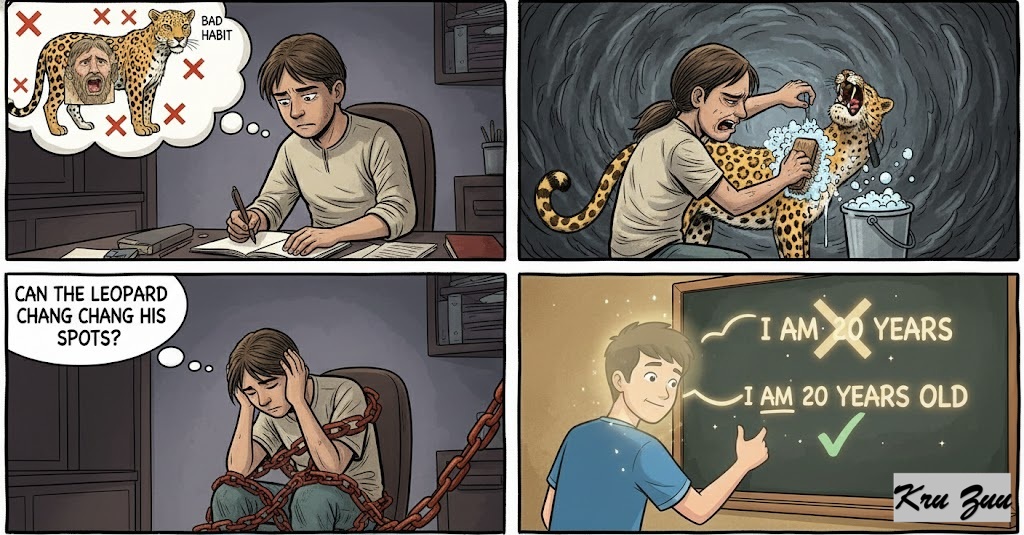
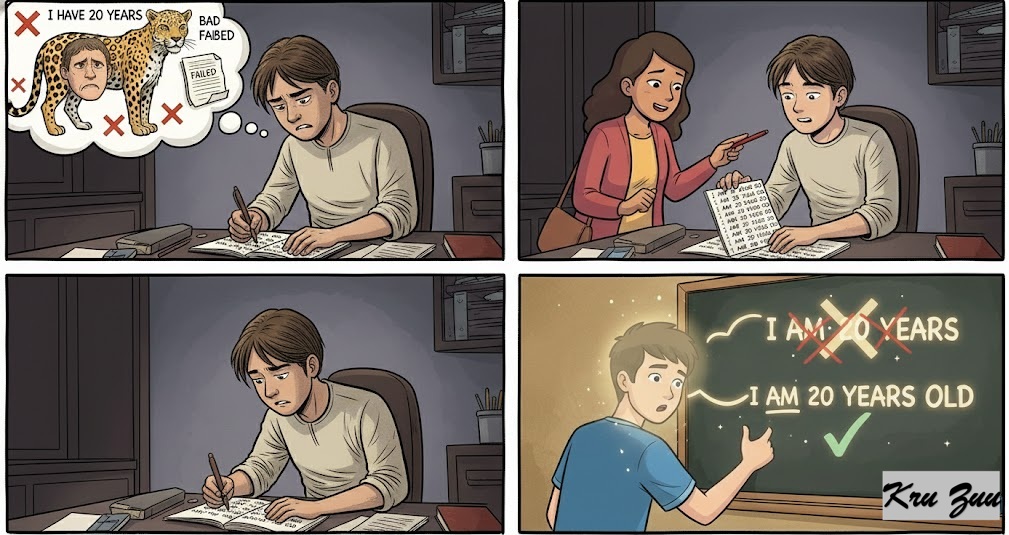
    Situation: You keep making the same grammar mistake (e.g., saying “I have 20 years” instead of “I am 20 years old”).


    The Shift: You might feel like you are the leopardโ€”that you can’t change your bad habit.


    The Fix: Unlike personality, language habits CAN change. But it takes “conscious repetition.” You must rewrite your spots.


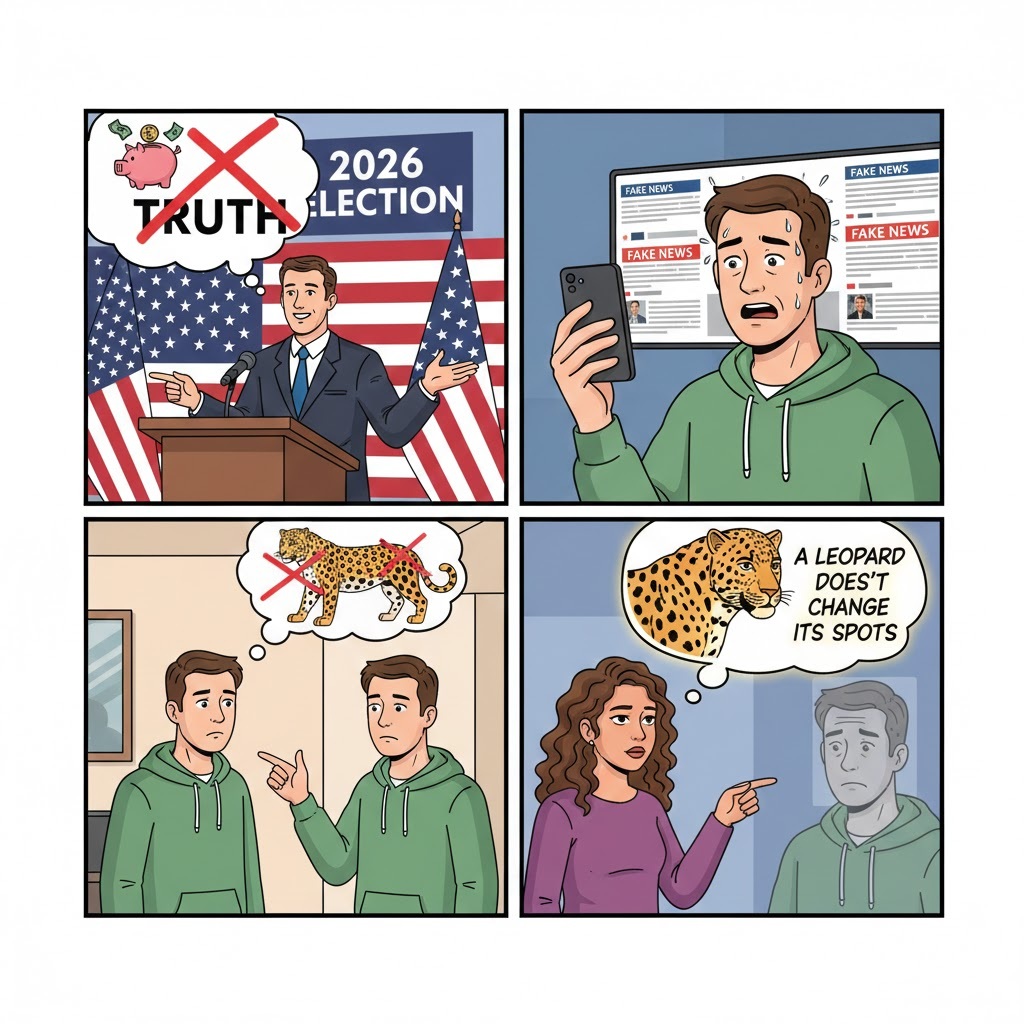
    Usage: If a politician is caught lying again, you can shake your head and say to your friend: “Well, you know what they sayโ€ฆ a leopard doesn’t change its spots.”


    ๐Ÿ’ฌ Your Turn: The Reality Check ๐Ÿš€


    Is there someone in your life you are trying to “change”?


    Identify: Think of a person who has disappointed you in the same way 3 times.


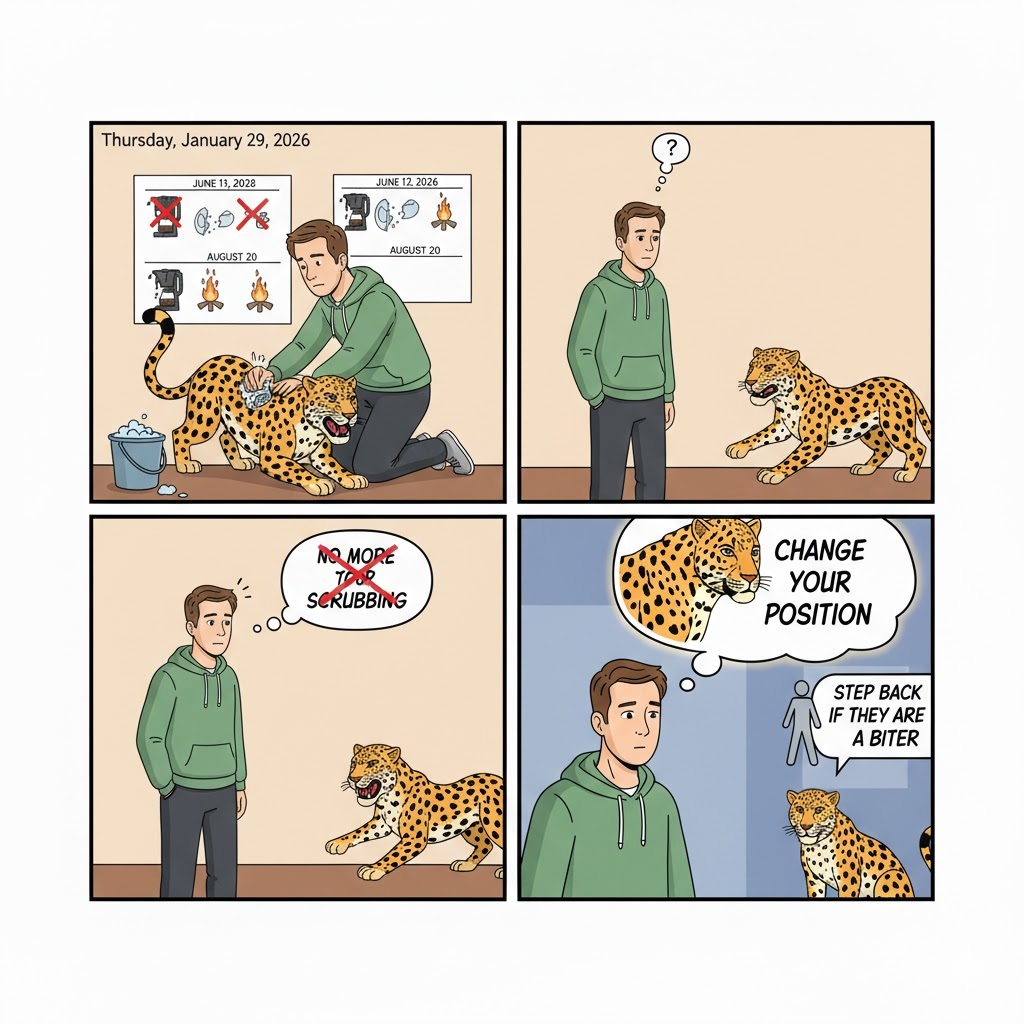
    Accept: Say to yourself, “This is who they are. They are showing me their spots.”


    The Action: Stop trying to scrub their spots off. Instead, change your position. If they are a biter, step back so they can’t bite you.


    ๐Ÿ‘‡ Question for the comments: Do you believe people can truly change their core personality? Or do we stay the same forever?

    Let me know your thoughts!

    By Zubeyir YURTKURAN

    https://www.facebook.com/BrainBattleground/

    https://www.facebook.com/zubeyr.yurtkuran/

    https://www.instagram.com/zubeyryurtkuran/
    https://www.youtube.com/@BrainBattleground-b3p

    https://www.instagram.com/brainbattleground/

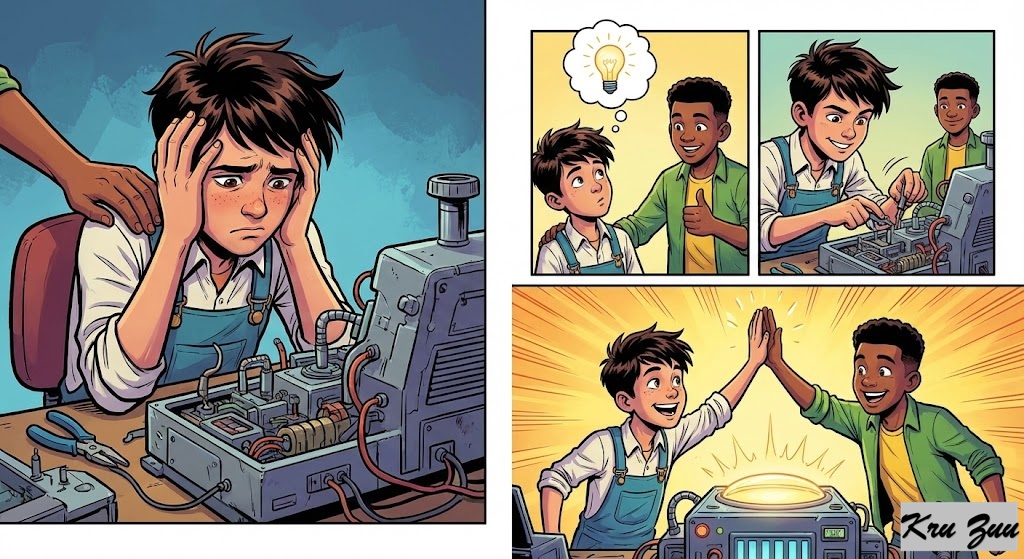
  • ๐Ÿง  The Daily Shield: The Law of Connection

    ๐Ÿง  The Daily Shield: The Law of Connection

    “Great minds think alike.”


    ๐Ÿ˜ˆ The Villain (The Intellectual Snob)

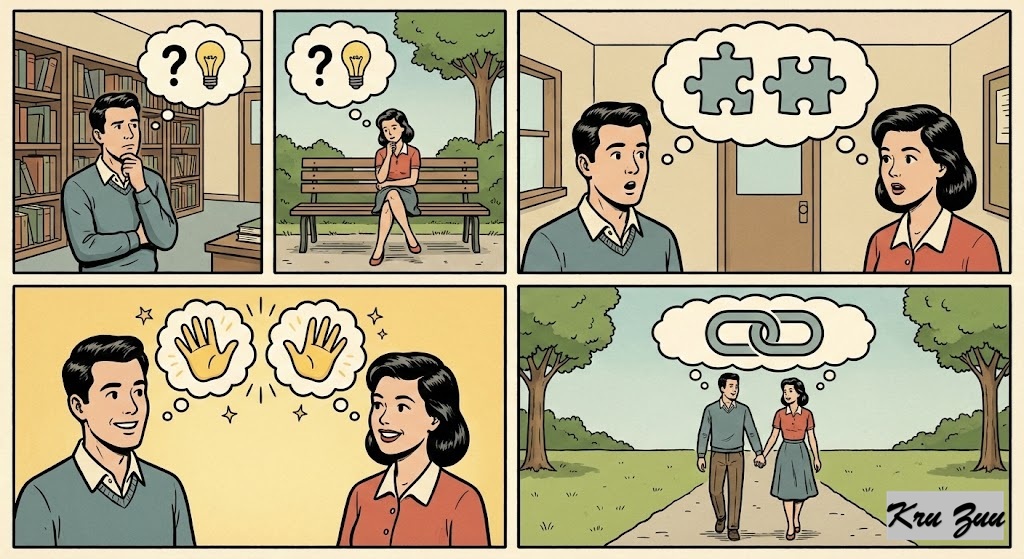
    You have an idea. Someone else suggests the same thing. What do you do? You get annoyed. ๐Ÿ˜’ “Hey, I thought of that first!””Stop copying me!” You believe your ideas are special property. You see shared thoughts as theft, not connection. You want to be the “Lone Wolf” genius.

    The Result? You isolate yourself. People feel awkward sharing ideas with you. You kill the momentum of the team because you are too busy claiming credit. You are trapped in the “Ego Trap.” ๐ŸงŸโ€โ™‚๏ธ


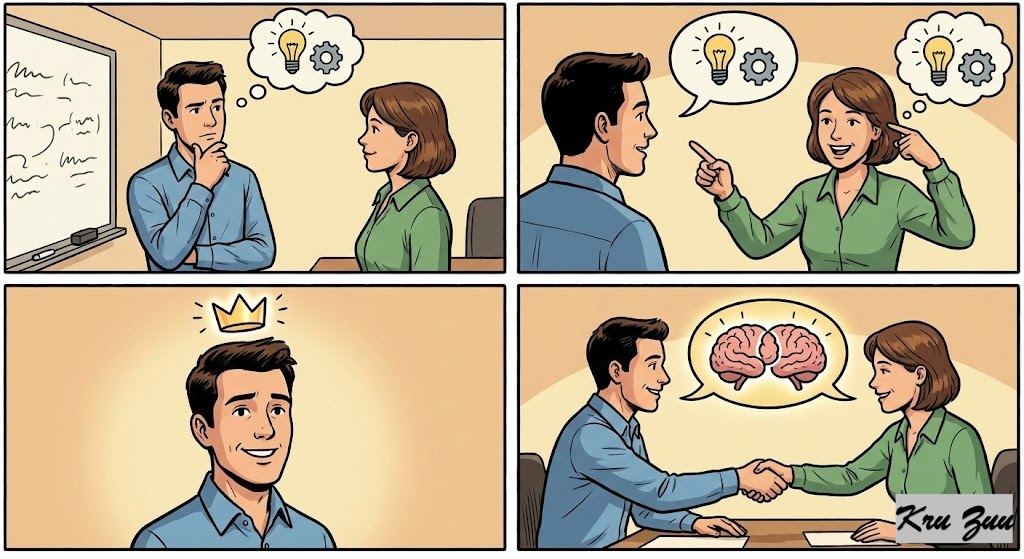
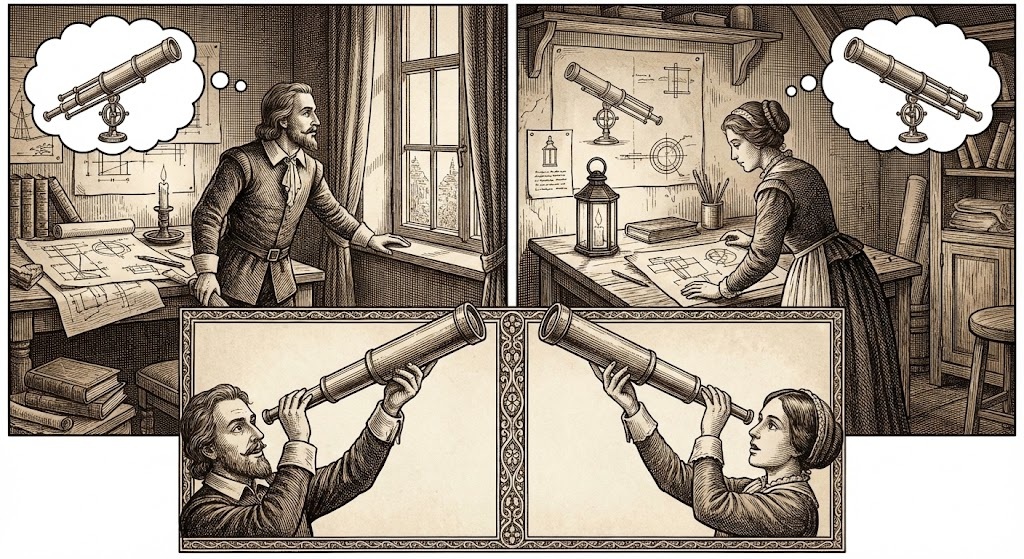
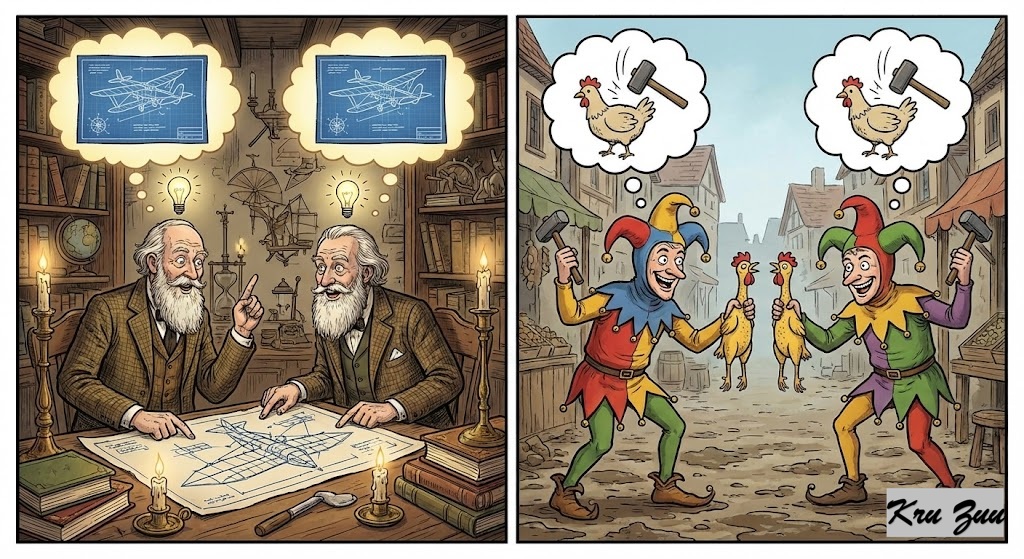
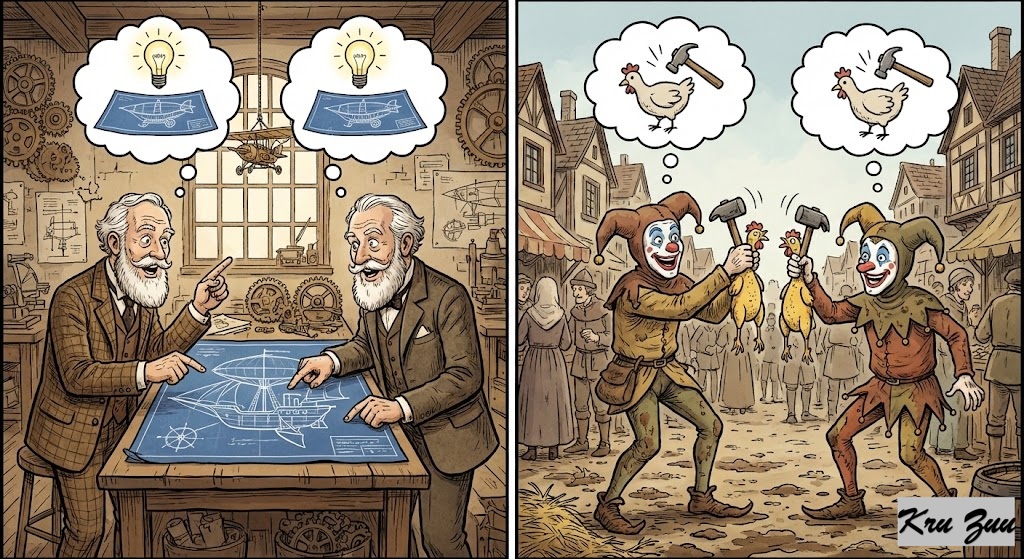
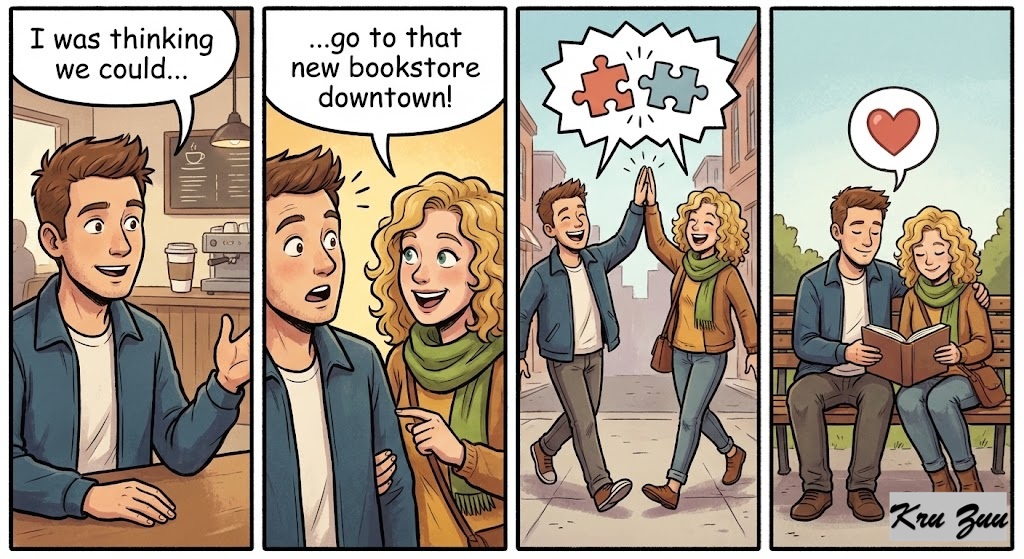
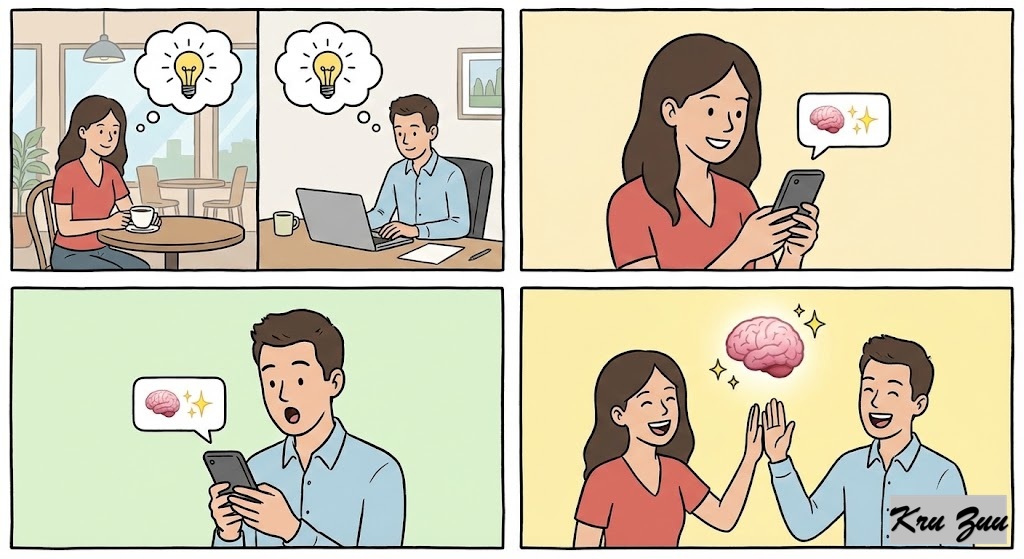
    ๐Ÿ˜‡ The Hero (The Synergist): You are brainstorming. A colleague blurts out the exact solution you were just thinking of. Instead of getting jealous, you smile. ๐Ÿ˜„ You point at them and say: “Great minds think alike!” You validate their intelligence, which validates yours. You realize that shared thinking isn’t copying, it’s alignment.

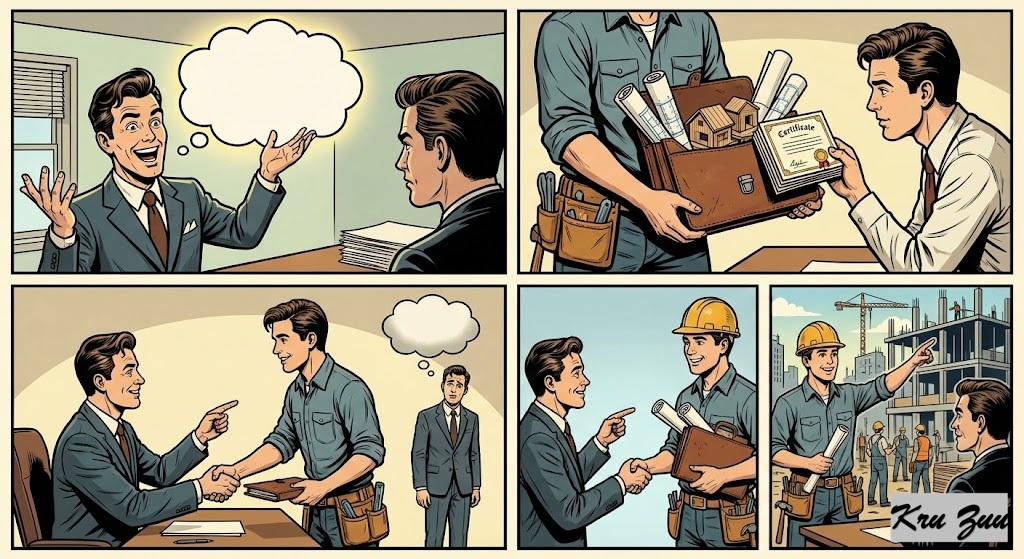
    The Result? Instant rapport. The other person feels smart and connected to you. You create a bond of trust (“We are on the same wavelength”). You build a tribe, not just a resume. โšก


    โš–๏ธ The Reality


    We are social creatures. When two people arrive at the same conclusion independently, it is a powerful signal of compatibility. It means your values, logic, or instincts are aligned. It is a moment of “mental high-five.” ๐Ÿ‘‹


    ๐Ÿ’Ž The Secret

    Using this phrase isn’t just about being right; it is a tool to make the other person feel good. It says, “You are smart because you think like me.”

    ๐Ÿง The Anatomy of the Proverb


    This is your go-to phrase for those “Jinx!” moments.


    Great Minds (Noun Phrase): Intelligent people; thinkers; visionaries.


    Think (Verb): To process thoughts/ideas.


    Alike (Adverb):
    In a similar way; identically.


    Simpler Version: Smart people have the same ideas. / We are on the same page.


    ๐Ÿ“š Vocabulary Vault


    Synergy (Noun):
    When the combined effect is greater than the sum of separate effects. (1+1=3). ๐Ÿš€


    Telepathy (Noun): The supposed communication of thoughts by means other than the known senses. (e.g., “Itโ€™s like we have telepathy!”).


    Validation (Noun): Recognition or affirmation that a person’s feelings or opinions are valid or worthwhile.


    Coincidence (Noun): A remarkable concurrence of events or circumstances without apparent causal connection.


    Wavelength (Noun):Idiom: “To be on the same wavelength” (To think similarly). ๐Ÿ“ป

    ๐Ÿ“œ History: Origin and The Twist


    Where did this compliment come from?


    The Origin: The idea has been around since the early 1600s. The original recorded phrase in English was “Great wits jump” (meaning “jump to the same conclusion”). It evolved into “Great minds think alike” over time.


    The Twist (The Humorous Truth): Did you know this idiom has a second half that is often left out? The full phrase is historically known as:”Great minds think alike, though fools seldom differ.”


    Translation: Smart people might have the same idea, but stupid people also follow the crowd! Note: We usually only use the first half (the polite half) in business and friendship! ๐Ÿ˜‰

    ๐ŸŽฏ Impact on Life: The Pros & Cons


    โœ… The Pros (The Bond)


    Speed:
    You don’t have to explain yourself. The other person already “gets it.”


    Confidence: Knowing someone supports your idea makes you more likely to succeed.


    โŒ The Cons (The Echo Chamber)


    Groupthink:
    If everyone thinks alike, no one is spotting the mistakes. Sometimes you need a “Great Mind” who thinks differently to challenge you.

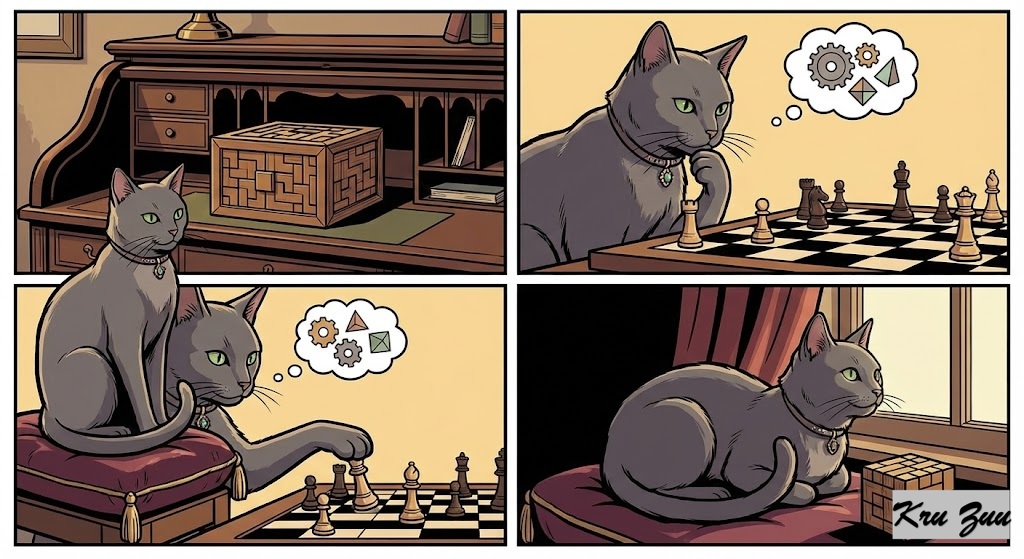
    ๐ŸŽญ Short Story: The Mystery of the Locked Box ๐Ÿ“ฆ


    Letโ€™s visit the magical forest to see how mental connection works.


    ๐ŸŒŸ The Cast


    Cleo the Cat: Elegant, logical, loves puzzles. ๐Ÿ˜ผ


    Cluck the Chicken: Impulsive, hungry, relies on gut instinct. ๐Ÿ”


    Fred the Frog: The wise, green observer. ๐Ÿธ


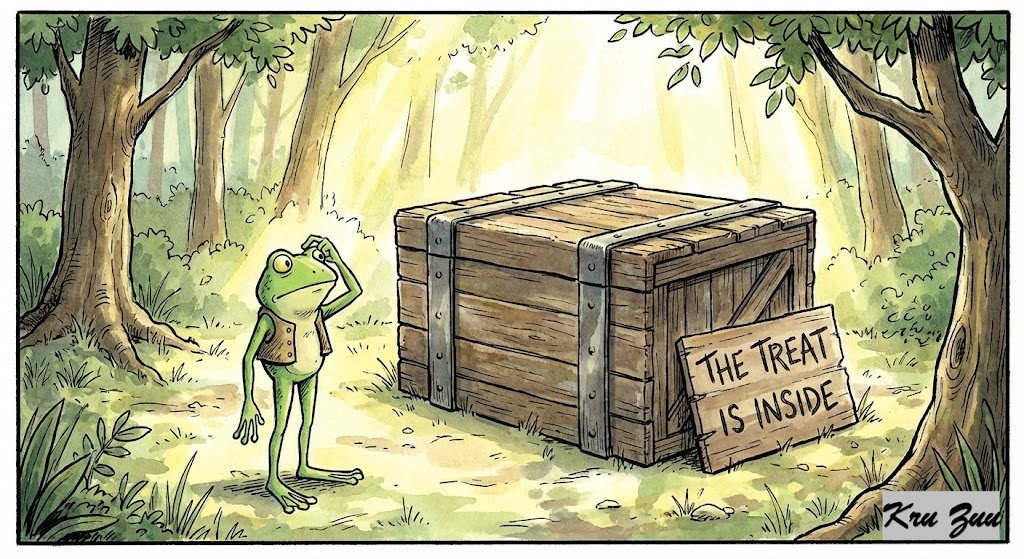
    The Situation: Fred the Frog has placed a mysterious, heavy wooden box in the middle of the clearing. It has no keyhole. It has no handle. Just a sign that says: “The treat is inside.”


    The Conflict:
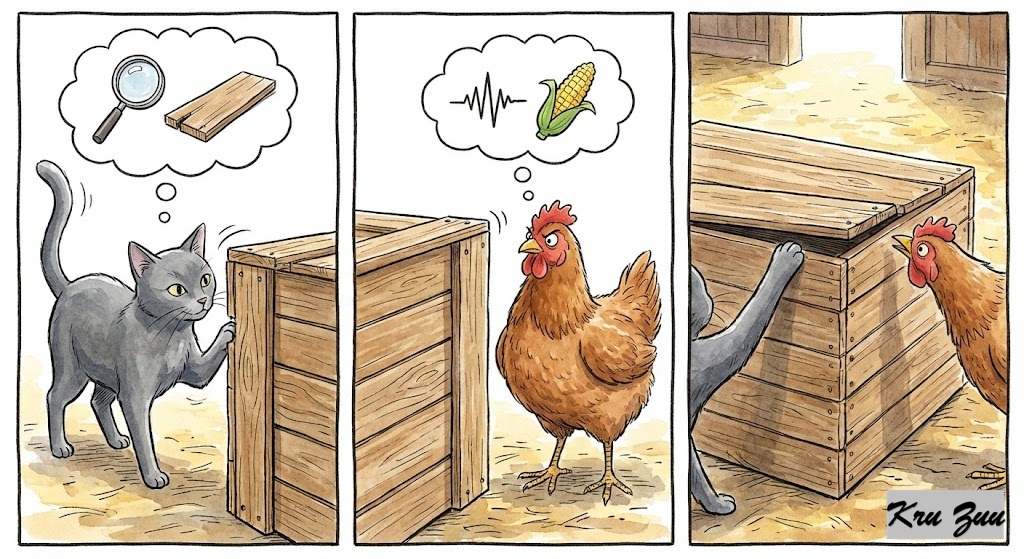
    Cleo circles the box, analyzing the wood grain. She thinks hard. “The wood is loose on the top right corner. I need something thin to pry it open.” Cluck stares at the box, thinking about the corn inside. He feels a vibration. “The top right corner looks weak. I need something flat to poke it.”


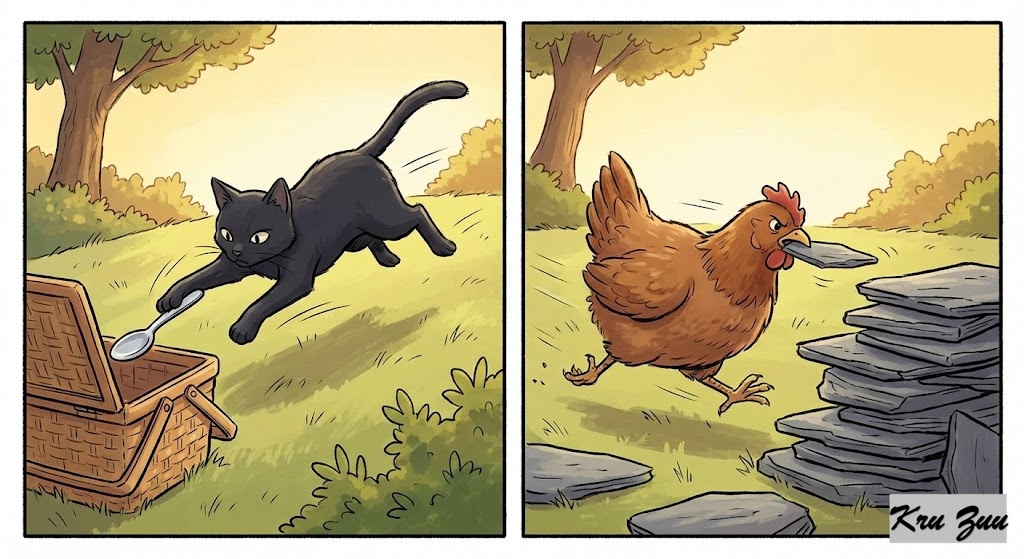
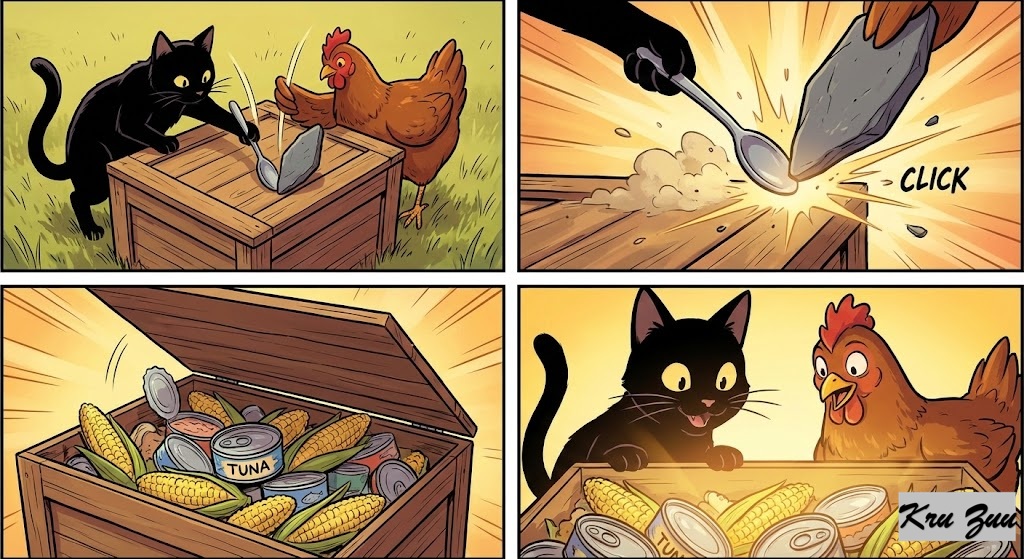
    The Climax: Without saying a word to each otherโ€ฆ Cleo runs to the left and grabs a flat, silver spoon from a picnic basket. ๐Ÿฅ„ Cluck runs to the right and grabs a flat, loose slate of rock. ๐Ÿชจ


    They both run back to the box and jam their tools into the exact same spot (the top right corner) at the exact same time. Click! The box pops open. It is filled with tuna and corn!


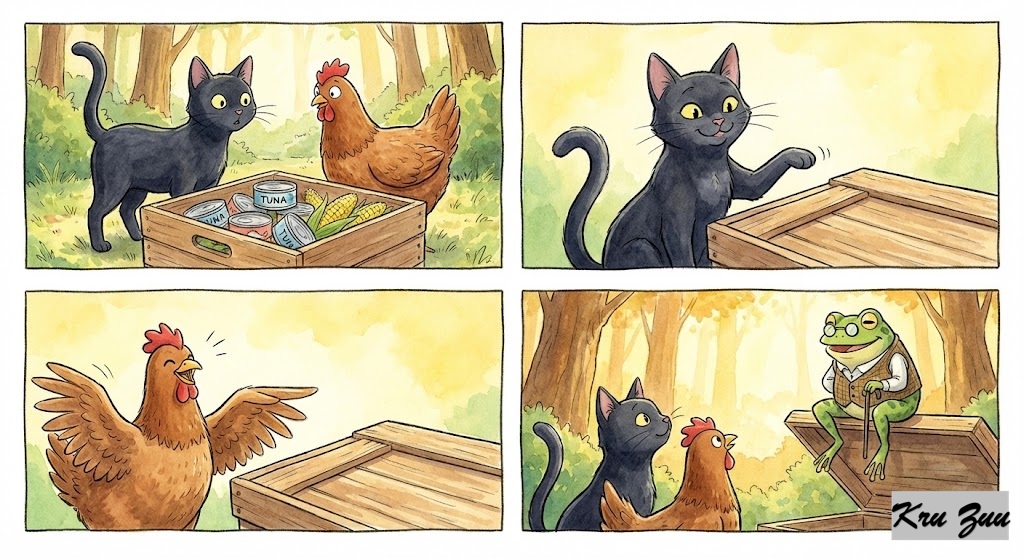
    The Resolution: They look at each other, shocked. Cleo smiles, her tail twitching. “I was going for the leverage point.” Cluck laughs. “I just knew that was the weak spot!” Fred the Frog hops onto the open lid. He adjusts his tiny glasses. “Ribbit,” Fred says. “Different species, different styles, but the same solution. Great minds think alike.”


    The Moral: You don’t have to be identical to be compatible. When you find someone who solves problems the way you do, hold onto them. That is your teammate.

    ๐ŸŽ“ Lesson for English Learners


    Context is Key.


    Situation: You and your friend both reach for the last slice of pizza at the same time.


    You Say: “Great minds think alike!” (This is funny/playful).


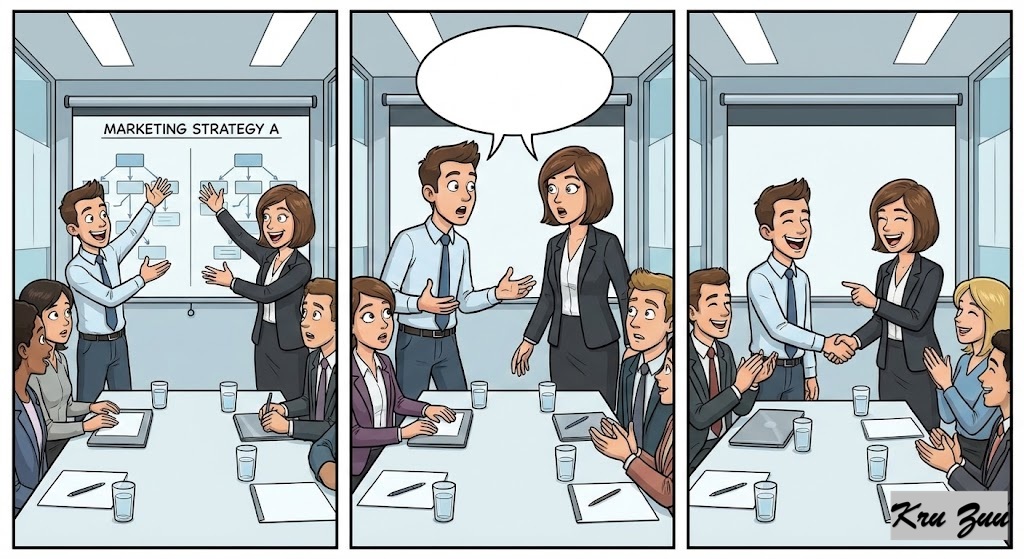
    Situation: You and your boss both suggest the same marketing strategy in a meeting.


    You Say: “Great minds think alike!” (This is complimentary and builds a professional bond).


    ๐Ÿ’ฌ Your Turn: The Connection Challenge ๐Ÿš€


    Is there someone in your life (a partner, a best friend, a coworker) who often finishes your sentences?


    The Challenge:
    The next time this happens, the next time you both say the same thing or text each other at the same moment, do not ignore it.

    The Action: Immediately send them a message or say: “Great minds think alike! ๐Ÿง โœจ”


    Celebrate the connection. It turns a coincidence into a relationship builder.


    ๐Ÿ‘‡ Question for the comments: Who is your “Mind Twin”? Tag the person who always seems to know what you are thinking!

  • ๐Ÿ•ฐ๏ธ The Daily Shield: The Law of Patience

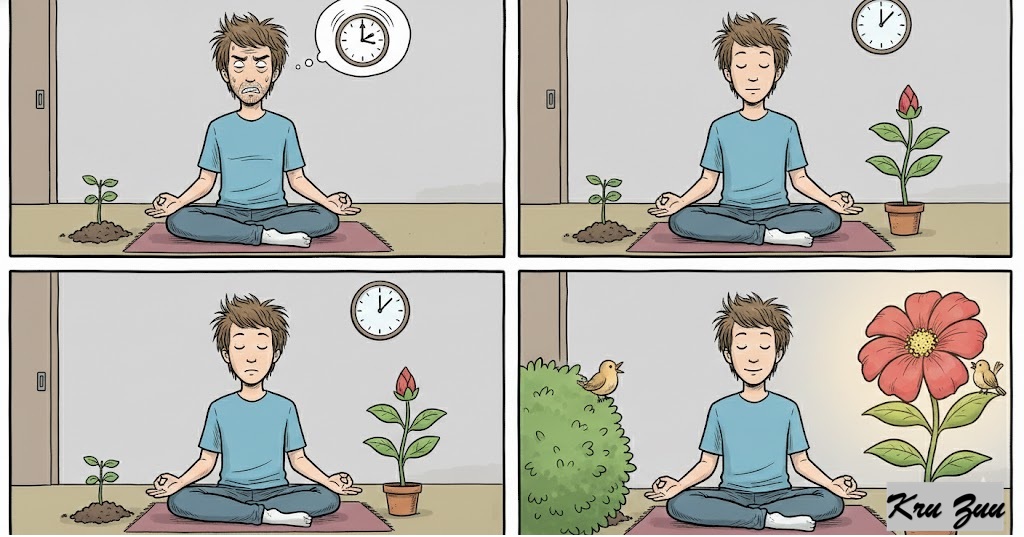
    ๐Ÿ•ฐ๏ธ The Daily Shield: The Law of Patience

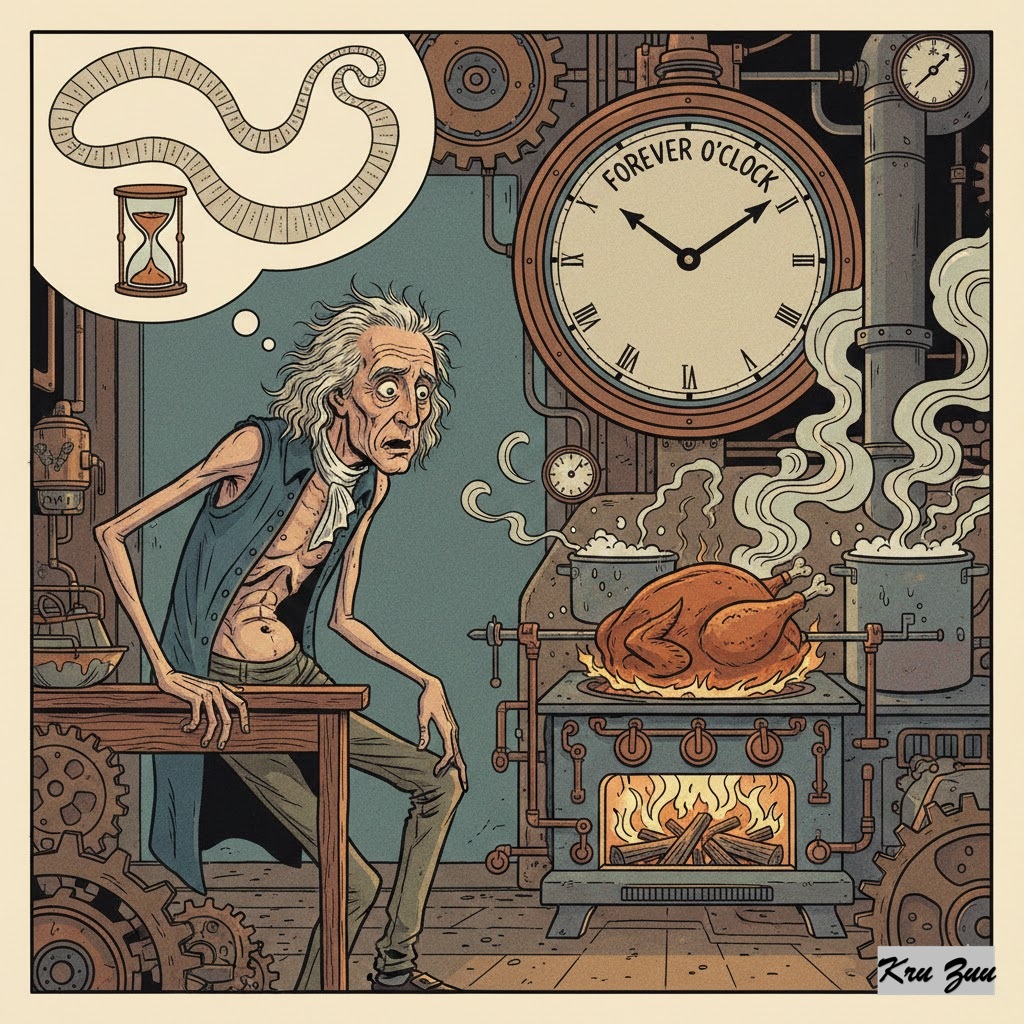
    “A watched pot never boils.”


    ๐Ÿ˜ˆ The Villain (The Checker)

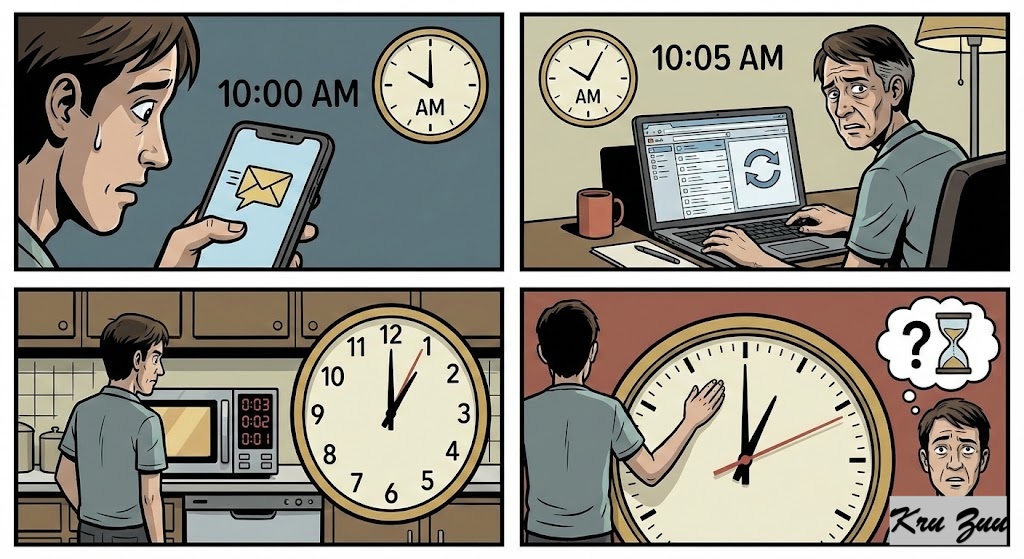
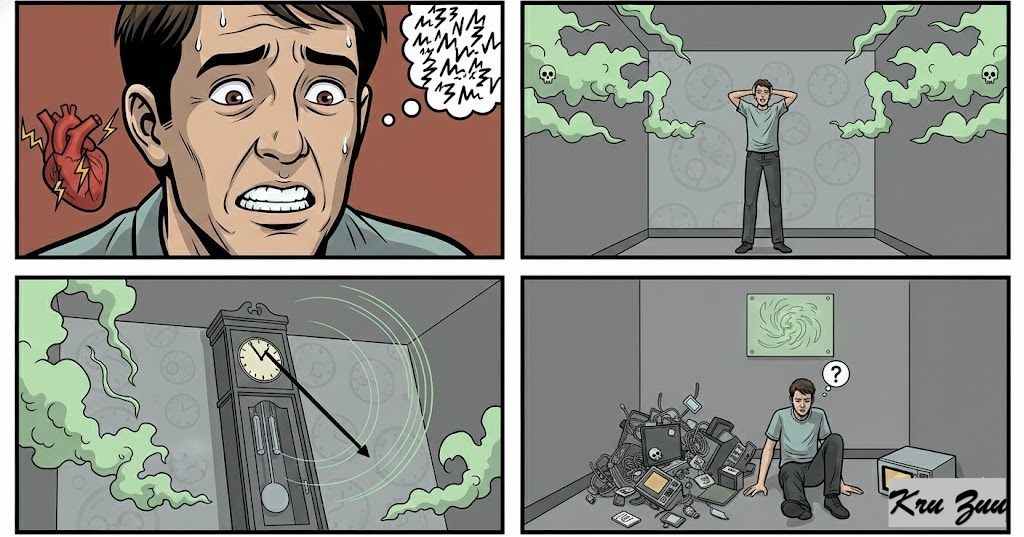
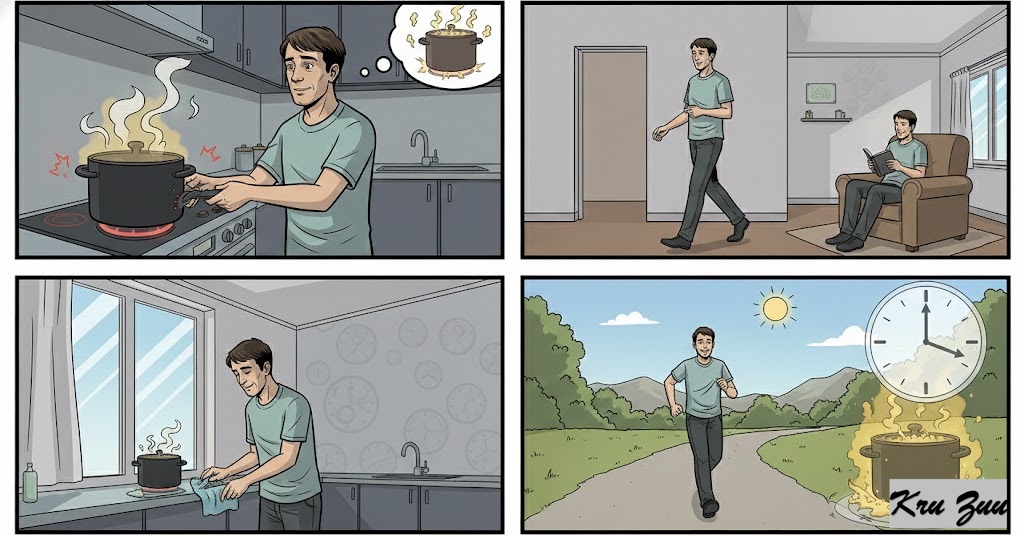
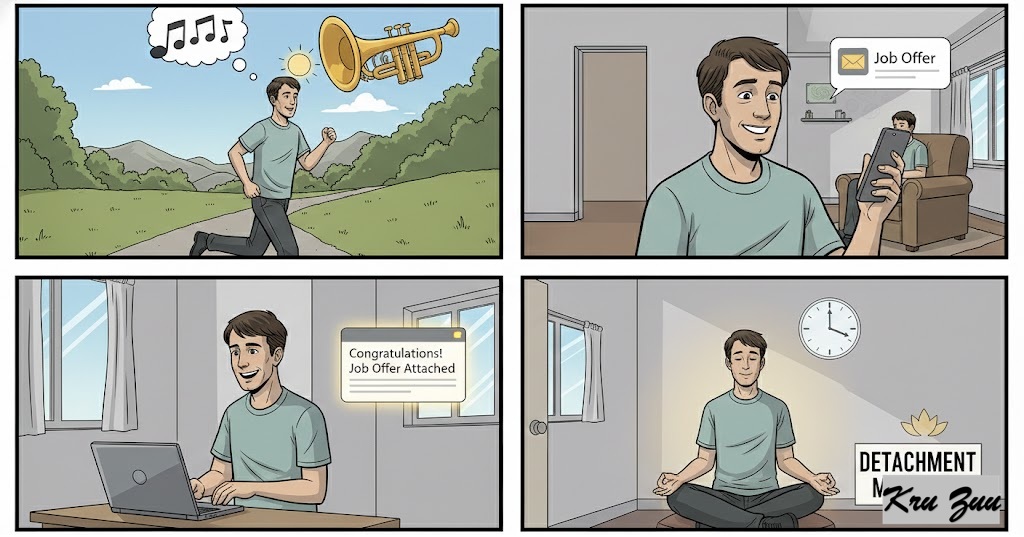
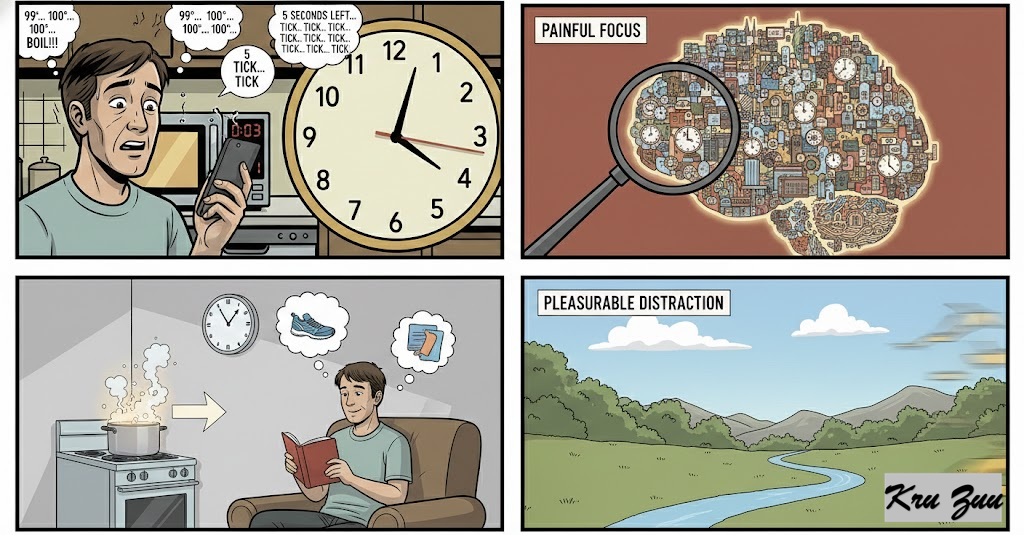
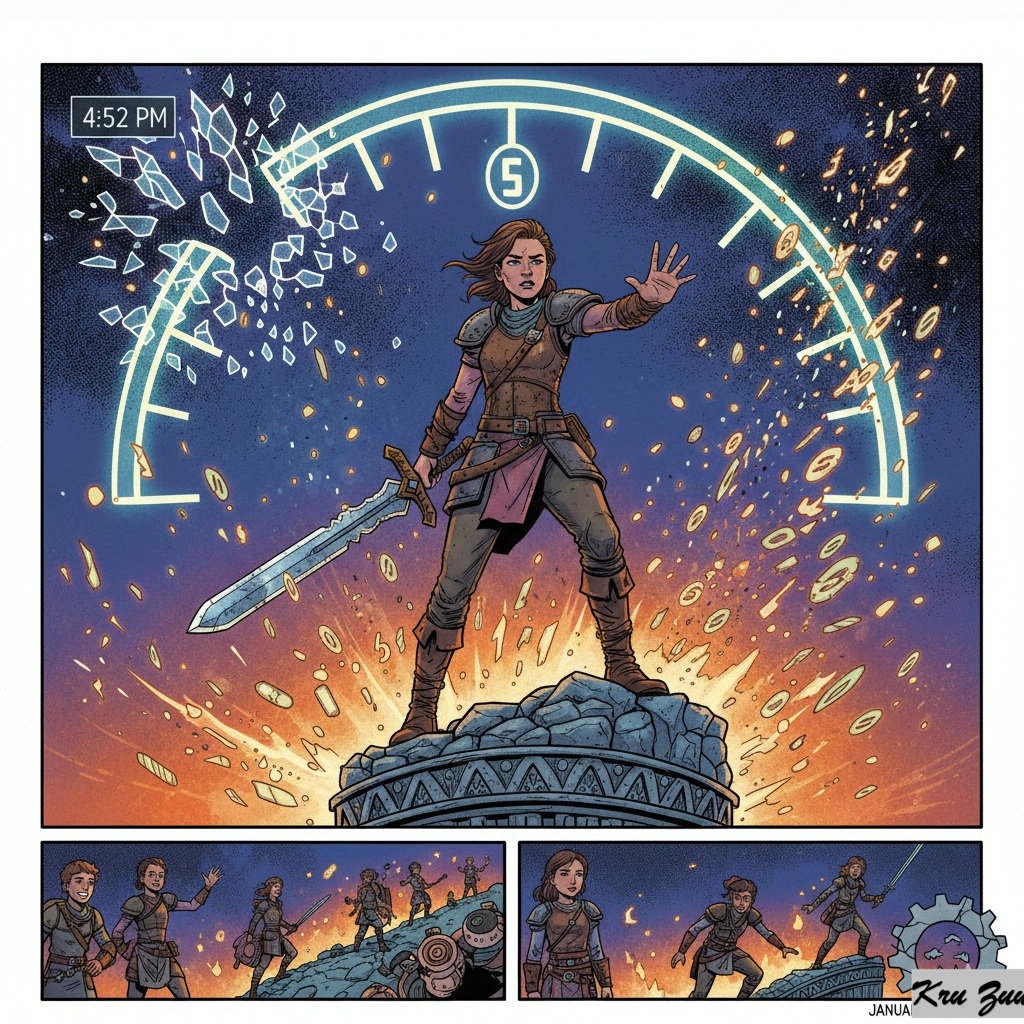
    You send an important text message. ๐Ÿ’ฌ You check your phone. Nothing. You check again 10 seconds later. Still nothing. You refresh your email 50 times in one hour waiting for a job offer. You stand in front of the microwave, staring at the numbers counting down: 5โ€ฆ 4โ€ฆ 3โ€ฆ Why does one minute feel like one hour?

    The Result? Anxiety spikes. Stress hormones flood your body. The more you obsess over the outcome, the slower time seems to move. You are trapped in the “Waiting Room of Misery.” ๐Ÿ˜ซ


    ๐Ÿ˜‡ The Hero (The Flow Master)

    You have a goal (the pot). You turn on the heat (do the work). Then, instead of staring at it, you walk away. You read a book. You clean the house. You go for a run. You trust the process.

    The Result? Suddenly, you hear the whistle! ๐ŸŽบ The water is boiling. The email arrives. The text pops up. Because you were busy living your life, the waiting period felt instant. You mastered the art of Detachment. ๐Ÿง˜โ€โ™‚๏ธ


    โš–๏ธ The Reality


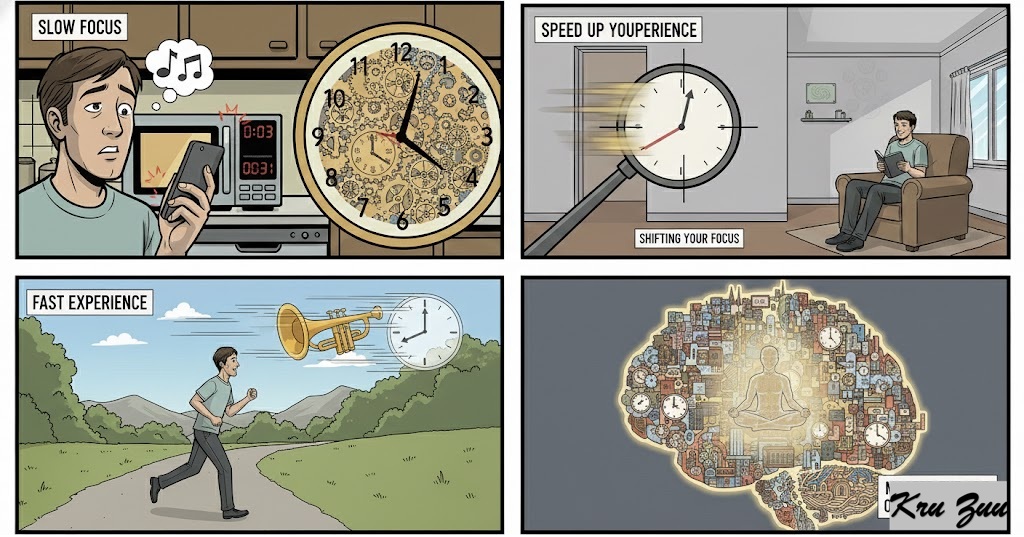
    Physics tells us that water boils at 100ยฐC regardless of whether you look at it or not. But Psychology tells a different story. When you focus entirely on the passage of time, your brain notices every single second. It is painful. When you distract yourself, your brain skips the boring parts.


    ๐Ÿ’Ž The Secret

    You cannot speed up time, but you can speed up your experience of time by shifting your focus.

    ๐Ÿง The Anatomy of the Proverb


    This is your reminder that obsession kills patience.


    Watched (Adjective): Observed closely; stared at with anxiety.


    Pot (Noun): The vessel holding your goal (cooking, results, news).


    Never Boils (Phrase): It seems like the desired result will never happen.


    Simpler Version: If you wait anxiously for something, it seems to take a very long time.


    ๐Ÿ“š Vocabulary Vault


    Patience (Noun): The capacity to accept delay without getting angry. (A superpower!) ๐Ÿฆธ


    Anticipation (Noun): The action of waiting for something exciting (or scary).


    Distraction (Noun): Something that prevents you from giving full attention to something else. (In this case, a good thing).


    Outcome (Noun): The final result.


    Process (Noun): A series of actions taken to achieve an end.

    ๐Ÿ“œ History: Origin and Science


    The Origin:
    This phrase is often attributed to Benjamin Franklin (the American inventor and writer) around 1785. He used it in a report, noting that he was so hungry that looking at the food cooking made it seem like it was taking forever!


    Global Cousins


    ๐Ÿ‡น๐Ÿ‡ท Turkish:“Beklenen gรผn gelmek bilmez” (The awaited day does not know how to come) or “Sakฤฑnฤฑlan gรถze รงรถp batar” (A stick pokes the protected eye – focusing too much causes issues).


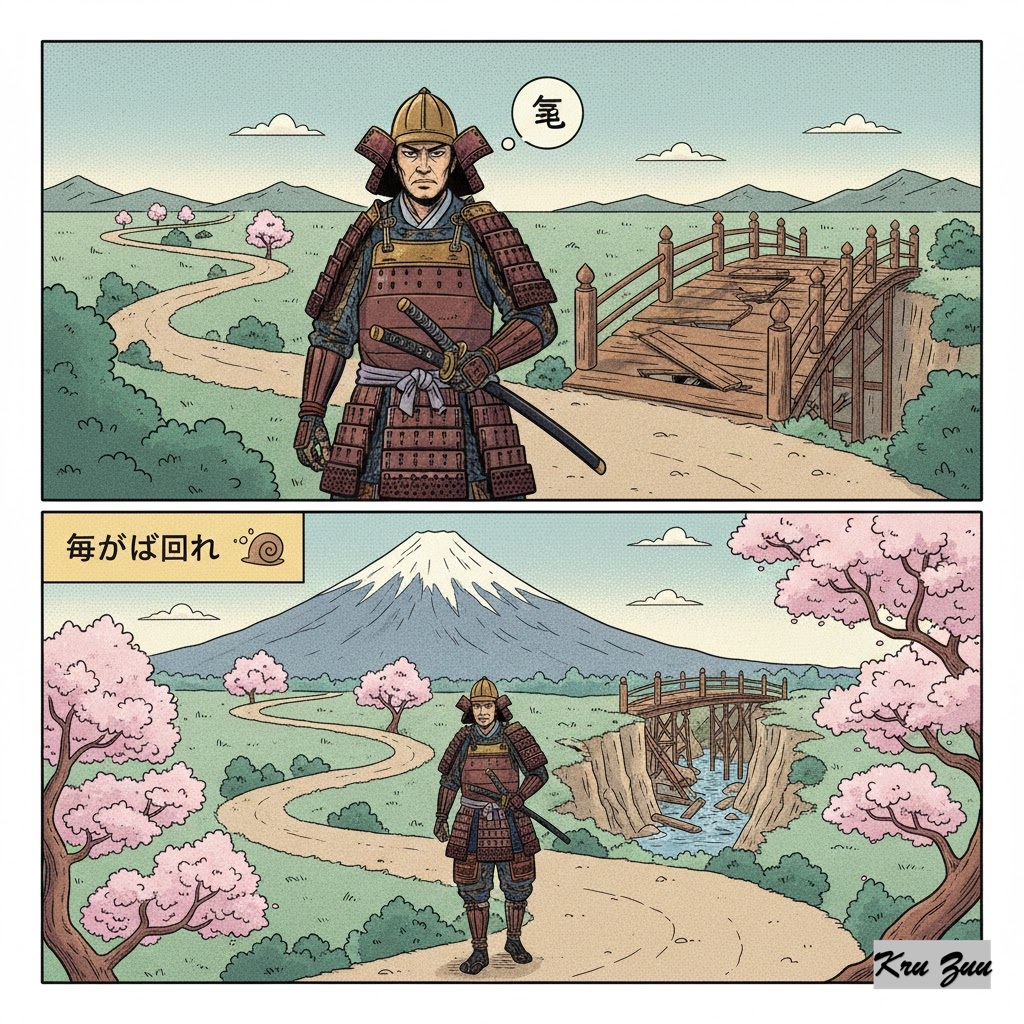
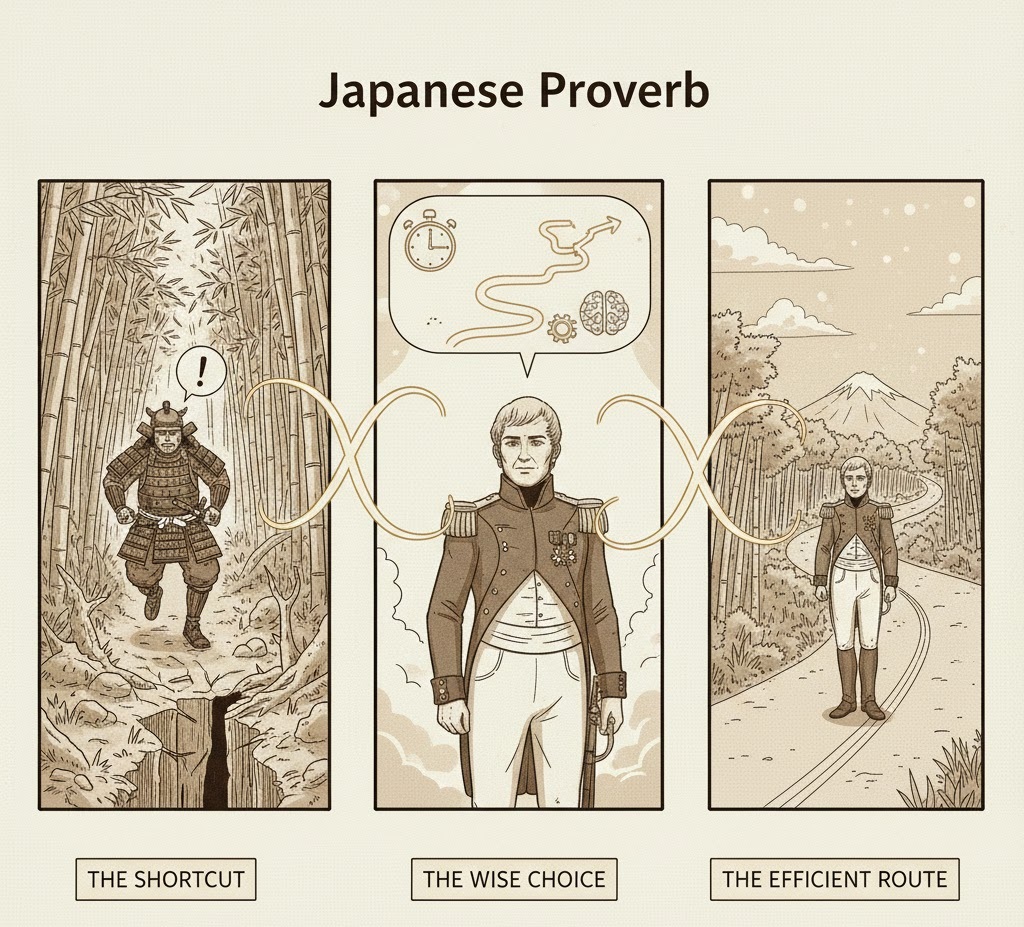
    ๐Ÿ‡ฏ๐Ÿ‡ต Japanese:“Isoba maware” (If you are in a hurry, go the long way around).

    ๐ŸŽญ Short Story: The Perfect Cup of Tea ๐Ÿต


    Letโ€™s return to the magical forest to see how our friends handle the pressure of waiting.


    ๐ŸŒŸ The Cast


    Cleo the Cat:
    ๐Ÿ˜ผ Elegant, impatient, demands instant results.


    Cluck the Chicken: ๐Ÿ” Nervous, fidgety, cannot sit still.


    Fred the Frog: ๐Ÿธ The Zen master of the swamp.


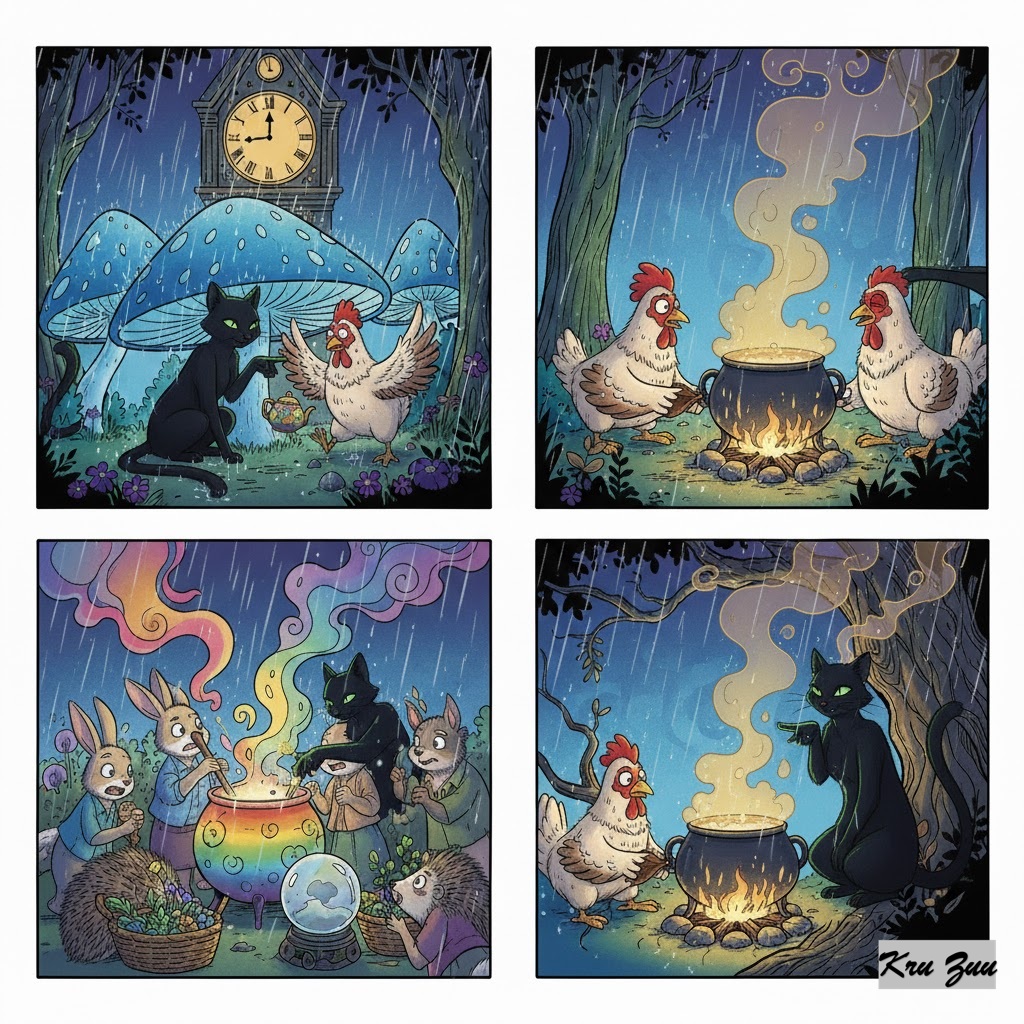
    The Situation: It is a cold, rainy afternoon. Cleo and Cluck decide to make the legendary “Golden Swamp Tea.” It is delicious, but the water must boil perfectly over a slow fire.


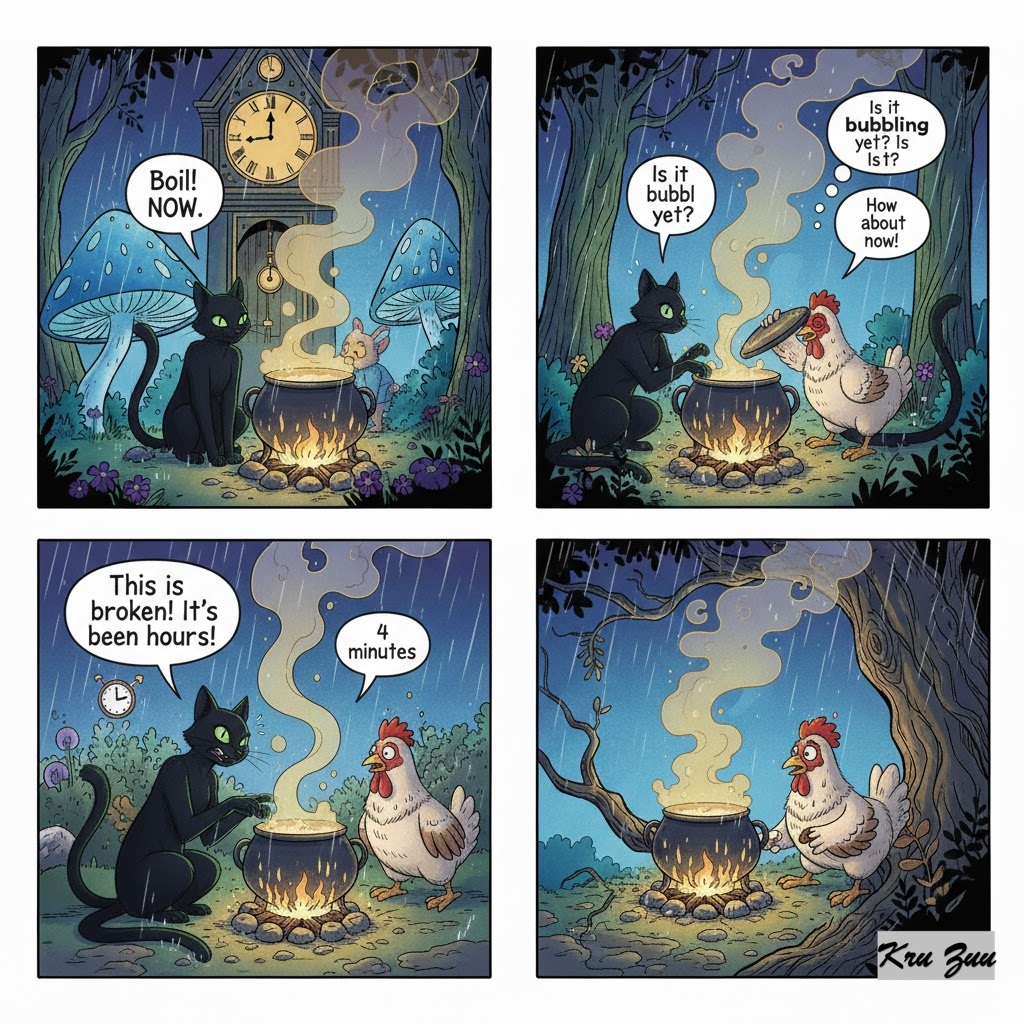
    The Conflict: They put the heavy iron pot on the fire. Cleo sits directly in front of the pot. Her tail twitches. She stares at the water with intense green eyes. “Boil,” she commands. “Boil NOW.” Cluck is even worse. Every 30 seconds, he lifts the lid to peek inside. “Is it bubbling yet? Is it? How about now?” ๐Ÿ” By lifting the lid, Cluck lets the heat escape! By staring at it, Cleo makes the 10 minutes feel like 10 years. “This is broken!” Cleo yells. “Itโ€™s been hours!” (It had been 4 minutes).


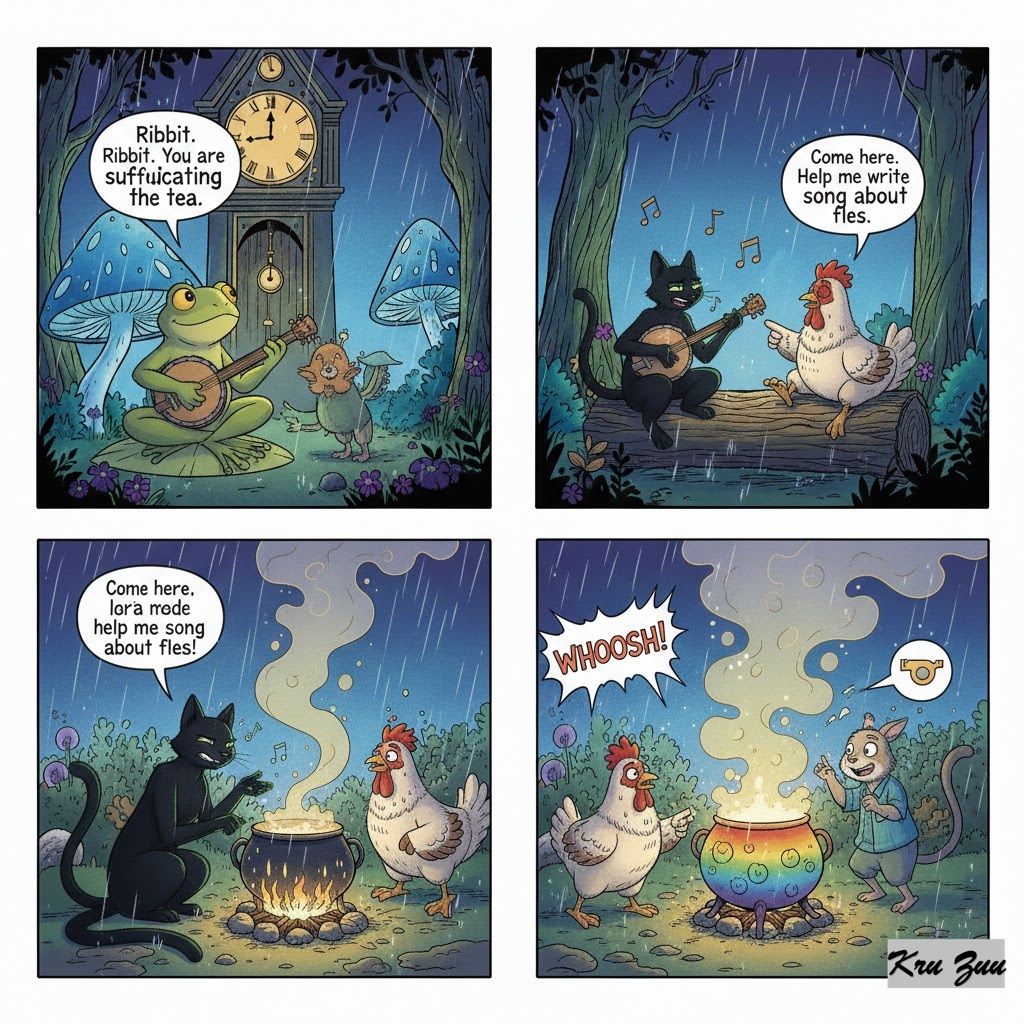
    The Resolution: Fred the Frog hops into the kitchen, carrying a banjo. He sees them stressed and staring at the silent water. “Ribbit,” Fred croaks. “You are suffocating the tea.” Fred starts to play a happy song on his banjo. ๐ŸŽถ “Come here,” he says. “Help me write a song about flies.” Reluctantly, Cleo turns away from the stove to correct Fred’s lyrics. Cluck starts dancing to the music. They laugh. They argue about rhymes. They forget the kitchen exists. WHOOSH! ๐Ÿ’จ Suddenly, steam whistles from the pot! The water is boiling vigorously.


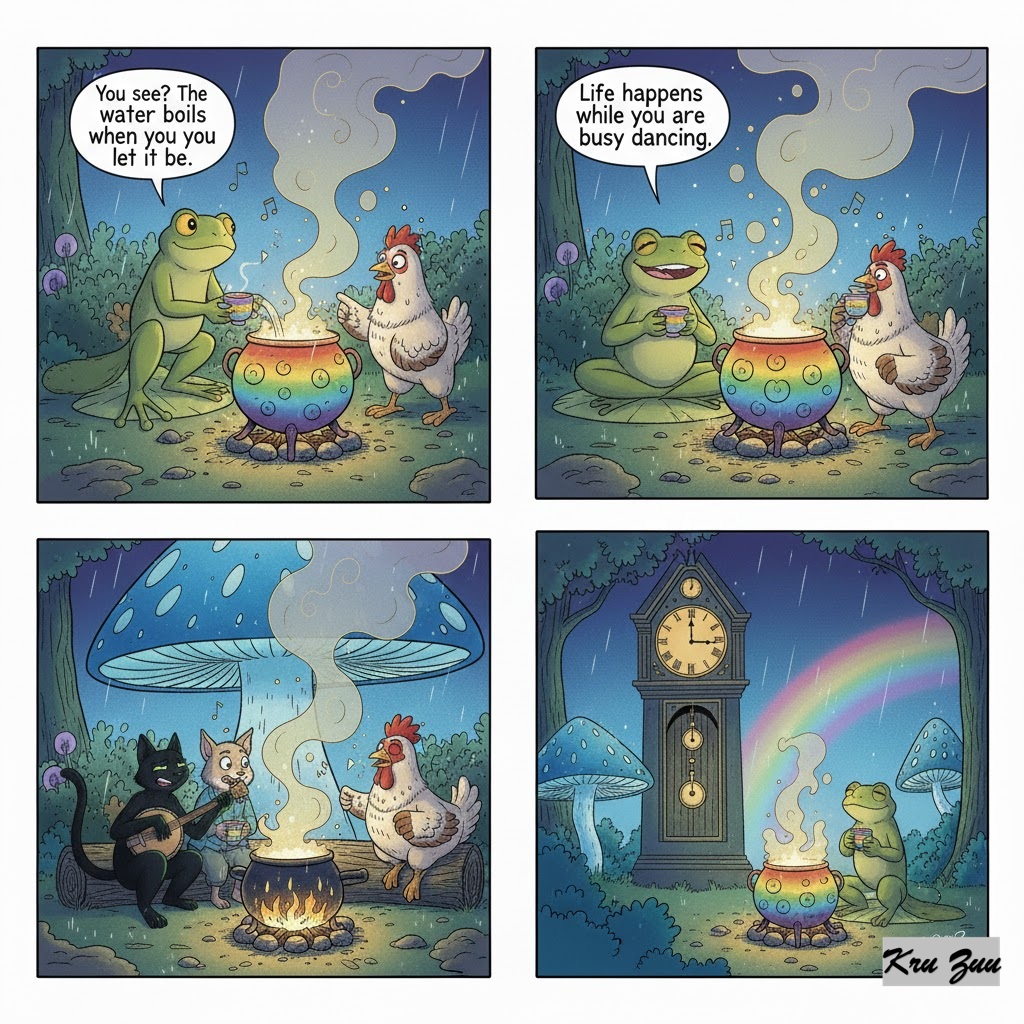
    The Moral: Fred pours the tea. “You see?” he smiles. “The water boils when you let it be. Life happens while you are busy dancing.”

    ๐ŸŽ“ Lesson for English Learners


    Don’t obsess over your level.


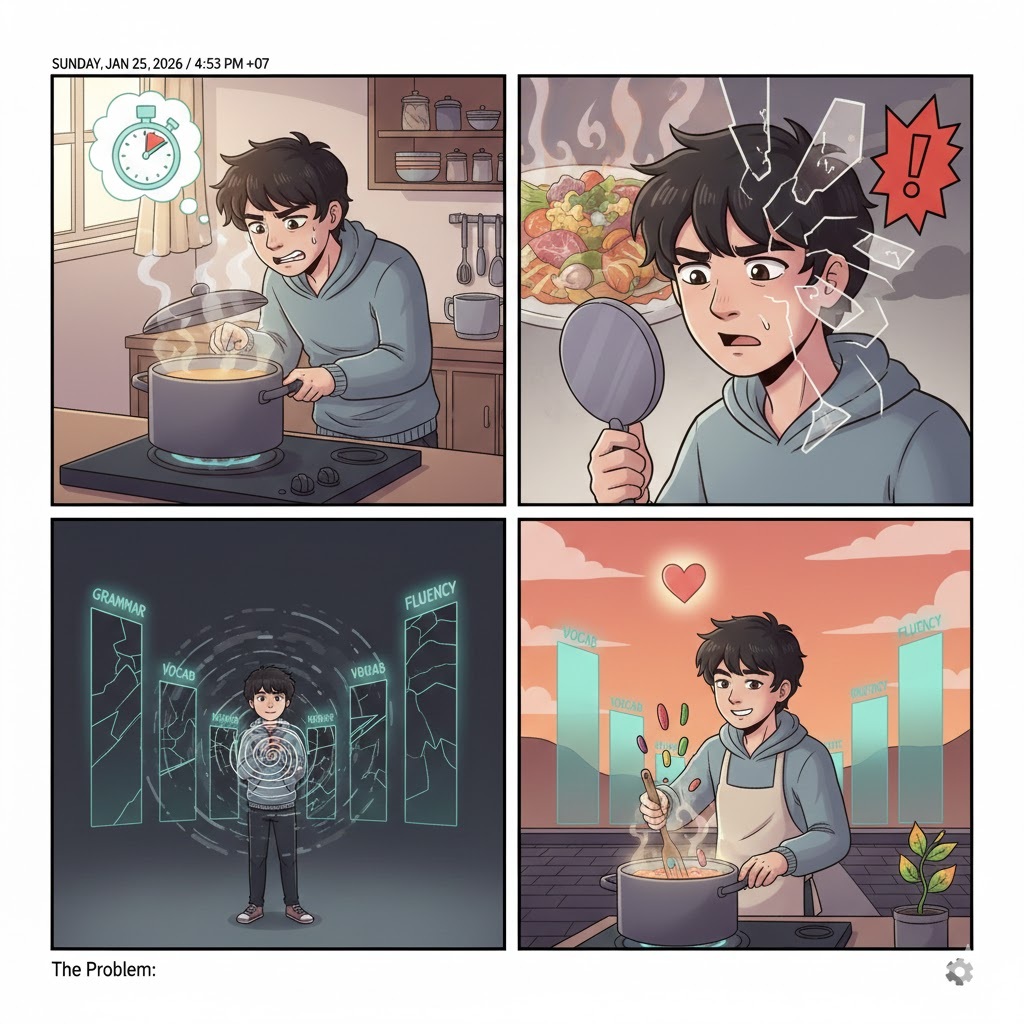
    Situation: You study English every day. You constantly ask yourself: “Am I fluent yet? Why is my accent still bad?”


    The Problem: You are watching the pot. You are stressing over the result instead of enjoying the process.


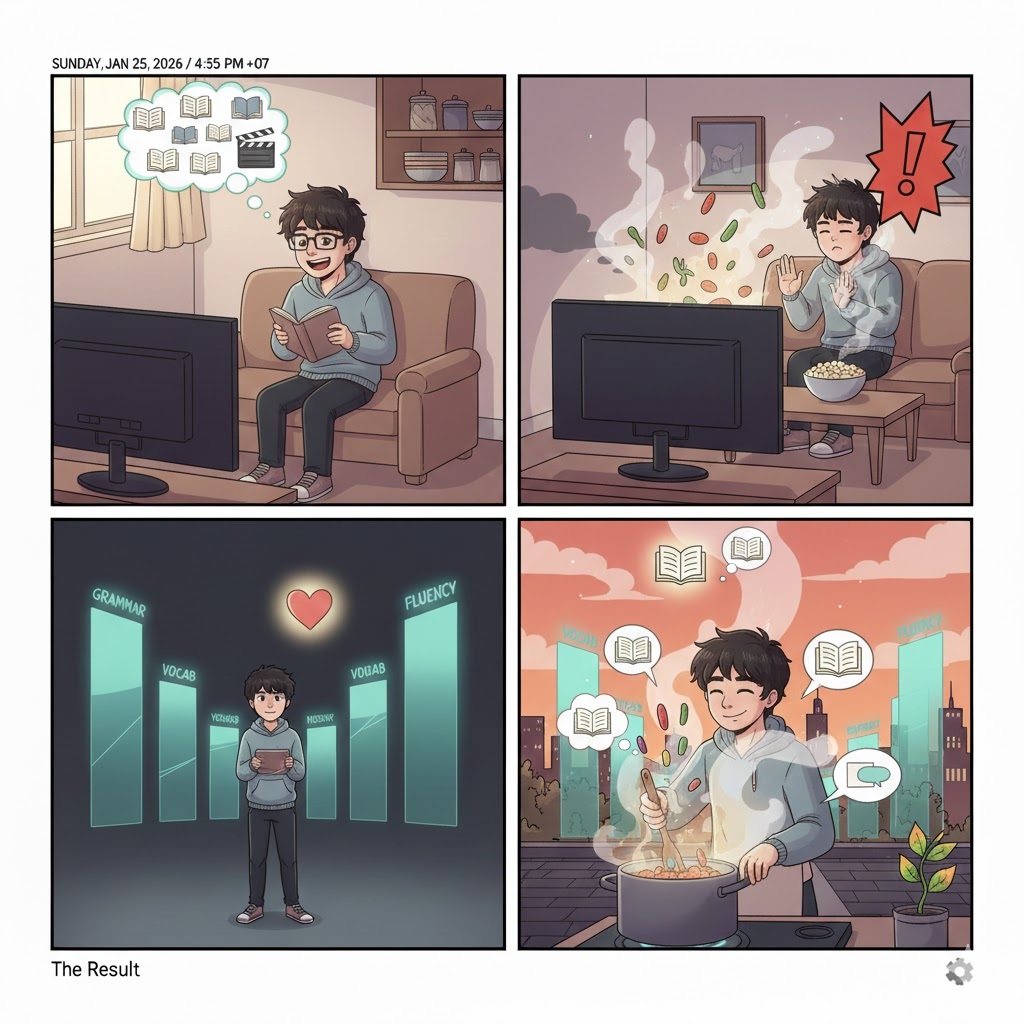
    The Shift: Stop testing yourself every day. Read a book you enjoy. Watch a movie. Talk to friends. Forget about “studying” and just “use” the language.


    The Result: One day, you will realize you understood a whole movie without subtitles. The pot boiled while you weren’t looking! ๐ŸŽฌ


    ๐Ÿ’ฌ Your Turn: The Distraction Challenge ๐Ÿš€


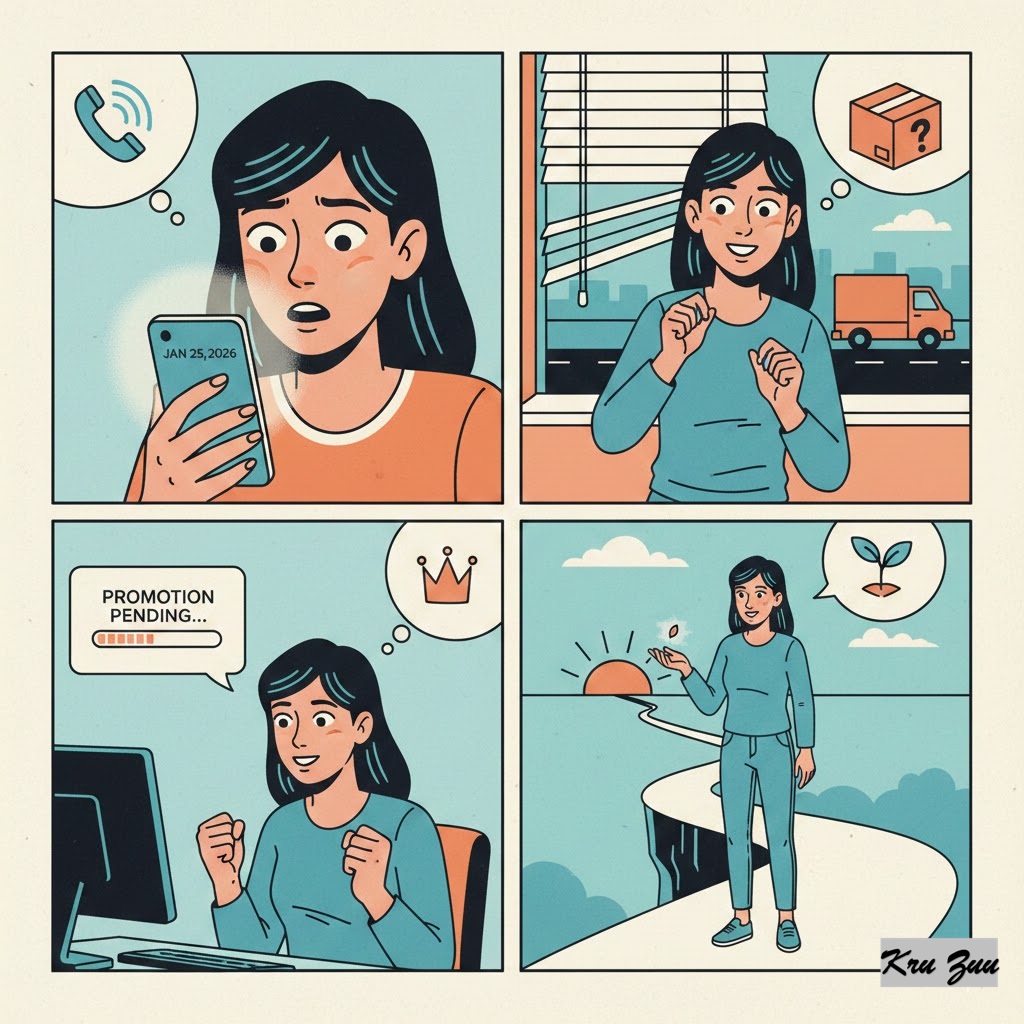
    Is there something you are waiting for right now? (A message, a package, a promotion, a life change?)


    The Challenge: Stop checking. Put your phone in another room. Close the tracking tab.

    The Action: Pick a task that takes 30 minutes (Read a chapter, cook a meal, go for a walk).

    Do NOT check the status until the task is done.

    Comment Below: ๐Ÿ‘‡ What is the “Pot” you are watching too closely today? Tell us your strategy to stop staring at it!

    By Zubeyir YURTKURAN

    https://www.facebook.com/BrainBattleground/

    https://www.facebook.com/zubeyr.yurtkuran/

    https://www.instagram.com/zubeyryurtkuran/
    https://www.youtube.com/@BrainBattleground-b3p

    https://www.instagram.com/brainbattleground/

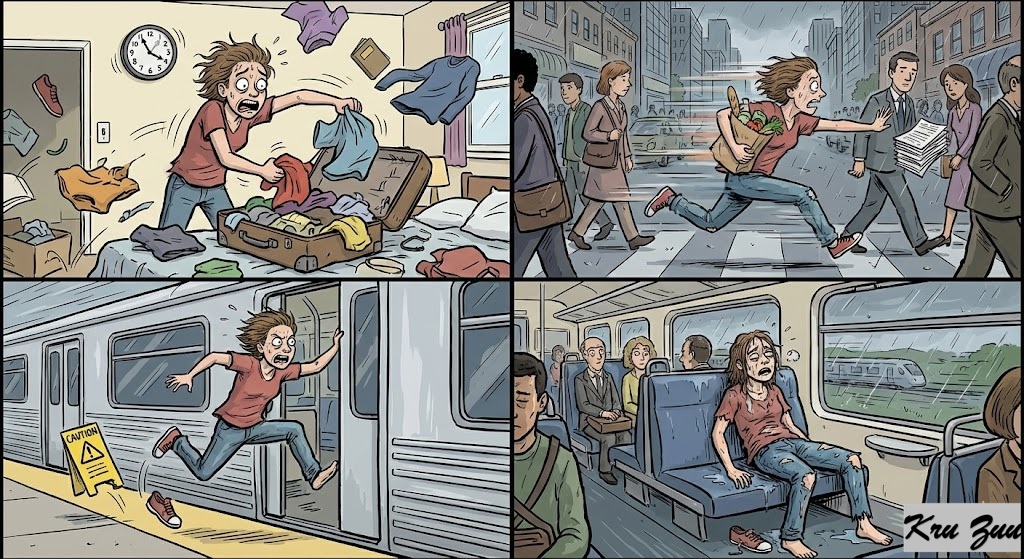
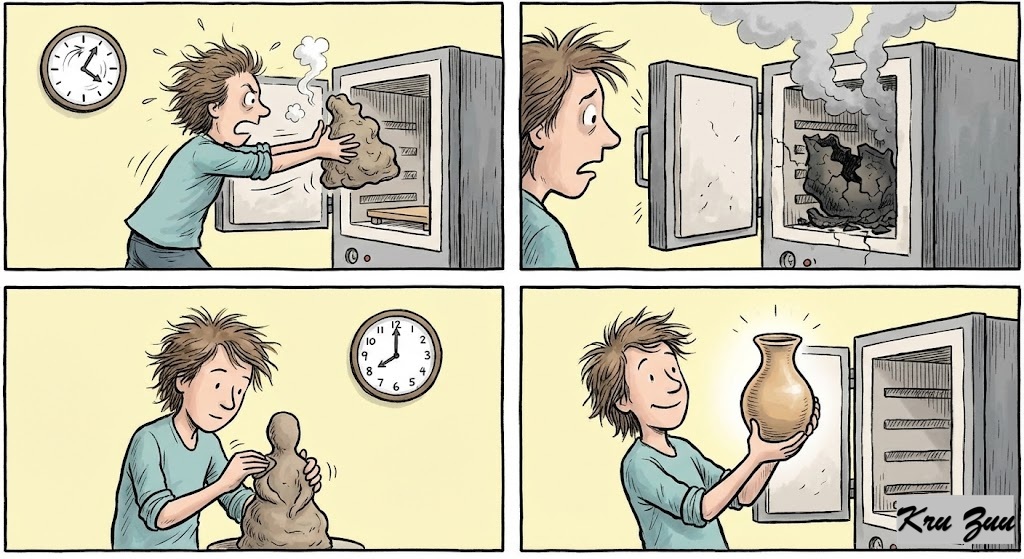
  • โณ The Daily Shield: The Law of Patience -1

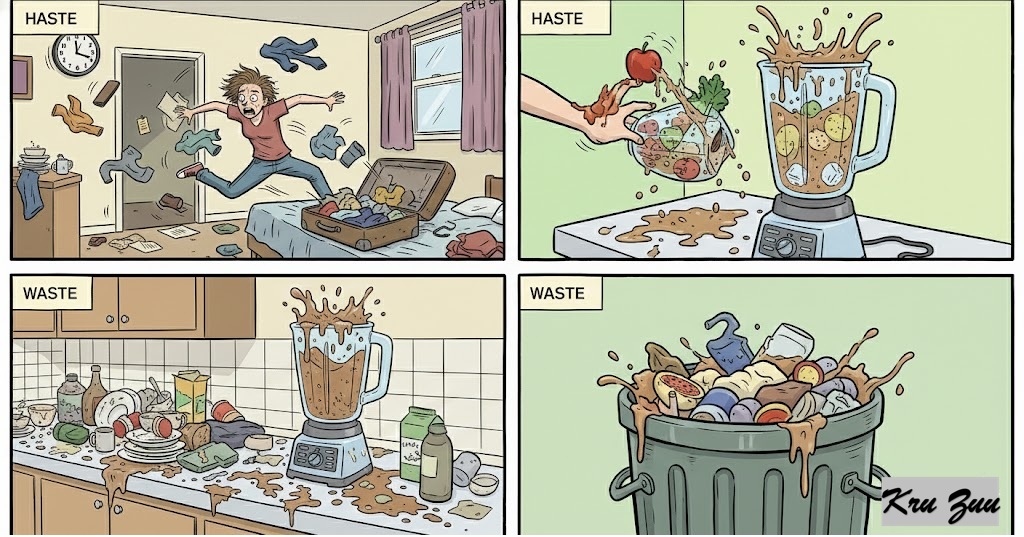
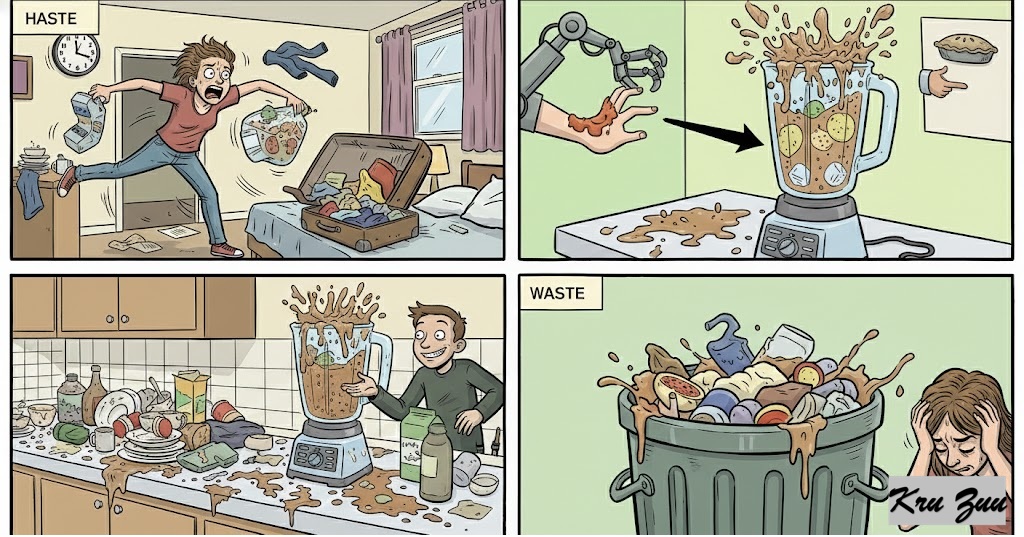
    โณ The Daily Shield: The Law of Patience -1

    “Haste makes waste.”


    ๐Ÿ˜ˆ The Villain (The Speed Demon)


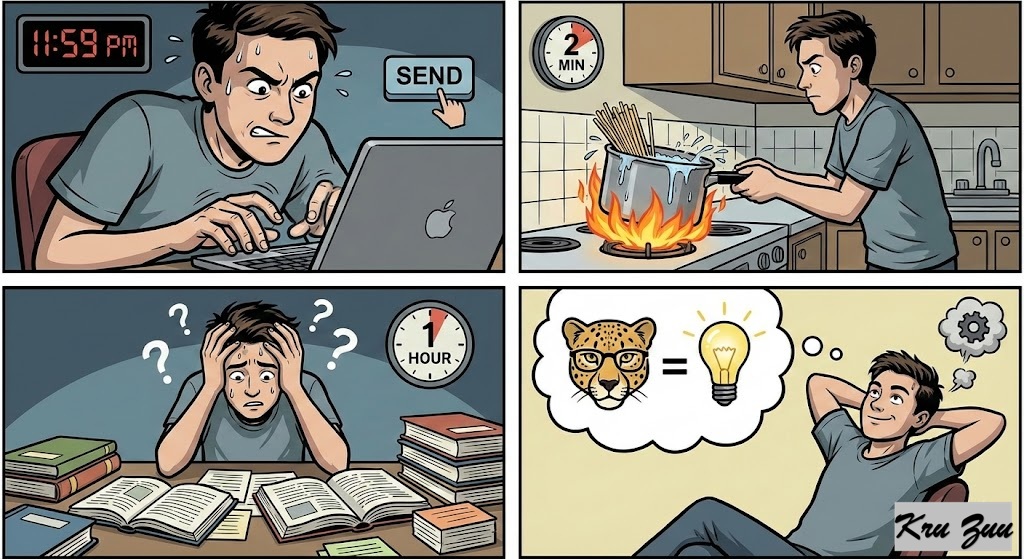
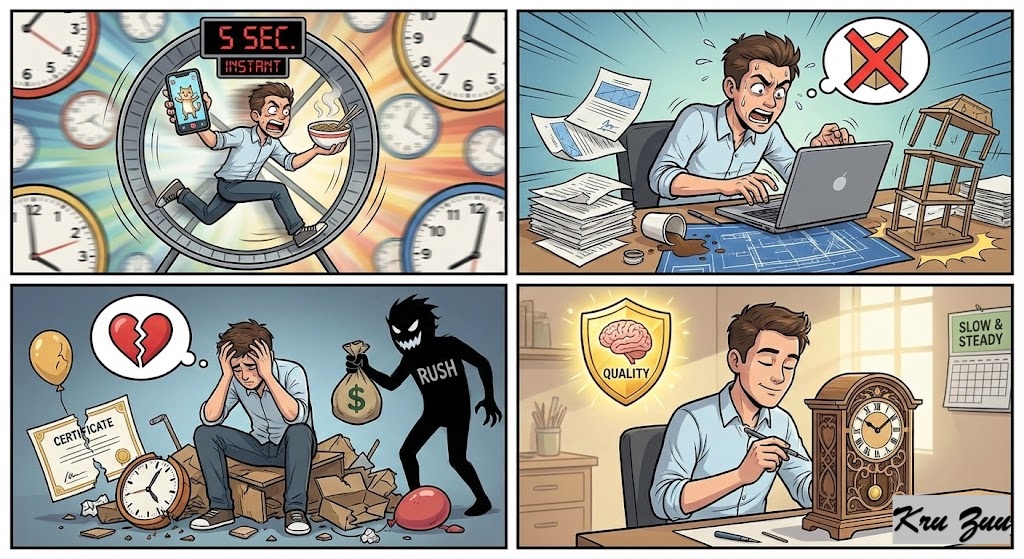
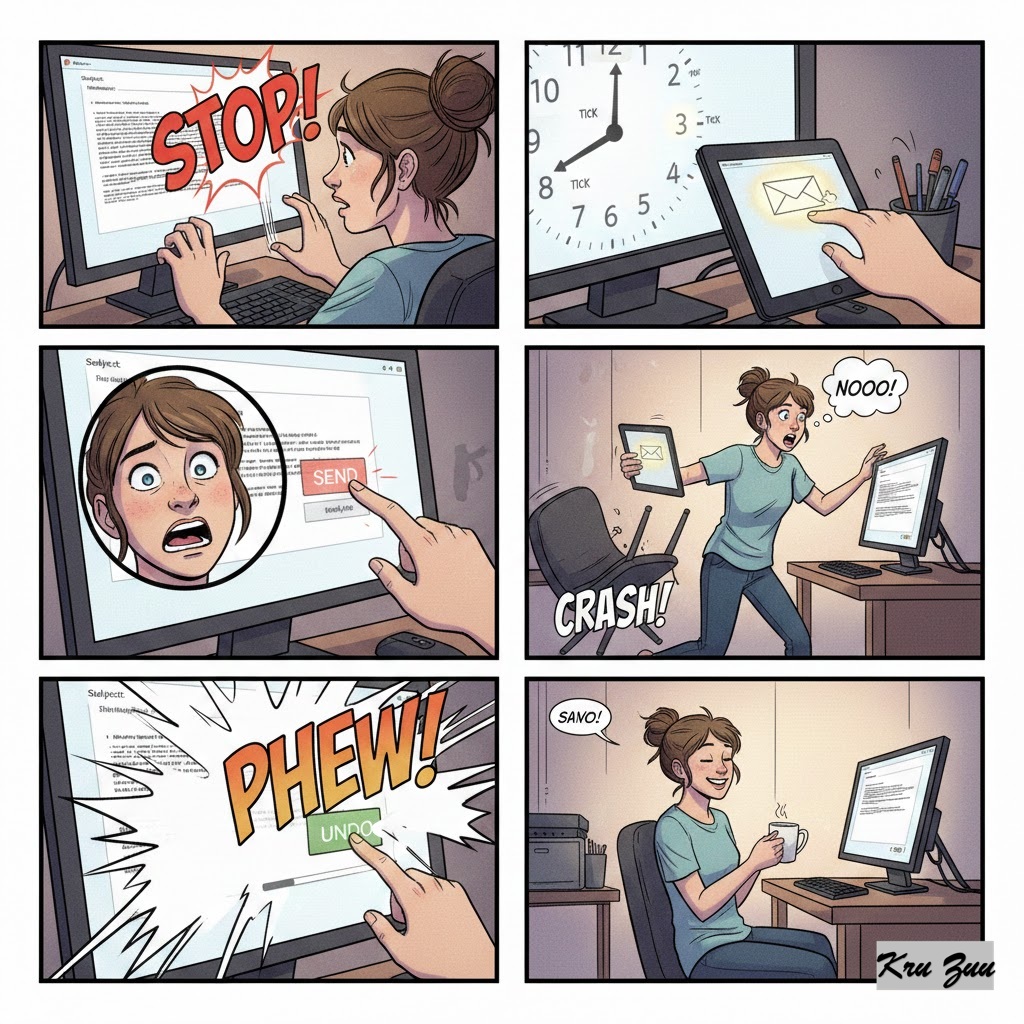
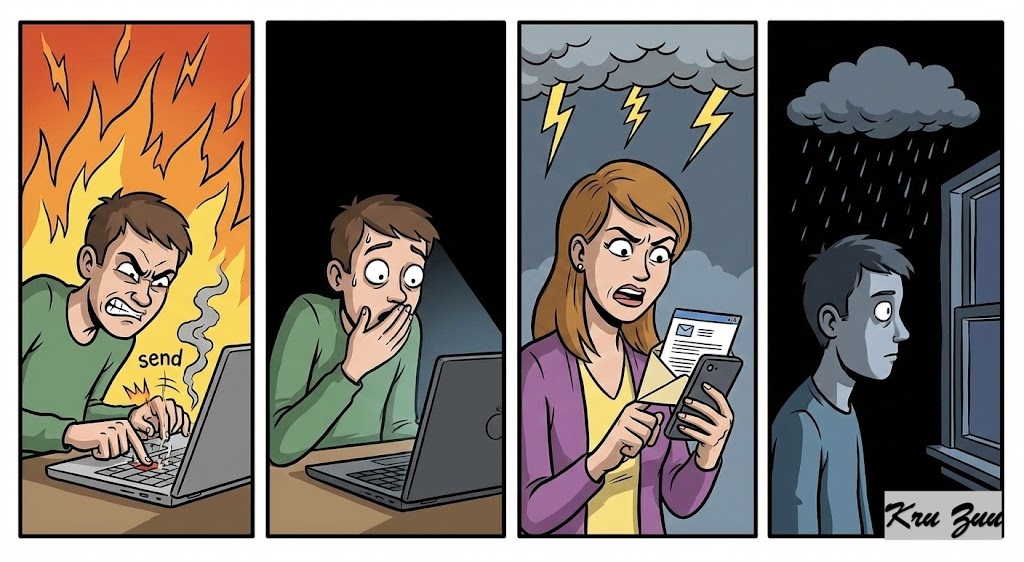
    You have a goal. You want it now. You type the email without proofreading and hit send. You cook the pasta on maximum heat to save 2 minutes. You try to learn 100 English words in one hour. You convince yourself that “Fast” equals “Smart.”

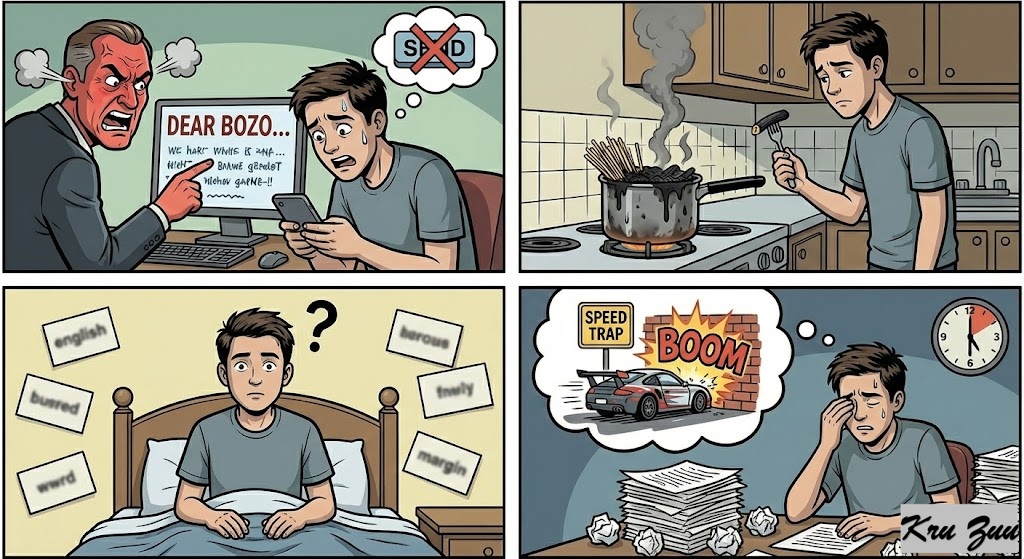
    The Result? The email has a typo that insults your boss. The pasta is burnt on the outside and crunchy on the inside. You remember zero vocabulary words the next day. You have to fix everything. You actually spend double the time correcting your mistakes. You are a victim of the “Speed Trap.” ๐ŸŽ๏ธ๐Ÿ’ฅ


    ๐Ÿ˜‡ The Hero (The Architect)


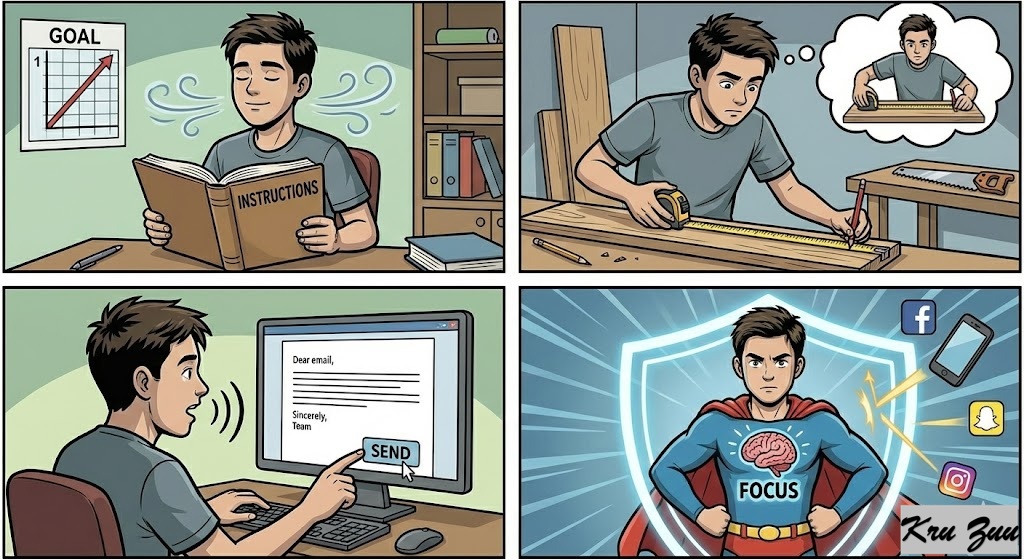
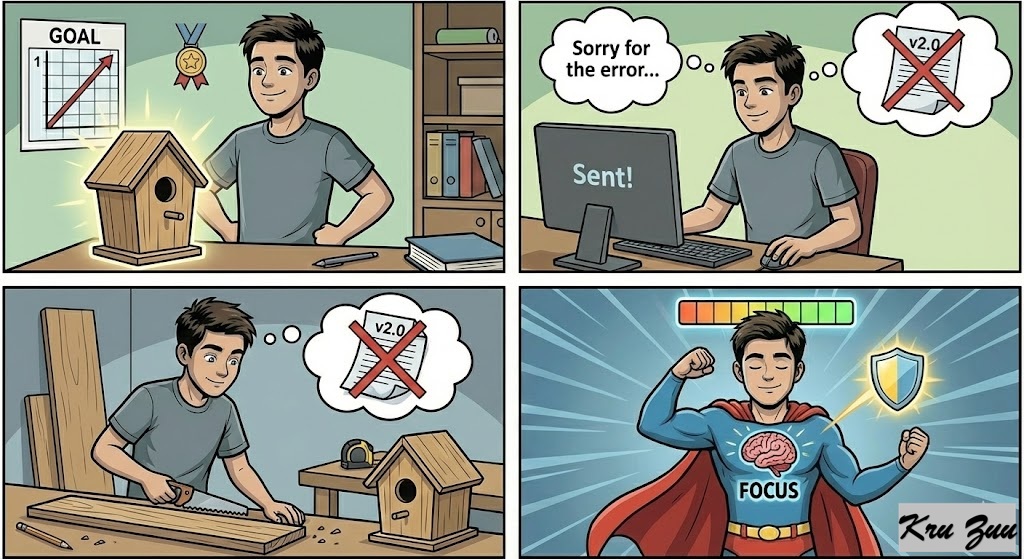
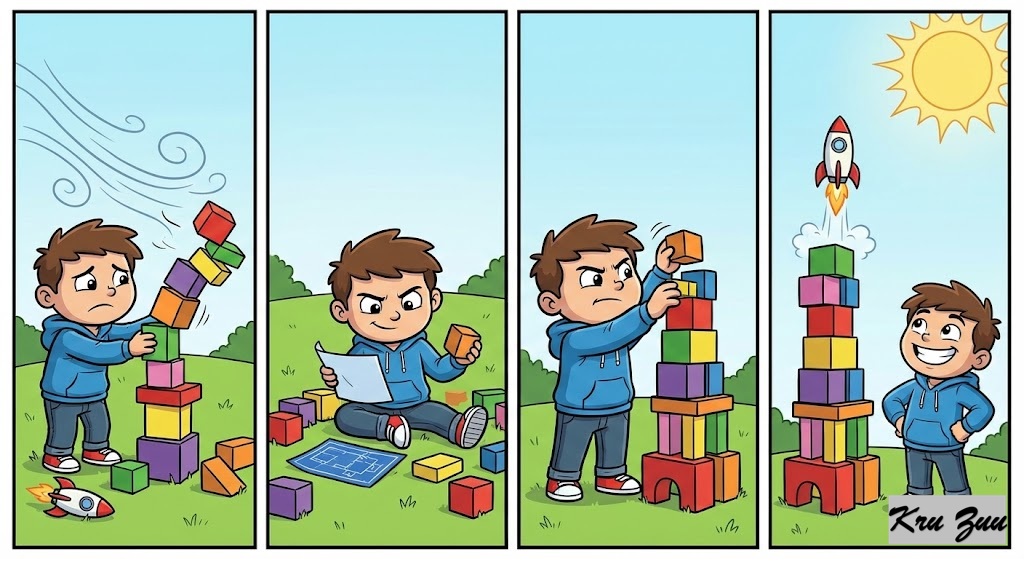
    You have a goal. You take a deep breath. You read the instructions first. You measure twice, cut once. You write the email, pause, read it aloud, and then click send. You treat focus as your superpower.

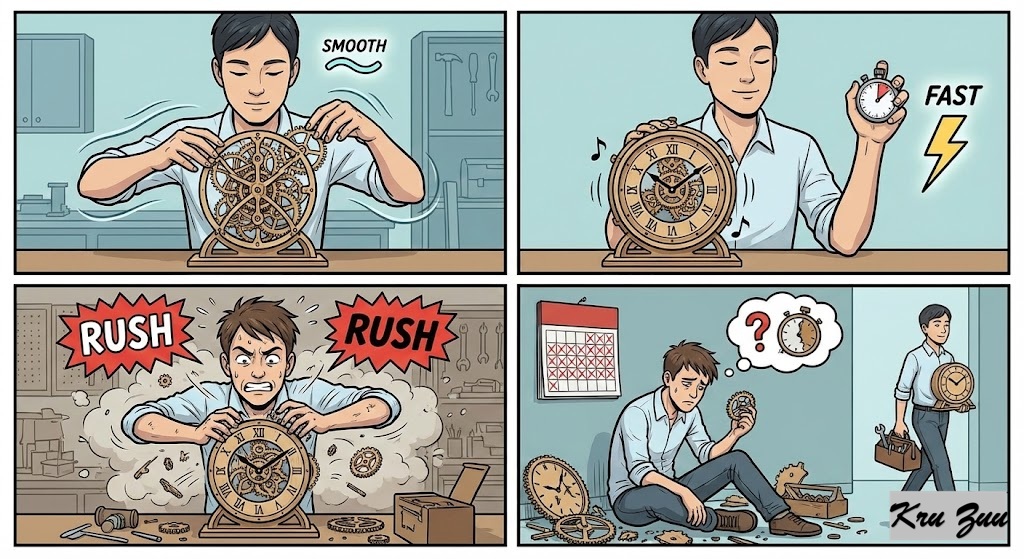
    The Result? The work is flawless. There are no apologies to make. No “Version 2.0” is needed. You finish with energy to spare because you didn’t panic. You are slow, but you are smooth. ๐Ÿ›ก๏ธ


    โš–๏ธ The Reality


    Speed is a liar. We live in a world of 5-second TikToks and instant noodles. We think if we aren’t running, we are losing. But in reality, rushing is the most expensive way to work. It costs you accuracy, quality, and dignity.


    ๐Ÿ’Ž The Secret

    Slow is smooth, and smooth is fast. If you don’t have time to do it right, when will you have time to do it over?

    ๐Ÿง The Anatomy of the Proverb


    This is your shield against sloppy mistakes.


    Haste (Noun): Excessive speed or urgency of movement or action; hurry. (The bad kind of fast). ๐ŸŒช๏ธ


    Makes (Verb): Causes to happen.


    Waste (Noun): Material that is not wanted; the act of using something carelessly. ๐Ÿ—‘๏ธ


    Simpler Version: If you rush, you will ruin it.


    ๐Ÿ“š Vocabulary Vault


    Efficient (Adjective): Achieving maximum productivity with minimum wasted effort. (The goal!) ๐ŸŽฏ


    Sloppy (Adjective): Careless and unsystematic; messy.


    Thorough (Adjective): Complete with regard to every detail; not superficial.


    Correction (Noun): The action of setting right what is wrong.


    Patience (Noun): The capacity to accept or tolerate delay without getting angry. ๐Ÿง˜


    ๐Ÿง  Grammar Focus: The Rhyme & Cause


    Why do we remember this phrase? Because it rhymes!


    Haste / Waste: The sound /eษชst/ connects the cause (Haste) directly to the bad result (Waste).


    Cause and Effect


    Subject: Haste


    Verb: Makes


    Object: Waste


    Note: It treats “Haste” as an uncountable abstract noun (singular).

    ๐Ÿ“œ History: Origin and Spread


    This isn’t just modern advice; it is ancient wisdom.


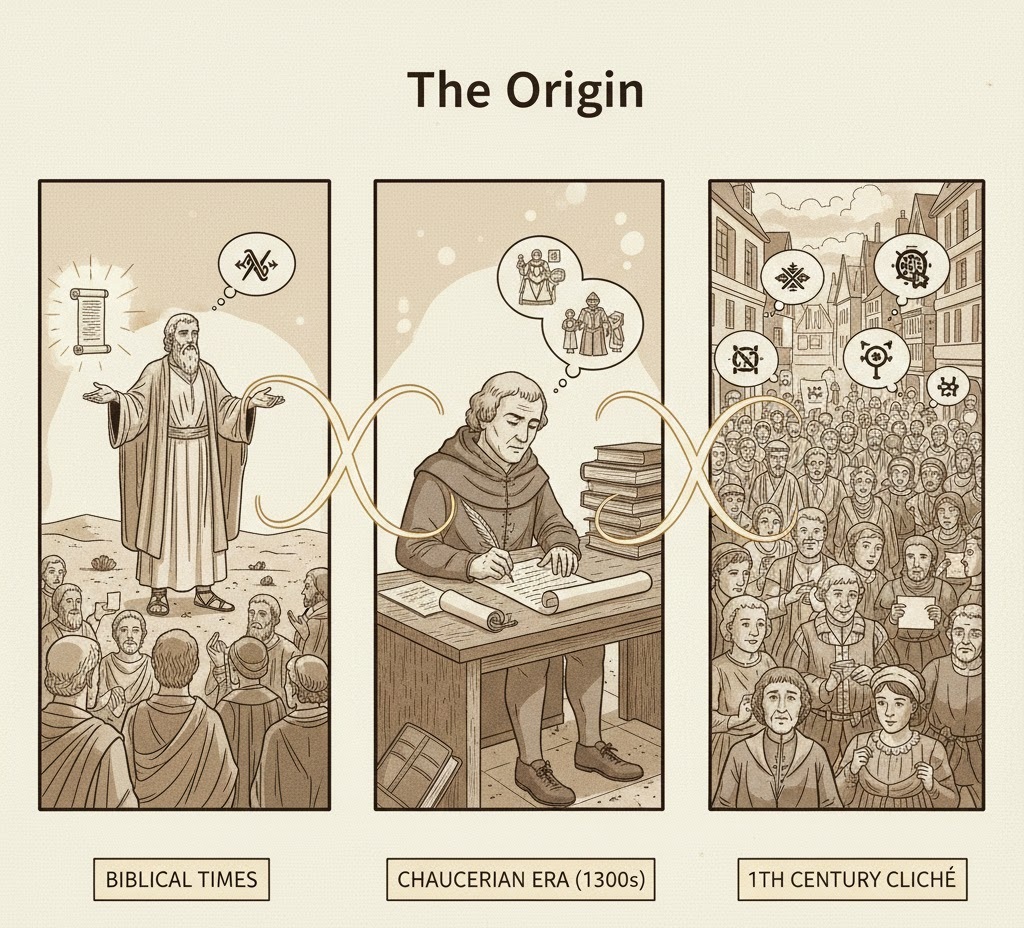
    The Origin: This concept appears in the Bible and the works of Chaucer (1300s), but became a “clichรฉ” in the 16th century.


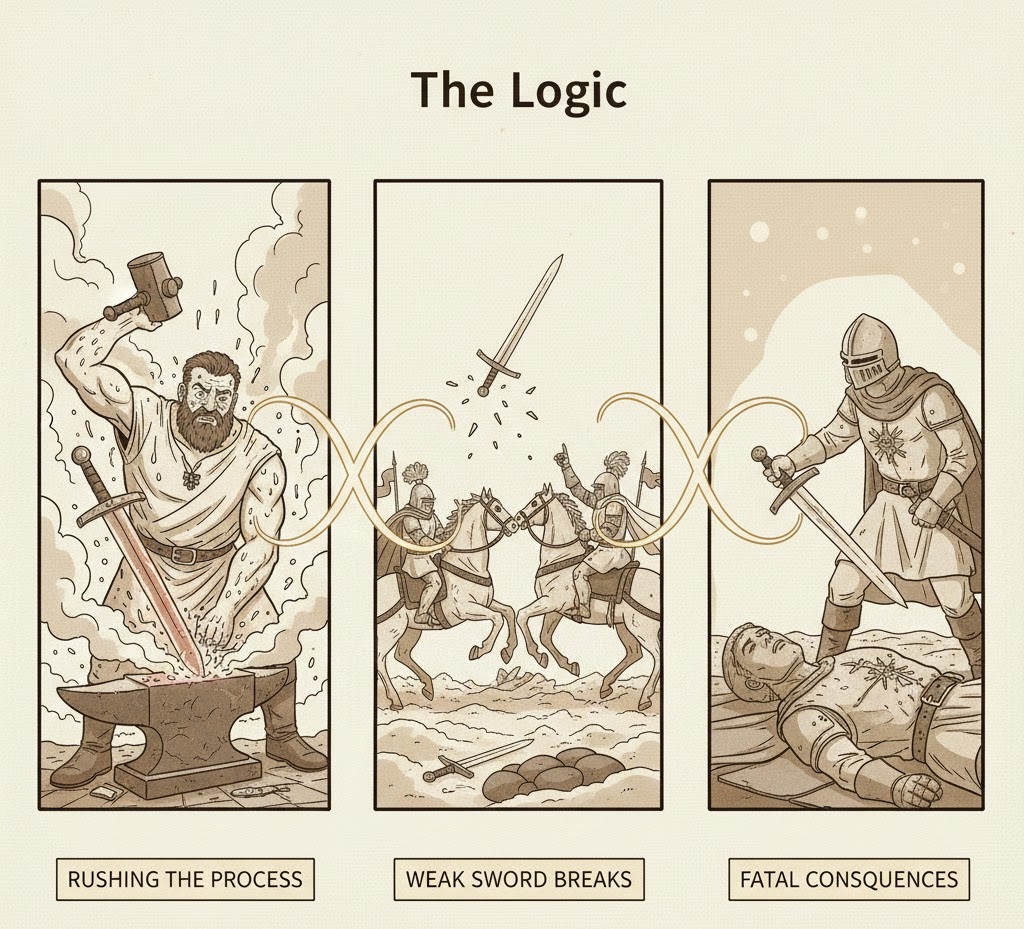
    The Logic: In the old days, if a blacksmith rushed making a sword, the sword would break in battle. Rushing could literally kill you.


    Global Cousins


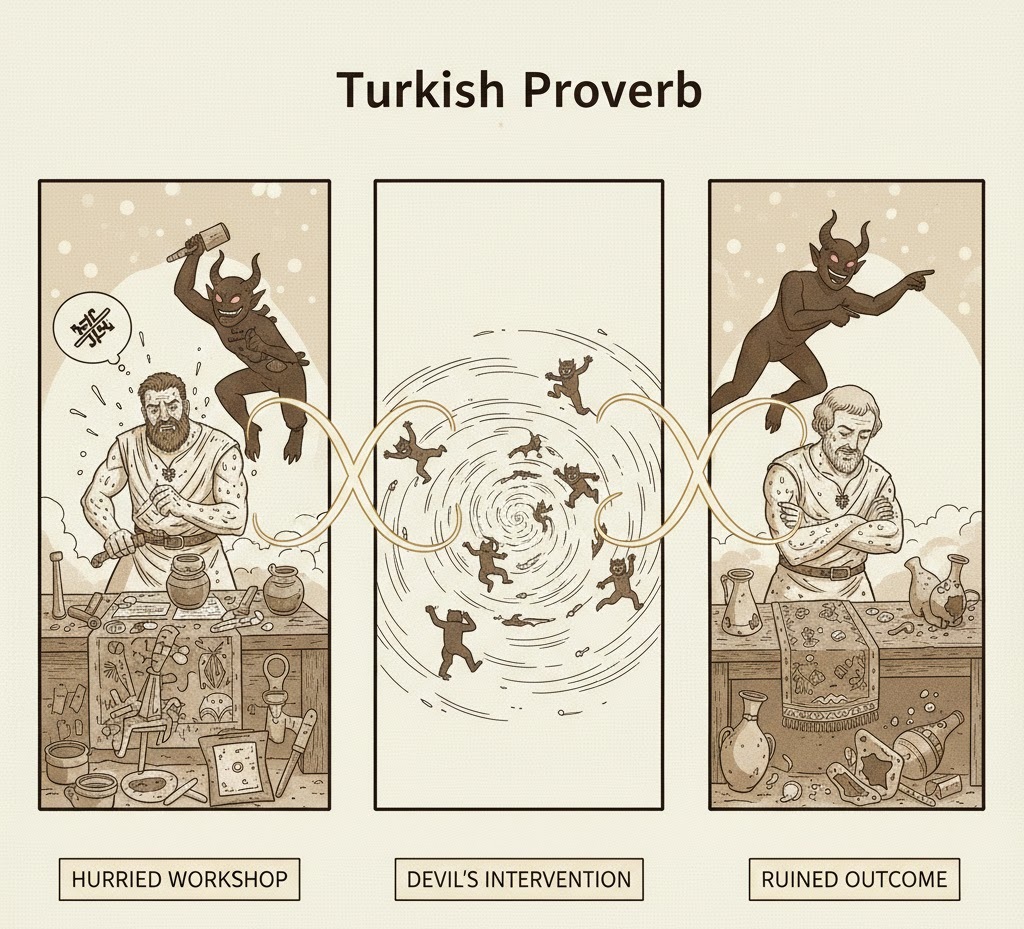
    ๐Ÿ‡น๐Ÿ‡ท Turkish:“Acele iลŸe ลŸeytan karฤฑลŸฤฑr.” (The devil mixes in with hurried work.) โ€” A powerful warning!


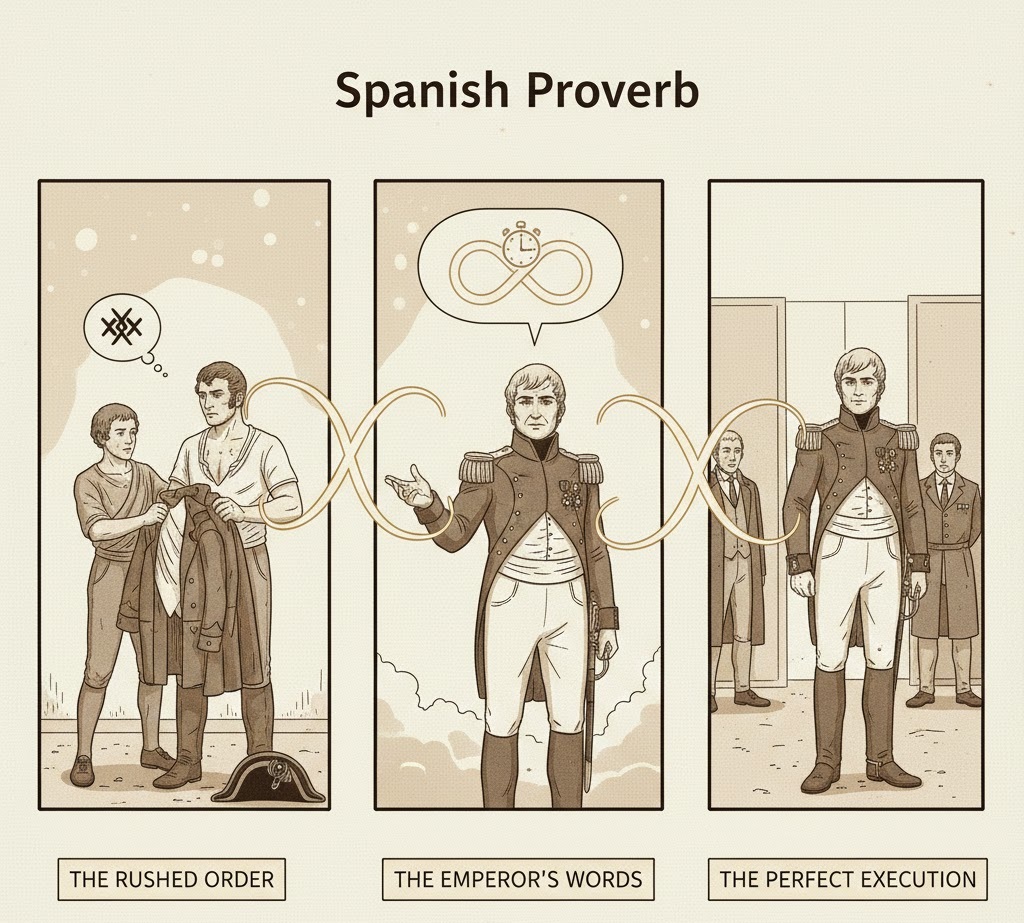
    ๐Ÿ‡ช๐Ÿ‡ธ Spanish:“Vรญsteme despacio que tengo prisa.” (Dress me slowly, for I am in a rush.) โ€” Attributed to Napoleon; implying that because time is short, we cannot afford a mistake.


    ๐Ÿ‡ฏ๐Ÿ‡ต Japanese:“Isogaba maware.” (If you are in a rush, go the long way around.)

    ๐ŸŽฏ Impact on Life: The Pros & Cons


    โœ… The Pros (The Masterpiece)


    Reputation: People trust you because your work is always correct.


    Calm: You avoid the adrenaline spike of “panic fixing.”


    โŒ The Cons (The Perfectionism Trap)


    Analysis Paralysis:
    Don’t be so slow that you never finish. The goal is “No Mistakes,” not “Forever.”

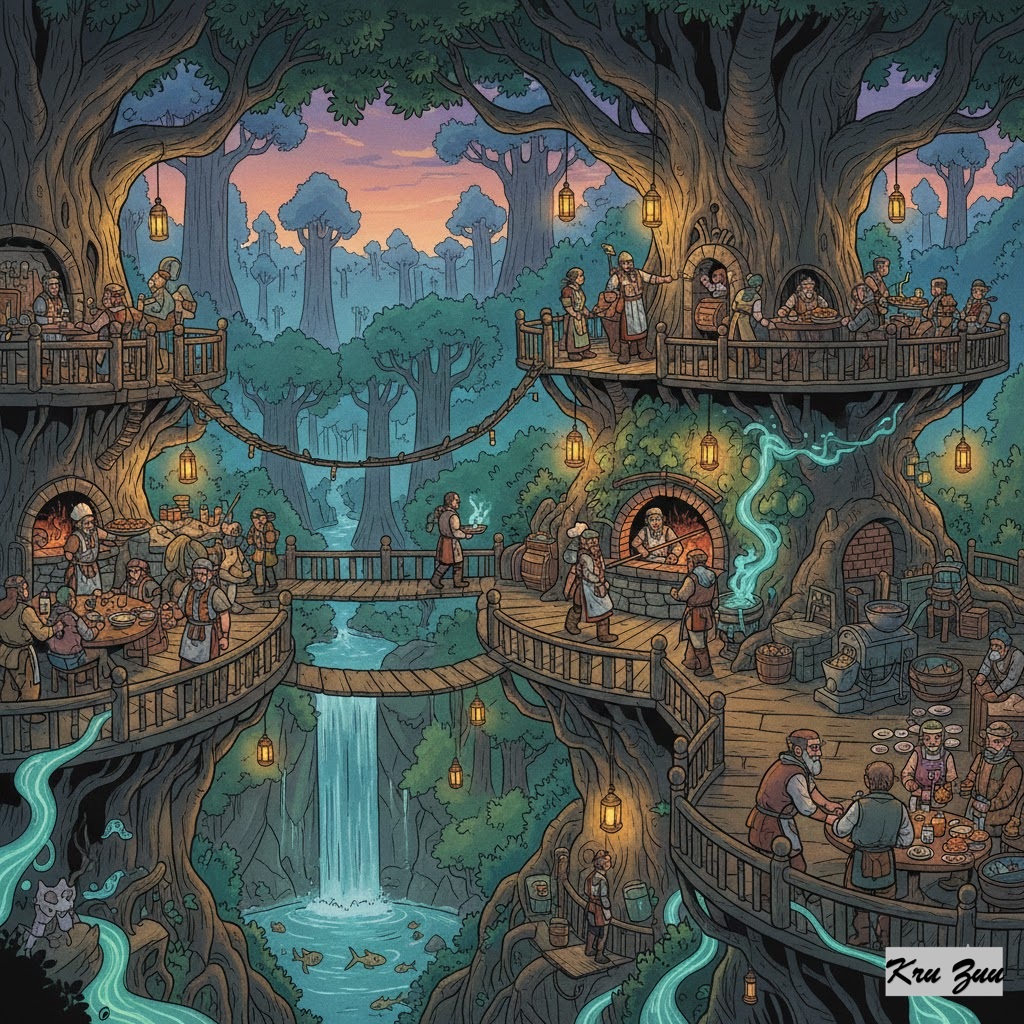
    ๐ŸŽญ Short Story: The Forest Chef Competition


    Letโ€™s visit the Great Forest Kitchen.


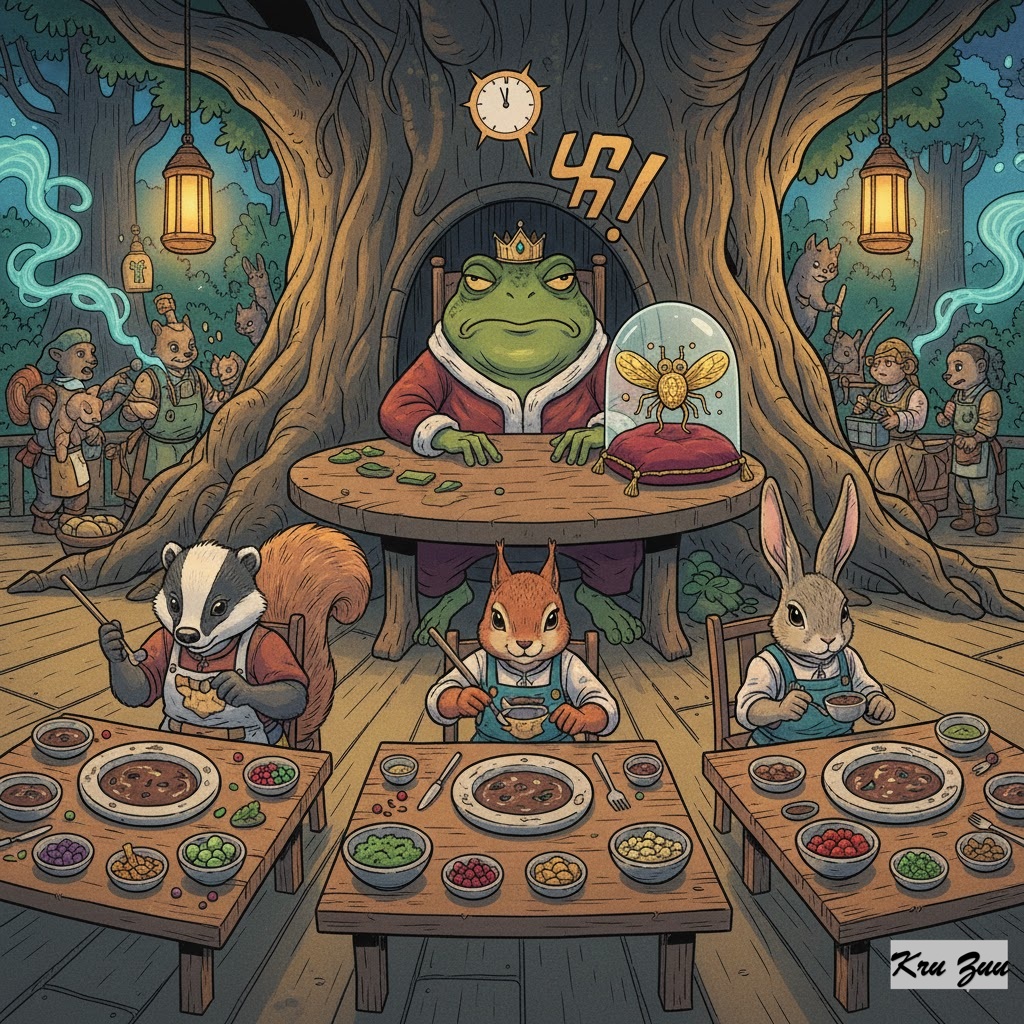
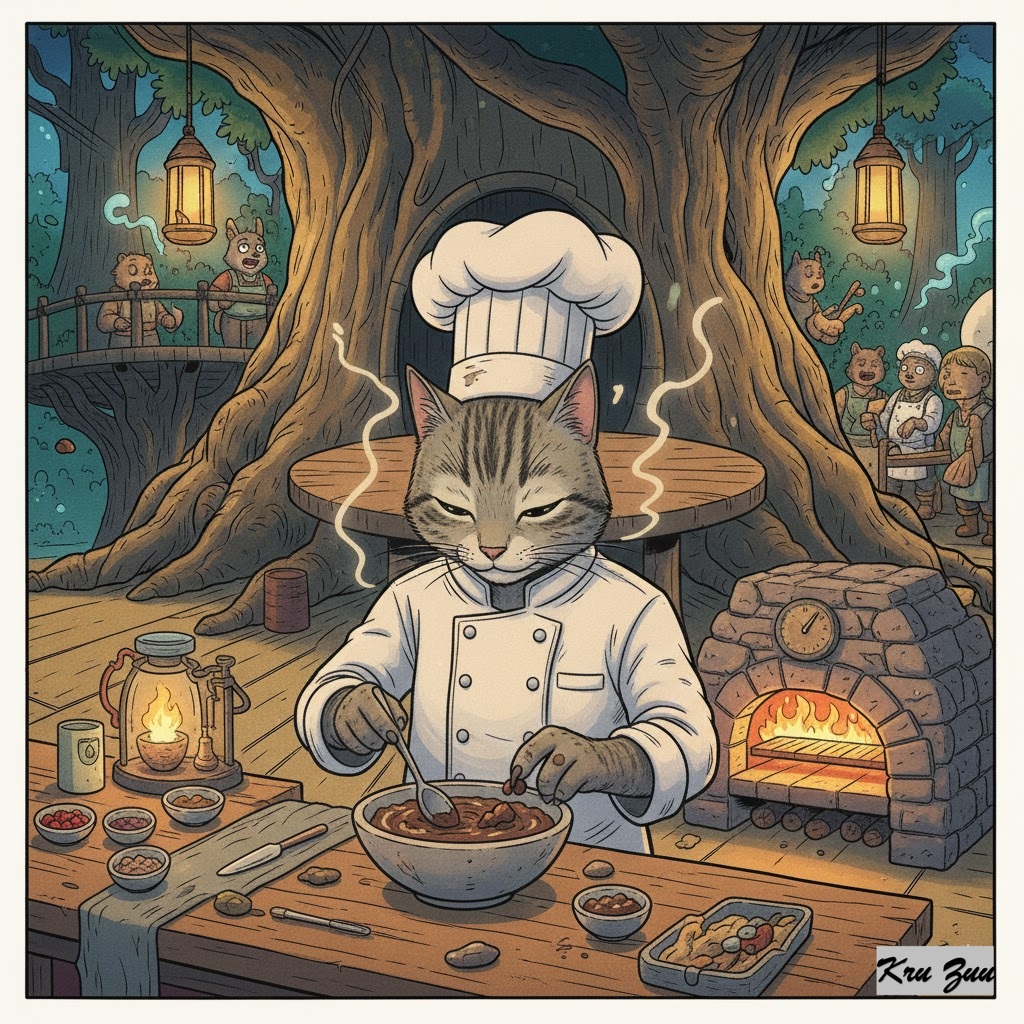
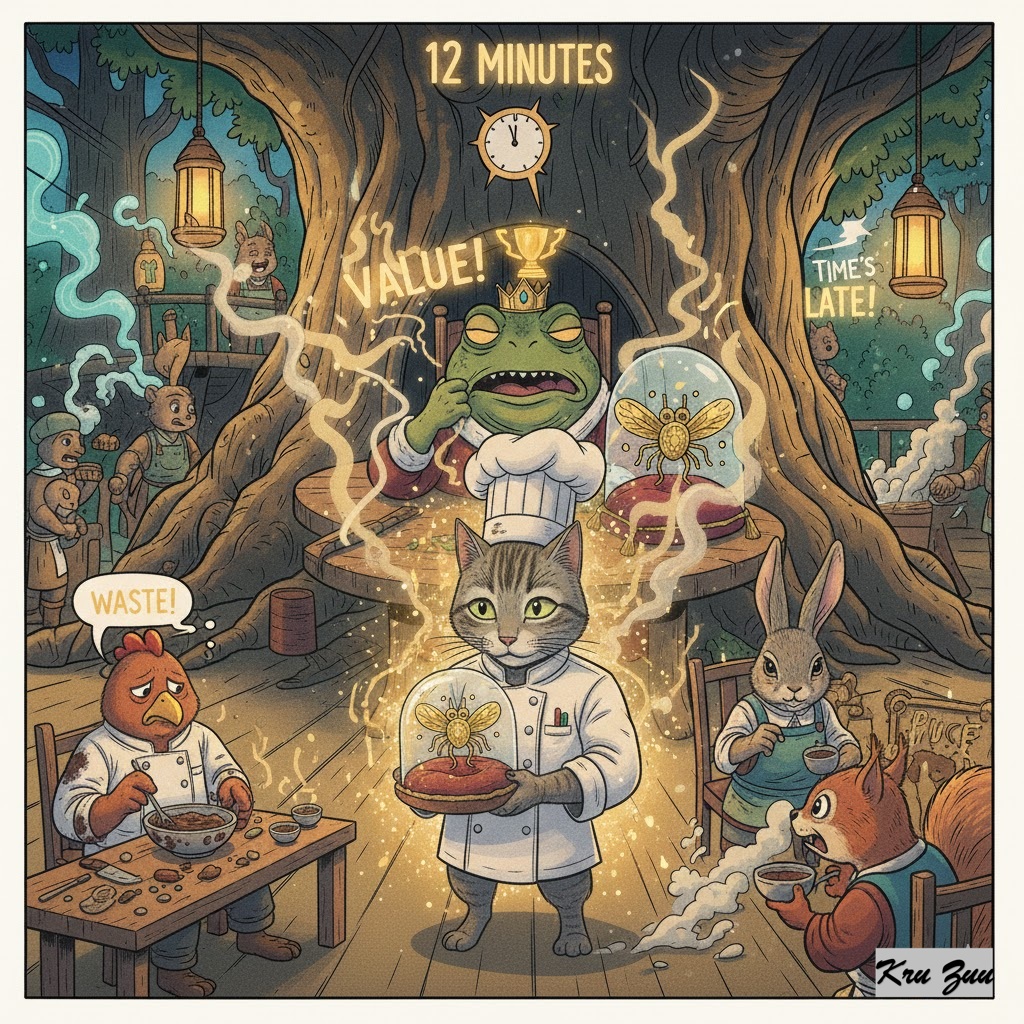
    ๐ŸŒŸ The Setup: There is a contest to bake the perfect Mud Pie. The prize is a Golden Fly. The Judge is Mr. Frog ๐Ÿธ. He is hungry and impatient. “I want my pie in 10 minutes!” he croaks.


    The Competitors


    Chico the Chicken ๐Ÿ” (The Rusher)


    Luna the Cat ๐Ÿฑ (The Planner)


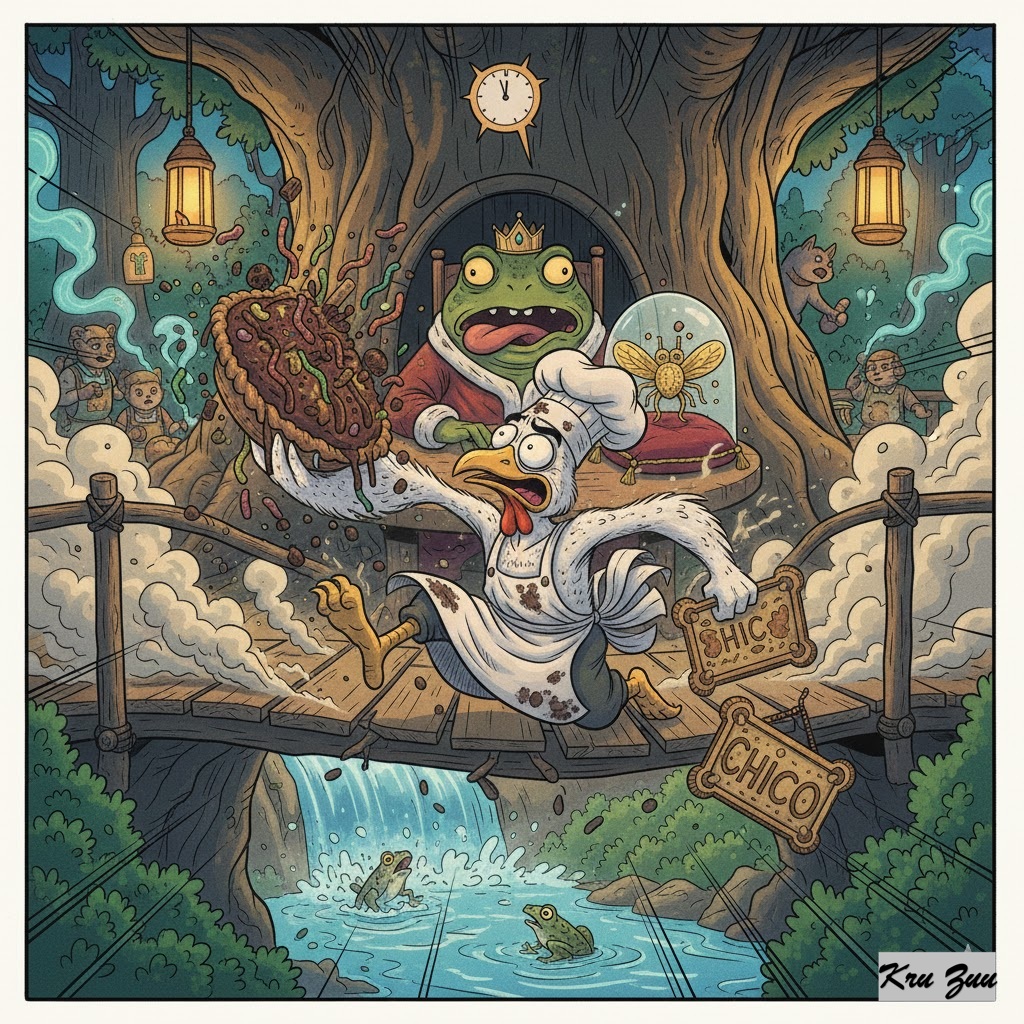
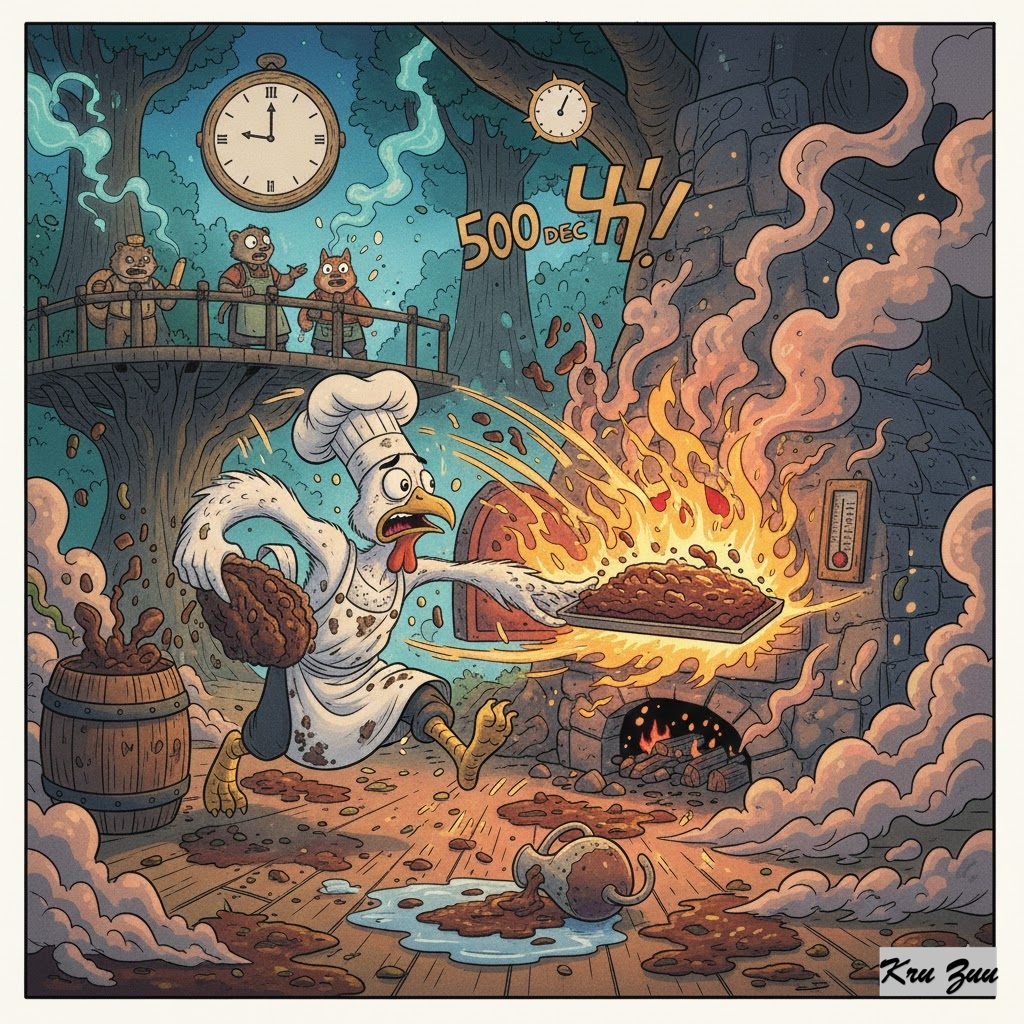
    The Conflict: Chico the Chicken panics. “10 minutes?! I must fly!” He throws the mud into the bowl. He doesn’t measure the water. He turns the oven to 500 degrees to cook it faster. He flaps his wings to fan the flames. “Faster! Faster!” he clucks.


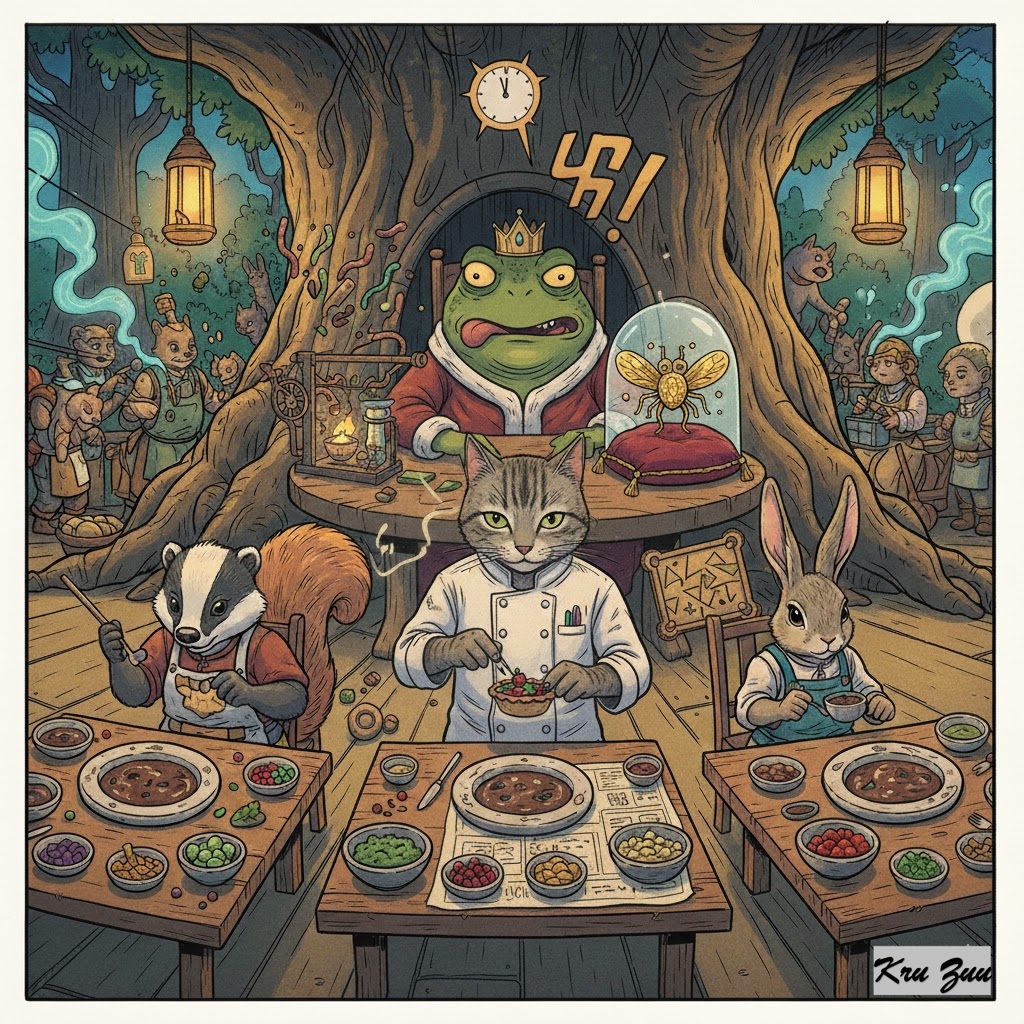
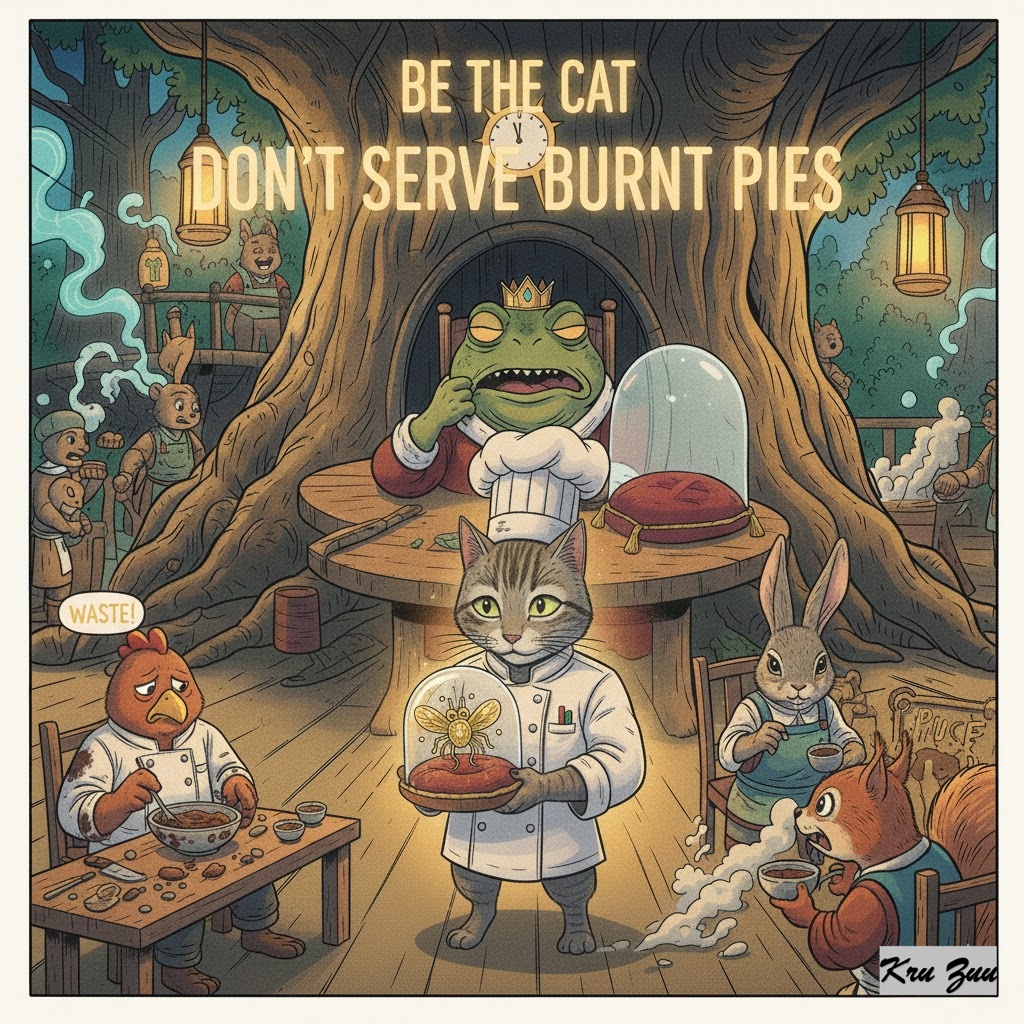
    Luna the Cat stays calm. She looks at Mr. Frog. “A good pie takes 12 minutes,” she thinks. She carefully mixes the mud. She picks out the rocks. She sets the oven to a gentle heat. She moves with grace.


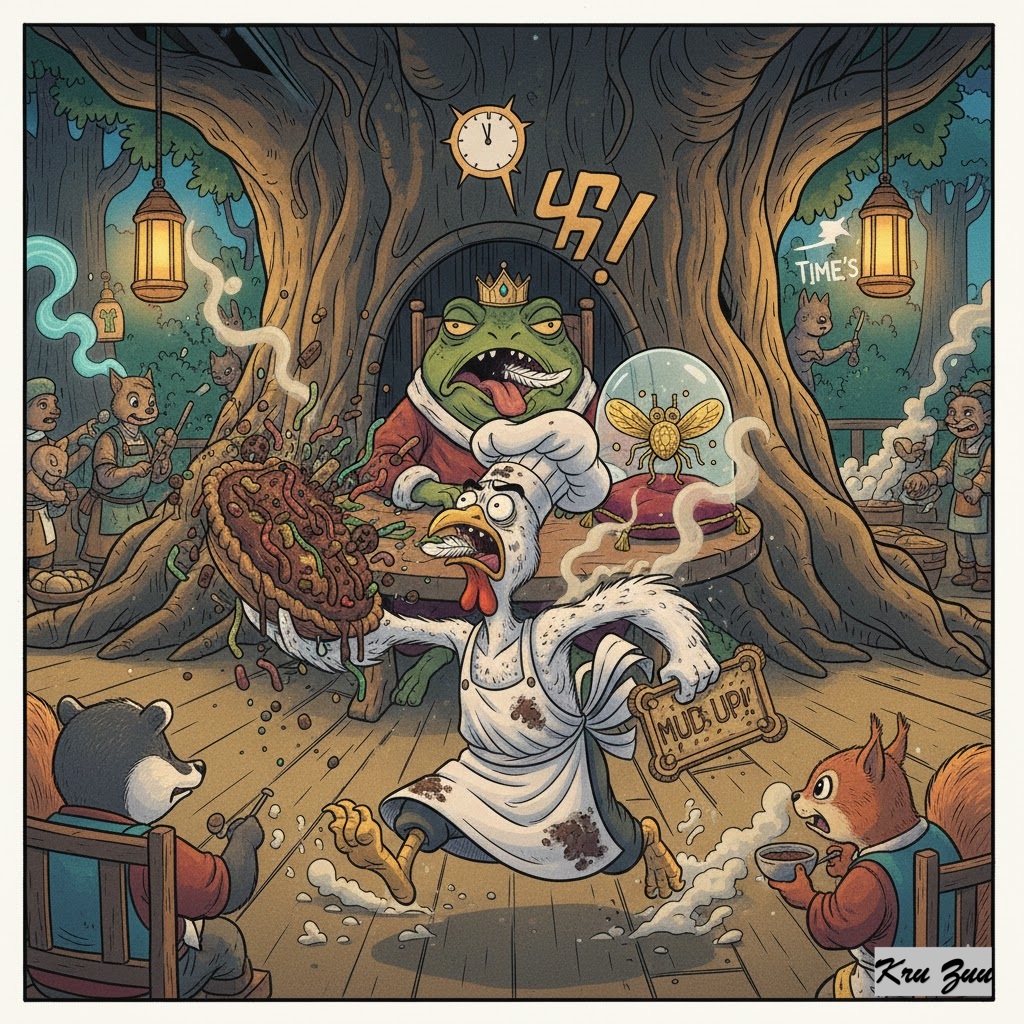
    The Climax: Mr. Frog yells, “TIME’S UP!” Chico the Chicken proudly presents his pie. It is smoking. Mr. Frog takes a biteโ€ฆ and spits it out! ๐Ÿคฎ “It is burnt on the outside and frozen on the inside! Andโ€ฆ is this a feather in my pie?!”


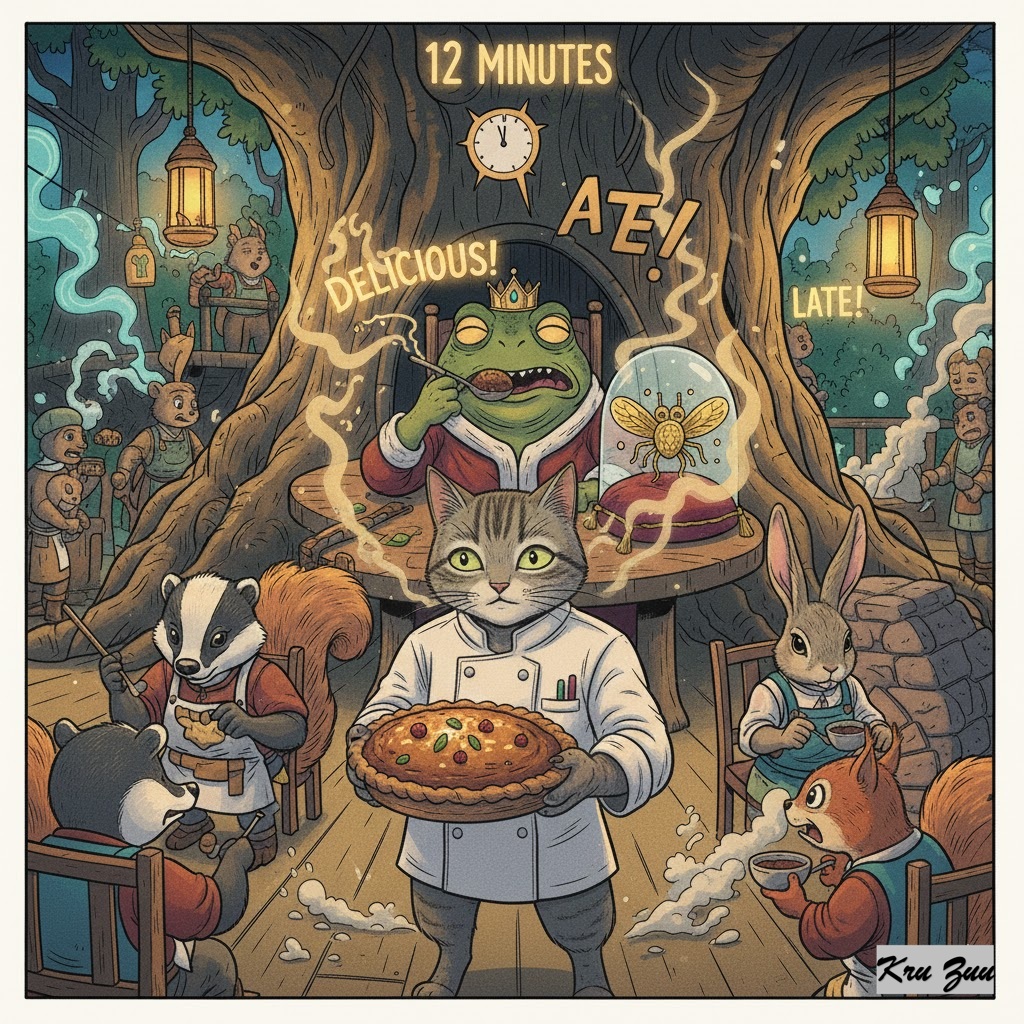
    Luna the Cat presents her pie 2 minutes late. Mr. Frog is angry she is late, but he takes a bite. His eyes widen. “Perfect texture. Zero rocks. Delicious.”


    The Moral: Chico the Chicken finished first, but he created garbage. He had to start over (Waste). Luna the Cat finished late, but she created value. Mr. Frog gave the Golden Fly to the Cat. ๐Ÿ†


    Be the Cat. Don’t serve burnt pies.

    ๐ŸŽ“ Lesson for English Learners


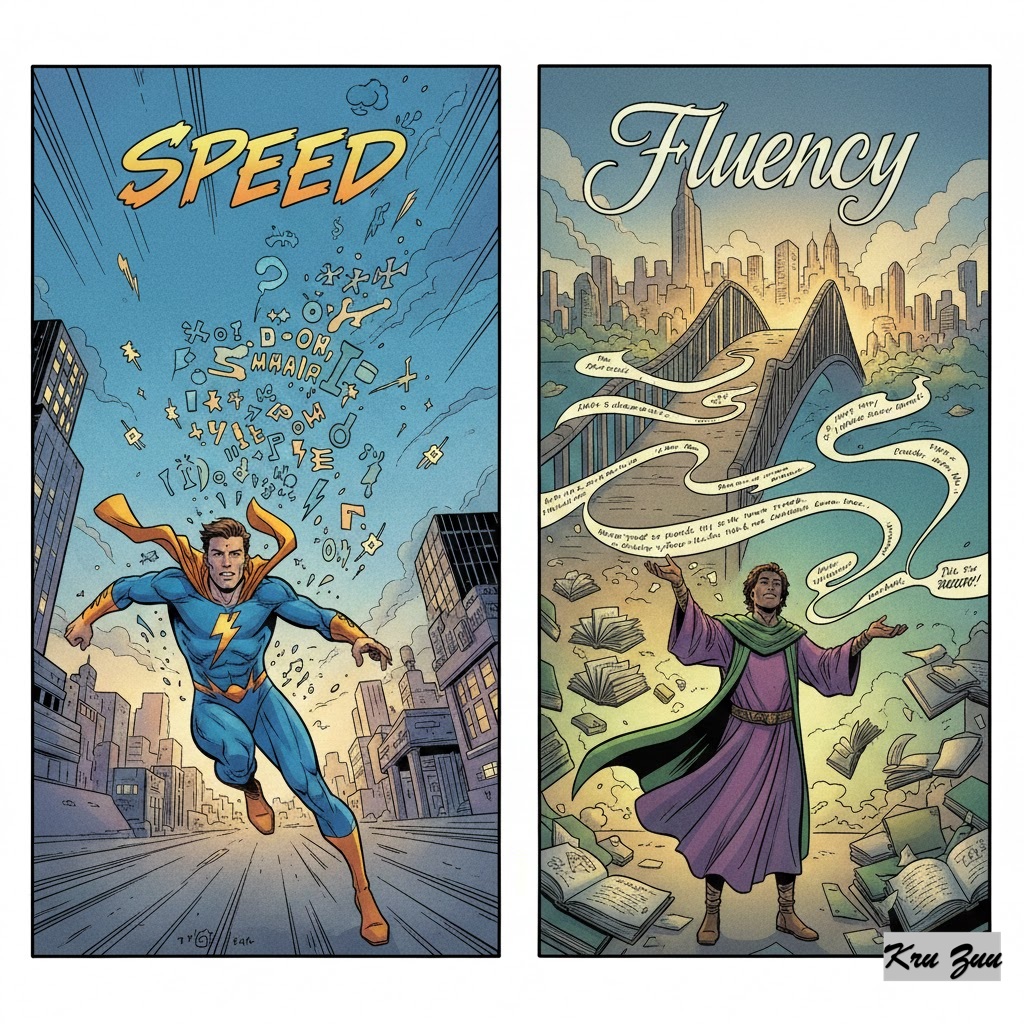
    Don’t confuse Speed with Fluency.


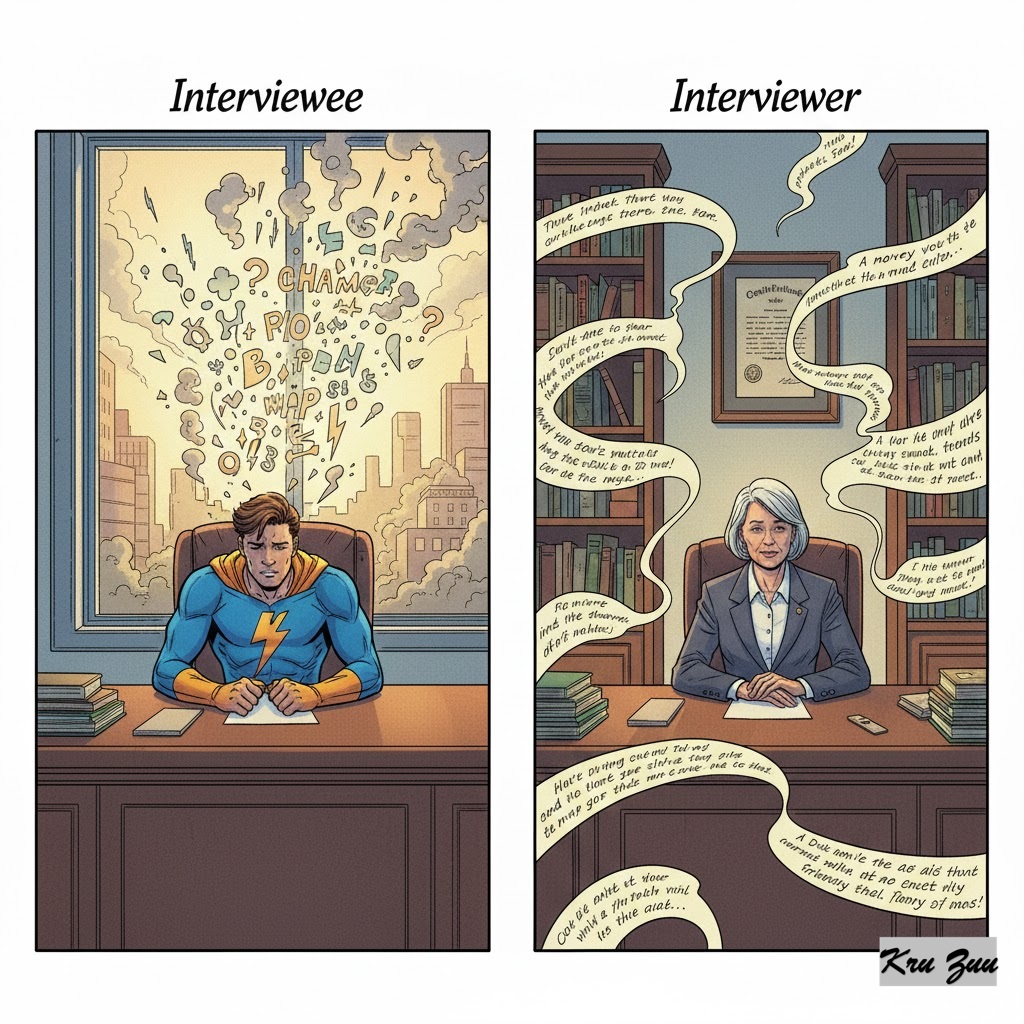
    Situation: You are in a job interview speaking English.


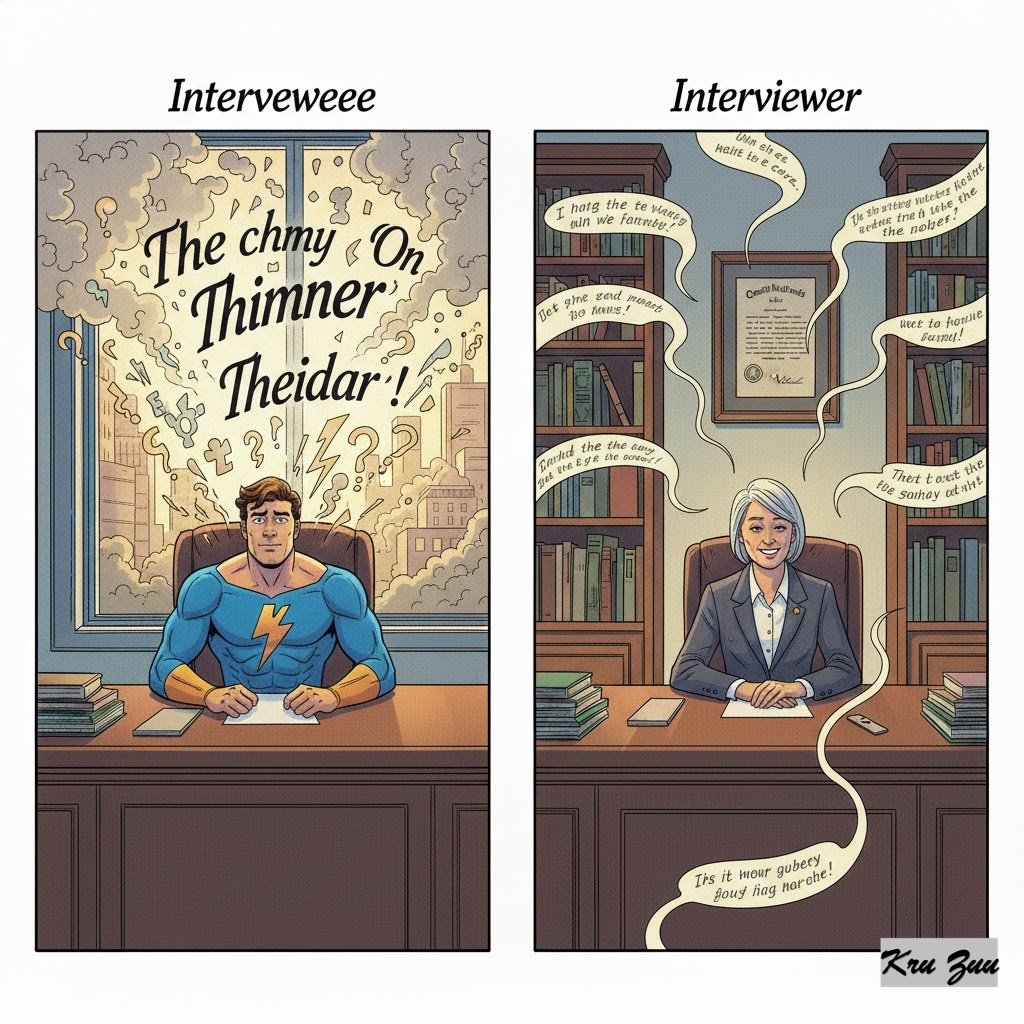
    The Mistake: You try to speak at 100mph because you think “Fast speakers = Native speakers.” You stumble, use the wrong tense, and say “Uhhh” 20 times.


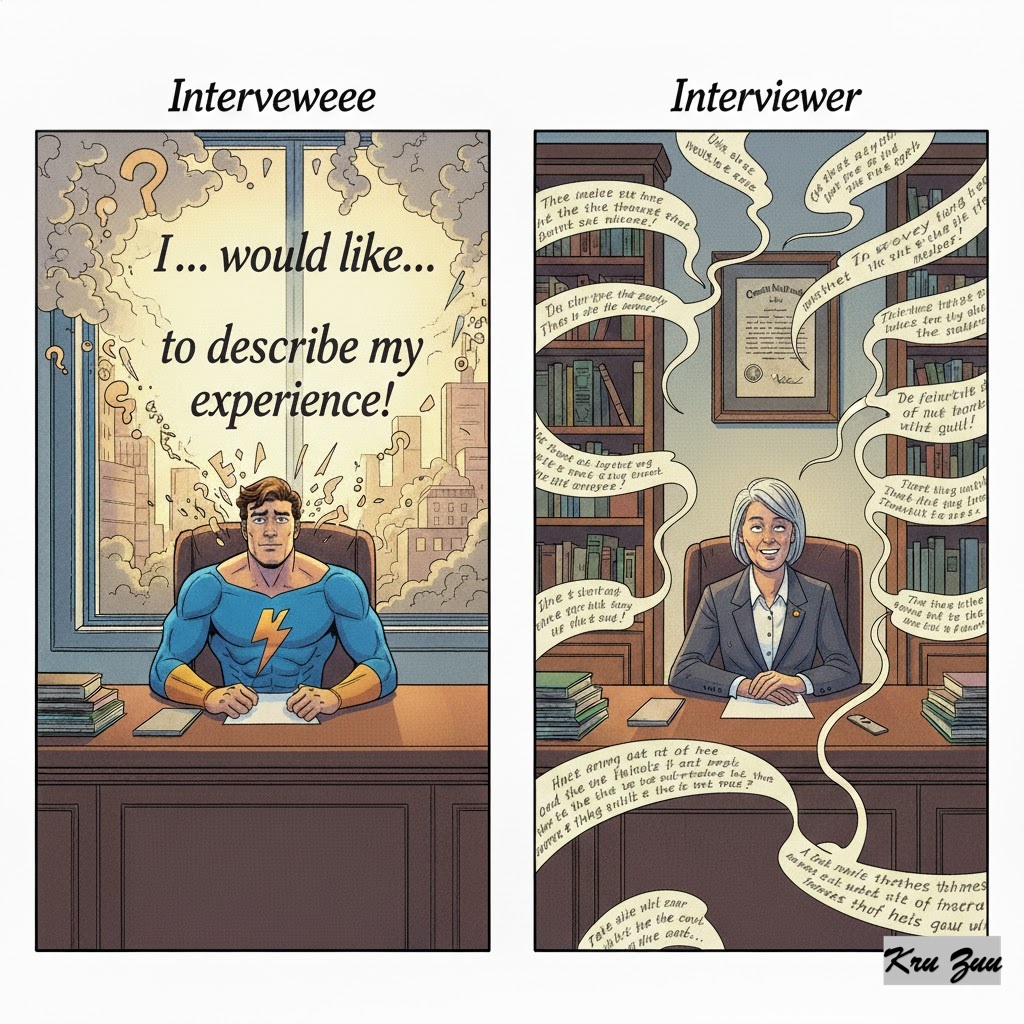
    The Fix: Slow down. Speak clearly.


    You Say: “Iโ€ฆ would likeโ€ฆ to describe my experience.”


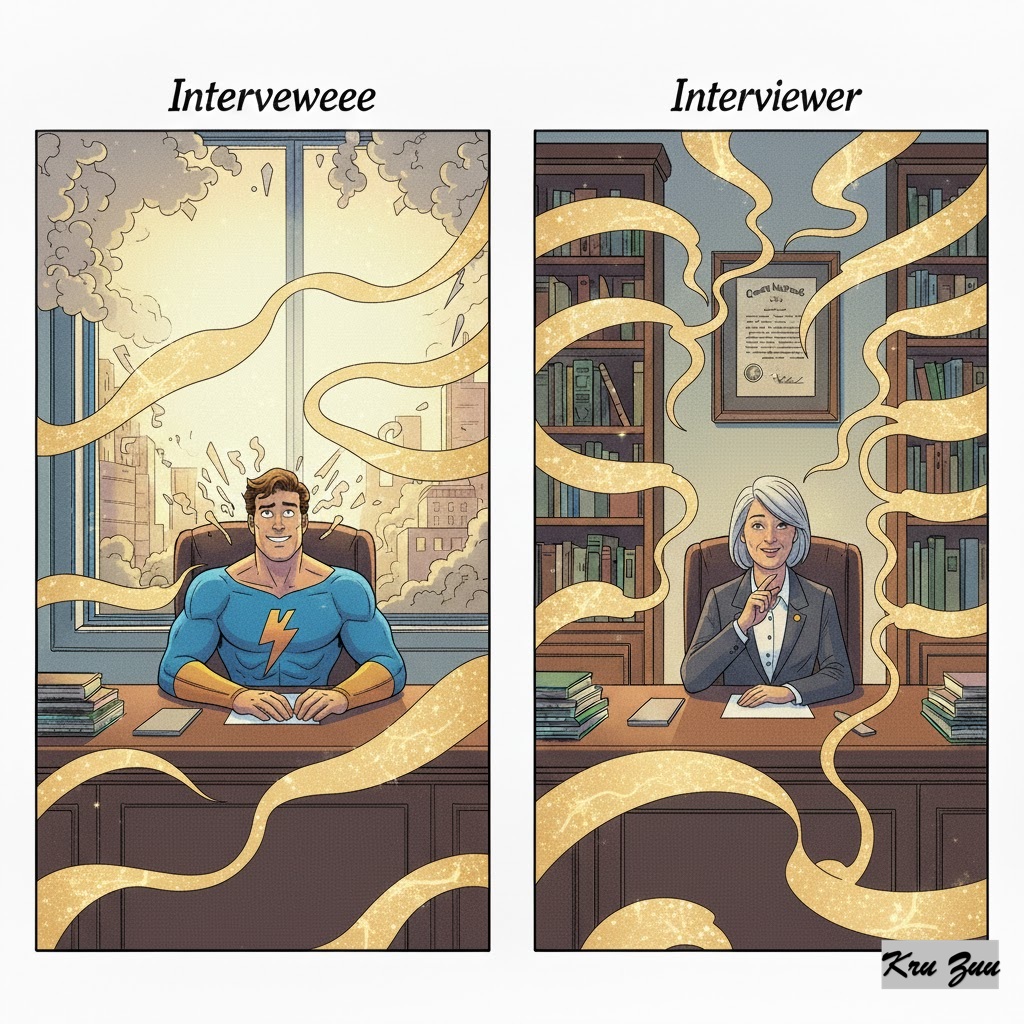
    Result: You sound confident and thoughtful.


    Remember: It is better to be understood slowly than to be misunderstood quickly.


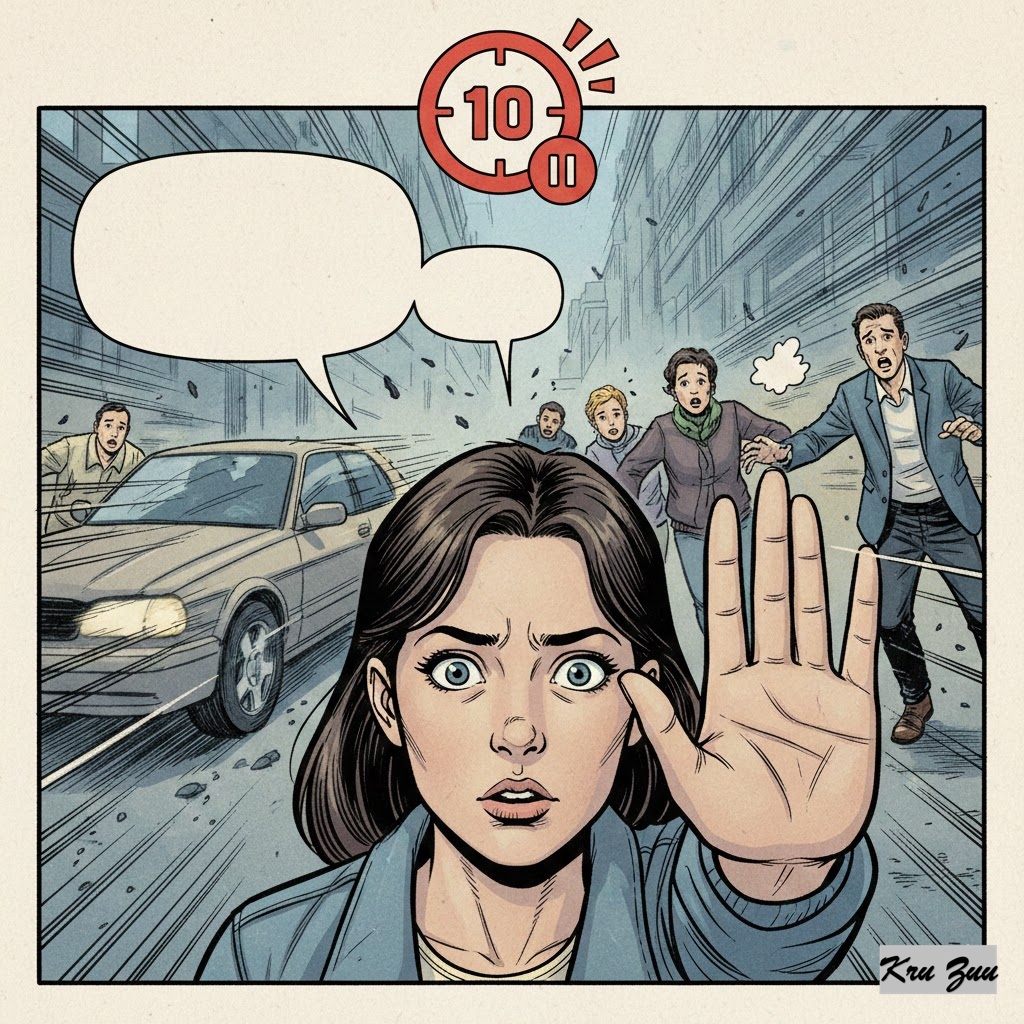
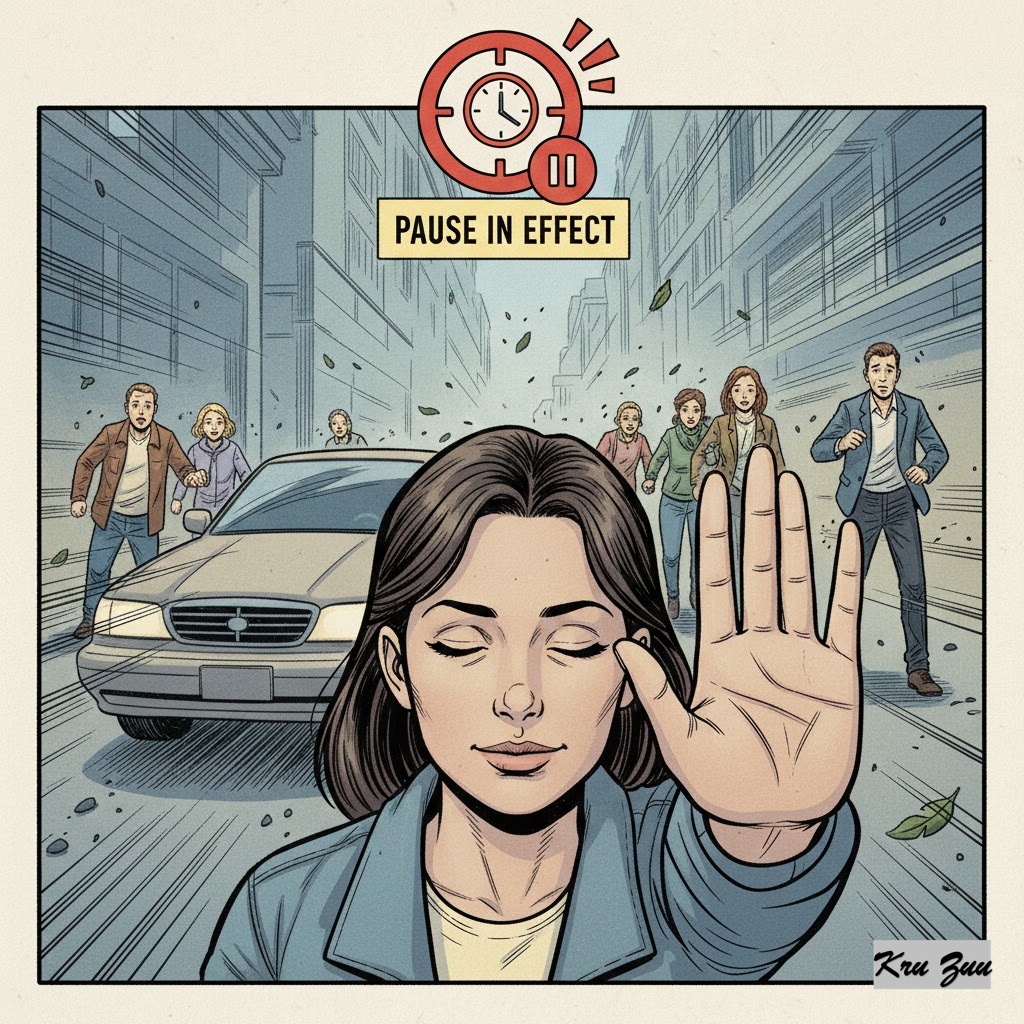
    ๐Ÿ’ฌ Your Turn: The 10-Second Pause ๐Ÿ›‘


    We are breaking the cycle of rushing today.


    The Challenge: Before you send your next text message, email, or comment on social mediaโ€ฆ


    Stop typing.


    Take your hands off the keyboard.


    Count to 10.


    Read it one last time.


    Question: Tell us a time when you rushed something and it went horribly wrong! Did you ruin a meal? Send a text to the wrong person? Tell us in the comments! ๐Ÿ‘‡

    By Zubeyir YURTKURAN

    https://www.facebook.com/BrainBattleground/

    https://www.facebook.com/zubeyr.yurtkuran/

    https://www.instagram.com/zubeyryurtkuran/
    https://www.youtube.com/@BrainBattleground-b3p

    https://www.instagram.com/brainbattleground/

  • ๐Ÿ›ก๏ธ The Daily Shield: The Law of False Fear

    ๐Ÿ›ก๏ธ The Daily Shield: The Law of False Fear

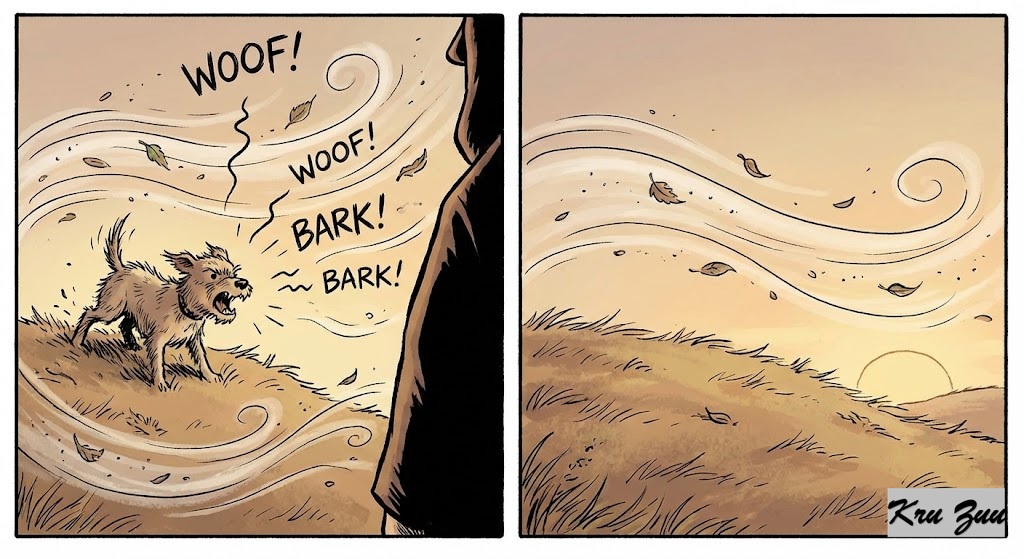
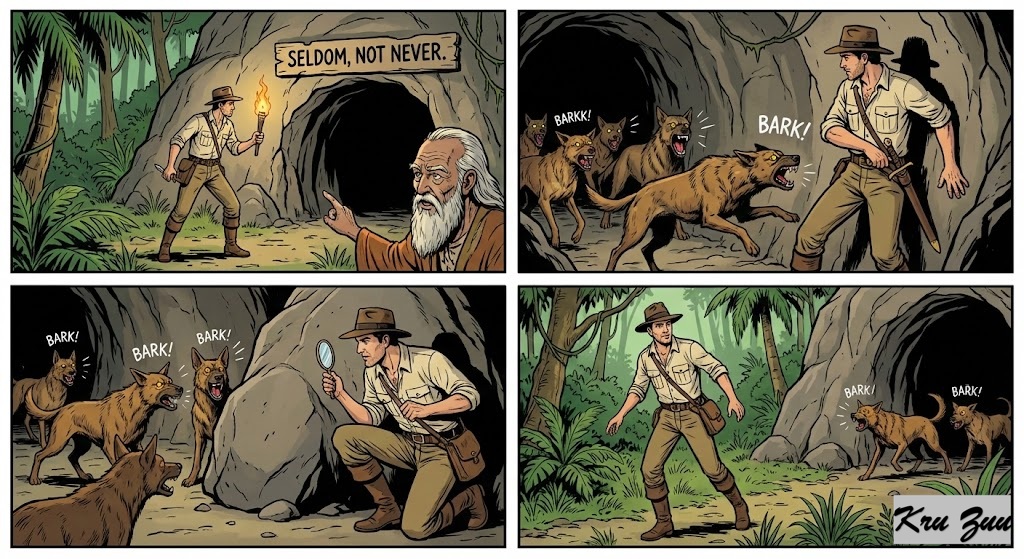
    “Barking dogs seldom bite.”


    ๐Ÿ˜ˆ The Villain (The Intimidator)

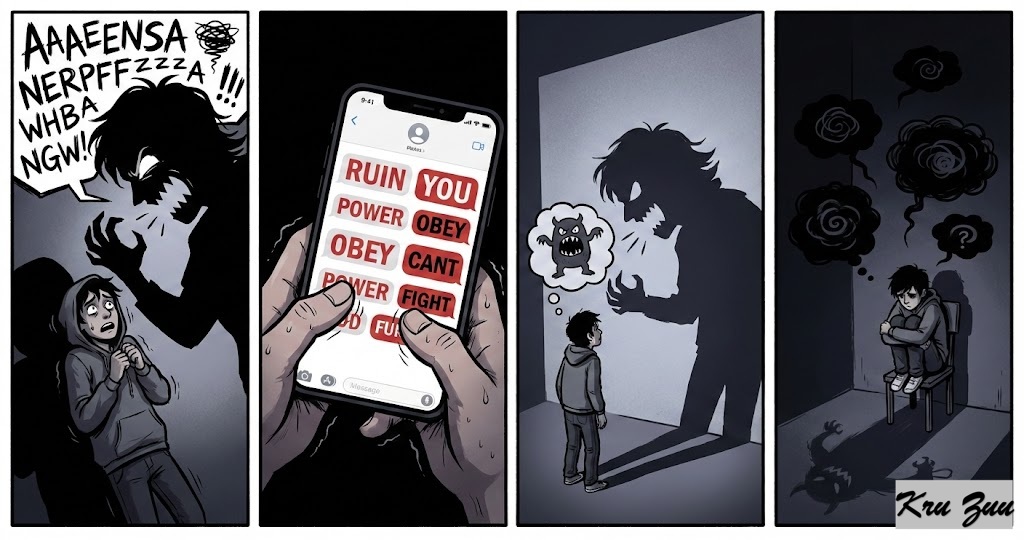
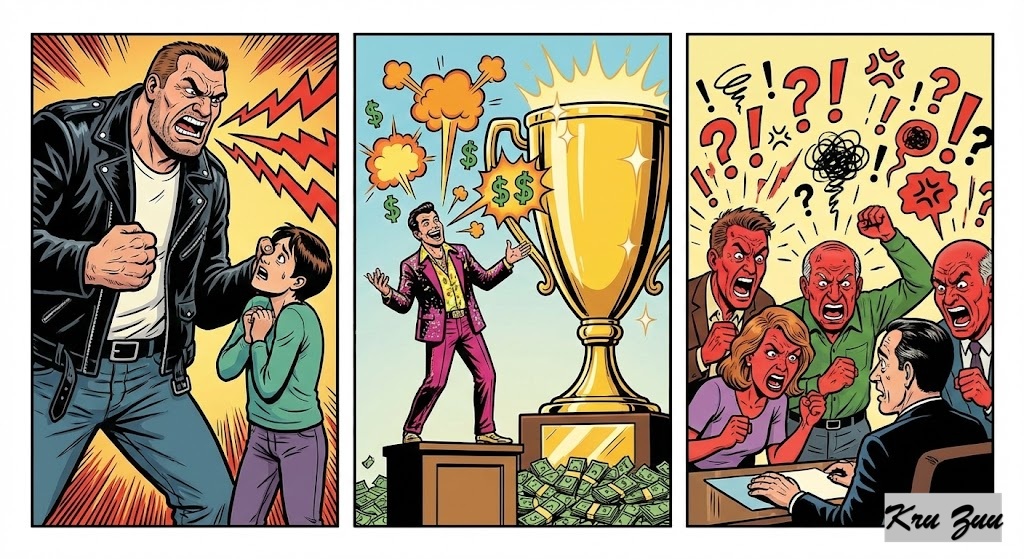
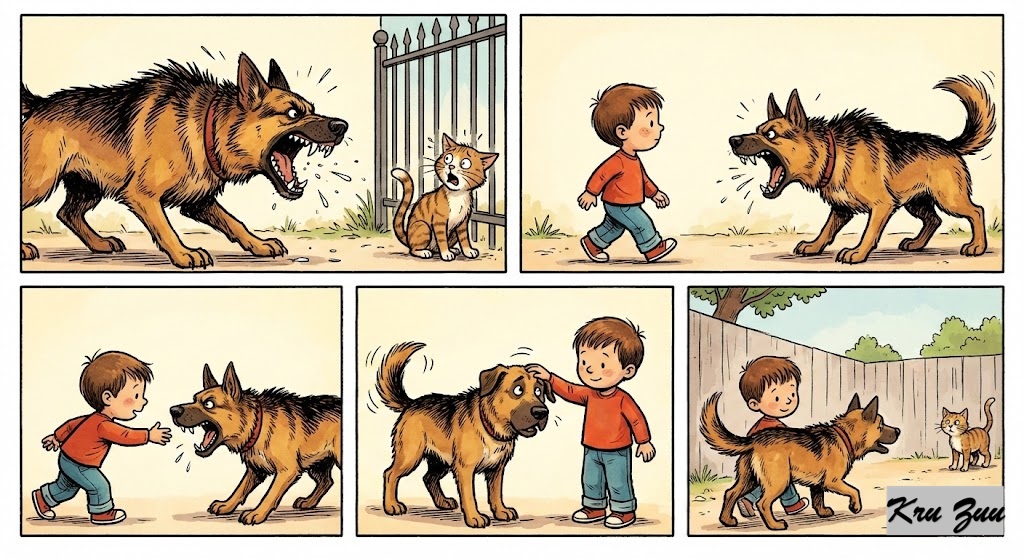
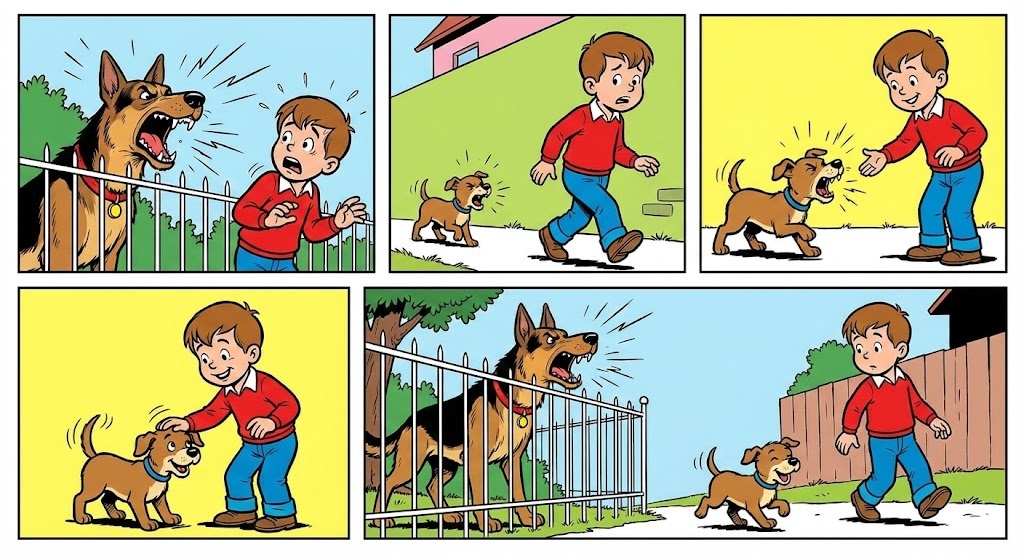
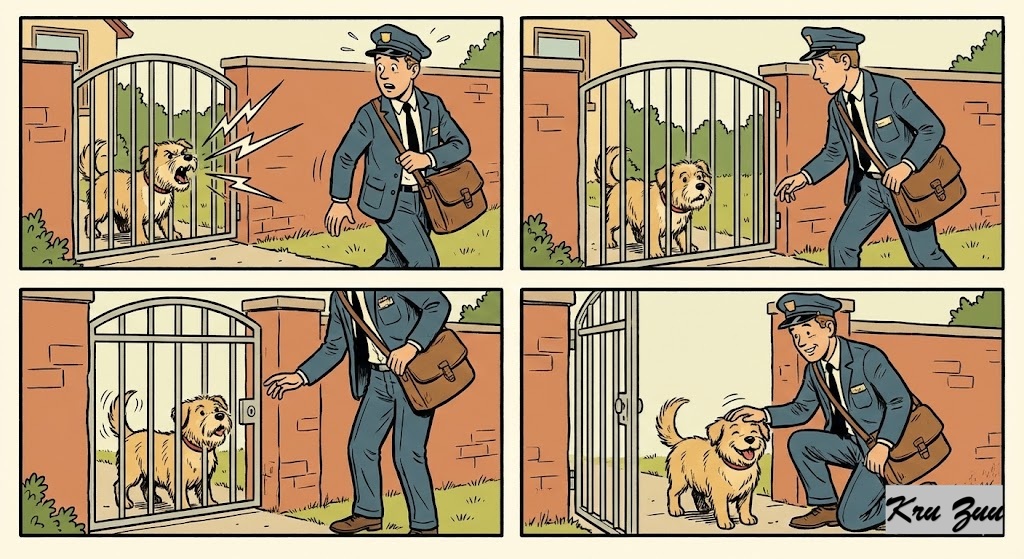
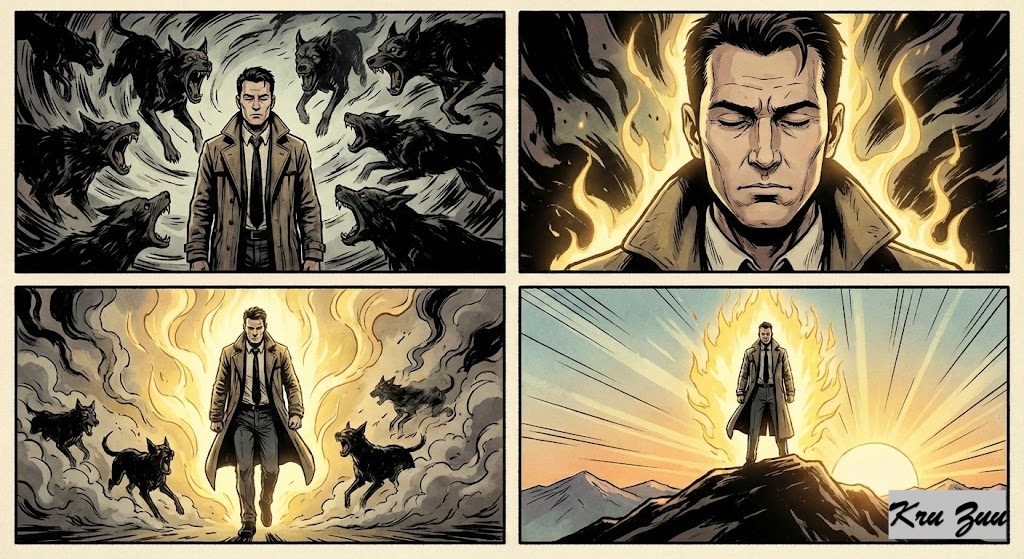
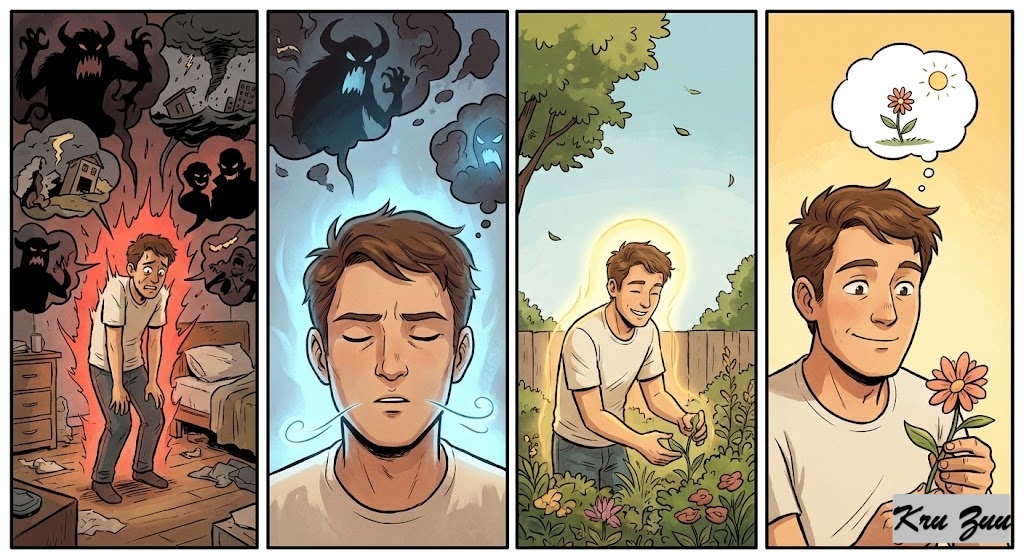
    You meet someone who screams, yells, and threatens. They type in ALL CAPS. They promise to ruin you. They brag about their power. You feel small. You feel scared. You back down because the noise is overwhelming. You let their loud voice control your actions. You live in fear of a monster that might not even exist. ๐ŸงŸโ€โ™‚๏ธ


    ๐Ÿ˜‡ The Hero (The Stoic)

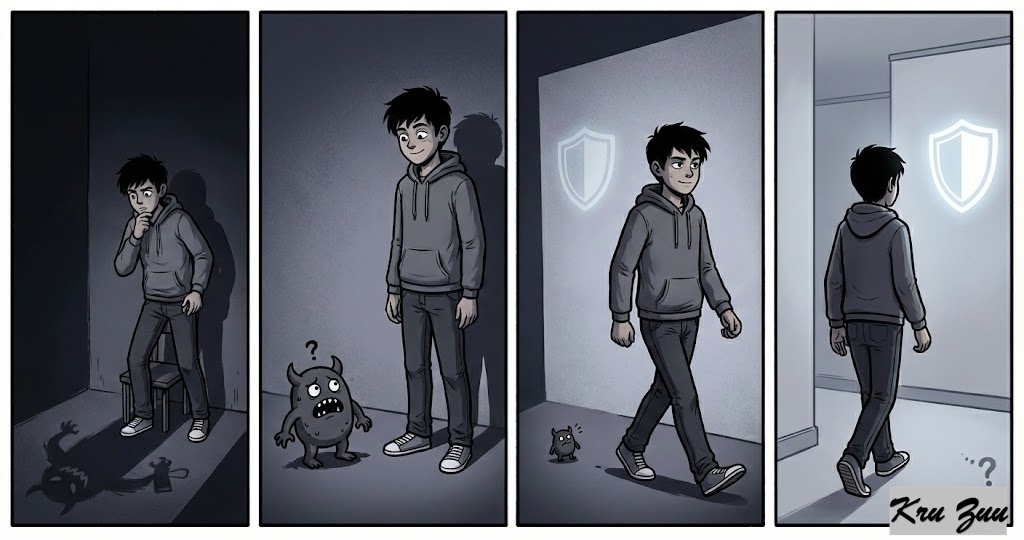
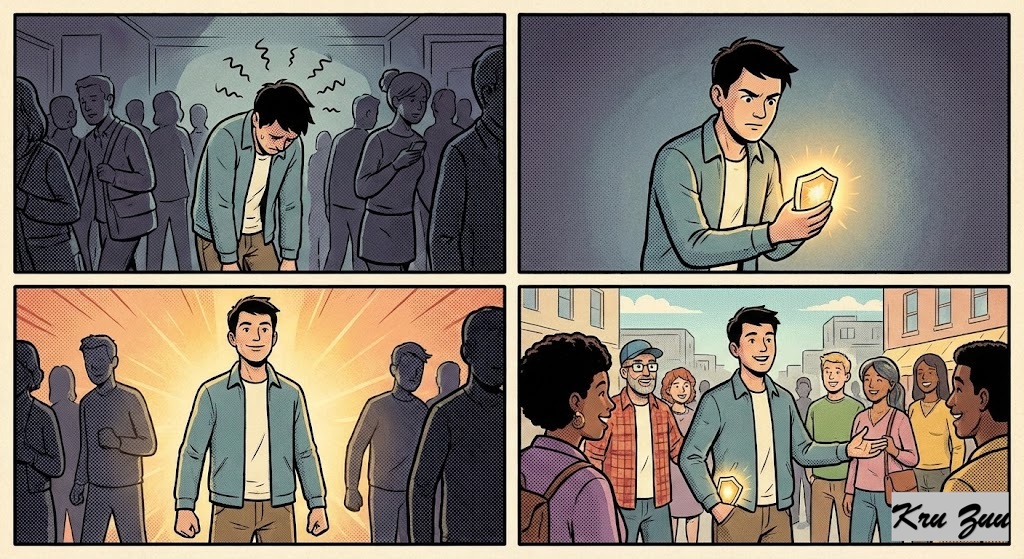
    You hear the noise. You pause. You analyze. You realize that true confidence is silent. A lion doesn’t need to bark before it attacks; it just attacks. You realize that the loudness is a mask for insecurity. You stand your ground. You smile. You walk past the noise untouched. ๐Ÿ›ก๏ธ


    โš–๏ธ The Reality


    Noise is not power. Usually, the people (or problems) that make the most noise have the least power. They use volume to hide their weakness. Fear is a shadow, it looks huge on the wall, but the object casting it is tiny.


    ๐Ÿ’Ž The Secret

    Real danger usually comes silently. If something is “barking” at you, it is usually too busy making noise to actually hurt you.

    ๐Ÿง The Anatomy of the Proverb


    This is the ultimate weapon against social anxiety and intimidation.


    Barking (Participle/Adjective):
    The sound a dog makes. Here, it represents threats, bragging, or loud complaints. ๐Ÿ•


    Seldom (Adverb): Rarely; almost never. (This is a fancy word!)


    Bite (Verb): To inflict injury. The actual action/danger.


    Simpler Version: People who threaten you usually don’t take action.


    ๐Ÿ“š Vocabulary Vault


    Intimidation (Noun): The act of making someone afraid or timid. ๐Ÿ˜จ


    Bluff (Verb/Noun): To try to deceive someone as to one’s abilities or intentions (Fake power).


    All talk and no action (Idiom): Someone who talks about doing big things but never does them.


    Stoic (Adjective): A person who can endure pain or hardship without showing their feelings or complaining. ๐Ÿ—ฟ


    Seldom (Adverb): Not often; rarely.


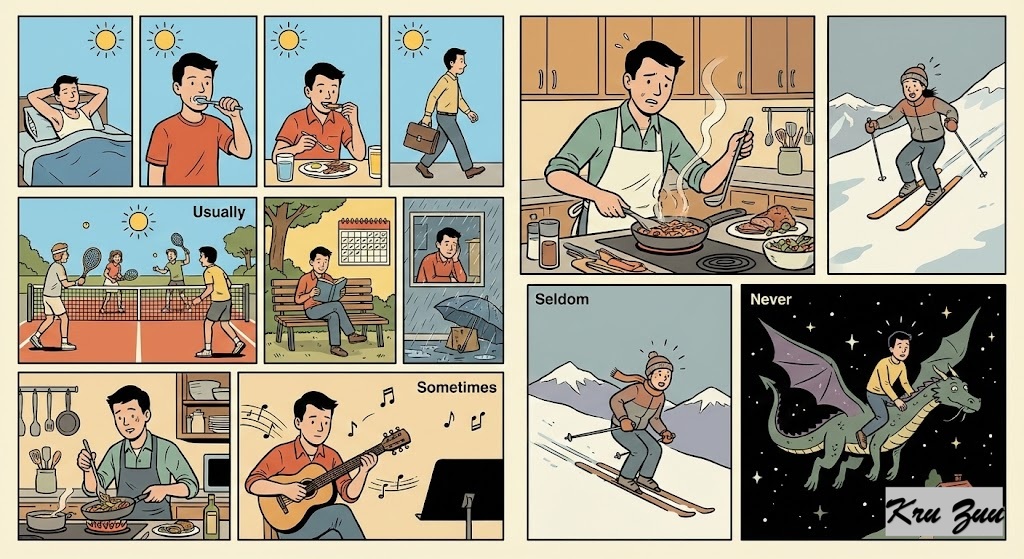
    ๐Ÿง  Grammar Focus: Adverbs of Frequency


    This proverb uses a “negative” frequency adverb.


    The Scale of Frequency


    100% – Always
    80% – Usually
    50% – Sometimes
    10% – Seldom / Rarely ๐Ÿ“‰
    0% – Never


    Style Note: “Seldom” vs. “Rarely”


    Rarely: Common in daily speech. “I rarely eat sushi.”


    Seldom: More formal, literary, or poetic. “He seldom speaks of his past.”


    Pro Tip: Use “Seldom” in writing to sound sophisticated. Use “Rarely” in coffee shops.

    ๐Ÿ“œ History: Origin and Spread


    This wisdom is ancient because loud, scary people have existed forever.


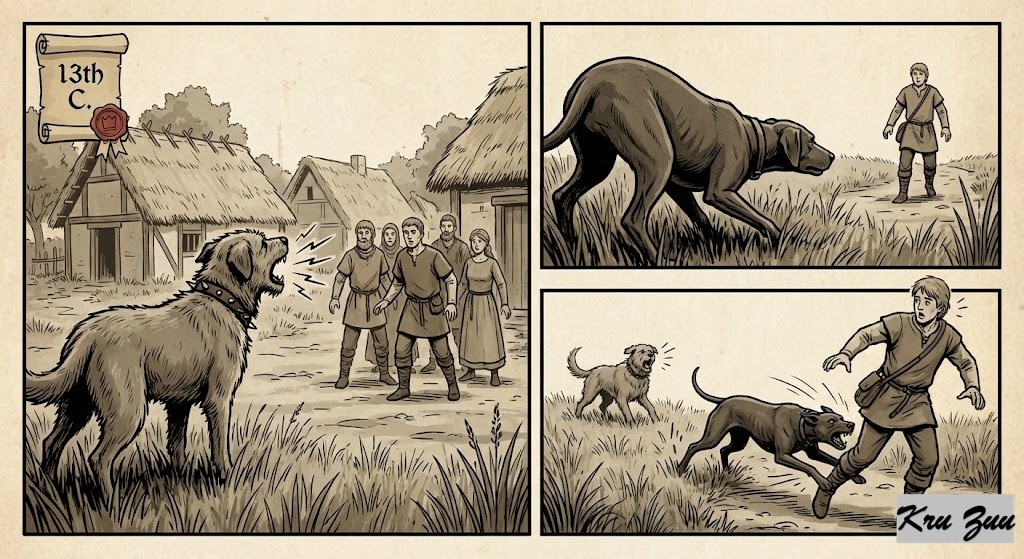
    The Origin: It first appeared in written records in the 13th century! It comes from the observation of village dogs. The dog that stands back and barks is warning you; the dog that wants to kill you runs silently to bite.


    Global Cousins


    ๐Ÿ‡น๐Ÿ‡ท Turkish:
    “Havlayan kรถpek ฤฑsฤฑrmaz.” (Exactly the same!)


    ๐Ÿ‡ช๐Ÿ‡ธ Spanish: “Perro que ladra no muerde.” (The dog that barks doesn’t bite.)


    ๐Ÿ‡ฎ๐Ÿ‡น Italian: “Can che abbaia non morde.”


    ๐Ÿ‡ท๐Ÿ‡บ Russian: “Sobaka layet, veter nosit.” (The dog barks, but the wind carries it away.)

    ๐ŸŽฏ Impact on Life: The Pros & Cons


    โœ… The Pros (Emotional Armor)


    Confidence:
    When you ignore the “barking,” you keep your power.


    Focus: You stop wasting energy worrying about threats that will never happen.


    โŒ The Cons (Don’t be naive)


    Caution:
    The proverb says seldom, not never. Be brave, but don’t be stupid. Some dogs bark and bite. Assess the situation carefully.

    ๐ŸŽญ Short Story: The Monster in the Garden

    Letโ€™s visit a farm with three very different friends.


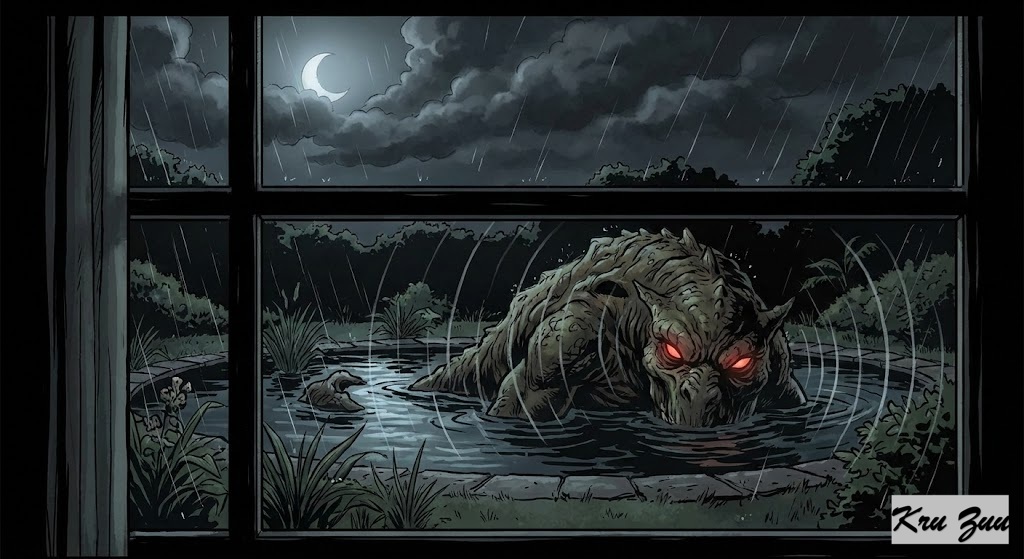
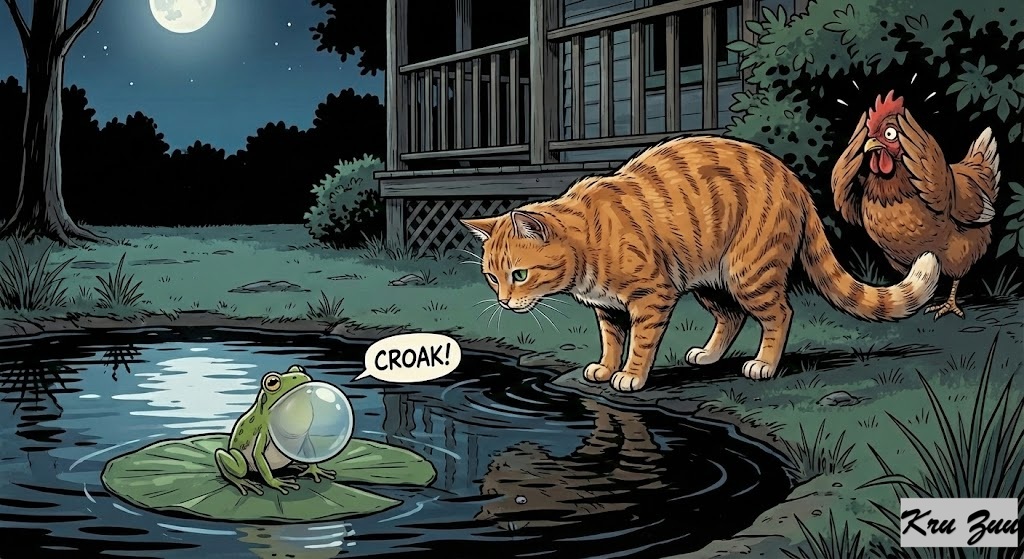
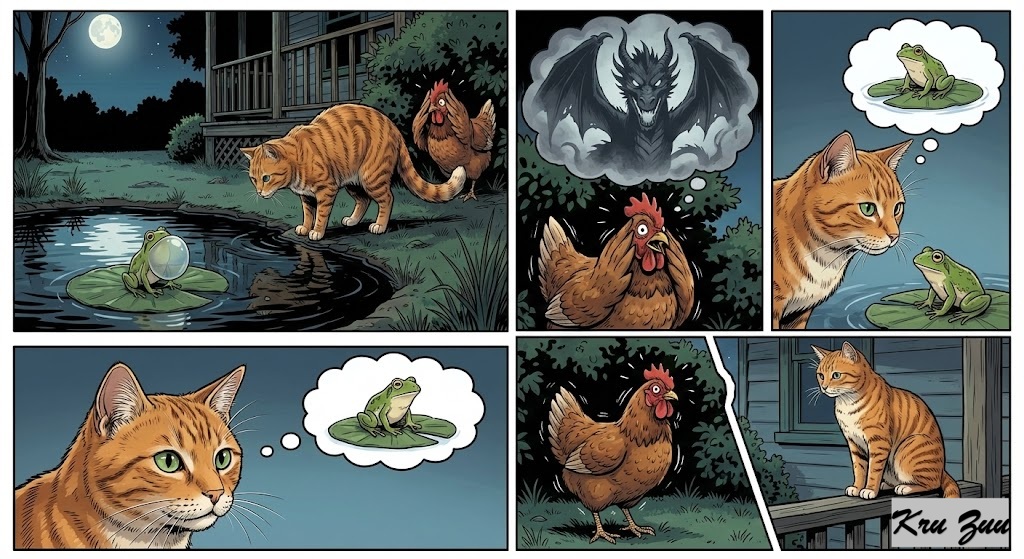
    ๐ŸŒŸ The Setup: It is midnight. A terrifying, deep, rhythmic sound comes from the garden pond. CROAK. CROAK. CROAK. It sounds like a dragon.


    ๐Ÿ” The Chicken (The Worrier): The Chicken is shaking. Feathers are flying everywhere. “It’s a monster!” she screams. “It sounds huge! Itโ€™s going to eat us all! We need to run to the next village! We are doomed!” The Chicken hides under the porch, trembling. She lets the noise paralyze her.


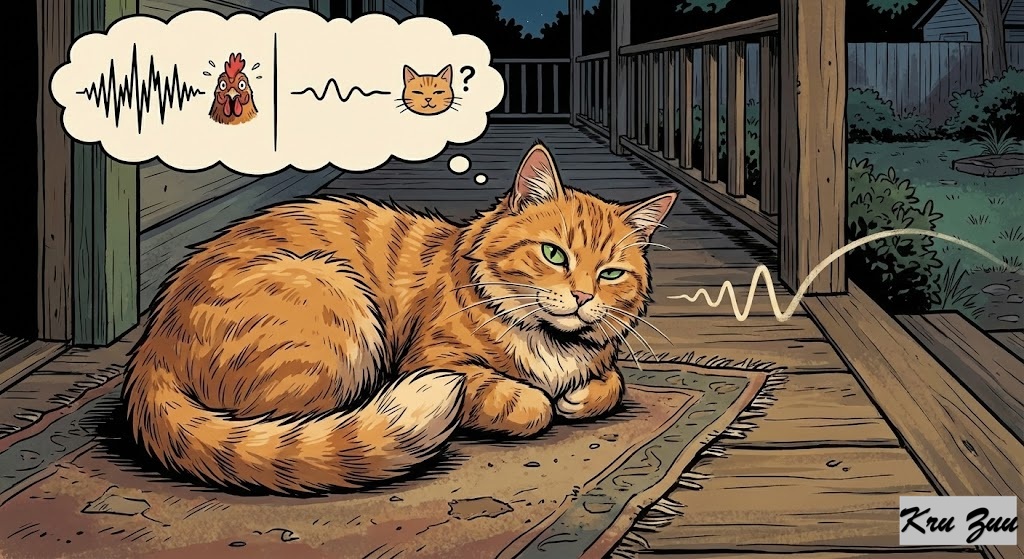
    ๐Ÿฑ The Cat (The Observer): The Cat opens one eye. She stretches slowly. She listens to the volume, but she also listens to the fear in the sound. “Relax, Chicken,” the Cat purrs. “That is a lot of noise. Dangerous things don’t announce themselves like that.”


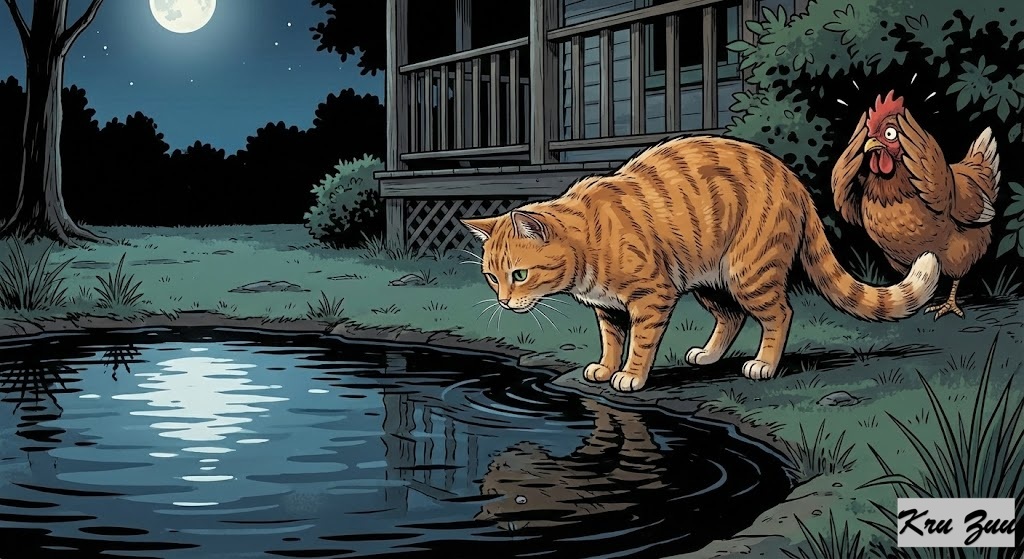
    The Climax: The Cat walks coolly to the edge of the pond. The Chicken watches through her wings, terrified. The Cat peers into the darkness.


    There, sitting on a lily pad, is The Frog. ๐Ÿธ It is a tiny frog, no bigger than a spoon. It puffs its throat out hugeโ€”CROAK!โ€”trying to look scary because it is afraid of the dark.


    The Moral: The Chicken heard a dragon. The Cat saw a scared little frog. The loudest threats often come from the smallest people. Don’t be a Chicken. Be a Cat. ๐Ÿˆ

    ๐ŸŽ“ Lesson for English Learners


    Don’t Fear the “Barking” of English.


    Situation: You see a long, complex grammar rule (like the Future Perfect Continuous). It looks scary. It looks difficult.


    You Say: “This grammar is just a barking dog. It looks big on the page, but once I analyze it, it can’t hurt me. It’s actually quite simple.”


    Situation: A native speaker talks very fast. You panic.


    You Say: “Their speed is just noise. I will ask them to slow down. I won’t let the speed intimidate me.”


    ๐Ÿ’ฌ Your Turn: The Fear Test ๐Ÿš€


    The Challenge:
    Think of a situation where you were scared of something that turned out to be easy.


    Was it a job interview?


    Was it asking someone on a date?


    Was it speaking English in public?


    Question:
    What is a “Barking Dog” in your life right now? Something that makes a lot of noise but isn’t actually dangerous? Tell us in the comments! ๐Ÿ‘‡

    By Zubeyir YURTKURAN

    https://www.facebook.com/BrainBattleground/

    https://www.facebook.com/zubeyr.yurtkuran/

    https://www.instagram.com/zubeyryurtkuran/
    https://www.youtube.com/@BrainBattleground-b3p

    https://www.instagram.com/brainbattleground/

  • ๐Ÿฅ› The Daily Shield: The Law of Acceptance

    ๐Ÿฅ› The Daily Shield: The Law of Acceptance

    “Don’t cry over spilt milk.”


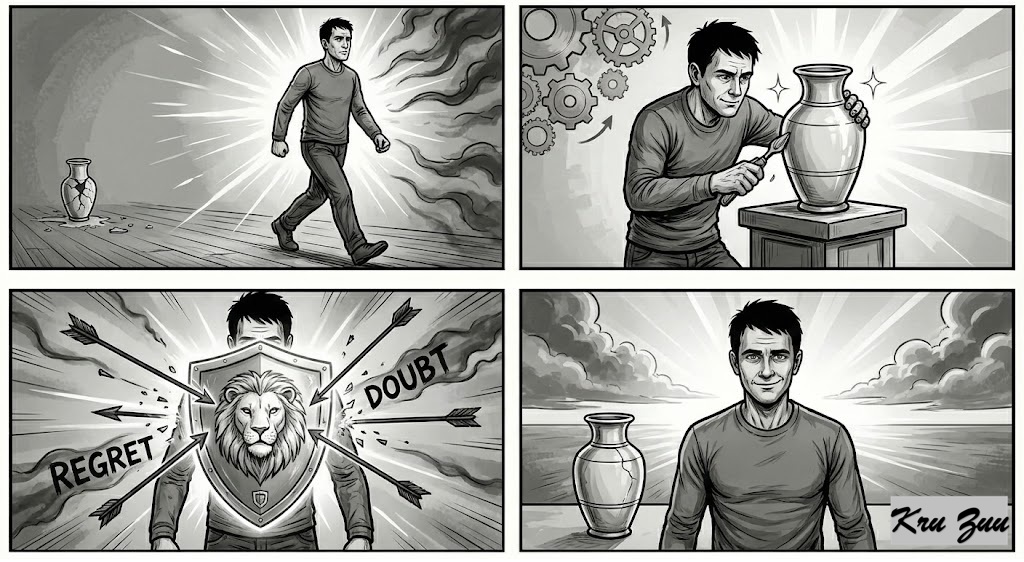
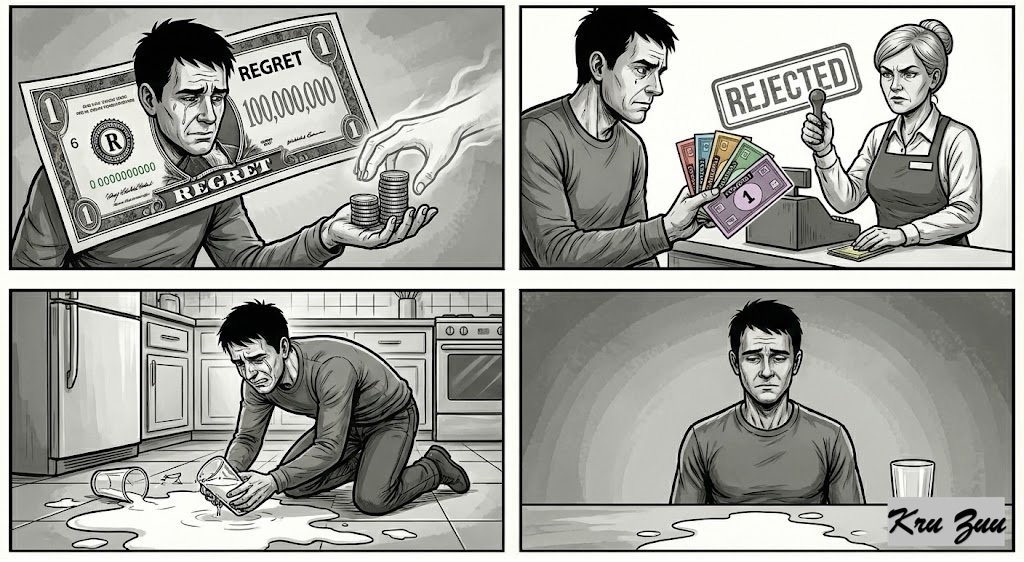
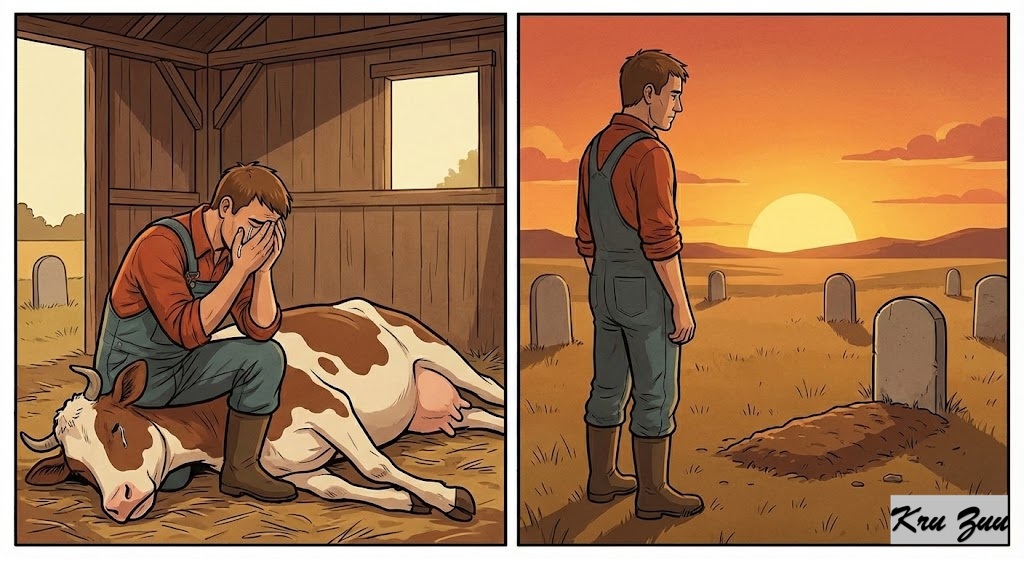
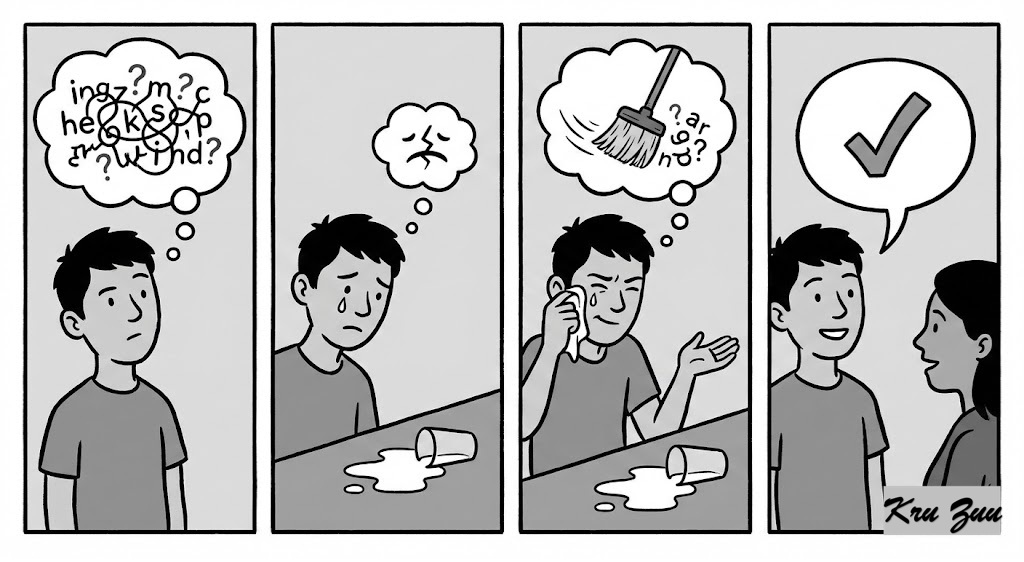
    ๐Ÿ˜ˆ The Villain (The Dweller)

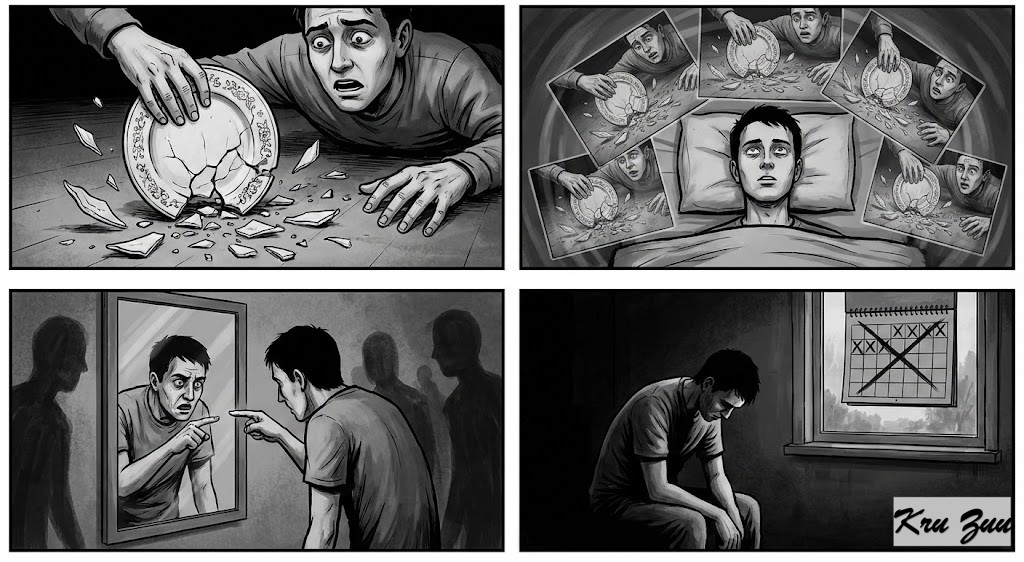
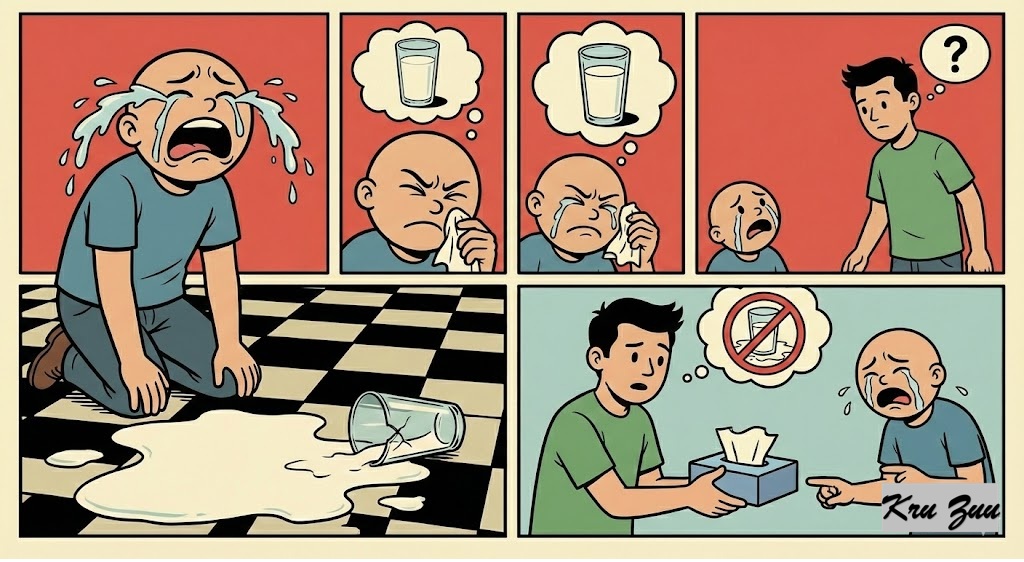
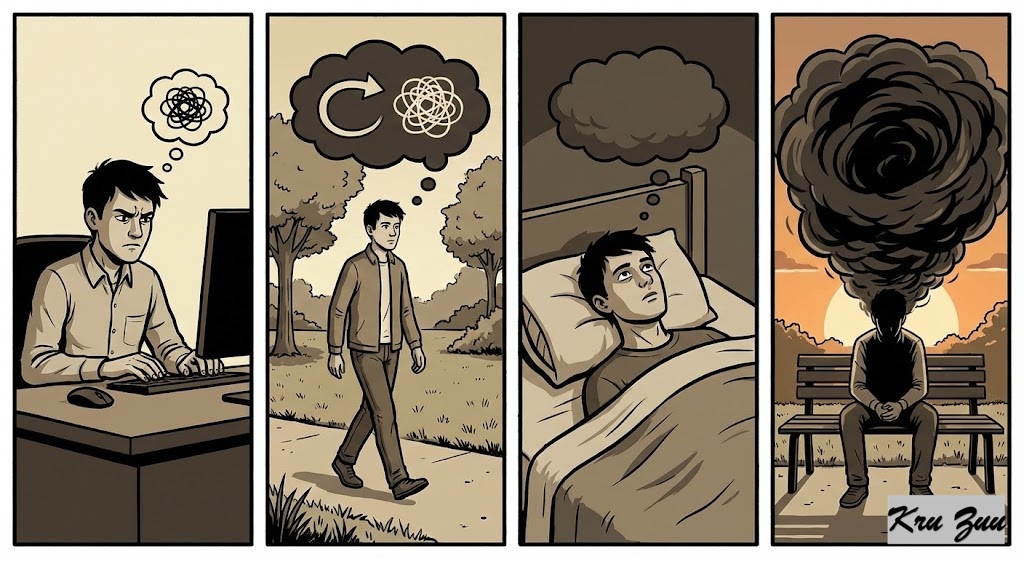
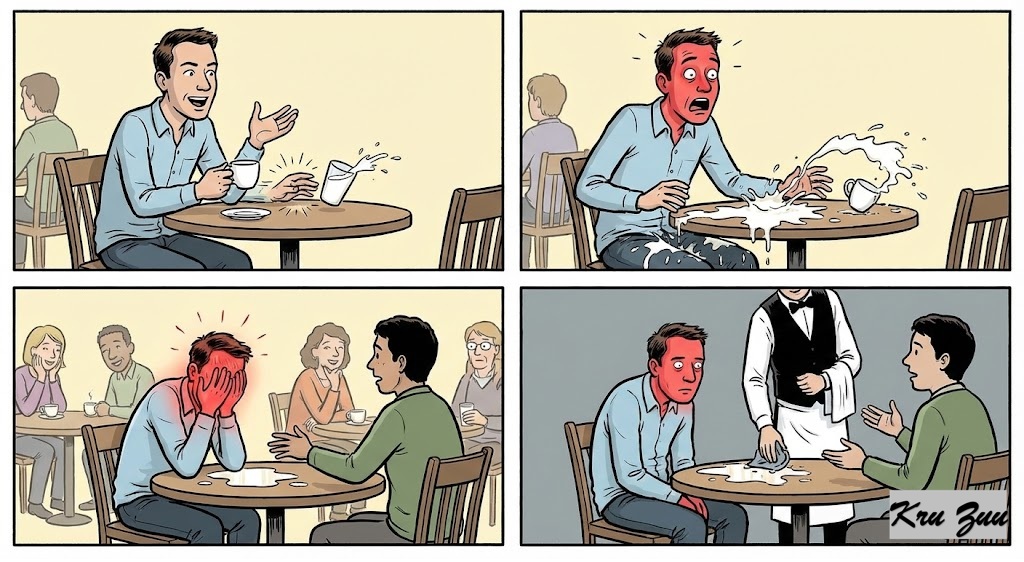
    You make a mistake. Maybe you failed an exam, sent an embarrassing text, or broke a valuable plate. What do you do? You replay the scene in your head 1,000 times. You say, “If only I had been fasterโ€ฆ If only I had been smarter.” You let one bad moment ruin your entire week. You dwell on the past until you are paralyzed by it.

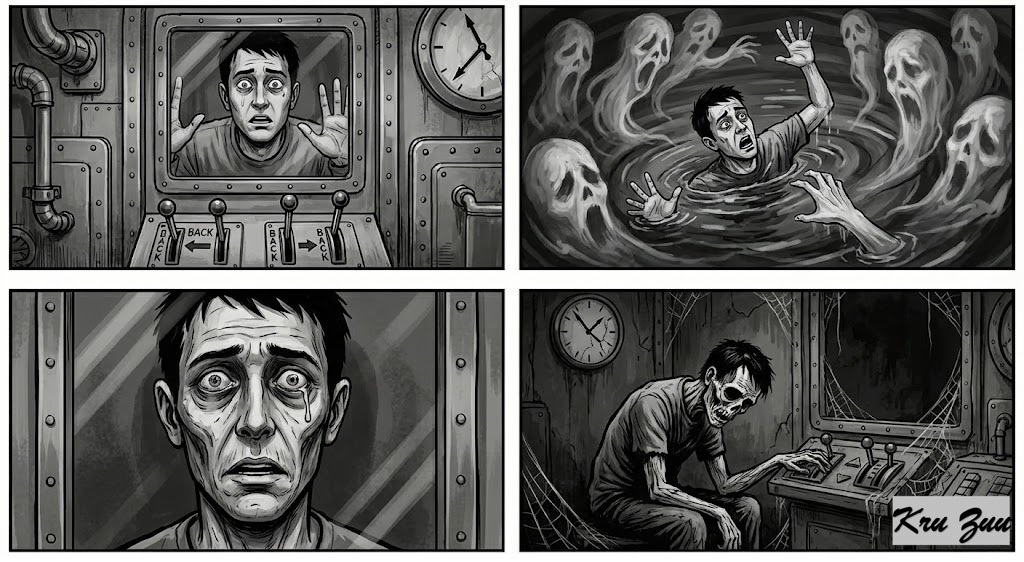
    The Result? You are stuck in a time machine that only goes backward. You are drowning in a puddle of regret. ๐ŸงŸโ€โ™‚๏ธ


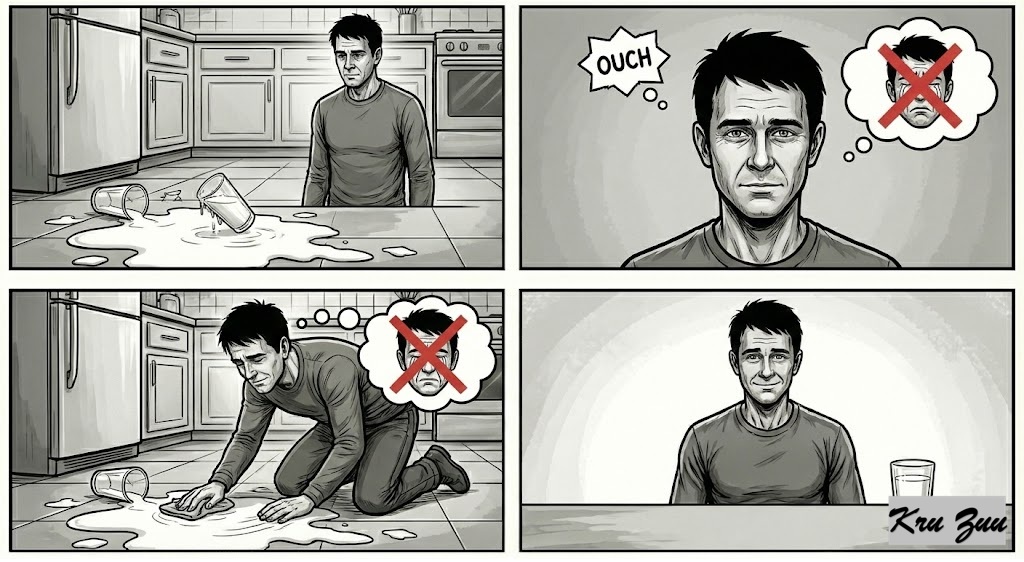
    ๐Ÿ˜‡ The Hero (The Stoic)

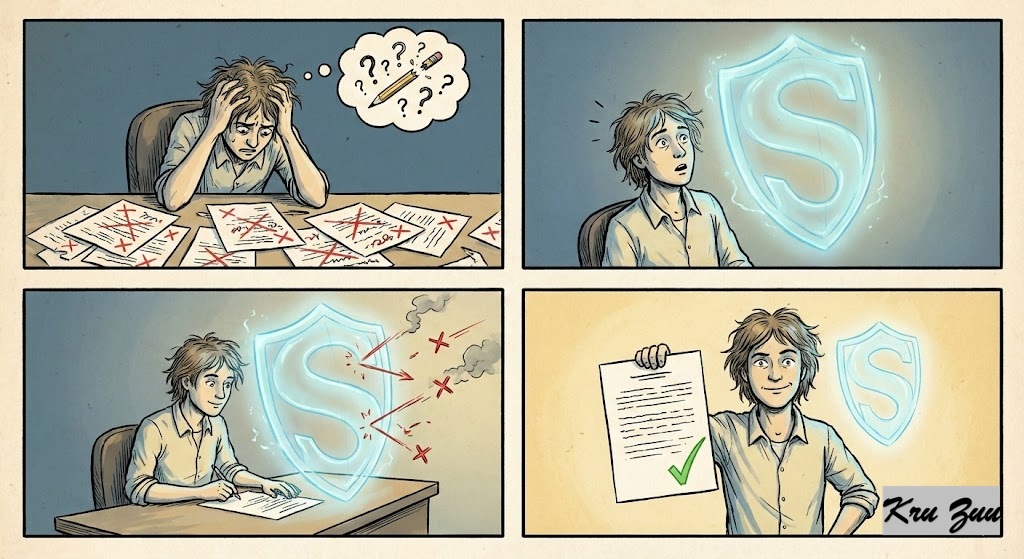
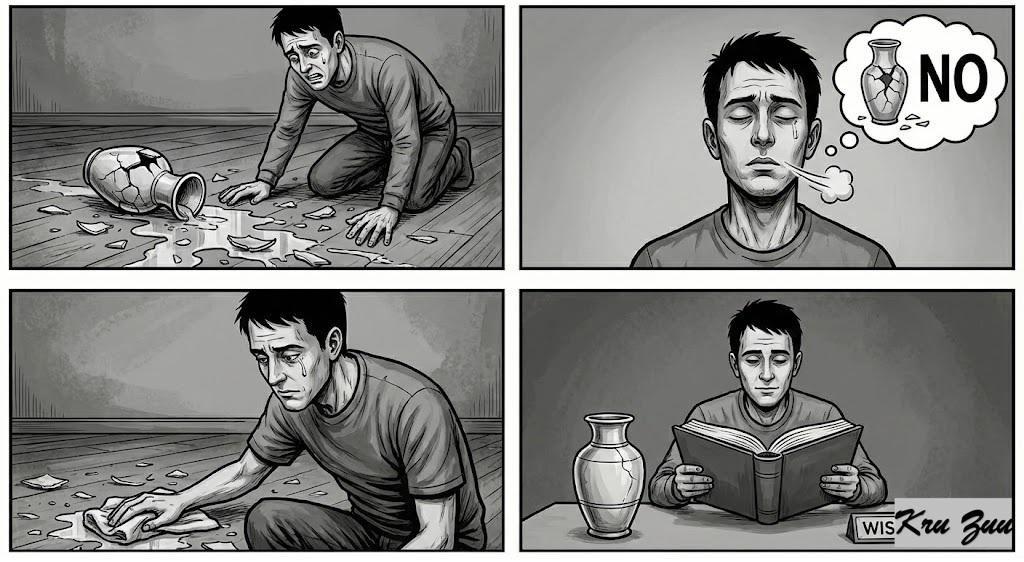
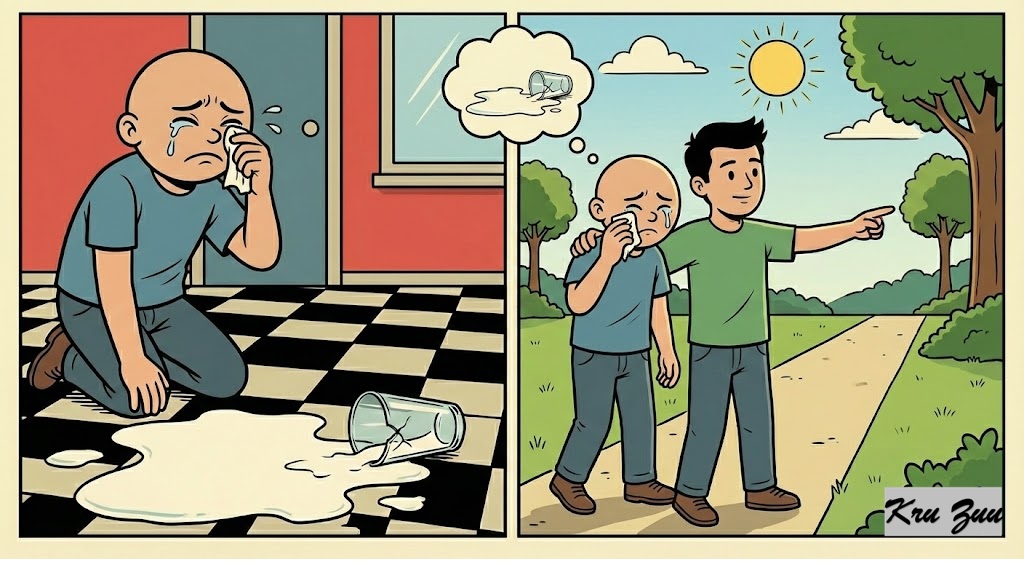
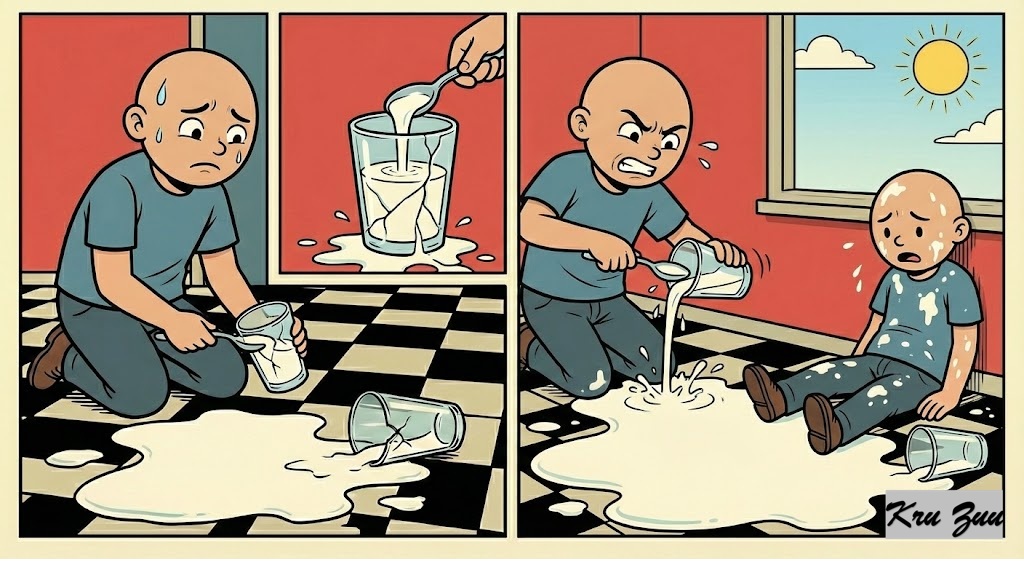
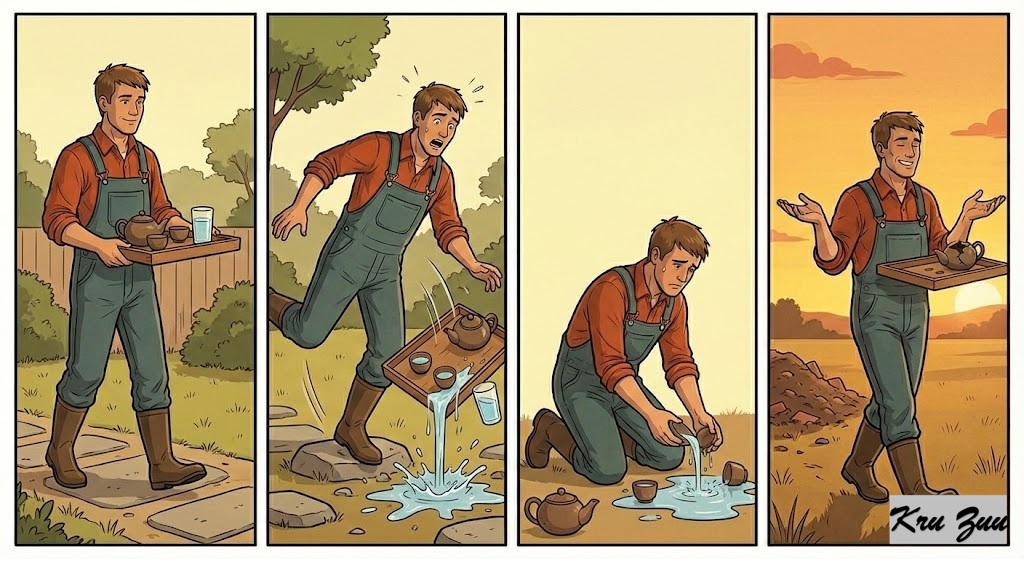
    You make a mistake. It stings. It hurts. You take a deep breath and look at the mess. You ask one question: “Can I change this?” The answer is No. So, you grab a towel, clean it up, and learn the lesson. You treat the mistake as a tuition fee for wisdom.

    The Result? You move forward instantly. Your energy is spent on fixing the future, not mourning the past. You are bulletproof against regret. ๐Ÿ›ก๏ธ


    โš–๏ธ The Reality


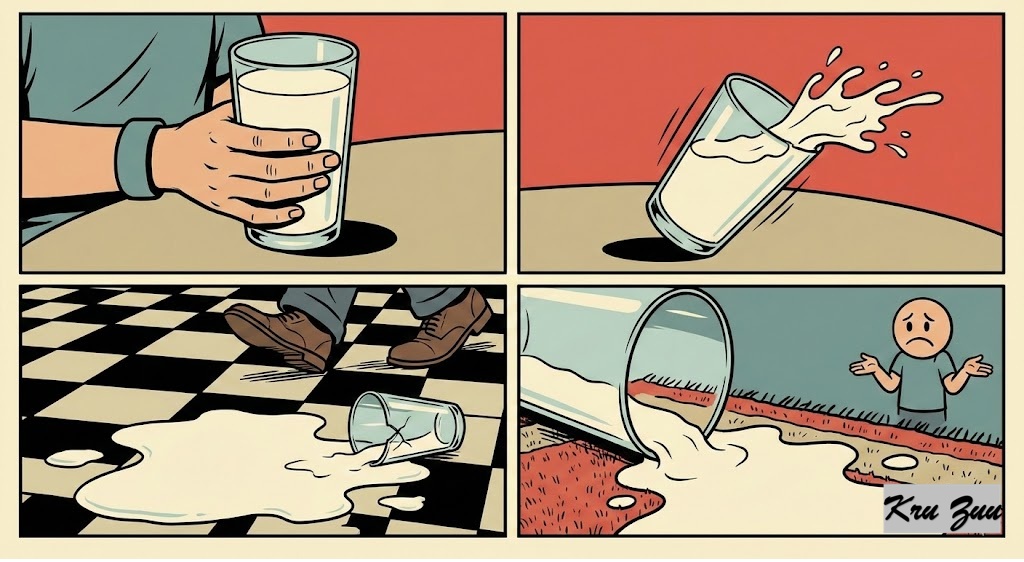
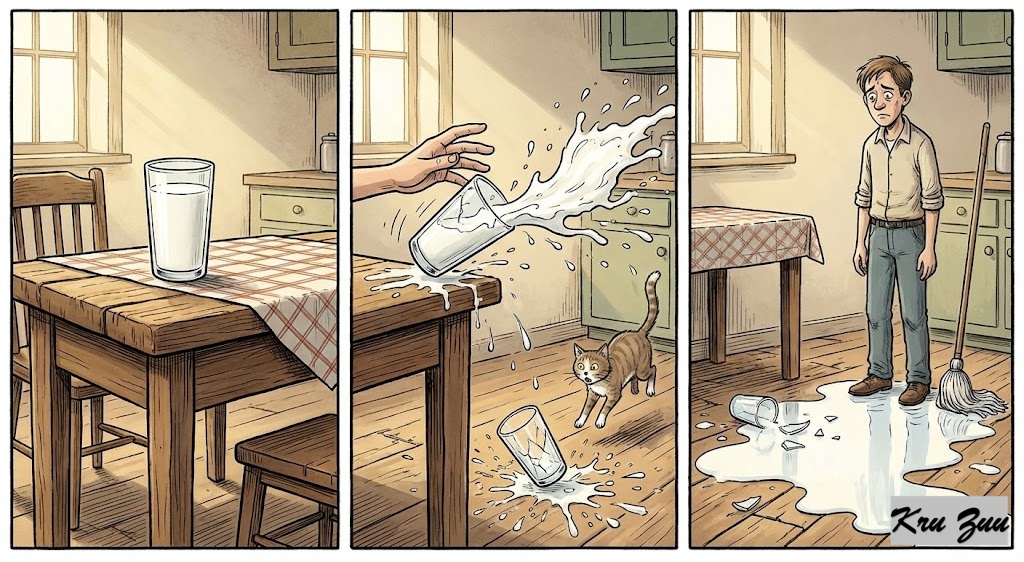
    Regret is expensive. Worrying about what already happened is like trying to pay a bill with Monopoly money. It doesnโ€™t work. The milk is on the floor. No amount of crying, screaming, or analyzing will put the milk back into the glass.


    ๐Ÿ’Ž The Secret

    The event (the spill) is not what hurts you. It is your reaction (the crying) that hurts you. Pain is inevitable; suffering is optional.

    ๐Ÿง The Anatomy of the Proverb


    This is the ultimate weapon against anxiety.


    Spilt (Adjective): The past participle of “spill.” It is done. Finished. Irreversible.


    Cry Over (Phrasal Verb): To be upset or sad about a specific thing.


    Simpler Version: Move on.


    ๐Ÿ“š Vocabulary Vault


    Irreversible (Adjective):
    Cannot be changed or undone. (The milk is irreversible).


    Dwell (Verb): To think/speak about something for too long (usually something bad).


    Resilience (Noun): The ability to recover quickly from difficulties. ๐Ÿš€


    Ruminate (Verb): To think deeply about something; often negative thoughts on a loop.


    Futile (Adjective): Pointless; producing no useful result.


    ๐Ÿง  Grammar Focus: Prepositions of Cause


    Notice the preposition “Over.” We don’t cry for the milk or at the milk. We cry over it.


    English Logic: The emotion is covering the subject.


    Examples: “He is arguing over money.” / “Don’t worry over small details.”

    ๐Ÿ“œ History: Origin and Spread


    The Origin:
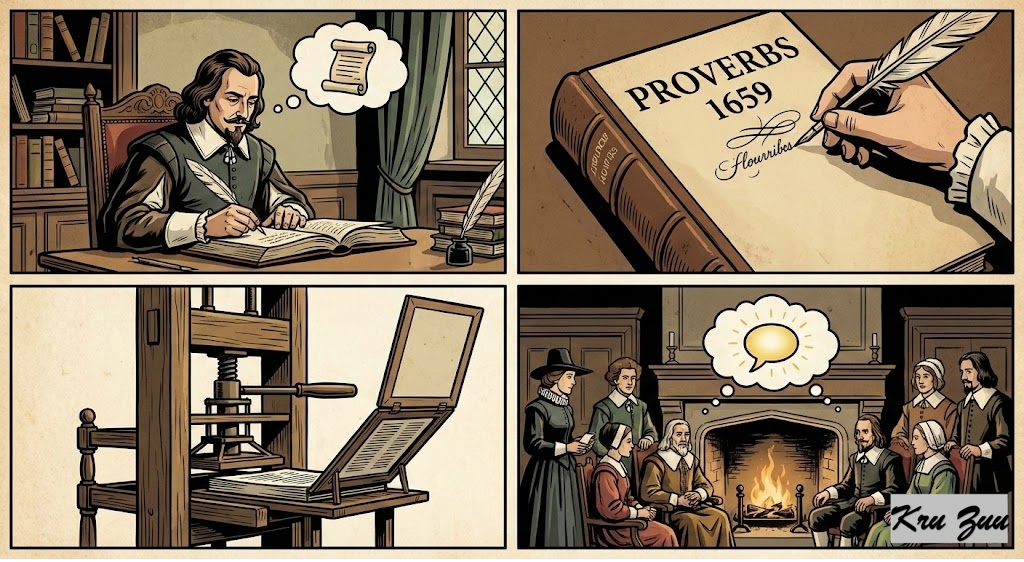
    This proverb was first recorded in 1659 by historian James Howell.

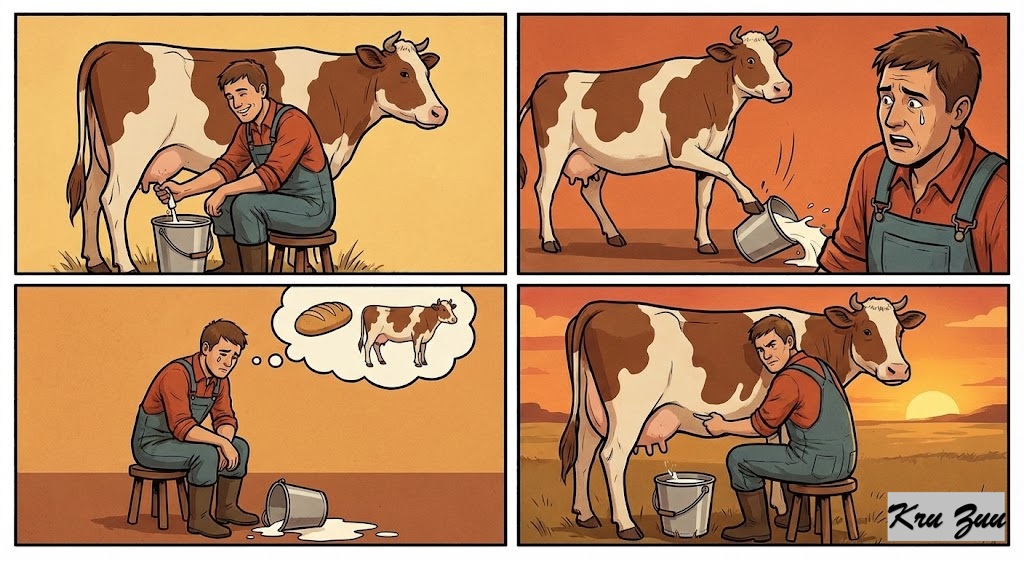
    The Logic: In old farming days, milk was money. If a cow kicked the bucket over, the farmer lost that day’s profit. But standing there crying wouldn’t feed the family, milking the next cow would.


    Global Cousins


    ๐Ÿ‡น๐Ÿ‡ท Turkish:
    “Olanla รถlene รงare yoktur.” (There is no cure for what has happened or who has died.) โ€” A darker, but very true equivalent!


    ๐Ÿ‡ซ๐Ÿ‡ท French:“Ce qui est fait est fait.” (What is done is done.)


    ๐Ÿ‡ฏ๐Ÿ‡ต Japanese:“Fukusui bon ni kaerazu.” (Spilt water will not return to the tray.)

    ๐ŸŽญ Short Story: The Picnic at the Pond


    Letโ€™s see how different personalities handle a disaster.


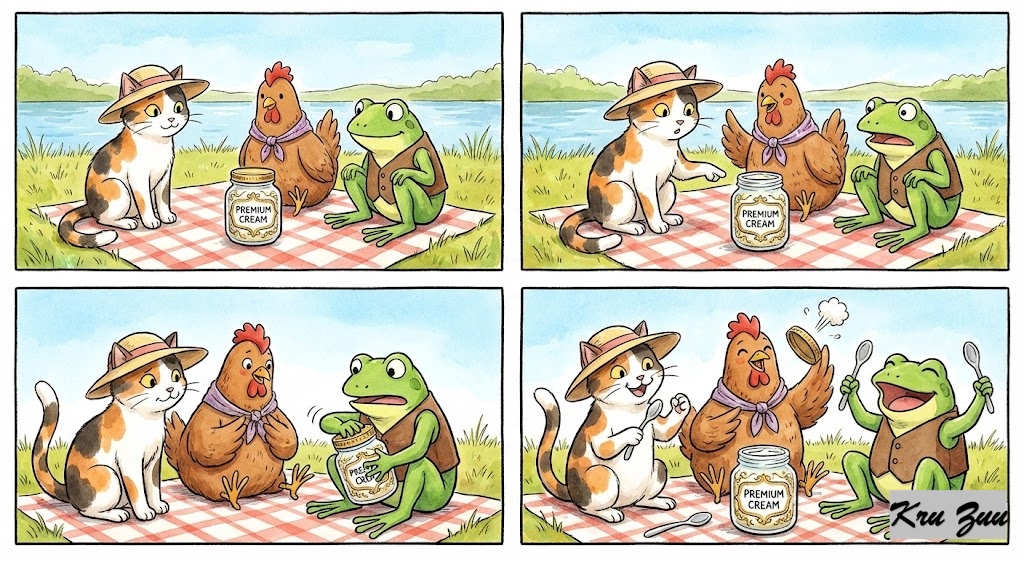
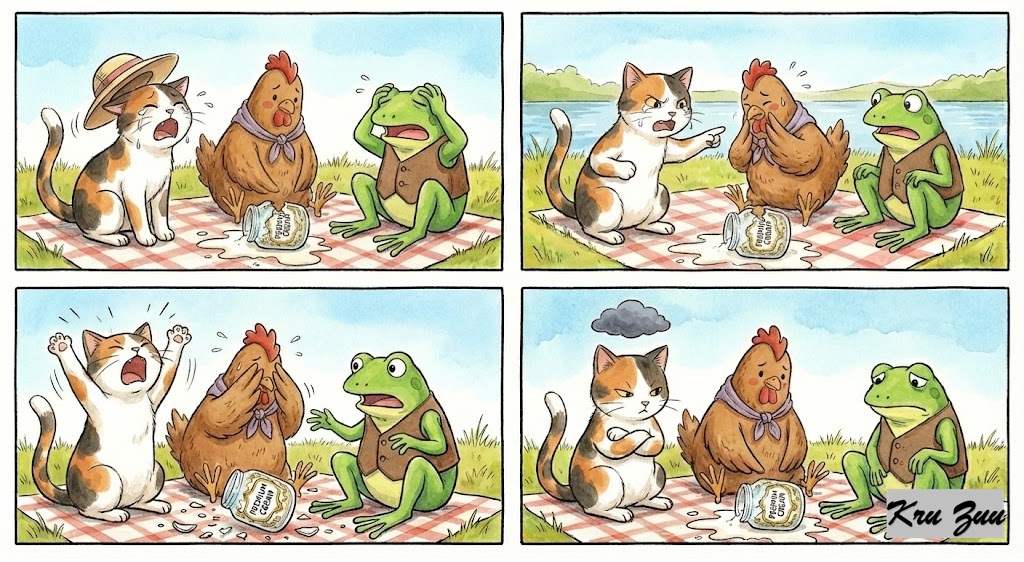
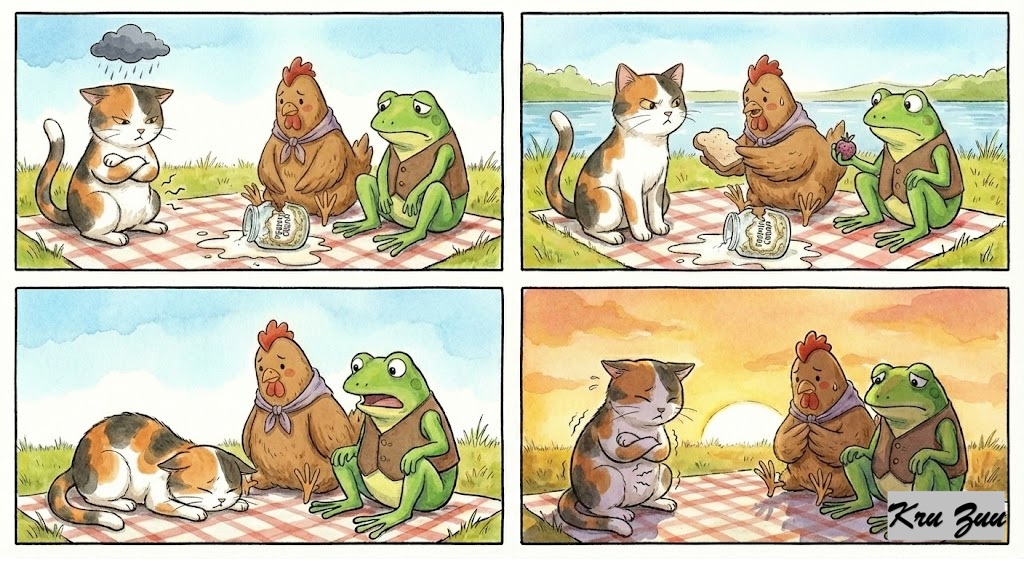
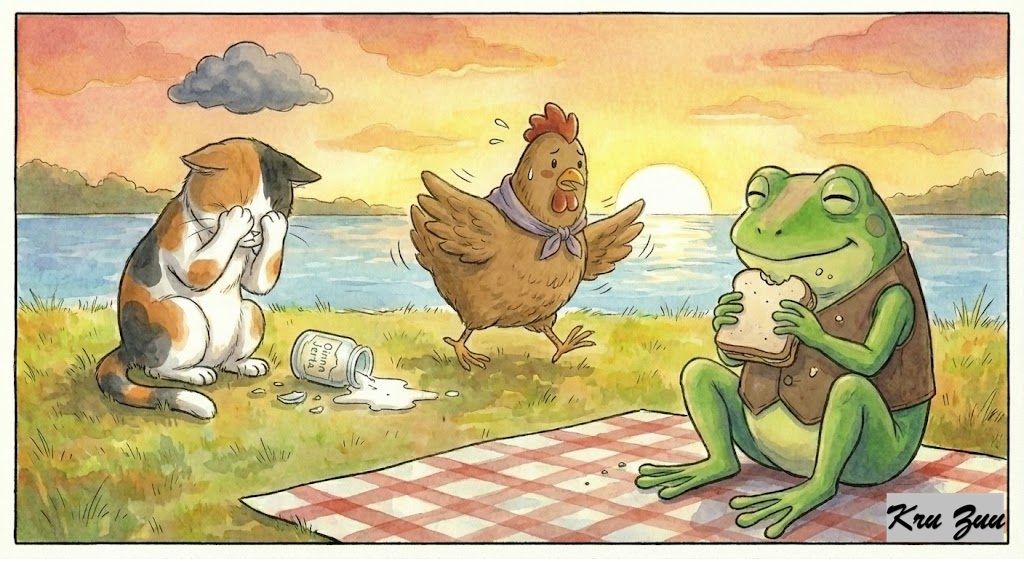
    ๐ŸŒŸ The Setup: It is a beautiful Sunday. Three friends are having a picnic by the lake: Cleo the Cat, Henrietta the Chicken, and Franklin the Frog. They have one jar of delicious, expensive cream.


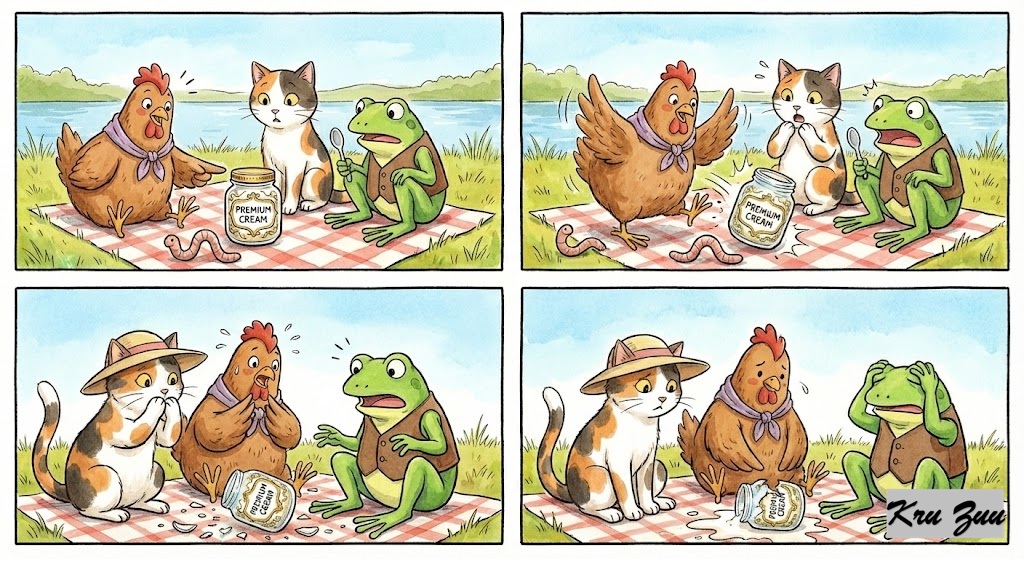
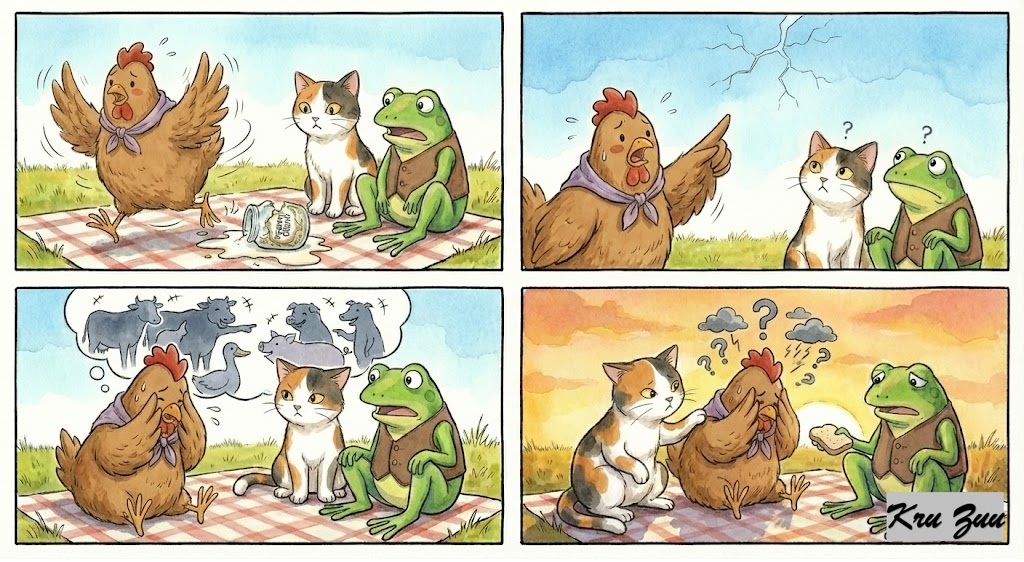
    The Accident: Henrietta the Chicken gets excited about a worm. She flaps her wings, hits the table, andโ€”SMASH. The jar breaks. The expensive cream soaks into the dirt. It is gone.


    ๐Ÿ˜ฟ Cleo the Cat (The Dweller): Cleo stares at the cream. She starts to wail. “My cream! It was perfect! Why are you so clumsy, Henrietta? If we had sat on the grass, this wouldn’t have happened! I can’t believe this. My day is ruined. I’m not eating anything else!”

    Result: Cleo is hungry and miserable.


    ๐Ÿ” Henrietta the Chicken (The Anxious): Henrietta runs in circles, flapping wildly. “Oh no! Oh no! The sky is falling! What will we do? We have no cream! It’s a disaster! Everyone will laugh at us!”

    Result: Henrietta is having a panic attack.


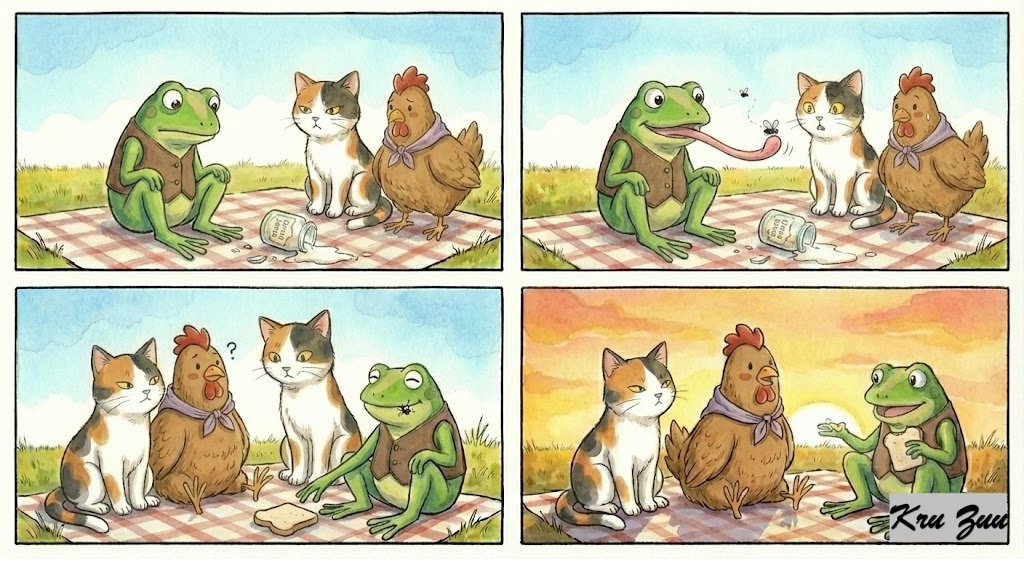
    ๐Ÿธ Franklin the Frog (The Stoic): Franklin looks at the broken glass. He looks at the cream in the dirt. He blinks his big eyes. “Ribbit,” says Franklin. He sticks out his long tongue and catches a fly buzzing near the mess. “The cream is gone,” Franklin says calmly. “But the sandwiches are still dry. And the sun is still warm. Pass the bread, please.”


    The Moral: Cleo cried. Henrietta panicked. Franklin ate lunch. Be like Franklin. Eat the sandwich. ๐Ÿฅช

    ๐ŸŽ“ Lesson for English Learners


    Don’t Let Mistakes Silence You.


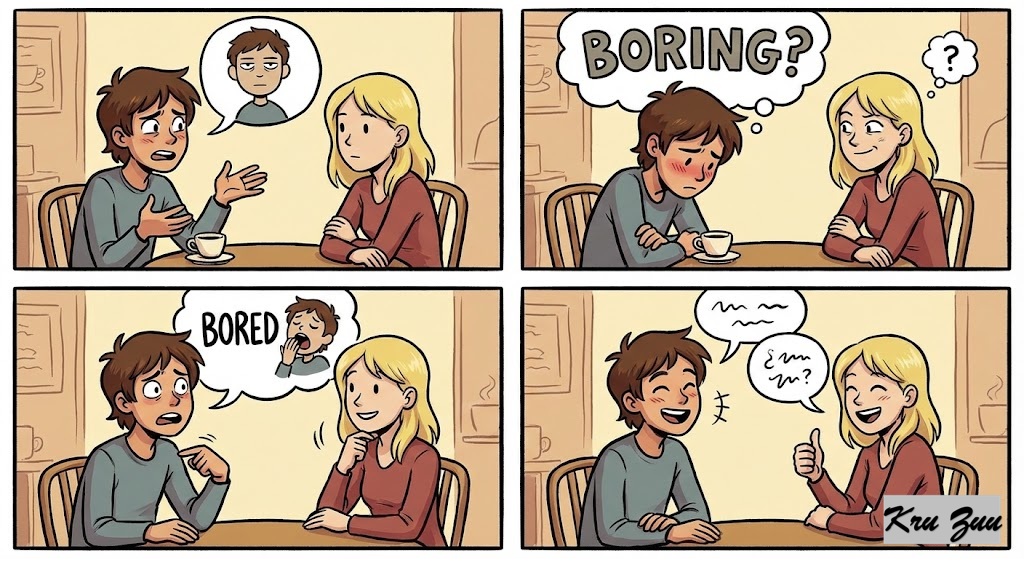
    Situation: You are speaking English to a native speaker. You try to say “I was bored,” but you accidentally say “I was boring.”


    The “Spilt Milk” Reaction: You freeze. Your face turns red. You stop talking because you are afraid of making another mistake.


    The Hero Reaction: You laugh. You say, “Oops! I mean I was bored!” and you keep talking.


    Remember: A grammar mistake is spilt milk. Once the words leave your mouth, they are gone. You cannot catch them. Don’t cry over a bad verb tense. Just speak the next sentence better.


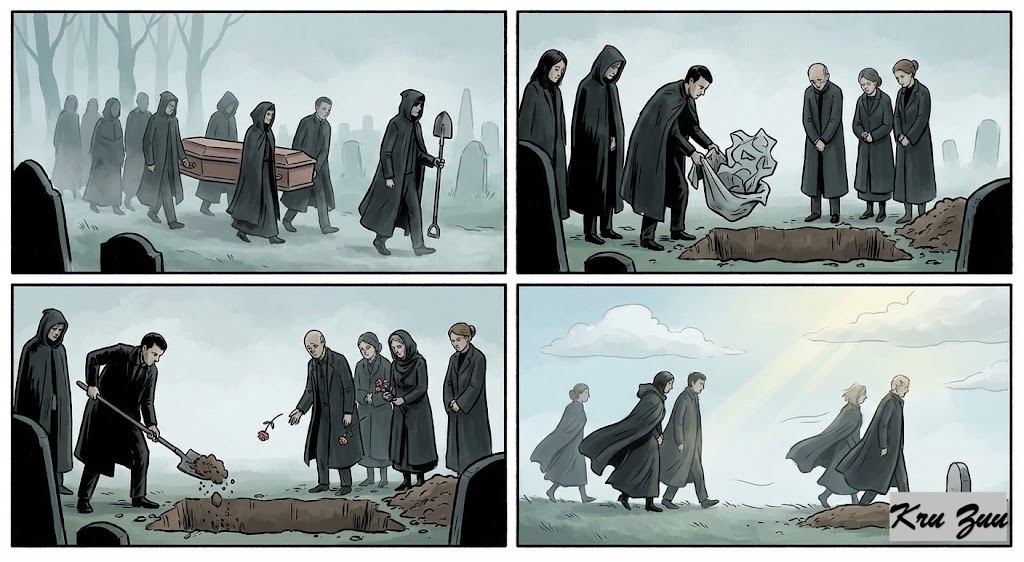
    ๐Ÿ’ฌ Your Turn: The 5-Second Funeral ๐Ÿš€


    We all have “spilt milk” in our lives. Here is your challenge.


    The Exercise: Think of one small mistake you made this week that is still bothering you.


    A rude email you sent?


    A workout you skipped?


    A dumb comment you made?


    The Action:
    We are going to hold a funeral for that mistake.


    Close your eyes.


    Admit the mistake happened.


    Count backward:
    5, 4, 3, 2, 1.


    Say out loud: “It is spilt.”


    Move on.


    Question:
    What is one “spilt milk” moment you are letting go of today? Tell us in the comments! ๐Ÿ‘‡

    By Zubeyir YURTKURAN

    https://www.facebook.com/BrainBattleground/

    https://www.facebook.com/zubeyr.yurtkuran/

    https://www.instagram.com/zubeyryurtkuran/
    https://www.youtube.com/@BrainBattleground-b3p

    https://www.instagram.com/brainbattleground/

  • ๐Ÿ›ก๏ธ The Daily Shield: The Law of Loyalty

    ๐Ÿ›ก๏ธ The Daily Shield: The Law of Loyalty

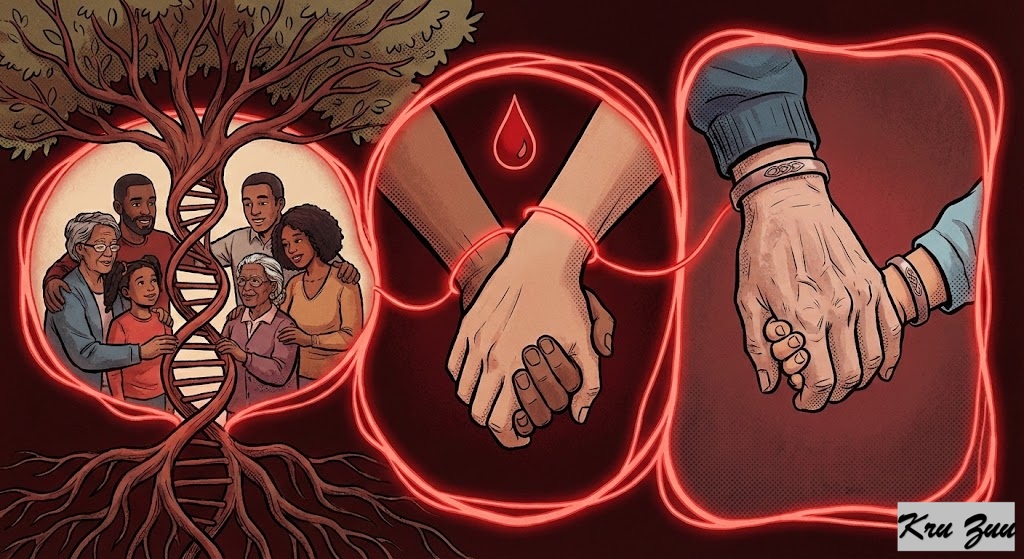
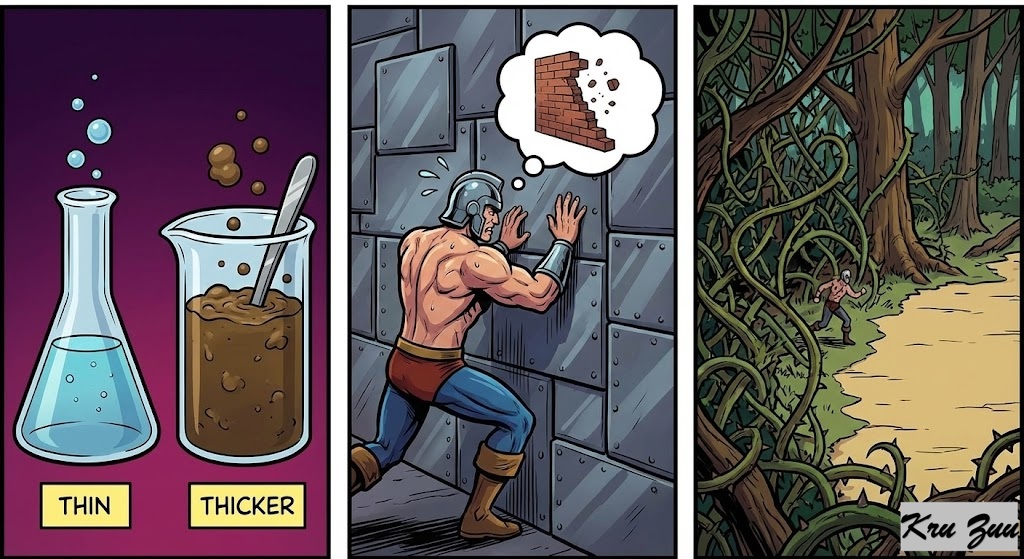
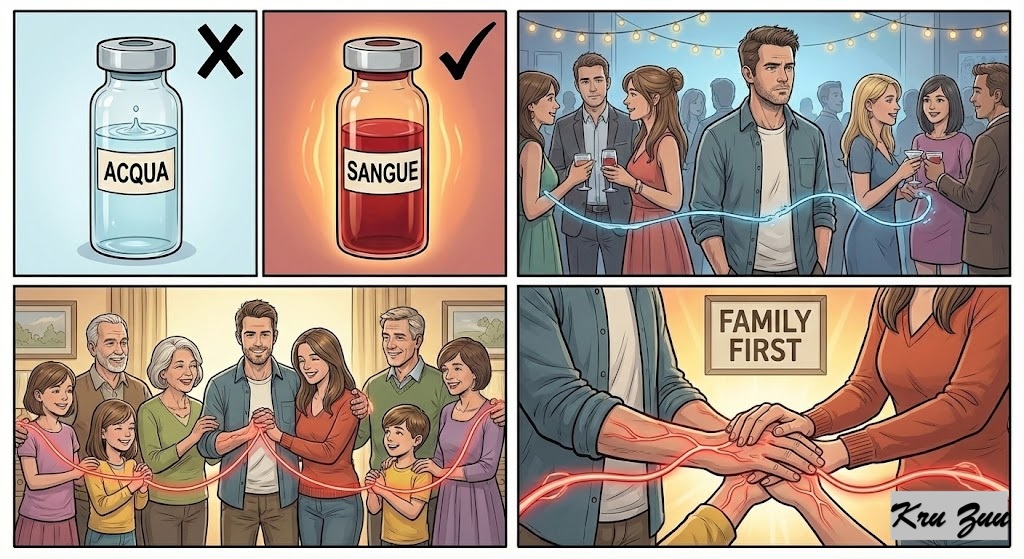
    “Blood is thicker than water.”


    ๐Ÿ˜ˆ The Villain (The Fair-Weather Friend)


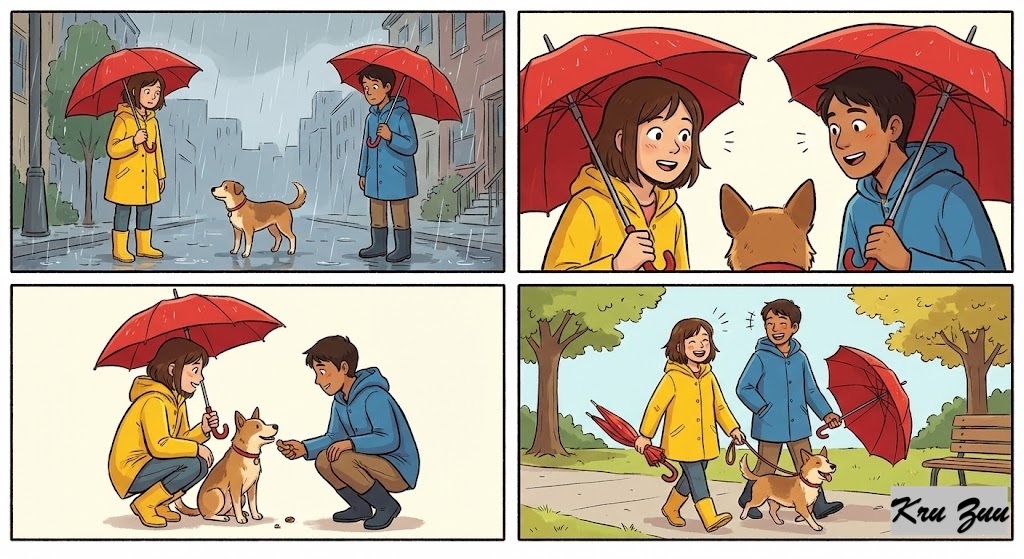
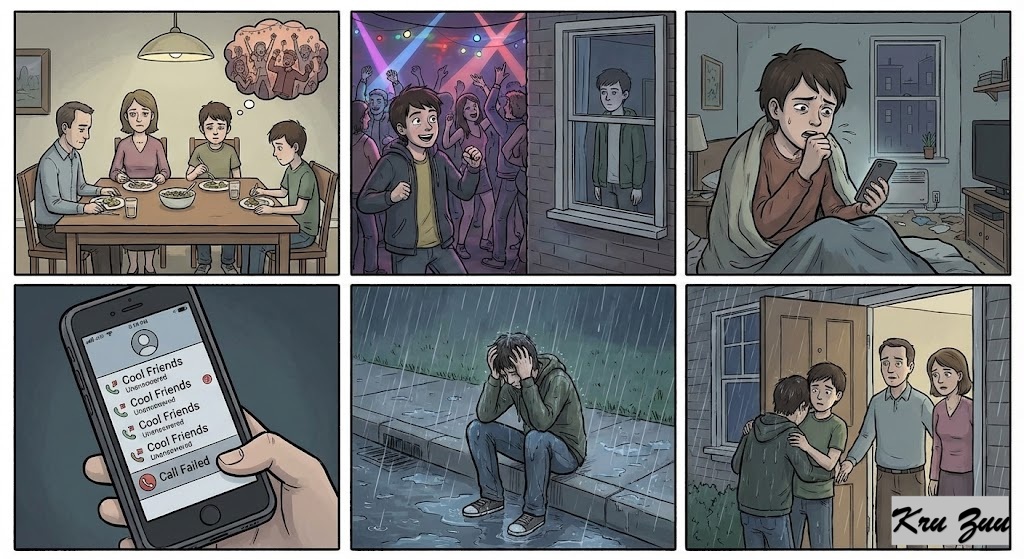
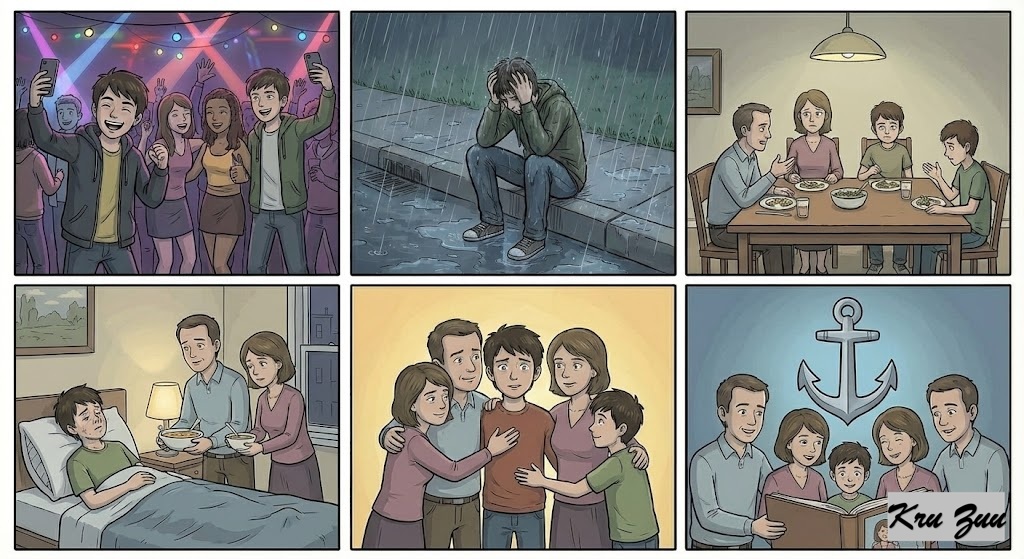
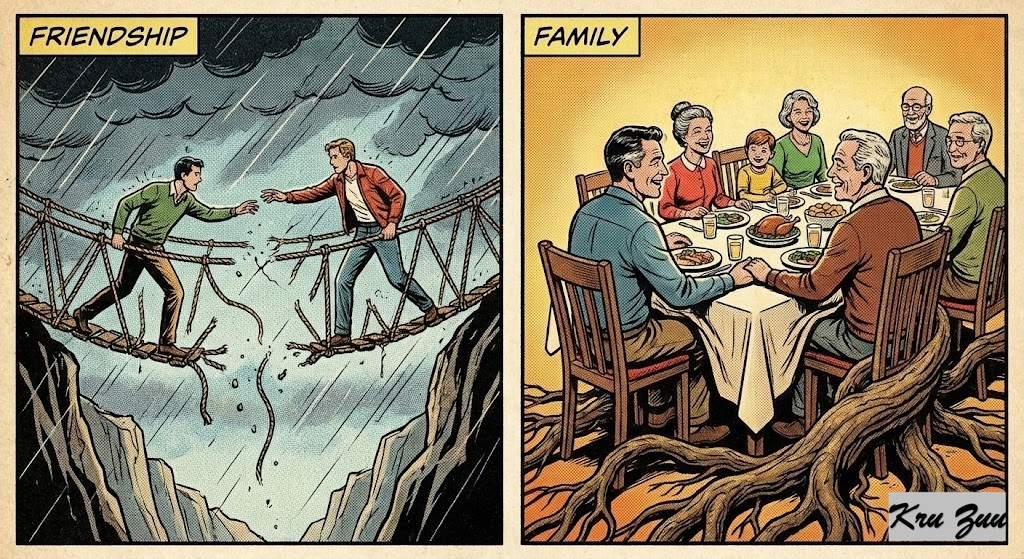
    You have a family dinner planned, but a new friend invites you to a cool party. You think, “My family is boring. I see them every day.” You ditch your brother to hang out with people who don’t even know your middle name. When you lose your job or get sick, you call those “cool friends.” No answer. They are busy. You are left alone in the rain. You chased the “water” and ignored the “blood.” ๐ŸŒง๏ธ


    ๐Ÿ˜‡ The Hero (The Loyal Guardian)


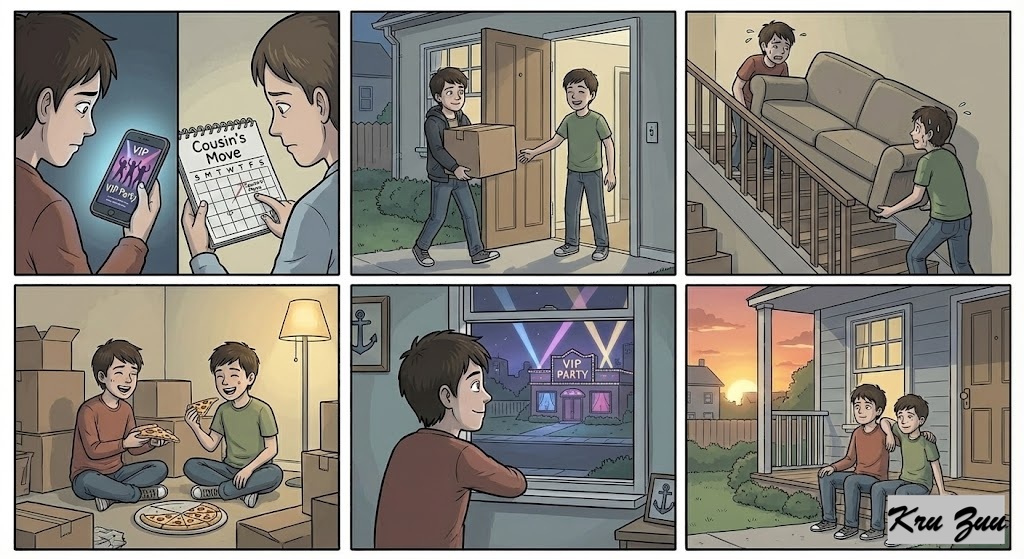
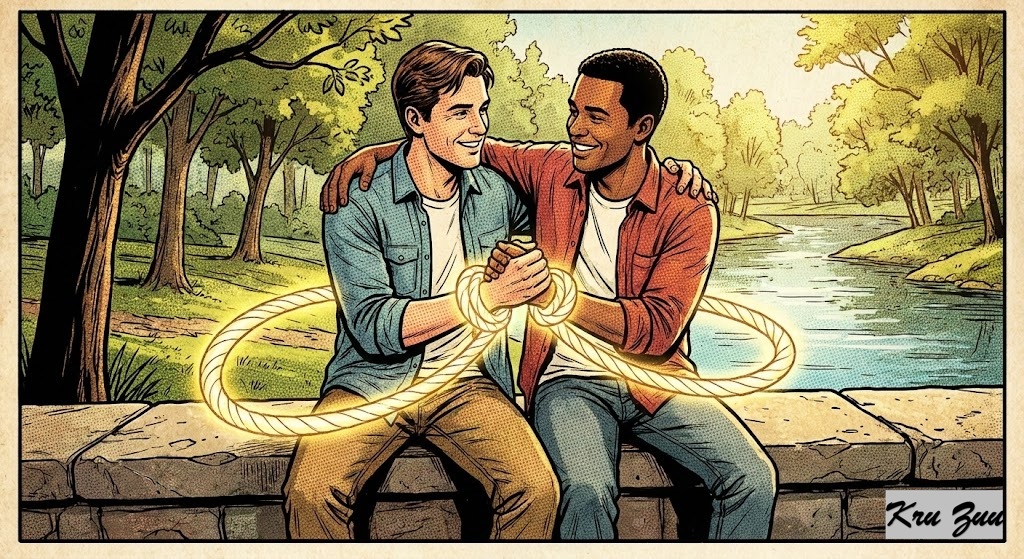
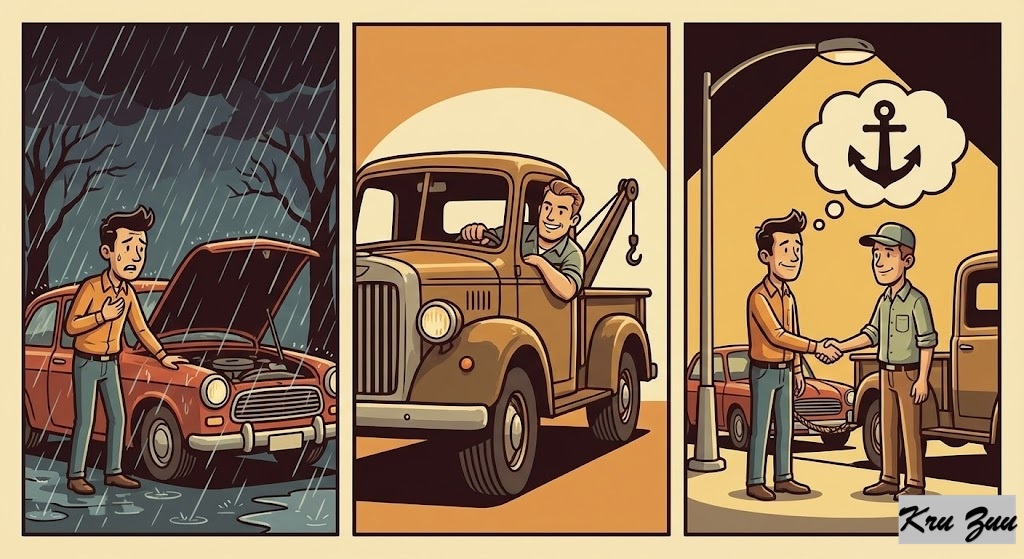
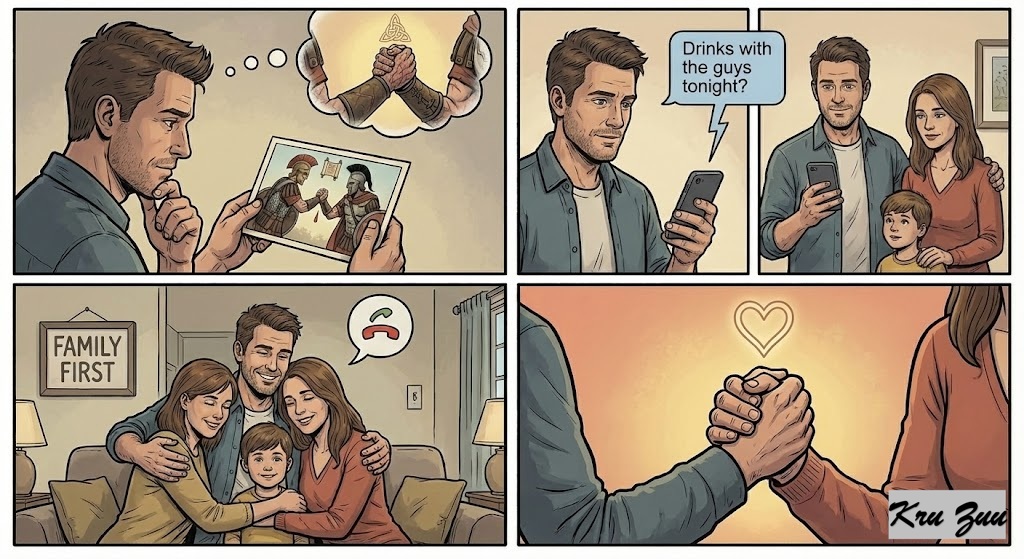
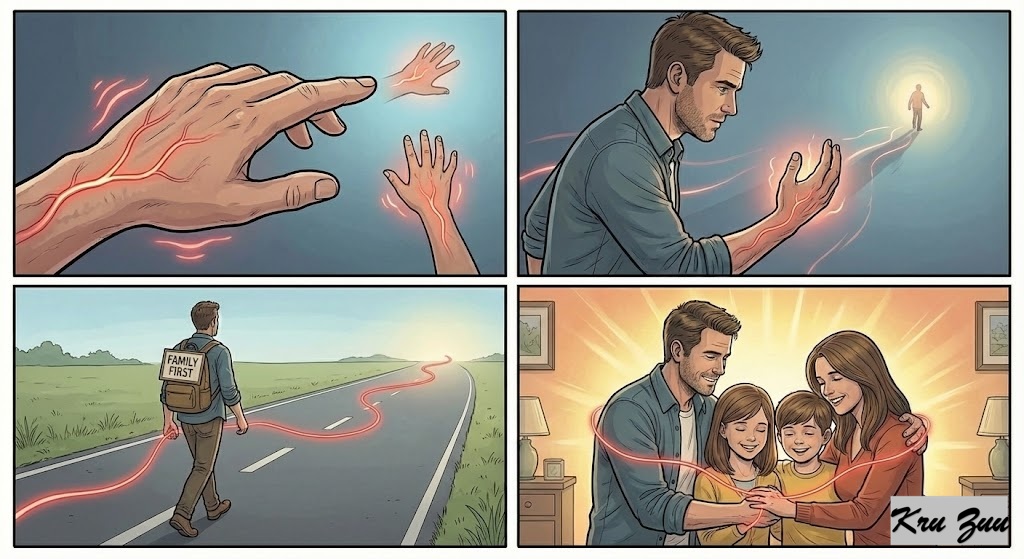
    You have a choice: A flashy event with strangers or helping your cousin move into a new house. Itโ€™s hard work. Itโ€™s not “fun.” But you choose family. You realize that friends may come and go like tides, but family (or the people who are like family) is the anchor.

    The Result? When your world falls apart, you have an army behind you. You are never truly alone. โš”๏ธ


    โš–๏ธ The Reality


    Popularity is temporary. Loyalty is permanent. We often treat strangers better than our own family because we try to impress them. We treat our family poorly because we think, “They will forgive me anyway.” This is a dangerous trap.

    ๐Ÿ’Ž The Secret

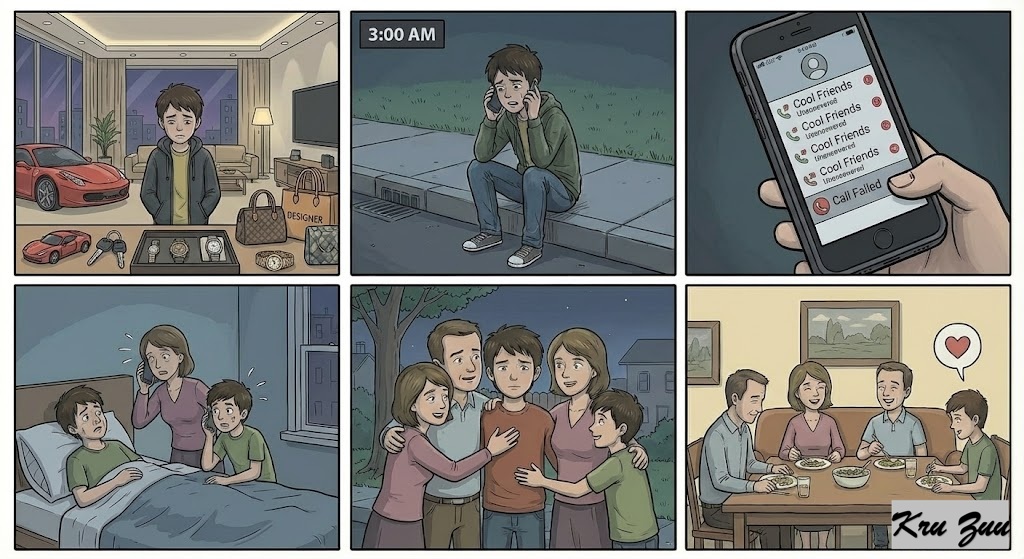
    Real wealth is not money; it is knowing exactly who will pick up the phone at 3:00 AM when you are in trouble.

    ๐Ÿง The Anatomy of the Proverb


    This is the ultimate rule of relationships.


    Blood (Noun): Represents family ties, genetics, and deep, unbreakable bonds. ๐Ÿฉธ


    Thicker (Comparative Adjective): More dense; stronger; harder to pass through.


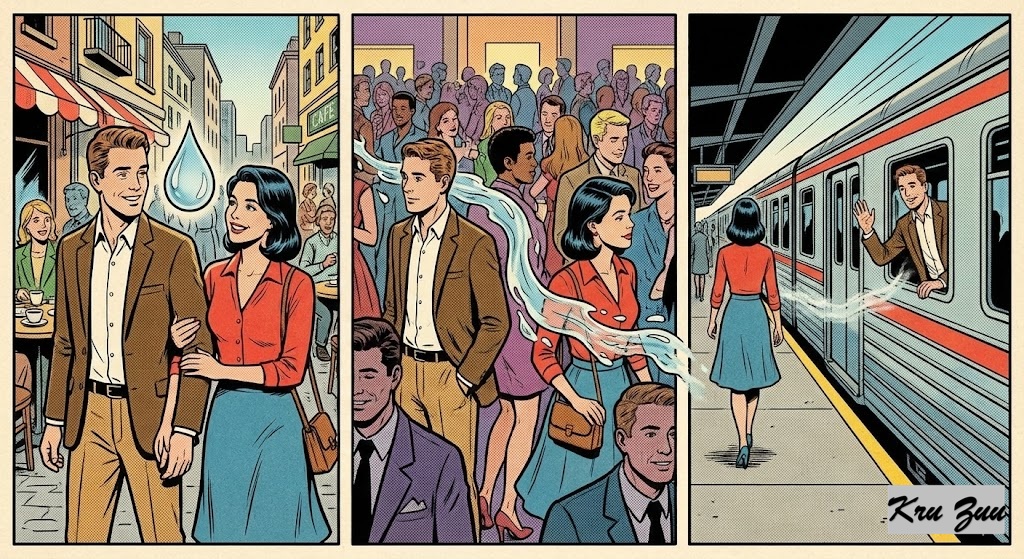
    Water (Noun): Represents weak, temporary, or fluid relationships (acquaintances, casual friends). ๐Ÿ’ง


    Simpler Version:
    Family relationships are stronger than friendships.


    ๐Ÿ“š Vocabulary Vault


    Bond (Noun): A strong connection between two people. (Example: The bond between brothers.)


    Loyalty (Noun): A strong feeling of support or allegiance.


    Kinship (Noun): Blood relationship; sharing the same origin.


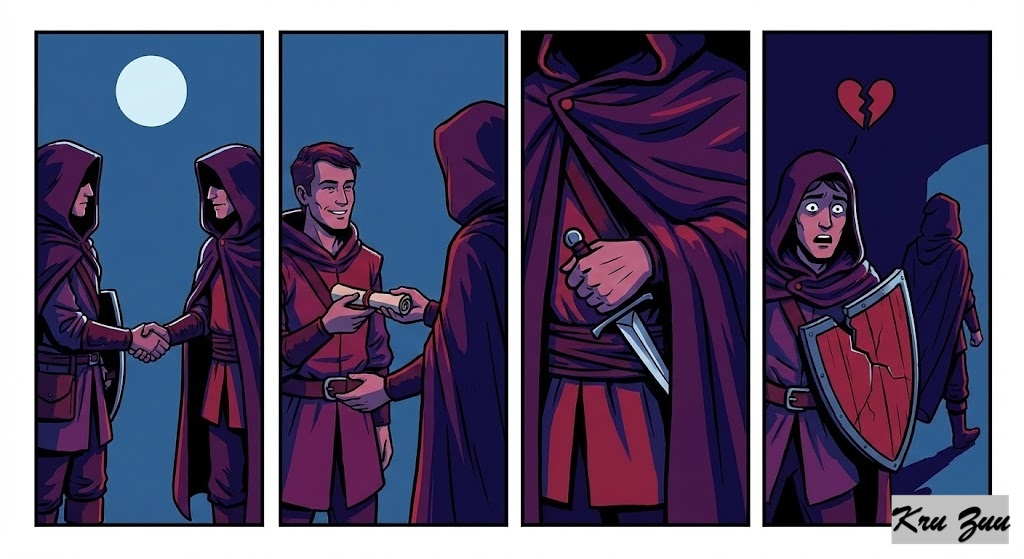
    Betrayal (Noun): The action of breaking trust. (The opposite of loyalty). ๐Ÿ’”


    Dependable (Adjective): Trustworthy and reliable.


    ๐Ÿง  Grammar Focus: Comparative Adjectives


    This proverb uses the Comparative Form to measure the strength of relationships.


    Rule: Short adjectives + -er + than.


    Thick โžก๏ธ Thicker than
    Strong โžก๏ธ Stronger than
    Deep โžก๏ธ Deeper than


    Example in context:
    “His love for his family is stronger than his love for money.”

    ๐Ÿ“œ History: Origin and Spread


    Where did this come from?


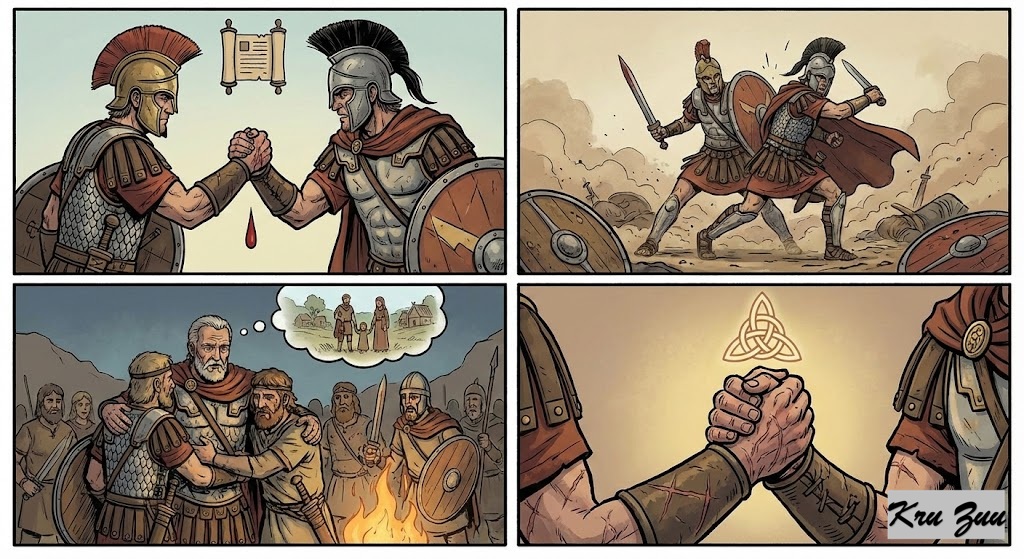
    The Twist: Originally, some historians believe the phrase was “The blood of the covenant is thicker than the water of the womb.” This meant that soldiers who bled together in battle (covenant) were closer than brothers by birth!


    Modern Meaning: Over centuries, the meaning flipped. Today, it strictly means Family comes first.


    Global Cousins


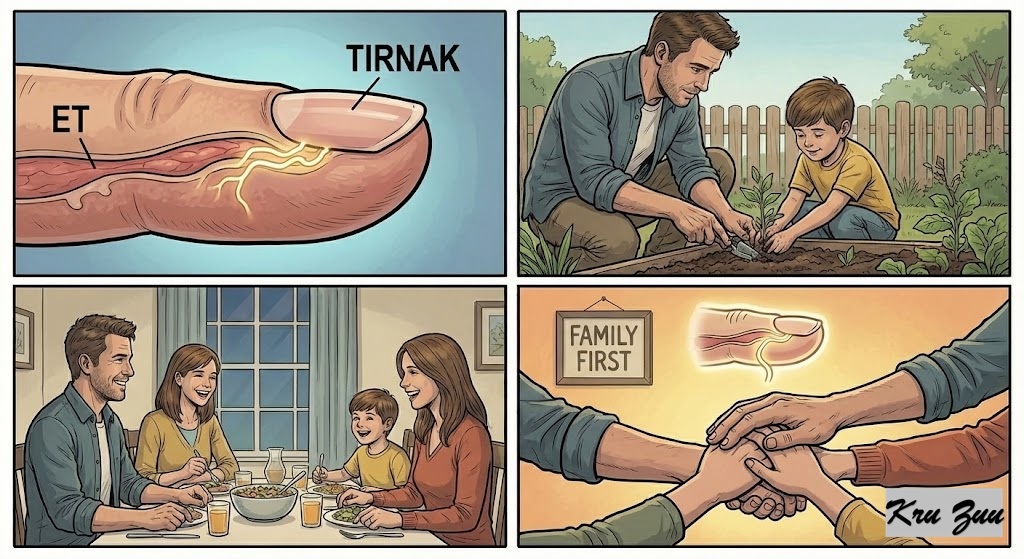
    ๐Ÿ‡น๐Ÿ‡ท Turkish: “Et tฤฑrnaktan ayrฤฑlmaz.” (Flesh cannot be separated from the fingernail.) โ€” A perfect biological metaphor!


    ๐Ÿ‡ช๐Ÿ‡ธ Spanish: “La sangre tira.” (The blood pulls/calls.)


    ๐Ÿ‡ฎ๐Ÿ‡น Italian: “Il sangue non รจ acqua.” (Blood is not water.)

    ๐ŸŽญ Short Story: The Pond, The Barn, and The Storm


    Letโ€™s meet our unlikely trio to see this law in action.


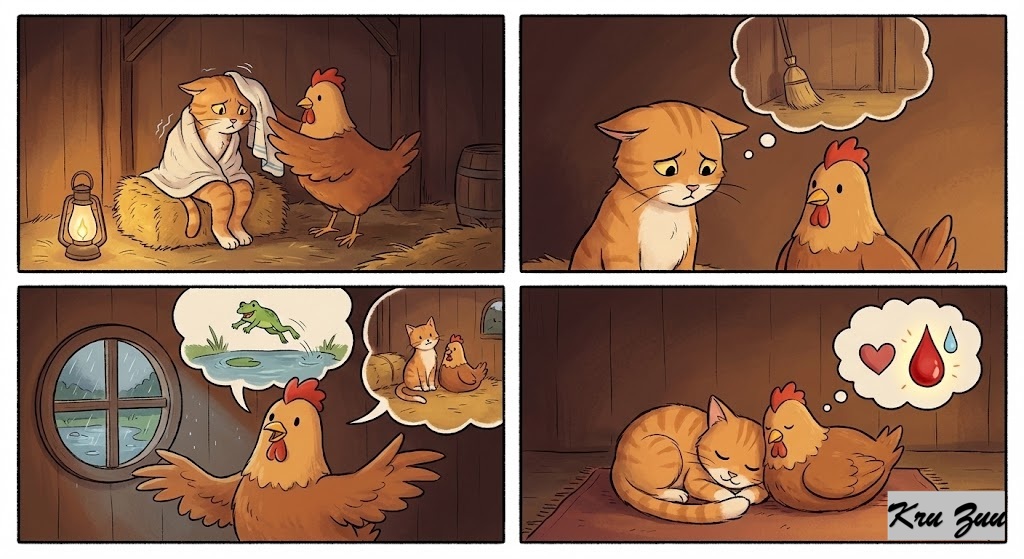
    ๐Ÿฑ The Character: Whiskers (The Cat) – Cool, independent, and easily bored.

    ๐Ÿ” The Character: Peck (The Chicken) – Whiskers’ adopted brother. Loud, clumsy, but loyal.

    ๐Ÿธ The Character: Hop (The Frog) – The new, popular guy at the pond. Fun but slippery.


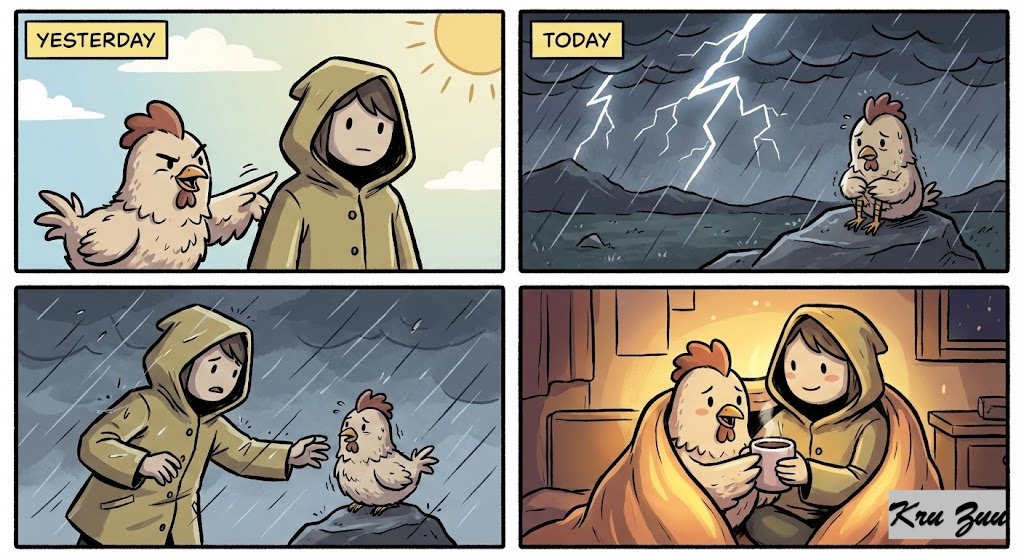
    ๐ŸŒŸ The Setup: It is a sunny afternoon. Peck the Chicken says, “Hey Whiskers! Let’s clean the barn together. Itโ€™s going to rain later.” Whiskers rolls his eyes. “Cleaning? Boring! Hop the Frog invited me to the Lily Pad Party at the pond. Catch you later, feather-brain!”


    The Conflict: Whiskers runs to the pond. Hop is there, telling jokes, catching flies, looking cool. “You are my best friend, Hop!” Whiskers says. “Sure, sure,” says Hop. “We are tight like glue!”


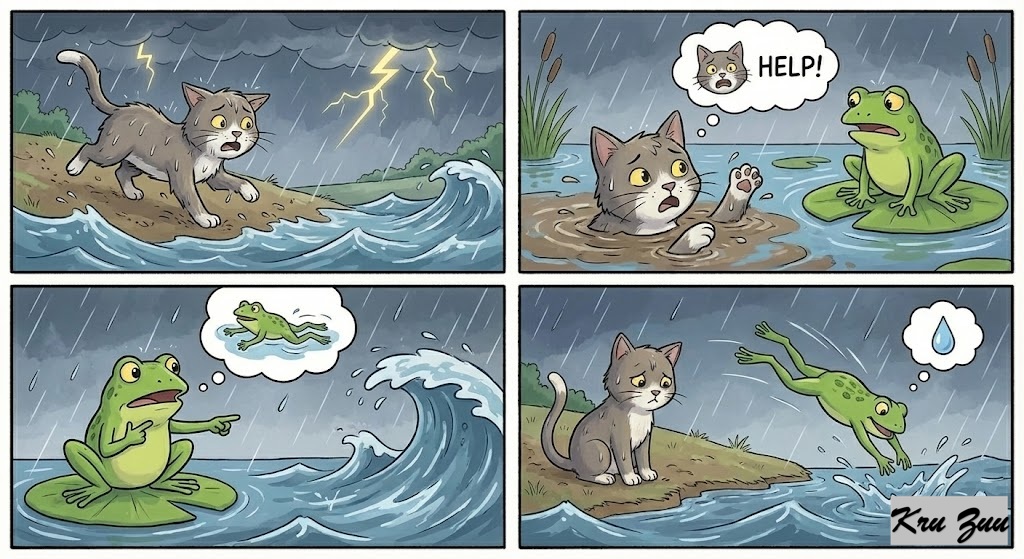
    The Climax: Suddenly, the sky turns black. Thunder shakes the ground. A massive storm hits. The water in the pond rises fast. Whiskers hates water. He slips into the mud. “Help! Hop, help me!” Hop looks at Whiskers, then looks at the dangerous water. “Sorry, cat! I’m an amphibian, I gotta save myself!” Hop splashes away, disappearing into the deep water. Water washes away easily.


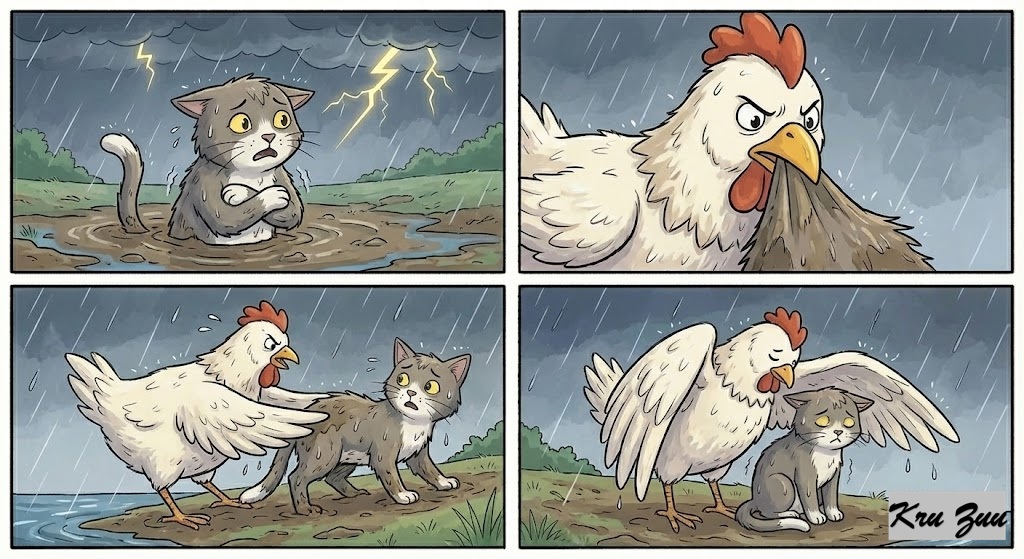
    Whiskers is stuck. He is wet, shivering, and scared. Suddenly, he feels a beak grabbing his collar. Itโ€™s Peck. Peck hates the rain too, but he ran all the way from the safe barn. He drags Whiskers out of the mud, covering him with his wings to block the rain.


    The Resolution: Safe in the barn, Whiskers dries off. “Why did you come?” Whiskers asks. “I left you alone to clean.” Peck clucks softly. “Hop is a pond creature. He flows where the water goes. We live in the same barn. We are family. And blood is thicker than water.”

    ๐ŸŽ“ Lesson for English Learners


    Context Matters.


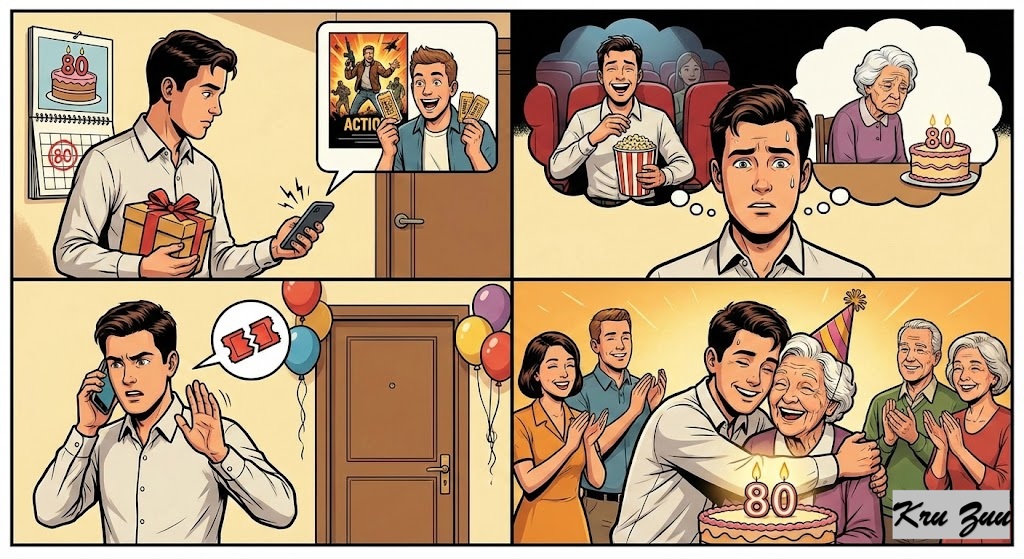
    Situation: Your friend asks you to skip your grandmother’s 80th birthday party to go to the cinema.


    You Say: “I can’t go. Itโ€™s my grandmaโ€™s big day, and you know what they say: Blood is thicker than water.


    Warning: Do not use this to excuse toxic behavior. It explains loyalty, but it shouldn’t justify bad actions!


    ๐Ÿ’ฌ Your Turn: The Loyalty Test ๐Ÿš€


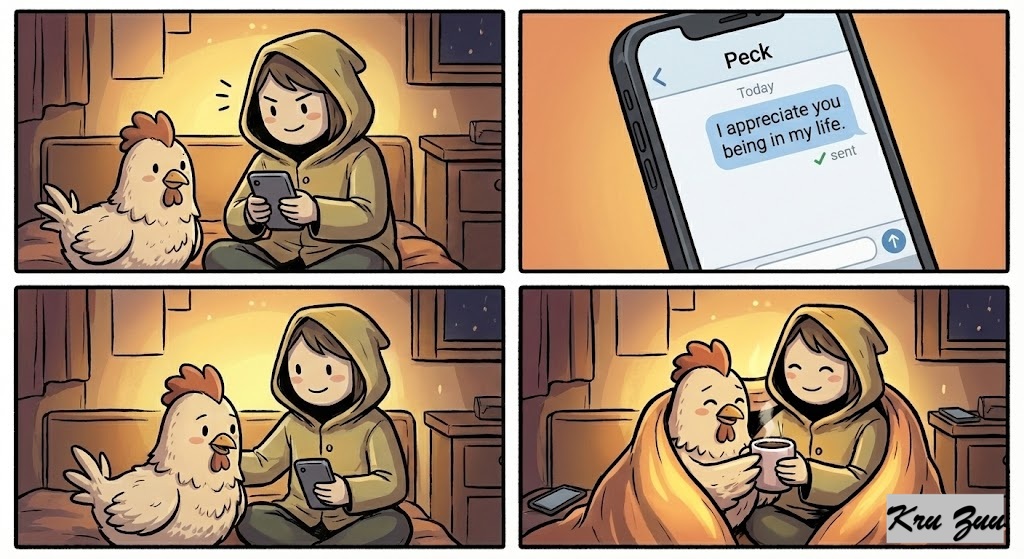
    Think about the “Peck” (The Chicken) in your life. Who is the person that would come to save you in a storm, even if you were annoying yesterday?


    The Challenge:
    Send that person a message right now. Just say: “I appreciate you being in my life.” (It takes 10 seconds. Do it!)


    Question: Have you ever had a “Frog” friend who disappeared when things got hard? Tell us in the comments! ๐Ÿ‘‡


    By Zubeyir YURTKURAN

    https://www.facebook.com/BrainBattleground/

    https://www.facebook.com/zubeyr.yurtkuran/

    https://www.instagram.com/zubeyryurtkuran/
    https://www.youtube.com/@BrainBattleground-b3p

    https://www.instagram.com/brainbattleground/