Tag: Procrastination

  • 🌳 The Daily Shield: The Law of Momentum

    🌳 The Daily Shield: The Law of Momentum

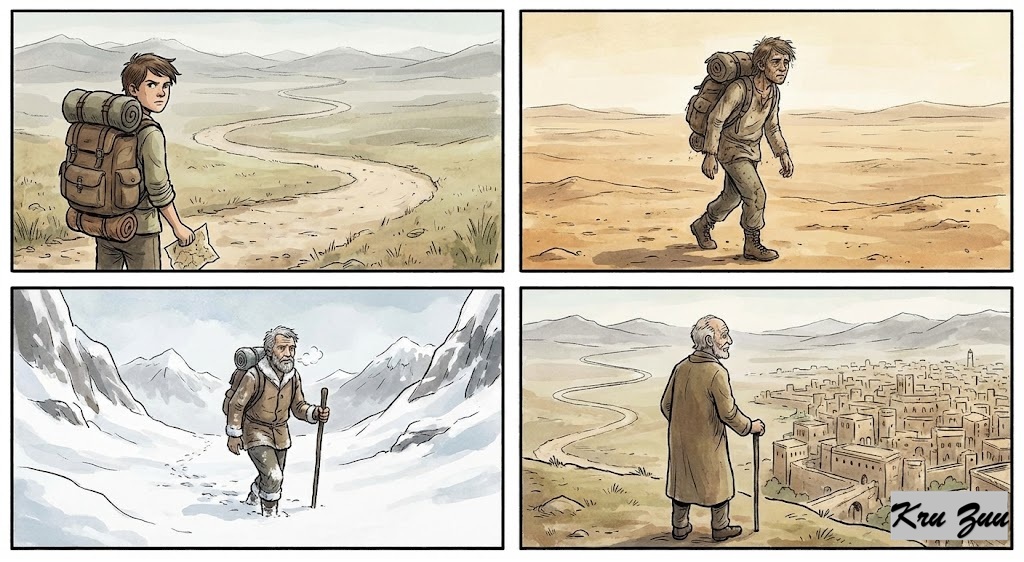
    “A journey of a thousand miles begins with a single step.”


    😈 The Villain (The Procrastinator)

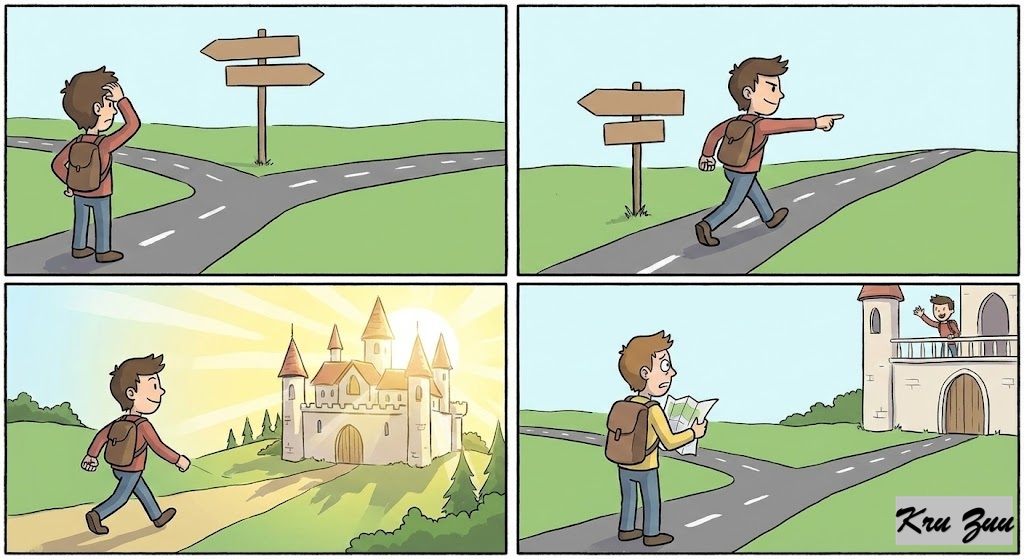
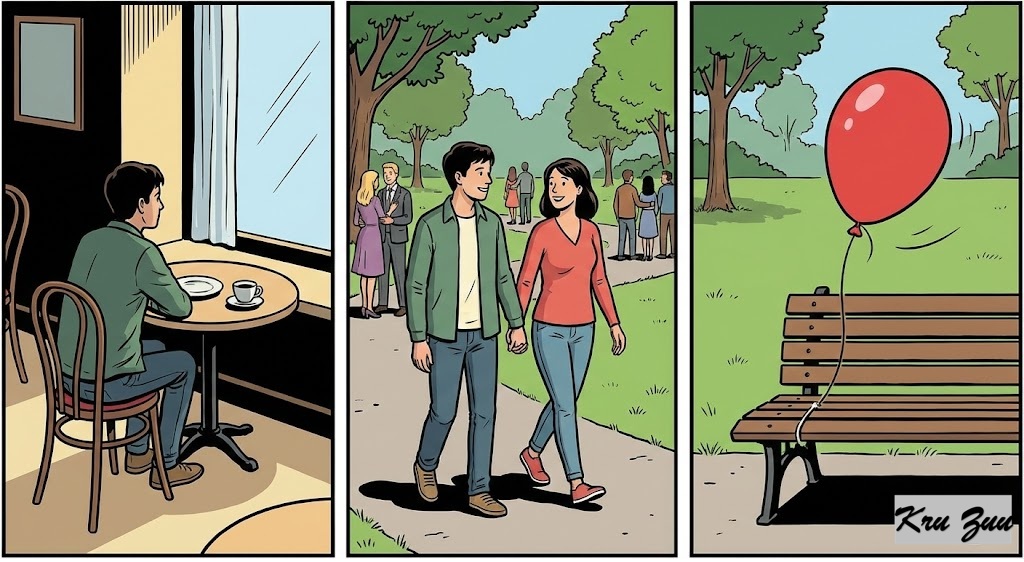
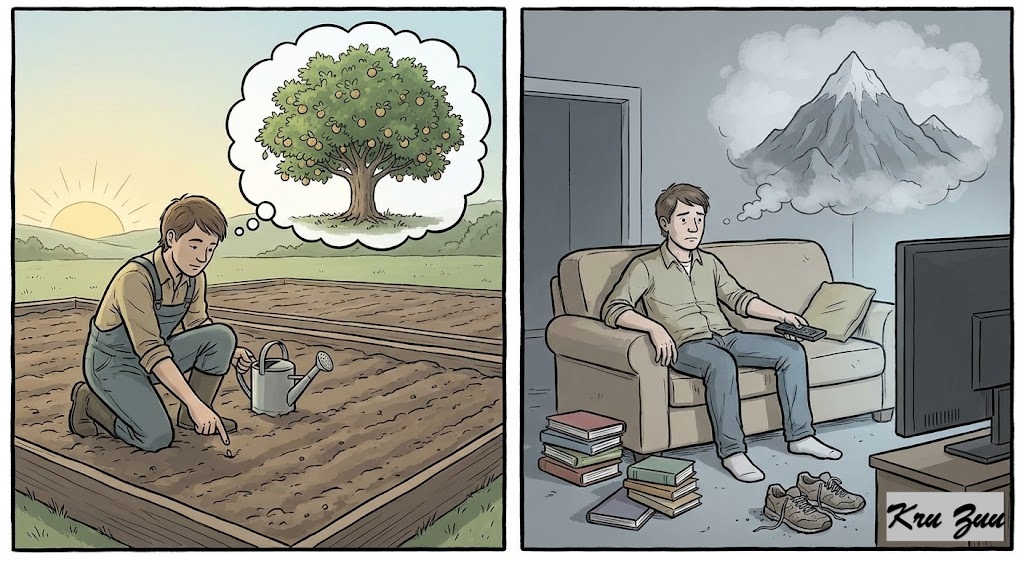
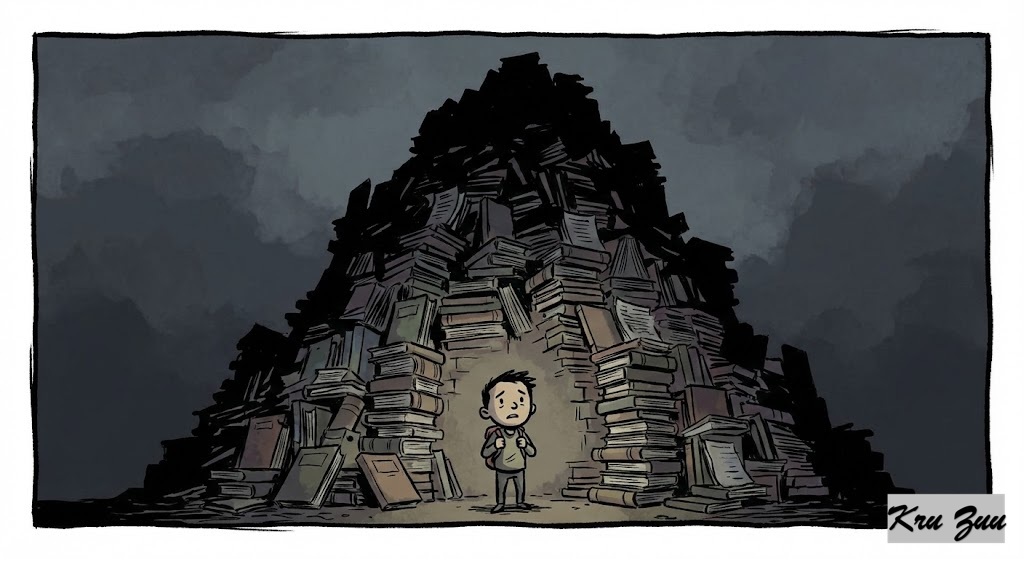
    You have a big dream. You want to learn English, lose weight, or write a book. But you look at the mountain ahead and you freeze. 🧊 “It’s too hard!” “It will take years!” “I’ll start next Monday (or next year).” You are obsessed with the finish line, so you never cross the starting line. You wait for the “perfect time” or “perfect mood.”
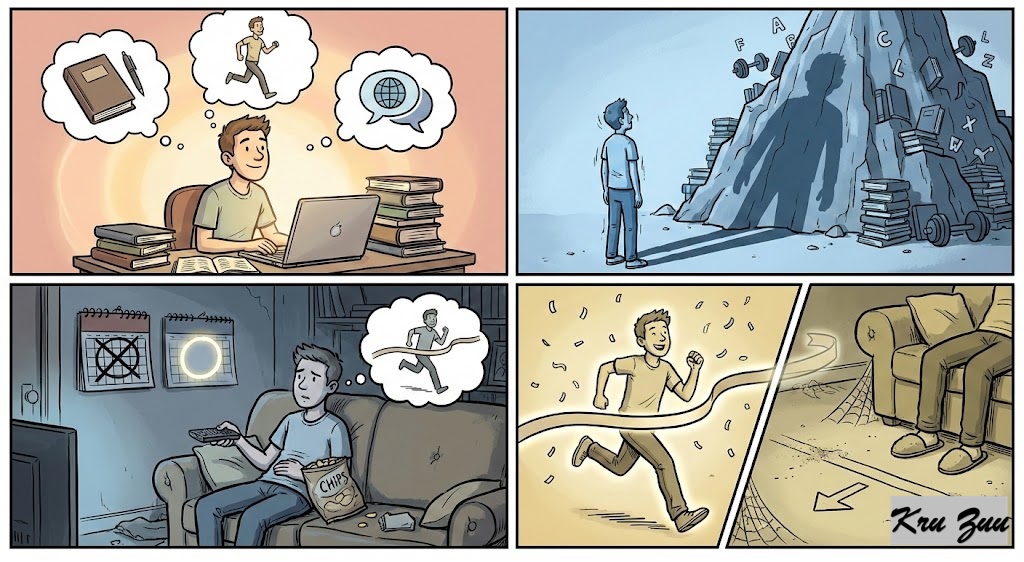
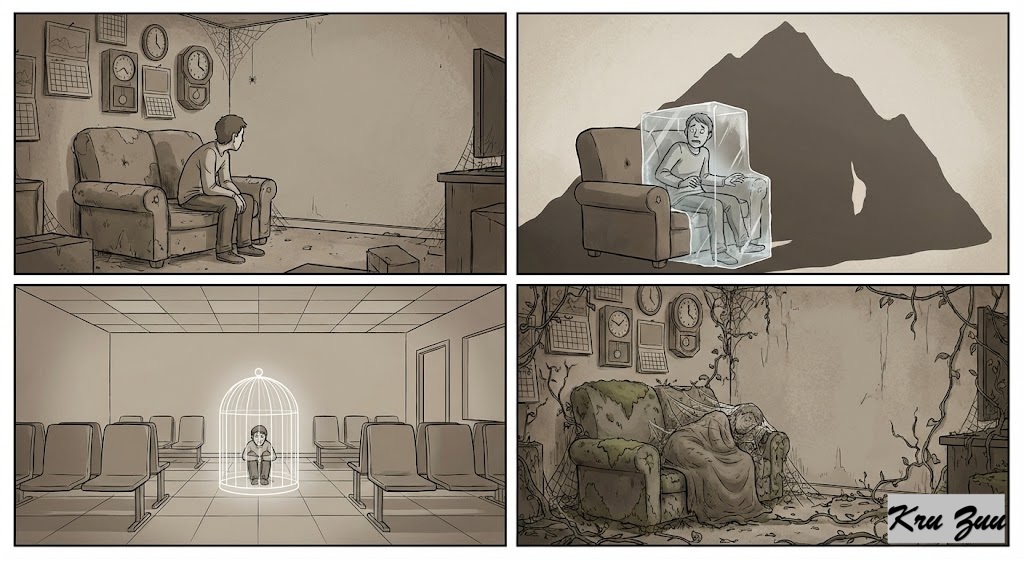
    The Result? You stay exactly where you are. You are paralyzed by the size of the task. You are trapped in the “Waiting Room of Life.” 🛋️

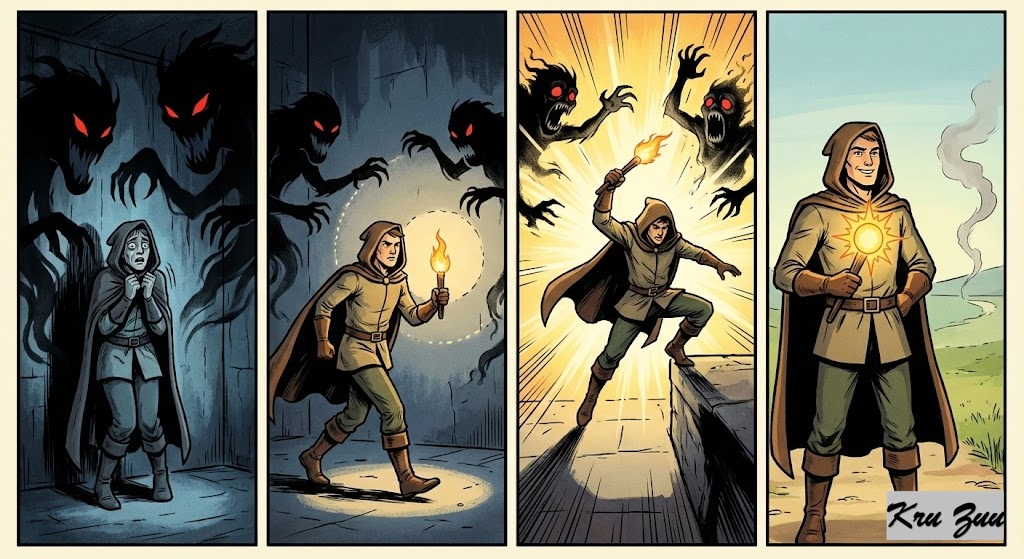
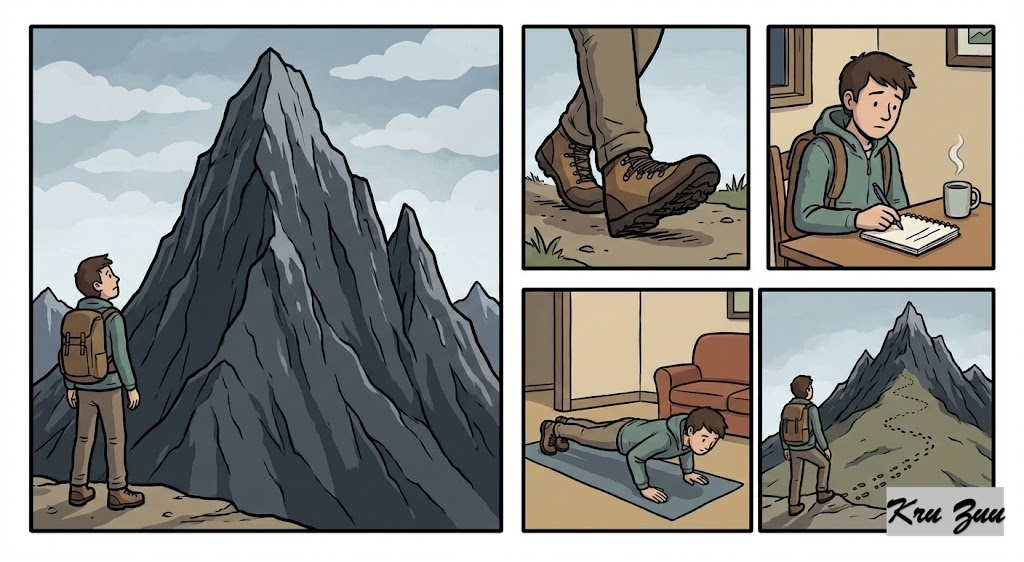
    😇 The Hero (The Walker)

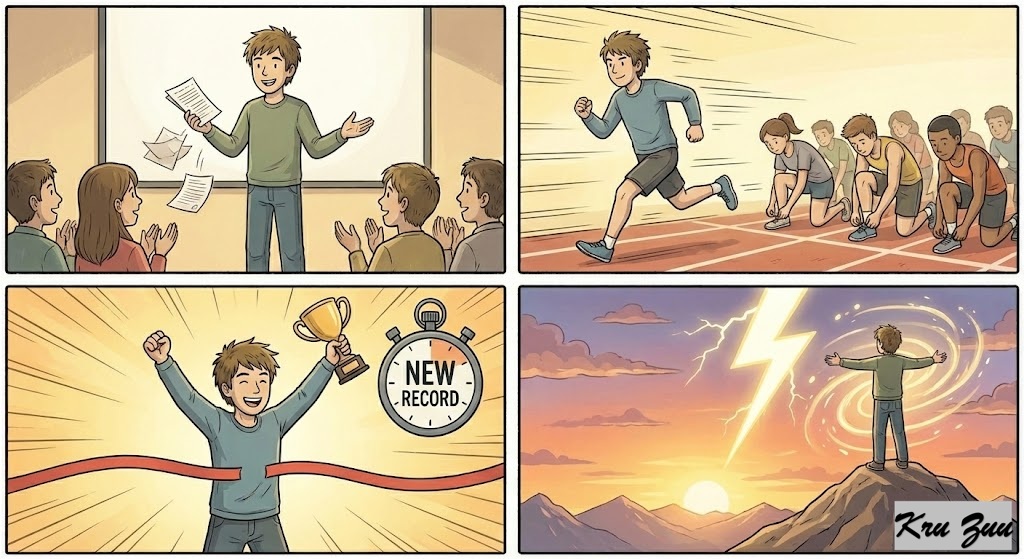
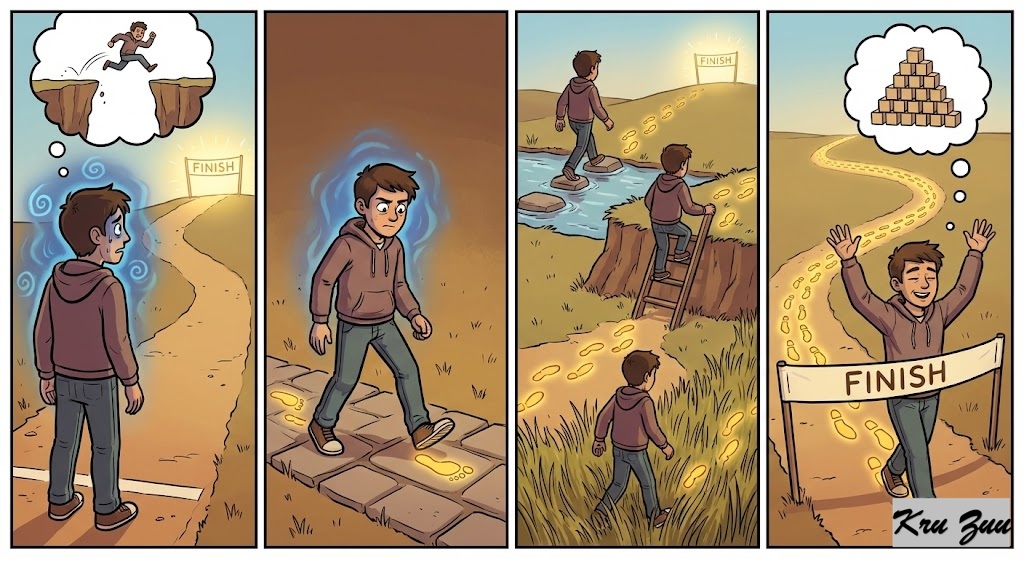
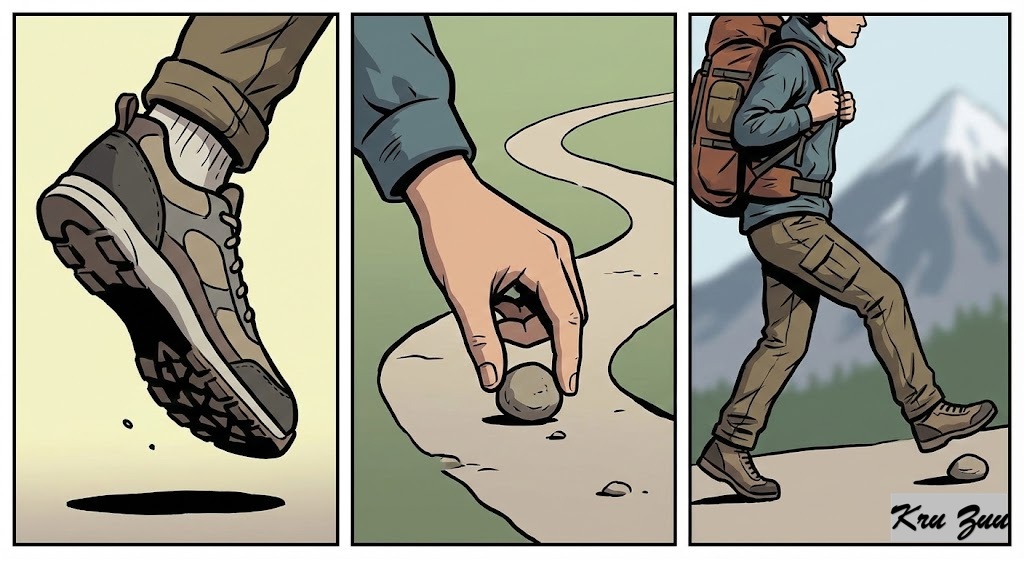
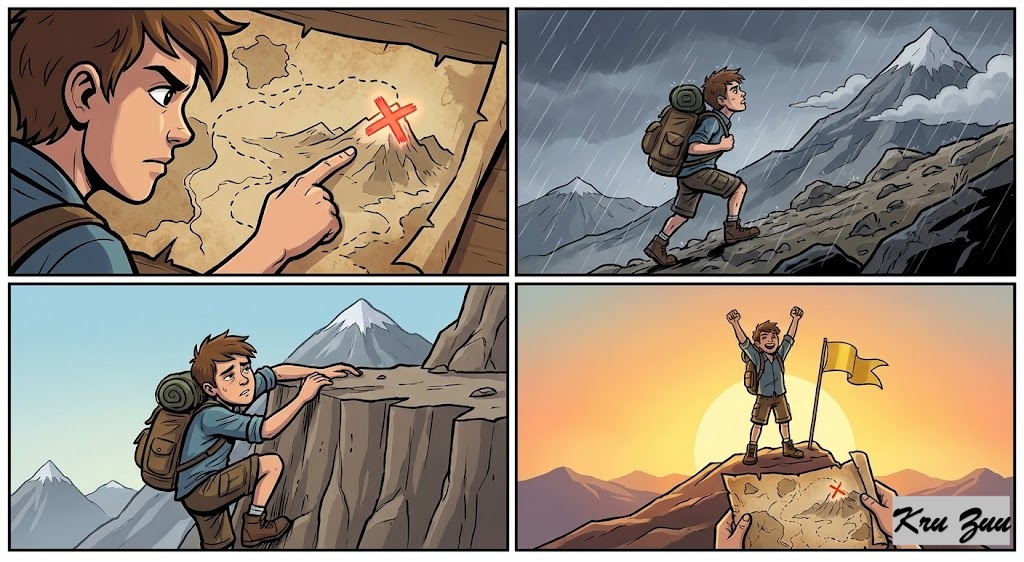
    You see the big mountain, but you look at your feet. 🦶 You don’t worry about Mile 500; you only focus on Step 1. You say: “I don’t have to finish today. I just have to start.” You write one sentence. You learn one word. You do one push-up. You respect the power of small progress.
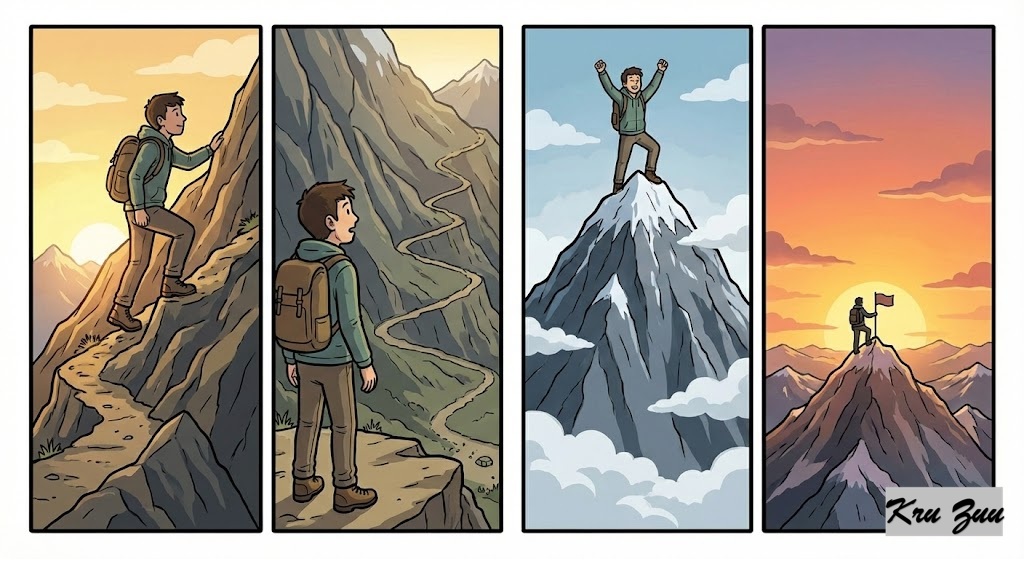
    The Result? You build momentum. Suddenly, you look back and realize you have climbed the mountain without even noticing the pain. You build consistency, not excuses. 🚀

    ⚖️ The Reality


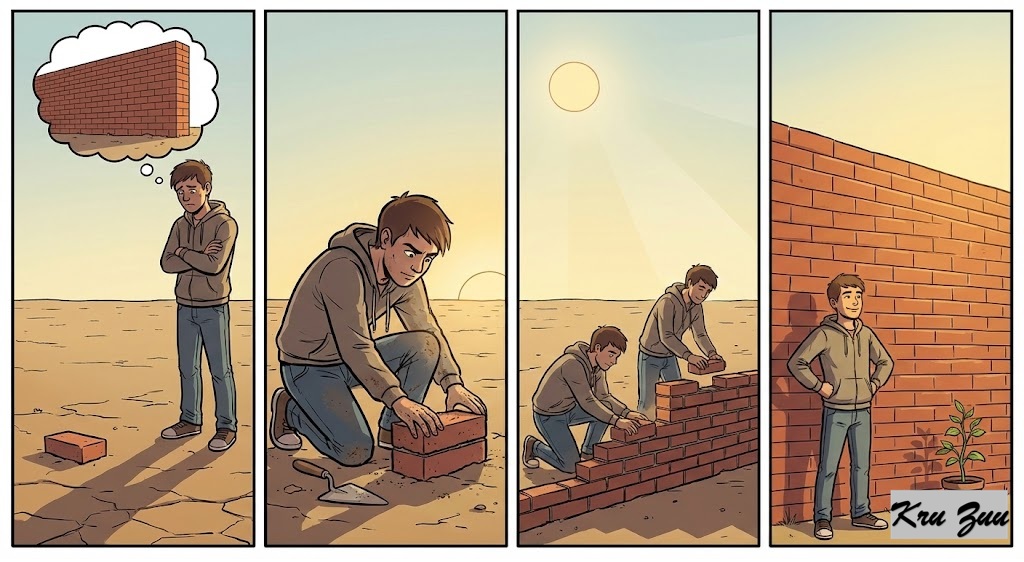
    Motion vs. Stagnation. We live in a world of “instant results.” We want the six-pack abs in 2 days, or fluency in English in 2 weeks. But big things are just a pile of small things added together. A blizzard is just billions of single snowflakes. A novel is just thousands of single words. If you refuse to take the first step because the journey looks long, you guarantee failure.

    💎 The Secret

    You cannot teleport to the finish line. Success is not a giant leap; it is a million tiny, boring steps taken one after another. Action cures fear.
    🧐 The Anatomy of the Proverb


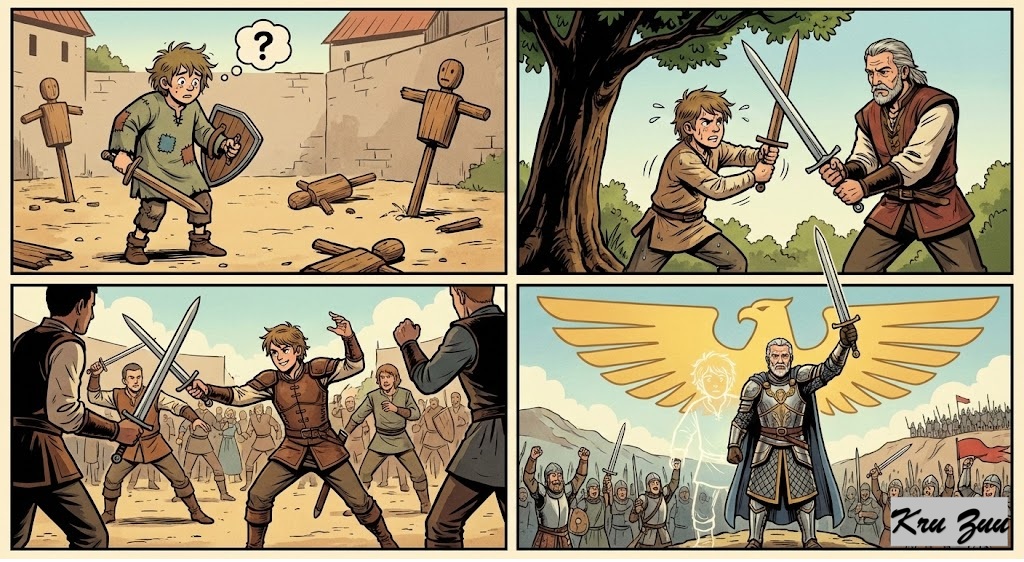
    This is your reminder that every expert was once a beginner.

    Journey (Noun): A long trip or process of personal change.


    Thousand Miles (Noun Phrase): A metaphor for a very large, difficult, or long-term task.

    Single (Adjective): Just one; individual.

    Step (Noun): The movement of lifting your foot and putting it down; a small action.

    Simpler Version: Start small. / Don’t give up before you start.

    📚 Vocabulary Vault


    Daunting (Adjective): Seeming difficult to deal with; intimidating. (e.g., “The exam looked daunting.”) 😨

    Procrastinate (Verb): To delay or postpone action; putting off doing something.

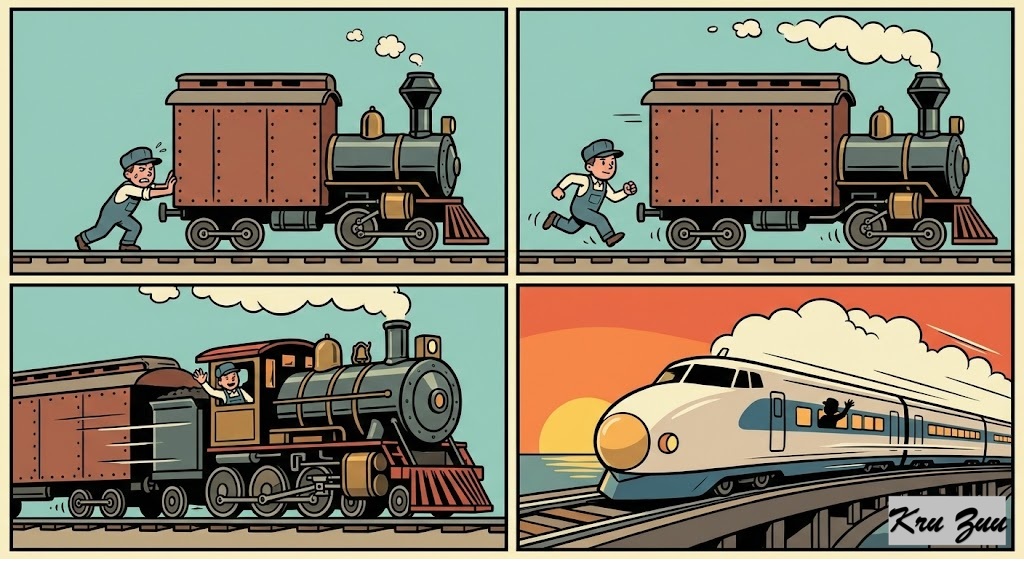
    Momentum (Noun): The quantity of motion of a moving body; the strength or force gained by motion. 🚄

    Objective (Noun): A goal or aim.

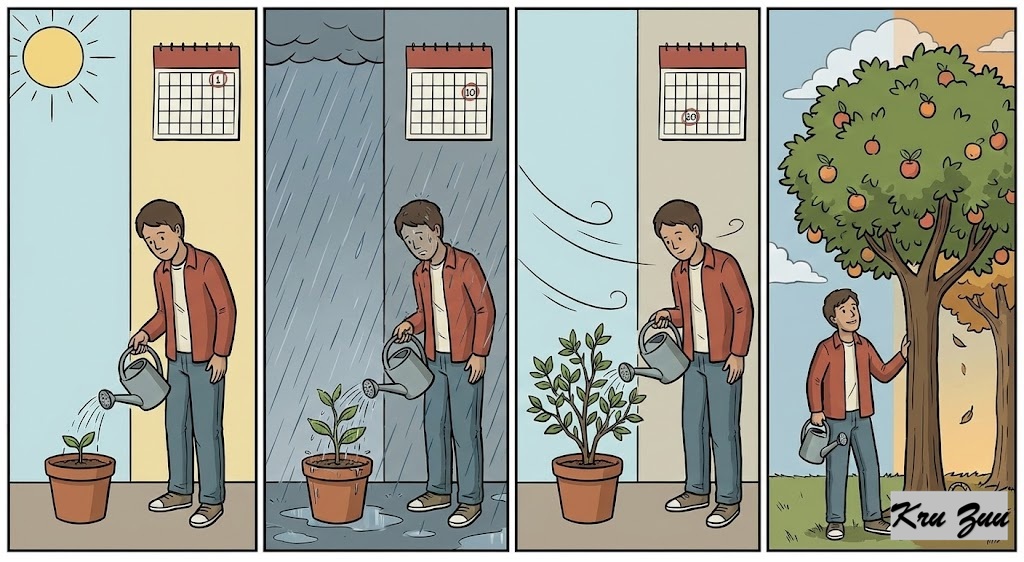
    Consistent (Adjective): Acting or done in the same way over time, especially so as to be fair or accurate. (The key to success!).

    🧠 Grammar Focus: Singular vs. Plural Subjects


    Notice the grammar in the proverb: “A journey (singular subject) … begins (singular verb + s).” It is NOT “The journey begin.”
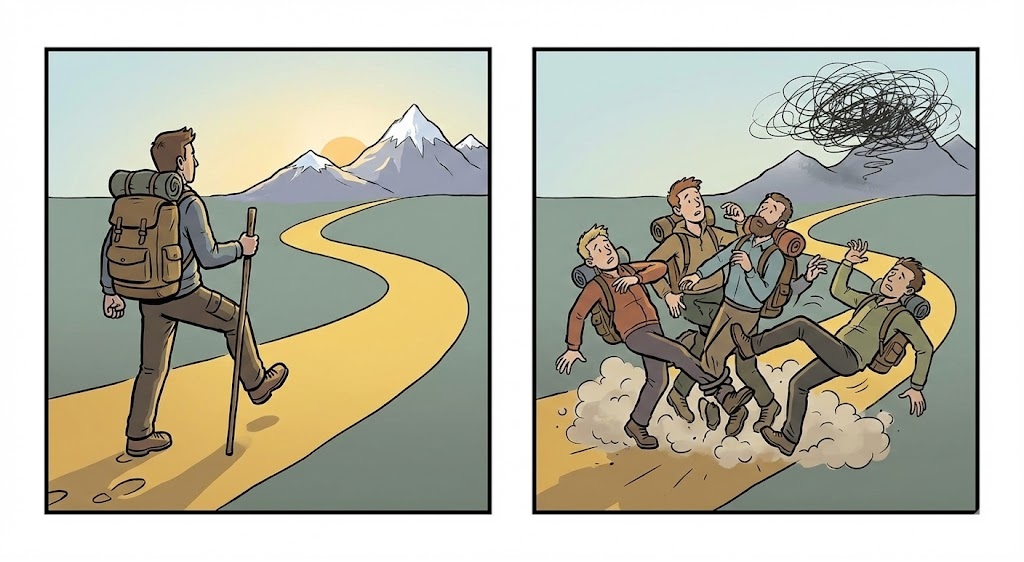

    Wrong: “Learning English take a long time.”
    Right: “Learning English takes a long time.”
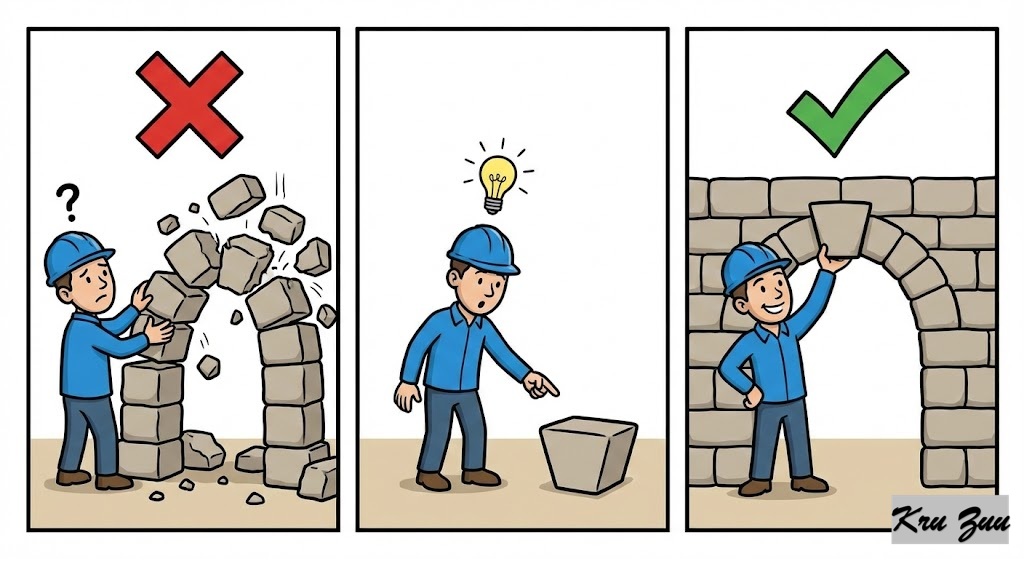

    Tip: When a gerund (verb + ing, like “Learning”) is the subject, treat it as singular (It).
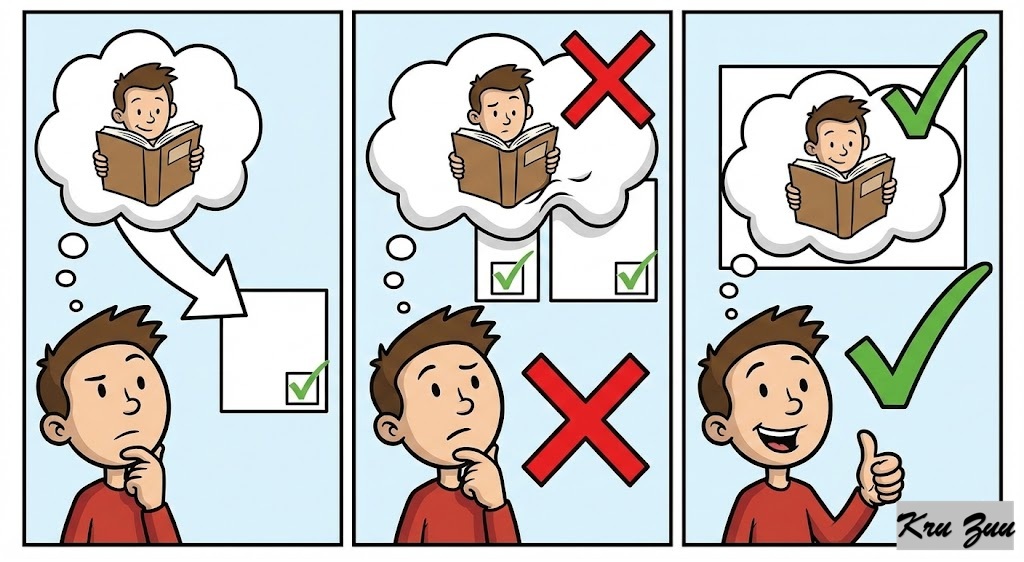
    📜 History: Origin and Spread


    Who said this wise sentence?
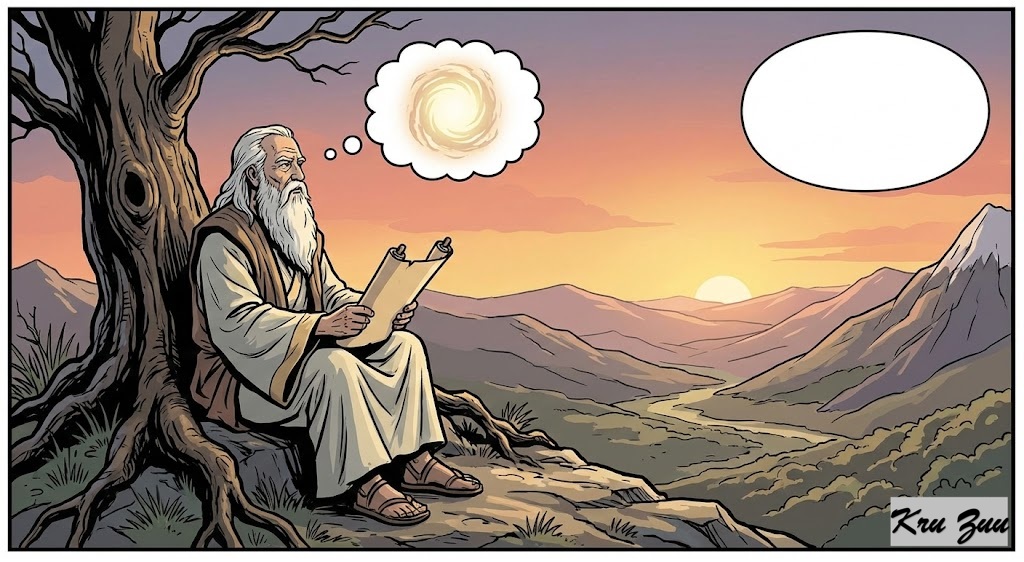

    The Origin: This is an ancient Chinese proverb, written by the philosopher Laozi (Lao Tzu) around the 6th century BC. It appears in the Tao Te Ching (Chapter 64).
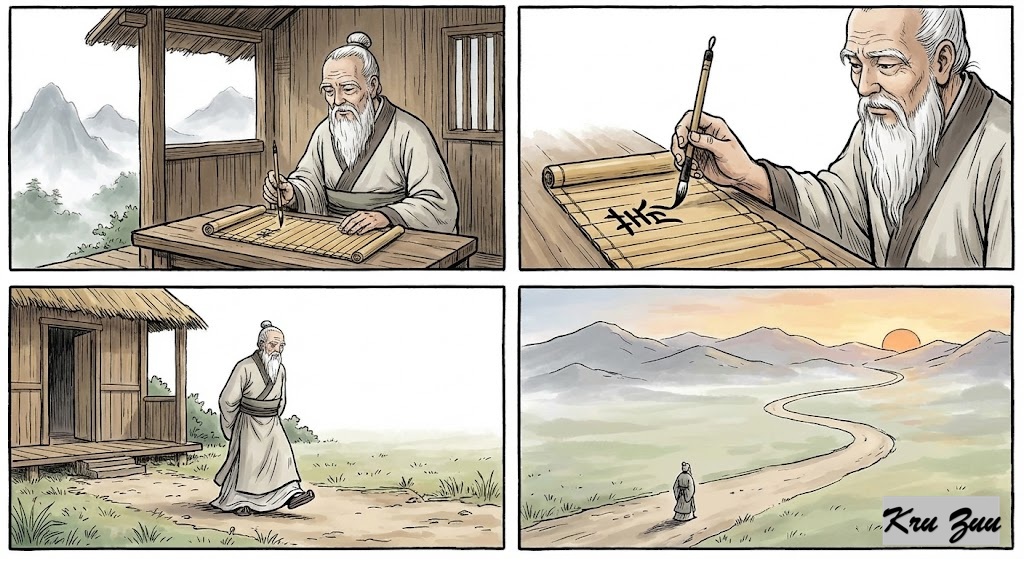

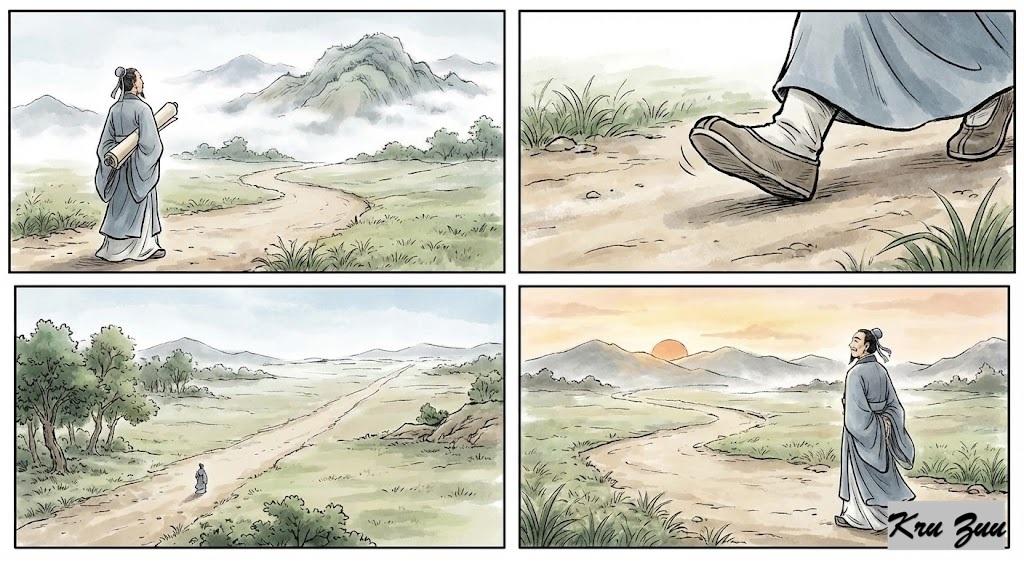
    The Translation: The original Chinese text mentions “1,000 li” (a Chinese unit of distance). It translates literally to: “A journey of a thousand li starts beneath one’s feet.”

    Global Cousins


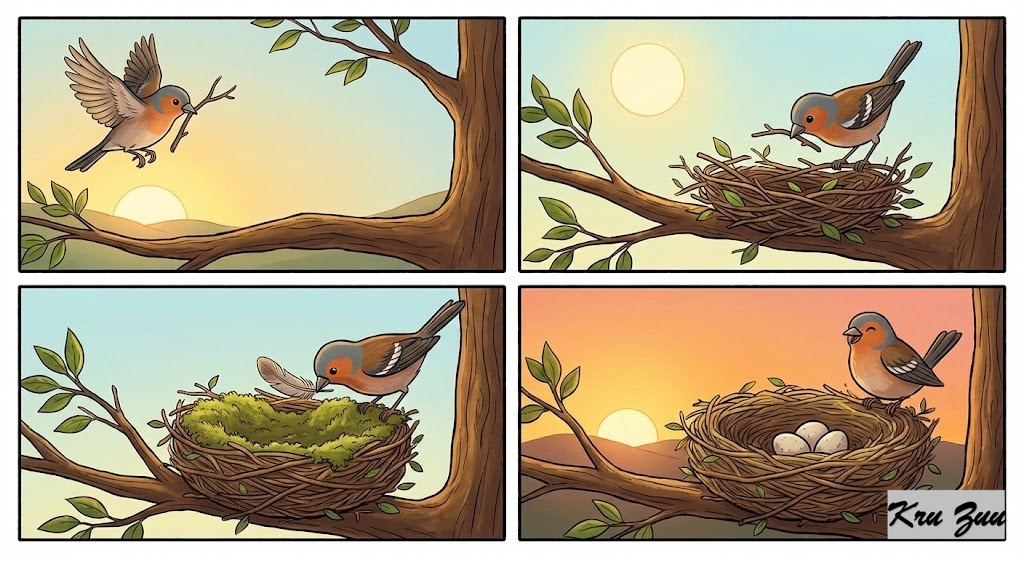
    🇫🇷 French: “Petit à petit, l’oiseau fait son nid.” (Little by little, the bird makes its nest).

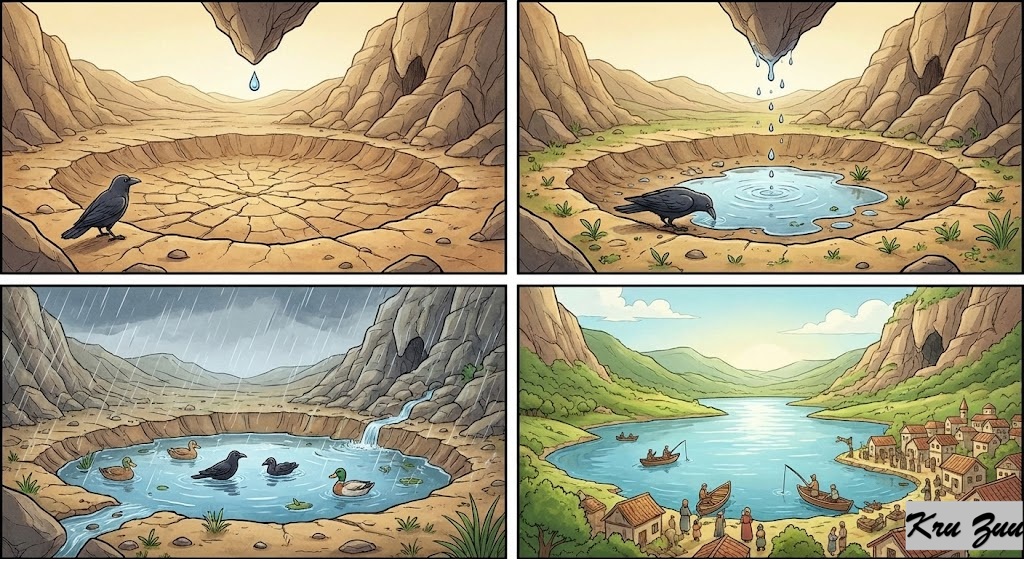
    🇹🇷 Turkish: “Damlaya damlaya göl olur.” (Drop by drop, it becomes a lake).

    🇮🇹 Italian: “Chi va piano, va sano e va lontano.” (He who goes slowly, goes safely and goes far).
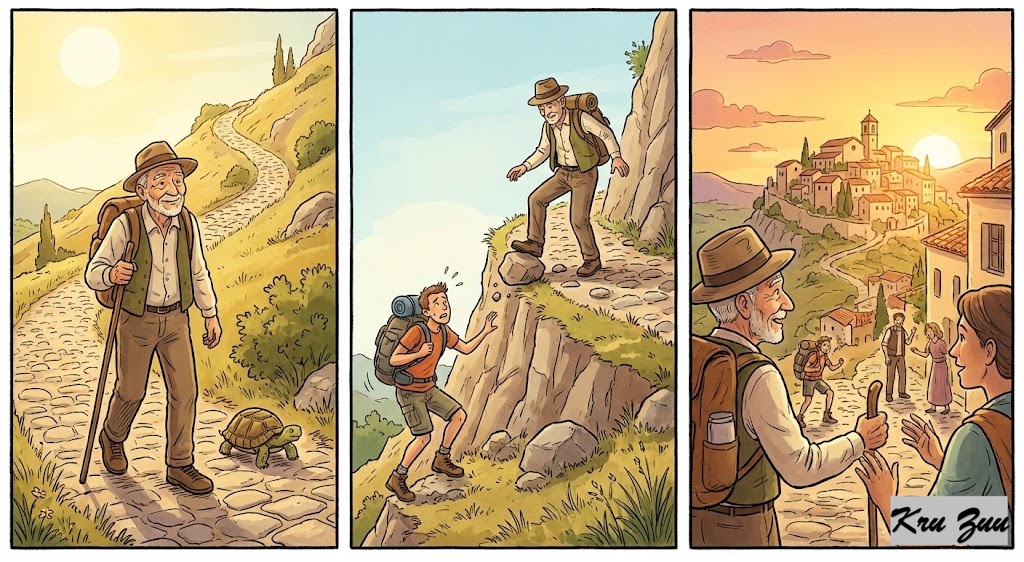
    🎭 Short Story: The Mountain of Mangoes 🥭🐱🐔🐸


    Let’s visit the magical forest to see who reaches the top.


    🌟 The Cast


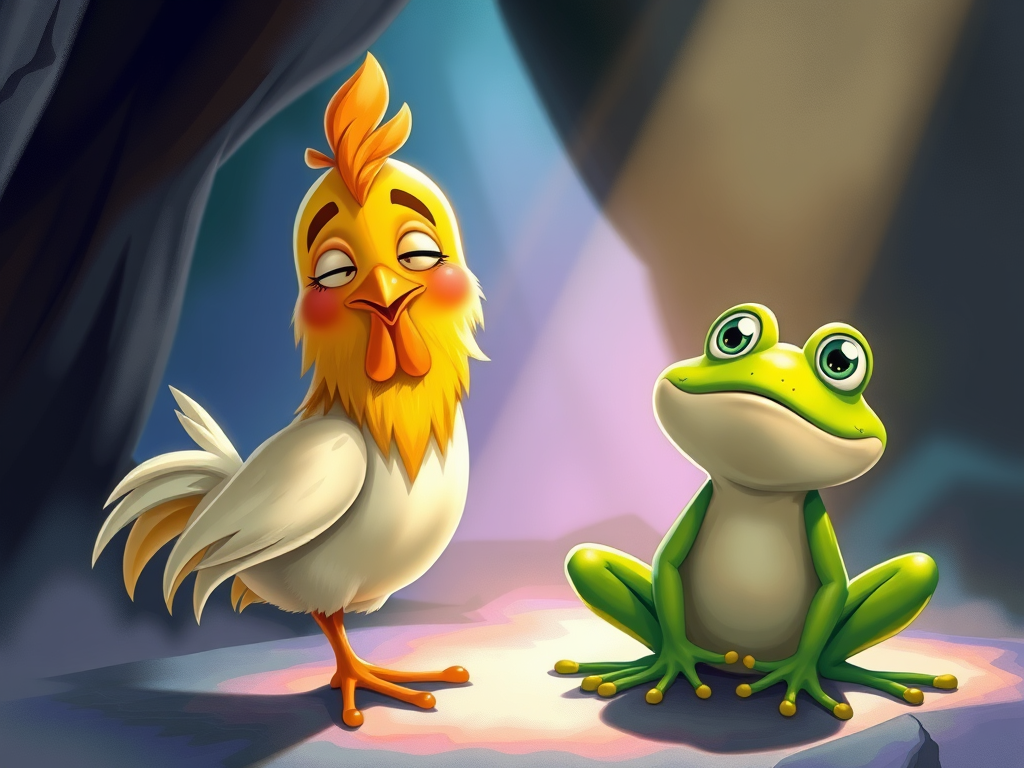
    Cleo the Cat: Stylish, lazy, wants instant success. 😼
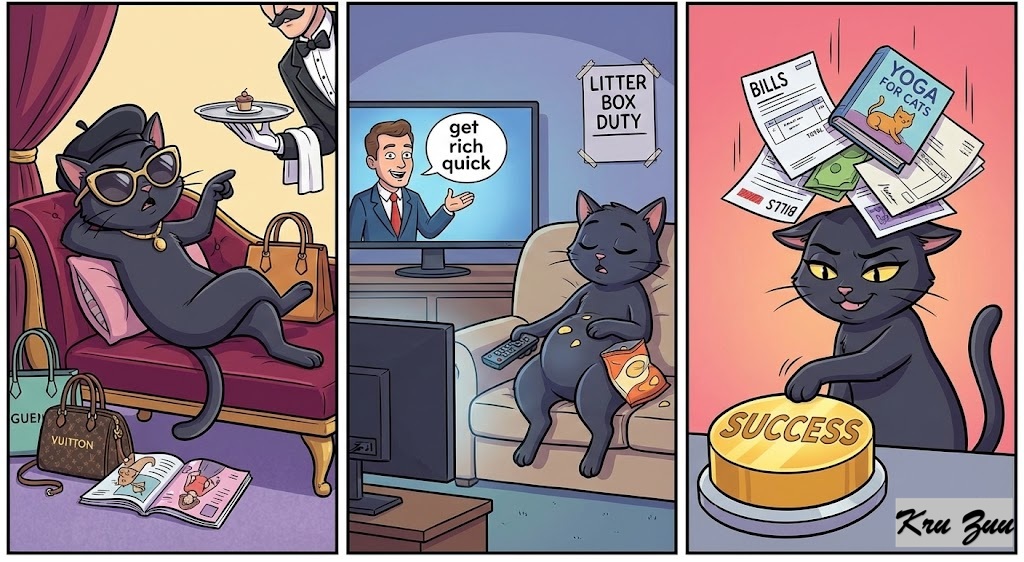

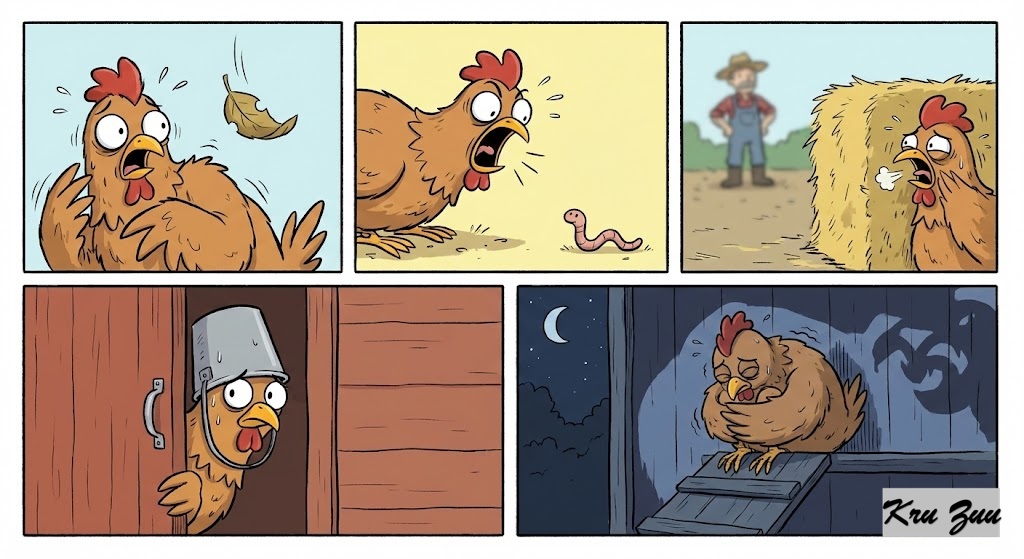
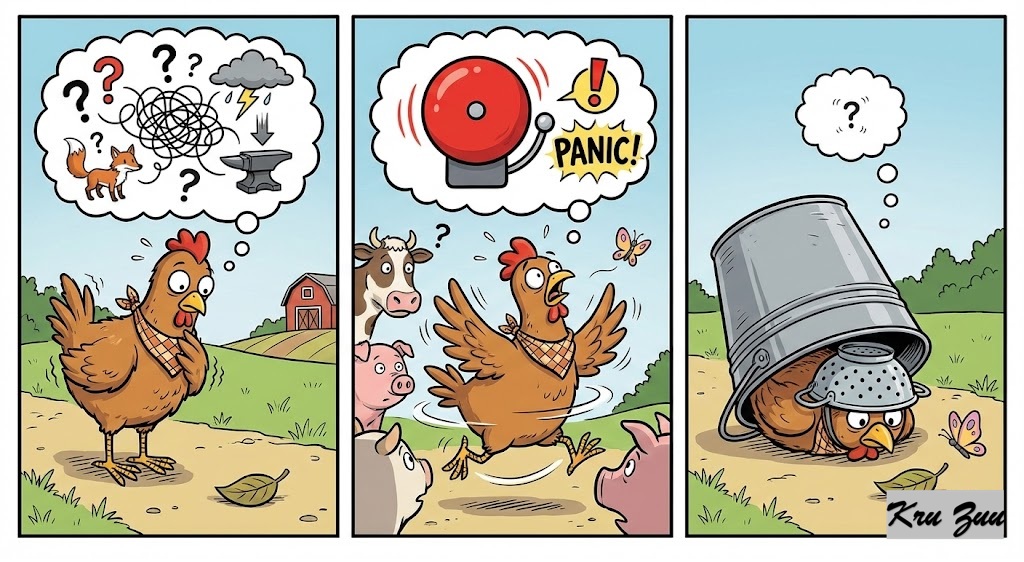
    Cluck the Chicken: Nervous, overthinker, panic-prone. 🐔

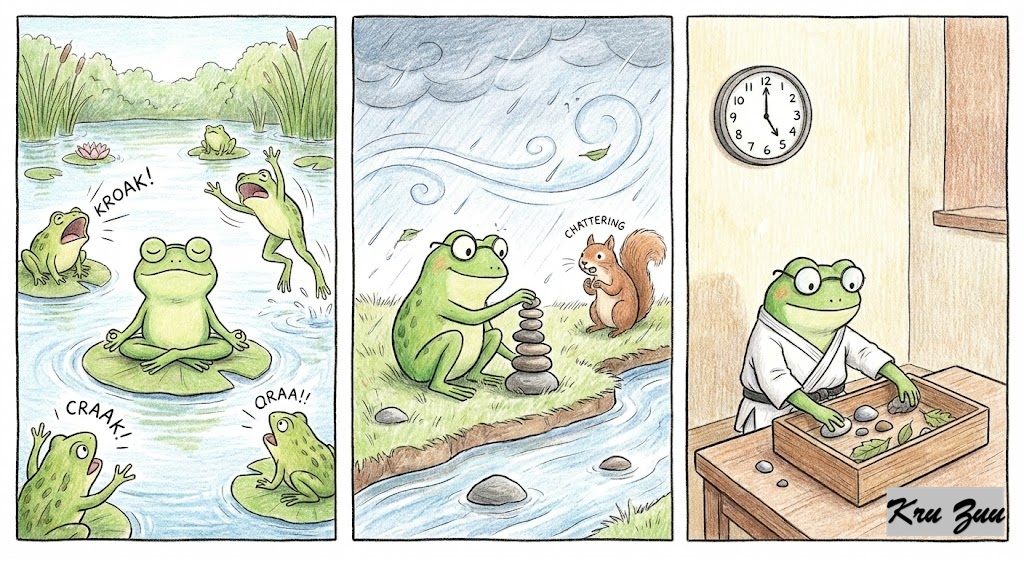
    Fred the Frog: Quiet, steady, disciplined. 🐸

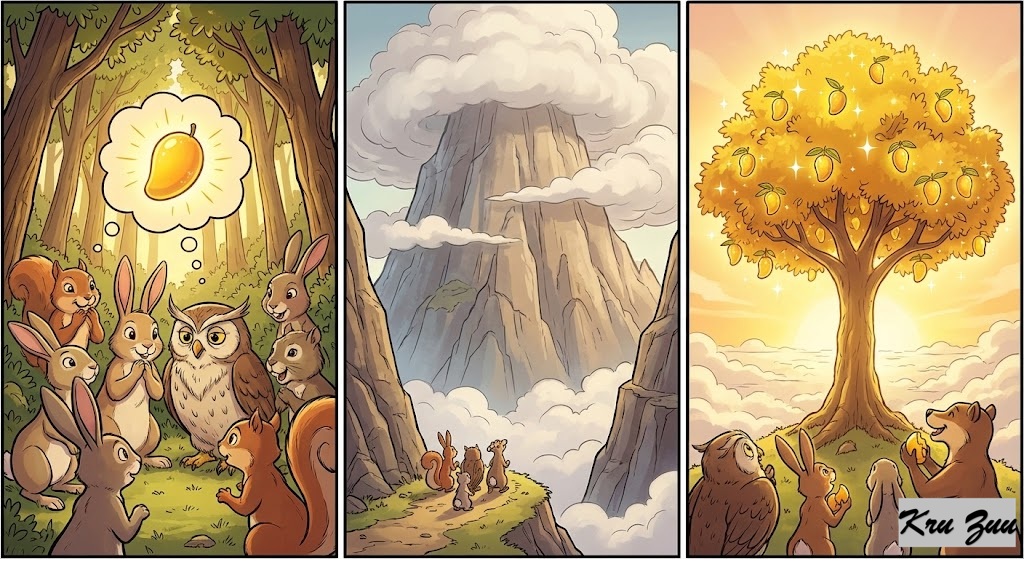
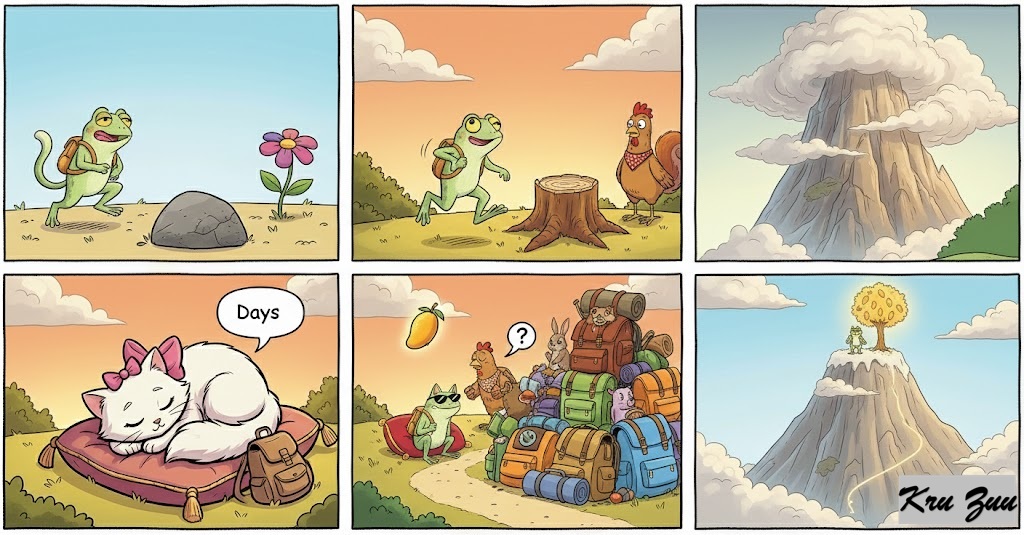
    The Situation: A rumor spreads in the forest. On top of the “High Peak Mountain,” there is a legendary Golden Mango Tree. The mangoes grant eternal happiness (and they are delicious). The mountain is huge. It touches the clouds.

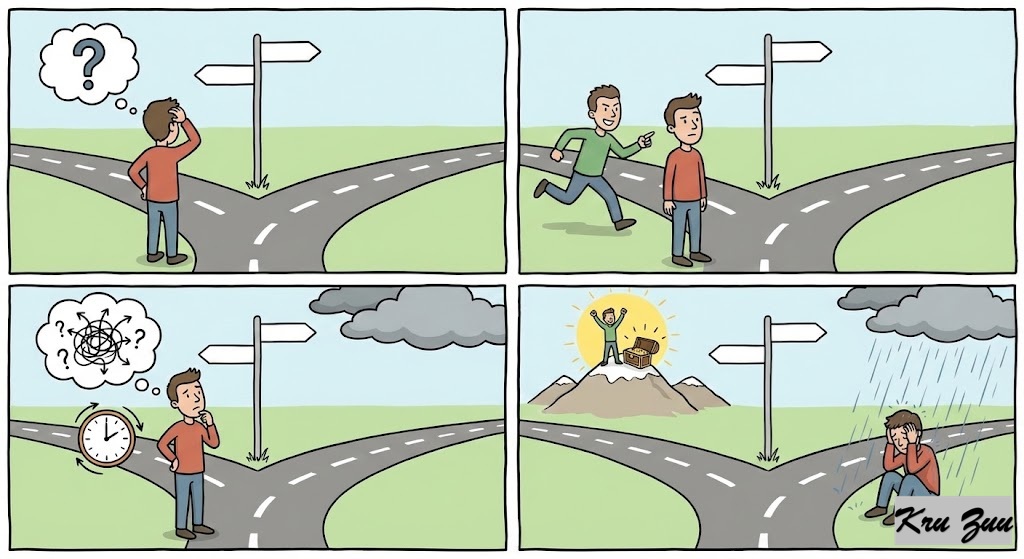
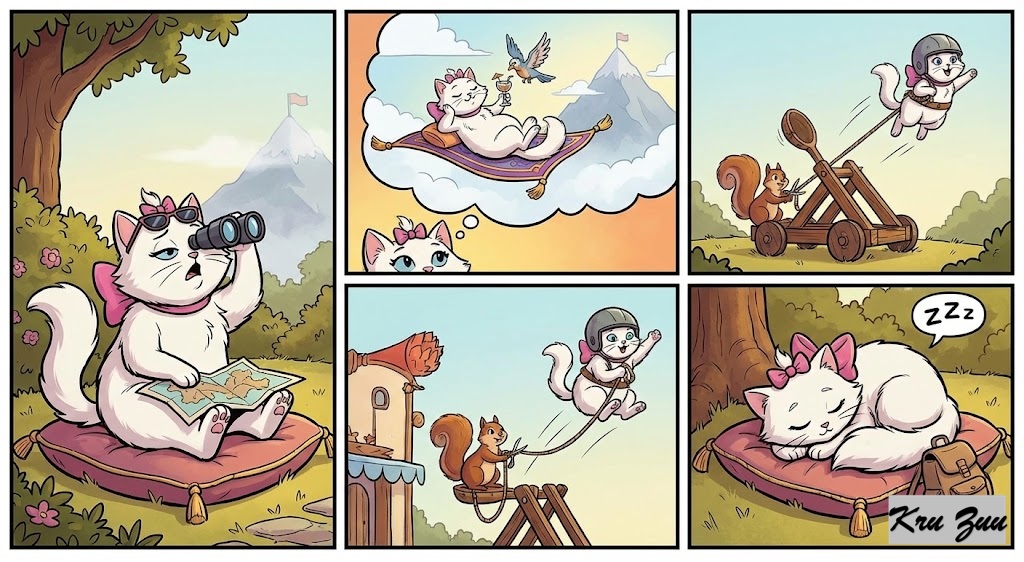
    The Conflict: Cleo looks up and sighs. “Ugh. That is miles away. My paws are too delicate for hiking. I need a magic carpet. Or maybe a catapult? I’m not going unless I can get there fast.” She sits down to nap.

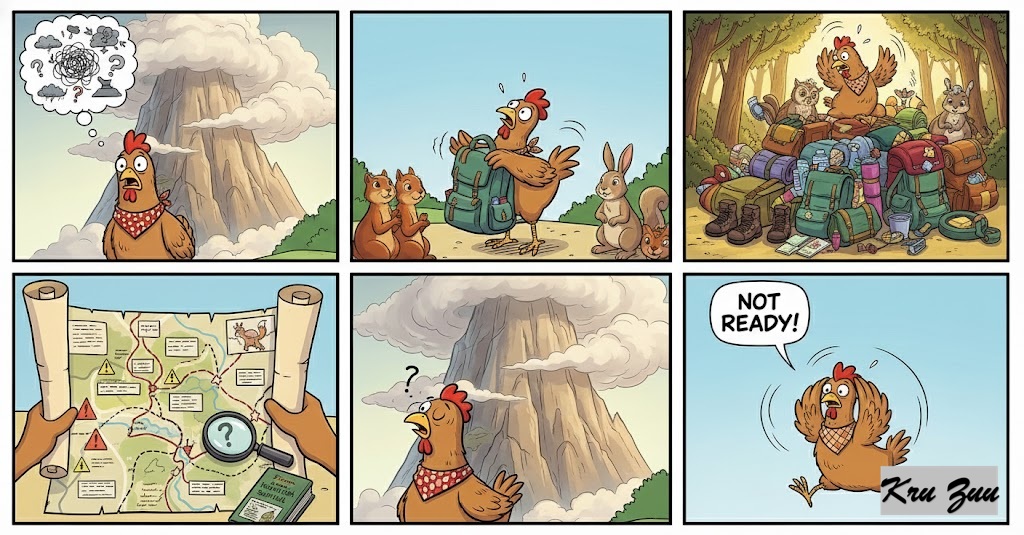
    Cluck looks up and panics. “Oh no! It’s too high! What if it rains? What if I get hungry? What if my shoes untie? I need to pack 50 bags! I need to plan the route! I’m not ready!” Cluck runs around in circles, packing and unpacking his backpack.

    The Reaction: Fred adjusts his backpack. He doesn’t look at the top of the mountain. He looks at the ground in front of him. “Ribbit,” says Fred. “Where are you going?” asks Cleo. “You’ll never make it. It’s a thousand miles!” “I’m not going a thousand miles,” Fred says calmly. “I am just hopping to that big gray rock over there.”
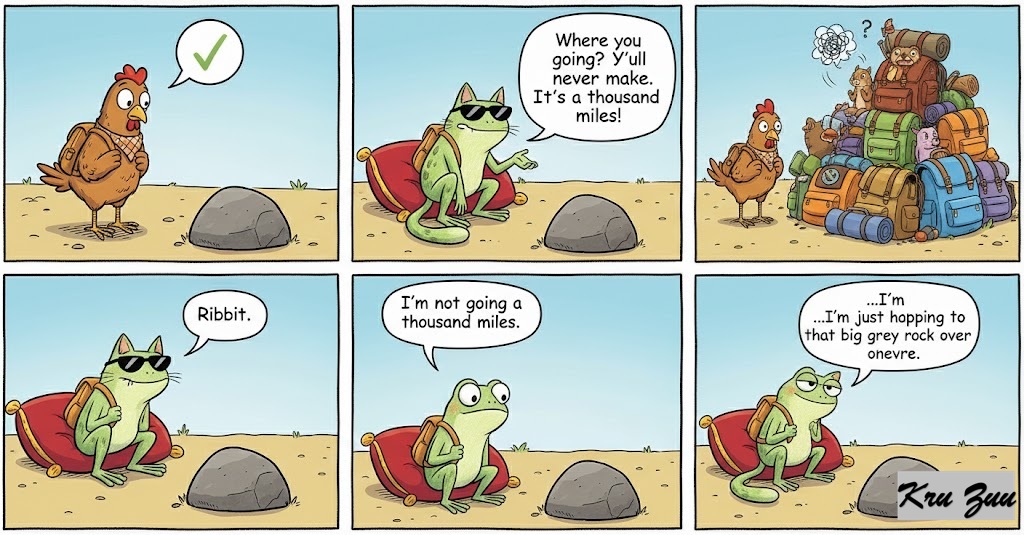

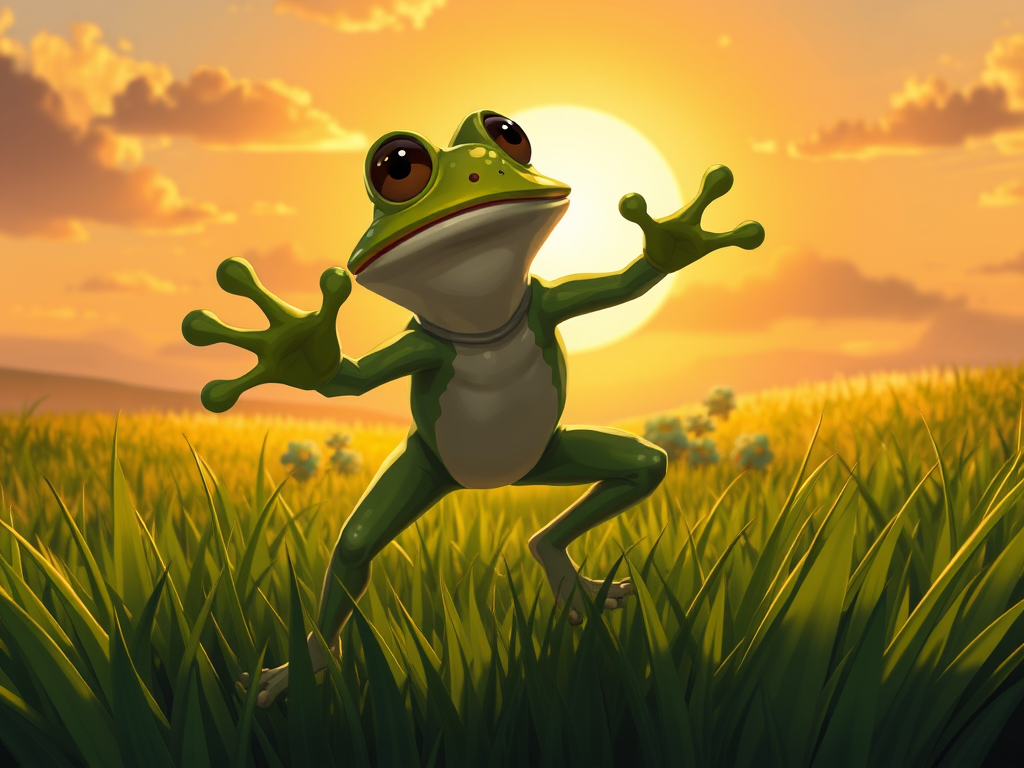
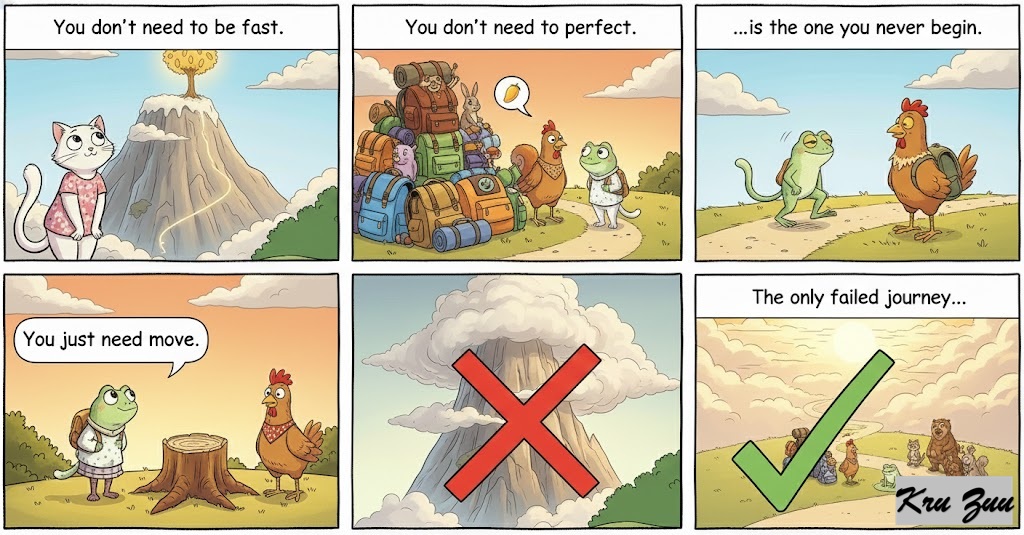
    The Lesson: Fred hops to the rock. Then he hops to a flower. Then to a tree stump. Days pass. Cleo is still sleeping at the bottom, waiting for a magic carpet. Cluck is still at the bottom, worrying about the weather forecast. But Fred? Fred is gone. He just kept hopping. One hop at a time. A week later, a mango falls from the sky and hits Cleo on the head. She looks up. Tiny Fred is waving from the top of the mountain. He didn’t have magic. He just didn’t stop.

    The Moral: You don’t need to be fast. You don’t need to be perfect. You just need to move. The only failed journey is the one you never begin.
    🎓 Lesson for English Learners


    Stop Planning, Start Speaking.
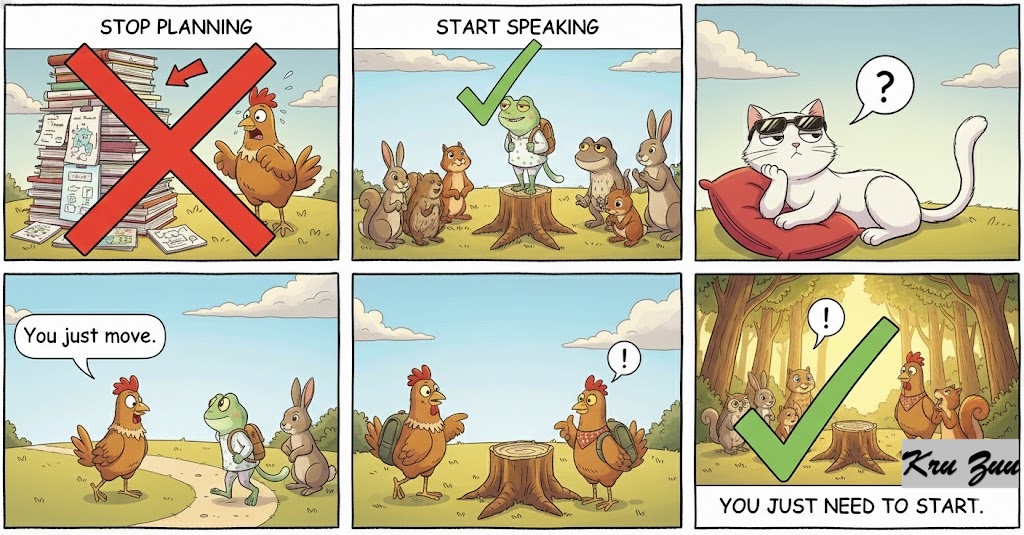

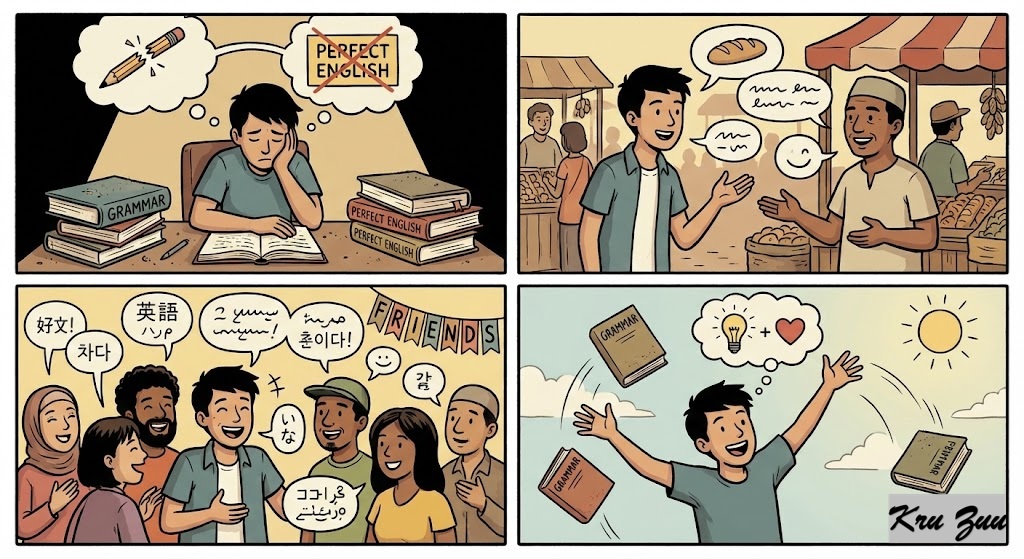
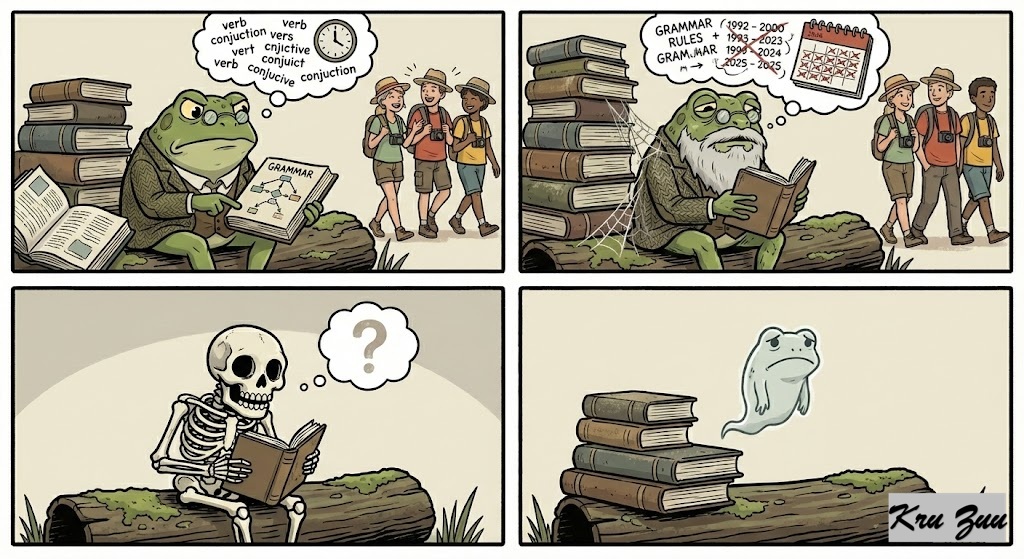
    Situation: You want to speak English fluently, but you are afraid of making mistakes. You spend all your time reading grammar books but never speaking.
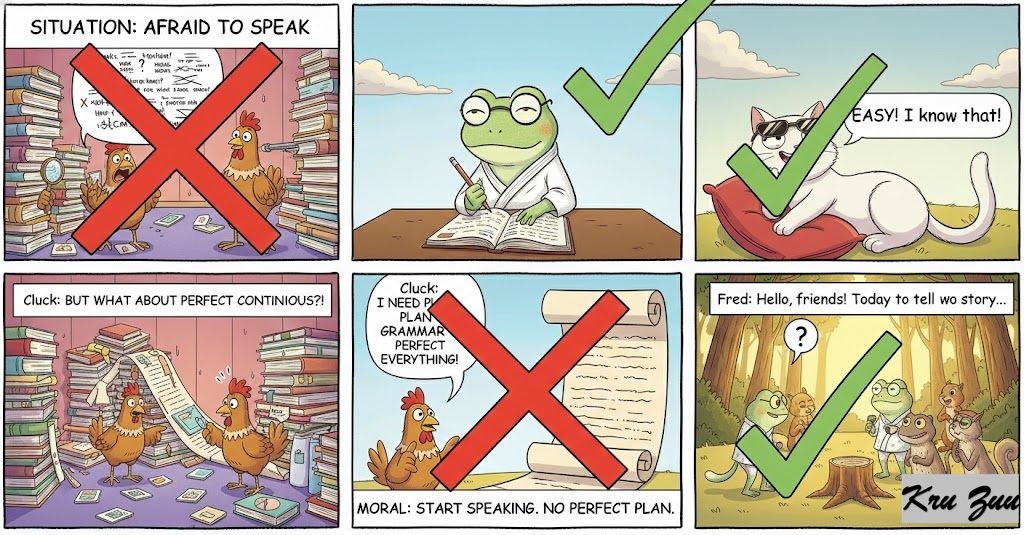

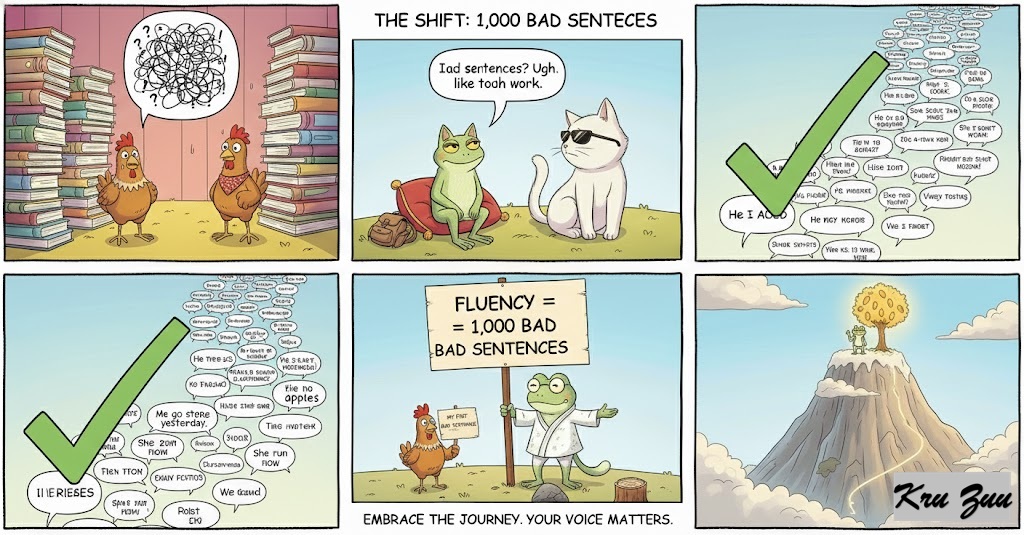
    The Shift: Realize that fluency is built by 1,000 bad sentences.

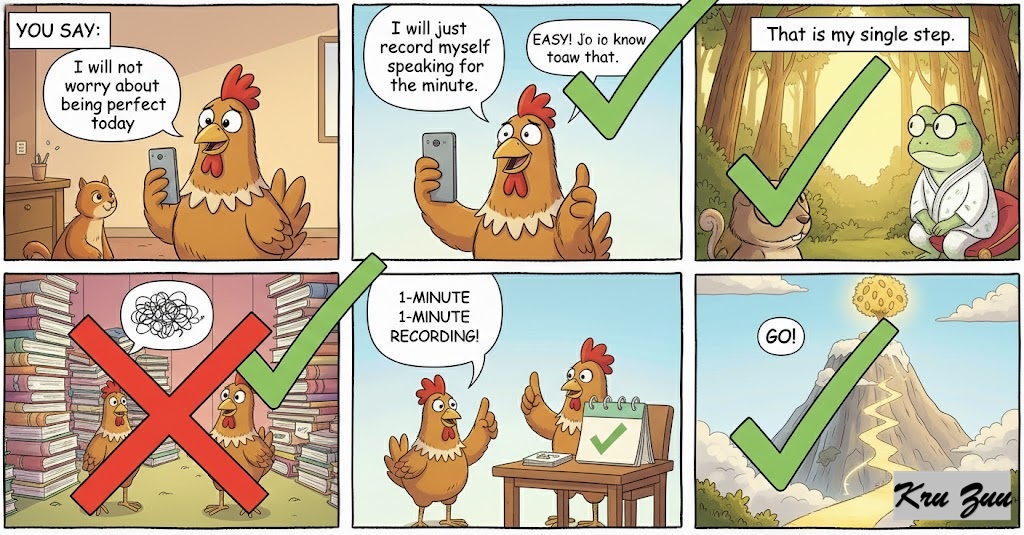
    You Say: “I will not worry about being perfect today. I will just record myself speaking for 1 minute. That is my single step.”

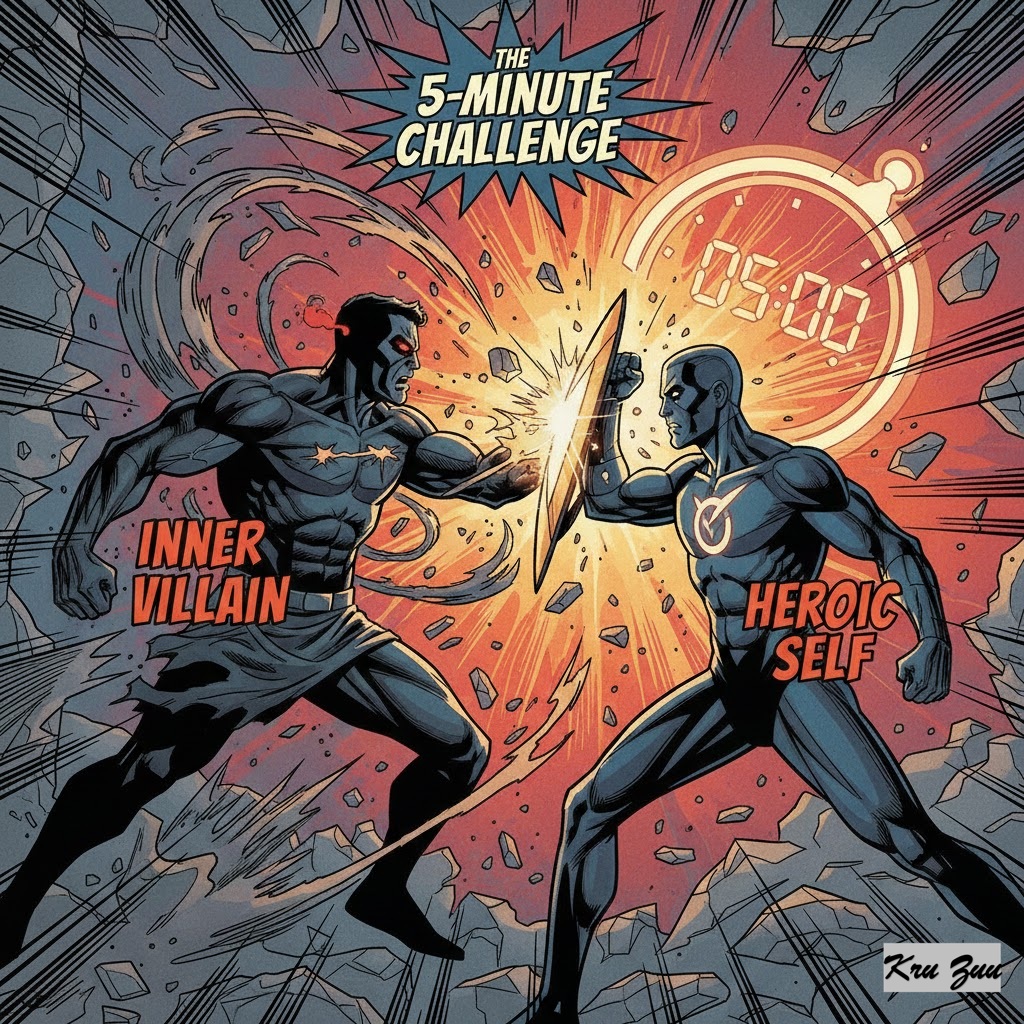
    💬 Your Turn: The “5-Minute” Challenge 🚀


    Do you want to defeat your inner “Villain”?

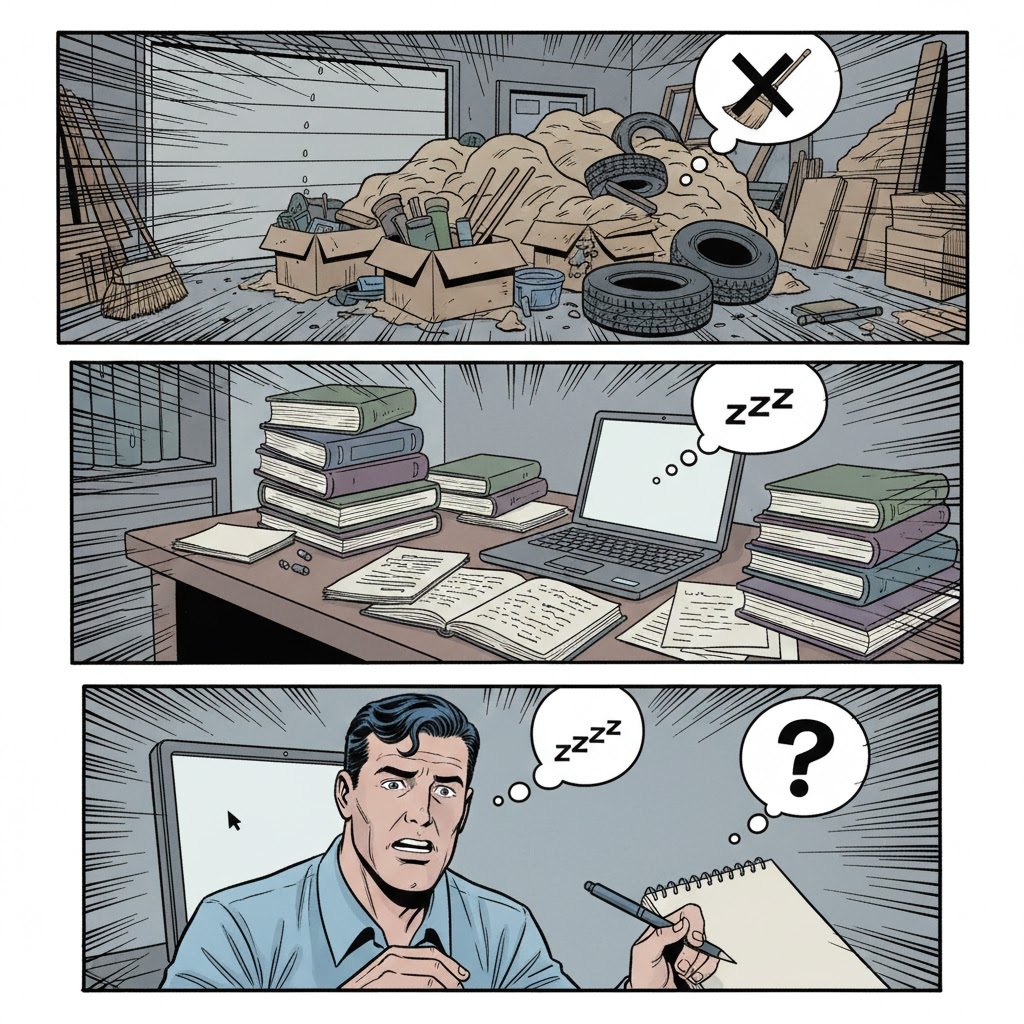
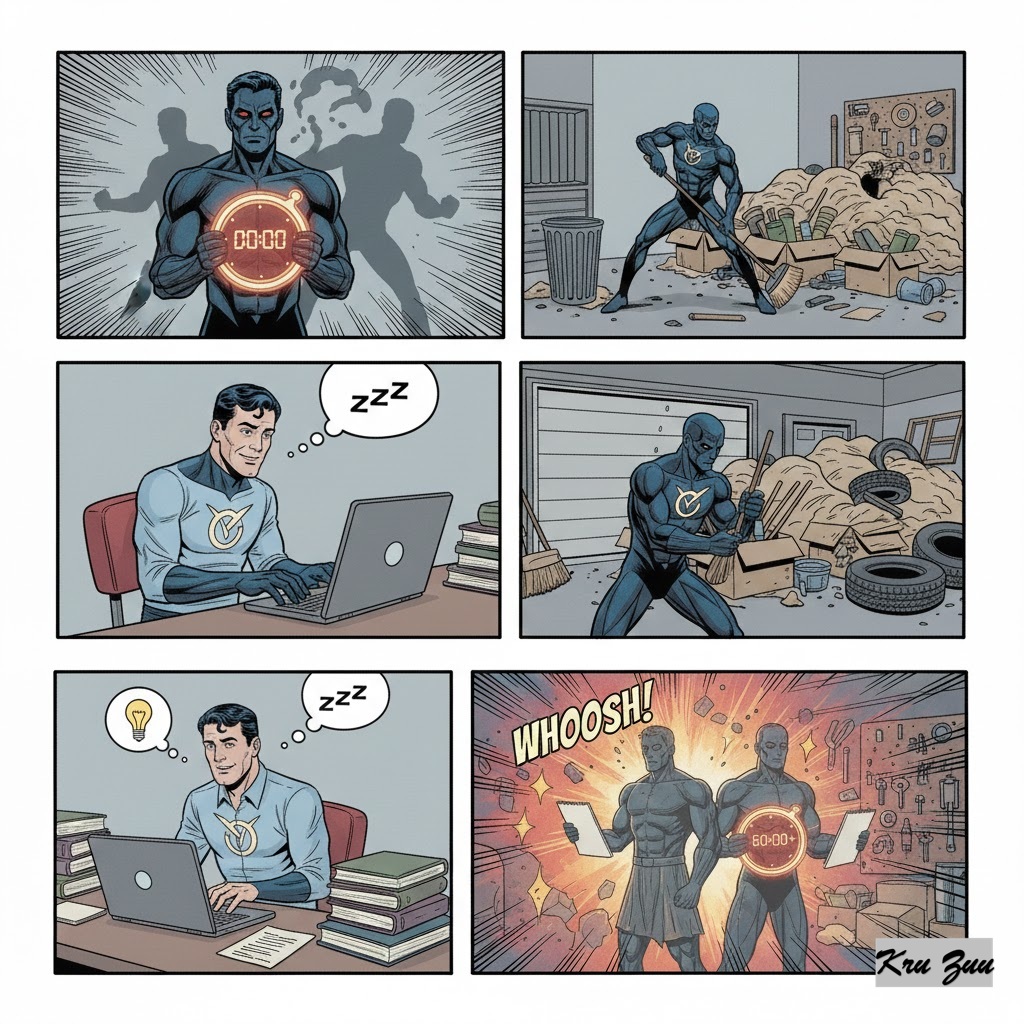
    The Challenge: Think of a task you have been avoiding (cleaning the garage, studying for an exam, writing a report).
    The Action: Commit to doing it for ONLY 5 minutes. Tell yourself: “I will just do this for 5 minutes, then I can stop.”
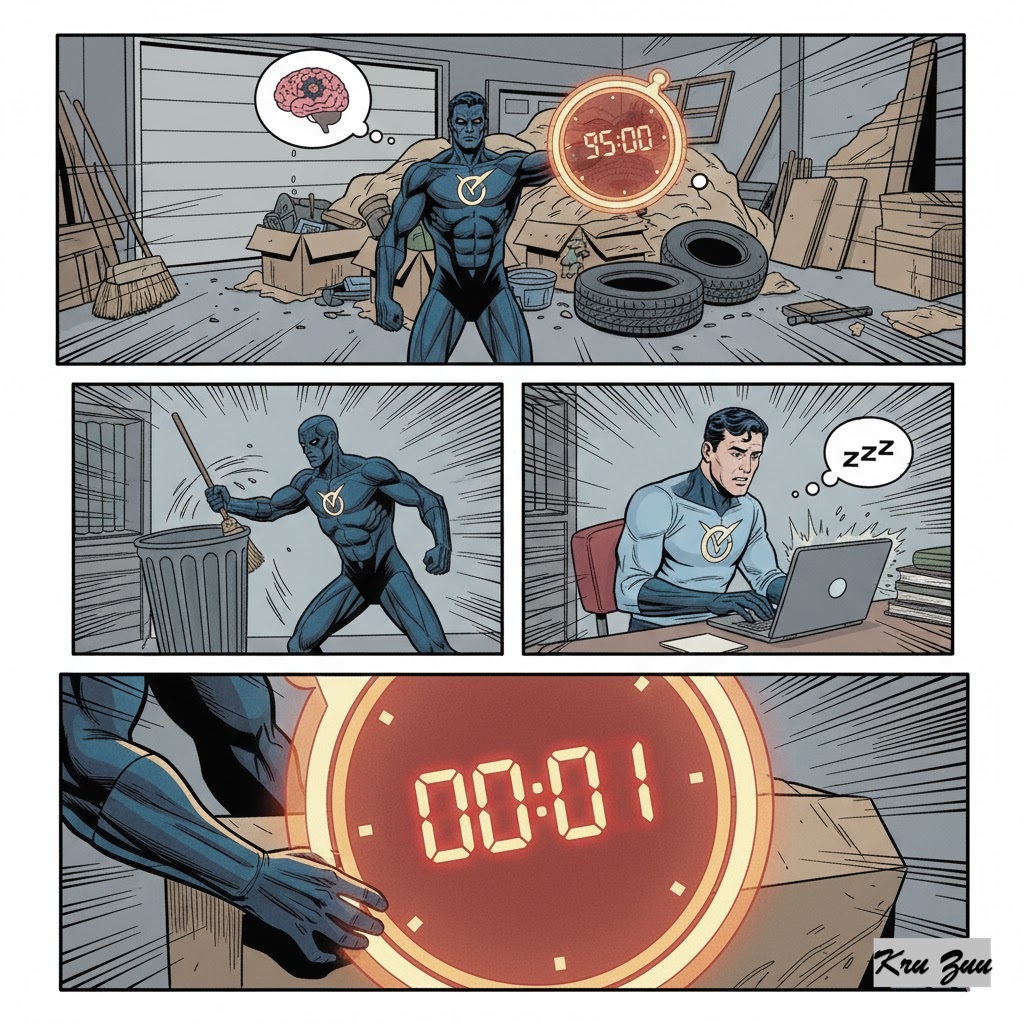
    The Magic: Usually, once you start, the “pain” of starting disappears, and you will keep going. The hardest part is the first step.

    👇 Question for the comments: What is one big goal you have right now? What is the smallest step you can take today to start it? Tell us below!

    By Zubeyir YURTKURAN

    https://www.facebook.com/BrainBattleground/

    https://www.facebook.com/zubeyr.yurtkuran/

    https://www.instagram.com/zubeyryurtkuran/

    https://www.youtube.com/@BrainBattleground-b3p

    https://www.instagram.com/brainbattleground/

  • ⚔️ The Daily Shield: The Law of Momentum

    ⚔️ The Daily Shield: The Law of Momentum

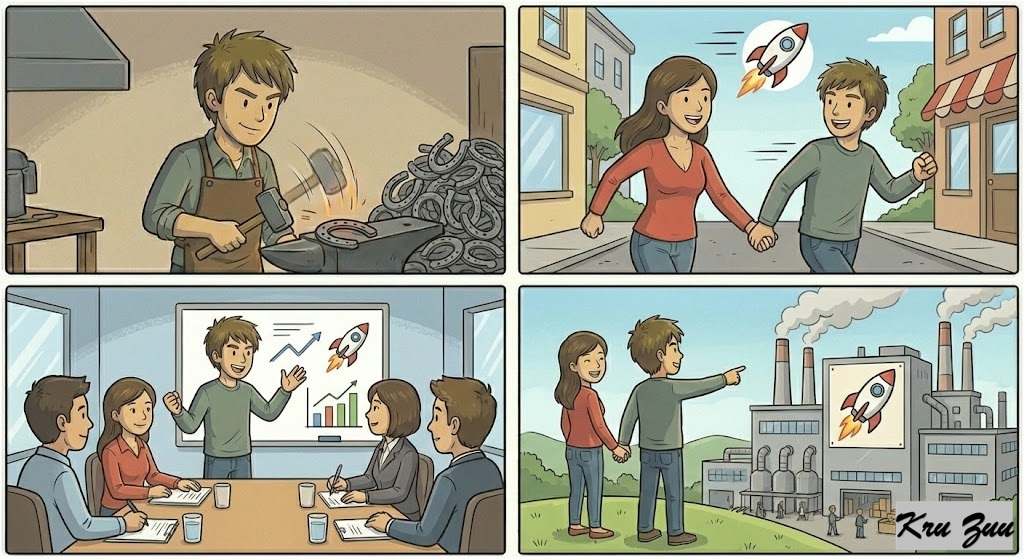
    “Strike while the iron is hot.”


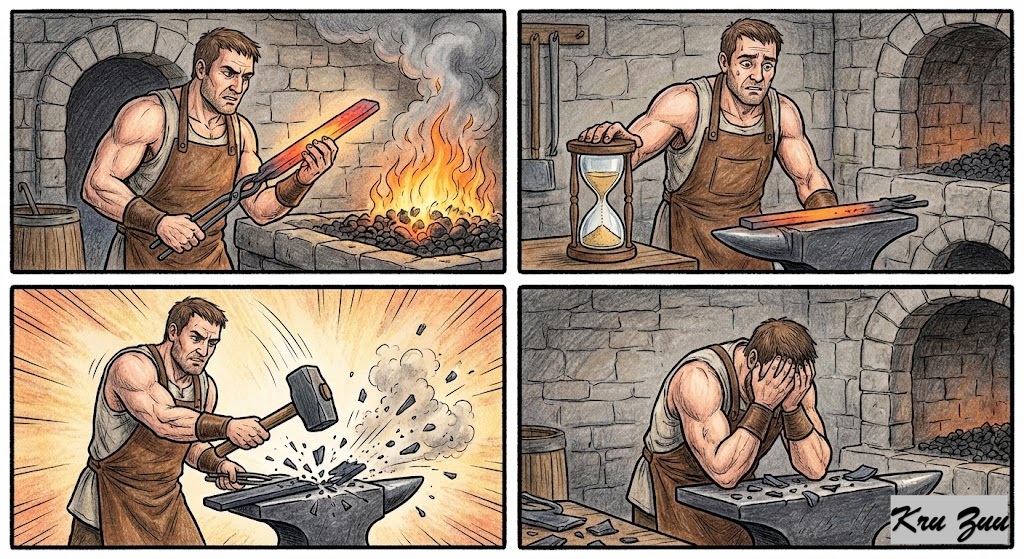
    🥶 The Villain (The Hesitator)


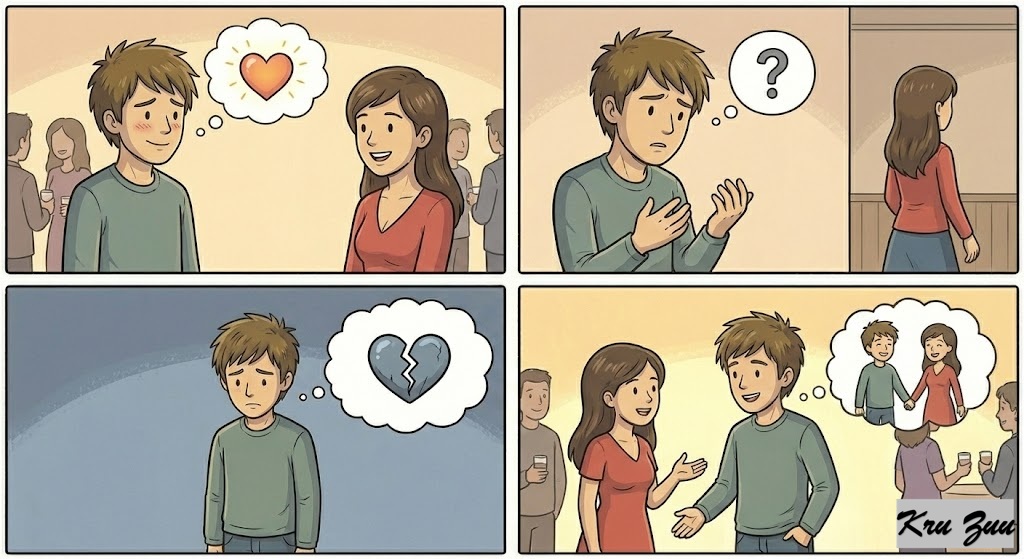
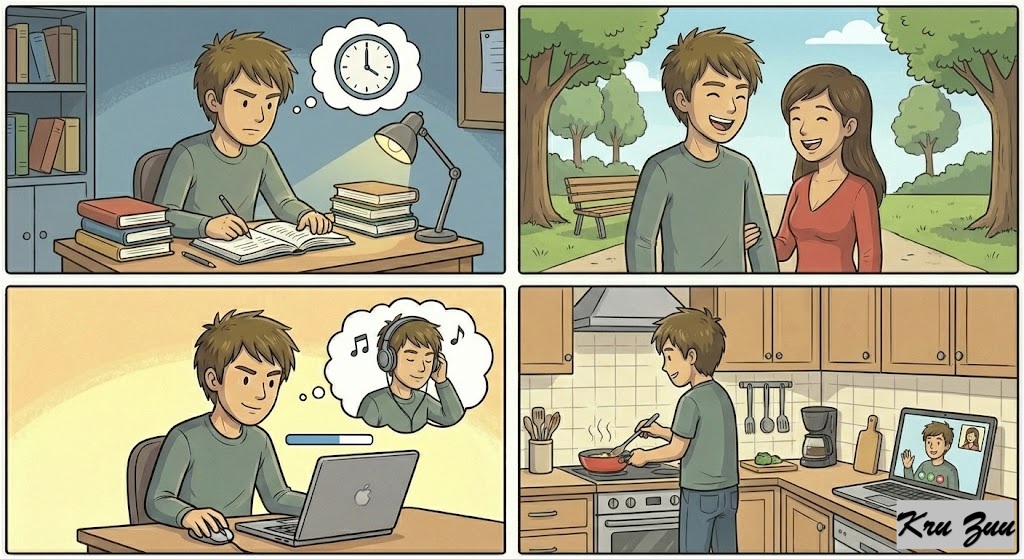
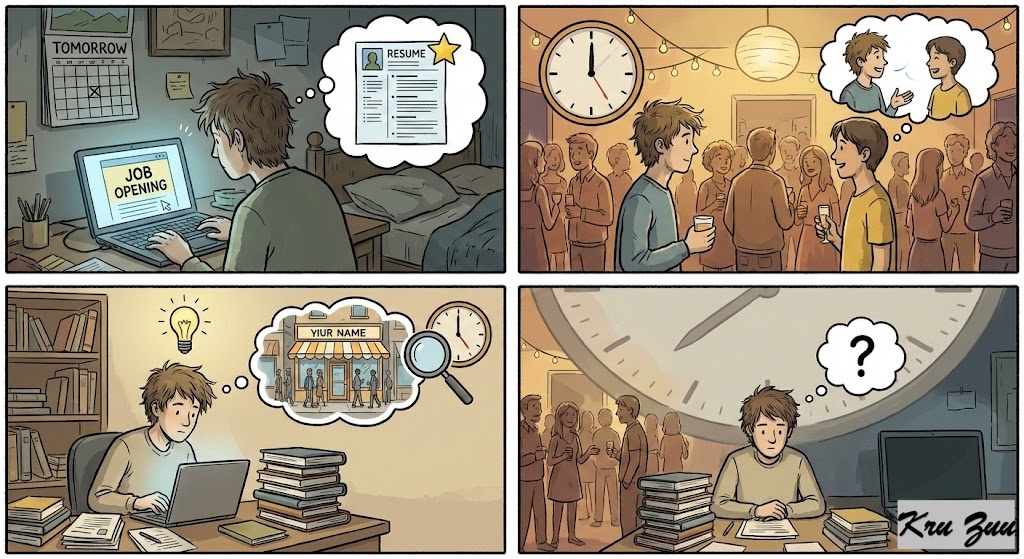
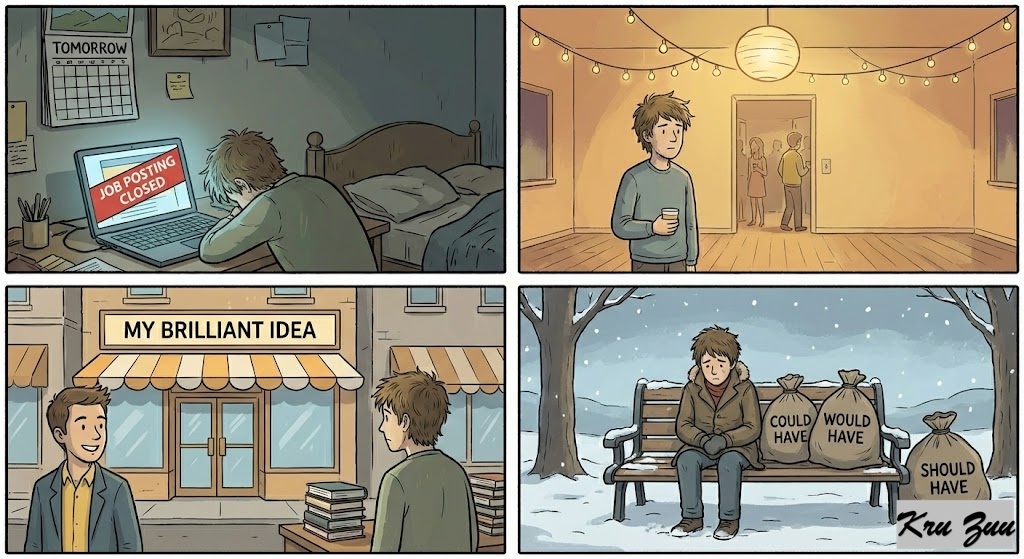
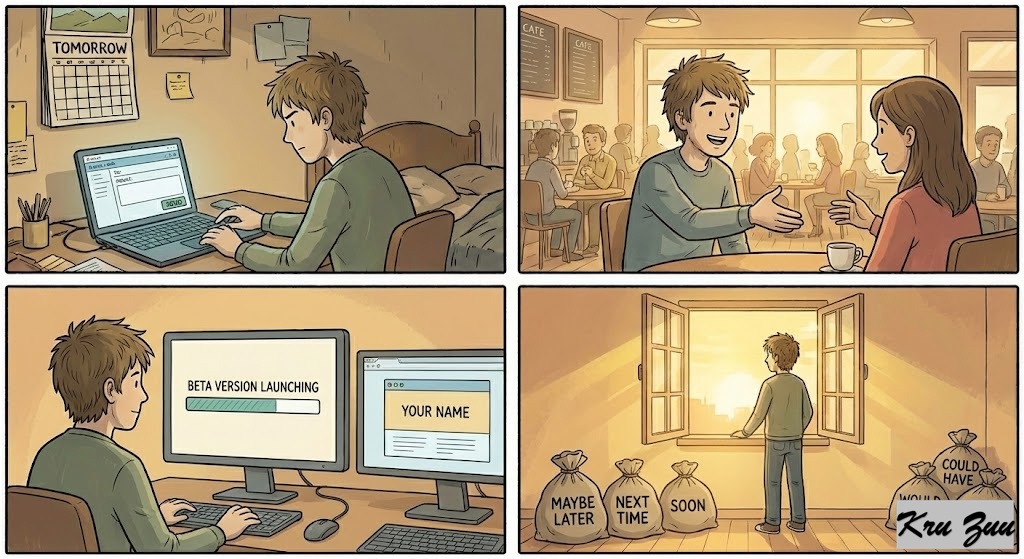
    You see a job opening that is perfect for you. You say, “I’ll apply tomorrow; I need to update my CV perfectly first.” You see a person you want to talk to at a party. You wait for the “right moment.” You have a brilliant idea for a business, but you decide to “research more” first.

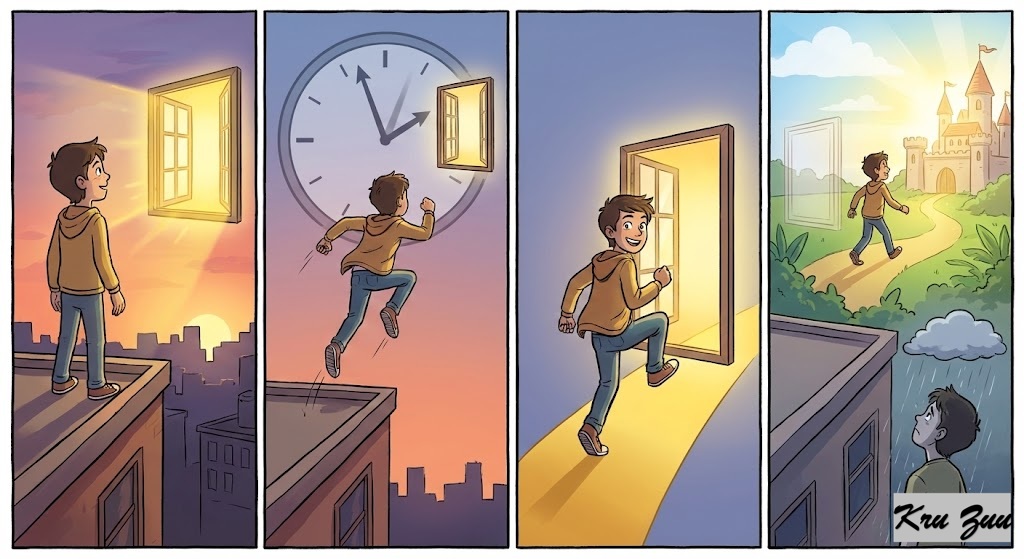
    The Result? The job posting closes. The person leaves the party. Someone else launches your business idea. You are left standing in the cold, holding a bag full of “Could have,” “Would have,” and “Should have.” The opportunity didn’t wait for you. It vanished. ❄️


    🔥 The Hero (The Striker)


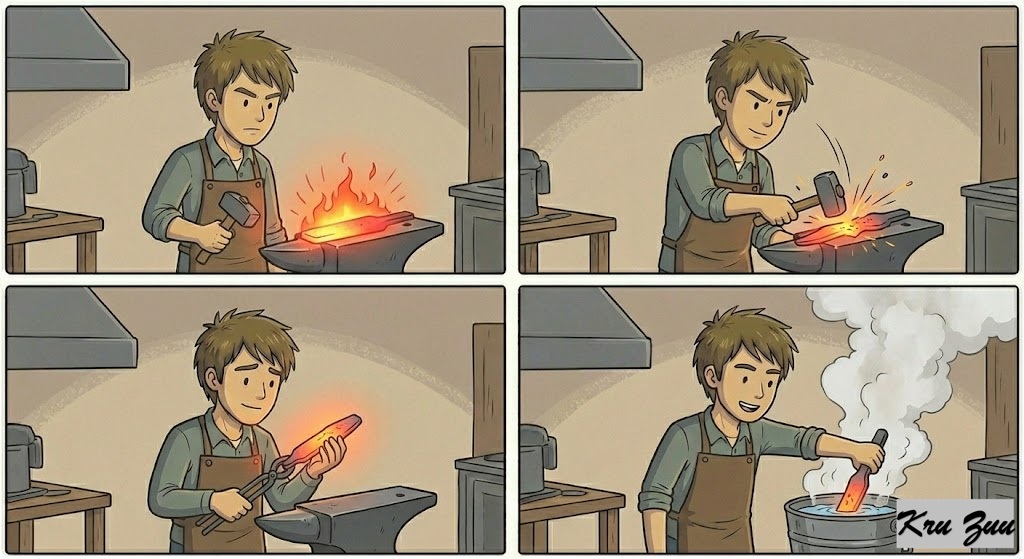
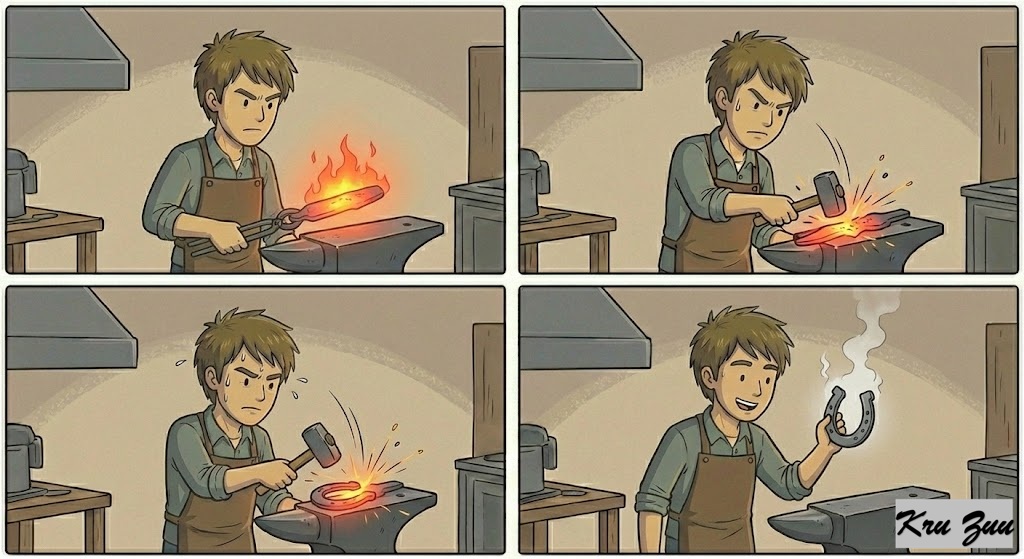
    You see the window of opportunity open. It’s scary. You aren’t 100% ready. But you know that speed is a weapon. You send the email now. You say “Hello” now. You launch the beta version now.

    The Result? You might make a mistake, but you are in the game. You are moving. You grab the win while others are still tying their shoelaces. You understand that the universe loves speed. ⚡


    ⚖️ The Reality


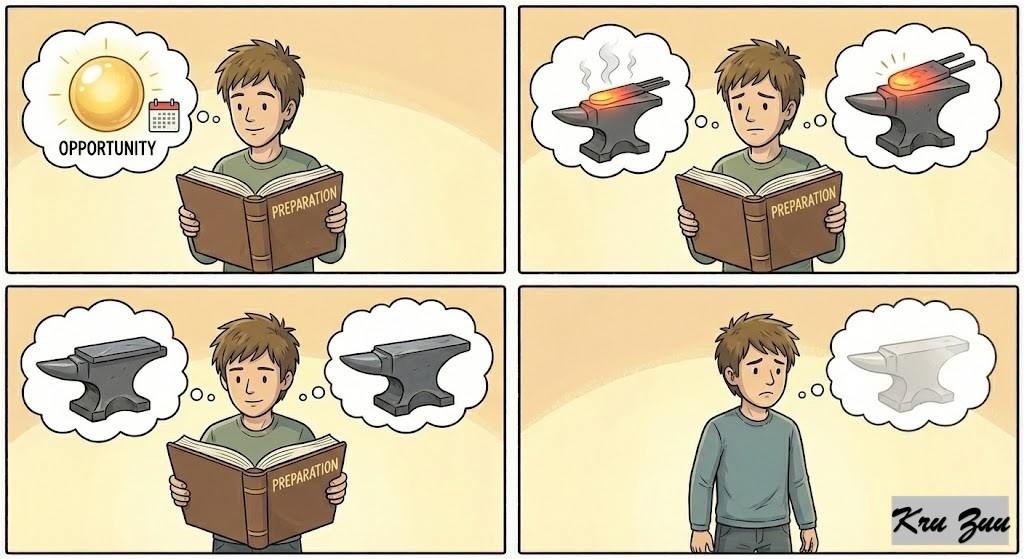
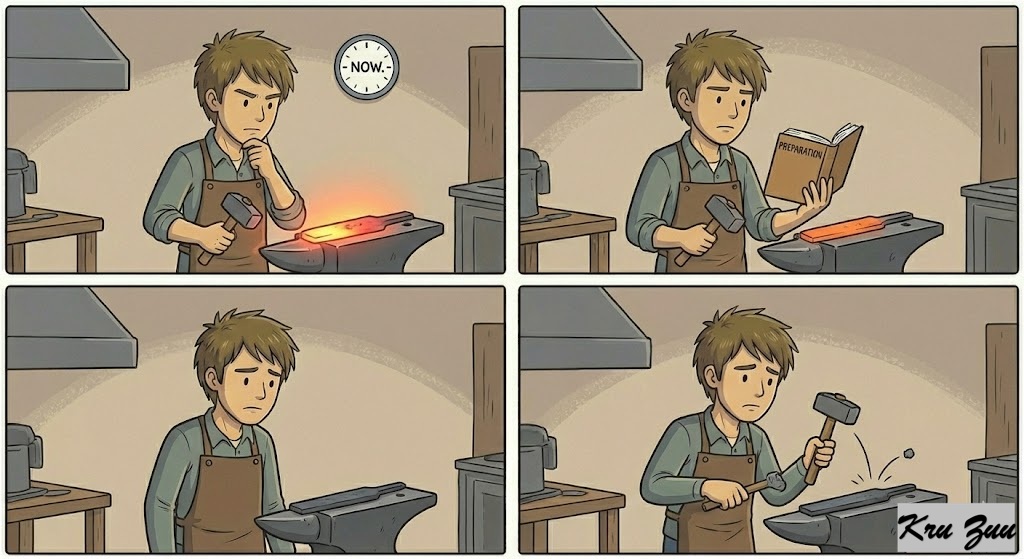
    Opportunities have an expiration date. Ideally, we want to be 100% prepared. But in reality, by the time you are 100% prepared, the chance is usually gone. The “Iron” (the opportunity) cools down and hardens rapidly.


    💎 The Secret

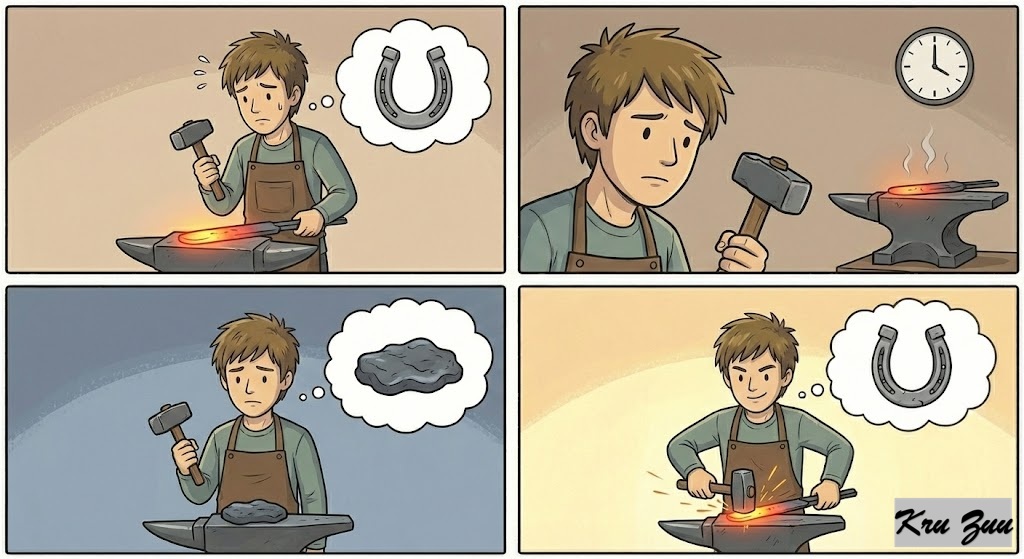
    You don’t need to be perfect; you just need to be present. It is better to strike imperfectly than to stare at the hammer until the metal goes cold.

    🧐 The Anatomy of the Proverb


    This is the ultimate rule for success and dating!


    Strike (Verb): To hit forcibly; to take action. 🔨


    While (Conjunction): During the time that; at the same time as.


    Iron (Noun): The metal (representing the opportunity).


    Hot (Adjective): Ready to be shaped.


    Simpler Version: Act immediately when you have the chance.


    📚 Vocabulary Vault


    Momentum (Noun): The force that keeps an object moving. (Action creates momentum!). 🚀


    Fleeting (Adjective): Lasting for a very short time. (Opportunities are fleeting). 💨


    Decisive (Adjective): Having the ability to make decisions quickly and effectively.


    Hesitation (Noun): The action of pausing before doing something. (The enemy of speed).


    Window of Opportunity (Phrase):
    A short period of time during which an action can be taken. 🪟


    🧠 Grammar Focus: Time Clauses with “While”


    This proverb uses a Time Clause to show two things happening at once.


    Structure: [Action Verb] + while + [Condition].


    The Logic: You must do the action during the condition. Once the condition ends, the action is useless.


    Examples


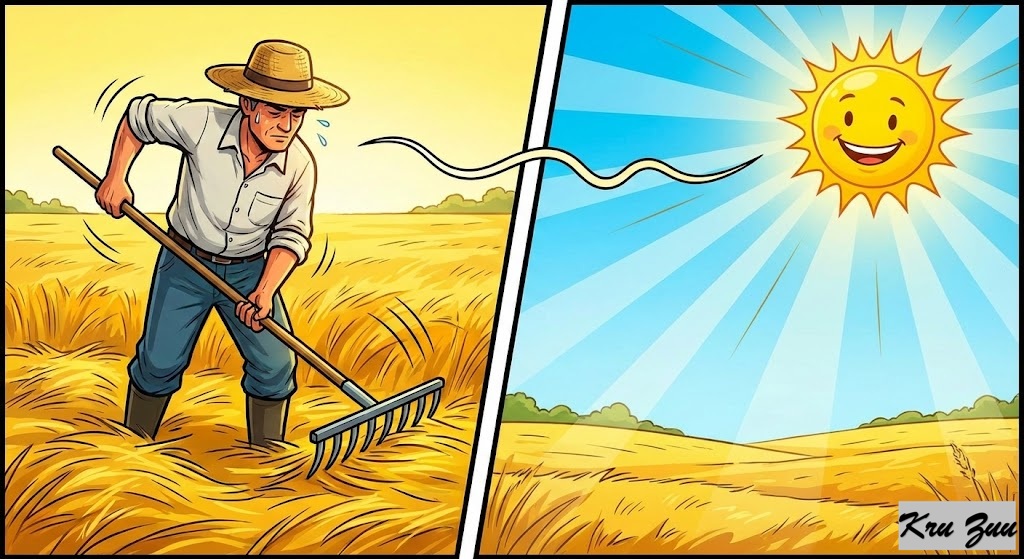
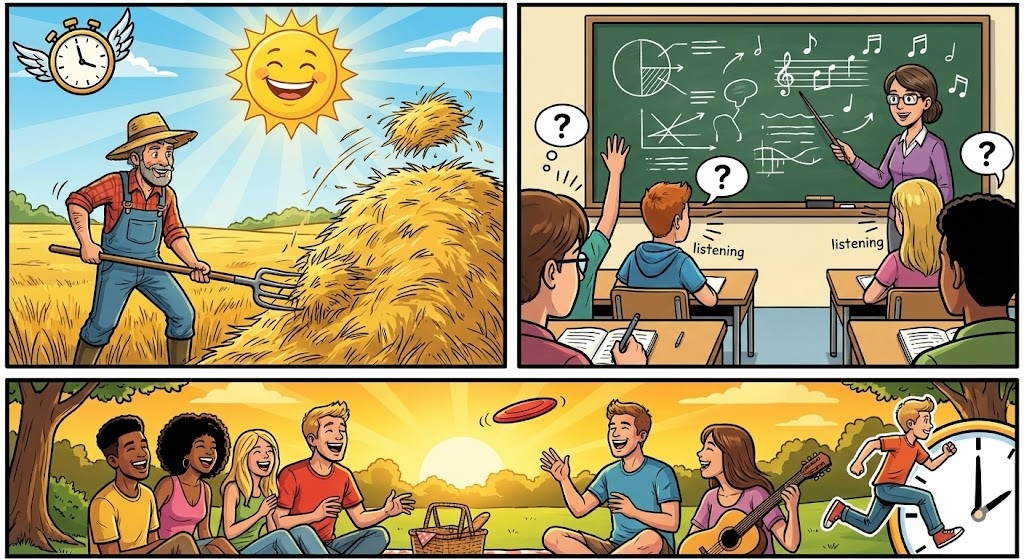
    “Make hay while the sun shines.” (Another famous idiom!)
    “Listen while the teacher is speaking.”
    “Enjoy your youth while you are young.”

    📜 History: Origin and Spread


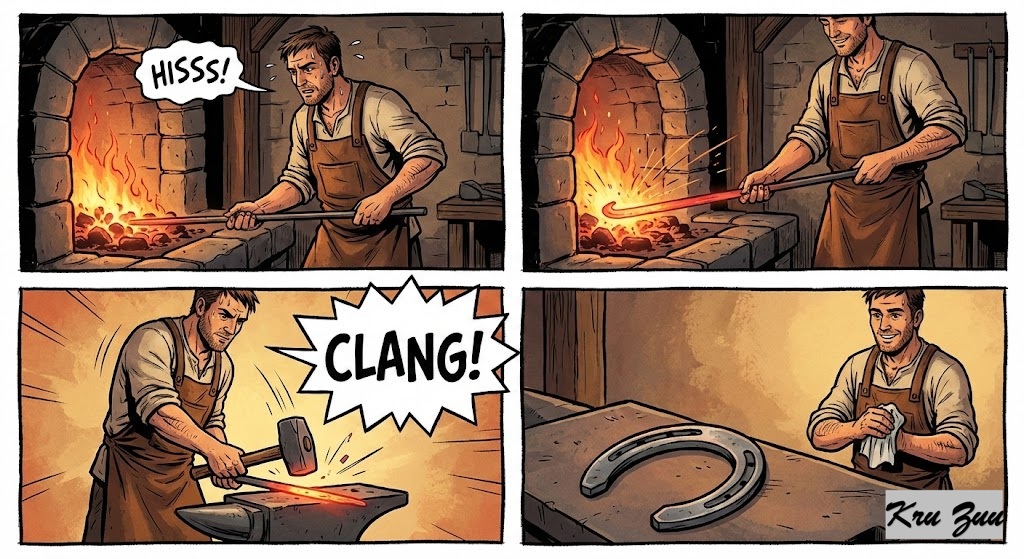
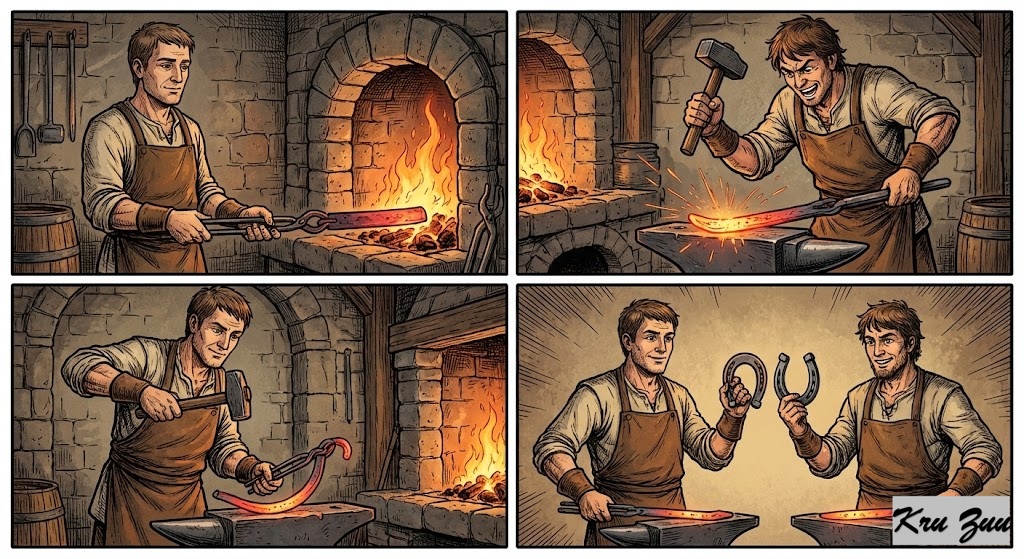
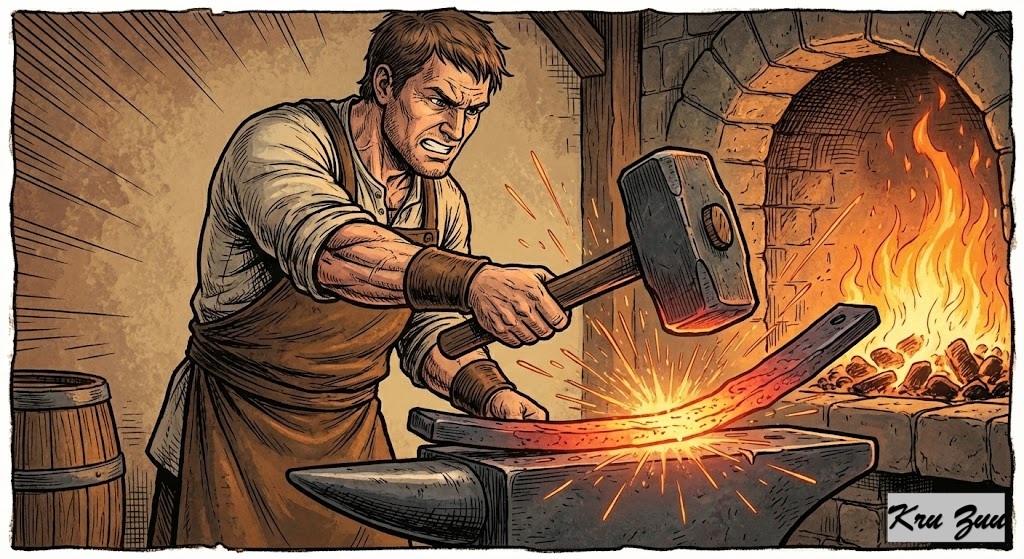
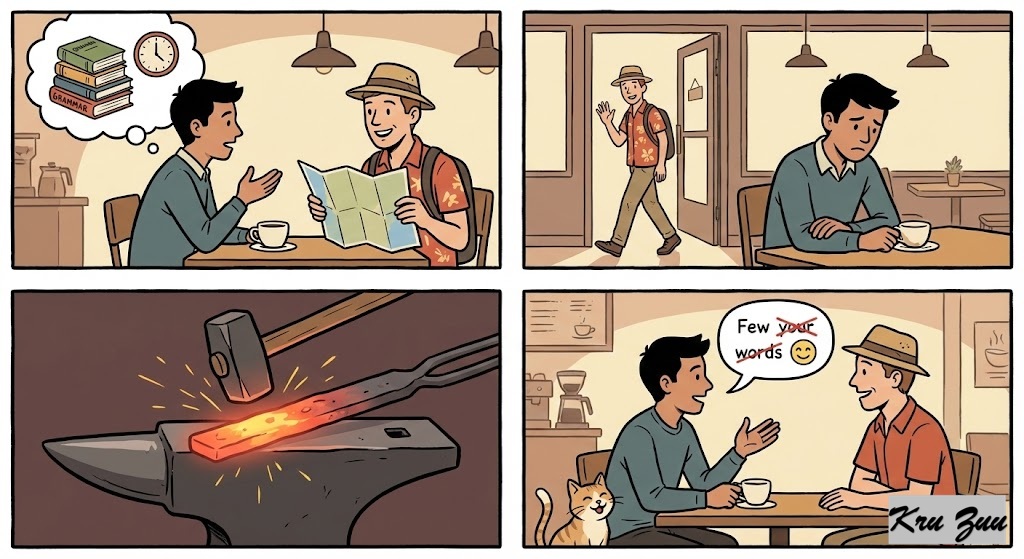
    This idiom comes straight from the blacksmith’s workshop.


    The Origin: In medieval times, blacksmiths had to heat iron in a fire until it glowed red. Only then was it soft enough to hammer into a sword or horseshoe. If they waited even 30 seconds, the iron would cool, turn hard, and shatter if hit.


    Global Cousins


    🇹🇷 Turkish:“Demir tavında dövülür.” (Iron is beaten at its proper heat/temper.) — Identical meaning!


    🇮🇹 Italian:“Batti il ferro finché è caldo.”


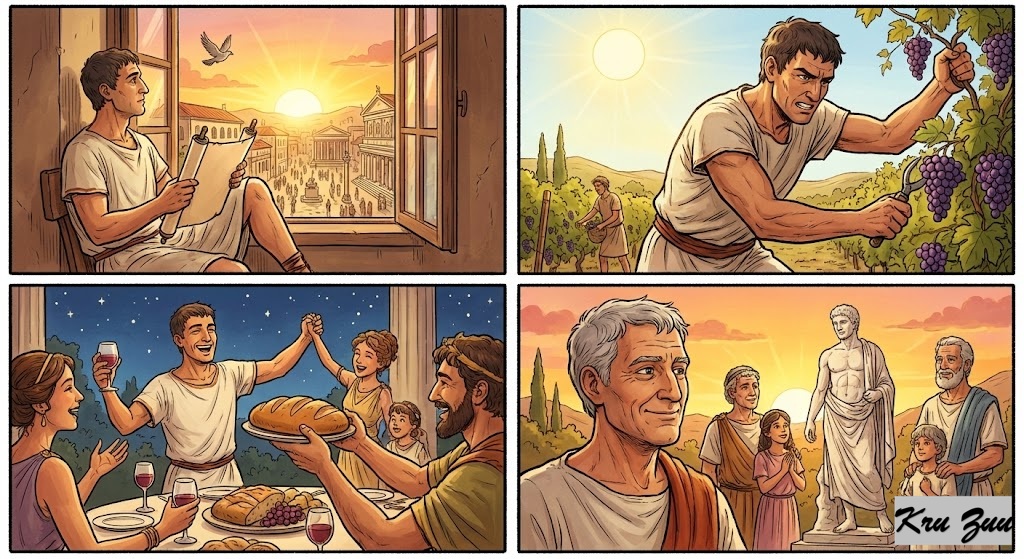
    👺 Latin:“Carpe Diem” (Seize the day) — The spiritual ancestor of this phrase.

    🎯 Impact on Life: The Pros & Cons


    ✅ The Pros (The Winner’s Edge)


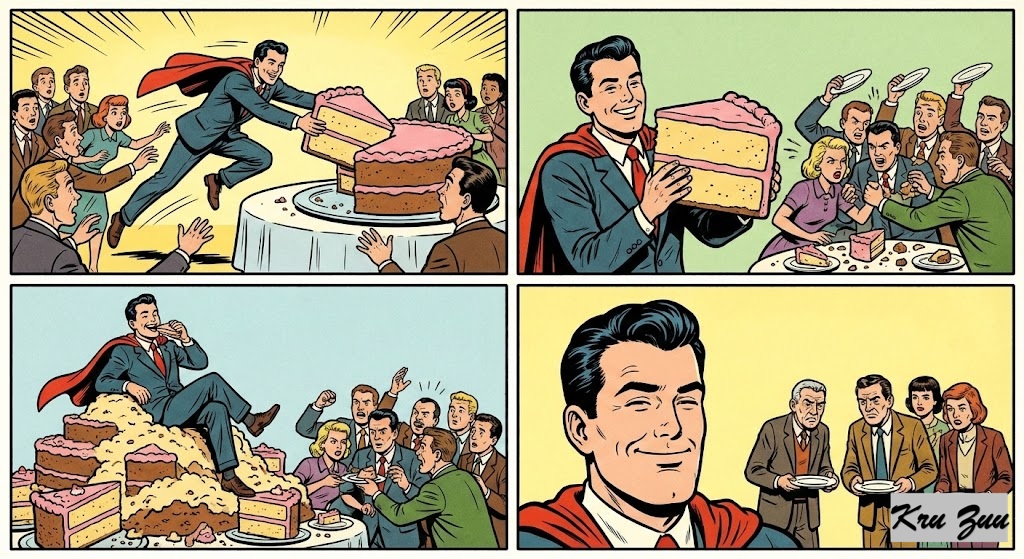
    First Mover Advantage: The first person to act usually gets the biggest slice of the cake.


    Confidence: Taking action kills fear. Waiting feeds fear.


    ❌ The Cons (The Reckless Risk)


    Impulsiveness:
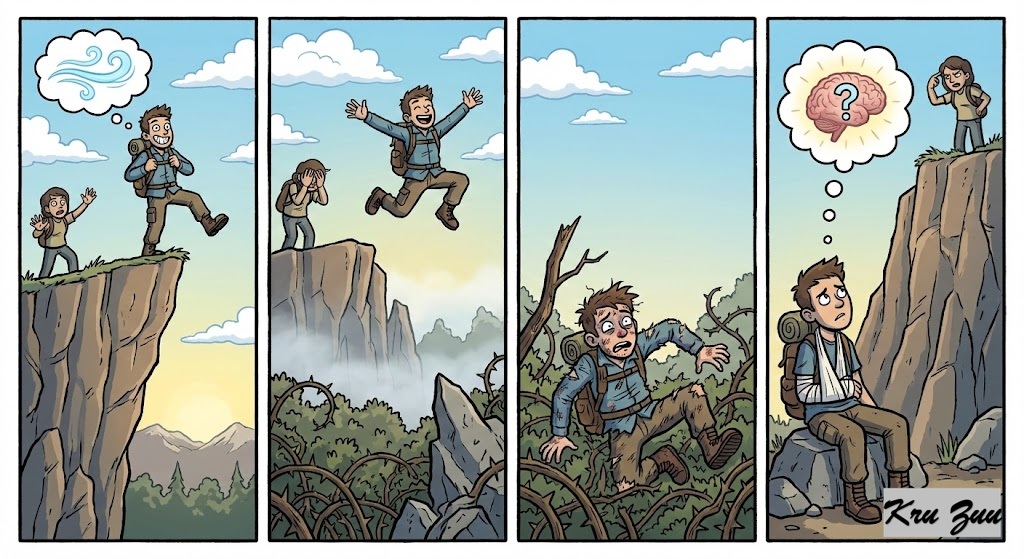
    Striking too fast without looking can be dangerous. Don’t jump off a cliff just because “the air is nice.” Use common sense!

    🎭 Short Story: The Open Gate 🚪


    Let’s visit the barnyard to see this law in action.


    🌟 The Characters


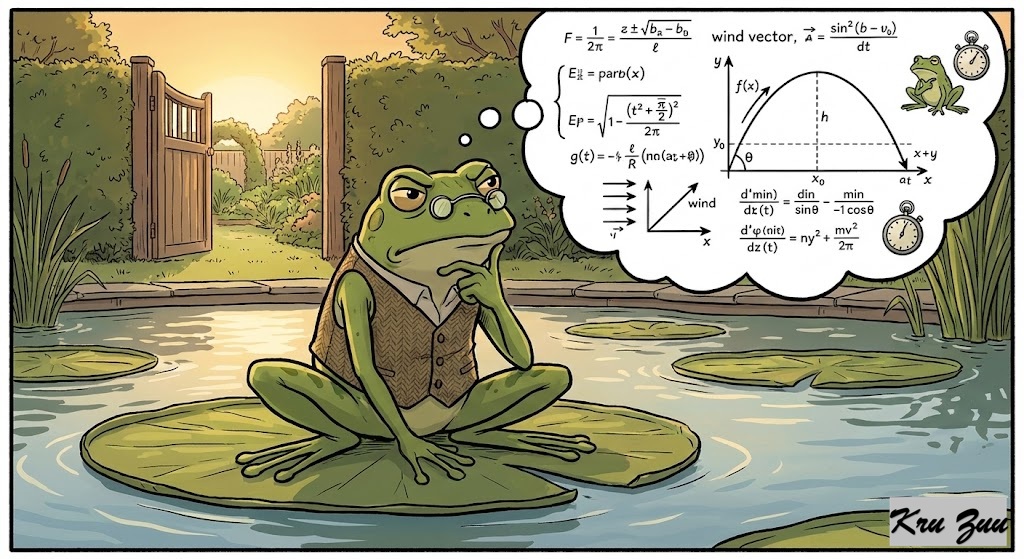
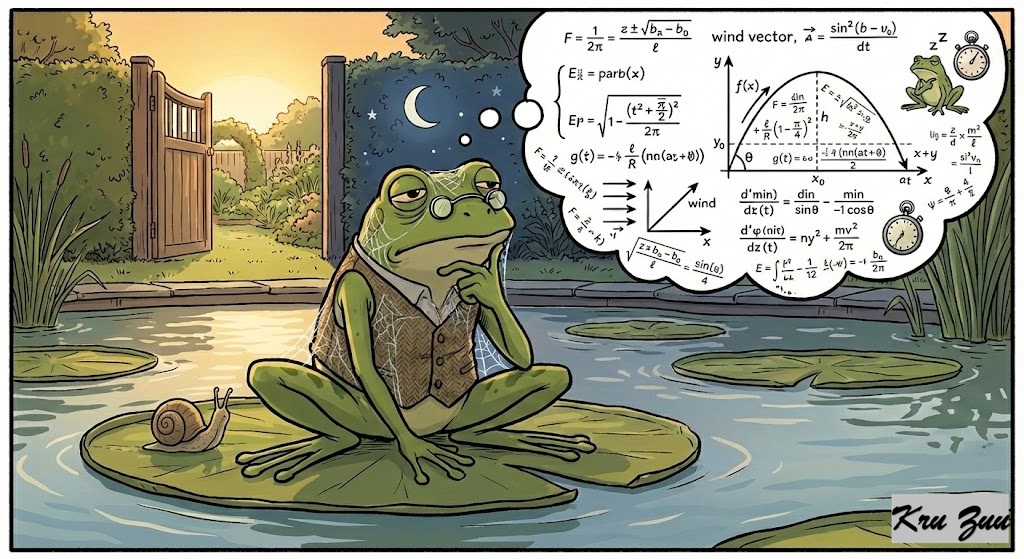
    🐸 Freddie the Frog: The Philosopher (Overthinks everything).


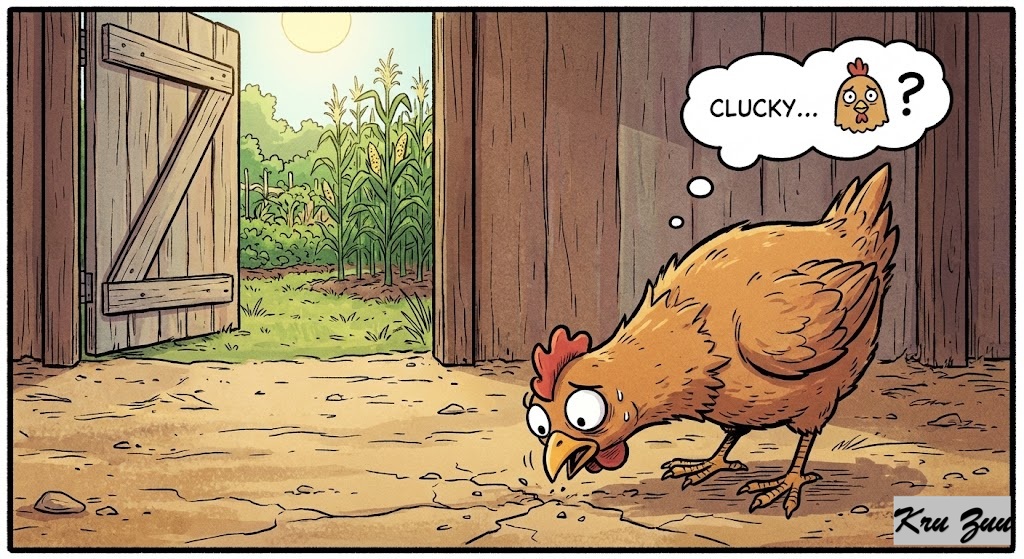
    🐔 Clucky the Chicken: The Worrier (Scared of everything).


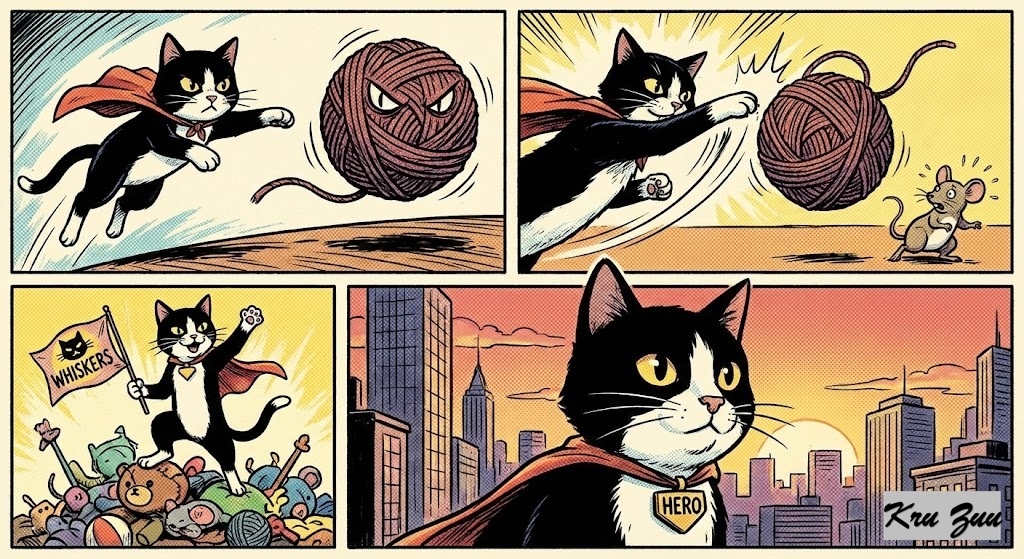
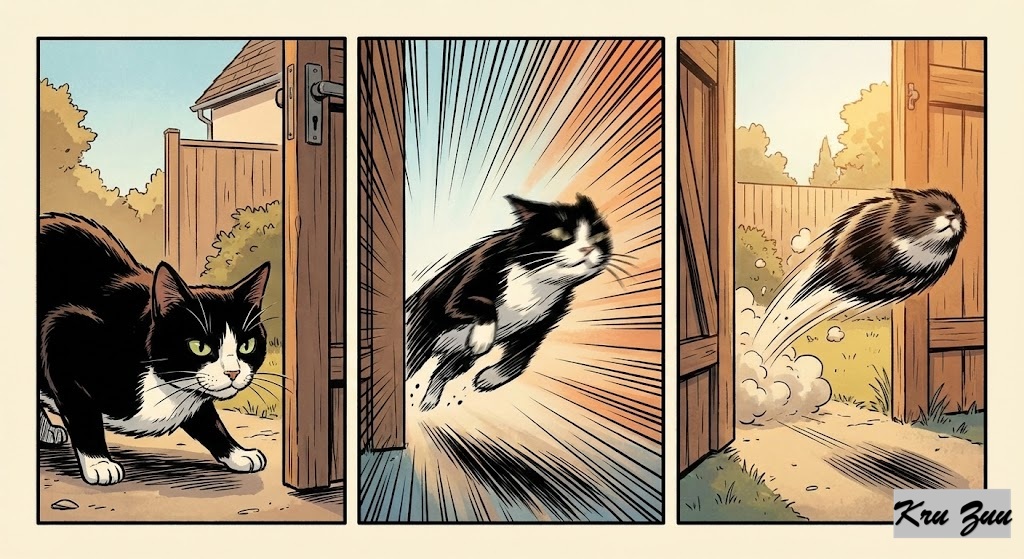
    🐱 Whiskers the Cat: The Striker (The Hero).


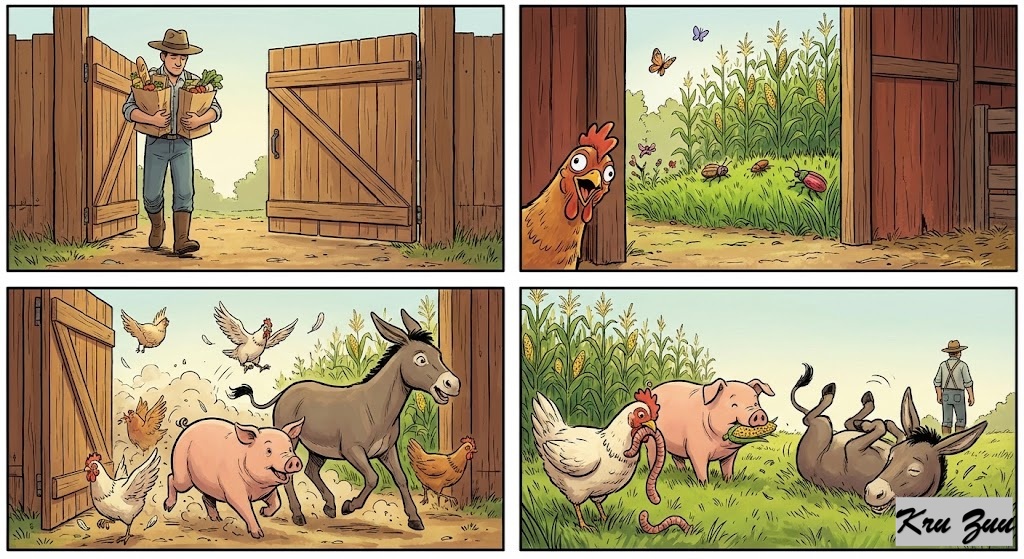
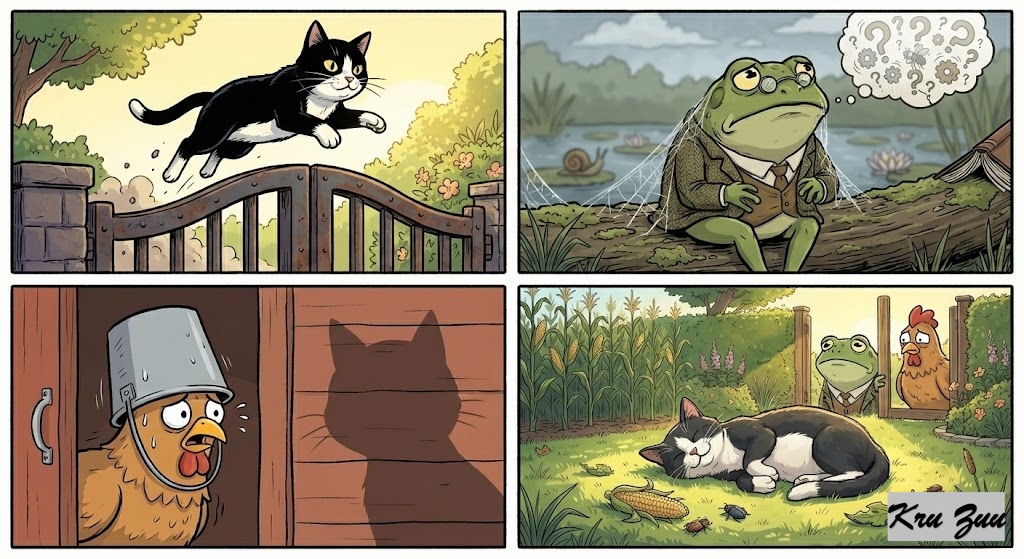
    The Situation: The Farmer is carrying groceries. For exactly 10 seconds, he leaves the garden gate wide open. Inside, there is a paradise of bugs, corn, and soft grass.


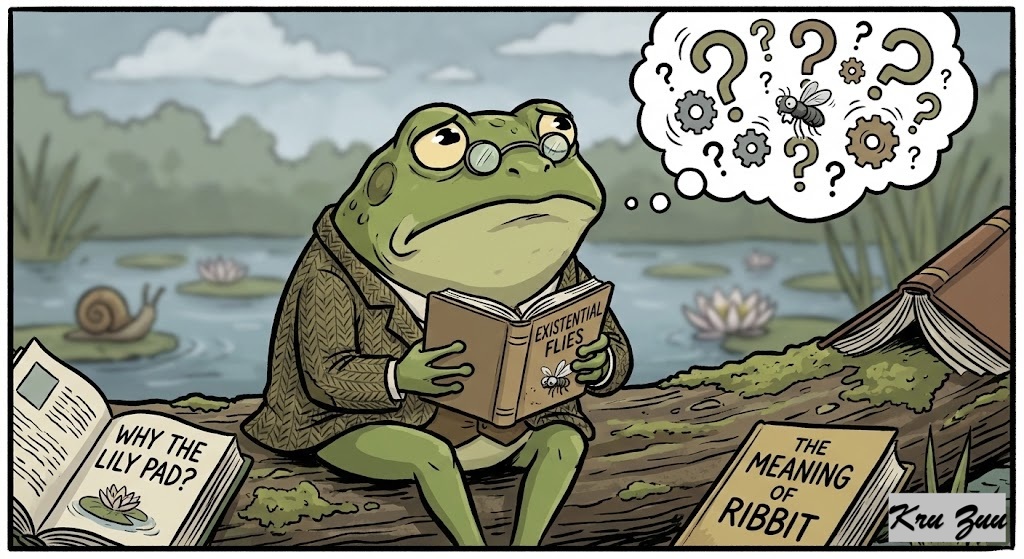
    The Reaction:🐸 Freddie the Frog sees the gate. He sits on his lily pad. “Hmm,” he croaks. “The humidity is good, but I need to calculate the trajectory of my jump. If I wait for the wind to die down, my jump will be 4% more aerodynamic.”

    Result: He stays on the lily pad, calculating.


    🐔 Clucky the Chicken sees the gate. She flaps her wings nervously. “Oh my!” she clucks. “It looks delicious. But what if the Farmer sees me? What if I trip? Maybe I should wait until the Farmer goes to sleep tonight. Yes, that is safer.”

    Result: She pecks at the dry dirt, waiting for “safe.”


    🐱 Whiskers the Cat sees the gate. Whiskers doesn’t think. Whiskers doesn’t calculate wind speed. Whiskers sees the gap. 1, 2, ZOOM. Whiskers shoots through the gap like a fuzzy bullet.


    The Outcome


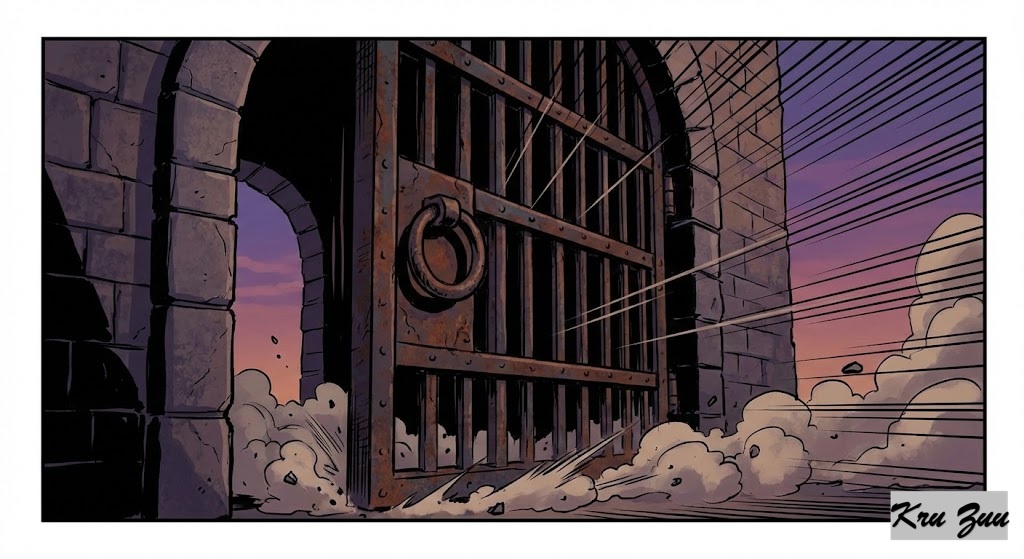
    CLANG. The gate slams shut.


    Freddie is still calculating his jump.


    Clucky is still hungry and safe in the dirt.


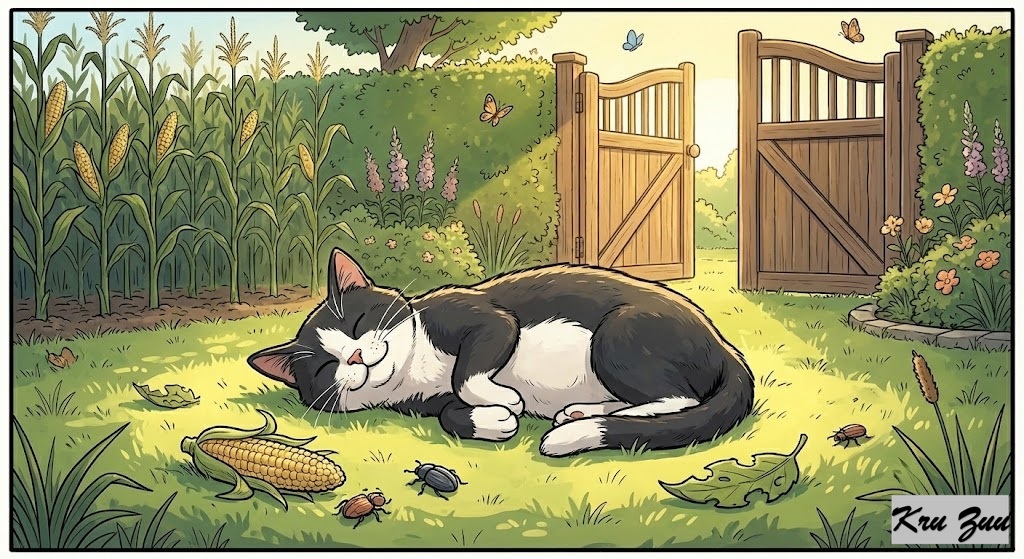
    Whiskers is inside the garden, napping in the sun after eating a feast.


    The Moral: The world belongs to the Cats. Don’t be a Frog calculating the wind. Don’t be a Chicken waiting for safety. Jump.

    🎓 Lesson for English Learners


    Don’t wait for “Perfect English.”


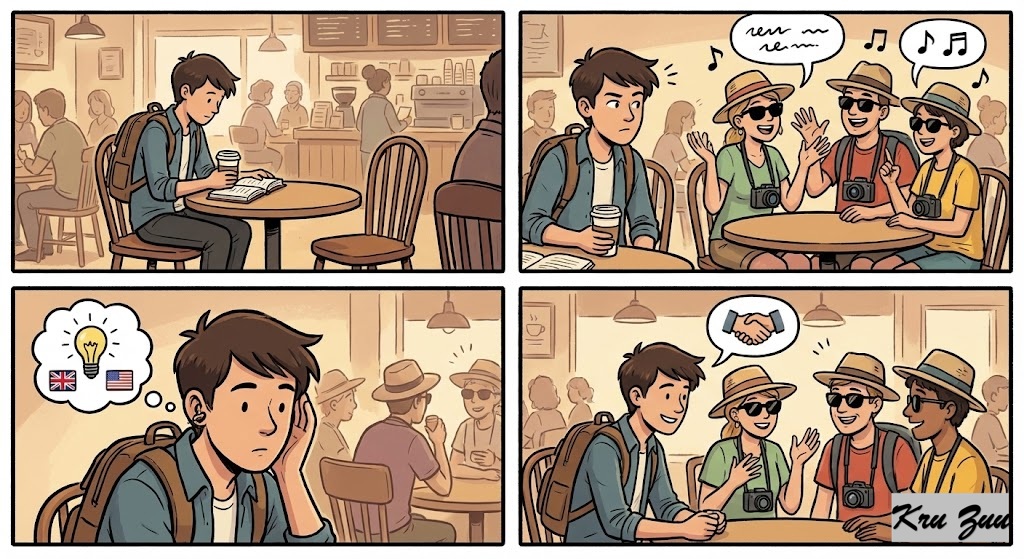
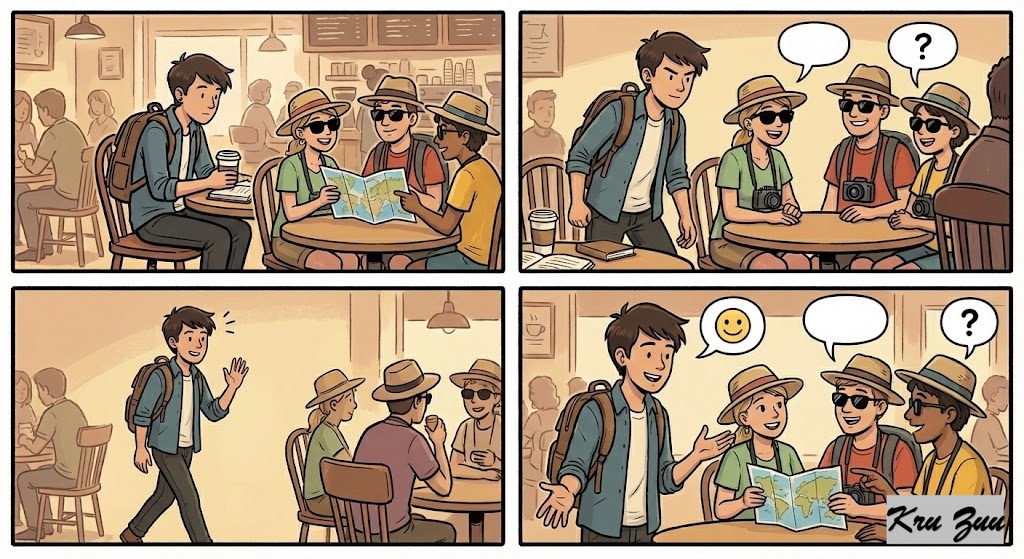
    Situation: You are in a coffee shop. You hear tourists speaking English.


    The Frog approach: “I will talk to them once I master the Present Perfect Continuous tense.”


    The Cat approach: You stand up, walk over, and say, “Hi! Where are you from?”


    Why? Because 5 minutes later, they will leave. The iron will be cold. Speak now, fix your grammar later.


    💬 Your Turn: The “5-Second Rule” 🚀


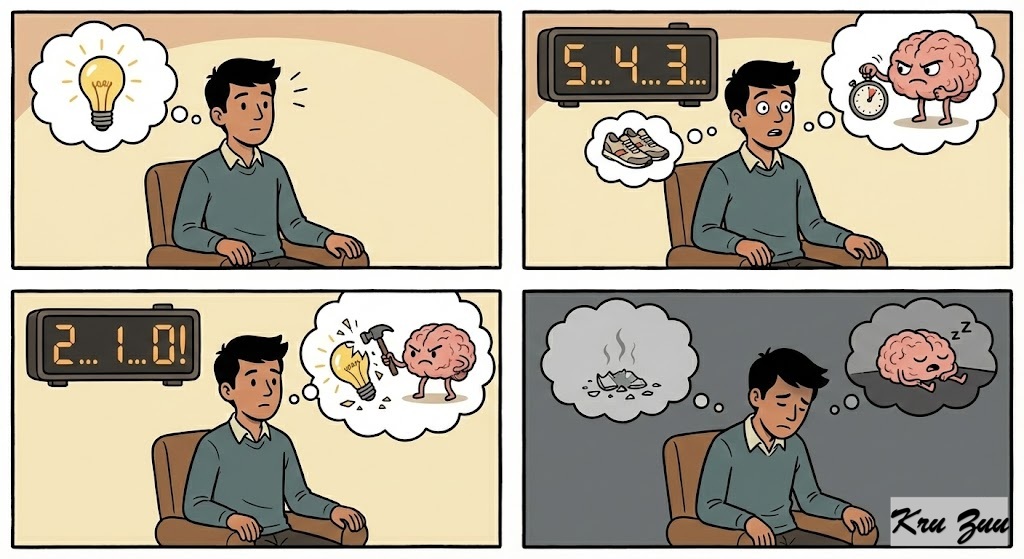
    When you feel an instinct to act on a goal, you must physically move within 5 seconds, or your brain will kill the idea.


    The Challenge: Is there an email you need to send? A text to a crush? A domain name you want to buy?


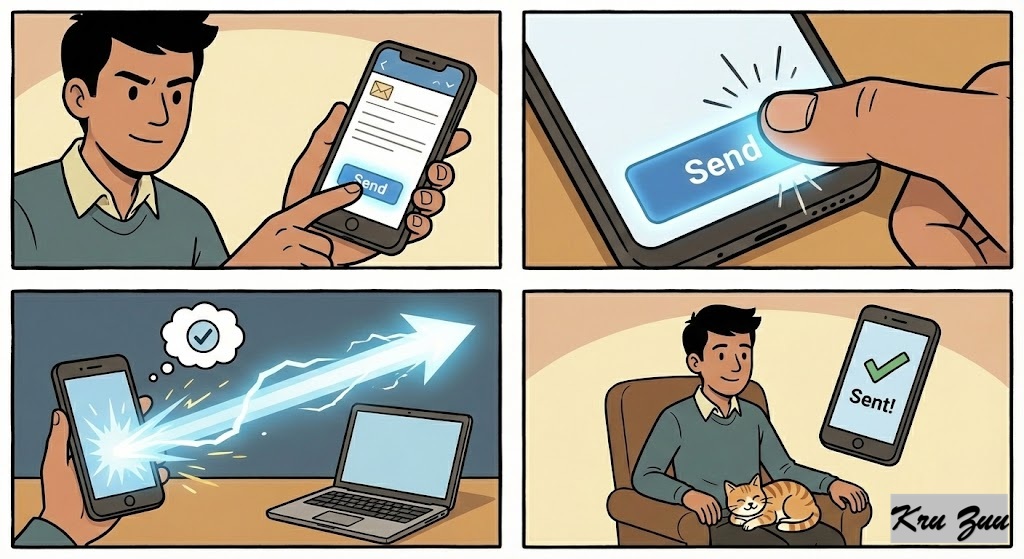
    The Action: Do it. Strike. Don’t think. Just click “Send.”


    👇 Tell us in the comments: What is an opportunity you missed because you waited too long? Let’s mourn it together, then move on!

    By Zubeyir YURTKURAN

    https://www.facebook.com/BrainBattleground/

    https://www.facebook.com/zubeyr.yurtkuran/

    https://www.instagram.com/zubeyryurtkuran/
    https://www.youtube.com/@BrainBattleground-b3p

    https://www.instagram.com/brainbattleground/

  • ⏳ The Daily Shield: The Law of Immediacy

    ⏳ The Daily Shield: The Law of Immediacy

    “Don’t put off until tomorrow what you can do today.”


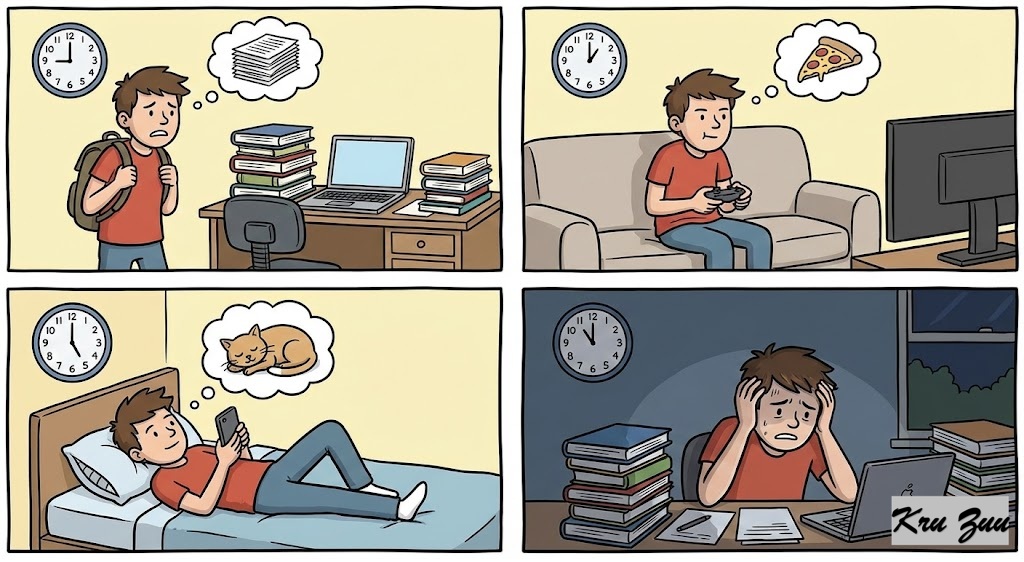
    😈 The Villain (The Procrastinator): You have a project due next week.

    You say, “I have plenty of time.” You open Instagram.

    You watch just one episode on Netflix (which turns into five).

    You clean your room instead of working.

    You convince yourself that you work better under pressure.

    The Result? Sunday night arrives. Panic sets in.

    You drink 5 coffees, stay up all night, and produce garbage work.

    You live in a cycle of stress and regret. You are a slave to the “Last Minute.” 🧟‍♂️


    😇 The Hero (The Executor): You get the assignment.

    You don’t want to do it, but you count to three: 1, 2, 3, GO.

    You open the laptop. You do the hard work first so you can enjoy your guilt-free free time later.

    You treat “Tomorrow” as a bonus, not a trash can for your duties.

    The Result? You sleep peacefully.

    Your work is high quality because you had time to check it.

    You own your time; time doesn’t own you. 🛡️


    ⚖️ The Reality


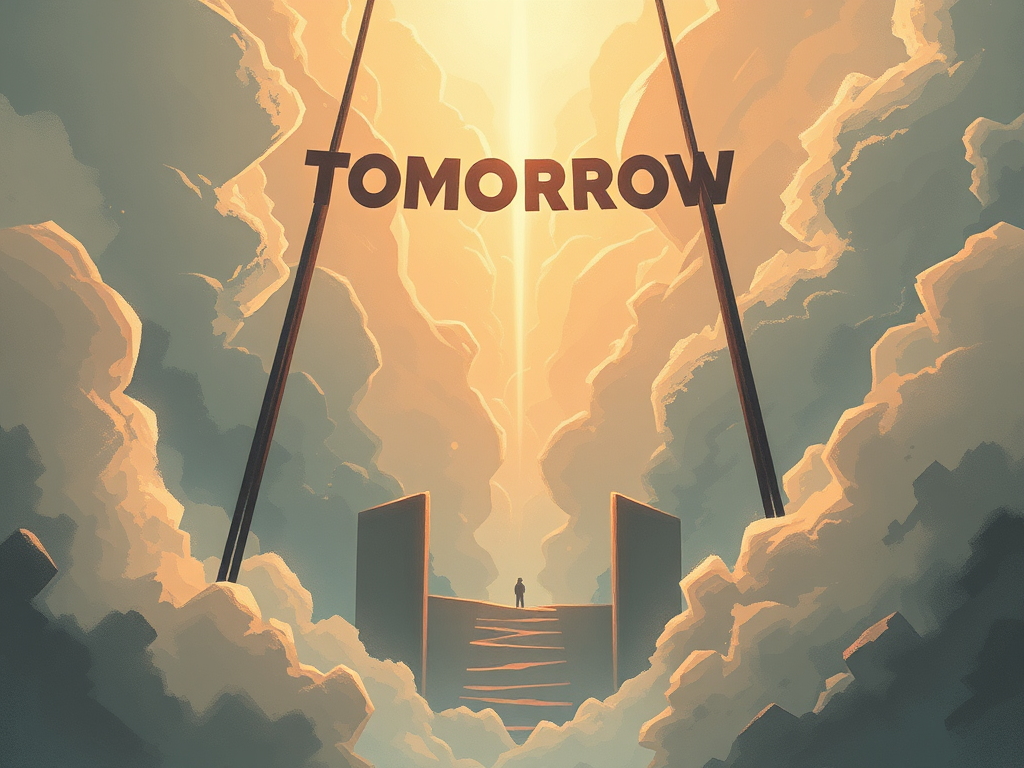
    “Tomorrow” is a liar. Tomorrow is a mystical land where 99% of all human productivity, motivation, and diets are stored. But guess what? When you wake up, it is Today again.


    💎 The Secret: There is no perfect time. The “pain” of doing the work now weighs ounces. The “pain” of regret weighs tons.

    🧐 The Anatomy of the Proverb


    This is the ultimate weapon against laziness.


    Put off (Phrasal Verb): To delay; to move an activity to a later time. (This is the enemy!). 🐢


    Until (Conjunction): Up to the point in time.


    What (Pronoun): The thing that.


    Simpler Version: Do it now.


    📚 Vocabulary Vault


    Procrastination (Noun):
    The action of delaying or postponing something. (The #1 enemy of success).


    Prioritize (Verb): To treat something as more important than other things.


    Deadline (Noun): The latest time or date by which something should be completed. ⏰


    Immediacy (Noun): The quality of bringing one into direct and instant involvement.


    Productive (Adjective): Achieving or producing a significant amount or result. 🚀


    🧠 Grammar Focus: The Imperative & Phrasal Verbs


    The Phrasal Verb:
    “Put Off” English speakers love phrasal verbs.


    Formal: “Please postpone the meeting.”


    Natural: “Can we put off the meeting?”


    Synonym: Delay, defer.


    The Negative Imperative


    Structure:
    Do not (Don’t) + [Verb].


    Examples: Don’t smoke. Don’t go. Don’t put off.

    📜 History: Origin and Spread


    This wisdom has echoed through history.


    The Origin:
    Benjamin Franklin, one of the Founding Fathers of the USA, popularized this specific phrasing in the 1700s. He was obsessed with productivity.


    The Logic: Farming societies couldn’t wait. If you didn’t harvest the wheat today because you were lazy, the rain might destroy it tomorrow. Delay meant death.


    Global Cousins:


    🇹🇷 Turkish:
    “Bugünün işini yarına bırakma.” (Don’t leave today’s work for tomorrow.) — Exactly the same logic!


    🇪🇸 Spanish: “No dejes para mañana lo que puedes hacer hoy.”


    🇩🇪 German: “Was du heute kannst besorgen, das verschiebe nicht auf morgen.” (What you can get done today, do not shift to tomorrow.)

    🎯 Impact on Life: The Pros & Cons


    ✅ The Pros (The Peace):


    Freedom:
    When you finish tasks early, your free time feels actually free. No anxiety in the background.


    Opportunity: If you are ready early, you can say “Yes” to new opportunities that appear suddenly.


    ❌ The Cons (The Burnout Risk):


    Obsession:
    Don’t become a robot. Sometimes, it is okay to rest if you are sick or exhausted.


    Rushing: Doing it “now” is good, but doing it “too fast and making mistakes” is bad. Balance speed with quality.

    🎭 Short Story: The Heavy Backpack


    Let’s look at our students, Penny and Max again.


    🌟 The Setup:
    The teacher assigns a 10-page essay on Monday. It is due on Friday.


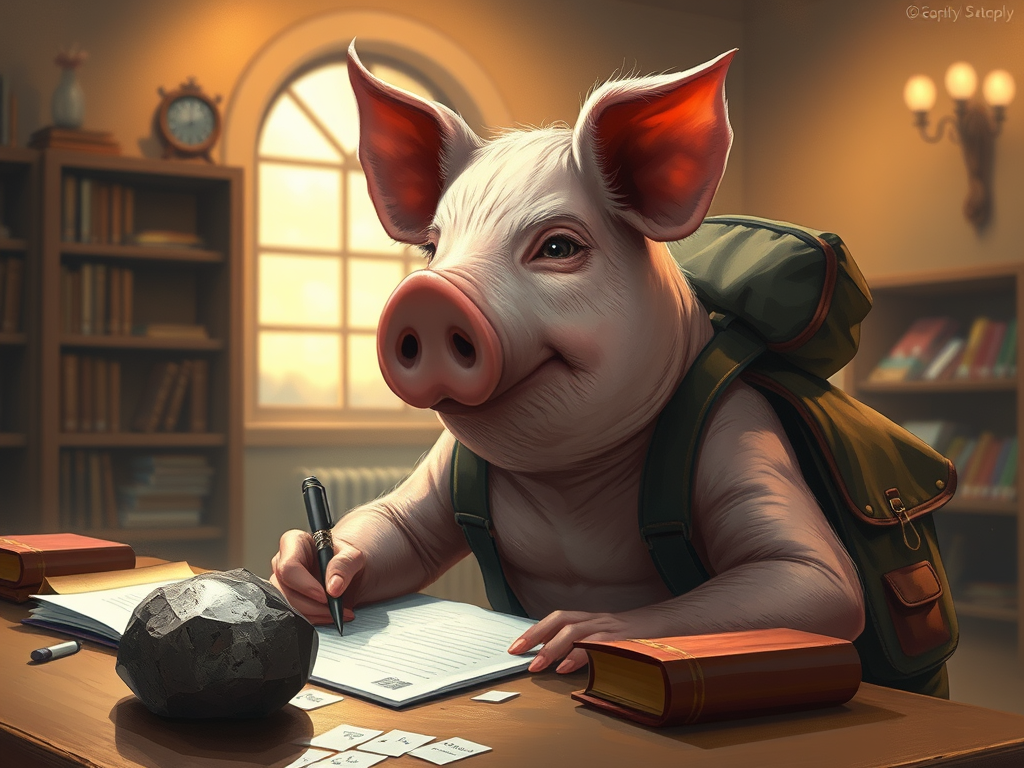
    The Weight: Imagine the essay is a 5kg rock in a backpack.


    The Conflict:Max (The Procrastinator) says, “Friday is far away!” He puts the rock in his backpack. He carries it all week.


    Tuesday: He plays games, but the rock is on his back (worry).


    Wednesday: He goes to a party, but the rock feels heavier.


    Thursday Night:
    The rock is now 50kg. He is sweating. He is stressed. He hates his life.


    Penny (The Doer) says, “I hate carrying rocks.”


    Monday Night: She sits down, writes the essay, and submits it. She takes the rock out of her backpack.


    Tuesday – Friday: Penny walks around light as a feather. She plays games with zero guilt.


    The Moral: Procrastination doesn’t make the work go away; it just makes the work heavier. Be like Penny. Drop the rock. 🎒

    🎓 Lesson for English Learners


    Don’t wait for “Perfect.”


    Situation:
    You want to speak English, but you say, “I will start speaking when my grammar is perfect.” You Say: “That is procrastination disguised as perfectionism. Don’t put off until tomorrow what you can do today. Speak now. Make mistakes now. Learn now.”


    Situation: You have a vocabulary list to memorize. You Say: “If I learn 5 words today, that is 150 words a month. If I wait until I have ‘time’ to learn 50 at once, I will quit. Do it today.”


    💬 Your Turn: The 2-Minute Rule 🚀


    The “Tomorrow” trap is easy to fall into. Here is how to escape.


    The Challenge:
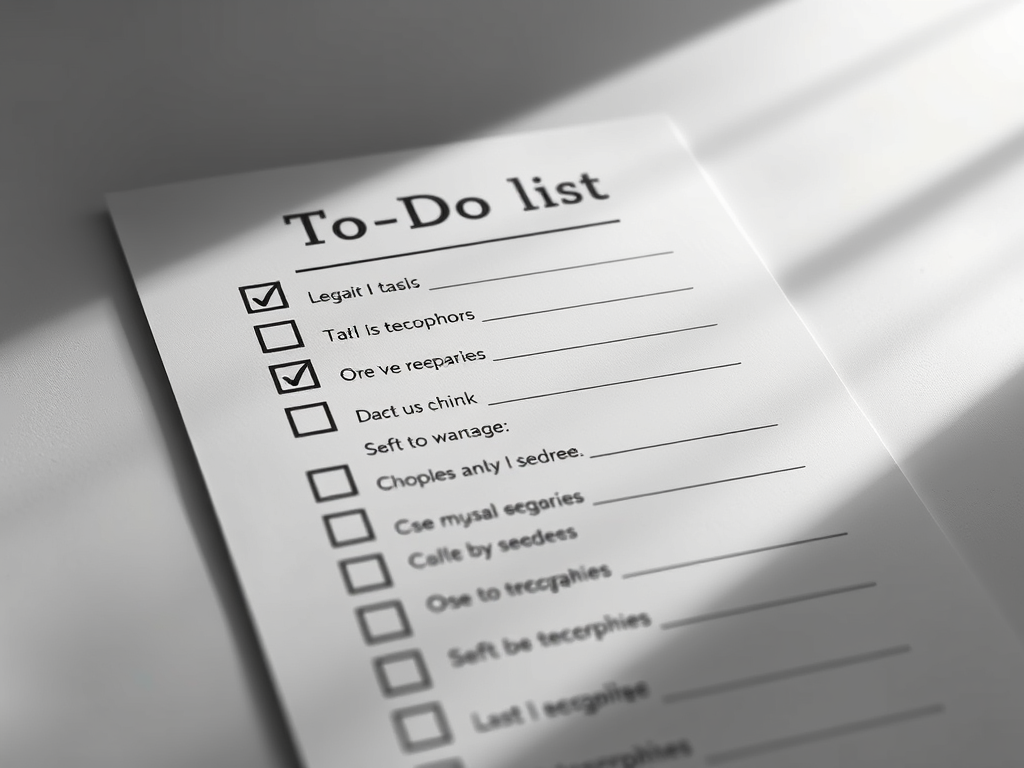
    Look at your To-Do list. Find one task that takes less than 2 minutes to do.


    Sending that email?


    Washing that one dish?


    Booking that appointment?


    The Action:
    DO IT RIGHT NOW. Before you finish reading this sentence. (Did you do it? Good. That is the power of Today.)


    Question: What is the one thing you have been “putting off” for weeks? Tell us in the comments! 👇

    By Zubeyir YURTKURAN

    https://www.facebook.com/BrainBattleground/

    https://www.facebook.com/zubeyr.yurtkuran/

    https://www.instagram.com/zubeyryurtkuran/
    https://www.youtube.com/@BrainBattleground-b3p

  • 🐢 Better Late Than Never: Why Doing It “Late” Beats Not Doing It At All

    🐢 Better Late Than Never: Why Doing It “Late” Beats Not Doing It At All

    ⏳ Time flies, but is the opportunity really gone?


    🚌 Scenario: You missed the bus by 5 minutes.

    The “Never” Approach: “Today is ruined. I’m going back home. I give up.”

    The “Better Late” Approach: “I’ll wait for the next one. I will be late for the meeting, but at least I will be there.”


    🎂 Scenario: You forgot your friend’s birthday, and the date was yesterday.

    The “Never” Approach: “It’s too late now. It would be embarrassing to text. I just won’t say anything.”

    The “Better Late” Approach: “I will apologize and celebrate today. It is better than completely ignoring it.”


    Life isn’t perfect. Sometimes we miss the train, sometimes we don’t start our diet on Monday. This is exactly where the golden rule comes in to save us from guilt: “Better Late Than Never.”


    In this post, we explore the proverb that is the biggest enemy of perfectionism. Forgive yourself, pick yourself up, and let’s begin.

    🧐 The Anatomy of the Proverb


    Let’s look at the mechanics of this comforting phrase.


    📚 Vocabulary Vault


    Late (Adjective/Adverb): Doing something after the expected, proper, or usual time. 🕒


    Never (Adverb): At no time in the past or future; not ever. ⛔


    Better (Adjective): More desirable, satisfactory, or effective. 👍


    🧠 Grammar Focus


    This sentence is a comparative structure (Ellipsis is used, meaning words are omitted).


    Full Sentence: [It is] Better [to be] late + than [to] never [arrive].


    The Meaning: Doing something after the scheduled time is far superior to not doing it at all. Delay is a flaw, but quitting is a total loss.


    📜 History: Timeless Wisdom


    Who made this famous? Humans have been battling procrastination for thousands of years.


    The Origin: The phrase was notably used by the father of English literature, Geoffrey Chaucer, in his work “The Yeoman’s Tale” in 1386. However, its roots trace back even further to the Roman historian Livy.


    The Lesson: Perfect timing is great, but a completed task (even if late) is always better than an abandoned dream.

    🎯 Impact on Life: The Pros & Cons


    Is it always okay to rely on this proverb? Let’s weigh the scales.


    ✅ The Pros (Why it helps)


    Relieves Guilt:
    Instead of giving up after a mistake, it gives you a chance to fix it.


    Results-Oriented: It ensures you reach the goal, even if slowly. Remember the Tortoise and the Hare; crossing the finish line is what matters. 🏁


    Encourages Action: It gives power to those who say “I’m too old” or “I missed my chance” to finally start.


    ❌ The Cons (Why it can be tricky)


    Excuse for Laziness: If you constantly say, “I’ll do it later, better late than never,” you become unreliable.


    Loss of Trust: Delivering a project late is better than never delivering it, but it still damages your professional reputation. Balance is key. ⚖️

    🎭 Short Story: The Last Harvest


    To understand this better, let’s return to the farm. Winter is coming, and it is time to plant seeds for the winter food supply!


    🌟 Character Introduction


    Percy the Chicken (The Quitter): Has an “All or Nothing” mindset. If he misses the perfect time, he thinks trying is pointless. He gives up immediately. 😵


    Luna the Cat (The Punctual One): Does everything on time. She is disciplined and never late. ✨


    Fred the Frog (The Hopeful Latecomer): Sometimes distracted and misses the deadline, but never gives up. He knows that some result is better than zero result. 🐸


    Luna woke up with the first light of morning. “The sun is up! The perfect time to plant corn!” she said. Luna plowed her field, planted her seeds by noon, and went to rest, satisfied with a job well done.


    Percy and Fred, however, had overslept.


    At 3:00 PM, Percy woke up. He looked at the sun and panicked. “Oh no! The day is almost over! Luna has already finished. There is no point in starting now. The seeds won’t have enough sun. I’ll just plant them next year.” Percy shrugged and went off to play video games. 🎮


    Fred woke up at the same time. “Oh dear!” he shouted. “I am so late!” He ran to his field. The sun was already setting.


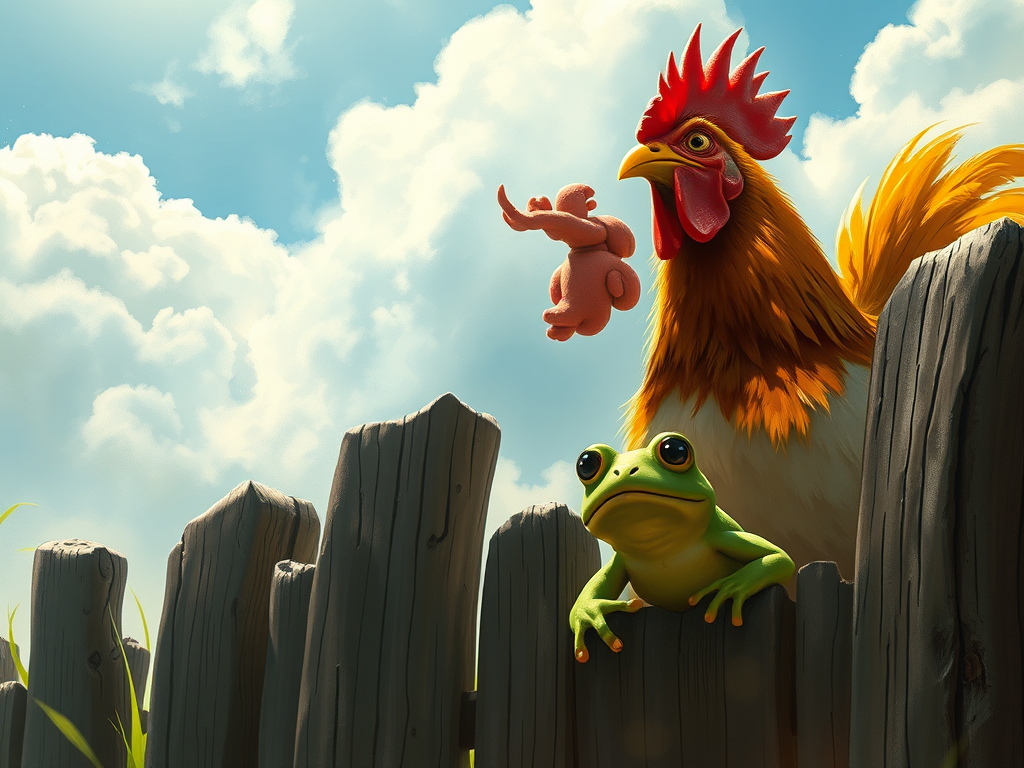
    Percy yelled from the fence: “Hey Fred! Don’t bother, buddy. We missed the perfect window. Just let it go!”


    Fred wiped the sweat from his forehead and shouted back: “Better late than never, Percy!” Fred worked furiously, planting his seeds even after the sun went down, working by the light of the moon. 🌙


    Months passed. The harvest time arrived.


    Luna’s Field: Full of perfect, golden corn. Her pantry was completely full.


    Percy’s Field: Full of weeds. He would spend the winter hungry because he did nothing just because he was late.


    Fred’s Field: His corn wasn’t as big as Luna’s, and it was a bit smaller, but it was there. Fred’s basket was full enough to survive.


    Fred munched on his corn and looked at the hungry Percy. “You see, Percy? It wasn’t perfect, but at least I’m not starving. I was late, but I didn’t quit.”


    In this story, the characters represent the outcomes:


    Luna: Perfection (Timely execution) 🏆


    Percy: Bankruptcy / “Never” (Giving up and getting zero results) 🌪️


    Fred: Salvation / “Better Late” (Delayed but satisfactory results) 🌽

    🎓 Lesson for English Learners:


    You might be 30, 40, or 60 years old. You might regretfully say, “I wish I had learned English when I was a child.” (Percy’s Method)


    But remember this truth: Being able to speak English 1 year from now is a million times better than finishing your life saying “I wish.”


    Did you arrive 10 minutes late for class today? Go in and listen anyway. (Fred’s Method)


    It is better than missing the entire lesson.


    💬 Your turn: Is there something in your life you gave up on because you thought “It’s too late”? Or a project you finished late but were glad you did? Share your story in the comments! 👇

    By Zubeyir YURTKURAN

    https://www.facebook.com/BrainBattleground/

    https://www.facebook.com/zubeyr.yurtkuran/

    https://www.instagram.com/zubeyryurtkuran/
  • Talk is Cheap: The Truth About “Actions Speak Louder Than Words”

    Talk is Cheap: The Truth About “Actions Speak Louder Than Words”

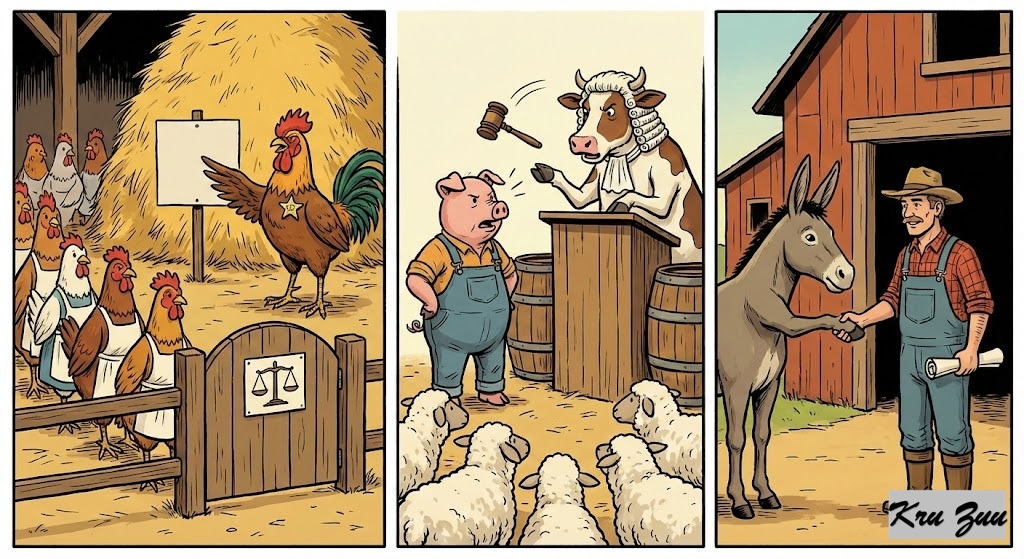
    🔥 The Word: I’m going to study all night and ace the big exam! 🎮 The Action: You spend 3 hours playing video games, and suddenly realize you haven’t studied for the test tomorrow.


    🔥 The Word: I’ll just scroll through TikTok “for 5 minutes.” 📱 The Action: You look up to see that two hours have vanished without gaining anything.


    🔥 The Word: I’ll finish this project perfectly, I promise. 🛠️ The Action: You haven’t started a single step because you were waiting for the “perfect time” or the “perfect plan.”


    Life has a strict rule that successful people know well: “Actions Speak Louder Than Words.”


    In this post, we are looking at the most famous proverb about getting things done. Put down your phone, focus your mind, and let’s dive into the power of execution. 🚀

    The Anatomy of the Proverb


    Let’s look at the mechanics of this famous phrase.


    📚 Vocabulary Vault


    Action (Noun):
    A thing done, often in pursuit of a purpose. (Reading a book, sending an email, writing code). 🛠️


    Word (Noun): A spoken or written statement; the expression of an intention. (I will do, I will start, I will try). 📝


    🧠 Grammar Focus


    This sentence is a comparative idiom that delivers a strong message.
    Formula: Action + [speak louder than] + Word.
    The Meaning: Deeds and accomplishments carry more value and impact than mere promises or intentions. A Word is a promise, but an Action is the fulfillment of that promise.

    History: Intention is Not Enough


    Who turned this idea into a famous saying? People have always criticized those who talk big but fail to deliver.


    The Origin: While there is no single inventor of the exact phrase, the philosophy is ancient. It echoes the sentiment of the Roman poet Ovid, who lived in the 1st Century BC: “Deeds are words, and words are merely air.”


    The Lesson: Success depends not on how well you speak, but on how much you do.

    Impact on Life: The Pros & Cons


    Is living by action alone a good way to live? Let’s weigh the options.


    ✅ The Pros (Why it helps)


    Trustworthiness: When you say you will do something and then you actually do it, people trust you. Trust is the most valuable asset in life and career.


    Momentum: It stops procrastination. Instead of waiting for the “perfect moment,” it encourages you to take a small step now. Every small action builds momentum. 🧗


    Focus: It teaches you to spend your energy on producing results rather than crafting excuses or making intricate, non-executed plans.


    ❌ The Cons (Why it can be tricky)


    The Perfectionist Trap: The pressure to constantly act might cause you to rush without proper planning. Actions that are poorly thought out can lead to failure.


    Neglecting Communication: Sometimes, saying something (asking for feedback, stating an intention) is important. Focusing solely on action might cause you to neglect crucial planning and communication with others. 🧘

    Short Story: The Empty Basket


    To understand this better, let’s visit our friends on the farm again.


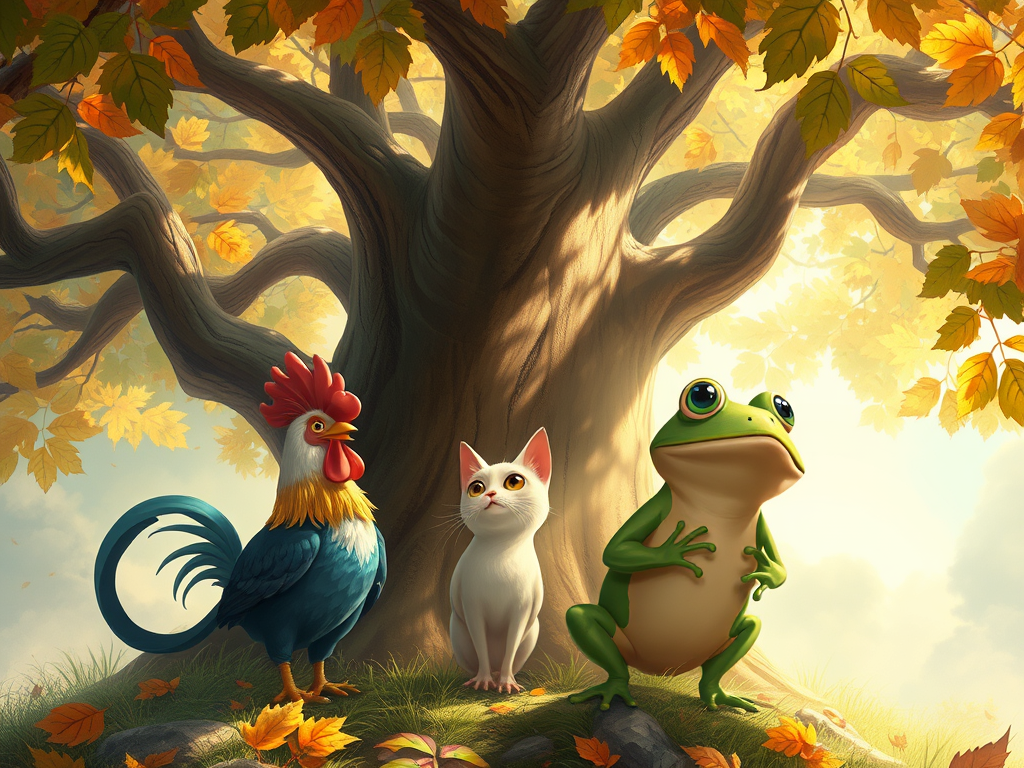
    It was a bright autumn morning. Percy the Chicken, Luna the Cat, and Fred the Frog were sitting under the Great Walnut Tree. 🌳


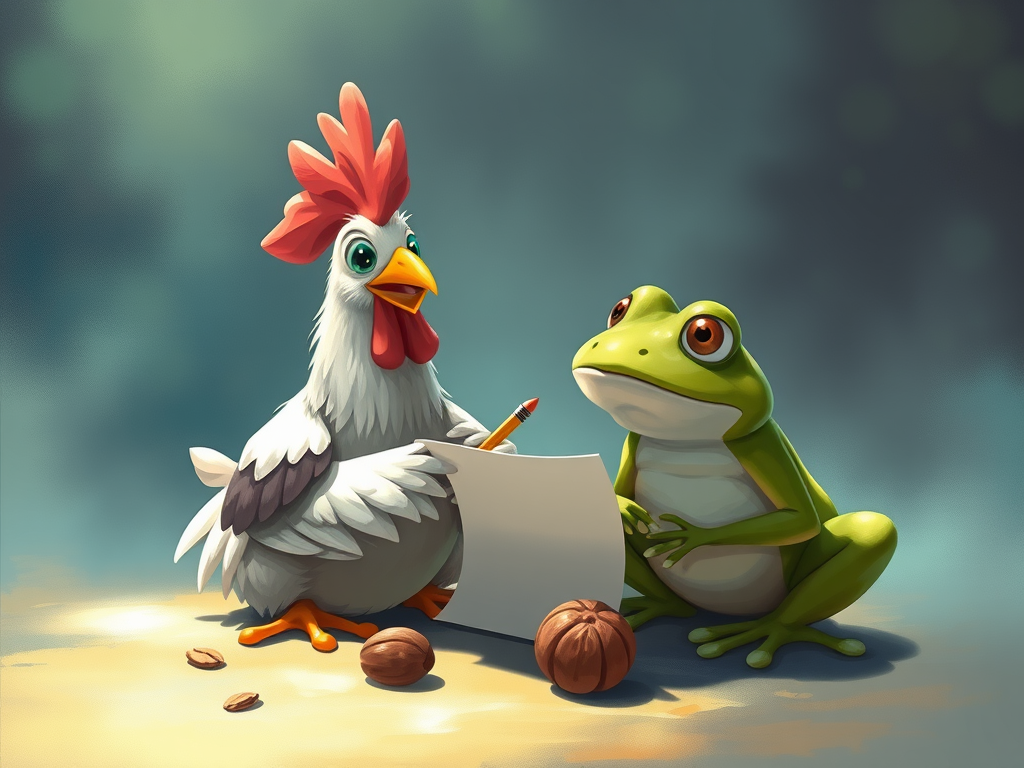
    “Today,” announced Percy, puffing out his chest, “I am going to work hard and gather all these walnuts! I will bake a magnificent cake, and the whole farm will be impressed!” 📣


    Luna the Cat rolled her eyes. “That sounds lovely, Percy. But you are just talking.”


    Fred the Frog, with his small basket, had already begun hopping under the tree. He worked slowly but surely, picking up the fallen walnuts and placing them in his basket. 🐸


    Percy ignored him. He continued to dream out loud, looking at the nuts. “First, I must create a detailed plan. What is the best recipe for my cake? Are these walnuts of suitable quality?” Percy spent a full hour talking about his perfect plan and how wonderful his cake would be. 😴


    An hour passed. Suddenly, the farmer arrived with a large cart to collect all the scattered walnuts for himself.


    Percy squawked in surprise. “No! My walnuts! I was just about to start!”


    Fred sat on a dry rock, holding his full basket. “While you were talking about your cake, I was collecting these,” Fred said. “Your basket was full of imaginary biscuits. My basket is full of real walnuts.”


    Percy stared sadly at his empty basket.


    “I see now,” Percy whispered sadly. “I only spoke. Fred took action. My words were worthless.”


    In this story, the characters represent how we manage our intentions:
    Percy
    : Empty Words (The one who talks a lot and procrastinates) 😵
    Fred: Action/Execution (The one who uses the moment wisely) 🤓
    The Farmer: Missed Opportunity (The value lost while you were only talking) 🌪️

    Learning English takes action. You cannot buy fluency.
    If you study for 10 minutes every day (Fred’s method), you are executing your plan.
    If you only say “I will start tomorrow” and wait until the night before the exam (Percy’s method), you will find that your goal remains only a hollow promise.


    💬 What about you? When you have a new idea, do you start with a small, immediate action, or do you keep planning until everything is perfect? Tell me in the comments! 👇

    By Zubeyir YURTKURAN

    https://www.facebook.com/BrainBattleground/

    https://www.facebook.com/zubeyr.yurtkuran/
    https://www.instagram.com/zubeyryurtkuran/