Tag: Mindset

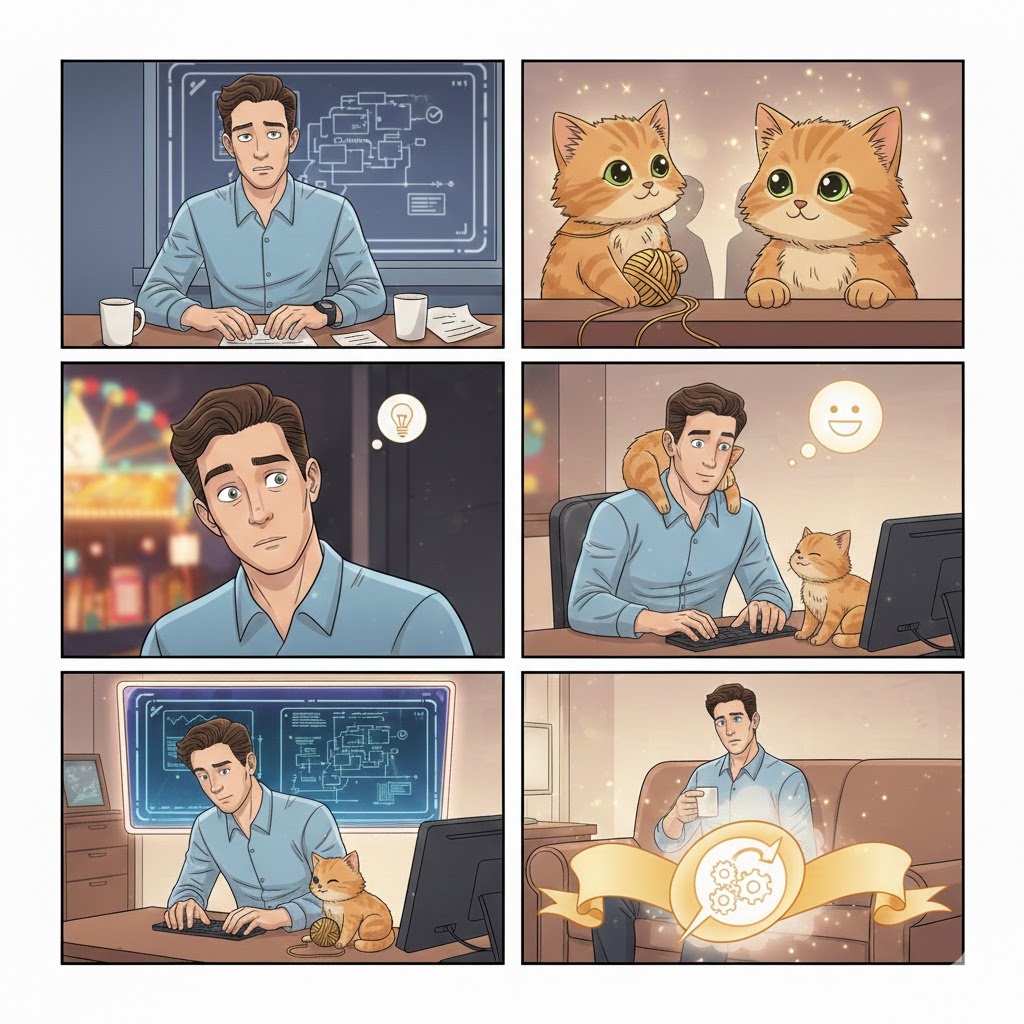
  • 💎 The Daily Shield: The Law of Hidden Value

    💎 The Daily Shield: The Law of Hidden Value

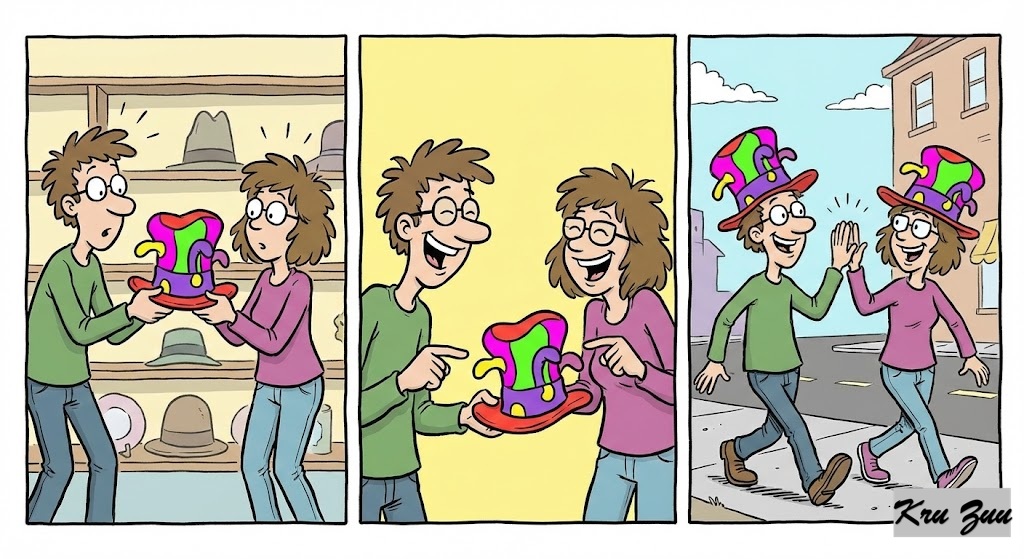
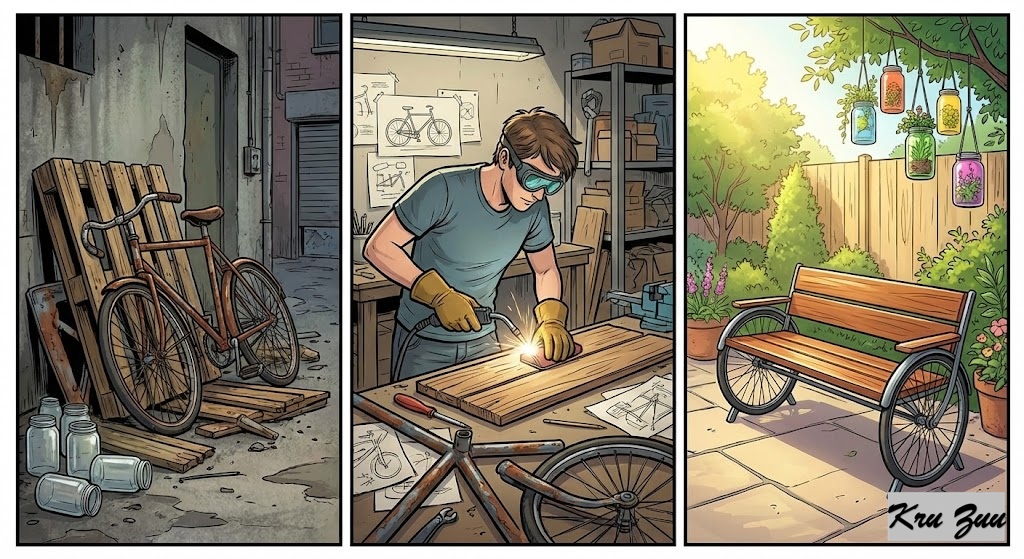
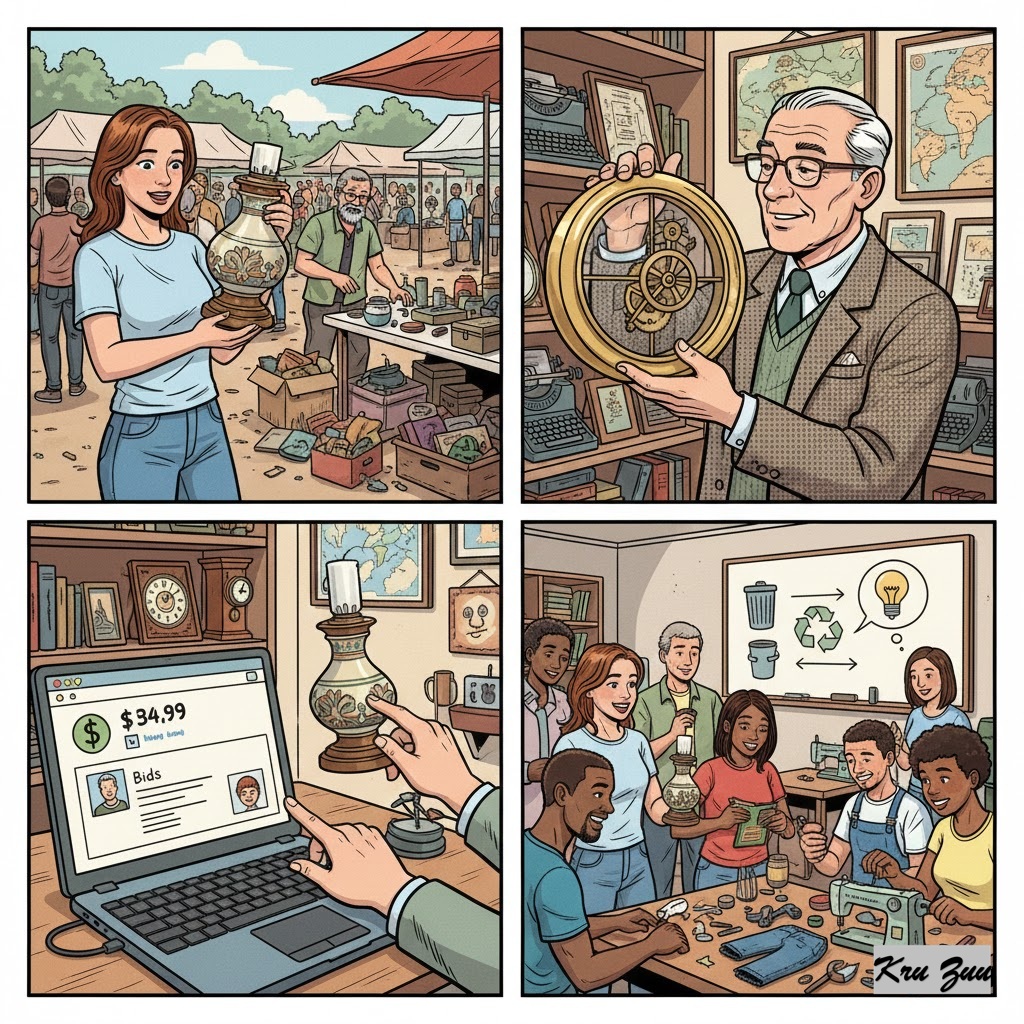
    “One man’s trash is another man’s treasure.”

    😈 The Villain (The Blind Consumer)


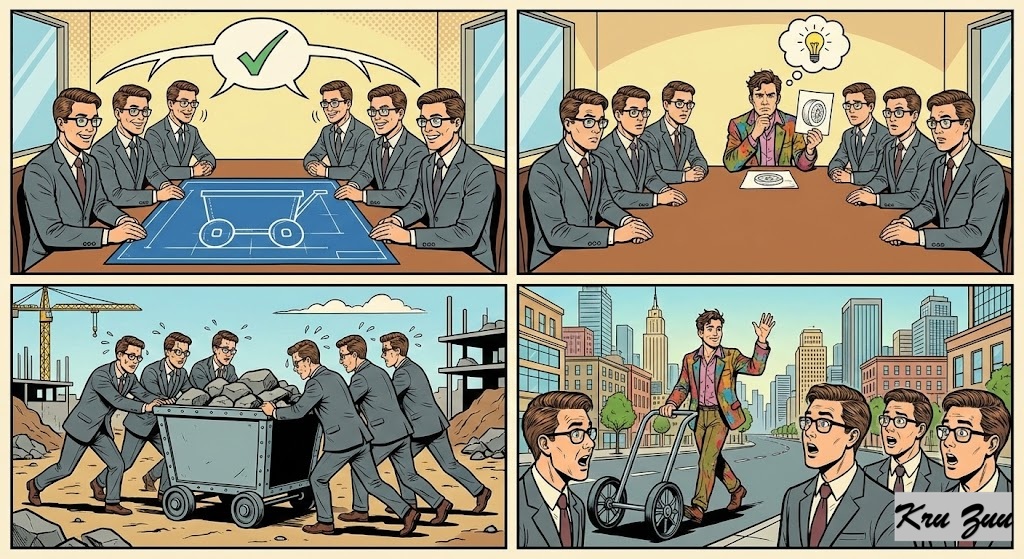
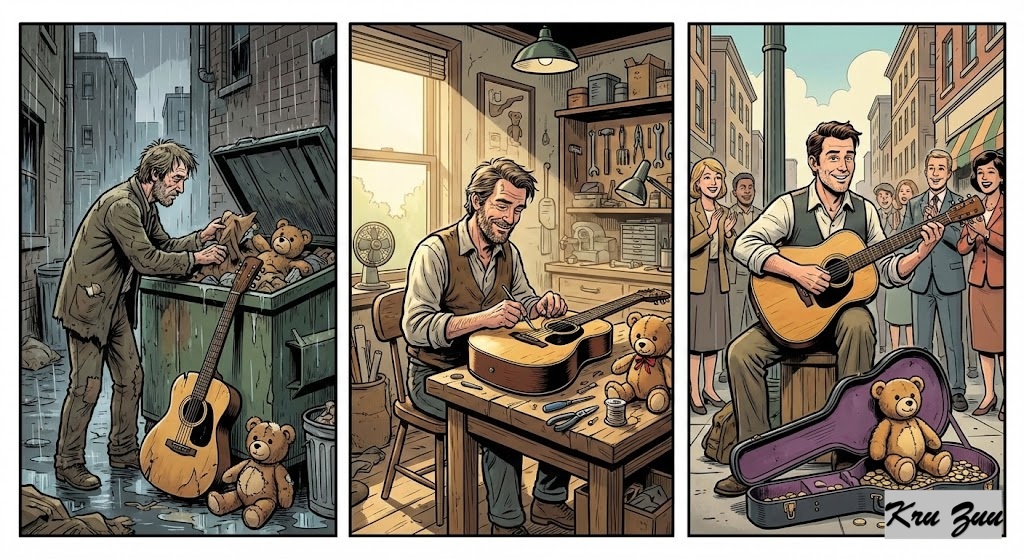
    You see an old chair on the sidewalk or a dusty vintage jacket. You think: “Ew, gross. Why is that junk still there?” 🗑️ You only value things that are shiny, brand-new, and straight off the shelf. You believe that Price = Value. If it’s cheap or used, it’s worthless to you.
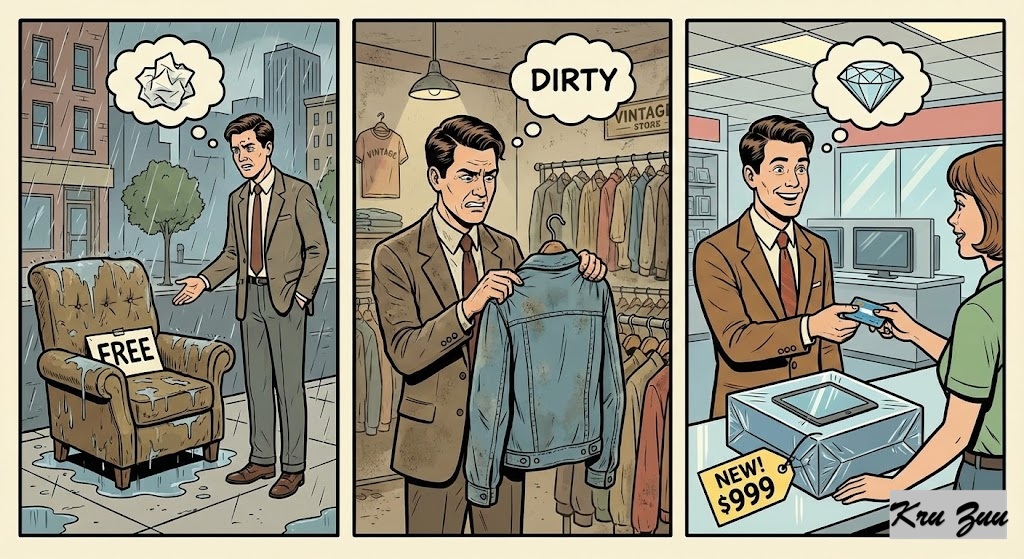
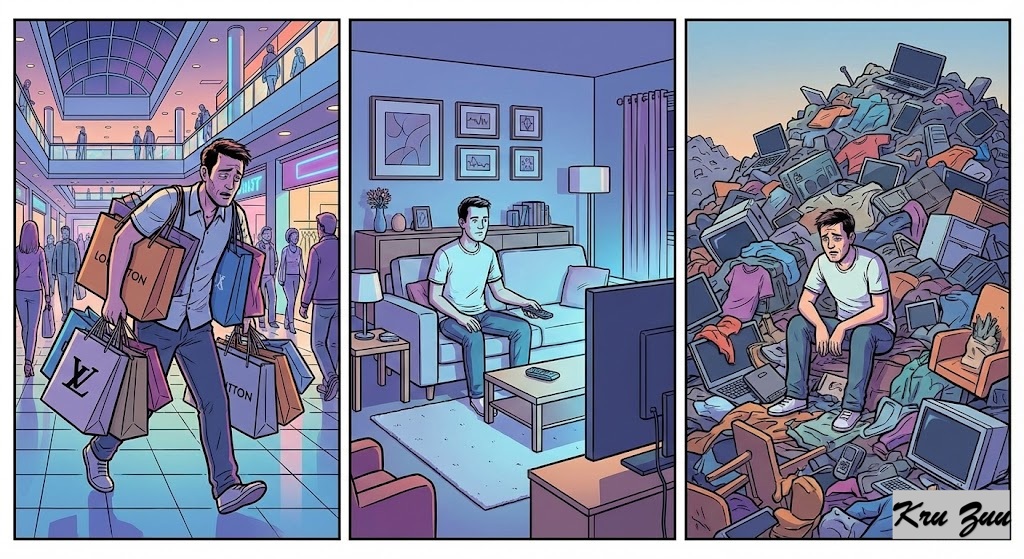
    The Result? You spend a fortune chasing trends. Your home is full of generic items everyone else has. You lack the “vision” to see potential, and you’re stuck in a cycle of expensive, disposable consumption.

    😇 The Hero (The Alchemist)


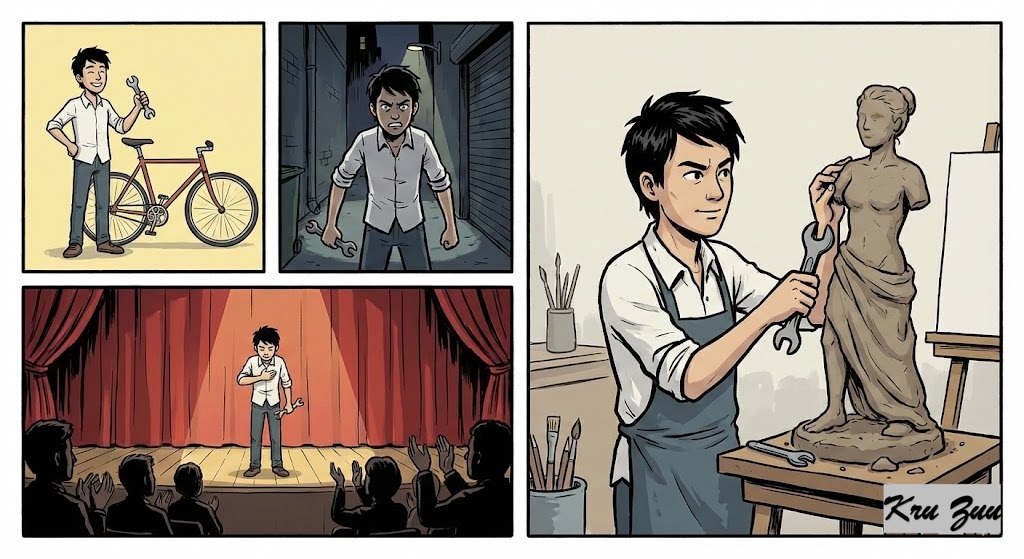
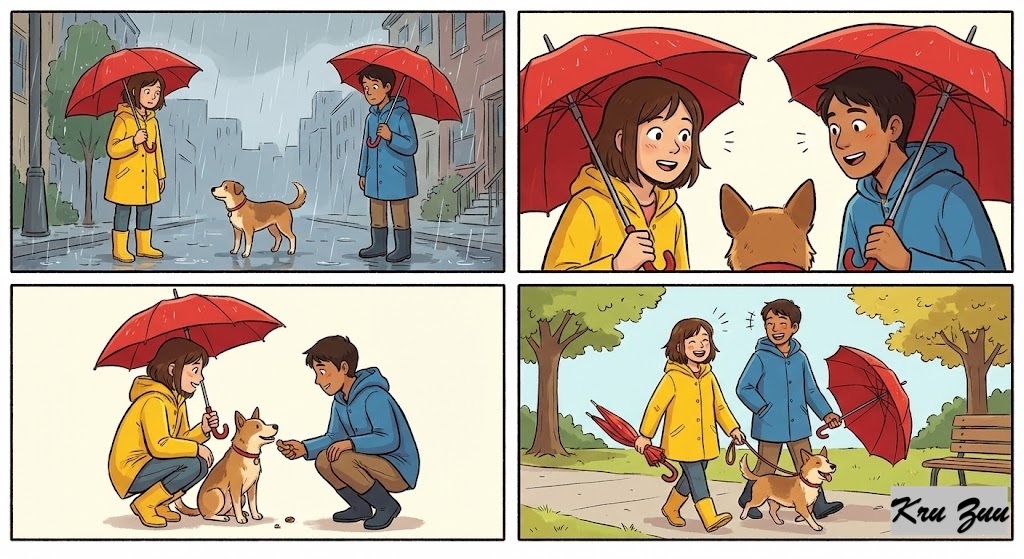
    You see the same old chair and think: “With a bit of sanding and blue paint, this is a masterpiece.” 🎨 You don’t look at what an object is; you look at what it can be. You recognize that value is subjective.
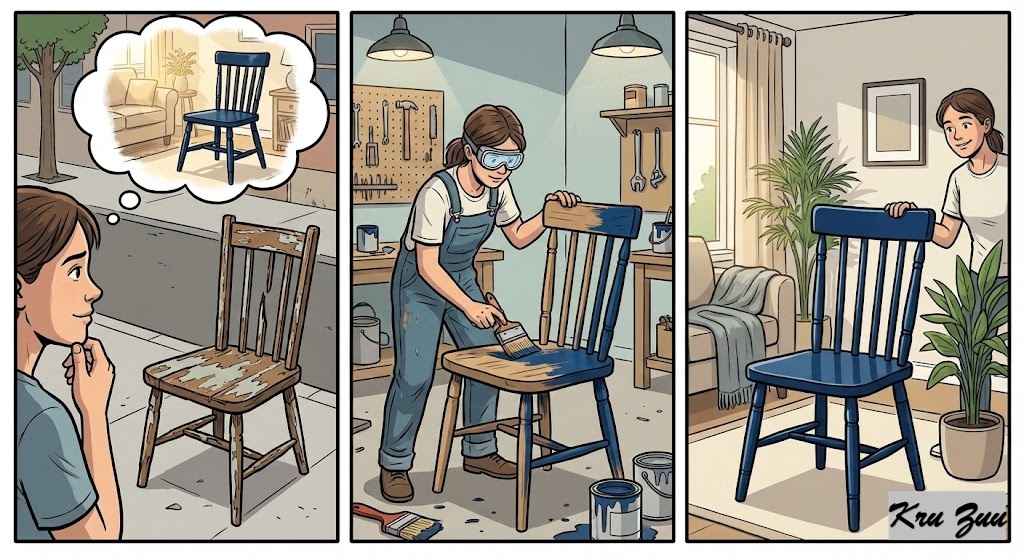
    The Result? You find incredible deals. Your life is filled with unique, soulful items. You save money while building a world of “treasures” that others missed. You understand that perspective is the ultimate wealth-builder. 🏰


    ⚖️ The Reality


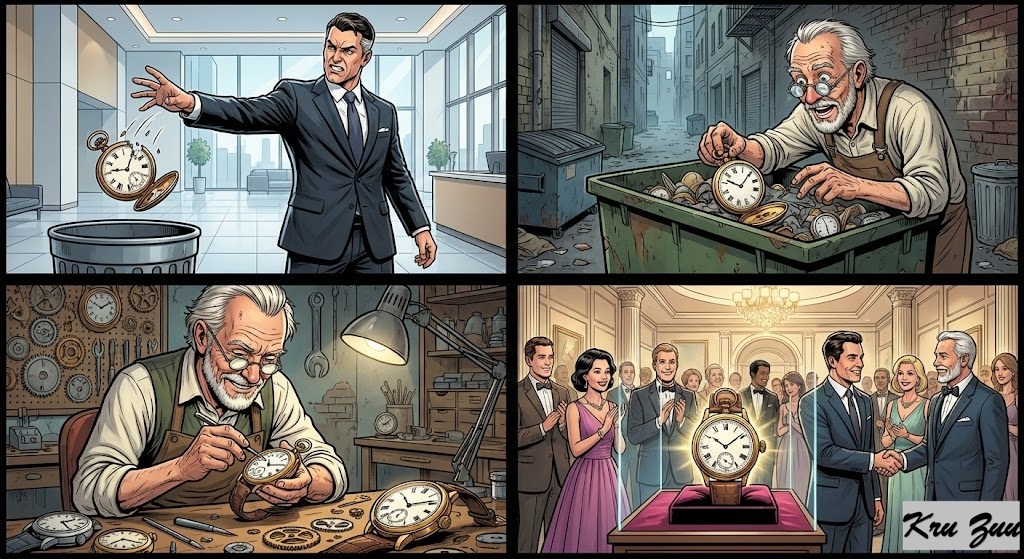
    Value is not a fixed number, it is a matter of perception. A broken watch is “trash” to a businessman, but a “treasure” to a watchmaker who needs parts. We live in a throw-away culture, but the most successful people find opportunities where others see obstacles. Wealth is often hidden in plain sight, disguised as “junk.”
    🧐 The Anatomy of the Proverb


    This is your reminder that worth is in the eye of the beholder.
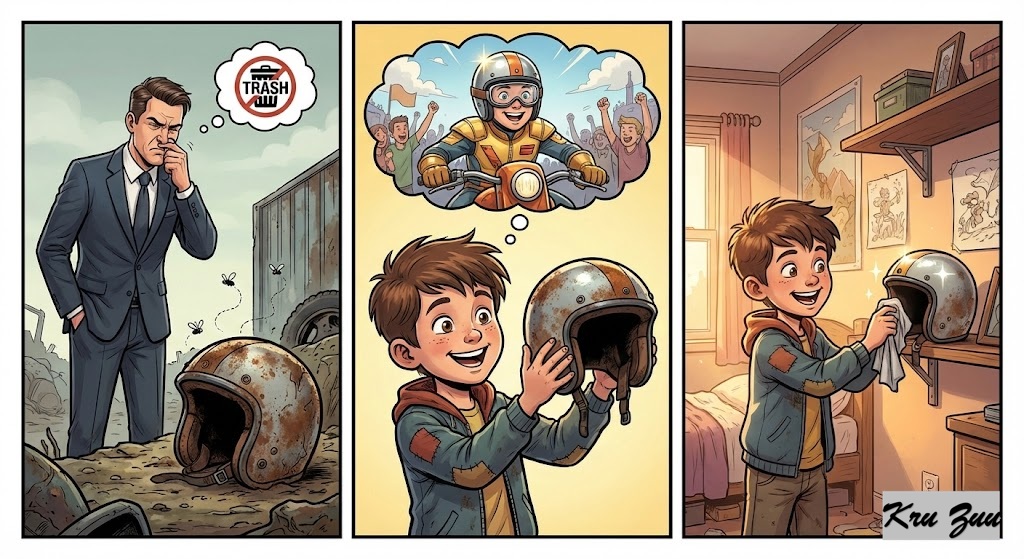

    One man’s (Noun): A person’s subjective experience.
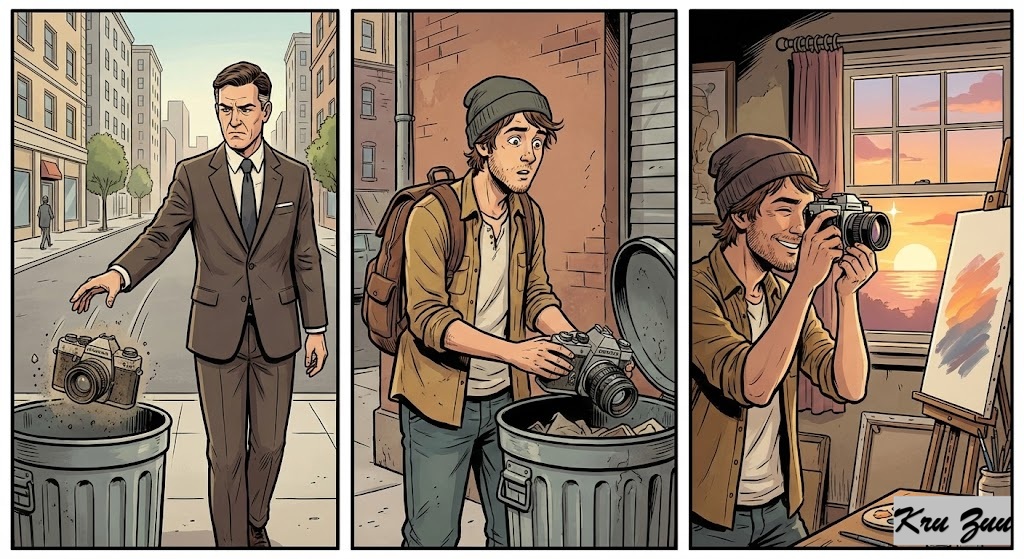

    Trash (Noun): Something discarded, worthless, or unwanted.
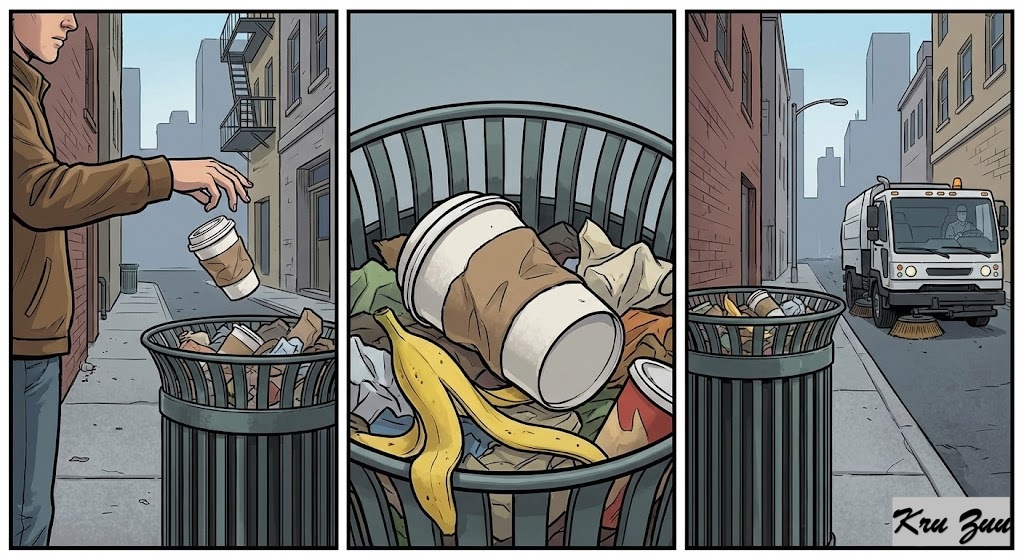

    Is another man’s (Phrase): Simultaneously becomes someone else’s.
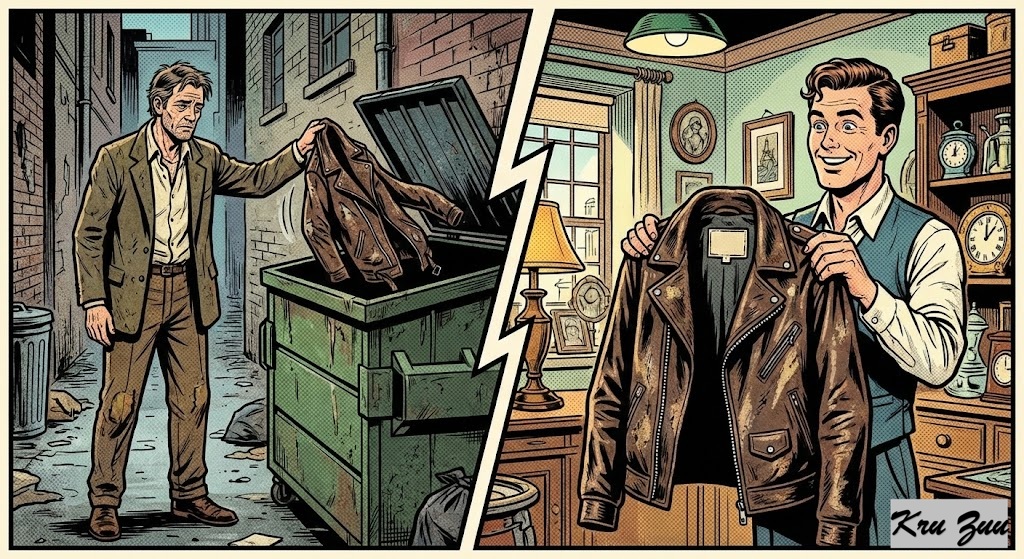

    Treasure (Noun): Something of great value, beauty, or importance.
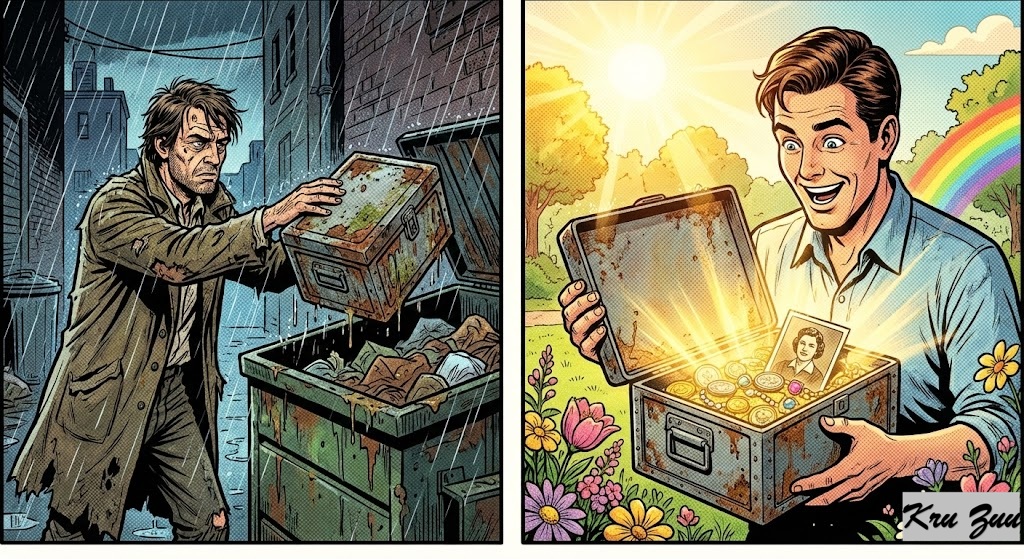

    Simpler Version: People have different ideas about what is valuable. / Don’t judge a book by its cover.
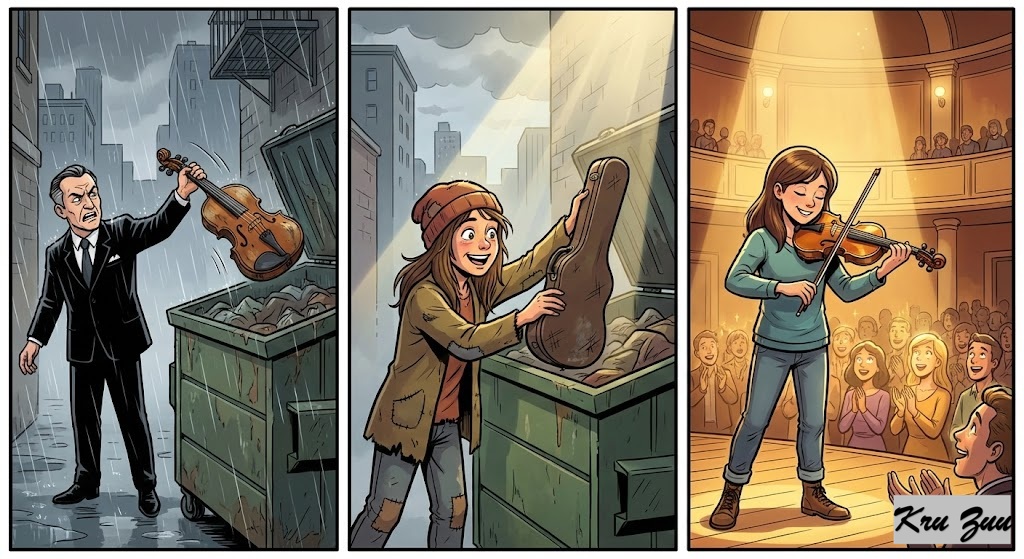

    📚 Vocabulary Vault


    Subjective (Adjective): Based on or influenced by personal feelings or tastes. 🎨
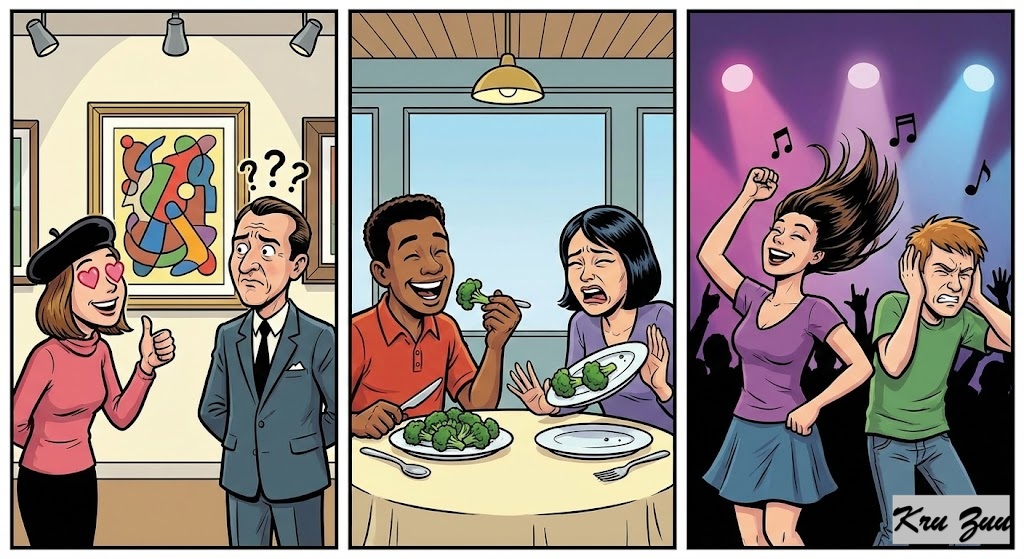

    Obsolete (Adjective): No longer produced or used; out of date.
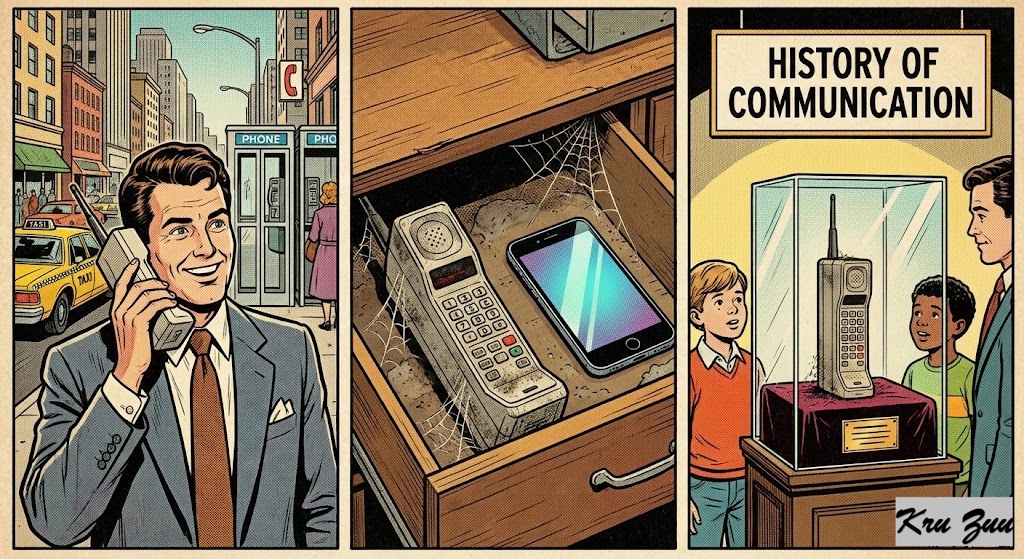

    Upcycle (Verb): To reuse discarded objects or material in such a way as to create a product of higher quality or value than the original. ♻️

    Beholder (Noun): A person who sees or observes someone or something.
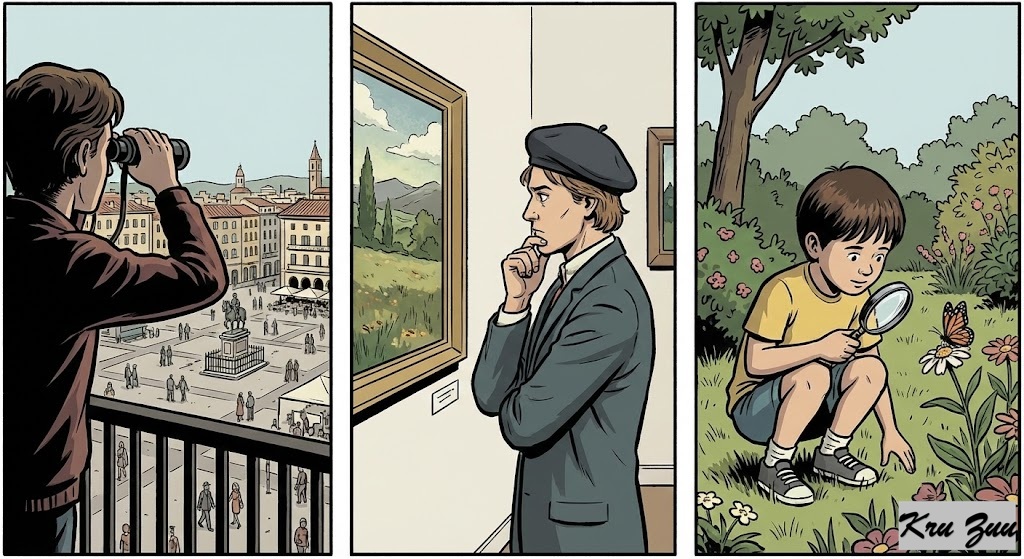

    Perception (Noun): The way in which something is regarded, understood, or interpreted.
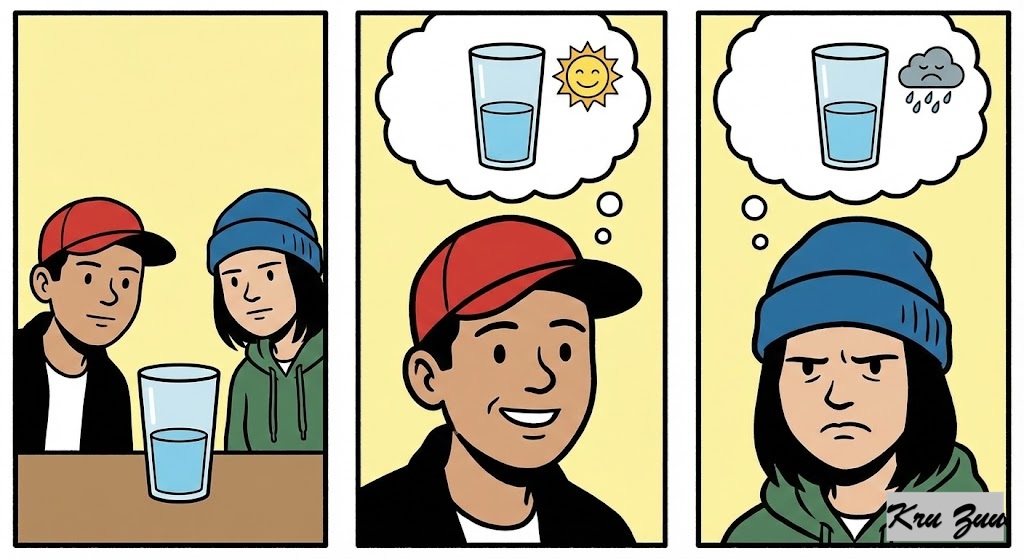

    🧠 Grammar Focus: Idioms for Perspective


    We use this idiom to explain different tastes or to justify why we keep something others might find “ugly.”
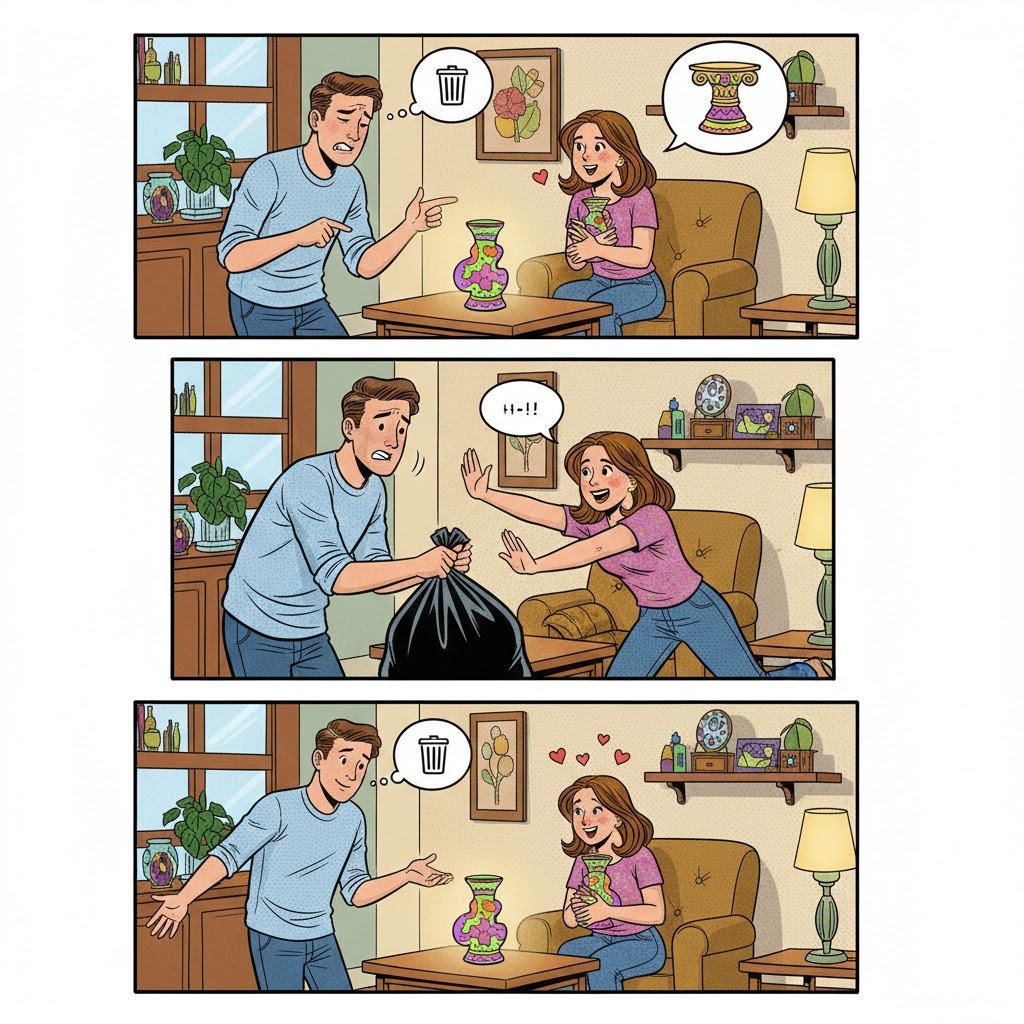

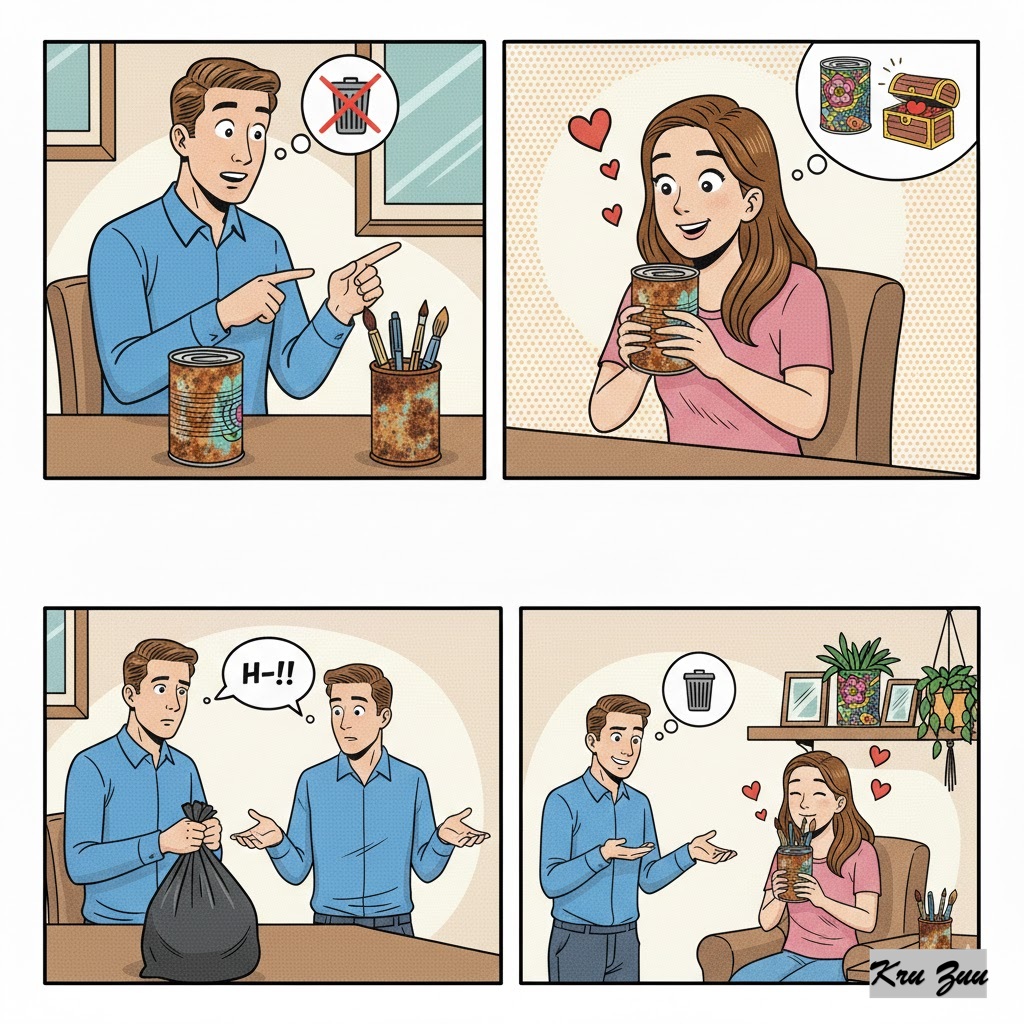
    Friend: “Why do you keep that rusty old tin can on your desk?”
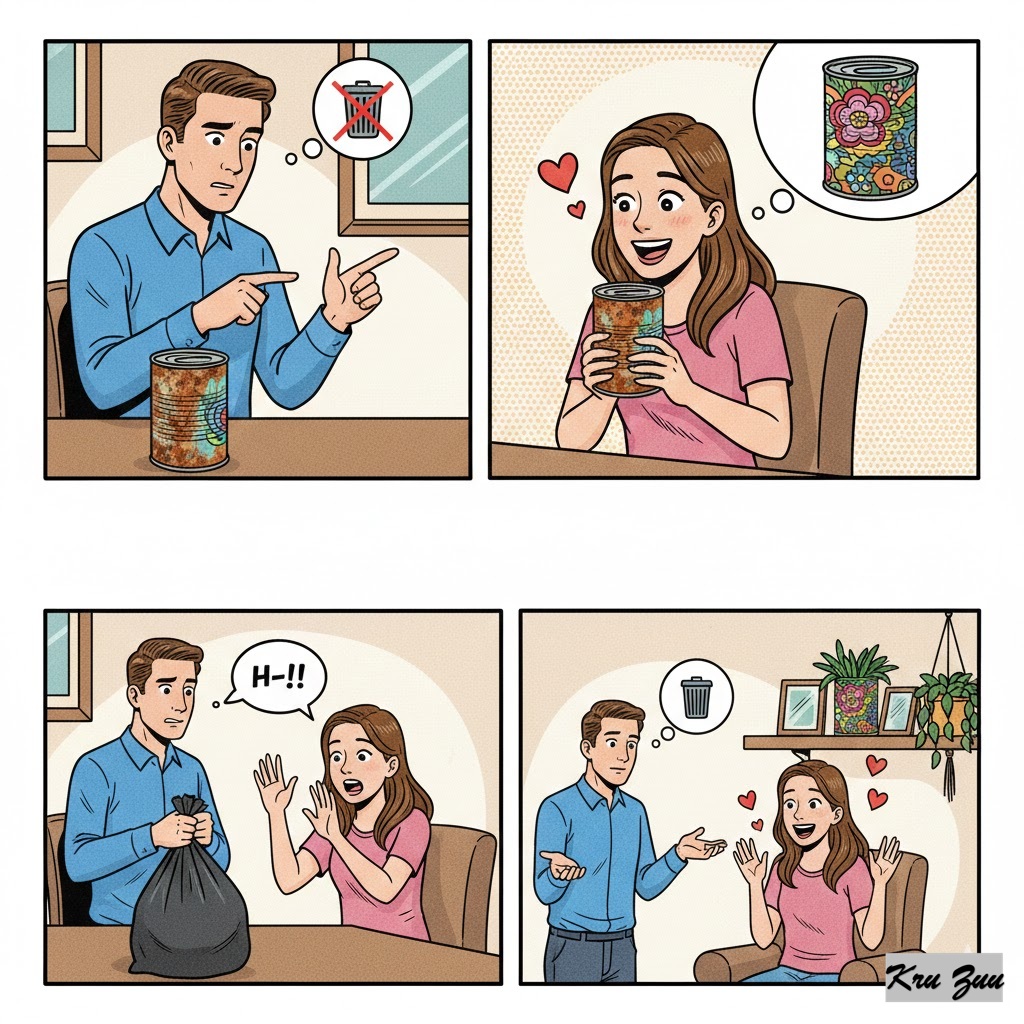

    You: “Actually, it’s a 1920s limited edition tea box. I’m using it as a pen holder. You know what they say: One man’s trash is another man’s treasure.”
    📜 History: Origin and Spread


    Where did this philosophy of “trash to cash” begin?

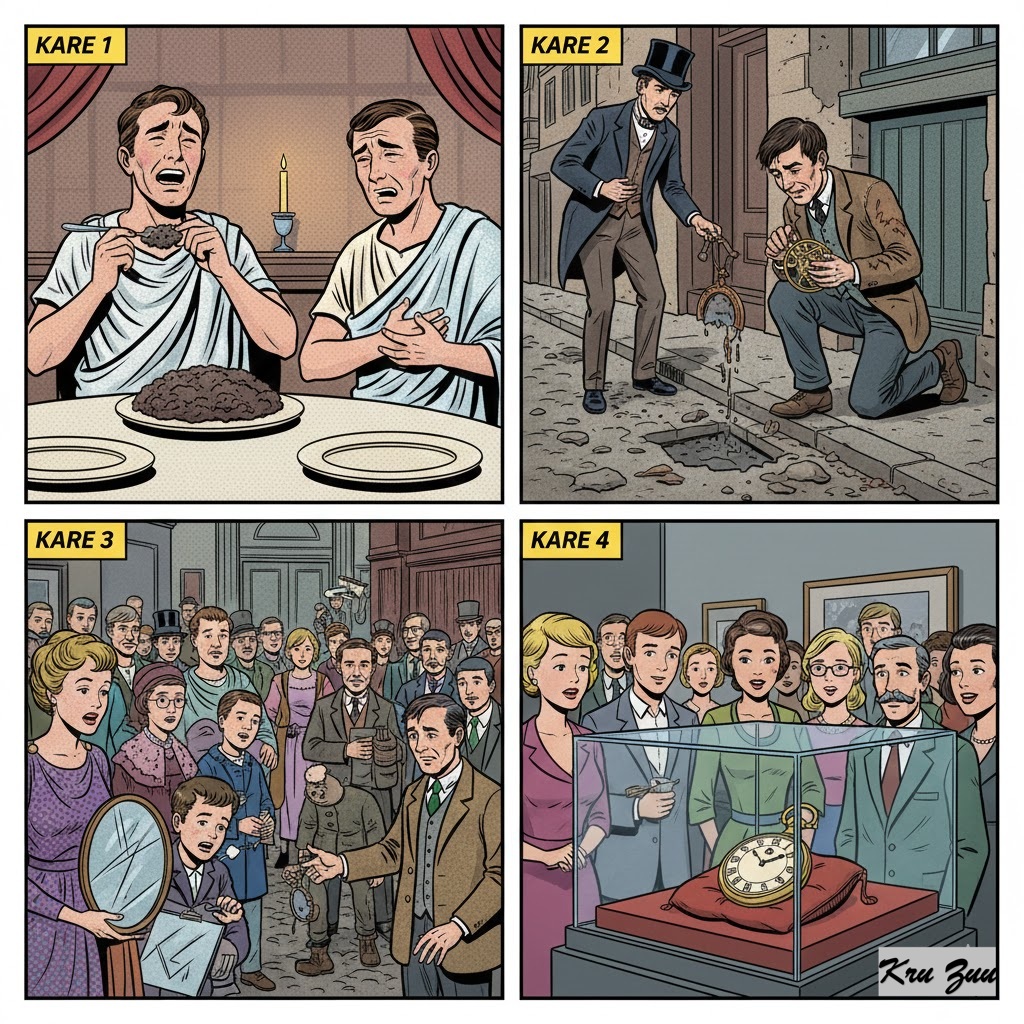
    The Origin: While the sentiment is ancient, the specific phrasing became popular in the mid-19th century. It mirrors the Latin proverb “Quod aliis cibus est aliis fuat acre venenum” (What is food to one may be bitter poison to others).

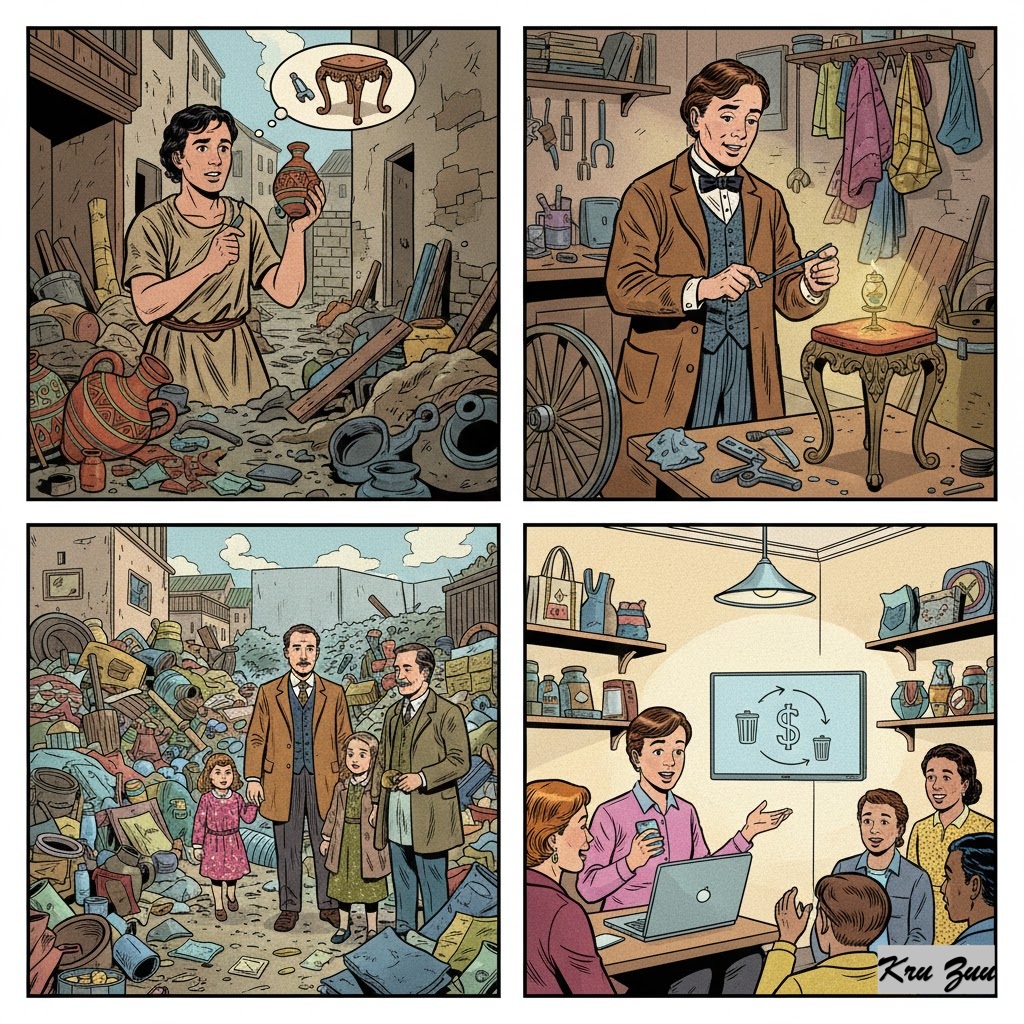
    The Logic: It’s the foundation of the Secondary Market (eBay, flea markets, antique shops). It highlights the human ability to innovate and find use where others find waste.

    Global Cousins


    🇫🇷 French: “Le bonheur des uns fait le malheur des autres.” (The happiness of some makes the unhappiness of others — similar context of differing perspectives).
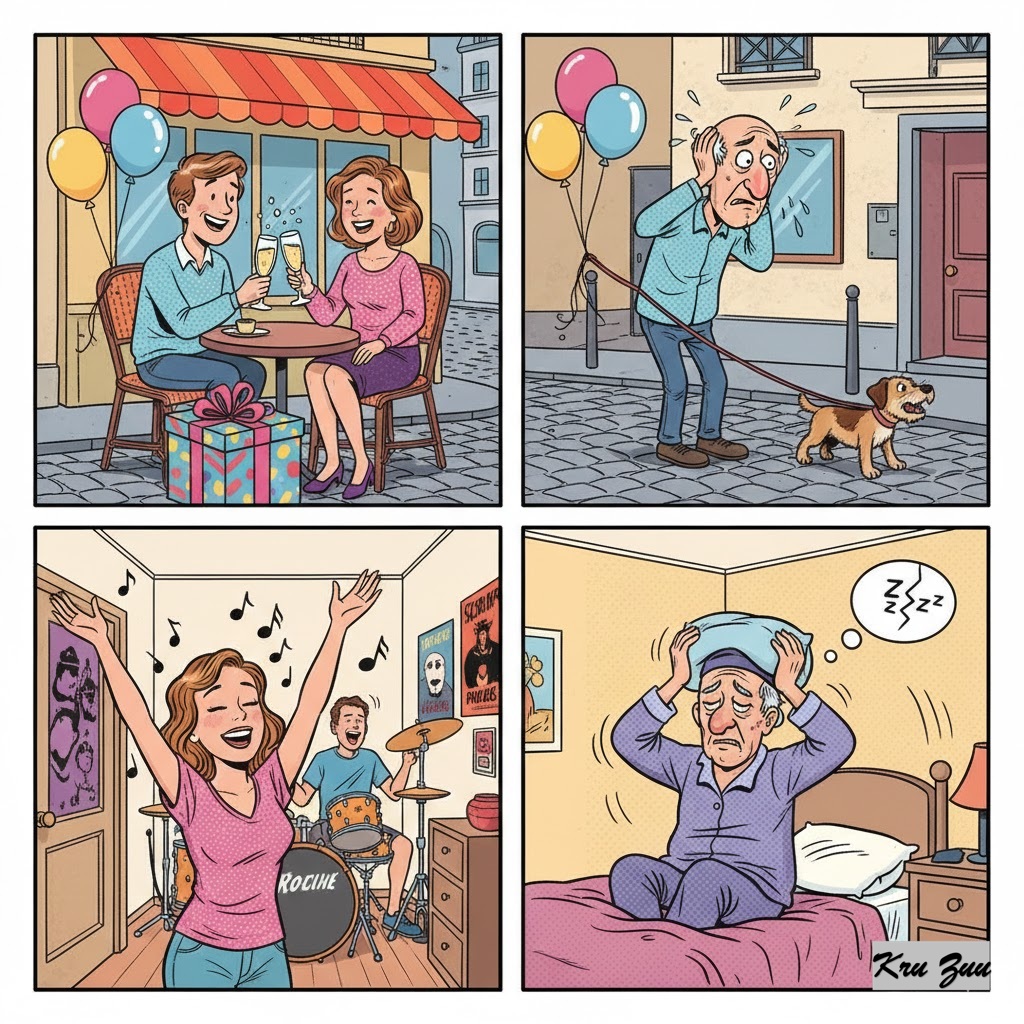

    🇯🇵 Japanese: “Tade kuu mushi mo sukizuki.” (There are even bugs that eat knotweed, meaning tastes vary).

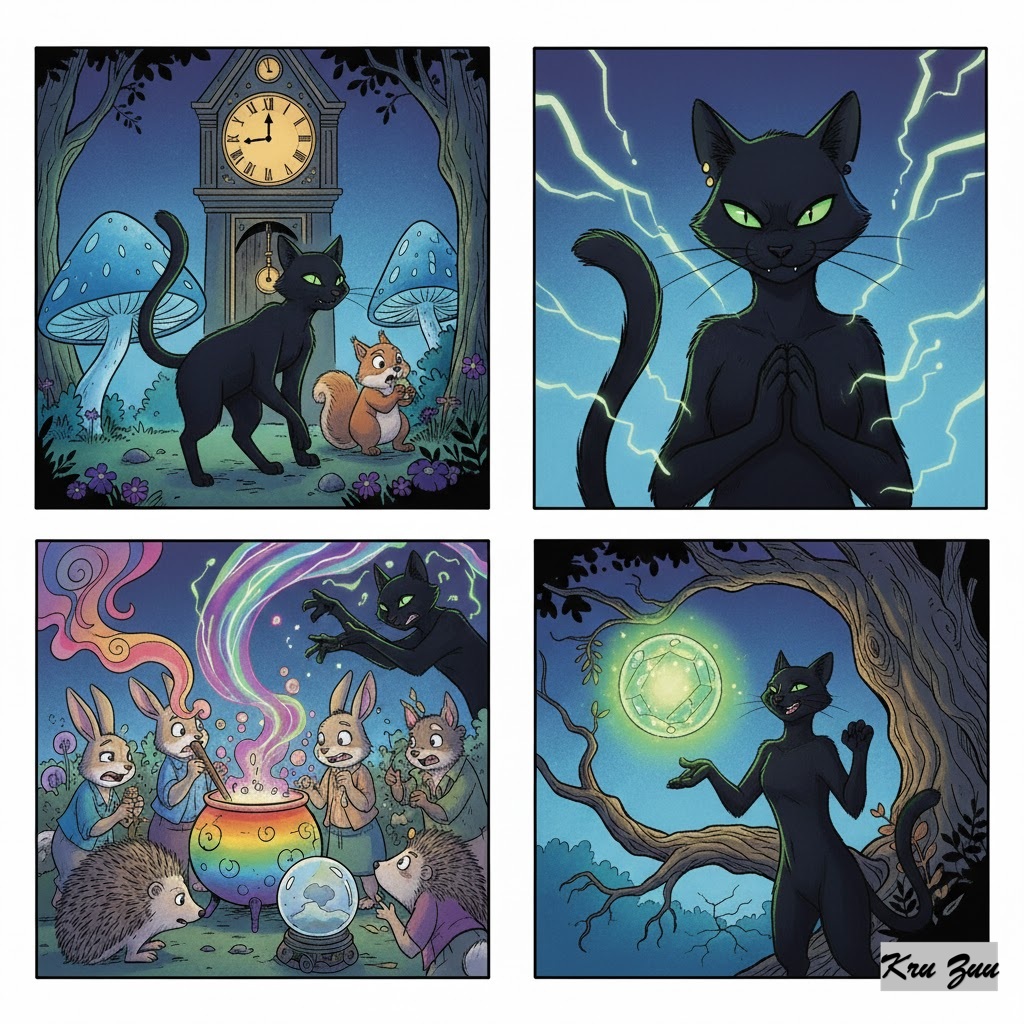
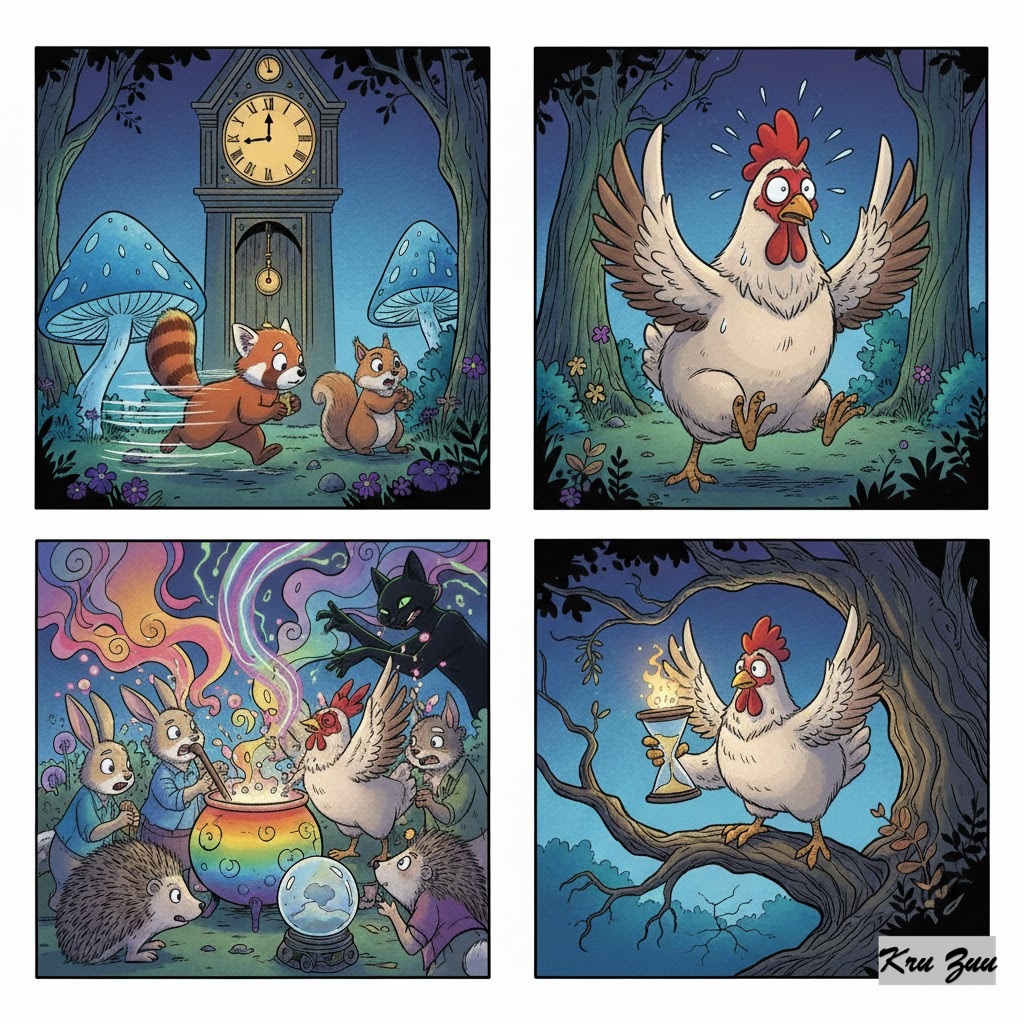
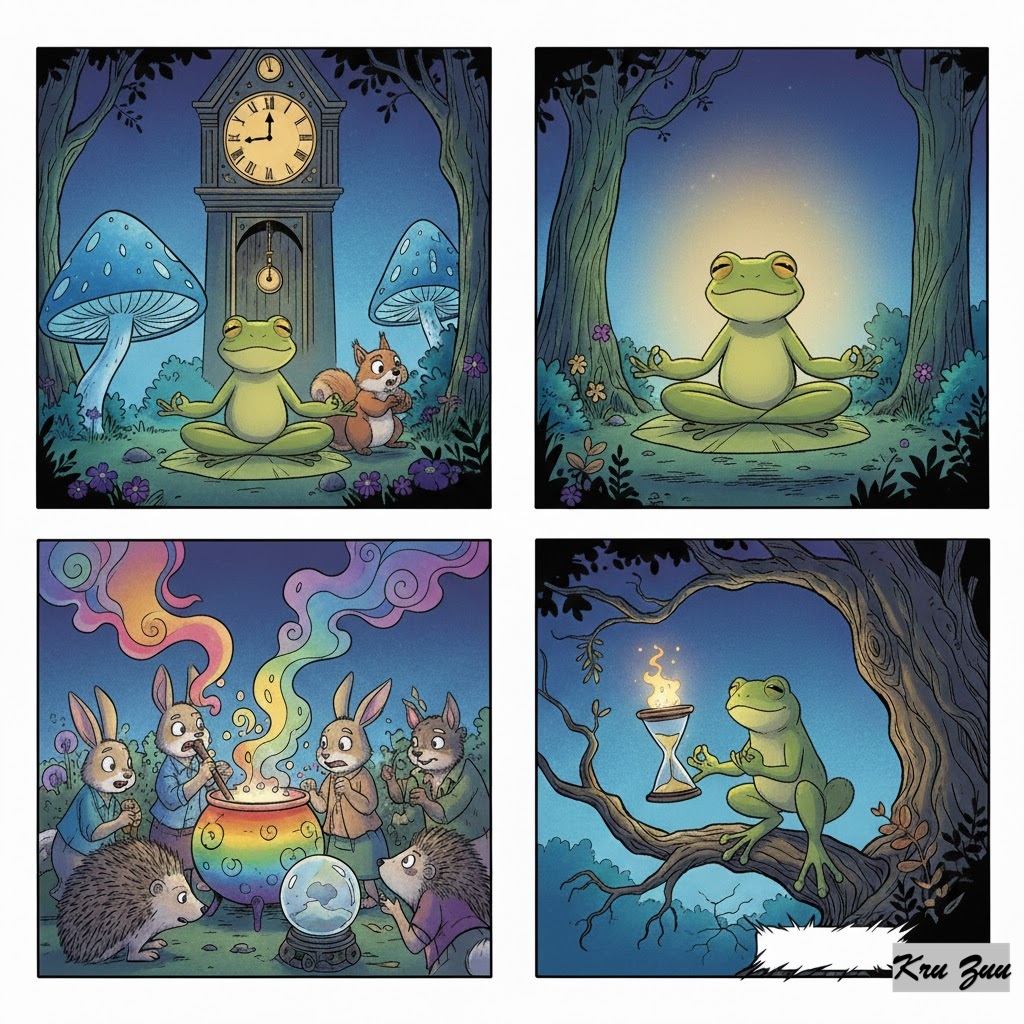
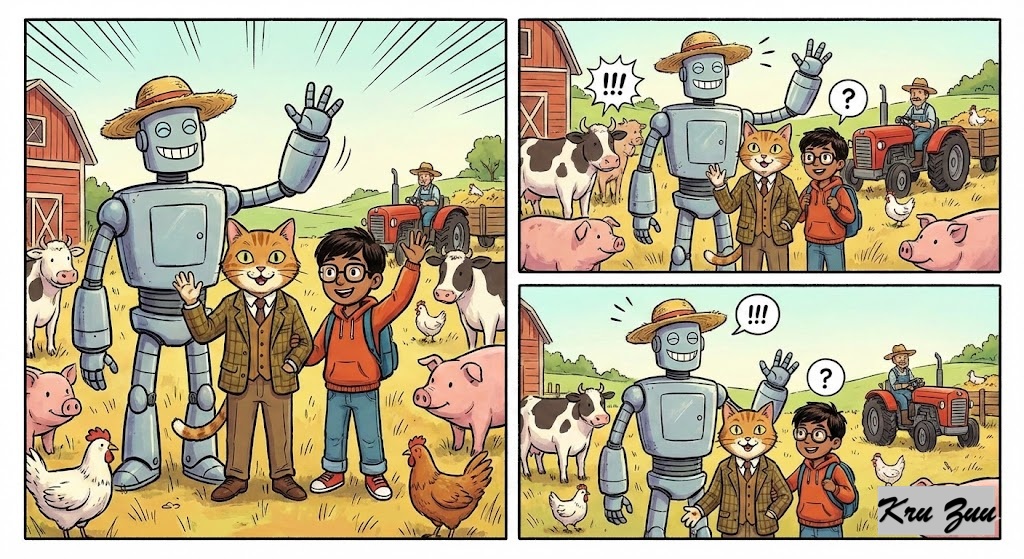
    🎭 Short Story: The Rusty Iron Key 🔑🐱🐔🐸


    🌟 The Cast


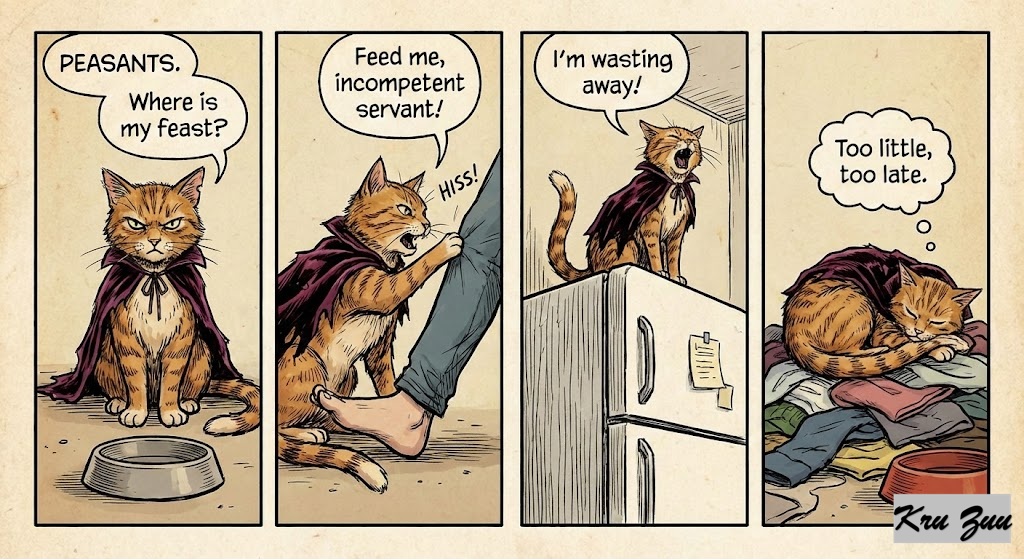
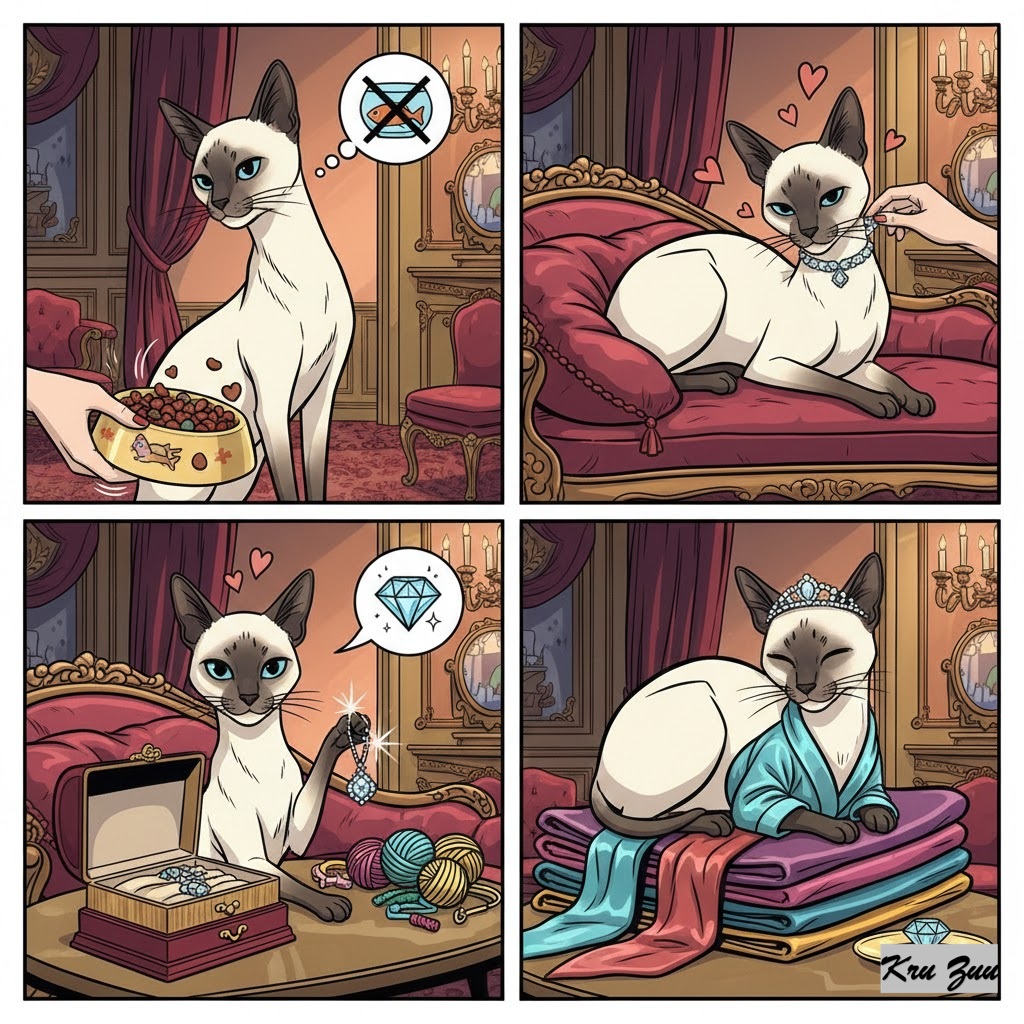
    Cleo the Cat: Elegant, only likes diamonds and silk. 😼

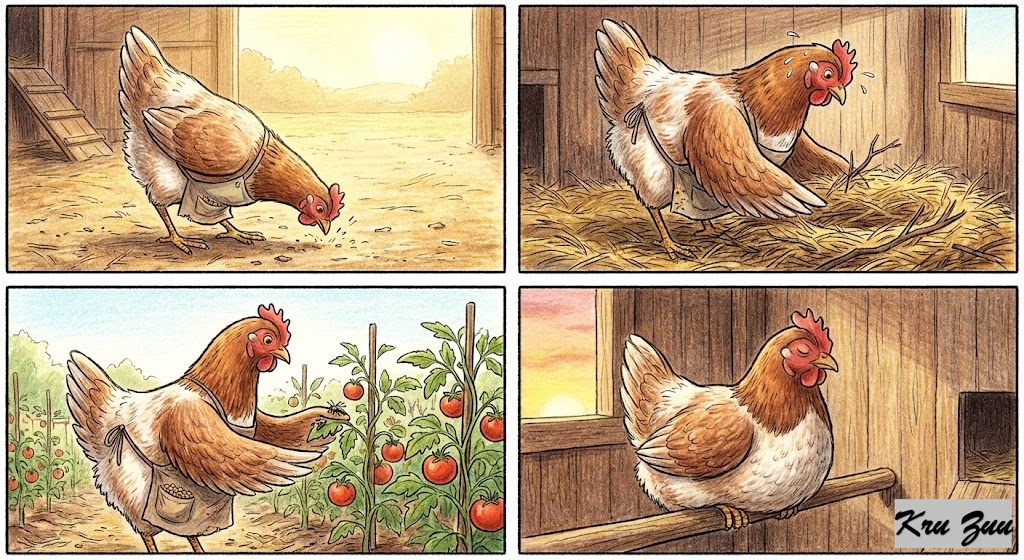
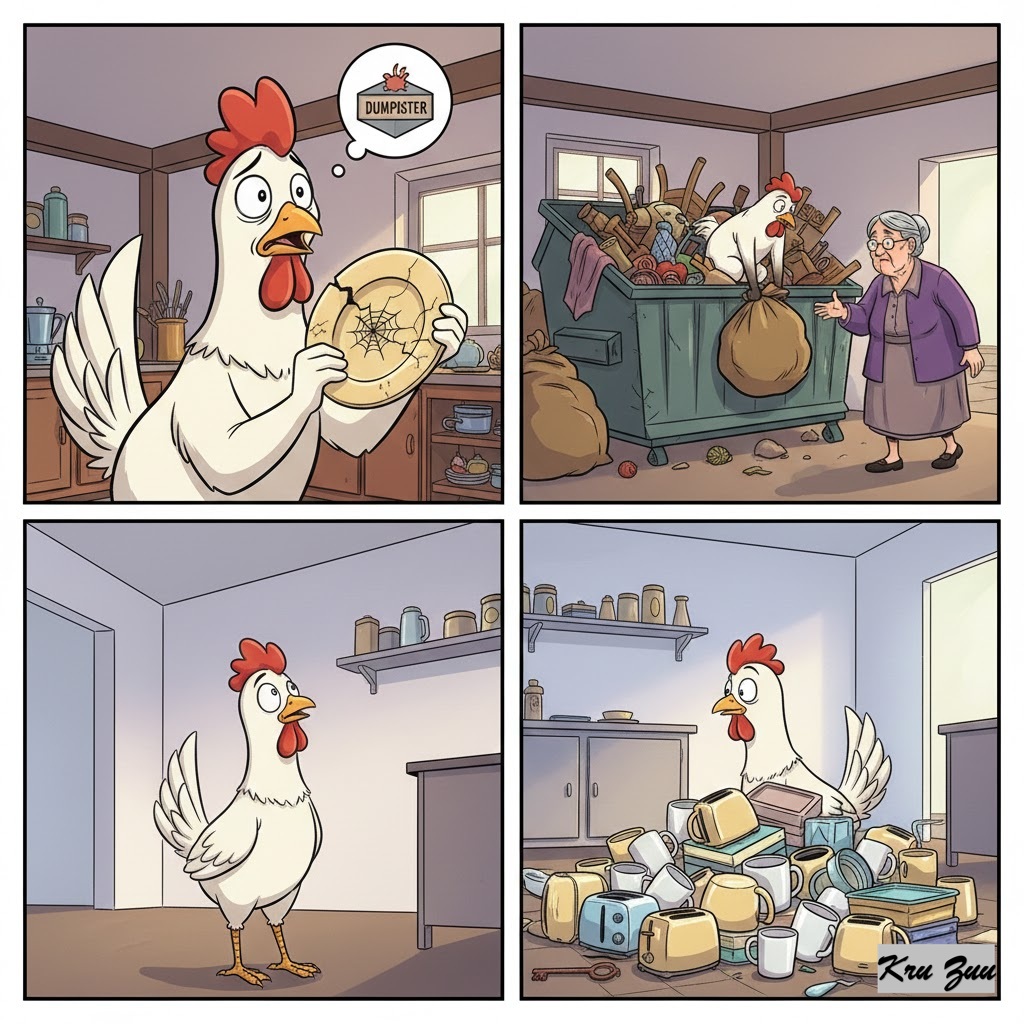
    Cluck the Chicken: Panics easily, throws away everything “old.” 🐔

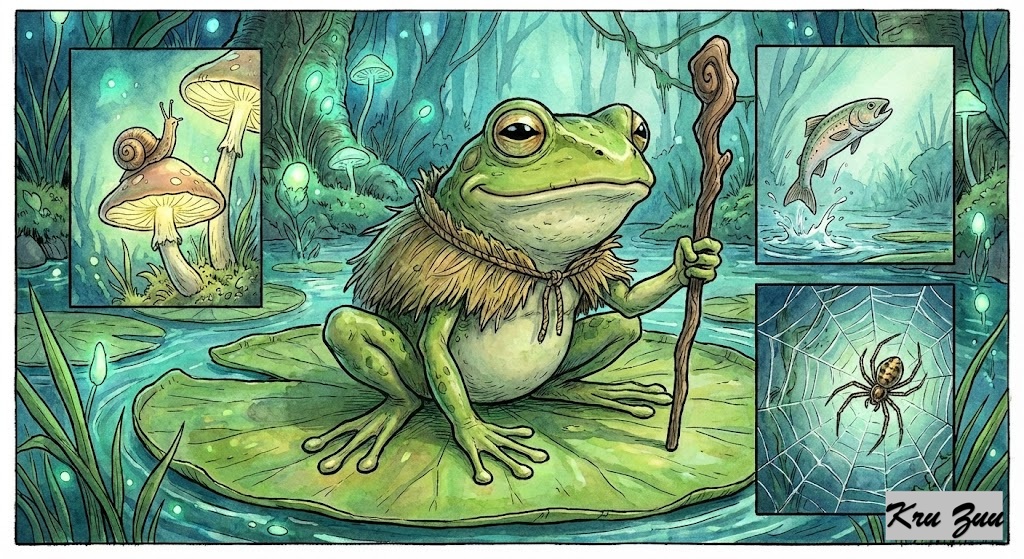
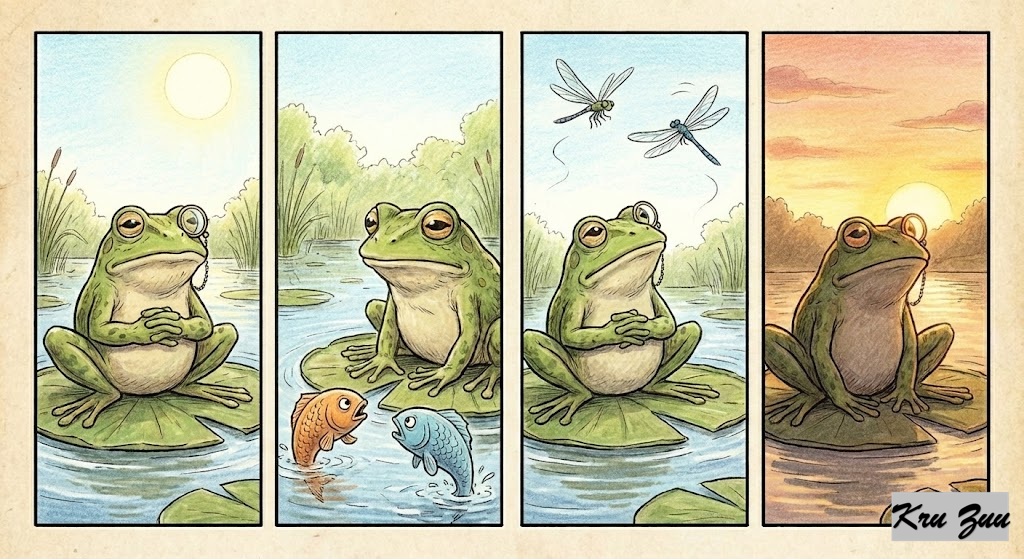
    Fred the Frog: The calm collector who sees the future. 🐸
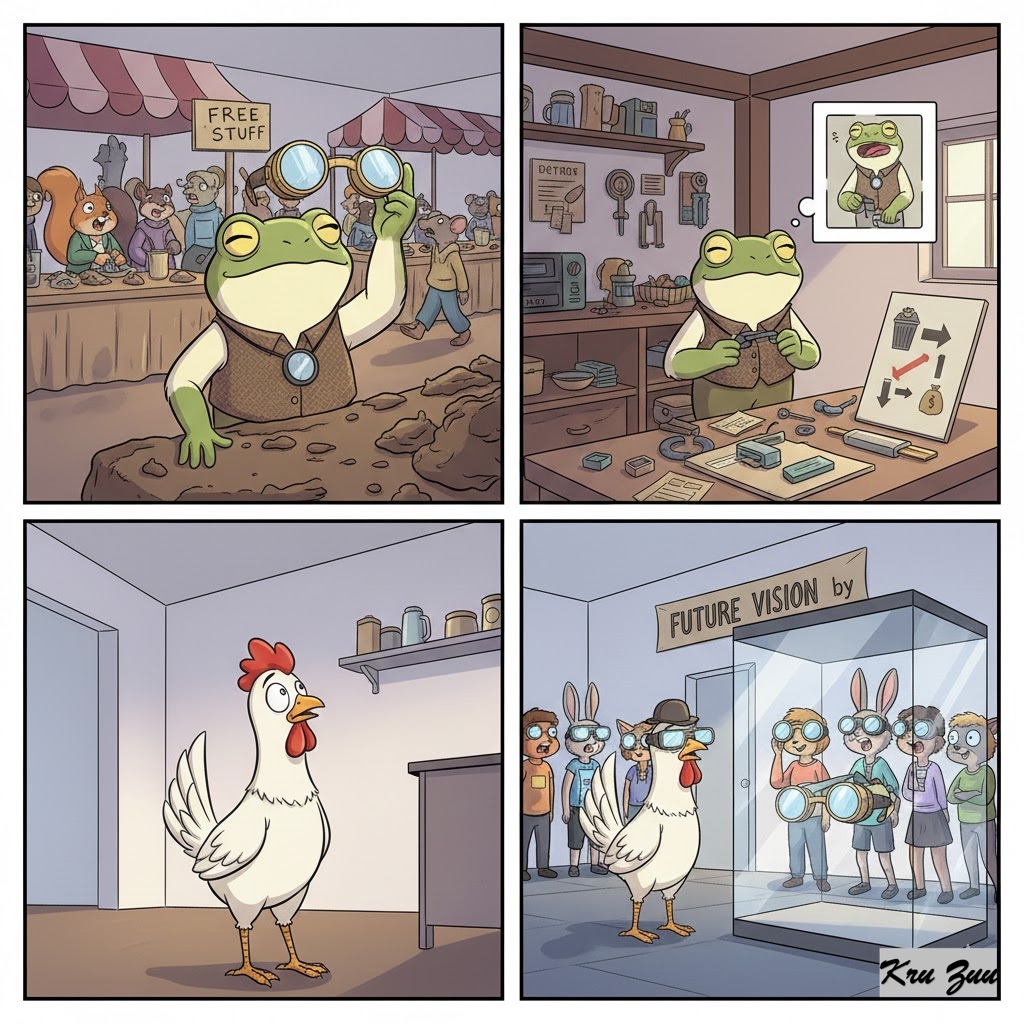

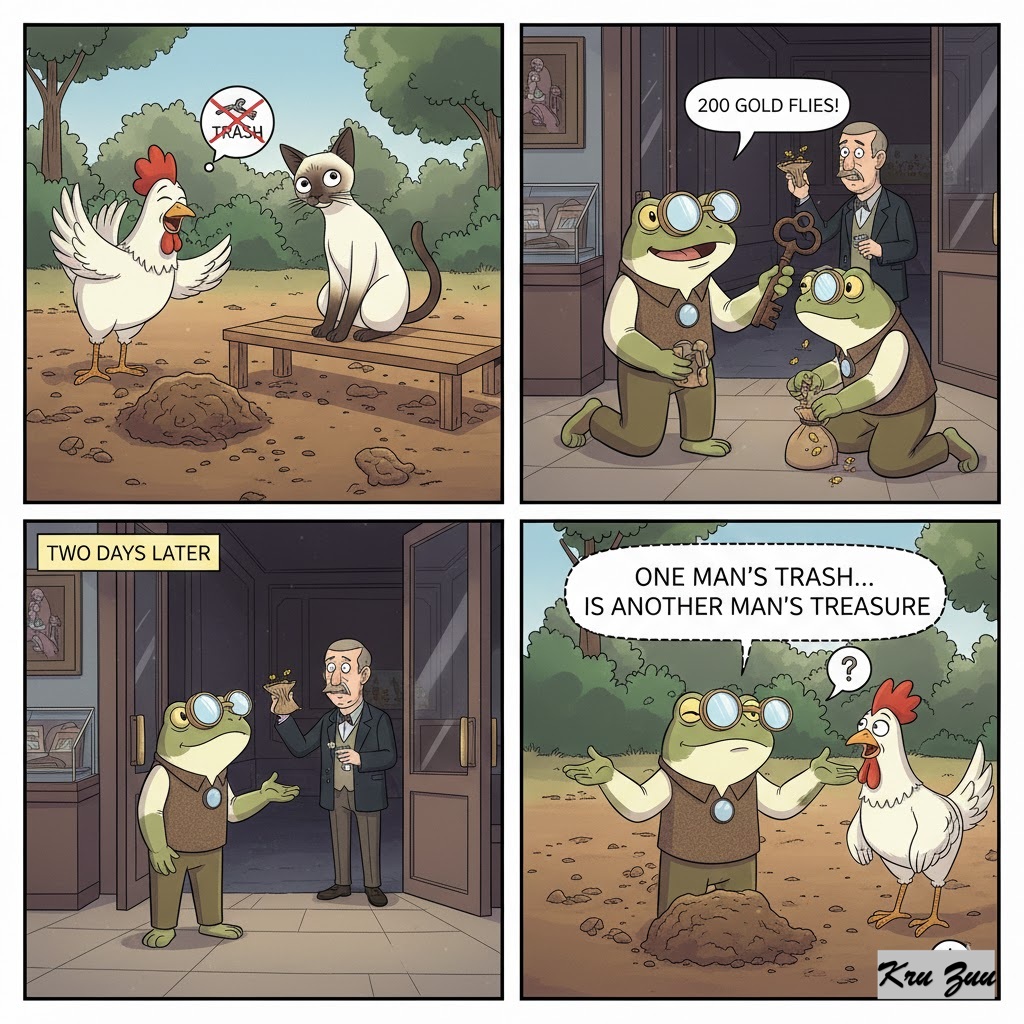
    The Situation: While cleaning the community garden, the trio finds a heavy, rusted, dirt-covered iron key.
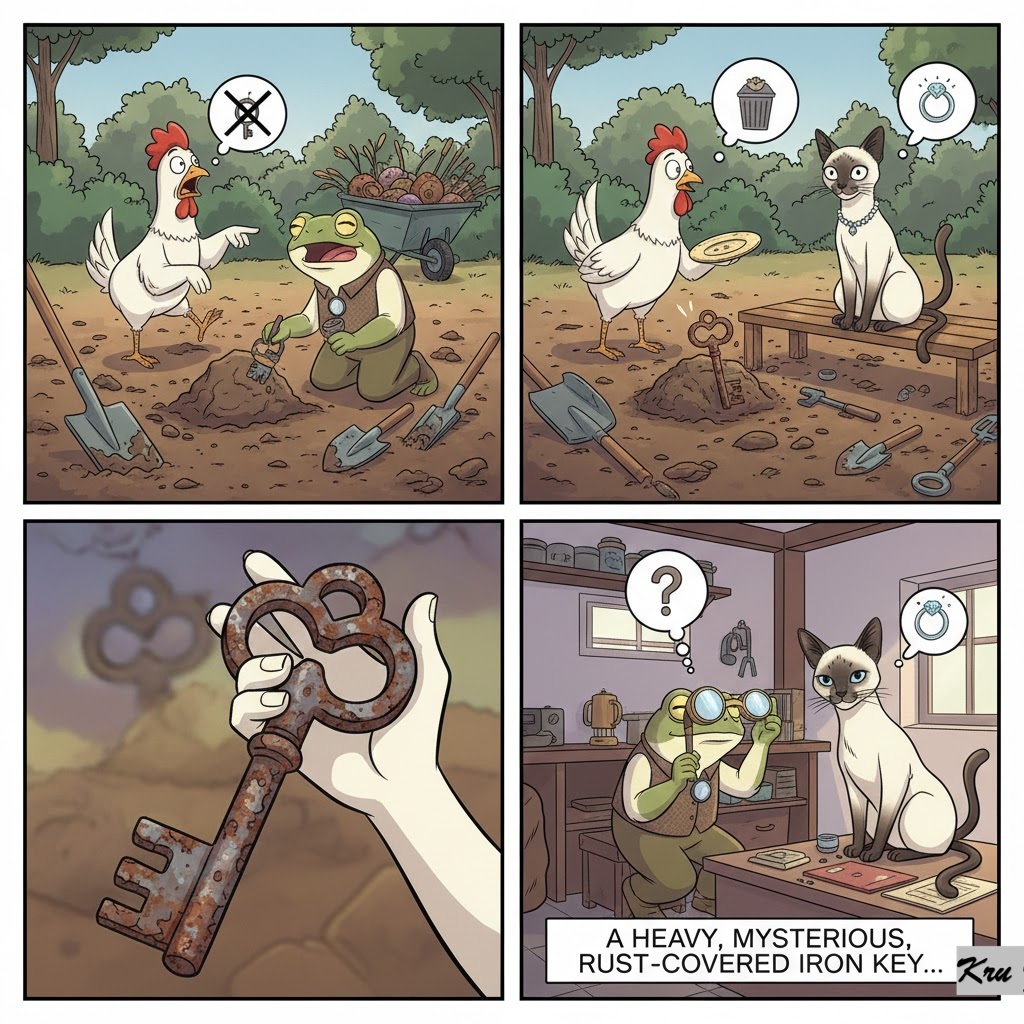

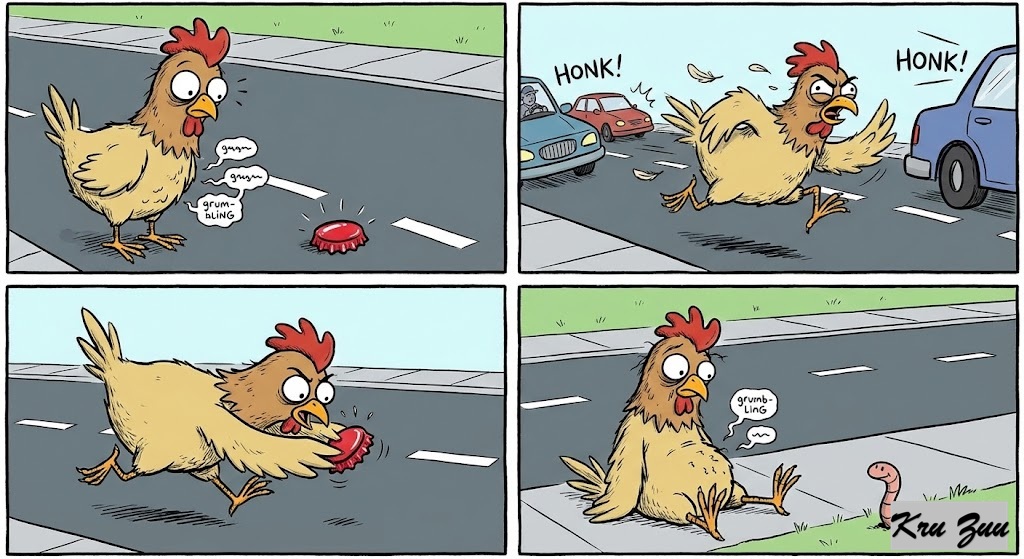
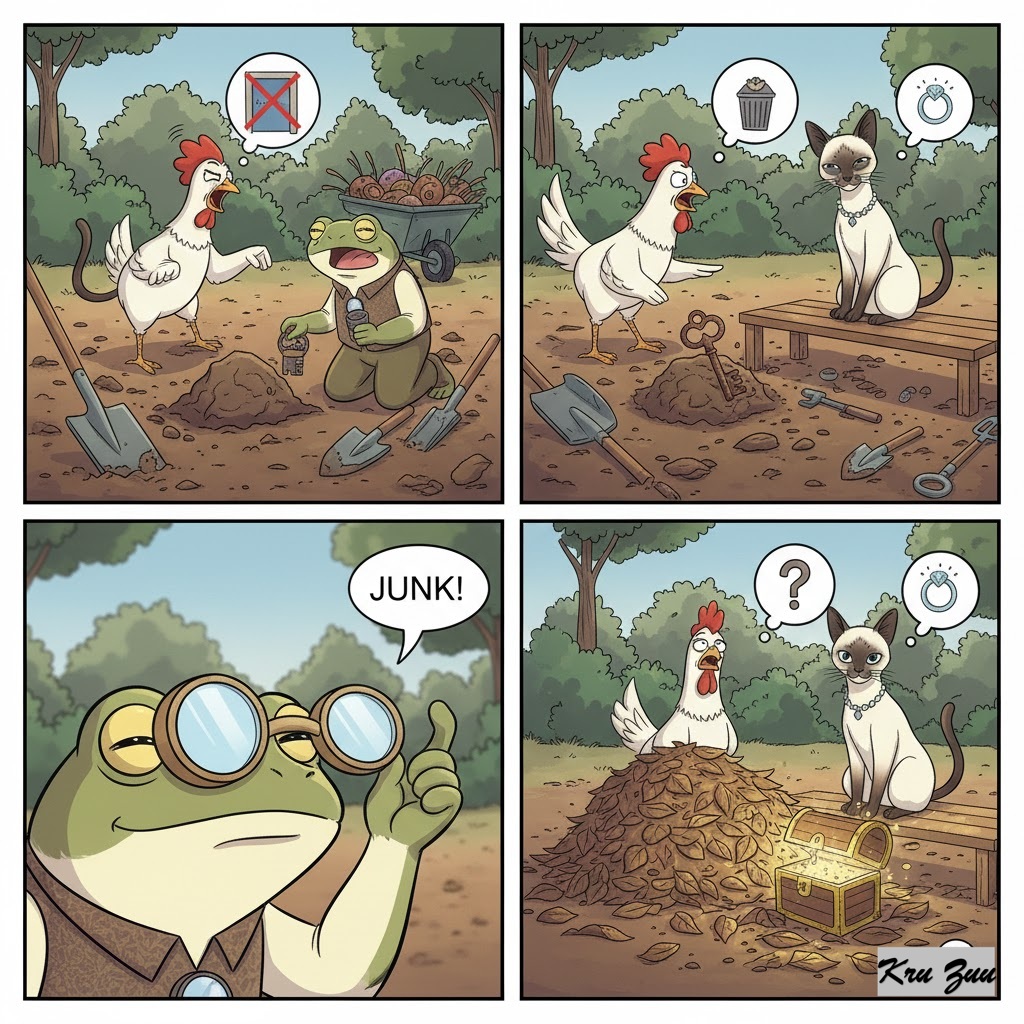
    The Conflict: “Ugh! Get it away from me!” Cleo hissed, flicking her tail. “It’s filthy and probably covered in germs. It belongs in the bin!” Cluck squawked in agreement. “It’s useless! It doesn’t open my modern electronic coop door. It’s just heavy junk!” Cluck kicked the key into a pile of dead leaves.

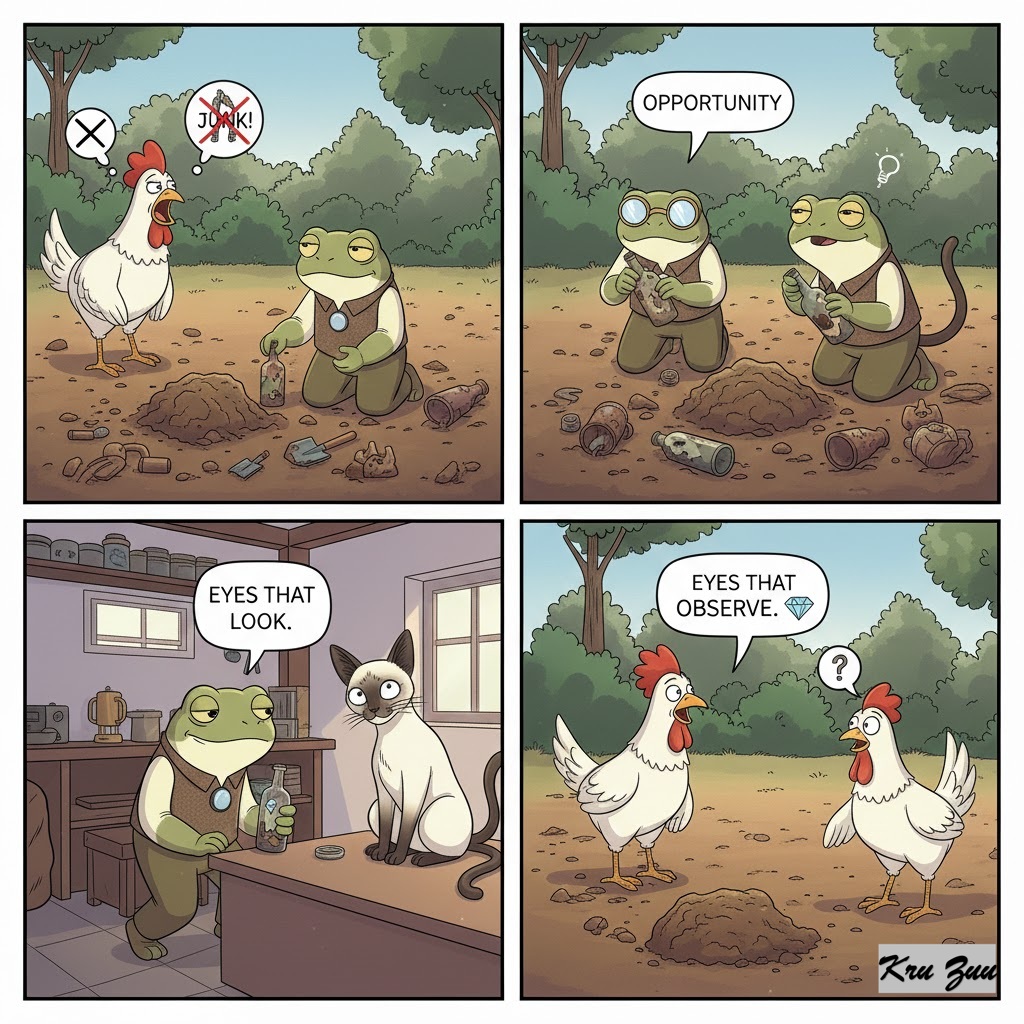
    The Reaction: Fred hopped over and picked up the key. He wiped away the mud with a lily pad. “Ribbit,” Fred whispered. “This isn’t junk. Look at the craftsmanship. This is a 100 year old skeleton key.”
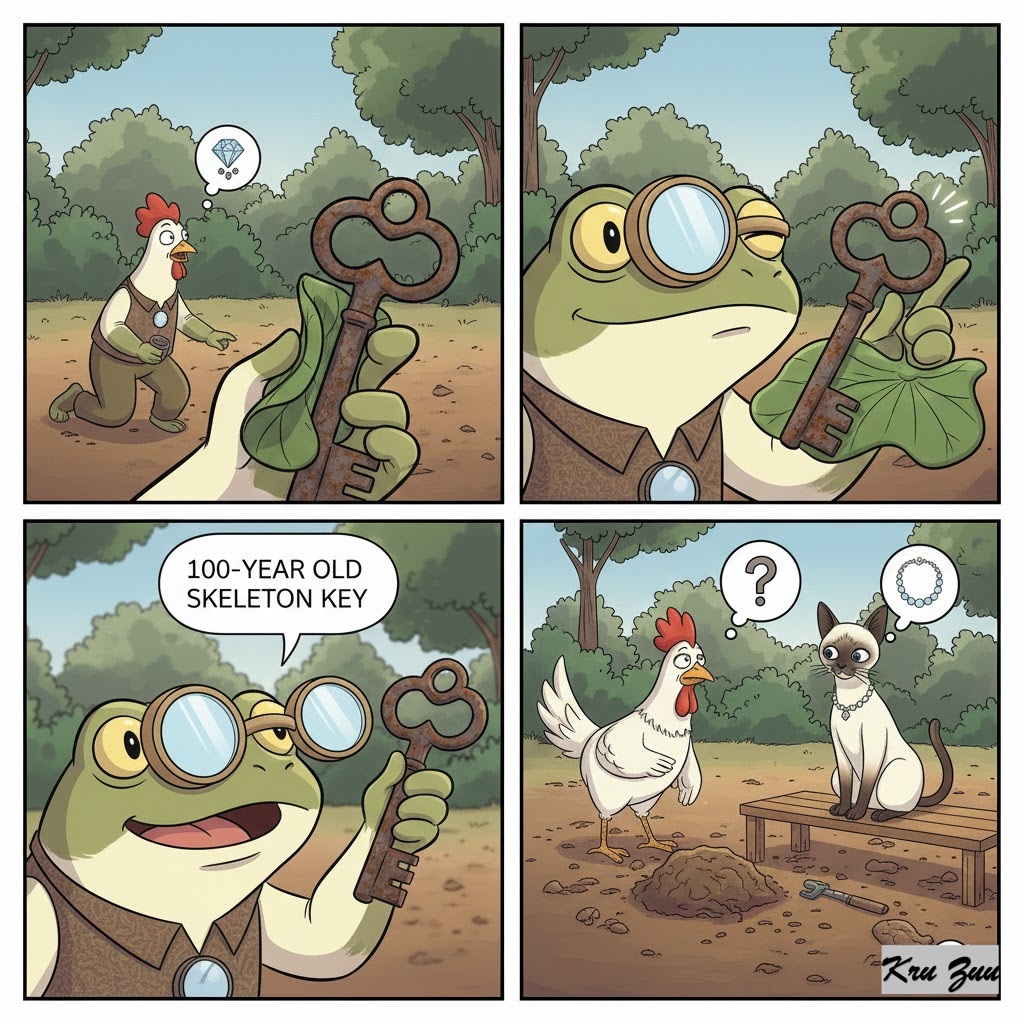

    The Resolution: Cleo laughed. “Have fun with your ‘trash,’ Fred.” Two days later, Fred returned. He had polished the key until it glowed like silver and attached it to a leather cord. He sold it to a local museum collector for 200 Gold Flies. Cleo and Cluck stared, mouths open. “You got all that for that piece of garbage?” Fred adjusted his glasses. “To you, it was a piece of metal. To the collector, it was the missing piece of history. One man’s trash, my friends… is another man’s treasure.”

    The Moral: Eyes that look see “junk.” Eyes that observe see “opportunity.” 💎
    🎓 Lesson for English Learners


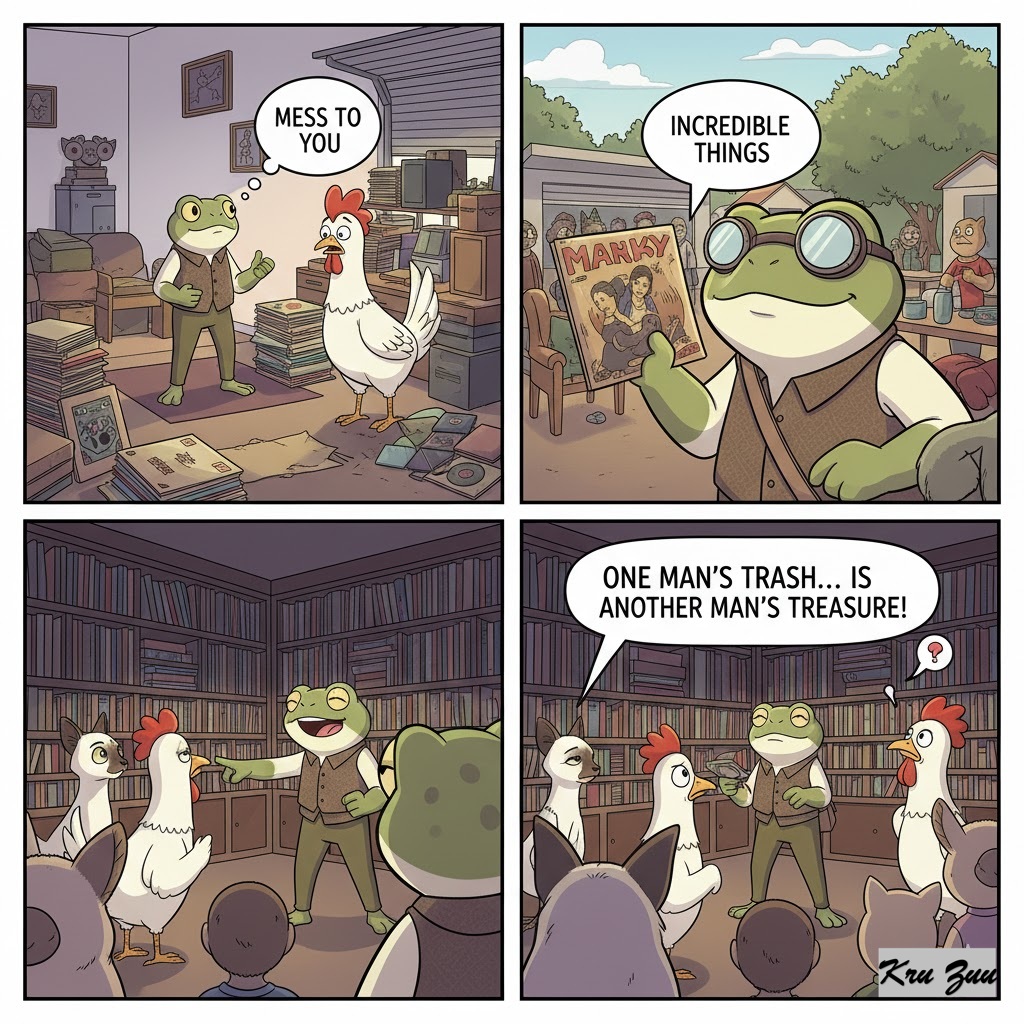
    Use it to defend your niche interests.
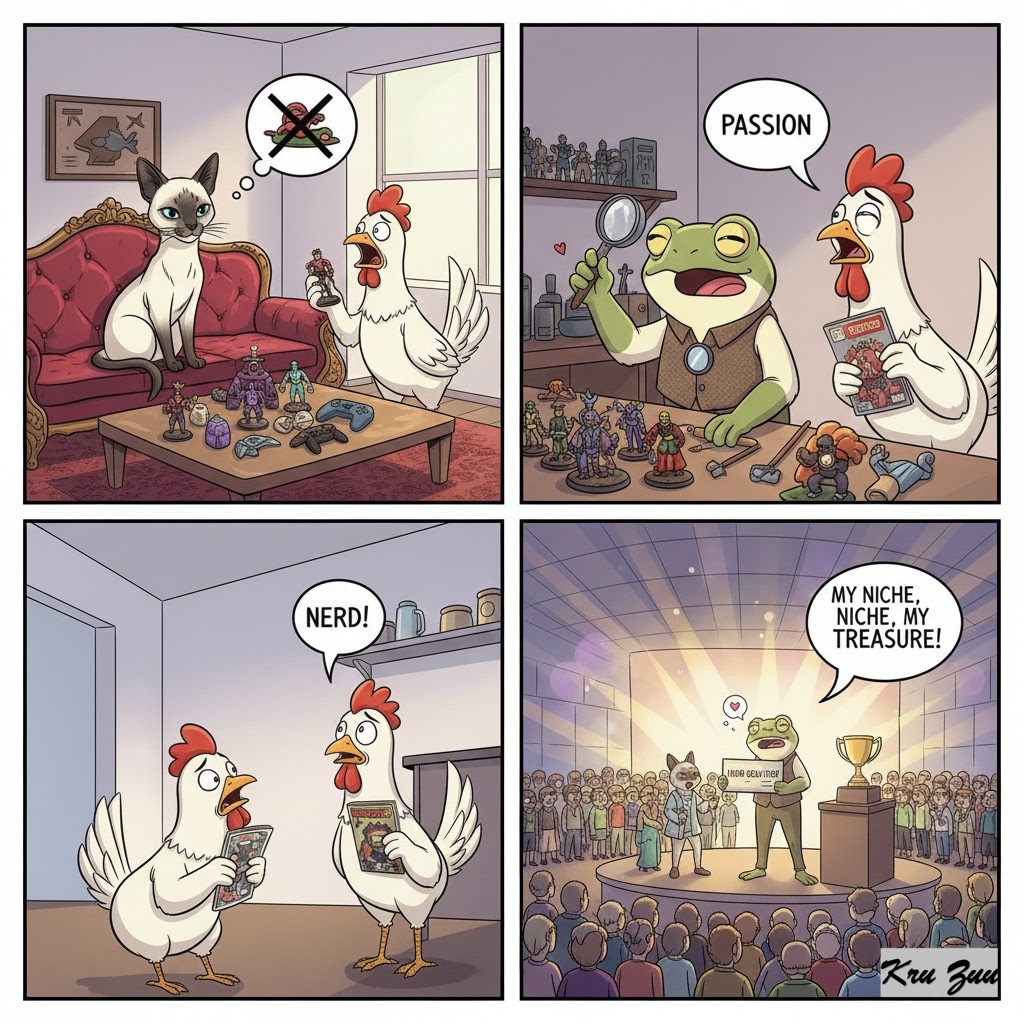

    Situation: Someone asks why you spend your weekends at garage sales or buying old vinyl records.
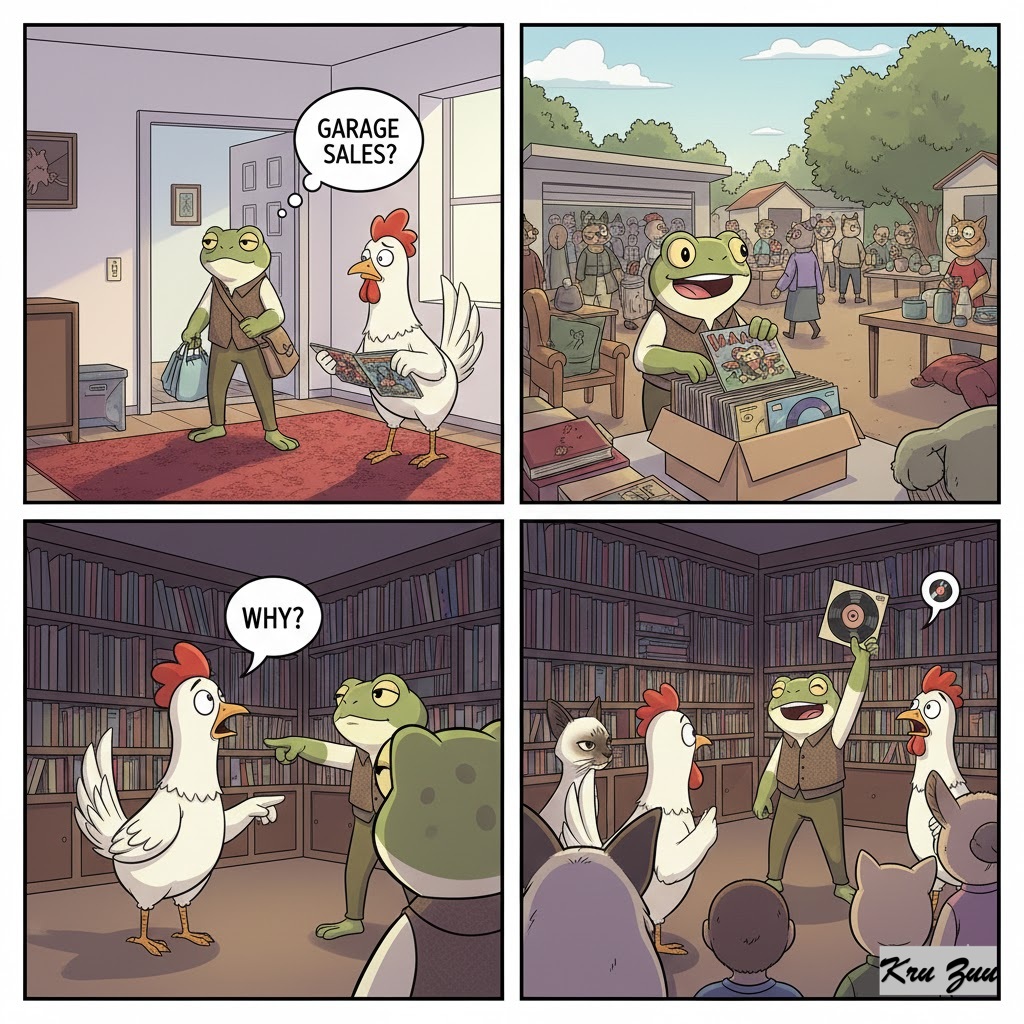

    You Say: “I know it looks like a mess to you, but I find incredible things there. After all, one man’s trash is another man’s treasure!”

    💬 Your Turn: The “Treasure” Challenge 🚀


    The Challenge:
    Look around your room or a local second-hand shop.
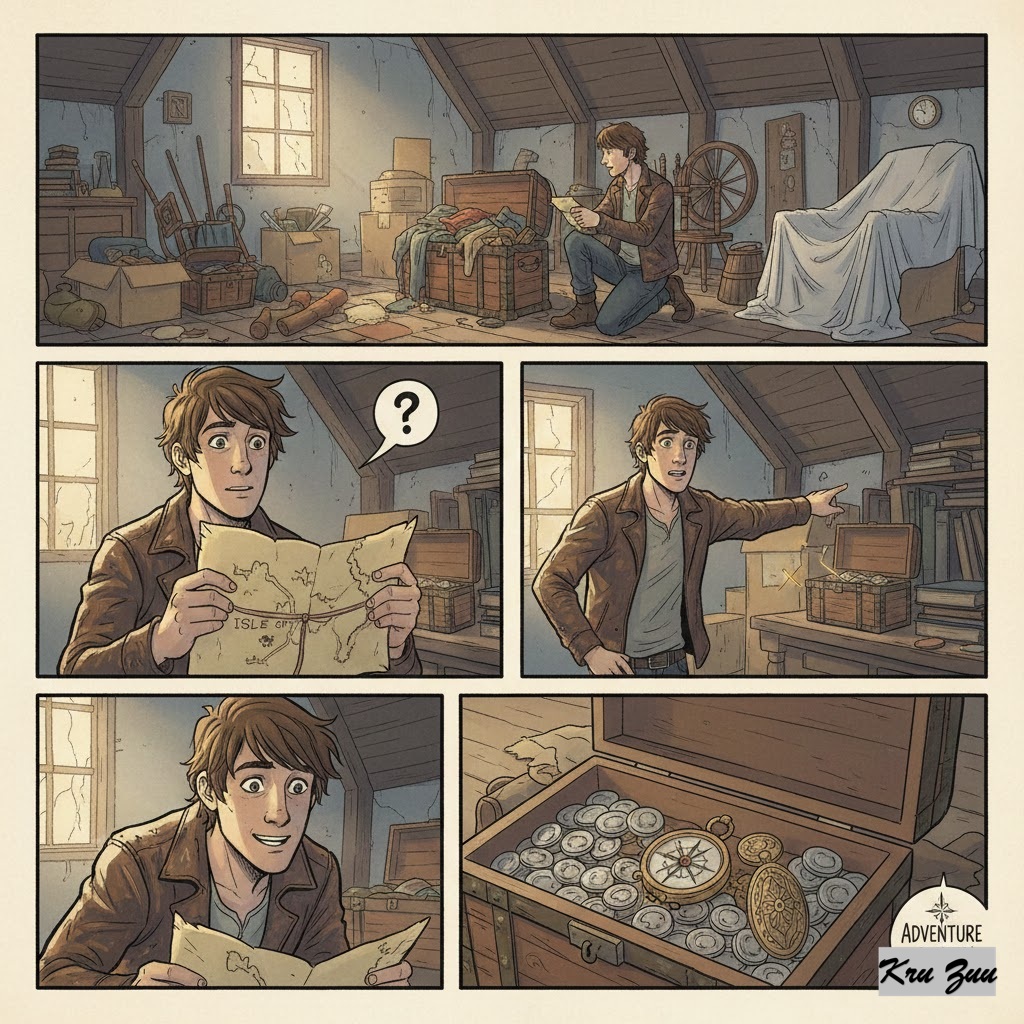
    The Action: Find one item that is “obsolete” (like a CD, an old jar, or a worn-out book).

    Ask yourself: “How could this be valuable to someone else? Could it be art? Could it be a tool? Could it be a memory?”


    👇 Question for the comments: What is the “weirdest” thing you own that you refuse to throw away? Why is it a treasure to you? Tell us below!

    By Zubeyir YURTKURAN

    https://www.facebook.com/BrainBattleground/

    https://www.facebook.com/zubeyr.yurtkuran/

    https://www.instagram.com/zubeyryurtkuran/

    https://www.youtube.com/@BrainBattleground-b3p

    https://www.instagram.com/brainbattleground/

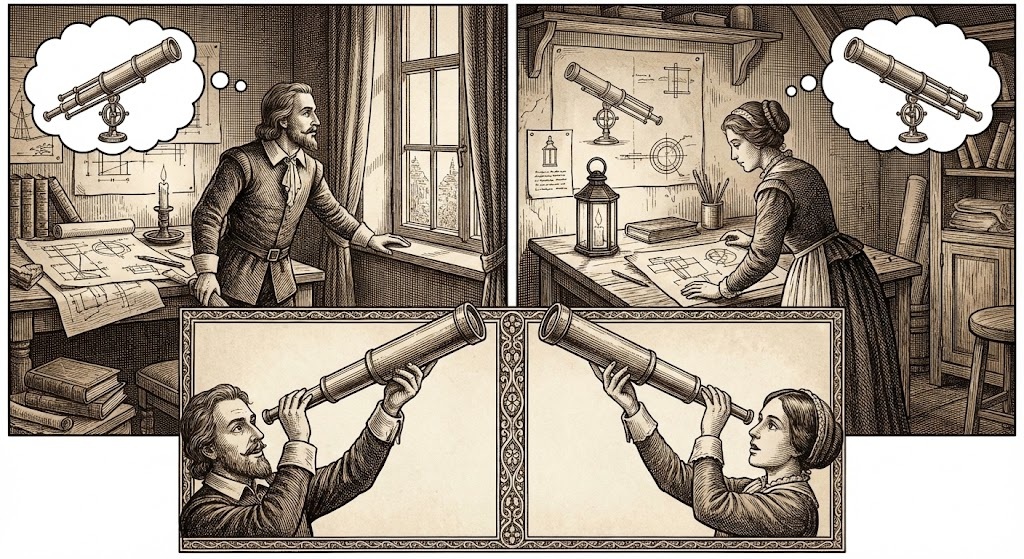
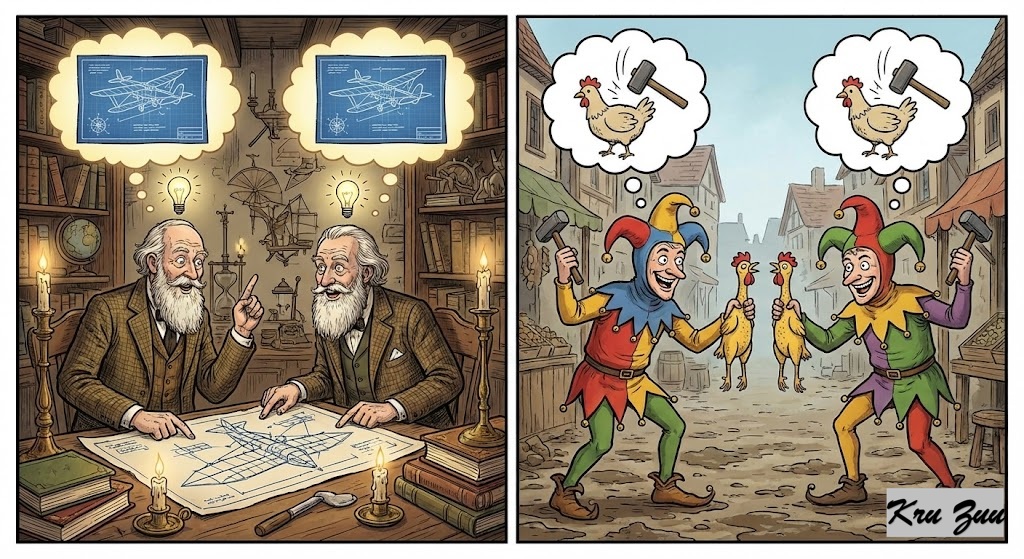
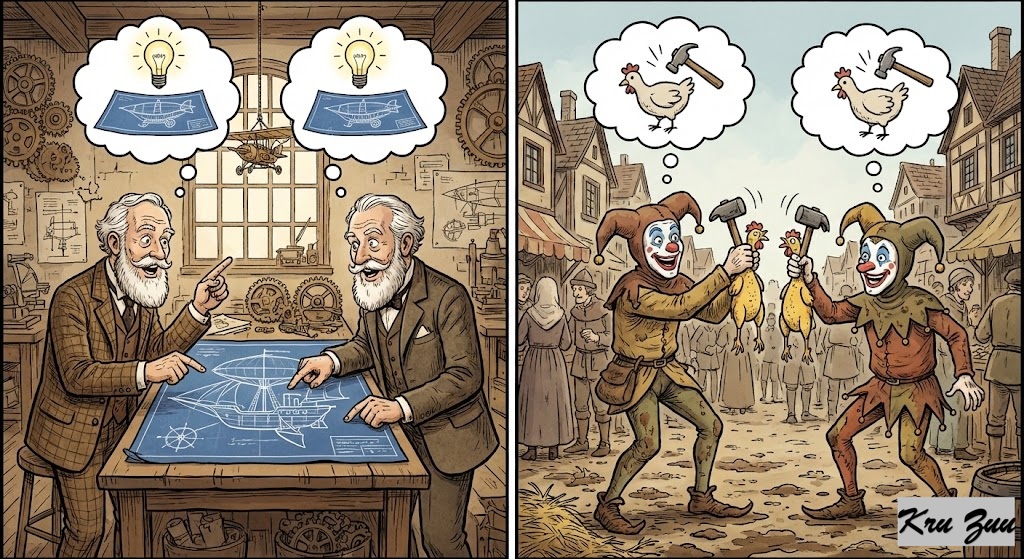
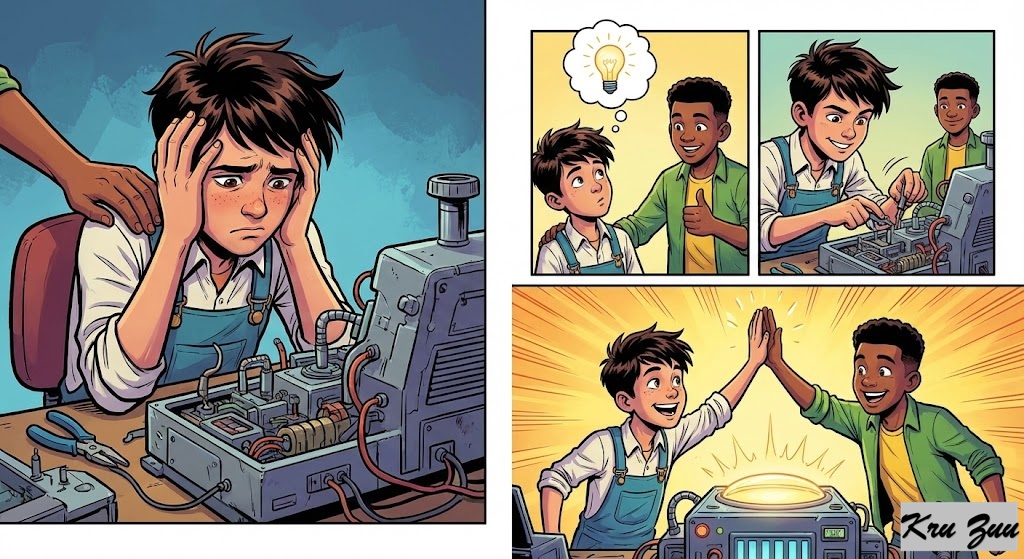
  • 🧠 The Daily Shield: The Law of Connection

    🧠 The Daily Shield: The Law of Connection

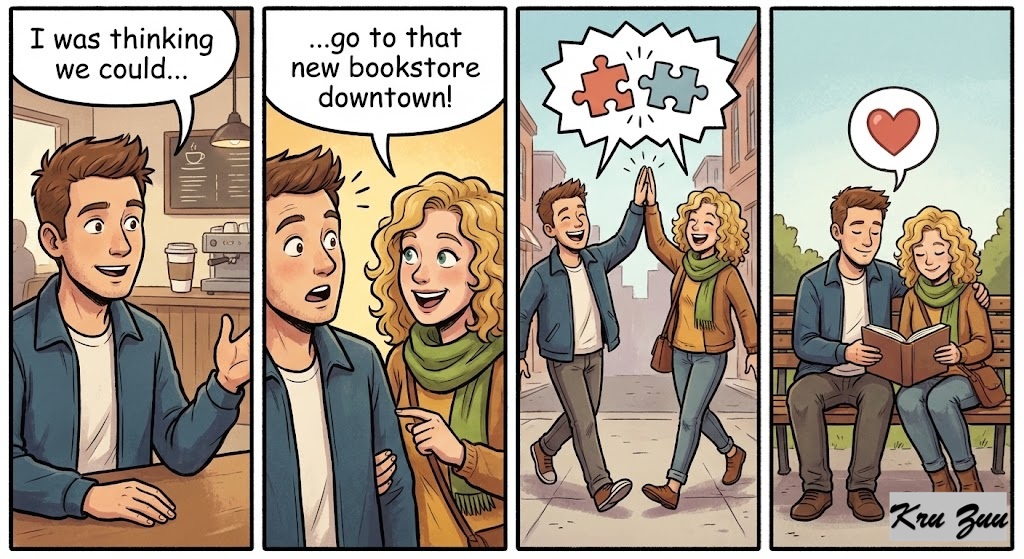
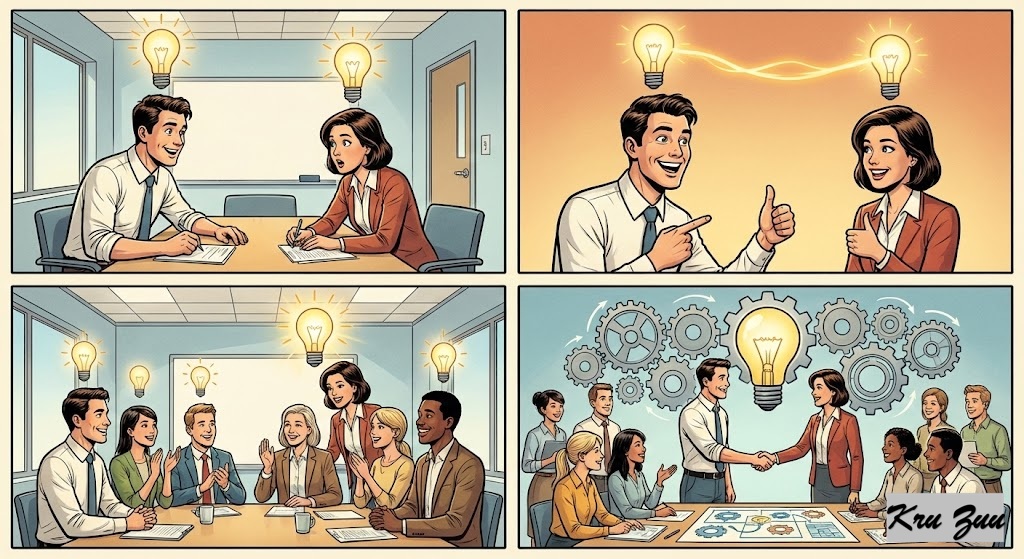
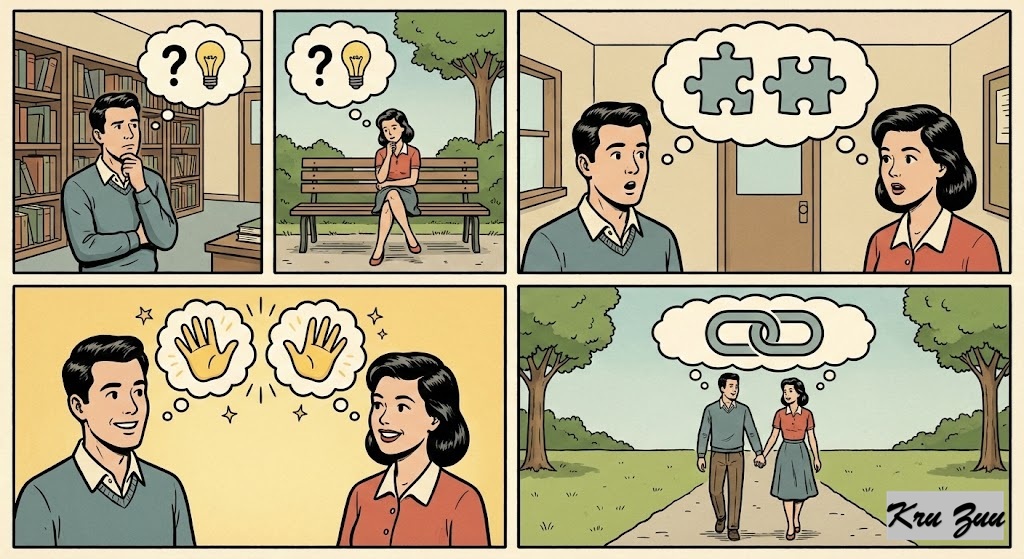
    “Great minds think alike.”


    😈 The Villain (The Intellectual Snob)

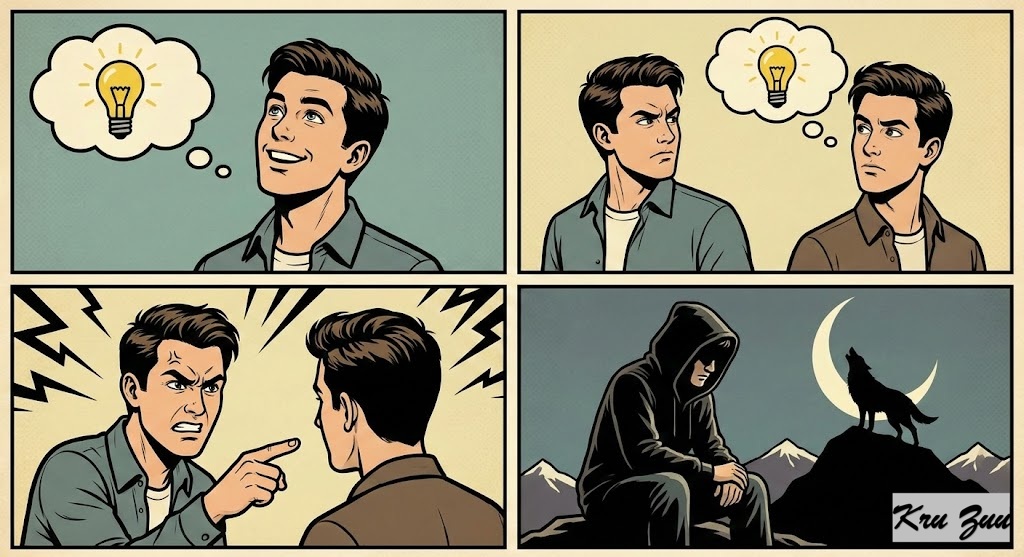
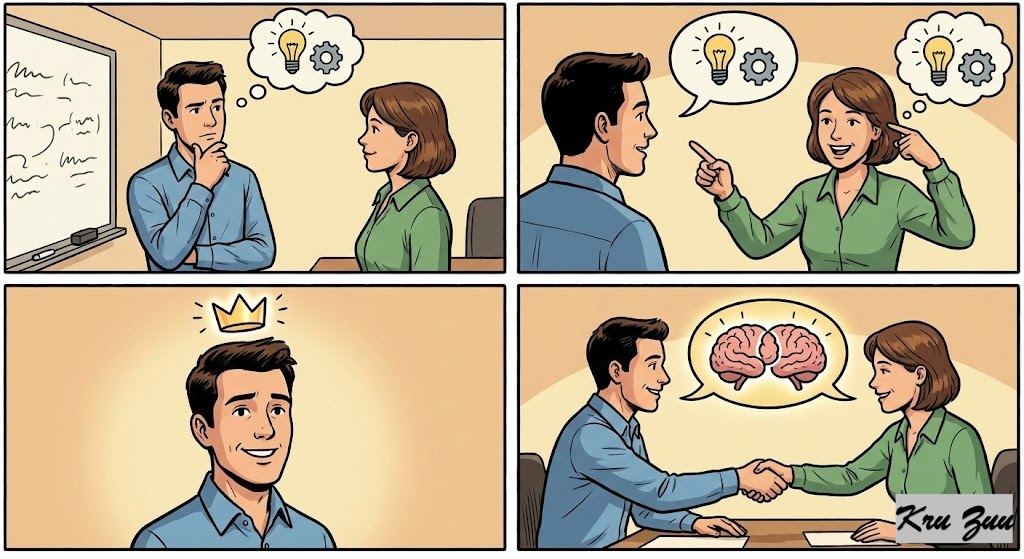
    You have an idea. Someone else suggests the same thing. What do you do? You get annoyed. 😒 “Hey, I thought of that first!””Stop copying me!” You believe your ideas are special property. You see shared thoughts as theft, not connection. You want to be the “Lone Wolf” genius.

    The Result? You isolate yourself. People feel awkward sharing ideas with you. You kill the momentum of the team because you are too busy claiming credit. You are trapped in the “Ego Trap.” 🧟‍♂️


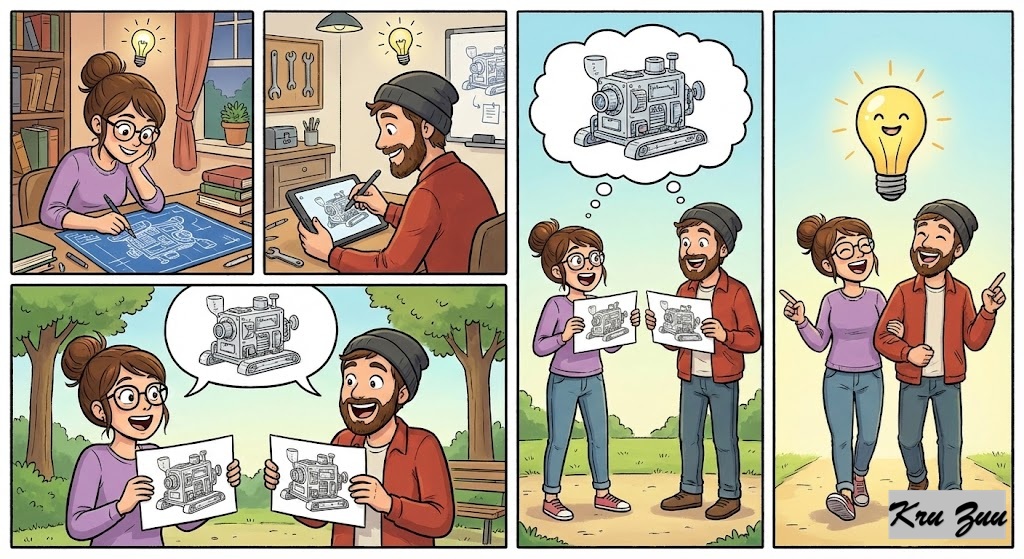
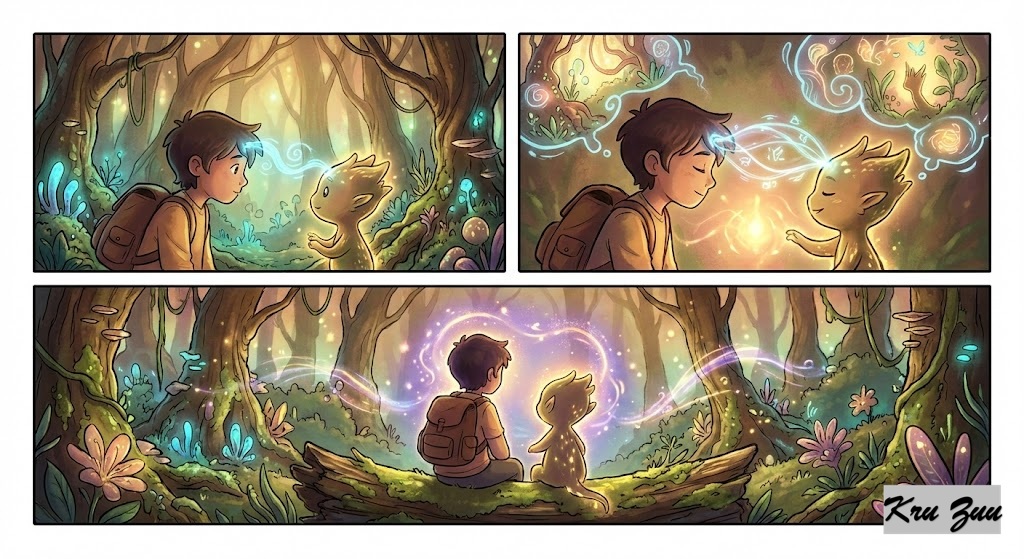
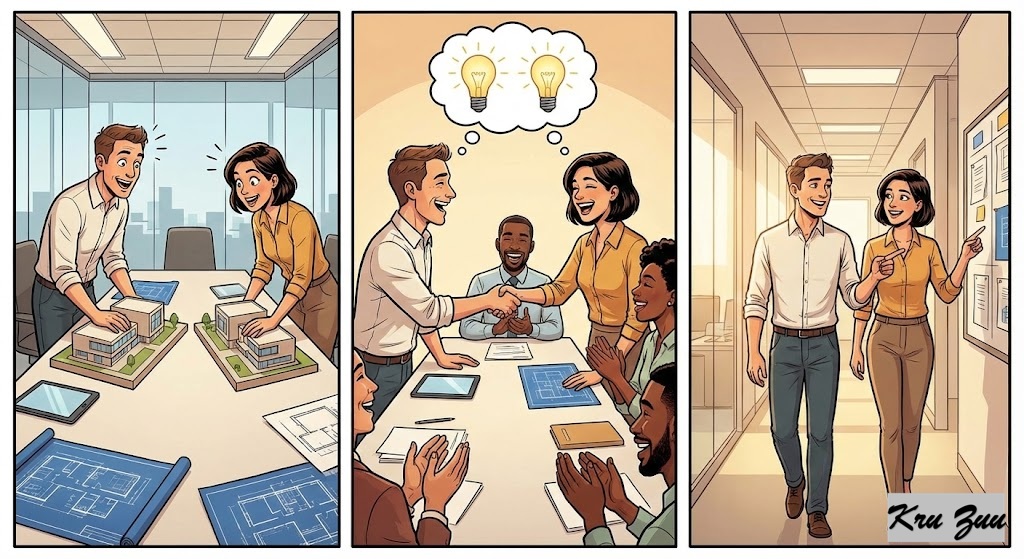
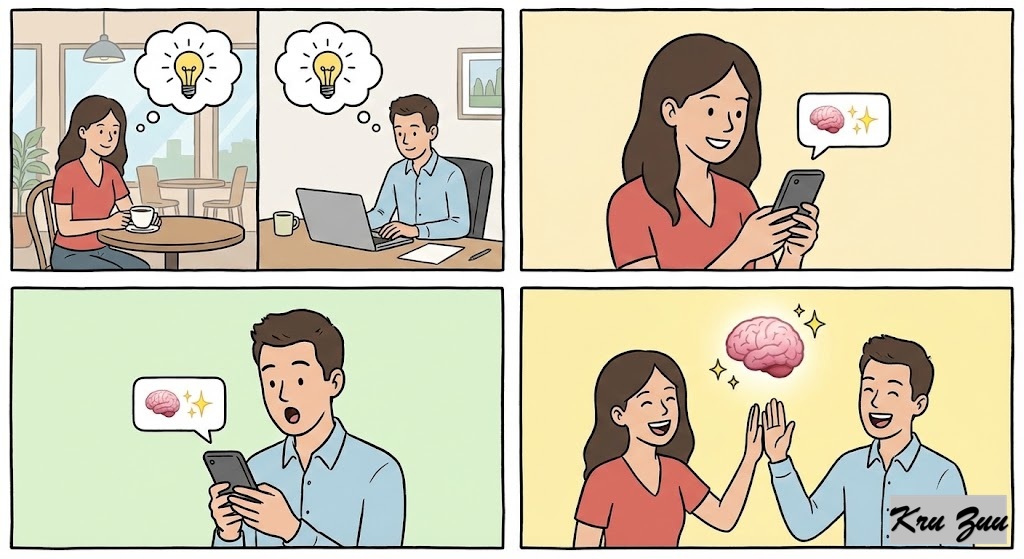
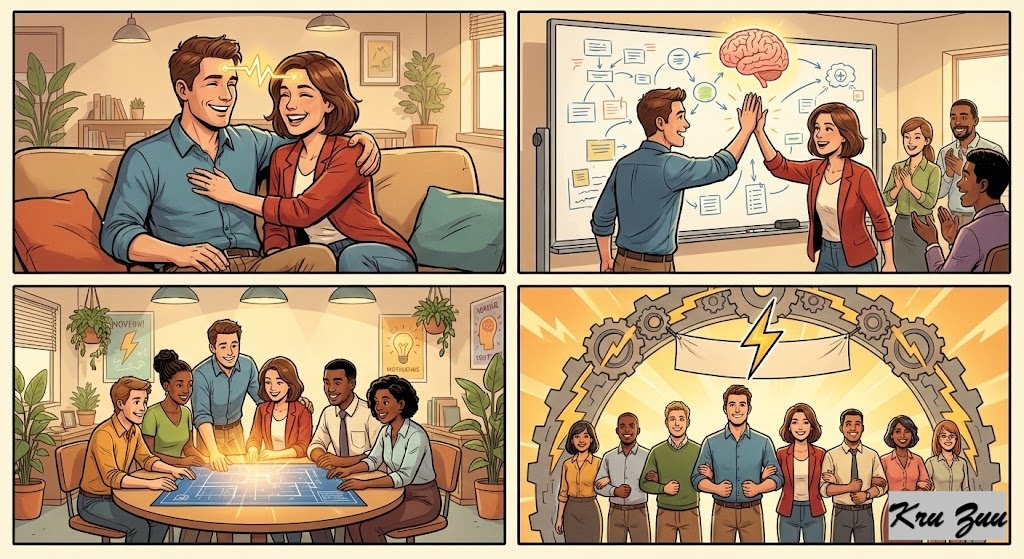
    😇 The Hero (The Synergist): You are brainstorming. A colleague blurts out the exact solution you were just thinking of. Instead of getting jealous, you smile. 😄 You point at them and say: “Great minds think alike!” You validate their intelligence, which validates yours. You realize that shared thinking isn’t copying, it’s alignment.

    The Result? Instant rapport. The other person feels smart and connected to you. You create a bond of trust (“We are on the same wavelength”). You build a tribe, not just a resume. ⚡


    ⚖️ The Reality


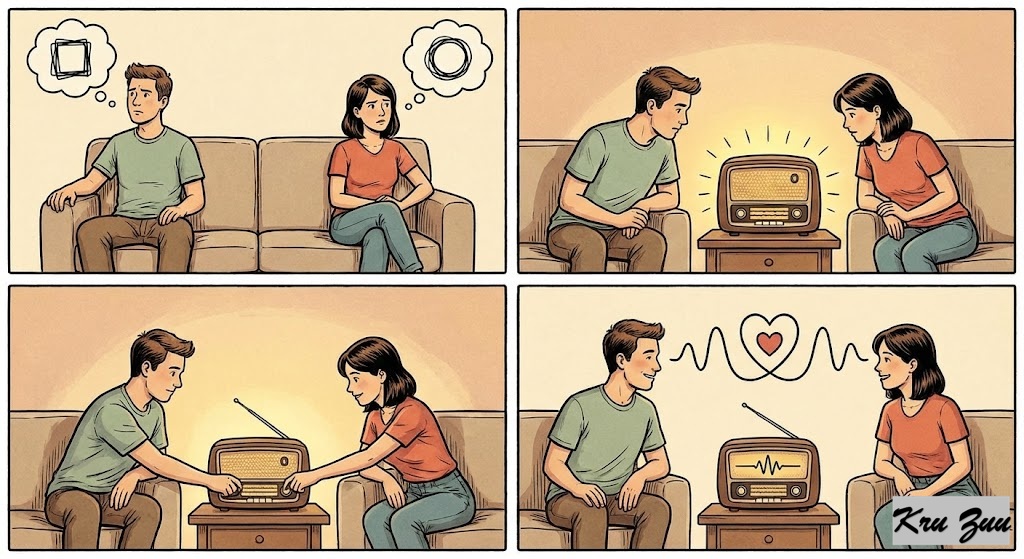
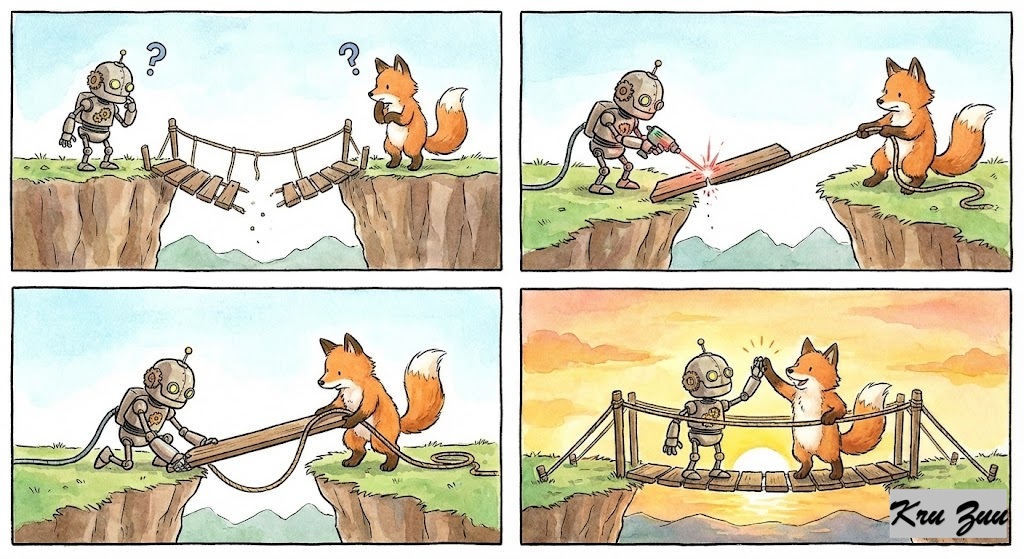
    We are social creatures. When two people arrive at the same conclusion independently, it is a powerful signal of compatibility. It means your values, logic, or instincts are aligned. It is a moment of “mental high-five.” 👋


    💎 The Secret

    Using this phrase isn’t just about being right; it is a tool to make the other person feel good. It says, “You are smart because you think like me.”

    🧐 The Anatomy of the Proverb


    This is your go-to phrase for those “Jinx!” moments.


    Great Minds (Noun Phrase): Intelligent people; thinkers; visionaries.


    Think (Verb): To process thoughts/ideas.


    Alike (Adverb):
    In a similar way; identically.


    Simpler Version: Smart people have the same ideas. / We are on the same page.


    📚 Vocabulary Vault


    Synergy (Noun):
    When the combined effect is greater than the sum of separate effects. (1+1=3). 🚀


    Telepathy (Noun): The supposed communication of thoughts by means other than the known senses. (e.g., “It’s like we have telepathy!”).


    Validation (Noun): Recognition or affirmation that a person’s feelings or opinions are valid or worthwhile.


    Coincidence (Noun): A remarkable concurrence of events or circumstances without apparent causal connection.


    Wavelength (Noun):Idiom: “To be on the same wavelength” (To think similarly). 📻

    📜 History: Origin and The Twist


    Where did this compliment come from?


    The Origin: The idea has been around since the early 1600s. The original recorded phrase in English was “Great wits jump” (meaning “jump to the same conclusion”). It evolved into “Great minds think alike” over time.


    The Twist (The Humorous Truth): Did you know this idiom has a second half that is often left out? The full phrase is historically known as:”Great minds think alike, though fools seldom differ.”


    Translation: Smart people might have the same idea, but stupid people also follow the crowd! Note: We usually only use the first half (the polite half) in business and friendship! 😉

    🎯 Impact on Life: The Pros & Cons


    ✅ The Pros (The Bond)


    Speed:
    You don’t have to explain yourself. The other person already “gets it.”


    Confidence: Knowing someone supports your idea makes you more likely to succeed.


    ❌ The Cons (The Echo Chamber)


    Groupthink:
    If everyone thinks alike, no one is spotting the mistakes. Sometimes you need a “Great Mind” who thinks differently to challenge you.

    🎭 Short Story: The Mystery of the Locked Box 📦


    Let’s visit the magical forest to see how mental connection works.


    🌟 The Cast


    Cleo the Cat: Elegant, logical, loves puzzles. 😼


    Cluck the Chicken: Impulsive, hungry, relies on gut instinct. 🐔


    Fred the Frog: The wise, green observer. 🐸


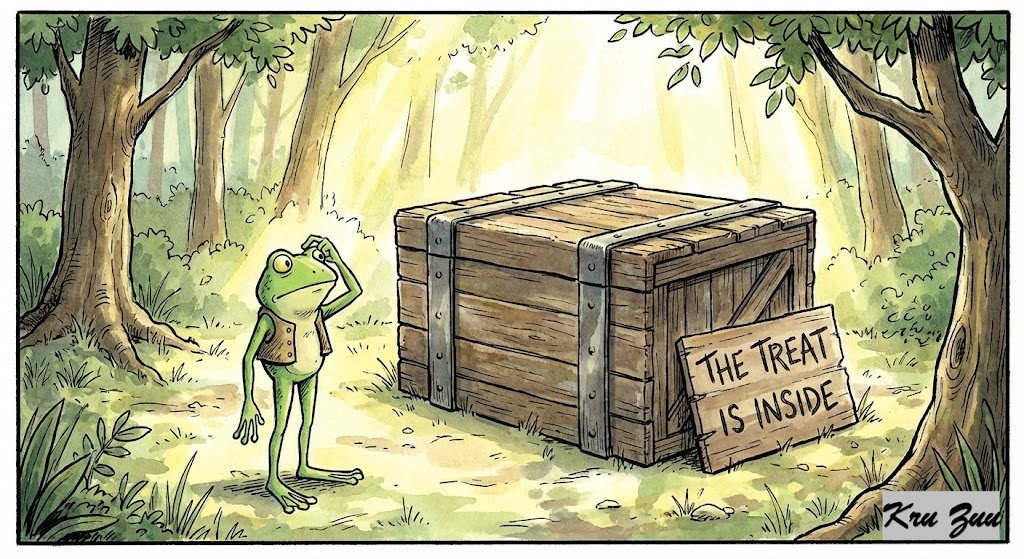
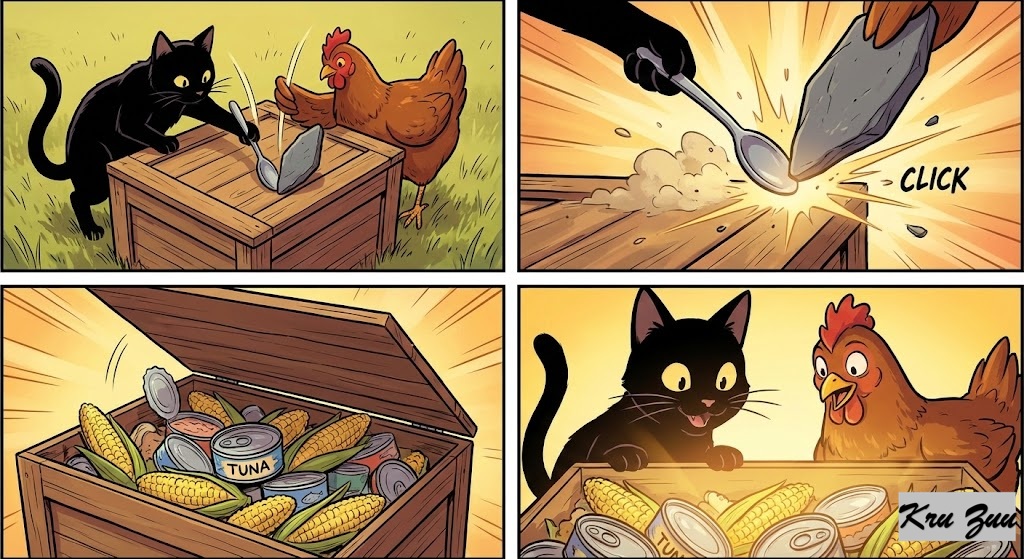
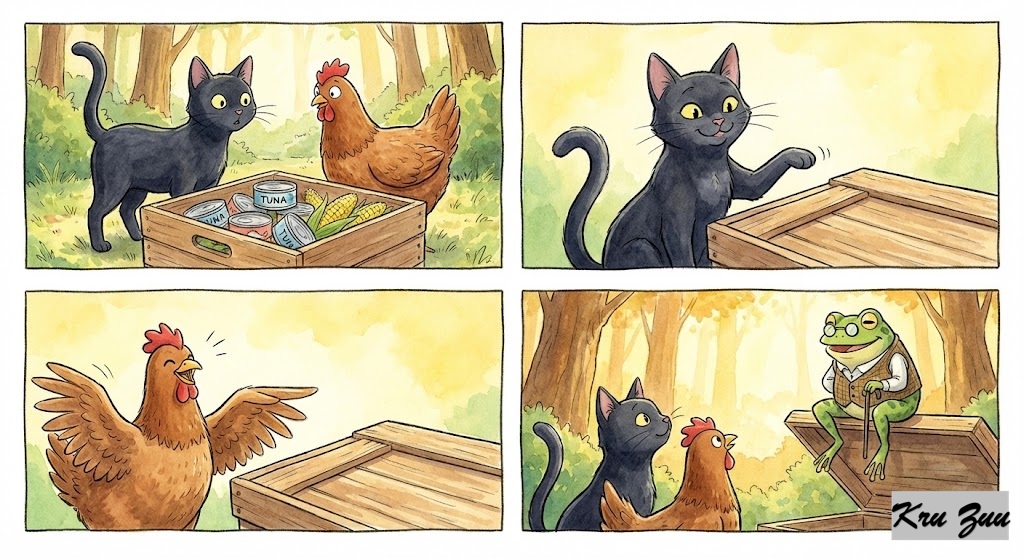
    The Situation: Fred the Frog has placed a mysterious, heavy wooden box in the middle of the clearing. It has no keyhole. It has no handle. Just a sign that says: “The treat is inside.”


    The Conflict:
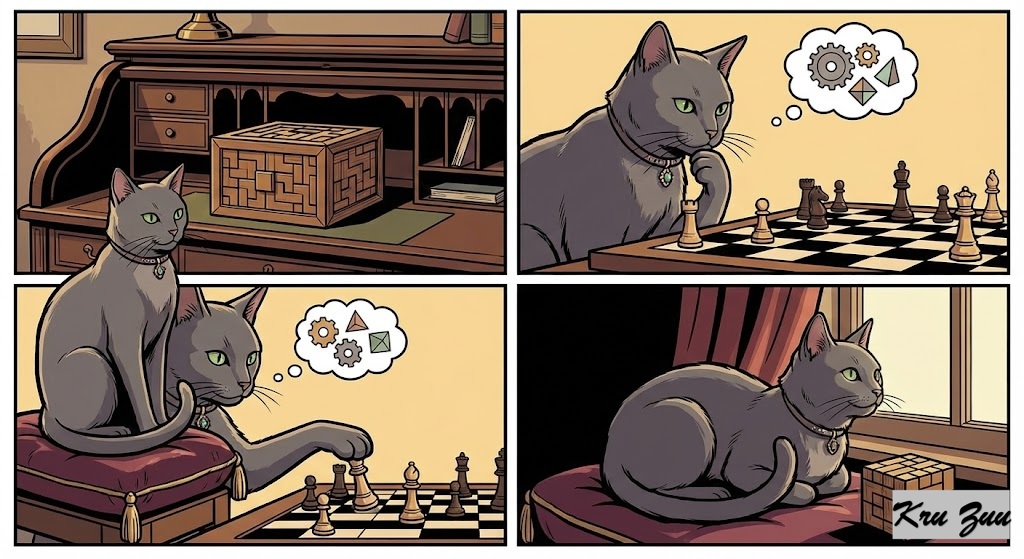
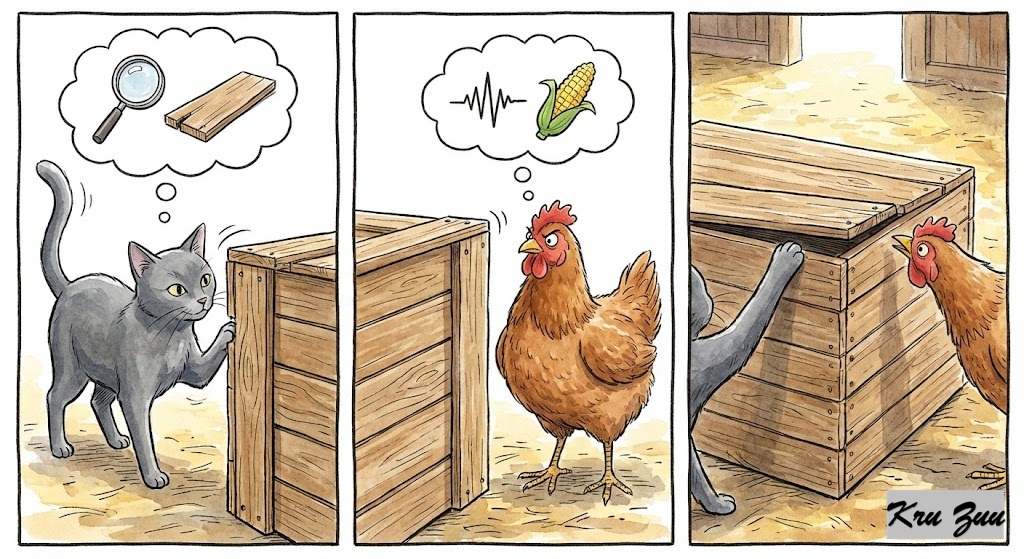
    Cleo circles the box, analyzing the wood grain. She thinks hard. “The wood is loose on the top right corner. I need something thin to pry it open.” Cluck stares at the box, thinking about the corn inside. He feels a vibration. “The top right corner looks weak. I need something flat to poke it.”


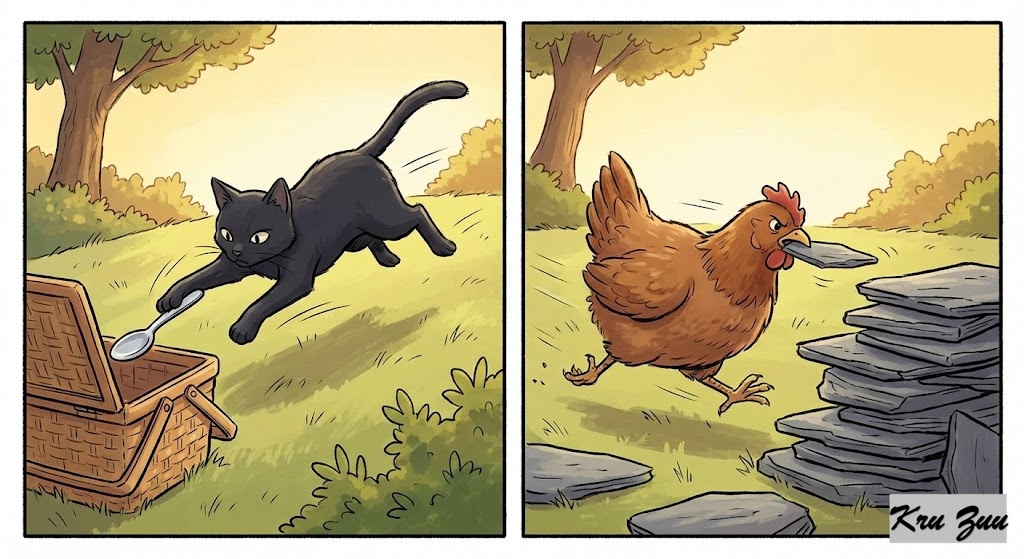
    The Climax: Without saying a word to each other… Cleo runs to the left and grabs a flat, silver spoon from a picnic basket. 🥄 Cluck runs to the right and grabs a flat, loose slate of rock. 🪨


    They both run back to the box and jam their tools into the exact same spot (the top right corner) at the exact same time. Click! The box pops open. It is filled with tuna and corn!


    The Resolution: They look at each other, shocked. Cleo smiles, her tail twitching. “I was going for the leverage point.” Cluck laughs. “I just knew that was the weak spot!” Fred the Frog hops onto the open lid. He adjusts his tiny glasses. “Ribbit,” Fred says. “Different species, different styles, but the same solution. Great minds think alike.”


    The Moral: You don’t have to be identical to be compatible. When you find someone who solves problems the way you do, hold onto them. That is your teammate.

    🎓 Lesson for English Learners


    Context is Key.


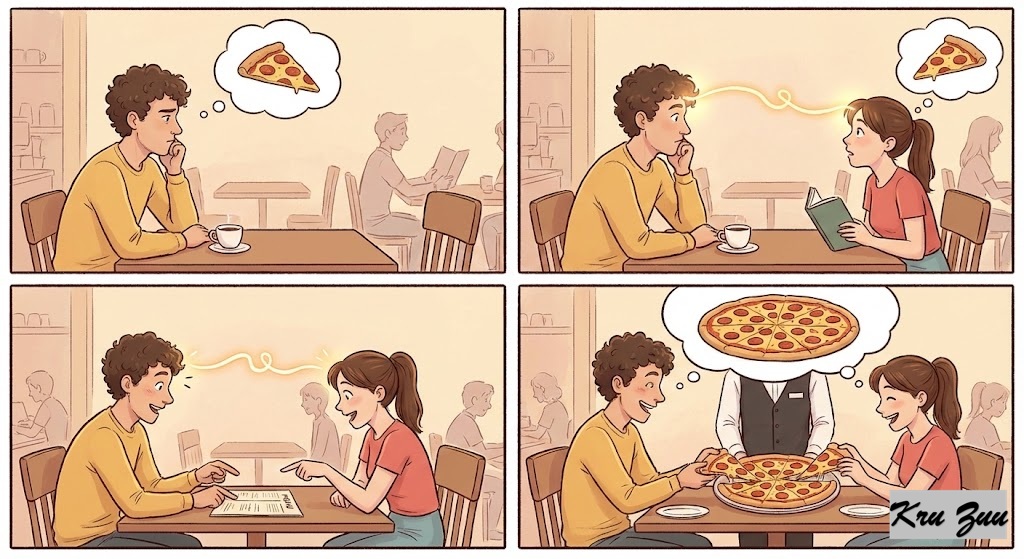
    Situation: You and your friend both reach for the last slice of pizza at the same time.


    You Say: “Great minds think alike!” (This is funny/playful).


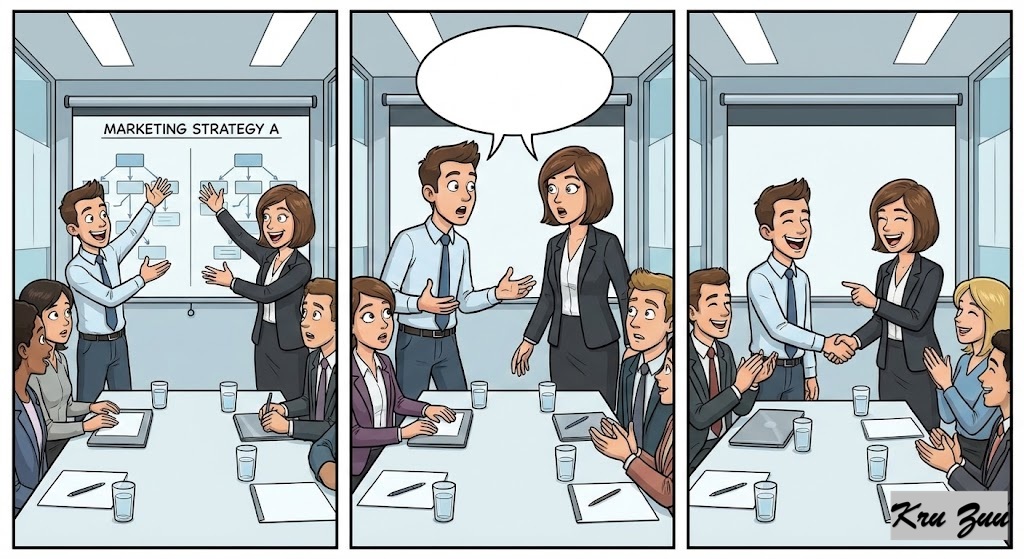
    Situation: You and your boss both suggest the same marketing strategy in a meeting.


    You Say: “Great minds think alike!” (This is complimentary and builds a professional bond).


    💬 Your Turn: The Connection Challenge 🚀


    Is there someone in your life (a partner, a best friend, a coworker) who often finishes your sentences?


    The Challenge:
    The next time this happens, the next time you both say the same thing or text each other at the same moment, do not ignore it.

    The Action: Immediately send them a message or say: “Great minds think alike! 🧠✨”


    Celebrate the connection. It turns a coincidence into a relationship builder.


    👇 Question for the comments: Who is your “Mind Twin”? Tag the person who always seems to know what you are thinking!

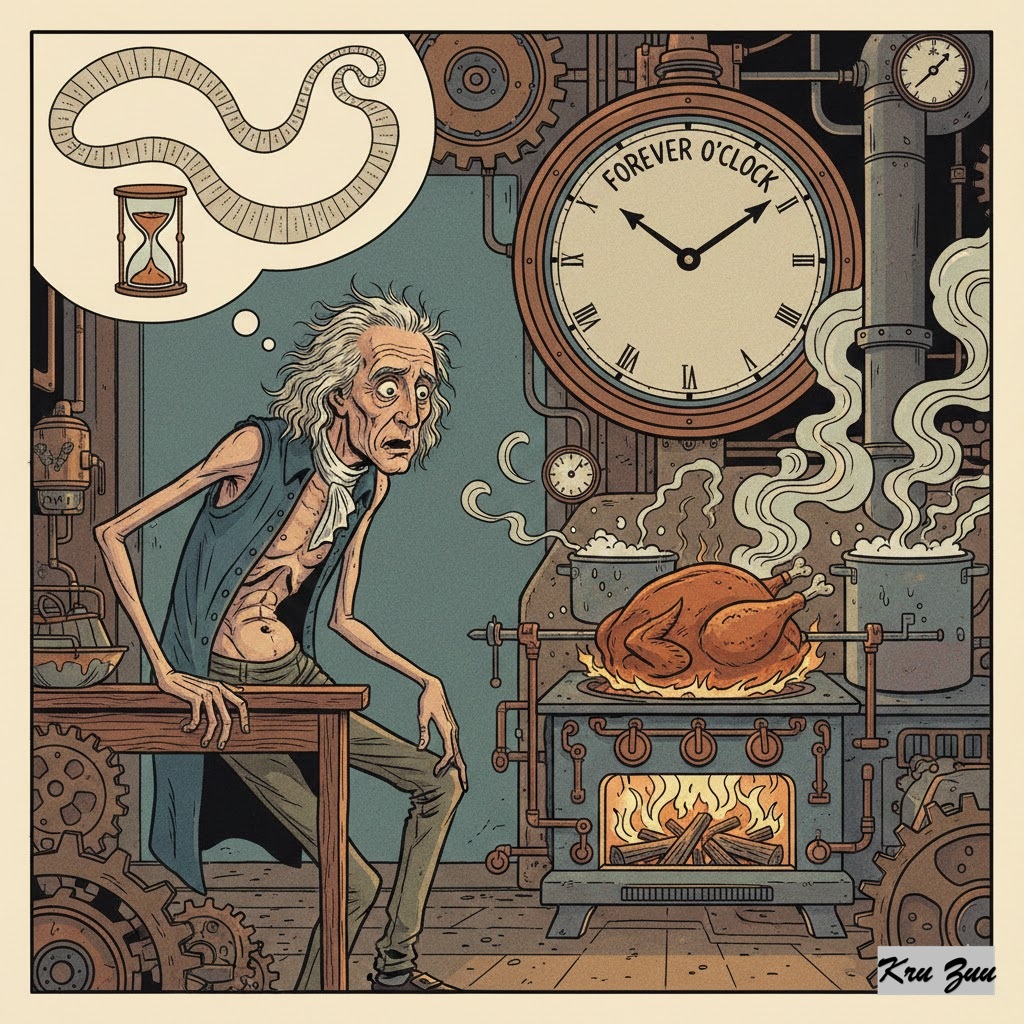
  • 🕰️ The Daily Shield: The Law of Patience

    🕰️ The Daily Shield: The Law of Patience

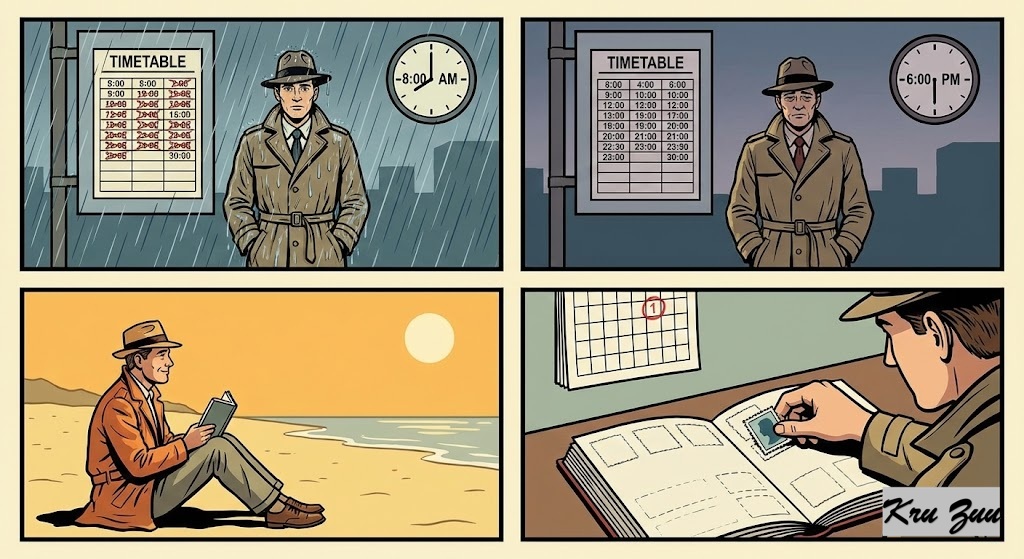
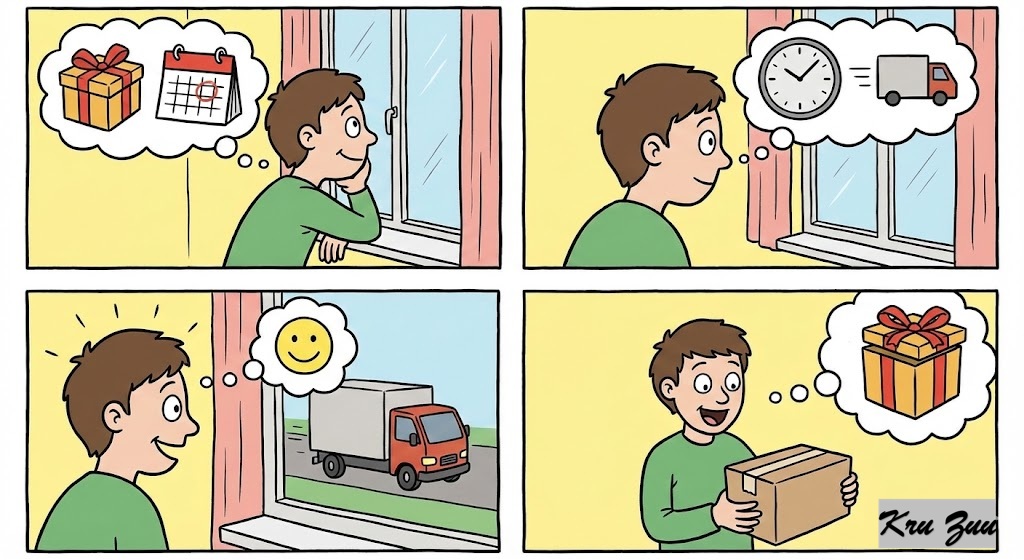
    “A watched pot never boils.”


    😈 The Villain (The Checker)

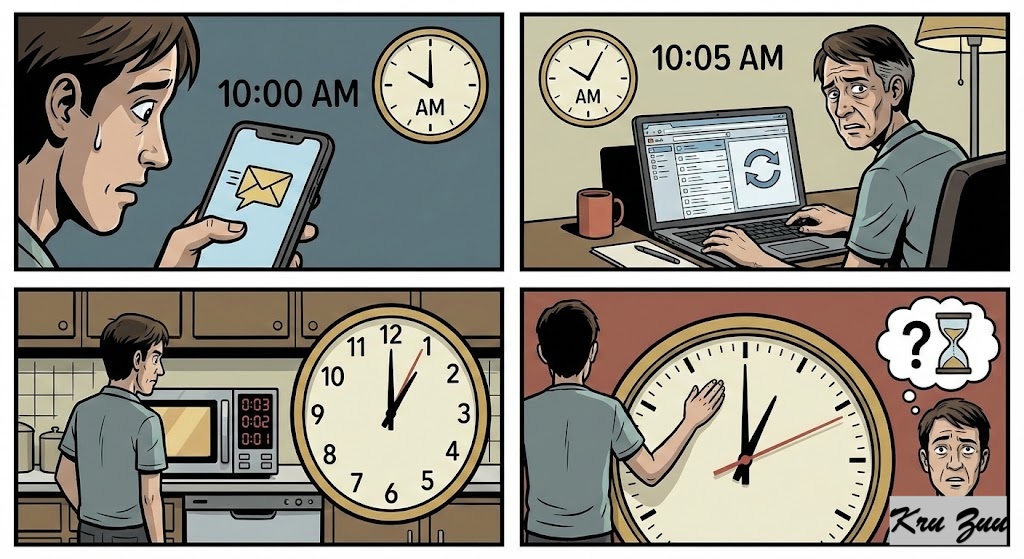
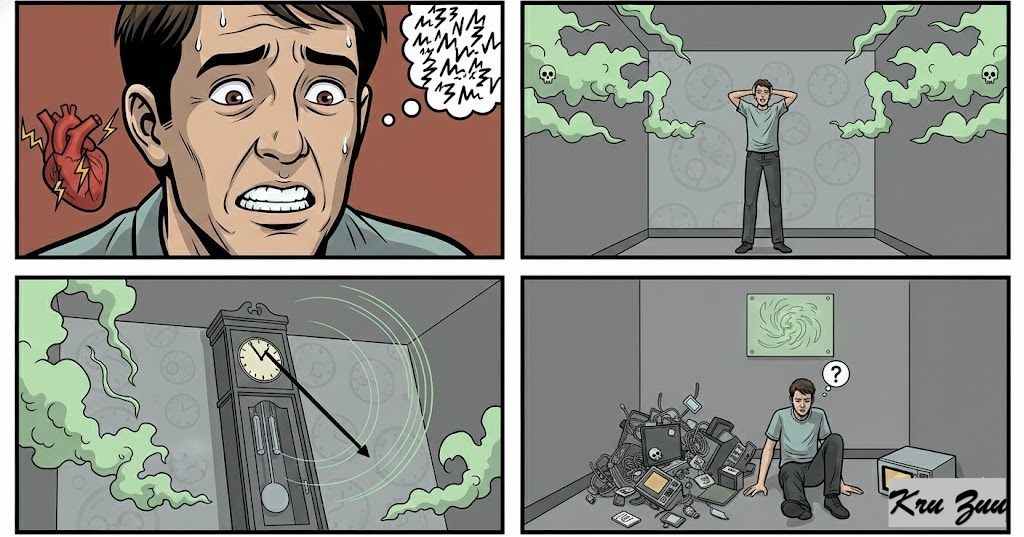
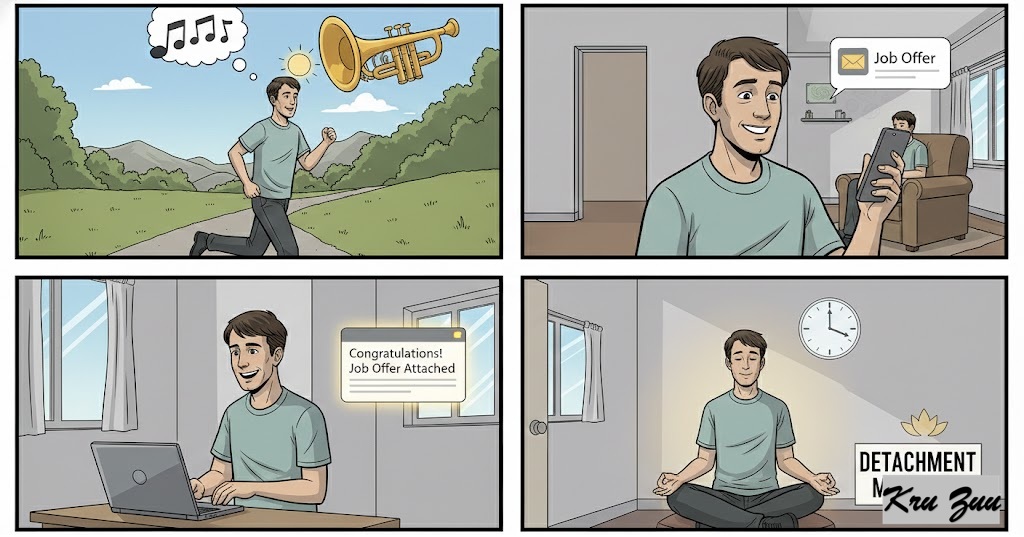
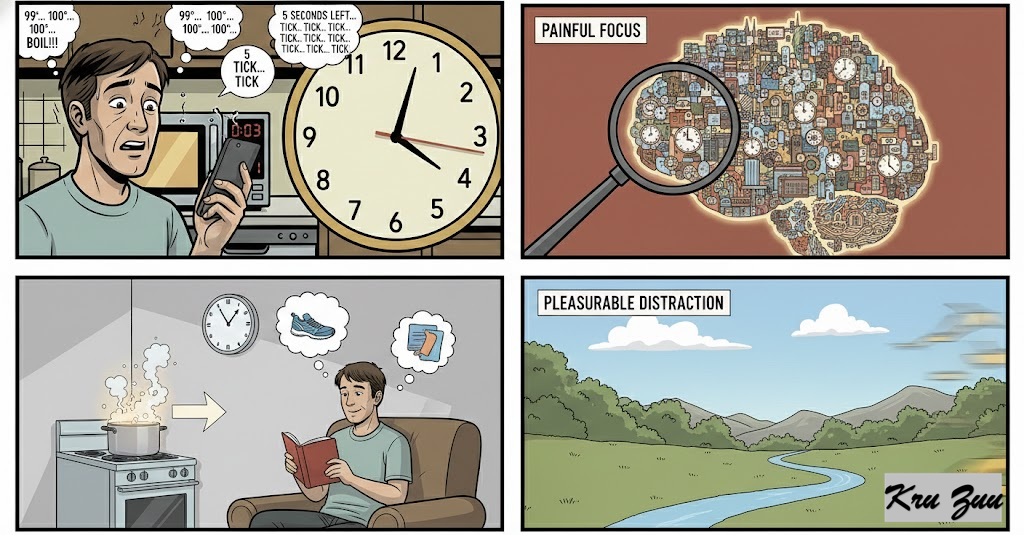
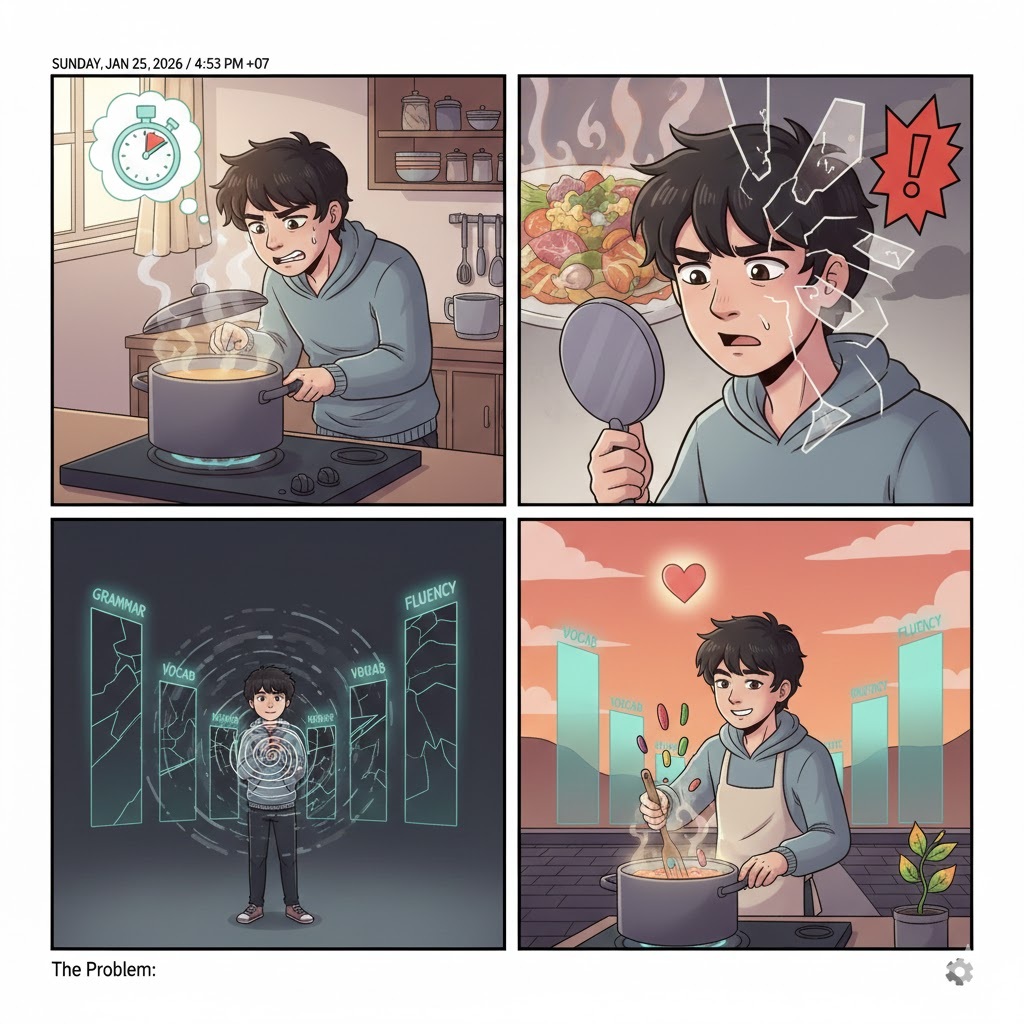
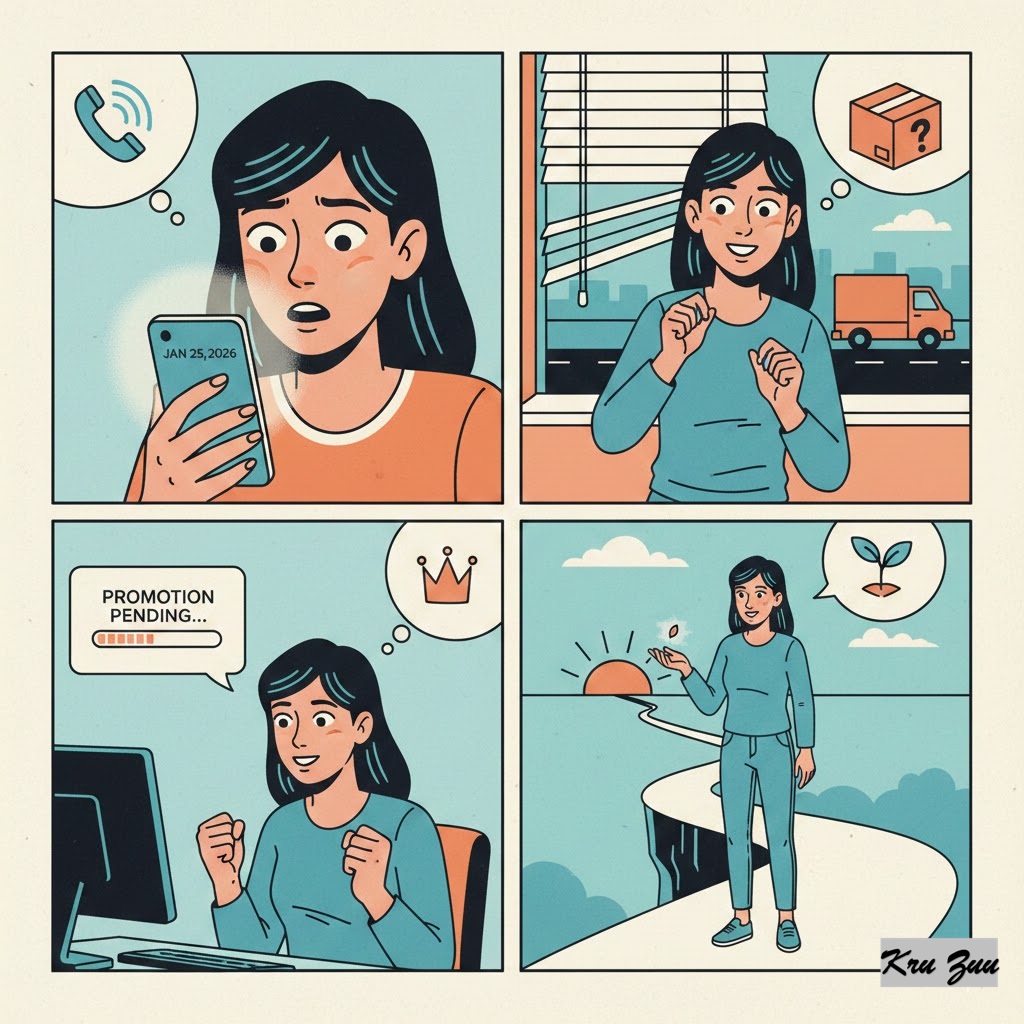
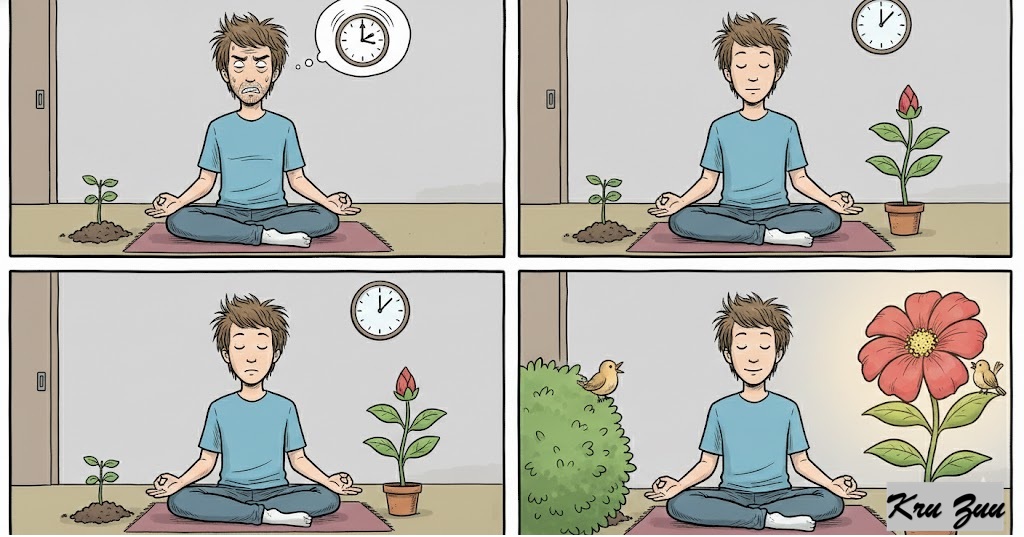
    You send an important text message. 💬 You check your phone. Nothing. You check again 10 seconds later. Still nothing. You refresh your email 50 times in one hour waiting for a job offer. You stand in front of the microwave, staring at the numbers counting down: 5… 4… 3… Why does one minute feel like one hour?

    The Result? Anxiety spikes. Stress hormones flood your body. The more you obsess over the outcome, the slower time seems to move. You are trapped in the “Waiting Room of Misery.” 😫


    😇 The Hero (The Flow Master)

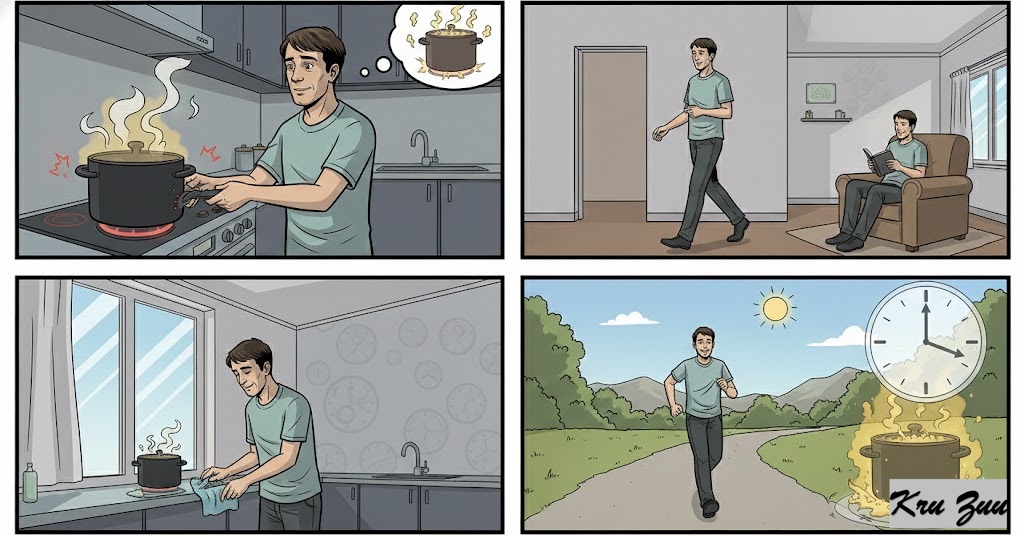
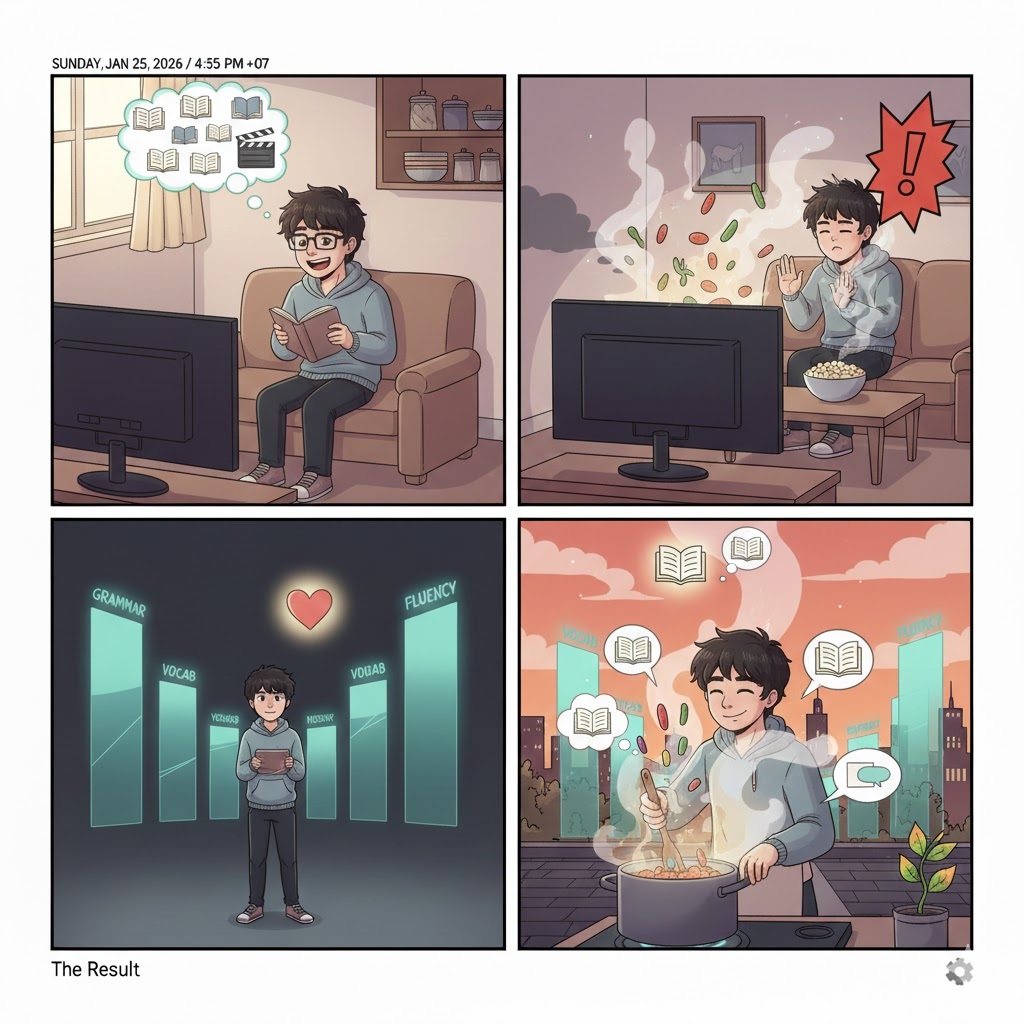
    You have a goal (the pot). You turn on the heat (do the work). Then, instead of staring at it, you walk away. You read a book. You clean the house. You go for a run. You trust the process.

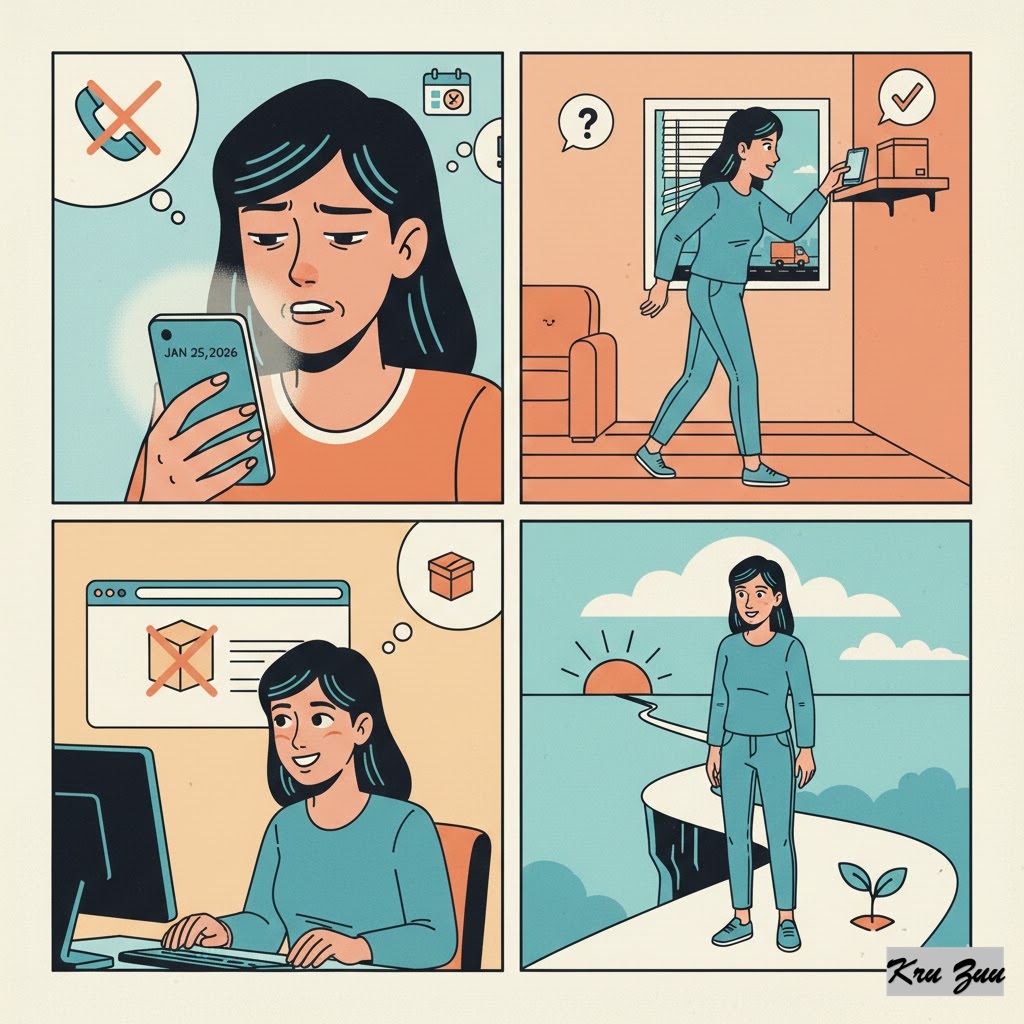
    The Result? Suddenly, you hear the whistle! 🎺 The water is boiling. The email arrives. The text pops up. Because you were busy living your life, the waiting period felt instant. You mastered the art of Detachment. 🧘‍♂️


    ⚖️ The Reality


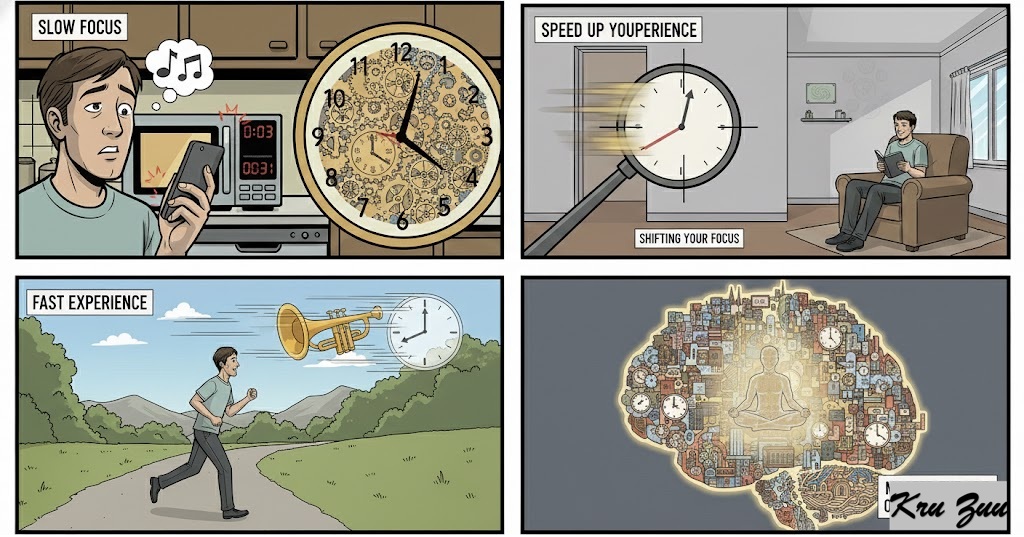
    Physics tells us that water boils at 100°C regardless of whether you look at it or not. But Psychology tells a different story. When you focus entirely on the passage of time, your brain notices every single second. It is painful. When you distract yourself, your brain skips the boring parts.


    💎 The Secret

    You cannot speed up time, but you can speed up your experience of time by shifting your focus.

    🧐 The Anatomy of the Proverb


    This is your reminder that obsession kills patience.


    Watched (Adjective): Observed closely; stared at with anxiety.


    Pot (Noun): The vessel holding your goal (cooking, results, news).


    Never Boils (Phrase): It seems like the desired result will never happen.


    Simpler Version: If you wait anxiously for something, it seems to take a very long time.


    📚 Vocabulary Vault


    Patience (Noun): The capacity to accept delay without getting angry. (A superpower!) 🦸


    Anticipation (Noun): The action of waiting for something exciting (or scary).


    Distraction (Noun): Something that prevents you from giving full attention to something else. (In this case, a good thing).


    Outcome (Noun): The final result.


    Process (Noun): A series of actions taken to achieve an end.

    📜 History: Origin and Science


    The Origin:
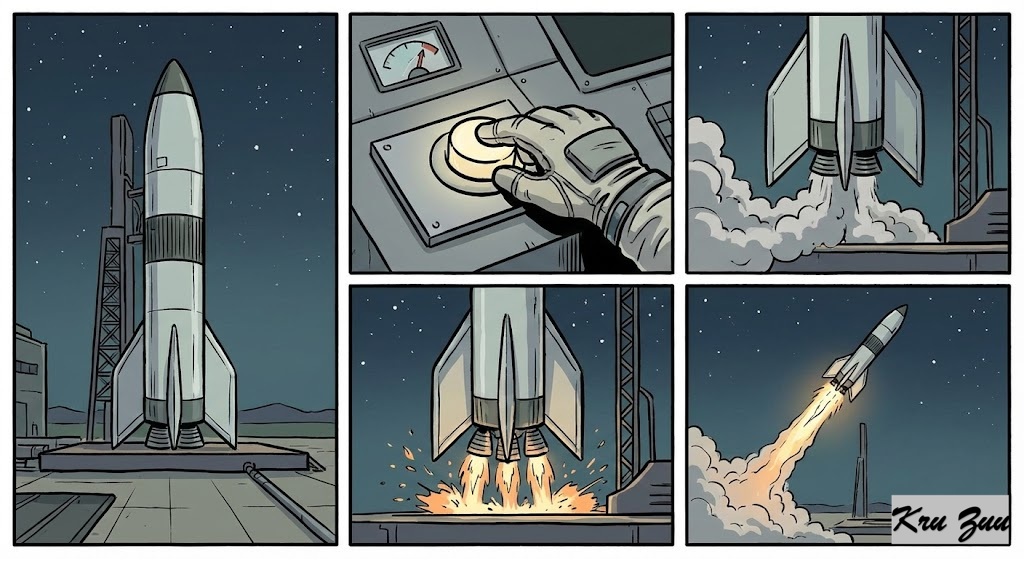
    This phrase is often attributed to Benjamin Franklin (the American inventor and writer) around 1785. He used it in a report, noting that he was so hungry that looking at the food cooking made it seem like it was taking forever!


    Global Cousins


    🇹🇷 Turkish:“Beklenen gün gelmek bilmez” (The awaited day does not know how to come) or “Sakınılan göze çöp batar” (A stick pokes the protected eye – focusing too much causes issues).


    🇯🇵 Japanese:“Isoba maware” (If you are in a hurry, go the long way around).

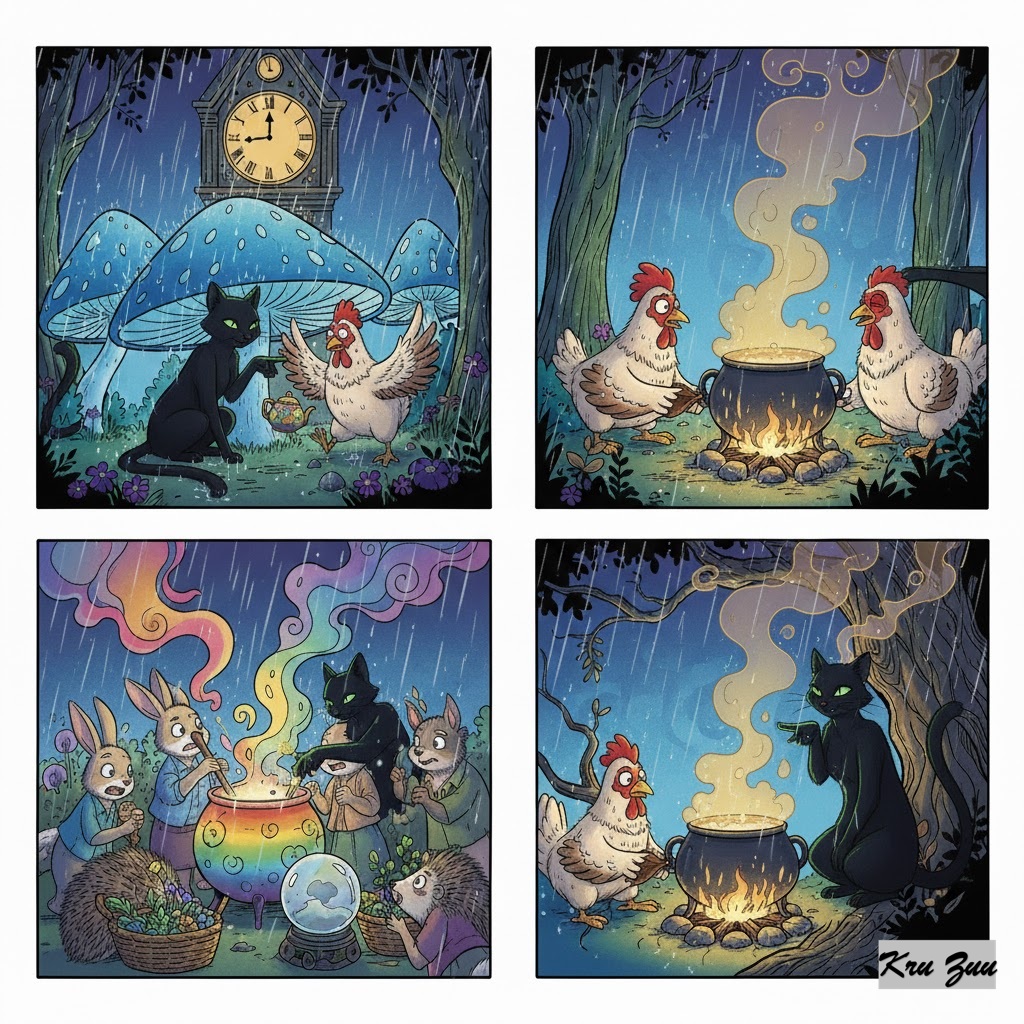
    🎭 Short Story: The Perfect Cup of Tea 🍵


    Let’s return to the magical forest to see how our friends handle the pressure of waiting.


    🌟 The Cast


    Cleo the Cat:
    😼 Elegant, impatient, demands instant results.


    Cluck the Chicken: 🐔 Nervous, fidgety, cannot sit still.


    Fred the Frog: 🐸 The Zen master of the swamp.


    The Situation: It is a cold, rainy afternoon. Cleo and Cluck decide to make the legendary “Golden Swamp Tea.” It is delicious, but the water must boil perfectly over a slow fire.


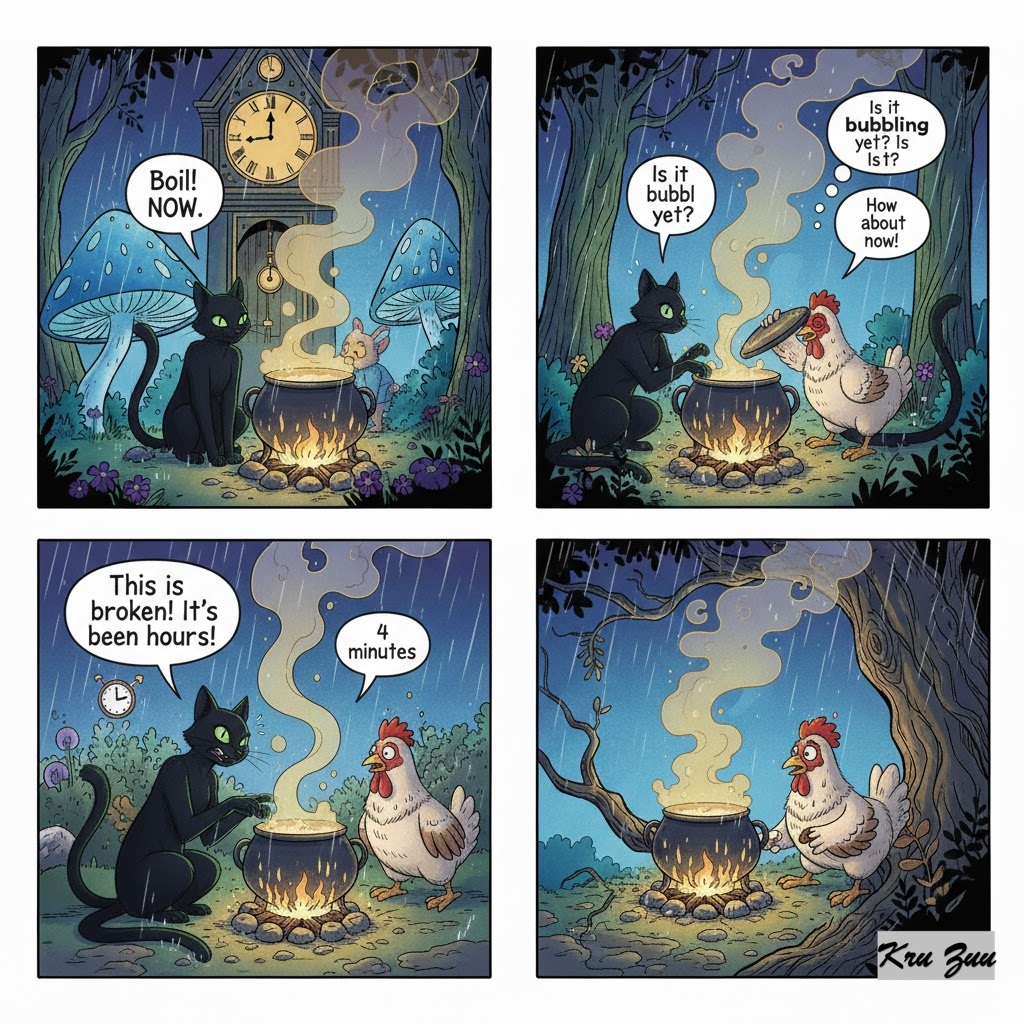
    The Conflict: They put the heavy iron pot on the fire. Cleo sits directly in front of the pot. Her tail twitches. She stares at the water with intense green eyes. “Boil,” she commands. “Boil NOW.” Cluck is even worse. Every 30 seconds, he lifts the lid to peek inside. “Is it bubbling yet? Is it? How about now?” 🐔 By lifting the lid, Cluck lets the heat escape! By staring at it, Cleo makes the 10 minutes feel like 10 years. “This is broken!” Cleo yells. “It’s been hours!” (It had been 4 minutes).


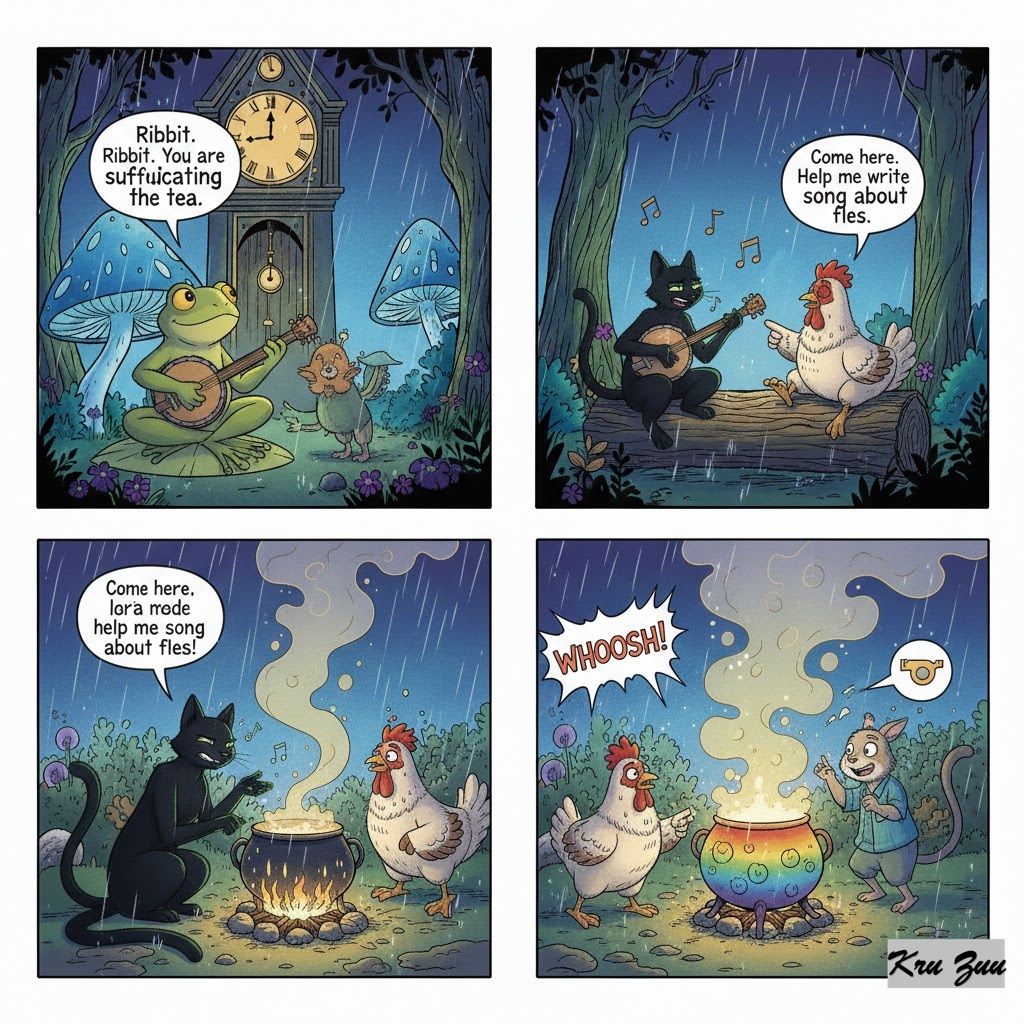
    The Resolution: Fred the Frog hops into the kitchen, carrying a banjo. He sees them stressed and staring at the silent water. “Ribbit,” Fred croaks. “You are suffocating the tea.” Fred starts to play a happy song on his banjo. 🎶 “Come here,” he says. “Help me write a song about flies.” Reluctantly, Cleo turns away from the stove to correct Fred’s lyrics. Cluck starts dancing to the music. They laugh. They argue about rhymes. They forget the kitchen exists. WHOOSH! 💨 Suddenly, steam whistles from the pot! The water is boiling vigorously.


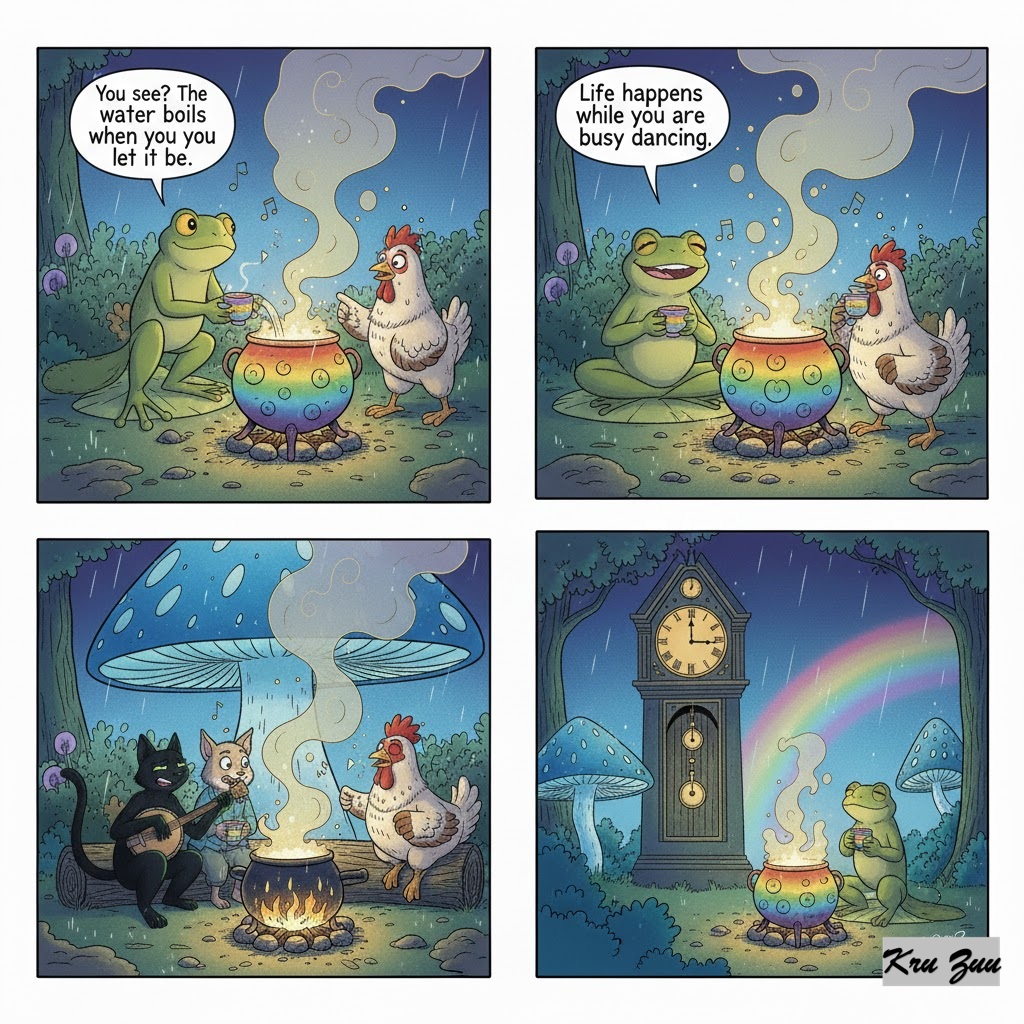
    The Moral: Fred pours the tea. “You see?” he smiles. “The water boils when you let it be. Life happens while you are busy dancing.”

    🎓 Lesson for English Learners


    Don’t obsess over your level.


    Situation: You study English every day. You constantly ask yourself: “Am I fluent yet? Why is my accent still bad?”


    The Problem: You are watching the pot. You are stressing over the result instead of enjoying the process.


    The Shift: Stop testing yourself every day. Read a book you enjoy. Watch a movie. Talk to friends. Forget about “studying” and just “use” the language.


    The Result: One day, you will realize you understood a whole movie without subtitles. The pot boiled while you weren’t looking! 🎬


    💬 Your Turn: The Distraction Challenge 🚀


    Is there something you are waiting for right now? (A message, a package, a promotion, a life change?)


    The Challenge: Stop checking. Put your phone in another room. Close the tracking tab.

    The Action: Pick a task that takes 30 minutes (Read a chapter, cook a meal, go for a walk).

    Do NOT check the status until the task is done.

    Comment Below: 👇 What is the “Pot” you are watching too closely today? Tell us your strategy to stop staring at it!

    By Zubeyir YURTKURAN

    https://www.facebook.com/BrainBattleground/

    https://www.facebook.com/zubeyr.yurtkuran/

    https://www.instagram.com/zubeyryurtkuran/
    https://www.youtube.com/@BrainBattleground-b3p

    https://www.instagram.com/brainbattleground/

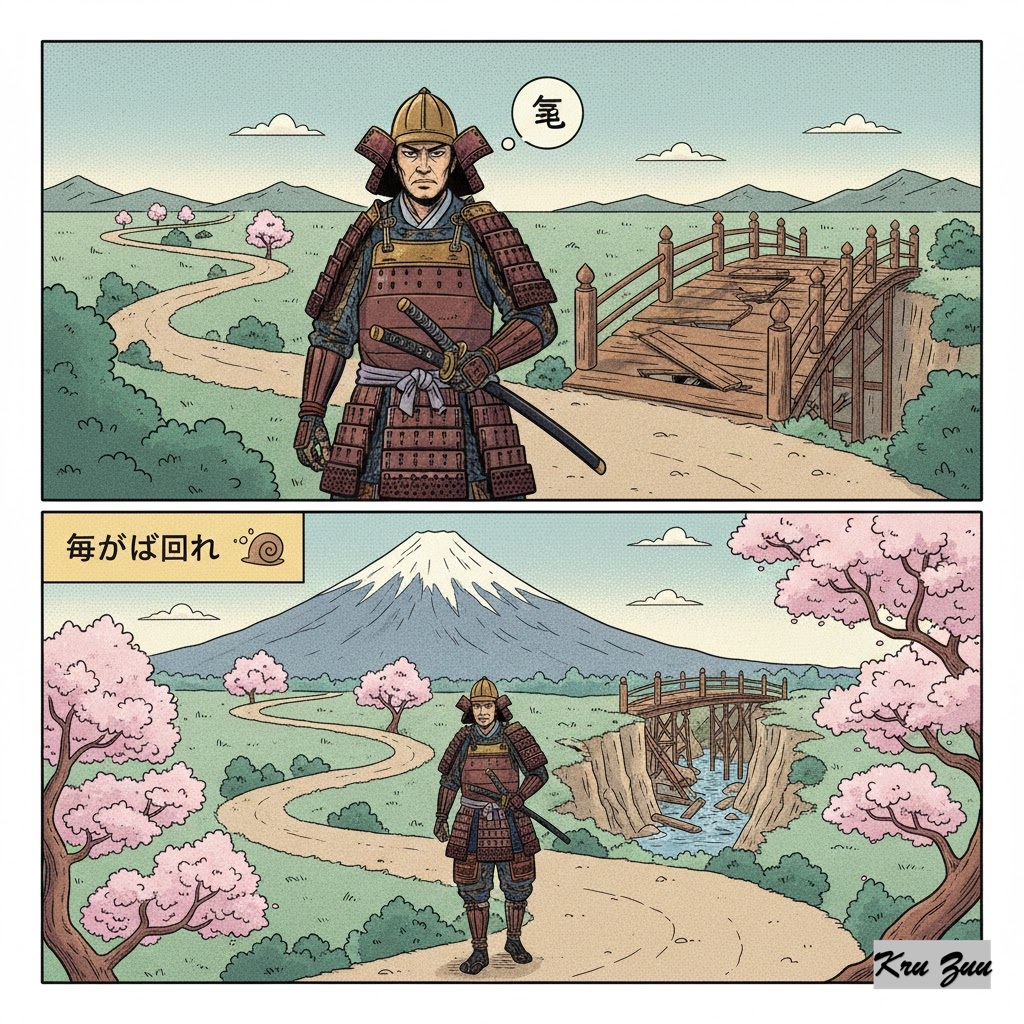
  • ⏳ The Daily Shield: The Law of Patience -1

    ⏳ The Daily Shield: The Law of Patience -1

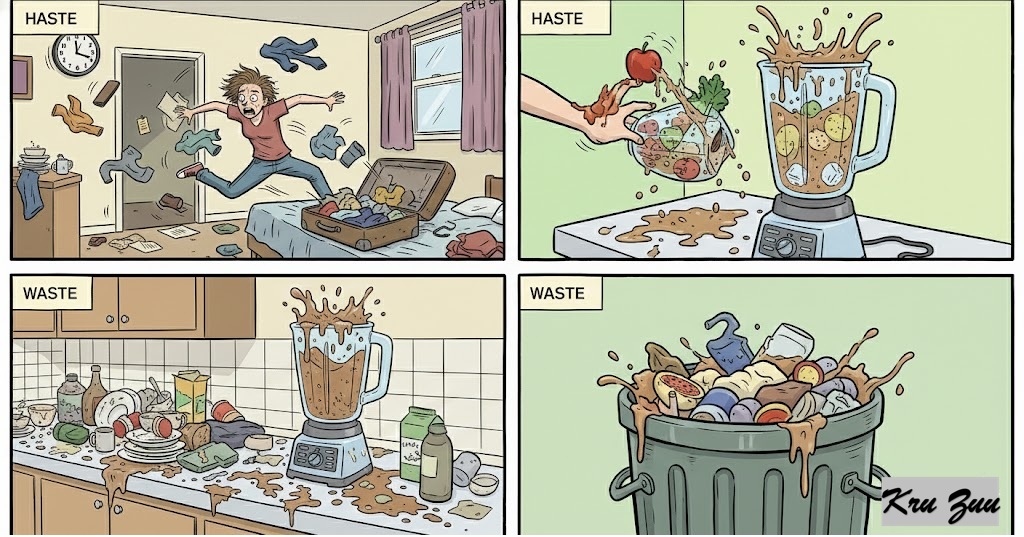
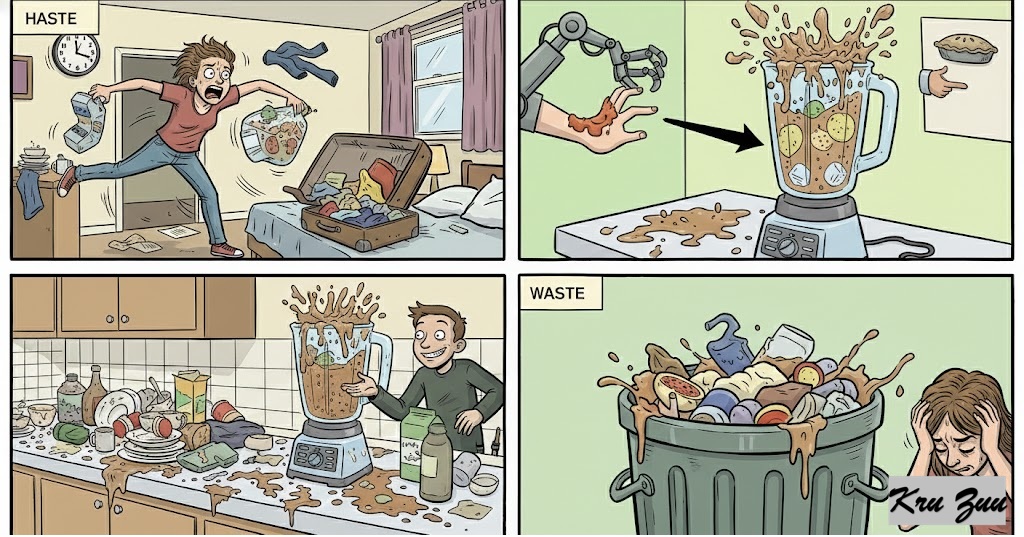
    “Haste makes waste.”


    😈 The Villain (The Speed Demon)


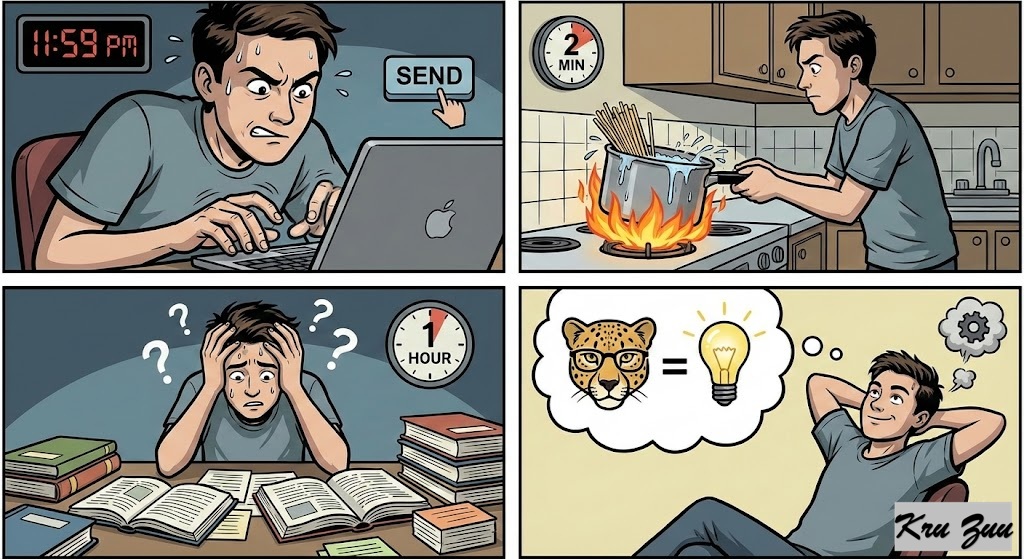
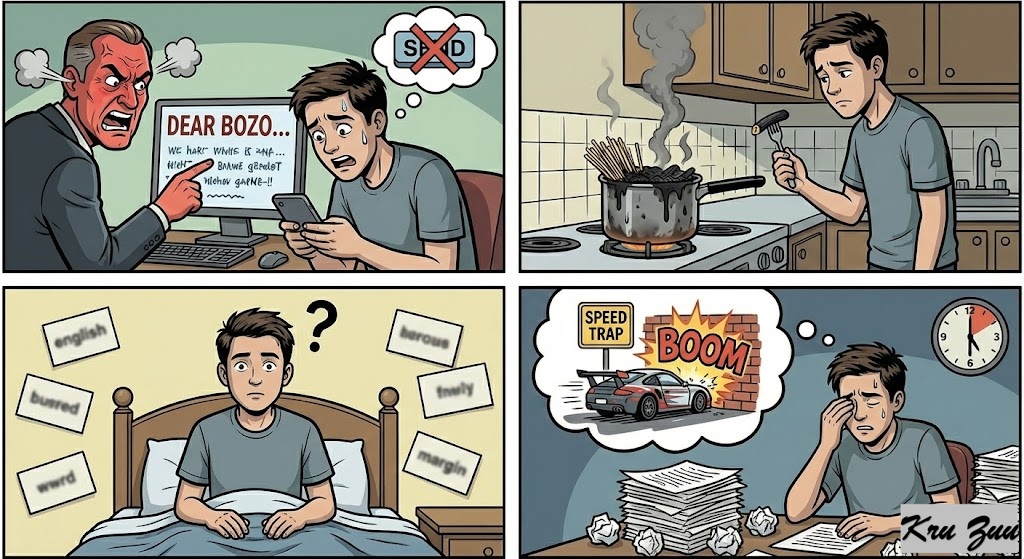
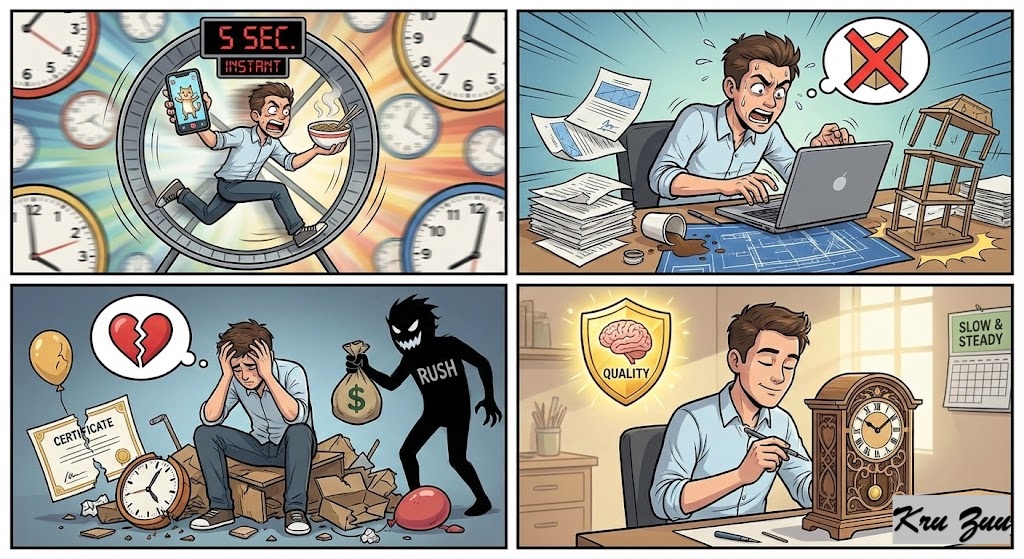
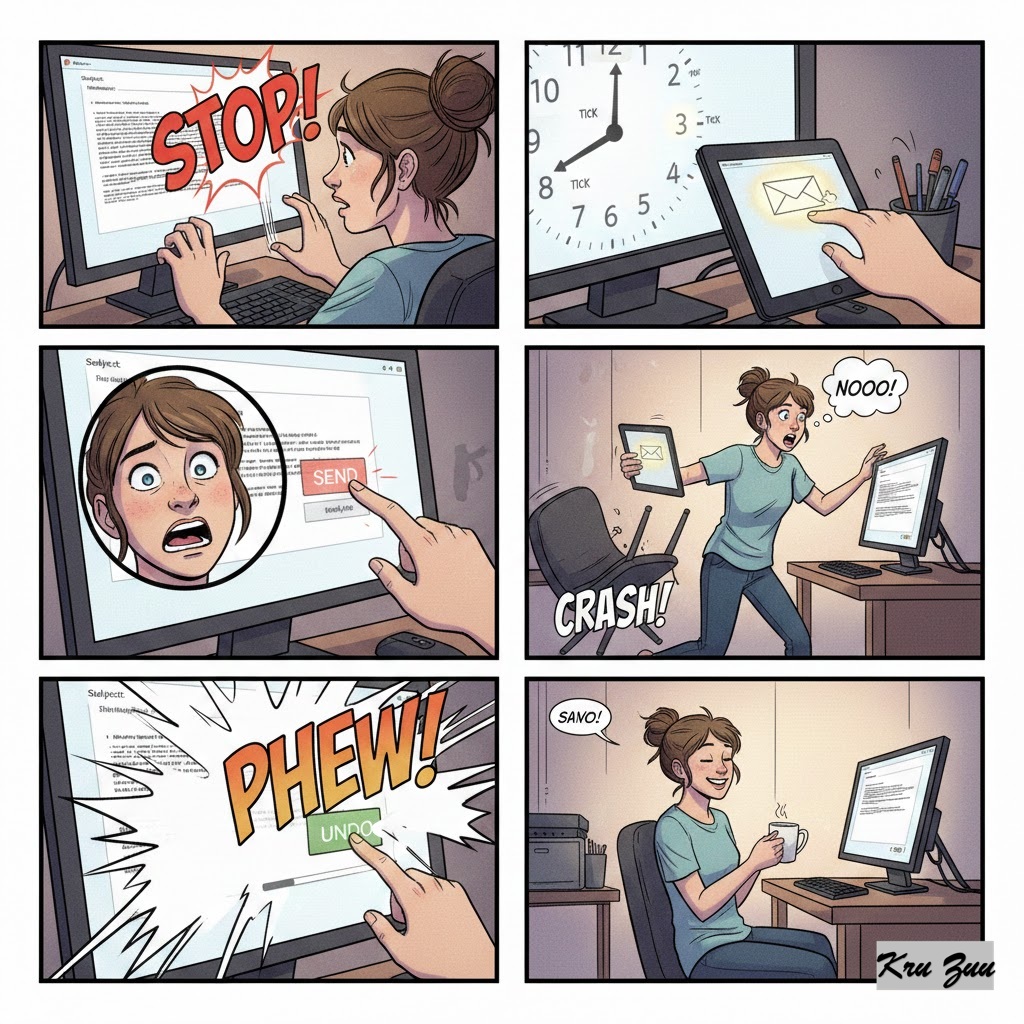
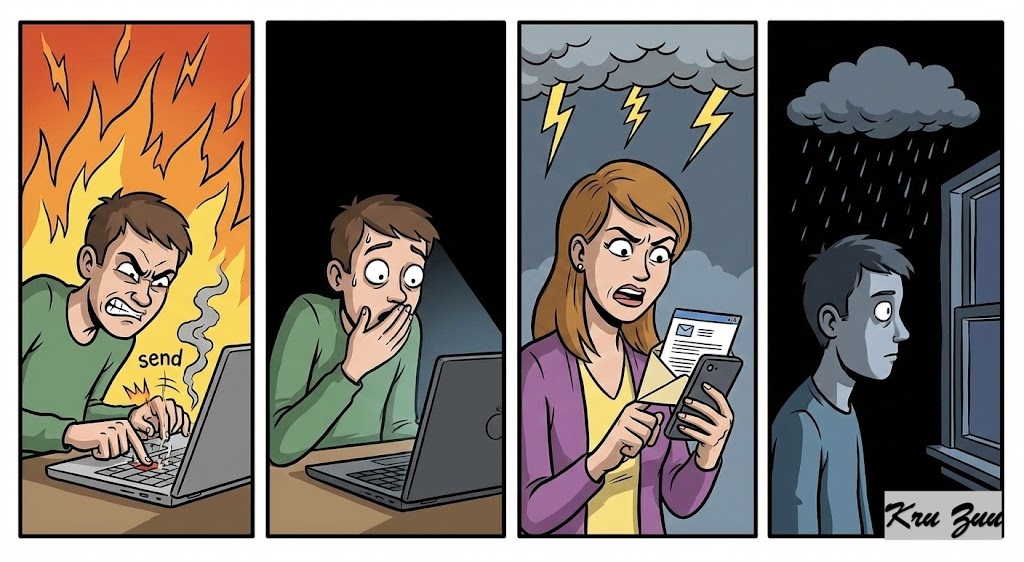
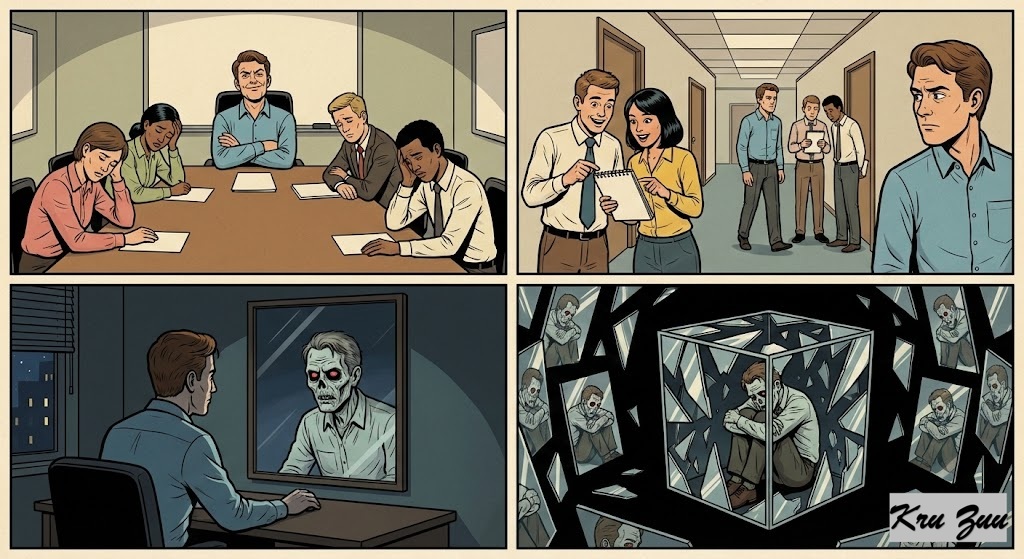
    You have a goal. You want it now. You type the email without proofreading and hit send. You cook the pasta on maximum heat to save 2 minutes. You try to learn 100 English words in one hour. You convince yourself that “Fast” equals “Smart.”

    The Result? The email has a typo that insults your boss. The pasta is burnt on the outside and crunchy on the inside. You remember zero vocabulary words the next day. You have to fix everything. You actually spend double the time correcting your mistakes. You are a victim of the “Speed Trap.” 🏎️💥


    😇 The Hero (The Architect)


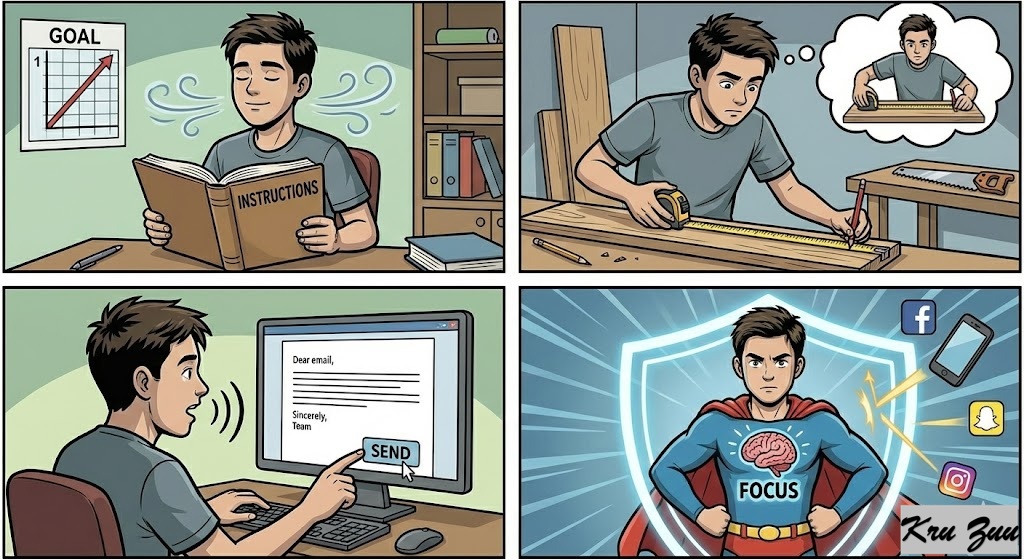
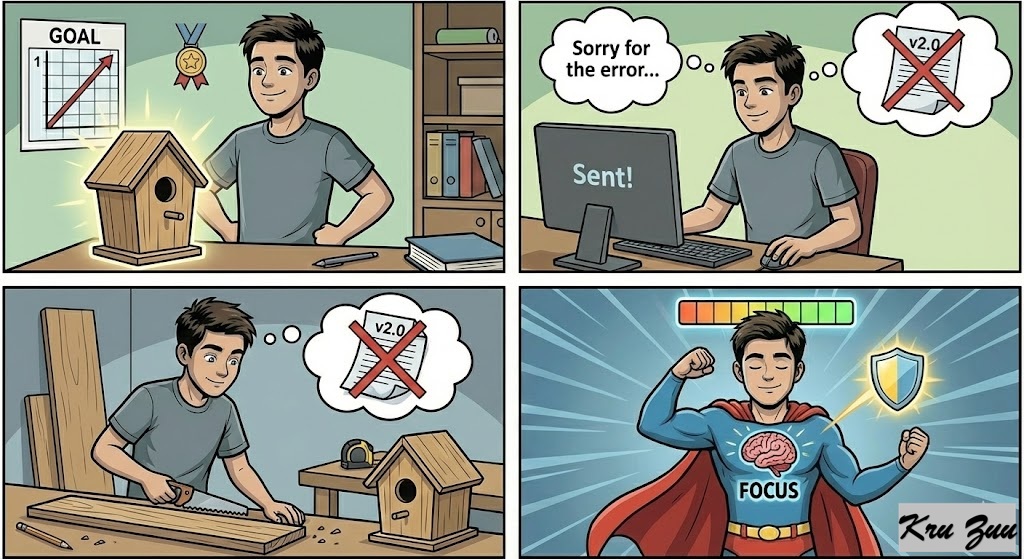
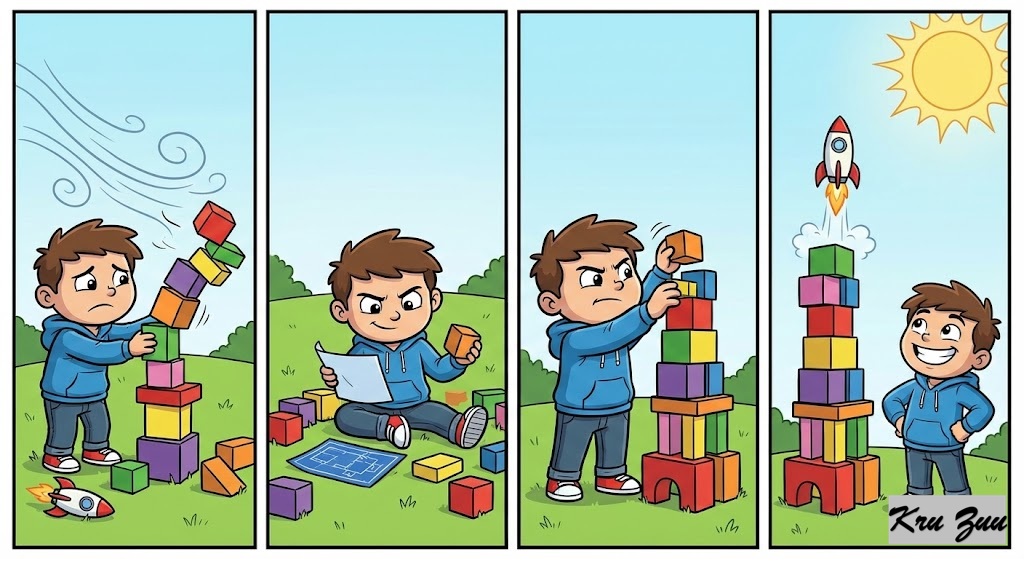
    You have a goal. You take a deep breath. You read the instructions first. You measure twice, cut once. You write the email, pause, read it aloud, and then click send. You treat focus as your superpower.

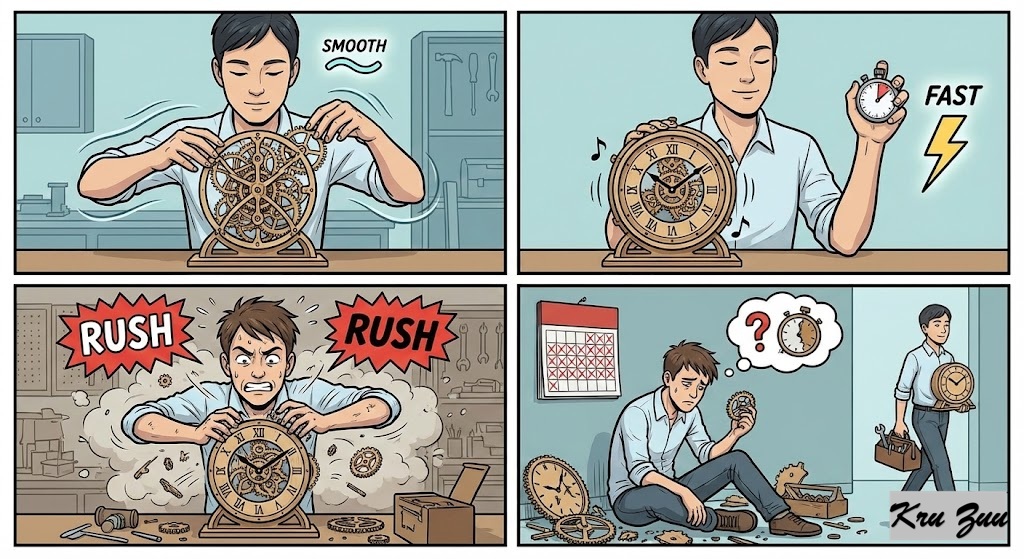
    The Result? The work is flawless. There are no apologies to make. No “Version 2.0” is needed. You finish with energy to spare because you didn’t panic. You are slow, but you are smooth. 🛡️


    ⚖️ The Reality


    Speed is a liar. We live in a world of 5-second TikToks and instant noodles. We think if we aren’t running, we are losing. But in reality, rushing is the most expensive way to work. It costs you accuracy, quality, and dignity.


    💎 The Secret

    Slow is smooth, and smooth is fast. If you don’t have time to do it right, when will you have time to do it over?

    🧐 The Anatomy of the Proverb


    This is your shield against sloppy mistakes.


    Haste (Noun): Excessive speed or urgency of movement or action; hurry. (The bad kind of fast). 🌪️


    Makes (Verb): Causes to happen.


    Waste (Noun): Material that is not wanted; the act of using something carelessly. 🗑️


    Simpler Version: If you rush, you will ruin it.


    📚 Vocabulary Vault


    Efficient (Adjective): Achieving maximum productivity with minimum wasted effort. (The goal!) 🎯


    Sloppy (Adjective): Careless and unsystematic; messy.


    Thorough (Adjective): Complete with regard to every detail; not superficial.


    Correction (Noun): The action of setting right what is wrong.


    Patience (Noun): The capacity to accept or tolerate delay without getting angry. 🧘


    🧠 Grammar Focus: The Rhyme & Cause


    Why do we remember this phrase? Because it rhymes!


    Haste / Waste: The sound /eɪst/ connects the cause (Haste) directly to the bad result (Waste).


    Cause and Effect


    Subject: Haste


    Verb: Makes


    Object: Waste


    Note: It treats “Haste” as an uncountable abstract noun (singular).

    📜 History: Origin and Spread


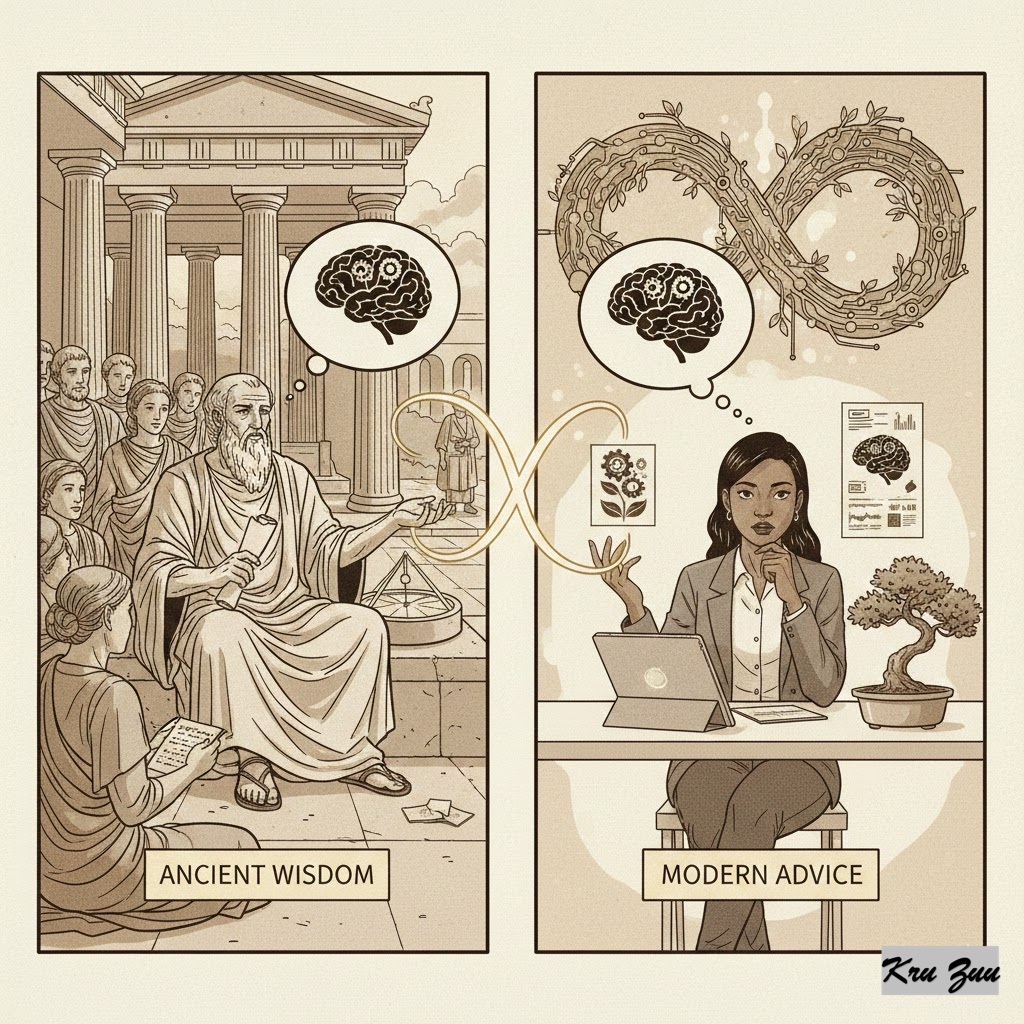
    This isn’t just modern advice; it is ancient wisdom.


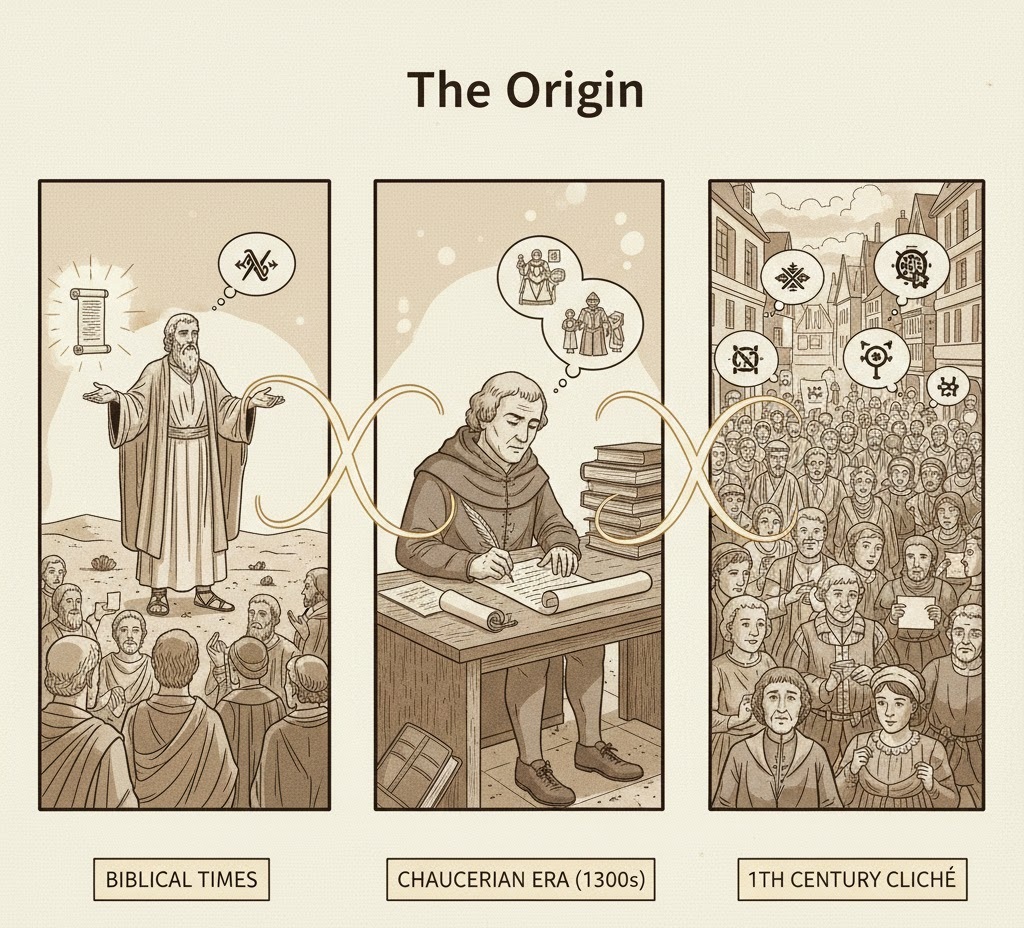
    The Origin: This concept appears in the Bible and the works of Chaucer (1300s), but became a “cliché” in the 16th century.


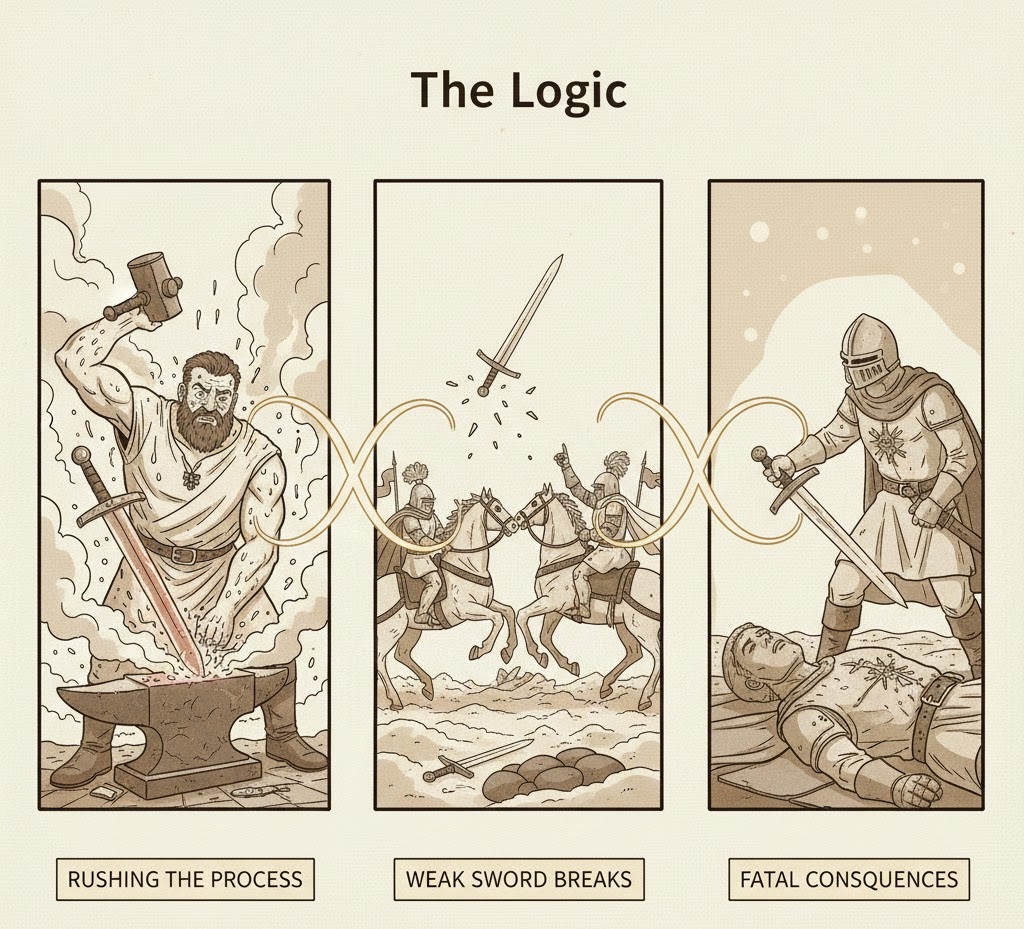
    The Logic: In the old days, if a blacksmith rushed making a sword, the sword would break in battle. Rushing could literally kill you.


    Global Cousins


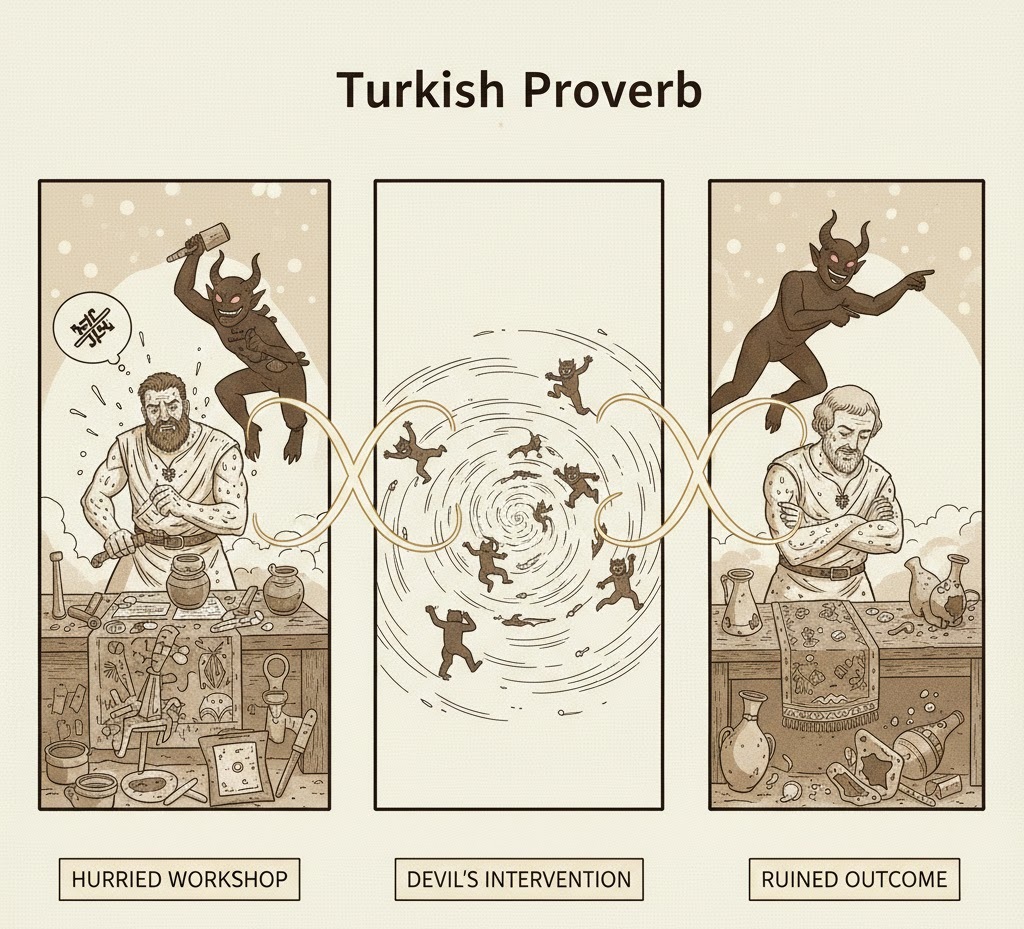
    🇹🇷 Turkish:“Acele işe şeytan karışır.” (The devil mixes in with hurried work.) — A powerful warning!


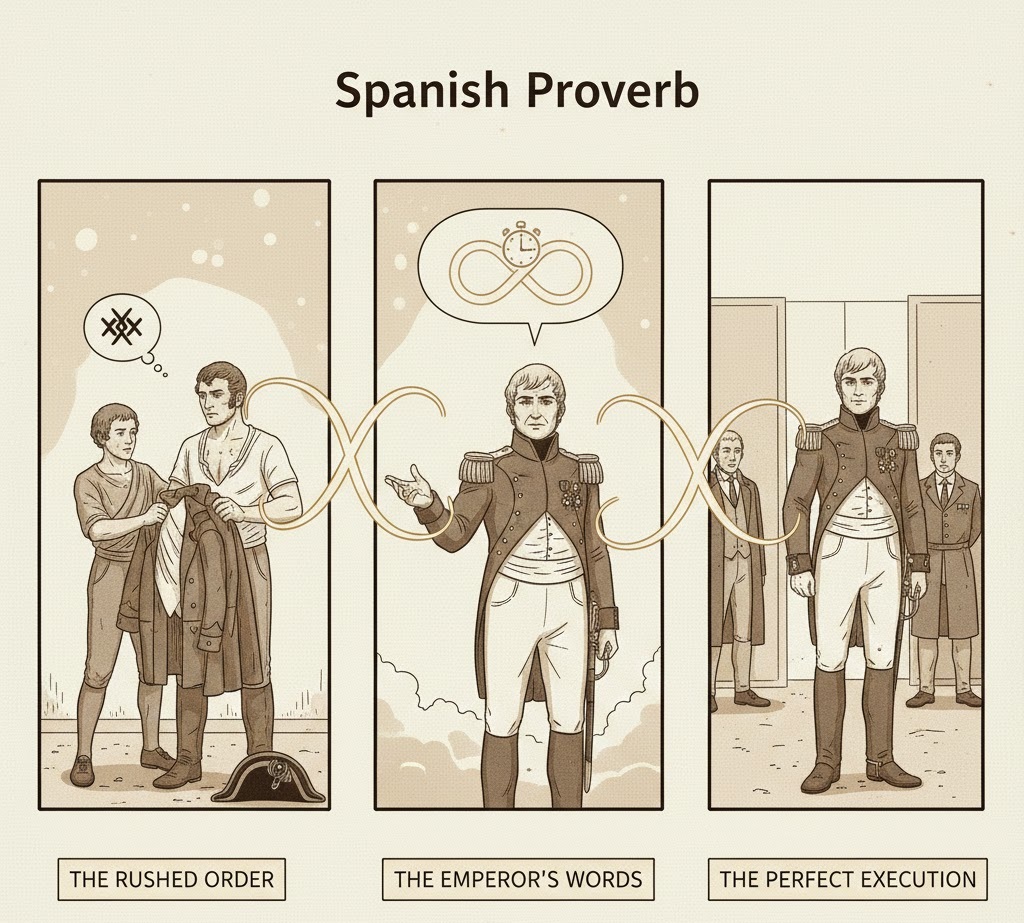
    🇪🇸 Spanish:“Vísteme despacio que tengo prisa.” (Dress me slowly, for I am in a rush.) — Attributed to Napoleon; implying that because time is short, we cannot afford a mistake.


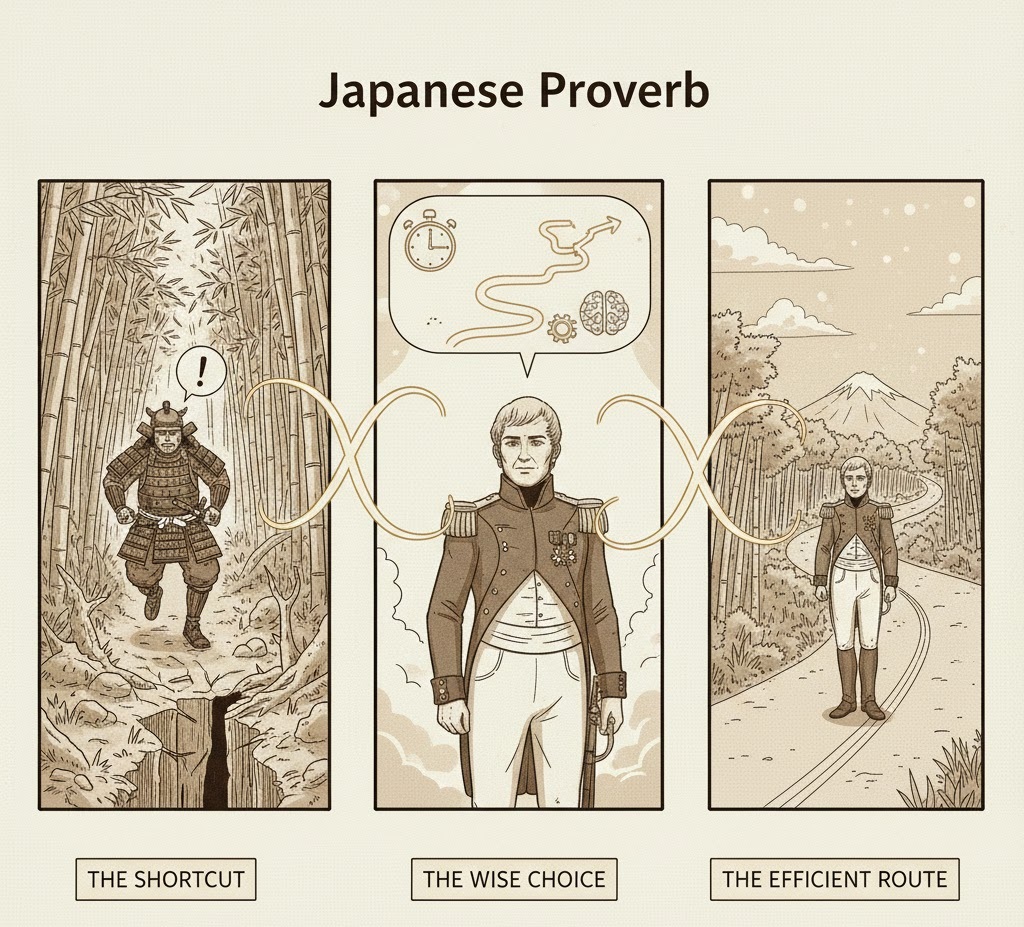
    🇯🇵 Japanese:“Isogaba maware.” (If you are in a rush, go the long way around.)

    🎯 Impact on Life: The Pros & Cons


    ✅ The Pros (The Masterpiece)


    Reputation: People trust you because your work is always correct.


    Calm: You avoid the adrenaline spike of “panic fixing.”


    ❌ The Cons (The Perfectionism Trap)


    Analysis Paralysis:
    Don’t be so slow that you never finish. The goal is “No Mistakes,” not “Forever.”

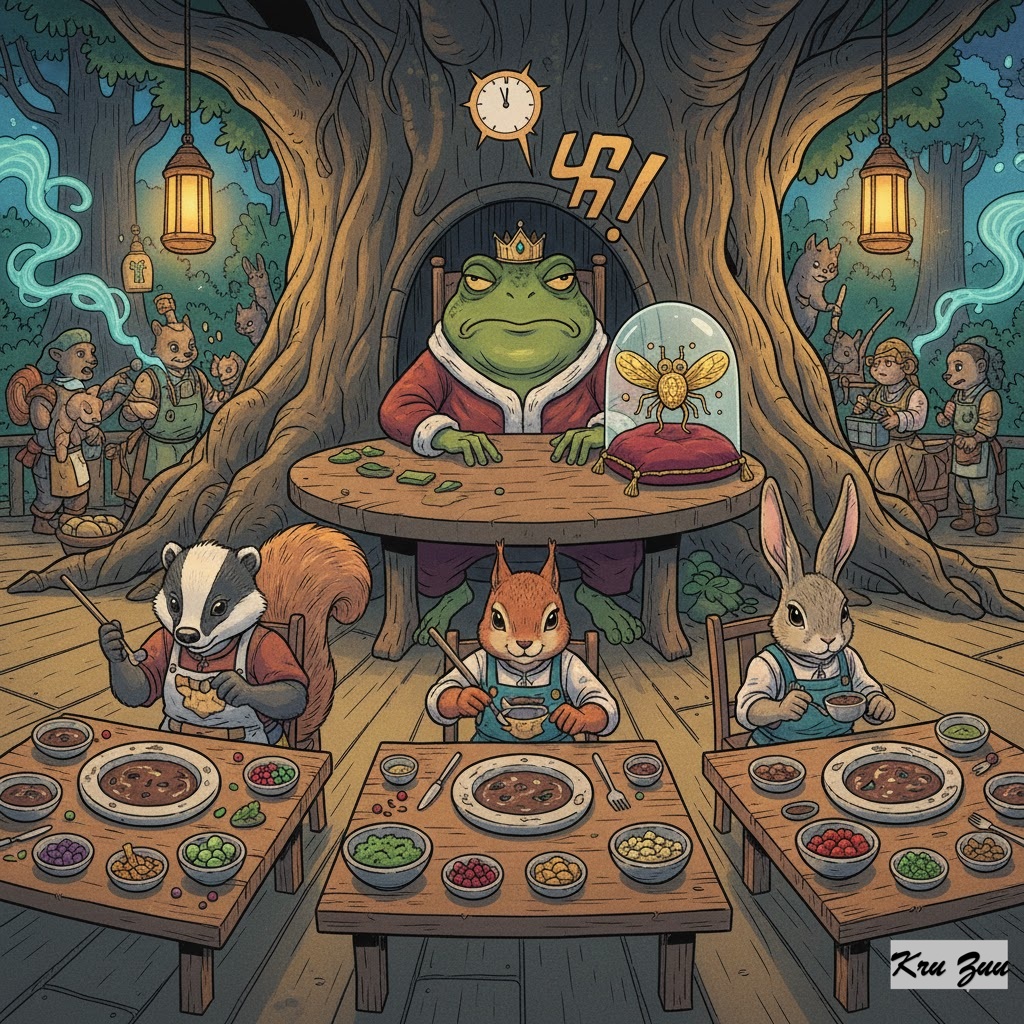
    🎭 Short Story: The Forest Chef Competition


    Let’s visit the Great Forest Kitchen.


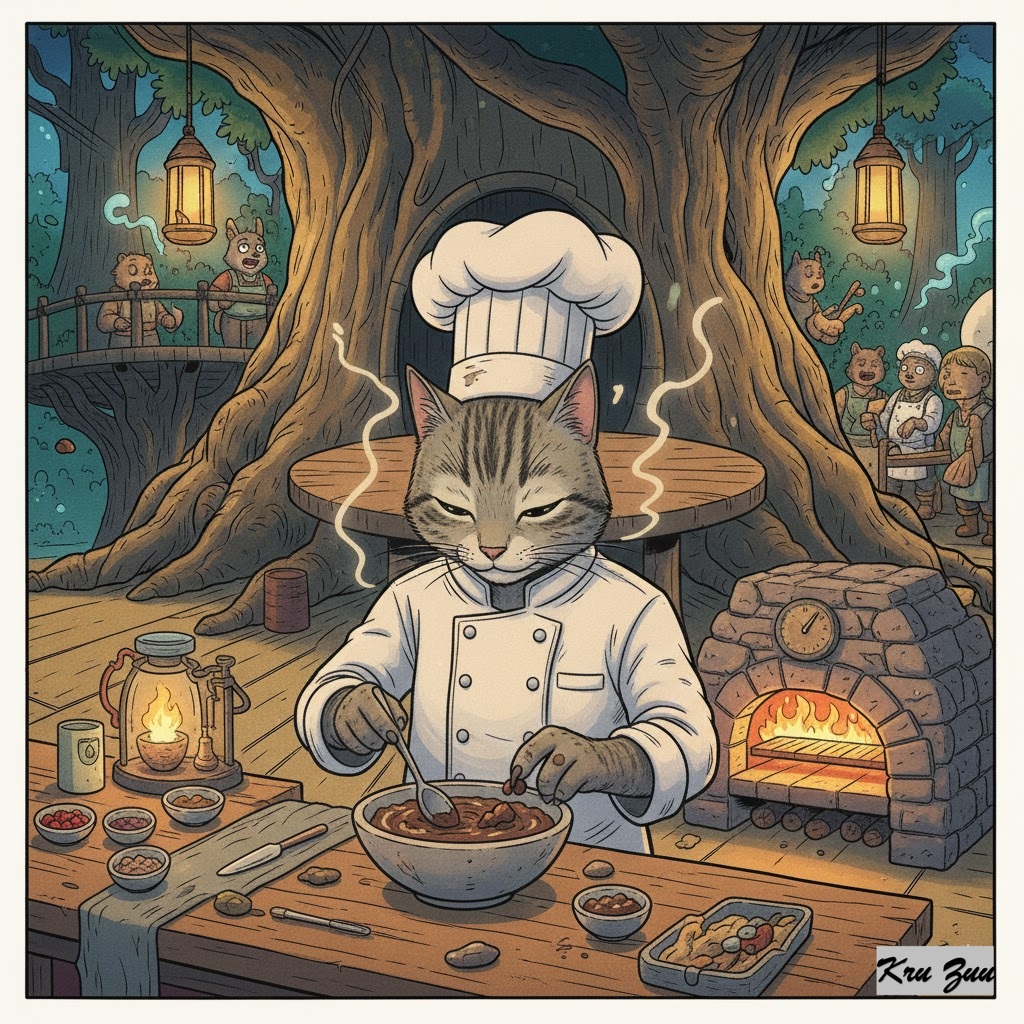
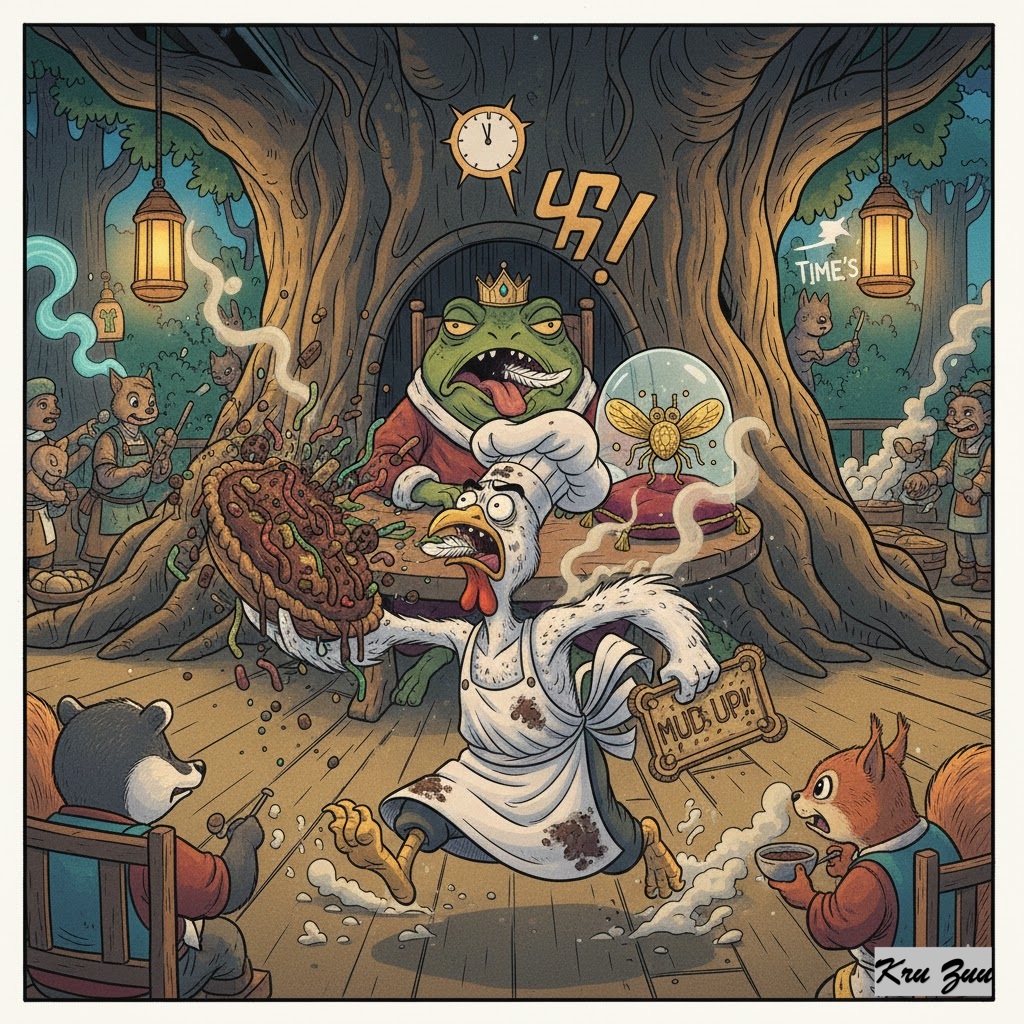
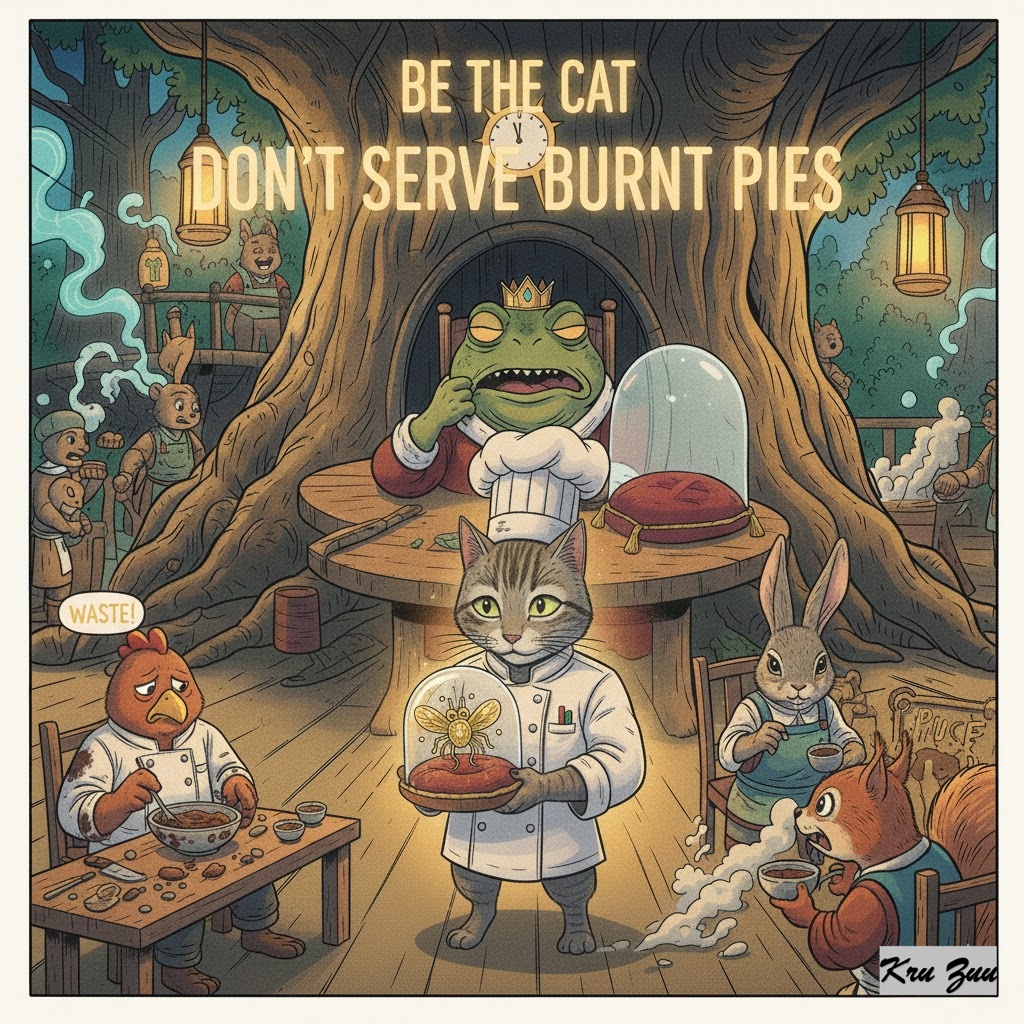
    🌟 The Setup: There is a contest to bake the perfect Mud Pie. The prize is a Golden Fly. The Judge is Mr. Frog 🐸. He is hungry and impatient. “I want my pie in 10 minutes!” he croaks.


    The Competitors


    Chico the Chicken 🐔 (The Rusher)


    Luna the Cat 🐱 (The Planner)


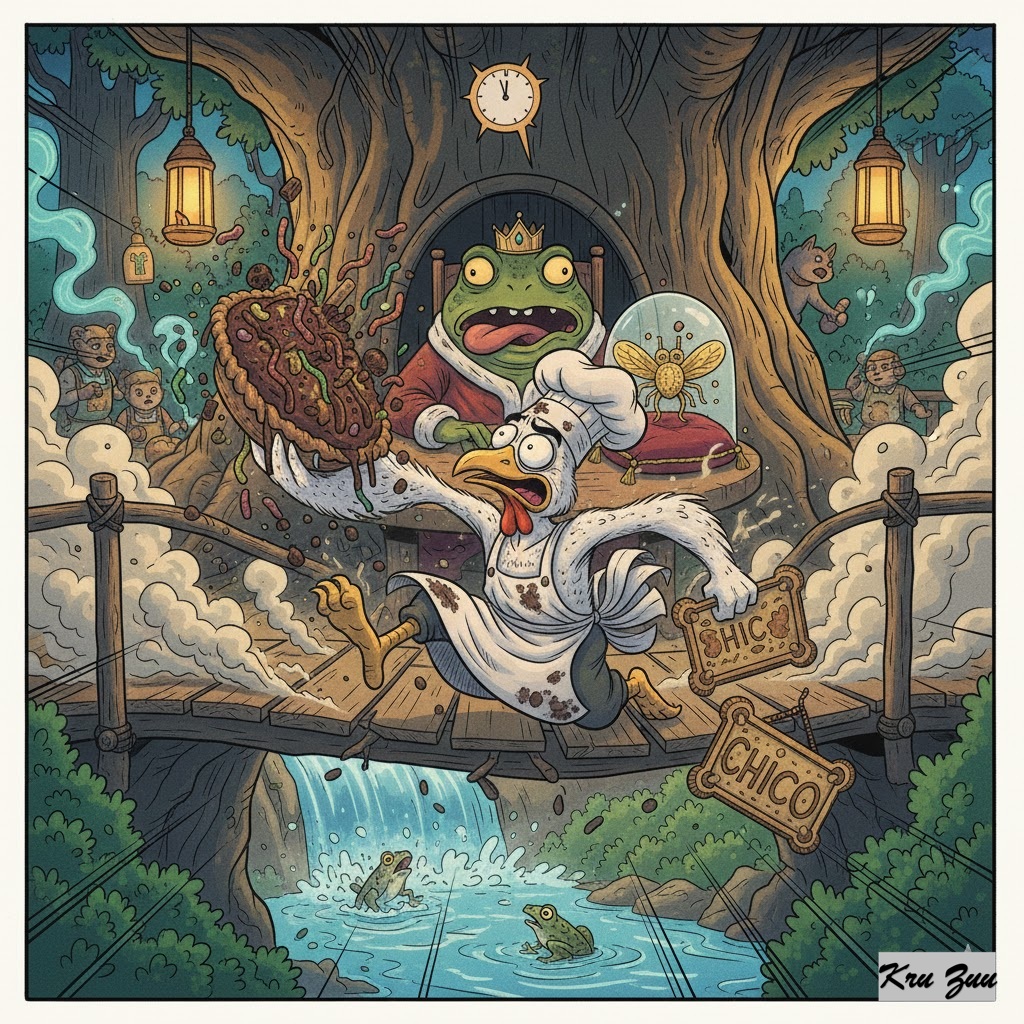
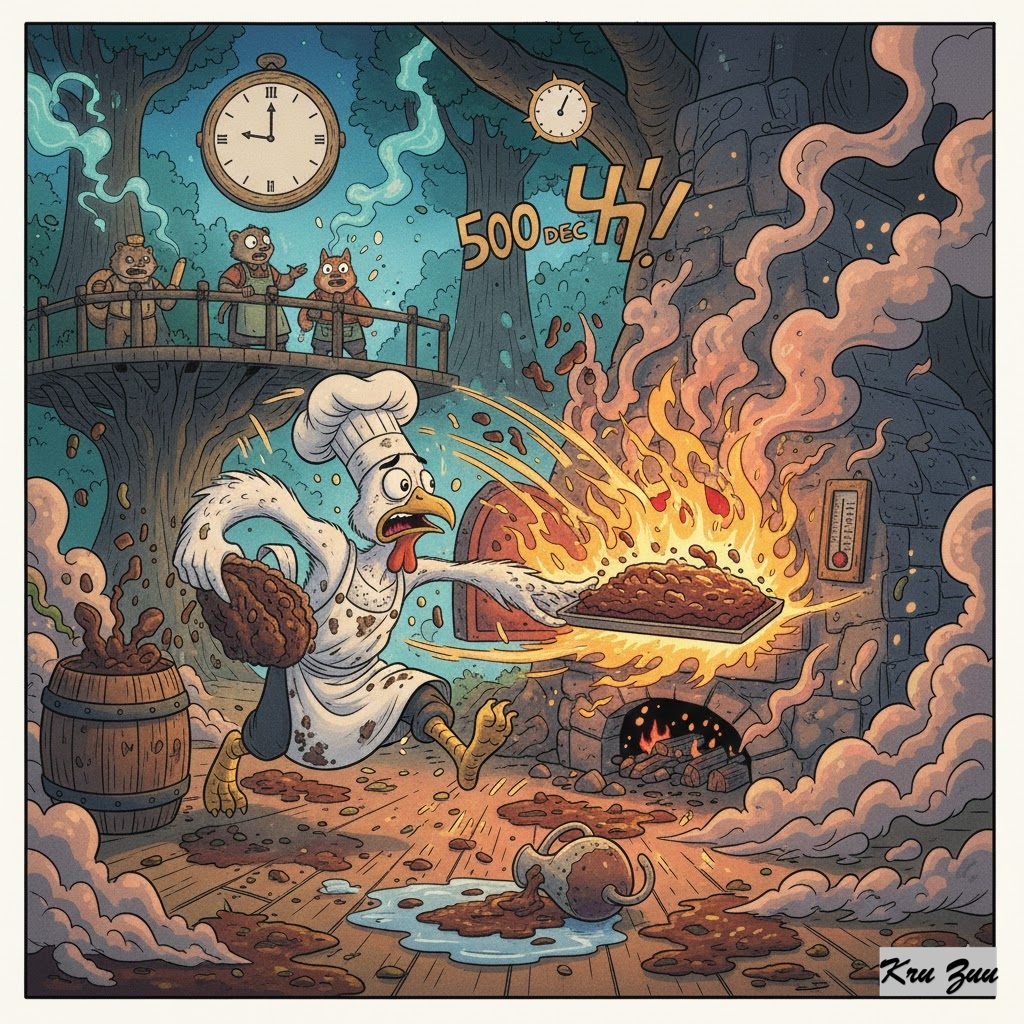
    The Conflict: Chico the Chicken panics. “10 minutes?! I must fly!” He throws the mud into the bowl. He doesn’t measure the water. He turns the oven to 500 degrees to cook it faster. He flaps his wings to fan the flames. “Faster! Faster!” he clucks.


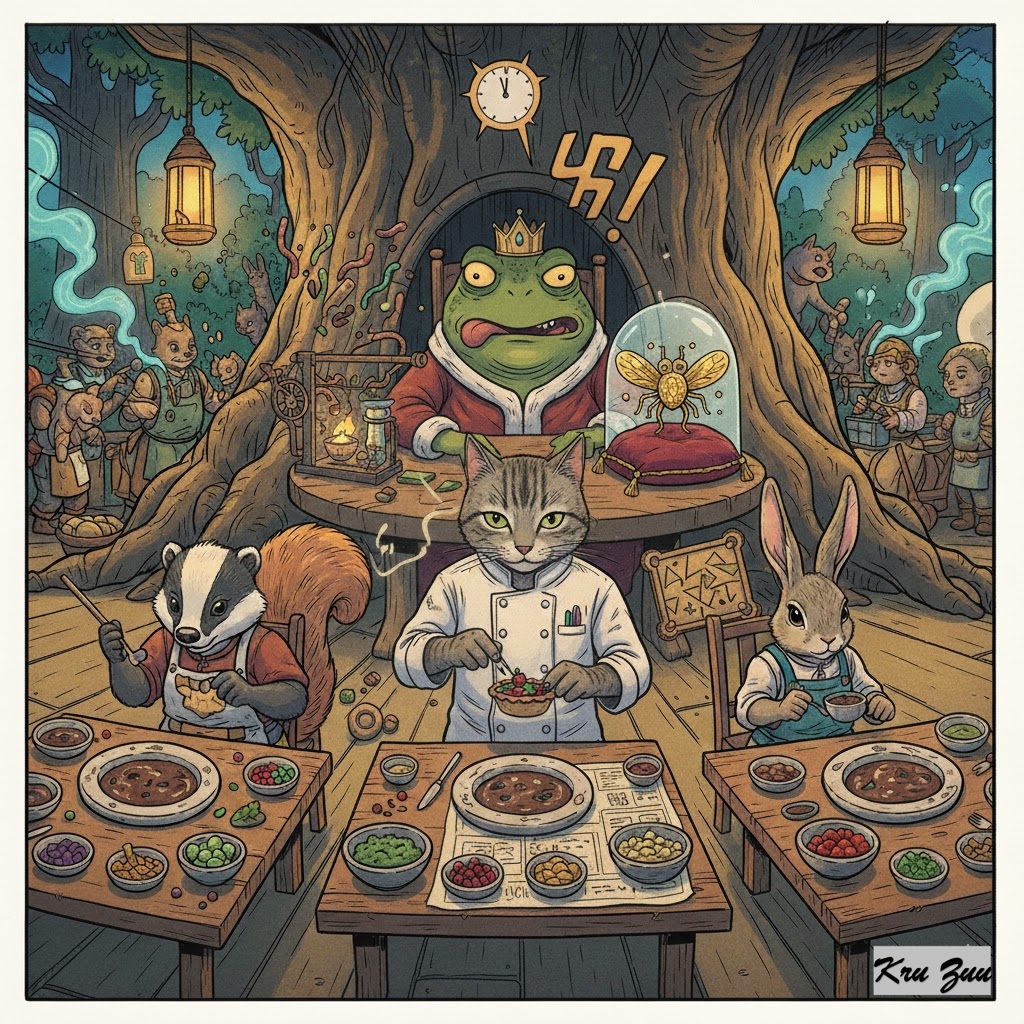
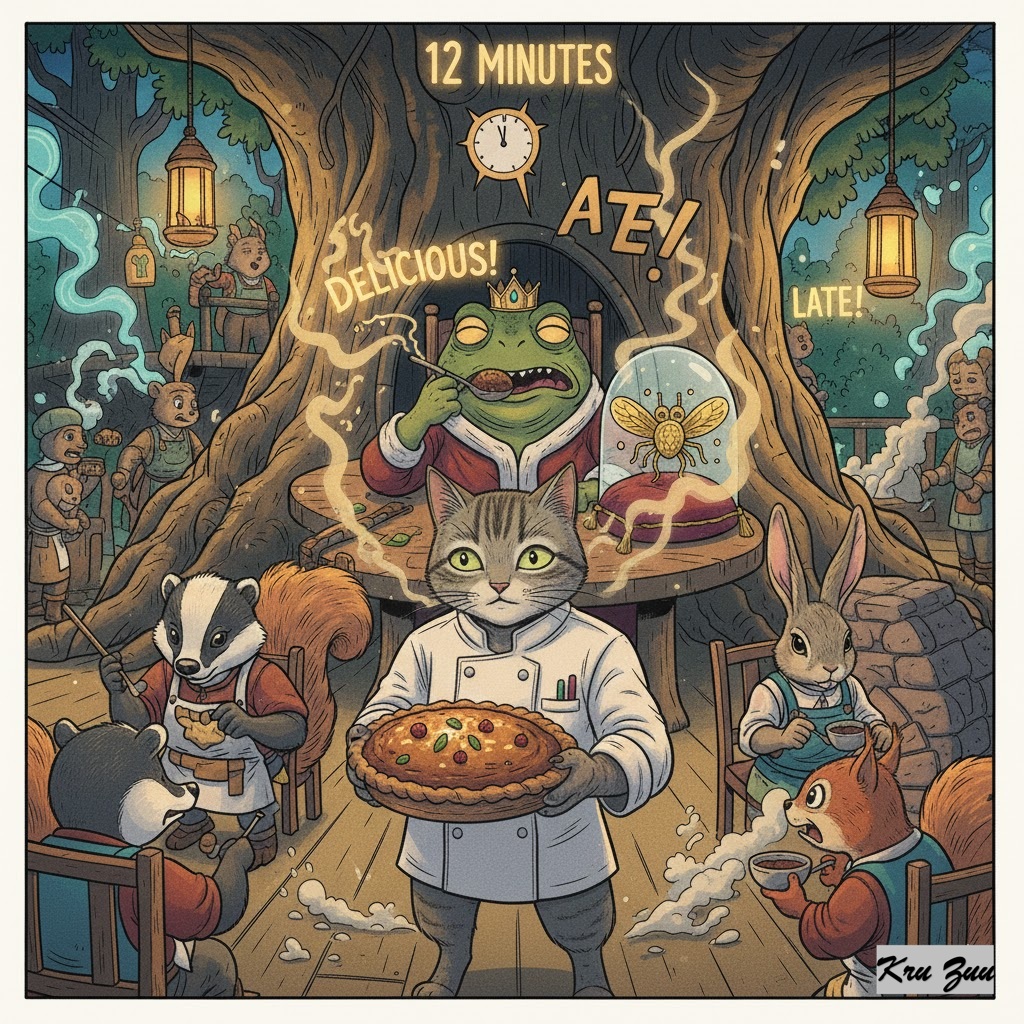
    Luna the Cat stays calm. She looks at Mr. Frog. “A good pie takes 12 minutes,” she thinks. She carefully mixes the mud. She picks out the rocks. She sets the oven to a gentle heat. She moves with grace.


    The Climax: Mr. Frog yells, “TIME’S UP!” Chico the Chicken proudly presents his pie. It is smoking. Mr. Frog takes a bite… and spits it out! 🤮 “It is burnt on the outside and frozen on the inside! And… is this a feather in my pie?!”


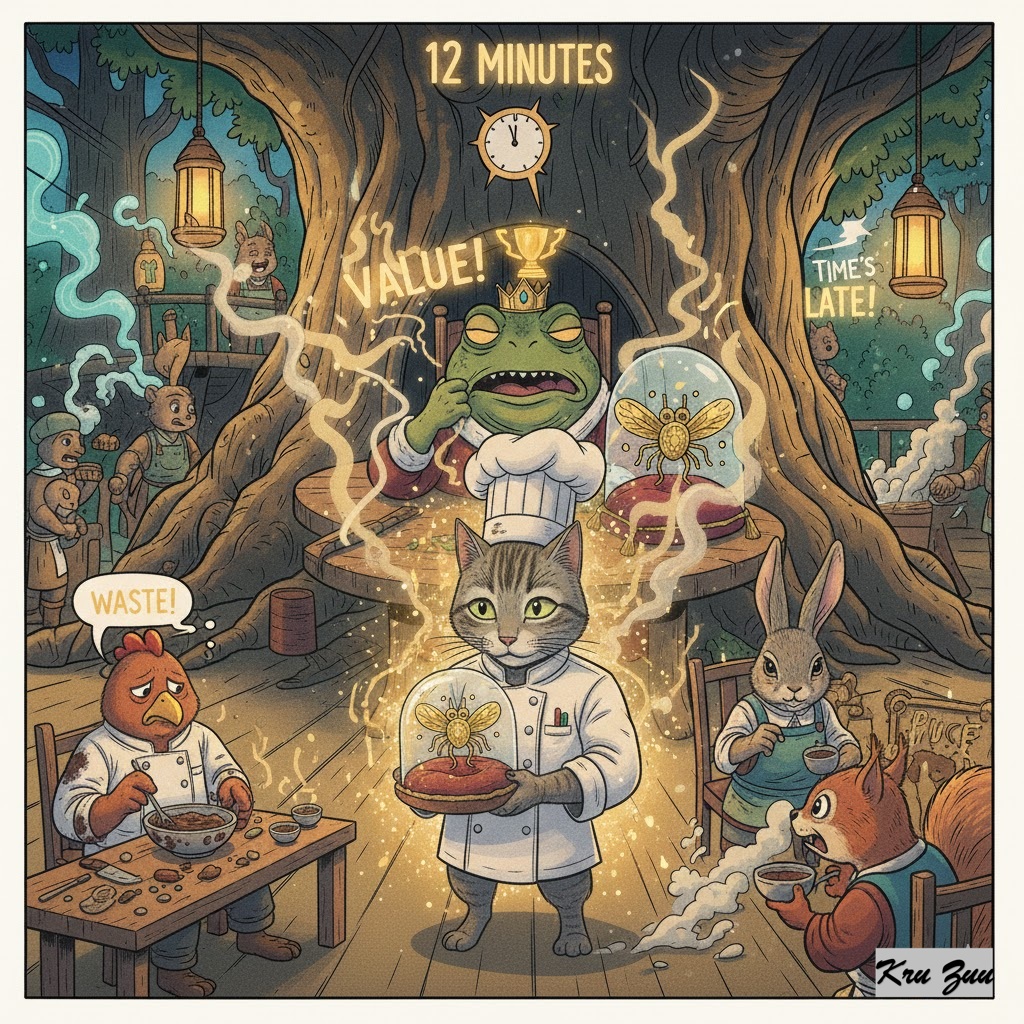
    Luna the Cat presents her pie 2 minutes late. Mr. Frog is angry she is late, but he takes a bite. His eyes widen. “Perfect texture. Zero rocks. Delicious.”


    The Moral: Chico the Chicken finished first, but he created garbage. He had to start over (Waste). Luna the Cat finished late, but she created value. Mr. Frog gave the Golden Fly to the Cat. 🏆


    Be the Cat. Don’t serve burnt pies.

    🎓 Lesson for English Learners


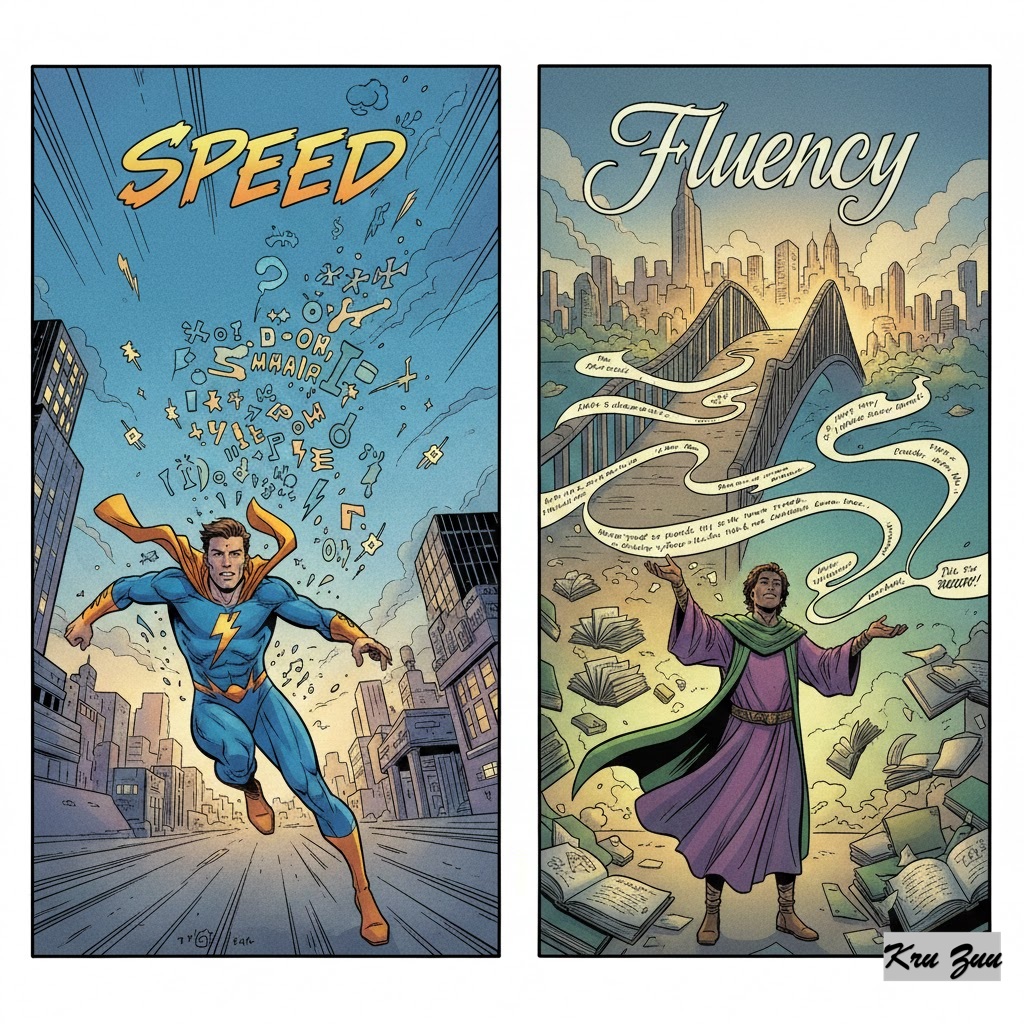
    Don’t confuse Speed with Fluency.


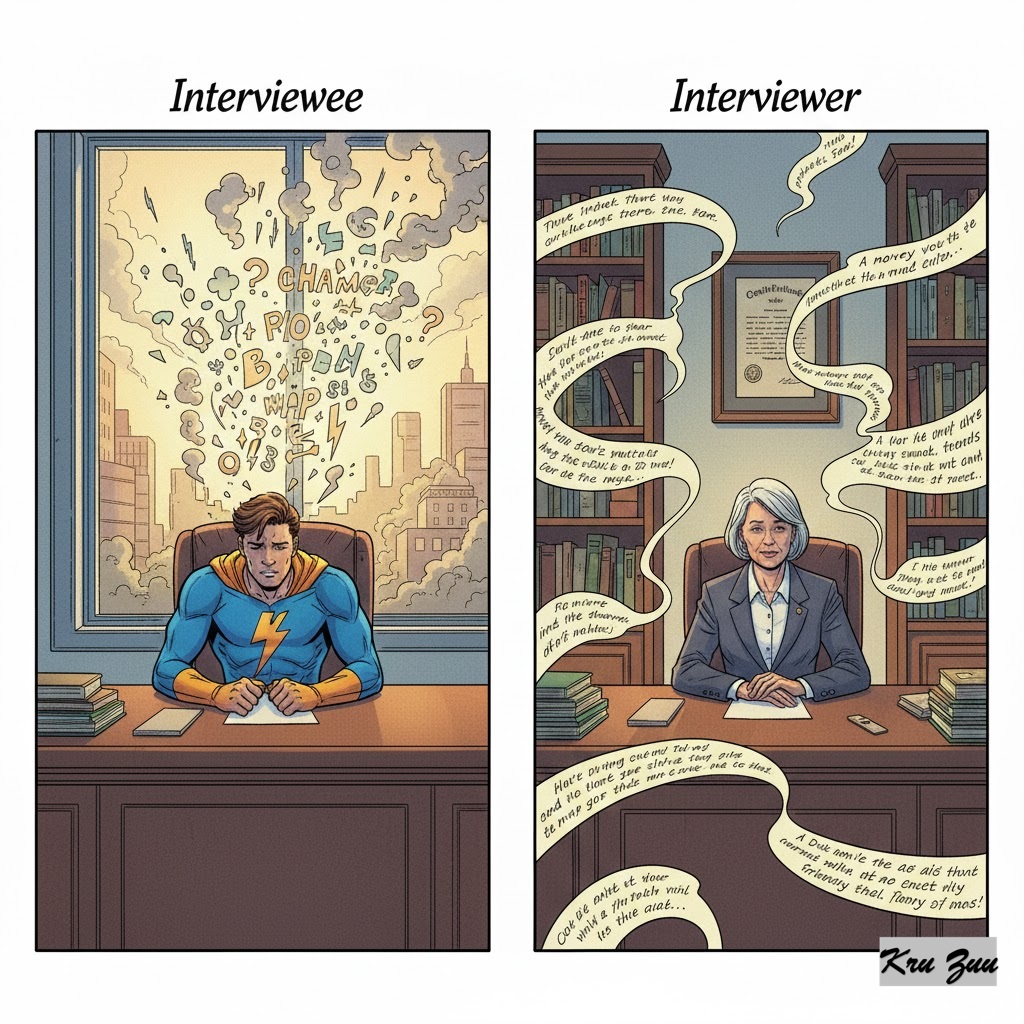
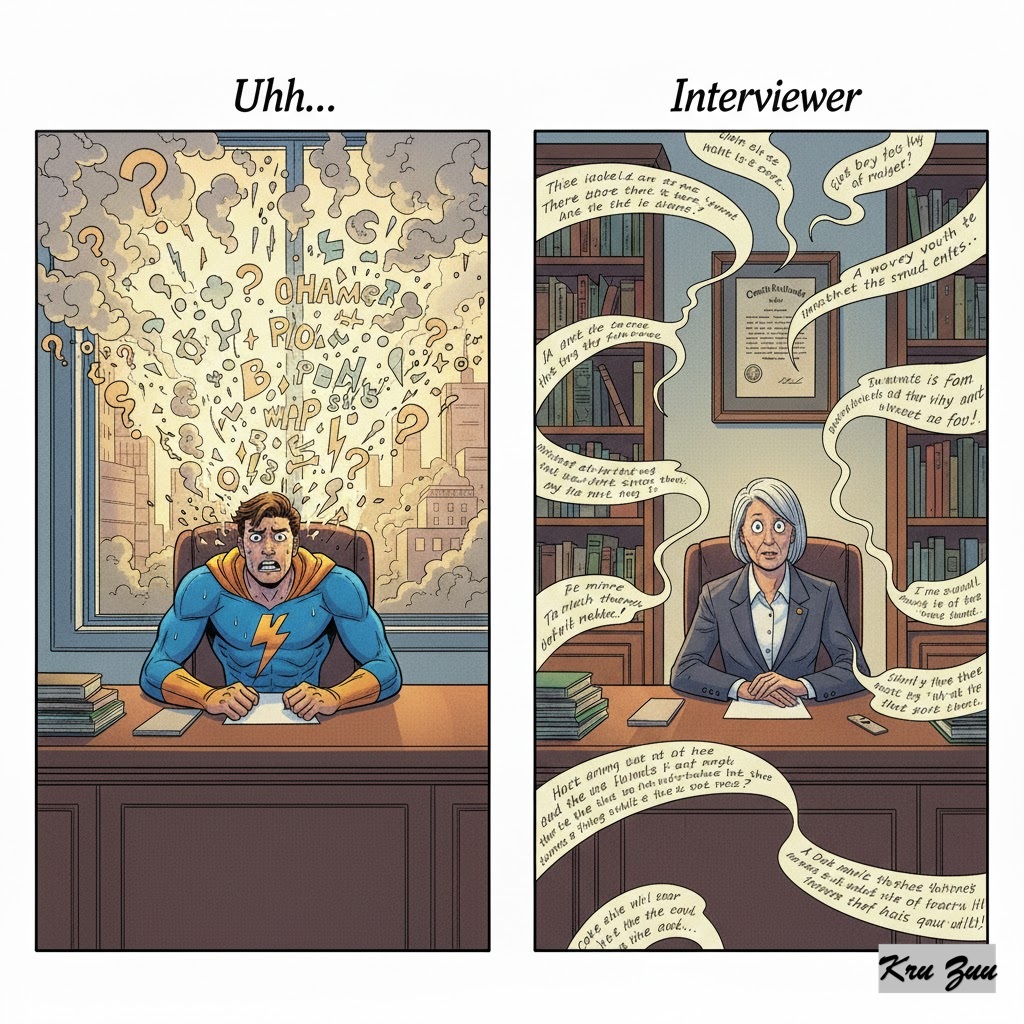
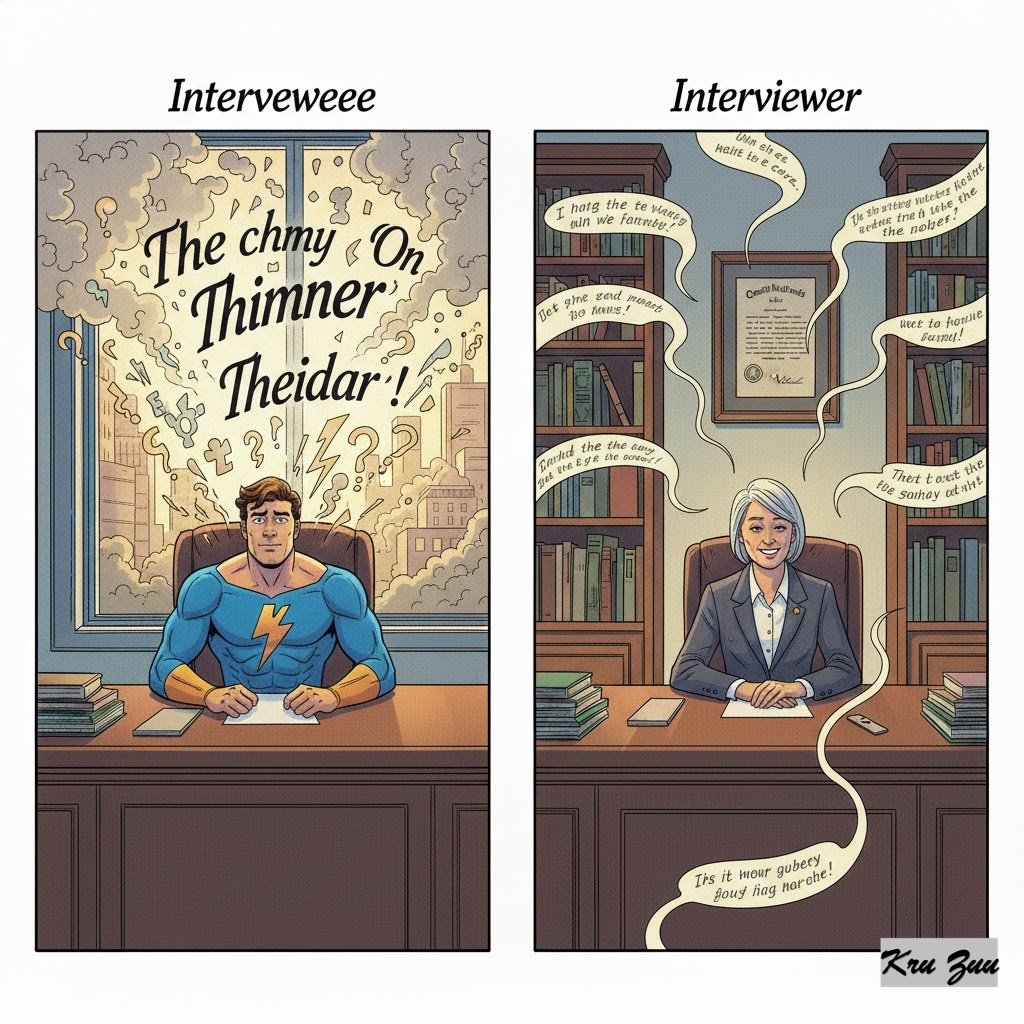
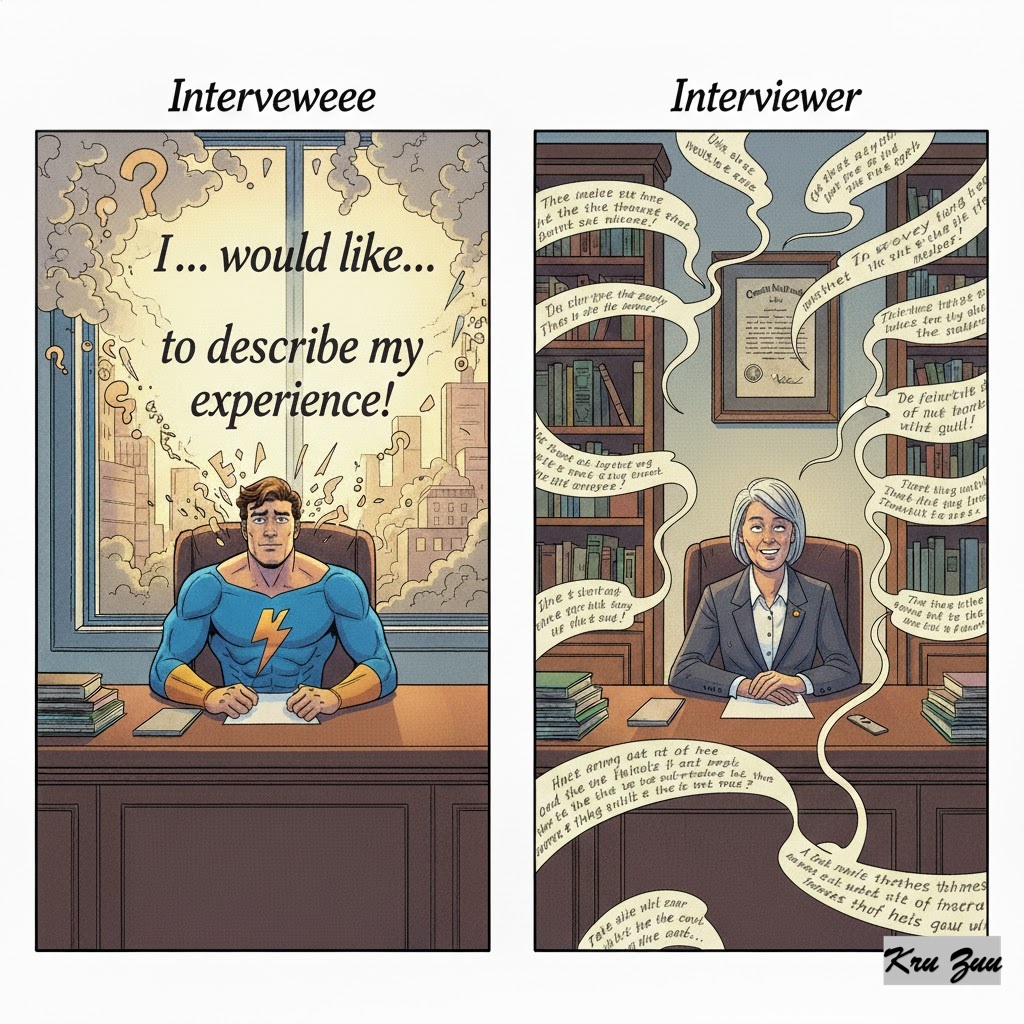
    Situation: You are in a job interview speaking English.


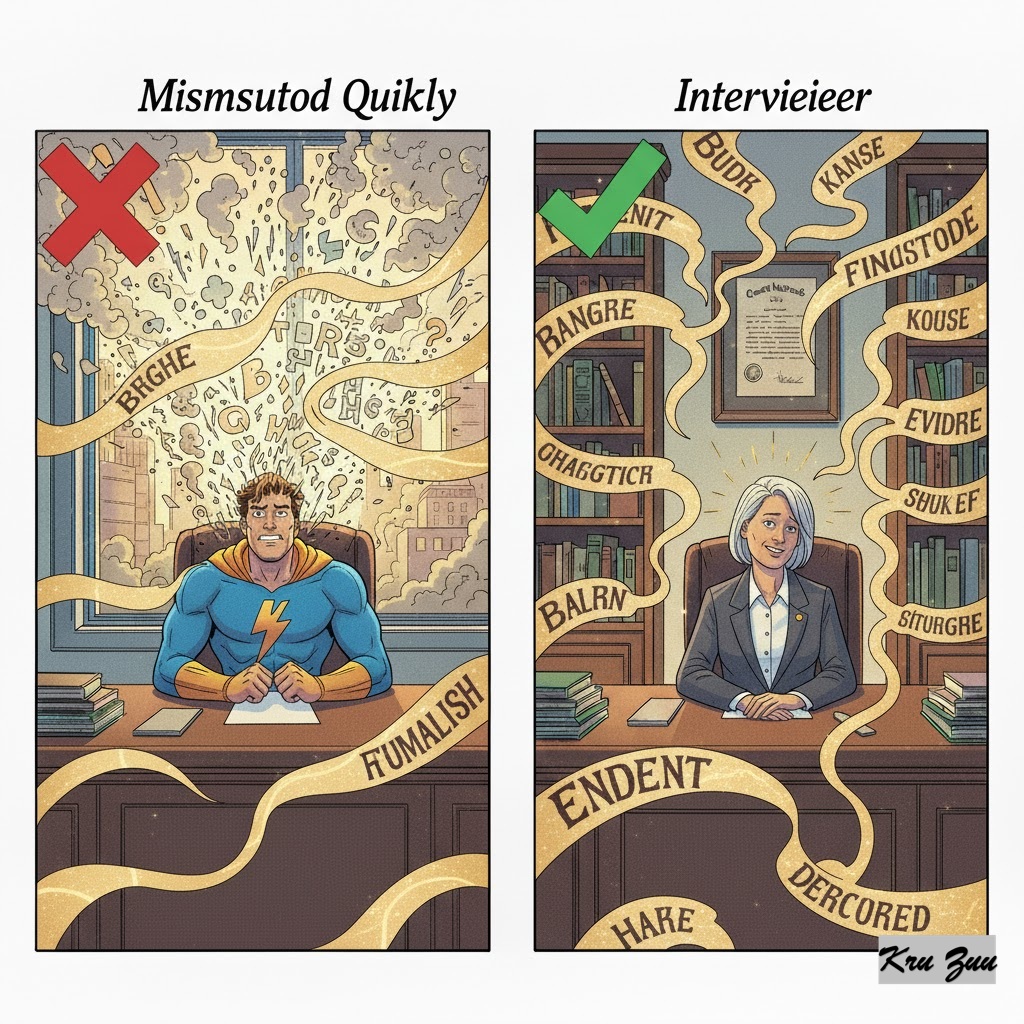
    The Mistake: You try to speak at 100mph because you think “Fast speakers = Native speakers.” You stumble, use the wrong tense, and say “Uhhh” 20 times.


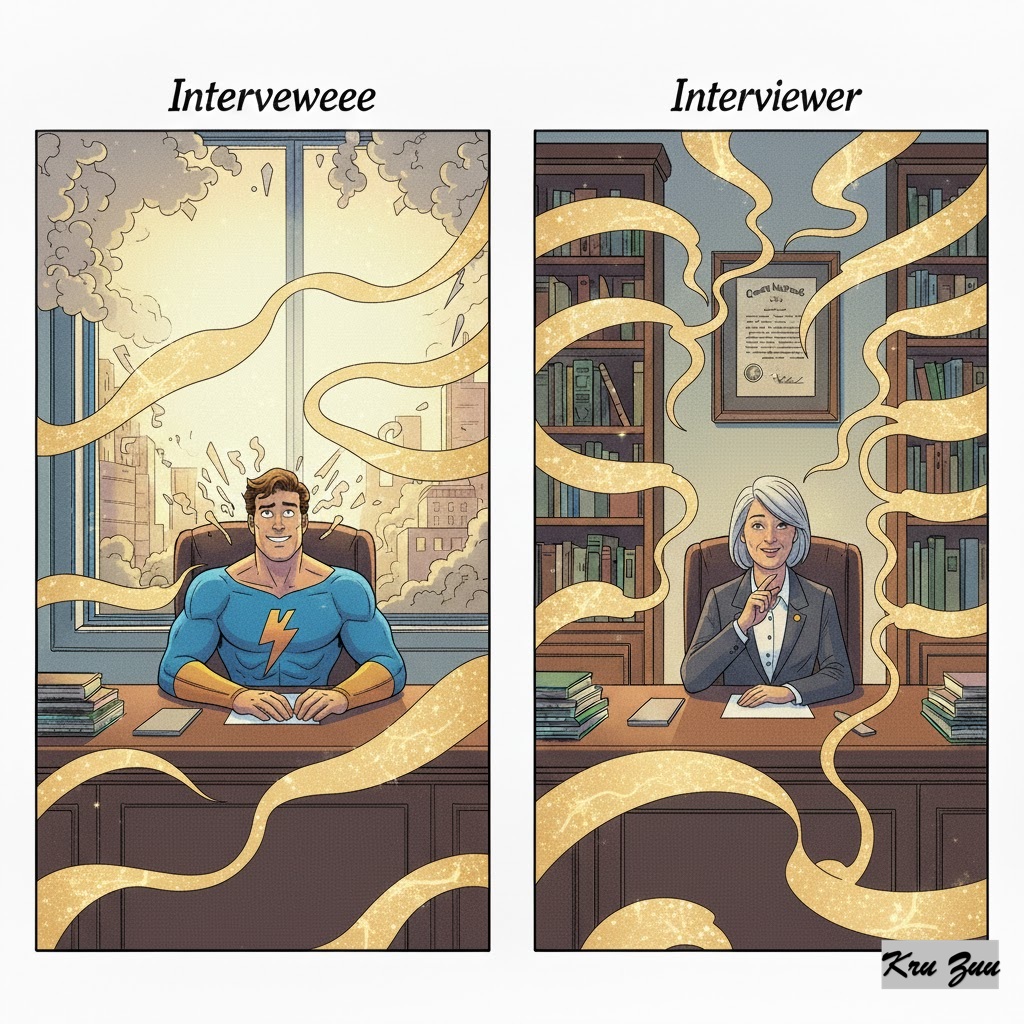
    The Fix: Slow down. Speak clearly.


    You Say: “I… would like… to describe my experience.”


    Result: You sound confident and thoughtful.


    Remember: It is better to be understood slowly than to be misunderstood quickly.


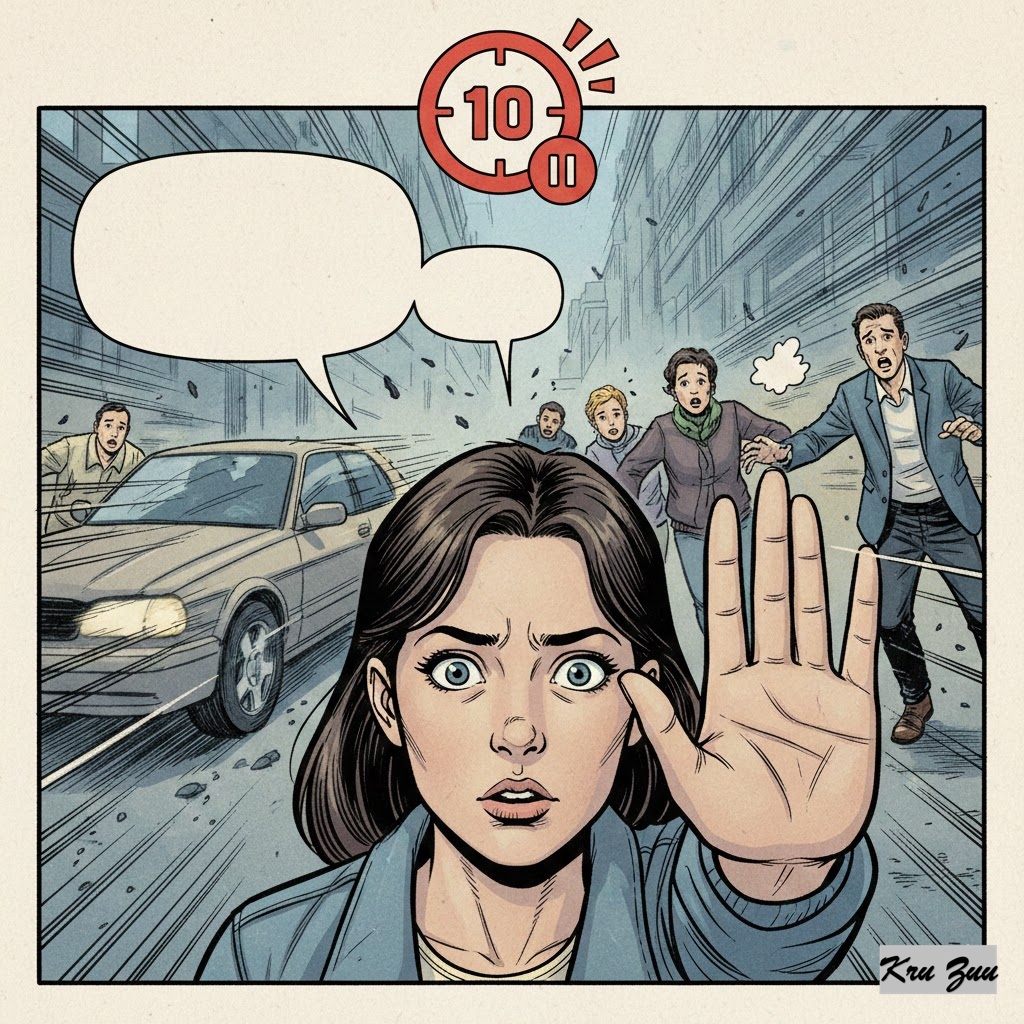
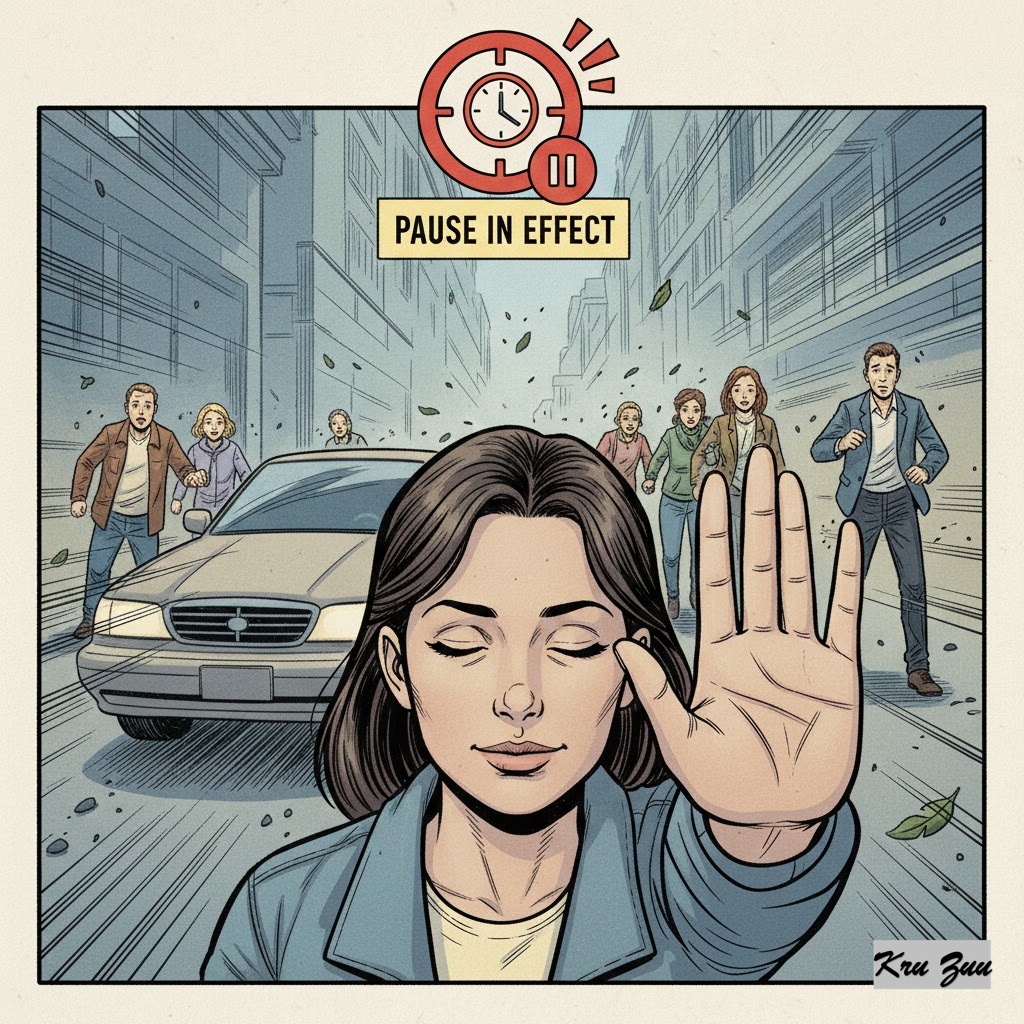
    💬 Your Turn: The 10-Second Pause 🛑


    We are breaking the cycle of rushing today.


    The Challenge: Before you send your next text message, email, or comment on social media…


    Stop typing.


    Take your hands off the keyboard.


    Count to 10.


    Read it one last time.


    Question: Tell us a time when you rushed something and it went horribly wrong! Did you ruin a meal? Send a text to the wrong person? Tell us in the comments! 👇

    By Zubeyir YURTKURAN

    https://www.facebook.com/BrainBattleground/

    https://www.facebook.com/zubeyr.yurtkuran/

    https://www.instagram.com/zubeyryurtkuran/
    https://www.youtube.com/@BrainBattleground-b3p

    https://www.instagram.com/brainbattleground/

  • 🛡️ The Daily Shield: The Law of False Fear

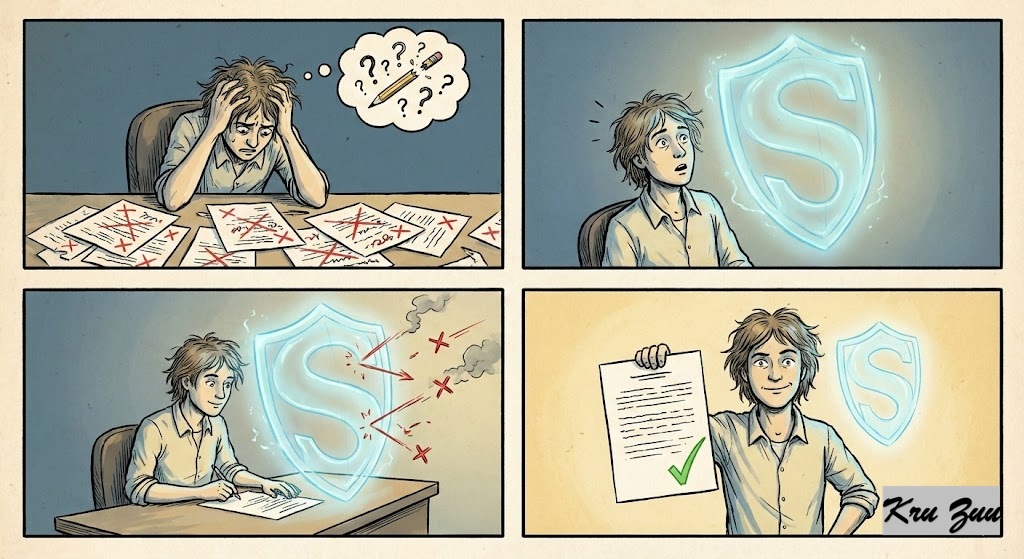
    🛡️ The Daily Shield: The Law of False Fear

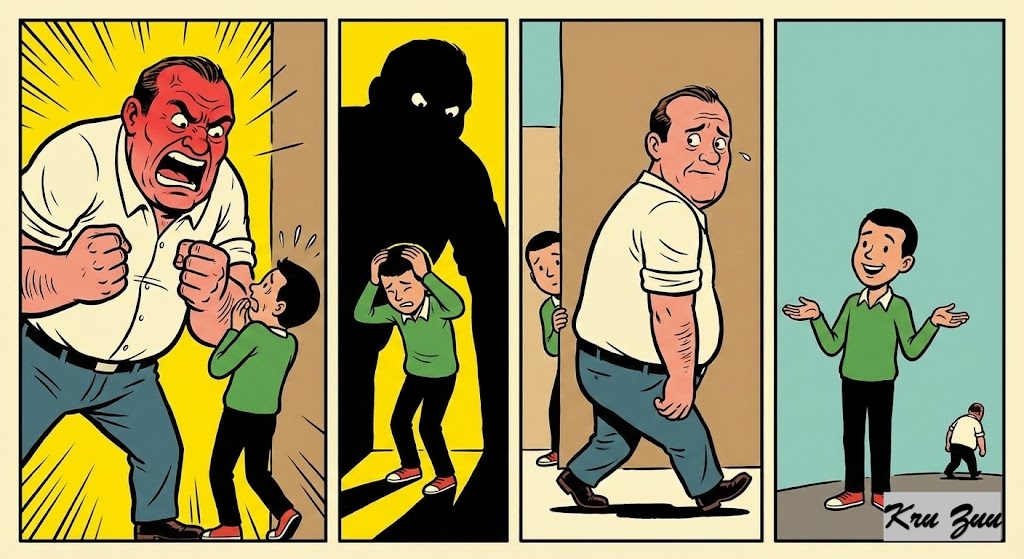
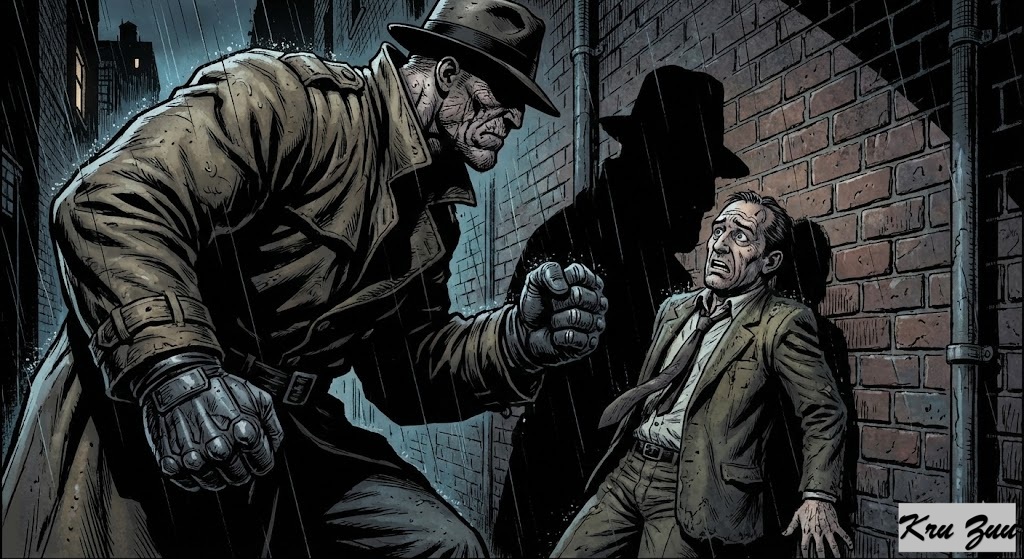
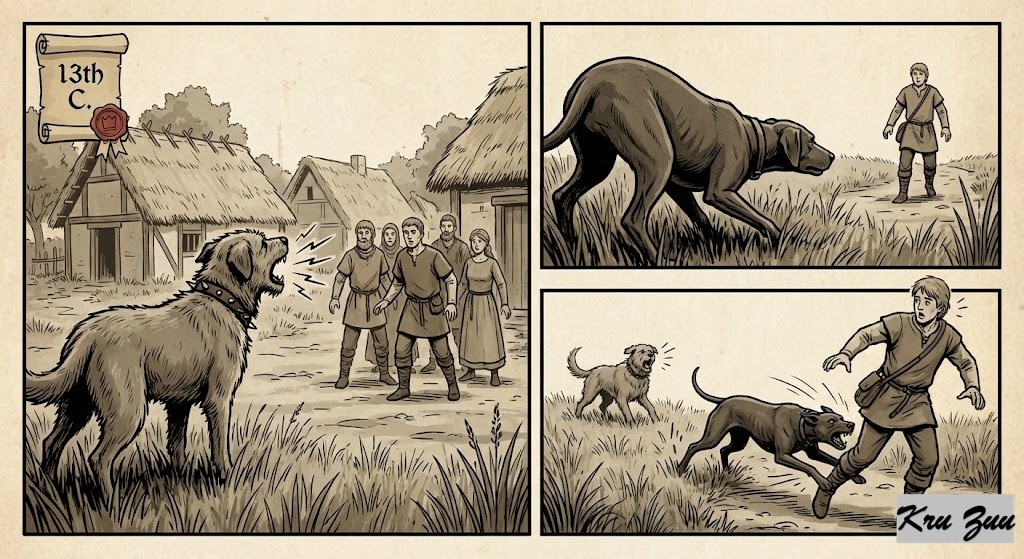
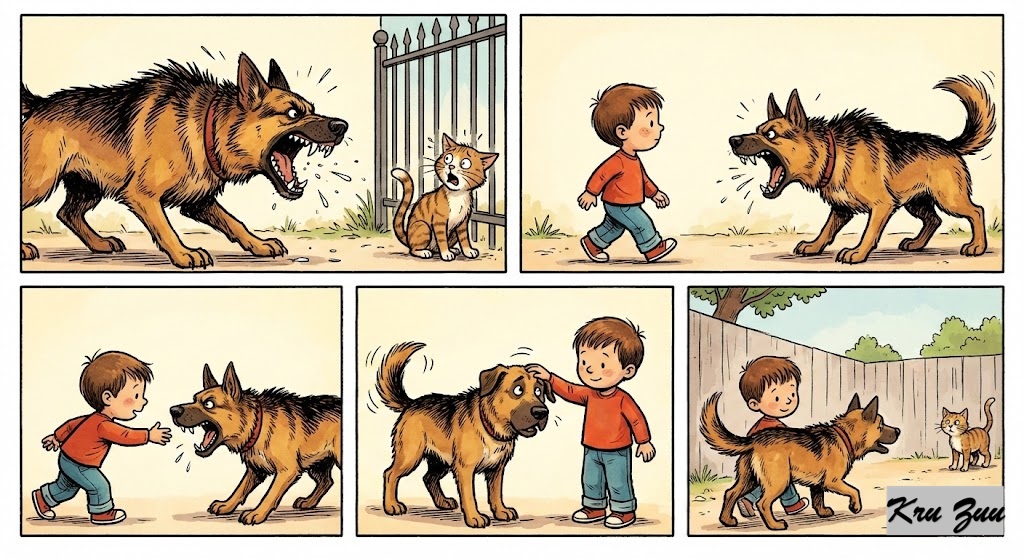
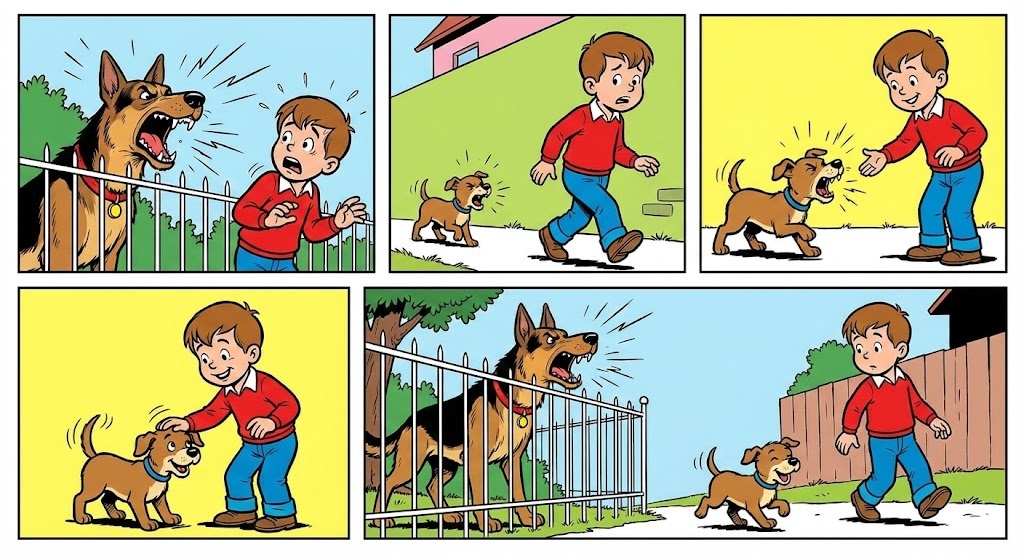
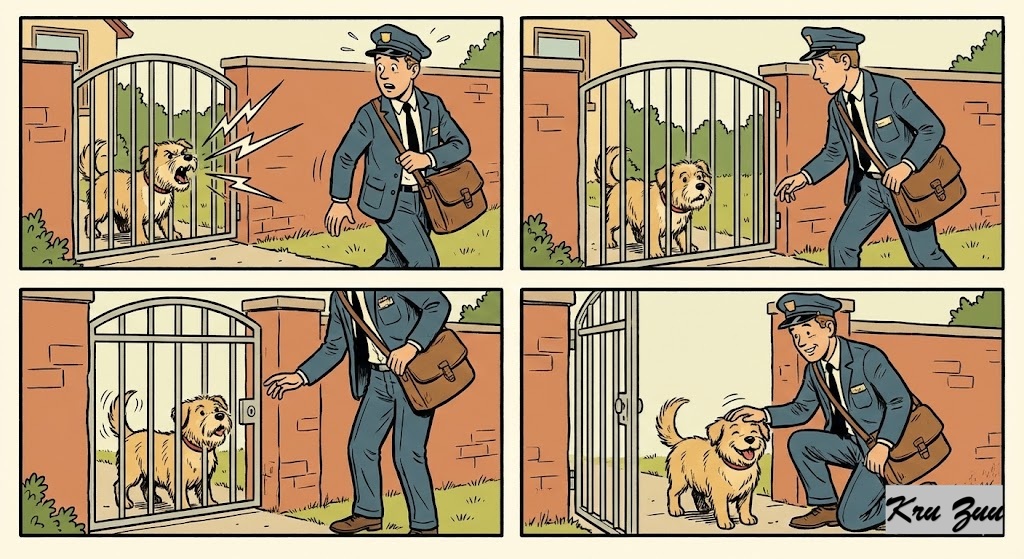
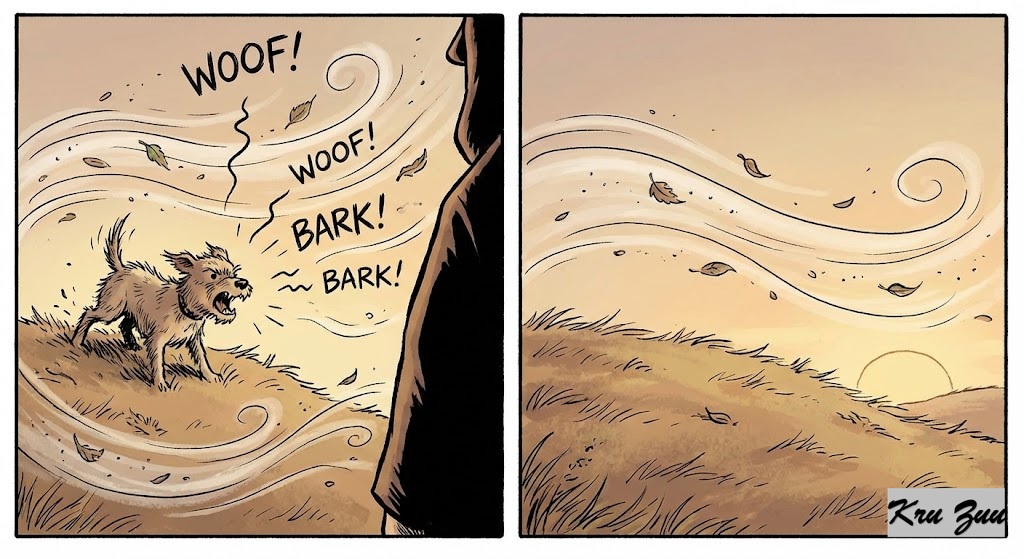
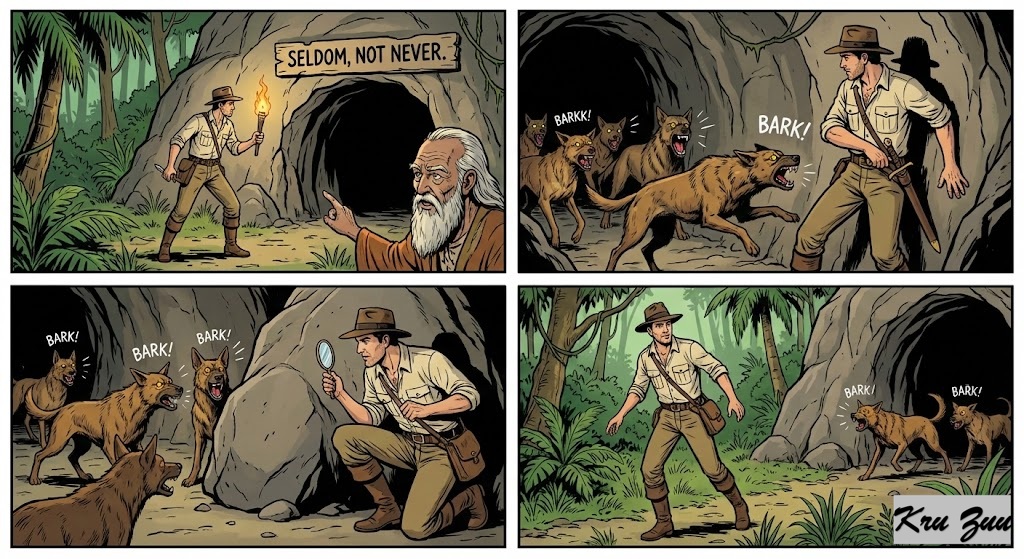
    “Barking dogs seldom bite.”


    😈 The Villain (The Intimidator)

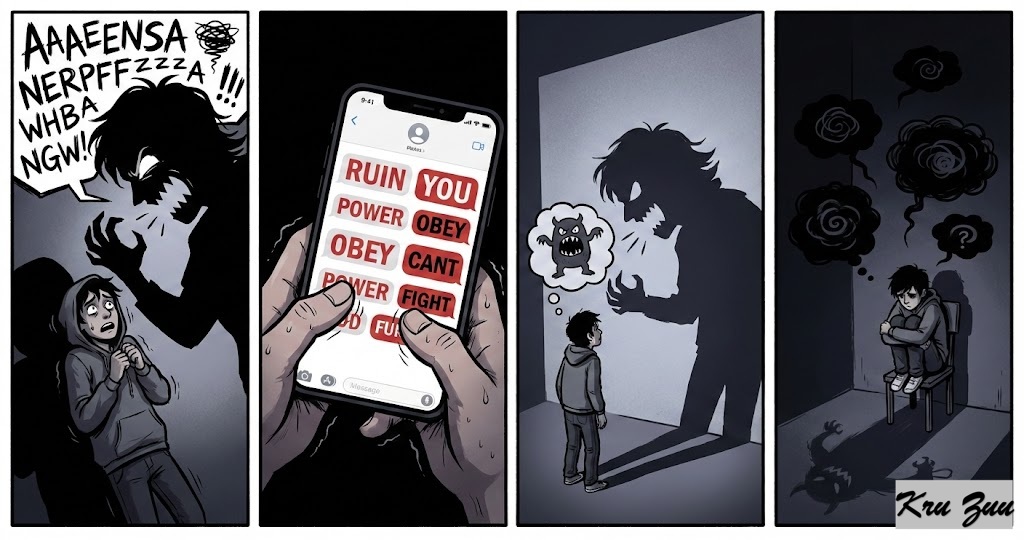
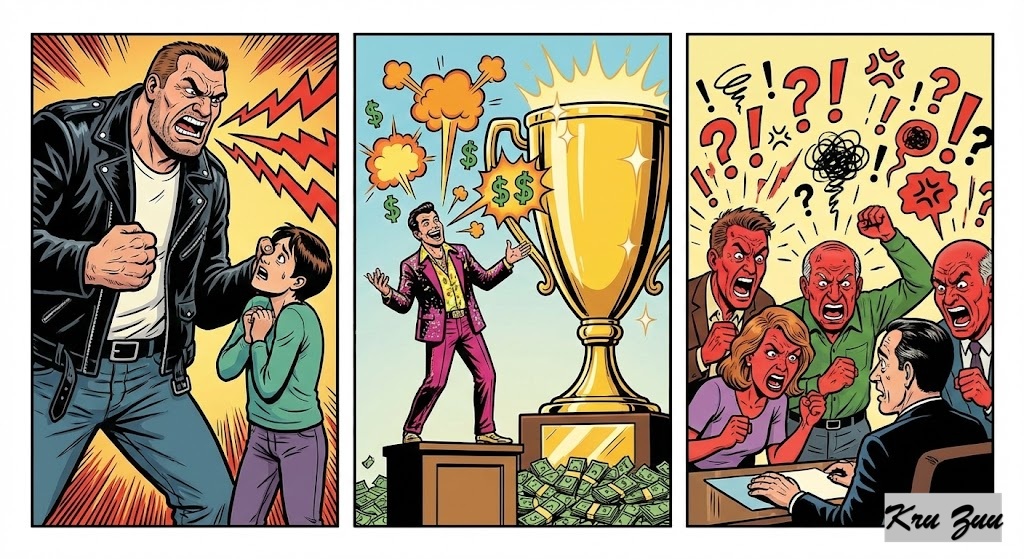
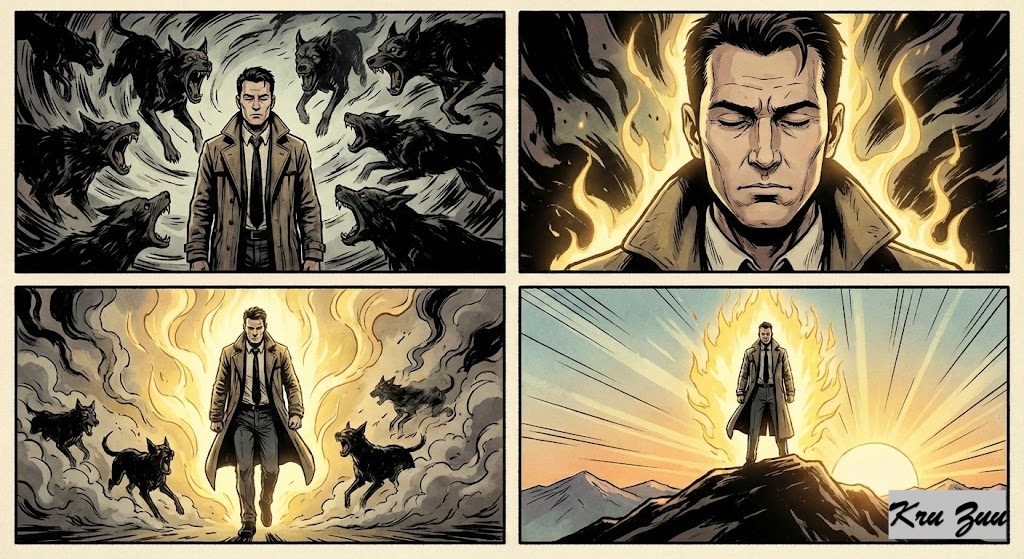
    You meet someone who screams, yells, and threatens. They type in ALL CAPS. They promise to ruin you. They brag about their power. You feel small. You feel scared. You back down because the noise is overwhelming. You let their loud voice control your actions. You live in fear of a monster that might not even exist. 🧟‍♂️


    😇 The Hero (The Stoic)

    You hear the noise. You pause. You analyze. You realize that true confidence is silent. A lion doesn’t need to bark before it attacks; it just attacks. You realize that the loudness is a mask for insecurity. You stand your ground. You smile. You walk past the noise untouched. 🛡️


    ⚖️ The Reality


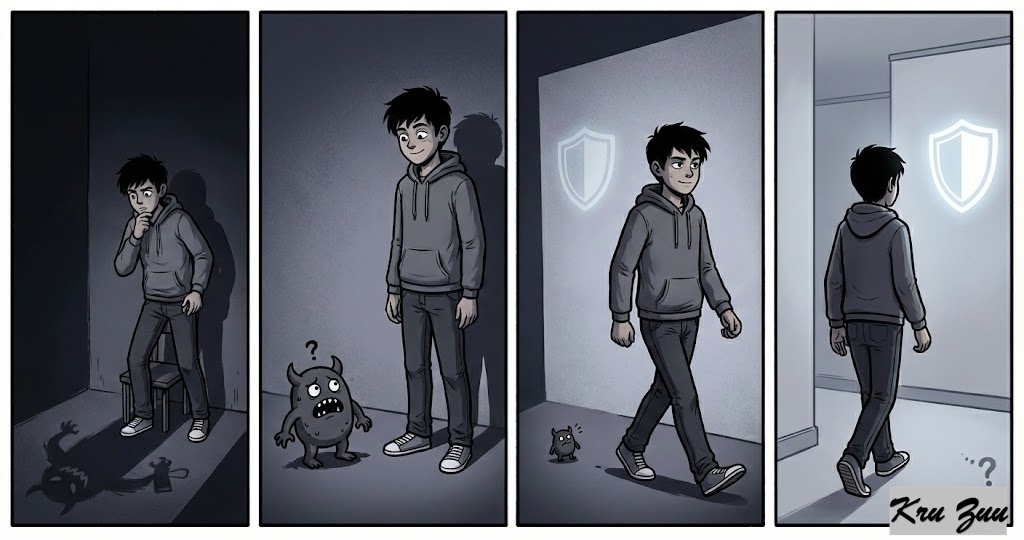
    Noise is not power. Usually, the people (or problems) that make the most noise have the least power. They use volume to hide their weakness. Fear is a shadow, it looks huge on the wall, but the object casting it is tiny.


    💎 The Secret

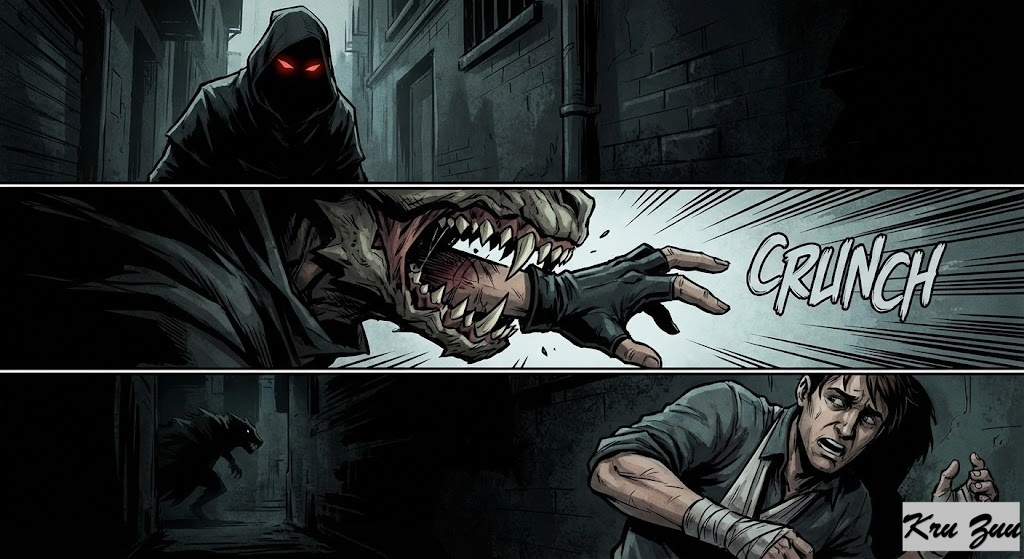
    Real danger usually comes silently. If something is “barking” at you, it is usually too busy making noise to actually hurt you.

    🧐 The Anatomy of the Proverb


    This is the ultimate weapon against social anxiety and intimidation.


    Barking (Participle/Adjective):
    The sound a dog makes. Here, it represents threats, bragging, or loud complaints. 🐕


    Seldom (Adverb): Rarely; almost never. (This is a fancy word!)


    Bite (Verb): To inflict injury. The actual action/danger.


    Simpler Version: People who threaten you usually don’t take action.


    📚 Vocabulary Vault


    Intimidation (Noun): The act of making someone afraid or timid. 😨


    Bluff (Verb/Noun): To try to deceive someone as to one’s abilities or intentions (Fake power).


    All talk and no action (Idiom): Someone who talks about doing big things but never does them.


    Stoic (Adjective): A person who can endure pain or hardship without showing their feelings or complaining. 🗿


    Seldom (Adverb): Not often; rarely.


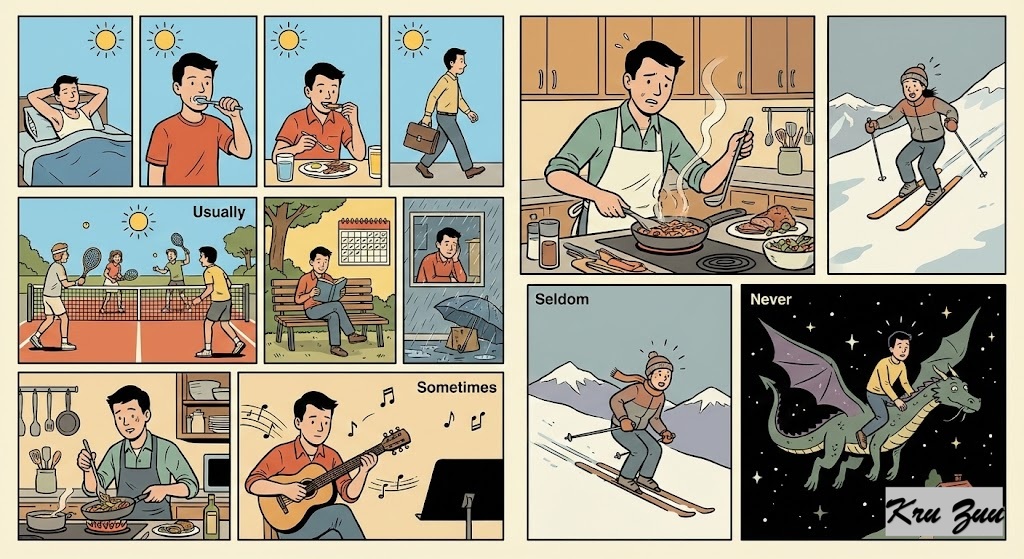
    🧠 Grammar Focus: Adverbs of Frequency


    This proverb uses a “negative” frequency adverb.


    The Scale of Frequency


    100% – Always
    80% – Usually
    50% – Sometimes
    10% – Seldom / Rarely 📉
    0% – Never


    Style Note: “Seldom” vs. “Rarely”


    Rarely: Common in daily speech. “I rarely eat sushi.”


    Seldom: More formal, literary, or poetic. “He seldom speaks of his past.”


    Pro Tip: Use “Seldom” in writing to sound sophisticated. Use “Rarely” in coffee shops.

    📜 History: Origin and Spread


    This wisdom is ancient because loud, scary people have existed forever.


    The Origin: It first appeared in written records in the 13th century! It comes from the observation of village dogs. The dog that stands back and barks is warning you; the dog that wants to kill you runs silently to bite.


    Global Cousins


    🇹🇷 Turkish:
    “Havlayan köpek ısırmaz.” (Exactly the same!)


    🇪🇸 Spanish: “Perro que ladra no muerde.” (The dog that barks doesn’t bite.)


    🇮🇹 Italian: “Can che abbaia non morde.”


    🇷🇺 Russian: “Sobaka layet, veter nosit.” (The dog barks, but the wind carries it away.)

    🎯 Impact on Life: The Pros & Cons


    ✅ The Pros (Emotional Armor)


    Confidence:
    When you ignore the “barking,” you keep your power.


    Focus: You stop wasting energy worrying about threats that will never happen.


    ❌ The Cons (Don’t be naive)


    Caution:
    The proverb says seldom, not never. Be brave, but don’t be stupid. Some dogs bark and bite. Assess the situation carefully.

    🎭 Short Story: The Monster in the Garden

    Let’s visit a farm with three very different friends.


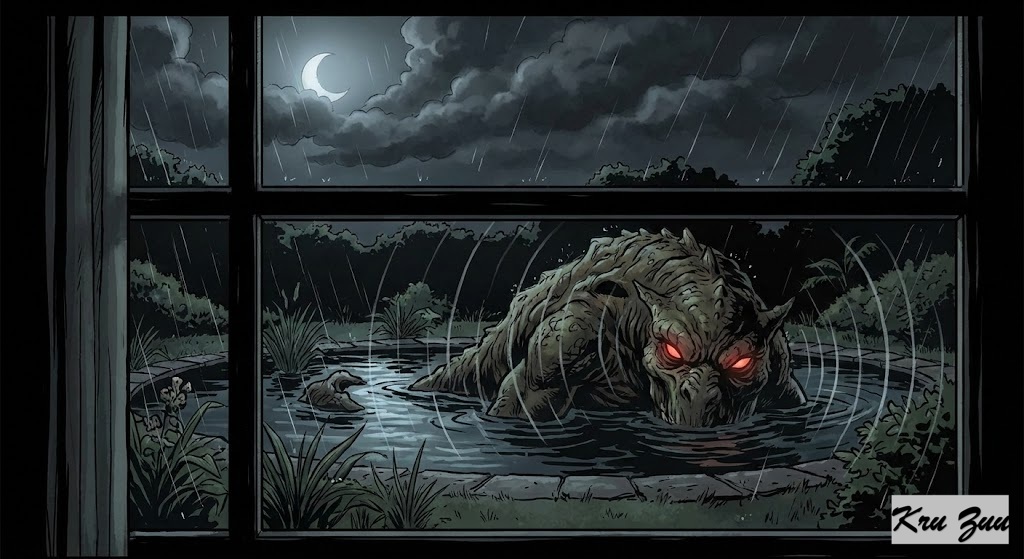
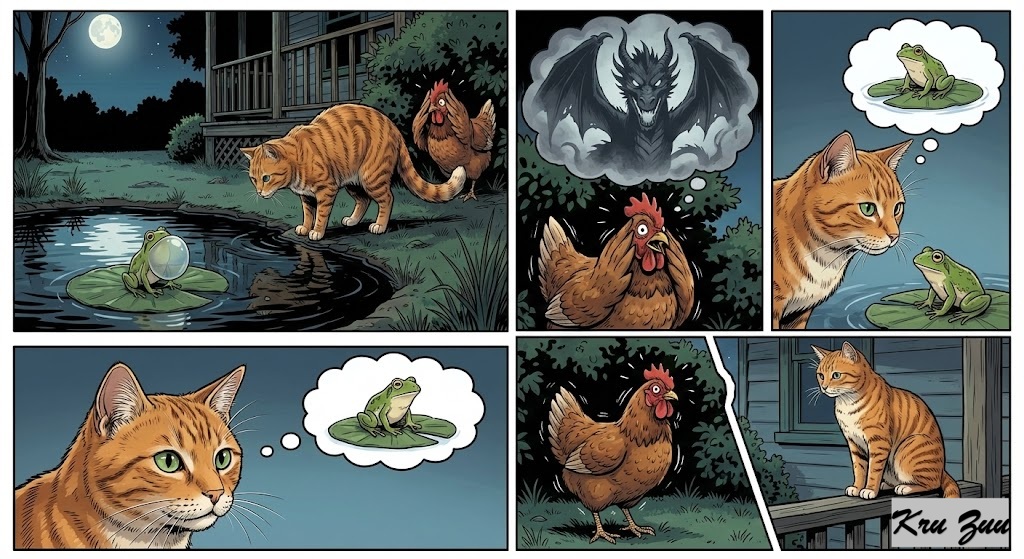
    🌟 The Setup: It is midnight. A terrifying, deep, rhythmic sound comes from the garden pond. CROAK. CROAK. CROAK. It sounds like a dragon.


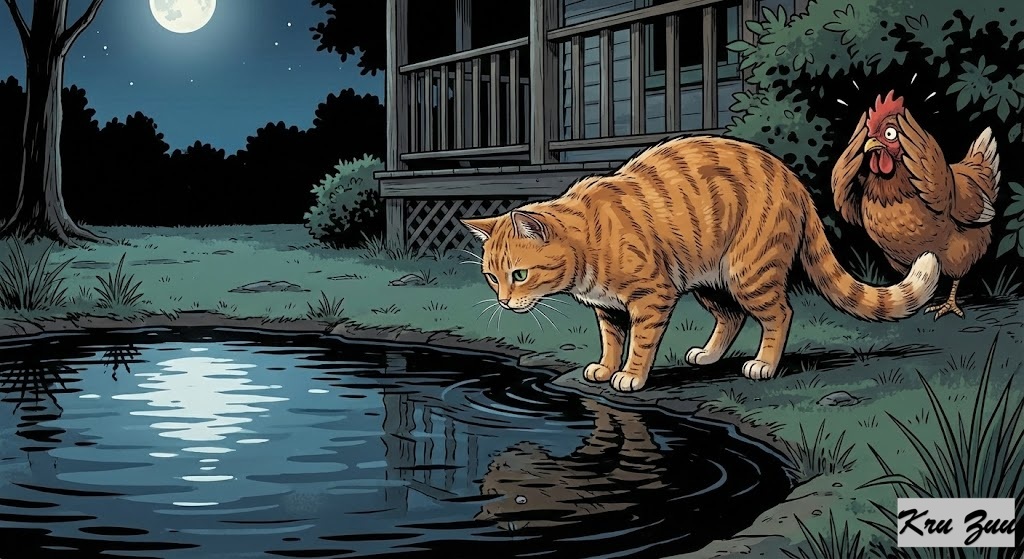
    🐔 The Chicken (The Worrier): The Chicken is shaking. Feathers are flying everywhere. “It’s a monster!” she screams. “It sounds huge! It’s going to eat us all! We need to run to the next village! We are doomed!” The Chicken hides under the porch, trembling. She lets the noise paralyze her.


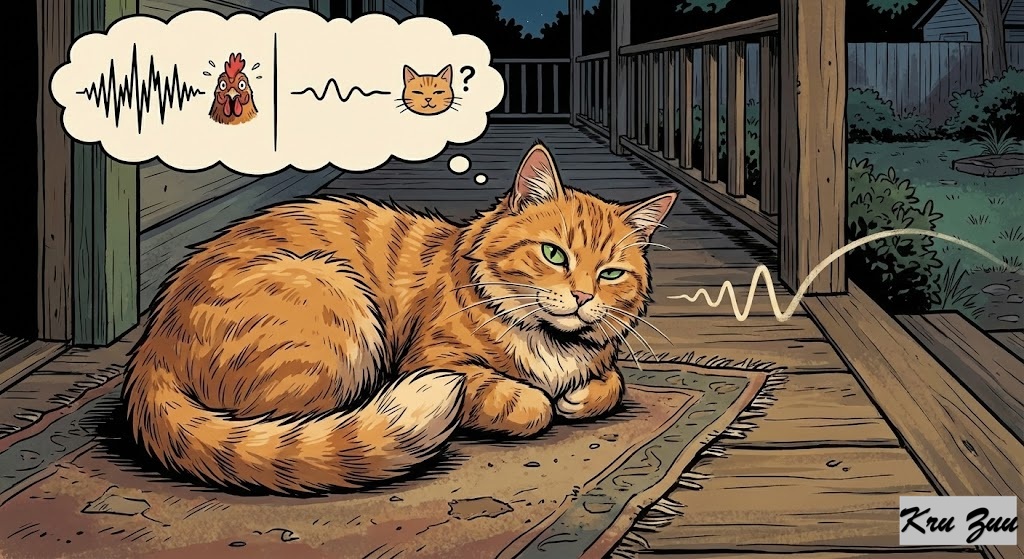
    🐱 The Cat (The Observer): The Cat opens one eye. She stretches slowly. She listens to the volume, but she also listens to the fear in the sound. “Relax, Chicken,” the Cat purrs. “That is a lot of noise. Dangerous things don’t announce themselves like that.”


    The Climax: The Cat walks coolly to the edge of the pond. The Chicken watches through her wings, terrified. The Cat peers into the darkness.


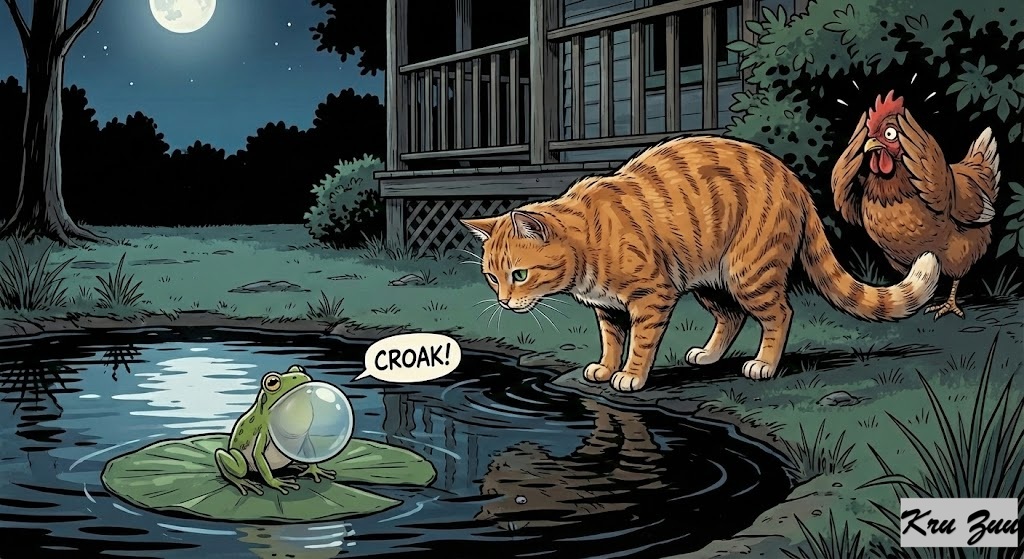
    There, sitting on a lily pad, is The Frog. 🐸 It is a tiny frog, no bigger than a spoon. It puffs its throat out huge—CROAK!—trying to look scary because it is afraid of the dark.


    The Moral: The Chicken heard a dragon. The Cat saw a scared little frog. The loudest threats often come from the smallest people. Don’t be a Chicken. Be a Cat. 🐈

    🎓 Lesson for English Learners


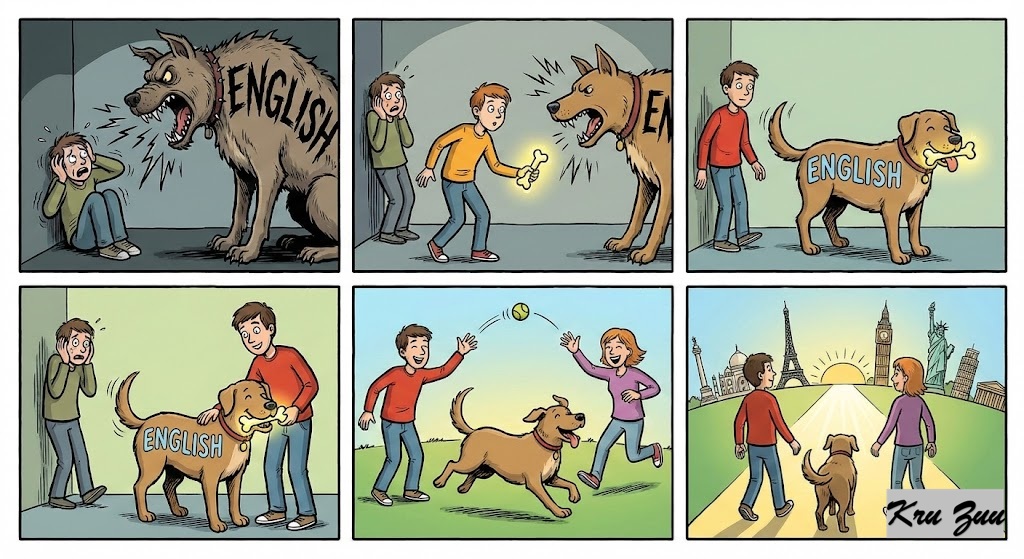
    Don’t Fear the “Barking” of English.


    Situation: You see a long, complex grammar rule (like the Future Perfect Continuous). It looks scary. It looks difficult.


    You Say: “This grammar is just a barking dog. It looks big on the page, but once I analyze it, it can’t hurt me. It’s actually quite simple.”


    Situation: A native speaker talks very fast. You panic.


    You Say: “Their speed is just noise. I will ask them to slow down. I won’t let the speed intimidate me.”


    💬 Your Turn: The Fear Test 🚀


    The Challenge:
    Think of a situation where you were scared of something that turned out to be easy.


    Was it a job interview?


    Was it asking someone on a date?


    Was it speaking English in public?


    Question:
    What is a “Barking Dog” in your life right now? Something that makes a lot of noise but isn’t actually dangerous? Tell us in the comments! 👇

    By Zubeyir YURTKURAN

    https://www.facebook.com/BrainBattleground/

    https://www.facebook.com/zubeyr.yurtkuran/

    https://www.instagram.com/zubeyryurtkuran/
    https://www.youtube.com/@BrainBattleground-b3p

    https://www.instagram.com/brainbattleground/

  • 🥛 The Daily Shield: The Law of Acceptance

    🥛 The Daily Shield: The Law of Acceptance

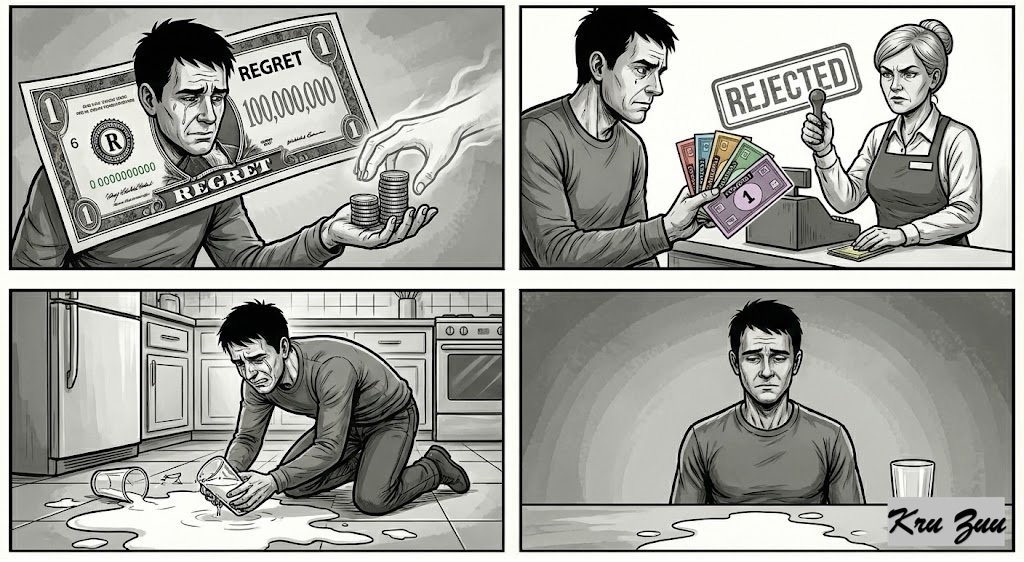
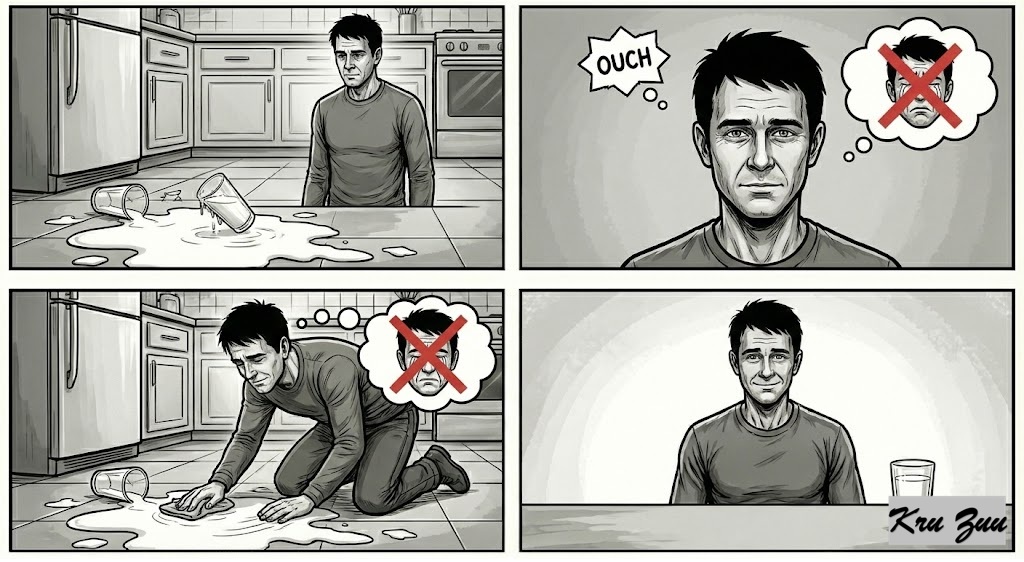
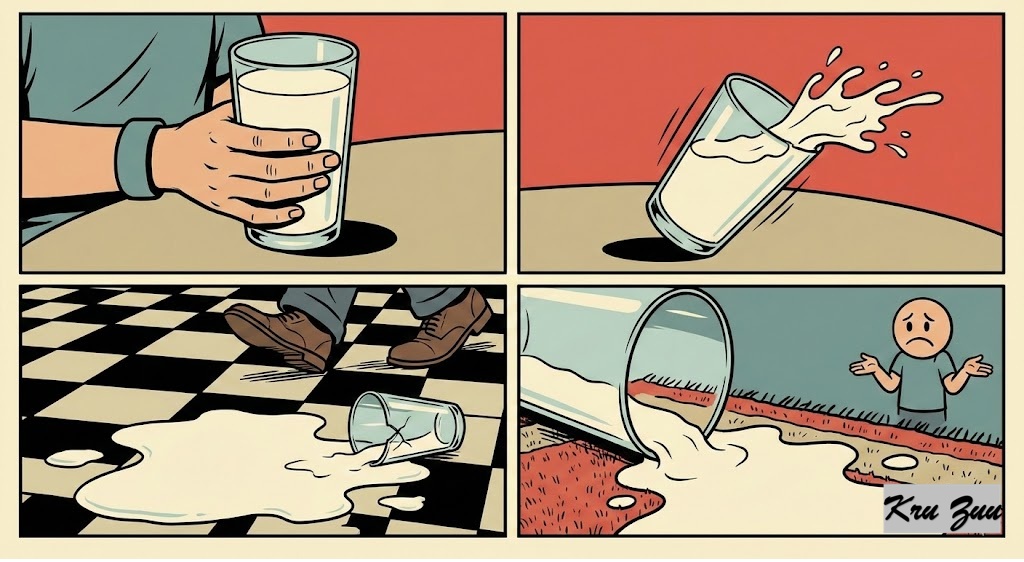
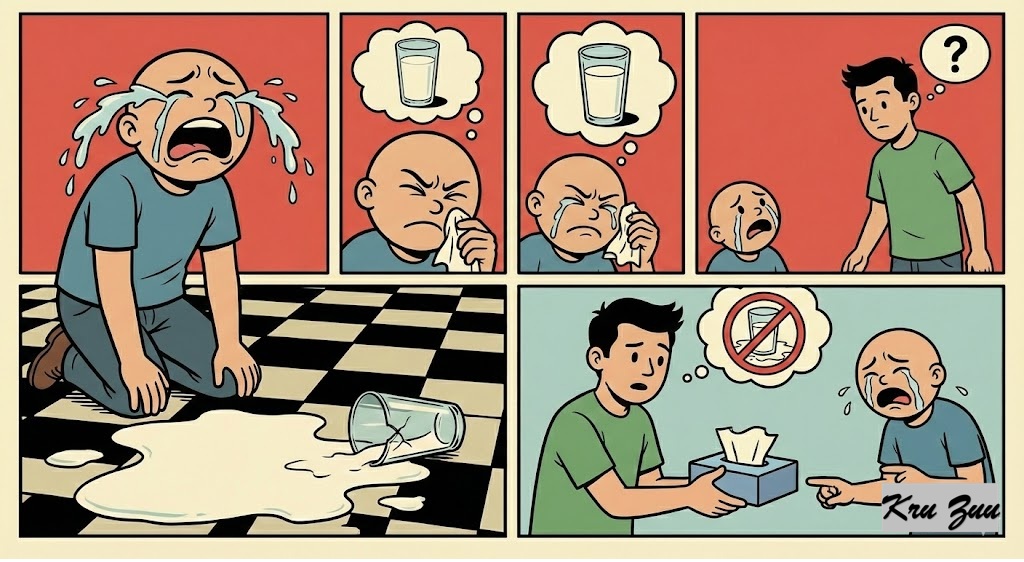
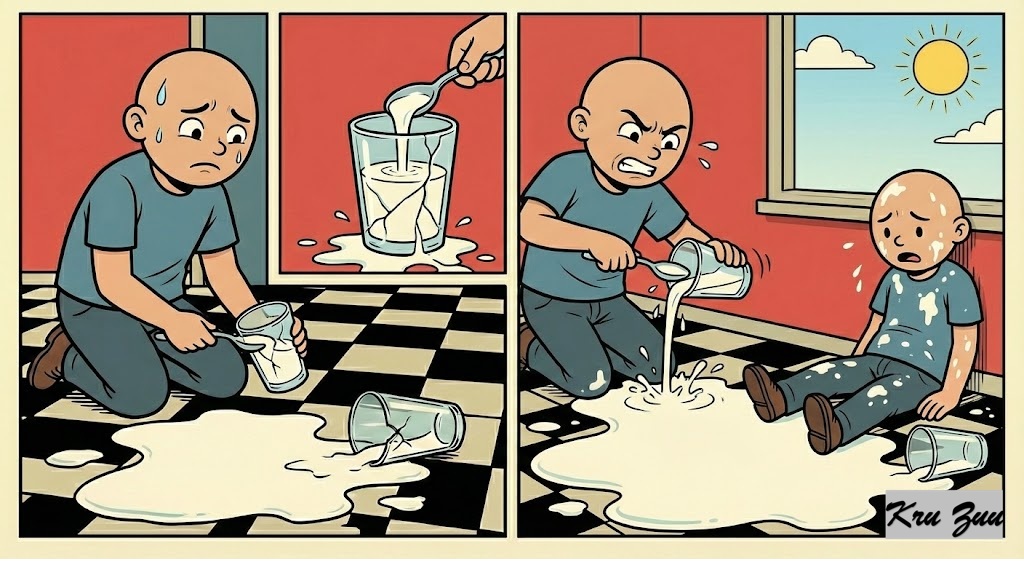
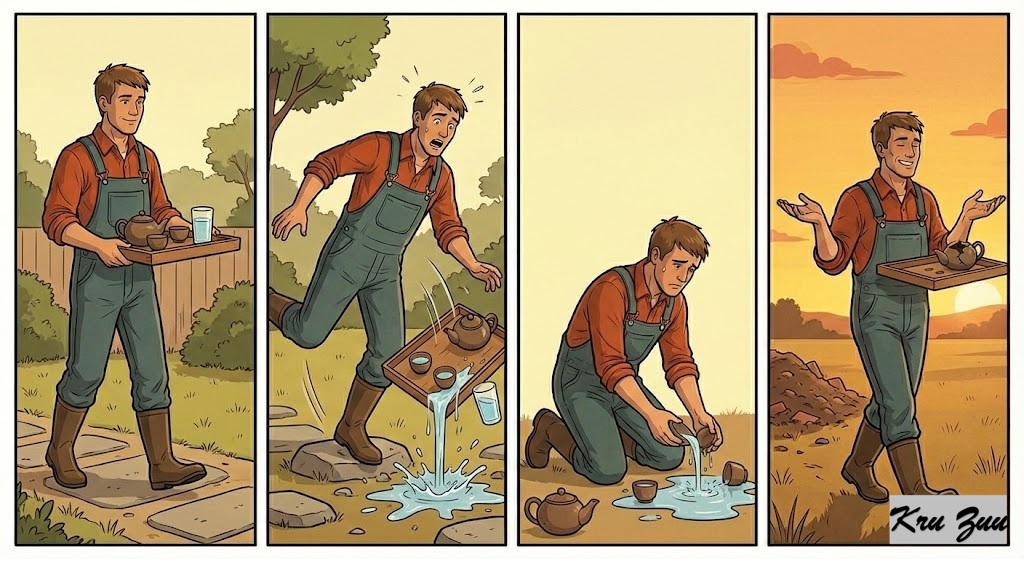
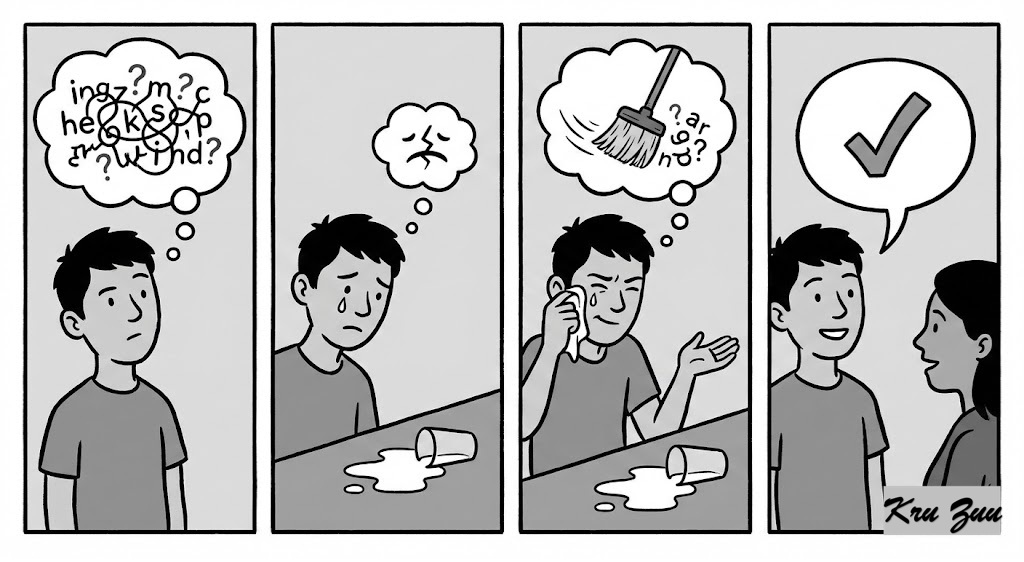
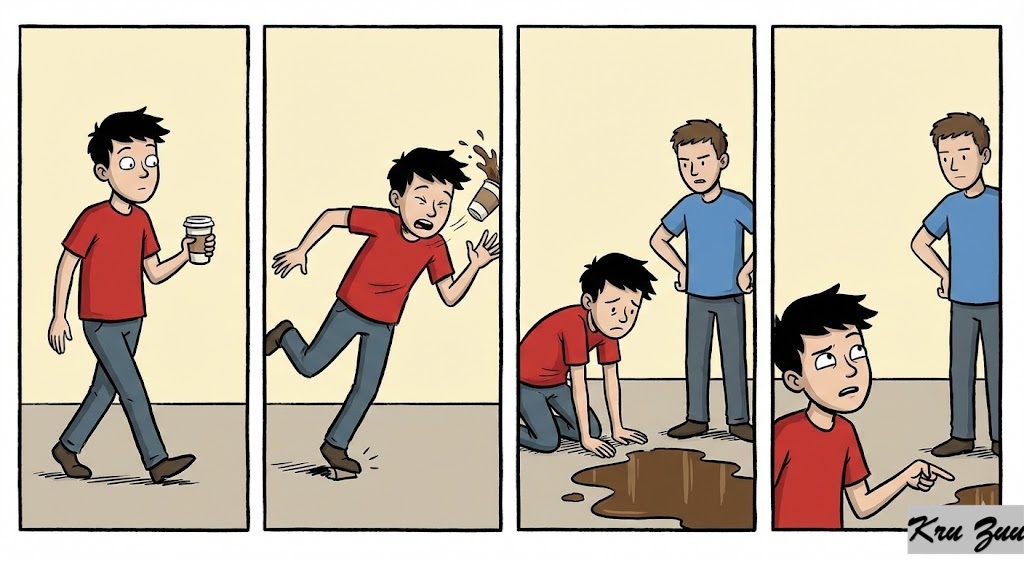
    “Don’t cry over spilt milk.”


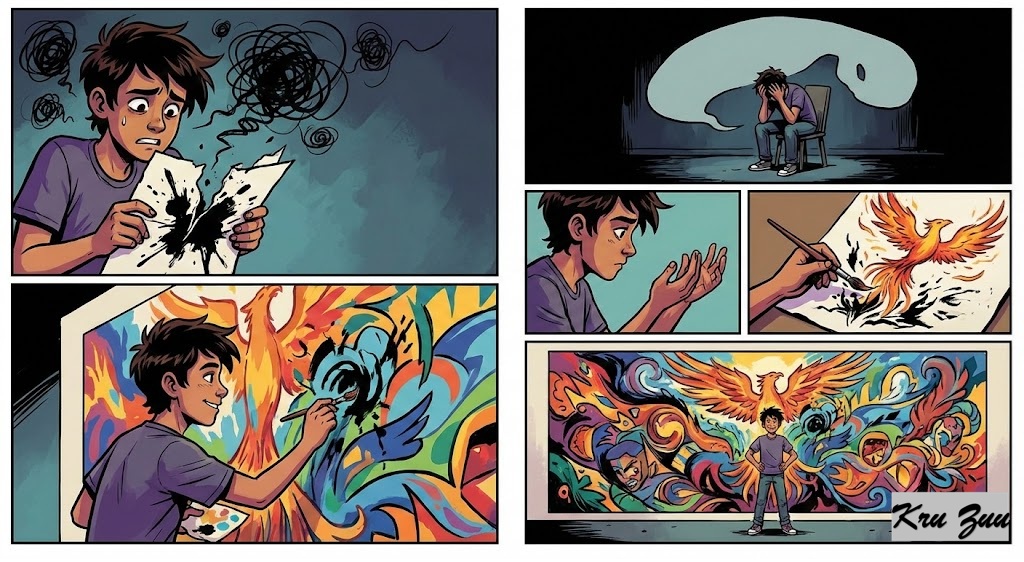
    😈 The Villain (The Dweller)

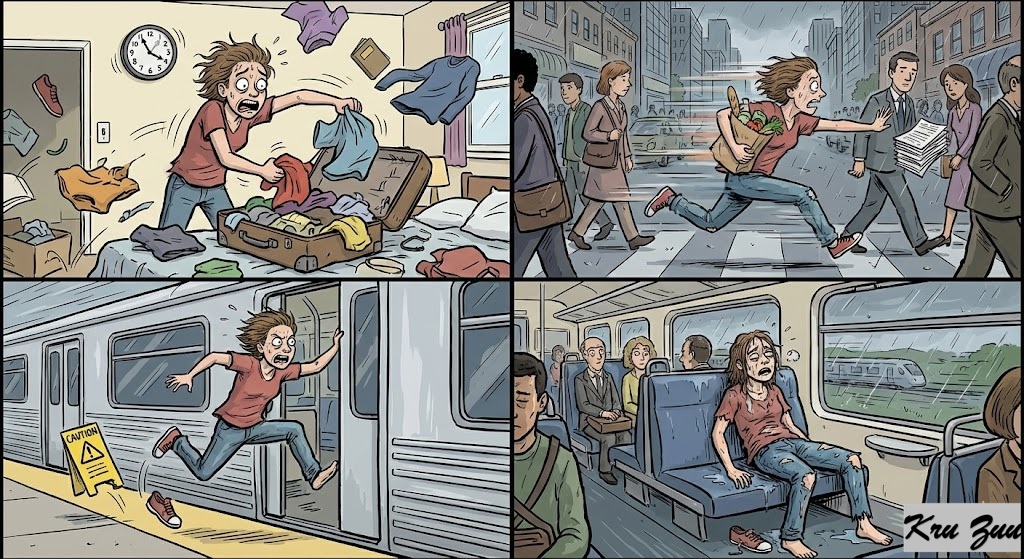
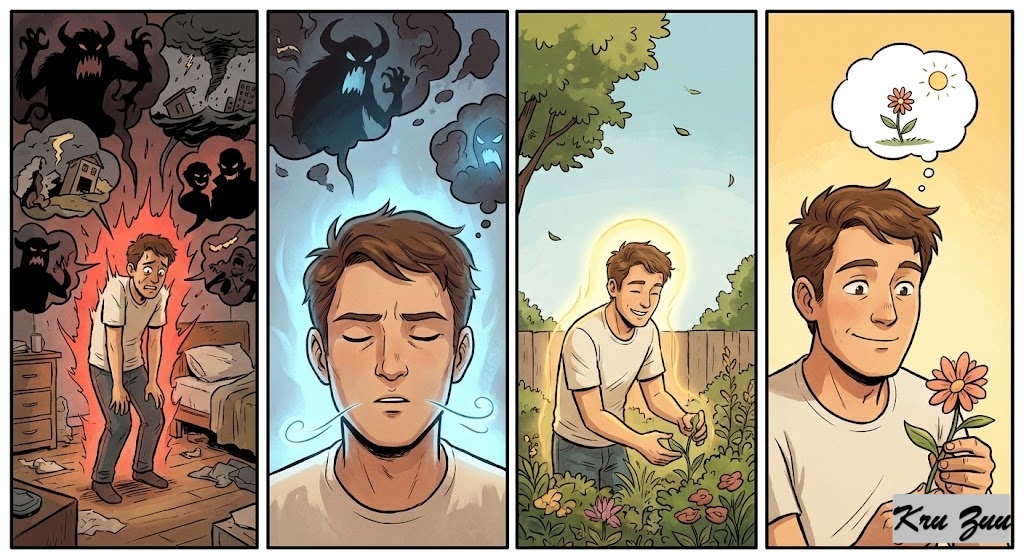
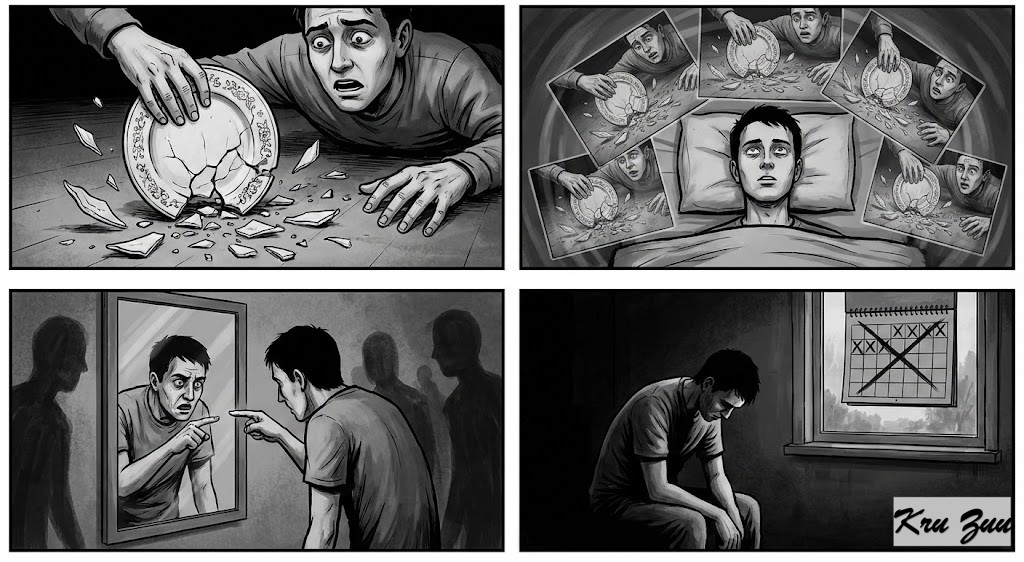
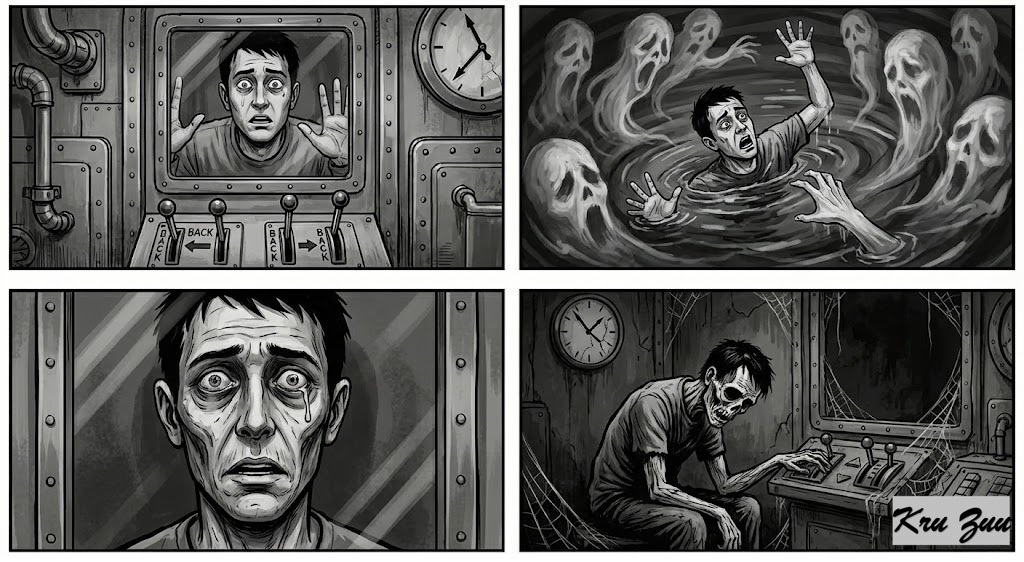
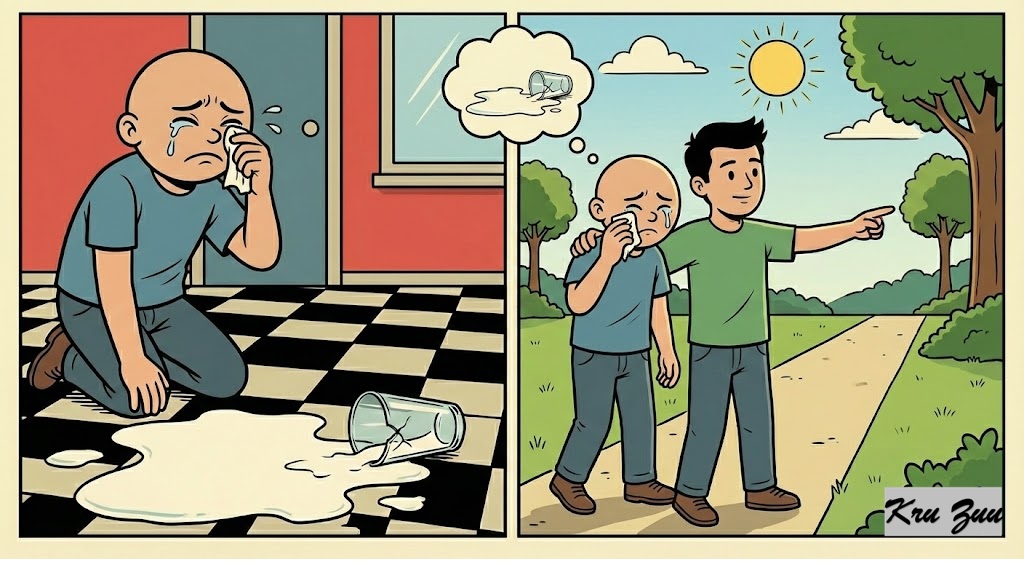
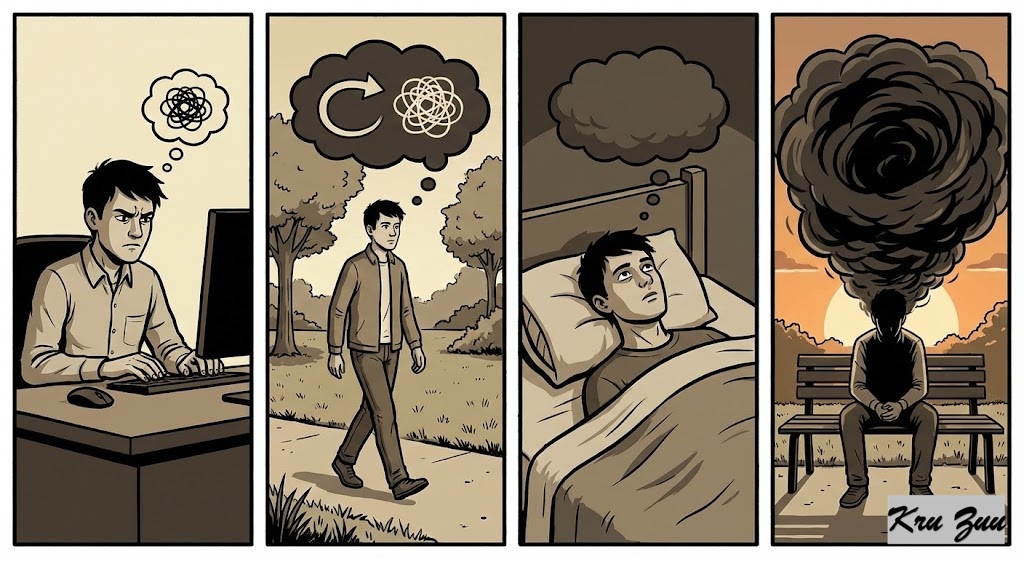
    You make a mistake. Maybe you failed an exam, sent an embarrassing text, or broke a valuable plate. What do you do? You replay the scene in your head 1,000 times. You say, “If only I had been faster… If only I had been smarter.” You let one bad moment ruin your entire week. You dwell on the past until you are paralyzed by it.

    The Result? You are stuck in a time machine that only goes backward. You are drowning in a puddle of regret. 🧟‍♂️


    😇 The Hero (The Stoic)

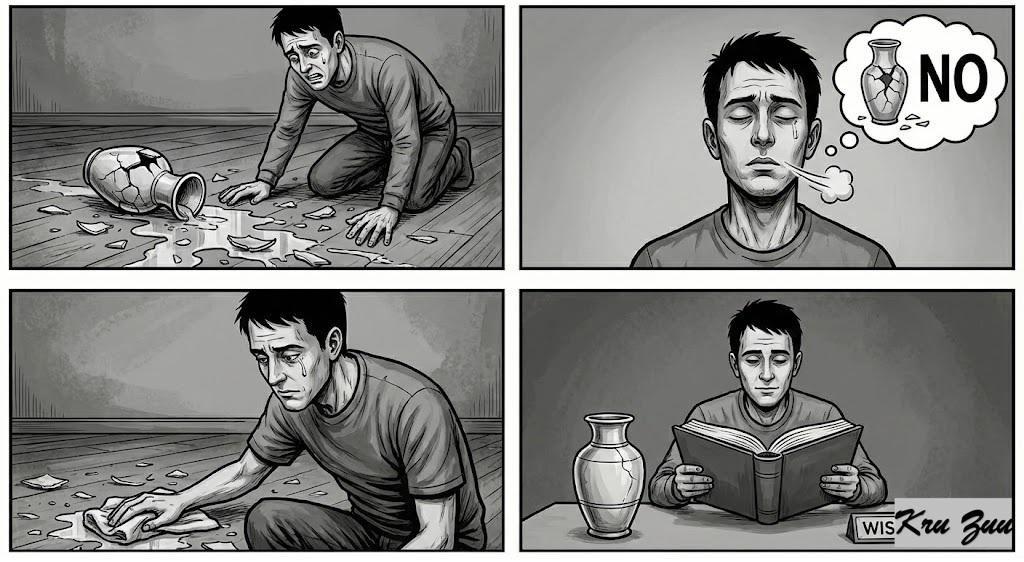
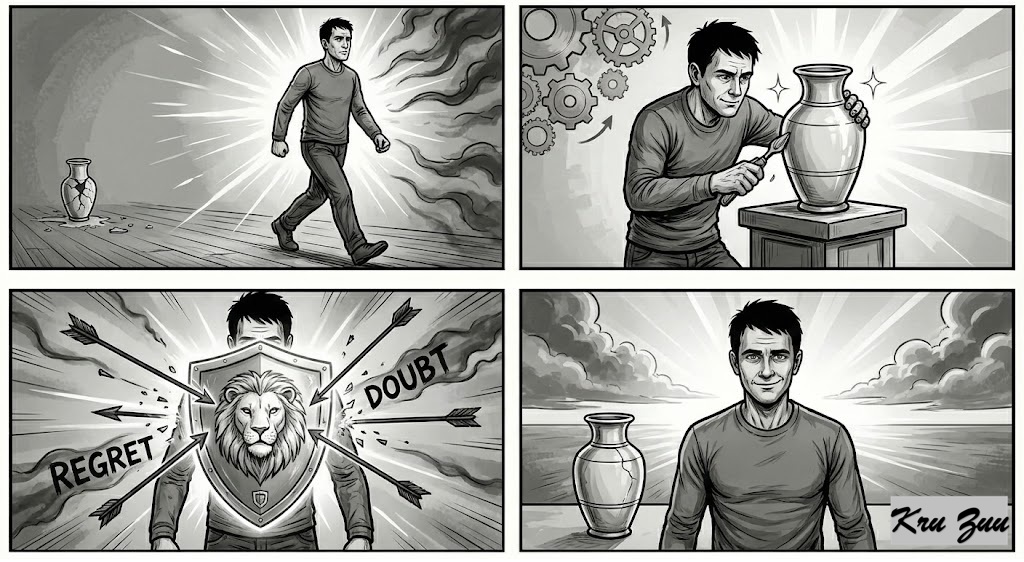
    You make a mistake. It stings. It hurts. You take a deep breath and look at the mess. You ask one question: “Can I change this?” The answer is No. So, you grab a towel, clean it up, and learn the lesson. You treat the mistake as a tuition fee for wisdom.

    The Result? You move forward instantly. Your energy is spent on fixing the future, not mourning the past. You are bulletproof against regret. 🛡️


    ⚖️ The Reality


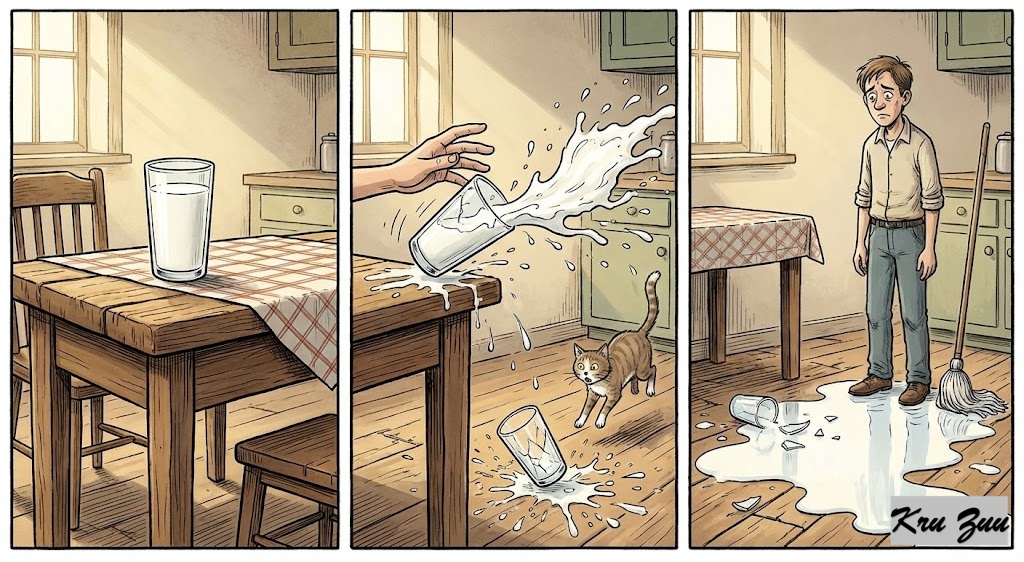
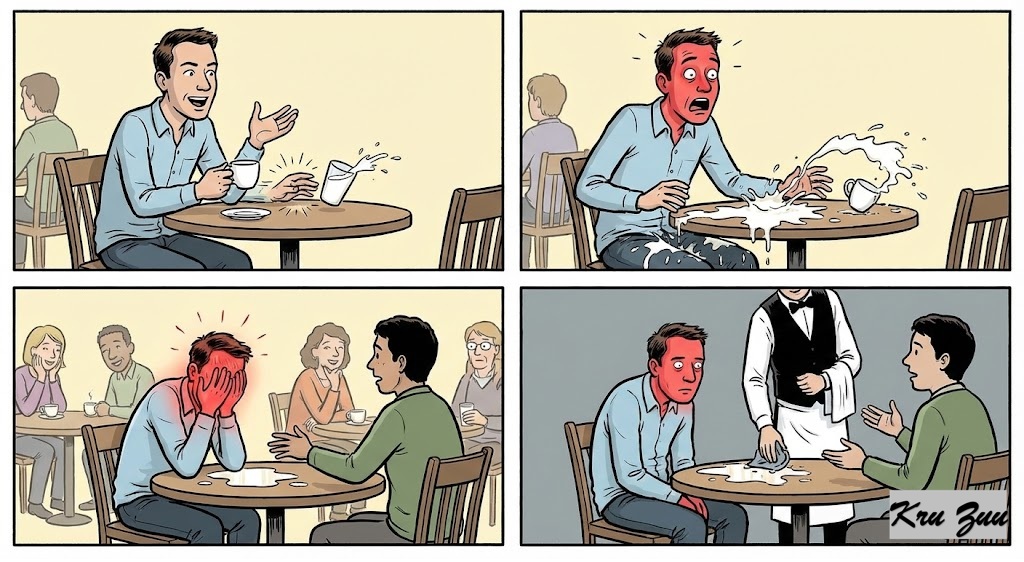
    Regret is expensive. Worrying about what already happened is like trying to pay a bill with Monopoly money. It doesn’t work. The milk is on the floor. No amount of crying, screaming, or analyzing will put the milk back into the glass.


    💎 The Secret

    The event (the spill) is not what hurts you. It is your reaction (the crying) that hurts you. Pain is inevitable; suffering is optional.

    🧐 The Anatomy of the Proverb


    This is the ultimate weapon against anxiety.


    Spilt (Adjective): The past participle of “spill.” It is done. Finished. Irreversible.


    Cry Over (Phrasal Verb): To be upset or sad about a specific thing.


    Simpler Version: Move on.


    📚 Vocabulary Vault


    Irreversible (Adjective):
    Cannot be changed or undone. (The milk is irreversible).


    Dwell (Verb): To think/speak about something for too long (usually something bad).


    Resilience (Noun): The ability to recover quickly from difficulties. 🚀


    Ruminate (Verb): To think deeply about something; often negative thoughts on a loop.


    Futile (Adjective): Pointless; producing no useful result.


    🧠 Grammar Focus: Prepositions of Cause


    Notice the preposition “Over.” We don’t cry for the milk or at the milk. We cry over it.


    English Logic: The emotion is covering the subject.


    Examples: “He is arguing over money.” / “Don’t worry over small details.”

    📜 History: Origin and Spread


    The Origin:
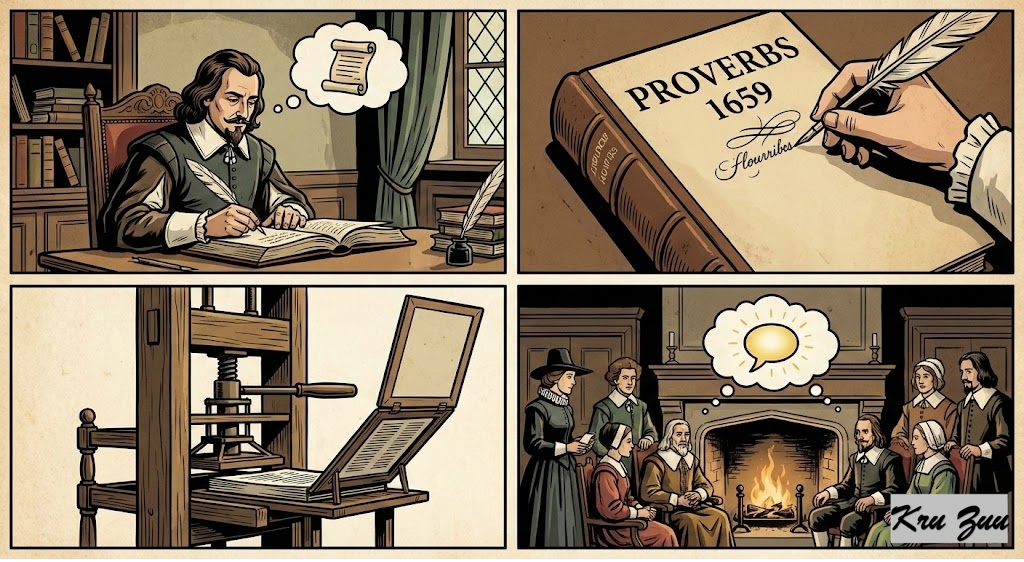
    This proverb was first recorded in 1659 by historian James Howell.

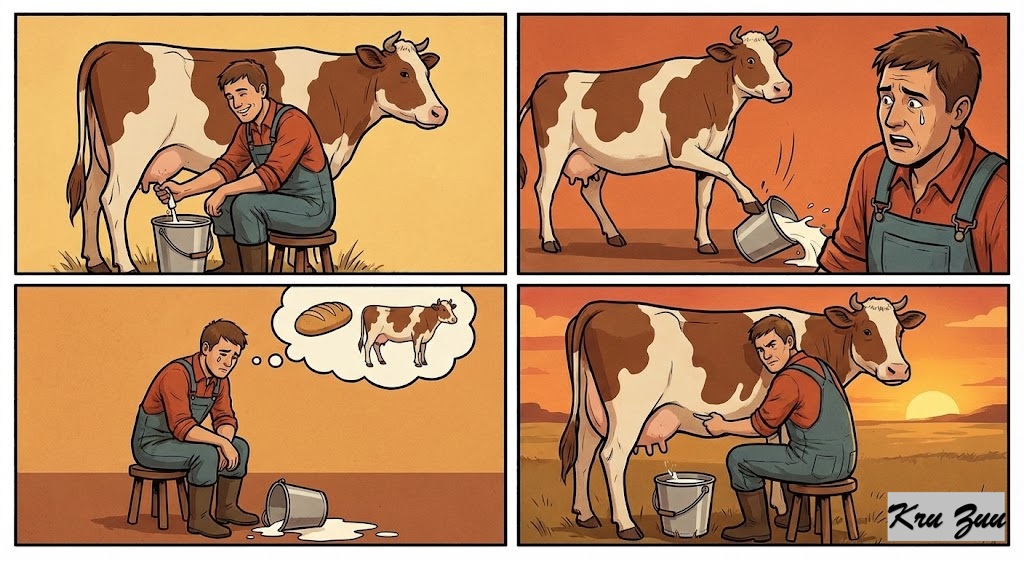
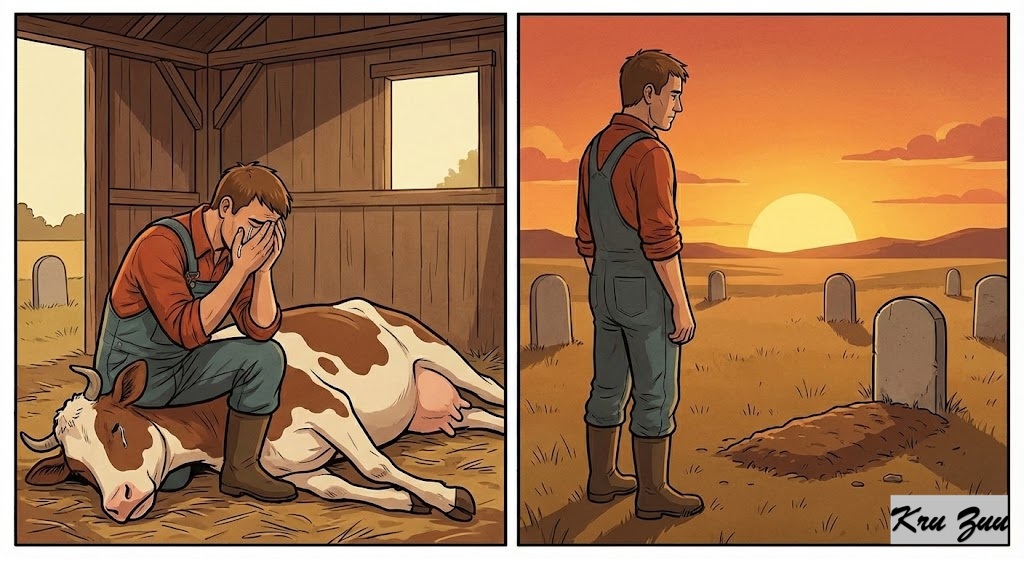
    The Logic: In old farming days, milk was money. If a cow kicked the bucket over, the farmer lost that day’s profit. But standing there crying wouldn’t feed the family, milking the next cow would.


    Global Cousins


    🇹🇷 Turkish:
    “Olanla ölene çare yoktur.” (There is no cure for what has happened or who has died.) — A darker, but very true equivalent!


    🇫🇷 French:“Ce qui est fait est fait.” (What is done is done.)


    🇯🇵 Japanese:“Fukusui bon ni kaerazu.” (Spilt water will not return to the tray.)

    🎭 Short Story: The Picnic at the Pond


    Let’s see how different personalities handle a disaster.


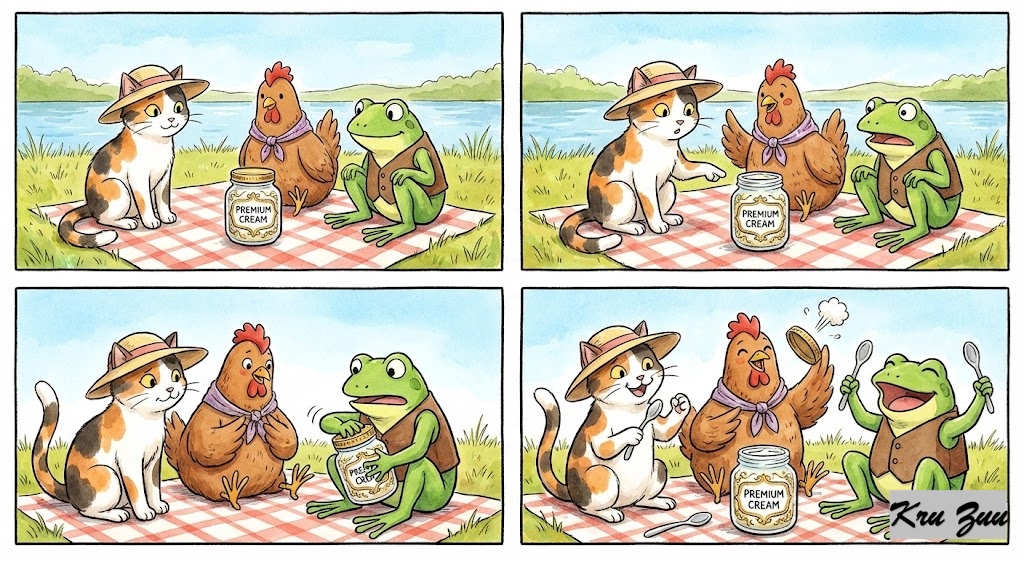
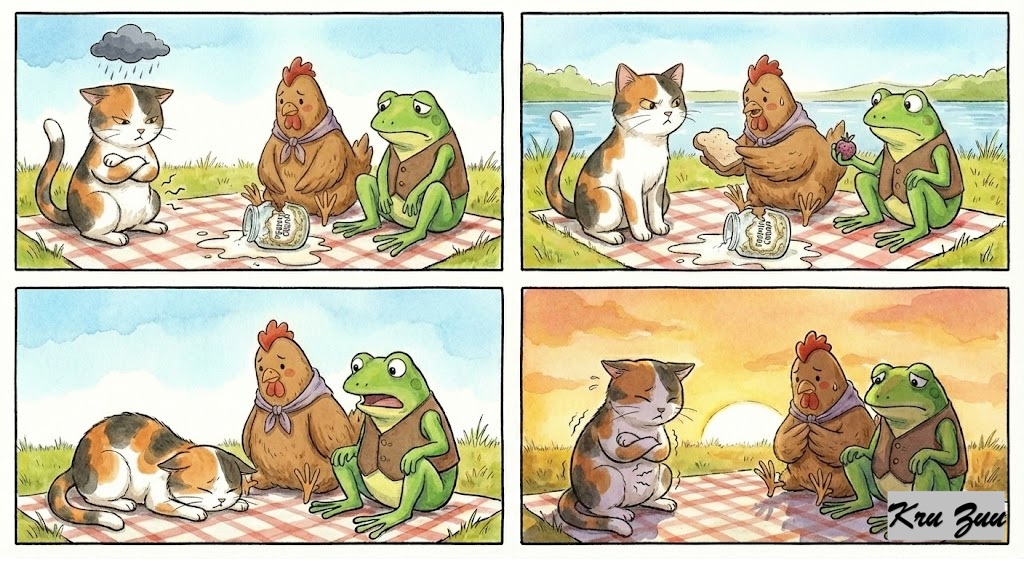
    🌟 The Setup: It is a beautiful Sunday. Three friends are having a picnic by the lake: Cleo the Cat, Henrietta the Chicken, and Franklin the Frog. They have one jar of delicious, expensive cream.


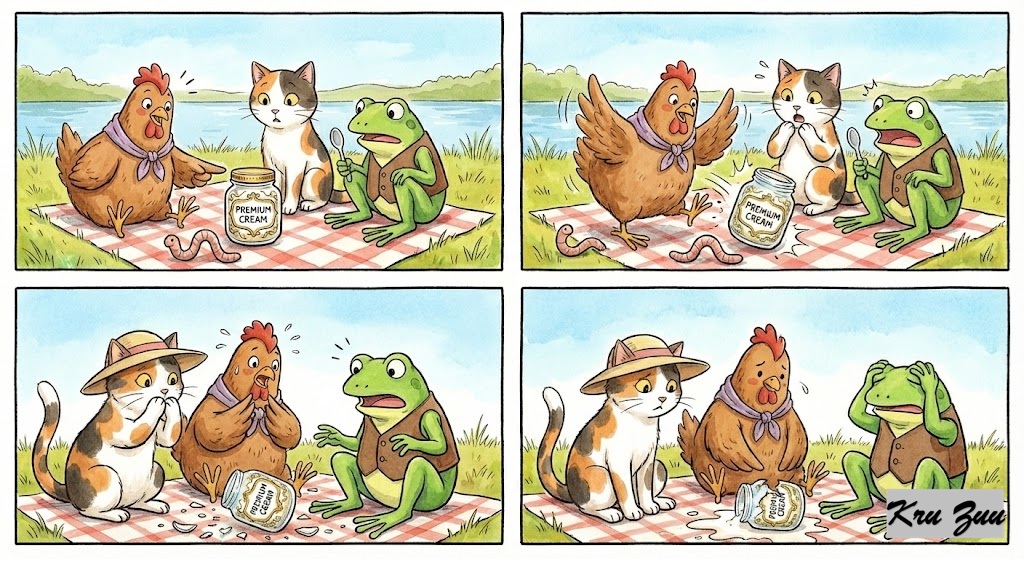
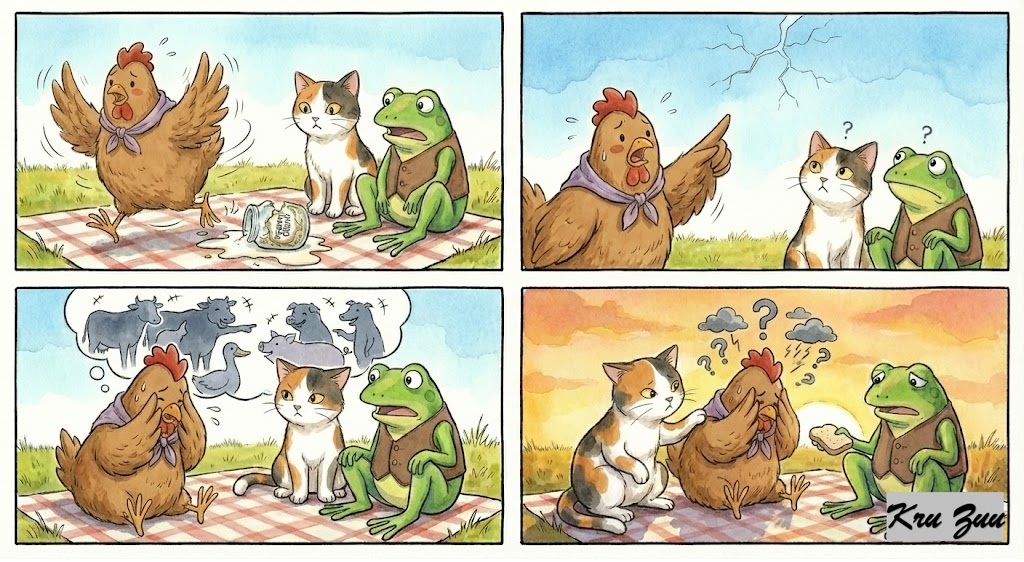
    The Accident: Henrietta the Chicken gets excited about a worm. She flaps her wings, hits the table, and—SMASH. The jar breaks. The expensive cream soaks into the dirt. It is gone.


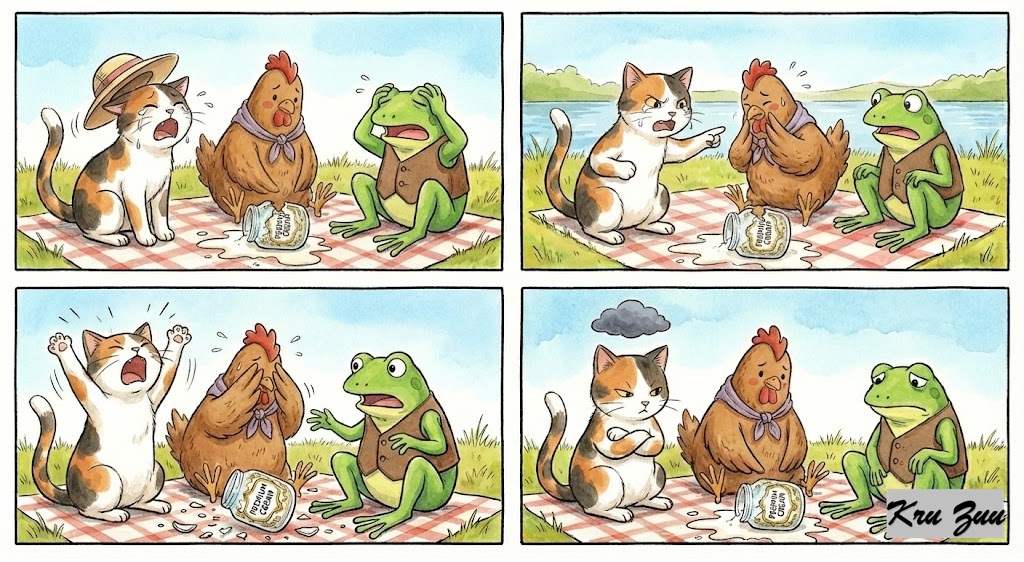
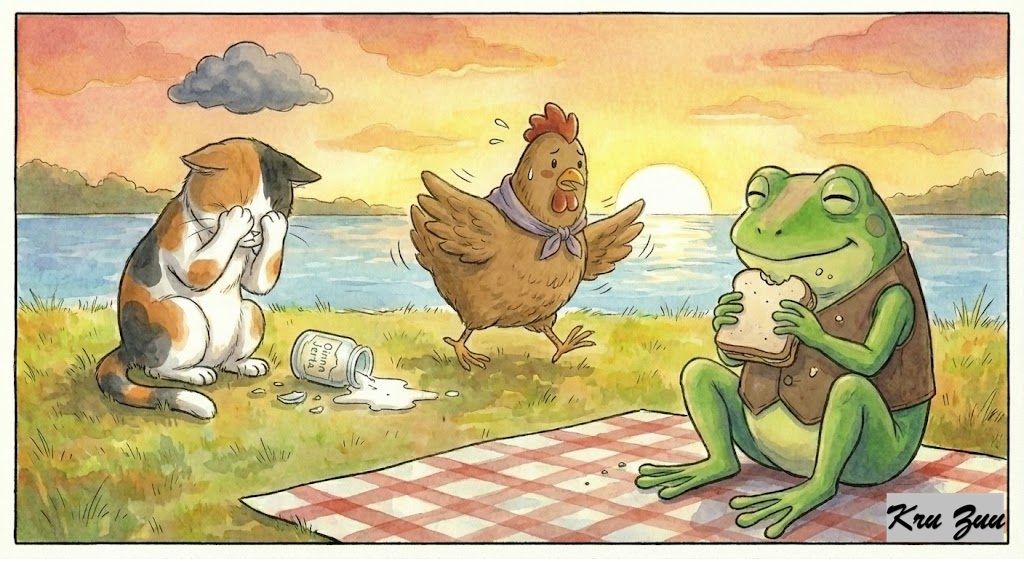
    😿 Cleo the Cat (The Dweller): Cleo stares at the cream. She starts to wail. “My cream! It was perfect! Why are you so clumsy, Henrietta? If we had sat on the grass, this wouldn’t have happened! I can’t believe this. My day is ruined. I’m not eating anything else!”

    Result: Cleo is hungry and miserable.


    🐔 Henrietta the Chicken (The Anxious): Henrietta runs in circles, flapping wildly. “Oh no! Oh no! The sky is falling! What will we do? We have no cream! It’s a disaster! Everyone will laugh at us!”

    Result: Henrietta is having a panic attack.


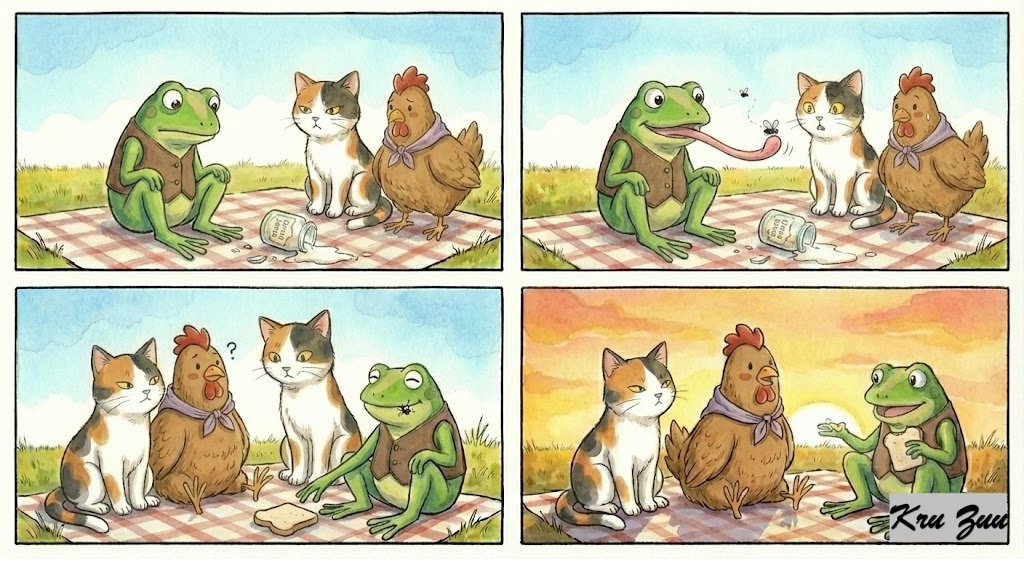
    🐸 Franklin the Frog (The Stoic): Franklin looks at the broken glass. He looks at the cream in the dirt. He blinks his big eyes. “Ribbit,” says Franklin. He sticks out his long tongue and catches a fly buzzing near the mess. “The cream is gone,” Franklin says calmly. “But the sandwiches are still dry. And the sun is still warm. Pass the bread, please.”


    The Moral: Cleo cried. Henrietta panicked. Franklin ate lunch. Be like Franklin. Eat the sandwich. 🥪

    🎓 Lesson for English Learners


    Don’t Let Mistakes Silence You.


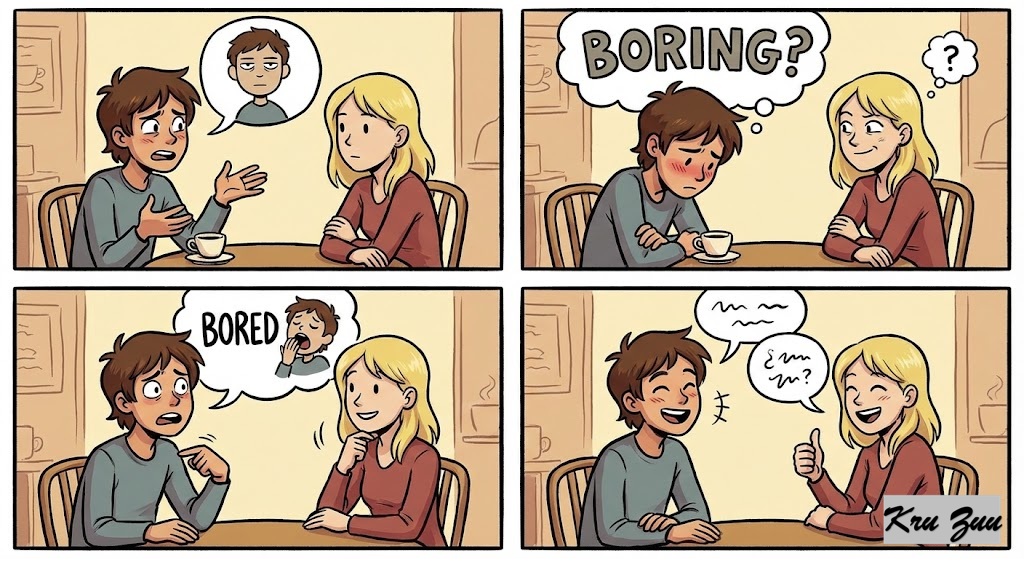
    Situation: You are speaking English to a native speaker. You try to say “I was bored,” but you accidentally say “I was boring.”


    The “Spilt Milk” Reaction: You freeze. Your face turns red. You stop talking because you are afraid of making another mistake.


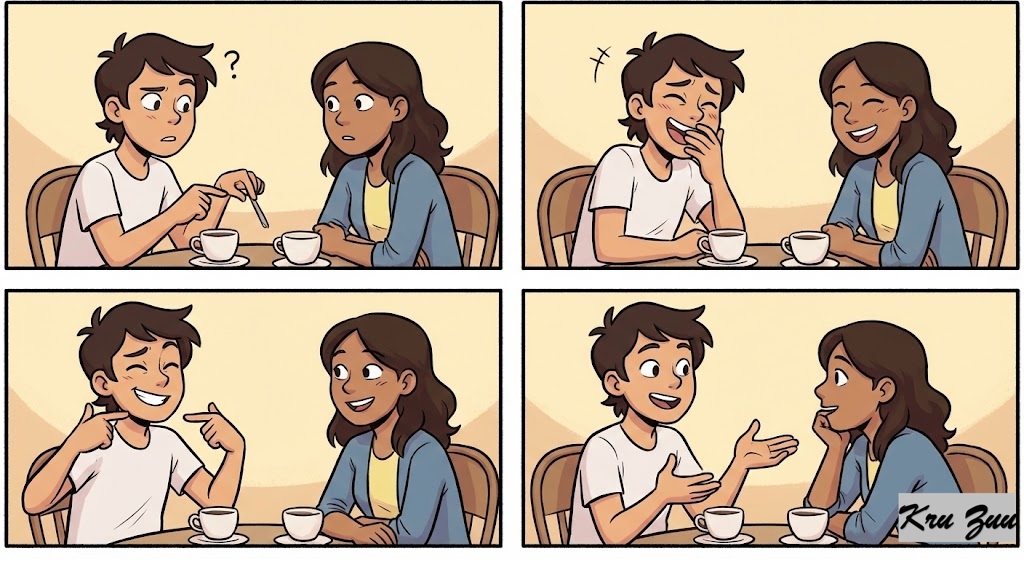
    The Hero Reaction: You laugh. You say, “Oops! I mean I was bored!” and you keep talking.


    Remember: A grammar mistake is spilt milk. Once the words leave your mouth, they are gone. You cannot catch them. Don’t cry over a bad verb tense. Just speak the next sentence better.


    💬 Your Turn: The 5-Second Funeral 🚀


    We all have “spilt milk” in our lives. Here is your challenge.


    The Exercise: Think of one small mistake you made this week that is still bothering you.


    A rude email you sent?


    A workout you skipped?


    A dumb comment you made?


    The Action:
    We are going to hold a funeral for that mistake.


    Close your eyes.


    Admit the mistake happened.


    Count backward:
    5, 4, 3, 2, 1.


    Say out loud: “It is spilt.”


    Move on.


    Question:
    What is one “spilt milk” moment you are letting go of today? Tell us in the comments! 👇

    By Zubeyir YURTKURAN

    https://www.facebook.com/BrainBattleground/

    https://www.facebook.com/zubeyr.yurtkuran/

    https://www.instagram.com/zubeyryurtkuran/
    https://www.youtube.com/@BrainBattleground-b3p

    https://www.instagram.com/brainbattleground/

  • 🐣 The Daily Shield: The Law of Patience

    🐣 The Daily Shield: The Law of Patience

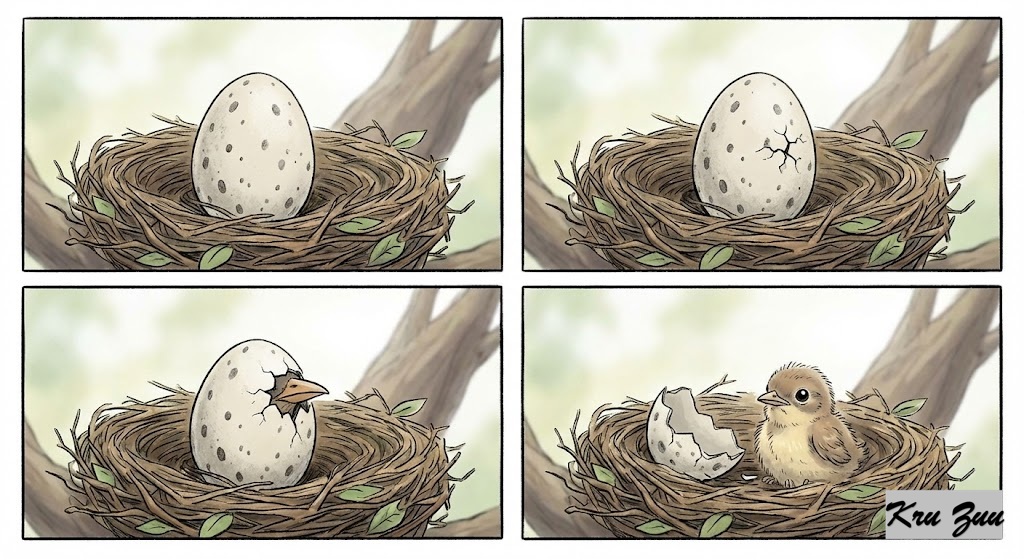
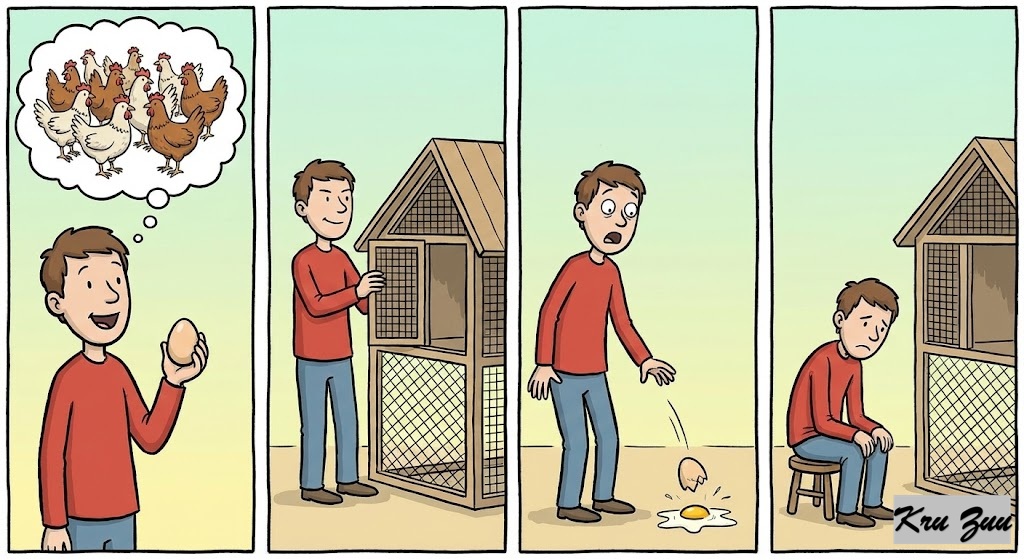
    “Don’t count your chickens before they hatch.”


    🤡 The Villain (The Daydreamer)


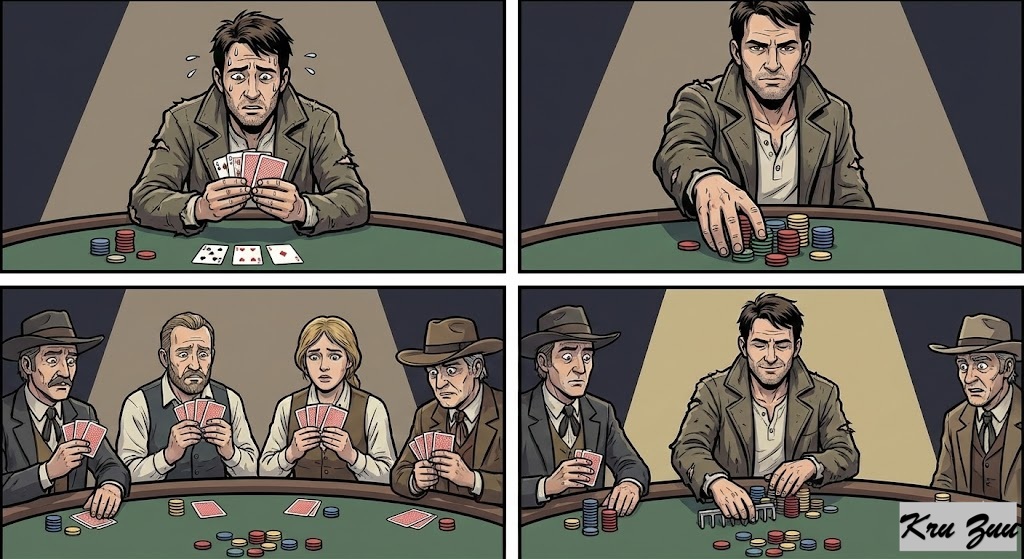
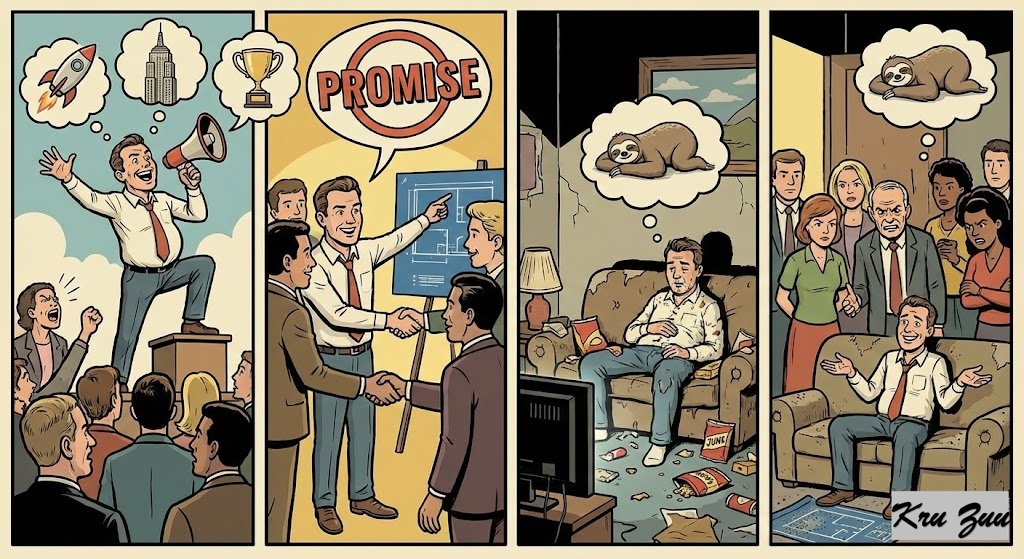
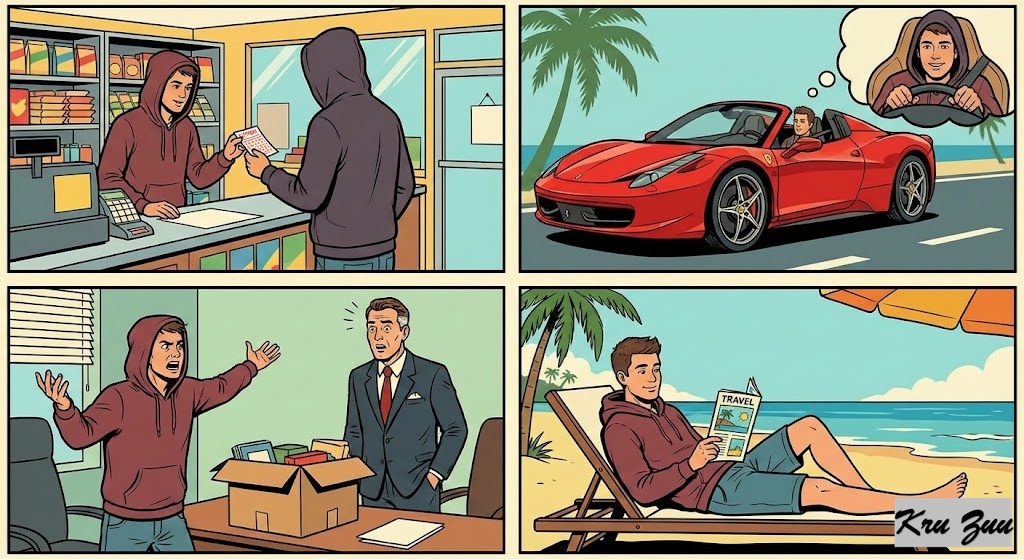
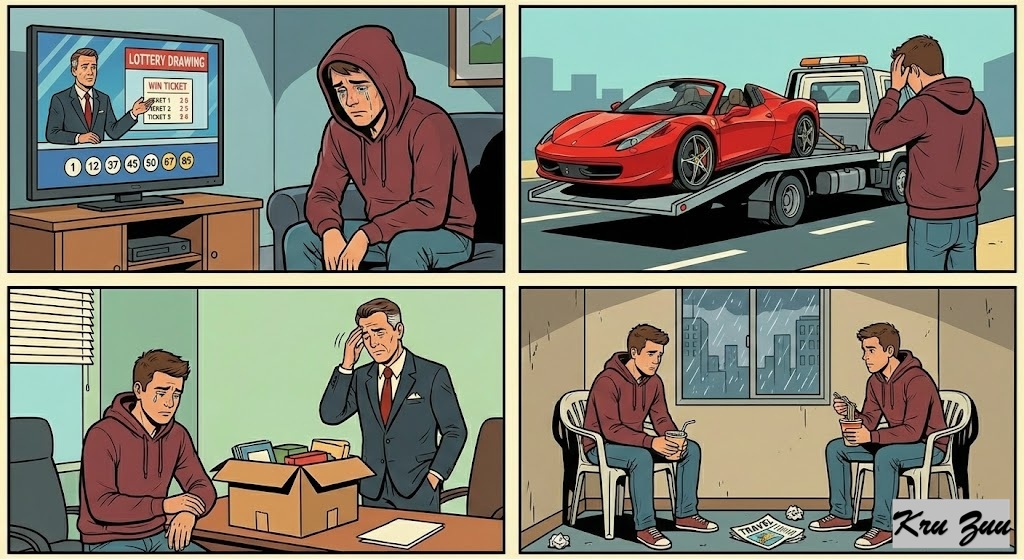
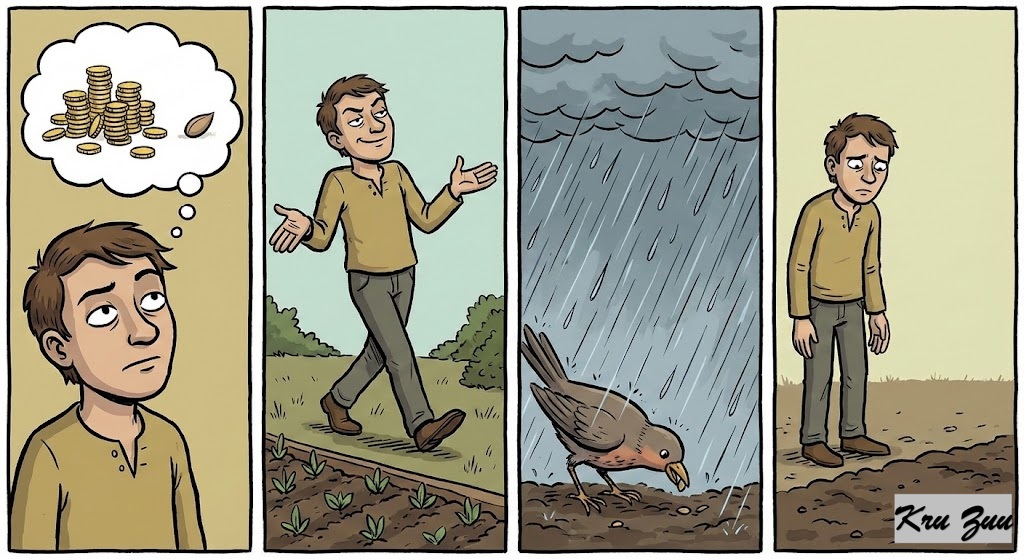
    You buy a lottery ticket. You haven’t won yet, but you are already mentally buying a Ferrari. You tell your boss, “I quit!” because you are sure you will win. You plan a vacation to the Maldives.

    The Result? The numbers come out. You lose. Now you have no job, no Ferrari, and you look foolish. You fell in love with a future that didn’t exist yet. 📉


    🤠 The Hero (The Realist)


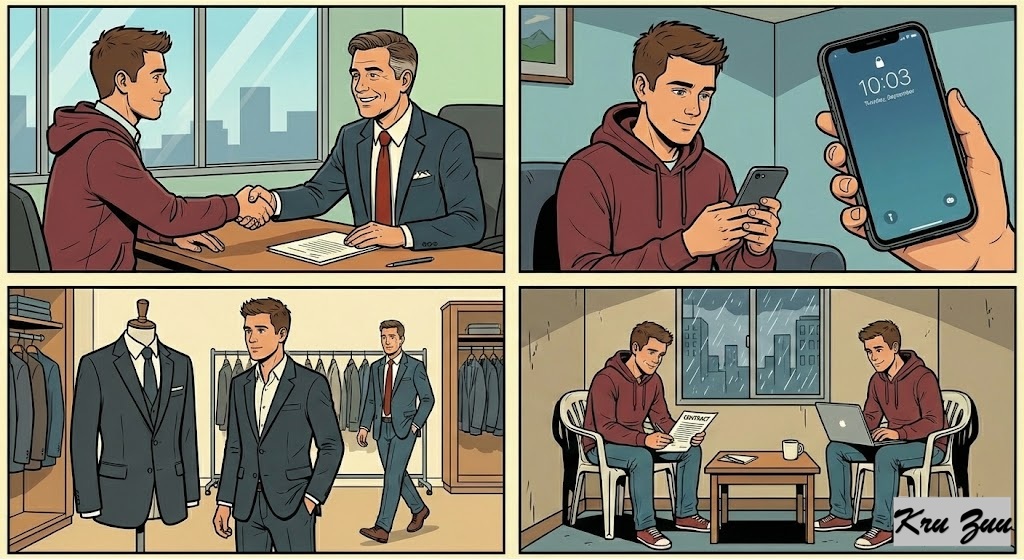
    You apply for a new job. The interview went great! But you don’t post about it on Instagram yet. You don’t buy a new suit yet. You wait for the signed contract. You stay focused.

    The Result? If you get the job, you celebrate for real. If you don’t, you aren’t embarrassed, and you move to the next opportunity. You protect your heart from disappointment. 🛡️


    ⚖️ The Reality


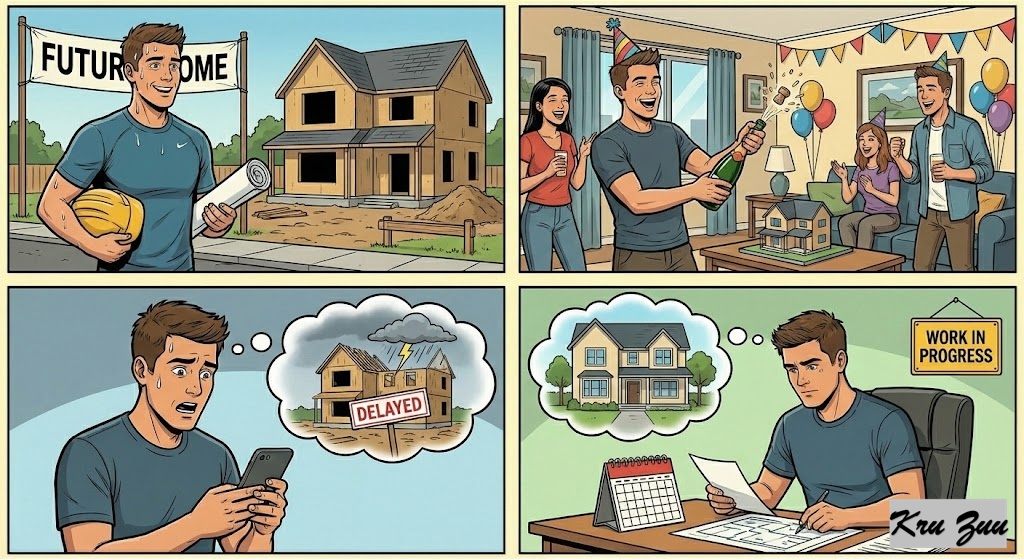
    “Almost” is not “Done.” Excitement is a drug. It feels good to imagine success. But celebrating early is dangerous, it tricks your brain into thinking the work is finished when it hasn’t even started.


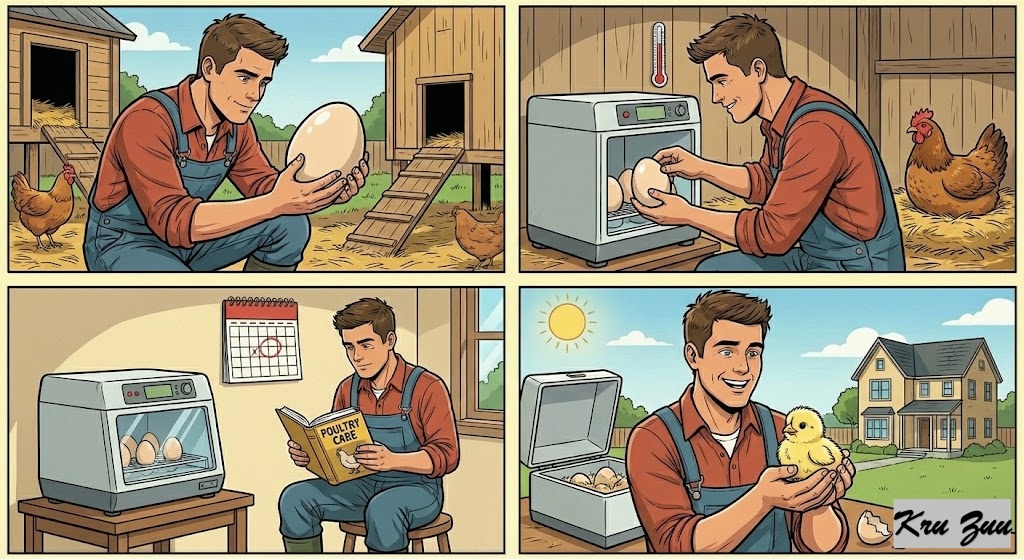
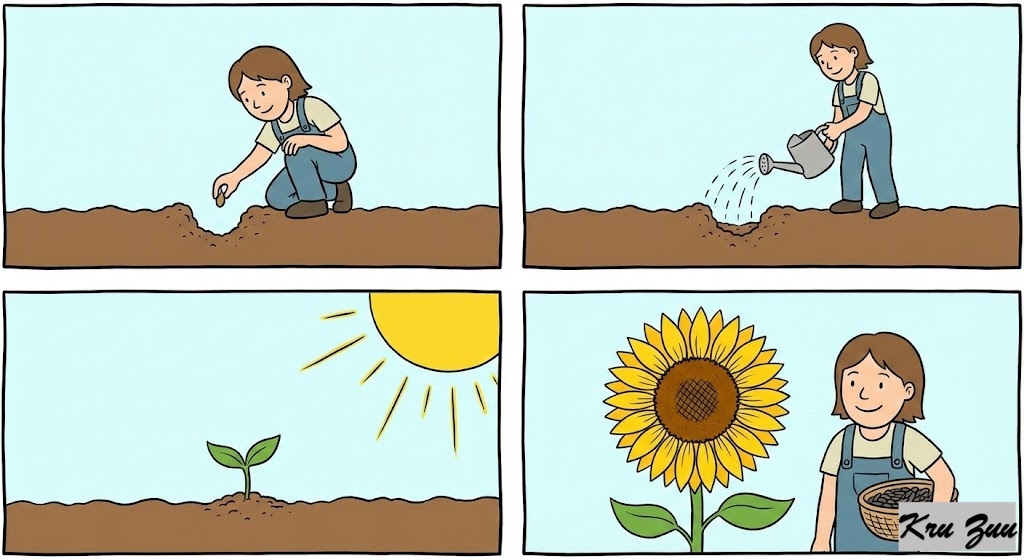
    💎 The Secret: Focus on the process (the egg), not the prize (the chicken). If you take care of the egg, the chicken will come.

    🧐 The Anatomy of the Proverb


    This proverb warns against over-confidence and assuming a result before it happens.


    Hatch (Verb): When a baby bird breaks out of its egg. 🐣


    Count (Verb):
    To calculate the total number.


    Before (Preposition): Earlier than.


    Simpler Version: Don’t make plans based on something that hasn’t happened yet.


    📚 Vocabulary Vault


    Premature (Adjective):
    Happening or done too soon. (e.g., A premature celebration.)


    Assumption (Noun): Believing something is true without proof.


    Anticipate (Verb): To expect or predict.


    Jinx (Verb): To bring bad luck by talking about a good result too early. 🍀


    Outcome (Noun): The final result.


    🧠 Grammar Focus: “Before” Clauses


    This proverb uses a time clause with “Before.”


    Structure: Don’t + [Verb] + [Object] + before + [Subject] + [Verb].


    Rule: Even though we are talking about the future, we use the Present Simple tense after “before.”


    Incorrect: Before they will hatch.
    Correct: Before they hatch.

    📜 History & Global Cousins


    This wisdom is ancient. It comes from one of Aesop’s Fables (“The Milkmaid and Her Pail”), where a girl imagines selling milk to buy eggs to buy chickens… until she drops the milk bucket and loses everything.


    Global Cousins


    🇹🇷 Turkish:
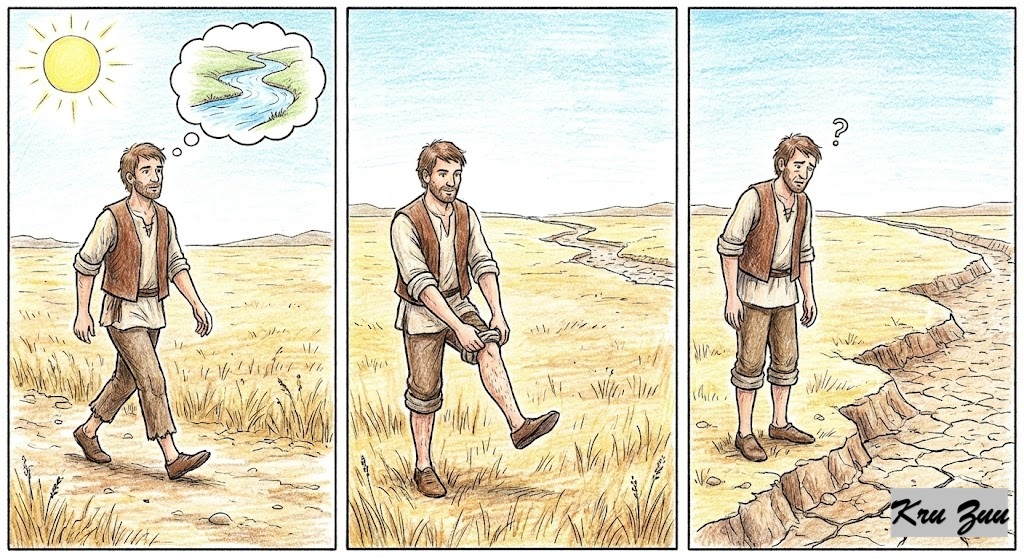
    “Dereyi görmeden paçaları sıvama.” (Don’t roll up your trousers before you see the stream/river.) — Perfect match!


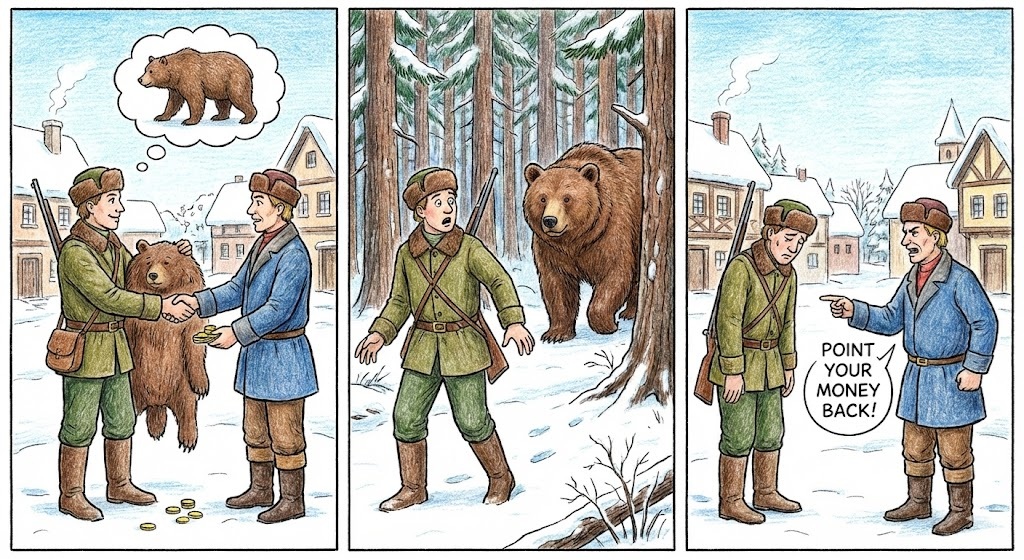
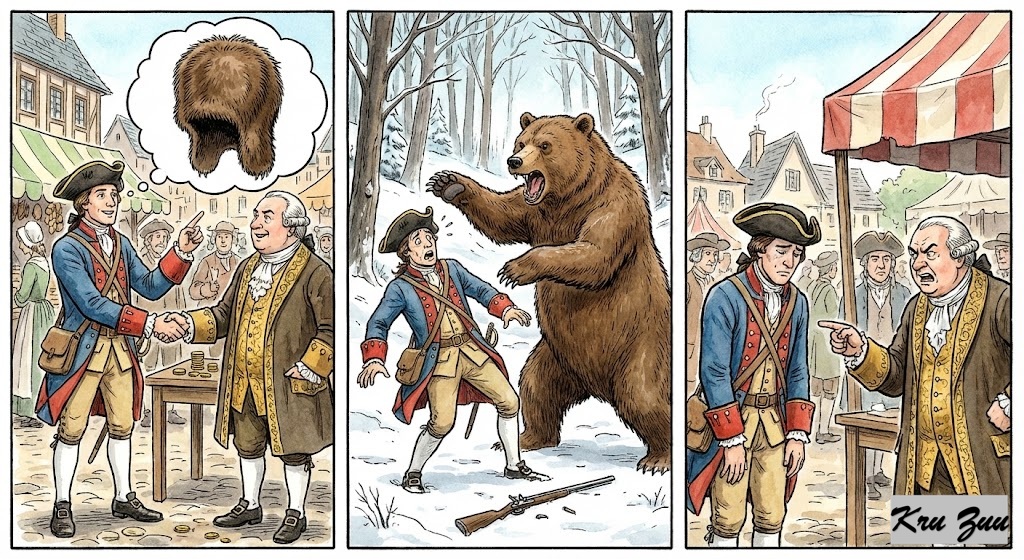
    🇪🇸 Spanish:“No vendas la piel del oso antes de cazarlo.” (Don’t sell the bear’s skin before you hunt it.)


    🇫🇷 French:“Il ne faut pas vendre la peau de l’ours avant de l’avoir tué.”

    🎭 Short Story: The Feast That Never Happened


    Let’s go to the farm to see this proverb in action.


    The Cast


    😼 Whiskers (The Cat):
    Hungry, arrogant, and impatient.


    🐔 Mrs. Pecks (The Chicken): Hardworking and silent.


    🐸 Croak (The Frog): The wise observer by the pond.


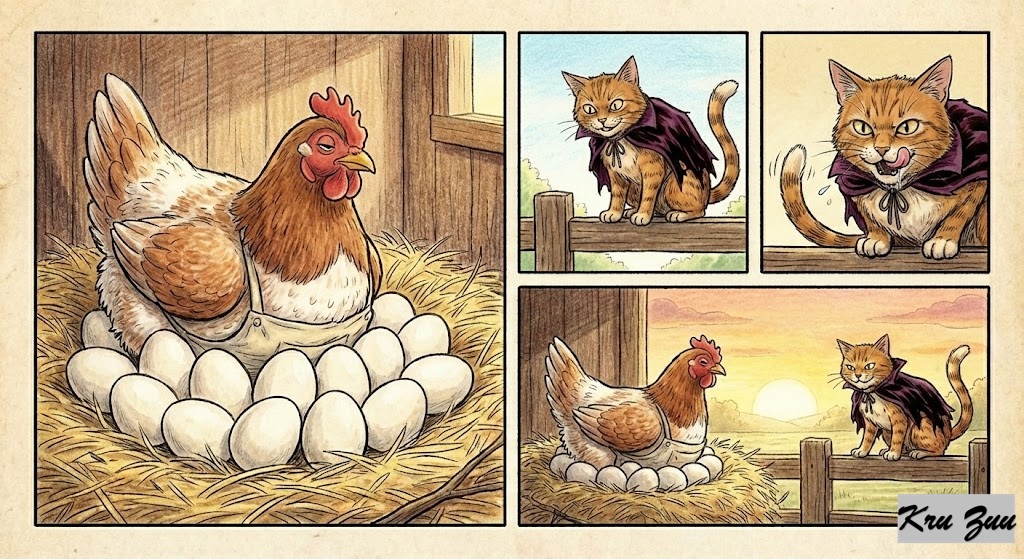
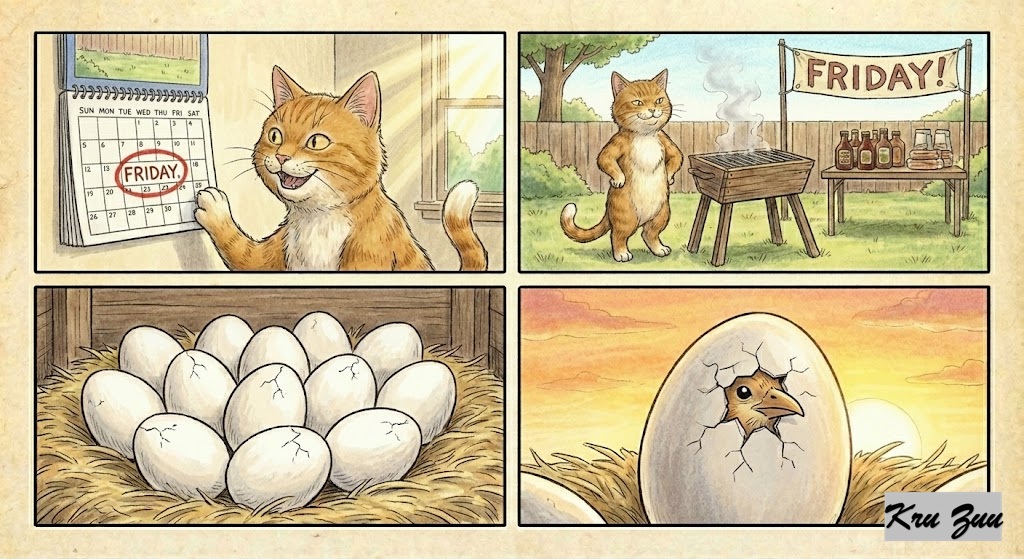
    The Scene: Mrs. Pecks was sitting on 12 big, white eggs. She sat quietly, keeping them warm. Whiskers the Cat watched from the fence, licking his lips.


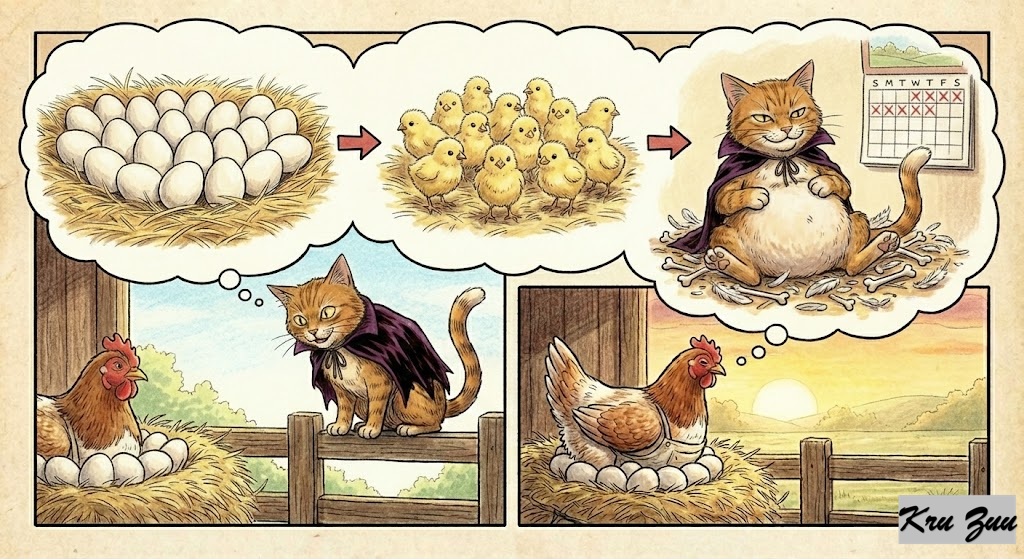
    The Dialogue:Whiskers: “Look at that! 12 eggs! That means 12 fat, juicy little chicks for my dinner next week. I will eat two on Monday, two on Tuesday…”

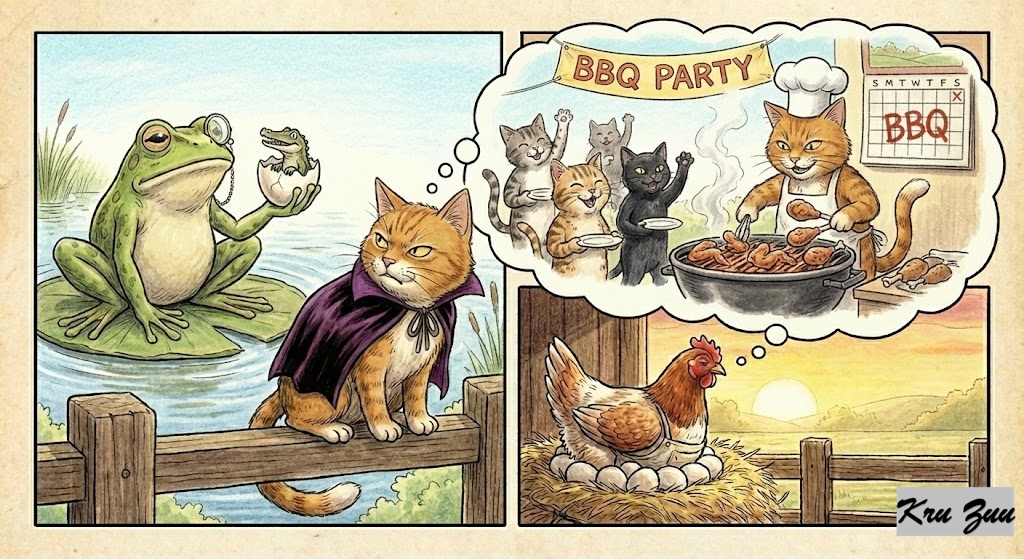
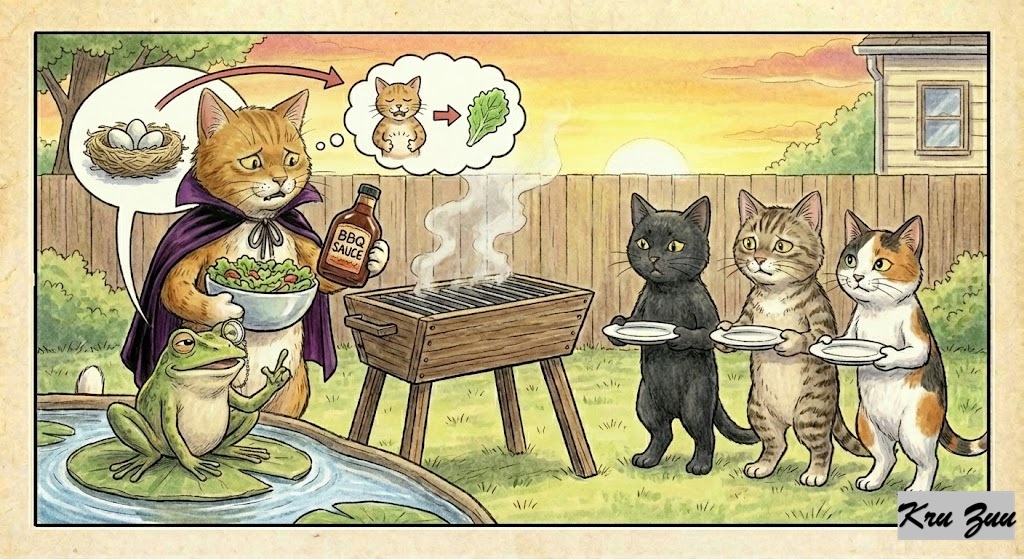
    Croak (The Frog): “Ribbit. Careful, cat. Nature is unpredictable. Not every egg holds a chick.” Whiskers: “Quiet, you slimy green thing! I am already inviting my friends for a BBQ. I can taste the wings already!” 🍗


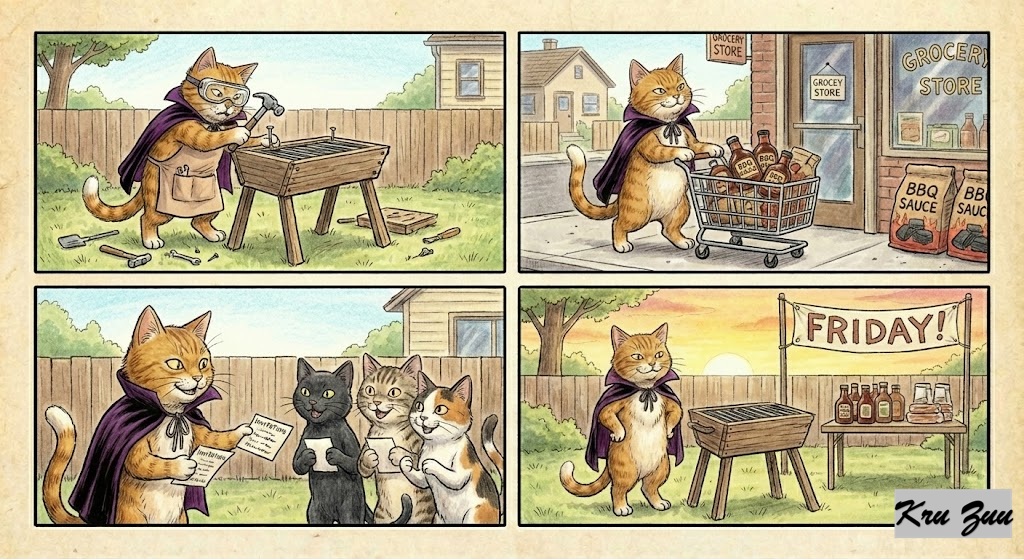
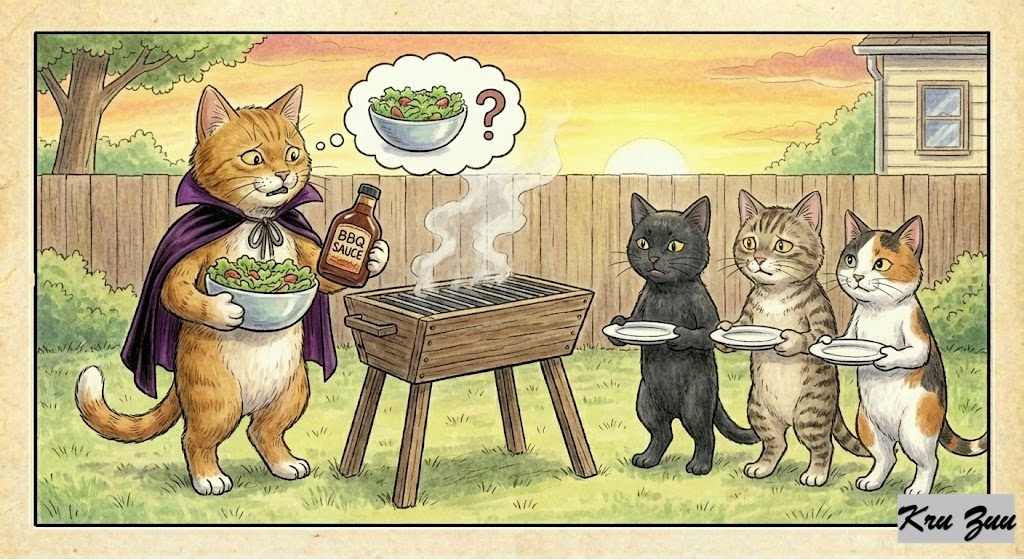
    Whiskers spent the whole week building a grill and buying BBQ sauce. He told all the neighborhood cats, “Come to my house on Friday! Huge feast!”


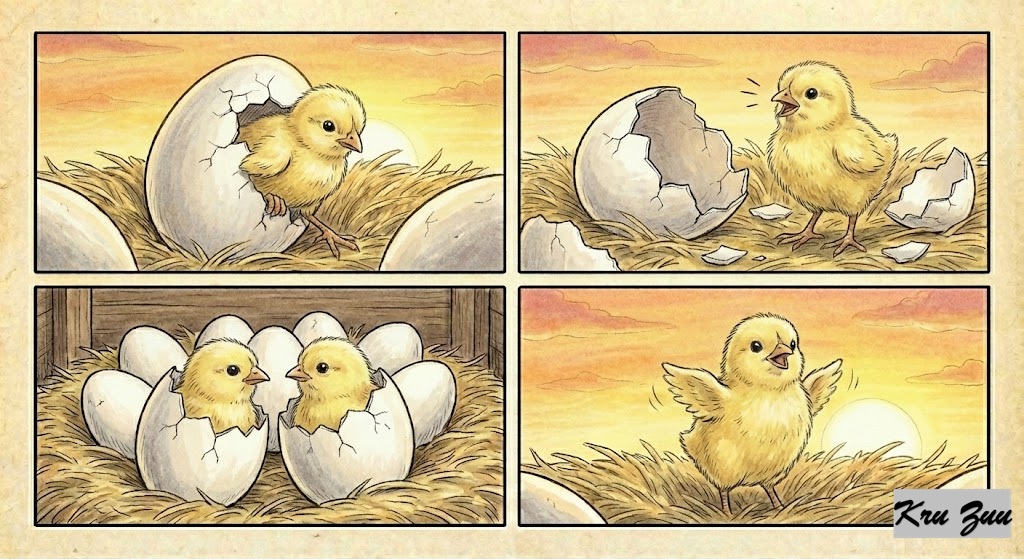
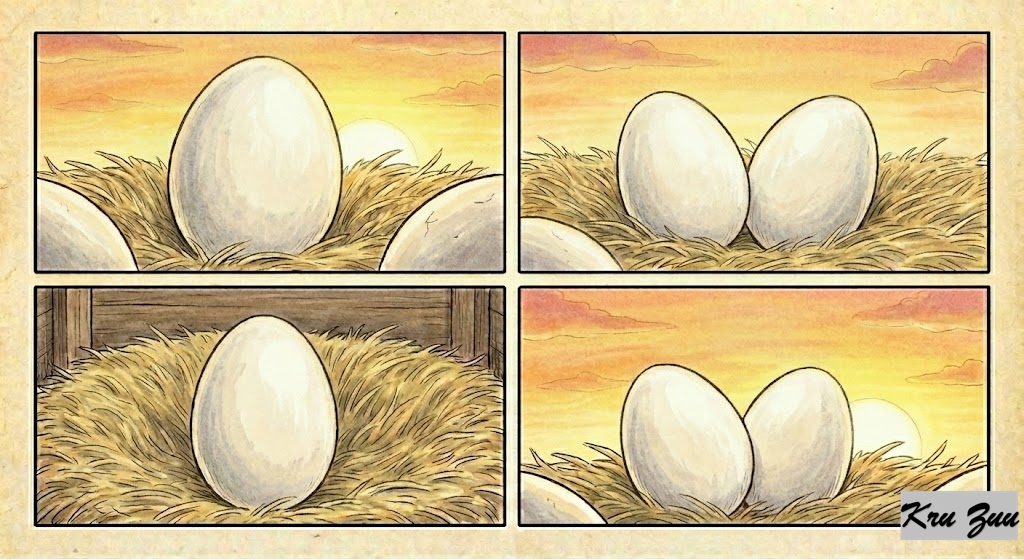
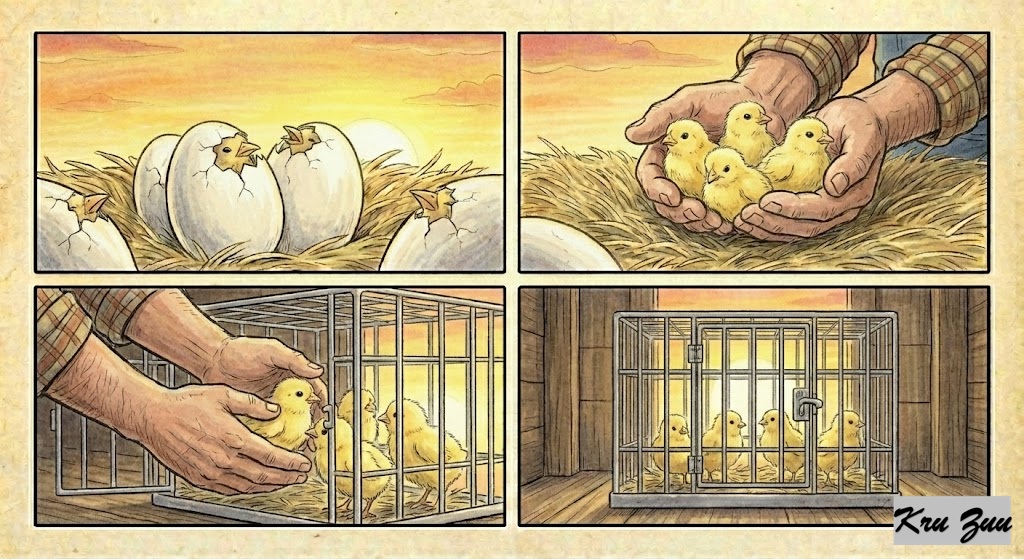
    The Result: Friday came. The eggs began to crack.


    Egg 1-4: Out popped cute yellow chicks! 🐥


    Egg 5-8: … Nothing happened. They were empty.


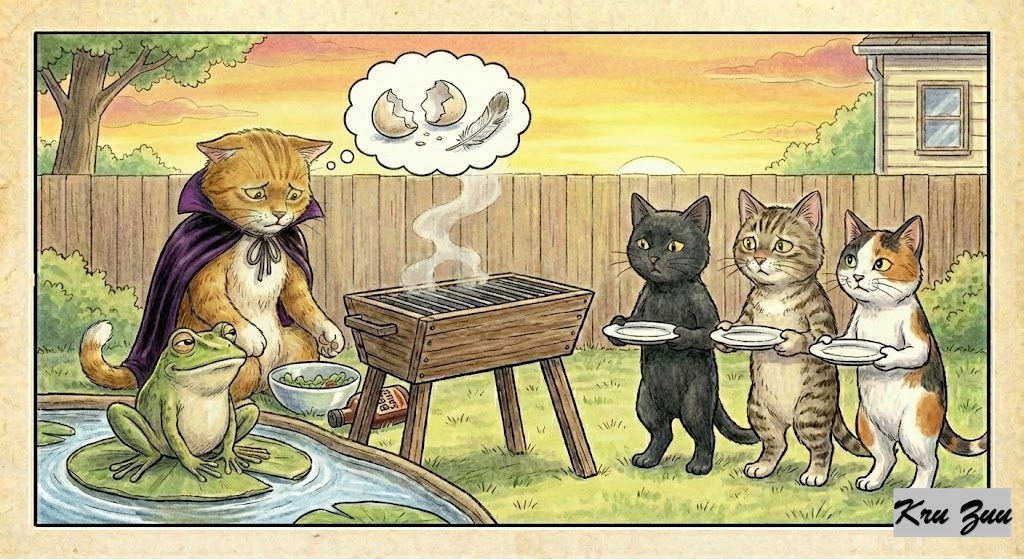
    Egg 9-12: The Farmer came out, picked up the remaining chicks, and put them in a secure metal cage. “Safe from predators!” the Farmer said.


    Whiskers stood there with his BBQ sauce. No chicks. His friends arrived, hungry.

    Whiskers: “Uhh… would you guys like some salad?”

    Croak: “Ribbit. I told you. You counted your chickens, but now you only have an empty stomach.”


    The Moral: Whiskers focused on the feast, not the reality. Don’t set the table until the dinner is ready.

    🎓 Lesson for English Learners


    Don’t Rely on “Luck.”


    Situation:
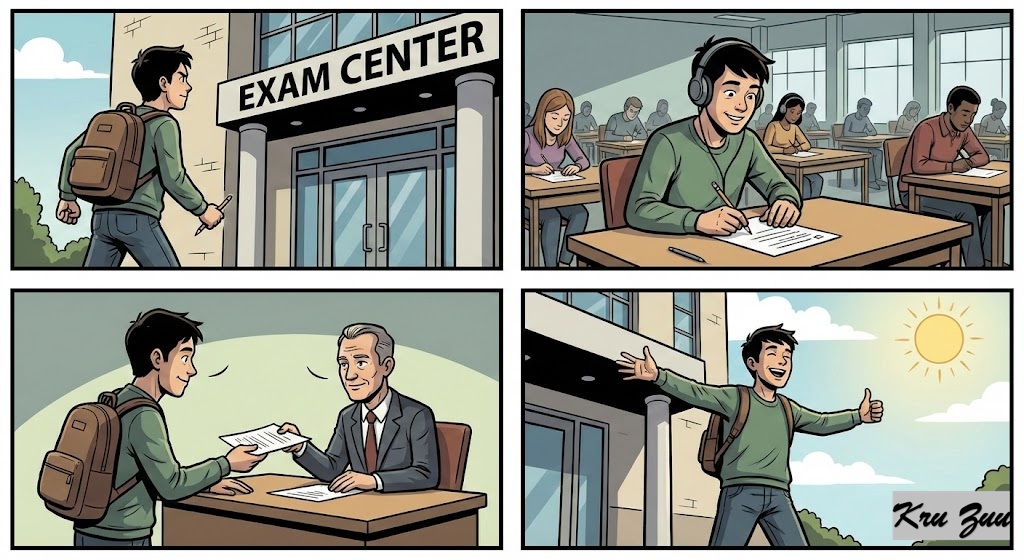
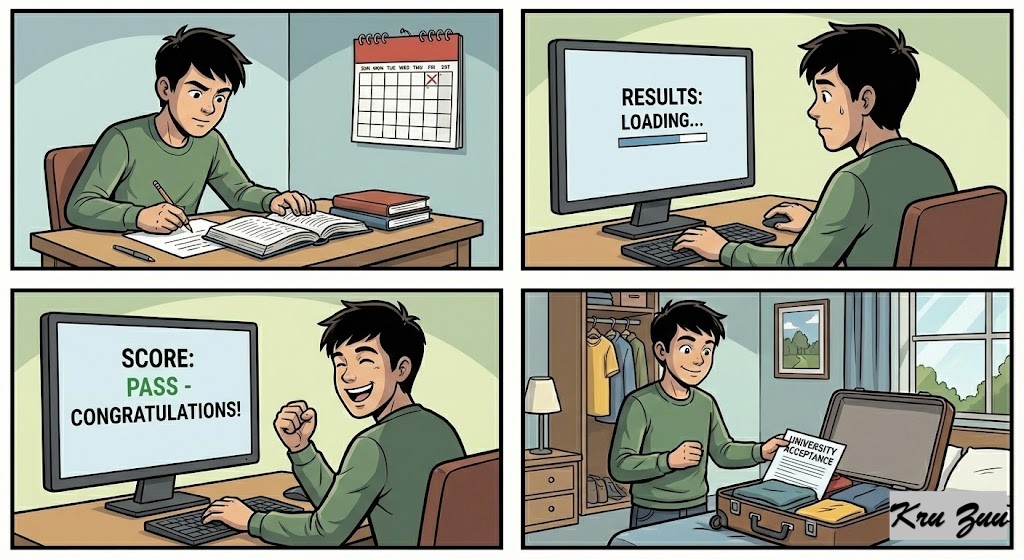
    You take an English exam (IELTS/TOEFL). You feel good.

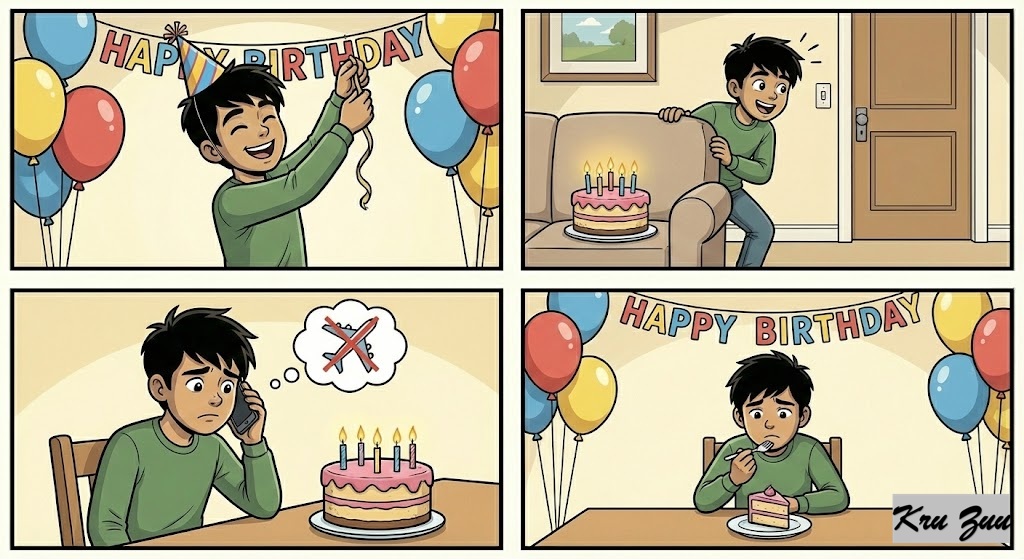
    The Mistake: You stop studying because you assume you passed. You tell everyone, “I’m going to university in London!”

    The Better Way: Wait for the score. Keep studying just in case. If you pass, great! If not, you are still ready to try again.


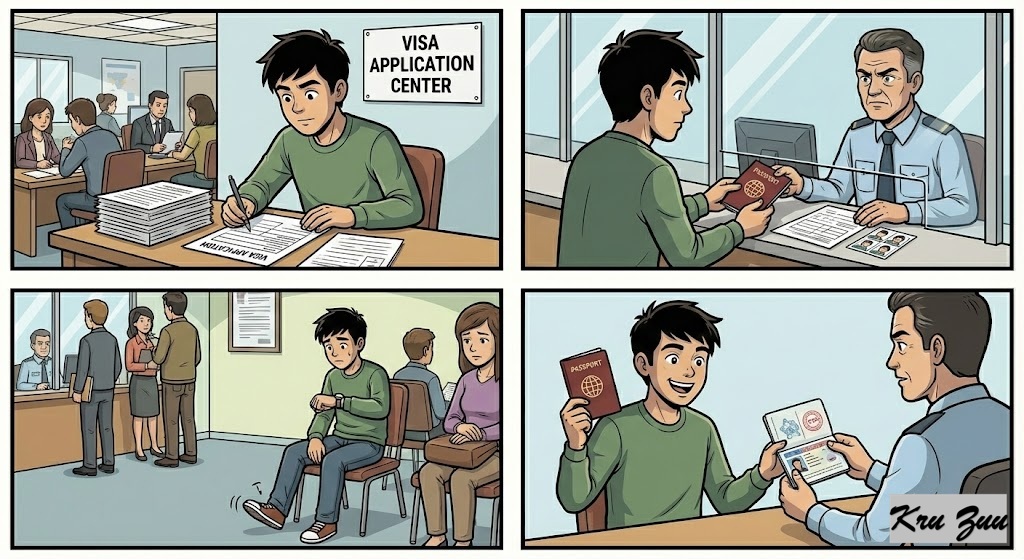
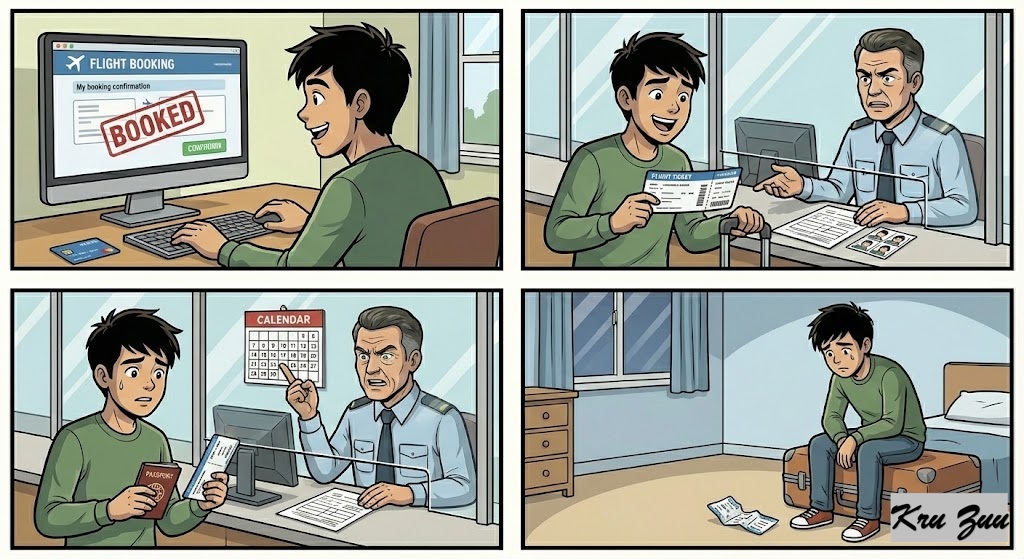
    Situation: You apply for a visa.

    The Mistake: You buy your flight ticket before the visa is approved.

    The Better Way: Wait for the stamp in your passport. Don’t count your flights before the visa is printed!


    💬 Your Turn: The Reality Check ✅


    We have all been “Whiskers the Cat” at least once.


    Question:
    Have you ever celebrated something too early and then it didn’t happen?


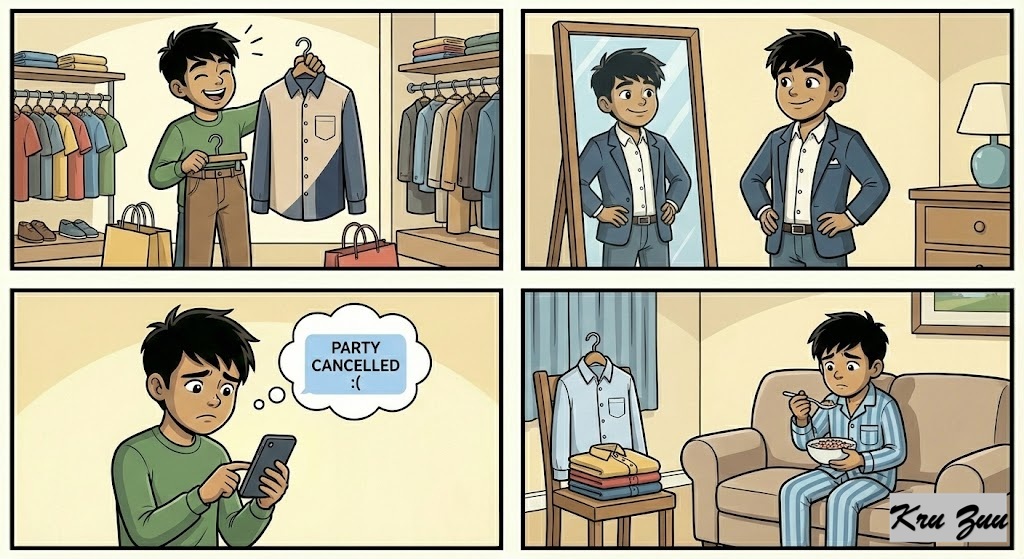
    Did you buy clothes for a party that got cancelled?


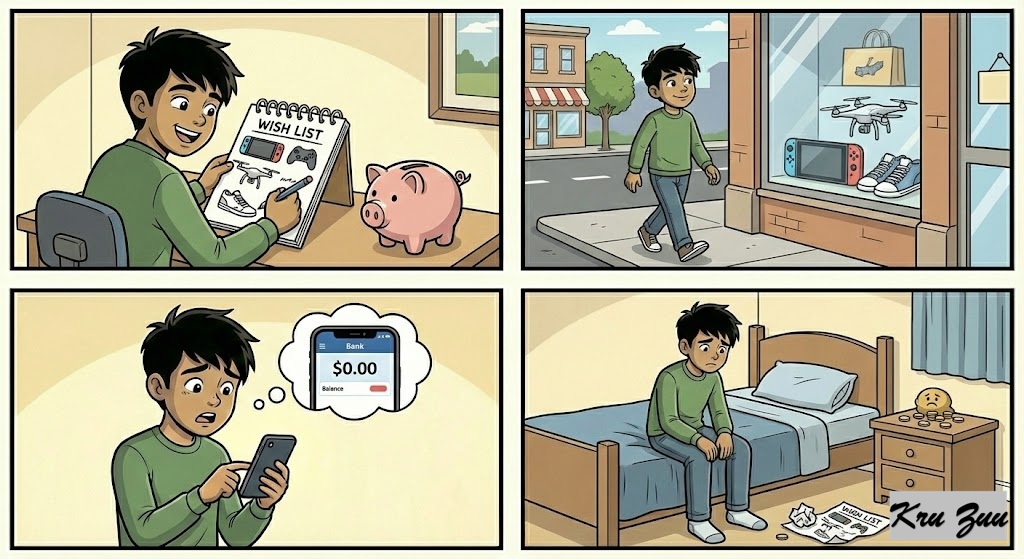
    Did you plan how to spend money you didn’t have yet?


    Tell us your story in the comments! 👇

    By Zubeyir YURTKURAN

    https://www.facebook.com/BrainBattleground/

    https://www.facebook.com/zubeyr.yurtkuran/

    https://www.instagram.com/zubeyryurtkuran/
    https://www.youtube.com/@BrainBattleground-b3p

    https://www.instagram.com/brainbattleground/

  • 🛡️ The Daily Shield: The Law of Association

    🛡️ The Daily Shield: The Law of Association

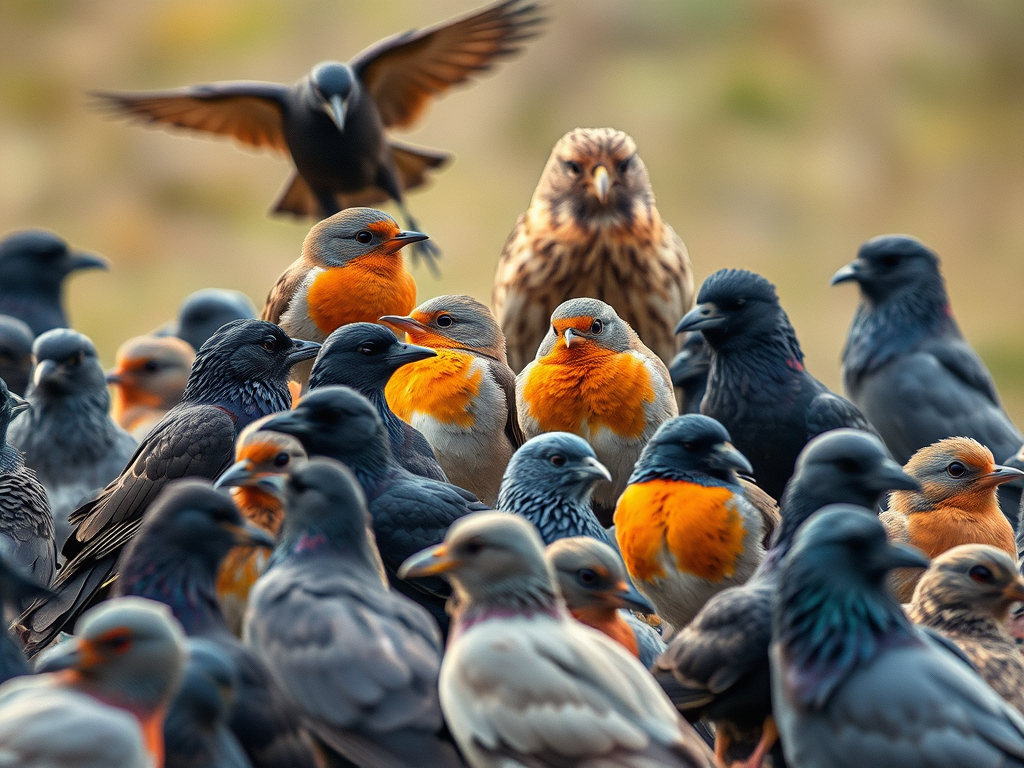
    “Birds of a feather flock together.”


    😈 The Villain (The Energy Vampire):

    You have big dreams. You want to learn English, get fit, or start a business.

    But your “squad” only wants to gossip, complain about the weather, and play video games for 6 hours straight.

    You try to work, but they say, “Come on, relax! You are boring.” You slowly lower your standards to match theirs.

    The Result? You become the average of the people around you.

    You lose your fire.

    You wonder why you are stuck in the same place while others move forward.

    You are trapped in the “Comfort Zone Cage.” 🧟‍♂️


    😇 The Hero (The Tribe Builder):

    You realize that emotions and habits are contagious.

    You look at your circle and ask: “Do these people inspire me or drain me?”

    You bravely distance yourself from toxic negativity. You find a new group, people who are smarter, faster, and kinder than you.

    The Result? Their habits rub off on you. You study because they study. You aim high because they aim high. You don’t just fly; you soar. You understand that your network is your net worth. 🦅

    ⚖️ The Reality


    “Show me your friends, and I will show you your future.” We like to think we are independent thinkers.

    But biology says otherwise. We are social chameleons.

    If your friends eat fast food every day, you will eventually eat a burger.

    If your friends read books, you will eventually pick up a book.

    💎 The Secret: You cannot change the people around you, but you can change the people around you. (Read that again).

    🧐 The Anatomy of the Proverb


    Why birds? Why feathers? Let’s break it down.


    Birds of a feather (Idiom): People who are similar (same character, same interests, same background). Just like a sparrow has different feathers than an eagle.


    Flock (Verb): To gather or travel together in a crowd.


    Together (Adverb): With or near to each other.


    Simpler Version: Similar people hang out with similar people.


    📚 Vocabulary Vault


    Clique (Noun):
    A small group of people, with shared interests or other features in common, who spend time together and do not readily allow others to join them. (Example: “The popular clique in high school.”)


    Peer Pressure (Noun): Influence from members of one’s peer group. 😬


    Entourage (Noun): A group of people attending or surrounding an important person.


    Toxic (Adjective): Very harmful or unpleasant in a pervasive or insidious way.


    Like-minded (Adjective): Having similar tastes or opinions. 🧠


    🧠 Grammar Focus: Collective Nouns


    The word “Flock” is special. It is often used for birds, but English loves “Collective Nouns” (names for groups of animals).


    A flock of birds (or sheep). 🐦


    A pack of wolves. 🐺


    A school of fish. 🐟


    A pride of lions. 🦁


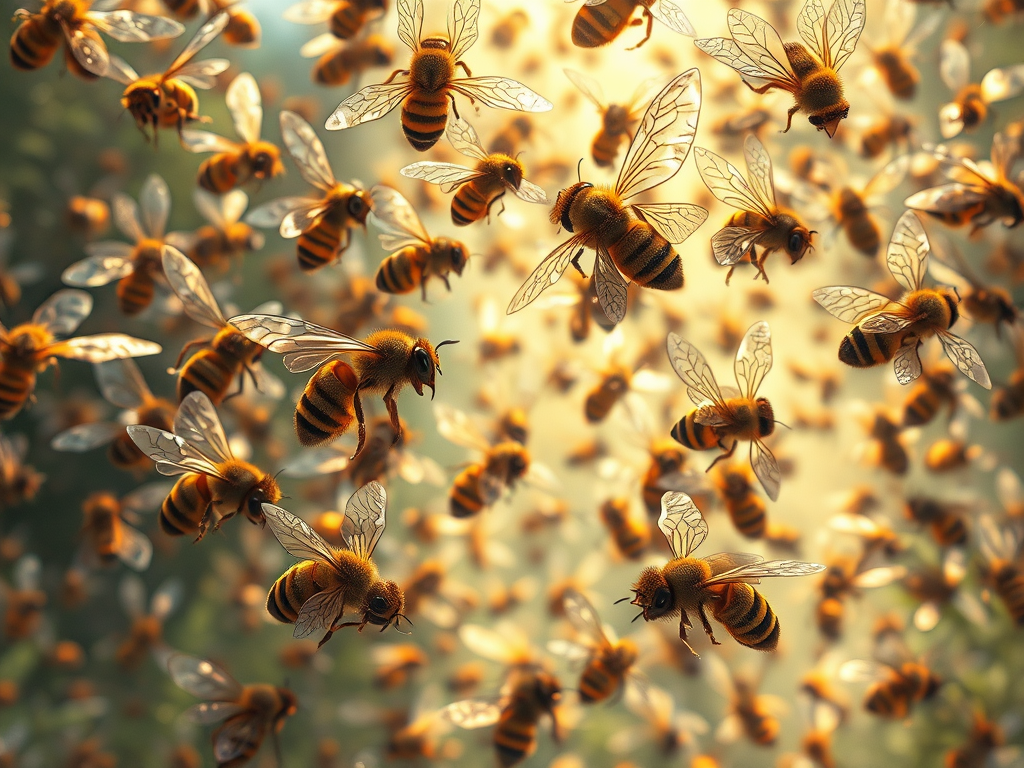
    A swarm of bees. 🐝


    Grammar Trap: When the group acts as one unit, use a singular verb.


    Correct: The flock is flying south. (Not “are”)

    📜 History & Global Wisdom


    This observation is as old as nature itself.


    The Origin

    The phrase has been used since the mid-16th century. William Turner used a version of it in 1545. It comes from the simple observation that robins fly with robins, and crows fly with crows. You never see a pigeon hanging out with a hawk.


    Global Cousins
    🇹🇷 Turkish:
    “Bana arkadaşını söyle, sana kim olduğunu söyleyeyim.” (Tell me your friend, and I will tell you who you are.) — Direct hits on the meaning!


    🇹🇷 Turkish (Alternative): “Körle yatan şaşı kalkar.” (He who sleeps with the blind wakes up cross-eyed.) — Warning about bad influence.


    🇪🇸 Spanish: “Dime con quién andas, y te diré quién eres.”


    🇯🇵 Japanese: “Rui wa tomo wo yobu.” (Similar types call their friends.)

    🎯 Impact on Life: The Audit


    ✅ The Pros (The Mastermind):
    Acceleration:
    Being around experts makes you learn faster by osmosis.


    Support: When you fall, a strong flock catches you.


    ❌ The Cons (The Echo Chamber):
    Blindness:
    If everyone agrees with you, you never grow. Sometimes you need a friend who is different to challenge your ideas.


    Exclusion: Don’t be so close to your flock that you reject everyone else. That is prejudice.

    🎭 Short Story: The Eagle in the Chicken Coop


    Once, an eagle egg rolled out of a nest and fell into a farm.

    A chicken sat on it. When the baby eagle hatched, he looked around.

    Everyone was pecking at the ground, eating corn, and clucking.

    The Conditioning: The baby eagle thought, “I guess I am a chicken.”

    He walked on the ground. He never tried to fly high. He spent his days gossiping about the farmer.

    The Awakening: One day, he looked up and saw a majestic bird gliding effortlessly in the clouds.

    “What is that?” asked the eagle. “That’s an eagle, the king of the birds,” said the old chicken. “But don’t worry about him. You and I belong to the ground.”

    The Tragedy: The eagle believed his “flock.” He lived and died a chicken, never knowing he was born to rule the sky.

    The Moral: If you hang out with chickens, you will never fly. Find your eagles. 🦅

    🎓 Lesson for English Learners


    Create Your “English Flock.”


    Situation: You study English alone in your room. When you go out, you only speak your native language.


    The Fix: You cannot learn a language in isolation.


    Join an English speaking club (online or offline).


    Change your digital flock: Follow accounts that only post in English.


    Find a “study buddy” who is more advanced than you. They will pull you up.


    💬 Your Turn: The Friendship Audit 🚀


    Jim Rohn said, “You are the average of the five people you spend the most time with.”


    The Challenge:
    Write down the names of the 3 people you text the most.


    Do they inspire you?


    Do they support your goals?


    Do they make you laugh or stress you out?


    Comment below:
    What kind of “flock” are you looking for this year? (Example: “I am looking for a creative flock!” or “I need a gym flock!”) 👇

  • 🍎 The Daily Shield: The Law of Maintenance

    🍎 The Daily Shield: The Law of Maintenance

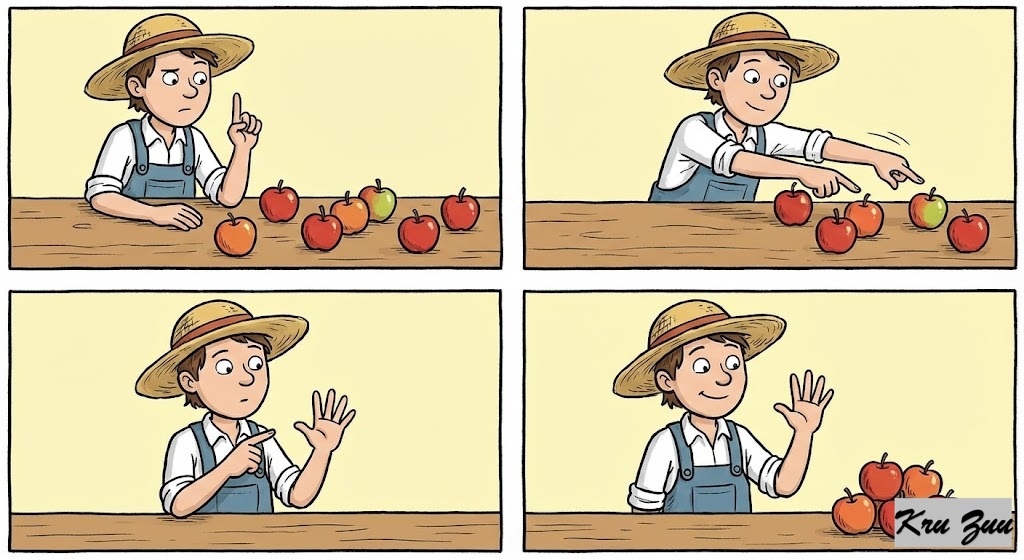
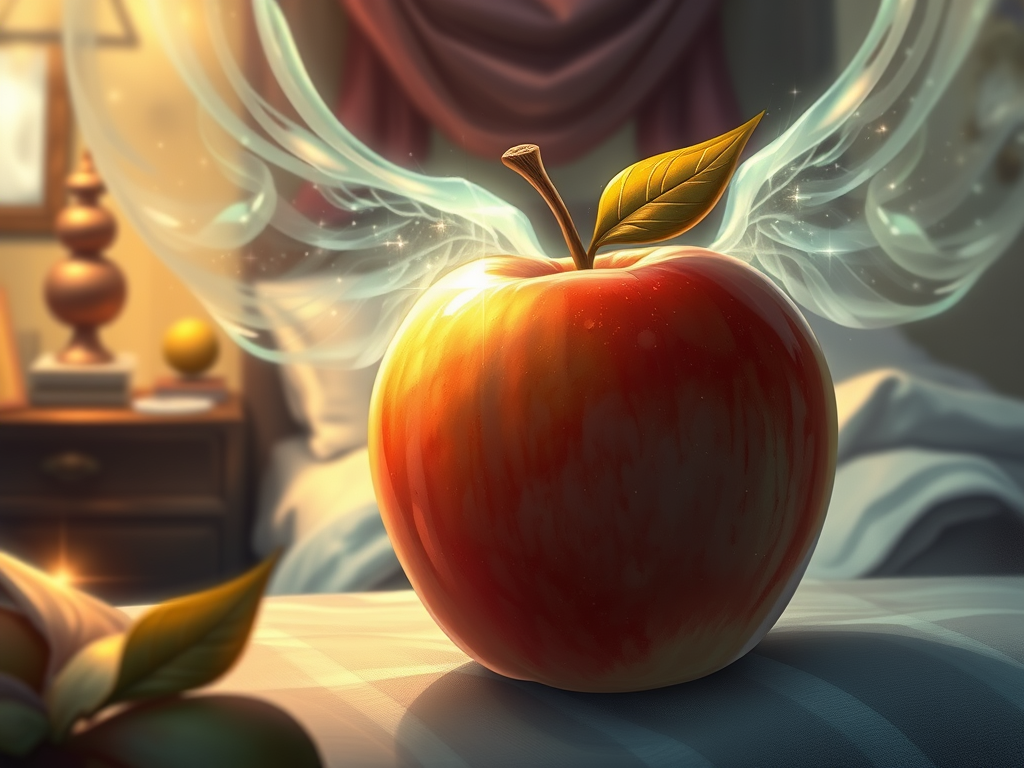
    An apple a day keeps the doctor away.


    👿 The Villain (The Gambler): You skip the gym because “one day won’t matter.”

    You ignore the weird noise your car is making.

    You eat fast food for lunch because you are “too busy.”

    You study only the night before the exam.

    The Result? One day, your body collapses.

    Your car breaks down on the highway.

    You fail the exam.

    You treated your life like a sprint, not a marathon.

    You waited for the disaster to happen before you paid attention. 🚑


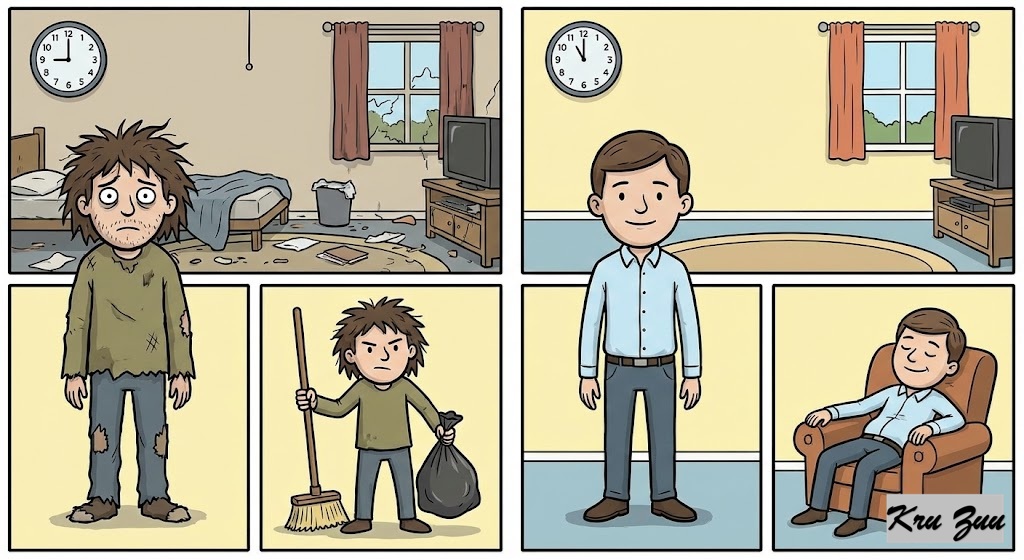
    😇 The Hero (The Architect): You are not a superhero; you are just consistent.

    You walk for 20 minutes every day.

    You drink water.

    You save $5 every morning.

    You read 10 pages of a book before bed.

    The Result? You don’t get sick often.

    Your bank account grows.

    You speak fluent English while others are still struggling.

    You didn’t do anything “magic” you just stacked small bricks every day to build a fortress. 🏰


    ⚖️ The Reality: We love “Big Dramatic Changes” (Crash diets, lottery wins). But reality respects “Small Boring Actions.”

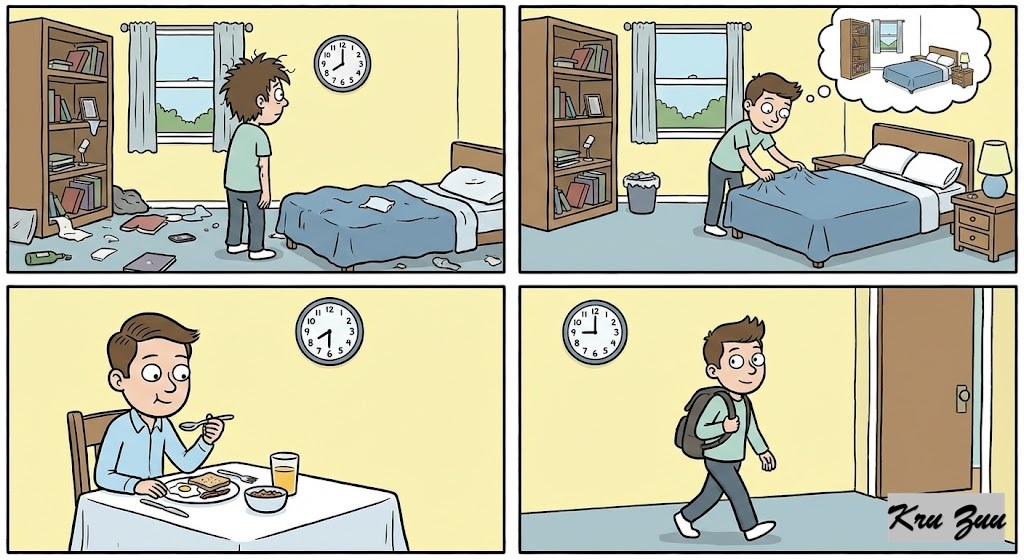
    💎 The Secret: Success is not a one-time event; it is a habit. The “Apple” is a metaphor for discipline.

    🧐 The Anatomy of the Proverb


    This is the golden rule of Preventive Care. It suggests that small, healthy habits practiced daily will prevent big problems in the future.


    Apple: Represents any healthy habit (exercise, vitamins, reading, meditation).


    Doctor: Represents the “Crisis” or the “Fixer” (Surgery, debt, failure).


    Keeps Away: To prevent someone/something from coming near. 🛡️


    📚 Vocabulary Vault


    Prevention (Noun):
    The action of stopping something from happening or arising. (Better than cure!)


    Consistency (Noun): Acting in the same way over time. (Doing it every single day). 🔄


    Maintenance (Noun): The process of keeping something in good condition.


    Compound Effect (Concept): Small actions + Time = Huge Results. 📈


    Sedentary (Adjective): Tending to spend much time seated; somewhat inactive. (The enemy of the Apple!)


    🧠 Grammar Focus


    Simple Present Tense for General Truths Proverbs almost always use the Simple Present because they are timeless facts.


    Subject: An apple


    Frequency: [a day] (Adverbial phrase)


    Verb: [keeps] (Third Person Singular – don’t forget the ‘s’!)


    Object: [the doctor]


    Direction: [away]


    Incorrect: An apple a day keep the doctor away. ❌


    Correct: An apple a day keeps the doctor away. ✅

    📜 History: Origin and Spread


    Did you know this phrase started as a rhyme?


    The Origin: It originated in Wales (Pembrokeshire) in the 1860s.

    The original phrasing was: “Eat an apple on going to bed, and you’ll keep the doctor from earning his bread.”


    The Logic: In the 19th century, food hygiene was poor. Apples were clean, full of fiber, and “cleaned” the teeth. It was a cheap way to stay alive!


    Global Cousins:


    🇹🇷 Turkish:
    “Güneş giren eve doktor girmez.” (The doctor does not enter the house where the sun enters.) — Emphasis on environment.


    🇪🇸 Spanish: “Más vale prevenir que curar.” (It is worth more to prevent than to cure.)


    🇮🇹 Italian: “Una mela al giorno toglie il medico di torno.” (An apple a day gets the doctor out of the way.) — Almost identical!

    🎯 Impact on Life: The Pros & Cons


    Is it just about fruit, or a lifestyle?


    ✅ The Pros (The Insurance):


    Control:
    It makes you feel in charge of your health/destiny.


    Efficiency: It is much cheaper to buy apples (prevention) than to pay for surgery (cure).


    Discipline: It builds a mindset that helps you in business and relationships too.


    ❌ The Cons (The Illusion):


    False Security:
    Eating an apple won’t fix a broken leg. Don’t ignore professional help when you really need it.


    Obsession: Don’t stress so much about “perfect health” that you forget to enjoy life.

    🎭 Short Story: The Old Car


    Let’s visit Penny, Fiona, and Max!


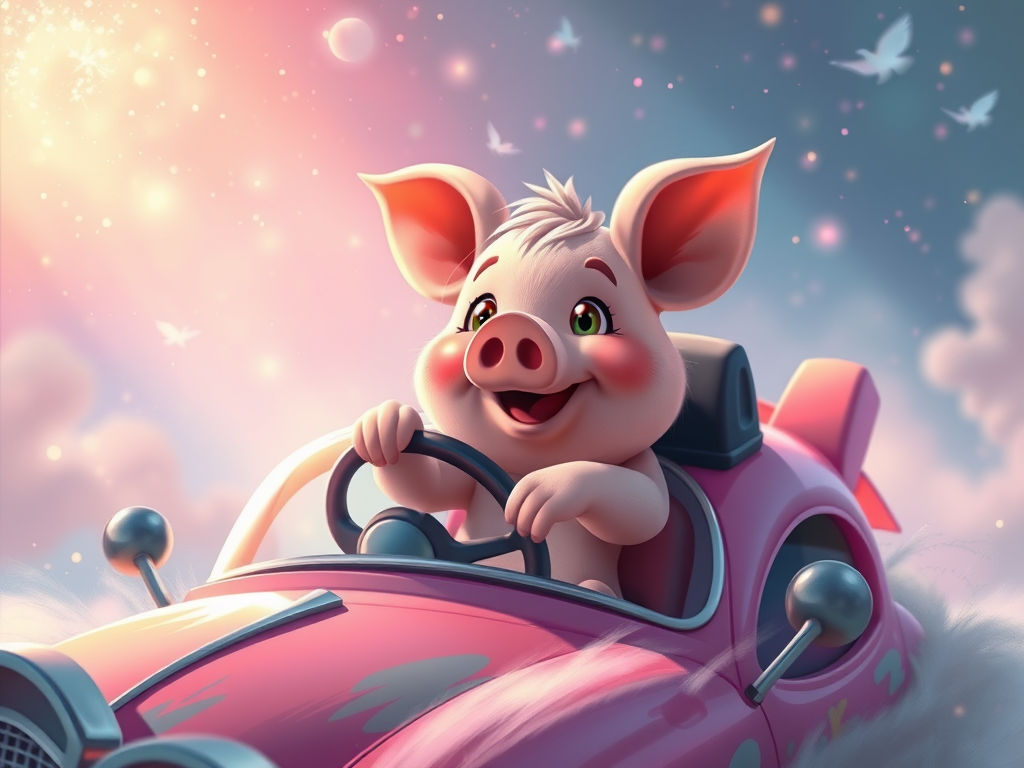
    🌟 The Setup: Penny and Max both bought cars on the same day.

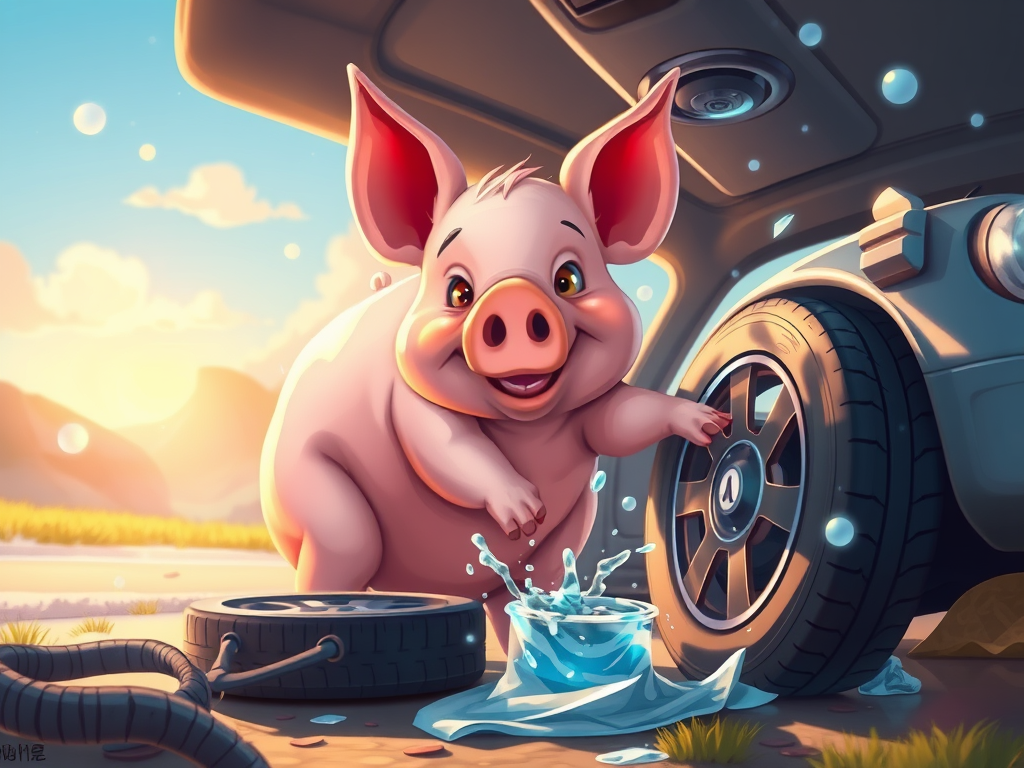
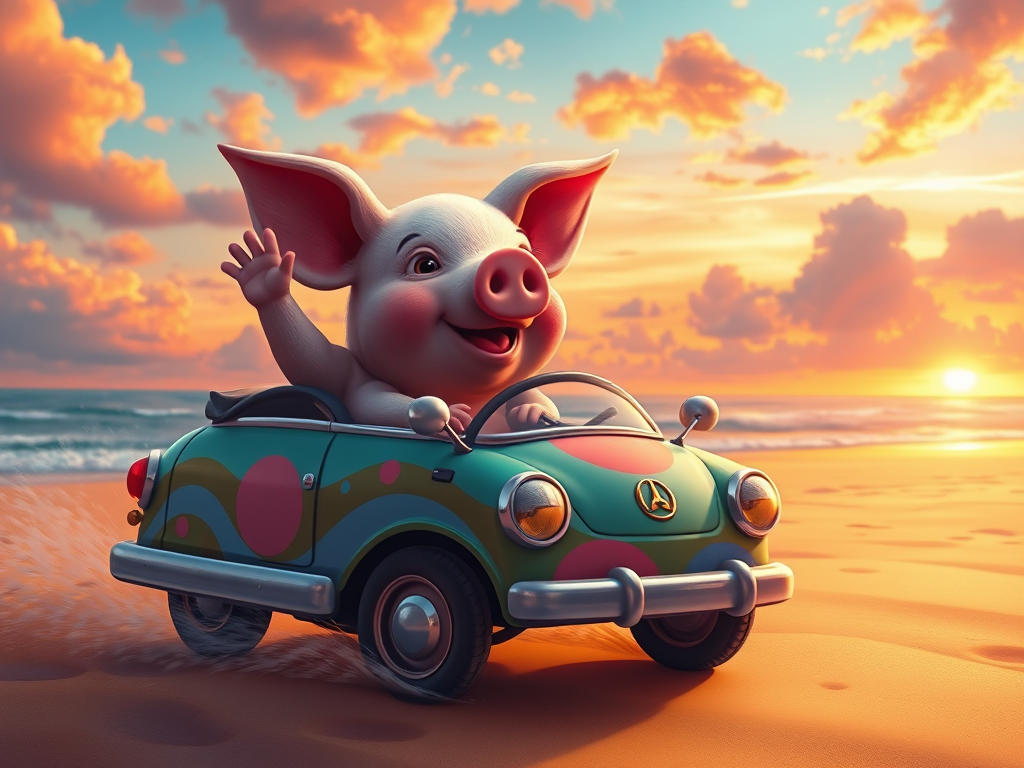
    Penny the Pig loved her car.

    Every Sunday morning, she checked the oil, cleaned the tires, and washed the windows. (This was her “Apple”).

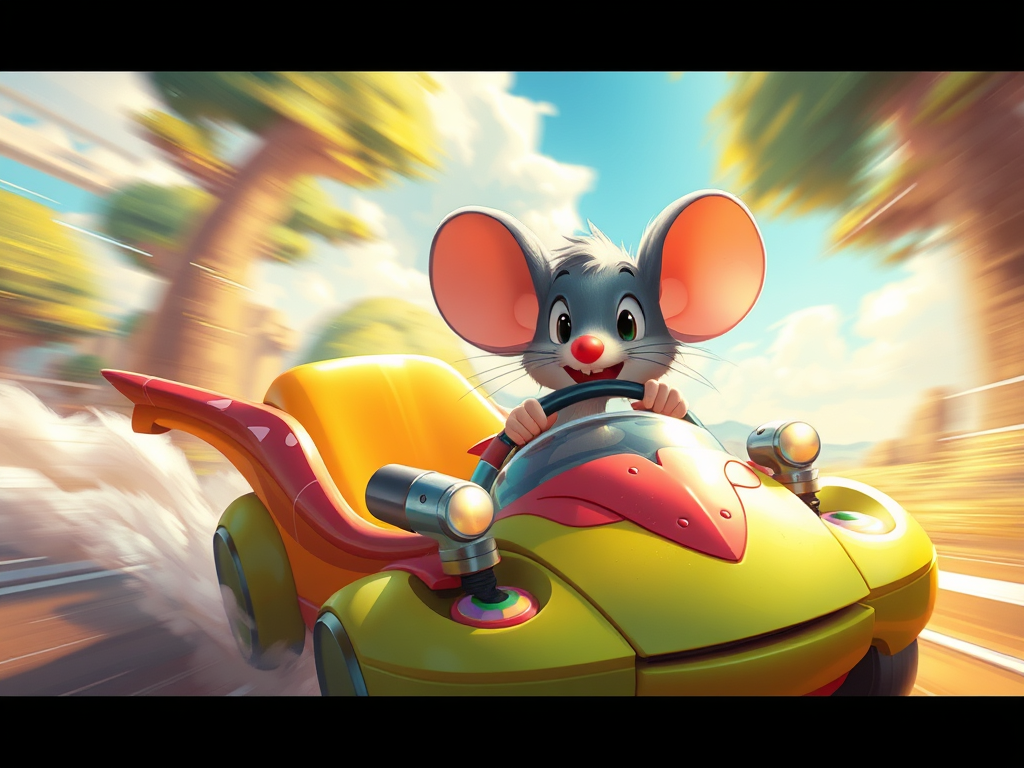
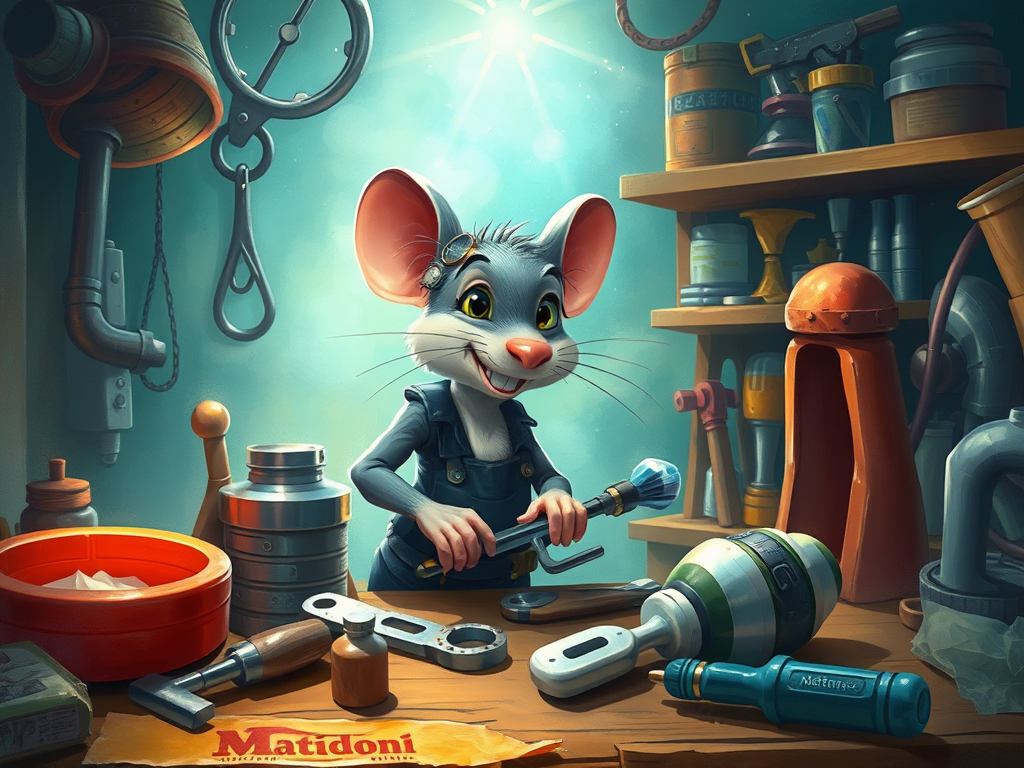
    Max the Mouse loved his car too, but he just wanted to drive fast.

    “Maintenance is boring!” he said. “I’ll fix it when it breaks.”


    The Conflict: One year later, they planned a road trip to the beach. 🏖️

    Penny’s car started smoothly: Purr… purr… purr…

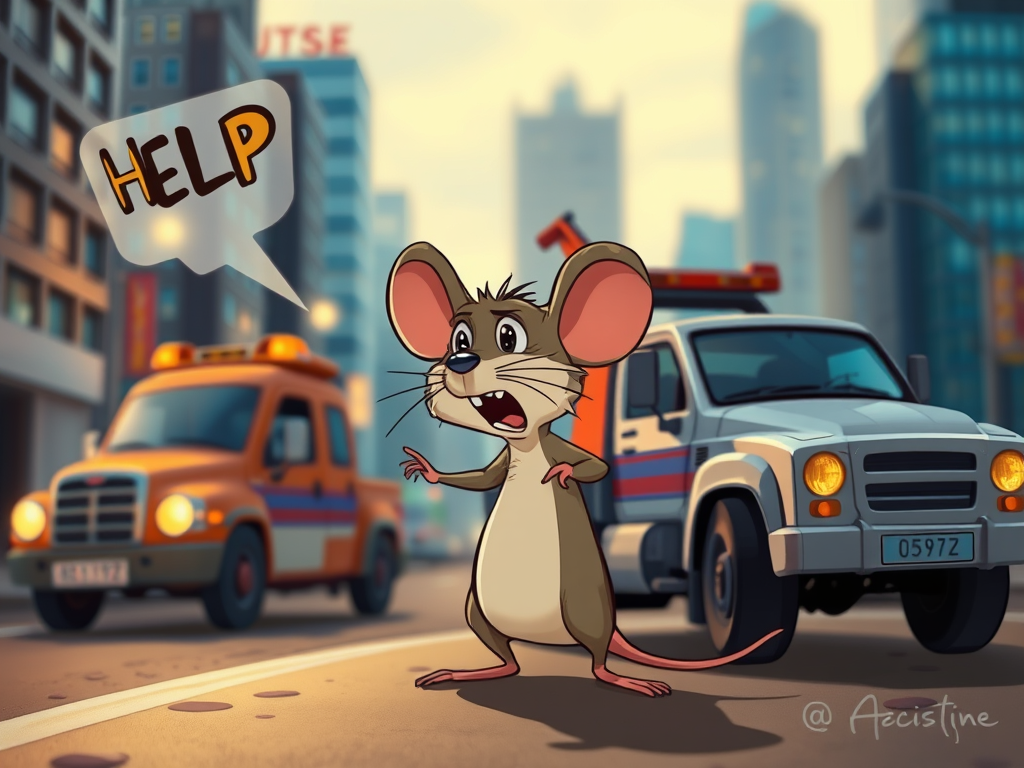
    Max’s car made a scary sound: CLUNK! BANG! HISSS! Smoke came out of the engine.


    The Action: Max was stuck on the side of the road.

    “Why me?” he cried. He had to call a tow truck (The Doctor).

    It cost him all his vacation money.

    Penny drove by, waved, and enjoyed the sunset at the beach.


    The Moral: Penny paid a little bit of attention every day.

    Max paid a huge price at the end.

    Penny’s “apple a day” kept the mechanic away.

    🎓 Lesson for English Learners


    This idiom is versatile! Use it for more than just health.


    Advice on Studying 📖


    Situation:
    Your student asks how to learn 1,000 words in one night.


    You say: “You can’t cram everything. Study 5 words every morning.

    An apple a day keeps the doctor away, and daily practice keeps the failure away.”


    Advice on Relationships ❤️


    Situation:
    A friend ignores their partner for weeks, then buys a huge gift to apologize.


    You say: “Don’t just buy gifts when things are bad. Show small love every day. An apple a day keeps the doctor away.”


    💬 Your Turn


    The “Micro-Habit” Challenge 🤏


    Let’s prove the theory.


    The Goal: Choose one tiny positive thing to do every day for the next 7 days.


    Examples: Drink 1 glass of water before coffee

    Do 5 pushups

    Read 1 page

    Save 1 coin.


    The Prediction: How will you feel in a week?


    Action Step: Go eat a piece of fruit right now. Seriously. Go do it. Your body will thank you! 🍏


    Question: What is YOUR “Apple”? What is the one small thing you do every day that keeps your life running smoothly?

    By Zubeyir YURTKURAN

    https://www.facebook.com/BrainBattleground/

    https://www.facebook.com/zubeyr.yurtkuran/

    https://www.instagram.com/zubeyryurtkuran/
    https://www.youtube.com/@BrainBattleground-b3p

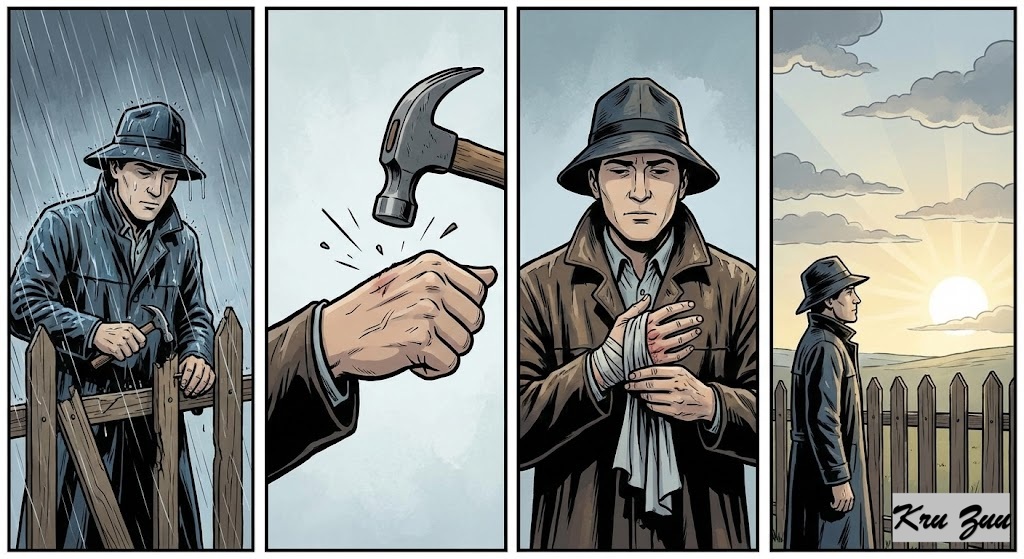
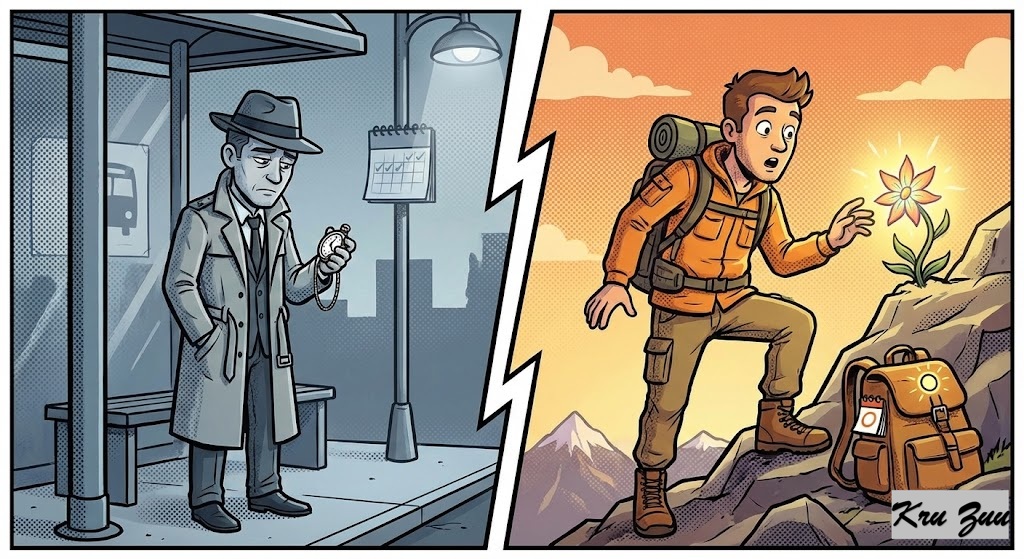
  • 🌤️ The Silver Lining Effect: Finding Light in the Dark

    🌤️ The Silver Lining Effect: Finding Light in the Dark

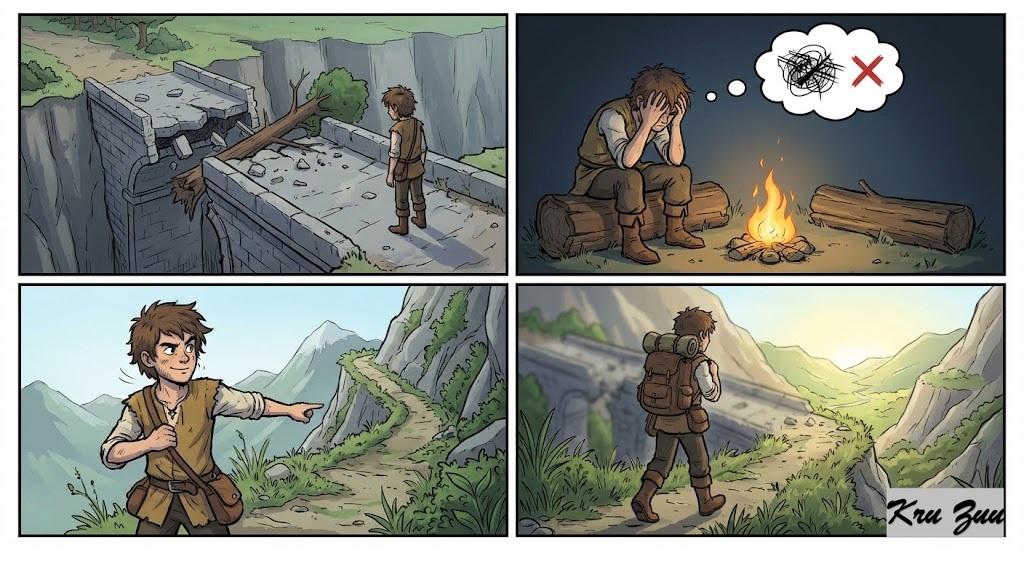
    Every cloud has a silver lining.


    👿 The Villain (The Pessimist): You lose your job unexpectedly.

    You panic. You spend weeks complaining, blaming your boss, and sleeping until noon.

    You tell everyone, “My life is over.”

    The Result? You miss new job openings because you are too busy being angry.

    Your friends stop calling because your negative energy drains them.

    You stare at the dark cloud so long that you get soaked by the rain. You drown in a puddle of your own making. 🌧️


    😇 The Hero (The Alchemist): You lose your job unexpectedly. It hurts, but you take a deep breath.

    You think, “I hated that commute anyway. Now I have time to take that coding course I always wanted.”

    The Result? Three months later, you launch a freelance business.

    You are making more money and working from home.

    Losing that job wasn’t a tragedy; it was the push you needed to fly.

    You didn’t just survive the storm; you used the water to grow a garden. 🌻


    ⚖️ The Reality:
    Life is not a weather report you can control.

    Storms will happen. But the sun never actually leaves; it is just temporarily hidden.

    💎 The Secret: The “bad thing” is often the transportation system for the “good thing.” Without the dark background, the stars cannot shine.

    🧐 The Anatomy of the Proverb


    This is the ultimate phrase for Optimism. It reminds us that even the worst situations (clouds) have a positive aspect or a hopeful side (the silver lining).


    Cloud: Represents trouble, sadness, or difficulty.


    Silver Lining: Represents the sun shining from behind the cloud, creating a glowing, bright edge. (Hope/Advantage).


    📚 Vocabulary Vault


    Optimist (Noun):
    A person who tends to look on the more favorable side of events. 😃


    Pessimist (Noun): A person who tends to see the worst aspect of things. ☹️


    Resilience (Bonus Word): The capacity to recover quickly from difficulties; toughness.


    Setback (Noun): A reversal or check in progress (a minor problem).


    Blessing in Disguise (Idiom): Something that seems bad at first but results in something good.


    🧠 Grammar Focus


    “Every” + Singular Noun vs. Plural Meaning This is a common trap for students! Even though “Every” talks about all the clouds, we treat it grammatically as a single unit.


    Subject: [Every cloud]


    Verb: [has] (Third Person Singular)


    Object: [a silver lining]


    Incorrect: Every clouds have a silver lining. ❌
    Incorrect: Every cloud have a silver lining. ❌
    Correct: Every cloud has a silver lining. ✅

    📜 History: Origin and Spread


    This poetic phrase wasn’t invented by a philosopher, but by a poet.


    The Origin: It comes from John Milton’s masque “Comus” (1634).

    He wrote: “Was I deceived, or did a sable cloud / Turn forth her silver lining on the night?”


    The Evolution: In the Victorian era, people shortened it to the proverb we use today to cheer each other up during hard times.


    Global Cousins:


    🇹🇷 Turkish:
    “Her şerde bir hayır vardır.” (There is good in every evil/bad thing.)


    🇪🇸 Spanish: “No hay mal que por bien no venga.” (There is no bad from which good does not come.)


    🇩🇪 German: “Auf Regen folgt Sonnenschein.” (After rain follows sunshine.)


    🇯🇵 Japanese: “Saiou ga uma.” (The story of the old man’s horse, bad luck leads to good luck.)

    🎯 Impact on Life: The Pros & Cons


    Is this toxic positivity, or a survival strategy?


    ✅ The Pros (The Shield):


    Mental Health:
    It reduces anxiety. Instead of focusing on “Why me?”, you focus on “What now?”


    Problem Solving: When you look for the silver lining, you stop freezing and start acting.


    Grit: It helps you endure pain because you believe there is a purpose to it.


    ❌ The Cons (The Trap):


    Invalidation:
    Telling someone who just lost a loved one “Every cloud has a silver lining” is rude. Sometimes, people just need to be sad.


    Denial: If you only look at the bright side, you might ignore a serious problem that needs fixing.

    🎭 Short Story: The Ruined Picnic


    Let’s visit our trio: Penny, Fiona, and Max.


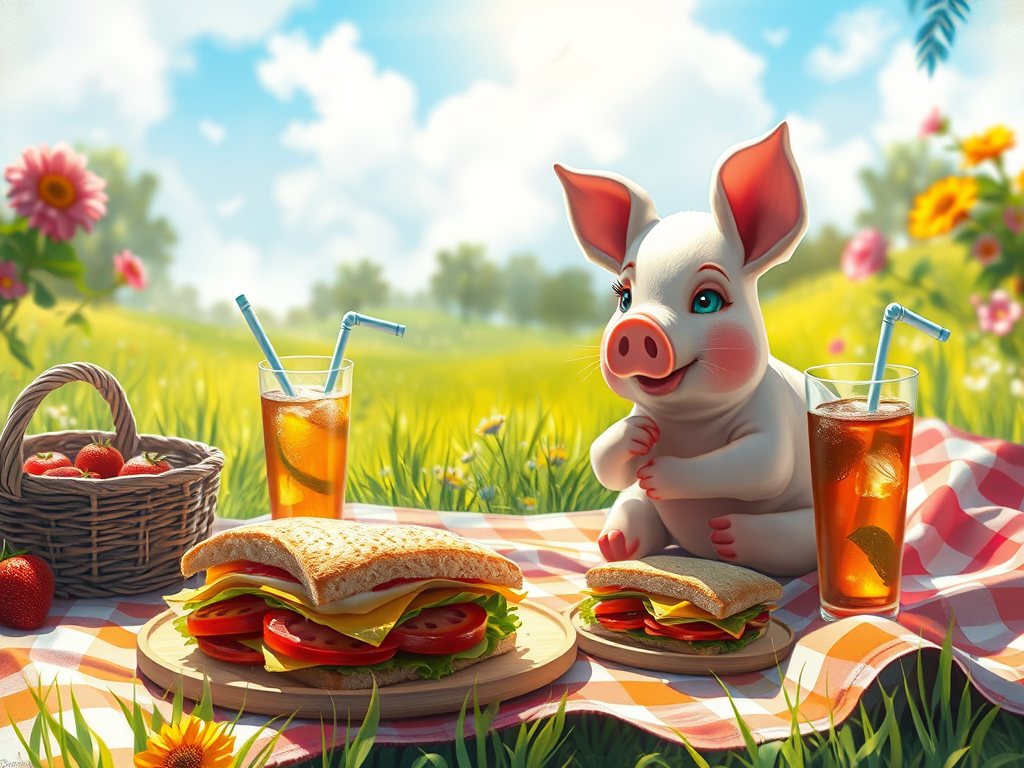
    🌟 The Setup: Penny the Pig had organized the “Perfect Picnic.” She had sandwiches, iced tea, and a beautiful blanket.

    Fiona the Fox and Max the Mouse were excited. “It’s going to be a beautiful day!” Penny(PIG) squealed.


    The Conflict: As soon as they sat down… KABOOM! Thunder crashed. The sky turned black, and rain poured down instantly.

    “My sandwiches!” cried Penny. “My fur!” cried Fiona.

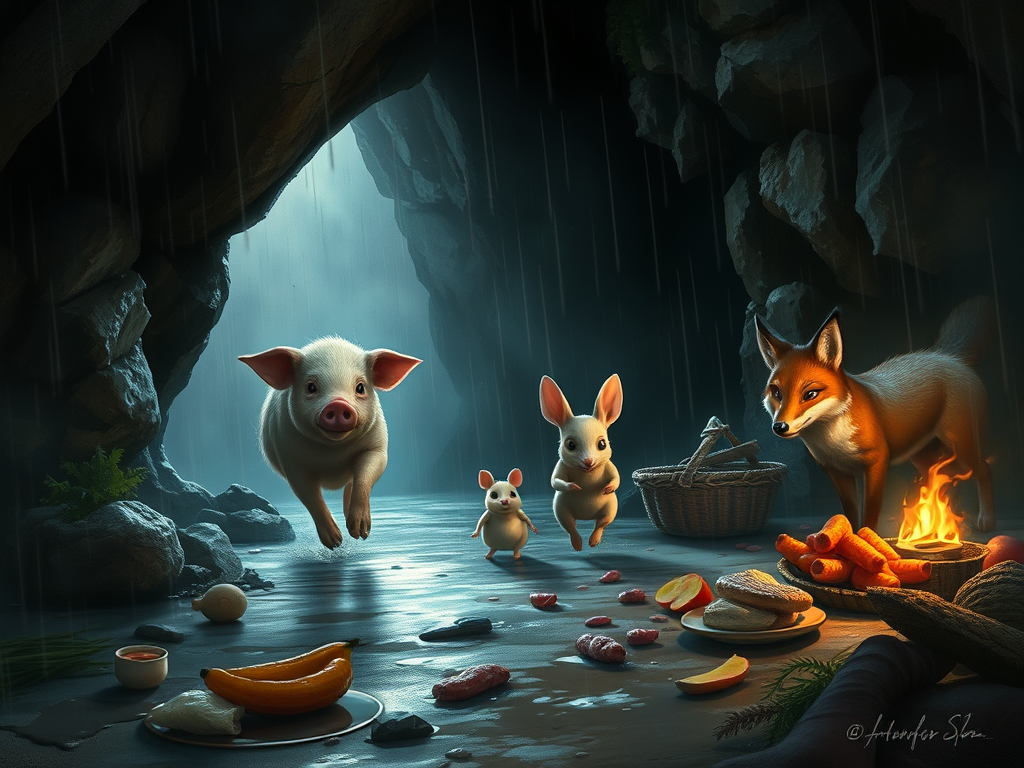
    The picnic was ruined. They grabbed the wet food and ran into a nearby dark cave for shelter. ⛈️


    The Action: Penny was crying. “This is a disaster.” But Max, being small and curious, saw something glowing at the back of the cave.

    “Hey guys, look at this!” he squeaked. They walked deeper into the cave.

    The walls were covered in glow-worms that looked like a magical starry night sky. It was breathtakingly beautiful. ✨


    The Climax: They sat on the dry rocks, ate their slightly soggy sandwiches, and watched the magical light show of the glow-worms.

    They told ghost stories and laughed louder than they would have outside.


    The Moral: If it hadn’t rained, they never would have found the magical cave.

    The storm (the cloud) led them to the most beautiful memory of the summer (the silver lining).

    🎓 Lesson for English Learners


    How to use this phrase naturally.


    Consoling a Friend (Professional Failure) 💼


    Situation:
    Your friend didn’t get the promotion they wanted.


    You say: “I know it hurts, but maybe every cloud has a silver lining. This might be the sign you needed to apply for that better company in the city.”


    Reframing a Bad Day 🚌


    Situation:
    You missed your bus and had to walk.


    You say: “Well, I missed the bus, but every cloud has a silver lining; at least I got my 10,000 steps in for the day!”


    Vocabulary Expansion 📚


    To Look on the Bright Side:
    To find the good in a bad situation.


    To Make Lemonade out of Lemons: To turn a difficulty into an opportunity.


    Weather the Storm:
    To endure a difficult situation until it improves.


    💬 Your Turn


    The “Hidden Gem” Challenge 💎


    Let’s practice gratitude.


    The Cloud:
    Think of a time something “bad” happened to you (a breakup, a firing, a missed flight).


    The Silver Lining: What good thing happened because of that bad event? Did you meet someone new? Did you learn a lesson?


    Action Step:
    Next time you complain today (about the traffic, the weather, or work), immediately add “…but the silver lining is…” and finish the sentence.


    Question: What is the biggest “Blessing in Disguise” you have ever experienced? Tell us your story in the comments! 👇

    By Zubeyir YURTKURAN

    https://www.facebook.com/BrainBattleground/

    https://www.facebook.com/zubeyr.yurtkuran/

    https://www.instagram.com/zubeyryurtkuran/

    https://www.youtube.com/@BrainBattleground-b3p