
“The road to hell is paved with good intentions.”
😈 The Villain (The Empty Promiser)
You mean well. You always plan to help. You say, “I’ll call you back,” “I’ll start the diet tomorrow,” or “I’m definitely going to help you move this weekend.” But then… you don’t. You get tired. You get distracted. You excuse your failure by saying, “Well, I meant to do it!” You disconnect your invisible thoughts from your visible actions.
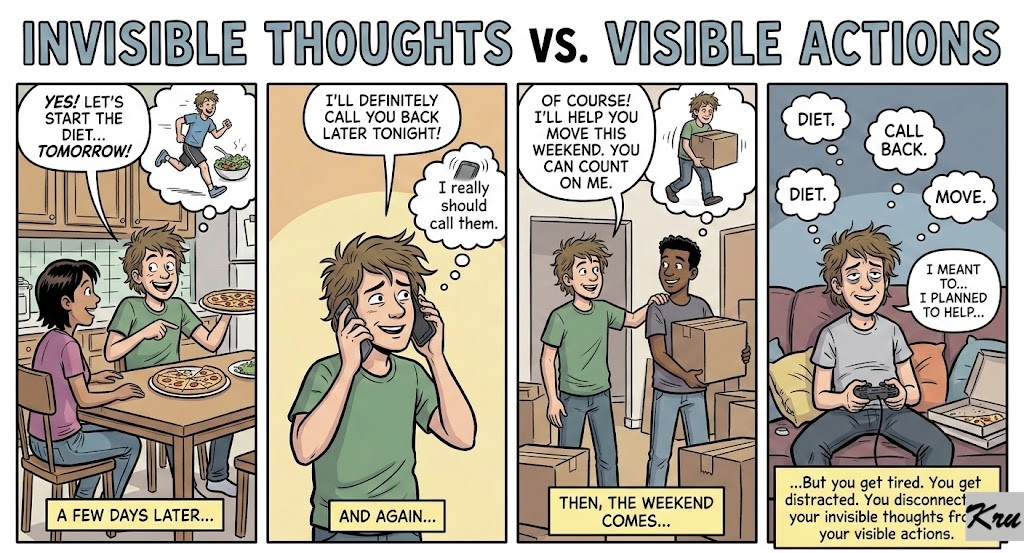
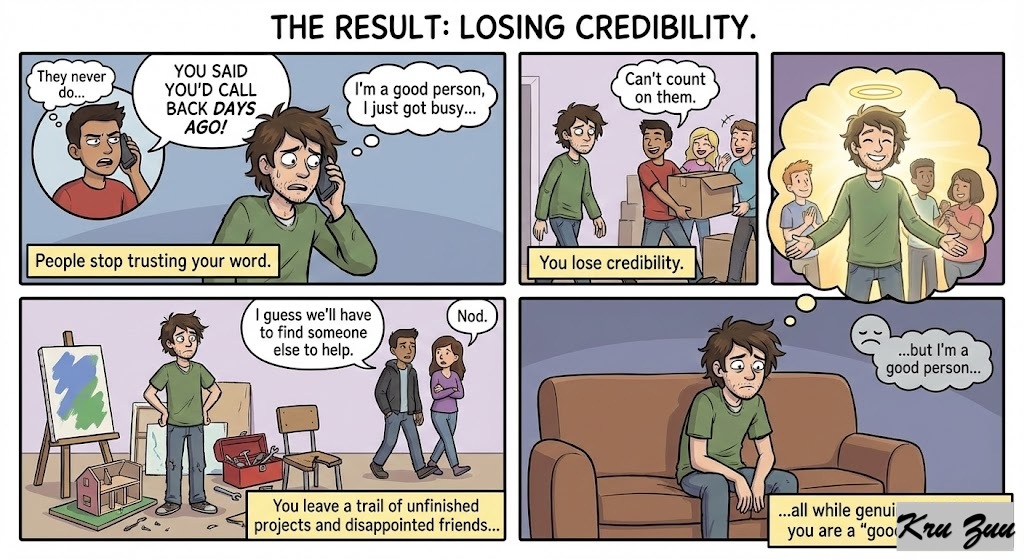
The Result? You lose credibility. People stop trusting your word. You leave a trail of unfinished projects and disappointed friends, all while genuinely believing you are a “good person.” 🌫️
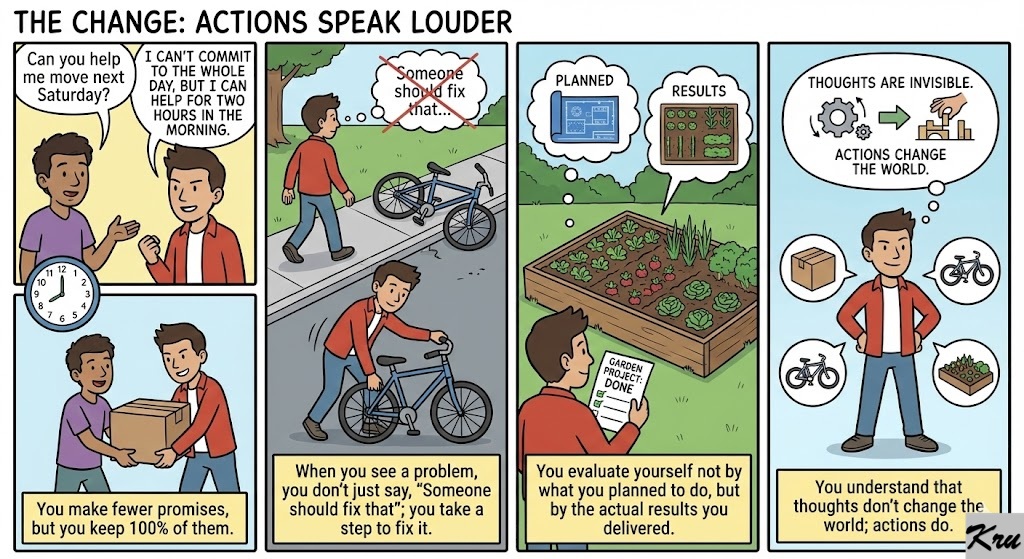
😇 The Hero (The Reliable Executor)
You understand that thoughts don’t change the world; actions do. You make fewer promises, but you keep 100% of them. When you see a problem, you don’t just say, “Someone should fix that”; you take a step to fix it. You evaluate yourself not by what you planned to do, but by the actual results you delivered.
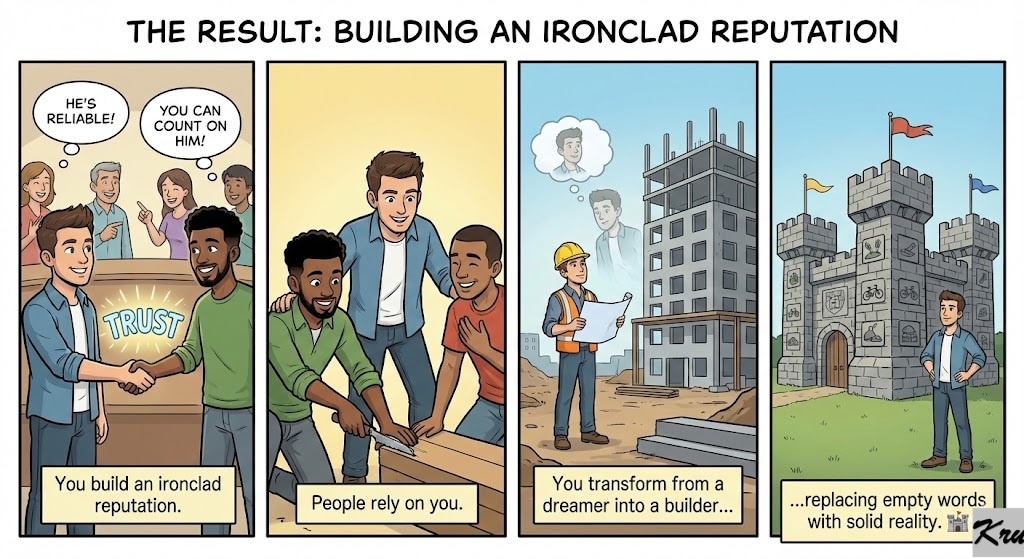
The Result? You build an ironclad reputation. People rely on you. You transform from a dreamer into a builder, replacing empty words with solid reality. 🏰
⚖️ The Reality
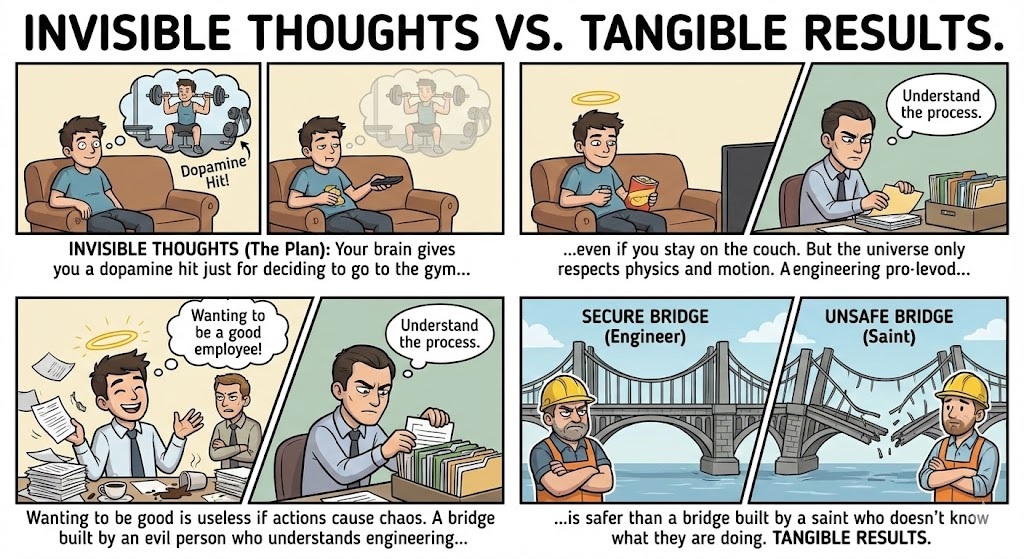
Invisible thoughts vs. Tangible results. We live in a world where it feels good just to plan something positive. Your brain gives you a dopamine hit just for deciding to go to the gym, even if you stay on the couch. But the universe only respects physics and motion. Wanting to be a good friend, employee, or partner is useless if your actions cause chaos or neglect. A bridge built by an evil person who understands engineering is safer than a bridge built by a saint who doesn’t know what they are doing.
💎 The Secret
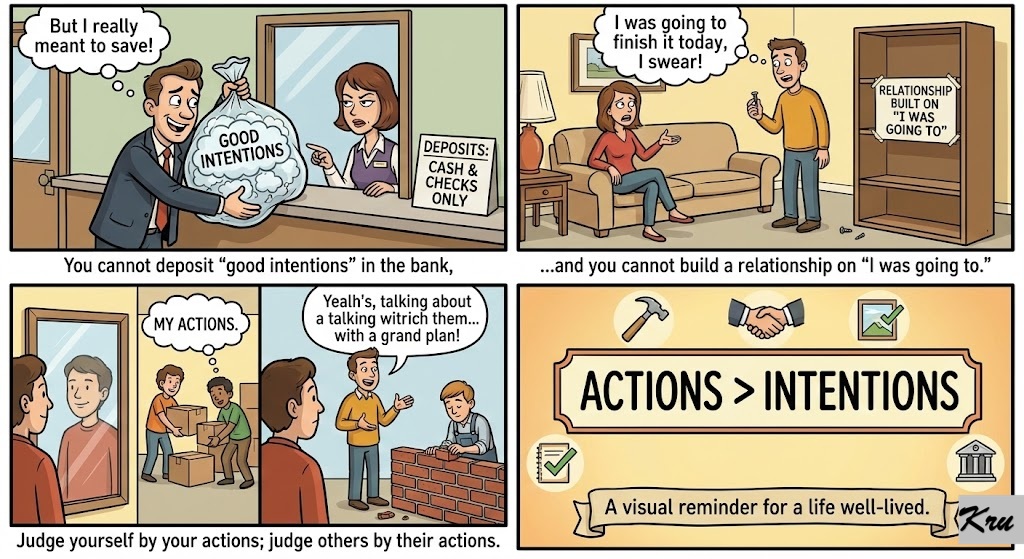
You cannot deposit “good intentions” in the bank, and you cannot build a relationship on “I was going to.” Judge yourself by your actions; judge others by their actions.
🧐 The Anatomy of the Proverb
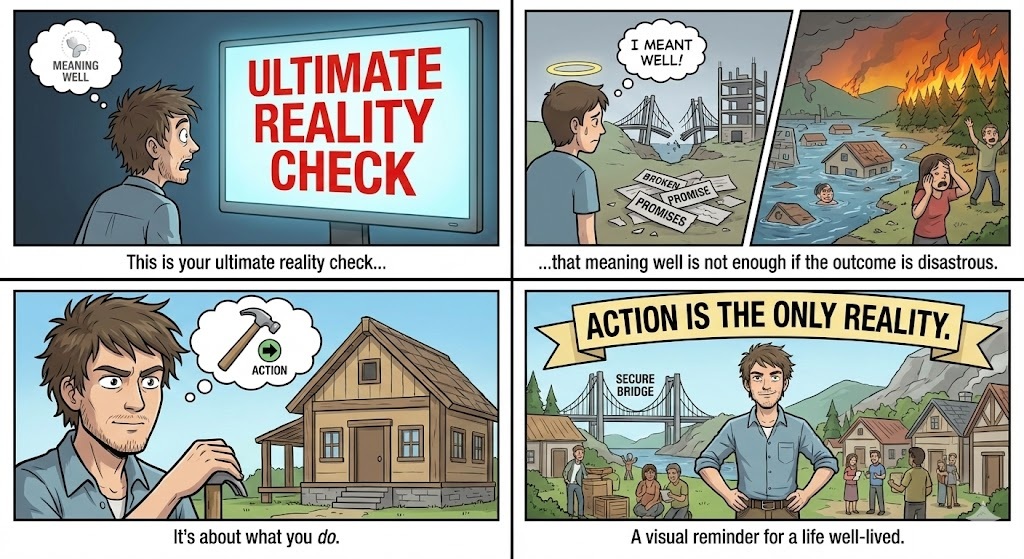
This is your ultimate reality check that meaning well is not enough if the outcome is disastrous.
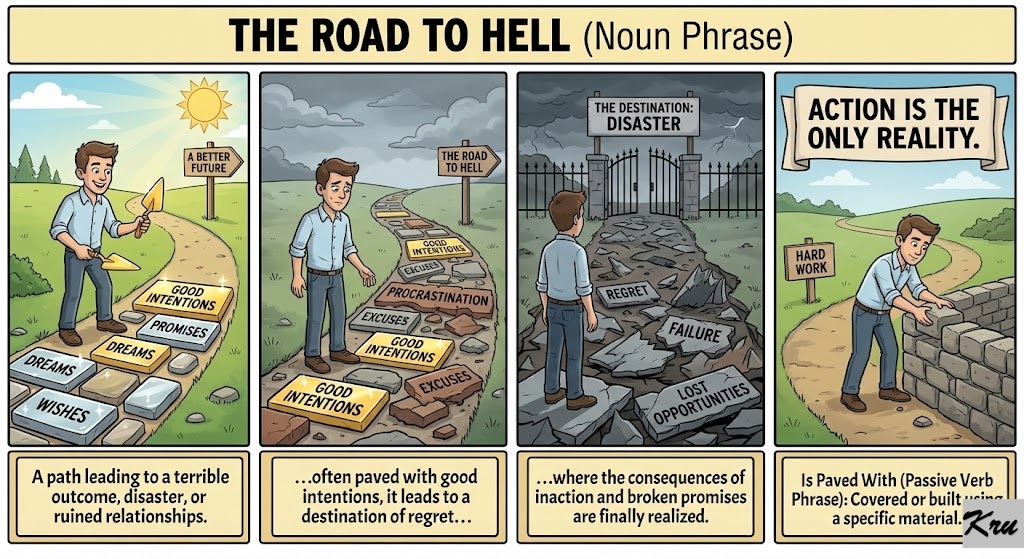
The Road to Hell (Noun Phrase): A path leading to a terrible outcome, disaster, or ruined relationships.
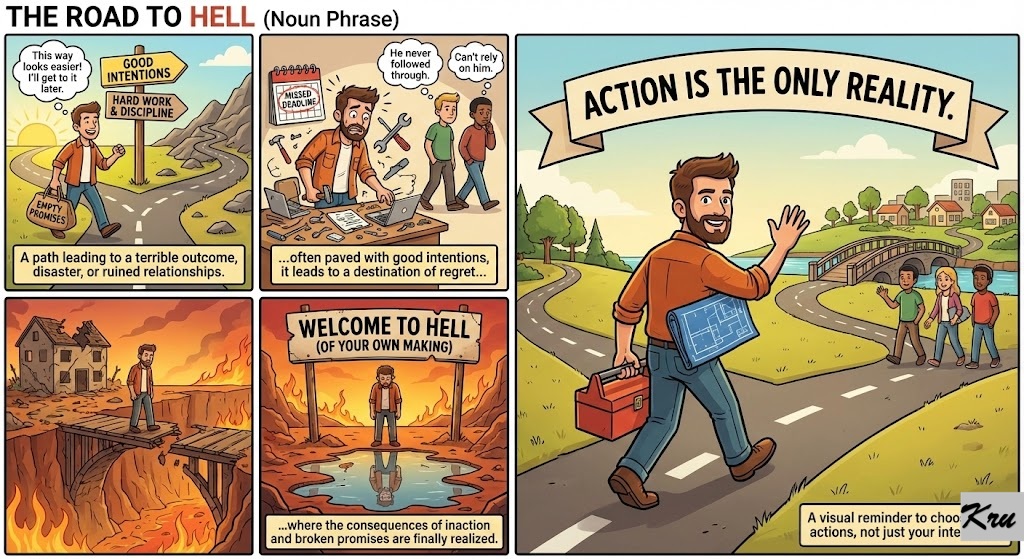
Is Paved With (Passive Verb Phrase): Covered or built using a specific material.
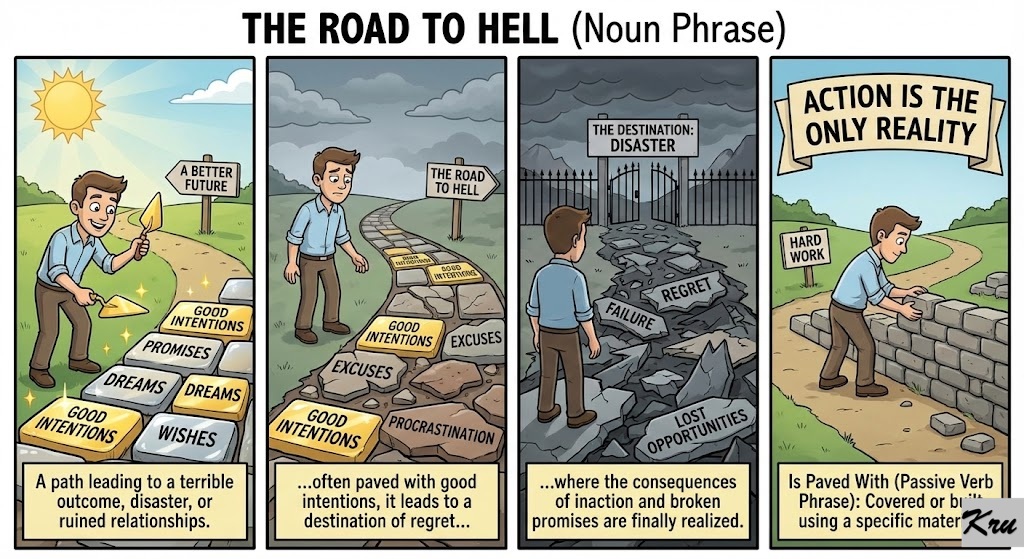
Good Intentions (Noun Phrase): Positive desires, wanting to do the right thing, meaning well.
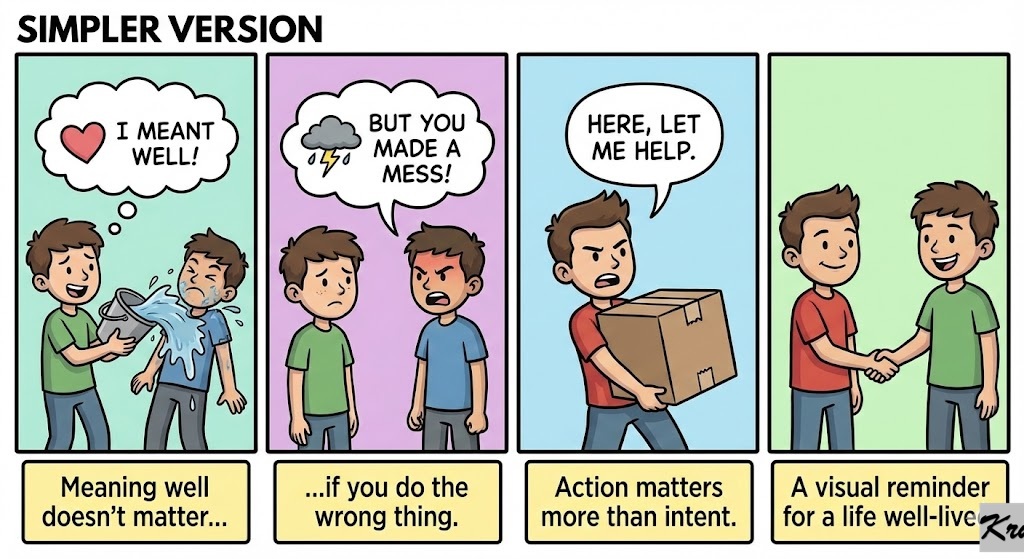
Simpler Version: Meaning well doesn’t matter if you do the wrong thing. / Action matters more than intent.
📚 Vocabulary Vault
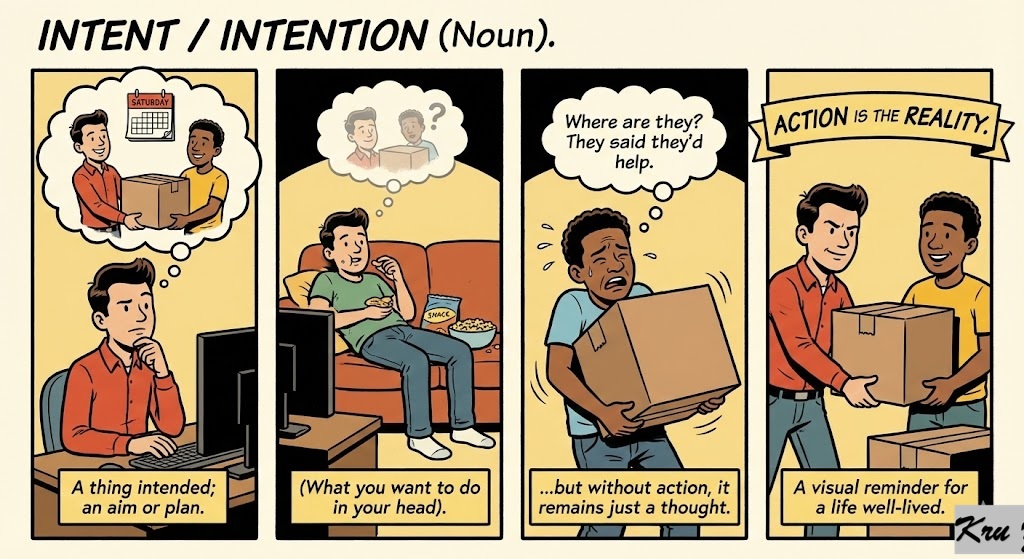
Intent / Intention (Noun): A thing intended; an aim or plan. (What you want to do in your head).
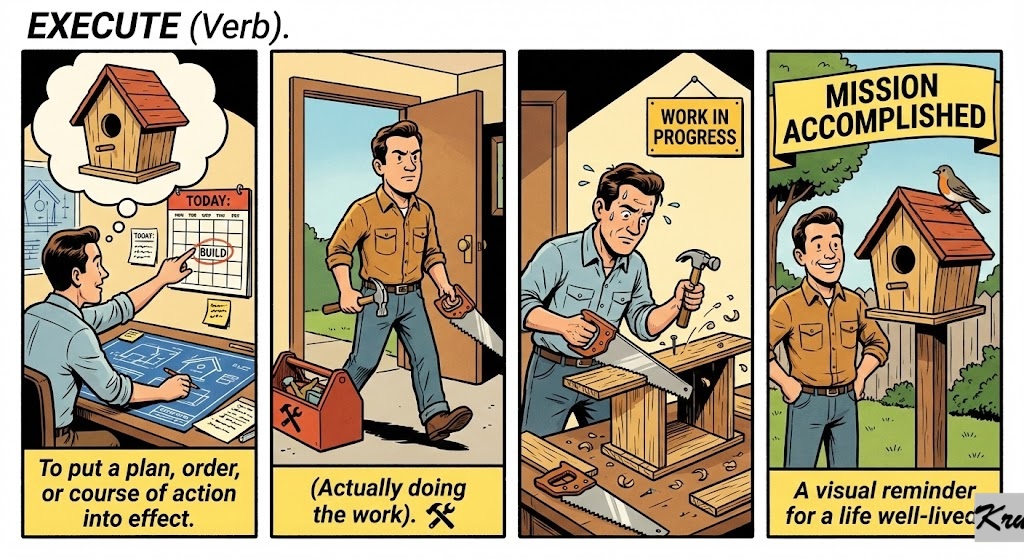
Execute (Verb): To put a plan, order, or course of action into effect. (Actually doing the work). 🛠️
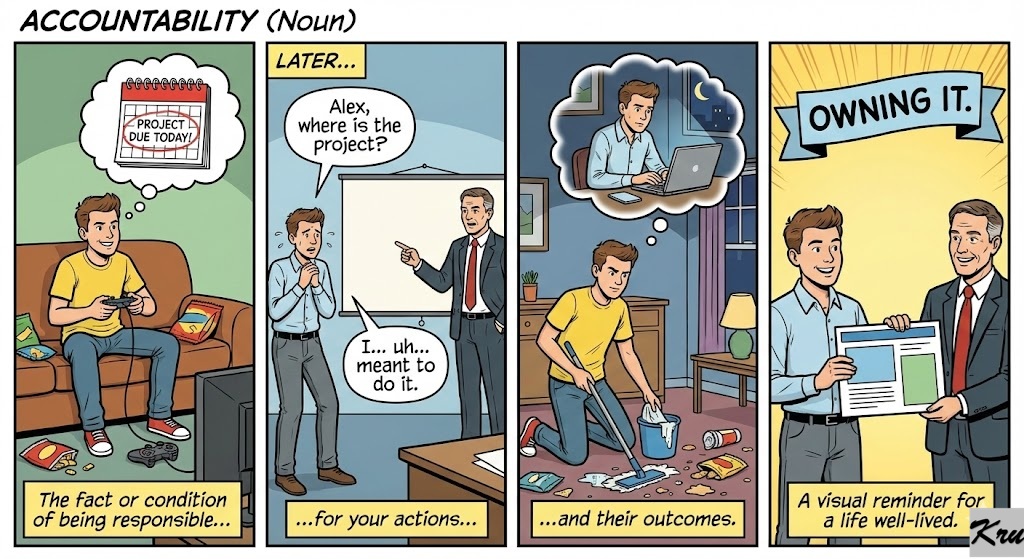
Accountability (Noun): The fact or condition of being responsible for your actions and their outcomes.
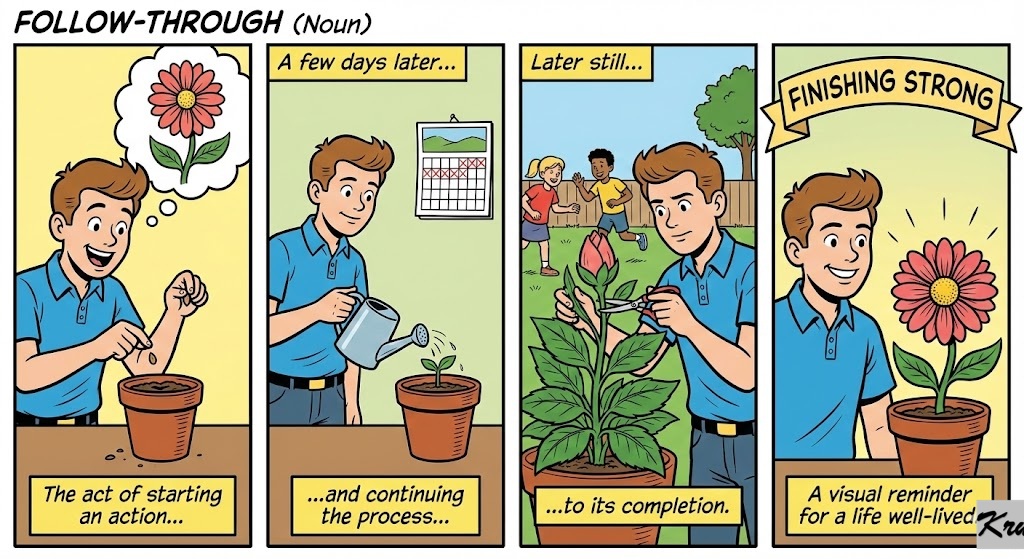
Follow-through (Noun): The act of completing an action or process that you have started.
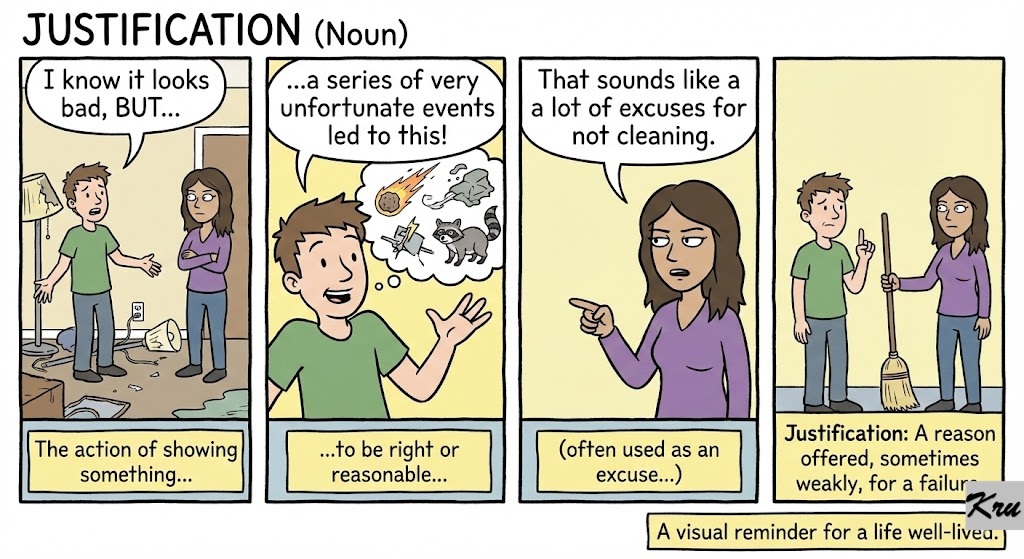
Justification (Noun): The action of showing something to be right or reasonable (often used as an excuse for failing).
🧠 Grammar Focus: Idioms as Bossing/Parenting Tools
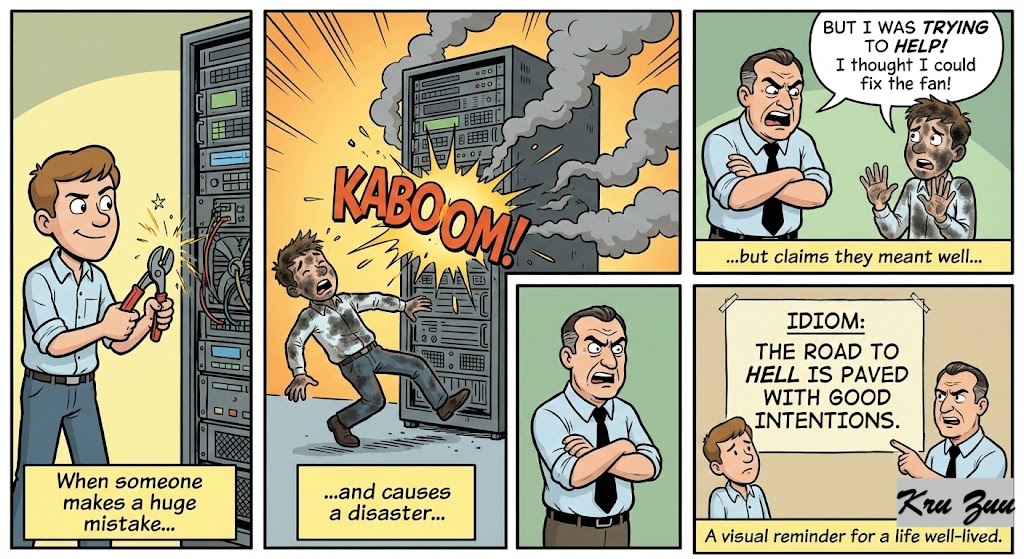
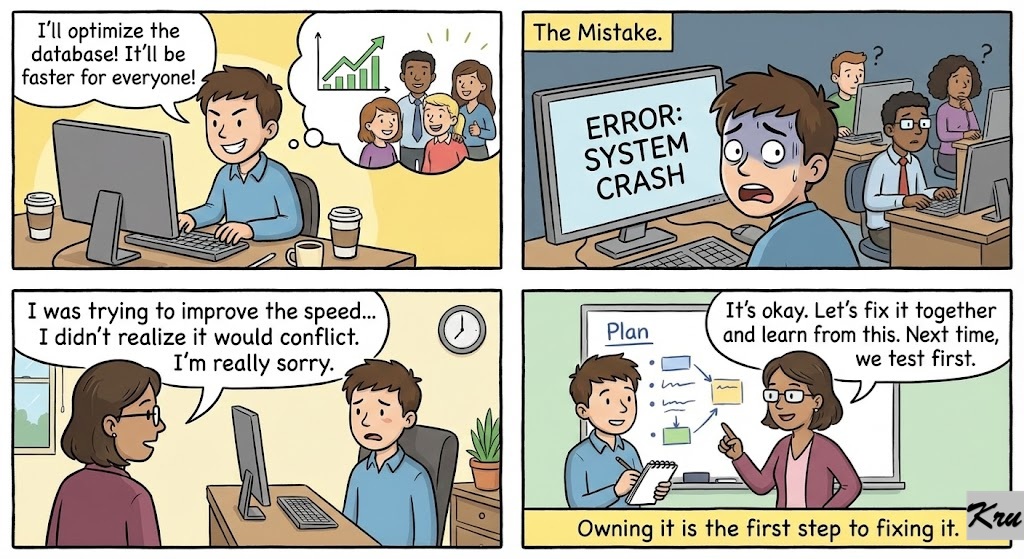
We often use this idiom when someone makes a huge mistake but tries to avoid punishment by saying, “But I was trying to help!”
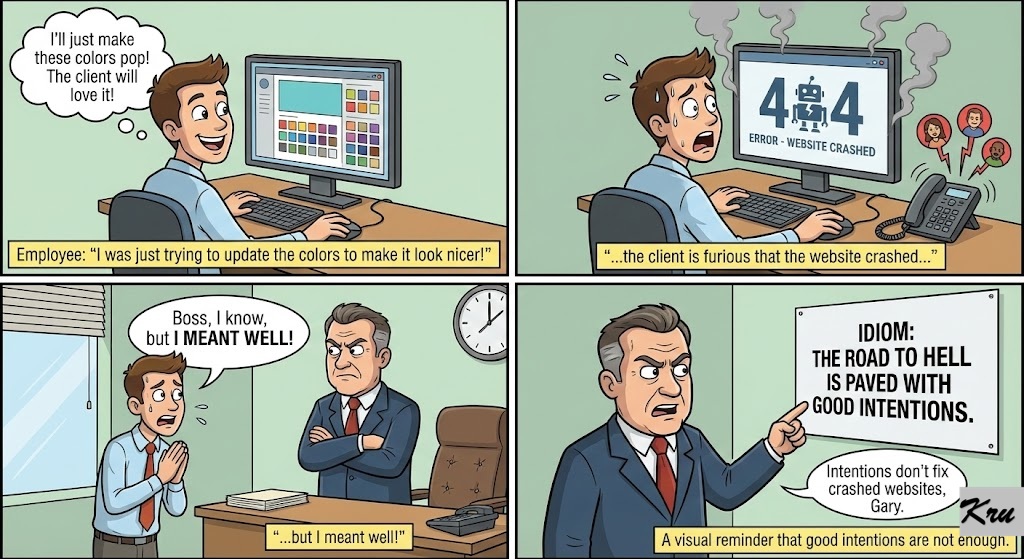
Employee: “Boss, I know the client is furious that the website crashed, but I was just trying to update the colors to make it look nicer! I meant well!”
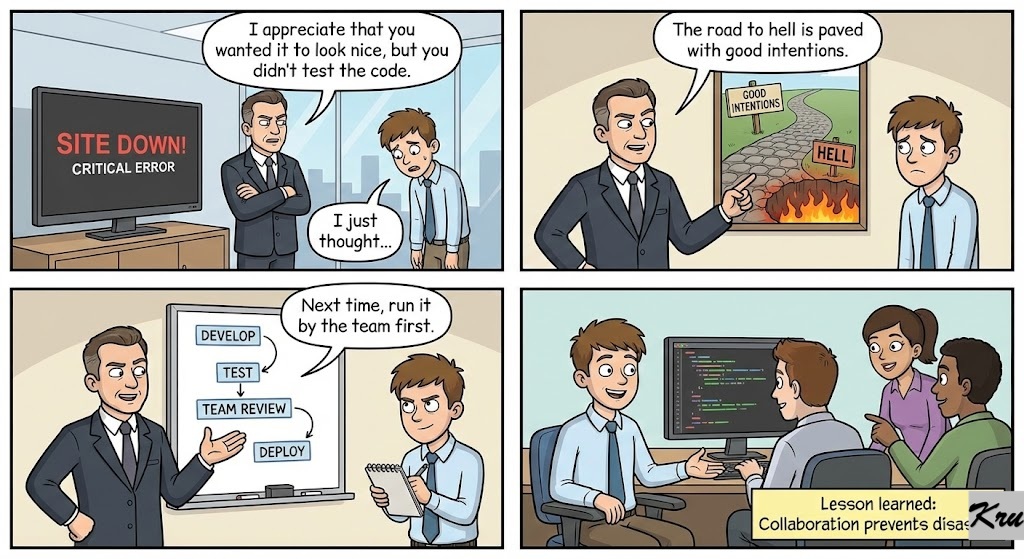
Boss: “I appreciate that you wanted it to look nice, but you didn’t test the code. The road to hell is paved with good intentions. Next time, run it by the team first.”
📜 History: Origin and Spread
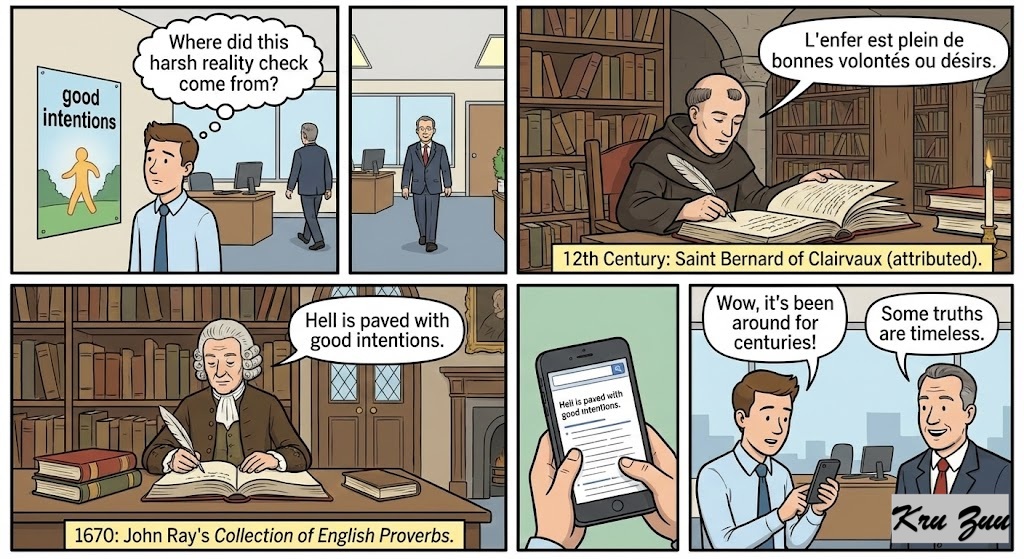
Where did this harsh reality check come from?
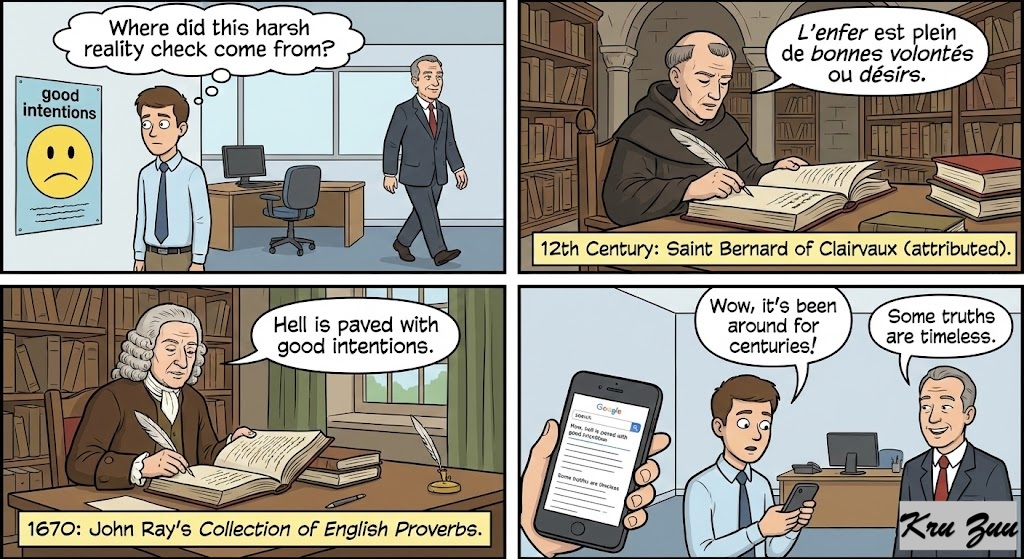
The Origin: The exact phrasing we use today was popularized in the 19th century, but the concept is ancient. It is often attributed to Saint Bernard of Clairvaux (around 1150 AD), who supposedly wrote, “Hell is full of good wishes or desires.”
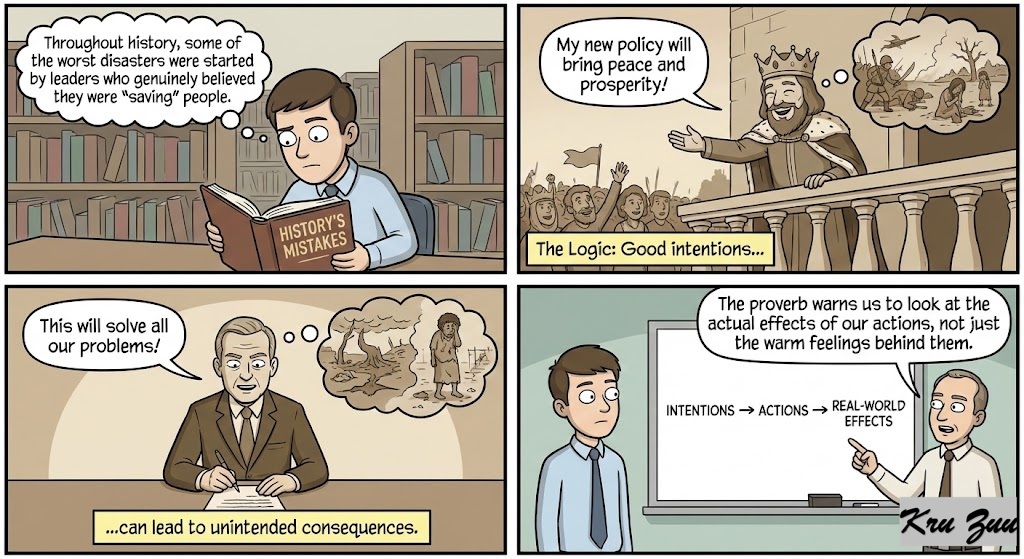
The Logic: Throughout history, some of the worst disasters, wars, and bad policies were started by leaders who genuinely believed they were “saving” people. The proverb warns us to look at the actual effects of our actions, not just the warm feelings behind them.
Global Cousins
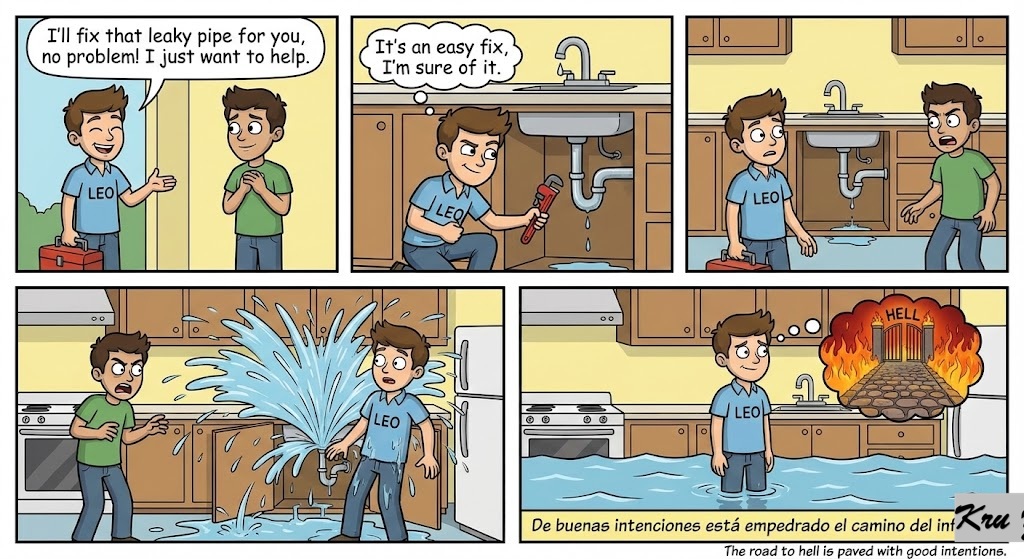
🇪🇸 Spanish: “De buenas intenciones está empedrado el camino del infierno.” (Exact same translation).
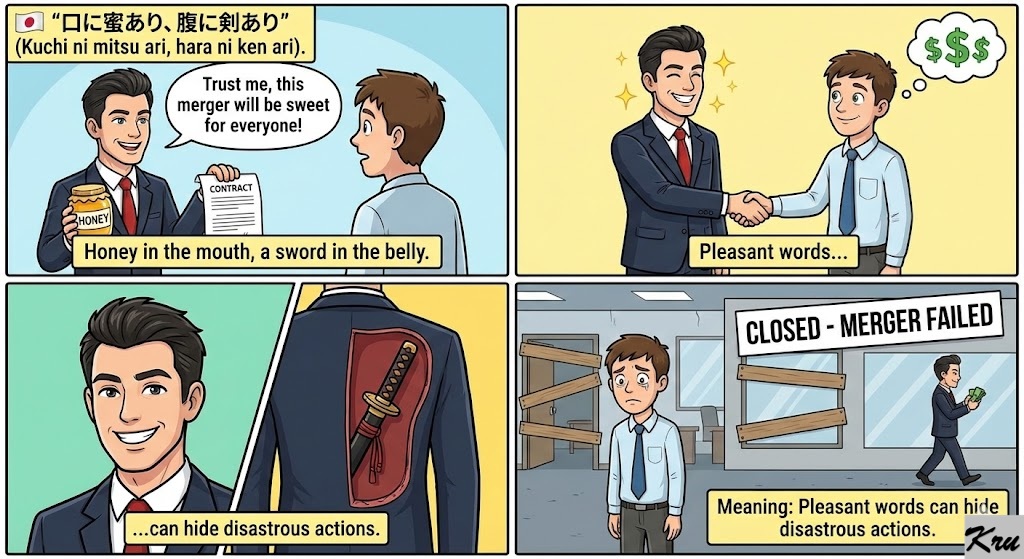
🇯🇵 Japanese: “口に蜜あり、腹に剣あり” (Kuchi ni mitsu ari, hara ni ken ari — Honey in the mouth, a sword in the belly. Meaning: Pleasant words can hide disastrous actions).
🇹🇷 Turkish: “Cehenneme giden yol iyi niyet taşlarıyla döşelidir.” (Exact translation).
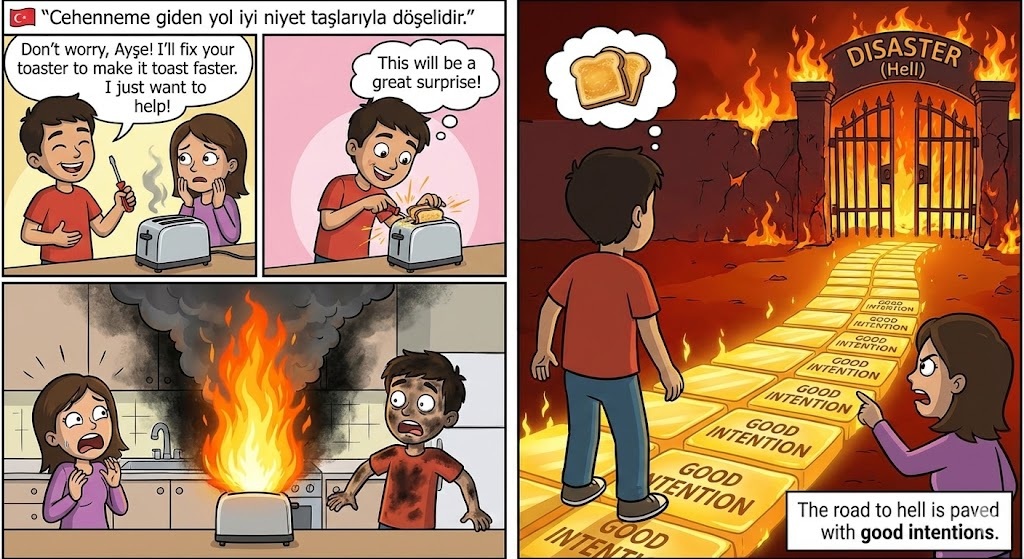
🎭 Short Story: The Great Garden Disaster 🌱🐱🐔🐸
Let’s return to the magical forest to see what happens when promises meet reality.
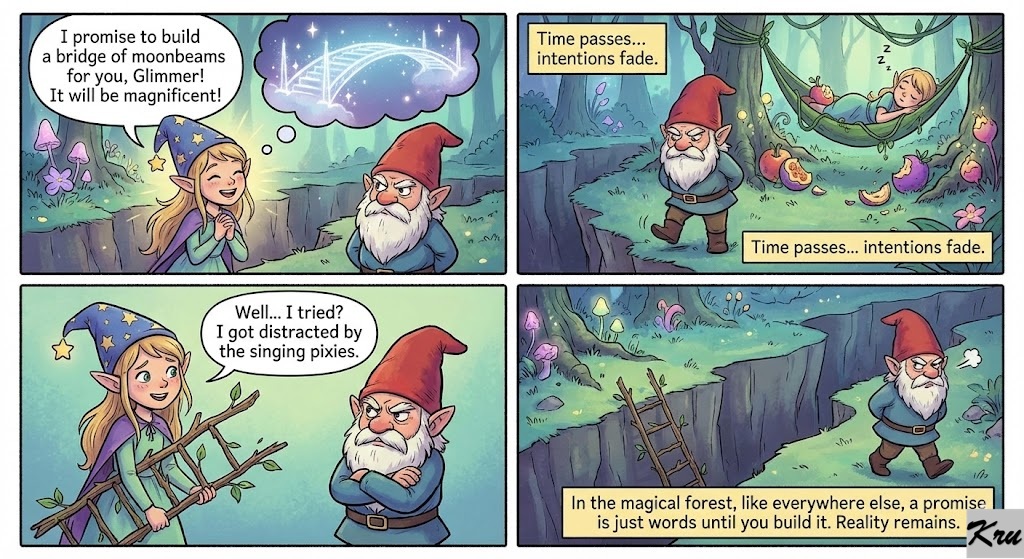
🌟 The Cast
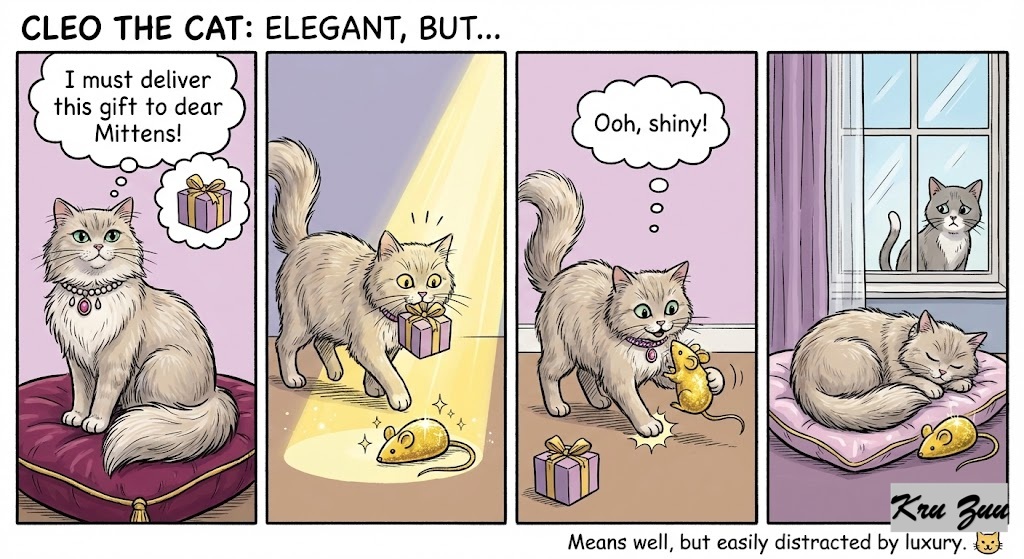
Cleo the Cat: Elegant, means well, but easily distracted by luxury. 😼
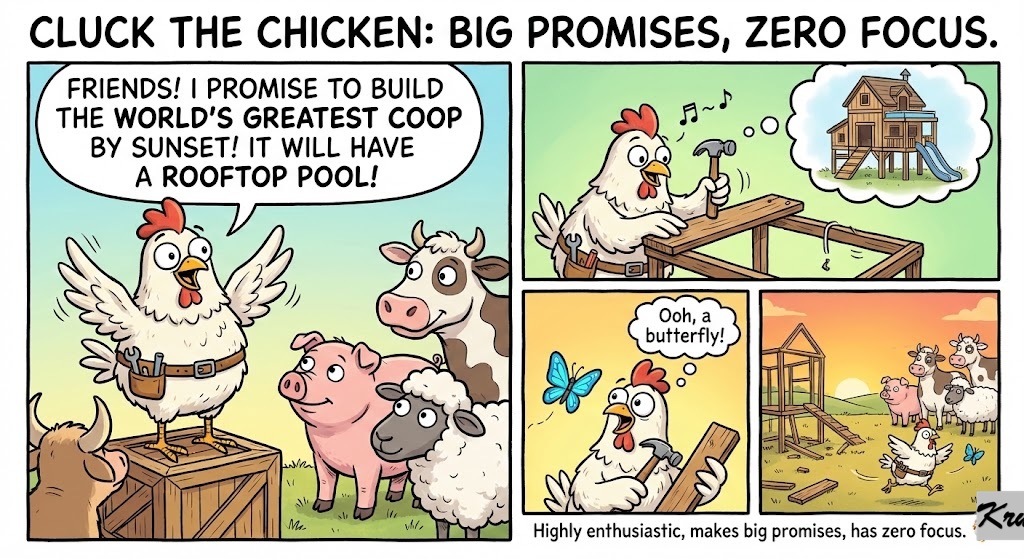
Cluck the Chicken: Highly enthusiastic, makes big promises, has zero focus. 🐔
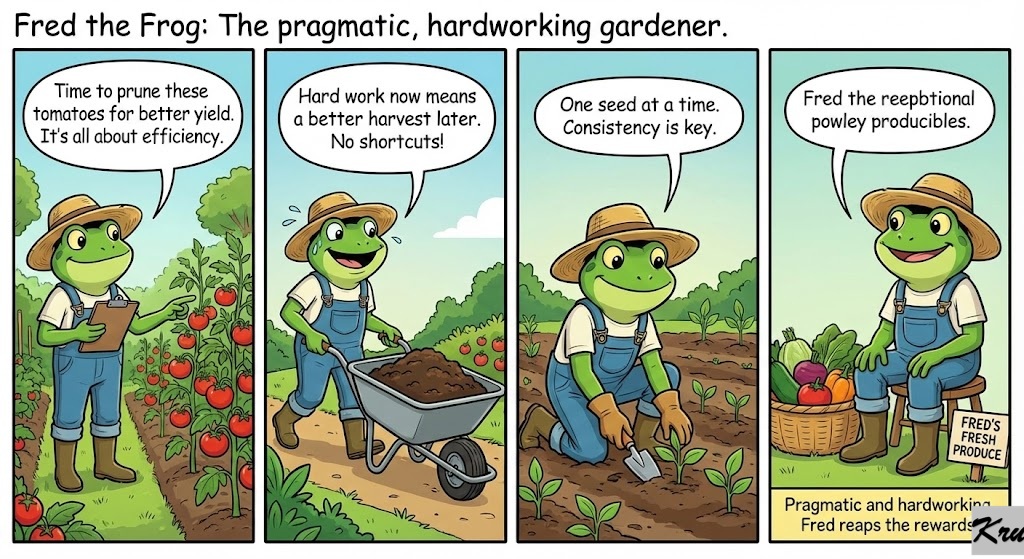
Fred the Frog: The pragmatic, hardworking gardener. 🐸
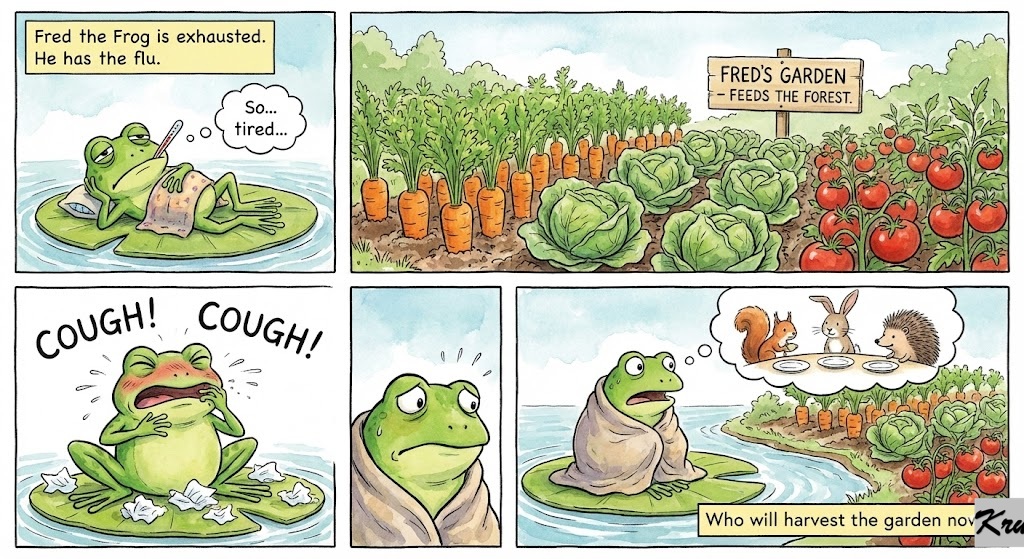
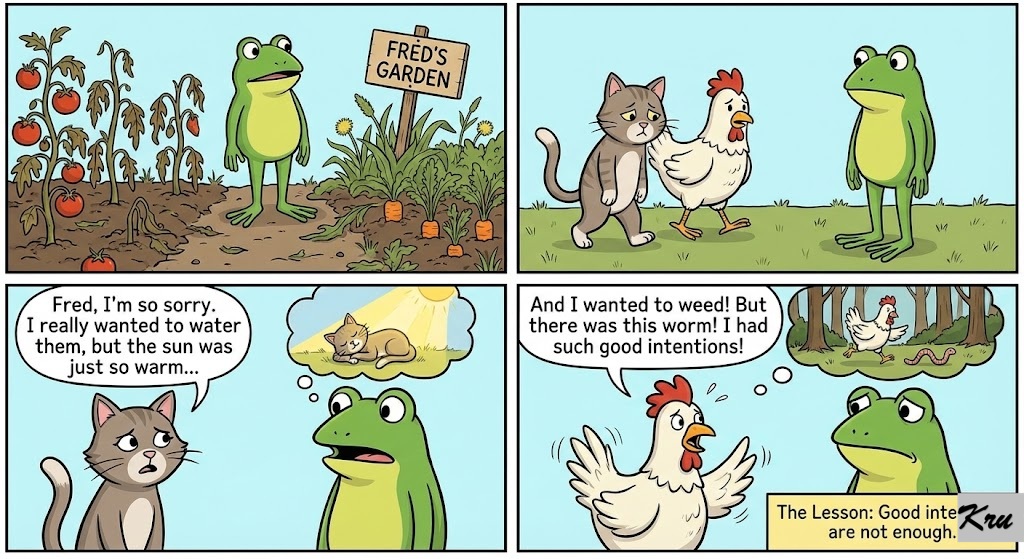
The Situation: Fred the Frog is exhausted. He has a massive vegetable garden that feeds the whole forest, but he has the flu. He lies on his lily pad, coughing.
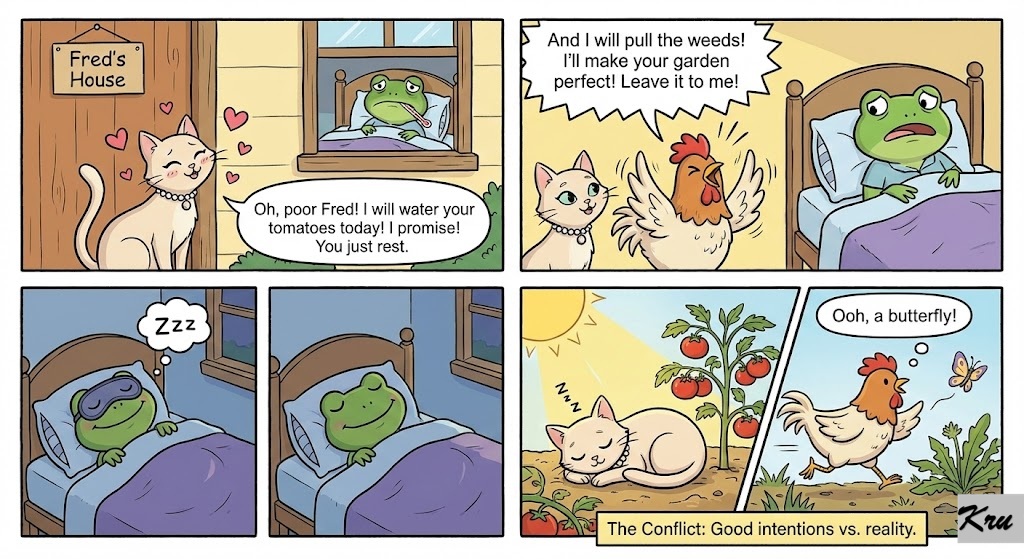
The Conflict: Cleo and Cluck come to visit. “Oh, poor Fred!” Cleo purrs, rubbing her head against his door. “I will water your tomatoes today! I promise! You just rest.” “And I will pull the weeds!” squawks Cluck, flapping his wings. “I’ll make your garden perfect! Leave it to me!” Fred sighs with relief, closes his eyes, and goes to sleep.
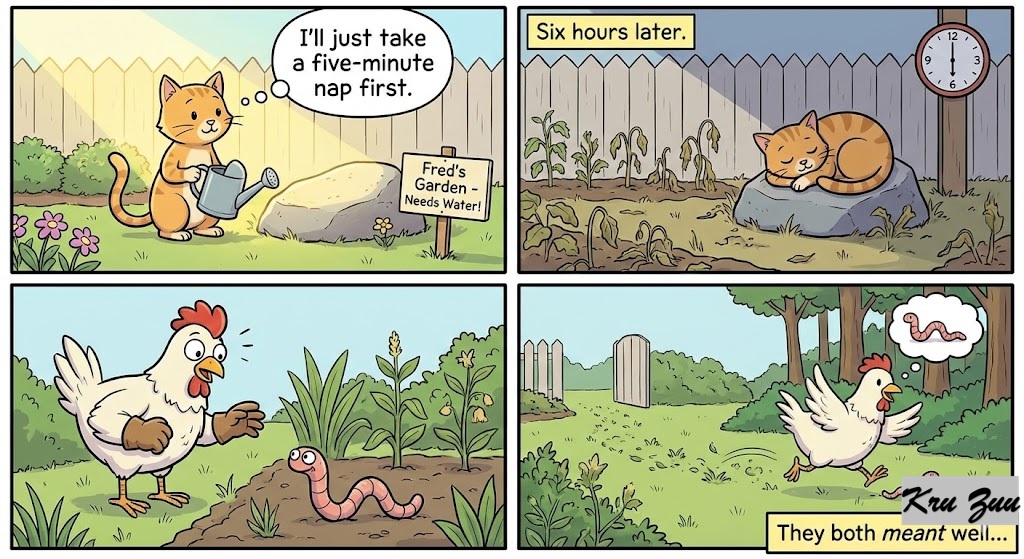
The Reaction: Cleo walks to the garden, picks up the watering can, but then notices a beautiful, warm sunbeam hitting a rock. “I’ll just take a five-minute nap first,” she thinks. She meant to water the plants. She sleeps for six hours. Meanwhile, Cluck marches into the garden to pull weeds. He sees a juicy worm. He chases the worm out of the garden, into the woods, and completely forgets about the weeds. He meant to clean the garden.
The Lesson: The next morning, Fred wakes up feeling better. He walks to the garden. The tomatoes are completely dried out and dying from the heat. The weeds have strangled the carrots. Cleo and Cluck walk up, looking guilty. “Fred, I’m so sorry,” Cleo says. “I really wanted to water them, but the sun was just so warm…” “And I wanted to weed!” Cluck cries. “But there was this worm! I had such good intentions!”
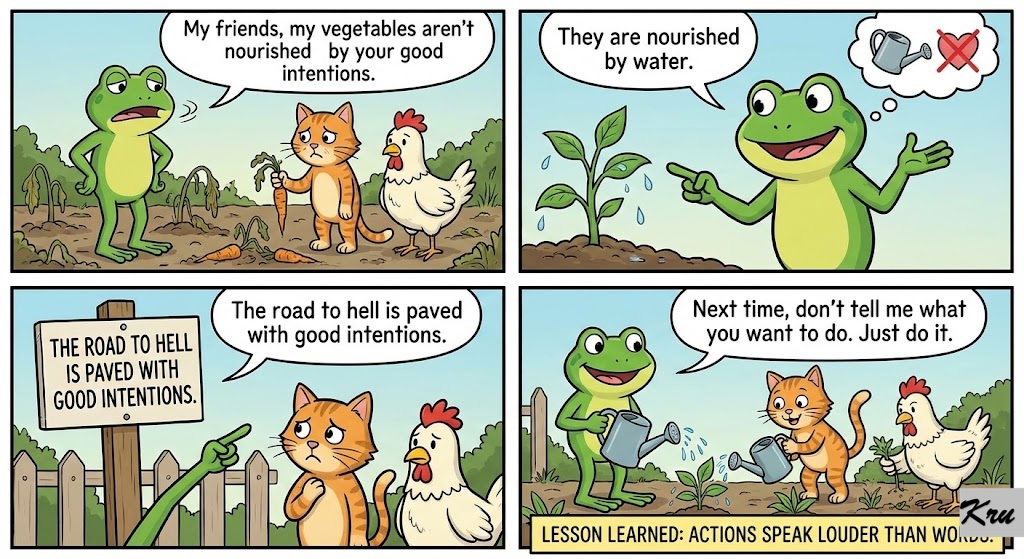
Fred shakes his green head. “My friends, my vegetables aren’t nourished by your good intentions. They are nourished by water. The road to hell is paved with good intentions. Next time, don’t tell me what you want to do. Just do it.”
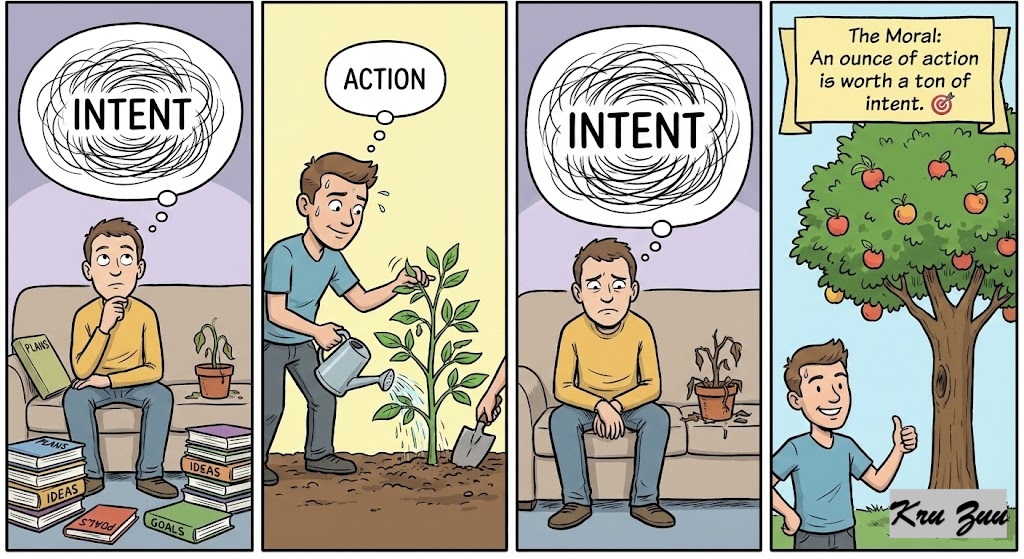
The Moral: An ounce of action is worth a ton of intent. 🎯
🎓 Lesson for English Learners
Taking Responsibility Like a Pro.
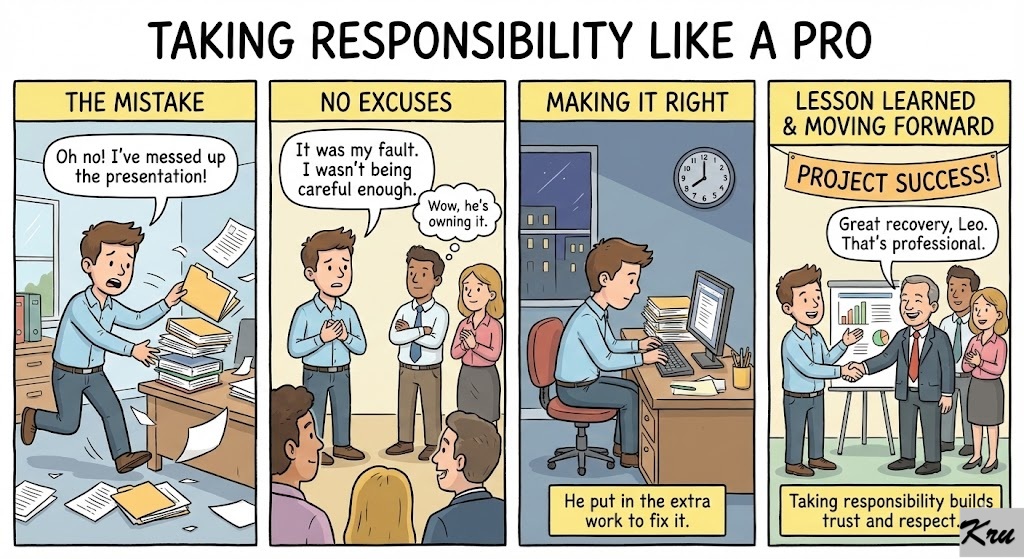
Situation: You made a mistake at work. You were trying to do something good, but it failed.
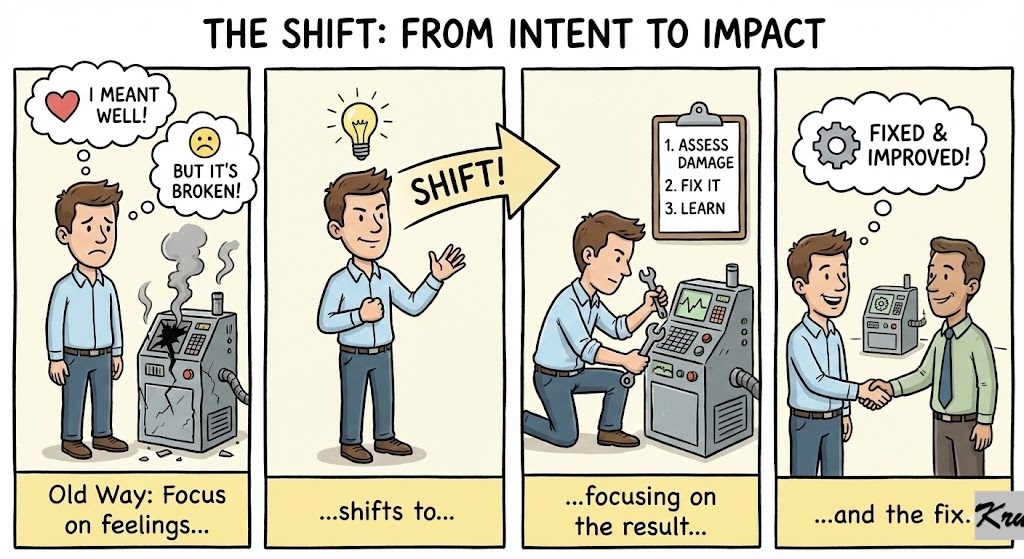
The Shift: Do NOT focus on your feelings (“I meant well”). Focus on the result and the fix.
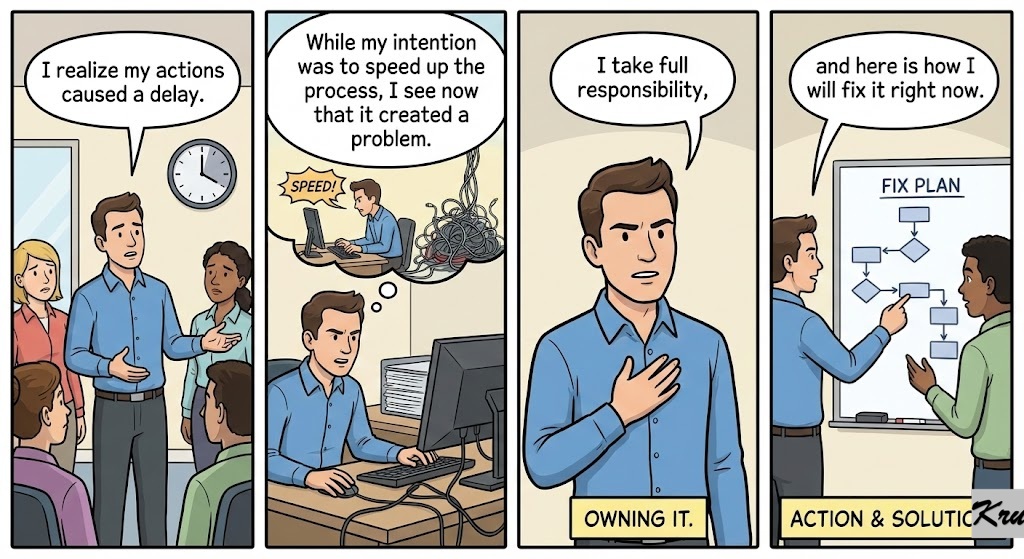
You Say: “I realize my actions caused a delay. While my intention was to speed up the process, I see now that it created a problem. I take full responsibility, and here is how I will fix it right now.”
💬 Your Turn: The “Do It Now” Challenge 🚀
Do you want to cure your “Empty Promiser” habits?
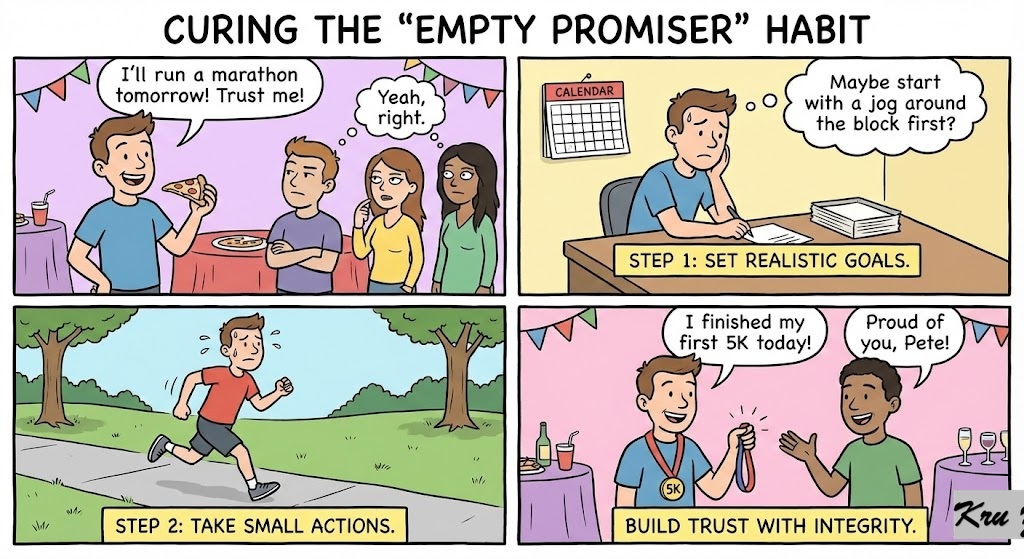
The Challenge: The 2-Minute Rule. The Action: For the next 48 hours, if you have a “good intention” to do something (text a friend, put your shoes away, send an email, wash a dish) and it takes less than 2 minutes to complete… Do not plan it. Do not promise it. Do it immediately. Stop paving the road to hell, and start laying the bricks for your own castle.
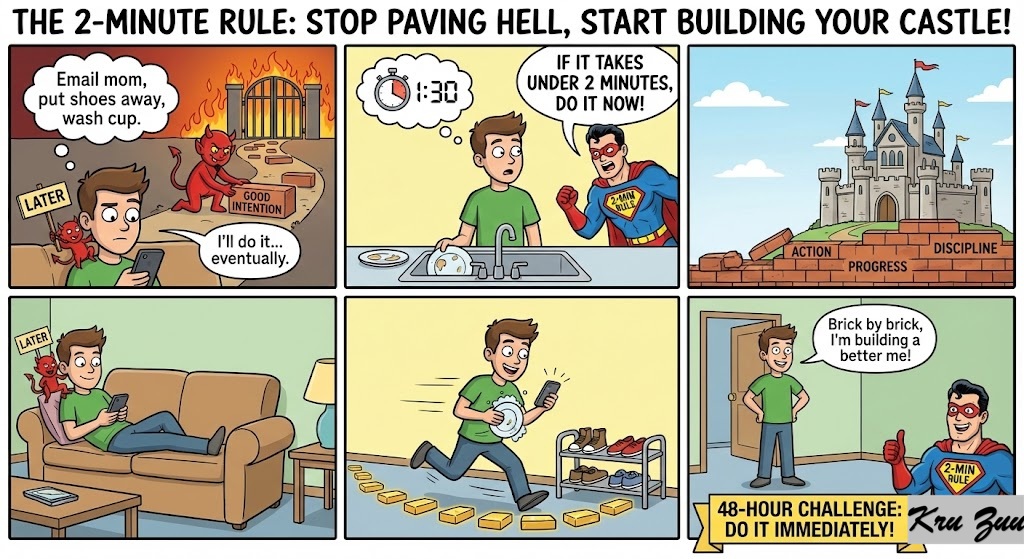
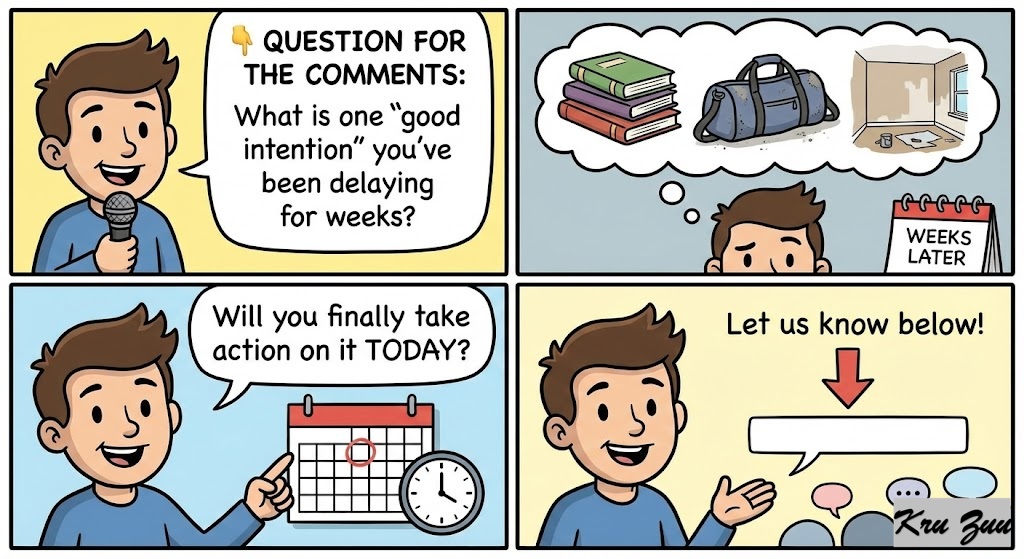
👇 Question for the comments: What is one “good intention” you’ve been delaying for weeks? Will you finally take action on it today? Let us know below!
https://www.facebook.com/BrainBattleground/
https://www.facebook.com/zubeyr.yurtkuran/
https://www.instagram.com/zubeyryurtkuran/

Leave a comment