
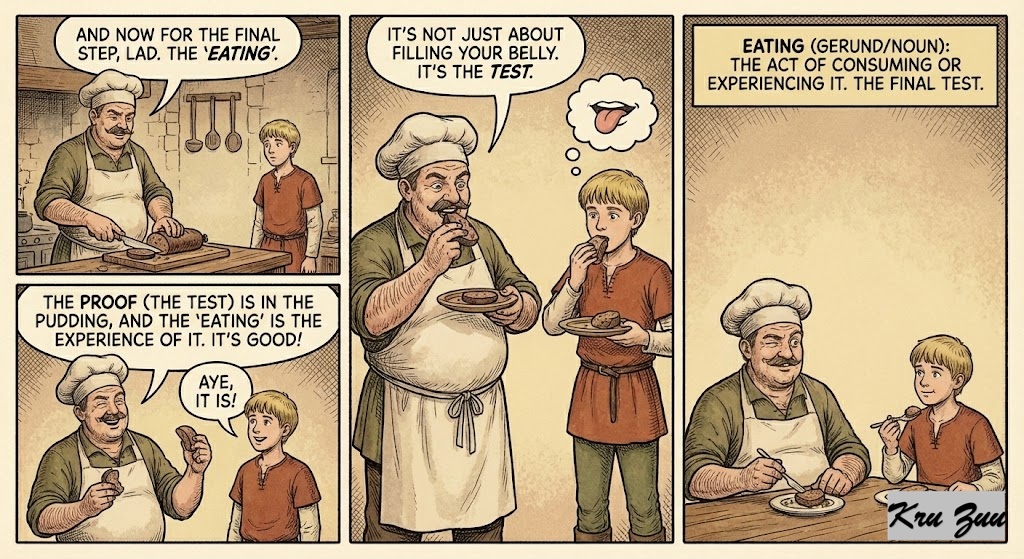
“The proof of the pudding is in the eating.”
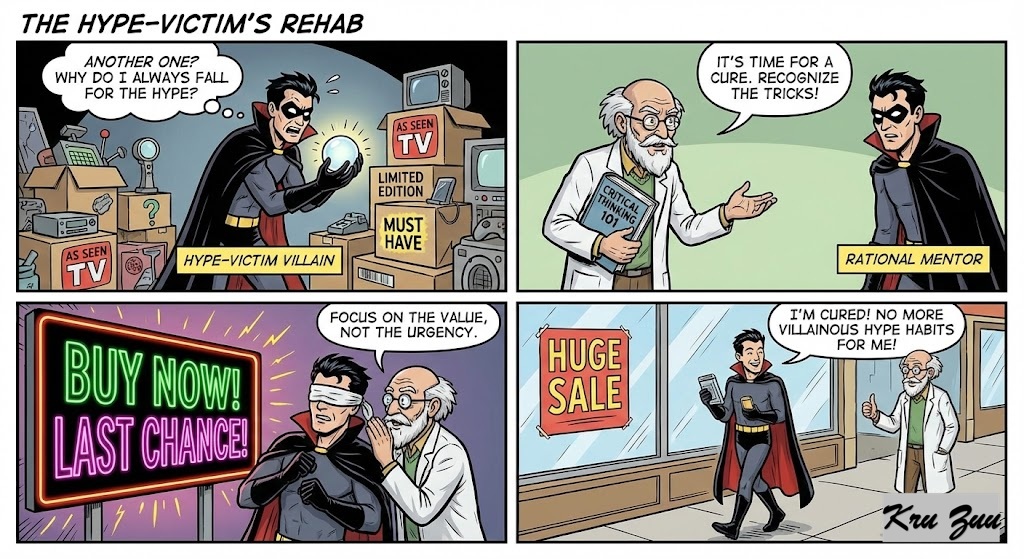
😈 The Villain (The Hype Victim)
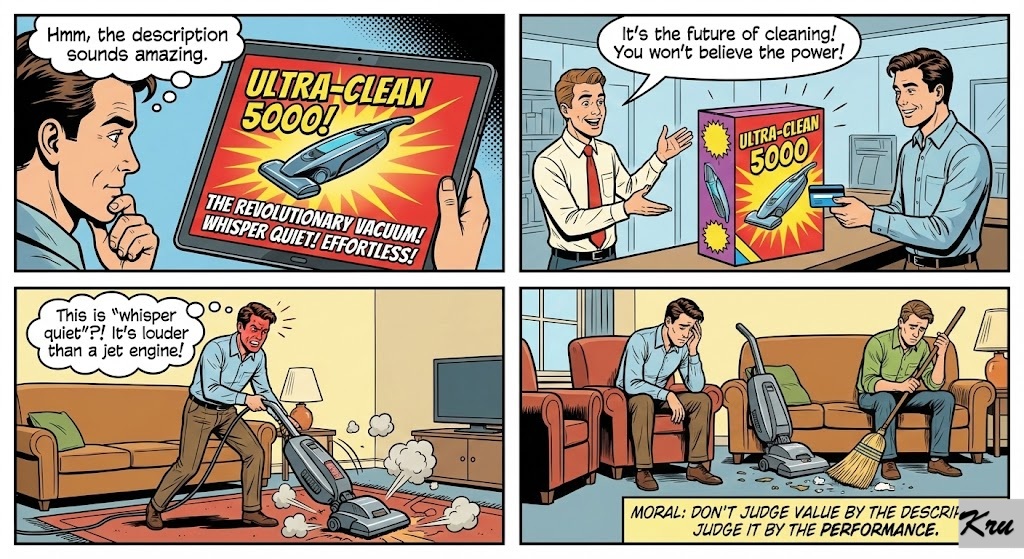
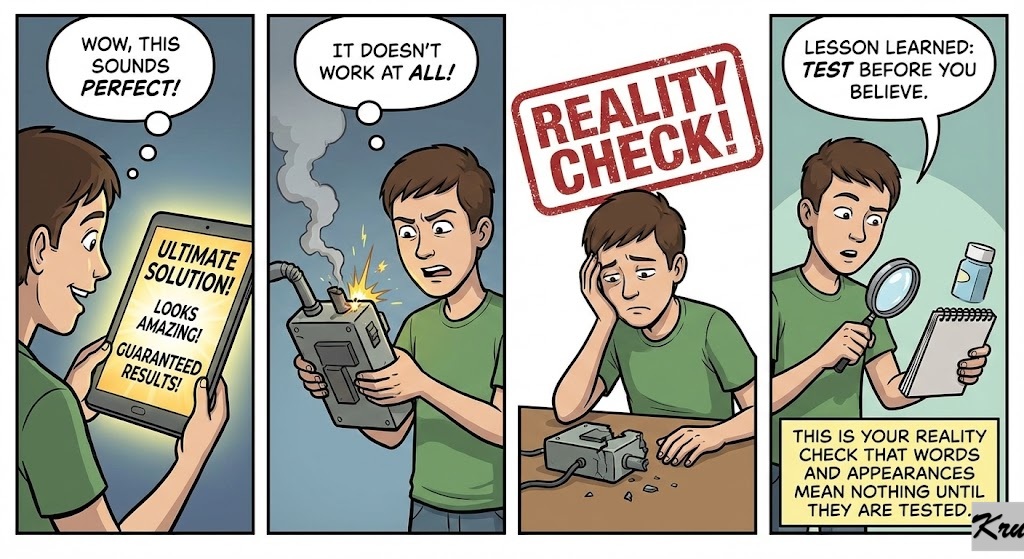
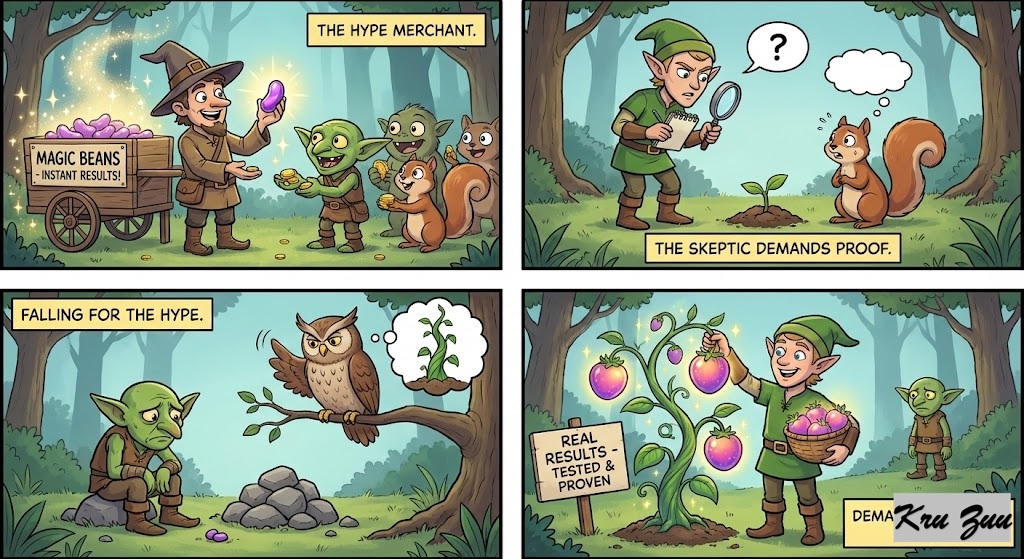
You see a flashy ad. You hear a big promise. You buy in immediately. 💸 “The package looks so premium!,” “The salesman promised it would double my productivity!,” “Everyone on social media says it’s amazing!” You act as if a good presentation equals a good product. You disconnect the claim from the actual performance.
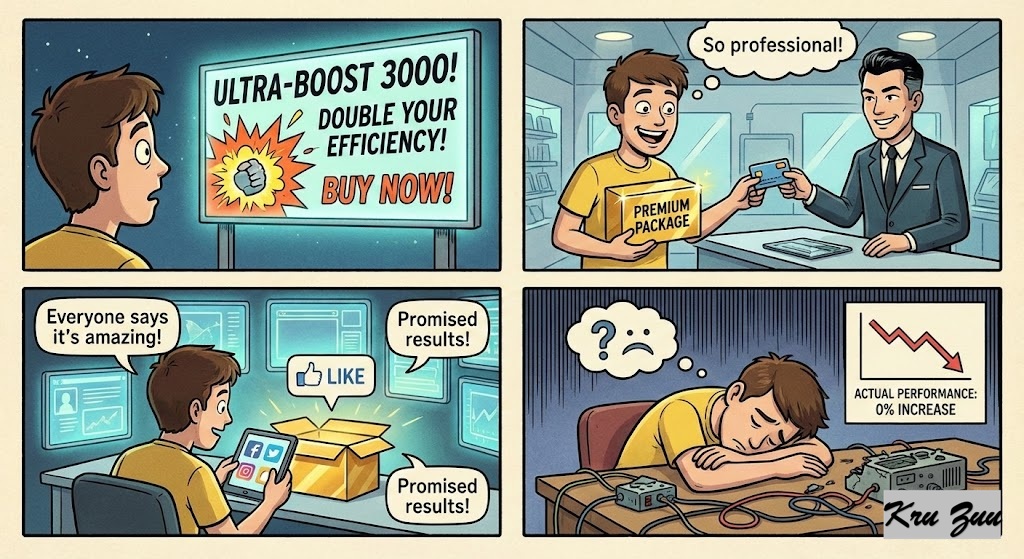
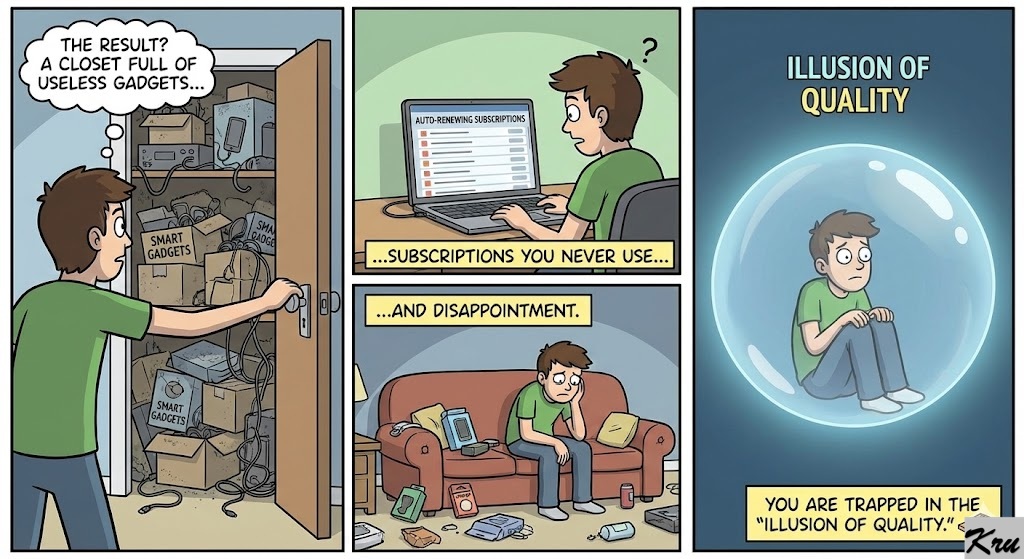
The Result? You have a closet full of useless gadgets, subscriptions you never use, and disappointment. You are trapped in the “Illusion of Quality.” 🪤
😇 The Hero (The Pragmatic Tester)
You see a big promise. You pause. 🛑 Instead of believing the hype, you demand evidence.
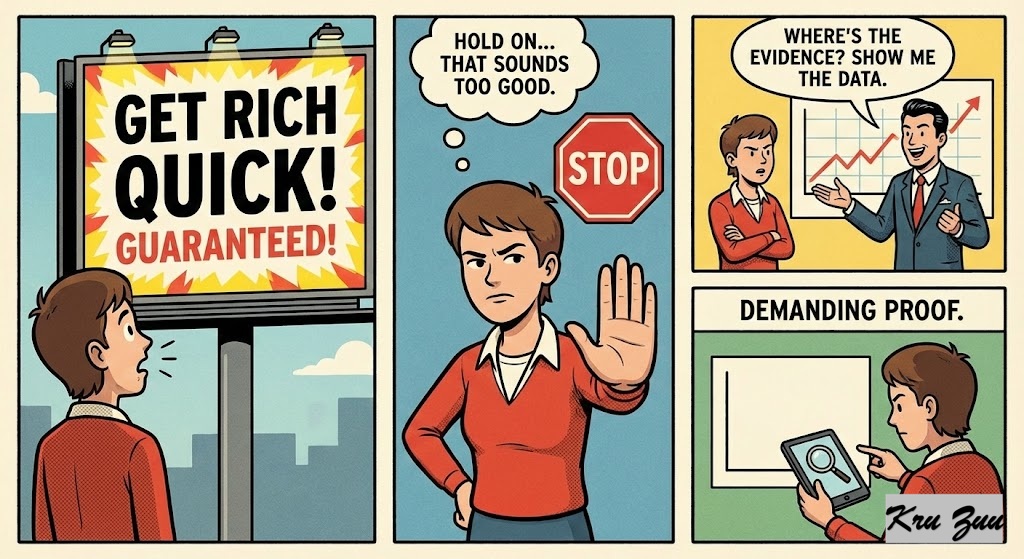
You think: “This software looks great on the website, but let’s see how it runs on my computer.” You respect real-world results over clever marketing.
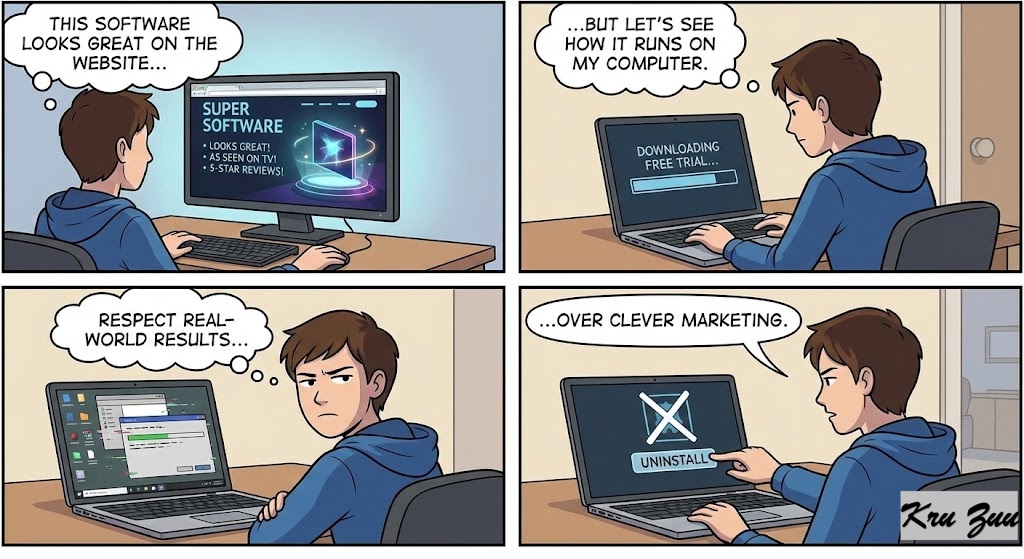
You say: “I need to test drive this before I commit.”
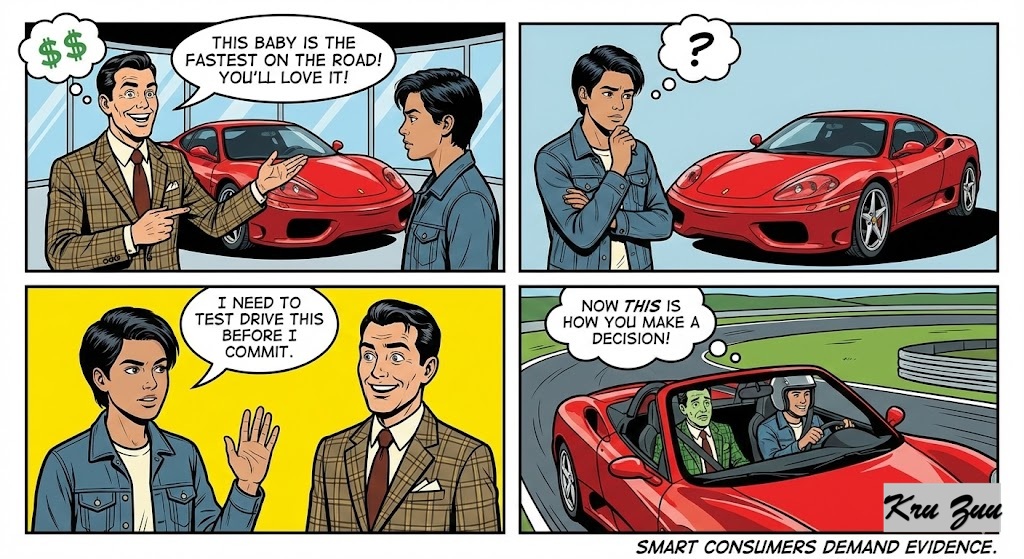
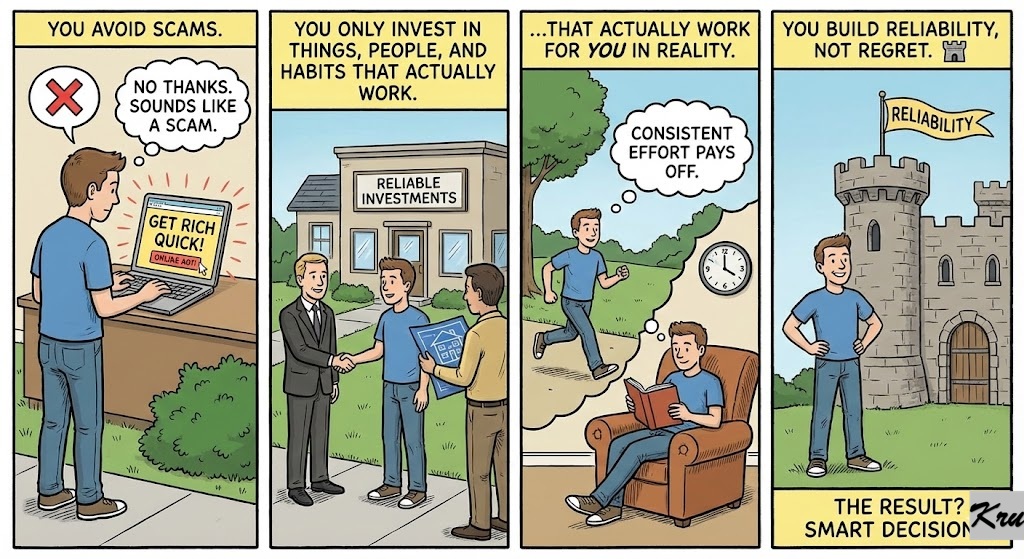
The Result? You make smart decisions. You avoid scams. You only invest in things, people, and habits that actually work for you in reality. You build reliability, not regret. 🏰
⚖️ The Reality
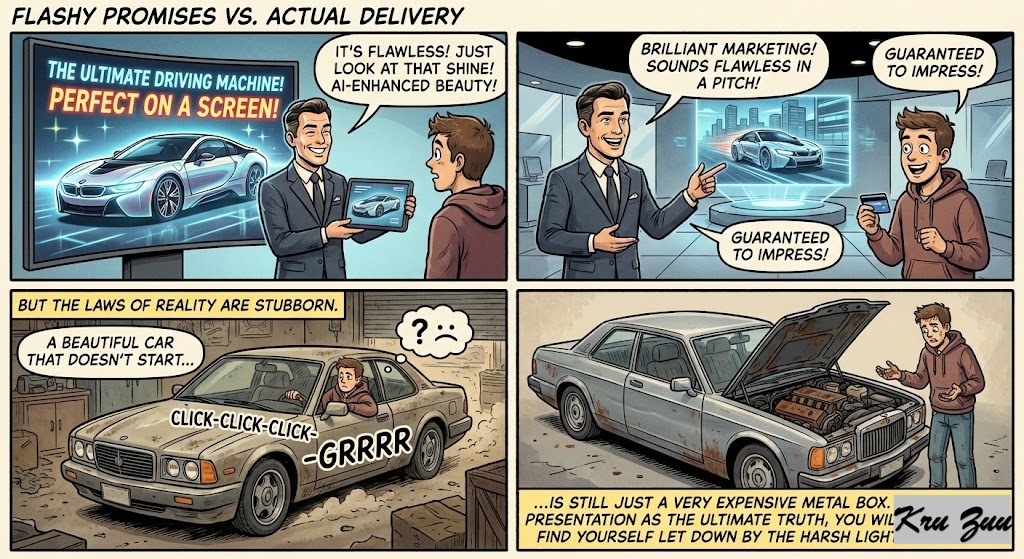
Flashy promises vs. Actual delivery. We live in a world of filters, artificial intelligence, and brilliant marketing. Anyone can make something look perfect on a screen or sound flawless in a pitch. But the laws of reality are stubborn. A beautiful car that doesn’t start is still just a very expensive metal box. If you treat presentation as the ultimate truth, you will constantly find yourself let down by the harsh light of reality.
💎 The Secret
Don’t judge the value of a thing by how it is described; judge it by how it performs when you actually use it.
🧐 The Anatomy of the Proverb
This is your reality check that words and appearances mean nothing until they are tested.
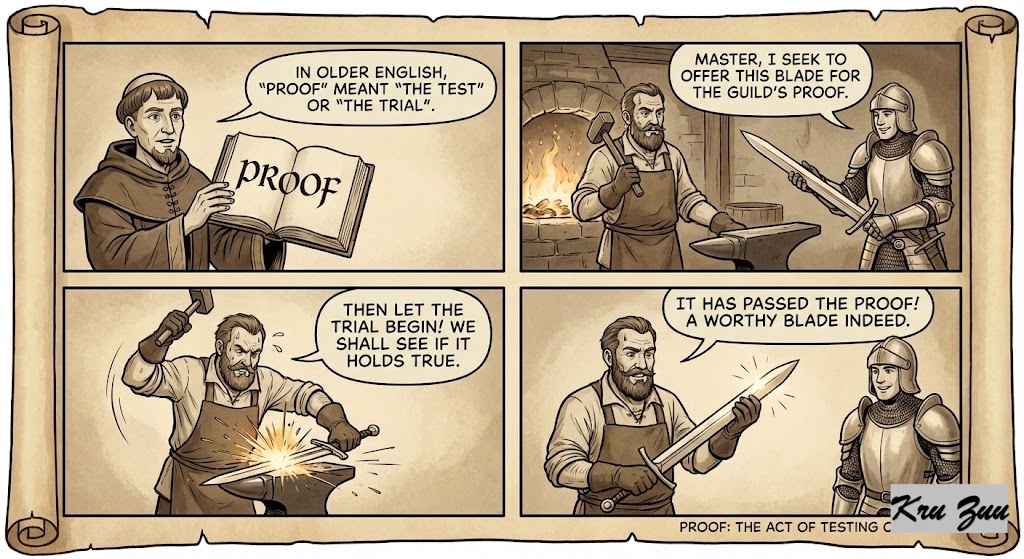
Proof (Noun): In older English, this meant “the test” or “the trial” (not just evidence).
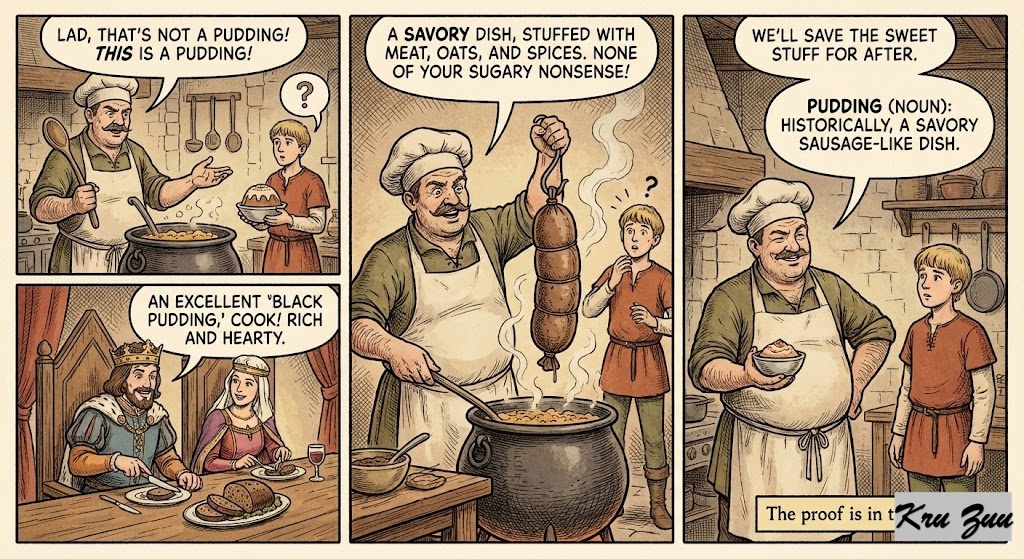
Pudding (Noun): A dish (historically, a savory sausage-like dish, not a sweet dessert).
Eating (Gerund/Noun): The act of consuming or experiencing it.
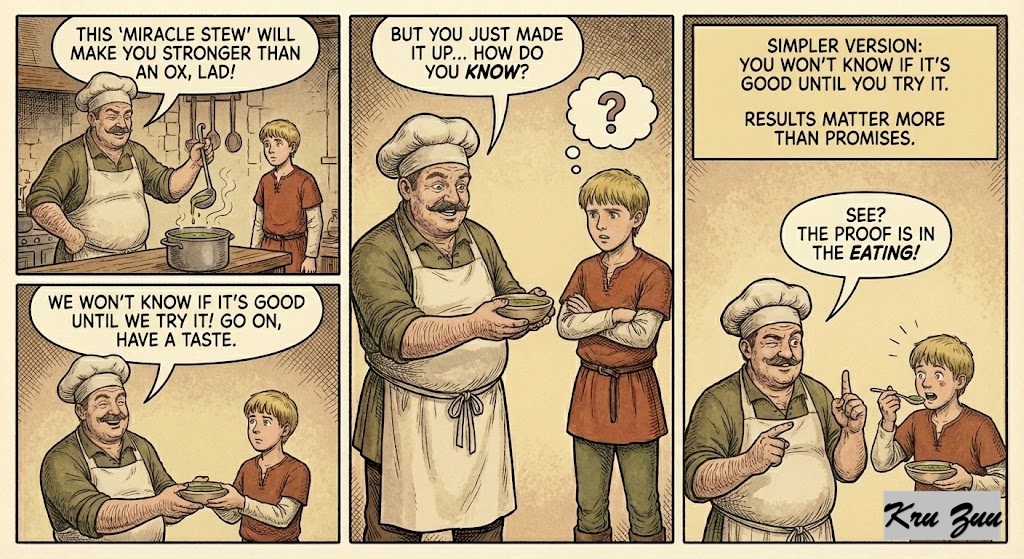
Simpler Version: You won’t know if it’s good until you try it. / Results matter more than promises.
📚 Vocabulary Vault
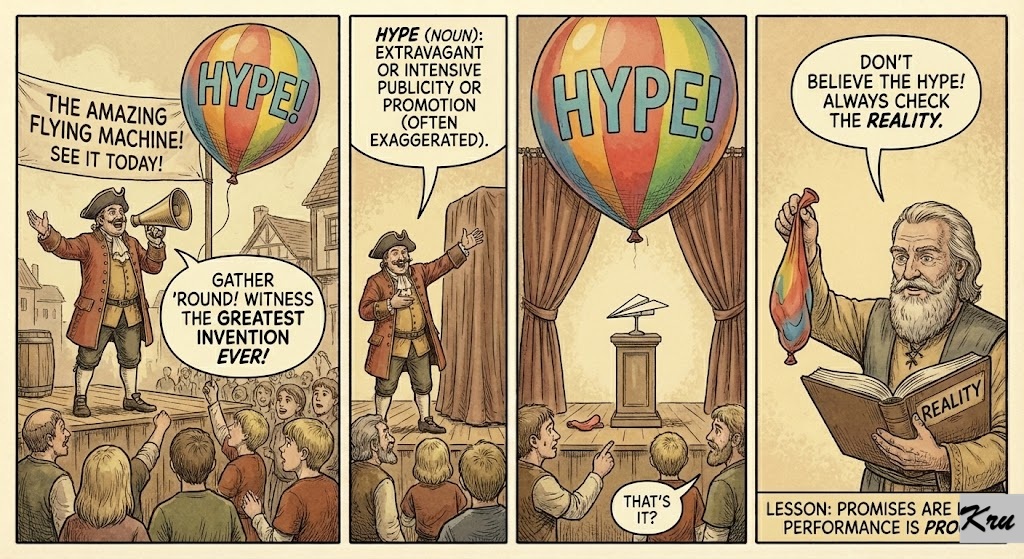
Hype (Noun): Extravagant or intensive publicity or promotion (often exaggerated). 🎈
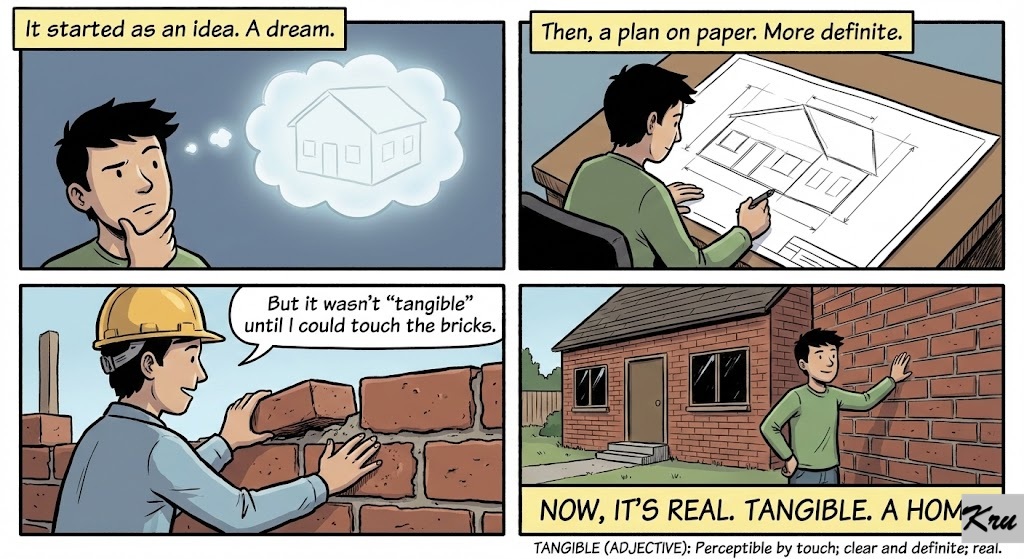
Tangible (Adjective): Perceptible by touch; clear and definite; real.
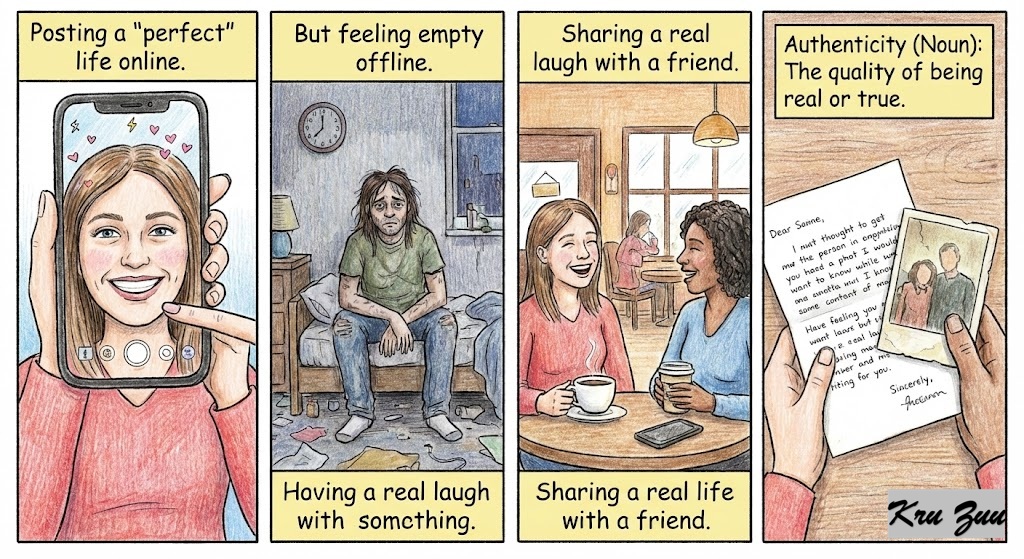
Authenticity (Noun): The quality of being real or true.
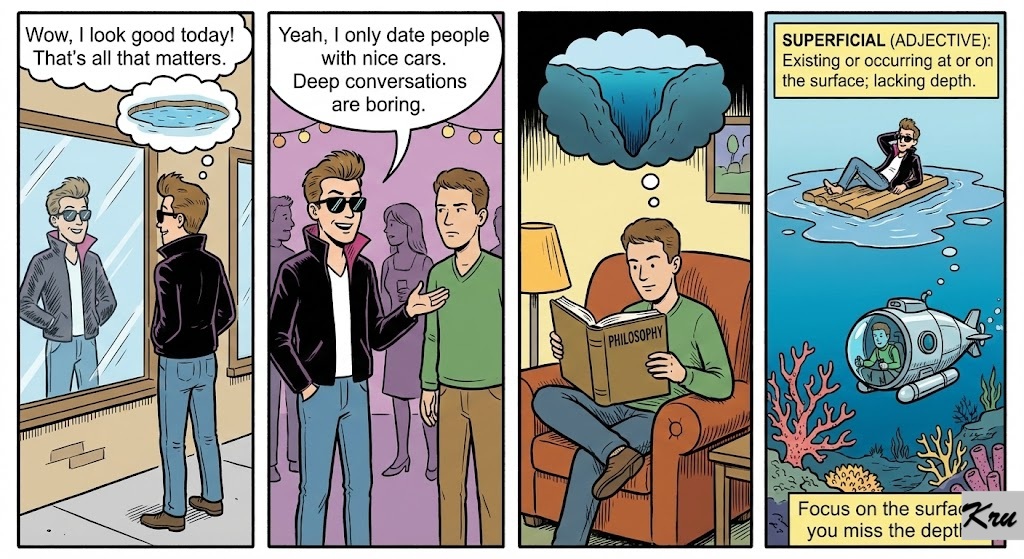
Superficial (Adjective): Existing or occurring at or on the surface; lacking depth.
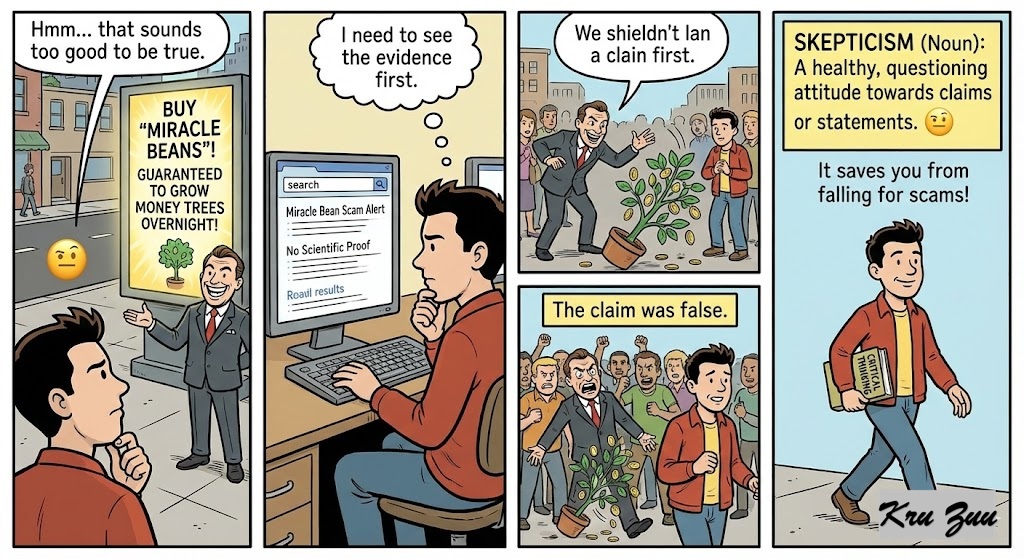
Skepticism (Noun): A healthy, questioning attitude towards claims or statements. 🤨
🧠 Grammar Focus: The Modern “Misquote”
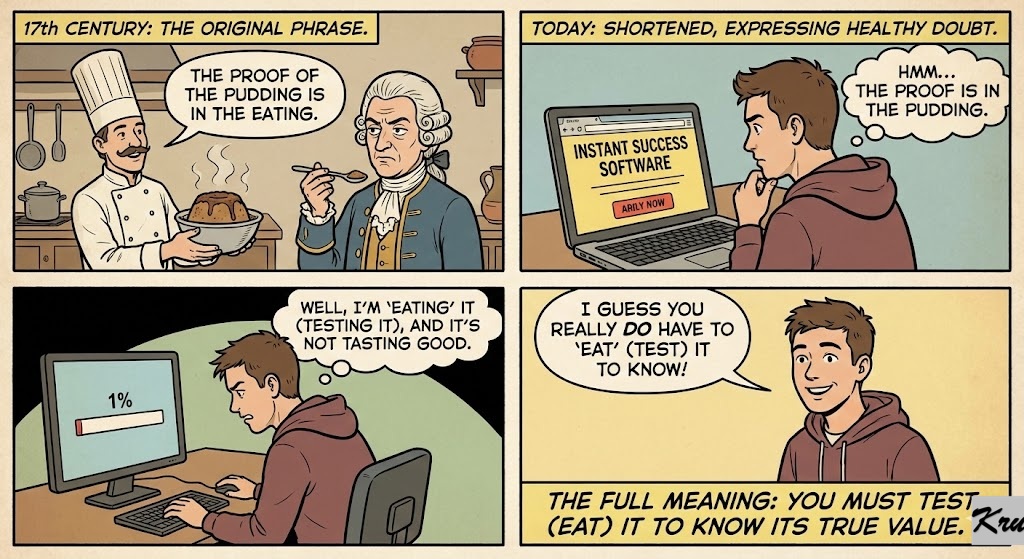
Native speakers use this idiom all the time to express healthy doubt. However, over the centuries, we have accidentally shortened it!
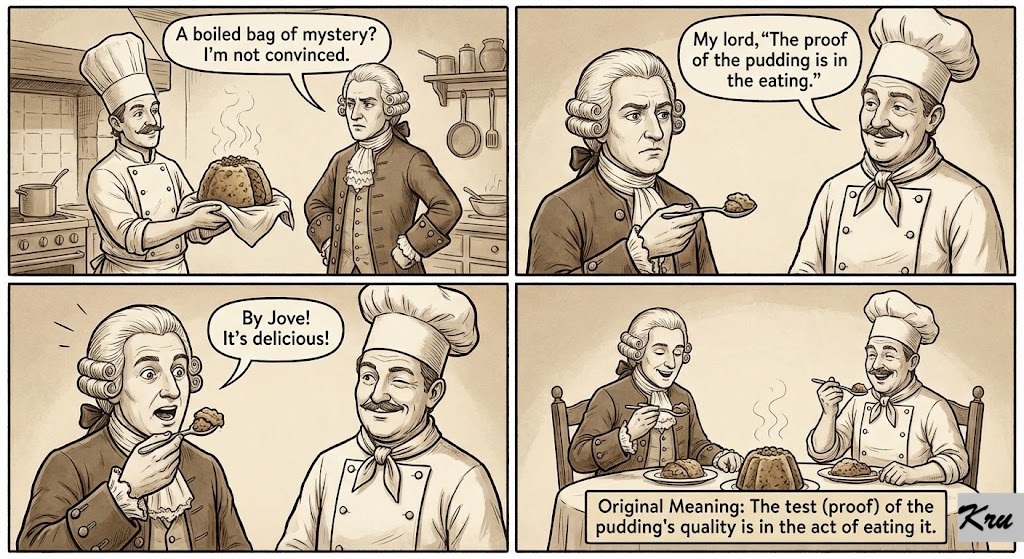
Original: “The proof of the pudding is in the eating.”
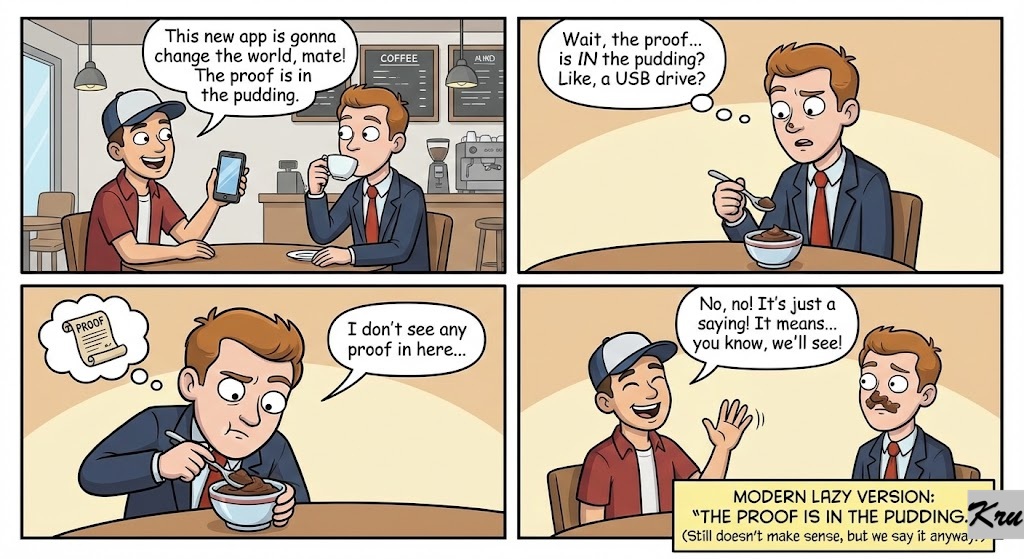
Modern Lazy Version: “The proof is in the pudding.” (You will hear Americans and Brits say this constantly, even though it doesn’t make logical sense!)
How to use it as a Boss/Leader
Employee: “Boss, this new marketing strategy is guaranteed to triple our sales! The charts look incredible!”
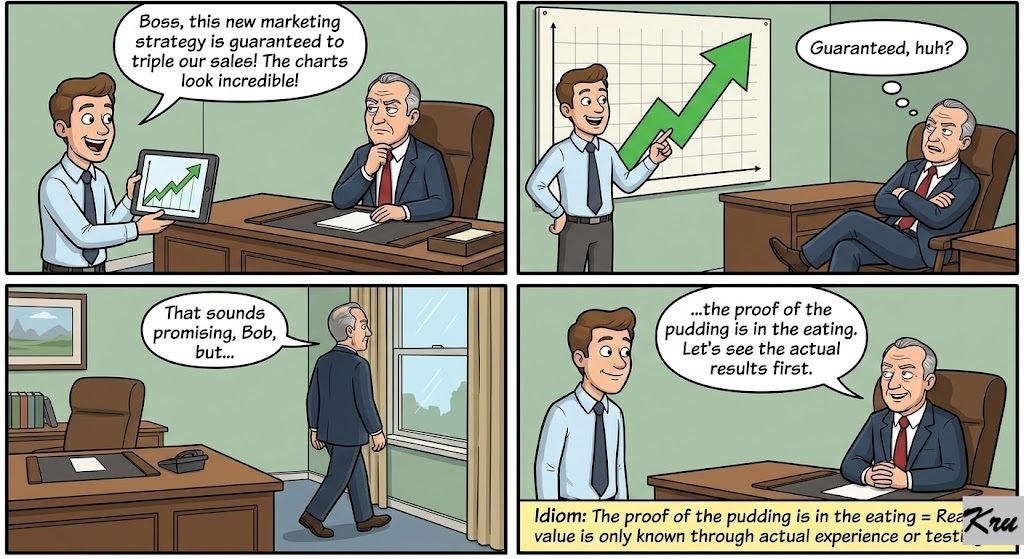
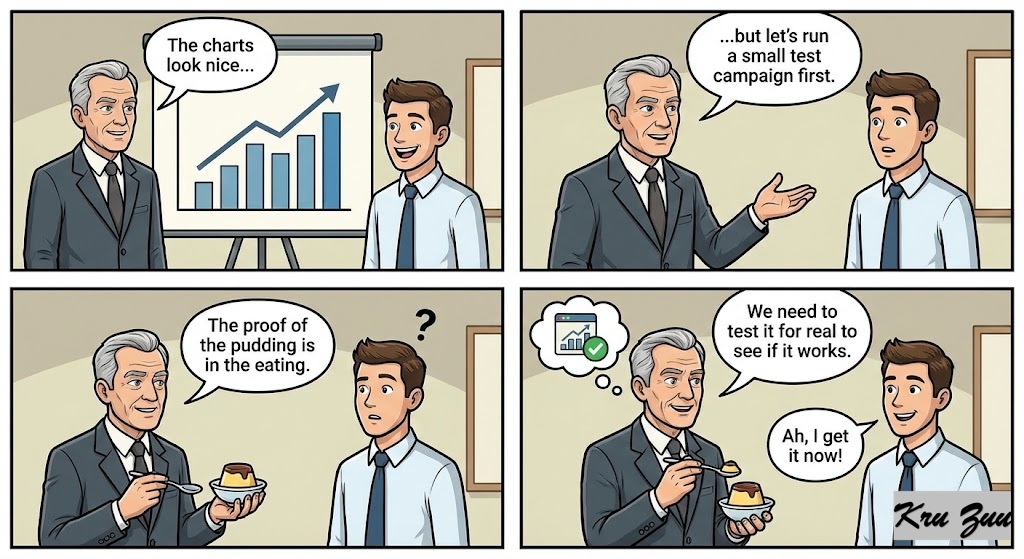
Boss: “The charts look nice, but let’s run a small test campaign first. The proof of the pudding is in the eating.”
📜 History: Origin and Spread
Where did this delicious advice come from?
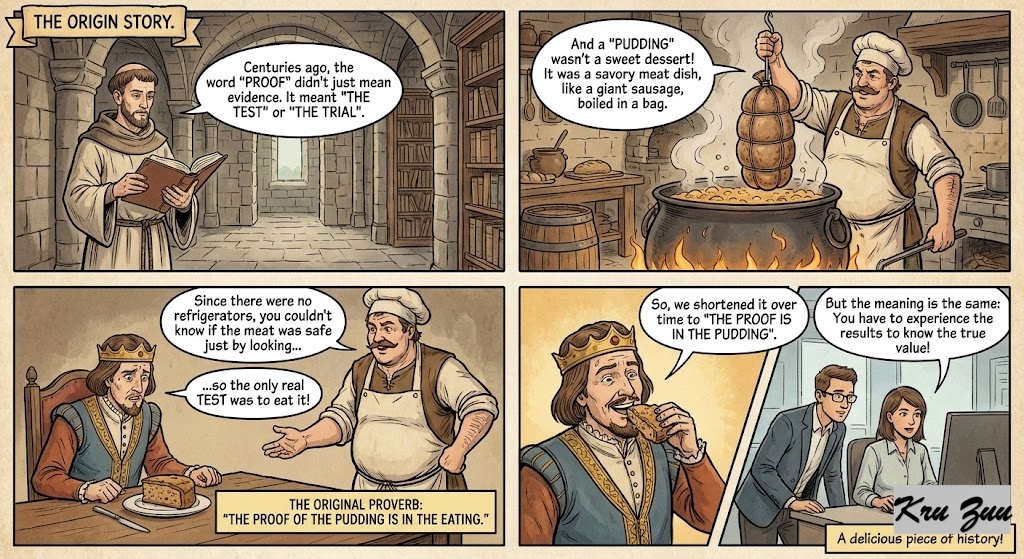
The Origin: It dates back to the early 14th century, but was famously recorded in 1605 by the English writer William Camden.
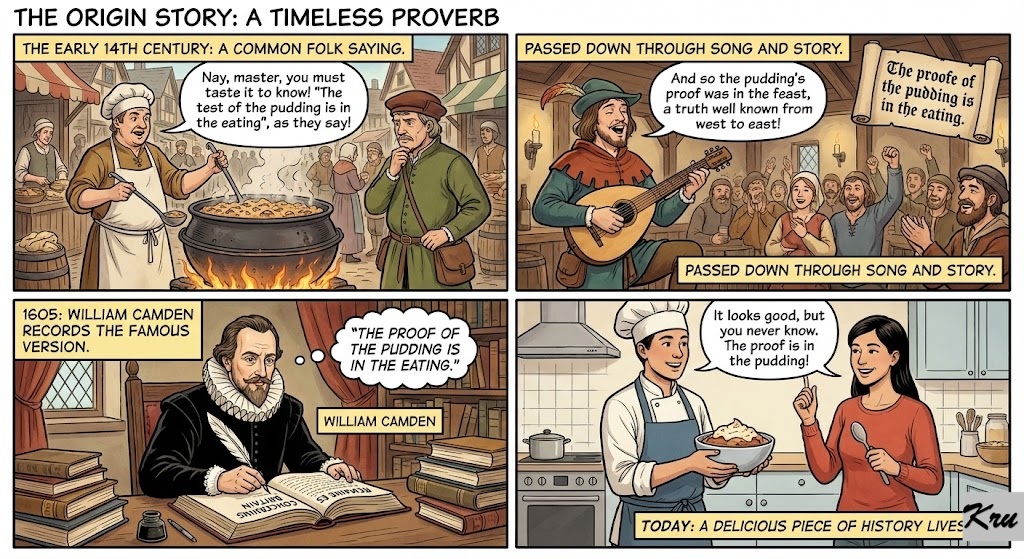
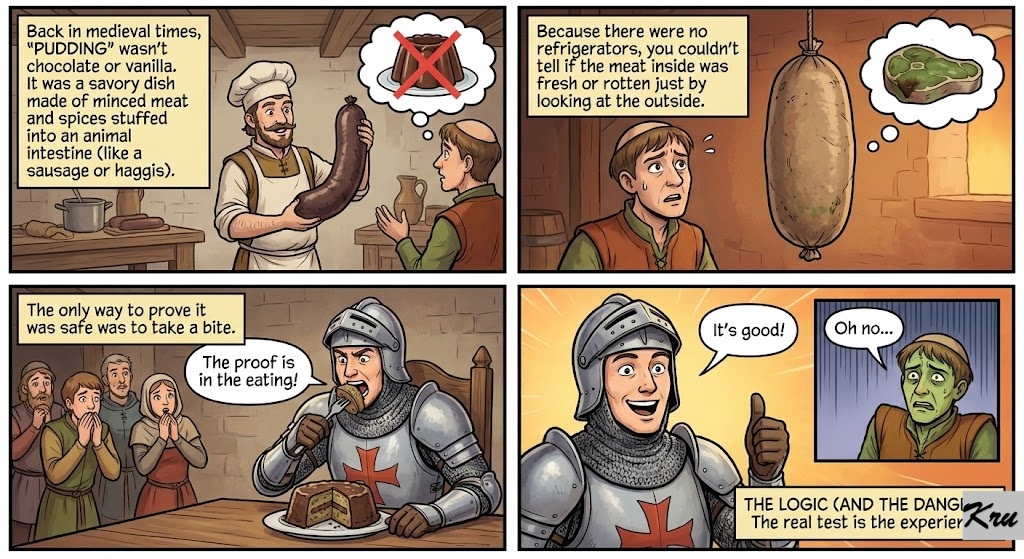
The Logic (and the Danger!): Back in medieval times, “pudding” wasn’t chocolate or vanilla. It was a savory dish made of minced meat and spices stuffed into an animal intestine (like a sausage or haggis). Because there were no refrigerators, you couldn’t tell if the meat inside was fresh or rotten just by looking at the outside. The only way to prove it was safe was to take a bite.
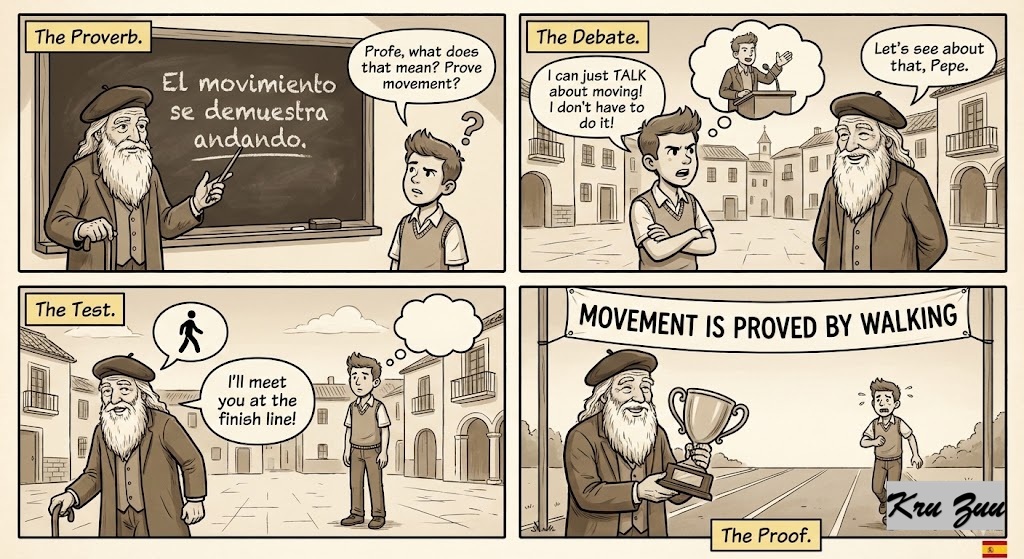
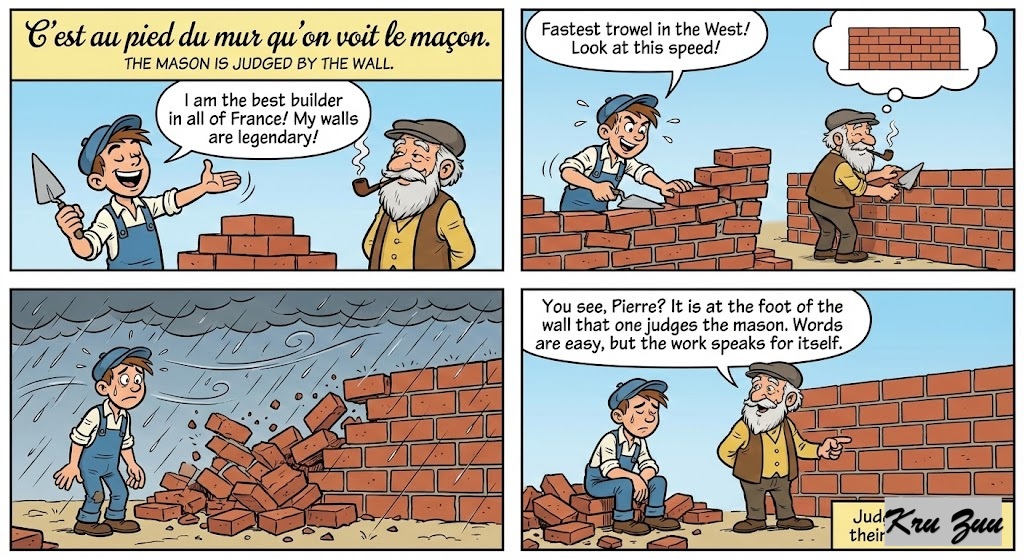
Global Cousins
🇪🇸 Spanish: “El movimiento se demuestra andando.” (Movement is proved by walking).
🇫🇷 French: “C’est au pied du mur qu’on voit le maçon.” (It’s at the foot of the wall that you see the mason/builder, meaning you judge a worker by their finished work).
🎭 Short Story: The Quantum Fly-Catcher 3000 🪰🐱🐔🐸
Let’s visit the magical forest to see who falls for the hype and who demands results.
🌟 The Cast
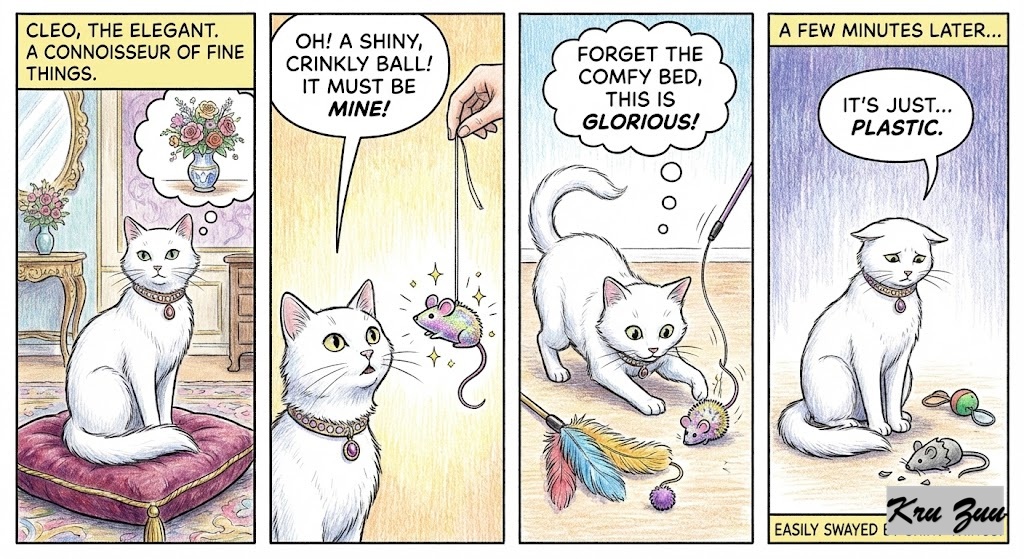
Cleo the Cat: Elegant, loves aesthetics, easily swayed by shiny things. 😼
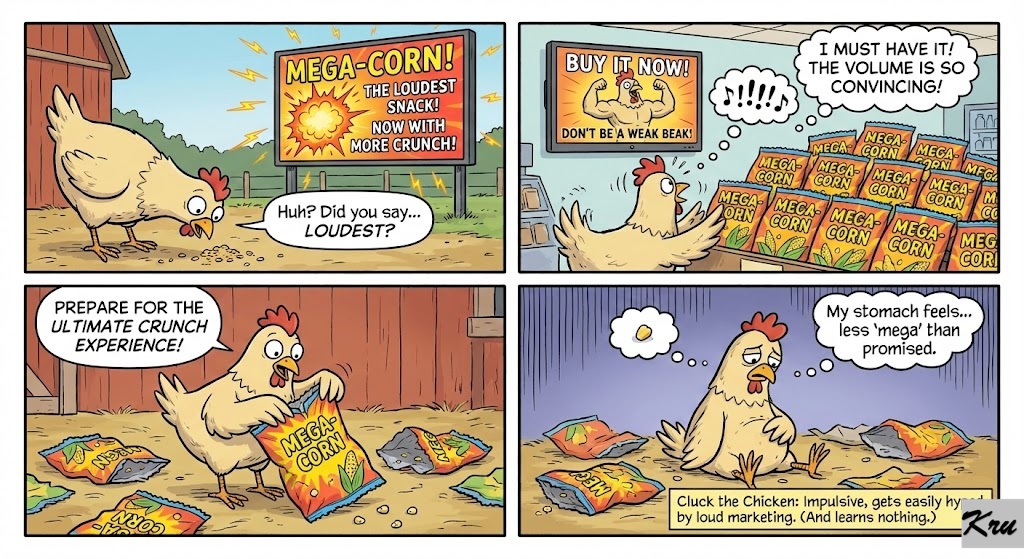
Cluck the Chicken: Impulsive, gets easily hyped by loud marketing. 🐔
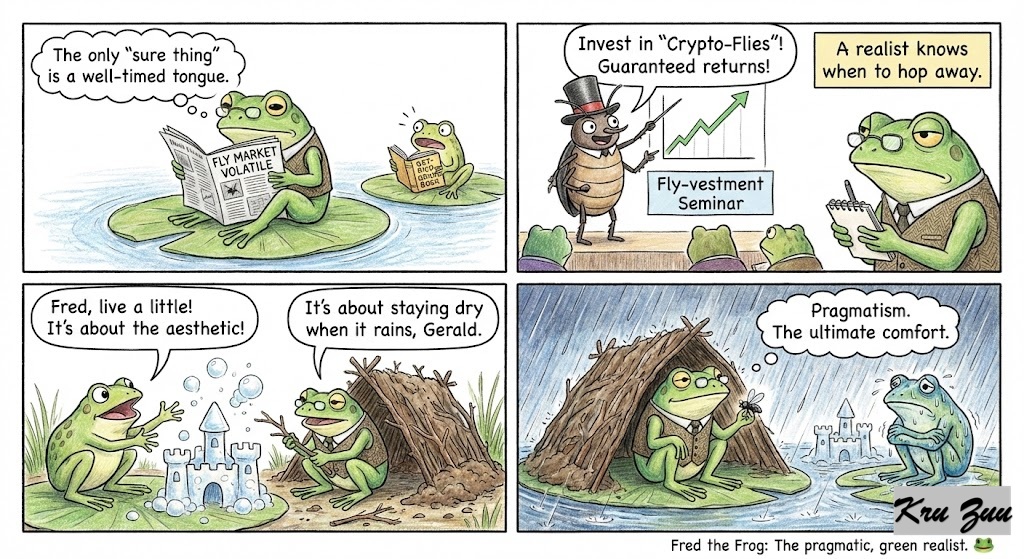
Fred the Frog: The pragmatic, green realist. 🐸
The Situation: A traveling salesman, a slick Fox, arrives in the forest. He unveils a glowing, humming silver box: The Quantum Fly-Catcher 3000.
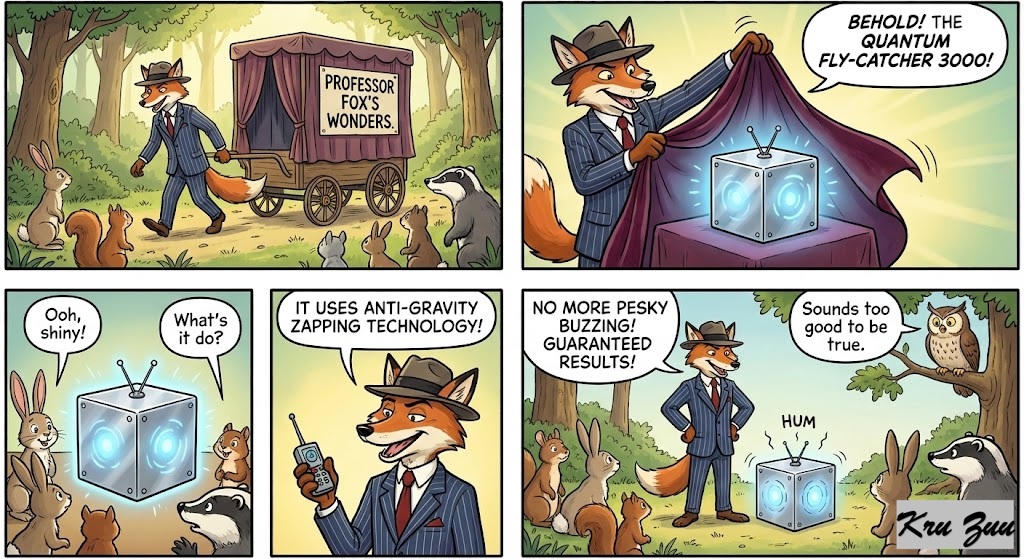
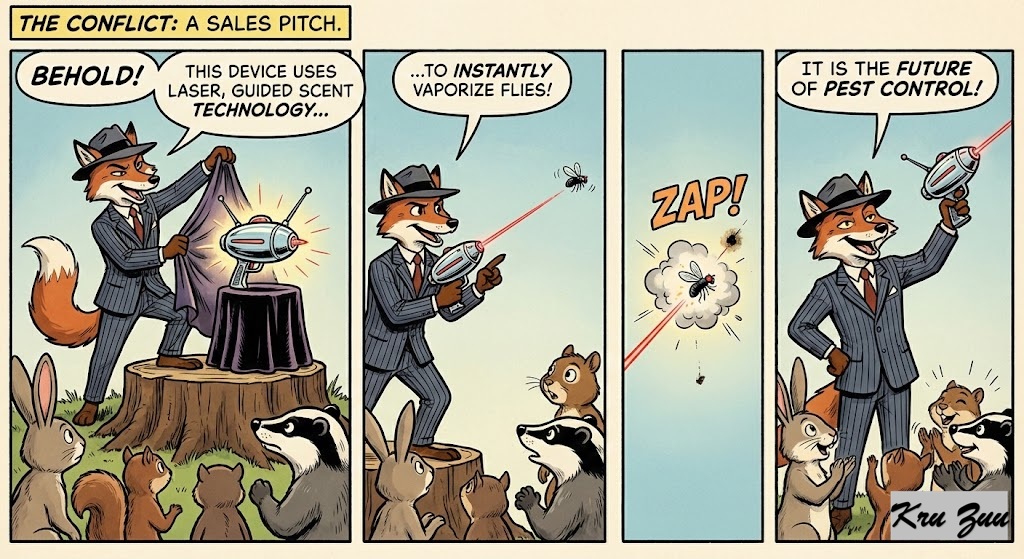
The Conflict: “Behold!” the Fox shouts. “This device uses laser, guided scent technology to instantly vaporize flies! It is the future of pest control!”
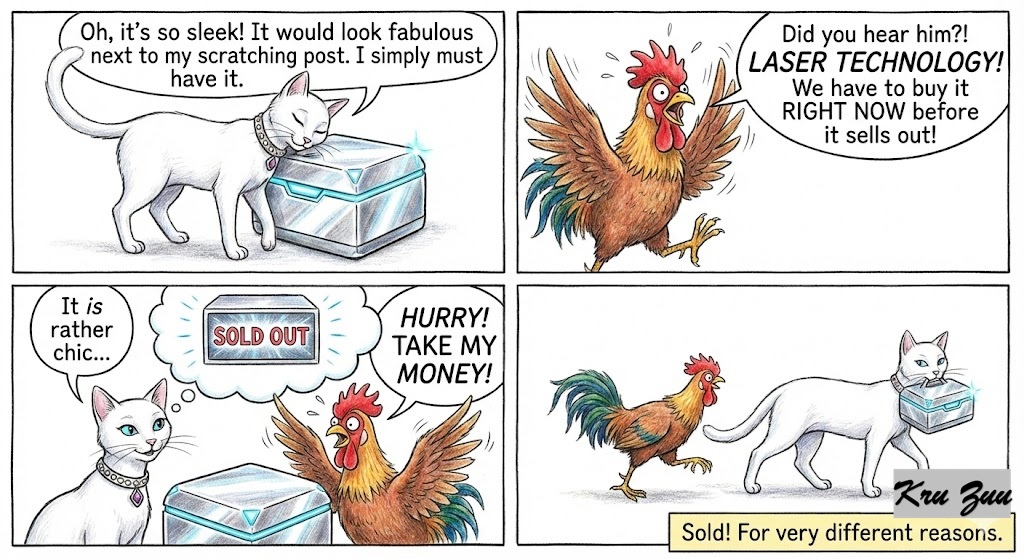
Cleo purrs, rubbing against the silver box. “Oh, it’s so sleek! It would look fabulous next to my scratching post. I simply must have it.” Cluck flaps his wings frantically. “Did you hear him?! Laser technology! We have to buy it right now before it sells out!”
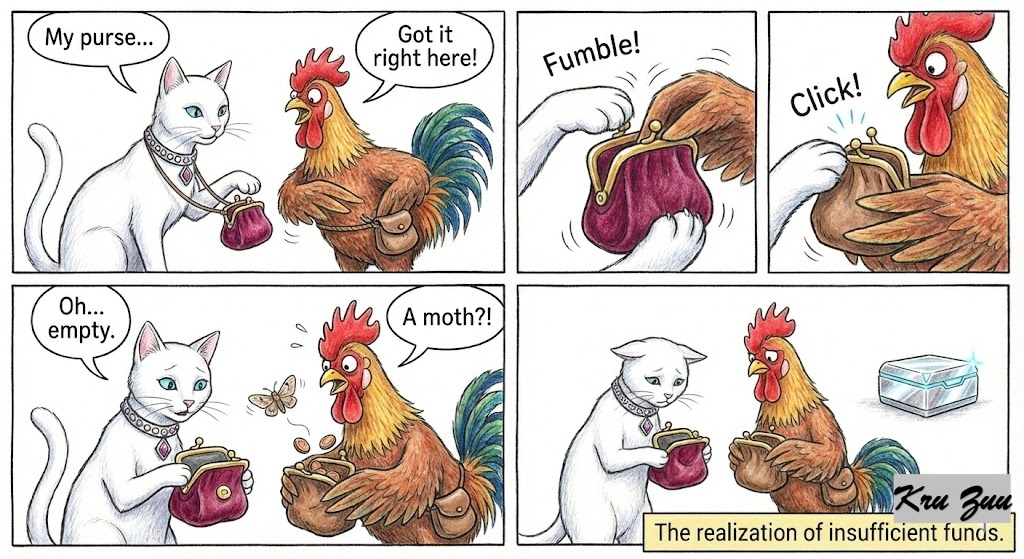
They both reach for their coin purses.
The Reaction: Fred hops forward and adjusts his glasses. He looks at the blinking lights on the machine, then at the Fox. “Ribbit,” says Fred. “That’s a very nice speech. But there is a fat green fly buzzing right above your head. Turn the machine on.”
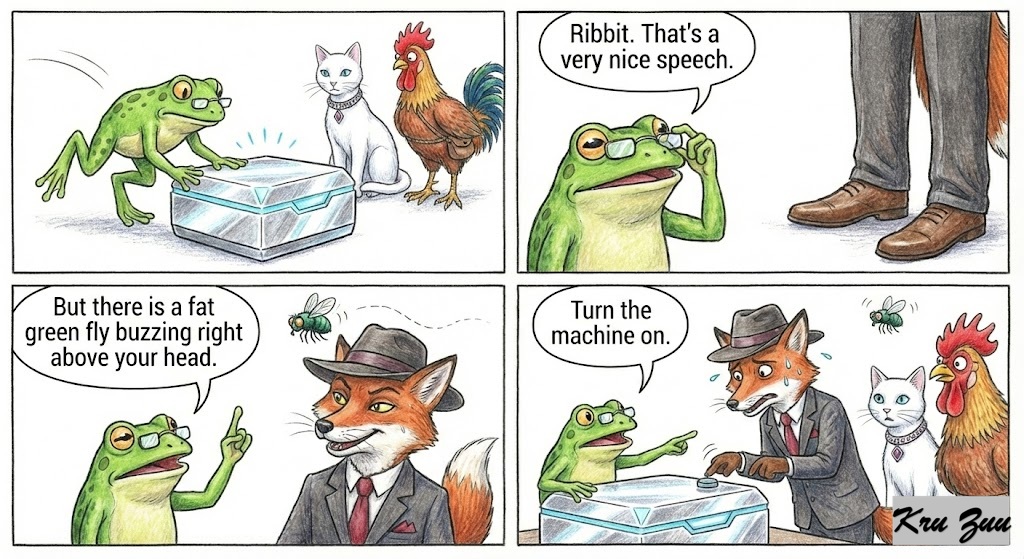
The Fox sweats. “Well, my amphibious friend, the machine needs to calibrate” “Turn it on,” Cleo agrees, suddenly suspicious. “I want to see the lasers.”

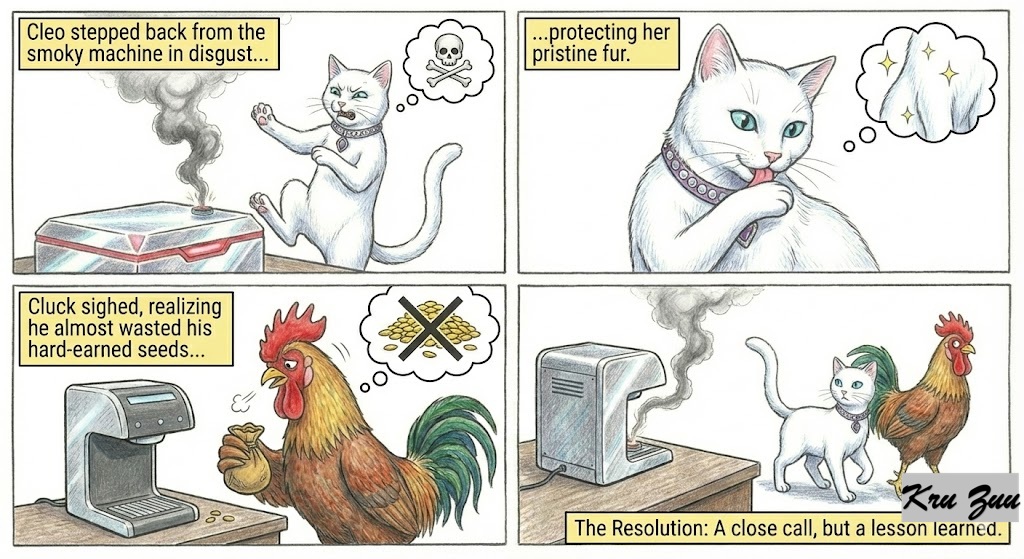
The Lesson: The Fox presses a button. The machine whirs loudly, flashes a red light, and… spits out a cloud of black smoke, coughing violently. The green fly lands directly on top of the smoking machine, completely unharmed.

With a quick zap, Fred’s long tongue shoots out. He eats the fly in one gulp.

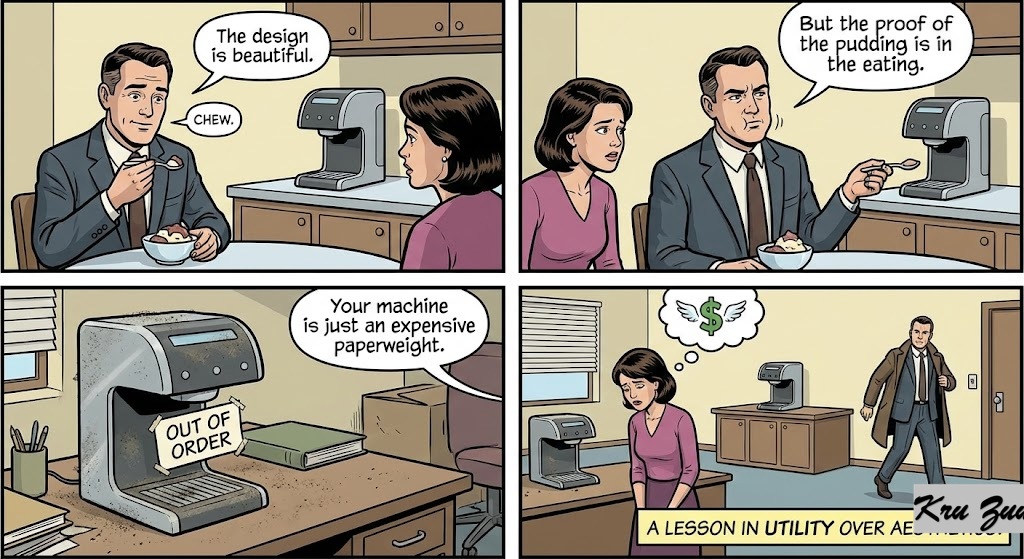
“The design is beautiful,” Fred says, chewing slowly. “But the proof of the pudding is in the eating. Your machine is just an expensive paperweight.”
The Resolution: Cleo stepped back from the smoky machine in disgust, protecting her pristine fur. Cluck sighed, realizing he almost wasted his hard-earned seeds on a noisy box.
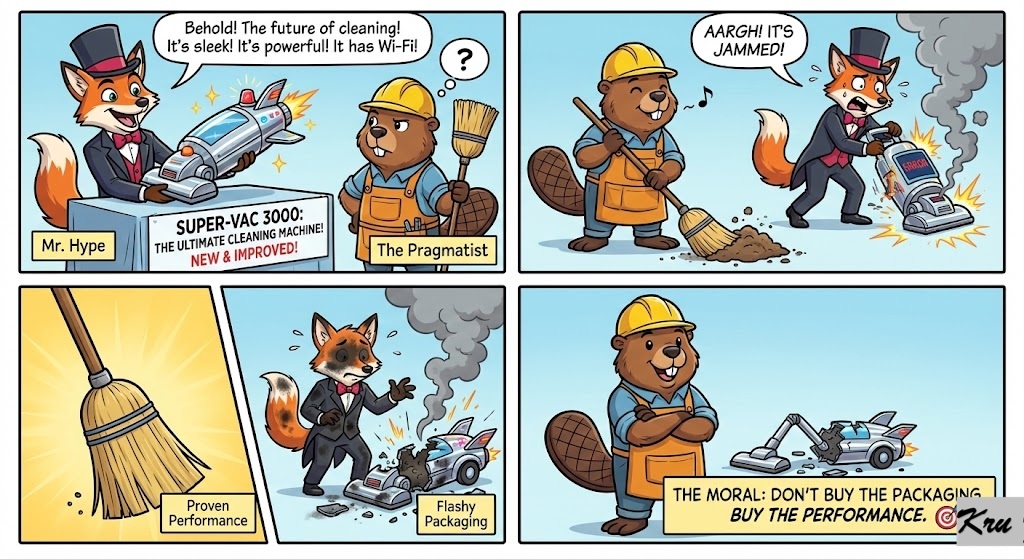
The Moral: Don’t buy the packaging. Buy the performance. 🎯
🎓 Lesson for English Learners
How to ask for a “Test” professionally.
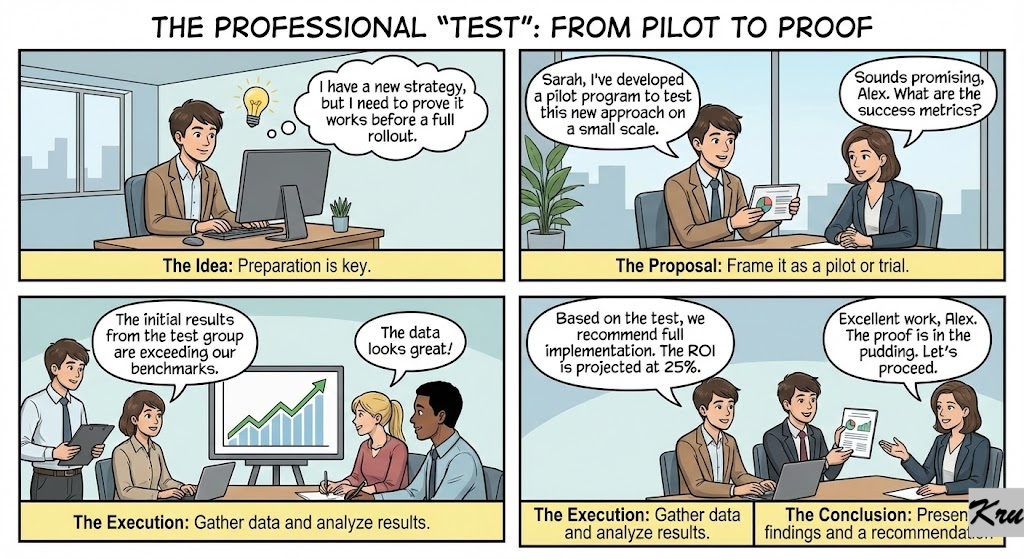
Situation: A software vendor is trying to sell your company an expensive new program. They show you a beautiful PowerPoint presentation.
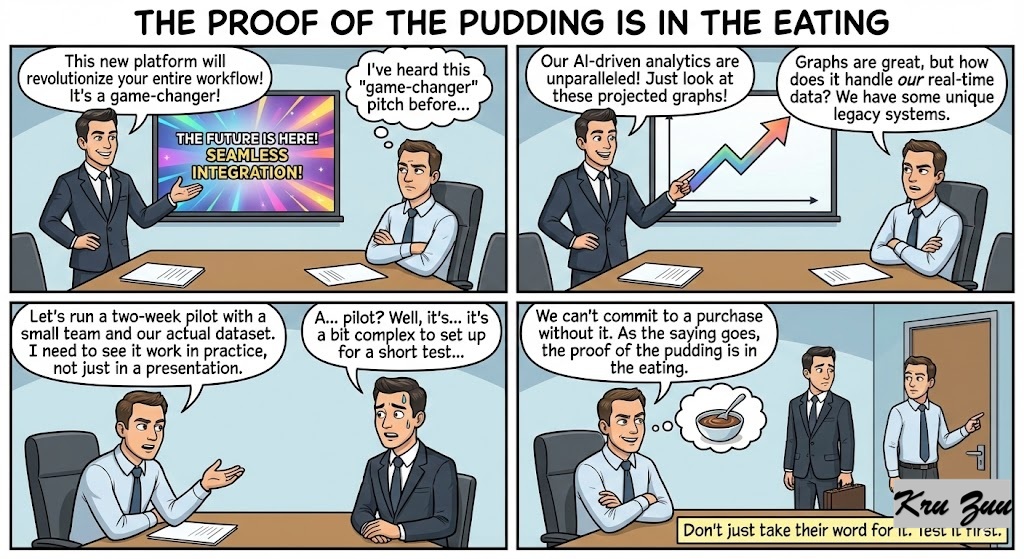
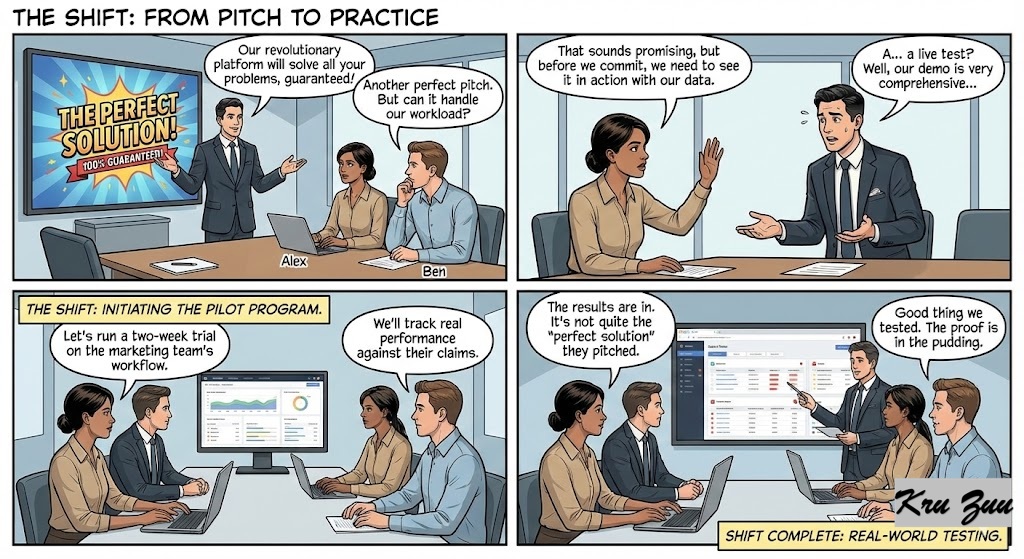
The Shift: You need to transition from watching their pitch to testing the real thing.
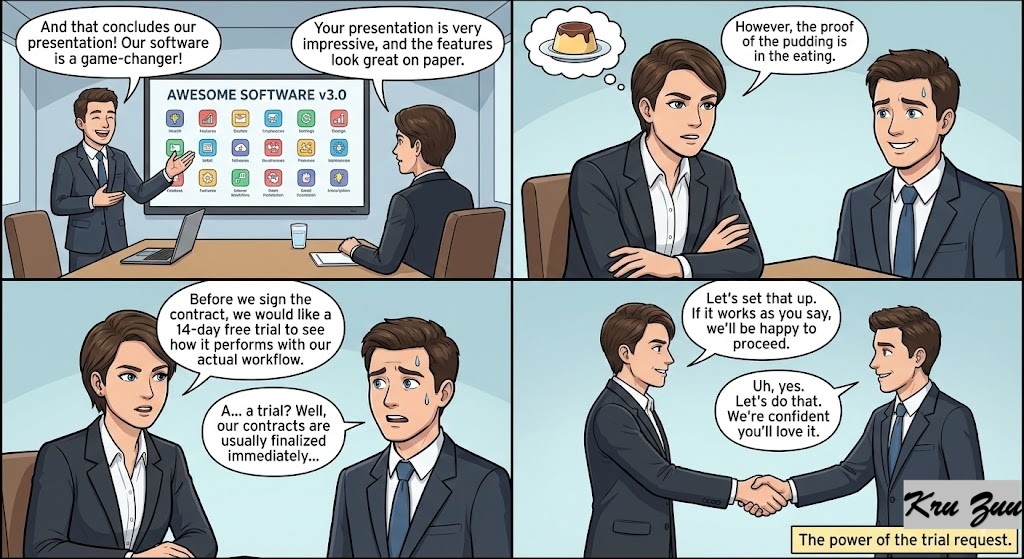
You Say: “Your presentation is very impressive, and the features look great on paper. However, the proof of the pudding is in the eating. Before we sign the contract, we would like a 14-day free trial to see how it performs with our actual workflow.”
💬 Your Turn: The “Test Run” Challenge 🚀
Do you want to cure your “Villain” hype-victim habits?
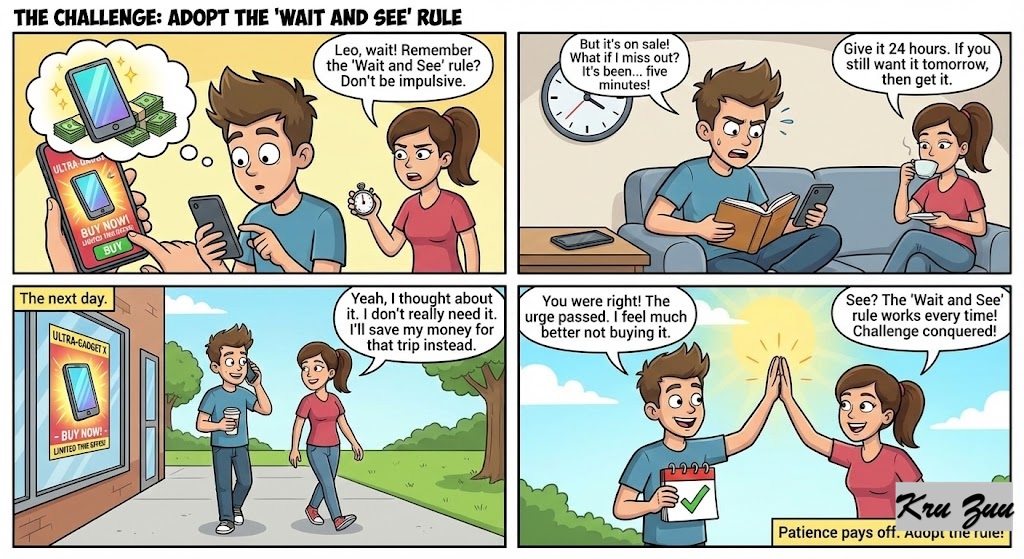
The Challenge: Adopt the “Wait and See” rule.
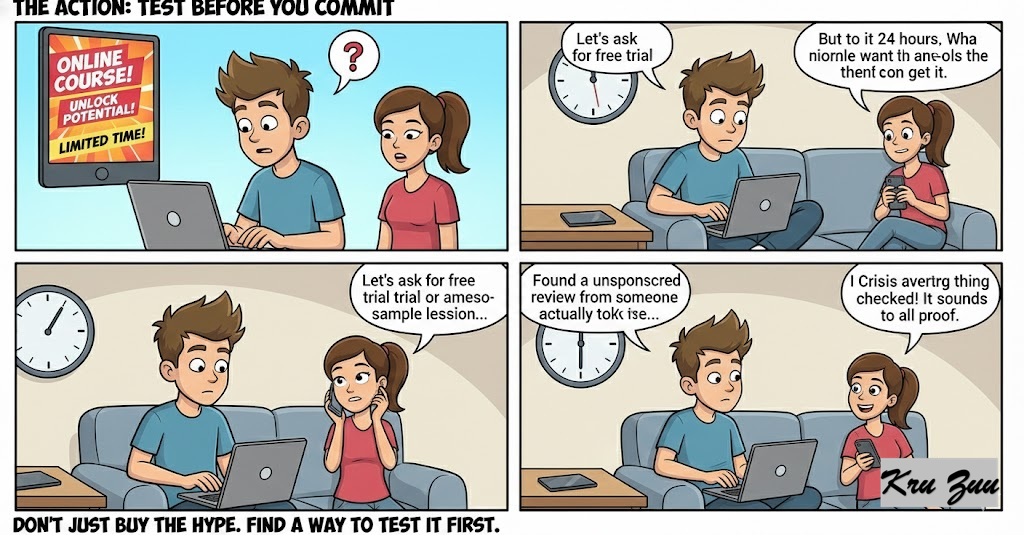
The Action: The next time you are tempted to buy a product, a course, or a service based only on the marketing, force yourself to find a way to test it first. Ask for a free sample, sign up for a trial, or find an unsponsored, honest review from someone who has actually used it.
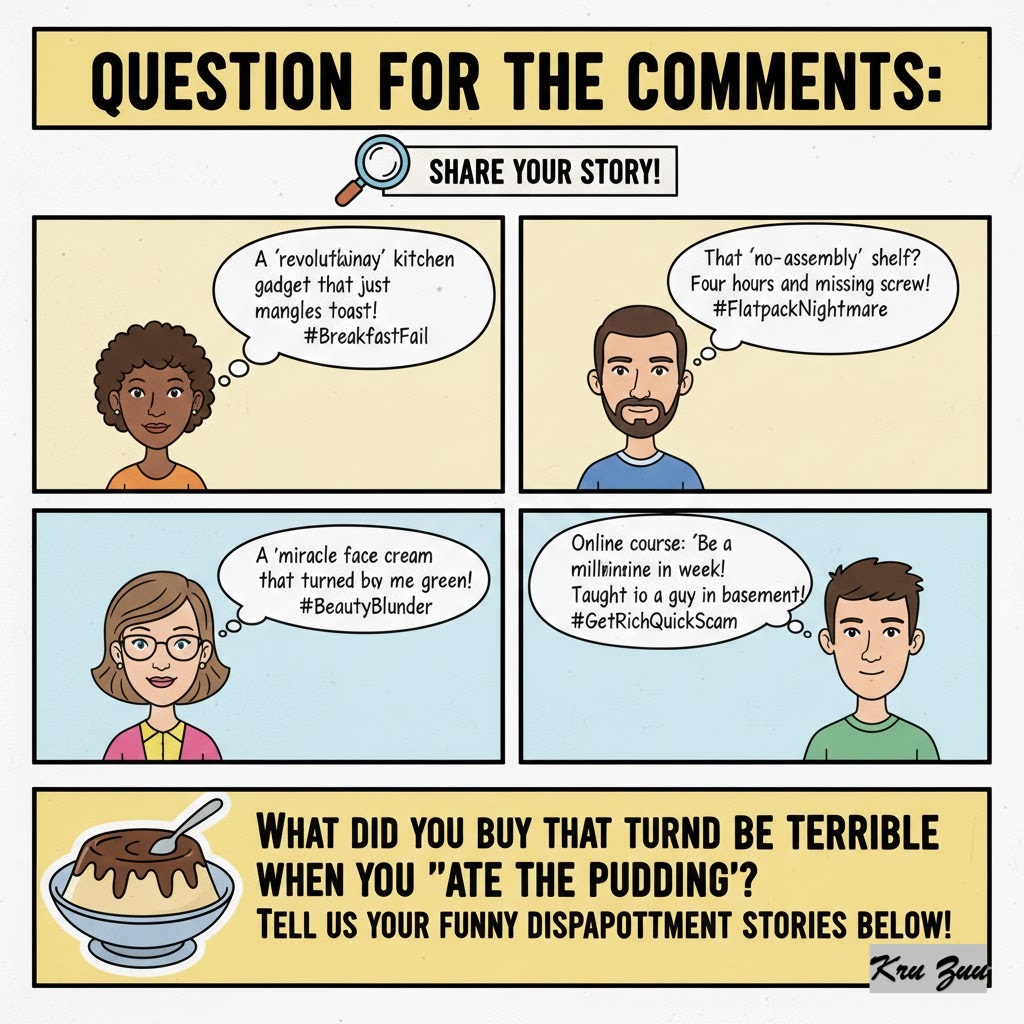
👇 Question for the comments: What is one thing you bought because the marketing was amazing, but it turned out to be terrible when you actually “ate the pudding”? Tell us your funny disappointment stories below!
https://www.facebook.com/BrainBattleground/
https://www.facebook.com/zubeyr.yurtkuran/
https://www.instagram.com/zubeyryurtkuran/

Leave a comment