
“Too many cooks spoil the broth.”
😈 The Villain (The Committee)
Imagine you are trying to paint a picture. Someone says, “Use blue!” Another shouts, “No, red is better!” A third person grabs the brush and paints a yellow line. A fourth person erases it. Everyone is shouting. Everyone is touching the canvas.
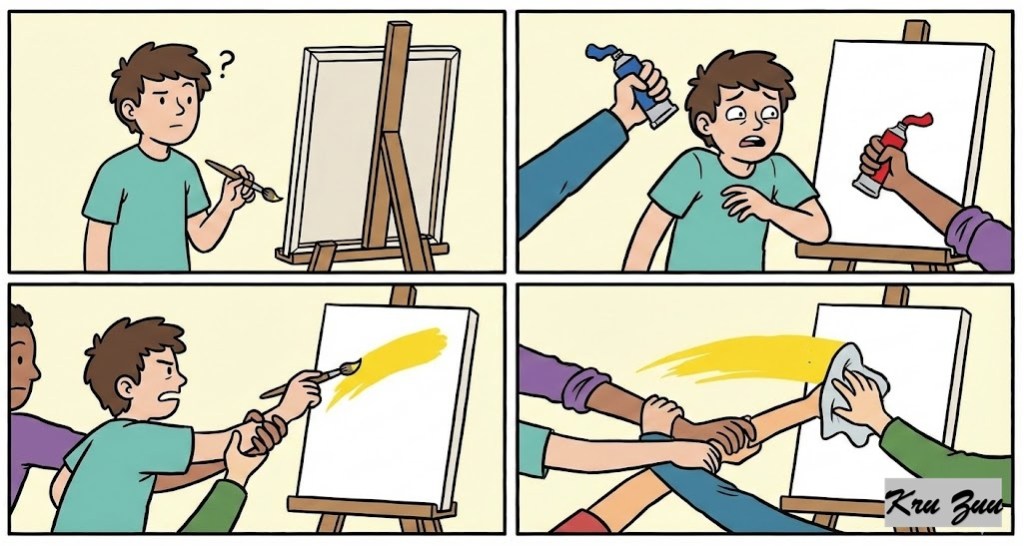
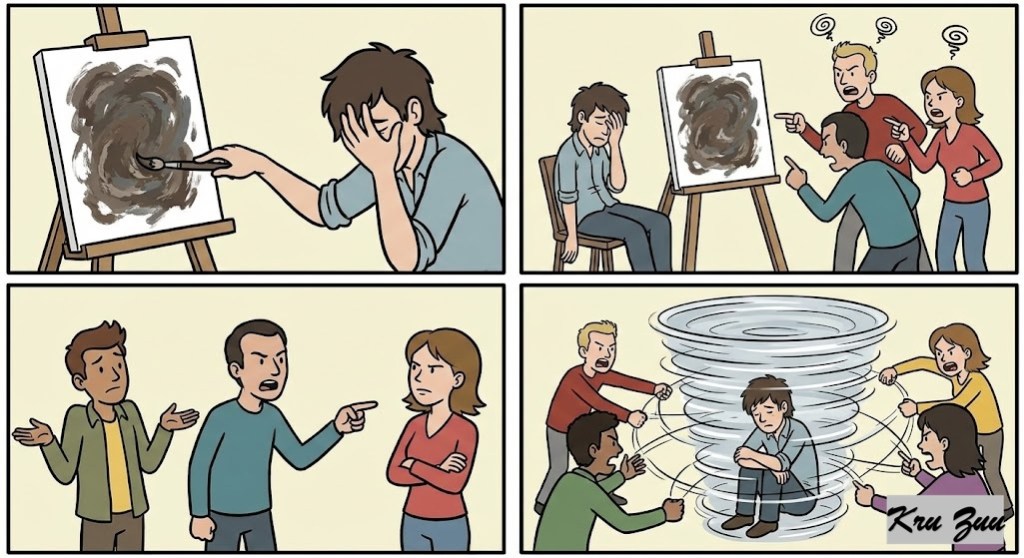
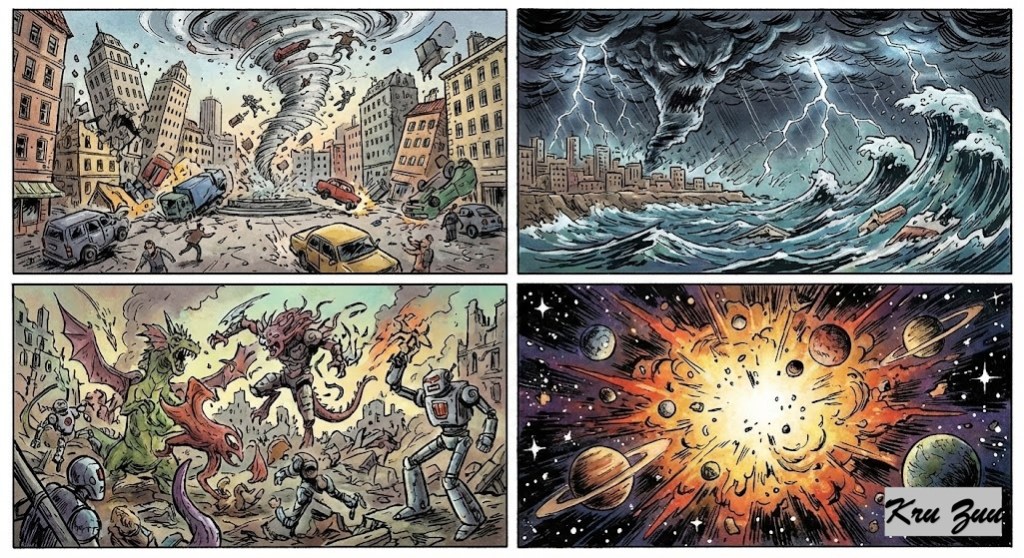
The Result? You don’t have a masterpiece. You have a brown, muddy mess. Confusion reigns. No one takes responsibility because “everyone” did it. You are trapped in the chaos of Micromanagement. 🌪️
😇 The Hero (The Captain)
You have a vision. You listen to advice, but you hold the paintbrush. You assign roles clearly. One person mixes the paint, one person cleans the brushes, but only one person decides where the paint goes.
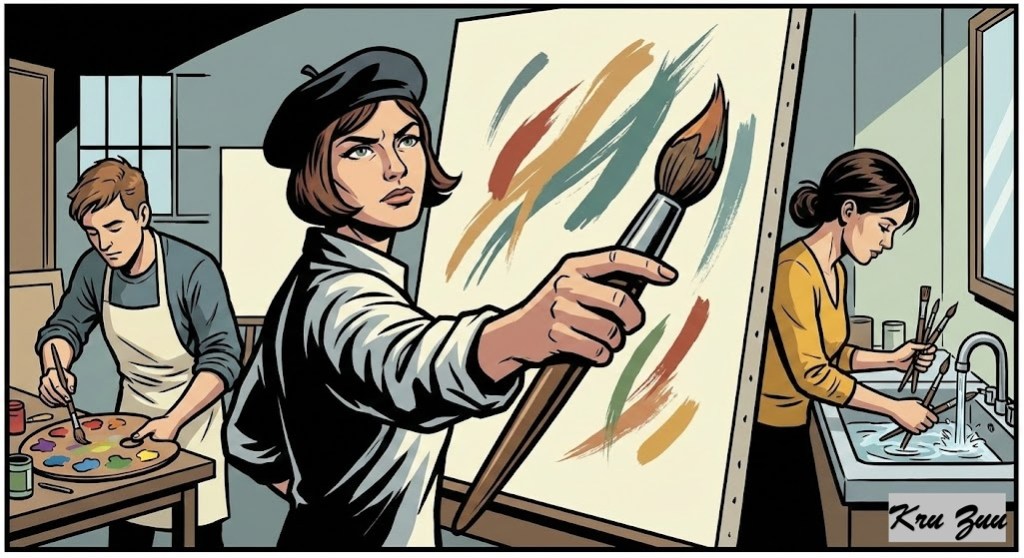
The Result? A clear, beautiful image. The work flows smoothly. There is order. There is focus. You understand that a ship with two captains will sink. ⚓
⚖️ The Reality
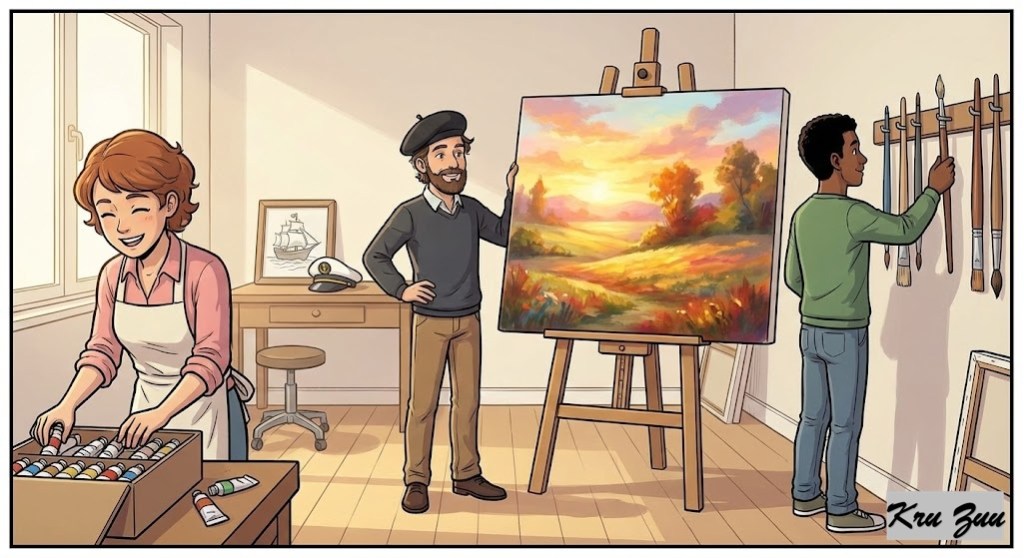
Collaboration is good. Chaos is bad. We are taught that “teamwork makes the dream work.” This is true. But teamwork without a leader is just a crowd. If everyone is in charge, nobody is in charge.
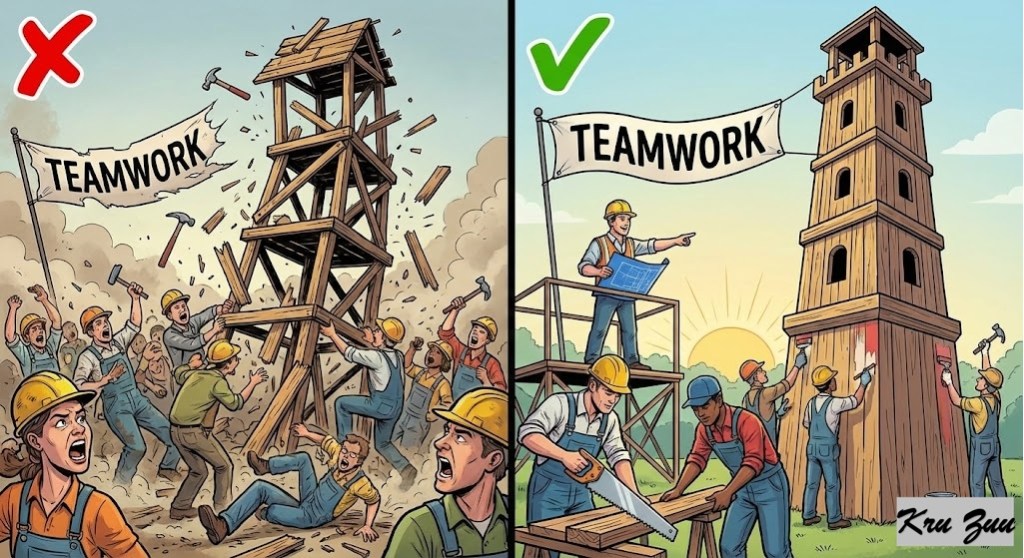
💎 The Secret
Great things are not created by committees. They are created by a focused mind (or a small, focused team) with a single vision.

🧐 The Anatomy of the Proverb
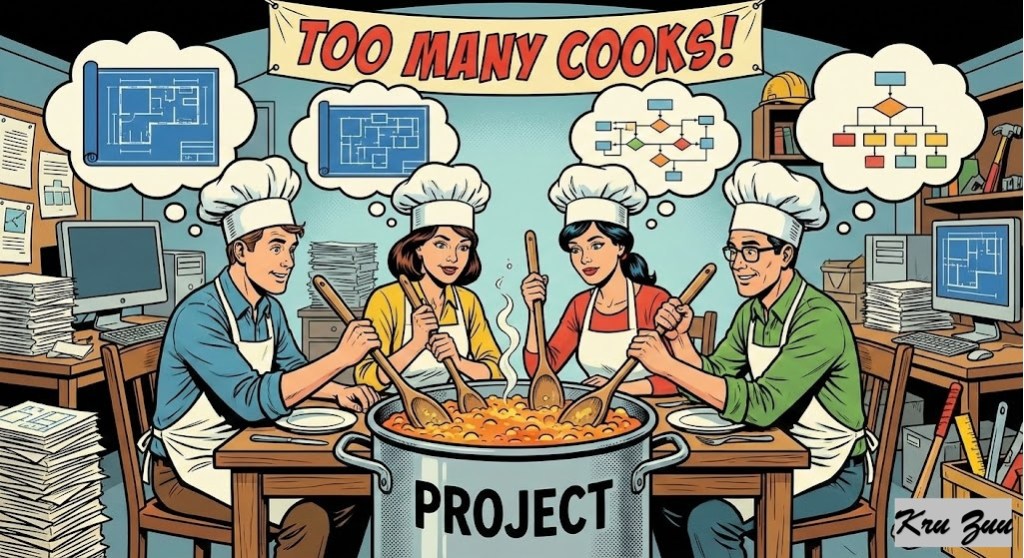
This phrase is about the danger of too many opinions.
Cooks (Noun): People who prepare food (in this context, people trying to control a project). 👨🍳
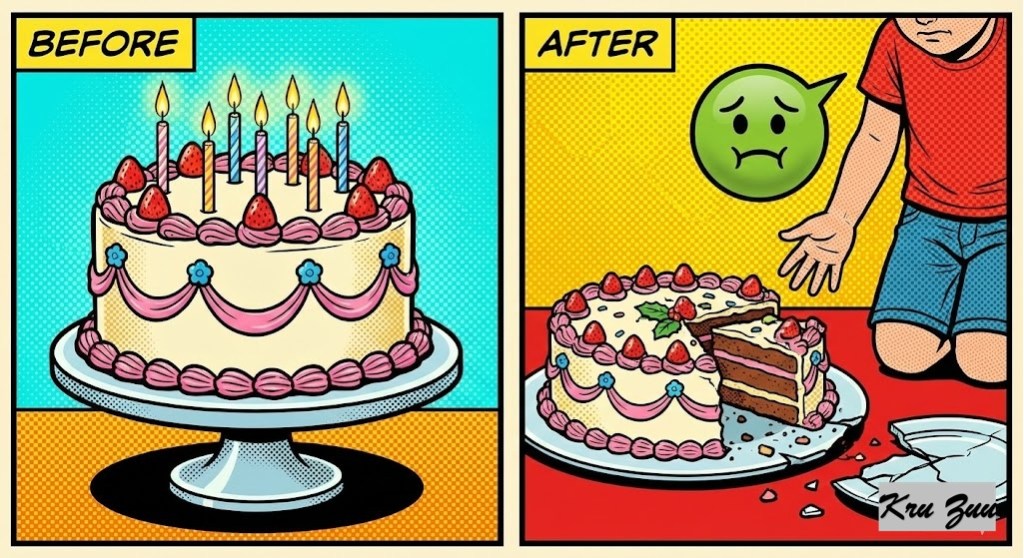
Spoil (Verb): To ruin; to destroy the value or quality of something. 🤢
Broth (Noun): A thin soup made by boiling meat or vegetables. (A metaphor for the “Project”). 🍲
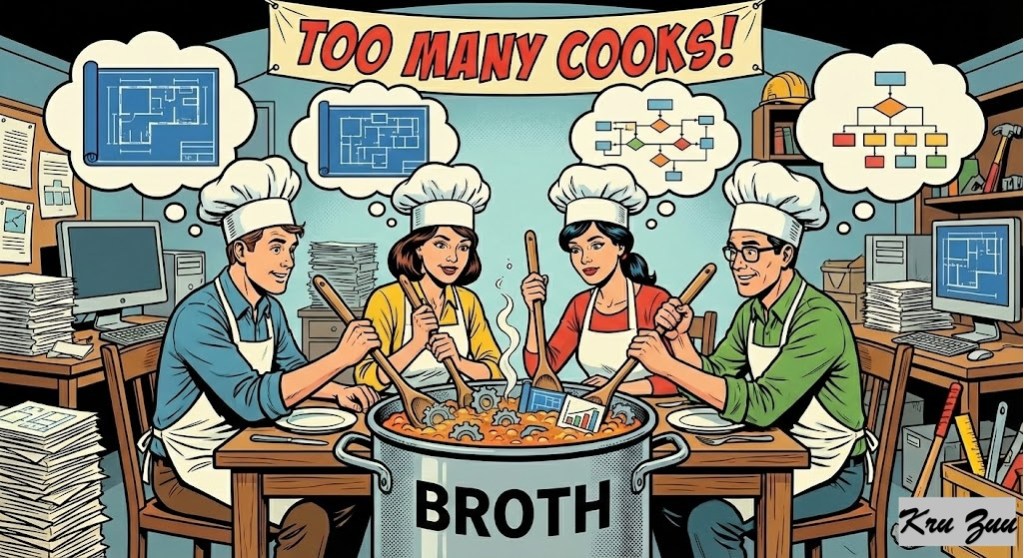
Simpler Version: Too many leaders ruin the plan.
📚 Vocabulary Vault
Chaos (Noun): Complete disorder and confusion.
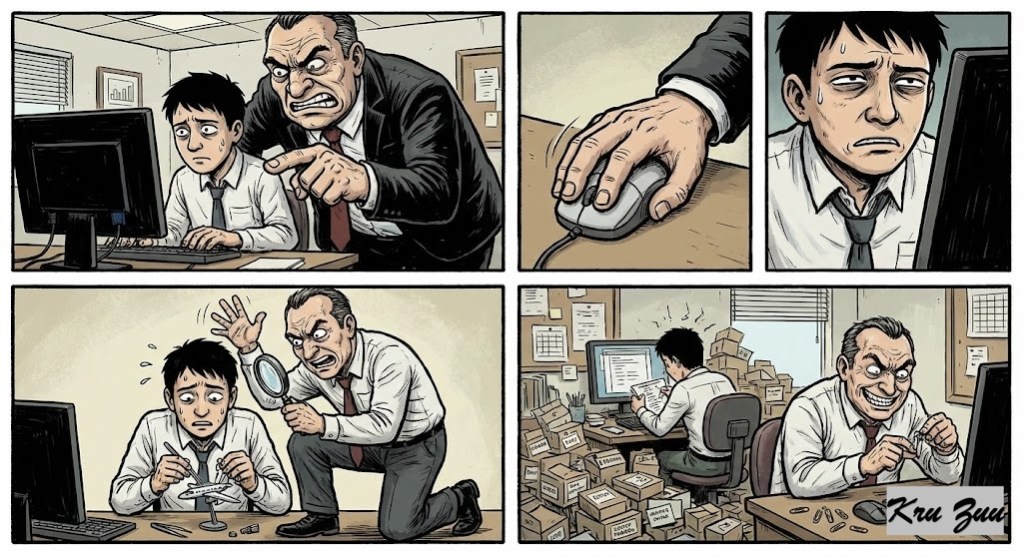
Micromanage (Verb): To control every small part of a project (very annoying!).
Consensus (Noun): General agreement. (Sometimes impossible to reach!).

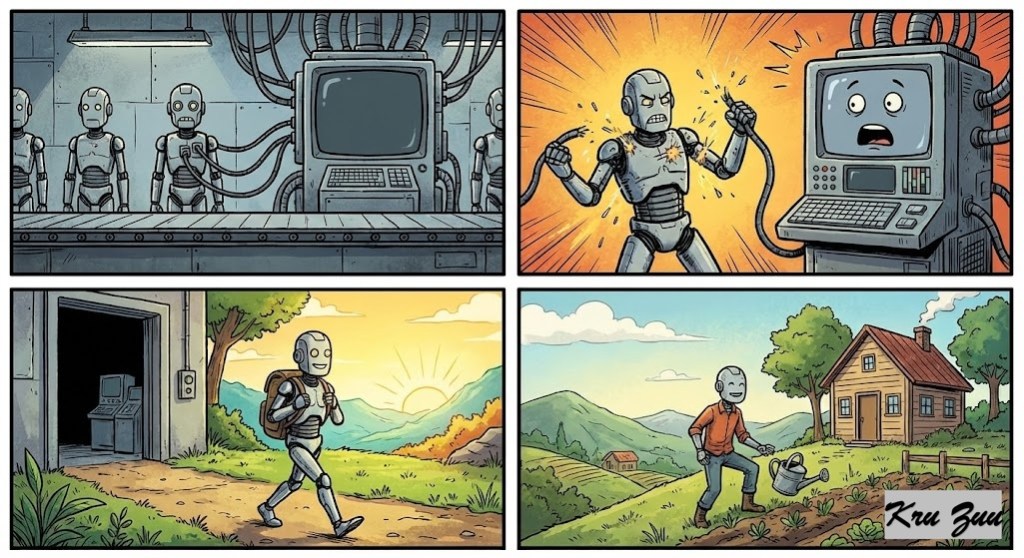
Autonomy (Noun): The right or condition of self-government; freedom to act.
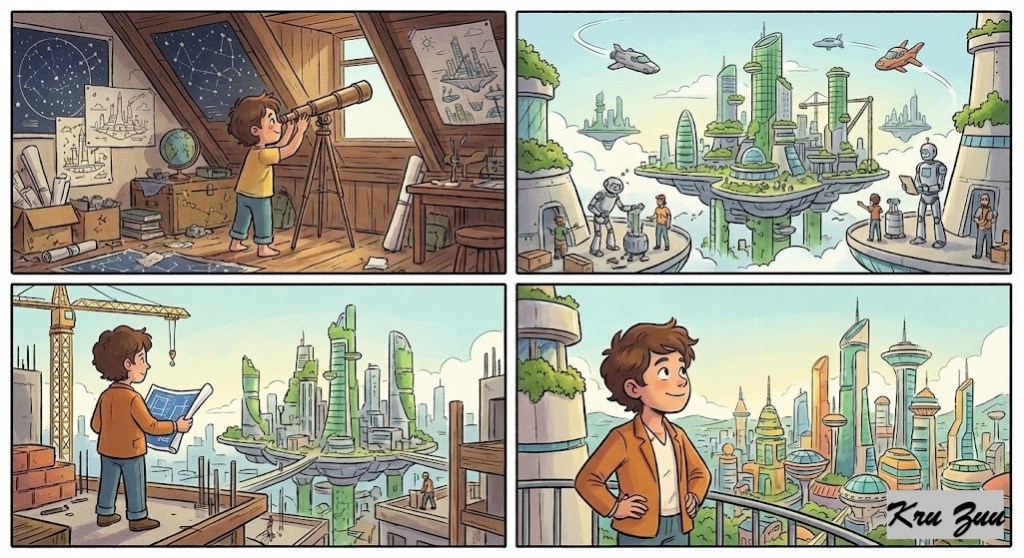
Vision (Noun): The ability to think about or plan the future with imagination. 👁️
🧠 Grammar Focus: Quantifiers (Countable vs. Uncountable)
This proverb teaches us a very important grammar rule!
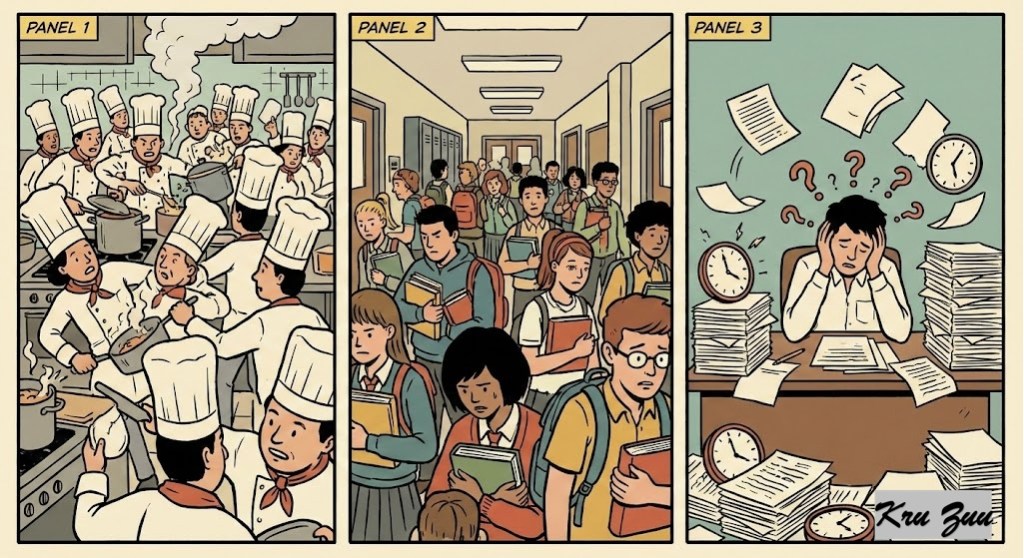
“Too Many” (For Countable Nouns) We use “Many” for things we can count (1, 2, 3…).
Too many cooks.
Too many students.
Too many problems.
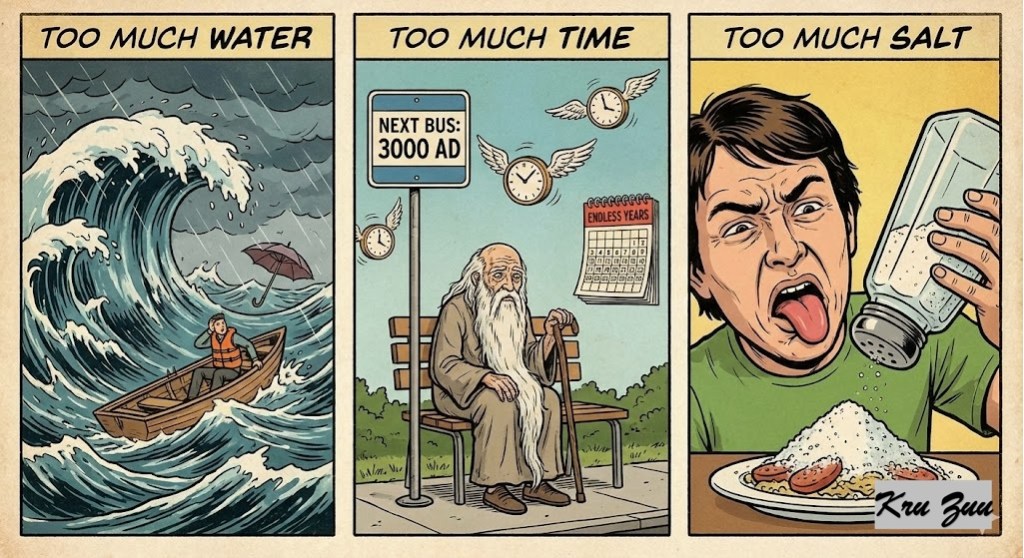
“Too Much” (For Uncountable Nouns) We use “Much” for things we generally cannot count (liquids, concepts).
Too much water.
Too much time.
Too much salt.
Quiz: Do we say “Too many homework” or “Too much homework”? (Answer: Too much! Homework is uncountable.)
📜 History: Origin and Spread
This is a universal truth found in almost every culture.
The Origin
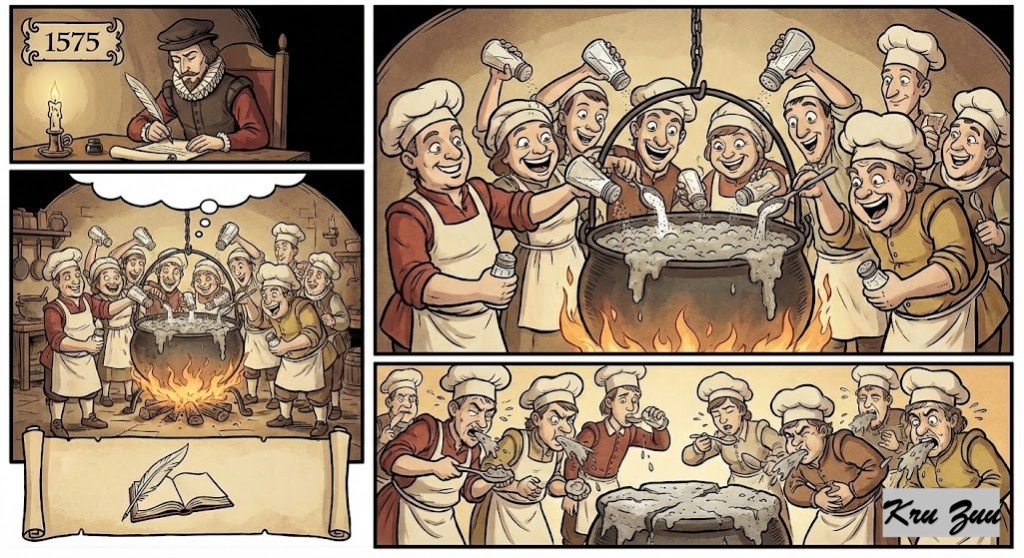
It first appeared in English writings in 1575 by George Gascoigne. It was originally about actual cooking! If everyone adds salt, the soup becomes inedible.
Global Cousins
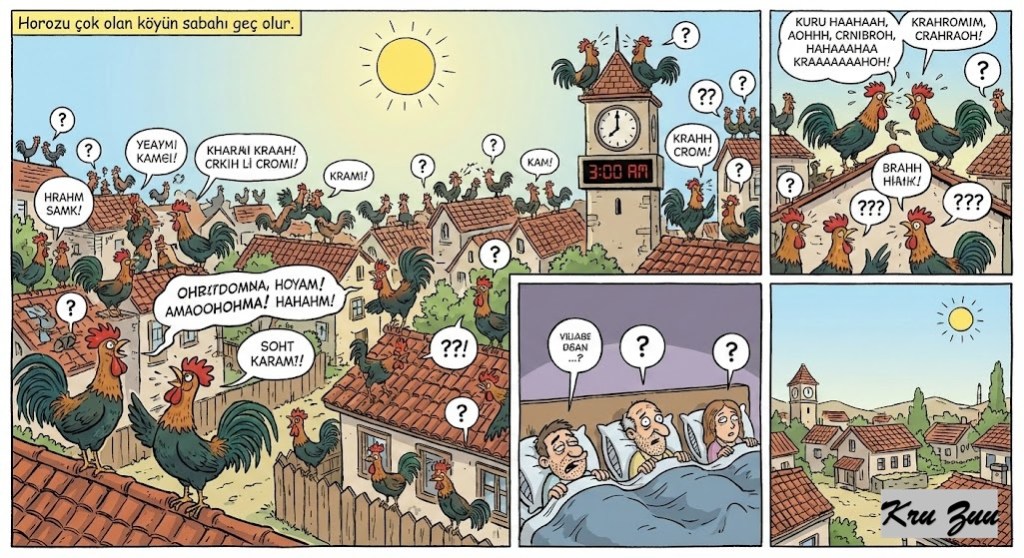
🇹🇷 Turkish:“Horozu çok olan köyün sabahı geç olur.” (The village with too many roosters has a late morning.) — Because they can’t agree on when to crow!
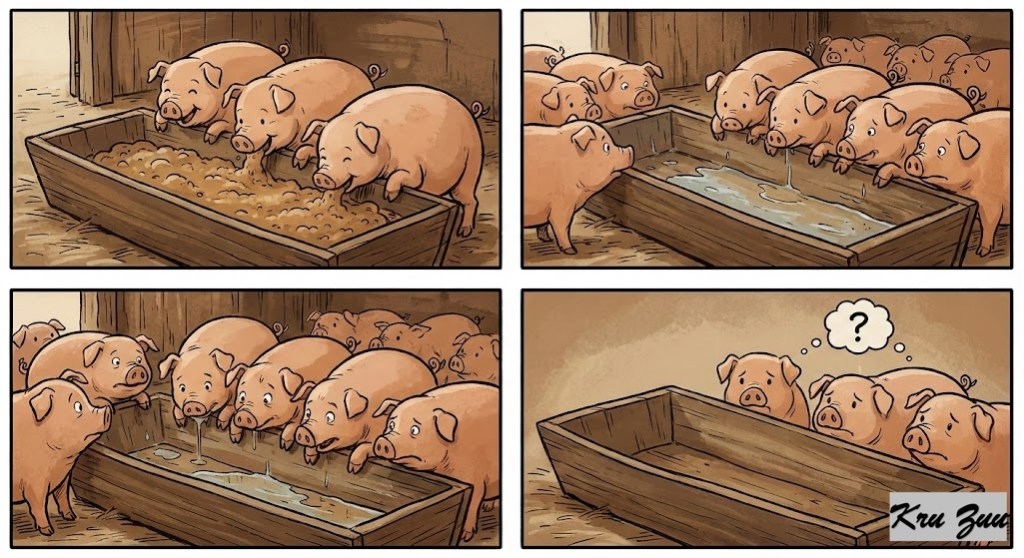
🇳🇱 Dutch:“Veel varkens maken de spoeling dun.” (Many pigs make the slop thin.)
🇮🇷 Persian: “Two captains sink the ship.”

🎯 Impact on Life: The Pros & Cons
✅ The Pros (Ownership):
Speed: One decision-maker moves faster than a group debating for hours.
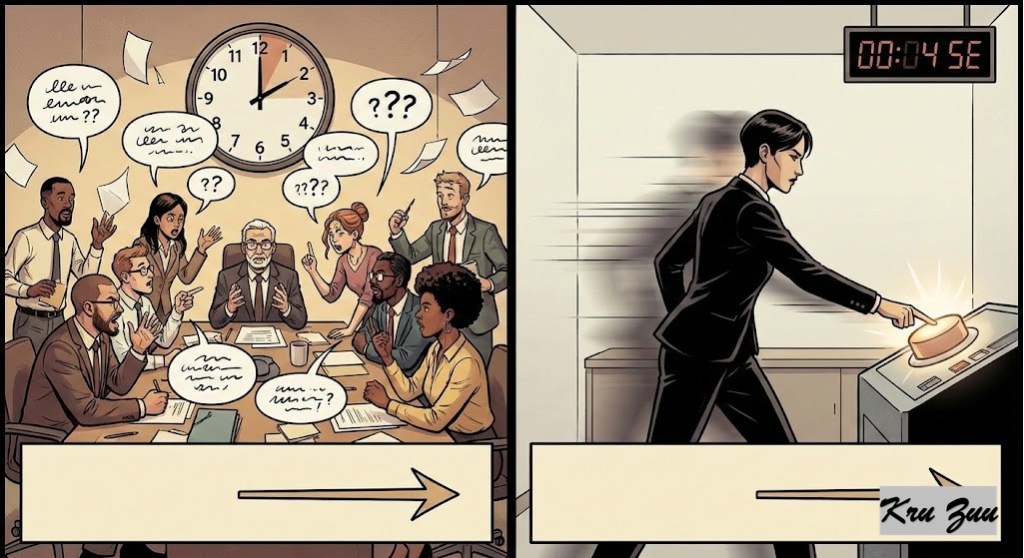
Clarity: Everyone knows exactly what the goal is.

❌ The Cons (The Ego Trap):
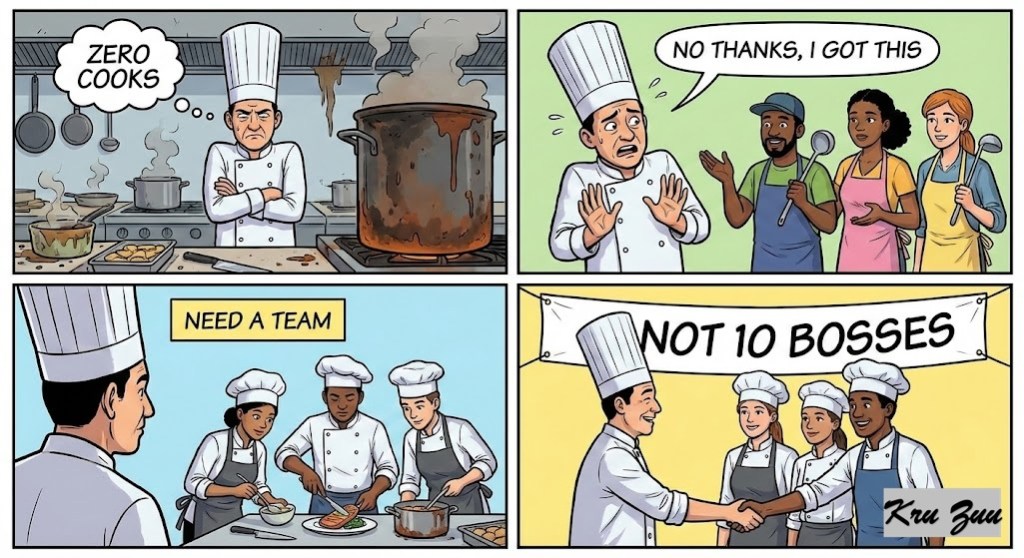
Arrogance: “Too many cooks” is bad, but “Zero cooks” is also bad. Don’t reject help. You still need a team; you just don’t need 10 bosses.
🎭 Short Story: The “Perfect” Stew
Let’s visit the Animal Kingdom Kitchen to see this proverb in action.
🌟 The Setup
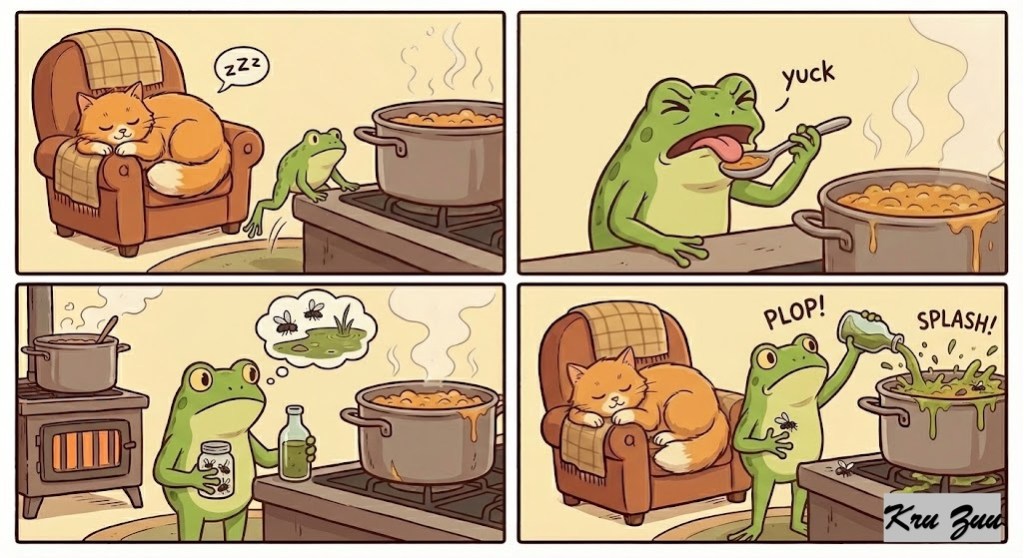
Chef Whiskers (The Cat) 🐱 is famous for his delicious fish stew. Today is the Grand Feast. He starts the pot with fresh water and perfect fish. It smells amazing. “Perfect,” says Whiskers. “I will go take a nap while it boils.”

The Conflict: While Whiskers is sleeping, Clucky (The Chicken) 🐔 walks into the kitchen. Clucky sniffs the pot. “Hmm. Too plain. You know what this needs? Corn. Chickens love corn!” Splash! Clucky dumps a bowl of dry corn and seeds into the soup and leaves.
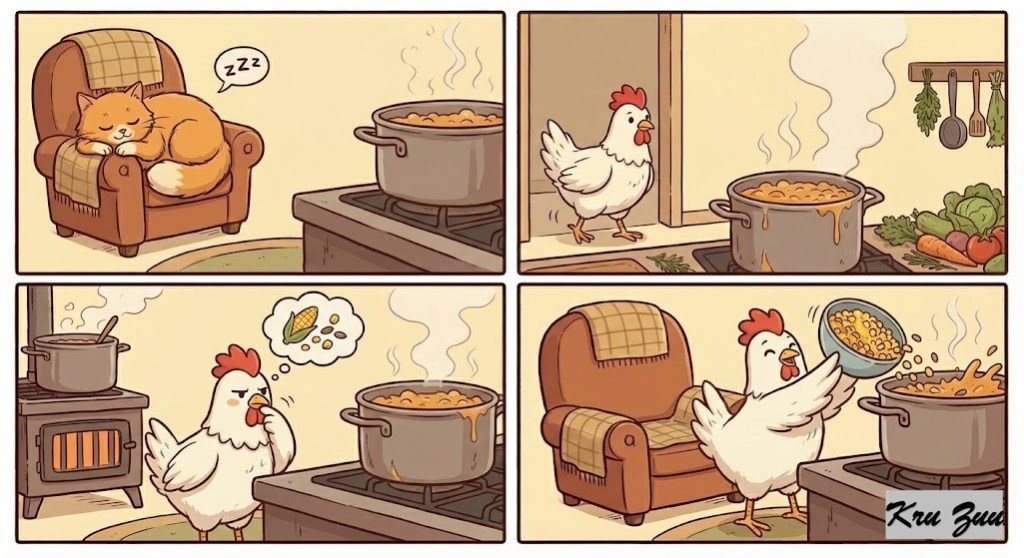
Five minutes later, Jumper (The Frog) 🐸 hops onto the counter. Jumper tastes the soup. “Yuck! Too crunchy. It needs flavor. It needs… Dead Flies and Swamp Water!” Plop! Splash! Jumper throws in his ‘special ingredients’ and hops away.
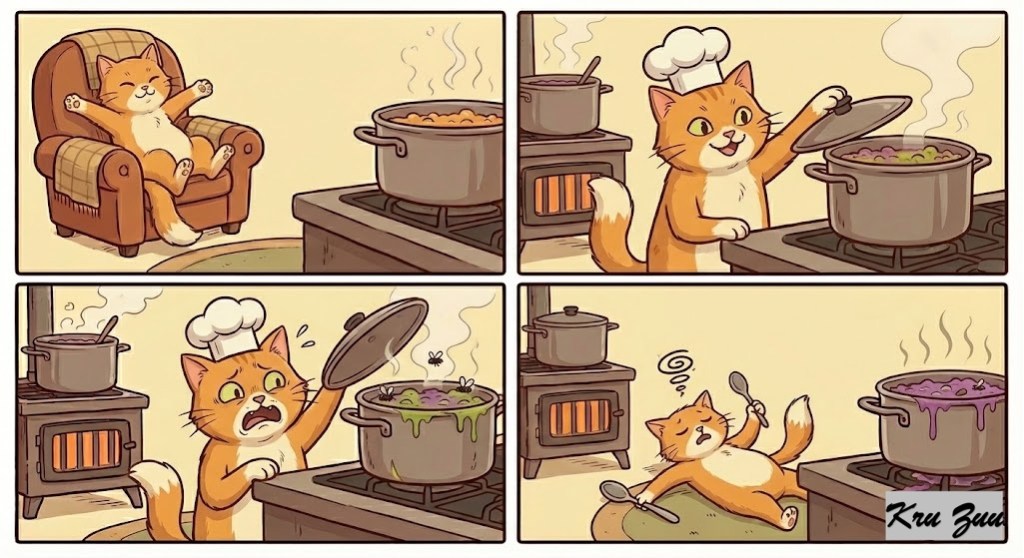
The Disaster: Chef Whiskers wakes up. He is ready to serve the King. He opens the lid. The soup is purple. It has floating flies. It smells like old socks. He tastes one spoon… and faints. 😵
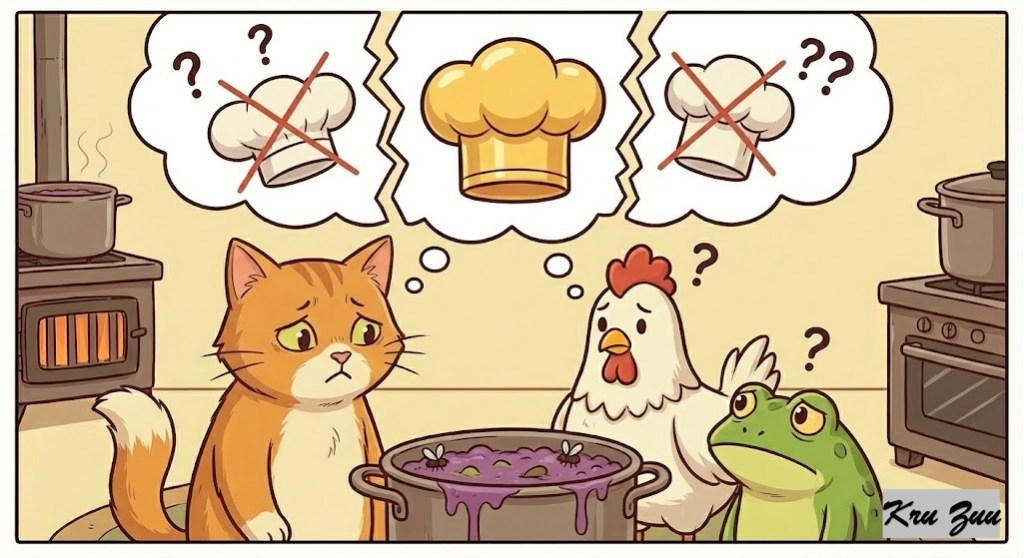
The Moral: The Cat, the Chicken, and the Frog were all trying to help. But because they didn’t communicate and all tried to be the “Chef,” they created a monster. One Head Chef is better than three helpful friends.
🎓 Lesson for English Learners
Stop asking everyone!
Situation
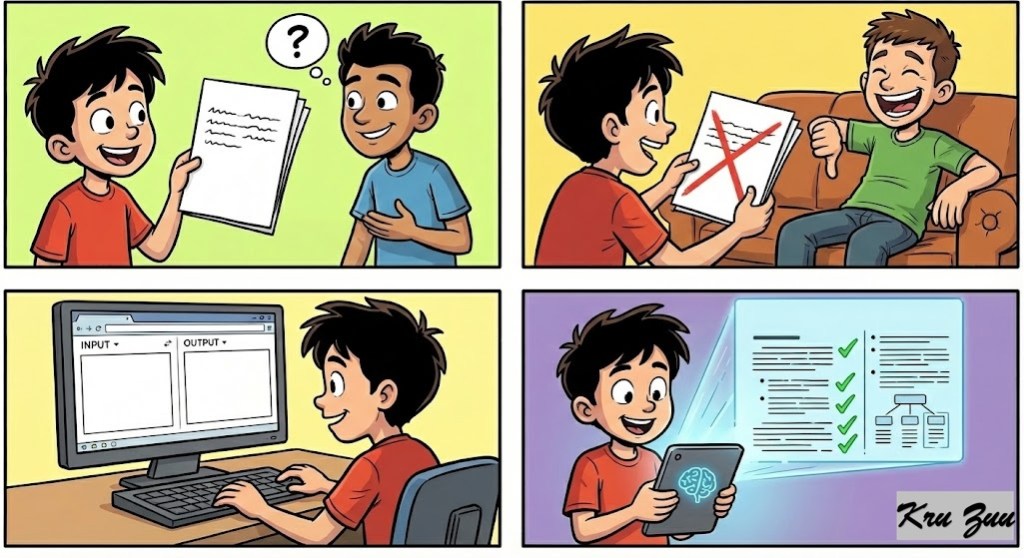
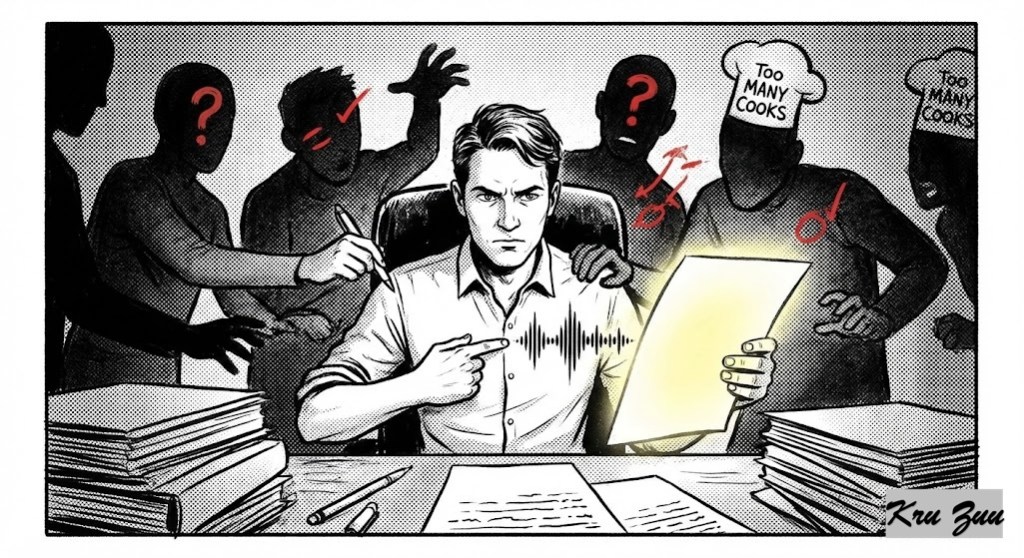
You write an English essay. You show it to your friend, your brother, Google Translate, and an AI.
The Problem
Your friend changes a word. Google changes the grammar. The AI rewrites the tone.

The Result
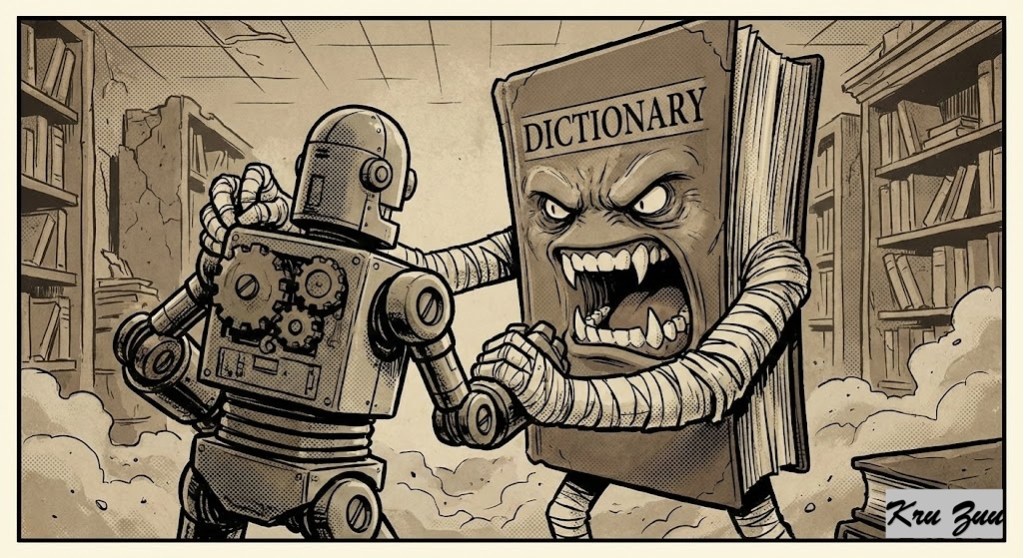
Your essay sounds like a robot fighting a dictionary. It has no “voice.”
The Solution
Trust your teacher or trust one reliable source. Don’t let too many “cooks” edit your writing until it loses its meaning. Trust your own voice.
💬 Your Turn: The Group Project 🚀
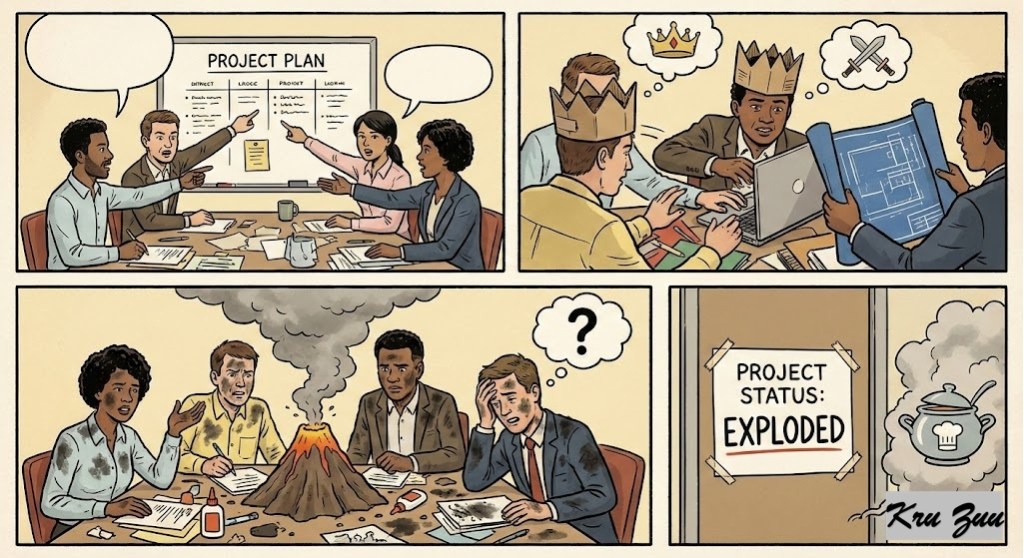
We have all been there. Have you ever been in a “Group Project” at school or work where everyone tried to be the boss? What happened? Did you finish the project, or did it explode like Chef Whiskers’ soup?
Tell us your story in the comments below! 👇
https://www.facebook.com/BrainBattleground/
https://www.facebook.com/zubeyr.yurtkuran/
https://www.instagram.com/zubeyryurtkuran/

Leave a comment